Dynamic Modeling and Response Analysis of a Landing Gear Retraction and Extension System Considering Irregular Wear Clearance

Abstract
1. Introduction
2. Developing a Wear Clearance Model in LGRES
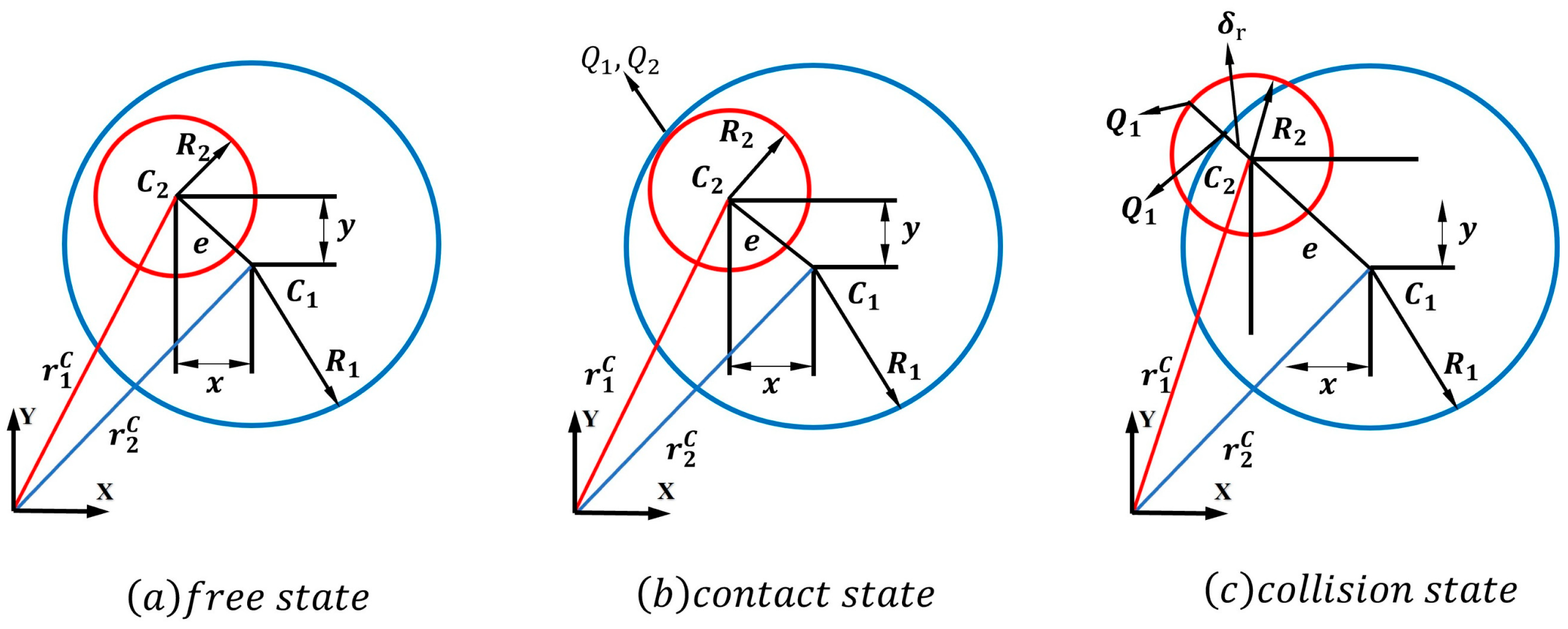
2.1. Development of a Contact Force Model
2.2. Establishment of Contact Force Model
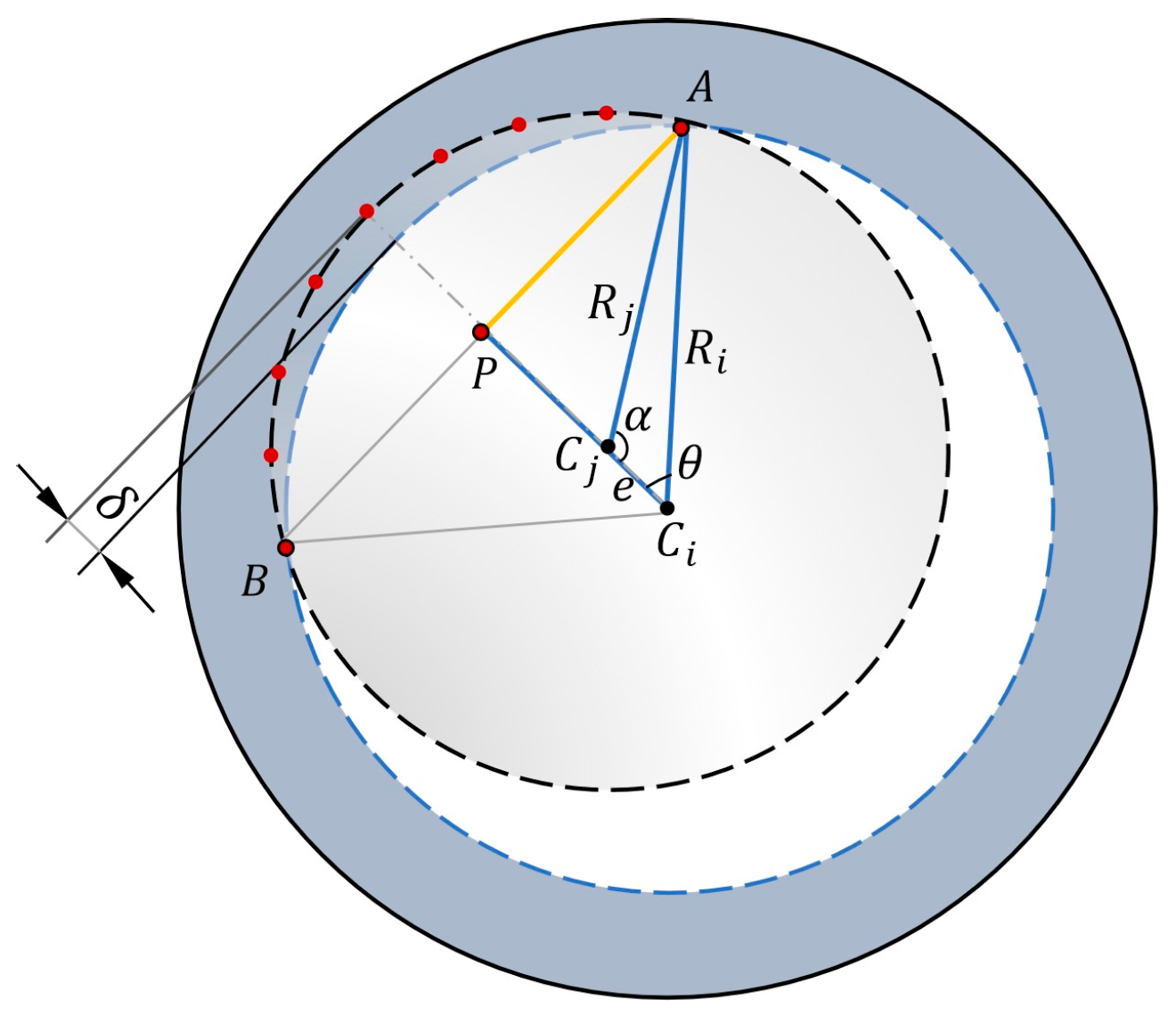
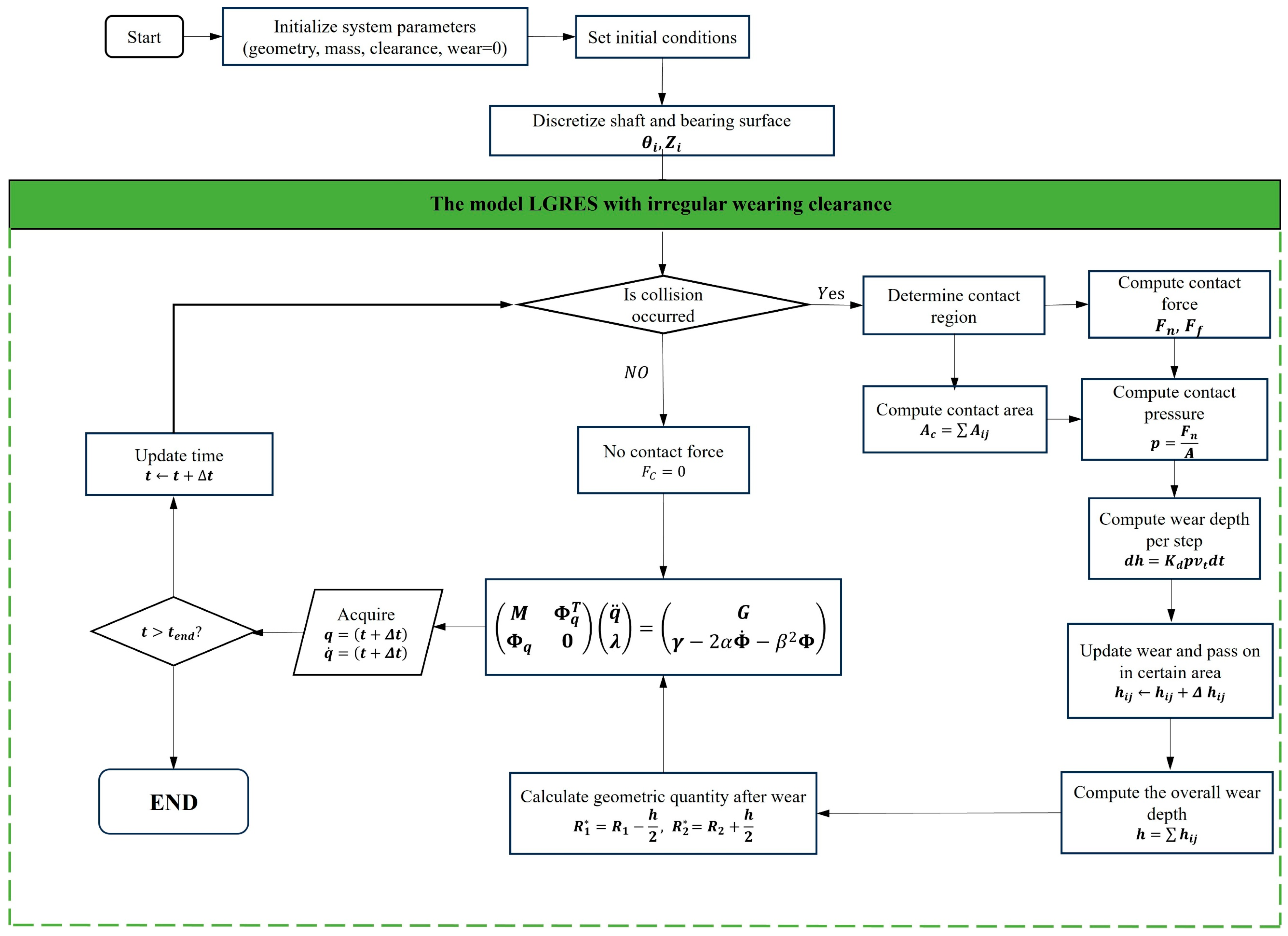
2.3. Modeling LGRES with Irregular Wear Clearance
3. Dynamic Modeling of LGRES with Revolute Pair Clearance
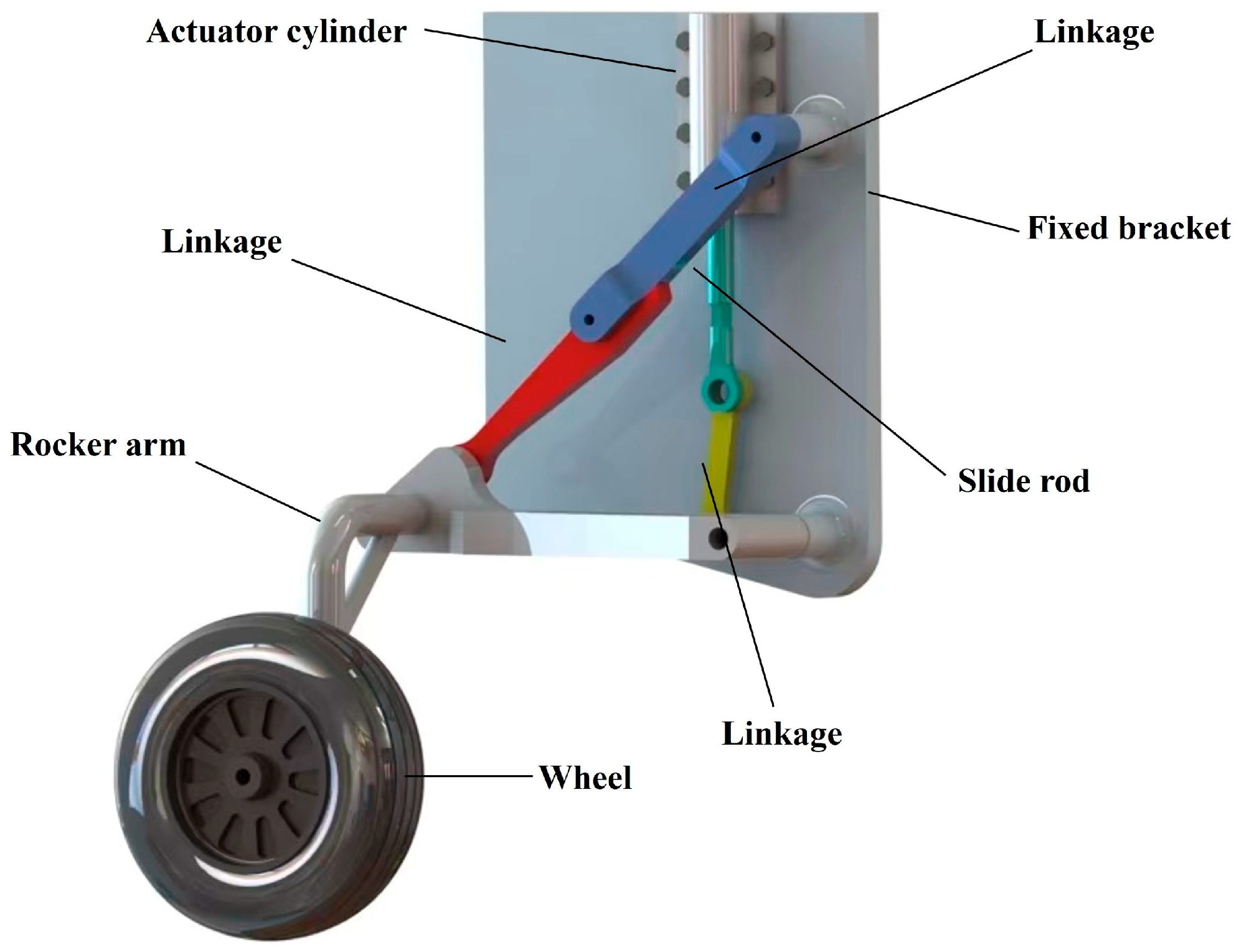
3.1. Structural Characteristics of LGRES
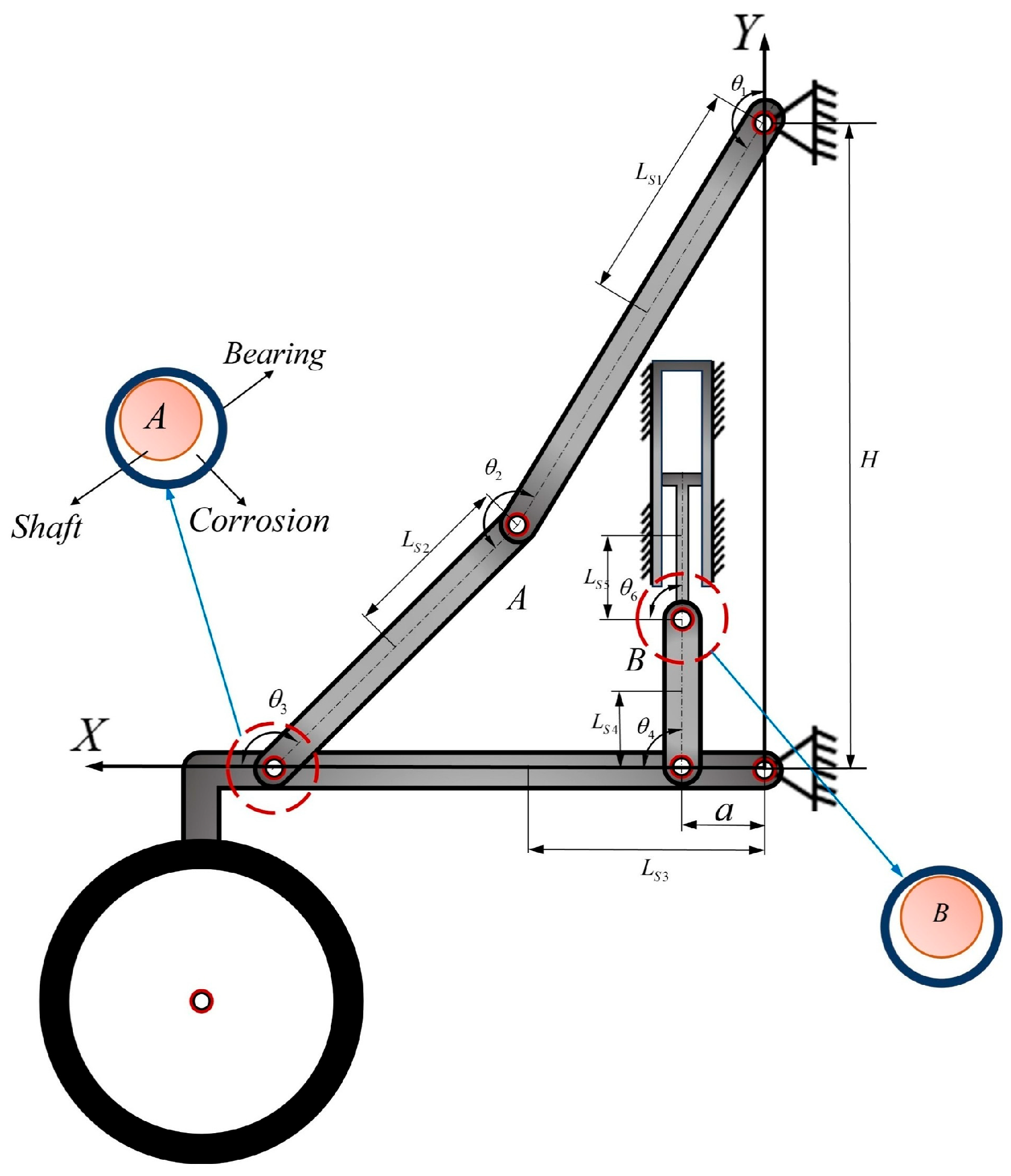
3.2. Dynamic Model of LGRES Considering Irregular Wearing Clearance
4. The Analysis of Dynamics of LGRES with Irregular Wearing Clearance
4.1. The Dynamic Model Verification and the Establishment of Parameters
4.1.1. Structure Parameters and Simulation Process
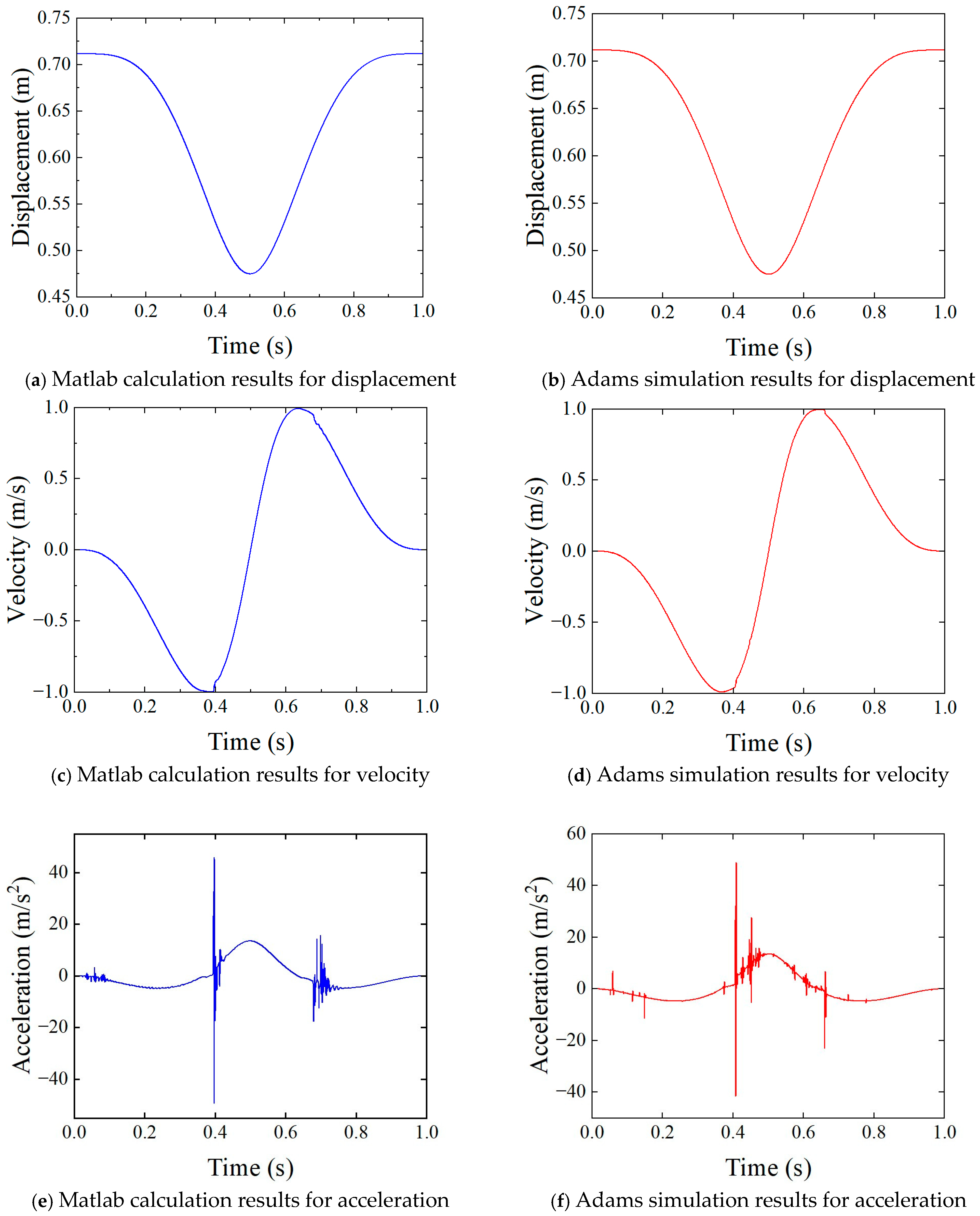
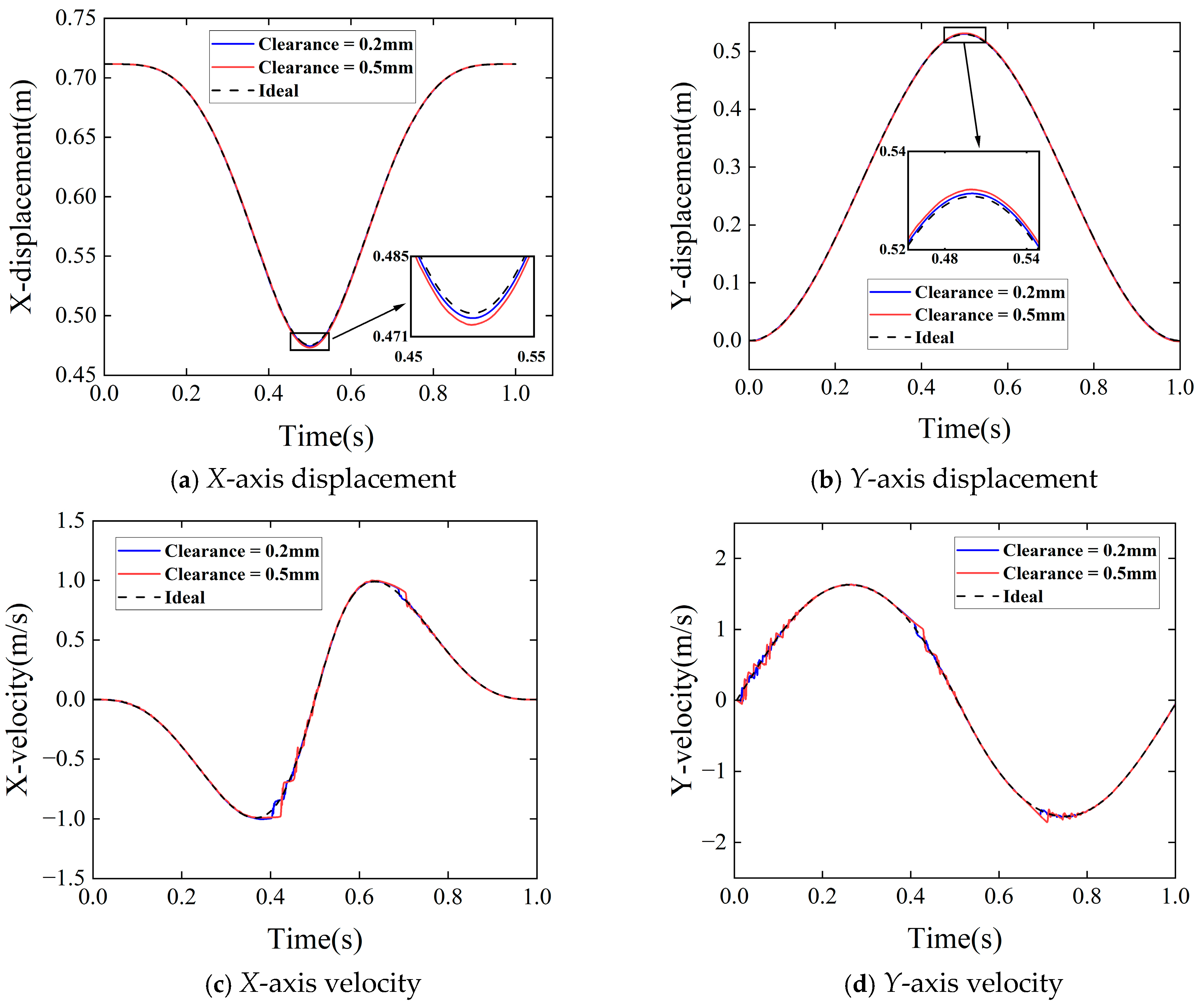
4.1.2. Dynamic Model Verification of Landing Gear Retraction and Extension System
4.2. Dynamic Responses Analysis of LGRES Considering Wearing Clearance
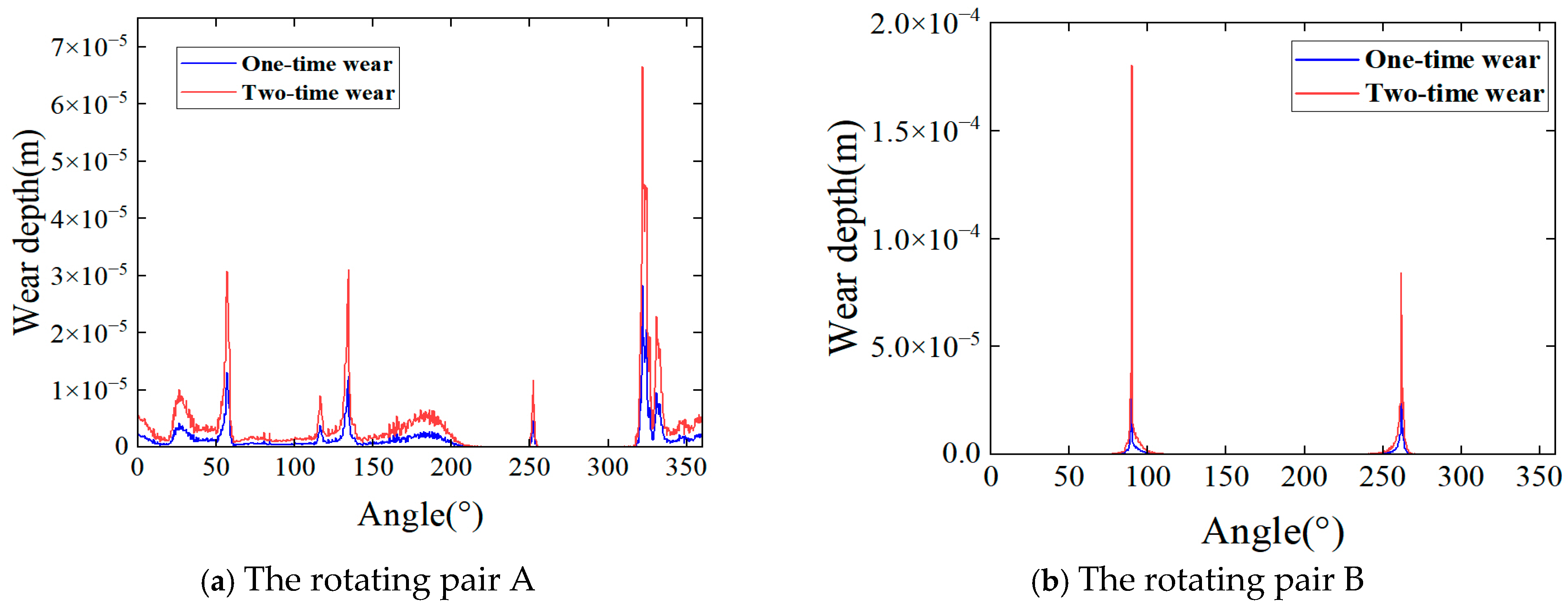
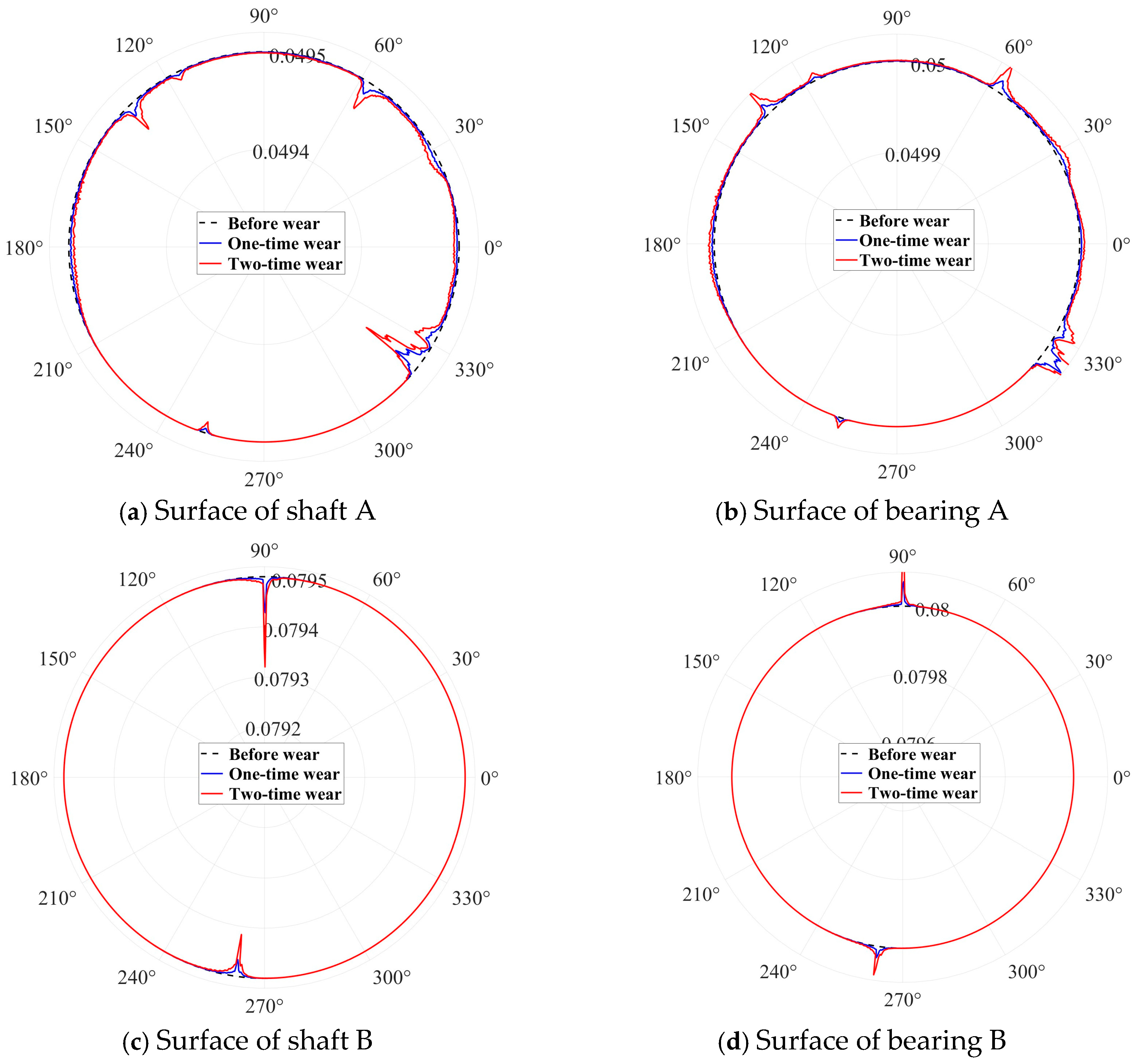
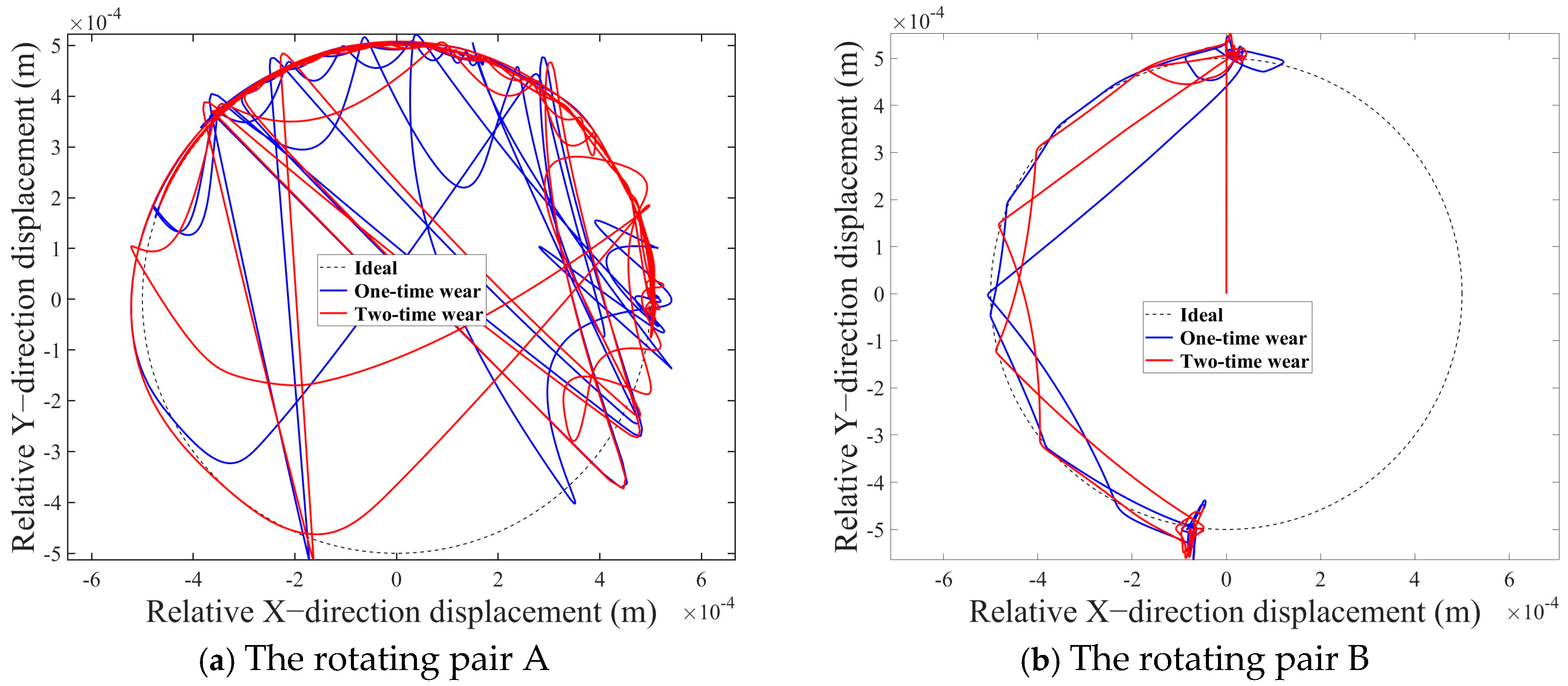
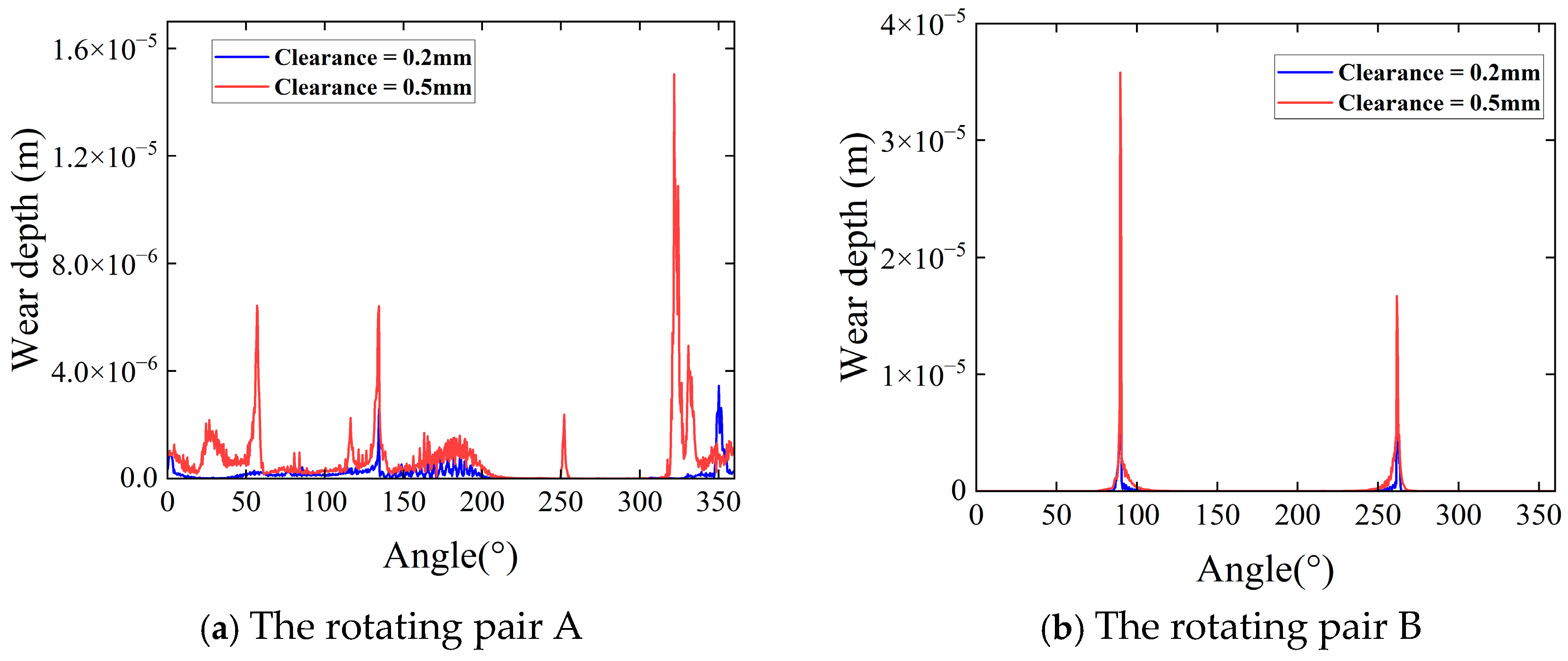
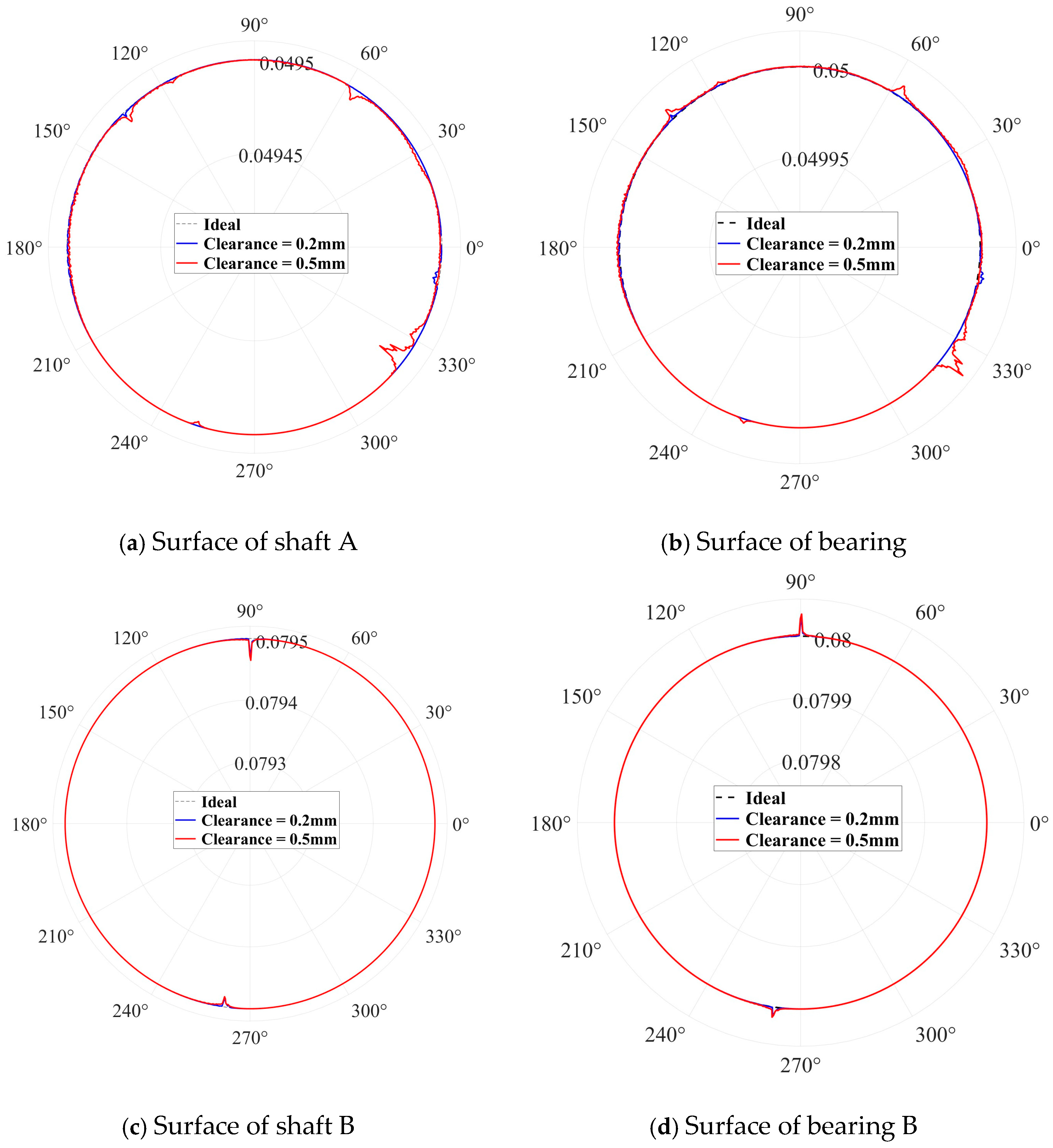
4.2.1. Wear Characteristics Under Different Wear Cycles
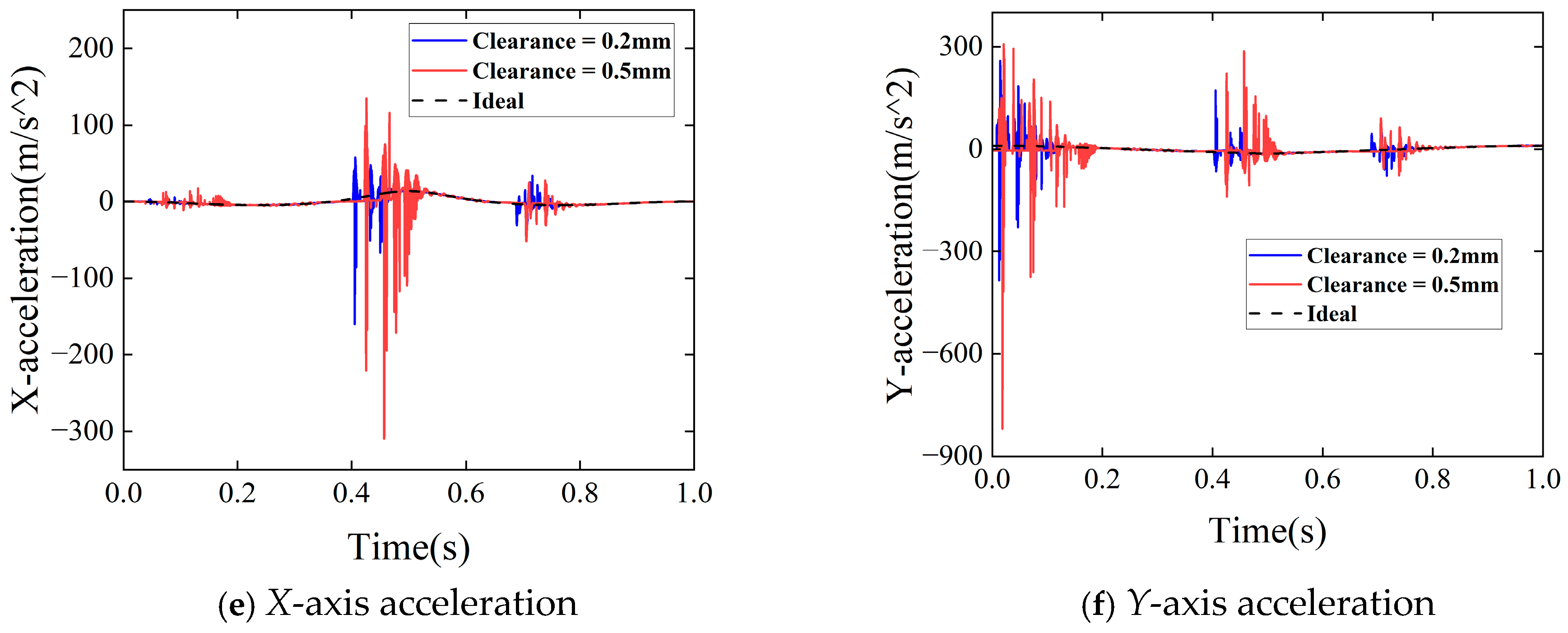
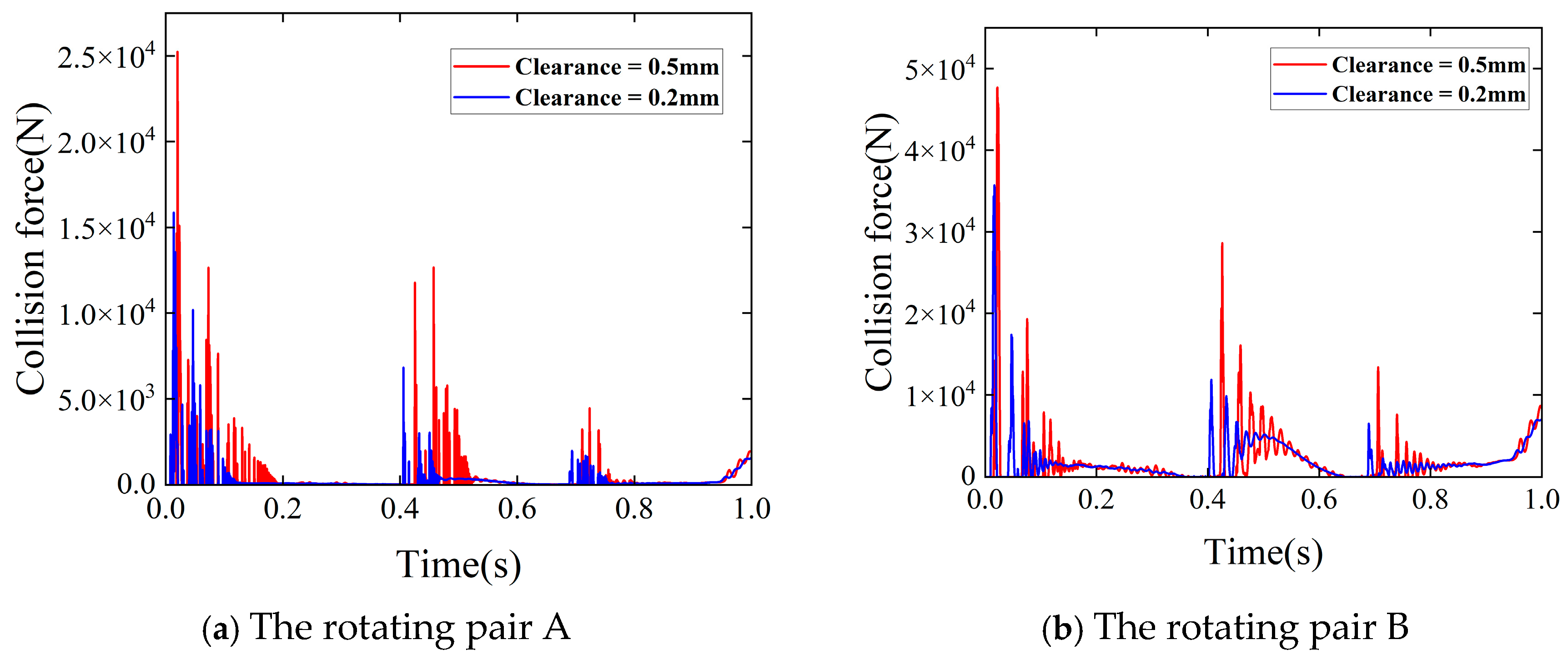
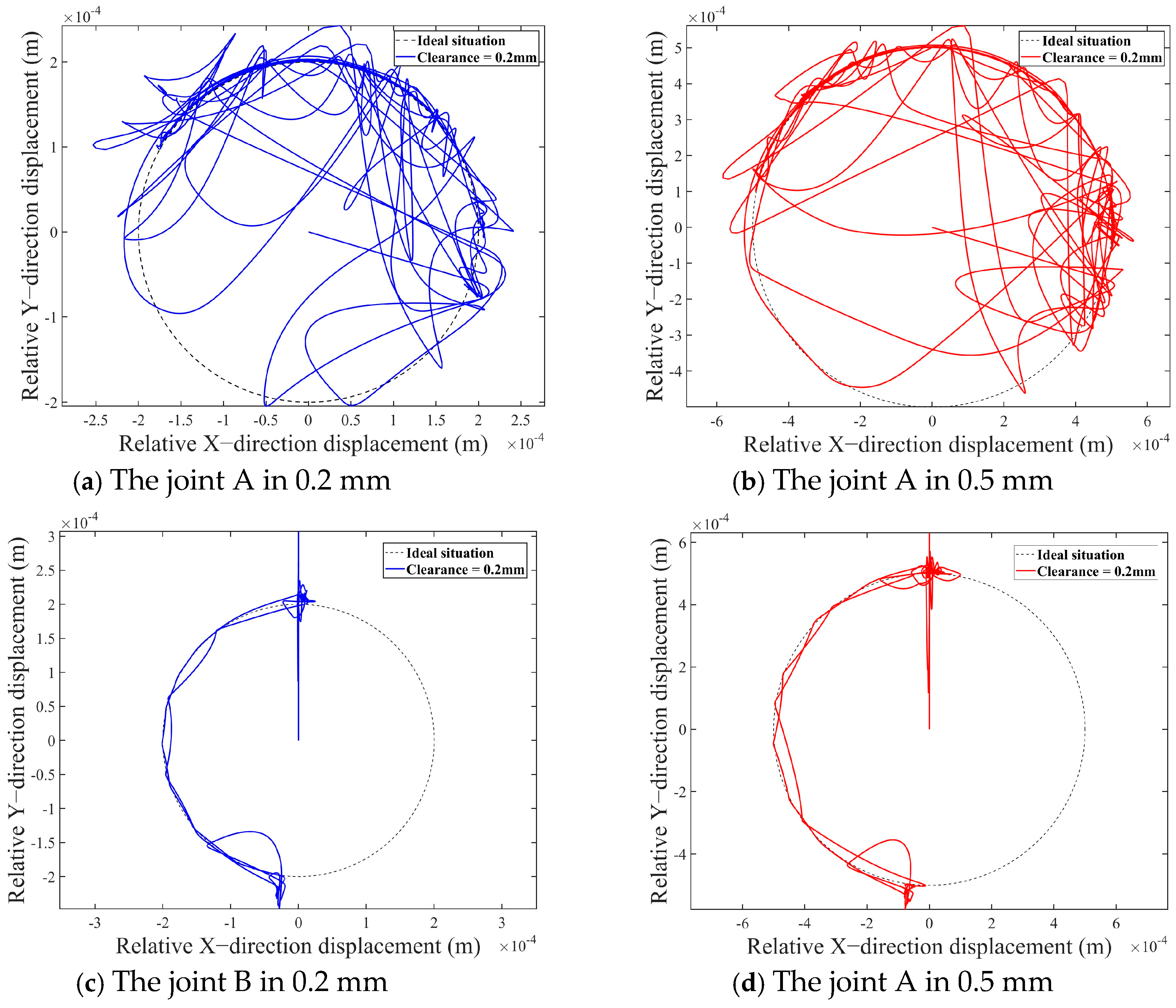
4.2.2. The Impact of Different Initial Clearances on the Dynamic Response of a Mechanism Under Wear Conditions
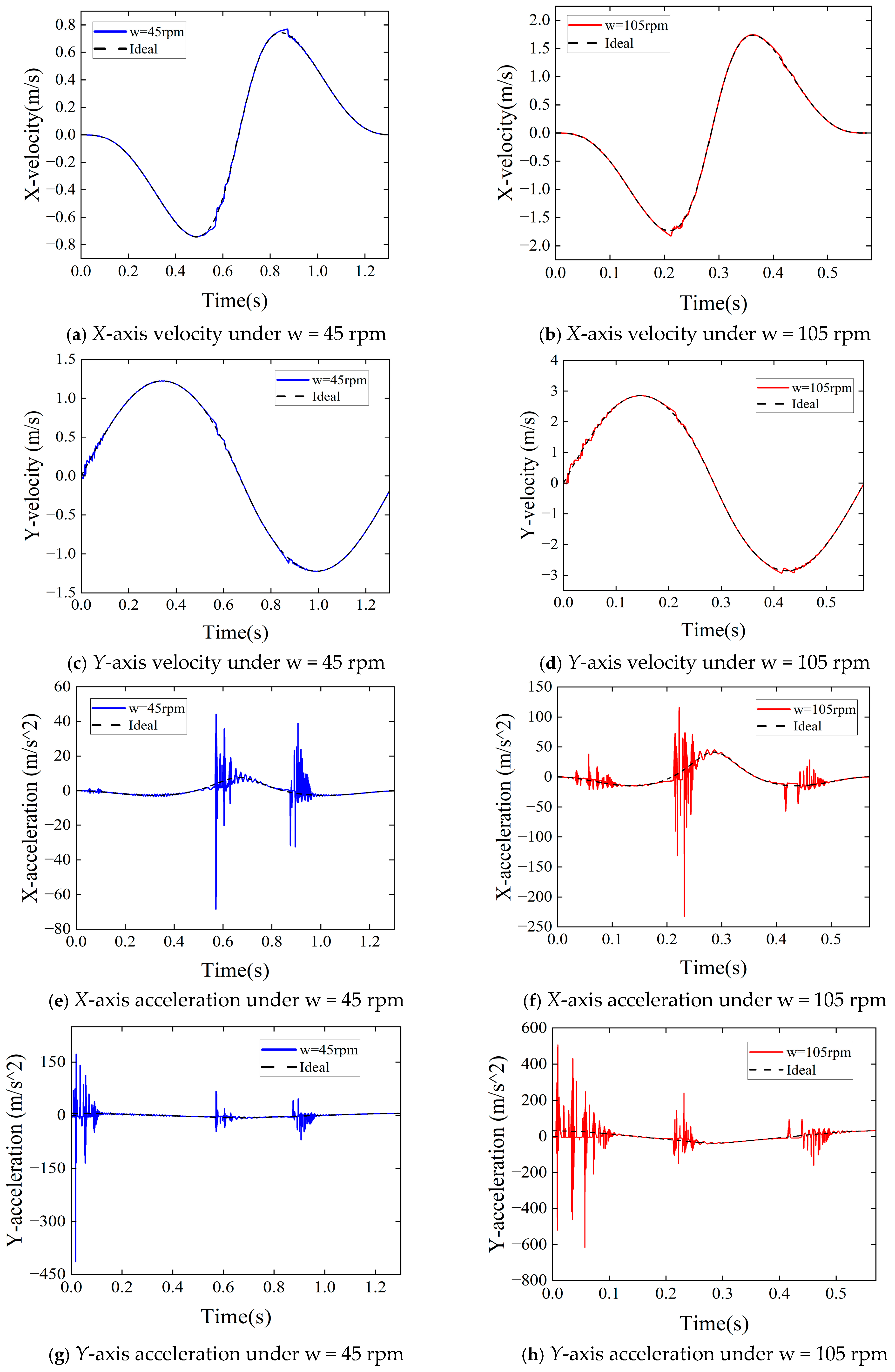
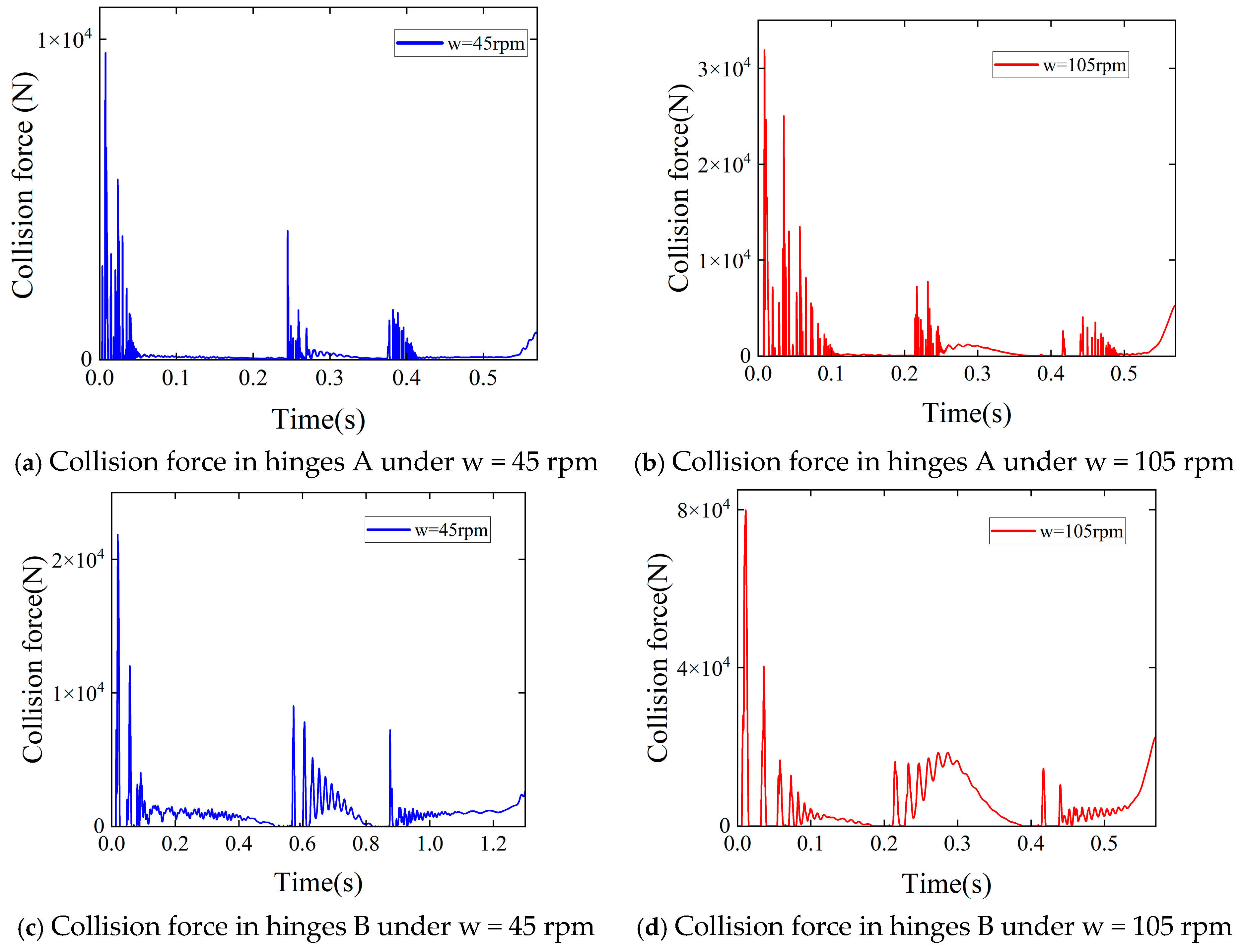
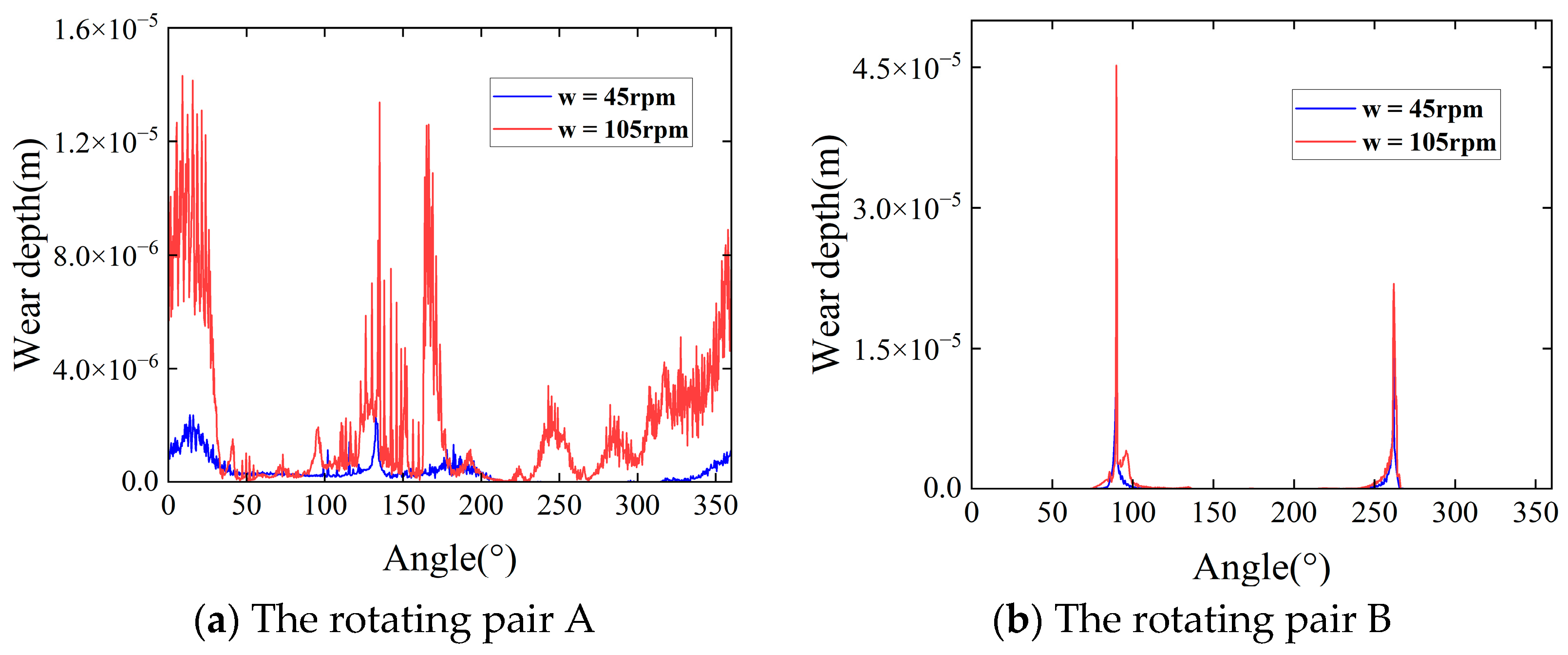
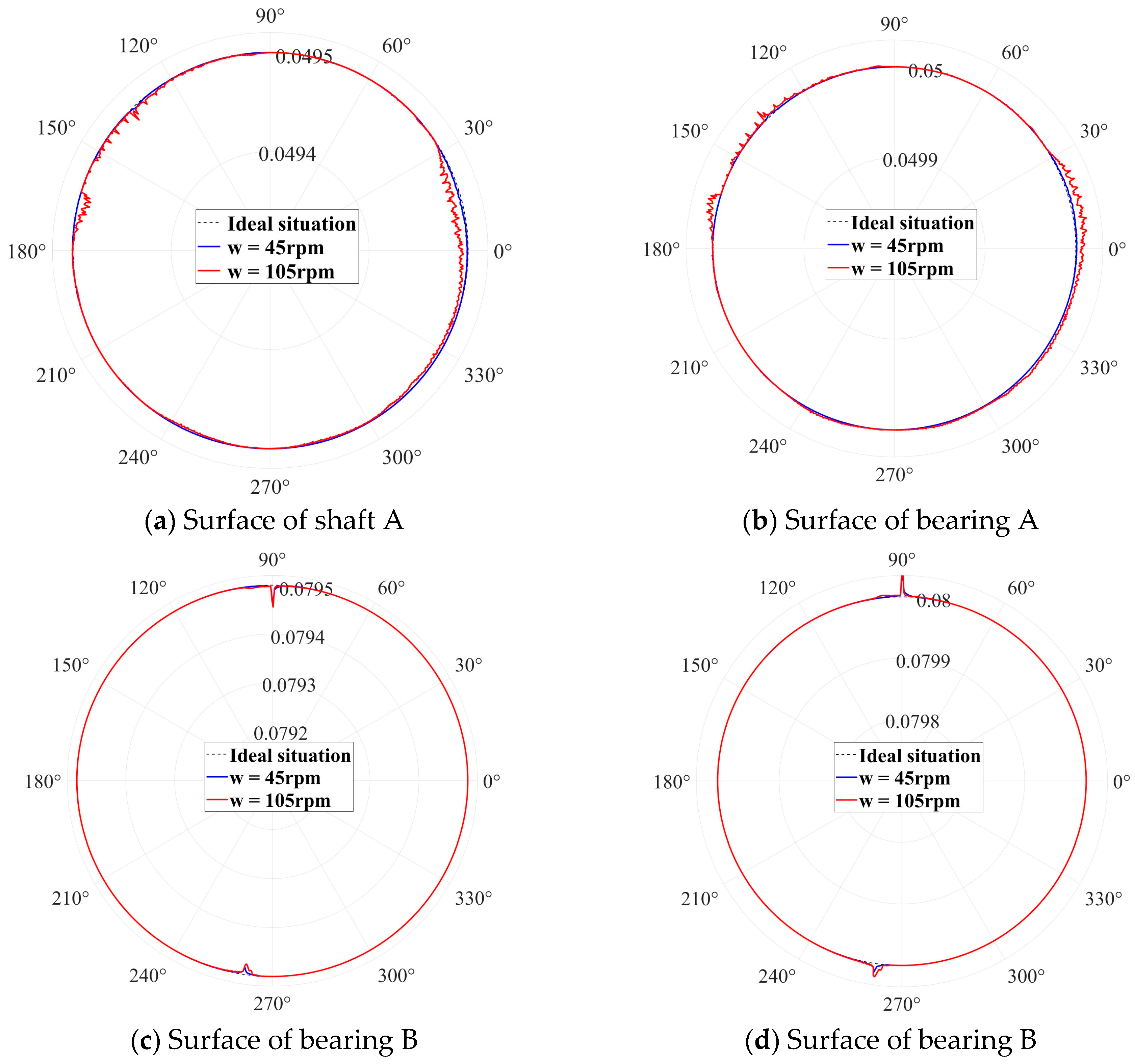
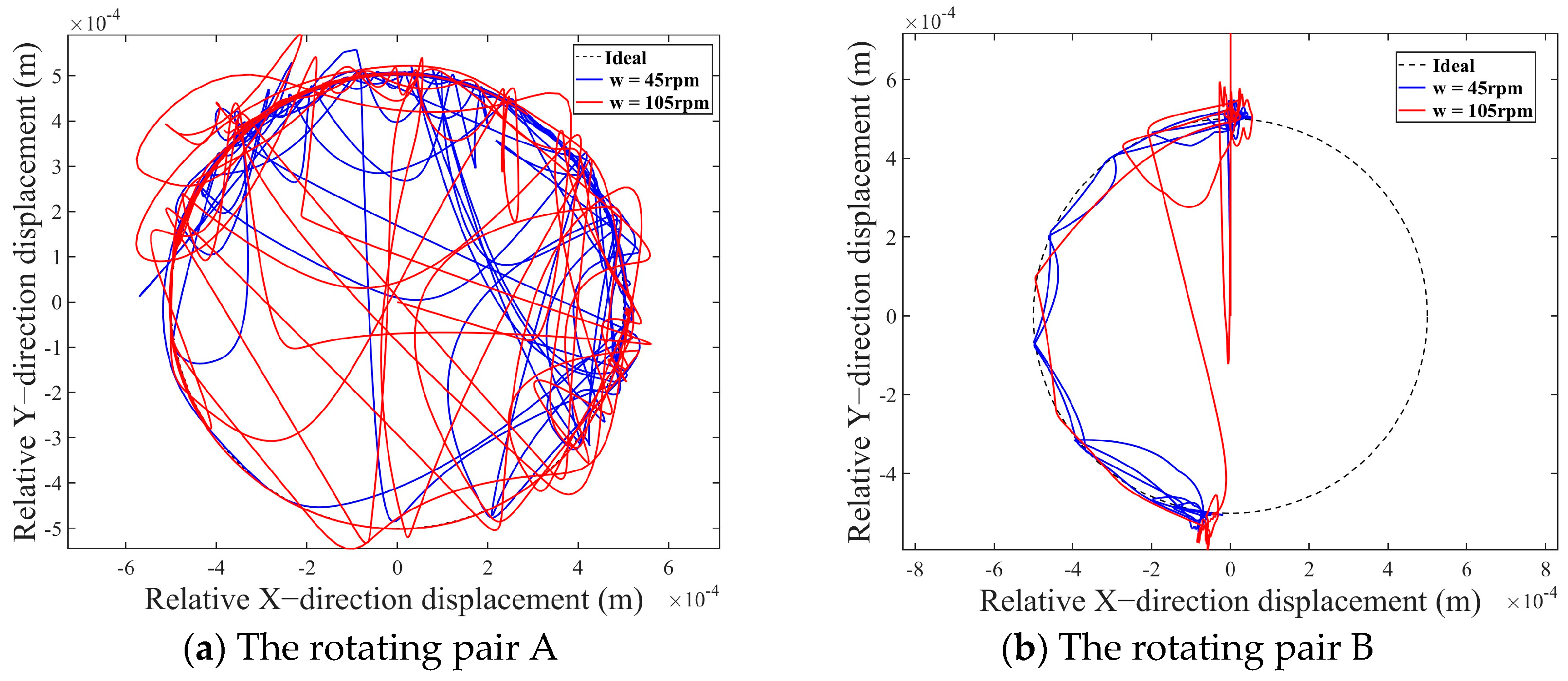
4.2.3. The Impact of Different Drive Velocities on the Dynamic Behavior of LGRES Under Wear Conditions
5. Conclusions
- (1)
- The present study proposes a dynamic wear prediction method for LGRES, taking into account the clearance of kinematic pairs. The integration of Hertzian contact theory with the Lankarani–Nikravesh damping formulation resulted in the establishment of a model that delineates the interaction forces within a clearance joint. Furthermore, the integration of the Archard wear model and the shaft-bearing reconstruction scheme enables the model to account for the time-varying, irregular distribution of clearance, thus providing a more realistic description than traditional constant-clearance models.
- (2)
- The analysis focused on the surface reconstruction process of the LGRES hinge pins and bearing surfaces under one-time and two-time wear conditions. The results indicate that the wear evolution exhibits increasingly irregular and localized characteristics, which further complicates the nonlinear dynamic behavior.
- (3)
- This study was conducted to analyze and compare the effects of different initial clearances and drive speeds on nonlinear dynamic behavior. The results of this study indicated that larger initial clearances significantly increase motion errors, wear severity and the area affected by wear. In addition, higher drive speeds were found to exacerbate nonlinear impact behavior, resulting in more severe wear and a larger wear area.
Author Contributions
Funding
Data Availability Statement
Conflicts of Interest
References
- Ranasinghe, K.; Sabatini, R.; Gardi, A.; Bijjahalli, S.; Kapoor, R.; Fahey, T.; Thangavel, K. Advances in Integrated System Health Management for mission-essential and safety-critical aerospace applications. Prog. Aerosp. Sci. 2021, 128, 100758. [Google Scholar] [CrossRef]
- Lei, B.; Shen, N.; Ji, D.; Ouyang, R.; Yang, L.; Liu, Q.; Gao, B.; Wang, Z. A Comprehensive Review of Key Technologies for Enhancing the Reliability of Aero-Engines. IEEE Access 2024, 12, 148315–148331. [Google Scholar] [CrossRef]
- Pritchard, J.I. An Overview of Landing Gear Dynamics. NASA Technical Reports Server (NTRS). 1999. Available online: https://ntrs.nasa.gov/citations/19990047095 (accessed on 5 April 2026).
- Arreaza, C.; Behdinan, K.; Zu, J.W. Linear stability analysis and dynamic response of shimmy dampers for main landing gears. J. Appl. Mech. 2016, 83, 081002. [Google Scholar] [CrossRef]
- Beckers, C.J.J.; Öngüt, A.E.; Verbeek, G.; Fey, R.H.B.; Lemmens, Y.; Van De Wouw, N. Bifurcation-Based shimmy analysis of landing gears using flexible multibody models. In Nonlinear Structural Dynamics and Damping; Mechanisms and machine science; Springer: Berlin/Heidelberg, Germany, 2019; pp. 261–291. [Google Scholar] [CrossRef]
- Ruan, S.; Zhang, M.; Hong, Y.; Nie, H. Influence of clearance and structural coupling parameters on shimmy stability of landing gear. Aeronaut. J. 2023, 127, 1591–1622. [Google Scholar] [CrossRef]
- Zhang, Y.; Zhao, B.; Yang, Y.; Li, T. Development and Prospects of Lander Vibration-Damping structures. Recent Pat. Eng. 2024, 19, e030724231514. [Google Scholar] [CrossRef]
- Chaudhary, R. Investigation on structural dynamics of landing gear. Mater. Today Proc. 2020, 46, 9–15. [Google Scholar] [CrossRef]
- Arunagiri, P.; Vijayakumar Khan, M.A.; Jani, S. Structural analysis and materials deformations of landing gear. Mater. Today Proc. 2022, 60, 2240–2244. [Google Scholar] [CrossRef]
- Flores, P.; Lankarani, H.M. Spatial rigid-multibody systems with lubricated spherical clearance joints: Modeling and simulation. Nonlinear Dyn. 2010, 60, 99–114. [Google Scholar] [CrossRef]
- Khapane, P.D. Simulation of Landing Gear Dynamics Using Flexible Multi-Body Methods. In Proceedings of the ICAS-Secretariat—25th Congress of the International Council of the Aeronautical Sciences, Hamburg, Germany, 3–8 September 2006; Volume 6. [Google Scholar]
- Liu, W.; Wang, Y. Improved Multi-Body Dynamic simulation of landing gear drop test incorporating structural flexibility and bearing contact. Aerospace 2024, 11, 543. [Google Scholar] [CrossRef]
- Gao, S.; Fan, S.; Yang, Y. Non-probabilistic reliability analysis of landing gear retraction and extension system with interval parameters. Aerosp. Sci. Technol. 2025, 164, 110469. [Google Scholar] [CrossRef]
- Airoldi, A.; Lanzi, L. Design of skid landing gears by means of multibody optimization. J. Aircr. 2006, 43, 555–563. [Google Scholar] [CrossRef]
- Krüger, W.R.; Morandini, M. Recent developments at the numerical simulation of landing gear dynamics. CEAS Aeronaut. J. 2011, 1, 55–68. [Google Scholar] [CrossRef]
- Krason, W.; Malachowski, J. Multibody rigid models and 3D FE models in numerical analysis of transport aircraft main landing gear. Bull. Pol. Acad. Sci. Tech. Sci. 2015, 63, 745–757. [Google Scholar] [CrossRef][Green Version]
- Flores, P. A parametric study on the dynamic response of planar multibody systems with multiple clearance joints. Nonlinear Dyn. 2010, 61, 633–653. [Google Scholar] [CrossRef]
- Ma, J.; Qian, L. Modeling and simulation of planar multibody systems considering multiple revolute clearance joints. Nonlinear Dyn. 2017, 90, 1907–1940. [Google Scholar] [CrossRef]
- Schaechtl, P.; Hallmann, M.; Schleich, B.; Wartzack, S. Tolerance Analysis of Additively Manufactured Non-assembly Mechanisms considering Joint Clearance. Procedia CIRP 2020, 92, 27–32. [Google Scholar] [CrossRef]
- Corrado, A.; Polini, W. Assembly design in aeronautic field: From assembly jigs to tolerance analysis. Proc. Inst. Mech. Eng. Part B J. Eng. Manuf. 2017, 231, 2652–2663. [Google Scholar] [CrossRef]
- Koshy, C.S.; Flores, P.; Lankarani, H.M. Study of the effect of contact force model on the dynamic response of mechanical systems with dry clearance joints: Computational and experimental approaches. Nonlinear Dyn. 2013, 73, 325–338. [Google Scholar] [CrossRef]
- Machado, M.; Moreira, P.; Flores, P.; Lankarani, H.M. Compliant contact force models in multibody dynamics: Evolution of the Hertz contact theory. Mech. Mach. Theory 2012, 53, 99–121. [Google Scholar] [CrossRef]
- Ravn, P. A continuous analysis method for planar multibody systems with joint clearance. Multibody Syst. Dyn. 1998, 2, 1–24. [Google Scholar] [CrossRef]
- Corral, E.; Moreno, R.G.; García, M.J.G.; Castejón Sisamón, C. Nonlinear phenomena of contact in multibody systems dynamics: A review. Nonlinear Dyn. 2021, 104, 1269–1295. [Google Scholar] [CrossRef]
- Goldman, P.; Muszynska, A. Dynamic Effects in Mechanical Structures with Gaps and Impacting: Order and Chaos. J. Vib. Acoust. 1994, 116, 541–547. [Google Scholar] [CrossRef]
- Chen, X.; Li, H.; Deng, Y.; Wang, T. Effects of clearances on dynamic response and nonlinear characteristics of the planar multibody mechanical system. J. Braz. Soc. Mech. Sci. Eng. 2024, 46, 380. [Google Scholar] [CrossRef]
- Wang, X.; Liu, G. Modeling and simulation of revolute joint with clearance in planar multi-body systems. J. Mech. Sci. Technol. 2015, 29, 4113–4120. [Google Scholar] [CrossRef]
- Zhao, P.; Liu, J.; Li, Y.; Wu, C. A spring-damping contact force model considering normal friction for impact analysis. Nonlinear Dyn. 2021, 105, 1437–1457. [Google Scholar] [CrossRef]
- Flores, P.; Ambrósio, J. Revolute joints with clearance in multibody systems. Comput. Struct. 2004, 82, 1359–1369. [Google Scholar] [CrossRef]
- Muvengei, O.; Kihiu, J.; Ikua, B. Numerical study of parametric effects on the dynamic response of planar multi-body systems with differently located frictionless revolute clearance joints. Mech. Mach. Theory 2012, 53, 30–49. [Google Scholar] [CrossRef]
- Qian, M.; Yan, S.; Zhang, L.; Luo, Z.; Yang, Y. A new method of nonlinear analysis for a mechanism with a cylindrical clearance joint using information entropy theory. Nonlinear Dyn. 2022, 108, 3903–3926. [Google Scholar] [CrossRef]
- Li, B.; Wang, M.S.; Gantes, C.J.; Tan, U.X. Modeling and simulation for wear prediction in planar mechanical systems with multiple clearance joints. Nonlinear Dyn. 2022, 108, 887–910. [Google Scholar] [CrossRef]
- Zhu, A.; He, S.; Zhao, J.; Luo, W. A nonlinear contact pressure distribution model for wear calculation of planar revolute joint with clearance. Nonlinear Dyn. 2017, 88, 315–328. [Google Scholar] [CrossRef]
- Bai, Z.; Ning, Z.; Zhou, J. Study on Wear Characteristics of Revolute Clearance Joints in Mechanical Systems. Micromachines 2022, 13, 1018. [Google Scholar] [CrossRef] [PubMed]
- Aibin, Z.; Shengli, H.; Chao, Z.; Wei, C. The effect analysis of contact stiffness on wear of clearance joint. J. Tribol. 2016, 139, 031403. [Google Scholar] [CrossRef]
- Lai, X.; He, H.; Lai, Q.; Wang, C.; Yang, J.; Zhang, Y.; Fang, H.; Liao, S. Computational prediction and experimental validation of revolute joint clearance wear in the low-velocity planar mechanism. Mech. Syst. Signal Process. 2016, 85, 963–976. [Google Scholar] [CrossRef]
- Sun, D.; Chen, G.; Wang, T.; Sun, R. Wear prediction of a mechanism with joint clearance involving aleatory and epistemic uncertainty. J. Tribol. 2014, 136, 041101. [Google Scholar] [CrossRef]
- Jing, Q.; Liu, H. Dynamics and wear prediction of mechanisms considering multiple clearances and coatings. Lubricants 2023, 11, 310. [Google Scholar] [CrossRef]
- Ordiz, M.; Cuadrado, J.; Cabello, M.; Retolaza, I.; Martinez, F.; Dopico, D. Prediction of fatigue life in multibody systems considering the increase of dynamic loads due to wear in clearances. Mech. Mach. Theory 2021, 160, 104293. [Google Scholar] [CrossRef]
- Zhuang, X.; Yu, T.; Afshari, S.S.; Sun, Z.; Song, K.; Liang, X. Remaining useful life prediction of a mechanism considering wear correlation of multiple joints. Mech. Syst. Signal Process. 2020, 149, 107328. [Google Scholar] [CrossRef]
- Hou, Y.; Zhang, M.; Nie, H. Wear analysis of finger locks with different design parameters for landing gear. Sci. Prog. 2020, 103, 36850420950122. [Google Scholar] [CrossRef] [PubMed] [PubMed Central]
- Ravn, P.; Shivaswamy, S.; Alshaer, B.J.; Lankarani, H.M. Joint clearances with lubricated long bearings in multibody mechanical systems. J. Mech. Des. 1999, 122, 484–488. [Google Scholar] [CrossRef]
- Li, Y.; Li, Z.; He, D.; Wang, F. Effect of clearance on the dynamic characteristics of high-speed rolling bearings with multiple defects. Mech. Syst. Signal Process. 2023, 200, 110512. [Google Scholar] [CrossRef]
- Wang, P.; Zhao, X.; Xu, H.; Ma, H.; Yin, X.; Zhang, X.; Zhao, S. Nonlinear dynamic behaviors of a shaft-bearing-pedestal system with outer ring slip and damage. Nonlinear Dyn. 2024, 113, 3171–3199. [Google Scholar] [CrossRef]
- Lankarani, H.M.; Nikravesh, P.E. A contact force model with hysteresis damping for impact analysis of multibody systems. J. Mech. Des. 1990, 112, 369–376. [Google Scholar] [CrossRef]
- Li, J.; Huang, H.; Yan, S.; Yang, Y. Kinematic accuracy and dynamic performance of a simple planar space deployable mechanism with joint clearance considering parameter uncertainty. Acta Astronaut. 2017, 136, 34–45. [Google Scholar] [CrossRef]
- Marques, F.; Flores, P.; Claro, J.C.P.; Lankarani, H.M. A survey and comparison of several friction force models for dynamic analysis of multibody mechanical systems. Nonlinear Dyn. 2016, 86, 1407–1443. [Google Scholar] [CrossRef]
- Chen, Y.; Sun, Y.; Chen, C. Dynamic analysis of a planar slider-crank mechanism with clearance for a high speed and heavy load press system. Mech. Mach. Theory 2016, 98, 81–100. [Google Scholar] [CrossRef]
- Li, Y.; Wang, C.; Huang, W. Dynamics analysis of planar rigid-flexible coupling deployable solar array system with multiple revolute clearance joints. Mech. Syst. Signal Process. 2018, 117, 188–209. [Google Scholar] [CrossRef]
- Li, P.; Chen, W.; Li, D.; Yu, R.; Zhang, W. Wear analysis of two revolute joints with clearance in multibody systems. J. Comput. Nonlinear Dyn. 2015, 11, 011009. [Google Scholar] [CrossRef]
- Mukras, S.; Kim, N.H.; Mauntler, N.A.; Schmitz, T.L.; Sawyer, W.G. Analysis of planar multibody systems with revolute joint wear. Wear 2009, 268, 643–652. [Google Scholar] [CrossRef]
- Baumgarte, J. Stabilization of constraints and integrals of motion in dynamical systems. Comput. Methods Appl. Mech. Eng. 1972, 1, 1–16. [Google Scholar] [CrossRef]
- Xin, Y.; Cai, M.; Zheng, S.; Wang, Y.; Zhu, J.; Jiang, S.; Ding, H.; Liu, G. Dynamic behavior and kinematic joint wear characteristics study of rigid-flexible hybrid mechanism considering spatial revolute joint clearance. Mech. Syst. Signal Process. 2025, 235, 112853. [Google Scholar] [CrossRef]
- Jiang, S.; Chen, X.; Deng, Y. Dynamic Response Analysis of Planar Multilink Mechanism considering Wear in Clearances. Shock. Vib. 2019, 2019, 5389732. [Google Scholar] [CrossRef]



| Component | Length of Component (m) | Centroid Position Length (m) | Mass (kg) | Moment of Inertia () |
|---|---|---|---|---|
| Rod1 | 1.00 | 0.5 | 6.32 | 2.35 |
| Rod2 | 1.12 | 0.56 | 12.07 | 1.54 |
| Rod3 | 1.29 | 0.645 | 12.54 | 9.69 |
| Rocker arm | 0.57 | 0.285 | 5.59 | 0.36 |
| Slide rod | 0.64 | 0.32 | 6.93 | 0.45 |
| Parameter | Values |
|---|---|
| Joint A’s bearing radius () | 0.05 m |
| Joint B’s bearing radius () | 0.08 m |
| Hinge width (w) | 0.1 m |
| Restitution coefficient () | 0.9 |
| Friction coefficient () | 0.15 |
| Static friction velocity threshold () | 0.0001 m/s |
| Kinetic friction velocity threshold () | 0.001 m/s |
| Poisson ratio () | 0.3 |
| Elastic modulus () | 200 GPa |
| Liner wear coefficient () | |
| Brinell hardness of the softer material (H) | Pa |
Disclaimer/Publisher’s Note: The statements, opinions and data contained in all publications are solely those of the individual author(s) and contributor(s) and not of MDPI and/or the editor(s). MDPI and/or the editor(s) disclaim responsibility for any injury to people or property resulting from any ideas, methods, instructions or products referred to in the content. |
© 2026 by the authors. Licensee MDPI, Basel, Switzerland. This article is an open access article distributed under the terms and conditions of the Creative Commons Attribution (CC BY) license.
Share and Cite
Ma, W.; Jiang, S.; Yin, Z. Dynamic Modeling and Response Analysis of a Landing Gear Retraction and Extension System Considering Irregular Wear Clearance. Aerospace 2026, 13, 532. https://doi.org/10.3390/aerospace13060532
Ma W, Jiang S, Yin Z. Dynamic Modeling and Response Analysis of a Landing Gear Retraction and Extension System Considering Irregular Wear Clearance. Aerospace. 2026; 13(6):532. https://doi.org/10.3390/aerospace13060532
Chicago/Turabian StyleMa, Wencheng, Shuai Jiang, and Zhengzheng Yin. 2026. "Dynamic Modeling and Response Analysis of a Landing Gear Retraction and Extension System Considering Irregular Wear Clearance" Aerospace 13, no. 6: 532. https://doi.org/10.3390/aerospace13060532
APA StyleMa, W., Jiang, S., & Yin, Z. (2026). Dynamic Modeling and Response Analysis of a Landing Gear Retraction and Extension System Considering Irregular Wear Clearance. Aerospace, 13(6), 532. https://doi.org/10.3390/aerospace13060532