
Article

Attributable Deaths from Heat and Cold in Austria According to Future Climate Scenarios Until 2100


by
Hanns Moshammer
1,2,*,
Martin Jury
3,
Alexandra Kristian
1,
Lisbeth Weitensfelder
1 and
Hans-Peter Hutter
1
1
Department for Environmental Health, Center for Public Health, Medical University of Vienna, 1090 Vienna, Austria
2
Department of Hygiene, Karakalpakstan Medical Institute, Nukus 230100, Uzbekistan
3
Wegener Center for Climate and Global Change, University of Graz, 8010 Graz, Austria
*
Author to whom correspondence should be addressed.
Climate 2026, 14(5), 89; https://doi.org/10.3390/cli14050089
Submission received: 6 February 2026 / Revised: 17 April 2026 / Accepted: 21 April 2026 / Published: 22 April 2026
(This article belongs to the Special Issue Climate, Ecosystem and Human Health: Impacts and Adaptation)

Abstract

Climate change will impact the distribution of daily deaths in Austria until the end of the century. This study examines the net effects of fewer cold and more-frequent hot days on daily mortality under different climate and demographic scenarios. Projected district-level mortality data and daily temperatures based on Representative Concentration Pathways (RCP4.5 and RCP8.5) are analyzed to estimate the number of attributable deaths for every fifth year due to heat and cold using district-wise temperature–effect estimates from a previous analysis. While the overall shape of the time course of temperature-attributable deaths depends mostly on the demographic developments (with the highest numbers of daily mortality mid-century), under all climate scenarios investigated, the increase in heat-attributable deaths will be more pronounced than the decrease in cold-attributable deaths. Contrary to common claims, shift in temperatures due to climate change already has a net negative effect on population health in Austria now.

1. Introduction

Extreme ambient air temperatures, both cold and hot, place severe stress on temperature regulation of the human body. Vulnerable people, mostly elderly, frail, or chronically ill persons, are therefore at increased risk of death during heatwaves and cold spells [1]. We recently examined temperature-related deaths in Austria on a district level in order to assess spatial differences in vulnerability [2]. We did demonstrate a higher vulnerability towards heat in districts with a higher population density, a higher percentage of single households, non-EU citizens, homeless people, and unemployed individuals. Vulnerability towards cold, on the other hand, was more pronounced in districts situated at higher altitudes, with higher percentages of Austrian (or EU) citizens and agricultural workers.
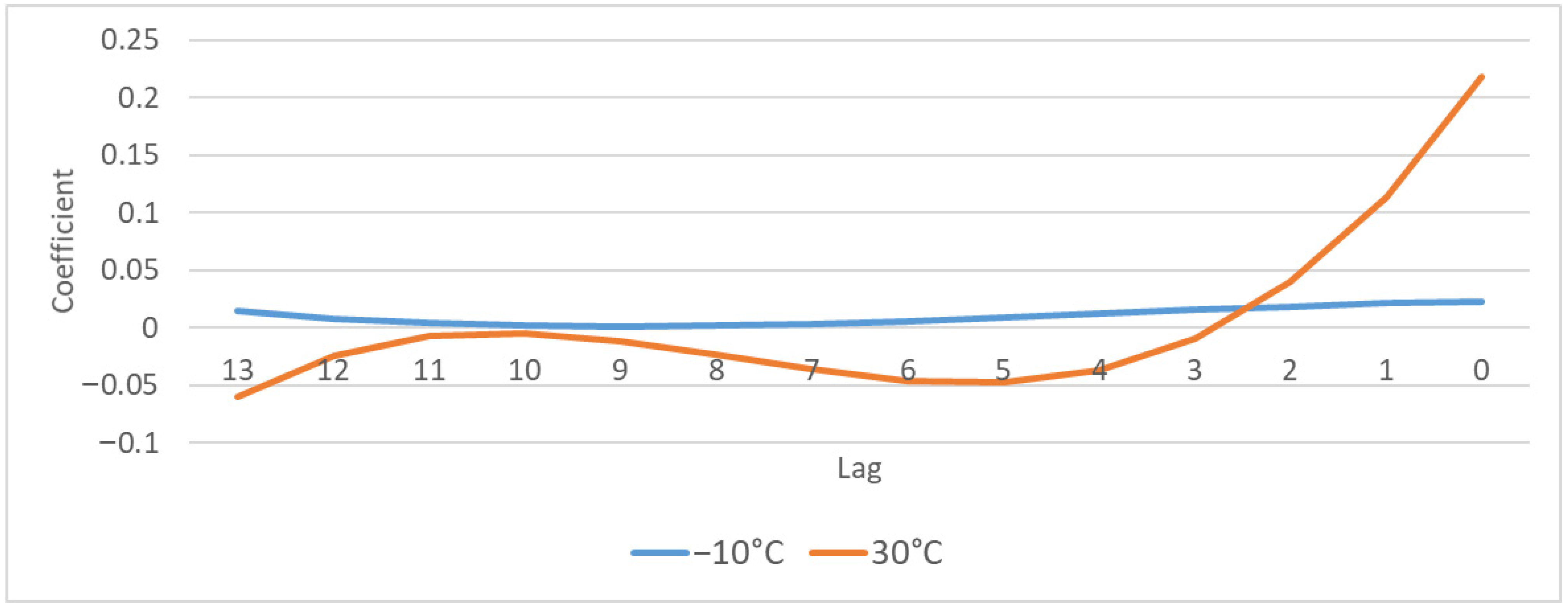
In order to perform this meta-regression, we had to simplify the time series models to obtain meaningful and quantifiable coefficients per district. We first built Generalized Additive Models (GAMs) with a negative binomial family controlling for long-term and seasonal trends using natural splines and for day of the week as a factorial variable. For selected districts, we primarily added temperature as a quadratic function (temperature and temperature squared) and with 14 lags (lag 0 until lag 13) assuming a third-degree polynomial distribution for the lag effects. The quadratic function allows for a U-shaped association between temperature and daily deaths, while the third-degree polynomial for the lag effects allows for harvesting effects. In the paper, we demonstrated the results of this model using the data from the city of Vienna as an example. We presented the temperature–mortality association for each lag day graphically and additionally produced a graphical representation of the three-dimensional temperature–lag–mortality structure. Here, we present an abbreviated version showing the temperature–mortality association at a low temperature (−10 °C) and at a high temperature (30 °C) (Figure 1).
Next, we tried to simplify the model. We modeled the immediate effect (lag 0) as a linear effect above a certain threshold and the longer-term effect using the average temperatures of lag 0 to 13. This second effect estimate also covered the harvesting effect observed after high temperatures and thus appeared as a linear effect without a threshold. As we explained in our first paper, this simplified model was not inferior to the distributed lag model according to the Akaike information criterion.
This previous paper [2] left us with two additional questions: (1) How could we best communicate the coefficients of heat and cold effects to the public? Take the district of Eisenstadt (the provincial capital of Austria’s eastern region, Burgenland) as an example, which is first in the alphabetical list of Austrian districts by federal states and districts. A decrease of one degree Celsius in the 14-day average temperature prior to the index day was associated with an increase of 0.00555 in the residual of the negative binomial Generalized Additive Model used to assess the effects of long-term trends, seasonal variation, and day of week on daily mortality in this district. Such a figure does not mean much for the average reader. (2) Considering climate scenarios, we expect an increase in hot and a decrease in cold days. What then would be the net effect of climate change? Do the adverse effects of increasing heat already outweigh the benefits of decreasing cold?
An HIA would best serve the goal of answering these questions: How many deaths per year and per district are attributable to extreme (high and low) temperatures? How will this number change in the coming years, assuming the impact of climate change?
“Health Impact Assessment (HIA) provide (sic!) decision-makers and stakeholders with comprehensive information about the consequences on health of interventions, policies, and projects” [3], or “Health impact assessment (HIA) is a practical approach used to systematically judge the potential health effects of a policy, strategy, plan, programme or project on a population, particularly on vulnerable or disadvantaged groups” [4]. The term HIA is also used for the assessment of the effects of air pollution [5] or extreme temperatures [6] and to show the numbers of attributable deaths.
HIA is a tool of science communication, and we have used it before to demonstrate the health impact of road traffic on residents living in close proximity to busy roads [7] or the health effect of replacing fossil diesel by biodiesel fuel [8]. Recently, we have also demonstrated the health effect of ozone concentrations under different climate scenarios [9].
In that sense, HIA is mainly a method of explaining research results to the general public and to policy makers. Epidemiological regression models result in relative risks or odds ratios as estimates of relative changes in risk or incidence rates. HIAs help to translate these abstract figures into meaningful numbers. We decided to follow the methodological approach developed for the APHEIS project [10].

2. Materials and Methods

2.1. Effect Estimates

The linear coefficients for temperature effects come from the previous study [2]. This study analyzed the daily number of total deaths per district from the years 1970 to 2020. By visual inspection of more-complex non-linear associations, including natural splines and third-degree polynomial distributed lag models as well as the use of the Akaike information criterion, it was shown for selected districts that two simpler models adequately represented the association between temperature and daily deaths. Both models assumed a linear effect of the 14-day moving average of the average daily temperature before the index day. This exposure measure showed a negative slope between −0.02889 and −0.00555 for all districts, which was generally significantly different from zero. This means that, the colder it was over a fortnight, the more deaths occurred. One model used a quadratic formula (temperature and temperature squared) for the average temperature of the same day. In that case, the coefficient of temperature squared was generally positive, indicating a higher number of deaths on both very hot and very cold days. The second model applied a linear effect (always positive and usually significantly different from zero) above a certain threshold for the average temperature of the same day. The coefficients from this second, threshold-based model were subsequently used for the HIA.

2.2. Future Temperature and Mortality Data

We used daily average temperature data from the Austrian Climate Scenarios dataset (ÖKS15 [11,12]). ÖKS15 is a bias-adjusted ensemble based on 15 regional climate models of the EURO-CORDEX initiative (0.11° resolution) [13] downscaled to a 1 km grid covering the entire territory of Austria. Population-weighted daily average temperatures were calculated at the district level up to the year 2100, using three climate models (CM5A-MR, HadGEM2-ES, and MPI-ESM-LR) and two global emission scenarios (Representative Concentration Pathways: RCP4.5 and RCP8.5) [14]. For the main analysis, we used the average case numbers from the three climate models. In a sensitivity analysis, to demonstrate the uncertainty stemming from the climate models, we also present the results from each model separately.
Because our main interest concerned the effect of climate change, we applied the effect estimates of the future temperatures to the 2020 mortality data. To put these data into context, we also present future demographic developments as suggested by Statistics Austria [15]. This extrapolation was estimated before the COVID pandemic and includes, among others, annual population figures and annual total deaths per district for every 5 years from 2020 to 2060, as well as for the year 2075. Consequently, in contrast to the temperature data, mortality data are only available for every 5th year and are missing for the years 2065, 2070, and all years after 2075.
IIASA [16,17] provided demographic scenarios based on the national Shared Socioeconomic Pathways [18] (SSL1 to SSL5), estimating the total population in each district for every 5th year from 2015 to 2100. While the Statistics Austria data are a simple extrapolation of current trends (keeping birth rate, life expectancy, and migration patterns constant), the population numbers of the SSLs mostly differ regarding internal and external migration. Because migration would also lead to a change in the age distribution, annual mortality data cannot be accurately estimated from these population numbers. But, since climate change scenarios do depend on (global) forecasts of economic development, they are inherently linked to SSLs, which therefore must at least be considered in the discussion.

2.3. HIA Computation

The number of daily deaths attributable to extreme temperatures was calculated by applying Formula (1):
AttrCas = TotCas × (exp(deltaT × Beta) − 1)/exp(deltatT × Beta)
where
-
AttrCas: Total daily attributable deaths.
-
TotCas: Total number of daily deaths (annual deaths divided by 365).
-
deltaT: Temperature deviation—either the difference between same-day temperature and a defined threshold or between the threshold and the 14-day average.
-
Beta: The coefficient or the logarithm of the relative risk ln(RR) for same-day or 14-day average temperature.
Originally, we planned to include future demographic developments in the analysis, but predictions of mortality numbers were only available on an annual basis. Therefore, and for ease of calculation, daily deaths were approximated by dividing annual deaths by 365. Historically, a higher number of daily deaths has been observed during the cold season than in the warm season. Part of this, at least, is covered by the 14-day average temperature effect. However, in recent years, this seasonal disparity has decreased. With ongoing climate change, characterized by more heat waves and fewer cold spells, this trend towards a reduction in seasonal mortality variation is expected to continue. Therefore, the assumption of constant daily deaths throughout the year is unlikely to introduce significant bias. At least for the City of Vienna, we examine the differences between a model based on a constant rate of daily deaths and one that is based on the actual daily death distribution in the year 2020 (Appendix A Figure A1).

2.4. Temperature Thresholds

For the heat effect, the district-specific threshold temperature was derived from the Threshold Model. In contrast, for the cold effect based on the preceding 14-day average temperature, no equivalent “natural” threshold could be determined. A sensitivity analysis was conducted using fixed thresholds of 0 °C and 20 °C, below which the effect of cold temperature would be considered. These two extremes represent an unlikely low and an even more unlikely high threshold for the cold effect. However, in the main analysis, the same numerical threshold as for the heat effect was applied to the 14-day average. This approach facilitates comparison with the study by Martínez-Solanas et al. [1], who employed a more complex spline model to characterize the temperature–mortality association. Their model was not fitted at the district level, but rather for a large part of Europe, and considered only same-day temperatures, identifying a roughly U-shaped association between temperature and deaths. They had applied their effect estimates on geographical units larger than districts and, in the case of Austria, to federal states.

2.5. Scenarios and Spatial Representation

Attributable deaths were estimated for every 5 years based on total annual death numbers, combined with projected daily temperatures from the 5-year period (e.g., 2028–2032) surrounding every 5th year from 2020 onwards. Estimates were generated under two Representative Concentration Pathways (RCP4.5 and RCP8.5). Attributable deaths were calculated at the district level, but results are presented at the federal state level and for Austria as a whole. Austria’s nine federal states comprise between 4 districts (e.g., Vorarlberg) and 24 districts (e.g., Lower Austria).

3. Results

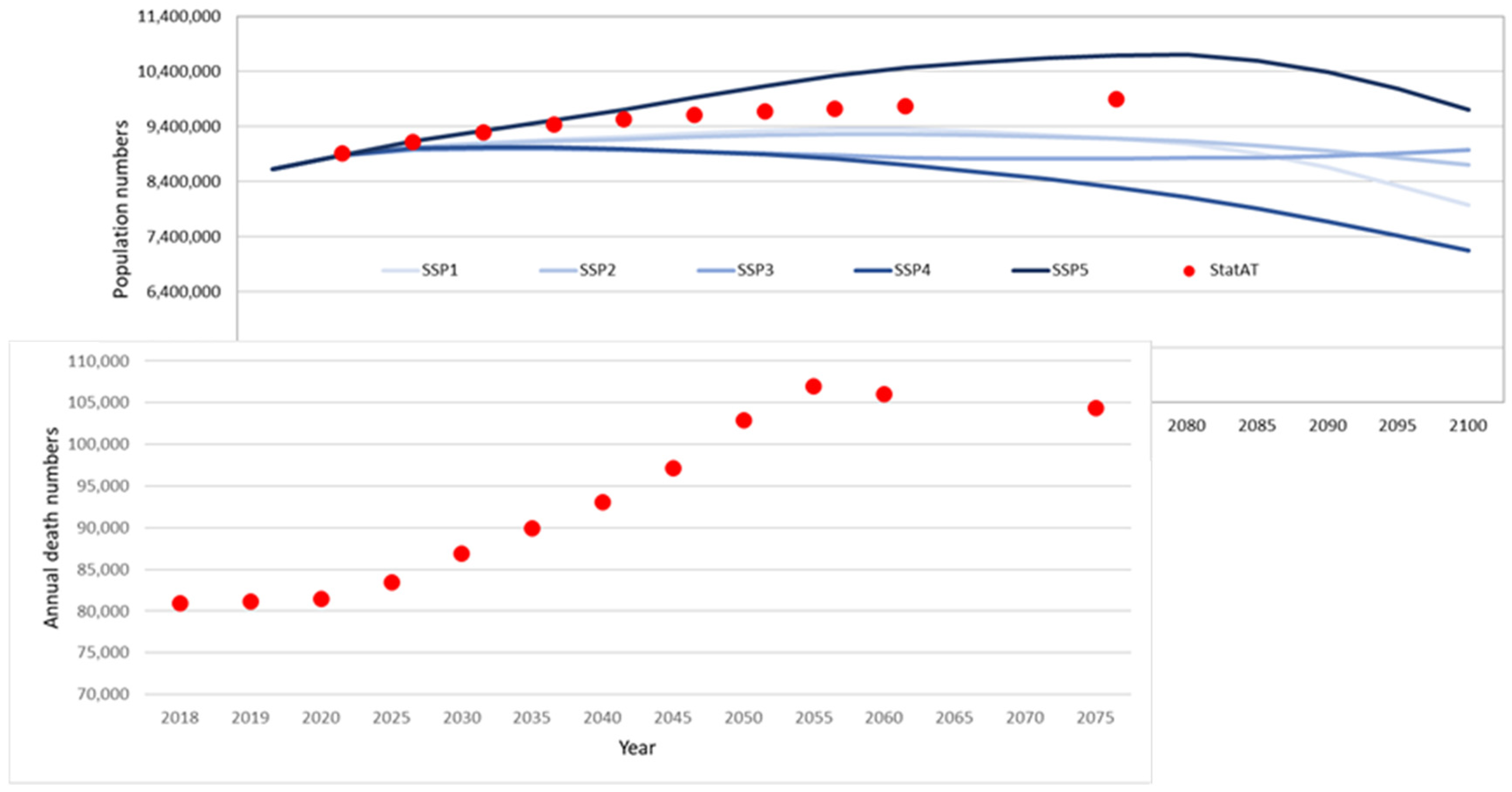
According to Statistics Austria, the number of deaths in Austria is projected to increase until the middle of the current century, followed by a decline. Accordingly, temperature-attributable deaths will also increase until around 2050 and decrease thereafter. Future national population numbers will slightly differ according to SSL with estimates either higher or lower than the Statistics Austria estimate (Figure 2).
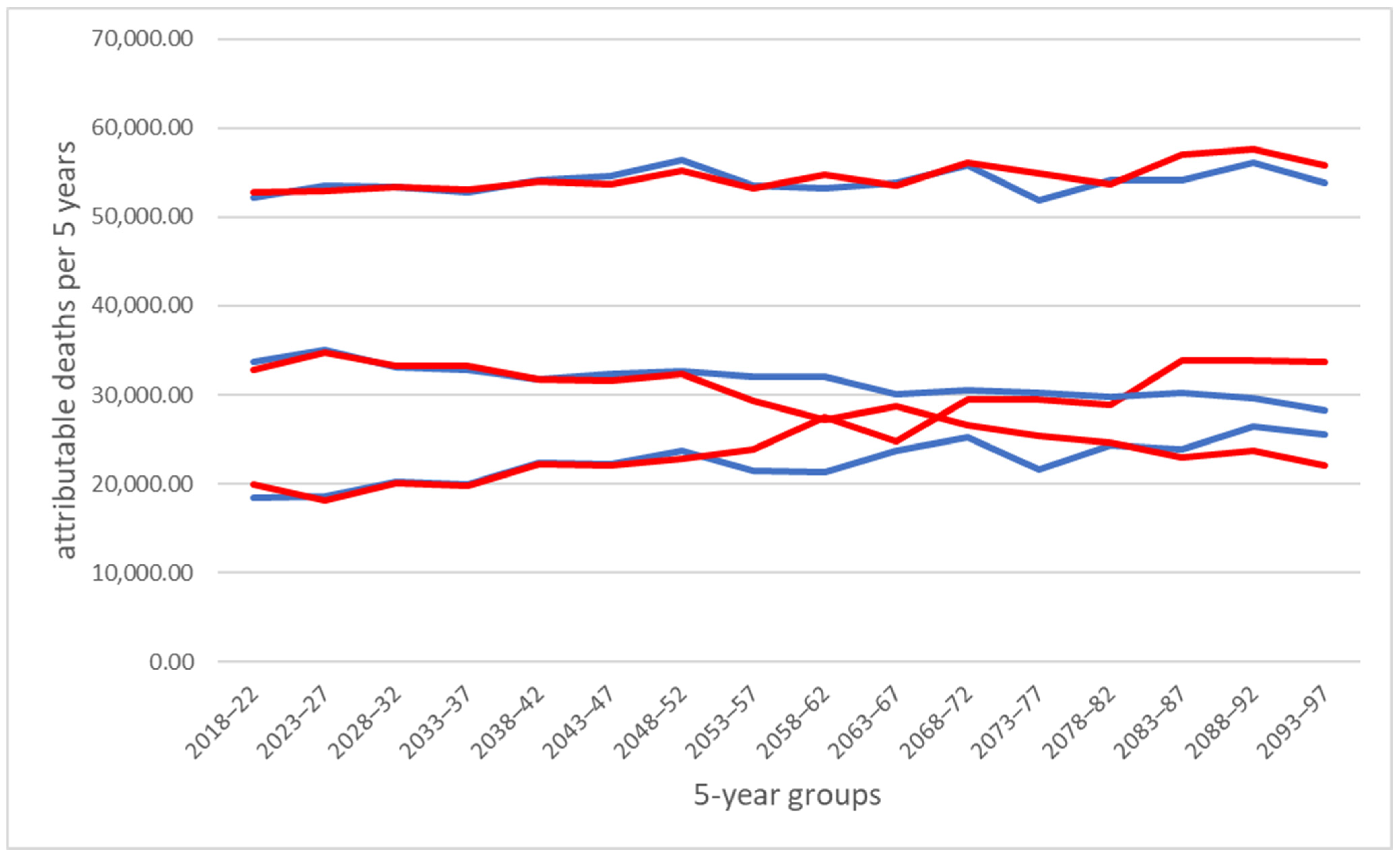
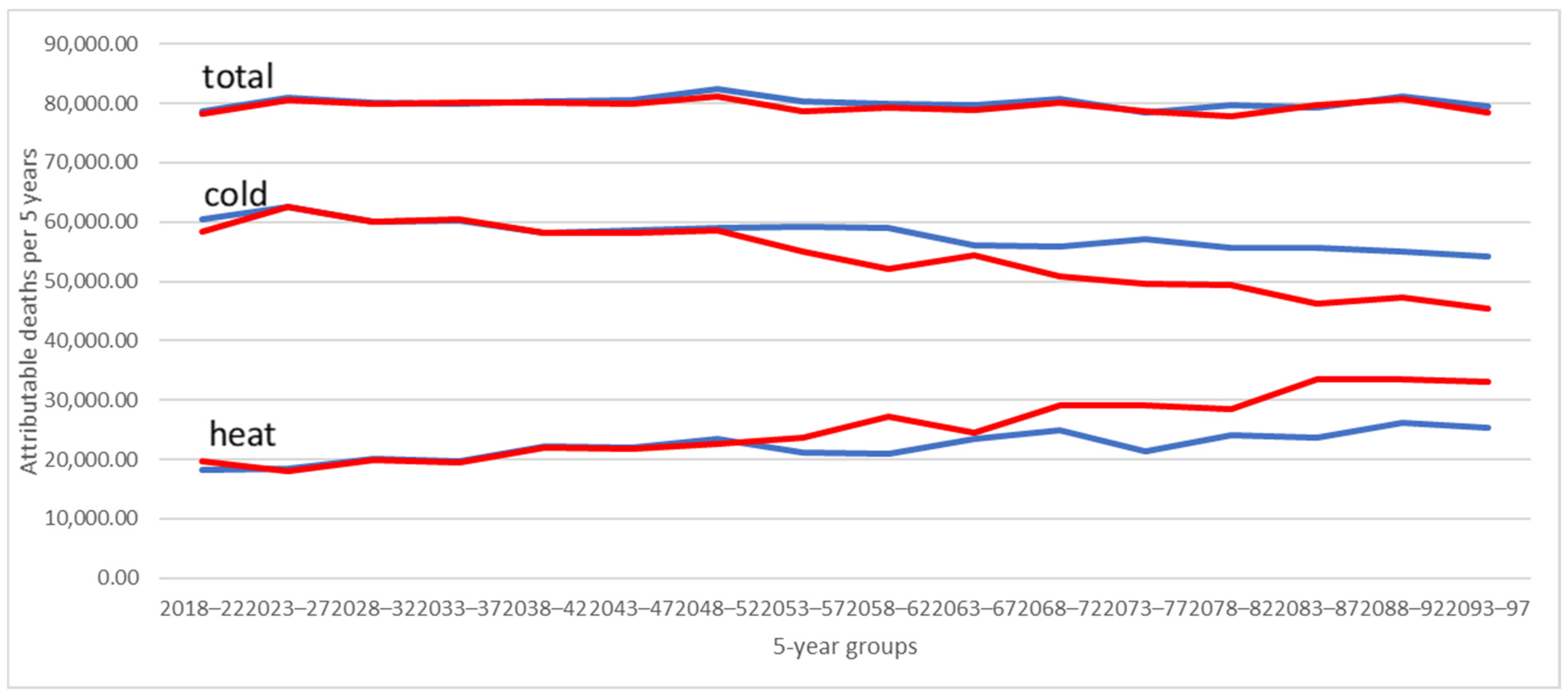
Figure 3 presents national-level results for Austria. In the beginning, there are more deaths due to cold (more than 30,000 deaths per 5 years) than due to hot temperatures (about 20,000 deaths per 5 years). There is obviously not yet any difference between the two climate scenarios. After the middle of the century, in the case of the RCP8.5 scenario, and by the end of the century in the case of RCP4.5 scenario, heat- and cold-related deaths draw even. The sum of both heat- and cold-related deaths displays a slight increase over time for both climate scenarios.
The results for the city and federal state of Vienna are displayed in Appendix A Figure A1. In this figure, the results are compared between the original model that assumed constant daily mortality counts and the one using actual daily deaths from the year 2020. The simplified assumption of a constant number of daily deaths leads to a slight overestimation of the heat-related deaths. This error does not change over time. The effect on cold-related deaths is much smaller.
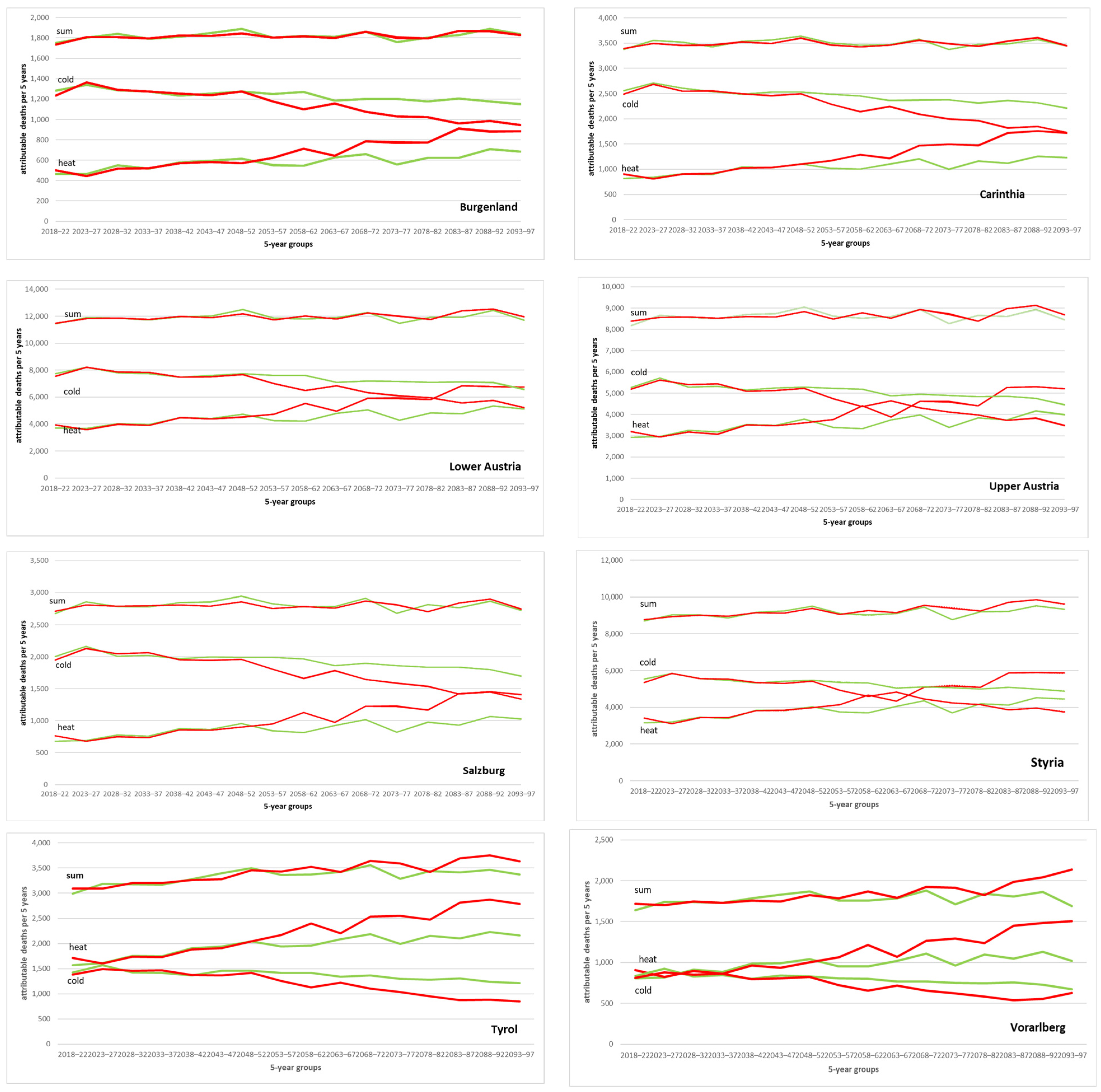
The main results for all federal states, except for Vienna, which is presented separately, are shown in Appendix A Figure A2. Due to differences in population size, the absolute numbers vary between the federal states. However, the overall shape of the curves is very similar across all regions. An exception is seen in the most-Western states, Tyrol and Vorarlberg, in which heat already causes more deaths than cold today.
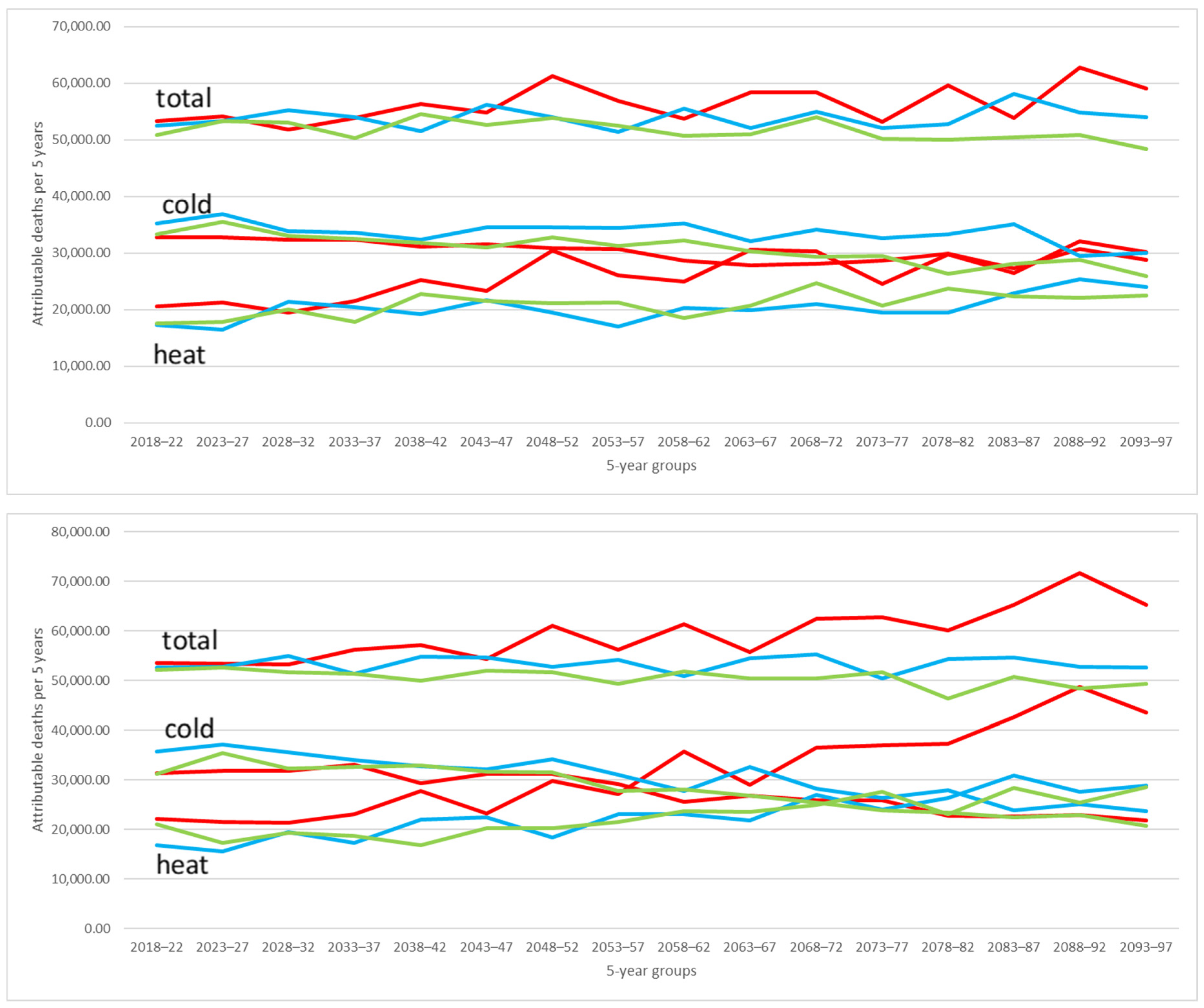
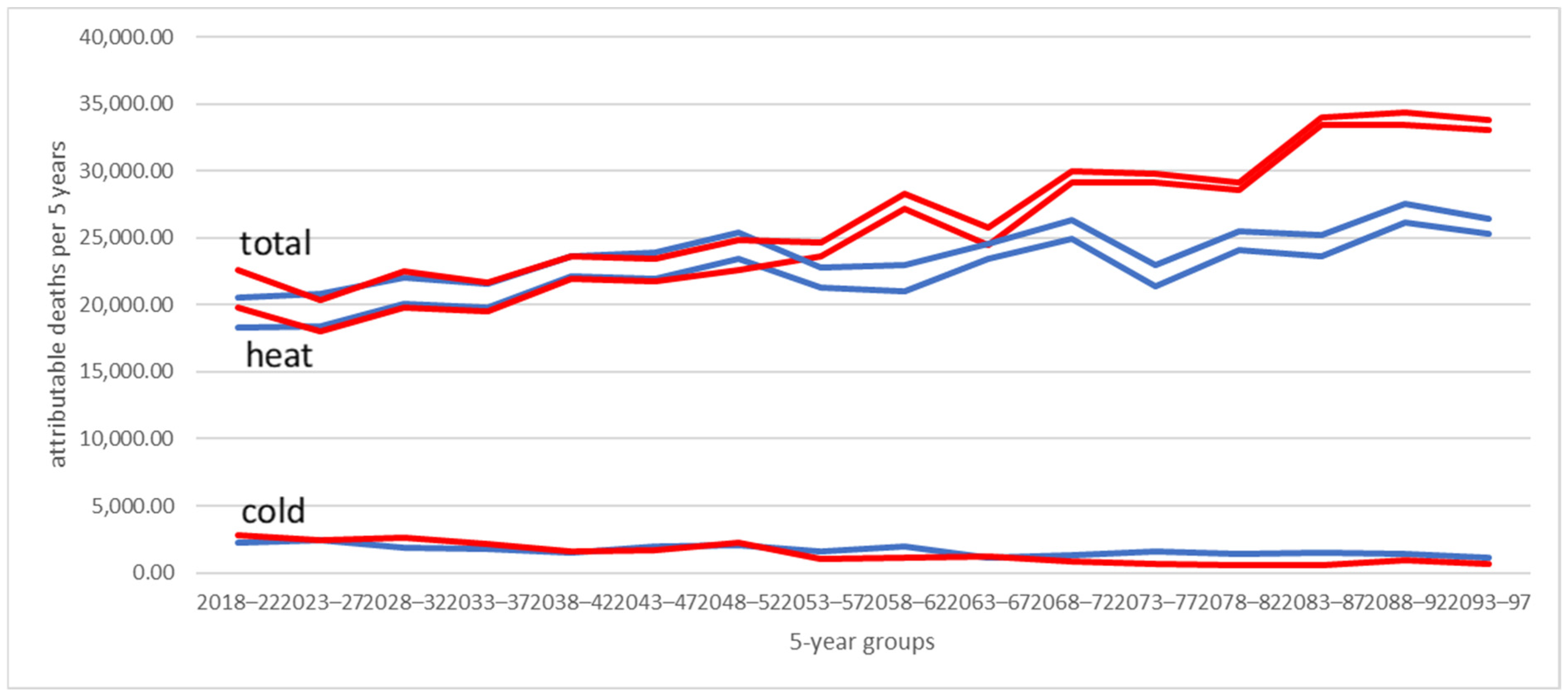
Figure 4 demonstrates the differences between the three climate models. HadGEM2-ES predicts the highest temperatures and thus results in the highest numbers of heat-related deaths, especially for the RCP8.5 scenario. The increase in the total case numbers (heat- and cold-related cases combined) is driven by HadGEM2-ES alone, while according to the two other models, total case numbers at the end of the century are fairly similar to those in 2020. With CM5A-MR, a small decline in total cases can even be observed.
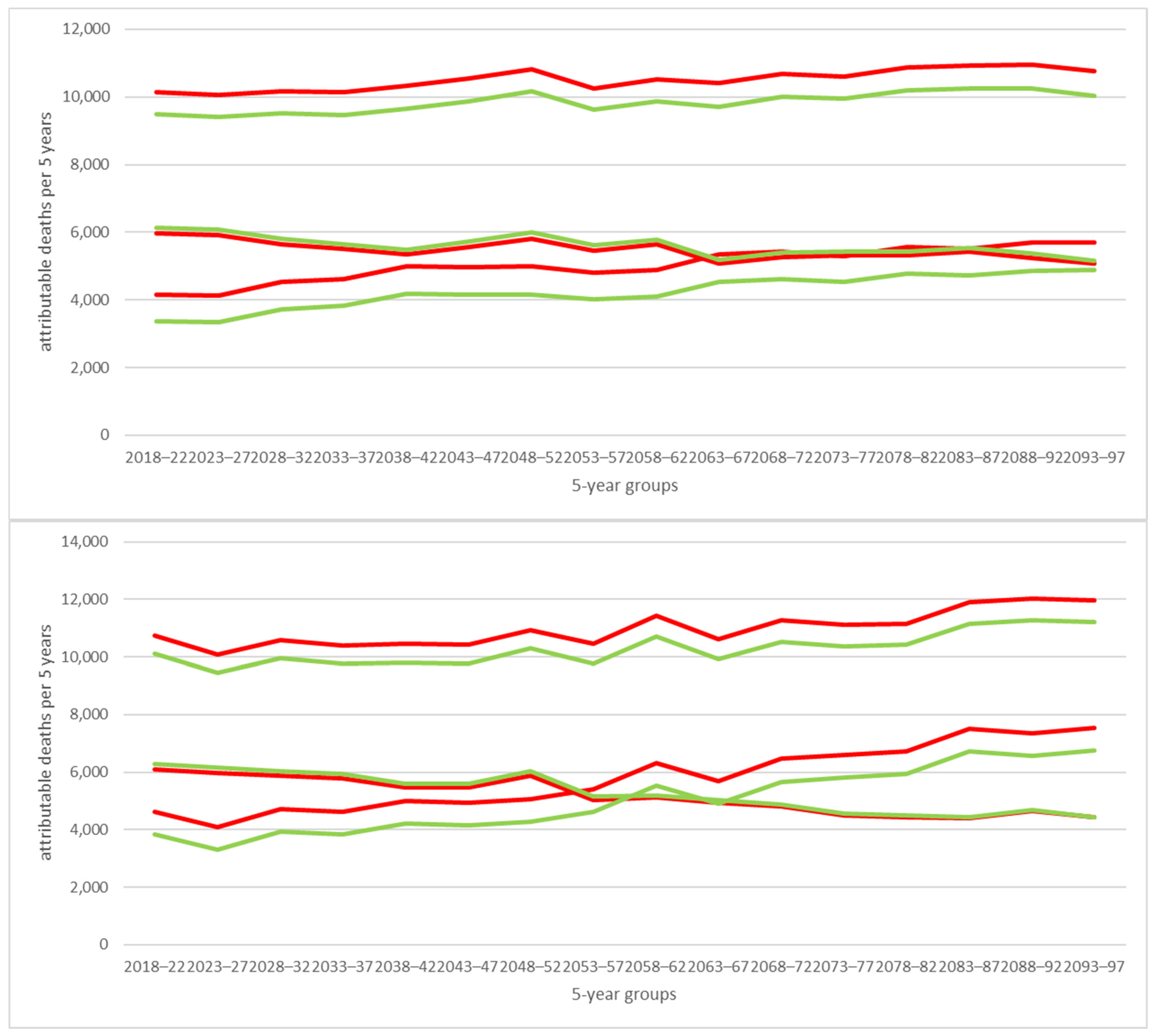
Figure 5 presents the effect of a different choice of the threshold for the cold effect. As expected, when using the lower threshold of 0 °C, cold days already have only a minor impact on mortality today. Therefore, in future predictions, only the increase in hot days and associated heat-related deaths has an impact on total temperature-related mortality. On the other hand, assuming the higher threshold of 20 °C, cold days currently have a significant impact on mortality and will continue to do so in future. In this case, the decline in cold-related deaths due to a warming climate outbalances the increase in heat-related deaths. This results in a fairly constant number of total temperature-related deaths.

4. Discussion

The Austrian Assessment Report (AAR) emulates the production principles of the IPCC assessment reports even down to the titles like co-chair, Coordinating Lead Authors, Lead Authors, and Contributing Authors, for the various scientists working on the report, also providing scientific evidence regarding the health effects of climate change in Austria. In the second AAR [19] we were tasked with compiling the scientific evidence regarding health effects of climate change in Austria within chapter 2 [20]. Among the many pathways leading from climate change to health impacts, extreme temperatures were among the best studied.
High temperatures place significant stress on the human body. Frail and severely ill individuals are particularly vulnerable and may succumb to heat exposure. With a warming climate and more-frequent, intense and prolonged heatwaves, an increase in heat-related deaths is to be expected [21,22]. Rising temperatures increase the risk, intensity and duration of heatwaves. Their impact on hospitalization and mortality has been studied in many parts of the world including the Alpine Region and Austria [6,23,24,25,26].
The relationship between cold temperatures and mortality is less thoroughly studied. Cold is undoubtedly a major physiological stressor: people can, quite literally, freeze to death. But, even apart from that, maintaining core body temperature in cold conditions requires significant energy. Reduced blood flow to the skin and peripheral body parts can lead to cellular damage and an increase in inflammatory markers. Nowadays, in regions with temperate climate like Austria, more people die on cold days than on hot days [27,28,29]. As temperatures rise, heat-related deaths are predicted to increase and cold-related deaths to decrease. According to Martínez-Solanas et al. [1], the increase in heat-related deaths will exceed the decrease in cold-related deaths in Austria by the end of the century and especially under high-emission scenarios. But that study also still estimated a net benefit of the changing number of hot and cold days due to climate change until mid-century. When a part of our author team was involved in the second AAR (AAR2) [19], this study was indeed the only one extrapolating current temperature–effect estimates into the future. A decrease in cold days still exceeding the impact of increasing hot days seemed not very plausible to us for several reasons: Our own analysis of temperature data from Vienna [29] showed that, while average temperatures increased over the last 50 years, the annual standard deviation of daily temperatures also increased, thus increasing hot days more than decreasing cold days. Also people are adapted to the temperature range they are historically used to. Any change from this traditional “norm” will likely increase stress and adverse health effects. These considerations were among the main incentives to perform the current study: contrary to Martínez-Solanas et al. [1], we wanted to examine the temperature–mortality association in Austria on a much smaller spatial scale, differentiate between more-immediate heat effects and more-prolonged cold effects, and extrapolate the effects until the end of this century based on the newest fine-scale climate scenarios for Austria.
Indeed, the AAR [19] also performed a thorough multi-stage review process, and at least one of the reviewers strongly opposed the notion that there are even cold related deaths at moderate temperatures. He argued that the statistical effects of cold temperature, especially regarding averages over several weeks, rather reflect the seasonal effect of increased viral respiratory infections in winter, which coincide with the cold but are not directly affected by the temperature itself: even with increasing temperatures, these infections will still show the same seasonal pattern.
The pure effect of climate change becomes only obvious when demography is supposed to stay unchanged: As expected, deaths from cold will continue to decline and deaths from heat will continue to rise. But, for the main model (using the same temperature threshold for heat and cold effects), the increase in deaths from heat is now already larger than the decrease in deaths from cold: The net effect of climate change already increases the number of deaths now. This is even more pronounced when a very low threshold for cold effects (0 °C) is assumed. The adverse net effect is only marginally present when a very high threshold for cold effects (20 °C) is assumed instead. Thus, while the size of the net effect of temperature change strongly depends on the chosen threshold for the cold effect, overall, an increase in temperature-associated deaths is to be expected in all climate scenarios and is already present now.

Limitations

In temperate climates, mortality tends to be higher during the cold season. However, it remains uncertain to what extent this is directly attributable to low temperatures. Winter seasons involve a range of additional factors not limited to temperature alone: reduced sunlight may weaken the immune system, and the lack of UV radiation can prolong the survival of airborne pathogens, particularly respiratory viruses. Moreover, lower temperatures reduce the activity of the outdoor microbiome, which plays an important role in controlling microbial pathogens. With respiratory infections, for example, with influenza, host immunology and social behavior patterns might also drive seasonality [30].
While all these factors are associated with colder conditions, it is unclear whether they will disappear after a rise in average temperature. Although low-temperature effects have been estimated with adjustments for long-term and seasonal trends [2], a residual confounding from seasonal factors may still persist. Therefore, the health impact of climate change on cold-associated deaths is more complex and uncertain. This uncertainty is reflected in the sensitivity analysis applying different thresholds for cold effects.
Formula (1) assumes that temperature-attributable deaths are part of the total mortality rather than additional deaths. When applied to historical data, this assumption is appropriate, as the total number of deaths is known and unaffected by exposure levels. However, for future projections, estimates of overall mortality are based on considerations that do not take into account changes in temperature exposure. With increasing exposures, the total number of deaths could actually increase and exceed the estimated numbers. However, assuming that there are more deaths each year because the number of attributable deaths is expected to exceed the estimated number would quickly lead to changes in the demographics that would invalidate the estimates for later years. To maintain internal consistency and avoid overestimation, attributable deaths were therefore modeled as a proportional subset of the projected total mortality—even in future scenarios.
Our results demonstrate the health effects of ambient temperatures on the attributable total death numbers for the current Austrian population but consider different future climate scenarios. Clearly, different emission scenarios are associated with different socioeconomic trajectories. According to Statistics Austria [15], the number of deaths in Austria is projected to increase until the middle of the current century, following by a decline. The same pattern, although with minor variations, is also predicted under the various SSP scenarios. Accordingly, temperature-attributable deaths will also increase until around 2050 and decrease thereafter. This pattern will clearly dominate the number of attributable deaths in the future. While the overall shape of the future population numbers might still be correct, it is noteworthy that the predictions by Statistics Austria [15] were made before the COVID pandemic. This pandemic led to a reversible increase in the number of deaths and, accordingly, to a decrease in life expectancy. Also, during the pandemic, fertility rates in Austria declined and have not recovered yet [31]. Likewise, current wars and political turmoil globally will have lasting effects on future economic trajectories.
Obviously, every climate scenario comes with its inherent uncertainties. This is exemplified by comparing the outcomes of the three climate models. Still, we hope that, on average, the three models will provide a reasonable estimate of future temperatures, as long as no major tipping points are crossed. Whether the latter assumption will indeed hold until the end of this century might be debatable. But this discussion lies outside the scope of this paper.
The effect estimates of our own paper [2] came with their own uncertainties. Especially for the smaller districts with lower daily death numbers, estimates often displayed larger confidence intervals, while for the larger urban districts, the point estimates were rather precise. Generally, we trust that these errors were random and thus would cancel each other out when adding up the results of the districts. Also, as the effect estimates across all districts pointed in the same direction, we gain prior confidence that the estimates per district are grossly correct. With this Bayesian prior, it would be possible to assume more-precise effect estimates for the smaller districts also [32].
As was already shown for the city of Vienna [29], with increasing average temperatures, societies adapt to the new condition, shifting the U-shaped temperature–mortality association to the right. This shift can either occur on the individual level with physiological and behavioral changes and adaptation of humans or on the population level when the most heat-vulnerable persons simply die out due to a kind of selection mechanism. Clearly, the static model applied in this HIA could not capture temporal changes in population vulnerability. This HIA is based on a scenario, and scenarios never tell what will be, but only what could be under certain assumptions.

5. Conclusions

The precise net effect of declining cold and increasing hot days on the number of attributable deaths in Austria in the coming decades will mostly depend on the pace of climate change and whether adaptation can keep up to that pace. Nevertheless, even at present, there is some evidence (depending on the climate model) that the net effect is an increase in temperature-associated deaths, underlining the urgency of mitigating climate change.

Author Contributions

Conceptualization, H.M.; methodology, H.M.; formal analysis, H.M.; resources, M.J.; writing—original draft preparation, H.M.; writing—review and editing, A.K., L.W. and H.-P.H. All authors have read and agreed to the published version of the manuscript.

Funding

This paper was prepared as part of the Austrian ACRP 14/2022 project DISCC-AT (project number: KR21KB0K00001) funded by the Austrian “Klima- und Energie-Fonds” (Climate and Energy Fund).

Institutional Review Board Statement

Because this study only used anonymous and aggregated human register data, ethics committee approval was deemed not necessary.

Data Availability Statement

The data presented in this study are available on request from the corresponding author.

Conflicts of Interest

The authors declare no conflicts of interest.

Abbreviations

The following abbreviations are used in this manuscript:
AARAustrian Assessment Report
HIAHealth Impact Assessment
IIASAInternational Institute for Applied Systems Analysis
IPCCIntergovernmental Panel on Climate Change
ÖKS15Österreichische Klimaszenarien [Austrian Climate Scenarios] 2015
RCPRepresentative Concentration Pathway
SSLShared Socioeconomic Pathway

Appendix A

Figure A1. Temperature-attributable deaths predicted for the Austrian Federal State and City of Vienna until the end of the century. (Top): RCP4.5, (Bottom): RCP8.5. The red lines present the estimates based on the assumption of a constant number of daily deaths throughout the year. The green lines follow the actual distribution of daily deaths in the year 2020.
Climate 14 00089 g0a1
Figure A2. Temperature-attributable deaths predicted for the Austrian Federal States until the end of the century. Effects of climate change only. Global climate trends are shown in green (RCP4.5) and red (RCP8.5).
Climate 14 00089 g0a2

References

  1. Martínez-Solanas, È.; Quijal-Zamorano, M.; Achebak, H.; Petrova, D.; Robine, J.M.; Herrmann, F.R.; Rodó, X.; Ballester, J. Projections of temperature-attributable mortality in Europe: A time series analysis of 147 contiguous regions in 16 countries. Lancet Planet. Health 2021, 5, e446–e454. [Google Scholar] [CrossRef]
  2. Moshammer, H.; Jury, M.; Hutter, H.-P.; Wallner, P. Determinants of Spatial Variation in Vulnerability to Extreme Temperatures in Austria from 1970 to 2020. Climate 2026, 14, 16. [Google Scholar] [CrossRef]
  3. Health Impact Assessment (HIA) Methods. Available online: https://www.who.int/tools/health-impact-assessments (accessed on 10 October 2024).
  4. Health Impact Assessment. Available online: https://www.who.int/health-topics/health-impact-assessment#tab=tab_1 (accessed on 10 October 2024).
  5. Khomenko, S.; Cirach, M.; Pereira-Barboza, E.; Mueller, N.; Barrera-Gómez, J.; Rojas-Rueda, D.; de Hoogh, K.; Hoek, G.; Nieuwenhuijsen, M. Premature mortality due to air pollution in European cities: A health impact assessment. Lancet Planet. Health 2021, 5, e121–e134. [Google Scholar] [CrossRef] [PubMed]
  6. Masselot, P.; Mistry, M.; Vanoli, J.; Schneider, R.; Iungman, T.; Garcia-Leon, D.; Ciscar, J.C.; Feyen, L.; Orru, H.; Urban, A.; et al. Excess mortality attributed to heat and cold: A health impact assessment study in 854 cities in Europe. Lancet Planet. Health 2023, 7, e271–e281. [Google Scholar] [CrossRef] [PubMed]
  7. Perez, L.; Declercq, C.; Inguez, C.; Aguilera, I.; Badaloni, C.; Ballester, F.; Bouland, C.; Chanel, O.; Cirarda, F.B.; Forastiere, F.; et al. Chronic burden of near-roadway traffic pollution in 10 European cities (APHEKOM network). Eur. Resp. J. 2013, 42, 594–605. [Google Scholar] [CrossRef] [PubMed]
  8. Hutter, H.-P.; Kundi, M.; Moshammer, H.; Shelton, J.; Krüger, B.; Schicker, I.; Wallner, P. Replacing fossil diesel by biodiesel fuel: Expected impact on health. Arch. Environ. Occup. Health 2015, 70, 4–9. [Google Scholar] [CrossRef] [PubMed]
  9. Moshammer, H.; Mayer, M.; Rieder, H.; Schmidt, C.; Bednar-Friedl, B.; Wallner, P.; Hutter, H.-P. Attributable deaths in Austria due to ozone under different climate scenarios. Eur. J. Public Health 2024, 34, 1015–1020. [Google Scholar] [CrossRef] [PubMed]
  10. Medina, S.; Le Tertre, A.; Saklad, M.; on behalf of the Apheis Collaborative Network. The Apheis project: Air Pollution and Health-A European Information System. Air Qual. Atmos. Health 2009, 2, 185–198. [Google Scholar] [CrossRef] [PubMed]
  11. Chimani, B.; Heinrich, G.; Hofstätter, M.; Kerschbaumer, M.; Kienberger, S.; Leuprecht, A.; Lexer, A.; Peßenteiner, S.; Poetsch, M.S.; Salzmann, M.; et al. ÖKS15—Klimaszenarien für Österreich. Daten, Methoden und Klimaanalyse [Studie im Auftrag der Bundesländer und des BMLFUW]. 2016, p. 353. Available online: https://data.hub.geosphere.at/dataset/oks15_endbericht (accessed on 12 January 2025).
  12. Chimani, B.; Matulla, C.; Eitzinger, J.; Hiebl, J.; Hofstätter, M.; Kubu, G.; Maraun, D.; Mendlik, T.; Schellander-Gorgas, T.; Thaler, S. GUIDELINE zur Nutzung der ÖKS15-Klimawandelsimulationen Sowie der Entsprechenden Gegitterten Beobachtungsdatensätze (CCCA—Wissenstransfer) [STARC-Impact]. 2019, p. 102. Available online: https://ccca.ac.at/wissenstransfer/starc-impact-guideline (accessed on 12 January 2025).
  13. Jacob, D.; Petersen, J.; Eggert, B.; Alias, A.; Bøssing Christensen, O.; Bouwer, L.M.; Braun, A.; Colette, A.; Déqué, M.; Georgievski, G.; et al. EURO-CORDEX: New high-resolution climate change projections for European impact research. Reg. Environ. Change 2014, 14, 563–578. [Google Scholar] [CrossRef]
  14. Representative Concentration Pathways Database (RCP). Available online: https://iiasa.ac.at/models-tools-data/rcp (accessed on 12 January 2025).
  15. Shared Socioeconomic Pathways Scenario Database (SSP). Available online: https://iiasa.ac.at/models-tools-data/ssp (accessed on 12 January 2025).
  16. Population Projections for Austria and Federal States. Available online: https://www.statistik.at/en/statistics/population-and-society/population/demographische-prognosen/population-projections-for-austria-and-federal-states (accessed on 12 January 2025).
  17. Riahi, K.; van Vuuren, D.P.; Kriegler, E.; Edmonds, J.; O’Neill, B.C.; Fujimori, S.; Bauer, N.; Calvin, K.; Dellink, R.; Fricko, O.; et al. The Shared Socioeconomic Pathways and their energy, land use, and greenhouse gas emissions implications: An overview. Glob. Environ. Change 2017, 42, 153–168. [Google Scholar] [CrossRef]
  18. Samir, K.C.; Lutz, W. The human core of the shared socioeconomic pathways: Population scenarios by age, sex and level of education for all countries to 2100. Glob. Environ. Change 2017, 42, 181–192. [Google Scholar] [CrossRef]
  19. Huppmann, D.; Keiler, M.; Riahi, K.; Rieder, H. (Eds.) Second Austrian Assessment Report on Climate Change (AAR2); Austrian Academy of Sciences Press: Vienna, Austria, 2025; Available online: https://aar2.ccca.ac.at/ (accessed on 4 February 2026).
  20. Erb, K.; Tappeiner, U.; Winiwarter, W. Climate change, land use, ecosystem services and health. In Second Austrian Assessment Report on Climate Change (AAR2) of the Austrian Panel on Climate Change (APCC); Huppmann, D., Keiler, M., Riahi, K., Rieder, H., Eds.; Austrian Academy of Sciences Press: Vienna, Austria, 2025; Available online: https://aar2.ccca.ac.at/chapters/2 (accessed on 4 February 2026).
  21. Janoš, T.; Quijal-Zamorano, M.; Shartova, N.; Gallo, E.; Méndez Turrubiates, R.F.; Beltrán Barrón, N.D.; Peyrusse, F.; Ballester, J. Heat-related mortality in Europe during 2024 and health emergency forecasting to reduce preventable deaths. Nat. Med. 2025, 31, 4065–4074. [Google Scholar] [CrossRef] [PubMed]
  22. van Daalen, K.R.; Tonne, C.; Semenza, J.C.; Rocklöv, J.; Markandya, A.; Dasandi, N.; Jankin, S.; Achebak, H.; Ballester, J.; Bechara, H.; et al. The 2024 Europe report of the Lancet Countdown on health and climate change: Unprecedented warming demands unprecedented action. Lancet Public Health 2024, 9, e495–e522. [Google Scholar] [CrossRef] [PubMed]
  23. Austrian Panel on Climate Change (APCC). Österreichischer Sachstandsbericht Klimawandel 2014 (AAR14); Verlag der Österreichischen Akademie der Wissenschaften: Vienna, Austria, 2014; pp. 1–1096. [Google Scholar]
  24. Haas, W.; Moshammer, H.; Muttarak, R. (Eds.) Österreichischer Special Report Gesundheit, Demographie und Klimawandel (ASR18); Verlag der Österreichischen Akademie der Wissenschaften: Vienna, Austria, 2018; pp. 1–331. [Google Scholar]
  25. Weitensfelder, L.; Hutter, H.-P.; Lemmerer, K.; Poteser, M.; Wallner, P.; Moshammer, H. Health Problems in the European Alps Under Climate Change. In Oxford Research Encyclopedia of Climate Science; Oxford Academic: New York, NY, USA, 2023. [Google Scholar] [CrossRef]
  26. Ballester, J.; Quijal-Zamorano, M.; Méndez Turrubiates, R.F.; Pegenaute, F.; Herrmann, F.R.; Robine, J.M.; Basagaña, X.; Tonne, C.; Antó, J.M.; Achebak, H. Heat-related mortality in Europe during the summer of 2022. Nat. Med. 2023, 29, 1857–1866. [Google Scholar] [CrossRef] [PubMed]
  27. Gasparrini, A.; Guo, Y.; Sera, F.; Vicedo-Cabrera, A.M.; Huber, V.; Tong, S.; Coelho, M.d.S.Z.S.; Saldiva, P.H.N.; Lavigne, E.; Correa, P.M.; et al. Projections of temperature-related excess mortality under climate change scenarios. Lancet Planet. Health 2017, 1, e360–e367. [Google Scholar] [CrossRef] [PubMed]
  28. García-León, D.; Masselot, P.; Mistry, M.N.; Gasparrini, A.; Motta, C.; Feyen, L.; Ciscar, J.C. Temperature-related mortality burden and projected change in 1368 European regions: A modelling study. Lancet Public Health 2024, 9, e644–e653. [Google Scholar] [CrossRef] [PubMed]
  29. Weitensfelder, L.; Moshammer, H. Evidence of Adaptation to Increasing Temperatures. Int. J. Environ. Res. Public Health 2019, 17, 97. [Google Scholar] [CrossRef] [PubMed]
  30. Lofgren, E.; Fefferman, N.H.; Naumov, Y.N.; Gorski, J.; Naumova, E.N. Influenza seasonality: Underlying causes and modeling theories. J. Virol. 2007, 81, 5429–5436. [Google Scholar] [CrossRef] [PubMed]
  31. Le Tertre, A.; Schwartz, J.; Touloumi, G. Empirical Bayes and adjusted estimates approach to estimating the relation of mortality to exposure of PM10. Risk Anal. 2005, 25, 711–718. [Google Scholar] [CrossRef] [PubMed]
  32. Statistik Austria. Zukünftige Bevölkerungsentwicklung Österreichs und der Bundesländer 2024 Bis 2080 (2100). Available online: https://www.statistik.at/fileadmin/pages/414/Zukuenftige_Bevoelkerungsentwicklung_OEsterreichs_und_der_Bundeslaender_2024_bis_2080__2100_.pdf (accessed on 3 April 2026).
Figure 1. Temperature–mortality association in Vienna over 14 lags at low and high temperatures.
Climate 14 00089 g001
Figure 2. Predictions of future population size and annual mortality for Austria. Red dots: predictions (population numbers and deaths) by Statistics Austria (StatAT) [15]; blue lines: population numbers (every 5 years) as per SSP [16,17].
Climate 14 00089 g002
Figure 3. Temperature-attributable deaths predicted for Austria until the end of the century. Global climate trends are shown in blue (RCP4.5) and red (RCP8.5).
Climate 14 00089 g003
Figure 4. Temperature-attributable deaths predicted for Austria until the end of the century by climate model (CM5A-MR: green, HadGEM2-ES: red, and MPI-ESM-LR: blue). (Top): RCP4.5; (Bottom): RCP8.5.
Climate 14 00089 g004
Figure 5. Temperature-attributable deaths predicted for Austria until the end of the century assuming different thresholds for the cold effect: (Top): 20 °C, (Bottom): 0 °C. Global climate trends are shown in blue (RCP4.5) and red (RCP8.5).
Climate 14 00089 g005aClimate 14 00089 g005b
Disclaimer/Publisher’s Note: The statements, opinions and data contained in all publications are solely those of the individual author(s) and contributor(s) and not of MDPI and/or the editor(s). MDPI and/or the editor(s) disclaim responsibility for any injury to people or property resulting from any ideas, methods, instructions or products referred to in the content.