Integrative Evidence Reveals the Underestimated Vulnerability of Abies ernestii—An Endemic Fir in Southwest China


Abstract
1. Introduction
2. Results
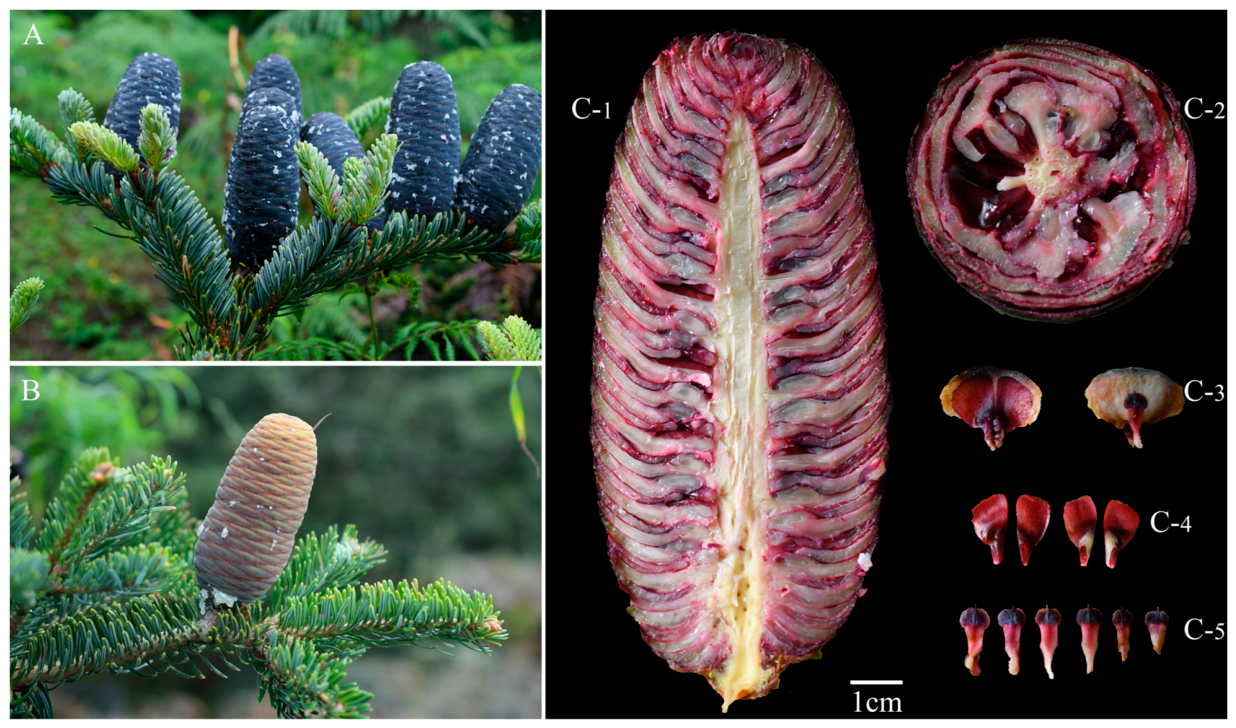
2.1. Morphology of Abies ernestii
2.2. Phylogeny of Abies ernestii
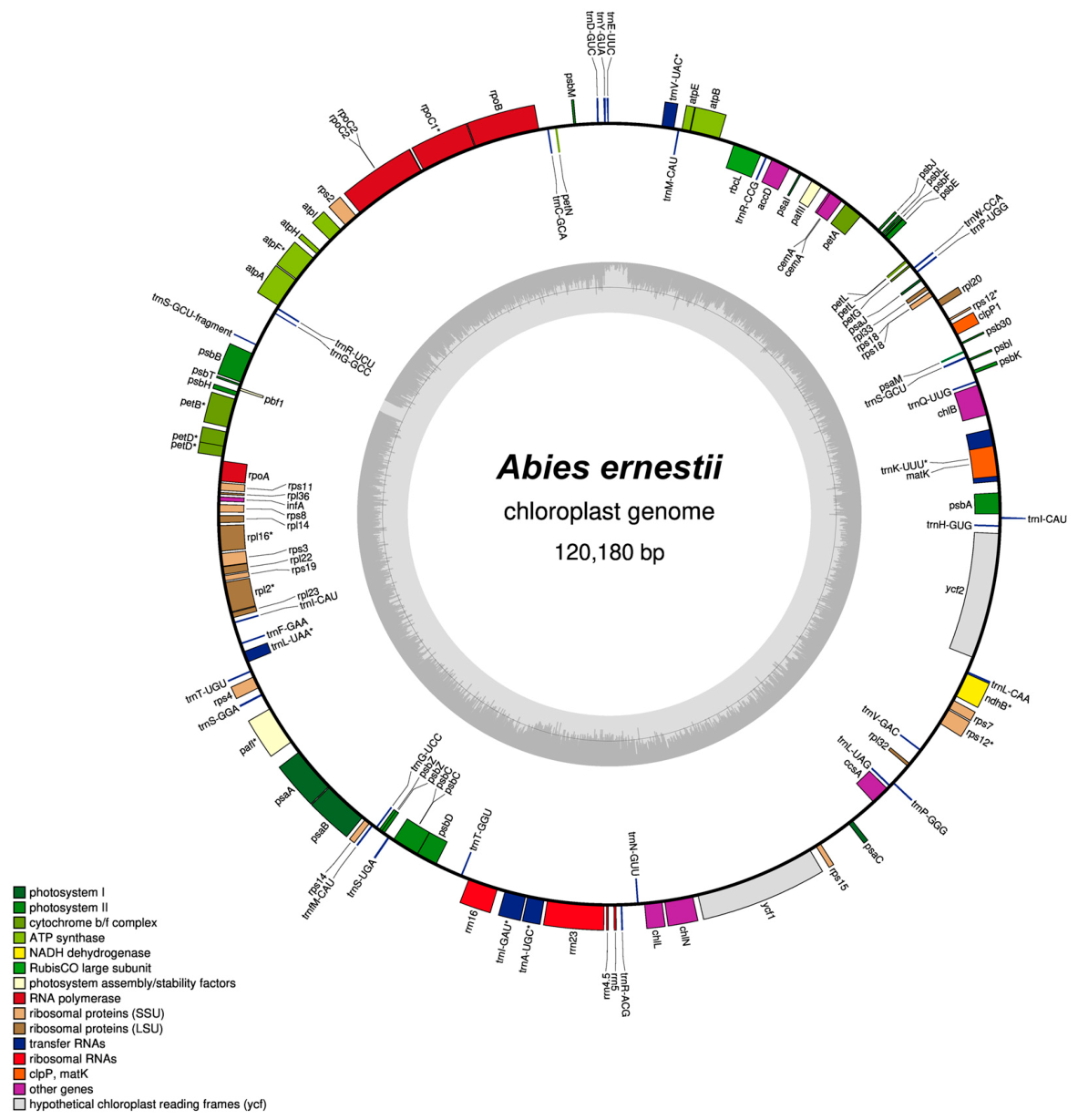
2.2.1. Chloroplast Genome Characteristics
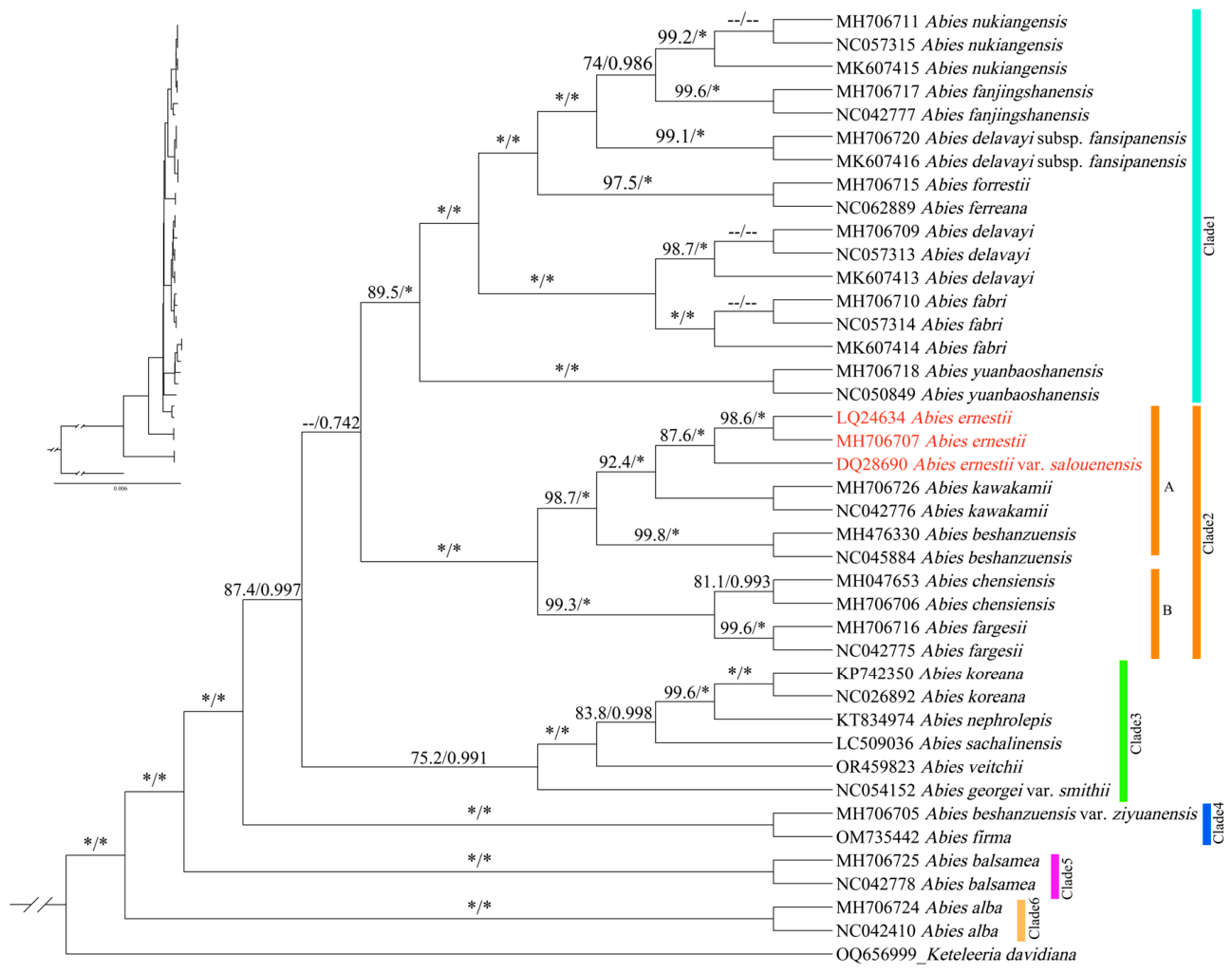
2.2.2. Phylogenetic Inference of Abies ernestii
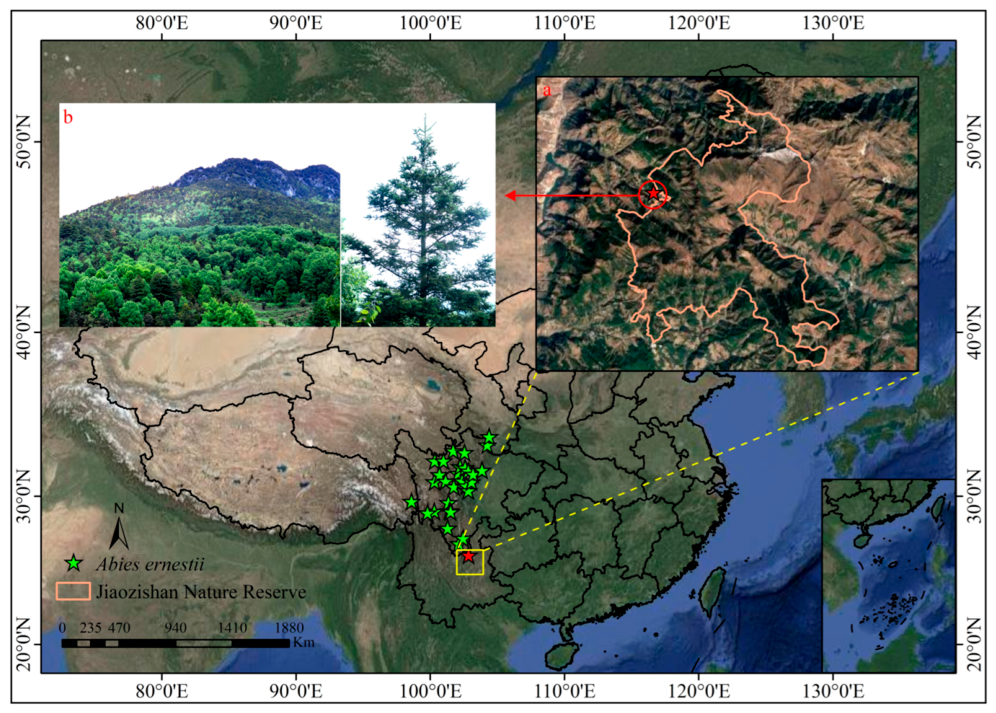
2.3. Habitat Characteristics and Community Composition of Abies ernestii
2.4. Potential Spatial Distribution of Abies ernestii
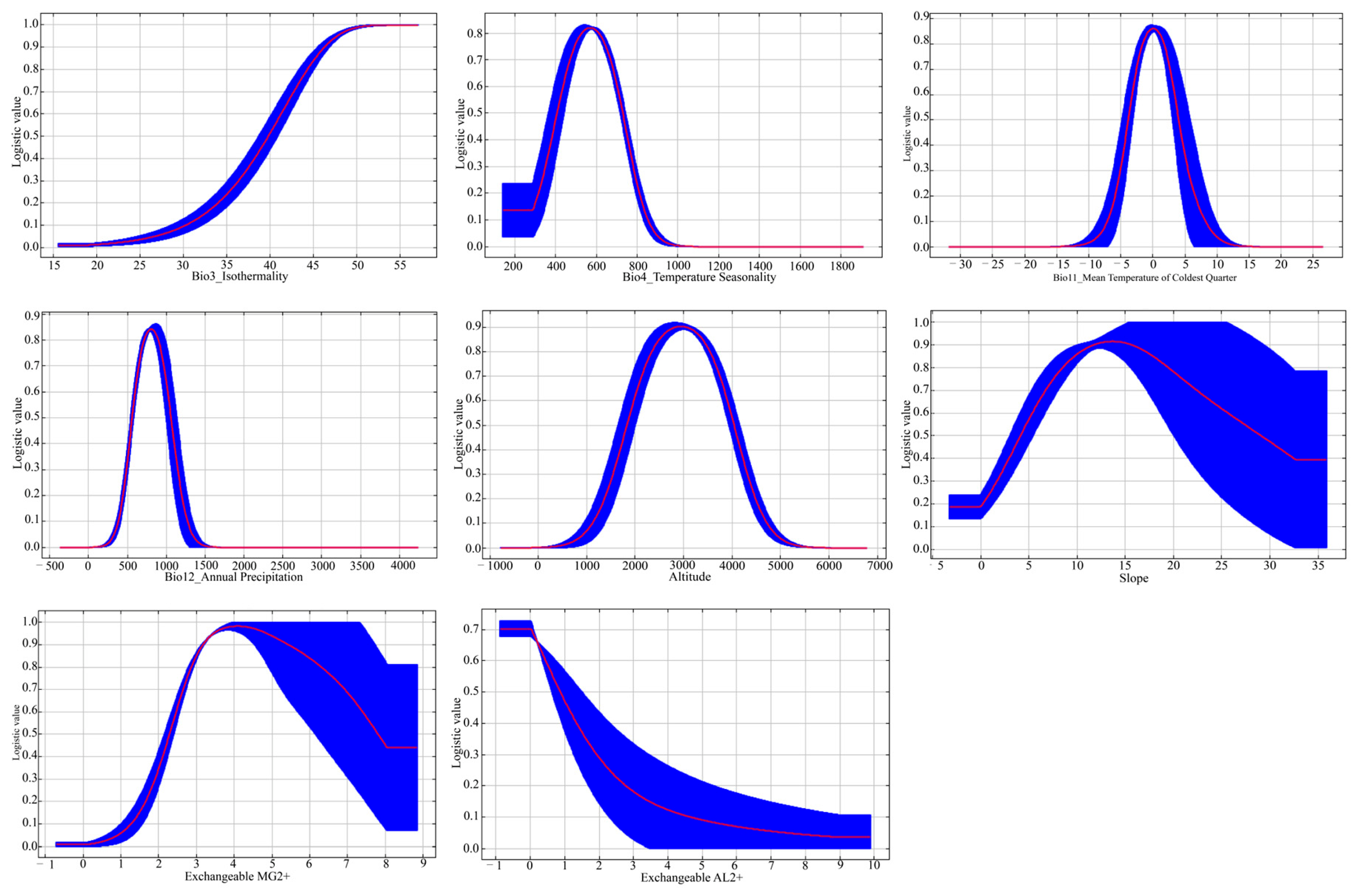
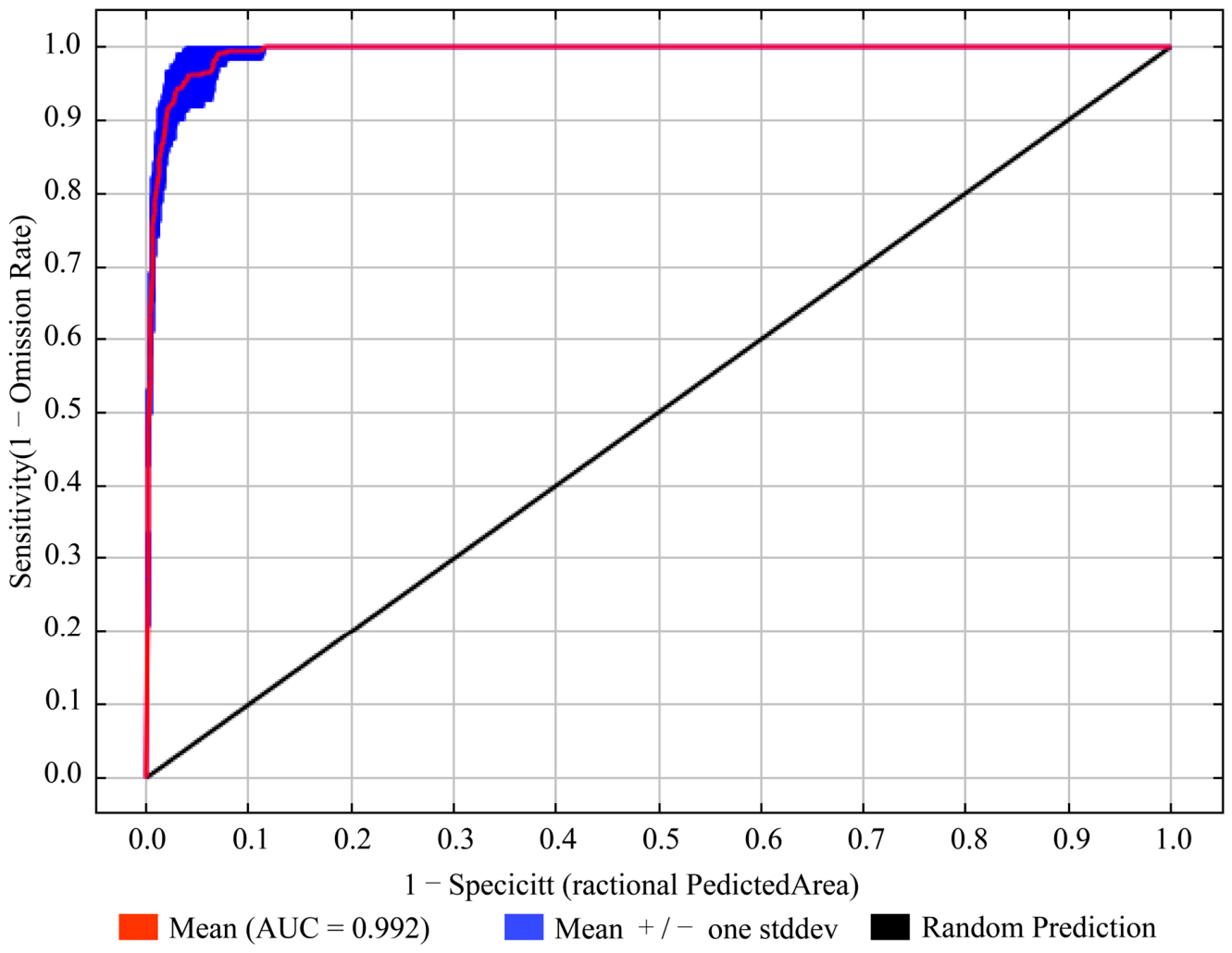
2.4.1. Key Environmental Factors and Model Accuracy
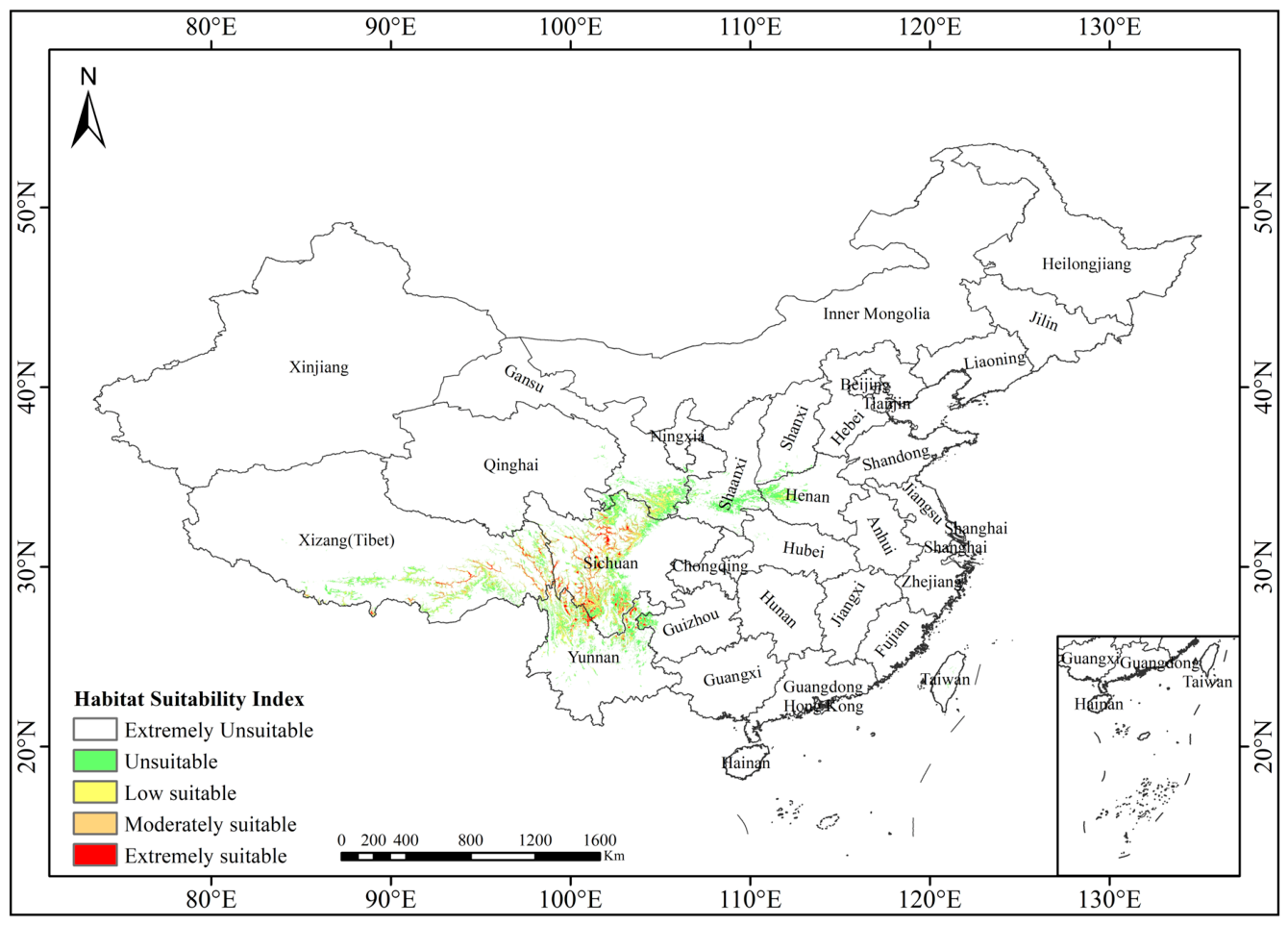
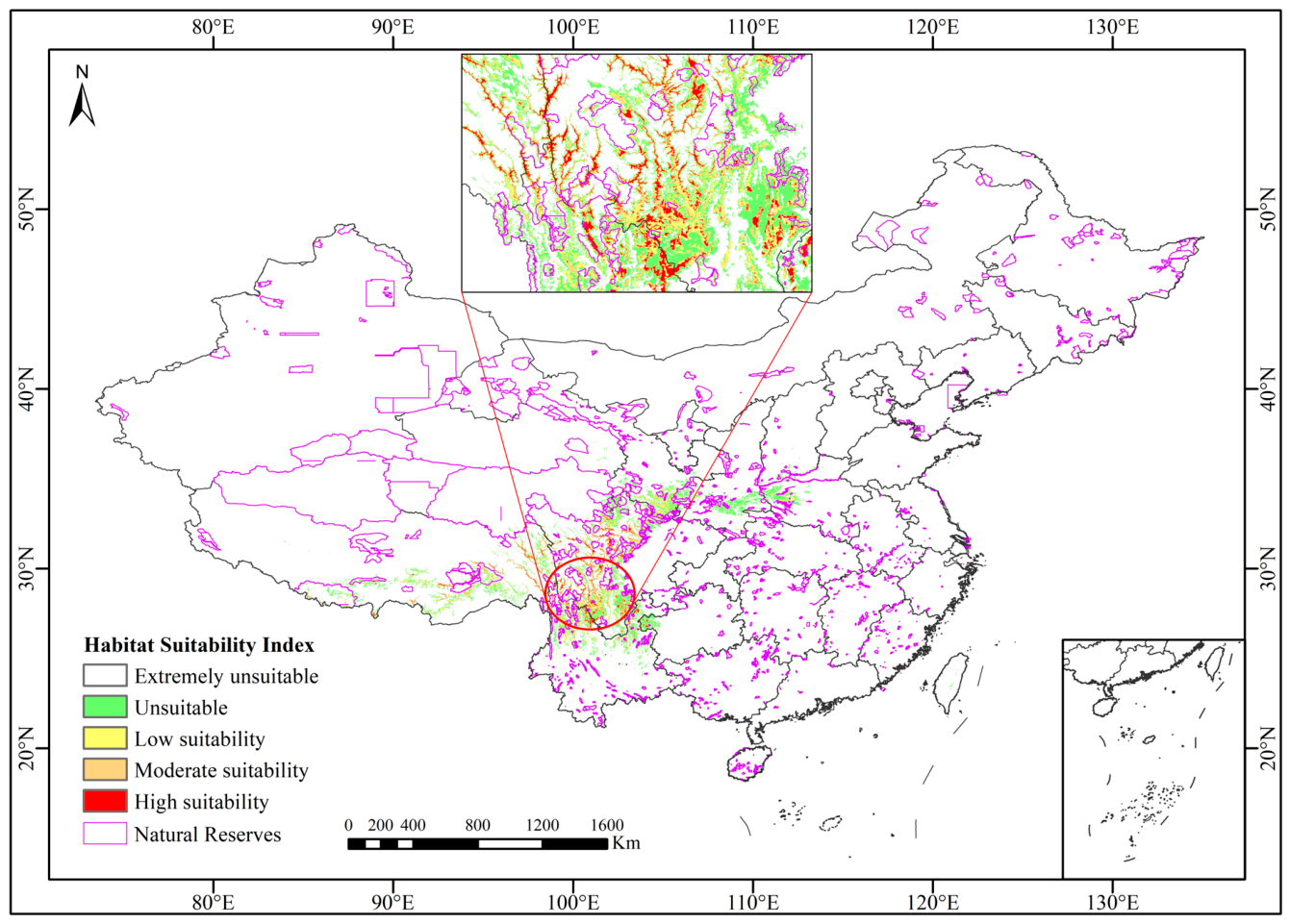
2.4.2. Current Distribution of Suitable Areas for Abies ernestii
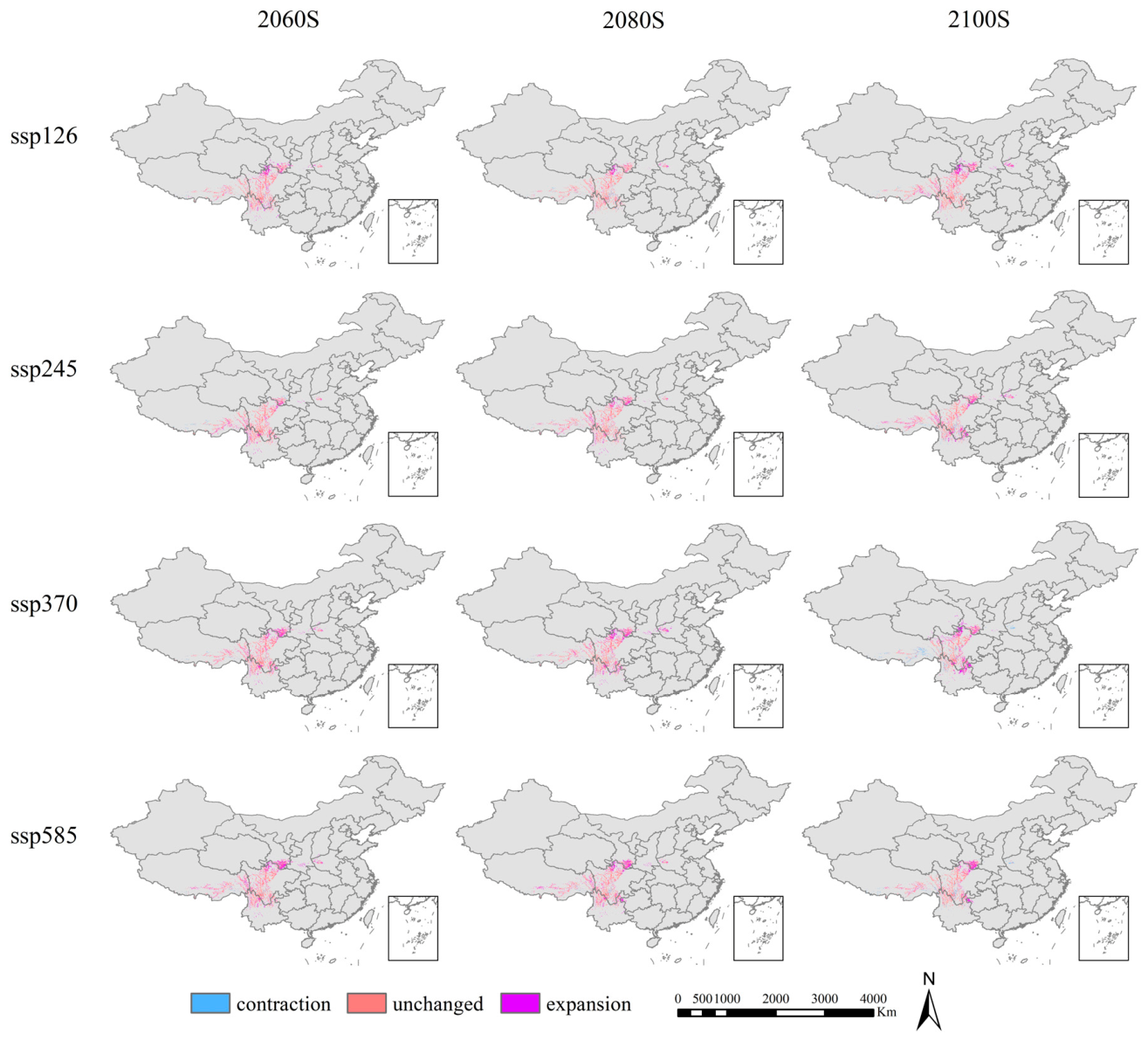
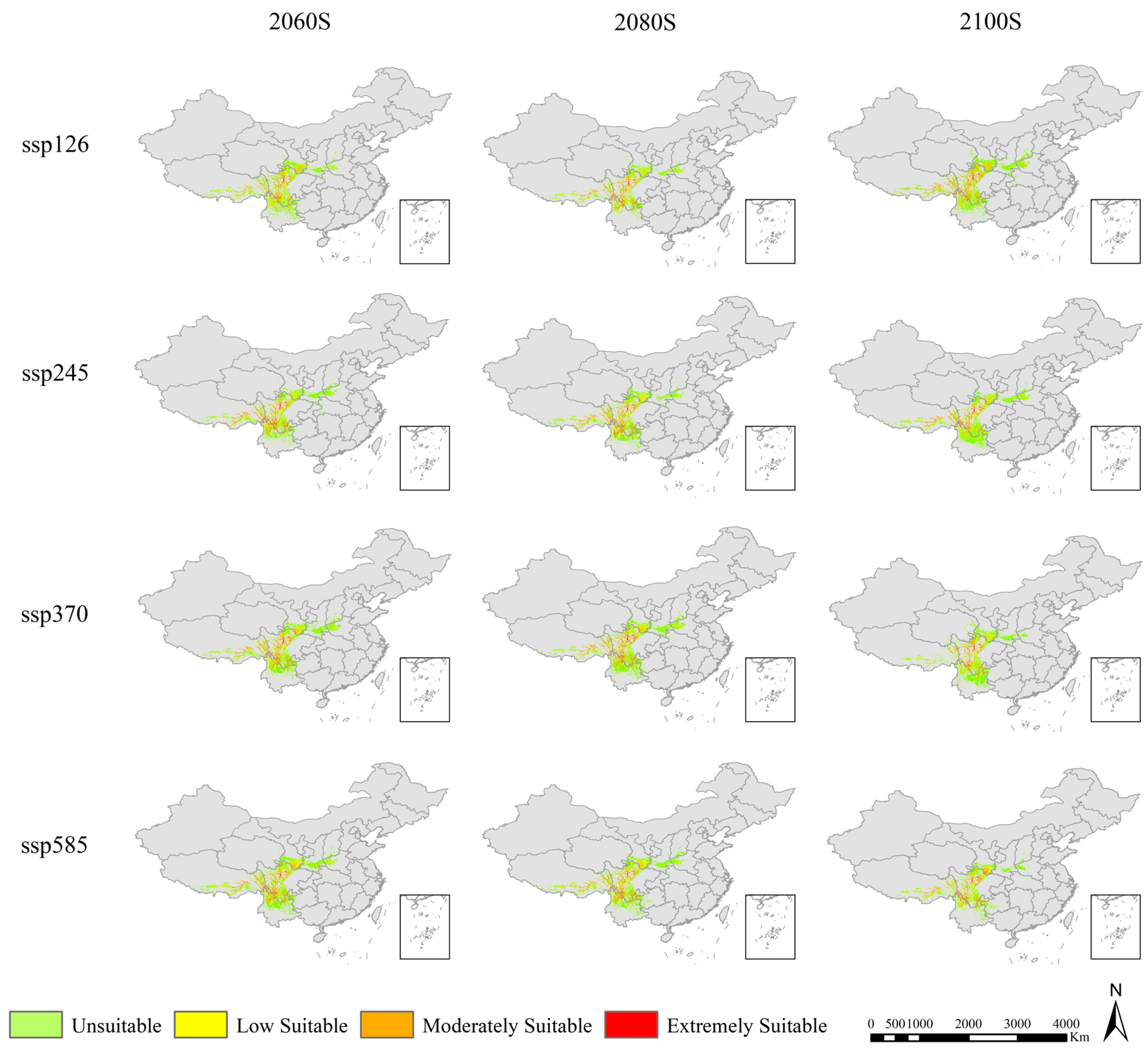
2.4.3. Changes in the Distribution Area of Abies ernestii Under Historical and Future Climate Scenarios
2.4.4. Conservation Status of Abies ernestii
3. Discussion
3.1. Taxonomic Clarification and Phylogenetic Insights
3.2. Geographical Distribution and Novel Records of Abies ernestii
3.3. Changes in Suitable Habitats of Abies ernestii Under the Influence of Environmental Variables
3.4. Conservation Assessment of Abies ernestii
4. Research Content and Methods
4.1. Morphological Research
4.2. Molecular Systematics
4.2.1. DNA Extraction, Sequencing, and Assembly
4.2.2. Phylogenetic Analysis
4.3. Spatial Distribution Study Based on MaxEnt
4.3.1. Collection of Species Distribution Data and Environmental Variable Data
4.3.2. Model Running, Spatial Pattern Changes, and Gap Analysis
5. Conclusions
Author Contributions
Funding
Data Availability Statement
Acknowledgments
Conflicts of Interest
Appendix A

| Family | Genus | Species | GenBank | Length |
|---|---|---|---|---|
| Pinaceae | Abies | Abies alba Mill. | MH706724 | 121,243 bp |
| Pinaceae | Abies | Abies alba Mill. | NC042410 | 121,243 bp |
| Pinaceae | Abies | Abies ziyuanensis L. K. Fu and S. L. Mo | MH706705 | 121,274 bp |
| Pinaceae | Abies | Abies balsamea (L.) Mill. | NC042778 | 121,574 bp |
| Pinaceae | Abies | Abies balsamea (L.) Mill. | MH706725 | 121,574 bp |
| Pinaceae | Abies | Abies beshanzuensis M. H. Wu | NC045884 | 121,399 bp |
| Pinaceae | Abies | Abies beshanzuensis M. H. Wu | MH476330 | 121,399 bp |
| Pinaceae | Abies | Abies chensiensis Tiegh. | MH047653 | 121,498 bp |
| Pinaceae | Abies | Abies chensiensis Tiegh. | MH706706 | 121,795 bp |
| Pinaceae | Abies | Abies delavayi Diels | NC057313 | 120,141 bp |
| Pinaceae | Abies | Abies delavayi Diels | MH706709 | 120,141 bp |
| Pinaceae | Abies | Abies delavayi Diels | MK607413 | 120,142 bp |
| Pinaceae | Abies | Abies delavayi subsp. fansipanensis (Q.P. Xiang, L.K. Fu, and Nan Li) Rushforth | MH706720 | 120,093 bp |
| Pinaceae | Abies | Abies delavayi subsp. fansipanensis (Q.P. Xiang, L.K. Fu, and Nan Li) Rushforth | MK607416 | 120,094 bp |
| Pinaceae | Abies | Abies ernestii Rehder | MH706707 | 121,841 bp |
| Pinaceae | Abies | Abies fabri (Mast.) Craib | NC057314 | 120,027 bp |
| Pinaceae | Abies | Abies fabri (Mast.) Craib | MH706710 | 120,027 bp |
| Pinaceae | Abies | Abies fabri (Mast.) Craib | MK607414 | 120,027 bp |
| Pinaceae | Abies | Abies fanjingshanensis W. L. Huang, Y. L. Tu, and S. Z. Fang | NC042777 | 120,057 bp |
| Pinaceae | Abies | Abies fanjingshanensis W. L. Huang, Y. L. Tu, and S. Z. Fang | MH706717 | 120,057 bp |
| Pinaceae | Abies | Abies fargesii Franch. | NC042775 | 121,799 bp |
| Pinaceae | Abies | Abies fargesii Franch. | MH706716 | 121,799 bp |
| Pinaceae | Abies | Abies ferreana Bordères and Gaussen | NC062889 | 120,049 bp |
| Pinaceae | Abies | Abies firma Siebold and Zucc. | OM735442 | 121,395 bp |
| Pinaceae | Abies | Abies forrestii Coltm.-Rog. | MH706715 | 120,022 bp |
| Pinaceae | Abies | Abies georgei var. smithii (Viguié and Gaussen) W. C. Cheng and L. K. Fu | NC054152 | 121,191 bp |
| Pinaceae | Abies | Abies kawakamii (Hayata) T. Itô | NC042776 | 121,290 bp |
| Pinaceae | Abies | Abies kawakamii (Hayata) T. Itô | MH706726 | 121,290 bp |
| Pinaceae | Abies | Abies nephrolepis (Trautv. ex Maxim.) Maxim. | KT834974 | 121,336 bp |
| Pinaceae | Abies | Abies nukiangensis W. C. Cheng and L. K. Fu | NC057315 | 120,017 bp |
| Pinaceae | Abies | Abies nukiangensis W. C. Cheng and L. K. Fu | MH706711 | 120,017 bp |
| Pinaceae | Abies | Abies nukiangensis W. C. Cheng and L. K. Fu | MK607415 | 120,017 bp |
| Pinaceae | Abies | Abies koreana E. H. Wilson | NC026892 | 121,373 bp |
| Pinaceae | Abies | Abies koreana E. H. Wilson | KP742350 | 121,373 bp |
| Pinaceae | Abies | Abies veitchii Lindl. | OR459823 | 121,403 bp |
| Pinaceae | Abies | Abies yuanbaoshanensis Y. J. Lu and L. K. Fu | NC050849 | 121,795 bp |
| Pinaceae | Abies | Abies yuanbaoshanensis Y. J. Lu and L. K. Fu | MH706718 | 121,795 bp |
| Pinaceae | Abies | Abies sachalinensis (F.Schmidt) Mast. | LC509036 | 121,337 bp |
| Pinaceae | Keteleeria | Keteleeria davidiana (C. E. Bertrand) Beissn. | OQ656999 | 117,808 bp |
| Groups of Genes | Name of Genes |
|---|---|
| Ribosomal RNAs | rrn4.5, rrn5, rrn16, rrn23 |
| Transfer RNAs | trnA-UGC *, trnC-GCA, trnD-GUC, trnE-UUC, trnF-GAA, trnfM-CAU, trnG-GCC *, trnG-UCC, rrnH-GUG, trnI-CAUx2, trnI-GAU *, trnK-UUU *, trnL-CAA, trnL-UAA *, trnL-UAG, trnM-CAU, trnN-GUU, trnP-GGG, trnP-UGG, trnQ-UUG, trnR-ACG, trnR-CCG, trnR-UCU, trnS-GCUx2, trnS-GGA, trnS-UGA, trnT-GGU, trnT-UGU, trnV-GAC, trnV-UAC *, trnW-CCA, trnY-GUA |
| Subunits of photosystem I | psaA, psaB, psaC, psaI, psaJ, psaM, psaM |
| Subunits of photosystem II | psbA, psbB, psbC, psbD, psbE, psbF, psbH, psbI, psbJ, psbK, psbL, psbM, psbN, psbT, psbZ |
| Subunits of the cytochrome b/f complex | petA, petB *, petD *, petG, petL, petN |
| Subunits of ATP synthase | atpA, atpB, atpE, atpF *, atpH, atpI |
| Proteins of the large ribosomal subunit | rpl2 *, rpl14, rpl16 *, rpl20, rpl22, rpl23, rpl32, rpl33, rpl36 |
| Proteins of the small ribosomal subunit | rps2, rps3, rps4, rps7, rps8, rps11, rps12 **, rps14, rps15, rps18, rps19 |
| Large subunit of RuBisco | rbcL |
| Subunits of RNA polymerase | rpoA, rpoB, rpoC1 *, rpoC2 |
| Conserved hypothetical chloroplast reading frames | ycf1, ycf2, ycf3 **, ycf4, ycf12x2 |
| ATP-dependent protease subunit P | cemA |
| Chloroplast envelope membrane protein | clpP |
| Chlorophyll biosynthesis | chlB, chlL, chlN |
| Miscellaneous proteins | accD, ccsA, infA, matK |
| Variable | Percent Contribution | Permutation Importance |
|---|---|---|
| Bio_11 | 38.5 | 17.1 |
| Bio_3 | 27.9 | 9.9 |
| Bio_4 | 12.1 | 50 |
| Mg | 11.5 | 1.1 |
| Alt | 5.3 | 15.6 |
| Slope | 1.9 | 0 |
| Bio_12 | 1.4 | 2.3 |
| Al | 1.4 | 3.9 |
Appendix B


References
- Raxworthy, C.J.; Pearson, R.G.; Rabibisoa, N.; Rakotondrazafy, A.M.; Ramanamanjato, J.B.; Raselimanana, A.P.; Wu, S.; Nussbaum, R.A.; Stone, D.A. Extinction vulnerability of tropical montane endemism from warming and upslope displacement: A preliminary appraisal for the highest massif in Madagascar. Glob. Change Biol. 2008, 14, 1703–1720. [Google Scholar] [CrossRef]
- Nogués-Bravo, D.; Araújo, M.B.; Errea, M.P.; Martínez-Rica, J.P. Exposure of global mountain systems to climate warming during the 21st Century. Glob. Environ. Change 2007, 17, 420–428. [Google Scholar] [CrossRef]
- Zu, K.L.; Wang, Z.H. Research progress on the elevational distribution of mountain species in response to climate change. Biodivers. Sci. 2022, 30, 21451. [Google Scholar] [CrossRef]
- Freeman, B.G.; Lee-Yaw, J.A.; Sunday, J.M.; Hargreaves, A.L. Expanding, shifting and shrinking: The impact of global warming on species’ elevational distributions. Glob. Ecol. Biogeogr. 2021, 30, 292–304. [Google Scholar] [CrossRef]
- Shinny, T.; Negi, S.V.; Dhyani, R.; Satish, K.V.; Bhatt, I.D. Vulnerability assessments of mountain forest ecosystems: A global synthesis. Trees For. People 2021, 6, 100156. [Google Scholar] [CrossRef]
- Pathak, R.; Negi, V.S.; Rawal, R.S.; Bhatt, I.D. Alien plant invasion in the Indian-Himalayan Region: State of knowledge and research priorities. Biodivers. Conserv. 2019, 28, 3073–3102. [Google Scholar] [CrossRef]
- Fremout, T.; Thomas, E.; Gaisberger, H.; van Meerbeek, K.; Muenchow, J.; Briers, S.; Gutierrez-Miranda, C.E.; Marcelo-Peña, J.L.; Kindt, R.; Atkinson, R.; et al. Mapping tree species vulnerabilityto multiple threats as a guide to restoration and conservation of tropical dry forests. Glob. Change Biol. 2020, 26, 3552–3568. [Google Scholar] [CrossRef]
- Dupire, S.; Curt, T.; Bigot, S.; Fréjaville, T. Vulnerability of forest ecosystems tofire in the French Alps. Eur. J. For. Res. 2019, 138, 813–830. [Google Scholar] [CrossRef]
- Fiǎer, C.; Robinson, C.T.; Malard, F. Cryptic species as a window into the paradigm shift of the species concept. Mol. Ecol. 2018, 27, 613–635. [Google Scholar] [CrossRef] [PubMed]
- Stropp, J.; Ladle, R.J.; Emilio, T.; Lessa, T.; Hortal, J. Taxonomic uncertainty and the challenge of estimating global species richness. J. Biogeogr. 2022, 49, 1654–1656. [Google Scholar] [CrossRef]
- Yi, H.Q.; Dong, S.Y.; Yang, L.H.; Wang, J.; Kidner, C.; Kang, M. Genome-wide data reveal cryptic diversity and hybridization in a group of tree ferns. Mol. Phylogenet. Evol. 2023, 184, 107801. [Google Scholar] [CrossRef] [PubMed]
- Cheng, R.; Luo, A.; Orr, M.; Ge, D.Y.; Hou, Z.E.; Qu, Y.H.; Guo, B.C.; Zhang, F.; Sha, Z.L.; Zhao, Z.; et al. Cryptic diversity begets challenges and opportunities in biodiversity research. Integr. Zool. 2024, 20, 33–49. [Google Scholar] [CrossRef]
- Pan, Y.Q.; Liu, S.; Chen, J.; Yu, G.H. Underestimated species diversity in Zhangixalus (Anura, Rhacophoridae) with a description of two cryptic species from southern China. Zoosyst. Evol. 2025, 101, 485–507. [Google Scholar] [CrossRef]
- Thomson, S.A.; Pyle, R.L.; Ahyong, S.T.; Alonso-Zarazaga, M.; Ammirati, J.; Araya, J.F.; Ascher, J.S.; Audisio, T.L.; Azevedo-Santos, V.M.; Bailly, N.; et al. Taxonomy based on science is necessary for global conservation. PLoS Biol. 2018, 16, e2005075. [Google Scholar] [CrossRef]
- Liu, D.S.; Thompson, J.R.; Gao, J.; Shen, H.L. Train young scientists in taxonomy to help solve the biodiversity crisis. Nature 2024, 626, 954. [Google Scholar] [CrossRef]
- Mace, G.M. The role of taxonomy in species conservation. Philos. Trans. R. Soc. Lond. B. Biol. Sci. 2004, 359, 711–719. [Google Scholar] [CrossRef]
- Farjon, A. World Check List and Bibliography of Conifers; Royal Botanic Gardens, Kew: London, UK, 1998. [Google Scholar]
- Eckenwalder, J.E. Conifers of the World: The Complete Reference; Timber Press: Portland, OR, USA, 2009. [Google Scholar]
- Xiang, Q.P.; Wei, R.; Shao, Y.; Yang, Z.Y.; Wang, X.Q.; Zhang, X.C. Phylogenetic relationships, possible ancient hybridization, and biogeographic history of Abies (Pinaceae) based on data from nuclear, plastid, and mitochondrial genomes. Mol. Phylogenet. Evol. 2015, 82, 1–14. [Google Scholar] [CrossRef]
- Semerikova, S.A.; Khrunyk, Y.Y.; Lascoux, M.; Semerikov, V.L. From America to Eurasia: A multigenomes history of the genus Abies. Mol. Phylogenet. Evol. 2018, 125, 14–28. [Google Scholar] [CrossRef] [PubMed]
- Xiang, Q.P.; Yang, J.; Gernandt, D.S.; Ye, T.X.; Yang, L.; Pan, J.M.; Xiang, R.C.; Zhao, C.; Nakamura, K.; Zhang, X.C.; et al. Ecological and evolutionary factors contribute to the uneven diversification of firs in the Northern Hemisphere. J. Biogeogr. 2024, 52, 505–519. [Google Scholar] [CrossRef]
- Wei, Z.R.; Jiao, D.; Wehenkel, C.A.; Wei, X.X.; Wang, X.Q. Phylotranscriptomic and ecological analyses reveal the evolution and morphological adaptation of Abies. J. Integr. Plant Biol. 2024, 66, 2664–2682. [Google Scholar] [CrossRef]
- Fan, J.S. Chinese Fir Forests; China Forestry Publishing House: Beijing, China, 2006. [Google Scholar]
- Liu, R.; Wang, C.J.; He, J.; Zhang, Z.X. Analysis of geographical distribution of Abies in China under climate change. Bull. Bot. Res. 2018, 38, 37–46. [Google Scholar] [CrossRef]
- Liao, Z.Y.; Zhang, L.; Nobis, M.P.; Wu, X.G.; Pan, K.W.; Wang, K.Q.; Dakhil, M.A.; Du, M.G.; Xiong, Q.L.; Pandey, B.; et al. Climate change jointly with migration ability affect future range shifts of dominant fir species in southwest China. Divers. Distrib. 2019, 26, 352–367. [Google Scholar] [CrossRef]
- Dakhil, M.A.; Halmy, M.W.A.; Liao, Z.Y.; Pandey, B.; Zhang, L.; Pan, K.W.; Sun, X.M.; Wu, X.G.; Eid, E.M.; El-Barougy, R.F. Potential risks to endemic conifer montane forests under climate change: Integrative approach for conservation prioritization in southwestern China. Landsc. Ecol. 2021, 36, 3137–3151. [Google Scholar] [CrossRef]
- Xiong, Q.; Halmy, M.W.A.; Dakhil, M.A.; Pandey, B.; Zhang, F.Y.; Zhang, L.; Pan, K.W.; Li, T.; Sun, X.M.; Wu, X.G.; et al. Concealed truth: Modeling reveals unique Quaternary distribution dynamics and refugia of four related endemic keystone Abies taxa on the Tibetan Plateau. Ecol. Evol. 2019, 9, 14295–14316. [Google Scholar] [CrossRef]
- IUCN. The IUCN Red List of Threatened Species. Version 2025-1. Available online: https://www.iucnredlist.org (accessed on 1 May 2025).
- Rao, L.B. Study on Conservation Genetics of Five Endangered Abies Species by Marker Technology of Biochip; Chinese Academy of Forestry: Beijing, China, 2009. [Google Scholar]
- Shao, Y.Z.; Xiang, Q.P. Species delimitation and phylogeography of the Abies chensiensis complex inferred from morphological and molecular data. Bot. J. Linn. Soc. 2015, 177, 175–188. [Google Scholar] [CrossRef]
- Hong, J.K.; Lim, J.; Lee, B.Y.; Kwak, M. Isolation and characterization of novel microsatellites for Abies koreana and A. nephrolepis (Pinaceae). Genet. Mol. Res. 2016, 15. [Google Scholar] [CrossRef]
- Aguirre-Planter, É.; Jaramillo-Correa, J.P.; Gómez-Acevedo, S.; Khasa, D.P.; Bousquet, J.; Eguiarte, L.E. Phylogeny, diversification rates and species boundaries of mesoamerican firs (Abies, Pinaceae) in a Genus-Wide Context. Mol. Phylogenet. Evol. 2012, 62, 263–274. [Google Scholar] [CrossRef] [PubMed]
- Xiang, Q.P.; Xiang, Q.Y.; Guo, Y.Y.; Zhang, X.C. Phylogeny of Abies (Pinaceae) inferred from nrITS sequence data. Taxon 2009, 58, 141–152. [Google Scholar] [CrossRef]
- Xiang, Q.P.; Wei, R.; Zhu, Y.M.; Harris, A.J.; Zhang, X.C. New infrageneric classification of Abies in light of molecular phylogeny and high diversity in western North America. J. Syst. Evol. 2018, 56, 562–572. [Google Scholar] [CrossRef]
- Fu, L.K.; Li, N.; Mill, R.R. Abies Miller. In Flora of China; Wu, Z.Y., Raven, P.H., Hong, D.Y., Eds.; Science Press: Beijing, China; Missouri Botanical Garden Press: St. Louis, MO, USA, 1999; Volume 4, pp. 44–52. [Google Scholar]
- Sichuan Vegetation Collaboration Group. Sichuan Vegetation; Sichuan People’s Publishing House: Chengdu, China, 1980. [Google Scholar]
- Li, S.; Mo, S.H.; Hu, X.H.; Deng, T. Prediction of potential suitable areas of endangered plant Abies ziyuanensis based on MaxEnt and ArcGIS. Chin. J. Ecol. 2024, 43, 533–541. [Google Scholar] [CrossRef]
- Wang, G.J.; Liu, X.H.; Xu, D.M.; Li, Y.G.; Yu, M.J.; Zhang, L.F. Transeriptome analysis of Abies beshanzuensis leaves. Acta Agric. Univ. Jiangxiensis 2021, 4321, 343–354. [Google Scholar] [CrossRef]
- Liu, K.; Liu, B.; Yuan, L.; Shuai, H.; Yang, Y.; Wang, T.J.; Chen, D.L.; Chen, X.R.; Yang, K.B.; Jin, X.F.; et al. Seed development and embryo culture of endangered Abies beshanzuensis. Chin. Bull. Bot. 2021, 56, 573–583. [Google Scholar] [CrossRef]
- Wang, Y.; Wen, S.J.; Luo, D.M.; Qin, Y.C.; Ding, T.; Liu, S.N. Study on the seed characteristics and seed germination characteristics of the rare and endangered plant Abies yuanbaoshanensis. J. Guangxi Aca. Sci. 2023, 39, 161–168. [Google Scholar] [CrossRef]
- Zhang, W.H.; Xu, X.B.; Zhou, J.Y. Study on reproduction ecology of endangered species Abies chensiensis. Acta Ecol. Sin. 2006, 26, 2417–2424. [Google Scholar] [CrossRef]
- Gao, B.; Wei, H.Y.; Guo, Y.L.; Gu, W. Using GIS and MaxEnt to analyze the potential distribution of Abies chensiensis. Chin. J. Ecol. 2015, 34, 843–852. [Google Scholar]
- Li, W.M.; Li, S.F.; Li, B. Genetic diversity in natural populations of Abies chensiensis based on nuclear simple sequence repeat markers. Chin. Bull. Bot. 2012, 47, 413–421. [Google Scholar] [CrossRef]
- Dallimore, W.; Jackson, A.G. A Handbook of Coniferae and Ginkgoaceae; Edward Arnold: London, UK, 1996. [Google Scholar]
- Liu, T.S. A Monograph of the Genus Abies; Department of Forestry, National Taiwan University: Taipe, China, 1971. [Google Scholar]
- Kuan, Z.T.; Zhou, L.J. Abies Miller. In Flora Sichuanica; Kuan, Z.T., Ed.; Sichuan People’s Publishing House: Chengdu, China, 1983; Volume 2, pp. 27–50. [Google Scholar]
- Farjon, A. A Handbook of the World’ s Conifers; Koninklijke Brill NV: Leiden, The Nederland, 2017. [Google Scholar]
- Silba, J. Abies religiosa subsp. colimensis (Rushforth & Narave). J. Int. Conifer. Preserv. Soc. 2008, 15, 44. [Google Scholar]
- Shao, Y.Z.; Shi, Z.Y.; Wang, Z.; Wang, W.; Chen, Y.; Wen, Q. The complete chloroplast genome of Abies ernestii Rehder (Pinaceae) and its phylogenetic implications. Mitochondrial DNA B Resour. 2022, 7, 1497–1503. [Google Scholar] [CrossRef]
- Shao, Y.Z.; Wang, Z.; Liu, W.J.; Zhao, P.F.; Wu, S. Complete chloroplast genome features and phylogenetic analysis of Abies ernestii var. salouenensis (Bordères and Gaussen) W. C. Cheng and L. K. Fu from southwest China. Mitochondrial DNA B Resour. 2023, 8, 550–556. [Google Scholar] [CrossRef]
- Steenwyk, J.L.; Li, Y.; Zhou, X.F.; Shen, X.X.; Rokas, A. Incongruence in the phylogenomics era. Nat. Rev. Genet. 2023, 24, 834–850. [Google Scholar] [CrossRef]
- Huang, Y.; Li, X.; Yang, Z.; Yang, C.; Yang, J.; Ji, Y. Analysis of Complete Chloroplast Genome Sequences Improves Phylogenetic Resolution in Paris (Melanthiaceae). Front. Plant Sci. 2016, 29, 1797. [Google Scholar] [CrossRef]
- Cheng, W.J.; Fu, L.K. Abies Miller. In Flora Reipublicae Popularis Sinicae; Cheng, W.J., Fu, L.K., Eds.; Science Press: Beijing, China, 1978; Volume 7, pp. 55–95. [Google Scholar]
- Fu, L.K. Abies Miller. In Flora Xizangica; Wu, Z.Y., Ed.; Science Press: Beijing, China, 1983; Volume 1, pp. 358–366. [Google Scholar]
- Xiang, Q.P. Systematic Studies on the Genus Abies; Nstitute of Botany, the Chinese Academy of Sciences: Beijing, China, 2000. [Google Scholar]
- Roux, R.L.; Costeira, I.C.; Deikumah, J.P.; Thompson, L.J.; Russo, I.M.; Vuuren, B.J.; Munro, S.W. High conservation importance of range-edge populations of Hooded Vultures (Necrosyrtes monachus). Sci. Rep. 2024, 14, 18040. [Google Scholar] [CrossRef] [PubMed]
- Nowell, V.J.; Wang, S.; Smith, T.W. Conservation assessment of a range-edge population of Trichophorum planifolium (Cyperaceae) reveals range-wide inbreeding and locally divergent environmental conditions. Botany 2022, 100, 631–642. [Google Scholar] [CrossRef]
- Angert, A.L.; Bontrager, M.G.; Agren, J. What do we really know about adaptation at range edges? Annu. Rev. Ecol. Evol. Syst. 2020, 51, 341–361. [Google Scholar] [CrossRef]
- Sun, S.; Zhang, Y.; Huang, D.; Wang, H.; Cao, Q.; Fan, P.X.; Yang, N.; Zheng, P.M.; Wang, R.Q. The effect of climate change on the richness distribution pattern of oaks (Quercus L.) in China. Sci. Total Environ. 2020, 744, 140786. [Google Scholar] [CrossRef]
- Wang, S.; Xie, Y. China Species Red List, Vol. 1; Higher Education Press: Beijing, China, 2004. [Google Scholar]
- Ministry of Ecology and Environment of the People’s Republic of China and Chinese Academy of Sciences P. R. China (Org.). China Red List of Biodiversity—Higher Plants. Announcement No. 15. 2020. Available online: https://www.mee.gov.cn/xxgk2018/xxgk/xxgk01/202305/t20230522_1030745.html (accessed on 1 June 2025).
- Wason, J.W.; Bevilacqua, E.; Dovciak, M. Climates on the move: Implications of climate warming for species distributions in mountains of the northeastern United States. Agr. For. Meteorol. 2017, 246, 272–280. [Google Scholar] [CrossRef]
- Jin, J.J.; Yu, W.B.; Yang, J.B.; Song, Y.; Pamphilis, C.W.; Yi, T.S.; Li, D.Z. GetOrganelle: A fast and versatile toolkit for accurate de novo assembly of organelle Genomes. Genome Biol. 2020, 21, 241. [Google Scholar] [CrossRef] [PubMed]
- Tillich, M.; Lehwark, P.; Pellizzer, T.; Ulbricht-Jones, E.S.; Fischer, A.; Bock, R.; Greiner, S. GeSeq-versatile and accurate annotation of organelle genomes. Nucleic Acids Res. 2017, 45, W6–W11. [Google Scholar] [CrossRef] [PubMed]
- Kearse, M.; Moir, R.; Wilson, A.; Stones-Havas, S.; Cheung, M.; Sturrock, S.; Buxton, S.; Cooper, A.; Markowitz, S.; Duran, C.; et al. Geneious Basic: An integrated and extendable desktop software platform for the organization and analysis of sequence data. Bioinformatics 2012, 28, 1647–1649. [Google Scholar] [CrossRef]
- Zhang, D.; Gao, F.; Jakovlić, I.; Zou, H.; Zhang, J.; Li, W.X.; Wang, G.T. PhyloSuite: An integrated and scalable desktop platform for streamlined molecular sequence data management and evolutionary phylogenetics studies. Mol. Ecol. Resour. 2020, 20, 348–355. [Google Scholar] [CrossRef]
- Katoh, K.; Standley, D.M. MAFFT multiple sequence alignment software version 7: Improvements in performance and usability. Mol. Biol. Evol. 2013, 30, 772–780. [Google Scholar] [CrossRef] [PubMed]
- Capella-Gutiérrez, S.; Silla-Martinez, J.M.; Gabaldon, T. trimAl: A tool for automated alignment trimming in large-scale phylogenetic analyses. Bioinformatics 2009, 25, 1972–1973. [Google Scholar] [CrossRef]
- Kalyaanamoorthy, S.; Minh, B.Q.; Wong, T.K.F.; von Haeseler, A.; Jermiin, L.S. ModelFinder: Fast model selection for accurate phylogenetic estimates. Nat. Methods 2017, 14, 587–589. [Google Scholar] [CrossRef]
- Ronquist, F.; Teslenko, M.; van der Mark, P.; Ayres, D.; Darling, A.; Höhna, S.; Larget, B.; Liu, L.; Suchard, M.A.; Huelsenbeck, J.P. MrBayes 3.2: Efficient bayesian phylogenetic inference and model choice across a large model space. Syst. Biol. 2012, 61, 539–542. [Google Scholar] [CrossRef] [PubMed]
- Nguyen, L.T.; Schmidt, H.A.; von Haeseler, A.; Minh, B.Q. IQ-TREE: A fast and effective stochastic algorithm for estimating maximum-likelihood phylogenies. Mol. Biol. Evol. 2015, 32, 268–274. [Google Scholar] [CrossRef] [PubMed]
- Warren, D.L.; Glor, R.E.; Turelli, M. ENMTools: A toolbox for comparative studies of environmental niche models. Ecography 2010, 33, 607–611. [Google Scholar] [CrossRef]
- Fick, S.E.; Hijmans, R.J. WorldClim 2: New 1km spatial resolution climate surfaces for global land areas. Int. J. Climatol. 2017, 37, 4302–4315. [Google Scholar] [CrossRef]
- Shangguan, W.; Dai, Y.J.; Liu, B.Y.; Zhu, A.X.; Duan, Q.Y.; Wu, L.Z.; Ji, D.Y.; Ye, A.Z.; Yuan, H.; Zhang, Q.; et al. A China Dataset of Soil Properties for Land Surface Modeling. J. Adv. Model. Earth Syst. 2013, 5, 212–224. [Google Scholar] [CrossRef]
- Zhang, K.; Sun, L.; Tao, J. Impact of climate change on the distribution of Euscaphis japonica (Staphyleaceae) trees. Forests 2020, 11, 525. [Google Scholar] [CrossRef]
- Zeng, Y.; Low, B.W.; Yeo, D.C.J. Novel methods to select environmental variables in MaxEnt: A case study using invasive crayfish. Ecol. Model. 2016, 341, 5–13. [Google Scholar] [CrossRef]
- Yang, X.Q.; Kushwaha, S.P.S.; Saran, S.; Xu, J.C.; Roy, P.S. Maxent modeling for predicting the potential distribution of medicinal plant, Justicia adhatoda L. in Lesser Himalayan foothills. Ecol. Eng. 2013, 51, 83–87. [Google Scholar] [CrossRef]
- Zhu, G.; Yuan, X.; Fan, J. Effects of model parameters in MaxEnt modeling of ecological niche and geographic distribution: Case study of the brown marmorated stink bug, Halyomorpha haly. J. Biosaf. Biosecur. 2018, 27, 46–51. [Google Scholar] [CrossRef]
- Porfirio, L.L.; Harris, R.M.B.; Lefroy, E.C.; Hugh, S.; Gould, S.F.; Lee, G.; Bindoff, N.L.; Mackey, B. Improving the use of species distribution models in conservation planning and management under climate change. PLoS ONE 2014, 9, e113749. [Google Scholar] [CrossRef] [PubMed]
- Muscarella, R.; Galante, P.J.; Soley-Guardia, M.; Boria, R.A.; Kass, J.M.; Uriarte, M.; Anderson, R.P. ENMeval: An R package for conducting spatially independent evaluations and estimating optimal model complexity for Maxent ecological niche models. Methods Ecol. Evol. 2014, 5, 1198–1205. [Google Scholar] [CrossRef]
- Gallagher, R.V.; Hughes, L.; Leishman, M.R. Species loss and gain in communities under future climate change: Consequences for functional diversity. Ecography 2013, 36, 531–540. [Google Scholar] [CrossRef]
- Brown, J.L. SDMtoolbox: A python-based GIS toolkit for landscape genetic, biogeographic and species distribution model analyses. Methods Ecol. Evol. 2014, 5, 694–700. [Google Scholar] [CrossRef]
- Brown, J.L.; Bennett, J.R.; French, C.M. SDMtoolbox 2.0: The next generation Python-based GIS toolkit for landscape genetic, biogeographic and species distribution model analyses. PeerJ 2017, 5, e4095. [Google Scholar] [CrossRef] [PubMed]




| Low Suitable | Moderately Suitable | Extremely Suitable | Summary | ||
|---|---|---|---|---|---|
| Current | 86,348.23 | 42,580.93 | 36,527.30 | 165,456.46 | |
| 2060 | ssp126 | 117,878.18 | 55,843.28 | 35,965.48 | 209,686.94 |
| ssp245 | 96,120.75 | 52,715.16 | 50,725.99 | 199,561.90 | |
| ssp370 | 109,651.92 | 56,799.86 | 50,654.39 | 217,106.17 | |
| ssp585 | 124,732.66 | 57,901.57 | 52,582.21 | 235,216.45 | |
| 2080 | ssp126 | 89,487.95 | 44,528.17 | 40,103.14 | 174,119.25 |
| ssp245 | 98,596.52 | 45,721.14 | 55,827.57 | 200,145.23 | |
| ssp370 | 114,351.07 | 57,305.64 | 53,608.92 | 225,265.63 | |
| ssp585 | 121,189.09 | 51,959.79 | 47,844.17 | 220,993.06 | |
| 2100 | ssp126 | 118,200.82 | 52,957.05 | 42,580.66 | 213,738.54 |
| ssp245 | 111,057.72 | 47,017.47 | 41,820.55 | 199,895.74 | |
| ssp370 | 115,083.05 | 44,439.11 | 36,387.39 | 195,909.56 | |
| ssp585 | 98,844.54 | 47,428.69 | 39,427.85 | 185,701.08 |
| Expansion | Unchanged | Contraction | ||
|---|---|---|---|---|
| Current-2060 | ssp126 | 25.69% | 68.13% | 6.18% |
| ssp245 | 21.41% | 73.46% | 5.13% | |
| ssp370 | 26.79% | 68.93% | 4.28% | |
| ssp585 | 32.38% | 63.29% | 4.33% | |
| Current-2080 | ssp126 | 13.94% | 76.18% | 9.88% |
| ssp245 | 22.39% | 71.29% | 6.32% | |
| ssp370 | 30.67% | 63.23% | 6.09% | |
| ssp585 | 29.63% | 64.01% | 6.35% | |
| Current-2100 | ssp126 | 25.65% | 69.80% | 4.55% |
| ssp245 | 25.37% | 64.55% | 10.08% | |
| ssp370 | 29.67% | 53.33% | 17.01% | |
| ssp585 | 21.15% | 67.04% | 11.80% |
Disclaimer/Publisher’s Note: The statements, opinions and data contained in all publications are solely those of the individual author(s) and contributor(s) and not of MDPI and/or the editor(s). MDPI and/or the editor(s) disclaim responsibility for any injury to people or property resulting from any ideas, methods, instructions or products referred to in the content. |
© 2026 by the authors. Licensee MDPI, Basel, Switzerland. This article is an open access article distributed under the terms and conditions of the Creative Commons Attribution (CC BY) license.
Share and Cite
Chen, T.; Wang, T.; Li, S.; Zhao, C.; Chen, L.; Wang, H. Integrative Evidence Reveals the Underestimated Vulnerability of Abies ernestii—An Endemic Fir in Southwest China. Plants 2026, 15, 1546. https://doi.org/10.3390/plants15101546
Chen T, Wang T, Li S, Zhao C, Chen L, Wang H. Integrative Evidence Reveals the Underestimated Vulnerability of Abies ernestii—An Endemic Fir in Southwest China. Plants. 2026; 15(10):1546. https://doi.org/10.3390/plants15101546
Chicago/Turabian StyleChen, Tao, Tingting Wang, Shigang Li, Changyou Zhao, Liding Chen, and Huanchong Wang. 2026. "Integrative Evidence Reveals the Underestimated Vulnerability of Abies ernestii—An Endemic Fir in Southwest China" Plants 15, no. 10: 1546. https://doi.org/10.3390/plants15101546
APA StyleChen, T., Wang, T., Li, S., Zhao, C., Chen, L., & Wang, H. (2026). Integrative Evidence Reveals the Underestimated Vulnerability of Abies ernestii—An Endemic Fir in Southwest China. Plants, 15(10), 1546. https://doi.org/10.3390/plants15101546