Article

Evolution and Expression Analysis of PAO Gene Family in Cotton: Focusing on Fiber Development and Stress Response


1
Key Laboratory of Xinjiang Phytomedicine Resource and Utilization of Ministry of Education, Key Laboratory of Oasis Town and Mountain-Basin System Ecology of Bingtuan, College of Life Sciences, Shihezi University, Shihezi 832000, China
2
College of Life Sciences, Shaanxi Normal University, Xi’an 710119, China
3
Department of Poultry Science, Mississippi State University, Mississippi State, MS 39762, USA
4
National Key Laboratory of Cotton Biological Breeding and Comprehensive Utilization, Henan University, Kaifeng 475004, China
*
Authors to whom correspondence should be addressed.
These authors contributed equally to this work.
Plants 2026, 15(10), 1429; https://doi.org/10.3390/plants15101429
Submission received: 5 March 2026 / Revised: 25 April 2026 / Accepted: 3 May 2026 / Published: 7 May 2026
(This article belongs to the Section Plant Genetics, Genomics and Biotechnology)

Abstract

Polyamines, a class of low-molecular-weight nitrogen-containing bases with high biological activity, are ubiquitous in organisms and play protective roles in plants under stress. Polyamine oxidase (PAO), a typical flavoprotein characterized as a glycoprotein, is a key enzyme in polyamine catabolism that directly mediates polyamine breakdown and maintains intracellular polyamine homeostasis. However, the specific functions of PAOs in cotton fiber development remain largely unclear. In this study, we identified 23 GhPAO genes from the upland cotton (Gossypium hirsutum L.) genome via comprehensive bioinformatics approaches. We systematically analyzed their physicochemical properties, phylogenetic relationships, gene structures, chromosomal locations, conserved motifs, cis-acting elements, and expression patterns. Quantitative real-time PCR (qPCR) analysis confirmed that GhPAO10 and GhPAO21 exhibited the most pronounced transcript accumulation during both fiber development and stress response processes. Further yeast one-hybrid (Y1H) and dual-luciferase reporter assays indicated that the GhPAO21 promoter was directly regulated by the transcription factor GhTGA1. Our findings provide a foundation for elucidating the functional roles of the PAO gene family in upland cotton and underscore potential candidate genes associated with fiber development and stress responses.

1. Introduction

Polyamines (PAs), a group of compounds encompassing putrescine (Put), spermidine (Spd), and spermine (Spm), are polycationic alkylamines produced via the decarboxylation of L-ornithine or arginine [1]. These biologically active compounds are crucial for cellular development and have been implicated in responses to pathogenic infections and abiotic stress in plants as well as cancer progression in animals [2]. In plants, PAs are distributed in the cytoplasm and various organelles. Two primary biosynthetic pathways contribute to putrescine production. The first pathway uses ornithine as a precursor, which undergoes a decarboxylation reaction catalyzed by ornithine decarboxylase (ODC) to generate putrescine and carbon dioxide [3]. ODC acts as the rate-limiting enzyme in the broader polyamine biosynthesis pathway. The alternative pathway, mediated by arginine decarboxylase (ADC), constitutes the primary route for putrescine synthesis in plants and certain microorganisms [4]. The subsequent conversion of Put to higher-order PAs, namely Spd and Spm, requires the donation of aminopropyl groups derived from decarboxylated S-adenosylmethionine (dcSAM), a reaction catalyzed by Spd synthase and Spm synthase, respectively [5,6].
Polyamine oxidase (PAO) plays a central role in polyamine catabolism, primarily facilitating the retro-conversion of Spm and Spd to Put [7]. PAO is typically characterized as a homodimeric glycoprotein composed of two identical subunits, each with an apparent molecular weight of approximately 70 kDa. Within the copper-containing amine oxidase (CuAO) subfamily, each subunit contains a single Cu2+; consequently, the functional homodimer harbors two copper ions per molecule [8]. Plant PAOs are classified into two distinct subfamilies: copper-containing amine oxidases (CuAOs) and flavin adenine dinucleotide (FAD)-dependent PAOs. While CuAOs primarily catalyze the oxidation of Put, FAD-dependent PAOs exhibit substrate specificity toward Spd and Spm [9,10]. A conserved lysine residue within the active site has been crucial for the catalytic mechanism of FAD-dependent PAOs [11]. The reaction catalyzed by PAO yields hydrogen peroxide (H2O2), a key signaling molecule, along with corresponding aldehydes that serve as precursors for further metabolism into compounds such as γ-aminobutyric acid (GABA), thereby modulating plant growth and stress responses [5,12,13]. As a key enzyme directly regulating polyamine catabolism, PAO is essential for maintaining the intracellular polyamine homeostasis. Consequently, through the precise regulation of polyamine homeostasis, PAOs are integral to normal plant development and adaptive responses to environmental stimuli [14,15].
Cotton, a primary source of natural fiber, is a vital global economic crop. Upland cotton (Gossypium hirsutum L.), an allotetraploid species, accounts for over 90% of the world’s cotton production [16,17]. Cotton fiber development involves five overlapping stages: initiation, elongation, transition, secondary cell wall thickening, and maturation [18,19]. Understanding the molecular mechanisms that regulate fiber development is critical for improving fiber quality. In recent years, significant progress has been made in characterizing the GhPAO gene family in cotton, albeit with a focus on their roles in stress responses. Multiple studies have cloned and functionally characterized individual GhPAO genes, confirming their critical contributions to both abiotic and biotic stress adaptation. For example, GhPAO2 and GhPAO3 exhibit rapid and distinct transcriptional induction patterns under cold, drought, salinity, and ABA treatments, indicating their involvement in abiotic stress tolerance [20,21,22]. In the context of biotic stress, GhPAO members have been shown to actively modulate cotton resistance to Verticillium wilt by regulating the dynamics of key defense signals, including H2O2, salicylic acid, and camalexin [23,24]. Additionally, PAO genes are thought to be involved in cotton somatic embryogenesis [25,26], suggesting potential functional roles in plant growth and developmental processes that extend beyond canonical stress response mechanisms.
Collectively, these findings underscore the multifunctional roles of GhPAO family members in cotton stress adaptation. Despite these advances, current understanding of the PAO family in cotton is constrained by two notable gaps. First, most investigations have focused on individual genes or limited subsets of the family; a comprehensive, updated genome-wide analysis encompassing both cultivated tetraploid cotton and its diploid progenitors have yet to be performed. Second, existing investigations have been largely confined to abiotic and biotic stress responses; notably, few studies, to date, have explored the functional significance of the PAO family in cotton fiber development—a trait of paramount agronomic importance. In this study, we conducted a comprehensive genome-wide identification of the PAO gene family in G. hirsutum and its two diploid progenitors (G. arboreum and G. raimondii). We systematically characterized their phylogenetic relationships, gene structures, chromosomal distributions, predicted subcellular localizations, and spatiotemporal expression profiles across various tissues and development stages. Compared with previous reports, our work provides a refined and updated identification of the PAO family leveraging the latest high-quality cotton genome assemblies. Furthermore, this study represents the first systematic investigation into the potential involvement of PAO genes in fiber developmental processes. This study aims to elucidate the potential functional roles of GhPAO genes during fiber growth and to identify promising candidate genes for genetic improvement in cotton fiber quality through molecular breeding strategies.

2. Results

2.1. Identification and Characterization of the GhPAO Family

By performing homology searches using TBtools BLASTp (version 2.390) against the G. hirsutum genome database and utilizing Arabidopsis PAO protein sequences as queries, we identified 23 putative PAO proteins in upland cotton. The hidden Markov model (HMM) profile for PAO (accession number PF01593) was retrieved from the Pfam database. Subsequently, an HMM-based search of the G. hirsutum genome yielded 124 candidate PAO genes. The candidate lists generated by two complementary screening approaches—BLASTp and HMM—were subsequently integrated. Ultimately, a final set of 23 non-redundant GhPAO genes was identified in the upland cotton genome, and their physicochemical properties were subsequently analyzed (Table 1). The complete nucleotide sequences for the 23 GhPAO genes are available as FASTA format in File S1 and detailed in Table S1. In addition, sequence alignment was performed against the latest telomere-to-telomere (T2T) cotton genome assembly, and the corresponding results presented in Table S2. Table 1 summarizes the gene identifier, protein length, molecular weight, isoelectric point (pI), instability index, and grand average of hydrophobicity (GRAVY) for each of the 23 identified GhPAO proteins. Substantial variation was observed in the physicochemical properties of the identified PAO members. Notably, four genes were predicted to encode unusually large proteins (length > 1500 aa, MW: 175–200 kDa), whereas the remaining proteins ranged in length from 488 to 910 aa, corresponding to MWs of 54.02 to 99.02 kDa. The theoretical isoelectric point (pI) varied from 5.31 to 8.90. Of these, five proteins (GhPAO4, GhPAO11, GhPAO16, GhPAO22, and GhPAO23) were predicted to be basic (pI > 7), whereas the remaining 18 were predicted to be acidic (pI < 7). The instability index ranged from 21.16 to 43.73. Ten members (GhPAO1, GhPAO3, GhPAO5, GhPAO10, GhPAO11, GhPAO12, GhPAO13, GhPAO15, GhPAO21, and GhPAO22) were predicted to be unstable, as indicated by an instability index exceeding the threshold of 40. Analysis of the grand average of hydropathicity (GRAVY) values revealed that GhPAO7 and GhPAO18 were hydrophobic in character, while the remaining 21 proteins are predicted to be hydrophilic. Collectively, the observed diversity in key physicochemical parameters suggests potential functional divergence among the PAO family members in upland cotton. Furthermore, subcellular localization prediction revealed diverse targeting patterns among the PAO members. Specifically, two proteins (GhPAO2 and GhPAO6) were predicted to be localized to the chloroplast, three (GhPAO1, GhPAO5, and GhPAO12) to the nuclear, and an additional three (GhPAO10, GhPAO13, and GhPAO21) to the plasma membrane. Four members (GhPAO7, GhPAO18, GhPAO19, and GhPAO20) were predicted to localize to the endoplasmic reticulum, whereas GhPAO8 and GhPAO9 were predicted to be secreted into the extracellular space. The remaining nine proteins were predicated to localize primarily to the cytoplasm. Such compartmentalized distribution strongly suggests that PAO family members may fulfill specialized roles in metabolic regulation within distinct subcellular niches.

2.2. Chromosomal Localization and Collinearity

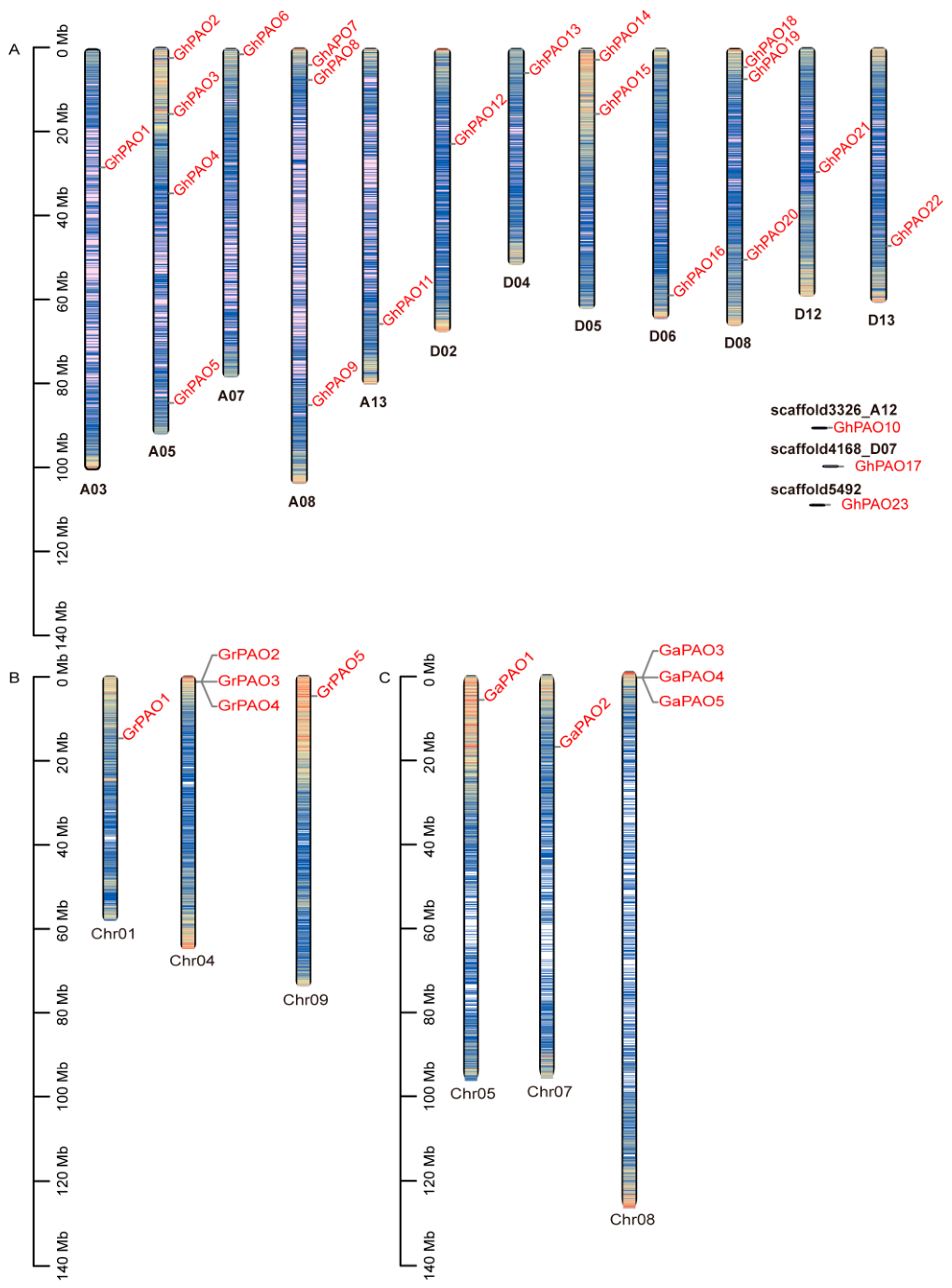
To elucidate the evolutionary history of GhPAO genes across the three cotton species, we analyzed genomic duplication events, with a particular focus on whole-genome duplication (WGD), segmental duplication, and tandem duplication. Gene nomenclature was assigned based on chromosomal localization. The 23 identified GhPAO genes were unequally distributed across 12 of the chromosomes in the G. hirsutum genome (Figure 1A). Specifically, 11 genes were located on the A sub-genome, distributed across chromosomes A03, A05, A07, A08, A12, and A13. At the chromosome level, the distribution was markedly uneven: chromosomes A05 and A08 carried four and three PAO genes, respectively, whereas each of the remaining chromosomes contained only a single copy. The remaining 12 genes were mapped to the D sub-genome on chromosomes D02, D04, D05, D06, D07, D08, D12, and D13, thereby complementing the 11 genes identified on the A sub-genome. Notably, three genes (GhPAO10, GhPAO17, and GhPAO23) were unanchored to unplaced genomic scaffolds rather than to assembled chromosomes. In addition, ten GhPAO genes (GhPAO2, GhPAO6, GhPAO7, GhPAO8, GhPAO11, GhPAO13, GhPAO14, GhPAO16, GhPAO18, and GhPAO19) exhibited a pronounced clustering near the chromosomal ends (telomeric regions). This telomere-proximal localization suggests a potential role in maintaining chromosomal integrity and modulating telomere-associated cellular processes. Furthermore, to trace the evolutionary trajectory of the PAO families in the two diploid progenitor species, five PAO genes were identified in G. raimondii (designated GrPAO1GrPAO5) and five PAO genes in G. arboreum (designated GaPAO1GaPAO5). Chromosomal localization analysis revealed that GrPAO genes are distributed across three chromosomes (Chr01, Chr04, Chr09), with GrPAO2, GrPAO3, and GrPAO4 forming a tandem gene cluster on Chr04 (Figure 1B). Similarly, GaPAO genes were distributed across three chromosomes (Chr05, Chr07, Chr08), with GaPAO3, GaPAO4, and GaPAO5 clustered on Chr08 (Figure 1C). Taken together, this clustered genomic distribution is consistent with segmental duplication events that likely contributed to the expansion of the PAO family in diploid cotton progenitors.
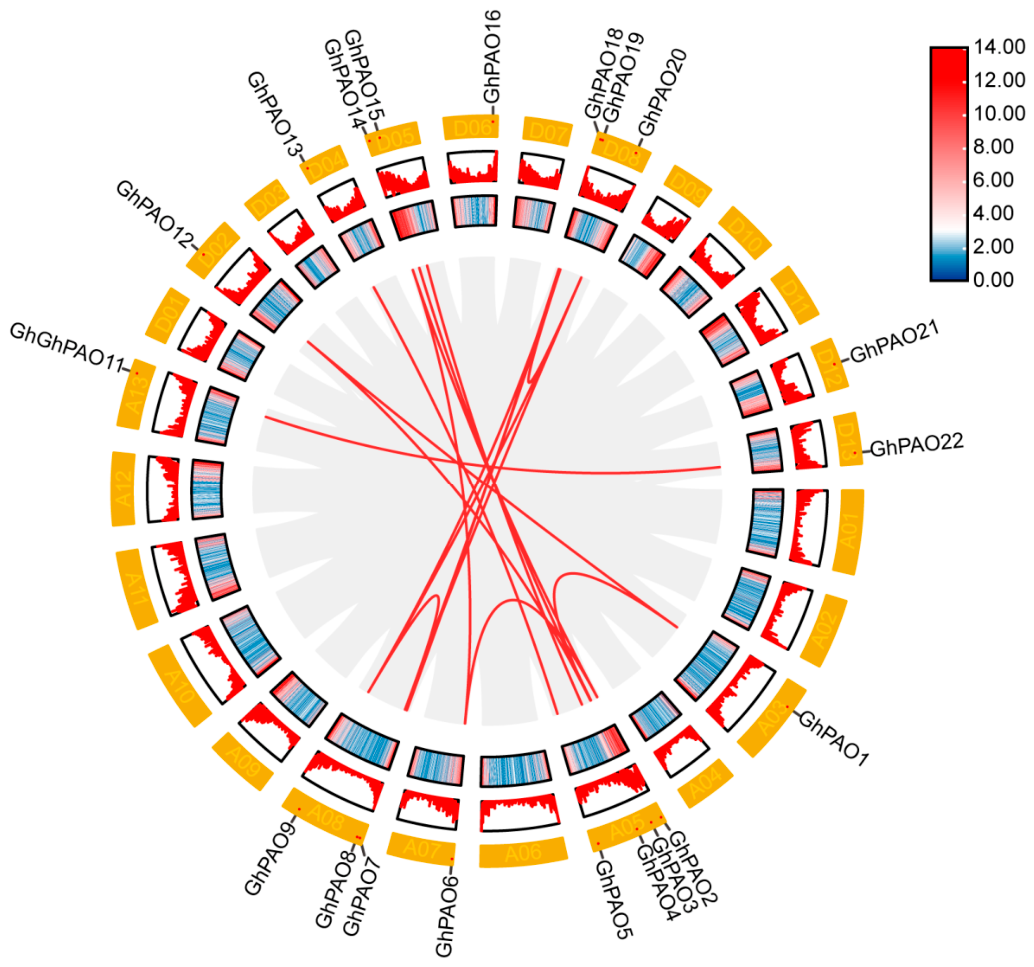
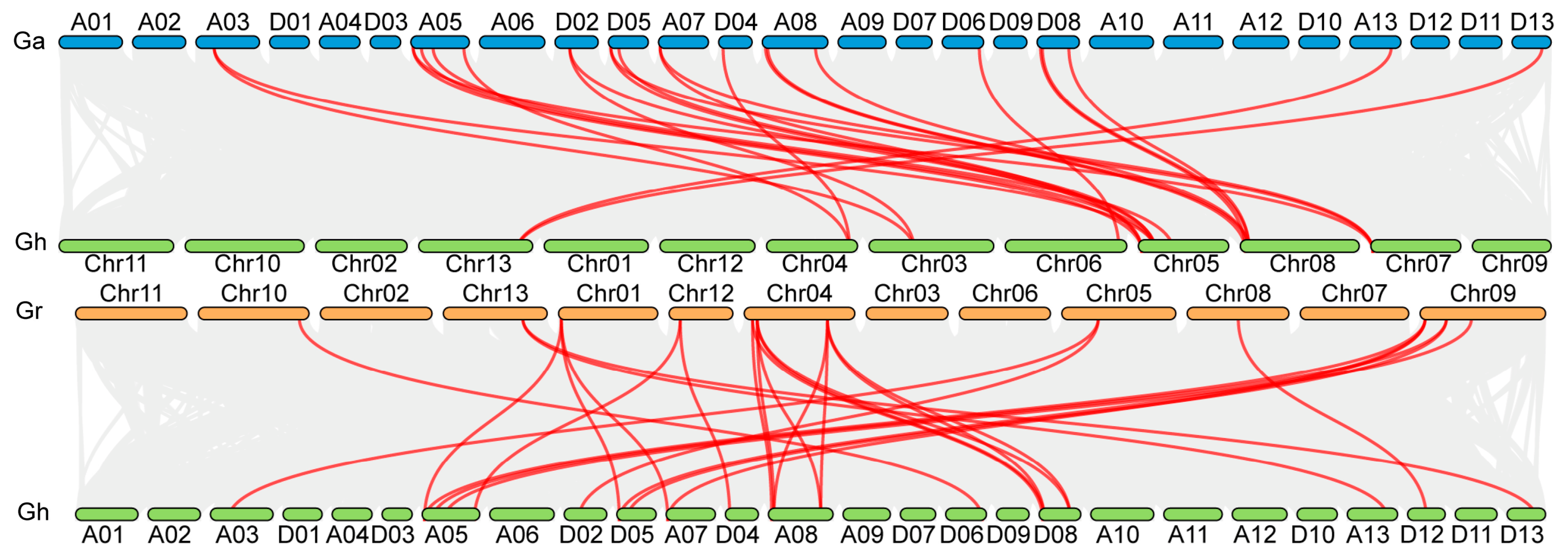
Collinearity analysis revealed that 20 GhPAO genes likely arose through duplication events and were distributed across 12 chromosomes (A03, A05, A07, A08, A13, D02, D04, D05, D06, D08, D12, and D13), whereas GhPAO10, GhPAO17, and GhPAO23 were anchored to unplaced genomic scaffolds (Figure 2). Synteny analysis indicated that both tandem and segmental duplication events contributed to the expansion of the GhPAO gene family in G. hirsutum. We further characterized the PAO gene family into three cotton species: G. hirsutum, G. arboreum, and G. raimondii. Comparative genomic analysis between allotetraploid and diploid cotton species suggested that lineage-specific expansion of the PAO gene family occurred following polyploidization (Figure 3).

2.3. Phylogenetic and Motif Analysis

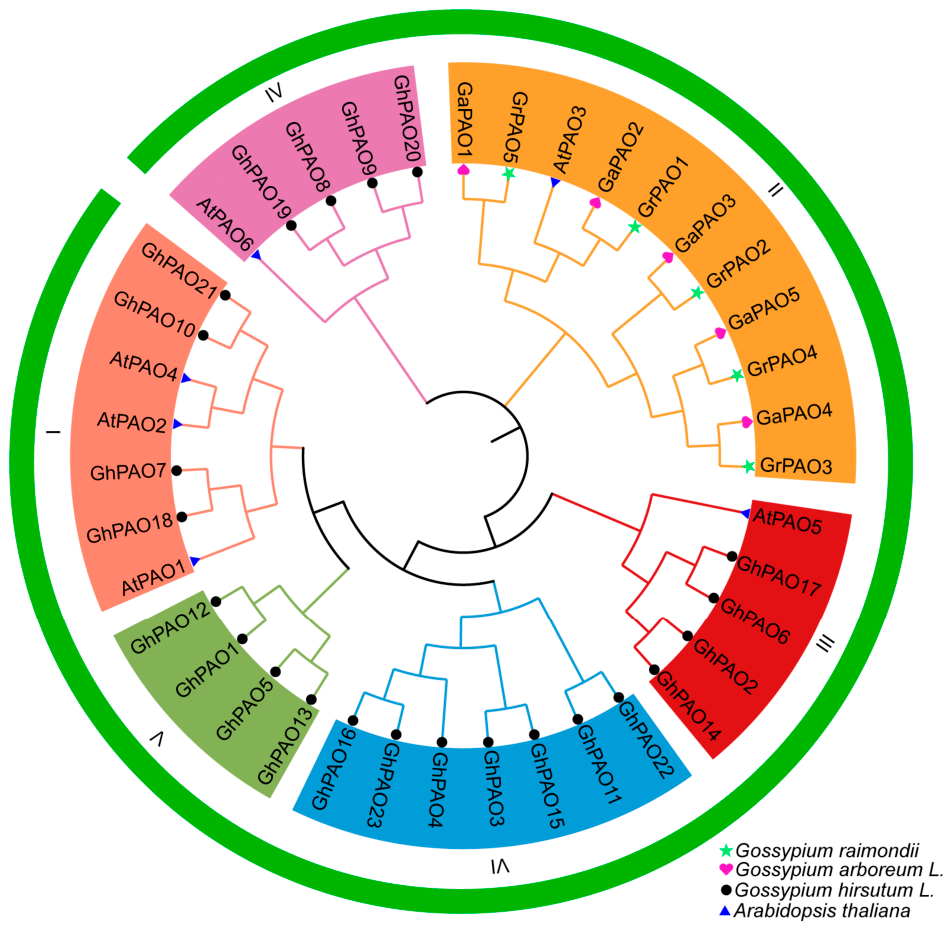
In this study, the GhPAO, GaPAO, and GrPAO genes were systematically designated based on their respective chromosomal locations. Phylogenetic analysis of PAO protein sequences from Arabidopsis thaliana L. and three cotton species resolved the GhPAO family into six distinct clades (Figure 4). Notably, the allotetraploid G. hirsutum harbored 23 PAO genes, a number approximately four-fold greater than that observed in either of its diploid progenitor species, G. arboreum (n = 5) and G. raimondii (n = 5).
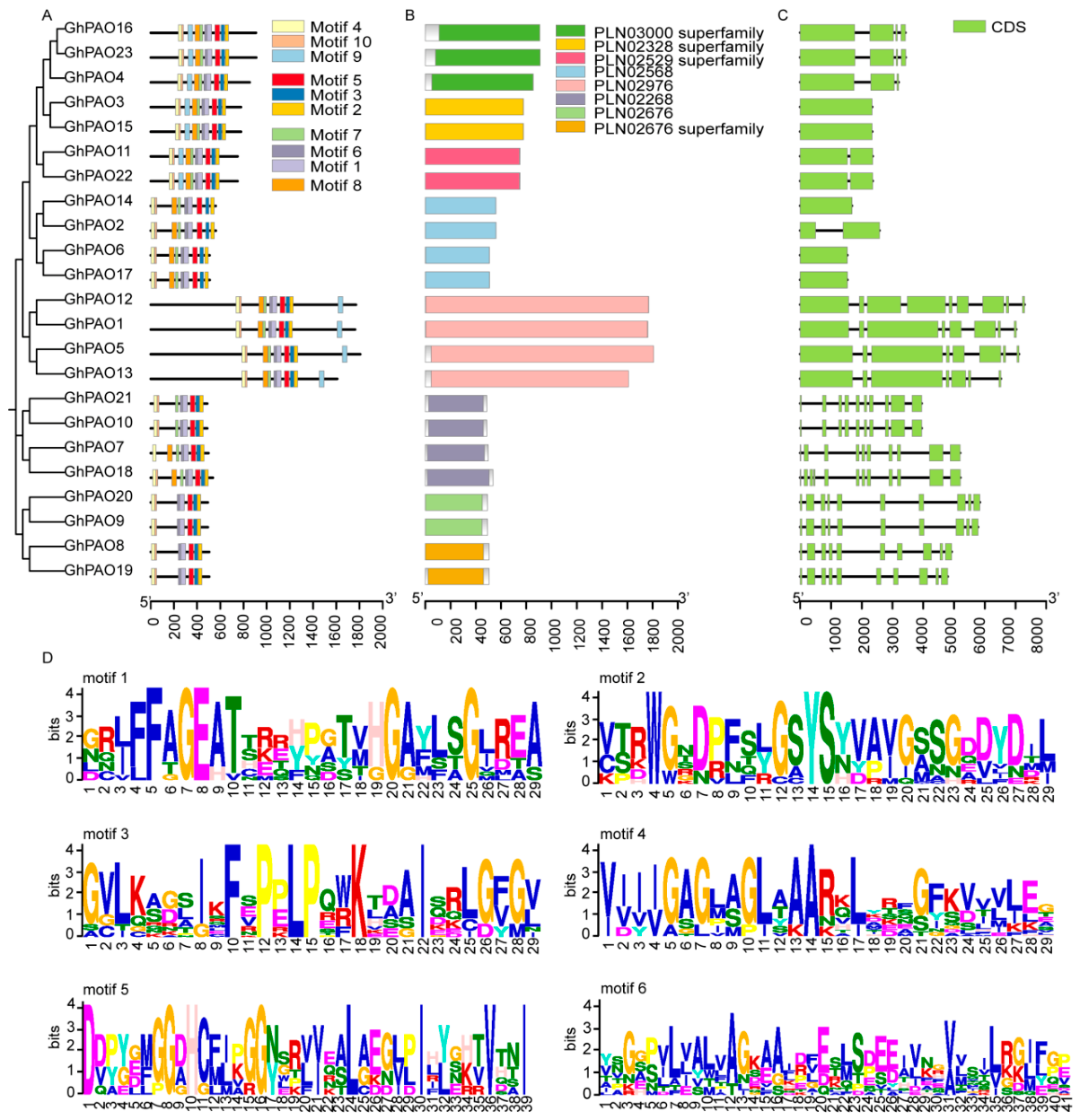
To investigate the sequence conservation, divergence, and potential roles in abiotic stress response of PAO proteins from G. hirsutum. G. raimondii and G. arboreum, we subsequently analyzed their conserved motifs using the MEME suite. A total of ten distinct conserved motifs were identified. The structural analysis of PAO encoding genes and conserved domain mapping for G. raimondii and G. arboreum are presented in Figure S1 and Figure S2, respectively. Although the gene structures were not fully conserved across the G. hirsutum PAO gene family, proteins clustering within the same phylogenetic clade tended to share an identical complement of conserved motifs. However, the conserved motif composition exhibited notable variation among different clades. One group contained (GhPAO1, GhPAO5, GhPAO12, and GhPAO13) 10 motifs. A second group (GhPAO2, GhPAO6, GhPAO14, and GhPAO17) shared a set of nine identical motifs. Notably, this group differed from the first solely in the absence of motif 9. A third group (GhPAO3, GhPAO4, GhPAO11, GhPAO15, GhPAO16, GhPAO22, and GhPAO23) possessed a common set of 10 motifs (Figure 5A, Table S4). Membership of the identified proteins in the GhPAO family was further validated by conserved domain analysis. All GhPAO proteins harbored the typical conserved domains of plant polyamine oxidases, particularly the FAD-binding domain (PLN02328/PLN02676 superfamily) and amine oxidase catalytic domain (PLN02529 superfamily), which represent the core functional regions of the PAO family. Taken together, these definitive structural features firmly confirm that all identified GhPAO genes are authentic members of the plant PAO family. Additionally, some GhPAO members harbor plant-specific conserved domains (PLN03000, PLN02568, PLN02976, PLN02268), suggesting potential functional differentiation within the family. For instance, GhPAO21, GhPAO7, GhPAO10, and GhPAO18 shared a common domain of the PLN02268 family. This domain has been implicated in plant immunity and cell wall biosynthesis, thus potentially constituting a primary defense barrier against pathogens. A distinct group comprising GhPAO14, GhPAO2, GhPAO6, and GhPAO17 was found to harbor PLN02568 domain. This domain typifies transporters implicated in mobilization of biosynthetic precursors of the stress-related hormones abscisic acid (ABA) and jasmonic acid (JA), thereby putatively facilitating the transport and spatial distribution of these critical signaling molecules. Thus, these particular genes represent likely candidates as key modulators of plant stress adaptation and developmental processes (Figure 5B). In addition, gene structure and conserved domain analyses of the PAO family in G. raimondii and G. arboreum revealed that all GrPAO and GaPAO proteins possess a core PLN02518 superfamily domain, confirming their assignment as functional members of the PAO family (Figures S1B and S2B). The majority of genes exhibited highly conserved motif compositions (motif 1–10) and similar exon–intron architectures, indicating substantial evolutionary conservation within the PAO family. Analysis of the G. hirsutum genome annotation demonstrated substantial variations in exon numbers among GhPAO genes, ranging from a single exon (e.g., GhPAO3 and GhPAO5) to ten exons (e.g., GhPAO7, GhPAO8, GhPAO9, GhPAO10, GhPAO18, GhPAO19, GhPAO20, and GhPAO21) (Figure 5C). This observation highlights the distinct exon–intron structural patterns among GhPAO family members, which have likely contributed to functional diversification (Figure 5C). Although subtle differences in gene structure were detected between GrPAOs and GaPAOs with respect to intron number, domain length, and untranslated region (UTRs) (Figures S1C and S2C), such variations likely reflect species-specific evolutionary divergence and functional adaptation during cotton polyploidization. Furthermore, we observed that all GhPAOs proteins shared a core set of six conserved motifs (motifs 1–6). Notably, these motifs exhibited an invariant 5′ to 3′ sequential arrangement: motif 4→6→1→5→3→2 (Figure 5D).
Collectively, although the PAO gene families across the three cotton species exhibit clade-specific and species-specific structural variations, their core structural features are highly conserved. The presence of both conserved core motifs and canonical PAO-related domains ensure the fundamental catalytic functions of these proteins. Conversely, structural differences in gene architecture, motif organization, and the presence of unique auxiliary domains likely reflect the functional diversification that occurred in cotton during evolutionary processes and polyploidization. Taken together, these structural characteristics provide a robust foundation for future efforts to elucidate the mechanisms underlying functional specialization of GhPAO genes in plant development and stress responses.

2.4. Cis-Regulatory Element Analysis

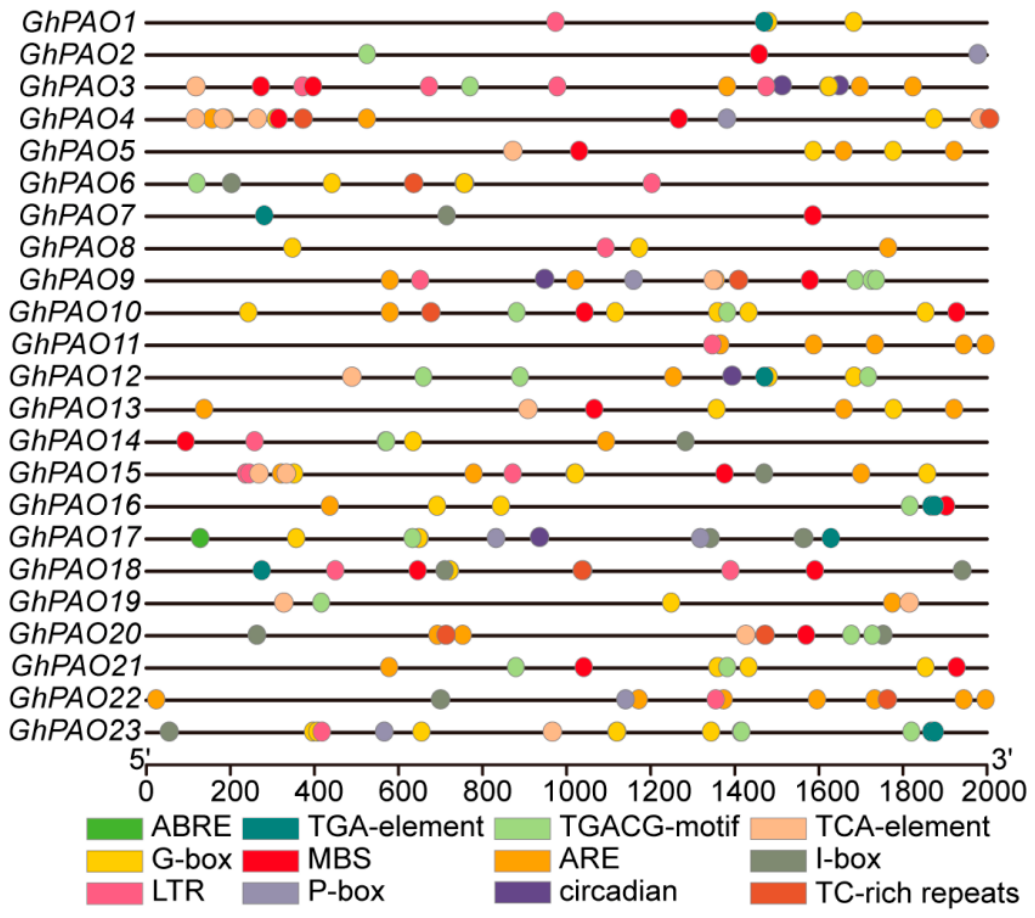
To investigate the potential involvement of GhPAO genes in abiotic stress responses, we conducted a comprehensive analysis of cis-acting regulatory elements. Specifically, we examined the 2000 bp promoter regions upstream of the translation start site for GhPAO gene. Based on functional annotation, we identified and curated 12 cis-acting regulatory elements (Figure 6) with known roles in plant developmental processes, hormone responsiveness, and responses to abiotic and biotic stresses. These identified cis-acting regulatory elements were broadly categorized into two major functional groups. The first group, stress-responsive elements, encompassed those associated with low-temperature responsiveness (LTR), drought inducibility (MBS), light responsiveness (G-box, I-box), anaerobic induction (ARE), and defense signaling (TC-rich repeats). The second group, developmental regulation, comprised a single circadian control element. Promoter analysis of the GhPAO genes revealed the presence of multiple regulatory elements associated with hormone signaling pathways. These included the methyl jasmonate-responsive (MeJA) TGACG-motif, the gibberellin-responsive P-box, and the salicylic acid-responsive TCA-element. GhPAO3, GhPAO15, and GhPAO23 were predicted to harbor the highest number of cis-acting regulatory elements, whereas GhPAO2 and GhPAO7 contained the fewest, with only three each. Furthermore, promoter analysis revealed that the G-box motif was the most prevalent cis-element among the GhPAO genes, representing 58 total occurrences. Collectively, light-responsive elements (G-box and I-box) accounted for 72 occurrences, whereas hormone-responsive elements (TGACG-motif, P-box, TCA-element) totaled 49. These findings suggest a potential role for GhPAO genes in both light perception and hormone signaling pathways. Moreover, the abundance and diversity of hormone-responsive elements identified herein strongly suggest that GhPAO expression is subject to intricate multifactorial hormonal regulation, potentially implicating these genes in hormone-mediated fiber development.

2.5. Expression Patterns of GhPAO Genes

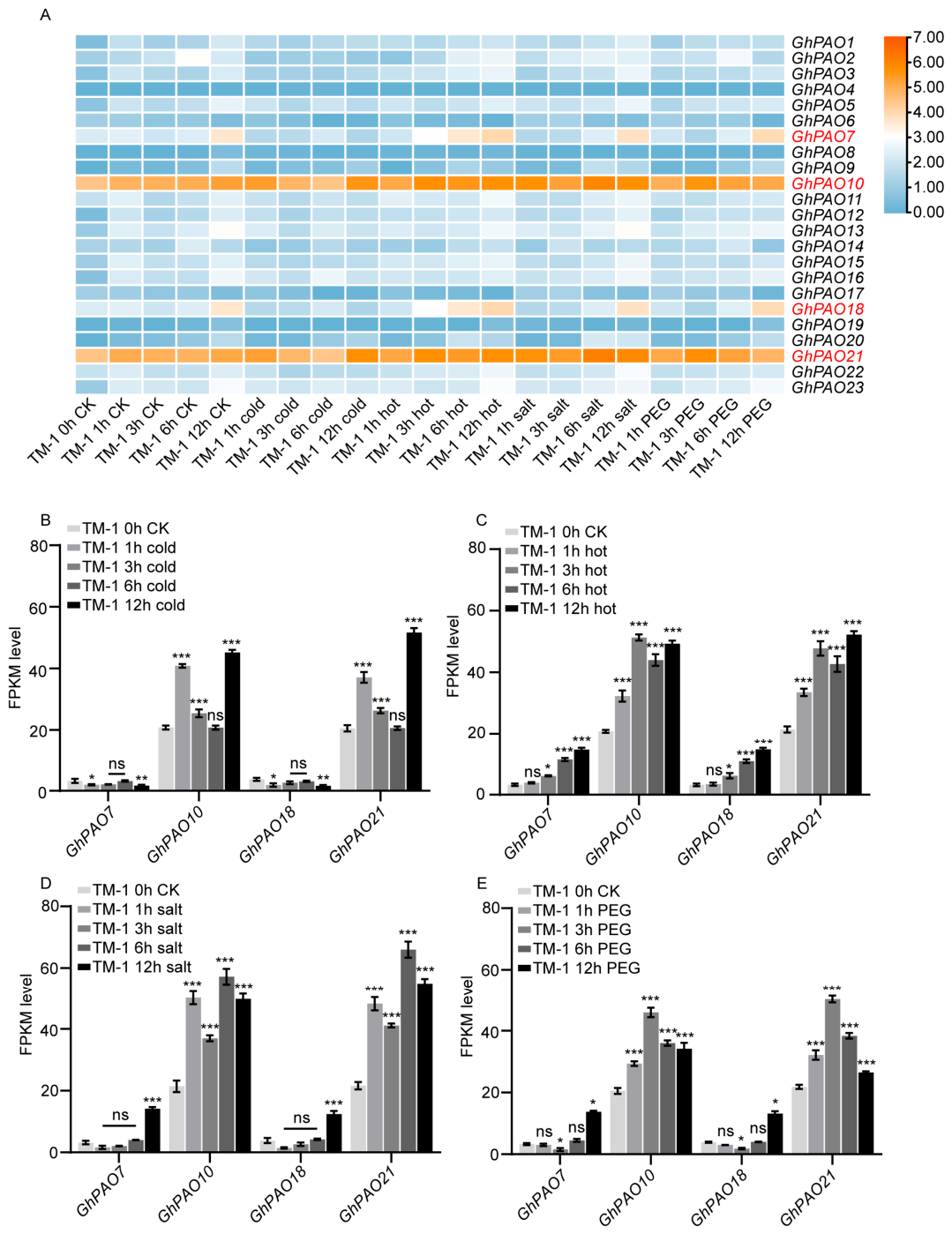
To investigate the functional roles of the GhPAO gene, we analyzed publicly available RNA sequencing data to characterize the expression profiles across different tissues of upland cotton, including roots, stems, leaves, flowers, ovules at 0 days post-anthesis (DPA), and fibers at various developmental stages, as well as transcriptomic responses under cold, heat, drought, and salt stress treatments. Overall, the 23 GhPAO family members showed divergent expressions under cold, heat, salt and PEG-simulated drought stress. Among them, GhPAO7, GhPAO10, GhPAO18 and GhPAO21 displayed obvious stress-responsive changes (Figure 7A). We further analyzed their dynamic FPKM levels across sequential time points under each treatment. Under cold stress (Figure 7B), GhPAO21 was rapidly induced at 1 h, temporarily decreased afterward, and gradually rose to its peak at 12 h with the highest expression level. GhPAO10 presented a similar trend and also peaked at 12 h, with consistently lower abundance and milder expression fluctuations than GhPAO21. In contrast, GhPAO7 and GhPAO18 maintained low basal expression and showed no significant alterations relative to the control, with negligible response to cold stress. Under heat stress (Figure 7C), expression patterns were largely consistent with cold stress. GhPAO21 increased at 3 h, slightly declined, and peaked again at 12 h. GhPAO10 followed an analogous trend, remaining less expressed than GhPAO21. GhPAO7 and GhPAO18 still showed constitutively low expression without notable stress induction. Under salt stress (Figure 7D), GhPAO10 and GhPAO21 exhibited highly synchronous dynamics. Both were rapidly upregulated at 1 h, slightly reduced at 3 h, peaked at 6 h, and moderately declined at 12 h. GhPAO21 remained marginally higher than GhPAO10 from 3 to 12 h. GhPAO7 stayed stably low-expressing, while GhPAO18 only showed weak, non-significant late induction. Under PEG drought stress (Figure 7E), GhPAO10 and GhPAO21 presented divergent inductive patterns. GhPAO21 peaked at 3 h followed by pronounced decline, whereas GhPAO10 reached its peak at 6 h and only underwent mild reduction afterward, eventually surpassing GhPAO21 at 12 h. As with the other three stresses, GhPAO7 and GhPAO18 remained constitutively low-expressing with almost no obvious stress response under drought treatment. Collectively, GhPAO7 and GhPAO18 maintained persistently low basal expression with negligible stress responses across all treatments. By contrast, GhPAO10 and GhPAO21 possessed markedly high transcript abundance and robust stress-inducible profiles. Therefore, these two genes were selected for subsequent qPCR validation and functional investigation. These results reveal that the A/D sub-genome homeologs GhPAO10 and GhPAO21 exhibit slightly different expression patterns under abiotic stresses, which support the adaptive response of cotton to adverse environments.
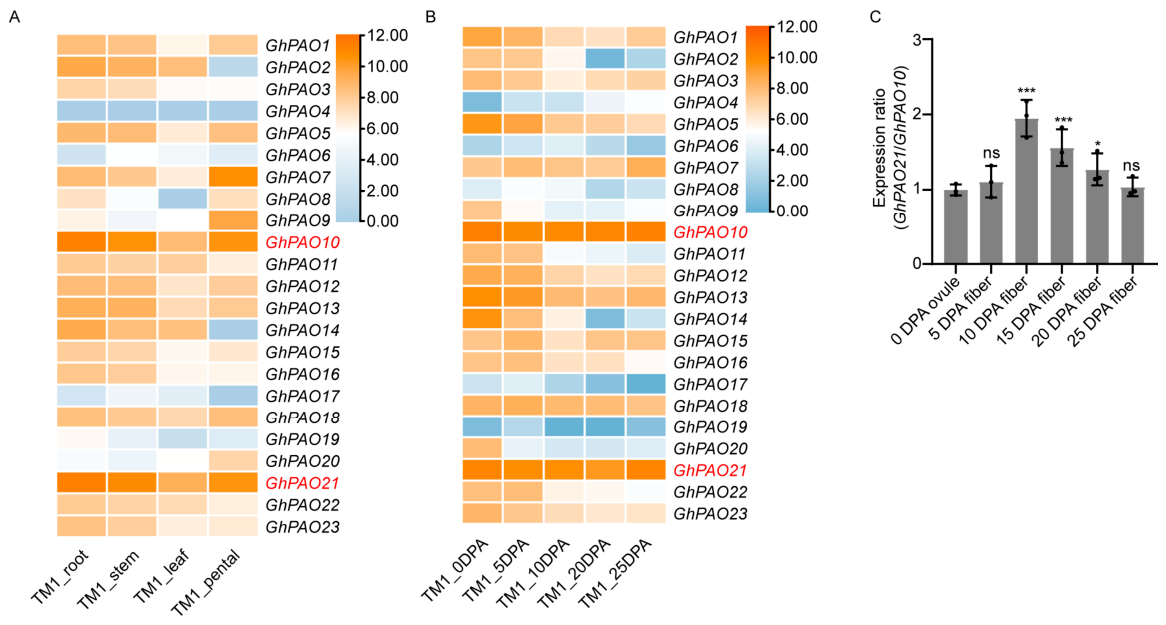
Tissue-specific expression analysis (Figure 8A) revealed that most GhPAO genes exhibited distinct expression patterns across roots, stems, leaves, and petals of upland cotton (cv. TM-1). Among them, GhPAO10 and GhPAO21 exhibited constitutively high expression levels across all tested tissues (the color scale ranging from blue to orange denotes expression levels from low to high), suggesting their fundamental role in the regulation of cotton growth and development. Conversely, other genes, including GhPAO4 and GhPAO17 exhibited lower expression levels in most tissues, underscoring the functional diversification within this gene family.
Analysis of the fiber development stages (Figure 8B) revealed that GhPAO10 and GhPAO21 maintained consistently high expression levels across all developmental stages examined, implicating these genes in fiber elongation and secondary cell wall biosynthesis. In contrast, several GhPAO genes (e.g., GhPAO2, GhPAO14) exhibited stage-specific expression patterns characterized by peak expression at discrete fiber development time points, indicating their stage-specific regulatory processes during fiber development.
To further delineate the functional contributions of GhPAO10 and GhPAO21, we quantified their respective expression levels across different fiber developmental stages by qPCR (Figure S3). Furthermore, to more clearly discern the relative expression differences between GhPAO10 and GhPAO21, their expression ratios were calculated for ovules and fibers (Figure 8C). The GhPAO21 and GhPAO10 expression ratio was relatively low at 0 DPA and 5 DPA but exhibited a marked increase at 10 DPA and 20 DPA (p < 0.001), indicating that GhPAO21 may play a predominant role relative to GhPAO10 during the rapid fiber elongation and secondary wall thickening stages. In contrast, no significant difference in the expression ratio was observed at 25 DPA, suggesting comparable functional contributions of the two genes during late fiber maturation. Taken together, compared to its homolog GhPAO10, GhPAO21 exhibited significantly higher expression levels during critical developmental stages, including rapid fiber elongation (10 DPA) and secondary wall thickening (20 DPA), underscoring its potentially more central role in cotton fiber development. Furthermore, the homologous genes in the A and D sub-genomes exhibited coordinated expression patterns, suggesting that these genes likely play critical and evolutionarily conserved roles in fiber development. Based on these comprehensive expression pattern analyses, GhPAO21 was selected as the primary candidate for subsequent functional characterization and regulatory studies.

2.6. TGACG-Motif Analysis in GhPAO Promoters

Previous transcriptomic analysis revealed that the MeJA signaling pathway is associated with fiber initiation and may also contribute to the regulation of fiber elongation [27]. Furthermore, exogenous application of suitable MeJA concentrations promotes cotton fiber initiation and elongation [28,29]. To identify TFs capable of binding to the MeJA-responsive cis-element (TGACG-motif) in the promoter regions of PAO genes and regulating their expression. Based on our comprehensive expression analysis, GhPAO21 exhibited higher overall transcript abundance and a more distinct expression advantage during key fiber developmental stages. As shown in Figure 8C, GhPAO21 expressed significantly higher expression levels than GhPAO10 across all fiber developmental stages examined, and its expression profile closely coincides with the rapid fiber elongation phase. Notably the promoter of GhPAO21 harbors MeJA-responsive cis-regulatory elements, which have been closely associated with the regulation of fiber development. Therefore, we selected GhPAO21 as the primary candidate, for further investigation, aiming to identify TFs potentially regulated its expression through the MeJA-responsive cis-acting element (TGACG-motif) located within its promoter region. This analysis identified eight candidate TFs.
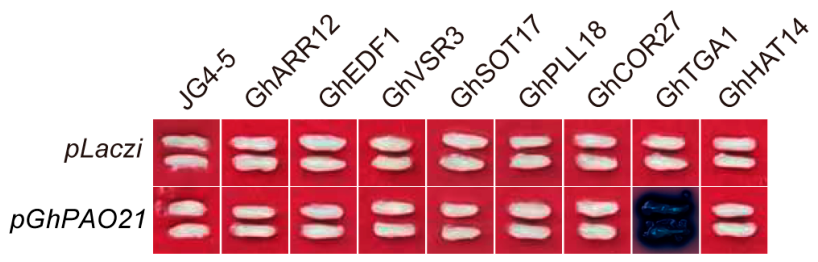
To experimentally validate the predicted interaction between the candidate TFs and the GhPAO21 promoter, we employed an integrated approach combining bioinformatic analysis and yeast one-hybrid (Y1H) assay. Initially, potential upstream regulators were identified through screening of predicted binding motifs against the JASPAR database (https://jaspar.elixir.no) and subsequent retrieval of their corresponding gene sequences from the CottonMD database, which yielded eight candidate TFs (Table S5). Subsequently, Y1H assays were then performed to individually assess the specific binding capacity of each candidate TF fused to the GAL4 activation domain to the MeJA-responsive cis-element (TGACG-motif) within the GhPAO21 promoter. For the Y1H assay, the pLacZi reporter (bait) vector was constructed by inserting a GhPAO21 promoter fragment containing the TGACG motif, whereas the pJG4-5 effector (prey) vector was constructed using the complete coding sequences of eight candidate TFs. The resulting constructs were co-transformed into yeast reporter strain. Following selection on synthetic defective medium (SD/-Trp/-Ura) and subsequent screening on plates supplemented with X-gal, only the yeast clones co-transformed with pJG4-5-GhTGA1 and pLacZi-GhPAO21 exhibited a distinct blue phenotype and robust growth, whereas clones harboring the remaining seven candidate TFs, as well as the empty vector controls, appeared white with no detectable color reaction (Figure 9). Collectively, these results demonstrate that of the eight candidate TFs tested, only GhTGA1 exhibited direct and specific binding to the TGACG motif (MeJA response element) within the GhPAO21 promoter, whereas the remaining seven displayed no detectable binding activity. Therefore, we hypothesize that GhTGA1, as a key component of the MeJA signaling pathway, mediates the regulatory effects of MeJA on cotton fiber development, at least in part, through the transcriptional expression of GhPAO21.
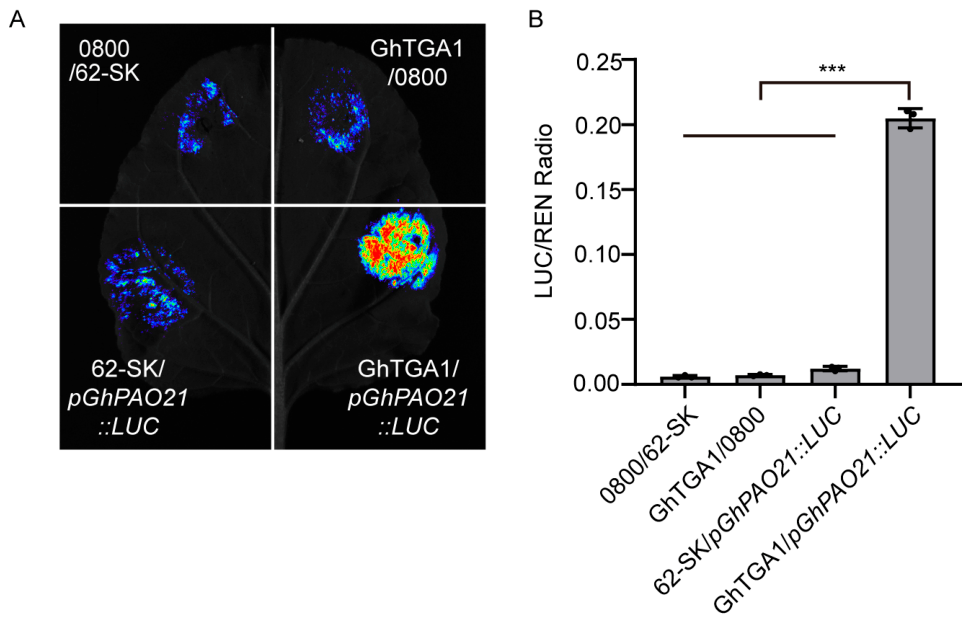
To further validate the regulatory relationship between the GhPAO21 promoter and GhTGA1, we performed a dual-luciferase reporter assay. Briefly, the GhPAO21 promoter was cloned into the pGreenII 0800-LUC reporter vector, and full-length CDS of GhTGA1 was cloned into the pGreenII 62-SK effector vector, after which both constructs were introduced into Agrobacterium transformation. For transient expression assays in Nicotiana benthamiana leaves, the following four effector/reporter combinations were prepared: pGreenII 62-SK and pGreenII 0800-LUC, pGreenII 62-SK and pGreenII 0800-LUC-pGhPAO21, pGreenII 62-SK-GhTGA1 and pGreenII 0800-LUC, and pGreenII 62-SK-GhTGA1 and pGreenII 0800-LUC-pGhPAO21. Each combination was infiltrated into four distinct locations on the same leaf to minimize biological variation. Following infiltration and an appropriate incubation period, dual-luciferase (LUC/REN) activity assays were performed.
As shown in Figure 10, co-expression of GhTGA1 with GhPAO21 promoter-driven LUC reporter resulted in a significant increase in the LUC/REN activity compared to all control groups, demonstrating that GhTGA1 strongly activates the transcription of GhPAO21.

3. Discussion

The PAO gene family plays essential roles in plant growth, development and abiotic stress tolerance, and their biological functions have been systematically summarized in previous studies [30]. However, comprehensive genome-wide analyses of the PAO gene family in G. hirsutum, G. arboreum and G. raimondii—encompassing their evolutionary diversification and transcriptional regulatory mechanisms—have yet to be reported. Furthermore, the specific functional roles of these genes in cotton fiber development and their associated regulatory networks remain entirely unexplored.
This study presents a comprehensive genome identification of the PAO gene family in G. hirsutum, G. arboreum and G. raimondii, revealing its species-specific evolutionary characteristics by significant gene family expansion. Specifically, we identified 23 PAO family members in upland cotton, a number approximately four-fold greater than that observed in its diploid progenitors (five members each in G. arboreum and G. raimondii) (Figure 1 and Figure 4). The lineage-specific expansion, likely driven by tetraploidization, has established an evolutionary framework for the functional diversification of the GhPAO gene family.
Functionally, our expression profiling revealed that the transcriptional patterns of GhPAO genes are intimately associated with fiber development in striking contrast to the predominantly stress-responsive functions of PAO genes reported in other plant species. Notably, GhPAO10 and GhPAO21 exhibited pronounced transcript accumulation during the rapid fiber elongation phase (10 to 15 DPA), suggesting their critical involvement in regulating this developmental process (Figure 8). These genes are likely to exert positive regulatory effects during critical stages of fiber development by modulating polyamine catabolism and H2O2 signaling levels, thereby influencing turgor pressure maintenance, cytoskeletal dynamics, and cell wall extensibility within elongating fiber cells. Furthermore, the coordinated expression patterns observed between homologous gene pairs residing in the A and D sub-genomes of cotton species underscore the functional conservation and sub-functionalization that have accompanied polyploidization—a hallmark characteristic that distinguishes the GhPAO gene family from its counterparts in diploid plant species.
Under drought stress, PAOs are known to maintain intracellular polyamine homeostasis through the degradation of excess polyamines. In the present study, analysis of PEG-induced drought stress treatment revealed distinct expression kinetics of GhPAO10 and GhPAO21 (Figure 7). GhPAO21 exhibited rapid induction at the early stress stage (3 h), followed by a subsequent decline, whereas GhPAO10 displayed a relatively stable sustained expression profile (Figure 7). The pivotal role of PAOs in maintaining intracellular polyamine homeostasis and redox balance under drought conditions—achieved through the precise degradation of excess polyamines and dynamic regulation of H2O2 signaling [31,32]—provides a mechanistic framework for interpreting these distinct expression kinetics. Preliminary analysis of drought-responsive transcriptomic data further revealed functional differentiation characteristics among GhPAO family members under abiotic stress. Specifically, GhPAO21 exhibited a rapid induction followed by rapid decline in expression pattern, which closely mirrors the drought-responsive behavior of PAO genes reported in alfalfa (Medicago sativa). Similar expression dynamics have been documented for OsPAO2 and OsPAO6 in rice (Oryza sativa) as well as SbPAO5 and SbPAO6 in sorghum (Sorghum bicolor), suggesting that early rapid induction of PAO genes may represent a conserved evolutionary strategy underlying plant adaptation to drought stress.
In contrast, GhPAO10 exhibited a relatively stable expression profile, a pattern clearly distinct from the stress-induced, late-stage transcriptional activation reported for maize ZmPAO6 and tomato SlPAO4 [33,34]. Notably, within the tomato PAO family, individual members display highly divergent expression dynamics under stress conditions [35], suggesting that the distinct regulatory behaviors of GhPAO10 and GhPAO21 may reflect a broader evolutionary trend of functional specialization within the GhPAO gene family. We hypothesize that GhPAO10 contributes to the drought stress response via sustained, basal-level polyamine catabolism—a mechanism that not only mitigates the cytotoxic effects of excessive polyamine accumulation but also preserves the spatiotemporal homeostasis of local H2O2 signaling. This model of regulation is particularly well suited to the physiological demands of sustaining fiber development and growth in cotton under prolonged drought conditions.
H2O2 generated via PAO-mediated polyamine catabolism serves as a pivotal signaling molecule that bridges primary metabolism and intracellular signal transduction [25,36,37]. For instance, FsPAO1 and FsPAO4 in forsythia (Forsythia suspensa) [38] are induced under drought stress, and their physiological functions rely on H2O2-mediated signaling cascades that activate downstream defense-related genes. In this study, we demonstrated that the promoter regions of GhPAO genes are enriched with stress response cis-elements, including LTR and MBS (Figure 6), further supporting their precise transcriptional regulation by drought-associated signals. We propose that members of the GhPAO family constitute a complex metabolic-signaling network through their spatiotemporally distinct expression patterns, thereby exerting differentiated regulatory functions across the various stages of drought response. Collectively, these findings substantially advance our understanding of the functional complexity inherent to the GhPAO gene family, offer novel mechanistic insights into the molecular basis of drought adaptation in cotton, and identify promising candidate genes for drought-resistant molecular breeding programs.
Our analysis revealed that the promoter regions of the GhPAO genes are enriched with hormone-responsive cis-elements, among which the methyl jasmonate (MeJA)-responsive element was particularly prominent. This enrichment is highly consistent with the well-established central regulatory role of the jasmonic acid (JA) signaling pathway in cotton fiber development [27,28]. Recent studies have further elucidated that the JA signaling pathway functions as a critical regulatory mechanism governing cotton fiber elongation. The JA signaling pathway is rapidly activated both under stress conditions and in response to exogenous MeJA treatment. Notably, low-concentration MeJA treatment of cotton ovules has been shown to significantly promote fiber elongation and increase final fiber length [39]. Previous work has also demonstrated the precise hormonal regulation of cotton fiber elongation [40,41]. Furthermore, key transcription factors within the JA signaling pathway have been shown to modulate cotton fiber development by directly binding to MeJA-responsive elements within the promoters of downstream target genes [42]. These findings provide a crucial theoretical framework for exploring the functional association between GhPAO genes, MeJA signaling, and fiber development. In this study, we demonstrated that GhPAO21, which is highly expressed during the fiber elongation stage, harbors a MeJA-responsive element (TGACG-motif) within its promoter region. Furthermore, Y1H assays confirmed that this promoter is specifically bound by GhTGA1, a key transcription factor in the JA signaling pathway (Figure 9). Dual-luciferase reporter assays further validated that GhTGA1 transcriptionally activates the GhPAO21 promoter (Figure 10), providing direct molecular evidence linking GhPAO21 to MeJA-mediated signaling during fiber development. In conclusion, the specific binding of GhTGA1 to the GhPAO21 promoter not only defines the molecular basis of GhPAO21 regulation via MeJA signaling but also establishes a preliminary regulatory framework—and identifies novel candidate targets—for dissecting the molecular mechanisms through which MeJA promotes cotton fiber development.
Based on the findings presented herein, future investigations should prioritize targeted functional validation in vivo, which remains an indispensable direction for advancing research in this field. First, chromatin immunoprecipitation sequencing (ChIP-seq) could be employed to systematically analyze the genome-wide binding landscape of GhTGA1, thereby elucidating the broader transcriptional regulatory network in which it operates. Second, the generation of transgenic cotton lines harboring GhPAO21 overexpression constructs or CRISPR/Cas9-mediated knockout mutations would enable direct phenotypic assessment of fiber development, thereby definitively establishing the specific functional roles of GhPAO21 in this process. Furthermore, the precise molecular mechanisms underlying the interplay between the GhPAO genes, phytohormone signaling, and other interconnected pathways warrant further in-depth investigation. Collectively, these endeavors will substantially refine our understanding of the regulation networks governing cotton growth and fiber development, thereby providing a more robust theoretical foundation and technical framework for the genetic improvement in fiber quality.

4. Materials and Methods

4.1. Identification of Cotton GhPAO Genes

The amino acid sequence of previously characterized A. thaliana PAO protein was retrieved from The Arabidopsis Information Resource (TAIR, available at https://www.arabidopsis.org/, accessed on 22 November 2025) and employed as the query sequence. TBtools (version 2.390) [43] BLASTp searches were conducted against the respective protein databases of the target cotton species. For Gossypium hirsutum (cv. TM-1), the TM-1_NBI genome assembly was utilized, with the corresponding protein sequences obtained from the Cotton Multiomics Database (CottonMD, available at https://yanglab.hzau.edu.cn/CottonMD, accessed on 23 November 2025). Additionally, the telomere-to-telomere (T2T) genome assembly for TM-1 (T2T-TM-1) was retrieved from the Cottonomics database (available at http://cotton.zju.edu.cn/, accessed on 2 March 2026). For Gossypium arboreum, the reference genome assembly version 1.0 (Gossypium_arboreum_v1.0) was employed, which is available under NCBI RefSeq accession: GCF_000612285.1. For Gossypium raimondii, genome assembly version 2.1 was utilized, corresponding to NCBI taxonomy ID: 29730. For the TBtools (version 2.390) [43] BLASTp searches, an E-value threshold of <1 × 10⁻⁵ was applied to filter significant hits. Additionally, we obtained the hidden Markov model (HMM) profile for the PAO domain (PF01593) [30]. This profile was from the Pfam database [44]. We used it to screen protein sequences using HMMER. The resulting candidate genes were further validated by confirming the presence of the characteristic PAO domain using SMART [45] and InterPro databases [46]. The full-length nucleotide sequences of all identified GhPAO genes family members are provided in File S1 (FASTA format) and Table S1.

4.2. Chromosomal Location and Collinearity

Chromosomal location information for the identified GhPAO genes was extracted from the corresponding GFF3 genome files of the respective cotton species. Gene chromosomal distribution maps were generated, and synteny/collinearity analyses were performed using TBtools (version 2.390) [43].

4.3. Phylogenetic Analysis

Phylogenetic analyses were performed using MEGA (version 11.0). For the reconstruction of the phylogenetic tree, the Maximum Likelihood (ML) algorithm was selected. Branch support was assessed via bootstrap analysis with 1000 replicates. All remaining parameters were retained at their default settings.

4.4. Gene Structure and Cis-Element Analysis

Conserved protein motifs were identified using the MEME Suite (version 5.5.8) [47]. cis-acting regulatory elements within the 2000 bp promoter regions upstream of the translation start site were predicted using PlantCARE (available at https://bioinformatics.psb.ugent.be/webtools/plantcare/html/, accessed on 2 December 2025). The resulting cis-element distributions were visualized using TBtools software (version 2.390) [43].

4.5. Expression Pattern Analysis

Transcriptome datasets encompassing various cotton tissues and fiber developmental stages were utilized to analyze expression profiles of the GhPAO gene family, as detailed in the Data Availability Statement. Expression heatmaps were generated using TBtools software (version 2.390) based on Log2-transformed expression values [43].

4.6. qRT-PCR Analysis

Total RNA was isolated from the ovules and fibers of the cotton cultivar Jin668 at various DPA using the FastPure Universal Plant Total RNA Isolation Kit (Vazyme Biotechnology, Nanjing, China). Subsequently, first-strand cDNA was synthesized from 1 µg of the extracted total RNA using the HiScript II Q RT SuperMix for qPCR (Vazyme Biotechnology), strictly adhering to the manufacturer’s provided protocol. qRT-PCR was performed using the ChamQ SYBR qPCR Master Mix (Vazyme Biotechnology). Three independent biological replicates were analyzed for each gene under investigation. The cotton ubiquitin gene UBQ7 (GenBank accession no: AY189972) served as the internal reference for normalization of the expression data. The primer sequences utilized in this study are detailed in Table S3. Relative gene expression levels were calculated using the 2−ΔΔCT method, as previously described [48].

4.7. Y1H Assay

In the Y1H assay, an approximately 2000 bp promoter fragment of GhPAO21 was cloned into the pLacZi bait vector (Clontech, Mountain View, CA, USA) to generate the reporter construct. The coding sequences of candidate TFs predicted to regulate GhPAO21 were inserted into the pJG4-5 prey vector. The resulting prey constructs were individually co-transformed with the GhPAO21 promoter reporter construct into the yeast strain EGY48. Positive transformants were selected on synthetic dropout medium lacking tryptophan and uracil (SD/-Trp/-Ura) and subsequently screened on X-gal-containing agar plates to assess β-galactosidase activity. The cultures were incubated at 30 °C for 3 to 5 days, and the development of blue coloration was monitored to evaluate the binding capacity of the candidate TFs to the GhPAO21 promoter. Primer sequences are provided in Table S3.

4.8. Dual-Luciferase Reporter Assay

The GhPAO21 promoter fragment was cloned into the pGreenII0800-LUC reporter vector, and the coding sequence of GhTGA1 was inserted into the pGreenII62-SK vector (both vectors were available from our laboratory). The primer sequence information is shown in Table S3. Following transformation into Agrobacterium tumefaciens strain GV3101, the recombinant strains were cultured, harvested by centrifugation, and resuspended in infiltration buffer to a final optical density at 600 nm (OD600) of 0.8–1.2. Equal volumes of the Agrobacterium suspensions harboring the reporter and effector constructs were mixed and co-infiltrated into the abaxial surface of Nicotiana benthamiana leaves. Following infiltration, plants were initially maintained in darkness for 12 h and subsequently grown under normal light conditions for 2 to 3 days. Firefly luciferase (LUC) activity was visualized by applying D-luciferin substrate and capturing luminescence signals using a live imaging system. For quantitative analysis, the infiltrated leaf tissues were harvested, ground in liquid nitrogen, and homogenized in the appropriate lysis buffer. Sample preparation and measurement were performed using the TransDetect Double-Luciferase Reporter Assay Kit (TransGen Biotech, Beijing, China; catalog no. FR201-02-V2) strictly following the manufacturer’s instructions. Firefly luciferase (LUC) and Renilla luciferase (REN) activities were sequentially quantified using a multifunctional microplate reader. The regulatory effect of GhTGA1 on the GhPAO21 promoter was evaluated by calculating the ratio of LUC activity to REN (LUC/REN).

5. Conclusions

This study has provided the first comprehensive genome-wide characterization and functional analysis of the polyamine oxidase (PAO) gene family in cotton. Our results revealed that the GhPAO family underwent a significant expansion event during cotton evolution and that its members exhibit distinct stage-specific expression profiles during fiber development, a process potentially modulated by phytohormones signaling. These findings substantially advance our understanding of PAO-mediated regulatory mechanisms in cotton fiber development. Notably, we identified GhTGA1 as a key upstream TF that binds directly to the MeJA-responsive cis-element within GhPAO21 promoters, thereby preliminarily implicating this regulation of module in control of fiber initiation and elongation. The study establishes a foundation for future functional investigations and highlights GhPAO21 as a prime candidate for subsequent genetic validation—through overexpression, CRISPR/Cas9-mediated knockout, or gene silencing approaches—to definitively elucidate its mechanistic role in fiber development. Further investigations should explore the potential contributions of GhPAO family members to abiotic stress adaptation and dissect the regulatory networks governed by MeJA signaling during fiber morphogenesis.

Supplementary Materials

The following supporting information can be downloaded at: https://www.mdpi.com/article/10.3390/plants15101429/s1, Figure S1: The conserved motif of GrPAO proteins. Figure S2. The conserved motif of GaPAO proteins. Figure S3. Expression of GhPAO10 and GhPAO21 genes at different stages of cotton development. Expression of GhPAO10 and GhPAO21 is normalized based on the expression of GhUBQ7. Error bars represent ± SD (n = 3). Asterisks indicate significant differences by t-test; ** p ≤ 0.01, *** p ≤ 0.001. The complete nucleotide sequences of 23 GhPAO genes analyzed in FASTA format are provided in File S1 and listed in Table S1. Table S1 Summary of Nucleotide Sequence information for GhPAOs. Table S2: This table shows the ID correspondence of polyamine oxidase (PAO) family genes between the gap-free telomere-to-telomere (T2T) genome and the previous TM-1-NBI genome of Gossypium hirsutum. Table S3: Primers used in this study. Table S4: List of the conserved motifs of the GhPAO proteins; Table S5. Information on candidate upstream regulatory factors targeting the TGACG motif in the GhPAO21 promoter.

Author Contributions

H.L. and L.Z. planned and supervised the project, conceived and designed the experiments, and H.L. was involved in funding acquisition. H.G. and X.Z. analyzed the data and wrote the manuscript. F.W. contributed to manuscript writing. S.S. and M.W. performed data curation and formal analysis. All authors have read and agreed to the published version of the manuscript.

Funding

This work was supported by the projects sponsored by the development fund for Xinjiang talents XL (XL202403), Tianshan Talent Project of Xinjiang (2022TSYCCX0121), National Natural Science Foundation of China (32570642), Science and Technology Project of Xinjiang (2024A02002-3), Science and Technology Project of Bingtuan (2023ZD052) and Science and Technology Project of Shihezi University (RCZK202471, GJHZ202302, CXBJ202309).

Data Availability Statement

The datasets generated and/or analyzed during the current study are available in the Supplementary Information Files repository. The RNA sequencing data of cotton under stress conditions used in this study were obtained from the National Center for Biotechnology Information (NCBI), https://static.pubmed.gov/portal/portal.fcgi/, accessed on 15 January 2026, with project number: PRJNA248163. The transcriptome data of different cotton tissues and fiber development stages were obtained from the NCBI project number: PRJNA490626. The complete nucleotide sequences of all gene members analyzed in this study are included within the Supplementary Materials of this article.

Conflicts of Interest

The authors declare no conflicts of interest.

References

  1. Zhu, L.F. Effects of Exogenous Polyamines on the High Temperature Tolerance of Cotton. Master’s Thesis, Anhui Agriculture University, Hefei, China, May 2022. [Google Scholar] [CrossRef]
  2. Sang, Q.Q.; Shu, S.; Shan, X.; Guo, S.R.; Sun, J. Effects of Exogenous Spermidine on Antioxidant System of Tomato Seedlings Exposed to High Temperature Stress. Russ. J. Plant Physiol. 2016, 63, 645–655. [Google Scholar] [CrossRef]
  3. Jantaro, S.; Mäenpää, P.; Mulo, P.; Incharoensakdi, A. Content and Biosynthesis of Polyamines in Salt and Osmotically Stressed Cells of Synechocystis sp. PCC 6803. FEMS Microbiol. Lett. 2003, 228, 129–135. [Google Scholar] [CrossRef]
  4. Li, M.N.; Zou, Y.; Ma, K.; Han, Y.L.; Li, T.T. Review of Production, Detection and Control Technology of Putrescine in Food. Food Ind. 2021, 424, 242–245. [Google Scholar]
  5. Liu, J.H.; Xie, Z.F. Research progress on spermidine biosynthesis pathway. Adv. Biotechnol. 2025, 15, 782. [Google Scholar] [CrossRef]
  6. Wang, Z.P.; Qin, B.F.; Qiang, W.; Qiu, F.; Hou, Y.L.; Chen, M.; Lan, X.Z.; Liao, Z.H. Cloning and Expression Analysis on Arginine Decarboxylase Genes in Atropa belladonna. Chin. Tradit. Herb. Drugs 2016, 47, 2734–2740. [Google Scholar]
  7. Tavladoraki, P.; Cona, A.; Federico, R.; Tempera, G.; Viceconte, N.; Saccoccio, S.; Battaglia, V.; Toninello, A.; Agostinelli, E. Polyamine catabolism: Target for antiproliferative therapies in animals and stress tolerance strategies in plants. Amino Acids 2012, 42, 411–426. [Google Scholar] [CrossRef]
  8. Zhang, L.; Tao, Y.J.; Fang, L.; Fan, F.J.; Li, W.Q.; Wang, F.Q.; Xu, Y.; Chen, Z.H.; Jiang, Y.J.; Yang, J.; et al. Metabolism and Physiological Function of Polyamine in Plants. Plant Physiol. J. 2020, 56, 2029–2039. [Google Scholar] [CrossRef]
  9. Ono, Y.; Kim, D.W.; Watanabe, K.; Sasaki, A.; Niitsu, M.; Berberich, T.; Kusano, T.; Takahashi, Y. Constitutively and Highly Expressed Oryza sativa Polyamine Oxidases Localize in Peroxisomes and Catalyze Polyamine Back Conversion. Amino Acids 2012, 42, 867–876. [Google Scholar] [CrossRef] [PubMed]
  10. Vuosku, J.; Muilu-Mäkelä, R.; Avia, K.; Suokas, M.; Kestilä, J.; Läärä, E.; Häggman, H.; Savolainen, O.; Sarjala, T. Thermospermine Synthase (ACL5) and Diamine Oxidase (DAO) Expression Is Needed for Zygotic Embryogenesis and Vascular Development in Scots Pine. Front. Plant Sci. 2019, 10, 1600. [Google Scholar] [CrossRef]
  11. Fiorillo, A.; Federico, R.; Polticelli, F.; Boffi, A.; Mazzei, F.; Di Fusco, M.; Ilari, A.; Tavladoraki, P. The Structure of Maize Polyamine Oxidase K300M Mutant in Complex with the Natural Substrates Provides a Snapshot of the Catalytic Mechanism of Polyamine Oxidation. FEBS J. 2011, 278, 809–821. [Google Scholar] [CrossRef]
  12. Zhang, T.Z.; Li, Y.S.; Li, Y.; Yao, H.M.; Zhao, J.; Wang, C.; Zhao, Y.; Wang, H.N.; Fang, Y.F.; Hu, J. Physiological Mechanism Regulating Light-induced Mesocotyl Elongation by Polyamine Oxidase (PAO) in Maize. Acta Agron. Sin. 2016, 42, 734–742. [Google Scholar] [CrossRef]
  13. Fraudentali, I.; Rodrigues-Pousada, R.A.; Angelini, R.; Ghuge, S.A.; Cona, A. Plant Copper Amine Oxidases: Key Players in Hormone Signaling Leading to Stress-Induced Phenotypic Plasticity. Int. J. Mol. Sci. 2021, 22, 5136. [Google Scholar] [CrossRef] [PubMed]
  14. Liu, T.; Qu, J.; Fang, Y.; Yang, H.; Lai, W.; Pan, L.; Liu, J.H. Polyamines: The Valuable Bio-Stimulants and Endogenous Signaling Molecules for Plant Development and Stress Response. J. Integr. Plant Biol. 2025, 67, 582–595. [Google Scholar] [CrossRef]
  15. Liu, B.B.; Zhang, S.C. Roles of Polyamine Oxidases in Polyamine Catabolism. J. Ludong Univ. 2014, 30, 336–341. [Google Scholar]
  16. Liu, C.; Deng, H.Y.; Liu, X.M.; Lin, J.Z. Research Advances in the Function of Catalase in Plant Growth, Development and Stress Response. Life Sci. Res. 2023, 27, 128–138. [Google Scholar] [CrossRef]
  17. Cai, C.; Zhu, G.; Zhang, T.; Guo, W. High-Density 80 K SNP Array Is a Powerful Tool for Genotyping G. hirsutum Accessions and Genome Analysis. BMC Genom. 2017, 18, 654. [Google Scholar] [CrossRef]
  18. Shangguan, X.X.; Cao, J.F.; Yang, Q.L.; Wu, X. Research progress on the molecular mechanism of cotton fiber development. Cotton Sci. 2022, 34, 33–47. [Google Scholar] [CrossRef]
  19. Huang, G.; Huang, J.Q.; Chen, X.Y.; Zhu, Y.X. Recent Advances and Future Perspectives in Cotton Research. Annu. Rev. Plant Biol. 2021, 72, 437–462. [Google Scholar] [CrossRef]
  20. Cheng, X.Q.; Zhu, X.F.; Tian, W.G.; Cheng, W.H.; Hakim; Sun, J.; Jin, S.X.; Zhu, H.G. Genome-Wide Identification and Expression Analysis of Polyamine Oxidase Genes in Upland Cotton (Gossypium hirsutum L.). Plant Cell Tissue Organ Cult. 2017, 129, 237–249. [Google Scholar] [CrossRef]
  21. Cheng, X.Q.; Cheng, W.H.; Wang, F.L.; He, X.; Sun, J.; Zhu, H.G. Cloning and Expression Analysis of GhPAO2 Gene in Cotton (Gossypium hirsutum L.). Mol. Plant Breed. 2015, 13, 2206–2214. [Google Scholar] [CrossRef]
  22. Cheng, X.Q.; Zhu, X.F.; Cheng, W.H.; He, X.; Sun, J.; Zhu, H.G. Cloning and Expression Analysis of Polyamine Oxidase (GhPAO3) Gene in Cotton (Gossypium hirsutum L.). Acta Agric. Boreali Occident. Sin. 2016, 25, 1472–1478. [Google Scholar] [CrossRef]
  23. Mo, H.; Wang, X.; Zhang, Y.; Zhang, G.; Zhang, J.; Ma, Z. Cotton Polyamine Oxidase Is Required for Spermine and Camalexin Signalling in the Defence Response to Verticillium dahliae. Plant J. 2015, 83, 962–975. [Google Scholar] [CrossRef]
  24. Zhu, H.G.; Cheng, W.H.; Tian, W.G.; Li, Y.J.; Liu, F.; Xue, F.; Zhu, Q.H.; Sun, Y.Q.; Sun, J. iTRAQ-Based Comparative Proteomic Analysis Provides Insights into Somatic Embryogenesis in Gossypium hirsutum L. Plant Mol. Biol. 2018, 96, 89–102. [Google Scholar] [CrossRef]
  25. Benkő, P.; Gémes, K.; Fehér, A. Polyamine Oxidase-Generated Reactive Oxygen Species in Plant Development and Adaptation: The Polyamine Oxidase—NADPH Oxidase Nexus. Antioxidants 2022, 11, 2488. [Google Scholar] [CrossRef] [PubMed]
  26. Cheng, W.H.; Zhu, H.G.; Tian, W.G.; Zhu, S.H.; Xiong, X.P.; Sun, Y.Q.; Zhu, Q.H.; Sun, J. De novo Transcriptome Analysis Reveals Insights into Dynamic Homeostasis Regulation of Somatic Embryogenesis in Upland Cotton (Gossypium hirsutum L.). Plant Mol. Biol. 2016, 92, 279–292. [Google Scholar] [CrossRef] [PubMed]
  27. Wang, L.; Zhu, Y.; Hu, W.; Zhang, X.; Cai, C.; Guo, W. Comparative Transcriptomics Reveals Jasmonic Acid-Associated Metabolism Related to Cotton Fiber Initiation. PLoS ONE 2015, 10, e0129854. [Google Scholar] [CrossRef]
  28. Xiao, G.; Zhao, P.; Zhang, Y. A Pivotal Role of Hormones in Regulating Cotton Fiber Development. Front. Plant Sci. 2019, 10, 87. [Google Scholar] [CrossRef] [PubMed]
  29. Xie, S.; Chen, K.; Tang, R.; Li, X.; Wei, Y.; Cheng, Y.; Tang, S.; Chen, W.; Xie, Q.; Meng, Z.; et al. Combined Analysis of Transcriptomes and Metabolomes Reveals That MeJA-Mediated Flavonoid Biosynthesis Is Crucial for Pigment Deposition in Naturally Colored Green Cotton Fibers. Genes 2025, 16, 599. [Google Scholar] [CrossRef]
  30. Yu, Z.; Jia, D.; Liu, T. Polyamine Oxidases Play Various Roles in Plant Development and Abiotic Stress Tolerance. Plants 2019, 8, 184. [Google Scholar] [CrossRef]
  31. Sagor, G.H.M.; Zhang, S.; Kojima, S.; Simm, S.; Berberich, T.; Kusano, T. Reducing Cytoplasmic Polyamine Oxidase Activity in Arabidopsis Increases Salt and Drought Tolerance by Reducing Reactive Oxygen Species Production and Increasing Defense Gene Expression. Front. Plant Sci. 2016, 7, 214. [Google Scholar] [CrossRef]
  32. Yang, J.; Wang, P.; Li, S.; Liu, T.; Hu, X. Polyamine Oxidase Triggers H2O2-Mediated Spermidine Improved Oxidative Stress Tolerance of Tomato Seedlings Subjected to Saline-Alkaline Stress. Int. J. Mol. Sci. 2022, 23, 1625. [Google Scholar] [CrossRef]
  33. Xi, Y.; Hu, W.; Zhou, Y.; Liu, X.; Qian, Y. Genome-Wide Identification and Functional Analysis of Polyamine Oxidase Genes in Zea mays Reveal Essential Roles in Abiotic Stress Tolerance. Front. Plant Sci. 2022, 13, 950064. [Google Scholar] [CrossRef]
  34. D’Incà, R.; Mattioli, R.; Tomasella, M.; Tavazza, R.; Macone, A.; Incocciati, A.; Martignago, D.; Polticelli, F.; Fraudentali, I.; Cona, A.; et al. A Solanum lycopersicum Polyamine Oxidase Contributes to the Control of Plant Growth, Xylem Differentiation, and Drought Stress Tolerance. Plant J. 2024, 119, 960–981. [Google Scholar] [CrossRef]
  35. Hao, Y.; Huang, B.; Jia, D.; Mann, T.; Jiang, X.; Qiu, Y.; Niitsu, M.; Berberich, T.; Kusano, T.; Liu, T. Identification of Seven Polyamine Oxidase Genes in Tomato (Solanum lycopersicum L.) and Their Expression Profiles under Physiological and Various Stress Conditions. J. Plant Physiol. 2018, 228, 1–11. [Google Scholar] [CrossRef]
  36. Hou, Z.; Liu, G.; Hou, L.; Wang, L.; Liu, X. Regulatory Function of Polyamine Oxidase-Generated Hydrogen Peroxide in Ethylene-Induced Stomatal Closure in Arabidopsis thaliana. J. Integr. Agric. 2013, 12, 251–262. [Google Scholar] [CrossRef]
  37. Muñoz-Vargas, M.A.; Taboada, J.; Palma, J.M.; Corpas, F.J. H2O2-Generating Polyamine Oxidases (PAOs) Are Modulated during Sweet Pepper Ripening: Spermine Oxidase (SpmOX) as a Case Study of Post-Translational Modification Regulation. Plant Sci. 2025, 359, 112606. [Google Scholar] [CrossRef] [PubMed]
  38. Chen, J.X.; Guo, G.Y.; Tan, X.J.; Lv, S.F.; Xu, H.W.; Yuan, M.; Deng, P.; Hou, D.Y. Identification and expression analysis of Forsythia suspensa PAO gene family under salt and drought stress. Drug Eval. Res. 2024, 55, 3077–3084. [Google Scholar]
  39. Liu, S.J.; Gong, W.F.; Sun, J.L.; Pang, B.Y.; Du, X.M. Effects of Growth Substances on the Fiber Growth and Development of Color Cotton Ovule Culture in vitro. Sci. Agric. Sin. 2015, 48, 2127–2142. [Google Scholar] [CrossRef]
  40. Zhang, J.; Yu, M.; Guo, Y.; Li, J.; Gu, G.; Hussain, G.; Ma, S.; Li, F.; Xue, H.; Yang, Z.; et al. Evolutionary Divergence of an Ethylene-Responsive Transcriptional Cascade Governs a Dose-Dependent Balance between Cotton Fiber Length and Strength. Adv. Sci. 2026, 13, e14154. [Google Scholar] [CrossRef] [PubMed]
  41. Xie, X.Y.; Feng, C.H.; Wang, X.; Xia, S.B.; Zhang, J.H.; Zhang, Y.C.; Wang, Q.S.; Qin, H.D.; Bie, S. Effects of Exogenous Methyl Jasmonate on Cotton Tolerance to Heat Stress during Flowering and Boll-Setting Stage. Cotton Sci. 2023, 35, 365–377. [Google Scholar] [CrossRef]
  42. Hu, H.; He, X.; Tu, L.; Zhu, L.; Zhu, S.; Ge, Z.; Zhang, X. GhJAZ2 Negatively Regulates Cotton Fiber Initiation by Interacting with the R2R3-MYB Transcription Factor GhMYB25-Like. Plant J. 2016, 88, 921–935. [Google Scholar] [CrossRef] [PubMed]
  43. Chen, C.; Chen, H.; Zhang, Y.; Thomas, H.R.; Frank, M.H.; He, Y.; Xia, R. TBtools: An Integrative Toolkit Developed for Interactive Analyses of Big Biological Data. Mol. Plant 2020, 13, 1194–1202. [Google Scholar] [CrossRef]
  44. El-Gebali, S.; Mistry, J.; Bateman, A.; Eddy, S.R.; Luciani, A.; Potter, S.C.; Qureshi, M.; Richardson, L.J.; Salazar, G.A.; Smart, A.; et al. The Pfam Protein Families Database in 2019. Nucleic Acids Res. 2019, 47, D427–D432. [Google Scholar] [CrossRef]
  45. Letunic, I.; Copley, R.R.; Pils, B.; Pinkert, S.; Schultz, J.; Bork, P. SMART 5: Domains in the Context of Genomes and Networks. Nucleic Acids Res. 2006, 34, D257–D260. [Google Scholar] [CrossRef]
  46. Mitchell, A.L.; Attwood, T.K.; Babbitt, P.C.; Blum, M.; Bork, P.; Bridge, A.; Brown, S.D.; Chang, H.-Y.; El-Gebali, S.; Fraser, M.I.; et al. InterPro in 2019: Improving Coverage, Classification and Access to Protein Sequence Annotations. Nucleic Acids Res. 2019, 47, D351–D360. [Google Scholar] [CrossRef]
  47. Bailey, T.L.; Boden, M.; Buske, F.A.; Frith, M.; Grant, C.E.; Clementi, L.; Ren, J.; Li, W.W.; Noble, W.S. MEME SUITE: Tools for Motif Discovery and Searching. Nucleic Acids Res. 2009, 37, W202–W208. [Google Scholar] [CrossRef] [PubMed]
  48. Livak, K.J.; Schmittgen, T.D. Analysis of Relative Gene Expression Data Using Real-Time Quantitative PCR and the 2−ΔΔCT Method. Methods 2001, 25, 402–408. [Google Scholar] [CrossRef] [PubMed]
Figure 1. The chromosomal locations of PAO in the G. hirsutum (A), G. raimondii (B) and G. arboreum (C) species. The gene ID is displayed on the right, while the gene locus and chromosome length are shown in a vertical layout on the left. Gene density is displayed as a heatmap on the chromosomes, with red and blue representing high and low density regions, respectively. Density was calculated as the number of genes in 1 Mb sliding windows. Mb, megabase.
Plants 15 01429 g001
Figure 2. Distribution and duplication of GhPAO genes. Note: The outermost ring represents the distribution of GhPAO genes on the 12 chromosomes of the G. hirsutum genome. Duplicated genes are linked by red lines in the innermost ring.
Plants 15 01429 g002
Figure 3. Synteny of PAO genes across different cotton species. Chromosomes of G. arboreum is blue color on show, and G. hirsutum (green), and G. raimondii (orange). Red lines represent syntenic relationships among PAO genes.
Plants 15 01429 g003
Figure 4. Phylogenetic analysis of PAO proteins. Note: The tree was constructed using protein sequences from G. raimondii, G. arboreum, A. thaliana, and G. hirsutum. Construction was performed using the Maximum Likelihood (ML) method. The phylogenetic tree was divided into six subfamilies (I–VI), each marked with a different background color.
Plants 15 01429 g004
Figure 5. The conserved motif of GhPAO proteins. Distinct motifs are denoted by variant colors to ensure easy recognition. (A) A phylogenetic tree constructed based on GhPAO protein sequences. The distribution of conserved motifs identified by MEME is depicted, with each distinct conserved motif marked by a colored box for clear visualization. (B) The figure illustrates the spatial distribution of conserved domains, with each distinct color block serving as a visual identifier for the corresponding conserved domain. (C) The gene structure of GhPAO is delineated, wherein exons are visually represented as green boxes. (D) Consensus motif structure of GhPAO. Each amino acid abbreviation is represented by a distinct color.
Plants 15 01429 g005
Figure 6. Perform a comprehensive examination of the cis-acting elements within the upstream region of the GhPAO genes promoter. Distinctively colored boxes serve as visual indicators for the cis-acting elements that are uniquely identified.
Plants 15 01429 g006
Figure 7. Expression analysis of GhPAOs under different treatment conditions. (A) Expression of GhPAOs under cold, heat, PEG, and salt treatments. Genes highlighted in red were selected for further analysis. The heatmap shows Log2(FPKM + 1) values of GhPAOs, with blue indicating low expression and orange means high. (B) Expression of GhPAO7, GhPAO10, GhPAO18 and GhPAO21 under cold treatment in different time points. (C) Expression of GhPAO7, GhPAO10, GhPAO18 and GhPAO21 under hot treatment at different time points. (D) Expression of GhPAO7, GhPAO10, GhPAO18 and GhPAO21 under salt stress treatment at different time points. (E) Expression of GhPAO7, GhPAO10, GhPAO18 and GhPAO21 under PEG drought treatment at different time points. FPKM (Fragments Per Kilobase of exon model per Million mapped fragments) is a relative quantification metric in transcriptome sequencing used to normalize for gene length and sequencing depth. Error bars are ± SD (n = 3), and asterisks indicate significant differences by t-test: * p ≤ 0.05, ** p ≤ 0.01, *** p ≤ 0.001, and ns, not significant.
Plants 15 01429 g007
Figure 8. Expression profiling of GhPAO genes in various tissue sites of cotton. (A) Expression of GhPAOs in root, stem, petal, and leaf. (B) GhPAOs expression in cotton at different developmental stages. The heatmap shows Log2(FPKM + 1) values of GhPAOs, with blue indicating low expression and orange means high. GhPAO10 and GhPAO21 (marked in red) were selected for subsequent functional validation (C) Expression ratio of GhPAO21 relative and GhPAO10 genes at different stages of cotton development. The expression of GhPAOs was normalized to the expression of GhUBQ7. Error bars are ± SD (n = 3), and asterisks indicate significant differences by t-test: * p ≤ 0.05, *** p ≤ 0.001, and ns, not significant.
Plants 15 01429 g008
Figure 9. Yeast one-hybrid (Y1H) assay assessing the interaction between the GhPAO21 promoter and eight candidate TFs. Note: pLacZi-GhPAO21 denotes the bait vector containing the TGACG-motif; pJG4-5 presents the empty prey vector into which all candidate TFs coding sequences were individually cloned. Blue yeast colonies indicate a positive interaction between the cognate TF and the GhPAO21 promoter, whereas the white colonies reflect the absence of detectable binding activity. Co-transformation with the empty pJG4-5 prey vector and the pLacZi-GhPAO21 bait vector served as the negative control.
Plants 15 01429 g009
Figure 10. Experimental validation of the interaction between GhPAO21 and GhTGA1 through tobacco transient transformation. (A) Tobacco transient transformation experiments demonstrated that GhTGA1 drives transcriptional activation of GhPAO21. The bioluminescence signal intensity is represented by color: blue indicates low transcriptional activation activity, while red indicates high activity. (B) Quantitative analysis of dual-luciferin activity assay results. Error bars represent standard deviations (n = 3). Statistical significance (t-test): *** p < 0.001.
Plants 15 01429 g010
Table 1. Information and physicochemical characteristics of PAO genes in Gossypium hirsutum L.
GeneGene IDProteinInstability
Index
GRAVYSubcellular
Localization Prediction
Length (aa)MW (kDa)pI
GhPAO1Gh_A03G07171762192.505.7441.42−0.48Nucleus
GhPAO2Gh_A05G022156161.335.837.48−0.33Chloroplast
GhPAO3Gh_A05G154877885.585.8143.73−0.25Cytoplasm
GhPAO4Gh_A05G252085493.528.7238.18−0.23Cytoplasm
GhPAO5Gh_A05G32331807197.815.8642.50−0.54Nucleus
GhPAO6Gh_A07G010450856.675.9136.29−0.22Chloroplast
GhPAO7Gh_A08G033149955.955.5527.750.02Endoplasmic Reticulum
GhPAO8Gh_A08G050750556.125.3733.18−0.14Extracellular Localization
GhPAO9Gh_A08G129249355.545.2533.29−0.26Extracellular Localization
GhPAO10Gh_A12G258248854.025.6840.09−0.01Plasma Membrane
GhPAO11Gh_A13G122475083.428.5642.13−0.19Cytoplasm
GhPAO12Gh_D02G09711770193.375.7741.81−0.48Nucleus
GhPAO13Gh_D04G03741608176.075.5341.52−0.51Plasma Membrane
GhPAO14Gh_D05G030056061.305.7637.7−0.32Cytoplasm
GhPAO15Gh_D05G172377885.495.9042.90−0.24Cytoplasm
GhPAO16Gh_D06G184190799.028.7738.36−0.23Cytoplasm
GhPAO17Gh_D07G237850956.895.7737.79−0.23Cytoplasm
GhPAO18Gh_D08G042853660.025.5226.160.03Endoplasmic Reticulum
GhPAO19Gh_D08G059450555.975.3533.02−0.12Endoplasmic Reticulum
GhPAO20Gh_D08G158349355.395.3133.86−0.25Endoplasmic Reticulum
GhPAO21Gh_D12G088148854.105.5540.28−0.03Plasma Membrane
GhPAO22Gh_D13G152275083.408.7641.80−0.18Cytoplasm
GhPAO23Gh_Sca005492G0191099.428.9038.95−0.25Cytoplasm
Length, amino acid sequence length; MW, molecular weight; pI, isoelectric point; GRAVY, grand average of hydropathicity.
Disclaimer/Publisher’s Note: The statements, opinions and data contained in all publications are solely those of the individual author(s) and contributor(s) and not of MDPI and/or the editor(s). MDPI and/or the editor(s) disclaim responsibility for any injury to people or property resulting from any ideas, methods, instructions or products referred to in the content.