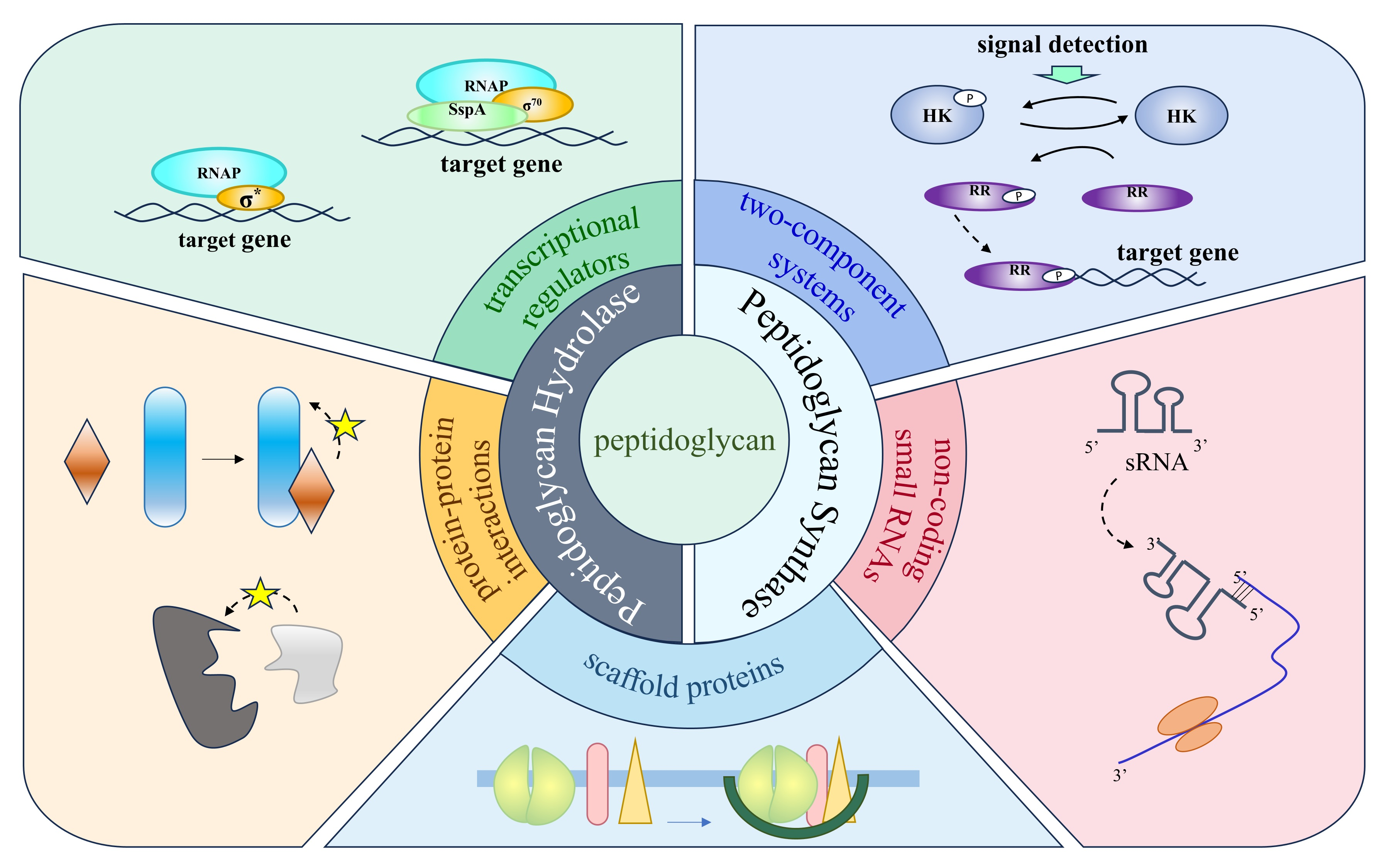
Multilevel Regulation of Peptidoglycan Dynamics in Bacteria: From Molecular Mechanisms to Applied Perspectives


Abstract
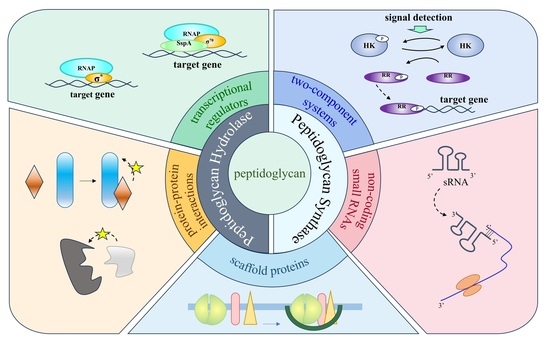
1. Introduction
2. Peptidoglycan Biosynthesis
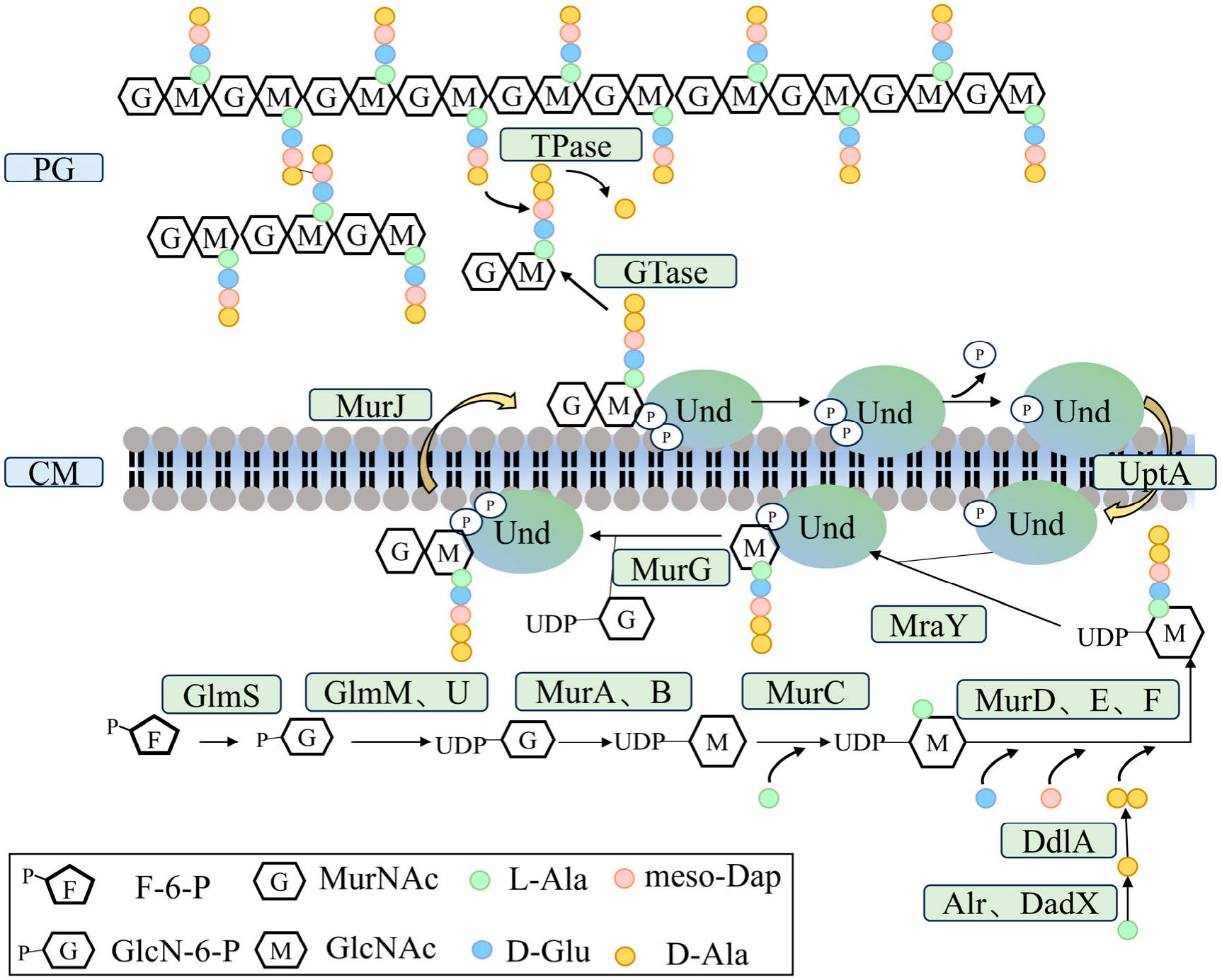
2.1. Cell Wall Peptidoglycan Synthesis
2.2. Synthase of Peptidoglycan
3. Hydrolysis and Recycling of Peptidoglycan
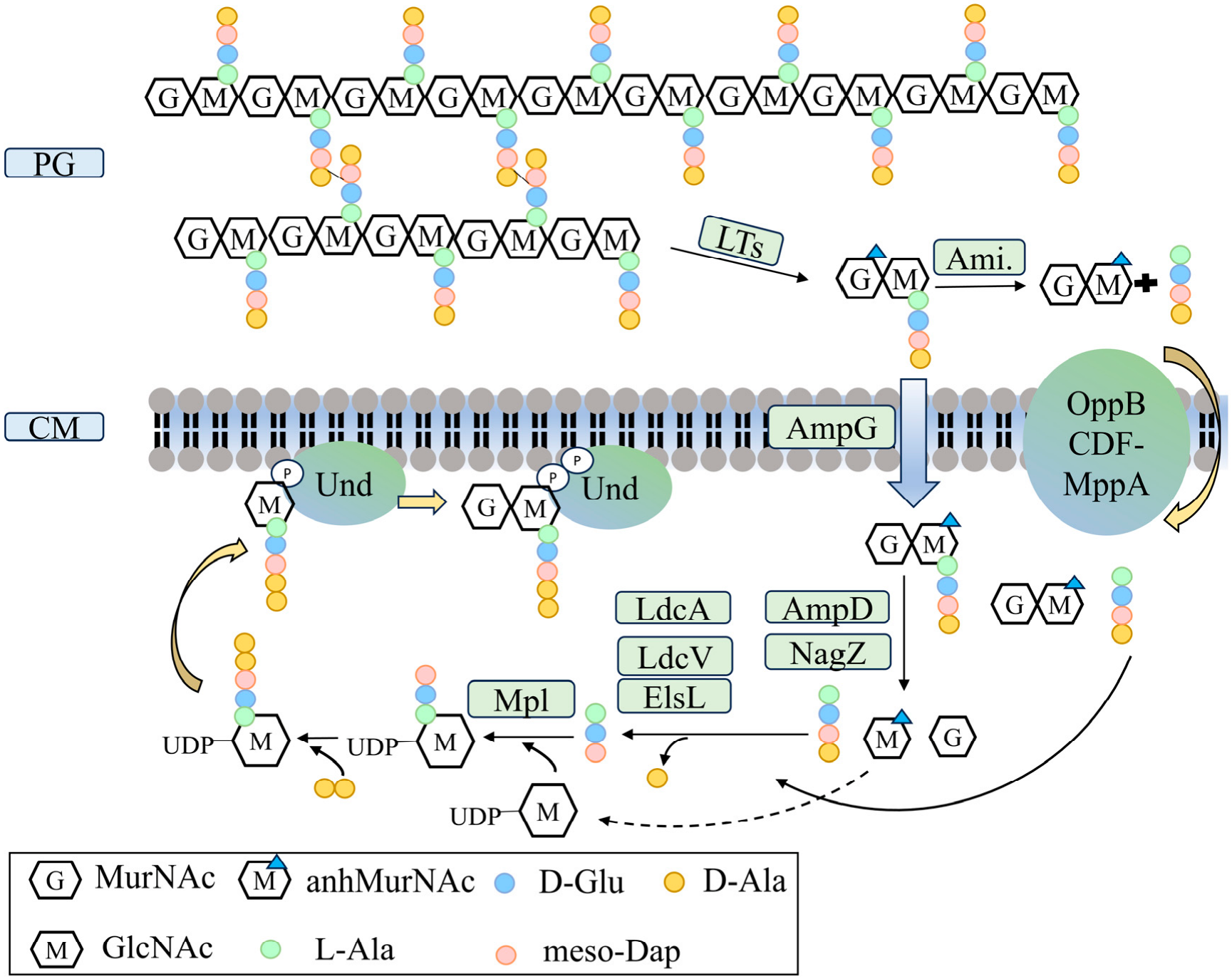
3.1. Hydrolases of Peptidoglycans
3.2. The Cycle of Peptidoglycan Recycling
4. Regulatory Mechanisms of Peptidoglycan Biosynthesis and Hydrolysis
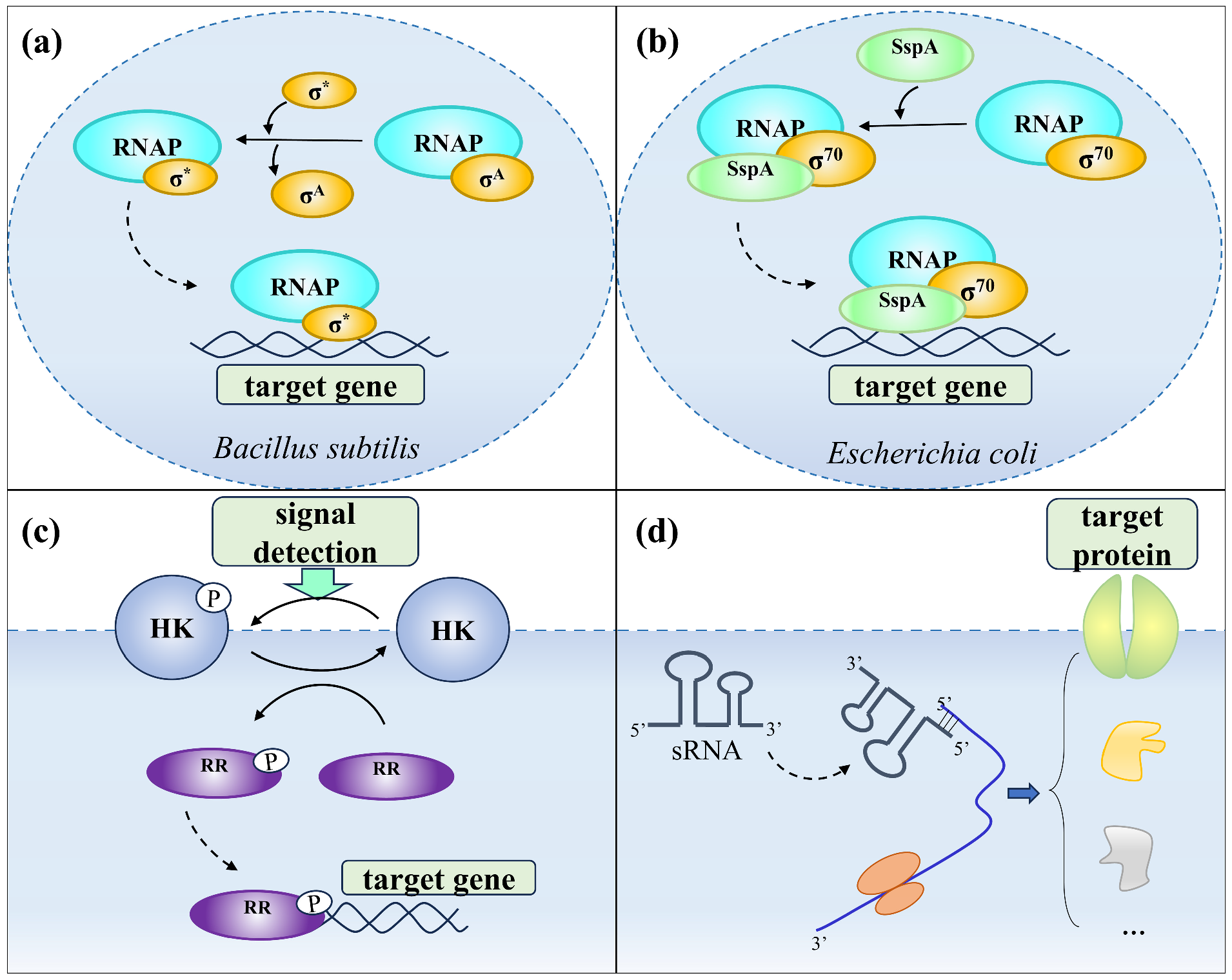
4.1. Transcription Regulator

| Name | Category | Role | Model Organisms | References |
|---|---|---|---|---|
| Transcriptional regulators | ||||
| σM | Alternative sigma factor | Maintaining cell wall integrity and regulating multiple stages of peptidoglycan synthesis | B. subtilis | [49] |
| σI | Alternative sigma factor | Upregulating the expression of the MreBH complex protein and the peptidoglycan hydrolase LytE | B. subtilis | [52] |
| DdlR | GntR-family transcription regulator | Directly combined with the promoter of the D-alanine-D-alanine ligase gene ddl | C. difficile | [55] |
| CodY | Transcription regulatory factor | Regulates the PG synthesis genes murA, murC, and murD | L. lactis | [56] |
| SspA | RNAP-associated regulatory protein | Binding to RNA polymerase and interacting with the σ70-RNAP complex | E. coli | [57] |
| BolA | Transcriptional regulator | Repress mreBCD and activate hydrolase genes to remodel the cell wall | E. coli | [59] |
| Two-component System | ||||
| WalKR (YycFG) | Two-component system | Regulate peptidoglycan metabolism to ensure proper cell division and homeostasis | B. subtilis | [60] |
| AirSR | Two-component system | Activate cell wall biosynthesis genes | S. aureus | [61] |
| VxrAB (WigKR) | Two-component system | Upregulate the expression of genes related to the peptidoglycan synthesis pathway | V. cholerae | [62] |
| Cpx | Two-component system | upregulating the LD-transpeptidase gene ldtA | E. coli | [63] |
4.2. Two-Component System
4.3. Non-Coding Small RNA (sRNA)
4.4. Scaffold Protein
4.5. Protein–Protein Interaction
5. Regulation of Peptidoglycan Homeostasis
6. Applications
7. Limitations and Unresolved Questions
8. Conclusions and Outlook
Author Contributions
Funding
Institutional Review Board Statement
Informed Consent Statement
Data Availability Statement
Conflicts of Interest
References
- Melotti, E.; Delerue, T.; Gomperts Boneca, I. Understanding how bacterial cell wall peptidoglycan metabolism can be used to develop antimicrobial strategies. Expert Opin. Ther. Targets 2025, 29, 793–810. [Google Scholar] [CrossRef]
- Han, R.; Feng, X.-Q.; Vollmer, W.; Stoodley, P.; Chen, J. Deciphering the adaption of bacterial cell wall mechanical integrity and turgor to different chemical or mechanical environments. J. Colloid Interface Sci. 2023, 640, 510–520. [Google Scholar] [CrossRef] [PubMed]
- Scheffers, D.-J.; Pinho, M.G. Bacterial Cell Wall Synthesis: New Insights from Localization Studies. Microbiol. Mol. Biol. Rev. 2005, 69, 585–607. [Google Scholar] [CrossRef] [PubMed]
- Schleifer, K.H.; Kandler, O. Peptidoglycan types of bacterial cell walls and their taxonomic implications. Bacteriol. Rev. 1972, 36, 407–477. [Google Scholar] [CrossRef] [PubMed]
- Chiang, C.Y.; West, N.P. The fall of the mycobacterial cell wall: Interrogating peptidoglycan synthesis for novel anti-TB agents. PeerJ 2024, 12, e18404. [Google Scholar] [CrossRef]
- Typas, A.; Banzhaf, M.; Gross, C.A.; Vollmer, W. From the regulation of peptidoglycan synthesis to bacterial growth and morphology. Nat. Rev. Microbiol. 2012, 10, 123–136. [Google Scholar] [CrossRef]
- Daitch, A.K.; Goley, E.D. Uncovering Unappreciated Activities and Niche Functions of Bacterial Cell Wall Enzymes. Curr. Biol. 2020, 30, R1170–R1175. [Google Scholar] [CrossRef]
- Do, T.; Page, J.E.; Walker, S. Uncovering the activities, biological roles, and regulation of bacterial cell wall hydrolases and tailoring enzymes. J. Biol. Chem. 2020, 295, 3347–3361. [Google Scholar] [CrossRef]
- Egan, A.J.F.; Errington, J.; Vollmer, W. Regulation of peptidoglycan synthesis and remodelling. Nat. Rev. Microbiol. 2020, 18, 446–460. [Google Scholar] [CrossRef]
- Rohs, P.D.A.; Bernhardt, T.G. Growth and Division of the Peptidoglycan Matrix. Annu. Rev. Microbiol. 2021, 75, 315–336. [Google Scholar] [CrossRef]
- Guy, C.S.; Cooper, C.; Karlikowska, M.; Harrison, J.; Singh, A.; Servín-González, L.S.; Evans, C.A.; Bakker, S.E.; Bottrill, A.; Bhatt, A.; et al. The deacetylase NagA mediates the remodeling and recycling of peptidoglycan-derived amino sugars in mycobacteria. J. Biol. Chem. 2025, 301, 110597. [Google Scholar] [CrossRef]
- Oluwole, A.O.; Corey, R.A.; Brown, C.M.; Hernández-Rocamora, V.M.; Stansfeld, P.J.; Vollmer, W.; Bolla, J.R.; Robinson, C.V. Peptidoglycan biosynthesis is driven by lipid transfer along enzyme-substrate affinity gradients. Nat. Commun. 2022, 13, 2278. [Google Scholar] [CrossRef]
- Englehart, K.; Dworkin, J. Bacillus subtilis MurJ and Amj Lipid II flippases are not essential for growth. J. Bacteriol. 2025, 207, e00078-25. [Google Scholar] [CrossRef]
- Murphy, S.G.; Murtha, A.N.; Zhao, Z.; Alvarez, L.; Diebold, P.; Shin, J.H.; VanNieuwenhze, M.S.; Cava, F.; Dörr, T. Class A Penicillin-Binding Protein-Mediated Cell Wall Synthesis Promotes Structural Integrity during Peptidoglycan Endopeptidase Insufficiency in Vibrio cholerae. mBio 2021, 12, e03596-20. [Google Scholar] [CrossRef]
- Pompeo, F.; Foulquier, E.; Chastanet, A.; Espinosa, L.; Billaudeau, C.; Rodrigues, A.; Cornilleau, C.; Carballido-López, R.; Galinier, A. RagB stimulates the activity of the peptidoglycan polymerase RodA in Bacillus subtilis. EMBO Rep. 2025, 26, 4587–4606. [Google Scholar] [CrossRef] [PubMed]
- Sauvage, E.; Kerff, F.; Terrak, M.; Ayala, J.A.; Charlier, P. The penicillin-binding proteins: Structure and role in peptidoglycan biosynthesis. FEMS Microbiol. Rev. 2008, 32, 234–258. [Google Scholar] [CrossRef] [PubMed]
- Pandey, S.D.; Jain, D.; Kumar, N.; Adhikary, A.; Kumar, N.G.; Ghosh, A.S. MSMEG_2432 of Mycobacterium smegmatis mc(2)155 is a dual function enzyme that exhibits DD-carboxypeptidase and β-lactamase activities. Microbiology 2020, 166, 546–553. [Google Scholar] [CrossRef] [PubMed]
- Meeske, A.J.; Riley, E.P.; Robins, W.P.; Uehara, T.; Mekalanos, J.J.; Kahne, D.; Walker, S.; Kruse, A.C.; Bernhardt, T.G.; Rudner, D.Z. SEDS proteins are a widespread family of bacterial cell wall polymerases. Nature 2016, 537, 634–638. [Google Scholar] [CrossRef]
- Cho, H.; Wivagg, C.N.; Kapoor, M.; Barry, Z.; Rohs, P.D.A.; Suh, H.; Marto, J.A.; Garner, E.C.; Bernhardt, T.G. Bacterial cell wall biogenesis is mediated by SEDS and PBP polymerase families functioning semi-autonomously. Nat. Microbiol. 2016, 1, 16172. [Google Scholar] [CrossRef]
- Hsu, T.W.; Fang, J.M. Advances and prospects of analytic methods for bacterial transglycosylation and inhibitor discovery. Analyst 2024, 149, 2204–2222. [Google Scholar] [CrossRef]
- Nygaard, R.; Graham, C.L.B.; Belcher Dufrisne, M.; Colburn, J.D.; Pepe, J.; Hydorn, M.A.; Corradi, S.; Brown, C.M.; Ashraf, K.U.; Vickery, O.N.; et al. Structural basis of peptidoglycan synthesis by E. coli RodA-PBP2 complex. Nat. Commun. 2023, 14, 5151. [Google Scholar] [CrossRef]
- Brogan, A.P.; Rudner, D.Z. Regulation of peptidoglycan hydrolases: Localization, abundance, and activity. Curr. Opin. Microbiol. 2023, 72, 102279. [Google Scholar] [CrossRef] [PubMed]
- Vollmer, W.; Joris, B.; Charlier, P.; Foster, S. Bacterial peptidoglycan (murein) hydrolases. FEMS Microbiol. Rev. 2008, 32, 259–286. [Google Scholar] [CrossRef] [PubMed]
- Nawaz, N.; Wen, S.; Wang, F.; Nawaz, S.; Raza, J.; Iftikhar, M.; Usman, M. Lysozyme and Its Application as Antibacterial Agent in Food Industry. Molecules 2022, 27, 6305. [Google Scholar] [CrossRef]
- Martinez-Bond, E.A.; Soriano, B.M.; Williams, A.H. The mechanistic landscape of Lytic transglycosylase as targets for antibacterial therapy. Curr. Opin. Struct. Biol. 2022, 77, 102480. [Google Scholar] [CrossRef] [PubMed]
- Höltje, J.V. From growth to autolysis: The murein hydrolases in Escherichia coli. Arch. Microbiol. 1995, 164, 243–254. [Google Scholar] [CrossRef]
- Smith, T.J.; Blackman, S.A.; Foster, S.J. Autolysins of Bacillus subtilis: Multiple enzymes with multiple functions. Microbiology 2000, 146, 249–262. [Google Scholar] [CrossRef]
- Lorente Cobo, N.; Sibinelli-Sousa, S.; Biboy, J.; Vollmer, W.; Bayer-Santos, E.; Prehna, G. Molecular characterization of the type VI secretion system effector Tlde1a reveals a structurally altered LD-transpeptidase fold. J. Biol. Chem. 2022, 298, 102556. [Google Scholar] [CrossRef]
- Anoyatis-Pelé, C.; Bellard, L.; Sezonov, G.; Morlot, C.; Hugonnet, J.-E.; Arthur, M. Role of endopeptidases in lateral cell wall expansion in Escherichia coli. Cell Rep. 2025, 44, 116389. [Google Scholar] [CrossRef]
- Salamaga, B.; Kong, L.; Pasquina-Lemonche, L.; Lafage, L.; von Und Zur Muhlen, M.; Gibson, J.F.; Grybchuk, D.; Tooke, A.K.; Panchal, V.; Culp, E.J.; et al. Demonstration of the role of cell wall homeostasis in Staphylococcus aureus growth and the action of bactericidal antibiotics. Proc. Natl. Acad. Sci. USA 2021, 118, e2106022118. [Google Scholar] [CrossRef]
- Park, J.T.; Uehara, T. How bacteria consume their own exoskeletons (turnover and recycling of cell wall peptidoglycan). Microbiol. Mol. Biol. Rev. 2008, 72, 211–227, table of contents. [Google Scholar] [CrossRef] [PubMed]
- Chang, N.; Kim, H.; Kim, U.; Cho, Y.; Yoo, Y.; Lee, H.; Kim, J.W.; Kim, M.S.; Lee, J.; Cho, Y.-L.; et al. Structural and functional insights of AmpG in muropeptide transport and multiple β-lactam antibiotics resistance. Nat. Commun. 2025, 16, 5744. [Google Scholar] [CrossRef] [PubMed]
- Goodell, E.W.; Higgins, C.F. Uptake of cell wall peptides by Salmonella typhimurium and Escherichia coli. J. Bacteriol. 1987, 169, 3861–3865. [Google Scholar] [CrossRef]
- Vötsch, W.; Templin, M.F. Characterization of a β-N-acetylglucosaminidase of Escherichia coli and Elucidation of Its Role in Muropeptide Recycling and β-Lactamase Induction. J. Biol. Chem. 2000, 275, 39032–39038. [Google Scholar] [CrossRef] [PubMed]
- Jacobs, C.; Joris, B.; Jamin, M.; Klarsov, K.; van Beeumen, J.; Mengin-Lecreulx, D.; van Heijenoort, J.; Park, J.T.; Normark, S.; Frère, J.M. AmpD, essential for both beta-lactamase regulation and cell wall recycling, is a novel cytosolic N-acetylmuramyl-L-alanine amidase. Mol. Microbiol. 1995, 15, 553–559. [Google Scholar] [CrossRef]
- Mengin-Lecreulx, D.; van Heijenoort, J.; Park, J.T. Identification of the mpl gene encoding UDP-N-acetylmuramate: L-alanyl-gamma-D-glutamyl-meso-diaminopimelate ligase in Escherichia coli and its role in recycling of cell wall peptidoglycan. J. Bacteriol. 1996, 178, 5347–5352. [Google Scholar] [CrossRef]
- Schmidt, D.M.Z.; Hubbard, B.K.; Gerlt, J.A. Evolution of enzymatic activities in the enolase superfamily: Functional assignment of unknown proteins in Bacillus subtilis and Escherichia coli as L-Ala-D/L-Glu epimerases. Biochemistry 2001, 40, 15707–15715. [Google Scholar] [CrossRef]
- Goffin, C.; Ghuysen, J.M. Multimodular penicillin-binding proteins: An enigmatic family of orthologs and paralogs. Microbiol. Mol. Biol. Rev. 1998, 62, 1079–1093. [Google Scholar] [CrossRef]
- Wang, X.; Chang, F.; Wang, T.; Luo, H.; Su, X.; Tu, T.; Wang, Y.; Bai, Y.; Qin, X.; Zhang, H.; et al. Production of N-acetylglucosamine from carbon dioxide by engineering Cupriavidus necator H16. Bioresour. Technol. 2023, 379, 129024. [Google Scholar] [CrossRef]
- Zhang, Y.; Chen, W.; Wu, D.; Liu, Y.; Wu, Z.; Li, J.; Zhang, S.Y.; Ji, Q. Molecular basis for cell-wall recycling regulation by transcriptional repressor MurR in Escherichia coli. Nucleic Acids Res. 2022, 50, 5948–5960. [Google Scholar] [CrossRef]
- Mayer, C.; Kluj, R.M.; Mühleck, M.; Walter, A.; Unsleber, S.; Hottmann, I.; Borisova, M. Bacteria’s different ways to recycle their own cell wall. Int. J. Med. Microbiol. 2019, 309, 151326. [Google Scholar] [CrossRef]
- Molle, V.; Nakaura, Y.; Shivers, R.P.; Yamaguchi, H.; Losick, R.; Fujita, Y.; Sonenshein, A.L. Additional targets of the Bacillus subtilis global regulator CodY identified by chromatin immunoprecipitation and genome-wide transcript analysis. J. Bacteriol. 2003, 185, 1911–1922. [Google Scholar] [CrossRef] [PubMed]
- Gilmore, M.C.; Cava, F. Bacterial peptidoglycan recycling. Trends Microbiol. 2025, 33, 340–353. [Google Scholar] [CrossRef] [PubMed]
- Alexander, J.A.N.; Worrall, L.J.; Hu, J.; Vuckovic, M.; Satishkumar, N.; Poon, R.; Sobhanifar, S.; Rosell, F.I.; Jenkins, J.; Chiang, D.; et al. Structural basis of broad-spectrum β-lactam resistance in Staphylococcus aureus. Nature 2023, 613, 375–382. [Google Scholar] [CrossRef]
- Tajuelo, A.; Terrón, M.C.; López-Siles, M.; McConnell, M.J. Role of peptidoglycan recycling enzymes AmpD and AnmK in Acinetobacter baumannii virulence features. Front. Cell. Infect. Microbiol. 2023, 12, 1064053. [Google Scholar] [CrossRef] [PubMed]
- Kumar, A.; Chan, J.; Taguchi, M.; Kono, H. Interplay among transacting factors around promoter in the initial phases of transcription. Curr. Opin. Struct. Biol. 2021, 71, 7–15. [Google Scholar] [CrossRef]
- Mahendrawada, L.; Warfield, L.; Donczew, R.; Hahn, S. Low overlap of transcription factor DNA binding and regulatory targets. Nature 2025, 642, 796–804. [Google Scholar] [CrossRef]
- Agapov, A.; Olina, A.; Kulbachinskiy, A. RNA polymerase pausing, stalling and bypass during transcription of damaged DNA: From molecular basis to functional consequences. Nucleic Acids Res. 2022, 50, 3018–3041. [Google Scholar] [CrossRef]
- Cao, M.; Wang, T.; Ye, R.; Helmann, J.D. Antibiotics that inhibit cell wall biosynthesis induce expression of the Bacillus subtilis sigma(W) and sigma(M) regulons. Mol. Microbiol. 2002, 45, 1267–1276. [Google Scholar] [CrossRef]
- Eiamphungporn, W.; Helmann, J.D. The Bacillus subtilis sigma(M) regulon and its contribution to cell envelope stress responses. Mol. Microbiol. 2008, 67, 830–848. [Google Scholar] [CrossRef]
- Li, J.; Zhang, H.; Li, D.; Liu, Y.J.; Bayer, E.A.; Cui, Q.; Feng, Y.; Zhu, P. Structure of the transcription open complex of distinct σ(I) factors. Nat. Commun. 2023, 14, 6455. [Google Scholar] [CrossRef]
- Patel, Y.; Zhao, H.; Helmann, J.D. A regulatory pathway that selectively up-regulates elongasome function in the absence of class A PBPs. eLife 2020, 9, e57902. [Google Scholar] [CrossRef]
- Li, Y.; Li, G.; Wang, Z.; Chen, W.; Wang, H.; Wang, Y.; Liu, B. Resonance assignments of the cytoplasmic domain of ECF sigma factor W pathway protein YsdB from Bacillus subtilis. Biomol. NMR Assign. 2021, 15, 103–106. [Google Scholar] [CrossRef]
- Hart, E.M.; Lyerly, E.; Bernhardt, T.G. The conserved σD envelope stress response monitors multiple aspects of envelope integrity in corynebacteria. PLoS Genet. 2024, 20, e1011127. [Google Scholar] [CrossRef] [PubMed]
- Bouillaut, L.; Newton, W.; Sonenshein, A.L.; Belitsky, B.R. DdlR, an essential transcriptional regulator of peptidoglycan biosynthesis in Clostridioides difficile. Mol. Microbiol. 2019, 118, 526–540. [Google Scholar] [CrossRef] [PubMed]
- Wu, H.; Tian, K.; Feng, J.; Qi, H.; Qiao, J. Systems-Level Analysis of the Global Regulatory Mechanism of CodY in Lactococcus lactis Metabolism and Nisin Immunity Modulation. Appl. Environ. Microbiol. 2022, 88, e0184721. [Google Scholar] [CrossRef]
- Wang, F.; Feng, Y.; Shang, Z.; Lin, W. A unique binding between SspA and RNAP β′NTH across low-GC Gram-negative bacteria facilitates SspA-mediated transcription regulation. Biochem. Biophys. Res. Commun. 2021, 583, 86–92. [Google Scholar] [CrossRef]
- Lou, J.; Cai, J.; Hu, X.; Liang, Y.; Sun, Y.; Zhu, Y.; Meng, Q.; Zhu, T.; Gao, H.; Yu, Z.; et al. The stringent starvation protein SspA modulates peptidoglycan synthesis by regulating the expression of peptidoglycan synthases. Mol. Microbiol. 2022, 118, 716–730. [Google Scholar] [CrossRef] [PubMed]
- Freire, P.; Neves Moreira, R.; Arraiano, C.M. BolA Inhibits Cell Elongation and Regulates MreB Expression Levels. J. Mol. Biol. 2008, 385, 1345–1351. [Google Scholar] [CrossRef] [PubMed]
- Bisicchia, P.; Noone, D.; Lioliou, E.; Howell, A.; Quigley, S.; Jensen, T.; Jarmer, H.; Devine, K.M. The essential YycFG two-component system controls cell wall metabolism in Bacillus subtilis. Mol. Microbiol. 2007, 65, 180–200. [Google Scholar] [CrossRef]
- Wu, S.; Lin, K.; Liu, Y.; Zhang, H.; Lei, L. Two-component signaling pathways modulate drug resistance of Staphylococcus aureus (Review). Biomed. Rep. 2020, 13, 5. [Google Scholar] [CrossRef] [PubMed]
- Dörr, T.; Alvarez, L.; Delgado, F.; Davis, B.M.; Cava, F.; Waldor, M.K. A cell wall damage response mediated by a sensor kinase/response regulator pair enables beta-lactam tolerance. Proc. Natl. Acad. Sci. USA 2016, 113, 404–409. [Google Scholar] [CrossRef] [PubMed]
- Cho, S.-H.; Dekoninck, K.; Collet, J.-F. Envelope-Stress Sensing Mechanism of Rcs and Cpx Signaling Pathways in Gram-Negative Bacteria. J. Microbiol. 2023, 61, 317–329. [Google Scholar] [CrossRef]
- Ji, S.; Li, C.; Liu, M.; Liu, Y.; Jiang, L. Targeting New Functions and Applications of Bacterial Two-Component Systems. ChemBioChem 2024, 25, e202400392. [Google Scholar] [CrossRef] [PubMed]
- Alvarez, A.F.; Georgellis, D. Environmental adaptation and diversification of bacterial two-component systems. Curr. Opin. Microbiol. 2023, 76, 102399. [Google Scholar] [CrossRef]
- Matsuoka, S.; Shimizu, Y.; Nobe, K.; Matsumoto, K.; Asai, K.; Hara, H. Glucolipids and lipoteichoic acids affect the activity of SigI, an alternative sigma factor, and WalKR, an essential two-component system, in Bacillus subtilis. Genes Cells 2022, 27, 77–92. [Google Scholar] [CrossRef]
- Sun, H.; Yang, Y.; Xue, T.; Sun, B. Modulation of cell wall synthesis and susceptibility to vancomycin by the two-component system AirSR in Staphylococcus aureus NCTC8325. BMC Microbiol. 2013, 13, 286. [Google Scholar] [CrossRef]
- Shin, J.-H.; Choe, D.; Ransegnola, B.; Hong, H.-R.; Onyekwere, I.; Cross, T.; Shi, Q.; Cho, B.-K.; Westblade, L.F.; Brito, I.L.; et al. A multifaceted cellular damage repair and prevention pathway promotes high level tolerance to β-lactam antibiotics. EMbo Rep. 2020, 22, e51790. [Google Scholar] [CrossRef]
- Harper, C.E.; Zhang, W.; Lee, J.; Shin, J.H.; Keller, M.R.; van Wijngaarden, E.; Chou, E.; Wang, Z.; Dörr, T.; Chen, P.; et al. Mechanical stimuli activate gene expression via a cell envelope stress sensing pathway. Sci. Rep. 2023, 13, 13979. [Google Scholar] [CrossRef]
- He, T.; Ding, Y.; Sun, Y.; Li, T. Advances in sRNA-mediated regulation of Salmonella infection in the host. Front. Cell. Infect. Microbiol. 2025, 15, 1503337. [Google Scholar] [CrossRef]
- Zhang, K.; Du, Z.; Wang, Z.; Chen, Y.; Guo, A. Regulation of the sRNA ncBCG427 on mycobacterial stress adaptation. Mol. Biol. Rep. 2025, 52, 317. [Google Scholar] [CrossRef]
- Islam, M.S.; Hardwick, S.W.; Quell, L.; Durica-Mitic, S.; Chirgadze, D.Y.; Görke, B.; Luisi, B.F. Structure of a bacterial ribonucleoprotein complex central to the control of cell envelope biogenesis. EMBO J. 2022, 42, e112574. [Google Scholar] [CrossRef]
- Cayrol, B.; Fortas, E.; Martret, C.; Cech, G.; Kloska, A.; Caulet, S.; Barbet, M.; Trépout, S.; Marco, S.; Taghbalout, A.; et al. Riboregulation of the bacterial actin-homolog MreB by DsrA small noncoding RNA. Integr. Biol. 2014, 7, 128–141. [Google Scholar] [CrossRef] [PubMed]
- Ragunathan, P.T.; Ng Kwan Lim, E.; Ma, X.; Massé, E.; Vanderpool, C.K. Mechanisms of Regulation of Cryptic Prophage-Encoded Gene Products in Escherichia coli. J. Bacteriol. 2023, 205, e0012923. [Google Scholar] [CrossRef]
- Mariscotti, J.F.; Quereda, J.J.; García-del Portillo, F.; Pucciarelli, M.G. The Listeria monocytogenes LPXTG surface protein Lmo1413 is an invasin with capacity to bind mucin. Int. J. Med. Microbiol. 2014, 304, 393–404. [Google Scholar] [CrossRef] [PubMed]
- Quereda, J.J.; Ortega, Á.D.; Pucciarelli, M.G.; García-del Portillo, F. The Listeria Small RNA Rli27 Regulates a Cell Wall Protein inside Eukaryotic Cells by Targeting a Long 5′-UTR Variant. PLoS Genet. 2014, 10, e1004765. [Google Scholar] [CrossRef]
- Wang, Y.; Jiang, Y.; Song, Z.; Zhu, C.; Tang, Y.; Peng, J.; Liu, P. MreB: Unraveling the molecular mechanisms of bacterial shape, division, and environmental adaptation. Cell Commun. Signal. 2025, 23, 377. [Google Scholar] [CrossRef] [PubMed]
- Shi, H.; Bratton, B.P.; Gitai, Z.; Huang, K.C. How to Build a Bacterial Cell: MreB as the Foreman of E. coli Construction. Cell 2018, 172, 1294–1305. [Google Scholar] [CrossRef]
- Morrison, J.J.; Conti, J.; Camberg, J.L. Assembly and architecture of Escherichia coli divisome proteins FtsA and FtsZ. J. Biol. Chem. 2022, 298, 101663. [Google Scholar] [CrossRef]
- Xiang, Z.; Li, Z.; Ren, Z.; Zeng, J.; Peng, X.; Li, Y.; Li, J. EzrA, a cell shape regulator contributing to biofilm formation and competitiveness in Streptococcus mutans. Mol. Oral. Microbiol. 2019, 34, 194–208. [Google Scholar] [CrossRef]
- Lubbers, M.; Bajramović, B.; Ongenae, V.; Willemse, J.; de Bruin, D.; Mulder, N.; Zhang, L.; Vriesendorp, B.; Barona-Gomez, F.; Briegel, A.; et al. Essential and dispensable domains of DivIVA for walled growth in filamentous Actinomycetota. Open Biol. 2025, 15, 250213. [Google Scholar] [CrossRef]
- Jiang, Q.; Li, B.; Zhang, L.; Li, T.; Hu, Q.; Li, H.; Zou, W.; Hu, Z.; Huang, Q.; Zhou, R. DivIVA Interacts with the Cell Wall Hydrolase MltG to Regulate Peptidoglycan Synthesis in Streptococcus suis. Microbiol. Spectr. 2023, 11, e0475022. [Google Scholar] [CrossRef] [PubMed]
- Sardis, M.F.; Bohrhunter, J.L.; Greene, N.G.; Bernhardt, T.G. The LpoA activator is required to stimulate the peptidoglycan polymerase activity of its cognate cell wall synthase PBP1a. Proc. Natl. Acad. Sci. USA 2021, 118, e2108894118. [Google Scholar] [CrossRef]
- Shlosman, I.; Vettiger, A.; Bernhardt, T.G.; Kruse, A.C.; Loparo, J.J. The hit-and-run of cell wall synthesis: LpoB transiently binds and activates PBP1b through a conserved allosteric switch. Nat. Commun. 2025, 16, 6723. [Google Scholar] [CrossRef] [PubMed]
- Liu, X.; Boelter, G.; Vollmer, W.; Banzhaf, M.; den Blaauwen, T. Peptidoglycan Endopeptidase PBP7 Facilitates the Recruitment of FtsN to the Divisome and Promotes Peptidoglycan Synthesis in Escherichia coli. Mol. Microbiol. 2024, 122, 743–756. [Google Scholar] [CrossRef] [PubMed]
- Veyron-Churlet, R.; Saliou, J.M.; Locht, C. Protein scaffold involving MSMEG_1285 maintains cell wall organization and mediates penicillin sensitivity in mycobacteria. FEBS J. 2020, 287, 4415–4426. [Google Scholar] [CrossRef]
- Tinajero-Trejo, M.; Carnell, O.; Kabli, A.F.; Pasquina-Lemonche, L.; Lafage, L.; Han, A.; Hobbs, J.K.; Foster, S.J. The Staphylococcus aureus cell division protein, DivIC, interacts with the cell wall and controls its biosynthesis. Commun. Biol. 2022, 5, 1228. [Google Scholar] [CrossRef]
- Takahashi, D.; Miyata, M.; Fujiwara, I. Assembly properties of bacterial actin MreB involved in Spiroplasma swimming motility. J. Biol. Chem. 2023, 299, 104793. [Google Scholar] [CrossRef]
- Tesson, B.; Dajkovic, A.; Keary, R.; Marlière, C.; Dupont-Gillain, C.C.; Carballido-López, R. Magnesium rescues the morphology of Bacillus subtilis mreB mutants through its inhibitory effect on peptidoglycan hydrolases. Sci. Rep. 2022, 12, 1137. [Google Scholar] [CrossRef]
- Baileeves, B.W.A.; Hoang, A.D.Q.; Bugg, T.D.H.; Stansfeld, P.J. MreB filaments in the elongasome modulate E. coli membrane curvature. Biophys. J. 2025, 124, 3583–3595. [Google Scholar] [CrossRef]
- Aarsman, M.E.G.; Piette, A.; Fraipont, C.; Vinkenvleugel, T.M.F.; Nguyen-Distèche, M.; den Blaauwen, T. Maturation of the Escherichia coli divisome occurs in two steps. Mol. Microbiol. 2005, 55, 1631–1645. [Google Scholar] [CrossRef]
- Carrasco, V.; Berríos-Pastén, C.; Canales, N.; Órdenes, A.; Wilson, C.A.M.; Monasterio, O. Bioinformatics, thermodynamics, and mechanical resistance of the FtsZ-ZipA complex of Escherichia coli supports a highly dynamic protein interaction in the divisome. Biochim. Biophys. Acta (BBA)-Gen. Subj. 2023, 1867, 130471. [Google Scholar] [CrossRef]
- Aaron, M.; Charbon, G.; Lam, H.; Schwarz, H.; Vollmer, W.; Jacobs-Wagner, C. The tubulin homologue FtsZ contributes to cell elongation by guiding cell wall precursor synthesis in Caulobacter crescentus. Mol. Microbiol. 2007, 64, 938–952. [Google Scholar] [CrossRef] [PubMed]
- Claessen, D.; Emmins, R.; Hamoen, L.W.; Daniel, R.A.; Errington, J.; Edwards, D.H. Control of the cell elongation-division cycle by shuttling of PBP1 protein in Bacillus subtilis. Mol. Microbiol. 2008, 68, 1029–1046. [Google Scholar] [CrossRef]
- Cleverley, R.M.; Rismondo, J.; Lockhart-Cairns, M.P.; Van Bentum, P.T.; Egan, A.J.; Vollmer, W.; Halbedel, S.; Baldock, C.; Breukink, E.; Lewis, R.J. Subunit Arrangement in GpsB, a Regulator of Cell Wall Biosynthesis. Microb. Drug Resist. 2016, 22, 446–460. [Google Scholar] [CrossRef] [PubMed]
- Sacco, M.D.; Hammond, L.R.; Noor, R.E.; Bhattacharya, D.; McKnight, L.J.; Madsen, J.J.; Zhang, X.; Butler, S.G.; Kemp, M.T.; Jaskolka-Brown, A.C.; et al. Staphylococcus aureus FtsZ and PBP4 bind to the conformationally dynamic N-terminal domain of GpsB. eLife 2024, 13, e85579. [Google Scholar] [CrossRef] [PubMed]
- Bhattacharya, D.; King, A.; McKnight, L.; Horigian, P.; Eswara, P.J. GpsB interacts with FtsZ in multiple species and may serve as an accessory Z-ring anchor. Mol. Biol. Cell 2025, 36, ar10. [Google Scholar] [CrossRef]
- Scheffers, D.-J.; Errington, J. PBP1 is a component of the Bacillus subtilis cell division machinery. J. Bacteriol. 2004, 186, 5153–5156. [Google Scholar] [CrossRef]
- Giacomelli, G.; Feddersen, H.; Peng, F.; Martins, G.B.; Grafemeyer, M.; Meyer, F.; Mayer, B.; Graumann, P.L.; Bramkamp, M. Subcellular Dynamics of a Conserved Bacterial Polar Scaffold Protein. Genes 2022, 13, 278. [Google Scholar] [CrossRef]
- Trouve, J.; Zapun, A.; Bellard, L.; Juillot, D.; Pelletier, A.; Freton, C.; Baudoin, M.; Carballido-Lopez, R.; Campo, N.; Wong, Y.S.; et al. DivIVA controls the dynamics of septum splitting and cell elongation in Streptococcus pneumoniae. mBio 2024, 15, e0131124. [Google Scholar] [CrossRef]
- Suzuki, H.; Nishimura, Y.; Hirota, Y. On the process of cellular division in Escherichia coli: A series of mutants of E. coli altered in the penicillin-binding proteins. Proc. Natl. Acad. Sci. USA 1978, 75, 664–668. [Google Scholar] [CrossRef]
- Kermani, A.A.; Biboy, J.; Vollmer, D.; Vollmer, W. Outer membrane-anchoring enables LpoB to regulate peptidoglycan synthesis rate. Cell Surf. 2022, 8, 100086. [Google Scholar] [CrossRef]
- Greene, N.G.; Fumeaux, C.; Bernhardt, T.G. Conserved mechanism of cell-wall synthase regulation revealed by the identification of a new PBP activator in Pseudomonas aeruginosa. Proc. Natl. Acad. Sci. USA 2018, 115, 3150–3155. [Google Scholar] [CrossRef]
- Perez, A.J.; Xiao, J. Stay on track—Revelations of bacterial cell wall synthesis enzymes and things that go by single-molecule imaging. Curr. Opin. Microbiol. 2024, 79, 102490. [Google Scholar] [CrossRef]
- Zhang, Y.; He, P.; Hu, S.; Zhang, R.; Asfandyar; Chen, S. Overexpressing Endopeptidase Inhibitor IseA Enhances Biomass and Biochemical Production of Bacillus licheniformis. Curr. Microbiol. 2025, 82, 116. [Google Scholar] [CrossRef]
- Tandukar, S.; Kwon, E.; Kim, D.Y. Structural insights into the regulation of peptidoglycan DL-endopeptidases by inhibitory protein IseA. Structure 2023, 31, 619–628.e614. [Google Scholar] [CrossRef] [PubMed]
- Jeon, W.J.; Cho, H. A Cell Wall Hydrolase MepH Is Negatively Regulated by Proteolysis Involving Prc and NlpI in Escherichia coli. Front. Microbiol. 2022, 13, 878049. [Google Scholar] [CrossRef] [PubMed]
- Park, S.; Jeon, W.J.; Lee, Y.; Lim, C.L.; Lee, E.; Oh, H.B.; Lee, G.S.; Kwon, O.H.; Ryu, B.; Cho, Y.J.; et al. A periplasmic protein modulates the proteolysis of peptidoglycan hydrolases to maintain cell wall homeostasis in Escherichia coli. Proc. Natl. Acad. Sci. USA 2025, 122, e2418854122. [Google Scholar] [CrossRef] [PubMed]
- Sassine, J.; Sousa, J.; Lalk, M.; Daniel, R.A.; Vollmer, W. Publisher Correction: Cell morphology maintenance in Bacillus subtilis through balanced peptidoglycan synthesis and hydrolysis. Sci. Rep. 2021, 11, 6156. [Google Scholar] [CrossRef]
- Alcorlo, M.; Martínez-Caballero, S.; Li, J.; Sham, L.T.; Luo, M.; Hermoso, J.A. Modulation of the lytic apparatus by the FtsEX complex within the bacterial division machinery. FEBS Lett. 2024, 598, 2836–2851. [Google Scholar] [CrossRef]
- Du, S.; Pichoff, S.; Lutkenhaus, J. Roles of ATP Hydrolysis by FtsEX and Interaction with FtsA in Regulation of Septal Peptidoglycan Synthesis and Hydrolysis. mBio 2020, 11, e01247-20. [Google Scholar] [CrossRef]
- Cook, J.; Crow, A. Probing the mechanism of peptidoglycan amidase activation by FtsEX-EnvC. mBio 2025, 16, e0211425. [Google Scholar] [CrossRef] [PubMed]
- Lyu, Z.; Yahashiri, A.; Yang, X.; McCausland, J.W.; Kaus, G.M.; McQuillen, R.; Weiss, D.S.; Xiao, J. FtsN maintains active septal cell wall synthesis by forming a processive complex with the septum-specific peptidoglycan synthases in E. coli. Nat. Commun. 2022, 13, 5751. [Google Scholar] [CrossRef] [PubMed]
- Lyu, Z.; Yang, X.; Yahashiri, A.; Ha, S.; McCausland, J.W.; Chen, X.; Britton, B.M.; Weiss, D.S.; Xiao, J. Third track model for coordination of septal peptidoglycan synthesis and degradation by FtsN in Escherichia coli. Nat. Microbiol. 2025, 10, 1521–1534. [Google Scholar] [CrossRef] [PubMed]
- Bush, K. Introduction to Antimicrobial Therapeutics Reviews: The bacterial cell wall as an antimicrobial target. Ann. N. Y. Acad. Sci. 2013, 1277, v–vii. [Google Scholar] [CrossRef]
- Zhou, L.; Xiang, M.; Xin, Y.; Gao, S.; Xu, K.; Zhang, J.; Lu, X.; Tang, W. Design and synthesis of benzothiazole aryl urea derivatives as potent anti-staphylococcal agents targeting autolysin-mediated peptidoglycan hydrolases. Eur. J. Med. Chem. 2025, 292, 117715. [Google Scholar] [CrossRef]
- Kaus-Drobek, M.; Nowacka, M.; Gewartowska, M.; Korzeniowska Nee Wiweger, M.; Jensen, M.R.; Møretrø, T.; Heir, E.; Nowak, E.; Sabała, I. From discovery to potential application: Engineering a novel M23 peptidase to combat Listeria monocytogenes. Sci. Rep. 2025, 15, 15628. [Google Scholar] [CrossRef]
- Schmidt, J.J.; Remme, D.C.L.E.; Eisfeld, J.; Brandenburg, V.B.; Bille, H.; Narberhaus, F. The LysR-type transcription factor LsrB regulates beta-lactam resistance in Agrobacterium tumefaciens. Mol. Microbiol. 2023, 121, 26–39. [Google Scholar] [CrossRef]
- Majdi, C.; Meffre, P.; Benfodda, Z. Recent advances in the development of bacterial response regulators inhibitors as antibacterial and/or antibiotic adjuvant agent: A new approach to combat bacterial resistance. Bioorg. Chem. 2024, 150, 107606. [Google Scholar] [CrossRef]
- Wu, H.; Zhang, Y.; Li, L.; Li, Y.; Yuan, L.; E, Y.; Qiao, J. Positive regulation of the DLT operon by TCSR7 enhances acid tolerance of Lactococcus lactis F44. J. Dairy Sci. 2022, 105, 7940–7950. [Google Scholar] [CrossRef]
- Liu, J.; Wang, Y.; Lu, Y.; Ni, X.; Guo, X.; Zhao, J.; Chen, J.; Dele-Osibanjo, T.; Zheng, P.; Sun, J.; et al. Mutations in Peptidoglycan Synthesis Gene ponA Improve Electrotransformation Efficiency of Corynebacterium glutamicum ATCC 13869. Appl. Environ. Microbiol. 2018, 84, e02225-18. [Google Scholar] [CrossRef]
- Li, Y.; Zhou, Y.; Du, Y.; Gao, P.; Yang, L.; Wang, W. In vivo Labeling and Intravital Imaging of Bacterial Infection using a Near-infrared Fluorescent D-Amino Acid Probe. ChemBioChem 2024, 25, e202400283. [Google Scholar] [CrossRef]
- Tolba, M.; Ahmed, M.U.; Tlili, C.; Eichenseher, F.; Loessner, M.J.; Zourob, M. A bacteriophage endolysin-based electrochemical impedance biosensor for the rapid detection of Listeria cells. Analyst 2012, 137, 5749–5756. [Google Scholar] [CrossRef]
- Bleul, L.; Francois, P.; Wolz, C. Two-Component Systems of S. aureus: Signaling and Sensing Mechanisms. Genes 2022, 13, 34. [Google Scholar] [CrossRef]
- Wadach, P.; Jakimowicz, D.; Gongerowska-Jac, M. Untangling the Complexity of Two-Component Signal Transduction in Bacteria. Microorganisms 2025, 13, 2013. [Google Scholar] [CrossRef]
- Billaudeau, C.; Yao, Z.; Cornilleau, C.; Carballido-López, R.; Chastanet, A. MreB Forms Subdiffraction Nanofilaments during Active Growth in Bacillus subtilis. mBio 2019, 10, e01879-18. [Google Scholar] [CrossRef]
- Attaibi, M.; den Blaauwen, T. An Updated Model of the Divisome: Regulation of the Septal Peptidoglycan Synthesis Machinery by the Divisome. Int. J. Mol. Sci. 2022, 23, 3537. [Google Scholar] [CrossRef]


| Name | Category | Role | Model Organisms | References |
|---|---|---|---|---|
| Non-coding small RNAs (sRNAs) | ||||
| glmZ | Non-coding small RNA | Base-pair with glmS mRNA to activate expression for cell wall precursor supply | E. coli | [72] |
| dsrA | Non-coding small RNA | Bind to mreB mRNA’s 5′ UTR to reduce MreB levels and alter morphology | E. coli | [73] |
| dicF | Non-coding small RNA | Pair with the ftsZ ribosome-binding site to inhibit translation and Z-ring formation | E. coli | [74] |
| rli27 | Non-coding small RNA | Stabilize lmo0514 mRNA’s 5′-UTR to enhance synthesis for stress resilience | L. monocytogenes | [75,76] |
| proteins | ||||
| MreB | Scaffold protein | bridging linkers MreC/D/RodZ to coordinate peptidoglycan synthesis and sense curvature | B. subtilis E. coli | [77,78] |
| FtsZ | Cytoskeletal protein | Polymerize into a Z-ring, bind FtsA and ZipA, and recruit MurG for septal synthesis | E. coli | [79] |
| EzrA GpsB | Scaffold protein | Bind PBP1 and FtsZ to coordinate peptidoglycan assembly and Z-ring dynamics | B. subtilis | [80] |
| DivIVA | Scaffold protein | Bind PBPs, PcsB, and FtsZ to couple peptidoglycan remodeling with cytokinesis | B. subtilis, L. monocytogenes,
S. pneumoniae | [81,82] |
| LpoA | Outer membrane lipoprotein | binds to PBP1A via the ODD domain to enhance transpeptidase activity and cross-linking | E. coli, P. aeruginosa | [83] |
| LpoB | Outer membrane lipoprotein | Bind to PBP1B’s UB2H domain to strengthen the sacculus via conformational changes | E. coli, P. aeruginosa | [84] |
| FtsN | Outer membrane lipoproteins | Bind to PBP1B transmembrane region and cooperate with LpoB to accelerate glycan polymerization via Tol-Pal | E. coli | [85] |
Disclaimer/Publisher’s Note: The statements, opinions and data contained in all publications are solely those of the individual author(s) and contributor(s) and not of MDPI and/or the editor(s). MDPI and/or the editor(s) disclaim responsibility for any injury to people or property resulting from any ideas, methods, instructions or products referred to in the content. |
© 2026 by the authors. Licensee MDPI, Basel, Switzerland. This article is an open access article distributed under the terms and conditions of the Creative Commons Attribution (CC BY) license.
Share and Cite
Dong, C.; Lu, J.; Xie, L.; Wu, H.; Qiao, J. Multilevel Regulation of Peptidoglycan Dynamics in Bacteria: From Molecular Mechanisms to Applied Perspectives. Biomolecules 2026, 16, 657. https://doi.org/10.3390/biom16050657
Dong C, Lu J, Xie L, Wu H, Qiao J. Multilevel Regulation of Peptidoglycan Dynamics in Bacteria: From Molecular Mechanisms to Applied Perspectives. Biomolecules. 2026; 16(5):657. https://doi.org/10.3390/biom16050657
Chicago/Turabian StyleDong, Chang, Juane Lu, Luyu Xie, Hao Wu, and Jianjun Qiao. 2026. "Multilevel Regulation of Peptidoglycan Dynamics in Bacteria: From Molecular Mechanisms to Applied Perspectives" Biomolecules 16, no. 5: 657. https://doi.org/10.3390/biom16050657
APA StyleDong, C., Lu, J., Xie, L., Wu, H., & Qiao, J. (2026). Multilevel Regulation of Peptidoglycan Dynamics in Bacteria: From Molecular Mechanisms to Applied Perspectives. Biomolecules, 16(5), 657. https://doi.org/10.3390/biom16050657