1. Introduction
The existence of dark matter (DM) is strongly supported by astrophysical and cosmological observations, while its microscopic nature remains unknown. Although Weakly Interacting Massive Particles (WIMPs) have long provided a standard benchmark, the continued absence of signals in conventional direct-detection and collider searches has led to growing interest in light dark sectors, especially in the sub-GeV mass range [
1]. Among the well-motivated possibilities are confining dark sectors based on a new non-Abelian gauge interaction, analogous to Quantum Chromodynamics, which naturally gives rise to a rich spectrum of dark hadrons [
2,
3,
4]. Such frameworks can contain pseudo-Nambu–Goldstone bosons or other dark meson states that are stable, or effectively stable, on experimental timescales [
5,
6,
7].
A simple realization of this idea introduces a light vector mediator [
8,
9] that couples the dark sector to Standard Model (SM) quarks. Once dark quarks are produced through this portal, they can shower and hadronize into a spectrum of dark mesons. In high-energy collider environments, such processes are typically characterized by distinctive signatures such as semi-visible or emerging jets [
10,
11,
12], which arise from the displaced decay or partially missing energy of dark sector components within the detector volume. Alternatively, if these dark mesons are stable or sufficiently long-lived, they can propagate over macroscopic distances and reach large-volume underground detectors. In the present work, this long-lived limit is adopted as the propagation benchmark for the portal-coupled
component. In this regime, particularly for sub-GeV dark sectors, the scattering of dark mesons off target nuclei provides an important complementary direction to collider searches, offering a direct probe of the dark sector’s interactions with hadronic matter.
Cosmic-ray interactions in the Earth’s atmosphere serve as a continuous source of energetic hidden-sector particles across a wide energy range [
13,
14]. While similar atmospheric production mechanisms have been extensively explored for millicharged particles and other boosted dark-sector scenarios [
15,
16,
17,
18,
19], the case of a confining dark sector introduces additional complexity. In such frameworks, the final signal at an underground detector is not determined by the production rate alone. It is also shaped by a multi-stage process involving the initial dark quark production, the subsequent dark hadronization, and the specific detector-level thresholds that determine the visible event yield. A closely related leptophobic light-dark-matter scenario was studied in ref. [
20], where an elementary dark matter particle is produced at the LHC and searched for through its scattering signature at SND@LHC. This provides a useful methodological reference point for hadronic scattering searches involving leptophobic mediators, although the resulting constraints cannot be directly applied to the present composite dark-meson scenario, as we discuss in
Section 2.1. The present work differs in that the incident particles reaching the underground detectors are composite dark mesons generated after dark hadronization in cosmic-ray collisions with atmospheric nuclei.
In our previous work [
21], we studied the atmospheric production and underground detection of sub-GeV dark mesons at the Jiangmen Underground Neutrino Observatory (JUNO). The incident dark meson flux was constructed from proton bremsstrahlung, radiative decays of SM mesons, and Drell–Yan production, followed by dark hadronization described by a modified Quark Combination Model (MQCM) [
3,
21,
22]. The detector response at JUNO was simulated with the GENIE Boosted Dark Matter module, and projected limits on the portal coupling were derived from the visible event yield.
In this work, we perform a controlled comparison between JUNO and the Deep Underground Neutrino Experiment (DUNE) to highlight how different detector technologies reshape the same dark-sector signal. Building upon the atmospheric dark meson flux and hadronization framework established in our previous study [
21], we keep the source-side production fixed. The novel contribution of this work lies in the explicit detector-level confrontation: JUNO operates with an inclusive event-level visible-energy criterion, whereas DUNE is characterized by exclusive particle-level hadronic thresholds.
This structural difference in defining visible signals leads to a highly non-trivial interplay between the incident dark meson spectrum and detector responses. As we will show, JUNO achieves stronger overall sensitivity across most of the parameter space, primarily because its inclusive energy criterion efficiently retains soft elastic recoils. In contrast, DUNE demonstrates systematically larger visible effective cross sections in the deep-inelastic scattering (DIS) channel, where energetic final states readily exceed its particle-level thresholds. Moreover, the kinematic hardening of elastic recoils at heavier mediator masses ( GeV) and higher incident energies further enhances DUNE’s elastic acceptance.
As a result, JUNO dominates the total signal yield because the atmospheric dark meson flux peaks sharply at low energies, favoring the soft elastic regime. However, this interplay between the flux distribution and detector thresholds causes the sensitivity gap between JUNO and DUNE to narrow significantly in the heavy-mediator regime. By systematically comparing effective cross sections, signal efficiency, and projected exclusion limits, this study clarifies how specific signal selections govern the ultimate reaches of future underground detectors.
The rest of this paper is organized as follows: In
Section 2, we summarize the model setup, the atmospheric dark meson flux framework, the detector-level implementations for JUNO and DUNE, and the statistical procedure used in the sensitivity analysis.
Section 3 presents a direct detector-level comparison of the visible effective cross sections and signal selection efficiencies for DUNE on
40Ar and for the dominant carbon contribution on the JUNO side, together with representative JUNO–DUNE event counts and the projected exclusion limits. In
Section 4, we discuss the physical origin and scope of the JUNO–DUNE difference. We conclude in
Section 5.
2. Theoretical Framework and Experimental Setup
In this section, we summarize the dark-sector setup, the hadronization prescription, the atmospheric dark meson flux, the detector-level implementations for JUNO and DUNE, and the statistical framework used in the sensitivity analysis. Since the source-side framework follows ref. [
21], we restrict ourselves to the ingredients needed in the later detector-level comparison.
2.1. Model Setup and Interacting Dark Mesons
We consider a dark sector with two distinct ingredients: a confining non-Abelian gauge interaction and a vector portal interaction. The confining dynamics is governed by an
gauge group, under which the dark quarks
are taken to transform in the fundamental representation. Schematically, the dark-QCD part of the Lagrangian is
where
is the dark-gluon field strength and
denotes the covariant derivative associated with the confining gauge interaction.
The interaction relevant for production and detection is instead mediated by an additional leptophobic gauge boson
of a
dark gauge symmetry. In the low-energy phenomenological description used here, this portal interaction is written as
The parameter
denotes an effective vector coupling of
to the SM quark current; possible SM-quark charge factors are absorbed into this definition. Throughout this work we adopt this leptophobic effective description and do not rely on kinetic mixing with the photon, which would generically induce leptonic couplings [
8,
9,
23]. This setup should be distinguished from the elementary leptophobic dark-matter model of ref. [
20]. In that case, the scattering particle is an elementary state
, whereas in the present framework the mediator first produces dark quarks, which subsequently hadronize into a spectrum of dark mesons. The relevant detector signal is therefore carried by the portal-coupled composite states
. As a result, bounds derived for the elementary-
setup cannot be directly mapped onto the present
plane without a dedicated model-dependent recast; we return to this point in the discussion of
Figure 1.
At low energies, confinement produces a spectrum of dark mesons. Following ref. [
21], for the benchmark used in the numerical analysis, we take
nearly degenerate dark quark flavors and choose vector-like
charges
At the hadron level, the vector portal couples to dark-meson currents with a strength proportional to the difference between the corresponding dark-quark charges. Therefore, mesons composed of dark-quark flavors with identical charges are neutral under the portal, while the off-diagonal flavor-carrying states connecting the third flavor to the first two flavors are charged. In the notation of the dark-meson matrix, the portal-coupled states are , , , and . We collectively denote these four Kaon-like states by . The remaining pion- and eta-like states are neutral under the benchmark vector portal and do not contribute to the scattering signal considered here. This is the origin of the factor used below to select the portal-coupled component from the approximately flavor-symmetric dark-meson spectrum.
As in ref. [
21], we fix the interacting dark-meson mass by
and take the dark-sector coupling to be
. The detector analysis assumes that the portal-coupled
states are stable, or at least sufficiently long-lived, on the propagation scale from their atmospheric production point to the underground detector. Their specific lifetimes are highly model-dependent and are relevant to the dark-sector couplings as well as the mass splitting among dark mesons. The possible decay effects are negligible provided
is larger than the relevant source-to-detector path length. Under this assumption the atmospheric
flux can be propagated to JUNO and DUNE without an additional decay-suppression factor. If the
lifetime were shorter, the incident flux would have to be multiplied by a survival probability, and the present sensitivity estimate would no longer apply without modification.
We stress that the flux considered in this work is the boosted atmospheric component generated by cosmic-ray interactions, rather than a flux fixed by the local non-relativistic Galactic dark-matter density. Therefore, the projected limits derived below should be interpreted as sensitivities to cosmic-ray-produced dark mesons in this benchmark portal model. Direct detection or relic-density constraints that assume to constitute all of the cosmological dark matter are additional model-dependent requirements and are not imposed in the present detector-comparison study.
2.2. Dark Hadronization
The transition from the initially produced dark quark pair to final-state dark mesons is modeled using the MQCM introduced in ref. [
21]. In this framework, the meson multiplicity is described by a shifted-Poisson distribution, while the final-state four-momenta are generated using the longitudinal phase-space approximation together with a Gaussian transverse-momentum model. Since the three dark quark flavors are taken to be nearly degenerate, the different dark meson species are produced at comparable rates, and a factor of
is used to select the portal-coupled
component.
The dominant theoretical uncertainty in this source-side treatment comes from the non-perturbative hadronization stage, especially from the phenomenological multiplicity prescription used in the MQCM. To estimate its impact in the present study, we introduce a dimensionless rescaling of the MQCM multiplicity parameter,
This scan is not intended as a statistically defined uncertainty band, but rather as a phenomenological order-one variation in the dark-hadronization prescription. Changing
modifies both the normalization and shape of the propagated
spectrum by changing the average dark-meson multiplicity. In the detector-level calculation, this variation enters through the incident
flux, while the scattering cross sections and detector-selection efficiencies are kept fixed for a given mediator mass and incident energy. Unless otherwise stated, the results shown below use the fiducial choice
. The impact of this variation on the projected limits is quantified in
Section 3.5.
2.3. Atmospheric Dark Meson Flux
The incident flux at underground detectors receives contributions from three atmospheric production mechanisms:
Proton bremsstrahlung, ;
Radiative decays of SM mesons, ;
Drell–Yan production, .
For each channel, the mediator produces dark quarks, which then hadronize into dark mesons according to the MQCM prescription. The resulting portal-coupled
spectra from all channels are summed to obtain the total differential flux at the detector.
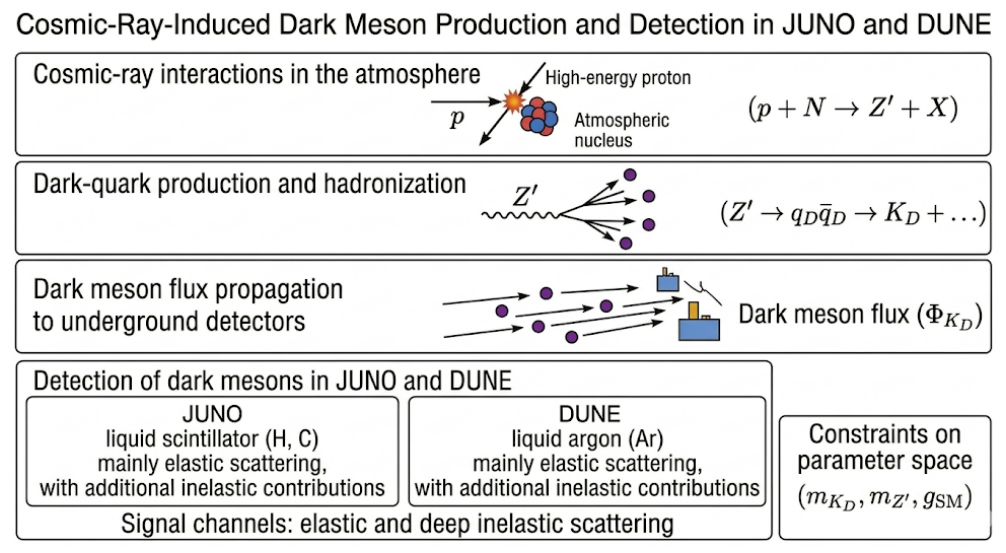
Figure 2 summarizes the signal chain used in this work, from atmospheric production to detector-level event selection.
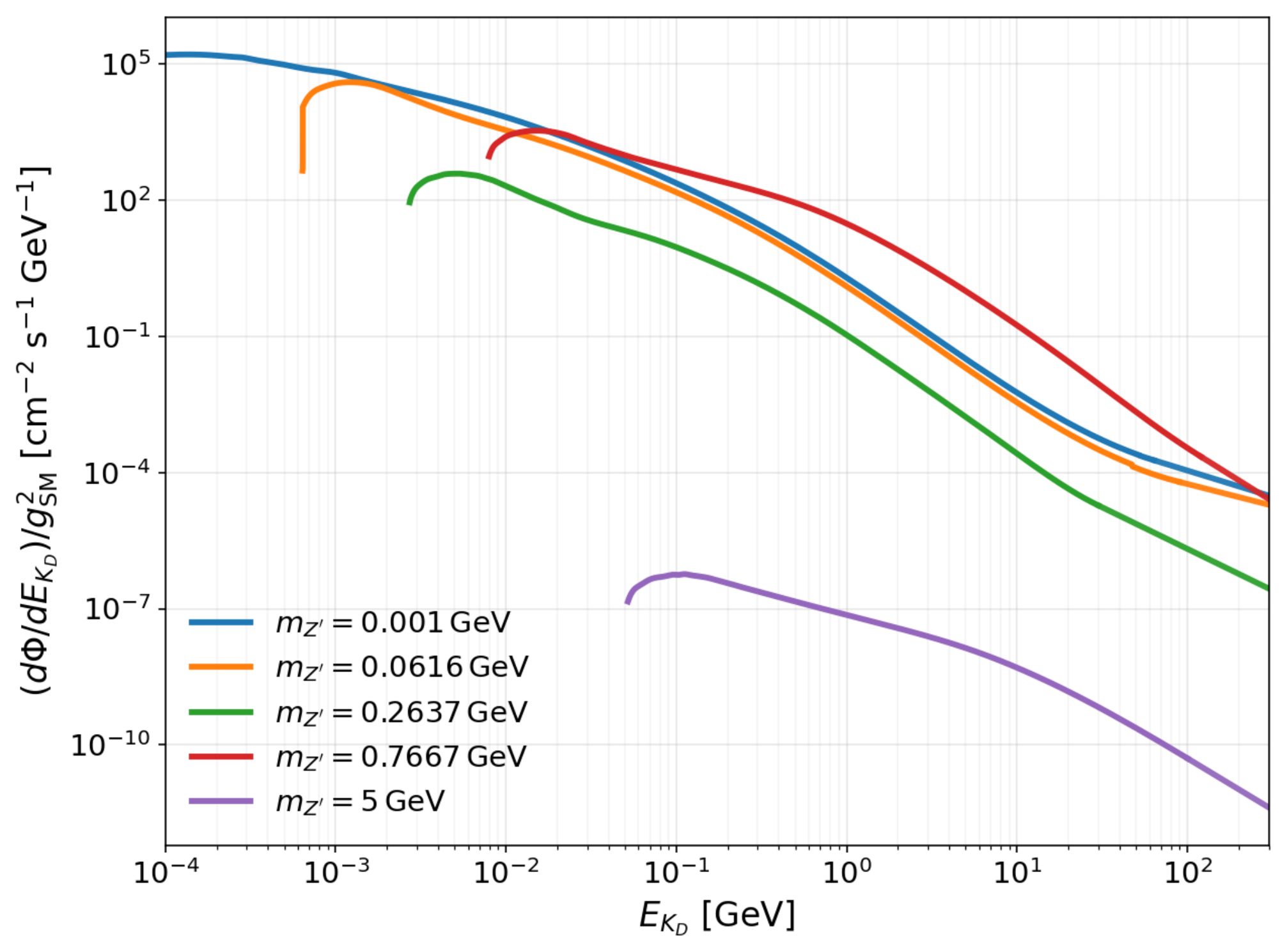
Figure 3 shows the total incident dark meson flux
for several representative mediator masses. As a source-side quantity, this flux is common to both JUNO and DUNE. The flux exhibits a pronounced mediator-mass dependence in both normalization and spectral shape. Lighter mediators generally produce larger low-energy fluxes, whereas heavier mediators naturally shift the peak of the energy spectrum toward higher energies. Therefore, the spectra for different mediator masses cannot be obtained by a simple overall rescaling. Their detailed shapes reflect the interplay of proton bremsstrahlung, meson decays, and Drell–Yan production after dark hadronization.
This mediator-mass dependence feeds directly into the detector-level observables and the projected sensitivities discussed in the following sections.
We focus on cosmic-ray-induced production because the three production mechanisms used here require a high-energy hadronic environment. This is qualitatively different from reactor antineutrino production at JUNO, which is governed by MeV-scale nuclear beta-decay processes. In the leptophobic benchmark adopted here, the dominant reactor antineutrino and electromagnetic fluxes do not efficiently produce the hadrophilic through the same proton bremsstrahlung, meson-decay, or Drell–Yan mechanisms considered above. Possible emission from nuclear transitions would be highly model- and isotope-dependent and is outside the scope of the present source-side framework. We therefore neglect reactor-based production and treat the atmospheric cosmic-ray component as the common source for the JUNO–DUNE comparison.
2.4. Detector-Level Implementation
Throughout this paper,
denotes the incident dark meson energy at the detector unless otherwise specified. The scattering of the portal-coupled dark meson
on detector targets is simulated within the GENIE event generator [
27,
28] utilizing its Boosted Dark Matter module [
29,
30]. This framework incorporates the relevant nuclear effects, including Fermi motion, Pauli blocking, and final-state interactions (FSI), and is used consistently for both JUNO and DUNE. Since the JUNO-side treatment has already been established in ref. [
21], we summarize it only briefly and focus on the DUNE implementation.
For both detectors, we consider two classes of scattering processes:
Elastic scattering (EL), corresponding to dark meson scattering on nucleons;
Deep inelastic scattering (DIS), corresponding to high-momentum-transfer scattering on partonic degrees of freedom.
The underlying interaction model is the same in both cases, while the detector response differs through the target medium and the signal event selection.
2.4.1. JUNO: Liquid Scintillator Response
The Jiangmen Underground Neutrino Observatory is a 20 kton liquid scintillator detector with hydrogen and carbon as the relevant target nuclei [
31,
32]. Following ref. [
21], we simulate dark meson scattering on
1H and
12C using GENIE with the GDM18_00b_00_000 tune. The JUNO signal definition is based on an event-level visible-energy criterion.
Visible energy contributions from charged final-state particles are summed at the event level, with proton recoil energies corrected for quenching effects as in ref. [
21]. The signal selection requires the total visible energy to satisfy
Under this criterion, the expected JUNO signal yield is written as
where
T is the exposure time,
and
are the numbers of hydrogen and carbon targets in the fiducial volume, and
denote the visible cross sections after the event-level selection. For the baseline JUNO setup adopted here, we take
and
.
For visualization purposes, the detector-level comparison plots shown in
Section 3 display only the carbon contribution on the JUNO side. This choice is made to keep the comparison readable and because carbon provides the dominant visible contribution under the baseline setup. It does not affect the total JUNO event counts or the projected JUNO limits, which are always evaluated with the full hydrogen-plus-carbon result in Equation (
6).
2.4.2. DUNE: Liquid Argon TPC Response
The Deep Underground Neutrino Experiment employs liquid argon time projection chambers (TPC) with a fiducial mass of 40 kton [
33]. In our treatment, the DUNE signal definition is implemented through particle-level hadronic visibility thresholds rather than a single event-level visible-energy variable.
Dark meson scattering on 40Ar is simulated within the same GENIE + BDM framework used for JUNO. We include both EL and DIS contributions and classify an event as visible if at least one final-state hadron satisfies the following criteria:
charged pions: ,
protons or charged kaons: ,
neutral pions: treated as visible whenever present.
For charged pions, protons, and charged kaons, these benchmark thresholds are motivated by recent ProtoDUNE-SP/DUNE detector-level studies [
33,
34]. For neutral pions, we follow the benchmark treatment of ref. [
34], in which no explicit kinetic-energy threshold is imposed. These choices are intended as simplified detector-level benchmarks rather than an official DUNE reconstruction prescription.
With this definition, the expected DUNE signal yield is
where
is the number of argon nuclei in the fiducial volume and
is the total visible cross section, including both EL and DIS contributions after the hadronic selection. For the baseline DUNE setup with a 40 kton fiducial liquid-argon mass, we take
.
For the counting analysis at DUNE, we adopt a benchmark atmospheric background rate of 960.3 events per year, following the detector-level assumption used in ref. [
34]. In the present work, this value is used as a benchmark input for the projected sensitivity rather than as a detector-independent universal background number.
2.4.3. Differences in Signal Definition
The criteria for signal visibility at JUNO and DUNE represent fundamentally distinct physical concepts. While JUNO employs an inclusive, event-level visible energy cut (
), DUNE imposes exclusive kinetic energy thresholds on individual final-state hadrons. Because these definitions apply to entirely different physical quantities, a direct numerical comparison of their threshold values (e.g., 0.3 MeV vs. 40 MeV) is not physically useful. Therefore, a meaningful comparison between the two detectors must be evaluated using integrated detector-level observables, namely the visible effective cross sections, the signal selection efficiency, and the projected exclusion limits.
Table 1 summarizes the main detector-level assumptions used in the two analyses.
2.5. Statistical Framework
To derive projected exclusion limits in the
plane, we use a baseline counting estimate based on the Asimov significance formula of ref. [
35]. For an expected DM signal yield
on top of a neutrino background expectation
, the corresponding median Asimov significance is
In the background-dominated limit, this reduces to . In the present analysis, we adopt as the one-sided 90% C.L. exclusion criterion.
All projected limits shown below correspond to a benchmark exposure of one year for both JUNO and DUNE. For JUNO, the atmospheric-neutrino background estimate used in the counting analysis is computed explicitly within the same baseline framework adopted for the present comparison. Concretely, we combine the atmospheric-neutrino flux input with GENIE-based neutral-current cross sections and process-dependent signal selection efficiencies on hydrogen and carbon under the baseline selection
, and sum over the relevant neutrino flavors, target species, and included NC channels. This gives a benchmark background expectation of
events per year. For DUNE, by contrast, we adopt
events per year as a benchmark input following the detector-level assumption of ref. [
34].
The counting formalism and the source-side dark meson flux framework are therefore common between the two experiments, while the background treatment remains experiment-dependent: JUNO uses an explicit in-framework estimate, whereas DUNE uses a literature benchmark. Under these one-year benchmark assumptions, the corresponding critical signal counts for a 90% C.L. exclusion are at the level of several tens of events for both experiments.
3. Results
Having specified the detector-level treatment and the counting framework used in the comparison, we now present the corresponding results. We first show a direct detector-level comparison of the visible effective cross sections and signal selection efficiencies for DUNE on
40Ar and for the dominant carbon contribution on the JUNO side. We then present event counts for both JUNO and DUNE, followed by their resulting projected exclusion limits. The numerical data used to produce
Figure 1,
Figure 3,
Figure 4 and
Figure 5 are provided in the
Supplementary Materials.
3.1. Detector-Level Visible Effective Cross Sections
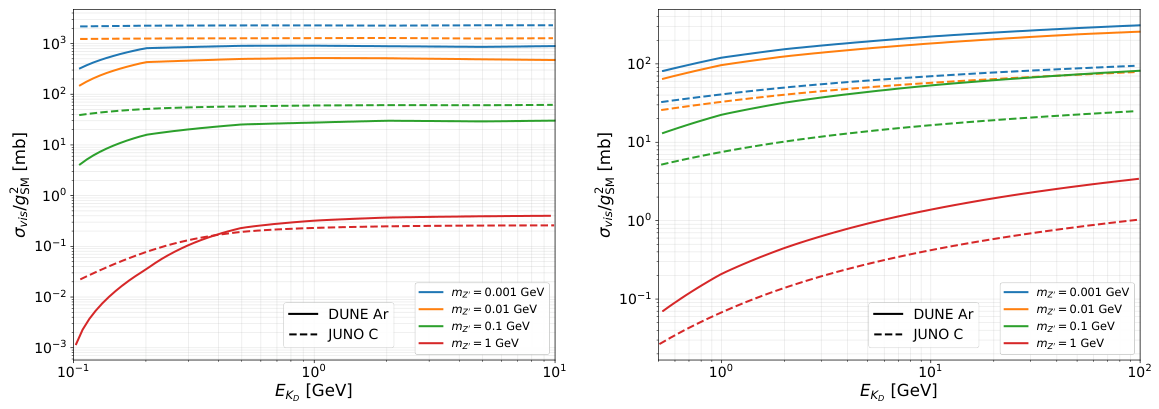
Figure 4 shows a direct detector-level comparison of the visible effective cross sections, normalized by
, for DUNE on
40Ar and for the carbon contribution in the JUNO detector. In each panel, solid curves denote the DUNE result and dashed curves denote the JUNO carbon result, with the same color corresponding to the same mediator mass.
The left panel of
Figure 4 illustrates the elastic scattering channel. For both detectors, a clear mediator-mass hierarchy is observed across the energy range, where lighter mediators yield larger visible cross sections due to the expected
t-channel enhancement. At a fixed mediator mass, however, the detector-level visible cross section is systematically larger at JUNO (for the carbon component) than at DUNE (on argon), particularly in the lower-energy region. This stems from the differences in signal definitions, discussed further in the context of selection efficiencies below. Notably, as the mediator mass approaches 1 GeV and the incident energy exceeds ∼1 GeV, the gap between the two detectors narrows. The convergence at higher masses is due to the hardening of the recoil spectrum.
The right panel of
Figure 4 illustrates the deep-inelastic scattering channel. As expected, the DIS visible cross sections exhibit a more sustained increase with incident energy compared to the elastic case, reflecting the continuous expansion of the phase space for multi-hadron production. While the mediator-mass hierarchy persists, the relative performance of the two detectors is reversed in this channel: DUNE systematically yields larger visible effective cross sections than the carbon component of JUNO. This reversal occurs because the energetic final-state hadrons produced in DIS events readily surpass DUNE’s particle-level thresholds, allowing DUNE to more effectively leverage its target mass. Notably, the massive advantage JUNO holds for soft elastic events (seen at the low-energy edge of the left panel) is entirely absent in the DIS channel. Instead, DUNE consistently outperforms JUNO on carbon by a factor of several.
3.2. Signal Selection Efficiencies
We define the signal efficiency as the fraction of generated events that satisfy the corresponding detector-level visibility criterion. It therefore reflects the combined effect of scattering kinematics, nuclear effects, final-state interactions, and the detector-specific visible event definition.
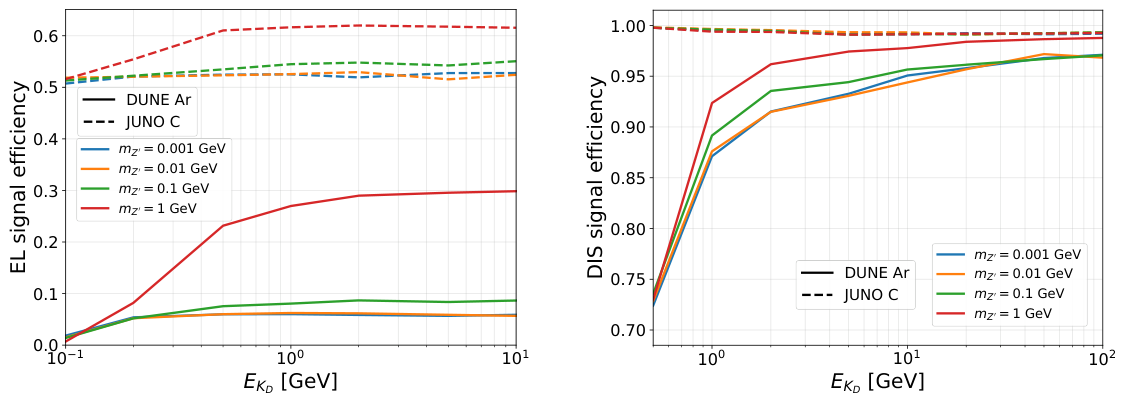
Figure 5 shows the resulting signal events selection efficiencies for DUNE on
40Ar and for the carbon contribution on the JUNO detector. As in
Figure 4, solid curves denote the DUNE result and dashed curves denote the JUNO carbon result.
The left panel presents the elastic-scattering signal efficiency, where the divergence between the two detector technologies is particularly transparent. The JUNO carbon curves remain substantially higher than the DUNE argon curves across the entire plotted range. For lighter mediators, DUNE’s efficiency drops below 10%, whereas JUNO’s remains around 50%. This disparity confirms that a vast majority of elastic events, which are successfully captured under JUNO’s inclusive event-level definition, fail to surpass DUNE’s exclusive particle-level hadronic thresholds. As a result, the detector-response difference is most pronounced in the soft-elastic regime, which defines the primary region of JUNO’s sensitivity advantage.
The right panel displays the deep-inelastic scattering signal efficiency. In this channel, both detectors retain a remarkably high fraction of events, with JUNO achieving near-unity efficiency and DUNE exceeding 90% for GeV. The discrepancy between DUNE and JUNO is significantly smaller here than in the elastic case, as DIS events typically produce energetic final-state hadrons that easily exceed the visibility thresholds of both detectors.
3.3. Physical Origin of the JUNO–DUNE Sensitivity Difference
The detector-level comparisons in the preceding sections clarify the physical origin of the projected sensitivity gap. The most critical difference arises in the soft-elastic regime, where JUNO’s inclusive event-level criterion retains events much more efficiently than DUNE’s exclusive particle-level thresholds. Since the atmospheric dark meson flux peaks sharply at low incident energies, JUNO’s superior acceptance in this high-flux region feeds directly into a significantly higher total event yield.
By contrast, the DIS channel presents a more nuanced picture. While DUNE achieves systematically larger visible effective cross sections in this channel, as energetic DIS final states readily surpass its detection thresholds, the total signal contribution from DIS is suppressed by the power-law fall-off of the incident spectrum. Consequently, DUNE’s localized cross-section advantage in hard-scattering processes is unable to compensate for the loss of the high-statistics soft-elastic signal.
Furthermore, our analysis explains why the sensitivity gap narrows for heavier mediators ( GeV). At these masses, the energy transfer to the target nucleon increases, leading to kinematic hardening of the recoil protons. This allows a larger fraction of elastic events to cross DUNE’s visibility thresholds, thereby improving DUNE’s relative acceptance and causing its exclusion limits to approach those of JUNO.
In summary, the JUNO–DUNE difference is not determined by a uniform difference across all channels, but by the interplay between flux distribution and detector visibility definitions. JUNO’s strength lies in its low-threshold “energy-summation” approach, which captures the bulk of the low-energy flux, while DUNE’s reach is defined by its ability to resolve individual high-energy tracks, a capability that becomes increasingly competitive only in the heavy-mediator or high-energy regimes.
3.4. Representative Event Counts for JUNO and DUNE
Table 2 lists representative one-year event counts at fixed
for three benchmark mediator masses. These benchmark points provide an event-level illustration of the relative size of the JUNO and DUNE signals within the common counting framework adopted in this work.
Two features are directly visible from the table. First, for the DUNE benchmark considered here, the total visible event yield at the selected mass points is still dominated by the elastic contribution. Second, the total JUNO event yield is larger than the DUNE one at all three benchmark points, with the difference reaching nearly one order of magnitude.
These benchmark counts provide a compact event-level summary of the relative JUNO–DUNE sensitivity shown later in
Figure 1. The more detailed physical interpretation of this hierarchy is discussed in
Section 3.3 and
Section 4.
3.5. Projected Limits in the Plane
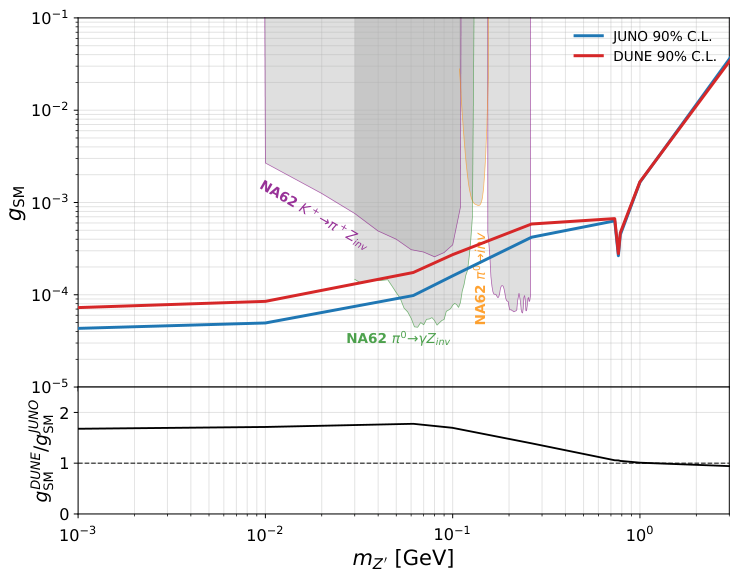
Figure 1 presents the projected 90% C.L. exclusion limits for JUNO and DUNE in the
plane, together with the existing NA62 exclusion regions. The lower panel shows the ratio
, which makes the relative sensitivity difference more explicit across the mediator-mass range. Since the JUNO and DUNE curves are obtained from the same atmospheric dark meson flux and are evaluated with the same counting-based exclusion formalism, shared structures in the two curves mainly trace back to the production side, whereas their separation reflects detector response together with the benchmark background inputs. The comparison therefore provides a controlled way to interpret how detector-specific visibility definitions modify a common source-side signal.
The comparison with existing bounds should be interpreted within the benchmark assumptions of the present leptophobic and dominantly invisible portal scenario. The shaded NA62 regions provide the most directly comparable rare-meson missing-energy constraints that can be displayed in the same
plane. Other bounds summarized for the elementary leptophobic dark-matter model of ref. [
20] cannot be directly overlaid on the present composite dark-meson scenario without a dedicated model-dependent recast. They rely on additional assumptions about the elementary nature of the invisible state, the mediator branching fraction into the full dark-sector spectrum, the local Galactic dark-matter density, the collider response to dark-sector final states, or the ultraviolet completion of the leptophobic current. Other generic bounds on light vector bosons—such as collider resonance searches or beam-dump limits—additionally require either a leptonic coupling or explicit assumptions about the invisible branching fraction into the complete dark-hadron spectrum after confinement, and therefore cannot be straightforwardly applied to the present composite dark-meson scenario without a dedicated recast. Accordingly, the unshaded region in
Figure 1 should not be interpreted as a fully model-independent globally allowed parameter space.
We have also examined how the projected limits respond to the hadronization variation
introduced in
Section 2.2. This variation affects only the incident
flux used in the evaluation of the signal yields. Because the signal yield scales linearly with the flux, whereas the coupling reach follows from
, an order-one variation in the flux is translated into a milder shift in
. We find that the absolute JUNO and DUNE projected limits can shift moderately under this scan, but the qualitative JUNO–DUNE hierarchy and the mass-dependent behavior of
remain stable. Therefore, the main conclusion of
Figure 1 is not driven by a fine-tuned choice of the MQCM multiplicity parameter.
To make this robustness check more explicit,
Table 3 lists the resulting projected coupling limits at three representative mediator masses. The numerical impact of this order-one hadronization variation is therefore modest at the level of the coupling reach. For JUNO, the representative limits shift by about
to
relative to the fiducial
result, while for DUNE the corresponding shifts remain below about
. The JUNO–DUNE ordering is unchanged for all three choices of
.
Several qualitative features can be read directly from
Figure 1. Shared non-monotonic structures mainly reflect the common source-side flux, whereas the separation between the JUNO and DUNE curves is controlled primarily by detector response together with the benchmark background inputs. In particular, the turning structure around
–
should be understood mainly as a source-side feature. In the framework of ref. [
21], it reflects the nontrivial mediator-mass dependence of the incident flux, including the form-factor dependence of proton bremsstrahlung and the changing relative importance of meson decays, bremsstrahlung, and Drell–Yan production.
For light mediators, both experiments achieve their strongest projected reach in the present setup. In this regime, the source-side flux is largest and the meson-decay channels remain kinematically open, so the signal is fed efficiently by the lower-energy part of the incident dark meson spectrum. The JUNO projection lies more clearly below the DUNE one in this region, reflecting the fact that JUNO retains a larger fraction of soft elastic events through its event-level visible-energy criterion, whereas DUNE loses many of these events once particle-level hadronic thresholds are imposed.
This hierarchy is displayed even more directly in the lower ratio panel. The quantity stays above unity over most of the plotted mediator-mass range, confirming that the projected JUNO sensitivity is generally stronger in the present setup. The ratio is largest in the lighter-mediator regime, where the soft-elastic detector-response difference is most important, and it moves closer to unity toward larger mediator masses as the visible final states become harder and the detector-level difference correspondingly decreases.
At intermediate masses, the NA62 exclusions probe the same portal interaction through meson-decay kinematics and are therefore confined to restricted mediator-mass windows. The broad exclusion covers an intermediate low-mass region, while the and searches give narrower structures around the neutral-pion mass scale. For the leptophobic and dominantly invisible benchmark considered here, the NA62 bounds provide the most direct external comparison and are therefore the only external constraints shown in this plot. Other bounds discussed for elementary leptophobic dark matter would require a separate model-dependent recast before being mapped onto the present composite- scenario.
At larger
, both projected limits weaken dramatically as the total source flux becomes increasingly suppressed, even though Drell–Yan production becomes relatively more important. At the same time, the gap between the JUNO and DUNE curves becomes smaller than in the light-mediator regime. This mainly reflects a detector-side effect: heavier mediators produce harder visible final states, which improves the elastic acceptance at DUNE and also makes the higher-energy DIS contribution more competitive. Taken together,
Figure 1 shows that the comparison between JUNO and DUNE is not simply a comparison of detector masses or nominal threshold values, but rather of how the same atmospheric dark meson flux is reshaped by two different detector responses.
4. Discussion
The results presented above show that the relative JUNO–DUNE sensitivity to cosmic-ray-produced dark mesons is controlled primarily by detector response rather than by the source-side flux alone. Since the same atmospheric dark meson flux framework is used for both experiments, the difference between the two projected limits should be interpreted mainly as a consequence of how each detector converts a common incoming spectrum into visible event yields. As seen in
Figure 4 and
Figure 5, together with the representative event counts listed in
Table 2, JUNO retains a substantially larger fraction of soft events than DUNE over much of the parameter space considered here. Given the similar benchmark background levels adopted for JUNO and DUNE in the present baseline setup, this leads to a stronger projected JUNO sensitivity over most of the mediator-mass range shown in
Figure 1.
The physical origin of this difference can be understood from the way the two detectors define visible signal events. At JUNO, the event selection is based on the total visible energy , which allows a non-negligible fraction of relatively soft elastic events to remain in the signal sample. At DUNE, by contrast, visibility is imposed through particle-level hadronic thresholds. This makes the DUNE acceptance for elastic events significantly more sensitive to whether the final-state hadrons are energetic enough to cross the benchmark thresholds. As a result, many soft elastic events are removed even when the scattering rate is not small. Although deep inelastic scattering is much more likely to satisfy the DUNE visibility criteria once it occurs, its contribution is limited by the fact that it is fed mainly by the higher-energy part of the incident dark meson spectrum, where the flux is already more suppressed. The JUNO–DUNE difference therefore reflects a detector-level competition between the soft-flux advantage of elastic scattering and the higher acceptance but flux-suppressed contribution from deep inelastic events.
This interpretation should, however, be understood within the scope of the baseline comparison performed here. The present analysis is intended to isolate detector-level effects within a common source-side framework, rather than to provide a full experiment-specific sensitivity forecast. Several simplifying assumptions have been adopted for that purpose. On the JUNO side, the atmospheric-neutrino background is estimated within a GENIE-based framework, while on the DUNE side a literature benchmark background is used. In addition, the analysis is based on a counting treatment and does not include recoiling spectral fitting, or a full propagation of systematic uncertainties. The DUNE visibility criteria are likewise implemented as benchmark hadronic thresholds rather than as a complete detector-reconstruction model. Accordingly, the quantitative separation between the JUNO and DUNE curves should be interpreted as a baseline projection under the benchmark assumptions adopted in this work.
Even with these limitations, the comparison remains physically informative. Because the source-side production and hadronization treatment is kept fixed, the study makes clear that the relative reach of different underground detectors for confining dark-sector signals cannot be inferred from fiducial mass or nominal threshold values alone. What matters is how the incident dark meson spectrum is reshaped by the actual signal event definition at detector level. The direct comparison between DUNE on 40Ar and the dominant carbon contribution on the JUNO detector further shows that the main detector-level difference arises from the elastic channel, whereas the DIS channel contributes much less to the final separation. A more refined future study could extend the present framework by incorporating experiment-specific background modeling, shape-based statistical analyses, and systematic uncertainties, but these effects are not expected to alter the basic qualitative conclusion that detector response plays the central role in setting the JUNO–DUNE sensitivity hierarchy in the benchmark scenario considered here.
5. Conclusions
In this work, we performed a unified comparison of JUNO and DUNE sensitivities to cosmic-ray-produced dark mesons in a confining dark sector with a leptophobic vector portal. The source-side treatment was kept common between the two experiments, including the atmospheric dark meson production channels and the dark hadronization framework inherited from ref. [
21], so that the comparison could focus on the detector-level response to the same incident dark meson flux.
Building upon our previous JUNO study [
21], the present work introduces several key developments: the implementation of the DUNE detector model, the calculation of visible effective cross sections and signal selection efficiencies on
40Ar, and a controlled detector-level comparison between the two experiments within a unified counting framework. For direct comparison in our detector-level analysis, we focus on the DUNE argon results alongside the dominant carbon contribution from JUNO, while the full JUNO sensitivity continues to incorporate both hydrogen and carbon targets. For DUNE, both elastic scattering and deep inelastic scattering were included under benchmark hadronic visibility criteria, allowing the corresponding visible event yields and projected exclusion reach to be evaluated consistently with the common source-side setup.
Our results show that the relative JUNO–DUNE sensitivity is determined primarily by detector response. The direct detector-level comparison makes clear that the dominant difference arises in the elastic channel: JUNO retains a larger fraction of soft elastic events through its event-level visible-energy requirement, while DUNE loses many of these events under particle-level hadronic thresholds. By contrast, the deep-inelastic channel shows a much smaller detector-level difference between the two experiments. Although DIS events are more easily accepted, their contribution is limited by the higher-energy part of the incident dark meson spectrum. As a result, the projected JUNO sensitivity is stronger than the DUNE one over most of the mediator-mass range considered in this baseline analysis, as also seen directly from the ratio panel in
Figure 1. We also tested the robustness of this conclusion against an order-one variation in the MQCM multiplicity parameter,
. The resulting changes in the projected coupling limits remain within about 6% for the representative benchmark points considered, and the JUNO–DUNE ordering is not altered.
The present analysis provides a baseline detector-level comparison in this direction and can serve as a useful starting point for future refinements with more detailed experiment-specific background treatments and statistical methods.