


Ganoderma lucidum as a Functional Bioactive Candidate for Glycemic Regulation: Mechanisms, Preclinical Evidence, and Clinical Translation
 , , , , , ,
  , ,
, ,  , and
, and
Abstract
1. Introduction
Literature Search and Selection Approach
2. Taxonomy, Nomenclature, and Authentication
2.1. Nomenclatural Background and Typification

2.2. The “Lingzhi–Reishi” Complex and Frequent Misapplication
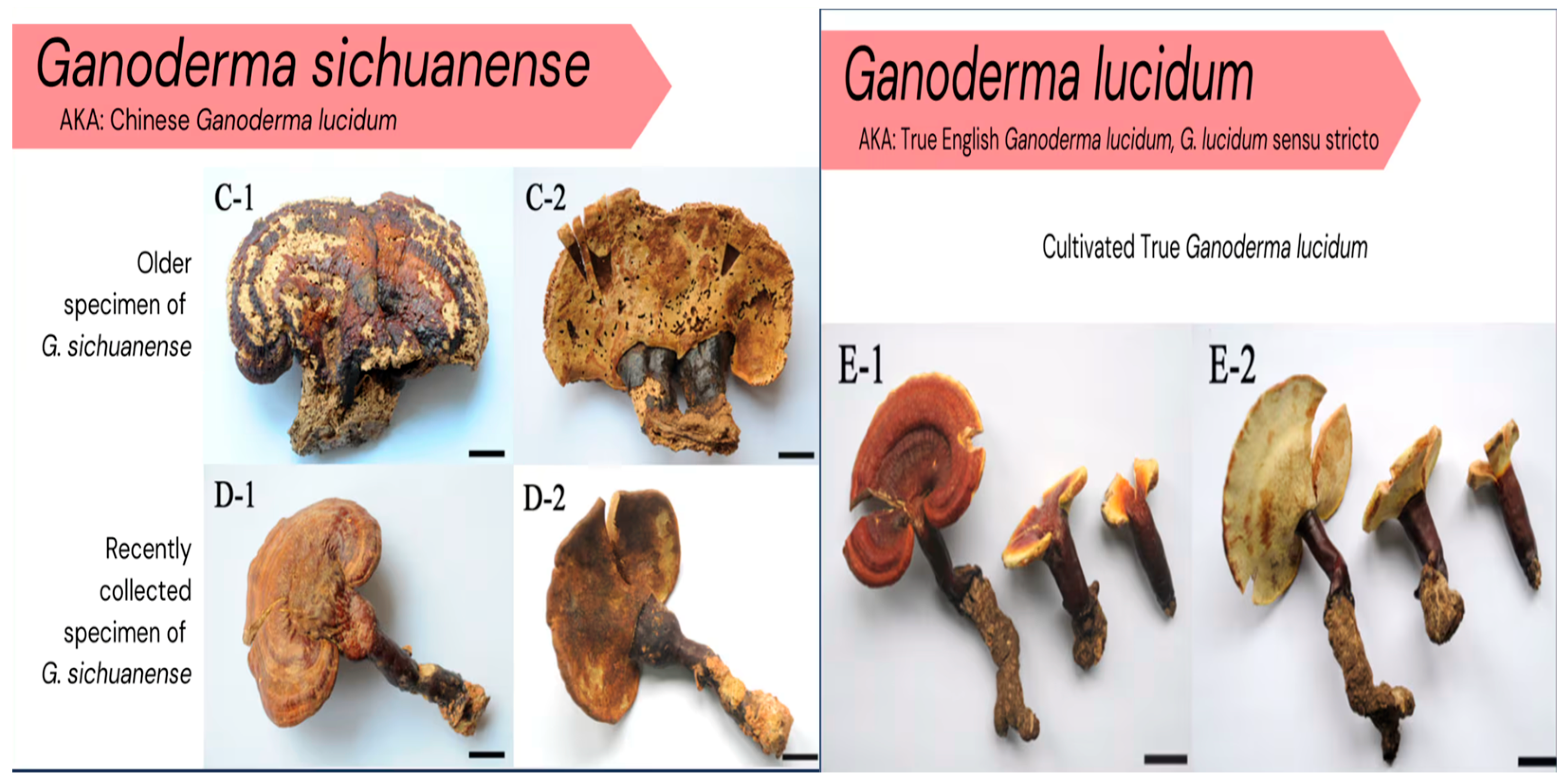
2.3. Morphological Diagnosis of G. lucidum

2.4. Ecology, Substrate Preference, and Biogeography
2.5. Chemosystematics Considerations
2.6. DNA Barcoding and Authentication Process
3. Phytochemical Composition Relevant to Glycemic Control
3.1. Polysaccharides (GLPs)
3.1.1. Mechanistic Relevance to Glucose Homeostasis
3.1.2. Structure–Activity Considerations
3.2. Lanostane-Type Triterpenoids
3.2.1. Enzyme Inhibition and Postprandial Glucose Control
3.2.2. In Vivo Hypoglycemic Evidence
3.3. Stability, Bioavailability, and Additional Phytochemicals
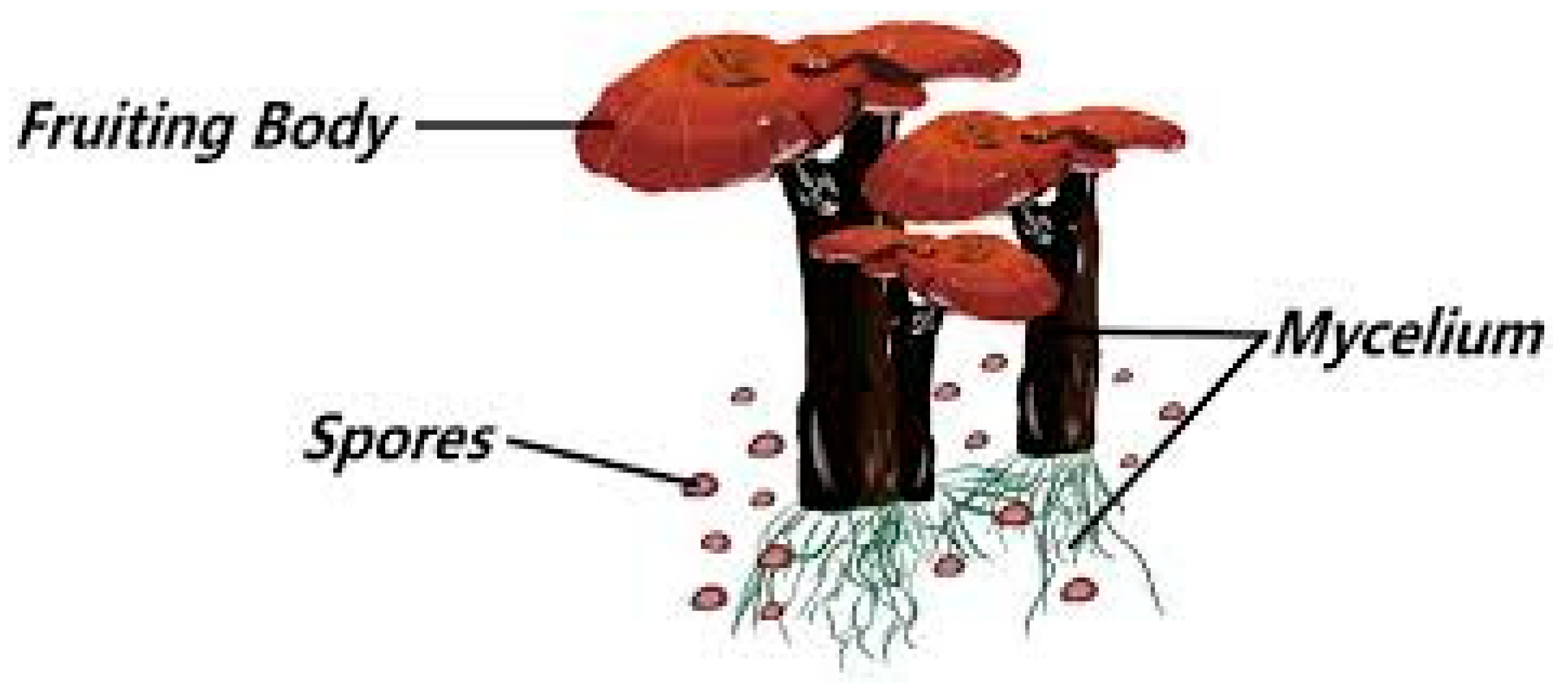
3.4. Tissue-Specific Profiling: Fruiting Bodies, Mycelium, and Spores
3.4.1. Quantitative Variations in Polysaccharide and Triterpenoid Substances
3.4.2. Translation into Clinical Application
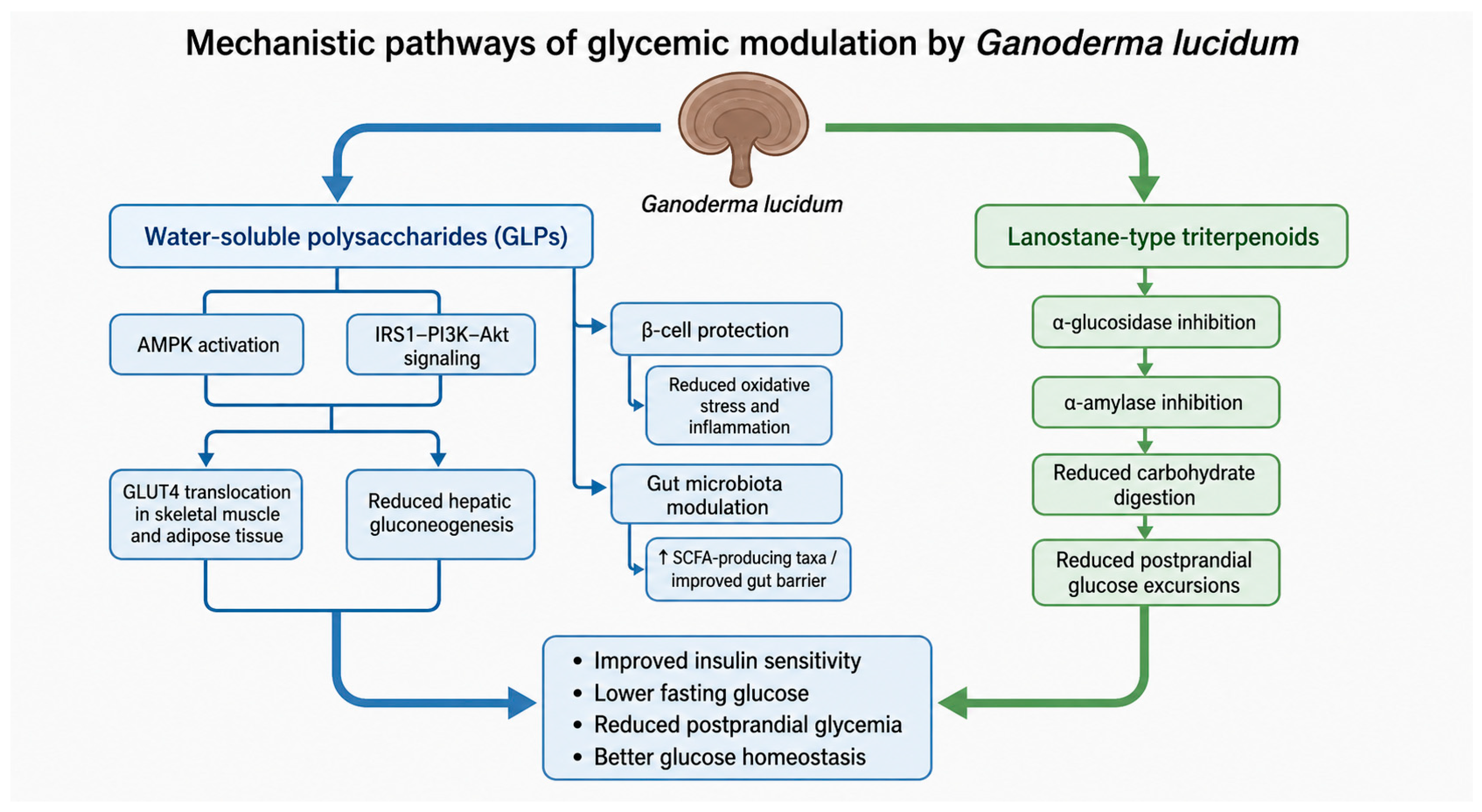
4. Mechanistic Basis of Glycemic Modulation by G. lucidum
4.1. Intestinal Enzyme Inhibition and Postprandial Glucose Control
4.2. Insulin Signaling and GLUT4 Translocation
4.3. Regulation of Hepatic Glucose Output
4.4. β-Cell Protection and Insulin Secretion
4.5. Anti-Inflammatory and Antioxidant Contributions
4.6. Modulation of the Gut Microbiota
4.7. Interaction Between Intestinal and Systemic Mechanisms
5. Evidence from Preclinical and Clinical Studies
5.1. Preclinical Evidence
5.2. Clinical Studies

| Study Type | Model | Compound/Source | Dose and Duration | Main Endpoints | Key Findings |
|---|---|---|---|---|---|
| STZ-induced diabetic rodents [10,16,60,90] | Streptozotocin (STZ)-induced diabetic rodents | GLP-rich aqueous fruiting body extract | Study-specific dose; variable duration | Fasting glucose, insulin, oxidative stress, tissue changes | Reduced fasting glucose and improved pancreatic/hepatic parameters. |
| Diet-induced obese mice [9,19] | Diet-induced obese or insulin-resistant mice | G. lucidum extract or polysaccharide-rich fraction | Study-specific dose; variable duration | Insulin resistance, AMPK, lipid metabolism | Improved insulin sensitivity and metabolic markers, often linked to AMPK activation. |
| db/db or T2DM rodent models [11,13] | db/db or T2DM rodent models | FYGL proteoglycan fraction | Study-specific dose; variable duration | Fasting glucose, insulin, hepatic glucose output, β-cell function | Improved glycemic control and insulin-related outcomes. |
| In vitro enzyme assay [7] | In vitro enzyme assays | Lanostane triterpenoids, ganoderol B, ganoderic acid derivatives | Concentration-dependent | α-glucosidase/α-amylase inhibition | Inhibited carbohydrate-digesting enzymes in vitro. |
| Cell culture model [9,10,11,12] | Cell culture models | GLPs or purified polysaccharides | Concentration-dependent | GLUT4, PI3K-Akt, AMPK, oxidative stress | Modulated insulin and energy-sensing pathways. |
| Gut microbiota animal model [14,15,18] | Gut microbiota animal models | GLP-rich preparations | Study-specific dose; variable duration | Microbiota, SCFAs (short-chain fatty acids), barrier function, inflammation | Altered microbiota and reduced inflammation-related metabolic dysfunction. |
| Evidence Type | Population/Focus | Intervention/Material | Duration/Dose | Main Outcomes | Main Conclusion | Limitations |
|---|---|---|---|---|---|---|
| Randomized controlled trial [84] | Adults with T2DM and metabolic syndrome | G. lucidum, alone or with Cordyceps sinensis | 16 weeks; reported dose | Fasting glucose, HbA1c, HOMA-IR | No significant improvement versus placebo. | Moderate sample size, short duration, incomplete standardization. |
| Open-label/uncontrolled study [82,83,86] | Adults receiving spore-derived products | Spore powder or related preparation | Study-specific | Glucose levels, lipid profile | Some favorable metabolic changes were reported. | No placebo control, limited blinding, short follow-up. |
| Review evidence [2,21,82,83,88,89] | Ganoderma materials and metabolic outcomes | Mixed preparations | Not applicable | Mechanisms, translational evidence | Mechanistic plausibility exists, but clinical efficacy remains uncertain. | Reviews cannot replace primary clinical data. |
5.3. Risk of Bias and Methodological Considerations in Clinical Evidence
6. Safety, Toxicity Considerations, and Clinical Context
| Category | Typical Observations in Clinical or Observational Reports | Clinical Relevance | Recommended Actions |
|---|---|---|---|
| Gastrointestinal and constitutional adverse events | Dry mouth, nausea, dyspepsia, dizziness, insomnia, and headache, generally reported as mild and self-limiting | Incidence typically comparable to placebo and dependent on dose and formulation | Provide reassurance; consider dose reduction or formulation change if symptoms persist [84,86,92]. |
| Bleeding and coagulation | In vitro and ex vivo evidence of platelet inhibition; isolated reports of perioperative bleeding | Potential increased bleeding risk when combined with anticoagulants or antiplatelet agents; randomized trials in healthy volunteers did not demonstrate global impairment of hemostasis | Avoid high-dose preparations in patients receiving anticoagulants or antiplatelet therapy unless supervised; discontinue use 1–2 weeks prior to surgery; monitor INR and clinical signs of bleeding [95,96]. |
| Hepatotoxicity | Case reports ranging from mild elevations in alanine and aspartate aminotransferases to severe hepatitis, with fulminant liver failure reported rarely | Likely idiosyncratic reactions: risk may vary depending on product composition and tissue source | Perform baseline and periodic liver function testing during long-term or high-dose use; discontinue supplementation if liver enzymes increase or hepatic symptoms develop [93,94]. |
| Glycemic interactions | Additive glucose-lowering effects when used concomitantly with antidiabetic medications | Symptomatic hypoglycemia reported infrequently | Educate patients regarding hypoglycemia symptoms; monitor blood glucose levels and adjust antidiabetic therapy as clinically indicated [84,86]. |
| Immunomodulatory effects | Theoretical interaction with immunosuppressive therapies based on immunomodulatory properties | Clinical significance remains uncertain | Use with caution in transplant recipients or patients with autoimmune diseases; coordinate management with the treating clinical team [97,98,99]. |
| Tumor marker interference (CA72-4) | Elevated CA72-4 levels reported in association with spore powder consumption | Potential confounding of oncological monitoring | Inform oncology teams of supplement use; interpret tumor marker results with caution [2]. |
Regulatory Status and Commercial Use
7. Other Metabolically Relevant Activities
Patent Landscape and Translational Relevance
8. Discussion
8.1. Integration of Mechanistic Evidence
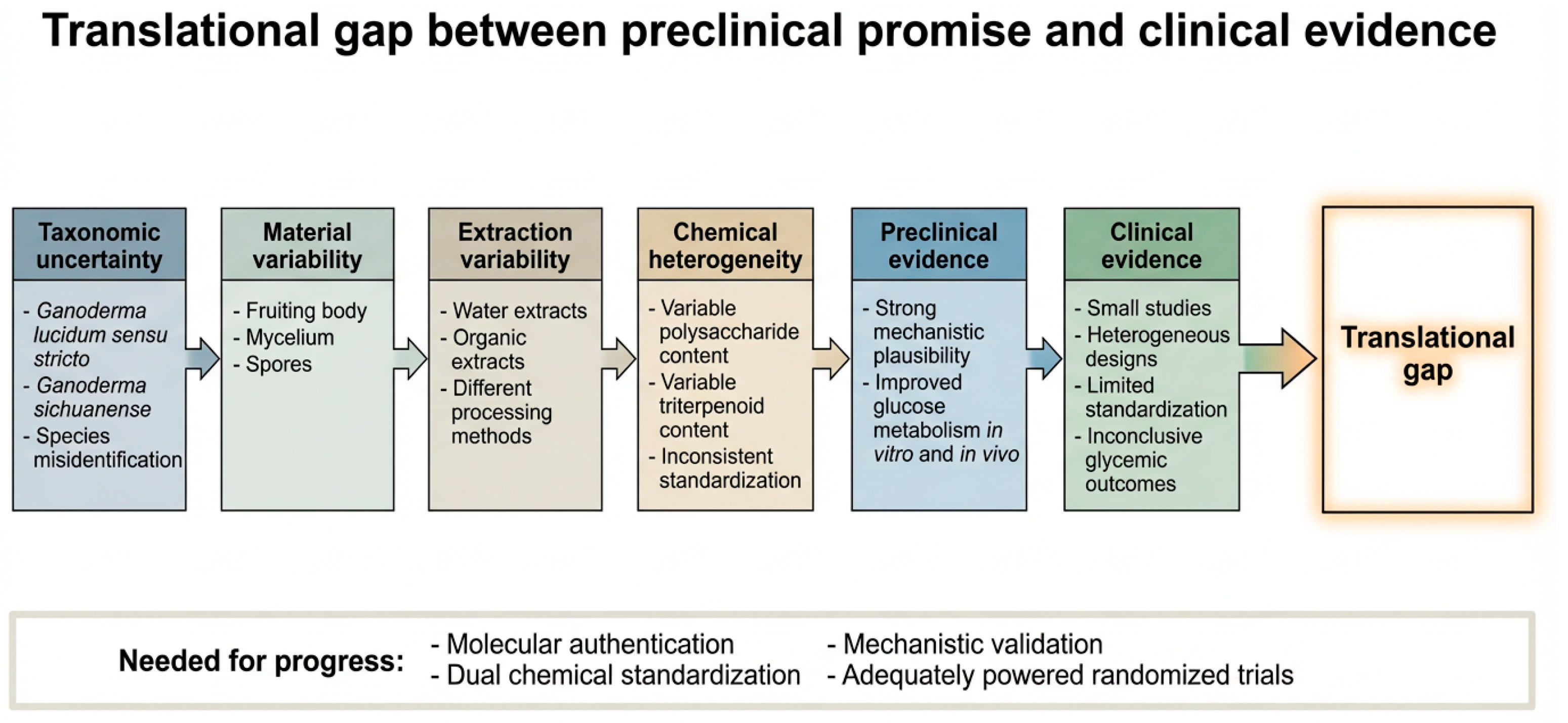
8.2. Translational Limitations in Human Studies
8.3. Safety Considerations
8.4. Remaining Knowledge Gaps
9. Conclusions
Supplementary Materials
Author Contributions
Funding
Institutional Review Board Statement
Informed Consent Statement
Data Availability Statement
Acknowledgments
Conflicts of Interest
Abbreviations
| AMPK | AMP-activated protein kinase |
| FYGL | Fudan–Yueyang Ganoderma lucidum proteoglycan |
| GL | Ganoderma lucidum |
| GLPs | Ganoderma lucidum polysaccharides |
| GLUT4 | Glucose transporter type 4 |
| HbA1c | Glycated hemoglobin A1c |
| HOMA-IR | Homeostatic model assessment of insulin resistance |
| IRS1 | Insulin receptor substrate 1 |
| NAFLD | Non-alcoholic fatty liver disease |
| OGTT | Oral glucose tolerance test |
| PI3K | Phosphoinositide 3-kinase |
| T2DM | Type 2 diabetes mellitus |
References
- Ahmad, M.F.; Ahmad, F.A.; Hasan, N.; Alsayegh, A.A.; Hakami, O.; Bantun, F.; Tasneem, S.; Alamier, W.M.; Babalghith, A.O.; Aldairi, A.F.; et al. Ganoderma lucidum: Multifaceted mechanisms to combat diabetes through polysaccharides and triterpenoids: A comprehensive review. Int. J. Biol. Macromol. 2024, 268, 131644. [Google Scholar] [CrossRef] [PubMed]
- Wu, S.; Zhang, S.; Peng, B.; Tan, D.; Wu, M.; Wei, J.; Wang, Y.; Luo, H. Ganoderma lucidum: A comprehensive review of phytochemistry, efficacy, safety and clinical study. Food Sci. Hum. Wellness 2024, 13, 568–596. [Google Scholar] [CrossRef]
- Liu, Y.; Ren, S.; Sang, Q.; Cheng, X.; Bi, Y. Potential active compounds of Ganoderma lucidum and their anticancer effects: A comprehensive review. Food Sci. Nutr. 2025, 13, e70741. [Google Scholar] [CrossRef] [PubMed]
- Wińska, K.; Mączka, W.; Gabryelska, K.; Grabarczyk, M. Mushrooms of the genus Ganoderma used to treat diabetes and insulin resistance. Molecules 2019, 24, 4075. [Google Scholar] [CrossRef]
- Galappaththi, M.C.A.; Patabendige, N.M.; Premarathne, B.M.; Hapuarachchi, K.K.; Tibpromma, S.; Dai, D.Q.; Suwannarach, N.; Rapior, S.; Karunarathna, S.C. A review of Ganoderma triterpenoids and their bioactivities. Biomolecules 2022, 13, 24. [Google Scholar] [CrossRef] [PubMed]
- Schoch, C.L.; Seifert, K.A.; Huhndorf, S.; Robert, V.; Spouge, J.L.; Levesque, C.A.; Chen, W.; Fungal Barcoding Consortium. Nuclear ribosomal internal transcribed spacer (ITS) region as a universal DNA barcode marker for fungi. Proc. Natl. Acad. Sci. USA 2012, 109, 6241–6246. [Google Scholar] [CrossRef]
- Fatmawati, S.; Shimizu, K.; Kondo, R. Ganoderol B: A potent α-glucosidase inhibitor isolated from the fruiting body of G. lucidum. Phytomedicine 2011, 18, 1053–1055. [Google Scholar] [CrossRef]
- Ma, L.F.; Yan, J.J.; Lang, H.Y.; Jin, L.C.; Qiu, F.J.; Wang, Y.J.; Xi, Z.F.; Shan, W.G.; Zhan, Z.J.; Ying, Y.M. Bioassay-guided isolation of lanostane-type triterpenoids as α-glucosidase inhibitors from Ganoderma hainanense. Phytochem. Lett. 2019, 29, 154–159. [Google Scholar] [CrossRef]
- Lee, H.A.; Cho, J.H.; Afinanisa, Q.; An, G.H.; Han, J.G.; Kang, H.J.; Choi, S.H.; Seong, H.A. Ganoderma lucidum extract reduces insulin resistance by enhancing AMPK activation in high-fat diet-induced obese mice. Nutrients 2020, 12, 3338. [Google Scholar] [CrossRef]
- Xiao, C.; Wu, Q.P.; Cai, W.; Tan, J.B.; Yang, X.B.; Zhang, J.M. Hypoglycemic effects of Ganoderma lucidum polysaccharides in type 2 diabetic mice. Arch. Pharm. Res. 2012, 35, 1793–1801. [Google Scholar] [CrossRef]
- Yu, F.; Teng, Y.; Li, J.; Yang, S.; Zhang, Z.; He, Y.; Yang, H.; Ding, C.-F.; Zhou, P. Effects of a G. lucidum proteoglycan on type 2 diabetic rats and the recovery of rat pancreatic islets. ACS Omega 2023, 8, 17304–17316. [Google Scholar] [CrossRef]
- Xiao, C.; Wu, Q.; Zhang, J.; Xie, Y.; Cai, W.; Tan, J. Antidiabetic activity of Ganoderma lucidum polysaccharides F31 down-regulated hepatic glucose regulatory enzymes in diabetic mice. J. Ethnopharmacol. 2017, 196, 47–57. [Google Scholar] [CrossRef]
- Pan, D.; Zhang, D.; Wu, J.; Chen, C.; Xu, Z.; Yang, H.; Zhou, P. Antidiabetic, antihyperlipidemic and antioxidant activities of a novel proteoglycan from Ganoderma lucidum fruiting bodies on db/db mice and the possible mechanism. PLoS ONE 2013, 8, e68332. [Google Scholar] [CrossRef]
- Zhou, L.; Li, J.; Ding, C.; Zhou, Y.; Xiao, Z. Mechanistic advances in hypoglycemic effects of natural polysaccharides: Multi-target regulation of glycometabolism and gut microbiota crosstalk. Molecules 2025, 30, 1980. [Google Scholar] [CrossRef]
- Pi, Y.; Fang, M.; Li, Y.; Cai, L.; Han, R.; Sun, W.; Jiang, X.; Chen, L.; Du, J.; Zhu, Z.; et al. Interactions between gut microbiota and natural bioactive polysaccharides in metabolic diseases: Review. Nutrients 2024, 16, 2838. [Google Scholar] [CrossRef] [PubMed]
- Zheng, J.; Yang, B.; Yu, Y.; Chen, Q.; Huang, T.; Li, D.G. lucidum polysaccharides exert anti-hyperglycemic effect on STZ-induced diabetic rats through affecting β-cells. Comb. Chem. High Throughput Screen. 2012, 15, 542–550. [Google Scholar] [CrossRef]
- Cör Andrejč, D.; Knez, Ž.; Knez Marevci, M. Antioxidant, antibacterial, antitumor, antifungal, antiviral, anti-inflammatory, and nevro-protective activity of Ganoderma lucidum: An overview. Front. Pharmacol. 2022, 13, 934982. [Google Scholar] [CrossRef]
- Qin, X.; Fang, Z.; Zhang, J.; Zhao, W.; Zheng, N.; Wang, X. Regulatory effect of Ganoderma lucidum and its active components on gut flora in diseases. Front. Microbiol. 2024, 15, 1362479. [Google Scholar] [CrossRef] [PubMed]
- Lovely, F.; Sifat, N.; Zihad, S.M.N.K.; Dutta, A.K.; Rouf, R.; Ahmed, K.S.; Hossain, M.H.; Hossain, M.G.; Shilpi, J.A.; Uddin, S.J. Effects of Ganoderma lucidum supplementation on obesity and metabolic alterations induced by high-carbohydrate-high-fat diet in rats. J. Food Biochem. 2025, 2025, 6894057. [Google Scholar] [CrossRef]
- Wang, F.; Zhou, Z.; Ren, X.; Wang, Y.; Yang, R.; Luo, J.; Strappe, P. Effect of Ganoderma lucidum spores intervention on glucose and lipid metabolism gene expression profiles in type 2 diabetic rats. Lipids Health Dis. 2015, 14, 49. [Google Scholar] [CrossRef]
- Plosca, M.P.; Ghimis, S.B.; Biris, R.; Chiș, M.S.; Fărcaș, A.C.; Păucean, A. Ganoderma lucidum—From Ancient Remedies to Modern Applications: Chemistry, Benefits, and Safety. Antioxidants 2025, 14, 513. [Google Scholar] [CrossRef]
- MycoBank. Ganoderma lucidum (Curtis) P. Karst. MycoBank Database. Available online: https://www.mycobank.org/page/Name%20details%20page/11228 (accessed on 5 May 2026).
- Index Fungorum. Ganoderma lucidum (Curtis) P. Karst. Index Fungorum Database. Available online: https://www.indexfungorum.org/names/namesrecord.asp?RecordID=148413 (accessed on 5 May 2026).
- Loyd, A.L.; Barnes, C.W.; Held, B.W.; Schink, M.J.; Smith, M.E.; Smith, J.A.; Blanchette, R.A. Elucidating “lucidum”: Distinguishing the diverse laccate Ganoderma species of the United States. PLoS ONE 2018, 13, e0199738. [Google Scholar] [CrossRef]
- Loyd, A.L.; Richter, B.S.; Jusino, M.A.; Truong, C.; Smith, M.E.; Blanchette, R.A.; Smith, J.A. Identifying the “Mushroom of Immortality”: Assessing the Ganoderma species composition in commercial reishi products. Front. Microbiol. 2018, 9, 1557. [Google Scholar] [CrossRef]
- Hapuarachchi, K. Mycosphere essays 1: Taxonomic confusion in the Ganoderma lucidum species complex. Mycosphere 2015, 6, 542–559. [Google Scholar] [CrossRef]
- Luangharn, T.; Karunarathna, S.C.; Dutta, A.K.; Paloi, S.; Promputtha, I.; Hyde, K.D.; Xu, J.; Mortimer, P.E. Ganoderma (Ganodermataceae, Basidiomycota) species from the Greater Mekong Subregion. J. Fungi 2021, 7, 819. [Google Scholar] [CrossRef] [PubMed]
- Wang, X.C.; Xi, R.J.; Li, Y.; Wang, D.M.; Yao, Y.J. The species identity of the widely cultivated Ganoderma, “G. lucidum” (Ling-zhi), in China. PLoS ONE 2012, 7, e40857. [Google Scholar] [CrossRef] [PubMed]
- Kwon, O.C.; Park, Y.J.; Kim, H.I.; Kong, W.S.; Cho, J.H.; Lee, C.S. Taxonomic position and species identity of the cultivated Yeongji “Ganoderma lucidum” in Korea. Mycobiology 2016, 44, 1–6. [Google Scholar] [CrossRef]
- Wachtel-Galor, S.; Yuen, J.; Buswell, J.A.; Benzie, I.F.F. Ganoderma lucidum (Lingzhi or Reishi): A medicinal mushroom. In Herbal Medicine: Biomolecular and Clinical Aspects, 2nd ed.; Benzie, I.F.F., Wachtel-Galor, S., Eds.; Chapter 9; CRC Press/Taylor & Francis: Boca Raton, FL, USA, 2011. [Google Scholar]
- Jargalmaa, S.; Eimes, J.A.; Park, M.S.; Park, J.Y.; Oh, S.Y.; Lim, Y.W. Taxonomic evaluation of selected Ganoderma species and database sequence validation. PeerJ 2017, 5, e3596. [Google Scholar] [CrossRef]
- Cao, Y.; Wu, S.H.; Dai, Y.C. Species clarification of the prize medicinal Ganoderma mushroom “Lingzhi”. Fungal Divers. 2012, 56, 49–62. [Google Scholar] [CrossRef]
- Dai, Y.-C.; Zhou, L.-W.; Hattori, T.; Cao, Y.; Stalpers, J.A.; Ryvarden, L.; Buchanan, P.; Oberwinkler, F.; Hallenberg, N.; Liu, P.-G.; et al. Ganoderma lingzhi (Polyporales, Basidiomycota): The scientific binomial for the widely cultivated medicinal fungus Lingzhi. Mycol. Prog. 2017, 16, 1051–1055. [Google Scholar] [CrossRef]
- Hennicke, F.; Cheikh-Ali, Z.; Liebisch, T.; Maciá-Vicente, J.G.; Bode, H.B.; Piepenbring, M. Distinguishing commercially grown Ganoderma lucidum from Ganoderma lingzhi from Europe and East Asia on the basis of morphology, molecular phylogeny, and triterpenic acid profiles. Mycol. Prog. 2017, 16, 1061–1071. [Google Scholar] [CrossRef]
- Thakur, P.; Khanal, S.; Tapwal, A.; Kumar, D.; Verma, R.; Chauhan, P.; Sharma, N. Exploring Ganoderma lucidum: Morphology, cultivation and market potential. World J. Microbiol. Biotechnol. 2024, 40, 369. [Google Scholar] [CrossRef] [PubMed]
- Du, Z.; Li, Y.; Wang, X.C.; Wang, K.; Yao, Y.J. Re-examination of the holotype of Ganoderma sichuanense and clarification of Chinese cultivated Lingzhi. J. Fungi 2023, 9, 323. [Google Scholar] [CrossRef]
- Copoț, O.; Tănase, C. Maxent modelling of the potential distribution of Ganoderma lucidum in North-Eastern Region of Romania. J. Plant Dev. 2017, 24, 133–143. [Google Scholar]
- Techel, I.; Lahrsen, E.; Alban, S. Purification, structural characterization, and immunomodulatory activity of the polysaccharides from G. lucidum. Int. J. Biol. Macromol. 2020, 143, 806–813. [Google Scholar] [CrossRef]
- Loyd, A.L.; Linder, E.R.; Smith, M.E.; Blanchette, R.A.; Smith, J.A. Cultural characterization and chlamydospore function of the Ganodermataceae present in the eastern United States. Mycologia 2019, 111, 1–12. [Google Scholar] [CrossRef]
- He, J.; Han, X.; Luo, Z.L.; Li, E.-X.; Tang, S.-M.; Luo, H.-M.; Niu, K.-Y.; Su, X.-J.; Li, S.-H. Species diversity of Ganoderma with three new species and a key to Ganoderma in Yunnan Province, China. Front. Microbiol. 2022, 13, 1035434. [Google Scholar] [CrossRef]
- Zhong, Y.; Tan, P.; Lin, H.; Zhang, D.; Chen, X.; Pang, J.; Mu, R. A review of Ganoderma lucidum polysaccharide: Preparations, structures, physicochemical properties and application. Foods 2024, 13, 2665. [Google Scholar] [CrossRef] [PubMed]
- El-Nashar, H.A.S.; Taleb, M.; El-Shazly, M.; Zhao, C.; Farag, M.A. Polysaccharides (pectin, mucilage, and fructan inulin) and their fermented products: A critical analysis of their biochemical, gut interactions, and biological functions as antidiabetic agents. Phytother. Res. 2024, 38, 662–693. [Google Scholar] [CrossRef]
- Gunnels, T.; Creswell, M.; McFerrin, J.; Whittall, J.B. The ITS region provides a reliable DNA barcode for identifying reishi/lingzhi (Ganoderma) from herbal supplements. PLoS ONE 2020, 15, e0236774. [Google Scholar] [CrossRef]
- Marcon, L.M.R.; Mazzieri, A. Anti-inflammatory and anti-oxidative effects of GLP1-RAs and SGLT2i: The guiding star towards cardiovascular protection in type 2 diabetes. Immuno 2025, 5, 11. [Google Scholar] [CrossRef]
- Giusti, A.; Ricci, E.; Gasperetti, L.; Galgani, M.; Polidori, L.; Verdigi, F.; Narducci, R.; Armani, A. Molecular identification of mushroom species in Italy: An ongoing project aimed at reinforcing the control measures of an increasingly appreciated sustainable food. Sustainability 2021, 13, 238. [Google Scholar] [CrossRef]
- Lotosky, J.; Jean, X.; Altankhuyag, A.; Khan, S.; Bernotas, A.; Sharafshah, A.; Blum, K.; Posner, A.; Thanos, P.K. GLP-1 and its role in glycogen production: A narrative review. Biomedicines 2025, 13, 1610. [Google Scholar] [CrossRef] [PubMed]
- Sajan, M.P.; Ivey, R.A.; Farese, R.V. Metformin action in human hepatocytes: Coactivation of atypical protein kinase C alters 5′-AMP-activated protein kinase effects on lipogenic and gluconeogenic enzyme expression. Diabetologia 2013, 56, 2507–2516. [Google Scholar] [CrossRef]
- Bao, X.F.; Wang, X.S.; Dong, Q.; Fang, J.N.; Li, X.Y. Structural features of immunologically active polysaccharides from Ganoderma lucidum. Phytochemistry 2002, 59, 175–181. [Google Scholar] [CrossRef]
- Bo, S.; Dan, M.; Li, W.; Chen, C. The regulatory mechanism of natural polysaccharides in T2DM treatment. Drug Discov. Today 2024, 29, 104182. [Google Scholar] [CrossRef]
- Chen, S.; Guan, X.; Yong, T.; Gao, X.; Xiao, C.; Xie, Y.; Chen, D.; Hu, H.; Wu, Q. Structural characterization and hepatoprotective activity of an acidic polysaccharide from Ganoderma lucidum. Food Chem. X 2022, 13, 100204. [Google Scholar] [CrossRef]
- Zhang, Y.; Pan, Y.; Li, J.; Zhang, Z.; He, Y.; Yang, H.; Zhou, P. Inhibition on α-glucosidase activity and non-enzymatic glycation by an antioxidative proteoglycan from G. lucidum. Molecules 2022, 27, 1457. [Google Scholar] [CrossRef]
- Eira, A.; Gonçalves, M.B.S.; Fongang, Y.S.F.; Domingues, C.; Jarak, I.; Mascarenhas-Melo, F.; Figueiras, A. Unlocking the potential of Ganoderma lucidum (Curtis): Botanical overview, therapeutic applications, and nanotechnological advances. Pharmaceutics 2025, 17, 422. [Google Scholar] [CrossRef]
- Liu, T.; Zhou, J.; Li, W.; Rong, X.; Gao, Y.; Zhao, L.; Fan, Y.; Zhang, J.; Ji, C.; Ma, Q. Effects of sporoderm-broken spores of Ganoderma lucidum on growth performance, antioxidant function and immune response of broilers. Anim. Nutr. 2020, 6, 39–46. [Google Scholar] [CrossRef]
- Wu, Z.W.; Zhao, X.F.; Quan, C.X.; Liu, X.C.; Tao, X.Y.; Li, Y.J.; Peng, X.R.; Qiu, M.H. Structure–function insights of natural Ganoderma polysaccharides: Advances in biosynthesis and functional food applications. Nat. Prod. Bioprospect. 2025, 15, 15. [Google Scholar] [CrossRef]
- Zhao, H.; Lai, C.J.; Yu, Y.; Wang, Y.N.; Zhao, Y.J.; Ma, F.; Hu, M.; Guo, J.; Wang, X.; Guo, L. Acidic hydrolysate fingerprints based on HILIC-ELSD/MS combined with multivariate analysis for investigating the quality of Ganoderma lucidum polysaccharides. Int. J. Biol. Macromol. 2020, 163, 476–484. [Google Scholar] [CrossRef]
- Ma, S.; Chen, Y.; Huang, H.; Pu, X.; Liang, H.; Kuang, Y.; Liu, Y. Structural characteristics, sugar metabolizing enzyme activity and biological activity of Ganoderma lucidum polysaccharides at different growth stages. Sci. Rep. 2025, 15, 4834. [Google Scholar] [CrossRef]
- Abdullah, N.R.; Mohd Nasir, M.H.; Azizan, N.H.; Wan Mohtar, W.A.A.Q.I.; Sharif, F. Bioreactor-grown exo- and endo-β-glucan from Malaysian G. lucidum: In vitro and in vivo study. Front. Bioeng. Biotechnol. 2022, 10, 960320. [Google Scholar] [CrossRef] [PubMed]
- Lu, J.; He, R.; Sun, P.; Zhang, F.; Linhardt, R.J.; Zhang, A. Molecular mechanisms of bioactive polysaccharides from Ganoderma lucidum (Lingzhi), a review. Int. J. Biol. Macromol. 2020, 150, 765–774. [Google Scholar] [CrossRef]
- Pan, Y.; Zhang, Y.; Li, J.; Zhang, Z.; He, Y.; Zhao, Q.; Yang, H.; Zhou, P. A proteoglycan isolated from Ganoderma lucidum attenuates diabetic kidney disease by inhibiting oxidative stress-induced renal fibrosis both in vitro and in vivo. J. Ethnopharmacol. 2023, 310, 116405. [Google Scholar] [CrossRef] [PubMed]
- Li, F.; Zhang, Y.; Zhong, Z. Antihyperglycemic effect of Ganoderma lucidum polysaccharides on streptozotocin-induced diabetic mice. Int. J. Mol. Sci. 2011, 12, 6135–6145. [Google Scholar] [CrossRef]
- Gao, X.; Huo, H.; Bao, H.; Wang, J.; Gao, D. Changes of active substances in Ganoderma lucidum during different growth periods and analysis of their molecular mechanism. Molecules 2024, 29, 2591. [Google Scholar] [CrossRef]
- Ren, S.; Liu, Y.; Sang, Q.; Cheng, X.; Bi, Y. A review of bioactive components and pharmacological effects of Ganoderma lucidum. Food Sci. Nutr. 2025, 13, e70623. [Google Scholar] [CrossRef] [PubMed]
- Guo, W.L.; Guo, J.B.; Liu, B.Y.; Lu, J.Q.; Chen, M.; Liu, B.; Bai, W.D.; Rao, P.F.; Ni, L.; Lv, X.C. Ganoderic acid A from G. lucidum ameliorates lipid metabolism and alters gut microbiota in HFD mice. Food Funct. 2020, 11, 6818–6833. [Google Scholar] [CrossRef]
- Zhang, X.; Gao, X.; Long, G.; Yang, Y.; Chen, G.; Hou, G.; Huo, X.; Jia, J.; Wang, A.; Hu, G. Lanostane-type triterpenoids from the mycelial mat of G. lucidum and their hepatoprotective activities. Phytochemistry 2022, 198, 113131. [Google Scholar] [CrossRef]
- Ekiz, E.; Oz, E.; Abd El-Aty, A.M.; Proestos, C.; Brennan, C.; Zeng, M.; Tomasevic, I.; Elobeid, T.; Çadırcı, K.; Bayrak, M.; et al. Exploring the potential medicinal benefits of G. lucidum: From metabolic disorders to coronavirus infections. Foods 2023, 12, 1512. [Google Scholar] [CrossRef]
- Peng, G.; Xiong, C.; Zeng, X.; Jin, Y.; Huang, W. Exploring nutrient profiles, phytochemical composition, and the antiproliferative activity of Ganoderma lucidum and Ganoderma leucocontextum: A comprehensive comparative study. Foods 2024, 13, 614. [Google Scholar] [CrossRef]
- Ren, L. Protective effect of ganoderic acid against the streptozotocin-induced diabetes, inflammation, hyperlipidemia and microbiota imbalance in diabetic rats. Saudi J. Biol. Sci. 2019, 26, 1961–1972. [Google Scholar] [CrossRef] [PubMed]
- Hadrich, F.; Bouallagui, Z.; Junkyu, H.; Isoda, H.; Sayadi, S. The α-glucosidase and α-amylase enzyme inhibitory of hydroxytyrosol and oleuropein. J. Oleo Sci. 2015, 64, 835–843. [Google Scholar] [CrossRef] [PubMed]
- Pan, R.; Lou, J.; Wei, L. Significant effects of Ganoderma lucidum polysaccharide on lipid metabolism in diabetes may be associated with the activation of the FAM3C-HSF1-CAM signaling pathway. Exp. Ther. Med. 2021, 22, 820. [Google Scholar] [CrossRef] [PubMed]
- Laker, R.C.; Egolf, S.; Will, S.; Lantier, L.; McGuinness, O.P.; Brown, C.; Bhagroo, N.; Oldham, S.; Kuszpit, K.; Alfaro, A.; et al. GLP-1R/GCGR dual agonism dissipates hepatic steatosis to restore insulin sensitivity and rescue pancreatic β-cell function in obese male mice. Nat. Commun. 2025, 16, 4714. [Google Scholar] [CrossRef]
- Babamiri, S.; Mojani Qomi, M.S.; Shiehmorteza, M. The efficacy of Ganoderma lucidum in overweight individuals: A randomized placebo-controlled trial. Mediterr. J. Nutr. Metab. 2022, 15, 263–271. [Google Scholar] [CrossRef]
- Li, W.; Zhang, M.; Gu, J.; Meng, Z.J.; Zhao, L.C.; Zheng, Y.N.; Chen, L.; Yang, G.L. Hypoglycemic effect of protopanaxadiol-type ginsenosides and compound K on type 2 diabetes mice induced by high-fat diet combining with streptozotocin via suppression of hepatic gluconeogenesis. Fitoterapia 2012, 83, 192–198. [Google Scholar] [CrossRef]
- Kaneto, H.; Kimura, T.; Shimoda, M.; Obata, A.; Sanada, J.; Fushimi, Y.; Nakanishi, S.; Mune, T.; Kaku, K. Favorable effects of GLP-1 receptor agonist against pancreatic β-cell glucose toxicity and the development of arteriosclerosis: “The earlier, the better” in therapy with incretin-based medicine. Int. J. Mol. Sci. 2021, 22, 7917. [Google Scholar] [CrossRef]
- Łysakowska, P.; Sobota, A.; Wirkijowska, A.; Zarzycki, P.; Blicharz-Kania, A. The impact of Ganoderma lucidum (Curtis) P. Karst. supplementation on the technological, chemical, and quality parameters of wheat bread. Foods 2024, 13, 3101. [Google Scholar] [CrossRef] [PubMed]
- Liu, J.; Zhang, J.; Feng, J.; Tang, C.; Yan, M.; Zhou, S.; Chen, W.; Wang, W.; Liu, Y. Multiple fingerprint–activity relationship assessment of immunomodulatory polysaccharides from Ganoderma lucidum based on chemometric methods. Molecules 2023, 28, 2913. [Google Scholar] [CrossRef] [PubMed]
- Karunarathna, S.; Patabendige, N.; Hapuarachchi, K.; Promputtha, I. Exploring the health benefits of Ganoderma: Antimicrobial properties and mechanisms of action. Front. Cell. Infect. Microbiol. 2025, 15, 1535246. [Google Scholar] [CrossRef] [PubMed]
- Jiao, J.; Yong, T.; Huang, L.; Chen, S.; Xiao, C.; Wu, Q.; Hu, H.; Xie, Y.; Li, X.; Liu, Y.; et al. A Ganoderma lucidum polysaccharide F31 alleviates hyperglycemia through kidney protection and adipocyte apoptosis. Int. J. Biol. Macromol. 2023, 226, 1178–1191. [Google Scholar] [CrossRef]
- Xu, Y.; Zhang, X.; Yan, X.H.; Zhang, J.L.; Wang, L.Y.; Xue, H.; Jiang, J.C.; Ma, X.T.; Liu, X.J. Characterization, hypolipidemic and antioxidant activities of degraded polysaccharides from G. lucidum. Int. J. Biol. Macromol. 2019, 135, 706–716. [Google Scholar] [CrossRef]
- Bu, T.; Sun, Z.; Pan, Y.; Deng, X.; Yuan, G. Glucagon-like peptide-1: New regulator in lipid metabolism. Diabetes Metab. J. 2024, 48, 354–372. [Google Scholar] [CrossRef]
- Mottillo, E.P.; Desjardins, E.M.; Fritzen, A.M.; Zou, V.Z.; Crane, J.D.; Yabut, J.M.; Kiens, B.; Erion, D.M.; Lanba, A.; Granneman, J.G.; et al. FGF21 does not require adipocyte AMP-activated protein kinase (AMPK) or the phosphorylation of acetyl-CoA carboxylase (ACC) to mediate improvements in whole-body glucose homeostasis. Mol. Metab. 2017, 6, 471–481. [Google Scholar] [CrossRef]
- Ma, H.T.; Hsieh, J.F.; Chen, S.T. Anti-diabetic effects of Ganoderma lucidum. Phytochemistry 2015, 114, 109–113. [Google Scholar] [CrossRef]
- Klupp, N.L.; Chang, D.; Hawke, F.; Kiat, H.; Cao, H.; Grant, S.J.; Bensoussan, A. Ganoderma lucidum mushroom for the treatment of cardiovascular risk factors. Cochrane Database Syst. Rev. 2015, 2015, CD007259. [Google Scholar] [CrossRef]
- Jafari, A.; Mardani, H.; Mirzaei Fashtali, Z.; Arghavan, B. The nutritional significance of Ganoderma lucidum on human health: A GRADE-assessed systematic review and meta-analysis of clinical trials. Food Sci. Nutr. 2025, 13, e70423. [Google Scholar] [CrossRef]
- Klupp, N.L.; Kiat, H.; Bensoussan, A.; Steiner, G.Z.; Chang, D.H. A DB-randomised, placebo-controlled trial of G. lucidum for cardiovascular risk factors of metabolic syndrome. Sci. Rep. 2016, 6, 29540. [Google Scholar] [CrossRef] [PubMed]
- Shi, J.; Chen, J.; Cheng, C.; Li, W.; Li, M.; Ye, S.; Liu, Z.; Ding, Y. Systems pharmacology-based discovery and active mechanism of G. lucidum triterpenoids for T2DM. Curr. Pharm. Des. 2025, 31, 2666–2690. [Google Scholar] [CrossRef]
- Lucius, K. Clinical evidence for the use of G. lucidum medicinal mushroom. Integr. Complement. Ther. 2025, 31, 1. [Google Scholar] [CrossRef]
- Kumaran, S.; Palani, P.; Kaviyarasan, V. Studies on screening, isolation and purification of a fibrinolytic protease from an isolate (VK12) of Ganoderma lucidum and evaluation of its antithrombotic activity. Med. Mycol. J. 2011, 52, 153–162. [Google Scholar] [CrossRef] [PubMed]
- Wu, D.T.; Deng, Y.; Chen, L.X.; Zhao, J.; Bzhelyansky, A.; Li, S.P. Evaluation on quality consistency of Ganoderma lucidum dietary supplements collected in the United States. Sci. Rep. 2017, 7, 7792. [Google Scholar] [CrossRef]
- Chan, S.W.; Tomlinson, B.; Chan, P.; Lam, C.W.K. The beneficial effects of Ganoderma lucidum on cardiovascular and metabolic disease risk. Pharm. Biol. 2021, 59, 1161–1171. [Google Scholar] [CrossRef]
- Hu, Y.; Wang, S.X.; Wu, F.Y.; Wu, K.J.; Shi, R.P.; Qin, L.H.; Lu, C.F.; Wang, S.Q.; Wang, F.F.; Zhou, S. Effects and mechanism of Ganoderma lucidum polysaccharides in the treatment of diabetic nephropathy in streptozotocin-induced diabetic rats. BioMed Res. Int. 2022, 2022, 4314415. [Google Scholar] [CrossRef]
- Bhardwaj, A.; Gupta, P.; Kumar, N.; Mishra, J.; Kumar, A.; Rakhee, R.; Misra, K. Lingzhi or Reishi medicinal mushroom, Ganoderma lucidum (Agaricomycetes), inhibits Candida biofilms: A metabolomic approach. Int. J. Med. Mushrooms 2017, 19, 685–696. [Google Scholar] [CrossRef]
- Wicks, S.M.; Tong, R.; Wang, C.Z.; O’Connor, M.; Karrison, T.; Li, S.; Moss, J.; Yuan, C.S. Safety and tolerability of Ganoderma lucidum in healthy subjects: A double-blind randomized placebo-controlled trial. Am. J. Chin. Med. 2007, 35, 407–414. [Google Scholar] [CrossRef]
- Guedikian, R.; Kim, B.; Singh, G.; Alexander, R. Ganoderma lingzhi (Reishi mushroom)-induced acute liver injury in the setting of alcohol use: A case report and review of the literature. Cureus 2023, 15, e45953. [Google Scholar] [CrossRef]
- Yuen, M.F.; Ip, P.; Ng, W.K.; Lai, C.L. Hepatotoxicity due to a formulation of G. lucidum (Lingzhi). J. Hepatol. 2004, 41, 686–687. [Google Scholar] [CrossRef]
- Poniedziałek, B.; Siwulski, M.; Wiater, A.; Komaniecka, I.; Komosa, A.; Gąsecka, M.; Magdziak, Z.; Mleczek, M.; Niedzielski, P.; Proch, J.; et al. The effect of mushroom extracts on human platelet and blood coagulation: In vitro screening of eight edible species. Nutrients 2019, 11, 3040. [Google Scholar] [CrossRef]
- Tao, J.; Feng, K.Y. Experimental and clinical studies on inhibitory effect of G. lucidum on platelet aggregation. J. Tongji Med. Univ. 1990, 10, 240–243. [Google Scholar] [CrossRef]
- Chen, S.N.; Nan, F.H.; Liu, M.W.; Yang, M.F.; Chang, Y.C.; Chen, S. Evaluation of immune modulation by β-1,3;1,6-D-glucan derived from Ganoderma lucidum in healthy adult volunteers, a randomized controlled trial. Foods 2023, 12, 659. [Google Scholar] [CrossRef]
- Kumar, P.K.; Ali, R.P.; Sri, G.K.; Likitha, K. Unlocking the immunomodulatory potential of Ganoderma lucidum: A comprehensive review. J. Phytopharm. 2025, 14, 554–558. [Google Scholar] [CrossRef]
- Zhao, L.; Geng, Z.; Wang, Y.; Wen, J.; Liu, D. Immunomodulatory effects of Ganoderma lucidum bioactive compounds on gut–brain and gut–liver axis disorders. Curr. Issues Mol. Biol. 2025, 47, 842. [Google Scholar] [CrossRef]
- U.S. Food and Drug Administration. GRAS Notice No. GRN 000413: Beta Glucans Derived from Ganoderma lucidum Mycelium. U.S. Food and Drug Administration. 2012. Available online: https://www.hfpappexternal.fda.gov/scripts/fdcc/index.cfm?id=413&set=grasnotices (accessed on 6 May 2026).
- U.S. Food and Drug Administration. Warning Letter: Reishi D. International, Inc. U.S. Food and Drug Administration, 2018. Available online: https://www.fda.gov/inspections-compliance-enforcement-and-criminal-investigations/warning-letters/reishi-d-international-inc-537352-02062018 (accessed on 6 May 2026).
- European Commission. Consultation Process on Novel Food Status. European Commission, Food Safety, Novel Food. Available online: https://food.ec.europa.eu/food-safety/novel-food/consultation-process-novel-food-status_en (accessed on 6 May 2026).
- China National Intellectual Property Administration. Ganoderma Fruiting Body Polysaccharide Injection and Preparation Method Thereof. CN103550147B. 18 November 2015. Available online: https://patents.google.com/patent/CN103550147B/en (accessed on 6 May 2026).
- United States Patent and Trademark Office. Method to Prepare Ganoderma Lucidum Polysaccharides and Anti-Obesity-Related Application. US9758595B2. 12 September 2017. Available online: https://patents.google.com/patent/US9758595B2/en (accessed on 6 May 2026).
- China National Intellectual Property Administration. Traditional Chinese Medicine Composition for Treating Diabetes, Hyperglycemia, Hypertension, and Hyperlipidemia. CN102357208B. 31 July 2013. Available online: https://patents.google.com/patent/CN102357208B/en (accessed on 6 May 2026).


| Constituent Class | Typical Source | Representative Markers | Principal Glycemic Mechanisms |
|---|---|---|---|
| GL polysaccharides/water-soluble polysaccharides | Fruiting body, mycelium | β-(1→3)/(1→6)-glucans; heteropolysaccharides | AMPK activation; improved insulin sensitivity; GLUT4 translocation; hepatic gluconeogenesis suppression; gut microbiota modulation |
| Proteoglycan fractions | Fruiting body aqueous extracts | FYGL; glycoprotein-rich fractions | Insulin sensitization; α-glucosidase inhibition; β-cell protection; reduced hepatic glucose output |
| Lanostane-type triterpenoids | Fruiting body organic extracts, spores | Ganoderic acids; ganoderenic acids; ganoderols; ganodermanols | α-Glucosidase and α-amylase inhibition; postprandial glucose modulation; antioxidant and anti-inflammatory support |
| Phenolic compounds | Fruiting body, mycelium, extracts | Phenolic acids; flavonoid-like compounds; antioxidant phenolics | Free-radical scavenging; reduction in oxidative stress; indirect β-cell and hepatic protection |
| Spore-derived lipid fractions | Broken or processed spores | Triterpenoid-rich oils; sterols; fatty acids | Antioxidant and anti-inflammatory metabolic support; possible glycemic modulation; activity depends strongly on processing |
| Constituent Class | Typical Source | Representative Markers | Recommended Analytical Methods | Principal Glycemic Mechanisms |
|---|---|---|---|---|
| GL polysaccharides (GLPs) | Fruiting body, mycelium | β-(1→3)/(1→6)-glucans | Total carbohydrate assay; HPSEC-MALS; PMP-HPLC or GC/MS; FTIR/NMR | AMPK activation; GLUT4 translocation; hepatic gluconeogenesis suppression; β-cell protection; microbiota modulation |
| Proteoglycan fraction (FYGL) | Fruiting body (aqueous extract) | Glycoprotein rich fraction | Protein/carbohydrate quantification; HSPEC-MALS; SDS-PAGE; FTIR/NMR | Insulin sensitization; inhibition of hepatic glucose output; α-glucosidase inhibition (fraction dependent) |
| Lanostane triterpenoids | Fruiting body (organic extracts) | Ganoderic acids; Ganoderol B | HPLC-DAD or UPLC-DAD; LC-MS/MS | α-Glucosidase and α-amylase inhibition; postprandial glucose attenuation |
| Spore-derived preparations (oil or powder) | Broken/processed spores | Triterpene-rich lipid fractions | Sporoderm confirmation; LC-MS/MS; GC-MS; contaminant testing | Enzyme inhibition (fraction dependent); antioxidant and anti-inflammatory metabolic support |
Disclaimer/Publisher’s Note: The statements, opinions and data contained in all publications are solely those of the individual author(s) and contributor(s) and not of MDPI and/or the editor(s). MDPI and/or the editor(s) disclaim responsibility for any injury to people or property resulting from any ideas, methods, instructions or products referred to in the content. |
© 2026 by the authors. Licensee MDPI, Basel, Switzerland. This article is an open access article distributed under the terms and conditions of the Creative Commons Attribution (CC BY) license.
Share and Cite
Florea, B.; Morar, D.; Kracunovic, C.M.; Velescu, S.; Iorgoni, V.; Nistor, P.; Degi, J.; Iancu, I.; Ardelean, M.-L.; Cristina, R.T.; et al. Ganoderma lucidum as a Functional Bioactive Candidate for Glycemic Regulation: Mechanisms, Preclinical Evidence, and Clinical Translation. Metabolites 2026, 16, 334. https://doi.org/10.3390/metabo16050334
Florea B, Morar D, Kracunovic CM, Velescu S, Iorgoni V, Nistor P, Degi J, Iancu I, Ardelean M-L, Cristina RT, et al. Ganoderma lucidum as a Functional Bioactive Candidate for Glycemic Regulation: Mechanisms, Preclinical Evidence, and Clinical Translation. Metabolites. 2026; 16(5):334. https://doi.org/10.3390/metabo16050334
Chicago/Turabian StyleFlorea, Bogdan, Doru Morar, Corina Marina Kracunovic, Simina Velescu, Vlad Iorgoni, Paula Nistor, Janos Degi, Ionica Iancu, Maria-Larisa Ardelean (Rusu), Romeo Teodor Cristina, and et al. 2026. "Ganoderma lucidum as a Functional Bioactive Candidate for Glycemic Regulation: Mechanisms, Preclinical Evidence, and Clinical Translation" Metabolites 16, no. 5: 334. https://doi.org/10.3390/metabo16050334
APA StyleFlorea, B., Morar, D., Kracunovic, C. M., Velescu, S., Iorgoni, V., Nistor, P., Degi, J., Iancu, I., Ardelean, M.-L., Cristina, R. T., Pocinoc, A., & Dumitrescu, E. (2026). Ganoderma lucidum as a Functional Bioactive Candidate for Glycemic Regulation: Mechanisms, Preclinical Evidence, and Clinical Translation. Metabolites, 16(5), 334. https://doi.org/10.3390/metabo16050334