Predicting High-Concentration Aggregation in Magnetic Colloidal Suspensions Using Tunnel Theory


Abstract
1. Introduction
2. Theoretical Analysis
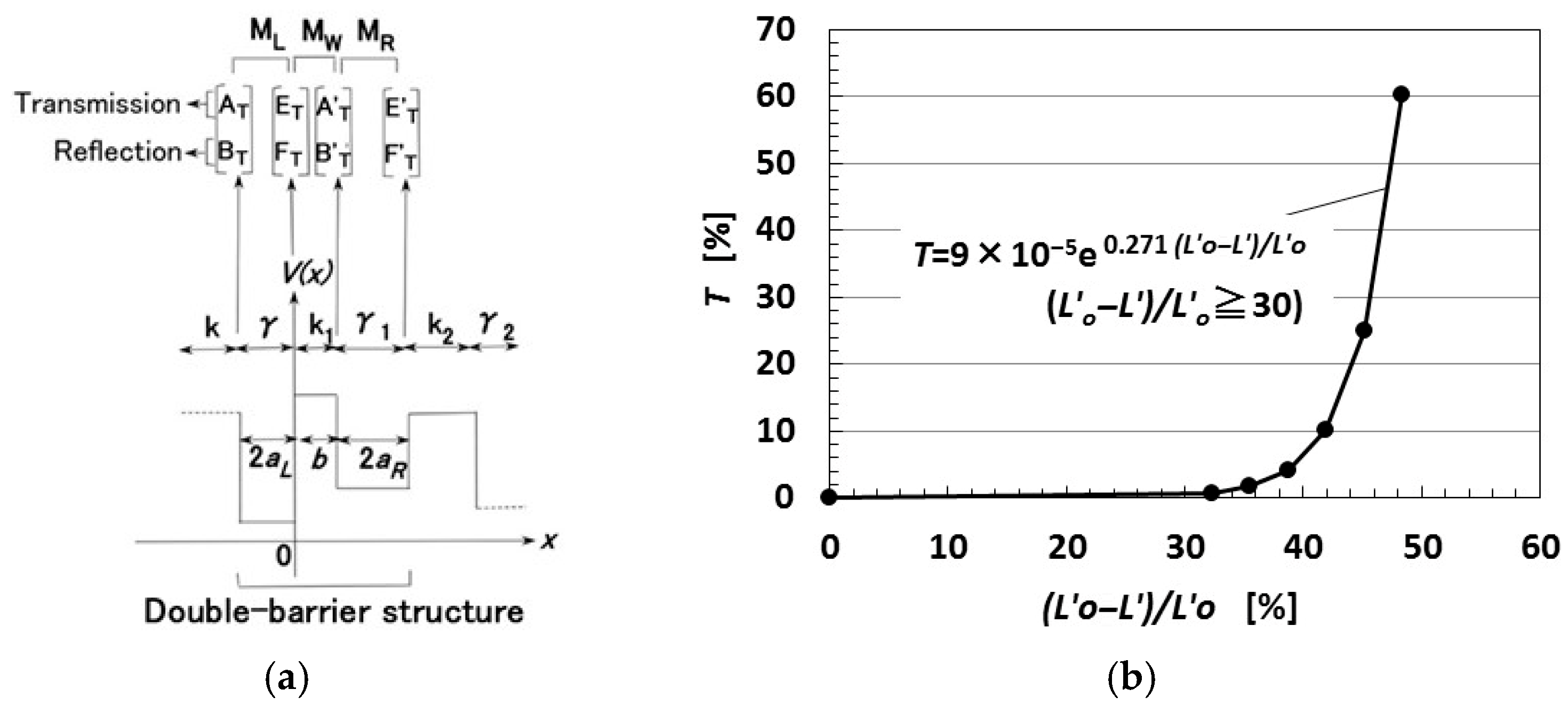
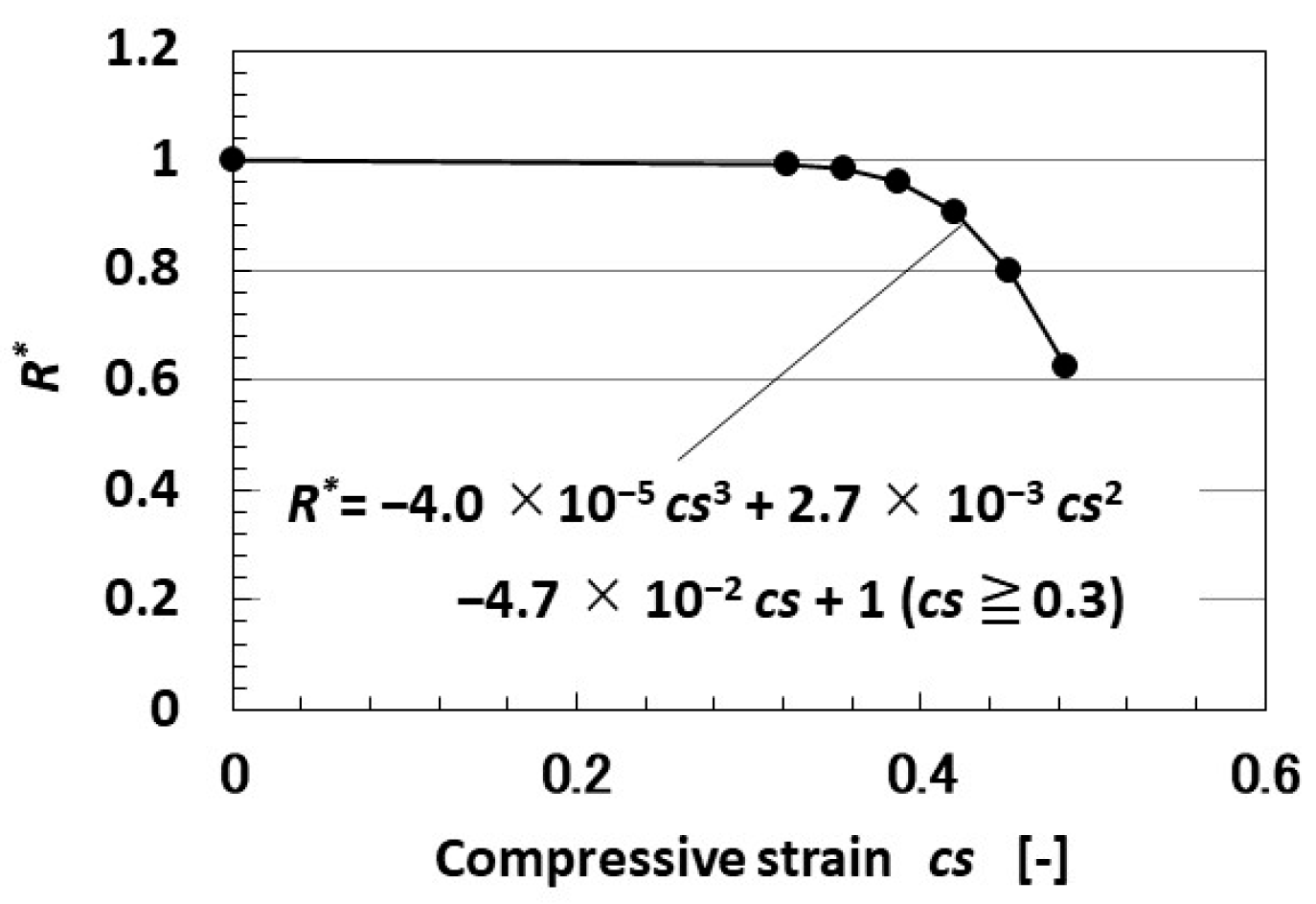
2.1. Theoretical Paradigm
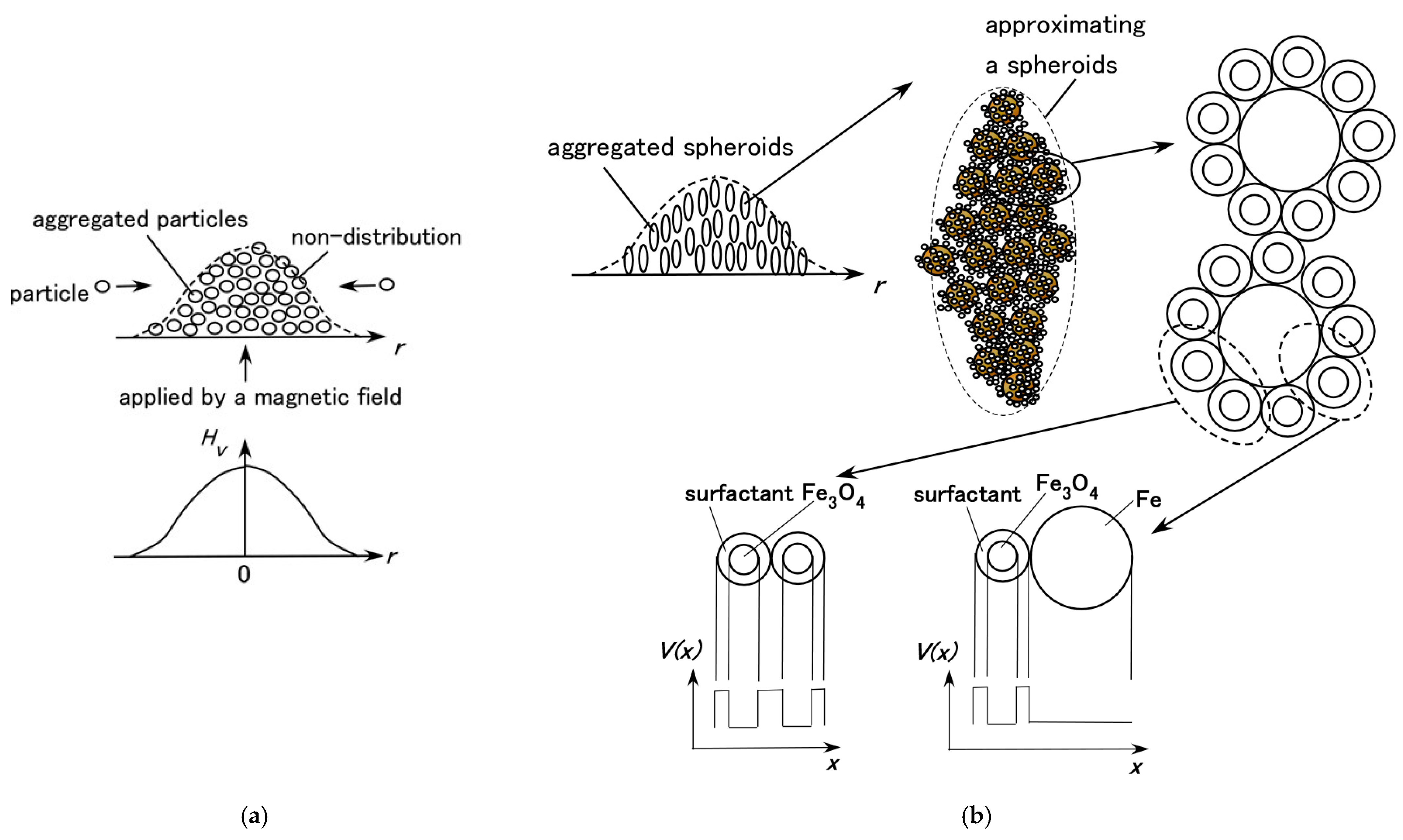
2.2. Phase 1
2.3. Phase 2
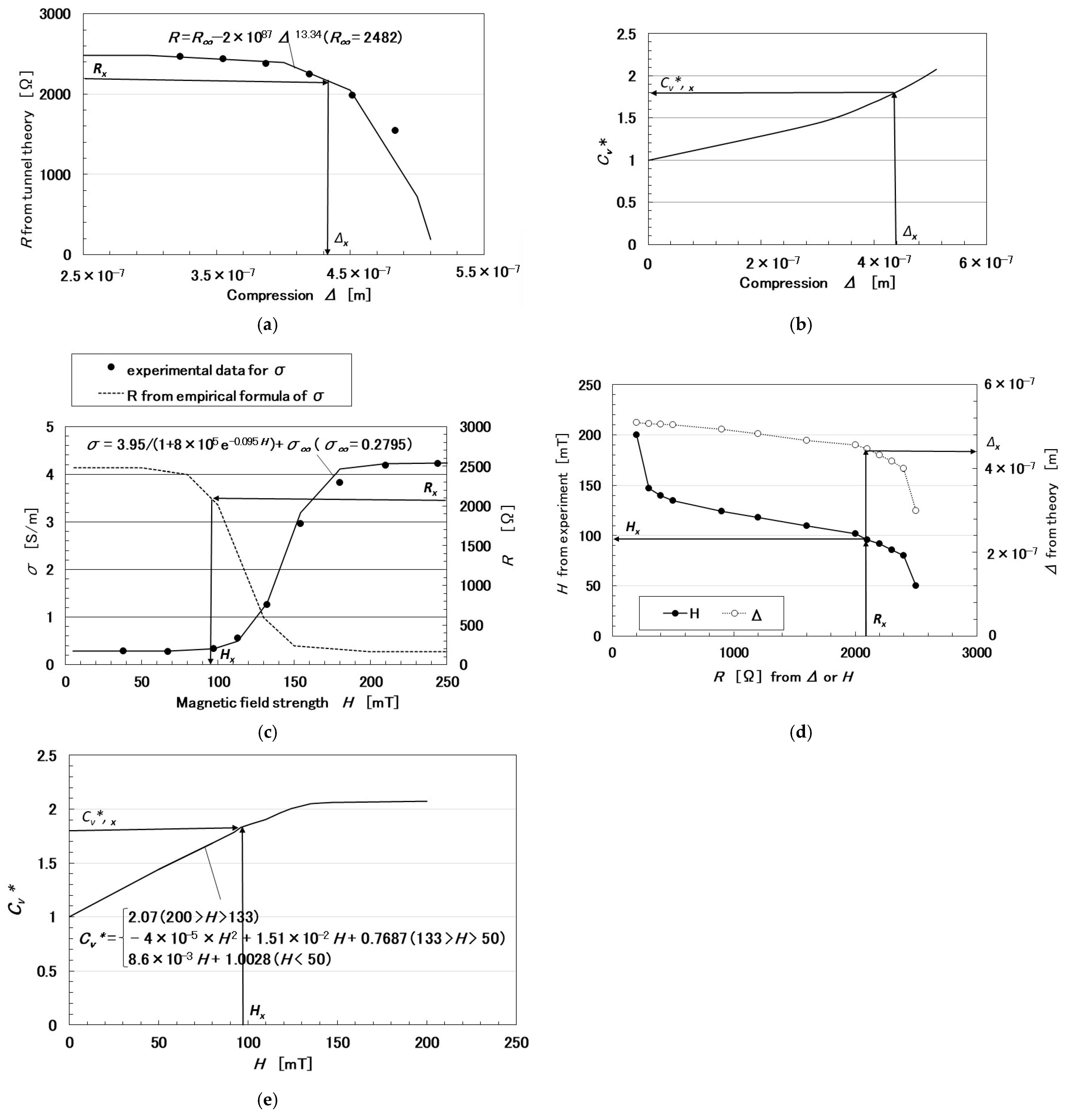
2.4. Phase 3
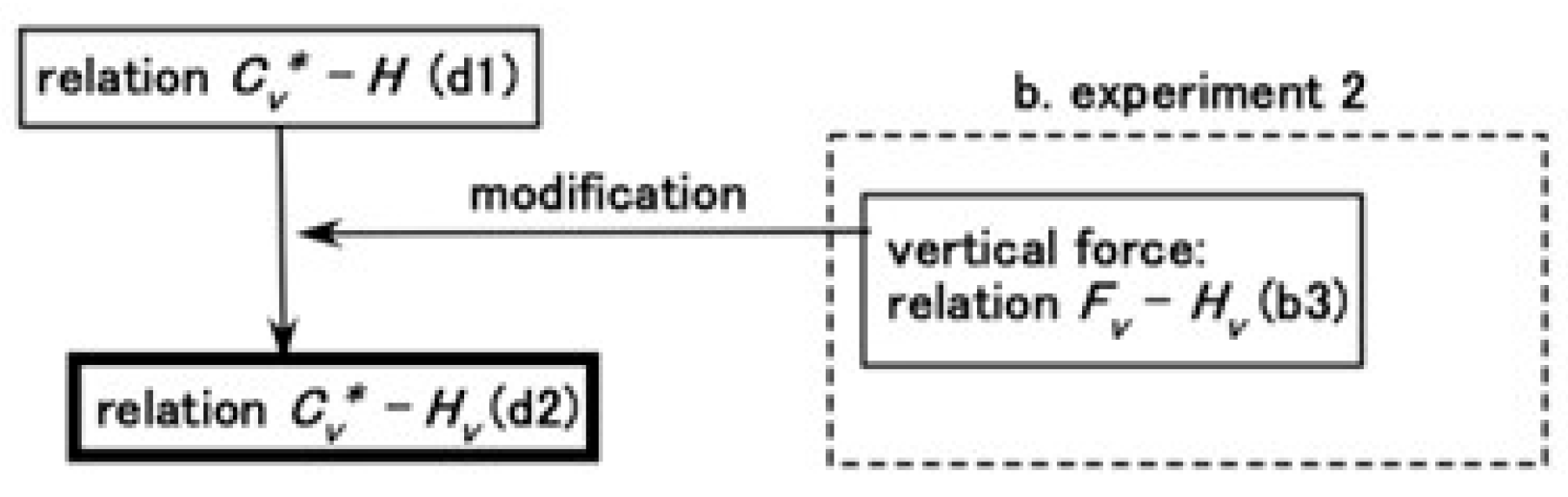
2.5. Phase 4
3. Experiment
3.1. Material
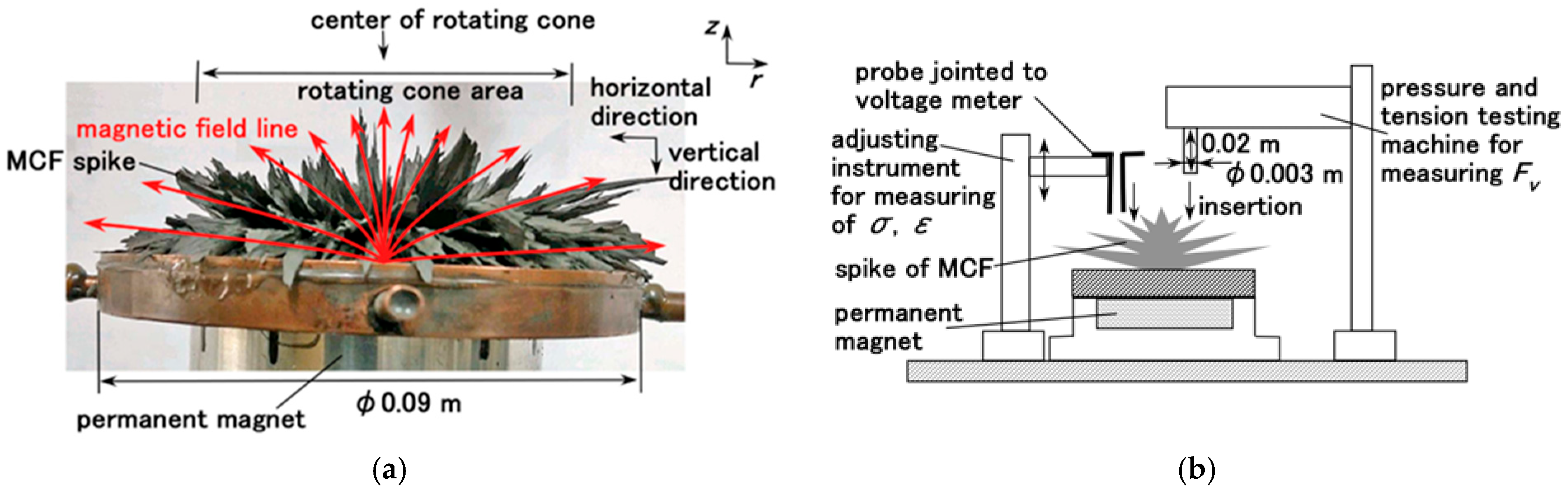
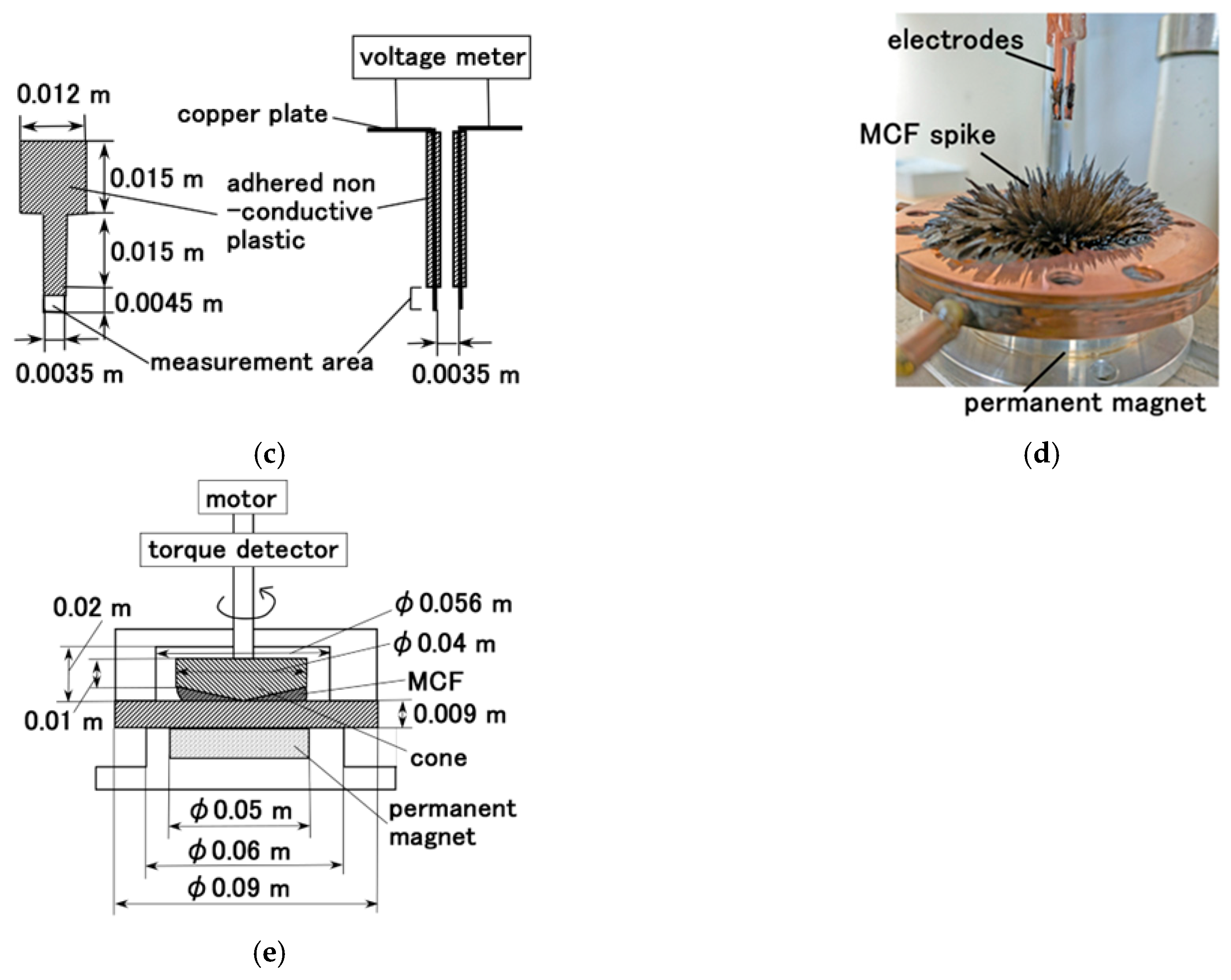
3.2. Measurement
4. Results and Discussion
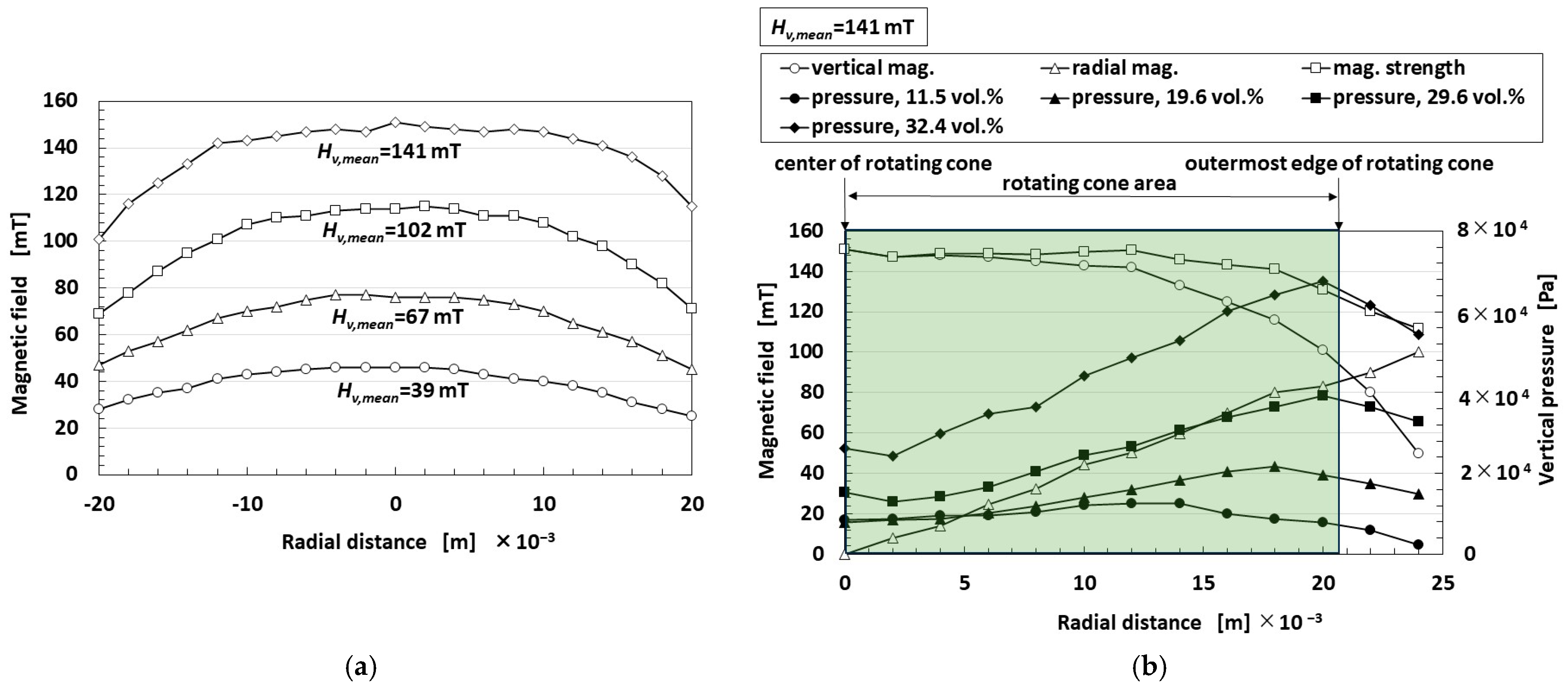
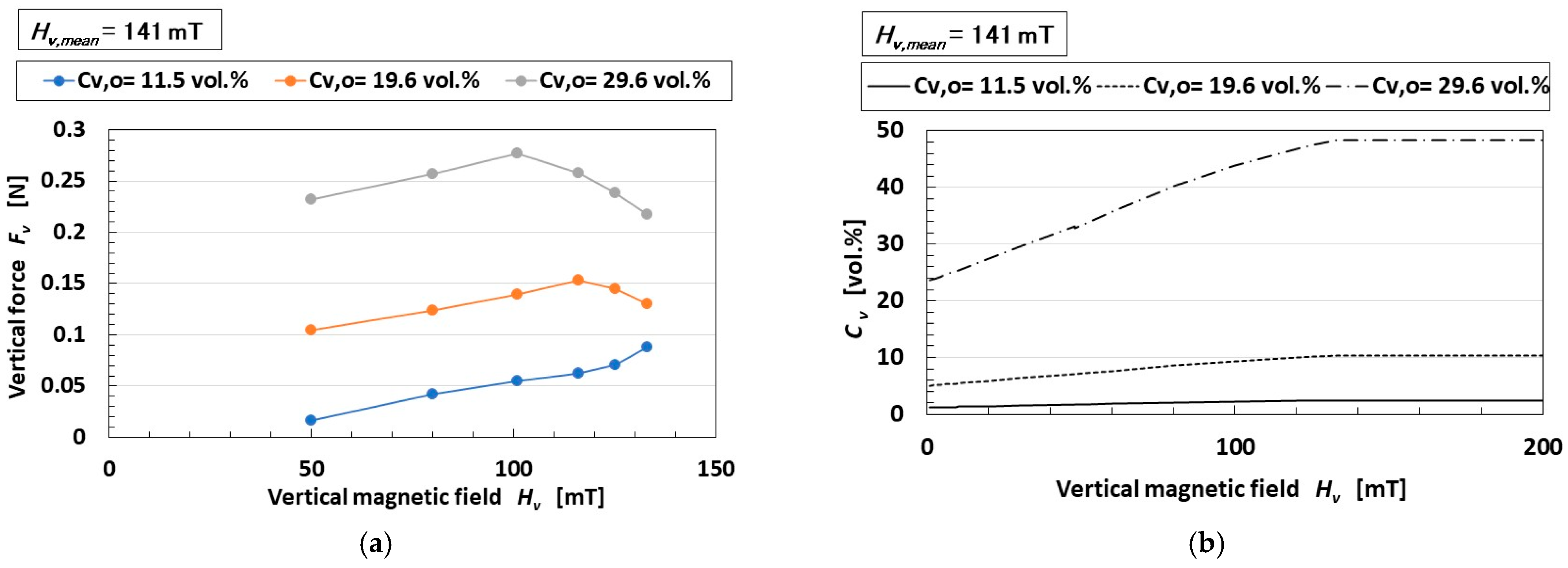
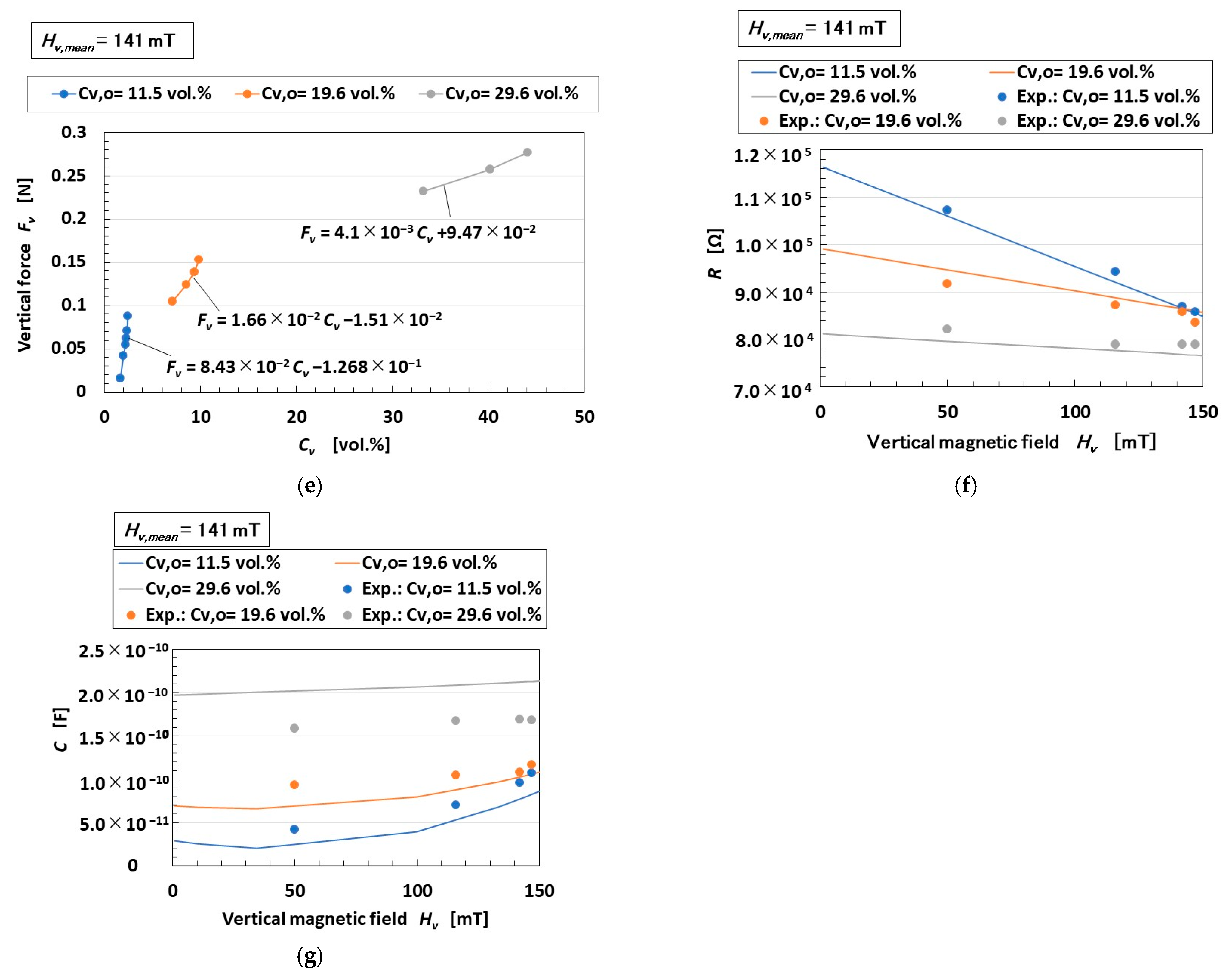
4.1. Vertical Force
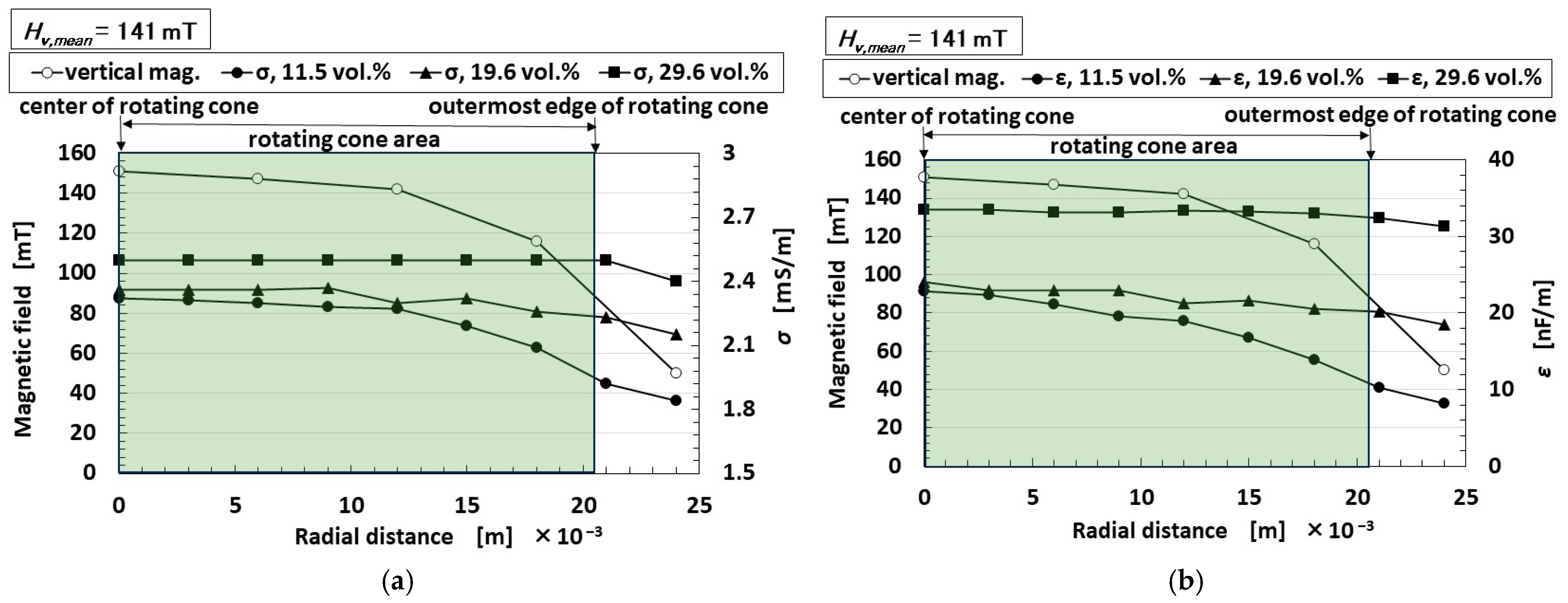
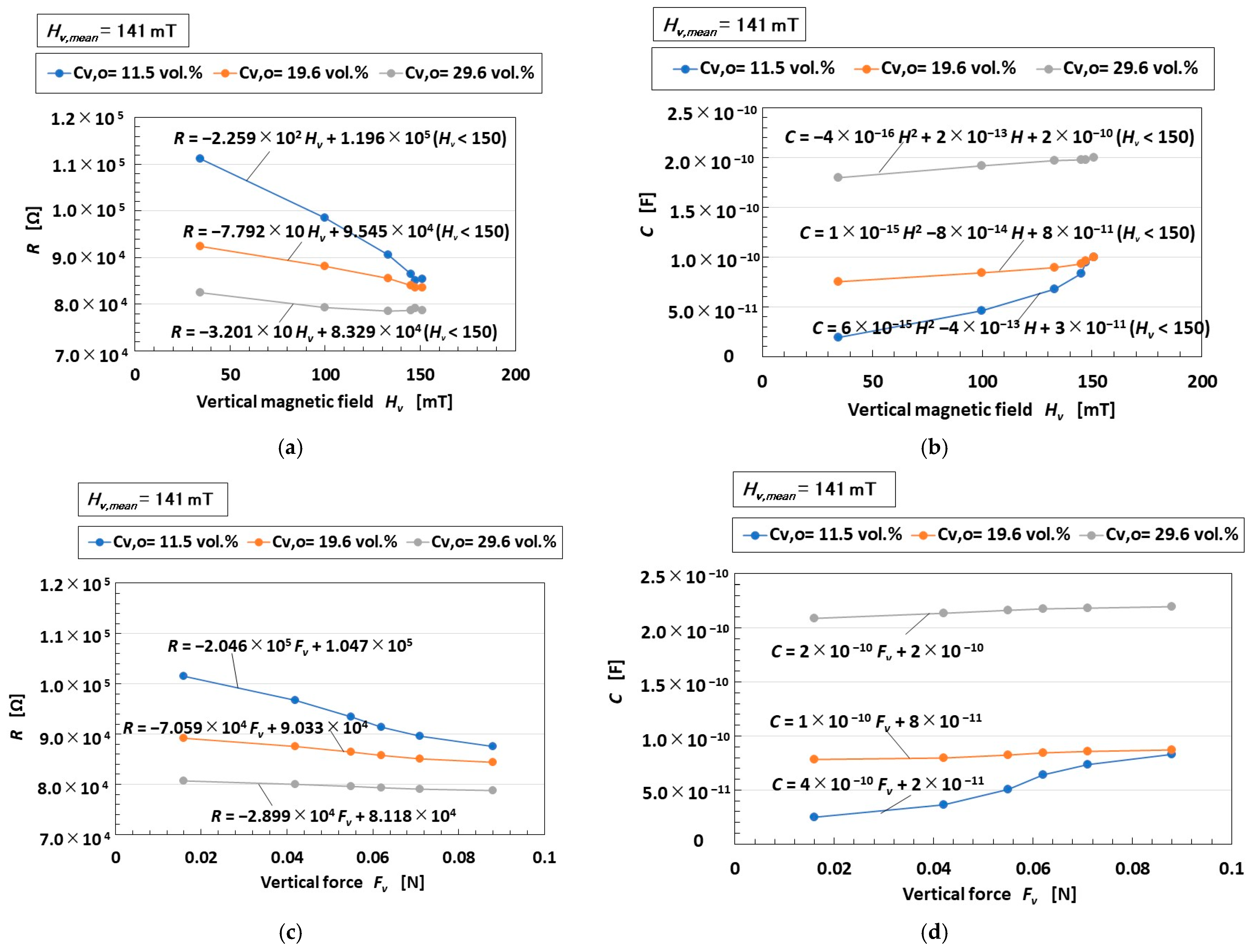
4.2. Electrical Properties
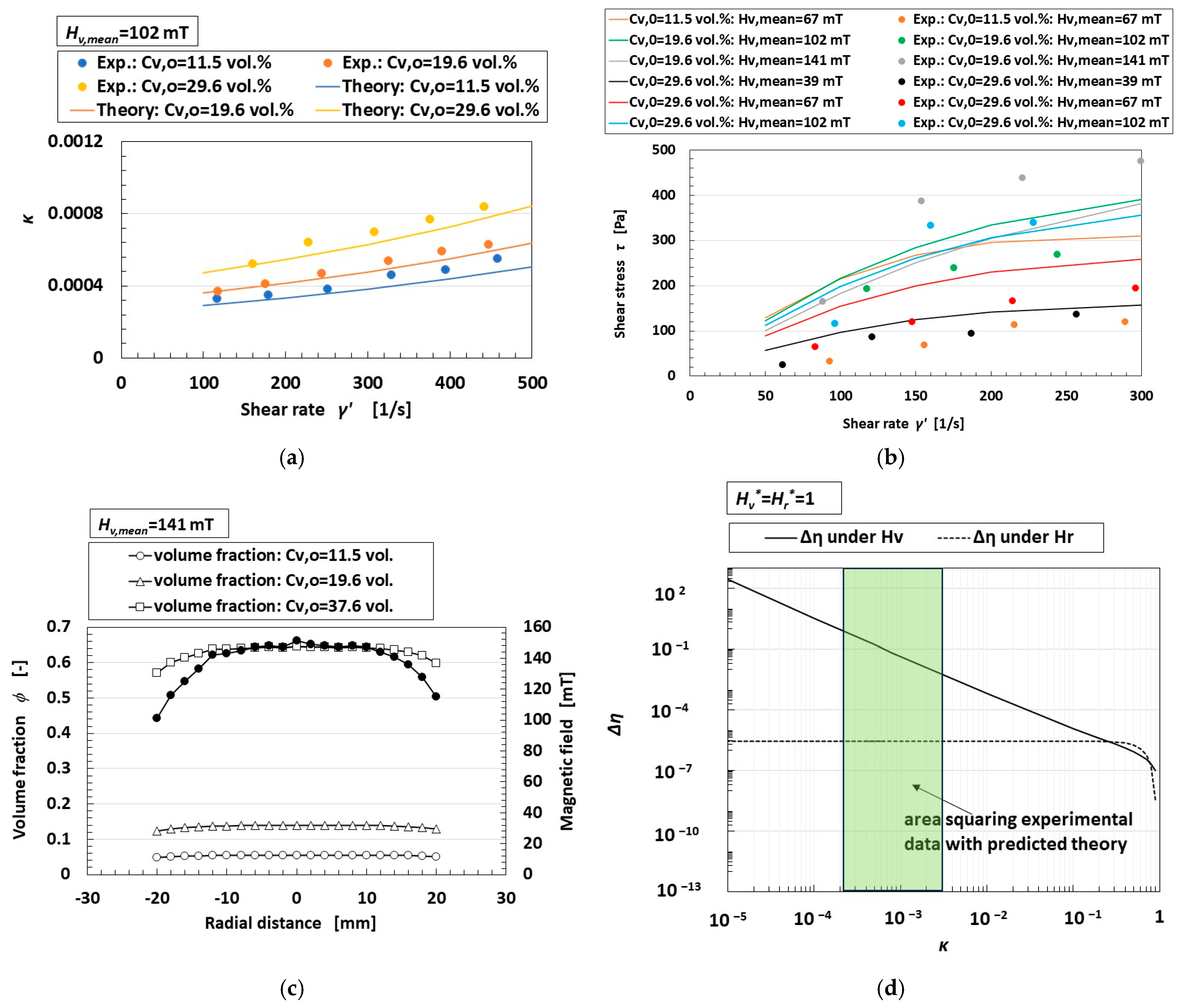
4.3. Shear Flow
5. Conclusions
Funding
Institutional Review Board Statement
Informed Consent Statement
Data Availability Statement
Acknowledgments
Conflicts of Interest
Nomenclature
| AT | arbitrary constant in Equation (A2) for transmission |
| A′T | arbitrary constant for transmission |
| a | thickness of metal particle [m] |
| a′ | minor axis of spheroid [m] |
| aL | metal region next to the rubber region on the left [-] |
| aR | metal region next to the rubber region on the right [-] |
| B | magnetic flux density [T] |
| BT | arbitrary constant in Equation (A2) for reflection |
| B′T | arbitrary constant for reflection |
| b | rubber region [-], thickness of rubber between metal particles [m] |
| b′ | major axis of spheroid [m] |
| C | capacitance [F] |
| CT | arbitrary constant in Equation (A3) |
| Cv | volume concentration [vol.%] |
| Cv* | dimensionless volume concentration [-] (=Cv/Cv,o) |
| Cv,o | initial volume concentration [vol.%] |
| c | molar concentration of ferrofluid [-] |
| cs | compressive strain [-] (=Δ/Lo′) |
| DT | arbitrary constant in Equation (A3) |
| ET | arbitrary constant for transmission |
| E′T | arbitrary constant in Equation (A2) for transmission |
| e | elementary charge [C] |
| eEo | applied voltage [eV] |
| FT | arbitrary constant for reflection |
| F′T | arbitrary constant in Equation (A2) for reflection |
| FV | vertical force of fluid [N] |
| g(κ) | constant based on rotary diffusion on spheroid [-] |
| H | magnetic field strength [mT] |
| Hmean | mean magnetic field strength [mT] |
| Hv | vertical magnetic field strength [mT] |
| h | scale factor of coordinate system [-] |
| ħ | Planck’s constant divided by 2π [Js] |
| I(ξ) | modified spherical Bessel functions |
| k, k1, k2 | parameter defined by Equation (A4) |
| kB | Boltzmann constant [J/K] |
| L′ | thickness of MCF rubber (HF rubber) [m] |
| Lo′ | initial thickness of MCF rubber (HF rubber) [m] |
| l | distance between particles in a unit volume [m] |
| ML, MW, MR, MT | matrix in Equation (A5) |
| MT11 | the (1, 1) element of MT |
| m | mass of electron [kg] |
| mB | magnetic moment of magnetic particle [Am2] |
| mL11, mL12 | coefficient in each entry (1, 1) and (1, 2) of ML |
| mR11, mR21 | coefficient in each entry (1, 1) and (2, 1) of MR |
| n | pairs of regions [-] |
| R | resistance [Ω] |
| R* | dimensionless resistance [-] (=R/R∞) |
| R∞ | representative resistance [Ω] |
| r | radial coordinate [m] |
| r′ | radius of particle [m] |
| T | transmitted probability [-] |
| TB | absolute temperature [K] |
| V | potential energy coordinate [J] |
| Vo | potential energy [J] |
| v | velocity [m/s] |
| x | coordinate [m] |
| x′ | distance between particles in a unit volume [m] |
| z | axial coordinate [m] |
| α | viscosity based on rotation [Pas] |
| Δ | compression [m] (=Lo′ -L′= l/2r′) |
| ΔL | =2(a + b) [m] |
| Δη | increasing viscosity [Pas] |
| Δχm | difference between molar magnetic susceptibility of ferrofluid and molar magnetic susceptibility of carrying fluid [-] |
| δij | Kronecker delta |
| ε | permittivity [F/m] |
| ε′ | energy of electron [J] |
| εijk | Eddington’s epsilon |
| ϕ | volume fraction [-] |
| γ, γ1, γ2 | parameter defined by Equation (A4) |
| γ ’ | shear rate [1/s] |
| γij | shear stress tensor [Pa] |
| η | viscosity without magnetic field [Pas] |
| ηs | viscosity of solvent [Pas] |
| ħ | Dirac’s constant (=h/2π) [Js] |
| κ | axis ratio of spheroid (=a′/b′) [-] |
| μ0 | vacuum permeability [H/m] |
| θL11, θL12 | coefficient in each entry (1, 1) and (1, 2) of ML |
| θR11, θR21 | coefficient in each entry (1, 1) and (2, 1) of MR |
| σ | electrical conductivity [S/m] |
| σ∞ | electrical conductivity at maximum magnetic field [S/m] |
| τ | shear stress [Pa] |
| Ων0 | rotation tensor |
| ω | rotational speed [1/s] |
| Y | wave function [-] |
| * | superscript meaning dimensionless parameter |
Appendix A
Appendix A.1
Appendix A.2
γ = γ1 = γ2 = …,
aL = aR = a
eE = eEo{(2n − 1)a + 2(n − 1)b}/L’ at region of γ before k
eE = eEo{2na + (2n − 1)b}/L’ at region of γ after k

Appendix A.3

Appendix A.4
Appendix A.5
Appendix A.6
References
- Pordanjani, A.H.; Aghakhani, S.; Afrand, M.; Sharifpur, M.; Meyer, J.P.; Xu, H.; Ali, H.M.; Karimi, N.; Cheraghian, G. Nanofluids: Physical phenomena, applications in thermal systems and the environment effects—A critical review. J. Clean. Prod. 2021, 320, 128573. [Google Scholar] [CrossRef]
- Parant, H.; Muller, G.; Mercier, T.L.; Tarascon, J.M.; Poulin, P.; Colin, A. Flowing suspensions of carbon black with high electronic conductivity for flow applications: Comparison between carbons black and exhibition of specific aggregation of carbon particles. Carbon 2017, 119, 10–20. [Google Scholar] [CrossRef]
- Schulz, S.C.; Bauhofer, W. Shear influenced network dynamics and electrical conductivity recovery in carbon nanotube/epoxy suspensions. Polymer 2010, 51, 5500–5505. [Google Scholar] [CrossRef]
- Fatima, S.; Ahamad, S.; Mishra, N.C.; Gaikwad, K.K. Polymer-based conductive ink: A comprehensive review. Polym. Bull. 2025, 52, 5275–5323. [Google Scholar] [CrossRef]
- Socoliuc, V.; Avdeev, M.V.; Kuncser, V.; Turcu, R.; Tombacz, E.; Vekas, L. Ferrofluids and bio-ferrofluids: Lokking back and stepping forward. Nanoscale 2022, 14, 4786. [Google Scholar] [CrossRef]
- Kurilov, A.D.; Gubareva, A.V.; Zubkov, S.A.; Alekhina, Y.A.; Simakin, A.V.; Chausov, D.N. Dynamics of aggregation process and electrophysical properties of transformer oil-based magnetic fluids. J. Mol. Liq. 2025, 433, 127848. [Google Scholar] [CrossRef]
- Medvedeva, I.; Uimin, M.; Yermakov, A.; Mysik, A.; Byzov, I.; Nabokova, T.; Gaviko, V.; Shchegoleva, N.; Zhakov, S.; Tsurin, V.; et al. Sedimentation of Fe3O4 nanosized magnetic particles in water solution enhanced in a gradient magnetic field. J. Nanopart Res. 2012, 14, 740. [Google Scholar] [CrossRef]
- Han, B.; Ming, Z.; Zhao, Y.; Wen, T.; Xie, M. Effect of mixed magnetic field on physical properties of atmospheric suspend fine particles. Heliyon 2022, 8, e11722. [Google Scholar] [CrossRef]
- Zhao, L.; Li, X.; Sun, W.; Ye, Z.; Huang, J.; Zhang, G.; Pan, J.; Cai, J. Experimental study on bag filtration enhanced by magnetic aggregation of fine particles from hot metal casting process. Powder Technol. 2018, 327, 255–266. [Google Scholar] [CrossRef]
- Gonella, V.C.; Hanser, F.; Vorwerk, J.; Odenbach, S.; Baumgarten, D. Influence of local particle concentration gradient forces on the flow-mediated mass transport in a numerical model of magnetic drug targeting. J. Magn. Magn. Mater. 2021, 525, 167490. [Google Scholar] [CrossRef]
- Chen, Y.; Yao, Y.; Yang, L.; Wei, S.; Xie, Y.; Li, D. The simulation of the magnetic particle deposition and the effect on the magnetic fluid sealing performance. J. Magn. Magn. Mater. 2023, 572, 170641. [Google Scholar] [CrossRef]
- Mousavi, N.S.S.; Khapli, S.D.; Kumar, S. Direct observations of field-induced assemblies in magnetite ferrofluids. J. Appl. Phys. 2015, 117, 103907. [Google Scholar] [CrossRef]
- Ivanov, A.O.; Solovyova, A.Y.; Elfimova, E.A. Chain formation in superparamagnetic nanosuspension. J. Mol. Liq. 2025, 436, 12824. [Google Scholar] [CrossRef]
- Paul, G.; Das, P.K.; Manna, I. Synthesis characterization and studies on magneto-viscous properties of magnetite dispersed water based nanofluids. J. Magn. Magn. Mater. 2016, 404, 29–39. [Google Scholar] [CrossRef]
- Zakinyan, A. Electrical conductivity of inverse magnetic fluid emulsion. Magnetohydrodynamics 2018, 54, 163–166. [Google Scholar] [CrossRef]
- Silva, J.; Mendez, S.L.; Simoes, R. Effect of cylindrical filler aggregation on the electrical conductivity of composites. Phys. Lett. A 2014, 378, 2985–2988. [Google Scholar] [CrossRef]
- Cametti, C.; Truzzolillo, D. Many facets of the polyelectrolyte and oppositely charged colloidal particle complexation: Counterion release and electrical conductivity behavior. J. Phys. Chem. B 2011, 115, 7248–7255. [Google Scholar] [CrossRef] [PubMed]
- Azimi, N.; Sharifzadeh, E. Improved aggregation/agglomeration-dependent percolation theory to predict nanoparticle-aided electrical conductivity in polymer nanocomposites: A combination of analytical strategy and artificial neural network. Comput. Mat. Sci. 2025, 246, 113424. [Google Scholar] [CrossRef]
- Sharifzadeh, E.; Ader, F. Aggregation/agglomeration dependent percolation threshold of spherical nanoparticles in electrically conductive polymer nanocomposites. Polym. Compos. 2025, 46, 2374–2389. [Google Scholar] [CrossRef]
- Licinio, P.; Teixeira, A.V.; Figueiredo, J.M.A. Non-linear dielectric response of ferrofluids under magnetic field. J. Magn. Magn. Mater. 2005, 289, 181–183. [Google Scholar] [CrossRef]
- Shimada, K. Effect of magnetic field and aggregation on electrical characteristics of magnetically responsive suspensions for novel hybrid liquid capacitor. Magnetochemistry 2019, 5, 38. [Google Scholar] [CrossRef]
- Shimada, K.; Miyazaki, T.; Shibayama, A.; Fujita, T. Extraction of magnetic clusters self-assembled by a magnetic field. Smart Mater. Struct. 2003, 12, 297–303. [Google Scholar] [CrossRef]
- Shimada, K. Quantum mechanical investigation of the electric and thermal characteristics of magnetic compound fluid as a semiconductor on metal combined with rubber. ISRN Nanotechnol. 2011, 2011, 259543. [Google Scholar] [CrossRef]
- Shimada, K. Elastic MCF rubber with photovoltaics and sensing on Hybrid Skin (H-Skin) for Artificial Skin by Utilizing Natural Rubber: Third report on electric charge and storage under tension and compression. Sensors 2018, 18, 1853. [Google Scholar] [CrossRef]
- Shimada, K. Investigation by quantum mechanics on electrical conductive characteristics under thermal conduction of MCF (magnetic compound fluid) rubber sensor with magnetic and electric conductivity. J. Jpn. Soc. Appl. Electromagn. Mech. 2011, 19, 414–423. [Google Scholar]
- Scheraga, H.A.; Edsall, J.T.; Gadd, J.O., Jr. Double refraction of flow: Numerical evaluation of extinction angle and birefringence as a function of velocity gradient. J. Chem. Phys. 1951, 19, 1101–1108. [Google Scholar] [CrossRef]
- Perrin, P.F. Mouvement brownien d’un ellipsoide (I). Dispersion dielectrique pour des molecules ellipsoidales. J. Phys. Radium 1934, 5, 497–511. (In French) [Google Scholar] [CrossRef]
- Tsebers, A.O. Flow of dipole fluids in external fields. Magn. Gidrodin. 1974, 4, 3–18. (In Russia) [Google Scholar]
- Nishida, H.; Yamamoto, H.; Shimada, K.; Ido, Y. Prediction of material removal depth distribution using modified Preston’s equation in MCF polishing by applying magnetic and electrical fields. J. Jpn. Soc. Precis. Eng. 2025, 91, 912–918. (In Japanese) [Google Scholar] [CrossRef]
- Preston, F.W. The theory and design of plate glass polishing machines. J. Soc. Glass Technol. 1927, 11, 214–256. [Google Scholar]
- Kuznetsov, N.M.; Kovaleva, V.V.; Belousov, S.I.; Chvalun, S.N. Electrorheological fluids: From historical retrospective to recent trends. Mater. Today Chem. 2022, 26, 101066. [Google Scholar] [CrossRef]
- Patel, J.; Soni, A.; Barai, D.P.; Bhanvase, B.A. A minireview on nanofluids for automotive applications: Current status and future perspectives. Appl. Therm. Eng. 2023, 219, 119428. [Google Scholar] [CrossRef]
- Bacha, H.B.; Ullah, N.; Hamid, A.; Shah, N.A. A comprehensive review on nanofluids: Synthesis, cutting-edge applications, and future prospects. Int. J. Thermofluids 2024, 22, 100595. [Google Scholar] [CrossRef]
- Jeldres, R.I.; Fawell, P.D.; Florio, B.J. Population balance modelling to describe the particle aggregation process: A review. Powder Technol. 2018, 326, 190–207. [Google Scholar] [CrossRef]
- Gambinossi, F.; Mylon, S.E.; Ferri, J.K. Aggregation kinetics and colloidal stability of functionalized nanoparticles. Adv. Colloid Interface Sci. 2015, 222, 332–349. [Google Scholar] [CrossRef] [PubMed]
- Genovese, D.B. Shear rheology of hard-sphere, dispersed, and aggregated suspensions, and filler-matrix composites. Adv. Colloid Interface Sci. 2012, 171–172, 1–16. [Google Scholar] [CrossRef] [PubMed]
- Shafiq, A.; Iqbal, M.A.; Sindhu, T.N.; Iqbal, H.; Iqbal, H. Synthesis, thermophysical behavior, and environmental implications of nanofluids: A comprehensive review. Results Eng. 2025, 28, 107763. [Google Scholar] [CrossRef]







| vol. % | HQ [g] | MF [g] | Water [g] |
|---|---|---|---|
| 11.5 | 40 | 20 | - |
| 19.6 | 46 | 20 | - |
| 29.6 | 20 | 20 | 10 |
| 32.2 | 23 | 20 | - |
| saturation magnetization [mT] | 175 | 27 | |
| particle [m × 10−6] (shape) | 1.2 (sphere) | 0.01 (sphere coated oleic acid) |
Disclaimer/Publisher’s Note: The statements, opinions and data contained in all publications are solely those of the individual author(s) and contributor(s) and not of MDPI and/or the editor(s). MDPI and/or the editor(s) disclaim responsibility for any injury to people or property resulting from any ideas, methods, instructions or products referred to in the content. |
© 2026 by the author. Licensee MDPI, Basel, Switzerland. This article is an open access article distributed under the terms and conditions of the Creative Commons Attribution (CC BY) license.
Share and Cite
Shimada, K. Predicting High-Concentration Aggregation in Magnetic Colloidal Suspensions Using Tunnel Theory. Electronics 2026, 15, 1966. https://doi.org/10.3390/electronics15091966
Shimada K. Predicting High-Concentration Aggregation in Magnetic Colloidal Suspensions Using Tunnel Theory. Electronics. 2026; 15(9):1966. https://doi.org/10.3390/electronics15091966
Chicago/Turabian StyleShimada, Kunio. 2026. "Predicting High-Concentration Aggregation in Magnetic Colloidal Suspensions Using Tunnel Theory" Electronics 15, no. 9: 1966. https://doi.org/10.3390/electronics15091966
APA StyleShimada, K. (2026). Predicting High-Concentration Aggregation in Magnetic Colloidal Suspensions Using Tunnel Theory. Electronics, 15(9), 1966. https://doi.org/10.3390/electronics15091966