Article

Frequency-Domain-Based Variable-Frequency Phase-Shift Modulation Strategy for Dual-Active-Bridge Converters

1
School of Electrical Engineering, North China University of Water Resources and Electric Power, Zhengzhou 450045, China
2
School of Electrical Engineering, Xuchang University, Xuchang 461000, China
*
Author to whom correspondence should be addressed.
Electronics 2026, 15(10), 1980; https://doi.org/10.3390/electronics15101980
Submission received: 5 January 2026 / Revised: 23 January 2026 / Accepted: 26 January 2026 / Published: 7 May 2026
(This article belongs to the Topic Power Electronics Converters, 2nd Edition)

Abstract

This paper proposes an optimized variable-frequency phase-shift modulation strategy based on frequency-domain analysis to address the issues of large reactive circulating current and low transmission efficiency in dual-active-bridge (DAB) converters under voltage mismatch conditions. First, a unified frequency-domain analytical model for extended phase-shift (EPS) modulation is established using Fourier series, which avoids the complexity introduced by mode division in traditional time-domain analysis. The Karush–Kuhn–Tucker (KKT) conditions are then utilized to analytically derive the optimal phase-shift angles that minimize the RMS current over the entire power range. Based on this, a control method is proposed to suppress the reactive circulating current by adjusting the switching frequency. Experimental results demonstrate that the proposed strategy significantly reduces the RMS current and reactive circulating current, thereby improving efficiency across a wide voltage gain and full load range, compared to traditional single phase-shift and extended phase-shift strategies.

1. Introduction

The dual-active-bridge (DAB) DC-DC converter has been widely adopted in emerging energy conversion systems such as electric vehicles [1], energy storage [2], microgrids [3], and photovoltaic power generation [4], owing to its advantages in high power density, bidirectional power flow capability, electrical isolation, and inherent soft-switching potential [5,6].
Phase-shift control is the most fundamental control method for DAB converters. This strategy regulates the power transfer characteristics by controlling the phase-shift ratio between the square-wave voltages generated by the two full bridges. Based on the number of control degrees of freedom, traditional phase-shift control is primarily categorized into single-phase-shift (SPS) and double-phase-shift (DPS) control. SPS control, characterized by its simplicity, has been extensively implemented in industrial DAB converters [7]. However, its limited control freedom results in suboptimal performance, particularly under severe input-to-output voltage mismatch conditions, leading to significant reactive circulating current and high current stress [8]. These issues can increase component costs, reduce converter efficiency, and even cause damage to power semiconductors. To overcome the drawbacks of SPS and enhance efficiency, the extended-phase-shift (EPS) control method was subsequently proposed by introducing an additional inner phase-shift ratio for the primary-side H-bridge. By increasing the control freedom, EPS expands the power regulation range, reducing reactive circulating current and current stress to some extent, and thereby significantly improving the converter’s efficiency [9].
In DAB converters, minimizing the root-mean-square (RMS) current is a direct optimization objective for reducing conduction losses and improving efficiency [10,11,12]. However, optimizing the RMS current within a time-domain model presents computational complexities [13]. Due to its simpler calculation, peak current is often used as a substitute metric for RMS current in optimization targets [14,15,16]. The primary advantage of the time-domain model lies in its ability to precisely derive current and power expressions through piecewise integration. However, this requires categorizing operation modes based on the transitions of the square-wave voltages [17,18,19,20], followed by piecewise integration for calculation. Reference [21] proposed an optimization strategy targeting minimized current stress for DAB converters under voltage mismatch, validating its effectiveness under light-load and high-conversion-ratio conditions. However, this strategy optimizes only a single performance metric and does not cover all operational modes, limiting its optimization scope. Reference [22] established a global current stress model encompassing eight operational modes and achieved performance improvement across all conditions via a piecewise optimization strategy. Nevertheless, this strategy necessitates frequent switching between different modes and involves complex calculations for phase-shift angles, resulting in significant implementation challenges for the control algorithm. Furthermore, the expression for RMS current in time-domain models typically involves multiple square and square-root operations, making it difficult to directly serve as the objective function for a control strategy. In contrast, frequency-domain models can directly provide Fourier expressions for current and power without the need for mode classification and extensive computation, offering greater generality [23,24].
Most of the aforementioned optimization schemes for DAB converters are confined to time-domain analysis focusing solely on current stress and pursue single-objective optimization. To address these limitations, this paper proposes an optimized DAB converter strategy based on frequency-domain analysis, termed the frequency-domain-based EPS (FEPS) control strategy. This strategy simultaneously optimizes the RMS current and adjusts the switching frequency to suppress reactive circulating current. Experimental comparisons are finally conducted to validate the correctness of the proposed control strategy.

2. Operating Principle

2.1. Topology Description

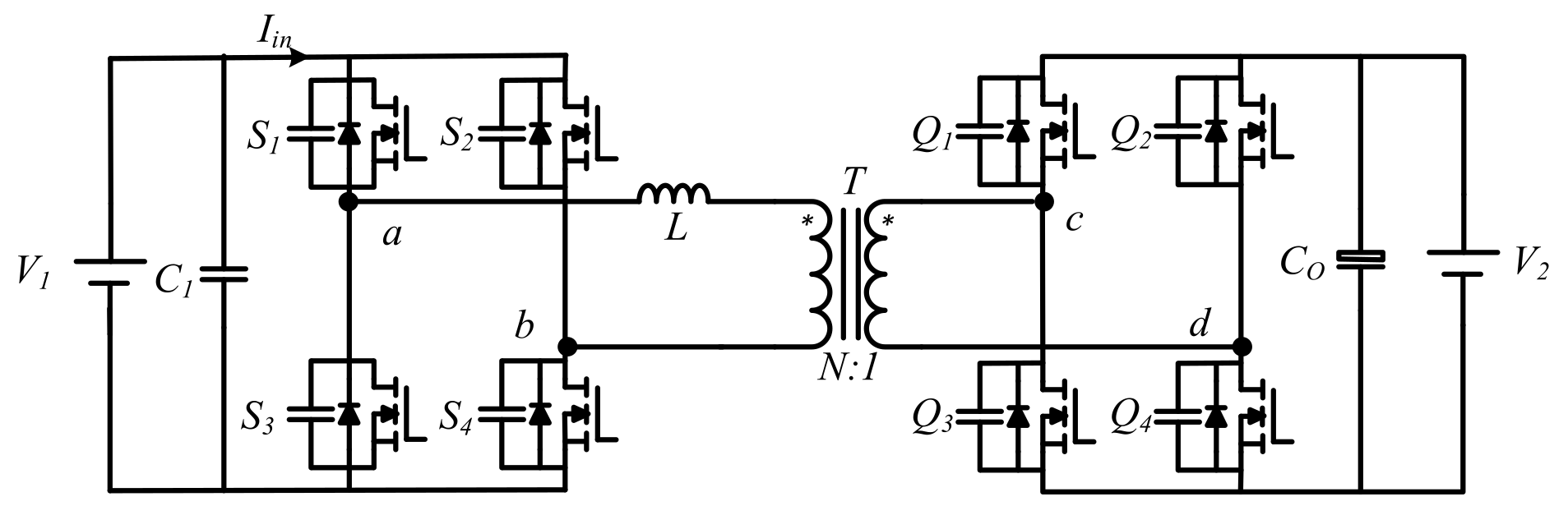
The topology of the DAB converter is illustrated in Figure 1. The primary-side and secondary-side H-bridges are connected via a high-frequency transformer T (with a turns ratio of N) and an auxiliary inductor L. V1 and V2 represent the DC input and output voltages of the converter, respectively. C1 and C0 denote the input and output capacitors. The switches S1S4 constitute the primary-side circuit of the DAB converter, while the switches Q1Q4 form the secondary-side circuit. In the analysis presented in this paper, all switching devices are considered ideal. Each H-bridge operates with a 50% duty cycle.
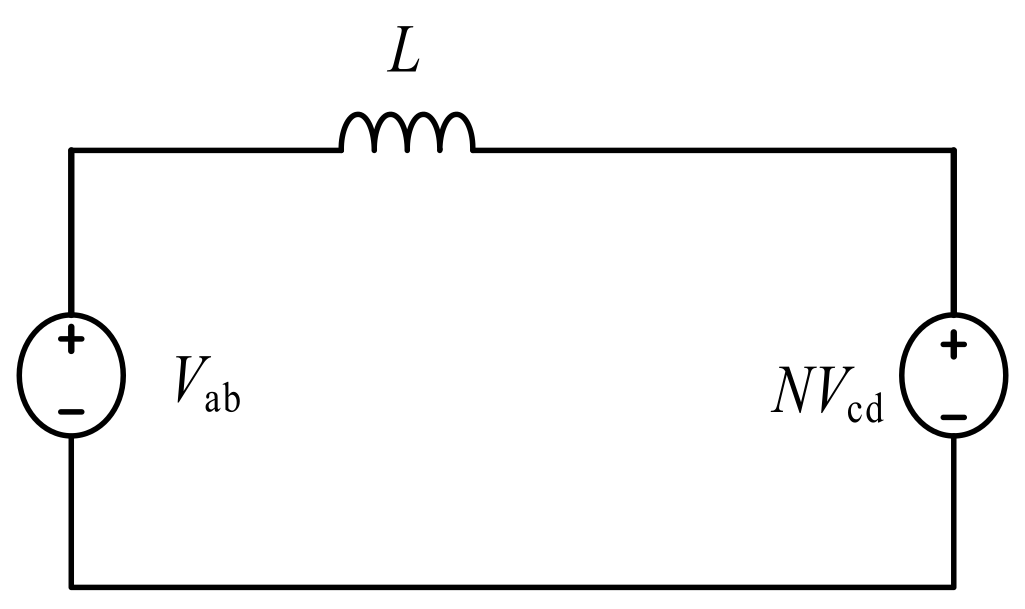
To facilitate the analysis of the converter’s operating principle, an equivalent model of the DAB converter is established, as shown in Figure 2. The high-frequency transformer primary side generates a square-wave voltage Vab with an amplitude of V1, while the secondary side circuit generates a square-wave voltage Vcd with an amplitude of NV2. The voltage conversion ratio of the converter is defined as K = V1/nV2. The converter operates in step-down mode when K > 1 and in step-up mode when K < 1. Due to its inherent characteristics of bidirectional power flow and structural symmetry, the forward power transfer characteristic in the step-down mode is equivalent to the reverse power transfer characteristic in the step-up mode, while the forward power transfer characteristic in the step-up mode is equivalent to the reverse power transfer characteristic in the step-down mode. Based on this equivalence, this paper selects the case of forward power transfer in the step-down mode (K > 1) as the focus of study.

2.2. Frequency-Domain Analysis Model and Current Optimization for the EPS Modulation Strategy in DAB Converters

Frequency-Domain Analysis of Extended Phase-Shift Modulation

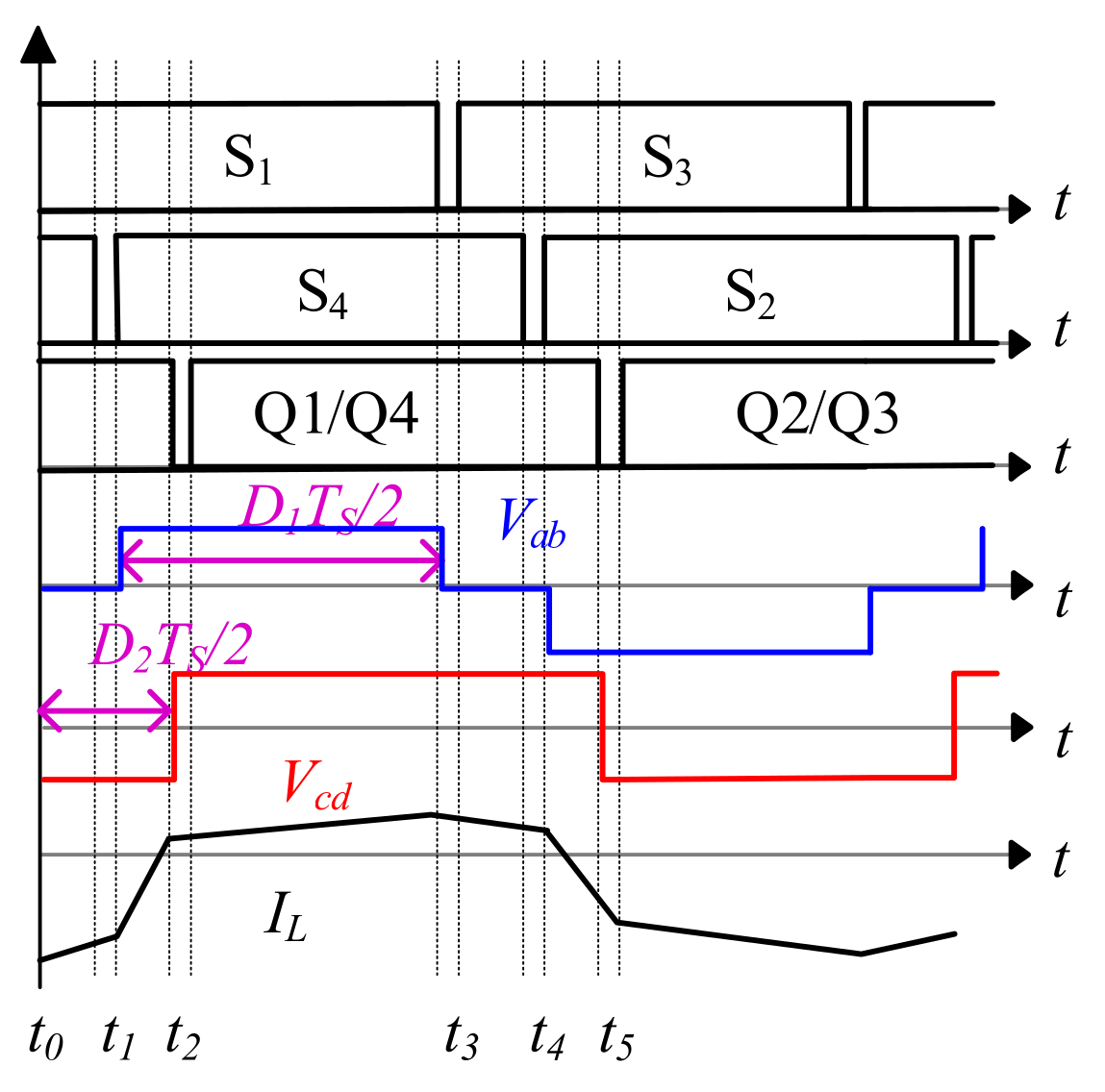
The extended phase-shift (EPS) modulation strategy features two distinct combinations of internal and external phase-shift ratios, each yielding different power expressions. This section elaborates on the external mode. The phase-shift ratio by which switch S1 leads switch S4 is defined as D1, and the phase-shift ratio by which switch S1 leads switch Q1 is defined as D2, as illustrated in Figure 3. For the analysis in this paper, the dead time was neglected.
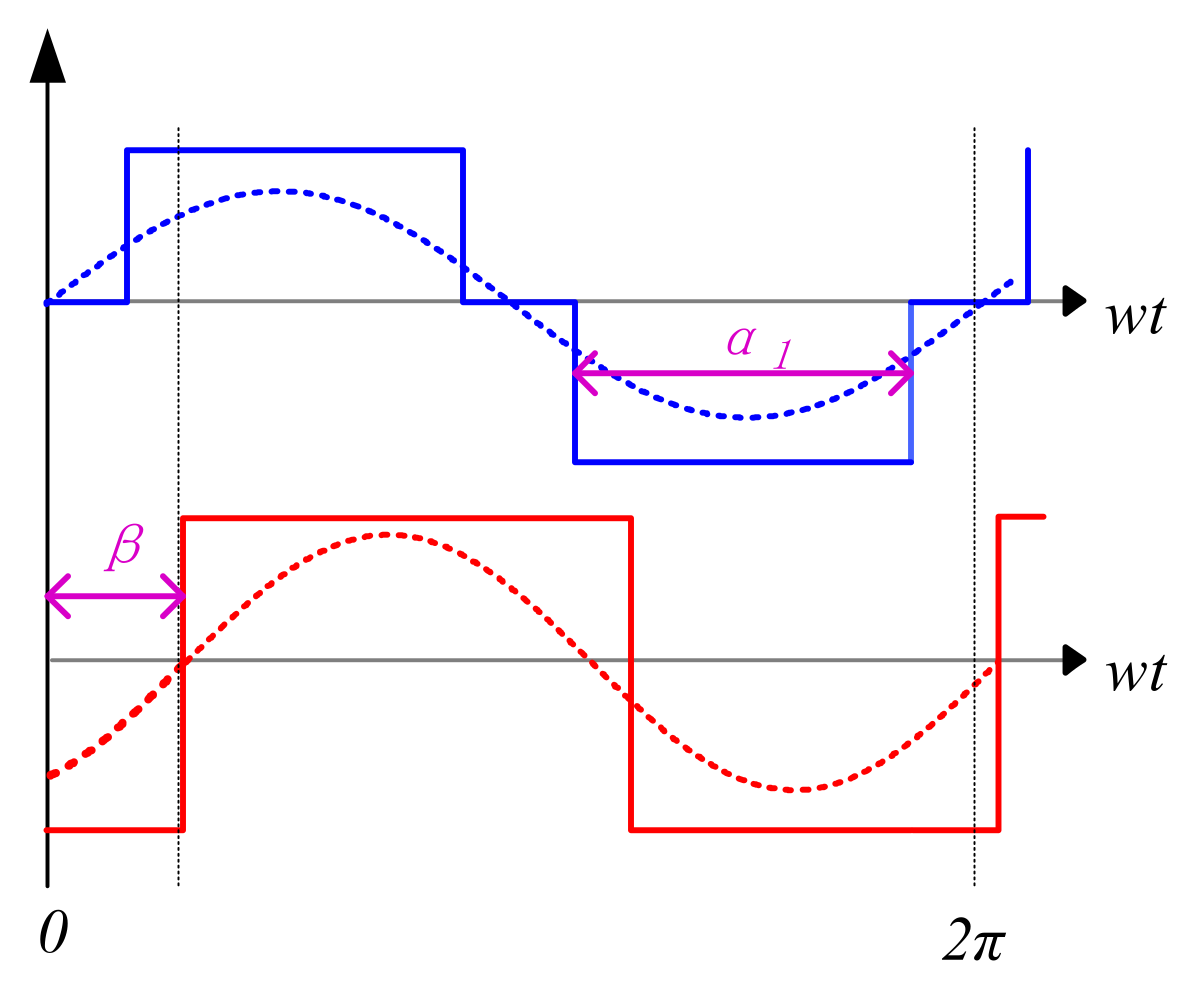
Based on the equivalent circuit model of the converter and Figure 3, the frequency-domain analytical model of the port voltages was obtained, as illustrated in Figure 4. The square-wave voltage waveforms can be expressed via Fourier series expansion as:
V a b ( t ) = n = 1 , 3 , 5 , 4 V 1 n π sin n α 1 2 sin ( n ω t ) N V c d ( t ) = n = 1 , 3 , 5 , 4 N V 2 n π sin ( n ( ω t β ) )
The frequency-domain phase angles can be expressed in terms of the time-domain phase-shift angles as:
α 1 = D 1 π , β = D 2 1 D 1 2 π
The voltage across the leakage inductor is given by:
V L ( t ) = V a b ( t ) N V c d ( t ) = n = 1 , 3 , 5 , 4 N V 2 A 2 + B 2 n π sin n ω t arctan B A
where
A = cos n β k sin n α 1 2 , B = sin n β .
From the inductor voltage, the following expression can be derived:
I L rms = n = 1 , 3 , 5 , 2 N V 2 A 2 + B 2 n 2 ω π L 2 .
P = n = 1 , 3 , 5 , P n = n = 1 , 3 , 5 , 8 N V 1 V 2 n 3 π 2 ω L sin n α 1 2 sin ( n β ) .
where the per-unit values of the transmitted power P n and the RMS inductor current I L r m s are
p = P P N = n = 1 , 3 , 5 , 32 n 3 π 3 sin n α 1 2 sin ( n β ) i L rms = I L rms I L N = n = 1 , 3 , 5 , 4 2 A 2 + B 2 n 2 π 2 2
where the base values for power and inductor current are P N = N V 1 V 2 / 8 f s L and I L N = N V 2 / 8 f s L , respectively.

2.3. Optimal Modulation for Minimizing RMS Inductor Current

As indicated by Equation (7), the expressions for power and RMS current contain high-order harmonics, making direct analysis extremely complex. Therefore, only the fundamental component (n = 1) is considered here. Utilizing the fundamental harmonic approximation, these can be expressed as:
p 1 = 32 π 3 sin α 1 2 sin ( β ) i L rms 1 = 4 2 A 2 + B 2 π 2 .
Based on Equation (8), i L rms 1 can be further expressed as:
i L rms 1 = 4 2 π 2 cos ( β ) K sin α 1 2 2 + sin 2 ( β ) .
For DAB converters, conduction loss is a major factor determining efficiency, which is directly influenced by the RMS inductor current. Consequently, this paper focuses on optimizing the RMS current. The Karush–Kuhn–Tucker (KKT) method was employed to solve for the minimum RMS inductor current. The constraints can be formulated as:
min i L r m s 1 ( α 1 , β ) p 1 ( α 1 , β ) p * = 0 g i ( α 1 , β ) < 0 , i = 1 , 2 , , m
By solving the above system of equations, the optimal solution can be obtained.
α 1 = 2 arcsin 1 K 2 + p 1 l 2 , 0 p 1 l K tan arccos 1 K π , l K tan arccos 1 K p 1 l β = arctan K p 1 l ,           0 p 1 l k tan arccos 1 K arcsin p 1 l ,                 l K tan arccos 1 K p 1 l l = 32 / π 3

3. Reactive Circulating Current and Variable-Frequency Phase-Shift Modulation Strategy Based on the Frequency-Domain Model

3.1. Reactive Circulating Current Model for the DAB Converter

The reactive circulating current is another critical factor affecting the efficiency of DAB converters. Within the frequency-domain analytical model, the reactive power can be categorized into two types: (1) reactive power generated by voltage and current components of the same frequency; (2) reactive power generated by voltage and current components of different frequencies. The first type of reactive power in a DAB converter can be expressed as:
Q n = 1 , 3 , 5 = 8 V 1 A 2 + B 2 n 3 π 2 w 0 L sin n α 1 2 sin arctan A B = 8 V 1 sin n α 1 2 n 3 π 2 w 0 L V 1 sin n α 1 2 V 2 sin n α 2 2 cos ( n β ) .
The second type of reactive power in a DAB converter can be expressed as:
Q m n = 8 V 1 sin ( n α 1 2 ) m n 2 π 2 w 0 L A 2 + B 2 .
The apparent power of the DAB converter can be represented as:
S = U h 1 rms I rms = n = 1 , 3 , 5 , P n 2 + n = 1 , 3 , 5 , Q n 2 + m n = 1 , 3 , 5 , Q m n 2 .
where we define the High-Frequency-Link Power Factor (HFL-PF, λ) for the DAB converter to accurately characterize its circulating current behavior. For a given constant active power, a larger circulating current corresponds to a smaller HFL-PF, and conversely, a smaller circulating current results in a larger power factor.
λ = P S = P U ab I = V 2 sin ( β ) [ V 1 sin ( α 1 2 ) V 2 cos ( β ) ] 2 + [ V 2 sin ( β ) ] 2 .

3.2. Comparison Between Frequency-Domain and Time-Domain Analysis

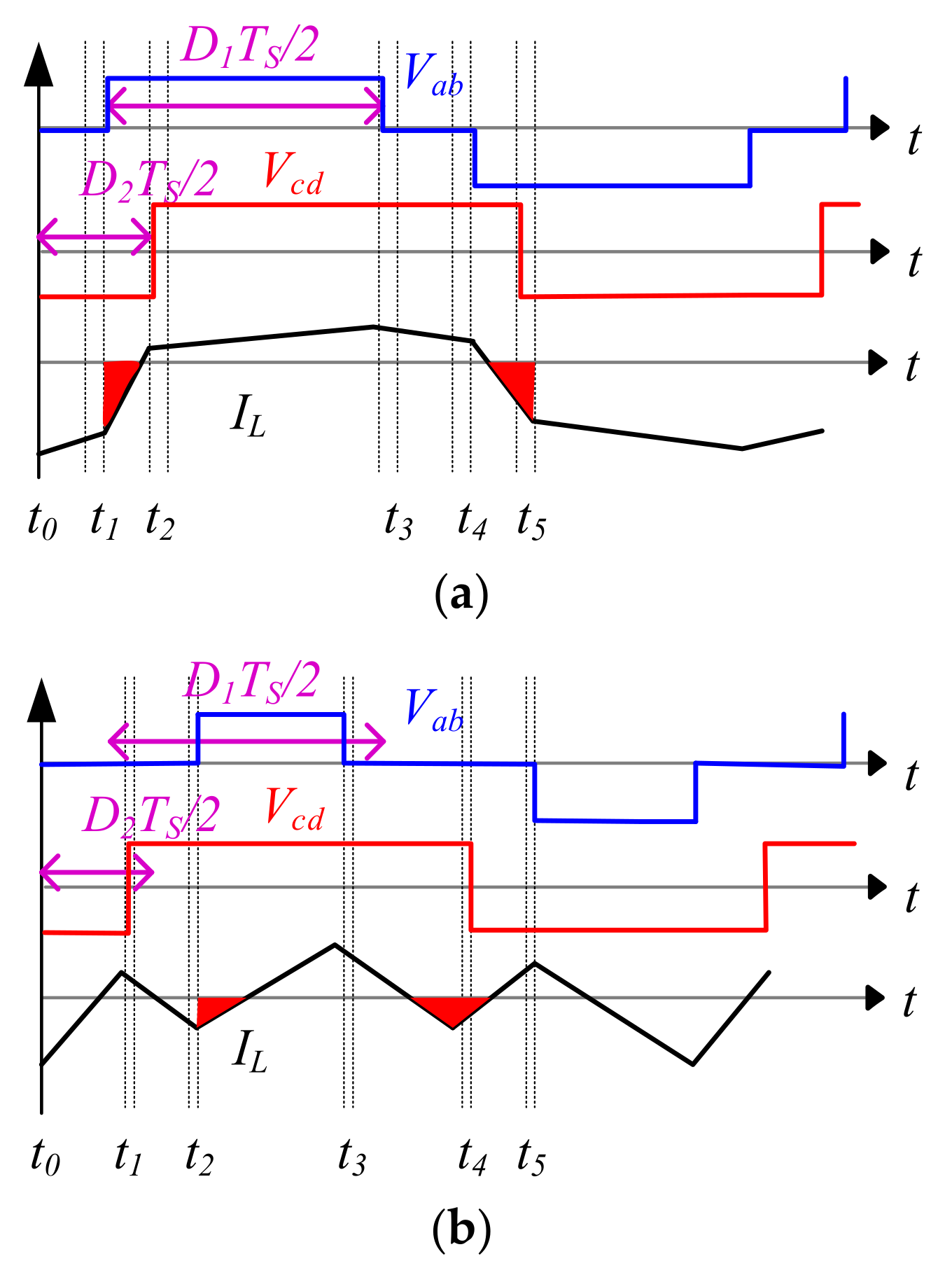
In time-domain analysis, the operating modes must be categorized as internal or external based on the relative positions of the port voltages Vab and NVcd. The optimization process must be performed separately for each mode to obtain the optimal solution. As shown in Figure 5, these two modes possess distinct power expressions in the time domain. Correspondingly, deriving the expression for the reactive circulating current requires performing time-domain integration over the reactive power intervals for both modes, represented by the red shaded areas in Figure 5. Optimizing for reactive power thus necessitates separate case-by-case analysis for these two categories, along with identifying the power boundaries between the modes to establish a unified optimization path.
The optimization method proposed in this paper utilizes the frequency-domain analytical model. It transforms the phase-shift angles into fundamental harmonic phase differences and employs Fourier decomposition to obtain unified frequency-domain expressions for current and reactive circulating power, eliminating the need to distinguish between internal and external modes. Using the reactive power factor λ to characterize the magnitude of the circulating power also avoids the requirement for piecewise integration and summation of the reactive power. Furthermore, the variable-frequency control strategy proposed based on this framework does not rely on the voltage and hardware parameters needed in time-domain expressions. By incorporating both the phase-shift angles and frequency adjustment into the unified framework of frequency-domain phase angles, the optimization of both inductor current and reactive circulating power can be achieved using a single closed-loop control.

3.3. Variable-Frequency Phase-Shift Modulation Strategy

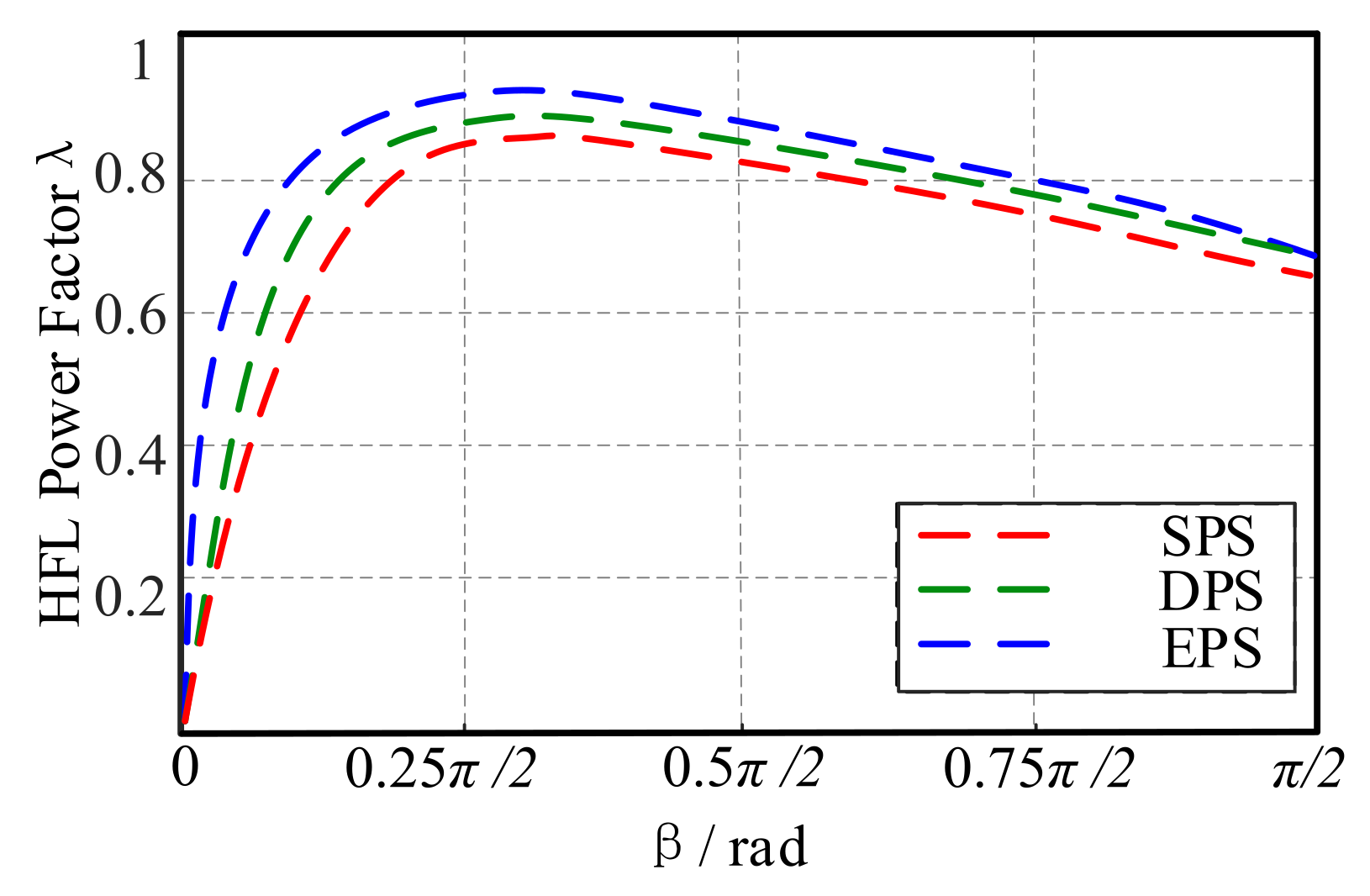
As shown in Figure 6, when β is smaller, the proportion of reactive power is higher. As β gradually increases, the reactive power factor also increases. However, when β exceeds a certain value, the power factor begins to decline slowly. Therefore, avoiding operation where β is too small can effectively reduce the circulating power. On the other hand, the value of β influences the converter’s output power. Under light-load conditions, the β value required for power control decreases, leading to a larger circulating power. To ensure a relatively large β value even under light loads and thereby regulate power, it is necessary to increase the converter’s switching frequency. In single-phase-shift (SPS) modulation, the external phase-shift angle β controls the transmitted power, with no additional control variable available to reduce the reactive circulating current. When the EPS modulation strategy is adopted, an internal phase-shift angle is introduced to further decrease the circulating current and improve efficiency. In the previous section, the two phase-shift angles in EPS modulation were used to optimize the RMS inductor current. Without increasing control complexity, adjusting the switching frequency can also contribute to reducing the reactive circulating current to a certain extent.
The expressions for the phase-shift angles derived in Section 2.2 incorporate the active power P and the voltage gain K. Substituting these into the expression for the reactive power factor results in an extremely complex formula. To address this, the two phase-shift angles can be normalized into a single variable.
From the optimization results obtained earlier, it is evident that the power range consists of two consecutive stages. By analyzing the derivatives of the two expressions for β, it can be concluded that both are monotonic and continuous functions. This property facilitates the implementation of a segmented control strategy.
β = d arctan K p 1 l d p 1 > 0 , 0 p 1 l k tan arccos 1 K d arcsin p 1 l d p 1 > 0 , l K tan arccos 1 K p 1 l
Therefore, there exists a power boundary value at which the two segments of β are equal. Consequently, the power P can be expressed as a function of β, yielding:
p 1 = l tan β K , 0 β arccos 1 K l sin β , arccos 1 K β π 2 .
Substituting Equation (17) into Equation (11) yields:
α 1 = 2 arcsin 1 K cos ( β ) , 0 β arccos 1 K π , arccos 1 K β π 2 .
Substituting Equation (18) into Equation (15) results in a function solely dependent on β:
λ = V 2 sin ( β ) [ V 2 ( 1 / cos ( β ) ) V 2 cos ( β ) ] 2 + [ V 2 sin ( β ) ] 2 .
Based on the above, a variable-frequency phase-shift control strategy is proposed, which links the switching frequency to β. The term (1/cos(β) − cos(β)) in the denominator of Equation (19) is the key factor influencing the reactive power factor. As shown in Equation (20), fn is a constant switching frequency reference value, and a gain coefficient γ is introduced to adapt to different power ranges.
f s = f n γ / ( ( 1 / cos ( β ) ) cos ( β ) )
Based on the foregoing analysis, both the phase-shift angles and the switching frequency of the converter are related to the parameter β, which can be directly computed. Moreover, β is monotonically related to the transmitted power P, so each power level corresponds uniquely to a specific β value. In other words, to achieve a desired power transfer, one only needs to obtain the corresponding β, after which α1 and fs can be calculated using Equations (18) and (20).
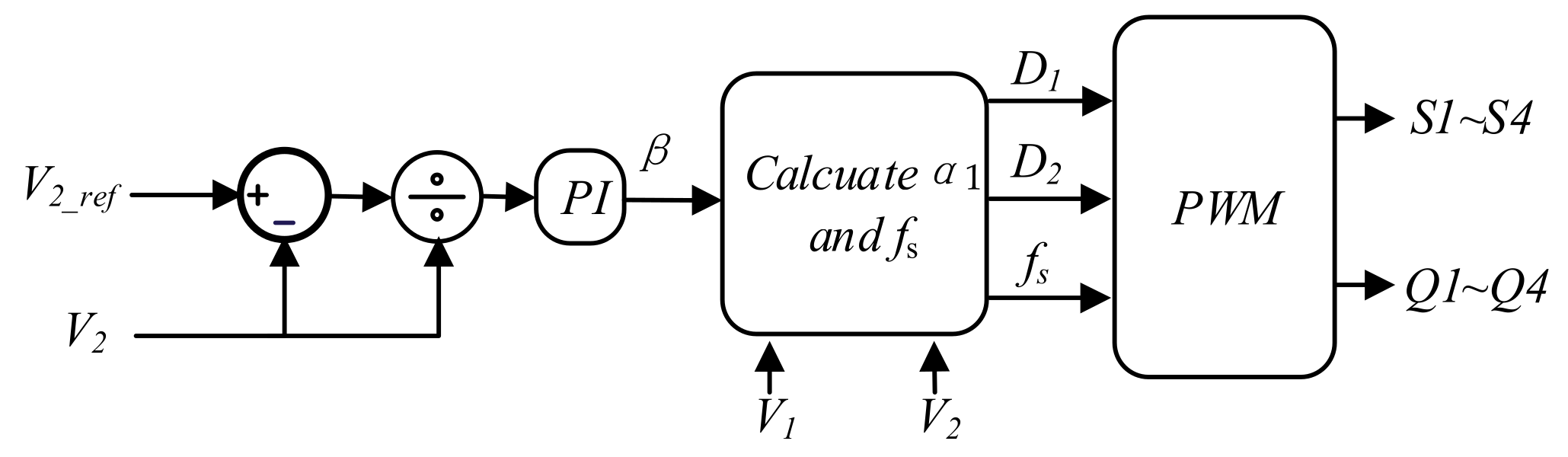
According to the above analysis, Figure 7 shows the closed-loop control block diagram of the DAB converter under the frequency-domain-based variable-frequency phase-shift modulation strategy, aiming to achieve both RMS inductor current optimization and reactive circulating current suppression. Taking the output voltage reference as the benchmark, the converter’s output voltage is first sampled and compared with the reference. The normalized error (the difference divided by the output voltage) is fed into a PI controller, which outputs the phase angle β. According to the value of β, the optimal inner phase-shift angle α1 and the switching frequency fs are computed via Equations (18) and (20). As indicated by Equation (16), β is monotonically related to the transmitted power P, with each P mapping uniquely to one β. Under light-load conditions, the frequency is increased to maintain a relatively large β value, thereby suppressing circulating current. Finally, the PWM modulation module generates the driving signals for the primary-side switches S1–S4 and the secondary-side switches Q1–Q4 of the DAB converter. This ensures that the converter optimizes the RMS current while suppressing reactive circulating current, thereby improving the overall system efficiency.

4. Simulation and Experimental Verification

4.1. Simulation Verification

Based on the theoretical analysis presented above, simulations were performed using the parameters listed in Table 1 within the PLECS 4.8.2 software environment to validate the proposed dual-mode switching modulation strategy.
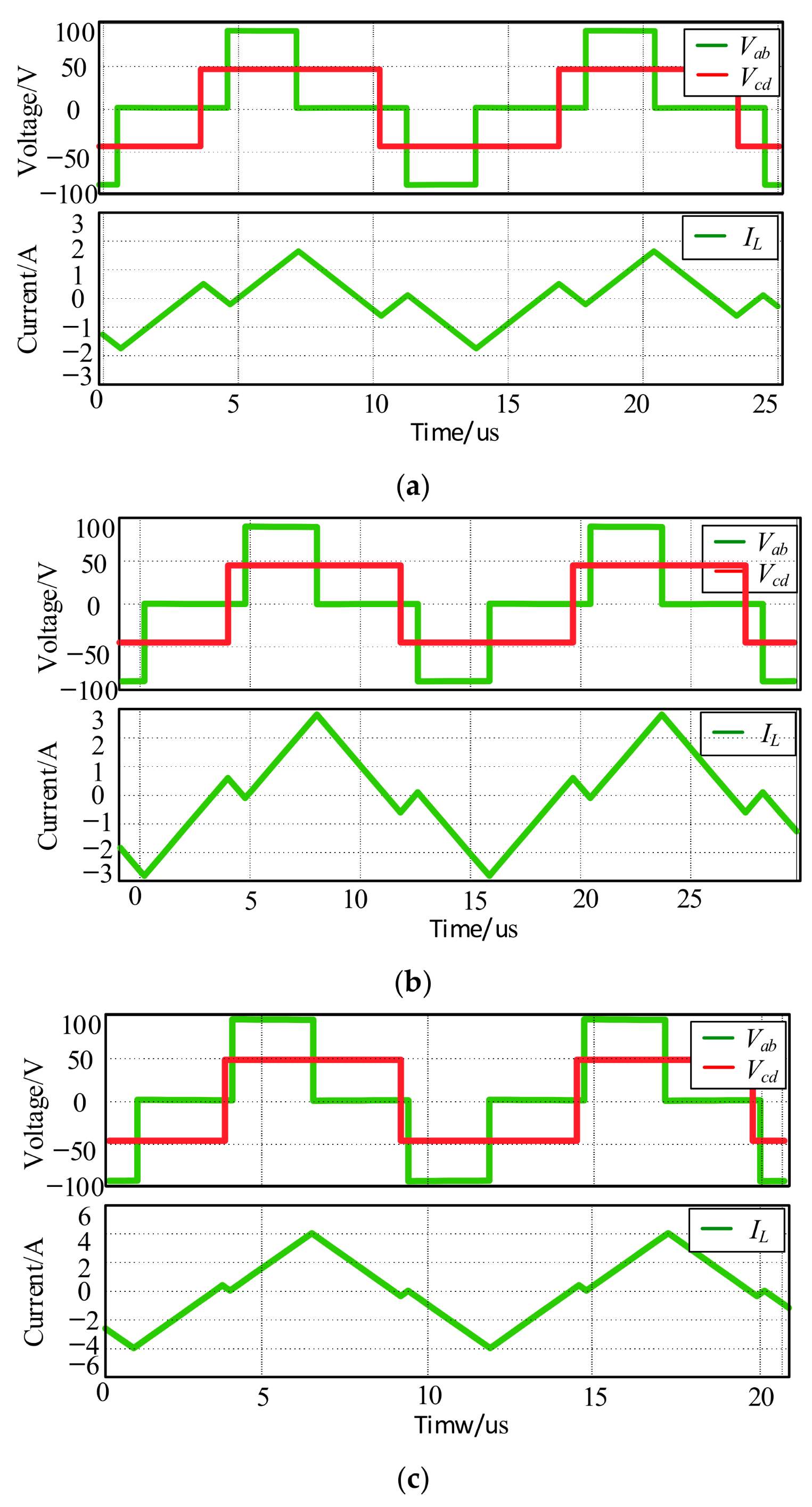
Figure 8 shows the waveforms of the port voltages and the inductor current under the proposed variable-frequency phase-shift modulation strategy. Figure 8a presents the waveforms when the converter operates under light-load conditions, Figure 8b corresponds to medium-load operation, and Figure 8c depicts the waveforms under heavy-load operation.
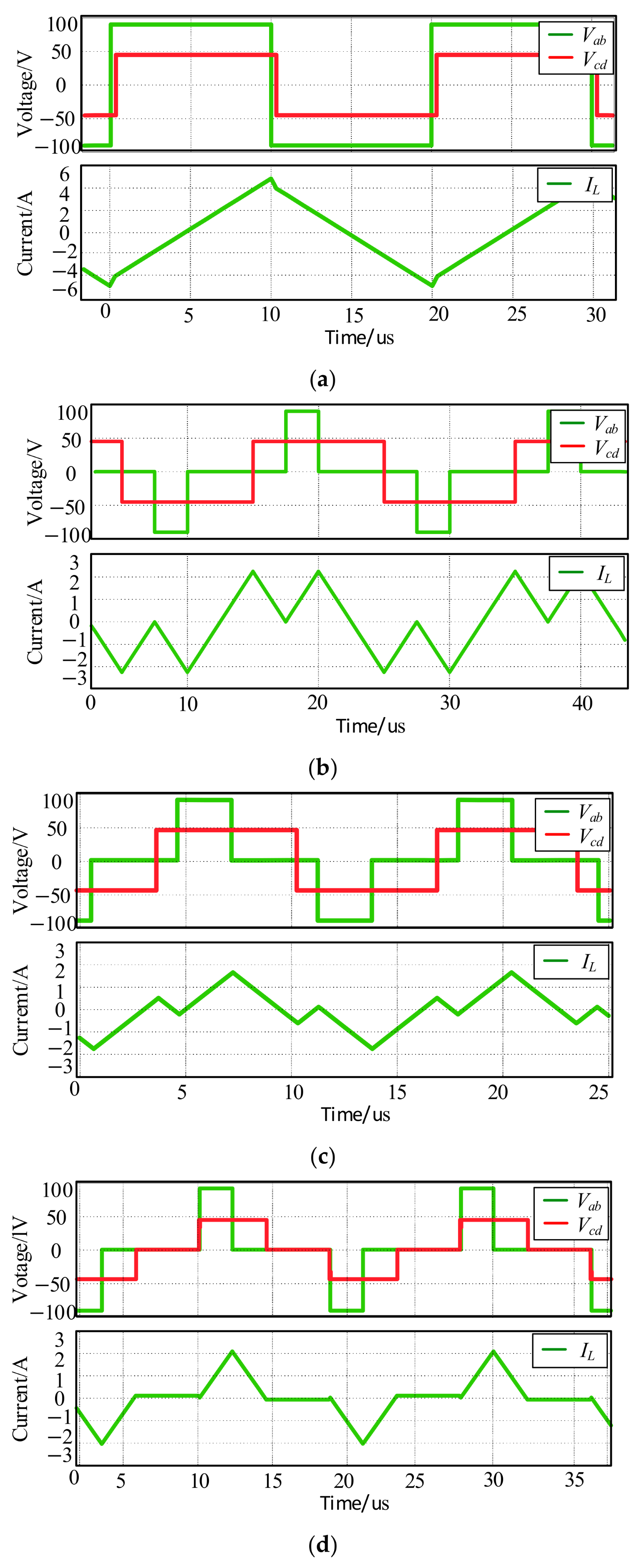
Figure 9 presents a comparison of the converter under four different modulation strategies at K = 2 under light-load conditions. Figure 9a shows the voltage and current waveforms for the SPS modulation strategy, with a peak inductor current of 4.442 A. Figure 9b illustrates the waveforms for the fixed-frequency EPS modulation strategy, where the peak inductor current is 2.261 A. Figure 9c depicts the waveforms for the proposed modulation strategy, demonstrating a peak inductor current of 1.868 A. Figure 9d presents the waveforms for the TPS modulation strategy, with a peak inductor current of 2.112 A. In summary, the proposed modulation strategy achieves the lowest peak inductor current among the four schemes.
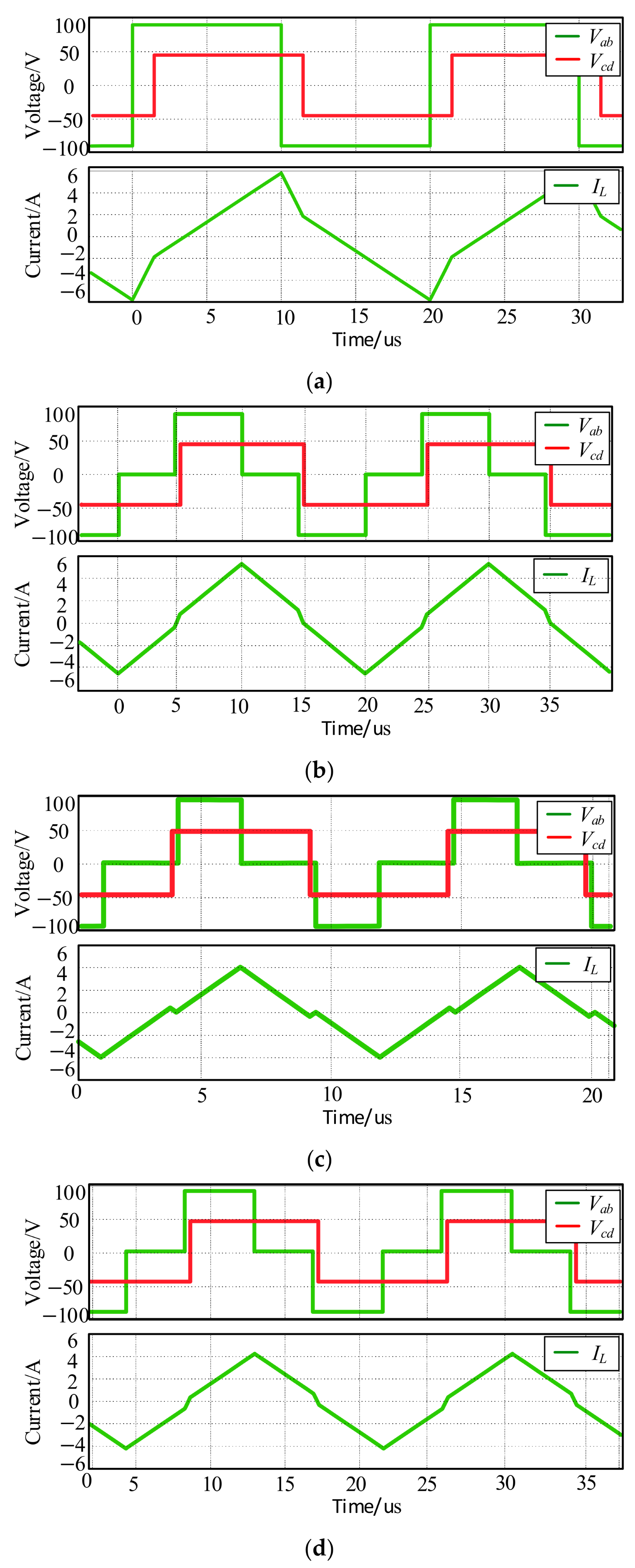
Figure 10 shows the comparison of the converter under four different modulation strategies at K = 2 with a heavy load. Figure 10a presents the voltage and current waveforms under the SPS modulation strategy, where the inductor current peak is 5.955 A. Figure 10b shows the voltage and current waveforms under the fixed-frequency EPS modulation strategy, with an inductor current peak of 5.199 A. Figure 10c displays the voltage and current waveforms under the proposed modulation strategy, where the inductor current peak is 4.118 A. Figure 10d presents the waveforms for the TPS modulation strategy, with a peak inductor current of 4.273 A. The proposed modulation strategy achieves the lowest peak inductor current among the four schemes. The proposed strategy results in a lower current peak.
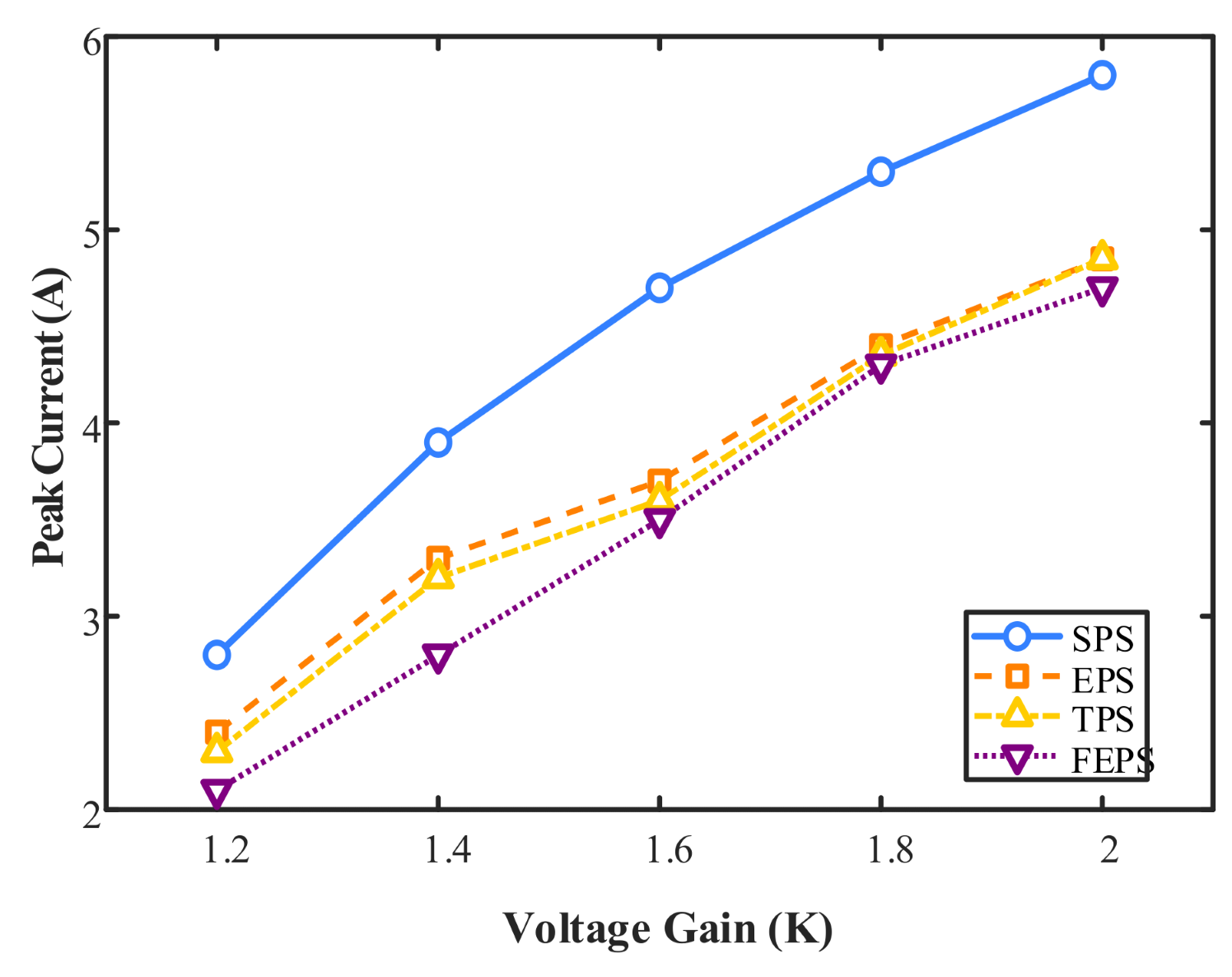
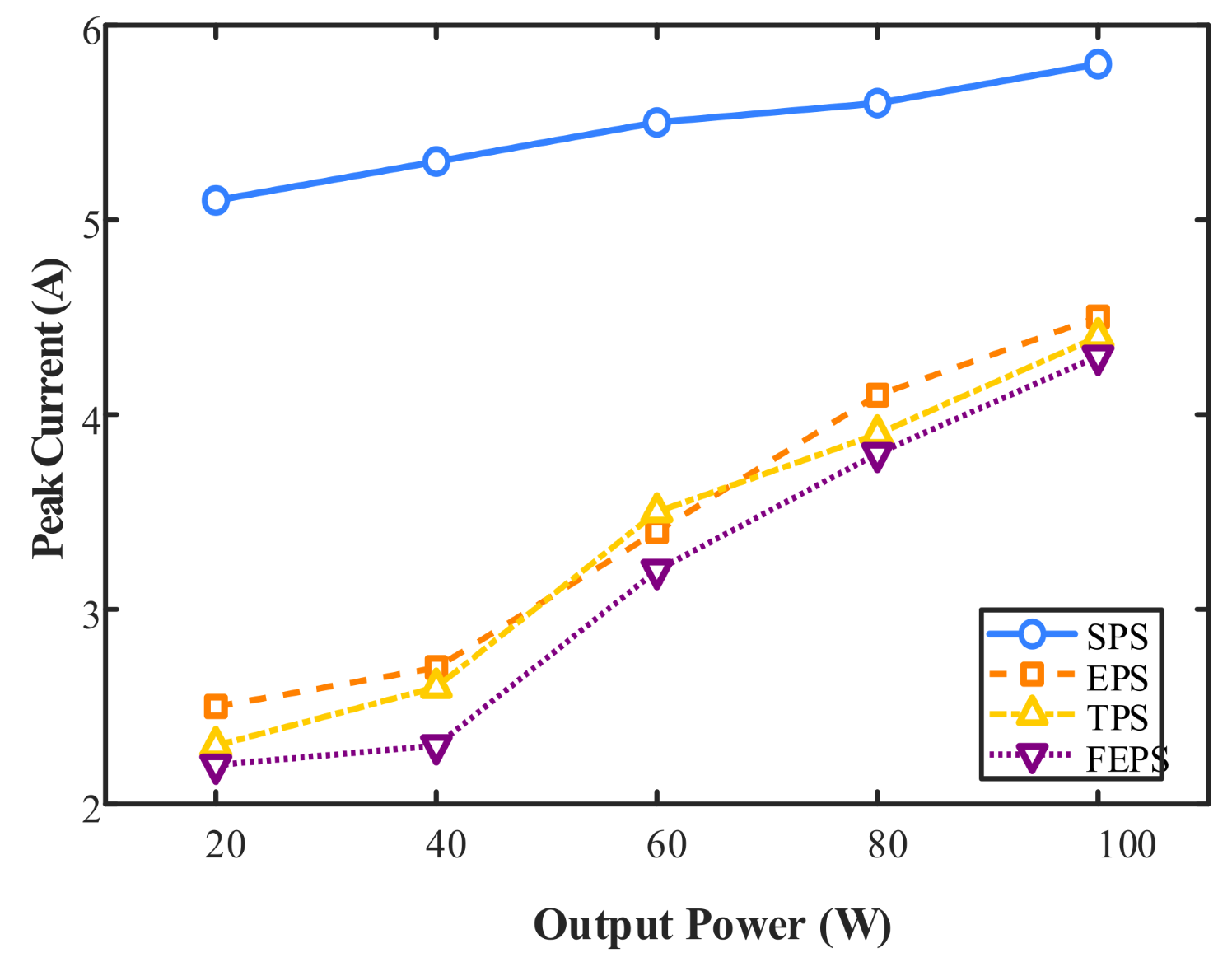
Figure 11 illustrates the peak current characteristics of each modulation strategy for the converter under different voltage gain conditions: it can be clearly observed that the FEPS modulation strategy proposed in this paper maintains a relatively lower peak current level across most voltage gain ranges. Figure 12 presents the variation pattern of peak current for each modulation strategy of the converter under different output power conditions: compared with the SPS, EPS, and TPS modulation strategies, the FEPS modulation strategy proposed in this paper exhibits a more significant peak current suppression advantage, and its peak current performance is superior across all operating conditions.
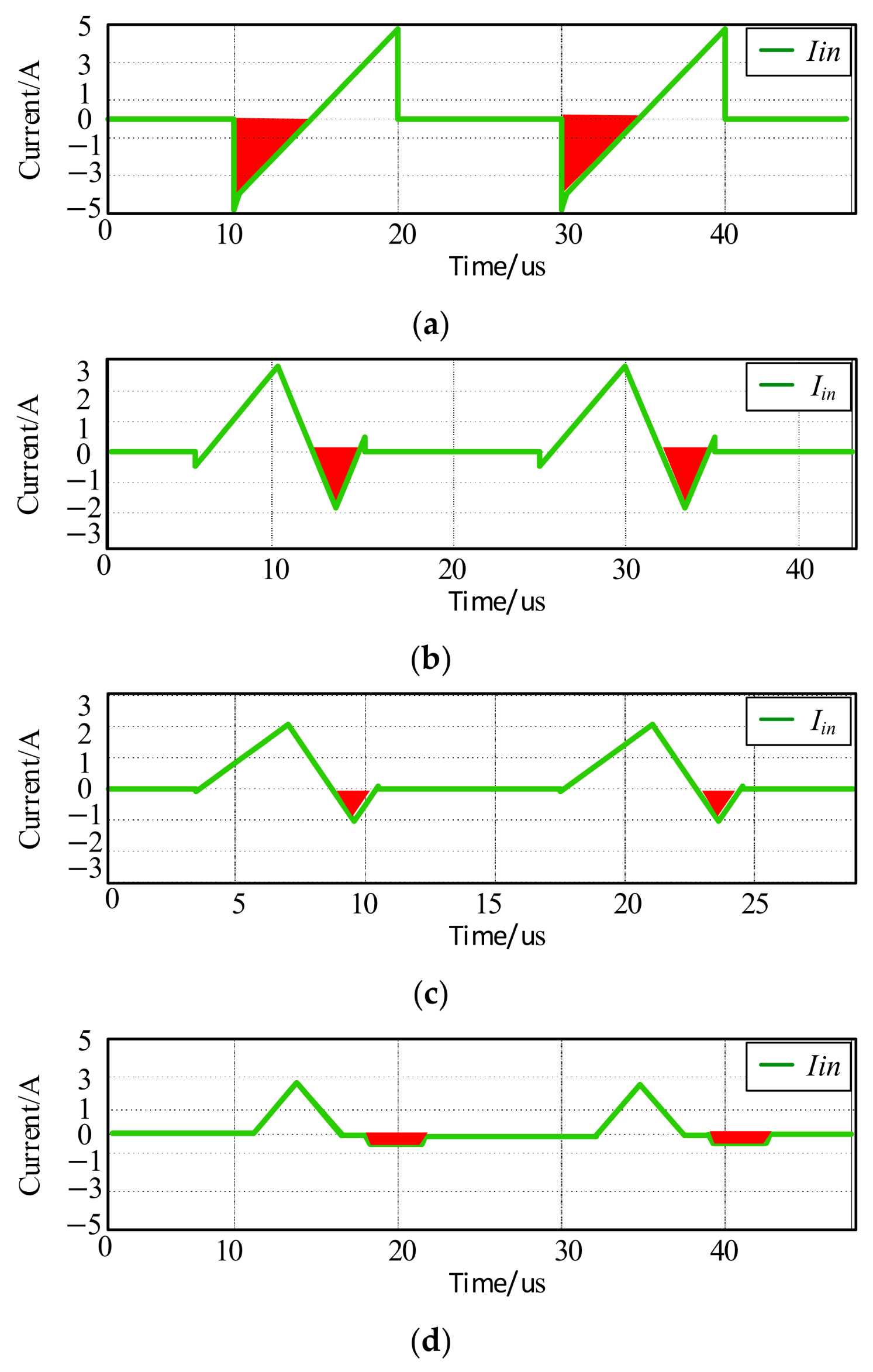
Figure 13 presents a comparison of the reactive circulating current under different modulation strategies under light-load conditions. Figure 13a shows the input current (Iin) waveform for the SPS modulation, Figure 13b for the fixed-frequency EPS modulation, Figure 13c for the proposed variable-frequency phase-shift modulation strategy, and Figure 13d for the TPS modulation strategy. As illustrated, compared with the SPS and EPS strategies, the FEPS strategy significantly reduces the reactive circulating current. Although the reduction in reactive circulating current relative to the TPS strategy is only marginal, the FEPS strategy demonstrates a more noticeable decrease in the current peak.
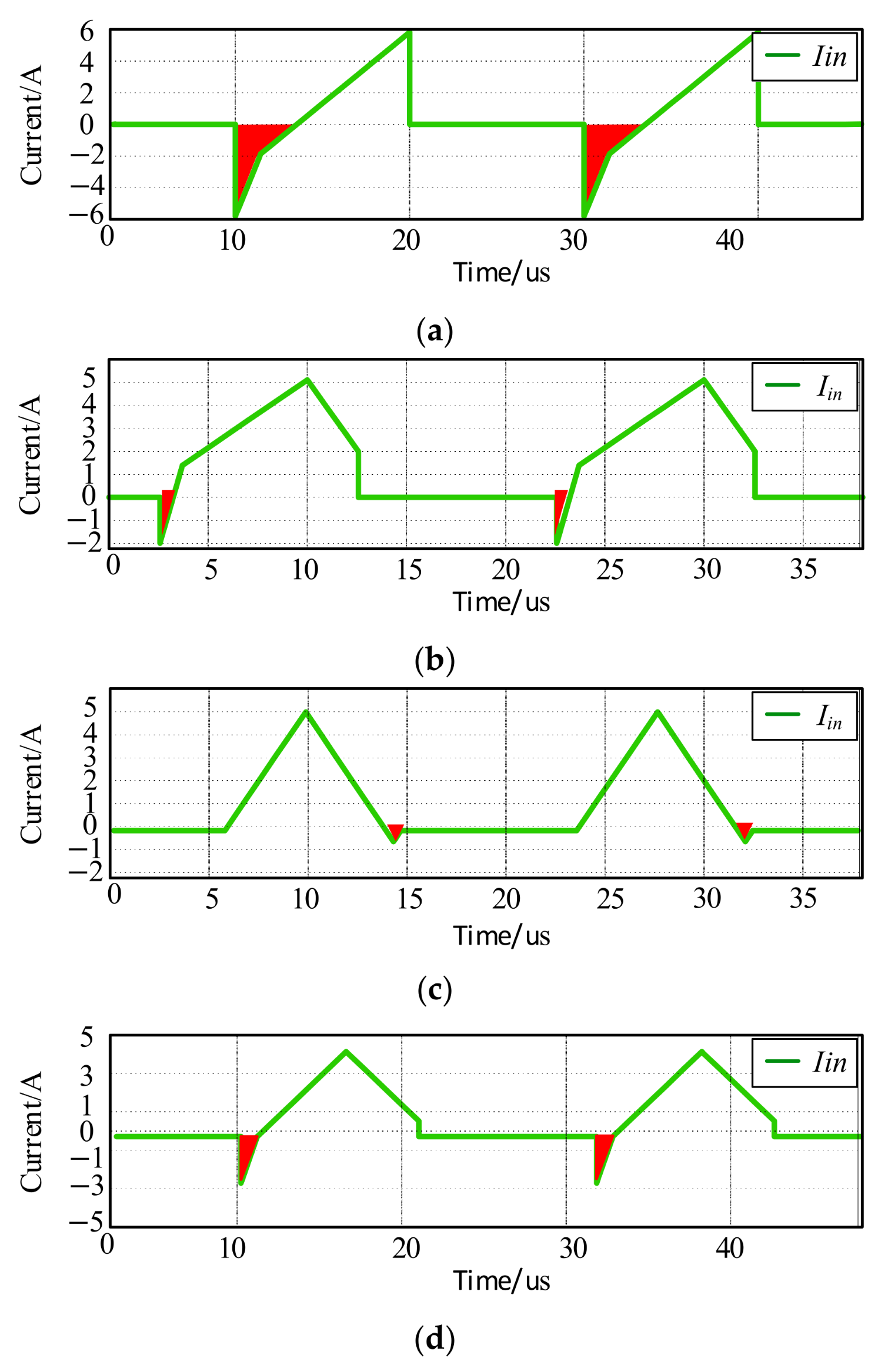
Figure 14 presents a comparison of the reactive circulating current under different modulation strategies under heavy-load conditions. Figure 14a shows the input current (Iin) waveform for the SPS modulation, Figure 14b for the fixed-frequency EPS modulation, Figure 14c for the proposed variable-frequency phase-shift modulation strategy, and Figure 14d for the TPS modulation. As illustrated, the reactive circulating current is significantly reduced with the proposed modulation strategy.
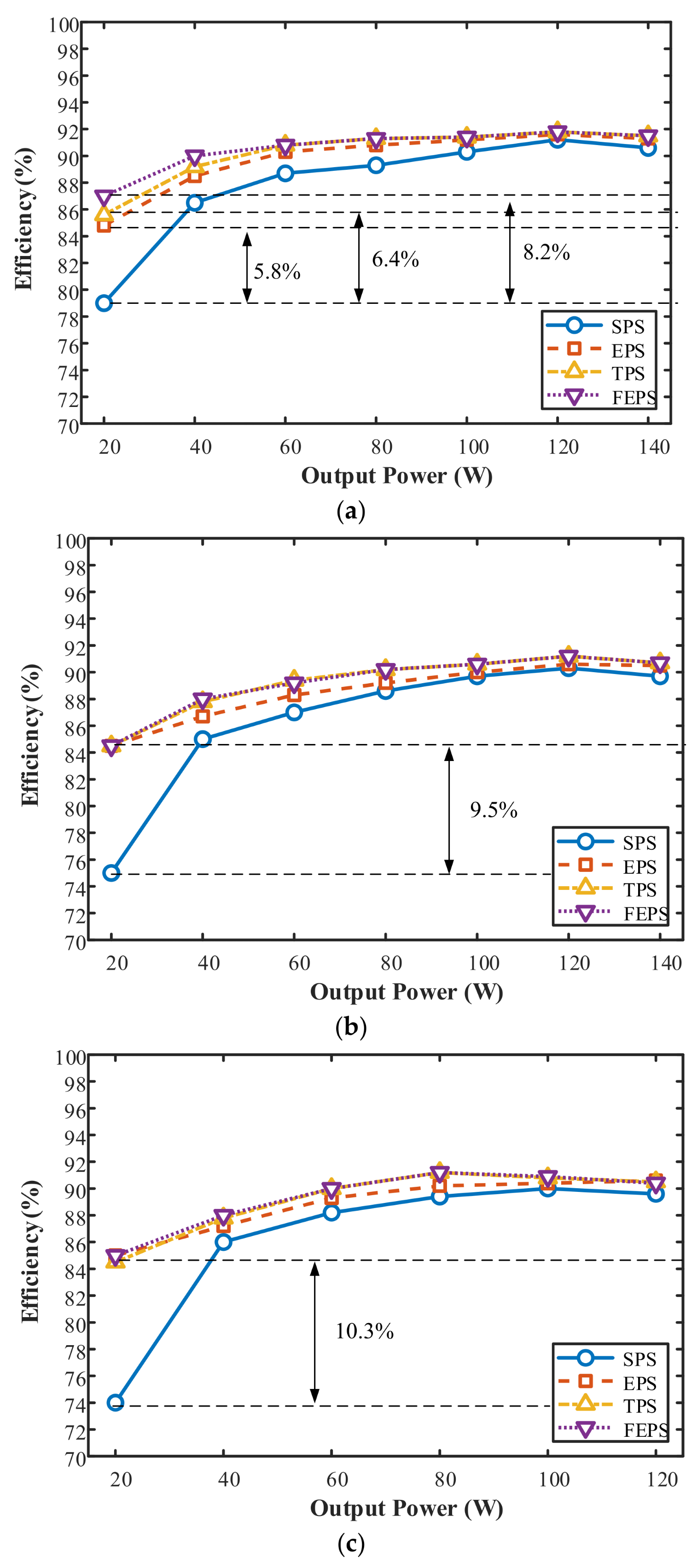
Figure 15 presents the efficiency curves of the four modulation strategies under three different voltage conversion ratios (k = 1.5, 1.8, and 2). As shown in Figure 15a, for k = 1.5 , the SPS modulation exhibits the lowest efficiency, the FEPS modulation achieves the highest efficiency, and the TPS modulation demonstrates an efficiency level between that of the EPS and FEPS strategies. A similar trend is observed for k = 1.8 and k = 2 , where the SPS modulation remains the least efficient. Under light-load conditions, the SPS modulation is less efficient than the other three strategies, while the FEPS modulation shows higher efficiency than the EPS modulation. Under medium- and heavy-load conditions, the efficiencies of the FEPS and TPS strategies are nearly identical. When the converter operates near a full load, all modulation methods converge to the SPS mode; consequently, the efficiencies of the four strategies tend to align under heavy-load conditions. Overall, across various operating conditions, the SPS modulation consistently shows the lowest efficiency, and the TPS modulation exhibits higher efficiency than both the SPS and EPS strategies. However, the FEPS modulation demonstrates significant advantages under light-load conditions, thereby achieving the best comprehensive performance.

4.2. Experimental Verification

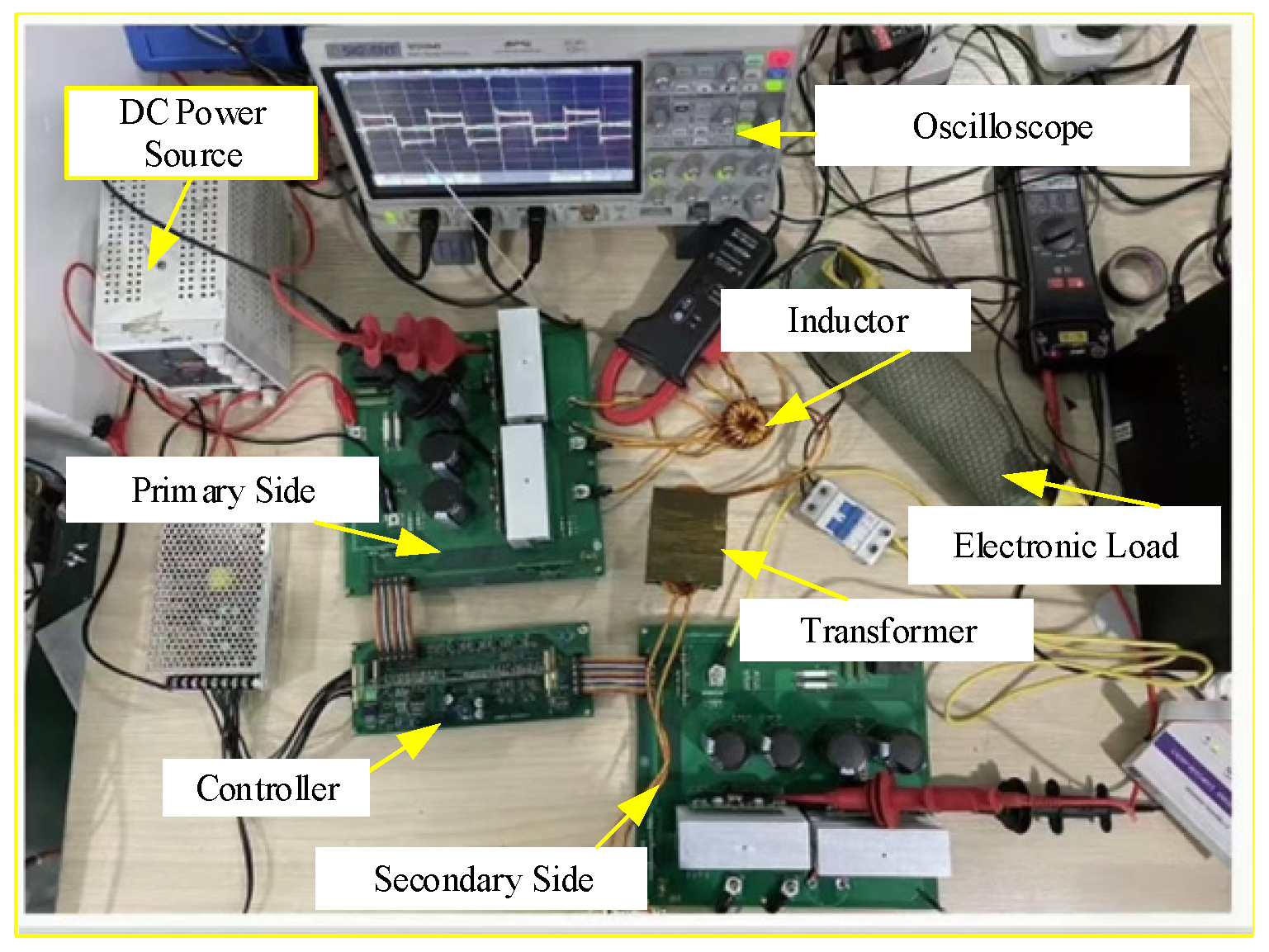
To validate the correctness of the proposed optimal control strategy, an experimental prototype of the DAB converter, shown in Figure 16, was built based on the preceding theoretical analysis and the control block diagram in Figure 7. The controller utilized was the STM32G474RET6 from STMicroelectronics (Agrate Brianza, Italy), and the power switching devices were IKW50N60T from Infineon Technologies (Neubiberg, Germany). The experimental parameters were consistent with those listed in Table 1.
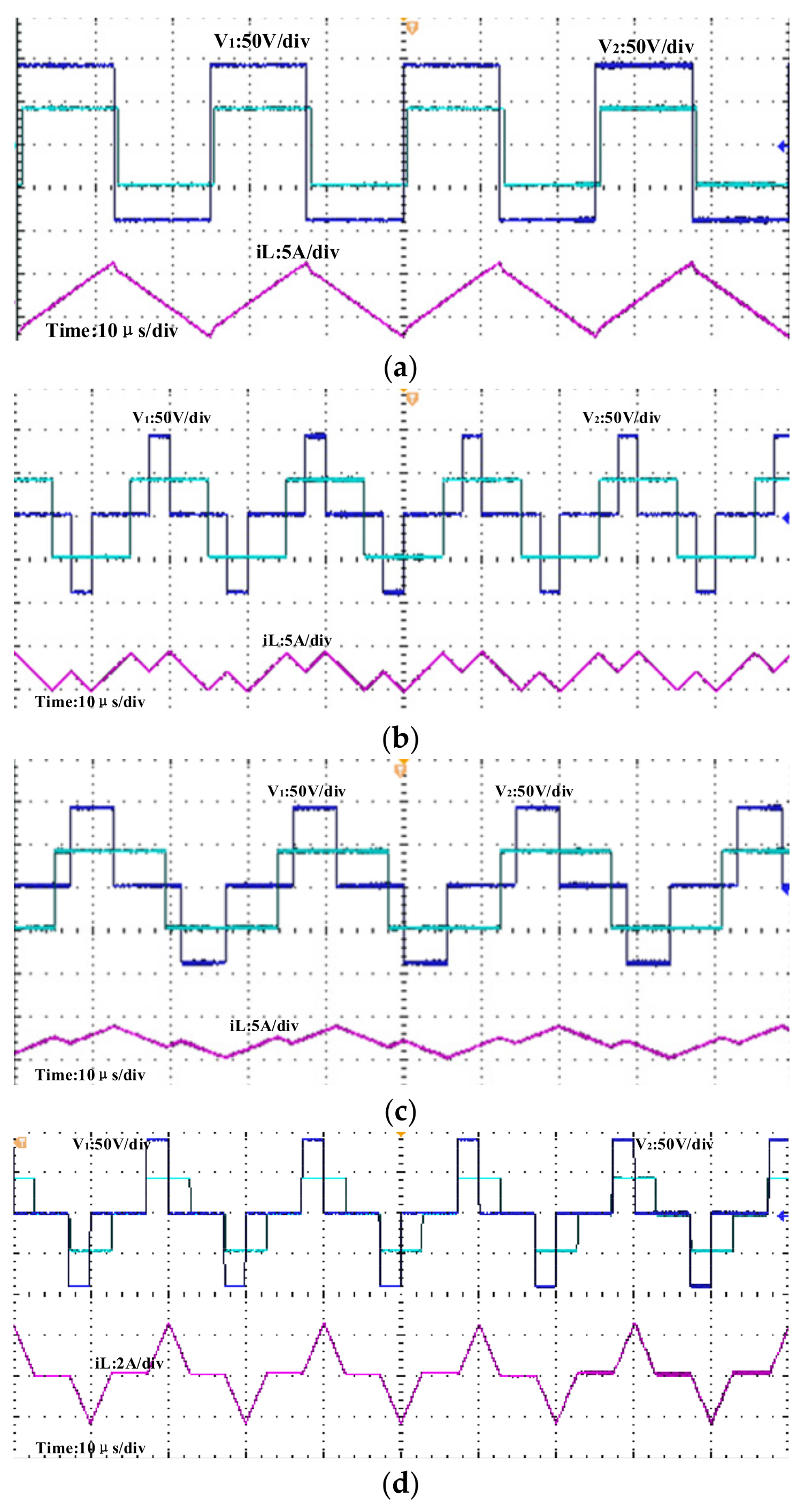
Figure 17 presents the experimental waveforms of the proposed variable-frequency control strategy compared with the traditional SPS and EPS control strategies under low-power conditions. The corresponding RMS current values are as follows: I rms SPS = 2.246   A (highest), I rms EPS = 1.304   A , and I rms FEPS = 0.930   A (lowest), I r m s T P S = 1.016 A . These results indicate that, in terms of RMS current, I r m s S P S > I r m s D P S > I r m s T P S I r m s F E P S . Furthermore, within the low-power range, the reactive circulating power under the variable-frequency control strategy is significantly lower than that under both SPS and EPS. The proposed control strategy demonstrates more pronounced optimization effects, greater effectiveness, and higher efficiency under light-load conditions.
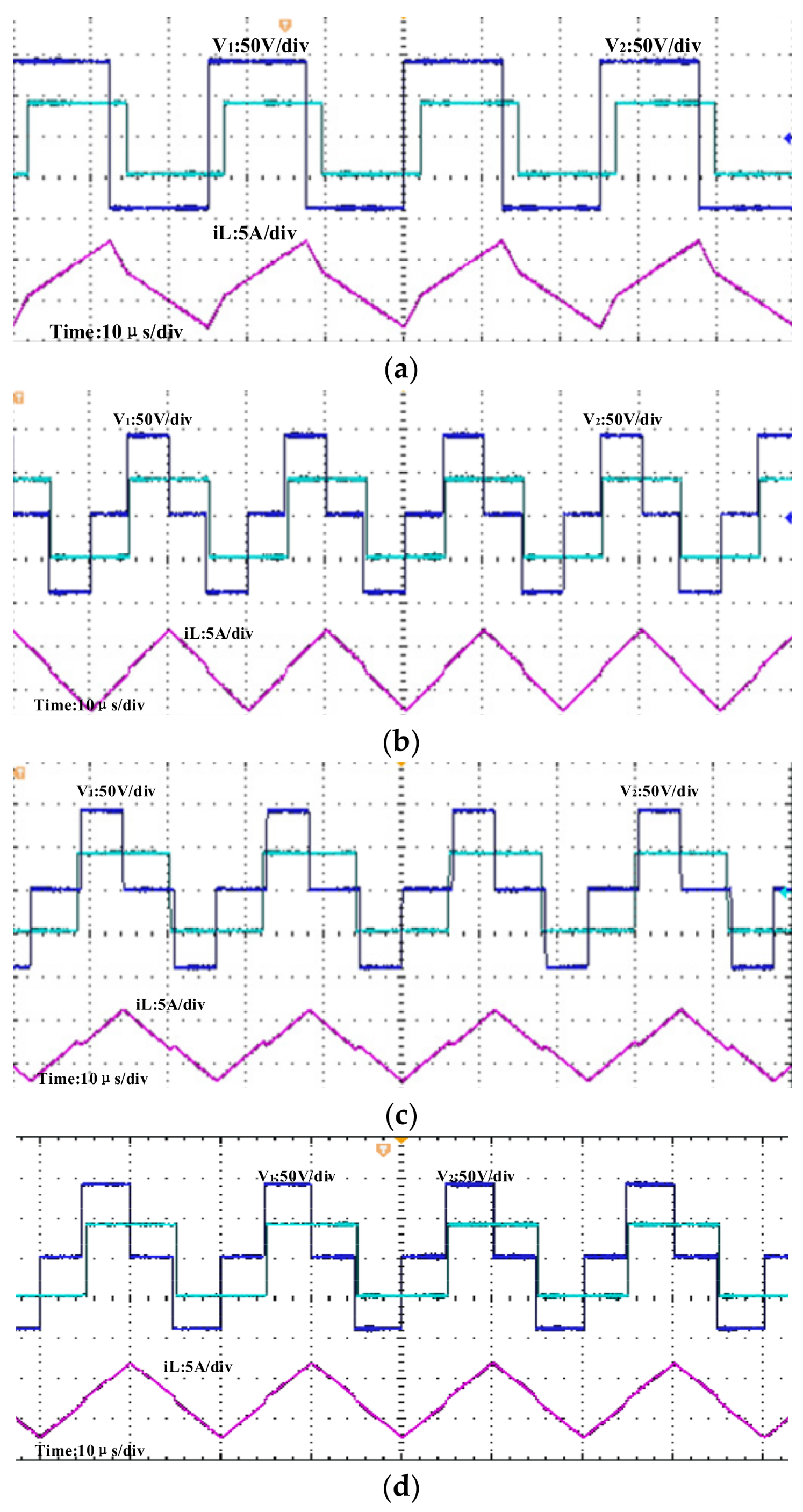
Figure 18 shows the experimental waveforms of the four control strategies under high-power conditions. The RMS currents for the four modulation schemes were measured as I rms SPS = 3.369   A , I rms EPS = 2.911   A , and I rms FEPS = 2.245   A , I r m s T P S = 2.482   A . These results indicate that even under high-power conditions, the RMS current and reactive circulating power under the variable-frequency control strategy remain significantly lower than those under SPS and show improvement over both the EPS and TPS.

5. Conclusions

To address the issues of large reactive circulating current and high current stress in dual-active-bridge (DAB) converters under voltage mismatch conditions, this paper proposes a variable-frequency phase-shift modulation strategy based on frequency-domain modeling. By integrating the frequency-domain analytical model with a frequency adjustment mechanism, this strategy effectively suppresses the reactive circulating current while optimizing the RMS inductor current, thereby improving the converter’s efficiency across the entire power range. Theoretical analysis and experimental results demonstrate the following:
Under the proposed phase-shift modulation, a new phase-shift variable is introduced. The expressions for power and reactive circulating current are derived, establishing a positive correlation between the transmitted power and the phase-shift angle β. This model avoids the mode classification and piecewise calculations required in traditional time-domain analysis, simplifying the control design and providing a theoretical foundation for optimizing both RMS current and reactive circulating current.
A DAB converter model was built on the PLECS simulation platform. The operational characteristics of SPS, EPS, TPS, and the proposed strategy were compared experimentally. The results show that under light-load conditions and with a high input-to-output voltage ratio, the proposed strategy achieves reductions in both reactive circulating current and RMS current compared to conventional strategies. The transmission efficiency is improved by up to 10.3% compared to traditional single-phase-shift control, validating the advantages of the proposed modulation strategy.

Author Contributions

Conceptualization, Z.W. and S.L.; methodology, Z.W. and S.L.; algorithm and simulation, Z.W.; software and validation, Z.W., S.L. and P.L.; formal analysis, Z.W.; investigation, Z.W. and P.L.; resources, S.L. and P.L.; data curation, Z.W. and P.L.; writing—original draft preparation, Z.W.; writing—review and editing, S.L. and Z.W.; visualization, Z.W. and P.L.; supervision, S.L. All authors have read and agreed to the published version of the manuscript.

Funding

This research received no external funding.

Data Availability Statement

Data are contained within the article.

Acknowledgments

The authors would like to thank the School of Electrical Engineering, Xuchang University, since it provided materials and instruments to validate the work.

Conflicts of Interest

The authors declare no conflicts of interest.

References

  1. Zhao, B.; Song, Q.; Liu, W.; Sun, W. Overview of dual-active-bridge isolated bidirectional DC-DC converter for high-frequency-link power-conversion system. IEEE Trans. Power Electron. 2014, 29, 4091–4106. [Google Scholar] [CrossRef]
  2. Hou, N.; Li, Y. Overview and comparison of modulation and control strategies for a non-resonant single-phase dual-active-bridge DC–DC converter. IEEE Trans. Power Electron. 2020, 35, 3148–3172. [Google Scholar] [CrossRef]
  3. Yan, Y.; Gui, H.; Bai, H. Complete ZVS analysis in dual-active-bridge. IEEE Trans. Power Electron. 2021, 36, 1247–1252. [Google Scholar] [CrossRef]
  4. Tang, Y.; Chen, S.; Wang, P.; Li, G.; Li, K. Deep reinforcement learning aided variable-frequency triple-phase-shift control for dual-active-bridge converter. IEEE Trans. Ind. Electron. 2023, 70, 10506–10515. [Google Scholar] [CrossRef]
  5. An, F.; Song, W.; Yang, K.; Yang, S.; Ma, L. A simple power estimation with triple phase-shift control for the output parallel DAB DC–DC converters in power electronic traction transformer for railway locomotive application. IEEE Trans. Transp. Electrif. 2019, 5, 299–310. [Google Scholar] [CrossRef]
  6. Khan, S.A.; Ali, A.; Tahir, M.; Tao, Z. Efficient power conditioning: Enhancing electric supply for small satellite missions. Aerospace 2024, 11, 920. [Google Scholar] [CrossRef]
  7. Wu, K.Y.; de Silva, C.W.; Dunford, W.G. Stability analysis of isolated bidirectional dual active full-bridge DC–DC converter with triple phase-shift control. IEEE Trans. Power Electron. 2012, 27, 2007–2017. [Google Scholar] [CrossRef]
  8. Zhao, B.; Song, Q.; Liu, W. Efficiency characterization and optimization of isolated bidirectional DC–DC converter based on dual-phase-shift control for DC distribution application. IEEE Trans. Power Electron. 2013, 28, 1711–1727. [Google Scholar] [CrossRef]
  9. Zhao, B.; Yu, Q.; Sun, W. Bidirectional full-bridge DC-DC converters with dual-phase-shifting control and its backflow power characteristic analysis. Proc. Chin. Soc. Electr. Eng. 2012, 32, 43–50. [Google Scholar]
  10. Shah, S.S.; Bhattacharya, S. A simple unified model for generic operation of dual active bridge converter. IEEE Trans. Ind. Electron. 2019, 66, 3486–3495. [Google Scholar] [CrossRef]
  11. Wu, F.; Feng, F.; Gooi, H.B. Cooperative triple-phase-shift control for isolated DAB DC–DC converter to improve current characteristics. IEEE Trans. Ind. Electron. 2019, 66, 7022–7031. [Google Scholar] [CrossRef]
  12. Mou, D.; Li, J.; Luo, Q.; Wei, Y.; Sun, P. Overview of multi-degree-of-freedom modulation techniques for dual active bridge converter. IEEE J. Emerg. Sel. Top. Power Electron. 2023, 11, 5724–5737. [Google Scholar] [CrossRef]
  13. Mou, D.; Luo, Q.; Li, J.; Wei, Y.; Sun, P. Five-degree-of-freedom modulation scheme for dual active bridge DC–DC converter. IEEE Trans. Power Electron. 2021, 36, 10584–10601. [Google Scholar] [CrossRef]
  14. Mou, D.; Luo, Q.; Li, J.; Wei, Y.; Sun, P. Optimal asymmetric duty modulation to minimize inductor peak-to-peak current for dual active bridge DC–DC converter. IEEE Trans. Power Electron. 2021, 36, 4572–4584. [Google Scholar] [CrossRef]
  15. Hou, N.; Song, W.; Wu, M. Minimum-current-stress scheme of dual active bridge DC–DC converter with unified phase-shift control. IEEE Trans. Power Electron. 2016, 31, 8552–8561. [Google Scholar] [CrossRef]
  16. Zhao, B.; Song, Q.; Liu, W.; Sun, W. Current-stress-optimized switching strategy of isolated bidirectional DC–DC converter with dual-phase-shift control. IEEE Trans. Ind. Electron. 2013, 60, 4458–4467. [Google Scholar] [CrossRef]
  17. Zhao, B.; Song, Q.; Liu, W. Power characterization of isolated bidirectional dual-active-bridge DC–DC converter with dual-phase-shift control. IEEE Trans. Power Electron. 2012, 27, 4172–4176. [Google Scholar] [CrossRef]
  18. Taylor, A.; Liu, G.; Bai, H.; Brown, A.; Johnson, M.R. Multiple-phase-shift control for a dual active bridge to secure zero-voltage switching and enhance light-load performance. IEEE Trans. Power Electron. 2018, 33, 4584–4588. [Google Scholar] [CrossRef]
  19. Huang, J.; Wang, Y.; Li, Z.; Lei, W. Unified triple-phase-shift control to minimize current stress and achieve full soft-switching of isolated bidirectional DC–DC converter. IEEE Trans. Ind. Electron. 2016, 63, 4169–4179. [Google Scholar] [CrossRef]
  20. Shao, S.; Jiang, M.; Ye, W.; Li, Y.; Zhang, J.; Sheng, K. Optimal phase-shift control to minimize reactive power for a dual active bridge DC–DC converter. IEEE Trans. Power Electron. 2019, 34, 10193–10205. [Google Scholar] [CrossRef]
  21. Zhang, X.; Wang, G.; Shang, X.; Tan, X. An optimized strategy based on backflow power of bidirectional dual-active-bridge DC-DC converters with dual-phase-shifting control. Proc. Chin. Soc. Electr. Eng. 2016, 36, 1090–1097. [Google Scholar]
  22. Zeng, J.; Sun, Z.; Lei, M.; Li, Y.; Zhou, L. Global current stress analysis and optimal control strategy of dual-active full bridge converter based on dual phase shift control. Trans. China Electrotech. Soc. 2019, 34, 2507–2518. [Google Scholar]
  23. Shi, H.; Wen, H.; Hu, Y.; Jiang, L. Reactive power minimization in bidirectional DC–DC converters using a unified-phasor-based particle swarm optimization. IEEE Trans. Power Electron. 2018, 33, 10990–11006. [Google Scholar] [CrossRef]
  24. Liu, P.; Chen, C.; Duan, S. An optimized modulation strategy for the three-level DAB converter with five control degrees of freedom. IEEE Trans. Ind. Electron. 2020, 67, 254–264. [Google Scholar] [CrossRef]
Figure 1. Topology of the DAB converter.
Electronics 15 01980 g001
Figure 2. Equivalent topology.
Electronics 15 01980 g002
Figure 3. Driving signals and outputs employing EPS modulation.
Electronics 15 01980 g003
Figure 4. Frequency-domain waveforms of EPS modulation.
Electronics 15 01980 g004
Figure 5. Time-domain waveforms of the two EPS modulation modes (a,b).
Electronics 15 01980 g005
Figure 6. Curves of the HFL-PF and active power varied with β under different control methods.
Electronics 15 01980 g006
Figure 7. Closed-loop control block diagram.
Electronics 15 01980 g007
Figure 8. The waveforms of the converter port voltage and inductor current under the condition of K = 2: (a) Light load. (b) Medium load. (c) Heavy load.
Electronics 15 01980 g008
Figure 9. Waveforms of the light-load port voltage and inductor current under different modulation strategies: (a) SPS. (b) EPS. (c) FEPS. (d) TPS.
Electronics 15 01980 g009
Figure 10. Heavy-load port voltage and inductor current waveforms for different modulation strategies: (a) SPS. (b) EPS. (c) FEPS. (d) TPS.
Electronics 15 01980 g010
Figure 11. Peak current versus voltage gain for different modulation strategies.
Electronics 15 01980 g011
Figure 12. Peak current versus transmission power under different modulation strategies.
Electronics 15 01980 g012
Figure 13. Reactive circulating current with different modulation strategies under light-load conditions: (a) SPS, (b) EPS, (c) FEPS, (d) TPS. (The red part is the reflected power).
Electronics 15 01980 g013
Figure 14. Reactive circulating current with different modulation strategies under heavy-load conditions: (a) SPS. (b) EPS. (c) FEPS. (d) TPS. (The red part is the reflected power).
Electronics 15 01980 g014
Figure 15. Efficiency curves of four modulation methods under different k values. (a) k = 1.5. (b) k = 1.8. (c) k = 2.
Electronics 15 01980 g015
Figure 16. Experimental prototype platform.
Electronics 15 01980 g016
Figure 17. Experimental waveforms of four control strategies in the low power range: (a) SPS. (b) EPS. (c) FEPS. (d) TPS.
Electronics 15 01980 g017
Figure 18. Experimental waveforms of four control strategies in high power range: (a) SPS. (b) EPS. (c) FEPS. (d) TPS.
Electronics 15 01980 g018
Table 1. Key parameters for converter simulation.
Technical ParameterValue
Input Voltage V145–90 V
Output Voltage V245–90 V
Leakage Inductance L50 μH
Transformer Turns Ratio N1:1
Input/Output Capacitance C1/C2200 μF
Nominal Switching Frequency fn50 kHz
Disclaimer/Publisher’s Note: The statements, opinions and data contained in all publications are solely those of the individual author(s) and contributor(s) and not of MDPI and/or the editor(s). MDPI and/or the editor(s) disclaim responsibility for any injury to people or property resulting from any ideas, methods, instructions or products referred to in the content.