
Article

Rubus fruticosus Fruit Extract Enhances the Pro-Adipogenic Program During Adipocyte Differentiation

1
Provital, S.A., Gorgs Lladó 200, 08210 Barberà del Vallès, Spain
2
Department of Cell Biology, Physiology and Immunology, Celltec-UB, University of Barcelona, 08028 Barcelona, Spain
*
Author to whom correspondence should be addressed.
Cosmetics 2026, 13(2), 82; https://doi.org/10.3390/cosmetics13020082
Submission received: 11 February 2026 / Revised: 9 March 2026 / Accepted: 12 March 2026 / Published: 1 April 2026

Abstract

Although blackberries are associated with health benefits, their impact on adipocyte biology remains poorly understood. Here, we investigated the effect of a blackberry extract (Rubus fruticosus fruit extract, RFE) on adipogenesis and lipolysis in the 3T3-L1 cell model and characterized its transcriptomic response. Adipogenesis and lipolysis were assessed by Oil Red O and AdipoRed™ staining and glycerol release, respectively. RNA-Seq analysis was processed with the PIGx pipeline, and differential gene expression was evaluated with edgeR. RFE strongly promoted adipogenesis, increasing Oil Red O staining by 29% (n = 3, p < 0.01), and showed anti-lipolytic activity, reducing glycerol release by 51% (n = 3, p < 0.05). Whole-transcriptome analysis revealed that RFE significantly regulated 4904 genes, enhancing the adipogenic program. Functional profiling identified metabolic pathways influenced by RFE, including those related to lipid biosynthesis. Notably, RFE also modulated extracellular matrix (ECM) pathways, suggesting a shift toward a less fibrotic microenvironment. These findings indicate that RFE promotes subcutaneous adipose tissue expansion while supporting ECM remodeling, favoring healthy adipose growth and reduced fibrosis. To our knowledge, this is the first evidence that RFE simultaneously stimulates adipocyte differentiation and ECM remodeling. Overall, RFE emerges as a promising active ingredient for lipofilling cosmetic applications aimed at improving adipose tissue volume and quality.

1. Introduction

It is well known that blackberries are linked to various health benefits, e.g., the prevention and treatment of metabolic syndrome, support of the digestive and immune systems, prevention of inflammatory disorders, cardiovascular diseases, and protective effects against gastrointestinal tract cancers [1]. The blackberry is also used in cosmetics, mainly due to its antioxidant and anti-inflammatory properties, making it suitable for skin antiaging and hair protection applications [2,3,4].
Although previous studies have shown that Rubus suavissimus can enhance adipogenesis in cellular models [5,6,7], little is known about Rubus fructicosus and the specific pathways activated by blackberries in adipocytes that influence adipocyte metabolism and lipid synthesis. To our knowledge, no comprehensive description currently exists regarding the impact of blackberry on fat accumulation, lipolysis, or adipocyte differentiation. Yet, some characteristic blackberry phytochemicals, including cyanidin-3-glucoside, ellagitannins, and flavonols, have been reported to influence adipocytes or adipogenesis-related processes [8,9,10,11,12,13,14,15], supporting the potential relevance of blackberry-derived compounds in adipocyte biology.
Therefore, in the present work, we aimed to characterize the effect of blackberry extract on adipogenesis and adipocyte metabolism in the 3T3-L1 cell model by assessing lipid accumulation through Oil Red O and AdipoRed™ staining and evaluating lipolysis via glycerol release. In addition, to gain insight into the molecular mechanisms involved, we further explored the effect of RFE on adipocytes by analyzing gene expression patterns using RNA-Seq.
To our knowledge, the present study shows, for the first time, that the blackberry (Rubus fruticosus fruit extract, RFE) elicits both pro-adipogenic and anti-lipolytic activities in adipocytes. The analysis of the transcriptomic program during preadipocyte differentiation to mature adipocytes stimulated with RFE revealed mechanisms and functional pathways that help to better understand RFE’s impact on adipocyte metabolism.

2. Materials and Methods

2.1. Plant Material and Extraction

The Rubus fruticosus extract (RFE) tested in the in vitro assays was a concentrated dry extract from the ripe fruits of Rubus fruticosus, which corresponded to its phenolic fraction. Rubus fruticosus dried triturated fruits (21.96 g) were placed in a reflux system along with ethanol (193.03 g) and water (83.09 g). The mixture was refluxed for 3 h, the liquid was decanted (260.23 g), and to the remaining biomass, additional ethanol (194.11 g) and water (82.21 g) were added. This mixture was refluxed again for 3 h. The liquid was decanted (270.28 g) and mixed with the liquid from the first reflux. Solvents were then evaporated under vacuum in a RV 10 Digital rotatory evaporator (IKA-Werke GmbH & Co. KG, Staufen, Germany) to yield a soft extract.

2.2. Determination of Phenolic Compounds by TPC and High-Performance Liquid Chromatography with Diode-Array Detection (HPLC-DAD)

Quantification of the total phenolic content (TPC) was performed according to the Folin–Ciocalteu method [16,17]. Characterization of the RFE phenolic fraction was performed by high-performance liquid chromatography with diode-array detection (HPLC-DAD) using an Agilent 1260 HPLC system (Agilent technologies, Santa Clara, CA, USA) equipped with a 1260 DAD HS (Agilent technologies, Santa Clara, CA, USA) detector set on 330 nm and 535 nm. For the analysis, RFE was diluted with ethanol (0.25 g RFE/10 mL EtOH 70%), and 10 µL of the solution was injected into the equipment. The elution solvents were aqueous 0.086% phosphoric acid in HPLC water (A) and acetonitrile (B). The elution program was as follows: from 0 min 85% A and 15% B, 30 min 65% A and 35% B, 35 min 15% A and 85% B, 40 min 15% A and 85% B, 45 min 85% A and 15% B, and 50 min 85% A and 15% B. For phenolic determination, an Ascentis RP-Amide 5 μm 15 cm × 4.6 mm (Sigma-Aldrich, Saint Louis, MO, USA) column and an Ascentis RP-Amide 5 μm 20 mm × 4.0 mm precolumn (Sigma-Aldrich, Saint Louis, MO, USA) operated at 30 °C were used. Phenolic compounds were identified by comparing their UV–Vis spectra and retention times with standards.

2.3. Cell Viability Assay

In total, 5000 cells were plated in 96-well plates and grown for 24 h. Then, stimulation was performed for 24 h at the indicated concentrations. Thereafter, 10 µL of alamarBlue™ [18,19] cell viability assay reagent (Thermo Scientific, Wilmington, DE, USA) was added and incubated at 37 °C for 2 h. Absorbance at wavelengths of 570 nm and 600 nm was measured. The reduction of alamarBlue™ reagent was calculated following the manufacturer’s instructions. Cell viability was shown relative to the non-stimulated control.

2.4. 3T3-L1 Preadipocyte Culture, Differentiation, and Stimulation

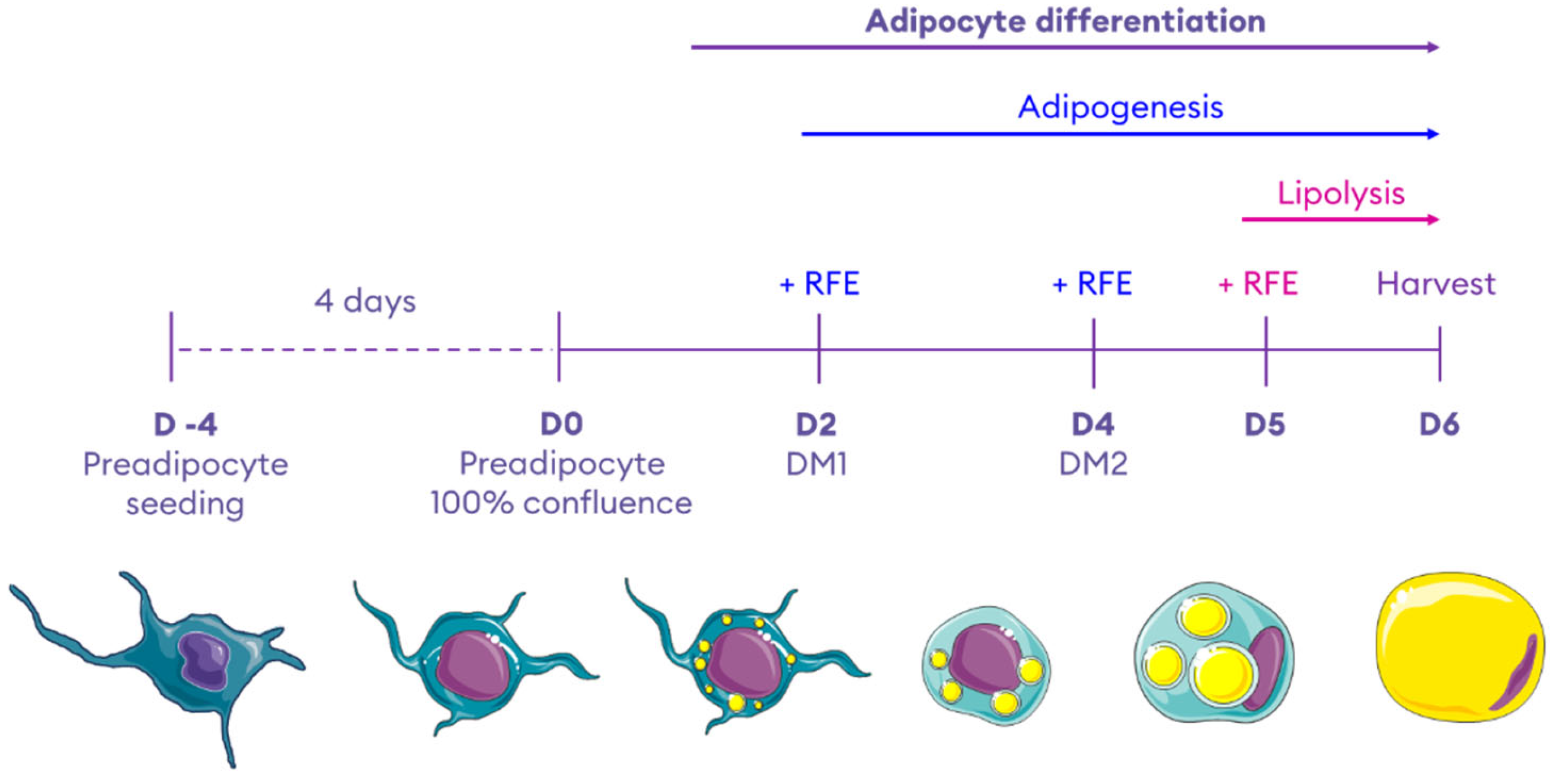
3T3-L1 preadipocytes (ATCC, USA. Ref # CL-173) were maintained in DMEM 4.5 g/L glucose medium (Gibco, Carlsbad, CA, USA) supplemented with 10% (v/v) newborn calf serum (NCS; Gibco, Carlsbad, CA, USA), 4 mM glutamine (Gibco, Carlsbad, CA, USA), 25 mM HEPES, and 100 µg/mL penicillin/streptomycin (Gibco, Carlsbad, CA, USA) at 37 °C in a humidified atmosphere of 5% CO2. As described in Figure 1, for differentiation into adipocytes, 3T3-L1 preadipocytes were grown to confluence and overgrown for 48 h. Then, the growth medium was replaced by differentiating medium 1 (DM1; DMEM:F12, penicillin/streptomycin (110 U/mL/100 µL) 1%, FBS 10%, IBMX 0.5 mM, dexamethasone 1 µM, insulin 10 µM, and rosiglitazone 2 µM). After 48 h, DM1 was replaced by differentiating medium 2 (DM2; DMEM:F12, penicillin/streptomycin (110 U/mL/100 µL) 1%, FBS 10%, and insulin 10 µM). For lipolysis determination, cells were stimulated with RFE (0.0625 mg/mL) only 24 h after DM1 was replaced by DM2, and glycerol measurement was performed after another 24 h period. For lipid staining, stimulation with RFE (0.0625 mg/mL) was performed at the same time as when the growth medium was replaced by DM1 and was repeated when DM1 was replaced by DM2. After 48 h, Oil Red O staining [20,21] was performed as described below.

2.5. Glycerol Measurement

To determine the amount of glycerol, supernatants were assayed with a Lipolysis colorimetric Assay Kit (Sigma-Aldrich, St. Louis, MO, USA) according to the manufacturer’s instructions. Supernatants were mixed with assay reaction mix (1:2) on a 96-well plate and incubated for 20 min at RT in the dark. A standard curve was made using a glycerol standard supplied with concentrations ranging from 0 to 2 mg/mL. The optical density was read at 570 nm on the Infinite 200 PRO multimode reader (Tecan group Ltd., Männedorf, Switzerland). Glycerol was normalized by total protein levels, quantified using the Pierce BCA Protein Assay Kit (Thermo Fisher Scientific, Pittsburgh, PA, USA).

2.6. Oil Red O Quantification

To quantify lipid accumulation, Oil Red O staining was performed using Oil Red O solution (Sigma-Aldrich, St. Louis, MO, USA) according to the manufacturer’s instructions. Briefly, differentiated adipocytes were fixed in 4% paraformaldehyde for 30 min and washed twice with distilled water. After fixation, wells were incubated with 60% isopropanol for 5 min and dried completely. Finally, a fresh Oil Red O Working Solution (3 parts of Oil Red O Stock Solution to 2 parts of water) was added for 10 min and washed 5 times with distilled water. Lipid droplets (LDs) were visualized by Zeiss Axiovert phase-contrast microscopy (Carl Zeiss Microscopy GmbH, Jena, Thüringen, Germany) at a magnification of 40×. After eluting stained LDs with 100% isopropanol, the intracellular lipid content was quantified by measuring the absorbance at 500 nm.

2.7. Confocal Microscopy

To visualize LDs by fluorescence, AdipoRedTM Assay Reagent (Lonza; Basel, Switzerland) was used according to the manufacturer’s instructions. Cells were fixed in 4% paraformaldehyde for 30 min, and 5 µL/mL AdipoRedTM reagent was added for the last 10 min of fixation in the dark. Subsequently, cells were washed twice with PBS, and the nuclei were labeled with Hoechst (Invitrogen; Paisley, Scotland, UK). Stained LDs were visualized and acquired using an LSM 880 confocal laser scanning microscope (Carl Zeiss Microscopy GmbH, Jena, Thüringen, Germany).

2.8. RNA Extraction, Sequencing, and Bioinformatic Analysis

3T3-L1 preadipocytes were grown, differentiated, and stimulated in triplicate following the protocol described above for lipid determination. Then, RNA from non-differentiated preadipocytes and differentiated adipocytes stimulated and non-stimulated with RFE 0.0625 mg/mL was isolated with the Tripure Isolation Reagent (Roche Diagnostics, Indianapolis, IN, USA), followed by purification with the RNeasy MinElute Cleanup Kit (Qiagen, Valencia, CA, USA). RNA quantity and quality were determined by fluorimetry with Qubit (Invitrogen, Carlsbad, CA, USA), and RNA integrity was determined by microfluidic electrophoresis with the Bioanalyzer 2100 (Agilent Technologies, Waldbronn, Germany). Then, 1 ng was used from each sample to construct RNA-Seq libraries with the Illumina TruSeq RNA v2 library prep kit (Illumina Inc., San Diego, CA, USA). Library QC was carried out with Agilent bioanalyzer DNA1000 and Agilent bioanalyzer HS kits. The libraries were then quantified with Qubit and pooled in equimolar amounts. Sequencing was carried out on an Illumina NovaSeq SP reagent cartridge, producing approximately 25 M, single-end, 101 bp long reads for each sample.
Data was analyzed with the PIGx pipeline, a workflow that reliably produces consistent results in terms of reproducibility and traceability [22]. First, raw reads were trimmed using TrimGalore!, a script that automates quality and adapter trimming as well as quality control, so that minimum read quality is assured as well as the outputs. Next, reads were accurately aligned to a reference genome using STAR aligner v2.7.7a [23,24], and depth of coverage was computed using BEDTools. Gene-level expression counts were obtained from STAR. Low-expressed genes were filtered according to the Jaccard Similarity Index criteria [25] implemented in the HTSfilter R package [26]. The function TopTags of the R package edgeR [27] was used to select a Differentially Expressed Gene (DEG) list before generating the Venn diagram. Functional analysis using the 1000 topmost DEGs and graphical representation of significantly enriched terms was performed with the over-representation analysis (ORA) function (g:GOSt) of the gprofiler2 R package [28].

2.9. Statistical Analysis

Results are presented as the mean ± S.E.M. for n experiments. A statistical analysis was performed by the one-way ANOVA followed by Tukey’s post hoc test using Prism version 9 (Graphpad Software, La Jolla, CA, USA). Significance was defined as p < 0.05.
In the differential expression analysis of the transcriptomics study, the statistical analysis was calculated with the function decideTestDGE of the edgeR package v3.30.3 where an FDR value < 0.05 was considered significant. For the functional enrichment analysis with the gprofiler2 R package, a p value threshold of 0.05 was selected.

3. Results

3.1. Phytochemical Analysis of Rubus Fruticosus Fruit Extract (RFE)

Blackberries are a fruit of interest because of their high content of anthocyanins and ellagitannins, as well as other phenolic compounds that contribute to their high antioxidant capacity [29,30,31]. In addition, blackberries are excellent, nutritious fruits that are rich in vitamins, minerals, carbohydrates, and essential fatty acids [32,33].
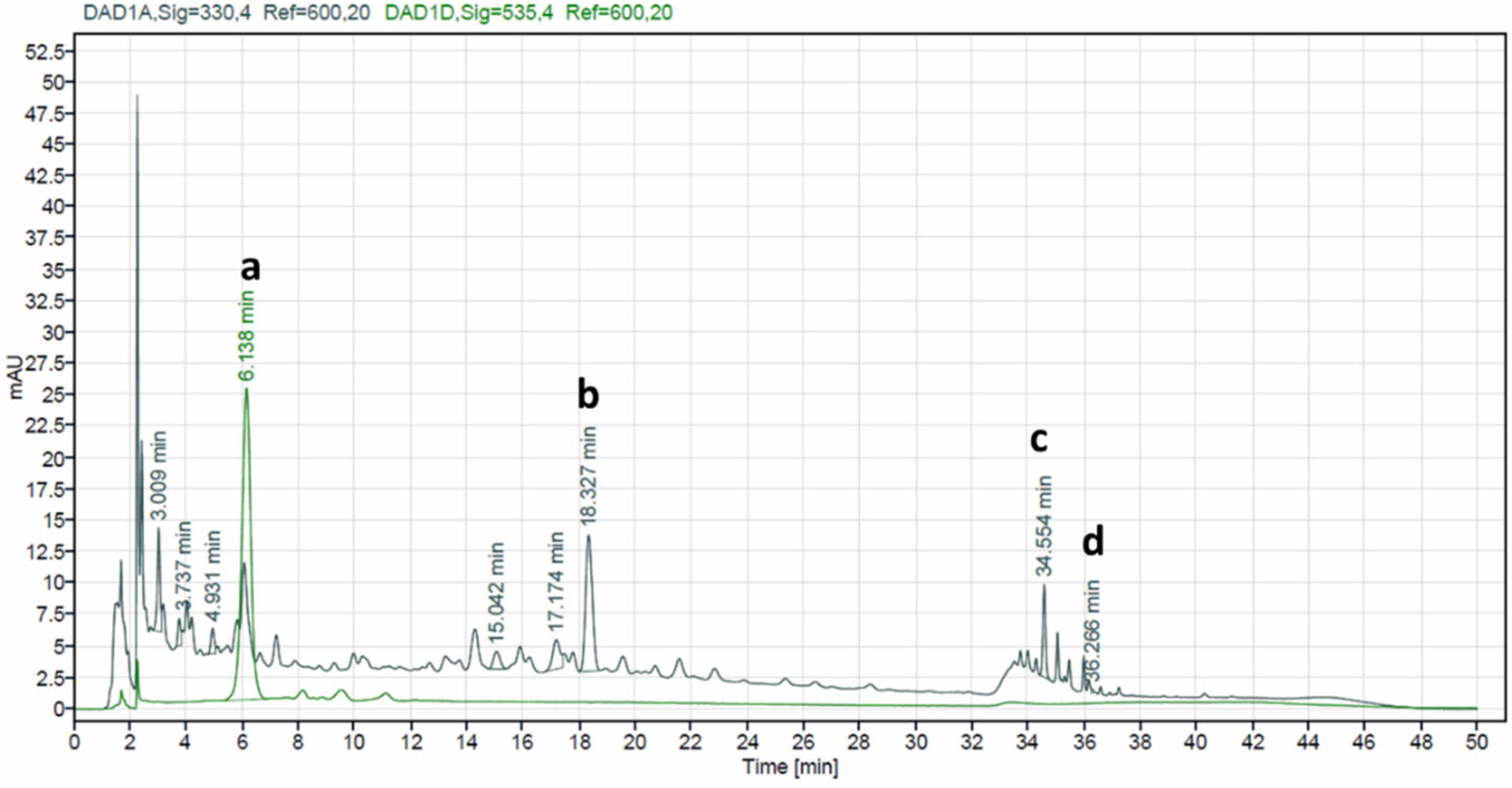
Our dry RFE consisted of 11.42 g of RFE (52% yield extraction), which contained 53.5 mg/g of total phenolic content, which agrees with previous reports describing the blackberry chemical composition, consisting mainly of carbohydrates and sugars as well as valuable phenolic compounds [29,34,35]. Prior to investigating the RFE effect on adipocyte metabolism, we performed a characterization of the composition of the concentrated dry extract by HPLC. The qualitative analysis revealed a complex phenolic profile of RFE, showing an interesting phytochemical composition of flavonols, anthocyanins, and ellagitannins. In particular, we verified the presence of compounds characteristic of blackberry, including cyanidin-3-glucoside, ellagic acid, quercetin, and kaempferol (Figure 2).

3.2. RFE Shows No Cytotoxic Effect

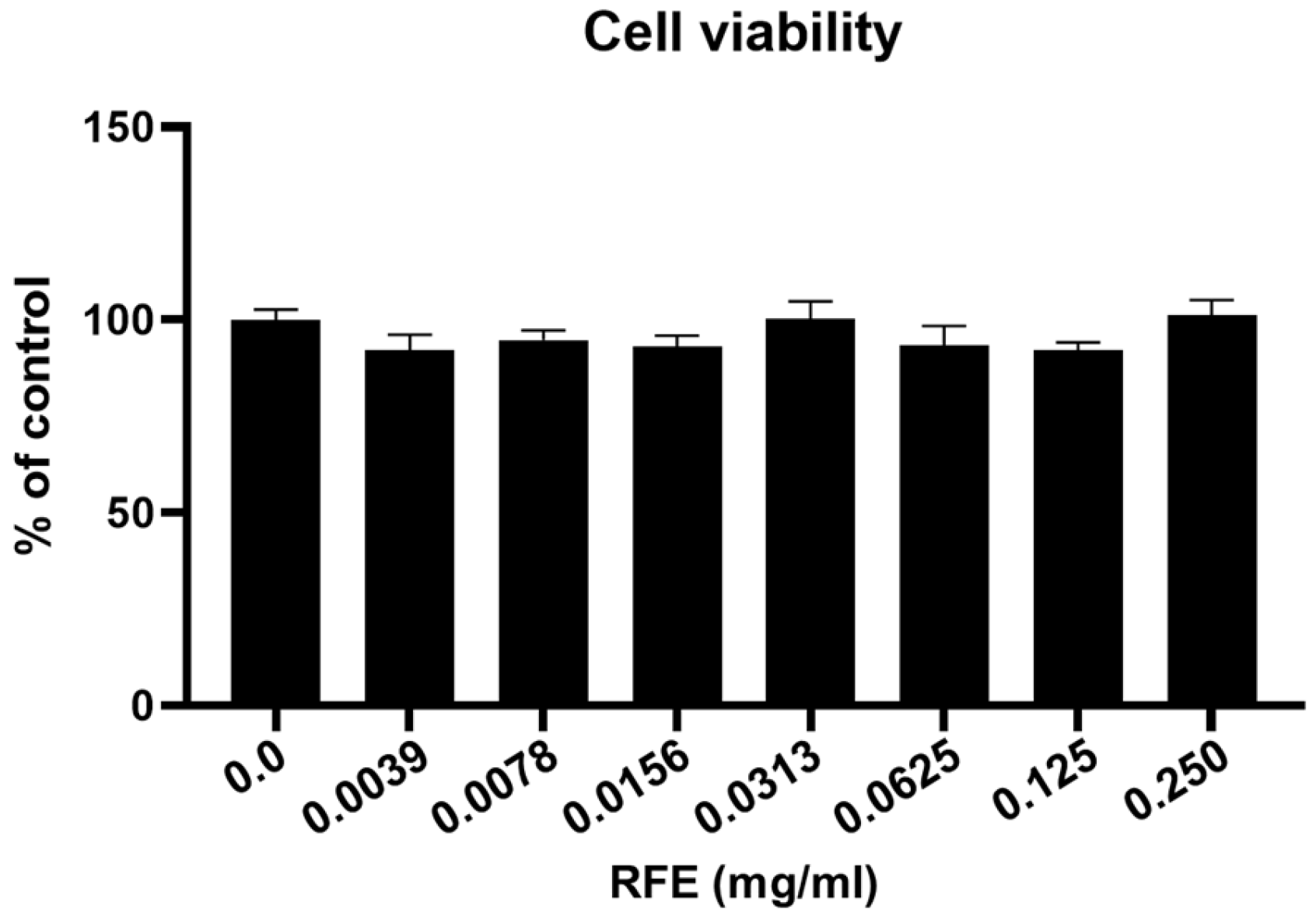
To follow, we tested whether RFE showed any cytotoxic effect by incubating 3T3-L1 preadipocytes with increasing concentrations of RFE. According to previous works using RFE in cell cultures [30], concentrations ranging from 0.0039 to 0.25 mg/mL were tested. The cell viability assay was performed as described in Section 2. As shown in Figure 3, there was no cytotoxicity registered at any of the concentrations tested.

3.3. RFE Reduces Lipolysis in Mature Adipocytes

We next studied the impact of RFE on lipid degradation in 3T3-L1 differentiated adipocytes. To do so, as fully described above under Materials and Methods, we followed the adipocyte differentiation protocol depicted in Figure 1 and stimulated with RFE at day 5 (D5). Then, after 24 h of stimulation, cells were harvested, and lipolysis was measured by analyzing glycerol levels. As a negative control, the same measurement was performed on 3T3-L1 preadipocytes harvested on day 0 (D0), which did not undergo differentiation.
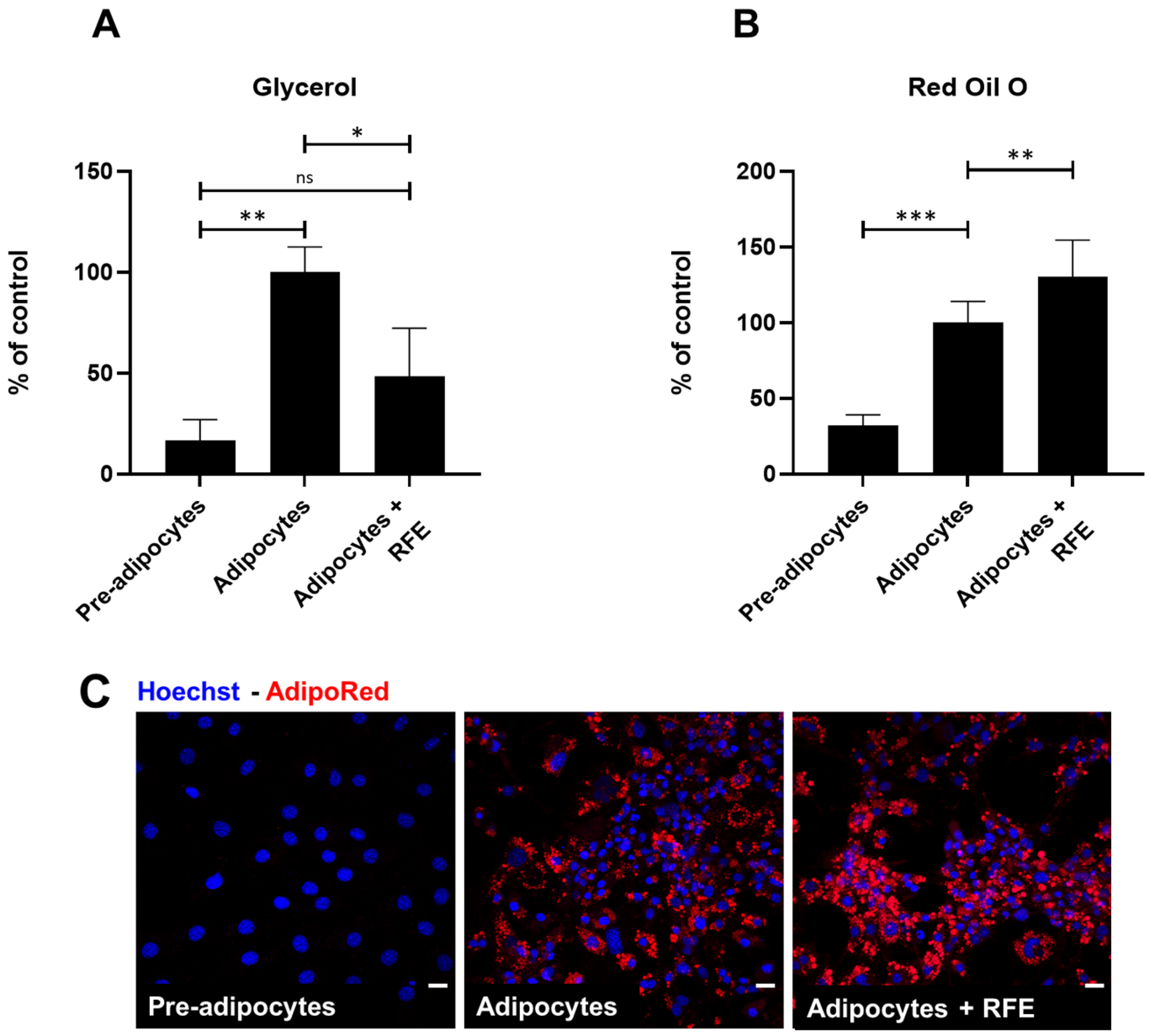
Differentiation of preadipocytes into mature adipocytes significantly increased glycerol release, as shown in Figure 4A. Notably, the treatment of differentiated adipocytes with RFE significantly reduced glycerol levels by 51% (n = 3, p < 0.05), indicating that RFE strongly reduces lipolysis in the adipocyte.

3.4. RFE Increases Lipogenesis in Mature Adipocytes

Since RFE inhibits lipid degradation, we next asked whether RFE contributed to lipid accumulation (lipogenesis) in 3T3-L1 differentiated adipocytes. To do so, we followed the same adipocyte differentiation protocol (described in Section 2) but stimulated with RFE at days 2 (D2) and 4 (D4) as depicted in Figure 1. Determination of lipid accumulation was performed by Oil Red O lipid staining. As a negative control, the same measurement was performed on non-differentiated 3T3-L1 preadipocytes harvested on day 0 (D0).
Our analysis through Red Oil O dye extraction and quantification showed that adipocyte differentiation increased lipid accumulation, which was further increased significantly by RFE stimulation up to 29% of adipocyte control (n = 3, p < 0.01), suggesting that RFE enhances adipogenesis (Figure 4B).
To further characterize the lipid accumulation intracellularly, we next stained lipids with the AdipoRedTM reagent, which emits fluorescence, allowing its visualization by confocal microscopy. Consistent with the results obtained in Red Oil O experiments, confocal images in Figure 4C illustrate the increase in lipid content induced by adipocyte differentiation and the enhancement of lipid accumulation as a consequence of RFE treatment, which further increased AdipoRedTM staining when compared to mature adipocytes. In conclusion, the data collectively show that RFE increases lipogenesis in mature adipocytes.

3.5. RNA Sequencing

To get a deeper insight into the molecular basis of the observed effects of RFE on adipocyte metabolism, we further investigated global changes in gene expression by using a transcriptomics-based approach. To address this, RNA from adipocytes undergoing differentiation and stimulated with RFE was isolated and sequenced by RNA-Seq. As a control, RNA from adipocytes and preadipocytes, non-stimulated with RFE, was also isolated and sequenced.
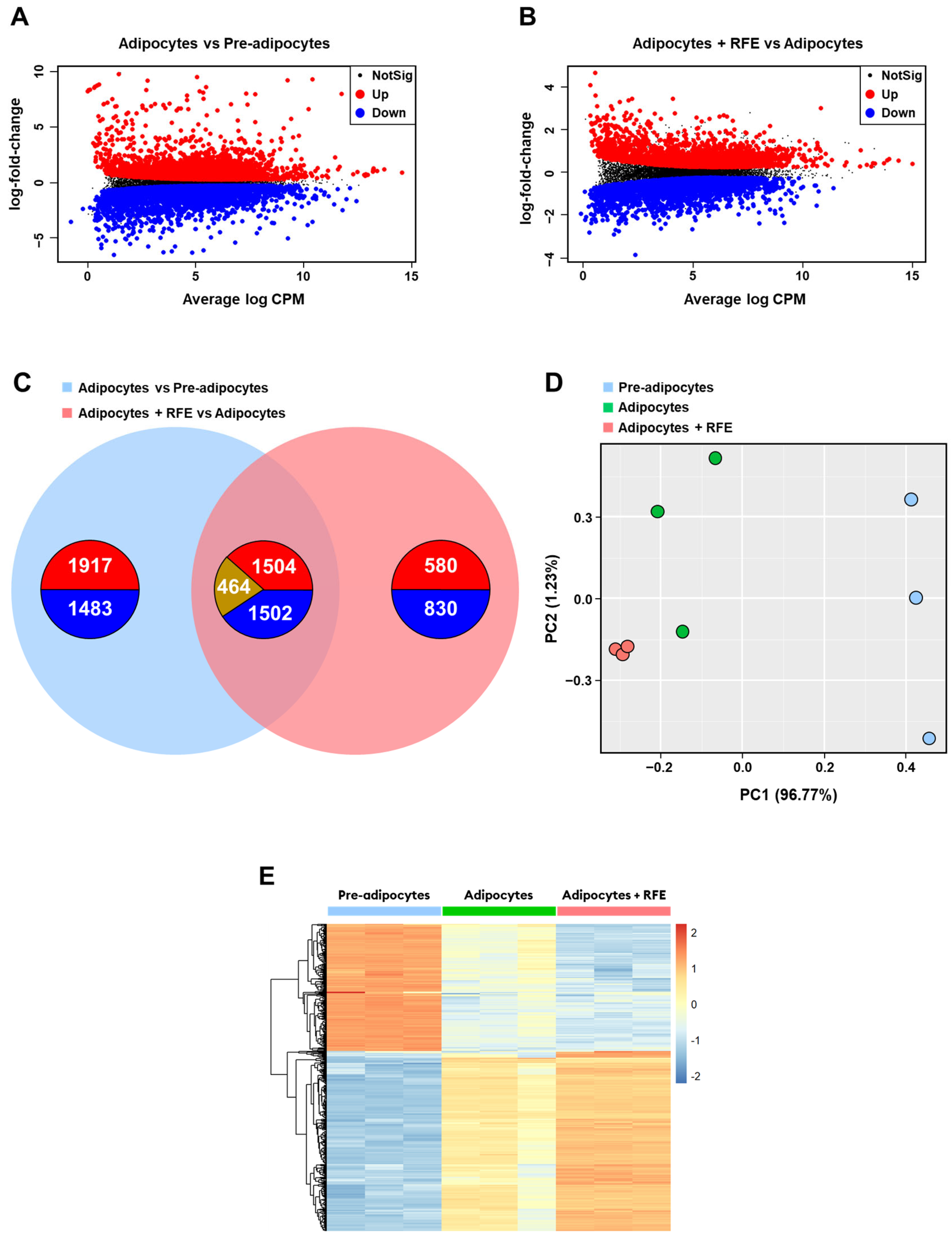
Our transcriptome study generated 22 Mb of reads on average for each sample, with a read mean quality >35 for all samples. Next, filtered reads were mapped to the reference genome with a mapping rate of >83%. Three conditions were tested in triplicate: non-differentiated preadipocytes (preadipocytes), differentiated adipocytes (adipocytes), and differentiated adipocytes treated with RFE (adipocytes + RFE). As depicted in the mean-difference plot (MD plot) in Figure 5A, we detected 3728 genes significantly upregulated by adipocyte differentiation (red dots), while 3236 genes were downregulated (blue dots). On the other hand, RFE stimulation of differentiated adipocytes induced a significant upregulation of 2308 genes and significantly downregulated 2596 genes (Figure 5B) when compared to non-treated adipocytes that underwent differentiation. In order to calculate the intersection of Differentially Expressed Genes (DEGs), the top differentially modulated genes, identified with the function topTags [36], were plotted in the Venn diagram depicted in Figure 5C, revealing that, while adipocyte differentiation exclusively regulated the expression of 3400 genes and RFE modulated the expression of 1410 genes, RFE also further increased the expression of 1504 DEGs already induced during adipocyte differentiation and, similarly, RFE further decreased the expression of 1502 DEGs inhibited by adipocyte differentiation. On the contrary, RFE modulated the expression of 464 genes in the opposite direction to adipocyte differentiation.
PCA [37] of all nine samples (Figure 5D), i.e., three conditions in triplicate, shows clustering along the PC1 axis (96.77% of gene variance), presenting a clear separation between preadipocytes and differentiated adipocytes. Interestingly, treatment of adipocytes with RFE moved samples further along the PC1 axis and also induced clustering of samples along the PC2 axis (1.23% gene variance), strongly suggesting that RFE facilitates adipocyte differentiation.
To further analyze the gene expression patterns, a heatmap according to the expression pattern of the 500 topmost variable genes was generated (Figure 5E). The results show the clustering of the three different conditions in triplicate and reveal a Differentially Expressed Gene signature between adipocytes and preadipocytes. Interestingly, visual inspection of the heatmap also shows that stimulation of adipocytes with RFE further induces gene expression modifications in the same direction as adipocyte differentiation, i.e., increased genes during adipocyte differentiation are further increased by RFE, and the same holds true for inhibited genes, so that the magnitude of change (fold change in gene expression levels) is increased. This result suggests that RFE enhances the progression of the pro-adipogenic program.
Taken together, our data serve to better delineate the gene expression signature of adipocyte differentiation and also strongly suggest that RFE regulates the gene signature of adipogenesis, thereby facilitating the progression from preadipocyte to adipocyte.

3.6. Functional Analysis of Differentially Expressed Genes (DEGs)

To better understand the implications of the gene expression patterns described above, we next performed a functional analysis of the 1000 topmost regulated genes. We selected the DEGs found when comparing adipocytes to preadipocytes and ran a functional analysis with the databases Gene Ontology (GO), Kyoto Encyclopedia of Genes and Genomes (KEGG), and Reactome (REAC) using the gprofiler2 R package [28]. We also performed the same functional analysis with the DEGs found between adipocytes stimulated or not stimulated with RFE.
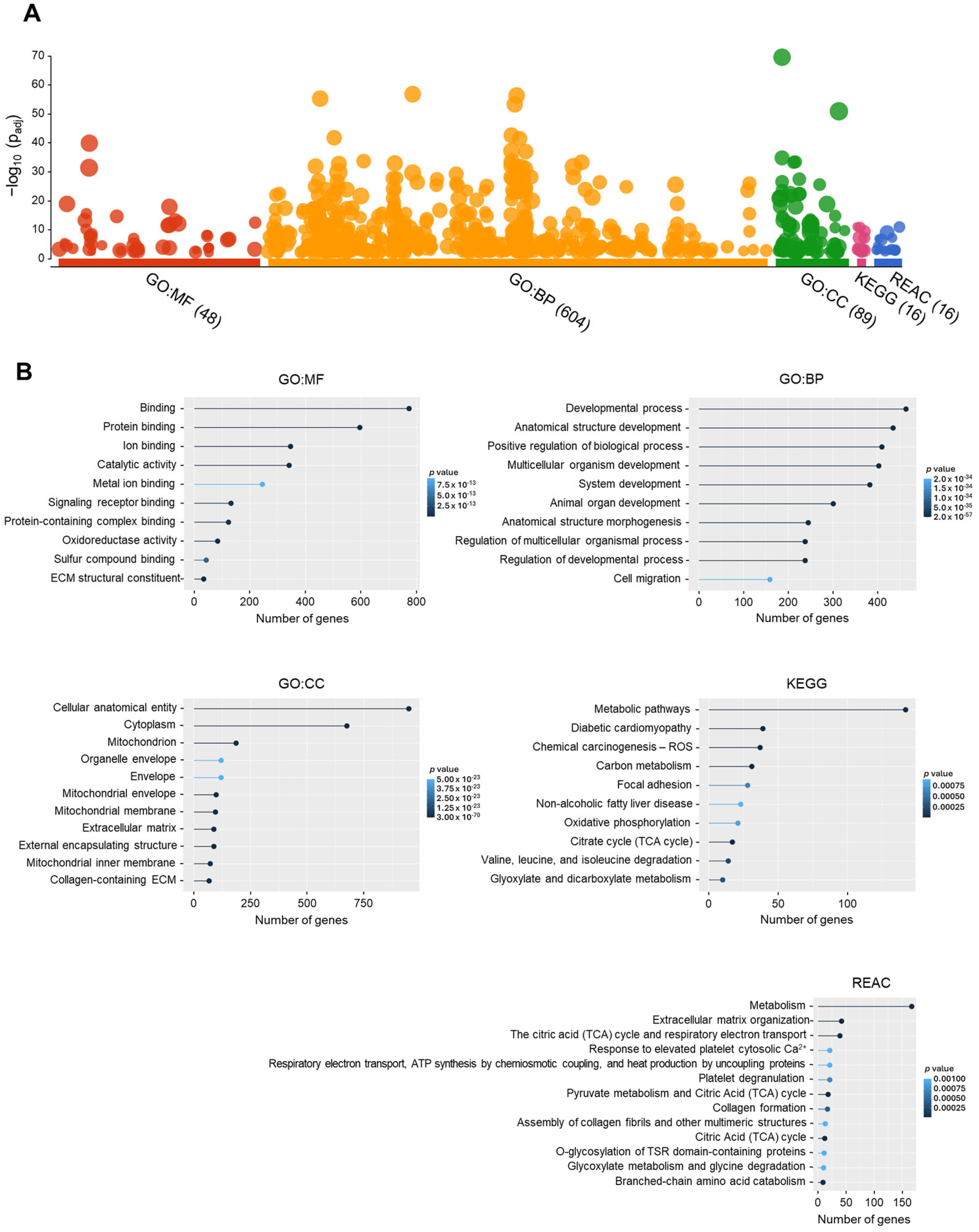
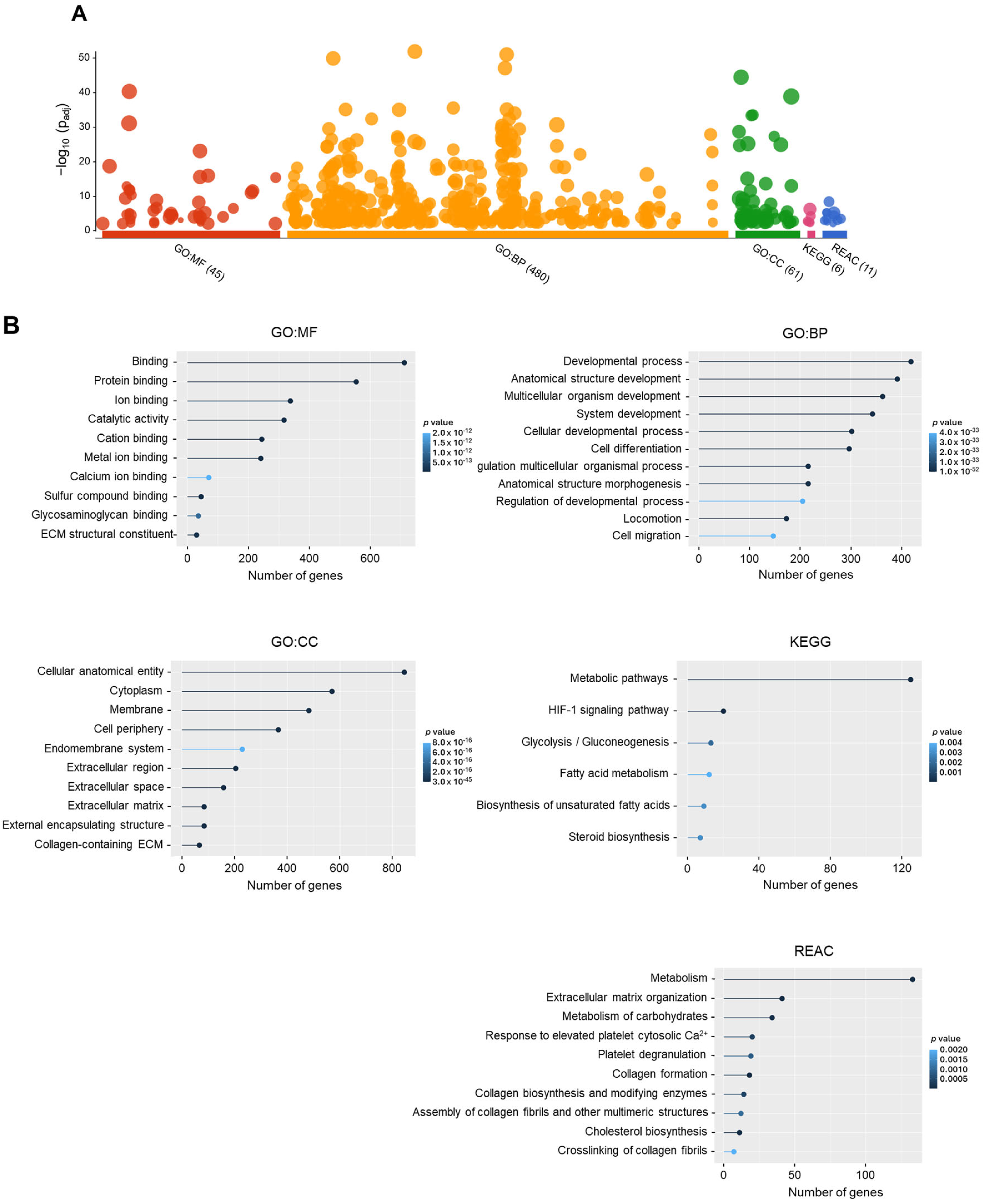
Regarding the adipogenic program, i.e., comparison of adipocytes to preadipocytes, as shown in Figure 6A, a total of 773 pathways were significantly (p < 0.05) enriched during adipocyte differentiation. In Figure 6B, the 10 topmost enriched molecular pathways for every database were plotted. Among the Molecular Functions (GO:MF) found most enriched by adipocyte differentiation were the terms binding and binding of different molecules, as well as the extracellular matrix structural constituent. As expected, the developmental process, together with other particular processes, was the Biological Process (GO:BP) most enriched by differentiation from preadipocytes to adipocytes. Similarly, cellular anatomical entity, and other Cellular Compartments (GO:CC) were preferentially affected, as well as the extracellular matrix and the cytoplasm. When DEGs were searched against the KEGG database, the most enriched pathway was metabolic pathways, as was expected since cellular metabolism undergoes a dramatic shift from 3T3-L1 preadipocytes to fully functional adipocytes. Similarly, the central metabolic regulator citrate cycle (TCA cycle) was also significantly enriched, together with other metabolic routes. In the same line, metabolism was the most enriched pathway when analyzing the REAC database, and the citric acid cycle (TCA cycle), among other metabolic pathways, was significantly enriched. Interestingly, and in agreement with the Cellular Compartment analysis from the GO database described above, extracellular matrix organization, collagen formation, and assembly of collagen fibrils and other multimeric structures were found to be significantly regulated during adipocyte differentiation, according to the REAC database.
Next, we performed a functional analysis with the 1000 topmost DEGs modulated by RFE incubation of differentiated adipocytes. As depicted in Figure 7A, 603 pathways were found to be significantly (p < 0.05) enriched when combining the results of all five databases: GO:MF, GO:BP, GO:CC, KEGG, and REAC. In agreement with the abovementioned notion that RFE facilitates the adipogenic program, in Figure 7B, similar pathways to those found for adipocyte differentiation were detected, such as the binding Molecular Function (GO:MF), among other routes indicating binding to different components, as well as the extracellular matrix structural constituent. Further support for the role of RFE in inducing the adipogenic program is provided by the finding that RFE stimulation of adipocytes also enriches the developmental process pathway, as well as other pathways involving the development of particular processes, as seen in the Biological Process database from GO (GO:BP). Inspection of the topmost modulated pathways regarding Cellular Compartments (GO:CC) indicates, again, that RFE stimulation of adipocytes triggers a similar differential gene expression to that of progression from preadipocytes to adipocytes, since not only are the two most significant pathways are the cellular anatomical entity and cytoplasm in both cases, but also several terms related to the extracellular region are enriched in both. In agreement, the most significantly enriched pathway, according to the KEGG database, is metabolic pathways, again suggesting that RFE induces similar enriched functional terms to those of adipocyte differentiation. Of particular interest, we observed metabolic routes related to lipid biosynthesis, such as glycolysis/gluconeogenesis, fatty acid metabolism, biosynthesis of unsaturated fatty acids, and steroid biosynthesis. Further evidence that RFE induces similar changes to those triggered by adipocyte differentiation is provided by the finding that the functional analysis of the DEGs elicited by RFE, according to the REAC database, shows that the most important terms are the same as those found in the functional analysis of adipocyte differentiation, i.e., metabolism and several terms describing remodeling of the extracellular space, such as extracellular matrix organization or collagen formation.

4. Discussion

The blackberry has reportedly been linked to interesting properties, such as prevention and treatment of metabolic syndrome, support of the digestive and immune systems, prevention of inflammatory disorders, cardiovascular diseases, and protective effects against gastrointestinal tract cancers [1]. Moreover, the blackberry is used in cosmetics for skin antiaging and hair protection applications due to its antioxidant and anti-inflammatory properties [2,3,4]. Interestingly, although there is increasing evidence that key components of the blackberry exert various functions regarding the adipogenic system [38], to our knowledge, there has been no direct evidence of the effect of blackberry extract on fat accumulation and breakdown, nor on adipocyte differentiation.
In this regard, previous reports did analyze the impact of different components found in blackberries on adipogenesis and lipolysis. Probably because preceding studies did not test full blackberry extracts but individual components in this fruit or other natural extracts containing some molecules shared with the blackberry, these findings provide mixed evidence. In this line, although the anthocyanin cyanidin 3-glucoside (C3G) present in our extract (Figure 2) has been described to limit body weight increase in db/db mice [8,39], it has also been shown to increase lipid droplets and induce preadipocyte differentiation into adipocytes by up-regulating C/EBPβ via cAMP in 3T3-L1 cells [40,41], as well as to increase the number and size of lipid droplets in the 3T3-L1 cell model [41,42] and to limit lipolysis [42,43]. Another well-known component of the blackberry is ellagic acid (EA), which was also found in our extract (Figure 2). Similar to C3G, there is conflicting evidence for the role of EA in adipogenesis. On the one hand, it has been shown that EA reduces lipid accumulation in 3T3-L1 preadipocytes [38,44], but on the other hand, it has been conversely reported that, again in 3T3-L1 cells, EA reduces lipolysis and does not interfere with adipogenesis [45] or that EA further promotes adipocyte differentiation from 3T3-L1 preadipocytes induced by insulin [46,47]. With regard to flavonols, among which quercetin and kaempferol (Figure 2), known to exert a myriad of biological effects [48], are key for the blackberry properties [1], there is accumulating evidence that both reduce the adipogenic process in 3T3-L1 cells via repression of the C/EBPβ and PPARγ programs [49]. Taken together, previous evidence regarding components of the blackberry suggests a potential effect of the blackberry on adipogenesis and lipolysis but leaves open the question regarding the net effect of a full extract of blackberry on adipocyte maturation and lipolysis.
Given the previous evidence described above, in the present work, we sought to shed some light on the adipogenic properties of the blackberry by directly testing the RFE on adipocyte differentiation and lipolysis. We followed a well-established protocol using the 3T3-L1 preadipocyte cellular system (Figure 1), the most commonly used in vitro model for the study of adipogenesis and lipolysis [20,50,51]. Measurement of glycerol levels serves as a direct assessment of lipolysis in cultured adipocytes [50,52]. Glycerol decrease upon stimulation with RFE (Figure 4A) strongly indicates RFE’s effect on the significant prevention of lipolysis in mature adipocytes. In the same line, by extracting Red Oil O (Figure 4B), a commonly used technique for the quantification of adipocyte differentiation [53], we revealed that RFE significantly increases adipogenesis. This result was consistent with our microscopic observation of lipid droplets stained fluorescently with AdiporedTM (Figure 4C). To our knowledge, this is the first direct description of the impact of a blackberry extract on the metabolic processes of lipolysis and/or adipogenesis and strongly indicates that it simultaneously promotes adipogenesis and inhibits lipolysis, resulting in more lipid-laden adipocytes.
RNA-Seq-based transcriptomic analysis provides an unbiased, genome-wide view of gene expression changes, allowing the discovery of pathways and regulated genes that would remain undetected when measuring only pre-selected targets by qPCR [54,55]. Our transcriptomic data provide additional strong evidence that RFE enhances adipocyte differentiation (Figure 5). In this regard, the statistical analysis with the decidetestDGE function of the edgeR package [36] shows that RFE stimulation further increases the expression of 1504 genes that are upregulated during adipocyte differentiation and, similarly, RFE represses 1502 genes inhibited during adipocyte differentiation (Figure 5C). A similar conclusion can be drawn from Figure 5D, since the PCA plot shows a strong clustering over the PC1 (96.77% of gene variance) due to adipocyte differentiation, and RFE further moves all three replicates along the PC1, which is in strong agreement with the heatmap in Figure 5E, showing the expression of the 500 topmost variable genes. Here, two clusters of gene expression, high and low expressed genes, are visually distinguished when comparing preadipocytes to adipocytes and represent the transcriptomic fingerprint of 3T3-L1 adipocyte differentiation. Interestingly, the impact of RFE is noticeable not only in a set of genes but also by modulating all 500 genes as a whole in the same direction, with an even higher magnitude than adipocyte differentiation alone.
In our hands, 3T3-L1 adipocyte differentiation triggered DEGs mainly related to metabolic processes, as detected in the pathway enrichment analysis, performed with the gprofiler2 R package when comparing our data with the KEGG and REACTOME databases (Figure 6B). Further supporting the notion that RFE facilitates adipocyte maturation, the functional analysis of adipocyte differentiation was found to be similar to that of the functional analysis of RFE stimulation of differentiated adipocytes (Figure 6 vs. Figure 7). In this regard, RFE stimulation not only shows the enrichment of similar terms in all five databases when compared to adipocyte differentiation alone, but it also finds the same most significant and gene-rich term (i.e., higher in the Y axis) as found in adipocyte differentiation, such as lipid biosynthesis metabolic pathways (glycolysis/gluconeogenesis, fatty acid metabolism, biosynthesis of unsaturated fatty acids, and steroid biosynthesis).
It is worth noting the relevance of the extracellular matrix (ECM) in the functional analysis found in the present work. In this line, it is well-described that collagen is the main component of the adipose ECM that contributes considerably to the non-cell mass and that it is mainly produced by adipocytes [56], so that the mechanical stress induced by the production of triglycerides can be mitigated by a strong external skeleton [57,58]. Therefore, as expected, the functional analysis in Figure 6 highlights the importance of ECM remodeling in adipocyte differentiation. When adipocytes were treated with RFE, many terms related to the ECM and collagen were found enriched (Figure 7), which indicates that RFE not only facilitates adipocyte differentiation in relation to metabolism but also facilitates the remodeling of the extracellular component needed for a healthy adipose tissue expansion [57,58]. In the same line, in pathological situations such as obesity, accumulation of collagen causes fibrosis of adipose tissue, increasing its rigidity [58,59], and cosmetic disorders such as cellulite are characterized by an ECM with enlarged fibrosclerotic strands [58,59]. Therefore, our findings suggest that RFE increases the subcutaneous adipose tissue but, at the same time, favors the remodeling of the hypodermal extracellular matrix to allow healthy adipose tissue growth, limiting fibrosis. Unlike natural extracts typically used for anti-obesity effects, the blackberry can instead be applied in cosmetic treatments aimed at achieving a volumizing effect. Additional protein-level assessments of extracellular matrix components would provide deeper insight into the mechanisms by which RFE contributes to adipose tissue remodeling.

5. Conclusions

The present work shows, for the first time to our knowledge, that direct stimulation with a blackberry extract (Rubus fruticosus fruit extract, RFE) facilitates adipocyte differentiation in the 3T3-L1 cell model. RFE reduced lipolysis, quantified as glycerol measurement, and increased adipogenesis, as found by Red Oil O quantification and fluorescent AdipoRedTM staining. Furthermore, transcriptomic analysis by RNA-Seq revealed that RFE modulates the adipocyte differentiation transcriptomic fingerprint as a whole, including not only adipocyte metabolism but also extracellular matrix remodeling, therefore suggesting that RFE may be of great interest for cosmetic treatments related to facial and body volumizing applications.

Author Contributions

Conceptualization, E.R., M.P.-A. and M.R.; methodology, M.P.-A., M.R. and C.M.-S.; validation, M.P.-A., M.R. and E.R.; formal analysis, M.P.-A. and C.M.-S.; investigation, M.P.-A. and C.M.-S.; data curation, M.P.-A. and C.M.-S.; writing: original draft preparation, S.B.-M.; writing: review and editing, M.P.-A., S.B.-M., E.R. and D.M.; visualization, S.B.-M.; supervision, M.P.-A., E.R., J.B. and D.M. All authors have read and agreed to the published version of the manuscript.

Funding

This research received no external funding.

Institutional Review Board Statement

Not applicable.

Informed Consent Statement

Not applicable.

Data Availability Statement

The original contributions presented in this study are included in the article. Further inquiries can be directed to the corresponding author.

Acknowledgments

For its help and participation in the transcriptomic studies, the authors thank the Bioinformatics Platform of the Max Delbrück Center for Molecular Medicine in Berlin, in particular to Altuna Akalin.

Conflicts of Interest

Emilio Rubio, Silvia Benito-Martínez, Jordi Bosch, David Manzano, and Miguel Perez-Aso, the authors, are employees of Provital, S.A. The authors declare that the research was conducted in the absence of any commercial or financial relationships that could be construed as a potential conflict of interest. The funders had no role in the design of the study; in the collection, analyses, or interpretation of data; in the writing of the manuscript; or in the decision to publish the results.

Abbreviations

3T3-L1Mouse Preadipocyte Cell Line
ATCCAmerican Type Culture Collection
BCABicinchoninic Acid
bpBase Pairs
CCCellular Component
C3GCyanidin-3-glucoside
cAMPCyclic Adenosine Monophosphate
D0, D2, D4, D5Day 0/2/4/5 of the Differentiation Protocol
DADDiode-Array Detection
DEGDifferentially Expressed Gene
DMEMDulbecco’s Modified Eagle Medium
DM1Differentiation Medium 1
DM2Differentiation Medium 2
ECMExtracellular Matrix
EAEllagic Acid
EtOHEthanol
FBSFetal Bovine Serum
FDRFalse Discovery Rate
GOGene Ontology
GO: BPGene Ontology Biological Process
GO: CCGene Ontology Cellular Component
GO: MFGene Ontology Molecular Function
HPLC-DADHigh-Performance Liquid Chromatography with Diode-Array Detection
IBMX3-isobutyl-1-methylxanthine
KEGGKyoto Encyclopedia of Genes and Genomes
LDLipid Droplet
MD plotMean-Difference plot
NCSNewborn Calf Serum
ORAOver-representation Analysis
PBSPhosphate-Buffered Saline
PCAPrincipal Component Analysis
PPARγPeroxisome Proliferator-Activated Receptor Gamma
REACReactome
RFERubus fruticosus Fruit Extract
RNA-SeqRNA Sequencing
RTRoom Temperature
SEMStandard Error of the Mean
STARSpliced Transcripts Alignment to a Reference
TCA cycleTricarboxylic Acid Cycle
TPCTotal Phenolic Content
UV-VisUltraviolet–Visible (spectroscopy)

References

  1. Kitrytė, V.; Narkevičiūtė, A.; Tamkutė, L.; Syrpas, M.; Pukalskienė, M.; Venskutonis, P.R. Consecutive High-Pressure and Enzyme Assisted Fractionation of Blackberry (Rubus Fruticosus L.) Pomace into Functional Ingredients: Process Optimization and Product Characterization. Food Chem. 2020, 312, 126072. [Google Scholar] [CrossRef]
  2. Buczyński, K.; Kapłan, M.; Jarosz, Z. Review of the Report on the Nutritional and Health-Promoting Values of Species of the Rubus L. Genus. Agriculture 2024, 14, 1324. [Google Scholar] [CrossRef]
  3. Varzaru, I.; Oancea, A.G.; Vlaicu, P.A.; Saracila, M.; Untea, A.E. Exploring the Antioxidant Potential of Blackberry and Raspberry Leaves: Phytochemical Analysis, Scavenging Activity, and In Vitro Polyphenol Bioaccessibility. Antioxidants 2023, 12, 2125. [Google Scholar] [CrossRef]
  4. Zia-Ul-Haq, M.; Riaz, M.; De Feo, V.; Jaafar, H.Z.E.; Moga, M. Rubus Fruticosus L.: Constituents, Biological Activities and Health Related Uses. Molecules 2014, 19, 10998–11029. [Google Scholar] [CrossRef]
  5. Ezure, T.; Amano, S. Rubus Suavissimus S. Lee Extract Increases Early Adipogenesis in 3T3-L1 Preadipocytes. J. Nat. Med. 2011, 65, 247–253. [Google Scholar] [CrossRef] [PubMed]
  6. Liu, M.; Wang, P.; Zhao, B.; Gao, X.; Meng, N.; Li, J.; Sun, J.; Lu, W.; Sun, B. Chemical Components and Health Benefits of Rubus Suavissimus S. Lee (Chinese Sweet Tea) and the Production Method of Rubusoside. Trends Food Sci. Technol. 2024, 143, 104252. [Google Scholar] [CrossRef]
  7. Jiang, M.-J.; Li, L.; Huang, W.-F.; Su, J.; Li, Y.-H.; Qu, X.-S.; Fan, L.-L. Rubus Chingii Var. Suavissimus Alleviates High-Fat Diet-Induced Lipid Metabolism Disorder via Modulation of the PPARs/SREBP Pathway in Syrian Golden Hamsters. J. Nat. Med. 2021, 75, 884–892. [Google Scholar] [CrossRef] [PubMed]
  8. Deepa, P.; Hong, M.; Sowndhararajan, K.; Kim, S. A Review of the Role of an Anthocyanin, Cyanidin-3-O-β-Glucoside in Obesity-Related Complications. Plants 2023, 12, 3889. [Google Scholar] [CrossRef]
  9. Oumeddour, D.Z.; Al-Dalali, S.; Zhao, L.; Zhao, L.; Wang, C. Recent Advances on Cyanidin-3-O-Glucoside in Preventing Obesity-Related Metabolic Disorders: A Comprehensive Review. Biochem. Biophys. Res. Commun. 2024, 729, 150344. [Google Scholar] [CrossRef]
  10. Molonia, M.S.; Salamone, F.L.; Muscarà, C.; Costa, G.; Vento, G.; Saija, A.; Speciale, A.; Cimino, F. Regulation of Mitotic Clonal Expansion and Thermogenic Pathway Are Involved in the Antiadipogenic Effects of Cyanidin-3-O-Glucoside. Front. Pharmacol. 2023, 14, 1225586. [Google Scholar] [CrossRef]
  11. Najmi, A.; Nikrad, N.; Ghaffari Sarghein, M.; Hosseinpour Dogolsar, M.; Alizadeh, M. Ellagic Acid Supplementation on Oxidative Stress, Antioxidative Capacity and Inflammation Biomarkers: A Systematic Review and Dose–Response Meta-Analysis of Randomized Controlled Trials. J. Funct. Foods 2024, 122, 106492. [Google Scholar] [CrossRef]
  12. Settakorn, K.; Inpan, R.; Na Takuathung, M.; Koonrungsesomboon, N. Effects of Ellagic Acid on Lipid Profiles, Fat Weight, and Anthropometric Parameters in Metabolic Syndrome: A Systematic Review and Meta-Analysis of Animal and Human Studies. Nutr. Rev. 2025, 83, 2073–2083. [Google Scholar] [CrossRef] [PubMed]
  13. Wang, Y.; Li, Z.; He, J.; Zhao, Y. Quercetin Regulates Lipid Metabolism and Fat Accumulation by Regulating Inflammatory Responses and Glycometabolism Pathways: A Review. Nutrients 2024, 16, 1102. [Google Scholar] [CrossRef] [PubMed]
  14. Maleki, M.H.; Abdizadeh Javazm, S.; Dastghaib, S.; Panji, A.; Hojjati Far, M.; Mahmoodi, H.; Siri, M.; Shafiee, S.M. The Effect of Quercetin on Adipogenesis, Lipolysis, and Apoptosis in 3T3-L1 Adipocytes: The Role of SIRT1 Pathways. Obes. Sci. Pract. 2024, 10, e752. [Google Scholar] [CrossRef]
  15. Song, S.; Ha, A.W.; Kim, W. Quercetin Inhibits Body Weight Gain and Adipogenesis via Matrix Metalloproteinases in Mice Fed a High-Fat Diet. Nutr. Res. Pract. 2023, 17, 438–450. [Google Scholar] [CrossRef]
  16. Raposo, F.; Borja, R.; Gutiérrez-González, J.A. A Comprehensive and Critical Review of the Unstandardized Folin-Ciocalteu Assay to Determine the Total Content of Polyphenols: The Conundrum of the Experimental Factors and Method Validation. Talanta 2024, 272, 125771. [Google Scholar] [CrossRef]
  17. Pérez, M.; Dominguez-López, I.; Lamuela-Raventós, R.M. The Chemistry Behind the Folin–Ciocalteu Method for the Estimation of (Poly)Phenol Content in Food: Total Phenolic Intake in a Mediterranean Dietary Pattern. J. Agric. Food Chem. 2023, 71, 17543. [Google Scholar] [CrossRef]
  18. Longhin, E.M.; El Yamani, N.; Rundén-Pran, E.; Dusinska, M. The Alamar Blue Assay in the Context of Safety Testing of Nanomaterials. Front. Toxicol. 2022, 4, 981701. [Google Scholar] [CrossRef]
  19. Dinh, M.N.; Hitomi, M.; Al-Turaihi, Z.A.; Scott, J.G. Alamar Blue Assay Optimization to Minimize Drug Interference and Inter Assay Viability. MethodsX 2024, 13, 103024. [Google Scholar] [CrossRef]
  20. Kaczmarek, I.; Suchý, T.; Strnadová, M.; Thor, D. Qualitative and Quantitative Analysis of Lipid Droplets in Mature 3T3-L1 Adipocytes Using Oil Red O. STAR Protoc. 2024, 5, 102977. [Google Scholar] [CrossRef]
  21. Bini, S.; Covino, S.; Minicocci, I.; D’Erasmo, L.; Tramontano, D.; Di Costanzo, A.; Arca, M.; Pecce, V. Protocol for Oil Red O Staining of Low-Density Lipoproteins for in Vivo Cell Treatment. STAR Protoc. 2024, 5, 103376. [Google Scholar] [CrossRef] [PubMed]
  22. Wurmus, R.; Uyar, B.; Osberg, B.; Franke, V.; Gosdschan, A.; Wreczycka, K.; Ronen, J.; Akalin, A. PiGx: Reproducible Genomics Analysis Pipelines with GNU Guix. Gigascience 2018, 7, giy123. [Google Scholar] [CrossRef]
  23. Coxe, T.; Burks, D.J.; Singh, U.; Mittler, R.; Azad, R.K. Benchmarking RNA-Seq Aligners at Base-Level and Junction Base-Level Resolution Using the Arabidopsis Thaliana Genome. Plants 2024, 13, 582. [Google Scholar] [CrossRef] [PubMed]
  24. Jiang, G.; Zheng, J.-Y.; Ren, S.-N.; Yin, W.; Xia, X.; Li, Y.; Wang, H.-L. A Comprehensive Workflow for Optimizing RNA-Seq Data Analysis. BMC Genom. 2024, 25, 631. [Google Scholar] [CrossRef] [PubMed]
  25. Ziemann, M.; Schroeter, B.; Bora, A. Two Subtle Problems with Overrepresentation Analysis. Bioinform. Adv. 2024, 4, 159. [Google Scholar] [CrossRef]
  26. Ruggiero, A.; Punzo, P.; Van Oosten, M.J.; Cirillo, V.; Esposito, S.; Costa, A.; Maggio, A.; Grillo, S.; Batelli, G. Transcriptomic and Splicing Changes Underlying Tomato Responses to Combined Water and Nutrient Stress. Front. Plant Sci. 2022, 13, 974048. [Google Scholar] [CrossRef]
  27. Chen, Y.; Chen, L.; Lun, A.T.L.; Baldoni, P.L.; Smyth, G.K. EdgeR v4: Powerful Differential Analysis of Sequencing Data with Expanded Functionality and Improved Support for Small Counts and Larger Datasets. Nucleic Acids Res. 2025, 53, gkaf018. [Google Scholar] [CrossRef]
  28. Kolberg, L.; Raudvere, U.; Kuzmin, I.; Adler, P.; Vilo, J.; Peterson, H. G:Profiler—Interoperable Web Service for Functional Enrichment Analysis and Gene Identifier Mapping (2023 Update). Nucleic Acids Res. 2023, 51, W207–W212. [Google Scholar] [CrossRef]
  29. Memete, A.R.; Sărac, I.; Teusdea, A.C.; Budău, R.; Bei, M.; Vicas, S.I. Bioactive Compounds and Antioxidant Capacity of Several Blackberry (Rubus Spp.) Fruits Cultivars Grown in Romania. Horticulturae 2023, 9, 556. [Google Scholar] [CrossRef]
  30. Martins, M.S.; Rodrigues, M.; Flores-Félix, J.D.; Garcia-Viguera, C.; Moreno, D.A.; Alves, G.; Silva, L.R.; Gonçalves, A.C. The Effect of Phenolic-Rich Extracts of Rubus Fruticosus, R. Ulmifolius and Morus Nigra on Oxidative Stress and Caco-2 Inhibition Growth. Nutrients 2024, 16, 1361. [Google Scholar] [CrossRef]
  31. Li, J.; Shi, C.; Shen, D.; Han, T.; Wu, W.; Lyu, L.; Li, W. Composition and Antioxidant Activity of Anthocyanins and Non-Anthocyanin Flavonoids in Blackberry from Different Growth Stages. Foods 2022, 11, 2902. [Google Scholar] [CrossRef] [PubMed]
  32. Sánchez-Velázquez, O.A.; Cuevas-Rodríguez, E.O.; Reyes-Moreno, C.; Ríos-Iribe, É.Y.; Hernández-Álvarez, A.J.; León-López, L.; Milán-Carrillo, J. Profiling Modifications in Physicochemical, Chemical and Antioxidant Properties of Wild Blackberry (Rubus Sp.) during Fermentation with EC 1118 Yeast. J. Food Sci. Technol. 2021, 58, 4654–4665. [Google Scholar] [CrossRef] [PubMed]
  33. Cosme, F.; Pinto, T.; Aires, A.; Morais, M.C.; Bacelar, E.; Anjos, R.; Ferreira-Cardoso, J.; Oliveira, I.; Vilela, A.; Gonçalves, B. Red Fruits Composition and Their Health Benefits—A Review. Foods 2022, 11, 644. [Google Scholar] [CrossRef] [PubMed]
  34. Kaume, L.; Howard, L.R.; Devareddy, L. The Blackberry Fruit: A Review on Its Composition and Chemistry, Metabolism and Bioavailability, and Health Benefits. J. Agric. Food Chem. 2012, 60, 5716–5727. [Google Scholar] [CrossRef]
  35. Karaklajic-Stajic, Z.; Tomic, J.; Pesakovic, M.; Paunovic, S.M.; Stampar, F.; Mikulic-Petkovsek, M.; Grohar, M.C.; Hudina, M.; Jakopic, J. Black Queens of Fruits: Chemical Composition of Blackberry (Rubus Subg. Rubus Watson) and Black Currant (Ribes Nigrum L.) Cultivars Selected in Serbia. Foods 2023, 12, 2775. [Google Scholar] [CrossRef]
  36. Robinson, M.D.; McCarthy, D.J.; Smyth, G.K. EdgeR: A Bioconductor Package for Differential Expression Analysis of Digital Gene Expression Data. Bioinformatics 2010, 26, 139–140. [Google Scholar] [CrossRef]
  37. McWhinney, S.R.; Hlinka, J.; Bakstein, E.; Dietze, L.M.F.; Corkum, E.L.V.; Abé, C.; Alda, M.; Alexander, N.; Benedetti, F.; Berk, M.; et al. Principal Component Analysis as an Efficient Method for Capturing Multivariate Brain Signatures of Complex Disorders— ENIGMA Study in People with Bipolar Disorders and Obesity. Hum. Brain Mapp. 2024, 45, e26682. [Google Scholar] [CrossRef]
  38. Kim, K.J.; Jeong, E.-S.; Lee, K.H.; Na, J.-R.; Park, S.; Kim, J.S.; Na, C.-S.; Kim, Y.R.; Kim, S. Unripe Rubus Coreanus Miquel Extract Containing Ellagic Acid Promotes Lipolysis and Thermogenesis In Vitro and In Vivo. Molecules 2020, 25, 5954. [Google Scholar] [CrossRef]
  39. Han, S.; Yang, Y.; Lu, Y.; Guo, J.; Han, X.; Gao, Y.; Huang, W.; You, Y.; Zhan, J. Cyanidin-3-O-Glucoside Regulates the Expression of Ucp1 in Brown Adipose Tissue by Activating Prdm16 Gene. Antioxidants 2021, 10, 1986. [Google Scholar] [CrossRef]
  40. Matsukawa, T.; Villareal, M.O.; Motojima, H.; Isoda, H. Increasing CAMP Levels of Preadipocytes by Cyanidin-3-Glucoside Treatment Induces the Formation of Beige Phenotypes in 3T3-L1 Adipocytes. J. Nutr. Biochem. 2017, 40, 77–85. [Google Scholar] [CrossRef]
  41. Inaguma, T.; Han, J.; Isoda, H. Improvement of Insulin Resistance by Cyanidin 3-Glucoside, Anthocyanin from Black Beans through the up-Regulation of GLUT4 Gene Expression. BMC Proc. 2011, 5, P21. [Google Scholar] [CrossRef]
  42. Björk, C.; Wilhelm, U.; Mandrup, S.; Larsen, B.D.; Bordoni, A.; Hedén, P.; Rydén, M.; Arner, P.; Laurencikiene, J. Effects of Selected Bioactive Food Compounds on Human White Adipocyte Function. Nutr. Metab. 2016, 13, 4. [Google Scholar] [CrossRef]
  43. Wang, L.; Li, L.; Ran, X.; Long, M.; Zhang, M.; Tao, Y.; Luo, X.; Wang, Y.; Ma, X.; Halmurati, U.; et al. Ellagic Acid Reduces Adipogenesis through Inhibition of Differentiation-Prevention of the Induction of Rb Phosphorylation in 3T3-L1 Adipocytes. Evid.-Based Complement. Altern. Med. 2013, 2013, 287534. [Google Scholar] [CrossRef] [PubMed]
  44. You, Y.; Yuan, X.; Liu, X.; Liang, C.; Meng, M.; Huang, Y.; Han, X.; Guo, J.; Guo, Y.; Ren, C.; et al. Cyanidin-3-glucoside Increases Whole Body Energy Metabolism by Upregulating Brown Adipose Tissue Mitochondrial Function. Mol. Nutr. Food Res. 2017, 61, 1700261. [Google Scholar] [CrossRef] [PubMed]
  45. Cisneros-Zevallos, L.; Bang, W.Y.; Delgadillo-Puga, C. Ellagic Acid and Urolithins A and B Differentially Regulate Fat Accumulation and Inflammation in 3T3-L1 Adipocytes While Not Affecting Adipogenesis and Insulin Sensitivity. Int. J. Mol. Sci. 2020, 21, 2086. [Google Scholar] [CrossRef]
  46. Perera, A.; Ton, S.H.; Moorthy, M.; Palanisamy, U.D. The Insulin-Sensitising Properties of the Ellagitannin Geraniin and Its Metabolites from Nephelium Lappaceum Rind in 3T3-L1 Cells. Int. J. Food Sci. Nutr. 2020, 71, 940–953. [Google Scholar] [CrossRef] [PubMed]
  47. Bae, C.-R.; Park, Y.-K.; Cha, Y.-S. Quercetin-Rich Onion Peel Extract Suppresses Adipogenesis by down-Regulating Adipogenic Transcription Factors and Gene Expression in 3T3-L1 Adipocytes. J. Sci. Food Agric. 2014, 94, 2655–2660. [Google Scholar] [CrossRef]
  48. Stachelska, M.A.; Karpiński, P.; Kruszewski, B. A Comprehensive Review of Biological Properties of Flavonoids and Their Role in the Prevention of Metabolic, Cancer and Neurodegenerative Diseases. Appl. Sci. 2025, 15, 10840. [Google Scholar] [CrossRef]
  49. Eseberri, I.; Miranda, J.; Lasa, A.; Churruca, I.; Portillo, M.P. Doses of Quercetin in the Range of Serum Concentrations Exert Delipidating Effects in 3T3-L1 Preadipocytes by Acting on Different Stages of Adipogenesis, but Not in Mature Adipocytes. Oxidative Med. Cell. Longev. 2015, 2015, 480943. [Google Scholar] [CrossRef]
  50. Jackson, H.C.; Pheiffer, C.; Jack, B.; Africander, D. Time- and Glucose-Dependent Differentiation of 3T3-L1 Adipocytes Mimics Dysfunctional Adiposity. Biochem. Biophys. Res. Commun. 2023, 671, 286–291. [Google Scholar] [CrossRef]
  51. Li, J.; Jin, C.; Gustafsson, S.; Rao, A.; Wabitsch, M.; Park, C.Y.; Quertermous, T.; Knowles, J.W.; Bielczyk-Maczynska, E. Single-Cell Transcriptome Dataset of Human and Mouse in Vitro Adipogenesis Models. Sci. Data 2023, 10, 387. [Google Scholar] [CrossRef]
  52. Flori, L.; Galgani, G.; Bray, G.; Ippolito, C.; Segnani, C.; Pellegrini, C.; Citi, V.; Bernardini, N.; Martelli, A.; Calderone, V. Development of an Adipocyte Differentiation Protocol Using 3T3-L1 Cells for the Investigation of the Browning Process: Identification of the PPAR-γ Agonist Rosiglitazone as a Browning Reference Drug. Front. Pharmacol. 2025, 16, 1546456. [Google Scholar] [CrossRef] [PubMed]
  53. Schweiger, M.; Eichmann, T.O.; Taschler, U.; Zimmermann, R.; Zechner, R.; Lass, A. Measurement of Lipolysis. Methods Enzymol. 2014, 538, 171–193. [Google Scholar] [PubMed]
  54. Deshpande, D.; Chhugani, K.; Chang, Y.; Karlsberg, A.; Loeffler, C.; Zhang, J.; Muszyńska, A.; Munteanu, V.; Yang, H.; Rotman, J.; et al. RNA-Seq Data Science: From Raw Data to Effective Interpretation. Front. Genet. 2023, 14, 997383. [Google Scholar] [CrossRef] [PubMed]
  55. Gao, W.; Zhou, J.; Gu, X.; Zhou, Y.; Wang, L.; Si, N.; Fan, X.; Bian, B.; Wang, H.; Zhao, H. A Multi-Network Comparative Analysis of Whole-Transcriptome and Translatome Reveals the Effect of High-Fat Diet on APP/PS1 Mice and the Intervention with Chinese Medicine. Front. Nutr. 2022, 9, 974333. [Google Scholar] [CrossRef]
  56. Major, G.; Simcock, J.; Kumar, A.; Kleffmann, T.; Woodfield, T.B.F.; Lim, K.S. Comprehensive Matrisome Profiling of Human Adipose Tissue for Soft Tissue Reconstruction. Adv. Biol. 2024, 8, 2300448. [Google Scholar] [CrossRef]
  57. de Sousa Neto, I.V.; Durigan, J.L.Q.; da Silva, A.S.R.; de Cássia Marqueti, R. Adipose Tissue Extracellular Matrix Remodeling in Response to Dietary Patterns and Exercise: Molecular Landscape, Mechanistic Insights, and Therapeutic Approaches. Biology 2022, 11, 765. [Google Scholar] [CrossRef]
  58. Jääskeläinen, I.; Petäistö, T.; Mirzarazi Dahagi, E.; Mahmoodi, M.; Pihlajaniemi, T.; Kaartinen, M.T.; Heljasvaara, R. Collagens Regulating Adipose Tissue Formation and Functions. Biomedicines 2023, 11, 1412. [Google Scholar] [CrossRef]
  59. Chen, H.; Yan, X.; Sun, A.; Zhang, L.; Zhang, J.; Yan, Y. Adipose Extracellular Matrix Deposition Is an Indicator of Obesity and Metabolic Disorders. J. Nutr. Biochem. 2023, 111, 109159. [Google Scholar] [CrossRef]
Figure 1. Schematic representation of the adipocyte differentiation protocol followed for measuring lipolysis and adipogenesis. The composition of DM1 (Differentiation Medium 1) and DM2 (Differentiation Medium 2) is detailed in Section 2. “Image adapted from Servier Medical Art (https://smart.servier.com/ (https://smart.servier.com/ accessed on 13 January 2025)), licensed under CC BY 4.0 (https://creativecommons.org/licenses/by/4.0/ (https://smart.servier.com/ accessed on 13 January 2025))”.
Cosmetics 13 00082 g001
Figure 2. High-performance liquid chromatography (HPLC) chromatograms of Rubus fruticosus fruit extract (RFE) monitored at 330 nm (black line) and 535 nm (green line). Peaks correspond to a: cyanidin-3-glucoside (6.14 min), b: ellagic acid (18.33 min), c: quercetin (34.55 min), and d: kaempferol (36.23 min).
Cosmetics 13 00082 g002
Figure 3. RFE is not cytotoxic at any of the concentrations tested. 3T3-L1 preadipocytes were incubated with the indicated concentrations of RFE, as described under Section 2. Data represent mean ± SEM.
Cosmetics 13 00082 g003
Figure 4. RFE impact on lipolysis and adipogenesis. (A) 3T3-L1 preadipocytes, differentiated adipocytes, and differentiated adipocytes stimulated with RFE (0.0625 mg/mL) were used to analyze lipolysis by quantification of glycerol levels and (B) lipogenesis by Red Oil O measurement or by (C) fluorescence imaging with AdiporedTM staining. Data represents mean ± SEM of three independent experiments. Statistics performed by one-way ANOVA followed by Tukey’s post hoc test were ns non-significant, * p < 0.05, ** p < 0.01, and *** p < 0.001 vs. adipocytes. Scale bar: 20 µm.
Cosmetics 13 00082 g004
Figure 5. Differentially Expressed Gene (DEG) profiling. The mean difference plot (MD plot) shows Differentially Expressed Genes (DEGs). Non-significant DEGs are depicted in solid black, significant upregulated DEGs are depicted in red, and downregulated DEGs in blue when comparing (A) adipocytes to preadipocytes or (B) adipocytes stimulated with RFE 0.0625 mg/mL to non-stimulated adipocytes. p values were calculated using the R-package edgeR as described in the Methods Section. (C) Venn diagram presenting the number of DEGs that are unique or shared between both comparisons, adipocytes vs. preadipocytes and adipocytes stimulated or not stimulated with RFE 0.0625 mg/mL. In red are depicted upregulated genes, in blue are downregulated genes, and in yellow are genes that are oppositely regulated in both comparisons. (D) Principal Component Analysis (PCA) plot. (E) Heatmap representing gene expression patterns of the 500 topmost variable genes. Expression level values are presented in log2 (fold change).
Cosmetics 13 00082 g005
Figure 6. Pathway enrichment analysis of adipocyte vs. preadipocyte DEGs. (A) Manhattan plot of significantly enriched terms from the 1000 topmost DEGs between adipocyte and preadipocyte. Enrichment analysis was performed with the over-representation analysis (ORA function; g:GOSt) of the gprofiler2 R package. Databases used were Gene Ontology (GO) Molecular Function (GO:MF), Biological Process (GO:BP), Cellular Compartment (GO:CC), Kyoto Encyclopedia of Genes and Genomes (KEGG), and Reactome (REAC). (B) Bubble plots showing the top 10 most regulated terms of each database. p values are depicted in a blue scale, and the Y-axis represents gene counts.
Cosmetics 13 00082 g006
Figure 7. Pathway enrichment analysis of RFE-stimulated vs. non-stimulated adipocytes DEGs. (A) Manhattan plot of significantly enriched terms from the 1000 topmost DEGs between adipocyte RFE-stimulated and non-stimulated. Enrichment analysis was performed with the over-representation analysis (ORA) function (g:GOSt) of the gprofiler2 R package. Databases used were Gene Ontology (GO) Molecular Function (GO:MF), Biological Process (GO:BP), Cellular Compartment (GO:CC), Kyoto Encyclopedia of Genes and Genomes (KEGG), and Reactome (REAC). (B) Bubble plots showing the top 10 most regulated terms of each database. p values are depicted in a blue scale, and the Y-axis represents gene counts.
Cosmetics 13 00082 g007
Disclaimer/Publisher’s Note: The statements, opinions and data contained in all publications are solely those of the individual author(s) and contributor(s) and not of MDPI and/or the editor(s). MDPI and/or the editor(s) disclaim responsibility for any injury to people or property resulting from any ideas, methods, instructions or products referred to in the content.