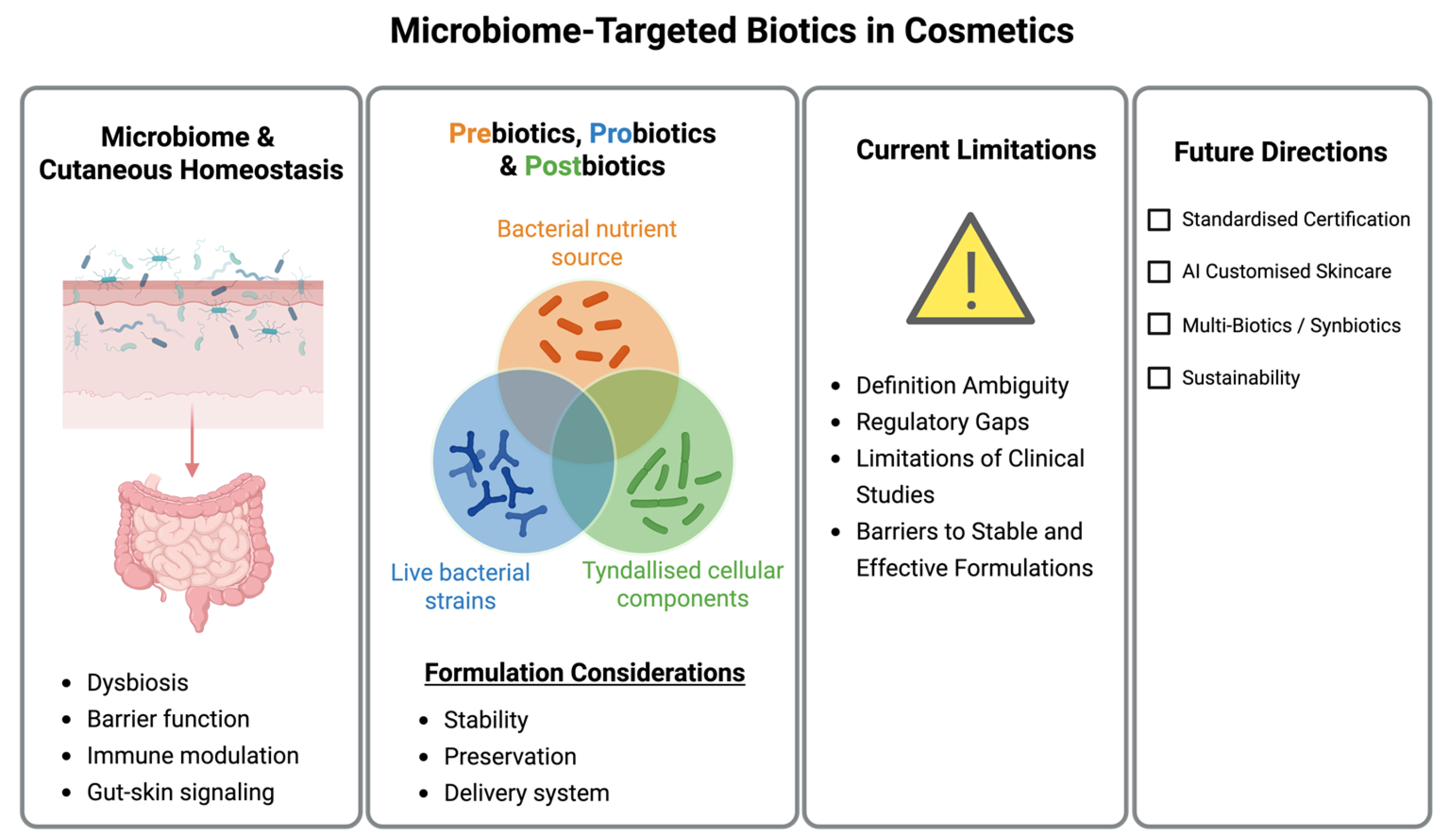

The Skin Microbiome Revolution: The Science and Challenges of Prebiotics, Probiotics, and Postbiotics in Skincare

 , and
, and 
Abstract
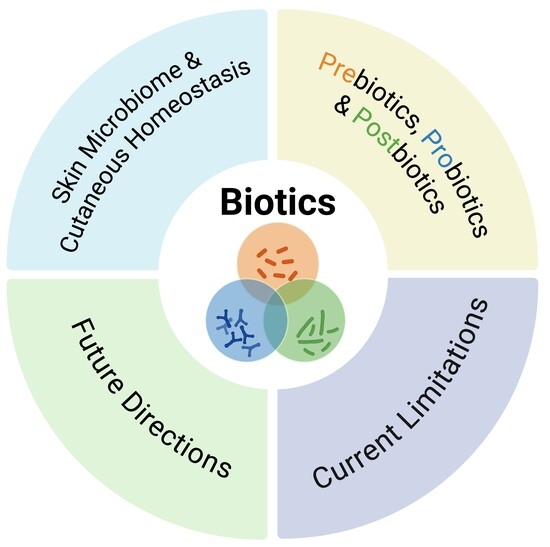
1. Introduction
1.1. The Skin Microbiome and Cutaneous Homeostasis
1.2. The Gut–Skin Axis in Health and Disease
2. The History and Evolution of Biotics
3. Prebiotics: Modulation of the Skin Microbiome Through Selective Nutrient Supply
3.1. Biological Rationale and Mechanism of Action
3.2. Classification, Sources, and Production of Cosmetic Prebiotics
3.3. Formulation Considerations and Cosmetic Application of Prebiotics
4. Probiotics: Competitive Exclusion and Skin Barrier Support
4.1. Mechanisms of Microbial Competition and Immune Modulation
4.2. Stability Challenges and Delivery Strategies in Cosmetic Formulation
5. Postbiotics: Bioactive Metabolites for Barrier Repair and Immune Balance
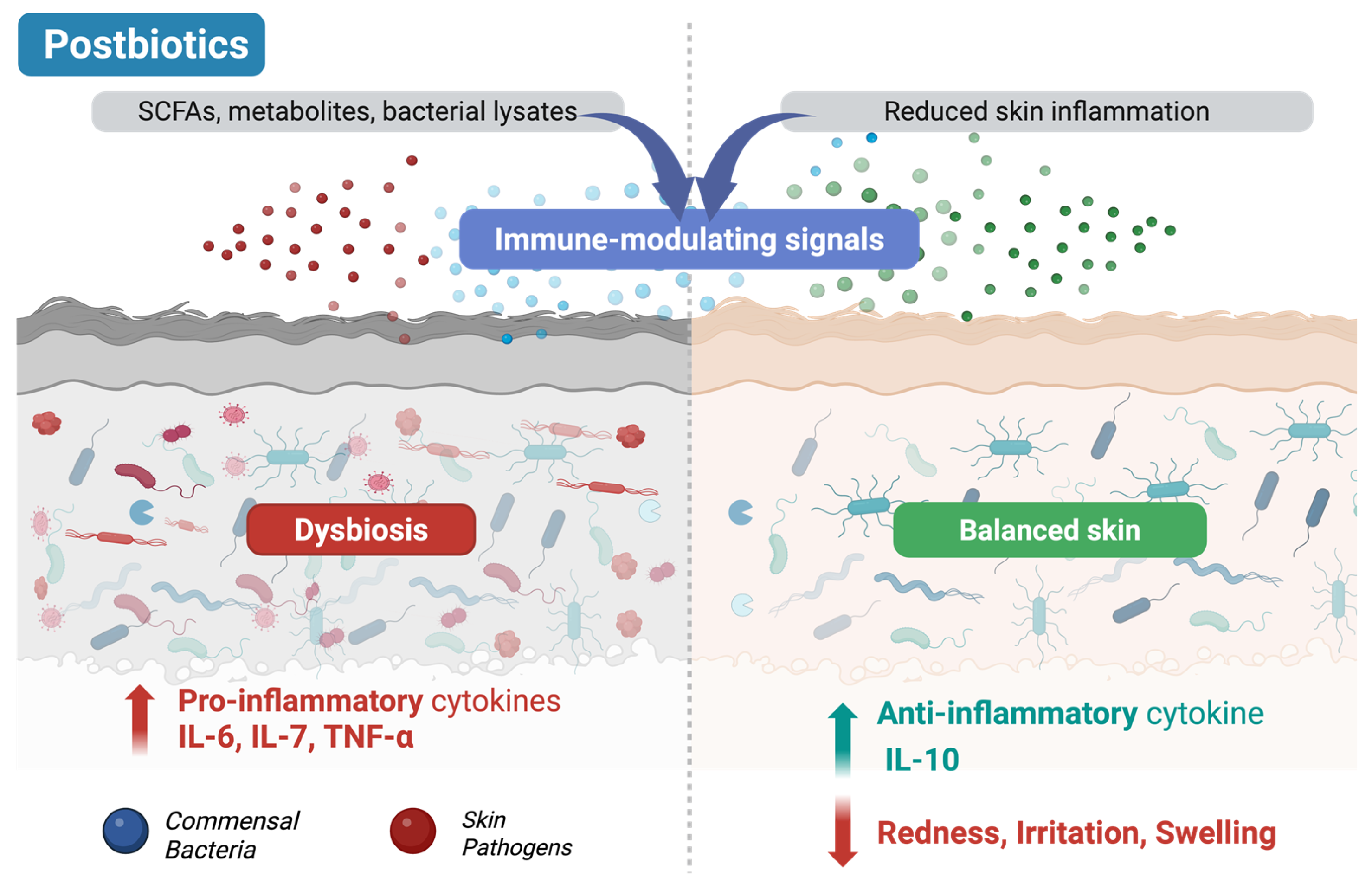
5.1. Nature and Functional Diversity of Postbiotics and Molecular Mechanisms Underpinning Skin Barrier Repair and Anti-Inflammatory Effects
5.2. Production, Inactivation, and Formulation of Postbiotics
6. Challenges in Incorporating Biotics in the Cosmetic Industry
6.1. Definition Ambiguity
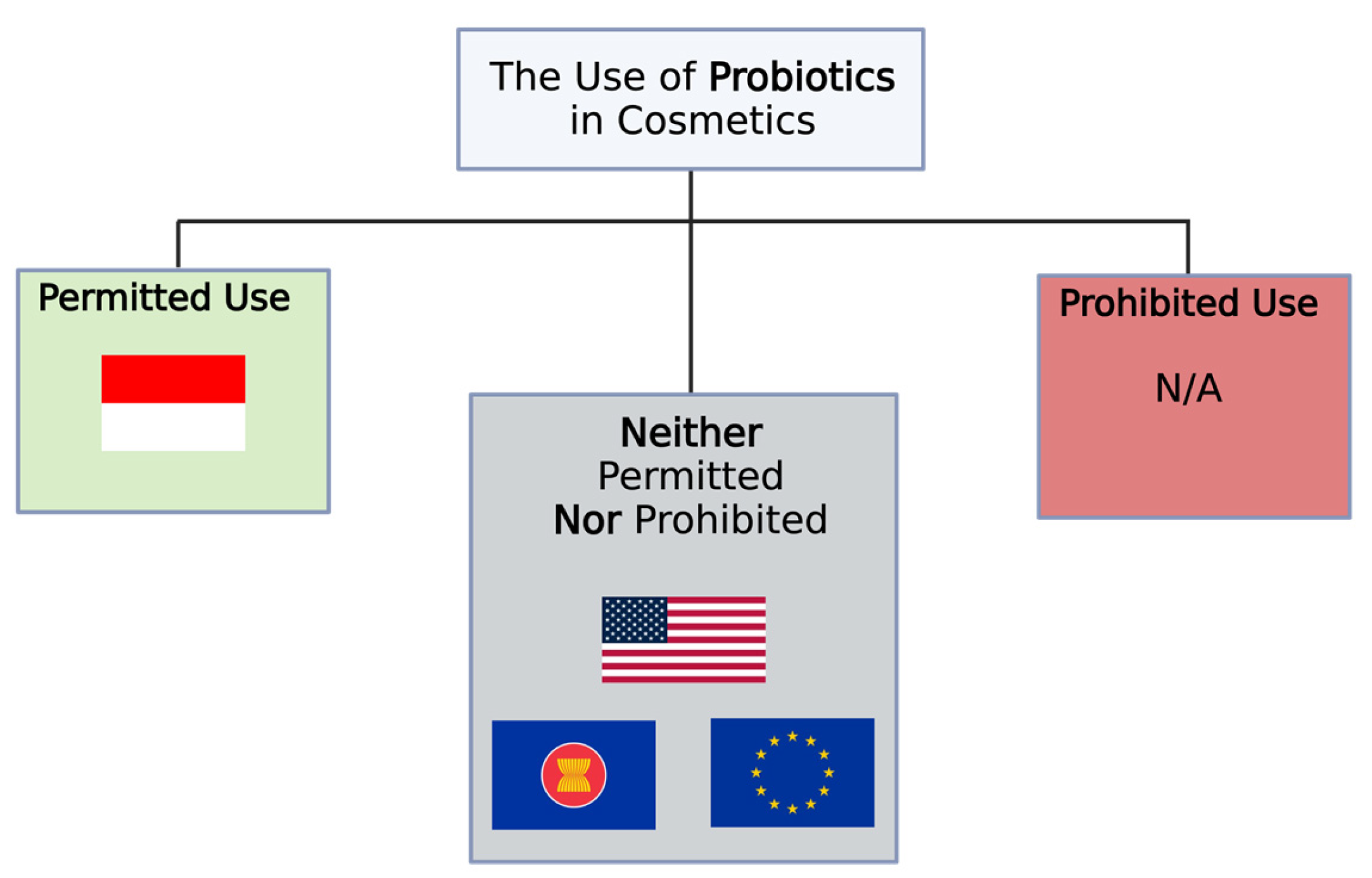
6.2. Regulatory Gaps
6.3. Limitations of Clinical Studies
6.4. Barriers to Stable and Effective Formulations
7. Future of Biotics in the Cosmetic Industry
7.1. Need for Standardised Certification Criteria
7.2. AI-Customised Skincare via Microbiome Sequencing
7.3. Unlocking Synergy Through Synbiotics
7.4. Sustainability
7.4.1. Biodegradable Ingredients and Formulations
7.4.2. Green Chemistry Approaches
7.4.3. Sustainable Sourcing of Biotics
8. Conclusions
Author Contributions
Funding
Institutional Review Board Statement
Informed Consent Statement
Data Availability Statement
Acknowledgments
Conflicts of Interest
Abbreviations
| A. dolomiae | Aquaphilus dolomiae |
| AMPs | antimicrobial peptides |
| BPOM | Badan Pengawasan Obat dan Makanan |
| C. acnes | Cutibacterium acnes |
| CFU | colony-forming unit |
| CPSR | cosmetic product safety report |
| E. coli | Escherichia coli |
| EAE | enzyme-assisted extraction |
| EPS | exopolysaccharides |
| FAO | Food and Agriculture Organization of the United Nations |
| FOS | fructo-oligosaccharides |
| Gas6 | growth arrest-specific protein 6 |
| GOS | galacto-oligosaccharides |
| GSA | gut–skin axis |
| ISAPP | International Scientific Association for Probiotics and Prebiotics |
| LGR-1 | Lactobacillus reuteri |
| LRC-14 | Lactobacillus rhamnosus |
| MAPK | mitogen-activated protein kinase |
| MGP | matrix Gla protein |
| NF-κB | nuclear factor kappa B |
| NGS | next-generation sequencing |
| NLRs | NOD-like receptors |
| O/W | oil-in-water |
| PBDB | probiotics database |
| PI3K/Akt | Phosphatidylinositol 3-kinase/Protein Kinase B |
| PRRs | pattern recognition receptors |
| ROS | reactive oxygen species |
| S. aureus | Staphylococcus aureus |
| S. epidermidis | Staphylococcus epidermidis |
| SCFAs | short-chain fatty acids |
| TEWL | transepidermal water loss |
| TFU | total fluorescent unit |
| TLRs | toll-like receptors |
| VDR | vitamin D receptor |
| WHO | World Health Organization |
References
- Mueller, N.T.; Bakacs, E.; Combellick, J.; Grigoryan, Z.; Dominguez-Bello, M.G. The infant microbiome development: Mom matters. Trends Mol. Med. 2015, 21, 109–117. [Google Scholar] [CrossRef]
- Capone, K.A.; Dowd, S.E.; Stamatas, G.N.; Nikolovski, J. Diversity of the Human Skin Microbiome Early in Life. J. Investig. Dermatol. 2011, 131, 2026–2032. [Google Scholar] [CrossRef]
- Wanke, I.; Steffen, H.; Christ, C.; Krismer, B.; Götz, F.; Peschel, A.; Schaller, M.; Schittek, B. Skin Commensals Amplify the Innate Immune Response to Pathogens by Activation of Distinct Signaling Pathways. J. Investig. Dermatol. 2011, 131, 382–390. [Google Scholar] [CrossRef]
- Jimenez-Sanchez, M.; Celiberto, L.S.; Yang, H.; Sham, H.P.; Vallance, B.A. The gut-skin axis: A bi-directional, microbiota-driven relationship with therapeutic potential. Gut Microbes 2025, 17, 2473524. [Google Scholar] [CrossRef] [PubMed]
- Fitz-Gibbon, S.; Tomida, S.; Chiu, B.-H.; Nguyen, L.; Du, C.; Liu, M.; Elashoff, D.; Erfe, M.C.; Loncaric, A.; Kim, J.; et al. Propionibacterium Acnes Strain Populations in the Human Skin Microbiome Associated with Acne. J. Investig. Dermatol. 2013, 133, 2152–2160. [Google Scholar] [CrossRef] [PubMed]
- Pinto, D.; Sorbellini, E.; Marzani, B.; Rucco, M.; Giuliani, G.; Rinaldi, F. Scalp bacterial shift in Alopecia areata. PLoS ONE 2019, 14, e0215206. [Google Scholar] [CrossRef] [PubMed]
- Kong, H.H.; Oh, J.; Deming, C.; Conlan, S.; Grice, E.A.; Beatson, M.A.; Nomicos, E.; Polley, E.C.; Komarow, H.D.; Program, N.C.S.; et al. Temporal shifts in the skin microbiome associated with disease flares and treatment in children with atopic dermatitis. Genome Res. 2012, 22, 850–859. [Google Scholar] [CrossRef]
- Tett, A.; Pasolli, E.; Farina, S.; Truong, D.T.; Asnicar, F.; Zolfo, M.; Beghini, F.; Armanini, F.; Jousson, O.; De Sanctis, V.; et al. Unexplored diversity and strain-level structure of the skin microbiome associated with psoriasis. npj Biofilms Microbiomes 2017, 3, 14. [Google Scholar] [CrossRef]
- Kim, H.S. Microbiota in Rosacea. Am. J. Clin. Dermatol. 2020, 21, 25–35. [Google Scholar] [CrossRef]
- Ganju, P.; Nagpal, S.; Mohammed, M.H.; Nishal Kumar, P.; Pandey, R.; Natarajan, V.T.; Mande, S.S.; Gokhale, R.S. Microbial community profiling shows dysbiosis in the lesional skin of vitiligo subjects. Sci. Rep. 2016, 6, 18761. [Google Scholar] [CrossRef]
- Ellis, S.R.; Nguyen, M.; Vaughn, A.R.; Notay, M.; Burney, W.A.; Sandhu, S.; Sivamani, R.K. The Skin and Gut Microbiome and Its Role in Common Dermatologic Conditions. Microorganisms 2019, 7, 550. [Google Scholar] [CrossRef] [PubMed]
- Sanford, J.A.; Gallo, R.L. Functions of the skin microbiota in health and disease. Semin. Immunol. 2013, 25, 370–377. [Google Scholar] [CrossRef] [PubMed]
- Niedźwiedzka, A.; Micallef, M.P.; Biazzo, M.; Podrini, C. The Role of the Skin Microbiome in Acne: Challenges and Future Therapeutic Opportunities. Int. J. Mol. Sci. 2024, 25, 11422. [Google Scholar] [CrossRef] [PubMed]
- Boehncke, W.-H.; Schön, M.P. Psoriasis. Lancet 2015, 386, 983–994. [Google Scholar] [CrossRef]
- Chen, L.; Li, J.; Zhu, W.; Kuang, Y.; Liu, T.; Zhang, W.; Chen, X.; Peng, C. Skin and Gut Microbiome in Psoriasis: Gaining Insight Into the Pathophysiology of It and Finding Novel Therapeutic Strategies. Front. Microbiol. 2020, 11, 589726. [Google Scholar] [CrossRef]
- Nakatsuji, T.; Chen, T.H.; Two, A.M.; Chun, K.A.; Narala, S.; Geha, R.S.; Hata, T.R.; Gallo, R.L. Staphylococcus aureus Exploits Epidermal Barrier Defects in Atopic Dermatitis to Trigger Cytokine Expression. J. Investig. Dermatol. 2016, 136, 2192–2200. [Google Scholar] [CrossRef]
- Edslev, S.M.; Agner, T.; Andersen, P.S. Skin Microbiome in Atopic Dermatitis. Acta Derm.-Venereol. 2020, 100, 358–366. [Google Scholar] [CrossRef]
- De Pessemier, B.; Grine, L.; Debaere, M.; Maes, A.; Paetzold, B.; Callewaert, C. Gut–Skin Axis: Current Knowledge of the Interrelationship between Microbial Dysbiosis and Skin Conditions. Microorganisms 2021, 9, 353. [Google Scholar] [CrossRef]
- LeBlanc, J.G.; Milani, C.; De Giori, G.S.; Sesma, F.; Van Sinderen, D.; Ventura, M. Bacteria as vitamin suppliers to their host: A gut microbiota perspective. Curr. Opin. Biotechnol. 2013, 24, 160–168. [Google Scholar] [CrossRef]
- Pazyar, N.; Houshmand, G.; Yaghoobi, R.; Hemmati, A.A.; Zeineli, Z.; Ghorbanzadeh, B. Wound healing effects of topical Vitamin K: A randomized controlled trial. Indian J. Pharmacol. 2019, 51, 88–92. [Google Scholar] [CrossRef]
- Stanescu, C.; Chiscop, I.; Mihalache, D.; Boev, M.; Tamas, C.; Stoleriu, G. The Roles of Micronutrition and Nutraceuticals in Enhancing Wound Healing and Tissue Regeneration: A Systematic Review. Molecules 2025, 30, 3568. [Google Scholar] [CrossRef] [PubMed]
- Popa, D.-S.; Bigman, G.; Rusu, M.E. The Role of Vitamin K in Humans: Implication in Aging and Age-Associated Diseases. Antioxidants 2021, 10, 566. [Google Scholar] [CrossRef] [PubMed]
- Xiao, X.; Hu, X.; Yao, J.; Cao, W.; Zou, Z.; Wang, L.; Qin, H.; Zhong, D.; Li, Y.; Xue, P.; et al. The role of short-chain fatty acids in inflammatory skin diseases. Front. Microbiol. 2023, 13, 1083432. [Google Scholar] [CrossRef] [PubMed]
- Schauber, J.; Gallo, R.L. Antimicrobial peptides and the skin immune defense system. J. Allergy Clin. Immunol. 2008, 122, 261–266. [Google Scholar] [CrossRef]
- Tabatabaeizadeh, S.-A.; Tafazoli, N.; Ferns, G.; Avan, A.; Ghayour-Mobarhan, M. Vitamin D, the gut microbiome and inflammatory bowel disease. J. Res. Med. Sci. 2018, 23, 75. [Google Scholar] [CrossRef]
- Zhou, X.; Qiao, K.; Wu, H.; Zhang, Y. The Impact of Food Additives on the Abundance and Composition of Gut Microbiota. Molecules 2023, 28, 631. [Google Scholar] [CrossRef]
- Hrncir, T. Gut Microbiota Dysbiosis: Triggers, Consequences, Diagnostic and Therapeutic Options. Microorganisms 2022, 10, 578. [Google Scholar] [CrossRef]
- Hrncirova, L.; Machova, V.; Trckova, E.; Krejsek, J.; Hrncir, T. Food Preservatives Induce Proteobacteria Dysbiosis in Human-Microbiota Associated Nod2-Deficient Mice. Microorganisms 2019, 7, 383. [Google Scholar] [CrossRef]
- Arck, P.; Handjiski, B.; Hagen, E.; Pincus, M.; Bruenahl, C.; Bienenstock, J.; Paus, R. Is there a ‘gut–brain–skin axis’? Exp. Dermatol. 2010, 19, 401–405. [Google Scholar] [CrossRef]
- Dobrogosz, W.J.; Peacock, T.J.; Hassan, H.M. Evolution of the Probiotic Concept. Adv. Appl. Microbiol. 2010, 72, 1–41. [Google Scholar] [CrossRef]
- Gibson, G.R.; Hutkins, R.; Sanders, M.E.; Prescott, S.L.; Reimer, R.A.; Salminen, S.J.; Scott, K.; Stanton, C.; Swanson, K.S.; Cani, P.D.; et al. Expert consensus document: The International Scientific Association for Probiotics and Prebiotics (ISAPP) consensus statement on the definition and scope of prebiotics. Nat. Rev. Gastroenterol. Hepatol. 2017, 14, 491–502. [Google Scholar] [CrossRef] [PubMed]
- Aguilar-Toalá, J.E.; Garcia-Varela, R.; Garcia, H.S.; Mata-Haro, V.; González-Córdova, A.F.; Vallejo-Cordoba, B.; Hernández-Mendoza, A. Postbiotics: An evolving term within the functional foods field. Trends Food Sci. Technol. 2018, 75, 105–114. [Google Scholar] [CrossRef]
- Knackstedt, R.; Knackstedt, T.; Gatherwright, J. The role of topical probiotics in skin conditions: A systematic review of animal and human studies and implications for future therapies. Exp. Dermatol. 2020, 29, 15–21. [Google Scholar] [CrossRef]
- O’Neill, A.M.; Gallo, R.L. Host-microbiome interactions and recent progress into understanding the biology of acne vulgaris. Microbiome 2018, 6, 177. [Google Scholar] [CrossRef] [PubMed]
- Gasbarrini, G.; Bonvicini, F.; Gramenzi, A. Probiotics history. J. Clin. Gastroenterol. 2016, 50, S116–S119. [Google Scholar] [CrossRef]
- Hill, C.; Guarner, F.; Reid, G.; Gibson, G.R.; Merenstein, D.J.; Pot, B.; Morelli, L.; Canani, R.B.; Flint, H.J.; Salminen, S.; et al. The International Scientific Association for Probiotics and Prebiotics consensus statement on the scope and appropriate use of the term probiotic. Nat. Rev. Gastroenterol. Hepatol. 2014, 11, 506–514. [Google Scholar] [CrossRef]
- Piqué, N.; Berlanga, M.; Miñana-Galbis, D. Health Benefits of Heat-Killed (Tyndallized) Probiotics: An Overview. Int. J. Mol. Sci. 2019, 20, 2534. [Google Scholar] [CrossRef]
- Salminen, S.; Collado, M.C.; Endo, A.; Hill, C.; Lebeer, S.; Quigley, E.M.M.; Sanders, M.E.; Shamir, R.; Swann, J.R.; Szajewska, H.; et al. The International Scientific Association of Probiotics and Prebiotics (ISAPP) consensus statement on the definition and scope of postbiotics. Nat. Rev. Gastroenterol. Hepatol. 2021, 18, 649–667. [Google Scholar] [CrossRef]
- Vinderola, G.; Sanders, M.E.; Salminen, S. The Concept of Postbiotics. Foods 2022, 11, 1077. [Google Scholar] [CrossRef]
- Aadil, R.M.; Salman, M.; Mehmood, K.; Saeed, Z. (Eds.) The Role of Probiotic and Prebiotics in Maintaining Skin Microbiome: A Dermatological Approach. In Gut Microbiota and Holistic Health: The Role of Prebiotics and Probiotics; Unique Scientific Publishers: Faisalabad, Pakistan, 2025; Available online: https://uniquescientificpublishers.com/pdf-files/HH/Gut-Microbiota-and-Holistic-Health/41-50.pdf (accessed on 24 November 2025).
- Markowiak, P.; Śliżewska, K. Effects of Probiotics, Prebiotics, and Synbiotics on Human Health. Nutrients 2017, 9, 1021. [Google Scholar] [CrossRef]
- Lolou, V.; Panayiotidis, M.I. Functional Role of Probiotics and Prebiotics on Skin Health and Disease. Fermentation 2019, 5, 41. [Google Scholar] [CrossRef]
- Liu-Walsh, F.; Tierney, N.K.; Hauschild, J.; Rush, A.K.; Masucci, J.; Leo, G.C.; Capone, K.A. Prebiotic Colloidal Oat Supports the Growth of Cutaneous Commensal Bacteria Including S. epidermidis and Enhances the Production of Lactic Acid. Clin. Cosmet. Investig. Dermatol. 2021, 14, 73–82. [Google Scholar] [CrossRef]
- Zeng, M.; Li, Y.; Cheng, J.; Wang, J.; Liu, Q. Prebiotic Oligosaccharides in Skin Health: Benefits, Mechanisms, and Cosmetic Applications. Antioxidants 2025, 14, 754. [Google Scholar] [CrossRef]
- Nizioł-Łukaszewska, Z.; Bujak, T.; Wasilewski, T.; Szmuc, E. Inulin as an effectiveness and safe ingredient in cosmetics. Pol. J. Chem. Technol. 2019, 21, 44–49. [Google Scholar] [CrossRef]
- Zeng, M.; Mohapatra, S.; Oh, J.-H.; Astmann, T.; Van Pijkeren, J.-P.; Pan, X. Novel Galacto-oligosaccharides from Lactose: Chemical Synthesis, Structural Characterization, and In Vitro Assessment of Prebiotic Activity. ACS Sustain. Chem. Eng. 2023, 11, 14031–14045. [Google Scholar] [CrossRef]
- Petrov, A.; Ćorović, M.; Milivojević, A.; Simović, M.; Banjanac, K.; Pjanović, R.; Bezbradica, D. Prebiotic effect of galacto-oligosaccharides on the skin microbiota and determination of their diffusion properties. Int. J. Cosmet. Sci. 2022, 44, 309–319. [Google Scholar] [CrossRef] [PubMed]
- Petrov Ivanković, A.; Milivojević, A.; Ćorović, M.; Simović, M.; Banjanac, K.; Jansen, P.; Vukoičić, A.; van den Bogaard, E.; Bezbradica, D. In Vitro evaluation of enzymatically derived blackcurrant extract as prebiotic cosmetic ingredient: Extraction conditions optimization and effect on cutaneous microbiota representatives. Chem. Biol. Technol. Agric. 2023, 10, 125. [Google Scholar] [CrossRef]
- Khan, N.Y.; Asghar, A.A.; Saleem, Z.; Ahmed, W.; Ahmad, Z.; Ullah, S.; Saeed, A.; Shah, S.K.A.; Uzair, M.S.; Iqbal, M. A Guide to Microbiome-Friendly Skincare and Natural Cosmetics. Health Sci. J. 2025, 4, 16–24. [Google Scholar] [CrossRef]
- Habeebuddin, M.; Karnati, R.K.; Shiroorkar, P.N.; Nagaraja, S.; Asdaq, S.M.B.; Anwer, K.; Fattepur, S. Topical Probiotics: More Than a Skin Deep. Pharmaceutics 2022, 14, 557. [Google Scholar] [CrossRef]
- Deshpande, G.; Athalye-Jape, G.; Patole, S. Para-probiotics for Preterm Neonates—The Next Frontier. Nutrients 2018, 10, 871. [Google Scholar] [CrossRef]
- Kato, K.; Odamaki, T.; Mitsuyama, E.; Sugahara, H.; Xiao, J.; Osawa, R. Age-Related Changes in the Composition of Gut Bifidobacterium Species. Curr. Microbiol. 2017, 74, 987–995. [Google Scholar] [CrossRef]
- Puebla-Barragan, S.; Reid, G. Probiotics in Cosmetic and Personal Care Products: Trends and Challenges. Molecules 2021, 26, 1249. [Google Scholar] [CrossRef] [PubMed]
- Ron, E.Z.; Rosenberg, E. Natural roles of biosurfactants. Environ. Microbiol. 2001, 3, 229–236. [Google Scholar] [CrossRef] [PubMed]
- Parada Venegas, D.; De la Fuente, M.K.; Landskron, G.; González, M.J.; Quera, R.; Dijkstra, G.; Harmsen, H.J.M.; Faber, K.N.; Hermoso, M.A. Short Chain Fatty Acids (SCFAs)-Mediated Gut Epithelial and Immune Regulation and Its Relevance for Inflammatory Bowel Diseases. Front. Immunol. 2019, 10, 277. [Google Scholar] [CrossRef] [PubMed]
- Raheem, A.; Liang, L.; Zhang, G.; Cui, S. Modulatory Effects of Probiotics During Pathogenic Infections with Emphasis on Immune Regulation. Front. Immunol. 2021, 12, 616713. [Google Scholar] [CrossRef]
- Cui, H.; Feng, C.; Zhang, T.; Martínez-Ríos, V.; Martorell, P.; Tortajada, M.; Cheng, S.; Cheng, S.; Duan, Z. Effects of a lotion containing probiotic ferment lysate as the main functional ingredient on enhancing skin barrier: A randomized, self-control study. Sci. Rep. 2023, 13, 16879. [Google Scholar] [CrossRef]
- Pinto, L.D.M.C.V.; Rodriguez, D.D.P.; Nicoli, J.R.; Martins, F.D.S.; Silva, A.K.S.; Silva, S.H.D. Cosmetic Composition Having Probiotic Bacteria. EP3362038A1, 22 August 2018. Available online: https://patents.google.com/patent/EP3362038A1/en (accessed on 23 January 2026).
- Gallo, R.; Nakatsuji, T.; O’neill, A. Bacteriotherapy Against Proprionibacterium Acnes for the Treatment of Acne. 2020. Available online: https://patentscope.wipo.int/search/en/WO2020056359 (accessed on 23 January 2026).
- Łętocha, A.; Michalczyk, A.; Ostrowska, P.; Miastkowska, M.; Sikora, E. Probiotics-Loaded Microspheres for Cosmetic Applications. Appl. Sci. 2024, 14, 1183. [Google Scholar] [CrossRef]
- Zhang, L. Oleogels as Controlled Delivery Systems for Probiotics. Ph.D. Thesis, Department of Process and Life Science Engineering, Lund University, Lund, Sweden, 2024. [Google Scholar]
- Kumar, S.; Sanap, S.N.; Vasoya, M.; Handa, M.; Pandey, P.; Khopade, A.; Sawant, K.K. Application of lyophilization in pharmaceutical injectable formulations: An industry and regulatory perspective. J. Drug Deliv. Sci. Technol. 2024, 100, 106089. [Google Scholar] [CrossRef]
- Lobel, B.T.; Baiocco, D.; Al-Sharabi, M.; Routh, A.F.; Zhang, Z.; Cayre, O.J. Current Challenges in Microcapsule Designs and Microencapsulation Processes: A Review. ACS Appl. Mater. Interfaces 2024, 16, 40326–40355. [Google Scholar] [CrossRef]
- Łętocha, A.; Miastkowska, M.; Sikora, E. Preparation and Characteristics of Alginate Microparticles for Food, Pharmaceutical and Cosmetic Applications. Polymers 2022, 14, 3834. [Google Scholar] [CrossRef]
- Huang, Y.; Zhang, L.; Hu, J.; Liu, H. Improved Loading Capacity and Viability of Probiotics Encapsulated in Alginate Hydrogel Beads by In Situ Cultivation Method. Foods 2023, 12, 2256. [Google Scholar] [CrossRef] [PubMed]
- Strand, B.L.; Coron, A.E.; Skjak-Braek, G. Current and Future Perspectives on Alginate Encapsulated Pancreatic Islet. Stem Cells Transl. Med. 2017, 6, 1053–1058. [Google Scholar] [CrossRef] [PubMed]
- Kim, H.-T.; Lee, J.; Jo, Y.-J.; Choi, M.-J. Application of Liposome Encapsulating Lactobacillus curvatus Extract in Cosmetic Emulsion Lotion. Materials 2021, 14, 7571. [Google Scholar] [CrossRef] [PubMed]
- Htwe, M.M.; Teanpaisan, R.; Khongkow, P.; Amnuaikit, T. Liposomes of probiotic’s lyophilized cell free supernatant; A potential cosmeceutical product. Pharmazie 2019, 74, 462–466. [Google Scholar] [CrossRef]
- Ashoori, Y.; Mohkam, M.; Heidari, R.; Abootalebi, S.N.; Mousavi, S.M.; Hashemi, S.A.; Golkar, N.; Gholami, A. Development and In Vivo Characterization of Probiotic Lysate-Treated Chitosan Nanogel as a Novel Biocompatible Formulation for Wound Healing. BioMed Res. Int. 2020, 2020, 8868618. [Google Scholar] [CrossRef]
- Albadran, H.A.; Monteagudo-Mera, A.; Khutoryanskiy, V.V.; Charalampopoulos, D. Development of chitosan-coated agar-gelatin particles for probiotic delivery and targeted release in the gastrointestinal tract. Appl. Microbiol. Biotechnol. 2020, 104, 5749–5757. [Google Scholar] [CrossRef]
- Puebla-Barragan, S.; Lamb, B.; Jafelice, S.; Reid, G. Topical Probiotics for Women’s Urogenital Health: Selection of an Oil-based Carrier. OBM Integr. Complement. Med. 2021, 6, 1–11. [Google Scholar] [CrossRef]
- Wang, X.; Gao, S.; Yun, S.; Zhang, M.; Peng, L.; Li, Y.; Zhou, Y. Microencapsulating Alginate-Based Polymers for Probiotics Delivery Systems and Their Application. Pharmaceuticals 2022, 15, 644. [Google Scholar] [CrossRef]
- Zhao, X.; Liu, S.; Li, S.; Jiang, W.; Wang, J.; Xiao, J.; Chen, T.; Ma, J.; Khan, M.Z.; Wang, W.; et al. Unlocking the power of postbiotics: A revolutionary approach to nutrition for humans and animals. Cell Metab. 2024, 36, 725–744. [Google Scholar] [CrossRef]
- Jung, Y.-O.; Jeong, H.; Cho, Y.; Lee, E.-O.; Jang, H.-W.; Kim, J.; Nam, K.T.; Lim, K.-M. Lysates of a Probiotic, Lactobacillus rhamnosus, Can Improve Skin Barrier Function in a Reconstructed Human Epidermis Model. Int. J. Mol. Sci. 2019, 20, 4289. [Google Scholar] [CrossRef]
- Hashemi, S.; Rafati, A.; Roohinejad, S.; Yaghoobi, F.; Salehi, A. Postbiotics as Emerging Therapeutics for Skin Wound Healing and Dermatological Care: Clinical Trends and Mechanistic Insights. Int. Wound J. 2025, 22, e70799. [Google Scholar] [CrossRef] [PubMed]
- Vaughn, A.R.; Sivamani, R.K. Effects of Fermented Dairy Products on Skin: A Systematic Review. J. Altern. Complement. Med. 2015, 21, 380–385. [Google Scholar] [CrossRef] [PubMed]
- Markowiak-Kopeć, P.; Śliżewska, K. The Effect of Probiotics on the Production of Short-Chain Fatty Acids by Human Intestinal Microbiome. Nutrients 2020, 12, 1107. [Google Scholar] [CrossRef] [PubMed]
- Du, Y.; He, C.; An, Y.; Huang, Y.; Zhang, H.; Fu, W.; Wang, M.; Shan, Z.; Xie, J.; Yang, Y.; et al. The Role of Short Chain Fatty Acids in Inflammation and Body Health. Int. J. Mol. Sci. 2024, 25, 7379. [Google Scholar] [CrossRef]
- Lee, S.; Lee, Y.; Lee, H.-S.; Yu, J.; Kim, K.; Kim, T.-Y.; Lee, S.-H.; Qiao, Y.; Kim, S.; Kweon, M.-N. Peptidoglycan from Bifidobacterium adolescentis enhances IL-10 production in regulatory B cells to alleviate gut inflammation. Gut Microbes 2026, 18, 2611603. [Google Scholar] [CrossRef]
- Baker, B.; Laman, J.; Powles, A.; Van Der Fits, L.; Voerman, J.; Melief, M.; Fry, L. Peptidoglycan and peptidoglycan-specific Th1 cells in psoriatic skin lesions. J. Pathol. 2006, 209, 174–181. [Google Scholar] [CrossRef]
- Chaiyasut, C.; Sivamaruthi, B.S.; Tansrisook, C.; Peerajan, S.; Chaiyasut, K.; Bharathi, M. Influence of Paraprobiotics-Containing Moisturizer on Skin Hydration and Microbiome: A Preliminary Study. Appl. Sci. 2022, 12, 12483. [Google Scholar] [CrossRef]
- Feng, X.; Shang, J.; Gu, Z.; Luo, X.; Chen, Y.; Liu, Y. Lactic Acid Chemical Peeling in Skin Disorders. Clin. Cosmet. Investig. Dermatol. 2024, 17, 901–909. [Google Scholar] [CrossRef]
- Shi, Y.; Lain, E.; Frasson, N.; Ortiz-Brugués, A.; Stennevin, A. The Real-World Effectiveness and Tolerability of a Soothing Cream Containing the Postbiotic Aquaphilus dolomiae Extract-G2 for Skin Healing. Dermatol. Ther. 2024, 14, 697–712. [Google Scholar] [CrossRef]
- Che-Wen, Y.; Lin, F.-L.; Chen, K.-H.; Cheng, Y.-P.; Cheng, Y.-C.; Guo, J.-W. Transcriptional dysregulation of skin barrier genes in atopic dermatitis and psoriasis: Mechanistic insights and emerging therapeutic strategies. Biomed. Pharmacother. 2025, 191, 118508. [Google Scholar] [CrossRef]
- Teng, Y.; Fan, Y.; Ma, J.; Lu, W.; Liu, N.; Chen, Y.; Pan, W.; Tao, X. The PI3K/Akt Pathway: Emerging Roles in Skin Homeostasis and a Group of Non-Malignant Skin Disorders. Cells 2021, 10, 1219. [Google Scholar] [CrossRef]
- Algieri, F.; Tanaskovic, N.; Rincon, C.C.; Notario, E.; Braga, D.; Pesole, G.; Rusconi, R.; Penna, G.; Rescigno, M. Lactobacillus paracasei CNCM I-5220-derived postbiotic protects from the leaky-gut. Front. Microbiol. 2023, 14, 1157164. [Google Scholar] [CrossRef] [PubMed]
- Eau Thermale Avène Laboratoire Dermatologique. Aquaphilus dolomiae: The Source of Three Postbiotic Active Ingredients. Available online: https://www.avene.co.uk/a/the-source-of-three-postbiotic-active-ingredients (accessed on 29 January 2026).
- Noizet, M.; Bianchi, P.; Galliano, M.F.; Caruana, A.; Brandner, J.M.; Bessou-Touya, S.; Duplan, H. Broad spectrum repairing properties of an extract of Aquaphilus dolomiae on In Vitro and Ex Vivo models of injured skin. J. Eur. Acad. Dermatol. Venereol. 2020, 34, 37–42. [Google Scholar] [CrossRef] [PubMed]
- Ozma, M.A.; Abbasi, A.; Akrami, S.; Lahouty, M.; Shahbazi, N.; Ganbarov, K.; Pagliano, P.; Sabahi, S.; Köse, Ş.; Yousefi, M.; et al. Postbiotics as the key mediators of the gut microbiota-host interactions. Infez. Med. 2022, 30, 180–193. [Google Scholar] [CrossRef] [PubMed]
- Oviedo-Boyso, J.; Bravo-Patiño, A.; Baizabal-Aguirre, V.M. Collaborative Action of Toll-Like and Nod-Like Receptors as Modulators of the Inflammatory Response to Pathogenic Bacteria. Mediat. Inflamm. 2014, 2014, 432785. [Google Scholar] [CrossRef]
- Jastrząb, R.; Graczyk, D.; Siedlecki, P. Molecular and Cellular Mechanisms Influenced by Postbiotics. Int. J. Mol. Sci. 2021, 22, 13475. [Google Scholar] [CrossRef]
- Zdybel, K.; Śliwka, A.; Polak-Berecka, M.; Polak, P.; Waśko, A. Postbiotics Formulation and Therapeutic Effect in Inflammation: A Systematic Review. Nutrients 2025, 17, 2187. [Google Scholar] [CrossRef]
- Pattapulavar, V.; Ramanujam, S.; Kini, B.; Christopher, J.G. Probiotic-derived postbiotics: A perspective on next-generation therapeutics. Front. Nutr. 2025, 12, 1624539. [Google Scholar] [CrossRef]
- de Melo Pereira, G.V.; de Oliveira Coelho, B.; Magalhães Júnior, A.I.; Thomaz-Soccol, V.; Soccol, C.R. How to select a probiotic? A review and update of methods and criteria. Biotechnol. Adv. 2018, 36, 2060–2076. [Google Scholar] [CrossRef]
- Nam, Y.; Kim, J.; Baek, J.; Kim, W. Improvement of Cutaneous Wound Healing via Topical Application of Heat-Killed Lactococcus chungangensis CAU 1447 on Diabetic Mice. Nutrients 2021, 13, 2666. [Google Scholar] [CrossRef]
- Kumar, D.; Kumar, S.; Kumar, A. Extraction and characterization of secondary metabolites produced by bacteria isolated from Industrial Wastewater. J. Water Process Eng. 2021, 40, 101811. [Google Scholar] [CrossRef]
- Zhu, Y.; Xiao, M.; Kang, T.; He, Y.; Zhang, J.; Zhao, Y.; Xiao, X. The Role of Inactivation Methods in Shaping Postbiotic Composition and Modulating Bioactivity: A Review. Foods 2025, 14, 2358. [Google Scholar] [CrossRef]
- Golkar, N.; Ashoori, Y.; Heidari, R.; Omidifar, N.; Abootalebi, S.N.; Mohkam, M.; Gholami, A. A Novel Effective Formulation of Bioactive Compounds for Wound Healing: Preparation, In Vivo Characterization, and Comparison of Various Postbiotics Cold Creams in a Rat Model. Evid. Based Complement. Altern. Med. ECAM 2021, 2021, 8577116. [Google Scholar] [CrossRef]
- Machado, P.; Ribeiro, F.N.; Giublin, F.C.W.; Mieres, N.G.; Tonin, F.S.; Pontarolo, R.; Sari, M.H.M.; Lazo, R.E.L.; Ferreira, L.M. Next-Generation Wound Care: A Scoping Review on Probiotic, Prebiotic, Synbiotic, and Postbiotic Cutaneous Formulations. Pharmaceuticals 2025, 18, 704. [Google Scholar] [CrossRef] [PubMed]
- Rezagholizade-shirvan, A.; Soltani, M.; Shokri, S.; Radfar, R.; Arab, M.; Shamloo, E. Bioactive compound encapsulation: Characteristics, applications in food systems, and implications for human health. Food Chem. X 2024, 24, 101953. [Google Scholar] [CrossRef] [PubMed]
- Gökçe, H.B.; Aslan, İ. Novel Liposome–Gel Formulations Containing a Next Generation Postbiotic: Characterization, Rheological, Stability, Release Kinetic, and In Vitro Antimicrobial Activity Studies. Gels 2024, 10, 746. [Google Scholar] [CrossRef] [PubMed]
- Strazzabosco, G.; Liboni, A.; Pezzi, G.; Alogna, A.; Bortolotti, D. Insights into Liposomal and Gel-Based Formulations for Dermatological Treatments. Gels 2025, 11, 245. [Google Scholar] [CrossRef]
- Probiotics—International Scientific Association for Probiotics and Prebiotics (ISAPP). Available online: https://isappscience.org/resource/probiotics/ (accessed on 23 January 2026).
- CTPA. Cosmetic Product Claims. Available online: https://www.ctpa.org.uk/resources-claims (accessed on 23 January 2026).
- Aveeno. AVEENO Dermexa Daily Emollient Cream. Available online: https://www.aveeno.co.uk/products/dermexa-daily-emollient-cream (accessed on 29 January 2026).
- La Roche-Posay—Skincare, Sunscreen, Body Lotion—Official Site. Toleriane Sensitive Cream Moisturiser|La Roche Posay UK. Available online: https://www.laroche-posay.co.uk/en_GB/toleriane-sensitive-skin-moisturiser/LRP_128.html (accessed on 29 January 2026).
- Biossance. Squalane + Probiotic Gel Moisturizer. Available online: https://www.biossance.com/p/squalane-plus-probiotic-gel-moisturizer/15065082/ (accessed on 23 January 2026).
- LOOKFANTASTIC. Haruharu Wonder Black Rice Probiotics Barrier Essence 120 mL. Available online: https://www.lookfantastic.com/p/haruharu-wonder-black-rice-probiotics-barrier-essence-120ml/16858588/ (accessed on 23 January 2026).
- Lancome. Advanced Génifique Serum|Youth Activating Face Serum|Lancôme UK. Available online: https://www.lancome.co.uk/skincare/by-range/genifique/advanced-genifique-serum/26901c-LAC.html (accessed on 29 January 2026).
- Eau Thermale Avène Laboratoire Dermatologique. Lipid-Replenishing Cleansing Oil|Eau Thermale Avène. Available online: https://www.avene.co.uk/p/xeracalm-a-d-huile-lavante-relipidante-3282770389883-b5405ca4 (accessed on 29 January 2026).
- ECHA. Cosmetics-Prohibited-Subs. Available online: https://echa.europa.eu/cosmetics-prohibited-substances (accessed on 23 January 2026).
- Commissioner O of the Prohibited & Restricted Ingredients in Cosmetics. FDA. 2024. Available online: https://www.fda.gov/cosmetics/cosmetics-laws-regulations/prohibited-restricted-ingredients-cosmetics (accessed on 23 January 2026).
- ChinaCosIng—Chinese Cosmetic Ingredient Regulatory Database. Available online: https://www.chinacosing.com/news-detail/?no=e3zqt0z7708w (accessed on 23 January 2026).
- Regulation (EC) No 1223/2009 of the European Parliament and of the Council of 30 November 2009 on Cosmetic Products (Recast) (Text with EEA Relevance). 2009. Available online: http://data.europa.eu/eli/reg/2009/1223/oj (accessed on 20 January 2026).
- Huang, J.; Hitchins, A.D.; Tran, T.T.; McCarron, J.E. Bacteriological Analytical Manual Chapter 23: Methods for Cosmetics; U.S. Food and Drug Administration: Silver Spring, MD, USA, 2024. Available online: https://www.fda.gov/media/177960/download (accessed on 18 January 2026).
- ISO 17516:2014; Cosmetics—Microbiology—Microbiological Limits. International Organization for Standardization: Geneva, Switzerland, 2014. Available online: https://cdn.standards.iteh.ai/samples/59938/82e3f2f654274a41b1a610bb9eced8ce/ISO-17516-2014.pdf (accessed on 20 January 2026).
- Tee, E.S.; Hardinsyah; Sum, C.A.S. Status of probiotic regulations in Southeast Asia countries. Malays. J. Nutr. 2021, 27, 507–530. [Google Scholar] [CrossRef]
- Indonesia’s BPOM Issues New Regulation, Updating Cosmetic Ingredient Requirements—Regulatory News—Personal and Home Care Products—CIRS Group. Available online: https://www.cirs-group.com/en/cosmetics/indonesia-bpom-issues-new-regulation-updating-cosmetic-ingredient-requirements (accessed on 23 January 2026).
- ASEAN Cosmetics Association. History. 2017. Available online: https://aseancosmetics.org/asean-cosmetics-directive/history/ (accessed on 24 November 2025).
- HSA. HSA|ASEAN Cosmetic Directive. Available online: https://www.hsa.gov.sg/cosmetic-products/asean-cosmetic-directive (accessed on 23 January 2026).
- Podrini, C.; Schramm, L.; Marianantoni, G.; Apolinarska, J.; McGuckin, C.; Forraz, N.; Milet, C.; Desroches, A.-L.; Payen, P.; D’Aguanno, M.; et al. Topical Administration of Lactiplantibacillus Plantarum (SkinDuoTM) Serum Improves Anti-Acne Properties. Microorganisms 2023, 11, 417. [Google Scholar] [CrossRef]
- Hong, K.-B.; Hong, Y.H.; Jung, E.Y.; Jo, K.; Suh, H.J. Changes in the Diversity of Human Skin Microbiota to Cosmetic Serum Containing Prebiotics: Results from a Randomized Controlled Trial. J. Pers. Med. 2020, 10, 91. [Google Scholar] [CrossRef]
- ISO 11930:2019; Cosmetics—Microbiology—Evaluation of the Antimicrobial Protection of a Cosmetic Product. International Organization for Standardization: Geneva, Switzerland, 2019. Available online: https://cdn.standards.iteh.ai/samples/75058/56342a9f78034ffdb976290d990dbbb1/ISO-11930-2019.pdf (accessed on 20 January 2026).
- Herman, A.; Matulewicz, O.; Korzeniowska, E.; Herman, A.P. Determination of Post-Fermentation Waste from Fermented Vegetables as Potential Substitutes for Preservatives in o/w Emulsion. Int. J. Mol. Sci. 2024, 25, 5510. [Google Scholar] [CrossRef] [PubMed]
- Łętocha, A.; Michalczyk, A.; Miastkowska, M.; Sikora, E. Design of alginate microsphere formulation as a probiotics carrier. Chem. Process Eng. New Front. 2024, 45, e20. [Google Scholar] [CrossRef]
- Carbol, J.; Tan, P.I.; Varma, Y.; Osbourne, D.W. Formulating Topical Products Containing Live Microorganisms as the Active Ingredient. Pharm. Technol. 2018, 42, 32–36. [Google Scholar]
- Yashaschandra, P.; Fatima, S.; Ambujakshi, H.R. Topical Probiotics: A Review on Current Status and Challenges. Int. J. Pharm. Sci. 2024, 2, 2268–2279. [Google Scholar]
- Elazzazy, A.M.; Baeshen, M.N.; Alasmi, K.M.; Alqurashi, S.I.; Desouky, S.E.; Khattab, S.M.R. Where Biology Meets Engineering: Scaling Up Microbial Nutraceuticals to Bridge Nutrition, Therapeutics, and Global Impact. Microorganisms 2025, 13, 566. [Google Scholar] [CrossRef]
- Grand View Research. Probiotics Market Size, Share & Growth Analysis Report 2030. Report No.: 978-1-68038-093–4. Available online: https://www.grandviewresearch.com/industry-analysis/probiotics-market (accessed on 29 January 2026).
- Grand View Research. Probiotic Dietary Supplement Market|Industry Report, 2033. Report No.: GVR-1-68038-380-5. Available online: https://www.grandviewresearch.com/industry-analysis/probiotics-dietary-supplements-market (accessed on 29 January 2026).
- Grand View Research. Microbiome Skincare Products Market|Industry Report, 2030. Report No.: GVR-4-68040-051-0. Available online: https://www.grandviewresearch.com/industry-analysis/microbiome-skincare-market-report (accessed on 29 January 2026).
- MyMicrobiome—Certification. Things to Know About. Available online: https://microbiome-friendly.com/en/about-the-certification (accessed on 23 January 2026).
- Grogan, M.D.; Bartow-McKenney, C.; Flowers, L.; Knight, S.A.B.; Uberoi, A.; Grice, E.A. Research Techniques Made Simple: Profiling the Skin Microbiota. J. Investig. Dermatol. 2019, 139, 747–752.e1. [Google Scholar] [CrossRef]
- Chen, P.; Liu, Y.; Zhao, W. Probiotics Database (PBDB). Science Data Bank. 2025. Available online: https://www.scidb.cn/en/detail?dataSetId=1b38202f4e724776ab6693d924a732fe (accessed on 21 November 2025).
- Probiotic Strains Database|MicrobiomePost. Available online: https://microbiomepost.com/probiotic-strains/ (accessed on 25 November 2025).
- Asar, R.; Erenler, S.; Devecioglu, D.; Ispirli, H.; Karbancioglu-Guler, F.; Ozturk, H.I.; Dertli, E. Understanding the Functionality of Probiotics on the Edge of Artificial Intelligence (AI) Era. Fermentation 2025, 11, 259. [Google Scholar] [CrossRef]
- Swanson, K.S.; Gibson, G.R.; Hutkins, R.; Reimer, R.A.; Reid, G.; Verbeke, K.; Scott, K.P.; Holscher, H.D.; Azad, M.B.; Delzenne, N.M.; et al. The International Scientific Association for Probiotics and Prebiotics (ISAPP) consensus statement on the definition and scope of synbiotics. Nat. Rev. Gastroenterol. Hepatol. 2020, 17, 687–701. [Google Scholar] [CrossRef]
- Noll, M.; Jäger, M.; Lux, L.; Buettner, C.; Axt-Gadermann, M. Improvement of Atopic Dermatitis by Synbiotic Baths. Microorganisms 2021, 9, 527. [Google Scholar] [CrossRef]
- Ma’or, Z.; Temmerman, R.; Zhang, X. Topical Application of Synbiotic Bacillus Preparations Positively Affects Skin (Micro) Biology. J. Cosmet. Dermatol. Sci. Appl. 2023, 13, 107–123. [Google Scholar] [CrossRef]
- Ke, C.-L.; Deng, F.-S.; Chuang, C.-Y.; Lin, C.-H. Antimicrobial Actions and Applications of Chitosan. Polymers 2021, 13, 904. [Google Scholar] [CrossRef]
- Łętocha, A.; Michalczyk, A.; Miastkowska, M.; Sikora, E. Effect of Encapsulation of Lactobacillus casei in Alginate–Tapioca Flour Microspheres Coated with Different Biopolymers on the Viability of Probiotic Bacteria. ACS Appl. Mater. Interfaces 2024, 16, 52878–52893. [Google Scholar] [CrossRef]
- Blanco-Pérez, F.; Steigerwald, H.; Schülke, S.; Vieths, S.; Toda, M.; Scheurer, S. The Dietary Fiber Pectin: Health Benefits and Potential for the Treatment of Allergies by Modulation of Gut Microbiota. Curr. Allergy Asthma Rep. 2021, 21, 43. [Google Scholar] [CrossRef] [PubMed]
- Motalebi Moghanjougi, Z.; Rezazadeh Bari, M.; Alizadeh Khaledabad, M.; Amiri, S.; Almasi, H. Microencapsulation of Lactobacillus acidophilus LA-5 and Bifidobacterium animalis BB-12 in pectin and sodium alginate: A comparative study on viability, stability, and structure. Food Sci. Nutr. 2021, 9, 5103–5111. [Google Scholar] [CrossRef] [PubMed]
- Yüksel, E.; Kort, R.; Voragen, A.G.J. Structure and degradation dynamics of dietary pectin. Crit. Rev. Food Sci. Nutr. 2025, 65, 6249–6268. [Google Scholar] [CrossRef] [PubMed]
- Amiri, S.; Rezazadeh-Bari, M.; Alizadeh-Khaledabad, M.; Rezaei-Mokarram, R.; Sowti-Khiabani, M. Fermentation Optimization for Co-production of Postbiotics by Bifidobacterium lactis BB12 in Cheese Whey. Waste Biomass Valor. 2021, 12, 5869–5884. [Google Scholar] [CrossRef]
- Tóth, P.; Németh, Á. Exploring the Impact of Alginite Mineral on Lactic Acid Bacteria. Fermentation 2025, 11, 482. [Google Scholar] [CrossRef]
- Tóth, P.; Németh, Á. Investigation and Characterisation of New Eco-Friendly Cosmetic Ingredients Based on Probiotic Bacteria Ferment Filtrates in Combination with Alginite Mineral. Processes 2022, 10, 2672. [Google Scholar] [CrossRef]
- Tóth, P.; Németh, Á. Examination of Alginite Mineral Supplementation During Fermentation of Probiotics and Its Effect on Skincare Activity of Ferment Lysates. Appl. Sci. 2025, 15, 9350. [Google Scholar] [CrossRef]
- Silab LACTOBIOTYL®—SILAB. Available online: https://www.silab.fr/en/products/skincare/108/lactobiotyl-cb (accessed on 29 January 2026).
- Sweetch. BIOLIN P. Available online: https://www.sweetch.bio/ingredient/biolin-p/ (accessed on 29 January 2026).
- ULTRUS. Relipidium. RelipidiumTM by BASF—Personal Care & Cosmetics. Available online: https://www.ulprospector.com/en/eu/PersonalCare/Detail/804/219201/Relipidium (accessed on 29 January 2026).
- Smooth and Youthful-Looking Skin Through Lipid Synthesis: RelipidiumTM. Available online: https://products.basf.com/global/en/em/relipidium (accessed on 29 January 2026).
- BASF. RelipidiumTM Helps to Rebalance the Skin’s Ecosystem to Restore the Skin Barrier and Increase Skin Hydration. 2017. Available online: https://www.basf.com/global/en/media/news-releases/2017/01/p-17-104 (accessed on 29 January 2026).
- Global Cosmetic Industry. Fermented Ingredients Are Increasingly Popular in Skincare. 2020. Available online: https://www.gcimagazine.com/ingredients/regulatory/article/21849106/basf-fermented-ingredients-are-increasingly-popular-in-skincare (accessed on 29 January 2026).
- Virgilio, N.; Schön, C.; Mödinger, Y.; van der Steen, B.; Vleminckx, S.; van Holthoon, F.L.; Kleinnijenhuis, A.J.; Silva, C.I.F.; Prawitt, J. Absorption of bioactive peptides following collagen hydrolysate intake: A randomized, double-blind crossover study in healthy individuals. Front. Nutr. 2024, 11, 1416643. [Google Scholar] [CrossRef]
- Zhu, W.; Dong, C. Poly-L-Lactic acid increases collagen gene expression and synthesis in cultured dermal fibroblast (Hs68) through the TGF-β/Smad pathway. J. Cosmet. Dermatol. 2023, 22, 1213–1219. [Google Scholar] [CrossRef]





| Postbiotic Type | Example | Main Benefit |
|---|---|---|
| Lysates | Lactobacillus lysate | Barrier repair, soothing [74] |
| Ferments | Galactomyces ferment filtrate, Saccharomyces ferment | Enhanced elasticity, hydration [75,76] |
| Metabolites | SCFAs, peptides | Anti-inflammatory [77,78] |
| Cell wall fragments | Peptidoglycan fractions | Immunomodulation [79,80] |
| EPS | Bacterial polysaccharides | Moisturising [81] |
| Paraprobiotics | Heat-killed Lactobacillus | Microbiome-friendly, calming [81] |
| Organic acids | Lactic acid | Exfoliation, pH balance [82] |
| Bacterial extracts | Bifida extract | Soothing [83] |
| Biotic Classification | Definition |
|---|---|
| Prebiotic | A substrate that is selectively utilised by host microorganisms and confers a health benefit [38]. |
| Probiotic | Live microorganisms which, when administered in adequate amounts, confer a health benefit on the host [31]. |
| Postbiotic | A preparation of inanimate microorganisms and/or their components that confers health benefits on the host [39]. |
| Product Name | Marketed Biotic Active | Marketed as | Biotic Classification Based on ISAPP Definition |
|---|---|---|---|
| Aveeno Dermexa Daily Emollient Cream [105] | Avena sativa (oat) kernel extract, Avena sativa (oat) kernel oil, Avena sativa (oat) kernel oil. | Prebiotic | Prebiotic |
| La Roche-Posay Toleriane Sensitive Skin Moisturiser [106] | La Roche-Posay thermal spring water. | Prebiotic | N/A |
| Biossance Squalane + Probiotic Gel Moisturiser [107] | Lactobacillus ferment. | Probiotic | Postbiotic |
| Haruharu Wonder Black Rice Probiotics Barrier Essence [108] | Galactomyces Ferment Filtrate, Bifida Ferment Filtrate, Aspergillus Ferment, Oryza sativa (rice) Lees extract. | Probiotic | Prebiotic and Postbiotic |
| Lancôme Advanced Génifique Youth Activating Serum [109] | Bifida Ferment Lysate Lactobacillus, Faex Extract/Yeast Extract, Polymnia sonchifolia Root Juice, Alpha-glucan Oligosaccharide, Mannose. | Prebiotic and Probiotic | Postbiotic |
| Avène XeraCalm Lipid-replenishing Cleansing oil [110] | I-modulia®, obtained from A. dolomiae fractions. | Postbiotic | Postbiotic |
Disclaimer/Publisher’s Note: The statements, opinions and data contained in all publications are solely those of the individual author(s) and contributor(s) and not of MDPI and/or the editor(s). MDPI and/or the editor(s) disclaim responsibility for any injury to people or property resulting from any ideas, methods, instructions or products referred to in the content. |
© 2026 by the authors. Licensee MDPI, Basel, Switzerland. This article is an open access article distributed under the terms and conditions of the Creative Commons Attribution (CC BY) license.
Share and Cite
Chia, J.; Carma, A.; Alwyn, A.; Cho, R.; Hill, D.S.; Borrello, M.T. The Skin Microbiome Revolution: The Science and Challenges of Prebiotics, Probiotics, and Postbiotics in Skincare. Cosmetics 2026, 13, 43. https://doi.org/10.3390/cosmetics13010043
Chia J, Carma A, Alwyn A, Cho R, Hill DS, Borrello MT. The Skin Microbiome Revolution: The Science and Challenges of Prebiotics, Probiotics, and Postbiotics in Skincare. Cosmetics. 2026; 13(1):43. https://doi.org/10.3390/cosmetics13010043
Chicago/Turabian StyleChia, Joie, Adnyana Carma, Alyssa Alwyn, Ryeryeong Cho, David Stephen Hill, and Maria Teresa Borrello. 2026. "The Skin Microbiome Revolution: The Science and Challenges of Prebiotics, Probiotics, and Postbiotics in Skincare" Cosmetics 13, no. 1: 43. https://doi.org/10.3390/cosmetics13010043
APA StyleChia, J., Carma, A., Alwyn, A., Cho, R., Hill, D. S., & Borrello, M. T. (2026). The Skin Microbiome Revolution: The Science and Challenges of Prebiotics, Probiotics, and Postbiotics in Skincare. Cosmetics, 13(1), 43. https://doi.org/10.3390/cosmetics13010043