
Article

Aboriginal Consensus on Principles, Priorities and Actions for Culturally Safe Mental Health Services: A Delphi Study

1
UWA Medical School, The University of Western Australia, Perth, WA 6009, Australia
2
The Kids Research Institute Australia, Perth, WA 6009, Australia
3
Bilya Marlee School of Indigenous Studies, The University of Western Australia, 35 Stirling Highway, Crawley, WA 6009, Australia
4
Child and Adolescent Health Service, 15 Hospital Avenue, Nedlands, WA 6009, Australia
*
Author to whom correspondence should be addressed.
Systems 2026, 14(5), 465; https://doi.org/10.3390/systems14050465
Submission received: 17 February 2026 / Revised: 10 April 2026 / Accepted: 23 April 2026 / Published: 25 April 2026

Abstract

Culturally unsafe mental health services contribute to persistent inequities for Aboriginal and Torres Strait Islander peoples, yet existing cultural safety frameworks lack clear, prioritised, community-endorsed implementation guidance. This study aimed to establish Aboriginal consensus on cultural safety principles, implementation priorities and practical actions for culturally safe mental health services. A three-round modified Delphi study was conducted with 37 Aboriginal participants from Western Australia with expertise in mental health, social and emotional wellbeing and lived experience. In Round 1, participants completed an online survey rating the importance of cultural safety principles and identifying those requiring urgent action. In Rounds 2 and 3, facilitated yarning sessions reviewed findings, refined principles, grouped them into implementation domains, and identified priority actions. Aboriginal Participatory Action Research ensured Aboriginal leadership and governance throughout. All principles achieved strong consensus for importance. The most urgent priorities were trustworthiness, Aboriginal governance, trauma-informed care, addressing racism and strengthening the Aboriginal workforce. Participants organised the refined principles into six implementation domains, with Leadership and Governance identified as foundational to reform. Trustworthiness was reframed as an aspirational outcome requiring structural change. This study provides a community-endorsed, prioritised framework for translating cultural safety principles into mental health service practice and policy.

1. Introduction

Aboriginal and Torres Strait Islander peoples are the first peoples of Australia and hold rich cultural traditions and holistic approaches to health that offer valuable insights for improving mental health care systems [1]. However, current mental health services often fail to incorporate these cultural strengths, contributing to significant disparities in mental health outcomes between Indigenous and non-Indigenous populations [2,3,4]. High rates of suicide and mental health-related hospitalisations among Aboriginal and Torres Strait Islander peoples underscore the critical need for more accessible, culturally safe mental health services [3,5].
The mental health landscape for Aboriginal and Torres Strait Islander communities is shaped by a complex interplay of historical and contemporary factors. The ongoing effects of colonisation—including the denial of traditional ways of life, social structures and cultural practices—have created unique challenges [1,6,7]. These challenges manifest in various ways, from socioeconomic factors to experiences of systemic inequalities [7,8,9], that impact wellbeing [9,10,11].
A key factor contributing to poor mental health outcomes is the lack of culturally safe mental health services for Aboriginal and Torres Strait Islander peoples [12,13,14,15,16]. Cultural safety in healthcare refers to care that enhances the collective empowerment of Aboriginal peoples by taking into account Aboriginal concepts of health and wellbeing [17,18]. It goes beyond cultural awareness or sensitivity to examine power imbalances, institutional discrimination and the impact of colonisation on health outcomes [17,19]. Mainstream mental health services are built on Western biomedical models that fail to incorporate Aboriginal concepts of health and healing [1,20]. For Aboriginal peoples, mental health is viewed holistically within the broader context of social and emotional wellbeing (SEWB) [20,21,22]. The SEWB model encompasses mental health as part of a multidimensional concept of health that includes connections to body, mind, family, community, culture, Country and spirituality [21,23]. This holistic understanding of health and wellbeing contrasts with the individualistic, symptom- and diagnoses-focused approach of mainstream mental health services [14]. In line with an SEWB model, stronger cultural identity and connection to cultural practices are associated with better mental health outcomes among Aboriginal peoples, highlighting the importance of culturally safe mental health services [24,25,26,27].
Mental health services are widely reported by Aboriginal peoples as unwelcoming and alienating, with culturally inappropriate practices and attitudes from staff undermining cultural safety and failing to recognise Aboriginal cultural knowledges and lived experiences [15,28,29,30,31]. This perception has led to avoidance of healthcare services, as evidenced by the 2018-19 National Aboriginal and Torres Strait Islander Health Survey, where 32% of Aboriginal and Torres Strait Islander peoples who did not access health services when needed indicated this was due to cultural reasons [5].
Cultural safety in mental health care requires greater nuance than in other health contexts, given how profoundly mental health experiences are shaped by culture and personal identity [32,33], as well as the stigma associated with mental health issues [15]. The consequences of culturally unsafe practices in this domain can be particularly detrimental, potentially exacerbating existing mental health challenges and reinforcing historical traumas [34].
Consensus development methods, such as Delphi studies, have proven effective in Indigenous health research for generating culturally grounded, evidence-informed guidelines where traditional research approaches are insufficient [35,36,37]. Hart and colleagues demonstrated the method’s applicability to Aboriginal expert panels through six independent Delphi studies with 20–24 Aboriginal mental health experts, achieving consensus on 536 statements for mental health first aid guidelines [36]. Similar success was achieved in developing guidelines for Aboriginal adolescent mental health first aid and culturally adapting SMART Recovery programmes using yarning-based Delphi methodology [37].
Despite growing recognition of the importance of cultural safety in Aboriginal and Torres Strait Islander mental health care, there remains limited community-endorsed guidance on which principles should be prioritised and how these can be translated into practical, service-level implementation.
The present study employed Aboriginal Participatory Action Research methodology (APAR) [38], reflecting Indigenous research principles that centre Aboriginal voices, privilege Indigenous knowledge systems and promote decolonising practices. This methodology includes Indigenous leadership and governance, capacity-building of community co-researchers and engagement in reflexive practices [38]. Building on extensive preparatory work including systematic literature synthesis, community focus groups using yarning methodology and a national survey [15,16], this study identified 30 principles of cultural safety accompanied by “Knowing, Being and Doing” descriptors (Table S1)—a framework that reflects Indigenous epistemologies and ontologies. “Knowing” refers to cultural knowledge and understanding, “Being” to values, attitudes and relationships, and “Doing” to practical actions and behaviours. Together, they provide a culturally grounded interpretive scaffold that supports consistent understanding of each principle across participants.
This study used a Delphi approach to establish Aboriginal consensus on the key cultural safety principles, implementation domains, and priority actions needed to inform culturally safe mental health services for Aboriginal and Torres Strait Islander peoples in Western Australia. In doing so, it addresses the critical translation gap between cultural safety concepts and practice standards by combining consensus methodology with Indigenous research governance. The resulting community-endorsed priorities and actionable domains represent a practical framework for implementation across clinical services, workforce development programmes, and policy contexts. In this way, the study moves beyond describing the importance of cultural safety to identifying how it can be operationalised within mental health services through consensus-based, actionable guidance.
Importantly, in this study, mental health is understood within the broader framework of social and emotional wellbeing for Aboriginal and Torres Strait Islander peoples, rather than solely through a biomedical focus on diagnosis and treatment of mental disorders. While the study focuses on mental health services, the principles relevant to culturally safe care extend beyond treatment alone to include the cultural, relational, social, and structural conditions that shape wellbeing, service access, and healing.

2. Materials and Methods

2.1. Study Design

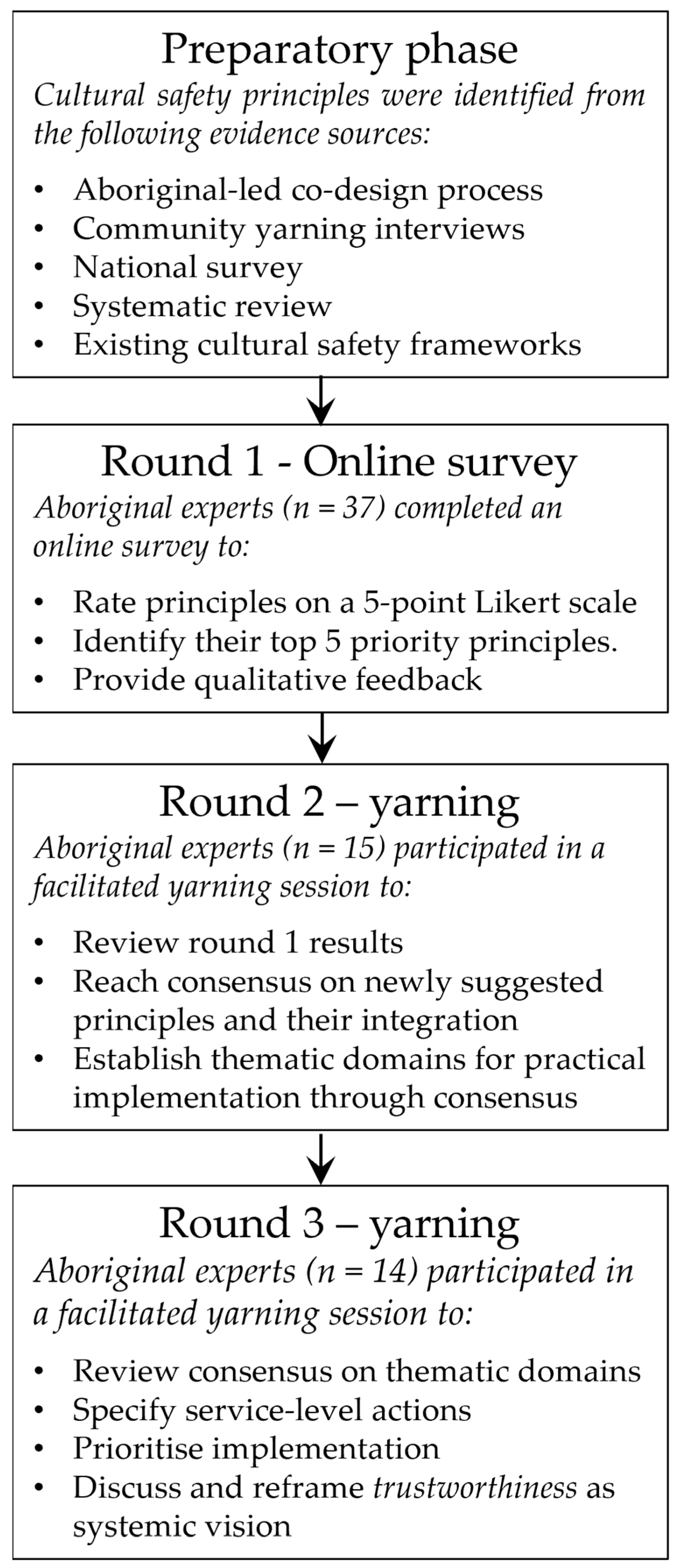
A three-round, modified Delphi was undertaken to identify, prioritise and translate consensus cultural safety principles into implementable domains for culturally safe mental health care for Aboriginal and Torres Strait Islander peoples in Western Australia (Figure 1).
This methodology aligns with best-practice Delphi methodology [39,40] and APAR principles, ensuring Aboriginal governance and self-determination throughout the research process [38]. Yarning [41]—an Aboriginal research methodology based on conversational, relational dialogue that centres Indigenous ways of Knowing, Being and Doing—was incorporated as the primary qualitative method across rounds, providing a culturally safe space for participants to share knowledge, refine principles, and build consensus.
The principles for cultural safety that were examined in the Delphi process (Table S1) emerged from five interconnected sources of evidence that were synthesised using Aboriginal governance and cultural validation processes:
(1)
Aboriginal-led co-design process using focus groups with consumers, carers, mental health workers, Elders and traditional healers to develop a culturally safe qualitative interview protocol for exploring experiences of mainstream mental health services among Aboriginal and Torres Strait Islander peoples [15,16]. These yarning sessions were conducted in the Perth Metro, Great Southern, and Kimberley regions of Western Australia.
(2)
Focus groups and yarning interviews with Aboriginal and Torres Strait Islander community members, mental health professionals, Elders and traditional healers across Perth Metro, Great Southern and the Kimberley regions. These sessions used culturally appropriate methodologies to understand perspectives on cultural safety and co-design appropriate research approaches.
(3)
A national online survey, designed to assess how mainstream mental health services align with Aboriginal and Torres Strait Islander ways of Knowing, Being and Doing, where both Indigenous and non-Indigenous participants rated service characteristics across the domains of understanding, trustworthiness and culturally informed practice.
(4)
A qualitative systematic review that maps and synthesises the academic and grey literature to identify the core characteristics of culturally safe mental health services for Aboriginal and Torres Strait Islander peoples, using a three-tiered evidence framework and thematic synthesis guided by Aboriginal governance and the Joanna Briggs Institute methodology [42].
(5)
Existing frameworks for cultural safety [43,44,45,46,47,48,49,50,51].

2.2. Expert Panel Selection

A purposive sampling approach was employed to recruit Aboriginal and Torres Strait Islander experts in mental health and SEWB from Western Australia. Direct recruitment occurred through professional networks and community connections, and service managers were also invited to nominate potential participants who met inclusion criteria.
Inclusion criteria required participants to: (1) identify as Aboriginal and/or Torres Strait Islander; (2) be aged 18 years or older; and (3) possess expertise in mental health and/or SEWB through professional roles, lived experience, traditional healing practice or community leadership positions.
Expert panel diversity was intentionally sought across multiple dimensions including geographic representation (metropolitan, regional and remote communities); professional roles (clinicians, social workers, traditional healers/Ngangkari, community workers, researchers, service managers); lived experience perspectives (service users, carers, family members); and cultural authority (Elders). This approach ensured representation of the breadth of Aboriginal and Torres Strait Islander expertise essential for comprehensive cultural safety consensus.
Participants received gift vouchers valued at AUD $25 for Round 1 survey completion, $50 for Round 2 yarning session attendance and $100 for Round 3 final yarning session participation. Yarning sessions included cultural protocols of sharing food and provided comfortable spaces for extended discussion (up to 3 h with breaks).

2.3. The Delphi Process

A three-round modified Delphi approach was implemented, incorporating yarning methodology as culturally appropriate consultation practice (Figure 1).
In the first round, participants completed an anonymous online survey (Qualtrics™) in which they rated the importance of 30 cultural safety principles on a 5-point Likert scale (1 = not as important, 5 = extremely important). Each principle was accompanied by “Knowing, Being and Doing” descriptors (Table S1). In addition to rating each principle’s importance, participants were also asked to select the five cultural safety principles they considered most urgent for immediate action. This dual approach enabled assessment of both overall importance and priority urgency of principles to guide the subsequent consensus process and practical implementation focus. Participants were invited to suggest additional cultural safety principles and provide qualitative feedback.
The survey included demographic questions on age, gender, cultural background, language affiliations, geographic location and participant expertise categories.
In round 2, an online yarning session was conducted with Delphi participants to review Round 1 results and discuss: (1) newly suggested cultural safety principles and their integration with existing principles; and (2) thematic grouping of principles into implementable domains.
A final yarning session consolidated findings from previous rounds, achieving consensus on: (1) thematic grouping of principles into implementation domains; (2) reframing of selected principles where consensus indicated a need for reconceptualisation; (3) prioritisation considerations for practice implementation; and (4) specific service-level actions within each domain.
The yarning session followed Aboriginal cultural protocols with Aboriginal research team members facilitating discussions. An iterative feedback loop was incorporated throughout the process.

2.4. Consensus Criteria and Analysis

Each cultural safety principle was first rated for importance on a 5-point Likert scale, ranging from 1 (not as important) to 5 (extremely important). For each principle, the mean importance score and standard deviation (SD) were calculated. This measure provided insight into the perceived importance of each principle across the expert panel and is consistent with recommended Delphi practices that integrate rating scales for importance assessment.
Subsequently, participants were asked to select the top 5 cultural safety principles they considered the most urgent priorities for action. For each principle, a weighted priority score was calculated as the percentage of respondents who included that principle among their top five. Specifically, for principle j, the weighted priority score Wj was computed as: Wj = (cj/N) × 100%, where cj is the number of respondents selecting principle j as top priority, and N = 37 is the total number of respondents completing this item. This metric reflects the proportion of the expert panel endorsing each principle as critical for immediate prioritisation. Ranking principles by these weighted priority scores facilitated clear identification of the highest priorities.
Qualitative data from yarning sessions were analysed using inductive thematic analysis, consistent with reflexive thematic analysis principles. Aboriginal research team members led the analytical process, bringing cultural knowledge to the interpretation of data. An iterative approach was used across rounds, whereby emerging themes were reviewed, refined, and validated through participant feedback and group consensus during subsequent yarning sessions. This process ensured that the thematic domains and priority actions were grounded in Aboriginal perspectives and governed by cultural protocols throughout.

2.5. Ethical Considerations

The Delphi was embedded within an Aboriginal-led project (Transforming Indigenous Mental Health and Wellbeing) under Aboriginal governance and leadership with ongoing oversight from an Aboriginal Reference Group and adherence to NHMRC ethical guidelines (Western Australian Aboriginal Health Ethics Committee approval HREC1037). All participants provided informed consent with explicit provisions for withdrawal at any stage. Community ownership of knowledge was respected through participant review of findings and commitment to disseminate results through community-accessible formats including yarning sessions, community reports and presentations in addition to academic publication. Data sovereignty principles ensured Aboriginal control over data use, storage and future applications.

2.6. Aboriginal Knowledge Translation: Artwork Development

To ensure research findings were translated in a culturally meaningful way, a commissioned artwork was developed as a co-produced end product of the study. The research team engaged Ronda Rudda Rudda (Ronda Clarke), a proud Nyikina woman from the West Kimberley region of Western Australia, and founder of Rudda Rudda Collections. The artist’s practice centres on yarning with communities to visually project collective voices and stories, translating lived experiences and research findings into visual narratives accessible beyond written text. The artist participated directly in yarning sessions with the research team and study participants, producing artwork in real time as key Delphi-identified principles were shared and interpreted through Aboriginal symbols, totems and cultural imagery. The resulting artwork visually encodes the study findings within an Aboriginal cultural framework, serving as both a dissemination tool and a culturally affirming record of participant contributions.

3. Results

3.1. Expert Panel Members

A total of 37 participants completed the online survey with full demographic characteristics reported in Table 1. Briefly, participants ranged in age from 22 to 72 years, with 24 identifying as female (64.9%), 12 as male (32.4%), with one participant not identifying within the listed categories (2.7%). All respondents who reported cultural identity identified as Aboriginal, representing diverse language groups across metropolitan (73.0%), regional (13.5%), and remote (13.5%) areas of Western Australia. Participant roles were varied, with community members being the most common (54.1%), followed by mental health professionals and those with mental health expertise (29.7% each).
Among the 37 participants, 15 (40.5%) participated in Round 2 and 14 (37.8%) in Round 3.

3.2. Round 1: Rating and Prioritisation of Cultural Safety Principles

Across 37 respondents, all 30 cultural safety principles were rated in the “very important” to “extremely important” range (means 4.54–4.97), indicating strong consensus on the foundational requirements for culturally safe mental health care (Table 2). The questionnaire’s Knowing–Being–Doing descriptors provided a shared interpretive scaffold for each principle during rating, supporting content validity and consistent understanding across participants and aligning with best practice in culturally anchored Delphi survey design.
The weighted priority analysis, derived from participants’ selection of the five most urgent cultural safety principles, highlighted immediate reform priorities, led by trustworthiness (40.5%), Aboriginal governance (37.8%), trauma-informed care (35.1%), addressing racism (35.1%), Aboriginal leadership (32.4%) and strengthening the Aboriginal workforce (32.4%) (Table 2).
These results demonstrate that, despite a broad consensus regarding the foundational value of each principle, respondents perceived the most urgent levers for advancing cultural safety to be those that address historical and structural inequities—namely, rebuilding trust, ensuring Aboriginal peoples’ authority and control in decision-making, embedding leadership that draws on community and cultural strengths and directly confronting the ongoing impacts of racism and trauma within the health system.

3.3. Round 2: Refinement of Cultural Safety Principles and Thematic Domain Development

3.3.1. New Cultural Safety Principles Integration

Following review of Round 1 feedback, participants examined three newly proposed cultural safety principles for integration into the existing 30 (Table S1). Through yarning discussions, consensus was achieved to incorporate each as standalone principles rather than integrating them within existing constructs.
Cultural determinants of health emerged as a distinct cultural safety principle emphasising the strength-based elements of culture that require active cultivation. This principle encompasses connection to Country, cultural practices, language maintenance and traditional knowledge systems as protective factors requiring support and resources.
Social, political and economic determinants of health was retained as a separate cultural safety principle recognising upstream structural factors including systemic racism, poverty, housing access, education and political exclusion. Participants emphasised these determinants as legacies of colonisation requiring policy-level interventions and structural reforms beyond individual service provision.
Reciprocity was elevated to a standalone cultural safety principle given its fundamental importance to Aboriginal ways of Knowing, Being and Doing. Participants distinguished authentic reciprocity—characterised by mutual respect, shared benefits and ongoing relational approaches—from transactional relations common in mainstream service provision. As one participant explained: “reciprocity is extremely important... it really is about how we care for each other... it’s quite a very powerful part of our culture.”
The existing Family-Centred Care principle underwent reconceptualisation to “Family-Centred and Inclusive Care for Diverse and Blended Family Structures.” This change reflected recognition that Aboriginal family systems extend beyond nuclear family to encompass kinship, chosen families, LGBTQIA+ members, Elders, caregivers and intergenerational care arrangements. Participants emphasised the importance of explicit inclusivity statements rather than assuming broad interpretation of family structures within service provision.

3.3.2. Thematic Domain Structure

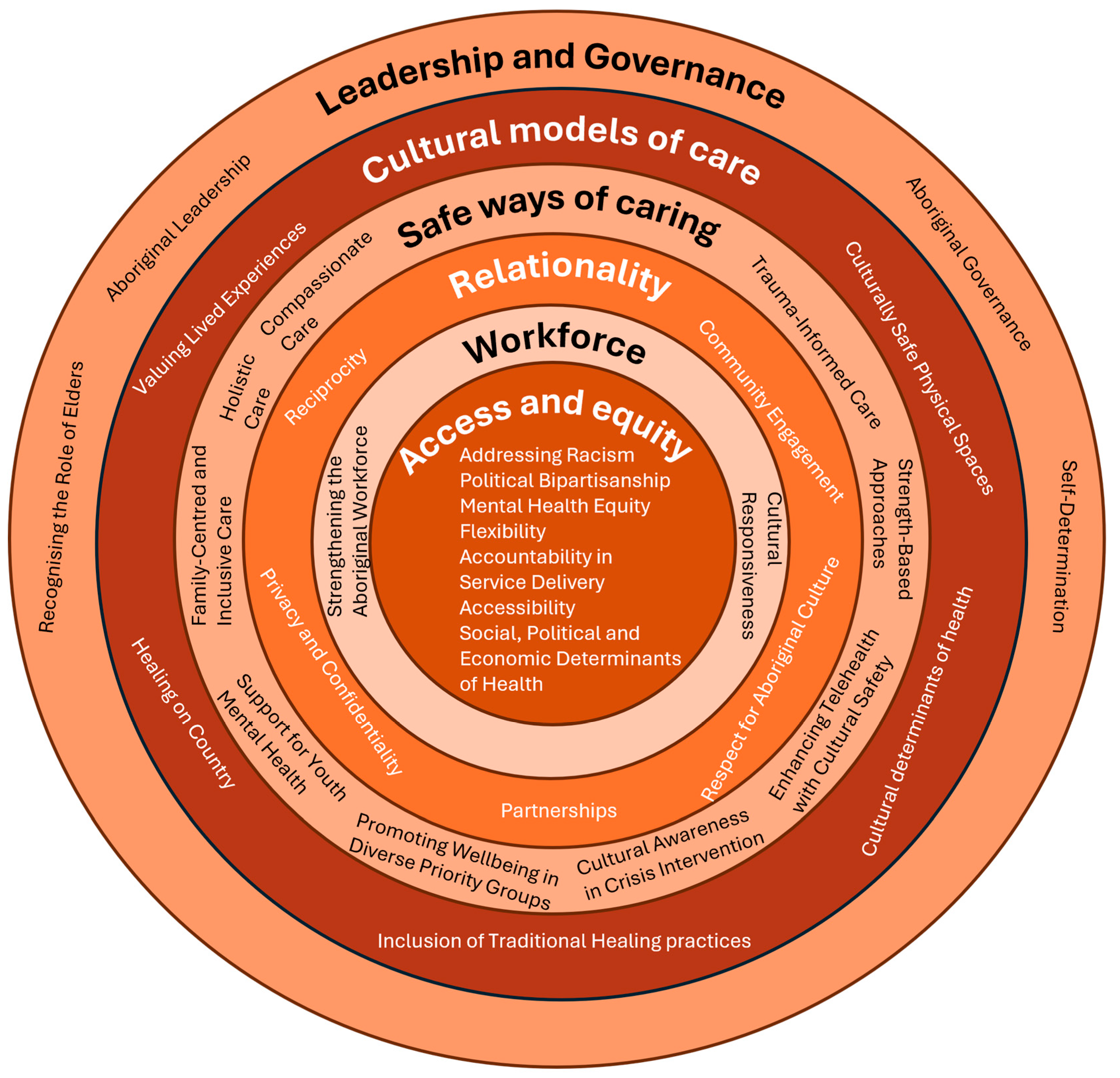
Through collaborative discussions during the final yarning session, participants consolidated the 33 cultural safety principles into six implementation domains designed to facilitate practical application within mental health services and systems (Table 3, Figure 2, Table S1).
Leadership and Governance encompasses principles including Aboriginal governance, Aboriginal leadership, self-determination and recognising the role of Elders. This domain was conceptualised as the foundational structure enabling all other cultural safety reforms through embedded Aboriginal decision-making authority and sustainable governance mechanisms (Table 3, Figure 2, Table S1).
Workforce Development integrates principles focused on strengthening the Aboriginal workforce and enhancing cultural responsiveness across all staff levels. This domain addresses both recruitment and retention of Aboriginal professionals and the cultural competency development of non-Indigenous staff working within Aboriginal health contexts (Table 3, Figure 2, Table S1).
Access and Equity encompasses principles addressing mental health equity, service flexibility, accessibility and systematic approaches to addressing racism. This domain addresses both immediate service delivery improvements and broader systemic reforms to eliminate barriers to culturally safe care (Table 3, Figure 2, Table S1).
Relationality incorporates community engagement, partnerships, privacy and confidentiality considerations and reciprocity principles. This domain emphasises the relational foundation of Aboriginal healthcare and the importance of authentic, sustained community connections rather than transactional service provision.
Safe Ways of Caring includes compassionate care, trauma-informed care, family-centred and inclusive care, among others (Table 3, Figure 2, Table S1). These principles translate cultural safety into concrete care practices, guiding how clinicians interact with patients, structure care environments and respond to trauma within mainstream service settings.
Finally, Cultural Models of Care reflects holistic and culturally grounded approaches, including the inclusion of traditional healing practices, healing on Country and recognition of cultural determinants of health, highlighting the necessity of partnering with Aboriginal-controlled organisations and traditional healers to achieve meaningful and sustained change (Table 3, Figure 2, Table S1).

3.4. Round 3: Consensus on Domain Structure, Prioritisation and Service-Level Actions

3.4.1. Implementation Prioritisation

Participants achieved unanimous consensus regarding implementation sequencing based on foundational necessity and logical dependencies between domains (Figure 2). Leadership and Governance was identified as the prerequisite priority for all other cultural safety reforms, with participants noting that “without leadership and governance, you can’t do the access or the safe ways or train the workforce or build that relationship or partnerships with others.”
Cultural Models of Care and Safe Ways of Caring were positioned as the second priority, flowing from effective governance structures and representing the care delivery approaches enabled by appropriate leadership and decision-making frameworks. Access and Equity, Workforce Development and Relationality were identified as the third priority level, viewed as actionable implementation streams that emerge from foundational governance reforms and appropriate care models.
Reflecting the results of Round 1, all six domains were consistently endorsed as critical, and it was clear that they must be implemented together as a connected framework—no single domain can stand alone in delivering culturally safe and effective SEWB and mental health care.

3.4.2. Service-Level Implementation Actions

Through detailed discussions focused on practical application, participants developed comprehensive service-level actions for each domain. These actions represent concrete steps that mental health services can undertake to operationalise cultural safety principles within their contexts (Table 4).

3.4.3. Trust Reconceptualisation: From Principle to Aspirational Vision

A significant theoretical development emerged through participant discussions regarding trustworthiness, originally identified as the highest-rated urgent principle in Round 1. Through extensive yarning and analysis, participants collectively reconceptualised trust as an aspirational vision rather than an actionable principle, recognising that trust represents an outcome of structural change rather than a characteristic service can claim to possess.
Critical insights from this reconceptualisation included recognition of power imbalances, with one participant noting: “it’s always us… we’re always expected to give up power completely first and then expected to just trust the system.” Participants also emphasised the fragility of trust, observing that “it can be shattered pretty quickly and swiftly, depending on who’s in leadership,” and the necessity of sustained commitment, describing trust as “a lifelong relationship and not contractual.”

3.4.4. Consensus Characteristics and Validation

The yarning methodology facilitated consensus through unanimous agreement, collaborative refinement of principle definitions and a consistent focus on implementable service-level actions. Aboriginal-led facilitation and traditional yarning protocols ensured cultural grounding, while systems thinking acknowledged the complex interconnections across domains.
Participants consistently emphasised that cultural safety requires systemic rather than superficial transformation. The consensus achieved through this process reflects not merely agreement on technical implementation details, but shared commitment to fundamental transformation of mental health service delivery through Aboriginal leadership, cultural authority and community-controlled approaches to healing and wellbeing.
The resulting framework provides both aspirational vision and practical guidance for services, organisations and systems committed to genuine cultural safety in mental health care provision for Aboriginal and Torres Strait Islander peoples.

3.4.5. An Aboriginal Approach to Translating Our Findings

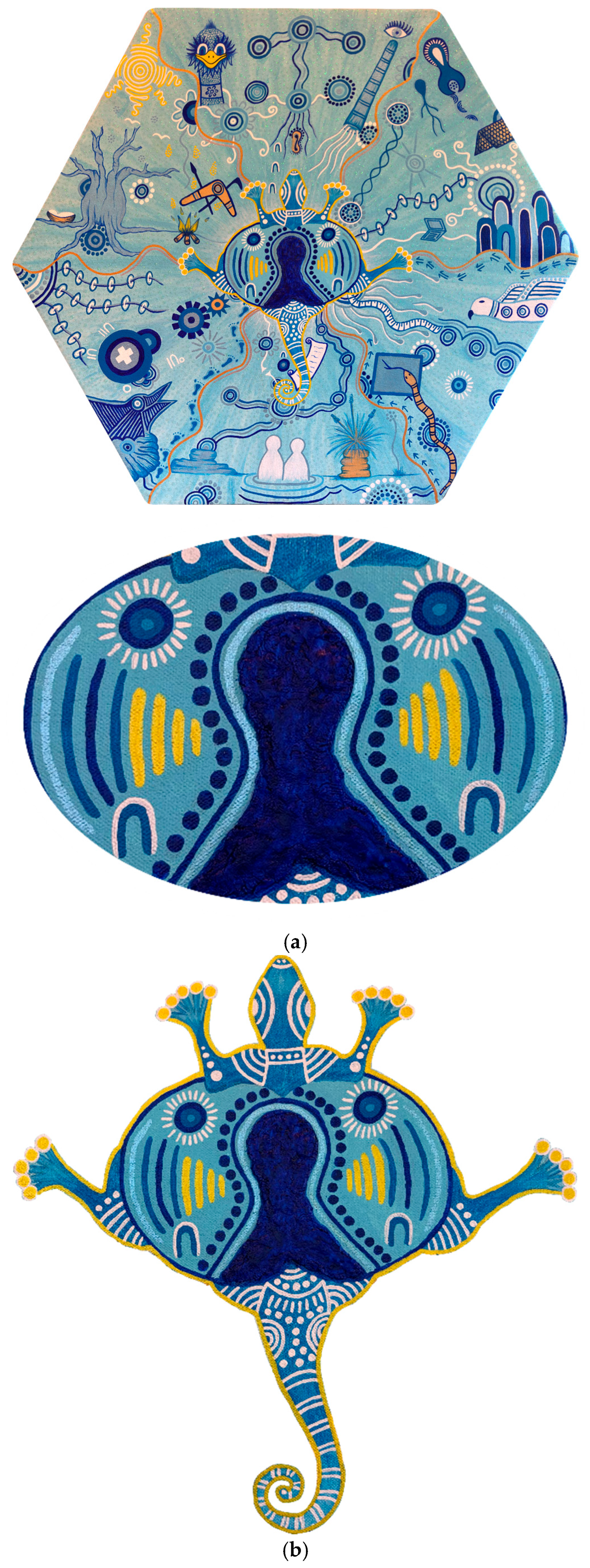
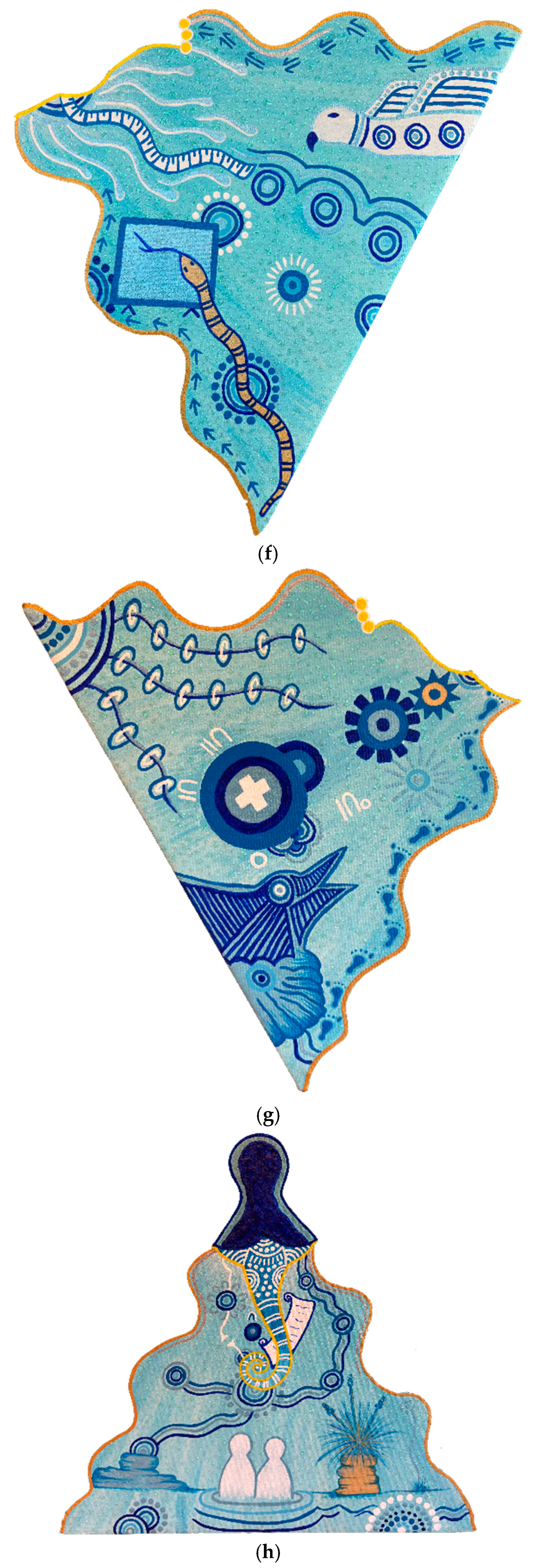
The visual artwork (Figure 3) depicts the collective voices of Aboriginal people who participated in the Delphi Study, showcasing new beginnings and a vision for more culturally safe and secure SEWB/MH service delivery for individuals and communities. The painting is structured around a hexagon canvas, within which six key domains for culturally safe mental health service delivery are brought to life through Aboriginal cultural symbols and imagery. The background is washed with glitter dots, representing the enduring connection to Aboriginal culture, beliefs, protocols, history, and the strength of Aboriginal and Torres Strait Islander peoples and communities.

4. Discussion

This Delphi consensus study represents a significant advancement in translating cultural safety concepts into actionable frameworks for mental health service transformation for Aboriginal and Torres Strait Islander peoples. Through systematic consensus-building processes grounded in APAR, this study achieved three important outcomes: establishing community-endorsed priorities for cultural safety implementation, organising principles into implementable domains and defining service-level actions that bridge the gap between theoretical frameworks and practice transformation.
The emergence of trustworthiness, Aboriginal governance and Aboriginal leadership as the highest-priority principles reflects deep community understanding that cultural safety requires fundamental restructuring of power relations, decision-making authority and accountability mechanisms within mental health services. This finding aligns with extensive evidence demonstrating that Indigenous self-determination in health governance is not merely desirable but essential for achieving improved health outcomes [52,53]. The requirement for “permanent, non-removable structural positions with clear decision-making authority” identified in this study directly addresses documented failures where Aboriginal advisory positions lack genuine power or are vulnerable to political changes [52,54].
Participants’ acknowledgement that trust cannot be claimed by services but must be earned through sustained structural change reflects profound insights into the historical trauma and ongoing experiences of racism that characterise Aboriginal and Torres Strait Islander peoples’ interactions with mainstream health systems. Research examining the role of Aboriginal and Torres Strait Islander health workers in building patient trust shows that interpersonal trust-building efforts are consistently undermined by structural features of health systems that privilege dominant cultural values and modes of operation [52,54,55]. The emphasis on consistent community presence through dedicated staff rather than fly-in/fly-out service models addresses documented failures where transient providers cannot build trust, understand local contexts or provide continuity of care. Aboriginal community-controlled health services exemplify the effectiveness of this approach, maintaining permanent community presence and relationships that enable holistic, culturally grounded care [52,56].
The high prioritisation of addressing racism (35.1%) and trauma-informed care (35.1%) reflects participants’ lived experiences of ongoing discrimination and the cumulative impacts of historical and contemporary trauma, with evidence showing that racism operates as both a determinant of poor mental health outcomes and a barrier to accessing appropriate care [57,58].
The integration of trauma-informed care as a priority principle aligns with research demonstrating that trauma-informed practice training enables healthcare providers to recognise how unresolved trauma continues to impact Aboriginal and Torres Strait Islander peoples’ wellbeing and to avoid re-traumatisation through culturally unsafe practices [59,60,61].
The prioritisation of strengthening the Aboriginal workforce (32.4%) alongside cultural responsiveness training reflects participants’ understanding that Aboriginal staff play unique roles in facilitating cultural safety but are simultaneously burdened by “cultural load”—additional invisible labour of educating colleagues, representing all Aboriginal peoples and navigating racism within organisations [62,63]. Research shows that cultural load contributes to burnout, turnover and inability to perform core roles effectively, yet this work is rarely recognised or remunerated appropriately [62,63,64]. The study’s emphasis on 50D positions (affirmative action hiring), school-based traineeships, and structured career pathways addresses evidence that Aboriginal workforce retention requires not only recruitment but systematic support, mentorship and protection from exploitation. Equally important is the emphasis on continuous cultural responsiveness training for all staff, moving beyond one-time cultural awareness sessions to ongoing competency assessment and professional development [59,65]. Accountability mechanisms are essential for ensuring that cultural safety commitments translate into practice changes [65,66].
The study’s recommendations to “enable traditional healing practices and healing on Country as recognised clinical options through formal partnerships with traditional healers” addresses longstanding barriers to incorporating Aboriginal healing within mainstream services. This requires not only theoretical acceptance but concrete resourcing, institutional support and recognition of traditional healers’ expertise and authority.
Participants were clear that the six domains, while sequenced, are inseparable and must be co-implemented as a unified framework, recognising that without foundational governance reforms, subsequent actions risk superficial compliance rather than transformative change.
This is further reflected in how the two figures represent the findings differently, each serving a distinct purpose. Figure 2 presents domains sequentially by prioritisation, reflecting structured Delphi consensus on relative importance for service planning, while Figure 3 portrays all six domains as equal in proportion and significance—consistent with an Aboriginal worldview in which SEWB, culture, relationships and Country are understood holistically and without hierarchy. Together, they reflect the complementary epistemological approaches of this mixed-methods study, offering both a structured service delivery framework and a culturally grounded representation of knowledge.
This study makes a distinct practical contribution by providing a community-endorsed, operationalised framework that moves beyond theoretical principles to define concrete service-level actions across six domains. The framework offers ready-to-use tools for Aboriginal community-controlled health organisations, mental health service planners, and policymakers seeking to redesign services in culturally grounded ways.
The integration of yarning within the Delphi process, and the translation of findings into an Aboriginal artwork, further demonstrate innovative approaches to both knowledge generation and community knowledge translation that have broad applicability across Indigenous health research.
This study’s strengths include its mixed-methods design, which enabled the integration of quantitative consensus data. The combination of importance ratings and priority rankings provided nuanced understanding of both foundational values and urgent reform levers with qualitative yarning methodology. The study’s grounding in APAR methodology, extensive preparatory evidence synthesis, diverse expert panel representation across professional roles and geographic regions, and translation of principles into implementable domains and actions further contribute to the study’s robustness.
However, while the expert panel was diverse within Western Australia, broader national representation would enhance the generalisability of the findings. The Delphi method itself carries inherent limitations, including the potential for groupthink, the possibility that iterative consensus processes may smooth out minority or dissenting views, and reliance on participant self-selection. Limitations related to the respondent profile should also be acknowledged, including the relatively small sample size, the predominance of metropolitan-based participants, and the potential over-representation of individuals already engaged with formal mental health services, which may limit transferability to remote and rural contexts where service access and cultural safety challenges differ substantially.
Future research should prioritise implementation trials across diverse service settings—including remote, rural and urban contexts—evaluating impacts on Aboriginal service users’ experiences and mental health outcomes. Empirical studies examining the experiences and cultural load of Aboriginal mental health workers, alongside the development of Aboriginal-defined cultural safety assessment tools, are needed to move beyond compliance-based frameworks toward genuine accountability. Longitudinal research is essential to track whether governance reforms translate into sustained organisational transformation, and future work should explore how the framework applies across specific populations—youth, Elders, LGBTQIA+ community members—and service contexts including inpatient, crisis and community care.

5. Conclusions

This Delphi consensus study establishes a comprehensive, community-endorsed framework for cultural safety in mental health services for Aboriginal and Torres Strait Islander peoples. The findings demonstrate a community and expert understanding that cultural safety requires structural transformation rather than surface-level modifications, with leadership, governance and trust-building as foundational prerequisites for all other reforms. The prioritisation of addressing racism, trauma-informed care and workforce strengthening reflects urgent needs for systemic change to address ongoing harms within mental health services.
By organising 32 cultural safety principles into six implementable domains with specific service-level actions, this study bridges the critical gap between cultural safety concepts and enforceable practice standards. Ultimately, achieving cultural safety in mental health services requires sustained commitment to Aboriginal leadership and governance, structural reforms to address power imbalances and systemic racism, comprehensive workforce development that recognises and supports Aboriginal staff while building cultural competency across all workers, genuine community partnerships grounded in reciprocity and long-term relationships, integration of cultural models of care including traditional healing and holistic approaches and robust accountability mechanisms ensuring principles translate into practice. This study provides the evidence base and implementation roadmap necessary for services genuinely committed to transformative change that serves the mental health and wellbeing needs of Aboriginal and Torres Strait Islander peoples.

Supplementary Materials

The following supporting information can be downloaded at: https://www.mdpi.com/article/10.3390/systems14050465/s1, Table S1: Framework illustrating 33 principles essential for achieving culturally safe mental health services, each articulated through comprehensive ‘Knowing, Being and Doing’ descriptors—a framework that reflects Indigenous epistemologies and ontologies. “Knowing” refers to cultural knowledge and understanding, “Being” to values, attitudes and relationships, and “Doing” to practical actions and behaviours.

Author Contributions

Conceptualisation, H.M., S.K., B.B. and R.C.; methodology, B.B., H.M., S.K., J.C., M.M. and R.C.; validation, B.B., H.M., S.K., J.C., M.M. and R.C.; formal analysis, B.B. and H.M.; investigation, B.B., H.M., S.K., J.C., M.M. and R.C.; data curation, B.B., H.M., S.K., J.C., M.M. and R.C.; writing—original draft preparation, B.B.; writing—review and editing, S.K., H.M., B.B. and J.C.; visualisation, B.B. and R.C.; supervision, H.M. and B.B.; project administration, B.B.; funding acquisition, H.M. All authors have read and agreed to the published version of the manuscript.

Funding

This research was funded by the Medical Research Future Fund via the National Health and Medical Research Council, grant number APP1178803.

Institutional Review Board Statement

The study was conducted in accordance with the Declaration of Helsinki and approved by the Western Australian Aboriginal Health Ethics Committee (protocol code HREC1037) on 9 March 2021.

Informed Consent Statement

Informed consent was obtained from all subjects involved in the study.

Data Availability Statement

The data presented in this study are available on request from the corresponding author due to protection under confidentiality provisions consistent with ethical guidelines for Aboriginal and Torres Strait Islander research.

Acknowledgments

We respectfully acknowledge the Menang Noongar people as the Traditional Custodians of the lands on which this work took place. We offer our sincere gratitude to all the Aboriginal people who participated in this research and shared their knowledge, insights and lived experience. The authors also gratefully acknowledge Navid Mavaddat for his technical assistance in translating the original artwork into publication-ready figures.

Conflicts of Interest

Author Michael Mitchell is affiliated with MCM Consulting. The remaining authors declare that the research was conducted in the absence of any commercial or financial relationships that could be construed as a potential conflict of interest.

References

  1. Dudgeon, P.; Milroy, H.; Walker, R. Working Together: Aboriginal and Torres Strait Islander Mental Health and Wellbeing Principles and Practice; Telethon Kids Institute: Perth, Australia; Kulunga Aboriginal Research Development Unit: Perth, Australia, 2014; Available online: https://www.thekids.org.au/our-research/Indigenous-health/working-together-second-edition/ (accessed on 11 November 2025).
  2. Dudgeon, P.; Walker, R.; Scrine, C.; Shepherd, C.; Calma, T.; Ring, I. Effective Strategies to Strengthen the Mental Health and Wellbeing of Aboriginal and Torres Strait Islander People. 2014. Available online: https://www.aihw.gov.au/reports/indigenous-australians/strategies-to-strengthen-mental-health-wellbeing/formats (accessed on 11 November 2025).
  3. Australian Institute of Health and Welfare (AIHW). Aboriginal and Torres Strait Islander Health Performance Framework 2020 Summary Report; AIHW: Canberra, Australia, 2020. Available online: https://www.indigenoushpf.gov.au/getmedia/f61f0a50-f749-4045-b58f-b2c358db2c6b/2020-summary-ihpf-2.pdf?ext=.pdf (accessed on 11 November 2025).
  4. Australian Bureau of Statistics (ABS). National Aboriginal and Torres Strait Islander Health Survey; ABS: Canberra, Australia, 2019. Available online: https://www.abs.gov.au/statistics/people/aboriginal-and-torres-strait-islander-peoples/national-aboriginal-and-torres-strait-islander-health-survey/latest-release (accessed on 11 November 2025).
  5. Australian Institute of Health and Welfare (AIHW). Cultural Safety in Health Care for Indigenous Australians: Monitoring Framework. 2023. Available online: https://www.aihw.gov.au/reports/indigenous-australians/cultural-safety-health-care-framework/contents/summary (accessed on 11 November 2025).
  6. Menzies, K. Understanding the Australian Aboriginal experience of collective, historical and intergenerational trauma. Int. Soc. Work. 2019, 62, 1522–1534. [Google Scholar] [CrossRef]
  7. Atkinson, J.; Nelson, J.; Atkinson, C. Trauma transgenerational transfer and effects on community wellbeing. In Working Together: Aboriginal and Torres Strait Islander Mental Health and Wellbeing Principles and Practice; Australian Institute of Health and Welfare: Canberra, Australia, 2010; pp. 135–144. Available online: https://researchportal.scu.edu.au/esploro/outputs/bookChapter/Trauma-transgenerational-transfer-and-effects-on/991012821035502368 (accessed on 11 November 2025).
  8. Sherwood, J. Colonisation—It’s bad for your health: The context of Aboriginal health. Contemp. Nurse 2013, 46, 28–40. [Google Scholar] [CrossRef] [PubMed]
  9. Paradies, Y. Colonisation, racism and indigenous health. J. Popul. Res. 2016, 33, 83–96. [Google Scholar] [CrossRef]
  10. Priest, N.C.; Paradies, Y.C.; Gunthorpe, W.; Cairney, S.J.; Sayers, S.M. Racism as a determinant of social and emotional wellbeing for Aboriginal Australian youth. Med. J. Aust. 2011, 194, 546–550. [Google Scholar] [CrossRef]
  11. Kelaher, M.A.; Ferdinand, A.S.; Paradies, Y. Experiencing racism in health care: The mental health impacts for Victorian Aboriginal communities. Med. J. Aust. 2014, 201, 44–47. [Google Scholar] [CrossRef]
  12. Harfield, S.G.; Davy, C.; McArthur, A.; Munn, Z.; Brown, A.; Brown, N. Characteristics of Indigenous primary health care service delivery models: A systematic scoping review. Glob. Health 2018, 14, 12. [Google Scholar] [CrossRef]
  13. Kilian, A.; Williamson, A. What is known about pathways to mental health care for Australian Aboriginal young people?: A narrative review. Int. J. Equity Health 2018, 17, 12. [Google Scholar] [CrossRef]
  14. Isaacs, A.N.; Pyett, P.; Oakley-Browne, M.A.; Gruis, H.; Waples-Crowe, P. Barriers and facilitators to the utilization of adult mental health services by Australia’s Indigenous people: Seeking a way forward. Int. J. Ment. Health Nurs. 2010, 19, 75–82. [Google Scholar] [CrossRef]
  15. Milroy, H.; Kashyap, S.; Collova, J.; Mitchell, M.; Ryder, A.; Cox, Z.; Coleman, M.; Taran, M.; Cuesta Briand, B.; Gee, G. Walking together in friendship: Learning about cultural safety in mainstream mental health services through Aboriginal Participatory Action Research. Aust. New Zealand J. Psychiatry 2024, 58, 498–505. [Google Scholar] [CrossRef] [PubMed]
  16. Milroy, H.; Kashyap, S.; Collova, J.; Mitchell, M.; Derry, K.L.; Alexi, J.; Chang, E.P.; Dudgeon, P. Co-designing research with Aboriginal and Torres Strait Islander consumers of mental health services, mental health workers, elders and cultural healers. Aust. J. Rural Health 2022, 30, 772–781. [Google Scholar] [CrossRef] [PubMed]
  17. Curtis, E.; Jones, R.; Tipene-Leach, D.; Walker, C.; Loring, B.; Paine, S.-J.; Reid, P. Why cultural safety rather than cultural competency is required to achieve health equity: A literature review and recommended definition. Int. J. Equity Health 2019, 18, 174. [Google Scholar] [CrossRef]
  18. Walker, R.; Schultz, C.; Sonn, C. Cultural Competence–Transforming Policy, Services, Programs and Practice. 2014. Available online: https://research-repository.uwa.edu.au/en/publications/cultural-competence-transforming-policy-services-programs-and-pra/ (accessed on 11 November 2025).
  19. Coffin, J. Rising to the challenge in Aboriginal health by creating cultural security. Aborig. Isl. Health Work. J. 2007, 31, 22–24. https://search.informit.org/doi/abs/10.3316/ielapa.955665869609324.
  20. Butler, T.L.; Anderson, K.; Garvey, G.; Cunningham, J.; Ratcliffe, J.; Tong, A.; Whop, L.J.; Cass, A.; Dickson, M.; Howard, K. Aboriginal and Torres Strait Islander people’s domains of wellbeing: A comprehensive literature review. Soc. Sci. Med. 2019, 233, 138–157. [Google Scholar] [CrossRef]
  21. Dudgeon, P.; Derry, K.L.; Mascall, C.; Ryder, A. Understanding Aboriginal Models of Selfhood: The National Empowerment Project’s Cultural, Social, and Emotional Wellbeing Program in Western Australia. Int. J. Environ. Res. Public Health 2022, 19, 4078. [Google Scholar] [CrossRef]
  22. Swan, P.; Raphael, B. “Ways Forward”: National Consultancy Report on Aboriginal and Torres Strait Islander Mental Health; Australian Government Publishing Service: Canberra, Australia, 1995. Available online: https://catalogue.nla.gov.au/catalog/828710 (accessed on 11 November 2025).
  23. Dudgeon, P.; Bray, A.; Walker, R. Self-determination and strengths-based Aboriginal and Torres Strait Islander suicide prevention: An emerging evidence-based approach. In Alternatives to Suicide; Elsevier: Amsterdam, The Netherlands, 2020; pp. 237–256. [Google Scholar] [CrossRef]
  24. Summerton, J.; Blunden, S. Cultural interventions that target mental health and wellbeing for First Nations Australians: A systematic review. Aust. Psychol. 2022, 57, 315–331. [Google Scholar] [CrossRef]
  25. Murrup-Stewart, C.; Searle, A.K.; Jobson, L.; Adams, K. Aboriginal perceptions of social and emotional wellbeing programs: A systematic review of literature assessing social and emotional wellbeing programs for Aboriginal and Torres Strait Islander Australians perspectives. Aust. Psychol. 2019, 54, 171–186. [Google Scholar] [CrossRef]
  26. Jorm, A.F.; Bourchier, S.J.; Cvetkovski, S.; Stewart, G. Mental health of Indigenous Australians: A review of findings from community surveys. Med. J. Aust. 2012, 196, 118–121. [Google Scholar] [CrossRef]
  27. Nagel, T.; Robinson, G.; Condon, J.; Trauer, T. Approach to treatment of mental illness and substance dependence in remote Indigenous communities: Results of a mixed methods study. Aust. J. Rural. Health 2009, 17, 174–182. [Google Scholar] [CrossRef]
  28. Johnstone, M.-J.; Kanitsaki, O. The spectrum of ‘new racism’ and discrimination in hospital contexts: A reappraisal. Collegian 2009, 16, 63–69. [Google Scholar] [CrossRef]
  29. Wright, M.; O’Connell, M. Negotiating the right path: Working together to effect change in healthcare service provision to Aboriginal peoples. ALAR Action Learn. Action Res. J. 2015, 21, 108–123. [Google Scholar]
  30. Durey, A.; Thompson, S.C.; Wood, M. Time to bring down the twin towers in poor Aboriginal hospital care: Addressing institutional racism and misunderstandings in communication. Intern. Med. J. 2012, 42, 17–22. [Google Scholar] [CrossRef]
  31. Rix, E.F.; Barclay, L.; Wilson, S. Can a white nurse get it? ‘Reflexive practice’ and the non-Indigenous clinician/researcher working with Aboriginal people. Rural Remote Health 2014, 14, 2679. [Google Scholar] [CrossRef]
  32. Kirmayer, L.J.; Swartz, L. Culture and global mental health. In Global Mental Health: Principles and Practice; Oxford Academic: New York, NY, USA, 2013; pp. 41–62. Available online: https://academic.oup.com/book/25250/chapter/189774320 (accessed on 11 November 2025).
  33. Hunter, E.; Gill, N.; Toombs, M. Mental Health Among Indigenous Australians; Oxford University Press: New York, NY, USA, 2013; Available online: https://researchonline.jcu.edu.au/32626/ (accessed on 11 November 2025).
  34. Miller, K.; Morda, R.; Sonn, C.C. Tokenistic or transformative? An exploration of culturally safe care in Australian mental health nursing. Int. J. Ment. Health 2024, 54, 4–21. [Google Scholar] [CrossRef]
  35. Meldrum, K.; Wallace, V.; Webb, T.; Ridgway, L.; Quigley, R.; Strivens, E.; Russell, S.G. A Delphi study and development of a social and emotional wellbeing screening tool for Australian First Nations Peoples living in the Torres Strait and Northern Peninsula Area of Australia. PLoS ONE 2024, 19, e0306316. [Google Scholar] [CrossRef] [PubMed]
  36. Hart, L.M.; Jorm, A.F.; Kanowski, L.G.; Kelly, C.M.; Langlands, R.L. Mental health first aid for Indigenous Australians: Using Delphi consensus studies to develop guidelines for culturally appropriate responses to mental health problems. BMC Psychiatry 2009, 9, 47. [Google Scholar] [CrossRef]
  37. Dale, E.; Conigrave, K.M.; Kelly, P.J.; Ivers, R.; Clapham, K.; Lee, K.S.K. A Delphi yarn: Applying Indigenous knowledges to enhance the cultural utility of SMART Recovery Australia. Addict. Sci. Clin. Pract. 2021, 16, 2. [Google Scholar] [CrossRef]
  38. Dudgeon, P.; Bray, A.; Darlaston-Jones, D.; Walker, R. Aboriginal Participatory Action Research: An Indigenous Research Methodology Strengthening Decolonisation and Social and Emotional Wellbeing; Lowitja Institute: Collingwood, Australia, 2020; Available online: https://www.lowitja.org.au/wp-content/uploads/2023/05/LI_Discussion_Paper_P-Dudgeon_FINAL3.pdf (accessed on 11 November 2025).
  39. Niederberger, M.; Schifano, J.; Deckert, S.; Hirt, J.; Homberg, A.; Köberich, S.; Kuhn, R.; Rommel, A.; Sonnberger, M.; DEWISS Network. Delphi studies in social and health sciences—Recommendations for an interdisciplinary standardized reporting (DELPHISTAR). Results of a Delphi study. PLoS ONE 2024, 19, e0304651. [Google Scholar] [CrossRef] [PubMed]
  40. Jünger, S.; Payne, S.A.; Brine, J.; Radbruch, L.; Brearley, S.G. Guidance on Conducting and REporting DElphi Studies (CREDES) in palliative care: Recommendations based on a methodological systematic review. Palliat. Med. 2017, 31, 684–706. [Google Scholar] [CrossRef] [PubMed]
  41. Bessarab, D.; Ng’Andu, B. Yarning about yarning as a legitimate method in Indigenous research. Int. J. Crit. Indig. Stud. 2010, 3, 37–50. [Google Scholar] [CrossRef]
  42. Milroy, H.; Kashyap, S.; Collova, J.R.; Platell, M.; Gee, G.; Ohan, J.L. Identifying the key characteristics of a culturally safe mental health service for Aboriginal and Torres Strait Islander peoples: A qualitative systematic review protocol. PLoS ONE 2023, 18, e0280213. [Google Scholar] [CrossRef]
  43. WAAMH. A Guide to Culturally Safe Practice in Mental Health. Available online: https://equallywell.org.au/wp-content/uploads/2025/08/A-Guide-to-Culturally-Safe-Practice-in-Mental-Health_FINAL.pdf (accessed on 11 November 2025).
  44. State Government of Victoria, Health and Human Services. Aboriginal and Torres Strait Islander Cultural Safety Framework: For the Victorian Health, Human and Community Services Sector. Part 1 & 2. Available online: https://www.dffh.vic.gov.au/publications/aboriginal-and-torres-strait-islander-cultural-safety-framework (accessed on 11 November 2025).
  45. Indigenous Allied Health Australia. Cultural Responsiveness in Action: An IAHA Framework (2nd ed.). Available online: https://iaha.com.au/wp-content/uploads/2020/10/IAHA_Cultural-Responsiveness_2020_v6-1.pdf (accessed on 11 November 2025).
  46. Australian Health Ministers Advisory Council. Cultural Respect Framework for Aboriginal and Torres Strait Islander Health 2016–2026: A National Approach to Building a Culturally Respectful Health System. Available online: https://www.sahealth.sa.gov.au/wps/wcm/connect/public+content/sa+health+internet/about+us/about+sa+health/aboriginal+health/national+cultural+respect+framework+2016-2026 (accessed on 11 November 2025).
  47. Council of Aboriginal Alcohol Program Services Corp. Cultural Safety Framework (Version 2.2). Available online: https://www.caaps.org.au/wp-content/uploads/2020/11/Cultural-Safety-Framework-CAAPS-V2-2.pdf (accessed on 11 November 2025).
  48. Kimberley Aboriginal Health Planning Forum. A Cultural Security Framework for Kimberley Mental Health, Social and Emotional Well-Being, and Alcohol and Other Drug Services. Available online: https://static1.squarespace.com/static/5b5fbd5b9772ae6ed988525c/t/5f598017654f8b4023763ca3/1599701035315/KAHPF+Cultural+Security+Framework.pdf (accessed on 11 November 2025).
  49. Western Health Alliance Ltd. A Transition to Cultural Safety in Service Delivery: WHAL Culturally Safe Practice Framework Part 1 and Evaluation Tool User Guide. Available online: https://www.wnswphn.org.au/wp-content/uploads/2025/06/WHAL-Cultural-Safety-Framework_Part1.pdf (accessed on 11 November 2025).
  50. Western Health Alliance Ltd. Cultural Safety Framework Part 2: Evaluation Tool User Guide. Available online: https://www.wnswphn.org.au/wp-content/uploads/2025/06/WHAL-Cultural-Safety-Framework_Part2_User-Guide_CheckBoxes.pdf (accessed on 11 November 2025).
  51. National Aboriginal and Torres Strait Islander Health Workers Association. Cultural Safety Framework Summary. Available online: https://www.naatsihwp.org.au/sites/default/files/natsihwa-cultural_safety-framework_summary.pdf (accessed on 11 November 2025).
  52. Mazel, O. Self-determination and the right to health: Australian aboriginal community controlled health services. Hum. Rights Law Rev. 2016, 16, 323–355. [Google Scholar] [CrossRef]
  53. Sanders, D. Self-determination and indigenous peoples. In Modern Law of Self-Determination; Brill Nijhoff: Leiden, The Netherlands, 1993; pp. 55–81. Available online: https://books.google.com.au/books/about/Modern_Law_of_Self_Determination.html?id=NlqPAAAAMAAJ&redir_esc=y (accessed on 11 November 2025).
  54. Kelaher, M.; Sabanovic, H.; La Brooy, C.; Lock, M.; Lusher, D.; Brown, L. Does more equitable governance lead to more equitable health care? A case study based on the implementation of health reform in Aboriginal health Australia. Soc. Sci. Med. 2014, 123, 278–286. [Google Scholar] [CrossRef][Green Version]
  55. Topp, S.M.; Tully, J.; Cummins, R.; Graham, V.; Yashadhana, A.; Elliott, L.; Taylor, S. Building patient trust in health systems: A qualitative study of facework in the context of the Aboriginal and Torres Strait Islander Health Worker role in Queensland, Australia. Soc. Sci. Med. 2022, 302, 114984. [Google Scholar] [CrossRef]
  56. Rink, E.; Stotz, S.A.; Johnson-Jennings, M.; Huyser, K.; Collins, K.; Manson, S.M.; Berkowitz, S.A.; Hebert, L.; Byker Shanks, C.; Begay, K.; et al. “We don’t separate out these things. Everything is related”: Partnerships with Indigenous Communities to Design, Implement, and Evaluate Multilevel Interventions to Reduce Health Disparities. Prev. Sci. 2024, 25, 474–485. [Google Scholar] [CrossRef]
  57. Kairuz, C.A.; Casanelia, L.M.; Bennett-Brook, K.; Coombes, J.; Yadav, U.N. Impact of racism and discrimination on physical and mental health among Aboriginal and Torres Strait islander peoples living in Australia: A systematic scoping review. BMC Public Health 2021, 21, 1302. [Google Scholar] [CrossRef] [PubMed]
  58. Awofeso, N. Racism: A major impediment to optimal Indigenous health and health care in Australia. Aust. Indig. Health Bull. 2011, 11, 1–8. [Google Scholar]
  59. Tujague, N.A.; Ryan, K.L. Ticking the box of ‘cultural safety’ is not enough: Why trauma-informed practice is critical to Indigenous healing. Rural Remote Health 2021, 21, 6411. [Google Scholar] [CrossRef] [PubMed]
  60. Haythornthwaite, S.; Hirvonen, T. The relevance of trauma informed care to Aboriginal primary health care services. In Proceedings of the 13th National Rural Health Conference, Darwin, Australia, 24–27 May 2015; pp. 24–27. [Google Scholar]
  61. Rodaughan, J.; Murrup-Stewart, C.; Berger, E. Aboriginal Practitioners’ Perspectives on Culturally Informed Practice for Trauma Healing in Australia. Couns. Psychol. 2024, 52, 1113–1141. [Google Scholar] [CrossRef]
  62. Tujague, N.; Ryan, K. Cultural Safety in Trauma-Informed Practice from a First Nations Perspective; Springer: Berlin/Heidelberg, Germany, 2023. [Google Scholar] [CrossRef]
  63. Sivertsen, N.; Ryder, C.; Johnson, T. First Nations People Often Take on the ‘Cultural Load’ in Their Workplaces. Employers Need to Ease This Burden. 2023. Available online: https://researchnow-admin.flinders.edu.au/ws/portalfiles/portal/71513421/Sivertson_First_P2023.pdf (accessed on 11 November 2025).
  64. Thiessen, S. Engaging First Nations people at work: The influence of culture and context. Adm. Sci. 2023, 13, 179. [Google Scholar] [CrossRef]
  65. Mashford-Pringle, A.; Tan, S.; Stutz, S.; Tjong, G. Designing accountability measures for health professionals: Results from a community-based micro-credential: Case study on Indigenous cultural safety. BMC Public Health 2023, 23, 879. [Google Scholar] [CrossRef]
  66. Muller, J.; Devine, S.; Geia, L.; Cairns, A.; Stothers, K.; Gibson, P.; Murray, D. Audit tools for culturally safe and responsive healthcare practices with Aboriginal and Torres Strait Islander people: A scoping review. BMJ Glob. Health 2024, 9, e014194. [Google Scholar] [CrossRef] [PubMed]
Figure 1. Flow diagram of the Delphi consensus process for developing culturally safe mental health care principles for Aboriginal and Torres Strait Islander peoples.
Systems 14 00465 g001
Figure 2. Conceptual framework showing the six sequenced domains and 32 principles for achieving cultural safety in Aboriginal mental health services as determined by Delphi consensus.
Systems 14 00465 g002
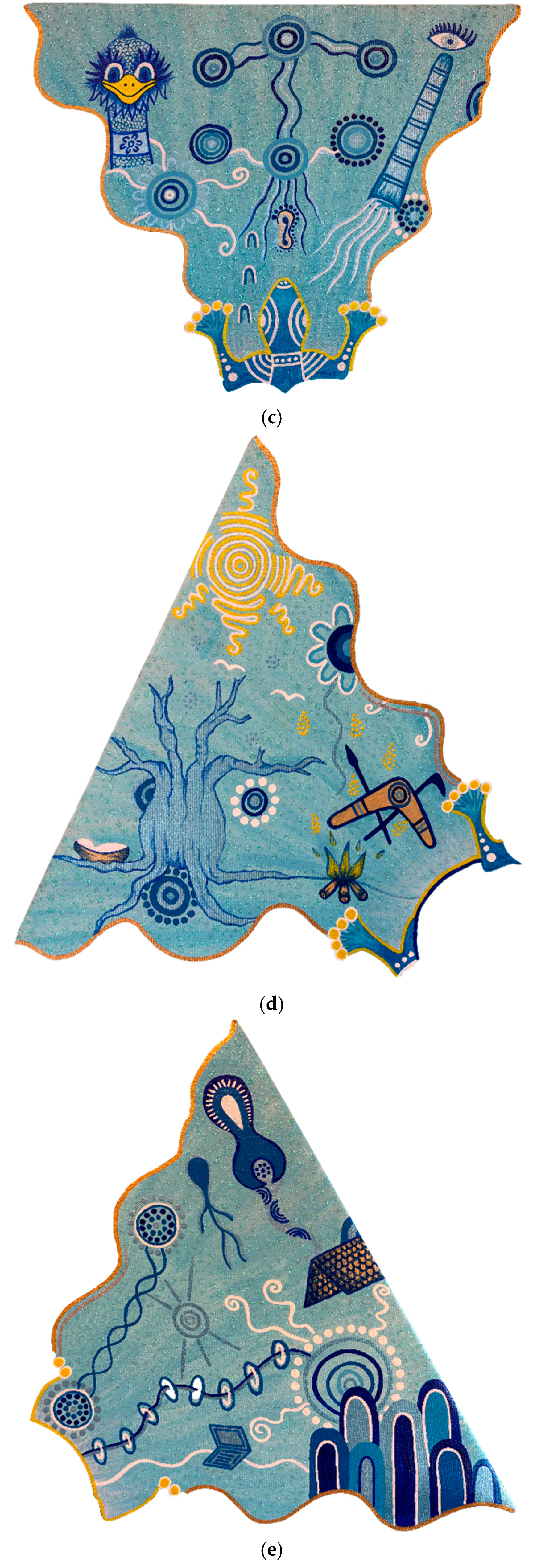
Figure 3. This artwork was created by artist Ronda Rudda Rudda (Ronda Clarke), a Nyikina woman born and raised in Derby in the West Kimberley. Ronda’s artwork is guided by yarning with people and listening deeply to their stories. This artwork is organised on a hexagonal canvas, within which each of the six community-endorsed implementation domains for culturally safe mental health service delivery is visually expressed through Aboriginal cultural symbols, totems and imagery, translating collective participant voices into a culturally grounded visual narrative. (a) Central SEWB/Mental Health Symbol. At the centre of the painting is the Aboriginal symbol for social and emotional wellbeing (SEWB), shown as a dark blue figure outlined with silver–blue and surrounded by dark blue dots. This symbol reflects Aboriginal spirituality, dreaming and healing. On either side of this central figure are circles within circles with lines extending outwards, representing the internal processes of thinking, worrying, talking inwardly and trying to understand one’s emotional world when feeling distressed or “no good.” Around the central SEWB symbol are oval lines, symbolising a person trying to reach out for help, support and care, while the lines running alongside them represent the many different advocacy supports, models of care and services that one may attempt to connect to. Below this, two upside-down U shapes represent a person sitting alone, feeling scared and disconnected while trying to reach out. Encircling this entire centre are two overlapping large circles, representing the relationship between individual trust and system-wide trust. Without trust culturally safe care and healing cannot occur. (b) The gecko (symbol of trust, adaptation and cultural strength). The gecko was chosen because of its cultural significance and its characteristics of adaptability, regeneration, strength and survival. Geckos can climb vertically, regenerate their tails when threatened, see in low light, and communicate using chirping and barking sounds. They are primarily nocturnal but can also be active during the day—symbolising how SEWB concerns can arise at any time, visible or invisible. The gecko embodies flexibility, communication, alertness and resilience. The gecko’s legs, head, and tail divide the artwork into six sections, each representing one of the six domains for delivering culturally safe and secure SEWB services. (c) Domain 1—Leadership and Governance. The emu in this section symbolises strong leadership—always alert, spiritually guided and a protector figure in Aboriginal culture. The emu also embodies resilience, purpose and the courage to move forward. Surrounding circles with U-shapes and connecting lines represent Aboriginal governance structures that uphold cultural authority, self-determination, decision-making and respect for Elders. The ear and eye with a lens show the cultural governance group listening carefully and watching closely, reinforcing accountability and responsibility in service delivery. Three individual U shapes represent individuals connected to services that are watching and listening to the individual and the community. (d) Domain 2—Cultural Models of Care. The second domain, Cultural Models of Care, is expressed through the boab tree, symbolising ancient knowledge and deep ancestral grounding. The tree’s roots connect to circles and dots that represent Elders, ancestors, and cultural knowledge used to guide healing. A baby in a coolamon represents birthing on Country and the importance of being welcomed into life through culture. A fire represents smoking ceremonies and spiritual cleansing, with small dots rising upward to indicate connection to the spiritual world. Traditional spears and boomerang represent cultural history, traditions, and old ways of sustaining life and identity. Circles within circles accompanied by surrounding dots represent culturally safe meeting places, while birds show the movement of different services, some fly-in and fly-out. Circles with U-shapes around them show continuous cultural meetings and the prioritisation of the cultural determinants of health. (e) Domain 3—Safe Ways of Caring. The third domain, Safe Ways of Caring, is shown through circles of dots connected by intersecting lines, representing family-centred and inclusive care which supports different Aboriginal family structures. Two human-like figures depict spiritual SEWB expression through dance and cultural embodiment. The humpy shows home and cultural safety, while circles with three lines show spiritual awareness during crisis intervention and holistic care. Lines connecting circles demonstrate strength-based approaches, some well-connected and understood, others not yet fully linked. Upside-down U shapes represent community; their deep alignment with SEWB emphasises that care must include cultural identity, youth, family and community. A line connecting to a computer represents telehealth and remote service connection, reinforcing that trust must remain central, even when care is delivered remotely. (f) Domain 4—Access and Equity. This section features lines with oval shapes representing multiple service providers—some culturally safe, flexible and connected; others rigid or disconnected. A symbol like a measuring tape represents how access and equity are monitored through cultural governance and accountability. Curved lines with circles within circles reflect flexibility in access points. The eagle in this section symbolises vision, perspective and the ability to move between worlds. Kangaroo tracks reference colonisation and its profound impact on SEWB. A TV represents political influence and messaging about mental health. The snake symbolises transformation and the shedding of past harm through anti-racism, healing and cultural growth. Circles with dots represent social, political and economic determinants of health, while emu tracks lead back to culture and resilience. (g) Domain 5—Relationality. This domain is shown through circles connected to ancestors, Elders and Country, emphasising that relationships are grounded in land, water, sea and community. Lines representing waterways show the natural flow of cultural connection. Rocks, grass tree and sea lines represent the land’s role in identity and strength. Circles connected by lines show trustworthy partnerships, while disconnected lines show where cultural disconnection occurs. A lone individual, represented by three circles and a U shape sitting separately, reflects the need for strong, meaningful and culturally safe services. A piece of paper represents agreements and policies that formalise relationships between Aboriginal organisations and services. (h) Domain 6—Workforce Development. Workforce is represented by the frill-neck lizard, symbolising the voices of Aboriginal workers. Footprints show the everyday journey of walking between community and service systems. Cogs of different shapes show the inner workings of service systems, and the hospital symbol shows where service delivery occurs. Symbols for men, women, children and family demonstrate who care is delivered to. Three lines with oval symbols represent connections back to land, traditional healing, bush medicine and cultural responsiveness led by Aboriginal workforce knowledge.
Systems 14 00465 g003aSystems 14 00465 g003bSystems 14 00465 g003c
Table 1. Participant count (total N = 37), by demographic categorisation.
MeasureResult
Total respondents37
Age (range)
(37/37 responded)
22–72 years
Gender
(37/37 responded)
Female 24 (64.9%); male 12 (32.4%); not identifying within the listed categories 1 (2.7%)
Cultural identity
(36/37 responded)
Aboriginal 36 (100%)
Cultural groups (counts)
(35/37 responded)
Noongar (13), Bibblumun (1), Wardandi (1), N/A (1), Karajarri (2), Yawuru (1), Wadjuk (1), Gidja (1), Jaru (1), Badimaya (1), Nyungar (1), Yarran (1), Goreng (1), Menang (1), Dharawal (1), Yuin (1), Nyangumarta (1), Yamatji (3), Bardi (1), Nimunburr (1), Menang (1), Ngadju (2), Nykina (1), Yindjibarndi (1), Palyku (1), Wongatha (2), Wudjari (1), Bunuba (1), Kija (2), Barkindji (1), Wilyakali (1), Whadjuk (2), Ballardong (2), Nukuna (1), Bibbulman (1), Yued (2), Ngarrindjeri (1), Gija (2), Minang (1), Wadjarri (1), Wilmen (1), Bibbulmun (1), Nimanburr (1), Nimanburu (1)
Region of residence
(37/37 responded)
Metro 27 (73.0%); Regional 5 (13.5%); Remote 5 (13.5%)
Participant groups (multi-select)
(37/37 responded)
Community member 20 (54.1%); mental health professional 11 (29.7%); mental health expertise 11 (29.7%); SEWB worker 9 (24.3%); carer 4 (10.8%); consumer 3 (8.1%); Elder 2 (5.4%); cultural healer 0 (0%); other 11 (29.7%)
Table 2. Importance ratings and priority rankings of cultural safety principles. Cultural safety principles are listed in descending order by weighted priority score. Importance scores were rated on a 5-point Likert scale (1 = not as important, 5 = extremely important). Weighted priority score represents the percentage of participants among the total (N = 37) who selected each principle among their top five most urgent priorities for immediate action. SD = standard deviation.
PrincipleImportance Score
Mean ± SD
Weighted Priority Score (%)
Trustworthiness4.92 ± 0.3640.5
Aboriginal Governance4.84 ± 0.3737.8
Trauma-Informed Care4.92 ± 0.2735.1
Addressing Racism4.86 ± 0.3435.1
Aboriginal Leadership4.92 ± 0.2732.4
Strengthening the Aboriginal Workforce4.84 ± 0.3732.4
Respect for Aboriginal Culture4.86 ± 0.4129.7
Holistic Care4.92 ± 0.2727.0
Accessibility4.89 ± 0.3127.0
Self-Determination4.81 ± 0.3924.3
Support for Youth Mental Health4.92 ± 0.2716.2
Mental Health Equity4.86 ± 0.3416.2
Cultural Responsiveness4.84 ± 0.4916.2
Partnerships4.78 ± 0.4116.2
Community Engagement4.78 ± 0.5316.2
Healing on Country4.7 ± 0.5613.5
Inclusion of Traditional Healing Practices4.68 ± 0.6613.5
Privacy and Confidentiality4.97 ± 0.1610.8
Compassionate Care4.89 ± 0.318.1
Flexibility4.86 ± 0.348.1
Recognising the Role of Elders4.84 ± 0.378.1
Cultural Awareness in Crisis Intervention4.84 ± 0.448.1
Culturally Safe Physical Spaces4.73 ± 0.58.1
Strength-Based Approaches4.73 ± 0.648.1
Political Bipartisanship4.7 ± 0.615.4
Accountability in Service Delivery4.78 ± 0.472.7
Valuing Lived Experiences4.78 ± 0.472.7
Family-Centred Care4.78 ± 0.530.0
Promoting Wellbeing in Diverse Priority Groups4.73 ± 0.550.0
Enhancing Telehealth with Cultural Safety4.54 ± 0.760.0
Table 3. Grouping of cultural safety principles into domains. Each domain encompasses related principles and practices identified through Delphi consensus as fundamental to designing, delivering and evaluating culturally safe, effective mental health services.
DomainPrinciples
Leadership and GovernanceAboriginal Leadership; Aboriginal Governance; Self-Determination; Recognising the Role of Elders
Cultural Models of CareCulturally Safe Physical Spaces; Inclusion of Traditional Healing Practices; Cultural Determinants of Health; Healing on Country; Valuing Lived Experiences
Safe Ways of CaringFamily-Centred and Inclusive Care for Diverse and Blended Family Structures; Compassionate Care; Support for Youth Mental Health; Promoting Wellbeing in Diverse Priority Groups; Strength-Based Approaches; Trauma-Informed Care; Enhancing Telehealth with Cultural Safety; Cultural Awareness in Crisis Intervention; Holistic Care
RelationalityCommunity Engagement; Partnerships; Reciprocity; Respect for Aboriginal Culture; Privacy and Confidentiality
Workforce DevelopmentStrengthening the Aboriginal Workforce; Cultural Responsiveness
Access and EquityAddressing Racism; Political Bipartisanship; Mental Health Equity; Flexibility; Accountability in Service Delivery; Accessibility; Social, Political and Economic Determinants of Health
Table 4. Domains with key implementation actions for culturally safe mental health care.
DomainKey Implementation Actions
Leadership and Governance
  • Embed Indigenous leadership at all organisational levels through permanent, non-removable structural positions with clear decision-making authority.
  • Establish Aboriginal advisory groups with direct executive and board influence, including representation from Elders, youth and community members.
  • Secure dedicated, protected funding streams for governance positions and structures to ensure sustainability against political or administrative changes.
  • Mandate Aboriginal data sovereignty and information governance protocols ensuring community control over health data collection, analysis and dissemination.
  • Provide comprehensive education to non-Indigenous staff and leadership regarding the importance and authority of cultural governance structures.
Workforce
Development
  • Implement affirmative action policies including 50D positions prioritising qualified Aboriginal candidates in recruitment and advancement processes.
  • Establish school-based traineeships and early career pathway programmes to develop long-term Aboriginal health workforce capacity.
  • Provide continuous, Aboriginal-led cultural responsiveness training for all staff with regular competency assessment and professional development requirements.
  • Develop formal partnerships with Aboriginal organisations to support workforce development through mentorship, placement and career advancement opportunities.
  • Address cultural load on Aboriginal staff through appropriate supervision, recognition, workload distribution and professional support systems.
Access
and Equity
  • Create welcoming physical environments that authentically reflect Aboriginal culture through artwork, languages, flags and culturally appropriate design elements.
  • Implement flexible service delivery models including walk-in appointments, community outreach, telehealth options and after-hours accessibility.
  • Systematically remove access barriers including cost, transportation, referral complexity and administrative requirements that impede service utilisation.
  • Develop and implement comprehensive anti-racism strategies with regular cultural safety audits and transparent accountability mechanisms.
  • Establish robust feedback systems that actively seek and respond to community needs, particularly for rural and remote service contexts.
Relationality
  • Build genuine long-term community relationships extending beyond consultation to sustained partnership and collaboration frameworks.
  • Invest in community mental health literacy initiatives and hope-building programmes that promote resilience and recovery messaging.
  • Implement systematic reciprocal activities including capacity building, knowledge sharing, community celebrations and resource development.
  • Maintain consistent community presence through dedicated staff and resources rather than fly-in/fly-out service delivery models.
  • Develop culturally appropriate privacy and confidentiality protocols that respect community preferences and provide choice in service provider characteristics.
Safe Ways of Caring
  • Complete comprehensive cultural and family context assessments for all clients incorporating kinship networks, cultural connections and traditional support systems.
  • Adapt crisis response protocols to include community members and Elders in planning and intervention processes while respecting cultural protocols.
  • Provide staff training in culturally informed trauma approaches that recognise historical, intergenerational and contemporary trauma impacts.
  • Ensure physical spaces are designed and maintained as culturally safe environments with appropriate symbols, artifacts and spatial arrangements.
  • Integrate strength-based approaches that build upon existing cultural resources, resilience factors and community assets.
Cultural
Models of Care
  • Enable traditional healing practices and healing on Country as recognised clinical options through formal partnerships with traditional healers and cultural practitioners.
  • Resource Aboriginal staff to deliver cultural healing programmes within mainstream settings with appropriate funding, space and institutional support.
  • Develop holistic care approaches that integrate mind, body, spirit and Country connections as fundamental to mental health and wellbeing.
  • Conduct regular community-led cultural accountability reviews to guide continuous service adaptation and improvement processes.
  • Establish formal pathways for incorporating cultural knowledge, practices and healing modalities into standard care protocols.
Disclaimer/Publisher’s Note: The statements, opinions and data contained in all publications are solely those of the individual author(s) and contributor(s) and not of MDPI and/or the editor(s). MDPI and/or the editor(s) disclaim responsibility for any injury to people or property resulting from any ideas, methods, instructions or products referred to in the content.