
Techno-Mechanical and Structural Properties of Indian Mulberry Silkworm Fibers: An Insight into the Structure–Property Relationship

 ,
,  ,
,
Abstract
1. Introduction
2. Materials and Methods
2.1. Rearing of Silkworm
2.2. Recording of Cocoon and Reeling Parameters
2.3. Sample Preparation
2.4. Statistical Analysis
3. Results
3.1. Rearing and Cocoon Parameters
3.2. Reeling Parameters
3.3. Diameter of Silk Threads/Scanning Electron Microscope Observations
3.4. Mechanical Properties
3.5. Secondary Structure
3.5.1. FTIR Spectral Characteristics
3.5.2. X-Ray Diffraction Characteristics
3.6. Structure–Property Relationship
4. Discussion
5. Conclusions
Author Contributions
Funding
Data Availability Statement
Acknowledgments
Conflicts of Interest
References
- De Giorgio, G.; Matera, B.; Vurro, D.; Manfredi, E.; Galstyan, V.; Tarabella, G.; Ghezzi, B.; D’Angelo, P. Silk fibroin materials: Biomedical applications and perspectives. Bioengineering 2024, 11, 167. [Google Scholar] [CrossRef] [PubMed]
- Chen, F.; Porter, D.; Vollrath, F. Silk cocoon (Bombyx mori): Multi-layer structure and mechanical properties. Acta Biomater. 2012, 8, 2620–2627. [Google Scholar] [CrossRef] [PubMed]
- Chen, F.; Hesselberg, T.; Porter, D.; Vollrath, F. The impact behaviour of silk cocoons. J. Exp. Biol. 2013, 216, 2648–2657. [Google Scholar] [CrossRef]
- Danks, H.V. Modification of adverse conditions by insects. Oikos 2002, 99, 10–24. [Google Scholar] [CrossRef]
- Chen, S.; Liu, M.; Huang, H.; Cheng, L.; Zhao, H.P. Mechanical properties of Bombyx mori silkworm silk fibre and its corresponding silk fibroin filament: A comparative study. Mater. Des. 2019, 181, 108077. [Google Scholar] [CrossRef]
- Koh, L.; Cheng, C.Y.; Teng, W.; Khin, X.; Loh, S.; Tee, M.; Low, E.; Ye, H.; Yu, Y.; Zhang, M.H. Structures, mechanical properties and applications of silk fibroin materials. Prog. Polym. Sci. 2015, 46, 86–110. [Google Scholar] [CrossRef]
- Shao, Z.; Vollrath, F. Surprising strength of silkworm silk. Nature 2002, 418, 741. [Google Scholar] [CrossRef]
- Cheng, Y.; Koh, L.D.; Li, D.; Ji, B.; Han, M.Y.; Zhang, Y.W. On the strength of β-sheet crystallites of Bombyx mori silk fibroin. J. R. Soc. Interface 2014, 11, 20140305. [Google Scholar] [CrossRef]
- Rahmathulla, V.K. Management of climatic factors for successful silkworm (Bombyx mori L.) crop and higher silk production: A review. Psyche J. Entomol. 2012, 1, 121234. [Google Scholar] [CrossRef]
- Gull, A.; Kumar, M.N.; Kumar, A. Influence of metal ions on the economic parameters of mulberry silkworm Bombyx mori (Lepidoptera: Bombycidae). Biol. Futur. 2025, 76, 521–533. [Google Scholar] [CrossRef]
- Boulet-Audet, M.; Holland, C.; Gheysens, T.; Vollrath, F. Dry-spun silk produces native-like fibroin solutions. Biomacromolecules 2016, 17, 3198–3204. [Google Scholar] [CrossRef]
- Muzamil, A.; Tahir, H.M.; Ali, A.; Bhatti, M.F.; Munir, F.; Ijaz, F.; Adnan, M.; Khan, H.A.; Qayyum, K.A. Effect of amino acid fortified mulberry leaves on economic and biological traits of Bombyx mori L. Heliyon 2023, 9, e21053. [Google Scholar] [CrossRef]
- Dandin, S.B.; Giridhar, K. Handbook of Sericulture Technologies; Central Silk Board: Bangalore, India, 2014; p. 427. [Google Scholar]
- Belton, D.J.; Plowright, R.; Kaplan, D.L.; Perry, C.C. A robust spectroscopic method for the determination of protein conformational composition–Application to the annealing of silk. Acta Biomater. 2018, 73, 355–364. [Google Scholar] [CrossRef]
- Wang, X.; Tan, X.; Liu, Q.; Li, Y.; Li, X.; Dong, Z.; Zhao, P. Fiber Formation and Mechanical Properties of Bombyx mori Silk Are Regulated by Vacuolar-Type ATPase. ACS Biomater. Sci. Eng. J. 2021, 12, 5532–5540. [Google Scholar] [CrossRef]
- R Core Team. A Language and Environment for Statistical Computing; R Foundation for Computing: Vienna, Austria, 2024; Available online: https://www.R-project.org/ (accessed on 18 December 2024).
- Manimegalai, S.; Murugesh, K.A.; Aruna, R. Performance of Hybrids of Silkworm, Bombyx mori L. in Different Districts of Tamil Nadu. Madras Agric. J. 2023, 110, 10–12. [Google Scholar] [CrossRef]
- Wu, G.; Song, P.; Zhang, D.; Liu, Z.; Li, L.; Huang, H.; Zhu, Y. Robust composite silk fibers pulled out of silkworms directly fed with nanoparticles. Int. J. Biol. Macromol. 2017, 104, 533–538. [Google Scholar] [CrossRef] [PubMed]
- Liu, G.; Xu, S.; Cao, T.-T.; Lin, H.; Tang, X.; Zhang, Y.-Q.; Wang, X. Thermally induced increase in energy transport capacity of silkworm silks. Biopolymers 2014, 101, 1029–1037. [Google Scholar] [CrossRef]
- Naseema Begam, M.; Basavaraja, H.K.; Sudhakara Roa, P.; Rekha, M.; Ahsan, M.M. Identification of bivoltine silkworm hybrids suitable for tropical climate. Indian J. Seric. 2000, 39, 24–29. [Google Scholar]
- Kumar, M.A. Analysis of boil-off loss in the cocoon shells of the silkworm (Bombyx mori L.) Bivoltine breeds and their hybrids. Int. J. Res. Biosci. Agric. Technol. 2018, 4, 159–168. [Google Scholar]
- Mano, Y.; Nirmal Kumar, S.; Basavaraja, H.K.; Mal Reddy, N.; Datta, R.K. A New method to select promising silkworm breeds/combinations. Indian Silk 1993, 31, 53. [Google Scholar]
- Fotadar, B.K.; Bindroo, B.B.; Trag, A.R. Field evaluation of new bivoltine hybrids in sub-tropical Jammu. Indian J. Seric. 1999, 38, 45–48. [Google Scholar]
- Buhroo, Z.I.; Malik, M.A.; Ganai, N.A.; Kamili, A.S.; Mir, A.S. Rearing performance of some popular bivoltine silkworm (Bombyx mori L.) breeds during spring season. Adv. Res. 2017, 9, 1–11. [Google Scholar] [CrossRef]
- Suresh Kumar, N.; Singh, H.; Saha, A.K.; Bindroo, B.B. Development of Bivoltine Double Hybrid of the Silkworm, Bombyx mori L. Tolerant to High Temperature and High Humidity. Univers. J. Environ. Res. Technol. 2011, 4, 423–434. [Google Scholar]
- Murali, S.; Sharma, A.; Sharma, P.; Thakur, J.; Devi, A.; Singh, S. Screening and Identification of Selected Breeds for their Commercial Characteristics of Silkworm, Bombyx mori L. Under Subtropical Region of Jammu J & K. Trends Biosci. 2018, 11, 3751–3759. [Google Scholar]
- Pivsa-Art, S.; Srisawat, N.; Narongchai, O.; Pavasupree, S.; Pivsa-Art, W. Preparation of knitting socks from poly (lactic acid) and poly [(R)-3-hydroxybutyrate-co-(R)-3-hydroxyvalerate](PHBV) blends for textile industrials. Energy Procedia 2011, 9, 589–597. [Google Scholar] [CrossRef]
- Tascan, M.; Vaughn, E.A. Effects of fiber denier, fiber cross-sectional shape and fabric density on acoustical behavior of vertically lapped nonwoven fabrics. J. Eng. Fibers Fabr. 2008, 3, 32–38. [Google Scholar] [CrossRef]
- Nagaraju, J. Studies on Some Genetic Aspects of Quantitative Characters in Tropical Silkworm, Bombyx mori. Ph.D. Thesis, University of Mysore, Mysuru, India, 1990. [Google Scholar]
- Kalpana, G.V. Breeding of Superior Races of Silkworm Bombyx mori L. for Tropical Climates. Ph.D. Thesis, University of Mysore, Mysore, India, 1992. [Google Scholar]
- Nanjundaswamy, L. Studies on the Combining Ability in Silkworm Bombyx mori L. Ph.D. Thesis, University of Mysore, Mysore, India, 1997. [Google Scholar]
- Keten, S.; Xu, Z.; Ihle, B.; Buehler, M.J. Nanoconfinement controls stiffness, strength and mechanical toughness of -sheet crystals in silk. Nat. Mater. 2010, 9, 359−367. [Google Scholar] [CrossRef]
- Guo, C.; Zhang, J.; Jordan, J.S.; Wang, X.; Henning, R.W.; Yarger, J.L. Structural comparison of various silkworm silks: An insight into the structure–property relationship. Biomacromolecules 2018, 19, 906–917. [Google Scholar] [CrossRef] [PubMed]
- Gull, A.; Kumar, M.N. Investigation on the mechanical and economic characteristics of the mulberry silkworm breeds (Lepidoptera: Bombycidae). J. Exp. Zool. India 2026, 29, 897–904. [Google Scholar] [CrossRef]
- Song, P.; Zhang, W.; Xu, C.; Guan, H.; Tu, Y.; Wu, G. Effects of silkworm variety on the mechanical and structural properties of silk. J. Chin. Adv. Mater. Soc. 2018, 6, 827–837. [Google Scholar] [CrossRef]
- Lefevre, T.; Rousseau, M.E.; Pezolet, M. Protein secondary structure and orientation in silk as revealed by Raman spectromicroscopy. Biophys. J. 2007, 92, 2885–2895. [Google Scholar] [CrossRef] [PubMed]
- Vehoff, T.; Glisovic, A.; Schollmeyer, H.; Zippelius, A.; Salditt, T. Mechanical properties of spider dragline silk: Humidity, hysteresis and relaxation. Biophys. J. 2007, 93, 4425–4432. [Google Scholar] [CrossRef]








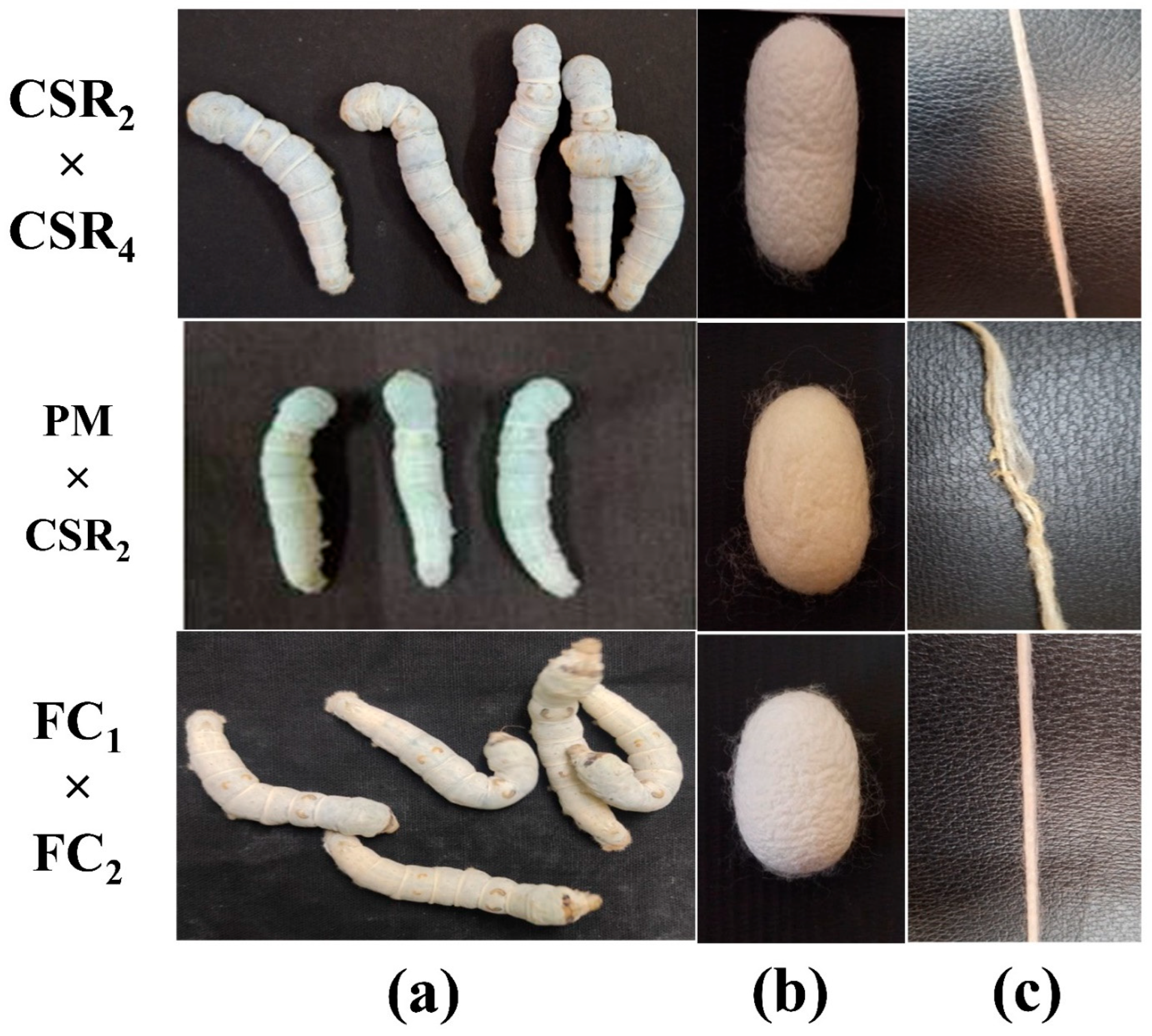
| Hybrid | Fecundity | Egg Color | Newly Hatched Larvae Color | Larval Pattern | Cocoon Shape | Cocoon Color | Feature |
|---|---|---|---|---|---|---|---|
| CSR2 × CSR4 | 550–600 | Yellow | Black | Plain bluish white | Hybrid shape | White | Productive single hybrid |
| PM × CSR2 | 450–500 | Light Yellow | Black | Plain | Oblong shape | Light greenish yellow | Cross breed with robustness |
| FC1 × FC2 | 550–600 | Yellow | Black | Marked brownish white | Hybrid shape | Bright white | Productive double hybrid |
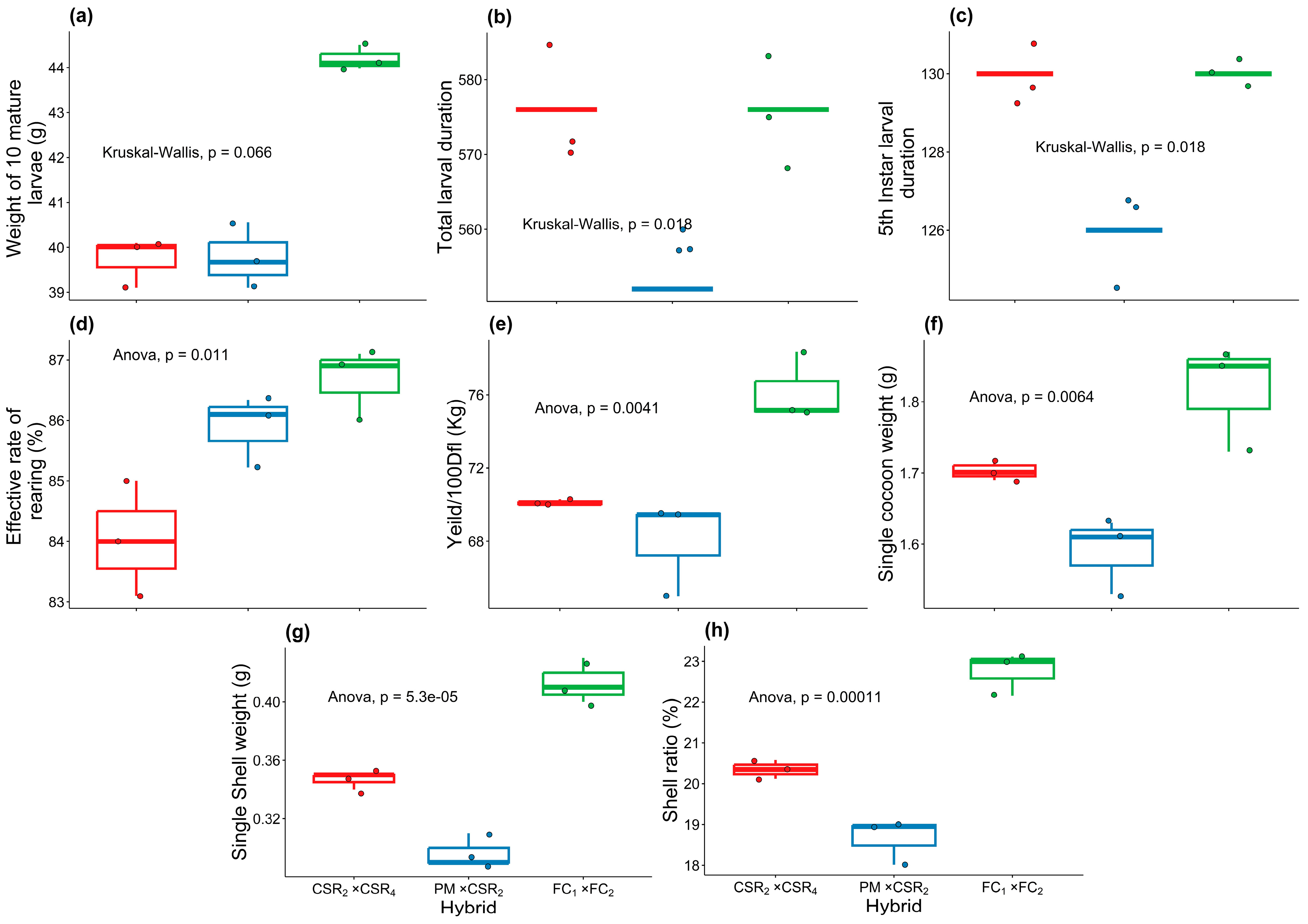
| Hybrid | Mature Larva (g/10) | Total Larval Duration (h) | Fifth Instar Larval Duration (h) | Effective Rate of Rearing (%) | Yield/100 Dfl | Cocoon Weight (gm) | Shell Weight (gm) | Shell Ratio % |
|---|---|---|---|---|---|---|---|---|
| CSR2 × CSR4 | 39.74 ± 0.55 b | 576.00 ± 0.00 a | 130.00 ± 0.00 a | 84.03 ± 0.95 b | 70.12 ± 0.16 b | 1.70 ± 0.02 ab | 0.35 ± 0.01 a | 20.35 ± 0.23 a |
| PM × CSR2 | 39.78 ± 0.74 bc | 552.00 ± 0.00 b | 126.00 ± 0.00 b | 85.89 ± 0.58 a | 68.00 ± 2.61 b | 1.59 ± 0.05 b | 0.30 ± 0.01 b | 18.66 ± 0.56 b |
| FC1 × FC2 | 44.20 ± 0.28 a | 576.00 ± 0.00 a | 130.00 ± 0.00 c | 86.67 ± 0.57 a | 76.18 ± 1.88 a | 1.82 ± 0.08 a | 0.41 ± 0.02 c | 22.75 ± 0.52 c |
| F/χ2 value | 5.45 | 8.00 | 8.00 | 10.46 | 15.76 | 13.19 | 77.08 | 59.00 |
| p value | 0.65 | 0.018 | 0.018 | 0.011 | 0.004 | 0.006 | 0.000 | 0.000 |
| Shapiro–Wilk W | 0.79 | 0.61 | 0.61 | 0.93 | 0.90 | 0.95 | 0.91 | 0.91 |
| p | 0.15 | 0.00 | 0.00 | 0.54 | 0.31 | 0.75 | 0.38 | 0.38 |
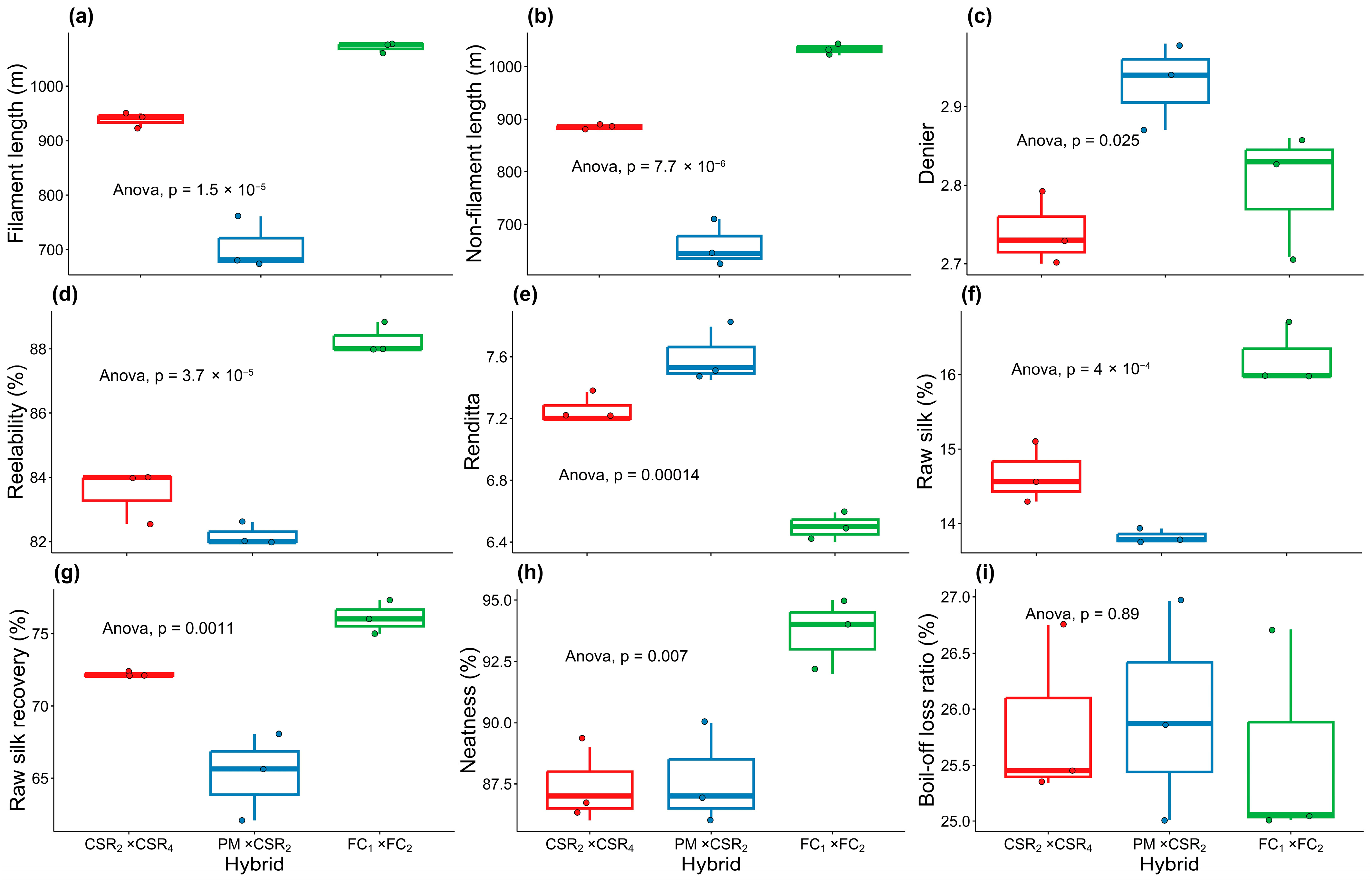
| Hybrid | Average Filament Length (m) | Average Non-Breakable Filament Length (m) | Denier | Reelability (%) | Renditta (kg) | Raw Silk (%) | Raw Silk Recovery (%) | Neatness (%) | Boil-Off Loss of Ratio (%) |
|---|---|---|---|---|---|---|---|---|---|
| CSR2 × CSR4 | 939 ± 14.01 a | 885 ± 5.51 a | 2.74 ± 0.05 a | 84 ± 0.84 a | 7.26 ± 0.10 a | 14.65 ± 0.41 a | 72.21 ± 0.17 a | 87 ± 1.53 a | 25.85 ± 0.78 a |
| PM × CSR2 | 705 ± 48.34 b | 660 ± 44.44 b | 2.93 ± 0.06 b | 82 ± 0.35 b | 7.59 ± 0.18 b | 13.82 ± 0.10 a | 65.26 ± 3.01 b | 88 ± 2.08 a | 25.95 ± 0.98 a |
| FC1 × FC2 | 1072 ± 9.29 c | 1033 ± 11.06 b | 2.80 ± 0.08 ab | 88 ± 0.48 c | 6.50 ± 0.10 c | 16.22 ± 0.42 b | 76.11 ± 1.17 a | 94 ± 1.53 b | 25.59 ± 0.97 a |
| F/χ2 value | 118.20 | 148.00 | 7.322 | 118.00 | 55.00 | 37.87 | 25.99 | 12.70 | 0.12 |
| p value | 0.000 | 0.000 | 0.024 | 0.000 | 0.000 | 0.001 | 0.006 | 0.006 | 0.889 |
| Shapiro–Wilk W | 0.86 | 0.87 | 0.94 | 0.86 | 0.90 | 0.89 | 0.86 | 0.89 | 0.86 |
| p | 0.11 | 0.14 | 0.59 | 0.11 | 0.27 | 0.22 | 0.11 | 0.20 | 0.11 |
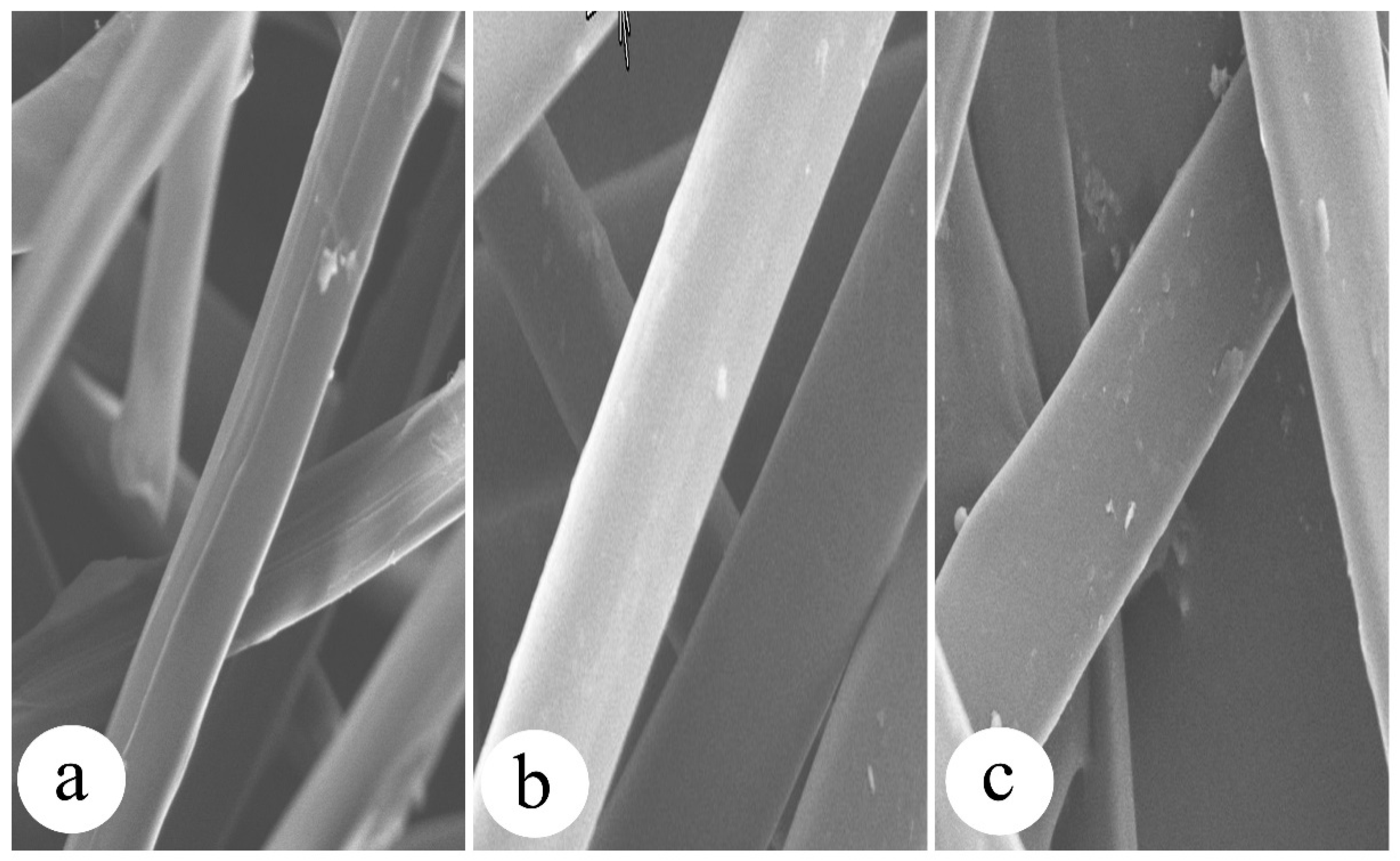
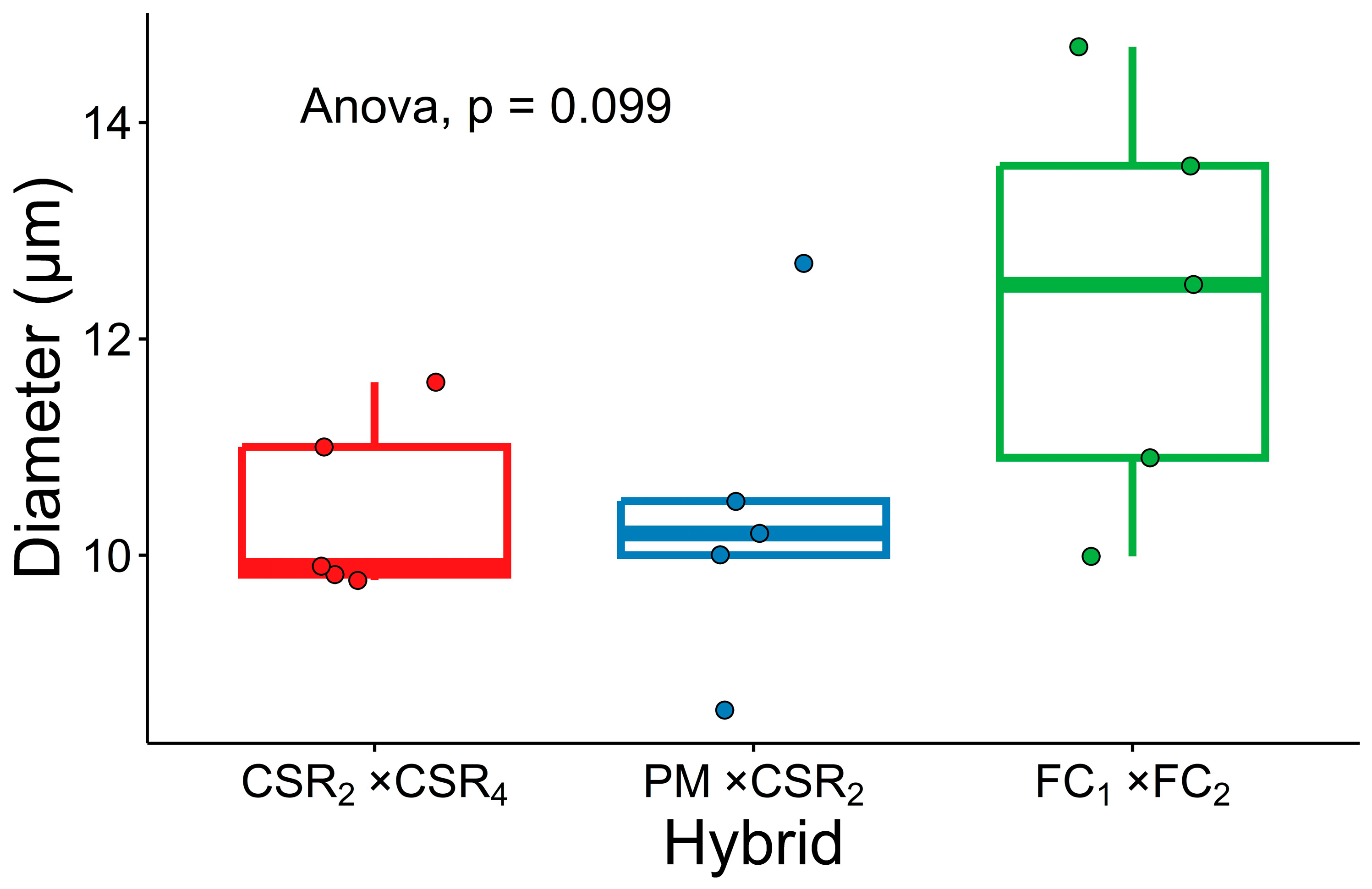
| Hybrid | Mean | Min | Max | SD | SE | Variance % | F Value | p Value |
|---|---|---|---|---|---|---|---|---|
| CSR2 × CSR4 | 10.42 | 9.77 | 11.60 | 0.83 | 0.37 | 8.005 | 2.827 | 0.098 |
| PM × CSR2 | 10.39 | 8.57 | 12.70 | 1.49 | 0.67 | 14.310 | ||
| FC1 × FC2 | 11.74 | 9.99 | 13.60 | 1.43 | 0.64 | 12.203 |
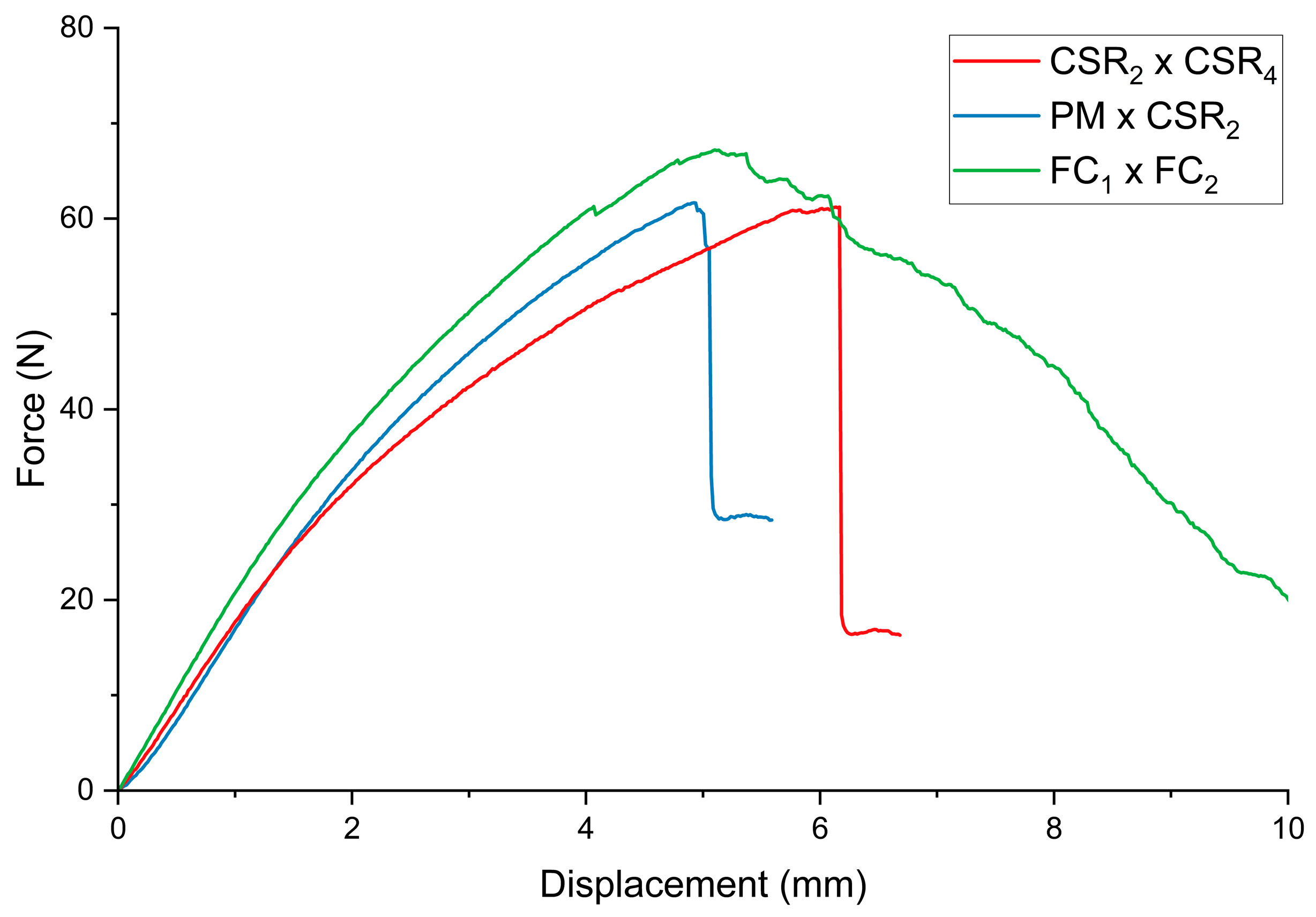
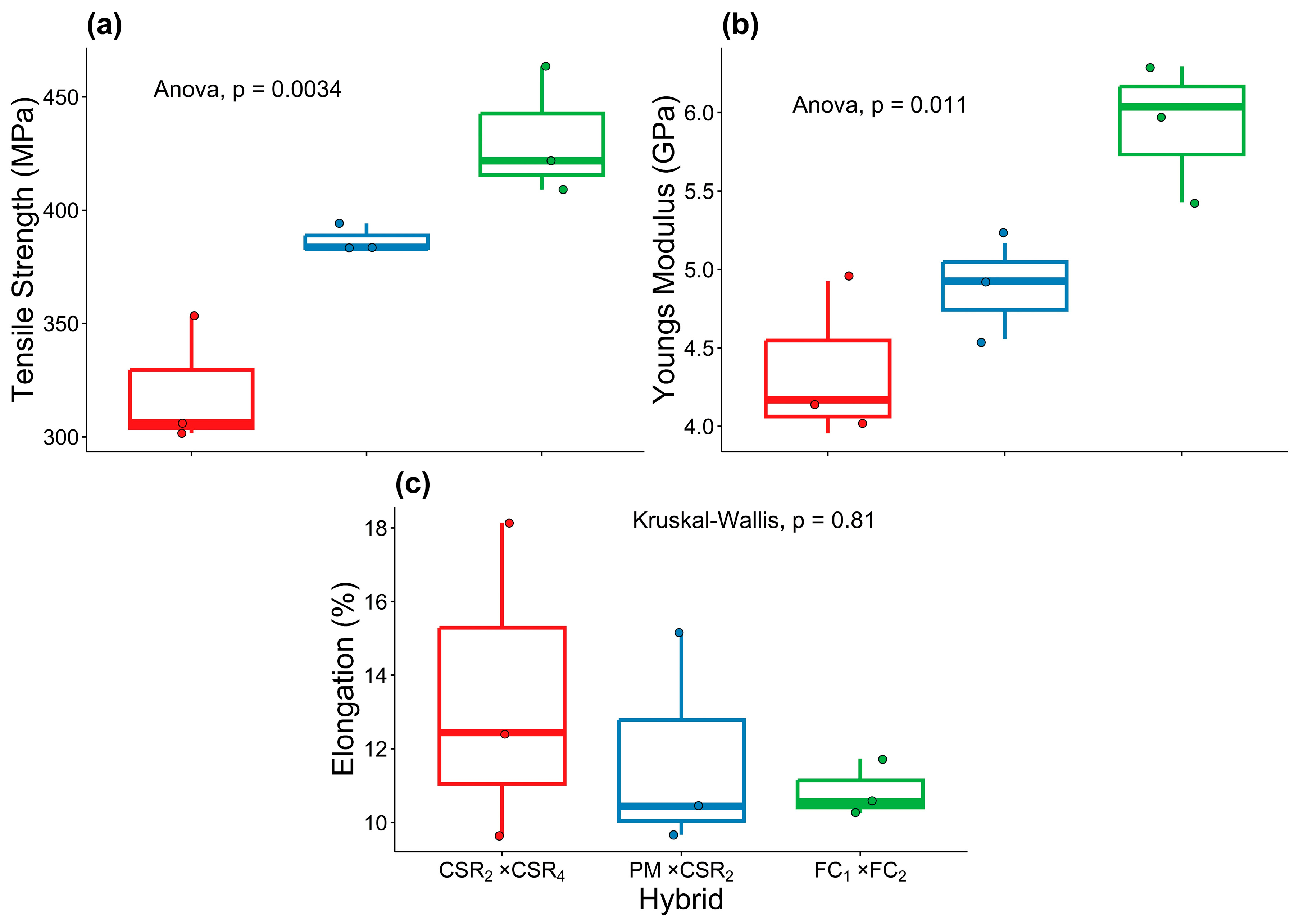
| Hybrid | Tensile Strength (MPa) | Young’s Modulus (GPa) | Elongation (%) |
|---|---|---|---|
| CSR2 × CSR4 | 320.30 ± 28.58 a | 4.35 ± 0.51 a | 13.41 ± 4.32 a |
| PM × CSR2 | 386.97 ± 6.18 b | 4.88 ± 0.31 ab | 11.75 ± 2.96 a |
| FC1 × FC2 | 431.47 ± 28.46 b | 5.92 ± 0.45 b | 10.85 ± 0.77 a |
| F/χ2 value | 16.92 | 10.34 | 0.425 |
| p value | 0.003 | 0.011 | 0.800 |
| Shapiro–Wilk W | 0.95 | 0.96 | 0.80 |
| p | 0.69 | 0.82 | 0.02 |
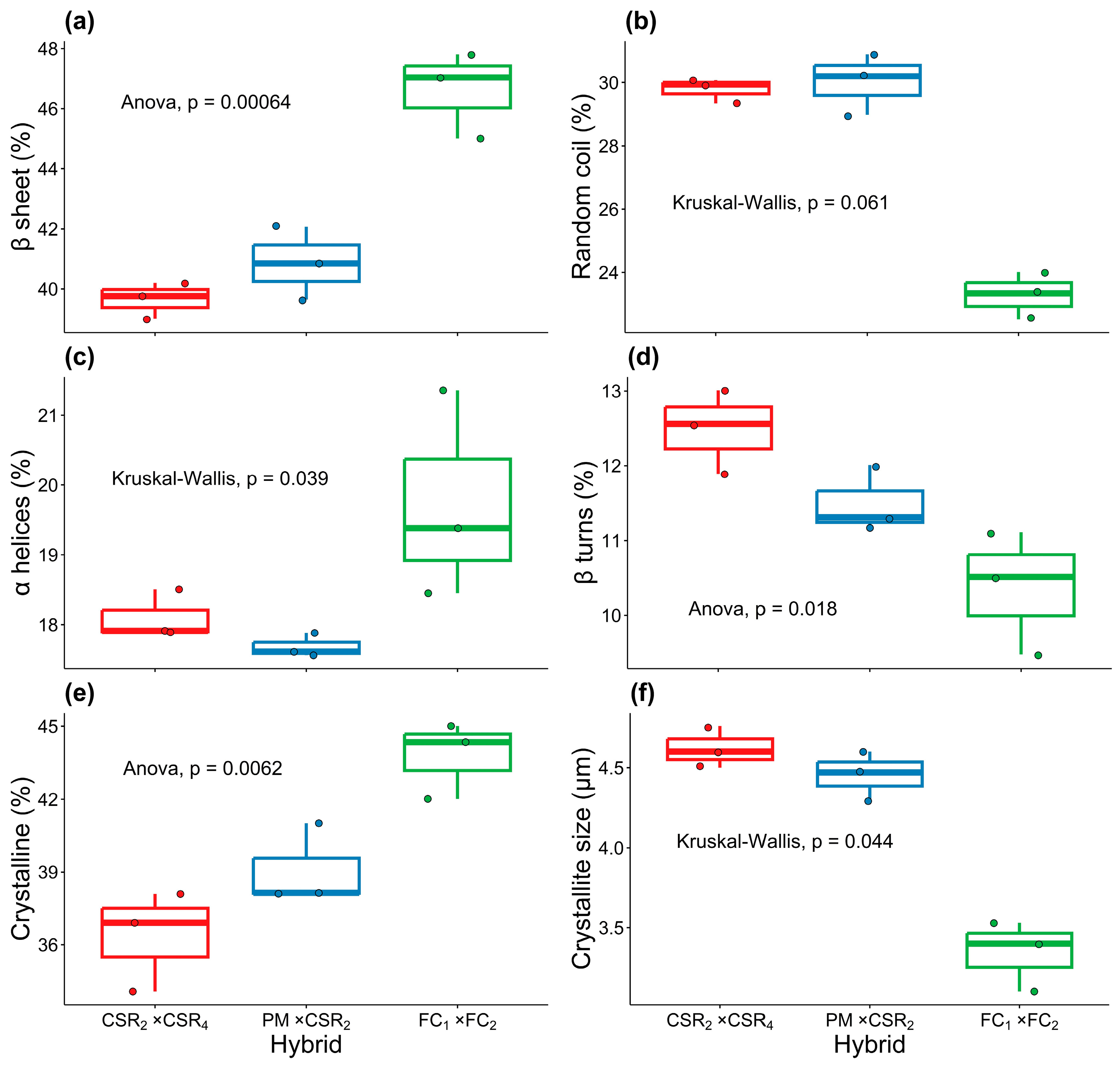
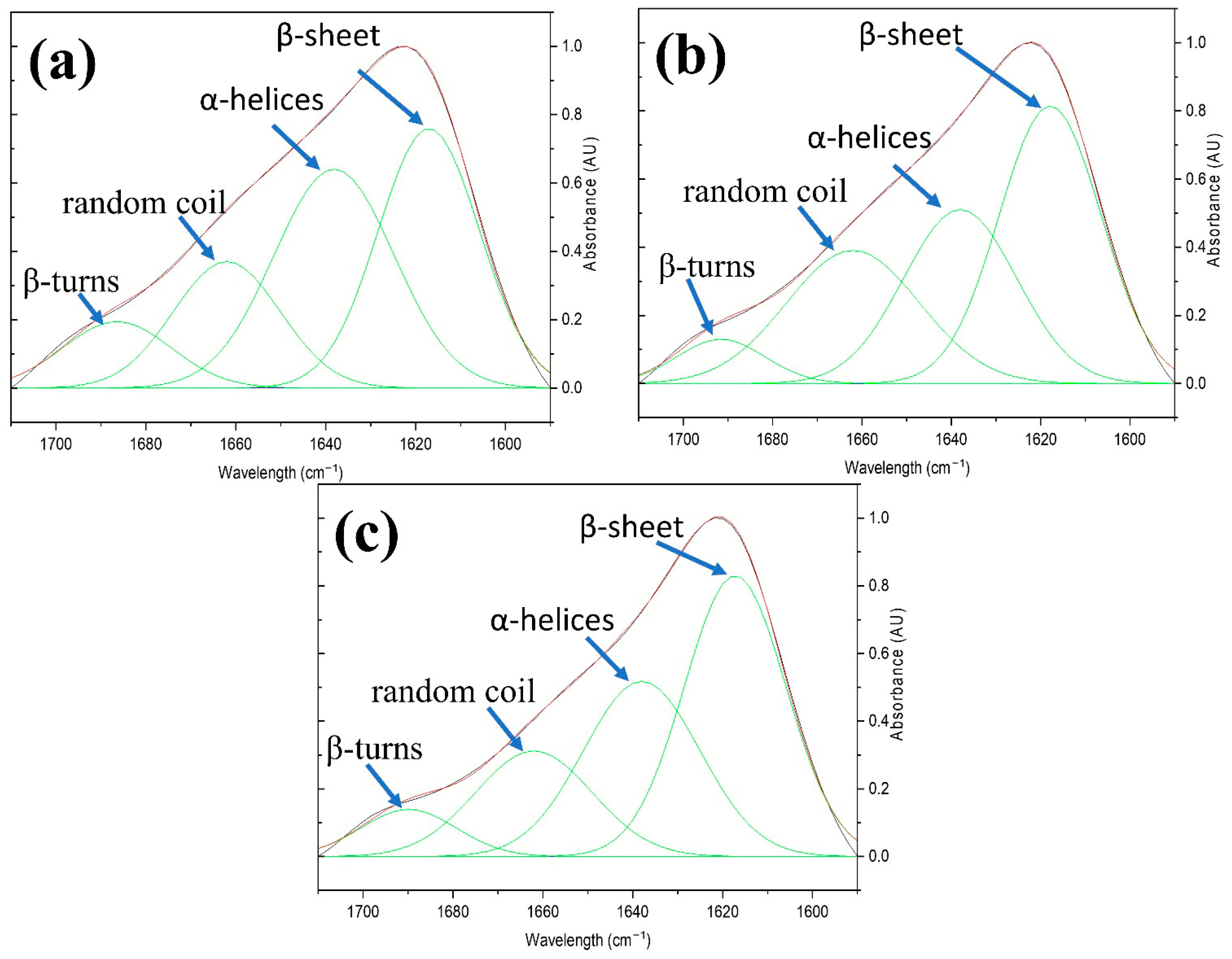
| Hybrid | β-Sheet % | Random Coil % | α-Helices % | β-Turns % | Crystalline % | Crystallite Size (µm) |
|---|---|---|---|---|---|---|
| CSR2 × CSR4 | 39.65 ± 0.61 a | 29.78 ± 0.39 a | 18.10 ± 0.35 ab | 12.49 ± 0.56 a | 36.35 ± 2.07 a | 4.62 ± 0.13 a |
| PM × CSR2 | 40.85 ± 1.21 a | 30.02 ± 0.97 a | 17.68 ± 0.17 a | 11.50 ± 0.45 ab | 39.08 ± 1.67 a | 4.46 ± 0.15 ab |
| FC1 × FC2 | 46.62 ± 1.45 b | 23.29 ± 0.75 a | 19.73 ± 1.49 b | 10.37 ± 0.83 b | 43.79 ± 1.58 b | 3.34 ± 0.22 b |
| F/χ2 value | 31.83 | 5.6 | 6.48 | 8.426 | 13.33 | 6.25 |
| p value | 0.000 | 0.060 | 0.038 | 0.018 | 0.006 | 0.040 |
| Shapiro–Wilk W | 0.85 | 0.78 | 0.76 | 0.97 | 0.94 | 0.83 |
| p | 0.07 | 0.01 | 0.00 | 0.94 | 0.62 | 0.04 |
Disclaimer/Publisher’s Note: The statements, opinions and data contained in all publications are solely those of the individual author(s) and contributor(s) and not of MDPI and/or the editor(s). MDPI and/or the editor(s) disclaim responsibility for any injury to people or property resulting from any ideas, methods, instructions or products referred to in the content. |
© 2026 by the authors. Licensee MDPI, Basel, Switzerland. This article is an open access article distributed under the terms and conditions of the Creative Commons Attribution (CC BY) license.
Share and Cite
Gull, A.; Mysore Nagaraj, A.K.; Braxton, T.; Kumar, A.; Padhan, D.; Bukhari, R.; Koppa Rameshjois, S.; Aurade, R. Techno-Mechanical and Structural Properties of Indian Mulberry Silkworm Fibers: An Insight into the Structure–Property Relationship. Fibers 2026, 14, 53. https://doi.org/10.3390/fib14050053
Gull A, Mysore Nagaraj AK, Braxton T, Kumar A, Padhan D, Bukhari R, Koppa Rameshjois S, Aurade R. Techno-Mechanical and Structural Properties of Indian Mulberry Silkworm Fibers: An Insight into the Structure–Property Relationship. Fibers. 2026; 14(5):53. https://doi.org/10.3390/fib14050053
Chicago/Turabian StyleGull, Azad, Anil Kumar Mysore Nagaraj, Thomas Braxton, Amit Kumar, Dhaneshwar Padhan, Rubia Bukhari, Swathi Koppa Rameshjois, and Ravindra Aurade. 2026. "Techno-Mechanical and Structural Properties of Indian Mulberry Silkworm Fibers: An Insight into the Structure–Property Relationship" Fibers 14, no. 5: 53. https://doi.org/10.3390/fib14050053
APA StyleGull, A., Mysore Nagaraj, A. K., Braxton, T., Kumar, A., Padhan, D., Bukhari, R., Koppa Rameshjois, S., & Aurade, R. (2026). Techno-Mechanical and Structural Properties of Indian Mulberry Silkworm Fibers: An Insight into the Structure–Property Relationship. Fibers, 14(5), 53. https://doi.org/10.3390/fib14050053