1. Introduction
As a classic surface treatment technology, air spraying is widely used in the aerospace [
1], marine and offshore engineering [
2], chemical [
3], and construction machinery [
4] industries, thanks to its excellent process adaptability, extremely high application efficiency, and controllable costs. It can be used to enhance the corrosion resistance, wear resistance, erosion resistance, and environmental adaptability of metals and composite materials, while also serving esthetic and identification purposes. In many complex environments, material failure often begins at the surface; as one of the most commonly used methods of surface protection, coatings play a crucial engineering role in extending equipment lifespan, reducing maintenance costs, and improving safety and reliability [
5].
In various large-scale industrial settings, the objects to be sprayed with protective coatings include a large number of arc-shaped bent pipe structures [
6]. As typical complex-surface components, their unique geometric curvature and spatial obstruction characteristics result in an extremely complex gas–liquid two-phase flow field during the spraying process. Furthermore, even slight variations in spray gun posture, spray distance, and spray speed can significantly affect paint deposition, leading to defects such as localized unevenness or sagging [
7,
8]. Therefore, conducting an in-depth investigation into the film-formation mechanism of air-spray coating on arc-shaped bent pipes and achieving trajectory optimization and precise control of film thickness distribution have become key scientific challenges in overcoming the bottlenecks in coating quality.
To ensure the predictability and controllability of the spraying process, researchers both domestically and internationally have proposed various models for predicting coating deposition or film thickness distribution [
9,
10,
11]. In the early stages, research was primarily experimental, involving the use of mathematical functions such as the Gaussian distribution [
12], the Cauchy distribution [
13], and the beta distribution [
14] to perform empirical or semi-empirical fits of the spray cross-section. This led to the development of classical theories such as the elliptical distribution model [
15], the beta film thickness model [
16], and the analytical deposition model [
17]. However, most such models are based on flat or regular geometric shapes and are often built on the assumptions of static or quasi-static spraying, neglecting the interaction between high-speed airflows and complex surfaces in air spraying; consequently, their applicability is limited when dealing with dynamic spraying and complex geometries.
With the rapid advancement of computational fluid dynamics (CFD), research on air spraying based on three-dimensional numerical simulations has gradually emerged as a powerful research tool. Compared to two-dimensional empirical models, CFD methods can reconstruct the entire process of paint atomization, droplet transport, and wall-induced film formation from the perspective of multi-phase flow mechanisms. The researchers first used experimental methods to accurately determine the initial conditions of atomization [
18], then simulated the motion of the gas–liquid two-phase flow within a Euler–Lagrange approach, and, by incorporating a turbulence model, achieved a detailed prediction of the complex flow field and droplet trajectories. Although CFD methods have yielded substantial results in studies of spraying on plane, there remains a gap in research on the dynamic film-formation mechanisms for arc-shaped bent pipes. Existing studies in this area have largely focused on simple optimization of process parameters or on approximating dynamic spraying results using time-integration methods based on static deposition rates. Consequently, these approaches struggle to accurately reproduce the transient flow fields and deposition evolution under the relative motion of the spray gun, resulting in insufficient engineering guidance for spraying on complex curved surfaces.
Based on the above analysis, this paper focuses on the air spraying process for arc-shaped bent pipes and employs a combination of numerical simulation and experimental validation to develop a three-dimensional dynamic spraying model. The study examines the relationship between geometric parameters—such as the pipe’s radius of curvature—and process parameters—such as the spraying trajectory and velocity—on coating thickness distribution, thereby providing a reliable theoretical basis for trajectory planning and coating thickness control in the spraying of bent pipe components.
The novelty of this work lies in three aspects. First, a transient three-dimensional Euler–Euler model coupled with a wall-film model is established for air spraying on arc-shaped bent pipes, rather than flat plates or simple regular surfaces. Second, the model explicitly considers the relative motion between the spray gun and the curved workpiece through a dynamic spraying strategy, which allows the transient evolution of coating deposition to be captured. Third, the effects of spraying trajectory, local curvature, bending radius, and pipe diameter on film-thickness distribution are systematically compared and experimentally validated.
4. Results and Discussion
4.1. Flow Field Characteristics
Initially, a coordinate system with the center of the coating nozzle as the origin was established. Defining the direction of the normal from the origin to the workpiece surface as the Z-axis, the direction of the spray fan spread as the Y-axis, and the direction perpendicular to the YZ plane as the X-axis.
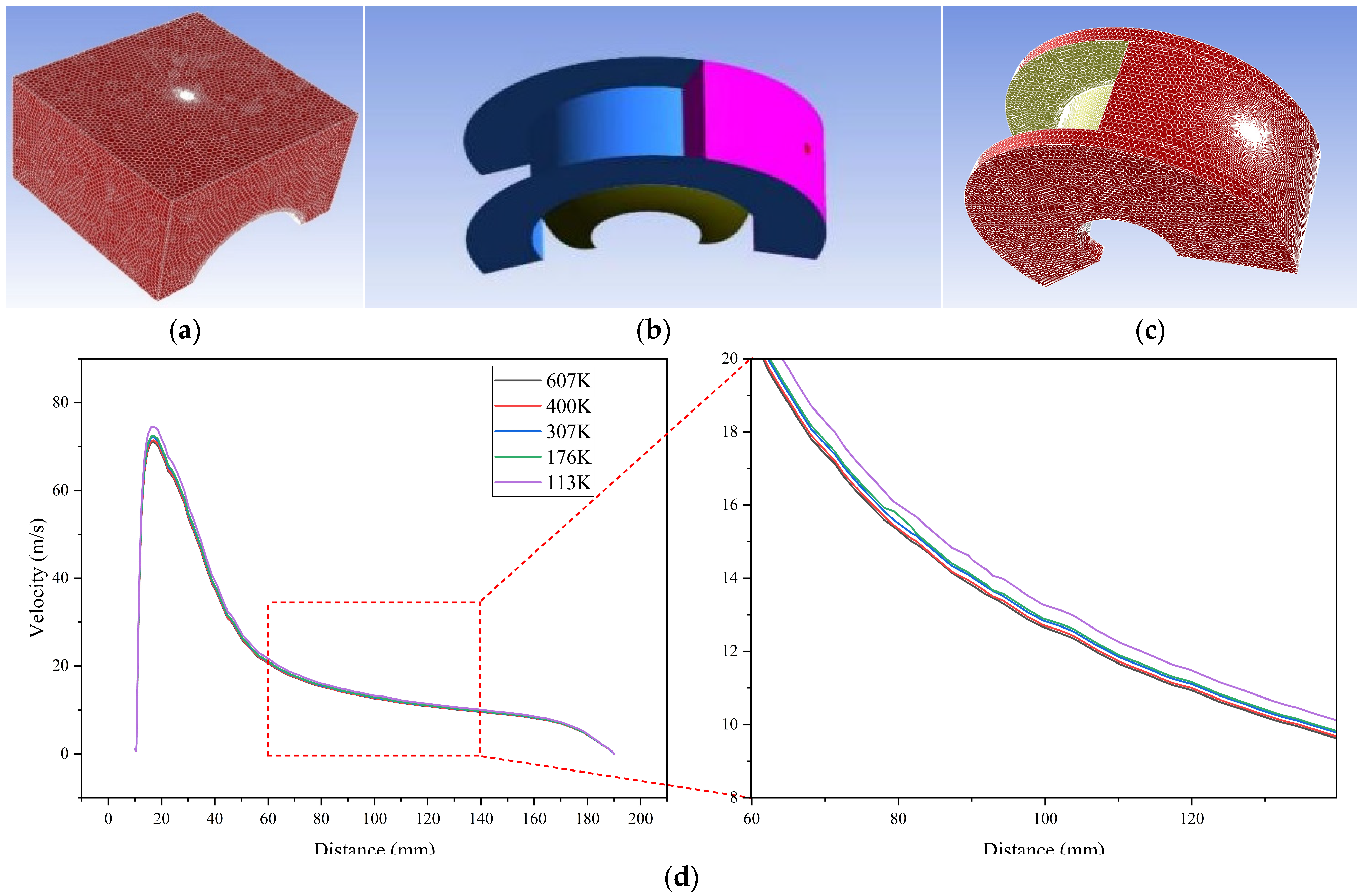
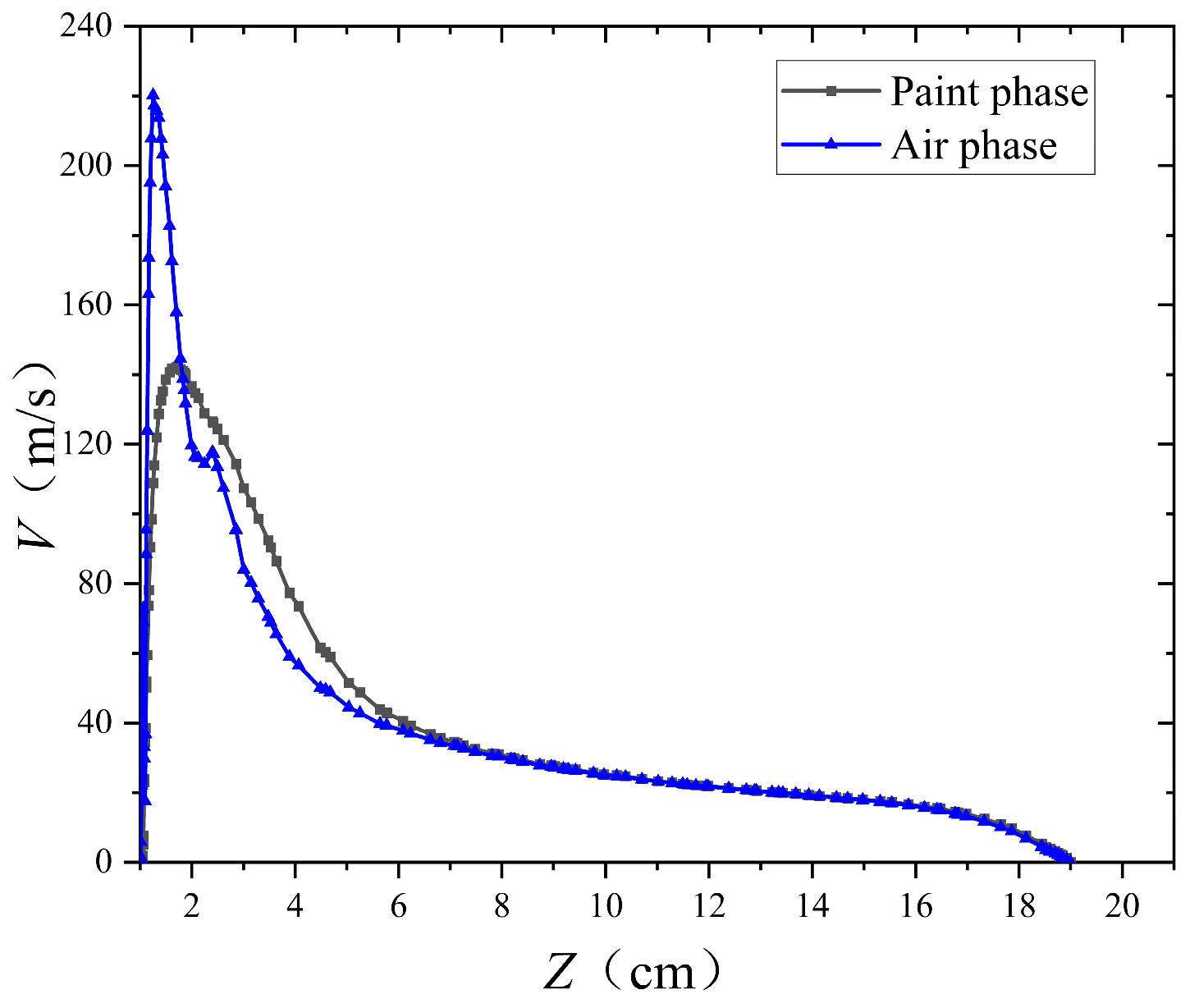
The velocity distribution of the coating phase and the air phase is an important basis for studying the spray flow field and the coating film formation characteristics. The velocity distribution curves of the air phase and the paint phase along the
Z-axis direction are shown in
Figure 4.
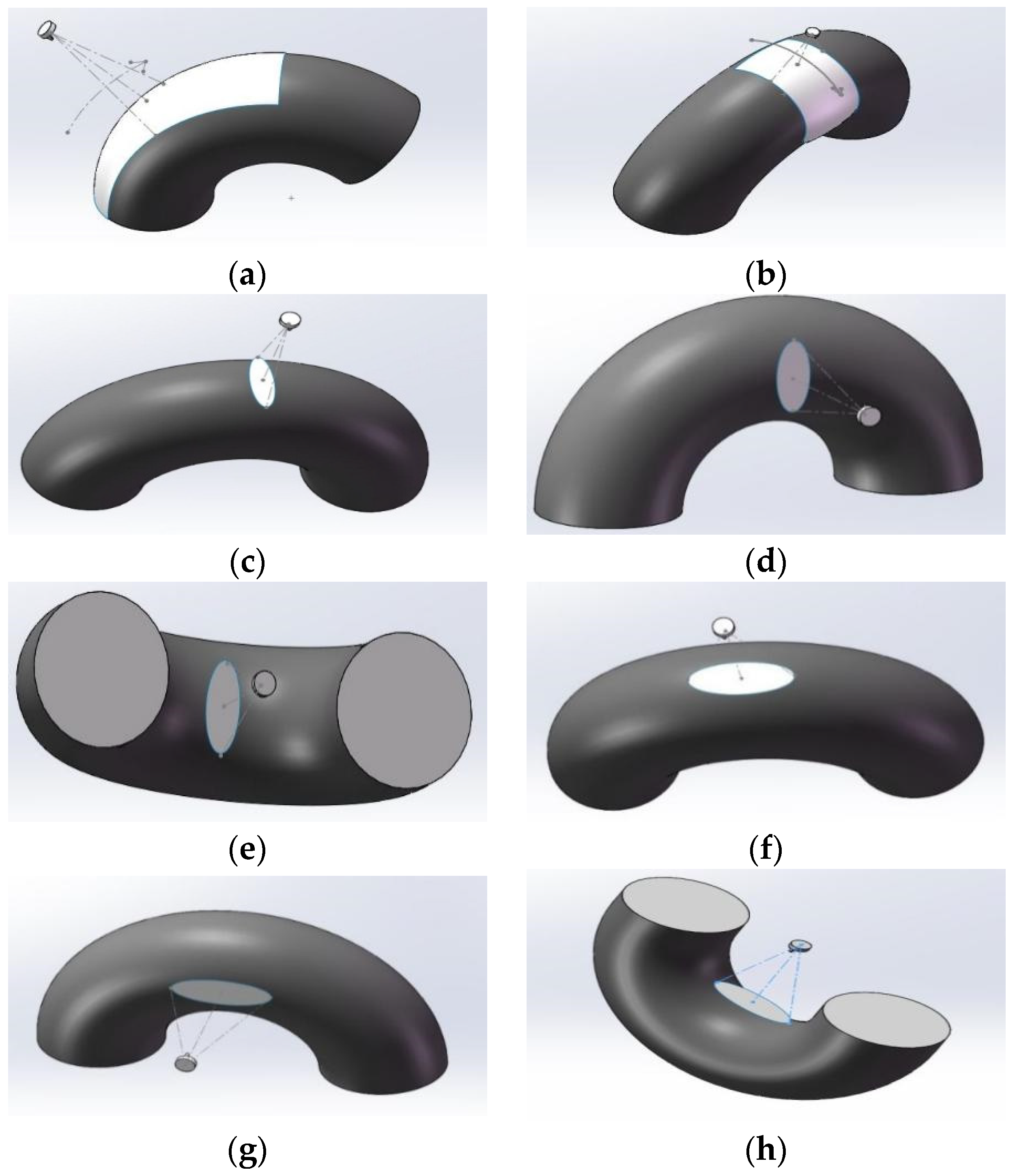
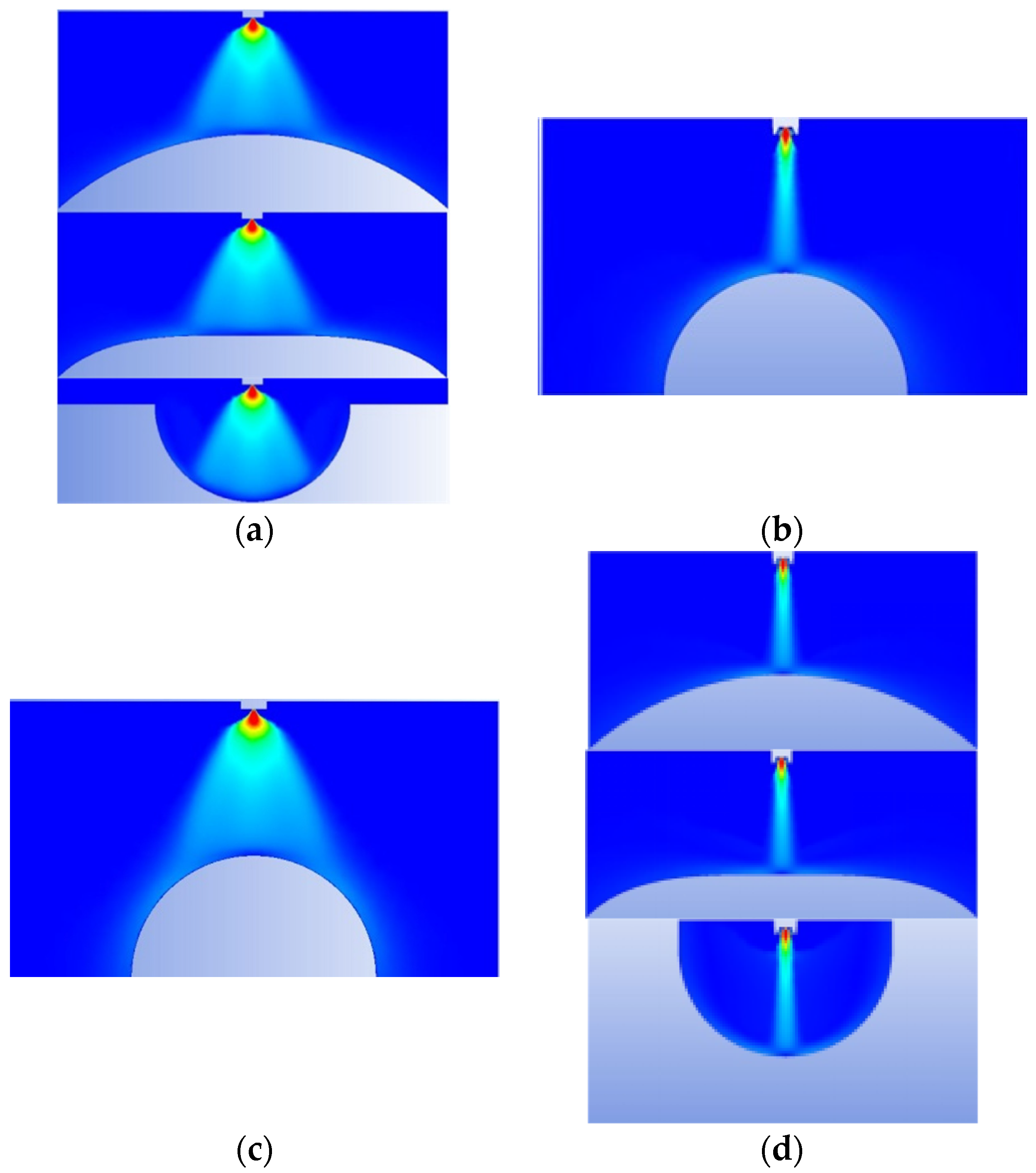
To analyze the influence of the bent pipe shape on the spray flow field, an arc-shaped pipe with a diameter of 300 mm and a bending radius of 300 mm was selected. Static spraying along the centerline direction and circumferential static spraying were carried out on the top, side, and bottom surfaces of the pipe, respectively. The velocity contours of the flow field is shown in
Figure 5. It can be found that, first of all, the spray flow field in the
YZ plane is approximately fan-shaped, while that in the
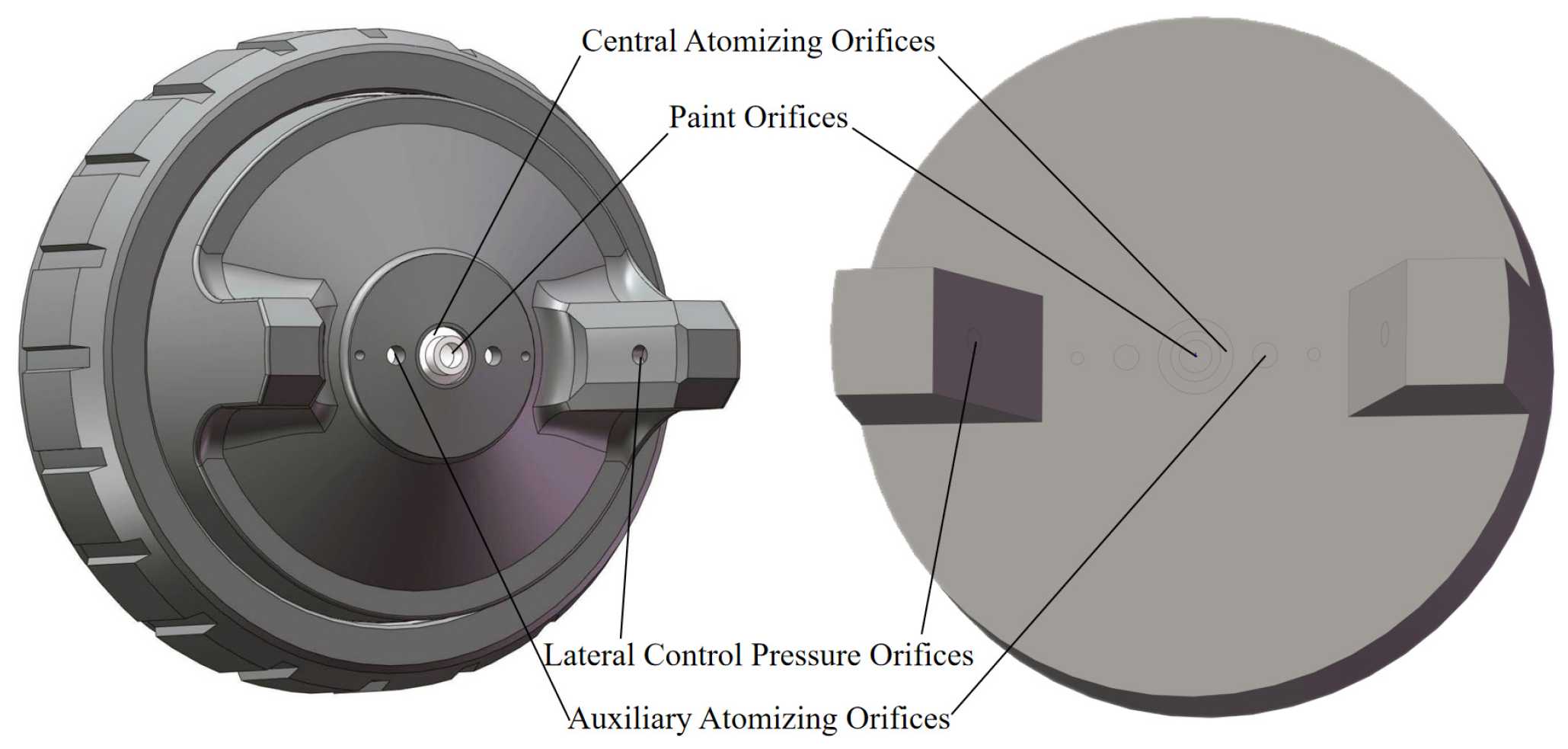
XZ plane is approximately circular jet-shaped. This is mainly due to the effect of the atomizing orifices, which causes the spray flow field shapes to be inconsistent. Secondly, when spraying along the center line, since the
YZ cross-sections at different positions of the arc-shaped bent pipe are all the same circle, the shape and size distribution of the flow field are similar. During circumferential spraying, the
YZ section at the top of the arc-shaped bent pipe is in a convex shape. The direction of particle movement at the edge of the flow field forms a small angle with the arc surface, and the spray particles basically move parallel to the arc surface. The shape shows very little resistance to the flow field, so the diffusion range of the flow field is larger. When circumferential spraying is performed on the side, due to the change in the curvature of the bend, the flow field shape is basically similar to that of the top spraying, but slightly different. When spraying on the bottom surface, the velocity of the edge particles of the long-axis flow field forms a larger angle with the shape surface because of the concave shape on the bottom section, restricting the outward diffusion of the particles, resulting in a smaller width at the tail of the flow field.
4.2. Static Film Formation Characteristics
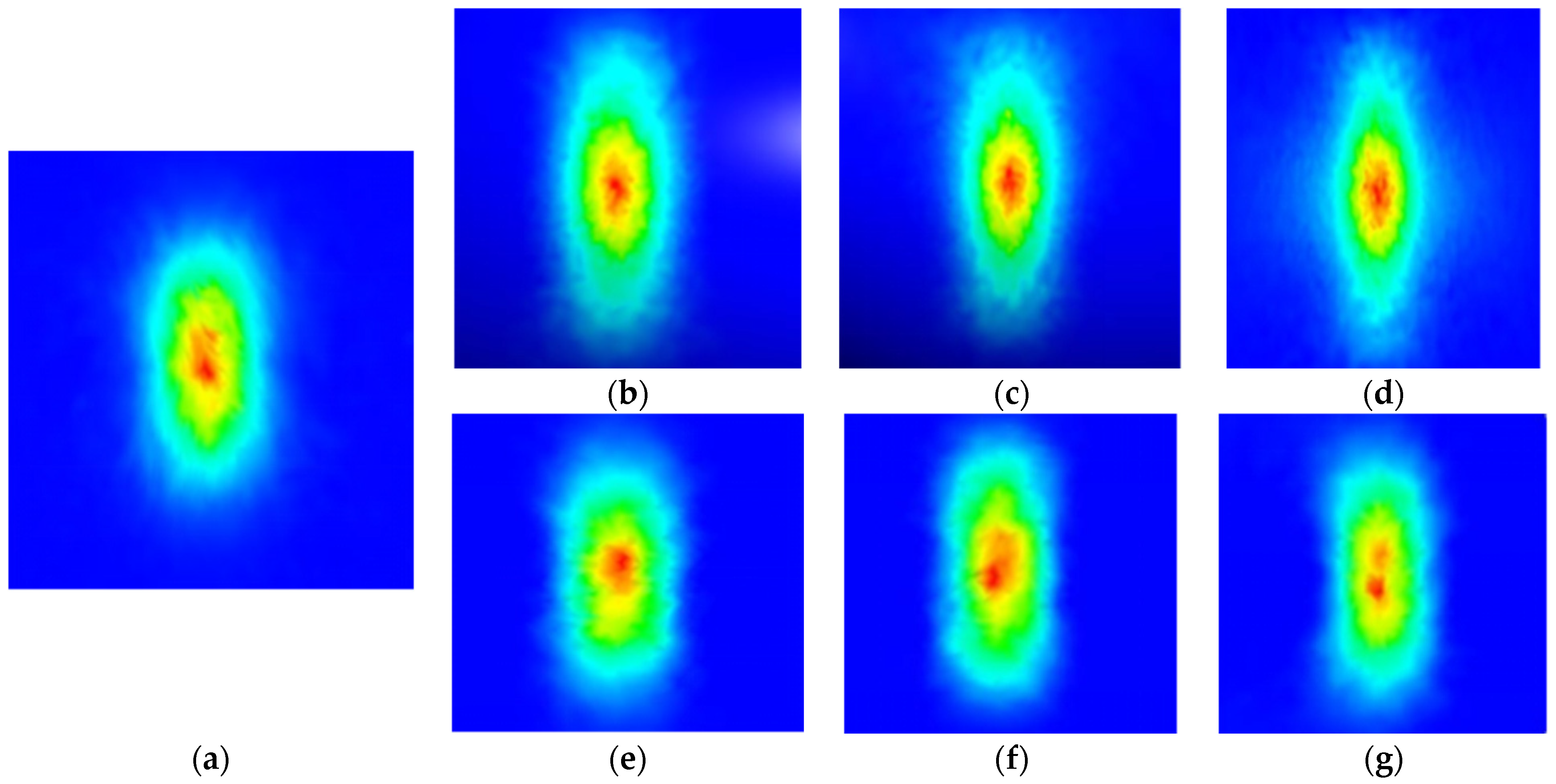
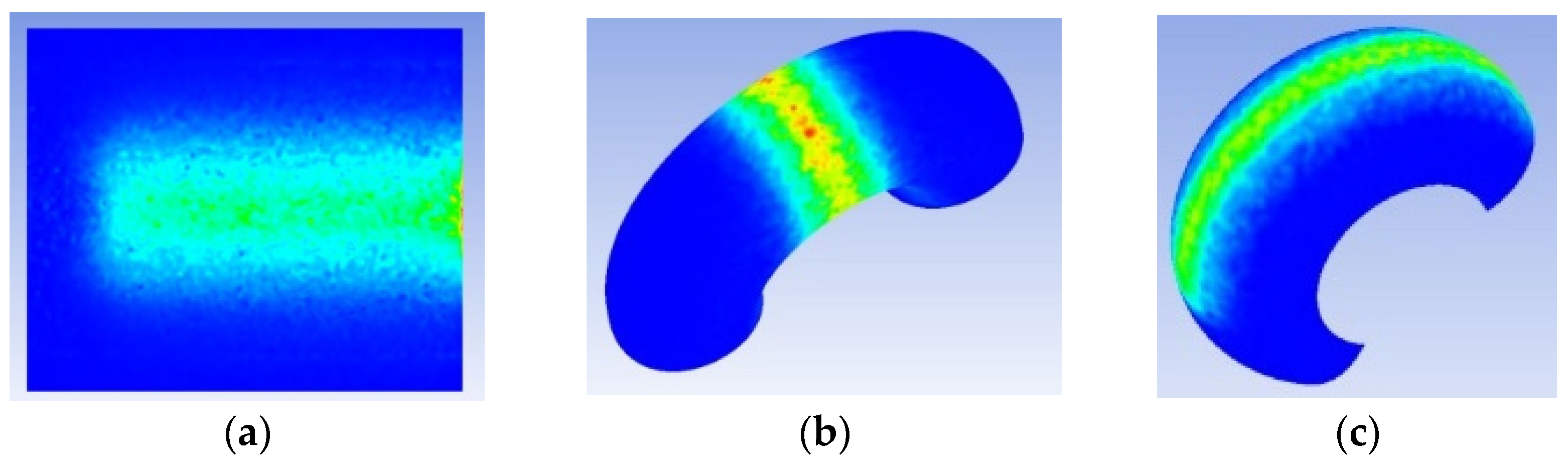
First, we will discuss the effect of spraying methods on film formation characteristics. An arc-shaped bent pipe with a diameter of 300 mm and a bending radius of 300 mm was sprayed, and a plane was sprayed under the same parameters as a control. The resulting film distribution contours with different spraying methods at different spray positions are shown in
Figure 6. Overall, the coating film obtained under each spraying method exhibit an elliptical distribution: thicker at the center and thinner at the edges, with deposition rapidly decreasing toward the edges of the coating. Research has shown [
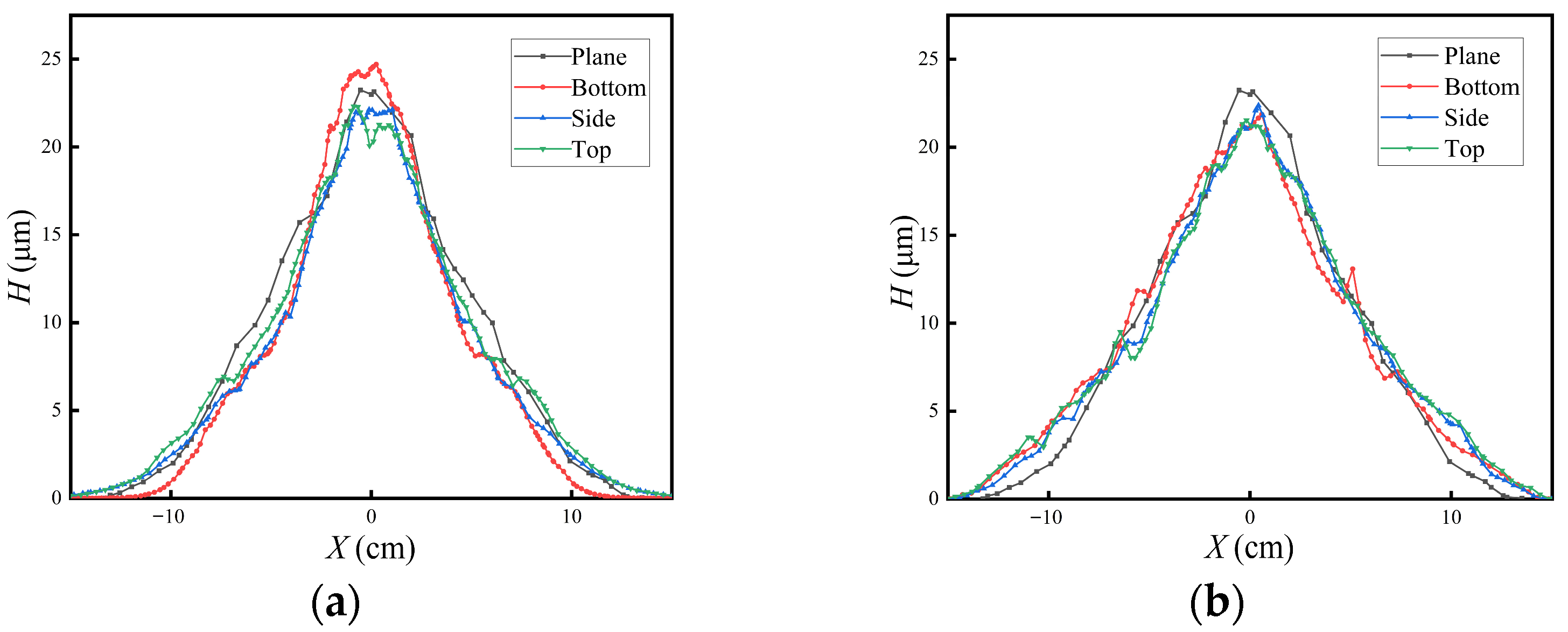
17] that although the coating thickness distribution is not uniform, the distribution on parallel cross-sections is essentially similar. To further compare the film formation characteristics of plane and bent pipes, the thickness distributions of the long-axis were analyzed for spraying along the center line and circumferential spraying at different positions, as shown in
Figure 7.
It can be found that, during circumferential spraying, the spray width at the top and sides is typically greater than that on a flat surface, while the spray width at the bottom is smaller than on a flat surface; conversely, the film thickness shows the opposite trend. When spraying along the center line, there is very little variation in spray width and film thickness distribution across different positions, and the overall pattern more closely resembles that of plane. This is primarily due to two factors: one is the width of the intersection between the spray cone and the wall surface has changed, and the other is the path length of the droplets as they approach the wall and the angle at which they strike the wall have changed. Under circumferential spraying, the convex top surface causes the edge droplets to move more along the wall, reducing the normal velocity component and decreasing edge deposition. This results in a thinner film and wider coverage. Conversely, the concave bottom surface constricts droplet diffusion, allowing edge droplets to acquire a larger normal velocity component and overcome the entrainment effect of the near-wall airflow. Consequently, the spray width narrows and the film thickness increases. When spraying along the centerline, since the cross-sections of the long axis are similar at different geometric positions, the width of the spray cone and the wall contact conditions vary only slightly; therefore, there is no significant difference in film formation distribution.
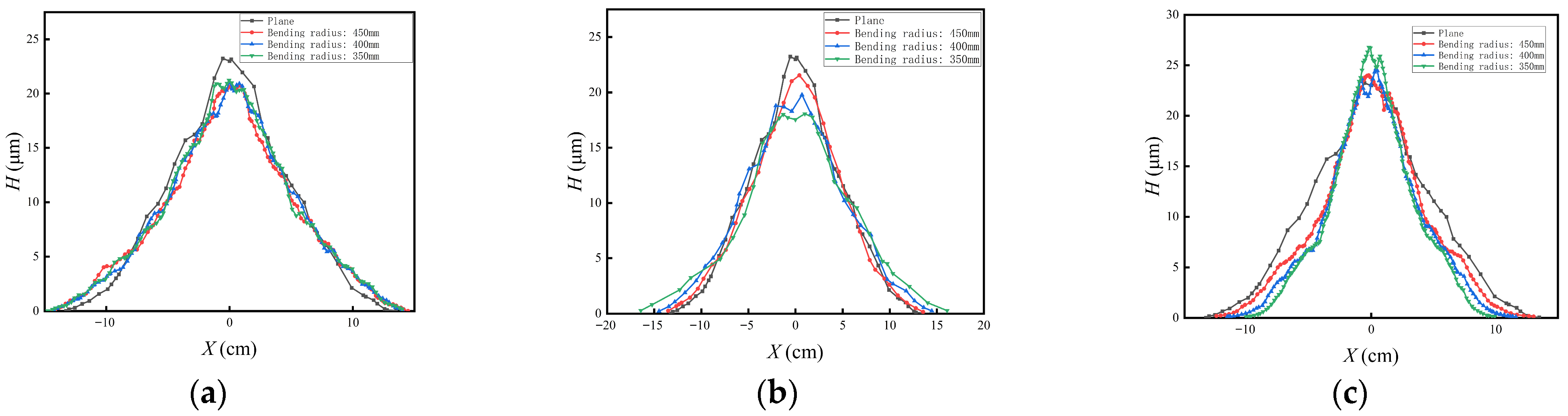
Next, we will discuss the effect of the curvature of the bent pipe on the film formation characteristics. Curvature can be characterized by the bending radius. To prevent the pipe diameter from being smaller than the spray range, which would cause the boundary to be truncated, the pipe diameter was selected as 300 mm. The top curvature radius was set to 350 mm, 400 mm, and 450 mm, respectively, for top surface center line spraying and circumferential spraying. Meanwhile, three types of bent pipes with bottom bending radii of 200 mm, 250 mm, and 350 mm were selected for bottom surface circumferential spraying. The film thickness distribution of the bent pipes with different curvatures is shown in
Figure 8.
As shown in the figure, when spraying along the center line at the top, the change in the bending radius has a very small impact on the spray width and the peak film thickness. This indicates that in this working condition, the geometric changes do not significantly alter the diffusion conditions of the spray cone in the flow field. When performing top circumferential spraying, an increase in the bending radius will cause the spray area to gradually decrease, the film thickness to gradually increase, and it will approach a planar distribution characteristic. When the bending radius is smaller, it will be “wider and thinner”. The reason for this is that the more prominent the protrusion on the top surface, the easier it is for the droplets at the edge of the spray cone to form small contact angles with the wall and extend the effective distance, and the weaker the normal sedimentation quantity. When the coating is applied circumferentially on the bottom surface, an increase in the curvature radius leads to an expansion of the coating area and a reduction in the film thickness, approaching a flat surface; while a smaller curvature radius results in a “narrow and thick” appearance. The stronger the concavity, the more significant the restriction on the lateral diffusion of the droplets, and the edge droplets are more likely to impact the wall surface at a larger collision angle and deposit.
In terms of impact dynamics, based on the simulated normal velocity component vn and diameter dn of the droplets, the impact Weber number We at the center of the spray cone on the flat plate is approximately 85, and it drops to about 20 at the edge. On the convex top surface, the curvature reduces the effective impact angle, further lowering vn at the edge by about 30%. Therefore, the droplets at the edge experience a lower Weber number (about 10) and a smaller impact angle, which promotes their spreading along the surface rather than deposition, thus widening the liquid film. In contrast, on the concave bottom surface, the restricted geometry increases vn by about 25%, and the impact angle is closer to vertical, raising the Weber number at the edge to about 150, thereby enhancing droplet capture and forming a narrower and thicker liquid film.
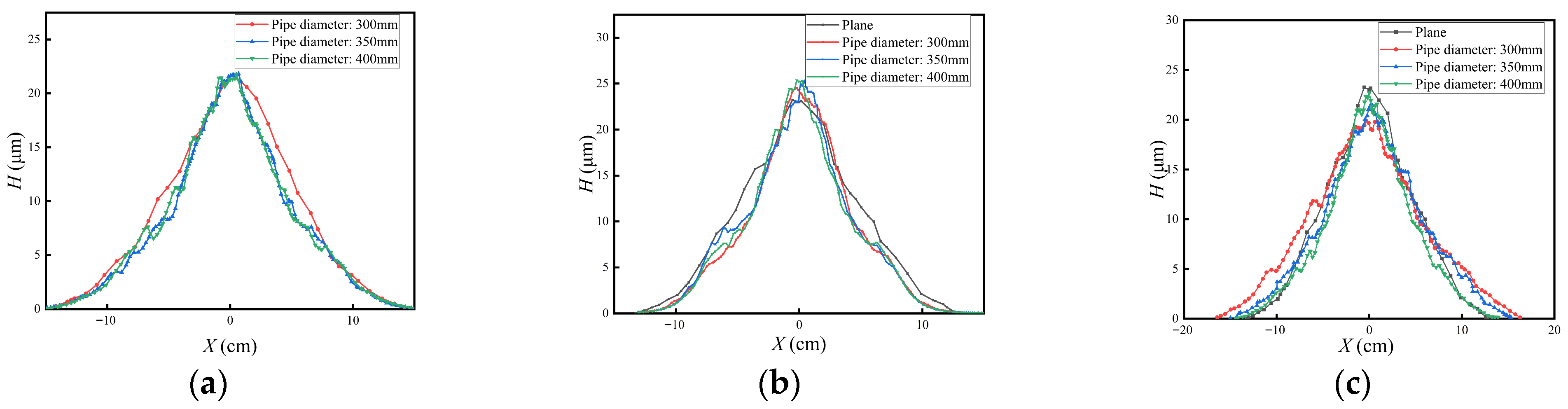
Next, the influence of the pipe diameter of the curved pipe on the film-forming characteristics is discussed. Keeping the bending radius of the top section at 450 mm and the bending radius of the bottom section at 300 mm unchanged, the arc-shaped bent pipe diameters selected are 300 mm, 350 mm and 400 mm. The distribution curves of the film thickness is shown in
Figure 9.
As can be found from
Figure 9, when the top and bottom surfaces are circumferentially sprayed, the spray width and film thickness show little change with the pipe diameter. This is because when circumferentially spraying, the long axis direction of the coating film is mainly affected by the corresponding cross-sectional radius of curvature. When this radius of curvature remains unchanged, the spray cone width and the wall impact conditions change very little with the pipe diameter. When spraying the top along the centerline, as the pipe diameter increases, the spray width gradually decreases, and the film thickness gradually increases and approaches the distribution form of the planar coating film. This is because when spraying along the centerline, the radius of the long-axis cross-sectional circle increases with the increase in the pipe diameter, which reduces the width of the spray cone’s interception. Meanwhile, the effective distance from the droplets at the same horizontal position to the wall surface decreases, the impact velocity increases, and the angle of impact with the wall changes accordingly. Overall, this results in an increase in film thickness and a distribution state that approaches that of planar spraying.
4.3. Dynamic Film Formation Characteristics
First, the influence of different spraying methods on the film formation characteristics is discussed. Dynamic spraying was carried out on the plane and the bent pipes, and the film formation distribution contours for the plane, the circumferential direction of the bent pipe, and the centerline direction of the bent pipe were obtained, as shown in
Figure 10.
During the process of spraying along the centerline, the spray gun moves along the centerline of the curved pipe and rotates around the curved pipe, with the spray direction always pointing to the center of the curved pipe. This ensures that the local incident angle and effective spray distance in the top area of the curved pipe change relatively little at different turning angles, thereby demonstrating strong repeatability in the film thickness distribution.
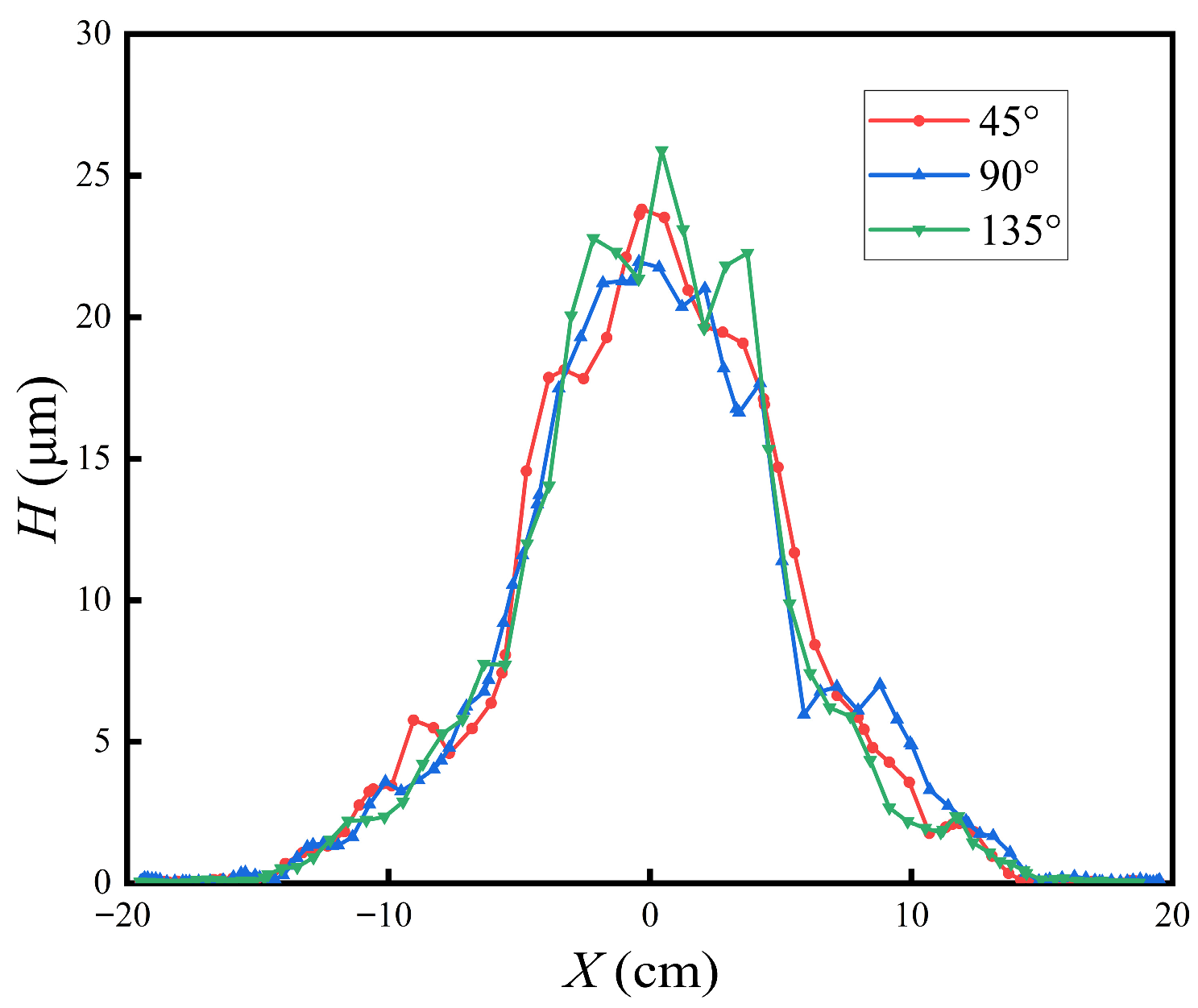
Figure 11 presents the film thickness distribution curves when the spray gun rotation angle is 45°, 90° and 135°, respectively. It can be observed that the three curves are basically consistent in terms of the peak position, half-width and the attenuation trend on both sides. This indicates that the film thickness distribution is not sensitive to the spray gun rotation angle, and spraying along the center line shows a more stable process repeatability. On the X-axis within the range of −4 cm to 4 cm, the film thickness is relatively stable, indicating that this range constitutes the “effective uniform spraying zone”. The corresponding stable spray width can be maintained at approximately 30 cm.
The film distribution characteristics described above are particularly critical for optimizing track overlap. Since the cross-sectional distribution of a single spray application is relatively stable, a fixed overlap distance can be used for adjacent tracks to achieve a more uniform cumulative film thickness. Based on the half-peak positions shown in
Figure 11, an offset equal to half the maximum film thickness (approximately 4.3 cm from the center) is selected as the overlap distance. This approach prevents excessive thickness at the center while also minimizing thinning at the overlap edges.
During circumferential spraying, the local curvature at different positions along the curved pipe varies more significantly from the normal direction, resulting in marked changes in the relative geometric relationship between the spray and the surface as the position changes, which in turn causes the coating thickness distribution to depend on the spraying location.
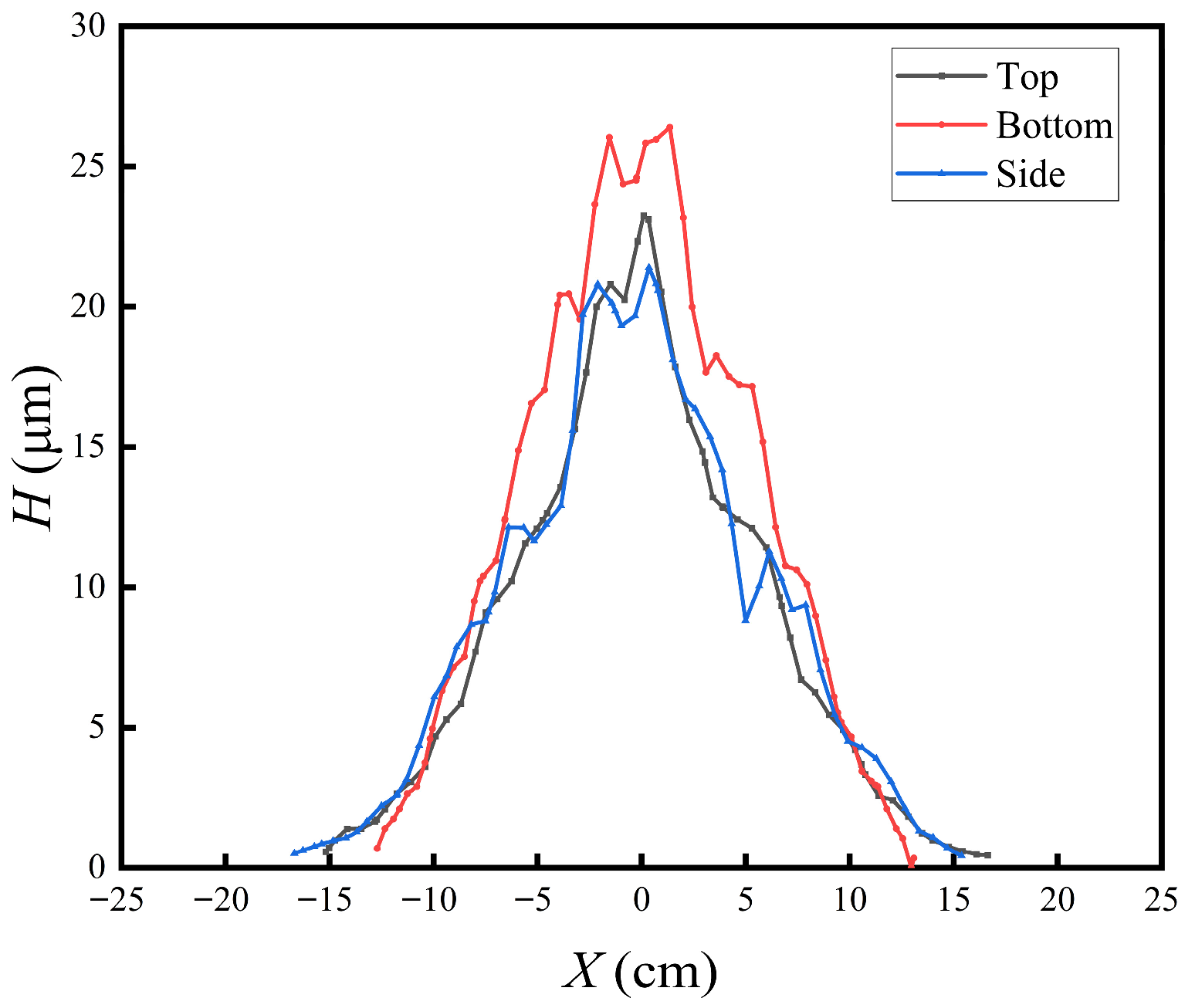
Figure 12 shows a comparison of the film thickness curves for the top, side, and bottom surfaces. In terms of spray width, the top and side surfaces are relatively consistent, while the bottom surface has the narrowest spray width. Regarding film thickness distribution, the bottom surface exhibits the highest peak thickness, while the top and side surfaces are relatively similar.
This is due to the bottom surface being more prone to forming a shorter equivalent spray distance and a more concentrated deposition trajectory, which increases deposition intensity in the central region and causes the spray pattern to contract. At the same time, local depressions on the surface cause the spray droplets to coalesce, thereby increasing the film thickness. In contrast, because the equivalent spray distance and angle of incidence vary relatively little on the top and side surfaces, the film thickness levels are more consistent across these areas.
Compared to spraying along the centerline, the film thickness distribution curve for circumferential spraying appears less smooth and exhibits sharper peaks; however, the decline in film thickness at the edges is relatively gradual. While this facilitates a smoother transition at spray overlaps to some extent, it also means that the overlap distance cannot be standardized across different positions in circumferential spraying. Therefore, when choosing circumferential spraying to achieve full coverage of bent pipes, it is recommended to change the trajectory planning from fixed overlap to position-adaptive overlap. For example, the overlap amount can be adjusted based on local curvature or spraying distance, or attitude compensation can be incorporated into the process to reduce variations in the equivalent spray distance.
In summary, spraying along the centerline is more suitable for achieving uniform coating application using a fixed overlap method. In contrast, circumferential spraying is more sensitive to the spraying position and orientation, requiring stricter control of the spraying trajectory or orientation, which places higher demands on engineering applications.
Next, we discuss the effects of different bending radii on coating distribution. Given the process stability demonstrated by spraying along the centerline, we will focus on spraying along the top surface of the centerline, maintaining a pipe diameter of 300 mm, and selecting top bending radii of 350, 400, and 450 mm for the spraying tests.
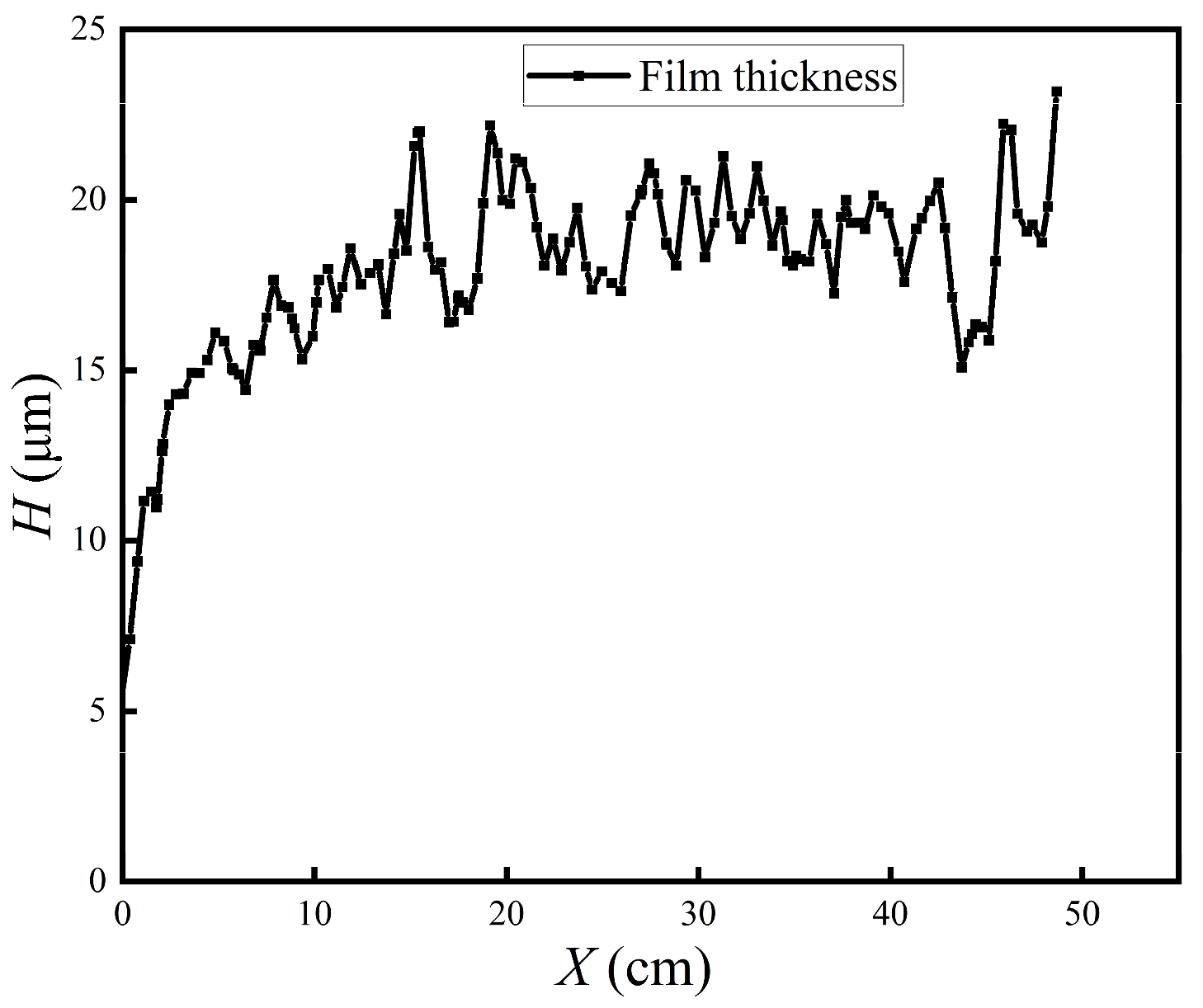
Figure 13 illustrates the variation in film thickness along the direction of the spray gun’s movement. It can be observed that in the initial phase after the spray gun is activated and begins moving along the
X-axis, the center thickness of the coating film increases significantly. It is not until the gun has moved approximately 10 cm that a dynamic equilibrium is reached, and the film enters a fluctuating phase. This phenomenon is attributed to the time lag in the establishment of the gas–liquid two-phase flow field. This is because, at the moment the spray gun is activated, it takes time for the flow field to transition from a stationary state to a stable conical atomized flow field, resulting in an insufficient supply of coating material reaching the workpiece surface during the initial stage.
In actual spraying operations, if spraying is initiated directly above the workpiece, it is recommended to include a brief pause or pre-travel phase after the spray is activated. This allows the atomization and flow pattern to stabilize before entering the active spraying zone, thereby preventing insufficient or fluctuating film thickness in the initial spraying area. Alternatively, the spray start point can be positioned outside the workpiece to perform a test spray, followed by entry into the working area once a stable state is achieved.
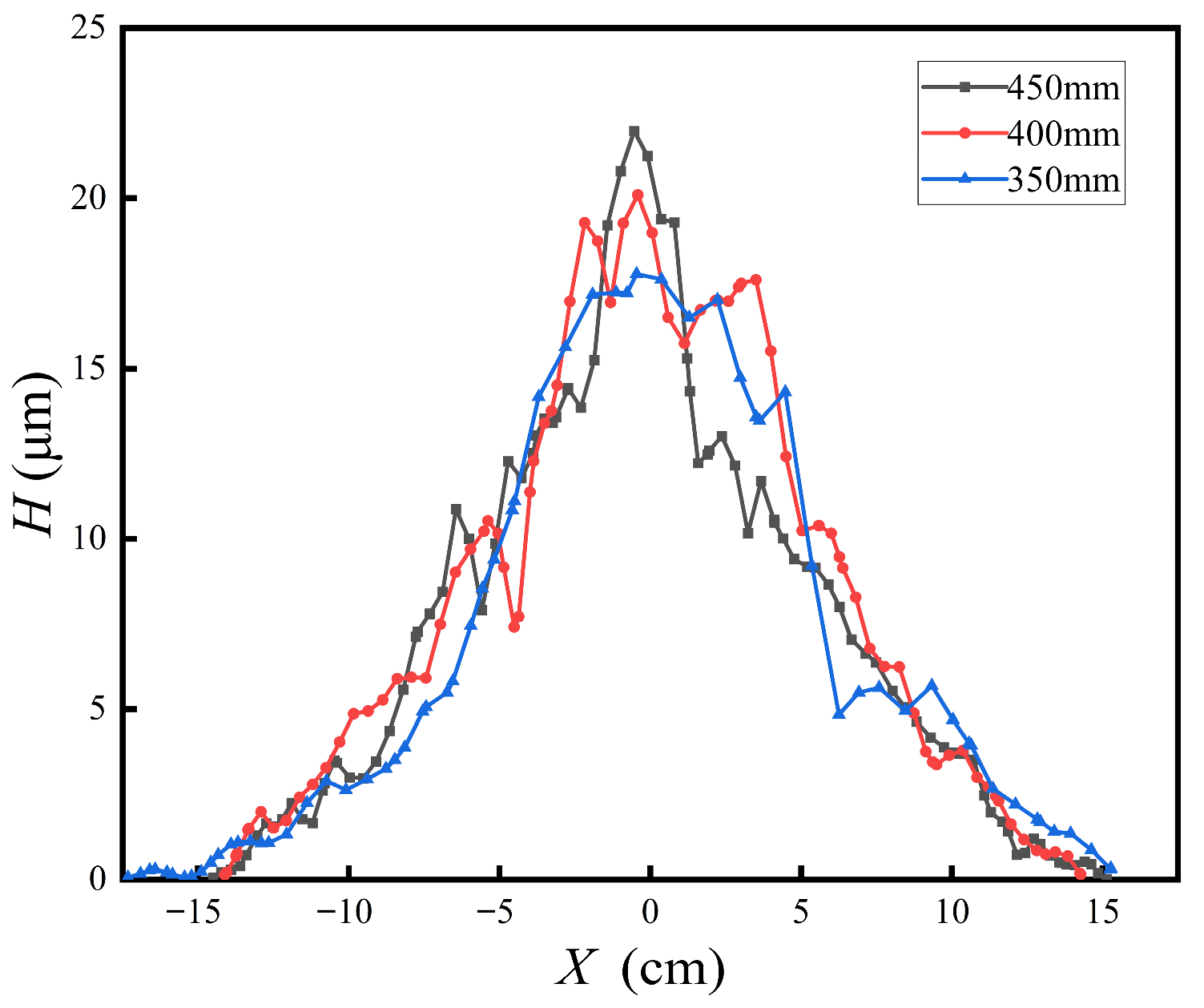
Figure 14 shows a comparison of film thickness curves obtained by varying the bending radius of the pipe while keeping the pipe diameter at 300 mm.
As shown in
Figure 14, the overall film thickness is minimal when the bending radius is 350 mm. This is because the sharp convex curvature causes the projected area of the spray beam on the workpiece surface to increase significantly, and the high-angle incidence of particles leads to an increased rebound rate, thereby reducing the effective deposition rate. When the bending radius increases to 450 mm, the curved surface gradually approaches a planar configuration, the projection effect weakens, and deposition becomes more concentrated, resulting in a significant increase in the central film thickness and a distribution pattern that closely resembles that of spraying on a plane. It is worth noting that while the peak thickness varies with curvature, the effective spray width remains essentially constant across different curvatures. This suggests that curvature primarily affects the circumferential packing density of the coating, while having a relatively minor effect on the coverage area of the spray cone. Overall, this provides valuable insights for process compensation in pipe bending and spraying: when the degree of bending is significant, priority should be given to offsetting the reduction in average film thickness through spray distance and orientation adjustments, as well as supplementary spraying, to avoid the risk of sagging caused by “forceful compensation” achieved solely by increasing flow rate.
5. Experimental Validation
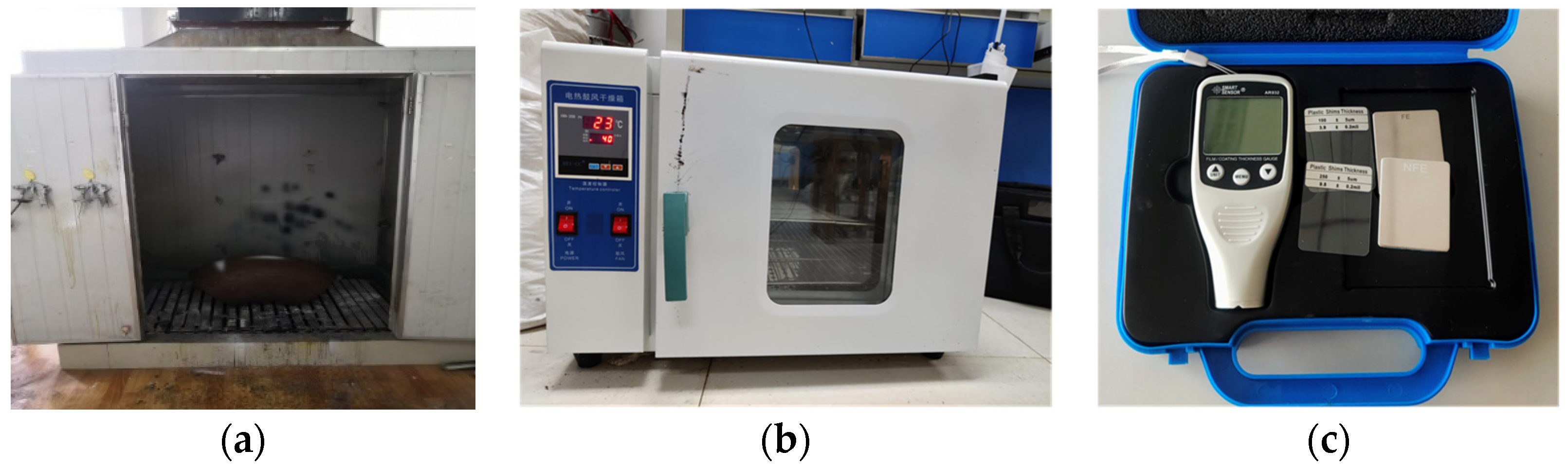
The main equipment used in the spray coating experiments includes a spray booth, air spray guns, a drying oven, a paint mixer, an air compressor, a film thickness gauge, and a paint viscosity cup; the main apparatus is shown in
Figure 15. All the spraying experiments were carried out using industrial robots, with a path repetition accuracy of ±0.15 mm and a speed control accuracy within ±1% of the set value. This ensures a high consistency in the kinematics of the spray gun, matching the moving mesh boundary conditions of the numerical model. The substrate material was Q235 steel pipe, sectioned into arcs. No primer was applied. Both the substrate and the ambient temperature were conditioned at 25 ± 2 °C for 2 h; relative humidity was 55 ± 5%.
The kinematic viscosity of the coating was determined using a viscosity cup and converted to dynamic viscosity, which was found to be 0.09686 kg/(m·s).
Since the film thickness calculated by numerical simulation is the wet film thickness, whereas the thickness measured experimentally is the dry film thickness after the coating has dried and cured, it is necessary to determine the volume shrinkage rate
η of the coating after drying, which is expressed as:
where
V1 and
V2 represent the volumes of the coating before and after drying, respectively; the test method followed ISO3521, and the final measured volume shrinkage rate was 57%.
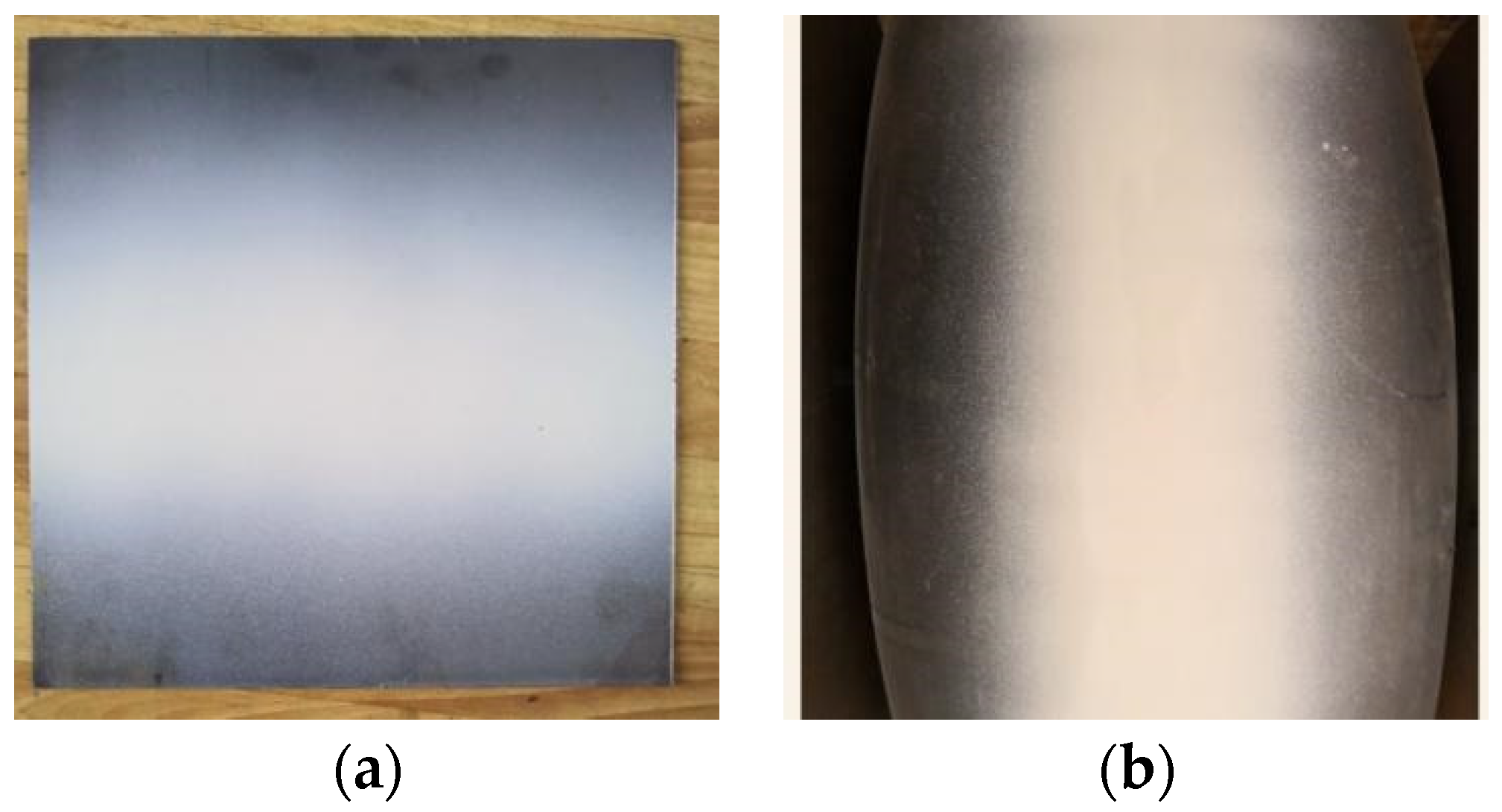
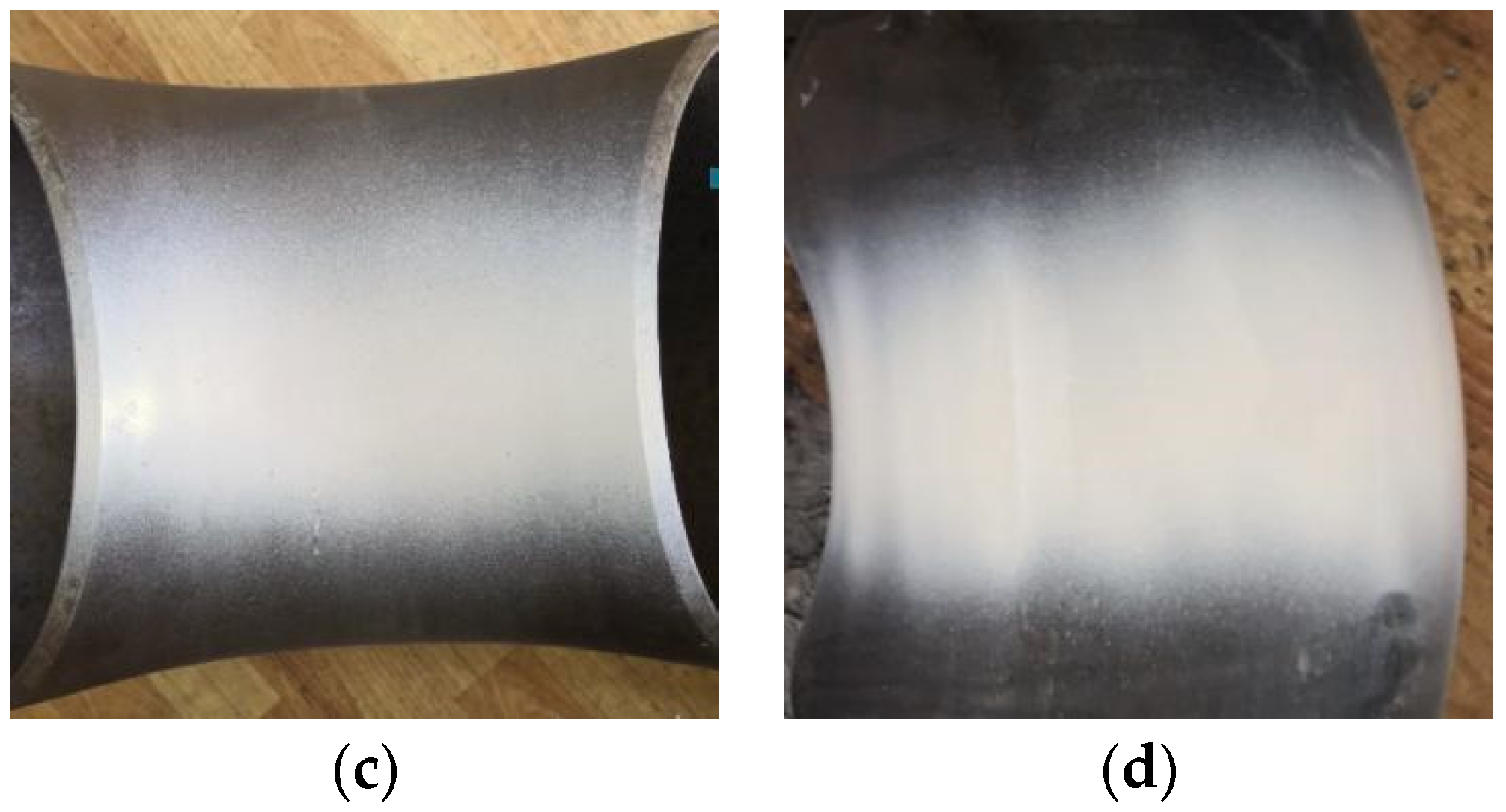
The spraying parameters were kept consistent with those used in the numerical simulation. During the flat-plate spraying experiments, the spray velocity was maintained at 0.1 m/s. For the arc-shaped bent pipe spraying experiments, the spray velocity was converted to the angular velocity of the spray gun as it moved along the arc of the pipe. The coating films obtained from the experiments on the plane and the arc-shaped bent pipe are shown in
Figure 16.
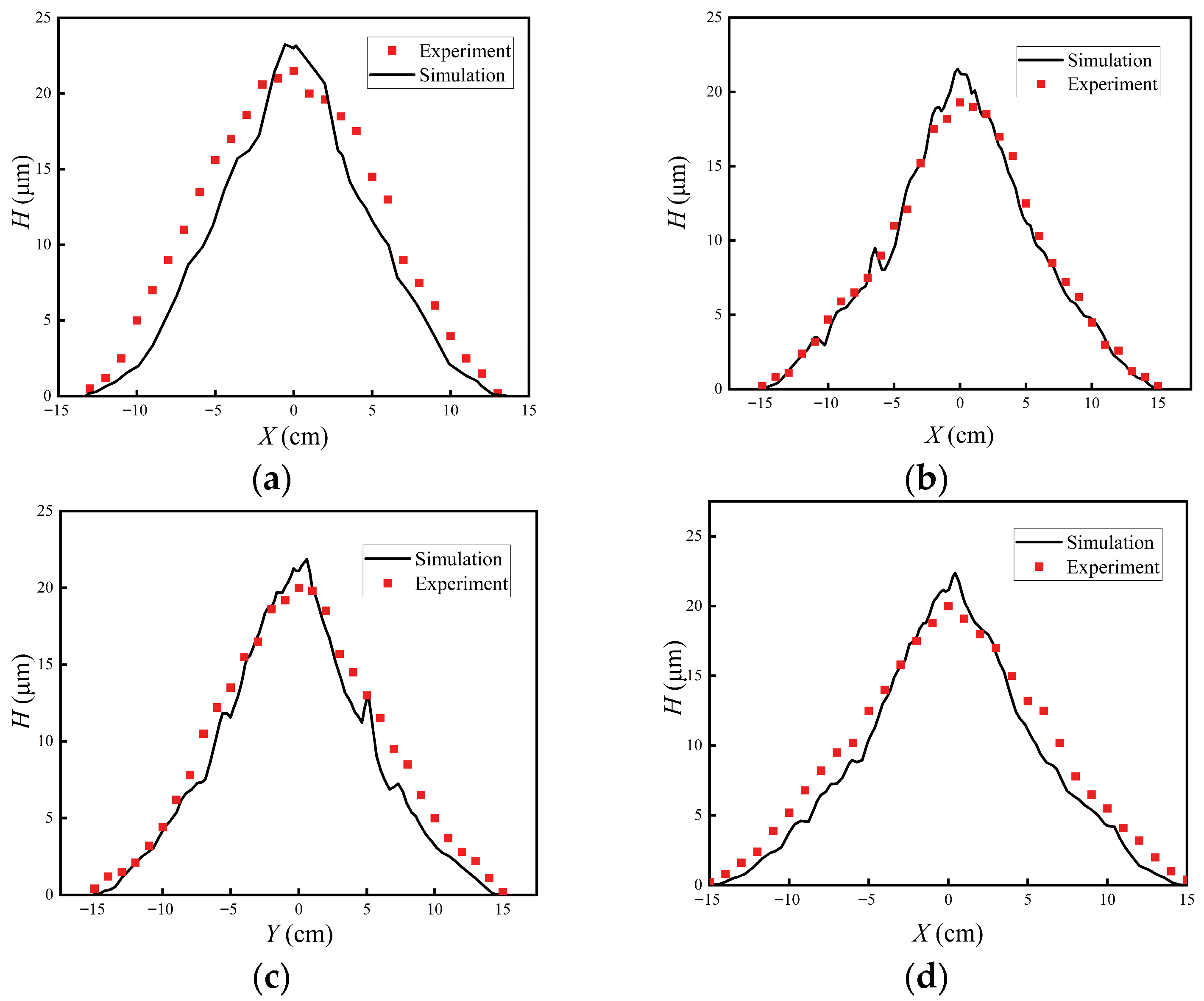
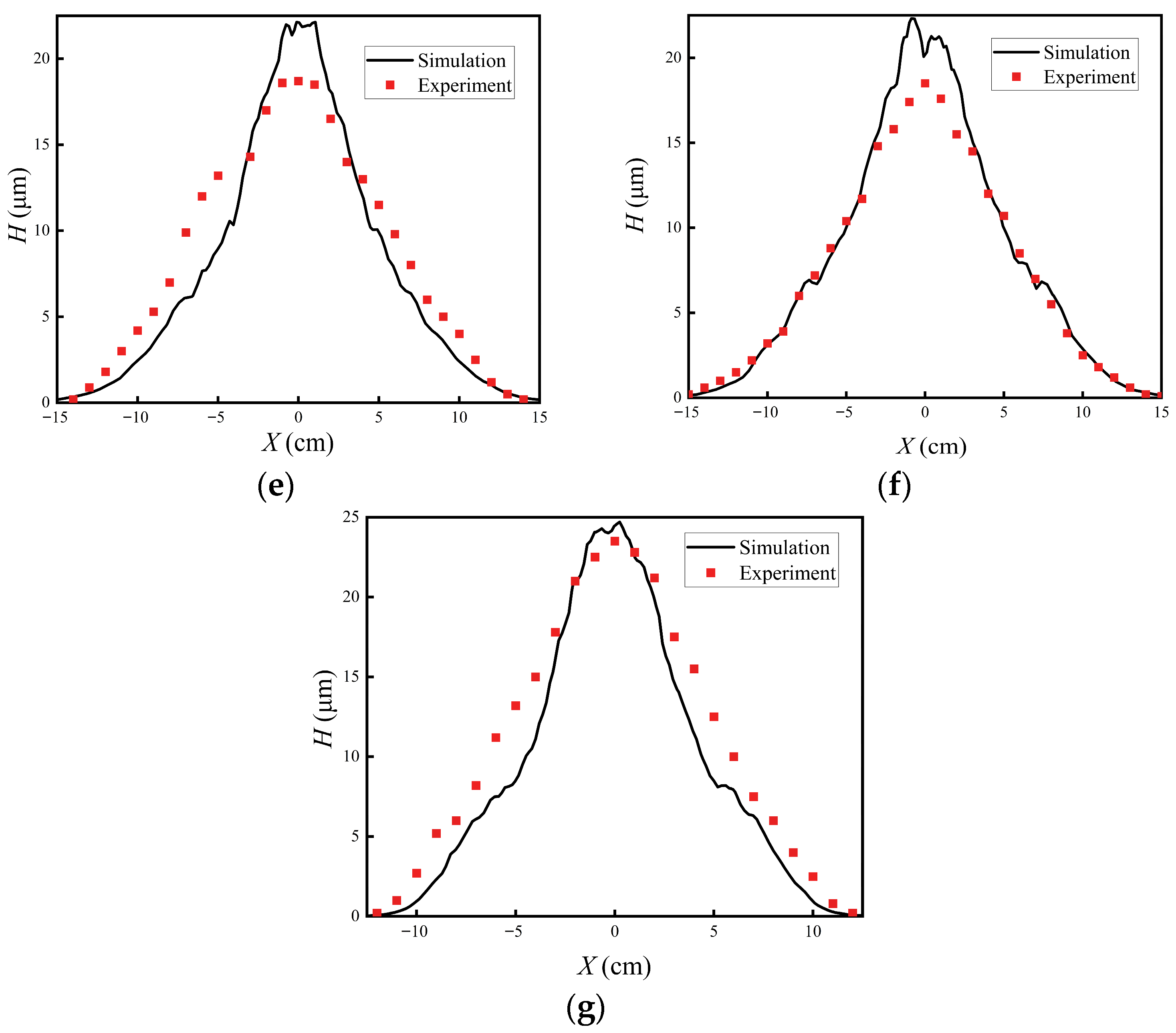
During the measurement of coating thickness, three measurements were taken at each test point, and the average value was used as the final coating thickness for that point; the thickness obtained from numerical simulation was then converted to dry film data. The comparison of experimental and simulated film thicknesses curves is shown in
Figure 17. In general, the experimental results and numerical simulations show good agreement in terms of peak location and overall shapes, both exhibiting the typical deposition pattern characterized by a “thick center and thin edges.” Additionally, the film thickness near the spray center in the experiments is slightly thinner than in the simulations, while the thickness outside the center is slightly thicker; this is the result of the combined effects of the leveling effect and gravity. In summary, despite minor physical deviations caused by the leveling effect and gravity, the model’s overall predictive accuracy meets engineering requirements and is highly reliable.
To quantify the agreement between simulation and experiment, the root mean square error (RMSE) and mean relative error (MRE) were calculated along the measurement lines. The RMSE and MRE for each case are summarized in
Table 2. For the flat plate case, RMSE = 2.8 μm and MRE = 6.5%; for the centerline spraying on the top surface of the bent pipe, RMSE = 3.5 μm and MRE = 7.2%. These values are within the typical accepted accuracy range for industrial spray prediction (MRE < 10%). The overall RMSE remains below 3.8 μm and MRE below 8%, demonstrating good engineering accuracy. The main sources of discrepancy include: (i) the film leveling effect and gravity-driven flow, which slightly redistribute the wet film prior to curing; (ii) the ±1 μm accuracy of the coating thickness gauge and ±1 mm probe positioning uncertainty; (iii) the volume shrinkage rate measurement uncertainty of ±2% translating into ~3% dry-film thickness variation; (iv) the smoothing effect of the actual size distribution was ignored in the simulation. A combined uncertainty analysis indicates that the predicted film thickness is accurate within ±8%, fully adequate for process design and trajectory optimization.
6. Conclusions
This paper establishes a three-dimensional dynamic numerical model of air spraying for arc-shaped bent pipes—a typical complex curved surface configuration—and investigates its film formation characteristics through experimental validation. The following main conclusions are as follows:
(1) The proposed numerical model can effectively reproduce the air-spray flow field and coating deposition characteristics on arc-shaped bent pipes. The simulation results show that the spray flow field presents an approximately fan-shaped distribution in the YZ plane and an approximately circular jet-shaped distribution in the XZ plane, which is consistent with the atomization and shaping effect of the air-cap structure. The predicted coating morphology exhibits a typical elliptical distribution, with a thicker central region and thinner edges. Experimental validation further confirms the reliability of the model. For the flat plate, the RMSE and MRE are 2.8 μm and 6.5%, respectively. For bent-pipe spraying cases, the RMSE ranges from 3.2 μm to 3.8 μm, and the MRE ranges from 6.9% to 7.8%. The overall RMSE remains below 3.8 μm, and the MRE remains below 8%, which satisfies the accuracy requirements for engineering prediction, spray trajectory planning, and film-thickness optimization.
(2) Local curvature significantly changes droplet impact behavior and thus affects coating thickness distribution. Compared with flat-surface spraying, the curved surface changes the intersection relationship between the spray cone and the workpiece, as well as the equivalent spray distance, droplet impact angle, and normal velocity component. In convex regions, the edge droplets tend to move nearly parallel to the surface, resulting in weaker normal deposition, wider spray coverage, and lower peak film thickness. In concave regions, the lateral diffusion of droplets is restricted, and the normal impact component increases, leading to stronger local deposition and a narrower but thicker coating. From the impact dynamics analysis, the Weber number at the center of the spray cone on the flat plate is approximately 85, while it decreases to about 20 at the edge. On the convex top surface, the edge normal velocity component decreases by about 30%, and the Weber number at the edge decreases to about 10. In contrast, on the concave bottom surface, the normal velocity component increases by about 25%, and the edge Weber number increases to about 150, which explains the enhanced droplet capture and localized thickening in concave regions.
(3) Different spray trajectories show different sensitivities to position and curvature. When spraying along the centerline of the bent pipe, the spray direction and equivalent spray distance remain relatively stable during motion. Therefore, the film thickness distributions at different angular positions show good repeatability. In the dynamic centerline spraying case, the coating thickness curves at spray gun rotation angles of 45°, 90°, and 135° are basically consistent in peak position, half-width, and edge attenuation trend. The region from approximately −4 cm to 4 cm along the X-axis shows relatively stable film thickness and can be regarded as an effective uniform spraying zone. The corresponding stable spray width can be maintained at approximately 30 cm. Based on the half-peak position of the coating distribution, an overlap distance of about 4.3 cm from the center is suitable for adjacent paths, which can help avoid excessive central accumulation and edge thinning. In contrast, circumferential spraying exhibits more obvious position dependence. The bottom surface shows the highest peak film thickness and the narrowest spray width, while the top and side surfaces show relatively similar coating distributions. Therefore, centerline spraying is more suitable for fixed-overlap path planning, whereas circumferential spraying requires curvature-adaptive overlap design or spray-gun attitude compensation.
(4) The coupling effect of geometric parameters and process parameters. In the static simulations, bent pipes with a diameter of 300 mm were analyzed under different bending radii. For top circumferential spraying, bending radii of 350 mm, 400 mm, and 450 mm were compared. As the bending radius increases, the convex curvature effect weakens, the spray area gradually decreases, and the film thickness increases, causing the distribution to approach that of a flat plate. When the bending radius is smaller, the convex surface produces a “wider and thinner” coating distribution. For bottom circumferential spraying, bending radii of 200 mm, 250 mm, and 350 mm were considered. A smaller bending radius strengthens the concave confinement effect, leading to a “narrower and thicker” coating distribution. In the dynamic spraying simulations, when the pipe diameter is kept at 300 mm and the bending radius increases from 350 mm to 450 mm, the central film thickness increases and the distribution gradually approaches that of planar spraying. However, the effective spray width changes only slightly, indicating that curvature mainly affects the local deposition intensity rather than the overall coverage width of the spray cone. When the bending radius of the top section is kept at 450 mm and that of the bottom section is kept at 300 mm, pipe diameters of 300 mm, 350 mm, and 400 mm were compared. During circumferential spraying on the top and bottom surfaces, the spray width and film thickness change only slightly with pipe diameter. This is because the long-axis direction of the coating is mainly controlled by the corresponding local radius of curvature, and the droplet-wall impact conditions remain similar when this curvature radius is unchanged. However, during centerline spraying on the top surface, increasing the pipe diameter reduces the effective interception width of the spray cone and increases the peak film thickness. As a result, the film thickness distribution gradually approaches that of flat-surface spraying. This indicates that pipe diameter should not be considered independently; its influence depends strongly on the spray trajectory and the corresponding local geometric relationship between the spray cone and the pipe surface.
(5) Dynamic spraying presents an initial transient stage before stable film formation is reached. The dynamic simulation results show that, after the spray gun starts moving, the gas–liquid two-phase flow field does not immediately reach a stable atomized state. At the beginning of spraying, the amount of coating material arriving at the workpiece surface is insufficient, resulting in a lower film thickness in the initial spraying region. Along the spray gun movement direction, the center film thickness increases significantly at the initial stage and reaches a relatively stable fluctuating state only after the spray gun has moved approximately 10 cm. Therefore, in practical robotic spraying, if the spray starts directly above the workpiece, a short pre-spray or pre-travel stage should be introduced. Alternatively, the spray starting point can be arranged outside the target coating area, so that the spray flow field becomes stable before entering the effective spraying region.
Overall, the proposed model clarifies the relationship between surface geometry, spray trajectory, and coating thickness distribution. It provides practical guidance for robot air spray trajectory planning, overlap design, and thickness compensation for curved pipe components. Future work will further incorporate measured droplet size distribution, flow-leveling behavior caused by curing, and multi-pass spraying experiments to improve the model’s predictive ability.



 ,
,