Article

Improved Adhesion Strength of Silica Thin Films on Polycarbonate Substrates Without an Interlayer Using Remote Atmospheric-Pressure Chemical Vapor Deposition

1
Center for Science of Environment, Resources, and Energy, Graduate School of Science and Technology, Keio University, 3-14-1 Hiyoshi, Kohoku-ku, Yokohama 223-8522, Japan
2
Daikyo Nishikawa Corporation, 5-1 Jike Industrial Park, Higashi Hiroshima City 739-0049, Japan
*
Author to whom correspondence should be addressed.
Coatings 2026, 16(5), 593; https://doi.org/10.3390/coatings16050593
Submission received: 25 February 2026 / Revised: 7 May 2026 / Accepted: 11 May 2026 / Published: 13 May 2026
(This article belongs to the Special Issue Deposition-Based Coating Solutions for Enhanced Surface Properties)

Highlights

  • Surface treatments were investigated to improve adhesion between thin films and substrates.
  • Pressure Chemical Vapor Deposition was used to deposit the thin films.
  • Thin films on flame-treated substrates showed a 26% improvement in adhesion.
  • Thin films on silicone-baking-treated substrates showed a 22% improvement in adhesion.
  • Precise control of substrate surface conditions is expected to improve silica thin-film adhesion.

Abstract

Silica thin-film coatings used for surface protection of automotive parts are generally deposited by chemical vapor deposition (CVD). In this study, we investigated substrate pretreatment methods to improve the adhesion between a polycarbonate substrate and a silica thin film during the direct synthesis of a hard silica thin film on a polycarbonate substrate using remote atmospheric-pressure plasma CVD, without the use of an acrylic primer intermediate layer. Two types of substrate surface treatments were used: flame treatment and silicone baking. With flame treatment, the adhesion strength of the thin film was 43.5 mN, representing a 26% improvement compared to the untreated sample. With the silicone baking treatment, the adhesion strength was 42.3 mN, representing an improvement of approximately 22% compared to the untreated sample. Therefore, it is considered that the adhesion between the polycarbonate substrate and the silica thin film can be improved by controlling the state of the substrate surface through pretreatment.

1. Introduction

To improve the surface strength of resins, many coatings have been studied, including novel silicone acrylate coatings for polycarbonate [1], silica hybrid coatings [2], and physical vapor deposition (PVD) coatings for UV resistance of automotive exterior parts [3]. Of particular interest are silica-based thin films with characteristics such as high hardness and abrasion resistance [4,5]. There are many methods for applying silica-based thin-film coatings, such as the sol–gel method [6,7,8], atomic layer deposition [9], PVD [10], chemical vapor deposition (CVD) [11,12], and plasma CVD [13,14]. Plasma CVD utilizes nonequilibrium plasma—with high energy even at low temperatures—to synthesize thin films on heat-sensitive resin substrates. Plasma CVD typically involves placing the sample in a chamber and depositing the film under vacuum conditions. However, the processing area is limited to the chamber size in this setup. Further drawbacks include the costs associated with maintaining a vacuum and prolonged processing times [15,16]. Therefore, we adopted an atmospheric-pressure plasma CVD (AP-PECVD) method, which does not require a vacuum chamber [17].
Previous research has focused on the synthesis of thin films for surface protection of automotive parts, and we developed a remote AP-PECVD method suitable for coating large areas and curved surfaces [18]. Thin films synthesized by the AP-PECVD method utilize dielectric barrier discharge (DBD), which is a discharge between two electrodes separated by an insulating dielectric barrier [19]. Using this method, we successfully synthesized a hard hydrogenated amorphous carbon film at room temperature using high-ion-density and high-electron-density filamentous DBD generated from a mixed argon (Ar) and helium plasma, with methane as the raw material [20]. Furthermore, we were also able to synthesize a titanium oxide (TiOx) thin film using tetraisopropyl orthotitanate as the raw material [21]. This titanium oxide film has the ability to block ultraviolet light without significantly affecting visible light transmittance, thus protecting resins from ultraviolet light, which is a factor in degradation.
For the synthesis of silica-based thin films, which are hard films suitable for automotive applications, the synthesis of hard silica-based thin films at room temperature using silane as a raw material was successful [22]. Furthermore, by using an acrylic primer as an intermediate layer, the synthesis of silica-based thin films with excellent adhesion and hardness on a polycarbonate substrate was achieved [23]. This technology meets the abrasion resistance standards of the American National Standards Institute and the United Nations Economic Commission for Europe for automotive glass [24]. The intermediate layer of the acrylic primer consists of an acrylic monomer, silica particles, and UV absorbers and light stabilizers commonly used to improve the weather resistance of polycarbonate resins. It is believed that the silica nanoparticles dispersed in the primer form a fine mesh structure, thereby improving the adhesion between the acrylic primer and the silica-based thin film.
Acrylic primers have mainly been used to impart weather resistance. In addition, they have also been found to contribute to improving adhesion between the substrate and the thin film. On the other hand, since the use of primers increases costs, it is desirable to discontinue their use and use alternative methods. Weather resistance can be achieved using the TiOX thin film produced by the aforementioned AP-PECVD method. By replacing it with a TiOX thin film, weather resistance and high hardness can be achieved in a single AP-PECVD process, replacing the conventional two-step process of painting and AP-PECVD, thus contributing to cost reduction. However, measures must also be taken to address adhesion, which is another function of acrylic primers.
Therefore, we focused on pretreatments used for resin bonding and investigated their effects on silica-based thin-film synthesis using the AP-PECVD method. Examples of pretreatments for resin bonding include imparting anchoring effects [25,26], plasma treatment [27,28], chemical etching [29], ion beam treatment [30], and flame treatment [31,32]. These pretreatments improve adhesion through a combination of physical effects (formation of fine surface irregularities) and chemical effects (increased surface free energy due to a higher density of functional groups). This paper focuses on the effect of flame treatment, the most widely used pretreatment for resin bonding in the automotive industry, on AP-PECVD.

2. Materials and Methods

2.1. Surface Treatments

Polymer substrate samples were flame-treated with a gas burner to break surface chemical bonds and generate functional groups, thereby improving the wettability of the substrate surface. The combustion gas was a mixture of butane and propane, the treatment speed was 1 cm/s, and the distance between the treatment machine and the substrate was 50 cm. The treatment was performed 3, 5, and 10 times.
Polymer substrate samples were silicone-baking-treated to generate functional groups and increase the silicon content of the substrate resin surface, thereby reproducing the surface condition of an acrylic primer. A mixture comprising trimethyl silane (TrMS), butane, and propane was used as a combustion gas. By adding TrMS to the combustion gas used in flame treatment, not only functional groups but also silica components derived from TrMS can be introduced to the substrate surface. The treatment speed was 1 cm/s, and the distance between the treatment machine and the substrate was 50 cm. The treatment was performed twice.

2.2. Thin-Film Preparation

We used a 2 mm thick polycarbonate plate (CHIMEI Corporation, Tainan City, Taiwan) and an AP-PECVD device to synthesize the silica thin films using a mixture of TrMS (C3H10Si) and oxygen (O2) at room temperature and pressure, as shown in Figure 1. Plasma-activated Ar gas, used as the carrier gas at a flow rate of 25 L/min, was sprayed onto the substrate via parallel plate electrodes covered by an alumina dielectric plate. Water was circulated inside the electrodes for cooling. The TrMS and O2 were introduced through the slotted gas outlet under the electrodes via Ar gas at a flow rate of 6 L/min. The O2 and TrMS flow rates were 300 and 0.25 mL/min, respectively. Pulse power was applied to one side of the electrode, while the other side was grounded and fixed at a negative peak voltage of 11.5 kV. The pulse frequency and width were 30 kHz and 3 μs, respectively. The substrates were placed on the polycarbonate plate, which moved parallel to the electrodes. The film was synthesized over the entire sample by moving the plate at a constant rate. The distance between the substrate and electrodes was 9 mm, and the speed of the movable plate was 0.1 mm/s. The synthesis was performed several times.

2.3. Characterization

Surface-treated substrates were evaluated by measuring the contact angle with water and diiodomethane using a contact angle meter (DMo-501; KYOWA) and calculating the surface free energy. Calculations were performed based on the Young–Dupré equation [33] and the Owens-Wendt method [34]. The respective relationships are shown below.
Young’s equation:
γSV = γSL + γLVcosθ
Here, γSV is the solid–gas surface free energy, γSL is the solid–liquid interface free energy, γLV is the liquid–gas surface tension, and θ is the contact angle.
Dupré’s equation:
W = γSV + γLV − γSL
W is the work of wetting. Combining the above, the Young–Dupré equation is as follows:
W = γLV(1 + cosθ)
This equation connects the surface free energy of the solid surface, the surface tension of the liquid, and the contact angle of the droplet. Furthermore, the hypothetical equation of Owens and Wendt, which assumes that the surface free energy is separated into a dispersion component and a hydrogen bond/dipole interaction component, is as follows:
γ = γd + γh
Here, γ represents the surface free energy, γd represents the dispersion component, and γh represents the hydrogen bond/dipole interaction component. Now, setting up the equations for water, a polar molecule, and diiodomethane, a nonpolar molecule where γh does not exist, we get the following.
γ L V w a t e r 1 + cos θ w a t e r 2 = γ S V d γ L V w a t e r d + γ S V h γ L V w a t e r h  
γ L V C H 2 I 2 1 + cos θ C H 2 I 2 2 = γ S V d γ L V C H 2 I 2 d
The characteristic values of each liquid are known, and by substituting the measured contact angle θ, the unknown values in the above equation are binary values, γ S V d and γ S V h . Since there are two equations, the values can be obtained by solving them as a system of simultaneous equations. From this result, the surface free energy of the measured sample can be determined as the sum of each component. Next, elemental analysis of the substrate surface was performed using X-ray photoelectron spectroscopy (XPS: XPS-Nexsa G2; Thermo Fisher Scientific, Waltham, MA, USA) to measure the extent of Si introduction for the silicone-baking-treated samples. Furthermore, the morphology of Si on the surface was observed using scanning electron microscopy (SEM: Inspect F50; Thermo Fisher Scientific, Waltham, MA, USA).
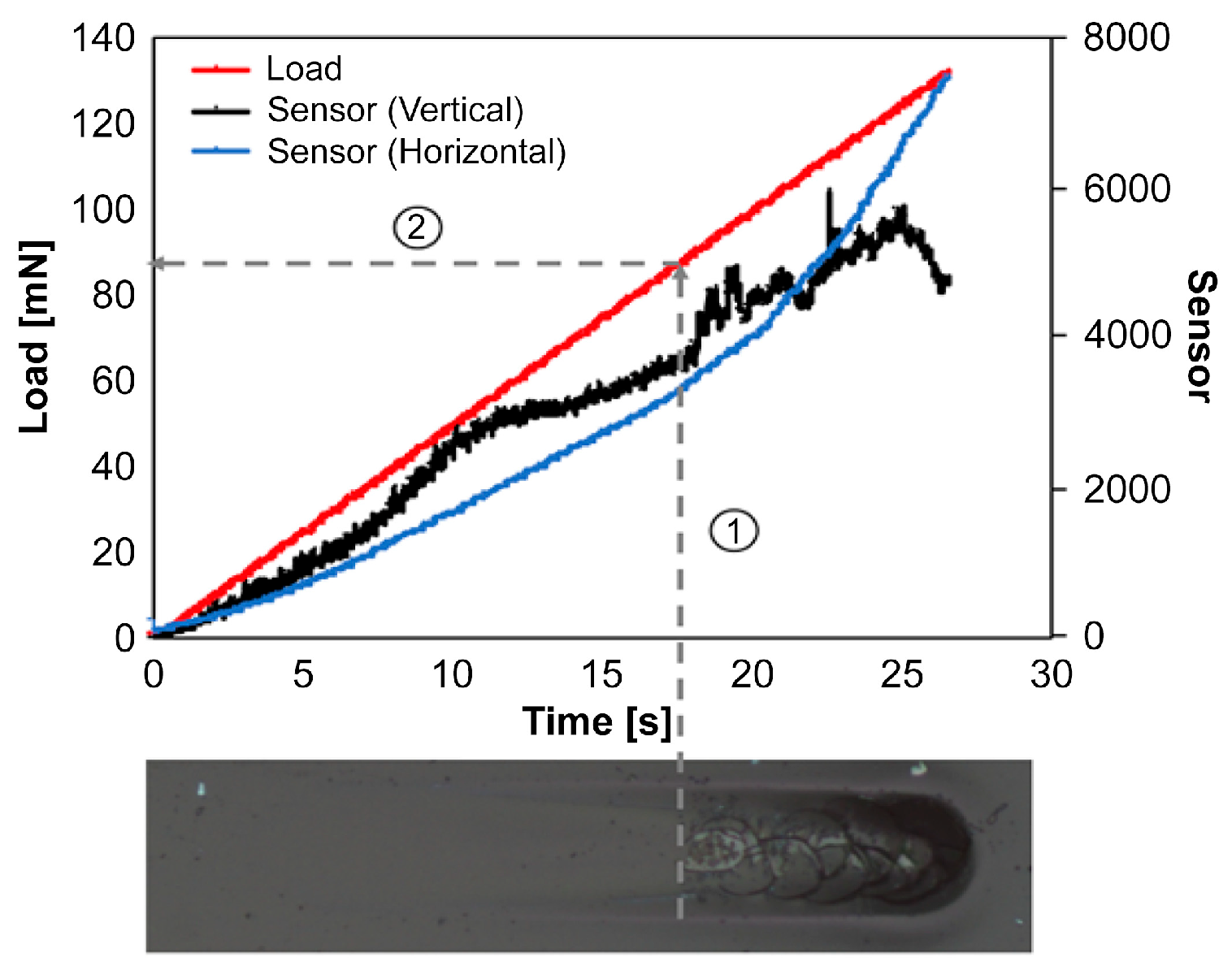
The film thickness was measured by partially masking the substrate during thin-film synthesis and recording the step difference between the masked area and the thin film after deposition using a tactile step meter (Dektak XT; Bruker, Billerica, MA, USA). Elemental analysis of the thin films was evaluated using XPS, similar to that used for the silicone-baking-treated samples. Adhesion between the substrate and the thin film was measured using abrasion tests (CSR 500; RHESCA, Tokyo, Japan) performed by the micro-scratch method specified in JIS R 3255 [35]. In this method, a needle is applied to the sample, and the needle is moved while increasing the load to peel off the thin film, and an image of the sample is taken after the test. First, as shown in Figure 2, the sample image is placed side by side with load and sensor displacement data over time. Next, as shown in ①, the time at which peeling occurred is obtained from the image, and as shown in ②, the load at that time is calculated. The obtained load is called the peeling critical load, and in this study, this value was used as the adhesion.
The thin-film hardness was measured using the nanoindentation method (Nano Indenter G200; Agilent Technologies, Santa Clara, CA, USA).

3. Results

3.1. Acrylic Primer

Samples synthesized with and without an acrylic primer were characterized under conventional conditions. Their properties are listed in Table 1.
Compared with the thin film synthesized with an acrylic primer, the thin film synthesized without an acrylic primer was thicker, had slightly higher silica content and hardness, and significantly lower adhesion energy (i.e., the thin films were easily peeled off the substrate).

3.2. Flame Treatment

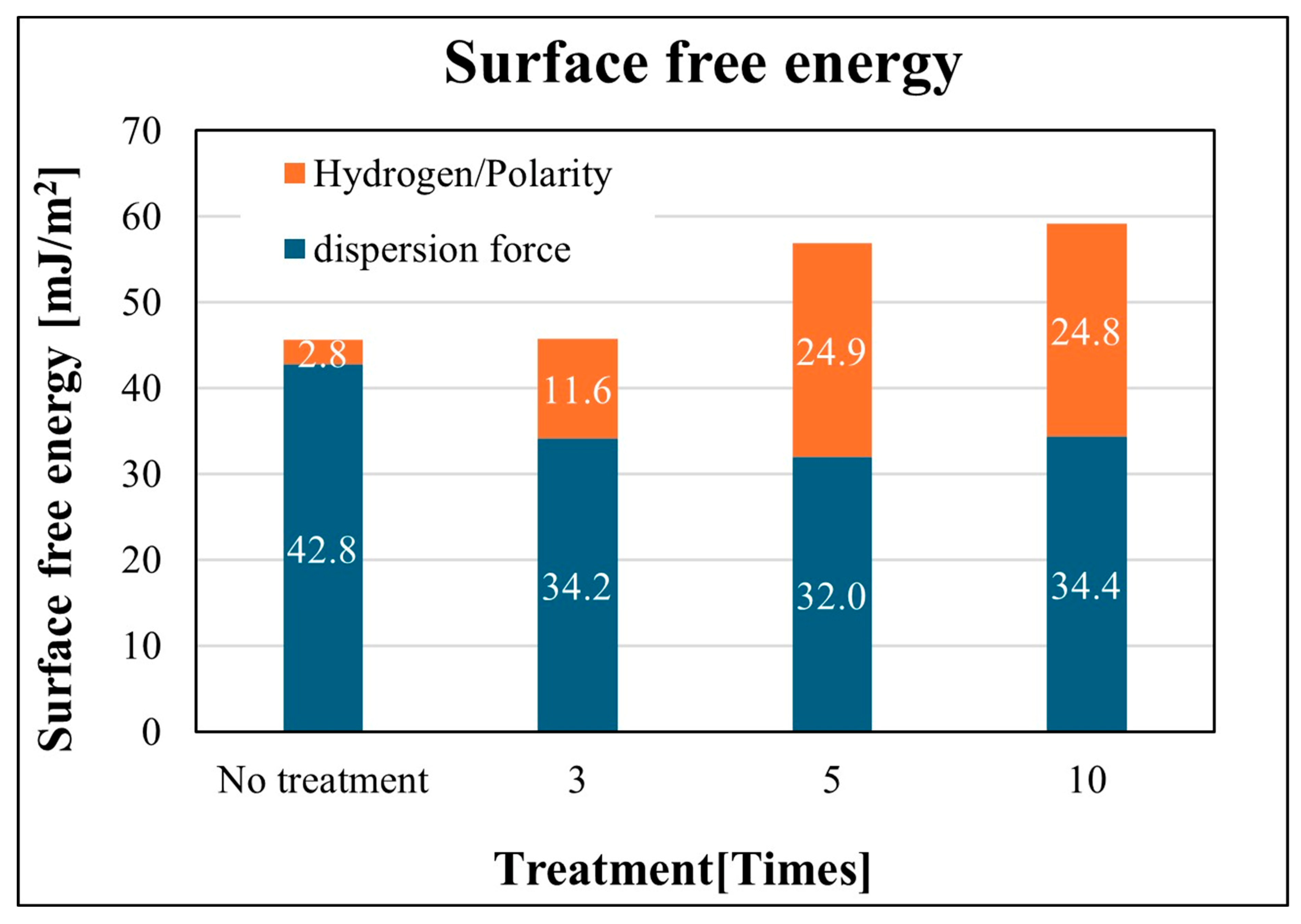
Polymer substrates were subjected to flame treatment as part of an initial investigation of surface treatment. The surface free energies of the polymer substrates were determined after 0, 3, 5, and 10 rounds of flame treatment (Figure 3). The surface free energy increased with flame treatment. In particular, the component of surface free energy derived from hydrogen-bonding/polar interactions significantly improved, suggesting that polar functional groups were introduced into the substrate by flame treatment. Next, thin films were synthesized on each sample, and the properties of the thin films were measured. As shown in Table 2, all thin-film surfaces showed a silica content of 20% or more, indicating that the thin films were successfully synthesized on the substrates. In particular, the adhesion and hardness of the thin films improved with increasing number of flame treatments. The sample that underwent 10 flame treatments showed the best adhesion (43.5 mN), which was 26% higher than that of the untreated sample. These results indicate that flame treatment improves the adhesion between the polymer substrate and the thin film by enhancing the surface free energy of the substrate, especially its polar components.

3.3. Silicone Baking Treatment

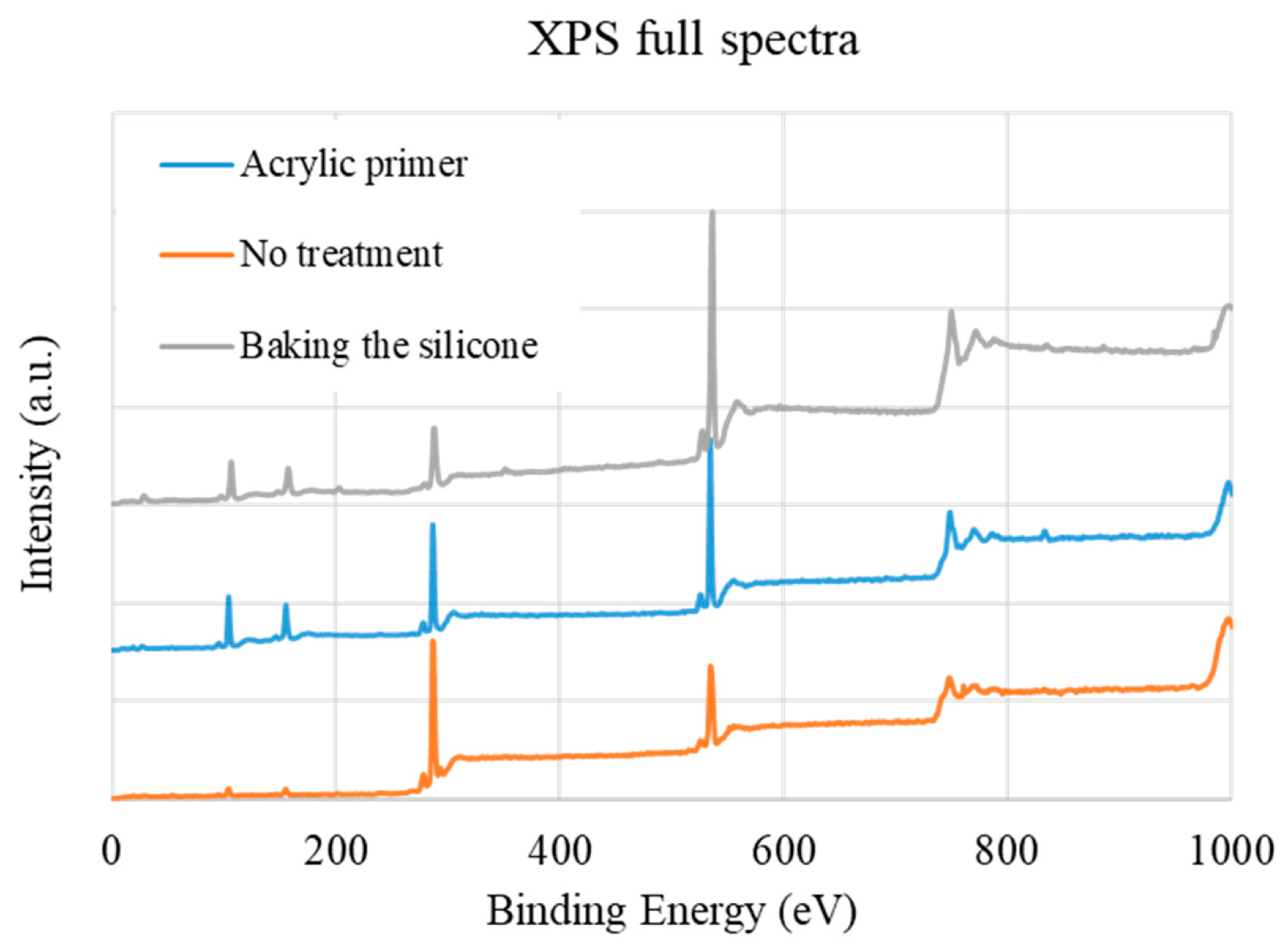
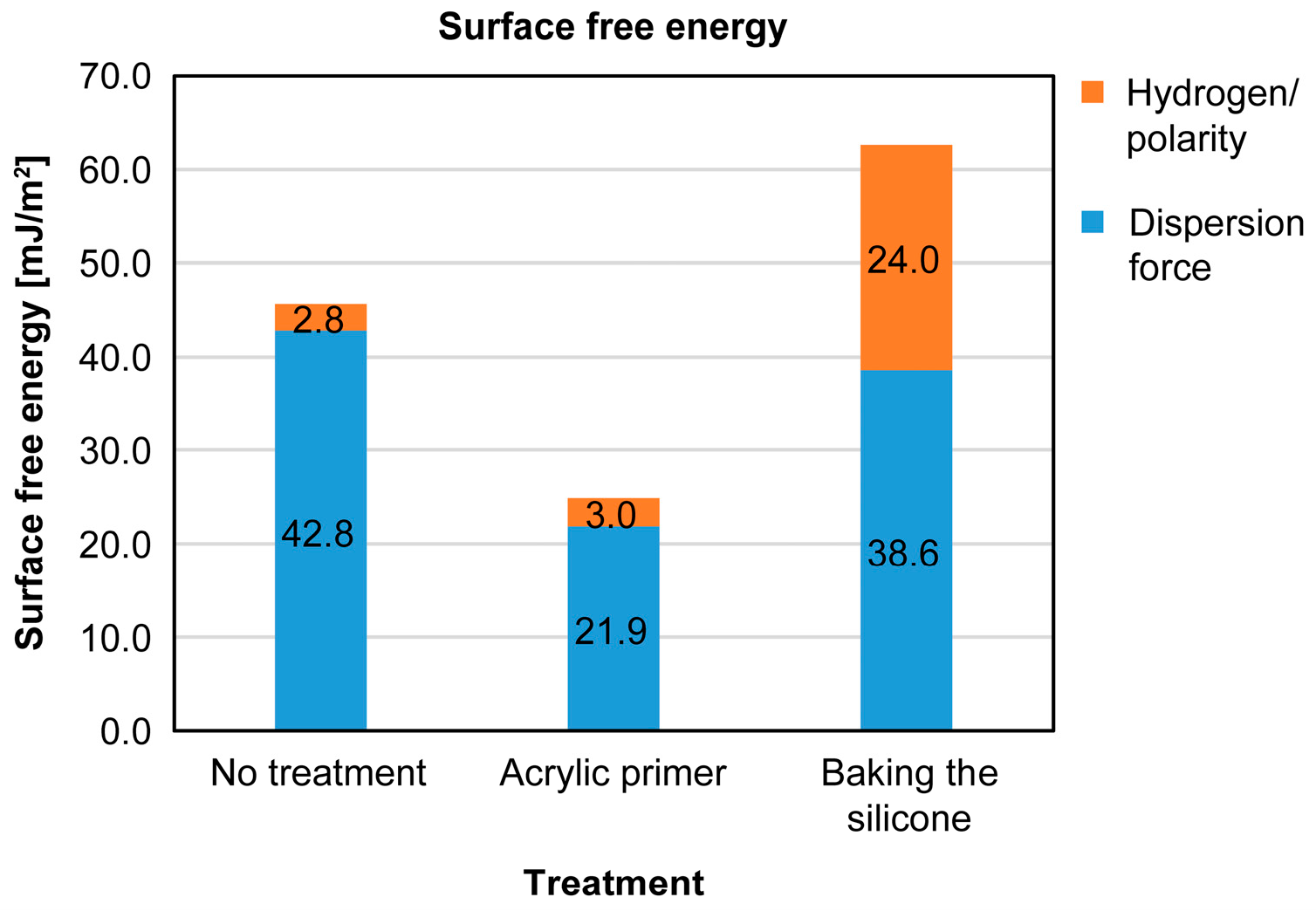
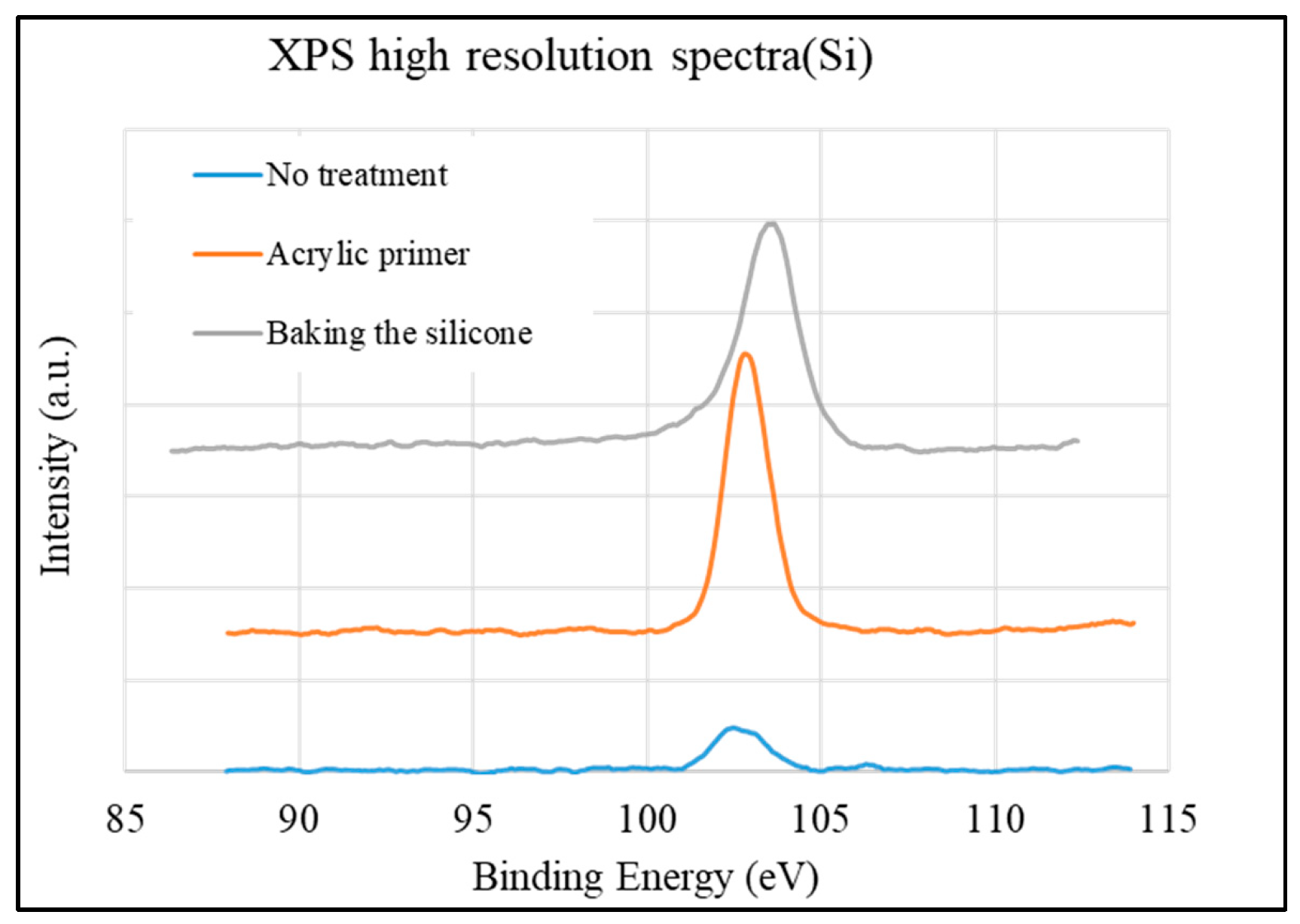
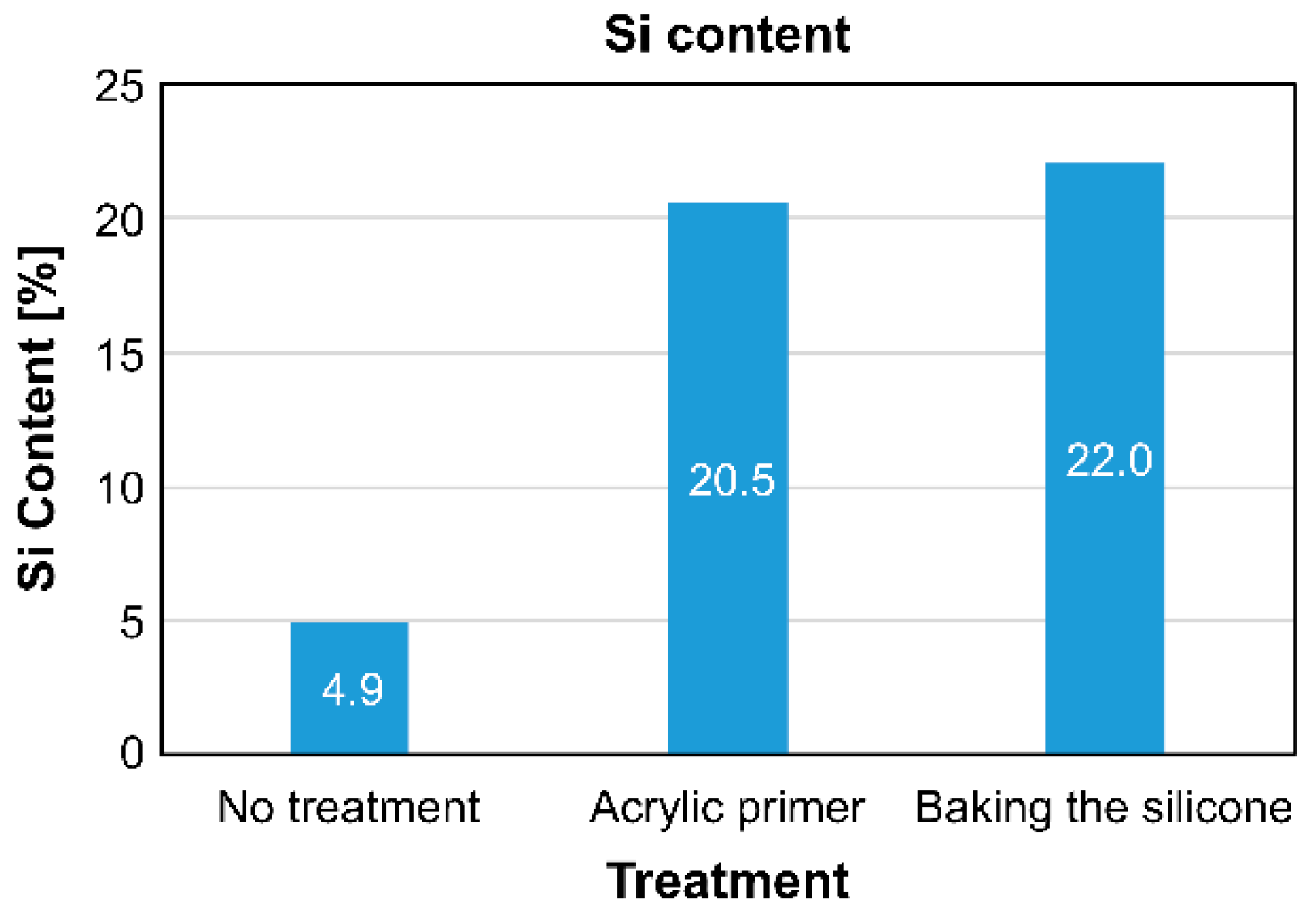
The surface free energy of each sample is shown in Figure 4. Regarding surface free energy, the acrylic primer sample showed a decrease, while the silicone-baked sample showed an improvement, reaching a level equivalent to the flame-treated sample shown in Figure 3. The XPS full spectra are shown in Figure 5; the high-resolution spectra showing the Si element are shown in Figure 6; and the Si content calculated from them is shown in Figure 7. Regarding Si content, the silicon content on the surface of the untreated PC substrate was 4.9%, but after silicone baking, it exceeded 20%, becoming almost equivalent to the acrylic primer-coated sample.
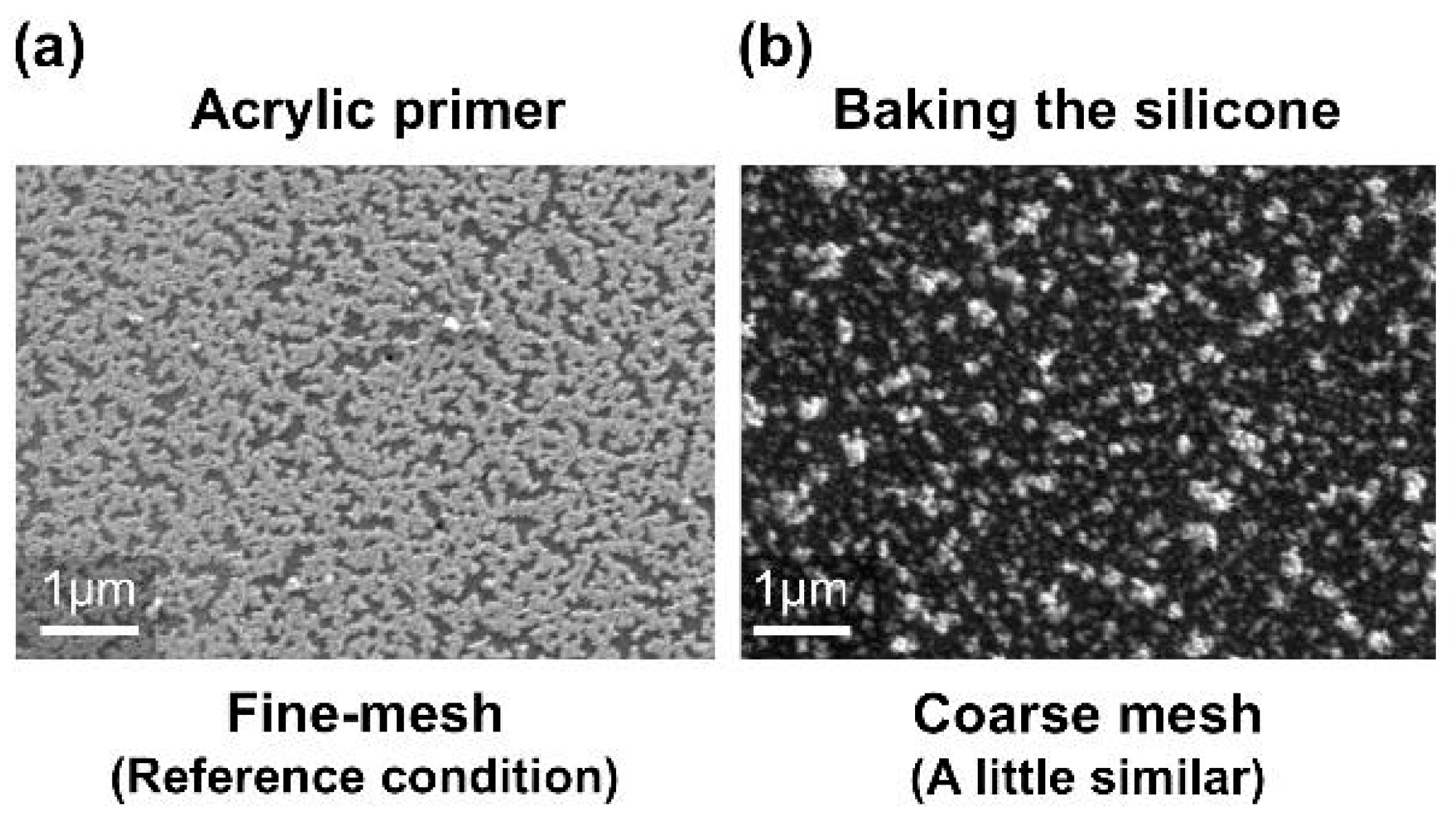
Next, the surfaces of samples treated with acrylic primer and those treated with silicone baking were observed using SEM (Figure 8). The sample coated with acrylic primer had a fine mesh-like microstructure (Figure 8a), whereas the silicone-baking-treated sample had a coarse mesh-like microstructure (Figure 8b).

3.4. Thin-Film Adhesion

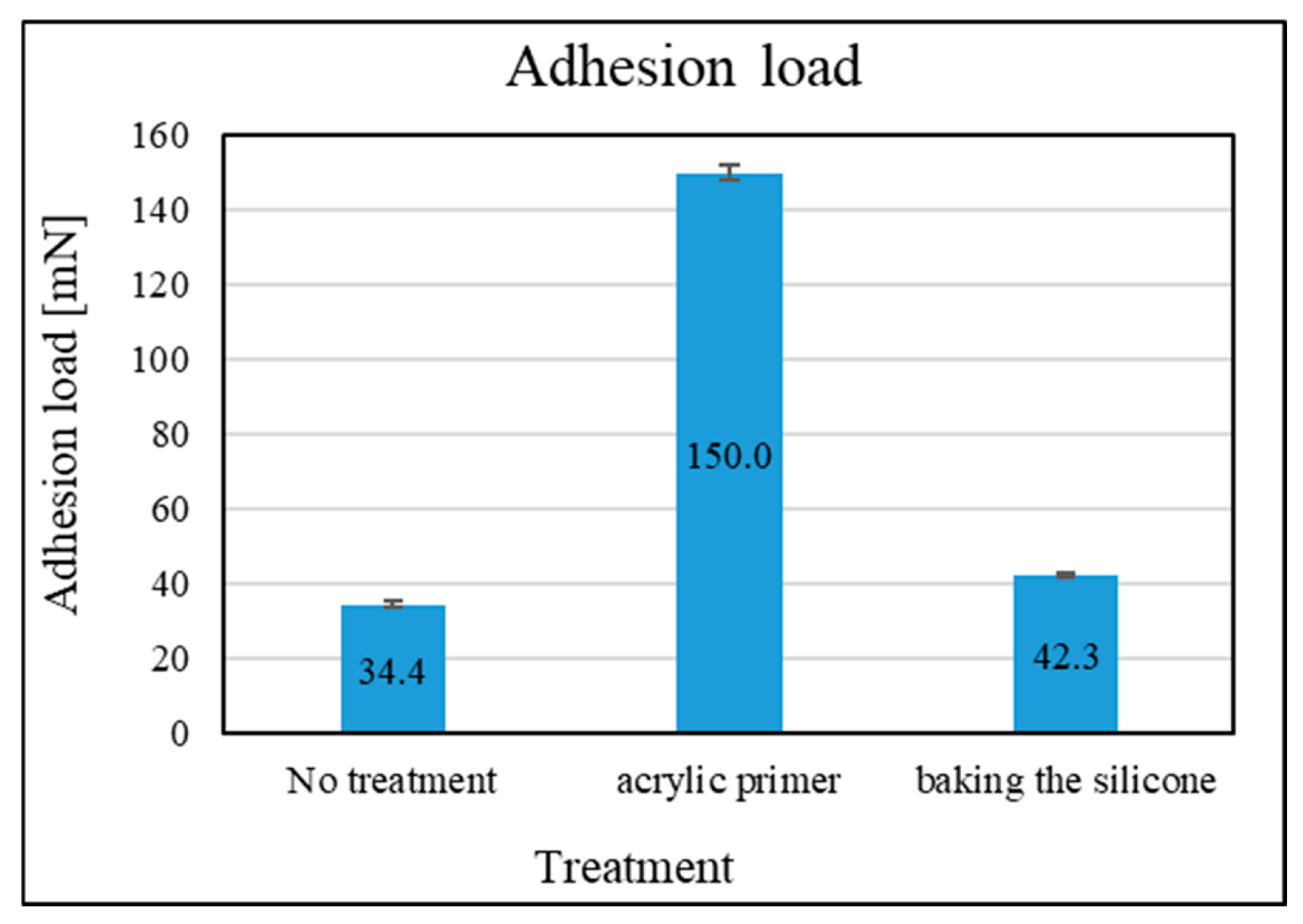
The thin film synthesized on the acrylic-primer-coated substrate exhibited the highest adhesion strength of 150 mN (Figure 9). The silicone-baking-treated sample exhibited an adhesion strength of 42.3 mN, approximately 22% higher than that of the untreated sample (34.4 mN).

4. Discussion

This study demonstrated that surface treatment of polycarbonate can improve the adhesion between the substrate and the thin film. Flame treatment improved the surface free energy of the substrate (particularly the polar component), suggesting a similar effect to flame treatment used as a pretreatment for polypropylene (PP) [32] bonding. We predicted that silicone baking would effectively improve adhesive strength by increasing the Si content on the substrate surface and bringing its composition closer to that of the thin film. However, the adhesive strength of the silicone-baked sample was significantly lower than that of the acrylic-primer-treated sample and was comparable to that of the flame-treated sample. We hypothesized the following reasons for this: First, the variability in the substrate surface condition (i.e., mesh roughness) confirmed by SEM observation likely prevented the same level of adhesion as with the acrylic primer. This suggests that surface condition is a crucial factor in thin-film adhesion. On the other hand, since the surface free energy and adhesion strength values were like those of the flame-treated sample, we concluded that the improvement in adhesion was due to surface free energy. In summary, while silicone baking can improve the Si element ratio, the effect of bringing the composition closer to that of the thin film is low, suggesting that surface free energy is the dominant factor in improving adhesion. Considering the results of the acrylic primer sample used as a comparison, it is expected that adhesion can be further improved by precisely controlling the substrate surface condition, such as the dispersion of Si elements.

5. Conclusions

We synthesized hard silica thin films directly on resin substrates using AP-PECVD. The flame treatment yielded a thin-film adhesion strength of 43.5 mN, which, while promoting its application in the automotive industry, is insufficient for car window applications. The silicone baking treatment yielded a thin-film adhesion strength of 42.3 mN, which, while approximately 22% higher than that of untreated samples, is less than that of samples prepared using an acrylic primer. Therefore, both substrate surface treatments successfully improved thin-film adhesion strength compared with nontreated substrates. This suggests that more precise control of substrate surface conditions could further improve thin-film adhesion.

Author Contributions

Conceptualization, H.E., A.S. and T.S.; methodology, H.E., A.S. and T.S.; software, A.S.; validation, H.E.; formal analysis, H.E.; investigation, H.E.; resources, A.S.; data curation, H.E.; writing—original draft preparation: H.E.; writing—review and editing, T.S. and A.S.; visualization, H.E.; supervision, T.S.; project administration, T.S. All authors have read and agreed to the published version of the manuscript.

Funding

This research received no external funding.

Institutional Review Board Statement

This study did not involve any human participants, animals, or human/animal-derived materials or data. Therefore, ethical approval (IRB/Ethics Committee review) was not required.

Informed Consent Statement

Not applicable.

Data Availability Statement

The datasets used and analyzed during the current study are available from the corresponding author on reasonable request.

Conflicts of Interest

Author Hayate Endo was employed by the company Daikyo Nishikawa Corporation. The remaining authors declare that the research was conducted in the absence of any commercial or financial relationships that could be construed as a potential conflict of interest.

Abbreviations

The following abbreviations are used in this manuscript:
DBDDielectric barrier discharge
PETPolyethylene terephthalate
SEMScanning electron microscopy
XPSX-ray photoelectron spectroscopy

References

  1. Masuda, K.; Tsuchida, K.; Inoue, T.; Gilliam, M. A self-assembled silicone acrylate coating formulation and detection of the optically non-uniform structure with reflectance spectroscopy. J. Coat. Technol. Res. 2019, 16, 923–931. [Google Scholar] [CrossRef]
  2. Chang, C.-C.; Oyang, T.-Y.; Hwang, F.-H.; Chen, C.-C.; Cheng, L.-P. Preparation of polymer/silica hybrid hard coatings with enhanced hydrophobicity on plastic substrates. J. Non-Cryst. Solids 2012, 358, 72–76. [Google Scholar] [CrossRef]
  3. Mühleisen, M. High scratch resistance for plastic parts: A PVD coating combined with UV-curing paint offers new functionality. Int. Surf. Technol. 2013, 6, 40–41. [Google Scholar] [CrossRef]
  4. Rats, D.; Hajek, V.; Martinu, L. Micro-scratch analysis and mechanical properties of plasma-deposited silicon-based coatings on polymer substrates. Thin Solid Film. 1999, 340, 33–39. [Google Scholar] [CrossRef]
  5. Barreca, D.; Gasparotto, A.; Maccato, C.; Maragno, C.; Tondello, E.; Rossetto, G. Low-temperature PECVD of transparent SiOxCyHz thin films. Chem. Vap. Depos. 2007, 13, 205–210. [Google Scholar] [CrossRef]
  6. Strawbridge, I.; James, P.F. The factors affecting the thickness of sol-gel derived silica coatings prepared by dipping. J. Non-Cryst. Solids 1986, 86, 381–393. [Google Scholar] [CrossRef]
  7. Vorotilov, K.A.; Orlova, E.V.; Petrovsky, V.I. Sol-gel silicon dioxide films. Thin Solid Film. 1992, 209, 188–194. [Google Scholar] [CrossRef]
  8. Watcharotone, S.; Dikin, D.A.; Stankovich, S.; Piner, R.; Jung, I.; Dommett, G.H.B.; Evmenenko, G.; Wu, S.E.; Chen, S.F.; Liu, C.P.; et al. Graphene–silica composite thin films as transparent conductors. Nano Lett. 2007, 7, 1888–1892. [Google Scholar] [CrossRef]
  9. Vasilyev, V.Y. Review—Atomic layer deposition of silicon dioxide thin films. ECS J. Solid State Sci. Technol. 2021, 10, 053004. [Google Scholar] [CrossRef]
  10. Zhao, C.; Zhao, L.; Liu, J.; Liu, Z.; Chen, Y. Effect of sputtering power on the properties of SiO2 films grown by radio frequency magnetron sputtering at room temperature. Opt. Quantum Electron. 2021, 53, 15. [Google Scholar] [CrossRef]
  11. Roualdes, S.; Sanchez, J.; Durand, J. Gas diffusion and sorption properties of polysiloxane membranes prepared by PECVD. J. Membr. Sci. 2002, 198, 299–310. [Google Scholar] [CrossRef]
  12. Lee, J.; Jang, W.; Kim, H.; Shin, S.; Kweon, Y.; Lee, K.; Jeon, H. Characteristics of low-κ SiOC films deposited via atomic layer deposition. Thin Solid Film. 2018, 645, 334–339. [Google Scholar] [CrossRef]
  13. Kafrouni, W.; Rouessac, V.; Julbe, A.; Durand, J. Synthesis of PECVD a-SiCxNy:H membranes as molecular sieves for small gas separation. J. Membr. Sci. 2009, 329, 130–137. [Google Scholar] [CrossRef]
  14. Mort, J.; Jansen, F. Xerographic applications of plasma-deposited amorphous tetrahedral materials. In Plasma Deposited Thin Films; CRC Press: Boca Raton, FL, USA, 2018; pp. 187–204. [Google Scholar]
  15. Lieberman, M.A.; Lichtenberg, A.J. Principles of Plasma Discharges and Materials Processing, 2nd ed.; Wiley: Hoboken, NJ, USA, 2005. [Google Scholar] [CrossRef]
  16. Bewilogua, K.; Bräuer, G.; Dietz, A.; Gäbler, J.; Goch, G.; Karpuschewski, B.; Szyszka, B. Surface technology for automotive engineering. CIRP Ann. 2009, 58, 608–627. [Google Scholar] [CrossRef]
  17. Kang, S.; Mauchauffé, R.; You, Y.S.; Moon, S.Y. Insights into the role of plasma in atmospheric pressure chemical vapor deposition of titanium dioxide thin films. Sci. Rep. 2018, 8, 16684. [Google Scholar] [CrossRef]
  18. Suzuki, T.; Kodama, H. Diamond-like carbon films synthesized under atmospheric pressure on PET substrates. Diam. Relat. Mater. 2009, 18, 990–994. [Google Scholar] [CrossRef]
  19. Kogelschatz, U. Dielectric-barrier discharges: Their history, discharge physics, and industrial applications. Plasma Chem. Plasma Process. 2003, 23, 1–46. [Google Scholar] [CrossRef]
  20. Mori, T.; Futagami, Y.; Kishimoto, E.; Shirakura, A.; Suzuki, T. Synthesis of hard hydrogenated amorphous carbon films by atmospheric pressure filamentary dielectric barrier discharge. J. Vac. Sci. Technol. A 2015, 33, 060607. [Google Scholar] [CrossRef]
  21. Endo, H.; Shirakura, A.; Kudo, S.; Suzuki, T. Synthesis of UV-blocking titanium oxide films via remote-type atmospheric pressure CVD. J. Appl. Sci. Packag. Res. 2024, 16, 2. Available online: https://repository.rit.edu/japr/vol16/iss1/2 (accessed on 15 January 2026).
  22. Noborisaka, M.; Mori, T.; Horikoshi, R.; Shirakura, A.; Hashimoto, A.; Suzuki, T. Abrasion resistance of silica-based coatings prepared by atmospheric pressure plasma chemical vapor deposition for protection of polymeric surfaces. J. Vac. Sci. Technol. A 2013, 31, 061508. [Google Scholar] [CrossRef]
  23. Tanaka, S.; Endo, H.; Shirakura, A.; Kudo, S.; Suzuki, T. Improved abrasion resistance of silica-based CVD thin films on polycarbonate substrates for automotive applications. J. Vac. Sci. Technol. B 2021, 39, 040602. [Google Scholar] [CrossRef]
  24. Publications Office of the European Union. Available online: https://share.google/Ub7VLypLotcLAuVn6 (accessed on 1 August 2024).
  25. Molino Alvarez, E.; Quintana González, S.A.; Lopez Taborda, L.L.; Niebles Nuñez, E.E. Experimental study of adhesive joints with mechanical interlocking of acrylonitrile butadiene styrene parts fabricated for fused filament fabrication. Rapid Prototyp. J. 2023, 29, 1984–2000. [Google Scholar] [CrossRef]
  26. Siebert, L.; Schaller, T.; Schütt, F.; Kaps, S.; Carstensen, J.; Shree, S.; Bahr, J.; Mishra, Y.K.; Sievers, H.-H.; Adelung, R. Perfect polymer interlocking by spherical particles: Capillary force shapes hierarchical composite undercuts. Nanoscale Horiz. 2019, 4, 947–952. [Google Scholar] [CrossRef]
  27. Owen, M.J.; Smith, P.J. Plasma treatment of polydimethylsiloxane. J. Adhes. Sci. Technol. 1994, 8, 1063–1075. [Google Scholar] [CrossRef]
  28. Moon, S.I.; Jang, J. The mechanical interlocking and wetting at the interface between argon plasma treated UHMPE fiber and vinylester resin. J. Mater. Sci. 1999, 34, 4219–4224. [Google Scholar] [CrossRef]
  29. Kim, S.R. Surface modification of poly(tetrafluoroethylene) film by chemical etching, plasma, and ion beam treatments. J. Appl. Polym. Sci. 2000, 77, 1913–1920. [Google Scholar] [CrossRef]
  30. Suzuki, Y. Ion beam modification of polymers for the application of medical devices. Nucl. Instrum. Methods Phys. Res. B 2003, 206, 501–506. [Google Scholar] [CrossRef]
  31. Mazzola, L.; Bemporad, E.; Carassiti, F. Flame treatment on plastic: A new surface free energy statistical prediction model and characterization of treated surfaces. Rapid Prototyp. J. 2023, 29, 1984–2000. [Google Scholar] [CrossRef]
  32. Williams, D.F.; Abel, M.L.; Grant, E.; Hrachova, J.; Watts, J.F. Flame treatment of polypropylene: A study by electron and ion spectroscopies. Int. J. Adhes. Adhes. 2015, 63, 26–33. [Google Scholar] [CrossRef]
  33. Schrader, E. Young-Dupre Revisited. Langmuir 1995, 11, 3585–3589. [Google Scholar] [CrossRef]
  34. Owens, D.; Wendt, R. Estimation of the surface free energy of polymers. J. Appl. Polym. Sci. 1969, 13, 1741–1747. [Google Scholar] [CrossRef]
  35. JIS R 3255-2016; Test Methods for Adhesion of Thin Films on Glass Substrate. Japanese Standards Association: Tokyo, Japan, 2016.
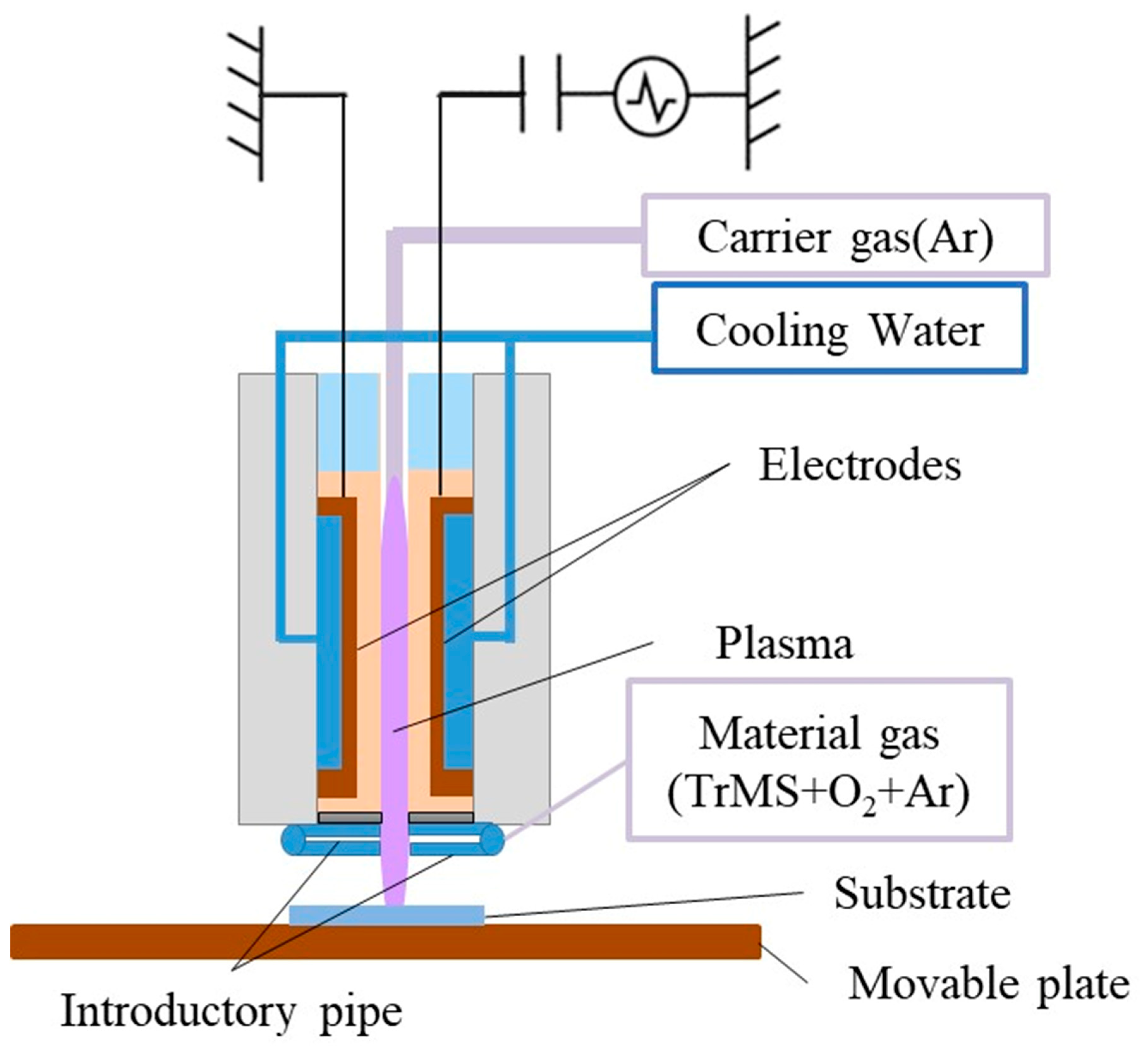
Figure 1. Schematic of the remote atmospheric-pressure plasma-enhanced chemical vapor deposition (AP-PECVD) device for SiO2 synthesis.
Coatings 16 00593 g001
Figure 2. Overview of abrasion tests.
Coatings 16 00593 g002
Figure 3. Surface free energies of the flame-treated samples.
Coatings 16 00593 g003
Figure 4. Surface free energies of the silicone-baked samples.
Coatings 16 00593 g004
Figure 5. XPS full spectra.
Coatings 16 00593 g005
Figure 6. High-resolution spectra showing the Si element.
Coatings 16 00593 g006
Figure 7. The Si content of the surface of untreated and silicone-baking-treated samples, as determined by XPS.
Coatings 16 00593 g007
Figure 8. SEM images of the samples synthesized with and without acrylic primer after silicone baking treatment.
Coatings 16 00593 g008
Figure 9. Adhesion strength of the thin films synthesized on different substrates.
Coatings 16 00593 g009
Table 1. Properties of thin films synthesized with and without acrylic primer.
SampleThickness [nm]Si [%]Adhesion [mN]
n = 3
Hardness [GPa]
n = 12
AverageDivAverageDiv
With primer15722.5150.03.61.090.25
Without primer18727.834.40.51.290.11
Table 2. Properties of thin films with and without flame treatment.
Number of Flame TreatmentsFilm
Thickness [nm]
Si [%]Adhesion [mN]Hardness [GPa]
AverageDivAverageDiv
0 (no treatment)18727.834.40.51.290.11
322324.438.11.01.220.12
523520.141.80.41.830.19
1023324.143.50.42.200.45
Disclaimer/Publisher’s Note: The statements, opinions and data contained in all publications are solely those of the individual author(s) and contributor(s) and not of MDPI and/or the editor(s). MDPI and/or the editor(s) disclaim responsibility for any injury to people or property resulting from any ideas, methods, instructions or products referred to in the content.