Failure Mechanisms of EB-PVD Thermal Barrier Coating in Simulated Aero-Engine Erosion Environment

Abstract
1. Introduction
2. Materials and Methods
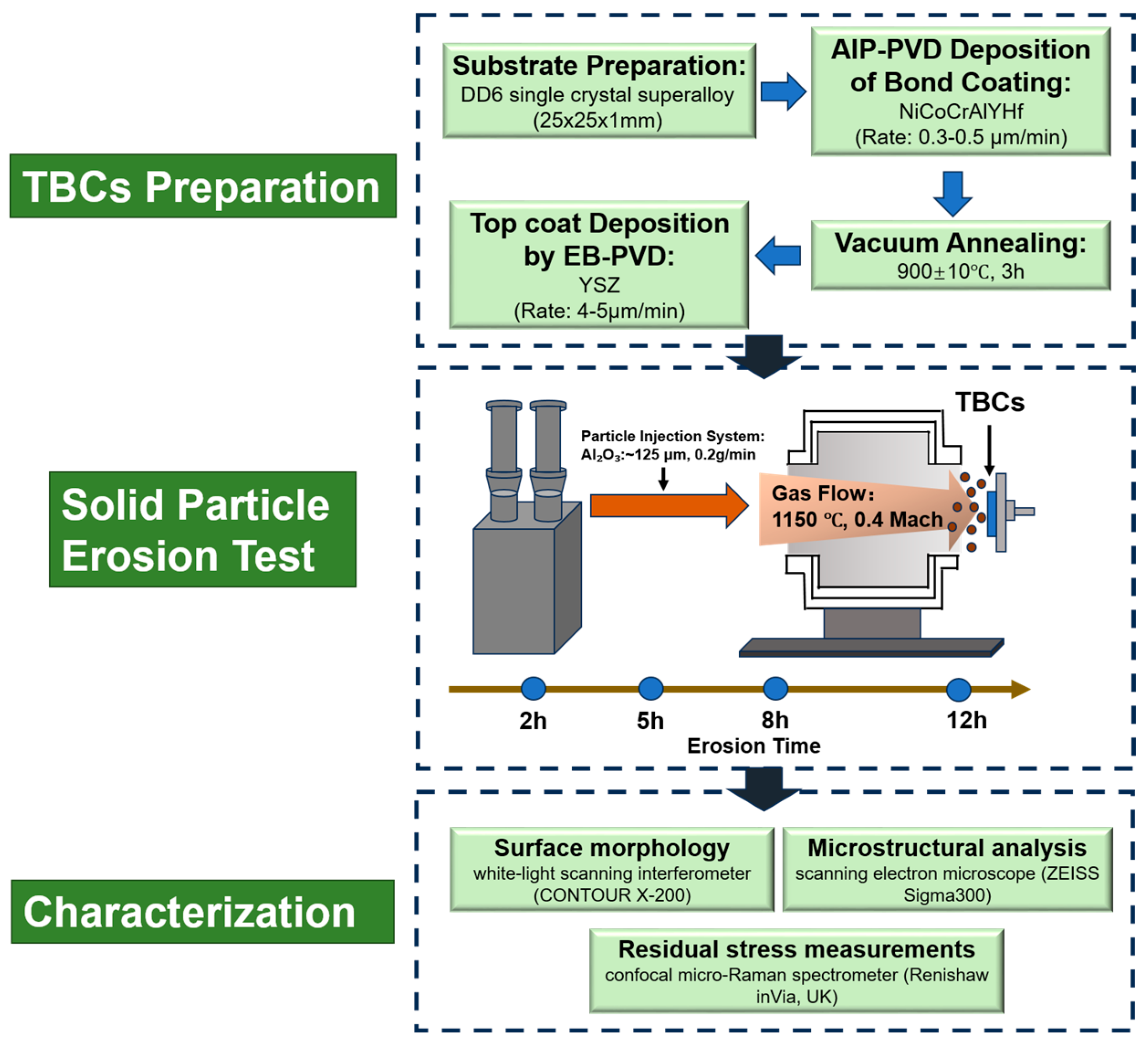
2.1. Coating Preparation
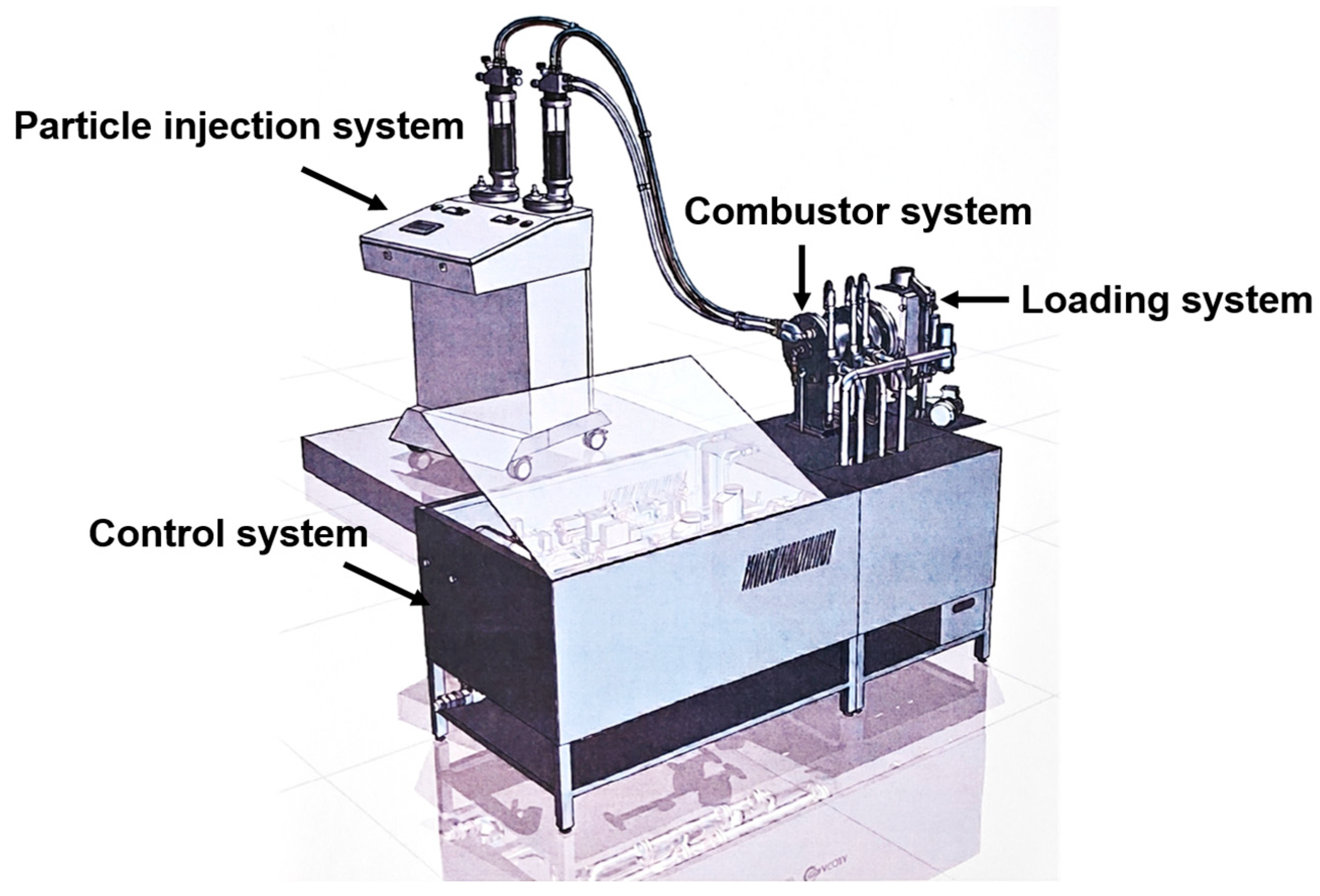
2.2. Solid Particle Erosion Test
2.3. Characterization
3. Results
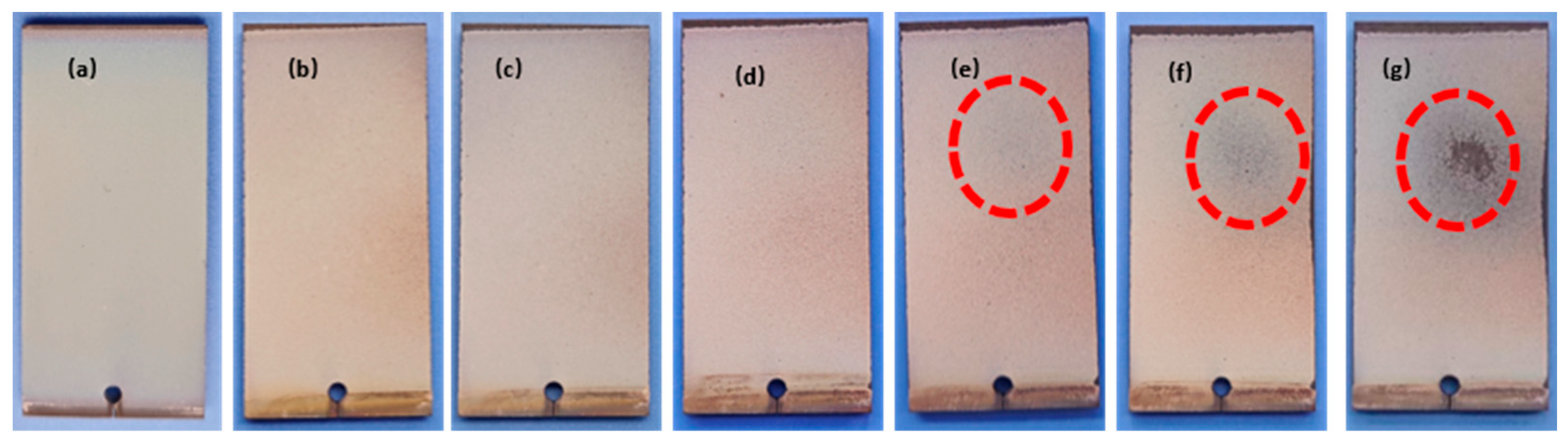
3.1. Macro Surface Morphology of Coatings
3.2. Microscopic Surface Topography of the Coating
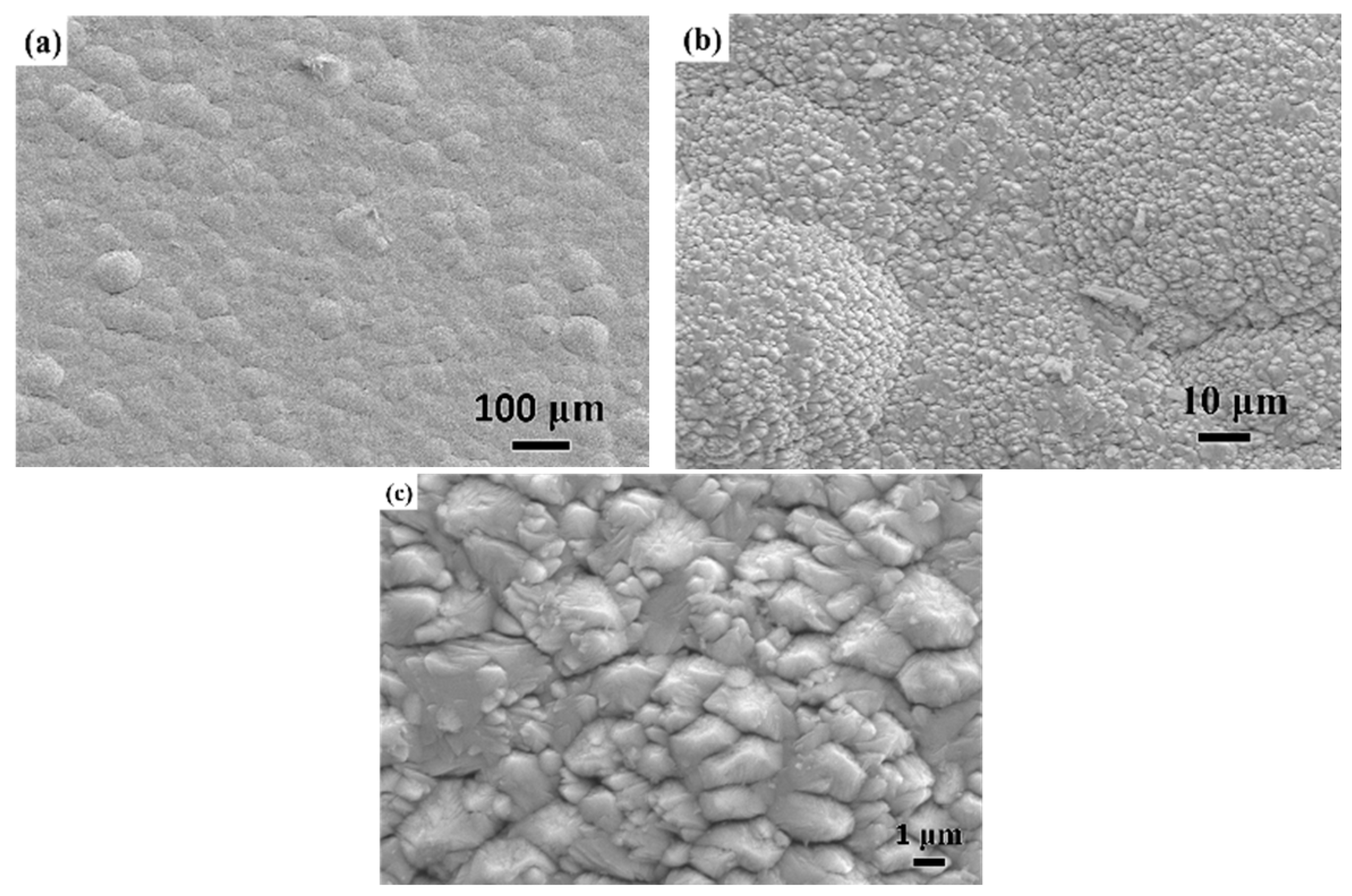
3.2.1. As-Deposited Surface Microstructure
3.2.2. Micro-Surface Morphology During Erosion
3.3. Cross-Sectional Microstructure of the Coating
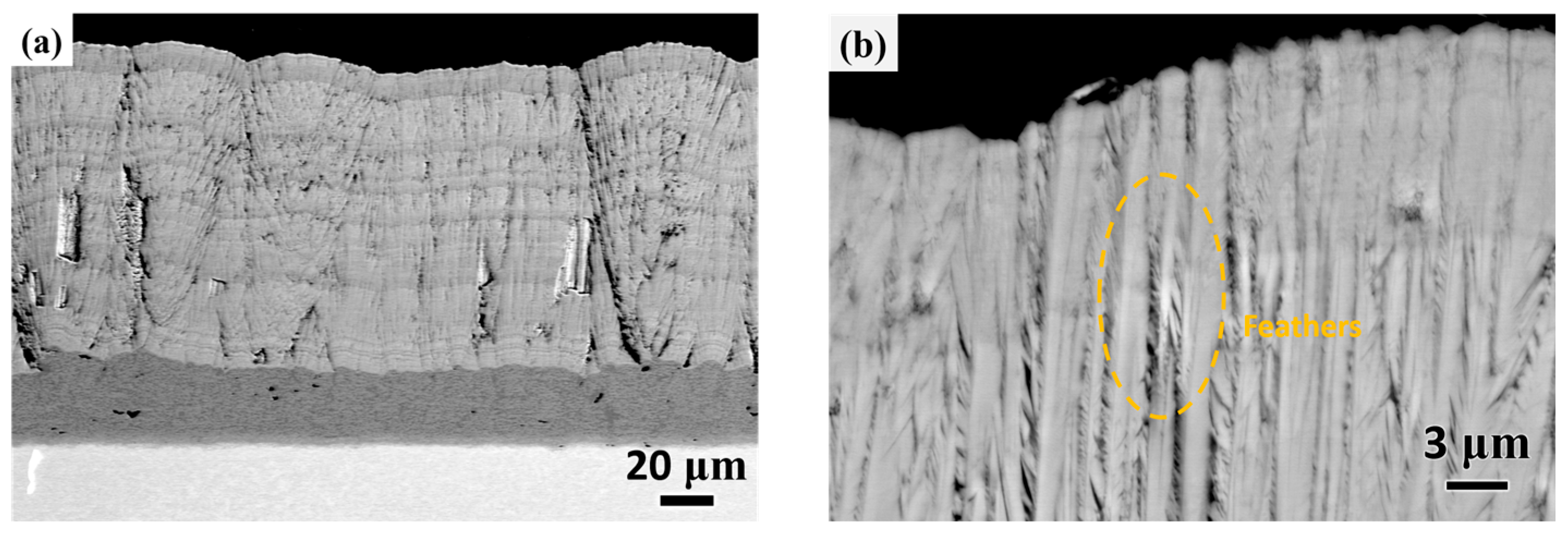
3.3.1. As-Deposited Cross-Sectional Microstructure
3.3.2. Cross-Sectional Morphology During Erosion
3.4. Residual Stress Evolution in the TGO Layer
4. Discussion
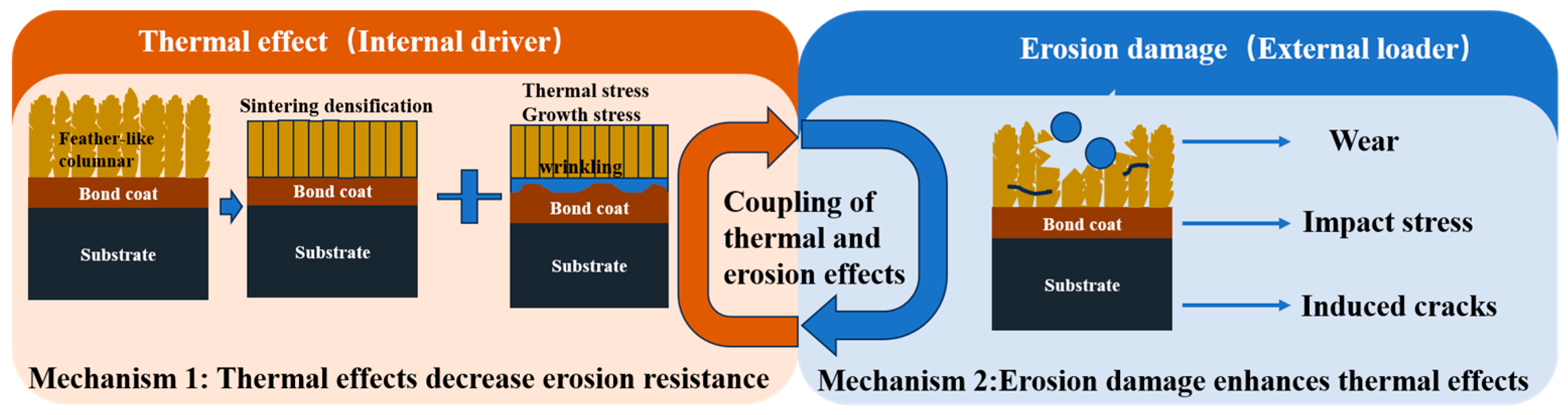
Failure Process and Mechanisms of EB-PVD Thermal Barrier Coating in Simulated Aero-Engine Erosion Environment
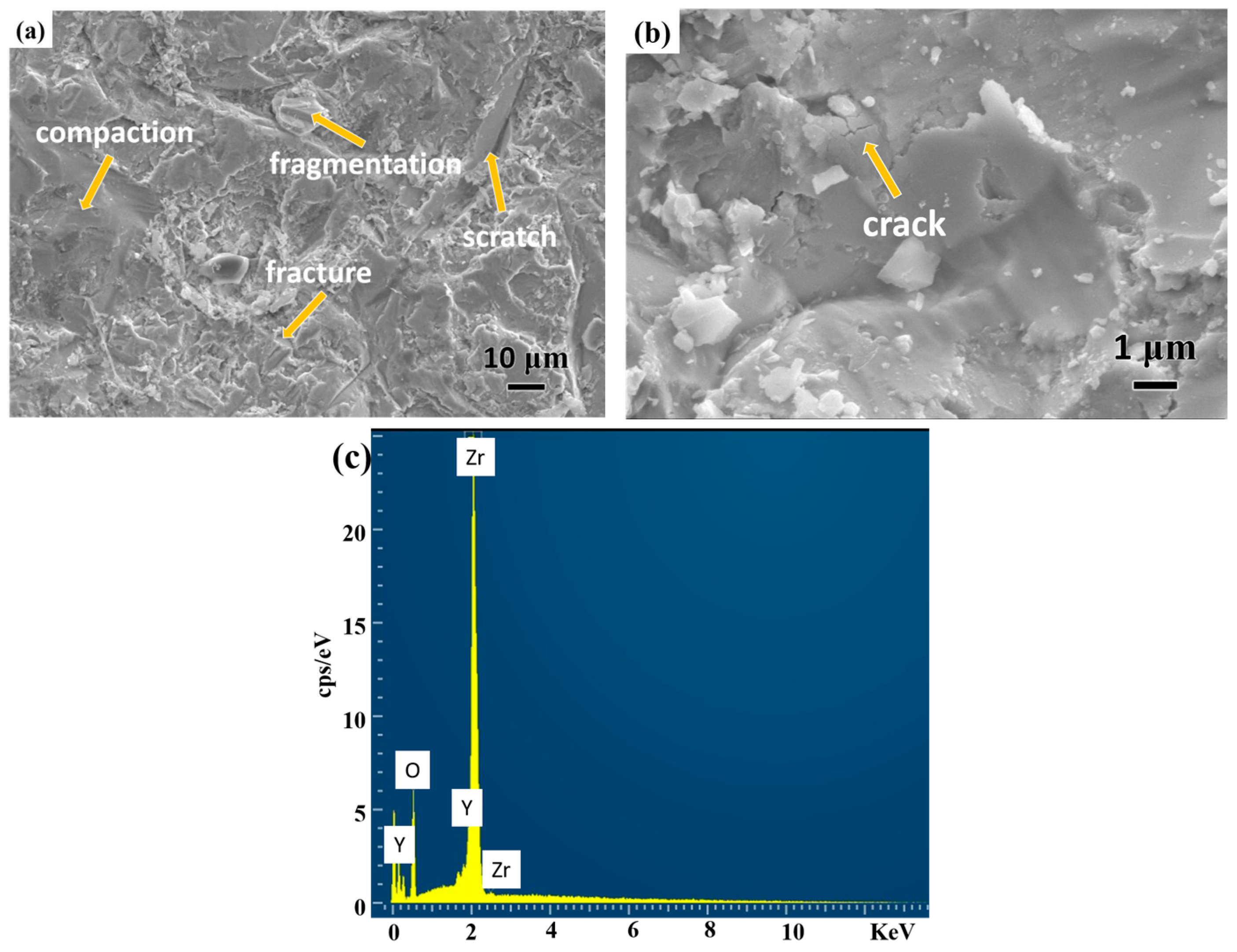
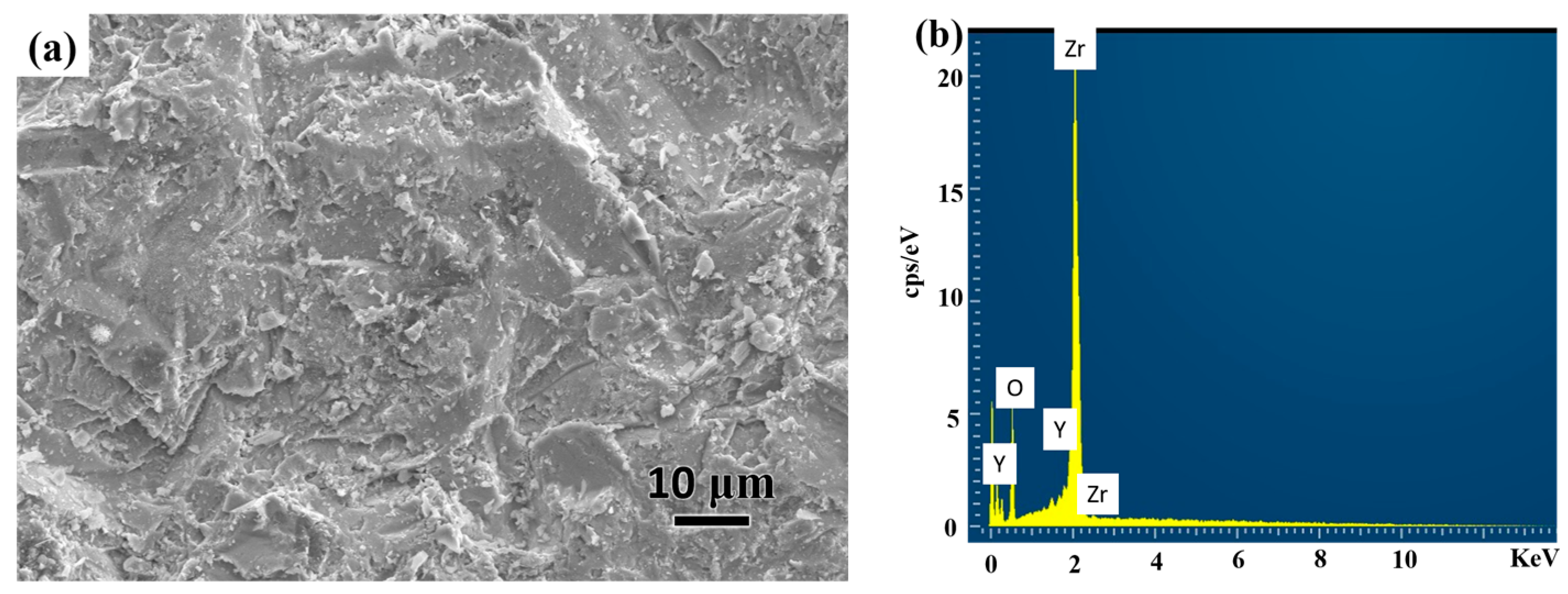
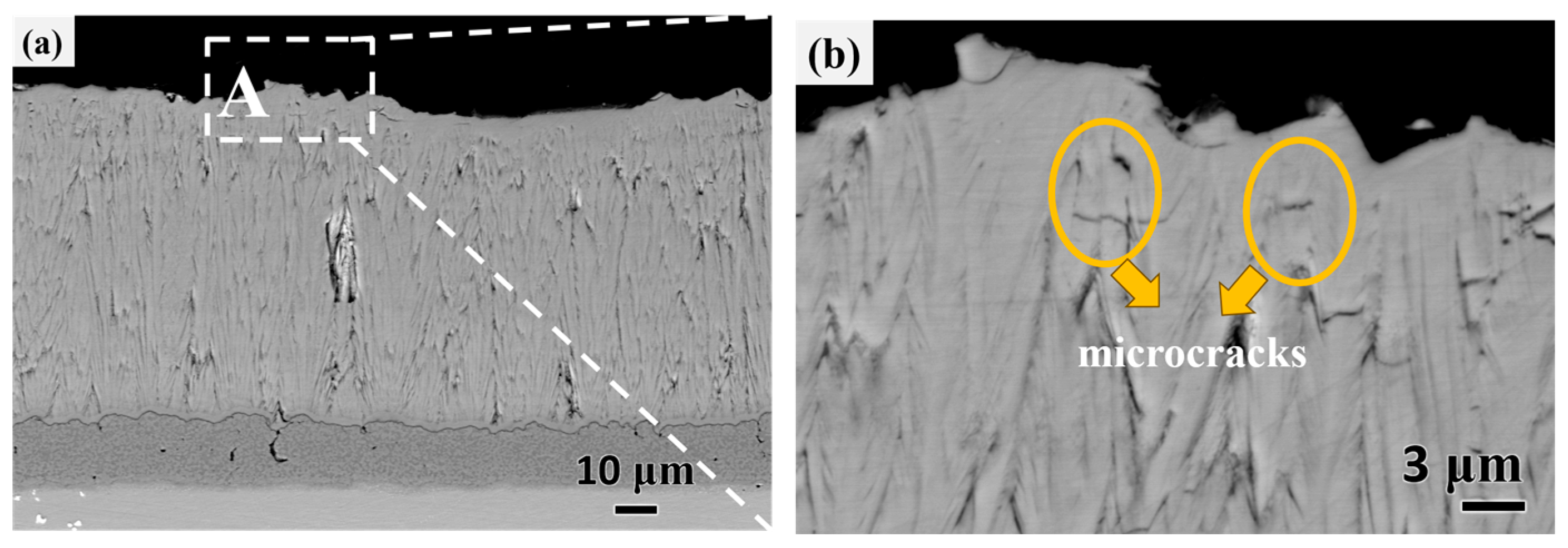
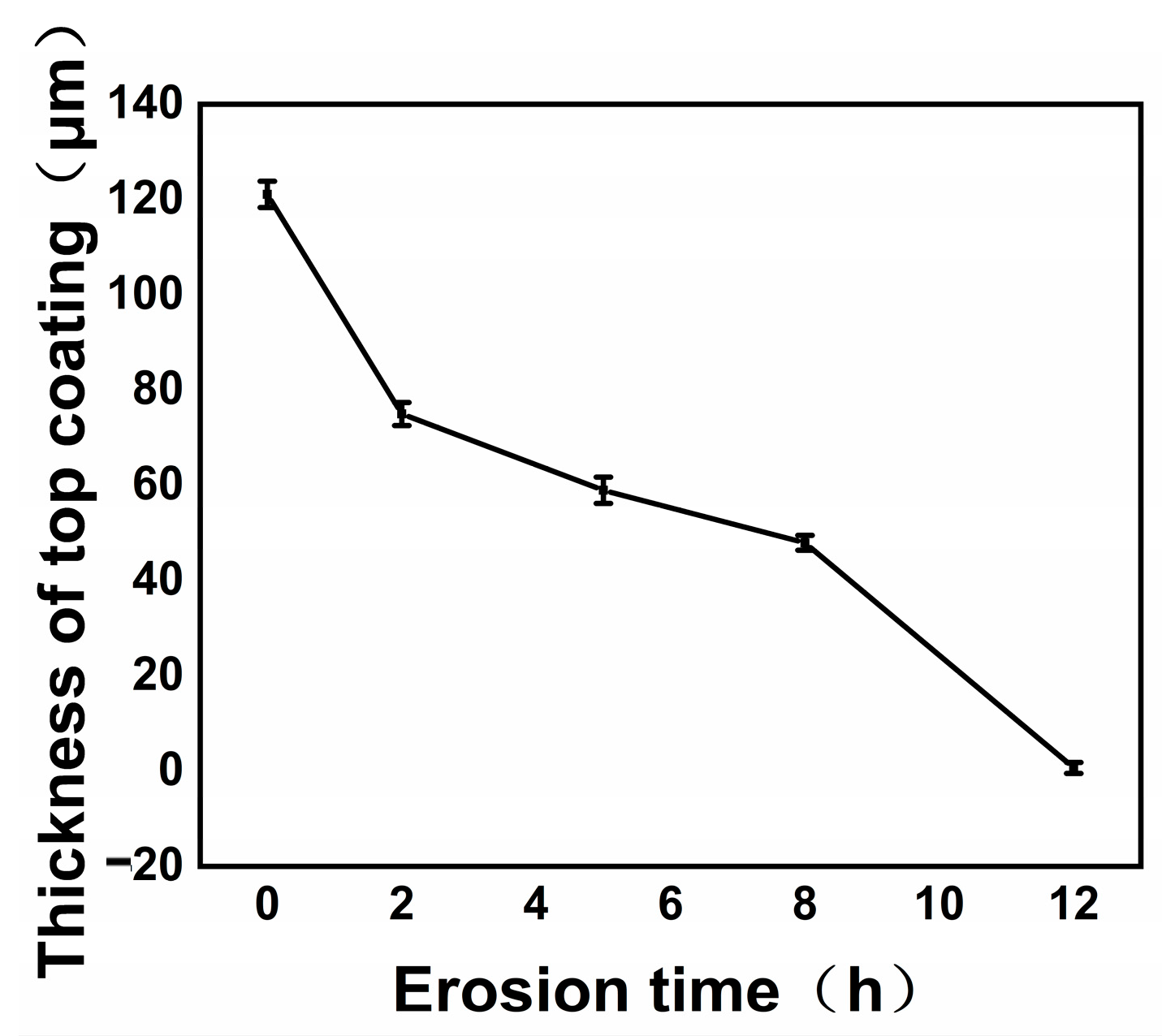
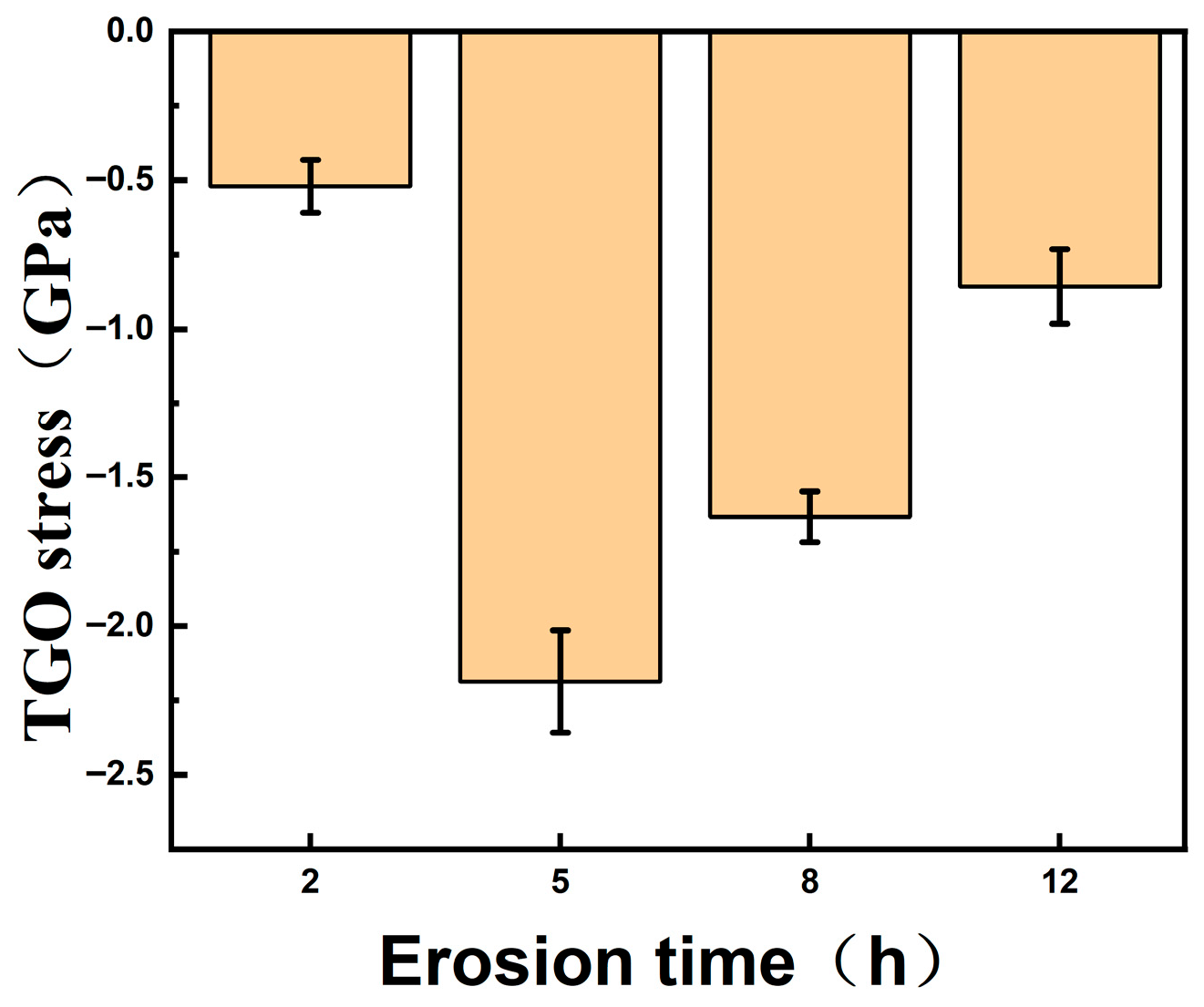
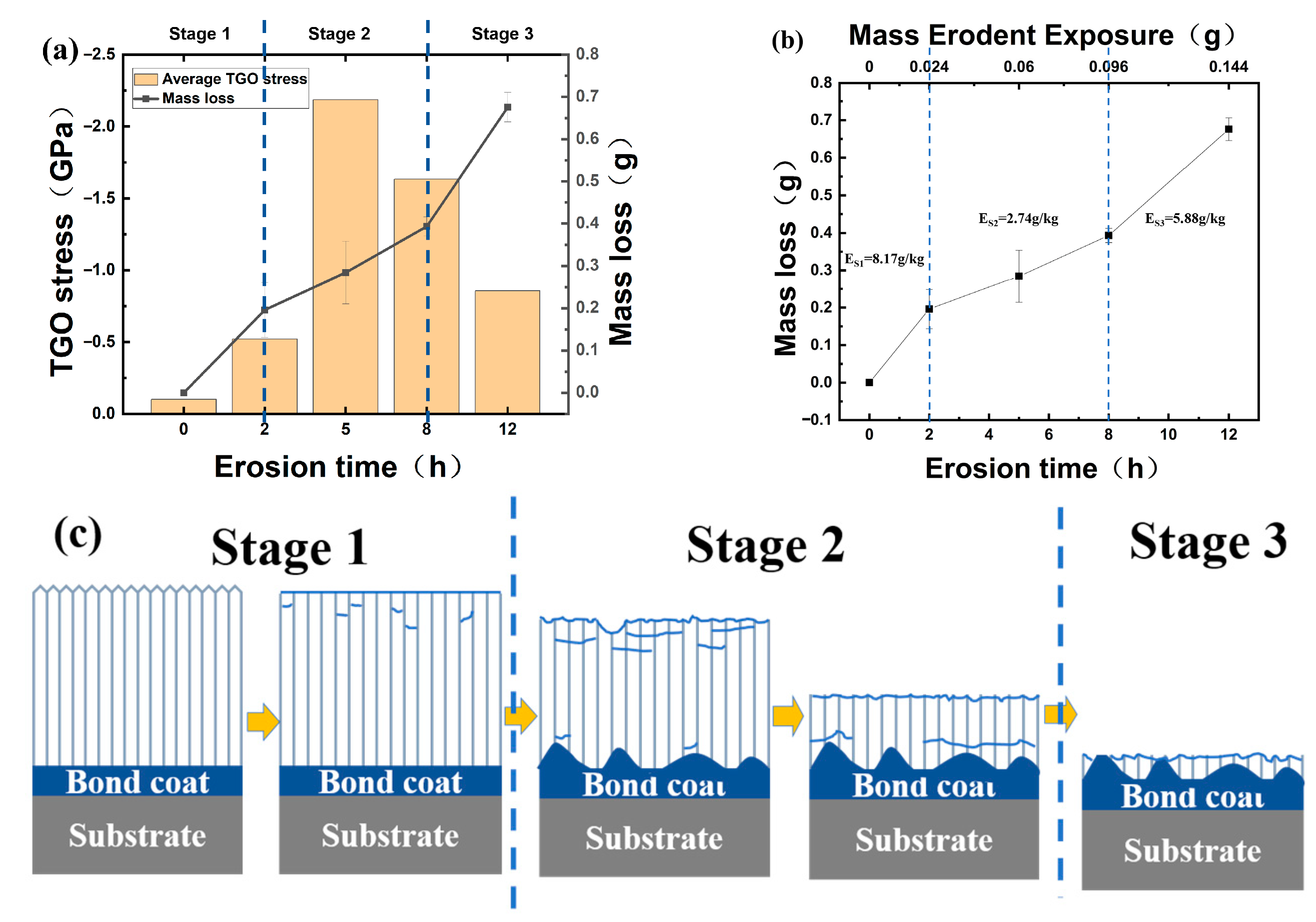
- The first stage is the initial high erosion rate stage, during which the erosion rate can reach 8.17 g/kg. The high erosion rate in this stage is attributed to the columnar crystal structure of the EB-PVD coating, in which the tops of the columnar crystals form protruding pyramid shapes, and the structure is porous. During the fabrication process, these crystal tops are inherently the weakest and most unstable parts. When eroding particles strike at a specific angle and velocity, they first impact these protruding crystal tips. Due to the brittleness of the ceramic material, the impact causes brittle fracture and spalling at the crystal tips. This process is highly efficient, and material is rapidly removed in the form of fine fragments. Consequently, the material loss rate during this stage is extremely high. At this stage, the stress levels within the TGO layer remain relatively low. Stresses within the TGO layer primarily originate from: (1) thermal stresses resulting from mismatched coefficients of thermal expansion (CTE) between the coating and the substrate; (2) elastic stresses caused by particle and gas impacts; (3) TGO growth stresses; and (4) stresses generated by phase transformations within the coating. During the initial erosion stage, which is primarily a high-temperature oxidation process, the TGO layer grows uniformly and increases in thickness. The combined effect of growth stress and thermal stress leads to a gradual increase in the average compressive stress level within the TGO. During this stage, eroding particles primarily impact the YSZ surface, creating microcracks at the tips of the columnar crystals. The YSZ top coat experiences only minor wear, which has a negligible effect on the stress level of the TGO layer.
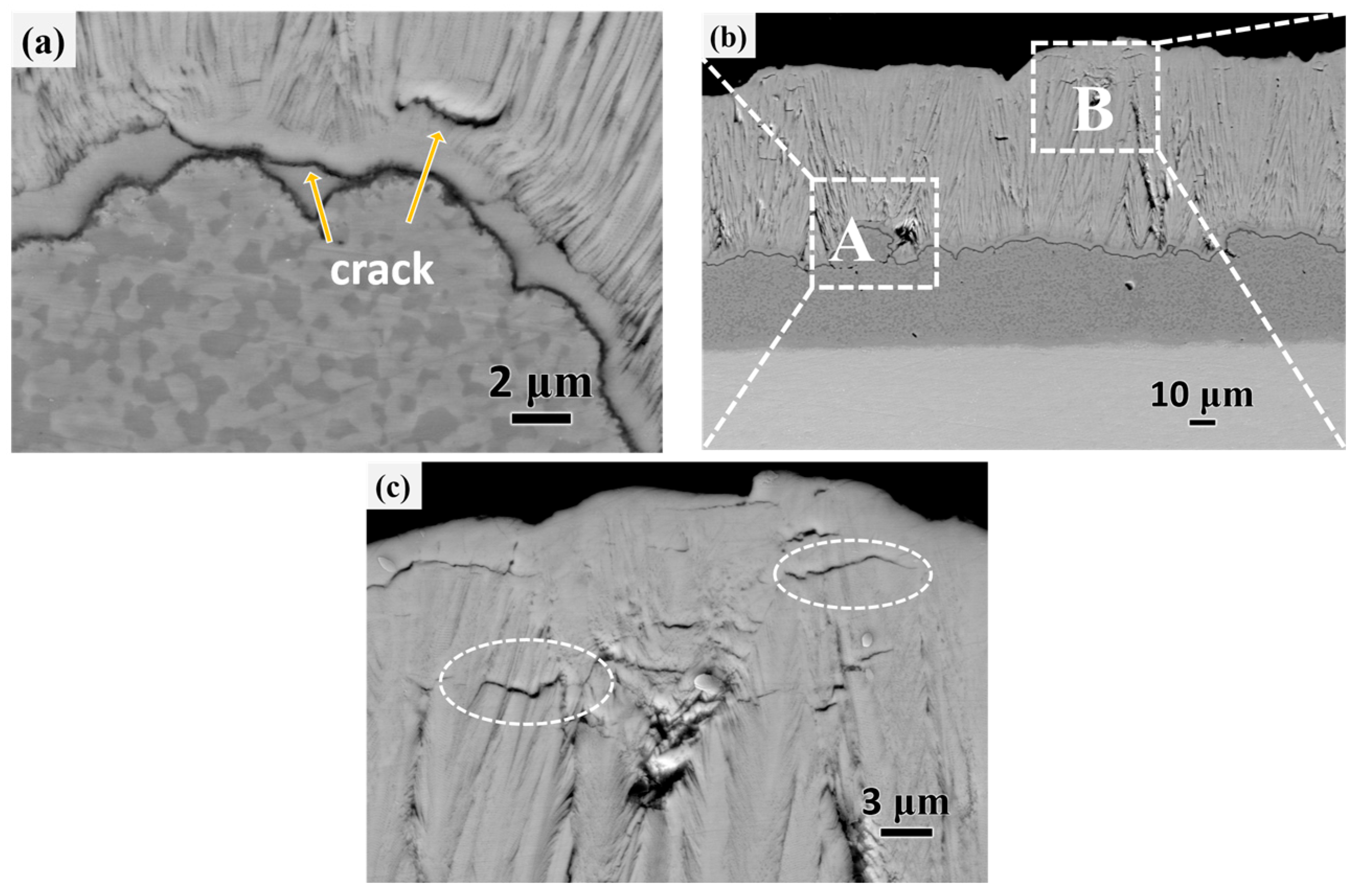
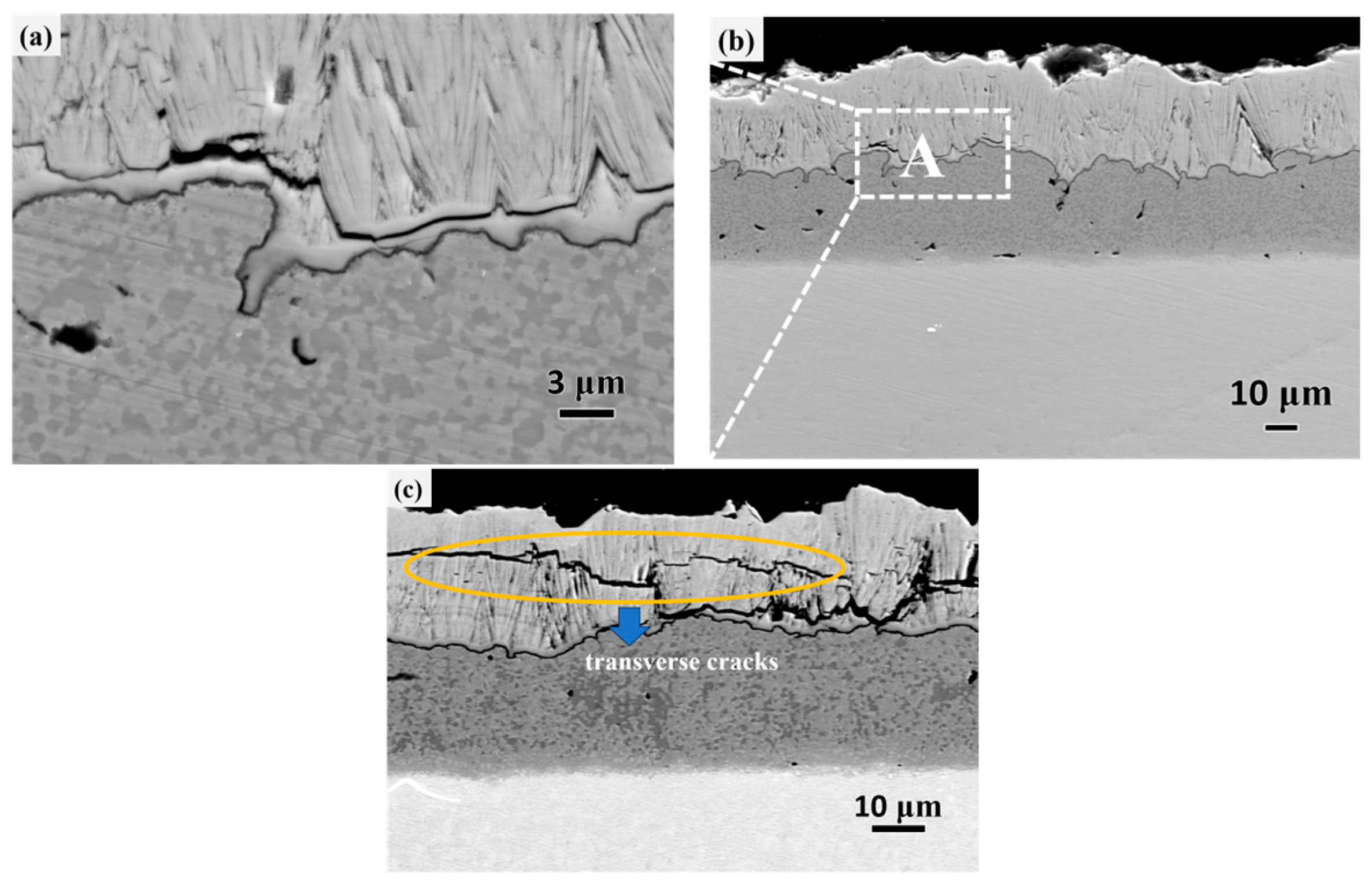
- The second stage is a low-rate phase, with the erosion rate decreasing to 2.74 g/kg. Following the initial rapid loss, the erosion rate significantly decreases and tends to stabilize. After the first stage concludes, the protruding, loose tips of the columnar crystals on the coating surface are removed, exposing the denser columnar crystal regions beneath. At the same time, continuous 90° erosion induces compressive stress on the coating surface, causing densification and leading to localized plastic deformation and densification at the tops of the columnar crystals. This densified surface layer can more effectively disperse and absorb the kinetic energy of the eroding particles. Consequently, the spalling rate in this stage is slower than in the first stage, and the erosion rate decreases and stabilizes at a lower level. This stage is a critical part of the erosion process. At this point, the top coat has been damaged and thinned. The stresses generated by the erosion load are transmitted through the remaining top coat and TGO layer to the underlying bond coat. This lowers the critical conditions for interfacial wrinkling, making the bond coat more susceptible to creep and plastic flow. Interfacial bulging leads to severe geometric changes, creating intense stress concentrations at the crests of the interface and causing a sharp rise in stress levels within the TGO layer. Microcracks initially form at the crests of the TGO/ceramic interface. As erosion progresses, these microcracks propagate to form transverse cracks, accelerating failure at the coating interface.
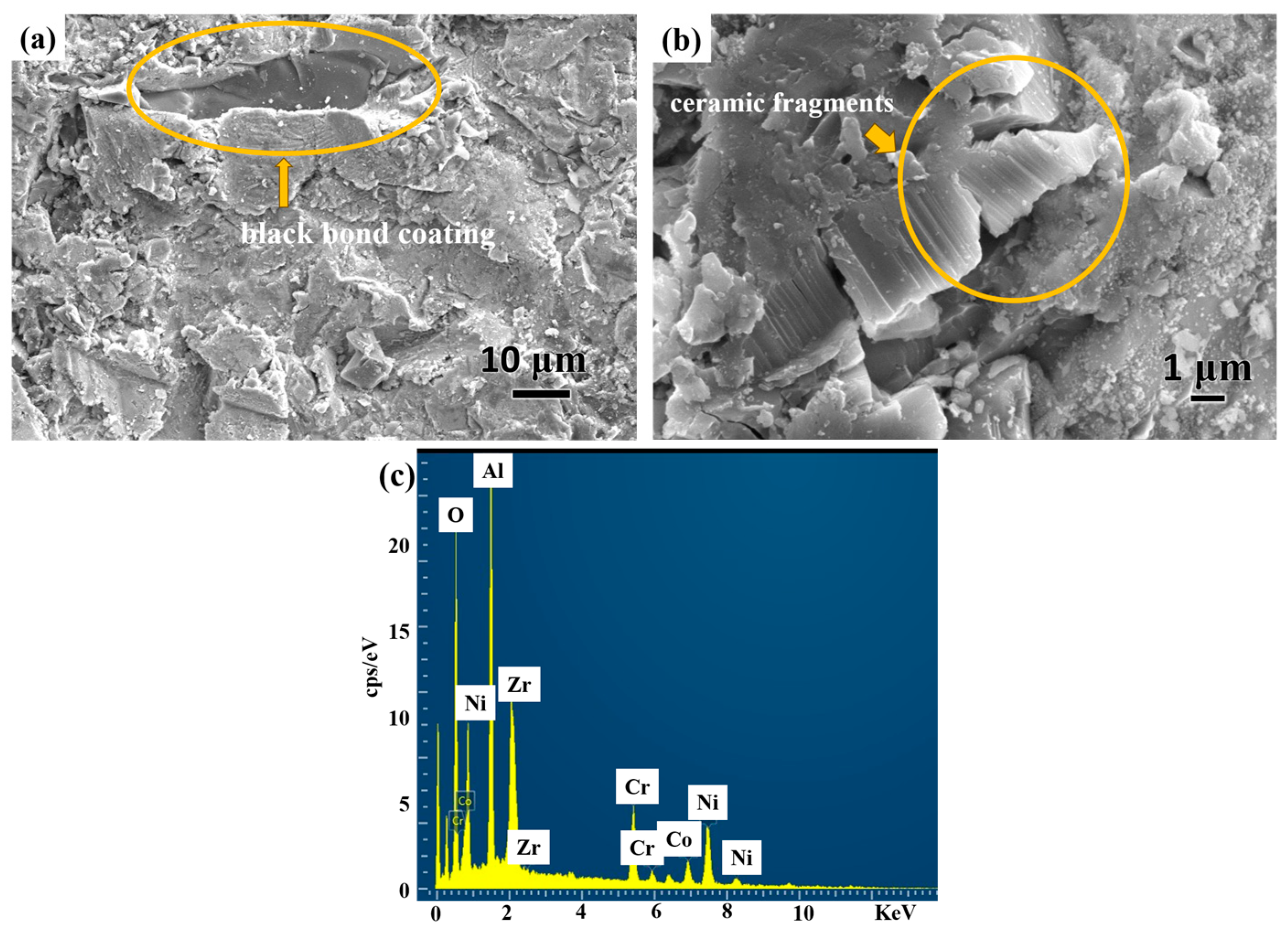
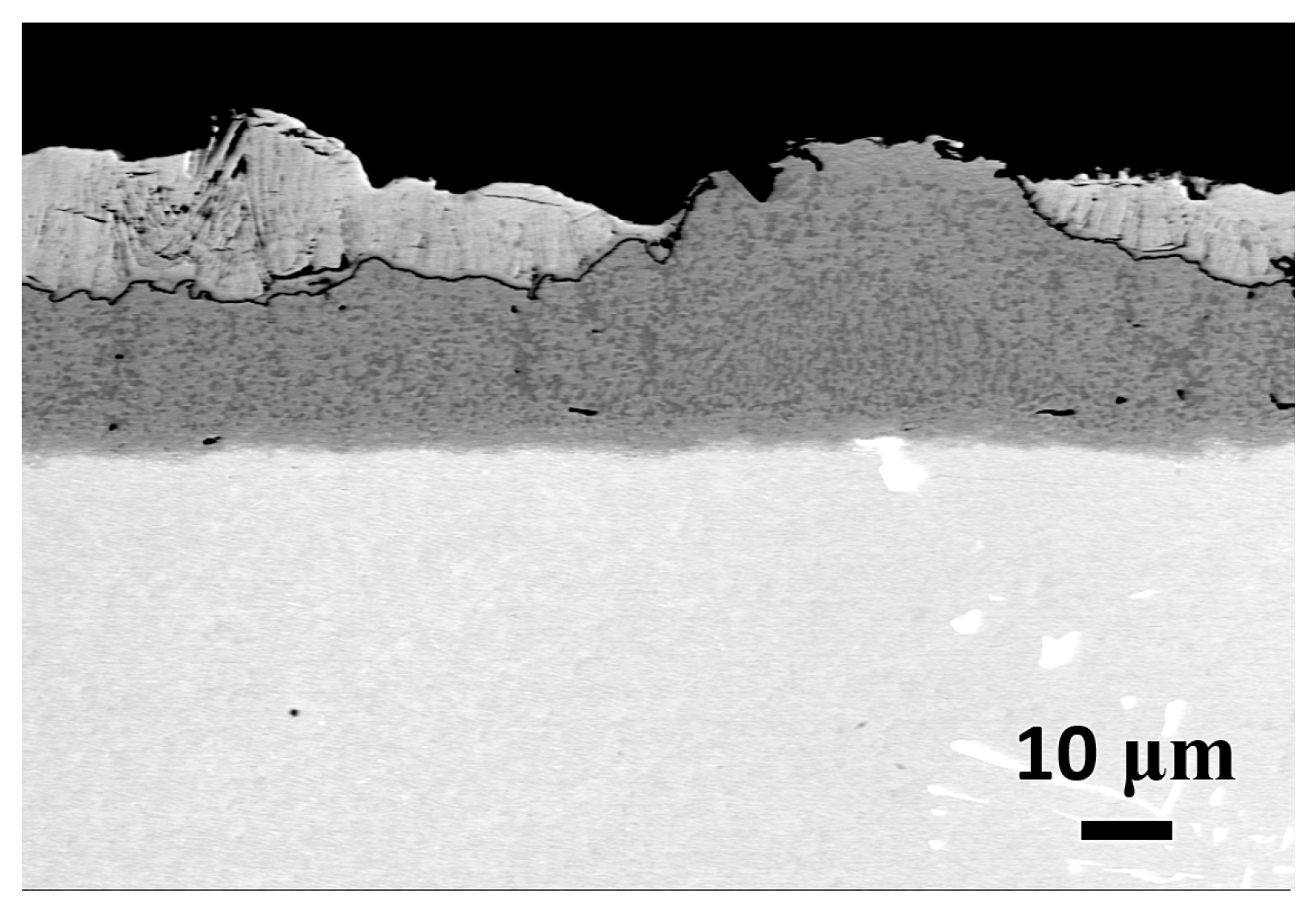
- The third stage is the final high-rate erosion phase, during which the erosion rate increases to 5.88 g/kg. Following a period of low-rate erosion, the erosion rate rises sharply once again. Following continuous erosion during the first two stages, the thickness of the top coat is significantly reduced. When the coating thins to a certain extent, the erosion load and stress are more effectively transmitted to the interface between the thermally grown oxide (TGO) layer and the bonding coating (BC). The TGO layer (primarily composed of Al2O3) is inherently brittle, and the interface is the weakest link in this system. At this point, erosion not only continues to wear away the remaining top coat but, more critically, generates a large number of interconnected transverse cracks at the interface, forming a fragmented structure. The energy generated by particle impact directly causes delamination at the interface, which is already under high stress. Extensive spalling of the top coat leads to coating failure and a sudden release of stress. It should be noted that a reduction in coating thickness does not, in itself, directly lead to a decrease in residual stress. During the erosion process, as the coating thickness gradually decreases, damage accumulates within the material and at the interface, including microcrack propagation and localized spalling. These damage mechanisms promote stress release and redistribution, resulting in a downward trend in the measured stress. Therefore, the reduction in thickness reflects the gradual failure process of the material, while the decrease in residual stress is a macroscopic manifestation of the damage accumulation during this process.
5. Conclusions
Author Contributions
Funding
Institutional Review Board Statement
Informed Consent Statement
Data Availability Statement
Conflicts of Interest
References
- Zhang, X.; Chen, Y.; Hu, J. Recent advances in the development of aerospace materials. Prog. Aerosp. Sci. 2018, 97, 22–34. [Google Scholar] [CrossRef]
- Xie, F.; Yang, Y.; Ping, Z.; Gong, X.; Dong, Z.; Xu, W.; Yu, J.; Yao, W.; Dong, Y. Progress and strategies in advanced aerospace materials for extreme environments: A review. Acta Astronaut. 2026, 238, 184–196. [Google Scholar] [CrossRef]
- Kumar, V.; Balasubramanian, K. Progress update on failure mechanisms of advanced thermal barrier coatings: A review. Prog. Org. Coat. 2016, 90, 54–82. [Google Scholar] [CrossRef]
- Mu, R.; Ding, N.; Liu, G.; Luo, Y.; Dai, J. Microstructure evolution, thermal cycling life and failure behavior analysis of YSZ thermal barrier coatings prepared by EB-PVD with different electron beam currents. J. Mater. Eng. 2024, 52, 44–52. [Google Scholar]
- Liu, D.; Cai, H.; Mu, R.; Yang, W.; Dong, J. Effect of grit-blasting on the recrystallization behavior of DD6 single-crystal superalloy coated with NiCoCrAlYHf. J. Alloys Compd. 2024, 983, 173861. [Google Scholar] [CrossRef]
- Luo, Y.; Li, Z.; Zhu, S.; He, L.; Yu, B.; Wang, Y.F. Preparation and failure mechanism of LaZrCeO thermal barrier coatings by EB-PVD. J. Mater. Eng. 2024, 52, 53–60. [Google Scholar]
- Song, J.-B.; Wang, L.-S.; Dong, H.; Yao, J.-T. Long lifespan thermal barrier coatings overview: Materials, manufacturing, failure mechanisms, and multiscale structural design. Ceram. Int. 2023, 49, 1–23. [Google Scholar] [CrossRef]
- Bogdan, M.; Peter, I. A Comprehensive Understanding of Thermal Barrier Coatings (TBCs): Applications, Materials, Coating Design and Failure Mechanisms. Metals 2024, 14, 575. [Google Scholar] [CrossRef]
- Hu, X.; Xie, Y.; Li, F.; Yin, F. Research progress on environmental corrosion resistance of thermal barrier coatings: A review. Coatings 2024, 14, 1341. [Google Scholar] [CrossRef]
- Sezavar, A.; Sajjadi, S.A. A review on the performance and lifetime improvement of thermal barrier coatings. J. Eur. Ceram. Soc. 2025, 45, 117274. [Google Scholar] [CrossRef]
- Xu, W.; Shi, J.; Zhao, Z.; Yang, K.; Chen, X.; Ling, H.; Shi, J.; Zhang, X. YGYSZ/YSZ double ceramic layer thermal barrier coatings: Coating design and failure mechanism during thermal shock test. Surf. Coat. Technol. 2025, 516, 132650. [Google Scholar] [CrossRef]
- Fan, J.; Wang, Q.; Ning, X.; Li, L.; Sun, Z. Microstructural evolution and failure mechanisms of thermal barrier coatings under extreme environmental conditions. J. Eur. Ceram. Soc. 2025, 45, 117089. [Google Scholar] [CrossRef]
- Wang, L.; Wang, W.; Wan, J.; Wang, J. Failure analysis and life prediction of thermal barrier coatings on turbine blades under localized cyclic thermal loading. J. Mater. Res. Technol. 2025, 39, 8230–8242. [Google Scholar] [CrossRef]
- Bie, Y.; Ding, K.; Ren, H.; Bui, T.Q.; Rabczuk, T.; Wei, Y. Simulation of foreign particle erosion-induced failure in thermal barrier coatings: A novel coupling plastic damage model of dual-horizon peridynamics and FEM. Int. J. Impact Eng. 2025, 200, 105255. [Google Scholar] [CrossRef]
- Xie, Y.; Liu, J.; Liu, W.; Li, Q.; Feng, W.; Yang, L.; Zhou, Y. Performance and failure modes of thermal barrier coatings deposited by EB-PVD on blades under real service conditions in gas turbine. J. Alloys Compd. 2024, 1008, 176889. [Google Scholar] [CrossRef]
- Cernuschi, F.; Lorenzoni, L.; Capelli, S.; Guardamagna, C.; Karger, M.; Vaßen, R.; Giolli, C. Solid particle erosion of thermal spray and physical vapour deposition thermal barrier coatings. Wear 2011, 271, 2909–2918. [Google Scholar] [CrossRef]
- Chen, H.Y.; Yan, J.J.; Cao, K.; Liu, Z.Y.; Wu, X.; Yang, L.; Zhou, Y.C. Friction delamination mechanism of EB-PVD thermal barrier coatings in high-temperature and high-speed rotating service environment. J. Eur. Ceram. Soc. 2023, 43, 3637–3646. [Google Scholar] [CrossRef]
- Evans, A.G.; Fleck, N.A.; Faulhaber, S.; Vermaak, N.; Maloney, M.; Darolia, R. Scaling laws governing the erosion and impact resistance of thermal barrier coatings. Wear 2006, 260, 886–894. [Google Scholar] [CrossRef]
- Hu, X.; Liu, Q.; Xie, Z.; Liu, S.; Wen, Q.; Guo, J.; Zhu, W. Effect of bond coating surface roughness on high-temperature performance of EB-PVD thermal barrier coatings. Ceram. Int. 2025, 51, 14307–14318. [Google Scholar] [CrossRef]
- Lima, R.S.; Guerreiro, B.M.H.; Aghasibeig, M. Microstructural characterization and room-temperature erosion behavior of as-deposited SPS, EB-PVD and APS YSZ-based TBCs. J. Therm. Spray Technol. 2018, 28, 223–232. [Google Scholar] [CrossRef]
- Schmitt, M.P.; Schreiber, J.M.; Rai, A.K.; Eden, T.J.; Wolfe, D.E. Development and optimization of tailored composite TBC design architectures for improved erosion durability. J. Therm. Spray Technol. 2017, 26, 1062–1075. [Google Scholar] [CrossRef]
- Steenbakker, R.J.L.; Wellman, R.G.; Nicholls, J.R. Erosion of gadolinia-doped EB-PVD TBCs. Surf. Coat. Technol. 2006, 201, 2140–2146. [Google Scholar] [CrossRef]
- Steinberg, L.; Naraparaju, R.; Heckert, M.; Mikulla, C.; Schulz, U.; Leyens, C. Erosion behavior of EB-PVD 7YSZ coatings under corrosion/erosion regime: Effect of TBC microstructure and CMAS chemistry. J. Eur. Ceram. Soc. 2018, 38, 5101–5112. [Google Scholar] [CrossRef]
- Zhang, X.; Li, M.; Zhang, A.; Guo, S.; Mao, J.; Deng, C.; Liu, M. Al modification for PS-PVD 7YSZ TBCs to improve particle erosion and thermal cycle performance. J. Adv. Ceram. 2022, 11, 1093–1103. [Google Scholar] [CrossRef]
- Zhao, X.; Liu, W.; Li, C.; Yan, G.; Wang, Q.; Yang, L.; Zhou, Y. Solid particle erosion behavior of La2Ce2O7/YSZ double ceramic layer and traditional YSZ thermal barrier coatings at high temperature. Coatings 2022, 12, 1638. [Google Scholar] [CrossRef]
- Wellman, R.G.; Tourmente, H.; Impey, S.; Nicholls, J.R. Nano and microhardness testing of aged EB-PVD TBCs. Surf. Coat. Technol. 2004, 188–189, 79–84. [Google Scholar] [CrossRef]
- Wellman, R.G.; Nicholls, J.R. A review of the erosion of thermal barrier coatings. J. Phys. D Appl. Phys. 2007, 40, R293–R305. [Google Scholar] [CrossRef]
- Wellman, R.G.; Deakin, M.J.; Nicholls, J.R. The effect of TBC morphology on the erosion rate of EB-PVD TBCs. Wear 2005, 258, 349–356. [Google Scholar] [CrossRef]
- Wellman, R.G.; Dyer, A.; Nicholls, J.R. Nano and micro-indentation studies of bulk zirconia and EB-PVD TBCs. Surf. Coat. Technol. 2004, 176, 253–260. [Google Scholar] [CrossRef]
- Wellman, R.G.; Deakin, M.J.; Nicholls, J.R. The effect of TBC morphology and aging on the erosion rate of EB-PVD TBCs. Tribol. Int. 2005, 38, 798–804. [Google Scholar] [CrossRef]
- Wellman, R.G.; Nicholls, J.R. A Monte Carlo model for predicting the erosion rate of EB-PVD TBCs. Wear 2004, 256, 889–899. [Google Scholar] [CrossRef]
- Wellman, R.G.; Nicholls, J.R. On the effect of ageing on the erosion of EB-PVD TBCs. Surf. Coat. Technol. 2004, 177–178, 80–88. [Google Scholar] [CrossRef]
- Liu, D.; Mu, R.; He, L.; Li, S.; Yang, W. Failure behaviour of EB-PVD YSZ thermal barrier coatings under simulated aero-engine operating conditions. Surf. Coat. Technol. 2023, 474, 130027. [Google Scholar] [CrossRef]
- Bartsch, M.; Baufeld, B.; Dalkiliç, S.; Chernova, L.; Heinzelmann, M. Fatigue cracks in a thermal barrier coating system on a superalloy in multiaxial thermomechanical testing. Int. J. Fatigue 2008, 30, 211–218. [Google Scholar] [CrossRef]
- Baufeld, B.; Bartsch, M.; Heinzelmann, M. Advanced thermal gradient mechanical fatigue testing of CMSX-4 with an oxidation protection coating. Int. J. Fatigue 2008, 30, 219–225. [Google Scholar] [CrossRef]
- Beake, B.D.; Isern, L.; Zhang, H.; Chalk, C.; Goodes, S.R.; Johnson, D.; Forcen, K.; Nicholls, J.R.; Gee, M.G. Damage mechanisms in solid particle impact and erosion testing of thermal barrier coatings. Surf. Coat. Technol. 2025, 517, 132844. [Google Scholar] [CrossRef]
- Wang, L.; He, L.; Xu, Z.; Zhang, R.; Mu, R. Erosion behavior of YSZ, LZC, and LZC/YSZ double ceramic layer thermal barrier coatings by EB-PVD under high-temperature gas streams with entrained solid particles. Surf. Interfaces 2026, 87, 109073. [Google Scholar] [CrossRef]
- Wang, L.; He, L.; Zhang, R.; Xu, Z.; Mu, R. Particle erosion behavior of La2(ZrxCe1−x)2O7/YSZ double ceramic layer TBCs deposited by electron beam physical vapor deposition. Wear 2025, 566–567, 205763. [CrossRef]
- Wellman, R.G.; Nicholls, J.R.; Murphy, K. Effect of microstructure and temperature on the erosion rates and mechanisms of modified EB-PVD TBCs. Wear 2009, 267, 1927–1934. [Google Scholar] [CrossRef]
- Chen, W.L.; Wu, H.J.; Liu, M.; Xiao, X.L. Erosion behavior of PS-PVD thermal barrier coatings and the effect of composite coating thickness. Mater. Sci. Forum 2020, 993, 1095–1103. [Google Scholar] [CrossRef]
- Walter, M.E.; Eigenmann, B. The mechanical response of three EB-PVD thermal barrier coating microstructures. Mater. Sci. Eng. A 2000, 282, 49–58. [Google Scholar] [CrossRef]
- Shen, Z.; He, L.; Xu, Z.; Mu, R.; Huang, G. LZC/YSZ DCL TBCs by EB-PVD: Microstructure, low thermal conductivity and high thermal cycling life. J. Eur. Ceram. Soc. 2019, 39, 1443–1450. [Google Scholar] [CrossRef]
- Yang, J.S.; Wang, L.; Li, D.C.; Zhong, X.H.; Zhao, H.Y.; Tao, S.Y. Stress analysis and failure mechanisms of plasma-sprayed thermal barrier coatings. J. Therm. Spray Technol. 2017, 26, 890–901. [Google Scholar] [CrossRef]
- Christensen, R.J.; Lipkin, D.M.; Clarke, D.R.; Murphy, K. Nondestructive evaluation of oxidation stress in thermal barrier coatings using Cr3+ piezospectroscopy. Appl. Phys. Lett. 1996, 69, 3754–3756. [Google Scholar] [CrossRef]
- Tanaka, M.; Hasegawa, M.; Dericioglu, A.F.; Kawawa, Y. Measurement of residual stress in air plasma-sprayed Y2O3–ZrO2 thermal barrier coating system using micro-Raman spectroscopy. Mater. Sci. Eng. A 2006, 419, 262–268. [Google Scholar] [CrossRef]
- Liu, D.; Seraffon, M.; Flewitt, P.E.J.; Simms, N.J.; Nicholls, J.R.; Richerby, D.S. Effect of substrate curvature on residual stresses and failure modes of an air plasma-sprayed thermal coating system. J. Eur. Ceram. Soc. 2013, 33, 3345–3357. [Google Scholar] [CrossRef]
- Wang, L.; Yang, J.S.; Ni, J.X.; Liu, C.G.; Zhong, X.H.; Shao, F.; Zhao, H.Y.; Tao, S.Y.; Wang, Y. Influence of cracks in APS TBCs on stress around TGO during thermal cycling: A numerical simulation study. Surf. Coat. Technol. 2016, 285, 98–112. [Google Scholar] [CrossRef]
- Wang, L.; Yu, J.; Zhang, T.; Wang, Z.; Ding, K. Effect of interface curvature on local growth behavior and stress of thermal barrier coatings. Coatings 2023, 13, 1618. [Google Scholar] [CrossRef]









| Sample | Ni | Co | Cr | Al | Y | Hf | W | Ta | Re |
|---|---|---|---|---|---|---|---|---|---|
| DD6 | Bal. | 8.5–9.5 | 3.8–4.8 | 5.2–6.2 | - | - | 7.0–9.0 | 6.0–8.5 | 1.6–2.4 |
| NiCoCrAlYHf coating | Bal. | 10.0–15.0 | 18.0–23.0 | 8.0–12.0 | 0.1–0.5 | 0.2–0.6 | - | - | - |
| Test Parameters | Test Conditions |
|---|---|
| Test temperature | 1150 °C |
| Gas velocity | 0.4 Mach |
| Particle feeding rate | 0.2 g/min |
| Erodent material | Al2O3 particles |
| Particle diameter | Approximately 125 μm |
| Impact angle | 90° |
Disclaimer/Publisher’s Note: The statements, opinions and data contained in all publications are solely those of the individual author(s) and contributor(s) and not of MDPI and/or the editor(s). MDPI and/or the editor(s) disclaim responsibility for any injury to people or property resulting from any ideas, methods, instructions or products referred to in the content. |
© 2026 by the authors. Licensee MDPI, Basel, Switzerland. This article is an open access article distributed under the terms and conditions of the Creative Commons Attribution (CC BY) license.
Share and Cite
Yang, W.; Mu, R.; He, L.; Li, S.; Cai, H.; Liu, D. Failure Mechanisms of EB-PVD Thermal Barrier Coating in Simulated Aero-Engine Erosion Environment. Coatings 2026, 16, 574. https://doi.org/10.3390/coatings16050574
Yang W, Mu R, He L, Li S, Cai H, Liu D. Failure Mechanisms of EB-PVD Thermal Barrier Coating in Simulated Aero-Engine Erosion Environment. Coatings. 2026; 16(5):574. https://doi.org/10.3390/coatings16050574
Chicago/Turabian StyleYang, Wenhui, Rende Mu, Limin He, Shuai Li, Huangyue Cai, and Delin Liu. 2026. "Failure Mechanisms of EB-PVD Thermal Barrier Coating in Simulated Aero-Engine Erosion Environment" Coatings 16, no. 5: 574. https://doi.org/10.3390/coatings16050574
APA StyleYang, W., Mu, R., He, L., Li, S., Cai, H., & Liu, D. (2026). Failure Mechanisms of EB-PVD Thermal Barrier Coating in Simulated Aero-Engine Erosion Environment. Coatings, 16(5), 574. https://doi.org/10.3390/coatings16050574