1. Introduction
With the rapid development of the global electronics and new energy industries, the demand for high-performance, highly reliable flexible materials has grown continuously [
1,
2,
3]. PET-based composite aluminum foil is widely used in consumer electronics, power batteries, and other high-end applications (
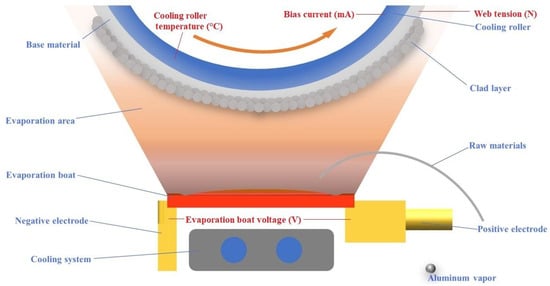
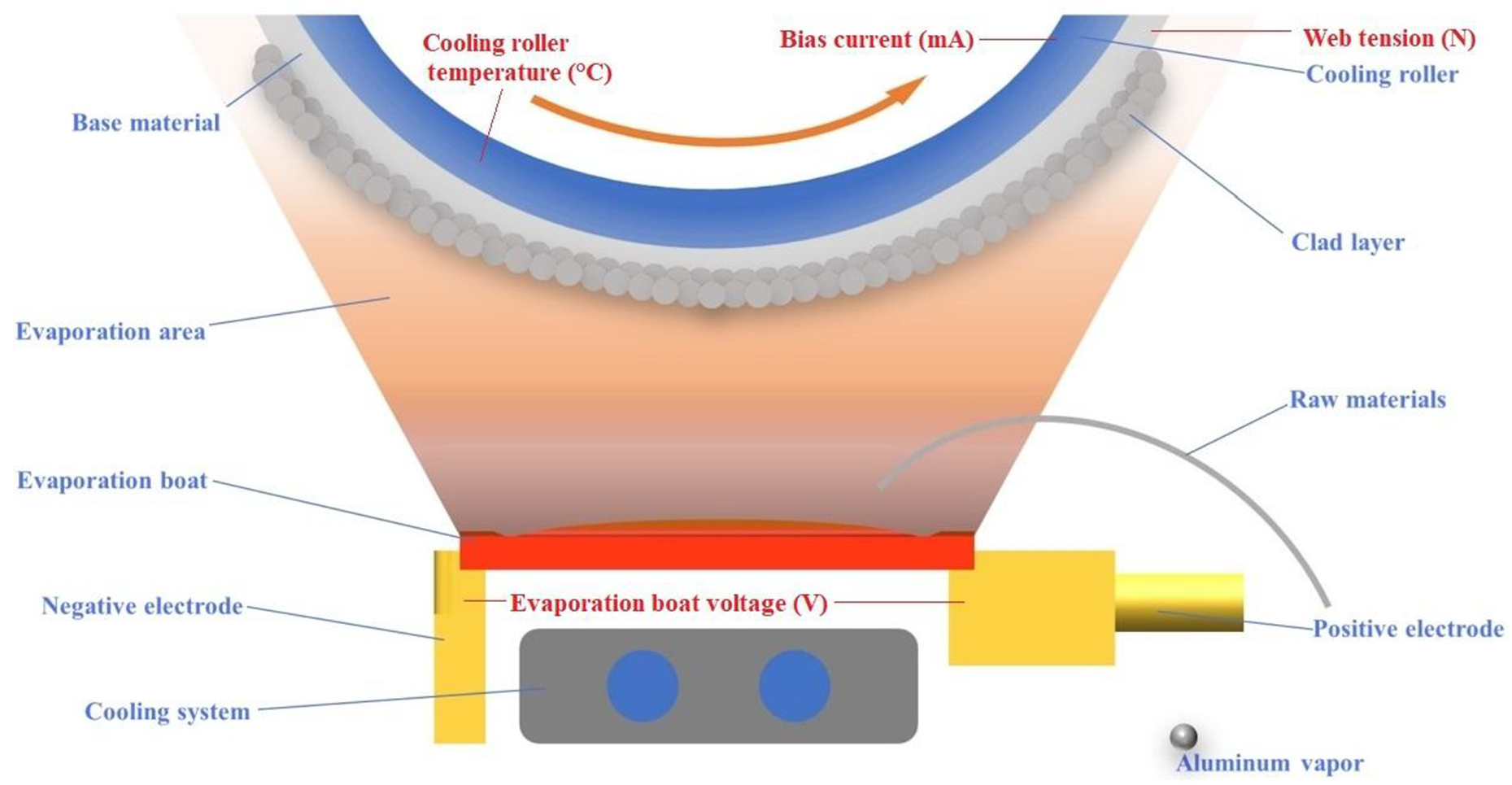
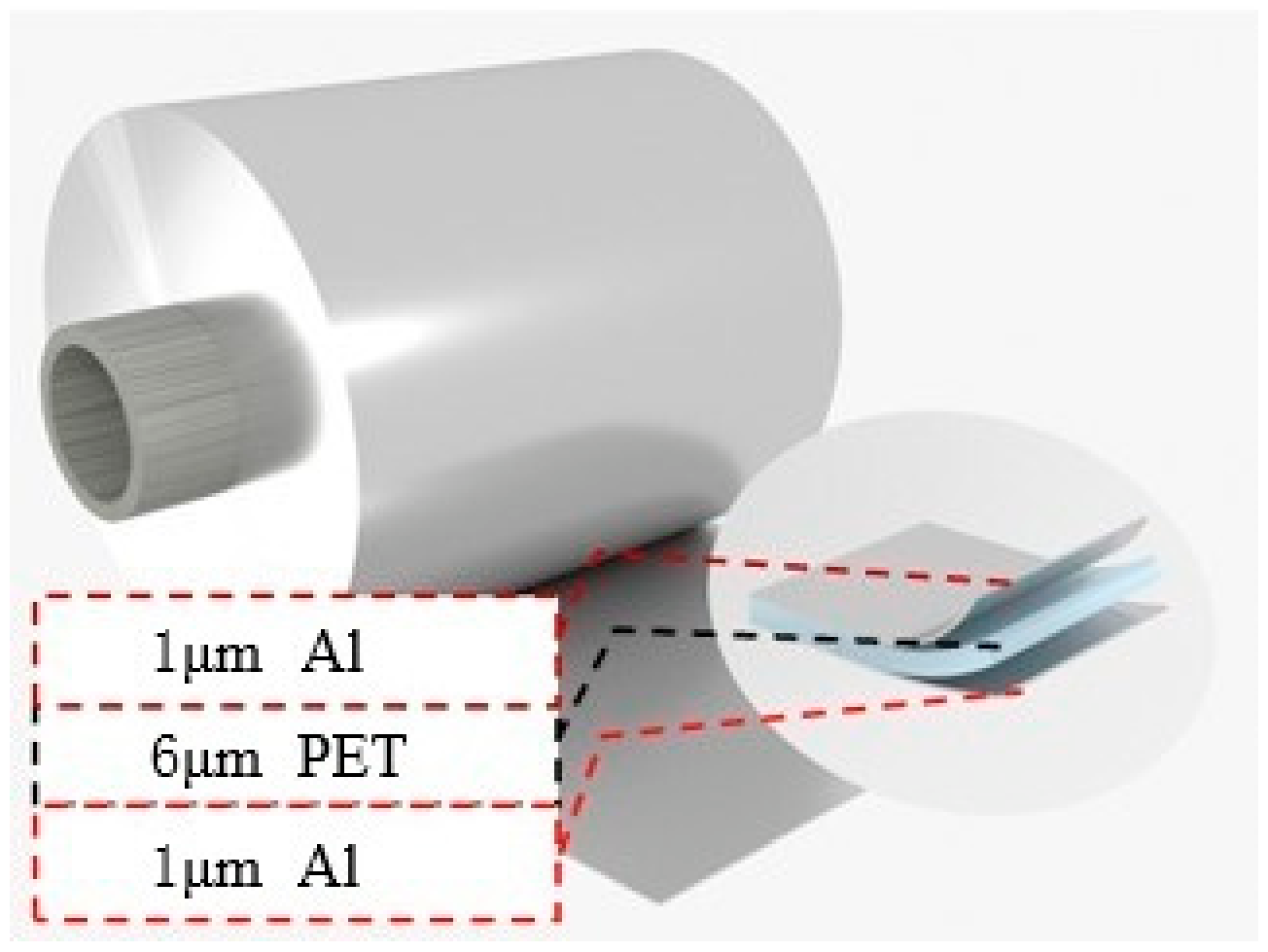
Figure 1) due to its good barrier performance, satisfactory mechanical strength, strong puncture resistance, and high energy density [
4,
5,
6]. During vacuum evaporation deposition, the key mechanical properties—tensile strength and elongation—strongly influence the reliability and durability of the final product during processing and service [
7,
8,
9].
The final performance of PET composite aluminum foil depends on the combined effects of multiple vacuum deposition parameters. Among them, cooling roll temperature, evaporation boat voltage, tension roll force, and bias current are key variables that affect the macroscopic mechanical behavior of the foil [
10,
11,
12,
13,
14,
15,
16]. Tension and bias current control the flatness and stress state of the film during deposition, which helps prevent wrinkles and improve coating adhesion [
17,
18]. Cooling roll temperature and evaporation boat voltage together govern the sublimation and condensation kinetics of Al atoms, thus directly affecting coating density and grain morphology and helping suppress pinholes and splashing defects [
19,
20,
21,
22]. The temperature field affects atomic mobility on the substrate surface, while the electric field influences the kinetic energy and orientation of the deposited particles. The combined effect of these two fields affects the growth mode and interfacial structure of the coating, thereby significantly influencing the microscopic morphology and macroscopic mechanical properties of the material [
22,
23,
24,
25,
26,
27]. Although previous studies have examined the effects of individual parameters on product performance, systematic research on the combined effects of multiple key indicators and defect control via parameter optimization is still lacking for industrial applications [
28,
29].
The orthogonal experimental design method is an efficient multi-factor approach based on orthogonal arrays. It enables systematic analysis of the combined effects of multiple factors and their levels on target performance within a limited number of experimental runs, thereby identifying primary and secondary influencing factors as well as optimal parameter combinations [
30,
31,
32]. This method has been widely applied in the fields of material preparation and process optimization [
33,
34,
35,
36,
37]. Therefore, on the premise of balancing research depth and cost efficiency, to address defects such as wrinkles, splash marks, uneven spots, and pinholes that occur during the preparation of composite aluminum foil, an orthogonal experimental method was adopted to systematically study the preparation process of PET composite aluminum foil.
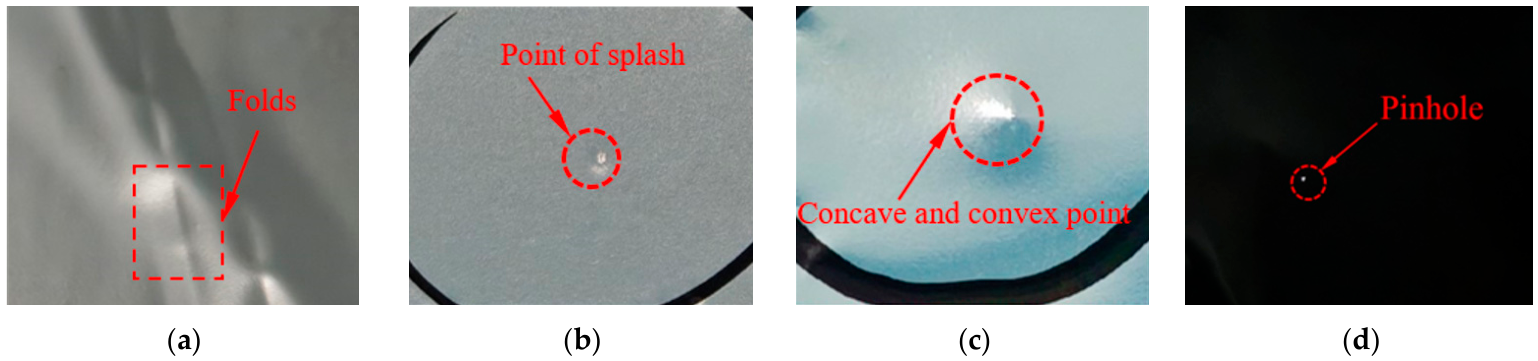
Figure 2 presents representative defect images of samples prepared under unoptimized conditions, captured using a VHX-7000 microscope in this study. This approach is expected to simultaneously improve material performance and suppress defects.
Building on this foundation, the present study employs an L9 (34) orthogonal array to systematically investigate the individual effects of four key process parameters—cooling roller temperature, evaporation boat voltage, tension roller tension, and bias current—on the tensile strength and elongation rate of PET composite aluminum foil, and to simultaneously evaluate their inhibitory effects on microdefects. Through range analysis, the primary and secondary influence orders of each factor on different targets were determined, thereby identifying the optimal combination of process parameters that can simultaneously achieve excellent mechanical properties and a low defect rate. The results provide theoretical guidance and practical reference for industrial production of high-quality PET composite aluminum foil.
2. Materials and Methods
2.1. Materials
The experimental raw material employed was a PET film with a thickness of 6 μm. Its basic mechanical properties (in the machine winding direction) were tested using a 3400 series single-column bench-top tensile tester (34SC-1, INSTRON, Norwood, MA, USA) and the results are presented in
Table 1. The film thickness was measured using a Mitutoyo high-precision digital micrometer (293-100-20, Mitutoyo, Kawasaki, Kanagawa, Japan). The aluminum source used for deposition was pure aluminum wire with a purity of 99.99%.
2.2. Preparation of PET Composite Aluminum Foil
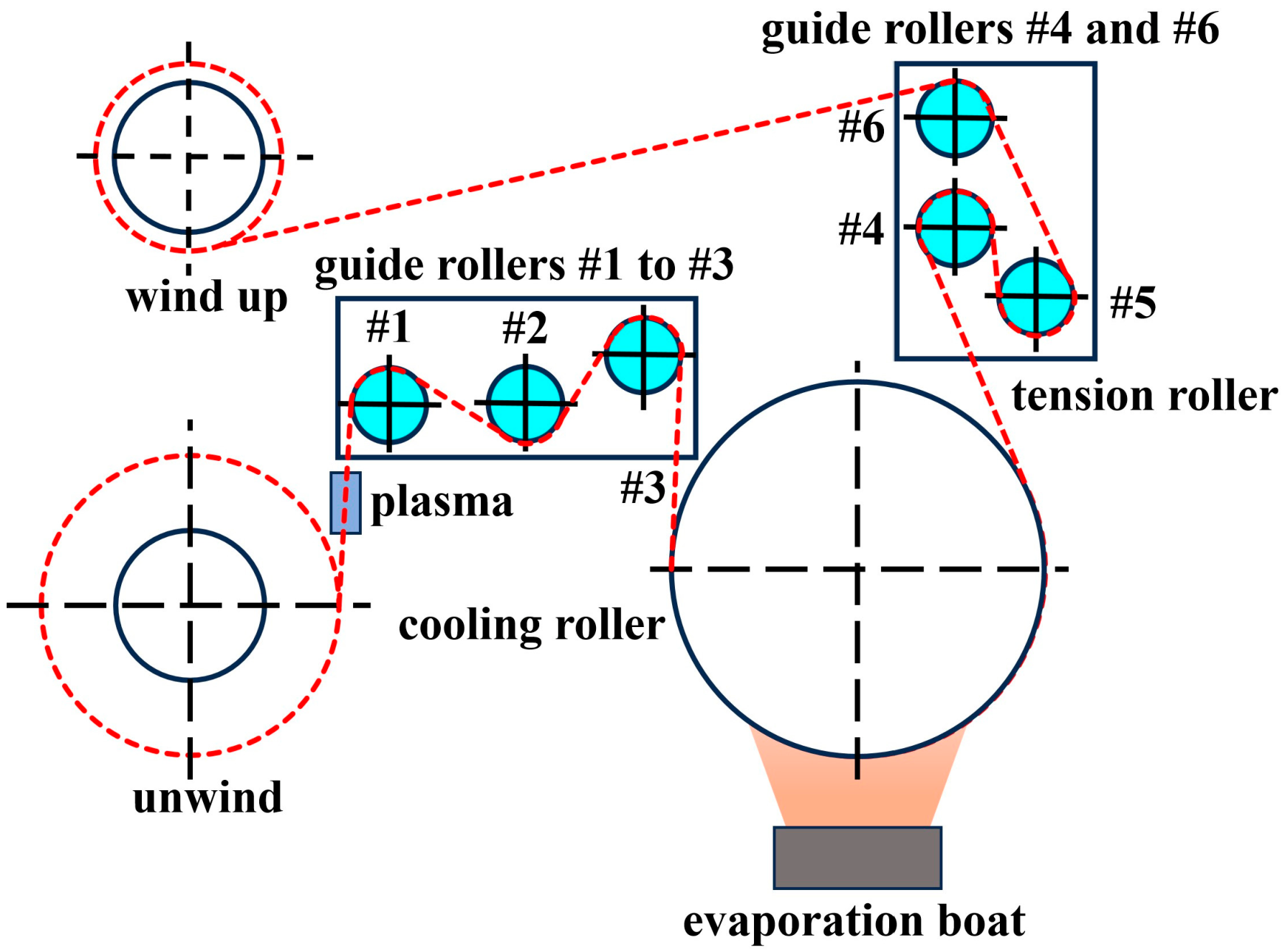
The preparation of PET composite aluminum foil was carried out using a vacuum winding evaporation coating machine (YF2305, Nord, Huangshi, Hubei, China). Its core process flow is illustrated in
Figure 3, which mainly consists of two key steps. In a vacuum environment, the plasma source was activated to clean and activate the surface of the PET film, thereby enhancing coating adhesion. Subsequently, the surface-treated PET film was guided by guide rollers, cooled by cooling rollers, and tensioned by tension rollers to form a complete winding path. When the pressure in the vacuum chamber dropped below 2 × 10
−2 Pa, the evaporation source and wire feeding system were activated, and the high-purity aluminum wire was heated to induce sublimation. By precisely controlling parameters such as cooling roller temperature, evaporation boat voltage, tension roller tension, and bias current, a uniform aluminum layer with a thickness of approximately 1 μm was deposited on both sides of the PET film. Eventually, a PET composite aluminum foil was fabricated with a uniform aluminum layer on the surface of the PET base film (total thickness of approximately 8 μm, including the 6 μm PET film and 1 μm aluminum layer on each side).
2.3. Orthogonal Experimental Design
An L
9 (3
4) orthogonal experiment was designed to investigate the effects of four key factors—cooling roller temperature, evaporation boat voltage, tension roller tension, and bias current—on the longitudinal tensile strength and elongation rate of PET composite aluminum foil. The four factors and their corresponding levels in the orthogonal experiment were defined as follows: cooling roller temperature (Factor A: −35, −30, −25 °C), evaporation boat voltage (Factor B: 10.5, 11, 11.5 V), tension roller tension (Factor C: 45, 50, 55 N), and bias current (Factor D: 25, 30, 35 mA), all at three levels. The orthogonal experimental scheme is presented in
Table 2, where no interaction between the factors was assumed.
According to the orthogonal design, nine groups of PET composite aluminum foil samples were prepared and named CAF-1 to CAF-9. Tensile strength and elongation at break were measured using a 3400 series single-column tensile tester (34SC-1, INSTRON, Norwood, MA, USA). Each group was tested with at least five valid specimens, and the average values were used. Based on the range analysis of the orthogonal experimental data, two sets of preferable process conditions—CAF-10 and CAF-11—were identified by targeting tensile strength and elongation at break, respectively. Subsequently, the final optimal process conditions were determined through comprehensive comparison and analysis of these two sets of conditions. A verification experiment was conducted under these optimal conditions, and repeated tests were performed for some experimental groups that deviated from the overall trend to ensure the reliability of the experimental data.
In this study, range analysis was employed to evaluate the orthogonal experimental results, which is a standard and widely accepted method for factor significance and parameter optimization [
38,
39]. Analysis of variance (ANOVA) was not conducted due to the small number of experimental runs.
2.4. Surface Defect Measurement Methods
The surface topography (ST) of the composite aluminum foil samples was observed and analyzed using a VHX-7000 series ultra-depth three-dimensional microscope (DVM6A, Keyence, Osaka, Japan) produced by Keyence Corporation. Non-contact observation was performed to obtain high-depth-of-field and high-resolution three-dimensional surface topography images. Using precision cutting tools (QFH-A, Airuipu, Quzhou, Zhejiang, China), square samples with dimensions of approximately 50 mm × 50 mm were cut from the central area of each group of orthogonal test samples. The square samples were cleaned with alcohol and tightly attached to the sample holder, and the specimen was then smoothly fixed on the stage to ensure that the surface to be observed was perpendicular to the optical axis of the lens. First, a rapid scan was conducted at low magnification to identify representative observation areas. Subsequently, the magnification was switched to high magnification for detailed observation. The microscope (DVM6A, Keyence, Osaka, Japan)’s multi-illumination function and depth-of-field extension technology were utilized to synthesize a clear full-field focused two-dimensional image and a three-dimensional topography map. The size and distribution of defects in specific surface areas could be quantitatively measured using the built-in VHX-7000 Software (Version 1.2, Keyence, Osaka, Japan).
High-performance composite aluminum foil is characterized by a uniform, dense, and defect-free aluminum layer surface, with no obvious peeling or wrinkling between the aluminum layer and the PET substrate. By systematically comparing the surface morphologies of samples from different orthogonal experimental groups, the influence regularities of cooling roller temperature, evaporation boat voltage, tension roller tension, and bias current on the apparent quality of the composite material can be intuitively revealed. Excessively high evaporation boat temperature directly causes aluminum splashing. Excessively high cooling roller temperature leads to thermal shrinkage of the PET film, thereby resulting in film surface distortion. Insufficient tension or interfacial adhesion results in poor interfacial bonding.
These defects, generated under different process parameter conditions, can all be identified by observing their surface morphology using the aforementioned ultra-depth three-dimensional microscope, and are macroscopically manifested as specific surface features such as depressions and elevations. The pinhole defects in the aluminum coating layer were detected using the dark-box light-transmission method: the sample was placed in a dark environment, a standard light source was used to uniformly illuminate the film surface from the backside, and a high-resolution digital camera was employed to capture a transmission image from the front side, allowing the presence of pinholes on the sample’s film surface to be observed.
3. Results and Discussion
To clarify the effects of process parameters on the performance of PET composite aluminum foil, the experimental protocol detailed in
Section 2 was strictly followed. Subsequently, the surface morphology, mechanical properties, and optimal process parameters are sequentially analyzed in the following sections to provide comprehensive insights into the material performance.
3.1. ST Analysis
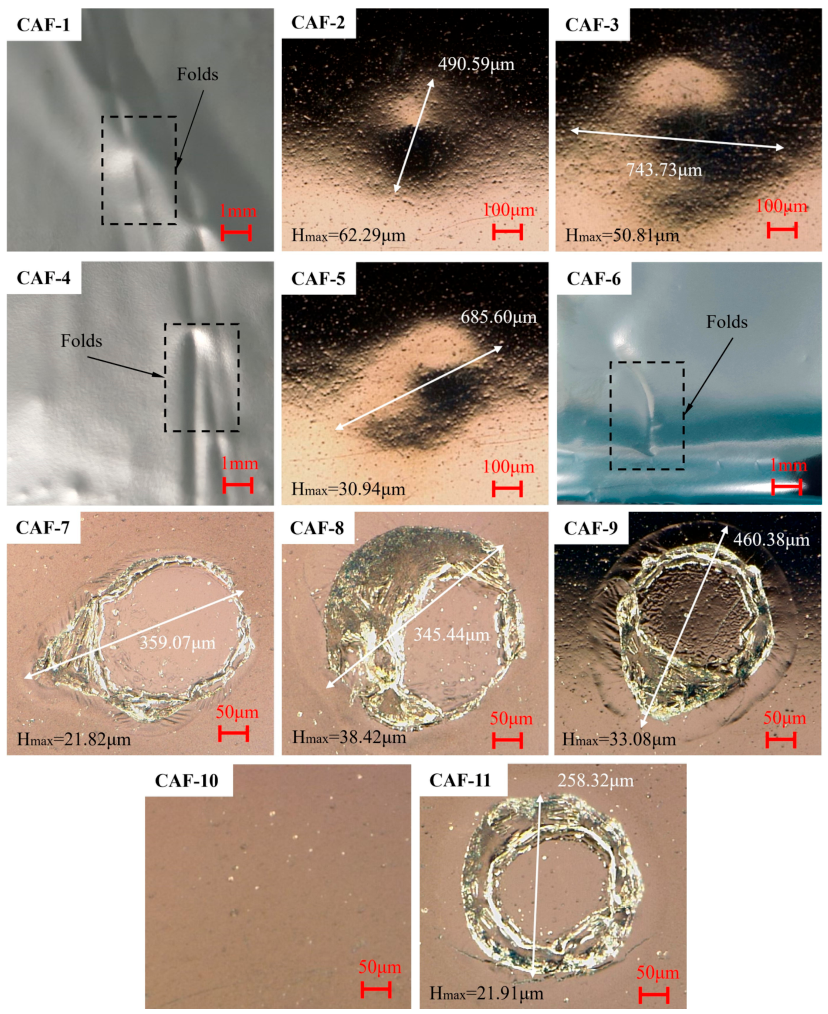
The normal membrane surfaces of CAF-1 to CAF-11 and the morphological patterns of typical sample surface defects were obtained using a super-resolution microscope, as illustrated in
Figure 4. Under visual inspection, all samples exhibited a continuous metallic luster, indicating a complete aluminum coating layer. However, under high-resolution three-dimensional imaging, significant differences were observed in the surface morphologies of samples prepared under different process conditions.
Sample CAF-10 displayed a smooth and uniform surface, indicating stable interfacial adhesion under optimized conditions. The surfaces of samples CAF-1, CAF-4, and CAF-6 showed small areas of directional micro-ruffles. This phenomenon is associated with the internal stress generated between the aluminum layer and the PET substrate during the evaporation-composite process, which is induced by uneven heating or a mismatch in thermal contraction rates [
40,
41]. A low cooling roll temperature and high cooling rate intensify stress release and induce surface wrinkling [
42]. The surfaces of samples CAF-2, CAF-3, and CAF-5 all have a few uneven points caused by the uneven aggregation of aluminum atoms. Samples CAF-7, CAF-8, CAF-9, and CAF-11 exhibited localized accumulation of droplets and pinholes on their surfaces mainly due to the excessively high processing temperature in the evaporation chamber [
43].
Based on observations of all samples, it can be concluded that the optimized parameter combination corresponding to CAF-10 enables the fabrication of high-quality composite aluminum foil with a smooth surface, a continuous aluminum layer, and uniform interface contact. In contrast, excessively low cooling roller temperature, excessively high evaporation boat voltage, insufficient tension, and improperly adjusted bias current can introduce various defects, including surface unevenness, splash marks, and wrinkles. Such surface and interfacial imperfections may negatively influence the macroscopic mechanical properties of the material.
3.2. Tensile Strength and Elongation Rate
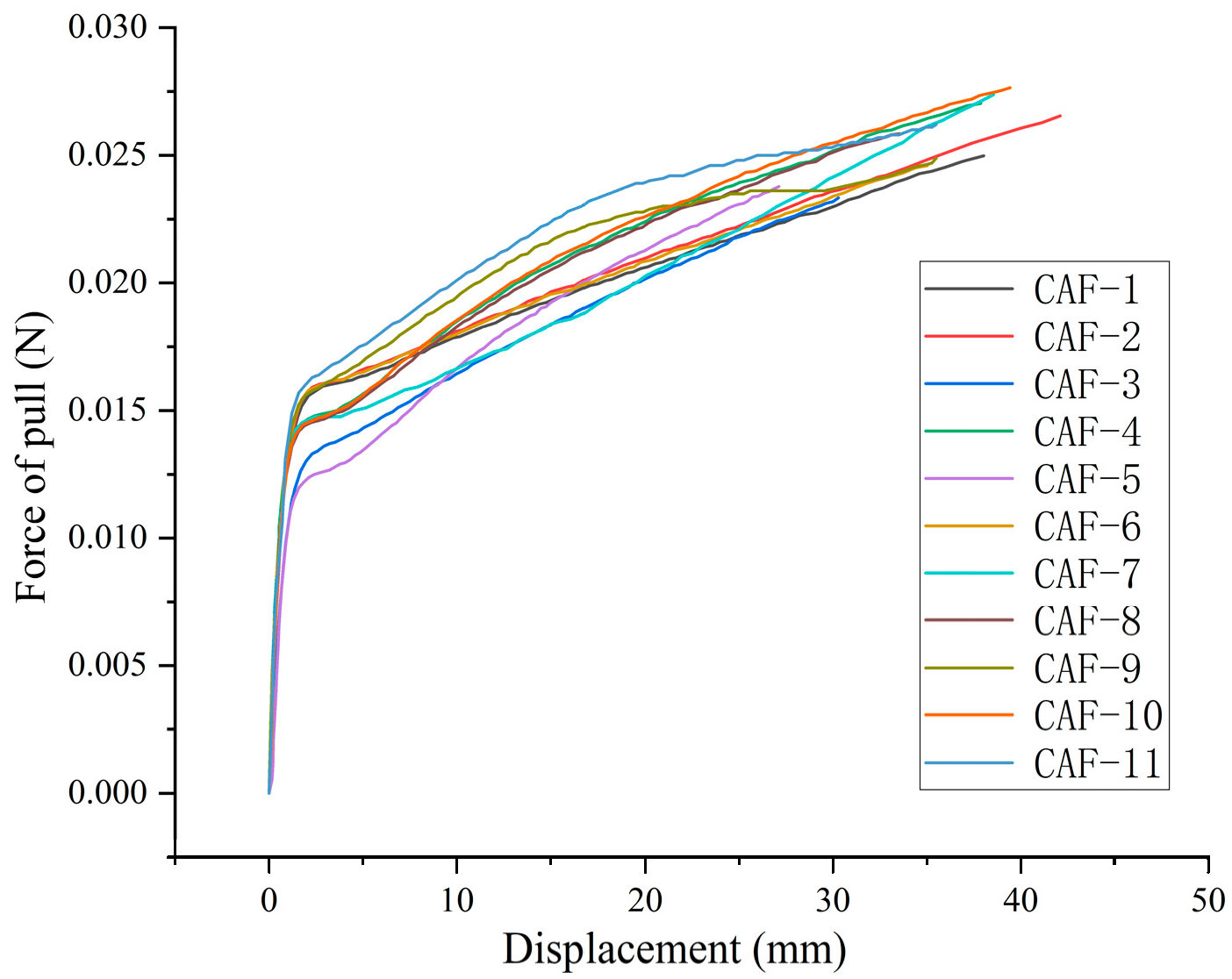
The samples of each group were cut into 50 mm × 15 mm specimens, and the stress–strain test was conducted at a tensile rate of 50 mm/min. The typical force–displacement curves of all samples are presented in
Figure 5, with the corresponding key mechanical properties—tensile strength and elongation at break—from the orthogonal experiments summarized in
Table 3.
The raw material PET film exhibits the characteristics of high strength and low elongation rate. After aluminum plating and compounding, most samples showed improved tensile strength, while elongation decreased slightly because of interfacial constraints.
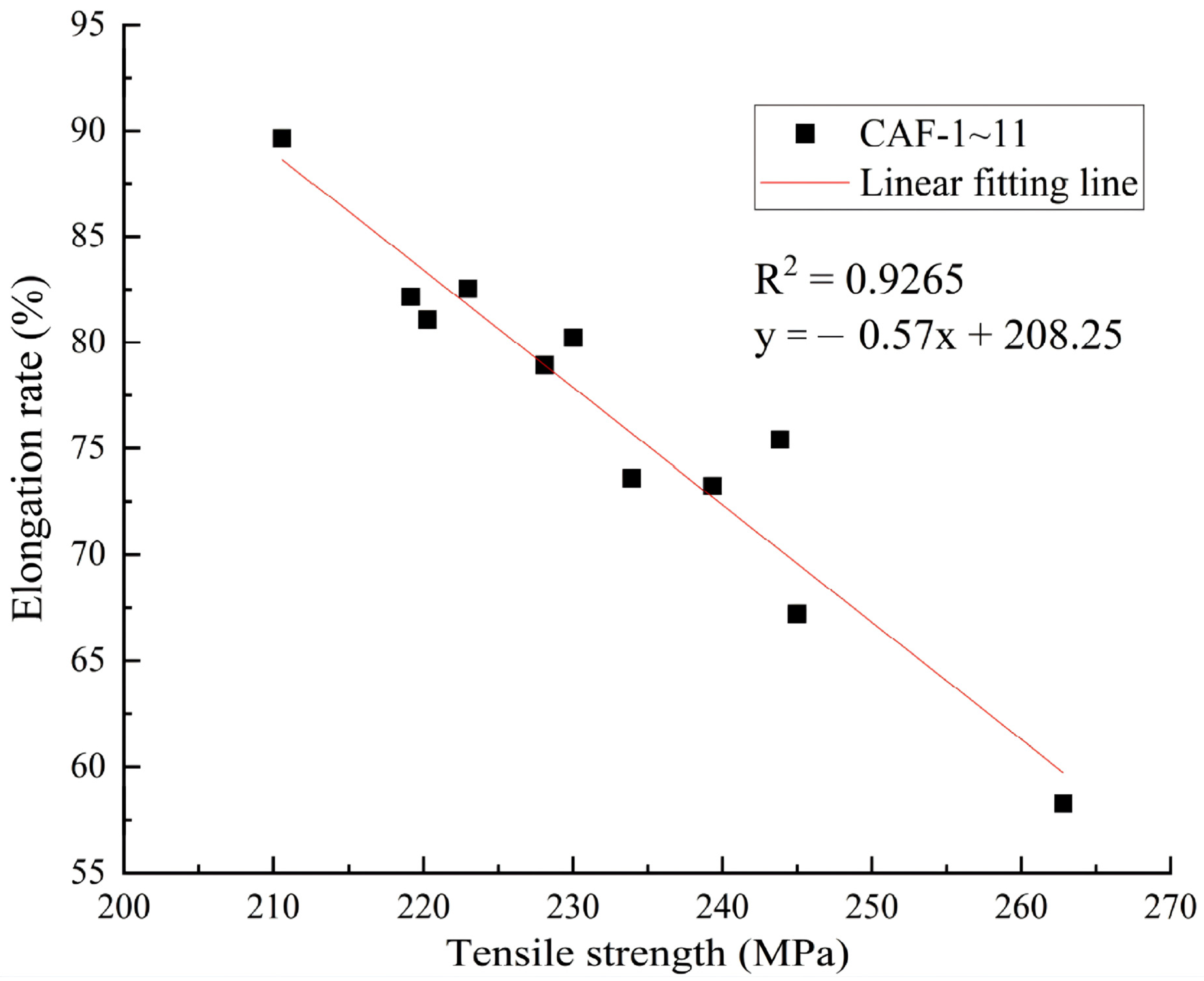
Figure 6 shows the relationship between the tensile strength and elongation rate of the samples. Tensile strength and elongation showed a significant negative correlation (
R2 = 0.9265), indicating that interfacial bonding quality is closely related to the overall mechanical properties.
When lower tension and bias current parameters were adopted in the orthogonal experiment, the tensile strength of the samples was relatively low—for instance, samples CAF-1, CAF-6, CAF-9, and CAF-11—indicating that lower tension and bias current are not conducive to stable interfacial bonding. The elongation rates of samples CAF-1 to CAF-9 and CAF-11 were all greater than that of the PET base film, while only the elongation rate of CAF-10 was lower than that of the PET base film. In this process, lower tension and bias current will weaken film adhesion, cause uneven thermal contact at the interface, thereby inhibiting interlayer contact and stress transfer between aluminum layer and PET, and ultimately impair the macroscopic mechanical properties due to the weakened interfacial bonding.
There is a clear trade-off between tensile strength and elongation rate in the composite foil. Enhanced interfacial adhesion improves tensile strength by strengthening interlayer bonding, but restricts the plastic deformation of the PET substrate, resulting in reduced elongation. Conversely, weaker interfacial bonding allows greater elongation of the polymer layer but compromises the overall tensile strength due to poor load transfer. This balance is critical for industrial applications where both high strength and sufficient ductility are required.
3.3. Determination of Optimal Conditions
The tensile strength was used as the target performance parameter for analyzing the orthogonal experimental data, and the results of range analysis of this parameter are shown in
Table 4 and
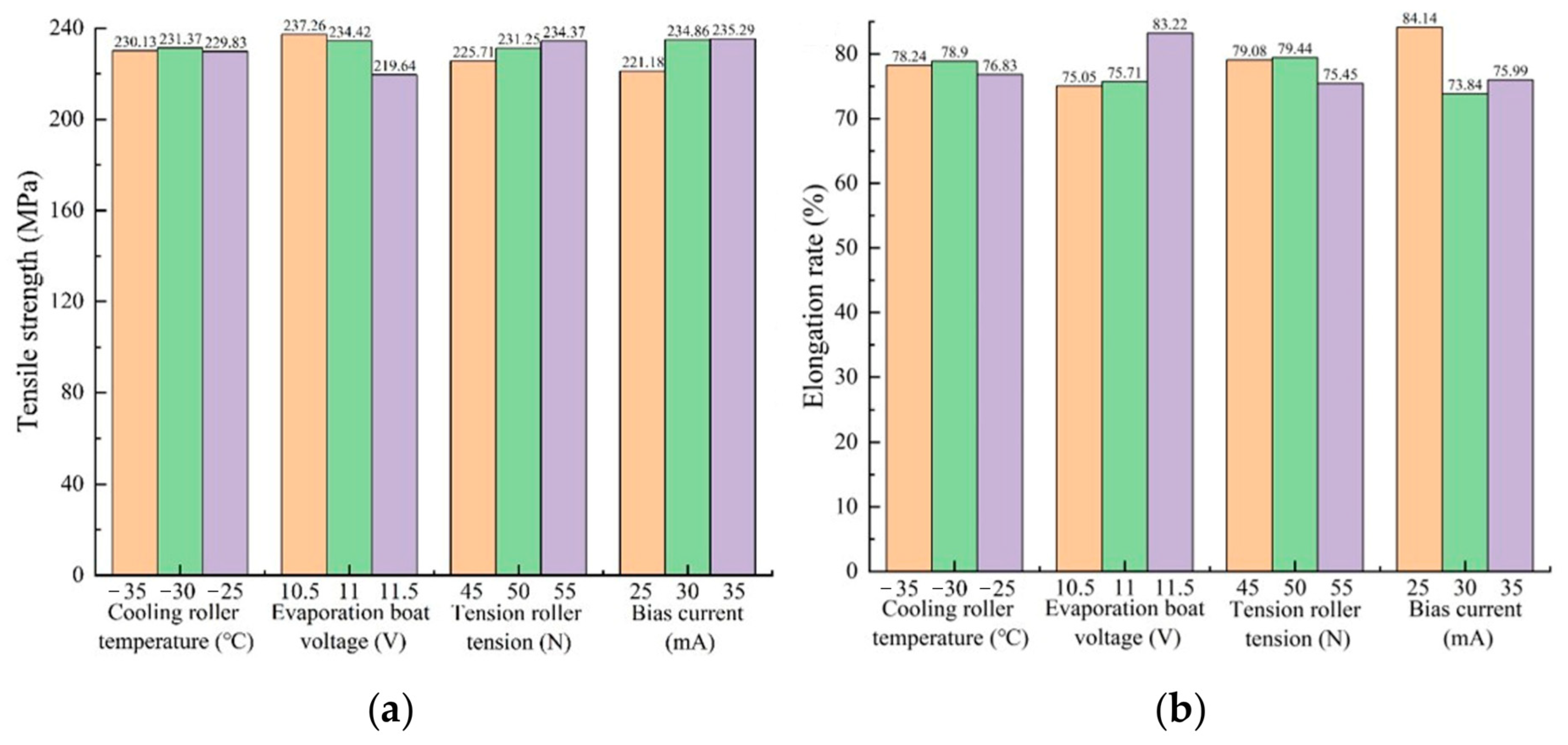
Figure 7a. The range value
Ri and mean variance
Si can be obtained from
Table 4. The mean variance reflects the discretization degree of a data set. The dispersion degree of each factor’s horizontal fluctuation relative to the evaluation index is directly shown, and an accurate estimation of the primary and secondary effects of each factor is given [
38].
Table 4 shows that
RB >
RD >
RC >
RA and
SB >
SD >
SC >
SA, indicating that the order of the influence of each factor on the tensile strength is B > D > C > A. In other words, this indicates that the evaporation boat voltage has the greatest influence on the tensile strength of PET composite aluminum foil, followed by the bias current and tension roller tension, while the cooling roller temperature has the least influence. The results of the range analysis of the elongation rate, as shown in
Table 5, exhibited a different order of factors:
RD >
RB >
RC >
RA and
SD >
SB >
SC >
SA. Therefore, for elongation rate, the bias current is the most influential factor, followed by the evaporation boat voltage and tension roller tension, while the cooling roller temperature has the least influence.
Figure 7a illustrates the relationship between the levels of each factor and the average tensile strength. It can be seen that the tensile strength increases significantly as the evaporation boat voltage decreases, suggesting that a lower evaporation boat voltage favors stable interfacial bonding. At the same time, a moderate cooling roller temperature, a large tension roller tension, and a large bias current all contribute to higher tensile strength.
Figure 7b illustrates the relationship between the levels of each factor and the average elongation rate. Although the range analysis for elongation rate alone indicated a different parameter set (i.e., CAF-11), ST analysis (
Figure 4) clearly demonstrated that this parameter combination resulted in severe surface defects, such as splash marks and pinholes. Therefore, after comprehensively considering tensile strength, elongation, and defect control, the conditions for CAF-10 were chosen as the optimal parameters.
For orthogonal experiments, the optimal process conditions are determined based on the average values of performance indicators at each factor level [
39]. It can be seen from
Table 4 and
Table 5,
Figure 4 and
Figure 7 that the optimal conditions are as follows: the cooling roller temperature is −30 °C, the evaporation boat voltage is 10.5 V, the tension roller tension is 55 N, and the bias current is 35 mA. Finally, a verification experiment was conducted under these optimal conditions, and sample CAF-10 was prepared. The performance parameters of this sample are listed in
Table 3. Sample CAF-10 exhibited the highest tensile strength (262.8 MPa) and a relatively lower elongation rate (58.28%). Its high strength meets the critical demand for tensile resistance in high-speed coating and slitting processes, confirming that the CAF-10 process conditions represent the optimal window for producing high-performance PET composite aluminum foil. This outcome validates the effectiveness of the orthogonal experimental design in identifying key process parameters.
3.4. Quality Analysis
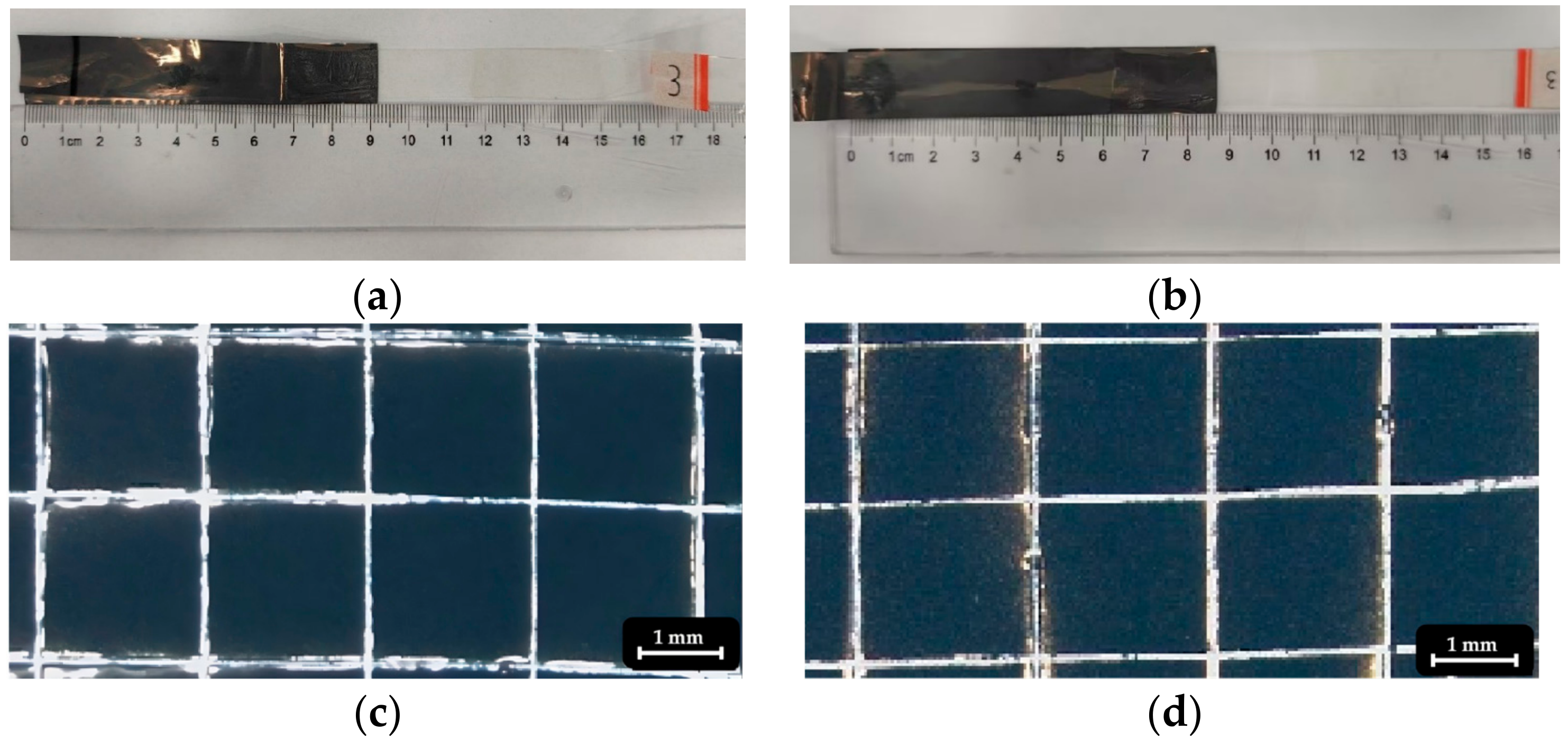
The adhesion of the CAF-10 sample was tested using 3M tape (3M 681, 3M, St. Paul, MN, USA); and a cross-cut test to evaluate its coating adhesion reliability, as shown in
Figure 8. According to the ASTM D3359 standard [
44], a 15 mm-wide 3M tape was tightly adhered to both the front and back of the sample and rapidly peeled off at a 180° angle. No delamination was observed on either the front or the back (
Figure 8a,b). The cross-cut test was conducted in accordance with the GB/T 9286-2021 standard [
45]. A slight amount of coating delamination occurred at the intersection of the cuts, but the affected cross-cut area did not exceed 5% (
Figure 8c,d), thereby meeting the Grade 1 criteria. The aforementioned test results indicate that the CAF-10 sample exhibits excellent coating adhesion and interfacial stability on both sides, fully satisfying the application requirements of high-performance composite aluminum foil materials.
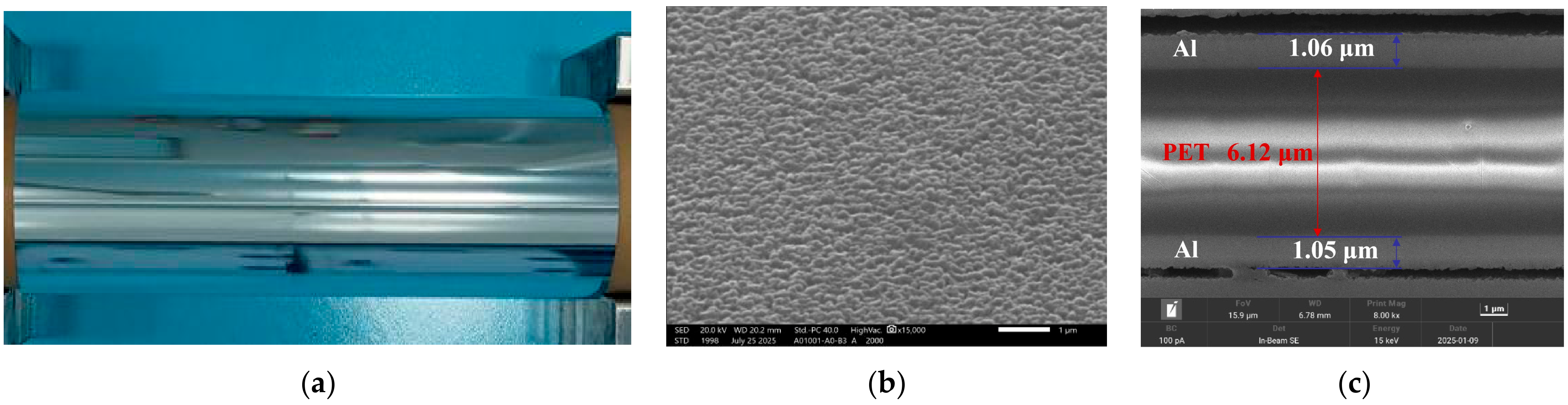
As shown in
Figure 9, the uniformity and thickness of the CAF-10 sample were characterized using a scanning electron microscope (SEM). The coating of CAF-10 is evenly distributed, with a smooth grain structure on the surface and high compactness. The coating thickness on both sides of the sample differs by only 0.01 μm. The optimized sample has a uniform coating structure and consistent thicknesses. Its dense and smooth microstructure provides an important basis for the material to achieve excellent comprehensive performance.
4. Conclusions
To optimize the preparation process of PET composite aluminum foil via vacuum evaporation, obtain a composite material with superior mechanical properties and defect-free surface quality, and improve its reliability in demanding applications such as current collectors for new energy batteries, an L9 (34) orthogonal experimental design was employed in this study. The tensile strength, elongation rate, and surface morphology of the foils prepared under different process conditions were systematically characterized. The coupled effects of four key process parameters—cooling roller temperature, evaporation boat voltage, tension roller tension, and bias current—on tensile strength and elongation rate were thoroughly investigated. The findings indicate that:
During the preparation process, the evaporation boat voltage was identified as the most significant factor affecting the tensile strength of the PET composite aluminum foil, with the order of influence being: evaporation boat voltage > bias current > tension roller tension > cooling roller temperature. For elongation rate, however, the bias current exhibited the greatest influence, followed by evaporation boat voltage, tension roller tension, and cooling roller temperature. Excessively high evaporation boat voltage leads to molten aluminum splashing and increased radiant heat, which may induce local deformation or premature shrinkage of the PET substrate, impairing interfacial contact stability and potentially causing delamination in unoptimized samples. Proper control of these parameters, as realized in CAF-10, could help suppress delamination and contribute to a robust interfacial structure.
Using tensile strength and elongation rate as the optimization targets, the same optimal process conditions were identified through range analysis: a cooling roller temperature of −30 °C, an evaporation boat voltage of 10.5 V, a tension roller tension of 55 N, and a bias current of 35 mA. The verification sample CAF-10, fabricated under these optimal conditions, exhibited superior comprehensive performance, achieving an ultimate tensile strength of 262.8 MPa and an elongation rate of 58.28%. Moreover, its surface was relatively smooth and free of observable defects such as wrinkles or splash marks, which further validates the reliability of the orthogonal experimental approach adopted in this study.
The results indicate that improved interfacial adhesion increases tensile strength but reduces elongation. These results highlight the important role of interface quality for mechanical performance and confirm the strength–ductility trade-off. ST analysis and SEM analysis have confirmed that the dense, defect-free interface achieved through the optimized process is closely related to the excellent mechanical performance of the material.
This study has some limitations. First, each factor includes only three levels, and interactions between parameters were not analyzed, which limits the scope of the conclusions. Second, direct interfacial characterizations such as STEM and XPS were not conducted. Therefore, the analysis of interfacial behavior is mainly based on macroscopic mechanical tests and surface morphology observations. Third, only range analysis was used for data evaluation. Although this method is common and effective for orthogonal design, it cannot provide statistical significance tests.
Future research will focus on establishing predictive models between process parameters and comprehensive performance and adopting advanced interface characterization techniques to further clarify structure–property relationships. In addition, expanding the range of process parameters and conducting analysis of variance (ANOVA) will be carried out to enhance the statistical reliability of optimization results, thereby providing stronger support for the high-performance fabrication and engineering application of PET composite aluminum foil.
Author Contributions
Conceptualization, Y.S. and L.Q.; methodology, Y.S.; software, C.Z.; validation, Y.S., L.Q. and C.Z.; formal analysis, Y.S.; investigation, J.Y.; resources, Y.D.; data curation, C.Z.; writing—original draft preparation, Y.S.; writing—review and editing, Y.D.; visualization, J.Y.; supervision, Y.D.; project administration, Y.S.; funding acquisition, Y.D. All authors have read and agreed to the published version of the manuscript.
Funding
This research was funded by Science and Technology Research Project of the Education Department of Hubei Province, grant numbers F2023019 and F2023020.
Institutional Review Board Statement
Not applicable.
Informed Consent Statement
Not applicable.
Data Availability Statement
The original contributions presented in this study are included in the article. Further inquiries can be directed to the corresponding author.
Conflicts of Interest
Authors Yunlong San, Liangliang Qie, Jiage Yu and Chengyu Zhang are employed by the company Hubei Nord Composite New Materials Co., Ltd. All other authors declare no conflicts of interest.
References
- Li, L.; Han, L.; Hu, H.; Zhang, R. A review on polymers and their composites for flexible electronics. Mater. Adv. 2023, 4, 726–746. [Google Scholar] [CrossRef]
- Abdisattar, A.; Yeleuov, M.; Daulbayev, C.; Askaruly, K.; Tolynbekov, A.; Taurbekov, A.; Prikhodko, N. Recent advances and challenges of current collectors for supercapacitors. Electrochem. Commun. 2022, 142, 107373. [Google Scholar] [CrossRef]
- Wang, L.; Liu, Y.; Luo, P.; Li, Z.; Wang, H.; Huang, X.; Gao, J. Multi-Scale Interfacial Engineering of Hierarchical Sandwich-Structured Conductive Polymer Composites for Flexible Electronics. Compos. Sci. Technol. 2025, 276, 111499. [Google Scholar] [CrossRef]
- Yao, W.; Zheng, Z.; Zhong, G.; Lin, Y.; Liu, D.; Song, J.; Zhu, Y. Polyethylene terephthalate-based cathode current collectors coated by ultrathin aluminum metal layers for commercial lithium-ion batteries with high security and long-term cycling stability. J. Alloys Compd. 2023, 941, 168937. [Google Scholar] [CrossRef]
- Peng, Y.; Meng, T.; Li, P.; Li, R.; Hu, X. Self-thermoregulating current collectors: Built-in thermal protection for safe lithium-ion batteries. Energy Environ. Sci. 2025, 18, 3177–3185. [Google Scholar] [CrossRef]
- Moon, C.; Park, J.h.; Lian, J.; Lee, H.L.; Ma, J.; Lee, M.G. Formability of PET/PA/Al/PP laminated composite pouch for Li-ion battery: Analysis based on experiments and modeling. J. Power Sources 2025, 653, 237746. [Google Scholar] [CrossRef]
- Härth, M.; Dörnhöfer, A. Film blowing of linear and long-chain branched poly (ethylene terephthalate). Polymers 2020, 12, 1605. [Google Scholar] [CrossRef]
- Tian, L.; Ji, X.; Zhao, L.; Lei, Q.; Ye, J. Improved performance of structural battery composites through carbon fiber electrode/current collector integration. Compos. Part A 2025, 198, 109065. [Google Scholar] [CrossRef]
- Chen, M.H.; Lai, C.C.; Chen, H.L.; Lin, C.H.; Hsiao, H.T.; Liu, L.C.; Chen, C.M. Preparation of long-chain branched polyethylene terephthalates (PETs), and crystallization behaviors, thermal characteristics, and hydrolysis resistance of their biaxially stretching films. J. Phys. Chem. Solids 2019, 129, 354–367. [Google Scholar] [CrossRef]
- Tao, R.; Liang, Z.; Zhu, S.; Yang, L.; Ma, L.; Song, W.L.; Chen, H. Mechanical analysis and strength checking of current collector failure in the winding process of lithium-ion batteries. Acta Mech. Solida Sin. 2021, 34, 297–306. [Google Scholar] [CrossRef]
- Li, D.; Liu, H.; Wan, H.; Wang, Y.; Zhang, J. Real time characterization of the current collector’s role on the electro-chemo-mechanical coupling performance of Si composite electrode. J. Energy Storage 2022, 56, 106018. [Google Scholar] [CrossRef]
- Fu, H.; Zhao, R.; Long, W.; Cheng, W. Study on cooling performance of rapid cooling system based on vacuum spray flash evaporation. Appl. Therm. Eng. 2022, 201, 117751. [Google Scholar] [CrossRef]
- Yushkov, Y.G.; Zolotukhin, D.B.; Oks, E.M.; Tyunkov, A.V. Different stages of electron-beam evaporation of ceramic target in medium vacuum. J. Appl. Phys. 2020, 127, 113303. [Google Scholar] [CrossRef]
- Kumar, M.; Rani, S.; Vashistha, P.; Pandey, A.; Gupta, G.; Husale, S.; Singh, V.N. Low bias operated, fast response SnSe thin film Vis-NIR photodetector on glass substrate using one-step thermal evaporation technique. J. Alloys Compd. 2021, 879, 160370. [Google Scholar] [CrossRef]
- Gusain, A.; Thankappan, A.; Thomas, S. Roll-to-roll printing of polymer and perovskite solar cells: Compatible materials and processes. J. Mater. Sci. 2020, 55, 13490–13542. [Google Scholar] [CrossRef]
- Heinert, C.; Sankaran, R.M.; Lacks, D.J. Electrostatic charge generation on material surfaces from the evaporation of liquids. J. Electrostat. 2020, 105, 103450. [Google Scholar] [CrossRef]
- Garibova, S.N.; Isayev, A.I.; Mamedova, I.A.; Aliyev, M.E.; Sarcan, F. Fabrication and structural analysis of amorphous GeTe4, Sb2Te3 and Ge20SbxTe80-x thin films prepared by thermal evaporation. J. Mater. Sci. Mater. Electron. 2025, 36, 1758. [Google Scholar] [CrossRef]
- Ma, Y.; Yang, J.; Tian, X.; Gong, C.; Zheng, W.; He, Y.; Gao, Z. Microstructure, adhesion, mechanical and corrosion properties of TiN coatings deposited by high energy pulse-enhanced vacuum arc evaporation. J. Adhes. Sci. Technol. 2020, 34, 1040–1061. [Google Scholar] [CrossRef]
- Lio, G.E.; Levorin, S.; Erdoğan, A.; Werlé, J.; Corso, A.J.; Schenato, L.; Wiersma, D.S.; Santagiustina, M.; Pattelli, L.; Pelizzo, M.G. Nanoporous film layers to enhance the performance of passive radiative cooling paint mixtures. Int. J. Thermophys. 2024, 4, 153. [Google Scholar] [CrossRef]
- Law, K.M.; Budhathoki, S.; Ranjit, S.; Martin, F.; Thind, A.S.; Mishra, R.; Hauser, A.J. Demonstration of nearly pinhole-free epitaxial aluminum thin films by sputter beam epitaxy. Sci. Rep. 2020, 10, 18357. [Google Scholar] [CrossRef]
- Machkih, K.; Oubaki, R.; Makha, M. A review of CIGS thin film semiconductor deposition via sputtering and thermal evaporation for solar cell applications. Coatings 2024, 14, 1088. [Google Scholar] [CrossRef]
- Quijada, M.A.; Del Hoyo, J.G.; Gray, E.; Richardson, J.G.; Howe, A.; de Marcos, L.R.; Sheikh, D.A. Influence of evaporation rate and chamber pressure on the FUV reflectance and physical characteristics of aluminum films. SPIE 2021, 11819, 153–162. [Google Scholar]
- Duan, L.; Bai, M.; Xiao, N.; Zhang, L.; Wang, H.; Wu, Y.; Dong, B.; Tang, W.; Li, Y.; Zhang, Z.; et al. A review of recent advances in ceramic 3D printing technologies. J. Manuf. Process. 2026, 157, 1091–1122. [Google Scholar] [CrossRef]
- Huang, J.; Li, M.; Chen, J.; Cheng, Y.; Lai, Z.; Hu, J.; Zhou, F.; Qu, N.; Liu, Y.; Zhu, J. Electronic structure and atomic migration of the fourth, fifth, and sixth period atoms in aluminum alloys: First principles calculation. Vacuum 2023, 210, 111823. [Google Scholar] [CrossRef]
- Lee, P.I.; Wu, P.C.; Chuang, T.H. Atomic Migration of Cu on the Surface of Si/Ti/Ni/Cu/Ag Thin Films. J. Electron. Mater. 2022, 51, 3624–3636. [Google Scholar] [CrossRef]
- Qi, J.; Oberdorfer, C.; Windl, W.; Marquis, E.A. Ab initio simulation of field evaporation. Phys. Rev. Mater. 2022, 6, 093602. [Google Scholar] [CrossRef]
- Tao, X.; Jiang, X. Electric-field-induced ion evaporation from the ionic liquid-vacuum interface. Phys. Fluids 2023, 35, 122009. [Google Scholar] [CrossRef]
- Warcholinski, B.; Gilewicz, A. Effect of substrate bias voltage on the properties of CrCN and CrN coatings deposited by cathodic arc evaporation. Vacuum 2013, 90, 145–150. [Google Scholar] [CrossRef]
- Zhang, H.; Zhang, Z.; Long, Y.; Ran, X.; Guo, Y.; Li, Y. Enhanced mechanical properties of continuous carbon fiber-reinforced PEEK composites via process parameters optimization and assisted infrared irradiation heating. Compos. Commun. 2025, 58, 102531. [Google Scholar] [CrossRef]
- Chang, T.; Zhan, L.; Tan, W.; Li, S. Optimization of curing process for polymer-matrix composites based on orthogonal experimental method. Fibers Polym. 2017, 18, 148–154. [Google Scholar] [CrossRef]
- Yang, X.; Li, D.S.; Jia, X.L.; Zuo, H.M.; Jiang, L.; Lomov, S.V.; Desplentere, F. Experimental and numerical validation of high strain rate impact response and progressive damage of 3D orthogonal woven composites. Compos. Sci. Technol. 2024, 258, 110896. [Google Scholar] [CrossRef]
- Duan, X.; Chang, J.; Chen, G.; Liu, T.; Ma, H. Contribution of different parameters on film cooling efficiency based on the improved orthogonal experiment method. Aerospace 2024, 11, 67. [Google Scholar] [CrossRef]
- Dash, K.; Sukumaran, S.; Ray, B.C. The behaviour of aluminium matrix composites under thermal stresses. Sci. Eng. Compos. Mater. 2016, 23, 1–20. [Google Scholar] [CrossRef]
- Liu, S.; Li, X.; Hao, Y.; Li, X.; Liu, F. Optimization of Cu/Sn Alloy Sputtering Process Based on Orthogonal Experimental Design Method. Micromachines 2023, 14, 1539. [Google Scholar] [CrossRef]
- Li, H.; Wang, Y.; Mu, W.; Li, S. Effect of electrical parameters on the microstructure and corrosion resistance of plasma electrolytic oxidation coatings of LA103Z alloy based on orthogonal experiment method. J. Mater. Sci. 2025, 60, 12105–12121. [Google Scholar] [CrossRef]
- Lin, R.; Diao, X.; Ma, T.; Tang, S.; Chen, L.; Liu, D. Optimized microporous layer for improving polymer exchange membrane fuel cell performance using orthogonal test design. Appl. Energy 2019, 254, 113714. [Google Scholar] [CrossRef]
- Xiao, L.; Bian, M.; Sun, Y.; Yuan, J.; Wen, X. Transport properties evaluation of pore-scale GDLs for PEMFC using orthogonal design method. Appl. Energy 2024, 357, 122445. [Google Scholar] [CrossRef]
- Jiaqiang, E.; Han, D.; Qiu, A.; Zhu, H.; Deng, Y.; Chen, J.; Zhao, X.; Zuo, W.; Wang, H.; Chen, J.; et al. Orthogonal experimental design of liquid-cooling structure on the cooling effect of a liquid-cooled battery thermal management system. Appl. Therm. Eng. 2018, 132, 508–520. [Google Scholar]
- Zhu, G.B.; Cheng, Y.L.; Wang, P.H.; Chai, F.S.; Chen, M.; Bai, W.D.; Yu, Z.Y.; Dai, K.Y.; Yu, X.H. Multi-objective collaborative optimization of mechanical and shrinkage properties for engineered geopolymer composites based on orthogonal experimental design. Case Stud. Constr. Mater. 2025, 23, e05556. [Google Scholar] [CrossRef]
- Yang, T.; Zhou, J.; Li, Y.; Shi, Y.; Heng, X.; Hao, X.; Gao, J. Investigation of the evolution and movement of volatile bubbles in the process of curing polyimide composites by in-situ observation. Compos. Struct. 2025, 366, 119224. [Google Scholar] [CrossRef]
- Wang, S.; Li, X.; Ren, J. Comprehensive evaluation on conjugate heat transfer and thermal stress performance of film cooling. Int. J. Heat. Mass. Transf. 2024, 219, 124850. [Google Scholar] [CrossRef]
- Mathuri, S.; Ramamurthi, K.; Babu, R.R. Influence of deposition distance and substrate temperature on the CdSe thin films deposited by electron beam evaporation technique. Thin Solid Films 2017, 625, 138–147. [Google Scholar] [CrossRef]
- Lindner, M.; Schmid, M. Thickness measurement methods for physical vapor deposited aluminum coatings in packaging applications: A review. Coatings 2017, 7, 9. [Google Scholar] [CrossRef]
- ASTM D3359-23; Standard Test Methods for Rating Adhesion by Tape Test. ASTM International: West Conshohocken, PA, USA, 2023.
- GB/T 9286-2021; State Administration for Market Regulation. Standardization Administration of the People’s Republic of China: Beijing, China, 2021.
| Disclaimer/Publisher’s Note: The statements, opinions and data contained in all publications are solely those of the individual author(s) and contributor(s) and not of MDPI and/or the editor(s). MDPI and/or the editor(s) disclaim responsibility for any injury to people or property resulting from any ideas, methods, instructions or products referred to in the content. |