Article

Preparation of Composite Resin Coatings and Its Performance Improvement on Ti-Based Dental Implants


1
College of Mechanical Engineering, Jiangsu University of Science and Technology, Zhenjiang 212000, China
2
Department of Oral and Maxillofacial Surgery, Jinan Stamotological Hospital, Jinan 250001, China
3
Department of Stomatology, Zhenjiang First People’s Hospital, People’s Hospital Affiliated to Jiangsu University, Zhenjiang 212000, China
*
Authors to whom correspondence should be addressed.
These authors contributed equally to this work.
Coatings 2026, 16(4), 475; https://doi.org/10.3390/coatings16040475
Submission received: 24 February 2026 / Revised: 6 April 2026 / Accepted: 14 April 2026 / Published: 15 April 2026

Highlights

A Ti-HA/TiO2 photocurable composite resin coating was fabricated on TC4 titanium alloy via a simple coating curing process, with controllable thickness and good interfacial bonding.
The porous coating effectively promotes remineralization capacity and bioactivity by introducing bioactive Ca/P elements.
Benefiting from the synergistic photocatalytic effect of Ti-HA and TiO2, the coating achieves a high antibacterial rate.

Abstract

Titanium alloys are widely used in dental implants due to their excellent mechanical properties. However, their inertness and poor antibacterial activity cause interfacial loosening and failure, shortening service life. This study integrates surface microtexturing with coating technologies, employing modified light-curing composite resins to boost the bioactivity of medical titanium alloys via surface modification. The results reveal that surface microtexturing enlarges the coating-substrate contact area by 42.5% compared with rough surfaces, concurrently diminishing stress per unit area, and the coating on microtextured Ti-6Al-4V (TC4) surfaces achieves adhesion with a damaged area of only 0.5%, thereby notably enhancing adhesion between the coating and TC4 matrix. In comparison, with rough surfaces (surface roughness of 0.658 μm), smooth TC4 planes (surface roughness of 0.014 μm) show a significantly reduced bacterial colony count (from 130 ± 6 to 42 ± 3) with an antibacterial rate of 67.7%, as the water contact angle on TC4 surfaces increases with decreasing roughness (reaching 80.95° on the smoothest surface), making bacterial adhesion more challenging and reducing colonization. The composite resin coating based on a mixture of titanium-doped hydroxyapatite and titanium dioxide (Ti-HA/TiO2) further improves the antibacterial rate to 74.6% through a photocatalytic synergistic effect and endows TC4 with excellent remineralization capacity—mineralization deposits appear on the coated surface after 3 days of immersion in artificial saliva, while no obvious deposits are found on uncoated rough and smooth surfaces even after 7 days—thereby enhancing its bioactivity effectively. This study on the modification of Ti-based implant surfaces will enrich the field by introducing new technologies and methodologies. These advancements provide a theoretical basis for improvement of the remineralization capacity and antibacterial properties of Ti-based dental implants, thereby promoting broader biomedical applications.

1. Introduction

Titanium alloy implants, with their low density, high specific strength, and bone-like elastic modulus, are widely used in clinical applications, including artificial joint replacement, dental implants, and tissue engineering scaffolds [1]. However, due to the biological inertness of titanium alloys, mechanical bonding only occurs at the implant–bone interface, which may potentially lead to complications like fibrous encapsulation and loosening over time. Additionally, peri-implantitis is a common complication associated with titanium alloy dental implants. Lacking the dynamic defense and repair functions of the periodontal ligament, dental implants are more susceptible to bacterial invasion and inflammatory damage, which may ultimately lead to implant failure [2]. In response to the above problems, surface functionalization modification has become an effective strategy to improve the performance of metal implants. At present, modification techniques for Ti-6Al-4V (TC4) titanium alloys primarily center on two approaches: employing surface microtexturing to enhance mechanical interlocking at the interface and utilizing bioactive coating construction to improve biocompatibility. Surface modification continues to be a crucial factor that affects the performance of titanium alloy implants [3,4,5].
Surface microtexturing is a pivotal surface modification strategy for titanium alloy implants, as it can effectively optimize the tribological performance of titanium alloys by reducing friction coefficients and wear loss, which is essential for ensuring the long-term service reliability of implants in the human body [6,7,8]. Zhang et al. verified this advantage in practical simulations, finding that tailored surface microstructures could significantly lower the dynamic friction of titanium alloys during the screw implantation process of spinal internal fixation systems [9]. Various fabrication techniques are available for preparing microstructures on implant surfaces, and the performance of the resulting microtextured surfaces varies markedly depending on the adopted method. Pratap et al. [10] fabricated parallel, staggered micro-pits and geometry-adjustable microgrids on TC4 alloy surfaces to meet the tribological demands of metal hip prostheses and systematically analyzed their impacts on the surface wettability and friction-wear properties of TC4. Their results showed that the microgrid configuration delivered superior friction performance, with the friction coefficient reduced by up to 51% as the overlap ratio increased, an improvement mainly attributed to the enhanced surface hydrophilicity induced by the microtexture. Yang et al. [11] constructed laser-processed micro-nano hierarchical structures on TC4 alloy surfaces, which consisted of micron-scale pit arrays and nanoscale laser-induced periodic surface structures (LIPSSs). They further investigated the regulatory mechanism of laser parameters on surface wettability, and contact angle tests revealed that increasing microtexture density could significantly enhance surface hydrophobicity. Through rational parameter optimization, they successfully prepared an ultra-hydrophobic TC4 surface with a water contact angle of 144.58°, providing valuable theoretical and technical support for the functional surface design of biomedical and corrosion-resistant titanium alloys. Patil et al. [12] developed a rapid fabrication method for superhydrophobic titanium alloy surfaces by combining nanosecond laser texturing with low-temperature annealing: nanosecond pulsed lasers were first used to etch pit structures on TC4 surfaces, followed by annealing at 300 °C for adjustable durations, which rapidly converted the hydrophilic surface to superhydrophobic and thus effectively reduced the risk of implant-associated infections caused by bacterial biofilm formation on orthopedic and dental implants. Singh et al. [13] further explored the effects of microgrooves with different geometric parameters (widths of 200 µm, 350 µm, and 500 µm and a fixed depth of 20 µm) on TC4’s tribological performance, cytocompatibility, and antibacterial properties and identified the 350 µm spaced microgrooved surface as the optimal design with the best comprehensive performance. The electrochemical behavior of biomaterial surfaces is critical to the success of implants. Aydin et al. reported that laser-textured titanium alloys show better corrosion resistance in simulated body fluid. H2O2 weakens the passive layer under inflammation, and a mixture of albumin, lactic acid, and H2O2 further reduces corrosion resistance under severe inflammation [14]. Collectively, these studies fully demonstrate the tunability of titanium alloy surface properties via microtexturing technology, and the rational design of microtexture type, geometric parameters, and fabrication process can produce the targeted optimization of implant performance, laying a solid research foundation for the subsequent combination of microtexturing and coating technologies in titanium alloy implant modification.
Constructing bioactive coatings on the surface of titanium alloys is a well-established and effective strategy to overcome the material’s intrinsic biological inertness and enhance its bioactivity for implant applications [2,15]. Hydroxyapatite (HA) coatings, which replicate the inorganic mineral composition of natural bone, have been clinically validated for their ability to promote bone ingrowth and facilitate implant osseointegration. Backed by extensive experimental research and clinical studies, HA coatings—fabricated through a diverse range of techniques—exhibit exceptional biocompatibility, chemical stability, and osteoinductive potential, making them one of the most extensively investigated and widely applied coating materials for biomedical implants in both academic and clinical settings [16,17]. In practical applications, Demnati et al. [18] adopted plasma spraying to prepare HA coatings on small-sized implants, achieving significant improvements in bone integration and osteogenic activity. To address the issues of residual stress in pure HA coatings and the inherent biocompatibility limitations of titanium alloys, HA is frequently compounded with TiO2 [19,20]. TiO2 not only reinforces the mechanical stability and corrosion resistance of the composite coating but also promotes the heterogeneous nucleation of Ca2+ and HPO42− ions in simulated body fluid (SBF) via surface hydroxylation, thereby inducing the deposition of bone-like apatite structures on the implant surface [21,22]. For example, Singh et al. prepared a 50HA-50TiO2 composite coating on Ti-6Al-4V alloys by plasma spraying, which presented a nano-porous microstructure mimicking natural bone [23]. Xu et al. developed a HA/TiO2 nano-porous composite coating through a combination of constant-current anodization and pulsed laser deposition, and the coating demonstrated excellent in vitro corrosion resistance and the ability to promote osteoblast proliferation [19]. These studies fully highlight the great application potential of HA/TiO2 composite coatings in orthopedic implantology. To further optimize the comprehensive performance of such composite coatings, researchers have incorporated Al2O3 into the HA/TiO2 system: Ahmadi et al. [24], for instance, prepared a HA/TiO2/Al2O3 nanocomposite coating via sol–gel impregnation at a sintering temperature of 550 °C, which effectively improved the biocompatibility and corrosion resistance of the implant substrate. The fabrication methods for HA-based coatings are highly diversified: Mohammed et al. [25] successfully prepared uniform pure HA and HA/TiO2 composite films using sol–gel technology and systematically characterized their morphological and chemical properties; Xie et al. [26] employed electrochemical deposition to coat porous titanium and titanium–polyethylene composite surfaces with HA; Utku et al. [27] fabricated HA coatings on titanium implants with layered macro–mesoporous structures via the same electrochemical method; Priyanka et al. [16] coated titanium alloy substrates with HA suspension, which formed stable HA coatings after heat treatment and effectively regulated surface properties to modulate cell adhesion and bacterial colonization behavior. Beyond HA-based coatings, a variety of novel materials and composite modification strategies have been developed to construct bioactive implant surfaces. Hou et al. [28], for example, fabricated novel topological microstructures on pure titanium implants by combining sandblasting, acid etching, and hydrothermal treatment with ZnO or TiO2 nanocomposite coatings, effectively preventing the occurrence of peri-implantitis. Zhou et al. incorporated dimethylaminohexadecyl methacrylate and HA onto titanium abutments, which effectively inhibited bacterial adhesion and biofilm formation while promoting osseointegration [29]. Metal-organic frameworks (MOFs), as porous crystalline materials with tunable pore sizes and large specific surface areas, show great potential for drug delivery and antibacterial applications; relevant studies have confirmed that titanium alloy surfaces modified with microgroove patterns combined with MOF coatings can effectively enhance soft tissue integration and prevent infections in percutaneous implants, a strategy that simultaneously improves the biocompatibility and antibacterial activity of implants—two key factors for the success of long-term implantation [3]. Collectively, these advances in bioactive coating technology demonstrate the feasibility of tailoring titanium alloy surface properties to meet the biological requirements of implant applications, and the combination of traditional HA-based composite coatings with novel functional materials and structural modification strategies has become a mainstream research direction for further optimizing implant performance, laying a solid foundation for the development of multifunctional composite coating systems in the present study.
As a coating material, photocurable resin exhibits remarkable application potential in the surface modification of various substrates, with prominent advantages in enhancing the mechanical properties, corrosion resistance, biocompatibility, and interfacial adhesion of materials. The core merits of this coating technology lie in its fast curing speed, low energy consumption, environmental friendliness, and high production efficiency; it also enables the preparation of functional composite coatings with specific properties via component regulation [30,31,32,33,34,35,36]. In the field of titanium alloy implants, resin composite coatings can effectively improve the biocompatibility of the substrate and enhance its osseointegration capability. For instance, the high-silica bioglass–chitosan composite resin coating prepared on the surface of TC4 titanium alloy by electrophoretic deposition can significantly promote bone tissue regeneration [37]. In the field of dental clinical practice and restoration, photocurable resin coatings are core applied materials: relevant studies have confirmed that such coatings can effectively reduce microleakage and inhibit enamel demineralization [38,39], and in glass–ceramic restoration, vacuum-impregnated resin coatings can optimize the interfacial bonding performance between glass–ceramics and resin adhesives [40].
As an efficient surface modification technology, photocurable resin composite coatings can construct organic–inorganic composite protective layers on the surface of titanium alloys through photoinitiated polymerization, achieving the synergistic improvement of multiple surface properties of the substrate. Despite the rapid development of this technology, its practical application is still faced with several challenges such as uneven deep curing, stress cracking in thick film curing, insufficient antibacterial performance, and the need for further optimization of biocompatibility. In view of this, this paper combines surface microtexturing technology to systematically investigate the surface modification effect of modified photocurable composite resin coatings on titanium alloys. The composite coating provides antibacterial and bioactive functions, reduces peri-implantitis, and promotes calcium-phosphorus deposition. This type of photocurable resin is commonly used in oral prosthodontics and exhibits good compatibility with implants. In the future, relying on photocurable 3D printing technology, precise layer-by-layer curing of coatings can be achieved to prepare titanium alloy–photocurable resin composite coatings with complex microstructures, which will provide a new technical approach and solution for further improving the antibacterial performance and osseointegration capability of titanium alloy implants.

2. Experimental Materials and Methods

2.1. Preparation Method of Modified UV-Curable Composite Resin

Using the sol impregnation method, 5 g of hydroxyapatite powder (Shanghai Hualan Chemical Technology Co., Ltd., Shanghai, China) was immersed separately in titania hydrosols (Shanghai Yingcheng New Materials Co., Ltd., Shanghai, China) of different volumes (1.24 mL, 2.5 mL, 3.78 mL) for 4 h. All titania hydrosols were diluted with deionized water to a solid content of 0.2%. The resulting white product was filtered, dried, ground in a planetary ball mill, sieved, and calcined at 600 °C for 40 min to obtain titanium-doped hydroxyapatite (Ti-HA) with different doping levels (0.3%Ti-HA, 0.56%Ti-HA, and 1.37%Ti-HA). The detailed preparation process has been described in our previous studies [41]. The doping ratio of Ti was optimized by a X-ray diffractometer (XRD, D8 Advance, Bruker, Bilerica, MA, USA). Ti-HA and TiO2 nanopowders were mixed in equal proportions and then added at a dosage of 6 wt% to the resin mixture of triethylene glycol dimethacrylate (TEGDMA, Aladdin Reagent Co., Ltd., Shanghai, China) and bisphenol A glycidyl methacrylate (Bis-GMA, Aladdin Reagent Co., Ltd., Shanghai, China) (with a mass ratio of 4:6, accounting for 28 wt% of the total system) and uniformly dispersed through mechanical stirring. Subsequently, 1.0 wt% of camphorquinone (CQ, Shanghai McLyn Biochemical Technology Co., Ltd., Shanghai, China) (initiator) and 1.0 wt% of dimethylaminoethyl methacrylate (DMAEMA, Aladdin Reagent Co., Ltd., Shanghai, China) (co-initiator) were added, followed by continued stirring. Following the uniform mixing of the initiator system, a 64 wt% portion of micron-sized barium glass powder (Beijing Zhongye Xincai Technology Co., Ltd., Beijing, China) was incrementally added in three stages, ensuring thorough stirring after each addition. The mixture was then placed in a 40 °C constant-temperature incubator away from light, yielding a liquid photocurable composite resin coating based on a mixture of titanium-doped hydroxyapatite and titanium dioxide (Ti-HA/TiO2) for subsequent use.

2.2. Surface Preparation and Coating of TC4

The TC4 (Suzhou Xinzhixiao Special Metals Co., Ltd., Suzhou, China) samples included rough, smooth, and microtextured surfaces as shown in Figure 1. The rough TC4 sample remained untreated after cutting, exhibiting a surface roughness of about 0.658 μm (Rough TC4), whereas the polished smooth TC4 sample attained a surface roughness of about 0.014 μm (Smooth TC4). The roughness measurement method is the same as that in Section 2.6. Circular surface microtextures were fabricated on the TC4 substrate using a nanosecond laser (FB50-1, Shenzhen Aohua Laser Technology Co., Ltd., Shenzhen, China) with a laser energy density of 200 J/mm2, pulse frequency of 20 kHz, laser power of 50 W, and wavelength of 1064 nm, as shown in Figure 1c. The structures exhibited a lateral spacing of 130 (±12) μm, a longitudinal spacing of 160 (±8) μm, and a depth of 363 (±21) μm. The microtextured region was prepared as a 10 mm × 10 mm square area.
Figure 1. Surface morphologies of resin-coated TC4 matrices: (a) rough TC4 surface; (b) smooth TC4 surface; (c) circular microtextured TC4 surface.
Coatings 16 00475 g001
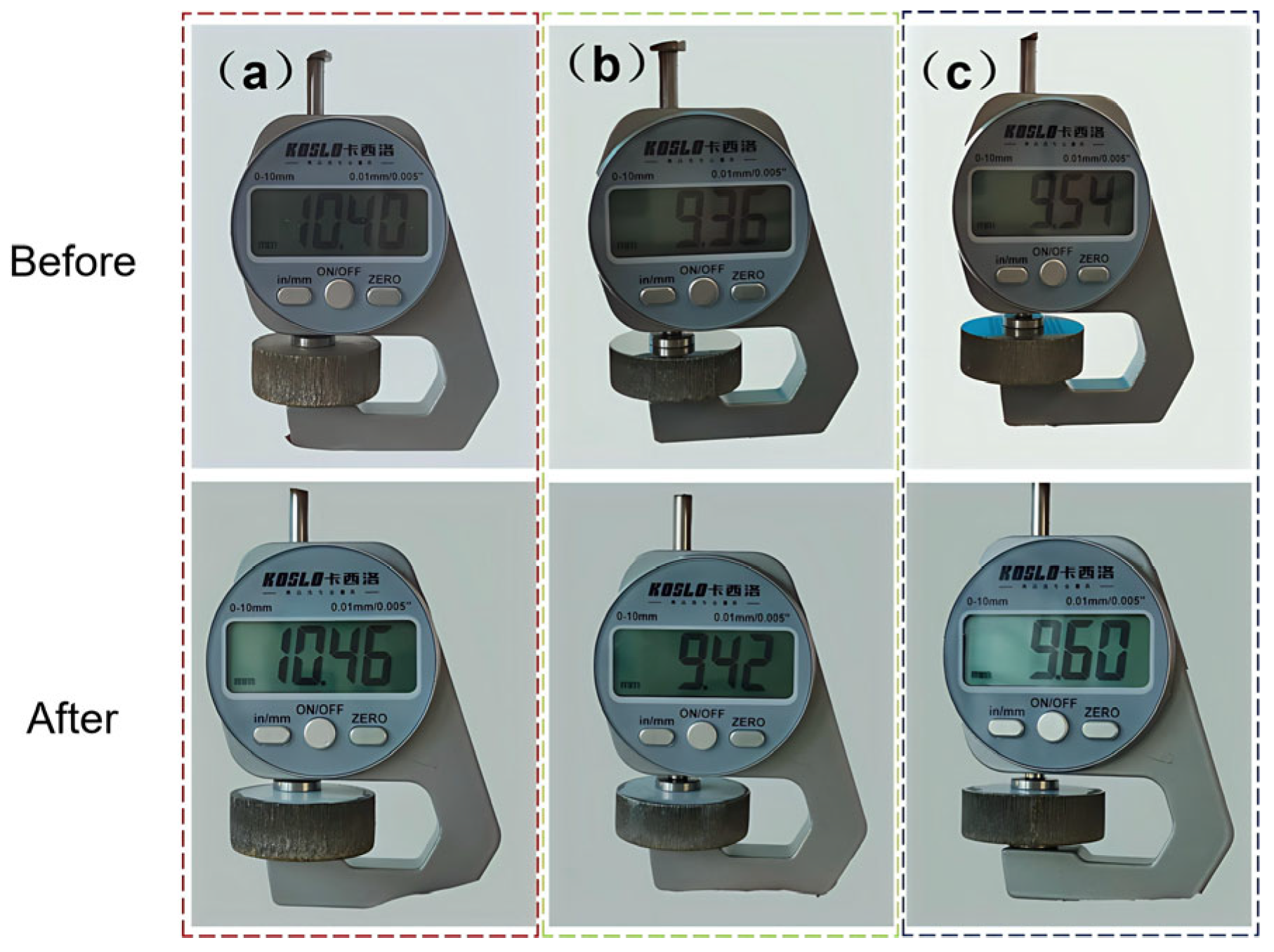
In a light-protected environment, Ti-HA/TiO2 photocurable composite resin was uniformly coated onto the surface of cleaned and dried TC4 samples (rough, smooth, microtextured), and a specialized photocurable resin adhesive was used to achieve adhesion between the coating and the substrate. Before application, the thickness of the TC4 samples was measured using a micrometer. Following application, the samples were subjected to exposure under a specialized photocurable lamp (λ = 420 nm, LED.F, Guilin Woodpecker Medical Instrument Co., Ltd., Guilin, China) for 60 s. Upon complete curing of the resin, a Ti-HA/TiO2 composite resin coating on TC4 surface is obtained. The coating thickness was measured before and after application using a digital micrometer and controlled at approximately 60 μm through precision grinding and polishing. As shown in Figure 2, the coating thickness on the surfaces of different TC4 samples is uniformly 60 μm.
Figure 2. The coating thickness on the surfaces of different TC4 samples. (a) On rough TC4; (b) on smooth TC4; (c) on microtextured TC4.
Coatings 16 00475 g002

2.3. Characterization of the Adhesion of the TC4 Resin Coating

In this study, the adhesion of the resin coating on different TC4 surfaces was evaluated using the cross-cut test according to the ASTM D3359 standard [42]. A cross-cutter with a blade width of 10–12 mm was used to make two sets of mutually perpendicular parallel cuts at 1–1.2 mm intervals, forming a 10 × 10 grid pattern. The bonding strength between the coating and the substrate was assessed by observing coating detachment within the grid area. 3M transparent tape was then applied to test the shedding of the coated squares. The damage ratio was calculated based on the number of damaged squares out of a total of 100 squares.

2.4. Antibacterial Characterization

Dental caries is a global chronic disease, and Streptococcus mutans (S. mutans) is widely regarded as the main pathogenic bacterium causing caries [43]. The antibacterial properties of composite resin against S. mutans (Shanghai Baocang Microorganisms Co., Ltd., Shanghai, China) were evaluated by the plate coating method. In the antibacterial experiment, test samples (10 mm × 10 mm × 4 mm) were sterilized with 75% alcohol and washed three times with phosphate buffer solution (PBS, Beijing Lanjiekou Technology Co., Ltd., Beijing, China). The specific procedure was as follows: Put the samples into a 24-well plate. After adjusting the bacterial suspension concentration to match that of the No. 2 McConney turbidity tube, carry out three successive 10-fold dilutions to obtain a final concentration of 6 × 10⁵ CFU/mL. With a 5 mL pipette, transfer 1 mL of the 6 × 10⁵ CFU/mL bacterial suspension into each well. Expose the samples to 365 nm visible ultraviolet light for 30 min. Remove the test samples and transfer 10 mL of PBS solution into a test tube. After shaking thoroughly, use a pipette to draw up 100 µL of PBS solution and evenly spread it onto the agar plate. Finally, incubate the plates in a 37 °C incubator for 24 h. Count the bacterial colonies on each plate with a colony counter, and then calculate the antibacterial rate using Formula (1):
R = B A B × 100 %
where R is the antibacterial rate; A is the number of colonies in the resin experimental group; and B is the number of colonies in the blank control group.
The antibacterial properties of the coating materials were characterized by employing two methods: direct contact and agar plate tests. In the direct contact method, samples were submerged in 5 mL of brain–heart infusion broth. A 100 µL aliquot of S. mutans suspension (6 × 10⁵ CFU/mL) was subsequently introduced into the broth, and the samples were incubated at 37 °C for 24 h. Following incubation, the samples were rinsed twice with PBS to eliminate surface bacteria. Thereafter, the rinsed samples were subjected to gradient dehydration treatment via soaking. The samples were sequentially immersed in alcohol solutions with concentrations of 30%, 50%, 70%, and 99% for 5 min each. Subsequently, they were fixed in a preservative solution for 4 h, air-dried, and subjected to gold sputtering treatment. The bacterial morphology and quantity on the surface were then observed using scanning electron microscopy.

2.5. Assessment of the Remineralization Performance

The biocompatibility of the prepared materials was evaluated via remineralization performance tests. The samples were immersed in 10 mL of artificial saliva (NaCl, 0.4 g; KCl, 0.4 g; NaH2PO4·2H2O, 0.78 g; CaCl2·2H2O, 0.795 g; Na2S·2H2O, 0.005 g; urea, 1.0 g; H2O, 1 L; pH 7.0) at 37 °C to simulate the oral temperature environment, with a soaking duration of 168 h. Artificial saliva was replaced every 24 h. The effectiveness of remineralization was assessed by monitoring the evolution of surface deposits over time, employing laser confocal microscopy.

2.6. Water Contact Angle Characterization

Water contact angles of TC4 titanium alloy samples with different surface roughnesses were measured using an SZ-CAMC33 contact angle goniometer (Shanghai Xuanzhun Instrument Co., Ltd., Shanghai, China). Three-dimensional topographical data at the central position of the sample surface were acquired using a laser confocal scanning microscope (LCSM, VK-X1000, Keyence, Osaka, Japan), and the surface roughness of three uniformly distributed regions (97.2 μm × 72.9 μm for each) in the topography was measured with the built-in VK-X Series software (VK-X1000, Keyence, Osaka, Japan). The final surface roughness value of each sample was determined as the average of the roughness values of these three regions. The TC4 samples were numbered from TC4-1 to TC4-6 in descending order of surface roughness, with the corresponding roughness values of 0.685 μm, 0.124 μm, 0.085 μm, 0.059 μm, 0.039 μm, and 0.008 μm, respectively. The coating sample was prepared by applying a 60 μm thick Ti-HA/TiO2 photocurable composite resin on the microtextured TC4 surface (coated TC4). The samples, fabricated by sandblasting, were 25 mm in diameter and 10 mm in height. A 5 μL deionized water droplet was deposited on the sample surface, and five random positions were tested for each specimen to obtain the average value.

2.7. Statistical Analysis

IBM SPSS Statistics 25 (International Business Machines Corporation, Armonk, NY, USA) was used for statistical analysis to determine significant differences among all sample groups. At least three parallel samples were prepared for each group. A p-value of less than 0.05 indicated a statistically significant difference, marked with a single asterisk (*), while a p-value of less than 0.01 denoted an extremely significant difference, marked with double asterisks (**).

3. Results and Discussion

3.1. Crystal Structure of Ti-HA Powder

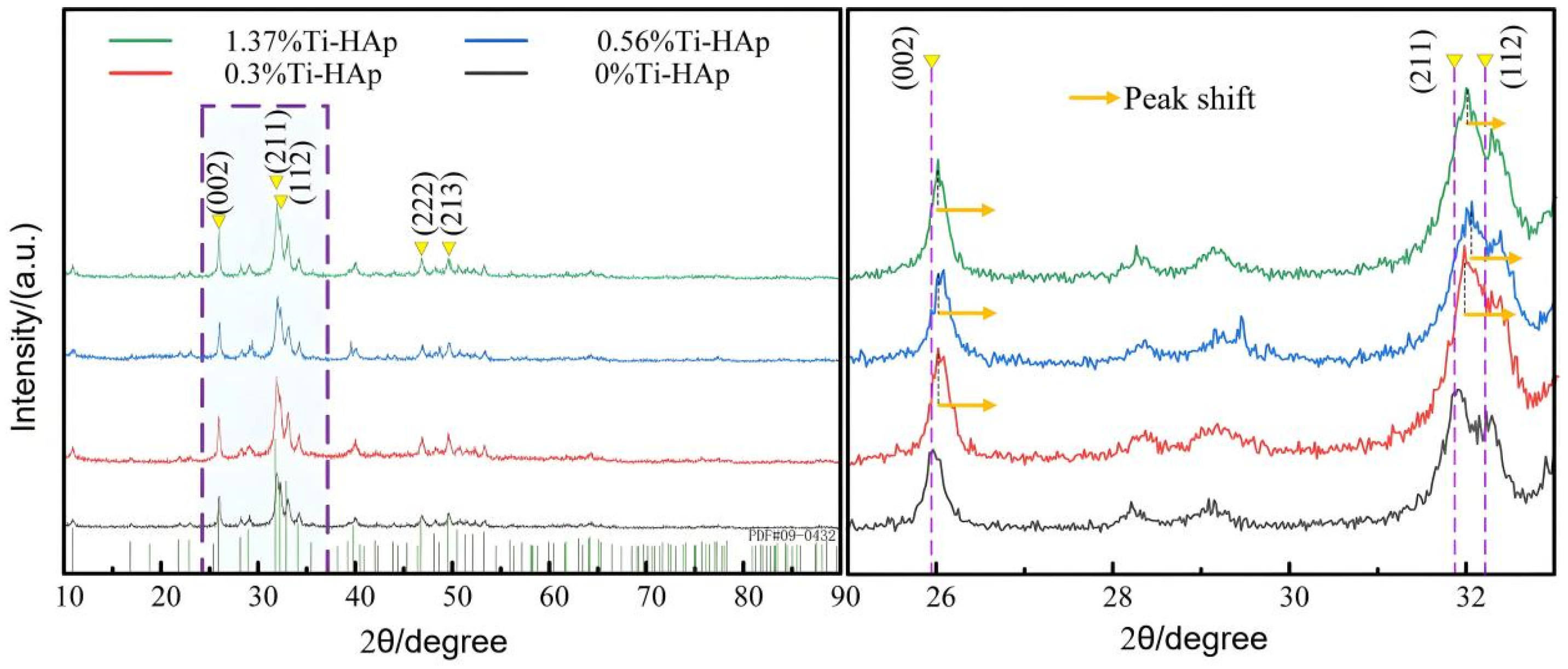
XRD analysis was performed on the Ti-HA nanopowder, and the results are shown in Figure 3. The diffraction peaks observed in the Ti-HA samples closely matched those of HA, as per the standard reference card (PDF#09-0432). Specifically, the peaks at 25.8°, 31.7°, and 32.2° corresponded to the crystal planes (002), (211), and (112), respectively, on the standard reference card [44]. The absence of a Ti diffraction peak indicates that the prepared Ti-HA mostly consists of a pure HA phase, with Ti likely present as small crystallites or amorphous phases within the HA lattice. When titanium (Ti) was added to HA, the characteristic peaks at 25.8° and 31.7° in the X-ray diffraction patterns of 0.3%Ti-HA, 0.56%Ti-HA, and 1.37%Ti-HA became sharper, indicating higher crystallinity compared to pure HA (0%Ti-HA). As the Ti doping content reaches 0.56% (mole ratio), the Ti-HA peaks at 25.8° and 31.7° shift clearly towards higher angles, suggesting a reduction in grain size at this level. According to the Scherrer formula (2), the grain size of HA is 293 (±43) Å. On the other hand, the grain sizes of 0.3%Ti-HA, 0.56%Ti-HA, and 1.37%Ti-HA are 209 (±44) Å, 187 (±32) Å, and 198 (±18) Å, respectively. This indicates that the addition of Ti leads to a decrease in the size of HA cells. Li et al. [45] found that the introduction of manganese ions results in a contraction of the crystal lattice and a reduction in the crystal parameter because the radius of Mn2+ (0.08 nm) is smaller than that of Ca2+ (0.100 nm). The ionic radius of Ti is 0.06 nm, which is also smaller than that of Ca. Consequently, the reduction in the size of HA crystals is due to the contraction of the crystal lattice resulting from the substitution of Ti ions for certain Ca ions [46]. In conclusion, the addition of titanium (Ti) enhances the crystallinity of HA nanoparticles, induces lattice contraction, and reduces the grain size of HA. In this study, 0.56% Ti-HA was synthesized and mixed with TiO2 powder to prepare a light-curable composite resin. XRD results confirmed that 0.56%Ti-HA possessed the smallest grain size. The refined hydroxyapatite grains improved their uniform dispersion within the photocurable composite resin, leading to enhanced mechanical properties [41].
D = Kλ/(βcosθ)
K is a constant; λ is the wavelength of X-rays; β is the half-height width of the diffraction peak; and θ is the diffraction angle.

3.2. Morphology and Composition Characterization of the TC4 Surface Coating

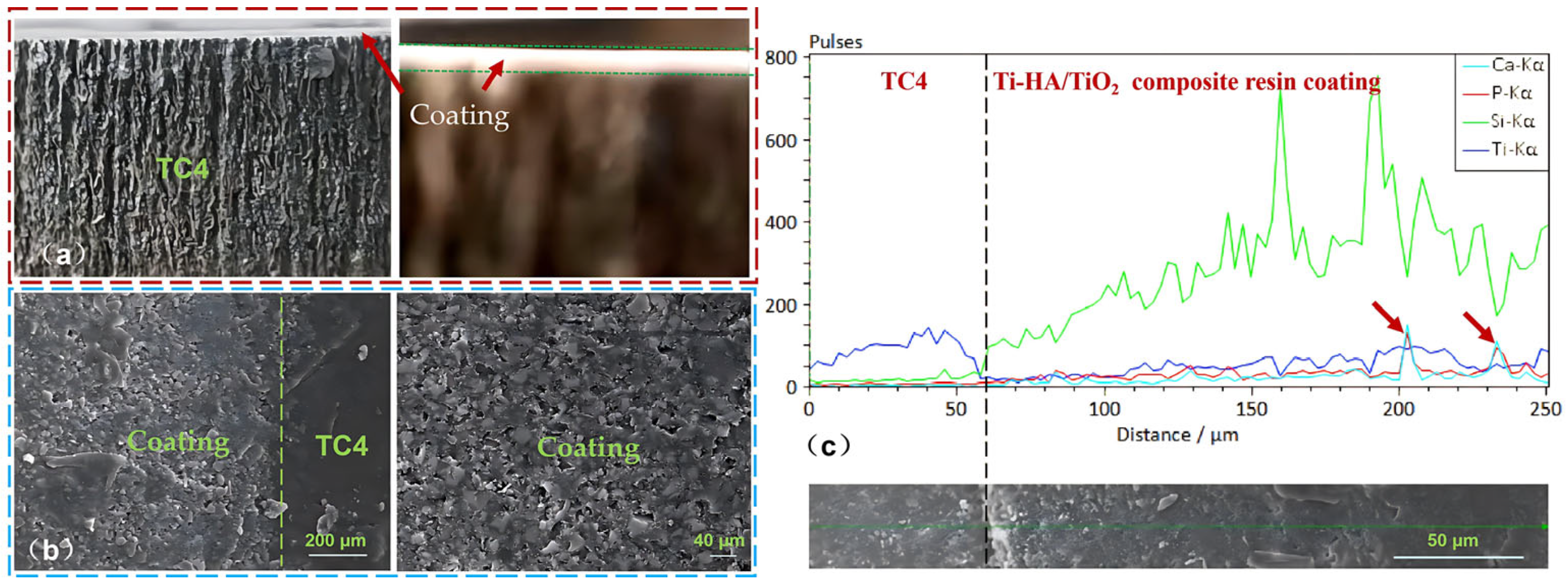
The Ti-HA/TiO2 photocurable composite resin was deposited on the surface of TC4 titanium alloy substrates via a coating and curing process. Figure 4 systematically characterizes the micromorphology and elemental composition distribution of the composite resin coating on the TC4 surface. Figure 4a shows the cross-sectional morphology of the coating on the TC4 substrate; it can be observed that a continuous white photocurable composite resin coating uniformly covers the TC4 substrate, with tight bonding at the coating-substrate interface, no obvious interface defects or interlayer peeling, and good interface compatibility. Figure 4b presents the surface micromorphology of the coating. Compared with the smooth and dense surface of the original TC4 titanium alloy, the Ti-HA/TiO2 composite resin coating exhibits a three-dimensionally interconnected porous structure. This porous structure can provide a suitable microenvironment for adhesion and for the spreading and proliferation of osteoblasts, promote the ingrowth of bone tissue and the deposition of extracellular matrix, and enhance the bioactivity and interface integration stability of the material [47]. Figure 4c shows the results of energy dispersive spectroscopy (EDS) analysis of the coating, indicating that the composite coating is mainly composed of Ti-HA, TiO2, and silicon-based barium glass phase. Distinct characteristic peaks of Ca and P are observed in the EDS spectrum. By introducing Ca and P bioactive ions into the coating, it can effectively simulate the inorganic mineral composition of natural bone, induce the heterogeneous nucleation and deposition of apatite, significantly enhance the osteoconductivity of the material, and accelerate the osseointegration process at the bone–implant interface [48].

3.3. Effect of Surface Microtexture on Adhesion of TC4 Coating

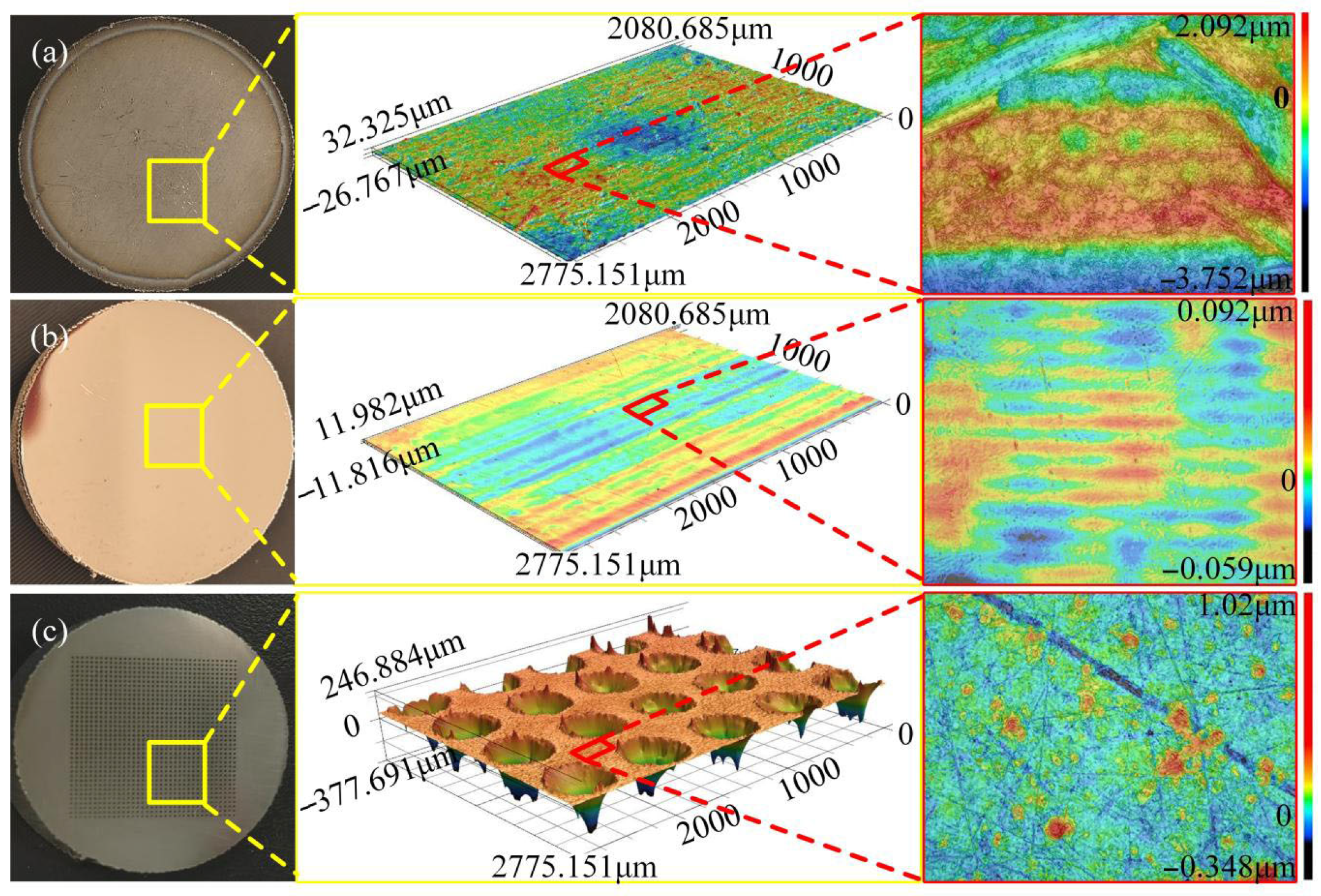
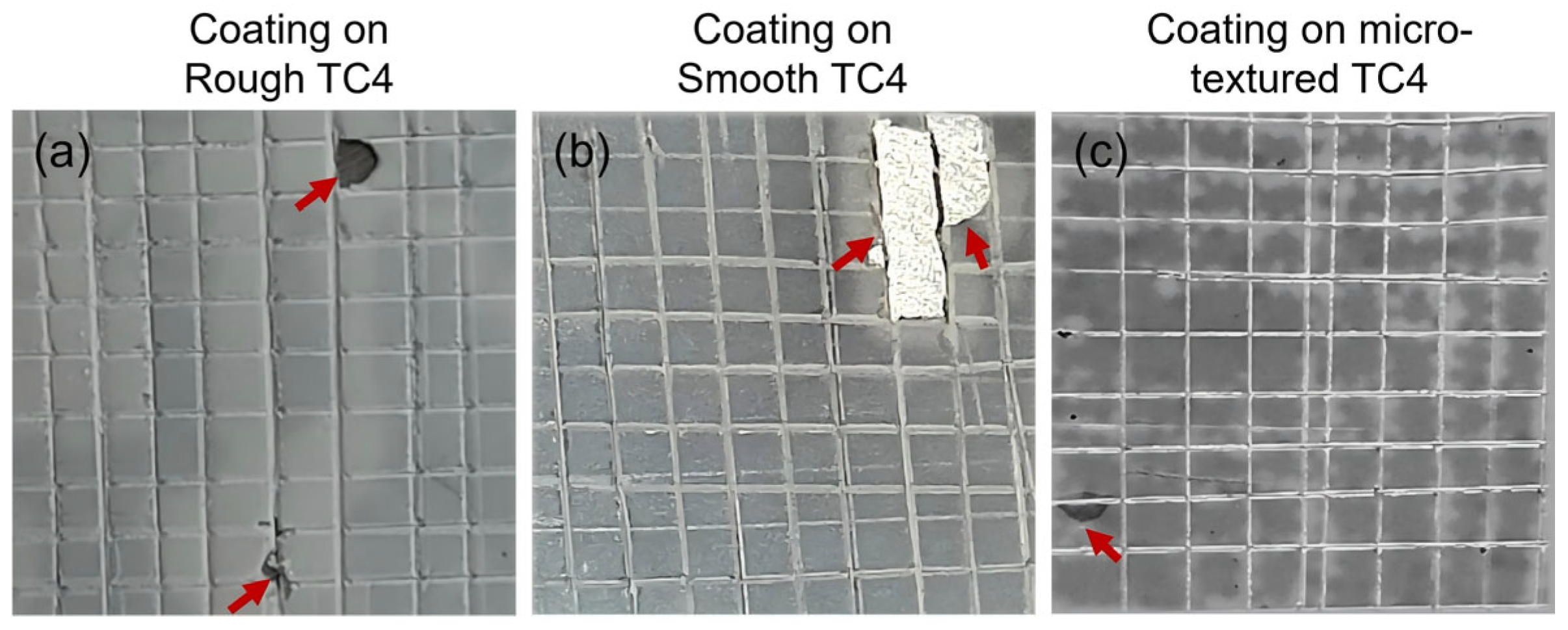
Coating adhesion is a critical factor determining the initial stability of implants and exerts a profound influence on the cellular response during the early stage of osseointegration [49]. High adhesion is the foundation for achieving strong interface bonding. To evaluate the reliability of light-curing composite resin coatings on different TC4 surfaces, this section compares the adhesion performance between the microtextured surface and smooth/rough TC4 surfaces, investigating how surface microtexturing affects coating adhesion. The results of the cross-cut test are shown in Figure 5. The coating on the rough TC4 surface exhibited small flakes at the intersection of the cuts and localized block damage within the grid area, with a damage area of approximately 2%. The coating on the smooth TC4 surface showed large-scale spalling along the cut edges, with entire grids detaching, corresponding to a damage area of about 6%. In contrast, the coating on the microtextured TC4 surface displayed smooth cut edges with only slight edge flaking, and the damage area was as low as 0.5%. These results confirm that the microtextured TC4 surface significantly improves coating adhesion. The contact area between the coating and the substrate was calculated by selecting a region measuring 277.864 μm × 2083.398 μm. Figure 5a shows that the rough TC4 surface exhibits micro-pits and irregular scratches, with software analysis revealing a surface area of approximately 5,804,313.739 μm2. Figure 5b demonstrates the mirror-like smooth TC4 surface with a surface area of about 11,353,505.559 μm2, representing a 48.9% reduction compared to the rough surface. Figure 5c reveals the microtextured sample’s surface area. The area measures 16,179,327.895 μm2, representing a 42.5% increase compared to the rough surface. Compared to the smooth surface, the protrusions and depressions on the rough surface lead to an increase in the resin-substrate contact area. When the same force is applied, the dispersed stress per unit area decreases, which results in stronger adhesion on the rough surface [50]. However, due to the uneven distribution of scratch depths on the rough surface, effective force dispersion is hindered, which limits adhesion improvement. In contrast, the microtextured surface has a larger resin-substrate contact area, with a uniform and orderly distribution of microtextures, which enables more uniform force dispersion during loading. This design enables the microtextured TC4 substrate to achieve superior adhesion performance.

3.4. Effect of Surface Coating on Biological Performance of TC4

In this study, the impact of various surface modification techniques on the antibacterial and remineralization properties of titanium alloy was explored by evaluating three distinct methods. The following groups of samples were used: TC4 coated samples, rough substrate, and smooth substrate. The aim is to evaluate the clinical application potential of this new TC4 coating.

3.4.1. Effect of Surface Coating on the Antibacterial Performance of TC4

To investigate the effect of Ti-HA/TiO2 composite resin coating on the antibacterial performance of TC4 titanium alloy, a direct contact test was conducted. A set of samples was immersed in BHI medium containing bacterial solution and co-cultured in a 24-well plate for 12 h. After removing the samples and rinsing them with PBS, the surface of the colonies was fixed, and their growth on the surface was observed using scanning electron microscopy (SEM).
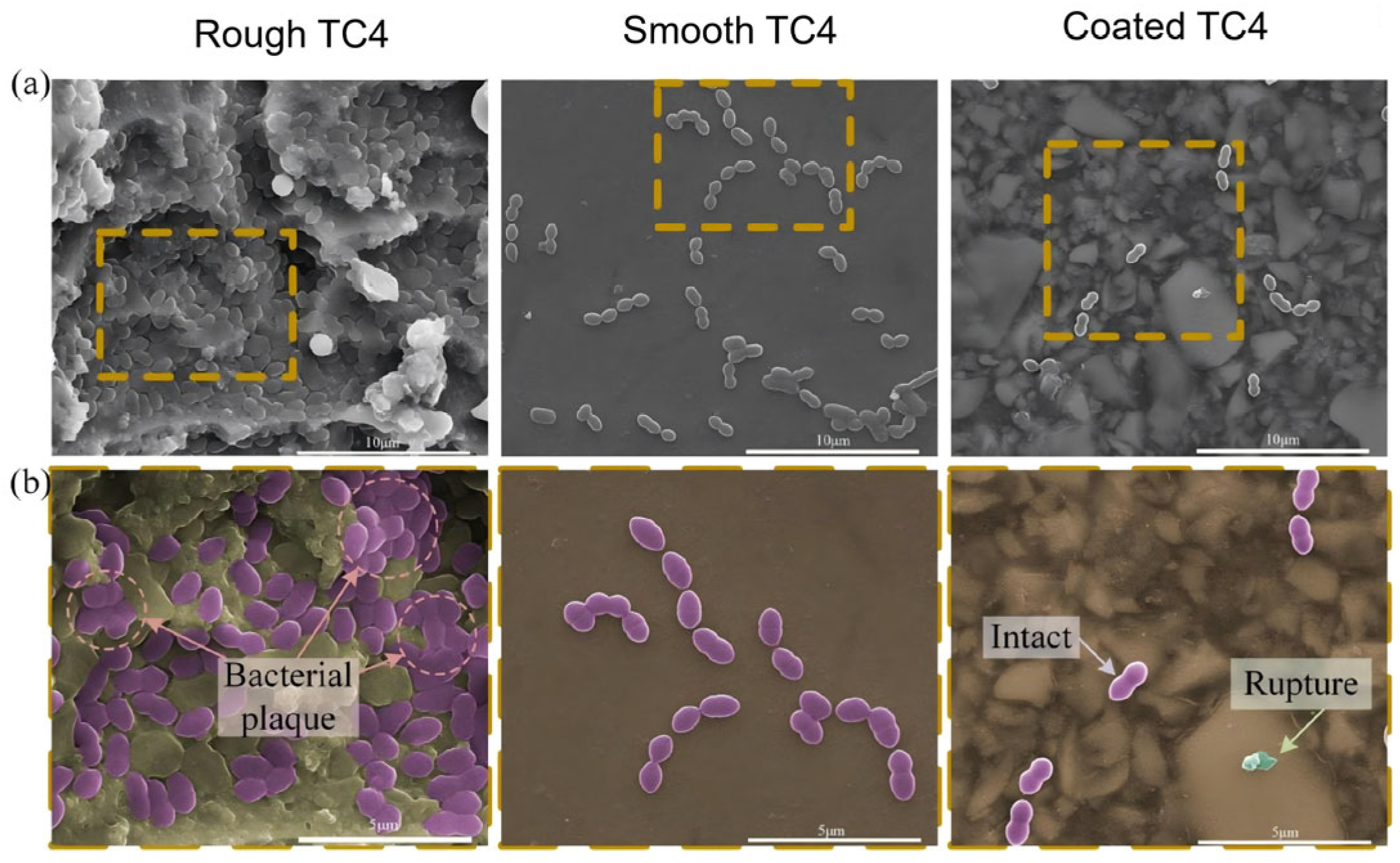
Figure 6 shows SEM images of bacterial adhesion and plaque biofilm morphology on different TC4 samples. As observed in Figure 6a, the rough TC4 surface exhibited the highest bacterial colony density, whereas the number of colonies was markedly reduced on the smooth TC4 surface and declined even further on the resin-coated specimens. Magnified observations in Figure 6b reveal dense plaque accumulation on the rough TC4 surface, while no obvious bacterial plaque aggregation appeared on the smooth surface, suggesting gradually weakened bacterial adhesion. These results confirm that decreasing surface roughness effectively inhibits the adhesion, aggregation, and biofilm formation of Streptococcus mutans on TC4 substrates. Moreover, only scattered individual bacteria were found on the coated TC4 surfaces, accompanied by partial bacterial lysis, which further verifies that the composite resin-coated TC4 samples possess significantly better antibacterial properties than the smooth TC4 specimens.
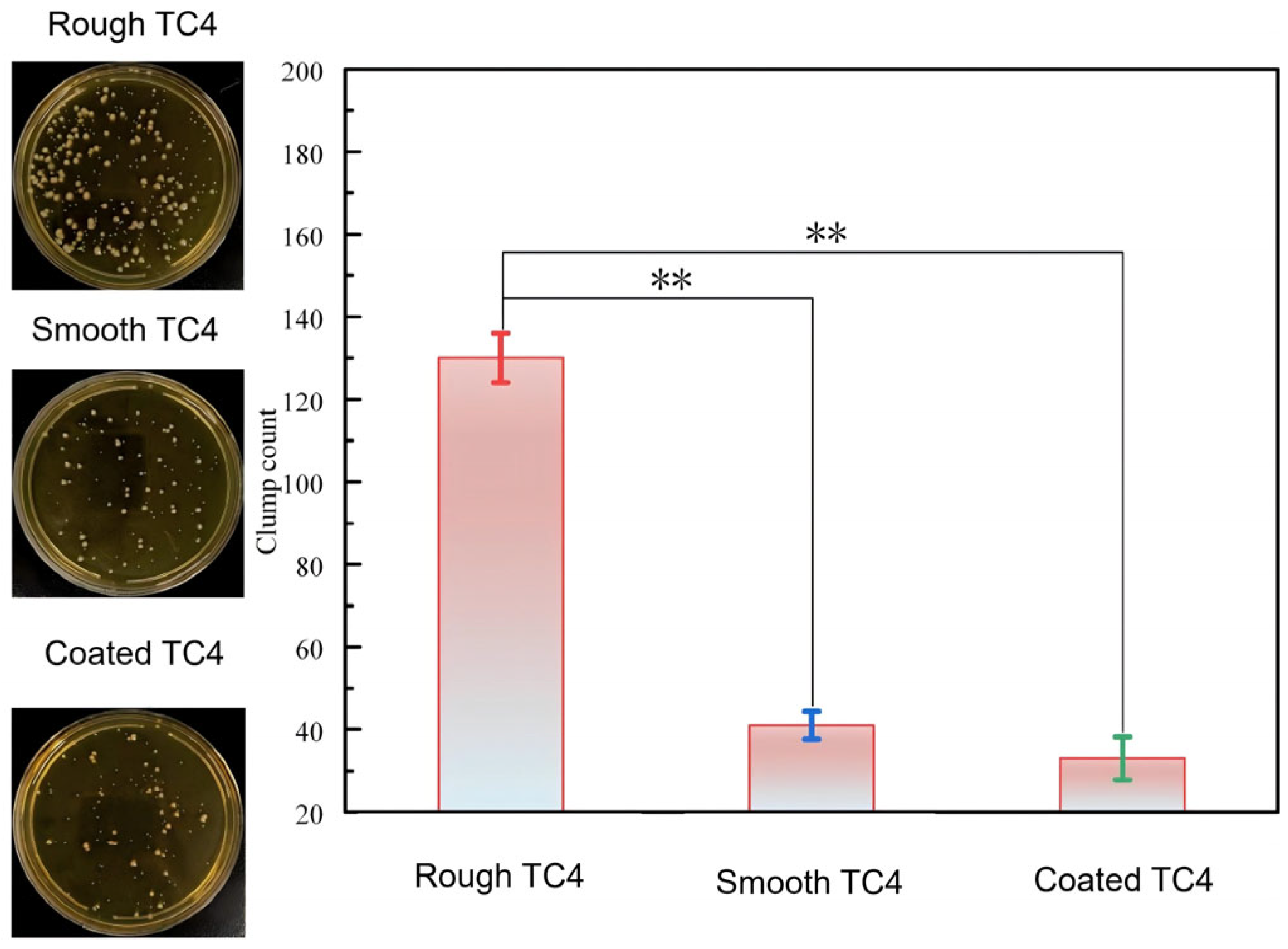
The antibacterial performance of TC4 titanium alloy is significantly influenced by surface morphology and coating modifications, as shown in Figure 7. Samples with rough TC4 surfaces exhibited the highest Staphylococcus mutans colony count (130 ± 6), whereas polished smooth TC4 surfaces exhibited a marked reduction to approximately 42 ± 3 colonies, achieving an antibacterial rate of 67.7%. This indicates that reduced surface roughness can inhibit biofilm formation by decreasing the number of bacterial adhesion sites. Notably, the Ti-HA/TiO2 composite resin-coated samples showed superior inhibitory effects against S. mutans compared to smooth TC4 surfaces, achieving an antibacterial rate of 74.6%. These results indicate that the Ti-HA/TiO2 composite coating effectively enhances the antibacterial properties of TC4.
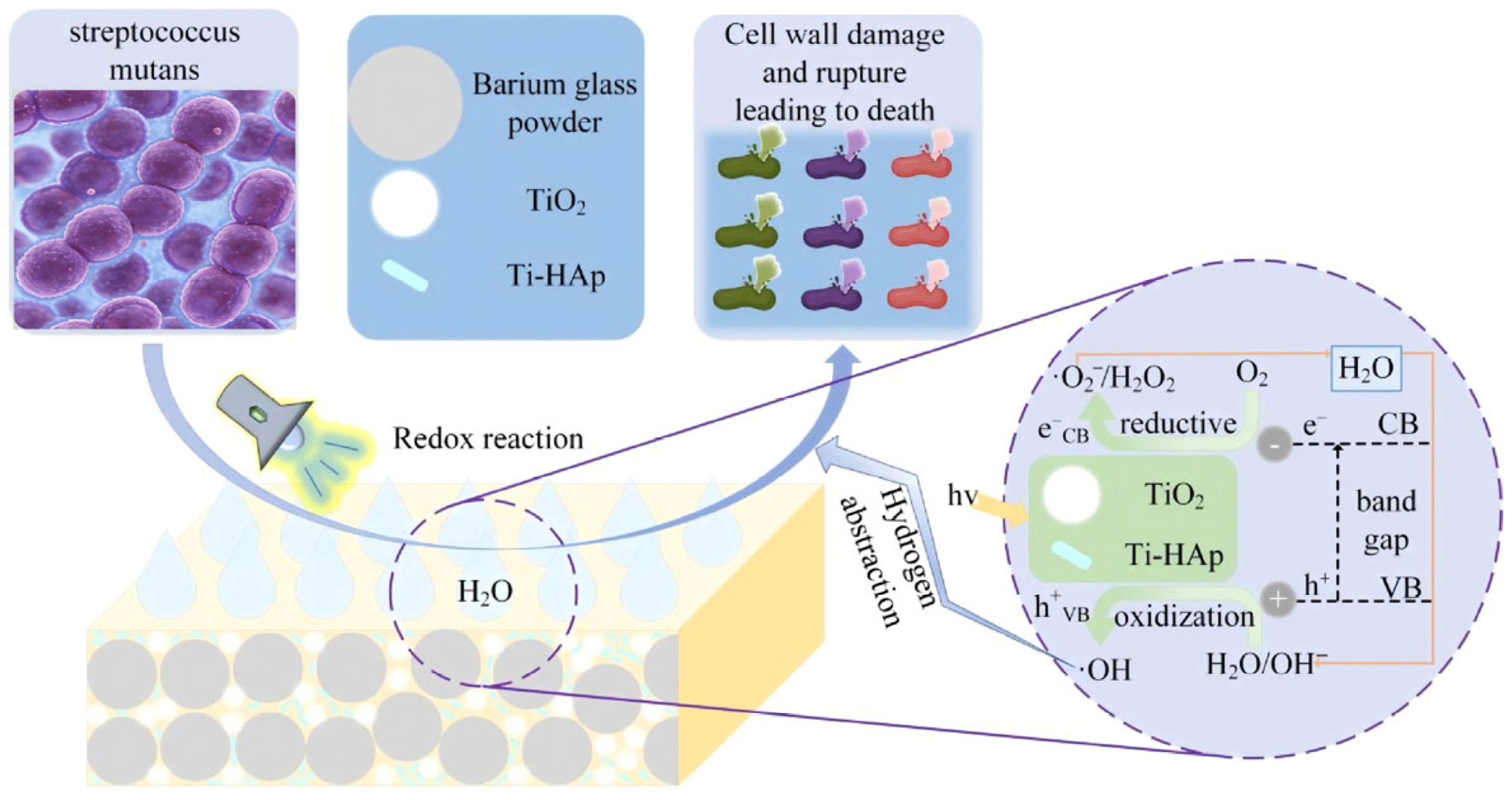
The photocatalytic synergistic effect of Ti-HA and TiO2 is the core factor in enhancing the antibacterial properties of composite resins. As shown in Figure 8, during the photocatalytic process, electrons in the valence band (VB) of TiO2 transition to the conduction band (CB), forming electrons (e) and positively charged holes (h+) in the valence band. The electrons (e) and holes (h+) undergo redox reactions with substances adsorbed on the TiO2 surface: electrons react with H2O adsorbed on the TiO2 surface to generate superoxide anion radicals (O2) and hydrogen peroxide (H2O2), while holes oxidize OH and water molecules to produce hydroxyl radicals (OH). The generated OH and O2 can both undergo addition reactions with unsaturated bonds of organic compounds and scavenge H atoms to generate new radicals, ultimately leading to bacterial decomposition by disrupting the bacterial cell wall structure [51]. Therefore, as the content of TiO2 increases, the antibacterial performance of the light-cured composite resin also improves. Additionally, the incorporation of Ti enhances the light absorption of HA, resulting in Ti-HA exhibiting properties similar to TiO2, thereby generating reactive oxygen species for synergistic antibacterial effects.

3.4.2. Effect of Surface Coating on TC4 Wetting

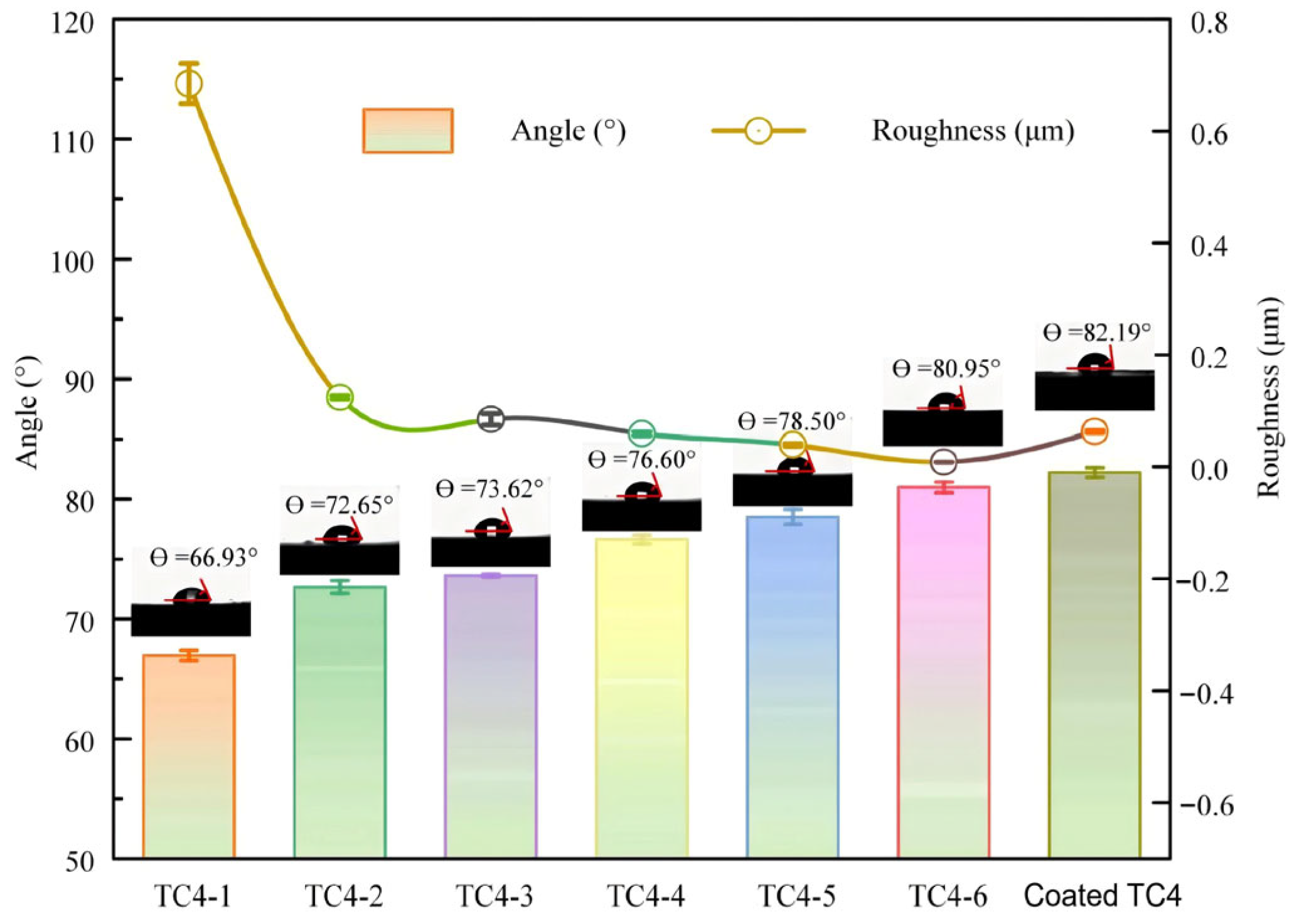
Wettability, a critical parameter that characterizes material surface properties, is typically quantified by the static water contact angle. When a water droplet forms a contact angle greater than 90° on a solid surface, the surface exhibits hydrophobic characteristics, as indicated by the contact angle. The value exhibits a positive correlation with hydrophobic performance. Owing to their high surface tension and low surface energy, hydrophobic surfaces can effectively reduce liquid wettability. This physical barrier mechanism achieves antibacterial effects through three pathways: (1) decreasing bacterial attachment sites required for biofilm formation; (2) hindering bacterial adhesion protein secretion at interfaces; (3) inhibiting microbial metabolite deposition [52]. Therefore, regulating the wettability of TC4 surfaces is crucial for reducing bacterial colonization and lowering infection risks. Notably, surface morphology has a significant impact on wettability. This section compares the wettability of TC4 samples with different surface roughness levels and resin-coated samples.
The TC4 samples were numbered in descending order of surface roughness: TC4-1, TC4-2, TC4-3, TC4-4, TC4-5, and TC4-6. As shown in Figure 9, TC4-1 exhibited the highest surface roughness of 0.685 μm, while TC4-6 exhibited the lowest surface roughness at 0.008 μm. The other titanium alloy samples (TC4-2, TC4-3, TC4-4, and TC4-5) showed surface roughness values of 0.124 μm, 0.085 μm, 0.059 μm, and 0.039 μm, respectively. The study indicated that the water contact angle increases as the surface roughness decreases. TC4-1 had the smallest water contact angle of 66.93°. With the decrease in surface roughness, the static water contact angle of TC4-2 rose to 72.65° in comparison to TC4-1. The static water contact angle of the titanium alloy surface increased progressively with decreasing roughness, peaking at 80.95° for the TC4-6 sample. Two theoretical models, the Wenzel model and the Cassie model, are widely recognized for explaining the wetting behavior of textured rough surfaces [53]. Given that all samples exhibited a surface roughness below 1 μm, allowing liquids to uniformly fill surface depressions, the Wenzel equation was utilized to characterize the correlation between surface wetting behavior and roughness. The relationship between surface contact angle θw and intrinsic contact angle θe is expressed by Equation (3) [53]:
cos θ w = r ( γ s v γ s l ) / γ L V = r cos θ e
Here, r represents the roughness factor, which indicates the ratio between the actual solid–liquid interface contact area and the apparent geometrically observed area. For the smooth surface TC4-6, the contact angle θe measures 80.95° (which is less than 90°). The textured scratches on the surfaces of samples TC4-1, TC4-2, TC4-3, TC4-4, and TC4-5 create undulations that expand the actual solid–liquid contact area, as evidenced by research on TC4 titanium alloy. The geometrically observed size leads to r > 1. Consequently, as surface roughness increases, r also increases, causing cosθw to rise and the surface contact angle θw to decrease. Reducing the surface roughness of TC4 decreases its wettability, which, in turn, improves the antibacterial performance of the smooth surface.
The surface roughness of the resin-coated TC4 is 0.063 μm, which is comparable to that of TC4-4; however, its water contact angle increases by 5.59° compared to TC4-4. This increase in the water contact angle of the TC4 coating is due to the modification of TiO2 and Ti-HA in the resin coating with methacryloyl silane coupling agent (KH570). KH570 introduces hydrophobic groups by substituting the hydrophilic -OH groups. This leads to a reduction in the bonding strength between the resin and water, resulting in an increased contact angle. This indicates that the resin coating can reduce the wettability of TC4, thereby enhancing the antibacterial properties of the titanium alloy. However, it should be noted that the water contact angles of all samples remain below 90°, suggesting that the sample surfaces still maintain hydrophilic properties. Studies have shown that moderate surface wettability, often characterized by hydrophilic properties, plays a crucial role in enhancing cell adhesion and bone integration, thereby significantly contributing to the biocompatibility of implant materials. Hence, how to strike a balance between antibacterial performance and biocompatibility during the surface modification of titanium alloys necessitates further investigation.

3.4.3. Effect of Surface Coating on the Bioactivity of TC4

The remineralization of bone implants contributes to restoring the mineral density of surrounding bone tissue, accelerating new bone formation, and enhancing direct bone–implant integration. This process enhances stability and prolongs implant lifespan. In this study, we utilized a method for characterizing osteoinductive apatite deposition in artificial saliva. By examining the surface mineralization behavior of TC4 specimens subjected to various surface treatments and immersed in artificial saliva for different time periods, we assessed their bioactivity in promoting osteoinductive apatite deposition.
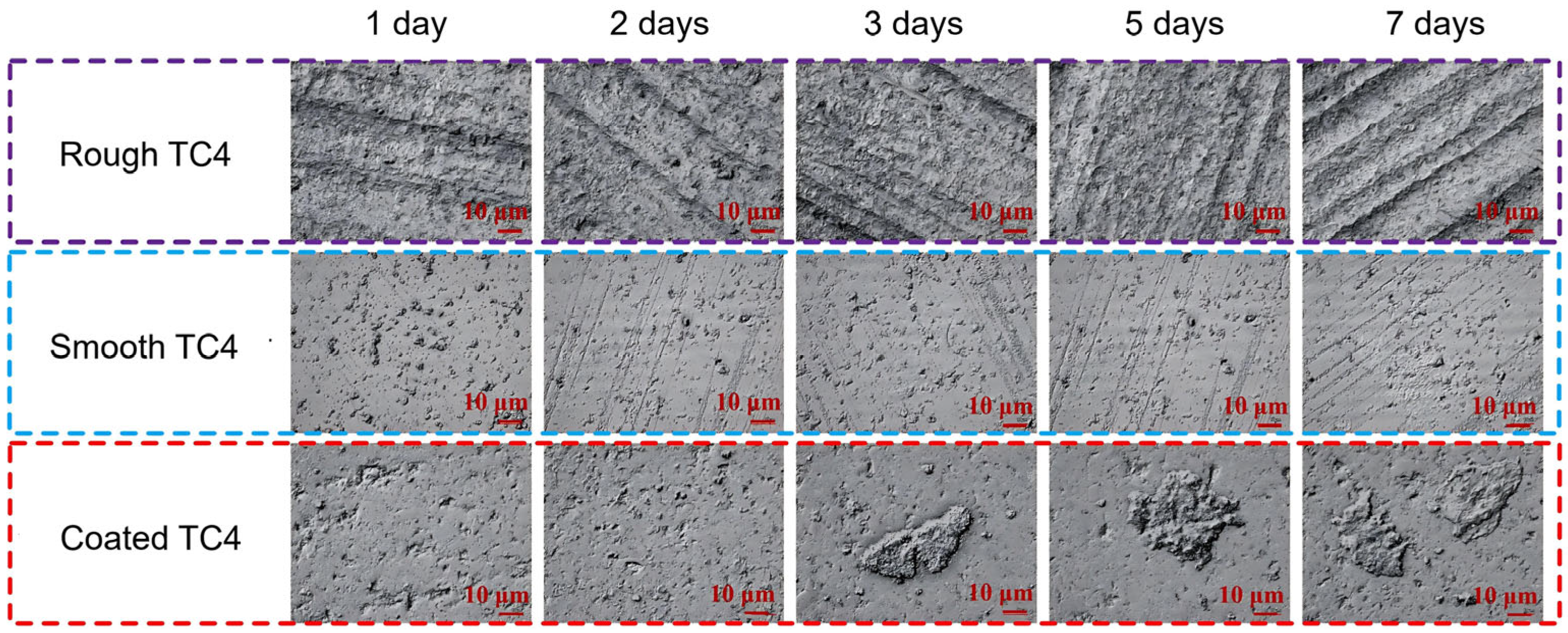
Figure 10 demonstrates the morphological characteristics of TC4 samples with rough, smooth, and coated surfaces when immersed in artificial saliva for different durations. After seven days of immersion, the rough and smooth surfaces exhibited no significant changes, and no mineralization deposits were observed. The coated surface exhibited noticeable mineralization deposits after 3 days, with the deposition area gradually expanding over extended immersion periods. The TC4 coating exhibits outstanding remineralization capability. The resin coating effectively enhanced the bioactivity of TC4 titanium alloy, expanding its application potential. The mineralization mechanism of the TC4 coating surface is attributed to a dual synergistic effect. First, Ti4+ ions in Ti-HA induce lattice substitution of Ca2+, causing local distortion in the HA crystal structure. This significantly reduces lattice stability and accelerates Ca2+ dissolution, creating a high-concentration Ca2+ gradient at the material interface that drives nucleation to occur. Secondly, the TiO2 nanophase generates a pH-dependent negative surface charge through hydroxylation, which facilitates the adsorption of Ca2+ via electrostatic interactions. This results in local charge inversion and coordinated enrichment of PO43− ions, ultimately enabling the biomimetic mineralization of HA [54].
The combined antibacterial and remineralization experiments demonstrate that the Ti-HA/TiO2 photocurable composite resin coating on TC4 matrix significantly enhances both antibacterial properties and remineralization capabilities, showing great potential for practical applications.
In this study, laser microtexturing technology was combined with modified composite resin coating technology to achieve the synergistic improvement of the adhesion, antibacterial property, and bioactivity of TC4 titanium alloy implants. The research confirmed that the adhesion of TC4 coatings was positively correlated with surface roughness. Microtextured surface treatment could greatly increase the contact area between the coating and the substrate, realize uniform stress distribution, and significantly improve coating adhesion, laying a solid foundation for the long-term stable service of the coating. Meanwhile, the Ti-HA/TiO2 composite resin coating enhanced antibacterial performance by virtue of the photocatalytic synergistic effect, thus greatly reducing the risk of implant infection. It also endowed TC4 titanium alloy with excellent remineralization capacity and favorable bioactivity, which could effectively promote bone–implant integration and improve implant stability. This study integrated a variety of characterization methods and classical test approaches to conduct a comprehensive multi-aspect analysis ranging from powder structure to coating performance and from physicochemical properties to biological functions. In addition, the coating preparation process was simple, controllable, and allowed for precise regulation of coating thickness, which was conducive to subsequent industrial production and clinical translation and provided a feasible technical approach for the surface modification of medical titanium alloys.

4. Conclusions

This study investigates the surface modification technology of applying photocurable composite resins as coatings on TC4 titanium alloys, with a focused analysis of its interface-reinforced preparation process and the resultant enhancement of biological activity on TC4 surfaces. This work aims to provide a solid theoretical foundation for realizing the antibacterial properties and biological activity of such coating systems in dental implant applications. The key findings are summarized as follows:
  • Coating adhesion strength increases with surface roughness. Microtextured surface treatment greatly enlarges the contact area between coating and substrate, resulting in more uniform stress distribution and improved adhesion.
  • TC4’s smooth surface shows better antibacterial performance than rough surfaces due to its increased water contact angle. The Ti-HA/TiO2 coating further boosts efficacy via photocatalytic synergy.
  • The Ti-HA/TiO2 resin coating significantly enhances the remineralization capacity of TC4, thereby endowing the titanium alloy with bioactivity.
The TC4 titanium alloy modified with a microtextured Ti-HA/TiO2 photocurable composite resin coating, with enhanced adhesion, antibacterial performance, and bioactivity, is suitable for dental implants, improving fixation stability, reducing infection risks, and promoting osseointegration to extend implant service life. This study confirms the composite coating’s good modification effect on TC4. Future research will optimize microtexture and coating preparation parameters; for instance, complex porous structures fabricated on titanium alloy implant surfaces via photocuring 3D printing may effectively enhance their osseointegration performance.

Author Contributions

Conceptualization, S.Z., C.Y. (Chao Yao), J.X. and C.Y. (Chun Yao); investigation, S.Z., C.Y. (Chao Yao), X.L., Y.Y., M.C., Y.K., Y.F., J.X. and C.Y. (Chun Yao); data curation, S.Z., C.Y. (Chao Yao), X.L., Y.Y., M.C. and Y.K.; funding acquisition, C.Y. (Chao Yao), J.X. and C.Y. (Chun Yao); methodology, S.Z. and J.X.; supervision, S.Z., C.Y. (Chun Yao), Y.F. and J.X.; validation, S.Z., C.Y. (Chao Yao), J.X. and C.Y. (Chun Yao); writing—original draft, S.Z., X.L. and C.Y. (Chao Yao); writing—review and editing, S.Z., J.X., C.Y. (Chun Yao) and C.Y. (Chao Yao). S.Z. and C.Y. (Chao Yao) contributed equally to this work. All authors have read and agreed to the published version of the manuscript.

Funding

This research was funded by the National Natural Science Foundation of China (52575210), the Postgraduate Research and Practice Innovation Program of Jiangsu Province (SJCX25-2529), the Zhenjiang First People’s Hospital Doctoral Initiation Fund Project (KFB2022005), the Medical Research Project of Jiangsu Provincial Health Commission (307), and the Jiangsu Provincial Preventive Society General Project (Ym2023093).

Institutional Review Board Statement

Not applicable.

Informed Consent Statement

Not applicable.

Data Availability Statement

The original contributions presented in the study are included in the article; further inquiries can be directed to the corresponding author.

Acknowledgments

The authors thank all reviewers for their remarkable guidance on this article.

Conflicts of Interest

The authors declare that they have no known competing financial interests or personal relationships that could have appeared to influence the work reported in this paper.

References

  1. Li, T.; Meng, Y.; Pan, Y.; Fu, X.; Sun, Y.; Liang, H. Functionalized Surface Micro/Nano-textures of Titanium-based Alloys for Bioimplant Applications: A Review. J. Mater. Eng. Perform. 2025. [Google Scholar] [CrossRef]
  2. Chen, L.; Tong, Z.; Luo, H.; Qu, Y.; Gu, X.; Si, M. Titanium particles in peri-implantitis: Distribution, pathogenesis and prospects. Int. J. Oral Sci. 2023, 15, 49. [Google Scholar] [CrossRef] [PubMed]
  3. Xue, B.; Miao, S.; Yuan, Y.; Geng, W.; Li, D.; Yang, C.; Zeng, J.; Cai, K.; Wei, H.; Bi, L.; et al. The effect of microgroove pattern modification combined with MOF coating on titanium alloy for the soft tissue integration of percutaneous Implants. Chem. Eng. J. 2024, 484, 149278. [Google Scholar] [CrossRef]
  4. Chen, C.; Feng, P.; Feng, F.; Zheng, Z.; Wang, J. Micro/nano-surface modification of titanium implant enhancing wear resistance and Biocompatibility. Int. J. Mech. Sci. 2024, 276, 109385. [Google Scholar] [CrossRef]
  5. Ma, X.; Shi, Q.; Huang, Y.; Liu, Y.; Yue, X. Microstructure and properties of TC4 titanium alloy Micro-arc oxide composite coating based on laser surface Texturing. Sci. Rep. 2025, 15, 9621. [Google Scholar] [CrossRef]
  6. Ji, M.; Zhang, S.; Qiu, J.; Liu, G.; Guo, F.; Xu, J.; Chen, M. Enhanced tribological properties and Cyto-biocompatibility of dental Ti6Al4V alloy via laser surface Texturing. J. Mater. Res. Technol. 2024, 33, 4105–4115. [Google Scholar] [CrossRef]
  7. Zhou, Z.; Cai, K.; Shen, J.; Cai, L.; Dai, B.; Wang, Z.; Ma, P.; Liu, J.; Shen, X. Fabrication and biological assessment of Halloysite-doped micro/nano structures on titanium Surface. Ceram. Int. 2023, 49, 8886–8896. [Google Scholar] [CrossRef]
  8. Wang, C.; Tian, P.; Cao, H.; Sun, B.; Yan, J.; Xue, Y.; Lin, H.; Ren, T.; Han, S.; Zhao, X. Enhanced Biotribological and Anticorrosion Properties and Bioactivity of Ti6Al4V Alloys with Laser Texturing. ACS Omega 2022, 7, 31081–31097. [Google Scholar] [CrossRef]
  9. Zhang, Y.; Du, X.; Wang, C.; Zhang, G. Tribological properties of titanium alloy with Micro-nano multiscale texturing against bone under simulated implant contact Conditions. Tribol. Int. 2024, 194, 109586. [Google Scholar] [CrossRef]
  10. Pratap, T.; Patra, K. Tribological performances of symmetrically micro-textured Ti-6Al-4V alloy for hip joint. Int. J. Mech. Sci. 2020, 182, 105736. [Google Scholar] [CrossRef]
  11. Yang, Z.; Zhu, C.; Zheng, N.; Le, D.; Zhou, J. Superhydrophobic surface preparation and wettability transition of titanium alloy with micro/nano hierarchical texture. Materials 2018, 11, 2210. [Google Scholar] [CrossRef]
  12. Patil, D.; Aravindan, S.; Kaushal Wasson, M.; P., V.; Rao, P.V. Fast fabrication of superhydrophobic titanium alloy as antibacterial surface using nanosecond laser texturing. J. Micro-Nano-Manuf. 2018, 6, 011002. [Google Scholar] [CrossRef]
  13. Singh, S.P.; Rani, P.; Patra, K. Bioinspired Micro-texturing of T-i6Al-4V for enhanced tribological, cytocompatibility, and antibacterial Performances. J. Mater. Sci. 2025, 61, 1331–1356. [Google Scholar]
  14. Aydin, B.K.; Michael, G. Electrochemical behavior of additively manufactured patterned titanium alloys under simulated normal, inflammatory, and severe inflammatory conditions. J. Mater. Res. Technol. 2023, 26, 356–370. [Google Scholar] [CrossRef]
  15. Liu, W.; Liu, S.; Wang, L. Surface Modification of Biomedical Titanium Alloy: Micromorphology, Microstructure Evolution and Biomedical Applications. Coatings 2019, 9, 249. [Google Scholar] [CrossRef]
  16. Priyanka, C.P.; Sudeep, U.; Keerthi Krishnan, K.; Ramachandran, K. Surface characterisation and in vitro osteogenic and bacterial adhesion assays of laser treated and hydroxyapatite coated Ti6Al4V bioimplant Surfaces. Mater. Today Commun. 2024, 39, 108802. [Google Scholar] [CrossRef]
  17. Kylychbekov, S.; Allamyradov, Y.; Khuzhakulov, Z.; Majidov, I.; Banga, S.; ben Yosef, J.; Duta, L.; Er, A.O. Bioactivity and Mechanical Properties of Hydroxyapatite on Ti6Al4V and Si(100) Surfaces by Pulsed Laser Deposition. Coatings 2023, 13, 1681. [Google Scholar] [CrossRef]
  18. Demnati, I.; Parco, M.; Grossin, D.; Fagoaga, I.; Drouet, C.; Barykin, G.; Combes, C.; Braceras, I.; Goncalves, S.; Rey, C. Hydroxyapatite coating on titanium by a low energy plasma spraying mini-gun. Surf. Coat. Technol. 2012, 206, 2346–2353. [Google Scholar]
  19. Xu, Z.; Jiang, X. Promising Corrosion-resistant and pre-osteoblast growth promotion performance in vitro of hydroxyapatite/TiO2 nano-porous composite Coatings. J. Alloys Compd. 2021, 881, 160505. [Google Scholar] [CrossRef]
  20. Dhiflaoui, H.; Ben Salem, S.; Salah, M.; Dabaki, Y.; Chayoukhi, S.; Gassoumi, B.; Hajjaji, A.; Larbi, A.B.C.; Amlouk, M.; Benhayoune, H. Influence of TiO2 on the Microstructure, Mechanical Properties and Corrosion Resistance of Hydroxyapatite HA + TiO2 Nanocomposites Deposited Using Spray Pyrolysis. Coatings 2023, 13, 1283. [Google Scholar] [CrossRef]
  21. Abbasloo, S.; Mozammel, M.; Roghani-Mamaqani, H.; Khani, M.-M.; Khodabakhsh, M.H. Comparative study of calcium phosphate formation on Sol-gel and solid-state synthesized calcium titanate Surfaces. J. Sol-Gel Sci. Technol. 2024, 111, 430–442. [Google Scholar]
  22. Noviyanti, A.R.; Asyiah, E.N.; Permana, M.D.; Dwiyanti, D.; Suryana; Eddy, D.R. Preparation of Hydroxyapatite-Titanium Dioxide Composite from Eggshell by Hydrothermal Method: Characterization and Antibacterial Activity. Crystals 2022, 12, 1599. [Google Scholar] [CrossRef]
  23. Singh, H.; Rana, P.K.; Singh, J.; Singh, S.; Prakash, C.; Królczyk, G. Plasma Spray Deposition of HA–TiO2 Composite Coating on Ti–6Al–4V Alloy for Orthopedic Applications. In Advances in Materials Processing; Springer: Singapore, 2020; pp. 13–20. [Google Scholar]
  24. Ahmadi, R.; Afshar, A. In vitro study: Bond strength, electrochemical and biocompatibility evaluations of TiO2/Al2O3 reinforced hydroxyapatite sol–gel coatings on 316L SS. Surf. Coat. Technol. 2021, 405, 126594. [Google Scholar] [CrossRef]
  25. Mohammed, M.T.; Lafta, A.H.; Mohammed, F.Q. Surface Characterization of Pure and Composite Sol-gel Nano-coatings Deposited on 316L Stainless Steel for Hard Tissue Replacements. Mater. Res. 2023, 26, e20220479. [Google Scholar] [CrossRef]
  26. Xie, J.; Luan, B.L.; Wang, J.; Liu, X.Y.; Rorabeck, C.; Bourne, R. Novel hydroxyapatite coating on new porous titanium and titanium-HDPE composite for hip implant. Surf. Coat. Technol. 2008, 202, 2960–2968. [Google Scholar] [CrossRef][Green Version]
  27. Utku, F.S.; Seckin, E.; Goller, G.; Tamerler, C.; Urgen, M. Electrochemically designed interfaces: Hydroxyapatite coated macro-mesoporous titania surfaces. Appl. Surf. Sci. 2015, 350, 62–68. [Google Scholar] [CrossRef]
  28. Hou, C.; An, J.; Zhao, D.; Ma, X.; Zhang, W.; Zhao, W.; Wu, M.; Zhang, Z.; Yuan, F. Surface Modification Techniques to Produce Micro/Nano-scale Topographies on Ti-Based Implant Surfaces for Improved Osseointegration. Front. Bioeng. Biotechnol. 2022, 10, 835008. [Google Scholar] [CrossRef] [PubMed]
  29. Zhou, W.; Liang, J.; Huang, X.; Weir, M.D.; Masri, R.; Oates, T.W.; Xu, H.H.; Cheng, L. Novel antibacterial titanium implant healing abutment with dimethylaminohexadecyl methacrylate to combat implant-related infections. Dent. Mater. 2024, 40, 244–253. [Google Scholar] [CrossRef] [PubMed]
  30. Li, Y.; Zhou, H.; Huang, X.; Liu, J.; Tan, Y.; Liu, C.; Zhao, P. Research Progress of High Performance and Functional Photocurable Resins Derived from Biomass. Macromol. Chem. Phys. 2025, 227, e00319. [Google Scholar] [CrossRef]
  31. Patil, R.S.; Thomas, J.; Patil, M.; John, J. To Shed Light on the UV Curable Coating Technology: Current State of the Art and Perspectives. J. Compos. Sci. 2023, 7, 513. [Google Scholar] [CrossRef]
  32. Li, L.; Zhang, Z.; Wang, M.; Zhang, Y.; Lu, X. UV-curable epoxy acrylate composite coatings with high flexibility, super-hydrophobicity, wear-resistance and self-healing Property. Prog. Org. Coat. 2023, 182, 107649. [Google Scholar] [CrossRef]
  33. Ribas-Massonis, A.; Cicujano, M.; Duran, J.; Besalú, E.; Poater, A. Free-Radical Photopolymerization for Curing Products for Refinish Coatings Market. Polymers 2022, 14, 2856. [Google Scholar] [CrossRef]
  34. Liu, H.; Huang, Y.; Zhang, Y.; Xie, Z.; Wang, B.; Wang, B. A UV-curable silicone acrylate anti-smudge coating containing tertiary amines and Ti with the ability to prevent oxygen Inhibition. Prog. Org. Coat. 2024, 195, 108686. [Google Scholar] [CrossRef]
  35. Chen, T.; Zhong, R.; Wang, Z. Preparation, Characterization, and Properties of UV-Curable Coating Doped with Nano-SiO2. Materials 2023, 16, 7576. [Google Scholar] [CrossRef] [PubMed]
  36. Cao, W.; Zhu, H. A Study on the Application Performance of High-Aspect-Ratio Nano-Ettringite in Photocurable Resin Composites. Materials 2024, 17, 3492. [Google Scholar] [CrossRef]
  37. Jha, A.; Padhihary, S.; Biswas, A. Structural and biological characterization of high silica Bioglass-chitosan composite coating on Ti6Al4V Alloy. Mater. Chem. Phys. 2025, 340, 130714. [Google Scholar] [CrossRef]
  38. Hajilou, S.; Zajkani, E.; Naghili, A. Effect of a Resin Coating Material on the Microleakage of Class V Restorations with or Without Post-Operative Bleaching. Pesqui. Bras. Odontopediatria Clínica Integr. 2020, 20, e0015. [Google Scholar] [CrossRef]
  39. Kawamura, N.; Iijima, M.; Ito, S.; Brantley, W.A.; Alapati, S.B.; Muguruma, T.; Kawaguchi, K.; Saito, T.; Mizoguchi, I. Wear characteristics and inhibition of enamel demineralization by resin-based coating Materials. Eur. J. Oral Sci. 2017, 125, 160–167. [Google Scholar] [CrossRef]
  40. Roscoe, M.G.; McSweeney, J.; Addison, O. Pre-cementation treatment of glass-ceramics with vacuum impregnated resin Coatings. Dent. Mater. 2023, 39, 492–496. [Google Scholar] [CrossRef] [PubMed]
  41. Li, X.; Yao, C.; Shen, J.; Zhu, S.; Kong, Y.; Yao, C.; Zhou, Y.; Xia, J. The Impact of Titanium Hydroxyapatite Doping on the Mechanical and Biological Properties of Photocured Resin. Micromachines 2024, 15, 1040. [Google Scholar] [CrossRef] [PubMed]
  42. ASTM D3359-23; Tape Test Methods for Measuring Adhesion. ASTM: West Conshohocken, PA, USA, 2023.
  43. Utamaningyas, A.; Pramesti, H.T.; Balafif, F.F. The Streptococcus mutans ability to survive in biofilms and during dental caries formation: Scoping review. J. Syiah Kuala Dent. Soc. 2023, 7, 150–158. [Google Scholar] [CrossRef]
  44. Karunakaran, G.; Cho, E.B.; Kumar, G.S.; Kolesnikov, E.; Janarthanan, G.; Pillai, M.M.; Rajendran, S.; Boobalan, S.; Sudha, K.G.; Rajeshkumar, M.P. Mesoporous Mg-doped hydroxyapatite nanorods prepared from bio-waste blue mussel shells for implant applications. Ceram. Int. 2020, 46, 28514–28527. [Google Scholar] [CrossRef]
  45. Li, C.Y.; Ding, Z.Y.; Han, Y.C. In vitro Antibacterial and Osteogenic Properties of Manganese Doped Nano Hy-droxyapatite. J. Inorg. Mater. 2024, 39, 313–320. [Google Scholar] [CrossRef]
  46. Wang, L.L.; Wang, X.F.; Jiang, H.T.; Wang, C. Effect of titanium addition on phase stability and grain size of hydroxyapatite. J. Funct. Mater. 2015, 46, 19052–19055. [Google Scholar]
  47. Wathanyu, K.; Tuchinda, K.; Daopiset, S.; Sirivisoot, S. Corrosion resistance and biocompatibility of cold-sprayed titanium on 316L stainless steel. Surf. Coat. Technol. 2022, 445, 128721. [Google Scholar] [CrossRef]
  48. Wen, X.; Liu, Y.; Xi, F.; Zhang, X.; Kang, Y. Micro-arc oxidation (MAO) and its potential for improving the performance of titanium implants in biomedical applications. Front. Bioeng. Biotechnol. 2023, 11, 1282590. [Google Scholar] [CrossRef]
  49. Yakupov, S.N.; Gubaidullin, R.I. Rigidity, adhesion and delamination of the coating in the “substrate-coating” system. Struct. Mech. Eng. Constr. Build. 2022, 18, 204–214. [Google Scholar] [CrossRef]
  50. Croll, S.G. Surface roughness profile and its effect on coating adhesion and corrosion protection: A review. Prog. Org. Coat. 2020, 148, 105847. [Google Scholar] [CrossRef]
  51. Liu, Y.; Guo, H.; Zhang, Z.; Zhu, Y. Hydration mechanism and photocatalytic antibacterial performance of cement-based composites modified by hydrophilic nano-TiO2 particles. Constr. Build. Mater. 2024, 419, 135538. [Google Scholar] [CrossRef]
  52. Campoccia, D.; Montanaro, L.; Arciola, C.R. A review of the biomaterials technologies for infection-resistant surfaces. Biomaterials 2013, 34, 8533–8554. [Google Scholar] [CrossRef]
  53. Li, Z.; Guo, Z. Bioinspired surfaces with wettability for antifouling application. Nanoscale 2019, 11, 22636–22663. [Google Scholar] [CrossRef] [PubMed]
  54. Muhriz, M.A.; Niazy, M.A.; Elsharkawy, D.A. Remineralizing effect of nanofilled glass ionomer combined with titanium dioxide nanoparticle and nanohydroxyapatite in root caries-like lesions. Al-Azhar Dent. J. Girls 2020, 7, 179–187. [Google Scholar] [CrossRef]
Figure 3. XRD patterns of various Ti-HA powders.
Coatings 16 00475 g003
Figure 4. Morphology and composition of the TC4 surface coating. (a) Cross-sectional morphology of the coating; (b) morphology of the TC4 surface coating; (c) elemental distribution of the coating.
Coatings 16 00475 g004
Figure 5. Adhesion of coating on different TC4 surfaces. (a) Adhesion of coating on the rough TC4; (b) Adhesion of coating on the smooth TC4; (c) Adhesion of coating on the microtextured TC4.
Coatings 16 00475 g005
Figure 6. Comparative analysis of colony growth on various TC4 samples. (a) Microscopic images of colonies at 5000× magnification; (b) microscopic images of colonies at 10,000× magnification.
Coatings 16 00475 g006
Figure 7. Antibacterial performance of various TC4 samples (n = 3, ** p < 0.01).
Coatings 16 00475 g007
Figure 8. Synergistic antibacterial principle of Ti-HA and TiO2.
Coatings 16 00475 g008
Figure 9. Differences in water contact angles on different TC4 surfaces.
Coatings 16 00475 g009
Figure 10. Surface morphologies of TC4 on different surfaces after immersion in artificial saliva for different times.
Coatings 16 00475 g010
Disclaimer/Publisher’s Note: The statements, opinions and data contained in all publications are solely those of the individual author(s) and contributor(s) and not of MDPI and/or the editor(s). MDPI and/or the editor(s) disclaim responsibility for any injury to people or property resulting from any ideas, methods, instructions or products referred to in the content.