
Plasmid-Mediated Spread of Antibiotic Resistance by Arsenic and Microplastics During Vermicomposting



Abstract
1. Introduction
2. Results
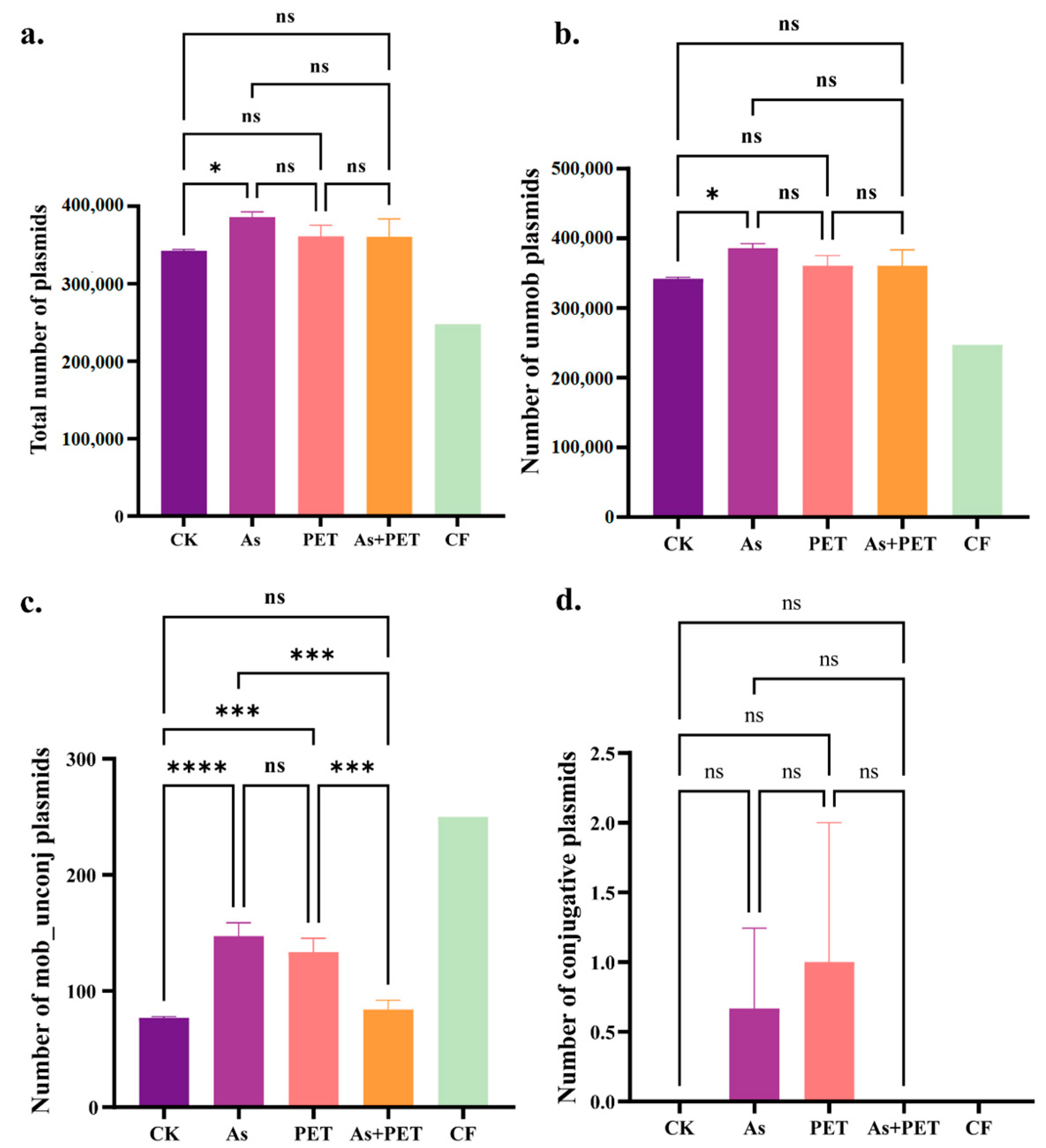
2.1. Effects of Different Treatments on Plasmid Dynamics During Vermicomposting
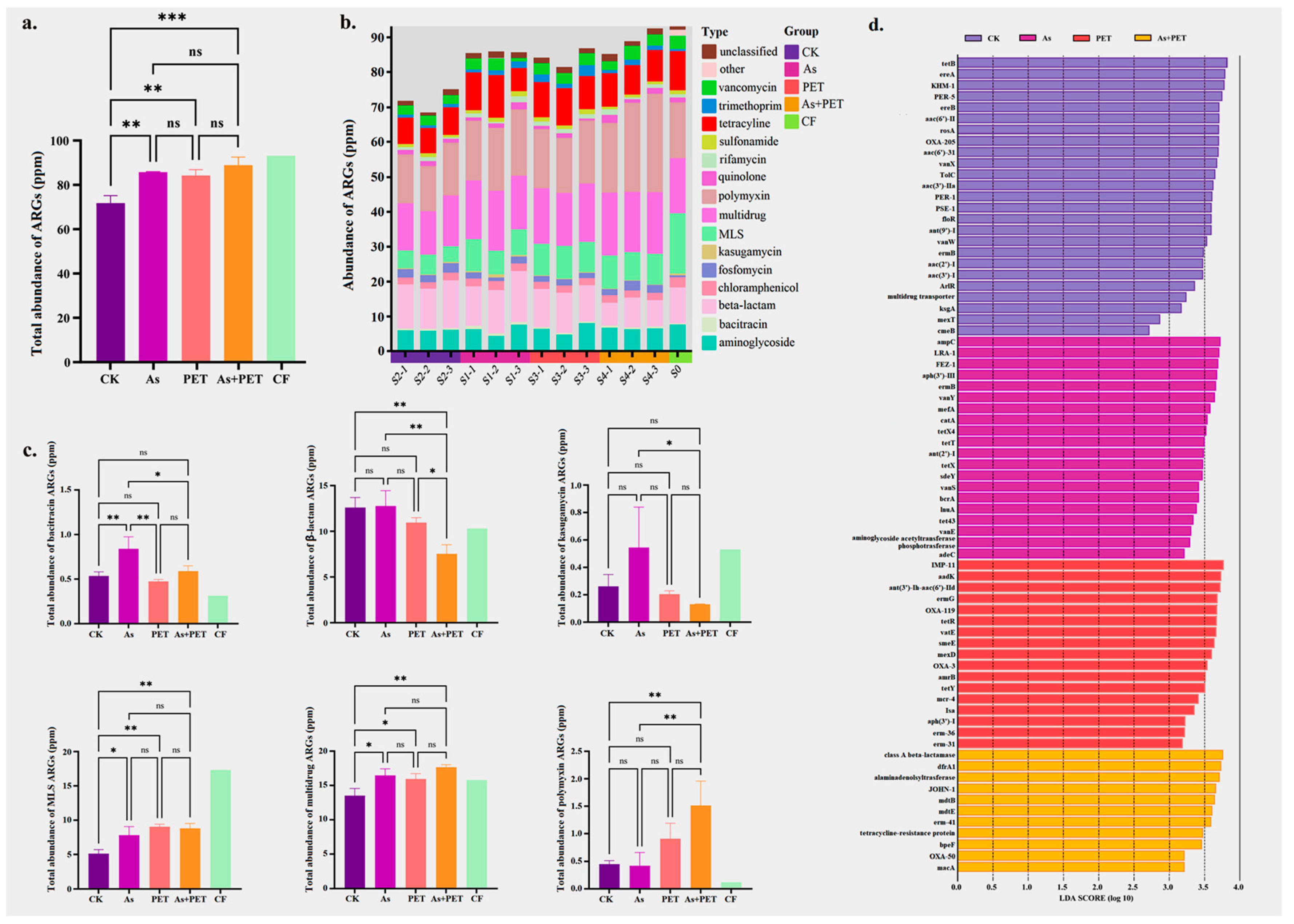
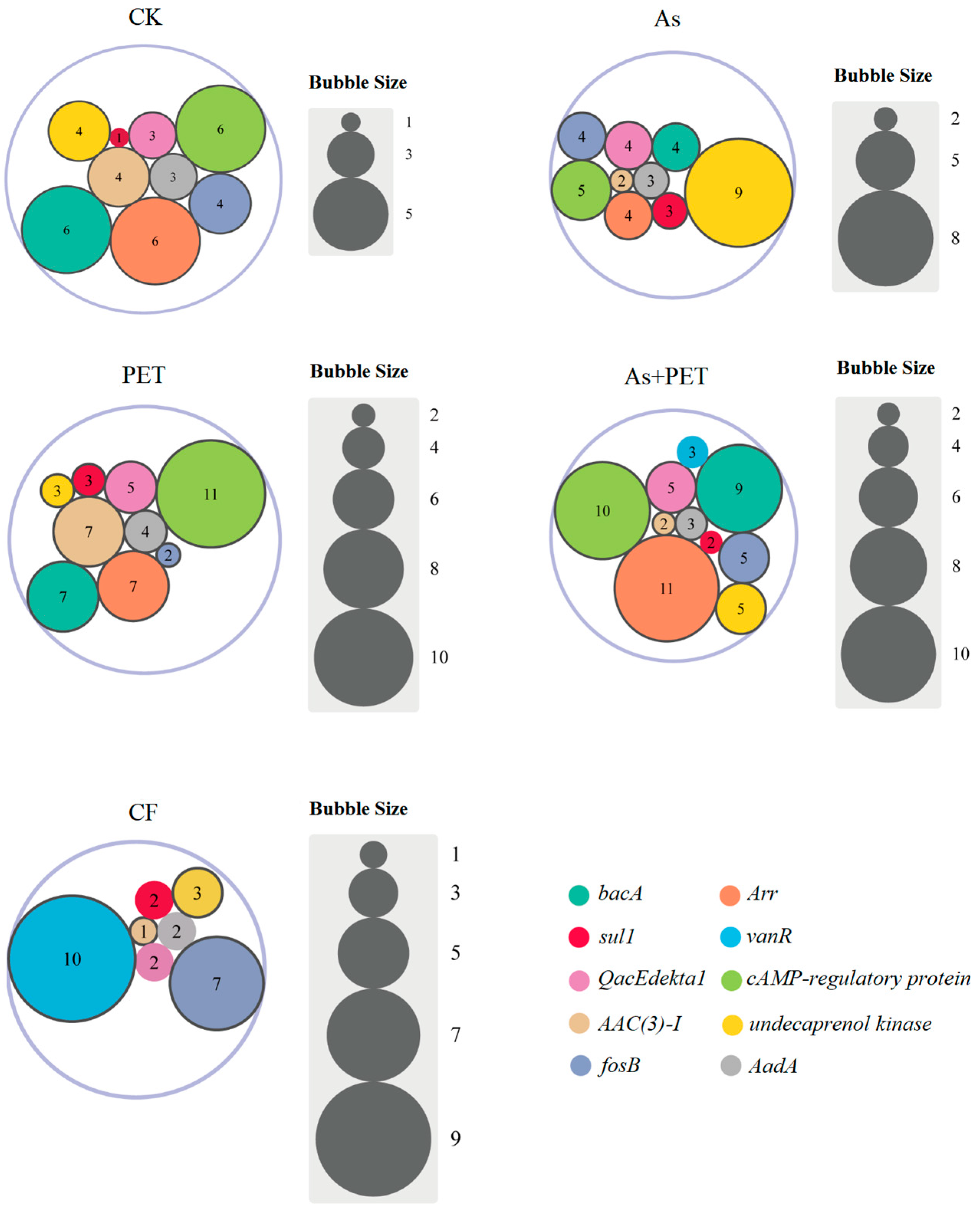
2.2. Enrichment of Plasmid-Associated ARGs by As and PET During Cattle Manure Vermicomposting
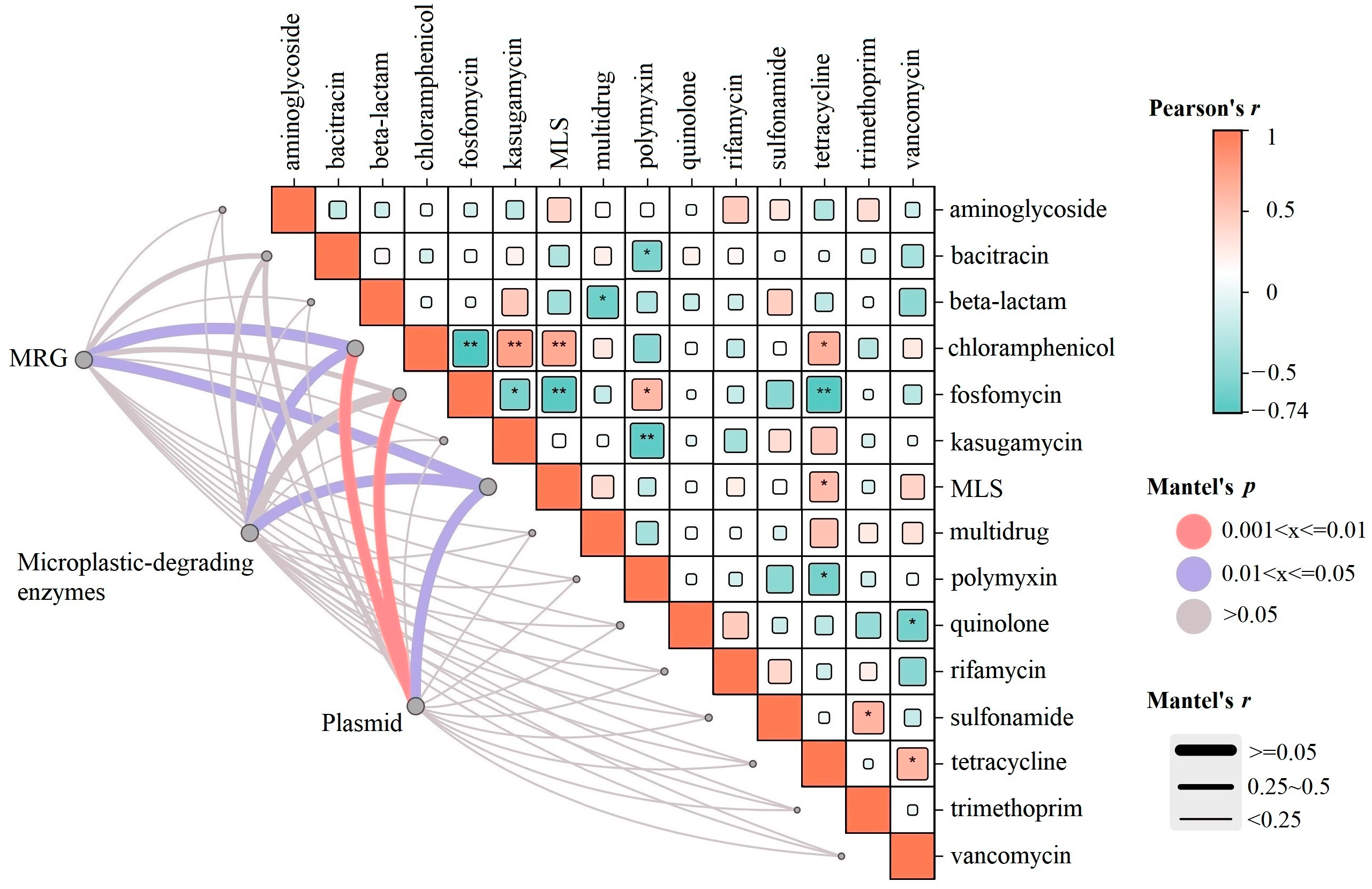
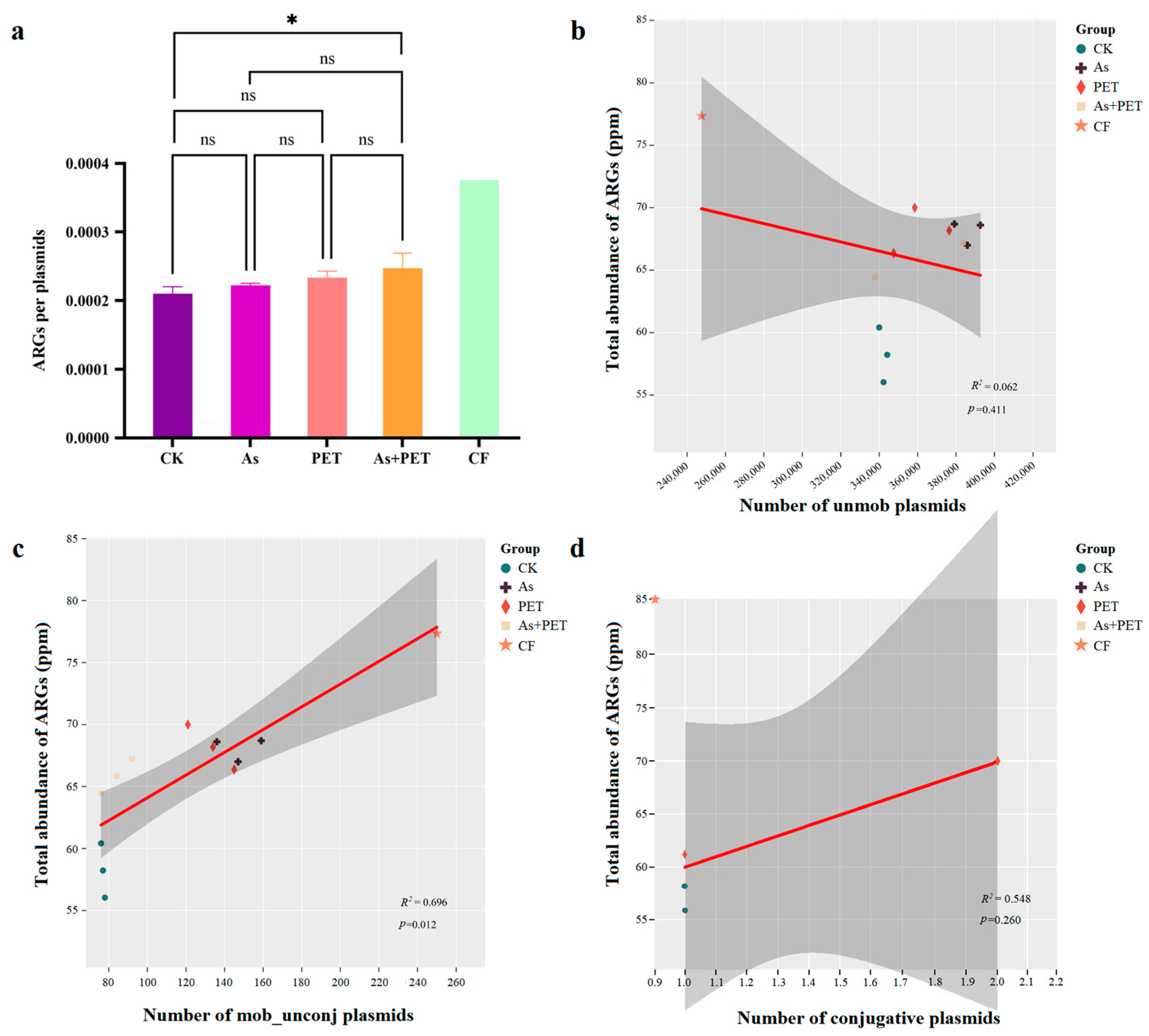
2.3. Contribution of Plasmids to ARG Variation During Cattle Manure Vermicomposting
3. Discussion
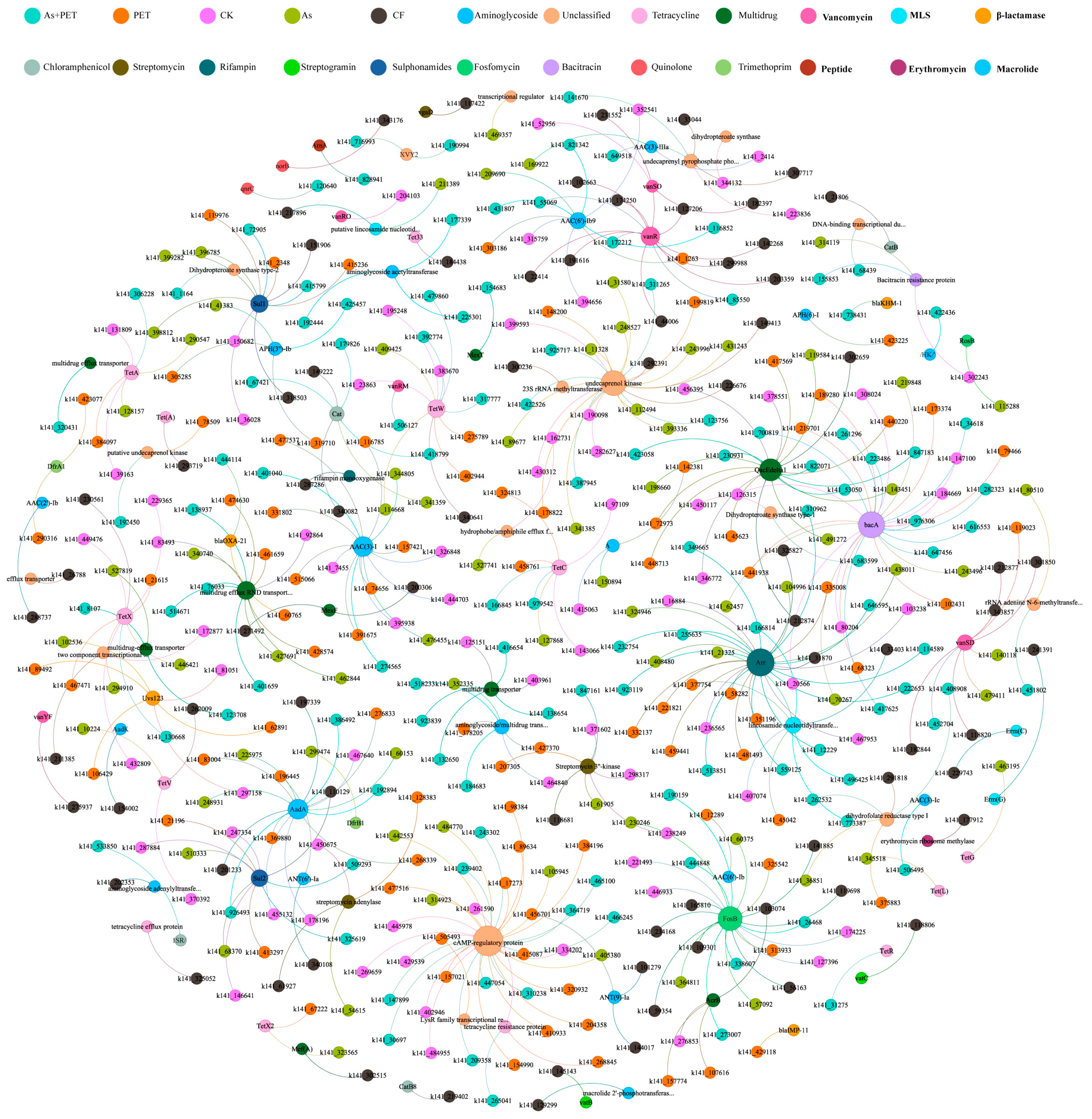
3.1. Treatment-Specific Shifts in Plasmid Host Range and Dynamics
3.2. Underlying Mechanisms of Plasmid-Mediated ARG Enrichment Under Distinct Treatments
3.3. The Pivotal Role of Mobilizable Plasmids in ARG Dissemination
3.4. Implications for Antibiotic Resistance Dissemination Under Pollutant Synergy
3.5. Limitations
4. Materials and Methods
4.1. Materials
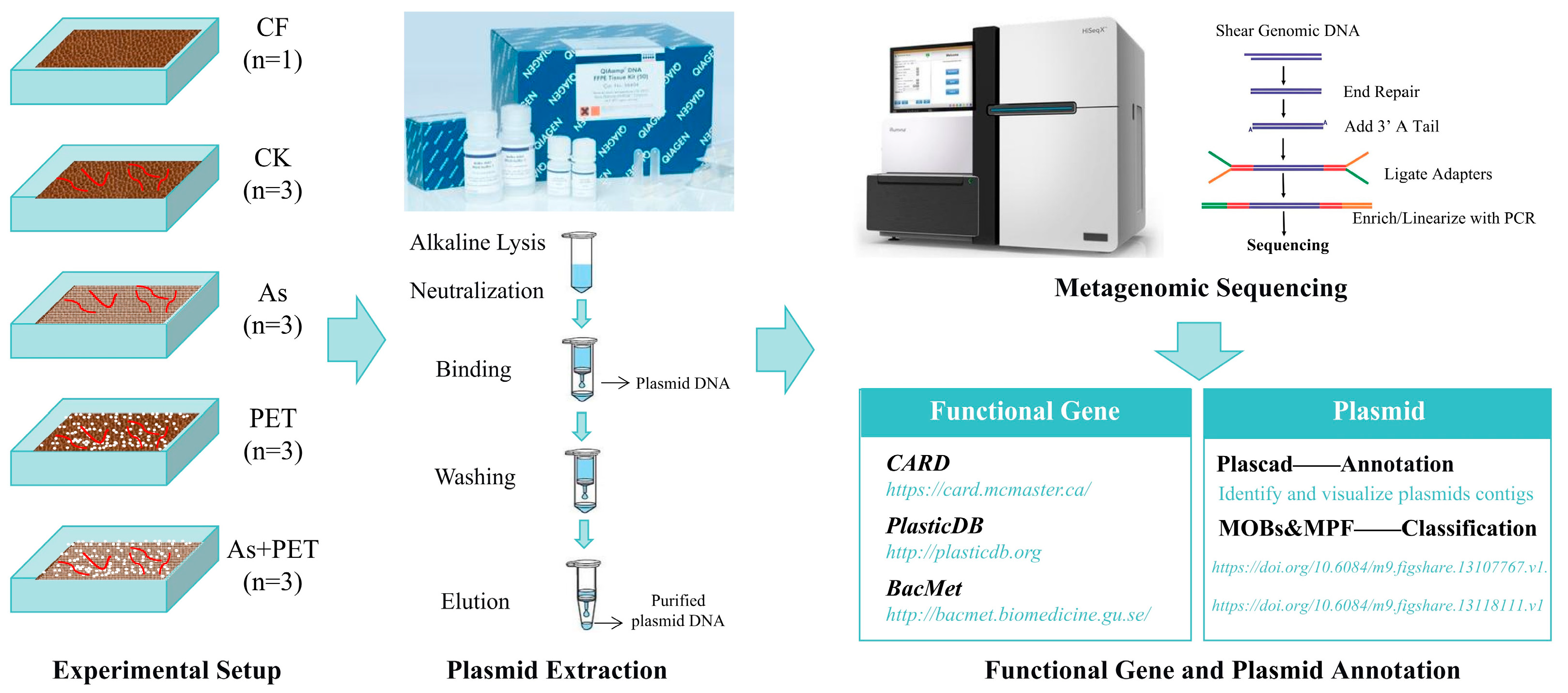
4.2. Experimental Design
4.3. Plasmid DNA Extraction from Various Samples
4.4. Annotation and Quantification of ARGs, MRGs, and Plastic-Degrading Genes
4.5. Plasmid Annotation and Classification
4.6. Statistical Analysis
5. Conclusions
- (1)
- Different pollutants exert distinct effects on plasmid dynamics during vermicomposting. The As treatment significantly increased the abundance of all plasmid types (non-mobilizable, mobilizable, and conjugative), while PET microplastic exposure selectively promoted the proliferation of mobilizable and conjugative plasmids.
- (2)
- Exposure to pollutants significantly enhanced the enrichment of plasmid-associated ARGs. The As treatment broadly increased the abundance of 12 major ARG types, whereas the PET treatment selectively enriched multiple ARG categories. Notably, although the combined As and PET exposure did not further increase total plasmid abundance, it induced a synergistic enrichment of plasmid-borne ARGs.
- (3)
- Mobilizable plasmids emerged as key vectors for ARG dissemination. A significant positive correlation was observed between the abundance of mobilizable plasmids and total ARG levels, while no such correlation was found for non-mobilizable plasmids. This highlights the specific role of mobilizable plasmids in driving resistance propagation under pollutant stress.
Supplementary Materials
Author Contributions
Funding
Institutional Review Board Statement
Informed Consent Statement
Data Availability Statement
Conflicts of Interest
Abbreviations
| ARG | antibiotic resistance gene |
| MGE | mobile genetic element |
| MRG | metal resistance gene |
| HGT | horizontal gene transfer |
| PET | polyethylene terephthalate |
References
- Han, N.-N.; Wang, X.-P.; Jin, J.-A.; Li, W.-H.; Yang, W.-Y.; Fan, N.-S.; Jin, R.-C. Underrated risk of antibiotic resistance genes dissemination mediated by bioaerosols released from anaerobic biological wastewater treatment system. Water Res. 2025, 279, 123463. [Google Scholar] [CrossRef]
- Castañeda-Barba, S.; Top, E.M.; Stalder, T. Plasmids, a molecular cornerstone of antimicrobial resistance in the One Health era. Nat. Rev. Microbiol. 2023, 22, 18–32. [Google Scholar] [CrossRef]
- Che, Y.; Yang, Y.; Xu, X.; Břinda, K.; Polz, M.F.; Hanage, W.P.; Zhang, T. Conjugative plasmids interact with insertion sequences to shape the horizontal transfer of antimicrobial resistance genes. Proc. Natl. Acad. Sci. USA 2021, 118, e2008731118. [Google Scholar] [CrossRef]
- Deng, J.; Zhang, W.; Zhang, L.; Qin, C.; Wang, H.; Ling, W. Micro-interfacial behavior of antibiotic-resistant bacteria and antibiotic resistance genes in the soil environment: A review. Environ. Int. 2024, 191, 108972. [Google Scholar] [CrossRef]
- Enebe, M.C.; Erasmus, M. Vermicomposting technology-A perspective on vermicompost production technologies, limitations and prospects. J. Environ. Manag. 2023, 345, 118585. [Google Scholar] [CrossRef]
- Mu, M.; Yang, F.; Han, B.; Ding, Y.; Zhang, K. Insights into the panorama of antibiotic resistome in cropland soils amended with vermicompost in China. Sci. Total Environ. 2023, 868, 161658. [Google Scholar] [CrossRef]
- Huang, K.; Xia, H.; Zhang, Y.; Li, J.; Cui, G.; Li, F.; Bai, W.; Jiang, Y.; Wu, N. Elimination of antibiotic resistance genes and human pathogenic bacteria by earthworms during vermicomposting of dewatered sludge by metagenomic analysis. Bioresour. Technol. 2020, 297, 122451. [Google Scholar] [CrossRef] [PubMed]
- Deng, S.; Li, P.; Wu, Y.; Tang, H.; Cheng, S.; Thunders, M.; Qiu, J.; Li, Y. Eco-risk management of tylosin fermentation residues using vermicomposting. J. Environ. Manag. 2022, 303, 114126. [Google Scholar] [CrossRef] [PubMed]
- Li, Z.; Yang, F.; Yang, M.; Yan, R.; Zhang, K. The Mechanisms of Tetracycline in Shaping Antibiotic Resistance Gene Dynamics in Earthworm Casts During Vermicomposting. Toxics 2025, 13, 273. [Google Scholar] [CrossRef] [PubMed]
- Tang, K.H.D. Microplastics in agricultural soils in China: Sources, impacts and solutions. Environ. Pollut. 2023, 322, 121235. [Google Scholar] [CrossRef] [PubMed]
- Yang, X.; Li, Q.; Tang, Z.; Zhang, W.; Yu, G.; Shen, Q.; Zhao, F.-J. Heavy metal concentrations and arsenic speciation in animal manure composts in China. Waste Manag. 2017, 64, 333–339. [Google Scholar] [CrossRef]
- Zhao, X.; Shen, J.-P.; Zhang, L.-M.; Du, S.; Hu, H.-W.; He, J.-Z. Arsenic and cadmium as predominant factors shaping the distribution patterns of antibiotic resistance genes in polluted paddy soils. J. Hazard. Mater. 2020, 389, 121838. [Google Scholar] [CrossRef]
- Qi, Z.; Qi, Y.; Le, Z.; Han, F.; Li, F.; Yang, H.; Zhang, T.; Feng, Y.; Liu, R.; Sun, Y. The Interactions Between Antibiotic Resistance Genes and Heavy Metal Pollution Under Co-Selective Pressure Influenced the Bio-Enzyme Activity. Front. Chem. 2021, 9, 691565. [Google Scholar] [CrossRef] [PubMed]
- Wang, X.; Lan, B.; Fei, H.; Wang, S.; Zhu, G. Heavy metal could drive co-selection of antibiotic resistance in terrestrial subsurface soils. J. Hazard. Mater. 2021, 411, 124848. [Google Scholar] [CrossRef] [PubMed]
- Balta, I.; Lemon, J.; Gadaj, A.; Cretescu, I.; Stef, D.; Pet, I.; Stef, L.; McCleery, D.; Douglas, A.; Corcionivoschi, N. The interplay between antimicrobial resistance, heavy metal pollution, and the role of microplastics. Front. Microbiol. 2025, 16, 1550587. [Google Scholar] [CrossRef] [PubMed]
- Liu, Y.; Liu, W.; Yang, X.; Wang, J.; Lin, H.; Yang, Y. Microplastics are a hotspot for antibiotic resistance genes: Progress and perspective. Sci. Total Environ. 2021, 773, 145643. [Google Scholar] [CrossRef]
- Mendoza-Guido, B.; Rivera-Montero, L.; Barrantes, K.; Chacon, L. Plasmid and integron-associated antibiotic resistance in Escherichia coli isolated from domestic wastewater treatment plants. FEMS Microbiol. Lett. 2025, 372, fnaf041. [Google Scholar] [CrossRef]
- Yu, Z.; He, W.; Klincke, F.; Madsen, J.S.; Kot, W.; Hansen, L.H.; Quintela-Baluja, M.; Balboa, S.; Dechesne, A.; Smets, B.; et al. Insights into the circular: The cryptic plasmidome and its derived antibiotic resistome in the urban water systems. Environ. Int. 2024, 183, 108351. [Google Scholar] [CrossRef]
- Li, L.-G.; Zhang, T. Plasmid-mediated antibiotic resistance gene transfer under environmental stresses: Insights from laboratory-based studies. Sci. Total Environ. 2023, 887, 163870. [Google Scholar] [CrossRef]
- Li, Z.; Chen, C.; Zhang, K.; Zhang, Z.; Zhao, R.; Han, B.; Yang, F.; Ding, Y. Response of Antibiotic Resistance Genes and Related Microorganisms to Arsenic during Vermicomposting of Cow Dung. Int. J. Environ. Res. Public Health 2022, 19, 14475. [Google Scholar] [CrossRef]
- Millan, A.S.; Peña-Miller, R.; Toll-Riera, M.; Halbert, Z.V.; McLean, A.R.; Cooper, B.S.; MacLean, R.C. Positive selection and compensatory adaptation interact to stabilize non-transmissible plasmids. Nat. Commun. 2014, 5, 5208. [Google Scholar] [CrossRef]
- Mishra, S.; Dash, D.; Das, A.P. Aquatic Microbial Diversity on Plastisphere: Colonization and Potential Role in Microplastic Biodegradation. Geomicrobiol. J. 2023, 41, 312–323. [Google Scholar] [CrossRef]
- Bora, S.S.; Gogoi, R.; Sharma, M.R.; Anshu; Borah, M.P.; Deka, P.; Bora, J.; Naorem, R.S.; Das, J.; Teli, A.B. Microplastics and human health: Unveiling the gut microbiome disruption and chronic disease risks. Front. Cell. Infect. Microbiol. 2024, 14, 1492759. [Google Scholar] [CrossRef]
- Abdelhadi, A.A.; Elarabi, N.I.; Ibrahim, S.M.; Abdel-Maksoud, M.A.; Abdelhaleem, H.A.R.; Almutairi, S.; Malik, A.; Kiani, B.H.; Henawy, A.R.; Halema, A.A. Hybrid-genome sequence analysis of Enterobacter cloacae FACU and morphological characterization: Insights into a highly arsenic-resistant strain. Funct. Integr. Genom. 2024, 24, 174. [Google Scholar] [CrossRef]
- Siddiqui, M.T.; Mondal, A.H.; Gogry, F.A.; Husain, F.M.; Alsalme, A.; Haq, Q.M.R. Plasmid-Mediated Ampicillin, Quinolone, and Heavy Metal Co-Resistance among ESBL-Producing Isolates from the Yamuna River, New Delhi, India. Antibiotics 2020, 9, 826. [Google Scholar] [CrossRef] [PubMed]
- Jin, C.; Cao, J.; Zhang, K.; Zhang, X.; Cao, Z.; Zou, W. Promotion effects and mechanisms of molybdenum disulfide on the propagation of antibiotic resistance genes in soil. Ecotoxicol. Environ. Saf. 2023, 256, 114913. [Google Scholar] [CrossRef] [PubMed]
- Li, Z.; Yuan, D. Metagenomic Analysis Reveals the Effects of Microplastics on Antibiotic Resistance Genes in Sludge Anaerobic Digestion. Toxics 2024, 12, 920. [Google Scholar] [CrossRef] [PubMed]
- Wang, K.; Han, T.; Chen, X.; Rushimisha, I.E.; Liu, Y.; Yang, S.; Miao, X.; Li, X.; Weng, L.; Li, Y. Insights into behavior and mechanism of tetracycline adsorption on virgin and soil-exposed microplastics. J. Hazard. Mater. 2022, 440, 129770. [Google Scholar] [CrossRef]
- Wang, L.; Yang, H.; Guo, M.; Wang, Z.; Zheng, X. Adsorption of antibiotics on different microplastics (MPs): Behavior and mechanism. Sci. Total Environ. 2023, 863, 161022. [Google Scholar] [CrossRef]
- Tokuda, M.; Shintani, M. Microbial evolution through horizontal gene transfer by mobile genetic elements. Microb. Biotechnol. 2024, 17, e14408. [Google Scholar] [CrossRef]
- Yang, Y.; Liu, W.; Zhang, Z.; Grossart, H.-P.; Gadd, G.M. Microplastics provide new microbial niches in aquatic environments. Appl. Microbiol. Biotechnol. 2020, 104, 6501–6511. [Google Scholar] [CrossRef] [PubMed]
- Xin, R.; Yang, F.; Zeng, Y.; Zhang, M.; Zhang, K. Analysis of antibiotic resistance genes in livestock manure and receiving environment reveals non-negligible risk from extracellular genes. Environ. Sci. Process. Impacts 2025, 27, 1331–1340. [Google Scholar] [CrossRef] [PubMed]
- DelaFuente, J.; Diaz-Colunga, J.; Sanchez, A.; San Millan, A. Global epistasis in plasmid-mediated antimicrobial resistance. Mol. Syst. Biol. 2024, 20, 311–320. [Google Scholar] [CrossRef] [PubMed]
- Islam, T.; Cheng, H. Existence and fate of microplastics in terrestrial environment: A global fretfulness and abatement strategies. Sci. Total Environ. 2024, 953, 176163. [Google Scholar] [CrossRef] [PubMed]
- Fakour, H.; Lo, S.-L.; Yoashi, N.T.; Massao, A.M.; Lema, N.N.; Mkhontfo, F.B.; Jomalema, P.C.; Jumanne, N.S.; Mbuya, B.H.; Mtweve, J.T.; et al. Quantification and Analysis of Microplastics in Farmland Soils: Characterization, Sources, and Pathways. Agriculture 2021, 11, 330. [Google Scholar] [CrossRef]
- Liu, M.; Lu, S.; Song, Y.; Lei, L.; Hu, J.; Lv, W.; Zhou, W.; Cao, C.; Shi, H.; Yang, X.; et al. Microplastic and mesoplastic pollution in farmland soils in suburbs of Shanghai, China. Environ. Pollut. 2018, 242, 855–862. [Google Scholar] [CrossRef]
- Li, N.; Zheng, N.; Pan, J.; An, Q.; Li, X.; Sun, S.; Chen, C.; Zhu, H.; Li, Z.; Ji, Y. Distribution and major driving elements of antibiotic resistance genes in the soil-vegetable system under microplastic stress. Sci. Total Environ. 2024, 906, 167619. [Google Scholar] [CrossRef]
- Guan, Y.; Xue, X.; Jia, J.; Li, X.; Xing, H.; Wang, Z. Metagenomic assembly and binning analyses the prevalence and spread of antibiotic resistome in water and fish gut microbiomes along an environmental gradient. J. Environ. Manag. 2022, 318, 115521. [Google Scholar] [CrossRef]
- Ji, X.; Tang, J.; Zhang, J. Effects of Salt Stress on the Morphology, Growth and Physiological Parameters of Juglansmicrocarpa L. Seedlings. Plants 2022, 11, 2381. [Google Scholar] [CrossRef]


Disclaimer/Publisher’s Note: The statements, opinions and data contained in all publications are solely those of the individual author(s) and contributor(s) and not of MDPI and/or the editor(s). MDPI and/or the editor(s) disclaim responsibility for any injury to people or property resulting from any ideas, methods, instructions or products referred to in the content. |
© 2025 by the authors. Licensee MDPI, Basel, Switzerland. This article is an open access article distributed under the terms and conditions of the Creative Commons Attribution (CC BY) license (https://creativecommons.org/licenses/by/4.0/).
Share and Cite
Xin, R.; Lin, H.; Li, Z.; Yang, F. Plasmid-Mediated Spread of Antibiotic Resistance by Arsenic and Microplastics During Vermicomposting. Antibiotics 2025, 14, 1230. https://doi.org/10.3390/antibiotics14121230
Xin R, Lin H, Li Z, Yang F. Plasmid-Mediated Spread of Antibiotic Resistance by Arsenic and Microplastics During Vermicomposting. Antibiotics. 2025; 14(12):1230. https://doi.org/10.3390/antibiotics14121230
Chicago/Turabian StyleXin, Rui, Huai Lin, Zijun Li, and Fengxia Yang. 2025. "Plasmid-Mediated Spread of Antibiotic Resistance by Arsenic and Microplastics During Vermicomposting" Antibiotics 14, no. 12: 1230. https://doi.org/10.3390/antibiotics14121230
APA StyleXin, R., Lin, H., Li, Z., & Yang, F. (2025). Plasmid-Mediated Spread of Antibiotic Resistance by Arsenic and Microplastics During Vermicomposting. Antibiotics, 14(12), 1230. https://doi.org/10.3390/antibiotics14121230