


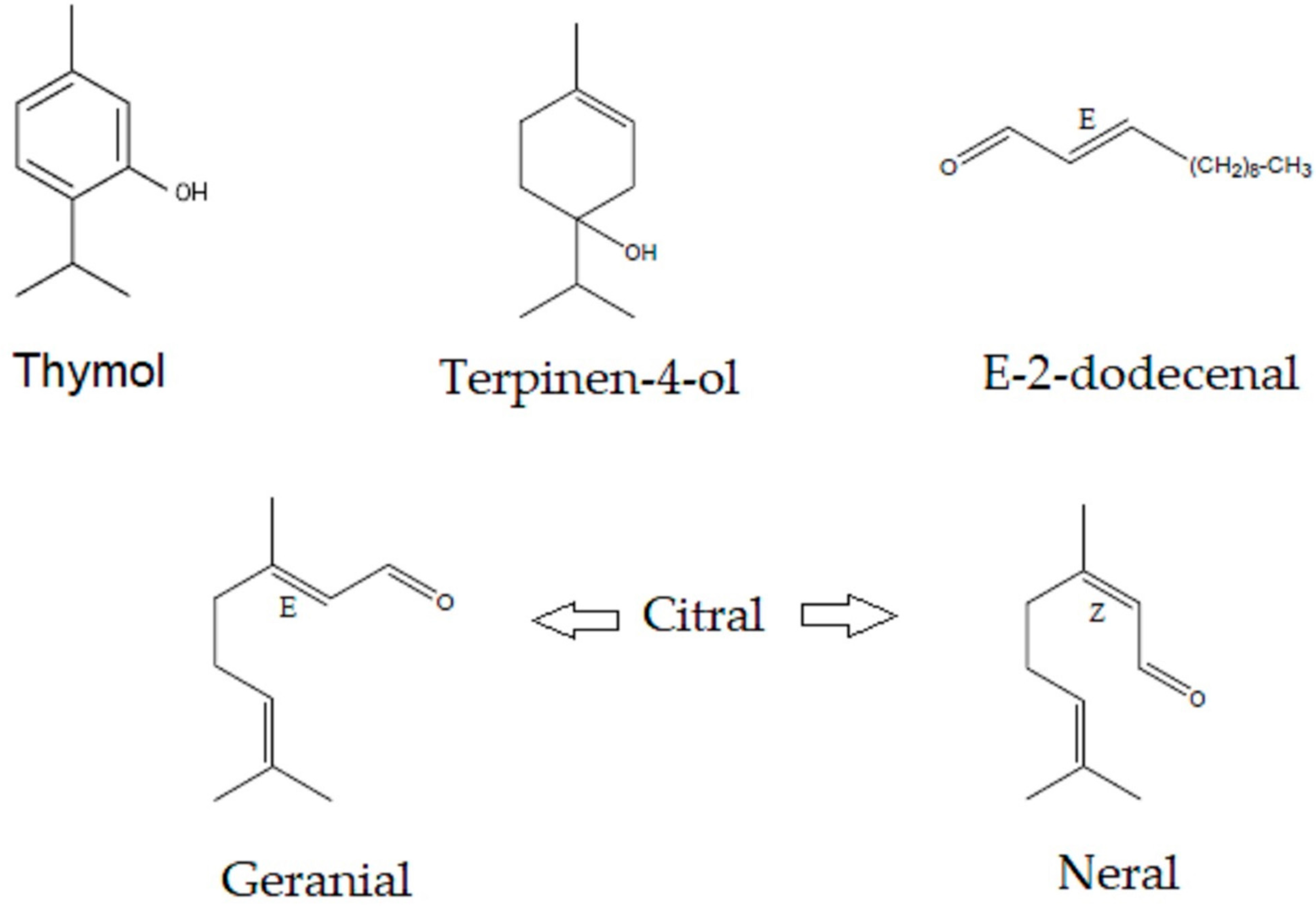
Evaluation of the Quantitative and Structural Antimicrobial Activity of Thymol, Terpinen-4-ol, Citral, and E-2-Dodecenal, Antibiotic Molecules Derived from Essential Oils

 , ,
, ,  ,
, 
Abstract
1. Introduction
2. Results
2.1. Antimicrobial Activity
2.1.1. Determination of the Minimum Inhibitory Concentration in Gram-Positive Bacteria
2.1.2. Determination of the Minimum Inhibitory Concentration in Gram-Negative Bacteria
2.1.3. Determination of the Minimum Inhibitory Concentration in Yeasts
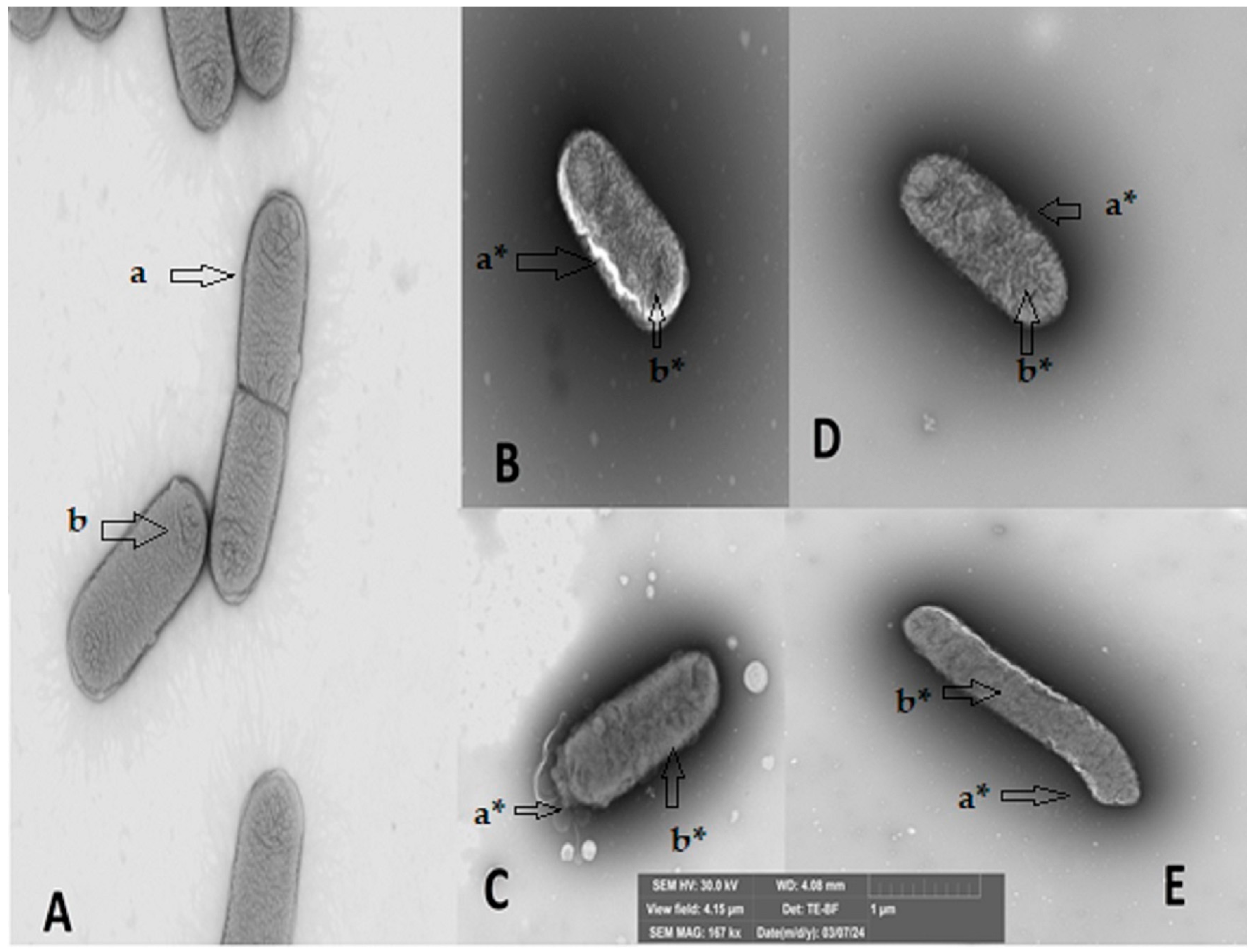
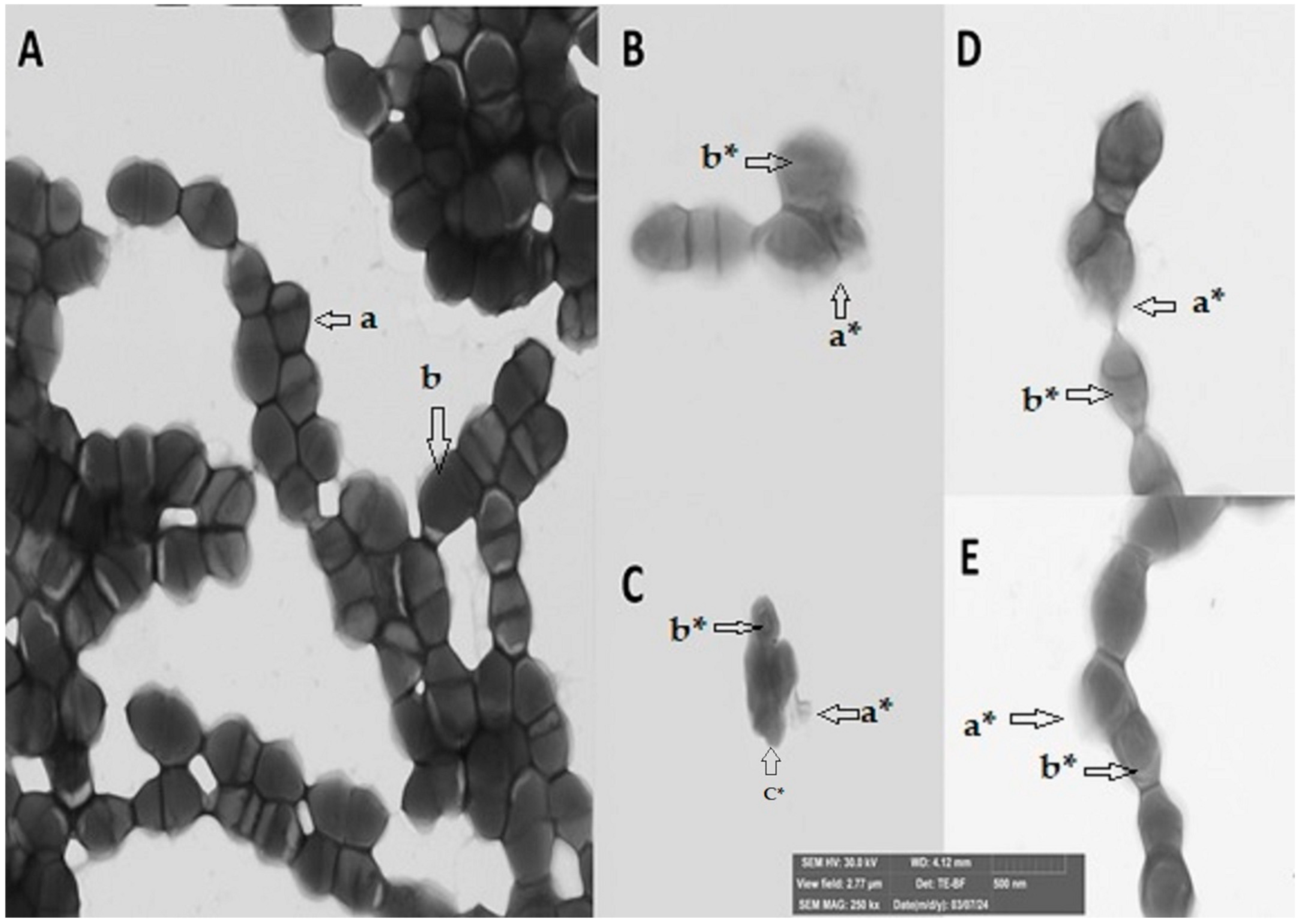
2.2. Structural Damage to Bacteria upon Contact with the Secondary Metabolites
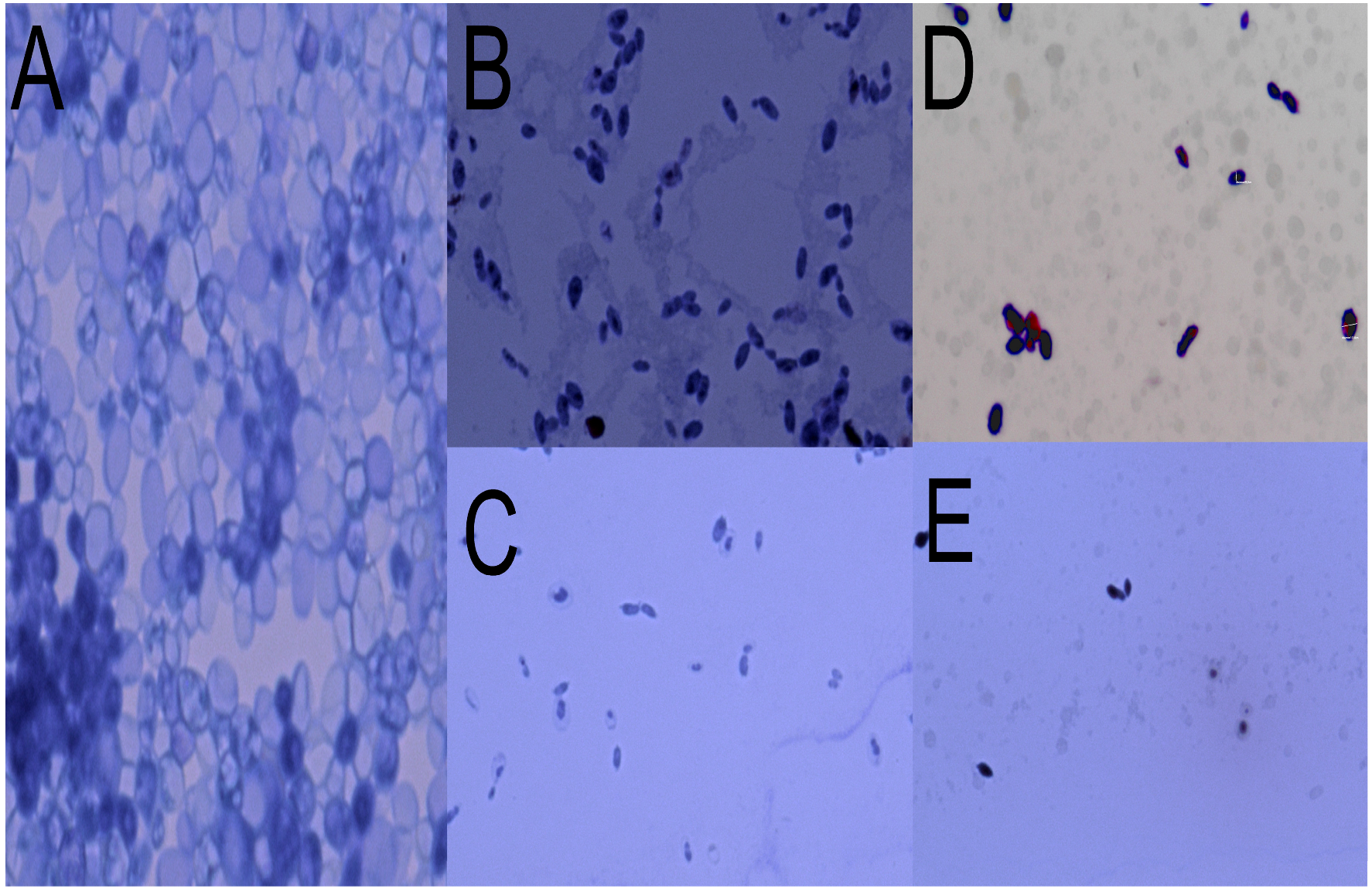
2.3. Structural Damage to Yeast upon Contact with Secondary Metabolites
3. Discussion
4. Materials and Methods
4.1. Reagents and Microorganisms
4.2. Antimicrobial Activity by Microdilution Plate Assay
4.3. Observation of Damage in the Bacteria Using Scanning Electron Microscopy (SEM)
4.4. Observation of Damage in Yeast Using Optical Microscopy
4.5. Statistic
5. Conclusions
Supplementary Materials
Author Contributions
Funding
Institutional Review Board Statement
Informed Consent Statement
Data Availability Statement
Acknowledgments
Conflicts of Interest
Abbreviations
| ATCC | American Type Culture Collection |
| MIC | Minimum Inhibitory Concentration |
| SEM | Scanning Electron Microscopy |
References
- Piret, J.; Boivin, G. Pandemics throughout history. Front. Microbiol. 2021, 11, 2–11. [Google Scholar] [CrossRef]
- Patterson, G.E.; Mclntyre, K.M.; Clough, H.E.; Rushton, J. Societal impacts of pandemics: Comparing COVID-19 with history to focus our response. Front. Public Health 2021, 9, 2–5. [Google Scholar] [CrossRef]
- Corsi, A.; de Souza, F.F.; Pagani, R.N.; Kovaleski, J.L. Big data analytics as a tool for fighting pandemics: A systematic review of literature. J. Ambient Intell. Humaniz. Comput. 2021, 12, 9163–9180. [Google Scholar] [CrossRef]
- Kaur, H.; Garg, S.; Joshi, H.; Ayaz, S.; Sharma, S.; Bhandari, M. Epidemics and pandemics in human history. Int. J. Pharma Res. Health Sci. 2020, 8, 3139–3142. [Google Scholar] [CrossRef]
- Vögele, J.; Rittershaus, L.; Schuler, K. Epidemics and Pandemics the Historical Perspective. Hist. Soc. Res. 2021, 33, 7–33. [Google Scholar] [CrossRef]
- Sánchez-Vallejo, G. Epidemics and pandemics, a historical approach. Acta Med. Colomb. 2021, 46, 3–10. [Google Scholar] [CrossRef]
- An, L.V. Epidemics and pandemics in human history: Origins, effects and response measures. VNUHCM J. Soc. Sci. Humanit. 2020, 4, 625–637. [Google Scholar] [CrossRef]
- Al-Quteimat, O.M.; Amer, A.M. The impact of the COVID-19 pandemic on cancer patients. Am. J. Clin. Oncolog. 2020, 43, 452–455. [Google Scholar] [CrossRef]
- Xiong, J.; Lipsitz, O.; Nasri, F.; Lui, L.M.; Gill, H.; Phan, L.; Chen-Li, D.; Lacobucci, M.; Ho, R.; Majeed, A.; et al. Impact of COVID-19 pandemic on mental health in the general population: A systematic review. J. Affect. Disord. 2020, 277, 55–64. [Google Scholar] [CrossRef]
- Pollard, C.A.; Morran, M.P.; Nestor-Kalinoski, A.L. The COVID-19 pandemic: A global health crisis. Physiolog. Genom. 2020, 52, 549–557. [Google Scholar] [CrossRef]
- Tarkar, P. Impact of COVID-19 pandemic on education system. Int. J. Adv. Sci. Technol. 2020, 29, 3812–3814. [Google Scholar]
- Laffin, L.J.; Kaufman, H.W.; Chen, Z.; Niles, J.K.; Arellano, A.R.; Bare, L.A.; Hazen, S.L. Rise in blood pressure observed among US adults during the COVID-19 pandemic. Circulation 2022, 145, 235–237. [Google Scholar] [CrossRef]
- Msemburi, W.; Karlinsky, A.; Knutson, V.; Aleshin-Guendel, S.; Chatterji, S.; Wakefield, J. The WHO estimates of excess mortality associated with the COVID-19 pandemic. Nature 2023, 613, 130–137. [Google Scholar] [CrossRef]
- Wang, H.; Paulson, K.R.; Pease, S.A.; Watson, S.; Comfort, H.; Zheng, P.; Aravkin, A.Y.; Bisignano, C.; Barber, R.M.; Alam, T.; et al. Estimating excess mortality due to the COVID-19 pandemic: A systematic analysis of COVID-19-related mortality, 2020–2021. Lancet 2022, 399, 1513–1536. [Google Scholar] [CrossRef] [PubMed]
- Ribeiro da Silva, S.J.; Frutuoso do Nascimento, J.C.; Germano Mendes, R.P.; Guarines, K.M.; Targino Alves da Silva, C.; Gomes da Silva, P.; Ferraz de Magalhães, J.J.; Vigar, J.R.; Silva-Júnior, A.; Kohl, A.; et al. Two years into the COVID-19 pandemic: Lessons learned. ACS Infect. Dis. 2022, 8, 1758–1814. [Google Scholar] [CrossRef] [PubMed]
- Ligon, B.L. Penicillin: Its discovery and early development. Semin. Pediatr. Infect. Dis. 2004, 15, 52–57. [Google Scholar] [CrossRef] [PubMed]
- Fleming, A.G. Responsibilities and opportunities of the private practitioner in preventive medicine. Can. Med. Assoc. J. 1929, 20, 3–11. Available online: https://pmc.ncbi.nlm.nih.gov/articles/PMC1710366/ (accessed on 20 November 2025).
- Hutchings, M.I.; Truman, A.W.; Wilkinson, B. Antibiotics: Past, present and future. Curr. Opin. Microbiol. 2019, 51, 72–80. [Google Scholar] [CrossRef]
- Eyler, R.F.; Shvets, K. Clinical pharmacology of antibiotics. Clin. J. Am. Soc. Nephrol. 2019, 14, 1080–1090. [Google Scholar] [CrossRef]
- Shrivastava, S.R.; Shrivastava, P.S.; Ramasamy, J. World health organization releases global priority list of antibiotic-resistant bacteria to guide research, discovery, and development of new antibiotics. J. Med. Soc. 2018, 32, 76–77. [Google Scholar] [CrossRef]
- Neu, H.C. The crisis in antibiotic resistance. Science 1992, 257, 1064–1073. [Google Scholar] [CrossRef]
- Hasan, T.H.; Al-Harmoosh, R.A. Mechanisms of antibiotics resistance in bacteria. Sys. Rev. Pharm. 2020, 11, 817–823. [Google Scholar] [CrossRef]
- Butt, A.; Khan, A. Antibiotics resistance of bacterial biofilms. Middle East J. Bus. 2015, 55, 322–332. [Google Scholar] [CrossRef]
- Terreni, M.; Taccani, M.; Pregnolato, M. New antibiotics for multidrug-resistant bacterial strains: Latest research developments and future perspectives. Molecules 2021, 26, 2671. [Google Scholar] [CrossRef]
- Uddin, T.M.; Chakraborty, A.J.; Khusro, A.; Zidan, B.R.; Mitra, S.; Emran, T.B.; Dhama, K.; Ripon, M.K.; Gajdács, M.; Sahibzada, M.U.; et al. Antibiotic resistance in microbes: History, mechanisms, therapeutic strategies and future prospects. J. Infect. Public Health 2021, 14, 1750–1766. [Google Scholar] [CrossRef]
- Mancuso, G.; Midiri, A.; Gerace, E.; Biondo, C. Bacterial antibiotic resistance: The most critical pathogens. Pathogens 2021, 10, 1310. [Google Scholar] [CrossRef]
- Vuong, T.V. Natural products and their derivatives with antibacterial, antioxidant and anticancer activities. Antibiotics 2021, 10, 70. [Google Scholar] [CrossRef] [PubMed]
- Manso, T.; Lores, M.; de Miguel, T. Antimicrobial activity of polyphenols and natural polyphenolic extracts on clinical isolates. Antibiotics 2021, 11, 46. [Google Scholar] [CrossRef] [PubMed]
- Kozlowska, M.; Ścibisz, I.; Przybyl, J.L.; Laudy, A.E.; Majewska, E.; Tarnowska, K.; Malajowicz, J.; Ziarno, M. Antioxidant and antibacterial activity of extracts from selected plant material. Appl. Sci. 2022, 12, 9871. [Google Scholar] [CrossRef]
- Yan, Y.; Li, X.; Zhang, C.; Lv, L.; Gao, B.; Li, M. Research progress on antibacterial activities and mechanisms of natural alkaloids: A review. Antibiotics 2021, 10, 318. [Google Scholar] [CrossRef]
- Cushnie, T.T.; Cushnie, B.; Lamb, A.J. Alkaloids: An overview of their antibacterial, antibiotic-enhancing and antivirulence activities. Int. J. Antimicrob. Agents. 2014, 44, 377–386. [Google Scholar] [CrossRef]
- Guimarães, A.C.; Meireles, L.M.; Lemos, M.F.; Guimarães, M.C.; Endringer, D.C.; Fronza, M.; Scherer, R. Antibacterial activity of terpenes and terpenoids present in essential oils. Molecules 2019, 24, 2471. [Google Scholar] [CrossRef]
- Paduch, R.; Kandefer-Szerszeń, M.; Trytek, M.; Fiedurek, J. Terpenes: Substances useful in human healthcare. Arch. Immunol. Ther. Exp. 2007, 55, 315–327. [Google Scholar] [CrossRef]
- Al Musayeib, N.M.; Musarat, A.; Maqsood, F. Eco-Friendly Biobased Products Used in Microbial Diseases, 1st ed.; CRC Press: Boca Raton, FL, USA, 2022; pp. 247–270. ISBN 978-100-324-370-0. [Google Scholar]
- Malmir, M.; Serrano, R.; Silva, O. Anthraquinones as potential antimicrobial agents-A review. In Antimicrobial Research: Novel Bioknowledge and Educational Programs, 1st ed.; Méndez-Vilas, A., Ed.; Formatex Research Center: Lisbon, Portugal, 2017; pp. 55–61. ISBN 978-849-475-120-2. [Google Scholar]
- Hafez Ghoran, S.; Taktaz, F.; Ayatollahi, S.A.; Kijjoa, A. Anthraquinones and their analogues from marine-derived fungi: Chemistry and biological activities. Mar. Drugs 2022, 20, 474. [Google Scholar] [CrossRef]
- Annunziata, F.; Pinna, C.; Dallavalle, S.; Tamborini, L.; Pinto, A. An overview of coumarin as a versatile and readily accessible scaffold with broad-ranging biological activities. Int. J. Mol. Sci. 2020, 21, 4618. [Google Scholar] [CrossRef]
- Rivera, P.N. Extracción, química, actividad biológica, control de calidad y potencial económico de los aceites esenciales. LA GRANJA. Rev. Cienc. Vida 2009, 10, 3–15. [Google Scholar] [CrossRef]
- Escobar, A.; Perez, M.; Romanelli, G.; Blustein, G. Thymol bioactivity: A review focusing on practical applications. Arab. J. Chem. 2020, 13, 9243–9269. [Google Scholar] [CrossRef]
- Parolin, G.A.; Vital, V.G.; de Vasconcellos, S.P.; Lago, J.H.; Péres, L.O. Thymol as Starting Material for the Development of a Biobased Material with Enhanced Antimicrobial Activity: Synthesis, Characterization, and Potential Application. Molecules 2024, 29, 1010. [Google Scholar] [CrossRef]
- Nadia, Z.; Rachid, M. Antioxidant and antibacterial activities of Thymus vulgaris L. Med. Aromat. Plant Res. J. 2013, 1, 5–11. Available online: https://www.researchgate.net/publication/284967745 (accessed on 6 August 2025).
- Chen, Y.; Zhang, L.L.; Wang, W.; Wang, G. Recent updates on bioactive properties of α-terpineol. J. Essent. Oil Res. 2023, 35, 274–288. [Google Scholar] [CrossRef]
- Puvača, N.; Milenković, J.; Galonja Coghill, T.; Bursić, V.; Petrović, A.; Tanasković, S.; Pelić, M.; Ljubojević Pelić, D.; Miljković, T. Antimicrobial activity of selected essential oils against selected pathogenic bacteria: In vitro study. Antibiotics 2021, 10, 546. [Google Scholar] [CrossRef]
- Souza, V.V.; Almeida, J.M.; Barbosa, L.N.; Silva, N.C. Citral, carvacrol, eugenol and thymol: Antimicrobial activity and its application in food. J. Essent. Oil Res. 2022, 34, 181–194. [Google Scholar] [CrossRef]
- Valková, V.; Ďúranová, H.; Galovičová, L.; Borotová, P.; Vukovic, N.L.; Vukic, M.; Kačániová, M. Cymbopogon citratus essential oil: Its application as an antimicrobial agent in food preservation. Agronomy 2022, 12, 155. [Google Scholar] [CrossRef]
- Dai, J.; Bai, M.; Li, C.; San Cheang, W.; Cui, H.; Lin, L. Antibacterial properties of citral against Staphylococcus aureus: From membrane damage to metabolic inhibition. Food Biosci. 2023, 53, 102770. [Google Scholar] [CrossRef]
- Recio-Cázares, S.L.; López-Malo, A.; Ramírez-Corona, N.; Palou, E. Relationship Between the Chemical Composition and Transport Properties with the Antimicrobial Activity of Essential Oil from Leaves of Mexican Lippia (Aloysia citriodora) Extracted by Hydro-Distillation. Biointerface Res. Appl. Chem. 2023, 10, 100. [Google Scholar] [CrossRef]
- Paw, M.; Gogoi, R.; Sarma, N.; Saikia, S.; Chanda, S.K.; Lekhak, H.; Lal, M. Anti-microbial, Anti-oxidant, Anti-diabetic study of leaf Essential Oil of Eryngium foetidum L. Along with the Chemical Profiling Collected from North East India. J. Essent. Oil Bear. Plants 2022, 25, 1229–1241. [Google Scholar] [CrossRef]
- Ortiz-Ruíz, M.; Navarro-Mengual, J.D.; Jaramillo-Colorado, B.E. In vitro antibacterial activity of essential oils from Eryngium foetidum L. and Clinopodium brownei (Sw.) Kuntze. Rev. Colomb. Cienc. Hortic. 2024, 18, 2–9. [Google Scholar] [CrossRef]
- Donega, M.A.; Mello, S.C.; Moraes, R.M.; Jain, S.K.; Tekwani, B.L.; Cantrell, C.L. Pharmacological activities of Cilantroʼs aliphatic aldehydes against Leishmania donovani. Planta Med. 2014, 80, 1706–1711. [Google Scholar] [CrossRef]
- Kowalczyk, A.; Przychodna, M.; Sopata, S.; Bodalska, A.; Fecka, I. Thymol and thyme essential oil new insights into selected therapeutic applications. Molecules 2020, 25, 4125. [Google Scholar] [CrossRef] [PubMed]
- Lambert, R.J.; Skandamis, P.N.; Coote, P.J.; Nychas, G.J. A study of the minimum inhibitory concentration and mode of action of oregano essential oil, thymol and carvacrol. J. Appl. Microbiol. 2001, 91, 453–462. [Google Scholar] [CrossRef]
- Marchese, A.; Orhan, I.E.; Daglia, M.; Barbieri, R.; Di Lorenzo, A.; Nabavi, S.F.; Gortzi, O.; Izadi, M.; Nabavi, S.M. Antibacterial and antifungal activities of thymol: A brief review of the literature. Food Chem. 2016, 210, 402–414. [Google Scholar] [CrossRef]
- Kachur, K.; Suntres, Z. The antibacterial properties of phenolic isomers, carvacrol and thymol. Crit. Rev. Food Sci. Nutr. 2020, 60, 3042–3053. [Google Scholar] [CrossRef]
- Zhang, J.; Ma, S.; Du, S.; Chen, S.; Sun, H. Antifungal activity of thymol and carvacrol against postharvest pathogens Botrytis cinerea. J. Food Sci. Technol. 2019, 56, 2611–2620. [Google Scholar] [CrossRef]
- Šegvić Klarić, M.; Kosalec, I.; Mastelić, J.; Pieckova, E.; Pepeljnak, S. Antifungal activity of thyme (Thymus vulgaris L.) essential oil and thymol against moulds from damp dwellings. Lett. Appl. Microbiol. 2007, 44, 36–42. [Google Scholar] [CrossRef]
- Linge, K.L.; Cooper, L.; Downey, A. Comparison of approaches for authentication of commercial terpinen-4-ol-type tea tree oils using chiral GC/MS. J. Agric. Food Chem. 2024, 72, 8389–8400. [Google Scholar] [CrossRef]
- Badr, M.M.; Taktak, N.E.; Badawy, M.E. Comparison of the antimicrobial and antioxidant activities of tea tree (Melaleuca alternifolia) oil and its main component terpinen-4-ol with their nanoemulsions. Egypt. J. Chem. 2023, 66, 111–120. [Google Scholar] [CrossRef]
- Dimitrov, F.; Panghyová, L.; Vargová, V.; Baxa, S.; Polovka, M.; Kopuncová, M.; Tobolková, B.; Hrouzková, S.; Sádecká, J. Gas-chromatographic analyses of volatile organic compounds in essential oils extracted from Slovak juniper berries and needles (Juniperus communis L.). J. Food Compos. Anal. 2024, 133, 106419. [Google Scholar] [CrossRef]
- Annemer, S.; Farah, A.; Stambouli, H.; Assouguem, A.; Almutairi, M.H.; Sayed, A.A.; Peluso, I.; Bouayoun, T.; Talaat Nouh, N.A.; Ouali Lalami, A.E.; et al. Chemometric investigation and antimicrobial activity of Salvia rosmarinus Spenn essential oils. Molecules 2022, 27, 2914. [Google Scholar] [CrossRef]
- Nair, V.G.; Unnikrishnan, V.K.; Muralidharan, N.; Venkatathri, B.N.; Lowrence, R.C.; Ybrd, R.; Nagarajan, S. Human vaginal Lactobacillus Jensenii-derived (-)-Terpinen-4-ol restores antibiotic sensitivity by inhibiting efflux pumps in drug resistant E. coli and K. pneumoniae. Sci. Rep. 2025, 15, 31823. [Google Scholar] [CrossRef] [PubMed]
- Ling, L.J.; Zhao, Y.H.; Ma, W.X.; Feng, S.L.; Yang, C.Y.; Tu, Y.X.; Zhang, J. Study on the inhibitory effect of essential oil from Artemisia scoparia and its active ingredient terpine-4-ol on Aspergillus flavus. Chin. J. Biol. Control. 2021, 37, 584–591. [Google Scholar] [CrossRef]
- Paoli, M.; Maroselli, T.; Casanova, J.; Bighelli, A. A fast and reliable method to quantify neral and geranial (citral) in essential oils using 1H NMR spectroscopy. Flavour Fragr. J. 2023, 38, 476–482. [Google Scholar] [CrossRef]
- Elechosa, M.A.; Lira, P.D.; Juárez, M.A.; Viturro, C.I.; Heit, C.I.; Molina, A.C.; Martínez, A.J.; López, S.; Molina, A.M.; van Baren, C.M.; et al. Essential oil chemotypes of Aloysia citrodora (Verbenaceae) in Northwestern Argentina. Biochem. Syst. Ecol. 2017, 74, 19–29. [Google Scholar] [CrossRef]
- Hung, T.T.; Ngan, L.T.; Le, B.V.; Hieu, T.T. Effects of plant essential oils and their constituents on Helicobacter pylori: A Review. Plant Sci. Today 2023, 10, 334–344. [Google Scholar] [CrossRef]
- Thomas, P.S.; Essien, E.E.; Ntuk, S.J.; Choudhary, M.I. Eryngium foetidum L. essential oils: Chemical composition and antioxidant capacity. Medicines 2017, 4, 24. [Google Scholar] [CrossRef]
- Kubo, I.; Fujita, K.; Nihei, K.; Kubo, A. Anti-Salmonella activity of (2 E)-alkenals. J. Appl. Microbiol. 2004, 96, 693–699. [Google Scholar] [CrossRef] [PubMed]
- Kubo, I.; Fujita, K.I.; Kubo, A.; Nihei, K.I.; Lunde, C.S. Modos de acción antifúngica de los (2 E)-alkenales contra Saccharomyces cerevisiae. Rev. Química Agrícola Aliment. 2003, 51, 3951–3957. [Google Scholar]
- Falcone, P.; Speranza, B.; Del Nobile, M.A.; Corbo, M.R.; Sinigaglia, M. A study on the antimicrobial activity of thymol intended as a natural preservative. J. Food Prot. 2005, 68, 1664–1670. [Google Scholar] [CrossRef]
- Guarda, A.; Rubilar, J.F.; Miltz, J.; Galotto, M.J. The antimicrobial activity of microencapsulated thymol and carvacrol. Int. J. Food Microbiol. 2011, 146, 144–150. [Google Scholar] [CrossRef] [PubMed]
- Sim, J.X.; Khazandi, M.; Chan, W.Y.; Trott, D.J.; Deo, P. Antimicrobial activity of thyme oil, oregano oil, thymol and carvacrol against sensitive and resistant microbial isolates from dogs with otitis externa. Vet. Dermatol. 2019, 30, 524-e159. [Google Scholar] [CrossRef]
- Jianu, C.; Rusu, L.C.; Muntean, I.; Cocan, I.; Lukinich-Gruia, A.T.; Goleț, I.; Horhat, D.; Mioc, M.; Mioc, A.; Soica, C.; et al. In vitro and in Silico evaluation of the antimicrobial and antioxidant potential of Thymus pulegioides essential oil. Antioxidants 2022, 11, 2472. [Google Scholar] [CrossRef]
- Leyva-López, N.; Gutiérrez-Grijalva, E.P.; Vazquez-Olivo, G.; Heredia, J.B. Essential oils of oregano: Biological activity beyond their antimicrobial properties. Molecules 2017, 22, 989. [Google Scholar] [CrossRef]
- Mondello, F.; Fontana, S.; Scaturro, M.; Girolamo, A.; Colone, M.; Stringaro, A.; di Vito, M.; Ricci, M.L. Terpinen-4-ol, the main bioactive component of tea tree oil, as an innovative antimicrobial agent against Legionella pneumophila. Pathogens 2022, 11, 682. [Google Scholar] [CrossRef]
- Noumi, E.; Merghni, A.; Alreshidi, M.M.; Haddad, O.; Akmadar, G.; De Martino, L.; Mastouri, M.; Ceylan, O.; Snoussi, M.; Al-Sieni, A.; et al. Chromobacterium violaceum and Pseudomonas aeruginosa PAO1: Models for evaluating anti-quorum sensing activity of Melaleuca alternifolia essential oil and its main component terpinen-4-ol. Molecules 2018, 23, 2672. [Google Scholar] [CrossRef] [PubMed]
- Brilhante, R.S.; Caetano, É.P.; Lima, R.A.; Marques, F.J.; Castelo-Branco, D.D.; Silva de Melo, C.V.; de Melo Guedes, G.M.; de Oliveira, J.S.; de Camargo, Z.P.; Bezerra Moreira, J.L.; et al. Terpinen-4-ol, tyrosol, and β-lapachone as potential antifungals against dimorphic fungi. Braz. J. Microbiol. 2016, 47, 917–924. [Google Scholar] [CrossRef]
- Hammer, K.A.; Carson, C.F.; Riley, T.V. Effects of Melaleuca alternifolia (tea tree) essential oil and the major monoterpene component terpinen-4-ol on the development of single-and multistep antibiotic resistance and antimicrobial susceptibility. Antimicrob. Agents Chemother. 2012, 56, 909–915. [Google Scholar] [CrossRef] [PubMed]
- Borotová, P.; Galovičová, L.; Vukovic, N.L.; Vukic, M.; Tvrdá, E.; Kačániová, M. Chemical and biological characterization of Melaleuca alternifolia essential oil. Plants 2022, 11, 558. [Google Scholar] [CrossRef] [PubMed]
- Adukwu, E.C.; Bowles, M.; Edwards-Jones, V.; Bone, H. Antimicrobial activity, cytotoxicity and chemical analysis of lemongrass essential oil (Cymbopogon flexuosus) and pure citral. Appl. Microbiol. Biotechnol. 2016, 100, 9619–9627. [Google Scholar] [CrossRef]
- Li, Y.; Mei, J.; Xie, J. Citral: Bioactivity, Metabolism, Delivery Systems, and Food Preservation Applications. Compr. Rev. Food Sci. Food Saf. 2025, 24, e70168. [Google Scholar] [CrossRef]
- Singh, B.R.; Singh, V.; Singh, R.K.; Ebibeni, N. Antimicrobial activity of lemongrass (Cymbopogon citratus) oil against microbes of environmental, clinical and food origin. Int. Res. J. Pharm. Pharmacol. 2011, 1, 228–236. Available online: https://www.researchgate.net/publication/260173692 (accessed on 19 April 2025).
- Sprea, R.M.; Fernandes, L.H.; Pires, T.C.; Calhelha, R.C.; Rodrigues, P.J.; Amaral, J.S. Volatile compounds and biological activity of the essential oil of Aloysia citrodora Paláu: Comparison of hydrodistillation and microwave-assisted hydrodistillation. Molecules 2023, 28, 4528. [Google Scholar] [CrossRef]
- Silalahi, M. Essential oils and uses of Eryngium foetidum L. GSC Biol. Pharm. Sci. 2021, 15, 289–294. [Google Scholar] [CrossRef]
- Noriega, P.; Calderón, L.; Ojeda, A.; Paredes, E. Chemical composition, antimicrobial and antioxidant bioautography activity of essential oil from leaves of Amazon plant Clinopodium brownei (Sw.). Molecules 2023, 28, 1741. [Google Scholar] [CrossRef] [PubMed]


| Minimum Inhibitory Concentration in µg/mL | |||||
|---|---|---|---|---|---|
| Gram-Positive Bacteria | E-2-Dodecenal | Terpinen-4-ol | Thymol | Citral | Positive Control (Chloramphenicol) |
| Listeria grayi | 332 ± 7 | 86.5 ± 8 | 91.4 ± 4 | 59 ± 2 | 18 ± 3 × 10⁻³ |
| Streptococcus mutans | 20 ± 0.5 | 142.9 ± 8 | 61.0 ± 3 | 163 ± 7 | 18 ± 3 × 10⁻³ |
| Staphylococcus saprophyticus | 15 ± 0.7 | 536.0 ± 25 | 129.0 ± 8 | 214 ± 11 | 9 ± 5 × 10⁻³ |
| Staphylococcus aureus | 342 ± 17 | 17.1 ± 1 | 209.0 ± 10 | 26.6 ± 1 | 18 ± 3 × 10⁻³ |
| Minimum Inhibitory Concentration in µg/mL | |||||
|---|---|---|---|---|---|
| Gram-Negative Bacteria | E-2-Dodecenal | Terpinen-4-ol | Thymol | Citral | Positive Control (Chloramphenicol) |
| Proteus vulgaris | 257 ± 13 | 76.4 ± 3 | 97.4 ± 4 | 69 ± 3 | 40± 3 × 10⁻³ |
| Escherichia coli | 133 ± 6 | 152 ± 7 | 152 ± 5 | 76 ± 2 | 40 ± 3 × 10⁻³ |
| Klebsiella oxytoca | 192.5 ± 9 | 156 ± 8 | 89 ± 3 | 483 ± 18 | 80 ± 8 × 10⁻³ |
| Minimum Inhibitory Concentration in µg/mL | |||||
|---|---|---|---|---|---|
| Yeasts | E-2-Dodecenal | Terpinen-4-ol | Thymol | Citral | Positive Control (Clotrimazole) |
| Candida tropicalis | 76 ± 3 | 179 ± 8 | 239 ± 11 | 125 ± 6 | 59 ± 4 × 10⁻³ |
| Candida albicans | 171 ± 9 | 190 ± 8 | 190 ± 7 | 209 ± 10 | 25 ± 6 × 10⁻³ |
Disclaimer/Publisher’s Note: The statements, opinions and data contained in all publications are solely those of the individual author(s) and contributor(s) and not of MDPI and/or the editor(s). MDPI and/or the editor(s) disclaim responsibility for any injury to people or property resulting from any ideas, methods, instructions or products referred to in the content. |
© 2025 by the authors. Licensee MDPI, Basel, Switzerland. This article is an open access article distributed under the terms and conditions of the Creative Commons Attribution (CC BY) license (https://creativecommons.org/licenses/by/4.0/).
Share and Cite
Noriega, P.; Jaramillo, K.; Villegas, I.; Vizuete, K.; Rivera, E.; Debut, A. Evaluation of the Quantitative and Structural Antimicrobial Activity of Thymol, Terpinen-4-ol, Citral, and E-2-Dodecenal, Antibiotic Molecules Derived from Essential Oils. Antibiotics 2025, 14, 1202. https://doi.org/10.3390/antibiotics14121202
Noriega P, Jaramillo K, Villegas I, Vizuete K, Rivera E, Debut A. Evaluation of the Quantitative and Structural Antimicrobial Activity of Thymol, Terpinen-4-ol, Citral, and E-2-Dodecenal, Antibiotic Molecules Derived from Essential Oils. Antibiotics. 2025; 14(12):1202. https://doi.org/10.3390/antibiotics14121202
Chicago/Turabian StyleNoriega, Paco, Kimberly Jaramillo, Ivana Villegas, Karla Vizuete, Ema Rivera, and Alexis Debut. 2025. "Evaluation of the Quantitative and Structural Antimicrobial Activity of Thymol, Terpinen-4-ol, Citral, and E-2-Dodecenal, Antibiotic Molecules Derived from Essential Oils" Antibiotics 14, no. 12: 1202. https://doi.org/10.3390/antibiotics14121202
APA StyleNoriega, P., Jaramillo, K., Villegas, I., Vizuete, K., Rivera, E., & Debut, A. (2025). Evaluation of the Quantitative and Structural Antimicrobial Activity of Thymol, Terpinen-4-ol, Citral, and E-2-Dodecenal, Antibiotic Molecules Derived from Essential Oils. Antibiotics, 14(12), 1202. https://doi.org/10.3390/antibiotics14121202