

Article

Prevalence of Methicillin-Resistant S. aureus, Extended-Spectrum β-Lactamase-Producing E. coli, and Vancomycin-Resistant E. faecium in the Production Environment and Among Workers in Low-Capacity Slaughterhouses in Poland

by
Anna Ławniczek-Wałczyk
*,
Marcin Cyprowski
,
Małgorzata Gołofit-Szymczak
and
Rafał L. Górny
Laboratory of Biohazards, Department of Chemical, Aerosol and Biological Hazards, Central Institute for Labour Protection—National Research Institute (CIOP-PIB), 16 Czerniakowska Street, 00-701 Warsaw, Poland
*
Author to whom correspondence should be addressed.
Antibiotics 2025, 14(12), 1200; https://doi.org/10.3390/antibiotics14121200
Submission received: 22 October 2025 / Revised: 21 November 2025 / Accepted: 26 November 2025 / Published: 28 November 2025

Abstract

Background: Small-scale food animal production is common worldwide but often underestimated as a source of antimicrobial resistance. This study aimed to determine the prevalence of MRSA and VRE-E. faecium, and ESBL-E. coli bacteria among workers and within the production environment of low-capacity slaughterhouses, as well as to analyze the antimicrobial resistance patterns of these bacteria and their ability to form biofilms. Methods: The measurements were carried out in three low-capacity slaughterhouses in Poland. Bioaerosol samples, swabs from the production environment fomite and carcasses, meat samples, and swabs from workers’ hands and nostrils were taken. The strains’ susceptibility to antibiotics was assessed using the disk diffusion method, and their biofilm-forming potential was assessed using the microplate method. Isolates were also tested for the presence of genes related to biofilm formation and resistance to antiseptics. Results: In this study, 13.8%, 20.5%, and 14.9% of the samples (n = 268) were positive for MRSA, ESBL-E. coli, and VRE-E. faecium, respectively, with the highest detection rates on pork carcasses and surfaces. MRSA and ESBL-E. coli bacteria were also detected in swabs from workers’ hands and nasal swabs, and in bioaerosol samples. Most isolates revealed multidrug resistance, including 89% of MRSA, 76% of ESBL-E. coli, and 83% of VRE-E. faecium. The majority of them were also capable of biofilm formation—81%, 65%, and 75%, respectively—emphasizing their survival capabilities in slaughterhouse environments. Conclusions: The slaughterhouse workers are regularly exposed to antibiotic-resistant bacteria such as MRSA, ESBL-E. coli, and VRE-E. faecium. To reduce these risks, it is essential for small slaughterhouses to strictly follow hygiene protocols, enhance the separation between clean and contaminated areas, improve ventilation, and ensure the use of protective measures.

1. Introduction

The growing resistance of bacteria to antimicrobial agents poses a serious global threat, already causing over a million deaths annually and affecting public health, food safety, as well as the health of workers [1,2]. The meat industry remains the largest consumer of antibiotics, where they are widely used in intensive livestock farming—not only for therapeutic and prophylactic purposes, but also as feed additives to promote growth [3,4,5]. For the first time, all 27 Member States of the European Union, together with Iceland and Norway, have provided integrated data on both the sale and use of antimicrobials in animals. The data show that as much as 98.4% of the products sold are intended for farm animals, and only 1.6% for companion animals [6]. In the context of the EU’s Farm to Fork Strategy, which aims to reduce antibiotic consumption by 50% by 2030, the current level (88.5 mg/PCU in 2023) means that approximately half of the target has been achieved. However, there are still significant differences between Member States, which highlights the need for further coordinated action at the European level [5,6]. From a food safety perspective, the problem of antibiotic resistance mainly concerns three groups of microorganisms isolated from food products: Staphylococcus spp. (including MRSA strains), ESBL-producing Enterobacteriaceae, and vancomycin-resistant Enterococcus spp. (VRE) [5]. These antimicrobial-resistant strains, as well as other bacterial pathogens present in both farming environments and meat production facilities, may persist on carcasses, processing surfaces, and in bioaerosols, and can also colonize workers, creating a transmission interface between animals, food products, and humans [7,8,9,10,11,12,13,14]. The duration and intensity of direct contact with livestock [15,16], as well as the prevalence of MRSA, ESBL, and VRE positive animals on farms, have been strongly linked to colonization and infection in humans [17,18,19,20]. An increased risk of infection with drug-resistant microorganisms is confirmed among workers who have daily contact with live animals. It has been confirmed that livestock animals such as pigs, chickens, and cattle can frequently harbor Enterobacteriaceae-producing extended-spectrum β-lactamases (ESBLs) [21,22,23,24,25], methicillin-resistant S. aureus (MRSA) [26,27,28,29], and vancomycin-resistant enterococci (VRE) [20,30,31,32]. An additional challenge lies in their ability to form biofilms on a wide variety of production-related surfaces [20,31]. Biofilm-associated cells are significantly more tolerant to antimicrobial agents than their planktonic counterparts, and mature biofilm structures are extremely difficult to eradicate [33,34]. This property that enables long-term persistence in slaughterhouse and processing environments increases the risk of both cross-contamination and occupational exposure [19,31,35,36,37,38,39]. Importantly, multidrug resistance (MDR), frequently observed among MRSA, ESBL-producing E. coli, and VRE, exacerbates these risks and has been globally identified as one of the greatest threats to human and public health. The report Antibiotic Resistance: One Health One World Outlook emphasizes that antimicrobial resistance is a cross-sectoral challenge with direct links between agricultural practices, environmental dissemination, and human health [40]. Resistant bacteria in the food chain not only undermine the effectiveness of antimicrobial therapy but also threaten the sustainability of safe food production [41]. While industrial farms and slaughterhouses are well-studied for worker exposure to harmful biological agents [8,9,18,20,26,28,42,43,44], we still know very little about pathogen transmission pathways in low-capacity slaughterhouses producing traditional meat products. Small-scale food animal production is common worldwide but often underestimated as a source of antimicrobial resistance (AMR). The frequent use of antimicrobials in such systems promotes the emergence of resistant bacteria, which can spread to humans during slaughter and processing, especially in facilities with limited hygiene controls [45]. These pathogens pose risks to workers and consumers alike, and their circulation beyond local settings contributes to the wider dissemination of AMR. Effective monitoring and targeted interventions in smallholder farms and abattoirs are therefore essential elements of the One Health approach [40].
The present study was undertaken to investigate the occurrence of MRSA, vancomycin-resistant Enterococcus faecium (VRE-E. faecium), and ESBL-producing Escherichia coli (ESBL-E. coli) in low-capacity slaughterhouses in Poland. The research assessed antimicrobial susceptibility profiles, biofilm-forming capacity, and the presence of virulence genes in these isolates. In addition, the study aimed to characterize hand and nasal carriage of MRSA, VRE-E. faecium, and ESBL-E. coli among slaughterhouse workers, providing insights into both environmental contamination and occupational exposure risks.

2. Results

2.1. General Characteristics of the Studied Population of Workers

A total of 37 participants from three low-capacity slaughterhouses were enrolled in this study. Workers were divided into two groups; the first included butchers who slaughtered animals, eviscerated carcasses, cut and processed fresh carcasses, produced sausages, and hams. The second group consisted of non-production workers who were not directly involved in meat production; among them were supervisory workers and salespeople (Table 1). Men predominated among the participants in the study, accounting for 78% of the respondents. The average age of workers was 41 years (20–63 years).

2.2. Occurrence of ESBL-E. coli, MRSA, and VRE-E. faecium

The distribution of ESBL-E. coli, MRSA, VRE-E. faecium and antibiotic-sensitive isolates—non-extended-spectrum beta-lactamase-producing E. coli (non-ESBL-E. coli), methicillin-sensitive S. aureus (MSSA), and vancomycin-susceptible E. faecium (VSE-E. faecium)—collected in the studied low-capacity slaughterhouses are presented in Table 2 and Table 3.
Out of 268 tested samples, 180 (67%) were E. coli positive. Based on the disk diffusion method for the determination of ESBL-producing phenotypes and the PCR test, 55 of the E. coli isolates were ESBL producers, and 125 were non-ESBL-E. coli. The highest isolation rate of ESBL-E. coli was observed in pork carcasses (67%), bioaerosols (43%), and in surface samples (32%). Considering the location of the sampling, the highest percentage of ESBL-positive samples was noted in slaughter and in meat cutting sections, where ESBL-E. coli was particularly prevalent in bioaerosols samples (75% and 50%, respectively), swabs from hooks and trays (67%), floors (38 and 13%), and meat containers (38%). The analysis showed that 30% of slaughterhouse workers (9 out of 30) carried ESBL-E. coli, compared with 14% (1 out of 7) among non-production staff. ESBL-E. coli was recovered from butchers’ hands (six isolates) and nostrils (three isolates), and from one nasal sample obtained from a non-production worker. However, the difference in carriage rates between the two groups was not statistically significant. In this study, 57% (154/268) of the samples were positive for S. aureus, and 37 isolates were phenotypically and genetically identified as MRSA, and 117 as MSSA. The highest MRSA isolation rate was noted in pork carcasses (70%) and in swabs from surfaces (26%). Taking into account the location of sampling, the highest percentage of MRSA-positive samples was noted in slaughter and in meat processing sections, where MRSA were often recovered from swabs from stuffer machines (37.5%), hooks and trays (33%), as well as conveyors (25%). MRSA bacteria were also detected in swabs taken from butchers (one from hands and one from nasal swabs) and non-production workers (one isolate from hands). A total of 40 out of 141 detected E. faecium isolates were identified as VRE-E. faecium, while 81 were identified as VSE-E. faecium. The VRE-E. faecium isolates were most often isolated from pork carcasses (42%) and surface samples (39%). The analysis showed that 17% of slaughterhouse workers (five out of 30) carried VRE-E. faecium, whereas the carriage rate among non-production workers was 14% (one out of seven). No VRE-E. faecium isolates were detected in nasal swabs. Samples from ready-to-eat products did not contain any ESBL-E. coli, MRSA, and VRE-E. faecium isolates.

2.3. Characteristics of ESBL-E. coli Isolates

2.3.1. Antibiotic Resistance Profiles of ESBL-E. coli Isolates

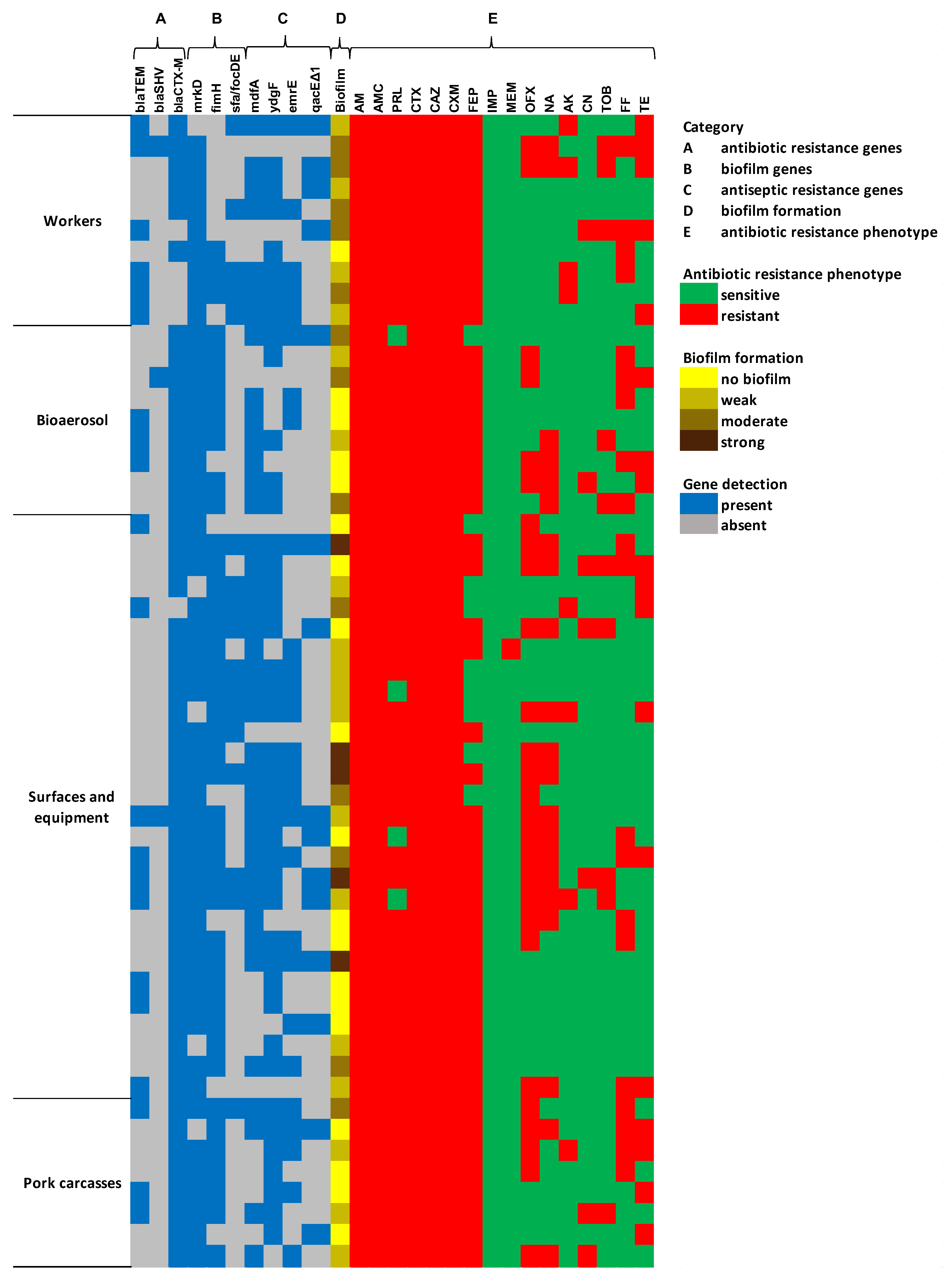
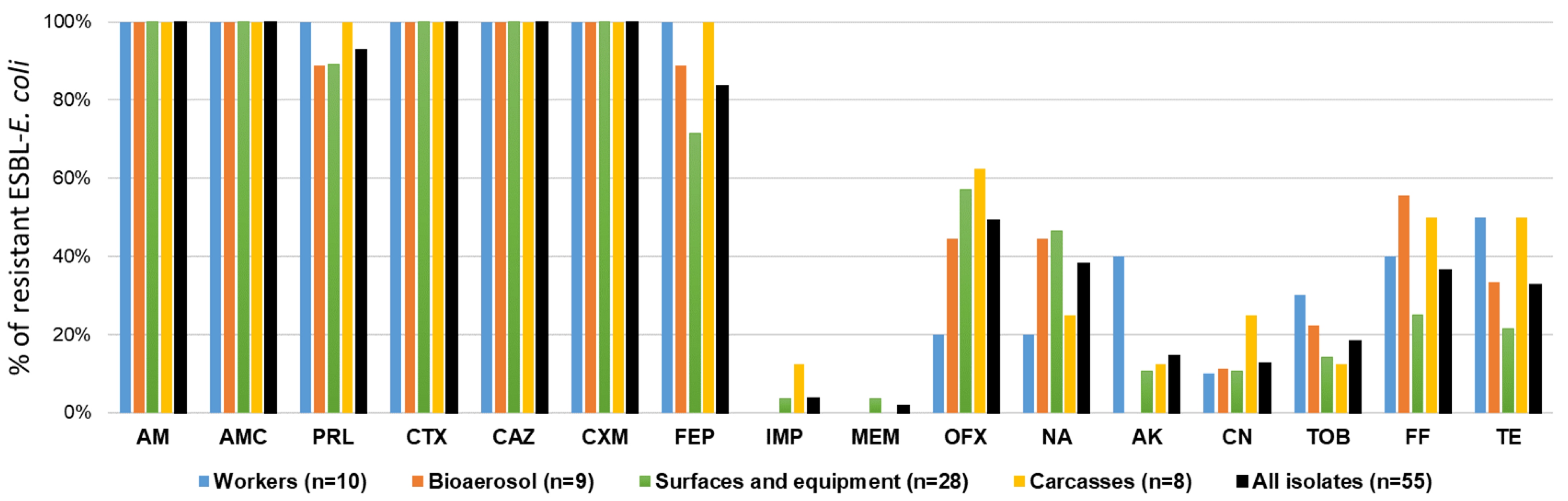
Antibiotic resistance phenotypes of ESBL-E. coli isolates are shown in Figure 1 and Figure 2, and Table S1. The ESBL-E. coli isolates were highly resistant to most of the tested β-lactam antibiotics, including cefotaxime (100%, 55/55), cefuroxime (100%), ceftazidime (100%), cefepime (84%), as well as others antibiotics, such as ampicillin (100%), amoxicillin–clavulanic acid (100%), ofloxacin (49%), nalidixic acid (38%), fosfomycin (36%), and tetracycline (33%). The isolates were susceptible to tested carbapenems, including meropenem (98%) and imipenem (96%), and to aminoglycosides (respectively, 86% and 87% for amikacin and gentamycin). The comparison of resistance profiles between isolates showed no major differences in β-lactam resistance. However, minor variation was observed for fluoroquinolone resistance. Only 20% of worker isolates were resistant to ofloxacin and nalidixic acid, compared with 57% and 62% of isolates from surfaces and carcasses, respectively. Out of 55 ESBL-E coli isolates, 42 (76%) isolates were determined as MDR (resistant to ≥3 classes of antimicrobials), and their multiple antibiotic resistance index (MARI) ranged from 0.5 to 0.81. The prevalence of MDR ESBL-E. coli was particularly noticeable in carcass samples, where they accounted for 100% of all isolates. A total of 33 resistance profiles of ESBL-E. coli isolates were identified (Table S1). The most common spectrum of resistance was AM-AMC-PRL-CTX-CAZ-CXM-FEP (18%, 10/55), AMC-PRL-CTX-CAZ-CXM-FEP-OFX-NA-FF-TE (7%, 4/55), and AM-AMC-PRL-CTX-CAZ-CXM-FEP-OFX-FF (5.5%, 3/55).

2.3.2. Genetic Characterization and Biofilm Formation Potential of ESBL-E. coli

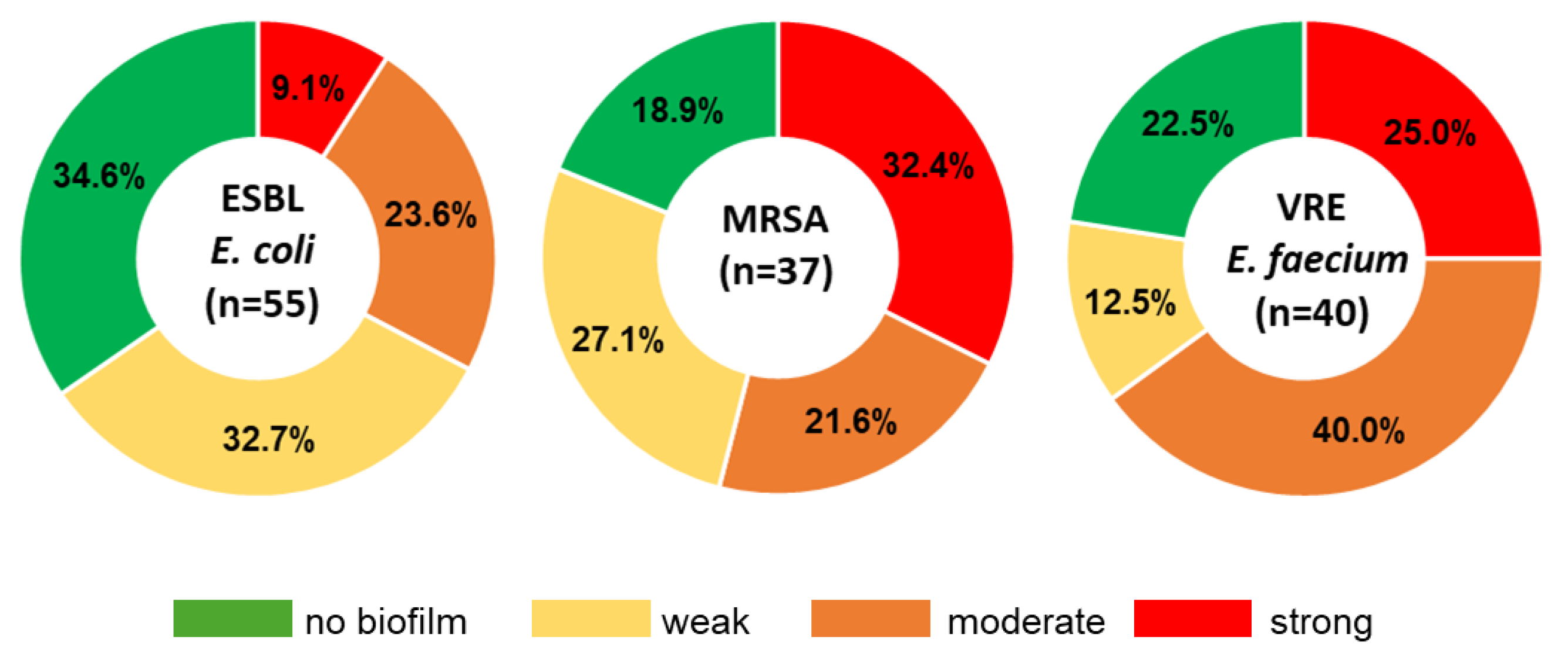
Of the 55 ESBL-E.coli isolates, each had at least one of the ESBL genes tested (Figure 2). Among them, 91% (50/55), 38% (21/55), and 5.5% (3/55) carried blaCTX-M, blaTEM, and blaSHV genes, respectively. The distribution of detected ESBL genotypes among isolates was as follows: blaCTX-M (60%, 33/55), blaTEM-blaCTX-M (25%, 14/55), blaTEM (9%, 5/55), and blaTEM-blaSHV-blaCTX-M (5%, 3/55). Biofilm analysis showed that 65% of ESBL-E. coli isolates were capable of biofilm formation, of which 9%, 24%, and 33% were classified as strong, moderate, and weak biofilm producers (Figure 3).
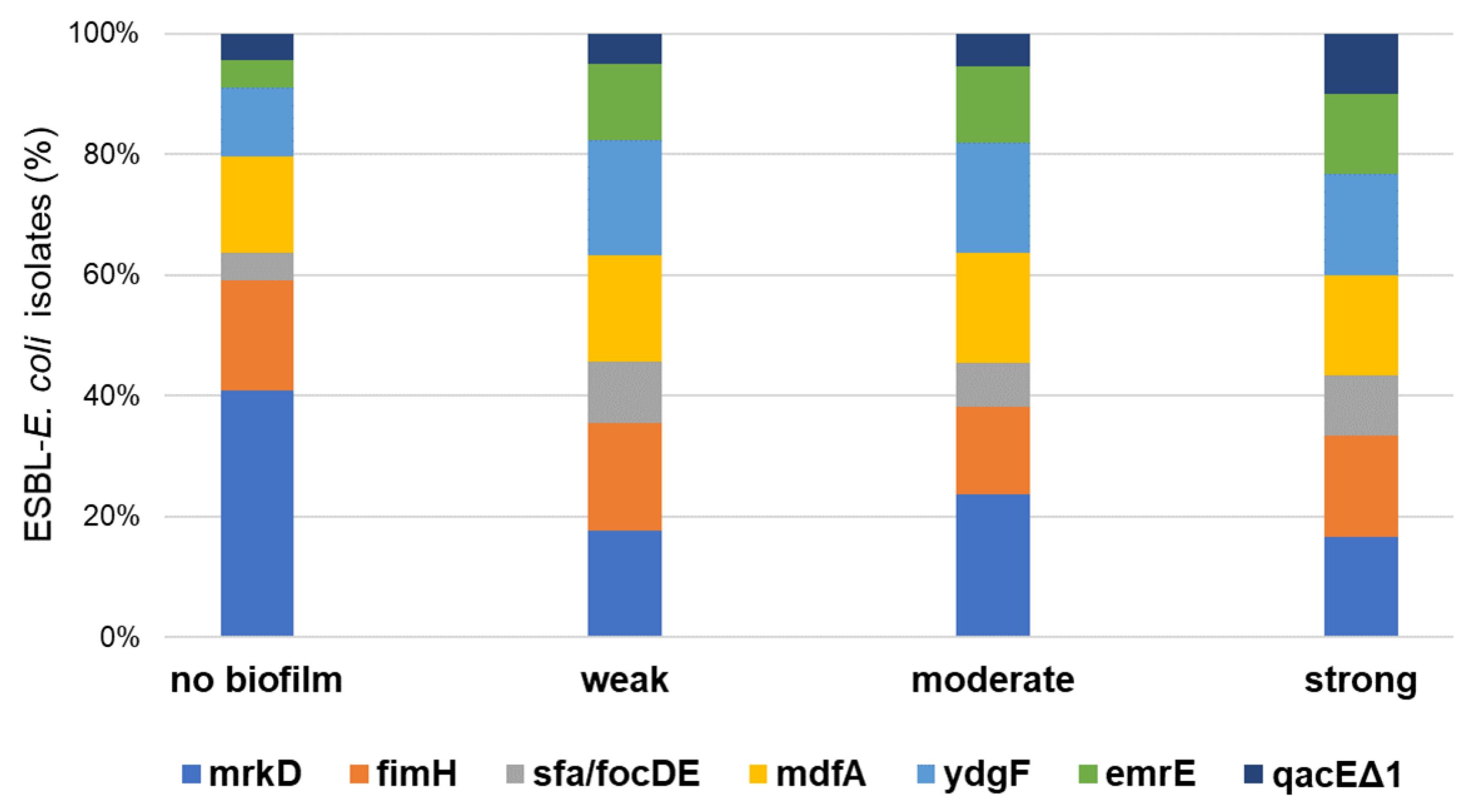
Figure 4 presents the prevalence of biofilm-related (fimH, sfa/focDE, mrkD) and antiseptic-resistance genes (mdfA, ydgF, emrE, and qacEΔ1) detected among ESBL-E. coli isolates. The most common biofilm factors encoding genes were mrkD (91%, 50/55), fimH (76%, 42/55), and sfa/focDE (31%, 17/55). In the current study, four antiseptic-resistance genes, including mdfA, ydgF, emrE, and qacEΔ1 were found in 91% (50/55) of the ESBL-E. coli isolates. The ydgF (76%, 39/55) and mdfA (71%, 39/55) genes were the most common in the tested strains, followed by the emrE (49%, 27/55) and qacEΔ1 (27%, 15/55) genes. A significant association was observed between the occurrence of MDR and the biofilm-forming abilities of E. coli (p < 0.00001). Moreover, the presence of fimH, sfa/focDE, mdfA, ydgF, and emrE genes was higher in the group of biofilm producers than in the non-biofilm producers (p < 0.05).

2.4. Characteristics of MRSA Isolates

2.4.1. Antibiotic Resistance Patterns of MRSA Isolates

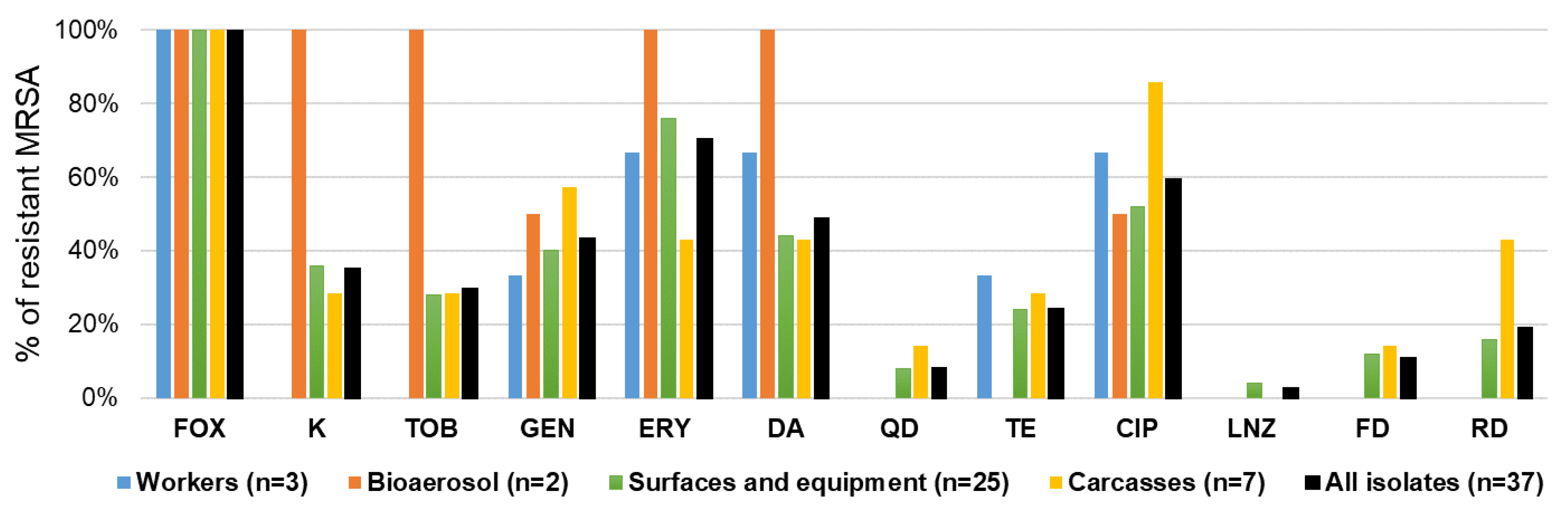
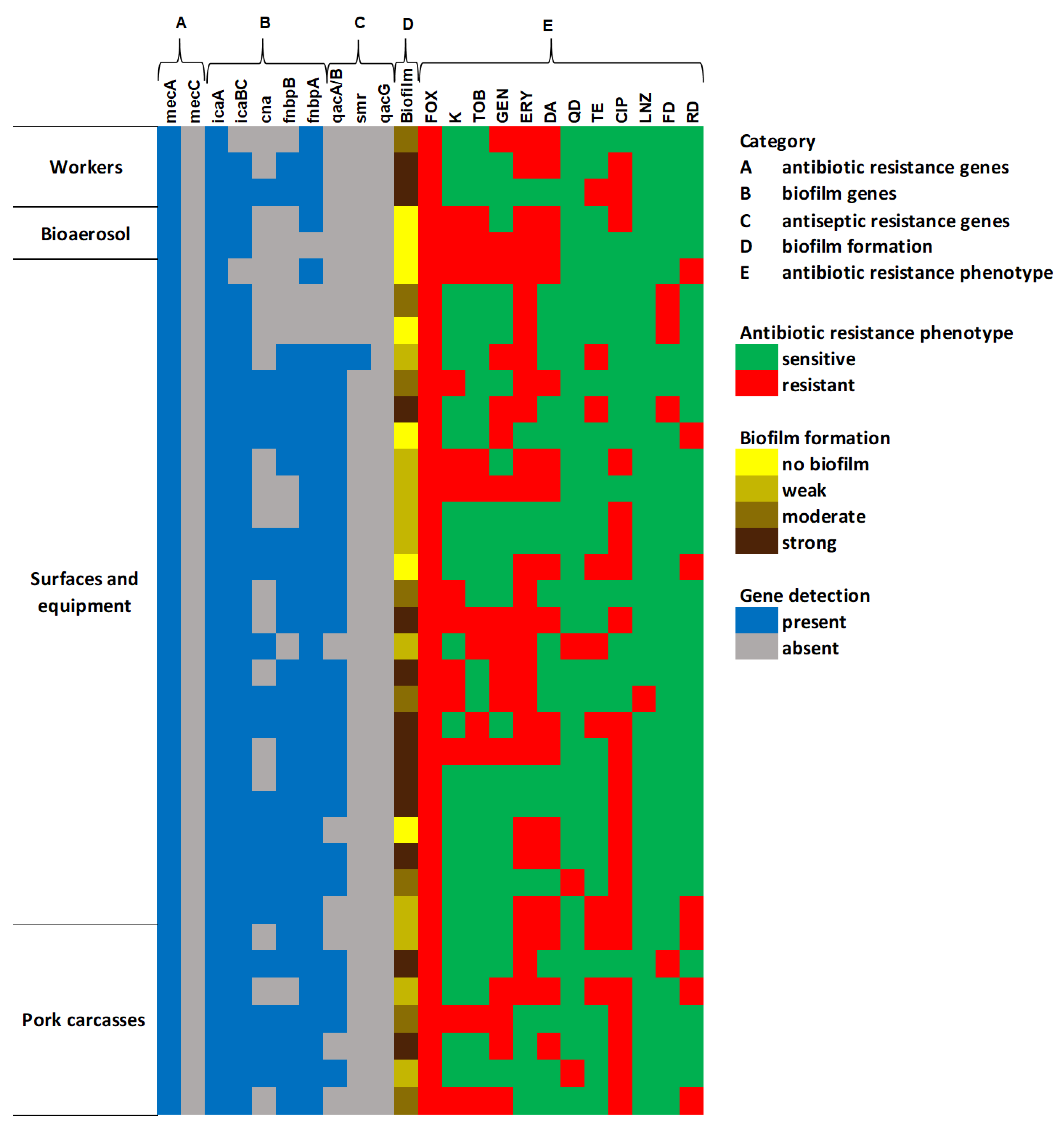
Antibiotic resistance phenotypes of MRSA isolates were illustrated in Figure 5 and Figure 6, and in Table S2. The majority of MRSA isolates showed high resistance rates to erythromycin (70.3%), ciprofloxacin (59.5%), clindamycin (48.6%), gentamicin (43.2%), and kanamycin (35.1%). The isolated strains were particularly susceptible to linezolid (97%). MRSA isolates collected from bioaerosols demonstrated the widest range of resistance among all tested groups. All (100%) of the isolates were resistant to kanamycin, tobramycin, erythromycin, and clindamycin. Additionally, 50% of these isolates were resistant to gentamicin and ciprofloxacin. However, there was no observed resistance to linezolid or rifampicin. In contrast, MRSA isolates from surfaces exhibited significant resistance to erythromycin (76%), ciprofloxacin (52%), gentamicin (40%), and clindamycin (44%). Isolates obtained from carcasses displayed particularly high resistance to ciprofloxacin (86%), along with gentamicin (57%), and a modest resistance to erythromycin (43%), clindamycin (43%), tetracycline (29%), and kanamycin (29%). All strains were sensitive to linezolid. MRSA isolates taken from workers also showed considerable resistance, with 67% resistant to erythromycin, clindamycin, and ciprofloxacin.
Among 37 MRSA isolates, 89% were classified as MDR (resistant to ≥3 classes of antimicrobials), and their multiple antibiotic resistance index (MARI) ranged from 0.25 to 0.58. The prevalence of MDR MRSA was particularly noticeable in the carcasses and meat samples, where they accounted for 100% of all isolates and presented high resistance to CIP (86%) and Gen (57%). A total of 24 resistance profiles were identified. The most common spectrum of resistance was FOX-CIP (11%), FOX-ERY-FD (8%), FOX-ERY-DA-TE-CIP-RD (8%), and FOX-ERY-DA-CIP (8%) (Table S2).

2.4.2. Genetic Characterization and Biofilm Formation Potential of MRSA

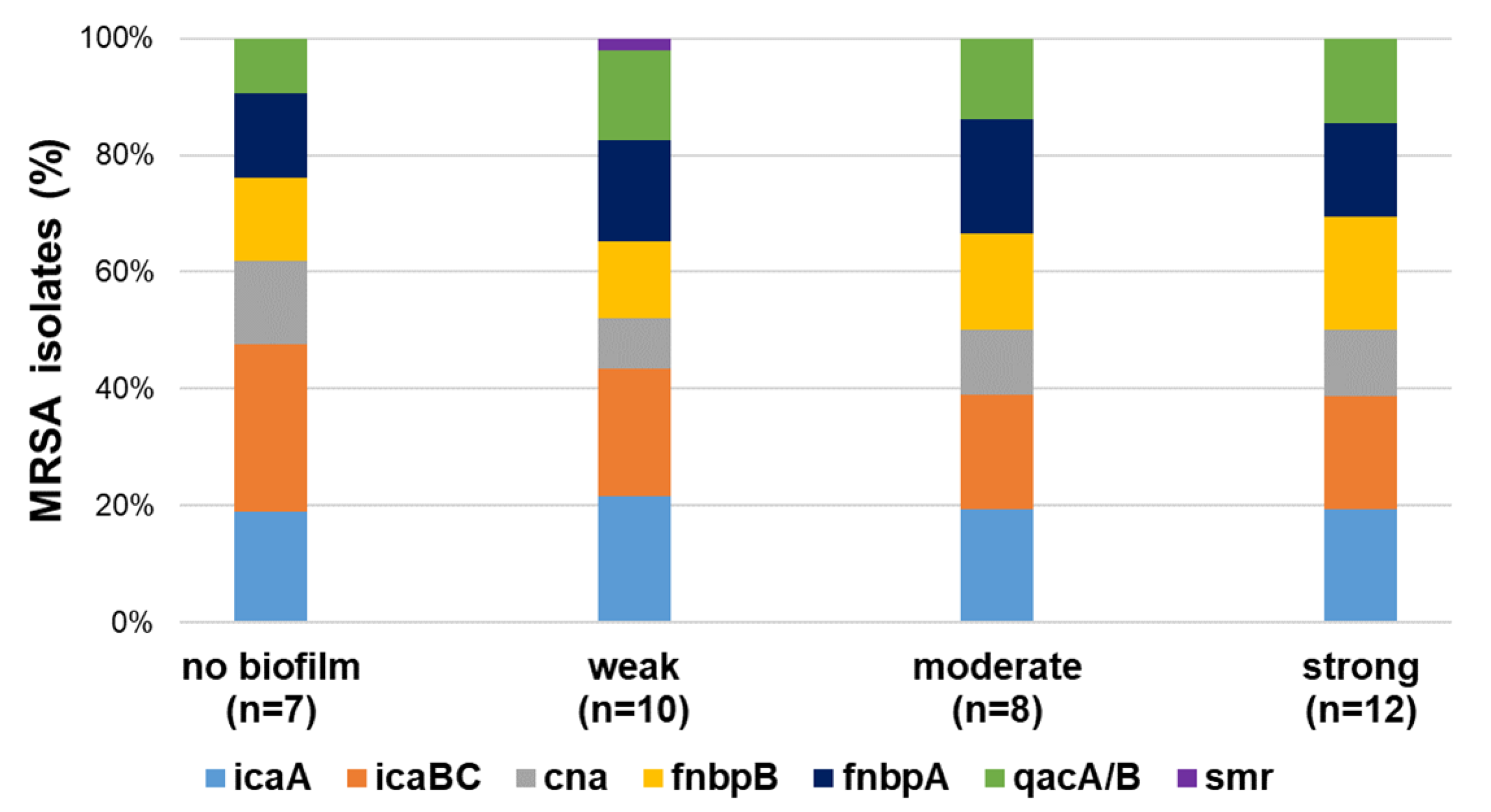
Genetic characterization and biofilm formation potential of MRSA isolates are presented on a heatmap in Figure 6. A representative mecA gene was confirmed in 37 MRSA isolates. Among them, 89% (33/37), 94% (35/37), 48% (18/55), 73% (27/37), and 76% (28/37) carried icaA, icaBC, cna, fnbpB, and fnbpA genes, respectively. The most common antiseptic-resistance gene detected in MRSA was qacA/B (62%, 23/37). The smr gene was present only in one isolate, and no MRSA isolates harbor the qacG gene. Biofilm formation assay showed that 81% of MRSA isolates were capable of biofilm formation, of which 32.4%, 21.6%, and 27% were classified as strong, moderate, and weak biofilm producers (Figure 3). Figure 7 presents the prevalence of biofilm-related (icaA, icaBC, cna, fnbpB, and fnbpA) and antiseptic-resistance genes (qacA/B, smr, and qacG) detected among MRSA isolates. The presence of icaA, icaBC, cna, fnbA, fnbB, and qacA/B genes was higher in the group of biofilm producers than in the non-biofilm producers, but this association was statistically significant only for fnbA, fnbB, and qacA/B genes (p < 0.05). There was no significant association between the presence of MDR and the biofilm formation ability in MRSA isolates.

2.5. Characteristics of VRE-E. faecium Isolates

2.5.1. Antibiotic Resistance Profiles of VRE-E. faecium Isolates

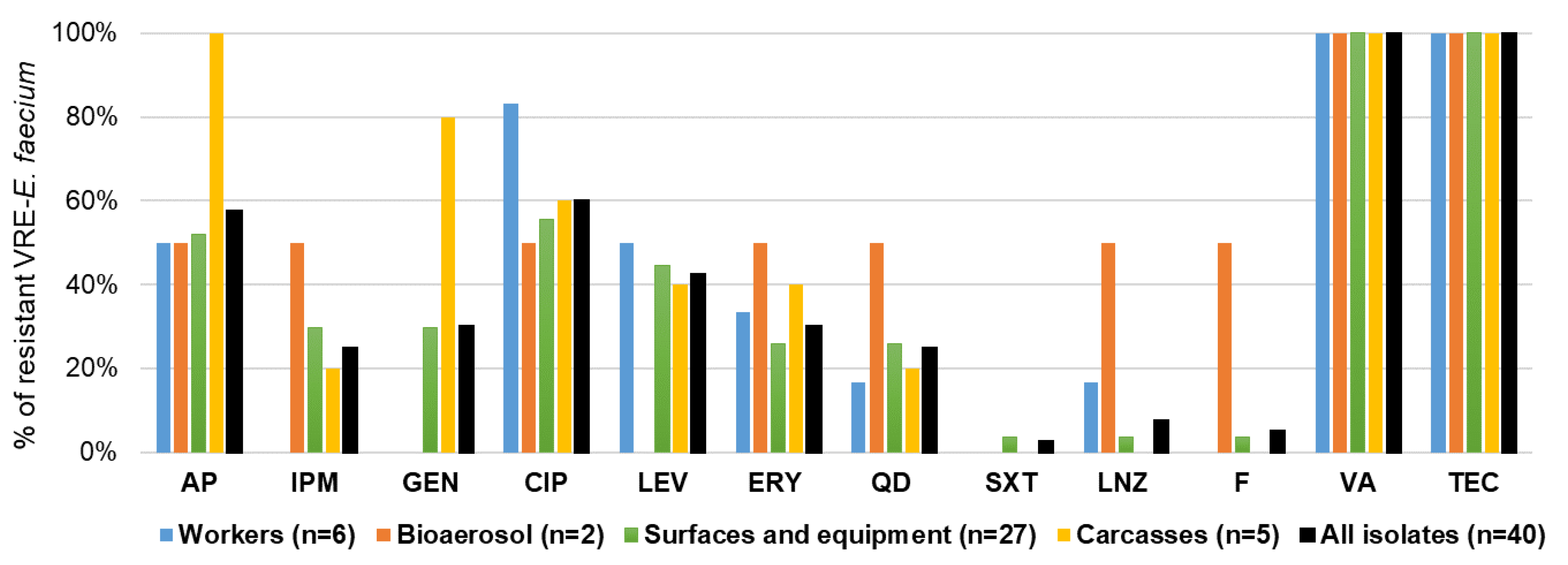
Antibiotic resistance phenotypes of VRE-E. faecium isolates were illustrated in Figure 8 and Figure 9, and Table S3. The majority of VRE isolates showed high resistance rates to vancomycin (100%), teicoplanin (100%), ciprofloxacin (60%), ampicillin (58%), and levofloxacin (43%). The isolated strains were particularly susceptible to trimethoprim–sulfamethoxazole (98%), nitrofurantoin (95%), and linezolid (93%). Isolates obtained from workers exhibited predominant resistance to ciprofloxacin (83%), ampicillin (50%), and levofloxacin (50%). VRE isolates recovered from bioaerosol samples displayed a broad resistance pattern, with comparable frequencies (50%) of resistance to ampicillin, imipenem, erythromycin, quinupristin–dalfopristin, linezolid, and nitrofurantoin. Surface isolates frequently showed resistance to ciprofloxacin (56%), ampicillin (52%), and levofloxacin (44%). In contrast, isolates from carcasses exhibited the broadest resistance spectrum, characterized by high resistance to ampicillin (100%), gentamicin (80%), and ciprofloxacin (60%), and lower resistance to levofloxacin and erythromycin (40% each). Among 40 VRE isolates, 83% were classified as MDR, and their MARI ranged from 0.33 to 0.58. The prevalence of multidrug-resistant VRE-E. faecium was particularly high among isolates collected from bioaerosol samples, carcasses, and workers, accounting for 100%, 83%, and 83% of isolates, respectively. A total of 29 resistance profiles were identified (Table S3). The most common spectrum of resistance was AP-CIP-LEV-QD-VA-TEC-(3/40, 7.5%), AP-CIP-LEV-VA-TEC-(3/40, 7.5%), AP-IPM-VA-TEC-(3/40, 7.5%), and GEN-VA-TEC-(3/40, 7.5%).

2.5.2. Genetic Characterization and Biofilm Formation Potential of VRE Isolates

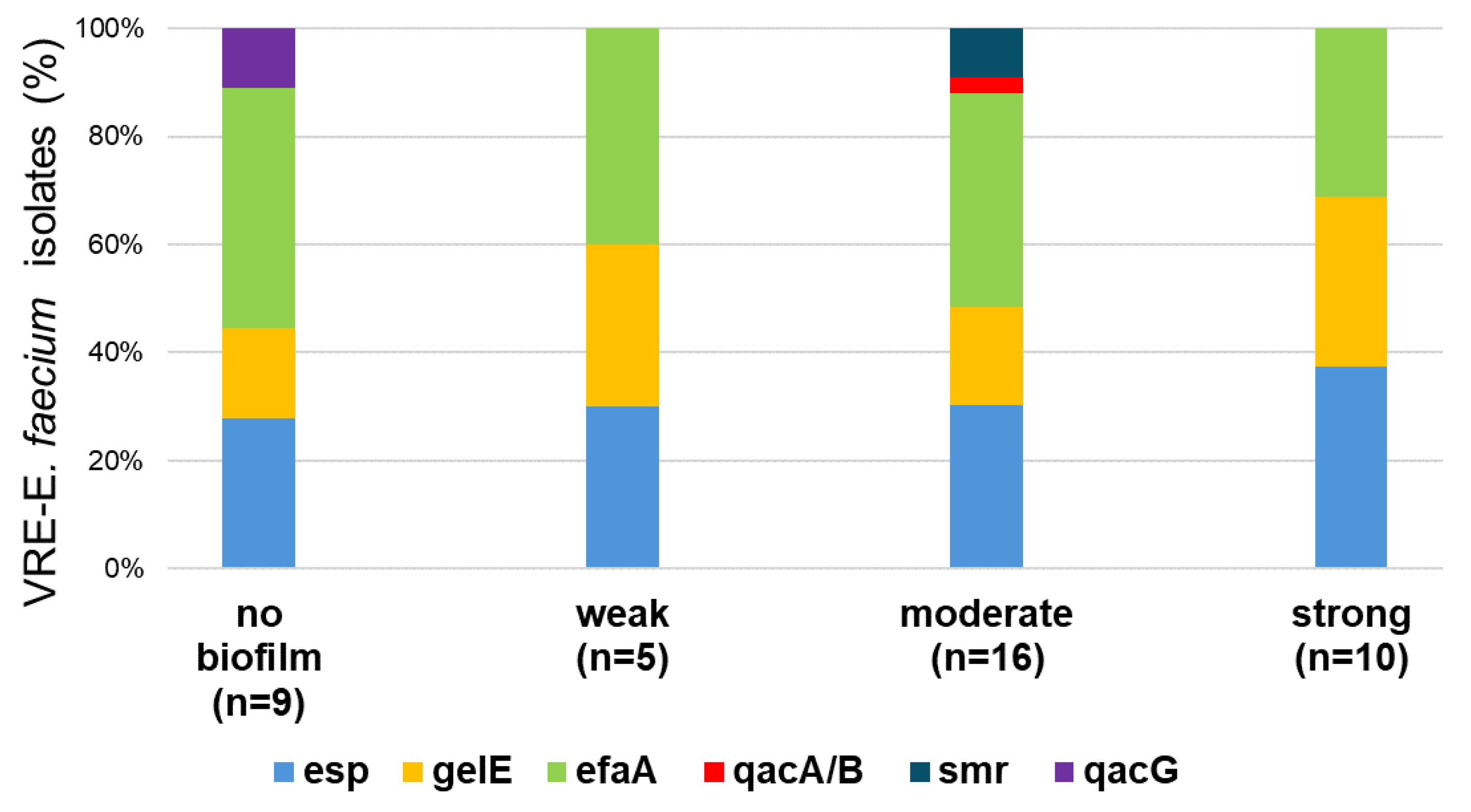
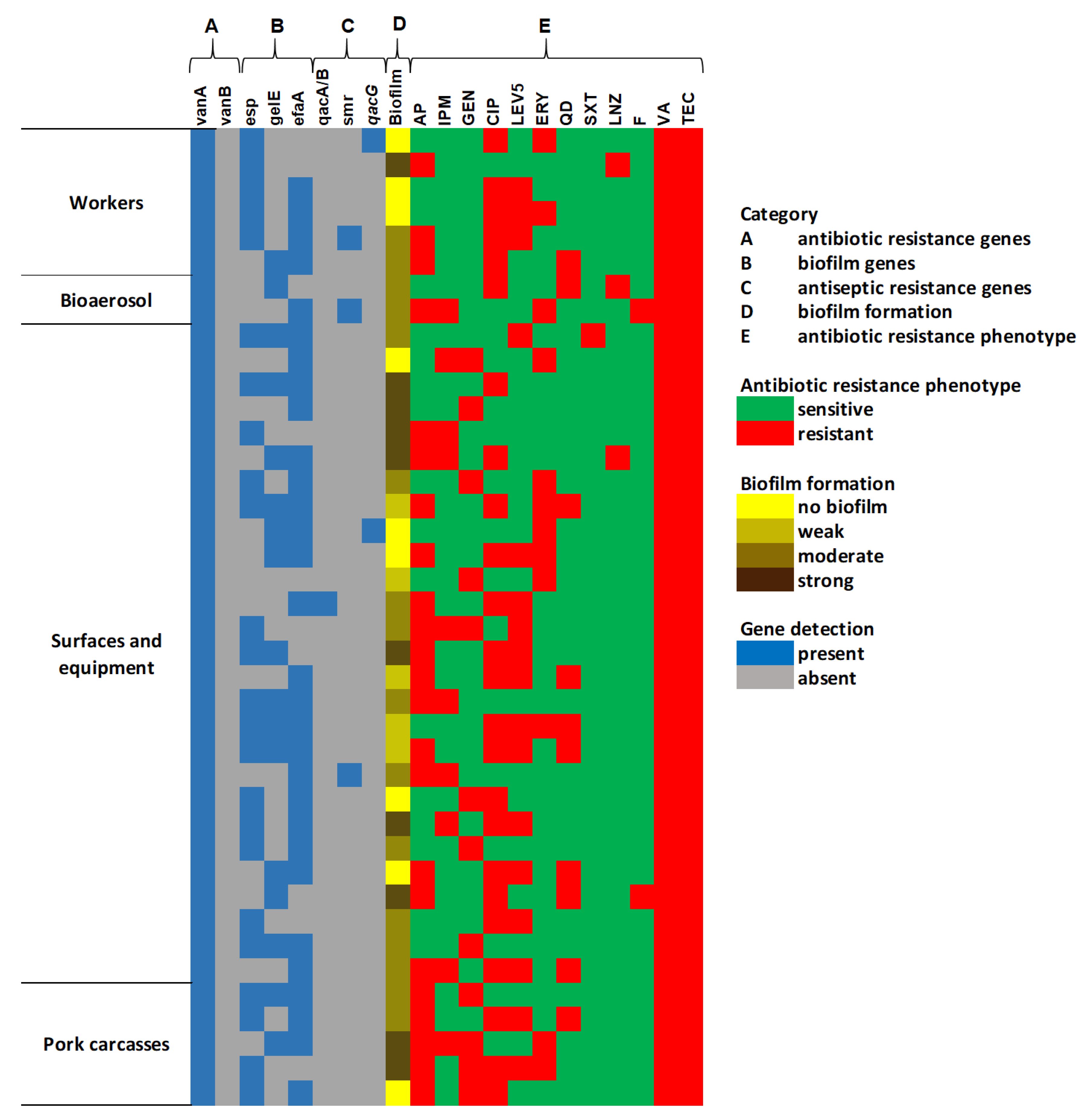
Genetic characterization and biofilm formation potential of VRE-E. faecium isolates are presented on a heatmap in Figure 9 and Figure 10. All 40 isolates of VRE-E. faecium were found to carry the vanA gene, while none of the isolates carried the vanB gene (Figure 9). Among these, the efaA gene was the most commonly detected, with a prevalence rate of 75% (30 out of 40 isolates), followed by esp at 60% (24 out of 40), and gelE at 42.5% (17 out of 40). A small percentage of the studied VRE isolates carried genes associated with antiseptic resistance. Specifically, the smr gene was present in three isolates only, the qacG gene was found in two isolates, and the qacA/B gene was detected in one isolate (Figure 10). Biofilm analysis revealed that 77.5% of the VRE-E. faecium isolates were capable of biofilm formation (Figure 3). Among these, 25% were classified as strong producers, 40% as moderate producers, and 13% as weak producers. Furthermore, no significant association was found between their biofilm-forming abilities, the occurrence of multidrug resistance, and the presence of virulence or antiseptic resistance genes.

3. Discussion

Maintaining the high quality of meat is a very difficult task. At almost every stage of its production (from the moment of animal breeding to slaughtering to processing and distribution), there are many environmental factors that may negatively affect its microbiological purity and health safety [41,42,46]. However, little information is available concerning the prevalence of antibiotic-resistant bacteria in low-capacity slaughterhouses. Knowledge about the main pathways of microbiological contamination in meat production is essential to update the hygiene plan of a given plant and to guide the cleaning and disinfection processes.
Antimicrobial-resistant bacteria detected in slaughterhouses, particularly MRSA, ESBL-E. coli, and VRE-E. faecium, represent overlapping risks for food contamination, environmental persistence, and occupational exposure. Abattoirs can function as transmission nodes where resistant organisms circulate between animals, carcasses, equipment, and workers, underscoring the importance of control measures specifically tailored to small-capacity facilities [47,48]. The present study demonstrated that more than half of the S. aureus isolates recovered from low-capacity slaughterhouses were methicillin-resistant (MRSA), with the highest prevalence observed on pork carcasses (70%) and processing surfaces (19%). The detection of MRSA on workers’ hands (10%) and in their nostrils (3%) suggests occupational exposure. However, the prevalence observed in our study was lower than that reported in several previously studied high-exposure groups. For instance, Cuny et al. (2009) documented nasal colonization in 45% of veterinarians working with pig farms and in 9% of their non-exposed household members [49]. The lower rates observed in our study likely reflect both the smaller sample size and the specific characteristics of low-capacity slaughterhouses. De Jonge et al. (2010) [50] and Cuny et al. (2019) [51] noted that the risk of LA-MRSA colonization through handling raw meat appears to be very low among professionals working in institutional kitchens and butcheries. This is attributed to lower levels of bacterial contamination in such environments and the application of proper hygiene practices, which are unlikely to result in nasal colonization solely from product handling. On the other hand, other studies have shown that the consumption of poultry meat contaminated with MRSA may increase the risk of acquiring nasal colonization [52]. This observation is in good agreement with reports from European and Asian abattoirs, where MRSA—often livestock-associated lineages such as CC398—has been identified in pigs, carcasses, environments, and workers. Occupational studies have further shown that personnel working in direct exposure in the so-called dirty part of the slaughterhouse/abattoir (lairage, scalding/dehairing) are at increased risk of being a carrier [27,47,53,54]. Since MRSA carriage may elevate the risk of complications during hospitalization [55], our findings emphasize the need to develop preventive measures for professionals who are in contact with livestock and raw meat. In this context, further public health efforts are of major importance, including the establishment of monitoring systems to enable trend analysis of the risk of MRSA transmission from animals to humans. Resistance profiles observed here (frequent macrolide, fluoroquinolone, and aminoglycoside resistance with preserved linezolid susceptibility) reflect the multidrug-resistant phenotype typical for LA-MRSA reservoirs and are consistent with prior abattoir-linked studies [56]. Regarding the presence of genes encoding S. aureus biofilm-associated adhesins (icaA/icaBC, fnbA, fnbB, cna), which were frequently detected among the analyzed MRSA isolates, the results of this study are consistent with findings reported in recent research. These factors are necessary for intercellular adhesion and are associated with both slime and biofilm multilayer formation in S. aureus [57,58,59]. The high prevalence of biofilm production (81%), including 27% strong biofilm formers, is consistent with observations by Silva et al. (2021) [58], Vergara et al. (2017) [60], who found similar biofilm capabilities among food-derived MRSA. Biofilm-related persistence has also been described by Pereyra et al. (2016) [61], demonstrating that S. aureus with fnb and ica genes exhibits enhanced adhesion. However, they emphasized that adhesion and internalization depend primarily on the overexpression of these genes during host-cell contact rather than on their mere presence. The results of this study are also consistent with findings reported in recent observations of food chain studies demonstrating strong biofilm capacity of S. aureus/MRSA on steel and plastic surfaces, which hampers removal by routine sanitation [57,58,59]. Of particular note is the frequent detection of qacA/B among MRSA isolates (62%). Although these antiseptic efflux genes are primarily described in healthcare-associated MRSA [62,63], they have been associated with reduced susceptibility to quaternary ammonium compounds and chlorhexidine, suggesting that suboptimal use of disinfectants may inadvertently select for persistence in biofilm-prone environments [64,65]. Moreover, Sultan and Ahmed (2022) [63] reported that the frequencies of qacA/B and smr genes were significantly higher among MRSA than MSSA isolates and in the group of MDR than in non-MDR isolates. However, the presence of antiseptic resistance genes does not necessarily induce tolerance to disinfectants, as the gene could be silent and not expressed by the bacteria [66]. In summary, these results highlight the need for biofilm-targeted interventions and careful use of biocides (cationic, e.g., quaternary ammonium compounds) in small slaughterhouses, particularly at sites such as stuffer machines, hooks, trays, and conveyors, where MRSA was most frequently detected.
In this study, ESBL-producing E. coli was recovered from 31% of all E. coli-positive samples, with the highest prevalence found on carcasses (67%), in bioaerosols (43%), and on high-contact surfaces (32%). This is consistent with earlier investigations showing that slaughterhouse air and equipment represent key drivers for the dissemination of ESBL-producing Enterobacteriaceae. Pigs may acquire ESBL-producing E. coli at different stages, including farming conditions, trading points, transport vehicles, or through contact with infected animals [67,68]. In slaughterhouses, pig carcasses can become contaminated with ESBL and other AMR bacteria during evisceration and subsequent processing [69]. Furthermore, food processing environments and food handlers act as additional reservoirs and vectors for the spread of ESBL-producing bacteria [10,22,70,71,72,73]. Observed resistance profiles of isolates showed complete resistance to third- and fourth-generation cephalosporins and aminopenicillins, but susceptibility to carbapenems and aminoglycosides. This mirrors global surveillance data, where ESBL-E. coli remains sensitive to carbapenems but resistant to β-lactams [74]. Extended-spectrum β-lactamases represent a clinically significant group of enzymes encoded by genes located on mobile genetic elements, which facilitate their transfer across bacterial species. Alongside AmpC cephalosporinases and carbapenemases, ESBLs are among the most critical β-lactamase families contributing to the global antimicrobial resistance crisis [75,76]. The most extensively described ESBL families include TEM-, SHV-, and CTX-M-type enzymes. Historically, TEM and SHV variants predominated in clinical isolates, particularly within Klebsiella pneumoniae. However, the widespread use of third-generation cephalosporins has driven a rapid expansion of CTX-M-type ESBLs, which have largely replaced TEM and SHV enzymes as the dominant variants [75,77,78]. Observed in this study, the predominance of blaCTX-M (91%), followed by blaTEM and blaSHV, reflects the global dominance of CTX-M-type ESBLs in animal and human reservoirs [48,74,77,78]. In a study conducted by Dahms et al. (2015), CTX-M was also the most prevalent β-lactamase in tested cattle, pig, and farm workers’ fecal samples, while SHV predominated only in samples from poultry [79]. A high proportion of detected ESBL-E.coli isolates (76%) were MDR, comparable to reports from pig production chains in Germany [80], Brazil [81], India [82], and occupational studies in workers, where slaughterhouse employees dehairing or eviscerating the animals showed higher carriage rates of MDR ESBL-E. coli than non-exposed individuals [17,80]. Occupational studies further indicate that workers involved in evisceration are at particularly high risk of ESBL carriage compared to those working in cold-room or packaging areas, supporting the role of task-specific exposure. Martínez-Álvarez et al. (2024) [83] demonstrated that the pig nasal cavity may serve as a reservoir facilitating the dissemination of ESBL-producing E. coli and mcr-mediated colistin resistance. Other whole genome studies confirm that pigs and workers can share identical ESBL genotypes, underlining the bidirectional transmission potential at the human–animal interface [84]. At the farm level, transmission may also occur via inhalation of stable air or dust particles, which can serve as carriers of ESBL-producing bacteria [23]. This highlights the need for intensified monitoring, particularly in intensive farming systems where close animal contact increases the likelihood of ESBL resistance spread. A significant association was observed between the occurrence of MDR as well as tested genes (fimH, sfa/focDE, mdfA, ydgF, and emrE) and the biofilm-forming abilities. Frequent detection of biofilm-associated genes (fimH, sfa/focDE, mrkD) and disinfectant tolerance determinants (mdfA, ydgF, emrE, and qacEΔ1) echoes reports about slaughterhouse wastewater and surrounding environments. Such genetic co-occurrence suggests that floor drains and moist equipment surfaces act as reservoirs where biofilm facilitates horizontal gene transfer and promotes persistence under cleaning stress [80,85,86]. Overall, these results reinforce the importance of engineering and operational measures to reduce aerosolization during evisceration and cutting, combined with biofilm-active sanitation of drains and conveyors, and supplemented by worker-level protective measures such as PPE and hygiene protocols.
In this study, VRE bacteria were detected on carcasses, food-contact surfaces, and workers’ hands, but not in nasal swabs, indicating that contamination is more likely contact-mediated rather than airborne. This finding is consistent with reports describing the persistence of Enterococcus spp. along pork chains and in retail meats, with vanA as the predominant resistance determinant [43,87,88]. The prevalence of VRE in livestock has historically been linked to the use of avoparcin, a glycopeptide antibiotic formerly employed as a growth promoter, with farm workers exposed to this compound showing higher colonization rates [89,90]. Even after the ban on avoparcin use across Europe in the late 1990s, VRE continues to be isolated from a variety of food and animal sources, highlighting a persistent public health concern. Since VRE can colonize the entire food chain, it is essential to monitor its prevalence and investigate potential transmission pathways between animal reservoirs and humans in order to develop effective mitigation strategies [91,92,93]. European studies have long emphasized food chains as reservoirs for VRE and have highlighted the multidrug resistance and strong biofilm-forming capacity [20,31,94]. In this study, almost 85% of all VRE-E. faecium isolates were classified as MDR. Currently, E. faecium and E. faecalis rank among the most important nosocomial pathogens worldwide and, from the epidemiological point of view, also constitute one of the most serious problems for food safety [95,96]. In accordance with the ECDC report from 2016 to 2020 on vancomycin-resistant Enterococcus faecalis/E. faecium, it was observed that the burden increased from 47,124 estimated infections, 1335 attributable deaths, and 36,542 DALYs in 2016, to 117,866 cases, 3414 attributable deaths, and 87,375 DALYs in 2020 [97]. Although virulence genes (efaA, esp, and gelE) and biofilm production were frequently detected (77.5% of isolates), no clear associations between virulence, biofilm capacity, and MDR were observed, consistent with previous reports [92,98,99]. Nonetheless, the high rate of biofilm formation among VRE isolates suggests enhanced environmental persistence and potential for gene transfer in slaughterhouse niches [100]. It should be noted that Enterococcus bacteria are less sensitive to biocidal agents than other Gram-positive bacteria, such as Staphylococcus spp. [101]. These observations emphasize the need for heat- or alkali-based sanitation steps and biofilm-directed detergents on high-touch equipment and containers, together with reinforced glove changing and hand hygiene protocols to limit contact-mediated transmission, and a customized measurement plan [102,103]. Vancomycin-resistant E. faecium was identified in one-third of E. faecium isolates, most frequently from carcasses, surfaces, and workers’ hands. The recovery of VRE from workers’ hands but not from nasal swabs is consistent with findings that manual contact and contaminated equipment are primary transmission routes for resistant enterococci in abattoirs [31,43]. The universal presence of the vanA gene, combined with high rates of resistance to vancomycin and teicoplanin, reflects the widespread dissemination of vanA-type VRE along the food chain [104,105,106].
Through MRSA, ESBL-E. coli, and VRE-E. faecium, the data reveal consistent patterns: the highest microbial loads occur in slaughter and evisceration zones; persistence is evident on floors, conveyors, hooks, and trays, and workers contribute measurably to transmission via their hands (and occasionally nostrils). These findings are congruent with prior occupational and environmental studies in abattoirs and argue for a multifaceted strategy: biofilm-aware sanitation using validated chemicals and mechanical action, engineering interventions to limit aerosolization and enhance hygiene zoning, and worker-focused measures including task-specific PPE, rigorous hand hygiene, and training. Collectively, such integrated approaches offer the most effective means of mitigating antimicrobial resistance risks in small-capacity slaughterhouses [10,27,102,103,107,108]. The major limitation of this study was the small number of tested low-capacity slaughterhouses. Thus, studies that examined the prevalence of MRSA, VRE-E. faecium and ESBL-E. coli in these occupational environments are sparse. The detection of the same antimicrobial-resistant pathogens, such as ESBL-producing E. coli, MRSA, and VRE, on carcasses, work surfaces, and among slaughterhouse workers does not in itself confirm zoonotic transmission. However, it may indicate an important epidemiological link to shared sources of exposure, including colonized animals, animal waste, and contaminated wastewater. Such findings highlight the complexity of transmission pathways in slaughterhouse environments, where direct contact with carcasses, aerosols generated during processing, and indirect exposure through contaminated equipment or waste streams may all contribute to the circulation of resistant bacteria. A critical factor amplifying these risks is the biofilm-forming capacity of antimicrobial-resistant strains. Biofilms provide a protective matrix that shields bacteria from cleaning and disinfection procedures, enables their survival on slaughterhouse surfaces and equipment, and facilitates persistence in drains, wastewater, and other niches. This not only contributes to the long-term survival of pathogens in the slaughterhouse environment but also increases the probability of co-selection between antibiotic and biocide resistance. To disentangle these relationships, more in-depth studies are required, employing high-resolution molecular techniques such as whole genome sequencing (WGS), multilocus sequence typing (MLST), or using pulsed-field gel electrophoresis (PFGE) and other source-tracking approaches [11,12,24,84,109,110]. These tools would allow for the identification of clonal relatedness between isolates from animals, environments, and humans, thereby clarifying whether observed overlaps are the result of direct zoonotic events, environmental persistence, or shared contamination reservoirs. The present study primarily aimed to demonstrate that workers in small-capacity slaughterhouses are exposed to resistant pathogens, underscoring the need to consider this risk not only within the framework of food safety monitoring but also from the perspective of occupational health and potential transmission to workers’ households. Importantly, antimicrobial-resistant bacteria and resistance genes may also originate from human-associated sources, including municipal sewage and community wastewater, which further complicates attribution and highlights the need for an integrated One Health approach [5,40]. These findings underline the urgent need for regular screening of staff, stringent enforcement of hygiene protocols, and education strategies among workers in occupational environments.

4. Materials and Methods

4.1. Study Design

The measurements were carried out in three low-capacity pork slaughterhouses having their own butcher shops, located in western and central Poland. The whole technological process was subject to strict veterinary control, and systems of good hygiene practice (GHP), good manufacturing practice (GMP), good veterinary practice (GVP), and HACCP (Hazard Analysis and Critical Control Points) were implemented. A total of 37 workers agreed to participate in the study. In each of the examined plants, bioaerosol samples, swabs from the work surfaces and meat samples were taken. Additionally, swabs from the hands and both nostrils of each participant were taken, and a questionnaire survey was conducted. The study had a positive opinion of the Bioethics Committee of the Witold Chodźko Institute of Rural Health in Lublin, Poland.

4.2. Collection of Biological Samples and Questionnaire Study

Prior to sampling, participants were asked to fill out questionnaires. The questionnaire provided information on gender, age, hygiene habits, job position, and occupational duties. The participants were employed at various stages of pork production, from slaughtering and cutting meat to producing ham and traditional sausages. After completing the questionnaire, a biological sample was collected from both nostrils of each participant by trained researchers wearing sterile gloves and using aseptic techniques with a flocked nylon swab dedicated to this type of research. Each swab was then placed into its plastic tube containing 1 mL of Amies medium (ESwab™ 482C, Copan, Brescia, Italy). Nasal swab collection was not conducted in people who declared injuries of the nasal mucosa, bleeding, or other medical problems that disabled sampling. Swab samples from the nostrils of workers were taken before work and after finishing the shift. The swabs from the hands of workers were taken at the end of the work shift. Swabs from workers’ hands were taken with sponges from the surfaces of both hands, from between the fingers and the outer parts of the fingers, including around the fingernails (Whirl-Pak® Speci-Sponge® Bags, Madison, WI, USA) in accordance with the Polish standard PN-A-82055-19:2000 [111]. After sampling, the sponges were placed in a separate Stomacher bag.

4.3. Bioaerosol Measurement

Air sampling was carried out stationary using the MAS impactor (Model 100 NT, Merck, Germany). The sampling time was 1 min, and the flow rate of the air was 100 L/min. After sampling at each sampling point, the device head was replaced with a new, sterilized one. The impactor was loaded with plates containing the following media (Oxoid, WB): for Staphylococcus aureus—agar with chromogenic substrates, Baird-Parker agar with bile and esculin (BPA); MacConkey agar (MCA)—to determine the number of E. coli. For enumeration of enterococci bacteria, the D-Coccosel agar (DCA, bioMérieux, Marcy-l’Étoile, France) was used.

4.4. Swabbing from Meat Production Line

In each tested low-capacity slaughterhouse, swabs from the production environment were taken from equipment items, machines, tools, and floors in accordance with PN-EN ISO 18593:2018-08 [112]. Swabs were collected with sponges soaked in neutralizing buffer that allows for high-efficiency recovery of microorganisms from surfaces (Whirl-Pak® Hydrated Speci-Sponge® Bags, Madison, WI, USA). After sampling, the sponges were placed in a separate Stomacher bag. Pork carcasses were sampled in accordance with Commission Regulation (EC) No. 1441/2007 of 5 December 2007 [113]. Swabs were taken from 4 locations of each tested carcass by a non-destructive method with an abrasive sponge (Whirl-Pak® Hydrated Speci-Sponge® Bags, Madison, WI, USA), and the sampling area covered 100 cm for each sampling site. The total sampling area covered 400 cm2. Samples taken from different carcass sites were pooled before further analysis. Samples of meat products (sausages and hams) weighing 25 g were taken using sterile instruments into a Stomacher bag for later homogenization in the laboratory in accordance with PN-ISO 6887-2 [114].

4.5. Microbial Analysis

In the laboratory, agar plates from the MAS impactor were incubated at 36 ± 1 °C for 24 h. After that time, the bacteria growing on the plates were enumerated to determine the number of colony-forming units (CFU) per m3 of sampled air. Sponges from tested surfaces and meat samples were mixed with 100 mL of peptone saline diluent (MDR, Oxoid, Basingstoke, UK, GB) and then homogenized, while swabs from the nostrils were vortexed for 30 s in transport Amies medium. After that time, ten-fold serial dilutions of each swab and sponge extract were prepared in peptone saline diluent, and then inoculated onto appropriate microbiological media for further analysis. The enumeration of S. aureus was carried out in accordance with PN-EN ISO 6888-1:2022-03 using Baird-Parker agar medium (Oxoid, GB) [115]. BP agar plates were incubated at 37 °C for 24 h. E. coli enumeration was performed on MCA and on Tryptone Bile X-glucuronide (TBX, Oxoid) according to ISO 16649-2:2001; each plate was incubated at 37 °C for 24 h aerobically [116]. In order to detect E. faecium, a diluted sample was spread onto DCA plates (bioMérieux, France) and incubated at 37 °C up to 48 h aerobically. Final identification of E. coli, S. aureus, and E. faecium isolates was performed with the commercial biochemical test: API 20E, API STAPH, and API Strep according to the producer’s instructions (bioMérieux, France).

4.6. Phenotypic Characterizations MRSA, ESBL-E.coli, and VRE-E. faecium

For phenotypic identification of MRSA, ESBL-E.coli, and VRE-E. faecium isolates, one loopful of each pure culture of isolated S. aureus, E.coli, and E. faecium was streaked onto appropriate screening media (Oxoid): Brilliance MRSA agar for detection of MRSA, Brilliance ESBL agar for ESBL-producing E. coli, and Brilliance VRE agar for detection of vancomycin-resistant enterococci. Detected MRSA, ESBL-E.coli, and VRE-E. faecium isolates were tested for antibiotic susceptibility using the disk diffusion method on Mueller-Hinton medium (MHA, bioMérieux SA) according to the recommendations of the EUCAST (European Committee on Antimicrobial Susceptibility Testing) (2025) [117]. For MRSA isolates, the following antibiotic disks were used (Oxoid, GB): cefoxitin (FOX, 30 μg), clindamycin (DA, 2 μg), ciprofloxacin (CIP, 5 μg), erythromycin (E,15 μg), fusidic acid (FD,10 μg), gentamicin (CN, 10 μg), kanamycin (K 30 μg), linezolid (LNZ,10 μg), penicillin (P, 10U), quinupristin–dalfopristin (QD, 15 μg), tetracycline (TE, 30 μg), and rifampicin (RD, 30 μg). The vancomycin-resistant E. faecium was tested for susceptibility to ampicillin (AMP, 10 µg), imipenem (IPM, 10 µg), gentamicin (CN, 30 µg), ciprofloxacin (CIP, 5 µg), levofloxacin (LVX, 5 µg), erythromycin (E, 15 µg), quinupristin–dalfopristin (QDA, 15 µg), sulfamethoxazole–trimethoprim (SXT, 1.25–23.75 µg), linezolid (LNZ, 10 µg), nitrofurantoin (F, 100 µg), vancomycin (VAN, 5 µg), and teicoplanin (TEC, 30 µg). ESBL production in E. coli isolates was confirmed phenotypically by the double disk synergy test (DDST) and the combined disk diffusion test, according to the EUCAST [117]. The isolates were tested to evaluate the pattern of antimicrobial susceptibilities to ampicillin (AMP, 10 ug), piperacillin (PRL, 30 ug), ceftazidime (CAZ, 30 μg), cefotaxime (CTX, 30 μg), nalidixic acid (NA, 30 μg), cefuroxime (CXM, 30 μg) cefepime (FEP, 30 μg), imipenem (IMP, 10 μg), meropenem (MEM, 10 μg), amikacin (AK, 30 μg), gentamicin (CN, 10 μg) tobramycin (TOB, 10 μg), ofloxacin (OFX, 5 μg), fosfomycin (FF, 200 μg), and tetracycline (TET, 30 µg). Multidrug resistance (MDR) in isolates was identified when they exhibited resistance to at least one agent in three or more tested antimicrobial categories [118]. The multiple antibiotic resistance index (MARI) was calculated by dividing the total number of antimicrobials to which the isolate was resistant by the total number of antimicrobials tested against the isolate [119]. For quality control, the control strains were used: S. aureus ATCC 25923—methicillin-sensitive, S. aureus ATCC 43300—methicillin-resistant, E. faecalis ATCC 29212—glycopeptide-sensitive, E. faecalis ATCC 51299—glycopeptide-resistant, E. coli ATCC 25922—negative control for ESBL, and K. pneumoniae ATCC 700603—positive control for ESBL. The confirmed samples of MRSA, ESBL, and VRE were stored at −80 °C and were subjected to further genetic testing.

4.7. Detection of Biofilm-Forming Abilities of MRSA, ESBL-E.coli, and VRE-E. faecium

Biofilm formation of isolated MRSA, ESBL-E.coli, and VRE-E. faecium strains was examined using a microplate method [31]. Briefly, 20 µL of bacterial suspension in sterile saline (108 cfu/mL) was added to 180 µL of TSB medium with 1% glucose (Oxoid) in a 96-well microplate in 8 replicates, and incubated 24 h at 36 °C. The positive control was a suspension with the biofilm-forming strain S. epidermidis ATCC 35984, while the negative control wells contained broth only—200 µL of TSB supplemented with 1% glucose per well. After incubation, microplate wells were rinsed 3 times with sterile PBS buffer and then placed in an incubator at 60 °C for 60 min to fix the adhered cells. Next, 150 µL of crystal violet was applied to each well, and the plate was incubated for 15 min at room temperature. After another washing, 150 µL of ethanol was applied to each well, and the plate was again incubated for 30 min. After this time, the optical density (OD) was measured at 570 nm using the iMark microplate reader (BioRad, Hercules, CA, USA). The cut-off value (ODc) was derived from 3 standard deviations above the mean of the negative control. Strains were classified as follows: OD < ODc—non-biofilm formers; ODc < OD < 2× ODc—weak biofilm formers; 2× ODc < OD—moderate biofilm formers; 4× ODc < OD—strong biofilm formers.

4.8. Genotypic Characterizations of MRSA, ESBL-E.coli, and VRE-E. faecium

After phenotypic identification, the collected MRSA, VRE-E. faecium, and ESBL-E.coli isolates were investigated by polymerase chain reaction (PCR) based on amplification of selected genes targeting genes determining antibiotic resistance, biofilm-forming abilities, and antiseptic resistance. For this purpose, total genomic DNA of the bacterial isolates was extracted using the Genomic Mini DNA kit (A&A Biotechnology, Gdynia, Poland) according to the manufacturer’s instructions. All DNA extracts were stored at −20 °C before PCR. The sequences of the primers, the sizes of the PCR products, and the corresponding references are summarized in Table 4.
In brief, amplification reactions were set in a 25 µL volume containing 12.5 µL of PCR master mix (contains Mg++, dNTPs, and recombinant Taq DNA polymerase 0.1 U/µL), 0.5 µL (10 pmol) of each of the forward and reverse primers, 2 µL of DNA, and nuclease-free water (A&A Biotechnology, Gdansk, Poland). All PCR amplifications were performed using optimized conditions described in the corresponding published studies (Table 4), employing a C1000 Thermal Cycler (Bio-Rad, Hercules, CA, USA). The reactions followed the same thermal profile: an initial denaturation at 95 °C for 5 min; 35 amplification cycles consisting of 40 s at 95 °C, 50 s at gene-specific annealing temperatures, and 50 s at 72 °C; followed by a final extension at 72 °C for 10 min. The PCR amplicons were confirmed by gel electrophoresis on a 1.5% agarose gel and visualized under UV light.
MRSA isolates were tested by duplex PCR targeting genes determining methicillin resistance (mecA and mecALGA251/mecC) [131]. All MRSA isolates were screened for the detection of biofilm genetic determinants such as icaA, icaBC, fnbA, fnbB, and cna genes [123,124], and antiseptic resistance genes encoding multidrug efflux pumps such as qacAB, smr, and qacG [120,121]. Detection of ESBL genes was confirmed by multiplexing the three ESBL genes blaCTX-M, blaTEM, and blaSHV [134]. The ESLB isolates were tested for carriage of the genetic biofilm determinants, including those coding for type 1 fimbriae (fimH) [128], adhesin type 3 pili (mrkD) [127], and S and F1C fimbriae (sfa and foc) [129], as well as quaternary ammonium compounds (QACs) resistance genes such as ydgF, qacEΔ1, emrE, and mdfA [130]. VRE isolates of E. faecium were tested for the presence of vanA and vanB genes [132,133]. For each VRE-E. faecium isolate, the biofilm-forming genes such as enterococcal surface protein (esp), gelatinase (gelE), cell wall adhesins (efaA), and antiseptic resistance genes such as qacAB, smr, and qacG were amplified using specific primers previously described [121,125].

4.9. Data Analyses

The relationship between the occurrence of antibiotic resistance, biofilm-forming abilities, and gene carriers was assessed using the chi-square test. All statistical analyses were performed using Statistica software (IBM Corp., Armonk, New York, NY, USA), and a p-value < 0.05 was considered statistically significant.

5. Conclusions

The occurrence of MRSA, ESBL-E. coli, and VRE-E. faecium in low-capacity slaughterhouses highlights the role of these facilities as reservoirs and transmission points for multidrug-resistant bacteria. The detection of resistance and biofilm-associated genes across all three taxa underscores the urgent need for targeted interventions, including validated sanitation programs that focus on biofilm reservoirs, improved air quality control, and enhanced enforcement of occupational hygiene. The integration of molecular surveillance for mecA, blaCTX-M, and vanA genes, along with antimicrobial resistance markers such as qacA/B and qacEΔ1, will be crucial for the early detection and control of resistant pathogens in the meat-processing sector. Our findings indicate that slaughterhouse workers are frequently exposed to antibiotic-resistant bacteria, including MRSA, ESBL-E. coli, and VRE-E. faecium. The highest risks occur in slaughter and evisceration areas, where contaminated air, carcasses, and surfaces create reservoirs for these pathogens. Workers in these zones are not only more likely to carry resistant bacteria themselves but can also spread them to meat products and, eventually, to consumers. This issue is significant for two reasons: it poses a risk to workers of contracting difficult-to-treat infections, and it contributes to the broader public health issue of antimicrobial resistance. To mitigate these risks, small slaughterhouses should implement stronger hygiene measures that focus on biofilms, maintain better separation between clean and dirty areas, enhance ventilation, and strictly enforce the use of protective equipment. Regular training and monitoring of workers are also essential. Protecting employees in this way will help protect consumers and limit the spread of resistance.

Supplementary Materials

The following supporting information can be downloaded at: https://www.mdpi.com/article/10.3390/antibiotics14121200/s1. Table S1: Frequency of antimicrobial resistance profiles of ESBL-E. coli isolates from tested low-capacity slaughterhouses; Table S2: Frequency of antimicrobial resistance profiles of MRSA isolates from tested low-capacity slaughterhouses; Table S3: Frequency of antimicrobial resistance profiles of VRE-E. faecium isolates from tested low-capacity slaughterhouses.

Author Contributions

A.Ł.-W.: conceptualization, methodology, investigation, writing—original draft preparation, analysis; M.C.: analysis, investigation; M.G.-S.: investigation, visualization; R.L.G.: writing—review and editing, visualization. All authors have read and agreed to the published version of the manuscript.

Funding

This paper is published and based on the results of a research task carried out within the scope of the VI stage of the National Programme “Governmental Programme for Improvement of Safety and Working Conditions” supported by the resources of the National Centre for Research and Development. Task no. I.PN.02. The Central Institute for Labour Protection—National Research Institute is the Programme’s main co-ordinator.

Institutional Review Board Statement

The study was conducted in accordance with the Declaration of Helsinki and approved by the Bioethics Committee of the Witold Chodźko Institute of Rural Health in Lublin, Poland (protocol code 8/2020, 28 May 2020) for studies involving humans.

Informed Consent Statement

Informed consent was obtained from all subjects involved in the study.

Data Availability Statement

The data that support the findings of this study are available from the corresponding author upon reasonable request.

Conflicts of Interest

The authors declare no conflicts of interest.

Abbreviations

The following abbreviations are used in this manuscript:
ESBLExtended-Spectrum Beta-Lactamases
MARIMultiple Antibiotic Resistance Index
MDRMultidrug Resistance
MRSAMethicillin-Resistant Staphylococcus aureus
MSSAMethicillin-Sensitive Staphylococcus aureus
non-ESBLsIsolates that do not produce ESBL enzyme
VREVancomycin-Resistant Enterococcus
VSEVancomycin-Sensitive Enterococcus

References

  1. Morehead, M.S.; Scarbrough, C. Emergence of global antibiotic resistance. Prim. Care Clin. Off. Pract. 2018, 45, 467–484. [Google Scholar] [CrossRef] [PubMed]
  2. GBD 2021 Antimicrobial Resistance Collaborators. Global burden of bacterial antimicrobial resistance 1990–2021: A systematic analysis with forecasts to 2050. Lancet 2024, 404, 1199–1226. [Google Scholar] [CrossRef] [PubMed]
  3. Van Boeckel, T.P.; Brower, C.; Gilbert, M.; Grenfell, B.T.; Levin, S.A.; Robinson, T.P.; Teillant, A.; Laxminarayan, R. Global trends in antimicrobial use in food animals. Proc. Natl. Acad. Sci. USA 2015, 112, 5649–5654. [Google Scholar] [CrossRef]
  4. Tiseo, K.; Huber, L.; Gilbert, M.; Robinson, T.P.; Van Boeckel, T.P. Global Trends in Antimicrobial Use in Food Animals from 2017 to 2030. Antibiotics 2020, 9, 918. [Google Scholar] [CrossRef]
  5. Conceição, S.; Queiroga, M.C.; Laranjo, M. Antimicrobial Resistance in Bacteria from Meat and Meat Products: A One Health Perspective. Microorganisms 2023, 11, 2581. [Google Scholar] [CrossRef]
  6. European Sales and Use of Antimicrobials for Veterinary Medicine (ESUAvet). Annual Surveillance Report for 2023’ (EMA/CVMP/ESUAVET/80289/2025). 2025. Available online: https://www.ema.europa.eu/en/documents/report/european-sales-use-antimicrobials-veterinary-medicine-annual-surveillance-report-2023_en.pdf (accessed on 20 October 2025).
  7. Akkaya, L.; Alisarli, M.; Cetinkaya, Z.; Kara, R.; Telli, R. Occurrence of Escherichia colio157:H7/O157, Listeria monocytogenes and Salmonella spp. in beef slaughterhouse environments, equipment and workers. J. Muscle Foods 2008, 19, 261–274. [Google Scholar] [CrossRef]
  8. Klous, G.; Huss, A.; Heederik, D.J.J.; Coutinho, R.A. Human-livestock contacts and their relationship to transmission of zoonotic pathogens, a systematic review of literature. One Health 2016, 2, 65–76. [Google Scholar] [CrossRef]
  9. You, Y.; Leahy, K.; Resnick, C.; Howard, T.; Carroll, K.C.; Silbergeld, E.K. Exposure to pathogens among workers in a poultry slaughter and processing plant. Am. J. Ind. Med. 2016, 59, 453–464. [Google Scholar] [CrossRef]
  10. Dohmen, W.; VAN Gompel, L.; Schmitt, H.; Liakopoulos, A.; Heres, L.; Urlings, B.A.; Mevius, D.; Bonten, M.J.M.; Heederik, D.J.J. ESBL carriage in pig slaughterhouse workers is associated with occupational exposure. Epidemiol. Infect. 2017, 145, 2003–2010. [Google Scholar] [CrossRef] [PubMed]
  11. Wang, X.L.; Li, L.; Li, S.M.; Huang, J.Y.; Fan, Y.P.; Yao, Z.J.; Ye, X.H.; Chen, S.D. Phenotypic and molecular characteristics of Staphylococcus aureus and methicillin-resistant Staphylococcus aureus in slaughterhouse pig-related workers and control workers in Guangdong Province, China. Epidemiol. Infect. 2017, 145, 1843–1851. [Google Scholar] [CrossRef] [PubMed]
  12. Aworh, M.K.; Abiodun-Adewusi, O.; Mba, N.; Helwigh, B.; Hendriksen, R.S. Prevalence and risk factors for faecal carriage of multidrug resistant Escherichia coli among slaughterhouse workers. Sci. Rep. 2021, 11, 13362. [Google Scholar] [CrossRef] [PubMed]
  13. Dutkiewicz, J.; Cisak, E.; Sroka, J.; Wójcik-Fatla, A.; Zając, V. Biological agents as occupational hazards-selected issues. Ann. Agric. Environ. Med. 2011, 18, 286–293. [Google Scholar]
  14. Kasaeinasab, A.; Jahangiri, M.; Karimi, A.; Tabatabaei, H.R.; Safari, S. Respiratory Disorders Among Workers in Slaughterhouses. Saf. Health Work 2017, 8, 84–88. [Google Scholar] [CrossRef]
  15. Graveland, H.; Wagenaar, J.A.; Heesterbeek, H.; Mevius, D.; van Duijkeren, E.; Heederik, D. Methicillin resistant Staphylococcus aureus ST398 in veal calf farming: Human MRSA carriage related with animal antimicrobial usage and farm hygiene. PLoS ONE 2010, 5, e10990. [Google Scholar] [CrossRef]
  16. Effelsberg, N.; Udarcev, S.; Müller, H.; Kobusch, I.; Linnemann, S.; Boelhauve, M.; Köck, R.; Mellmann, A. Genotypic Characterization of Livestock-Associated Methicillin-Resistant Staphylococcus aureus Isolates of Clonal Complex 398 in Pigsty Visitors: Transient Carriage or Persistence? J. Clin. Microbiol. 2019, 58, e01276-19. [Google Scholar] [CrossRef]
  17. Köck, R.; Schaumburg, F.; Mellmann, A.; Köksal, M.; Jurke, A.; Becker, K.; Friedrich, A.W. Livestock-associated methicillin-resistant Staphylococcus aureus (MRSA) as causes of human infection and colonization in Germany. PLoS ONE 2013, 8, e55040. [Google Scholar] [CrossRef]
  18. Aworh, M.K.; Ekeng, E.; Nilsson, P.; Egyir, B.; Owusu-Nyantakyi, C.; Hendriksen, R.S. Extended-Spectrum ß-Lactamase-Producing Escherichia coli Among Humans, Beef Cattle, and Abattoir Environments in Nigeria. Front. Cell. Infect. Microbiol. 2022, 12, 869314. [Google Scholar] [CrossRef] [PubMed]
  19. Behrens, W.; Kolte, B.; Junker, V.; Frentrup, M.; Dolsdorf, C.; Börger, M.; Jaleta, M.; Kabelitz, T.; Amon, T.; Werner, D.; et al. Bacterial genome sequencing tracks the housefly-associated dispersal of fluoroquinolone- and cephalosporin-resistant Escherichia coli from a pig farm. Environ. Microbiol. 2023, 25, 1174–1185. [Google Scholar] [CrossRef] [PubMed]
  20. Grudlewska-Buda, K.; Skowron, K.; Bauza-Kaszewska, J.; Budzyńska, A.; Wiktorczyk-Kapischke, N.; Wilk, M.; Wujak, M.; Paluszak, Z. Assessment of antibiotic resistance and biofilm formation of Enterococcus species isolated from different pig farm environments in Poland. BMC Microbiol. 2023, 23, 89. [Google Scholar] [CrossRef]
  21. Laube, H.; Friese, A.; von Salviati, C.; Guerra, B.; Rösler, U. Transmission of ESBL/AmpC-producing Escherichia coli from broiler chicken farms to surrounding areas. Vet. Microbiol. 2014, 172, 519–527. [Google Scholar] [CrossRef]
  22. Dohmen, W.; Bonten, M.; Bos, M.; Van Marm, S.; Scharringa, J.; Wagenaar, J.; Heederik, D. Carriage of extended-spectrum β-lactamases in pig farmers is associated with occurrence in pigs. Clin. Microbiol. Infect. 2015, 21, 917–923. [Google Scholar] [CrossRef]
  23. Dohmen, W.; Schmitt, H.; Bonten, M.; Heederik, D. Air exposure as a possible route for ESBL in pig farmers. Environ. Res. 2017, 155, 359–364. [Google Scholar] [CrossRef]
  24. Wadepohl, K.; Müller, A.; Seinige, D.; Rohn, K.; Blaha, T.; Meemken, D.; Kehrenberg, C. Association of intestinal colonization of ESBL-producing Enterobacteriaceae in poultry slaughterhouse workers with occupational exposure-A German pilot study. PLoS ONE 2020, 15, e0232326. [Google Scholar] [CrossRef]
  25. Collis, R.M.; Biggs, P.J.; Burgess, S.A.; Midwinter, A.C.; Brightwell, G.; Cookson, A.L. Prevalence and distribution of extended-spectrum β-lactamase and AmpC-producing Escherichia coli in two New Zealand dairy farm environments. Front. Microbiol. 2022, 13, 960748. [Google Scholar] [CrossRef] [PubMed]
  26. Van Cleef, B.A.; Broens, E.M.; Voss, A.; Huijsdens, X.W.; Züchner, L.; Van Benthem, B.H.; Kluytmans, J.A.; Mulders, M.N.; Van De Giessen, A.W. High prevalence of nasal MRSA carriage in slaughterhouse workers in contact with live pigs in The Netherlands. Epidemiol. Infect. 2010, 138, 756–763. [Google Scholar] [CrossRef]
  27. Gilbert, M.J.; Bos, M.E.; Duim, B.; Urlings, B.A.; Heres, L.; Wagenaar, J.A.; Heederik, D.J. Livestock-associated MRSA ST398 carriage in pig slaughterhouse workers related to quantitative environmental exposure. Occup. Environ. Med. 2012, 69, 472–478. [Google Scholar] [CrossRef] [PubMed]
  28. Mascaro, V.; Leonetti, M.; Nobile, C.G.A.; Barbadoro, P.; Ponzio, E.; Recanatini, C.; Prospero, E.; Pavia, M. Collaborative Working Group Prevalence of Livestock-Associated Methicillin-Resistant Staphylococcus aureus (LA-MRSA) Among Farm and Slaughterhouse Workers in Italy. J. Occup. Environ. Med. 2018, 60, e416–e425. [Google Scholar] [CrossRef]
  29. Wang, Y.; Zhang, P.; Wu, J.; Chen, S.; Jin, Y.; Long, J.; Duan, G.; Yang, H. Transmission of livestock-associated methicillin-resistant Staphylococcus aureus between animals, environment, and humans in the farm. Environ. Sci. Pollut. Res. 2023, 30, 86521–86539. [Google Scholar] [CrossRef] [PubMed]
  30. Gordoncillo, M.J.; Donabedian, S.; Bartlett, P.C.; Perri, M.; Zervos, M.; Kirkwood, R.; Febvay, C. Isolation and molecular characterization of vancomycin-resistant Enterococcus faecium from swine in Michigan, USA. Zoonoses Public Health 2013, 60, 319–326. [Google Scholar] [CrossRef]
  31. Ławniczek-Wałczyk, A.; Cyprowski, M.; Górny, R.L. Distribution of Selected Drug-resistant Enterococcus Species in Meat Plants in Poland. Rocz. Ochr. Sr. 2022, 24, 345–359. [Google Scholar] [CrossRef]
  32. Andriani, L.; Rega, M.; Bonilauri, P.; Pupillo, G.; De Lorenzi, G.; Bonardi, S.; Conter, M.; Bacci, C. Vancomycin resistance and virulence genes evaluation in Enterococci isolated from pork and wild boar meat. Heliyon 2024, 10, e34543. [Google Scholar] [CrossRef]
  33. Abebe, G.M. The role of bacterial biofilm in antibiotic resistance and food contamination. Int. J. Microbiol. 2020, 1705814. [Google Scholar] [CrossRef]
  34. Ghidini, S.; De Luca, S.; Rodríguez-López, P.; Simon, A.C.; Liuzzo, G.; Poli, L.; Ianieri, A.; Zanardi, E. Microbial contamination, antimicrobial resistance and biofilm formation of bacteria isolated from a high-throughput pig abattoir. Ital. J. Food Saf. 2022, 11, 10160. [Google Scholar] [CrossRef] [PubMed]
  35. Bridier, A.; Briandet, R.; Thomas, V.; Dubois-Brissonnet, F. Resistance of bacterial biofilms to disinfectants: A review. Biofouling 2011, 27, 1017–1032. [Google Scholar] [CrossRef] [PubMed]
  36. Braga, T.M.; Pomba, C.; Lopes, M.F. High-level vancomycin resistant Enterococcus faecium related to humans and pigs found in dust from pig breeding facilities. Vet. Microbiol. 2013, 161, 344–349. [Google Scholar] [CrossRef] [PubMed]
  37. Feld, L.; Bay, H.; Angen, Ø.; Larsen, A.R.; Madsen, A.M. Survival of LA-MRSA in Dust from Swine Farms. Ann. Work. Expo. Health 2018, 62, 147–156. [Google Scholar] [CrossRef]
  38. Nikolaev, Y.; Yushina, Y.; Mardanov, A.; Gruzdev, E.; Tikhonova, E.; El-Registan, G.; Beletskiy, A.; Semenova, A.; Zaiko, E.; Bataeva, D.; et al. Microbial Biofilms at Meat-Processing Plant as Possible Places of Bacteria Survival. Microorganisms 2022, 10, 1583. [Google Scholar] [CrossRef]
  39. Ban-Cucerzan, A.; Imre, K.; Morar, A.; Marcu, A.; Hotea, I.; Popa, S.-A.; Pătrînjan, R.-T.; Bucur, I.-M.; Gașpar, C.; Plotuna, A.-M.; et al. Persistent Threats: A Comprehensive Review of Biofilm Formation, Control, and Economic Implications in Food Processing Environments. Microorganisms 2025, 13, 1805. [Google Scholar] [CrossRef]
  40. Aslam, B.; Khurshid, M.; Arshad, M.I.; Muzammil, S.; Rasool, M.; Yasmeen, N.; Shah, T.; Chaudhry, T.H.; Rasool, M.H.; Shahid, A.; et al. Antibiotic Resistance: One Health One World Outlook. Front. Cell. Infect. Microbiol. 2021, 11, 771510. [Google Scholar] [CrossRef] [PubMed]
  41. Florez-Cuadrado, D.; Moreno, M.A.; Ugarte-Ruíz, M.; Domínguez, L. Antimicrobial Resistance in the Food Chain in the European Union. Adv. Food Nutr. Res. 2018, 86, 115–136. [Google Scholar] [CrossRef]
  42. Bakhtiary, F.; Sayevand, H.R.; Remely, M.; Hippe, B.; Hosseini, H.; Haslberger, A.G. Evaluation of bacterial contamination sources in meat production line. J. Food Qual. 2016, 39, 750–756. [Google Scholar] [CrossRef]
  43. Zhao, J.; Liu, R.; Sun, Y.; Yang, X.; Yao, J. Tracing enterococci persistence along a pork production chain from feed to food in China. Anim. Nutr. 2022, 9, 223–232. [Google Scholar] [CrossRef]
  44. Horie, M.; Yang, D.; Joosten, P.; Munk, P.; Wadepohl, K.; Chauvin, C.; Moyano, G.; Skarżyńska, M.; Dewulf, J.; Aarestrup, F.M.; et al. Risk Factors for Antimicrobial Resistance in Turkey Farms: A Cross-Sectional Study in Three European Countries. Antibiotics 2021, 10, 820. [Google Scholar] [CrossRef]
  45. Graham, J.P.; Eisenberg, J.N.S.; Trueba, G.; Zhang, L.; Johnson, T.J. Small-Scale Food Animal Production and Antimicrobial Resistance: Mountain, Molehill, or Something in-between? Environ. Health Perspect. 2017, 125, 104501. [Google Scholar] [CrossRef]
  46. Losito, P.; Visciano, P.; Genualdo, M.; Satalino, R.; Migailo, M.; Ostuni, A.; Luisi, A.; Cardone, G. Evaluation of hygienic conditions of food contact surfaces in retail outlets: Six years of monitoring. LWT 2016, 77, 67–71. [Google Scholar] [CrossRef]
  47. Ivbule, M.; Miklaševičs, E.; Čupāne, L.; Bērziņa, L.; Bālinš, A.; Valdovska, A. Presence of Methicillin-resistant Staphylococcus aureus in Slaughterhouse Environment, Pigs, Carcasses, and Workers. J. Vet. Res. 2017, 61, 267–277. [Google Scholar] [CrossRef]
  48. Langkabel, N.; Burgard, J.; Freter, S.; Fries, R.; Meemken, D.; Ellerbroek, L. Detection of Extended-Spectrum β-Lactamase (ESBL) E. coli at Different Processing Stages in Three Broiler Abattoirs. Microorganisms 2023, 11, 2541. [Google Scholar] [CrossRef]
  49. Cuny, C.; Nathaus, R.; Layer, F.; Strommenger, B.; Altmann, D.; Witte, W. Nasal Colonization of Humans with Methicillin-Resistant Staphylococcus aureus (MRSA) CC398 with and without Exposure to Pigs. PLoS ONE 2009, 4, e6800. [Google Scholar] [CrossRef]
  50. de Jonge, R.; Verdier, J.E.; Havelaar, A.H. Prevalence of meticillin-resistant Staphylococcus aureus amongst professional meat handlers in the Netherlands, March-July 2008. Euro. Surveill. 2010, 15, 19712. [Google Scholar] [CrossRef] [PubMed]
  51. Cuny, C.; Layer, F.; Hansen, S.; Werner, G.; Witte, W. Nasal Colonization of Humans with Occupational Exposure to Raw Meat and to Raw Meat Products with Methicillin-Susceptible and Methicillin-Resistant Staphylococcus aureus. Toxins 2019, 11, 190. [Google Scholar] [CrossRef] [PubMed]
  52. van Rijen, M.M.; Kluytmans-van den Bergh, M.F.; Verkade, E.J.; Ten Ham, P.B.; Feingold, B.J.; Kluytmans, J.A. CAM Study Group Lifestyle-Associated Risk Factors for Community-Acquired Methicillin-Resistant Staphylococcus aureus Carriage in the Netherlands: An Exploratory Hospital-Based Case-Control Study. PLoS ONE 2013, 8, e65594. [Google Scholar] [CrossRef]
  53. Normanno, G.; Dambrosio, A.; Lorusso, V.; Samoilis, G.; Di Taranto, P.; Parisi, A. Methicillin-resistant Staphylococcus aureus (MRSA) in slaughtered pigs and abattoir workers in Italy. Food Microbiol. 2015, 51, 51–56. [Google Scholar] [CrossRef]
  54. Santos, V.; Gomes, A.; Ruiz-Ripa, L.; Mama, O.M.; Sabença, C.; Sousa, M.; Silva, V.; Sousa, T.; Vieira-Pinto, M.; Igrejas, G.; et al. Methicillin-Resistant Staphylococcus aureus CC398 in Purulent Lesions of Piglets and Fattening Pigs in Portugal. Microb. Drug Resist. 2020, 26, 850–856. [Google Scholar] [CrossRef]
  55. Cosgrove, S.E.; Qi, Y.; Kaye, K.S.; Harbarth, S.; Karchmer, A.W.; Carmeli, Y. The impact of methicillin resistance in Staphylococcus aureus bacteremia on patient outcomes: Mortality, length of stay, and hospital charges. Infect. Control Hosp. Epidemiol. 2005, 26, 166–174. [Google Scholar] [CrossRef]
  56. Bhargava, K.; Zhang, Y. Multidrug-resistant coagulase-negative Staphylococci in food animals. J. Appl. Microbiol. 2012, 113, 1027–1036. [Google Scholar] [CrossRef] [PubMed]
  57. Nourbakhsh, F.; Namvar, A.E. Detection of genes involved in biofilm formation in Staphylococcus aureus isolates. GMS Hyg. Infect. Control 2016, 11, Doc07. [Google Scholar] [CrossRef] [PubMed]
  58. Silva, V.; Almeida, L.; Gaio, V.; Cerca, N.; Manageiro, V.; Caniça, M.; Capelo, J.L.; Igrejas, G.; Poeta, P. Biofilm Formation of Multidrug-Resistant MRSA Strains Isolated from Different Types of Human Infections. Pathogens 2021, 10, 970. [Google Scholar] [CrossRef] [PubMed]
  59. Hernández-Cuellar, E.; Tsuchiya, K.; Valle-Ríos, R.; Medina-Contreras, O. Differences in Biofilm Formation by Methicillin-Resistant and Methicillin-Susceptible Staphylococcus aureus Strains. Diseases 2023, 11, 160. [Google Scholar] [CrossRef]
  60. Vergara, A.; Normanno, G.; Di Ciccio, P.; Pedonese, F.; Nuvoloni, R.; Parisi, A.; Santagada, G.; Colagiorgi, A.; Zanardi, E.; Ghidini, S.; et al. Biofilm Formation and Its Relationship with the Molecular Characteristics of Food-Related Methicillin-Resistant Staphylococcus aureus (MRSA). J. Food Sci. 2017, 82, 2364–2370. [Google Scholar] [CrossRef]
  61. Pereyra, E.A.; Picech, F.; Renna, M.S.; Baravalle, C.; Andreotti, C.S.; Russi, R.; Calvinho, L.F.; Diez, C.; Dallard, B.E. Detection of Staphylococcus aureus adhesion and biofilm-producing genes and their expression during internalization in bovine mammary epithelial cells. Vet. Microbiol. 2016, 183, 69–77. [Google Scholar] [CrossRef]
  62. McNeil, J.C.; Kok, E.Y.; Vallejo, J.G.; Campbell, J.R.; Hulten, K.G.; Mason, E.O.; Kaplan, S.L. Clinical and Molecular Features of Decreased Chlorhexidine Susceptibility among Nosocomial Staphylococcus aureus Isolates at Texas Children’s Hospital. Antimicrob. Agents Chemother. 2015, 60, 1121–1128. [Google Scholar] [CrossRef]
  63. Sultan, A.M.; Ahmed, M.A. Distribution of chlorhexidine resistance genes among Staphylococcus aureus clinical isolates: The challenge of antiseptic resistance. Germs 2022, 12, 461–471. [Google Scholar] [CrossRef] [PubMed]
  64. Longtin, J.; Seah, C.; Siebert, K.; McGeer, A.; Simor, A.; Longtin, Y.; Low, D.E.; Melano, R.G. Distribution of antiseptic resistance genes qacA, qacB, and smr in methicillin-resistant Staphylococcus aureus isolated in Toronto, Canada, from 2005 to 2009. Antimicrob. Agents Chemother. 2011, 55, 2999–3001. [Google Scholar] [CrossRef] [PubMed]
  65. McNeil, J.C.; Sommer, L.M.; Vallejo, J.G.; Hulten, K.G.; Kaplan, S.L. Association of qacA/B and smr Carriage with Staphylococcus aureus Survival following Exposure to Antiseptics in an Ex Vivo Venous Catheter Disinfection Model. Microbiol. Spectr. 2023, 11, e0333322. [Google Scholar] [CrossRef]
  66. do Vale, B.C.M.; Nogueira, A.G.; Cidral, T.A.; Lopes, M.C.S.; de Melo, M.C.N. Decreased susceptibility to chlorhexidine and distribution of qacA/B genes among coagulase-negative Staphylococcus clinical samples. BMC Infect. Dis. 2019, 19, 199. [Google Scholar] [CrossRef]
  67. EFSA BIOHAZ Panel (EFSA Panel on Biological Hazards); Koutsoumanis, K.; Allende, A.; Álvarez-Ordóñez, A.; Bolton, D.; Bover-Cid, S.; Chemaly, M.; Davies, R.; De Cesare, A.; Herman, L.; et al. Scientific Opinion on the transmission of antimicrobial resistance (AMR) during animal transport. EFSA J. 2022, 20, e07586. [Google Scholar] [CrossRef]
  68. Kleist, J.F.; Bachmann, L.; Huxdorff, C.; Eger, E.; Schaufler, K.; Wedemeyer, J.; Homeier-Bachmann, T. ESBL-producing Escherichia coli in wastewater from German slaughterhouses. One Health 2025, 21, 101189. [Google Scholar] [CrossRef] [PubMed]
  69. Warriner, K.; Aldsworth, T.G.; Kaur, S.; Dodd, C.E.R. Cross-contamination of carcasses and equipment during pork processing. J. Appl. Microbiol. 2002, 93, 169–177. [Google Scholar] [CrossRef]
  70. de Been, M.; Lanza, V.F.; de Toro, M.; Scharringa, J.; Dohmen, W.; Du, Y.; Hu, J.; Lei, Y.; Li, N.; Tooming-Klunderud, A.; et al. Dissemination of cephalosporin resistance genes between Escherichia coli strains from farm animals and humans by specific plasmid lineages. PLoS Genet. 2014, 10, e1004776. [Google Scholar] [CrossRef]
  71. Schmithausen, R.M.; Schulze-Geisthoevel, S.V.; Stemmer, F.; El-Jade, M.; Reif, M.; Hack, S.; Meilaender, A.; Montabauer, G.; Fimmers, R.; Parčina, M.; et al. Analysis of Transmission of MRSA and ESBL-E among Pigs and Farm Personnel. PLoS ONE 2015, 10, e0138173. [Google Scholar] [CrossRef]
  72. Barilli, E.; Vismarra, A.; Villa, Z.; Bonilauri, P.; Bacci, C. ESβL E. coli isolated in pig’s chain: Genetic analysis associated to the phenotype and biofilm synthesis evaluation. Int. J. Food Microbiol. 2019, 289, 162–167. [Google Scholar] [CrossRef]
  73. Rega, M.; Andriani, L.; Poeta, A.; Casadio, C.; Diegoli, G.; Bonardi, S.; Conter, M.; Bacci, C. Transmission of β-lactamases in the pork food chain: A public health concern. One Health 2023, 17, 100632. [Google Scholar] [CrossRef]
  74. Seiffert, S.N.; Hilty, M.; Perreten, V.; Endimiani, A. Extended-spectrum cephalosporin-resistant Gram-negative organisms in livestock: An emerging problem for human health? Drug Resist. Updat. 2013, 16, 22–45. [Google Scholar] [CrossRef] [PubMed]
  75. Livermore, D.M.; Canton, R.; Gniadkowski, M.; Nordmann, P.; Rossolini, G.M.; Arlet, G.; Ayala, J.; Coque, T.M.; Kern-Zdanowicz, I.; Luzzaro, F.; et al. CTX-M: Changing the face of ESBLs in Europe. J. Antimicrob. Chemother. 2007, 59, 165–174. [Google Scholar] [CrossRef] [PubMed]
  76. Bush, K.; Bradford, P.A. Epidemiology of β-Lactamase-Producing Pathogens. Clin. Microbiol. Rev. 2020, 33, e00047-19. [Google Scholar] [CrossRef]
  77. Bevan, E.R.; Jones, A.M.; Hawkey, P.M. Global epidemiology of CTX-M β-lactamases: Temporal and geographical shifts in genotype. J. Antimicrob. Chemother. 2017, 72, 2145–2155. [Google Scholar] [CrossRef] [PubMed]
  78. Yu, K.; Huang, Z.; Xiao, Y.; Gao, H.; Bai, X.; Wang, D. Global spread characteristics of CTX-M-type extended-spectrum β-lactamases: A genomic epidemiology analysis. Drug Resist. Updat. 2024, 73, 101036. [Google Scholar] [CrossRef]
  79. Dahms, C.; Hübner, N.O.; Kossow, A.; Mellmann, A.; Dittmann, K.; Kramer, A. Occurrence of ESBL-Producing Escherichia coli in Livestock and Farm Workers in Mecklenburg-Western Pomerania, Germany. PLoS ONE 2015, 10, e0143326. [Google Scholar] [CrossRef]
  80. Savin, M.; Bierbaum, G.; Hammerl, J.A.; Heinemann, C.; Parcina, M.; Sib, E.; Voigt, A.; Kreyenschmidt, J. Antibiotic-resistant bacteria and antimicrobial residues in wastewater and process water from German pig slaughterhouses and their receiving municipal wastewater treatment plants. Sci. Total Environ. 2020, 727, 138788. [Google Scholar] [CrossRef]
  81. Sampaio, A.N.D.C.E.; Caron, E.F.F.; Cerqueira-Cézar, C.K.; Juliano, L.C.B.; Tadielo, L.E.; Melo, P.R.L.; de Oliveira, J.P.; Pantoja, J.C.F.; Martins, O.A.; Nero, L.A.; et al. Escherichia coli Occurrence and Antimicrobial Resistance in a Swine Slaughtering Process. Pathogens 2024, 13, 912. [Google Scholar] [CrossRef]
  82. Malik, H.; Singh, R.; Kaur, S.; Parmar, N.; Tyagi, A.; Aulakh, R.S.; Gill, J.P.S. Multidrug-Resistant Extended Spectrum Beta Lactamase producing Escherichia coli in Poultry and Cattle Farms in India: Prevalence and Survey-Based Risk Factors. J. Glob. Antimicrob. Resist. 2025, 44, 386–393. [Google Scholar] [CrossRef]
  83. Martínez-Álvarez, S.; Châtre, P.; François, P.; Abdullahi, I.N.; Simón, C.; Zarazaga, M.; Madec, J.-Y.; Haenni, M.; Torres, C. Unexpected role of pig nostrils in the clonal and plasmidic dissemination of extended-spectrum beta-lactamase-producing Escherichia coli at farm level. Ecotoxicol. Environ. Saf. 2024, 273, 116145. [Google Scholar] [CrossRef]
  84. Truong, D.T.Q.; Hounmanou, Y.M.G.; Dang, S.T.T.; Olsen, J.E.; Truong, G.T.H.; Tran, N.T.; Scheutz, F.; Dalsgaard, A. Genetic Comparison of ESBL-Producing Escherichia coli from Workers and Pigs at Vietnamese Pig Farms. Antibiotics 2021, 10, 1165. [Google Scholar] [CrossRef]
  85. Liu, X.; Yao, H.; Zhao, X.; Ge, C. Biofilm Formation and Control of Foodborne Pathogenic Bacteria. Molecules 2023, 28, 2432. [Google Scholar] [CrossRef]
  86. Wan, M.T.; Chou, C.C. Class 1 Integrons and the Antiseptic Resistance Gene (qacEΔ1) in Municipal and Swine Slaughterhouse Wastewater Treatment Plants and Wastewater-Associated Methicillin-Resistant Staphylococcus aureus. Int. J. Environ. Res. Public Health 2015, 12, 6249–6260. [Google Scholar] [CrossRef]
  87. Hayes, J.R.; English, L.L.; Carter, P.J.; Proescholdt, T.; Lee, K.Y.; Wagner, D.D.; White, D.G. Prevalence and antimicrobial resistance of enterococcus species isolated from retail meats. Appl. Environ. Microbiol. 2003, 69, 7153–7160. [Google Scholar] [CrossRef]
  88. Gambarotto, K.; Ploy, M.C.; Dupron, F.; Giangiobbe, M.; Denis, F. Occurrence of vancomycin-resistant enterococci in pork and poultry products from a cattle-rearing area of France. J. Clin. Microbiol. 2001, 39, 2354–2355. [Google Scholar] [CrossRef]
  89. Torres, C.; Alonso, C.A.; Ruiz-Ripa, L.; León-Sampedro, R.; Del Campo, R.; Coque, T.M. Antimicrobial Resistance in Enterococcus spp. of animal origin. Microbiol. Spectr. 2018, 6. [Google Scholar] [CrossRef]
  90. Youssef, A.I.; Ibrahem, H.M.; Hamed, D.M.; Fawzy, D.E. Human Health Risks Associated with Antimicrobial-Resistant Enterococci Isolated from Poultry and Human. Alex. J. Vet. Sci. 2019, 61, 116–129. [Google Scholar] [CrossRef]
  91. Guerrero-Ramos, E.; Molina-González, D.; Blanco-Morán, S.; Igrejas, G.; Poeta, P.; Alonso-Calleja, C.; Capita, R. Prevalence, antimicrobial resistance, and genotypic characterization of Vancomycin-Resistant enterococci in meat preparations. J. Food Prot. 2016, 79, 748–756. [Google Scholar] [CrossRef]
  92. Golob, M.; Pate, M.; Kušar, D.; Dermota, U.; Avberšek, J.; Papić, B.; Zdovc, I. Antimicrobial Resistance and Virulence Genes in Enterococcus faecium and Enterococcus faecalis from Humans and Retail Red Meat. BioMed Res. Int. 2019, 2019, 2815279. [Google Scholar] [CrossRef]
  93. Monteiro Marques, J.; Coelho, M.; Santana, A.R.; Pinto, D.; Semedo-Lemsaddek, T. Dissemination of Enterococcal Genetic Lineages: A One Health Perspective. Antibiotics 2023, 12, 1140. [Google Scholar] [CrossRef]
  94. Hollenbeck, B.L.; Rice, L.B. Intrinsic and acquired resistance mechanisms in enterococcus. Virulence 2012, 3, 421–569. [Google Scholar] [CrossRef]
  95. Nilsson, O.; Alm, E.; Greko, C.; Bengtsson, B. The rise and fall of a vancomycin-resistant clone of Enterococcus faecium among broilers in Sweden. J. Glob. Antimicrob. Resist. 2019, 17, 233–235. [Google Scholar] [CrossRef]
  96. Caddey, B.; Shaukat, W.; Tang, K.L.; Barkema, H.W. Vancomycin-resistant Enterococcus prevalence and its association along the food chain: A systematic review and meta-analysis. J. Antimicrob. Chemother. 2025, 80, 908–918. [Google Scholar] [CrossRef]
  97. European Centre for Disease Prevention and Control. Assessing the Health Burden of Infections with Antibiotic-Resistant Bacteria in the EU/EEA, 2016–2020; ECDC: Stockholm, Sweden, 2022.
  98. Leavis, H.L.; Willems, R.J.; Top, J.; Spalburg, E.; Mascini, E.M.; Fluit, A.C.; Hoepelman, A.; de Neeling, A.J.; Bonten, M.J. Epidemic and nonepidemic multidrug-resistant Enterococcus faecium. Emerg. Infect. Dis. 2003, 9, 1108–1115. [Google Scholar] [CrossRef]
  99. Guzman Prieto, A.M.; van Schaik, W.; Rogers, M.R.; Coque, T.M.; Baquero, F.; Corander, J.; Willems, R.J. Global Emergence and Dissemination of Enterococci as Nosocomial Pathogens: Attack of the Clones? Front. Microbiol. 2016, 7, 788. [Google Scholar] [CrossRef]
  100. van Schaik, W.; Willems, R.J. Genome-based insights into the evolution of enterococci. Clin. Microbiol. Infect. 2010, 16, 527–532. [Google Scholar] [CrossRef]
  101. McDonnell, G.; Russell, A.D. Antiseptics and disinfectants: Activity, action, and resistance. Clin. Microbiol. Rev. 1999, 12, 147–179. [Google Scholar] [CrossRef]
  102. De Oliveira Mota, J.; Boué, G.; Prévost, H.; Maillet, A.; Jaffres, E.; Maignien, T.; Arnich, N.; Sanaa, M.; Federighi, M. Environmental monitoring program to support food microbiological safety and quality in food industries: A scoping review of the research and guidelines. Food Control 2021, 130, 108283. [Google Scholar] [CrossRef]
  103. Da Silva Fernandes, M.; Alvares, A.C.C.; Manoel, J.G.M.; Esper, L.M.R.; Kabuki, D.Y.; Kuaye, A.Y. Formation of multi-species biofilms by Enterococcus faecium, Enterococcus faecalis, and Bacillus cereus isolated from ricotta processing and effectiveness of chemical sanitation procedures. Int. Dairy J. 2017, 72, 23–28. [Google Scholar] [CrossRef]
  104. Werner, G.; Coque, T.M.; Hammerum, A.M.; Hope, R.; Hryniewicz, W.; Johnson, A.; Klare, I.; Kristinsson, K.G.; Leclercq, R.; Lester, C.H.; et al. Emergence and spread of vancomycin resistance among enterococci in Europe. Euro Surveill. 2008, 13, 19046. [Google Scholar] [CrossRef]
  105. Hammerum, A. Enterococci of animal origin and their significance for public health. Clin. Microbiol. Infect. 2012, 18, 619–625. [Google Scholar] [CrossRef]
  106. Wist, V.; Morach, M.; Schneeberger, M.; Cernela, N.; Stevens, M.J.A.; Zurfluh, K.; Stephan, R.; Nüesch-Inderbinen, M. Phenotypic and Genotypic Traits of Vancomycin-Resistant Enterococci from Healthy Food-Producing Animals. Microorganisms 2020, 8, 261. [Google Scholar] [CrossRef]
  107. Koo, H.; Allan, R.N.; Howlin, R.P.; Stoodley, P.; Hall-Stoodley, L. Targeting microbial biofilms: Current and prospective therapeutic strategies. Nat. Rev. Microbiol. 2017, 15, 740–755. [Google Scholar] [CrossRef]
  108. Maillard, J.Y.; Centeleghe, I. How biofilm changes our understanding of cleaning and disinfection. Antimicrob. Resist. Infect. Control 2023, 12, 95. [Google Scholar] [CrossRef]
  109. Napit, R.; Gurung, A.; Poudel, A.; Chaudhary, A.; Manandhar, P.; Sharma, A.N.; Raut, S.; Pradhan, S.M.; Joshi, J.; Poyet, M.; et al. Metagenomic analysis of human, animal, and environmental samples identifies potential emerging pathogens, profiles antibiotic resistance genes, and reveals horizontal gene transfer dynamics. Sci. Rep. 2025, 15, 12156. [Google Scholar] [CrossRef]
  110. Zwirzitz, B.; Wetzels, S.U.; Dixon, E.D.; Stessl, B.; Zaiser, A.; Rabanser, I.; Thalguter, S.; Pinior, B.; Roch, F.F.; Strachan, C.; et al. The sources and transmission routes of microbial populations throughout a meat processing facility. NPJ Biofilms Microbiomes 2020, 6, 26. [Google Scholar] [CrossRef]
  111. PN-A-82055-19:2000; Meat and Meat Products—Microbiological Testing—Determination of Microbiological Contamination of Surfaces of Equipment, Appliances, Rooms, Packaging, and Employees’ Hands. PKN: Warsaw, Poland, 2000. (In Polish)
  112. ISO 18593:2018; Microbiology of the Food Chain—Horizontal Methods for Surface Sampling. (Edition 2); ISO: Geneva, Switzerland, 2018.
  113. Commission Regulation (EC) No 1441/2007 of 5 December 2007 Amending Regulation (EC) No 2073/2005 on Microbiological Criteria for Foodstuffs. OJ L 322, 7.12.2007. pp. 12–29. Available online: http://data.europa.eu/eli/reg/2007/1441/oj (accessed on 10 May 2025).
  114. ISO 6887-2:2017; Microbiology of the Food Chain—Preparation of Test Samples, Initial Suspension and Decimal Dilutions for Microbiological Examination. Part 2: Specific Rules for the Preparation of Meat and Meat Products. ISO: Geneva, Switzerland, 2017. Available online: https://www.iso.org/standard/63336.html (accessed on 12 April 2025).
  115. PN-EN ISO 6888-1:2022-03; Microbiology of the Food Chain—Horizontal Method for the Enumeration of Coagulase-Positive Staphylococci (Staphylococcus aureus and Other Species). Part 1: Method Using Baird-Parker Agar Medium. PKN: Warsaw, Poland, 2022.
  116. ISO 16649-2:2001; Microbiology of Food and animal Feeding Stuffs—Horizontal Method for the Enumeration of Beta-Glucuronidase-Positive Escherichia coli. ISO: Geneva, Switzerland, 2001. Available online: https://www.iso.org/standard/29824.html (accessed on 20 April 2025).
  117. The European Committee on Antimicrobial Susceptibility Testing. Breakpoint Tables for Interpretation of MICs and Zone Diameters. Version 15.0. 2025. Available online: https://www.eucast.org (accessed on 10 April 2025).
  118. Magiorakos, A.P.; Srinivasan, A.; Carey, R.B.; Carmeli, Y.; Falagas, M.E.; Giske, C.G.; Harbarth, S.; Hindler, J.F.; Kahlmeter, G.; Olsson-Liljequist, B.; et al. Multidrug-resistant, extensively drug-resistant and pandrug-resistant bacteria: An international expert proposal for interim standard definitions for acquired resistance. Clin. Microbiol. Infect. 2012, 18, 268–281. [Google Scholar] [CrossRef]
  119. Krumperman, P.H. Multiple antibiotic resistance indexing of Escherichia coli to identify high-risk sources of fecal contamination of foods. Appl. Environ. Microbiol. 1983, 46, 165–170. [Google Scholar] [CrossRef]
  120. Noguchi, N.; Hase, M.; Kitta, M.; Sasatsu, M.; Deguchi, K.; Kono, M. Antiseptic susceptibility and distribution of antiseptic-resistance genes in methicillin-resistant Staphylococcus aureus. FEMS Microbiol. Lett. 1999, 172, 247–253. [Google Scholar] [CrossRef]
  121. Ignak, S.; Nakipoglu, Y.; Gurler, B. Frequency of antiseptic resistance genes in clinical staphycocci and enterococci isolates in Turkey. Antimicrob. Resist. Infect. Control 2017, 6, 88. [Google Scholar] [CrossRef] [PubMed]
  122. Bjorland, J.; Steinum, T.; Kvitle, B.; Waage, S.; Sunde, M.; Heir, E. Widespread distribution of disinfectant resistance genes among staphylococci of bovine and caprine origin in Norway. J. Clin. Microbiol. 2005, 43, 4363–4368. [Google Scholar] [CrossRef]
  123. Sharma, V.; Sharma, S.; Dahiya, D.K.; Khan, A.; Mathur, M.; Sharma, A. Coagulase gene polymorphism, enterotoxigenecity, biofilm production, and antibiotic resistance in Staphylococcus aureus isolated from bovine raw milk in North West India. Ann. Clin. Microbiol. Antimicrob. 2017, 16, 65. [Google Scholar] [CrossRef]
  124. Rohde, H.; Knobloch, J.K.; Horstkotte, M.A.; Mack, D. Correlation of Staphylococcus aureus icaADBC genotype and biofilm expression phenotype. J. Clin. Microbiol. 2001, 39, 4595–4596. [Google Scholar] [CrossRef]
  125. Mannu, L.; Paba, A.; Daga, E.; Comunian, R.; Zanetti, S.; Dupre, I. Comparison of the incidence of virulence determinants and antibiotic resistance between Enterococcus faecium strains of dairy, animal and clinical origin. Int. J. Food Microbiol. 2003, 88, 291–304. [Google Scholar] [CrossRef]
  126. Shankar, V.; Baghdayan, A.S.; Huycke, M.M.; Lindahl, G.; Gilmore, M.S. Infection-derived Enterococcus faecalis strains are enriched in esp, a gene encoding a novel surface protein. Infect. Immun. 1999, 67, 193–200. [Google Scholar] [CrossRef]
  127. de Cássia Andrade Melo, R.; de Barros, E.M.; Loureiro, N.G.; de Melo, H.R.; Maciel, M.A.; Souza Lopes, A.C. Presence of fimH, mrkD, and irp2 virulence genes in KPC-2-producing Klebsiella pneumoniae isolates in Recife-PE, Brazil. Curr. Microbiol. 2014, 69, 824–831. [Google Scholar] [CrossRef]
  128. Raeispour, M.; Ranjbar, R. Antibiotic resistance, virulence factors and genotyping of Uropathogenic Escherichia coli strains. Antimicrob. Resist. Infect. Control 2018, 7, 118. [Google Scholar] [CrossRef]
  129. Dadi, B.R.; Abebe, T.; Zhang, L.; Mihret, A.; Abebe, W.; Amogne, W. Distribution of virulence genes and phylogenetics of uropathogenic Escherichia coli among urinary tract infection patients in Addis Ababa, Ethiopia. BMC Infect. Dis. 2020, 20, 108. [Google Scholar] [CrossRef]
  130. Zou, L.; Meng, J.; McDermott, P.F.; Wang, F.; Yang, Q.; Cao, G.; Hoffmann, M.; Zhao, S. Presence of disinfectant resistance genes in Escherichia coli isolated from retail meats in the USA. J. Antimicrob. Chemother. 2014, 69, 2644–2649. [Google Scholar] [CrossRef]
  131. Stegger, M.; Andersen, P.S.; Kearns, A.; Pichon, B.; Holmes, M.A.; Edwards, G.; Laurent, F.; Teale, C.; Skov, R.; Larsen, A.R. Rapid detection, differentiation and typing of methicillin-resistant Staphylococcus aureus harbouring either mecA or the new mecA homologue mecA(LGA251). Clin. Microbiol. Infect. 2012, 18, 395–400. [Google Scholar] [CrossRef]
  132. Dutka-Malen, S.; Evers, S.; Courvalin, P. Detection of glycopeptide resistance genotypes and identification to the species level of clinically relevant Enterococci by PCR. J. Clin. Microbiol. 1995, 33, 24–27. [Google Scholar] [CrossRef] [PubMed]
  133. Zanella, R.C.; Brandileone, M.C.; Bokermann, S.; Almeida, S.C.; Valdetaro, F.; Vitório, F.; Moreira, M.d.F.; Villins, M.; Salomão, R.; Pignatari, A.C. Phenotypic and genotypic characterization of VanA Enterococcus isolated during the first nosocomial outbreak in Brazil. Microb. Drug Resist. 2003, 9, 283–291. [Google Scholar] [CrossRef] [PubMed]
  134. Gundran, R.S.; Cardenio, P.A.; Villanueva, M.A.; Sison, F.B.; Benigno, C.C.; Kreausukon, K.; Pichpol, D.; Punyapornwithaya, V. Prevalence and distribution of blaCTX-M, blaSHV, blaTEM genes in extended- spectrum β- lactamase- producing E. coli isolates from broiler farms in the Philippines. BMC Vet. Res. 2019, 15, 227. [Google Scholar] [CrossRef] [PubMed]
Figure 1. Antibiotic resistance of ESBL-E. coli collected from tested low-capacity slaughterhouses. AM (ampicillin), AMC (amoxicillin–clavulanic acid), PRL (piperacillin), CTX (cefotaxime), CAZ (ceftazidime), CXM (cefuroxime), FEP (cefepime), IMP (imipenem), MEM (meropenem), OFX (ofloxacin), NA (nalidixic acid), AK (amikacin), CN (gentamicin), TOB (tobramycin), FF (nitrofurantoin), and TE (tetracycline).
Antibiotics 14 01200 g001
Figure 2. The heat map of the drug resistance profiles, genotypic and phenotypic characterization of ESBL-E. coli isolates. AM (ampicillin), AMC (amoxicillin–clavulanic acid), PRL (piperacillin), CTX (cefotaxime), CAZ (ceftazidime), CXM (cefuroxime), FEP (cefepime), IMP (imipenem), MEM (meropenem), OFX (ofloxacin), NA (nalidixic acid), AK (amikacin), CN (gentamicin), TOB (tobramycin), FF (nitrofurantoin), and TE (tetracycline).
Antibiotics 14 01200 g002
Figure 3. Biofilm-forming ability of ESBL-E. coli, MRSA, and VRE-E. faecium isolates.
Antibiotics 14 01200 g003
Figure 4. Distribution of biofilm factor-encoding genes and antiseptic-resistance genes among ESBL-E. coli isolates with different biofilm-forming abilities.
Antibiotics 14 01200 g004
Figure 5. Antibiotic resistance of MRSA strains collected from tested low-capacity slaughterhouses. FOX (cefoxitin), K (kanamycin), TOB (tobramycin), GEN (gentamicin), ERY (erythromycin), DA (clindamycin), QD (quinupristin–dalfopristin), TE (tetracycline), CIP (ciprofloxacin), LNZ (linezolid), FD (fosfomycin), and RD (rifampicin).
Antibiotics 14 01200 g005
Figure 6. The heat map of the drug resistance profiles, genotypic and phenotypic characterization of MRSA isolates. FOX (cefoxitin), K (kanamycin), TOB (tobramycin), GEN (gentamicin), ERY (erythromycin), DA (clindamycin), QD (quinupristin–dalfopristin), TE (tetracycline), CIP (ciprofloxacin), LNZ (linezolid), FD (fosfomycin), and RD (rifampicin).
Antibiotics 14 01200 g006
Figure 7. Distribution of biofilm factor-encoding genes and antiseptic-resistance genes among MRSA isolates with different biofilm-forming abilities.
Antibiotics 14 01200 g007
Figure 8. Antibiotic resistance of VRE-E. faecium collected from tested low-capacity slaughterhouses. AP (ampicillin), IPM (imipenem), GEN (gentamicin), CIP (ciprofloxacin), LEV (levofloxacin), ERY (erythromycin), QD (quinupristin–dalfopristin), SXT (trimethoprim–sulfamethoxazole), LNZ (linezolid), F (nitrofurantoin), VA (vancomycin), and TEC (teicoplanin).
Antibiotics 14 01200 g008
Figure 9. The heat map of the drug resistance profiles, genotypic and phenotypic characterization of VRE-E. faecium isolates. AP (ampicillin), IPM (imipenem), GEN (gentamicin), CIP (ciprofloxacin), LEV (levofloxacin), ERY (erythromycin), QD (quinupristin–dalfopristin), SXT (trimethoprim–sulfamethoxazole), LNZ (linezolid), F (nitrofurantoin), VA (vancomycin), and TEC (teicoplanin).
Antibiotics 14 01200 g009
Figure 10. Distribution of biofilm factor-encoding genes and antiseptic-resistance genes among VRE-E. faecium isolates with different biofilm-forming abilities.
Antibiotics 14 01200 g010
Table 1. Characteristics of the studied population of workers.
DemographicsButchers, n = 30Non-Production Workers, n = 7
Age: mean (SD)42.4 (12.2)37.1 (7.8)
Female (%)3 (9.7)5 (71.4)
Use of antibiotics (within 6 months)2 (6.7%)1 (14.3%)
Living on an agricultural or livestock farm4 (13.3%)1 (14.3%)
Length of employment in current position (years)8.3 (7.1)7.7 (9.4)
Table 2. Proportion of positive samples for ESBL-E. coli, MRSA, and VRE-E. faecium bacteria.
Sampling Sources
(No. of Samples)
ESBL-E. coliMRSAVRE-E. faecium
n%n%n%
Slaughter and evisceration sections
Bioaerosol (n = 4)375.0%125.0%125.0%
Conveyors (n = 8)225.0%225.0%337.5%
Hooks and trays (n = 9)666.7%333.3%222.2%
Saws (n = 8)112.5%112.5%225.0%
Floors (n = 8)337.5%337.5%450.0%
Meat cutting sections
Bioaerosol (n = 6)350.0%00.0%00.0%
Knives and cleavers (n = 10)110.0%00.0%110.0%
Work tops (n = 10)220.0%110.0%220.0%
Containers 337.5%337.5%225.0%
Floors 112.5%225.0%225.0%
Meat processing sections
Bioaerosol (n = 10)330.0%110.0%00.0%
Grinders (n = 9)333.3%111.1%222.2%
Stuffer machines (n = 8)112.5%337.5%225.0%
Containers (n = 9)222.2%222.2%00.0%
Work tops (n = 9)111.1%111.1%00.0%
Floors (n = 9)00.0%222.2%444.4%
Warehouse/retail space
Bioaerosol (n = 6)00.0%00.0%00.0%
Work tops (n = 8)00.0%00.0%112.5%
Butcher scales (n = 7)114.3%00.0%00.0%
Floors (n = 7)114.3%114.3%114.3%
Meat
Carcasses (n = 15)853.3%746.7%533.3%
Ready-to-eat product (n = 18)00.0%00.0%00.0%
Hands swabs
Butchers (n = 30)620.0%13.3%516.7%
Non-production workers (n = 7)00.0%114.3%114.3%
Nasal swabs
Butchers 310.0%13.3%00.0%
Non-production workers114.3%00.0%00.0%
Table 3. Prevalence of ESBL-E. coli, MRSA, VRE-E. faecium, and antibiotic-sensitive isolates (non-ESBL-E. coli, MSSA, and VSE-E. faecium) collected in the studied low-capacity slaughterhouse.
Sampling Sources
(No. of Samples)
Non-
ESBL-E. coli
n (%)
ESBL-E. coli
n (%)
MSSA
n (%)
MRSA
n (%)
VSE-
E. faecium
n (%)
VRE-
E. faecium
n (%)
Bioaerosols (n = 26)12 (57%)9 (43%)13 (87%)2 (13%)13 (93%)1 (7%)
Equipment and surfaces (n = 135)60 (68%)28 (32%)73 (74%)25 (26%)43 (61%)28 (39%)
Pork carcasses (n = 15)4 (33%)8 (67%)3 (30%)7 (70%)7 (58%)5 (42%)
Ready-to-eat meat products (n = 18)6 (100%)0 (0%)5 (100%)0 (0%)5 (100%)0 (0%)
Hand swabs (n = 37)28 (82%)6 (18%)18 (90%)2 (10%)8 (57%)6 (43%)
Nasal swabs (n = 37)15 (79%)4 (21%)5 (83%)1 (17%)5 (100%)0 (0%)
Table 4. The primers used for the detection of genes involved in antibiotic resistance, biofilm formation, and resistance to quaternary ammonium compounds.
GenePrimer Sequences (5′-3′)Product Size (bp)References
qacA/BGCAGAAAGTGCAGAGTTCG
CCAGTCCAATCATGCCTG
361[120,121]
smrGCCATAAGTACTGAAGTTATTGGA
GACTACGGTTGTTAAGACTAAACCT
195[120,121]
qacGCAA CAG AAA TAA TCG GAA CT
TAC ATT TAA GAG CAC TAC A
275[121,122]
fnbpBTCTGCGTTATGAGGATTT
ACAGTAGAGGAAAGTGGG
452[123]
fnbpATCCGCCGAACAACATACC
TCAAGCACAAGGACCAAT
952[123]
cnaCGATAACATCTGGGAATAAA
ATAGTCTCCACTAGGCAACG
716[123]
icaBCGCCTATCCTTATGGCTTGA
TGGAATCCGTCCCATCTC
182[123]
icaAACACTTGCTGGCGCAGTCAA
TCTGGAACCAACATCCAACA
188[124]
gelEAGTTCATGTCTATTTTCTTCAC
CTTCATTATTTACACGTTTG
402[125]
efaACGTGAGAAAGAAATGGAGGA
CTACTAACACGTCCACGAATG
499[125]
espTTACCAAGATGGTTCTGTAGGCAC
CCAAGTATACTTAGCATCTTTTGG
913[126]
mrkDCCACCAACTATTCCCTCGAA
ATGGAACCCACATCGACATT
228[127]
fimHGAGAAGAGGTTTGATTTAACTTATTG
AGAGCCGCTGTAGAACTGAGG
559[128]
sfa/focDECTCCGGAGAACTGGGTGCATCTTAC
CGGAGGAGTAATTACAAACCTGGCA
410[129]
ydgFTAGGTCTGGCTATTGCTACGG
GGTTCACCTCCAGTTCAGGT
330[130]
qacEΔ1AATCCATCCCTGTCGGTGTT
CGCAGCGACTTCCACGATGGGGAT
175[130]
emrETATTTATCTTGGTGGTGCAATAC
ACAATACCGACTCCTGACCAG
195[130]
mdfAGCATTGATTGGGTTCCTAC
CGCGGTGATCTTGATACA
284[130]
mecATCCAGATTACAACTTCACCAGG
CCACTTCATATCTTGTAACG
162[131]
mecC (mecALGA251)GAAAAAAAGGCTTAGAACGCCTC
GAAGATCTTTTCCGTTTTCAGC
138[131]
vanAGGGAAAACGACAATTGC
GTACAATGCGGCCGTTA
732[132]
vanBACCTACCCTGTCTTTGTGAA
AATGTCTGCTGGAACGATA
300[133]
blaTEMTTGGGTGCACGAGTGGGTTA
TAATTGTTGCCGGGAAGCTA
506[134]
blaSHVTCGGGCCGCGTAGGCATGAT
AGCAGGGCGACAATCCCGCG
628[134]
blaCTX-MATGTGCAGYACCAGTAARGTKATGGC
TGGGTRAARTARGTSACCAGAAYSAGCGG
592[134]
Disclaimer/Publisher’s Note: The statements, opinions and data contained in all publications are solely those of the individual author(s) and contributor(s) and not of MDPI and/or the editor(s). MDPI and/or the editor(s) disclaim responsibility for any injury to people or property resulting from any ideas, methods, instructions or products referred to in the content.