Article

From Authority to Symbol: The Channels, Conditions and Reception of the Post-Memorial Transmission of John Paul II’s Heritage

1
Institute of Sociological Sciences, The John Paul II Catholic University of Lublin, 20-950 Lublin, Poland
2
Independent Researcher, London SW19 4LR, UK
*
Author to whom correspondence should be addressed.
Religions 2025, 16(12), 1533; https://doi.org/10.3390/rel16121533 (registering DOI)
Submission received: 15 October 2025 / Revised: 21 November 2025 / Accepted: 2 December 2025 / Published: 5 December 2025

Abstract

The heritage of John Paul II (JP2), a widely recognised religious and political leader, remains an important part of Polish heritage. However, the values and teachings he embodied appear to be increasingly disconnected from the younger generation. This study aims to assess whether the memory of JP2 today functions as an internalised heritage among young adults in Poland (aged 29–35) or whether it serves primarily as a symbolic point of reference. Drawing on Marianne Hirsch’s concept of post-memory, the study conducted a representative survey (n = 500) of young adults in Poland. The study constructed an empirical post-memory indicator of JP2’s heritage, incorporating information on the pope and own religiosity. Findings show that the memory of JP2 is primarily transmitted through family, school and traditional media. Other institutional and non-institutional channels of communication play a lesser role. JP2’s legacy exists as a form of cultural memory present within social structures, but it is becoming less and less relevant to the personal identity of young people. This study demonstrates the applicability of Hirsch’s concept of post-memory to quantitative analysis of religious heritage in a post-confessional context.

1. Introduction

In today’s rapidly changing social and cultural landscape, memory has become a space for negotiating identity, legitimising values and setting symbolic boundaries within communities. However, as Przestalski (2025) argues, contemporary cultural studies struggle to capture the dynamic nature of memory and inheritance processes. Static structural models, which assume unchanging social forms, prove insufficient to explain the complex interplay between the past and its present-day interpretations (Krajewski and Drozdowski 2025). Heritage, both tangible and intangible, is no longer just seen as a collection of content passed down from the past, but as a dynamic social process shaped by contemporary interpretations and commemorative practices (Wolentarska-Ochman 2006). An example of this is the post-memory of John Paul II (JP2), a once-powerful moral and cultural authority who remains visible in the Polish public space, even as his relevance to younger generations continues to fade (Kalinowski et al. 2025).
In this article, we define authority from a sociological point of view, as the ability to influence one’s choice of values: ‘obedience to authority can be justified by various factors: wisdom, truthfulness, experience, moral authority, but it is common for those who recognise it to trust in the fundamental correctness of the instructions they receive’ (Bauman 1996, p. 125). In turn, we treat a symbol as an element of cultural memory, a sign functioning in public space independently of an individual’s personal experience, resulting from processes of social consolidation and interpretation (Assmann 2011).

1.1. Literature Review

Research increasingly emphasises the mediated, inherited nature of memory, especially in the context of generations lacking direct access to particular historical events. Memories of historical events and figures can be transmitted even without direct contact with historical witnesses (Ciołkiewicz 2003). Marianne Hirsch’s concept of post-memory is particularly relevant in this context (Hirsch 1996). It refers to a form of memory preserved not through personal experience, but through cultural narratives, images, and rituals, institutionally reproduced through education, the media, public space and art (Hirsch and Spitzer 2009). Post-memory differs significantly from communicative memory (Assmann 2011), which is grounded in intergenerational dialogue and direct experience. It is a memory “inherited” by those who did not experience the past but are shaped by it. The functioning of post-memory is not limited to the transfer of knowledge about the past, but also includes emotions, values and axiological orientations, which may or may not translate into the actual individual attitudes (Wawrzyniak and Pakier 2013).
To date, research on post-memory research has focused mainly on traumatic experiences such as the Holocaust, often using qualitative analyses of narratives, emotions and forms of commemoration (Baumel-Schwartz 2023). Although attempts have been made to quantify post-memory (e.g., in Holocaust education studies) (Allouche et al. 2020), few have addressed post-memory within religious contexts that are non-traumatic yet institutionally embedded.
JP2’s legacy in Poland represents a distinct and interesting case of post-memory. However, its durability does not necessarily reveal its real significance for the younger generation (Hennig 2023). JP2’s figure occupies a prominent place in the symbolic topography of Polish public life, visible, e.g., through street names, monuments, anniversaries, school curriculum and religious rituals, making his legacy a good example of institutionally embedded, normative post-memory. These raises key questions: how is this memory internalised today? Do younger generations treat it as a significant element of their own identity and axiological heritage, or rather as a distant, inherited message with an increasingly weak impact?
Of particular interest are affective memory mechanisms especially those that are activated in triggered during emotionally intense or liminal experiences (Schmidt et al. 2007; Tinti et al. 2009).
An particularly relevant group for analysing post-memory mechanisms is the cohort of today’s young adults (aged 29–35), who were in their teens when JP2 died in 2005. This stage of early adolescence is of particular susceptibility to identity formation, emotional learning and the encoding of symbolically and affectively charged experiences.
These individuals were sufficiently cognitively and emotionally developed to absorb the media-transmitted images of mourning and, even passively, participate in highly emotional public rituals. Moreover, the moment of national mourning itself, as well as subsequent anniversaries of JP2’s death, birth, and anniversaries related to his pontificate, due to its exceptional emotional and social intensity, were turning points at which, his heritage was widely recalled, summarised, and reinterpreted. This period may have been conducive to secondary religious and moral socialisation and an affective anchoring of the Pope’s heritage in the younger generation’s consciousness.
From the perspective of post-memory theory, this cohort finds itself in between two models of heritage transmission: communicative memory, based on direct experience and intergenerational relations, and post-memory, operating through mediated narratives and cultural images. In the case of young adults, experiencing the Pope’s death as a liminal event could have been internalised not only as an element of collective transmission, but also as a personal emotional experience, reinforced by the social intensification of mourning and the repetition of symbols in the media. Such complex relationship between personal perception and mediated narrative makes this group a relevant case study for the analysis of contemporary forms of post-memory.
In Poland, a country displaying signs of post-confessionalism, it is becoming increasingly clear that the mere presence of JP2’s heritage in the symbolic space is not enough to maintain its significance in the consciousness of the younger generation. The failure of the Pope’s symbolic presence to translate into everyday moral and worldview choices (Paszenda and Rogoż 2023) is an evident symptom of the erosion of the cultural and religious heritage inspired by his teachings. This process is exacerbated by, among other things, growing criticism of religious institutions in the media (Grabowska 2022) and controversies surrounding the Catholic Church’s response to cases of abuse during the pontificate of John Paul II, which significantly weakened its authority in the public opinion (Dziaczkowska 2020; Motak et al. 2021). Data shows that the percentage of adult Poles who consider the Pope an important moral authority is steadily declining, from 94.0% in 2010 to 58.0% in 2023, with a simultaneous increase in negative and neutral responses (Roguska 2023). This suggests that JP2 is undergoing a transformation from an authority rooted in generational experience to a representative cultural figure, whose relevance for people’s personal beliefs and identity is declining.
Despite the rich literature devoted to JP2’s heritage (Fel 2025; Słomka 2017; Stanić 2022), his cultural reception (O’Neill 2006) and his role in shaping identity (Demshuk 2012), previous studies have rarely attempted to empirically capture the relationship between post-memory and its actual impact on subsequent generations. There have been no attempts to operationalise the concept of post-memory in an empirical and religious context, particularly regarding institutional transmission (family, school, religious education, media) and dimensions of religious orientation that may create space for analysing the internalisation of historical figures’ heritage.
The article brings a new perspective to the interdisciplinary field of heritage studies, focusing on a rarely analysed form of inherited memory in contemporary post-confessional society. While most existing research on post-memory focuses on traumatic experiences (such as the Holocaust), this study shifts the focus to symbolic heritage, which is strongly present in the public sphere but increasingly less internalised by younger generations. The article develops Marianne Hirsch’s concept of post-memory in a religious context, going beyond its classic applications in trauma analysis. By analysing the tension between the institutional presence and the actual impact of JP2’s heritage, the text contributes to the broader debate on the limits of cultural memory and heritage transmission in late modernity.
The aim of the study is to critically analyse how young adults in Poland relate to the heritage of John Paul II, whose image and teachings are still intensively reproduced by public institutions, the education system and religious rituals. Based on the theoretical framework of post-memory, the study asks to what extent this mediated transmission of religious and cultural heritage is internalised today and what factors contribute to its weakening or reinterpretation. The article thus contributes to the interdisciplinary debate on the role of heritage in shaping identity in contemporary societies where secularisation and individualisation is on the rise.
In contrast to the post-memory of the Holocaust, whose transmission is largely centralised and institutionally managed by specialised ‘memory entrepreneurs’ (Saryusz-Wolska et al. 2024), i.e., institutions that professionally create, organise and transmit official versions of memories of the past, the memory of JP2 is characterised by a high degree of dispersion and a predominance of grassroots forms (family, local and parish), operating alongside more institutionalised sites such as museums and urban memorials. This means that there is no single or several dominant channels of memory reproduction, but rather a mosaic of everyday practices and messages that require a different mode of operationalisation, based on declared sources of knowledge and socialisation experiences, rather than visits to institutional places of memory. It is this dispersed nature that forms the basis of the originality of the proposed measurement of post-memory.

1.2. Post-Memory

This study’s theoretical framework is based on Marianne Hirsch’s concept of post-memory, developed in relation to the inheritance of Holocaust memory (Hirsch 1992). According to Hirsch, post-memory is a secondary, inherited form of memory rooted not in personal experience, but in emotional connections to the transmissed memory of previous generations, mediated by images, stories, rituals and institutions (Hirsch and Spitzer 2006). Post-memory is both cultural and affective in nature, yet often fragmentary, symbolic and imaginatively reconstructed (Kabzińska 2006).
As Hirsch emphasises, individuals may develop deep emotional attachments to an event they have not experienced, as these are transmitted through familial or social-cultural heritage (Hirsch 2019). Unlike autobiographical memory, post-memory is a cultural inheritance of the past, often marked by a perceived moral obligation to remember (Reingold 2021).
This study adapts the concept of post-memory to empirically examine how memory of a religious figure is inherited within a post-confessional society. Unlike classical analyses of post-memory, typically focused on family narratives and traumatic historical experiences (Moskowitz 2023), this research focuses on the mass and institutional transmission of memory about JP2.
In this context, the concept of historicity, understood as a dynamic, relational process through which individuals assign meaning to the past and future within specific social settings, offers another useful interpretive tool (Kozak et al. 2021). Although rooted in the past, JP2’s heritage does not function as a fixed set of values, but as a relational, interpretative practice dependent on the social, generational and institutional contexts. This approach enables an examination not only of how memory transmitted, but also how it is updated, reinterpreted or rejected across generational and social relations.
The empirical construct of post-memory is defined as an individual’s mediated engagement with the memory of JP2 through institutional channels: family, school and religious education, media, rituals and symbols present in public space. This approach allows us to capture the tension between the symbolic presence of JP2 in culture and its actual meaning for young people who do not have limited experience of communicative memory but function in an environment saturated with the post-memory of JP2’s heritage.

1.3. Religious Divisions and Cultural Generational Change

The religious profile of Polish society is rooted in a historically shaped intertwining of national and Catholic identity, which for decades has served not only a spiritual function, but also a protective and civic one (Grabowska 2006). Today, Polish society continues to show a high level of religiosity (Buravsky and Kozlovets 2025), but its diversity is clearly growing: from cultural Catholicism to formal departures from the Church, especially among young people (Mąkosa and Rozpędowski 2023). The influence of the institutional Church on political orientations is also weakening, and the influence of the clergy is mainly evident in older, less mobile groups (Wodka et al. 2022). As a result, religion is losing its status as a universal common denominator, becoming one of the elements that differentiate lifestyles and worldviews.
This change is primarily generational in nature. Young Poles are more likely to move away from institutional religiosity in favour of more individualised forms of spirituality and morality (Mielicka-Pawłowska 2022), which deepens a broader cultural divide, expressed in the clash of two different ways of thinking about Poland: one based on stable, traditional forms of community, and the other that emphasises individual autonomy, flexible norms and a modern vision of society (Porter-Szűcs 2019). Today, the values of individualism and autonomy are in tension with the traditional community ethos (Pilch and Turska 2015), and the top-down reinforcement of polarisation perpetuates the symbolic division between ‘traditional Poland’ and ‘modern Poland’ (Sadlon 2021). This context may be the key to understanding why JP2’s legacy is perceived so strongly in generational terms today.

2. Method

The study uses an original empirical construct of post-memory, comprising three predictor clusters to assess how JP2’s heritage is internalised by young people in Poland.

2.1. Measures

To aid the above analysis, the study considers three sets of variables. The first includes declared sources of knowledge about JP2, meaning social institutions involved in the transmission of historical and religious memory (school, religious education, the Catholic Church, traditional media, new media, family, other sources). These different sources of knowledge were treated as one of the indicators of cultural post-memory (Hirsch and Smith 2002). Their inclusion in the model made it possible to assess whether they can be linked to the perceived significance of a historical figure in an individual’s life.
The second set of variables concerns religious orientation, encompassing both ritual and declarative experiences. Such understood orientation includes participation in religious initiation and school religion classes, membership in religious movements and associations, self-declared faith and religious identification, frequency of religious practices (e.g., Sunday worship, confession), belief in God or a Higher Power, as well as parents’ religious practices. These variables served as indicators of religious socialisation, assuming that the effect of the post-memory of JP2 on an individual depends on the degree of their rootedness in religious identity. This further posits that if not accompanied by internalisation of content through institutions, exposure to JP2’s heritage (through education, media, rituals) may not be sufficient to trigger an identification effect.
These variables make it possible to distinguish between different forms and levels of religiosity in the studied population, regardless of formal declarations of religious affiliation. Meanwhile, JP2 postmemory was analysed as a cultural phenomenon rather than solely a religious one.
The third set includes factors respondents identified as shaping their attitudes towards religion. They constitute the socio-cultural background for the reception of JP2’s heritage, i.e., family religious tradition, peer environment (views of colleagues and friends), personal spiritual needs, personal assessment of the Catholic Church’s actions, and criticism of the Catholic Church in the public sphere. These variables served to identify the social context of the reception of JP2’s figure and teachings, which may favour or limit the internalisation of his heritage depending on the presence of religion in the social environment and public discourse.
The above three sets enabled analysis of how both JP2’s symbolic significance and the respondent’s religious foundations as well as their socio-cultural environment is linked to the formation of attitudes. The model also incorporates socio-demographic variables to account for structural differences in the reception of JP2’s heritage and deepen the interpretation of the patterns obtained. Thanks to this, the model can capture the phenomenon of memory inheritance, i.e., a situation in which JP2’s figure remains present in the symbolic cultural space but loses its significance as a point of reference for the contemporary religious identities of the younger generation.
The study constructed a complex dependent variable aimed at capturing the extent to which young adults perceive a real connection between JP2’s legacy and particular spheres of an individual’s life: everyday decisions (JP2 influences your everyday life), spirituality (JP2 influences your faith) and attitude towards the Catholic Church (JP2 influences your relationship with the Church). These positions were used to create a single synthetic indicator. The responses were coded in reverse to the classic indicator used in studies of the relationship between variables (1 = “definitely yes”, 11 = “definitely no”). High values of the variable indicate a lack of connection between JP2’s heritage and a given sphere of life. Based on the responses, synthetic indicators were created (Cronbach’s alpha = 0.955): as the sum of responses in three areas (range from 3 to 33) and as the arithmetic mean of three responses (range from 1 to 11).
The linear regression analysis method was allowed to simultaneously determine the strength and direction of the influence of multiple predictors on the continuous indicator of distance from JP2, which would not be possible with either single-factor analyses or descriptive methods. Notably, this approach did not presume a direct translation of post-memory into a connection with the life of the individual. Rather, it was used to examine whether contact with post-memory can coexist with a lack of real connection between JP2’s heritage and the everyday life of a young person. The approach helped to assess whether the examined case is one of historical memory without roots, the presence of authorities without agency, and a transition from religion as an experience to religion as a cultural heritage (Fel and Michaluk 2023). In this context, JP2 would function not as a living reference point, but as an icon of cultural memory, whose significance among the surveyed young adults is shaped mainly through institutional and family messages, rather than through direct biographical reference.

2.2. Participants

This study uses the CAWI survey, conducted by the Public Opinion Research Center (CBOS) research panel between 12 and 17 April 2024, which covered young adults aged 29–35 (n = 500). The survey collects data on attitudes towards selected moral issues.
People now aged 29–35 were in late childhood or early adolescence (10–16 years old) at the time of John Paul II’s death, meaning their memory of him is not a formed, reflective autobiographical one. Postmemory does not imply a complete lack of contact with the event, but refers to a situation in which individuals do not have a complete, reflective memory of their own, and the past is experienced mainly through narratives and symbols passed on by others (Morris 2002). For this reason, the cohort under study is particularly suitable for analysing the mechanisms of postmemory in the Polish context, combining fragmentary memories with a highly structured cultural memory created after 2005.
The choice of the 29–35 age group was also motivated by the fact that this is a crucial stage in the consolidation of values. These respondents generally have, on the one hand, completed their formal education, including institutional moral and religious education, and, on the other, are still in a phase of intense formation of their life, worldview and family orientations. They are able to make moral decisions autonomously, but still function in a dynamic context of peer and professional influence. Their perspective enables analysis of how previously acquired values are affirmed, modified or rejected in adulthood.
The sample selection was representative of this demographic group in Poland. Detailed characteristics of the respondents are presented in Table 1. The sample was recruited from the CBOS internet panel using the quota method, in accordance with the GUS structure for people aged 29–35 in terms of gender, education, size of place of residence and province. Respondents came from all over Poland, both from towns of various sizes and from rural areas.
No quotas were applied according to religion in the selection of the sample, as there are no reference data on religious structure in Polish population studies. Questions about religion are voluntary in censuses, and according to Article 53(7) of the Polish Constitution, no one can be obliged to disclose their religion (Bodnar 2019). For this reason, religious variables are analysed solely on the basis of respondents’ declarations
The survey questionnaire was in Polish, and the survey was conducted online (CAWI), which is the standard CBOS procedure used in representative surveys of the adult Polish population in younger age cohorts.
Participation in the survey was fully voluntary and anonymous. Prior to taking part in the study, respondents provided informed consent electronically in accordance with the ethical standards of the Public Opinion Research Center (CBOS; approval code P-121-61-97) and the Declaration of Helsinki. No personally identifiable information was collected, and submission of the completed questionnaire constituted informed consent. The study received ethical approval from the CBOS Ethics Committee prior to data collection.
The Friedman test was used to analyse differences between the levels of responses. The relationships between the level of distance from JP2’s heritage and independent variables were assessed using multiple linear regression. SPSS v.29 was used for this purpose.

3. Results

The multiple-choice questionnaire revealed that family is the main source of knowledge on JP2, as indicated by 57.0% of respondents. Other, similarly important sources include school religion classes (55.4%) and school education (51.0%), which emphasises the importance of state institutions in passing on the memory of JP2. Among the media, traditional media (40.0%) and new media (25.8%) are most frequently mentioned, as well as documentary films (18.2%). The importance of the Catholic Church as a direct channel of communication is significantly lower (32.6%) than that of the family or school.
Peer contacts (2.8%), feature films (9.0%) and books (7.0%) play a marginal role in building knowledge about JP2. This indicates the dominance of family, institutional and educational transmission over peer experience and popular culture (Figure 1).
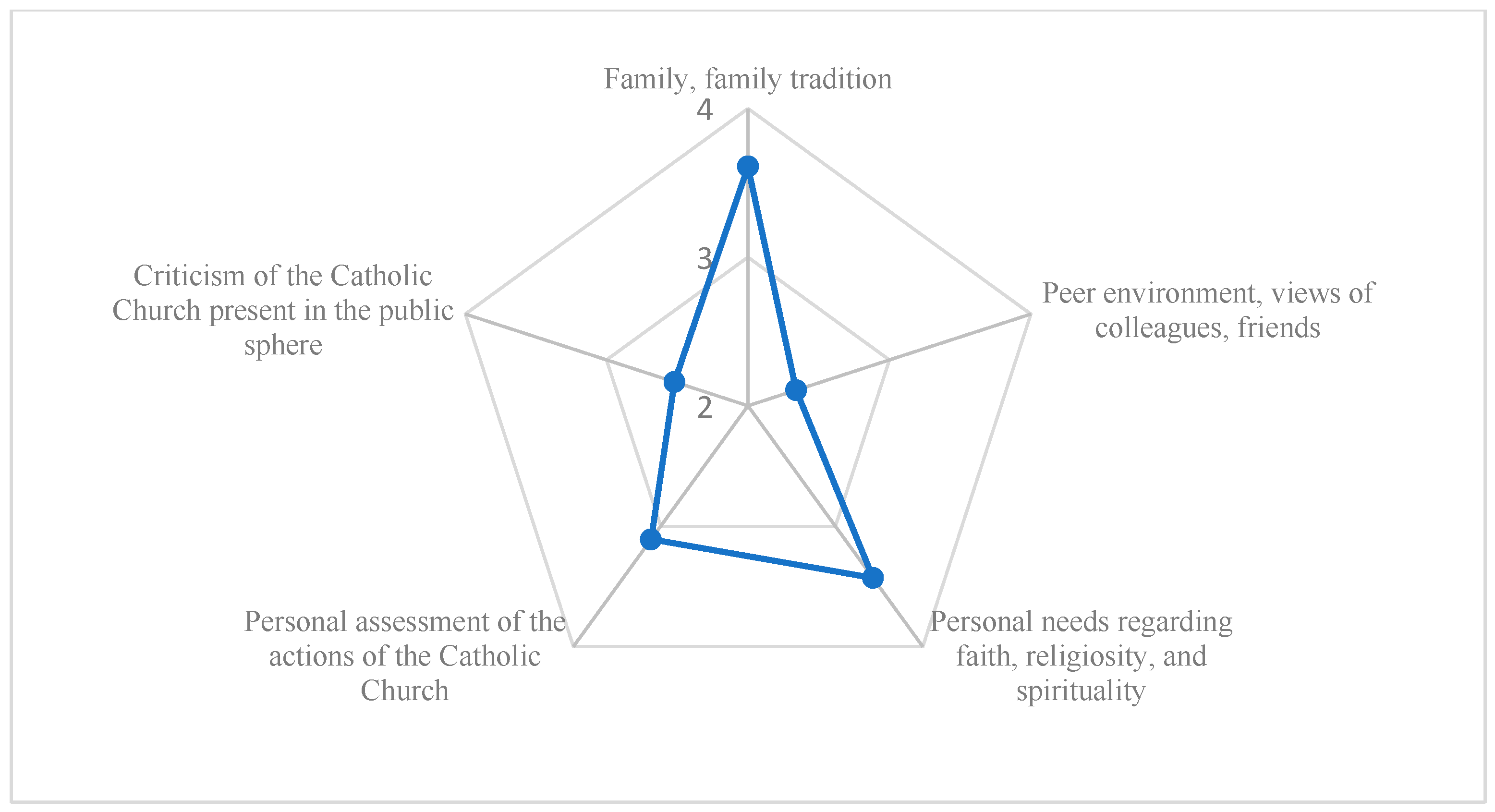
The results of the Friedman test reveal statistically significant differences in the factors that young respondents indicate as the source of their attitude towards religion (χ2(4) = 327.07; p < 0.001). Family tradition remains the highest rated factor (M = 5.18; rank = 3.61), slightly ahead of individual spiritual needs (M = 5.17; rank = 3.43). On the third place is personal assessment of the activities of the Catholic Church (M = 4.84; rank = 3.11), followed by external factors: criticism of the Catholic Church in the public sphere (M = 4.05; rank = 2.52) and the influence of peers (M = 3.72; rank = 2.34).
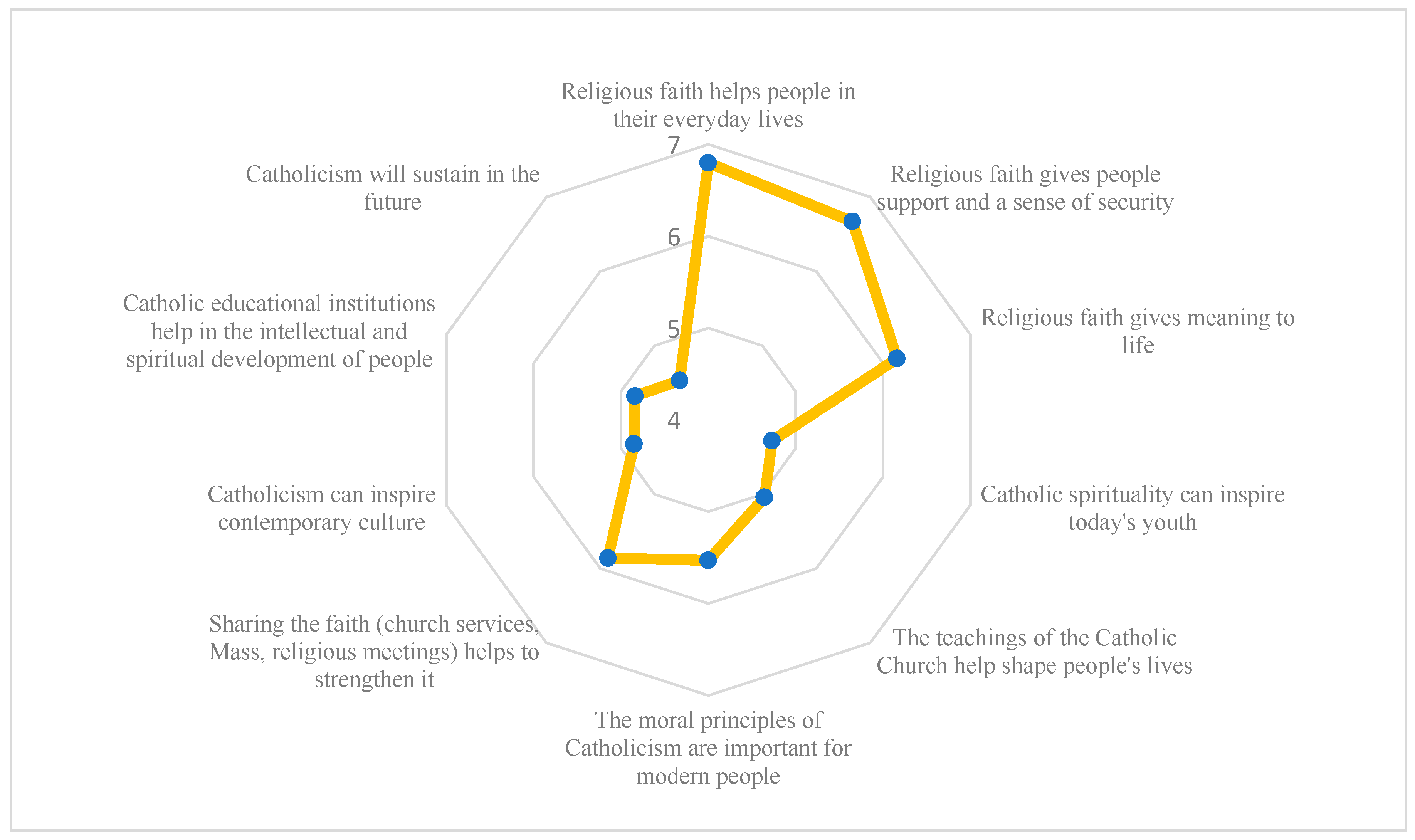
This distribution indicates that young people’s attitudes towards religion are based primarily on family roots and personal spiritual needs, and to a lesser extent on social and media factors (Figure 2).
The results of the Friedman test showed statistically significant differences in the responses on the perceived functions of religion (χ2(9) = 548.21; p < 0.001). The highest average ranks were obtained by statements referring to the personal and existential dimension of faith: the belief that religious faith helps in everyday life (M = 4.77; rank = 6.80), gives people support and a sense of security (M = 4.72; rank = 6.67) and gives meaning to life (M = 4.46; rank = 6.16). The communal experience of religion (M = 4.37; rank = 5.86) and the importance of Catholic moral principles (M = 4.13; rank = 5.53) were also highly rated.
Lower ranks were given to statements concerning the institutional functions of religion, such as the significance of Catholic teaching for human life (M = 3.92; rank = 5.04), the ability of Catholicism to inspire culture (M = 3.88; rank = 4.85), the role of Catholic educational institutions (M = 3.83; rank = 4.84) and spirituality as a source of inspiration for young people (M = 3.82; rank = 4.73). The lowest rating was given to the belief that Catholicism has a future (M = 3.69; rank = 4.53), which may indicate a weakened projection of its permanence in the consciousness of the younger generation (Figure 3).
A stepwise linear regression analysis was performed in order to determine the factors conditioning the indicator of disconnect from JP2 as a figure and his teachings. The final twelve-component model proved to be statistically significant (F(12, 487) = 3.978; p = 0.047), and its adjusted coefficient of determination R2 = 0.545 indicates that the set of predictors explains nearly 55% of the variance. Although the increases in R2 in subsequent steps were moderate (the largest: ΔR2 = 0.398 in model 1), the final model retains good predictive accuracy and interpretability.
The Durbin-Watson statistic (1.899) within the acceptable range (1.5–2.5) allowed to exclude autocorrelation of the residuals. The histogram and P-P normality plot indicates that the distribution of residuals is close to normal. The scatter plot of standardised residuals against predicted values shows no signs of heteroscedasticity, confirming the assumption of constant error variance.
The collinearity analysis confirms the correctness of the model. All tolerance values are within the safe range (0.309–0.977), and the VIF coefficients do not exceed the limit value of 4 (max. VIF = 3.239). This means that independent variables are not strongly correlated with each other and there is no multicollinearity. The model therefore meets the assumptions of classical linear regression and can be considered statistically stable.
The distance indicator from JP2’s figure and his teachings increases with a decrease in the belief that Catholicism has a future, Catholic spirituality can inspire contemporary youth, Catholic educational institutions help in the intellectual and spiritual development of the human being, moral principles are important for contemporary man, and with the belief that the attitude towards religion results from a personal assessment of the actions of the Catholic Church.
This indicator also increases with a decrease in the frequency of confession, self-declaration of faith. The same occursamong men, better educated people, those who were baptised but not confirmed, and those who learn about JP2 from friends (Table 2).

4. Discussion

The results indicate that the main channels for transmitting that the memory of JP2’s heritage is primarily transmitted through family, school-based religious education and school itself, as well as traditional media. Less importance was attributed to new media and institutional religious communication (the Catholic Church (CC)). This shows that the figure of JP2 and his heritage are transmitted mainly through family and educational channels with an established position in the social field, and only then through religious institutions (CC) or forms of memory present in popular culture (traditional media, new media, documentaries, feature films, books). This transmission model aligns with institutionally organised post-memory, rooted within upbringing and educational structures (Kucia et al. 2013; Lowenthal 1998).
Results also indicate that young people’s attitudes towards religion itself are shaped primarily by their family, family tradition and individual needs related to faith, religiosity and spirituality, with no clear references to strictly institutional forms of religion. Young adults tend to prioritise the personal and meaningful aspects of religion, while distancing themselves from its institutional and cultural dimensions, which may indicate a progressive de-institutionalisation of religious experience (Fel and Kozak 2025). This has important implication on the transmission of the memory of JP2. The heritage of JP2 is associated in the minds of young adults primarily with forms of communication within the family and at school. While these channels are still perceived as credible and familiar, the message coming directly from the Catholic Church and the media (both traditional and digital) no longer seems to resonate as strongly with the post-memory of JP2’s heritage in the consciousness of young adults. Young adults participate in the process of JP2’s post-memory mainly through educational and family communication, but they distance themselves from its institutional vehicle in the strict sense, i.e., the Catholic Church as a religious institution and its media presence.
This ambivalence suggests that although JP2’s legacy remains present in culture, its internalisation among young adults is rather selective and fragmentary. In the cohort studied, this memory functions primarily as a cultural message, ‘given’ and reproduced, and to a lesser extent as a negotiated or biographically processed memory.
The results reveal a mechanism of selective appropriation of the memory of JP2. In the cohort studied, elements of his historical role remain relatively stable, especially the symbolic significance of his pontificate during a period of political change, while contemporary references to his person resonate less strongly. This selectivity is reinforced by the effectiveness of family transmission, originating from a generation that has its own biographical experience of JP2, as opposed to institutional messages, which are currently less internalised.
Memories of JP2 are shaped by factors that both strengthen and weaken their durability. On the one hand, his figure functions as an ‘open’ symbol, not limited to the religious sphere, combining religion, experience of political change, commitment to human rights and moral narratives, which for many years contributed to its rooting in social culture. On the other hand, however, the contemporary perception of this figure is modified by factors that erode memory, including the disclosure of abuses in the Catholic Church, a decline in social trust in this institution, and attempts to politicise religion. These elements create a context in which the memory of JP2 is becoming increasingly ambiguous and susceptible to reinterpretation, especially among the younger generation.
The indicator of distance from JP2’s heritage is highest among people with a lower level of conviction about the relevance and future of Catholicism, weaker religious involvement and a higher level of education, as well as among men and respondents who derive their knowledge about JP2 mainly from non-institutional sources. Factors that form the background for the reception of JP2’s heritage in the consciousness of young adults should be taken into account when analysing the possible determinants of this phenomenon.
These factors are revealed, among other things, in the cult of the “Polish Pope”, who himself became a vehicle for collective values and underwent a process of symbolic condensation as a figure combining religiosity, patriotism and moral culture (Hejwosz-Gromkowska and Hildebrandt-Wypych 2024). Such a model of memory can give rise to ambivalent attitudes, especially among people who detach themselves from traditional, institutionalised religiosity, where in Poland the figure of JP2 serves as one of its main symbols (Obirek 2018).
The aforementioned symbolic condensation is also reflected in the public space, where it takes the form of a secondary sacralisation of JP2, visible in the presence of monuments, street names, schools and places of worship. These elements create a cultural landscape of the Pope’s presence in everyday social life (Przybylska and Sołjan 2015). In this context, JP2’s heritage may function in the consciousness of young adults as a symbol of the dominant worldview (Weltanschauung) (Weigel 2001), which may be difficult for some of them to internalise.
Detachment from JP2’s heritage may be further deepened by the way JP2 functions as a historical actor. JP2’s pontificate played an important role in the fight against communism, supporting the ideas of religious freedom, human rights and social solidarity. (Fel 2013). In Polish historiography, he is often portrayed as a figure of Catholicism’s victory over communism and a symbol of regained independence (Hildebrandt-Wypych 2021). However, for the younger generation, who did not participate directly in these events and grew up after the political transformation, JP2 becomes a more historical than existential figure, more of a symbolic presence than an emotionally rooted point of reference. As a result, the reception of his heritage is based mainly on messages that do not always find adequate resonance in individual lives. This kind of mediated contact with the past is part of the logic of post-memory, in which cultural heritage remains present and meaningful, but its impact is shaped by the context of contemporary socialisation and the identity choices of individuals.
The correlation between detachment with JP2’s heritage and a decline in religiosity, as well as the prevalence of such correlation among men, is consistent with the differences in religiosity established in the literature (Wódka et al. 2020). It is interesting, however, that the internalisation of JP2’s heritage clearly decreases with increasing levels of education and the belief that Catholic educational institutions do not support the intellectual and spiritual development of the individual. People with higher education are usually more inclined to take a reflective, selective and contextual approach to JP2’s teachings, often noticing tensions between the ideals he proclaimed and their practical implementation by religious institutions (Mąkosa 2020).
This may also result from the fact that more educated people are more often exposed to ideological pluralism, standards of critical debate and mechanisms of institutional accountability, which in turn may foster a more reflective assessment of religious heritage. Examples of such a divide can be found, among others, in American Catholic universities, which take different approaches to bioethical issues and questions of social, gender and religious inclusivity (Ford and Glimps 2020). Similar tensions also exist in the European context, including in the debate surrounding the Synodal Path in Germany (Schlögel 2025), or the dispute within the episcopate over the election of the president of the Bundesverfassungsgericht (Escritt 2025), which reveals interpretative discrepancies in Catholic doctrine within the CC itself, including on bioethical issues. These tensions can generate cognitive dissonance, which weakens identification with the CC as an institution and, indirectly, with the heritage of JP2, who is seen as its representative symbol.

5. Conclusions

In summary, the visible growing detachment from JP2’s heritage among young adults can be interpreted as the result of the interaction between weakened religious identification and changing cultural conditions in which certain forms of communication are losing their effectiveness. From this perspective, JP2’s heritage becomes part of the cultural archive, a memory which is reproduced but experienced increasingly less.
The concept of post-memory proposed by Marianne Hirsch proves useful in this context, as it allows us to capture the way in which younger generations internalise, or fail to internalise, religious and cultural heritage. Post-memory posits that the descendants of people who experienced extreme historical events are emotionally shaped by memories, even if they have not experienced these events first-hand (Serpente 2011). JP2’s heritage represents a form of symbolic overpresence that can generate similar mechanisms of mediated memory processing. Despite this JP2’s figure and teachings are not internalised in society. The Pope’s heritage, present in textbooks, rituals, street names and public spaces, creates a strong cultural framework of memory into which young people are inscribed, not necessarily by choice. In this sense, post-memory does not always result in axiological identity transmission, the reception of which depends precisely on the degree of resonance with personal spiritual sensitivity and the social context of their upbringing (Gilbert 2006).
Interestingly, the Catholic Church does not emerge as the main channel for transmitting JP2’s heritage. Perhaps in the eyes of many young adults, this institution has lost its ability to credibly and engagingly convey the values with which the Pope was once identified. Structural rigidity, apologetic moral language and inadequate responses to contemporary challenges have meant that, in its institutional dimension, the Catholic Church has ceased to function as a living vehicle for JP2’s legacy, and its message, although symbolically present, rarely translates into actual internalisation of content (Wierzbicki 2019). In conditions of growing pluralisation and individualisation, this message is fragmented, becoming more of a facade of cultural heritage than of religious significance. Post-memory therefore has important implications for understanding religious identity. It is not only a tool for transmitting values and narratives, but also a space for negotiation, reinterpretation and sometimes rejection of the heritage received from previous generations (Owczarski 2023). The heritage of JP2, although still present in the cultural space, can serve as a “prosthetic memory” (Breazu 2024), i.e., one that is adopted, culturally shaped, but not fully internalised.
From the perspective of collective memory research, this study contributes three key findings. First, the memory of JP2 among the younger generation is undergoing a clear transformation: it is becoming an inherited memory, culturally perpetuated, but increasingly less anchored in biography. Secondly, family transmission proves to be more durable than institutional transmission, which sheds new light on the mechanisms of selective appropriation of memory in generations raised after the transformation. Thirdly, the study shows that the durability of symbols depends on their ability to resonate with individual religious orientation and social context, which is an important indication for research on the dynamics of change and stability of memory. These findings complement the existing literature on cultural memory, which has so far focused mainly on the post-memory of trauma; this study shows that similar mechanisms also operate in relation to symbolic, religious and historical heritage. New research questions arise: what are the ways in which different channels of memory transmission compete with each other; what are the elements of symbolic heritage that have the greatest cultural “anchorage”; and under what conditions inherited memory can lead to reinterpretation or rejection of a received heritage.

6. Limitations

Despite the study’s broad analytical scope, several important limitations must be acknowledged. The results of this study refer to young adults in Poland and should be interpreted in the context of the specific religious and cultural landscape of that country. Therefore, caution should be exercised when transferring the findings to other national contexts.
As in most survey research, self-report tools introduce carries the risks of self-selection bias and socially desirable responding bias. Despite efforts to ensure the representativeness of the sample, people with strong attitudes towards religion, both positive and negative, may have been more likely to participate in the study. In turn, the tendency to give answers in line with social expectations may have shaped some responses in sensitive or normative areas. The use of anonymity and voluntary participation procedures was intended to limit these effects.

Author Contributions

Conceptualization, S.F. and J.K.; methodology, J.K.; software, J.K.; validation, S.F., J.K. and A.d.M.; formal analysis, S.F.; investigation, S.F.; resources, J.K.; data curation, J.K.; writing—original draft preparation, S.F. and J.K.; writing—review and editing, S.F. and A.d.M.; visualization, J.K.; supervision, S.F.; project administration, S.F.; funding acquisition, J.K. All authors have read and agreed to the published version of the manuscript.

Funding

This research received no external funding.

Institutional Review Board Statement

The study was conducted in accordance with the Declaration of Helsinki, and approved by the Institutional Review Board of Humanities & Social Sciences Research Ethics Committee (HSSREC), Faculty of Social Sciences, The John Paul II Catholic University of Lublin (14/2023/CBOS/jp2 2023-11-02).

Informed Consent Statement

Informed consent was obtained from all subjects involved in the study.

Data Availability Statement

The raw data supporting the conclusions of this article will be made available by the authors on request.

Conflicts of Interest

The authors declare no conflicts of interest.

References

  1. Allouche, Philippe, Ana Bǎrbulescu, Jochen Boehler, Daniel Botmann, Matthew Bronfman, Richelle Budd Caplan, Robert Ejnes, Shila Erlbaum, Michael Feuer, Alexandru Florian, and et al. 2020. First-Ever 50-State Survey on Holocaust Knowledge of American Millennials and Gen Z Reveals Shocking Results. Paper presented at the Conference on Jewish Material Claims Against Germany, Tel Aviv, Israel. [Google Scholar]
  2. Assmann, Jan. 2011. Communicative and Cultural Memory. In Cultural Memories: The Geographical Point of View. Edited by Peter Meusburger, Michael Heffernan and Edgar Wunder. Dordrecht: Springer, pp. 15–27. [Google Scholar] [CrossRef]
  3. Bauman, Zygmunt. 1996. Socjologia. Poznań: Wydawnictwo Zysk i S-ka. [Google Scholar]
  4. Baumel-Schwartz, Judith Tydor. 2023. Celebrating Life, Sanctifying Death, and Creating Identity Through Two Forms of Holocaust Commemoration. Journal of Jewish Identities 16: 149–64. [Google Scholar] [CrossRef]
  5. Bodnar, Adam. 2019. Wystąpienie do Prezesa GUS ws. Informacji o Wyznaniu w Spisie Powszechnym w 2021 Roku [A Submission to the President of Statistics Poland Regarding the Inclusion of Religious Affiliation in the 2021 National Census]. Rzecznik Praw Obywatelskich. Available online: https://bip.brpo.gov.pl/pl/content/w-spisie-powszechnym-w-2021-r-spytają-nas-o-wyznanie-rpo-odpowiedź-powinna-być-dobrowolna (accessed on 1 November 2025).
  6. Breazu, Remus. 2024. Violence in Mass-Mediated Images and Memory. Phenomenological Account of Prosthetic Memories. Phenomenology and the Cognitive Sciences, 1–19. [Google Scholar] [CrossRef]
  7. Buravsky, Olexandr, and Mykola Kozlovets. 2025. Roman Catholic Church and Polish Society in the Second Half of the 20th to the Beginning of the 21st Century: Cultural Religious Aspect. East European Historical Bulletin 2025: 125–34. [Google Scholar] [CrossRef]
  8. Ciołkiewicz, Paweł. 2003. Public Debate on the Murder in Jedwabne in the Context of Collective Memory Transformations. Przegląd Socjologiczny 52: 285–306. Available online: https://czasopisma.ltn.lodz.pl/Przeglad-Socjologiczny/article/download/1360/1240 (accessed on 1 January 2020).
  9. Demshuk, Andrew. 2012. Reinscribing Schlesien as Śląsk: Memory and Mythology in a Postwar German-Polish Borderland. History and Memory 24: 39–86. [Google Scholar] [CrossRef]
  10. Dziaczkowska, Magdalena. 2020. The Polish Case: Pedophilia, Polak-Katolik, and Theology of the Nation. Svensk Teologisk Kvartalskrift 96: 235–51. Available online: https://www.scopus.com/inward/record.uri?eid=2-s2.0-85104464044&partnerID=40&md5=b89bb57229c770ec99b028b9a2beaf6e (accessed on 1 November 2025).
  11. Escritt, Thomas. 2025. German Judge Warns Constitutional Court Row Threatens Its Reputation. Available online: https://www.reuters.com/en/german-judge-warns-constitutional-court-row-threatens-its-reputation-2025-07-16/ (accessed on 1 November 2025).
  12. Fel, Stanisław. 2013. Specificity of Economic Freedom Perspective in the Social Thought of John Paul II. Zeszyty Naukowe Wyższej Szkoły Gospodarki 21: 9–24. Available online: https://kpbc.umk.pl/Content/249124/Ekonomia5_druk_popr2_bez.pdf#page=9 (accessed on 1 November 2025).
  13. Fel, Stanisław. 2025. A Universal Criterion to Evaluate Socioeconomic Systems: John Paul II’s Concept of Human Rights. Ethos. Kwartalnik Instytutu Jana Pawła II KUL 38: 174–178. [Google Scholar] [CrossRef]
  14. Fel, Stanisław, and Jarosław Kozak. 2025. University Students’ Religiosity in the United Kingdom and Poland: An Exploration of Sociodemographic Determinants. British Educational Research Journal 51: 1401–20. [Google Scholar] [CrossRef]
  15. Fel, Stanisław, and Kamil Michaluk. 2023. Religious Grammar of the Welfare State in Poland. Religions 14: 81. [Google Scholar] [CrossRef]
  16. Ford, Theron, and Blanche Glimps. 2020. A Comparison of “Inclusiveness” in Two Liberal Arts Catholic Universities: What Nurtures an Inclusive Campus Climate? In Accessibility and Diversity in Education: Breakthroughs in Research and Practice. Edited by Mehdi Khosrow-Pour. Hershey: IGI Global, pp. 1022–40. [Google Scholar] [CrossRef]
  17. Gilbert, Ruth. 2006. Ever After: Postmemory, Fairy Tales and the Body in Second-Generation Memoirs by Jewish Women. Holocaust Studies 12: 23–39. [Google Scholar] [CrossRef]
  18. Grabowska, Mirosława. 2006. Credo, ergo sum: Religiousness and the State in Poland. Osteuropa 56: 191–203. Available online: https://zeitschrift-osteuropa.de/hefte/2006/11-12/credo-ergo-sum/english?productId=2272&variationId=0&productTitle=Credo%2C+ergo+sum&qty=1&totalQty=1&numberOfTitles=1&totalAmount=3%2C00%C2%A0€ (accessed on 1 November 2025).
  19. Grabowska, Mirosława. 2022. Why Are Poles Leaving the [Catholic] Church? Warszawa: CBOS. Available online: https://cbos.pl/SPISKOM.POL/2022/K_105_22.PDF (accessed on 1 November 2025).
  20. Hejwosz-Gromkowska, Daria, and Dobrochna Hildebrandt-Wypych. 2024. Religion, Church, National Identity, and the Solidarity Movement in School History Textbooks in Poland. British Journal of Religious Education 46: 212–24. [Google Scholar] [CrossRef]
  21. Hennig, Anja. 2023. The Diverse Catholic Right in Poland. Movements, Networks, and Denominations. In The Christian Right in Europe. Edited by Gionathan Lo Mascolo. Bielefield: Political Science, pp. 75–104. [Google Scholar] [CrossRef]
  22. Hildebrandt-Wypych, Dobrochna. 2021. Religiously Framed Nation-Talk in Polish History Textbooks: John Paul II. and St. Jadwiga as National Heroes. In Comparative Perspectives on School Textbooks: Analyzing Shifting Discourses on Nationhood, Citizenship, Gender, and Religion. Edited by Dobrochna Hildebrandt-Wypych and Alexander W. Wiseman. Cham: Springer International Publishing, pp. 289–323. [Google Scholar] [CrossRef]
  23. Hirsch, Marianne. 1992. Family Pictures: Maus, Mourning, and Post-Memory. Discourse 15: 3–29. Available online: http://www.jstor.org/stable/41389264 (accessed on 1 November 2025).
  24. Hirsch, Marianne. 1996. Past Lives: Postmemories in Exile. Poetics Today 17: 659–86. [Google Scholar] [CrossRef]
  25. Hirsch, Marianne. 2019. Connective Arts of Postmemory. Analecta Política 9: 171–76. [Google Scholar] [CrossRef]
  26. Hirsch, Marianne, and Leo Spitzer. 2006. Testimonial Objects: Memory, Gender, and Transmission. Poetics Today 27: 353–83. [Google Scholar] [CrossRef]
  27. Hirsch, Marianne, and Leo Spitzer. 2009. The Witness in the Archive: Holocaust Studies/Memory Studies. Memory Studies 2: 151–70. [Google Scholar] [CrossRef]
  28. Hirsch, Marianne, and Valerie Smith. 2002. Feminism and Cultural Memory: An Introduction. Signs: Journal of Women in Culture and Society 28: 1–19. [Google Scholar] [CrossRef]
  29. Kabzińska, Iwona. 2006. Memory, Nostalgia and Envy of “Good, Old Times”. Etnografia polska 50: 177–96. Available online: https://zbiory.cyfrowaetnografia.pl/public/4864.pdf (accessed on 1 November 2025).
  30. Kalinowski, Mirosław, Iwona Niewiadomska, Stanisław Fel, and Jarosław Kozak. 2025. The Social Perception of Pope John Paul II: A Cross-Sectional Study among University Students and Young Adults. International Studies in Catholic Education, 1–17. [Google Scholar] [CrossRef]
  31. Kozak, Jarosław, Stanisław Fel, and Marek Wódka. 2021. Religijność a tożsamość narodowa polskich migrantów w Wielkiej Brytanii w dobie brexitu [Religiosity and National Identity of Polish Migrants in the UK in the Brexit Era]. Zeszyty Naukowe KUL 64: 3–29. [Google Scholar] [CrossRef]
  32. Krajewski, Marek, and Rafał Drozdowski. 2025. Looking for a Place for Sociology. Between Persistence in Change and the Emancipatory Potential of Immutability. Przegląd Socjologiczny 74: 9–27. [Google Scholar] [CrossRef]
  33. Kucia, Marek, Marta Duch-Dyngosz, and Mateusz Magierowski. 2013. The Collective Memory of Auschwitz and World War II among Catholics in Poland: A Qualitative Study of Three Communities. History and Memory 25: 132–73. [Google Scholar] [CrossRef]
  34. Lowenthal, David. 1998. Fabricating Heritage. History and Memory 10: 5–24. Available online: http://www.jstor.org/stable/25681018 (accessed on 1 November 2025).
  35. Mąkosa, Paweł. 2020. St. John Paul II and Catholic Education. A Review of His Teachings: An Essay to Inspire Catholic Educators Internationally. International Studies in Catholic Education 12: 218–35. [Google Scholar] [CrossRef]
  36. Mąkosa, Paweł Michał, and Piotr Rozpędowski. 2023. Youth attitudes toward the Catholic Church in Poland: A pastoral perspective. Practical Theology 16: 69–81. [Google Scholar] [CrossRef]
  37. Mielicka-Pawłowska, Halina. 2022. Metamorphoses of religiosity in Poland: Post-modern spirituality or religious morality? In Metamorphoses of Religion and Spirituality in Central and Eastern Europe. New York: Routledge, pp. 77–89. [Google Scholar] [CrossRef]
  38. Morris, Leslie. 2002. Postmemory, Postmemoir. In Unlikely History: The Changing German-Jewish Symbiosis, 1945–2000. Edited by Leslie Morris and Jack Zipes. New York: Palgrave Macmillan US, pp. 291–306. [Google Scholar] [CrossRef]
  39. Moskowitz, Golan. 2023. Like Daughter, Like Grandson: Queering Post-Traumatic Memory. Memory Studies 16: 794–818. [Google Scholar] [CrossRef]
  40. Motak, Dominika, Joanna Krotofil, and Dorota Wójciak. 2021. The Battle for Symbolic Power: Kraków as a Stage of Renegotiation of the Social Position of the Catholic Church in Poland. Religions 12: 594. [Google Scholar] [CrossRef]
  41. Obirek, Stanisław. 2018. Why the Polish Pope Became the Highest (not only Moral) Authority for So Many Poles. Rivista di Storia del Cristianesimo 15: 147–54. Available online: https://www.scopus.com/inward/record.uri?eid=2-s2.0-85055163566&partnerID=40&md5=f8098a12b789725350bb260fefbc4bce (accessed on 1 November 2025).
  42. O’Neill, Mark. 2006. Museums and Identity in Glasgow. International Journal of Heritage Studies 12: 29–48. [Google Scholar] [CrossRef]
  43. Owczarski, Wojciech. 2023. Postmemory Dreaming: Nightmares of War in Third-Generation Descendants of Polish and Russian Survivors of World War II. Ethos 51: 432–47. [Google Scholar] [CrossRef]
  44. Paszenda, Joanna, and Michał Mateusz Rogoż. 2023. Masking or Unmasking the Evil? Polish Opinion-Forming Weeklies vis-à-vis the Crisis in the Roman Catholic Church in Poland. Religions 14: 414. [Google Scholar] [CrossRef]
  45. Pilch, Irena, and Elżbieta Turska. 2015. Poland: One nation, one religion—Tradition and change. In Workplace Abuse, Incivility and Bullying: Methodological and Cultural Perspectives. Edited by Maryam Omari and Megan Paull. London: Routledge, pp. 107–23. [Google Scholar] [CrossRef]
  46. Porter-Szűcs, Brian. 2019. Meritocracy and community in twenty-first-century Poland. Shofar 37: 72–95. [Google Scholar] [CrossRef]
  47. Przestalski, Andrzej. 2025. Contemporary Sociology and its Shortcomings. Przegląd Socjologiczny 74: 31–33. [Google Scholar] [CrossRef]
  48. Przybylska, Lucyna, and Izabela Sołjan. 2015. ‘John-Paul-the-Second-Isation’ of Cultural Landscape in Poland. Geographia Polonica 88: 669–86. [Google Scholar] [CrossRef]
  49. Reingold, Matt. 2021. On the Limits of Trauma: Postmemories in the Third-Generation Holocaust Graphic Novels Flying Couch and The Property. History and Memory 33: 135–57. [Google Scholar] [CrossRef]
  50. Roguska, Beata. 2023. Poles about John Paul II. Warszawa: CBOS. Available online: https://www.cbos.pl/SPISKOM.POL/2023/K_060_23.PDF (accessed on 1 November 2025).
  51. Sadlon, Wojciech. 2021. Polarization but not pillarization catholicism and cultural change in post-transformation poland. Religions 12: 457. [Google Scholar] [CrossRef]
  52. Saryusz-Wolska, Magdalena, Hanno Hochmuth, and Sabine Stach. 2024. Entrepreneurs of memory: Selling history in the GDR Museum shop in Berlin. Memory Studies 17: 1259–76. [Google Scholar] [CrossRef]
  53. Schlögel, Herbert. 2025. Theologische Ethik in ökumenischer Perspektive. In Freiheit verantworten: Entwicklungen der Theologischen Ethik seit dem Zweiten Vatikanum. Edited by Jochen Sautermeister. Schöningh: Brill, pp. 125–52. [Google Scholar] [CrossRef]
  54. Schmidt, Susanna, Igor Sotgiu, Carla Tinti, Antonietta Curci, Nicoletta Businaro, and Dario Galati. 2007. The Effects of Religious Involvement on Short-term Psychological Reactions to the Death of Pope John Paul II: A Study on an Italian Sample. Social Behavior and Personality 35: 417–28. [Google Scholar] [CrossRef]
  55. Serpente, Alejandra. 2011. The Traces of “Postmemory” in Second-Generation Chilean and Argentinean Identities. In The Memory of State Terrorism in the Southern Cone: Argentina, Chile, and Uruguay. Edited by Francesca Lessa and Vincent Druliolle. New York: Palgrave Macmillan US, pp. 133–56. [Google Scholar] [CrossRef]
  56. Słomka, Marek. 2017. Who Is Man? The Anthropology of Karol Wojtyła. Lublin: Wydawnictwo KUL. [Google Scholar]
  57. Stanić, Stjepanka. 2022. Mercy Theology in the Encyclicals Redemptor Hominis and Dives in Misericordia by John Paul II. Obnovljeni Zivot 77: 221–33. [Google Scholar] [CrossRef]
  58. Tinti, Carla, Susanna Schmidt, Igor Sotgiu, Silvia Testa, and Antonietta Curci. 2009. The Role of Importance/Consequentiality Appraisal in Flashbulb Memory Formation: The Case of the Death of Pope John Paul II. Applied Cognitive Psychology 23: 236–53. [Google Scholar] [CrossRef]
  59. Wawrzyniak, Joanna, and Małgorzata Pakier. 2013. Memory studies in Eastern Europe: Key Issues and Future Perspectives. Polish Sociological Review 183: 257–80. [Google Scholar]
  60. Weigel, George. 2001. Catholicism and Democracy in the Age of John Paul II. Logos: A Journal of Catholic Thought and Culture 4: 36–64. [Google Scholar] [CrossRef]
  61. Wierzbicki, Alfred Marek. 2019. Nationalistic Smog over Poland. Occasional Papers on Religion in Eastern Europe 39: 90–97. Available online: https://digitalcommons.georgefox.edu/ree/vol39/iss4/5 (accessed on 1 November 2025).
  62. Wodka, Marek, Stanislaw Fel, Beata Zarzycka, and Jaroslaw Kozak. 2022. How Does the Catholic Clergy Influence What Poles in the UK Know and Think about Brexit? Religions 13: 45. [Google Scholar] [CrossRef]
  63. Wolentarska-Ochman, Ewa. 2006. Collective Remembrance in Jedwabne: Unsettled Memory of World War II in Postcommunist Poland. History and Memory 18: 152–78. [Google Scholar] [CrossRef]
  64. Wódka, Marek, Stanisław Fel, and Jarosław Kozak. 2020. Religiosity of Polish Catholics in the UK: Attitude towards Faith, Affiliation, Membership and Religious Practices. Religions 11: 422. [Google Scholar] [CrossRef]
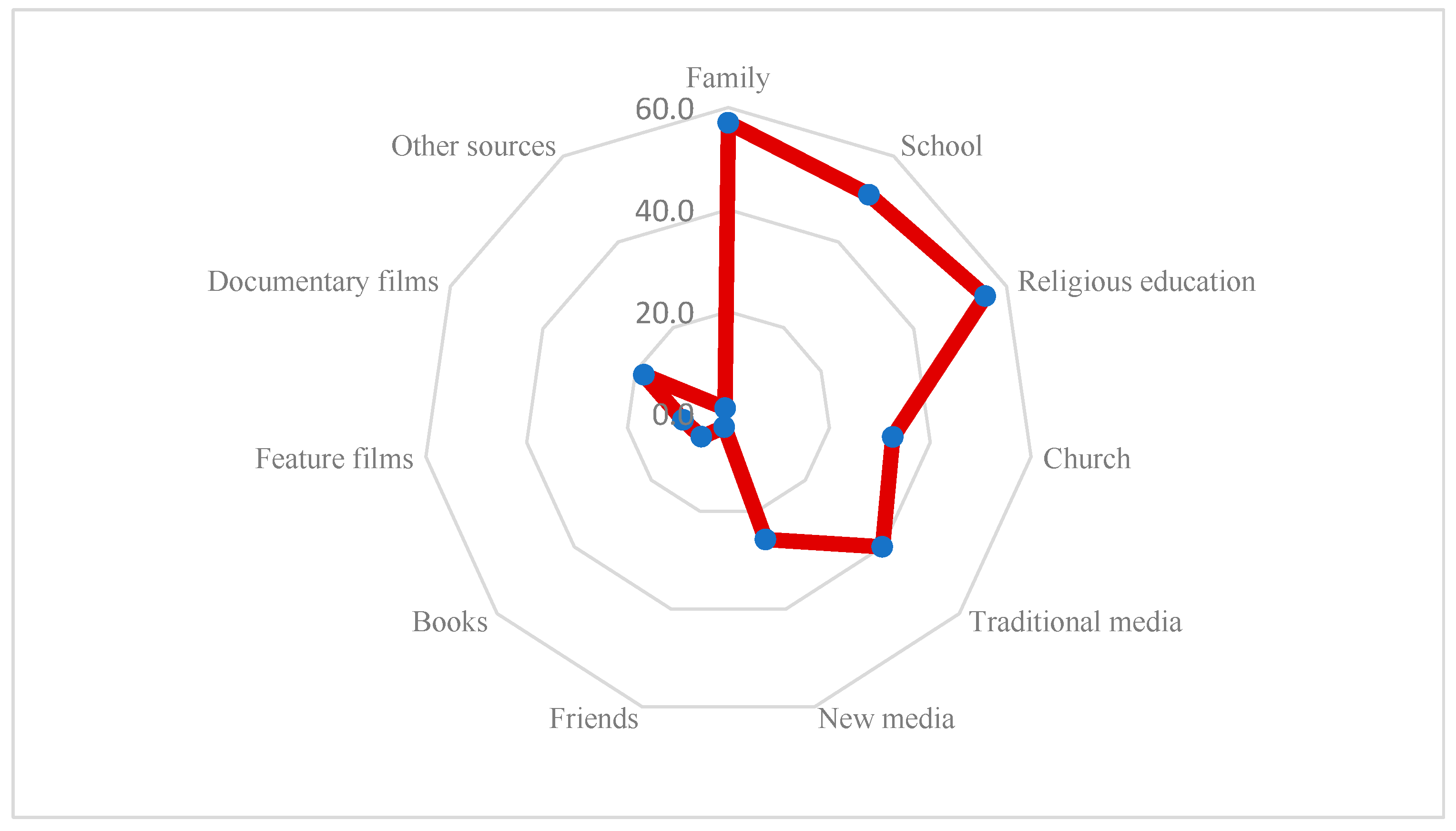
Figure 1. Sources of knowledge about JP2 (%).
Religions 16 01533 g001
Figure 2. Factors shaping attitudes towards religion—average ranks (1–7).
Religions 16 01533 g002
Figure 3. Differences in the assessment of the functions of religion—average ranks (1–7).
Religions 16 01533 g003
Table 1. Socio-demographic characteristics of the sample.
n% ScaleMSD
GenderM25150.2Age32.301.95
F24949.8Level of education1−127.592.72
Parenthood/Having childrenNo24248.4Size of place of origin1−73.092.18
Yes25851.6Material/financial situation1−53.441.06
Do you identify with a religion? No11122.2Self−decared faith1−53.251.06
Yes38977.8Frequency of religious practices1−52.341.21
BaptismNo71.4Mother’s frequency of religious practicies1−53.601.50
Yes49398.6Father’s frequency of religious practicies1−53.221.54
First CommunionNo132.6Frequency of confession1−52.311.26
Yes48797.4Belief in God/Higher Power1−53.801.22
ConfirmationNo5110.2
Yes44989.8
Affiliation with religious group/communityNo47595.0
Yes255.0
Table 2. Factors significantly associated with the level of detachment from JP2—regression analysis results.
ModelScaleUCBetatp95% CICollinearity
BSELUTol.VIF
Catholicism has a future1−7−0.6320.182−0.189−3.474<0.001−0.989−0.2740.3093.239
Frequency of confession1−7−0.8170.186−0.167−4.388<0.001−1.184−0.4510.6311.584
Catholic spirituality can inspire today’s youth1−7−0.4310.177−0.131−2.4330.02−0.78−0.0830.3143.188
Where did you learn about JP2? Friends0 = no
1 = yes
3.7051.1560.0993.2050.001.4345.9770.9591.042
Self−declared faith1−5−0.8440.251−0.145−3.359<0.001−1.337−0.350.4922.033
Gender0 = F
1 = M
1.2300.3780.0993.2540.000.4871.9730.9771.023
Catholic educational institutions (e.g., Catholic university, Catholic school) aid in the intellectual and spiritual development of a person1−7−0.4040.174−0.119−2.320.02−0.747−0.0620.3442.906
Level of education1−120.1930.0710.0852.7220.010.0540.3320.9371.067
Moral principles of Catholicism are important for modern people1−7−0.3580.160−0.108−2.2360.03−0.673−0.0440.3892.572
Confirmation0 = no
1 = yes
−1.6320.655−0.08−2.4920.01−2.92−0.3450.8881.126
Baptism0 = no
1 = yes
3.7031.6270.0702.2760.020.5076.9000.9551.047
What is the basis for your attitude towards religion? Personal assessment of the actions of the Catholic Church1−7−0.2130.107−0.062−1.9940.05−0.422−0.0030.9541.048
The table includes only statistically significant predictors (p < 0.05).
Disclaimer/Publisher’s Note: The statements, opinions and data contained in all publications are solely those of the individual author(s) and contributor(s) and not of MDPI and/or the editor(s). MDPI and/or the editor(s) disclaim responsibility for any injury to people or property resulting from any ideas, methods, instructions or products referred to in the content.