Simulations of Wave–Structure Interactions in Incompressible SPH Using Modified Dynamic Boundary Conditions



Abstract
1. Introduction
2. Methodology
Momentum and Continuity Equations and Time-Marching Scheme
3. Numerical Modelling
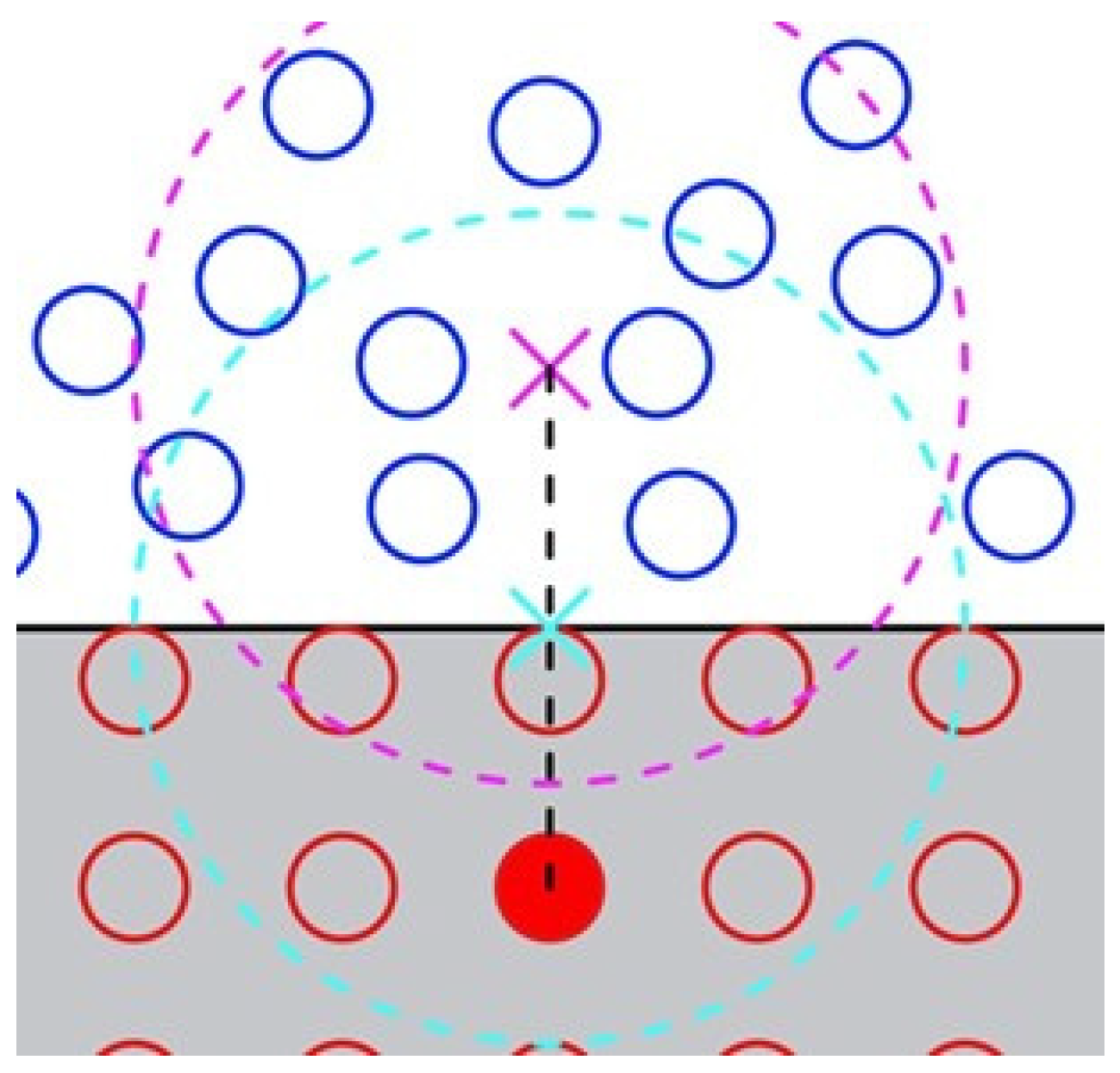
3.1. Boundary Condition Treatment
- Adherence, in which the wall velocities are opposite to their corresponding fluid counterparts,
- Free-slip, in which the tangential and normal velocity components at the wall are respectively equal and opposite to those of the corresponding fluid counterparts,
- Compared to repulsive force and dummy particle techniques, a physically consistent imposition of boundary conditions is ensured;
- Compared to semi-analytical techniques, this approach offers greater ease of implementation and can guarantee consistency up to the second order;
- Compared to the mirror particle technique, this approach reduces the difficulties associated with complex geometries and sharp corners; furthermore, the interaction between fluid and solid phases is represented by a heterogeneous area rather than a single particle.
3.2. Additional Measures Adopted for mDBC in ISPH
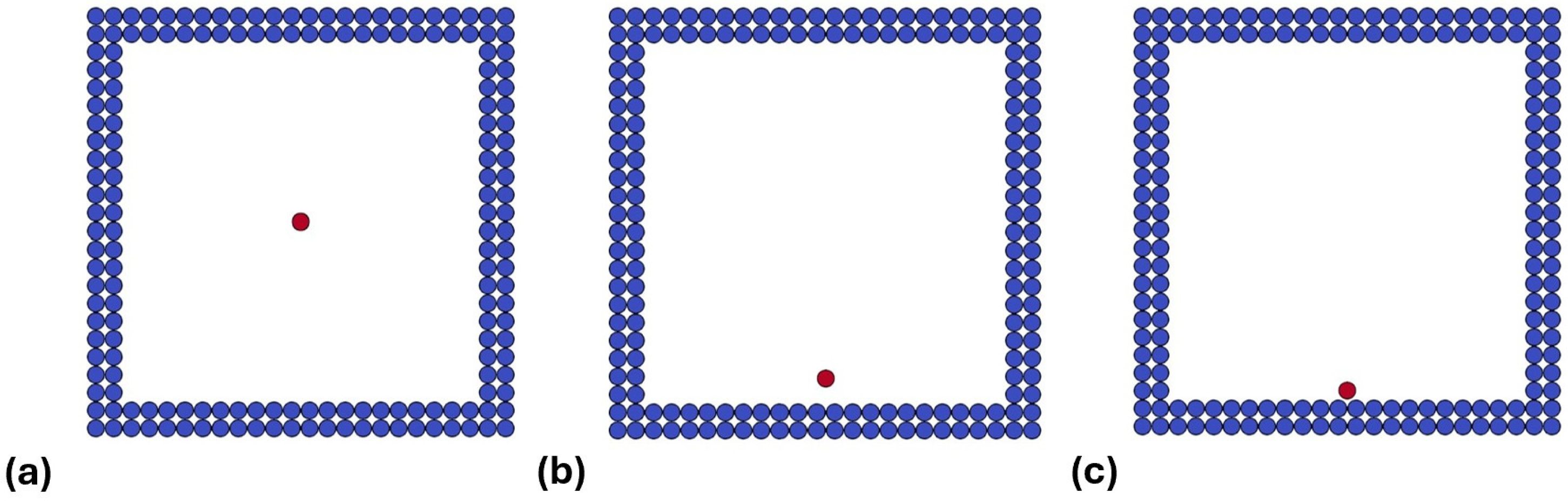
- when the lower portion of a dummy particle lies below the centroid of at least one neighboring fluid particle , specifically when , where denotes the particle diameter and denotes the vertical coordinate, or when the dummy particle belongs to a horizontal wall;
- when the lower portion of a dummy particle does not lie below any fluid particle in its neighborhood, specifically when , and the dummy particle belongs to a vertical wall.
3.3. Generation of Mirror Points
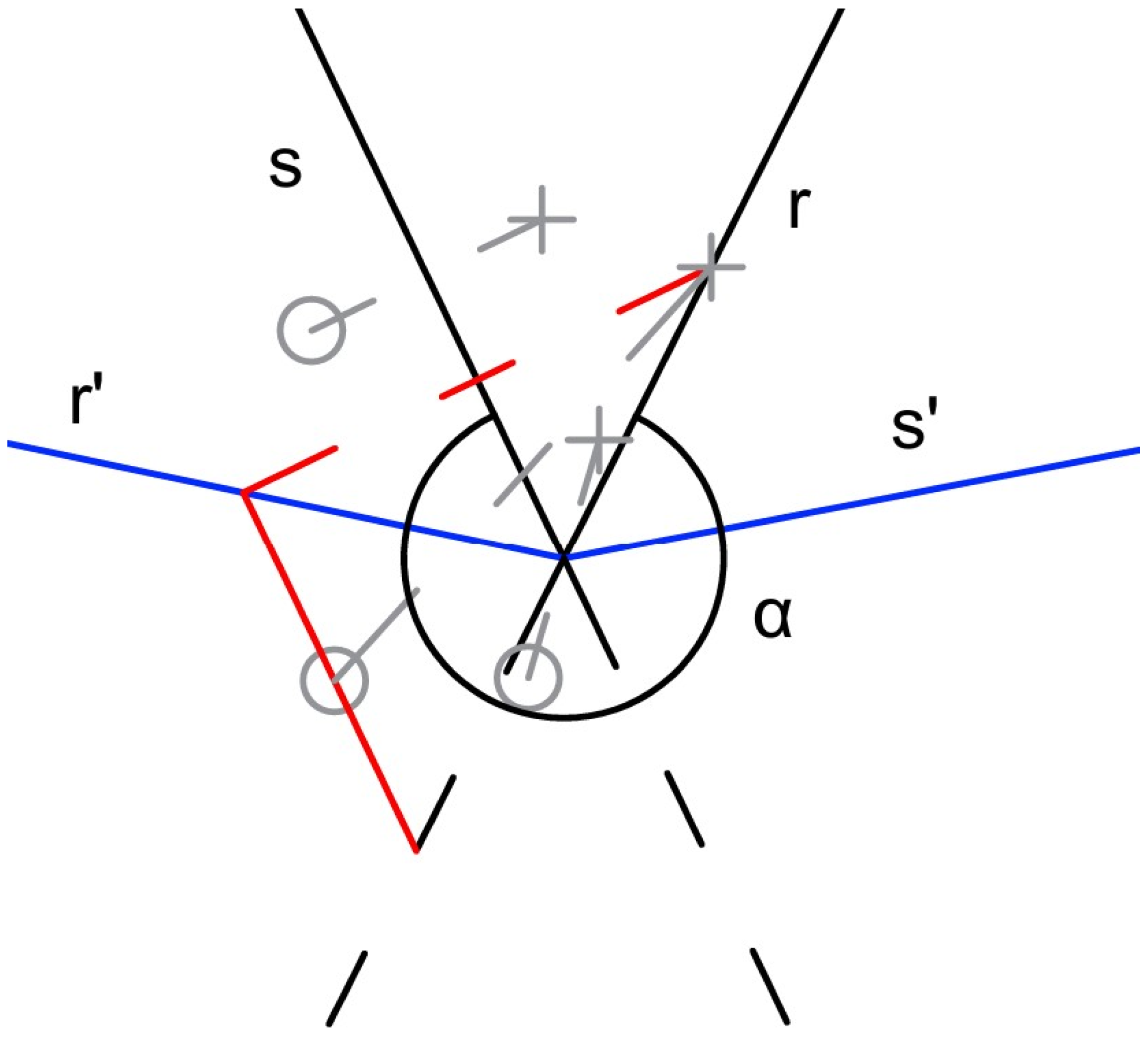
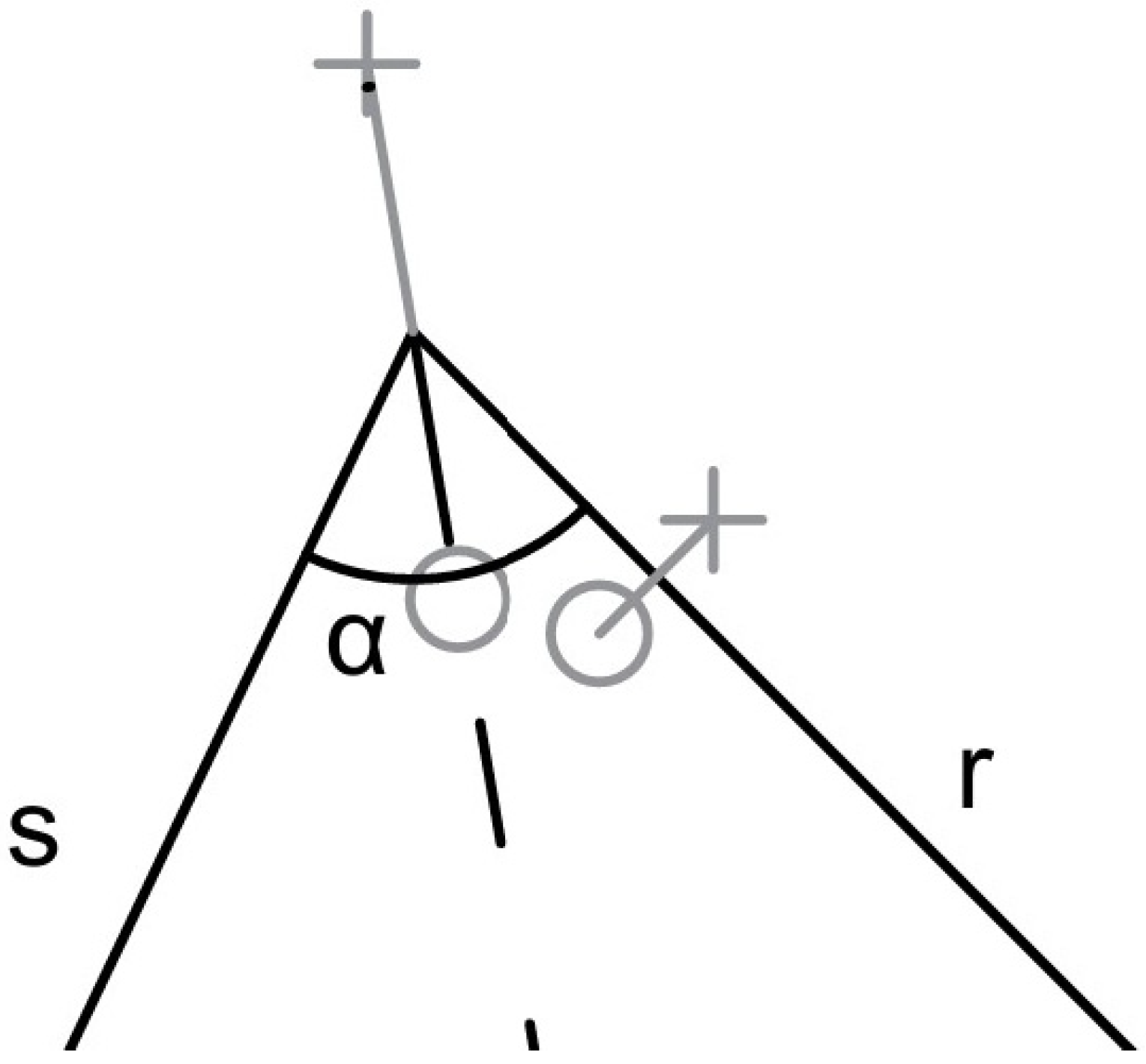
- The first case (Figure 4) occurs when the angle formed by the wall is . In this situation, three different sub-cases can be distinguished, depending on the region in which the dummy particles are positioned:
- When the dummy particles are located within the region between s and r′ (or between r and s′), where r′ is the segment r mirrored with respect to s, the extrapolation point is identified along the normal direction relative to segment s;
- When the dummy particles are positioned in the region bounded by r′ and the extension of r (or between s′ and the extension of s), the extrapolation point is obtained by mirroring along the normal direction to s, starting from the intersection point between r′ and the line parallel to the segment s passing through the particle center (red segment). The same extrapolation point can also be obtained by mirroring, with respect to the vertex, the intersection point between said line and the extension of r;
- When the dummy particles are located in the region confined between the extensions of r and s, their extrapolation point is obtained by mirroring them with respect to the vertex.
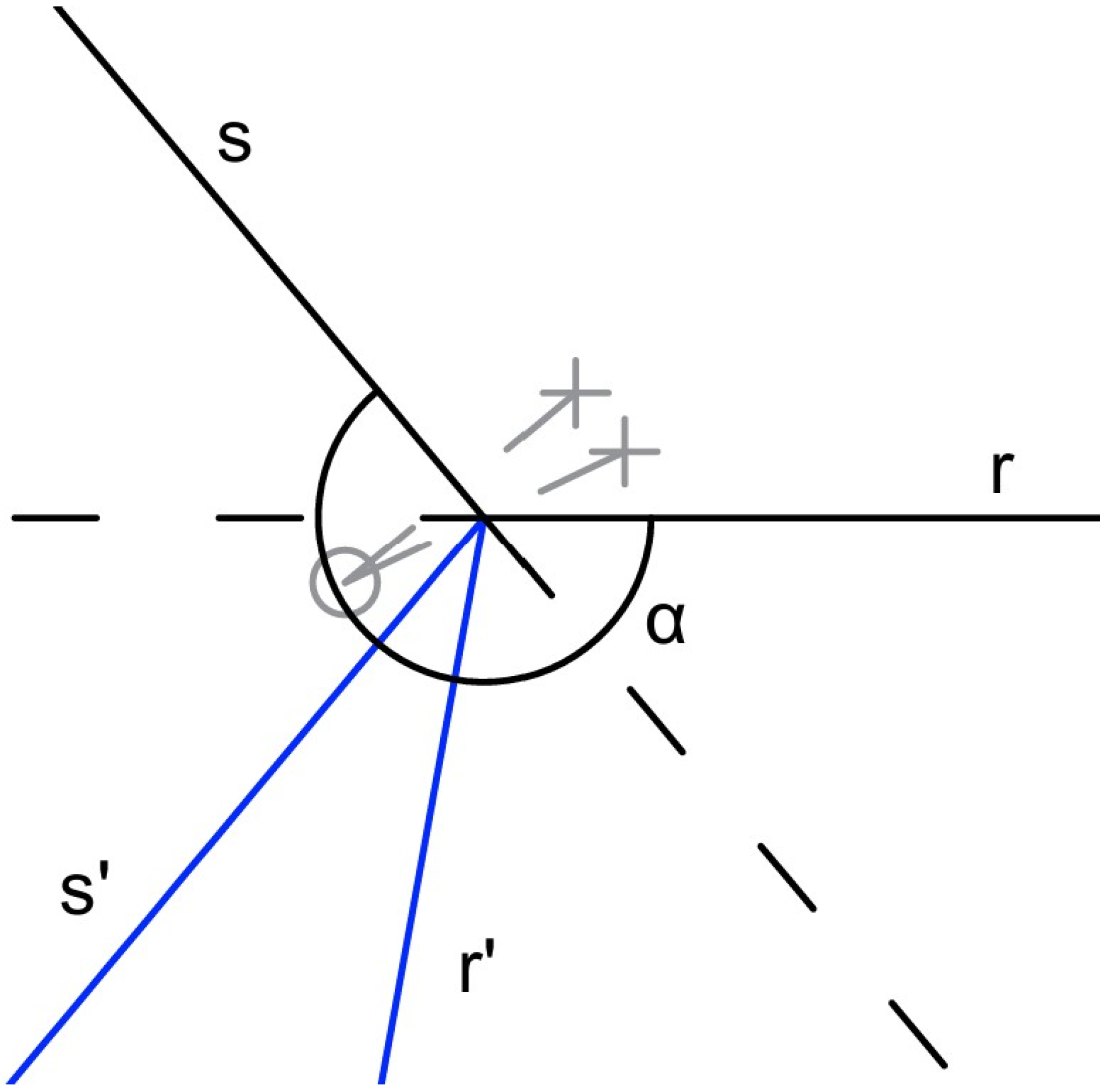
- The second case (Figure 5) corresponds to an angle . For dummy particles positioned in the region between the extension of r and r′ (or between the extension of s and s′), the mirror extrapolation points could potentially be located in two ways: either along the normal direction to segment s (or r) or with respect to the vertex. In the present work, the mirror points for dummy particles located in this region are determined by mirroring with respect to the vertex. For dummy particles located in the region between r and the extension of s, their extrapolation points are identified by mirroring their positions with respect to r. Finally, for dummy particles located in the region between r′ and s′, their positions are mirrored with respect to the vertex.
- The third case (Figure 6) occurs when the angle formed by the wall is . In this case, for dummy particles located along the angle bisector formed by the two walls, their mirror extrapolation points are identified by mirroring their positions with respect to the vertex. For dummy particles that do not lie along this bisector, the mirror extrapolation points are determined by mirroring their positions with respect to the nearest segment.
3.4. Poisson Solver
4. Results
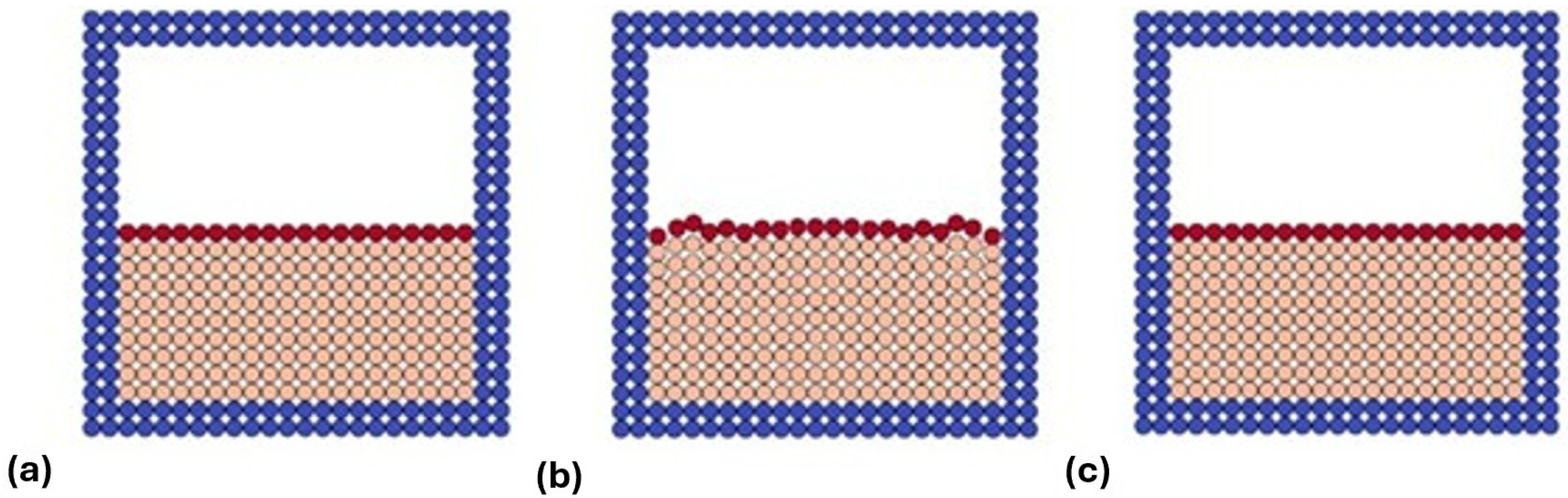
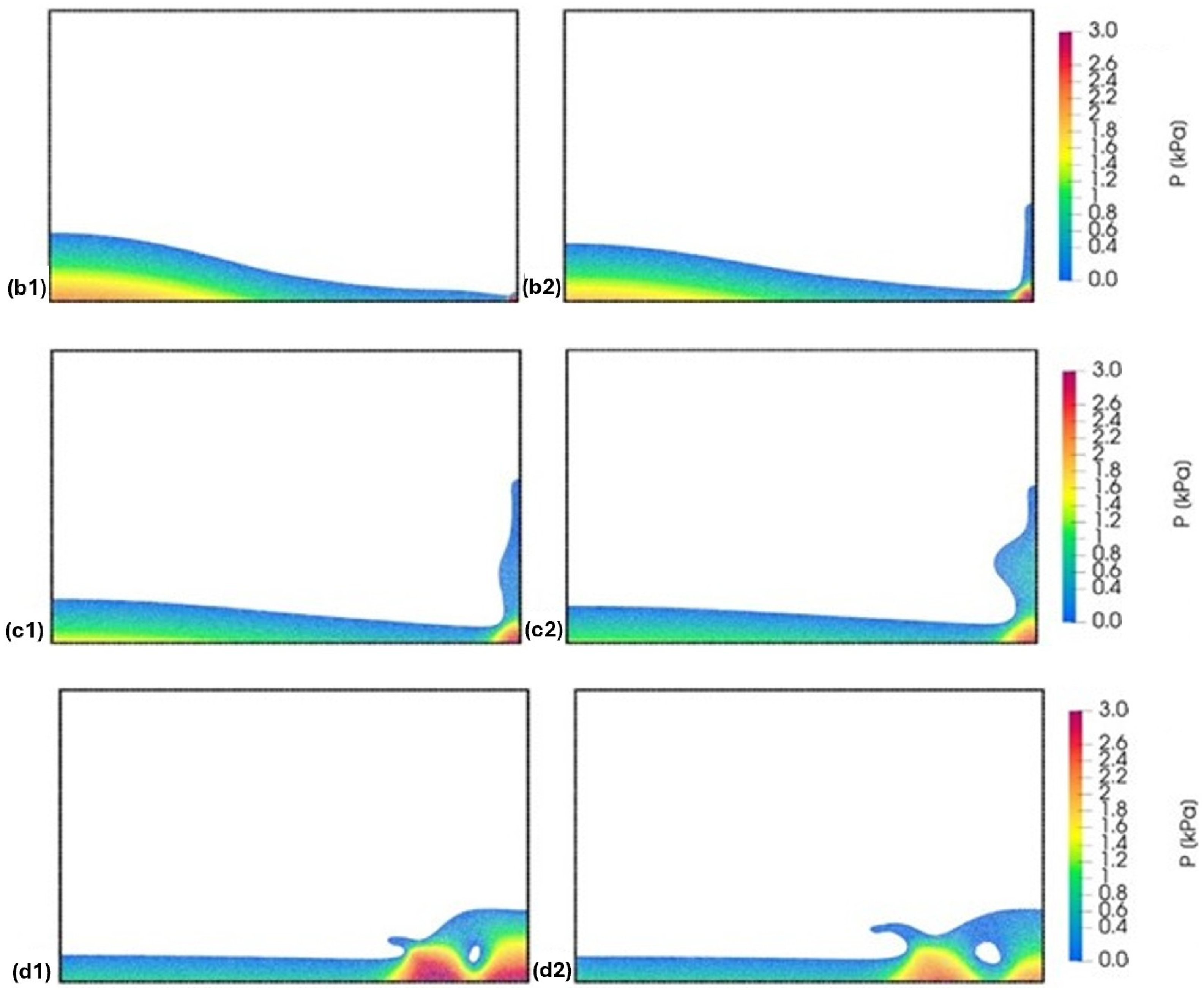
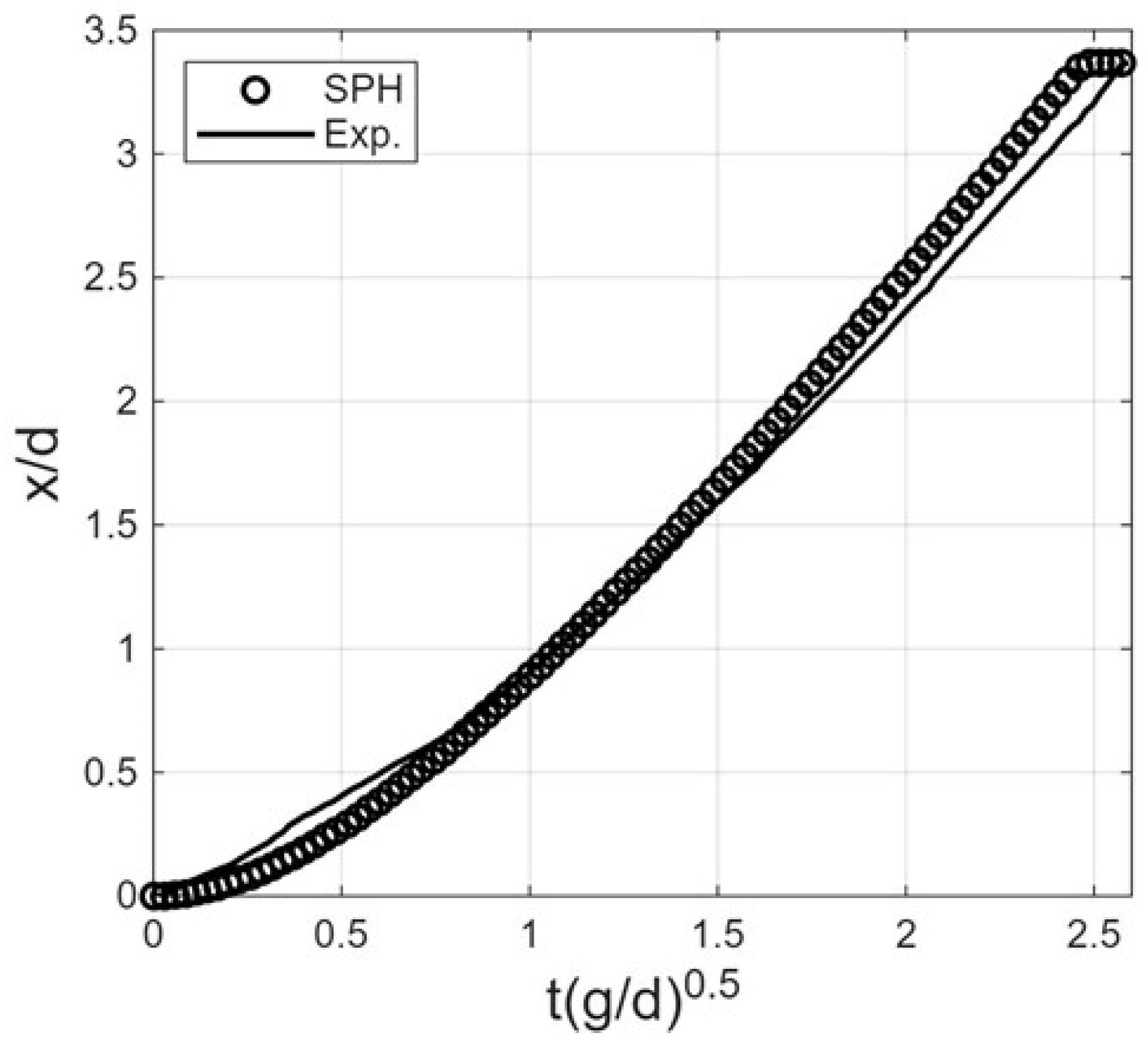
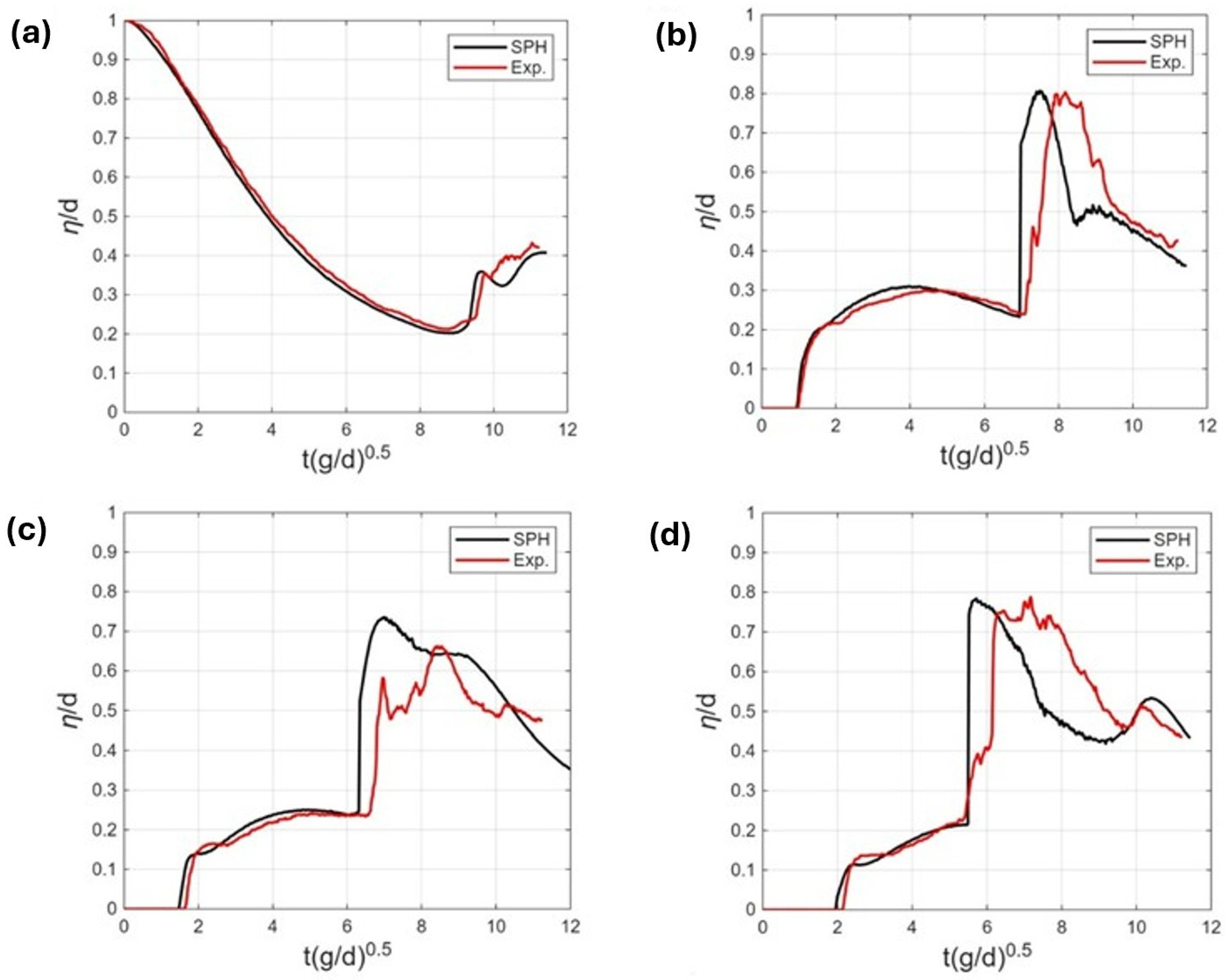
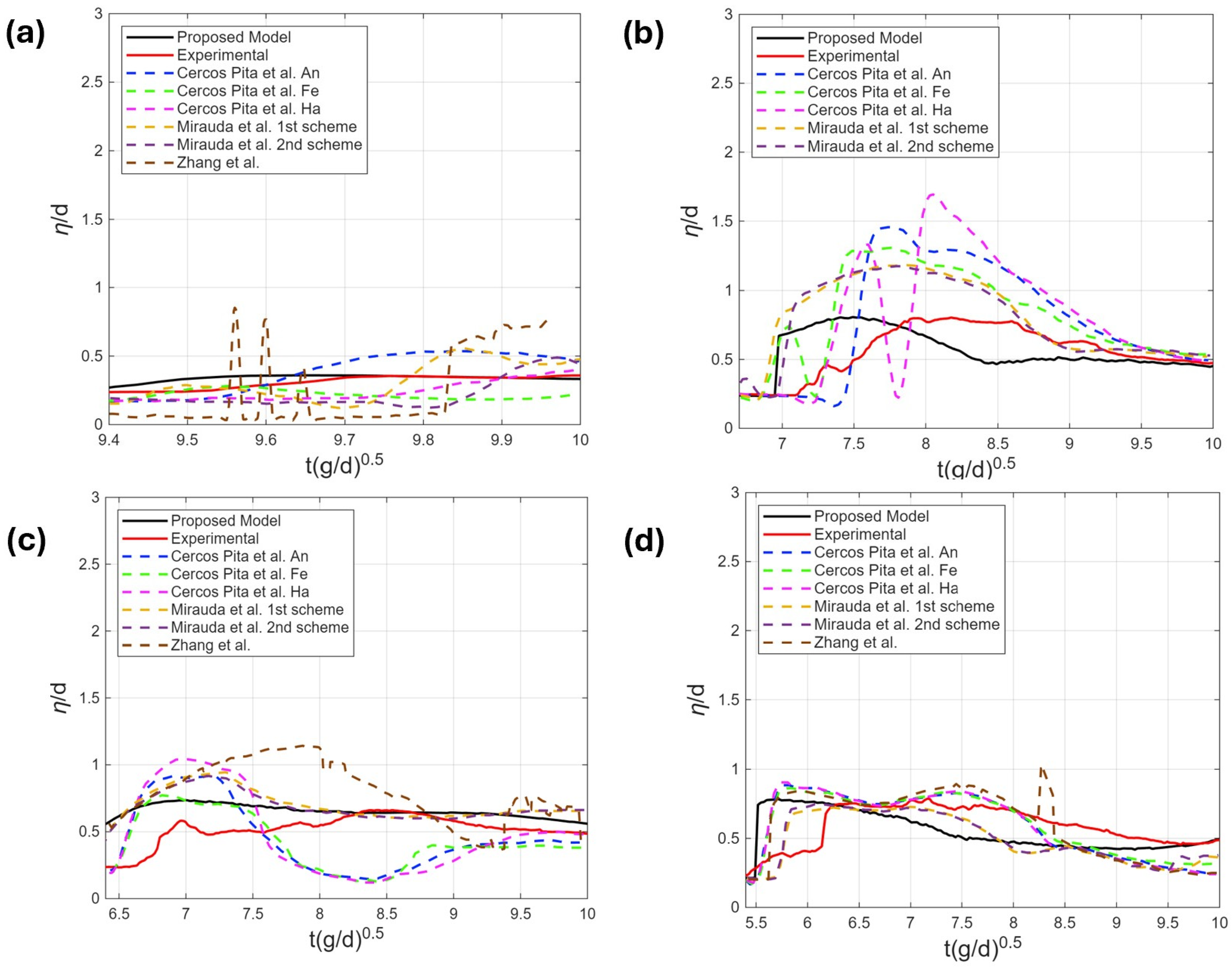
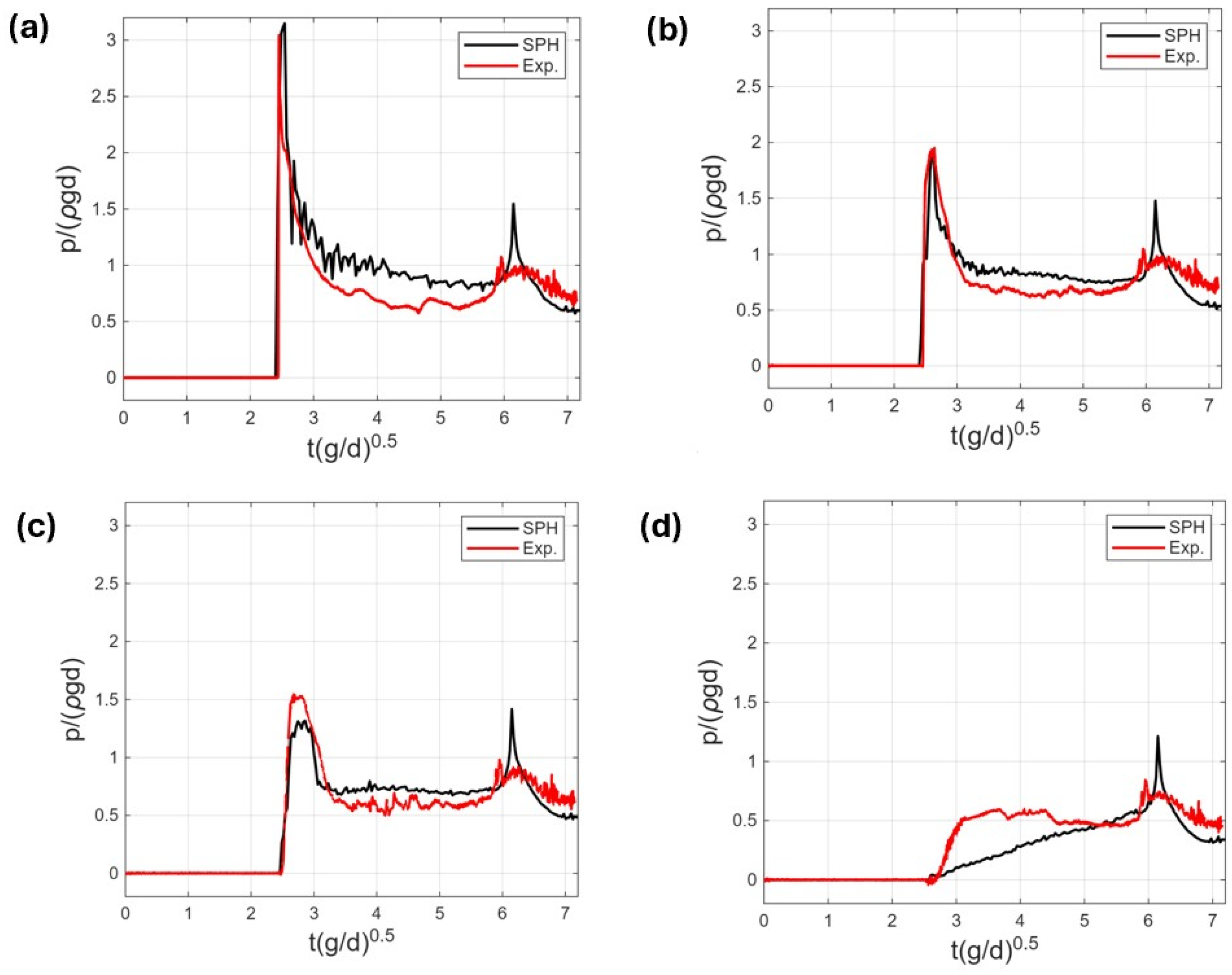
4.1. Dambreak
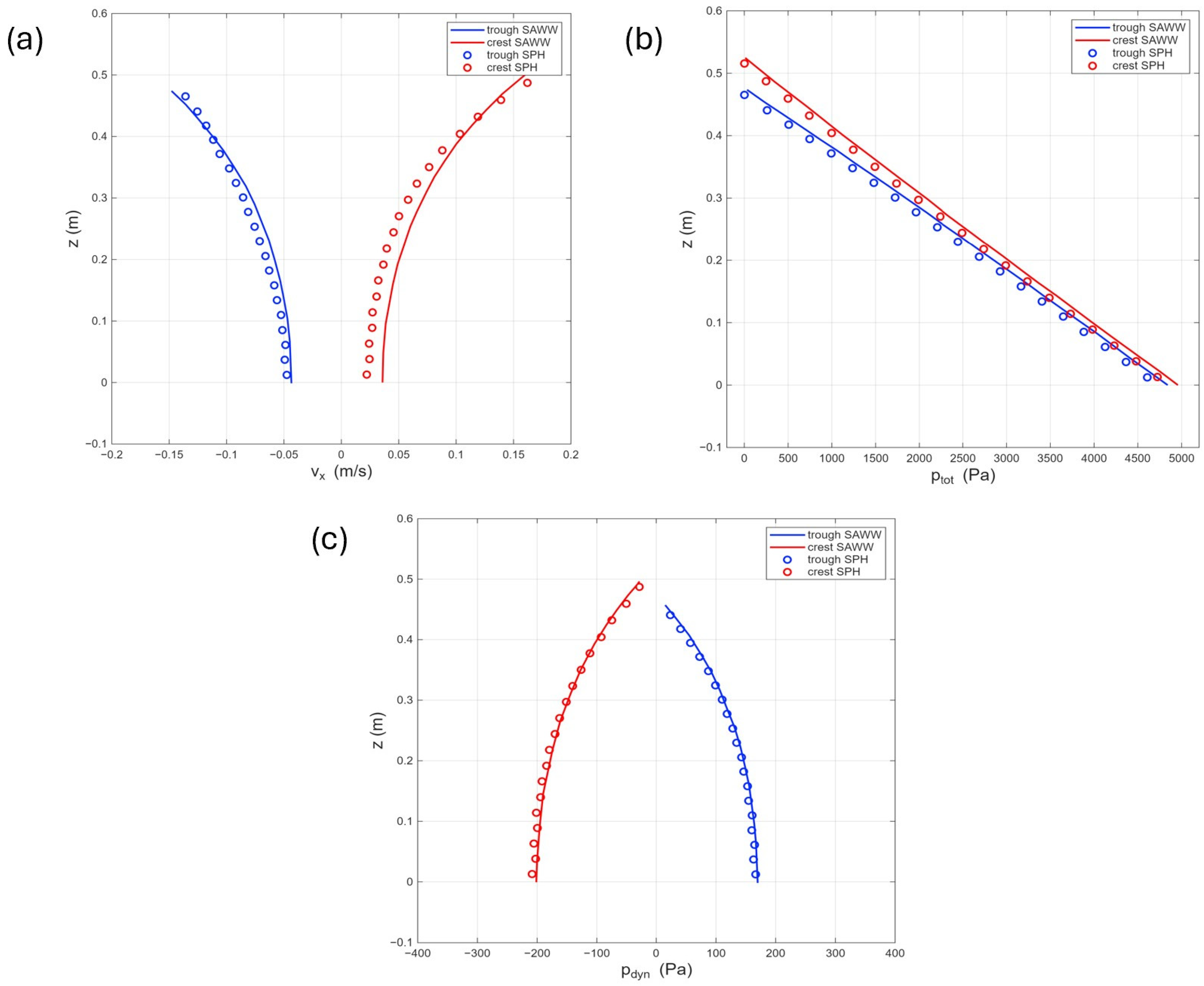
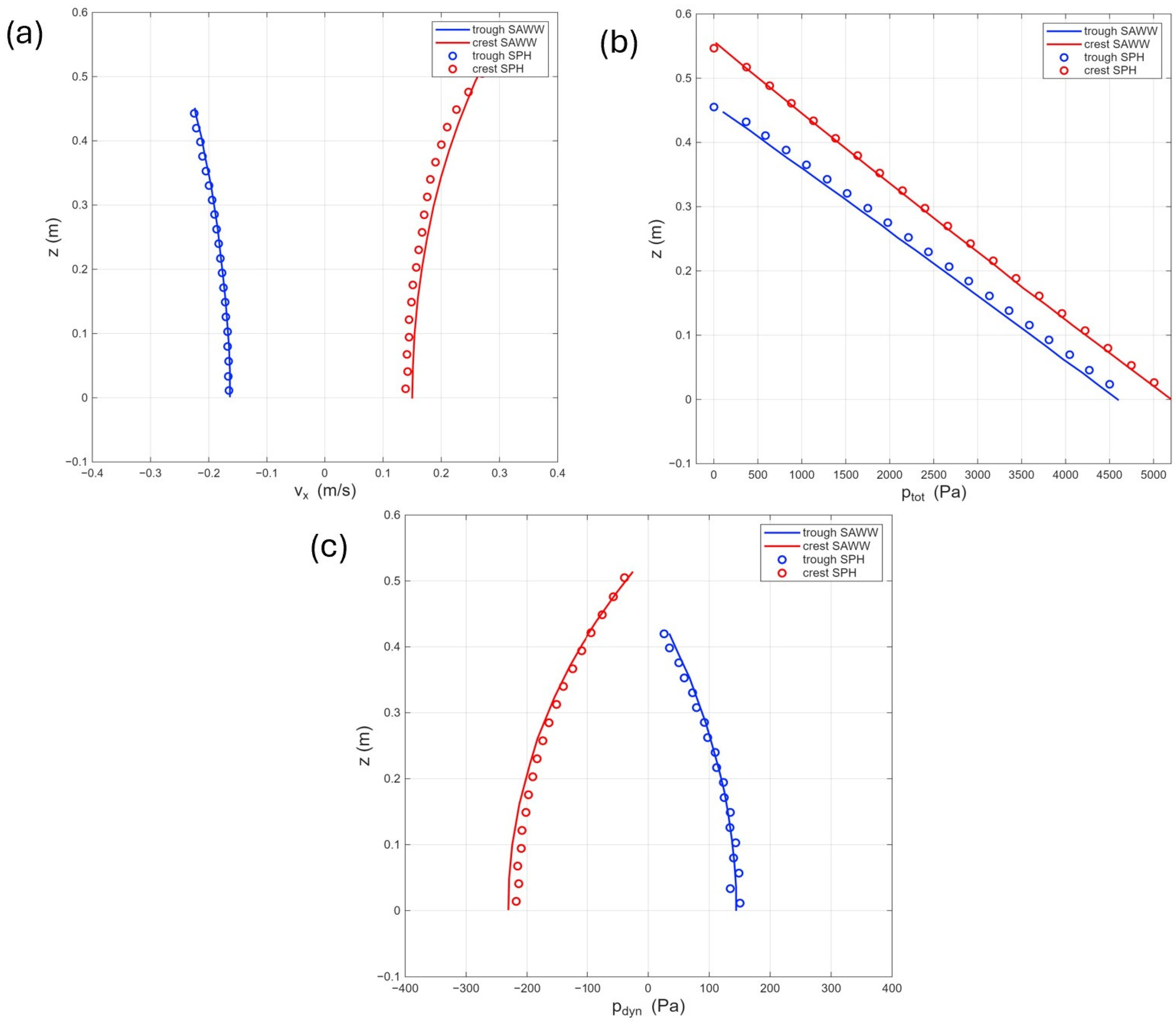
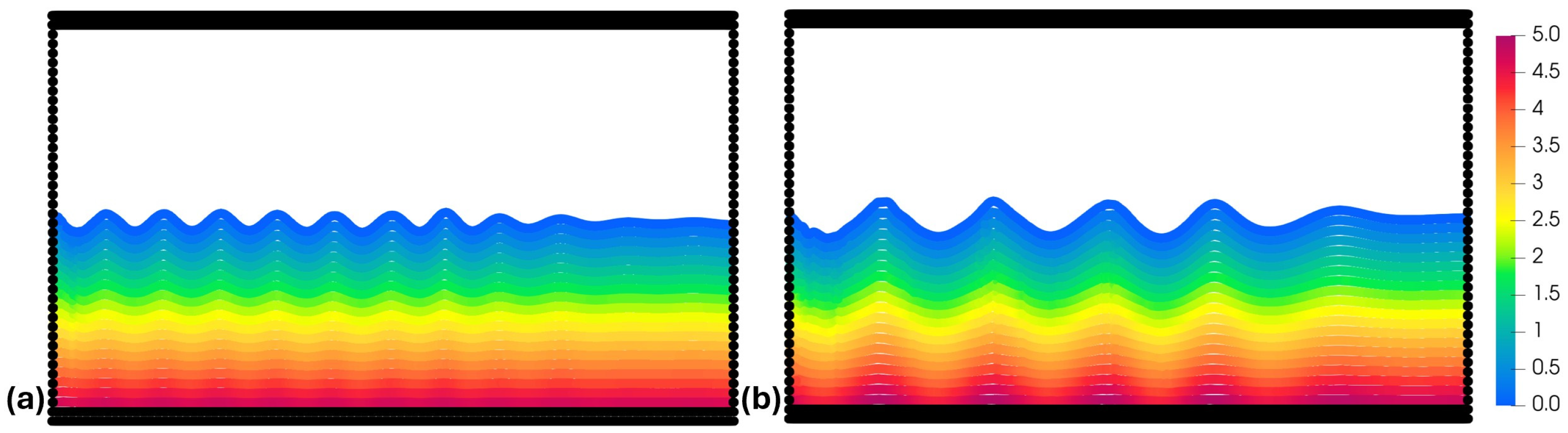
4.2. Wave Train Generation
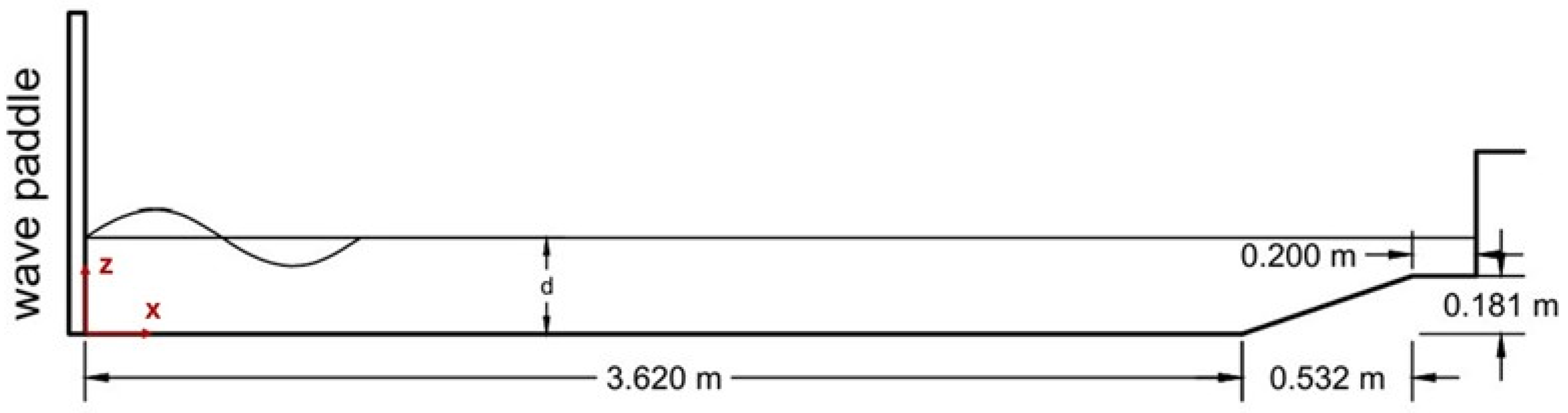
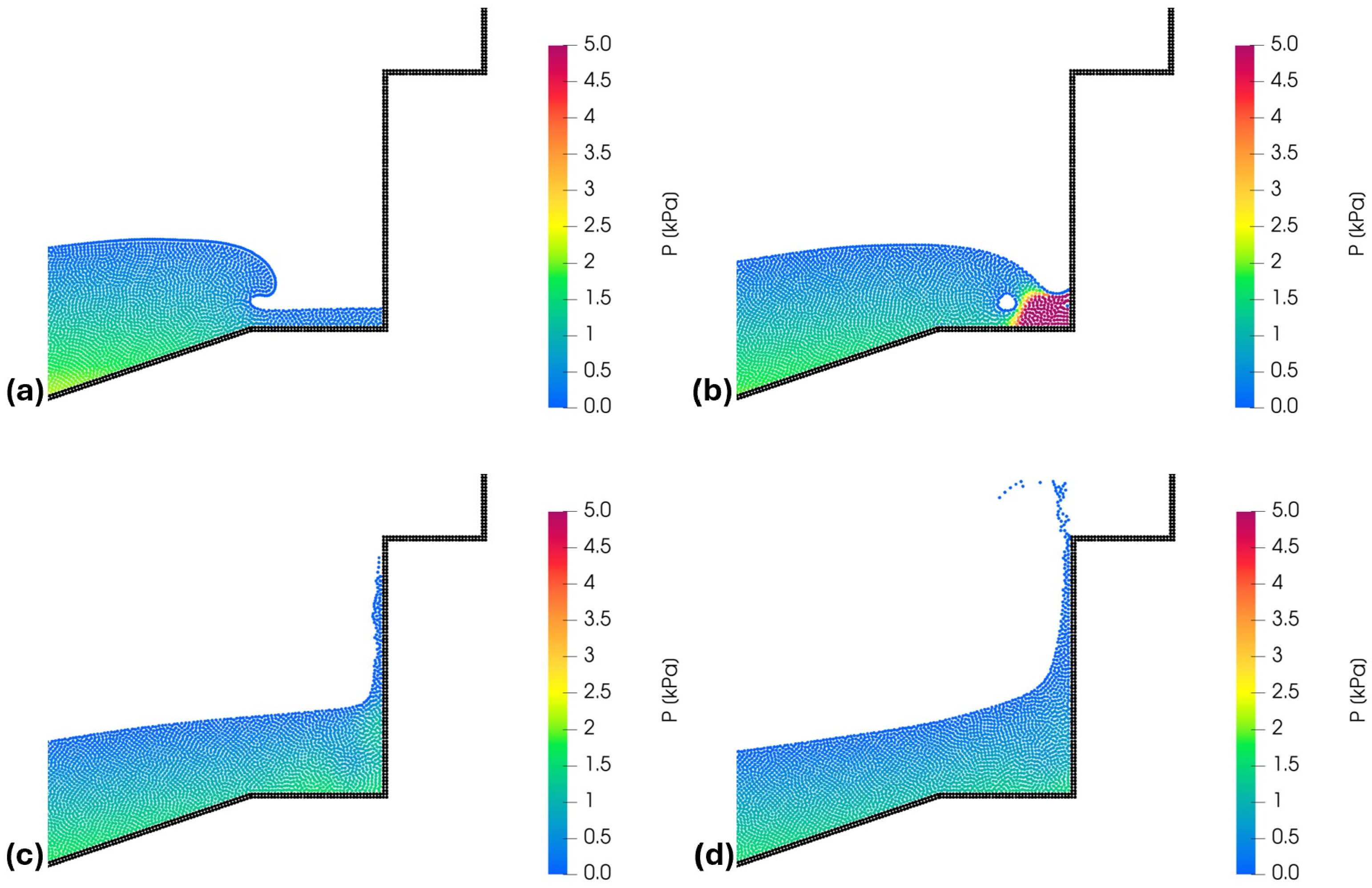
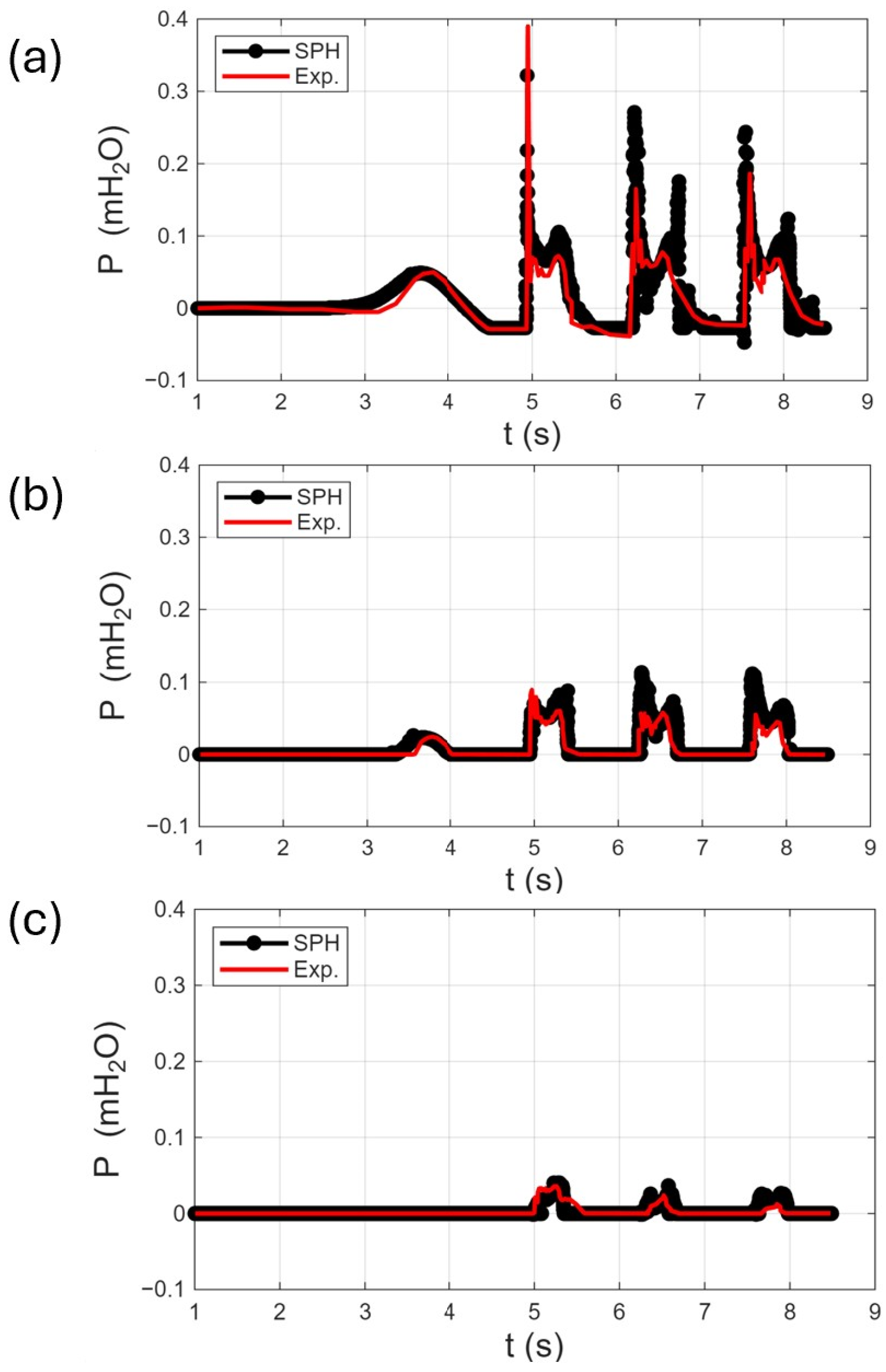
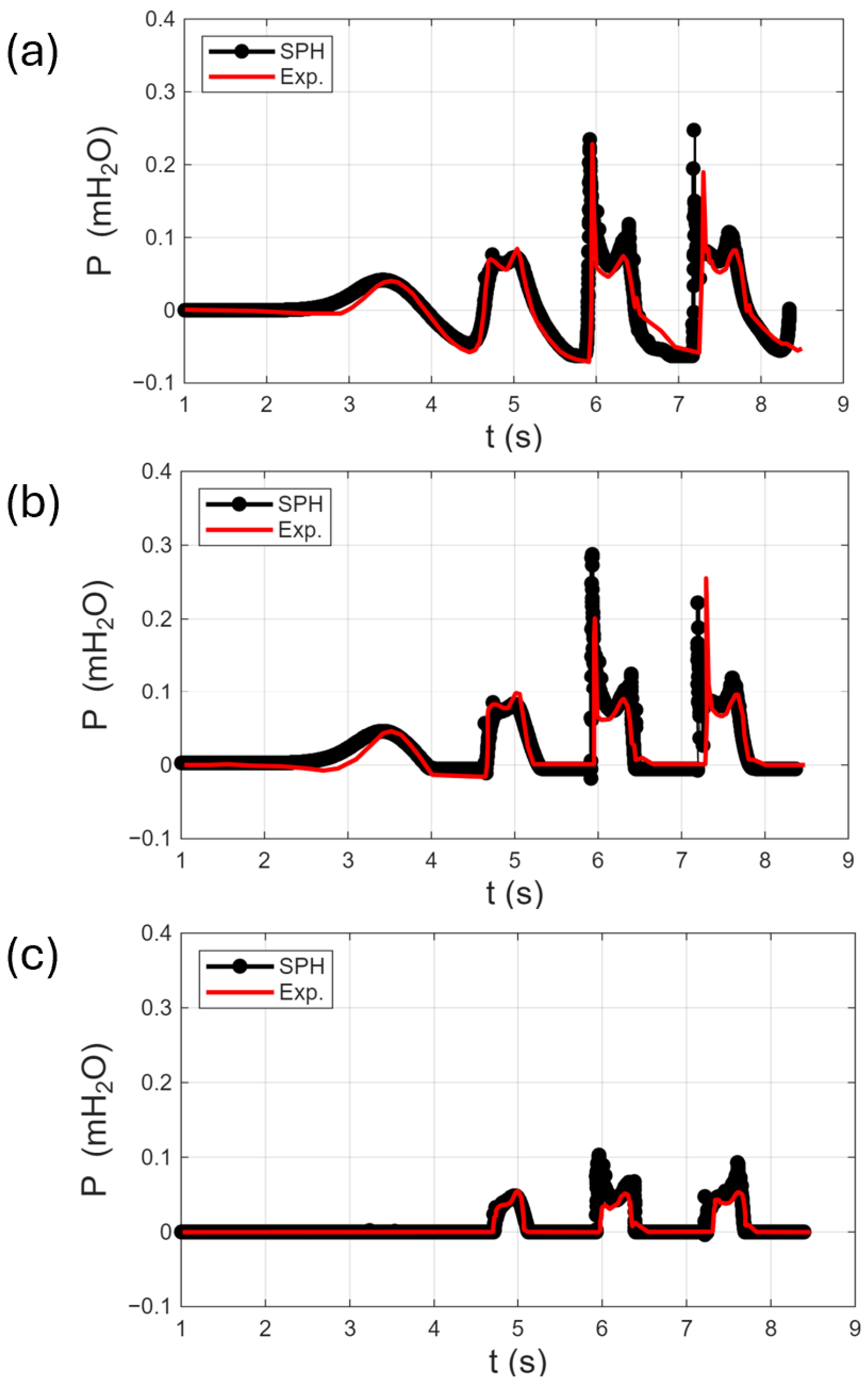
4.3. Evaluation of Pressure on a Vertical Breakwater
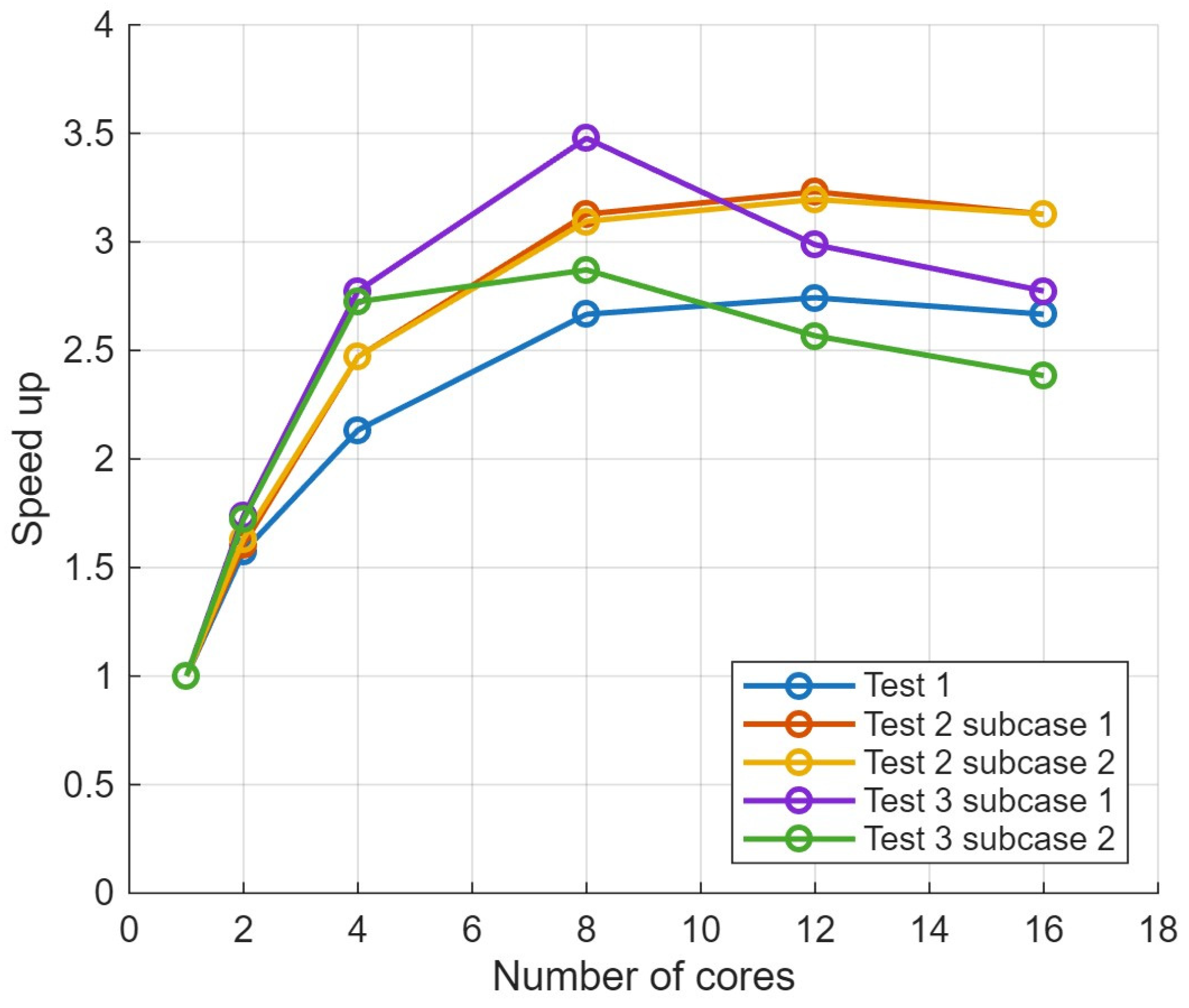
5. Conclusions
Author Contributions
Funding
Institutional Review Board Statement
Informed Consent Statement
Data Availability Statement
Conflicts of Interest
References
- Koschier, D.; Bender, J.; Solenthaler, B.; Teschner, M. Smoothed particle hydrodynamics techniques for the physics based simulation of fluids and solids. arXiv 2019, arXiv:2009.06944. [Google Scholar]
- Le Touzé, D.; Rogers, B.D. Smoothed particle hydrodynamics for free-surface and multiphase flows: A review. J. Fluids Struct. 2023, 118, 103859. [Google Scholar] [CrossRef] [PubMed]
- Monaghan, J.J. Smoothed particle hydrodynamics. Rep. Prog. Phys. 2005, 68, 1703–1759. [Google Scholar] [CrossRef]
- Gotoh, H.; Khayyer, A. On the state-of-the-art of particle methods for coastal and ocean engineering. Coast. Eng. J. 2018, 60, 79–103. [Google Scholar]
- Hughes, J.P.; Graham, D.I. Comparison of incompressible and weakly-compressible SPH models for free-surface water flows. J. Hydraul. Res. 2010, 48, 105–117. [Google Scholar] [CrossRef]
- Lee, E.-S.; Moulinec, C.; Xu, R.; Violeau, D.; Laurence, D.; Stansby, P. Comparisons of weakly compressible and truly incompressible algorithms for the SPH. J. Comput. Phys. 2008, 227, 8417–8436. [Google Scholar] [CrossRef]
- Raizah, Z.; El-Sapa, S.; Aly, A.M. ISPH simulations of thermosolutal convection in an annulus amongst an inner prismatic shape and outer cavity including three circular cylinders. Case Stud. Therm. Eng. 2022, 30, 101736. [Google Scholar] [CrossRef]
- Vacondio, R.; Altomare, C.; De Leffe, M.; Hu, X.; Le Touzé, D.; Lind, S.; Marongiu, J.-C.; Marrone, S.; Rogers, B.D.; Souto-Iglesias, A. Grand challenges for smoothed particle hydrodynamics numerical schemes. Comput. Part. Mech. 2021, 8, 575–588. [Google Scholar] [CrossRef]
- Monaghan, J.J. Simulating free surface flows with SPH. J. Comput. Phys. 1994, 110, 399–406. [Google Scholar] [CrossRef]
- Issa, R.; Lee, E.S.; Violeau, D.; Laurence, D.R. Modelling a plunging breaking solitary wave with eddy-viscosity turbulent SPH models. J. Hydraul. Res. 2005, 43, 610–624. [Google Scholar]
- Randles, P.W.; Libersky, L.D. Smoothed particle hydrodynamics: Some recent improvements and applications. Comput. Methods Appl. Mech. Eng. 1996, 139, 375–408. [Google Scholar] [CrossRef]
- Shao, S.; Lo, E.Y. Incompressible SPH method for simulating Newtonian and non-Newtonian flows with a free surface. Adv. Water Resour. 2003, 26, 787–800. [Google Scholar] [CrossRef]
- Di Monaco, P.; Guelfi, R.; Marrone, S.; Bertazzi, F. SPH modeling of solid boundaries through a semi-analytic approach. Eng. Appl. Comput. Fluid Mech. 2011, 5, 148–155. [Google Scholar] [CrossRef]
- Ferrand, M.; Laurence, D.R.; Rogers, B.D.; Violeau, D.; Kassiotis, C. Unified semi-analytical wall boundary conditions for inviscid, laminar or turbulent flows in the meshless SPH method. Int. J. Numer. Methods Fluids 2013, 71, 446–472. [Google Scholar] [CrossRef]
- Kulasegaram, S.; Bonet, J.; Lewis, R.W.; Profit, M. A variational formulation based contact algorithm for rigid boundaries in 2D SPH applications. Comput. Mech. 2004, 33, 316–325. [Google Scholar] [CrossRef]
- Manenti, S.; Sibilla, S.; Gallati, M.; Agate, G.; Guagnini, R. 3D WCSPH modelling of landslide-water dynamics during 1963 (16)Vajont disaster. Coast. Eng. 2016, 116, 210–228. [Google Scholar]
- Napoli, E.; De Marchis, M.; Gianguzza, G. PANORMUS-SPH: A new smoothed particle hydrodynamics solver for incompressible flows. Comput. Fluids 2015, 109, 114–126. [Google Scholar] [CrossRef]
- English, A.; Domínguez, J.M.; Vacondio, R.; Crespo, A.J.C.; Stansby, P.K.; Gómez-Gesteira, M. Modified dynamic boundary conditions (mDBC) for general-purpose smoothed particle hydrodynamics (SPH): Application to tank sloshing, dam break and fish pass problems. Comput. Methods Appl. Mech. Eng. 2019, 355, 22–40. [Google Scholar] [CrossRef]
- Balay, S.; Abhyankar, S.; Adams, M.F.; Brown, J.; Brune, P.; Buschelman, K.; Dalcin, L.; Eijkhout, V.; Gropp, W.D.; Kaushik, D.; et al. PETSc Users Manual (No. ANL-21/39-Rev 3.15); Argonne National Laboratory: Lemont, IL, USA, 2021. [Google Scholar]
- Schwaiger, H.F. An implicit corrected SPH formulation for thermal diffusion with linear free surface boundary conditions. Int. J. Numer. Methods Eng. 2008, 75, 647–671. [Google Scholar] [CrossRef]
- Wendland, H. Piecewise polynomial, positive definite and compactly supported radial functions of minimal degree. Adv. Comput. Math. 1995, 4, 389–396. [Google Scholar] [CrossRef]
- Morris, J.P.; Fox, P.J.; Zhu, Y. Modeling low Reynolds number incompressible flows using SPH. J. Comput. Phys. 1997, 136, 214–226. [Google Scholar] [CrossRef]
- Lind, S.J.; Xu, R.; Stansby, P.K.; Rogers, B.D. Incompressible smoothed particle hydrodynamics for free-surface flows: A generalised diffusion-based algorithm for stability and validations for impulsive flows and propagating waves. J. Comput. Phys. 2012, 231, 1499–1523. [Google Scholar] [CrossRef]
- Launder, B.E.; Spalding, D.B. The numerical computation of turbulent flows. Comput. Methods Appl. Mech. Eng. 1974, 3, 269–289. [Google Scholar] [CrossRef]
- Xu, R.; Stansby, P.; Laurence, D. Accuracy and stability in incompressible SPH (ISPH) based on the projection method and a new approach. J. Comput. Phys. 2009, 228, 6703–6725. [Google Scholar] [CrossRef]
- Liu, M.B.; Liu, G.R. Restoring particle consistency in smoothed particle hydrodynamics. Appl. Numer. Math. 2006, 56, 19–36. [Google Scholar] [CrossRef]
- Marrone, S.; Antuono, M.; Colagrossi, A.; Colicchio, G.; Le Touzé, D.; Graziani, G. δ-SPH model for simulating violent impact flows. Comput. Methods Appl. Mech. Eng. 2011, 200, 1526–1542. [Google Scholar] [CrossRef]
- Jančík, L.; Gombotz, M. Simulation of a 2D dam break problem using SPH method. Eng. Mech. 2014, 21, 161–171. [Google Scholar]
- Salis, M.; Marrone, S.; Antuono, M.; Di Monaco, P.; Fabbri, L. Wave generation and wave–structure impact modelling with WCSPH. Appl. Ocean. Res. 2019, 92, 101905. [Google Scholar] [CrossRef]
- Lobovský, L.; Hartl, E.; Vimmr, J.; Hlaváč, Z. Experimental investigation of dynamic pressure loads during dam break. J. Fluids Struct. 2014, 48, 407–434. [Google Scholar] [CrossRef]
- Cercos-Pita, J.L.; Dalrymple, R.A.; Herault, A. Diffusive terms for the conservation of mass equation in SPH. Appl. Math. Model. 2016, 40, 8722–8736. [Google Scholar] [CrossRef]
- Mirauda, D.; Albano, R.; Sole, A.; Adamowski, J. Smoothed Particle Hydrodynamics Modeling with Advanced Boundary Conditions for Two-Dimensional Dam-Break Floods. Water 2020, 12, 1142. [Google Scholar]
- Zhang, C.; Hu, X.Y.; Adams, N.A. A weakly compressible SPH method based on a low-dissipation Riemann solver. J. Comput. Phys. 2017, 335, 605–620. [Google Scholar] [CrossRef]
- Dean, R.G.; Dalrymple, R.A. Water Wave Mechanics for Engineers and Scientists; World Scientific Publishing Company: Singapore, 1991. [Google Scholar]
- Didier, E.; Neves, M.G.; Martins, R.; Guanche, R. Wave interaction with a vertical wall: SPH numerical and experimental modeling. Ocean Eng. 2014, 88, 330–341. [Google Scholar] [CrossRef]
- Fatehi, R.; Manzari, M.T. Error estimation in smoothed particle hydrodynamics and a new scheme for second derivatives. Comput. Math. Appl. 2011, 61, 482–498. [Google Scholar] [CrossRef]




Disclaimer/Publisher’s Note: The statements, opinions and data contained in all publications are solely those of the individual author(s) and contributor(s) and not of MDPI and/or the editor(s). MDPI and/or the editor(s) disclaim responsibility for any injury to people or property resulting from any ideas, methods, instructions or products referred to in the content. |
© 2026 by the authors. Licensee MDPI, Basel, Switzerland. This article is an open access article distributed under the terms and conditions of the Creative Commons Attribution (CC BY) license.
Share and Cite
Simone, M.; Cannata, G.; Fourtakas, G. Simulations of Wave–Structure Interactions in Incompressible SPH Using Modified Dynamic Boundary Conditions. J. Mar. Sci. Eng. 2026, 14, 863. https://doi.org/10.3390/jmse14090863
Simone M, Cannata G, Fourtakas G. Simulations of Wave–Structure Interactions in Incompressible SPH Using Modified Dynamic Boundary Conditions. Journal of Marine Science and Engineering. 2026; 14(9):863. https://doi.org/10.3390/jmse14090863
Chicago/Turabian StyleSimone, Marco, Giovanni Cannata, and Georgios Fourtakas. 2026. "Simulations of Wave–Structure Interactions in Incompressible SPH Using Modified Dynamic Boundary Conditions" Journal of Marine Science and Engineering 14, no. 9: 863. https://doi.org/10.3390/jmse14090863
APA StyleSimone, M., Cannata, G., & Fourtakas, G. (2026). Simulations of Wave–Structure Interactions in Incompressible SPH Using Modified Dynamic Boundary Conditions. Journal of Marine Science and Engineering, 14(9), 863. https://doi.org/10.3390/jmse14090863