Article

Feasibility of Using Oil from Spent Coffee Grounds in Small-Scale Marine Boilers

1
Department of Fisheries Education, Pukyong National University, Busan 48513, Republic of Korea
2
Division of Marine Mechatronics, Mokpo National Maritime University, Mokpo 58628, Republic of Korea
3
School of Information Science and Technology, Nantong University, Nantong 226019, China
*
Authors to whom correspondence should be addressed.
J. Mar. Sci. Eng. 2026, 14(10), 879; https://doi.org/10.3390/jmse14100879 (registering DOI)
Submission received: 20 April 2026 / Revised: 3 May 2026 / Accepted: 6 May 2026 / Published: 9 May 2026

Abstract

This study investigated the potential of using pyrolysis oil derived from spent coffee grounds (SCGs) as an alternative marine fuel to comply with the International Maritime Organization’s 2050 carbon-neutrality targets. A 30 L-class small-scale marine boiler was designed and fabricated to comparatively analyze the combustion and exhaust emission characteristics of coffee ground oil (CGO) blended with marine gas oil at blending ratios ranging from 0% to 25%. The experimental results indicated that as the blending ratio increased, the concentrations of oxygen and carbon monoxide slightly decreased, whereas those of carbon dioxide and nitrogen oxides (NOx) tended to increase. The combustion efficiency was consistently maintained at approximately 79.2%, confirming the potential feasibility of CGO as an alternative fuel. However, the study identified limitations in achieving carbon neutrality through blending alone. Consequently, further research on emulsification technologies and combustion optimization is needed to address phase separation caused by density differences and mitigate NOx emissions.

1. Introduction

During the 80th session of the Marine Environment Protection Committee (MEPC 80), the International Maritime Organization adopted a regulation targeting net-zero carbon emissions from ships by 2050 [1]. Consequently, extensive research is underway to reduce carbon emissions in the maritime sector. Among the various solutions, biofuels are increasingly recognized as carbon-neutral fuels. This is because, from a life cycle assessment perspective, the carbon dioxide emitted during combustion is reabsorbed by plants, resulting in net-zero total emissions. Accordingly, active research is being conducted across various fields to utilize biofuels as alternative fuels [2,3,4,5,6,7,8,9,10,11,12].
Jesus [2] analyzed the multifaceted role of biofuel technology in achieving global decarbonization by 2050. Li and Lam [3] employed machine learning to predict the outcomes of using biofuels as marine fuels. Rimkus [4] experimentally investigated the effects of hydrogen addition on the combustion characteristics of biofuels in compression ignition engines. Yeasin et al. [5] evaluated the impact of integrating advanced digital technologies, such as artificial intelligence, Internet of Things, blockchain, and digital twins, into the development of biomass and biofuels. Kapusta et al. [6] assessed biofuels produced from municipal sewage sludge using hydrothermal liquefaction technology, considering multiple perspectives. Leite et al. [7] reviewed the impact of the European Union Renewable Energy Directive (RED) on the adoption of biofuels in the Portuguese transport sector.
Furthermore, Tan et al. [8] derived sustainable biofuel production strategies by evaluating environmental impact indicators and water consumption associated with biofuels produced from macroalgae (Enteromorpha clathrata). Ahmed et al. [9] compared the greenhouse gas and pollutant emission reduction effects of biofuels with those of conventional fossil fuels, such as marine diesel oil (MDO), heavy fuel oil (HFO), and LNG, in passenger ships. Sagin et al. [10] confirmed that the use of biofuels in marine diesel engines reduces major pollutants, such as NOx, SOx, and CO2, and proposed a strategy for supplying biofuels to vessels. Lee et al. [11] and Kim and Lee [12] conducted comparative experimental verification by constructing basic test apparatuses for the application of biodiesel and second-generation bioethanol.
Recent advancements in research on electronic fuels (e-fuels) have shown promise, as these fuels can achieve net-zero emissions by recycling captured carbon dioxide into synthetic fuels [13,14,15,16,17,18]. While diverse alternative fuels have been explored to reduce CO2 emissions from ships [19], Yeasin et al. [13] evaluated the potential of commercializing e-fuels by introducing the role of membrane reactors in converting renewable energy-based power into e-fuels using Power-to-X technology. Kumar et al. [14] introduced an e-fuel production system that combines direct air capture with green hydrogen. In another study, Kumar et al. [15] compared the economic feasibility of e-methanol production using freshwater and chlor-alkali electrolysis, suggesting approaches for improving economic sustainability. Mehrara et al. [16] evaluated the process and economic efficiency of Fischer–Tropsch liquid fuel production when combined with electrification and carbon capture and storage. Beckmann et al. [17] analyzed the effects of Power-to-X and e-fuel production on energy transition and energy independence across European countries. Finally, studies on the use of gaseous fuels, such as LNG and LPG, in small- and medium-sized vessels have also been reported [20,21].
Recent academic efforts have expanded beyond simple combustion analysis to address the complex operational and environmental risks associated with marine boiler systems. For instance, research from the perspective of Maritime Autonomous Surface Ships (MASS) has introduced control theory-based fuzzy Fine–Kinney risk assessments to enhance the safety of boiler automation systems [22]. Moreover, operational risk assessments of marine boiler plants have been conducted to ensure onboard system safety, providing a systematic framework for identifying potential failure modes [23]. In terms of environmental impact, integrated approaches using improved Z-numbers and fault tree analysis have been developed to predict the risk of air pollution resulting from ship boiler operations [24]. While these studies focus on systemic safety and risk prediction, there remains a critical need for experimental data on eco-friendly alternative fuels to fundamentally reduce emission-related risks, which is the primary focus of this study.
Mohammadpour and Salehi [16] reviewed applicable liquid alternative fuels for marine engines and presented a fuel transition roadmap for the shipping industry’s decarbonization strategy. As shown, research on achieving carbon neutrality and reducing emissions in ships is actively being pursued across various fields [17,18,19,20]. Currently, fossil fuels used in ships are classified into three main categories: marine gas oil (MGO), MDO, and high-viscosity HFO. Among these, MGO has the lowest viscosity and highest quality, making it widely used in small vessels. However, despite diverse efforts toward carbon neutrality, original and innovative approaches utilizing unique biofuel sources are still lacking.
While existing biofuels such as algae-based oils and waste vegetable oils (WVO) offer carbon-neutral benefits, they often face challenges related to high cultivation costs or competition with food resources. In contrast, spent coffee grounds (SCGs) represent a highly accessible and non-edible biomass source that is generated in massive quantities globally. Utilizing SCG-derived oil not only avoids the ‘food vs. fuel’ dilemma but also provides a sustainable waste management solution by upcycling a byproduct that would otherwise be discarded in landfills.
The novelty of this study lies in its integrated approach to evaluating a previously underutilized non-edible biomass source within a uniquely engineered marine-specific testbed. Unlike previous studies that predominantly focus on widely used waste vegetable oils or algae-based biodiesels, this research explores the specific combustion characteristics of SCG-derived oil, a byproduct with high global accessibility but minimal representation in maritime energy research. Furthermore, while most existing literature relies on standard industrial burners, this study utilizes a specially designed 30 L-class small marine boiler system that maintains thermodynamic similarity to actual shipboard auxiliary boilers. This methodological approach provides a high-fidelity baseline for the practical integration of SCGs into the maritime sector, bridging the gap between general biofuel research and specific maritime engineering applications.

2. Materials and Methods

2.1. Industrial Demand for Spent Coffee Grounds and Cases of Fuel Conversion

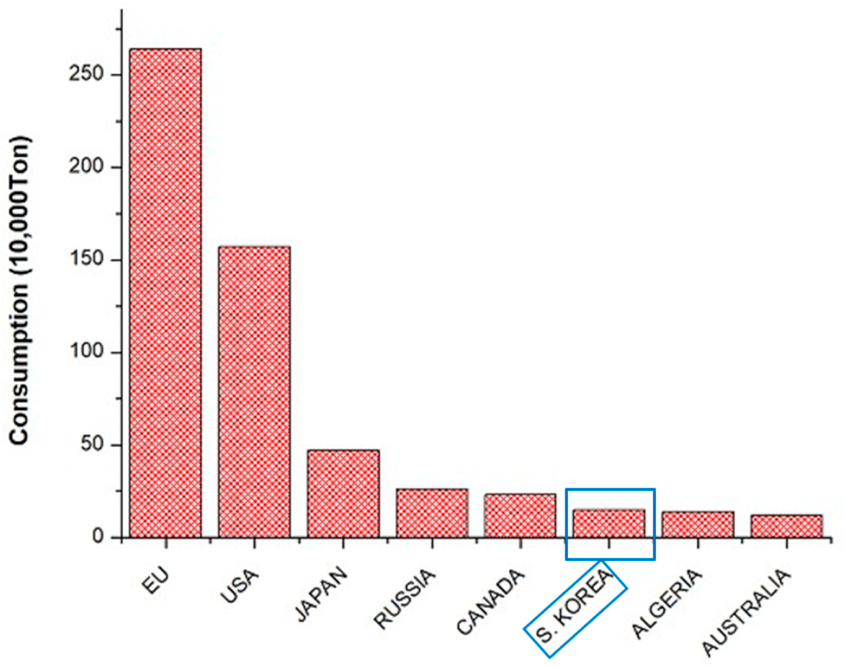
Coffee is one of the most widely consumed beverages worldwide. In Asia, coffee consumption has recorded an average annual growth rate of over 4% since the 1900s and more than 5% since the 2000s [25,26]. South Korea is the world’s seventh-largest coffee consumer, with a total annual consumption of approximately 2.3 million bags (60 kg per bag) and an average per capita consumption of 512 cups [26]. Recently, domestic consumption of coffee beans has exceeded 150,000 tons per year, and the generation of its byproduct, SCG, is expected to increase accordingly. Figure 1 compares the current status of coffee consumption among major countries [27].
Generally, approximately 15 g of coffee beans is used to prepare a single cup of Americano. However, only a small fraction of the components is extracted into the beverage, whereas the remaining 99% (approximately 14.7 g) is discarded as SCG [28]. Even in the case of espresso, which has a higher extraction concentration, only approximately 19% of the beans is utilized, whereas the remaining 81% is treated as general waste and discarded [29]. According to available data, at least 100,000 tons of SCG are generated annually in South Korea, most of which are used as compost or disposed of. Although precise quantitative statistics are difficult to determine, the actual amount generated is estimated to exceed this figure [30].
Beyond its status as waste, SCG is a high-value resource for cosmetics and renewable energy due to the unburned organic compounds retained during the roasting process. From a technical and economic perspective, South Korea has the potential to produce 150,000 tons of SCG-derived oil annually. Utilizing this to create a 25% SCG-MGO blend could generate approximately 4 million tons of alternative fuel per year. While this supply accounts for a limited portion of the total fuel consumption, its implementation is highly justifiable as a strategic response to environmental regulations and an innovative attempt to diversify sustainable marine energy sources. Furthermore, specific design methods for SCG molding machines have been proposed [28]. The ignition performance of SCG processed into refuse-derived fuel (RDF) varies with the drying method, and its feasibility as an alternative energy source has been demonstrated [26].
Most studies utilizing SCG as a fuel source have primarily focused on recycled products, compost, or solid fuels [31]. Consequently, the conversion of SCG into liquid biofuels to achieve carbon neutrality remains significantly under-researched. However, some pioneering studies have re-evaluated SCG as an energy source by demonstrating the economic viability and efficiency of biodiesel extraction processes [32]. Other studies have achieved innovative results by simultaneously producing liquid and solid fuels through pyrolysis [33].
Although studies on direct fuel conversion using SCG blends in engines are limited, Yim et al. [34] confirmed the feasibility of using SCG pyrolysis oil (CGO) blended with butanol in tractor diesel engines; however, they reported that most emissions tended to increase rather than decrease. Park et al. [35] used a 15% SCG blend fuel in a compression–ignition engine and observed that, although particulate matter concentrations were lower than those in diesel, nitrogen oxide (NOx) emissions were slightly higher. Kim et al. [31] analyzed the ignition performance of RDF across different drying methods. Our research team previously analyzed the stability of samples obtained by blending MGO with CGO at ratios of up to 30% [36]. In addition, a preliminary evaluation of the feasibility of fuel transition was conducted through analysis of viscosity, which significantly influences the quality of marine fuels [37].

2.2. Design and Fabrication of a 30 L-Class Small-Scale Marine Boiler System

Owing to their predominantly low quality, marine fuels generally exhibit relatively high viscosity and significant sensitivity of their physicochemical properties to temperature [38]. To address these fuel handling challenges and simulate actual onboard integration, a specialized preheating and circulation system capable of heating the samples was implemented as follows [39]. Two separate sample storage tanks, each with a capacity of approximately 10 L, were installed within the experimental frame. This separation enables precise measurement of the consumption flow and prevents cross-contamination between components during fuel transition testing. To enhance the efficiency and compatibility of the fuel supply pipeline with existing auxiliary boiler modules, a bypass system, a gear pump for circulation, a 0.2 kW coil-type electric heater for rapid heating, and an electronic turbine flowmeter for data acquisition were installed.
Furthermore, the main boiler unit utilized a small-scale model with a total water capacity of 30.8 L. This represents an optimized, downscaled design that maintains the core thermodynamic characteristics of commercial marine auxiliary boilers, compared with the 1-ton standard combustion chamber or the 300 L lab-scale combustion test unit investigated in previous studies by our research team [38,40]. While scaled down to 30 L for laboratory convenience, the system architecture—including the combustion chamber geometry and heat transfer surfaces—was specifically engineered to ensure that the experimental findings regarding fuel atomization and combustion stability remain relevant for scaling up to larger shipboard systems. The unit was integrated with a feed water pump, auxiliary feed water tank, safety valve, and automatic control system at the bottom of the body, considering spatial efficiency within the laboratory. For simple comparative testing, a separate piping system was implemented to enable direct discharge through an open-loop method rather than using a circulation mode. The detailed specifications of the boiler system are listed in Table 1 [41].
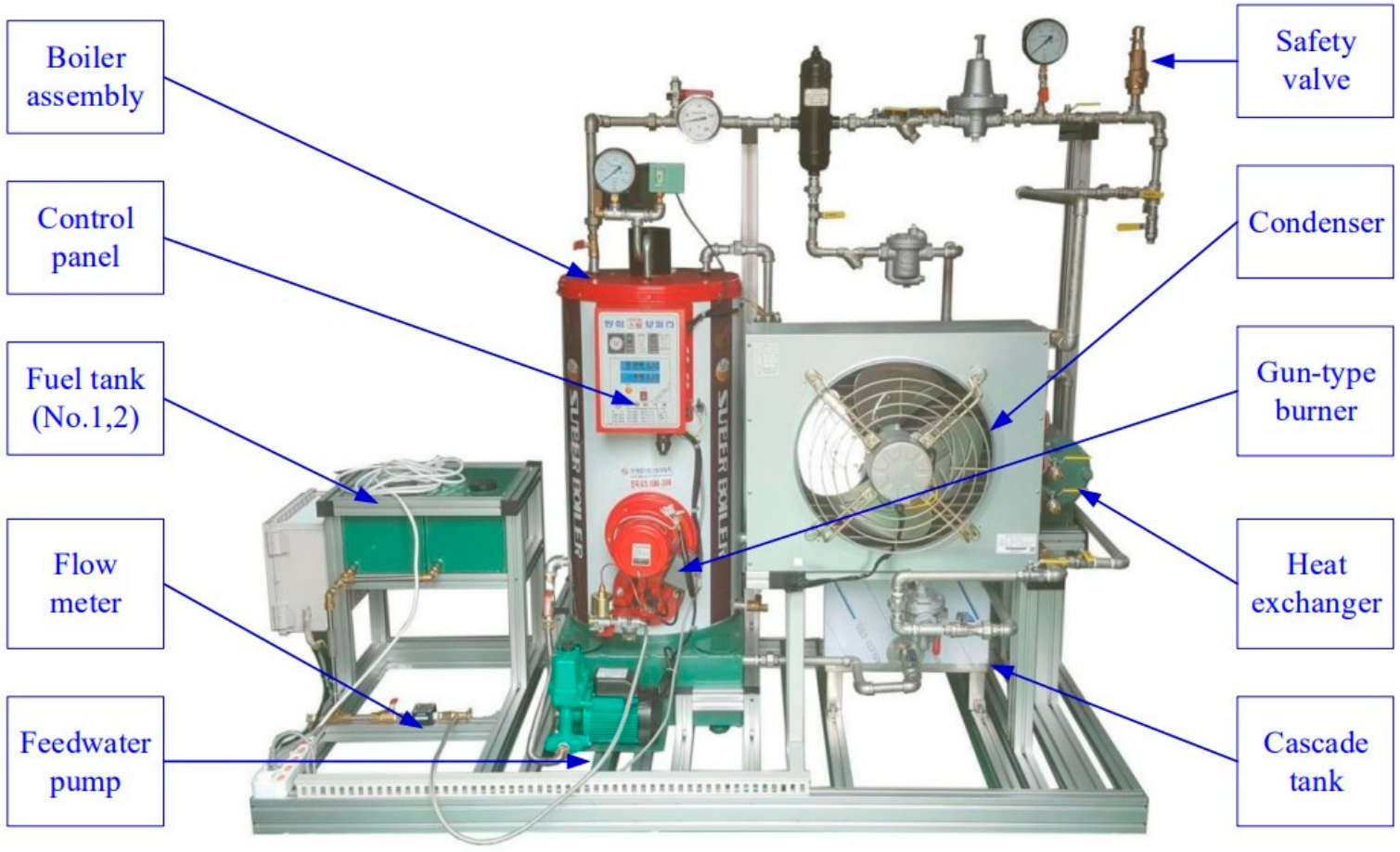
These specifications are based on the use of MGO at a steam pressure of 3.5 kg/cm2 and a feed water temperature of 20 °C. Furthermore, to maximize the thermodynamic cycle similarity with conventional marine auxiliary boiler systems and demonstrate practical onboard applicability, the apparatus was equipped with a separate heat exchanger, air-cooled condenser, condensate storage tank (cascade tank), and safety valve. Additionally, to facilitate the seamless acquisition of various operational data, including the circulation rate of generated steam, heat exchange capacity, and fuel consumption, temperature and pressure sensors were installed in the 8–15 A piping sections. Moreover, the design enabled probe installation in a 100 A-sized exhaust gas funnel (stack). Figure 2 shows the completed assembly of the fabricated boiler system [39].

2.3. Preparation of SCG–MGO Blended Fuel Samples with Various Contents

The CGO samples used in this study were produced through fast pyrolysis employing an inclined slide reactor with a production capacity of approximately 15.5 kg/h [42,43]. The CGO obtained from this pyrolysis exhibited a lower heating value than conventional diesel; however, it was approximately twice that of woody pyrolysis oil reported in previous studies and reached a level comparable to that of butanol [37,38]. The physicochemical properties of the prepared CGO and the MGO used for blending are listed in Table 2 [34,37,44].
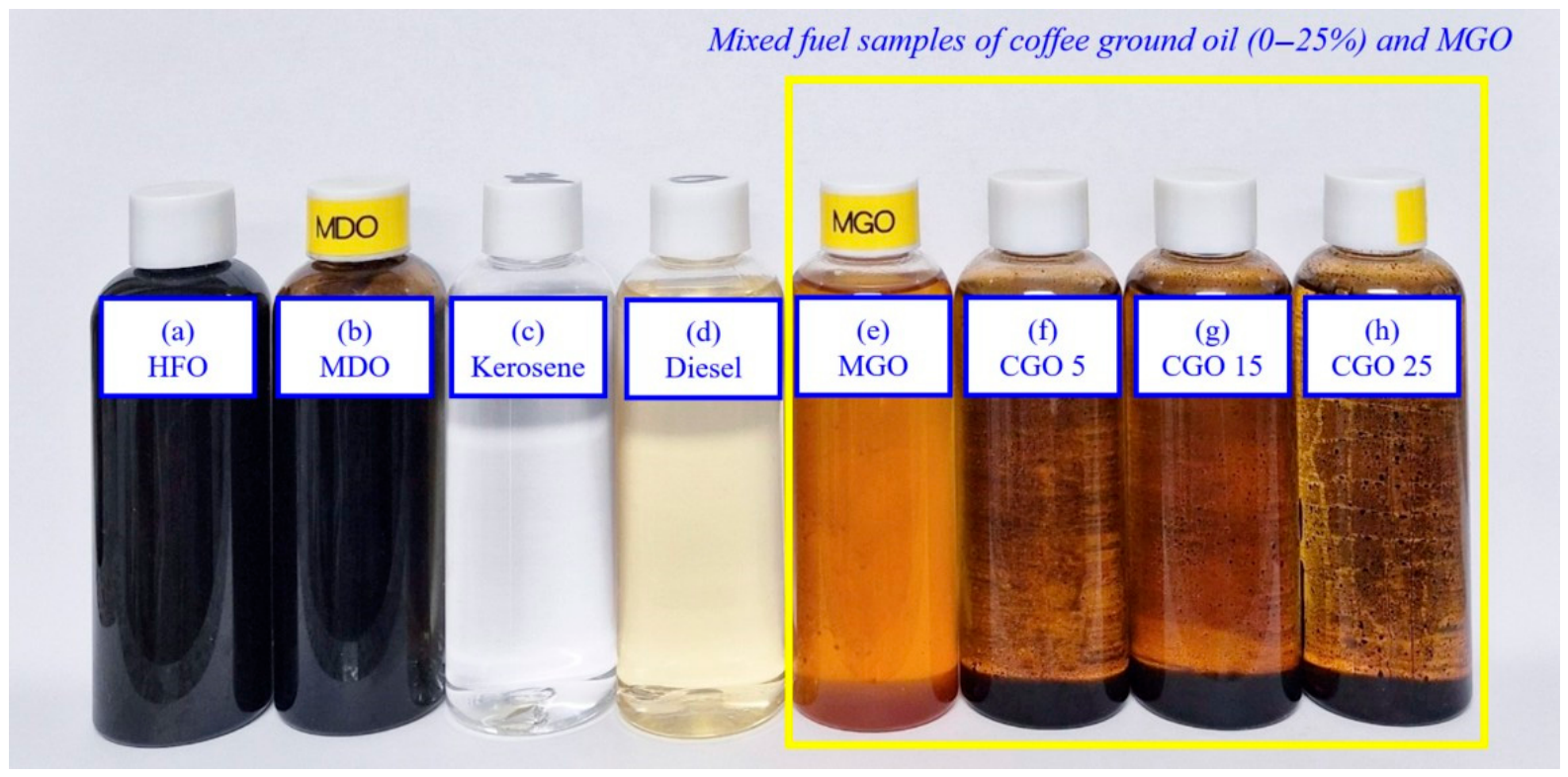
The two fuels were blended according to their weight ratios using a high-speed stirrer. Four fuel samples were prepared with CGO contents ranging from 0% to 25%. This specific range was selected in accordance with South Korean regulations for alternative petroleum fuels, which recognize emulsified or blended fuels only when the content of non-petroleum substances is below 30%. The blending process was conducted at room temperature by placing both fuels in the stirrer and mixing them at a rotational speed exceeding 4000 rpm for at least 10 min. To ensure the reliability of the combustion data, all samples were thoroughly homogenized using high-speed mechanical stirring immediately prior to the tests. Although the CGO-MGO blend exhibits long-term phase separation due to differing physical properties, the one-hour stabilization period was specifically monitored to ensure that the fuel remained in a sufficiently uniform state for the duration of the combustion analysis. The authors are currently conducting separate research on chemical additives and surfactants to overcome these stability challenges for commercial-scale applications. This observation suggests that future research should investigate stabilization strategies, such as the use of additives or emulsifiers, to enhance mixing stability. Figure 3 shows a comparison between the actual samples prepared by content and general marine fuel oil.
Figure 3. Visual appearance of prepared CGO–MGO blends (0–25% content) compared to pure MGO and standard marine fuels.
Jmse 14 00879 g003

2.4. Experimental Apparatus and Methods

The 30 L-class boiler system designed for this comparative study was equipped with a burner of very small capacity, which precluded proportional control; therefore, it operated in a simple hi–low–off mode. Consequently, fuel transition tests were conducted at a fixed 100% load (maximum operating condition) without separate load adjustments. While this single-load condition does not fully represent the variable load profiles of large-scale marine boilers, it was selected to ensure the highest level of experimental repeatability and to provide a stable baseline for comparing the combustion characteristics of different fuel blends. To ensure a consistent thermal load and improve experimental repeatability, the fuel flow rate was strictly maintained at a constant rate of 2.67 kg/h, with the fuel injection pressure consistently stabilized at 9.1 bar throughout the combustion tests. All experiments were performed under nearly identical environmental and operating conditions. Sufficient air purge was performed during the initial ignition stage, and measurements were obtained using a flue gas analyzer [45]. The data acquisition parameters included the exhaust gas temperature and contents of oxygen (O2), carbon monoxide (CO), carbon dioxide (CO2), and nitrogen oxides (NOx). In accordance with the Air Pollution Process Test Standard, the measurement protocol involved recording the average of continuous measurements over a period of 5 min, repeated three times [46]. Although CO2 is not officially classified as an atmospheric pollutant, it was measured for the convenience of simultaneous monitoring. Table 3 lists the measured parameters and standard test methods applied using the flue gas analyzer [45,46].
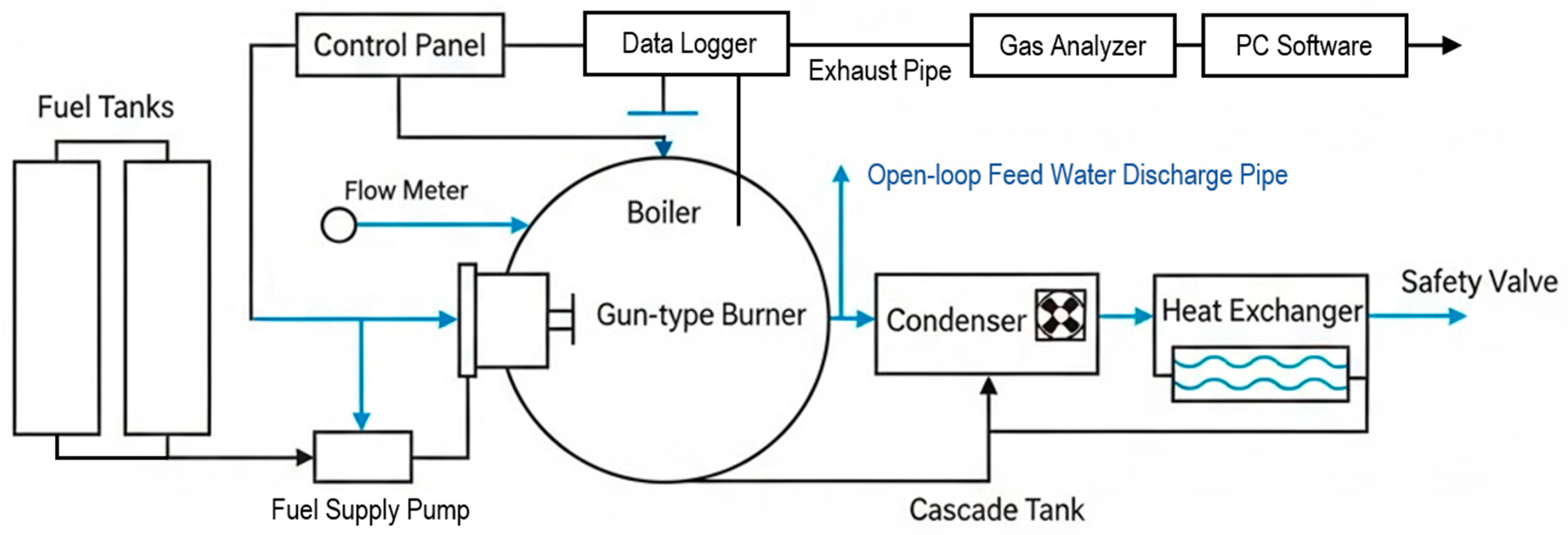
Figure 4 shows a schematic of the comparative experimental setup and analysis process for each SCG fuel blend using the fabricated marine boiler. The procedure involved a fuel changeover between two separate tanks, with the circulating water being continuously discharged overboard in an open-loop configuration.

3. Results

3.1. Exhaust Gas Emission Characteristics

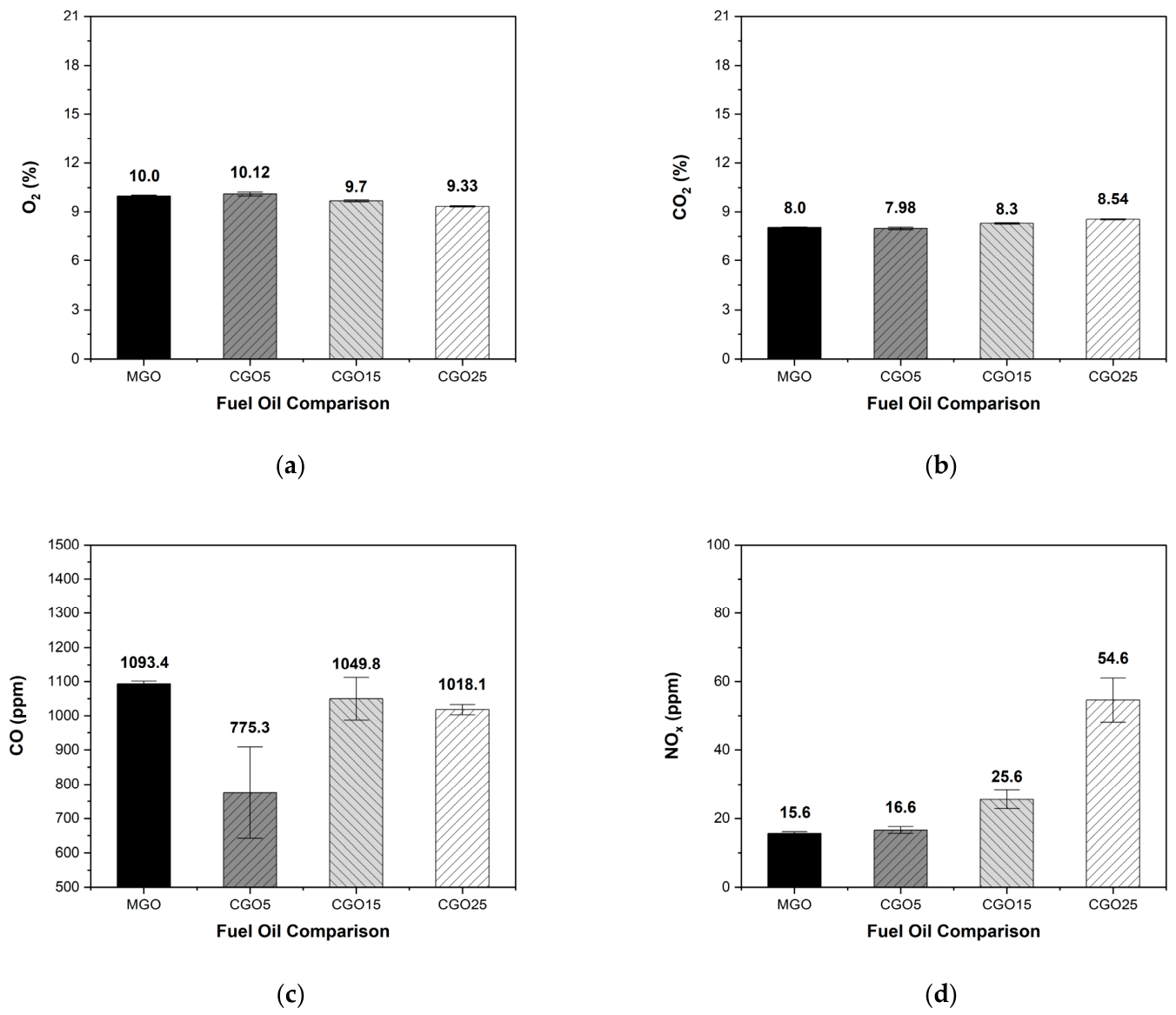
The results of comparative combustion tests conducted using the prepared fuel samples with varying SCG contents (0–25%) in a 30 L small-scale boiler are presented in Figure 5a–d. The oxygen concentration (O2) of pure MGO (0% SCG) was approximately 10.0% but exhibited a slight decreasing trend to 9.33% when the SCG content reached 25% (CGO25). The CO emissions also decreased slightly, from 1093.4 ppm for MGO to 1018.1 ppm for CGO25. In contrast, the CO2 emissions increased from 8.0% for MGO to approximately 8.54% for CGO25. Overall, the increasing trend of CO2 emissions with higher SCG content indicates that the simple blending of raw CGO with MGO presents inherent limitations in achieving carbon neutrality in maritime applications. Furthermore, the concentration of NOx increased significantly from 15.6 ppm for MGO to 54.6 ppm for CGO25. This increase in NOx emissions with higher SCG blending ratios is consistent with findings from previous studies on land-based low-sulfur diesel. In general, challenges in data acquisition were encountered owing to blending instability, which resulted in relatively large deviations in several measurement parameters. These results indicate that the simple comparative combustion of CGO with MGO is complex and requires further optimization through additional experimental studies.

3.2. Exhaust Gas Temperature Characteristics

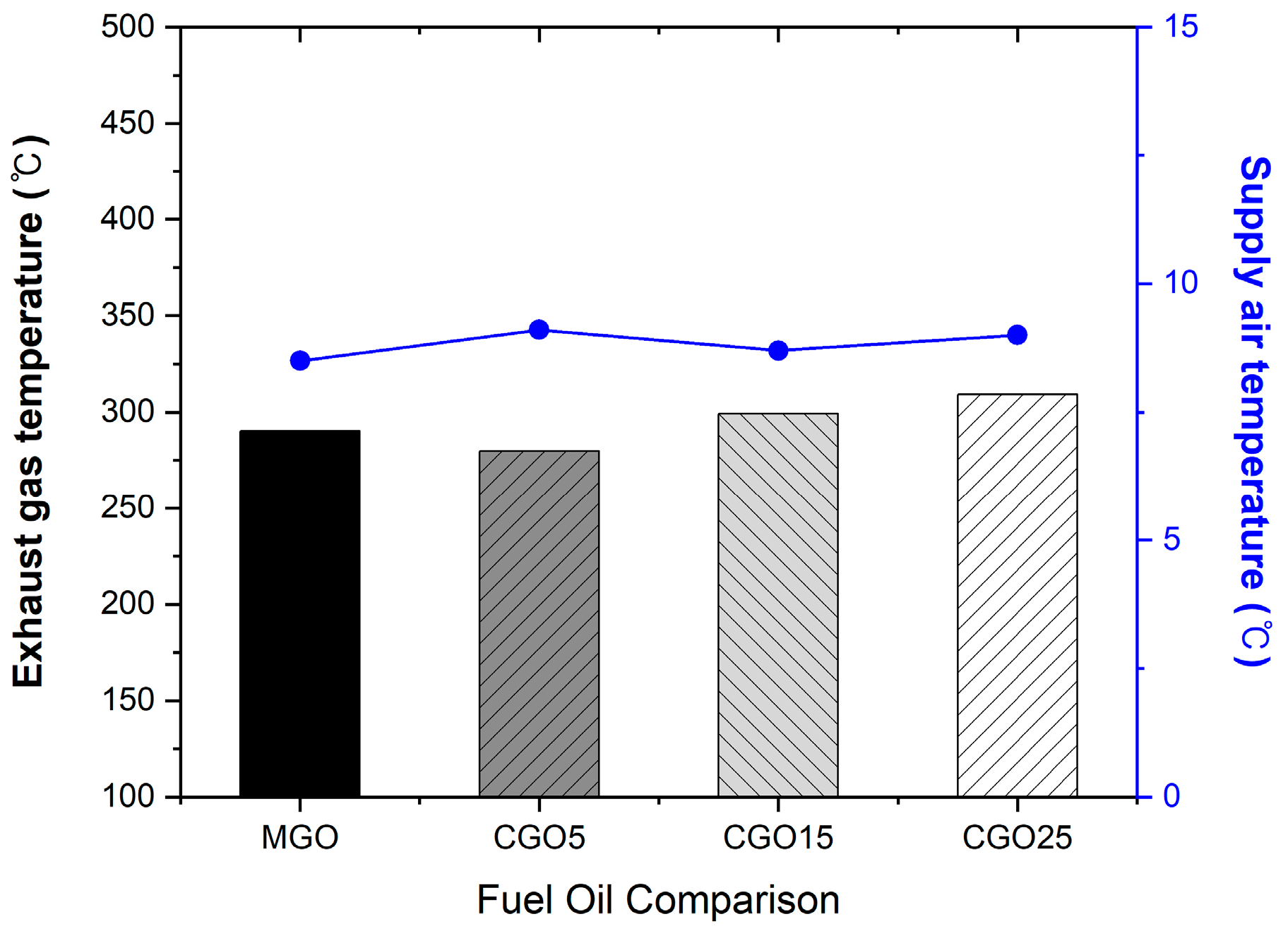
The exhaust gas temperature for pure MGO was approximately 290.2 °C, whereas it increased by approximately 6.1% to 309.2 °C for CGO25. Although a slight increase in thermal output may be expected when applying SCG blends to a boiler, the mixture of MGO and SCG can be interpreted negatively in terms of combustion stability. This is because the oxygen contained within the fuel promotes combustion, whereas the complex molecular structure characteristic of biofuels may induce after-burning phenomena. Furthermore, altered heat transfer characteristics within the combustion chamber act collectively, resulting in an unstable discharge of the sensible heat of the combustion gases without sufficient heat exchange. Figure 6 shows a comparison of the exhaust gas temperatures relative to the ambient air supply temperature for each sample.

3.3. Combustion Efficiency

Combustion efficiency, defined as the ratio of the actual heat released in the combustion chamber to the heating value of the fuel [11,40], can be determined using various methods. In this study, combustion efficiency was calculated using Equations (1) and (2), based on the parameters provided by the flue gas analyzer manufacturer [11,45].
q A = F T A T × A 2 O 2 r e f O 2 + B 1 K k
E f f c [ % ] = 100 q A
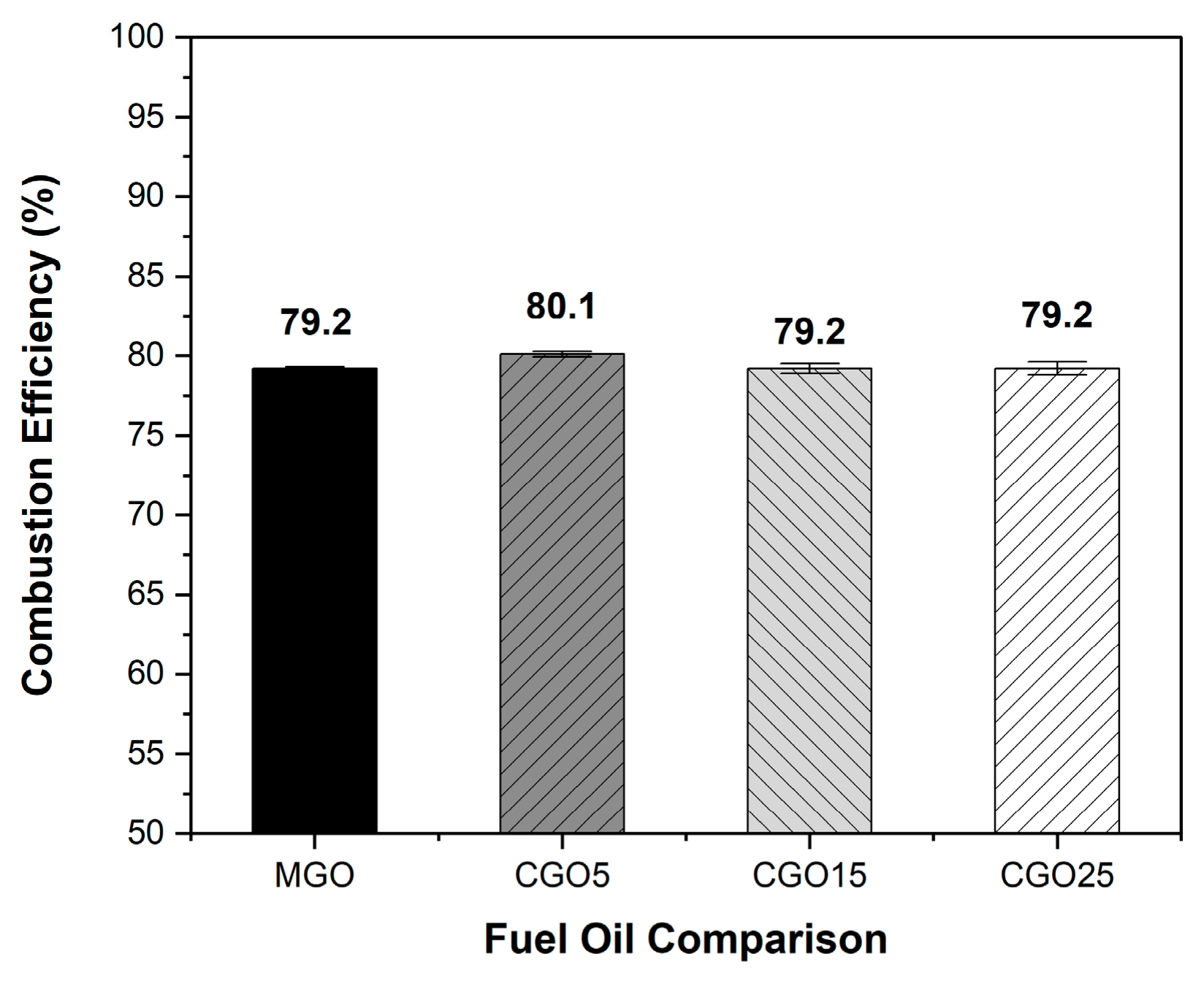
where qA, FT, and AT represent the flue gas loss rate, flue gas temperature, and ambient supply air temperature, respectively. A2 is a fuel-specific constant, with a value of 0.680 applied for MGO (classified as light oil). B1 is a dimensionless correction constant set to 0.007. The constant Kk, which accounts for corrections below the dew point of the exhaust gas temperature, was not considered. According to Equation (2), the combustion efficiency of MGO was approximately 79.2%. Although minor numerical variations were observed (ranging from 79.2% to 80.1%), these differences were found to be statistically insignificant within the margin of experimental error. This indicates that, under the present experimental conditions, the SCG content has a negligible effect on the overall combustion efficiency, as the oxygen-rich nature of CGO effectively compensates for changes in the fuel matrix. Figure 7 summarizes the combustion efficiency results.

4. Conclusions

In this study, the combustion and emission characteristics of MGO–CGO blends were experimentally investigated using a custom-fabricated 30 L-class small-scale marine boiler system. The main conclusions are as follows:
  • Exhaust emission characteristics: As the SCG blending ratio increased, the CO2 emissions exhibited a slight upward trend, increasing by approximately 0.54% from 8.0% for MGO to 8.54% for CGO25. In contrast, the O2 concentration decreased from 10% to 9.33%. Additionally, the raw measured CO emissions decreased slightly from 1093.4 ppm to 1018.1 ppm. Although the direct CO2 concentration in the flue gas increased slightly owing to the fuel properties, CGO remains fundamentally a carbon-neutral fuel derived from biomass. From a life-cycle perspective, the CO2 emitted during combustion is offset by the carbon sequestered during the growth of coffee plants. Therefore, based on life cycle assumptions where the biomass component is considered carbon-neutral, incorporating a 25% blend of CGO is assessed to potentially contribute to a reduction in net lifecycle CO2 emissions by offsetting fossil carbon, even though a marginal increase in tailpipe emissions was observed under the present experimental conditions.
  • NOx emission characteristics: The raw measured NOx emissions increased 3.5-fold from 15.6 ppm for MGO to 54.6 ppm for CGO25, which is consistent with the findings of previous studies. This increase is primarily attributed to the fuel-bound nitrogen inherent in CGO, which acts as a direct precursor for fuel NOx formation. Furthermore, a strong correlation was observed between the fuel-bound oxygen content and elevated NOx levels; the increased oxygen concentration accelerates and intensifies combustion, leading to higher local flame temperatures that facilitate the formation of thermal NOx. However, it is important to note that if these NOx levels exceed the stringent international maritime regulations (e.g., IMO Tier III), the adoption of SCG-derived fuels may face practical challenges similar to those encountered in hydrogen blending. Therefore, to ensure the commercial viability of high-ratio CGO blends, further integration with post-treatment technologies such as Selective Catalytic Reduction (SCR) or the optimization of Exhaust Gas Recirculation (EGR) systems will be essential to mitigate these emissions effectively.
  • Exhaust gas temperature: The exhaust gas temperature increased by approximately 6.5%, from 290.2 °C for MGO to 309.2 °C for CGO25. Although the blended fuel has a lower heating value than pure MGO, this temperature increase is attributed to the ‘after-burning’ phenomenon. Owing to the complex molecular structure of the biofuel, combustion is not fully completed within the main chamber but extends toward the funnel. This delayed combustion process reduces the residence time for effective heat exchange within the boiler, causing the flue gases to be discharged at a higher temperature before their thermal energy is fully absorbed.
  • Combustion efficiency: The combustion efficiency of MGO was approximately 79.2%, with only minor changes (within the decimal places) observed when increasing the SCG blending ratios. This stability suggests that the oxygen-rich nature of CGO facilitates efficient combustion, compensating for variations in fuel composition and heating value. Under the present experimental conditions, SCG blending did not significantly affect the overall combustion efficiency.
  • Fuel Stability and Separation: As observed in the fuel property analysis, the SCG–MGO blends exhibited rapid phase separation due to differences in density and polarity between the two components. While this instability poses a challenge for long-term storage, the experimental tests were successfully conducted by utilizing the continuous circulation and mechanical mixing modules of the 30 L-class boiler system to ensure a uniform fuel supply during combustion. Nevertheless, as noted previously in Section 2.3, the introduction of chemical stabilization techniques such as specialized emulsifiers or surfactants will be indispensable for the commercial and practical implementation of these fuels. This study provides the essential baseline data required to evaluate the effectiveness of such additives in subsequent research.
In conclusion, this study demonstrates that oil derived from spent coffee grounds shows promise as a sustainable alternative marine fuel, provided that a sufficient and stable supply chain can be established. However, for practical and commercial applications, two critical challenges must be overcome: the rapid phase separation that affects fuel stability and the significant increase in NOx emissions during combustion. While this study did not provide a direct quantitative comparison with other biofuels such as FAME or HVO, the authors recognize this as a critical area for further investigation. Therefore, future research should prioritize the development of chemical additives to ensure long-term storage stability, as well as comparative performance evaluations with diverse biofuel blends. Furthermore, the integration of advanced emission reduction technologies will be essential to ensure the environmental and commercial viability of CGO in the maritime sector.

Author Contributions

Conceptualization, T.-h.L. and Y.-h.R.; methodology, T.-h.L. and Y.-h.R.; software, T.-h.L.; validation, J.-h.C.; formal analysis, T.-h.L. and Y.-h.R.; investigation, T.-h.L.; resources, Y.-h.R. and J.-h.C.; data curation, J.-h.C.; writing—original draft preparation, T.-h.L. and Y.-h.R.; writing—review and editing, J.-h.C. and C.J.; visualization, T.-h.L.; supervision, Y.-h.R.; project administration, Y.-h.R. and J.-h.C.; funding acquisition, Y.-h.R. and J.-h.C. All authors have read and agreed to the published version of the manuscript.

Funding

This research was a part of the project titled ‘Training Blue Tech Leaders for Eco-Friendly Ships (No. RS-2025-02220459)’, funded by the Ministry of Oceans and Fisheries, Republic of Korea. This work was supported by the Global Joint Research Program funded by Pukyong National University (202411990001).

Data Availability Statement

The original contributions presented in this study are included in the article. Further inquiries should be directed to the corresponding author.

Conflicts of Interest

The authors declare no conflicts of interest.

References

  1. Gritsenko, D. Regulating GHG emissions from shipping: Local, global or polycentric approach? Mar. Policy 2017, 84, 130–133. [Google Scholar] [CrossRef]
  2. Jesus, M.C. Biofuel technologies and global decarbonization by 2050: The role of technological learning, spillovers effects and feedstock constraints. Energy Strategy Rev. 2025, 62, 101932. [Google Scholar]
  3. Li, Q.; Lam, J.S.L. Biofuel consumption and emission prediction for harbour craft using Machine learning methods. Transp. Res. Part D Transp. Environ. 2025, 149, 105005. [Google Scholar] [CrossRef]
  4. Rimkus, A. Effect of hydrogen addition on the energy and environmental performance of a compression ignition dual-biofuel engine. Int. J. Hydrogen Energy 2026, 217, 153709. [Google Scholar] [CrossRef]
  5. Yeassin, R.; Adnan, M.M.R.; Chowdhury, M.M.A.; Mia, A.; Enan, M.A.J.C.; Fuad, M.H. A comprehensive review of biomass and biofuels and their progress using digital technologies. Energy Convers. Manag. X 2025, 28, 101254. [Google Scholar] [CrossRef]
  6. Kapusta, K.; Sliwinska, A.; Krawczyk, P.; Wodolazski, A.; Strzoda, E.; Xu, D.; Duan, P.; Hao, B.; Wang, Y.; Leng, L.; et al. Techno-economic and life cycle assessment of liquid biofuels obtained from municipal sewage sludge by hydrothermal liquefaction (HTL). Energy 2026, 342, 139543. [Google Scholar] [CrossRef]
  7. Leite, A.C.P.; Pimentel, L.M.; Monteiro, L.A. Biofuel adoption in the transport sector: The impact of renewable energy policies. Sustain. Energy Technol. Assess. 2025, 81, 104419. [Google Scholar]
  8. Tan, F.; Lu, W.; Cao, B.; Wang, S.; Mu, M.; Zheng, A. Environmental impact and water footprint of biofuel production from macro-algae biomass based on life cycle assessment. Renew. Energy 2025, 254, 123612. [Google Scholar] [CrossRef]
  9. Ahmed, S.; Li, T.; Zhou, X.; Yi, P.; Chen, R. Quantifying the environmental footprints of biofuels for sustainable passenger ship operations. Renew. Sustain. Energy Rev. 2025, 207, 114919. [Google Scholar] [CrossRef]
  10. Sagin, S.; Sagin, S.; Fomin, O.; Gaichenia, O.; Zablotskyi, Y.; Pistek, V.; Kucera, P. Use of biofuels in marine diesel engines for sustainable and safe maritime transport. Renew. Energy 2024, 224, 120221. [Google Scholar] [CrossRef]
  11. Lee, T.; Kim, J.; Ryu, Y. Exhaust Emission Characteristics of MGO-Biodiesel Mixed Oil. J. Korea Soc. Mech. Technol. 2024, 26, 660–667. [Google Scholar]
  12. Kim, J.W.; Lee, T.H. A Comparative Study of Combustion Characteristics for the Evaluation of the Feasibility of Crude Bioethanol as a Substitute for Marine Fuel Oil. J. Mar. Sci. Eng. 2023, 11, 433. [Google Scholar] [CrossRef]
  13. Yeassin, R.; Chowdhury, P.; Das, P.; Agyekum, E.B.; Farrok, O.; Kumar, P. Navigating towards efuel: A scientometric insight into the application of membrane reactors. Energy Convers. Manag. X 2026, 30, 101545. [Google Scholar] [CrossRef]
  14. Kumar, A.; Tiwary, A.K.; Cearnaigh, D.U. Comparative analysis of Benchmark and Aeon Blue Technologies for sustainable eFuel production: Integrating Direct Air Capture and Green Hydrogen approaches. Energy Convers. Manag. 2024, 308, 118384. [Google Scholar] [CrossRef]
  15. Kumar, A.; Tiwari, A.; Uacearnaigh, D.; Milani, D. A comparative economic assessment of freshwater versus chloralkali electrolysis for eMethanol production. Int. J. Hydrogen Energy 2025, 171, 151241. [Google Scholar] [CrossRef]
  16. Mehrara, M.; Mesfun, S.; Ahlstrom, J.; Toffolo, A.; Wetterlund, E. Electrification-enabled production of Fischer-Tropsch liquids–A process and economic perspective. Appl. Energy 2025, 393, 126083. [Google Scholar] [CrossRef]
  17. Beckmann, J.; Klockner, K.; Letmathe, P. The role of power-to-X and domestic eFuel production for energy transition and energy independence in Europe. J. Clean. Prod. 2025, 492, 144807. [Google Scholar]
  18. Mohammadpour, J.; Salehi, F. A review of alternative liquid fuels in marine engines. Appl. Energy Combust. Sci. 2025, 24, 100394. [Google Scholar] [CrossRef]
  19. Ryu, Y.; Dan, T. Investigation on the Effects of Dimethyl Ether Blending to Bunker Oil for Marine Diesel Engine Use. In Proceedings of the SAE/KSAE 2013 International Powertrains, Fuels & Lubricants Meeting, Seoul, Republic of Korea, 21–23 October 2013. [Google Scholar]
  20. Jeong, B.; Jang, H.; Zhou, P.; Lee, J.U. Investigation on marine LNG propulsion systems for LNG carriers through an enhanced hybrid decision making model. J. Clean. Prod. 2019, 230, 98–115. [Google Scholar] [CrossRef]
  21. Yeo, S.; Jeong, B.; Lee, W.J. Improved formal safety assessment methodology using fuzzy TOPSIS for LPG-fueled marine engine system. Ocean Eng. 2023, 269, 113536. [Google Scholar] [CrossRef]
  22. Bulut, M. Control theory-based fuzzy Fine-Kinney risk assessment for boiler automation system from the maritime autonomous surface ships (MASS) perspective. Ocean. Eng. 2023, 286, 115599. [Google Scholar]
  23. Uyanık, T.; Arslanoğlu, Y. Operational risk assessment of marine boiler plant for on-board systems safety. J. Clean. Prod. 2021, 312, 127743. [Google Scholar]
  24. Çelik, A.L.; Akyuz, E.; Arslanoğlu, Y. Improved Z-number and fault tree analysis to predict the risk of air pollution due to ship boiler operation. Environ. Sci. Pollut. Res. 2022, 29, 51834–51846. [Google Scholar]
  25. International Coffee Organization (ICO). Available online: https://ico.org/ (accessed on 3 March 2026).
  26. Kim, S.B.; Ha, J.W. A Study on the Characteristics of Coffee Ground(CG)-RDF by Using Different Drying Method. J. Korea Acad. Ind. Coop. Soc. 2019, 20, 451–457. [Google Scholar]
  27. Hyundai Research Institute (HRI). Five Major Trends and Outlook of the Coffee Industry; VIP Report 19-24; Hyundai Research Institute: Seoul, Republic of Korea, 2019. [Google Scholar]
  28. Kim, Y.I. A Study on the Design of Pelletizer for Utilizing Coffee Waste. J. Korea Soc. Mech. Technol. 2020, 22, 708–785. [Google Scholar]
  29. Al-Hamamre, Z.; Foerster, S.; Hartmann, F.; Kröger, M.; Kaltschmitt, M. Oil Extracted from Spent Coffee Grounds as a Renewable Source for Fatty Acid Methyl Ester Manufacturing. Fuel 2012, 96, 70–76. [Google Scholar] [CrossRef]
  30. National Institute of Environmental Research (NIER). Report of Study on Integrated Management of Organic Waste; NIER-RP 2012-264; NIER: Incheon, Republic of Korea, 2012.
  31. Park, J.H.; Lee, S.H.; Kang, K.Y.; Lee, J.W. A Study on Combustion and Emission Characteristics of Diesel Generator Fuelled with Coffee Ground Pyrolysis Oil. Trans. Korean Hydrog. New Energy Soc. 2019, 30, 567–577. [Google Scholar]
  32. Kondamudi, N.; Mohapatra, S.K.; Misra, M. Spent Coffee Grounds as a Versatile Source of Green Energy. J. Agric. Food Chem. 2008, 56, 11757–11760. [Google Scholar] [CrossRef]
  33. Duman, G.; Okutucu, C.; Ucar, S.; Stahl, R.; Yanik, J. The slow and fast pyrolysis of spent coffee grounds. J. Anal. Appl. Pyrol. 2011, 91, 215–224. [Google Scholar]
  34. Yim, J.B.; Yoon, C.S.; Lee, S.H.; Kim, G.I. A Feasibility Study of Using Coffee Ground Oil-Butanol Blended Fuel in a Diesel Tractor. Trans. Korean Soc. Automot. Eng. 2019, 27, 77–84. [Google Scholar] [CrossRef]
  35. Park, J.H.; Lee, S.H.; Lee, J.I. Study on Application of Compression Ignition Engine Fuelled with Coffee Ground Pyrolysis Oil as Alternative Diesel Fuel. Trans. Korean Soc. Automot. Eng. 2020, 28, 291–299. [Google Scholar] [CrossRef]
  36. Lee, T.H.; Ryu, Y.H. A Study on Mixing Properties of Coffee Ground-Fuel for Improvement of Air Pollution from Ships. J. Korean Soc. Mech. Technol. 2021, 23, 181–186. [Google Scholar]
  37. Lee, T.H.; Ryu, Y.H. Viscosity Characteristic Analysis of Coffee Ground Oil for Marine Fuel Applications. J. Korean Soc. Mech. Technol. 2021, 23, 892–897. [Google Scholar]
  38. Lee, T.H.; Kang, I.S. Small Combustion Chamber for Marine Fuel Oil and Analysis of Exhaust Gas Characteristics of Marine Gas Oil. J. Mar. Sci. Eng. 2023, 11, 609. [Google Scholar] [CrossRef]
  39. Lee, T.H.; Kang, I.S. Development of 30 Liter Small Boiler for Testing Marine Fuel Oil. J. Korean Soc. Mech. Aviat. Technol. 2023, 25, 223–228. [Google Scholar]
  40. Kim, J.W.; Park, J.U.; Kang, I.S.; Lee, T.H. Characteristics of Exhaust Emissions from MGO–Bioethanol Fuel Blend Using a Combustion Chamber. Adv. Mech. Eng. 2024, 16, 1–14. [Google Scholar] [CrossRef]
  41. Pyeong-Hwa Machinery Co., Ltd. Products of Pyeonghwa Super Steam Boiler; Pyeong-Hwa Machinery Co., Ltd.: Seoul, Republic of Korea, 2019; pp. 1–11. [Google Scholar]
  42. Yim, J.B.; Lee, S.H.; Kim, G.B.; Yoon, C.S. A Study on the Driving and Emission Characteristics of Diesel Tractor Operated with Coffee Ground Oil-Butanol Blended Fuel. In Proceedings of the KSAE Spring Conference, Jeju, Republic of Korea, 7–9 June 2018; p. 219. [Google Scholar]
  43. Choi, Y.S.; Choi, S.K.; Kim, S.J.; Jeong, Y.W.; Soysa, R.; Rahman, T. Fast Pyrolysis of Coffee Ground in a Tilted-Slide Reactor and Characteristics of Biocrude Oil. Environ. Prog. Sustain. Energy 2017, 36, 655–661. [Google Scholar] [CrossRef]
  44. Kim, J.W. The Effects of MGO-Bioethanol Blended Oil Using Standard Combustion Chamber on Exhaust Emissions Characteristics. Ph.D. Thesis, Pukyong National University, Busan, Republic of Korea, 2024. [Google Scholar]
  45. TESTO. Flue Gas Analyzer Instruction Manual on Testo-340; Testo Co., Ltd.: West Chester, PA, USA, 2016. [Google Scholar]
  46. National Institute of Environmental Research (NIER). Air Pollution Process Test Standard No. 2017-51; NIER: Incheon, Republic of Korea, 2018.
Figure 1. Current status of annual coffee consumption in major countries.
Jmse 14 00879 g001
Figure 2. Laboratory-scale, 30 L marine boiler experimental apparatus.
Jmse 14 00879 g002
Figure 4. Experimental setup for comparative combustion analysis of fuel samples.
Jmse 14 00879 g004
Figure 5. Comparison of exhaust emission characteristics between MGO and the CGO25 blend: contents of (a) oxygen, (b) carbon dioxide, (c) carbon monoxide, and (d) nitrogen oxides.
Jmse 14 00879 g005
Figure 6. Comparison of exhaust gas temperatures.
Jmse 14 00879 g006
Figure 7. Comparison of combustion efficiencies.
Jmse 14 00879 g007
Table 1. Detailed specifications of the boiler experimental apparatus.
DivisionSpecificationUnit
Water volume30.8L
Evaporative capacity50kg/h
Fuel consumption3.2kg/h
Heat value133,768kcal/h
Heating area1.7m3
Max. pressure3.5kg/cm3
Thermal efficiency86%
Pipe diameterSteam: 15
Water: 15
Funnel: 100
Fuel inlet: 8
mm
Dry weight150kg
Table 2. Comparison of fuel characteristics between MGO and CGO.
ListMarine Gas Oil (MGO)Coffee Ground Oil (CGO)Unit
LHV43.033.9MJ/kg
Water0.023.0wt%
Carbon84.8154.6wt%
Hydrogen14.39.6wt%
Oxygen0.134.5wt%
Others0.791.6wt%
Density840.81005.0kg/m3
Viscosity3.09.2mm2/s
Table 3. Measurement Ranges and Standard Test Methods for Each Emission Component.
ParameterRangeResolutionStandard Method
O20–25%0.01%ES 01314.1b
CO0–10,000 ppm1.00 ppmES 01304.2c
CO20~CO2max %0.01%Same O2
NOx0–4000 ppm1.00 ppmES 01308.1b
Temperature−40–1200 °C0.10 °C-
Disclaimer/Publisher’s Note: The statements, opinions and data contained in all publications are solely those of the individual author(s) and contributor(s) and not of MDPI and/or the editor(s). MDPI and/or the editor(s) disclaim responsibility for any injury to people or property resulting from any ideas, methods, instructions or products referred to in the content.