Four Decades of Common Vole (Microtus arvalis Pallas 1778) Population Outbreaks in NW Spain: Transition from Environmentally Harmful Practices to Sustainable Integrated Pest Management (IPM)

 , , , , , and
Abstract
1. Introduction: Rodent Pests Around the World and Current Trends in Their Control
2. The Origin of the Problem: Recent Arrival of Vole Pests to Castilla y León, NW Spain (CyL Hereafter)
3. Common Vole Population Outbreaks in CyL and Other Areas
4. The 2007 Outbreak: Environmental Impact, Tularemia Epidemics, and the Origin of a Change
5. The Biological Control Program
6. The End of ARs and Fire as Tools to Control Vole Pests in CyL
7. The Relevance of Habitat for Management and Crop Damages Caused by Vole Outbreaks
8. Field Margins and Common Weasels (Mustela nivalis Linn. 1766) as Key Targets for Management
- −
- The total area covered by margins in a given study plot 12.5 ha wide was positively related to vole invasion of crop fields, but the area covered by riverside margins was associated with lower vole invasion [38]. Most field margins in our study areas were narrow strips (usually <1 m width, often <50 cm width) with sparse vegetation that are commonly colonized by voles, but rarely used by weasels, which select highly vegetated margins [145]. In contrast, riverside margins were wide strips (often 2–6 m) with full cover of thick vegetation, excellent habitat for weasels. Thus, the best hypothesis to explain contrasting effects of quality of field margins on vole abundance is the differential use by weasels and their regulatory effect on vole numbers [38].
- −
- At the peak phase of the cycles, vole abundance was higher in margins with high cover and short vegetation, while margins with low cover but taller vegetation, usually associated with higher stability in margins, were related to lower peak abundance [71]. The most parsimonious hypothesis to explain this result is again differential use of margins by weasels depending on vegetation and their role regulating vole abundance in margins.
- −
- In a study specifically designed to test the degree of invasion of cereal fields depending on the traits of field margins during a vole outbreak year, again wide and well-vegetated margins produced lower vole invasion [155].
- −
- In cyclic vole populations, individuals of large size, particularly males, appear in vole populations during the final growth and peak phases, what has been termed the “Chitty effect”. The Chitty effect was found in vole cycles of CyL; however, for the first time, we found an effect of habitat on the probability of appearance of these large-sized individuals: alfalfa and narrow field margins had the highest abundance of large voles, while large-sized voles were rarely found in riverside margins [54]. Once again, the habitat more used by weasels had reduced populations of large-sized voles, while habitats hardly used by weasels had high abundance of them.
9. Concluding Remarks and Suggestions for Future Research and Adaptive Management
Supplementary Materials
Author Contributions
Funding
Data Availability Statement
Acknowledgments
Conflicts of Interest
Abbreviations
| IPM | Integrated Pest Management |
| JCYL | Junta de Castilla y León (Autonomous Government of Castilla y León) |
| AR | Anticoagulant Rodenticide |
| NGO | Non-Governmental Organization |
| PPP | Plant Protection Products |
| EU | European Union |
| EBPM | Ecologically Based Pest Management |
| CyL | Castilla y León |
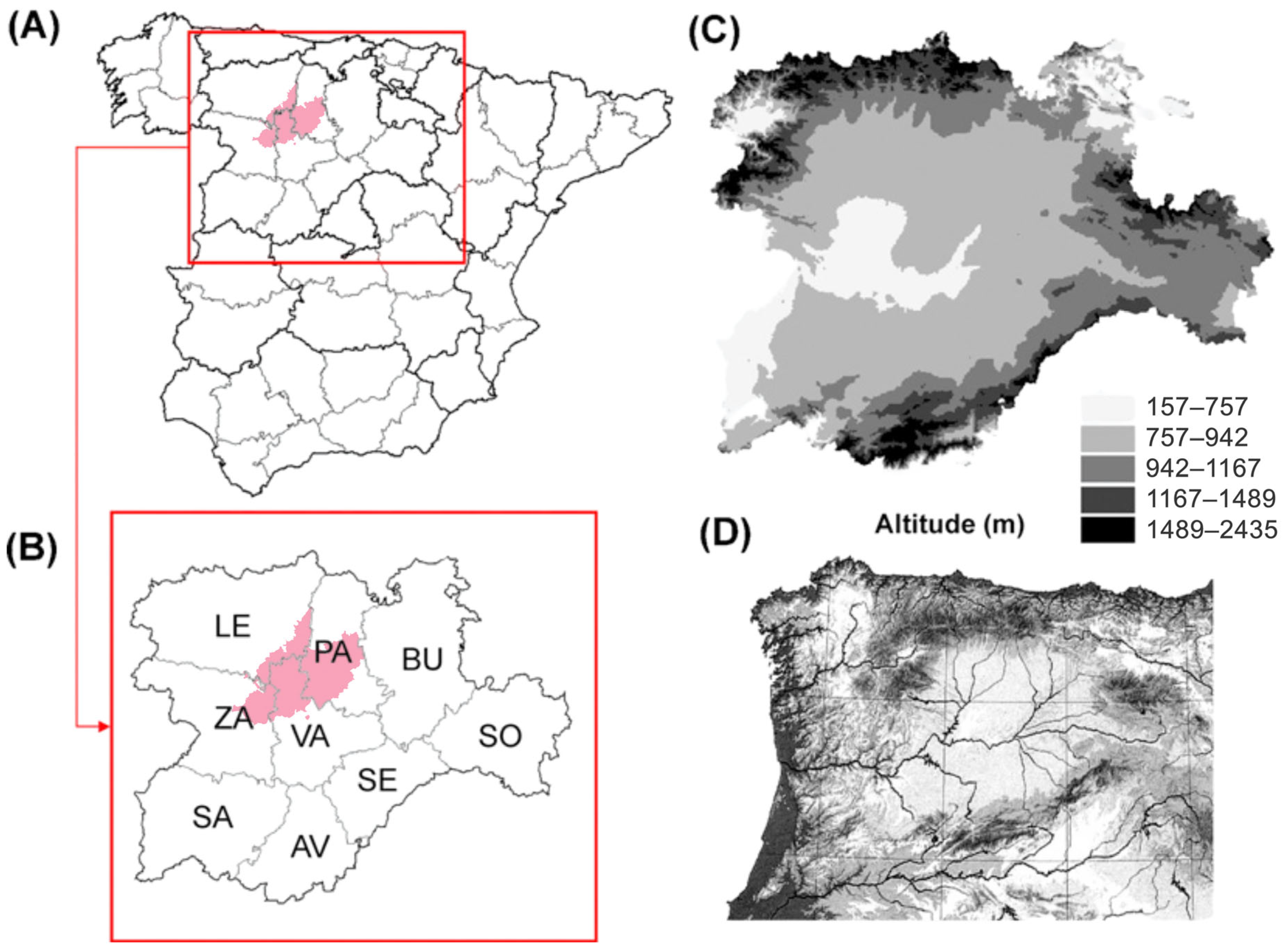
| TC | Tierra de Campos (Figure 1) |
| ENSO | El Niño southern Oscillation |
| NAO | North Atlantic Oscillation |
| SGAR | Second Generation Anticoagulant Rodenticide |
| BC | Boada-Capillas (study area in central TC) |
| SM | San Martín de Valderaduey (study area in the western edge of TC) |
| VC | Villalar de los Comuneros (study area in Duero valley out of TC) |
| ITACYL | Instituto Tecnológico Agrario de Castilla y León (Institution in charge of vole control in CyL) |
References
- Stenseth, N.C.; Leirs, H.; Skonhoft, A.; Davis, S.A.; Pech, R.P.; Andreassen, H.P.; Singleton, G.R.; Lima, M.; Machangu, R.S.; Makundi, R.H.; et al. Mice, rats, and people: The bio-economics of agricultural rodent pests. Front. Ecol. Environ. 2003, 1, 367–375. [Google Scholar] [CrossRef]
- Buckle, A.; Smith, R. Rodent Pests and Their Control, 2nd ed.; CABI International: Wallingford, UK, 2015. [Google Scholar]
- Aulicky, R. Rodents in crop production agricultural systems—Special Issue. Agronomy 2022, 12, 2813. [Google Scholar] [CrossRef]
- Witmer, G. Rodents in Agriculture: A Broad Perspective. Agronomy 2022, 12, 1458. [Google Scholar] [CrossRef]
- Jacob, J.; Tkadlec, E. Rodent outbreaks in Europe: Dynamics and damage. In Rodent Outbreaks: Ecology and Impacts; Singleton, G., Belmain, S., Brown, P.R., Hardy, B., Eds.; International Rice Research Institute: Los Baños, Philippine, 2010; pp. 207–224. [Google Scholar]
- Häberle, S.; Schäfer, M.; Soteras, R.; Martínez-Grau, H.; Hajdas, I.; Jacomet, S.; Röder, B.; Schibler, J.; van Willigen, S.; Antolín, F. Small animals, big impact? Early farmers and pre- and post-harvest pests from the Middle Neolithic site of Les Bagnoles in the South-East of France (L’Isle-sur-la-Sorgue, Vaucluse, Provence-Alpes-Côte-d’Azur). Animals 2022, 12, 1511. [Google Scholar] [CrossRef]
- Romaniuk, A.A.; Shepherd, A.N.; Clarke, D.V.; Sheridan, A.J.; Fraser, S.; Bartosiewicz, L.; Herman, J.S. Rodents: Food or pests in Neolithic Orkney. R. Soc. Open Sci. 2016, 3, 3160514. [Google Scholar] [CrossRef] [PubMed]
- Dahmana, H.; Granjon, L.; Diagne, C.; Davoust, B.; Fenollar, F.; Mediannikov, O. Rodents as hosts of pathogens and related zoonotic disease risk. Pathogens 2020, 9, 202. [Google Scholar] [CrossRef] [PubMed]
- Friant, S.; Mistrick, J.; Luis, A.D.; Harden, C.; Simons, D.; Fichet-Calvet, E.; Gibb, R.; Grube, N.; Henttonen, H.; Imirizian, N.; et al. Reducing the threats of rodent-borne zoonoses requires an understanding and leveraging of three key pillars: Disease ecology, synanthropy, and rodentation. Lancet Planet. Health 2025, 9, 101300. [Google Scholar] [CrossRef] [PubMed]
- Meerburg, B.G.; Singleton, G.R.; Kijlstra, A. Rodent-borne diseases and their risks for public health. Crit. Rev. Microbiol. 2009, 35, 221–270. [Google Scholar] [CrossRef]
- Alves Duarte Da Silva, M. A global war against wild rodents: Sanitary tensions, anti-rodent measures, and the spectre of sylvatic plague (1927–1950s). In Animals and Epidemics: Interspecies Entanglements in Historical Perspective; Hüntelmann, A., Jaser, C., Roscher, M., Weber, N., Eds.; Bohlau Verlag: Köln/Berlin, Germany, 2023; pp. 181–196. [Google Scholar]
- Flint, M.L.; van den Bosch, R. Introduction to Integrated Pest Management; Springer: Boston, MA, USA, 1981. [Google Scholar]
- Van der Brink, N.W.; Elliott, J.E.; Shore, R.F.; Rattner, B.A. (Eds.) Anticoagulant Rodenticides and Wildlife; Springer: Berlin/Heidelberg, Germany, 2018. [Google Scholar]
- Aleksandrov, A.P.; Tucovic, D.; Kulas, J.; Popovic, D.; Kataranovski, D.; Kataranovski, M.; Mirkov, I. Toxicology of chemical biocides: Anticoagulant rodenticides-Beyond hemostasis disturbance. Comp. Biochem. Physiol. C 2024, 277, 109841. [Google Scholar] [CrossRef]
- Mendenhall, V.M.; Pank, L.F. Secondary poisoning of owls by anticoagulant rodenticides. Wildl. Soc. Bull. 1980, 8, 311–315. [Google Scholar]
- Alabau, E.; Mentaberre, G.; Camarero, P.R.; Castillo-Contreras, R.; Sánchez-Barbudo, I.S.; Conejero, C.; Fernández-Bocharán, M.S.; López-Olvera, J.R.; Mateo, R. Accumulation of diastereomers of anticoagulant rodenticides in wild boar from suburban areas: Implications for human consumers. Sci. Total Environ. 2020, 738, 139828. [Google Scholar] [CrossRef]
- Cox, P.; Smith, R. Rodenticide ecotoxicology: Pre-lethal effects of anticoagulants on rat behaviour. In Proceedings of the 14th Vertebrate Pest Conference, Sacramento, CA, USA, 6–8 March 1990. [Google Scholar]
- Sage, M.; Courdassier, M.; Defaut, R.; Gimbert, F.; Berny, P.; Giraudoux, P. Kinetics of bromadiolone in rodent populations and implications for predators after field control of the water vole, Arvicola terrestris. Sci. Total Environ. 2008, 407, 211–222. [Google Scholar] [CrossRef]
- Saggese, M.D.; Ojeda, V.; Ortiz, G.; Casalins, L.; González, F.; Ale, C.; Mateo, R. Anticoagulant rodenticides: An ignored threat to birds of prey in Argentina and other South American countries. El Hornero 2024, 39, 7–33. [Google Scholar] [CrossRef]
- Keating, M.P.; Saldo, E.A.; Frair, J.L.; Cunningham, S.A.; Mateo, R.; Jachowski, D.S. Global review of anticoagulant rodenticide exposure in wild mammalian carnivores. Anim. Conserv. 2024, 27, 585–599. [Google Scholar] [CrossRef]
- Fernández de Simón, J.; Díaz-Ruiz, F.; Jareño, D.; Domínguez, J.C.; Lima-Barbero, J.F.; de Diego, N.; Santamaría, A.E.; Herrero-Villar, M.; Camarero, P.R.; Olea, P.P.; et al. Weasel exposure to the anticoagulant rodenticide bromadiolone in agrarian landscapes of southwestern Europe. Sci. Total Environ. 2022, 838, 155914. [Google Scholar] [CrossRef]
- Jacob, J.; Manson, P.; Barfknecht, R.; Fredricks, T. Common vole (Microtus arvalis) ecology and management: Implications for risk assessment of plant protection products. Pest Manag. Sci. 2014, 70, 869–878. [Google Scholar] [CrossRef]
- Singleton, C.R.; Hinds, L.A.; Leirs, H.; Zhang, Z. (Eds.) Ecologically-Based Management of Rodent Pests; ACIAR Monograph No. 59; Australian Centre for International Agricultural Research: Canberra, ACT, Australia, 1999.
- Hohenberger, J.; Friesen, A.; Wieck, S.; Kümmerer, K. In search of the Holy Grail of rodent control: Step-by-step implementation of safe and sustainable-by-design principles on the example of rodenticides. Sust. Chem. Pharm. 2022, 25, 100602. [Google Scholar] [CrossRef]
- Zhou, W.; Arcot, Y.; Medina, R.F.; Bernal, J.; Cisneros-Zevallos, L.; Akbulut, M.E.S. Integrated Pest Management: An update on the sustainability approach to crop protection. ACS Omega 2024, 9, 41130–41147. [Google Scholar] [CrossRef] [PubMed]
- Singleton, G.R. Integrated management of rodents: A Southeast Asian and Australian perspective. Belgian J. Zool. 1997, 127, 157–169. [Google Scholar]
- Singleton, G.R.; Brown, P.R. Management of mouse plagues in Australia: Integration of population ecology, bio-control and best farm practice. In Advances in Vertebrate Pest Management; Cowan, D.P., Feare, C.J., Eds.; Filander-Verlag: Fürth, Germany, 1999; pp. 189–203. [Google Scholar]
- Wilson, D.E.; Mittermeier, R.A.; Lacher, T.E., Jr. Cricetidae. In Handbook of the Mammals of the World; Rodents II; Lynx Edicions: Barcelona, Spain, 2017; Volume 7, pp. 351–352. [Google Scholar]
- García, J.T.; Domínguez-Villaseñor, J.; Alda, F.; Calero-Riestra, M.; Olea, P.P.; Fargallo, J.A.; Martínez-Padilla, J.; Herranz, J.; Oñate, J.J.; Santamaría, A.; et al. A complex scenario of glacial survival in Mediterranean and continental refugia of a temperate continental vole species (Microtus arvalis) in Europe. J. Zool. Syst. Evol. Res. 2020, 58, 459–474. [Google Scholar] [CrossRef]
- Blondel, J.; Aronson, J.; Bodiou, J.-Y.; Boeuf, G. The Mediterranean Region. Biological Diversity in Space and Time, 2nd ed.; Oxford University Press: Oxford, UK, 2010. [Google Scholar]
- Rey, J.M. Las características biométricas y morfológicas del topillo campesino, Microtus arvalis asturianus, del Sistema Ibérico. Boletín Real Soc. Española Hist. Nat. Biol. 1973, 71, 283–297. [Google Scholar]
- Domínguez, J.C.; Alda, F.; Calero-Riestra, M.; Olea, P.P.; Martínez-Padilla, J.; Herranz, J.; Oñate, J.J.; Santamaría, A.; Viñuela, J.; García, J.T. Genetic footprints of a rapid and large-scale range expansion: The case of cyclic common vole in Spain. Heredity 2023, 130, 381–393. [Google Scholar] [CrossRef]
- Delibes, M.; Brunett-Lecomte, P. Presencia del topillo campesino ibérico Microtus arvalis asturianus Millar 1908, en la meseta del Duero. Doñana Acta Vertebr. 1980, 15, 169–171. [Google Scholar]
- Luque-Larena, J.J.; Mougeot, F.; Viñuela, J.; Jareño, D.; Arroyo, L.; Lambin, X.; Arroyo, B. Recent large-scale range expansion and outbreaks of the common vole (Microtus arvalis) in NW Spain. Basic Appl. Ecol. 2013, 14, 432–441. [Google Scholar] [CrossRef]
- Delibes, J. Plagas de topillos en España. Quercus 1989, 35, 17–20. [Google Scholar]
- González-Esteban, J.; Villate, I. Microtus arvalis Pallas, 1778. In Atlas y Libro Rojo de los Mamíferos Terrestres de España; Palomo, L.J., Gisbert, J., Blanco, J.C., Eds.; Dirección General Para la Biodiversidad-SECEM-SECEMU: Madrid, Spain, 2007; pp. 426–428. [Google Scholar]
- Jareño, D.; Viñuela, J.; Luque-Larena, J.J.; Arroyo, L.; Arroyo, B.; Mougeot, F. Factors associated with the colonization of agricultural areas by common voles Microtus arvalis in NW Spain. Biol. Invasions 2015, 17, 2315–2327. [Google Scholar] [CrossRef]
- Santamaría, A.E.; Olea, P.P.; Viñuela, J.; García, J.T. Spatial and seasonal variation in occupation and abundance of common vole burrows in highly disturbed agricultural ecosystems. Eur. J. Wildl. Res. 2019, 65, 52. [Google Scholar] [CrossRef]
- Delattre, P.; Giraudoux, P.; Baudry, J.; Musard, P.; Toussaint, M.; Truchetet, D.; Stahl, P.; Poule, M.L.; Artois, M.; Damange, J.P. Land use patterns and types of common vole (Microtus arvalis) population kinetics. Agric. Ecosyst. Environ. 1992, 39, 153–168. [Google Scholar] [CrossRef]
- Janova, E.; Heroldova, M.; Konecny, A.; Bryja, J. Traditional and diversified crops in South Moravia (Czech Republic): Habitat preferences of common vole and mice species. Mamm. Biol. 2011, 76, 570–576. [Google Scholar] [CrossRef]
- Babinska-Werka, J. Effects of common vole on alfalfa crop. Acta Theriol. 1979, 24, 281–297. [Google Scholar] [CrossRef]
- Jareño, D.; Viñuela, J.; Luque-Larena, J.J.; Arroyo, L.; Arroyo, B.; Mougeot, F. A comparison of methods for estimating common vole (Microtus arvalis) abundance in agricultural habitats. Ecol. Indic. 2014, 36, 111–119. [Google Scholar] [CrossRef]
- Wheeler, P. Effects of sheep grazing on abundance and predators of field vole (Microtus agrestis) in upland Britain. Agric. Ecosyst. Environ. 2008, 123, 49–55. [Google Scholar] [CrossRef]
- Evans, D.; Villar, N.; Littlewood, N.; Pakeman, R.; Evans, S.; Dennis, P.; Skartveit, J.; Redpath, S. The cascading impacts of livestock grazing in upland ecosystems: A 10-year experiment. Ecosphere 2015, 6, 42. [Google Scholar] [CrossRef]
- Torre, I.; Diaz, M.; Martinez-Padilla, J.; Bonal, R.; Viñuela, J.; Fargallo, J.A. Cattle grazing, raptor abundance and small mammal communities in Mediterranean grasslands. Basic Appl. Ecol. 2007, 8, 565–575. [Google Scholar] [CrossRef]
- Araujo, M.B.; Guilhaumon, F.; Neto, D.R.; Pozo, I.; Calmaestra, R. Impactos, Vulnerabilidad y Adaptación al Cambio Climático de la Biodiversidad Española. Fauna de Vertebrados; Ministerio de Medio Ambiente y Medio Rural y Marino: Madrid, Spain, 2011.
- Rodríguez, C.; Peris, S. Los depredadores naturales previenen las plagas de topillos. Quercus 2009, 286, 25–30. [Google Scholar]
- González-Esteban, J.; Villate, I.; Gosálbez, J. Expansión del área de distribución de Microtus arvalis asturianus Miller, 1908 (Rodentia, Arvicolidae) en la Meseta Norte (España). Doñana Acta Vertebr. 1995, 22, 106–110. [Google Scholar]
- Domínguez, J.C.; Viñuela, J.; Olea, P.P.; Calero-Riestra, M.; García, J.T. Demography and environment shapes genetic variation: Spatiotemporal genetic dynamics in cyclic voles at low latitudes. Mol. Ecol. 2026; submitted. [Google Scholar]
- Dominguez, J.C.; Calero-Riestra, M.; Olea, P.P.; Malo, J.E.; Burridge, C.P.; Proft, K.; Illanas, S.; Viñuela, J.; García, J.T. Lack of detectable genetic isolation in the cyclic rodent Microtus arvalis despite large landscape fragmentation owing to transportation infrastructures. Sci. Rep. 2021, 11, 12534. [Google Scholar] [CrossRef] [PubMed]
- Lambin, X.; Bretagnolle, V.; Yoccoz, N.G. Vole population cycles in northern and southern Europe: Is there a need for different explanations for single pattern? J. Anim. Ecol. 2006, 75, 340–349. [Google Scholar] [CrossRef]
- Krebs, C.J. Population Fluctuations in Rodents; University of Chicago Press: Chicago, IL, USA, 2013; Available online: https://press.uchicago.edu/ucp/books/book/chicago/P/bo14707139.html (accessed on 25 February 2026).
- Roos, D.; Caminero, C.; Arroyo, B.; Mougeot, F.; Luque-Larena, J.J.; Lambin, X. Unintentional effects of environmentally-friendly farming practices: Arising conflicts between zero-tillage and a crop pest, the common vole (Microtus arvalis). Agric. Ecosyst. Environ. 2019, 272, 105–113. [Google Scholar] [CrossRef]
- Olea, P.P.; de Diego, N.; García, J.T.; Viñuela, J. Habitat type modulates sharp body mass oscillations in cyclic common vole populations. Sci. Rep. 2024, 14, 12013. [Google Scholar] [CrossRef] [PubMed]
- Caminero-Saldaña, C.; Correa-Cuadros, J.P.; Baños-Herrero, A.; Riquelme, C.; Pallavicini, Y.; Fernández-Villán, M.; Plaza, J.; Pérez-Sánchez, R.; Sánchez, N.; Mougeot, F.; et al. Exploring the influence of density-dependence and weather on the spatial and temporal variation in common vole (Microtus arvalis) abundance in Castilla y León, NW Spain. Pest Manag. Sci. 2024, 80, 5527–5536. [Google Scholar] [CrossRef]
- Sánchez, N.; Plaza, J.; García-Ariza, M.C.; Pérez-Sánchez, R.; Baños-Herrero, A.; Pallavicinic, Y.; Caminero-Saldaña, C. Analyzing the spatiotemporal habitat colonization dynamics of the common vole (Microtus arvalis Pallas) in Castilla y León, northwest Spain, using a hotspot-based approach. Pest Manag. Sci. 2024, 80, 5584–5596. [Google Scholar] [CrossRef] [PubMed]
- Mougeot, F.; Lambin, X.; Rodríguez-Pastor, R.; Romairone, J.; Luque-Larena, J.J. Numerical response of a mammalian specialist predator to multiple prey dynamics in Mediterranean farmlands. Ecology 2019, 100, e02776. [Google Scholar] [CrossRef]
- Andreychev, A. Population structure and dynamics of small rodents and insectivorous mammals in a region of the Middle Volga, Russia. Biharean Biol. 2021, 15, 33–38. [Google Scholar]
- Singleton, G.R.; Belmain, S.R.; Brown, P.R.; Hardy, B. (Eds.) Rodent Outbreaks: Ecology and Impacts; IRRI: Los Baños, Philippines, 2010. [Google Scholar]
- Vidal, D.; Alzaga, V.; Luque-Larena, J.J.; Mateo, R.; Arroyo, L.; Viñuela, J. Possible interaction between a rodenticide treatment and a pathogen in common vole (Microtus arvalis) during a population peak. Sci. Total Environ. 2009, 408, 267–271. [Google Scholar] [CrossRef]
- Luque-Larena, J.J.; Mougeot, F.; Arroyo, B.; Vidal, M.D.; Rodríguez-Pastor, R.; Escudero, R.; Anda, P.; Lambin, X. Irruptive mammal host populations shape tularemia epidemiology. PLoS Pathog. 2017, 13, e1006622. [Google Scholar] [CrossRef]
- Rodríguez-Pastor, R.; Escudero, R.; Vidal, D.; Mougeot, F.; Arroyo, B.; Lambin, X.; Vila-Coro, A.M.; Rodríguez-Moreno, I.; Anda, P.; Luque-Larena, J.J. Density-dependent prevalence of Francisella tularensis in fluctuating vole populations, northwestern Spain. Emerg. Infect. Dis. 2017, 23, 1377–1379. [Google Scholar] [CrossRef]
- Veiga, J.P. Interannual fluctuations of three microtine populations in mediterranean environments: The effect of the rainfall. Mammalia 1986, 50, 114–116. [Google Scholar]
- Fargallo, J.A.; Martínez-Padilla, J.; Viñuela, J.; Blanco, G.; Torre, I.; Vergara, P.; De Neve, L. Kestrel-prey dynamic in a mediterranean region: The effect of generalist predation and climatic factors. PLoS ONE 2009, 4, e4311. [Google Scholar] [CrossRef] [PubMed]
- Delattre, P.; Giraudoux, P.; Quéré, J.; Fichet, E. Effect of landscape structure on Common Vole (Microtus arvalis) distribution and abundance at several space scales. Lands. Ecol. 1996, 11, 279–288. [Google Scholar] [CrossRef]
- Delattre, P.; Sousa, B.; Fichet-Calvet, E.; Quéré, J.P.; Giraudoux, P. Vole outbreaks in a landscape context: Evidence from a six year study of Microtus arvalis. Lands. Ecol. 1999, 14, 401–412. [Google Scholar] [CrossRef]
- Jacob, J.; Imholt, C.; Caminero, C.; Couval, G.; Giraudoux, P.; Herrero-Cófreces, S.; Horváth, G.; Luque-Larena, J.J.; Tkadlec, E.; Wymenga, E. Europe-wide outbreaks of common voles in 2019. J. Pest Sci. 2020, 93, 703–709. [Google Scholar] [CrossRef]
- Olea, P.P.; Sánchez-Barbudo, I.; Viñuela, J.; Barja, I.; Mateo-Tomás, P.; Piñeiro, A.; Mateo, R.; Purroy, F.J. Lack of scientific evidence and precautionary principle in massive release of rodenticides threatens biodiversity: Old lessons need new reflections. Environ. Conserv. 2009, 36, 1–4. [Google Scholar] [CrossRef]
- Zhang, Z.B. Relationship between El Niño/South Oscillation (ENSO) and population outbreaks of some lemmings and voles in Europe. Chin. Sci. Bull. 2001, 46, 1067–1074. [Google Scholar]
- Cornulier, T.; Yoccoz, N.G.; Bretagnolle, V.; Brommer, J.E.; Butet, A.; Ecke, F.; Elston, D.A.; Framstad, E.; Henttonen, H.; Hörnfeldt, B. Europe-wide dampening of population cycles in keystone herbivores. Science 2013, 340, 63–66. [Google Scholar] [CrossRef]
- Planillo, A.; Viñuela, J.; Malo, J.E.; García, J.T.; Acebes, P.; Santamaría, A.E.; Domínguez, J.C.; Olea, P.P. Addressing phase of population cycle and spatial scale is key to understand vole abundance in crop field margins: Implications for managing a cyclic pest species. Agr. Ecosys. Environ. 2023, 345, 108306. [Google Scholar] [CrossRef]
- Moran, P. The statistical analysis of the Canadian lynx cycle. 2. Synchronization and meteorology. Aust. J. Zool. 1953, 1, 291–298. [Google Scholar] [CrossRef]
- Imholt, C.; Esther, A.; Perner, J.; Jacob, J. Identification of weather parameters related to regional population outbreak risk of common voles (Microtus arvalis) in Eastern Germany. Wildl. Res. 2011, 38, 551–559. [Google Scholar] [CrossRef]
- Jareño, J. Las Plagas de Topillo Campesino (Microtus arvalis) en Castilla y León: Efectos del Clima, los Cambios en el uso del Suelo, e Impacto Sobre el Ecosistema Global. Ph.D. Thesis, IREC-University of Castilla-La Mancha, Ciudad Real, Spain, 2014. [Google Scholar]
- Jubete, F. Tuvieron efecto los tratamientos químicos contra los topillos?: Inferencia a partir del estudio de la dieta de la lechuza común y censos de rapaces diurnas. Galemys 2011, 23, 91–98. [Google Scholar]
- Mínguez-González, O.; Gutiérrez-Martín, C.-B.; Martínez-Nistal, M.d.C.; Esquivel-García, M.d.R.; Gómez-Campillo, J.-I.; Collazos-Martínez, J.-Á.; Fernández-Calle, L.-M.; Ruiz-Sopeña, C.; Tamames-Gómez, S.; Martínez-Martínez, S.; et al. Tularemia outbreaks in Spain from 2007 to 2020 in humans and domestic and wild animals. Pathogens 2021, 10, 892. [Google Scholar] [CrossRef]
- Krebs, C.J.; Gaines, M.S.; Keller, B.L.; Myers, J.H.; Tamarin, R.H. Population cycles in small rodents. Science 1973, 179, 35–41. [Google Scholar] [CrossRef]
- Morris, D.W. Rodent population cycles: Life history adjustments to age-specific dispersal strategies and intrinsic time lags. Oecologia 1984, 64, 8–13. [Google Scholar] [CrossRef]
- Viñuela, J.; Luque-Larena, J.J.; Fargallo, J.A.; Olea, P.P.; Paz, A.; Mougeot, F. Conflictos entre la agricultura y la conservación de la biodiversidad. Las plagas de topillo en Castilla y León. In Agricultura Familiar en España 2010; Unión de Pequeños Agricultores y Ganaderos (UPA): Madrid, Spain, 2020; pp. 199–206. [Google Scholar]
- Berny, P.; Gaillet, J.R. Acute poisoning of Red Kites (Milvus milvus) in France: Data from the Sagir network. J. Wildl. Dis. 2008, 44, 417–426. [Google Scholar] [CrossRef]
- Coeurdassier, M.; Poirson, C.; Paul, J.-P.; Rieffel, D.; Michelat, D.; Reymond, D.; Legay, P.; Giraudoux, P.; Scheifler, R. The diet of migrant Red Kites Milvus milvus during a Water Vole Arvicola terrestris outbreak in eastern France and the associated risk of secondary poisoning by the rodenticide bromadiolone. IBIS 2012, 154, 136–146. [Google Scholar] [CrossRef]
- Montaz, J.; Jacquot, M.; Coeurdassier, M. Scavenging of rodent carcasses following simulated mortality due to field applications of anticoagulant rodenticide. Ecotoxicology 2014, 23, 1671–1680. [Google Scholar] [CrossRef]
- Coeurdassier, M.; Riols, R.; Decors, A.; Mionnet, A.; David, F.; Quintaine, T.; Truchetet, D.; Scheifler, R.; Giraudoux, P. Unintentional Wildlife Poisoning and Proposals for Sustainable Management of Rodents. Cons. Biol. 2014, 28, 315–321. [Google Scholar] [CrossRef]
- Mateo-Tomás, P.; Olea, P.P.; Minguez, E.; Mateo, R.; Viñuela, J. Direct evidence of poison-driven widespread population decline in a wild vertebrate. Proc. Natl. Acad. Sci. USA 2020, 117, 16418–16423. [Google Scholar] [CrossRef]
- Viñuela, J.; Martí, R.; Ruiz, A. El Milano Real en España; Monograph 6; SEO/BirdLife: Madrid, Spain, 1999. [Google Scholar]
- Mattsson, B.J.; Mateo-Tomás, P.; Aebischer, A.; Rösner, S.; Kunz, F.; Schöll, E.M.; Åkesson, S.; De Rosa, D.; Orr-Ewing, D.; de La Bodega, D.; et al. Enhancing monitoring and transboundary collaboration for conserving migratory species under global change: The priority case of the red kite. J. Environ. Manag. 2022, 317, 115345. [Google Scholar] [CrossRef] [PubMed]
- Mougeot, F.; Garcia, J.T.; Viñuela, J. Breeding biology, behaviour, diet and conservation of the red kite (Milvus milvus), with particular emphasis on Mediterranean populations. In Ecology and Conservation of European Dwelling Forest Raptors and Owls; Zuberogoitia, I., Martınez, J.E., Eds.; Diputacion Foral de Vizcaya: Bilbao, Spain, 2011; pp. 190–204. [Google Scholar]
- Sánchez-Barbudo, I.S.; Camarero, P.R.; Mateo, R. Primary and secondary poisoning by anticoagulant rodenticides of non-target animals in Spain. Sci. Total Environ. 2012, 420, 280–288. [Google Scholar] [CrossRef] [PubMed]
- Sarabia, J.; Sánchez-Barbudo, I.; Siqueira, W.; Mateo, R.; Rollán, E.; Pizarrod, M. Lesions associated with the plexus venosus subcutaneus collaris of pigeons with chlorophacinone toxicosis. Avian Dis. 2008, 52, 540–543. [Google Scholar] [CrossRef]
- Martínez-Padilla, J.; López-Idiáquez, D.; López-Perea, J.J.; Mateo, R.; Paz, A.; Viñuela, J. A negative association between bromadiolone exposure and nestling body condition in common kestrels: Management implications for vole outbreaks. Pest Manag. Sci. 2017, 73, 364–370. [Google Scholar] [CrossRef] [PubMed]
- Lemus, J.A.; Bravo, C.; Garcia Montijano, M.; Palacín, C.; Ponce, C.; Magaña, M.M.; Alonso, J.C. Side effects of rodent control on non-target species: Rodenticides increase parasite and pathogen burden in great bustards. Sci. Total Environ. 2011, 409, 4729–4734. [Google Scholar] [CrossRef]
- Allue, M.; Ruiz Sopeña, C.; Gallardo, M.T.; Mateos, L.; Vian, E.; Garcia, M.J.; Ramos, J.; Berjón, A.C.; Viña, M.C.; García, M.P.; et al. Tularaemia outbreak in Castilla y León, Spain, 2007: An update. Euro Surveill. 2008, 13, 18948. [Google Scholar] [CrossRef]
- Delibes-Mateos, M.; Smith, A.T.; Slobodchikoff, C.; Swenson, J. The paradox of keystone species persecuted as pests: A call for the conservation of abundant small mammals in their native range. Biol. Cons. 2011, 144, 1335–1346. [Google Scholar] [CrossRef]
- Ferreira, C.; Delibes-Mateos, M. Conflictive management of small mammals considered as pests: A long way to evidence-based policy making. Current Zool. 2012, 58, 353–357. [Google Scholar] [CrossRef]
- Gurr, G.; Wratten, S. (Eds.) Biological Control: Measures of Success; Kluwer: Alphen aan den Rijn, The Netherlands, 2000. [Google Scholar]
- Singleton, G.; Hinds, L.; Krebs, C.; Spratt, D. Rats, Mice and People: Rodent Biology and Management; ACIAR: Bruce, ACT, Australia, 2003.
- Korpimäki, E.; Banks, P.B.; Klemola, T. Insights from observations and large-scale field experiments on vole population cycles in northern Europe: A 40-year study of predator–prey interactions. Ecol. Evol. 2025, 15, e71419. [Google Scholar] [CrossRef]
- Labuschagne, L.; Swanepoel, L.H.; Taylor, P.J.; Belmain, S.R.; Keith, M. Are avian predators effective biological control agents for rodent pest management in agricultural systems? Biol. Control 2016, 101, 94–102. [Google Scholar] [CrossRef]
- Paz, A.; Jareño, D.; Arroyo, L.; Viñuela, J.; Arroyo, B.; Mougeot, F.; Luque-Larena, J.J.; Fargallo, J.A. Avian predators as a biological control system of common vole (Microtus arvalis) populations in north-western Spain: Experimental set-up and preliminary results. Pest Manag. Sci. 2013, 69, 444–450. [Google Scholar] [CrossRef]
- Paz Luna, A.; Bintanel, H.; Viñuela, J.; Villanúa, D. Nest-boxes for raptors as a biological control system of vole pests: High local success with moderate negative consequences for non-target species. Biol. Control 2020, 146, 104267. [Google Scholar] [CrossRef]
- Cuellar, C.; Viñuela, J. Control Biológico de la Plaga de Topillos. Manual para el Agricultor, 3rd ed.; GREFA: Majadahonda, Spain, 2023. [Google Scholar]
- Jareño, D.; Paz Luna, A.; Viñuela, J. Local Effects of Nest-Boxes for Avian Predators over Common Abundance during a Mid-Density Outbreak. Life 2023, 13, 1963. [Google Scholar] [CrossRef] [PubMed]
- Fernández Hellín, A. ¿Existen Diferencias Entre Especies de Rapaces, Lechuza Común y Cernícalo Vulgar, en el Control Biológico de Abundancia de Topillos? Enviromental Sciences Degree Project; Facultad de Ciencias Ambientales, Universidad de Castilla-La Mancha: Toledo, Spain, 2024. [Google Scholar]
- Bontzorlos, V.; Cain, S.; Leshem, Y.; Spiegel, O.; Motro, Y.; Bloch, I.; Cherkaoui, S.I.; Aviel, S.; Apostolidou, M.; Christou, A.; et al. Barn owls as a nature-based solution for pest control: A multinational initiative around the Mediterranean and other regions. Conservation 2024, 4, 627–656. [Google Scholar] [CrossRef]
- Garcia, K.; Olimpi, E.M.; Karp, D.S.; Gonthier, D.J. The good, the bad, and the risky: Can birds be incorporated as biological control agents into Integrated Pest Management programs? J. Integr. Pest. Manag. 2020, 11, 11. [Google Scholar] [CrossRef]
- Kan, I.; Motro, Y.; Horvitz, N.; Kimhi, A.; Leshem, Y.; Yom-Tov, Y.; Nathan, R. Agricultural rodent control using barn owls. Is it profitable? Am. J. Agric. Econ. 2013, 96, 733–752. [Google Scholar] [CrossRef]
- Machar, I.; Harmacek, J.; Vrublova, K.; Filippovová, J.; Brus, J. Biocontrol of common vole populations by avian predators versus rodenticide application. Pol. J. Ecol. 2017, 65, 434–444. [Google Scholar] [CrossRef]
- SEO/Birdlife; WWF/ADENA; Ecologistas en Acción; Fundación Global Nature; Asociación de Naturalistas Palentinos. Informe Sobre las Afecciones de las Quemas de Cunetas, Riberas y Arroyos en la Comarca de Tierra de Campos para el Control del Topillo Campesino. Unpublished Report. SEO/Birdlife: Madrid, Spain, 2013; available upon request to first author. [Google Scholar]
- Arroyo, B.; Jiménez, B.; Martín, C.A.; Alonso, C.; Palacín, C.; Sentís, C.; Casado, C.; Planillo, A.; Alté, A.; Rodrígue, A.; et al. Manifiesto Contra la Adquisición de 144.000 Kilos de Grano de Cereal Impregnado de Bromadiolona por Parte de la Consejería de Agricultura de la Junta de Castilla y León para Prevenir Daños Agrícolas Producidos por el Topillo Campesino en 2014. Unpublished Report. IREC: Ciudad Real, Spain, 2014; available upon request to first author. [Google Scholar]
- Viñuela, J.; Paz, A.; de la Bodega, D.; Cuellar, C.; Fargallo, J.A.; Herranz, J.; Morales, M.B.; Jubete, F.; Mateo, R.; Oñate, J.J.; et al. Situación Actual de las Plagas de Topillo Campesino en Castilla y León. Unpublished Report. IREC: Ciudad Real, Spain, 2014; available upon request to first author. [Google Scholar]
- Aulicky, R.; Tkadlec, E.; Suchomel, J.; Frankova, M.; Heroldová, M.; Stejskal, V. Management of the Common vole in the Czech lands: Historical and current perspectives. Agronomy 2022, 12, 1629. [Google Scholar] [CrossRef]
- Cuellar, C. Fosfuro de zinc 0.8% [gb] p/p y fosfuro de zinc 2.5% [rb] p/p para uso fitosanitario frente a plagas de topillos: Revisión bibliográfica y perspectiva medioambiental sobre los riesgos y afectaciones derivados de sus usos. Unpublished Report (subscribed and revised by Viñuela, J.; Fargallo, J.A.; Olea, P.P.; Luzardo, O.; supported by ANTIDOTO and POR OTRA PAC platforms). GREFA: Majadahonda, Madrid, Spain, 2022; available upon request to author. [Google Scholar]
- La Vanguardia, Online Edition. Available online: http://www.lavanguardia.com/vida/20171126/433214499205/junta-cyl-empleo-191-toneladas-de-veneno-contra-topillos-en-la-ultima-plaga.html (accessed on 26 November 2025).
- Consejería de Agricultura de la Junta de Castilla y León. ORDEN AYG/96/2019 de 5 de febrero por la que se establece la estrategia de gestión integrada de riesgos derivados de la presencia de topillo campesino-Microtus arvalis (Pallas) en el territorio de Castilla y León. Boletín Of. De Castilla Y León (BOCYL) 2019, 27, 5679–5700. [Google Scholar]
- Truszkowski, J. The Impact of the Common Vole on the Vegetation of Agroecosystems. Acta Theriol. 1982, 23, 305–345. [Google Scholar] [CrossRef]
- Cuéllar, C.; Garcés, J.F.; Paz, A.; Bartolomé, J.; Fuentelsaz, F.; Moreno, L.; Peiteado, C. Aliados del Campo. Fauna Auxiliar del Medio Agrario en la España Peninsular; GREFA, WWF España: Madrid, Spain, 2024. [Google Scholar]
- Paupério, J.; Herman, J.S.; Melo-Ferreira, J.; Jaarola, M.; Alves, P.C.; Searle, J.B. Cryptic speciation in the field vole: A multilocus approach confirms three highly divergent lineages in Eurasia. Mol. Ecol. 2012, 21, 6015–6032. [Google Scholar] [CrossRef]
- Brügger, A.; Nentwig, W.; Airoldi, J.-P. The burrow system of the common vole (M. arvalis, Rodentia) in Switzerland. Mammalia 2020, 74, 311–315. [Google Scholar] [CrossRef]
- Mackin-Rogalska, R.; Adamczewska-Andrzejwsika, K.; Nabaglo, L. Common vole numbers in relation to the utilization of burrow systems. Acta Theriol. 1986, 31, 17–44. [Google Scholar] [CrossRef]
- Jacob, J. Short-term effects of farming practices on populations of common voles. Agric. Ecosyst. Environ. 2003, 95, 321–325. [Google Scholar] [CrossRef]
- Jacob, J.; Hempel, N. Effects of farming practices on spatial behaviour of common voles. J. Ethol. 2003, 21, 45–50. [Google Scholar] [CrossRef]
- Rodríguez-Pastor, R.; Luque-Larena, J.J.; Lambin, X.; Mougeot, F. “Living on the edge”: The role of field margins for common vole (Microtus arvalis) populations in recently colonised Mediterranean farmland. Agric. Ecosyst. Environ. 2016, 231, 206–217. [Google Scholar] [CrossRef]
- Tertil, R. Impact of the Common vole, Microtus arvalis (Pallas) on winter wheat and alfalfa crops. Bull. OEPP 2008, 7, 317–339. [Google Scholar] [CrossRef]
- Jokić, G.; Blažić, T. Control of Common vole (Microtus arvalis) in alfalfa crops using reduced content of anticoagulants. Agronomy 2021, 12, 53. [Google Scholar] [CrossRef]
- Ronen, N.; Brook, A.; Charter, M. Assessing birds of prey as biological pest control: A comparative study with hunting perches and rodenticides on rodent activity and crop health. Biology 2025, 14, 1108. [Google Scholar] [CrossRef]
- González del Portillo, D.; Arroyo, B.; Morales, M. The adequacy of alfalfa crops as an Agri-Environmental Scheme: A review of agronomic benefits and effects on biodiversity. J. Nat. Cons. 2022, 69, 126253. [Google Scholar] [CrossRef]
- Heroldová, M.; Šipoš, J.; Suchomel, J.; Zejda, J. Influence of crop type on common vole abundance in Central European agroecosystems. Agr. Ecosys. Environ. 2021, 315, 107443. [Google Scholar] [CrossRef]
- Suchomel, J.; Šipoš, J.; Heroldová, M. Can repellent crops reduce the abundance of the common vole (Microtus arvalis) as a way to reduce crop damage? Crop Prot. 2025, 187, 106996. [Google Scholar] [CrossRef]
- Martín, C.; Martínez, C.; Bautista-Sopelana, L.M.; Martin, B. Population increase of the Great bustard Otis tarda in its main distribution area in relation to changes in farming practices. Ardeola 2012, 59, 31–42. [Google Scholar] [CrossRef]
- Jacob, J. The response of small mammal populations to flooding. Mamm. Biol. 2003, 68, 102–111. [Google Scholar] [CrossRef]
- Haim, A.; Shanas, U.; Brandes, O.; Gilboa, A. Suggesting the use of integrated methods for vole population management in alfalfa fields. Integr. Zool. 2007, 2, 184–190. [Google Scholar] [CrossRef]
- Alonso, J.C.; Palacín, C. Alarming decline of the Great Bustard Otis tarda world population over the last two decades. Bird Cons. Int. 2022, 32, 523–530. [Google Scholar] [CrossRef]
- Luque-Larena, J.; Mougeot, F.; Arroyo, B.; Lambin, X. “Got rats?” Global environmental costs of thirst for milk include acute biodiversity impacts linked to dairy feed production. Global Change Biol. 2018, 24, 2752–2754. [Google Scholar] [CrossRef]
- Heroldová, M.; Šipoš, J.; Suchomel, J.; Zejda, J. Interactions between common vole and winter rape. Pest Manag. Sci. 2021, 77, 599–603. [Google Scholar] [CrossRef]
- Suchomel, J.; Šipoš, J.; Dokulilová, M.; Heroldová, M. Spill over of the common voles from rape fields to adjacent crops. Biologia 2021, 76, 1747–1752. [Google Scholar] [CrossRef]
- Villamayor, G.; Fernández, R.M. Evaluación de Nuevas Variedades de Colza en Castilla y León; Campaña 2021/2022; ITACYL: Valladolid, Spain, 2023. [Google Scholar]
- Vastola, A. (Ed.) The Sustainability of Agro-Food and Natural Resource Systems in the Mediterranean Basin; Springer Open: Berlin/Heidelberg, Germany, 2015. [Google Scholar]
- Heroldová, M.; Michalko, R.; Suchomel, J.; Zejda, J. Influence of notillage versus tillage system on common vole (Microtus arvalis) population density. Pest Manag. Sci. 2018, 74, 1346–1350. [Google Scholar] [CrossRef]
- Wilby, A.; Thomas, M.B. Natural enemy diversity and pest control: Patterns of pest emergence with agricultural intensification. Ecol. Lett. 2002, 5, 353–360. [Google Scholar] [CrossRef]
- Holland, J.M.; Bianchi, F.J.J.A.; Entling, M.H.; Moonen, A.C.; Smith, B.M.; Jeannerete, P. Structure, function and management of semi-natural habitats for conservation of biological control: A review of European studies. Pest Manag. Sci. 2016, 72, 1638–1651. [Google Scholar] [CrossRef] [PubMed]
- Fotheringham, J.; Rijsdijk, K.; Artzy-Randrup, Y. How landscape heterogeneity influences the outbreak dynamics of the common vole (Microtus arvalis) in European farmlands: A review. Preprint 2024. [Google Scholar] [CrossRef]
- Tkadlec, E.; Aulicky, R.; Bednář, M.; Fraňková, M.; Jánová, E.; Stejskal, V.; Šipoš, J.; Suchomel, J. Field size as a determinant of common vole population density. Pest Manag. Sci. 2025; in press. [Google Scholar] [CrossRef]
- King, C.M.; Powell, R.A.; Powell, C. The Natural History of Weasels and Stoats; Oxford University Press: Oxford, UK, 2007. [Google Scholar] [CrossRef]
- Magrini, C.; Manzo, E.; Zapponi, L.; Angelici, F.M.; Boitani, L.; Cento, M. Weasel Mustela nivalis spatial ranging behaviour and habitat selection in agricultural landscape. Acta Theriol. 2009, 54, 137–146. [Google Scholar] [CrossRef]
- Mougeot, F.; Lambin, X.; Arroyo, B.; Luque-Larena, J.J. Body size and habitat use of the common weasel Mustela nivalis vulgaris in Mediterranean farmlands colonised by common voles Microtus arvalis. Mammal. Res. 2020, 65, 75–84. [Google Scholar] [CrossRef]
- Lima, S.L. Stress and decision-making under the risk of predation: Recent developments from behavioral, reproductive, and ecological perspectives. Adv. Study Behav. 1998, 27, 215–290. [Google Scholar] [CrossRef]
- Koskela, E.; Ylönen, H. Suppressed breeding in the field vole (Microtus agrestis): An adaptation to cyclically fluctuating predation risk. Behav. Ecol. 1995, 6, 311–315. [Google Scholar] [CrossRef]
- Sundell, J. Experimental tests of the role of predation in the population dynamics of voles and lemmings. Mamm. Rev. 2006, 36, 107–141. [Google Scholar] [CrossRef]
- Andreassen, H.; Glorvigen, P.; Rémy, A.; Ims, R. New views on how population-intrinsic and community-extrinsic processes interact during the vole population cycles. Oikos 2013, 122, 507–515. [Google Scholar] [CrossRef]
- Korpimäki, E.; Koivunen, V.; Hakkarainen, H. Microhabitat use and behavior of voles under weasel and raptor predation risk: Predator facilitation? Behav. Ecol. 1996, 7, 30–34. [Google Scholar] [CrossRef]
- Fischer, C.; Gayer, C.; Kurucz, K.; Riesch, F.; Tscharntke, T.; Batáry, P. Ecosystem services and disservices provided by small rodents in arable fields: Effects of local and landscape management. J. Appl. Ecol. 2018, 55, 548–558. [Google Scholar] [CrossRef]
- Briner, T.; Nentwig, W.; Airoldi, J.P. Habitat quality of wildflower strips for common voles (Microtus arvalis) and its relevance for agriculture. Agric. Ecosyst. Environ. 2005, 105, 173–179. [Google Scholar] [CrossRef]
- de Redon, L.; Machon, N.; Kerbiriou, C.; Jiguet, F. Possible effects of roadside verges on vole outbreaks in an intensive agrarian landscape. Mamm. Biol. 2010, 75, 92–94. [Google Scholar] [CrossRef]
- Bohdal, T.; Navrátil, J.; Sedláček, F. Small terrestrial mammals living along streams acting as natural landscape barriers. Ekológia Bratisl. 2016, 35, 191–204. [Google Scholar] [CrossRef]
- Rodríguez Vivancos, A. Análisis de los Factores que Fomentan la Invasión Temprana y los Daños Asociados por Parte del Topillo Campesino (Microtus arvalis) en Parcelas de Cereal del Suroeste de la Provincia de Palencia. Master’s Thesis, Escuela Técnica Superior de Ingenieros de Montes, Forestal y del Medio Natural, Universidad Politécnica de Madrid, Madrid, Spain, 2017. [Google Scholar]
- Wilson, J.; Morris, A.; Arroyo, B.; Clark, S.; Bradbury, R. A review of the abundance and diversity of invertebrate and plant foods of granivorous birds in northern Europe in relation to agricultural change. Agr. Ecosys. Environ. 1999, 75, 13–30. [Google Scholar] [CrossRef]
- Marshall, E.; Moonen, A.C. Field margins in northern Europe: Their functions and interactions with agriculture. Agr. Ecosys. Environ. 2002, 89, 5–21. [Google Scholar] [CrossRef]
- Rischen, T.; Geisbüsch, K.; Ruppert, D.; Fischer, K. Farmland biodiversity: Wildflower-sown islands within arable fields and grassy field margins both promote spider diversity. J. Ins. Cons. 2022, 26, 415–424. [Google Scholar] [CrossRef]
- Pérez-Méndez, N.; Alcaraz, C.; Catala-Forner, M. Ecological restoration of field margins enhances biodiversity and multiple ecosystem services in rice agroecosystems. Agr. Ecosys. Environ. 2025; in press. [Google Scholar] [CrossRef]
- Casas, F.; Viñuela, J. Agricultural practices or game management: Which is the key to improve red-legged partridge nesting success in agricultural landscapes? Environ. Conserv. 2010, 37, 177–186. [Google Scholar] [CrossRef]
- Rodríguez-Estival, J.; Acevedo, P.; Ferreras, P.; Gortázar, C.; Mateo, R.; Vicente, J.; Arroyo, B.; López-López, P.; Charre-Medellín, J.; Beltran, J. The challenge of science in the face of polarization around recreational hunting and wildlife management. Eur. J. Wildl. Res. 2025, 71, 96. [Google Scholar] [CrossRef]
- Anonymous. Reuniones Anuales de los Grupos de Trabajo Fitosanitarios; Spanish Ministry of Agriculture: Madrid, Spain; pp. 1989–2008.
- Coeurdassier, M.; Berny, P.; Couval, G.; Decors, A.; Jacquot, M.; Queffélec, S.; Quintaine, T.; Giraudoux, P. Evolution des effets non intentionnels de la lutte chimique contre le campagnol terrestre sur la faune sauvage et domestique. Fourrages 2014, 220, 327–335. [Google Scholar]
- Baudrot, V.; Fernandez-de-Simon, J.; Coeurdassier, M.; Couval, G.; Giraudoux, P.; Lambin, X. Trophic transfer of pesticides: The fine line between predator-prey regulation and pesticide-pest regulation. J. Appl. Ecol. 2020, 57, 806–818. [Google Scholar] [CrossRef]
- Viñuela, J. Documento 10. Informe Preliminar Sobre los Factores que Fomentan la Invasión Temprana por Parte del Topillo Campesino de Parcelas de Cereal Desde los Márgenes. Unpublished Report. Castilla y León Court: Ciudad Real, Spain, 2017; available upon request to first author. [Google Scholar]
- Viñuela, J. Documento 11. Informe Preliminar Sobre el Estudio de Daños a Cultivos y Efectos del Fuego Desarrollado en 2017 en el Suroeste de la Provincia de Palencia. Unpublished Report. Castilla y León Court: Ciudad Real, Spain, 2017; available upon request to first author. [Google Scholar]
- Tkadlec, E. (Department of Ecology and Environmental Sciences, Faculty of Science, Palacký University Olomouc, Olomouc, Czech Republic). Personal communication, 2018.
- Alonso, P. Evaluación de las Trampas de Agua Como Sistema de Control Preventivo de las Plagas de Topillo Campesino. Bachelor’s Thesis, Facultad de Ciencias, Universidad Autónoma de Madrid, Madrid, Spain, 2018. [Google Scholar]
- González-Simón, P.; Báscones-Reina, M.; Hernández-Garavís, L.; Garcés-Toledano, J.F.; Cuéllar, C.; Rodríguez-Moreno, B.; Blanca-Chana, F. Biological control of the common vole (Microtus arvalis) in Castilla y León: An innovative approach with weasels (Mustela nivalis). In Proceedings of the 14th European Vertebrate Management Conference, Ankaran, Slovenia, 12 May 2025. [Google Scholar]



| Study Area | Alfalfa | Alfalfa Management | Other Crops | No-Tilling Cereal | Natural Vegetation | Landscape Heterogeneity |
|---|---|---|---|---|---|---|
| Navarra | Mid | Flooding | Min | Min | Max | Max |
| VC | Mid | Sprinklers | Mid | Min | Max | Mid |
| SM | Min | Dry | Mid | Mid | Mid | Min |
| BC | Max | Dry | Max | Max | Min | Min |
Disclaimer/Publisher’s Note: The statements, opinions and data contained in all publications are solely those of the individual author(s) and contributor(s) and not of MDPI and/or the editor(s). MDPI and/or the editor(s) disclaim responsibility for any injury to people or property resulting from any ideas, methods, instructions or products referred to in the content. |
© 2026 by the authors. Licensee MDPI, Basel, Switzerland. This article is an open access article distributed under the terms and conditions of the Creative Commons Attribution (CC BY) license.
Share and Cite
Viñuela, J.; Cuellar-Basterrechea, C.; Báscones-Reina, M.; Olea, P.P.; Jubete, F.; Dominguez, J.C.; Jareño, D.; Santamaría, A.E.; Hernández-Garavís, L.; Calero-Riestra, M.; et al. Four Decades of Common Vole (Microtus arvalis Pallas 1778) Population Outbreaks in NW Spain: Transition from Environmentally Harmful Practices to Sustainable Integrated Pest Management (IPM). Agriculture 2026, 16, 577. https://doi.org/10.3390/agriculture16050577
Viñuela J, Cuellar-Basterrechea C, Báscones-Reina M, Olea PP, Jubete F, Dominguez JC, Jareño D, Santamaría AE, Hernández-Garavís L, Calero-Riestra M, et al. Four Decades of Common Vole (Microtus arvalis Pallas 1778) Population Outbreaks in NW Spain: Transition from Environmentally Harmful Practices to Sustainable Integrated Pest Management (IPM). Agriculture. 2026; 16(5):577. https://doi.org/10.3390/agriculture16050577
Chicago/Turabian StyleViñuela, Javier, Carlos Cuellar-Basterrechea, Miriam Báscones-Reina, Pedro P. Olea, Fernando Jubete, Julio C. Dominguez, Daniel Jareño, Ana E. Santamaría, Lorena Hernández-Garavís, María Calero-Riestra, and et al. 2026. "Four Decades of Common Vole (Microtus arvalis Pallas 1778) Population Outbreaks in NW Spain: Transition from Environmentally Harmful Practices to Sustainable Integrated Pest Management (IPM)" Agriculture 16, no. 5: 577. https://doi.org/10.3390/agriculture16050577
APA StyleViñuela, J., Cuellar-Basterrechea, C., Báscones-Reina, M., Olea, P. P., Jubete, F., Dominguez, J. C., Jareño, D., Santamaría, A. E., Hernández-Garavís, L., Calero-Riestra, M., Blanca, F., González-Simón, P., Paz, A., Garcia, J. T., & Garcés, F. (2026). Four Decades of Common Vole (Microtus arvalis Pallas 1778) Population Outbreaks in NW Spain: Transition from Environmentally Harmful Practices to Sustainable Integrated Pest Management (IPM). Agriculture, 16(5), 577. https://doi.org/10.3390/agriculture16050577