Nutritional and Fiber Quality Assessment of Native Greek Dactylis glomerata Populations
 , , and
Abstract
1. Introduction
2. Materials and Methods
2.1. Collection and Sampling of Seeds
2.2. Experimental Design
2.2.1. Field Trials
2.2.2. Soil Characteristics
2.2.3. Crop Management
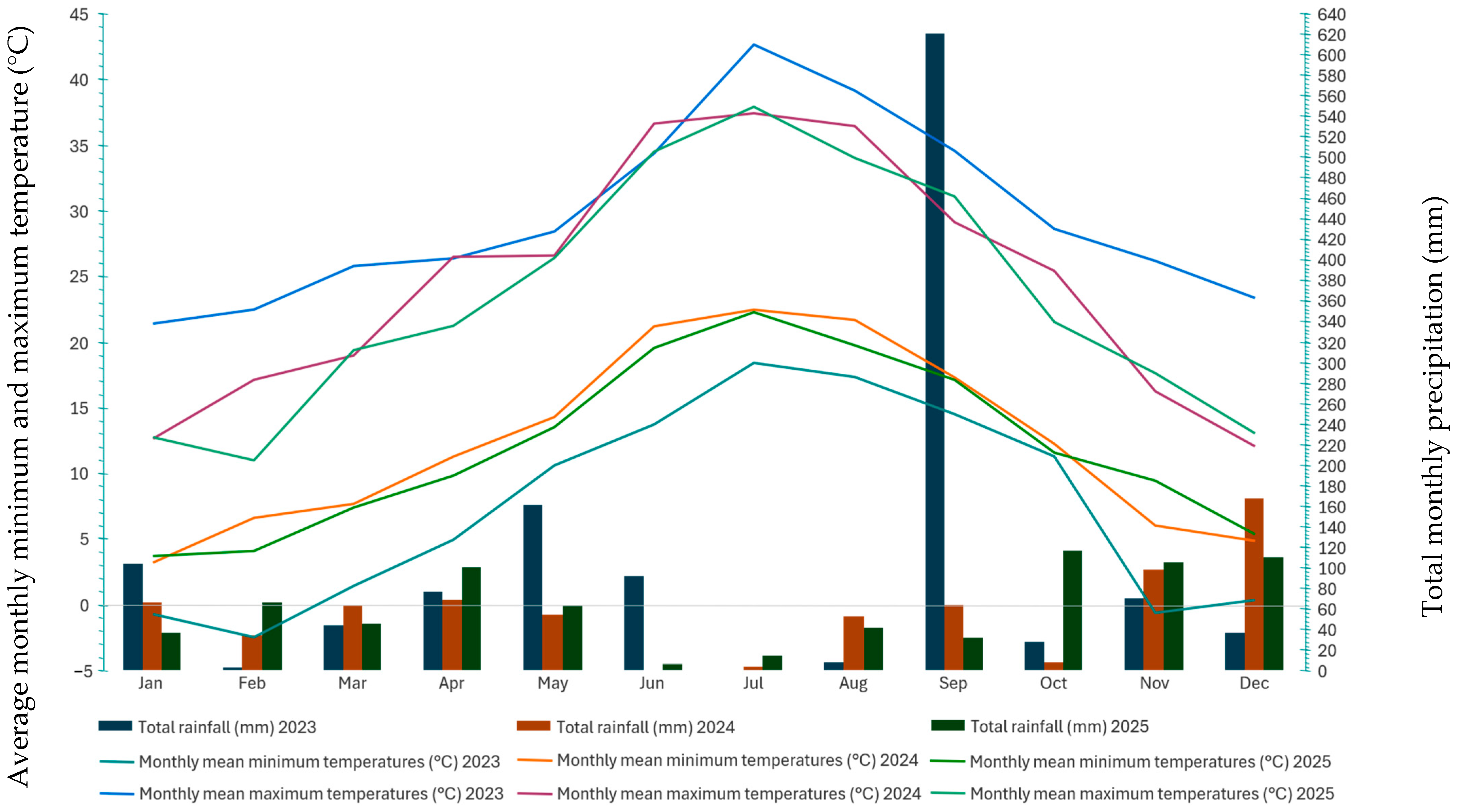
2.2.4. Climatic Data
2.3. Harvesting and Analyses
2.4. Statistical Analyses and Trait Stability
3. Results
3.1. Combined ANOVA
3.2. Stability of Forage Quality Traits
3.3. Descriptive Statistics
3.4. Performance of Dactylis glomerata Populations Based on Duncan’s Multiple Range Test
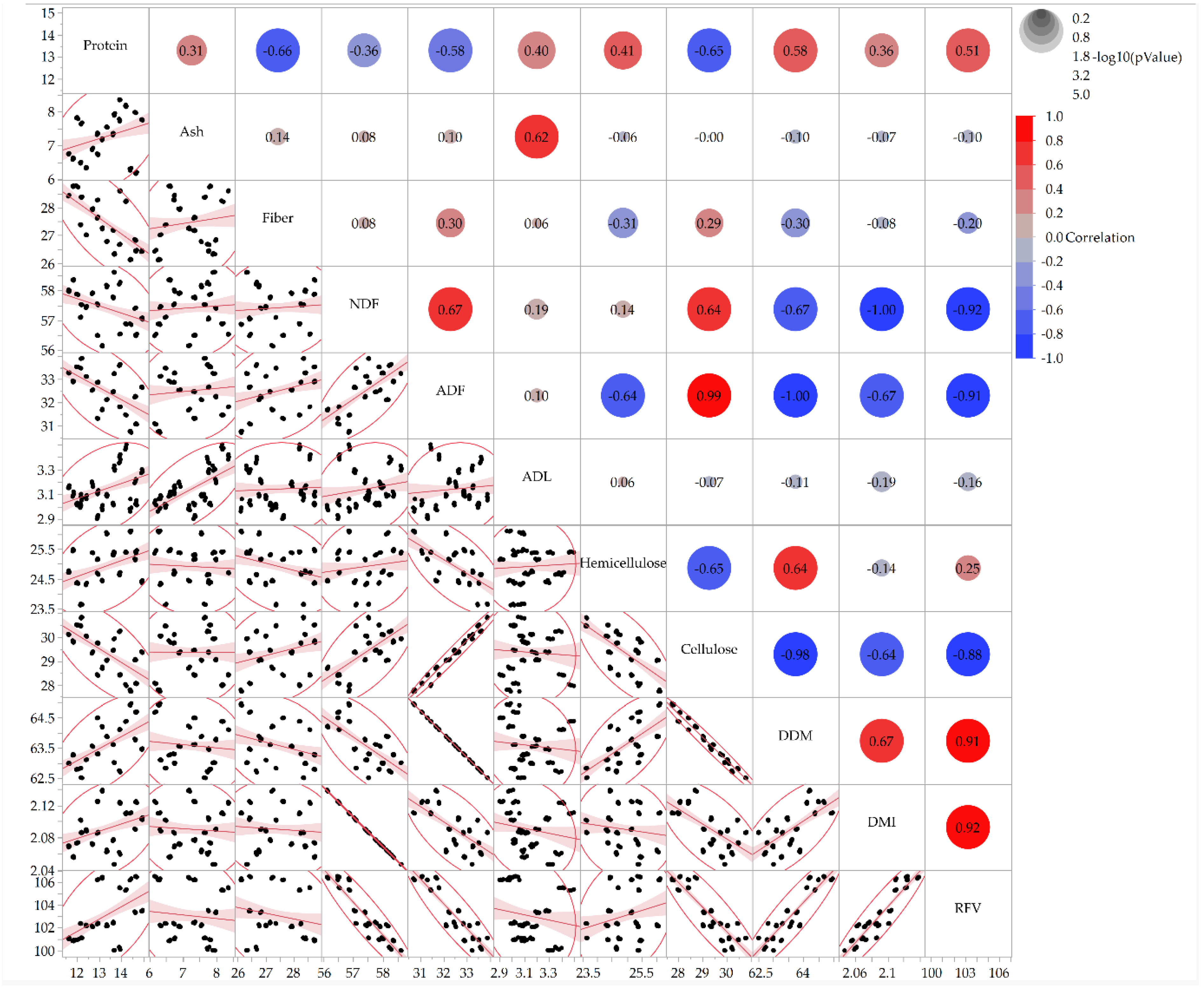
3.5. Correlation Analysis of Forage Quality Traits in Dactylis glomerata Populations
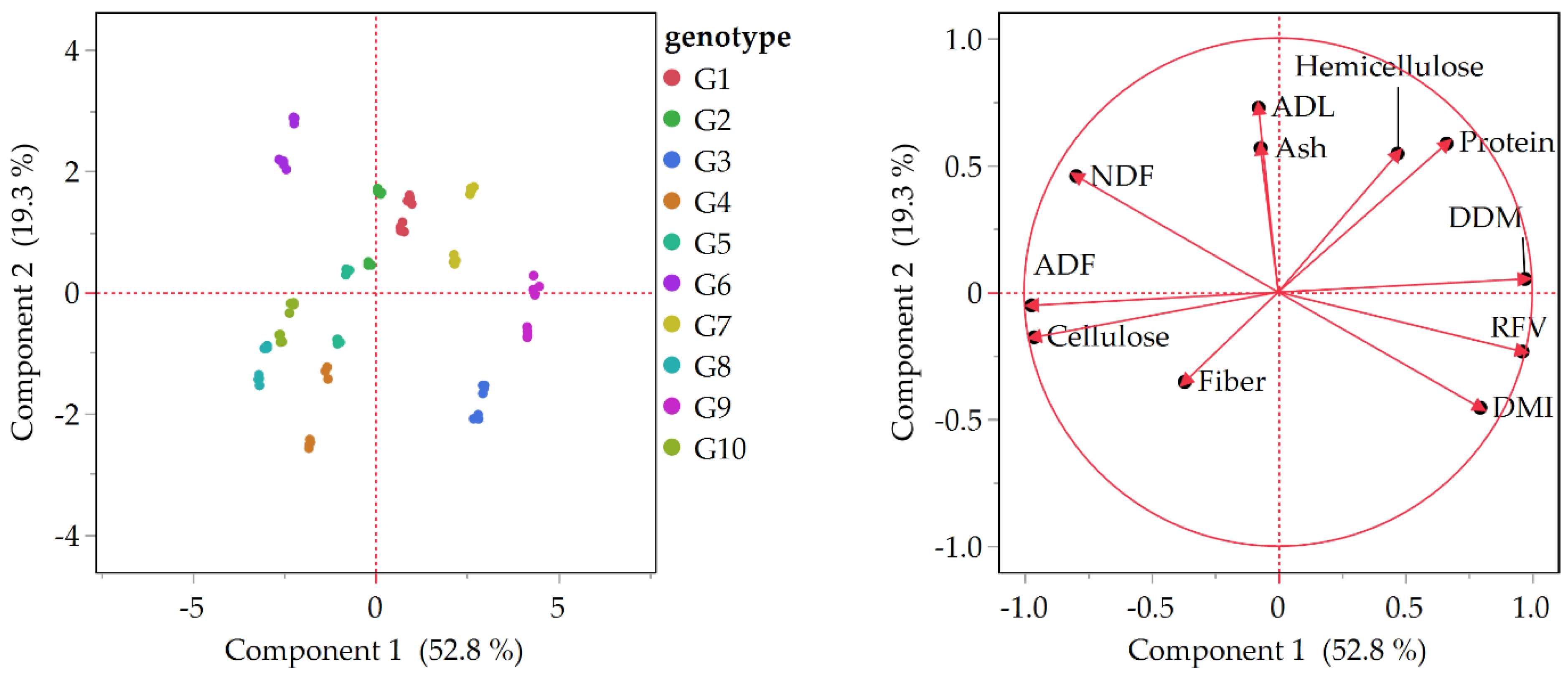
3.6. Principal Component Analysis of Forage Quality Variation in Dactylis glomerata Populations
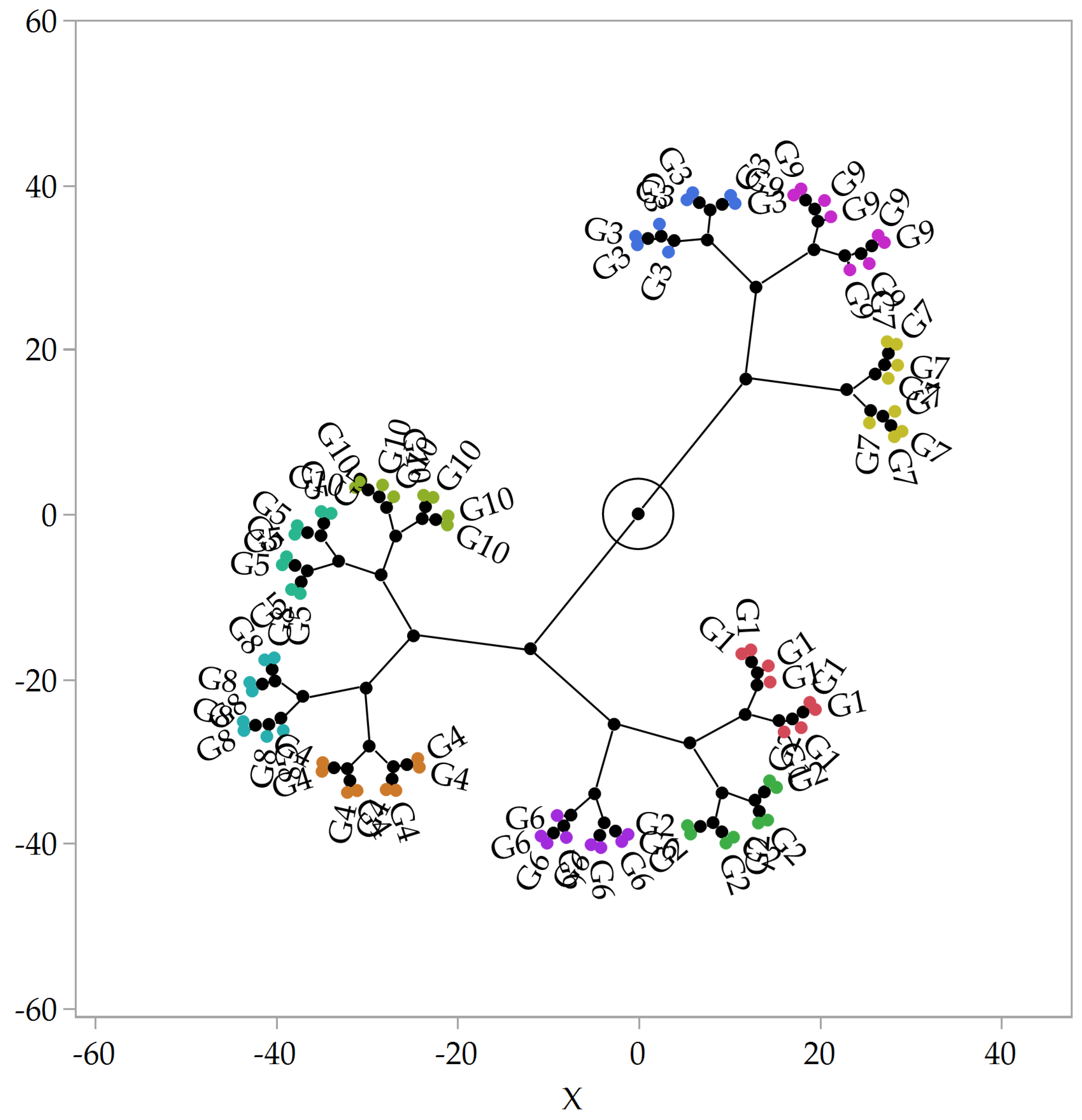
3.7. Network Ordination of Forage Quality Relationships Among Dactylis glomerata Populations
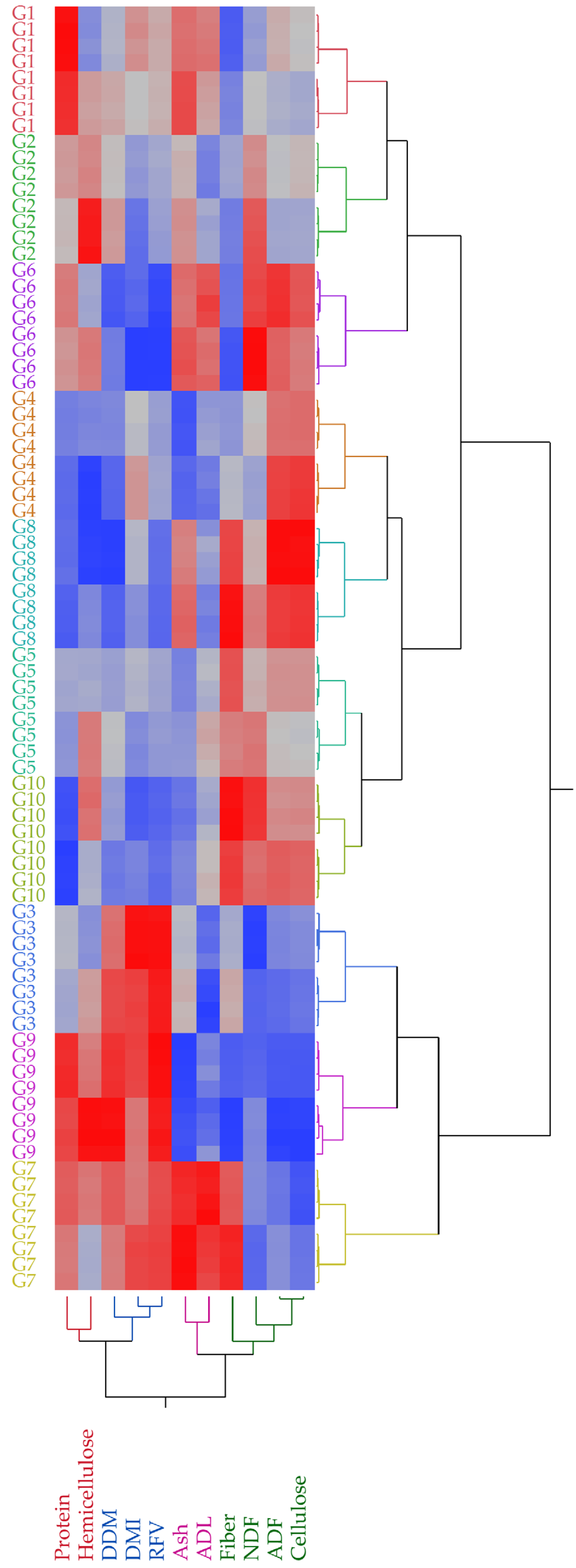
3.8. Hierarchical Clustering of Forage Quality Traits in Dactylis glomerata Populations
4. Discussion
5. Conclusions
Author Contributions
Funding
Institutional Review Board Statement
Data Availability Statement
Acknowledgments
Conflicts of Interest
References
- Qiao, D.; Zhang, Y.; Xiong, X.; Li, M.; Cai, K.; Luo, H.; Zeng, B. Transcriptome analysis on responses of orchardgrass (Dactylis glomerata L.) leaves to a short term flooding. Hereditas 2020, 157, 20. [Google Scholar] [CrossRef] [PubMed]
- Mir, N.H.; Ahmad, S.; Bhat, S.S. Orchard Grass (Dactylis glomerata L.) Yield and Nutritive Characteristics in Response to Different Cutting Regimes in a Temperate Region. Range Manag. Agrofor. 2024, 45, 128–133. [Google Scholar] [CrossRef]
- Maldonado Peralta, M.D.L.Á.; Rojas García, A.R.; Torres Salado, N.; Herrera Pérez, J.; Joaquín Cancino, S.; Ventura Ríos, J.; Hernández Garay, A.; Hernández Guzmán, F.J. Productivity of orchard grass (Dactylis glomerata L.) alone and associated with perennial ryegrass (Lolium perenne L.) and white clover (Trifolium repens L.). Rev. Bras. Zootec. 2017, 46, 890–895. [Google Scholar] [CrossRef][Green Version]
- Nyfeler, D.; Huguenin-Elie, O.; Suter, M.; Frossard, E.; Lüscher, A. Grass-legume mixtures can yield more nitrogen than legume pure stands due to mutual stimulation of nitrogen uptake from symbiotic and non-symbiotic sources. Agric. Ecosyst. Environ. 2011, 140, 155–163. [Google Scholar] [CrossRef]
- Peri, P.L.; Lucas, R.J.; Moot, D.J. Dry matter production, morphology and nutritive value of Dactylis glomerata growing under different light regimes. Agrofor. Syst. 2007, 70, 63–79. [Google Scholar] [CrossRef]
- Gürsoy, E.; Kaya, A.; Gül, M. Determining the nutrient content, energy, and in vitro true digestibility of some grass forage plants. Emir. J. Food Agric. 2021, 33, 417–422. [Google Scholar] [CrossRef]
- Coblentz, W.K.; Akins, M.S.; Cavadini, J.S. Fermentation characteristics and nutritive value of baled grass silages made from meadow fescue, tall fescue, or an orchardgrass cultivar exhibiting a unique nonflowering growth response. J. Dairy Sci. 2020, 103, 3219–3233. [Google Scholar] [CrossRef]
- Farshadfar, M. Diversity and relationships of yield and quality traits in cocksfoot (Dactylis glomerata L.) genotypes. J. Rangel. Sci. 2017, 7, 210–219. [Google Scholar]
- González, P.; Astigarraga, L. Productivity of Dairy Cows in Pastures of Tall Fescue or Dactylis. Agrociencia Urug. 2012, 16, 160–165. [Google Scholar] [CrossRef]
- Gareli, M.S.; Mendoza, A.; Bello, N.M.; Lattanzi, F.A.; Fariña, S.R.; Savian, J.V. Effects of grazing management and concentrate supplementation on intake and milk production of dairy cows grazing orchardgrass. Anim. Feed Sci. Technol. 2023, 301, 115668. [Google Scholar] [CrossRef]
- Bakhtiari, M.A.; Saeidnia, F.; Majidi, M.M.; Mirlohi, A. Growth traits associated with drought survival, recovery and persistence of cocksfoot (Dactylis glomerata) under prolonged drought treatments. Crop Pasture Sci. 2019, 70, 85–94. [Google Scholar] [CrossRef]
- Greveniotis, V.; Bouloumpasi, E.; Skendi, A.; Korkovelos, A.; Kantas, D.; Ipsilandis, C.G. Stability of Forage Quality Traits in Artificial Meadows Across Greek Environments. Agriculture 2025, 15, 2595. [Google Scholar] [CrossRef]
- Jafari, A.; Naseri, H. Genetic variation and correlation among yield and quality traits in cocksfoot (Dactylis glomerata L.). J. Agric. Sci. 2007, 145, 599–610. [Google Scholar] [CrossRef]
- Abraham, E.M.; Kyriazopoulos, A.P.; Parissi, Z.M.; Kostopoulou, P.; Karatassiou, M.; Anjalanidou, K.; Katsouta, C. Growth, Dry Matter Production, Phenotypic Plasticity, and Nutritive Value of Three Natural Populations of Dactylis glomerata L. under Various Shading Treatments. Agrofor. Syst. 2014, 88, 287–299. [Google Scholar] [CrossRef]
- Madesis, P.; Abraham, E.M.; Kalivas, A.; Ganopoulos, I.; Tsaftaris, A. Genetic diversity and structure of natural Dactylis glomerata L. populations revealed by morphological and microsatellite–based (SSR/ISSR) markers. Genet. Mol. Res. 2014, 13, 4226–4240. [Google Scholar] [CrossRef]
- Hodkinson, T.R.; Perdereau, A.; Klaas, M.; Cormican, P.; Barth, S. Genotyping by Sequencing and Plastome Analysis Finds High Genetic Variability and Geographical Structure in Dactylis glomerata L. in Northwest Europe Despite Lack of Ploidy Variation. Agronomy 2019, 9, 342. [Google Scholar] [CrossRef]
- Jiang, L.F.; Zhang, X.Q.; Ma, X.; Huang, L.K.; Xie, W.G.; Ma, Y.M.; Zhao, Y.F. Identification of orchardgrass (Dactylis glomerata L.) cultivars by using simple sequence repeat markers. Genet. Mol. Res. 2013, 12, 5111–5123. [Google Scholar] [CrossRef]
- Xu, X.; Feng, G.; Li, P.; Yu, S.; Hao, F.; Nie, G.; Huang, L.; Zhang, X. Genome-wide association analysis reveals the function of DgSAUR71 in plant height improvement. BMC Plant Biol. 2025, 25, 240. [Google Scholar] [CrossRef] [PubMed]
- Chtourou-Ghorbel, N.; Guenni, K.; Bedoui, M.; Chadded, H.; Sai-Kachout, S.; Trifi-Farah, N. Genetic and phenological diversity of Tunisian natural populations of Dactylis glomerata L. Genet. Resour. Crop Evol. 2024, 71, 3471–3484. [Google Scholar] [CrossRef]
- Last, L.; Widmer, F.; Fjellstad, W.; Stoyanova, S.; Kölliker, R. Genetic Diversity of Natural Orchardgrass (Dactylis glomerata L.) Populations in Three Regions in Europe. BMC Genet. 2013, 14, 102. [Google Scholar] [CrossRef]
- Yan, D.; Zhao, X.; Cheng, Y.; Ma, X.; Huang, L.; Zhang, X. Phylogenetic and Diversity Analysis of Dactylis glomerata Subspecies Using SSR and IT-ISJ Markers. Molecules 2016, 21, 1459. [Google Scholar] [CrossRef]
- Robins, J.G.; Rigby, C.W.; Jensen, K.B. Genotype × Environment Interaction Patterns in Rangeland Variety Trials of Cool-Season Grasses in the Western United States. Agronomy 2020, 10, 623. [Google Scholar] [CrossRef]
- Yadesa, L. Review on genetic-environmental interaction (GxE) and its application in crop breeding. Int. J. Res. Agron. 2022, 5, 95–101. [Google Scholar] [CrossRef]
- Fenetahun, Y.; You, Y.; Fentahun, T.; Xinwen, X.; Yong-Dong, W. Effects of grazing intensity on forage nutritive value of dominant grass species in Borana rangelands of Southern Ethiopia. PeerJ. 2001, 9, e12204. [Google Scholar] [CrossRef] [PubMed]
- Van Soest, P.J.; Robertson, J.B.; Lewis, B.A. Methods for Dietary Fiber, Neutral Detergent Fiber, and Nonstarch Polysaccharides in Relation to Animal Nutrition. J. Dairy Sci. 1991, 7, 3583–3597. [Google Scholar] [CrossRef]
- Van Soest, P.J. Nutritional Ecology of the Ruminant, 2nd ed.; Cornell University Press: Ithaca, NY, USA, 1994; p. 476. [Google Scholar]
- Lelièvre, F.; Seddaiu, G.; Ledda, L.; Porqueddu, C.; Volaire, F. Water use efficiency and drought survival in Mediterranean perennial forage grasses. Field Crops Res. 2011, 121, 333–342. [Google Scholar] [CrossRef]
- Annicchiarico, P.; Pecetti, L.; Abdelguerfi, A.; Bouzerzour, H.; Kallida, R.; Porqueddu, C.; Simões, N.M.; Volaire, F. Optimal forage grass germplasm for drought-prone Mediterranean environments. Field Crops Res. 2013, 148, 9–14. [Google Scholar] [CrossRef]
- Nichols, P.G.; Norton, M. Improvement of pasture and forage legumes and grasses for Mediterranean climate zones. Options Méditerr. Série A. Ecosyst. Serv. Socio-Econ. Benefits Mediterr. Grassl. 2016, 114, 157–168. [Google Scholar]
- Yfoulis, A. Field Crops III; Organization for Educational Publications: Athens, Greece, 1998; p. 216. [Google Scholar]
- Association of Official Analytical Chemists (AOAC). Official Methods of Analysis of the Association of Official Analytical Chemists, 21st ed.; Oxford University Press: Washington, DC, USA, 2019. [Google Scholar]
- Association of Official Analytical Chemists (AOAC). Official Methods of Analysis, 18th ed.; Association of Official Analytical Chemists (AOAC): Gaithersburg, MD, USA, 2005. [Google Scholar]
- Hindrichsen, I.K.; Kreuzer, M.; Madsen, J.; Bach Knudsen, K.E. Fiber and lignin analysis in concentrate, forage, and feces: Detergent versus enzymatic-chemical method. J. Dairy Sci. 2006, 89, 2168–2176. [Google Scholar] [CrossRef]
- Linn, J.G.; Martin, N.P. Forage Quality Tests and Interpretation; MN AG-FO-02637; University of Minnesota Extension Service: St. Paul, MN, USA, 1989. [Google Scholar]
- Moore, J.E.; Undersander, D. Relative Forage Quality: An Alternative to Relative Feed Value and Quality Index. In Proceedings of the 13th Annual Florida Ruminant Nutrition Symposium, Gainesville, FL, USA, 11–12 January 2002; pp. 16–32. [Google Scholar]
- Steel, R.G.D.; Torrie, H.; Dickey, D.A. Principles and Procedures of Statistics. A Biometrical Approach, 3rd ed.; McGraw-Hill: New York, NY, USA, 1997; p. 666. [Google Scholar]
- Fasoula, V.A. Prognostic Breeding: A new paradigm for crop improvement. In Plant Breeding Reviews; Wiley: Hoboken, NJ, USA, 2013; Volume 37, pp. 297–347. [Google Scholar] [CrossRef]
- McIntosh, M.S. Analysis of Combined Experiments. Agron. J. 1983, 75, 153–155. [Google Scholar] [CrossRef]
- Johnson, H.W.; Robinson, H.E.; Comstock, R.E. Estimate of genetic and environmental variability in soybean. Agron. J. 1955, 47, 314–318. [Google Scholar] [CrossRef]
- Hanson, G.; Robinson, H.F.; Comstock, R.E. Biometrical studies on yield in segregating population of Korean Lespedeza. Agron. J. 1956, 48, 268–274. [Google Scholar] [CrossRef]
- Singh, R.K.; Chaudhary, B.D. Biometrical Methods in Quantitative Genetic Analysis; Kalyani Publishers: New Delhi, India, 1977; p. 304. [Google Scholar]
- Altaf, M.T.; Cavagnaro, P.F.; Kökten, K.; Ali, A.; Morales, A.; Tatar, M.; Baloch, F.S. Genotyping-by-sequencing derived SNP markers reveal genetic diversity and population structure of Dactylis glomerata germplasm. Front. Plant Sci. 2025, 16, 1530585. [Google Scholar] [CrossRef] [PubMed]
- Xie, W.G.; Lu, X.F.; Zhang, X.Q.; Huang, L.K.; Cheng, L. Genetic Variation and Comparison of Orchardgrass (Dactylis glomerata L.) Cultivars and Wild Accessions as Revealed by SSR Markers. Genet. Mol. Res. 2012, 11, 425–433. [Google Scholar] [CrossRef] [PubMed]
- Robins, J.G.; Bushman, B.S.; Jensen, K.B. Agronomic Evaluation of the Results of Selection within Late-Maturing Dactylis glomerata Populations. Agronomy 2021, 11, 1362. [Google Scholar] [CrossRef]
- Casler, M. Breeding forage crops for increased nutritional value. Adv. Agron. 2001, 71, 51–107. [Google Scholar] [CrossRef]
- Colas, V.; Barre, P.; van Parijs, F.; Wolters, L.; Quitté, Y.; Ruttink, T.; Roldán-Ruiz, I.; Escobar Gutiérrez, A.J.; Muylle, H. Seasonal differences in structural and genetic control of digestibility in perennial ryegrass. Front. Plant Sci. 2022, 12, 801145. [Google Scholar] [CrossRef]
- da Fonseca, C.E.L.; Carvalho, M.A.; Pessoa-Filho, M.; Ramos, A.K.B.; Karia, C.T.; Braga, G.J.; Maciel, N.B.A.; Tameirão, S.N.D. Genetic Variability, Heritability, and Expected Gains for Yield and Forage Quality in Gamba Grass (Andropogon gayanus) Populations. Grasses 2025, 4, 44. [Google Scholar] [CrossRef]
- Greveniotis, V.; Bouloumpasi, E.; Skendi, A.; Korkovelos, A.; Kantas, D.; Ipsilandis, C.G. Evaluation and Stability of Red and White Trifolium Species for Nutritional Quality in a Mediterranean Environment. Agriculture 2025, 15, 391. [Google Scholar] [CrossRef]
- Tarakanovas, P.; Kanapeckas, J.; Lemežienė, N. Studies of intertrait correlations in cocksfoot (Dactylis glomerata L.). Žemdirbystė 2006, 93, 306–313. [Google Scholar]
- Sanada, Y.; Takai, T.; Yamada, T. Inheritance of the concentration of water-soluble carbohydrates and its relationship with the concentrations of fibre and crude protein in herbage of cocksfoot (Dactylis glomerata L.). Grass Forage Sci. 2007, 62, 322–331. [Google Scholar] [CrossRef][Green Version]
- Annicchiarico, P.; Romani, M. Genetic Variation, Heritability and Genetic Correlations for Forage Quality and Yield Traits of Mediterranean Tall Fescue Germplasm. Plant Breed. 2008, 124, 99–101. [Google Scholar] [CrossRef]
- Becker, H.; Leon, J. Stability analysis in plant breeding. Plant Breed. 1988, 101, 1–23. [Google Scholar] [CrossRef]
- Lin, C.S.; Binns, M.R. A superiority measure of cultivar performance for cultivar × location data. Can. J. Plant Sci. 1988, 68, 193–198. [Google Scholar] [CrossRef]
- Ball, D.; Collins, M.; Lacefield, G.; Martin, N.; Mertens, D.; Olson, K.; Putnam, D.; Undersander, D.; Wolf, M. Understanding Forage Quality; Publication 1-01; American Farm Bureau Federation: Park Ridge, IL, USA, 2001; Available online: https://fyi.extension.wisc.edu/forage/files/2017/04/FQ.pdf (accessed on 4 March 2026).
- Falconer, D.S.; Mackay, T.F.C. Introduction to Quantitative Genetics, 4th ed.; Addison Wesley Longman: Harlow, UK, 1996; p. 464. [Google Scholar]
- Greveniotis, V.; Bouloumpasi, E.; Zotis, S.; Korkovelos, A.; Kantas, D.; Ipsilandis, C.G. Genotype-by-Environment Interaction Analysis for Quantity and Quality Traits in Faba Beans Using AMMI, GGE Models, and Stability Indices. Plants 2023, 12, 3769. [Google Scholar] [CrossRef]
- Greveniotis, V.; Bouloumpasi, E.; Zotis, S.; Korkovelos, A.; Kantas, D.; Ipsilandis, C.G. A Comparative Study on Stability of Seed Characteristics in Vetch and Pea Cultivations. Agriculture 2023, 13, 1092. [Google Scholar] [CrossRef]
- Greveniotis, V.; Bouloumpasi, E.; Zotis, S.; Korkovelos, A.; Kantas, D.; Ipsilandis, C.G. Stability Dynamics of Main Qualitative Traits in Maize Cultivations across Diverse Environments regarding Soil Characteristics and Climate. Agriculture 2023, 13, 1033. [Google Scholar] [CrossRef]
- Fasoulas, A.C. The Honeycomb Methodology of Plant Breeding; Department of Genetics and Plant Breeding, Aristotle University of Thessaloniki: Thessaloniki, Greece, 1988; p. 168. [Google Scholar]
- Greveniotis, V.; Bouloumpasi, E.; Skendi, A.; Kantas, D.; Ipsilandis, C.G. Evaluating Wheat Seed Quality: Performance, Stability, and Genetic Control Across Six Greek Environments Using Multiple Selection Designs. Agriculture 2026, 16, 476. [Google Scholar] [CrossRef]
- Greveniotis, V.; Bouloumpasi, E.; Skendi, A.; Zotis, S.; Kantas, D.; Ipsilandis, C.G. Genetic Control, Stability, and Multivariate Analysis of Wheat Seed Quality Traits in Elite Pure Lines Under Mediterranean Environments. Agriculture 2026, 16, 444. [Google Scholar] [CrossRef]
- Greveniotis, V.; Bouloumpasi, E.; Zotis, S.; Korkovelos, A.; Ipsilandis, C.G. Assessment of Interactions between Yield Components of Common Vetch Cultivars in Both Conventional and Low-Input Cultivation Systems. Agriculture 2021, 11, 369. [Google Scholar] [CrossRef]
- Farshadfar, M. Evaluation of the Forage Yield and Quality in Some Accessions of Dactylis glomerata under Irrigated Conditions. Sch. Res. Libr. 2012, 3, 6. [Google Scholar]
- Harun, N.; Chaudhry, A.S.; Shaheen, S.; Ahmad, M.; Sahan, Z.; Bashir, H. Connecting nutritional facts with the traditional ranking of ethnobotanically used fodder grasses by local farmers in Central Punjab of Pakistan. Sci. Rep. 2022, 12, 12299. [Google Scholar] [CrossRef] [PubMed]
- Jung, H.G.; Allen, M.S. Characteristics of plant cell walls affecting intake and digestibility of forages by ruminants. J. Anim. Sci. 1995, 73, 2774–2790. [Google Scholar] [CrossRef] [PubMed]
- Buxton, D.R. Quality-Related Characteristics of Forages as Influenced by Plant Environment and Agronomic Factors. Anim. Feed. Sci. Technol. 1996, 59, 37–49. [Google Scholar] [CrossRef]
- Zeng, B.; Zhang, X.; Lan, Y.; Yang, W.-Y. Evaluation of Genetic Diversity and Relationships in Orchardgrass (Dactylis glomerata L.) Germplasm Based on SRAP Markers. Can. J. Plant Sci. 2008, 88, 53–60. [Google Scholar] [CrossRef]



| Genus | Species | Material Ex Situ | Collection Date | Prefecture | Location |
|---|---|---|---|---|---|
| Dactylis | D. glomerata | Seeds | 22 September 2023 | Trikala | Palaiochori, former Municipality of Pialeia (G1) |
| Dactylis | D. glomerata | Seeds | 25 October 2023 | Trikala | Gorgogyri (G2) |
| Dactylis | D. glomerata | Seeds | 31 October 2023 | Trikala | Xyloparoiko (G3) |
| Dactylis | D. glomerata | Seeds | 1 November 2023 | Trikala | Prinos (G4) |
| Dactylis | D. glomerata | Seeds | 9 November 2023 | Trikala | Pialeia (G5) |
| Dactylis | D. glomerata | Seeds | 14 November 2023 | Trikala | Prodromos (G6) |
| Dactylis | D. glomerata | Seeds | 16 November 2023 | Trikala | Filyra (G7) |
| Dactylis | D. glomerata | Seeds | 21 November 2023 | Trikala | Kefalopotamos (G8) |
| Dactylis | D. glomerata | Seeds | 23 November 2023 | Trikala | Kori (G9) |
| Dactylis | D. glomerata | Seeds | 29 November 2023 | Trikala | Kato Rachi (Neromylos) (G10) |
| Source of Variation | CP | Ash | CF | NDF | ADF | ADL | Hemicellulose | Cellulose | DDM | DMI (% BW) | RFV |
|---|---|---|---|---|---|---|---|---|---|---|---|
| m.s. | m.s. | m.s. | m.s. | m.s. | m.s. | m.s. | m.s. | m.s. | m.s. | m.s. | |
| Environment (E) | 1.200 *** | 0.553 *** | 0.008 *** | 0.450 *** | 0.412 *** | 0.012 *** | 1.723 *** | 0.281 *** | 0.250 *** | 0.001 *** | 0.157 *** |
| REPS/ Environments | 0.001 ns | 0.001 ns | 0.0005 ns | 0.0002 ns | 0.0002 ns | 0.0002 ns | 0.0003 ns | 0.0005 ns | 0.0002 ns | 0.000001 ns | 0.0003 ns |
| Genotype (G) | 8.760 *** | 3.792 *** | 6.368 *** | 3.939 *** | 6.691 *** | 0.195 *** | 2.756 *** | 6.651 *** | 4.061 *** | 0.005 *** | 41.498 *** |
| Environment × Genotype (E × G) | 0.003 *** | 0.002 *** | 0.297 *** | 0.243 *** | 0.238 *** | 0.008 *** | 0.960 *** | 0.246 *** | 0.144 *** | 0.0003 *** | 0.076 *** |
| Error | 0.001 | 0.0004 | 0.0003 | 0.0005 | 0.0004 | 0.0003 | 0.001 | 0.001 | 0.0002 | 0.000001 | 0.003 |
| Population | CP | Ash | CF | NDF | ADF | ADL | Hemicellulose | Cellulose | DDM | DMI (% bw) | RFV |
|---|---|---|---|---|---|---|---|---|---|---|---|
| Palaiochori | 8318 | 4658 | 15,187 | 88,830 | 22,799 | 5341 | 3727 | 28,744 | 82,002 | 86,244 | 94,365 |
| Gorgogyri | 7741 | 4382 | 15,868 | 81,060 | 30,523 | 6405 | 4402 | 17,287 | 87,945 | 80,758 | 89,280 |
| Xyloparoiko | 13,225 | 6402 | 17,136 | 87,645 | 25,486 | 5129 | 4115 | 31,795 | 89,473 | 86,519 | 91,106 |
| Prinos | 8035 | 6157 | 19,397 | 93,979 | 30,720 | 5990 | 4061 | 17,642 | 89,789 | 93,169 | 92,392 |
| Pialeia | 9499 | 6205 | 25,220 | 80,107 | 33,640 | 6618 | 4308 | 18,854 | 89,954 | 76,403 | 89,170 |
| Prodromos | 11,312 | 6635 | 20,490 | 82,765 | 28,606 | 7230 | 3938 | 34,217 | 91,426 | 79,906 | 90,322 |
| Filyra | 9326 | 7147 | 19,985 | 91,332 | 28,946 | 6372 | 4510 | 15,436 | 94,568 | 91,687 | 91,031 |
| Kefalopotamos | 13,094 | 7532 | 18,672 | 93,483 | 30,192 | 8611 | 3937 | 34,380 | 95,163 | 92,638 | 93,898 |
| Kori | 10,745 | 9310 | 23,734 | 83,290 | 31,137 | 7608 | 4838 | 30,341 | 97,725 | 82,377 | 89,045 |
| Kato Rachi | 11,626 | 7484 | 25,615 | 86,508 | 28,855 | 8200 | 4114 | 33,517 | 92,104 | 83,684 | 90,861 |
| Traits | Min. | Max. | Mean | SD | GCV (%) | PCV (%) | H2 (%) | ||
|---|---|---|---|---|---|---|---|---|---|
| CP | 11.61 | 14.97 | 13.275 | 1.007 | 1.0946 | 1.095 | 7.8813 | 7.8827 | 99.97 |
| Ash | 6.16 | 8.37 | 7.259 | 0.663 | 0.4738 | 0.4740 | 9.4818 | 9.4843 | 99.95 |
| CF | 26.11 | 28.79 | 27.475 | 0.872 | 0.7589 | 0.7960 | 3.1707 | 3.2473 | 95.34 |
| NDF | 56.11 | 58.63 | 57.418 | 0.695 | 0.4620 | 0.4924 | 1.1838 | 1.2221 | 93.83 |
| ADF | 30.72 | 33.89 | 32.502 | 0.892 | 0.8066 | 0.8364 | 2.7633 | 2.8138 | 96.44 |
| ADL | 2.90 | 3.50 | 3.1410 | 0.153 | 0.0234 | 0.0244 | 4.8679 | 4.9709 | 95.90 |
| Hemicellulose | 23.61 | 26.12 | 24.916 | 0.668 | 0.2245 | 0.3445 | 1.9017 | 2.3557 | 65.17 |
| Cellulose | 27.73 | 30.83 | 29.361 | 0.889 | 0.8006 | 0.8314 | 3.0475 | 3.1055 | 96.30 |
| DDM | 62.50 | 64.97 | 63.581 | 0.695 | 0.4896 | 0.5076 | 1.1005 | 1.1206 | 96.45 |
| DMI (% BW) | 2.05 | 2.139 | 2.090 | 0.025 | 0.00058 | 0.0062 | 1.1554 | 1.1959 | 93.34 |
| RFV | 99.97 | 106.54 | 103.033 | 2.177 | 5.1778 | 5.1873 | 2.2084 | 2.2105 | 99.82 |
| Population | CP | Ash | CF | NDF | ADF | ADL | Hemicellulose | Cellulose | DDM | DMI (% bw) | RFV |
|---|---|---|---|---|---|---|---|---|---|---|---|
| Palaiochori | 14.98 a | 7.875 b | 26.63 h | 57.23 g | 32.45 f | 3.245 c | 24.78 f | 29.21 f | 63.62 e | 2.097 c | 103.4 c |
| Gorgogyri | 13.50 e | 7.451 e | 26.98 g | 57.96 c | 32.29 g | 3.055 f | 25.67 b | 29.24 f | 63.74 d | 2.070 f | 102.3 d |
| Xyloparoiko | 13.04 f | 7.267 f | 27.45 e | 56.31 i | 31.51 i | 2.951 h | 24.80 f | 28.56 g | 64.36 b | 2.131 a | 106.3 a |
| Prinos | 12.30 h | 6.412 i | 27.20 f | 57.27 f | 33.30 c | 3.040 f | 23.97 g | 30.26 b | 62.96 h | 2.095 d | 102.3 d |
| Pialeia | 12.82 g | 6.821 g | 28.12 d | 57.72 d | 32.70 e | 3.149 d | 25.02 de | 29.55 e | 63.43 f | 2.079 e | 102.2 e |
| Prodromos | 13.82 d | 7.836 c | 26.50 i | 58.43 a | 33.42 b | 3.340 b | 25.02 e | 30.08 c | 62.87 i | 2.054 h | 100.1 h |
| Filyra | 14.08 c | 8.267 a | 28.42 c | 56.7 h | 31.65 h | 3.440 a | 25.05 d | 28.21 h | 64.25 c | 2.116 b | 105.4 b |
| Kefalopotamos | 12.11 i | 7.734 d | 28.57 b | 57.7 e | 33.70 a | 3.048 f | 24.00 g | 30.65 a | 62.65 j | 2.080 e | 101.0 f |
| Kori | 14.55 b | 6.241 j | 26.29 j | 56.68 h | 30.93 j | 3.012 g | 25.76 a | 27.91 i | 64.81 a | 2.117 b | 106.4 a |
| Kato Rachi | 11.74 j | 6.685 h | 28.60 a | 58.18 b | 33.08 d | 3.128 e | 25.10 c | 29.95 d | 63.13 g | 2.063 g | 100.9 g |
Disclaimer/Publisher’s Note: The statements, opinions and data contained in all publications are solely those of the individual author(s) and contributor(s) and not of MDPI and/or the editor(s). MDPI and/or the editor(s) disclaim responsibility for any injury to people or property resulting from any ideas, methods, instructions or products referred to in the content. |
© 2026 by the authors. Licensee MDPI, Basel, Switzerland. This article is an open access article distributed under the terms and conditions of the Creative Commons Attribution (CC BY) license.
Share and Cite
Greveniotis, V.; Bouloumpasi, E.; Skendi, A.; Kantas, D.; Ipsilandis, C.G. Nutritional and Fiber Quality Assessment of Native Greek Dactylis glomerata Populations. Agriculture 2026, 16, 1132. https://doi.org/10.3390/agriculture16111132
Greveniotis V, Bouloumpasi E, Skendi A, Kantas D, Ipsilandis CG. Nutritional and Fiber Quality Assessment of Native Greek Dactylis glomerata Populations. Agriculture. 2026; 16(11):1132. https://doi.org/10.3390/agriculture16111132
Chicago/Turabian StyleGreveniotis, Vasileios, Elisavet Bouloumpasi, Adriana Skendi, Dimitrios Kantas, and Constantinos G. Ipsilandis. 2026. "Nutritional and Fiber Quality Assessment of Native Greek Dactylis glomerata Populations" Agriculture 16, no. 11: 1132. https://doi.org/10.3390/agriculture16111132
APA StyleGreveniotis, V., Bouloumpasi, E., Skendi, A., Kantas, D., & Ipsilandis, C. G. (2026). Nutritional and Fiber Quality Assessment of Native Greek Dactylis glomerata Populations. Agriculture, 16(11), 1132. https://doi.org/10.3390/agriculture16111132