1. Introduction
Oat (
Avena sativa L.) is an annual plant from the Poaceae family, cultivated worldwide on an area of 10.2 million hectares [
1]. In Poland, the species is grown in all agricultural regions. It is a cereal with specific properties—thanks to its well-developed root system, it has lower soil requirements compared to other cereals, is more tolerant of low soil pH, and has lower requirements for preceding crops. Additionally, oats serve as a good preceding crop for other cereals, especially in cereal-dominated rotations, acting as a phytosanitary plant.
Oats are among the most important spring cereals, playing a significant role in agriculture. They are characterized by high preceding crop value, good yield under moderate climatic and soil conditions, and require relatively less fertilizer and plant protection products than other cereals [
2]. The developed root system enables the uptake of hard-to-access nutrients and produces allelopathic compounds that can inhibit the growth of weeds and certain soil pathogens [
3,
4].
Oats are also gaining importance in human nutrition as a raw material for functional food production. Due to their high fiber content, bioactive compounds, and favorable protein profile, they are used in health-promoting diets, organic food, and alternative nutrition [
5,
6,
7]. Seeds that do not meet consumption standards can serve as an alternative energy source due to their high calorific value and low ash content [
8].
Scientific research also indicates that oat grain contains polyphenols and other bioactive compounds which, together with fibers, protect the body against the development of chronic diseases, including cancer [
9]. Regular consumption of oats increases physical fitness and immunity. Studies by Gąsiorowski [
10,
11] showed that consuming 60–100 g of oat flakes daily lowers blood cholesterol levels. Oats are also a valuable feed component for poultry, cattle, sheep, and other livestock. Batalova [
12] notes that 80% of global oat production is used for feed, while only 20% is processed by the food industry. Due to their high content of easily digestible carbohydrates, moderate protein levels, and favorable crude fiber ratio, oats are especially valued in the nutrition of horses and young cattle [
13,
14].
Given the above, oats are a valuable cereal, and their popularity may increase in the coming years, especially in the context of healthy food. Therefore, research aimed at identifying varieties best suited to specific farming conditions is of particular importance.
Integrated Pest Management (IPM) is a key element of modern oat cultivation, ensuring high food quality and safety. According to the provisions of Directive 2009/128/EC [
15] and the European Green Deal (EGD) [
16], the use of pesticides and mineral fertilizers is limited, with emphasis placed on agronomic and biological methods. Implementing IPM promotes the use of varieties with natural resistance, enabling stable yields with reduced chemical inputs, and aligns with the principles of sustainable agriculture.
In light of these requirements and limitations, it is also necessary to adapt breeding work to the new demands of sustainable agriculture policy. The EGD clearly indicates the need for fuller utilization of natural resistance sources in cultivated plants. Achieving these goals will not be possible without access to varieties with enhanced dis-ease resistance. Such varieties must also be adapted to limited fertilization and chemical protection. Farmers increasingly seek genotypes with natural resistance to biotic and abiotic stress factors that limit yield. Selecting resistant varieties that ensure good and stable yields is a natural and economically beneficial solution. Only resistant varieties can significantly reduce the use of chemical plant protection products to the necessary minimum, which are both costly and environmentally burdensome.
Since 2002, the Research Centre for Cultivar Testing (RCCT) has been conducting trials in the organic system (Ecological Cultivar Testing—EVT), aimed at identifying varieties with natural resistance to pathogens and tolerance to abiotic stresses. This initiative was launched many years before the EGD was announced, which means RCCT now has a rich database of experimental results. These results can already serve as a basis for farmers when selecting varieties for low-input farming systems [
17,
18].
Additionally, RCCT’s post-registration variety testing system (PRVT) enables the assessment of variety responses to diverse production technologies, significantly supporting the selection of seed material for farms operating in accordance with sustainable agriculture principles [
19,
20,
21].
It was hypothesized that oat varieties differ in their response to reduced fertilization and plant protection inputs, and that varieties with higher natural disease resistance would maintain more stable yield and agronomic performance under low-input and organic production systems. The aim of the research was to evaluate the response of selected varieties of common oat (Avena sativa L.) and naked oat (Avena nuda L.) to different levels of fertilization and plant protection. The experiments were conducted in two production systems—conventional/integrated (PRVT) and organic (EVT; Ecological Variety Testing)—in Pawłowice and Białogard in 2023–2024. The study aimed to determine the suitability of oat varieties for cultivation under conditions of limited use of mineral fertilizers and plant protection products. Yield, thousand grain weight, plant height, lodging resistance, and susceptibility to fungal pathogens (Drechslera avenae, Blumeria graminis f. sp. avenae) were analyzed.
Environmental factors, including trial location and weather conditions, were also assumed to significantly modify variety responses in both cultivation systems. The expected outcome of the research was to identify varieties with stable yields and natural resistance, recommended for sustainable and organic farming systems.
2. Materials and Methods
The research results were obtained from field experiments conducted at two experimental sites belonging to RCCT: the Variety Testing Station in Pawłowice (VTS Pawłowice) and the Variety Testing Department in Białogard (VTD Białogard). Observations were carried out over two growing seasons, 2023 and 2024. The study focused on common spring oat (
A. sativa L.) and naked spring oat (
A. nuda L.). The experiments were conducted within the frameworks of Post-registration Variety Testing (PRVT) and Ecological Variety Testing (EVT), in accordance with the “Methodology for testing the economic value of cereal varieties” [
22] and the “Methodology for testing the economic value of varieties under organic conditions” [
23], both developed by RCCT.
Two varieties of common oat (’Gepard’ and ’Rambo’) and one variety of naked oat (‘Adorator’) were selected for analysis. This selection ensured continuity of research across both seasons and enabled comparison of results from the same experimental sites under both PRVT and EVT systems.
The experimental sites were characterized as follows:
(a) VTS Pawłowice—Silesian Voivodeship, Gliwice County (φ = 50°28′, λ = 18°29′, H = 240 m a.s.l.). Soil suitability complexes: defective wheat, very good rye, and good rye. Soil quality classes: IIIa–V.
(b) VTD Białogard—West Pomeranian Voivodeship, Białogard County (φ = 54°00′, λ = 16°00′, H = 24 m a.s.l.). Soil suitability complexes: very good rye, good rye, and poor rye, predominantly class IVa. Soil quality classes: IIIb–V.
Field cultivation treatments carried out at the VTS in Pawłowice, regardless of the type of experiment, included stubble cultivation, plowing, and the use of a cultivation aggregate. At the VTD in Białogard, the same agrotechnical treatments—plowing and the use of a cultivation aggregate—were performed in both PRVT and EVT experiments.
PRVT experiments were conducted in two replications, and EVT experiments in four, on plots of 16 m2 each in a randomized block design. The preceding crops in PRVT included maize, sunflower, potato, and soybean, while in EVT they were field pea, buckwheat, and potato.
In PRVT experiments, seeds were treated with Gizmo 060 FS seed dressing, containing 60 g/L (5.67%) of the active substance tebuconazole (a triazole compound). In the organic experiments, no seed dressing was applied.
PRVT experiments included nitrogen, phosphorus, and potassium fertilization, as well as foliar application of multi-component fertilizers. Nitrogen fertilization depended on the preceding crop, soil type, weather conditions, and the physiological status of plants. The optimal fertilization level was assumed to be that which allowed achieving maximum grain yield under the given conditions.
From the field designated for the group of cereal experiments, a composite soil sam-ple was collected, consisting of individual subsamples taken with an Egner sampling stick at a rate of one sample per 100–200 m
2. After air-drying, the composite samples were delivered to the Chemical and Agricultural Station. In the cereal experiments, mandatory soil analyses were performed in accordance with the methodology of the Research Centre for Cultivar Testing, including the determination of soil pH (in KCl) and the content of available macronutrients—phosphorus (P, P
2O
5), potassium (K, K
2O), and magnesium (Mg, MgO) (
Table 1). Nitrogen fertilization was split into doses. The first dose, similarly to phosphorus and potassium fertilization, was applied pre-sowing.
In EVT experiments, large-seeded legumes and green manure catch crops were used. No mineral fertilization, growth regulators, or fungicides were applied.
Herbicide treatments were applied in case of weed infestation, and insecticides were used when insect pests occurred. The differences between the PRVT and EVT experience are presented in
Table 2.
Average air temperature and total precipitation were compiled based on data from meteorological stations at the experimental sites.
Plant height—the distance from the soil surface to the top of the spike (panicle) was measured, excluding awns. Measurements were taken using a measuring rod with an accuracy of 1 cm in at least three of the most representative spots within each plot. A straightened bundle (handful) of plants was placed against the rod, and the reading was taken. Plant height was determined based on the majority of spikes (panicles) in the bundle that were of similar height.
Lodging—the degree of lodging was assessed visually, taking into account the entire plot area, using a 9-point scale.
Disease severity was assessed using a scale from 1 to 9, where 9 indicated a healthy plant and 1 a plant completely affected by pathogens [
22]. Disease incidence was evaluated within the crop canopy by carefully parting the plants at several locations along each plot. Observations were conducted regularly after the first appearance of disease symptoms, with the final assessment performed at the stage of maximum infection severity.
Thousand grain weight (TGW)—this trait was calculated based on the mass of 500 grains and the grain moisture content, adjusted to 14% moisture.
Grain yield from each plot was weighed immediately after harvest, prior to collecting samples for moisture determination. Measurements were performed with an accuracy of 0.1 kg.
The conformity of empirical trait distributions with the normal distribution was assessed using the Shapiro–Wilk
W-test [
24]. Homogeneity of variances was evaluated using Bartlett’s test. Four-way ANOVA was performed to assess the effects of experiment type, year, cultivar, and location, as well as all interactions, on each trait individually. Arithmetic means and standard deviations were calculated for each trait. Additionally, Fisher’s least significant difference (LSD) test was applied at a significance level of
α = 0.05, and homogeneous groups were identified based on LSD values. Relationships between traits were evaluated using Pearson correlation coefficients. Multivariate methods were also employed. Principal component analysis (PCA) was used to facilitate multivariate assessment of similarity between combinations of factor levels by reducing the dimensionality of the feature space with minimal information loss [
25]. This enabled graphical visualization of variation among all factors based on all observed traits. All statistical analyses and visualizations were performed using Genstat 23.1 software [
26]. Bar is a standard deviation.
3. Results and Discussion
In recent years, a systematic increase in the area of oat cultivation has been observed, confirming the growing economic importance of this crop in Polish agriculture. According to data from 2024, the oat cultivation area reached approximately 518 thousand hectares. The Mazowieckie Voivodeship continues to play the most significant role in national production of this species [
27].
Due to the wide range of products obtained from processed oat grain and its favorable macronutrient composition, including highly unsaturated lipids and abundant fiber, particularly beta-glucans, oats constitute an important element of the food chain for both humans and animals [
28,
29,
30,
31]. Oats are used in both the food industry and feed production, making them a strategic agricultural raw material [
32].
Given the above, oats are a highly valuable cereal, and their popularity is likely to increase in the coming years, especially in the context of healthy food. Therefore, research aimed at identifying suitable varieties for specific farming conditions is gaining particular importance.
3.1. Meteorological Conditions During the 2023 and 2024 Growing Seasons in Białogard and Pawłowice
This study analyzed and compared the meteorological conditions prevailing in two experimental locations—Białogard and Pawłowice—during the growing seasons of 2023 and 2024 (
Table 3 and
Table 4). The analysis included monthly totals of atmospheric precipitation and average monthly air temperatures at a height of 2 m, covering the period from March to August (III–VIII). These data are essential for assessing local agrometeorological conditions and their impact on the development of cultivated plants.
In 2023, both locations recorded precipitation totals exceeding the long-term average. In Pawłowice, the total precipitation amounted to 461 mm (127% of the long-term average), while in Białogard it reached 409 mm (105% of the norm). The highest monthly rainfall occurred in August, reaching 206 mm in Białogard and 144 mm in Pawłowice. These conditions indicate above-average moisture levels during the final phase of the season.
In 2024, a different precipitation pattern was observed. In Białogard, the total precipitation was 452 mm (116% of the long-term average), whereas in Pawłowice only 310 mm was recorded (84% of the norm), indicating the occurrence of meteorological drought in the latter location. The difference between the years in Pawłowice amounted to 151 mm. The highest rainfall was recorded in July—152 mm in Białogard and 89 mm in Pawłowice.
In both locations, the year 2024 was warmer than 2023. In Białogard, the highest average monthly temperature was 19.2 °C (August), while in 2023 it was 18.1 °C (July). In Pawłowice, temperatures were noticeably higher in both seasons, reaching 20.0 °C in 2023 and as much as 21.2 °C in 2024. The differences between the years show an increase of 0.5–2 °C in 2024 compared to 2023.
The observed differences in weather patterns between the years and locations indicate variability in meteorological conditions, which aligns with broader changes observed in Poland and Central Europe [
33,
34]. This highlights the need to adapt cultivation technologies, select varieties resistant to environmental stresses, and implement local agrometeorological monitoring systems.
The distribution of all observed traits conformed to the normal distribution.
3.2. Impact of Experimental Factors on Oat Yield in PRVT and EVT Systems
All four analyzed factors significantly affected oat yield (
Table 5). Most of the interactions between factors also had a significant impact on yield (
Table 5). Only three interactions—experiment × year, experiment × cultivar × location, and year × cultivar × location—did not significantly influence oat yield (
Table 5).
During the two-year research period, the average grain yield of oats in organic trials was 38.6 dt/ha, while in post-registration trials it reached 58.5 dt/ha. The difference was statistically significant (p < 0.001).
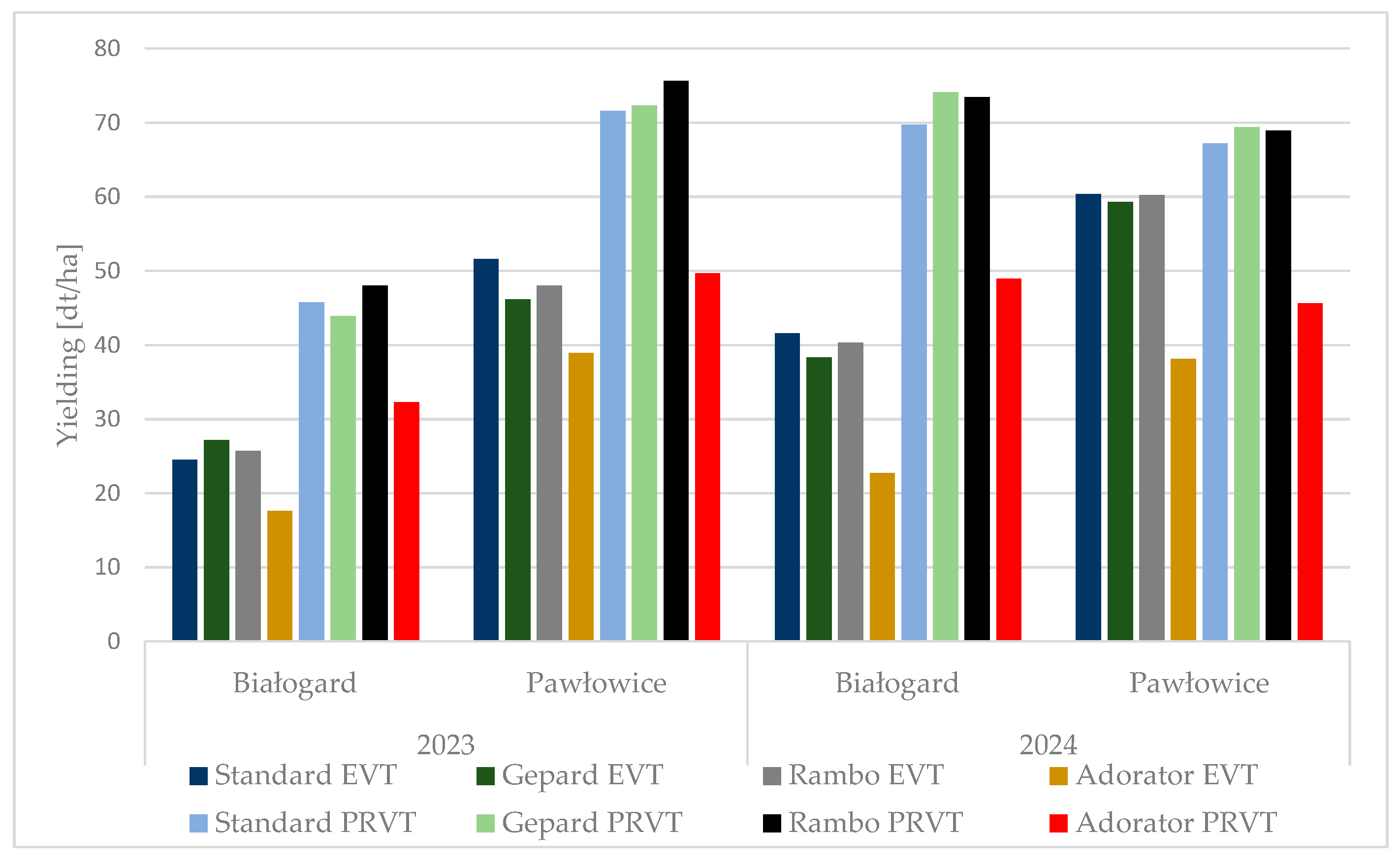
The highest average yields, regardless of production technology, were recorded during the 2024 growing season and were significantly higher than those in 2023 (
Figure 1). On average, the highest yields were obtained at the experimental site in Pawłowice, and these were significantly higher than those recorded in Białogard (
Figure 1). In 2023, the highest EVT and PRVT yields were also obtained at the aforementioned site, whereas in 2024, the highest EVT yields were recorded in Pawłowice and the highest PRVT yields in Białogard (
Figure 1).
The lowest yield levels, regardless of agronomic practices, were observed for the naked oat variety ’Adorator’, although it achieved higher yields in PRVT trials. These differences were statistically significant (
Figure 1).
In EVT trials, the best-yielding variety was ’Rambo’ (except in Białogard 2023), while in PRVT trials, ‘Rambo’ yielded best in 2023, and ’Gepard’ in 2024 (
Figure 1).
In other studies conducted between 2012 and 2016, the yield of tested varieties ranged from 54 dt/ha to 75 dt/ha under standard protection [
35]. Other research reported yields between 60.5 dt/ha and 87.1 dt/ha [
36], with intensive chemical protection applied. In light of the results obtained in the present trials, the yields achieved were at a satisfactory level, especially considering the very limited chemical protection used.
The main advantage of the results is that they highlight the importance of selecting specific varieties for specific farming systems (organic or low-input farms). Yield is the most important utility trait, and only the selection of appropriate varieties adapted to the level of protection intensity guarantees high harvests and, consequently, satisfactory financial outcomes.
3.3. Impact of Experimental Factors on Thousand Grain Weight in PRVT and EVT Systems
The thousand grain weight (TGW) was influenced by all four experimental factors (
Table 3). Moreover, all interactions were statistically significant for TGW (
Table 5).
The TGW value is characteristic of the plant species. This trait is genetically determined and inherited from generation to generation. It reflects the variation between plants of different cultivars. TGW also depends on the conditions during the growing season and can change under the influence of environmental factors (precipitation, temperature), pathogenic organisms, or cultivation methods.
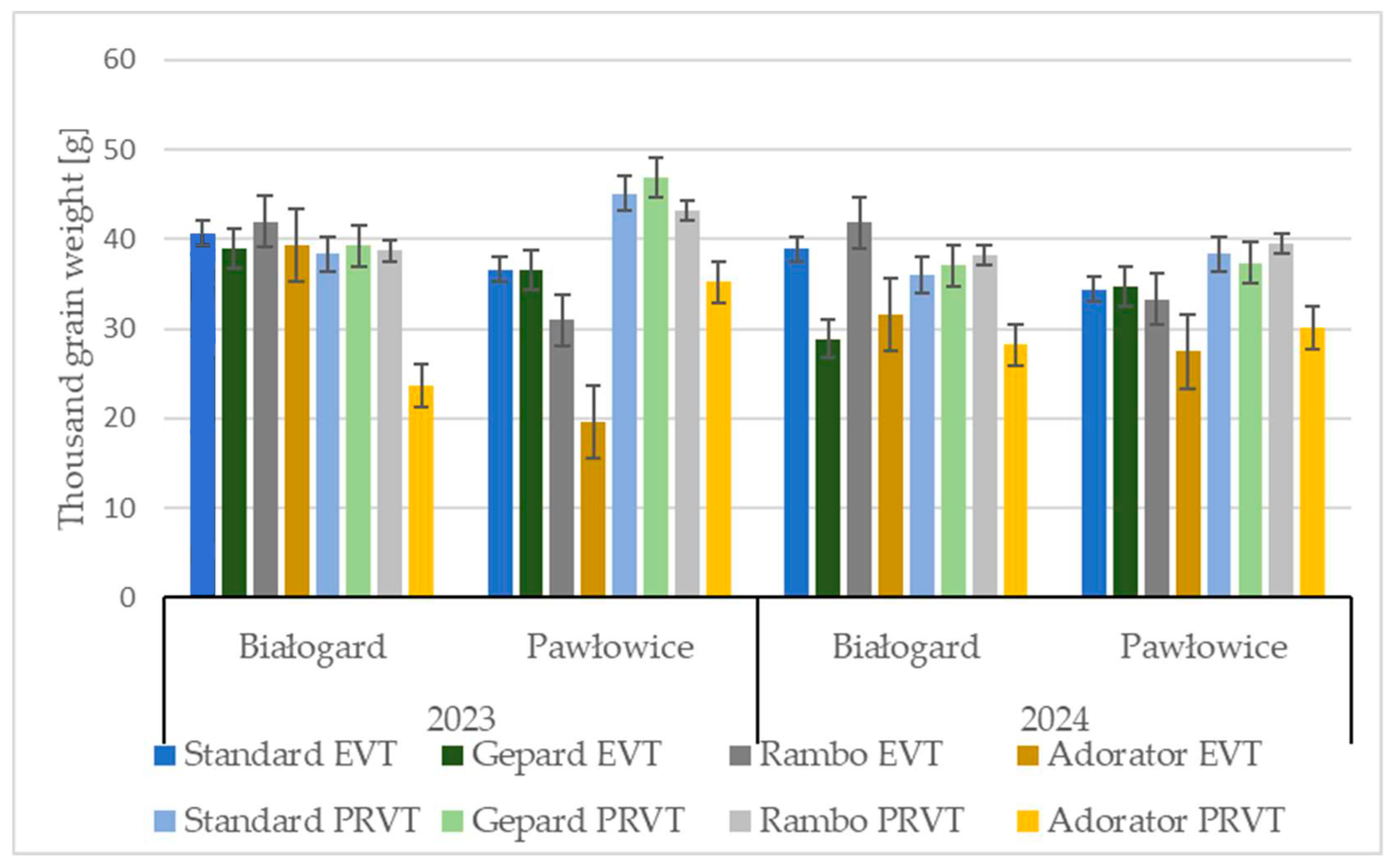
In the conducted experiment, the TGW ranged from 20 to 47 g. On average, the TGW of the tested cultivars was higher in PRVT trials (36 g) than in EVT trials (33 g), and this difference was statistically significant (
Table 3,
Figure 2). In 2023, the highest average TGW in ECT trials was recorded in Białogard, while in the same year in Pawłowice, this parameter was the lowest across all years of the study. This interaction was significant at the 0.001 level (
Table 3). In PRVT trials, the highest TGW was also recorded in 2023, but in Pawłowice, whereas the lowest value of this parameter across all study years occurred in 2023 in Białogard (
Figure 2).
In EVT trials, the highest TGW in Białogard was observed for the cultivar ‘Rambo’ (42 g—2023, 41.9 g—2024), while in Pawłowice, the cultivar ‘Gepard had the highest TGW (36.6 g—2023, 34.7 g—2024) in both years of the study (
Figure 2). In PRVT trials in 2023, the highest TGW was recorded for the cultivar ‘Gepard’ (Białogard—39.3 g, Pawłowice—46.9 g), and in 2024 for the cultivar ‘Rambo’ (Białogard—38.2 g, Pawłowice—39.5 g) (
Figure 2). This interaction was statistically significant (
Table 3,
Figure 2).
A yield-forming trait such as the TGW is a very important indicator of the quality of the obtained yield. This trait is genetically determined. Typically, the TGW of oats ranges from about 35 to 40 g. In experiments conducted by Kołodziej and Kulig [
37], TGW values for oats ranged from 24.6 to 46.2 g, while in studies by Pszczółkowski and Sawicka [
38], the values ranged from 27.1 g to 42.7 g. In contrast, TGW values reported by other researchers were significantly lower: Tobiasz-Salach [
8] found values between 18.1 and 22.1 g, slightly higher levels of 21.9 to 25.1 g were reported by Sykut-Domańska [
39], and Maciorowski et al. [
40] observed TGW values ranging from 21.4 to 29.7 g.
Higher TGW values promote better and faster germination, allowing oats to be sown relatively early. Oats are a crop that requires very early sowing in order to fully utilize the stored soil moisture. In the case of oats, low temperatures positively influence root development, which is due to the very low germination temperature of approximately 2 °C. Therefore, varieties characterized by high TGW values may be recommended for cultivation, especially under conditions of limited chemical protection against pests.
3.4. Impact of Experimental Factors on Plant Height in PRVT and EVT Systems
In the conducted studies, plant height was determined by all four main factors (
Table 3) as well as by six out of eleven interactions: experiment × year, experiment × location, year × location, experiment × year × cultivar, experiment × year × location, and experiment × year × cultivar × location (
Table 5).
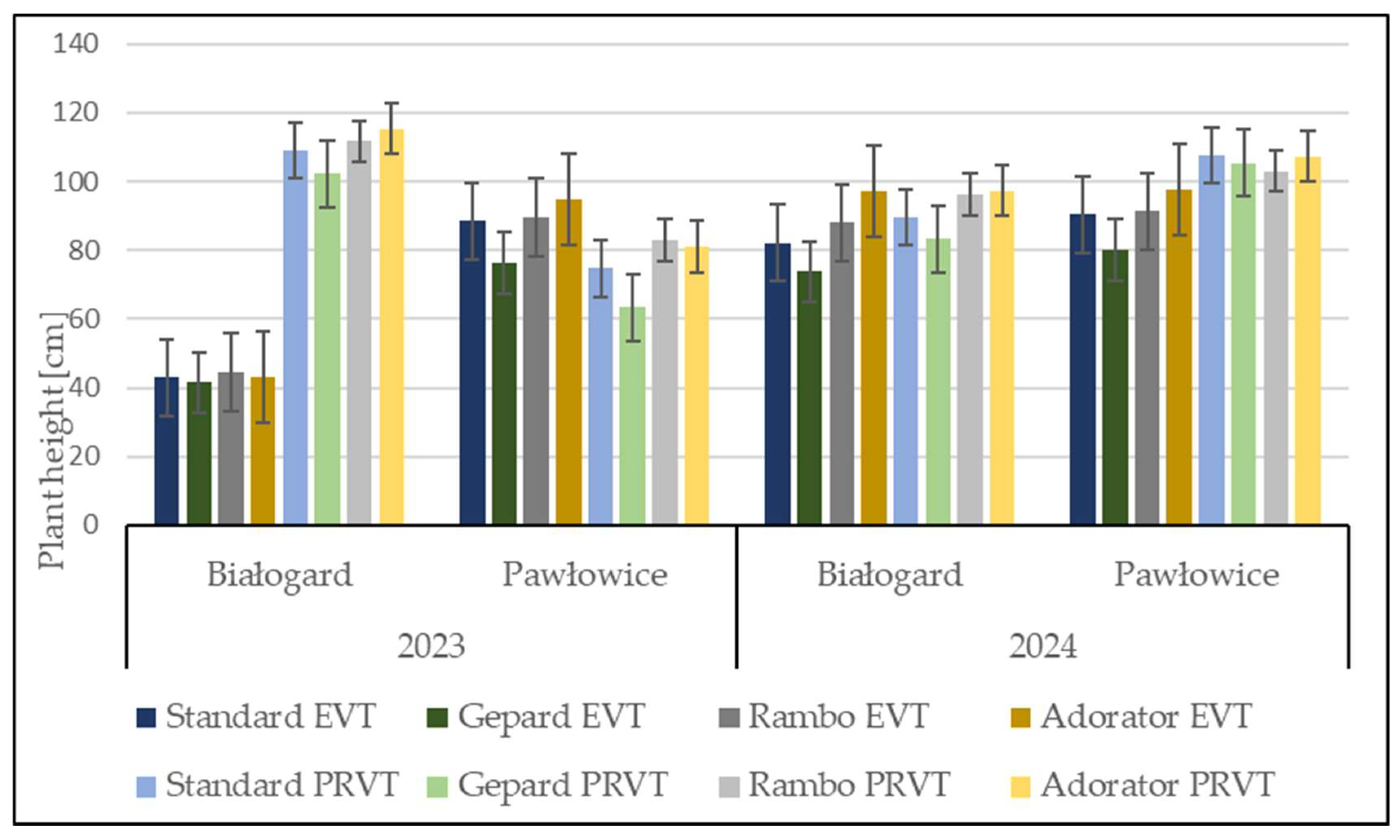
Plant height in the experiments ranged from 63 to 115 cm. Generally, the tallest plants were observed in PRVT, except for the experiment in Pawłowice in 2023, where plants were significantly taller in EVT. In most cases, the tallest cultivar was the naked oat variety ‘Adorator’, regardless of the cultivation method. On average, the tallest plants were recorded in 2024 at both experimental sites (
Figure 3).
Plant height is a morphological trait primarily dependent on genetic factors; however, it can be modified depending on the production technology. In studies by Pszczółkowski and Sawicka [
38], oat plant height ranged from 120 to 131 cm, while in experiments conducted by Okoń [
41], the height of oat cultivars ranged from 93.3 cm to 112.7 cm.
3.5. Impact of Experimental Factors on Pre-Harvest Lodging in PRVT and EVT Systems
In the conducted experiments, statistically significant differences (
p < 0.001) in pre-harvest lodging were observed, depending on weather conditions during the study years (
Table 3). Similarly, the type of experiment, cultivar, and location significantly influenced lodging (
Table 5).
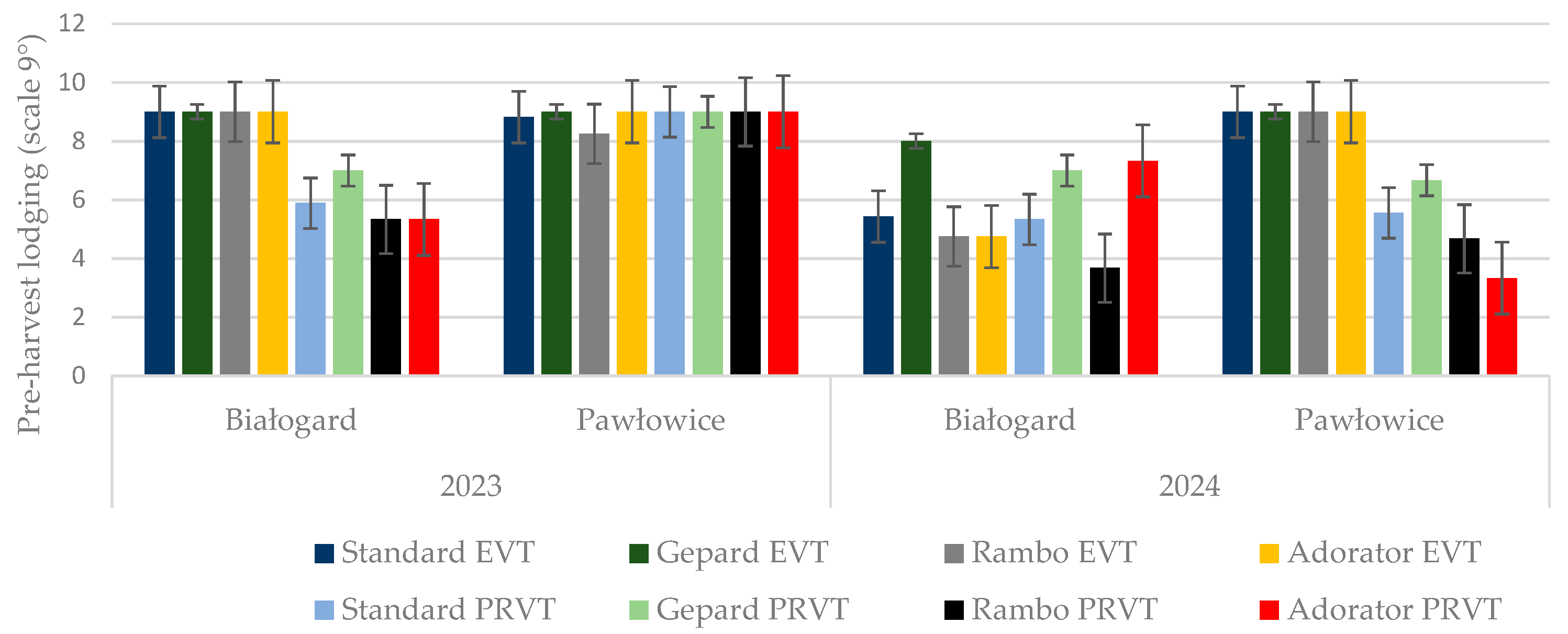
Lodging was most frequently observed at experimental sites and in years where plants reached the greatest height. The most severe lodging occurred in 2024 in Pawłowice in the PRVT trial, where the tallest plants were recorded, as well as in Białogard in both PRVT and EVT trials in the same year.
The best lodging resistance was observed in the ECT trial in 2023 at the Białogard site, where the lowest plant growth was recorded. No lodging was observed in the PRVT trials in 2023 and in the EVT trial in 2024 in Pawłowice (
Figure 4).
Among the tested cultivars, ‘Gepard’ showed the highest resistance to lodging, regardless of the production system (
Figure 4). These results are consistent with the findings of Pszczółkowski and Sawicka [
38], who reported lodging levels ranging from 4.7 to 5.7, with weather conditions during the study years having a significant impact.
3.6. Variation in Oat Infection by Helminthosporiosis and Powdery Mildew Depending on Experimental Factors
Throughout the research period, the infection of spring oat and naked oat plants by fungal pathogens was assessed. The study evaluated the severity of infection caused by helminthosporiosis (Drechslera avenae) and powdery mildew (Blumeria graminis f. sp. avenae).
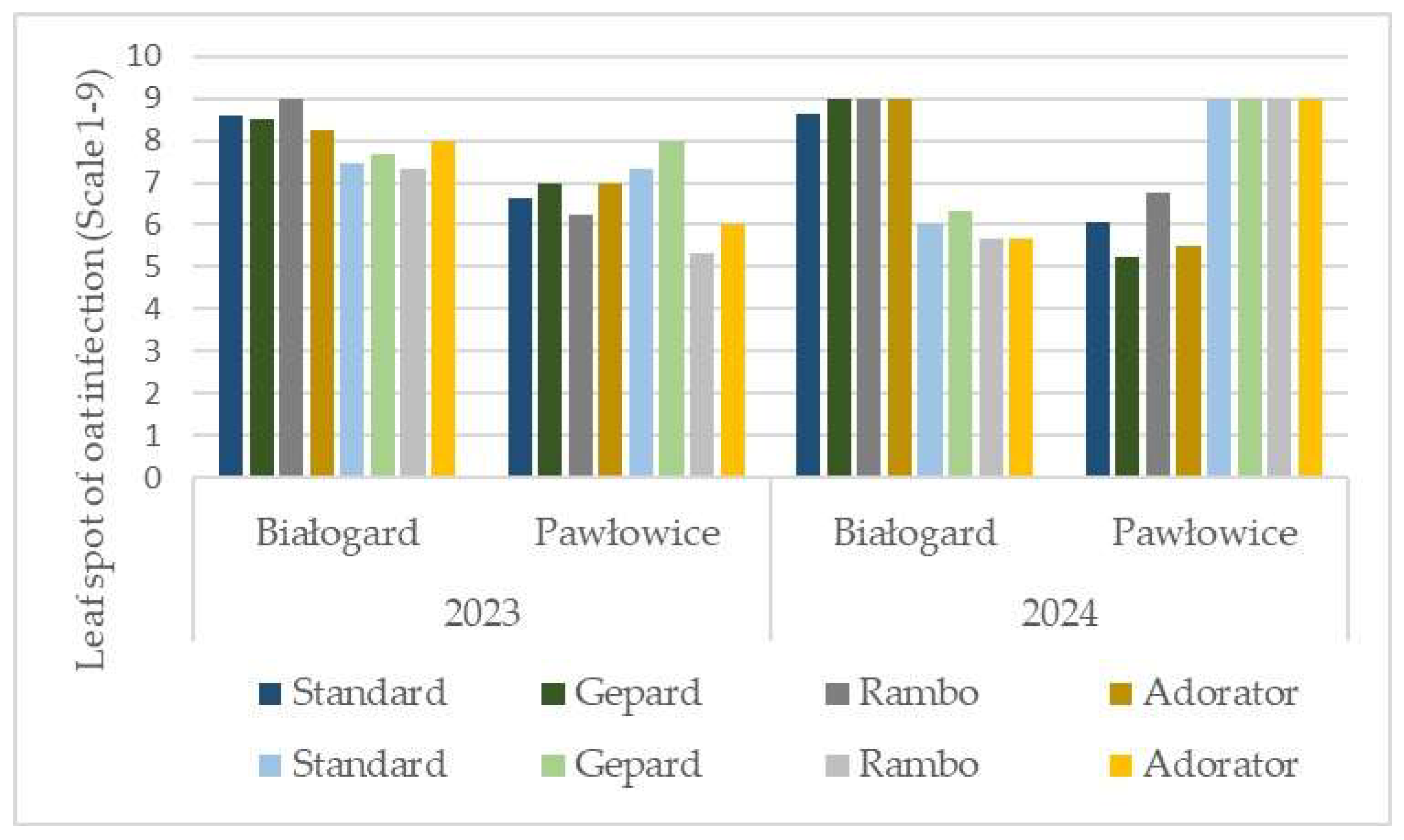
The severity of helminthosporiosis infection ranged from 5.3 to 9.0 (
Figure 5). No statistically significant differences in infection severity were observed between the years of the study (
Table 5). However, the experiment, cultivar, and location significantly influenced the severity of leaf spot infection (
Table 5). Most interactions, except for experiment × year × cultivar and experiment × cultivar × location, had a statistically significant effect on infection severity.
The fewest symptoms were observed in Białogard under organic trials (EVT) in both 2023 (8.5–9.0) and 2024 (8.6–9.0), as well as in Pawłowice in 2024 (9.0) in PRVT trials. Among the tested cultivars, the highest resistance to helminthosporiosis in EVT trials was shown by ‘Rambo’ (9.0—Białogard 2023 and 2024), followed by ‘Gepard’ (8.5—Białogard 2023; 9.0—Białogard 2024), and ‘Adorator’ (9.0—Białogard 2024). In PRVT trials, good resistance was observed in ‘Adorator’ (8.0—Białogard 2023) and ‘Gepard’ (8.0—Pawłowice 2023). In 2024, all cultivars tested in Pawłowice showed the highest resistance level (9.0) (
Figure 6).
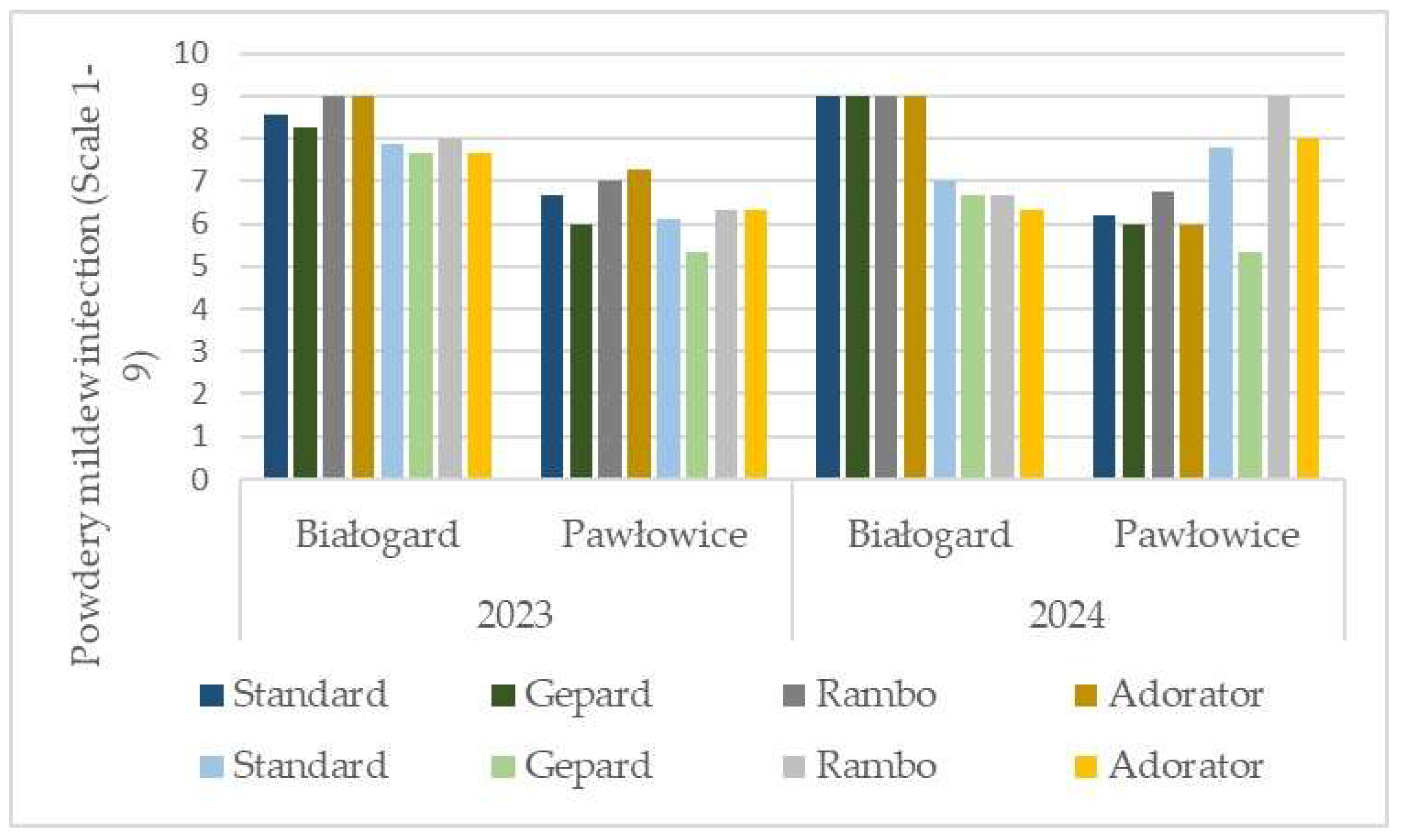
The severity of powdery mildew infection ranged from 5.3 to 9.0 (
Figure 6). No differences in infection levels were observed between the years (
Table 5), although a statistically significant interaction between year and cultivar was noted. In Białogard, no powdery mildew symptoms were observed in EVT trials during both 2023 (8.3–9.0) and 2024 (9.0). In contrast, in Pawłowice, infection levels ranged from 6.0 to 7.3 in 2023 and from 6.0 to 6.8 in 2024.
In PRVT trials, higher disease severity was observed in Pawłowice for both years (‘Gepard’—5.3; ‘Rambo’ and ‘Adorator’—6.3). The best resistance in PRVT was noted for ‘Rambo’ (8.0—Białogard 2023) and for the naked oat variety ‘Adorator’.
Overall, statistically significant differences were observed between experiments, with higher resistance values recorded in organic (EVT) trials compared to PRVT trials (
Figure 6).
Previous studies [
42,
43,
44,
45] also confirm that plant infection by
D. avenae and
B. graminis varied across years and depended on both cultivar and environmental conditions.
Cultivar resistance to diseases is an extremely important trait. Making fuller use of the genetic, natural resistance potential of cultivars is one of the priorities of Integrated Pest Management (IPM). Information on the level of infection of individual cultivars under conditions of no or very limited chemical protection is extremely valuable for agricultural practice. Thanks to such research and the selection of specific cultivars for cultivation, plants can maintain good health throughout the growing season. As a result, satisfactory yields can be achieved. Equally important is the reduction in chemical protection to the necessary minimum, or its complete absence in organic farming. This has a significant impact on financial benefits and environmental protection. The guidelines of integrated protection and the assumptions of IPM clearly indicate the need to reduce the use of chemical plant protection products. One solution is the selection of resistant cultivars. Research aimed at identifying cultivars that are resistant or tolerant to pathogenic organisms and characterized by sufficiently high yields provides valuable information.
The obtained results indicate a statistically significant effect of cultivar on the severity of powdery mildew (
Table 3). Similarly, significant differences were observed between locations (
Table 3). Oats in Białogard were more severely infected than those in Pawłowice (
Figure 6).
The results of the conducted research provide support and ready-to-implement solutions for agricultural crop production. The use of resistant varieties is the most environmentally friendly form of cultivation. Moreover, it minimizes the use of costly and environmentally hazardous chemical plant protection products
3.7. Relationships Between Traits and Multivariate Similarity
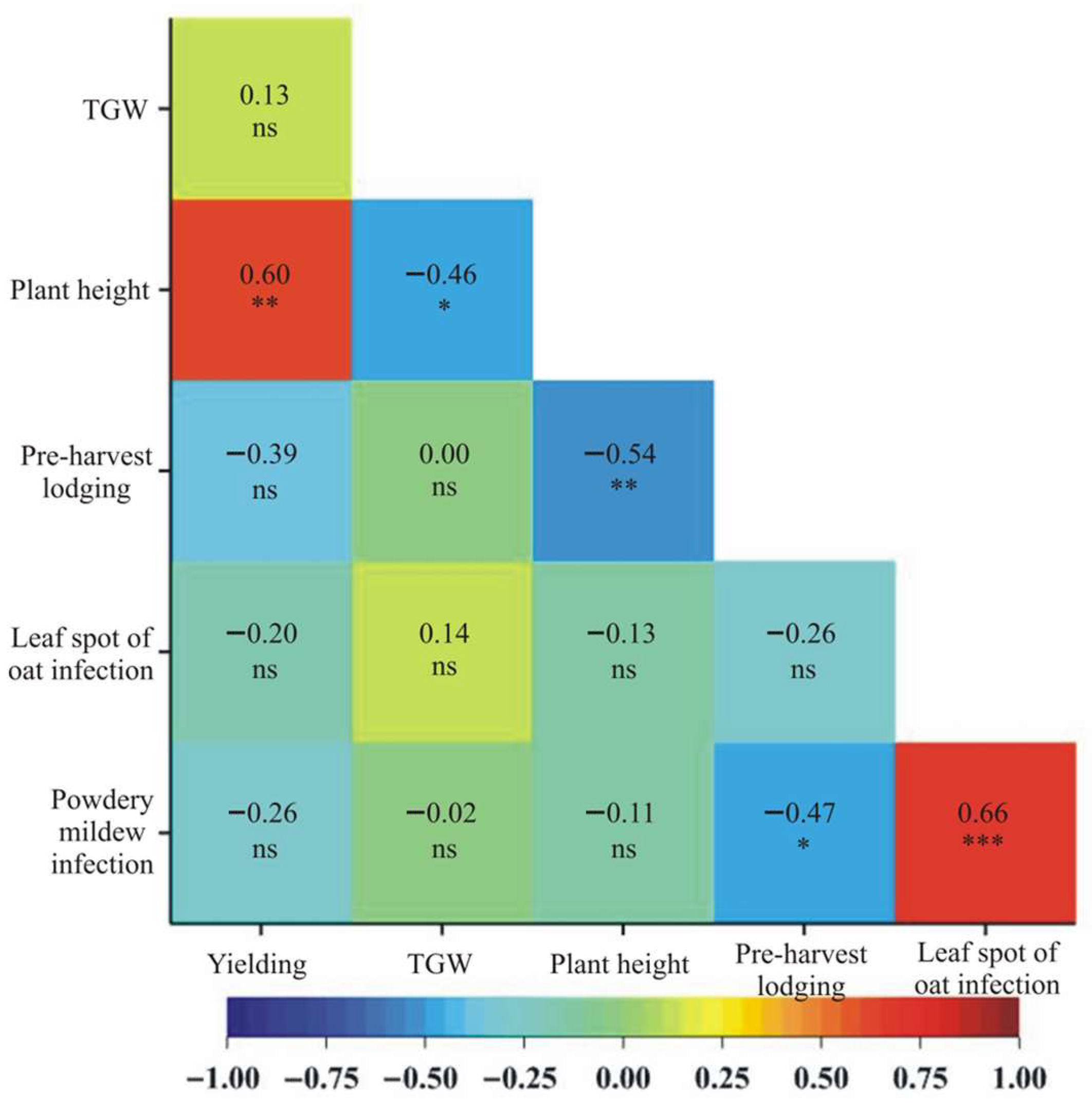
Five pairs of traits showed statistically significant correlation (
Figure 7). Yield was significantly positively correlated with plant height (
r = 0.60). Plant height significantly negatively correlated with thousand grain weight (TGW) (
r = −0.46) and pre-harvest lodging (
r = −0.54). Powdery mildew infection was correlated with pre-harvest lodging (
r = −0.47) and leaf spot of oat infection (
r = 0.66) (
Figure 7).
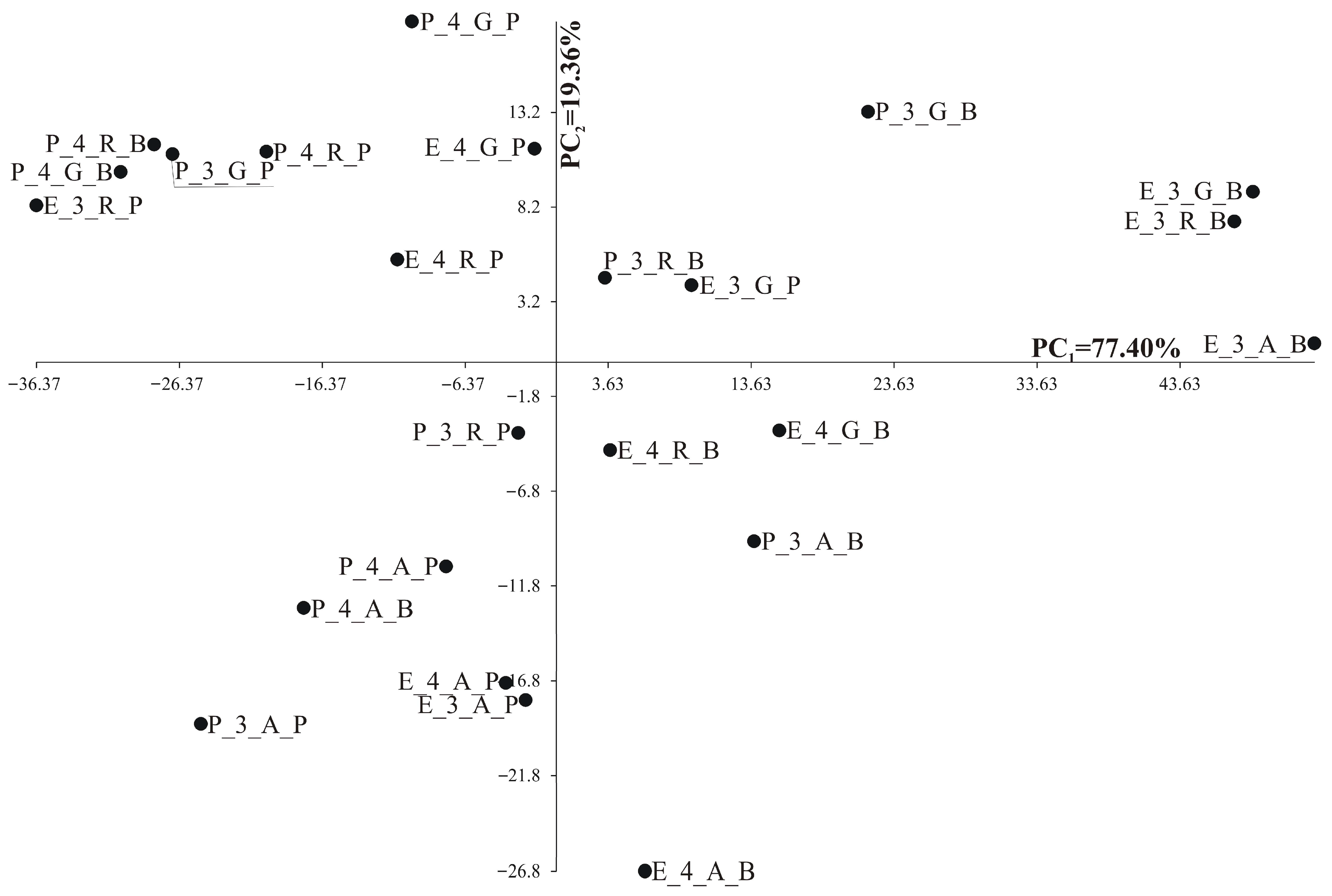
The distribution of combinations of individual levels of all four factors considered in the system of the first two principal components based on the number of quantitative traits is presented in
Figure 8. The most significant positive, linear relationship with the first principal component, was found for pre-harvest lodging (0.59), while significant negative was found for: yielding (−0.84) and plant height (−0.95). The second canonical variate was significantly positive correlated with yielding (0.53) and thousand grain weight (0.74).
4. Conclusions
The study conducted at two RCCT experimental stations (Pawłowice and Białogard) in 2023–2024 enabled a comprehensive comparison of oat performance in two contrasting cultivation systems: Ecological Variety Testing (EVT), representing organic, low-input farming with a complete ban on mineral fertilizers and chemical plant protection, and Post-Registration Variety Testing (PRVT), reflecting conventional/integrated farming with the use of mineral fertilizers and chemical protection. Clear differentiation of these systems was essential for the interpretation of varietal responses under different agronomic input levels.
Meteorological conditions varied significantly between years and locations, influencing plant development and experimental outcomes. The highest yields were obtained in 2024 in Pawłowice, while the naked oat variety ‘Adorator’ produced the lowest yields in both systems. In EVT, the highest-yielding variety was ‘Rambo’, whereas in PRVT, ‘Rambo’ yielded best in 2023 and ‘Gepard’ in 2024.
Grain quality reflected the contrasting production inputs. The 1000-grain weight (TGW) was higher in PRVT (36 g) than in EVT (33 g), which confirms that mineral fertilization in conventional/integrated systems improves grain filling, while low-input organic conditions result in lower TGW due to limited nutrient supply. Among varieties, ‘Rambo’ and ‘Gepard’ achieved the highest TGW values depending on site and system.
Plant height, ranging from 63 to 115 cm, was mainly genetically determined but modified by input level. Plants in PRVT were taller, reflecting better nutrient availability, while the tallest across all varieties were naked oats (‘Adorator’). Lodging intensity corresponded strongly with plant height and occurred most frequently in 2024 in Pawłowice (PRVT) and in Białogard (EVT and PRVT). The ‘Gepard’ variety demonstrated the greatest lodging resistance.
Disease pressure also differed between systems. In the organic EVT system, where no chemical protection is permitted, varietal resistance played a decisive role; ‘Rambo’ showed the highest resistance to helminthosporiosis. In conventional/integrated PRVT conditions, ‘Adorator’ and ‘Gepard’ achieved the best results due to the combined effect of varietal traits and plant protection. Interestingly, powdery mildew severity was lower in EVT than PRVT, suggesting that organically adapted varieties may maintain stable resistance without fungicides. Across locations, plants from Białogard were more infected than those from Pawłowice.
Correlation analyses revealed that yield was positively correlated with plant height, while height showed a negative correlation with TGW and lodging. PCA visualized the relationships between traits and experimental factors, confirming clear differences between the two farming systems.
The distinction between low-input organic production (EVT) and systems with partially limited inputs is essential. In EVT, the low-input system represents complete exclusion of mineral fertilizers and chemical crop protection. This differs fundamentally from systems where fertilizer or pesticide use is only reduced—such systems still benefit from external inputs and do not represent true low-input organic production. The present study highlights that oat varieties respond differently across these categories, and their performance must be interpreted in this context.
From a practical perspective, PRVT provides valuable information on varietal productivity and suitability for integrated or conventional farming, where agronomic inputs ensure high and stable yields. EVT results identify varieties capable of maintaining acceptable performance and strong disease resistance under organic, low-input conditions. Proper selection of varieties and the use of certified seed material significantly enhance production efficiency, reduce costs, and support sustainable agricultural practices. The complementary roles of PRVT and EVT ensure that producers farming under both high-input (conventional/integrated) and low-input (organic) systems can make informed decisions regarding the most suitable cultivars for their conditions.




 ,
,