Review

Ultrafine Bubble Water for Crop Stress Management in Plant Protection Practices: Property, Generation, Application, and Future Direction


1
College of Mechanical and Electronic Engineering, Nanjing Forestry University, Nanjing 210037, China
2
Nanjing Fortune Water Technology Co., Ltd., Nanjing 210018, China
3
College of Ecology and Environment, Nanjing Forestry University, Nanjing 210037, China
4
New Quality Productivity Centre of Jiangsu Province, Nanjing 210042, China
*
Author to whom correspondence should be addressed.
Agriculture 2025, 15(23), 2484; https://doi.org/10.3390/agriculture15232484 (registering DOI)
Submission received: 27 October 2025 / Revised: 24 November 2025 / Accepted: 27 November 2025 / Published: 29 November 2025

Abstract

Every year, up to 40% of the crops in the world are lost to pests. Plants have suffered from prolonged biotic stresses and abiotic stresses, which cause significant changes in complex crop ecosystems, necessitating intensive pest management strategies that have often been accompanied by the struggle against plant pests. Plant pests and diseases control methods heavily reliant on chemical pesticides have caused many adverse effects. One innovative method involves using ultrafine bubble (UFB) waters, which can enable pesticide reduction action for the plant pest control. The classification and six properties of UFBs were summarized, and the generation approaches of UFBs were introduced based on physical and chemical methods. The applications of UFBs and ozone UFB waters in plant protection practices were comprehensively reviewed, in which UFB waters against the plant pests and the soilborne, airborne and waterborne diseases were analyzed, and the abiotic stresses of crops in high-salinity soil and contaminated soil, drought, and soil with heavy metals were reviewed. Despite promising applications, UFB technology has limitations. Aiming at pesticide reduction and replacement using UFB waters, the mechanism of UFB water controlling plant pests and diseases, the molecular mechanism of UFB water affecting plant pest resistance, the plant growth in harsh polluted environments, the UFB behavior with hydrophobic and hydrophilic surfaces of crops, and the building of an integrated intelligent crop growth system were proposed.

1. Introduction

During the plant growth process, plants have suffered from prolonged biotic stresses of diseases, insects, weeds, and so on, as well as abiotic stresses of droughts, waterlogging, extreme temperature (heat/cold), heavy metals, damaged soil, and soil salinization, which differ in intensity, duration, and severity and cause apparent changes in complex crop ecosystems in structure and function and often accompany secondary disaster [1,2]. A recent report by the Food and Agriculture Organization (FAO) estimates that up to 40% of the crops in the world are lost to pests each year. The losses caused by plant diseases to the global economy are around USD 220 billion, and invasive pests cause at least USD 70 billion in losses each year, which are the main causes of biodiversity losses. It is estimated that 20–40% of global crop yields are lost due to plant pests and diseases, with losses of major grains (rice, wheat, and corn) and tuber crops (potatoes and sweet potatoes) [3,4]. As FAO mentions, global agriculture is facing increasingly severe challenges from pests that threaten food security, biodiversity, and farmers’ livelihoods. The pest control methods heavily reliant on chemical pesticides have caused many adverse effects, including soil degradation, water contamination, the resistance development of pests, and environmental degradation, posing serious risks to human and animal health. The total use of pesticides in agriculture in 2023 was 3.73 million tons of active ingredients (Mt), a decrease of 2% compared to 2022, an increase of 14% over the past decade, and a doubling since 1990 [5]. The development of resistance is a genetic process in which the risk varies greatly among and within pesticide groups and pest species but is particularly high for many selective pesticides with specific modes of action. The factors that affect the development of resistance can be divided into three categories: genetic composition of pests, biology of pests, and operational factors (planting practices and the pesticide properties and applications) [6]. It is worth noting that 64% of the global agricultural land is affected by pesticide application. The European Environment Agency monitored pesticide pollution in water from 2013 to 2021 and found that 10–25% of all surface water locations had pesticide concentrations over the environmental quality standards of the European Union. In groundwater, 4–11% of monitoring locations showed pesticide levels exceeding the allowable limits. Soils in the Alpine Valley of Europe were found to be polluted by 27 pesticide compounds [7]. FAO organized an event focusing on a key challenge: how to expand biodiversity-friendly pest control practices as effective alternatives to high-risk pesticides, emphasizing the importance of transitioning from toxic chemical solutions to safer, sustainable and biodiversity-enhancing measures such as IPM (integrated pest management) and biological control in agriculture [8]. Therefore, it is necessary to carry out research on pesticide replacement and the reduction action of plant protection methods and pesticide application equipment.
Reduction in chemical pesticide application has become a worldwide issue concerning environmental sustainability and human health. As the demand for safer and more sustainable crop production grows, advanced and sustainable plant protection methods are emerging that could benefit the way we cultivate crops. Emerging treatment technologies, particularly ultrafine bubble (UFB) water systems, offer potential alternatives to reduce the reliance on chemical pesticides, improving both crop yield and quality in a natural way [9,10,11].
Most of the plant pest concerns can be solved through nanotechnology revolutionizing the changes in agricultural plant protection practices. Nano-pesticides are an emerging technological advancement that bring new possibilities for managing plant pests and diseases [12]. Nanobubbles, as gaseous nanostructures in an aqueous medium, are cavities filled with gas that exist in liquids. Ultrafine bubble water (UFW) offers sustainable practices by promoting photosynthesis, improving oxygenation, disrupting the growth of harmful pests, and strengthening plant defensive abilities [10,13,14]. UFWs could be easily integrated into existing irrigation and pesticide spraying systems, providing farmers with a practical solution to reduce plant pest outbreaks, improve crop yields and quality, while minimizing the environmental impact and realizing sustainable development. Research data showed that UFWs have significant effects on sterilization and pest control. The application of chemical pesticides using UFB technology not only reduces the potential risk of pesticide residues on human health but also reduces the environmental pollution caused by agricultural planting, which is conducive to achieving sustainable development [11,15]. Research showed that ozone ultrafine bubble water (OUFBW) spraying can effectively control various bacterial plant diseases, effectively prevent and control common diseases such as crop powdery mildew and gray mold, improve crop disease resistance, and reduce crop incidence rate [16]. Obviously, the use of OUFBW for plant protection can reduce the application of chemical pesticides and promote the development of green agriculture.
A few crop protection practices of UFWs in agriculture applications have been conducted around the world [17,18,19,20], but no comprehensive reviewing article introduces the UFWs in crop protection practices. The objectives of this paper were to review the UFW properties and generation approaches and to mainly introduce the research on UFB waters applied in crop protection practices, even though the research is in its infancy. Finally, several research prospects were proposed, aiming at reducing pesticide consumption and increasing pesticide application efficiency from the source.

2. Properties and Generation of UFW

The generation and property analysis of UFWs is an important part of the practices to realize pollution-free and residue-free plant protection using the UFWs as broad-spectrum pesticides.

2.1. Bubble Classification and Definition

Generally, the gas that aggregates and remains in a surrounding medium by an interface is called a bubble. When the gas is subjected to shear forces in the liquid, it forms bubbles in different sizes and shapes. International Standard Organization (ISO) defines bubbles with a volume equivalent diameter (VED) < 100 µm as fine bubbles; fine bubbles with a VED from 1 µm to 100 µm as microbubbles; and the fine bubbles with a VED < 1 µm as ultrafine bubbles [21]. However, the bubble classification name and size range recommended by the different literature sources are not very strict and not quite consistent. Through analyzing the classification names and definitions of ISO and the size ranges recommended by relevant studies, we summarize the bubbles with the classification, typical names, and size ranges of different bubbles, as shown in Table 1.
According to the subsequence of bubble dimensions from large to small, the bubbles are divided into macrobubble (MaB), microbubble (MiB) and micro-nanobubble (MNB) [21,22,23]. The MaB is further divided into centimeter bubbles (CMB) with diameters of >10 mm and millimeter bubbles (MMB) with diameters from 100 µm to 10 mm. The MiB usually refers to the gaseous cavities in an aqueous medium with diameters from 1 µm to 100 µm, in which bubbles with diameters from 1 µm to 10 µm are called sub-microbubbles (SMB). The MNB refer to bubbles with diameters from a few hundreds of nanometers to about 10 µm when the bubbles occur. The SMBs with diameters from 1 µm to 10 µm can be included into MNBs. The ultrafine bubbles (UFBs) with diameters of less than 1 µm are also included into the MNB, which is the focus of this paper. Among them, UFBs with diameters < 200 nm are called nanobubbles (NBs). Some typical corresponding reference objects for different size bubbles are as follows: the CMB corresponds to grape, MMB corresponds to most raindrops, MB corresponds to ordinary hair, SMB corresponds to erythrocyte, UFB corresponds to cigarette smoke, and NB corresponds to viruses.

2.2. Ultrafine Bubble Water (UFW) Properties

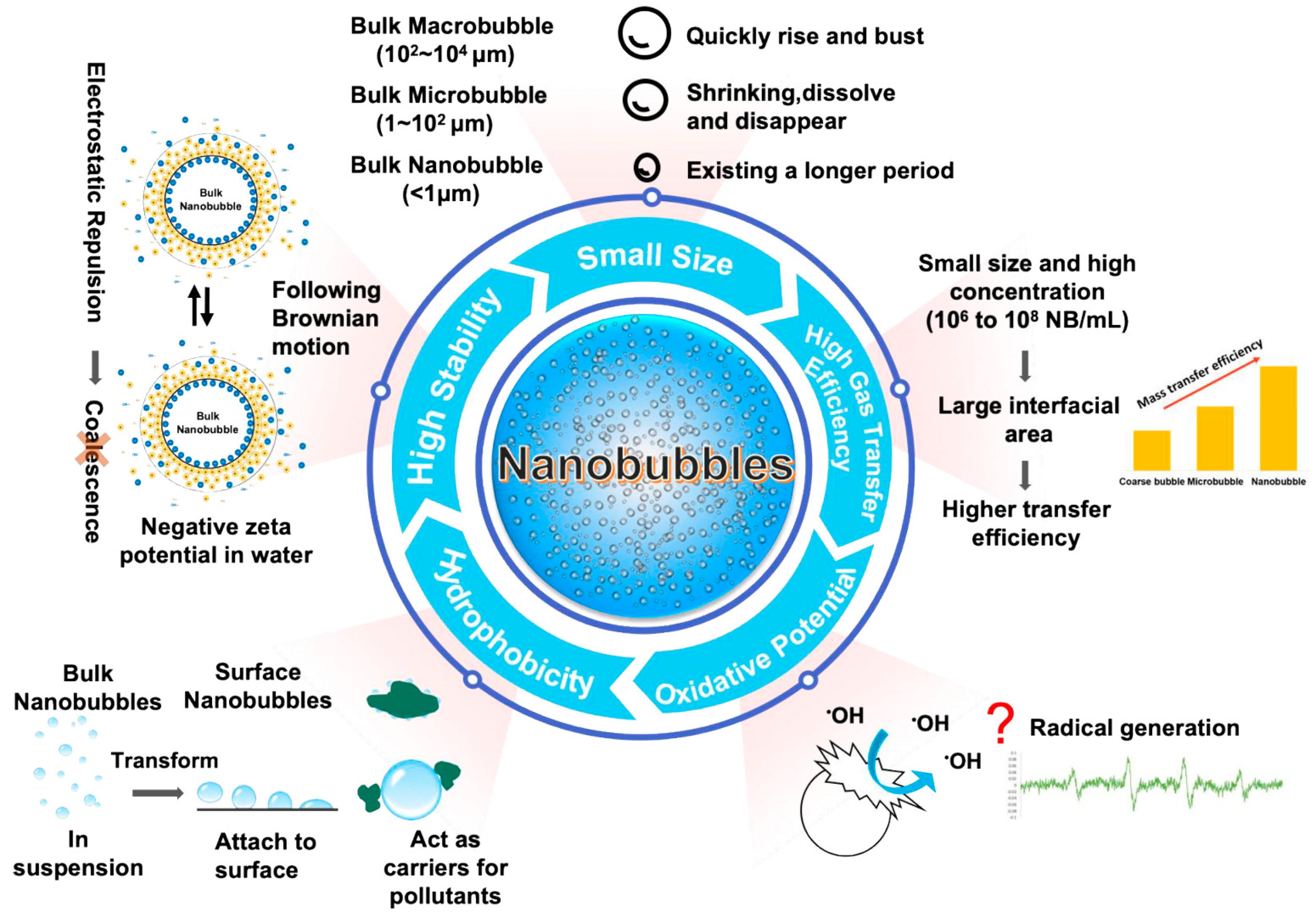
Due to the nanoscale sizes, the NMBs endow unique physicochemical properties that the traditional bubble does not possess, such as a large specific surface area, slow rising velocity in water, easy self-pressurization, high gas dissolution rate, strong mass transfer efficiency, and strong interfacial Zeta potential, generating much of the free hydroxyl radicals. The special physicochemical properties of UFB waters are summarized in Table 2 [14,22,23,24,25,26,27,28,29,30,31]. Figure 1 shows the fundamental physiochemical properties of nanobubbles [22].
(1)
Large specific surface area [23]
The specific surface area of a bubble is defined as the ratio of its total surface area to the volume of the gas it contains, which describes the degree of dispersion and size of the bubble in the liquid. Under the same bubble volume, the specific surface area is inversely proportional to the bubble diameter. This large specific surface area-to-volume ratio of a UFB leads to high surface energy, causing the bubbles to have a natural tendency to coalesce or dissolve to reduce the surface energy. When there are substances in the solution that can adsorb on the surface of the nanobubbles, they can decrease the surface tension and improve the stability of nanobubbles.
Table 2. The physicochemical properties of UFB waters.
Physicochemical PropertiesPhenomenonTheoretical FoundationReferences
1Large specific surface areaThe large specific surface area gives the bubble a natural tendency to coalesce or dissolve.The specific surface area refers to the ratio of its total surface area to the volume of the gas it contains.[23]
2Slow rising velocity in waterThe UFBs can remain suspended in water for extended periods and have a relatively long residence time.Using Stokes’ law, where the rising velocity is proportional to its size and inversely proportional to the viscosity of the surrounding liquid.[23,30]
3Easy self-pressurization and high gas dissolution rateDuring self-pressurization, the gas in the bubble continuously dissolves into the liquid, resulting in the shrinkage and disappearance of nanobubbles.Based on Young–Laplace equation, the pressure is directly proportional to the gas–liquid interface tension and inversely proportional to the bubble diameter.[24,29,31]
4Strong mass transfer efficiencyThe mass transfer efficiency is significantly higher than that of conventional bubbles to make the UFBs spread over a larger region and reach confined spaces easily.Based on mass transfer coefficient formula and transfer flux formula, larger contact surface area, lower surface tension, massive quantities, and long-term interaction with liquid result in higher mass transfer efficiency.[14,23,32]
5Strong interfacial Zeta potentialWhen the Zeta potential is high, the electrostatic repulsion between the UFBs is strong, which can prevent bubbles from approaching and coalescing, thereby improving the stability of UFB water.According to electrostatic laws and Poisson–Boltzmann equation, bubbles with charge interfaces generate an electrical field that preferentially attracts the opposite charge ions distributed in solutions.[14,23,29,33]
6Generating hydroxyl radicals with strong oxidationHydroxyl radicals can oxidize the surface-active substances on the surface of UFBs, reducing the surface activity and stability of UFBs.Oxidation-reduction potential measures the ability of an aqueous solution to oxidize or reduce another substance, and it changes linearly with logarithmic change in O2 concentration.[25,34]
(2)
Slow rising velocity in water [23,30]
The shape and rising velocity of bubbles can be determined using fluid mechanics. When the bubbles are too small, the inertial force is much smaller than the surface tension or the viscous force, and thus, the bubbles are spherical. The rising velocity is a function of bubble diameter. The small size of UFBs keeps Brownian motion in liquid with negligible buoyant force and slows down their rising velocity, making it difficult for them to quickly float to the surface as the rising velocity of UFBs can be expressed using Stokes’ law, where the rising velocity of the bubble is proportional to its size and inversely proportional to the viscosity of the surrounding liquid. Therefore, the UFBs can remain suspended in water for an extended period and remain in water for a relatively long retention time. For example, the rising velocity of a 100 nm diameter nanobubble is only 2.7 nm/s, indicating a longer retention time and slower rising velocity.
(3)
Easy self-pressurization and high gas dissolution rate [24,31]
The gas-dissolving capability (solubility of gas) is affected by factors such as temperature, pressure, and bubble size. There is interfacial tension at the interface between the gas and liquid, which compresses the gas in the bubble to dissolve the gas into liquid. As the size of a bubble decreases, the tensile stress experienced by the liquid will increase. According to the Young–Laplace equation, the pressure is directly proportional to the interface tension between the gas and liquid and inversely proportional to the diameter of the bubble. The internal pressure of UFBs increases sharply as the bubble size decreases, making it difficult for UFBs to maintain stability at a normal pressure. The self-pressurization and dissolution characteristics of UFBs refers to the process in which the bubble wall gradually becomes thinner and eventually dissolves due to the internal pressure being higher than the external environmental pressure. Given that the self-pressurization process breaks the assumption of supersaturated gas dissolution conditions, causing the gas inside the bubble to continuously dissolve into water, the solubility of the gas in the liquid increases, resulting in the gradual shrinkage and disappearance of the nanobubbles.
(4)
Strong mass transfer efficiency [14,23]
The mass transfer efficiency of bubbles is defined as their ability to facilitate the transport of substances in the liquids. The solubility of gases in liquids has a significant impact on the stability of UFBs. If the gas solubility is low, the gas in the UFBs is less likely to dissolve, which is beneficial for the stability of the UFBs. When the shrinkage of the UFB reaches a certain limit value, the bubble’s internal pressure will tend towards infinity. This self-pressurization effect will make the UFB dissolve in liquid or break away at the liquid surface, leading to the supersaturation of gas solubility in liquid and achieving better gas–liquid mass transfer efficiency. Due to the larger contact surface area and long-term interaction with liquids, the mass transfer efficiency of UFBs is significantly higher than that of traditional bubbles. In addition, the lower surface tension of UFBs promotes closer contact and fusion with the liquids, thereby shortening mass transfer distance and improving mass transfer efficiency. It is expected that a large number of UFBs will spread to larger areas, making it easier to reach enclosed spaces.
(5)
Strong interfacial Zeta potential [14,23,29,33]
The Zeta (ζ) potential can reflect the surface charge state of bubbles in a dispersed system. It represents the potential difference at the sliding interface between the bubble and the surrounding solution, mainly influenced by pH value, ionic strength, electrolyte type, and surface properties of the solution. Pure aqueous solution is composed of water molecules and a small amount of ionization-generated H+ and OH-. According to the law of electrostatics and the Poisson–Boltzmann equation, bubbles with charged interfaces will generate an electrical field, which will preferentially attract ions with opposite charges distributed in the solution. Generally, cations are easier to leave the gas–liquid interface than anions, making the interface negatively charged with a negative Zeta potential value. When the UFBs shrink, the charged ions rapidly concentrate and enrich, leading to a significant increase in the interface ζ potential. When the Zeta potential is high, the electrostatic repulsion between the UFBs is strong, which can prevent the bubbles from approaching and coalescing, thereby improving the stability of the UFB water. But if the Zeta potential is low, the electrostatic repulsion is weak, and the UFBs are more likely to aggregate and collapse.
(6)
Generating hydroxyl radicals with strong oxidation [25,34]
Through measurement of the oxidation-reduction potential, an indicator that reflects macroscopic oxidation-reduction properties exhibited by all substances in aqueous solutions, the ability of an aqueous solution to oxidize or reduce another substance can be determined which the oxidation-reduction potential varies linearly with the logarithm of O2 concentration. At the moment of UFB explosion, the high concentration ions on the interface will release the accumulated chemical energy instantly and stimulate the generation of a large amount of hydroxyl radicals with ultra-high oxidation-reduction potential and strong oxidation. UFBs rich in O2 molecules are beneficial for the generation of hydroxyl radicals compared to gases without O2. Hydroxyl radicals are highly reactive species that can react with the substances on the surface of the UFBs or in the surrounding solutions, altering the surface properties of the UFBs or the composition of the solution, thereby affecting the stability of the UFBs. For example, hydroxyl radicals can oxidize the surface-active substances on the surface of the UFBs, reducing the surface activity and stability of the UFBs.
These characteristics of UFBs endow them with huge potential and broad application prospects in various fields, including water treatment, enhanced oil recovery, mineral flotation, medical drug delivery, agricultural production, and plant protection. UFB technology is highly efficient, energy-saving, and environmentally friendly. In agriculture production, UFBs can promote crop nutrient absorption, improve crop quality, and enhance crop yield. These unique physicochemical characteristics of UFB waters enable them to puncture biofilms, oxidize harmful pathogens, and improve plant resilience. UFBs can be integrated with O2, ozone, or other gases to address specific agricultural challenges [34,35].

2.3. Generation of UFB Water and Ozone UFB Water

According to the different distribution states, UFBs can be divided into surface UFBs and bulk UFBs. Surface UFBs are non-spherical interface bubbles, which are located on the liquid and solid interface. Bulk UFBs are spherical bubbles suspended in liquid. Besides the phase transition process of the forming gas phase through the crystal nucleus in the metastable liquid phase, the formation of bulk UFBs is usually considered as a static and/or quasi-static to dynamic process through coalescence or breakup. The bubble coalescence refers to the aggregation of small bubbles in the liquid to form large bubbles, and the bubble breakup refers to the micro pore shrinkage and rupture of large bubbles to form small bubbles. The generation of bulk UFB water (UFW) and ozone UFB water (OUFBW) are reviewed in this paper.

2.3.1. UFB Water Generation

There are several ways to divide the generation approaches which can produce UFBs under certain conditions [14,34,35,36,37]. Generally, UFBs can mainly be formed through both physical and chemical methods, depending on the generation mechanism, as shown in Table 3. The physical generation methods of UFBs belongs to physical processing, which only achieve their function by changing the physical state or form of the substance without introducing new substances, such as cavitation (either using hydrodynamic cavitation or acoustic cavitation), gas dispersion (including mechanical agitation, micro-porous dispersion, and microfluidic devices), solvent exchange, temperature alteration, electrohydrodynamic effect, and pressurized gas dissolution; meanwhile, the chemical generation approaches of UFBs are accompanied by generating new substances, including electrolysis and photocatalysis technology.
(1)
Physical methods
Cavitation approaches
Cavitation is known as the formation of new gas–liquid interfaces and generates localized low-pressure areas in the liquid, typically occurring after an energy input causes a partial pressure fluctuation (including acoustic cavitation) or an increase in hydraulic device flow velocity (including hydrodynamic cavitation), which may cause the partial pressure to drop below vapor pressure [23,36].
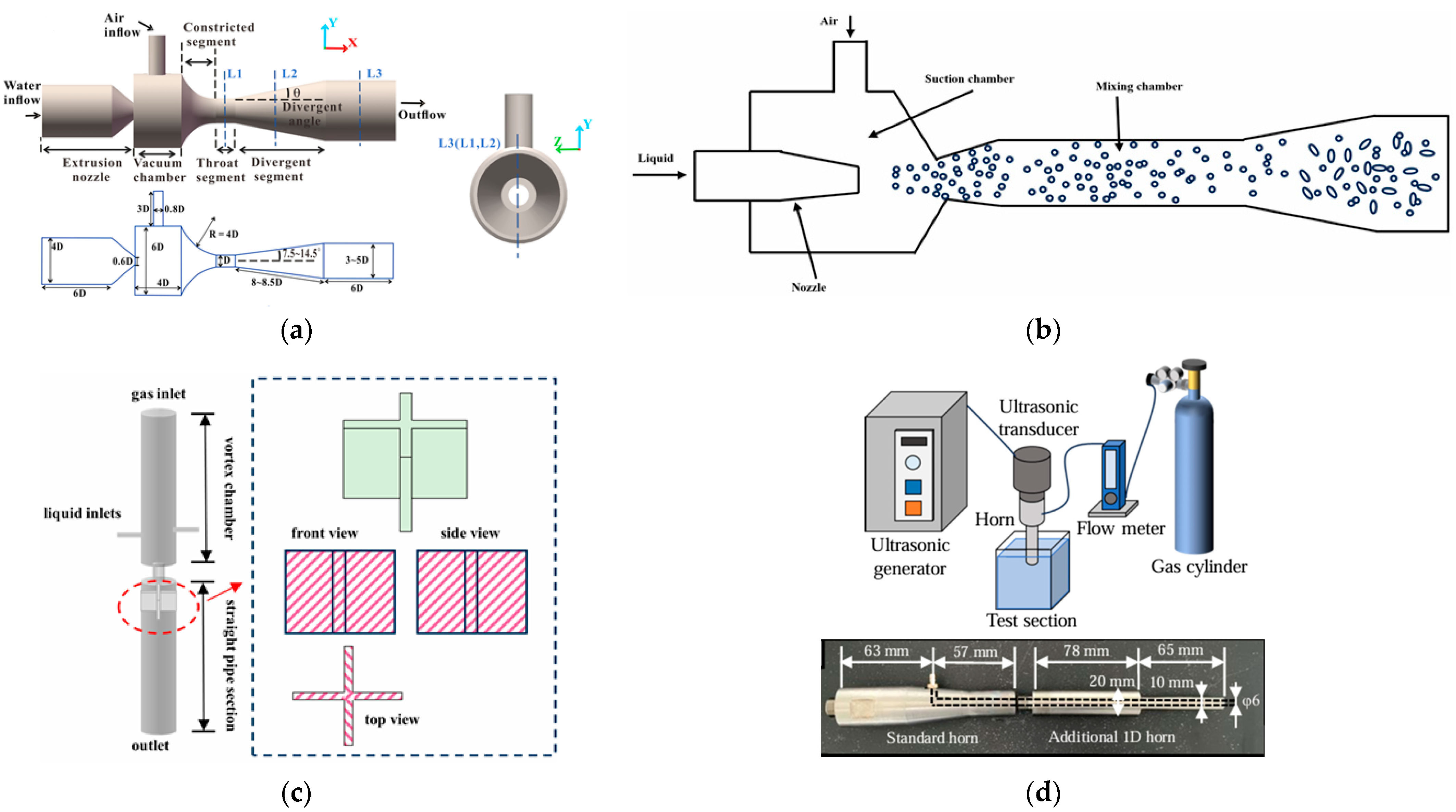
Hydraulic cavitation utilizes the localized low-pressure area generated in high-speed or highly turbulent liquids to draw in gases and generate UFBs, as shown in Figure 2a–c, such as the Venturi tube bubble generator [43], jet-type bubble generator [44], and swirl-type bubble generator [45].
Acoustic cavitation is the use of the cavitation effects generated by the propagation of ultrasonic waves in the liquid to break down the gas in the liquid and generate UFBs. The ultrasonic generator uses ultrasonic waves to generate alternating positive and negative pressure zones in the liquid, causing the gas nuclei to expand into cavitation bubbles in the negative pressure zone and then collapse in the positive pressure zone to generate UFBs. A 4 mm probe orifice diameter under 100 W ultrasonic power input demonstrates maximum MNB generation efficiency [23]. As shown in Figure 2d, an additional hollow ultrasonic horn is attached to the tip of a standard hollow ultrasonic horn, which is an ultrasonic amplifier with internal channels for gas supply, and the ultrasonic oscillation is amplified as the cross-sectional area decreases. The gas is supplied from the horn tip inserted into the liquid, and ultrasonic oscillation is simultaneously applied to disturb the gas–liquid interface and to form surface waves in the test section. Then the separation of the gas phase from these surface waves generates UFBs [23,46,47].
  • Gas dispersion approaches
In generating UFBs through gas dispersion, there is no sharp pressure drop during gas dispersion, but using mechanical agitation (mechanical shearing), microporous structures (membrane filtration), and microfluidic devices, etc., to break down the gas phase into a smaller size generates UFBs [36].
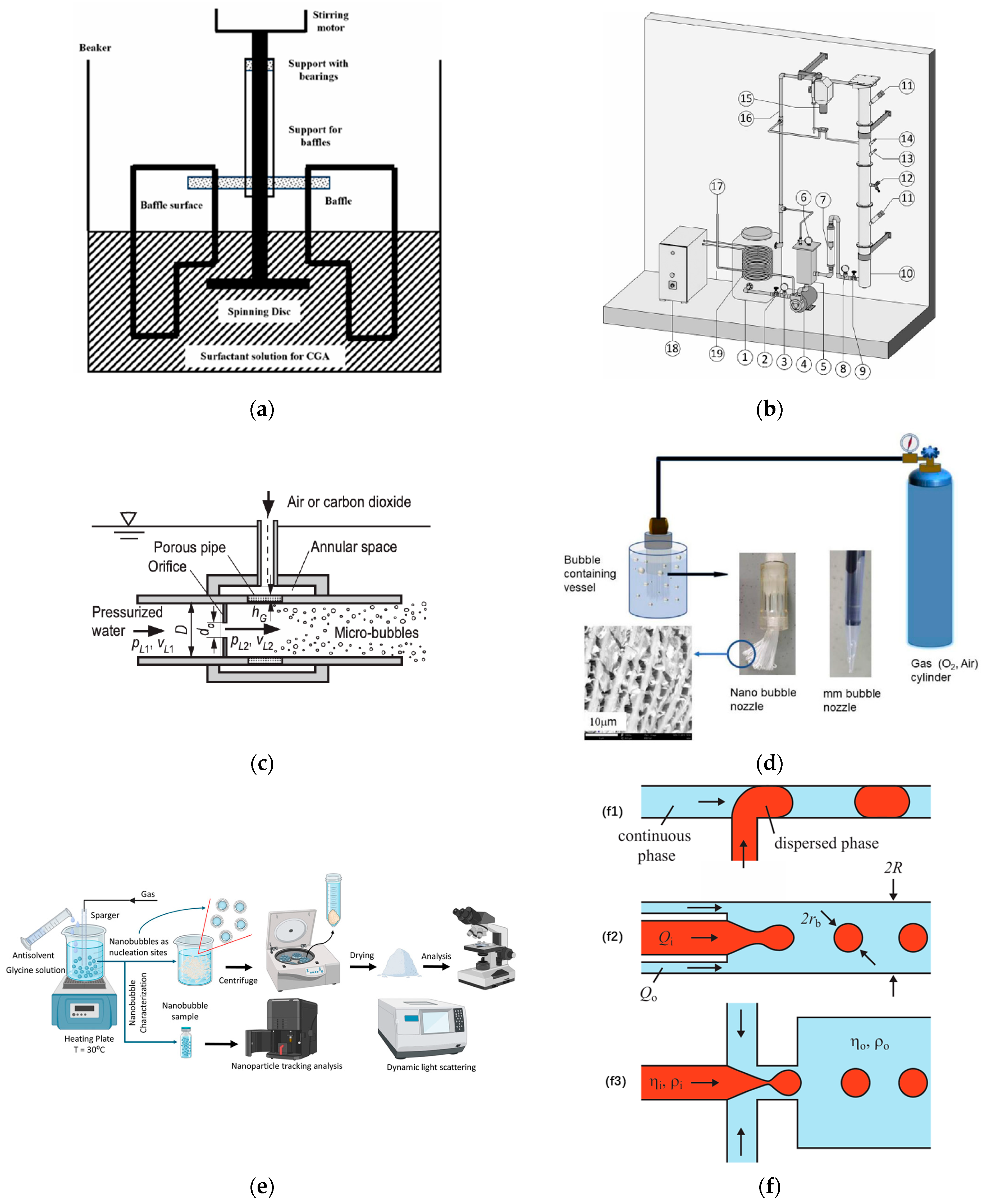
The mechanical agitation approach is a simple and feasible method to form UFBs, characterized by simple equipment and low manufacturing costs. The mechanical shearing method generates bubbles by mechanically shearing the gas. A typical device using the mechanical shearing method is the mechanical stirring type [23]. The early mechanical stirring method used a rotating disk device to generate microbubbles through high-speed shearing, as shown in Figure 3a [39]. Then a centrifugal multiphase pump impeller and a recycle column were introduced to generate the nanobubbles’ (150–200 nm) aqueous solutions, coupling with hydrodynamic cavitation effects and under different operating pressures and gas–liquid surface tension throughout several bubble generation cycles, as shown in Figure 3b [40].
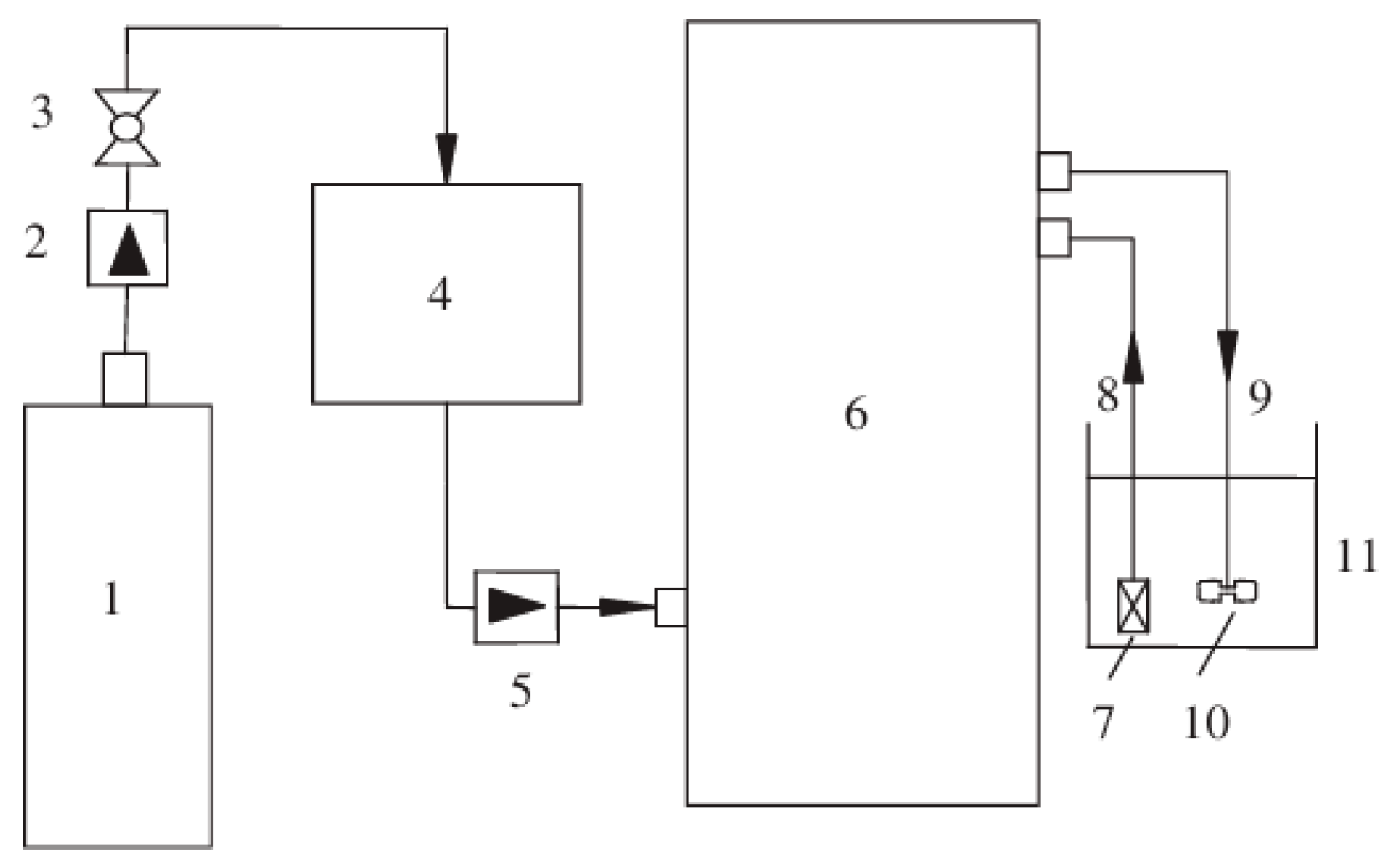
The micro-porous structures are applied to disperse the gas into UFBs when gas flows through the porous pipe and stabilizes in water, as shown in Figure 3c–e [23,48]. In Figure 3d, a mechanical high-speed mixing device was introduced to the UFB preparation. An air inlet connects with a high-pressure gas cylinder that the compressed gas is injected into the UFB generator through the cylinder to introduce different gas sources to regulate the atmosphere environment. A propeller is provided with ultra-high rotation speed by high-speed motor, the generated bubbles are discharged from an air outlet, and the nanobubble nozzle of the generator is immersed in liquid in the bubble-containing vessel. The microporous membrane of the generator is composed of 50 microporous filaments in the nozzle outlet [38].
The microfluidic device used to generate UFBs relies on precision hydrodynamic control within microscale channels, utilizing shear forces, surface tension, and gas–liquid interfacial interactions to break and stabilize gas into uniform MNBs [23]. The porous membrane was immersed in the glycine solution, and the gas was injected into the solution for generating the bulk nanobubbles. The bulk nanobubble solution in pure water was characterized by nanoparticle tracking analysis and dynamic light scattering analysis from the perspective of nanobubble size, bubble concentration, and Zeta potential, respectively [49]. Three main microfluidic geometries used to form droplets and bubbles are shown in Figure 3f. The core device architecture includes T-junction, flow-focusing, and downstream configurations, which enable precise bubble size control through regulating the gas–liquid flow ratio, microchannel geometry, and fluid properties. The dispersed phase is injected into (a) the cross-flowing stream through the T-junction, (b) the co-flowing stream, and (c) the focused stream applied by the continuous phase [50].
  • Solvent exchange approach
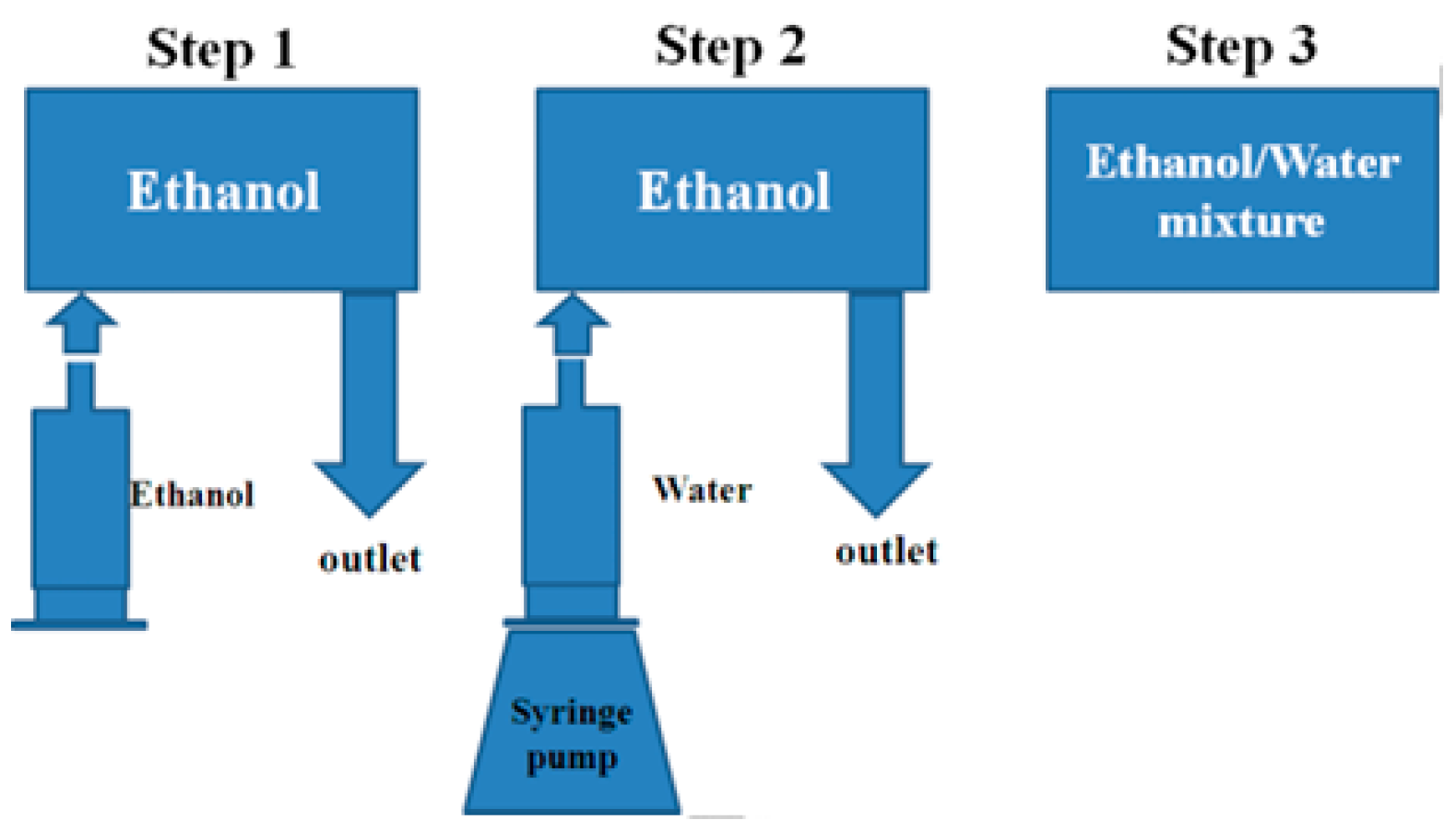
The solvent exchange approach requires two mutually miscible fluids with different gas solubility. When one high gas solubility fluid is replaced by another low gas solubility fluid, excess gas will be released to generate the UFBs which show great potential in the preparation of micro-functional materials. As shown in Figure 4, firstly, ethanol was injected into the liquid vessel with a glass syringe. Then, pure water was slowly added to the liquid vessel, which had been filled with ethanol using a glass syringe. Injecting rate was controlled by the syringe pump. During the ethanol–water exchange to produce interfacial nanobubbles, surface nanobubbles could be nailed onto the substrate [36,51,52].
  • Temperature alteration approach
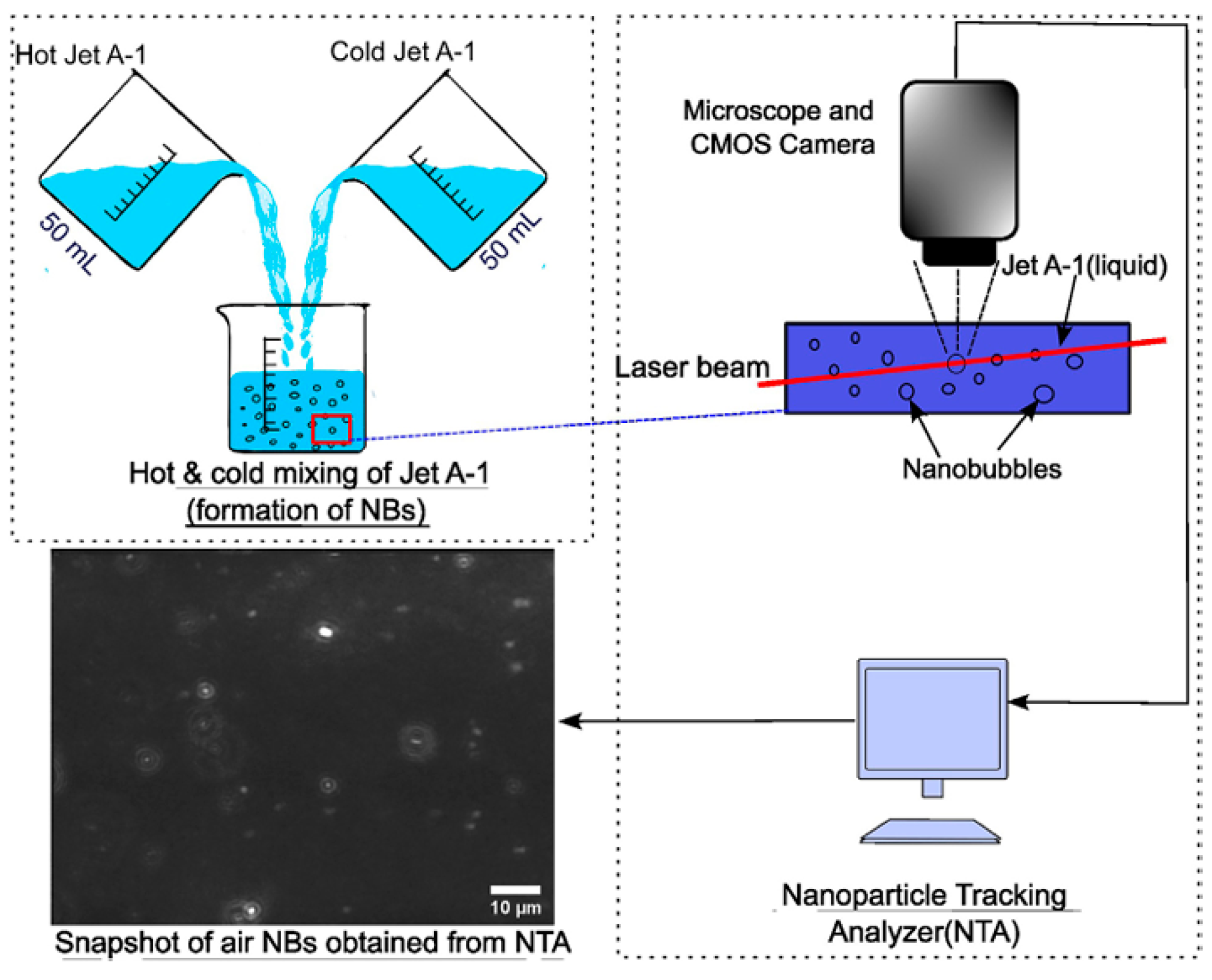
The gas solubility in liquids is temperature-dependent, which is easily saturated in a liquid at lower temperature. The higher the temperature of the liquid, the lower the gas solubility in it. For example, cold fresh water at 0 °C can hold about 14.6 mg/L of oxygen, while the same water heated to 25 °C can only hold about 8.3 mg/L [53]. Sudden changes in temperature counteract the equilibrium of solubility, leading to the nucleus formation of bubbles with the creation of cavities in the liquid. The temperature alteration approach can provide sufficient energy for developing new gas–liquid interfaces. As shown in Figure 5, the generation of air bulk nanobubbles and oxygen bulk nanobubbles was carried out in Jet A-1. The instantaneous mixing of liquids at different temperatures can result in an excessive amount of gas in the mixture relative to its equilibrium value at a specific temperature and pressure. Bulk nanobubbles were generated in Jet A-1 (commercially used aviation fuel) by the solvent mixing method, which involves mixing of the solvent at two different temperatures (cold: −20 to −5 °C, hot: 55–70 °C, predefined temperature difference is 60 °C and 90 °C) [36,54].
  • Electrohydrodynamic effect approach
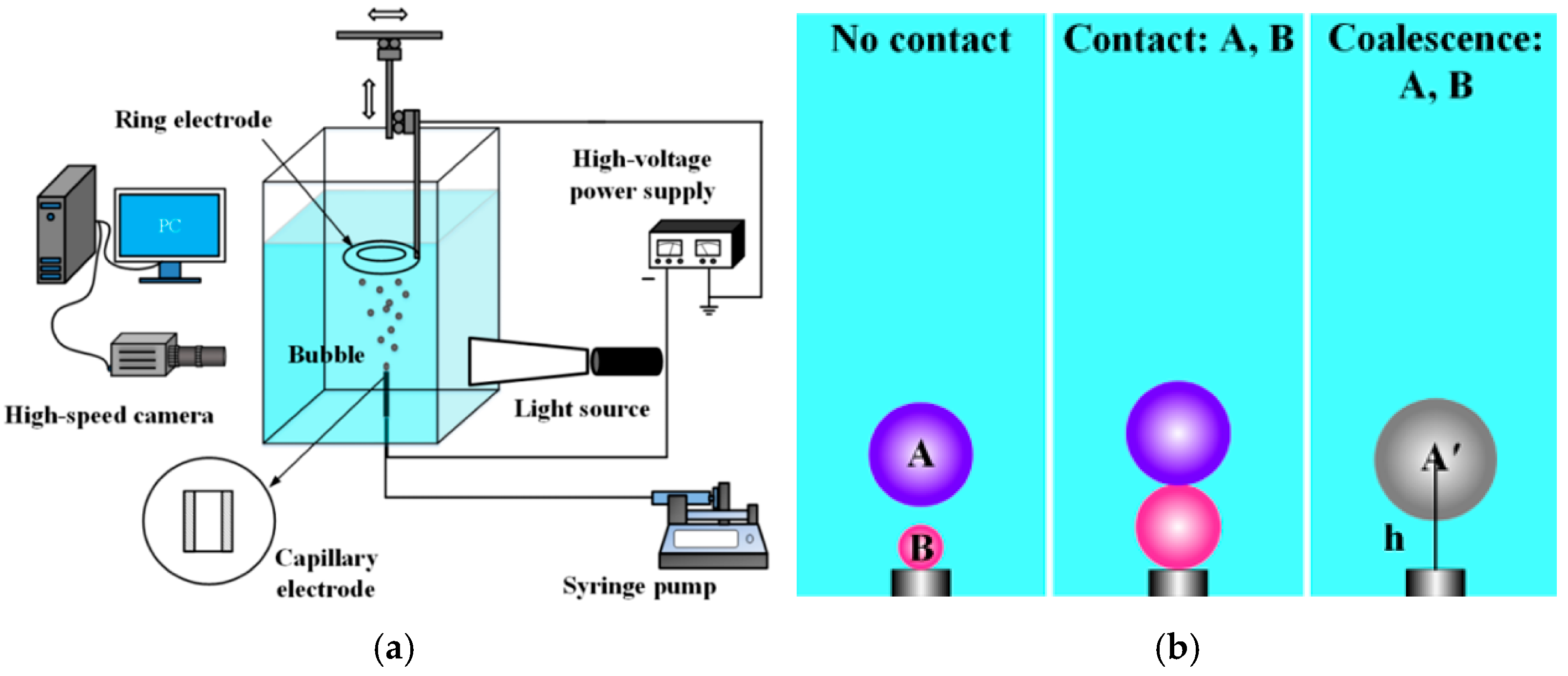
Electric fields can weaken the surface tension at the gas–liquid interface. The electrohydrodynamic (EHD) effect contributes to the fragmentation of the dispersed phase (gas phase), resulting in the generation of UFBs [36]. As shown in Figure 6a [55], the syringe pump is used to supply gas and precisely control the gas flow rate in the metal capillary. A copper ring is set at a height of 20 mm from the capillary orifice. The high-voltage direct current power supply (negative, 0–2.0 mA, and 0–30 kV) is applied between the capillary electrode and the ring electrode to generate a non-uniform electric field. The interactions between bubbles under the electric field are usually characterized by the applied field strength and the superficial gas velocity. The force balance ratios are the electric force to the liquid surface tension and gas inertial force to the liquid surface tension. The electric field strength causes a change in the coalescence state. The volume electric force acting on a fluid consists of different types of physical mechanisms: the force acting on a charged fluid element and the gradient of the field. The dielectric constant jumps significantly across the gas–liquid interface. The negative electrical free charges generated at the bottom of the bubble are significantly higher than the positive electrical free charges generated at the top of the bubble. The Coulomb force acting on the surface of the bubble is opposite in direction to the electric field, which can drive the liquid to move and form the classical EHD flow, which accelerates the evolution of the bubble in the streamline direction; the bubble will be further accelerated by the dielectrophoresis force. In Figure 6b, the dynamic sequence of no contact, contact, and coalescence of bubbles A and B is shown, resulting in the formation of the larger coalesced bubble A′ [55]. The insulation measures should be taken in a controllable greenhouse environment to ensure operational safety.
  • Pressurized gas dissolution approach
The pressurized gas dissolution methods use changes in the gas–liquid pressure to dissolve and release gases, thereby generating UFBs. In dissolved-air flotation (DAF), air is first pressurized with water into a saturation vessel and then released into the flotation cell through needle valves at atmospheric pressure. After the pressure decreases, the air is transferred out of the solution, generating bubbles that rise to the surface of the liquid. The microbubbles in the size of 10–80 μm were generated. DAF is usually operationally based on the theory of recycle chemical reactors and certainly on Henry’s law—governing the dissolution of gases in aqueous solutions as a function of pressure [56]. Figure 7 shows the operational principle of the self-suction MNB generator, which dissolves gas in a pressurized dissolution gas tank and then releases the gas through a pressure-reducing device (throttling nozzle). Due to the increase in flow velocity and sudden decrease in pressure, the gas dissolves in the water, generating the cluster MNBs [23,35,57].
(2)
Chemical methods
Photocatalysis technology
Photocatalysis technology refers to when a certain wavelength of light is irradiated on the photocatalysis material, the electrons in the photocatalysis material will undergo a transition, and the electrons will precipitate from the surface of the material as the conditions required by thermodynamics to release gas. Nanoscale motors are ubiquitous in biology, operating through the enzymatic catalysis of spontaneous reactions. Three-striped (Au/Pt/Au) rods, similar in their sizes and speeds to multiflagellar bacteria, were successfully used to catalyze the decomposition of hydrogen peroxide solution, generating H2 and O2 nanobubbles through the Pt electrode [42].
  • Electrochemical (electrolysis) approach
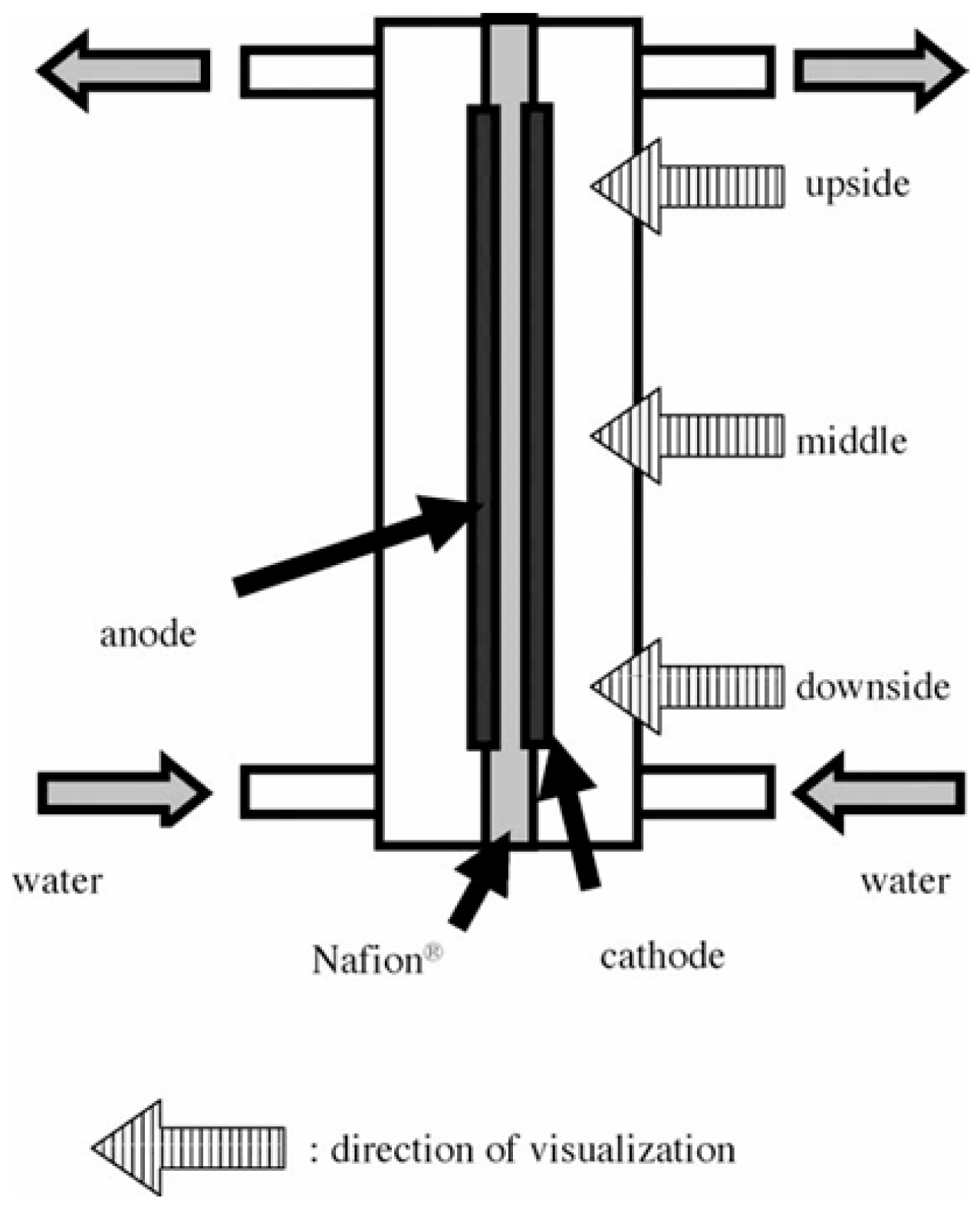
The electrochemical approach generates UFBs by generating gas through electrochemical reactions on the electrode surface. Water electrolysis is a convenient method of dissolving hydrogen gas in the water, as hydrogen gas is supersaturated near the electrode. As shown in Figure 8, electrolysis applies voltage to the electrode, and water molecules are electrolyzed to generate H2 and O2 gases. These gases nucleate on the electrode surface and gradually separate to generate fine bubbles. By adjusting electrolysis parameters, the size of the bubbles can be precisely controlled [23,41].

2.3.2. Ozone UFB Water Generation

Ozone is a powerful oxidant used in an aqueous form for sanitation and is an effective alternative to chemical pesticides for soil treatment and pest control. At room temperature and pressure, the solubility of ozone in water is about 13 times that of oxygen and 25 times that of air. Ozone in water is easy to dissipate [58,59,60]. Combining ozone with other materials such as water mist produces a highly reactive intermediate hydroxyl radical (•OH), which is a stronger oxidant than ozone itself. The retention, persistence, and self-pressurized dissolution of UFBs in water just make up for the defect of the ozone. Ozone ultrafine bubble water (OUFBW) has bactericidal activity against pathogenic bacteria. The ceramic ultrafiltration membrane generates ozone microbubbles to enhance efficient ozone gas–liquid mass transfer [61,62].
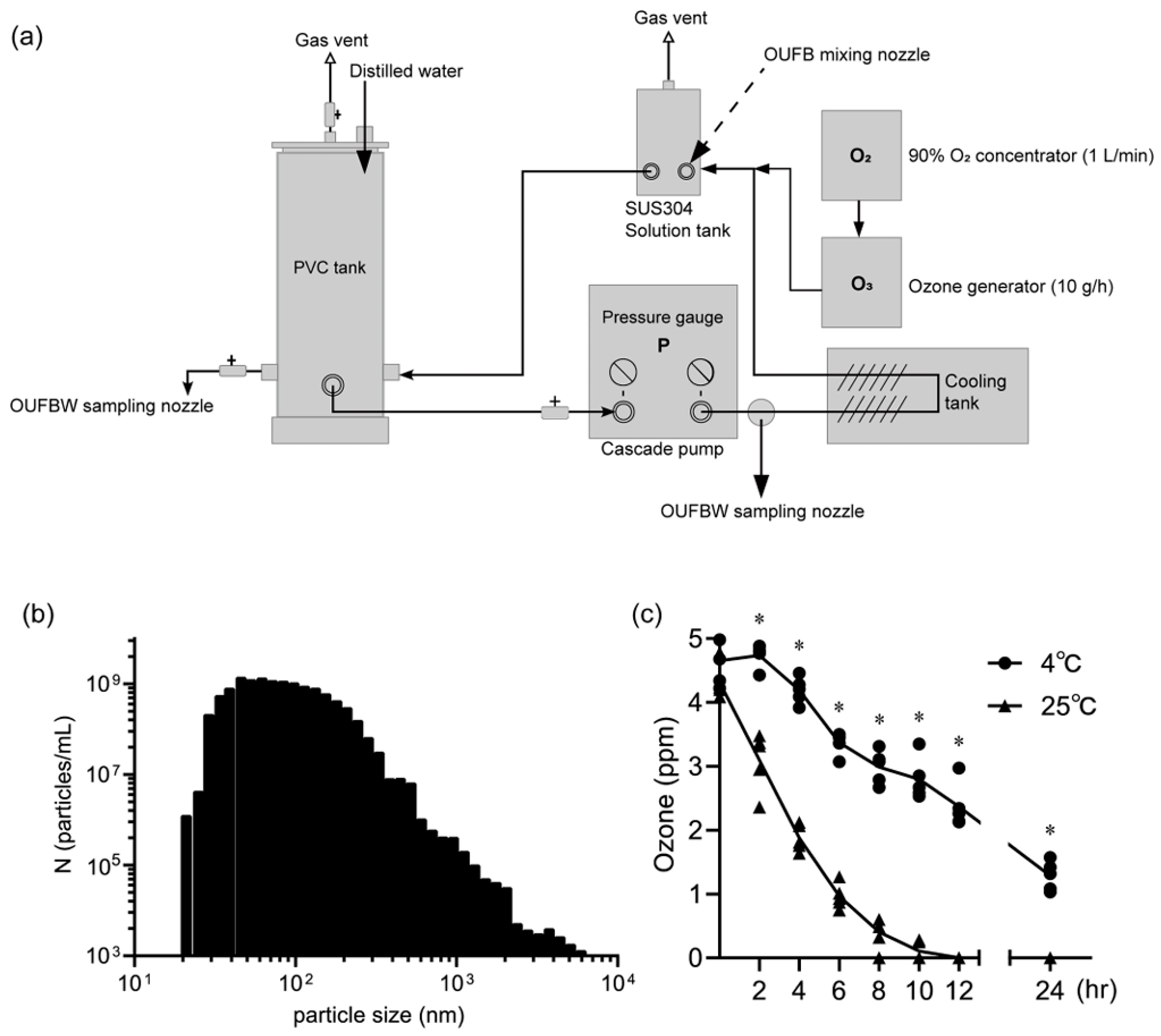
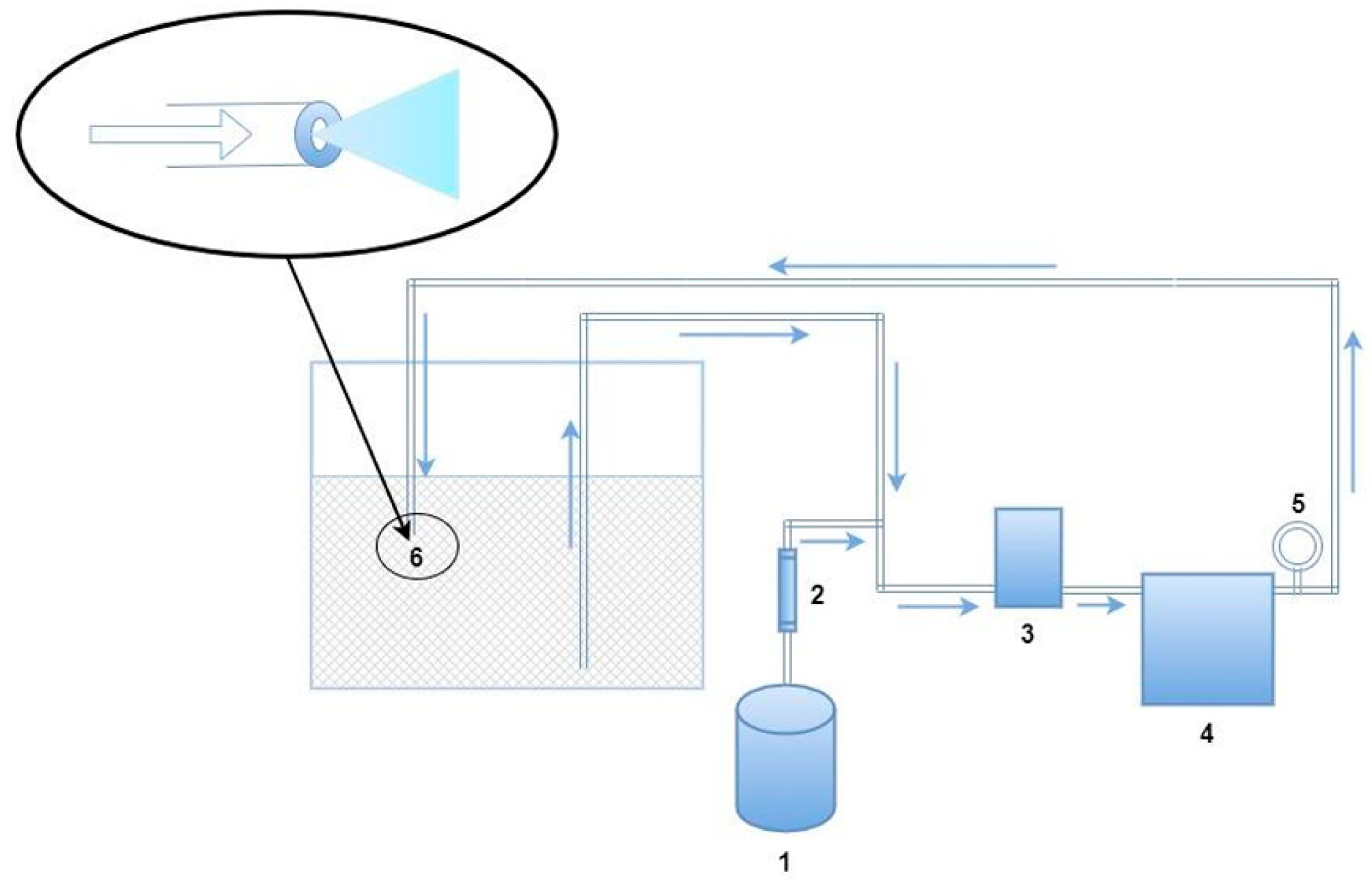
Figure 9 is the schematic diagram of an ozone UFB water generator. OUFBW was generated by a micro-mixer and recirculated in a polyvinyl chloride water tank. The generation of UFBs requires a pump pressure exceeding 0.2 MPa. A cooling tank was assembled to maintain water at a temperature of 10 °C or lower, which generates OUFBW containing a high concentration (4–6 ppm) of ozone [63].

3. Controlling Biotic Stresses of Crop Pests and Diseases Using UFW

Traditional pest and disease management relies on synthetic chemicals that can harm beneficial insects, soil health, and water sources. Ultrafine bubble technology provides an environmentally friendly alternative by enhancing natural biological control mechanisms. This reduces the demand for pesticides while maintaining crop protection [15].

3.1. Plant Pests Control Using UFW

Few documented cases exist regarding the effect of UFW on agricultural pests.
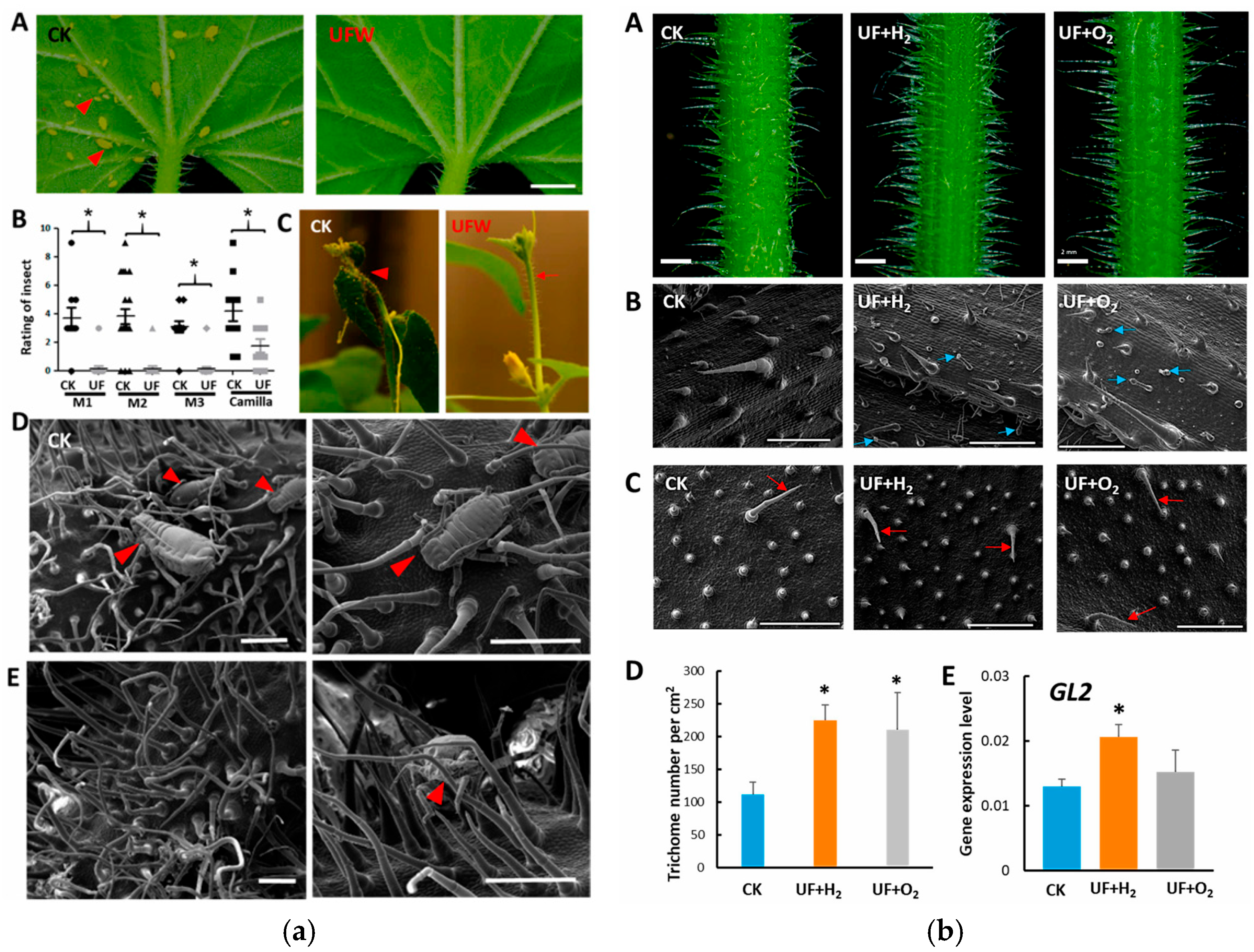
Melon farming has traditionally relied heavily on pesticides to manage pests such as aphids, thrips, and whiteflies, which can severely damage crops and reduce yield. However, the excessive use of pesticides poses significant environmental and health risks. In order to investigate whether H2 or O2 can help prevent pests and improve melon yield and quality, the melon seedlings were planted in a plastic greenhouse and irrigated separately with UFW-enriched hydrogen (UF+H2) and oxygen (UF+O2). As shown in Figure 10a, the results of Cryo-scanning electron microscope observation showed that both UF+H2 and UF+O2 could increase the density of trichomes in melon leaves and petioles. Jasmonic acid (JA) is an herbivorous induction hormone involved in the development of trichomes, and the accumulation of JA increased in the plants irrigated with UF+H2, which upregulated the JA pathway marker genes. Real-time quantitative polymerase chain reaction showed that UF+H2 significantly increased the gene expression level of the trichome-related gene GLABRA2 (GL2), as shown in Figure 10b. The melon irrigated with UFW containing H2 and O2 produced more root hairs, increased shoot height, and produced more flowers than the control group irrigated with reverse osmosis (RO) water; it especially enhanced trichome development and significantly reduced aphid infestation [9].
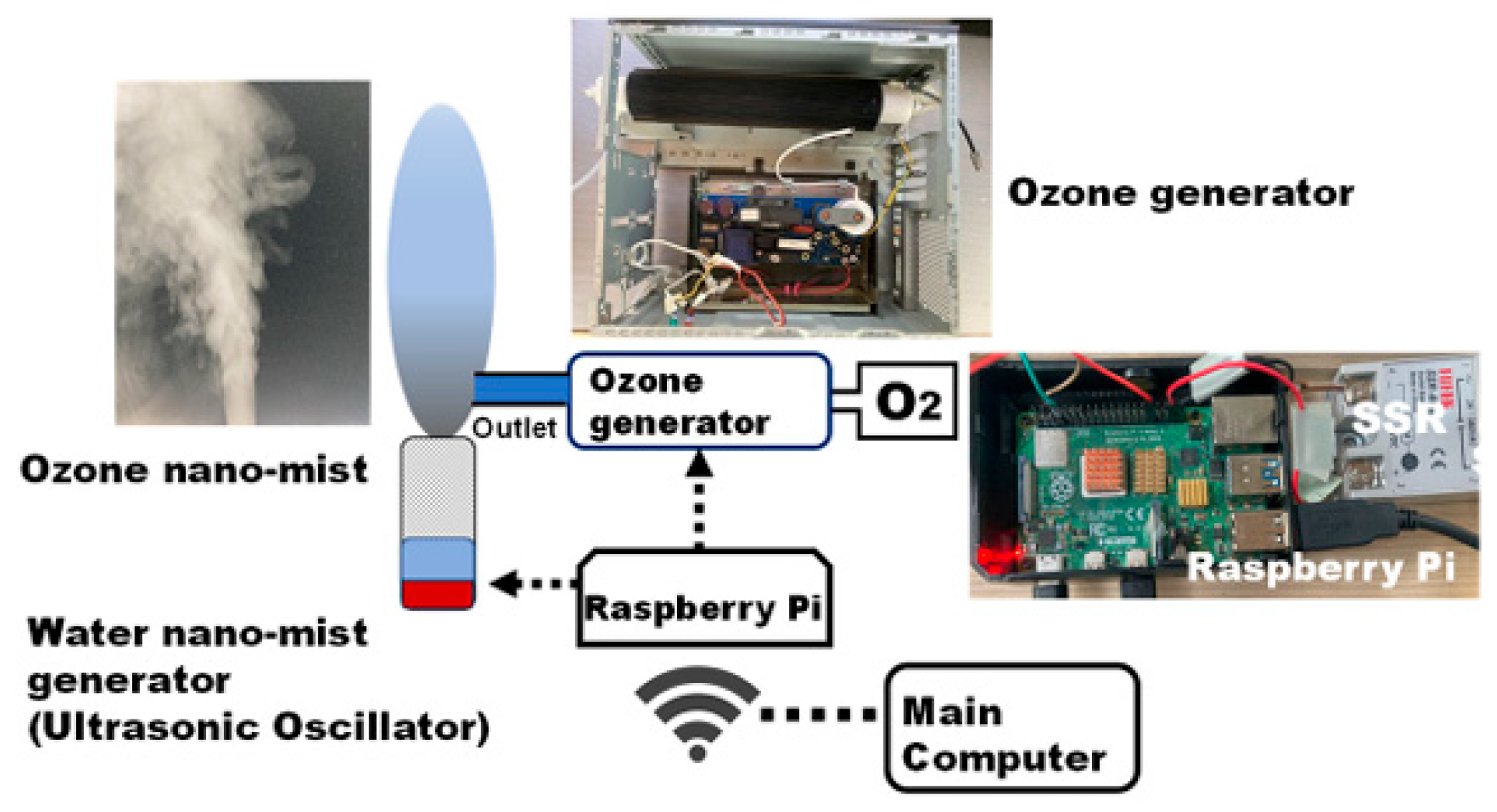
Six pests including the aphid, moth, beetle, fly, whitefly, and ant were selected to study the control performance of ozone nano-mist disinfection spraying on these pests and the biological damages on greenhouse plants. Figure 11 is the outline of the spraying system consisting of an ozone nano-mist generator and an automatic spraying system [61]. A maximum concentration of 110 g-O3 m−3 was generated with an oxygen flow rate of 0.5 L min−1 through dielectric barrier discharges on surface electrodes, which are submerged in water nano-mist flow ejected from an ultrasonic oscillator with an ultrasonic frequency of 1.7 MHz. The spraying system is operated by signals from the Raspberry Pi board, which uses Wi-Fi to communicate remotely with the main computer. The water nano-mist reacts immediately with the flow in the ozone generator to generate the ozone nano-mist in the size range of 200 nm–1250 nm, composed of residual ozone, reactive hydroxyl radical (•OH), and other radicals. The formed ozone nano-mist produced by nozzles is sprayed on the detected pests and directly taken into the pest’s body through spiracles, traveling via the tracheae and reaching the cells. The ozone nano-mist provides specified behavior at the spiracles of the pests, thereby enhancing the disinfection effect on the pests. Oxidants, including the ozone and radicals, react with many macromolecules in cells, such as proteins, DNA, and RNA, to destroy their structures. The experimental results show that the ozone nano-mist spraying had a 100% disinfection rate for winged pests during 30 s and a 90–100% disinfection rate for the small larva of aphids during 120 s.

3.2. Plant Diseases Control Using UFW

3.2.1. Function of UFB Water for Controlling Crop Diseases

UFB water offers potential practices to eliminate harmful pathogens, break down biofilms, strengthen plant immunity and reduce plant disease infestations for minimizing chemical pesticide dependency. Ozone UFB water has an activity against pathogenic bacteria in the oral cavity and upper airway, and can disinfect contaminated healthcare equipment [15,63].
(1)
Reducing and eliminating harmful pathogens.
Many plant diseases thrive in stagnant water and oxygen-deficient conditions, such as root rot and fungal infections. Ozone, even in low concentrations, can effectively react with microorganisms in two different ways, directly and indirectly, due to its high oxidative potential against bacteria. The direct reaction involves ozone molecules, while the indirect reaction involves the hydroxyl radicals generated by the decomposition of ozone in water, which are more reactive and less selective than ozone. But ozone has a low gas–liquid mass transfer efficiency. Nanobubbles can increase the levels of dissolved oxygen in irrigation water and can prevent the spread of waterborne pathogens in the production of hydroponic and aquaponic plants. Then nanobubbles infused with ozone can serve as natural disinfectants against waterborne pathogens, breaking down bacteria, viruses, and fungal spores without leaving harmful residues. Oxygen-enriched nanobubbles improve water circulation and continuous oxygenation, improving soil health and reducing pathogen load in the root zone, making the environment less suitable for pest larvae. Therefore, the nanobubbles infused with ozone can also damage insect eggs and larvae, naturally reducing pest populations [15,64].
(2)
Breaking down biofilms.
Biofilms formed by bacteria and fungi provide protection for plant pathogens, which reduce the major crop yields ranging from 20% to 40%. The biofilm makes it resistant to traditional treatments which should be broken down to increase the efficient diffusion and absorption of active ingredients of pesticides on plant leaf surfaces [65]. Ozone attacks glycoproteins and glycolipids in the cell membrane, directly oxidizing/damaging the cell wall, leading to the cell rupture and leakage of cellular constituents outside the cell. Nanobubbles can penetrate and decompose the biofilms, exposing harmful microbes to oxygen and oxidative stress. This weakens their structure and makes them more susceptible to natural plant defenses. The investigation results showed that ozone-rich microbubbles have higher disinfection activity for pathogens such as, for example, Fusarium oxysporum f. sp. melonis and Pectobacterium. carotovorum subsp. Carotovorum [15,64]. Due to OUFBW exhibiting the bactericidal activity against pathogenic bacteria, ozone microbubble aeration consequently causes severe membrane damage to bacterial cells and breaks the bacterial DNA, leading to a rapid decrease in the bacterial metabolic activity (>80%) [62,63].
(3)
Strengthening plant immunity and health.
Many bacterial effectors have been shown to encode enzymes that modify host protein targets, which contribute to immune responses [66]. Improved healthy plants can promote the growth of beneficial microorganisms, enhance plant immunity, and have greater resistance to plant pests and diseases. Nanobubbles increase dissolved oxygen in irrigation water and release oxygen gradually near plant roots to increase moisture retention, enhance nutrient absorption, improve root oxygenation [67], and promote the activity of beneficial microorganisms [68] in the soil. This contributes to immune responses and leads to stronger plants [66], reducing the need for chemical pesticides. Soaking seeds in nanobubble water can increase germination rates and reduce the early plant disease risks [15].
(4)
Reducing plant disease infestations.
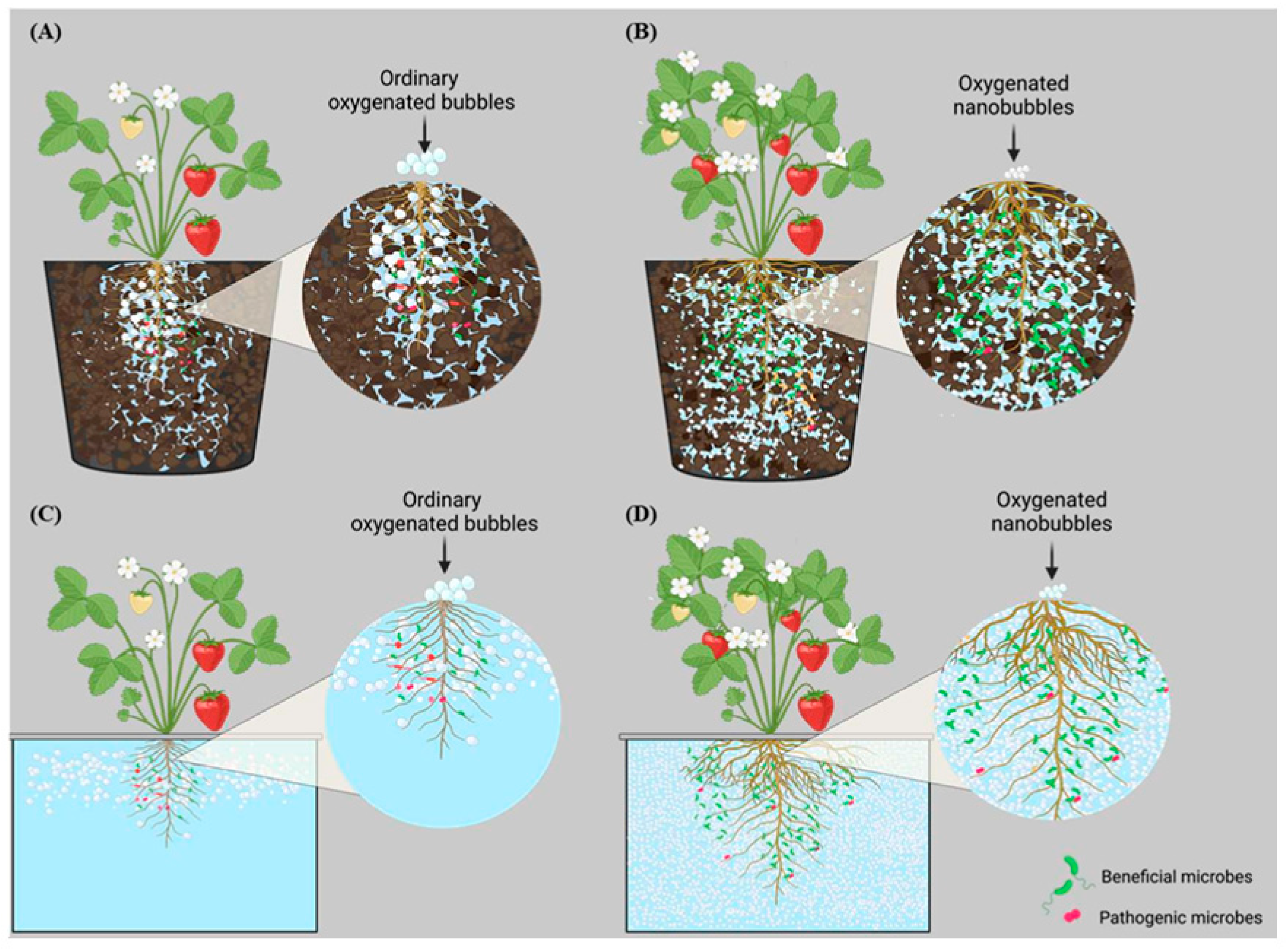
Pests can grow and thrive in stagnant water and oxygen-deficient conditions [15]. Controlled environment agriculture can provide a protected system for plant cultivation, but it is still susceptible to plant diseases, particularly root diseases such as Pythium root rot and Fusarium Wilt. Insufficient dissolved oxygen levels can hinder microbial activity, leading to the accumulation of harmful compounds, and cause stress on the plants. Beneficial microbes in plants can help alleviate the harmful plant diseases that produce natural antibiotics and promote the induction of systemic pesticide resistance to enhance nutrient absorption, stress tolerance, and disease resistance. Figure 12 shows the effects of oxygenated nanobubbles and ordinary oxygenated bubbles on plant growth and rhizosphere microbial communities [68]. Comparing (A) (C) and (B) (D), oxygenated nanobubble technology can provide better oxygen distribution in the root zone, where many plant root-zone diseases may occur and cause significant yield losses, promoting a more diverse and balanced rhizosphere microbial community that benefits beneficial microorganisms, promoting plant root development, increasing plant vitality and reducing plant disease infestations.

3.2.2. UFB Water to Control Crop Diseases

It has been found that the ozone transport with UFBs can improve the disinfection capacity, significantly increase the ozone mass transfer efficiency, and reduce ozone dosage. The attribute of UFBs to ozonation has stimulated researchers to investigate the effect of combined MNBs technology and ozonation in many fields [64]. UFB/OUFBW can kill soilborne pathogens and control soilborne plant diseases in the circulating nutrient solution, control airborne plant diseases, etc., as well as solve the waterborne plant diseases of the nutrient deficient and rotten roots of hydroponic vegetables and deal with pesticide residues in fruits and vegetables.
(1)
Controlling soilborne plant diseases.
In the vegetables cultivated in protected areas, there are more than 50 types of plant diseases. Soilborne plant pathogens widely distributed in soil exist in the residues of the soil matrix or the soil surface, and few species exhibit localized distribution patterns. Once established, these soilborne pathogens will accumulate through synergistic effects and cause greater economic losses that are difficult to control. Because of their wide host range, they can live freely or survive for a long time on soil organic matter and plants by developing resistant structures. However, the soilborne plant diseases, caused by fungi, bacteria, nematodes, oomycetes, protozoa and viruses, are often overlooked until symptoms such as yellowing, delayed development, withering, and even death appear in the aboveground plant parts [69]. The control of soilborne plant diseases has gone through a long process, from the application of biocidal soil disinfectants such as cobalt chloride, methyl bromide, and a variety of fungicides to biological control, but the spread and harm of soilborne plant diseases are still rampant.
Studies on the regulation role of related genes have found that a certain ozone concentration can raise the anthocyanin and carotenoid of plants and revealed the molecular mechanisms underlying the anthocyanin and carotenoid. When plants were exposed to elevated ozone, the ozone affected the utilization of light energy in plants [70]. Ozone concentration in a nutrient solution can effectively kill the pathogens of epiphyte and bacteria causing soilborne plant diseases, such as Fusarium Wilt and mustard family soft rot pathogens, and mosaic virus-causing viral diseases [71]. Ozonated water soil drenches significantly reduced nematode (Meloidogyne incognita Kofoid and White) infection rate in tomatoes grown in a growth chamber by 23% compared to controls [58].
With irrigation water as the sterilization medium, micro-nano aeration technology is used to produce high concentration ozone water to jointly sterilize and disinfect the soil and air in the protected area and integrate physical, chemical, and biological technologies to effectively alleviate the invasion of soilborne plant diseases. Through adjusting the air inflow and water inflow, the ozone MNB water with a concentration of 2.2~8.0 mgL−1 was prepared for the disinfection and sterilization of the soil and substrate. After three rounds of disinfection (interval of 24 h), with around a 6.0 mgL−1 concentration and about 30 L/m3 irrigation amount of ozone MNB water, the microbial killing rates of bacteria, fungi, and actinomycetes in soil for the third disinfection were 85.4%, 68.6%, and 56.6%, respectively, and the sterilization effect of substrate was better than that of the soil [72]. The properties of ozone MNB water and its disinfection efficacy in the inactivation of soilborne pathogens and soil microbes were investigated. Ozone was bubbled into the samples by the MNB aeration system, and the irrigation of ozone MNB water to greenhouse soil samples once a week was conducted to investigate the germicidal efficacy of the target bacteria. The results showed that MNB water could promote ozone solubility and enhance the stability of the ozone water and confirm the high germicidal efficacy of ozone MNB water on F. oxysporum f. sp. lycopeersici in soil, with a 96% killing rate at a low concentration (1.0 mgL−1) after 0.5 min contact time and 100% killing rate at a higher concentration (7.3 mgL−1) after 2 min contact time [73].
(2)
Controlling airborne plant diseases.
Airborne plant diseases, caused by plant pathogens such as spores, bacteria, and viruses that spread or disperse by wind, rain splash, insects, or human activities, often traveling far rapidly over wide areas and infecting plants at a distance from the original sources, pose a significant threat to plant health, agricultural productivity, and ecosystem stability. Many pathogenic fungi are highly adapted to airborne transmission. Some plant pathogens can spread thousands of kilometers through the air while maintaining their viability and ability to survive and trigger new epidemics [74,75].
Applying ozonated water as a foliar spray to tomatoes in a growth chamber reduced the spread of airborne tomato spotted wilt virus, with disease incidence and severity being 20% lower on treated plants [59]. Ozone MNB water can destroy the cell membrane structure of pathogenic bacteria, causing metabolic dysfunction and inhibiting their growth, penetrating and destroying the tissues inside the membrane until the bacterial cells are killed. In a vegetable greenhouse, ozone MNB water has a significant control effect on vegetable powdery mildew, gray mold, and other common plant diseases. The feasibility of spraying ozone MNB water to prevent and control tomato airborne plant diseases was studied; the experimental setup is shown in Figure 13. The experimental contents included the dissolution and attenuation characteristics of ozone MNB water, the prevention effect of ozone MNB water on the early blight and leaf mold pathogens, and the effect of spraying ozone MNB water with different concentrations on tomato growth. The results showed that ozone MNB water was effective on both pathogen conidia in vitro and the germicidal efficacy. Meanwhile, spraying ozone water within a certain concentration range (0.6–1.8 mgL−1) did not have significant negative impacts on tomato growth [76,77].
(3)
Controlling waterborne plant diseases and solving root rot of hydroponic vegetables.
Soilless cultivation and hydroponic systems, which do not use natural soil as a cultivation substance, cultivate crops in controlled water and nutrient conditions or on a cultivation bed formed by sand gravel, vermiculite, perlite, rice husk fumigation, coal cinder, rock wool, and other soilless substrates. Soilless cultivation and hydroponic systems can better control plant health regardless of soil quality and environment. But in soilless culture, especially hydroponics, the lack of nutrient solution often leads to plant nutrient deficiency and even root rot. The long-term recycling of nutrient solutions will breed a large number of microorganisms, and waterborne pathogens such as fungi, bacteria, and algae can spread faster through water than in soil. The hydroponic systems provide moisture, nutrients, and the right temperatures, enabling waterborne pathogens to thrive in places with billions of years of survival experience.
The transition from soil-based production to hydroponic systems may lead to significant risks to the occurrence of other pathogens, particularly the waterborne plant diseases adapted to aquatic environments in hydroponic crops, especially those caused by species such as Fusarium, Pythium, and Phytophthora. To keep the hydroponic system free of pathogens, it is important to clean the water and maintain a correct pH value, use water filters and UV light, control plant diseases using biological control agents and balance fertilizers, monitor the temperature, and provide oxygen [78,79]. The best way to manage waterborne plant diseases in a hydroponic system is to prevent them in the first place. A system was arranged near the underground storage tank, and the dissolved oxygen value was adjusted to around 10 mg/L (concentration range > 20 mg/L) during oxygenation. After mixing with the nutrient solution in the storage tank, the nutrient solution containing rich dissolved oxygen value was circulated through the liquid for use by the root system of soilless cultivated vegetables [80].
Therefore, the nutrient solution needs to be oxygenated and disinfected in the actual production process to meet the needs of crop growth. Through micro/nano aeration technology, air and oxygen are dissolved into the nutrient solution, and the supernormal solubility of MNBs suspended in water is used to rapidly improve the dissolved oxygen value (adjustment range is around 10 mg/L) of the nutrient solution to promote buds, strengthen roots and increase yield, and reduce the occurrence of hypoxia and root rot in the hydroponic system. Using micro/nano aeration technology, the low concentration of ozone can be wrapped into MNBs, and the ozone can be slowly and gently released into nutrient solutions. Using the charge on the surface of MNBs to adsorb microorganisms in the water, it can kill pathogenic microorganisms and effectively inhibit the spread of plant diseases in the nutrient solution. The waste nutrient solution produced by a soilless cultivation system is sterilized with ozone MNB water, which can be recycled or used as liquid fertilizer in cultivated land to avoid environmental problems such as groundwater pollution caused by direct discharge [19,80,81,82].
(4)
Treatment of pesticide residues in fruits and vegetables.
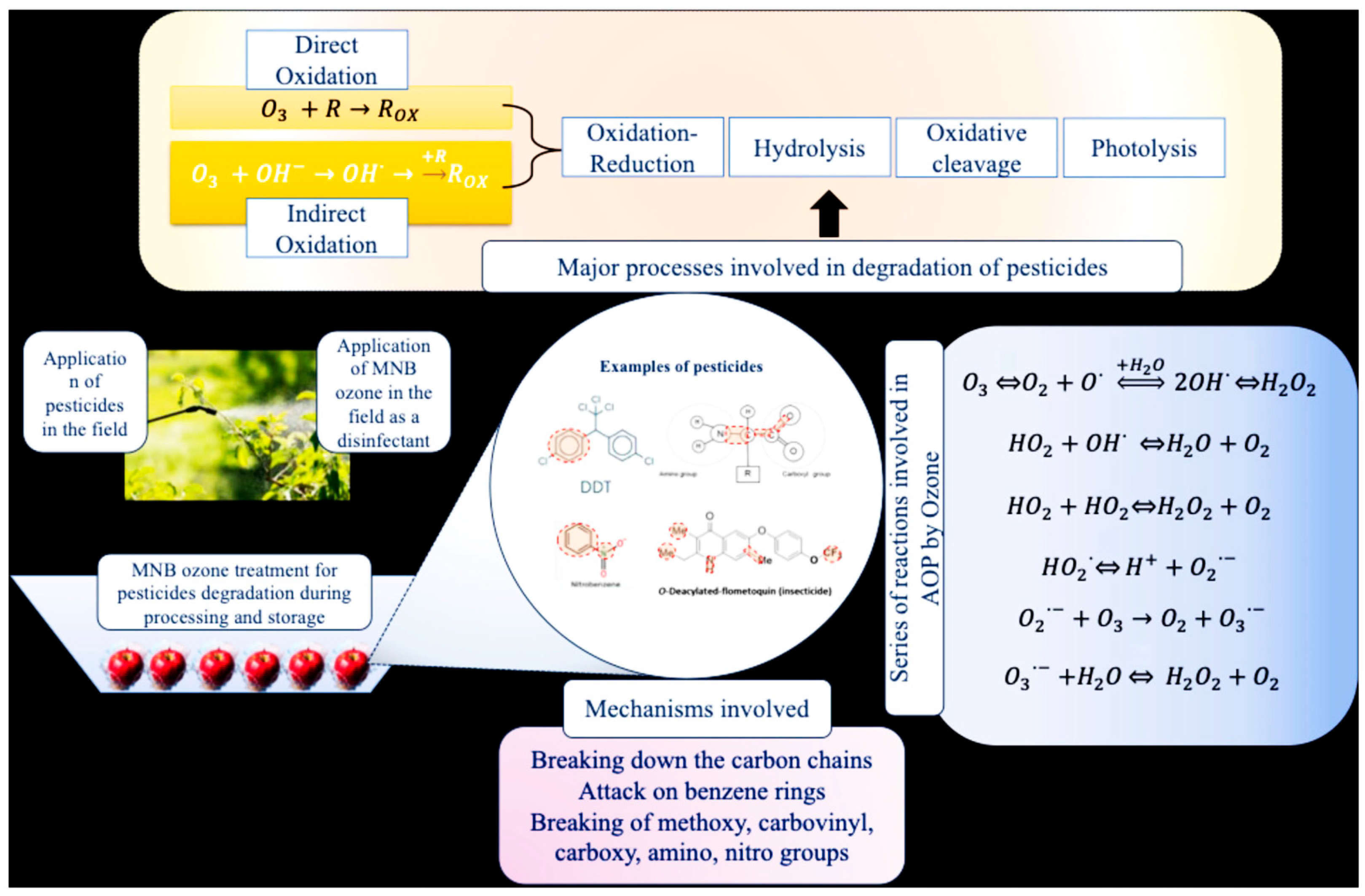
With the intensive use of pesticides causing pesticide residues, emerging and promising technologies are needed to remove pesticides from the aqueous environment and degrade the residual pesticides on the surfaces of fruits and vegetables, such as ozonation, microwave, ultrasonication, and other advanced oxidation processes. The MNB ozonation was used to remove/degrade pesticide residues from fruits and vegetables. Figure 14 shows the main processes, reactions, and mechanisms of effective degradation of pesticides in an aqueous medium by MNBs. The ozone MNB water was applied to break down the carbon chains and attack functional groups of pesticides, including methoxy, dichlorovinyl, carboxy, amino, nitro, and alkynes [83,84].
Using ozone MNB water to clean and disinfect fruits and vegetables, because of the UFBs, it can go deeper into the cracks of fruits and vegetables, kill bacteria, and decompose residual pesticides. In the cleaning process, mechanical damage can be avoided to the greatest extent so that the original quality of fruits and vegetables can be better maintained, and better product appearance can be obtained while avoiding the loss of nutrients. By using clean tap water, ordinary ozone water, and ozone MNB water for 20 min, respectively, the cleaning rates of pesticide residues in cabbage, cucumber, and leek reach 55.6%, 63%, and 88.3% for cypermethrin, 32.6%, 40.7%, and 91.7% for dimethoate, and 46.1%, 53.8%, and 86.1% for imidacloprid [85].
As the acidic electrolyzed water was combined with ozone UFBs and strong mechanical action to clean fresh vegetables, the recorded number of viable bacteria was the lowest. Over the same period of applications, ozone-rich MiBs exhibited higher disinfection activity and efficiency against pathogens than the MMBs. For example, after washing with ozone MiBs with 1 mg L−1 for 7 min, the bacterial reduction rate of S. typhimurium was the highest, reaching 2.6 log CFU g−1 or 99.8% in percentage [64].

4. UFB Water Against Abiotic Stresses of Crops

Climate change, triggered by anthropogenic activities and other inexorable factors, has led to a surge in abiotic stresses, such as drought, salinity, heavy metals, extreme temperatures (heat/cold), nutrient imbalance, waterlogging, UV radiation, etc., which significantly impair crop yields, underscoring the need for innovative solutions [86]. Positive effects of UFBs on plant protection practices have not yet received widespread attention and promotion, and further in-depth research is needed to improve it. But MNB water could be applied to improve abiotic stress tolerance for addressing the pressing challenges.

4.1. UFW on Plant Growth Under Salt Stress

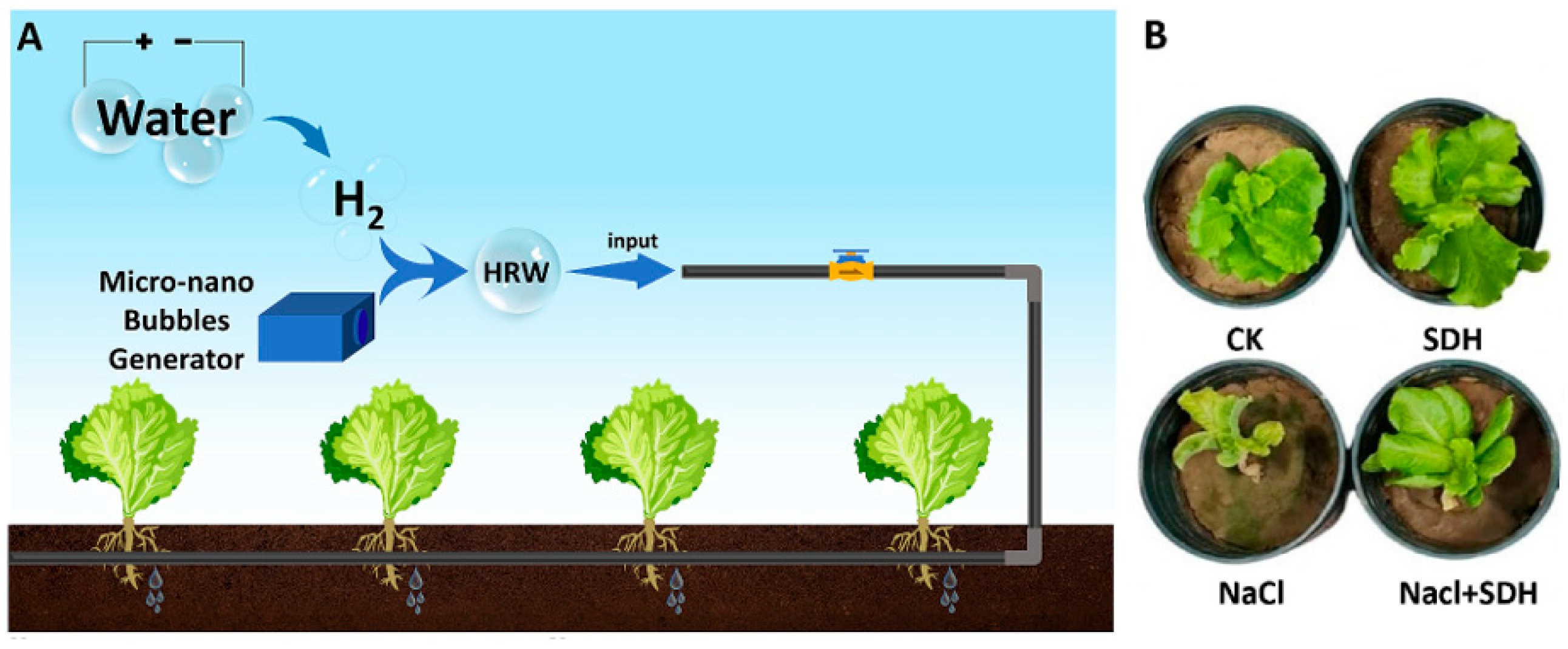
Soil salinization is becoming a severe environmental problem that limits global crop growth and yield. Subsurface drip irrigation with MNB hydrogen water (SDH) is an innovative way to enhance plant resistance to salt stress in actual agricultural productions by using hydrogen gas. Figure 15 shows an irrigation system including two main units, an MNB hydrogen water generation unit where hydrogen with a dissolved concentration of 1.2 mgL−1 was generated by the electrolysis of water, and a water supply unit using the subsurface irrigation system with a nominal flow rate of 2 Lh−1. The pressure compensating emitters were buried 10 cm deep for irrigation. In order to investigate the effect of MNB hydrogen water on the physiological processes of lettuce under salt stress and salt-free stress, four treatments were arranged, SDH, NaCl, NaCl+SDH treatments, and CK (subsurface drip irrigation and salt free). The testing soil was composed of 1.87% clay, 9.52% silt, and 88.61% sand, with a bulk density of 1.12 gcm−3. Sodium Chloride (NaCl) was mixed uniformly in the testing soil with an application amount of 2 gkg−1. The lettuce seedlings with a similar growth status after sowing for three days were transplanted into pots, and irrigation was performed approximately every five days to maintain a soil water content of 65 ± 5%. The results show that SDH had positive effects on various aspects of plant physiology. Compared to NaCl treatment, SDH treatment significantly improved the growth performance of lettuce, including fresh weight increase of 148.8%, leaf number increase of 146.4%, total root length of 246.81 cm plant−1, and total root volume of 1.17 cm3plant−1 (p < 0.01, one-way ANOVA) [87].

4.2. UFW Improves Plant Growth in Damaged Soil

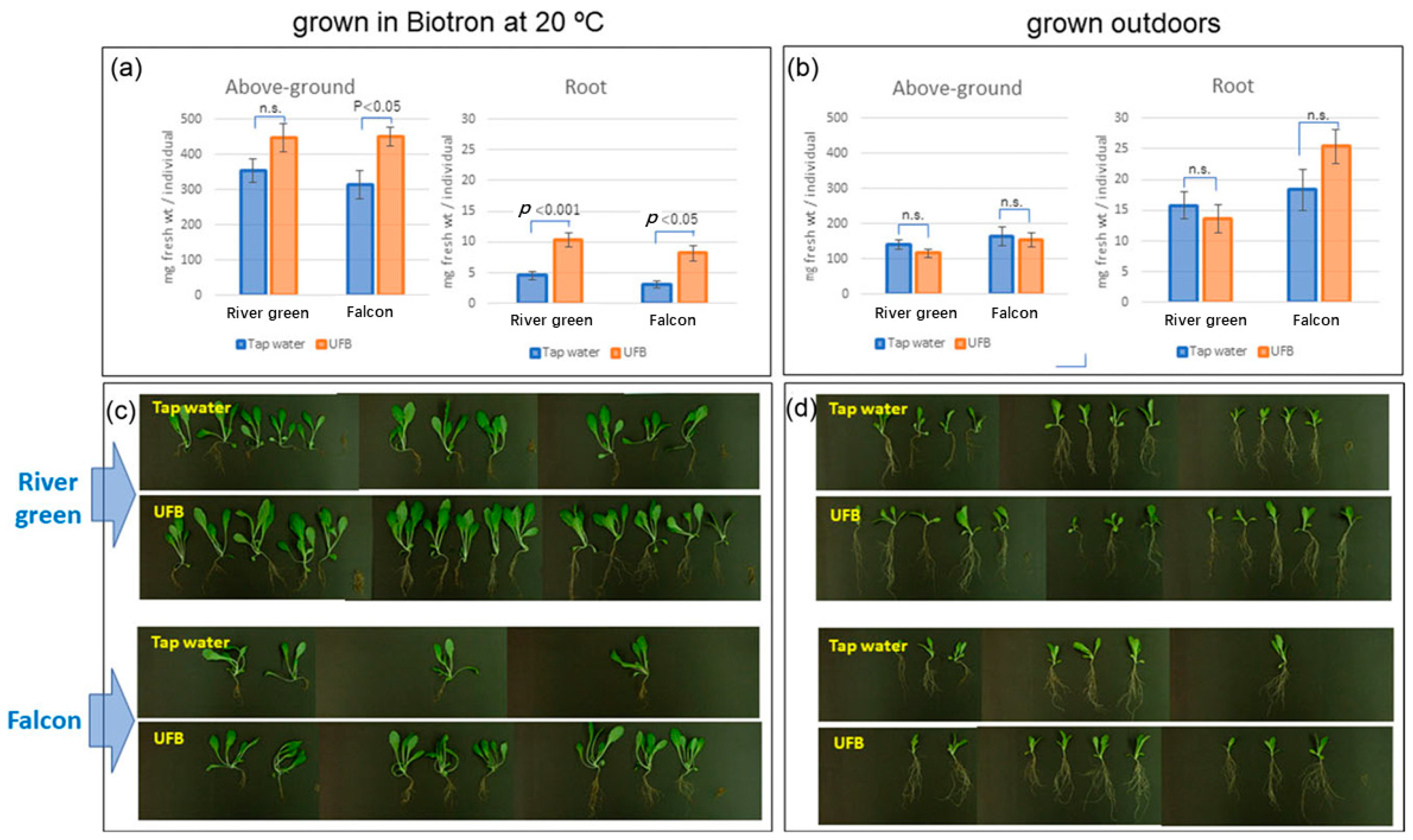
To elucidate UFB water’s effect on soil microorganisms, the focus was on studying the promotion of plant growth by reducing the soil damage, and the effect of UFB water on pathogens that cause soil deterioration. Due to bacterial infection, UFB water can affect damaged soil in some way. In greenhouse tomato cultivation, bacterial wilt often occurs. The soil was prepared by mixing the root zone and rhizosphere parts of the diseased or healthy plants as a control. Considering practical applications, tap water was used as raw water. Figure 16 shows the effects of UFB water on the growth of L. sativa in the soil damaged by repeated planting of L. sativa. The results showed that water containing UFBs can promote the growth of tomato (Solanum lycopersicum) in soil damaged by tomato planting or bacterial wilt in the previous year and also promote the growth of lettuce (Lactuca sativa) in the soil damaged by repeated lettuce planting. In the soil damaged by tomato planting, the UFB water treatment did not affect the growth of lettuce. UFB water partially suppressed the growth of the pathogen causing bacteria wilt, Ralstonia solanacearum, in vitro. The data shows that UFB water can effectively restore plant growth after soil damage. The effects of UFBs on the growth of S. lycopersicum germinating in the “disease” soil near S. lycopersicum showing the symptoms of bacterial wilt was studied. The detection rate of S. lycopersicum in bacterial wilt exceeded 5% annually. The growth of the plants suffering from the disease was severely hindered, and eventually, the entire plant wilted completely. The Falcon variety has shown abnormal germination in several cases. UFB water promoted the root growth of plants growing in the diseased soil, but it had no effect on the growth of plants growing in the healthy soil. No effect of UFB water was observed in the soil recovered from bacterial wilt or healthy plants [88].

4.3. UFW on Plant Growth Under Drought Stress

The increase in drought events caused by extreme climate change is expected to pose new challenges to the stability of coffee production, as drought can cause coffee flowers to fall off prematurely, fruit to wither, and exacerbate the reproduction of pests and diseases. Coffee production largely relies on stable rainfall conditions. UFB water has been reported to effectively alleviate environmental stress on plant growth, especially drought stress. The effect of UFB water irrigation on the growth of coffee seedlings was determined to alleviate pressures of repeated drought [89]. To simulate repeated drought environments, six potted plant experiments were conducted over a period of more than three years by subjecting coffee plants to repeated drought stress in a greenhouse. Different combinations of two water regimes (control and drought) and tap water and UFB water were tested using randomly arranged potted coffee plants. The concentration and average diameter of UFB were 0.7 × 10⁸ mL−1 and 215 nm, respectively. The results indicated that, under drought conditions, UFB water has a significant promoting effect on the growth of coffee seedlings. In contrast, using additional fertilizers in a nutrient-rich environment has no significant effect on the growth of coffee. UFB water can increase the root length and surface area of coffee plants, promote water absorption, and prevent leaf senescence (leaf cell collapse) under drought conditions and enable coffee plants to adapt to drought conditions. Therefore, under drought conditions, UFB water irrigation may be an effective measure to promote coffee growth. Usually, UFB water produces four types of excessive reactive oxygen species (ROS) (O2−, H2O2, •OH, and O2). The adaptation of coffee plants to drought stress is closely related to photosynthesis, respiratory activity, ROS production, and the expression of antioxidant enzymes. These exogenous ROS stimuli can promote seed germination, but excessive ROS can cause plant damage. UFB reduces ROS under osmotic stress conditions, which helps to alleviate stress. Therefore, it is necessary to further study the effects of UFB water on ROS and plant morphology, especially root morphology, and to clarify in detail the factors behind promoting growth and alleviating stress.

4.4. Hydrogen Nanobubble Water on Removing Heavy Metal Stress

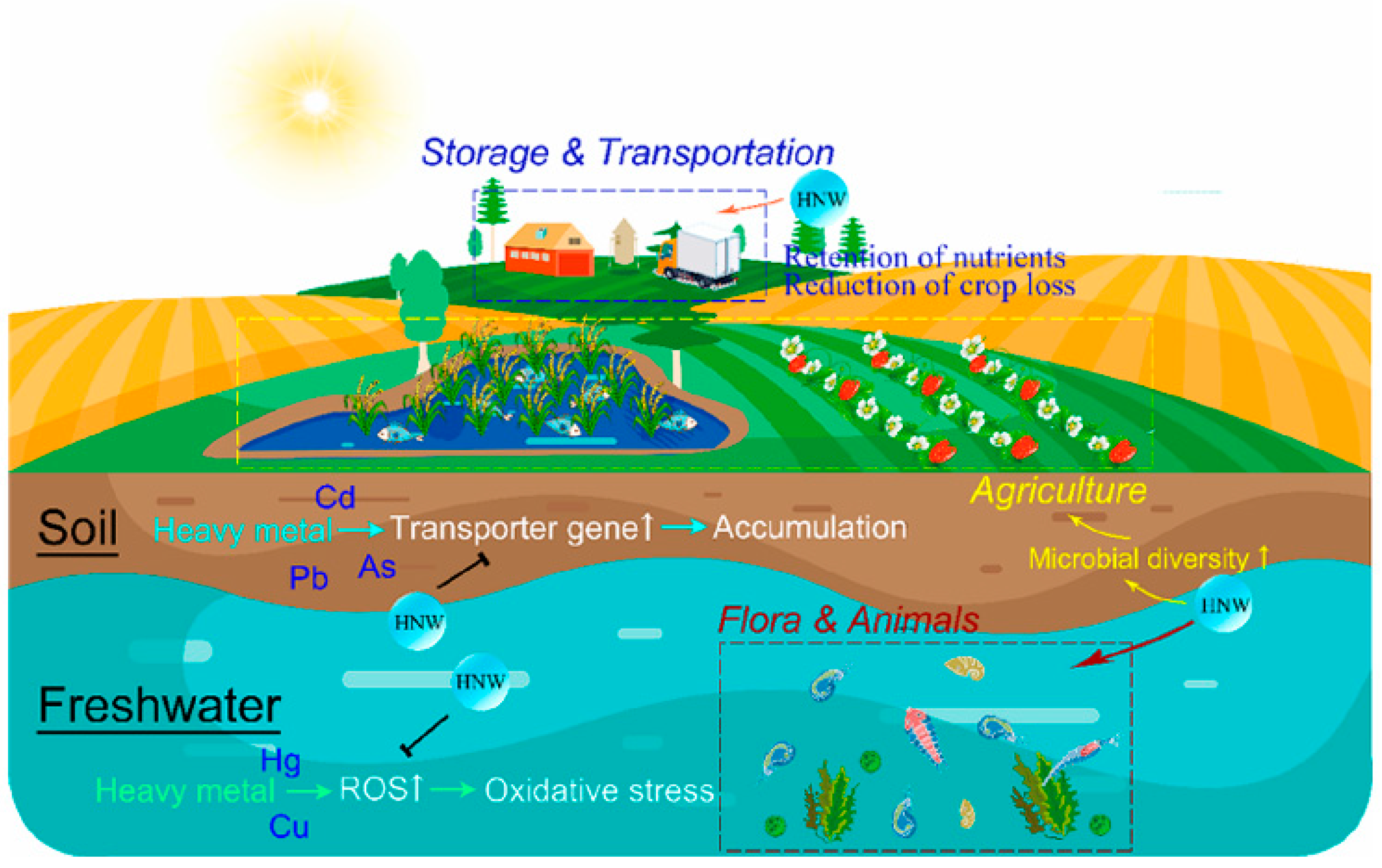
Hydrogen is a reducing agent that can enhance plant abiotic stress tolerance by strengthening antioxidant defense mechanisms, improving photosynthetic capacity, rebuilding ion homeostasis, maintaining nutritional homeostasis, and regulating flavonoid pathways. Hydrogen can remove excessive ROS and react with positively charged heavy metals such as lead (Pb4+ and Pb2+), arsenic (As3+), and mercury (Hg2+ and Hg+). But hydrogen water only reacts with exogenous ROS (•OH). Compared with molecular hydrogen, hydrogen nanobubbles exist in water for a longer period of time and have a higher solution retention rate, which increases the activity of antioxidant enzymes, such as superoxide dismutase and catalase, and eliminates more patterns of ROS (O2•−, ClO, and ONOO). As shown in Figure 17, hydrogen nanobubble water (HNW) was applied when removing heavy metals from soil and freshwater, etc. [90].

5. Summary, Conflict, and Prospects

5.1. Summary

The classification and six properties of UFBs were summarized, and the generation approaches of UFB waters were introduced based on physical and chemical methods. The applications of UFBs and ozone UFB waters in plant protection practices were comprehensively reviewed, in which UFB waters controlling the biotic stresses of crops for the plant insects and the soilborne, airborne, and waterborne plant diseases were analyzed, and UFB waters against the abiotic stresses of crops in salinity soil, contaminated soil, drought, and heavy metals were reviewed.

5.2. Conflicts

Despite promising applications, UFB technology has limitations aimed at pesticide reduction and replacement. Obviously, UFB water is not omnipotent. When carrying out plant protection practices using UFB water, its efficiency must be investigated, because the results might conflict with some studies.
The impacts on turfgrass health from repeated applications of oxygenated nanobubble water and ozonated nanobubble water treatments were assessed. Two different application methods, soil drench versus foliar spray, were compared for all treatments. The contrasting plant protection results about the different mechanisms of pathogen spread and/or infection in different oxygen conditions or anaerobic environments were discussed. The lack of efficacy from nanobubble water treatments in their trial may be attributed to the inherent infection processes of pathogens and could have been due to dissolved oxygen loss when spraying was directed after passing through a nozzle and substantial off-gassing because of a high-pressure spray nozzle into the lower-pressured atmospheric environment. But they still maintain that oxygenated and ozonated water treatments did not negatively impact turfgrass health, and nanobubble aeration is a valuable and viable approach for producing oxygenated or ozonated water. It may be necessary to make further improvements to application technology, especially overhead application technology, to reduce gaseous losses and optimize the performance of oxygenated and ozonated water treatment [60].
To investigate the effect of MNB water oxygenation on the growth of rice seedlings under salt stress, both rice variety 9311 (model species) and JX99 (relatively salt-tolerant) seedlings were tested to find ways to improve root vitality and enhance the salt tolerance of seedlings. Rice seedlings were cultivated with Yoshida nutrient solution + distilled water and Yoshida nutrient solution + micro/nanobubble water; then, they were treated with 0.6% NaCl salt stress and no salt stress to determine the growth characters and physiological and biochemical indexes of rice seedlings. The results showed that the root length and stem fresh weight of 9311 rice seedlings significantly decreased by 24.87% and 11.20% under salt-free stress and significantly decreased by 45.16% and 46.81% under 0.6% salt stress. The root length and leaf number of JX99 significantly increased by 31.76% and 21.88% under salt-free stress, and the root length and stem fresh weight of JX99 significantly increased by 35.67% and 67.97% under 0.6% salt stress. The malondialdehyde content of the two varieties significantly decreased by 41.19% and 15.85%, while the proline content did not change significantly under salt-free stress. The malondialdehyde content of the two varieties significantly increased by 46.25% and 36.11%, and the proline content significantly increased by 85.63% and 131.64% under 0.6% salt stress [91]. Obviously, there were indeed contradictory effects, which means that different rice varieties had different seedling growth characters due to the different responses of seedlings to MNB water oxygenation concentration. Further research is needed to investigate the reasons why the MNB water for aerobic cultivation exacerbates the damage to rice seedlings under salt stress and should try to study the mechanistic explanation of genotype-specific responses.

5.3. Prospects

The key directions for future research could focus on exploring UFB generation mechanisms in depth, developing advanced materials, and expanding application fields to improve the UFW treatments, including increasing bubble stability, enhancing generation efficiency, decreasing energy consumption, optimizing generator design, and promoting large-scale application. A series of fundamental studies could be carried out in plant protection practices, including the mechanism of UFW controlling plant pests and diseases, the molecular mechanism of UFW affecting plant pest resistance, plant growth in harsh polluted environments like salinity soil and contaminated soil, the UFB’s behavior with the hydrophobic and hydrophilic surfaces of crop leaves, and the integrated intelligent crop growth system.

5.3.1. Mechanism of UFW Controlling Plant Pests and Diseases

Nanobubble waters can serve as a carrier of active antibacterial agents to enhance the solubility, wettability, dispersion, and bioavailability of pesticides, further improving pesticide application technologies.
The respiration of insects is generally realized through gas exchange between the spiracles/tracheal system and the outside body. Therefore, to take advantage of the slow rising properties of UFBs and the more even distribution in pesticides, it is possible to apply the UFB water spraying of mixed pesticides on the targeted plants suffering from pests through the insect spiracles/tracheal system. It is necessary to study the poisoning mechanism of pesticides and the unique performance advantages of UFW, as well as the mechanism of the combination of UFBs and pesticides to destroy the internal organizational structure of insects so as to achieve the purpose of the insecticidal effect without any negative impacts on crops. As we know, ozone may have a broad-spectrum plant pest control capability; the integration of different ozone concentrations and UFW can be conducted to seek the optimal ozone concentration that is safe for crop growth and has a control effect. Combining ozone with UFB technology, that is, injecting ozone into pesticides in the form of MNBs through a special device, can not only increase the contact area between the ozone and pesticides, improving the solubility and utilization of ozone, but also take advantage of UFBs to extend the retention time of ozone in pesticides. Using the spiracles/tracheal system of insects, the application of ozone UFW spraying may make the high concentration of ozone UFWs make contact with the insects, destroying their internal tissue structure and achieving the purpose of killing insects. If serving the OUFBW as a disinfectant against crop diseases, further studies are required to explore optimal application methods and machinery. The bactericidal effect of ozone combined with UFB mainly depends on the action of ozone. UFB might be used as a carrier to maintain the ozone in water for a prolonged period.

5.3.2. Molecular Mechanisms Underlying UFW’s Effects on Pest Resistance

It was reported that non-glandular trichomes play an important role in the mechanical defense against insects, while glandular trichomes can secrete secondary metabolites, including monoterpenes and sesquiterpenes, which contribute to host plant resistance against pests. The metabolites produced by terpenoids derived from the glandular trichome in cultivated and wild tomato species exhibit repellent and toxic activity against various herbivores that chew or pierce, such as aphids [92]. Further research on the generalizability can be carried out in the molecular mechanisms underlying UFW’s effects on plant growth and pest resistance. The mechanism of action of the effective sesquiterpenes may be unraveled; the potential performance, feeding, and selection behavior of specific targets in pests may be characterized as underlying UFW’s involvement.

5.3.3. Hydrophilic Nanopatterned Surfaces of Targeted Crops

Rough surfaces can affect the apparent contact angle at the boundary between liquids and surfaces, and many examples have shown the difficulty of wetting rough surfaces due to their large apparent contact angles. If the water is under zero hydrostatic pressure, it will remain on a porous surface at a certain location [93]. The hydrophilic surfaces have high surface energy, which absorb water and wet the surface, with water evenly dispersed on the surface [13]. The desirable situation is that the pesticide droplets can deposit and adhere to the surfaces of crop leaves at a contact angle of less than 90° and moisten the leaves. In some cases, pesticide droplets move away from the leaf surfaces, known as hydrophobic surfaces. More and more evidence suggests that there is a presence of nanobubbles on hydrophobic surfaces in water [94]. The formation of interfacial nanobubbles on different hydrophobic substrates and the influence of interfacial nanobubbles on particle interaction were studied [95]. Due to the unique physiochemical properties of UFB, the different behaviors of UFBs on hydrophobic and hydrophilic surfaces could be studied. The unique surface structure and different surface energies form different wetting contact angles (θ), namely, superhydrophilicity with θ < 10°, hydrophilicity with 10° ≤ θ < 90°, hydrophobicity with 90° < θ ≤ 150°, and superhydrophobicity with θ > 150° [96]. For example, the wetting contact angles for lotus leaves are θ > 90°, showing self-cleaning properties, and for tomato leaves θ < 90°, being conducive to photosynthesis and water absorption. The effects of different plant leaves on the deposition characteristics of UFB water and ordinary water can be compared to improve the deposition performance of droplets on the plant target. A hydrophilic nanopatterned leaf surface might be created by combining the UFB with pesticides through the hydrodynamics of mechanical shearing, pressurized gas dissolution, microfluidic technology, micro-porous dispersion, and electrochemical and cavitation effect methods.

5.3.4. Application of Activated UFB Water in Plant Protection Practices

A large number of activated waters have been studied for plant disease and pest control. The applications using physical methods can increase the dissolved oxygen concentration in ordinary water to form aerated water. The magnetized water is formed by making ordinary water vertically pass through a fixed magnetic field at a certain velocity. The deionized activated water can significantly change the physical and chemical properties of water and increase the activity of water molecules. And there are other activated waters progressing in application, such as plasma active water, electrolyzed water, electricity-generating functional water, and so on [97,98,99,100,101,102]. It has been reported that the electrolyzed water has significant antibacterial activity against pathogenic bacteria. Ultrasound and mild heating can improve the bactericidal efficiency of electrolyzed water by reducing the soaking time. The synergistic effect of slightly acidic electrolyzed water combined with ultrasound and mild heat in Listeria monocytogenes and Salmonella typhimurium adherent on surfaces of fresh-cut bell pepper was evaluated [98]. However, electrolyzed water is relatively unstable and vulnerable to external environmental factors such as light, temperature, the sealing degree, and other conditions. Therefore, the best application scheme for integrating UFBs to improve the performance of various activated UFB waters should be proposed according to different environments, crops, and plant diseases. Further study on the application of activated UFB water in plant protection should focus on improving plant growth in saline alkali land, contaminated soil fields, and other harsh environments, promoting plant roots, and optimizing breeding. In addition, the high-oxygen environment provided by UFB water will also promote the growth and development of harmful microorganisms in soil, and we need to further study the bactericidal mechanism of activated UFB water and whether it will affect plant roots or the soil environment.

5.3.5. Integrated Intelligent Plant Cultivation System

Most of the present studies on UFB water applications in plant protection practices are performed with relatively small scales. It would be helpful to examine upscaling the UFB water applications in plant protection practices and consider the cost/benefit analysis. Since an intelligent sprayer can spot-spray the most pertinent selective herbicides onto the susceptible weeds based on precision weed mapping [103], UFW can be used together with integrated pest management strategies. UFB technology can also be combined with intelligent pesticide prescription spraying [104] to realize intelligent applications, such as installing sensors in the greenhouse to monitor environmental parameters such as temperature, humidity, carbon dioxide concentration, and plant growth status in real time. When plant diseases and pests occur in orchard environments, the multi-dimensional prescription map and variable-rate spraying operations [105] can automatically adjust the concentration composition, spraying time frequency, and spraying amount of UFWs or OUFBW, effectively sterilize and kill pests, and further integrate the intelligent tree growth system with multiple functions, such as aeration, disinfection, fertilization, irrigation, and plant protection, so as to realize unmanned precision cultivation and remote management using mobile devices. The series of advanced sensors should be studied for detecting pathogens to trigger OUFBW applications, applying real-time UFW adjustment, and calculating the economic threshold for pesticide spraying automation.

Author Contributions

Conceptualization, J.Z., Y.X., D.L., and Y.C.; writing—original draft, J.Z. and Y.X.; writing—review and editing, J.Z., Y.X., D.L., Y.C., and Y.W. All authors have read and agreed to the published version of the manuscript.

Funding

This research received no external funding.

Institutional Review Board Statement

Not applicable.

Data Availability Statement

No new data were created or analyzed in this paper due to being a review article. Data sharing is not applicable to this paper.

Acknowledgments

During the preparation of this manuscript, the authors used Baidu Translation for the goals of language translation. All views, interpretations, inductive analysis, summaries and prospects presented in this paper are solely those of the authors, except those already indicated by the quotation. The authors have reviewed and edited the output and take full responsibility for the content of this paper.

Conflicts of Interest

Author Deyun Liu was employed by the company Nanjing Fortune Water Technology Co., Ltd. The remaining authors declare that the research was conducted in the absence of any commercial or financial relationships that could be construed as a potential conflict of interest.

Abbreviations

The following abbreviations are used in this paper:
UFBUltrafine Bubble
UFWUltrafine Bubble Water
OUFBWOzone Ultrafine Bubble Water
MNBMicro-nanobubble
NBNanobubble

References

  1. Du, B.; Haensch, R.; Alfarraj, S.; Rennenberg, H. Strategies of plants to overcome abiotic and biotic stresses. Biol. Rev. 2024, 99, 1524–1536. [Google Scholar] [CrossRef]
  2. Zheng, J.; Xu, Y. A Review: Development of Plant Protection Methods and Advances in Pesticide Application Technology in Agro-Forestry Production. Agriculture 2023, 13, 2165. [Google Scholar] [CrossRef]
  3. Dwivedi, S. FAO Report Reveals Shocking Crop Losses-Up to 40% Due to Pests and Diseases Annually.pdf. Available online: https://krishijagran.com/agriculture-world/fao-report-reveals-shocking-crop-losses-up-to-40-due-to-pests-and-diseases-annually/ (accessed on 13 November 2025).
  4. Sarkozi, A. New Standards to Curb the Global Spread of Plant Pests and Diseases.pdf. Available online: https://www.fao.org/newsroom/detail/New-standards-to-curb-the-global-spread-of-plant-pests-and-diseases/en (accessed on 13 November 2025).
  5. FAO. Pesticides Use and Trade. 1990–2023. Available online: https://www.fao.org/statistics/highlights-archive/highlights-detail/pesticides-use-and-trade-1990-2023/ (accessed on 13 November 2025).
  6. FAO. Guidelines on Prevention and Management of Pesticide Resistance.pdf. 2012. Available online: https://www.fao.org/fileadmin/templates/agphome/documents/Pests_Pesticides/Code/FAO_RMG_Sept_12.pdf (accessed on 13 November 2025).
  7. Elumalai, P.; Gao, X.; Parthipan, P.; Luo, J.; Cui, J. Agrochemical pollution: A serious threat to environmental health. Curr. Opin. Environ. Sci. Health 2025, 43, 100597. [Google Scholar] [CrossRef]
  8. FAO. Pest and Pesticide Management. Food and Agriculture Organization of the United Nations. Available online: https://www.fao.org/pest-and-pesticide-management/news/detail/en/c/1737648 (accessed on 10 August 2025).
  9. Hung, J.-C.; Li, N.-J.; Peng, C.-Y.; Yang, C.-C.; Ko, S.-S. Safe Farming: Ultrafine Bubble Water Reduces Insect Infestation and Improves Melon Yield and Quality. Plants 2024, 13, 537. [Google Scholar] [CrossRef] [PubMed]
  10. Zhou, Y.; Zhou, B.; Xu, F.; Muhammad, T.; Li, Y. Appropriate dissolved oxygen concentration and application stage of micro-nano bubble water oxygation in greenhouse crop plantation. Agric. Water Manag. 2019, 223, 105713. [Google Scholar] [CrossRef]
  11. Cai, J.; Zhai, G.; Lv, M.; Deng, Z.; Zong, J.; Zhang, W.; Li, Y. Application and Prospect of Micro-nano Bubble in Agriculture Irrigation Areas. J. Irrig. Drain. 2016, 35, 102–107. [Google Scholar]
  12. dos Santos, O.A.L.; dos Santos, M.S.; Antunes Filho, S.; Backx, B.P. Nanotechnology for the control of plant pathogens and pests. Plant Nano Biol. 2024, 8, 100080. [Google Scholar] [CrossRef]
  13. Senthilkumar, G.; Musharraf, S.T.; Deepak, V.B. Review on nanobubbles behavior with hydrophobic and hydrophilic surfaces. Environ. Qual. Manag. 2023, 33, 37–39. [Google Scholar] [CrossRef]
  14. Han, G.; Chen, S.; Su, S.; Huang, Y.; Liu, B.; Sun, H. A review and perspective on micro and nanobubbles: What They Are and Why They Matter. Miner. Eng. 2022, 189, 107906. [Google Scholar] [CrossRef]
  15. The Role of Nanobubbles in Pest and Disease Control. Available online: https://divaenvitec.com/the-role-of-nanobubbles-in-pest-and-disease-control/ (accessed on 25 August 2025).
  16. Huang, Q.; Liu, A.R.; Zhang, L.J. Characteristics of micro-nanobubbles and their applications in soil environment improvement. J. Environ. Eng. Technol. 2022, 12, 1324–1332. [Google Scholar]
  17. Iijima, M.; Yamashita, K.; Hirooka, Y.; Ueda, Y.; Yamane, K.; Kamimura, C. Promotive or suppressive effects of ultrafine bubbles on crop growth depended on bubble concentration and crop species. Plant Prod. Sci. 2021, 25, 78–83. [Google Scholar] [CrossRef]
  18. Wang, Y.; Wang, S.; Sun, J.; Dai, H.; Zhang, B.; Xiang, W.; Hu, Z.; Li, P.; Yang, J.; Zhang, W. Nanobubbles promote nutrient utilization and plant growth in rice by upregulating nutrient uptake genes and stimulating growth hormone production. Sci. Total. Environ. 2021, 800, 149627. [Google Scholar] [CrossRef]
  19. Qian, Y.F.; Chen, J.; Shao, C.H.; Guan, X.J.; Qiu, C.F.; Chen, X.M.; Liang, X.H.; Xie, J.; Deng, G.Q.; Peng, C.R. Effect of micro-nano bubbles on the yield of different rice types. Chin. J. Eco-Agric. 2021, 29, 1893–1901. [Google Scholar]
  20. Mochizuki, Y.; Zhao, T.; Kanematsu, W.; Kawasaki, T.; Saito, T.; Ohyama, A.; Nakano, A.; Higashide, T. Application of a Growth Model to Validate the Effects of an Ultrafine-bubble Nutrient Solution on Dry Matter Production and Elongation of Tomato Seedlings. Hortic. J. 2019, 88, 380–386. [Google Scholar] [CrossRef]
  21. ISO-20480-1-2017; Fine Bubble Technology—General Principles for Usage and Measurement of Fine Bubbles. International Organization for Standardization: Geneva, Switzerland, 2017.
  22. Jia, M.; Farid, M.U.; Kharraz, J.A.; Kumar, N.M.; Chopra, S.S.; Jang, A.; Chew, J.; Khanal, S.K.; Chen, G.; An, A.K. Nanobubbles in water and wastewater treatment systems: Small bubbles making big difference. Water Res. 2023, 245, 120613. [Google Scholar] [CrossRef]
  23. Zhao, S.; Wu, J.; Li, Y. Advances in the Research on the Properties and Applications of Micro-Nano Bubbles. Processes 2025, 13, 2106. [Google Scholar] [CrossRef]
  24. Wang, X.; Li, P.; Ning, R.; Ratul, R.; Zhang, X.; Ma, J. Mechanisms on stability of bulk nanobubble and relevant applications: A review. J. Clean. Prod. 2023, 426, 139153. [Google Scholar] [CrossRef]
  25. Takahashi, M.; Chiba, K.; Li, P. Free radical generation from collapsing microbubbles in the absence of a dynamic stimulus. J. Phys. Chem. B 2007, 111, 1343–1347. [Google Scholar] [CrossRef] [PubMed]
  26. Abu-Nab, A.K.; Morad, A.M.; Selima, E.S.; Kanagawa, T.; Abu-Bakr, A.F. A review of microcavitation bubbles dynamics in biological systems and their mechanical applications. Ultrason. Sonochem. 2025, 121, 107521. [Google Scholar] [CrossRef] [PubMed]
  27. Takahashi, M. Base and technological application of micro-bubble and nanobubble. Mater. Integr. 2009, 22, 2–19. [Google Scholar]
  28. Temesgen, T.; Bui, T.T.; Han, M.; Kim, T.-I.; Park, H. Micro and nanobubble technologies as a new horizon for water-treatment techniques: A review. Adv. Colloid Interface Sci. 2017, 246, 40–51. [Google Scholar] [CrossRef]
  29. Yildirim, T.; Yaparatne, S.; Graf, J.; Garcia-Segura, S.; Apul, O. Electrostatic forces and higher order curvature terms of Young–Laplace equation on nanobubble stability in water. npj Clean Water 2022, 5, 18. [Google Scholar] [CrossRef]
  30. Sakr, M.; Mohamed, M.M.; Maraqa, M.A.; Hamouda, M.A.; Hassan, A.A.; Ali, J.; Jung, J. A critical review of the recent developments in micro–nano bubbles applications for domestic and industrial wastewater treatment. Alex. Eng. J. 2022, 61, 6591–6612. [Google Scholar] [CrossRef]
  31. Takahashi, M.; Kawamura, T.; Yamamoto, Y.; Ohnari, H.; Himuro, S.; Shakutsui, H. Effect of shrinking microbubble on gas hydrate formation. J. Phys. Chem. B 2003, 107, 2171–2173. [Google Scholar] [CrossRef]
  32. Matsumoto, M.; Tanaka, K. Nano bubble—Size dependence of surface tension and inside pressure. Fluid Dyn. Res. 2008, 40, 546–553. [Google Scholar] [CrossRef]
  33. Takahashi, M. ζ potential of microbubbles in aqueous solutions electrical properties of the gas water interface. J. Phys. Chem. B 2005, 109, 21858–21864. [Google Scholar] [CrossRef]
  34. Malahlela, H.K.; Belay, Z.A.; Mphahlele, R.R.; Caleb, O.J. Micro-Nano bubble water technology: Sustainable solution for the postharvest quality and safety management of fresh fruits and vegetables—A review. Innov. Food Sci. Emerg. Technol. 2024, 94, 103665. [Google Scholar] [CrossRef]
  35. Wang, B.; Lu, X.; Tao, S.; Ren, Y.; Gao, W.; Liu, X.; Yang, B. Preparation and Properties of CO2 Micro-Nanobubble Water Based on Response Surface Methodology. Appl. Sci. 2021, 11, 11638. [Google Scholar] [CrossRef]
  36. Jia, J.; Zhu, Z.; Chen, H.; Pan, H.; Jiang, L.; Su, W.-H.; Chen, Q.; Tang, Y.; Pan, J.; Yu, K. Full life circle of micro-nano bubbles: Generation, characterization and applications. Chem. Eng. J. 2023, 471, 144621. [Google Scholar] [CrossRef]
  37. Zhou, L.; Wang, S.; Zhang, L.; Hu, J. Generation and stability of bulk nanobubbles: A review and perspective. Curr. Opin. Colloid Interface Sci. 2021, 53, 101439. [Google Scholar] [CrossRef]
  38. Han, Z. Research on the Stability of Nanobubbles and the Mechanism and Application of Hydroxyl Radicals Generation. Ph.D. Thesis, Guangxi University, Nanning, China, 2023. [Google Scholar]
  39. Zhang, W.; Li, Z.J.; Agblevor, F.A. Microbubble fermentation of recombinant Pichia pastoris for human serum albumin production. Process. Biochem. 2005, 40, 2073–2078. [Google Scholar] [CrossRef]
  40. Etchepare, R.; Oliveira, H.; Nicknig, M.; Azevedo, A.; Rubio, J. Nanobubbles: Generation using a multiphase pump, properties and features in flotation. Miner. Eng. 2017, 112, 19–26. [Google Scholar] [CrossRef]
  41. Tanaka, Y.; Kikuchi, K.; Saihara, Y.; Ogumi, Z. Bubble visualization and electrolyte dependency of dissolving hydrogen in electrolyzed water using Solid-Polymer-Electrolyte. Electrochim. Acta 2005, 50, 5229–52366. [Google Scholar] [CrossRef]
  42. Paxton, W.F.; Kistler, K.C.; Olmeda, C.C.; Sen, A.; Angelo, S.K.S.; Cao, Y.; Mallouk, T.E.; Lammert, A.P.E.; Crespi, V.H. Catalytic Nanomotors: Autonomous Movement of Striped Nanorods. J. Am. Chem. Soc. 2004, 126, 13424–13431. [Google Scholar] [CrossRef]
  43. Zhou, Y.; Cui, J.; Chen, Z.; Liu, J.; He, L.; Fan, W.; Huo, M. Parametric analysis of venturi-type microbubble generator and the bubble fragmentation dynamics. Desalination Water Treat. 2025, 322, 101116. [Google Scholar] [CrossRef]
  44. Li, X.; Su, W.; Liu, Y.; Yan, X.; Wang, L.; Zhang, H. Comparison of bubble velocity, size, and holdup distribution between single- and double-air inlet in jet microbubble generator. Asia-Pacific J. Chem. Eng. 2020, 16, e2611. [Google Scholar] [CrossRef]
  45. Wu, Y.; Chen, H.; Song, X. Experimental and numerical study on the bubble dynamics and flow field of a swirl flow microbubble generator with baffle internals. Chem. Eng. Sci. 2022, 263, 118066. [Google Scholar] [CrossRef]
  46. Yabuki, N.; Murakami, N.; Hasegawa, K.; Xing, W.; Makuta, T. Microbubble Generation by Hollow Ultrasonic Horn Using Longitudinal and Torsional Complex Oscillation. Adv. Exp. Mech. 2024, 9, 24-0014. [Google Scholar]
  47. Yasui, K. Acoustic Cavitation and Bubble Dynamics. In Springer Briefs in Molecular Science; Springer International Publishing: Cham, Switzerland, 2018; ISBN 978-3-319-68236-5. [Google Scholar]
  48. Sadatomi, M.; Kawahara, A.; Matsuura, H.; Shikatani, S. Micro-bubble generation rate and bubble dissolution rate into water by a simple multi-fluid mixer with orifice and porous tube. Exp. Therm. Fluid Sci. 2012, 41, 23–30. [Google Scholar] [CrossRef]
  49. Sharma, A.; Sai, K.P.; Nirmalkar, N. Bulk nanobubbles as active nucleation sites during antisovent crystallization. Chem. Eng. Sci. 2025, 309, 121464. [Google Scholar] [CrossRef]
  50. van Hoeve, W.; Dollet, B.; Gordillo, J.M.; Versluis, M.; van Wijngaarden, L.; Lohse, D. Bubble size prediction in co-flowing streams. EPL Europhys. Lett. 2011, 94, 64001. [Google Scholar] [CrossRef]
  51. Zhang, M.; Qiu, L.; Liu, G. Basic characteristics and application of micro-nano bubbles in water treatment. In IOP Conference Series: Earth and Environmental Science; IOP Publishing: Bristol, UK, 2020. [Google Scholar]
  52. Qiu, J.; Zou, Z.; Wang, S.; Wang, X.; Wang, L.; Dong, Y.; Zhao, H.; Zhang, L.; Hu, J. Formation and Stability of Bulk Nanobubbles Generated by Ethanol–Water Exchange. ChemPhysChem 2017, 18, 1345–1350. [Google Scholar] [CrossRef]
  53. Scienceinsights. How Does Temperature Affect Oxygen Concentrations? Available online: https://scienceinsights.org/how-does-temperature-affect-oxygen-concentrations/ (accessed on 16 November 2025).
  54. Kurumanghat, V.; Sharma, H.; Nirmalkar, N.; Kabiraj, L. Experimental studies on the effect of bulk nanobubbles on the combustion of Jet A-1. Fuel 2025, 398, 135385. [Google Scholar] [CrossRef]
  55. Zhang, W.; Wang, J.; Li, B.; Yu, K.; Wang, D.; Yongphet, P.; Xu, H.; Yao, J. Experimental investigation on bubble coalescence regimes under non-uniform electric field. Chem. Eng. J. 2021, 417, 127982. [Google Scholar] [CrossRef]
  56. Kyzas, G.Z.; Mitropoulos, A.C.; Matis, K.A. From Microbubbles to Nanobubbles: Effect on Flotation. Processes 2021, 9, 1287. [Google Scholar] [CrossRef]
  57. Zhai, L.X.; Cui, Y.Z.; Li, C.X.; Shi, X.G.; Gao, J.S.; Lan, X.Y. Research and Application Process of Microbubble Generator. Chem. Ind. Eng. Prog. 2024, 43, 111–123. [Google Scholar] [CrossRef]
  58. Veronico, P.; Paciolla, C.; Sasanelli, N.; De Leonardis, S.; Melillo, M.T. Ozonated water reduces susceptibility in tomato plants to Meloidogyne incognita by the modulation of the antioxidant system. Mol. Plant Pathol. 2016, 18, 529–539. [Google Scholar] [CrossRef] [PubMed]
  59. Prigigallo, M.I.; Melillo, M.T.; Bubici, G.; I Dobrev, P.; Vankova, R.; Cillo, F.; Veronico, P. Ozone treatments activate defence responses against Meloidogyne incognita and Tomato spotted wilt virus in tomato. Pest Manag. Sci. 2019, 75, 2251–2263. [Google Scholar] [CrossRef]
  60. Spratling, W.T.; Jespersen, D.; Waltz, C.; Martinez-Espinoza, A.D.; Bahri, B.A. Evaluation of oxygenated and ozonated nanobubble water treatments for dollar spot suppression in seashore paspalum. Agron. J. 2024, 117, e21744. [Google Scholar] [CrossRef]
  61. Ebihara, K.; Mitsugi, F.; Aoqui, S.I.; Yamashita, Y.; Baba, S. Ozone nano-mist disinfection of insect pests and automatic spraying system based on deep learning technology. Int. J. Plasma Environ. Sci. Technol. 2024, 18, e02003. [Google Scholar]
  62. Yang, Z.-C.; Peng, L.; Jing, Z.-B.; Wang, W.-L.; Cai, H.-Y.; Jiang, Y.-Q.; Li, L.-D.; Ye, B.; Wu, Q.-Y. Superior water disinfection via ozone micro-bubble aeration: Performance and mechanism. J. Hazard. Mater. 2025, 492, 138174. [Google Scholar] [CrossRef] [PubMed]
  63. Takizawa, F.; Domon, H.; Hiyoshi, T.; Tamura, H.; Shimizu, K.; Maekawa, T.; Tabeta, K.; Ushida, A.; Terao, Y. Ozone ultrafine bubble water exhibits bactericidal activity against pathogenic bacteria in the oral cavity and upper airway and disinfects contaminated healthcare equipment. PLoS ONE 2023, 18, e0284115. [Google Scholar] [CrossRef] [PubMed]
  64. Seridou, P.; Kalogerakis, N. Disinfection applications of ozone micro- and nanobubbles. Environ. Sci. Nano 2021, 8, 3493–3510. [Google Scholar] [CrossRef]
  65. Yang, J.; Liu, K.; Chen, Y.; Ye, H.; Hao, G.; Du, F.; Wang, P. A supramolecular bactericidal material for preventing and treating plant-associated biofilms. Nat. Commun. 2025, 16, 2627. [Google Scholar] [CrossRef]
  66. Jones, J.D.G.; Staskawicz, B.J.; Dangl, J.L. The plant immune system: From discovery to deployment. Cell 2024, 187, 2095–2116. [Google Scholar] [CrossRef]
  67. Arablousabet, Y.; Povilaitis, A. The Impact of Nanobubble Gases in Enhancing Soil Moisture, Nutrient Uptake Efficiency and Plant Growth: A Review. Water 2024, 16, 3074. [Google Scholar] [CrossRef]
  68. Mamun, M.A.; Islam, T. Oxygenated Nanobubbles as a Sustainable Strategy to Strengthen Plant Health in Controlled Environment Agriculture. Sustainability 2025, 17, 5275. [Google Scholar] [CrossRef]
  69. Dutta, P.; Kumari, A.; Mahanta, M.; Upamanya, G.K.; Heisnam, P.; Borua, S.; Kaman, P.K.; Mishra, A.K.; Mallik, M.; Muthukrishnan, G.; et al. Nanotechnological approaches for management of soil-borne plant pathogens. Front. Plant Sci. 2023, 14, 1136233. [Google Scholar] [CrossRef]
  70. Wang, H.; Yang, Y.; Li, M.F.; Liu, J.S.; Jin, W.M. Effects of atmospheric ozone on anthocyanin and carotenoid of plants. Plant Physiol. J. 2017, 53, 1824–1832. [Google Scholar]
  71. Song, W.T.; Sun, G.M.; Liu, F.; Zhou, L.G.; Wang, F.L. Ozone disinfection of three soilborne pathogens in nutrient solution. Trans. Chin. Soc. Agric. Eng. 2007, 23, 189–193. [Google Scholar]
  72. Xue, X.L.; Lin, S.H.; Yang, W.H.; Zhang, H.J. Preparation of micro-nano bubble ozone water and its application on soil and matrix disinfection. Vegetables 2019, 33–37. [Google Scholar]
  73. An, X.; Song, W.; He, H.; Qi, T. Disinfection Efficacy of Micro/nano Bubbles Ozone Water on F. oxysporum f. sp. Lycopeersici. J. Shenyang Agric. Univ. 2014, 45, 679–684. [Google Scholar] [CrossRef]
  74. Live to Plant. Exposure to Airborne Diseases in Plants: Identification and Control. Available online: https://livetoplant.com/exposure-to-airborne-diseases-in-plants-identification-and-control/ (accessed on 31 August 2025).
  75. Van der Heyden, H.; Dutilleul, P.; Charron, J.B.; Bilodeau, G.J.; Carisse, O. Monitoring airborne inoculum for improved plant disease management. A review. Agron. Sustain. Dev. 2021, 41, 40. [Google Scholar] [CrossRef]
  76. He, H.M.; Li, Y.F.; Geng, X.H.; An, X.C.; Song, W.T. On different ozone water generation systems and its spray characteristics. J. Shenyang Agric. Univ. 2013, 44, 678–682. [Google Scholar]
  77. He, H.; Zheng, L.; Li, Y.; Song, W. Research on the Feasibility of Spraying Micro/Nano Bubble Ozonated Water for Airborne Disease Prevention. Ozone Sci. Eng. 2015, 37, 78–84. [Google Scholar] [CrossRef]
  78. Jesse, J. How To Prevent & Control Waterborne Diseases in Hydroponic Systems. Available online: https://greenhouseemporium.com/prevent-waterborne-diseases-in-hydroponic-systems/ (accessed on 31 August 2025).
  79. Suárez-Cáceres, G.P.; Pérez-Urrestarazu, L.; Avilés, M.; Borrero, C.; Eguíbar, J.R.L.; Fernández-Cabanás, V.M. Susceptibility to water-borne plant diseases of hydroponic vs. aquaponics systems. Aquaculture 2021, 544, 737093. [Google Scholar] [CrossRef]
  80. Xue, X.; Yang, W.; Zhang, T. Micro/nano bubble aeration disinfection technology of nutrient solution. Agric. Eng. Technol. 2017, 37, 46–50. [Google Scholar] [CrossRef]
  81. Zhou, Y.P.; Xu, F.P.; Liu, X.J.; Wang, K.Y.; Wang, X.R.; Li, Y.K. Influence of micro bubble oxygen irrigation on vegetable growth and quality effect. J. Irrig. Drain. 2016, 35, 98–100. [Google Scholar]
  82. Zhang, H.; Xue, X.; Lin, S.; Zhang, Z.; Wu, N.; Yang, W.; Ren, Q.; Zhao, Y. Micro-Nano Bubble Generating Technology and its Application in Hydroponics with Aeration. Vegetables 2019, 1, 59–65. [Google Scholar]
  83. Pal, P.; Kioka, A. Micro and nanobubbles enhanced ozonation technology: A synergistic approach for pesticides removal. Compr. Rev. Food Sci. Food Saf. 2025, 24, e70133. [Google Scholar] [CrossRef]
  84. Jamali, G.A.; Devrajani, S.K.; Memon, S.A.; Qureshi, S.S.; Anbuchezhiyan, G.; Mubarak, N.M.; Shamshuddin, S.; Siddiqui, M.T.H. Holistic insight mechanism of ozone-based oxidation process for wastewater treatment. Chemosphere 2024, 359, 142303. [Google Scholar] [CrossRef]
  85. Sheng, Y.; Shen, C.; Geng, Z.; Wan, L. Study of new deep cleaning processing technology of fruits and vegetables. J. Food Sci. Technol. 2015, 33, 75–78. [Google Scholar]
  86. Handique, B.; Kalita, P.; Das, S.; Devi, H.S. Potential of Nano-particles in Mitigating Abiotic Stress in Crops. Adv. Res. 2025, 26, 121–132. [Google Scholar] [CrossRef]
  87. Wang, J.; Guo, X.; Zhao, Q.; Chen, R.; Li, G.; Zhou, B.; Cheng, P. Subsurface drip irrigation with micro-nano bubble hydrogen water improves the salt tolerance of lettuce by regulating the antioxidant system and soil bacterial community. Appl. Soil Ecol. 2025, 207, 105948. [Google Scholar] [CrossRef]
  88. Yokoyama, M.; Yamashita, T.; Kaida, R.; Seo, S.; Tanaka, K.; Abe, S.; Nakano, M.; Fujii, Y.; Kuchitsu, K. Ultrafine bubble water mitigates plant growth in damaged soil. Biosci. Biotechnol. Biochem. 2021, 85, 2466–2475. [Google Scholar] [CrossRef]
  89. Hirooka, Y.; Motomura, M.; Iijima, M. Ultra-fine bubble irrigation promotes coffee (Coffea arabica) seedling growth under repeated drought stresses. Plant Prod. Sci. 2024, 27, 47–55. [Google Scholar] [CrossRef]
  90. Zhao, L.; Teng, M.; Zhou, L.; Li, Y.; Sun, J.; Zhang, Z.; Wu, F. Hydrogen Nanobubble Water: A Good Assistant for Improving the Water Environment and Agricultural Production. J. Agric. Food Chem. 2023, 71, 12369–12371. [Google Scholar] [CrossRef]
  91. Li, L.; Xu, J.; Yuan, Q.; Liang, J.; He, Z.; Xie, P.; Zhou, H. Effects of Micro/nano Bubble Water on the Growth of Rice Seedlings under Salt Stress. J. Anhui Agric. Sci. 2022, 28, 21–24. [Google Scholar]
  92. Wang, F.; Park, Y.-L.; Gutensohn, M. Glandular trichome-derived sesquiterpenes of wild tomato accessions (Solanum habrochaites) affect aphid performance and feeding behavior. Phytochemistry 2020, 180, 112532. [Google Scholar] [CrossRef]
  93. Cassie, A.B.D.; Baxter, S. Wettability of porous surfaces. Trans. Faraday Soc. 1944, 40, 546–551. [Google Scholar] [CrossRef]
  94. Zhang, X.H.; Maeda, N.; Craig, V.S. Physical properties of nanobubbles on hydrophobic surfaces in water and aqueous solutions. Langmuir 2006, 22, 5025–5035. [Google Scholar] [CrossRef]
  95. Zhang, F.; Yang, H.; Gui, X.; Guo, H.; Cao, Y.; Xing, Y. Interfacial nanobubbles on different hydrophobic surfaces and their effect on the interaction of inter-particles. Appl. Surf. Sci. 2022, 582, 152184. [Google Scholar] [CrossRef]
  96. Danish, M. Contact Angle Studies of Hydrophobic and Hydrophilic Surfaces. In Handbook of Magnetic Hybrid Nanoalloys and their Nanocomposites; Springer: Berlin/Heidelberg, Germany, 2022; pp. 1–22. [Google Scholar]
  97. Yang, X. Study on the Effect of Activated Water on the Growth of Different Crops and Edible Fungi. Ph.D. Thesis, University of Chinese Academy of Sciences, Beijing, China, 2023. [Google Scholar]
  98. Luo, K.; Oh, D.-H. Inactivation kinetics of Listeria monocytogenes and Salmonella enterica serovar Typhimurium on fresh-cut bell pepper treated with slightly acidic electrolyzed water combined with ultrasound and mild heat. Food Microbiol. 2016, 53, 165–171. [Google Scholar] [CrossRef]
  99. Guo, J.; Huang, K.; Wang, X.; Lyu, C.; Yang, N.; Li, Y.; Wang, J. Inactivation of Yeast on Grapes by Plasma-Activated Water and Its Effects on Quality Attributes. J. Food Prot. 2017, 80, 225–230. [Google Scholar] [CrossRef] [PubMed]
  100. Zou, H. Effects of Plasma Active Water on Growth and Development of Non-Heading Cabbage. Master’s Thesis, Nanjing Agricultural University, Nanjing, China, 2022. [Google Scholar]
  101. Liu, Q.; Zhang, X.; Ren, B.; Feng, Z.; Han, C.; Wang, Y.; Yang, P. Application progress of electrolytic water in plant protection in China. China Plant Prot. 2020, 1, 35–39. [Google Scholar]
  102. Adal, S.; Kıyak, B.D.; Koç, G.Ç.; Süfer, Ö.; Karabacak, A.Ö.; Çınkır, N.I.; Çelebi, Y.; Jeevarathinam, G.; Rustagi, S.; Pandiselvam, R. Applications of electrolyzed water in the food industry: A comprehensive review of its effects on food texture. Futur. Foods 2024, 9, 100369. [Google Scholar] [CrossRef]
  103. Jin, X.; Zhao, H.; Kong, X.; Han, K.; Lei, J.; Zu, Q.; Chen, Y.; Yu, J. Deep learning-based weed detection for precision herbicide application in turf. Pest Manag. Sci. 2025, 81, 3597–3609. [Google Scholar] [CrossRef]
  104. Ye, K.; Hu, G.; Tong, Z.; Xu, Y.; Zheng, J. Key Intelligent Pesticide Prescription Spraying Technologies for the Control of Pests, Diseases, and Weeds: A Review. Agriculture 2025, 15, 81. [Google Scholar] [CrossRef]
  105. Hu, C.; Ru, Y.; Fang, S.; Rong, Z.; Zhou, H.; Yan, X.; Liu, M. Orchard variable rate spraying method and experimental study based on multidimensional prescription maps. Comput. Electron. Agric. 2025, 235, 110379. [Google Scholar] [CrossRef]
Figure 1. Fundamental physiochemical properties of nanobubbles [22].
Agriculture 15 02484 g001
Figure 2. Schematic diagram of UFB generation principle of cavitation approaches: (a) Venturi tube nozzle-type bubble generator [43]; (b) jet-type micro-nanobubble generator [44]; (c) swirl-type micro-nanobubble generator with baffles [45]; and (d) hollow ultrasonic horn [46].
Agriculture 15 02484 g002
Figure 3. Diagrams of UFB generation principle of gas dispersion approaches: (a) spinning-disk MBD generator [39]; (b) generator with multiphase pump [40]: (1) feed water tank, (2) ball valve, (3) vacuum meter, (4) centrifugal multiphase pump, (5) pressure tank, (6) pressure gauge, (7) flowmeter, (8) pressure gauge, (9) needle valve, (10) column, (11) pressure sensors, (12) sampler, (13) temperature sensor, (14) pH meter, (15) LTM B sizer, (16) recycling hose, (17) atmospheric air, (18) cooler, and (19) heat exchanger; (c) multi-fluid mixer with orifice and porous tube [23,48]; (d) nanobubble nozzle with microporous filaments [38]; (e) nanobubbles generated using porous membrane as active nucleation sites [49]; and (f) three main microfluidic geometries [50]: (f1) cross-flowing stream through T-junction, (f2) co-flowing stream, and (f3) focused stream applied by continuous phase.
Agriculture 15 02484 g003
Figure 4. Schematic diagram of ethanol–water exchange [52].
Agriculture 15 02484 g004
Figure 5. Schematic diagram of hot and cold mixing in Jet A-1 [54].
Agriculture 15 02484 g005
Figure 6. Diagram of liquid–gas electrostatic dispersion system and bubble coalescence [54]: (a) schematic diagram of liquid–gas electrostatic dispersion system; (b) diagram of bubble coalescence.
Agriculture 15 02484 g006
Figure 7. Schematic diagram of self-suction MNB generator [35]: (1) gas supply (CO2 cylinders), (2) gas flow meter, (3) diaphragm pump, (4) dissolved gas tank, (5) hydraulic pressure gauge, and (6) throttling nozzle.
Agriculture 15 02484 g007
Figure 8. Diagram of microbubble generator by electrolysis [23].
Agriculture 15 02484 g008
Figure 9. Generation of ozone UFB water [63]. (a) Diagram of OUFBW generator, (b) particle size distribution of OUFBWs, and (c) ozone concentrations in OUFBW stored at 4 °C or 25 °C. Data are presented as the mean ± SD of quintuplicate experiments and were evaluated using two-way repeated measures analysis of variance. Statistically significant as compared to 4 °C group, * p < 0.05.
Agriculture 15 02484 g009
Figure 10. UFW irrigation affected aphid infestation and trichomes development on melon seedlings [9]. (a) Affecting aphid infestation: (A) phenotype of melon leaves attacked by aphids 14 days after transplantation, (B) scatter plot of aphid infestation rating, *, significant differences between CK and UFW treatment were determined using Student’s t-test at p < 0.05. (C) aphids attacked young flower buds of melon (arrowhead), trichomes development after UFW treatment (arrow), and (D) aphid infestation on flower buds of CK (D) and UFW (E), the arrowheads point to the aphids (D,E). (b) Trichomes development irrigated with (RO) water, UF+H2, and UF+O2: (A) trichomes development after irrigation, (B) trichomes on midribs of melons, blue arrows indicate the presence of granular trichomes, (C) trichomes development on abaxial of newly established young leaves, (D) trichome density, (E) GL2 gene expression patterns in young melon leaves. *, significant differences between CK and UFW treatment using Student’s t-test at p < 0.05 (D,E).
Agriculture 15 02484 g010
Figure 11. Outline of automatic ozone-mist spraying disinfection system [61].
Agriculture 15 02484 g011
Figure 12. Effects of oxygenated nanobubbles and ordinary oxygenated bubbles on plant growth and rhizosphere microbial communities [68]. (A) Conventionally oxygenated water and (B) oxygenated nanobubble-enriched water in a soilless substrate; (C) conventional and (D) nanobubble-enriched water in deep-water hydroponic systems.
Agriculture 15 02484 g012
Figure 13. Schematic of ozone MNB water generator [77]. 1. Oxygen bottle, 2. flow meter, 3. regulating valve, 4. ozone generator, 5. flow meter, 6. MNB generator, 7. inlet valve, 8. inlet, 9. outlet, 10. aerator, and 11. plastic cylinder.
Agriculture 15 02484 g013
Figure 14. Effective pesticide degradation in aqueous medium by micro-nanobubbles [83].
Agriculture 15 02484 g014
Figure 15. Phenotype observation and shoot-root growth parameters [87]. (A) Layout of irrigation system; (B) effects of SDH, NaCl, and NaCl+SDH treatments on lettuce growth using CK as control.
Agriculture 15 02484 g015
Figure 16. Effects of UFB water on growth of L. sativa in soil damaged by repeated planting of L. sativa. Two varieties, River Green and Falcon, were sown in 3 pots each and with 5 seeds in each pot. They were grown at 20 °C in a biotron (a,c) or outdoors (b,d). The Falcon variety showed abnormal germination in several cases. Such abnormal individuals were eliminated for succeeding growth test. n.s. means the effect of UFB water is not significant [88].
Agriculture 15 02484 g016
Figure 17. Applications of hydrogen nanobubble water in removing heavy metals [90].
Agriculture 15 02484 g017
Table 1. The classification, typical names, and size ranges of different bubbles.
ClassificationTypical NamesSize RangesTypical Objects 1
Macrobubbles (MaB)
(>100 µm)
Centimeter bubble (CMB)>10 mmGrape
Millimeter bubble (MMB)100 µm–10 mmMost raindrops
Microbubbles (MiB)
(1 µm–100 µm)
Micron bubbles (MB)<100 µmOrdinary hair
Sub-microbubbles (SMB)1–10 µmErythrocyte
Micro-nanobubbles (MNB)
(<10 µm)
Ultrafine bubbles (UFB)<1 µmCigarette smoke
Nanobubbles (NB)<200 nmViruses
1 Typical corresponding reference objects.
Table 3. Methods of generating UFBs.
MethodsGeneration ApproachesMechanismReferences
PhysicalCavitationHydrodynamicUsing a localized low-pressure region to draw in gases and form UFBs[36]
AcousticUsing ultrasonic waves to cause gas nuclei in liquid for generating UFBs[36]
Gas dispersionMechanical agitationUsing a rotating disk device to stir gas–liquid mixture at high speed[38,39,40]
Microporous structureApplying micro-porous structures to disperse gas into UFBs when gas passes porous pipe[35,36]
Microfluidic deviceNarrowing main channel width and enhancing shear gradient to reduce bubble size[36]
Solvent exchangeReplacing high gas solubility fluids with low gas solubility fluids[36,37]
Temperature alterationAltering temperature suddenly to provide sufficient energy, forming bubble nucleus[36]
Electrohydrodynamic effectWeakening gas–liquid interface tension leading to breakup of gas phase[36]
Pressurized gas dissolutionChanging gas–liquid pressure to dissolve and release gases[23,35]
ChemicalElectrolysisDissolving hydrogen in water through electrochemical reactions on electrode surface[36,41]
Photocatalysis technologyCatalyzing decomposition of hydrogen peroxide solution to produce UFBs[42]
Disclaimer/Publisher’s Note: The statements, opinions and data contained in all publications are solely those of the individual author(s) and contributor(s) and not of MDPI and/or the editor(s). MDPI and/or the editor(s) disclaim responsibility for any injury to people or property resulting from any ideas, methods, instructions or products referred to in the content.