1. Introduction
Sepsis is defined as life-threatening organ dysfunction resulting from a dysregulated immune response to infection [
1]. Currently, it is both a leading cause of death in intensive care units (ICUs) and a public health issue [
1,
2,
3]. The incidence and severity of sepsis increase significantly with advancing age [
4]. The majority of sepsis cases occur in patients aged 65 and over, and this proportion is expected to rise further as the elderly population grows [
5]. Immunosenescence and inflammaging, which are associated with the ageing process, complicate the pathophysiological course of sepsis in the geriatric population [
3]. Chronic inflammation associated with ageing is referred to as ‘inflammaging’ [
6]. Cases of sepsis are on the rise due to an ageing population whose immune systems have weakened as a result of the natural ageing process [
7]. On the other hand, immunosenescence is a sequence of age-related changes that impact the immune system and result in an increased susceptibility to infectious diseases over time [
8]. The reduction in the antigen-specific adaptive immune response is the most noticeable aspect. T-cell depletion in sepsis in the elderly increases hospital-acquired infections after septicemia and may potentially result in death during the subacute period [
6].
In cases of sepsis, early diagnosis and accurate prognostic assessment are of critical importance in the management of clinical decisions regarding early treatment, the appropriate use of resources, and care objectives. Established severity scoring systems such as the Acute Physiology and Chronic Health Evaluation II (APACHE II) and the Sequential Organ Failure Assessment (SOFA) scores are used as standard prognostic tools [
5]. In addition, the literature has shown that factors such as polypharmacy, comorbidities and functional status in older patients have a greater impact on long-term outcomes than age alone [
5,
9]. In addition to routine scoring systems, there is a need for new, low-cost, and easily accessible biomarkers.
Markers derived from routine complete blood count parameters are used for prognostic purposes in many clinical conditions. Numerous studies have shown that clinical outcomes in sepsis, cardiovascular disease, and malignancy are correlated with markers such as the neutrophil–lymphocyte ratio (NLR), the systemic immune–inflammation index (SII), and the platelet–lymphocyte ratio [
10,
11]. In recent years, the pan-immune–inflammation value (PIV) has been proposed as a more comprehensive indicator of systemic inflammation and immune status, as it incorporates the four key components of the innate and adaptive immune response: neutrophils, platelets, monocytes and lymphocytes [
12].
The PIV was originally developed for the oncology patient population. Typically, prognostic scores are calculated by dividing the counts of pro-inflammatory cells—such as neutrophils, platelets, and monocytes—by the count of lymphocytes, which are the primary generators of anti-cancer immunity in the tumour microenvironment [
13,
14]. It has been shown that high PIVs are consistently correlated with poor survival in many types of cancer [
12,
14,
15]. Prognostic value has been reported in myocardial infarction, hypertension and vasculitis [
16,
17]. However, the prognostic value of these findings in non-oncological critical care patients, particularly elderly patients with sepsis, remains unclear.
The primary aim was to determine the ability of the PIV to predict 28-day mortality in elderly patients with sepsis admitted to the intensive care unit (ICU). Secondary aims included identifying independent clinical and laboratory parameters as predictors of mortality.
2. Materials and Methods
2.1. Study Design and Setting
This study is a retrospective, single-centre study conducted in the intensive care unit (ICU) of the Department of Anesthesiology and Resuscitation at Selçuk University. Approval was obtained from the Ethics Committee (Selcuk University Faculty of Medicine Ethics Committee, Konya, Turkey, approval number: 2025/451; date: 29 July 2025). The study protocol complies with the Helsinki Declaration.
2.2. Participants
All patients aged 65 years or older admitted to the ICU with a diagnosis of sepsis between 15 July 2024 and 15 July 2025 were screened. Sepsis was defined as an increase of ≥2 points in the SOFA score in the presence of a suspected or confirmed infection, in accordance with the Third International Consensus Definitions (Sepsis-3) [
1].
2.2.1. Inclusion Criteria
Patients admitted to the ICU who were initially diagnosed with sepsis according to the Surviving Sepsis Campaign criteria, aged ≥65 years, and for whom complete data on neutrophil, platelet, monocyte or lymphocyte counts were available within 24 h of admission to the ICU were included in this study.
2.2.2. Exclusion Criteria
Patients who were missing data on neutrophil, platelet, monocyte or lymphocyte counts within the first 24 h of admission to the ICU; those under 65 years of age; those with a known diagnosis of malignancy; neutropenic patients; and patients diagnosed with human immunodeficiency virus infection were excluded from this study.
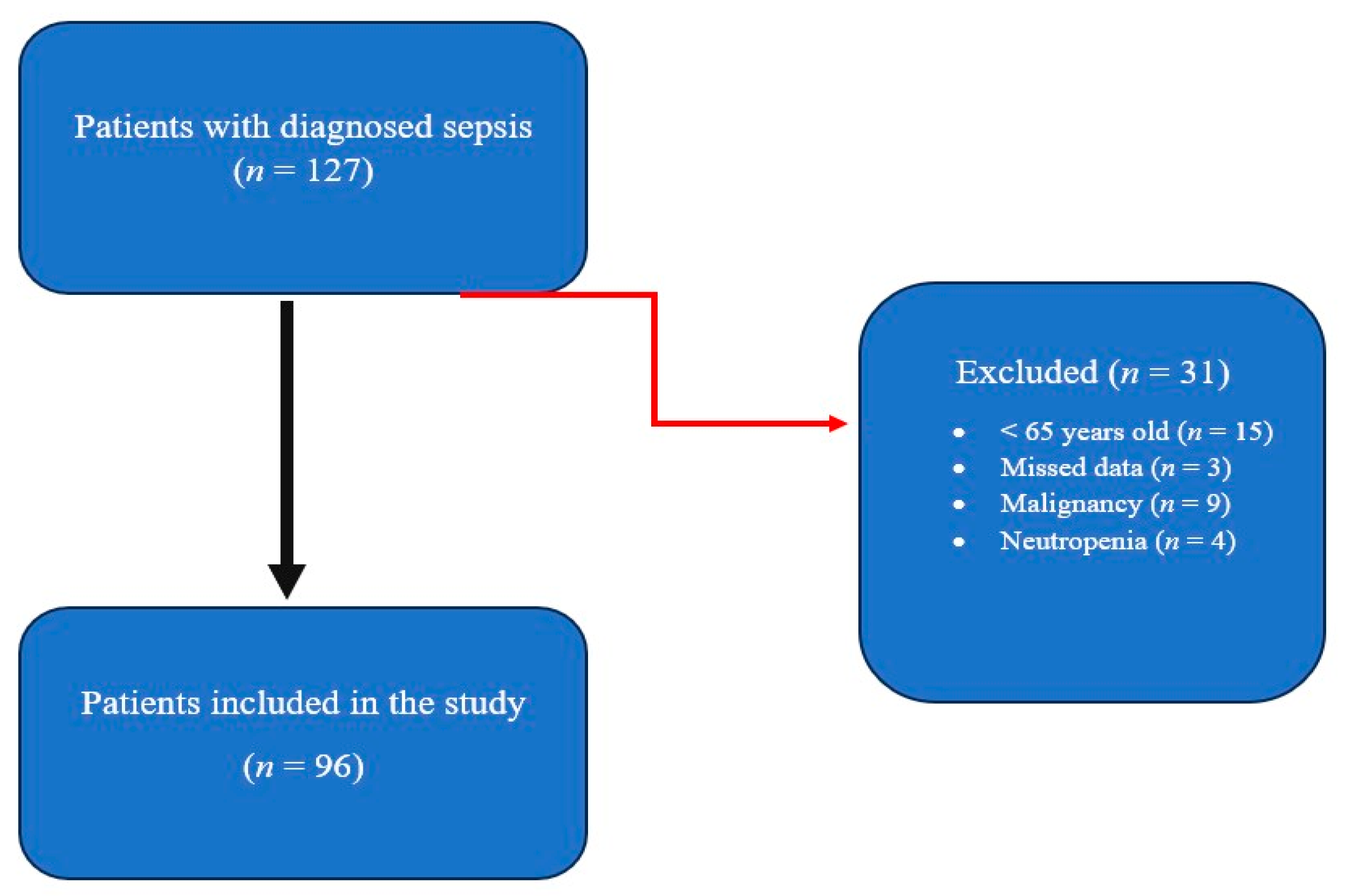
Patients who were diagnosed with sepsis and received monitoring and treatment in the ICU on the dates identified by the hospital’s records system were screened. Of the 127 patients diagnosed with sepsis, 15 were under the age of 65; 3 were excluded due to missing data, 4 due to neutropenia, and 9 due to malignancy (
Figure 1). A total of 96 patients were included in this study.
This study was conducted in accordance with the STROBE statement for observational studies.
2.3. Data Collection and Definitions
Demographic, clinical and laboratory data were obtained from the hospital’s electronic medical records. The variables collected included age, gender, GCS, SOFA score, APACHE II score, intubation status on admission, and comorbidities, namely hypertension, cerebrovascular accident (CVA), chronic obstructive pulmonary disease (COPD), cardiovascular disease (CVD), and chronic renal disease (CRD).
Laboratory parameters were obtained within the first 24 h of admission to the ICU: arterial blood gas analysis, complete blood count, aspartate aminotransferase (AST), alanine aminotransferase (ALT), urea, creatinine, sodium (Na), calcium (Ca), C-reactive protein (CRP), potassium, albumin, procalcitonin, prothrombin time (PT), partial thromboplastin time (PTT), and INR.
Additional serum biochemical parameters were measured using the Roche cobas c701 and c702 modular analyzers (Roche Diagnostics, Mannheim, Germany) with the manufacturer’s proprietary reagent kits as follows: AST acc. to the IFCC kit (Cat. No: 05850819190), ALT acc. to the IFCC kit (Cat. No: 05850797190), urea/BUN kit (Cat. No: 05171873190), creatinine acc. to the plus ver.2 (enzymatic) kit (Cat. No: 05168589190), and calcium acc. to the Gen.2 kit (Cat. No: 05168449190). Serum sodium and potassium concentrations were determined potentiometrically using the cobas 8000 ISE module (ion-selective electrode; Roche Diagnostics, Mannheim, Germany). Serum CRP levels were quantified by particle-enhanced immunonephelometry using the BN II System (Siemens Healthcare Diagnostics Products GmbH, Marburg, Germany) with the CardioPhase hsCRP reagent (Ref. No: OQIY21). Procalcitonin levels were measured using the Elecsys BRAHMS PCT electrochemiluminescence immunoassay (ECLIA) on the cobas e 801 analytical unit (Roche Diagnostics, Mannheim, Germany; Cat. No: 08828679190). The PIV was calculated using the following formula: PIV = (neutrophil count × platelet count × monocyte count)/lymphocyte count; all cell counts are expressed in 10
3/µL [
12]. The NLR and SII were also calculated. The neutrophil-to-lymphocyte ratio (NLR) was calculated as follows: neutrophil count (10
3/µL)/lymphocyte count (10
3/µL) [
12]. The systemic immune–inflammation index (SII) was defined as (neutrophil count × platelet count)/lymphocyte count [
18].
2.4. Primary and Secondary Outcomes
The primary outcome of this study was 28-day all-cause ICU mortality. The secondary outcomes were length of ICU stay and vasopressor requirement.
2.5. Statistical Analysis
All statistical analyses were performed using R 4.2.1 (
https://www.r-project.org/, accessed on 16 March 2026). The normality of continuous variables was assessed using the Shapiro–Wilk test and Q–Q plots, while homogeneity of variances was evaluated using Levene’s test. Statistical test selection was based on data distribution and homogeneity of variance. For group comparisons, the independent samples
t-test was used for normally distributed variables with equal variances, whereas Welch’s
t-test was applied when variances were unequal. The Mann–Whitney U test was used for non-normally distributed variables. Categorical variables were analyzed using Pearson’s chi-square test, and Yates’ continuity correction was applied when expected cell counts were low. The study population was divided into two groups according to the median pan-immune–inflammation value (PIV) as the cut-off point. Univariate Cox proportional hazards regression analysis was performed to identify potential prognostic factors, and variables found to be significant in univariate analysis were subsequently entered into a multivariate Cox proportional hazards regression model using a stepwise (backward likelihood ratio) selection method. Hazard ratios (HRs) were reported with 95% confidence intervals. Receiver operating characteristic (ROC) curve analysis was used to evaluate the predictive performance of clinical and laboratory parameters for 28-day ICU mortality. The area under the curve (AUC) was calculated with 95% confidence intervals. Optimal cut-off values were determined using the Youden index, and sensitivity, specificity, positive predictive value, and negative predictive value were calculated with 95% confidence intervals. Overall survival was analyzed using the Kaplan–Meier method, and differences between groups were assessed using the log-rank test. Survival times were reported as median values with 95% confidence intervals, and 28-day survival probabilities were calculated for each group. A
p-value < 0.05 was considered statistically significant.
4. Discussion
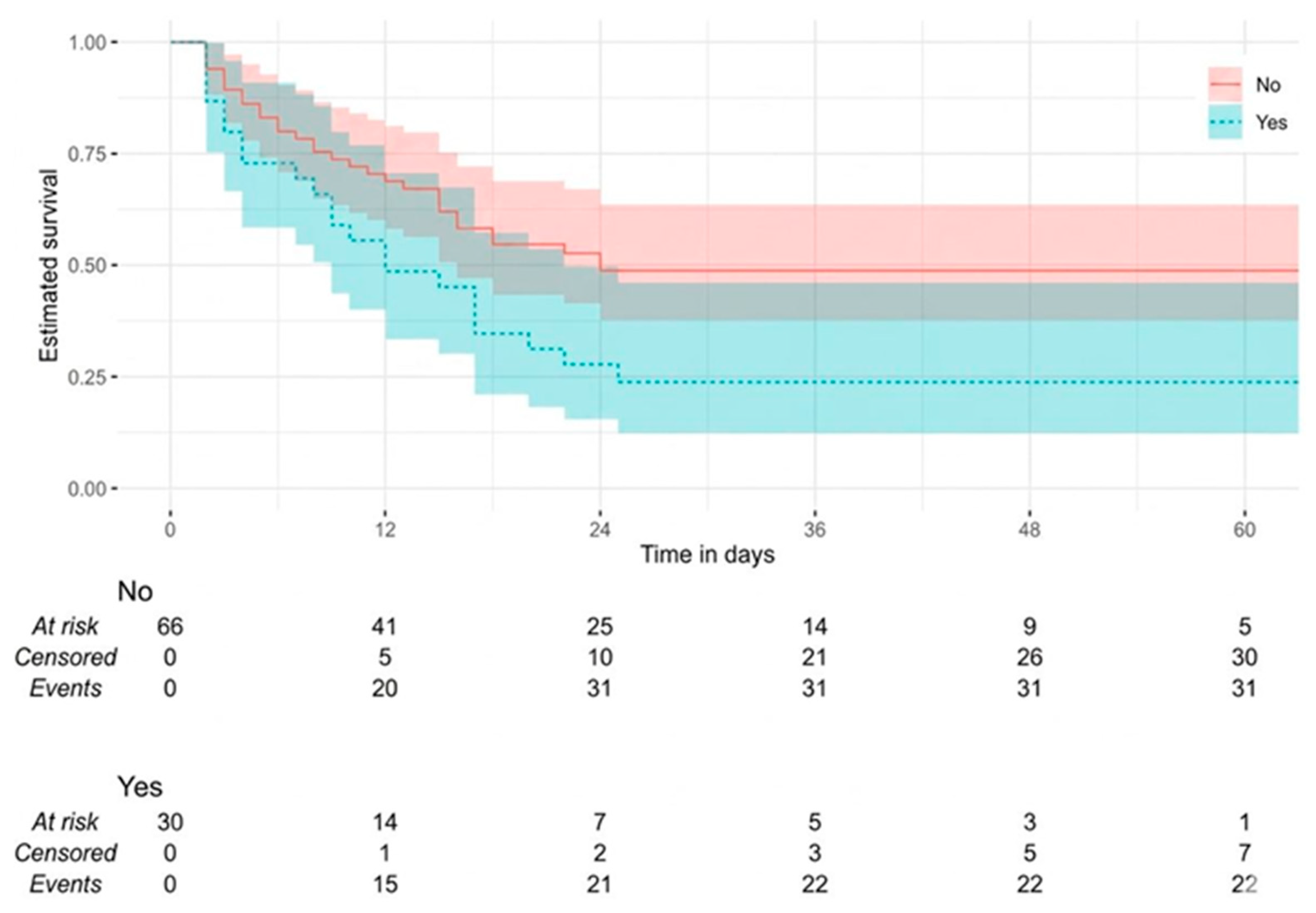
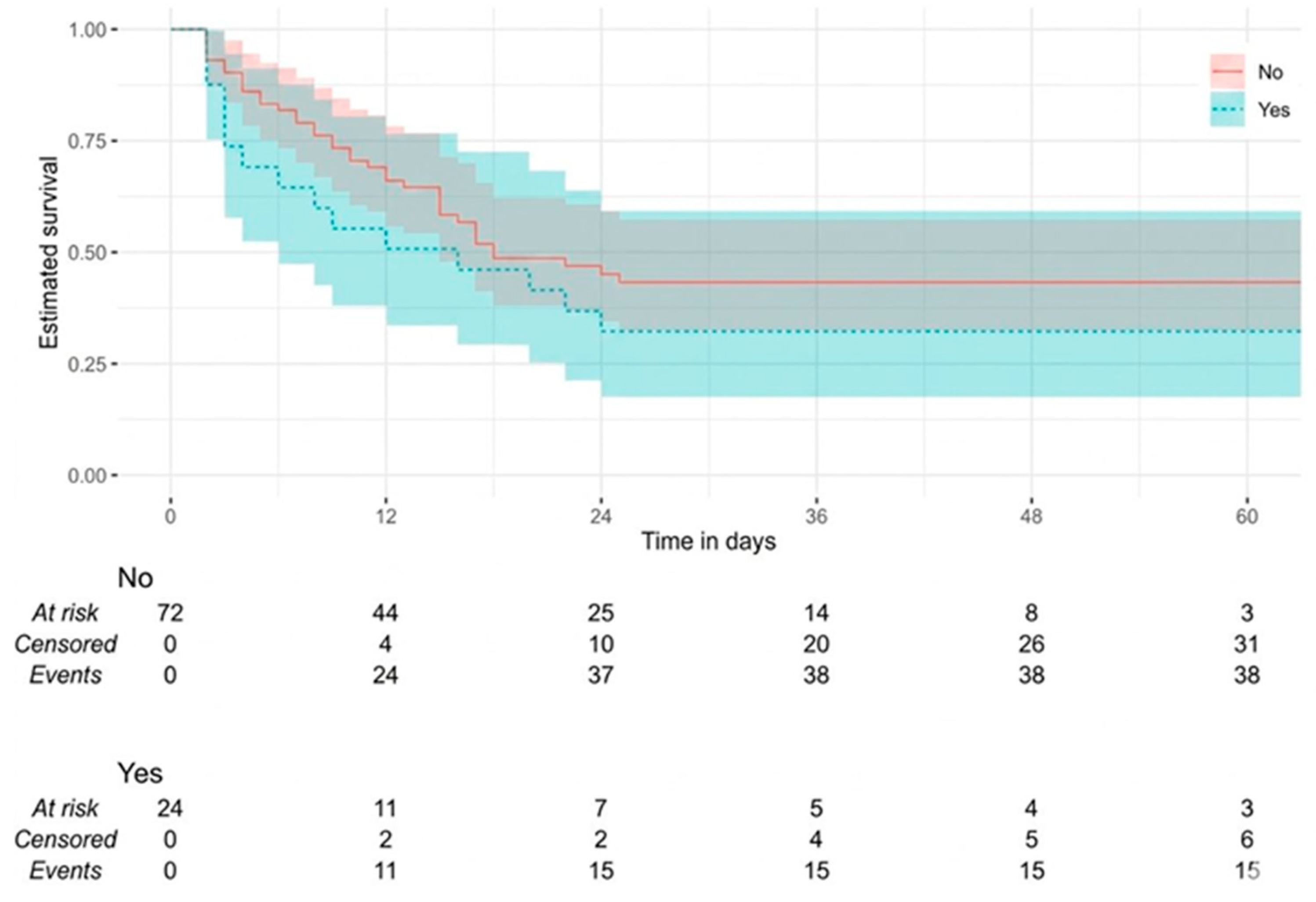
In our study, we found that the PIV measured on admission to the ICU in elderly critically ill patients diagnosed with sepsis did not predict 28-day mortality, contrary to previous studies in the literature [
19,
20]. The PIV showed a low AUC (0.550) in the ROC analysis, and the Kaplan–Meier analysis confirmed that there was no difference in survival between the low- and high-PIV groups. Instead, high creatinine, high calcium, low PTT and vasopressor requirement were found to be independent predictors in the multivariate Cox regression analysis. To the best of our knowledge, our study is one of the first to investigate the prognostic value of the PIV in geriatric sepsis patients.
There are studies in the literature supporting the prognostic value of the PIV in cancer patients [
12,
14,
15]. Our findings are consistent with the failure of the PIV to predict mortality in non-oncological settings. In cancer patients, the balance between pro-inflammatory and anti-tumour immune cells is directly linked to tumour progression. In sepsis, however, there is a rapidly developing dysregulated immune response. Rapid shifts between hyperinflammation and immunosuppression can occur within hours. A single PIV measurement taken at the time of presentation may be insufficient to capture this rapidly changing immune profile [
6,
7].
Despite recent advances in treating sepsis, the mortality rate remains high. In various studies, this rate can vary between 10% and 70%, depending on the average age of participants, the severity of sepsis, the country in which the study was conducted, and the prevalence of comorbid conditions. In two prospective studies conducted on elderly patients with critical sepsis, Tekin et al. reported an overall mortality rate of 41% in 202 patients, whilst Martin-Loeches et al. reported a rate of 48.8% in 1490 patients [
5,
21]. In people aged 80 and over, the mortality rate rises to between 40% and 80% [
3]. In our study, the 28-day mortality rate was found to be 55.2%. Although the mortality rate is slightly higher than that reported in the literature, the high prevalence of comorbidities among patients and the high requirement for vasopressors support the view that these are factors contributing to increased mortality. Vasopressor requirement reflects hemodynamic instability and progression to septic shock. In patients with septic shock, the expected mortality rate is high and has been associated with poor outcomes [
1]. Our study also reveals a strong association between mortality and vasopressor requirement. This supports the finding that our geriatric sepsis patients progress to shock and have a high mortality rate.
In our study, the patient population had a high burden of comorbidity (36.5% hypertension, 31.3% COPD, 26.0% CVA, 25.0% cardiovascular disease, 19.8% CRD). This situation leads to confounding changes in blood cell counts. CRD may be associated with uremic thrombocytopenia and is linked to altered leukocyte profiles. COPD independently elevates neutrophil counts via chronic airway inflammation [
22]. Hematological abnormalities associated with this comorbidity may be masking the prognostic significance of the PIV in geriatric patients.
In a study involving 82 patients with septic shock, the PIV predicted survival in univariate analysis but was not found to be significant in multivariate analysis [
20]. A retrospective study involving 11,331 patients with sepsis identified a non-linear relationship between log2-PIV and mortality. The study reported that the PIV had strong prognostic value in the subgroup comprising patients aged ≥ 65 years [
19]. The study was also conducted in all adult patients with sepsis aged 18 years and over. There was no age restriction. In the study, patients in the group with a higher Log2-PIV had a higher prevalence of comorbidities such as congestive heart failure, chronic lung disease and chronic kidney disease. Although our age range differs from that of the study, the Kaplan–Meier analysis conducted in our study found that COPD and CRD were significantly associated with poorer survival. These findings suggest that impaired respiratory and renal function in elderly patients with sepsis will increase the need for organ support systems and indirectly contribute to mortality.
Studies in the geriatric population have shown that this population is subject to immunosenescence, characterized by thymic involution, a reduction in the output of naive T cells, the accumulation of senescent memory cells, and impaired neutrophil/monocyte function [
8]. In parallel, inflammaging creates a chronic, low-grade inflammatory environment that can elevate basal PIVs, regardless of the severity of the infection [
23]. These processes, taken together, may reduce the discriminatory power of the PIV by narrowing the range of values between survivors and non-survivors in elderly populations. Indeed, a recent meta-analysis of the relationship between the SII and mortality in subgroup analyses demonstrated a significantly stronger association in patients under 67 years of age compared with those aged 67 and over (
p = 0.04) [
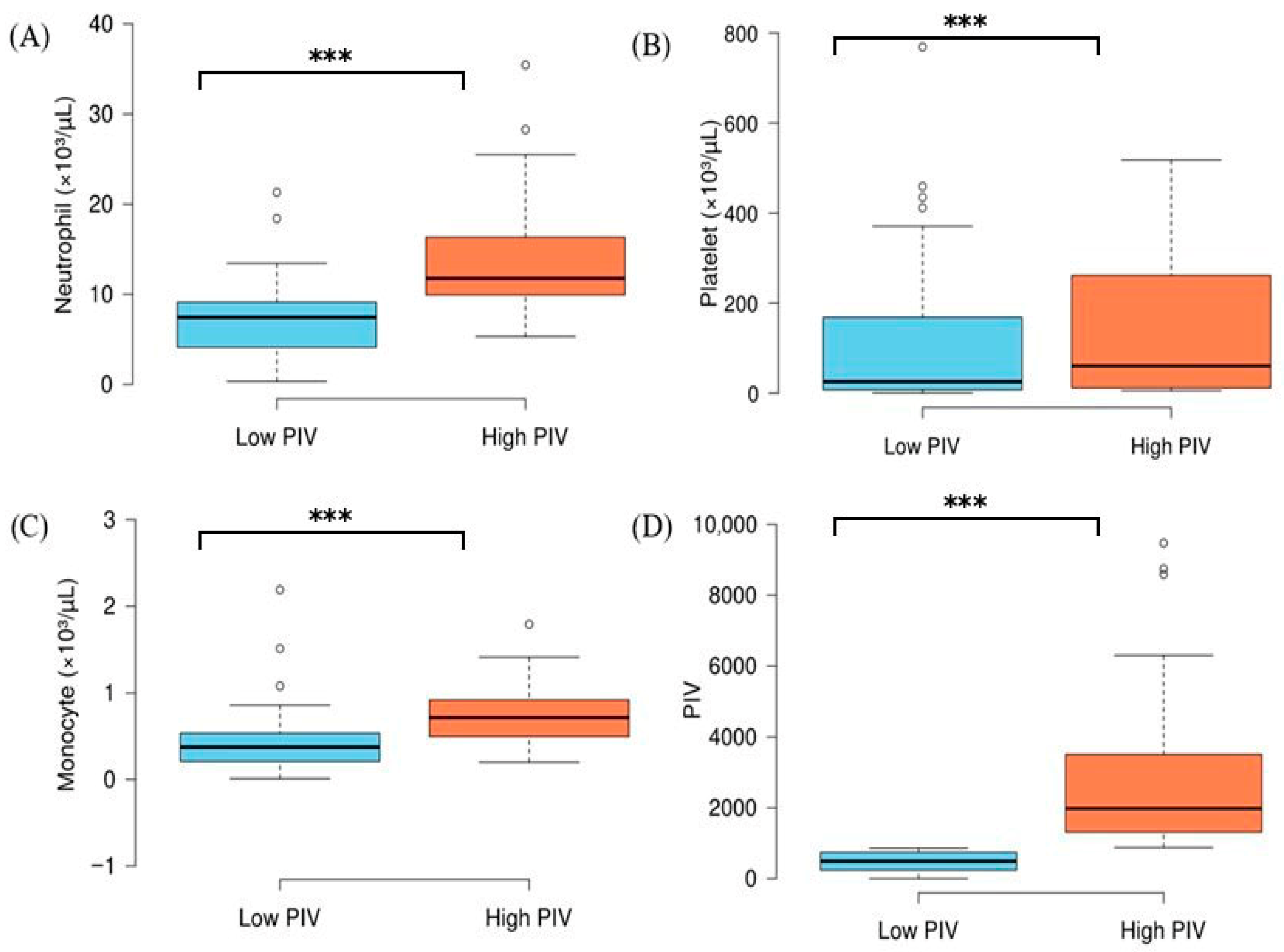
18]. As the SII (AUC: 0.594) includes three of the four components of the PIV, this finding supports the notion that hematological indices perform poorly in elderly populations. Similarly, the NLR (AUC: 0.507) is not significantly associated with mortality. This supports the view that all three markers have limited prognostic value in elderly patients with sepsis. This is likely due to hematological changes associated with immunosenescence and comorbidity. As shown in
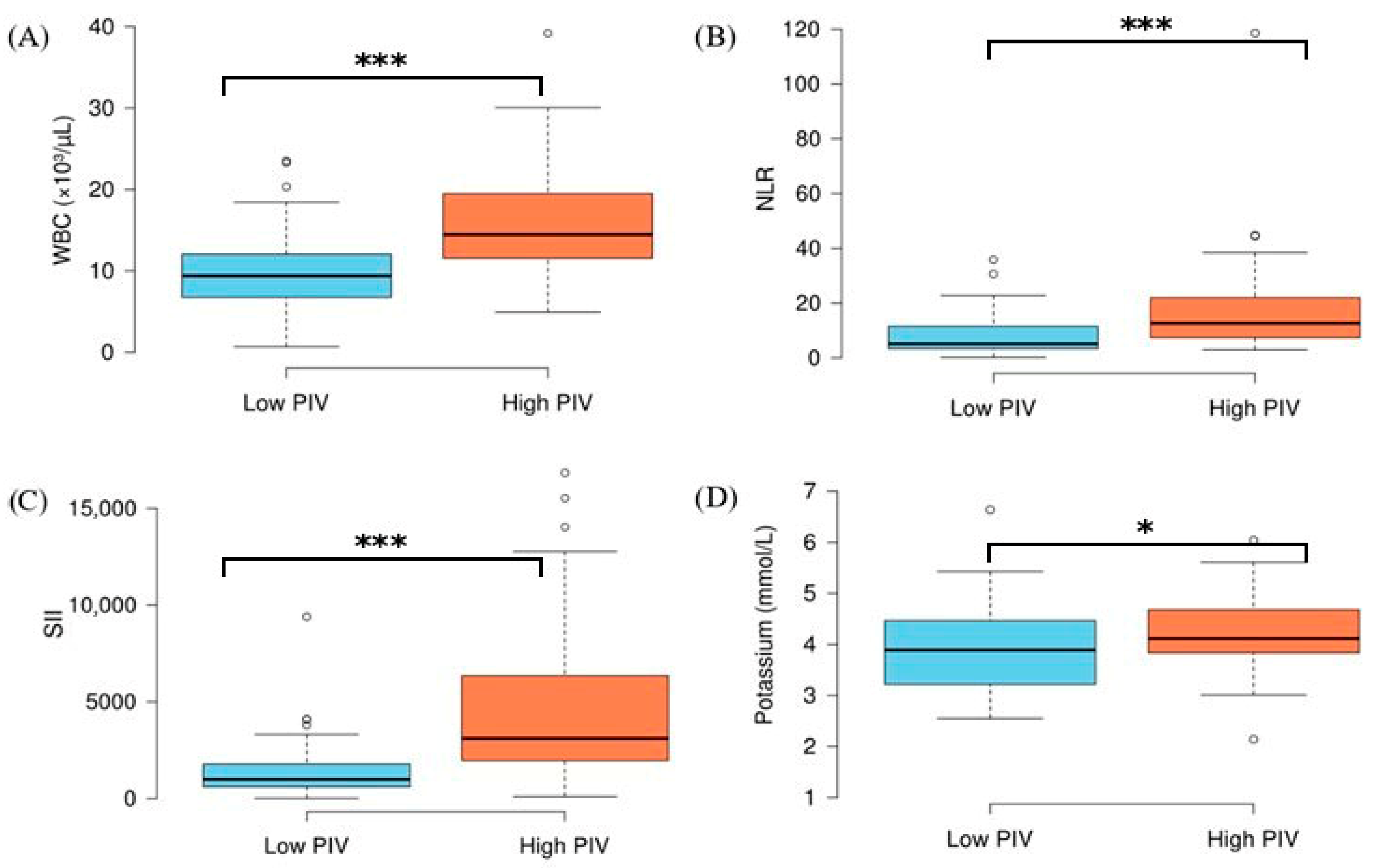
Table 3, neutrophil, platelet, and monocyte counts were significantly higher in the high-PIV group, whereas lymphocyte levels did not differ between groups. The preservation of lymphocyte counts across both PIV strata, despite marked elevations in pro-inflammatory cell lineages, may reflect the age-related contraction of the lymphocyte compartment driven by immunosenescence, which compresses the baseline range and limits its discriminatory capacity in elderly patients [
8,
23]. This finding further supports the notion that PIV-based risk stratification is attenuated in the geriatric population, as the lymphocyte denominator—a key driver of PIV variability—loses its discriminatory power in this age group.
The finding in our study that creatinine is the strongest independent predictor of mortality (HR: 2.683) is consistent with extensive studies linking acute kidney injury to sepsis mortality. In a large-scale retrospective study evaluating elderly critically ill patients with sepsis-associated acute kidney injury, a serum creatinine level of ≥1.5 mg/dL was shown to be an independent risk factor for 28-day mortality (HR: 1.216; 95% CI: 1.037–1.427) [
24]. In another study involving 1752 patients with geriatric sepsis, it was reported that a serum creatinine level >200 μmol/L was a significant predictor of mortality [
25].
In our study, elevated calcium—an independent predictor—may reflect critical disease-related disturbances in calcium homeostasis, including impaired parathyroid function and vitamin D deficiency, which are frequently observed in elderly patients with sepsis [
26]. In a study encompassing 3016 septic patients, a U-shaped relationship was identified between serum calcium levels and 28-day mortality in patients with sepsis. Both hypocalcaemia and hypercalcaemia have been associated with an increased risk of mortality [
27].
Our study found a strong association between low PTT and mortality. In a study of 647 patients with severe sepsis or septic shock, prolonged activated partial thromboplastin time and elevated PT-INR values observed at the time of admission to the ICU were associated with increased mortality. Although this finding is contrary to our study, it may reflect consumption coagulopathy in which the PTT may paradoxically shorten before coagulation factors are depleted [
28]. It may serve as an early marker for undiagnosed disseminated intravascular coagulation (DIC). A shortened PTT may also reflect dehydration and hemoconcentration, which are frequently observed in elderly septic patients. This suggests that baseline PTT values in elderly patients with sepsis may carry different prognostic information beyond the classic prolonged PTT pattern seen in advanced consumption coagulopathy. Prospective studies incorporating serial coagulation measurements, thrombin generation assays and endothelial activation markers would be valuable to confirm the prognostic role of a shortened PTT in the geriatric sepsis population.
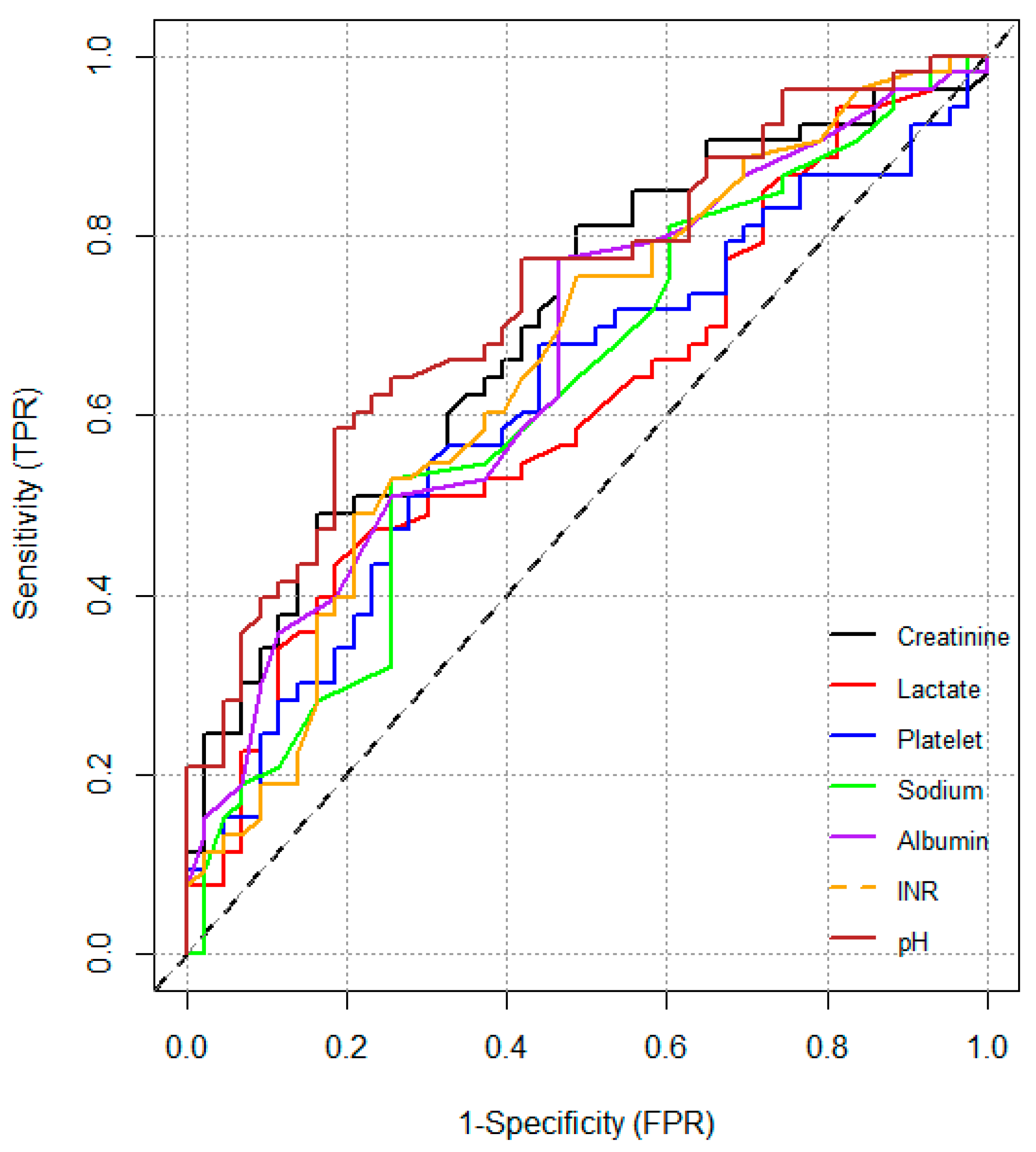
Our ROC analysis demonstrated that no individual laboratory parameter achieved an AUC exceeding 0.731, indicating that single biomarkers have limited clinical utility for mortality prediction in geriatric sepsis. This is consistent with the multifactorial pathophysiology of sepsis, in which organ dysfunction, hemodynamic instability, coagulopathy, and immune dysregulation interact simultaneously. Accordingly, composite scoring systems such as APACHE II and SOFA, which integrate multiple physiological variables, remain more appropriate for clinical prognostication. Future research should explore multi-biomarker panels or combined models incorporating both hematological indices and clinical severity scores to improve predictive performance in this population. In this context, Zhang et al. demonstrated that combining IL-8 with SOFA scores yielded superior predictive performance compared to any single index alone in elderly sepsis patients, further supporting the need for multi-parameter approaches [
29].
This study has certain limitations. Its retrospective, single-centre design limits generalisability and carries the potential for selection bias. Our sample size is small (n = 96), which may have limited the statistical power to detect small differences. In this study, the PIV was measured only upon admission to the ICU. As sepsis is a dynamic process, serial measurements could provide additional information regarding prognosis. Although nutritional status was evaluated in terms of albumin and hypoproteinemia, there are many parameters of nutrition, and others were not assessed. The source of sepsis, including culture results, was not included. The median PIV of the patients was accepted as the threshold value; however, this value may not represent the optimal threshold for outcome prediction in geriatric patients. Furthermore, data on the use of corticosteroids and other concomitant immunomodulatory interventions were not systematically recorded. Given that corticosteroids may directly influence clinical outcomes in septic patients via the hematological profile used in the calculation of the PIV (e.g., neutrophilia, lymphopenia), their potential confounding effects on the predictive performance of the PIV cannot be disregarded and constitute a significant limitation. Similarly, formal frailty assessment tools (such as the Clinical Frailty Scale or Frailty Index) were not available in the electronic records and could therefore not be included in the analysis. As frailty is increasingly recognized as a key determinant of outcome in elderly critically ill patients, independent of age and comorbidity burden, its absence may have limited our ability to fully account for baseline frailty. Future prospective studies should aim to prospectively collect data on standardized frailty measurements alongside exposure to corticosteroids and other concurrent interventions, and conduct stratified analyses to clarify the independent prognostic contribution of the PIV in geriatric sepsis.



 ,
,