Neuropsychological Rehabilitation for Traumatic Brain Injury: A Systematic Review


Abstract
1. Introduction
2. Materials and Methods
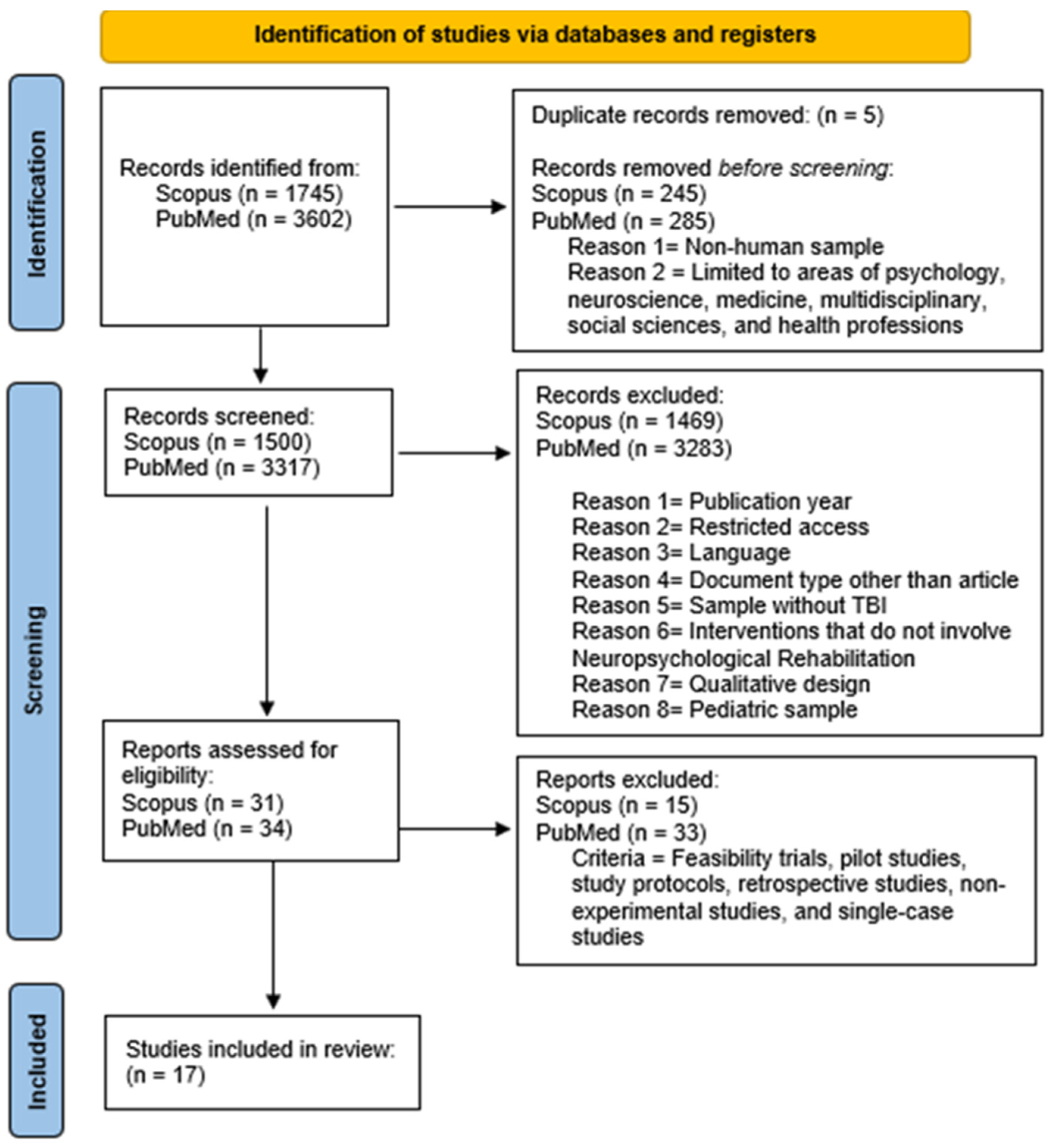
2.1. Identification (Including Duplication)
2.2. Screening and Eligibility
2.3. Included Studies and Procedure
2.4. Bias Analysis
3. Results
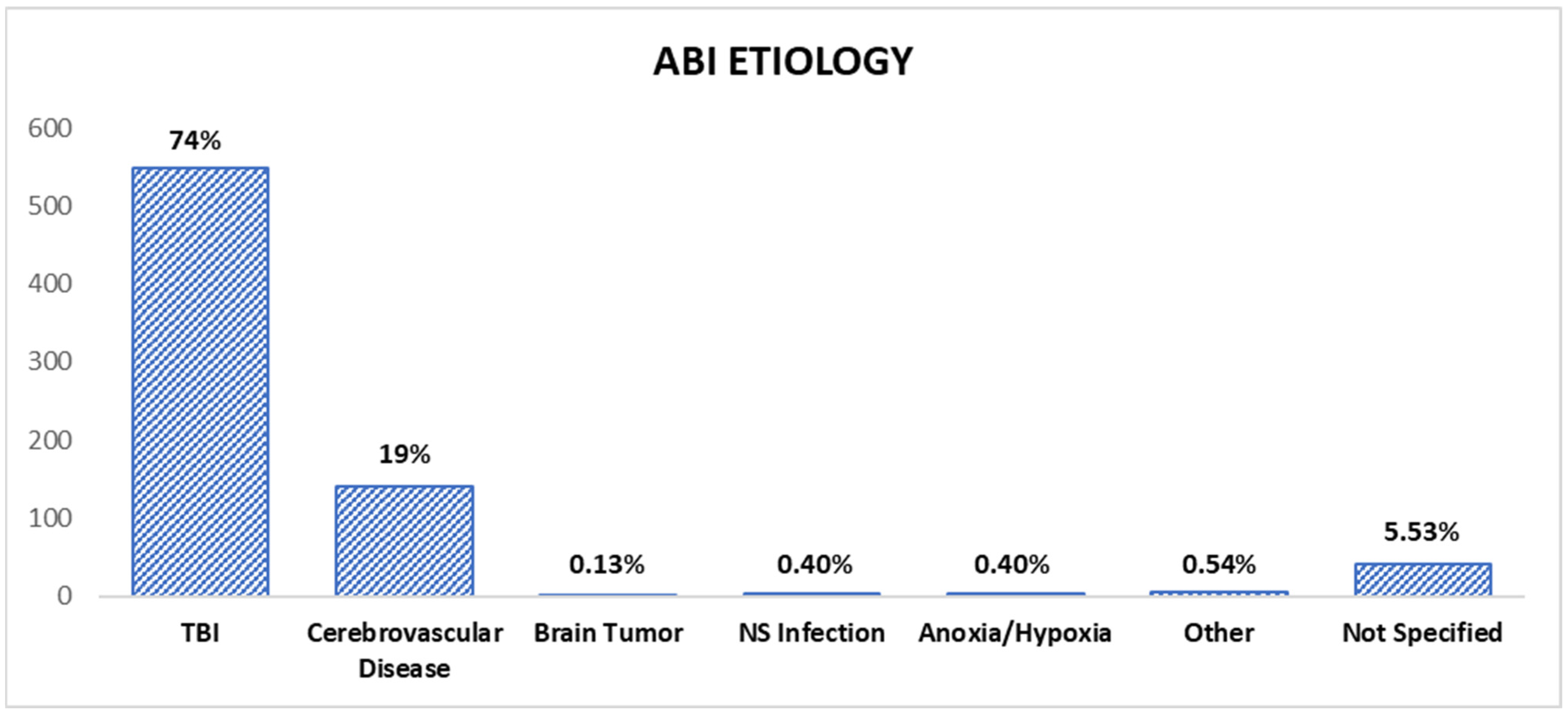
3.1. ABI Etiology
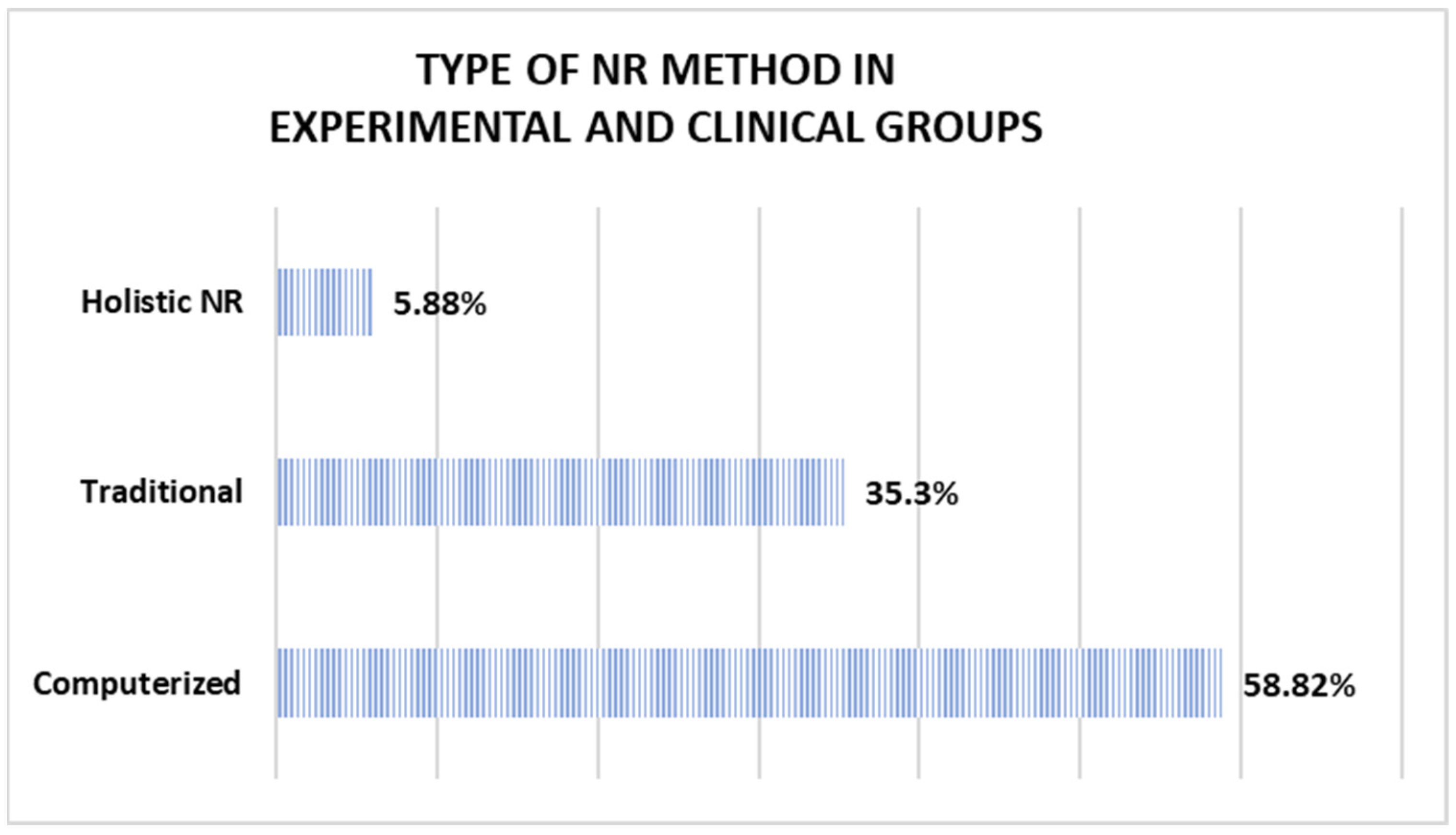
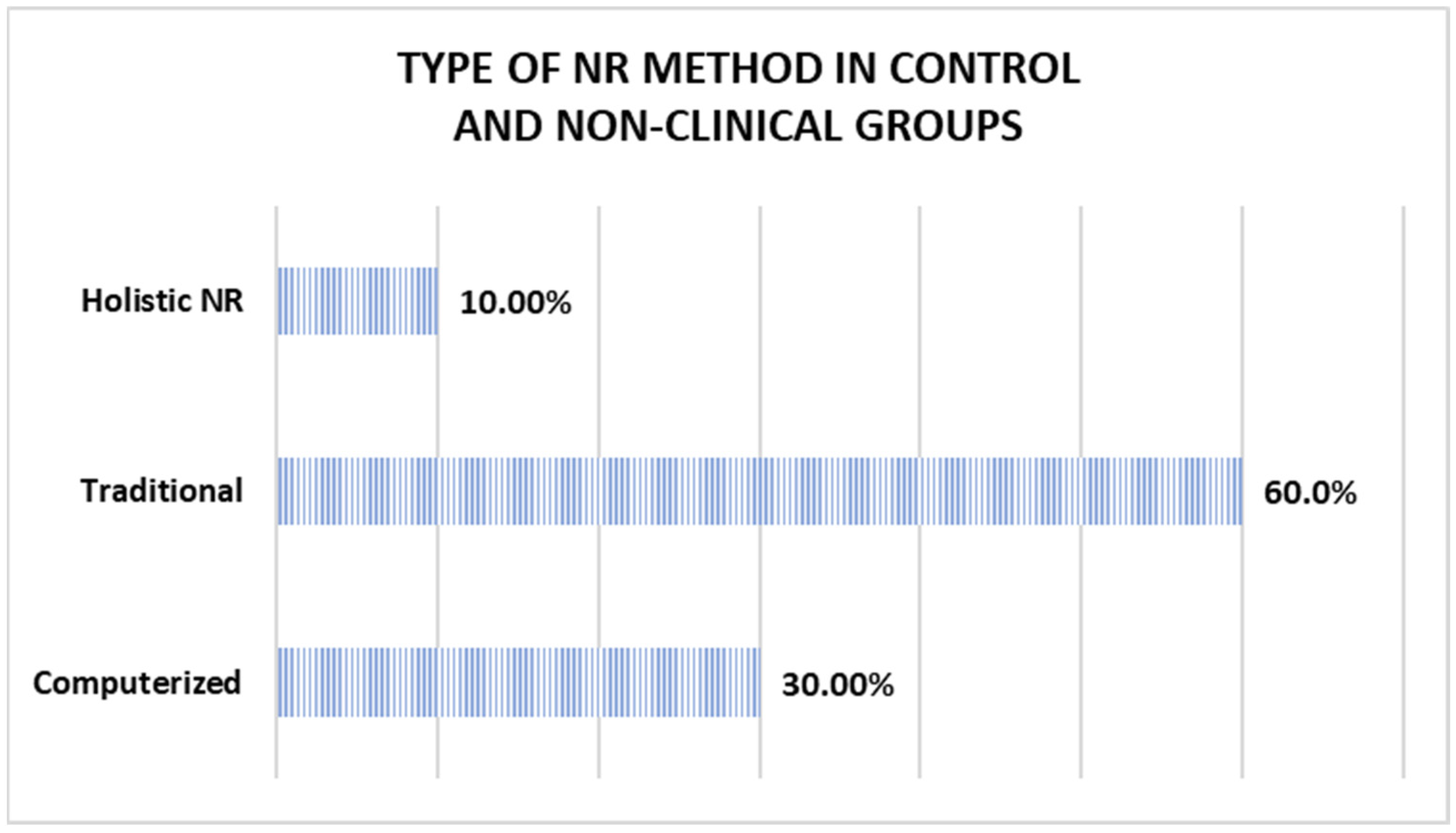
3.2. Type of NR Method Employed
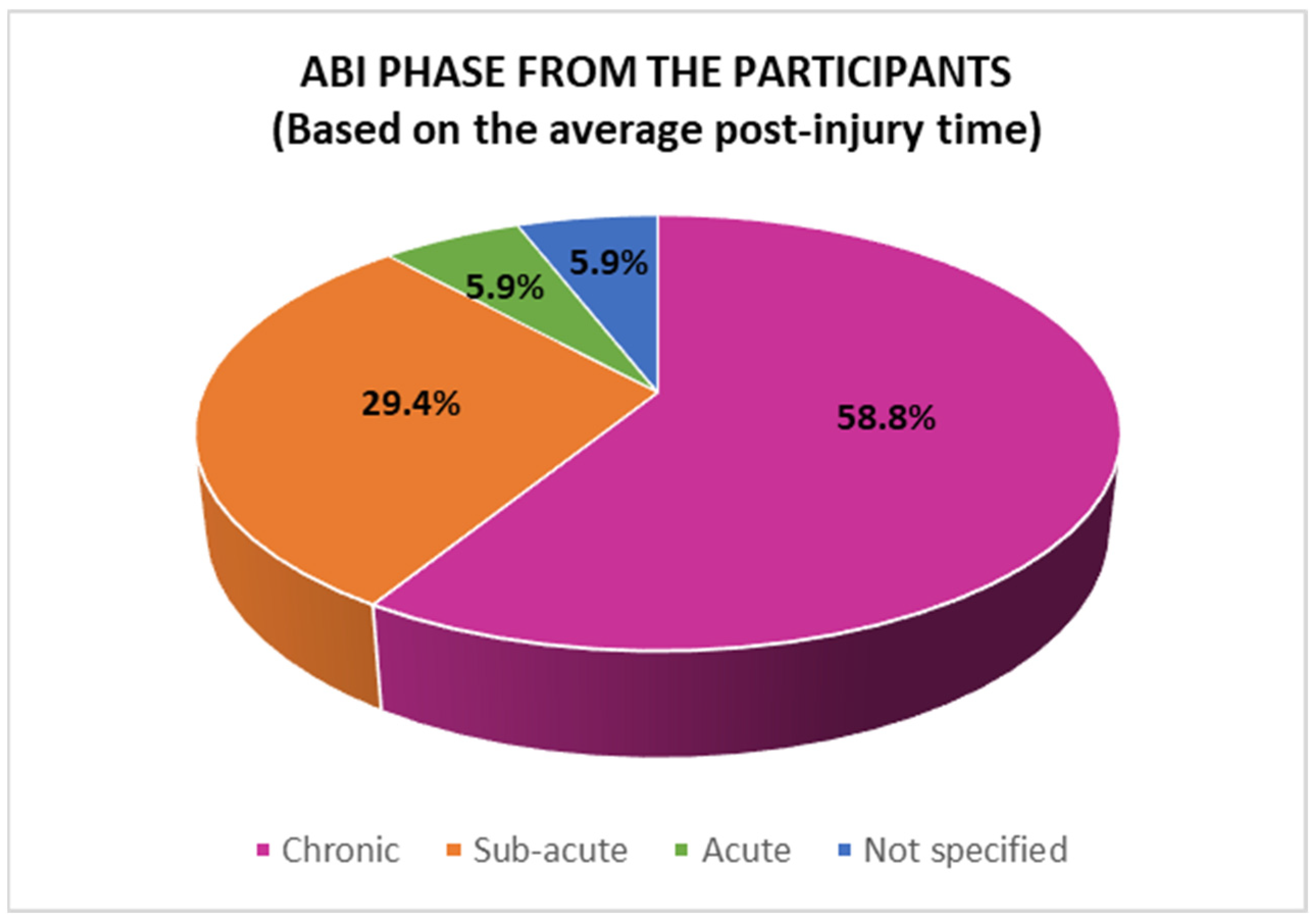
3.3. ABI Phase from the Participants
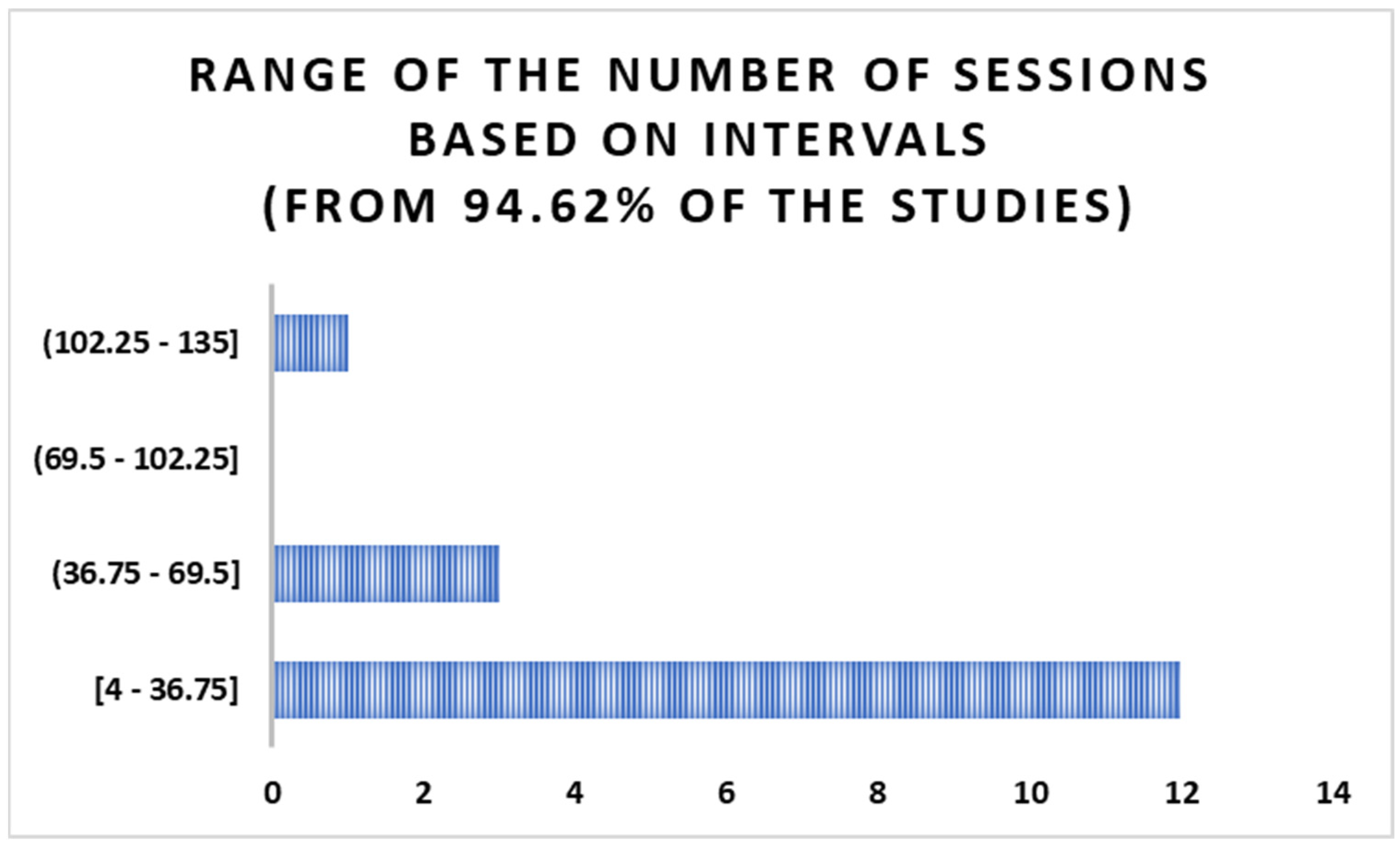
3.4. Intervals of the Number of Sessions
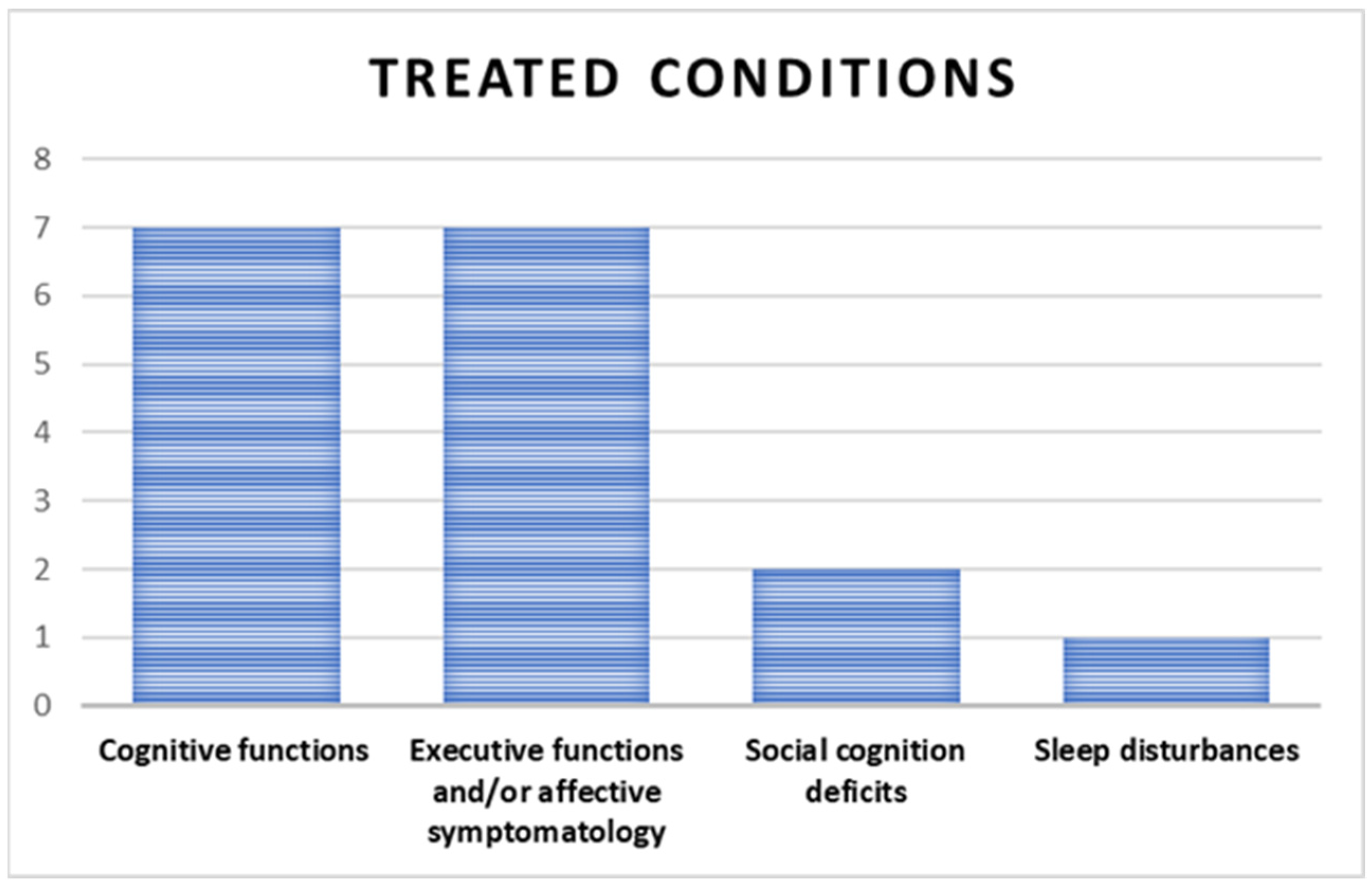
3.5. Treated Conditions
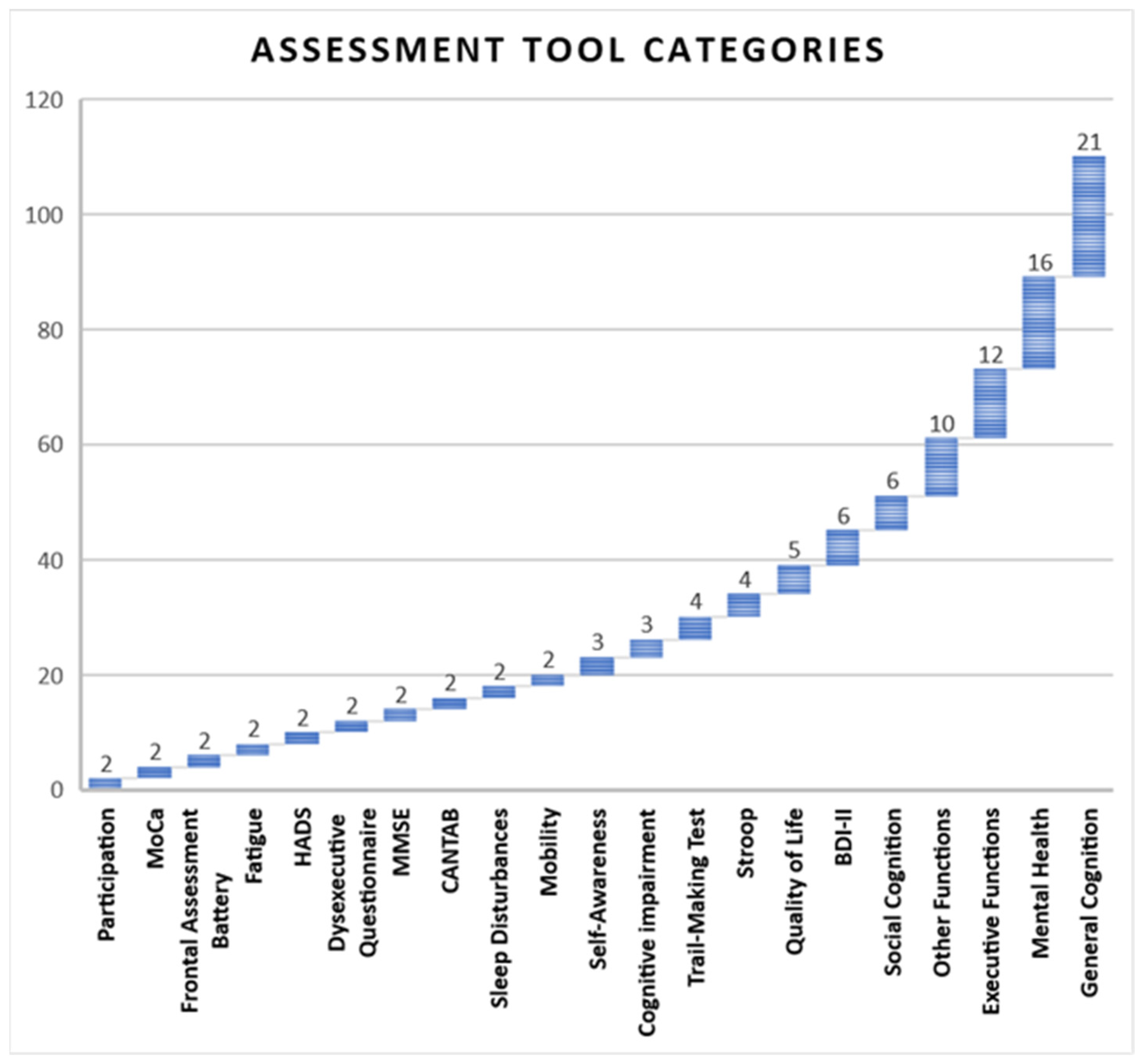
3.6. Assessment Tool Categories
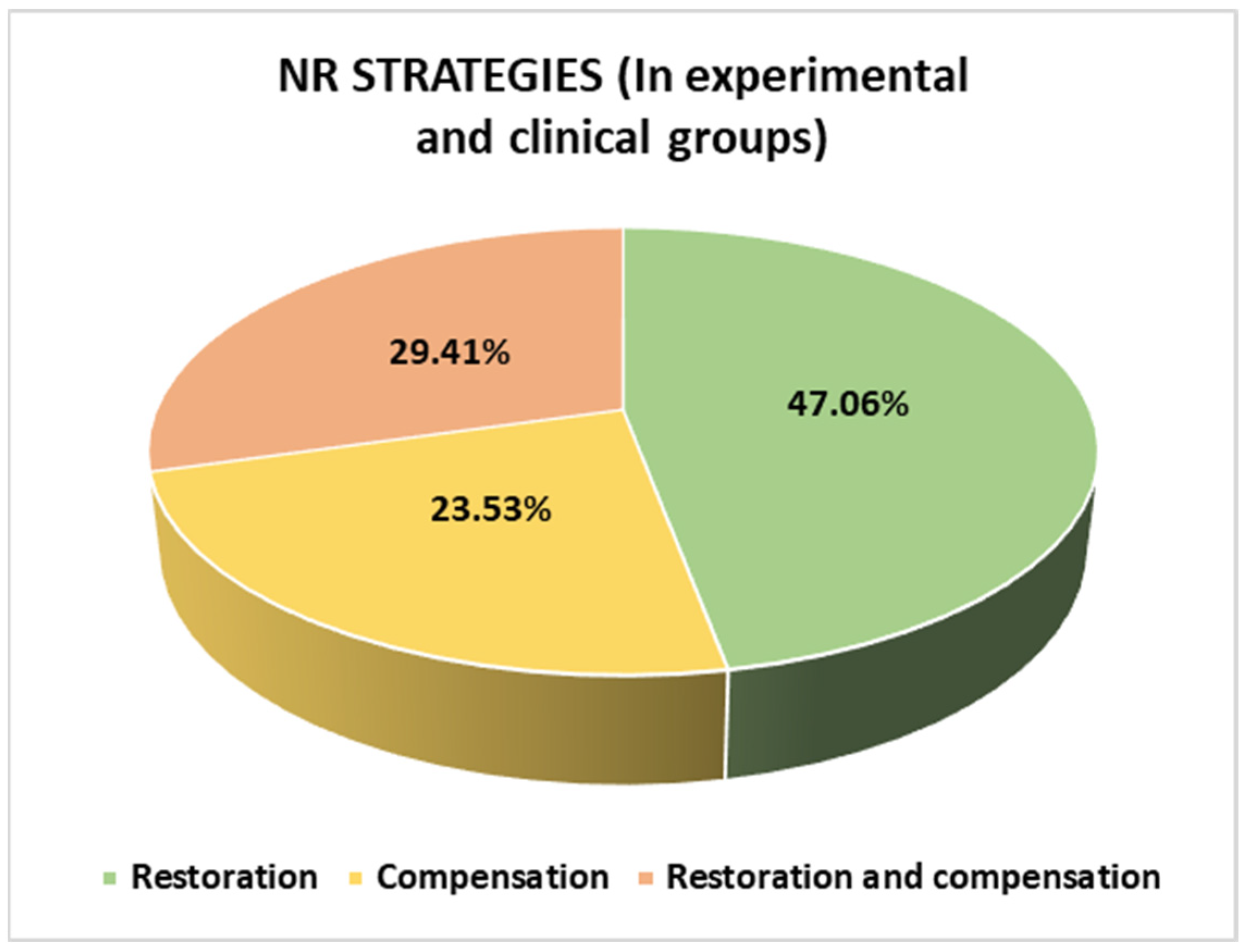
3.7. NR Strategies
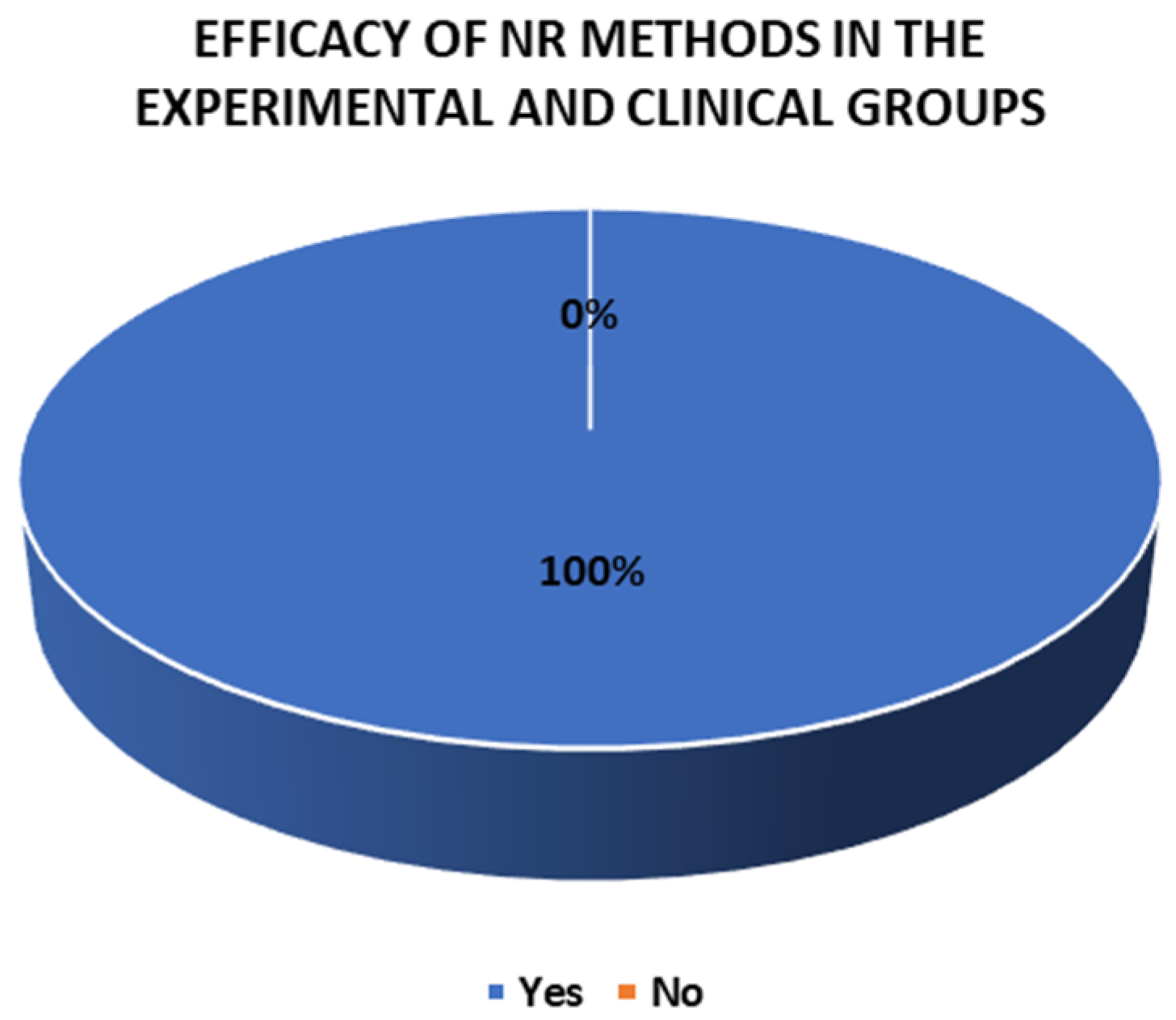
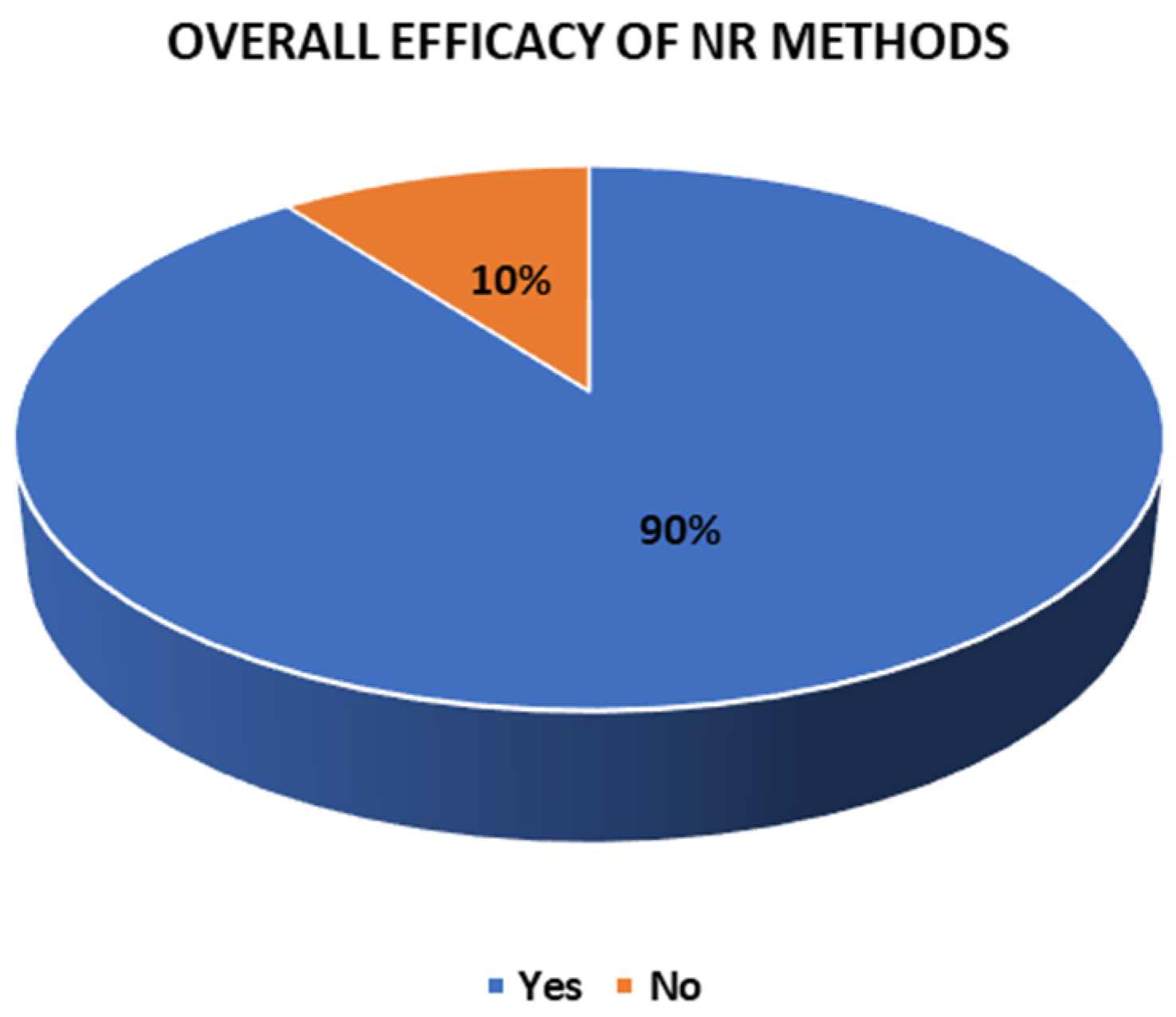
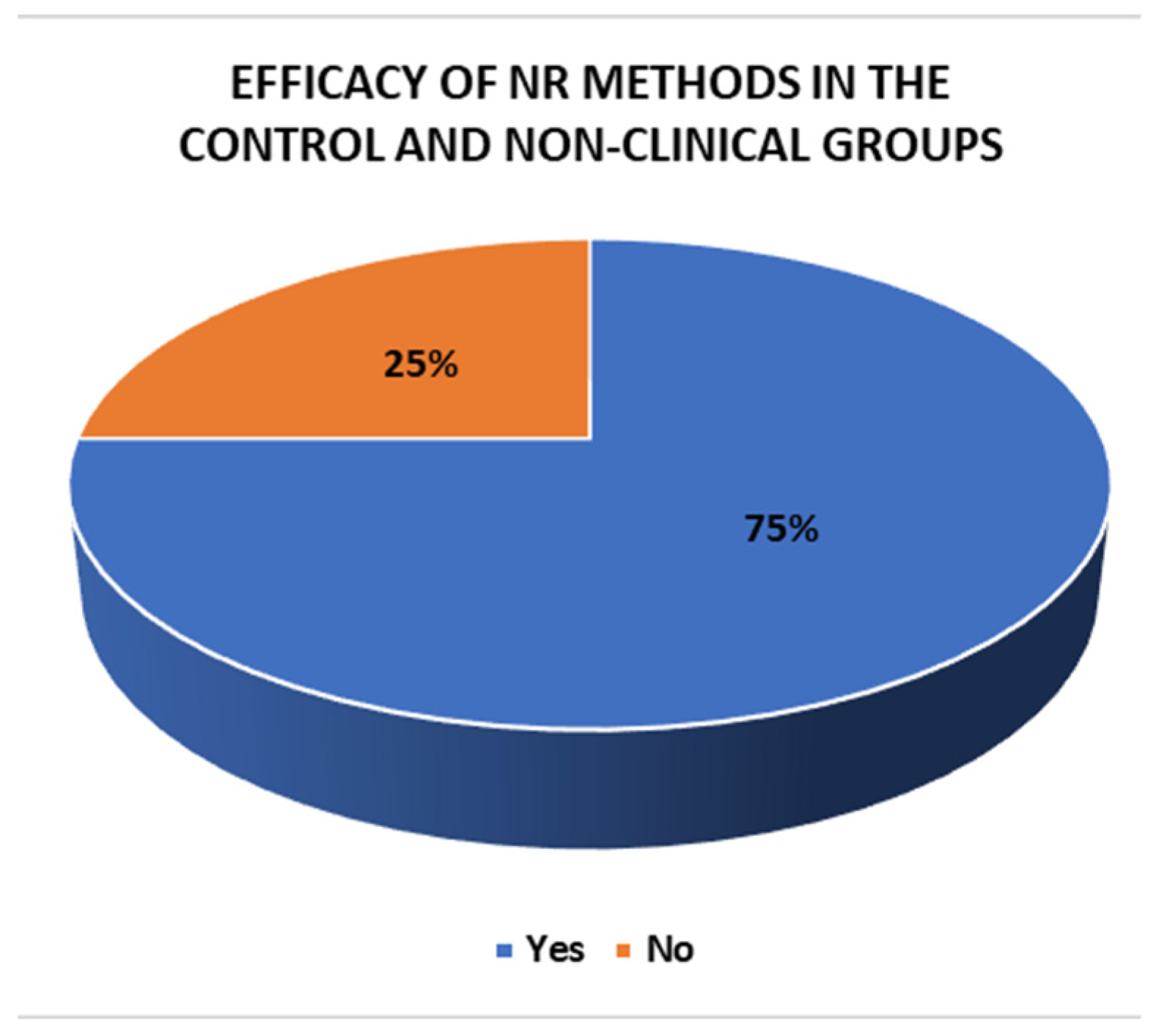
3.8. Efficacy of the Methods
4. Discussion
5. Conclusions
Author Contributions
Funding
Institutional Review Board Statement
Informed Consent Statement
Data Availability Statement
Conflicts of Interest
Appendix A

| No. | Title | Authors | Research Design | Year | Country | ABI Etiology | Sample Size | Average Age | Average Post-Injury Time | NR Method | NR Strategies | Number of Sessions | Treated Symptoms | Assessment Tools | Results |
|---|---|---|---|---|---|---|---|---|---|---|---|---|---|---|---|
| 1 | Efficacy of computerized vs. Traditional cognitive interventions for the treatment of chronic mTBI symptoms among service members | Darr et al. [35] | Comparative Study | 2024 | USA | TBI | 65 | 32.85 years | 1460 days | Group 1: computerized cognitive training (CCT) program. Group 2: clinician-run, manualized cognitive rehabilitation. | CCT: restoration and compensation | 12 | Cognitive functioning; perception of neurobehavioral difficulties. | 1. KBCI 2. PASAT 3. SDMT | CCT can be used as an effective method to treat chronic cognitive complaints in mTBI. However, it is likely most beneficial when incorporated into existing, evidence-based methods of CR. |
| 2 | Virtual reality–based music attention training for acquired brain injury: A randomized crossover study | Jeong et al. [36] | Randomized Crossover Trial | 2024 | South Korea | Stroke: 16 TBI: 6 Hypoxia: 1 | 23 | 46.9 years | 1638 days | Group 1: virtual reality-based music attention training (VR-MAT), followed by conventional cognitive training (CCT). Group 2: CCT followed by VR-MAT. | VR-MAT: restoration | 20 | Cognitive impairment. | 1. TMT 2. CANTAB 3. CDR 4. GDS 5. MMSE | VR-MAT demonstrated efficacy as an intervention and assessment tool for cognitive rehabilitation in patients with an ABI. |
| 3 | Neuropsychological correlates of PTSD and depressive symptom Improvement in compensatory cognitive training for veterans with a history of mild traumatic brain injury | Clark et al. [37] | Clinical Study | 2024 | USA | TBI | 37 | 36.9 years | Not specified | 1. Experimental group: compensatory cognitive training (CCT). | Compensation | 10 | PTSD and depression. | 1. PCL-M 2. BDI-II 3. D-KEFS 4. HVLT-R 5. WAIS-IV 6. WRAT-4 | Cognitive training may bolster skills that are helpful for PTSD and depressive symptom reduction. |
| 4 | Speed of processing training to improve cognition in moderate to severe TBI: a randomized clinical trial. | Chiaravalloti et al. [38] | Randomized Clinical Trial | 2024 | Italy | TBI | 46 | 41.45 years | 3942 days | 1. Experimental group: speed of processing training (SOPT). 2. Control group: placebo. | SOPT: restoration | 10 | Processing speed. | 1. UFOV 2. SDMT 3. WAIS-IV 4. CVLT II | SOPT improved task performance on a task similar to the training task (UFOV), but benefits did not extend to improvement in neuropsychological tests of processing speed. |
| 5 | Socratic guided feedback therapy after acquired brain injury: A multicenter randomized controlled trial to evaluate effects on self-awareness | Terneusen et al. [39] | Multicenter Randomized Controlled Trial | 2024 | Netherlands | Stroke: 34 TBI: 22 Anoxia/Hypoxia: 2 NS Infection: 2 >2 of the Above: 2 Not Specified: 2 | 64 | 50.8 years | 82 days | 1. Experimental group: Socratic guided feedback therapy. 2. Control group: treatment as usual. | Socratic guided feed-back therapy: compensation | Between 1 and 162 | Self-awareness. | 1. SRSI 2. PCRS 3. MOT-Q 4. PRPS 5. HADS 6. SSQOL-12 7. USER-P | Both groups improved in terms of self-awareness over time. |
| 6 | Treating social cognition impairment with the online therapy ’SoCoBo’: A randomized controlled trial including traumatic brain injury patients. | Lohaus et al. [40] | Randomized Controlled Trial | 2024 | Germany | TBI | 43 | 44.9 years | 2529 days | 1. Experimental group: SoCoBo. 2. Control group: RehaCom. | SoCoBo: compensation | 48 | Social cognition deficits. | 1. ERI 2. IRI 3. GERT 4. HPP-S 5. ISK-K 6. TAS-20 7. Social Cognition Test Battery 8. RWT 9. Wechsler Memory Scale: Digit Span 10. AVLT 11. Stroop 12.DESC 13. FLZ 14. SIAS 15. STAI | The SoCoBo group, but not the RehaCom group, showed significant improvements in facial emotion recognition and self-rated empathy, which were associated with increased life satisfaction. ToM and social problem-solving did not improve. Additionally, general cognition did not improve in either group. |
| 7 | Heart rate variability biofeedback for mild traumatic brain injury: A Randomized- controlled study | Lu et al. [41] | Randomized Controlled Trial | 2023 | Taiwan | TBI | 41 | 37.2 years | 3.3 days | 1. Experimental group: heart rate variability biofeedback (HRVB). 2. Control group: psychoeducation. | HRVB: restoration | 10 | Executive functioning, information processing, verbal memory, affective neuropsychological functioning, and heart rate variability. | 1. FAB 2. SVF 3. WSLT 4. PASAT 5. TMT 6. Checklist of Post-Concussion Symptoms (CPCS) 7. DEX 8. Beck Anxiety Inventory 9. BDI-II 10. National Taiwan University Irritability Scale (NTUIS) | The experimental group evidenced improvements in executive functioning, information processing, verbal memory, neuropsychological emotional functioning, and heart rate variability (HRV), while the psychoeducation group showed no change. |
| 8 | Benefits of telerehabilitation for patients with severe acquired brain injury: Promising results from a multicenter randomized controlled trial using nonimmersive virtual reality | Calabrò et al. [42] | Multicenter Randomized Controlled Trial | 2023 | Italy | Stroke: 28 TBI: 12 | 40 | 48.12 years | 347.66 days | 1. Experimental group: telerehabilitation (VRRS HomeKit device). 2. Control group: usual territorial rehabilitation treatment. | VRRS HomeKit: restoration | 60 | Functional alterations at the motor level, frontal/executive capacities, visuospatial memory, verbal fluency, reasoning, and anxiety and depression symptoms. | 1. Barthel Index (BI) 2. Tinetti Scale (TS) 3. Modified Ashworth Scale (MAS) 4. MoCa 5. Frontal Assessment Battery (FAB) 6. BDI-II 7. SF-36 8. PGWBI 9. Caregiver Burden Inventory (CBI) | Both the VRRS and control groups improved in global functional, cognitive, and general health. However, only the VRRS group improved in motor and executive functions, with a significant reduction in anxiety and depression symptoms. |
| 9 | Holistic neuropsychological rehabilitation: Cognitive evolution and quality of life of patients with acquired brain injury. | Gómez Pulido [43] | Clinical Study | 2023 | Spain | TBI: 9 Stroke: 11 | 20 | 59.75 years | 494.58 days | Holistic NR. | Restoration, compensation, and substitution | 135 | Attention, memory, and executive functions; specific social skills. | 1. WAIS-IV 2. WMS-III 3. ToL 4. Wisconsin Card Sorting Test (WCST) 5. WHOQOL-BRiEF | Improvements were evidenced in the performance of attention, working memory, executive functions, and quality of life. |
| 10 | Cerebrolysin and repetitive transcranial magnetic stimulation (rTMS) in patients with traumatic brain injury: A three-arm randomized trial | Verisezan Rosu et al. [44] | Three-Arm Randomized Controlled Trial | 2023 | Romania | TBI | 93 | 52.12 years | Within 30 days | Groups: 1. Cerebrolysin (CRB) and transcranial magnetic stimulation (rTMS). 2. Cerebrolysin (CRB) and sham rTMS (SHM). 3. Placebo and sham rTMS (SHM). | Restoration | 10 | Cognitive and functional symptoms. | 1. Stroop Color-Word Test 2. MoCA 3. WAIS 4. TMT 5. CANTAB 6. Hamilton Anxiety Rating Scale (HARS) 7. Hamilton Rating Scale for Depression (HDRS) | The combined intervention of rTMS and Cerebrolysin was safe and well tolerated by patients with a TBI. |
| 11 | The effectiveness of computer-assisted cognitive rehabilitation and the degree of recovery in patients with traumatic brain injury and stroke | Jung et al. [45] | Clinical Study | 2021 | South Korea | TBI: 30 Stroke: 32 | 62 | 58.41 years | 67.58 days | Computer-assisted cognitive rehabilitation (Comcog). | Restoration and compensation | 30 | Cognitive impairment. | 1. Computerized Neuropsychological Test (CNT) 2. MMSE 3. Modified Barthel index (MBI) | Patients with a TBI or a stroke showed significant changes in cognitive functions. The stroke group showed a high difference value. |
| 12 | The impact of multimodal cognitive rehabilitation on executive functions in older adults with traumatic brain injury | Cisneros et al. [46] | Semi-Randomized Controlled Trial | 2021 | Canada | TBI | 37 | 64.5 years | 695.5 days | 1. Experimental group: cognitive enrichment program (CEP). 2. Control group: holistic NR. | CEP: Restoration, compensation, and substitution | 24 | Executive functions and reintegration to daily life activities. | 1. Six Elements Task-Adapted [SET-A] 2. D-KEFS Sorting Test 3. Stroop 4. Dysexecutive Questionnaire (DEX) | Improvements in executive functioning were evidenced in the experimental group, with a positive impact on daily activities. |
| 13 | A randomized clinical trial of plasticity based cognitive training in mild traumatic brain injury | Mahncke et al. [47] | Randomized Clinical Trial | 2021 | USA | TBI | 83 | 33.8 years | 2264.5 days | 1. Experimental group: Self-administered computerized cognitive training program based on plasticity. 2. Control group: computerized games. | Self-administered computerized cognitive training program based on plasticity: restoration | 65 | Cognitive functions; attention. | 1. ANAM TBI Battery Score 2. RNBI 3. PTSD Checklist C (PCL-C) 4. BDI-II 5. FrSBe 6. CFQ 7. NSI 8. MPAI | Statistically equivalent improvements were observed in both groups in depressive and cognitive symptoms. |
| 14 | Cognitive retraining in traumatic brain injury: Experience from tertiary care center in southern India | Afsar et al. [48] | Prospective Clinical Study | 2021 | India | TBI | 12 | 32.33 years | 345.84 days | Cognitive retraining (CR). | Restoration | 20 | Cognitive impairment. | 1. NIMHANS 2. Perceived Stress Scale 3. Rivermead Post-Concussion Symptom Questionnaire 4. WHOQL-BRIEF 5. Visual Analogue Scale | CR can be helpful in improving cognition, symptom reporting, and quality of life in moderate to severe TBIs. |
| 15 | An integrative neuro-psychotherapy treatment to foster the adjustment in acquired brain injury -a randomized controlled study | Urech et al. [49] | Randomized Controlled Trial | 2020 | Switzerland | Stroke: 20 TBI: 3 Brain Tumor: 1 Encephalitis: 1 | 25 | 48.3 years | 509.2 days | 1. Experimental group: integrative neuro-psychotherapy treatment (Standard PLUS). 2. Control group: standard neuropsychological treatment. | Standard PLUS: restoration and compensation | 20 | Depressive symptoms from adjustment disorder, cognitive functions funcional deficits, and coping. | 1. BDI-II 2. WHOQOL-BREF 3. ADS 4. Awareness Questionnaire (AQ) 5. Trier Illness Coping Scales (TSK) 6. ERSQ 7. RAS 8. Mental Fatigue Scale (MFS) | Both treatments were effective, although there was no significant difference between them. |
| 16 | Transcranial photobiomodulation therapy in the cognitive rehabilitation of patients with cranioencephalic trauma | Costa Carneiro et al. [50] | Multidisciplinary Clinical Study | 2019 | Brazil | TBI | 10 | 37.8 years | From 4 months to 4 years | Transcranial photobiomodulation therapy. | Restoration | 18 | Cognitive function. | 1. BDI-II 2.BAI 3. Stroop Test 4. TMT 5. Symbol Digit Test 6. RAVLT 7. Complex Rey Figure 8. F-A-S | The assessment results suggest some improvement of cognitive function in patients with a TBI. |
| 17 | A short add-on sleep intervention in the rehabilitation of individuals with acquired brain injury: A randomized controlled trial. | Pilon et al. [51] | Randomized Controlled Trial | 2023 | Netherlands | Not Specified | 41 | 47.3 years | 1727.3 days | 1. Experimental group: brief complementary treatment of sleep disorders, based on cognitive–behavioral therapy for insomnia. (CBT-I) plus treatment as usual. 2. Control group: treatment as usual. | CBT-I: compensation | 4 | Sleep disturbances. | 1. PSQI 2. DMFS 3. HADS 4. DBAS-16 Brief Version | The experimental group had improvements in sleep quality, manifested fewer dysfunctional beliefs and attitudes about sleep, and was better able to cope with fatigue compared to the control group. |
References
- Fedace.org. Acquired Brain Injury. Available online: https://fedace.org/dano-cerebral (accessed on 2 January 2025).
- Goldman, L.; Siddiqui, E.M.; Khan, A.; Jahan, S.; Rehman, M.U.; Mehan, S.; Sharma, R.; Budkin, S.; Kumar, S.N.; Sahu, A.; et al. Understanding acquired brain injury: A review. Biomedicines 2022, 10, 2167. [Google Scholar] [CrossRef]
- Eapen, B.C.; Allred, D.B.; O’Rourke, J.; Cifu, D.X. Rehabilitation of moderate-to-severe traumatic brain injury. Semin. Neurol. 2015, 35, e1–e13. [Google Scholar] [CrossRef] [PubMed]
- Wilson, B.; Winegardner, J.; van Heugten, C.; Ownsworth, T. (Eds.) Neuropsychological Rehabilitation: The International Handbook; Routledge: New York, NY, USA, 2017. [Google Scholar]
- Ibáñez-Alfonso, J.; Del Barco Gavala, A.; Romaguera, E.; Del Olmo, A. Neuropsychology of Acquired Brain Injury from Stroke and TBI; Síntesis: Madrid, Spain, 2020. [Google Scholar]
- Pisano, F.; Bilotta, F. The Predictive Value of the Verbal Glasgow Coma Scale in Traumatic Brain Injury: A Systematic Review. J. Head Trauma Rehabil. 2024, 39, 273–283. [Google Scholar] [CrossRef]
- Karamian, A.; Lucke-Wold, B.; Seifi, A. Prevalence of Traumatic Brain Injury in the General Adult Population of the USA: A Meta-Analysis. Neuroepidemiology 2024, 1–10. [Google Scholar] [CrossRef] [PubMed]
- Rivera-Lara, L.; Videtta, W.; Calvillo, E.; Mejia-Mantilla, J.; March, K.; Ortega-Gutierrez, S.; Obrego, G.C.; Paranhos, J.E.; Suarez, J.I. Reducing the incidence and mortality of traumatic brain injury in Latin America. Eur. J. Trauma Emerg. Surg. 2023, 49, 2381–2388. [Google Scholar] [CrossRef] [PubMed]
- Rolle, M.L.; Garba, D.L.; Kharbat, A.F.; Bhebhe, A.; Mwenge, F.; Nahed, B.V.; Kerry, V.B. The impact of traumatic brain injury on economic productivity in the Caribbean. Brain Spine 2023, 3, 101755. [Google Scholar] [CrossRef] [PubMed]
- Ortiz-Prado, E.; Mascialino, G.; Paz, C.; Rodriguez-Lorenzana, A.; Gómez-Barreno, L.; Simbaña-Rivera, K.; Diaz, A.M.; Coral-Almeida, M.; Espinosa, P.S. A Nationwide Study of Incidence and Mortality Due to Traumatic Brain Injury in Ecuador (2004–2016). Neuroepidemiology 2020, 54, 33–44. [Google Scholar] [CrossRef]
- Muñoz Marrón, E.; De Noreña Martínez, D.; Sanz Cortés, A. Neuropsychology of acquired brain injury. In Traumatic Brain Injuries, Strokes and Central Nervous System Tumors; UOC: Barcelona, Spain, 2017. [Google Scholar]
- Chen, A.; Bushmeneva, K.; Zagorski, B.; Colantonio, A.; Parsons, D.; Wodchis, W.P. Direct cost associated with acquired brain injury in Ontario. BMC Neurol. 2012, 12, 76. [Google Scholar] [CrossRef] [PubMed]
- McHugh, J.C.; Sobocki, P.; Murphy, R.P. Cost of disorders of the brain in Ireland. Ir. Med. J. 2007, 100, 489–492. [Google Scholar]
- Parés-Badell, O.; Barbaglia, G.; Jerinic, P.; Gustavsson, A.; Salvador-Carulla, L.; Alonso, J. Cost of disorders of the brain in Spain. PLoS ONE 2014, 9, e105471. [Google Scholar] [CrossRef] [PubMed]
- DiLuca, M.; Olesen, J. The cost of brain diseases: A burden or a challenge? Neuron 2014, 82, 1205–1208. [Google Scholar] [CrossRef] [PubMed]
- Duff, M.C.; Morrow, E.L.; Edwards, M.; McCurdy, R.; Clough, S.; Patel, N.; Walsh, K.; Covington, N.V. The value of patient registries to advance basic and translational research in the area of traumatic brain injury. Front. Behav. Neurosci. 2022, 16, 846919. [Google Scholar] [CrossRef]
- Vutakuri, N. Detection of emotional and behavioural changes after traumatic brain injury: A comprehensive survey. Cogn. Comput. Syst. 2023, 5, 42–63. [Google Scholar] [CrossRef]
- Rodríguez-Rajo, P.; Leno Colorado, D.; Enseñat-Cantallops, A.; García-Molina, A. Rehabilitation of social cognition impairment after traumatic brain injury: A systematic review. Neurología 2018, 37, 371–382. [Google Scholar] [CrossRef]
- Wilson, B.A. Neuropsychological rehabilitation. In Cambridge Handbook of Psychology, Health and Medicine, 2nd ed.; Cambridge University Press: Cambridge, UK, 2014; pp. 367–369. [Google Scholar] [CrossRef]
- García-Molina, A.; Enseñat, A. Neuropsychological rehabilitation in the 20th century [La rehabilitación neuropsicológica en el siglo XX]. Rev. Neurol. 2019, 69, 383–391. [Google Scholar] [CrossRef] [PubMed]
- García-Molina, A.; Prigatano, G.P. Prigatano’s contributions to neuropsychological rehabilitation and clinical neuropsychology: A 50-year perspective. Front. Psychol. 2022, 13, 963287. [Google Scholar] [CrossRef]
- Kreutzer, J.; DeLuca, J.; Caplan, B. (Eds.) Encyclopedia of Clinical Neuropsychology, 2nd ed.; Springer International Publishing: Cham, Switzerland, 2018. [Google Scholar]
- Zabala Rabadán, A.; Muñoz Céspedes, J.; Quemada Ubis, J. Effectiveness of Neuropsychological Rehabilitation in Patients with Acquired Brain Injury: Foundations and Methodological Challenges in Research. Rehabilitación 2003, 37, 103–112. [Google Scholar] [CrossRef]
- Blázquez Alisente, J.; Galparsoro Izagirre, N.; González Rodríguez, B.; Lubrini, G.; Periáñez Morales, J.; Ríos Lago, M.; Sánchez-Cubillo, I.; Tirapu Ustárroz, J.; Cardoso, A.Z. Cognitive Stimulation and Neuropsychological Rehabilitation; UOC: Barcelona, Spain, 2009. [Google Scholar]
- Santos Cela, J.; Bausela Herreras, E. Neuropsychological Rehabilitation. Papeles Psicólogo 2005, 26, 15–21. [Google Scholar]
- Ben-Yishay, Y.; Diller, L. Handbook of Holistic Neuropsychological Rehabilitation: Outpatient Rehabilitation of Traumatic Brain Injury; Oxford University Press: London, UK, 2011. [Google Scholar]
- Cicerone, K.D.; Langenbahn, D.M.; Braden, C.; Malec, J.F.; Kalmar, K.; Fraas, M.; Felicetti, T.; Laatsch, L.; Harley, J.P.; Bergquist, T.; et al. Evidence-based cognitive rehabilitation: Updated review of the literature from 2003 through 2008. Arch. Phys. Med. Rehabil. 2011, 92, 519–530. [Google Scholar] [CrossRef] [PubMed]
- Faria, A.L.; Paulino, T.; Bermúdez i Badia, S. Comparing adaptive cognitive training in virtual reality and paper-pencil in a sample of stroke patients. In Proceedings of the International Conference on Virtual Rehabilitation (ICVR), Tel Aviv, Israel, 21–24 July 2019. [Google Scholar] [CrossRef]
- Pedroli, E.; Serino, S.; Pallavicini, F.; Cipresso, P.; Riva, G. Exploring Virtual Reality for the Assessment and Rehabilitation of Executive Functions. Int. J. Virtual Augment. Real. 2018, 2, 866–884. [Google Scholar] [CrossRef]
- Mateo-Fernández, P.; Garcia-Silva, J.; Caparros-Gonzalez, R. Use of SenseCam for Memory Rehabilitation after Acquired Brain Injury: Systematic Review of Experimental Studies. Rev. Esp. Salud. Pública 2021, 95, e202110181. [Google Scholar]
- Smart, C.M.; Ali, J.I.; Viczko, J.; Silveira, K. Systematic Review of the Efficacy of Mindfulness Based Interventions as a Form of Neuropsychological Rehabilitation. Mindfulness 2022, 13, 301–317. [Google Scholar] [CrossRef]
- Calderón-Chagualá, J.A.; Montilla-García, M.A.; Gómez, M.; Ospina-Viña, J.E.; Triana-Martínez, J.C.; Vargas-Martínez, L.C. Neuropsychological Rehabilitation in Brain Injury: Use of Traditional Tools and Virtual Reality. Rev. Mex. Neurocienc. 2019, 20, 29–35. [Google Scholar] [CrossRef]
- Ali, J.I.; Viczko, J.; Smart, C.M. Efficacy of Neurofeedback Interventions for Cognitive Rehabilitation Following Brain Injury: Systematic Review and Recommendations for Future Research. J. Int. Neuropsychol. Soc. 2020, 26, 31–46. [Google Scholar] [CrossRef] [PubMed]
- Krasny-Pacini, A.; Chevignard, M.; Evans, J. Goal Management Training for rehabilitation of executive functions: A systematic review of effectiveness in patients with acquired brain injury. Disabil. Rehabil. 2014, 36, 105–116. [Google Scholar] [CrossRef] [PubMed]
- Darr, A.J.; Babakhanyan, I.; Caswell, M.; Alia Westphal, B.; Bailie, J.M. Efficacy of Computerized vs. Traditional Cognitive Interventions for the Treatment of Chronic mTBI Symptoms Among Service Members. Mil. Med. 2024, 189 (Suppl. S3), 530–538. [Google Scholar] [CrossRef] [PubMed]
- Jeong, E.; Ham, Y.; Lee, S.J.; Shin, J.H. Virtual reality–based music attention training for acquired brain injury: A randomized crossover study. Ann. N. Y. Acad. Sci. 2024, 1541, 151–162. [Google Scholar] [CrossRef] [PubMed]
- Clark, J.M.R.; Keller, A.V.; Maye, J.E.; Jak, A.J.; O’Neil, M.E.; Williams, R.M.; Turner, A.P.; Pagulayan, K.F.; Twamley, E.W. Neuropsychological Correlates of PTSD and Depressive Symptom Improvement in Compensatory Cognitive Training for Veterans with a History of Mild Traumatic Brain Injury. Mil. Med. 2024, 189, e1263–e1269. [Google Scholar] [CrossRef] [PubMed]
- Chiaravalloti, N.D.; Costa, S.L.; Armknecht, C.; Costanza, K.; Wallace, S.; Moore, N.B.; DeLuca, J. Speed of processing training to improve cognition in moderate to severe TBI: A randomized clinical trial. Front. Neurol. 2024, 15, 1445560. [Google Scholar] [CrossRef]
- Terneusen, A.; Ponds, R.; Stapert, S.; Lannoo, E.; Schrijnemaekers, A.C.; van Heugten, C.; Winkens, I. Socratic guided feedback therapy after acquired brain injury: A multicenter randomized controlled trial to evaluate effects on self-awareness. Neuropsychol. Rehabil. 2024, 2024, 1–29. [Google Scholar] [CrossRef] [PubMed]
- Lohaus, T.; Reckelkamm, S.; Thoma, P. Treating social cognition impairment with the online therapy ’SoCoBo’: A randomized controlled trial including traumatic brain injury patients. PLoS ONE 2024, 19, e0294767. [Google Scholar] [CrossRef] [PubMed]
- Lu, H.C.; Gevirtz, R.; Yang, C.; Hauson, A.O. Heart Rate Variability Biofeedback for Mild Traumatic Brain Injury: A Randomized-Controlled Study. Appl. Psychophysiol. Biofeedback 2023, 48, 405–421. [Google Scholar] [CrossRef] [PubMed]
- Calabrò, R.S.; Bonanno, M.; Torregrossa, W.; Cacciante, L.; Celesti, A.; Rifici, C.; Tonin, P.; De Luca, R.; Quartarone, A. Benefits of Telerehabilitation for Patients with Severe Acquired Brain Injury: Promising Results From a Multicenter Randomized Controlled Trial Using Nonimmersive Virtual Reality. J. Med. Internet Res. 2023, 25, 1–19. [Google Scholar] [CrossRef] [PubMed]
- Gómez Pulido, M.A. Holistic Neuropsychological Rehabilitation: Cognitive Evolution and Quality of Life in Patients with Acquired Brain Injury. Siglo Cero 2023, 54, 93–114. [Google Scholar] [CrossRef]
- Verisezan Rosu, O.; Jemna, N.; Hapca, E.; Benedek, I.; Vadan, I.; Muresanu, I.; Chira, D.; Radu, C.; Chereches, R.; Strilciuc, S.; et al. Cerebrolysin and repetitive transcranial magnetic stimulation (rTMS) in patients with traumatic brain injury: A three-arm randomized trial. Front. Neurosci. 2023, 17, 1186751. [Google Scholar] [CrossRef] [PubMed]
- Jung, H.; Jeong, J.-G.; Cheong, Y.-S.; Nam, T.-W.; Kim, J.-H.; Park, C.-H.; Park, E.; Jung, T.-D. The Effectiveness of Computer-Assisted Cognitive Rehabilitation and the Degree of Recovery in Patients with Traumatic Brain Injury and Stroke. J. Clin. Med. 2021, 10, 5728. [Google Scholar] [CrossRef]
- Cisneros, E.; Beauséjour, V.; De Guise, E.; Belleville, S.; McKerral, M. The impact of multimodal cognitive rehabilitation on executive functions in older adults with traumatic brain injury. Ann. Phys. Rehabil. Med. 2021, 64, 101559. [Google Scholar] [CrossRef] [PubMed]
- Mahncke, H.W.; DeGutis, J.; Levin, H.; Newsome, M.R.; Bell, M.D.; Grills, C.; French, L.M.; Sullivan, K.W.; Kim, S.J.; Rose, A.; et al. A randomized clinical trial of plasticity-based cognitive training in mild traumatic brain injury. Brain 2021, 144, 1994–2008. [Google Scholar] [CrossRef]
- Afsar, M.; Shukla, D.; Bhaskarapillai, B.; Rajeswaran, J. Cognitive retraining in traumatic brain injury: Experience from tertiary care center in southern India. J. Neurosci. Rural. Pract. 2021, 12, 295–301. [Google Scholar] [CrossRef] [PubMed]
- Urech, A.; Krieger, T.; Frischknecht, E.; Stalder-Lüthy, F.; Grosse Holtforth, M.; Müri, R.M.; Znoj, H.; Hofer, H. An Integrative Neuro-Psychotherapy Treatment to Foster the Adjustment in Acquired Brain Injury Patients-A Randomized Controlled Study. J. Clin. Med. 2020, 9, 1684. [Google Scholar] [CrossRef]
- Costa Carneiro, A.M.; Cruz Poiani, G.; Zaninnoto, A.L.; Lazo Osorio, R.; De Lima Oliveira, M.; Silva Paiva, W.; Amaro Zângaro, R. Transcranial photobiomodulation therapy in the cognitive rehabilitation of patients with cranioencephalic trauma. Photobiomodul. Photomed. Laser Surg. 2019, 37, 657–666. [Google Scholar] [CrossRef] [PubMed]
- Pilon, L.; Frankenmolen, N.F.; van der Zijp, J.; Kessels, R.P.; Bertens, D. A short add-on sleep intervention in the rehabilitation of individuals with acquired brain injury: A randomized controlled trial. NeuroRehabilitation 2023, 53, 323–334. [Google Scholar] [CrossRef]
- Dijkers, M.P.; Hart, T.; Tsaousides, T.; Whyte, J.; Zanca, J.M. Treatment Taxonomy for Rehabilitation: Past, Present, and Prospects. Arch. Phys. Med. Rehabil. 2014, 95, S6–S16. [Google Scholar] [CrossRef]
- Institute of Medicine. Cognitive Rehabilitation Therapy for Traumatic Brain Injury: Evaluating the Evidence; The National Academies Press: Washington, DC, USA, 2011. [Google Scholar] [CrossRef]
- Sigmundsdottir, L.; Longley, W.A.; Tate, R.L. Computerised cognitive training in acquired brain injury: A systematic review of outcomes using the International Classification of Functioning (ICF). Neuropsychol. Rehabil. 2016, 26, 673–741. [Google Scholar] [CrossRef]
- Spreij, L.; Visser-Meily, J.; van Heugten, C.M.; Nijboer, T. Novel insights into the rehabilitation of memory post acquired brain injury: A systematic review. Front. Hum. Neurosci. 2014, 93, 1–19. [Google Scholar] [CrossRef] [PubMed]
- Bogdanova, Y.; Yee, M.K.; Ho, V.T.; Cicerone, K.D. Computerized Cognitive Rehabilitation of Attention and Executive Function in Acquired Brain Injury: A Systematic Review. J. Head Trauma Rehabil. 2015, 31, 419–433. [Google Scholar] [CrossRef] [PubMed]
- Laver, K.E.; Adey-Wakeling, Z.; Crotty, M.; Lannin, N.A.; George, S.; Sherrington, C. Telerehabilitation services for stroke. Cochrane Libr. 2020, 1, CD010255. [Google Scholar] [CrossRef] [PubMed]
- Chen, J.; Jin, W.; Zhang, X.; Xu, W.; Liu, X.; Ren, C. Telerehabilitation approaches for stroke patients: Systematic review and metaanalysis of randomized controlled trials. J. Stroke Cerebrovasc. Dis. 2015, 24, 2660–2668. [Google Scholar] [CrossRef] [PubMed]
- Portellano, J.A. Introduction to Neuropsychology; McGraw Hill: Madrid, Spain, 2005. [Google Scholar]
- Dasic, D.; Morgan, L.; Panezai, A.; Syrmos, N.; Ligarotti, G.K.I.; Zaed, I.; Chibbaro, S.; Khan, T.; Prisco, L.; Ganau, M. A scoping review on the challenges, improvement programs, and relevant output metrics for neurotrauma services in major trauma centers. Surg. Neurol. Int. 2022, 13, 171. [Google Scholar] [CrossRef]
- Bernal-González, A.B.; Ramos-Galarza, C. Neuropsychological alterations of memory, attention and language in mild cranial post-traumatic syndrome. Rev. Chil. Neuro-Psiquiatr. 2020, 58, 95–105. [Google Scholar] [CrossRef]




Disclaimer/Publisher’s Note: The statements, opinions and data contained in all publications are solely those of the individual author(s) and contributor(s) and not of MDPI and/or the editor(s). MDPI and/or the editor(s) disclaim responsibility for any injury to people or property resulting from any ideas, methods, instructions or products referred to in the content. |
© 2025 by the authors. Licensee MDPI, Basel, Switzerland. This article is an open access article distributed under the terms and conditions of the Creative Commons Attribution (CC BY) license (https://creativecommons.org/licenses/by/4.0/).
Share and Cite
Ramos-Galarza, C.; Obregón, J. Neuropsychological Rehabilitation for Traumatic Brain Injury: A Systematic Review. J. Clin. Med. 2025, 14, 1287. https://doi.org/10.3390/jcm14041287
Ramos-Galarza C, Obregón J. Neuropsychological Rehabilitation for Traumatic Brain Injury: A Systematic Review. Journal of Clinical Medicine. 2025; 14(4):1287. https://doi.org/10.3390/jcm14041287
Chicago/Turabian StyleRamos-Galarza, Carlos, and Jennifer Obregón. 2025. "Neuropsychological Rehabilitation for Traumatic Brain Injury: A Systematic Review" Journal of Clinical Medicine 14, no. 4: 1287. https://doi.org/10.3390/jcm14041287
APA StyleRamos-Galarza, C., & Obregón, J. (2025). Neuropsychological Rehabilitation for Traumatic Brain Injury: A Systematic Review. Journal of Clinical Medicine, 14(4), 1287. https://doi.org/10.3390/jcm14041287