1. Introduction
The ovary is one of the earliest organs to undergo functional failure in females, characterized by a marked reduction in follicular number and oocyte quality, eventually resulting in infertility, spontaneous abortion, and birth defects. The rate of ovarian follicular atresia increases with advancing maternal age, mainly due to diminished function of follicular GCs [
1]. In follicles, GCs act as the supporting and nourishing cells, facilitating the transfer of energy substances, hormones, and signals to oocytes via gap junctions, thereby determining follicular fate in terms of activation, growth, or atresia. Oxidative stress, arising from an imbalance between reactive oxygen species (ROS) overproduction and reduced antioxidant enzyme activity such as total superoxide dismutase (T-SOD) and catalase (CAT), has been recognized as a major promoter of follicular atresia, largely attributed to the attack of ROS on GCs [
2]. High levels of ROS cause severe mitochondrial dysfunction in follicular GCs by directly attacking membrane lipids, proteins, and mtDNA, leading to loss of membrane potential, impaired oxidative phosphorylation, reduced adenosine triphosphate (ATP) synthesis, and ultimately cell cycle arrest [
3]. Furthermore, damaged mitochondria release pro-apoptotic factors such as cytochrome C, activate the caspase cascade, and induce GCs apoptosis, thereby accelerating follicular atresia [
4]. Thus, targeting oxidative stress-induced mitochondrial injury in GCs is a promising approach to improve cell survival, counteracting the age-related loss of follicular quality.
Mitophagy is a selective autophagic process that specifically degrades damaged mitochondria within cells, thereby reducing ROS accumulation and maintaining mitochondrial homeostasis. The PTEN-induced putative kinase 1 (PINK1)-Parkin pathway serves an essential function in controlling mitophagy. Upon mitochondrial damage, PINK1 accumulates on the outer mitochondrial membrane, recruiting and activating Parkin to induce ubiquitination of mitochondrial proteins, which are then recognized by SQSTM1 (p62) and bind to LC3 (microtubule-associated protein 1 light chain 3) to form autophagosomes [
5]. Recent studies have confirmed that under energy stress, mitophagy plays a critical role in follicular growth and supports GC survival by removing damaged mitochondria or other mitochondria-derived apoptogenic factors. For instance, PINK1-Parkin-mediated mitophagy could decrease the Bcl-2-associated X (Bax)/B cell lymphoma 2 (Bcl-2) ratio, inhibit cleaved caspase-3 expression, and restore mitochondrial integrity, thereby alleviating porcine GC injury under hypoxic stress [
6]. Similarly, in bovine ovarian GCs, activation of mitophagy significantly reduced the elevated apoptosis rate and ROS levels, which in turn further protected GCs against oxidative stress-induced damage [
7]. Cisplatin treatment has been shown to induce ovarian dysfunction in women, as evidenced by increased GC apoptosis, ROS elevation, ATP depletion, and loss of mitochondrial membrane potential, all of which are alleviated by mitophagy activation, a key cellular self-protection mechanism [
8]. Collectively, these findings point to targeting mitophagy as an effective therapeutic strategy to mitigate age-related oxidative damage to mitochondria in follicular GCs and delay the decline of ovarian function.
Fisetin (3,3′,4′,7-tetrahydroxyflavone) is a bioactive flavonoid abundantly present in a wide range of fruits and vegetables [
9]. Several studies have revealed that fisetin has multiple pharmacological functions, including antioxidant, anti-inflammatory, and anti-apoptotic effects, as well as a favorable safety profile [
10,
11]. Given its antioxidant properties, the action of fisetin in treating ovarian disorders has attracted considerable research interest. For instance, high-dose fisetin supplementation significantly protected ovarian function from oxidative stress in a rat polycystic ovary syndrome model by enhancing glutathione (GSH) levels and SOD activity [
12]. Additionally, oral administration of fisetin mitigated ovarian ischemia–reperfusion injury in rats, an effect associated with elevated levels of the antioxidants T-SOD, CAT, and GSH and reduced malondialdehyde (MDA) production [
13]. However, the potential mechanism of fisetin involved in delaying ovarian aging is still unknown. Recently, increasing research has revealed that fisetin promotes cell survival by activating mitophagy, which prevents the accumulation of damaged mitochondria and the excessive production of mitochondrial ROS. For instance, fisetin administration induced mitophagy in cerebral microvascular endothelial cells, a process that scavenged ROS and blocked inflammatory activation within the central nervous system of mice [
14]. In addition, fisetin injection in rats triggered PINK1-Parkin-mediated mitophagy in periodontal tissues, which played a key role in clearing damaged mitochondria and alleviating oxidative stress associated with periodontitis [
15]. Therefore, these findings suggest that mitophagy mediates the protective effect of fisetin against cellular oxidative damage, but whether this mechanism also underlies the ability of fisetin to prevent ovarian aging remains unclear.
Here, D-gal was used to establish a mouse aging model in vivo and to induce GC senescence in vitro. D-gal is a reducing sugar that, at high doses, induces aging in animals and cells both in vivo and in vitro, closely mimicking natural aging, and is therefore widely used to investigate the mechanisms of aging and to evaluate the anti-aging efficacy of various compounds [
16,
17]. Mechanistically, D-gal triggers cellular senescence through multiple pathways, including excessive ROS production and impaired mitochondrial function, ultimately leading to cell cycle arrest [
18]. Nevertheless, different from the D-gal-induced accelerated aging model, natural aging results from the gradual, decades-long accumulation of genetic, environmental, and metabolic factors and involves multiple parallel mechanisms including telomere attrition, genomic instability, epigenetic drift, and mitochondrial dysfunction, most of which are largely irreversible [
19]. Therefore, the rapid induction of age-like phenotypes within weeks cannot recapitulate the progressive follicular depletion and cumulative DNA damage that occur over decades in the female ovary, limiting the assessment of long-term intervention effects and indicating that results from D-gal-based models should be extrapolated to natural aging with caution. This study aims to investigate the attenuating effects of fisetin against ovarian aging in D-gal-induced mice, as well as the underlying molecular mechanisms, which provides knowledge that supports the future potential of fisetin for delaying ovarian aging in female, through further validation in natural aging models is warranted.
2. Materials and Methods
2.1. Animals and Treatments
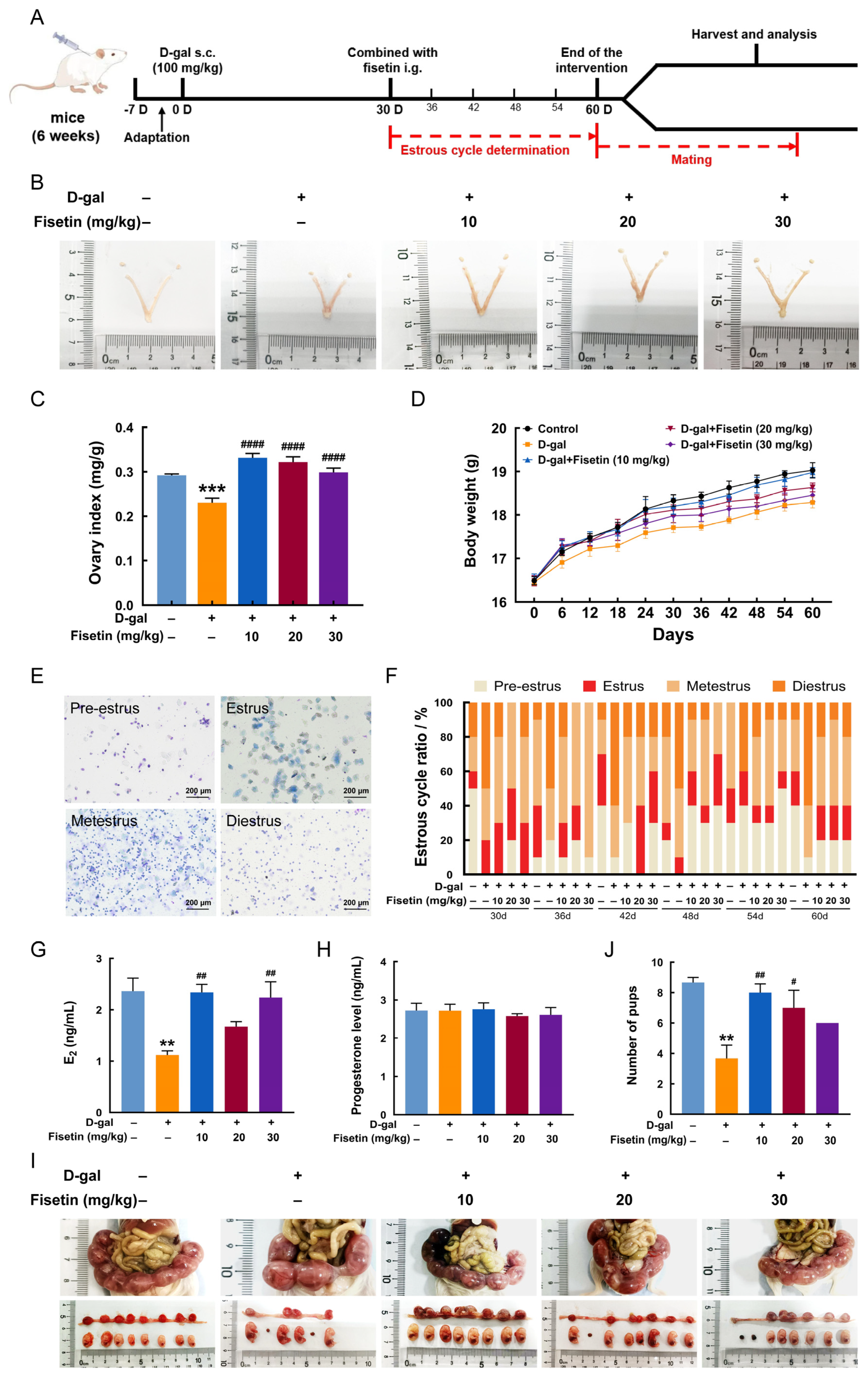
100 female BALB/c mice (6-week-old, 16.5 ± 0.5 g) were purchased from Charles River Laboratories Animals Ltd. (Beijing, China). Mice were housed five per cage under a 12 h light/dark cycle (lights on 08:00–20:00) with free access to food and water, in a controlled environment (23 ± 1 °C, 55 ± 5% humidity). All animal procedures were performed in strict accordance with international ethical standards for animal experiments and were approved by the Institutional Animal Care and Use Committee of Zhejiang A&F University, China (ZAFUAC2023005). At 1-week following acclimatization, mice were randomly assigned to five groups (n = 20): Control, D-gal, D-gal+fisetin (10 mg/kg), D-gal+fisetin (20 mg/kg), and D-gal+fisetin (30 mg/kg). D-gal (MB1853-2, Meilunbio, Dalian, China) was dissolved in phosphate-buffered saline (PBS), whereas fisetin (MB5836, Meilunbio) was dissolved in a vehicle prepared by mixing 10% dimethylsulfoxide (DMSO), 40% PEG 300, 5% Tween 80, and 45% PBS. Mice in the D-gal treatment groups received a daily subcutaneous injection of D-gal (100 mg/kg) for 60 consecutive days, whereas the control group received an equal volume of PBS. Starting on day 31, the fisetin-treated groups were administered fisetin via daily oral gavage, while both the model and control groups received an equal volume of the blank vehicle mixture on the same schedule. During the experiment, the body weight of the mice was recorded every 6 days until the end of the experiment to assess weight changes. At 24 h after the last drug administration, ten mice in each group were weighed and euthanized. Whole blood, uteri, and ovaries were immediately harvested, weighed, and photographed. Five ovaries from each group were randomly collected and fixed in 4% paraformaldehyde (PFA) for morphological examination, and the remaining ovaries were rapidly frozen in liquid nitrogen and subsequently transferred to a −80 °C freezer for further biochemical analysis, Western blot or quantitative real-time polymerase chain reaction (qRT-PCR) analysis. In addition, to evaluate the ovarian GCs proliferation, the 5-Bromo-2′-deoxyuridine (BrdU, ST1056, Beyotime, Hangzhou, China) was dissolved in PBS at 10 mg/mL and then intraperitoneally injected at a volume of 200 μL per mouse into three mice per group. Both ovaries were harvested 4 h after BrdU injection and processed for fixation with 4% PFA.
2.2. Estrous Cycles and Hormone Assay
After 30 days of D-gal intervention, vaginal smears were collected from all mice every 6 days from 08:00 to 09:00 using the saline douching method until the end of the administration period. Vaginal lavage samples were smeared onto clear glass slides, air-dried, fixed in 70% ethanol for 10 min, and then stained with Giemsa (G1010, Solarbio, Beijing, China) for 20 min. After rinsing with distilled water and dried, the slides were observed and imaged using an Eclipse 80i microscope (Nikon, Tokyo, Japan). The normal estrous cycle consists of four stages: proestrus, characterized predominantly by irregularly shaped nucleated epithelial cells with few leukocytes or keratinized epithelial cells; estrus, composed almost entirely of lamellar anucleated keratinized cells; metestrus, in which a small number of non-nucleated keratinized epithelial cells appear alongside a leukocyte-predominant population; and diestrus, marked by crinkled epithelial cells and a large number of leukocytes. For hormone analysis, the blood samples were clotted at room temperature for 2 h, and then centrifuged at 3000 rpm at 4 °C for 15 min to obtain the serum. Serum concentrations of estradiol (E2) and progesterone were measured using commercial ELISA kits. The Mouse E2 ELISA Kit (JHN80666, Jinhengnuo, Hangzhou, China) has a detection range of 0.31–20 ng/mL and a sensitivity of less than 0.06 ng/mL, while the Mouse Progesterone ELISA Kit (JHN80652, Jinhengnuo) has a detection range of 1.56–100 ng/mL and a sensitivity of less than 0.28 ng/mL. All kits exhibit intra-assay coefficients of variation (CV) less than 9% and inter-assay CV less than 10%, with no cross-reactivities related structural analogs. All procedures were performed in strict accordance with the standard protocols of kits, with each sample and standard measured in duplicate. Absorbance was read at 450 nm using a microplate reader (Bio-Rad, Hercules, CA, USA).
2.3. Examination of Female Fertility
Following 60 days of drug administration, five females per group were selected to mate with young male BALB/c mice to evaluate female fertility. Briefly, these females were housed in harem breeding at a 2:1 female-to-male ratio for either 5 or 10 days, depending on the group, after which gestation was allowed to proceed for another two weeks. Day 1 of pregnancy was confirmed by the presence of a copulatory plug. To avoid inaccuracies in litter size due to cannibalism, females were euthanized before delivery, and the number of embryos was counted in utero.
2.4. Morphological Observation and Follicle Counts
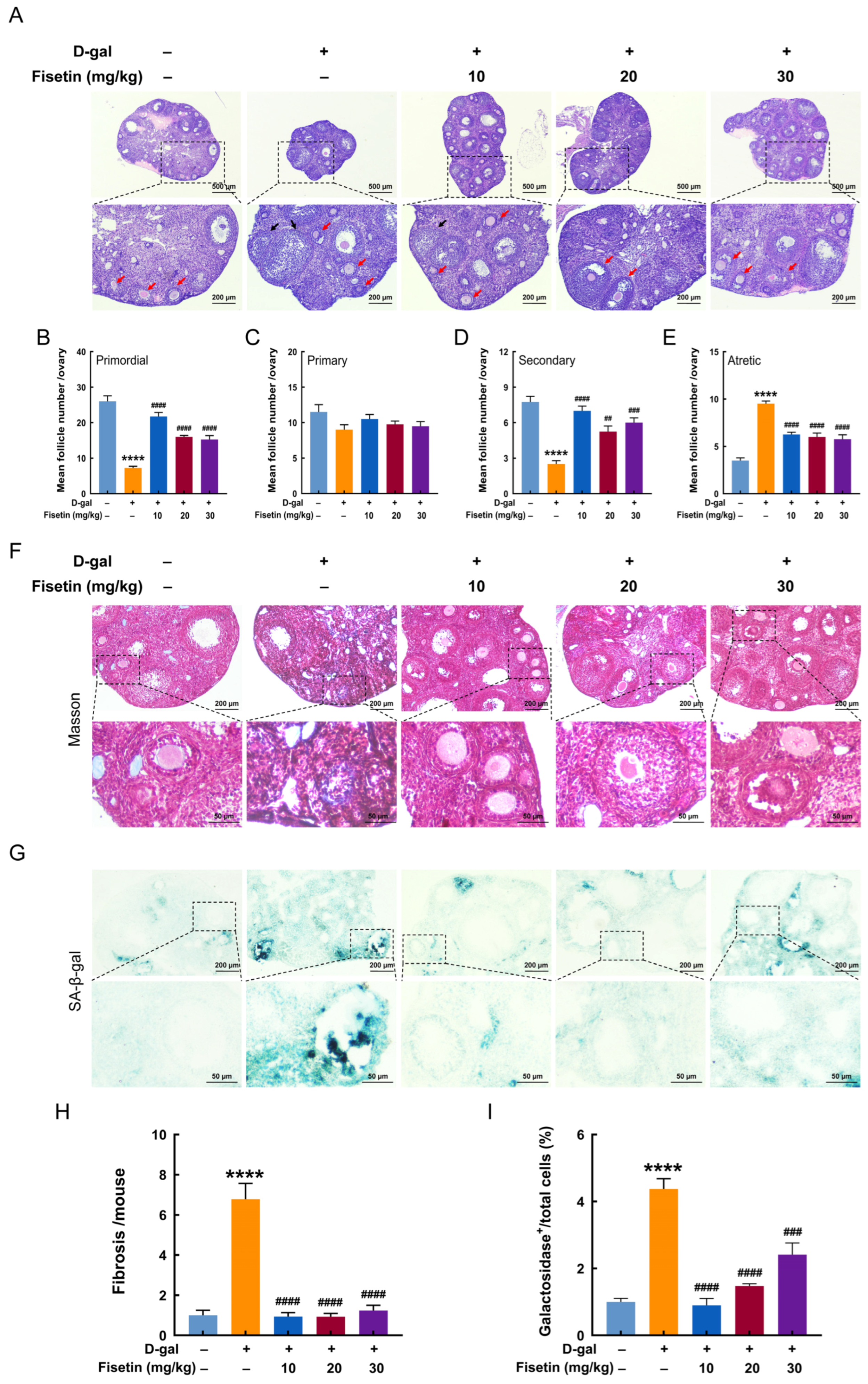
The PFA-fixed ovarian tissues were rinsed under the running water overnight, dehydrated through a graded ethanol series, embedded in paraffin, and serially sectioned at a thickness of 5 μm. Every fifth section was mounted on a clear glass slide and stained with hematoxylin and eosin (H&E) following the standard laboratory protocols. The primordial, primary, secondary, and atretic follicles were identified and counted under an Eclipse 80i microscope (Nikon). In brief, follicles were classified as follows: primordial follicles, identified by an oocyte surrounded by a single layer of flattened GCs; primary follicles, containing an oocyte enclosed by a single layer of cuboidal GCs; secondary follicles, characterized by multiple layers of GCs with initial formation of small antral spaces but no fully formed antrum; and atretic follicles, distinguished by irregularly shaped oocytes and disordered arrangement of GCs. The number of follicles in each group was counted three times by different experimenters. To evaluate collagen deposition, ovarian sections from each group were subjected to Masson’s trichrome staining (G1340, Solarbio).
2.5. RNA Sequencing (RNA-Seq) Analysis
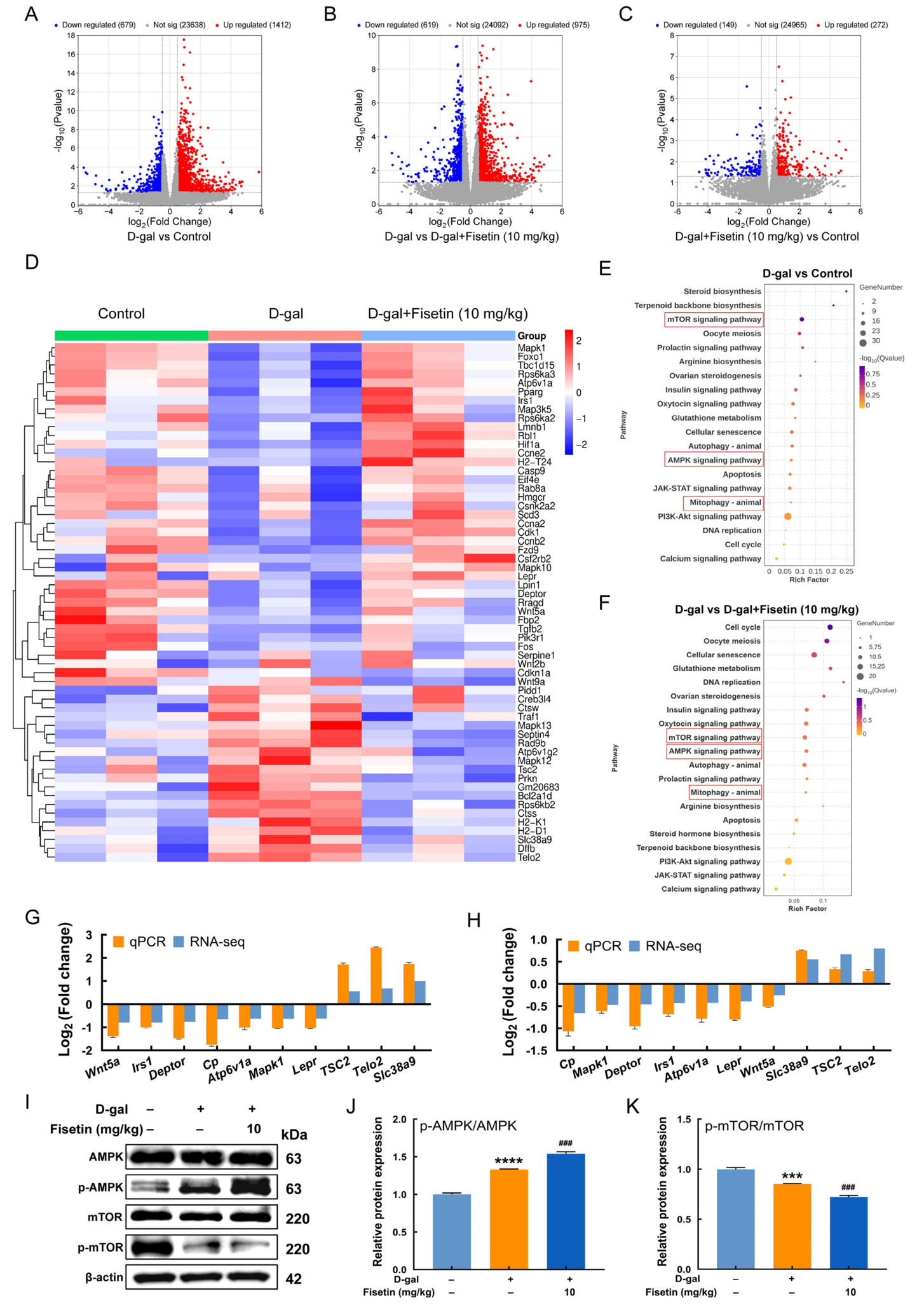
Total RNA was extracted from ovarian tissues of the control, D-gal, D-gal+fisetin (10 mg/kg) groups with a Rapid RNA Extraction Kit (400-100, Gooniebio, Guangzhou, China) according to the manufacturer’s instructions. Three independent biological replicates were used for each experimental condition. The total RNA samples were sent to Novogene (Beijing, China) for quality control, cDNA libraries construction, and sequencing, followed by transcriptome data analysis. Analysis of differentially expressed genes (DEGs) was performed using the DESeq2 R package (v1.38.0) with a threshold of |log2(FoldChange)| ≥ 0.5 and a p-value < 0.05. Kyoto Encyclopedia of Genes and Genomes (KEGG) enrichment analyses of the identified DEGs were performed using the R package clusterProfiler (v4.6.0).
2.6. GCs Culture and Treatments
The female BALB/c mice (4 weeks old) were prepared and intraperitoneally injected with 5 IU PMSG. After 48 h, mice were euthanized, both ovaries were rapidly harvested and rinsed three times with ice-cold PBS. Follicular fluid containing GCs and oocytes was collected by puncturing follicles with a 1 mL syringe needle, then filtered through a 200-mesh steel sieve (75 μm), and centrifuged at 1500 rpm for 5 min. After two washes with PBS, the GCs were resuspended and seeded onto 6-well plates using DMEM/F12 medium (Hyclone, Tauranga, New Zealand) supplemented with 10% fetal bovine serum (FBS, Hyclone, Logan, UT, USA) and 1% penicillin/streptomycin. The cells were placed in a 5% CO
2 incubator at 37 °C for cell attachment. The GCs purity was identified by follicle stimulating hormone receptor (FSHR) immunofluorescence staining. GC purity was calculated as the percentage of FSHR-positive cells, and only samples with ≥90% purity were used for subsequent experiments. The identified GCs were seeded into a 96-well plate and cultured with the DMEM/F12 medium containing different concentrations of fisetin (0, 2.5, 5, 10, 20, 40, 80 µM) for 36 h to evaluate the cytotoxicity of fisetin. To examine the effect of fisetin on D-gal-induced senescence in GCs, cells were pretreated with fisetin for 36 h and then exposed to 200 mM D-gal for an additional 24 h. The concentration of D-gal used was based on our previous study [
3]. For inhibitor experiments, GCs were pretreated with Compound C, an AMPK inhibitor, for 2 h prior to fisetin exposure. Compound C (HY-13418A, MedChemExpress, Shanghai, China) was dissolved in DMSO to a concentration of 100 mM and diluted to 10 μM for use in this experiment. To examine autophagic flux, GCs were treated with fisetin and D-gal, followed by 3-Methyladenine (3-MA, HY-19312, MedChemExpress) for another 6 h.
2.7. Cell Viability Assay
Cell viability was assessed using a Cell Counting Kit-8 (CCK-8, C0037, Beyotime) following the manufacturer’s instructions. Briefly, GCs were seeded in 96-well plates at 100 μL per well, allowed to adhere for 4 h, and then subjected to experimental treatments. Afterward, 10 µL of CCK-8 reagent was added to each well and incubated for an additional 2 h at 37 °C. Absorbance was measured at 450 nm using a microplate reader (Bio-Rad).
2.8. Immunofluorescence (IF)
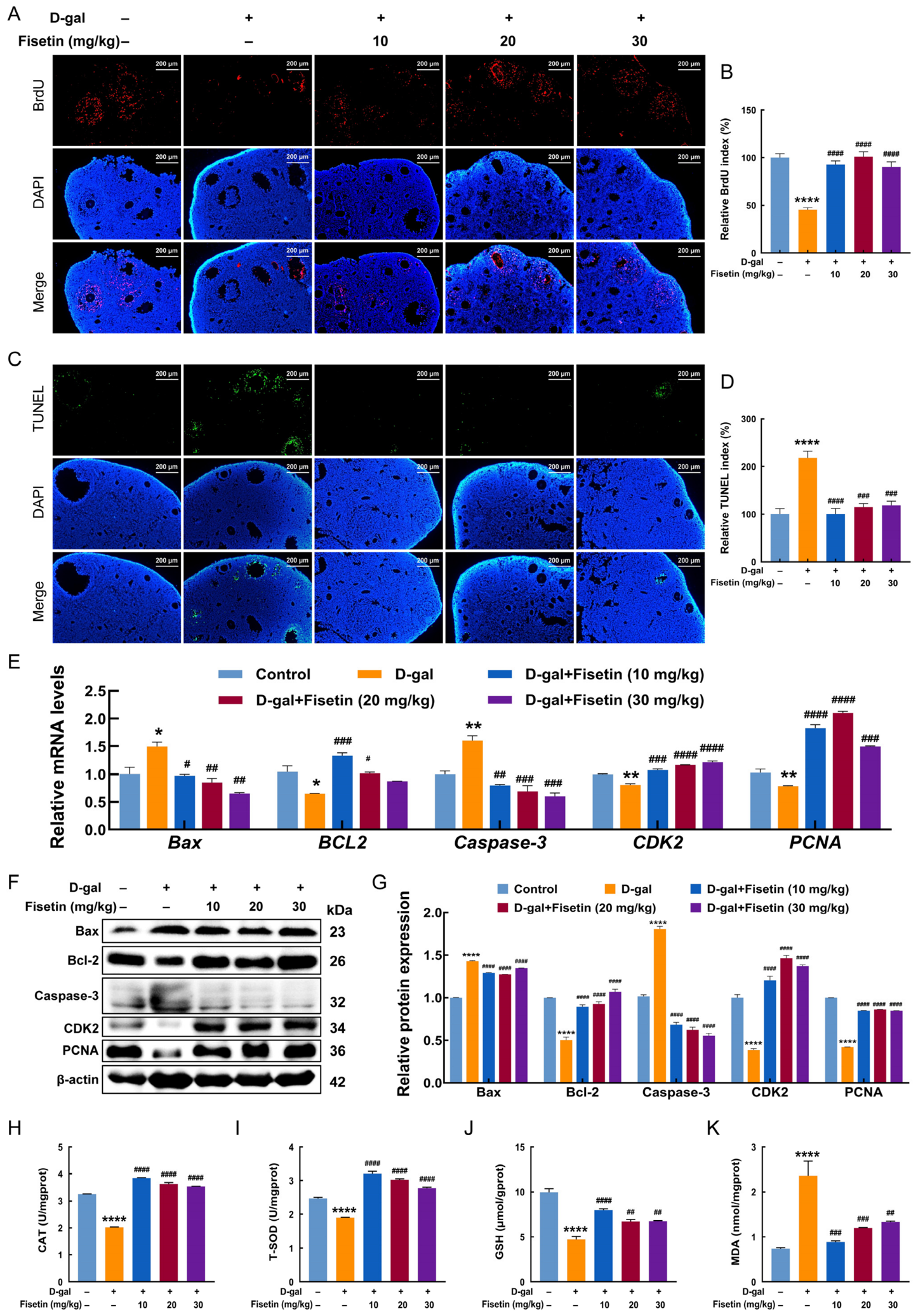
The ovarian sections were deparaffinized, rehydrated, subjected to antigen retrieval in boiling 10 mM sodium citrate buffer (pH 6.0) for 20 min, and then blocked with 10% normal goat serum for 20 min at room temperature. GCs were seeded into the glass bottom confocal culture dish (FCFC020, Beyotime) and treated as mentioned above. Afterward, the GCs were fixed in 4% PFA for 15 min, rinsed three times with PBS, permeabilized with 0.5% Triton X-100 for 10 min, and blocked with 10% normal goat serum for 20 min. The ovarian sections and GCs were incubated overnight at 4 °C with anti-BrdU (1:200, G3G4; DSHB, Iowa City, IA, USA), anti-LC3 (1:200, ET1701-65, Huabio, Hangzhou, China), or anti-TOMM20 (1:100, ET1609-25, Huabio). After three washes in PBS, samples were incubated with the Alexa Fluor 594-conjugated Goat Anti-Rabbit IgG (1:500, AS039, ABclonal, Wuhan, China) or Alexa Fluor 488-conjugated Goat Anti-Rabbit IgG (1:200, AS053, ABclonal) for 1 h at 37 °C in the dark. The TdT-mediated dUTP nick end labeling (TUNEL) assay (A111-01, Vazyme, Nanjing, China) was performed to evaluate GCs apoptosis following the manufacturer’s protocol. Nuclei were further stained with DAPI (P0131, Beyotime) for 5 min at room temperature. Images were captured using laser confocal microscopy (Olympus IX81-FV1000, Tokyo, Japan) and analyzed by ImageJ v2.3.0 software (NIH, Bethesda, MD, USA). For BrdU analysis, at least 5 random microscopic fields containing different stages of follicles were captured from three mice per group. The total number of BrdU-positive nuclei and DAPI-stained nuclei was counted per field using ImageJ v2.3.0 software (NIH). The percentage of BrdU-positive cells was calculated as the ratio of BrdU-positive nuclei to DAPI-stained nuclei.
2.9. Western Blot (WB) Analysis
Total protein from ovarian tissues and GCs was extracted using ice-cold RIPA buffer (P0013B, Beyotime) supplemented with phenylmethylsulphonyl fluoride (PMSF, ST506, Beyotime). A BCA protein assay kit (P0009, Beyotime) was used to detect the protein concentration. Protein samples were diluted to 2 µg/µL with loading buffer and denatured at 100 °C for 10 min. 10 µL protein samples were load onto a 10% sodium dodecyl sulfate-polyacrylamide gel electrophoresis (SDS-PAGE, 8.6 cm × 6.8 cm × 1.0 mm), separated at a constant voltage of 200 V for 1 h, and then electrotransferred onto nitrocellulose membranes (Millipore, Darmstadt, Germany) at a constant current of 200 mA for 45 min. The membranes were blocked with 5% non-fat milk dissolved in Tris-buffered saline Tween-20 (TBST, PH 7.4) for 1 h at room temperature, and then incubated overnight at 4 °C with the following primary antibodies: Bax (1:500, WL01637, Wanleibio, Shenyang, China), Bcl-2 (1:500, WL01556, Wanleibio), Caspase-3 (1:500, ER1802-42, Huabio), cyclin-dependent kinase 2 (CDK2, 1:500, R1309-3, Huabio), proliferating cell nuclear antigen (PCNA, 1:500, WL03213, Wanleibio), AMPK (1:500, WL02254, Wanleibio), p-AMPK (1:500, WL05103, Wanleibio), mTOR (1:500, WL02477, Wanleibio), p-mTOR (1:500, WL03694, Wanleibio), Parkin (1:1000, RT1702-60, Huabio), PINK1 (1:1000, HA723021, Huabio), LC3 (1:1000, ET1701-65, Huabio), translocase of outer mitochondrial membrane 20 (TOMM20, 1:1000, ET1609-25, Huabio), cyclin-dependent kinase 6 (CDK6, 1:1000, ER40101, Huabio), and β-actin (1:5000, EM2001-07, Huabio). Following three washes with TBST, the membranes were incubated with a secondary antibody for 1 h at room temperature. Immunoreactive bands were detected with a clarity ECL Western blot substrate kit (Bio-Rad, #1705061, Hercules, CA, USA), imaged on a ChemiScope 3400 Mini machine (Clinx, Shanghai, China), and quantified by ImageJ v2.3.0 software (NIH). Target protein expression was normalized to β-actin.
2.10. Measurement of CAT, T-SOD, MDA, and GSH
Ovarian tissues were homogenized in cold PBS and then centrifuged at 2500 rpm for 10 min at 4 °C to obtain a 10% tissue suspension, while GCs were ultrasonically disrupted to release intracellular components. Total protein concentration, CAT (A007-1-1), T-SOD (A001-1-1), MDA (A003-1-2), and GSH (A006-2-1) levels were measured using corresponding assay kits (Nanjing Jiancheng Bioengineering Institute, Nanjing, China), following the manufacturer’s instructions.
2.11. SA-β-Gal Staining
A β-galactosidase staining kit (G1580, Solarbio) was used to detect the senescence-specific β-galactosidase expression in treated GCs according to the kit’s protocols. Briefly, the GCs were fixed in β-galactosidase fixative solution for 15 min, rinsed three times with PBS, and then incubated with 1 mL dyeing liquid (10 µL β-galactosidase staining fluid A, 10 µL fluid B, 930 µL fluid C, and 50 µL X-Gal solution) overnight at 37 °C. Images were captured with an Eclipse 80i microscope (Nikon) and quantified using ImageJ v2.3.0 software (NIH) to distinguish blue cells (positive) from unstained cells (negative) by setting a color threshold.
2.12. Cell-Cycle Distribution
After treatments, GCs were collected by trypsinization, washed twice with PBS, and fixed with ice-cold 75% ethanol, followed by resuspension in 500 µL of propidium iodide solution (480 µL staining buffer, 10 µL PI, and 10 µL RNase A) and incubation for 30 min. Cell cycle distribution was performed using a FACSCalibur flow cytometer (BD Biosciences, Franklin Lakes, NJ, USA), and analyzed by FlowJo v10.8.1 software (FlowJo, LLC, Ashland, OR, USA).
2.13. RNA Extraction and qRT-PCR
Total RNA was extracted from ovarian tissues and GCs using TRIzol reagent (15596018, Life Technologies, New York, NY, USA) in accordance with standard protocols, followed by assessment of its integrity and purity using a microspectrophotometer. The HiScript II 1st Strand cDNA Synthesis Kit (R211-01, Vazyme) was used to reverse-transcribe 1 µg RNA into cDNA, which was then amplified by qRT-PCR using the HiScript II One Step qRT-PCR SYBR Green Kit (Q221-01, Vazyme) to evaluate gene expression. The primers are listed in
Table S1. Relative mRNA levels were calculated by the 2
−∆∆Ct method and normalized to the internal control β-actin.
2.14. Determination of Mitochondrial Membrane Potential (MMP) and ROS
The MMP of GCs was evaluated using an enhanced mitochondrial membrane potential assay kit with the fluorescent probe JC-1 (C2003S, Beyotime) following the instructions. Briefly, the treated GCs were rinsed twice with PBS, incubated with 1 mL of JC-1 working solution for 20 min at 37 °C in a 5% CO2 incubator with saturated humidity, and finally, the cells were rinsed twice with premade JC-1 staining buffer and examined with a confocal laser scanning microscope (Olympus IX81-FV1000). The red/green fluorescence intensity ratio was calculated by ImageJ v2.3.0 software (NIH) to analyze mitochondrial depolarization. For intracellular ROS assessment, the treated GCs were incubated with 10 µM fluorescent probe 2′,7′-dichlorofluorescein diacetate (DCFH-DA, S0033S, Beyotime) for 20 min at 37 °C, washed twice with ice-cooled PBS, and stained with Hoechst 33342 (C1027, Beyotime) for 5 min for nuclear visualization. The green fluorescence was examined under a confocal laser scanning microscope (Olympus IX81-FV1000) and measured using ImageJ v2.3.0 software (NIH). All experiments were performed in triplicate.
2.15. The 5-Ethynyl-2′-deoxyuridine (EdU) Assay
Cell proliferation was measured using an EdU assay kit (C0071S, Beyotime) following the manufacturer’s protocol. After incubation with 10 µM EdU for 2 h, the GCs were fixed in 4% PFA, washed twice with PBS and permeabilized with 0.5% Triton X-100 for 15 min at room temperature. Afterward, the specific GCs were washed with PBS three times and incubated with 0.5 mL click reaction solution (430 µL click reaction buffer, 20 µL CuSO4, 1 µL Azide 594, and 50 µL click additive solution) for 30 min in the dark. DAPI was used to mark the nucleic acids. Images were captured by a fluorescence microscope (Olympus IX70, Tokyo, Japan), and the EdU-positive cells were calculated by ImageJ v2.3.0 software (NIH).
2.16. Molecular Docking
The three-dimensional structure of fisetin was obtained from the PubChem database (
https://pubchem.ncbi.nlm.nih.gov/), and the AMPK protein structure (PDB ID: 5UFU) was obtained from the Protein Data Bank (PDB,
http://www.rcsb.org/) with the species set to Mus musculus (house mouse). The AMPK receptor was prepared by removing water molecules and adding hydrogen atoms, after which its potential binding sites were predicted. The ligand, fisetin, was subjected to conformational search and energy minimization. Molecular docking was performed using AutoDock Vina (v1.2.0), and three-dimensional images of the docking results were generated using the PyMOL Molecular Graphics System (v2.5.0).
2.17. Transmission Electron Microscopy (TEM)
The collected GCs were fixed overnight in 2.5% glutaraldehyde at 4 °C, postfixed in buffered 1% osmium tetroxide for 1.5 h, dehydrated through a graded ethanol or acetone series, and embedded in propylene oxide resin following standard TEM procedures. Ultrathin sections (70–90 nm) were cut on an ultramicrotome (Leica EM UC7, Wetzlar, Germany), stained with 8% aqueous uranyl acetate and Reynold’s lead citrate, and examined under a Tecnai G2 Spirit (FEI Company, Hillsboro, OR, USA) at 120 kV at various magnifications.
2.18. Statistical Analysis
Data are expressed as mean ± SEM. One-way analysis of variance (ANOVA) followed by Tukey’s or Dunnett’s test was employed to assess differences between groups, with p < 0.05 considered statistically significant.
4. Discussion
The ovary is the organ most susceptible to aging, with a clear transition from a vigorous state to one characterized by shrinking volume, declining secretory function, and depletion of the non-growing follicle pool. During follicular development, GCs support oocyte maturation by synthesizing and transferring the necessary hormones and proteins, while these processes consume energy and generate substantial ROS [
20]. ROS accumulation causes oxidative damage to GCs, resulting in mitochondrial dysfunction, DNA damage, and apoptosis, which in turn leads to follicular atresia and ovulation disorders [
21]. It has been confirmed that dysfunction of GCs is linked to a variety of female reproductive disorders [
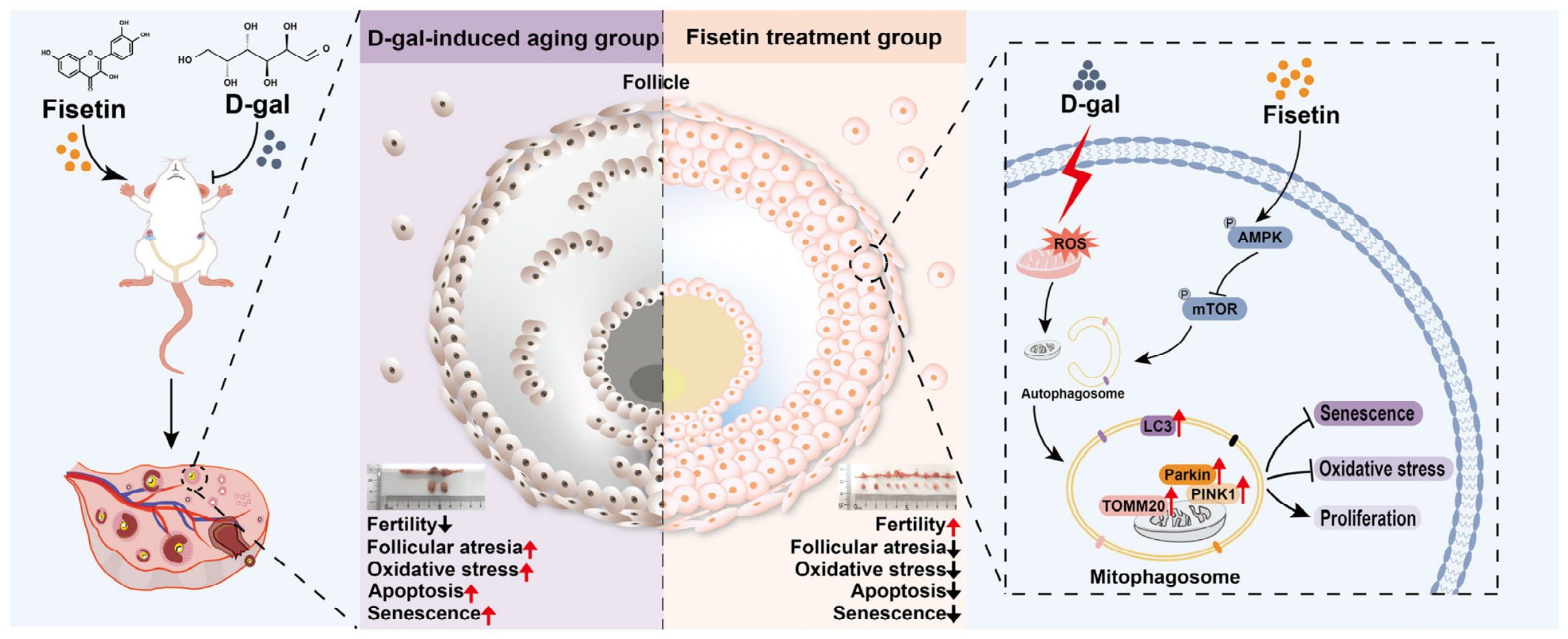
22]. Therefore, timely supplementation of antioxidants is essential for preserving ovarian endocrine and reproductive function by delaying ovarian function degradation and reducing the oxidative damage to the ovary. In this study, we established a D-gal-induced aging model in mice and senescent GCs in vitro to explore how fisetin, a natural flavonoid, attenuates ovarian aging.
D-gal is a reducing monosaccharide routinely employed to establish senescence models in animals and cultured cells due to its simplicity, convenience, and cost-effectiveness. Chronic high-dose D-gal exposure in mice elicits a spectrum of fertility derangements, manifesting as disrupted estrous cycles, enhanced oxidative stress, and a significantly increased incidence of follicular atresia, all of which faithfully recapitulate the hallmarks of natural ovarian aging [
23,
24]. Fisetin, a natural bioactive flavonoid, has been recognized for its ability to treat a range of ovarian disorders due to its robust pharmacological properties, including antioxidant, anti-aging, and cytoprotective capacities. For instance, a previous study has shown that daily oral administration of fisetin for 14 consecutive days ameliorates hormonal disturbances, reverses metabolic imbalances, increases the expression of antioxidant genes, and suppresses the upregulated inflammatory response in the ovarian tissues of a mouse model of polycystic ovary syndrome [
25]. Furthermore, in laying hens, fisetin supplementation has been evidenced to alleviate ovarian aging and follicular atresia by enhancing antioxidant capacity and glucose metabolism [
26]. Consistently, our data revealed that fisetin supplementation significantly attenuated D-gal-induced reductions in ovarian index and serum E
2 level, normalized estrous cycles, and enhanced fertility in mice. Ovarian reserve function, reflected by the primordial follicle pool size, serves as a key determinant of ovarian response and female fertility. In the present study, fisetin supplementation significantly attenuated D-gal-induced follicular atresia and increased the numbers of primordial and secondary follicles in mice. Furthermore, according to the body surface area (BSA) normalization method, the human equivalent dose (HED) can be calculated from the oral dose of 10 mg/kg/day used in mice of this study, yielding approximately 0.81 mg/kg, which falls well within the range of oral fisetin doses already validated in human clinical trials [
27]. For instance, multiple clinical trials have administered oral fisetin at comparable or much higher doses with good tolerability, including a study (NCT03430037) in which older women aged over 70 years received 20 mg/kg/day orally for 2 days per month over two months to assess whether fisetin reduces insulin resistance, bone resorption, and frailty in older women with gait disturbance [
28]. Additionally, research indicated that fifteen healthy volunteers received a single dose of 1000 mg unformulated fisetin or a hybrid-hydrogel formulation containing 192 mg fisetin, with no adverse effects, and the latter achieved a 27-fold increase in bioavailability [
29]. Collectively, our findings indicate that fisetin effectively delays aging-related ovarian dysfunction in mice, providing a mechanistic basis for its potential role in the treatment of ovarian diseases in female.
Oxidative stress acts as a major driver of ovarian aging, as excessive ROS accumulation damages GCs and ultimately causes the ovary to lose its normal function. ROS overproduction impairs cellular antioxidant defenses, as evidenced by decreased activities of enzymes such as T-SOD, CAT, and GSH, and subsequently activates DNA damage response pathways, leading to cell cycle arrest, which in turn inhibits cell proliferation and promotes apoptosis [
30]. Exogenous antioxidant supplementation can reduce oxidative stress in the aging ovary, thereby preserving its physiological function and supporting follicle growth. Recent evidence has indicated that fisetin supplementation plays a critical role in improving antioxidant markers, elevating T-SOD and CAT activities, raising GSH level, and suppressing MDA and ROS production, thereby alleviating oxidative damage and promoting cell proliferation in diverse models, including porcine early embryonic culture in vitro [
31], heart tissue of bleomycin-induced pulmonary fibrosis [
32], and a cellular model of high phosphate-induced vascular calcification [
33]. Consistent with these findings, our data revealed that oral administration of fisetin significantly enhanced the activities of antioxidant enzymes T-SOD and CAT, upregulated GSH level, and suppressed MDA accumulation in ovarian tissues of D-gal-induced aging mice. Moreover, fisetin markedly inhibited follicular GC apoptosis, downregulated the expression of pro-apoptotic proteins Bax and Caspase-3, elevated the anti-apoptotic protein Bcl-2 level, and simultaneously increased the levels of proliferation-related proteins PCNA and CDK2 in D-gal-treated ovaries. Collectively, these results demonstrate that fisetin attenuates ovarian oxidative stress and follicular GC apoptosis while supporting GCs proliferation and follicular growth in D-gal-induced aging mice.
To further explore the molecular basis of fisetin-mediated protection against ovarian dysfunction, RNA-seq was conducted to link the detected phenotypes to their relevant signaling cascades. Differential expression analysis suggested that fisetin supplementation significantly modulated ovarian homeostasis, as evidenced by marked enrichment of genes associated with mitophagy, as well as AMPK and mTOR signaling pathways. Mitophagy, a critical quality control mechanism that selectively removes damaged mitochondria to maintain intracellular homeostasis under oxidative stress, has been confirmed to play a vital role in attenuating ovarian oxidative damage. PINK1 and Parkin are central regulators of mitophagy, wherein the accumulation of PINK1 recruits and activates Parkin via phosphorylation, thereby promoting LC3 binding and autophagosome formation; accordingly, evidence indicates that loss of PINK1 impairs mitophagy and accelerates ovarian aging in mice [
34]. TOMM20, a core subunit of the outer mitochondrial membrane translocase complex, serves as both a common marker of mitochondrial integrity and a substrate for Parkin-mediated ubiquitination [
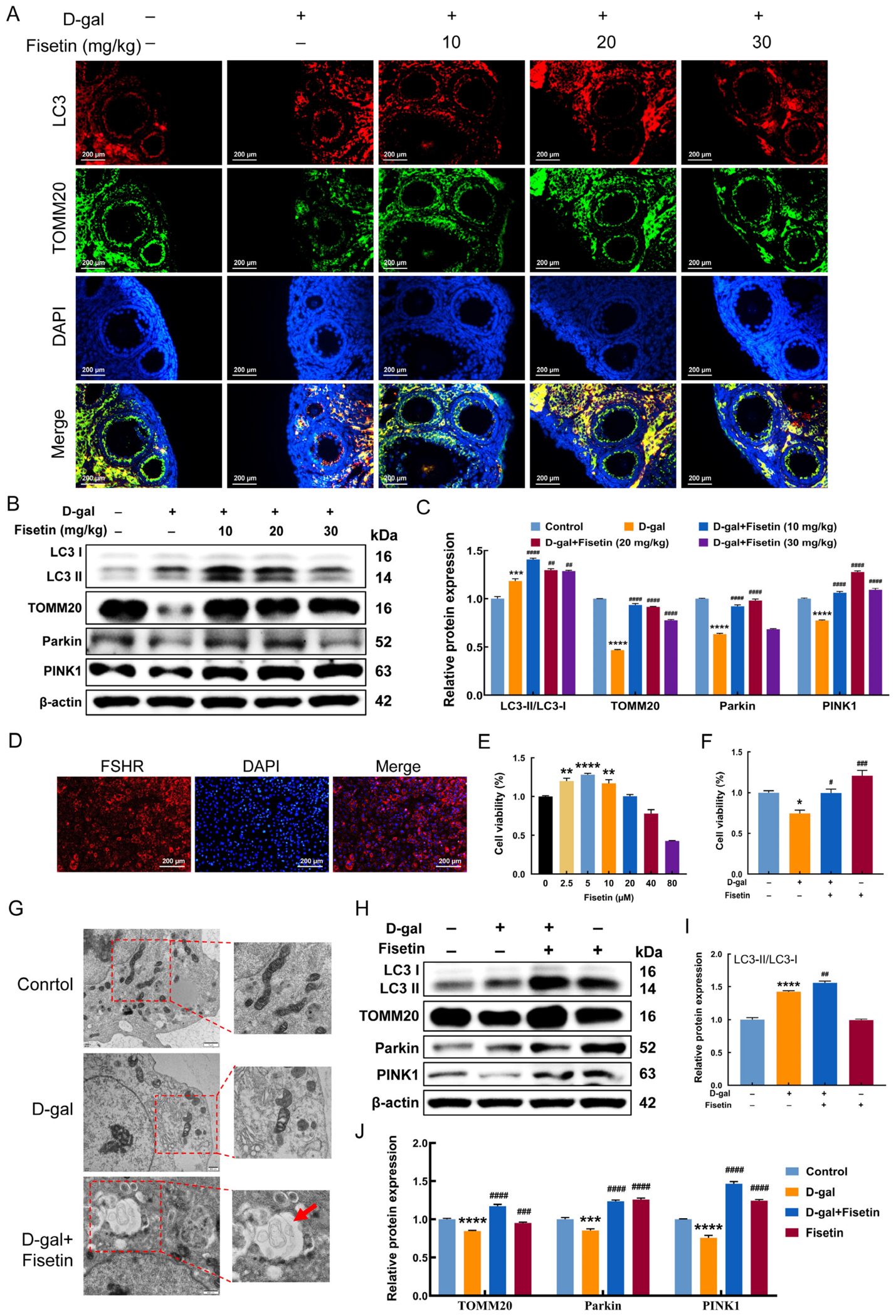
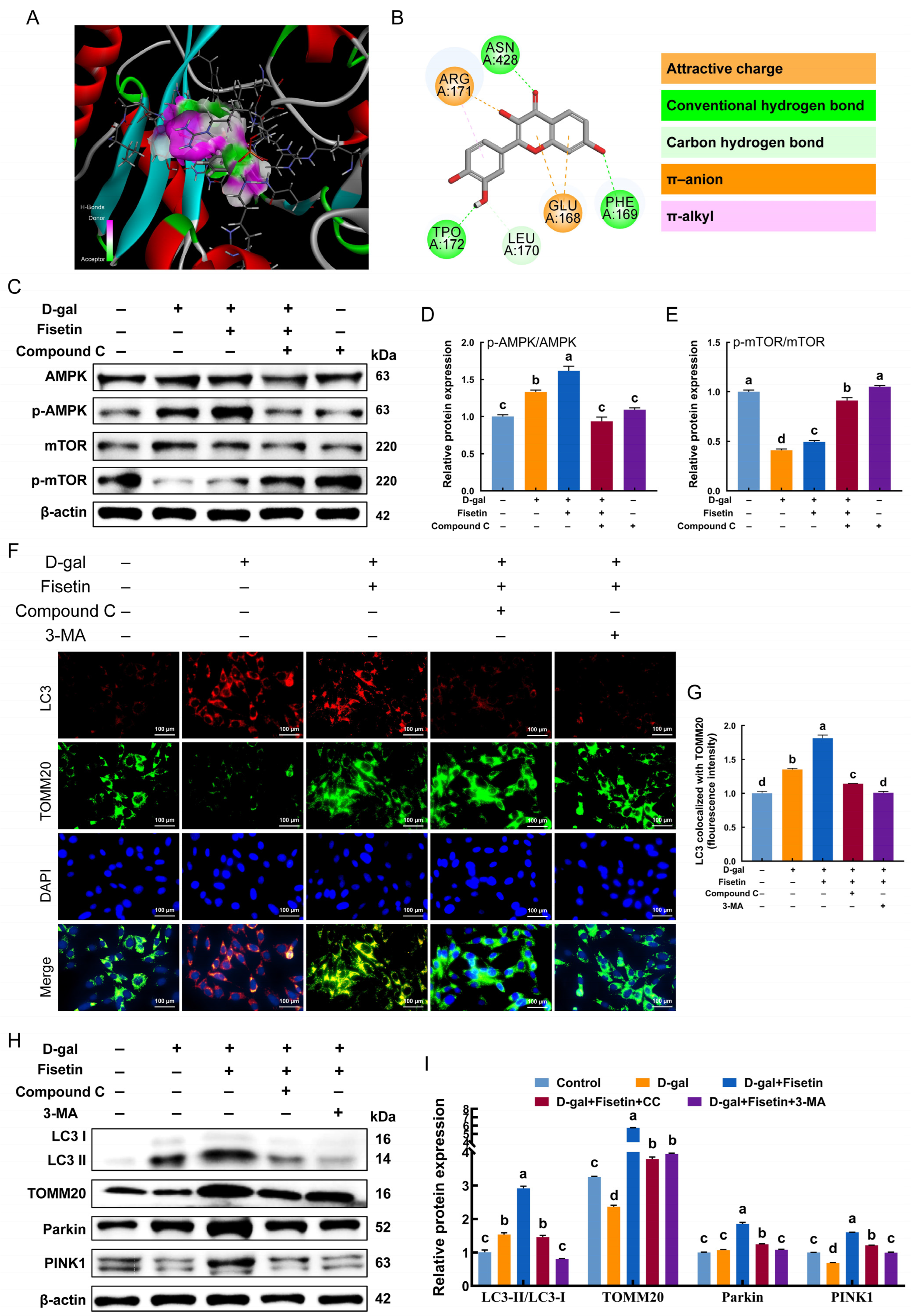
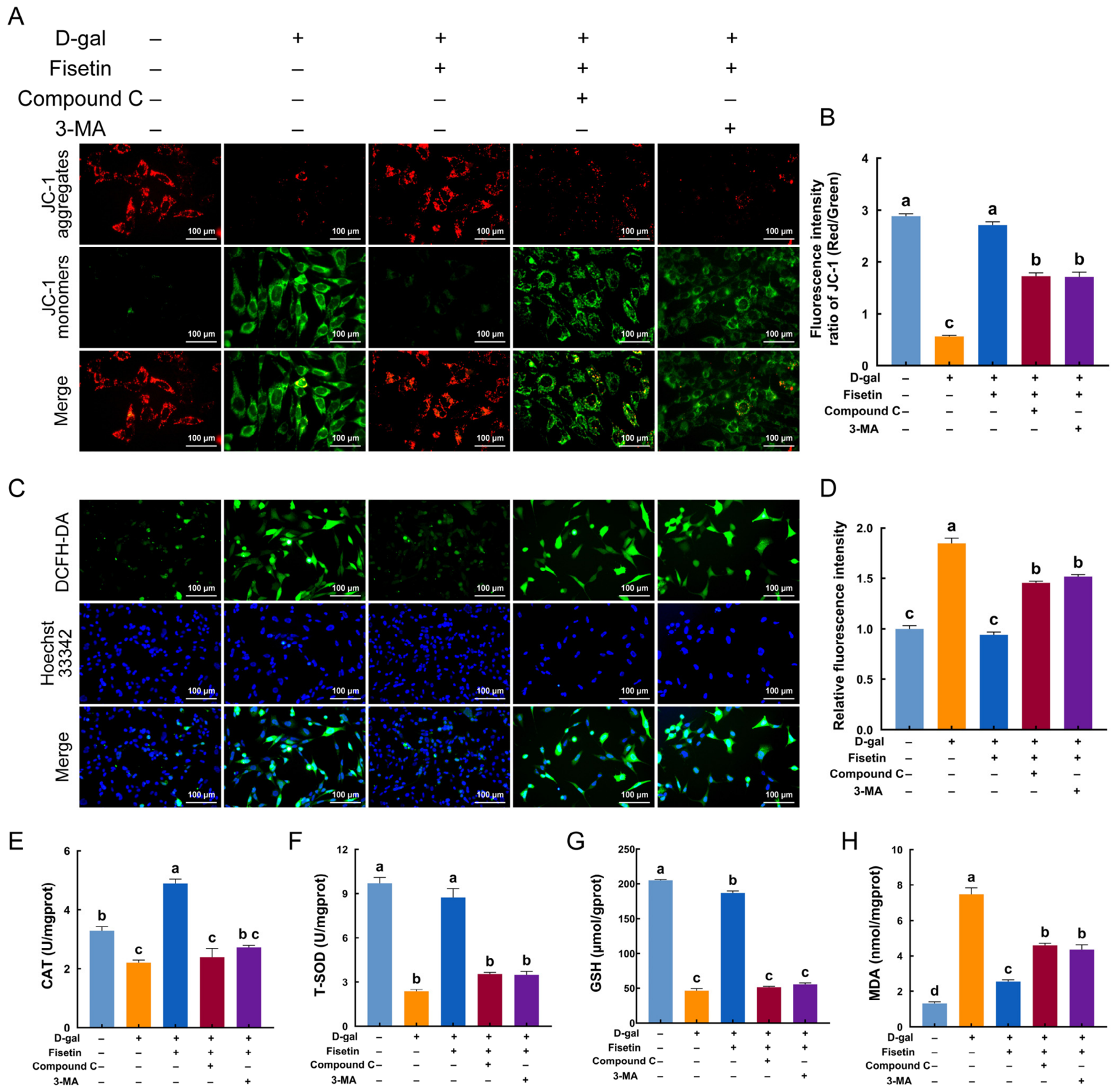
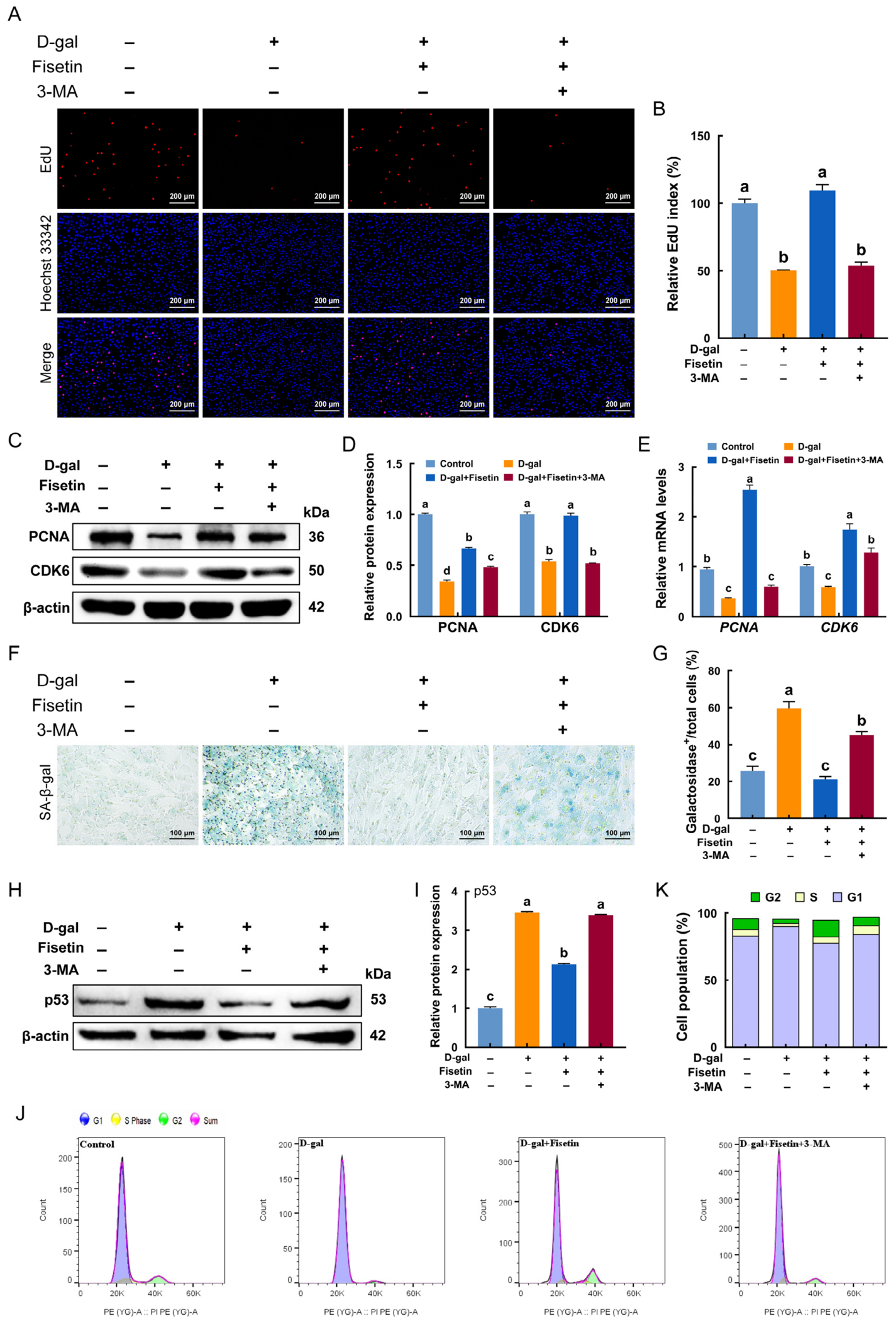
35]. In this study, we observed that fisetin treatment significantly activated mitophagy in D-gal-induced aging ovaries and senescent GCs, as evidenced by enhanced co-localization of TOMM20 and LC3 in ovarian tissues, the presence of mitophagosomes in senescent GCs, and elevated levels of LC3-II/LC3-I, TOMM20, PINK1, and Parkin. Furthermore, the addition of fisetin reversed mitochondrial dysfunction, reduced ROS accumulation, alleviated cell cycle arrest, and attenuated cellular senescence in cultured GCs under D-gal stimulation. However, inhibition of mitophagy with 3-MA abolished these protective effects of fisetin against D-gal-induced damage in follicular GCs. These results clearly indicate that mitophagy activation acts as the primary mechanism by which fisetin alleviates oxidative damage in D-gal-induced senescent GCs.
The AMPK/mTOR pathway, the central sensor of cellular energy and nutrient status, serves as a key switch regulating mitophagy activation and has been shown to be involved in the modulation of ovarian function [
36]. For instance, AMPK/mTOR-mediated mitophagy has been reported to reduce ROS levels in oocytes and preserve mitochondrial function for ATP and estrogen synthesis to enhance the in vitro development of preantral follicles, and its activation also promotes steroid hormone synthesis and secretion as well as cumulus expansion in yak cumulus cells [
37,
38]. Emerging research has demonstrated that the pharmacological effects of fisetin against various diseases are mediated by upregulation of the AMPK/mTOR signaling pathway. Fisetin targeted AMPK and subsequently attenuated hepatic steatosis, modulated cholesterol metabolism and alleviated oxidative stress in a hypercholesterolemic mouse model [
39]. In addition, fisetin injection increased autophagic activity and AMPK levels while inhibiting ER stress in pancreatic tissues, thereby effectively combating high-fat diet-induced nonalcoholic fatty pancreatic disease in mice [
40]. In this study, our data revealed that fisetin exhibited strong binding affinity for the AMPK protein and that its supplementation upregulated the p-AMPK/AMPK ratio while downregulating the p-mTOR/mTOR ratio in D-gal-treated ovarian tissues in vivo and in cultured GCs in vitro, suggesting the involvement of the AMPK/mTOR signaling pathway in the protective effects of fisetin against D-gal-induced ovarian aging. Furthermore, addition of the selective AMPK inhibitor Compound C reversed the activating effect of fisetin on the AMPK/mTOR axis, leading to inhibition of mitophagy, aggravation of mitochondrial dysfunction, and exacerbation of oxidative stress in D-gal-induced senescent GCs, as evidenced by reduced LC3/TOMM20 co-localization, decreased MMP, and elevated ROS levels. Collectively, these findings suggest that fisetin prevents oxidative damage in follicular GCs by activating the AMPK/mTOR pathway to induce mitophagy, thereby supporting GC survival and delaying ovarian aging.



 ,
,