


User Experience, System Usability, and Feasibility of Two Novel Immersive Virtual Reality Memory Tasks for Cognitive Training: A Pilot Study

 ,
,  , and
, and
Abstract
1. Introduction
2. Materials and Methods
2.1. Participants
2.2. Hardware and Software Implementation
2.3. Virtual Environments
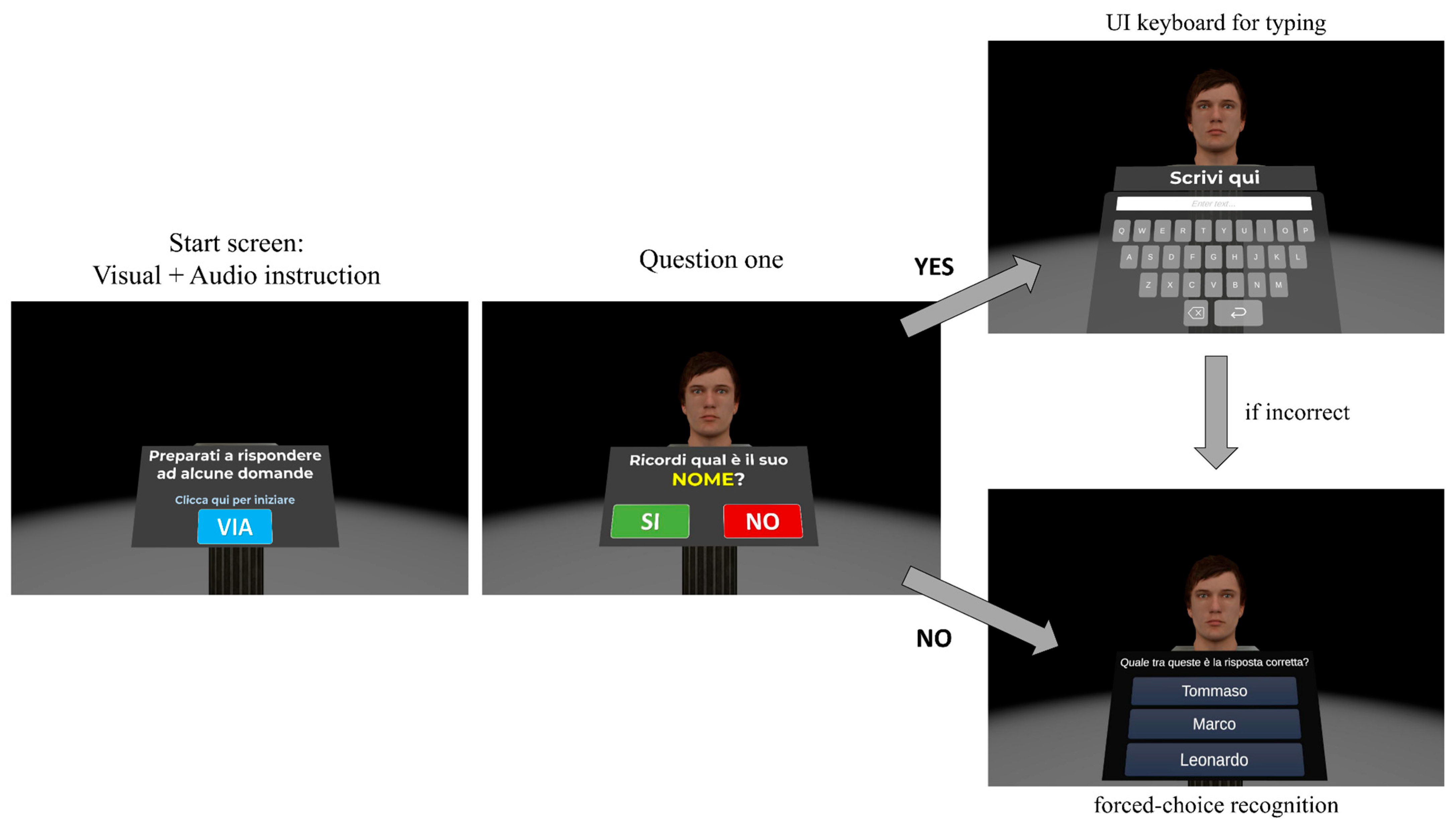
2.4. Experimental Procedure
2.5. Administration Procedure
2.6. Evaluation of Performance on Experimental Procedure
2.7. Post-Experimental Questionnaires
3. Results
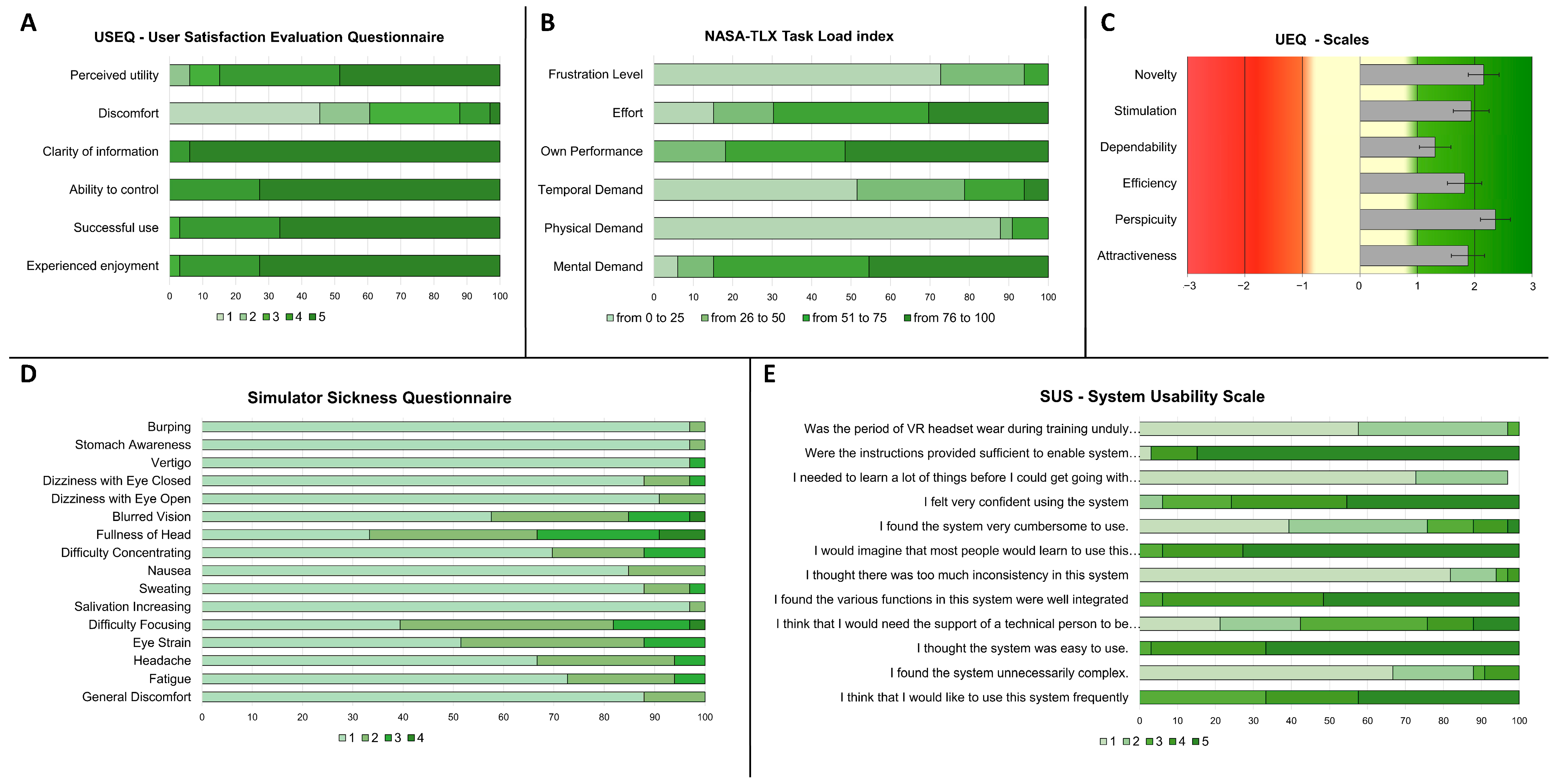
3.1. Usability and Feasibility of the IVR Procedure
3.2. Participants’ Performance on IVR Tasks
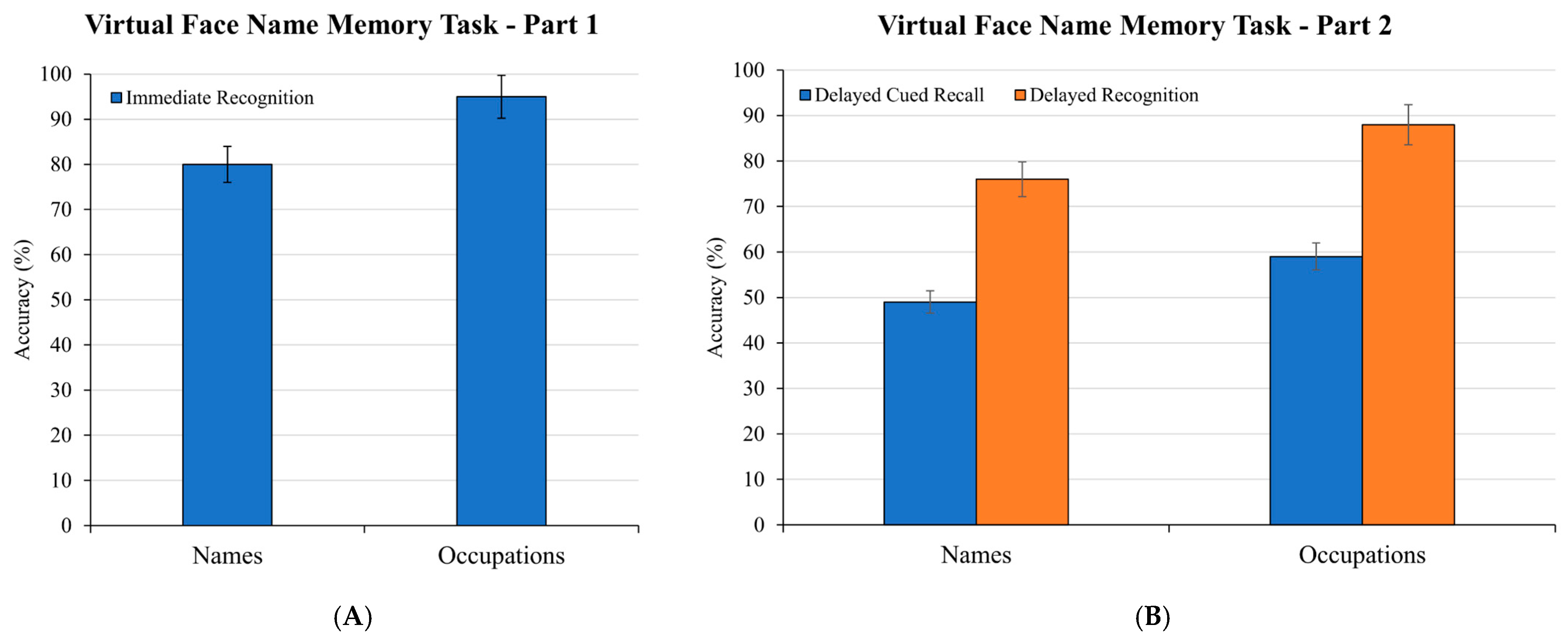
3.2.1. Virtual Face Name Memory Task
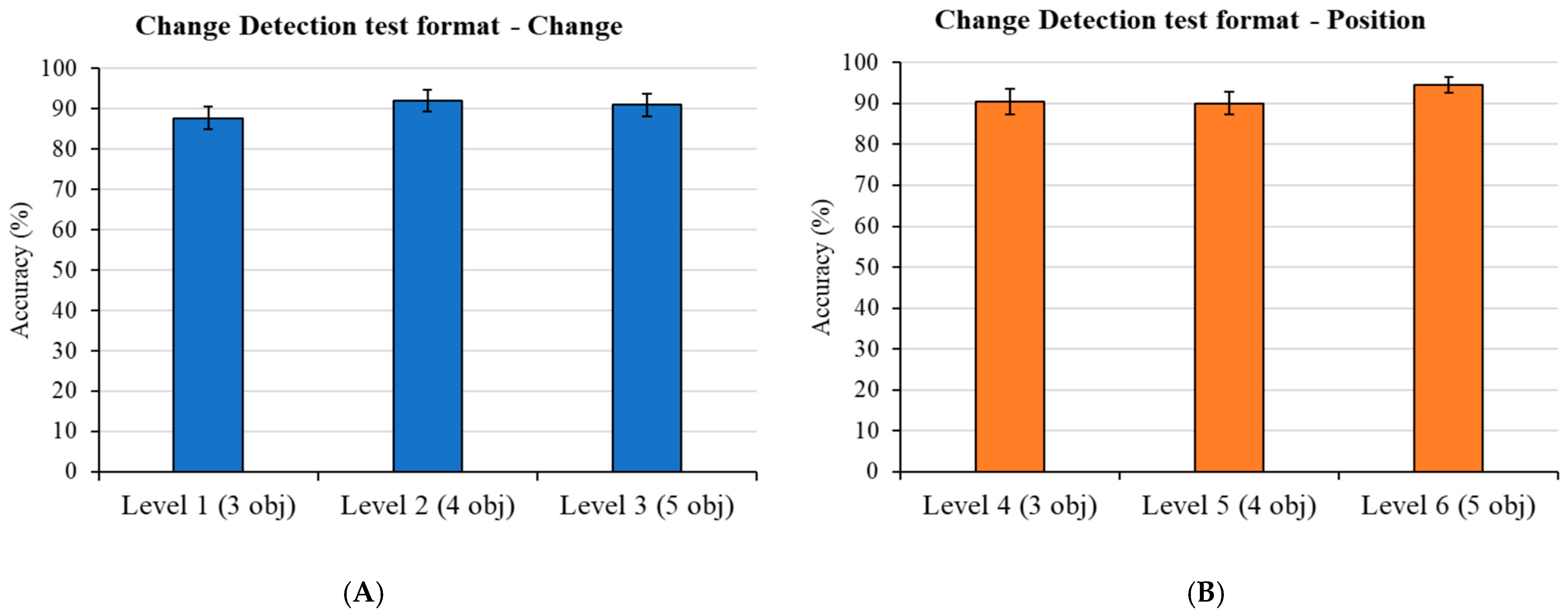
3.2.2. Virtual Object Location Memory Task
4. Discussion
4.1. Usability and Feasibility of the IVR Procedure
4.2. Participants’ Performance on IVR Tasks
4.3. Limitations
5. Conclusions
Supplementary Materials
Author Contributions
Funding
Institutional Review Board Statement
Informed Consent Statement
Data Availability Statement
Conflicts of Interest
References
- World Health Organization. WHO Clinical Consortium on Healthy Ageing 2023: Meeting Report; World Health Organization: Geneva, Switzerland, 2024. [Google Scholar]
- Lehrner, J.; Moser, D.; Klug, S.; Gleiß, A.; Auff, E.; Dal-Bianco, P.; Pusswald, G. Subjective memory complaints, depressive symptoms and cognition in patients attending a memory outpatient clinic. Int. Psychogeriatr. 2014, 26, 463–473. [Google Scholar] [CrossRef]
- Gaubert, F.; Borg, C.; Chainay, H. Decision-making in Alzheimer’s disease: The role of working memory and executive functions in the iowa gambling task and in tasks inspired by everyday situations. J. Alzheimer’s Dis. 2022, 90, 1793–1815. [Google Scholar] [CrossRef]
- Jarry, C.; Osiurak, F.; Baumard, J.; Lesourd, M.; Coiffard, C.; Lucas, C.; Merck, C.; Etcharry-Bouyx, F.; Chauviré, V.; Belliard, S.; et al. Daily life activities in patients with Alzheimer’s disease or semantic dementia: Multitasking assessment. Neuropsychologia 2021, 150, 107714. [Google Scholar] [CrossRef] [PubMed]
- Tieri, G.; Morone, G.; Paolucci, S.; Iosa, M. Virtual reality in cognitive and motor rehabilitation: Facts, fiction and fallacies. Expert Rev. Med. Devices 2018, 15, 107–117. [Google Scholar] [CrossRef] [PubMed]
- Zhao, Y.; Feng, H.; Wu, X.; Du, Y.; Yang, X.; Hu, M.; Ning, H.; Liao, L.; Chen, H.; Zhao, Y. Effectiveness of exergaming in improving cognitive and physical function in people with mild cognitive impairment or dementia: Systematic review. JMIR Serious Games 2020, 8, e16841. [Google Scholar] [CrossRef] [PubMed]
- Gibson, E.J. Principles of Perceptual Learning and Development; Appleton-Century-Crofts: New York, NY, USA, 1969. [Google Scholar]
- Sanchez-Vives, M.V.; Slater, M. From presence to consciousness through virtual reality. Nat. Rev. Neurosci. 2005, 6, 332–339. [Google Scholar] [CrossRef]
- Parsons, T.D.; Rizzo, A.A. Affective outcomes of virtual reality exposure therapy for anxiety and specific phobias: A meta-analysis. J. Behav. Ther. Exp. Psychiatry 2008, 39, 250–261. [Google Scholar] [CrossRef]
- Vecchiato, G.; Tieri, G.; Jelic, A.; De Matteis, F.; Maglione, A.G.; Babiloni, F. Electroencephalographic correlates of sensorimotor integration and embodiment during the appreciation of virtual architectural environments. Front. Psychol. 2015, 6, 1944. [Google Scholar] [CrossRef]
- Clay, F.; Howett, D.; FitzGerald, J.; Fletcher, P.; Chan, D.; Price, A. Use of immersive virtual reality in the assessment and treatment of Alzheimer’s disease: A systematic review. J. Alzheimer’s Dis. 2020, 75, 23–43. [Google Scholar] [CrossRef]
- Ren, Y.; Wang, Q.; Liu, H.; Wang, G.; Lu, A. Effects of immersive and non-immersive virtual reality-based rehabilitation training on cognition, motor function, and daily functioning in patients with mild cognitive impairment or dementia: A systematic review and meta-analysis. Clin. Rehabil. 2024, 38, 305–321. [Google Scholar] [CrossRef]
- Fiorenzato, E.; Zabberoni, S.; De Simone, M.S.; Costa, A.; Tieri, G.; Taglieri, S.; Peppe, A.; Carlesimo, G.A.; Caltagirone, C.; Antonini, A.; et al. Effects of virtual reality cognitive training on executive function and prospective memory in Parkinson’s disease and healthy aging. J. Neurol. Sci. 2025, 473, 123507. [Google Scholar] [CrossRef]
- De Simone, M.S.; Costa, A.; Tieri, G.; Taglieri, S.; Cona, G.; Fiorenzato, E.; Carlesimo, G.A.; Caltagirone, C.; Zabberoni, S. The effectiveness of an immersive virtual reality and telemedicine-based cognitive intervention on prospective memory in Parkinson’s disease patients with mild cognitive impairment and healthy aged individuals: Design and preliminary baseline results of a placebo-controlled study. Front. Psychol. 2023, 14, 1268337. [Google Scholar]
- Dockx, K.; Bekkers, E.M.; Van den Bergh, V.; Ginis, P.; Rochester, L.; Hausdorff, J.M.; Mirelman, A.; Nieuwboer, A. Virtual reality for rehabilitation in Parkinson’s disease. Cochrane Database Syst. Rev. 2016, 12, CD010760. [Google Scholar] [CrossRef] [PubMed]
- Tieri, G.; Iosa, M.; Fortini, A.; Aghilarre, F.; Gentili, F.; Rubeca, C.; Mastropietro, T.; Antonucci, G.; De Giorgi, R. Efficacy of a virtual reality rehabilitation protocol based on art therapy in patients with stroke: A single-blind randomized controlled trial. Brain Sci. 2024, 14, 863. [Google Scholar] [CrossRef]
- Ogourtsova, T.; Souza Silva, W.; Archambault, P.S.; Lamontagne, A. Virtual reality treatment and assessments for post-stroke unilateral spatial neglect: A systematic literature review. Neuropsychol. Rehabil. 2017, 27, 409–454. [Google Scholar] [CrossRef] [PubMed]
- Vásquez-Carrasco, E.; Gómez, C.S.; Valdés-Badilla, P.; Hernandez-Martinez, J.; Villagrán-Silva, F.; Aravena-Sagardia, P.; Sandoval, C.; Miralles, P.M. Effectiveness of combined cognitive stimulation and physical activity interventions on activities of daily living, cognitive function, and physical function in older people with mild cognitive impairment: A systematic review with meta-analysis. J. Clin. Med. 2025, 14, 2261. [Google Scholar] [CrossRef]
- Gulin, W.; Oziemblewska, M.; Zając-Lamparska, L. Use of Virtual Reality to Improve Spatial Orientation in Alzheimer’s Disease and Mild Cognitive Impairment: A Systematic Review. Curr. Alzheimer Res. 2025, 21, 804–816. [Google Scholar] [CrossRef]
- Son, C.; Park, J.H. Ecological effects of VR-based cognitive training on ADL and IADL in MCI and AD patients: A systematic review and meta-analysis. Int. J. Environ. Res. Public Health 2022, 19, 15875. [Google Scholar] [CrossRef]
- Jessen, F.; Amariglio, R.E.; Buckley, R.F.; van der Flier, W.M.; Han, Y.; Molinuevo, J.L.; Rabin, L.; Rentz, D.M.; Rodriguez-Gomez, O.; Saykin, A.J.; et al. The characterisation of subjective cognitive decline. Lancet Neurol. 2020, 19, 271–278. [Google Scholar] [CrossRef]
- Mitchell, A.J.; Beaumont, H.; Ferguson, D.; Yadegarfar, M.; Stubbs, B. Risk of dementia and mild cognitive impairment in older people with subjective memory complaints: Metaanalysis. Acta Psychiatr. Scand. 2014, 130, 439–451. [Google Scholar] [CrossRef]
- Hill, N.L.; Mogle, J.; Wion, R.; Munoz, E.; DePasquale, N.; Yevchak, A.M.; Parisi, J.M. Subjective cognitive impairment and affective symptoms: A systematic review. Gerontologist 2016, 56, e109–e127. [Google Scholar] [CrossRef]
- Arlati, S.; Di Santo, S.G.; Franchini, F.; Mondellini, M.; Filiputti, B.; Luchi, M.; Ratto, F.; Ferrigno, G.; Sacco, M.; Greci, L. Acceptance and usability of immersive virtual reality in older adults with objective and subjective cognitive decline. J. Alzheimer’s Dis. 2021, 80, 1025–1038. [Google Scholar] [CrossRef]
- Kang, J.M.; Kim, N.; Lee, S.Y.; Woo, S.K.; Park, G.; Yeon, B.K.; Park, J.W.; Youn, J.-H.; Ryu, S.-H.; Lee, J.-Y.; et al. Effect of cognitive training in fully immersive virtual reality on visuospatial function and frontal-occipital functional connectivity in predementia: Randomized controlled trial. J. Med. Internet Res. 2021, 23, e24526. [Google Scholar] [CrossRef] [PubMed]
- Maggio, M.G.; Maione, R.; Cotelli, M.; Bonasera, P.; Corallo, F.; Pistorino, G.; Luca, A.; Marra, A.; Quartarone, A.; Nicoletti, A.; et al. Cognitive rehabilitation using virtual reality in subjective cognitive decline and mild cognitive impairment: A systematic review. Front. Psychol. 2025, 16, 1641693. [Google Scholar] [CrossRef]
- De Simone, M.S.; Zabberoni, S.; Costa, A.; Tenaglia, E.; Tieri, G. The effects of an immersive virtual reality and telemedicine-based multicomponent intervention in individuals with subjective cognitive decline: Study protocol of a randomized controlled trial. Front. Psychol. 2025, 16, 1591239. [Google Scholar] [CrossRef]
- Diaz Baquero, A.A.; Dröes, R.M.; Perea Bartolome, M.V.; Irazoki, E.; Toribio-Guzman, J.M.; Franco-Martin, M.A.; van der Roest, H. Methodological designs applied in the development of computer-based maggiotraining programs for the cognitive rehabilitation in people with mild cognitive impairment (MCI) and mild dementia. Systematic review. J. Clin. Med. 2021, 10, 1222. [Google Scholar]
- Yang, C.; Moore, A.; Mpofu, E.; Dorstyn, D.; Li, Q.; Yin, C. Effectiveness of combined cognitive and physical interventions to enhance functioning in older adults with mild cognitive impairment: A systematic review of randomized controlled trials. Gerontologist 2020, 60, e633–e642. [Google Scholar] [CrossRef] [PubMed]
- De Simone, M.S.; Rodini, M.; De Tollis, M.; Fadda, L.; Caltagirone, C.; Carlesimo, G.A. The diagnostic usefulness of experimental memory tasks for detecting subjective cognitive decline: Preliminary results in an Italian sample. Neuropsychology 2023, 37, 636. [Google Scholar] [CrossRef] [PubMed]
- Gil-Gómez, J.A.; Manzano-Hernández, P.; Albiol-Pérez, S.; Aula-Valero, C.; Gil-Gómez, H.; Lozano-Quilis, J.A. USEQ: A short questionnaire for satisfaction evaluation of virtual rehabilitation systems. Sensors 2017, 17, 1589. [Google Scholar] [CrossRef]
- Hart, S.G.; Staveland, L.E. Development of NASA-TLX (Task Load Index): Results of empirical and theoretical research. Adv. Psychol. 1988, 52, 139–183. [Google Scholar]
- Laugwitz, B.; Held, T.; Schrepp, M. Construction and evaluation of a user experience questionnaire. In Symposium of the Austrian HCI and Usability Engineering Group; Springer: Berlin/Heidelberg, Germany, 2008; pp. 63–76. [Google Scholar]
- Kennedy, R.S.; Lane, N.E.; Berbaum, K.S.; Lilienthal, M.G. Simulator sickness questionnaire: An enhanced method for quantifying simulator sickness. Int. J. Aviat. Psychol. 1993, 3, 203–220. [Google Scholar] [CrossRef]
- Brooke, J. SUS-A quick and dirty usability scale. Usability Eval. Ind. 1996, 189, 4–7. [Google Scholar]
- Grier, R.A.; Bangor, A.; Kortum, P.; Peres, S.C. The system usability scale: Beyond standard usability testing. In Proceedings of the Human Factors and Ergonomics Society Annual Meeting, San Diego, CA, USA, 30 September–4 October 2013; SAGE Publications: Los Angeles, CA, USA, 2013; Volume 57, No. 1. pp. 187–191. [Google Scholar]
- Hart, S.G. NASA-task load index (NASA-TLX); 20 years later. In Proceedings of the Human Factors and Ergonomics Society Annual Meeting, San Diego, CA, USA, 16–20 October 2006; SAGE Publications: Los Angeles, CA, USA, 2006; Volume 50, No. 9. pp. 904–908. [Google Scholar]
- Shahid Anwar, M.; Wang, J.; Ahmad, S.; Ullah, A.; Khan, W.; Fei, Z. Evaluating the factors affecting QoE of 360-degree videos and cybersickness levels predictions in virtual reality. Electronics 2020, 9, 1530. [Google Scholar] [CrossRef]
- Kourtesis, P.; Korre, D.; Collina, S.; Doumas, L.A.; MacPherson, S.E. Guidelines for the development of immersive virtual reality software for cognitive neuroscience and neuropsychology: The development of virtual reality everyday assessment lab (VR-EAL), a neuropsychological test battery in immersive virtual reality. Front. Comput. Sci. 2020, 1, 12. [Google Scholar] [CrossRef]
- Giatzoglou, E.; Vorias, P.; Kemm, R.; Karayianni, I.; Nega, C.; Kourtesis, P. The Trail Making Test in Virtual Reality (TMT-VR): The Effects of Interaction Modes and Gaming Skills on Cognitive Performance of Young Adults. Appl. Sci. 2024, 14, 10010. [Google Scholar] [CrossRef]
- Richards, D.; Taylor, M. A Comparison of learning gains when using a 2D simulation tool versus a 3D virtual world: An experiment to find the right representation involving the Marginal Value Theorem. Comput. Educ. 2015, 86, 157–171. [Google Scholar] [CrossRef]
- Parong, J.; Mayer, R.E. Learning science in immersive virtual reality. J. Educ. Psychol. 2018, 110, 785. [Google Scholar] [CrossRef]
- Mondellini, M.; Arlati, S.; Pizzagalli, S.; Greci, L.; Sacco, M.; Ferrigno, G. Assessment of the usability of an immersive virtual supermarket for the cognitive rehabilitation of elderly patients: A pilot study on young adults. In Proceedings of the 2018 IEEE 6th International Conference On Serious Games And Applications for Health (SeGAH), Vienna, Austria, 16–18 May 2018; pp. 1–8. [Google Scholar]
- Moreno, R.; Mayer, R.E. Personalized messages that promote science learning in virtual environments. J. Educ. Psychol. 2004, 96, 165. [Google Scholar] [CrossRef]
- Sousa Santos, B.; Dias, P.; Pimentel, A.; Baggerman, J.W.; Ferreira, C.; Silva, S.; Madeira, J. Head-mounted display versus desktop for 3D navigation in virtual reality: A user study. Multimed. Tools Appl. 2009, 41, 161–181. [Google Scholar] [CrossRef]
- Plechatá, A.; Sahula, V.; Fayette, D.; Fajnerová, I. Age-related differences with immersive and non-immersive virtual reality in memory assessment. Front. Psychol. 2019, 10, 1330. [Google Scholar] [CrossRef]
- McCauley, M.E.; Sharkey, T.J. Cybersickness: Perception of self-motion in virtual environments. Presence Teleoperators Virtual Environ. 1992, 1, 311–318. [Google Scholar] [CrossRef]
- Taylor, L.C.; Harm, D.L.; Kennedy, R.S.; Reschke, M.F.; Loftin, R.B. Cybersickness following repeated exposure to DOME and HMD virtual environments. In Proceedings of the 3rd International Symposium on Visual Image Safety (No. JSC-CN-24282), Las Vegas, NV, USA, 22–23 September 2011. [Google Scholar]
- Marshev, V.; Bolloc’h, J.; Pallamin, N.; Cochener, B.; Nourrit, V. Impact of virtual reality headset use on eye blinking and lipid layer thickness. J. Fr. D’ophtalmologie 2021, 44, 1029–1037. [Google Scholar] [CrossRef] [PubMed]
- Biswas, N.; Mukherjee, A.; Bhattacharya, S. “Are you feeling sick?”—A systematic literature review of cybersickness in virtual reality. ACM Comput. Surv. 2024, 56, 1–38. [Google Scholar] [CrossRef]
- De Simone, M.S.; Perri, R.; Rodini, M.; Fadda, L.; De Tollis, M.; Caltagirone, C.; Carlesimo, G.A. A lack of practice effects on memory tasks predicts conversion to Alzheimer disease in patients with amnestic mild cognitive impairment. J. Geriatr. Psychiatry Neurol. 2021, 34, 582–593. [Google Scholar] [CrossRef] [PubMed]
- De Simone, M.S.; Perri, R.; Fadda, L.; Caltagirone, C.; Carlesimo, G.A. Predicting progression to Alzheimer’s disease in subjects with amnestic mild cognitive impairment using performance on recall and recognition tests. J. Neurol. 2019, 266, 102–111. [Google Scholar] [CrossRef]
- De Simone, M.S.; De Tollis, M.; Fadda, L.; Perri, R.; Caltagirone, C.; Carlesimo, G.A. Lost or unavailable? Exploring mechanisms that affect retrograde memory in mild cognitive impairment and Alzheimer’s disease patients. J. Neurol. 2020, 267, 113–124. [Google Scholar] [CrossRef]
Disclaimer/Publisher’s Note: The statements, opinions and data contained in all publications are solely those of the individual author(s) and contributor(s) and not of MDPI and/or the editor(s). MDPI and/or the editor(s) disclaim responsibility for any injury to people or property resulting from any ideas, methods, instructions or products referred to in the content. |
© 2025 by the authors. Licensee MDPI, Basel, Switzerland. This article is an open access article distributed under the terms and conditions of the Creative Commons Attribution (CC BY) license (https://creativecommons.org/licenses/by/4.0/).
Share and Cite
Tieri, G.; Costa, A.; Zabberoni, S.; Tenaglia, E.; De Simone, M.S. User Experience, System Usability, and Feasibility of Two Novel Immersive Virtual Reality Memory Tasks for Cognitive Training: A Pilot Study. Brain Sci. 2025, 15, 1289. https://doi.org/10.3390/brainsci15121289
Tieri G, Costa A, Zabberoni S, Tenaglia E, De Simone MS. User Experience, System Usability, and Feasibility of Two Novel Immersive Virtual Reality Memory Tasks for Cognitive Training: A Pilot Study. Brain Sciences. 2025; 15(12):1289. https://doi.org/10.3390/brainsci15121289
Chicago/Turabian StyleTieri, Gaetano, Alberto Costa, Silvia Zabberoni, Erika Tenaglia, and Maria Stefania De Simone. 2025. "User Experience, System Usability, and Feasibility of Two Novel Immersive Virtual Reality Memory Tasks for Cognitive Training: A Pilot Study" Brain Sciences 15, no. 12: 1289. https://doi.org/10.3390/brainsci15121289
APA StyleTieri, G., Costa, A., Zabberoni, S., Tenaglia, E., & De Simone, M. S. (2025). User Experience, System Usability, and Feasibility of Two Novel Immersive Virtual Reality Memory Tasks for Cognitive Training: A Pilot Study. Brain Sciences, 15(12), 1289. https://doi.org/10.3390/brainsci15121289