Numerical Simulation Analysis of Elbow Erosion in Underground Gas Storage Process System


Abstract
1. Introduction
2. Materials and Methods
2.1. Basic Parameters
2.2. Underlying Assumptions
- (1)
- It is assumed that the gas phase under study is a compressible fluid, that all fluids are constant flows, and that fluid properties are constants (parameters such as thermal conductivity, thermal fusion, and density). At the same time, the fluid in the pipe satisfies conservation of mass and conservation of momentum.
- (2)
- Considering the actual fluid velocity and pipe structure, the RNG k-ε two-equation turbulence model used in non-isothermal conditions is selected for the flow field calculation, where k is the turbulent pulsation kinetic energy per unit mass of fluid and ε is its dissipation rate. The detailed equations can be seen elsewhere [15].
- (3)
- The particles are assumed to be spherical. The particle inlet cross-section uses a surface jet source, i.e., the particle distribution in the inlet cross-section is determined by the sparseness of the inlet cross-section grid. The particle distribution in the inlet cross-section is more uniform.
- (4)
- In order to reduce the computational volume and processing difficulty, it is assumed that the particles are not broken, deformed or cracked after collision.
- (5)
- In order to simplify the problem and reduce the difficulty of calculation, it is assumed that there is no deformation of the wall of the elbow after collision and abrasion, and the wall material meets the uniformity assumption.
2.3. Erosion Rate Equation
2.4. 3D Modeling
2.5. Grid Division
2.6. Parameter Setting and Boundary Condition Loading
3. Results
3.1. Gas Injection System
3.2. Gas Production System
3.3. Wastewater Treatment System
4. Conclusions
- (1)
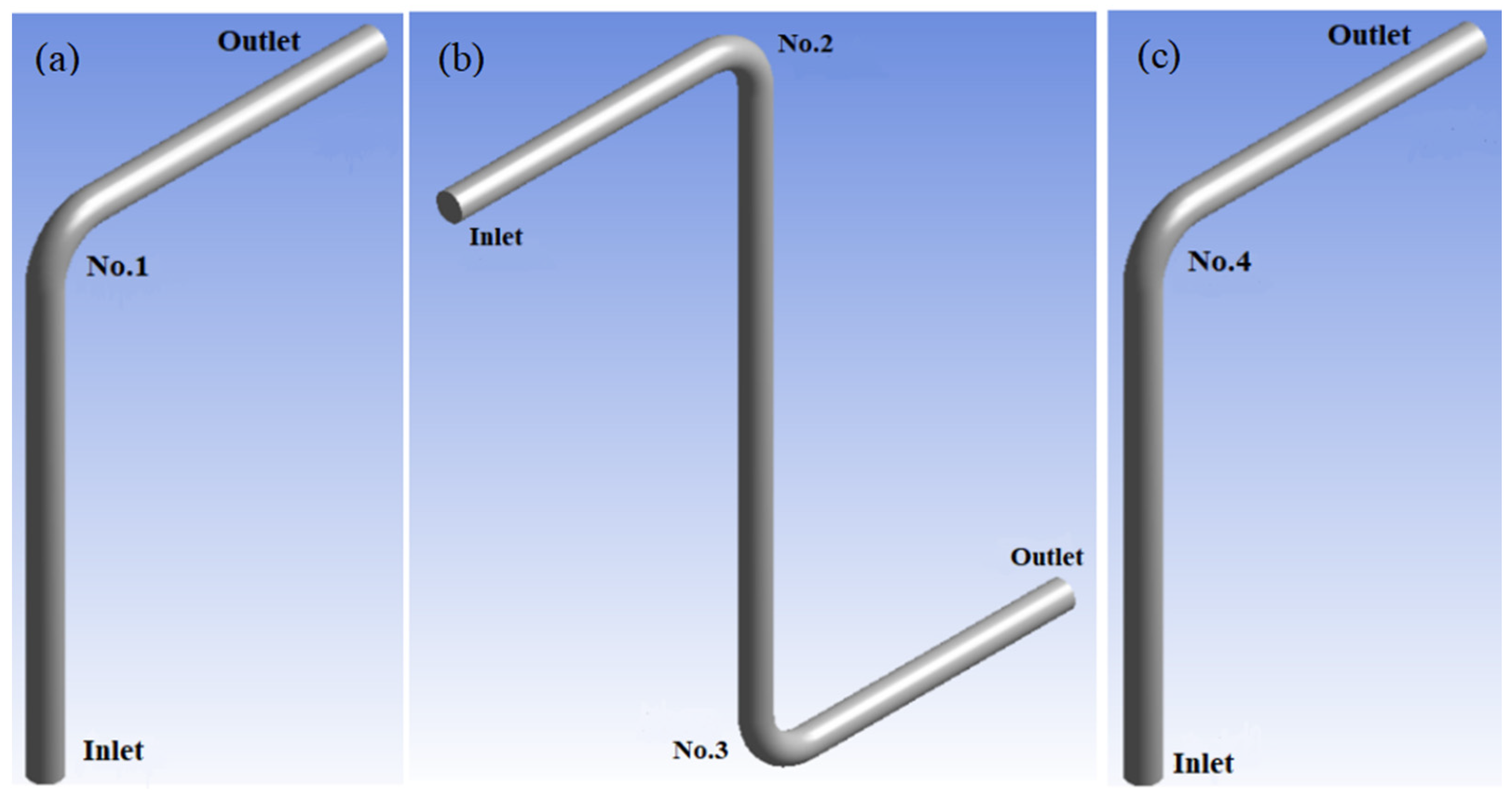
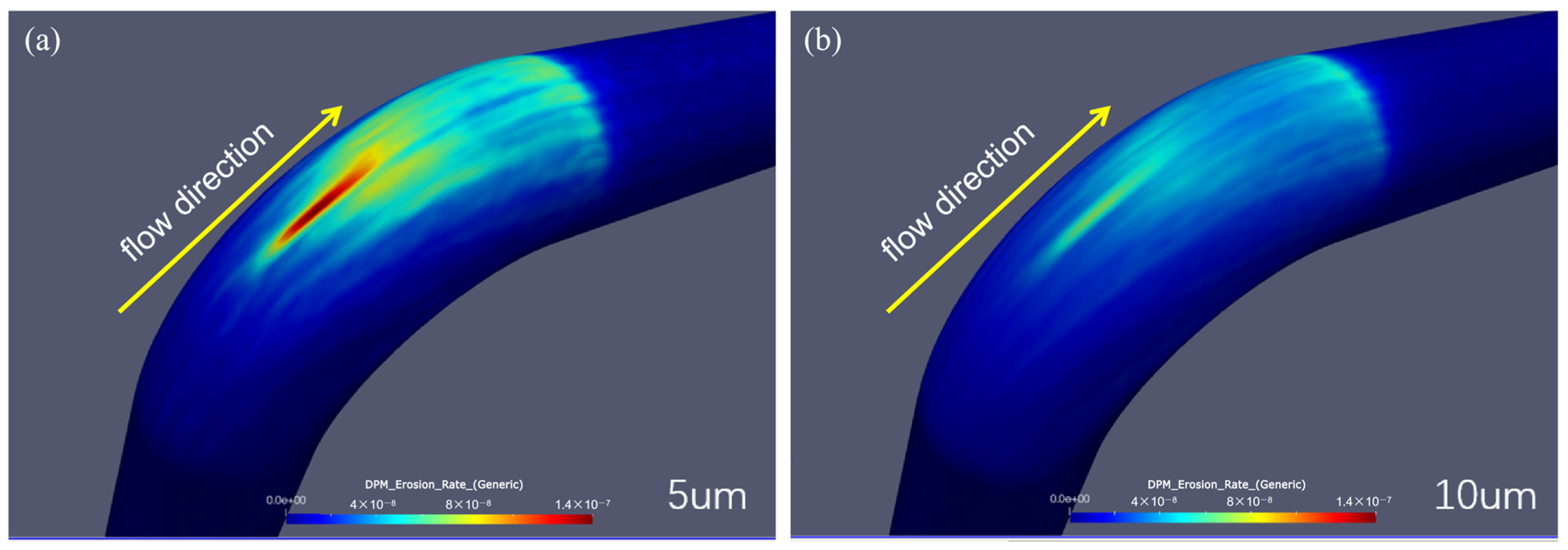
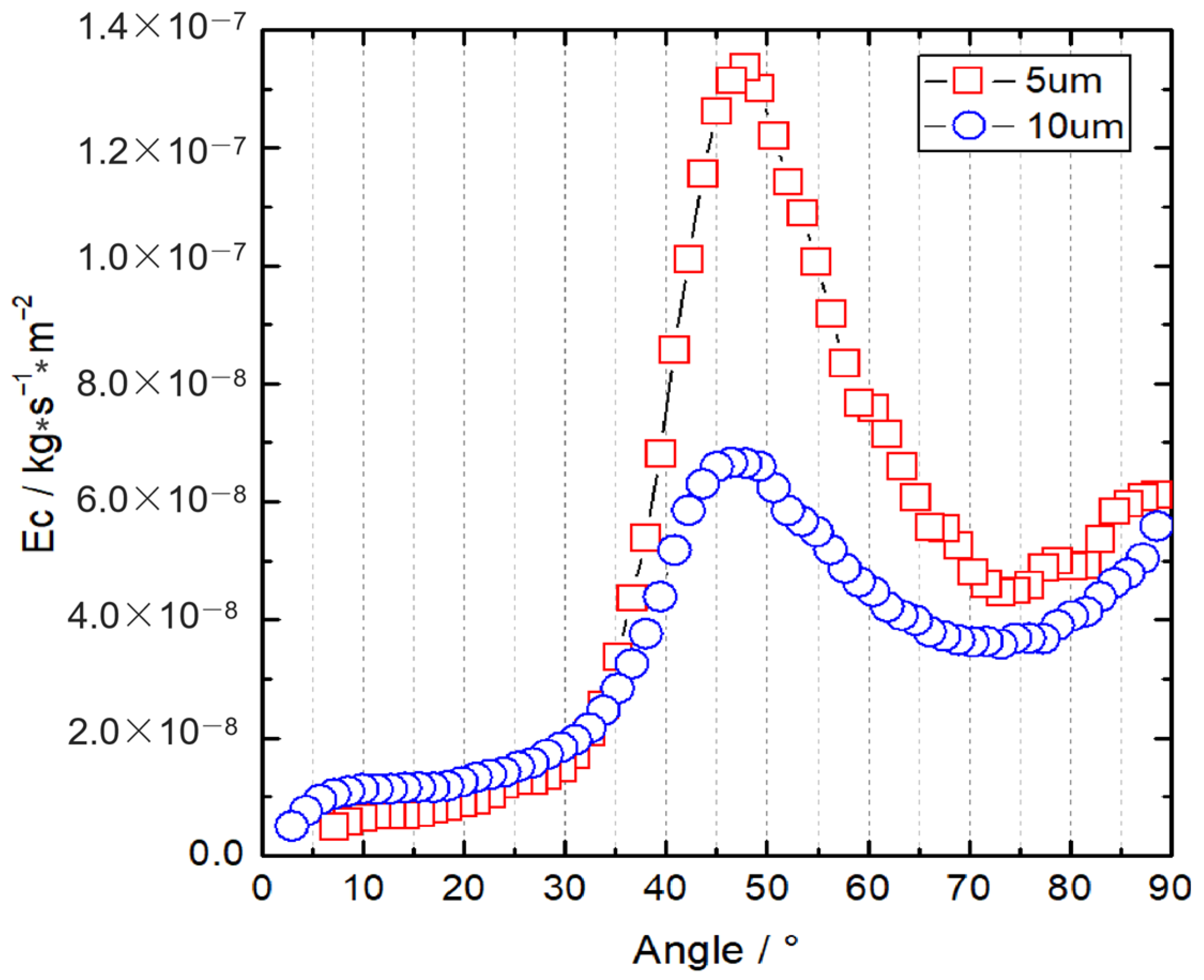
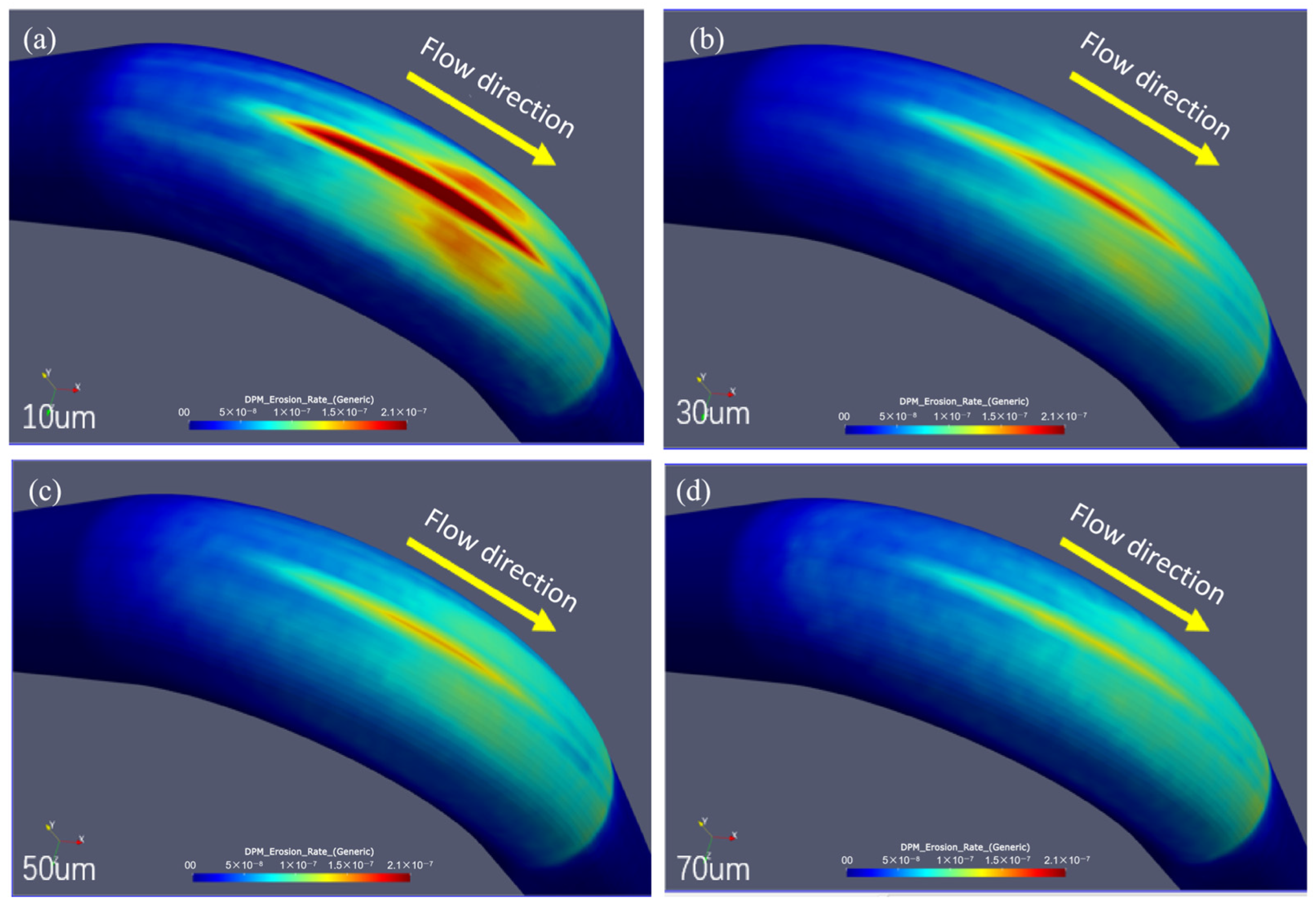
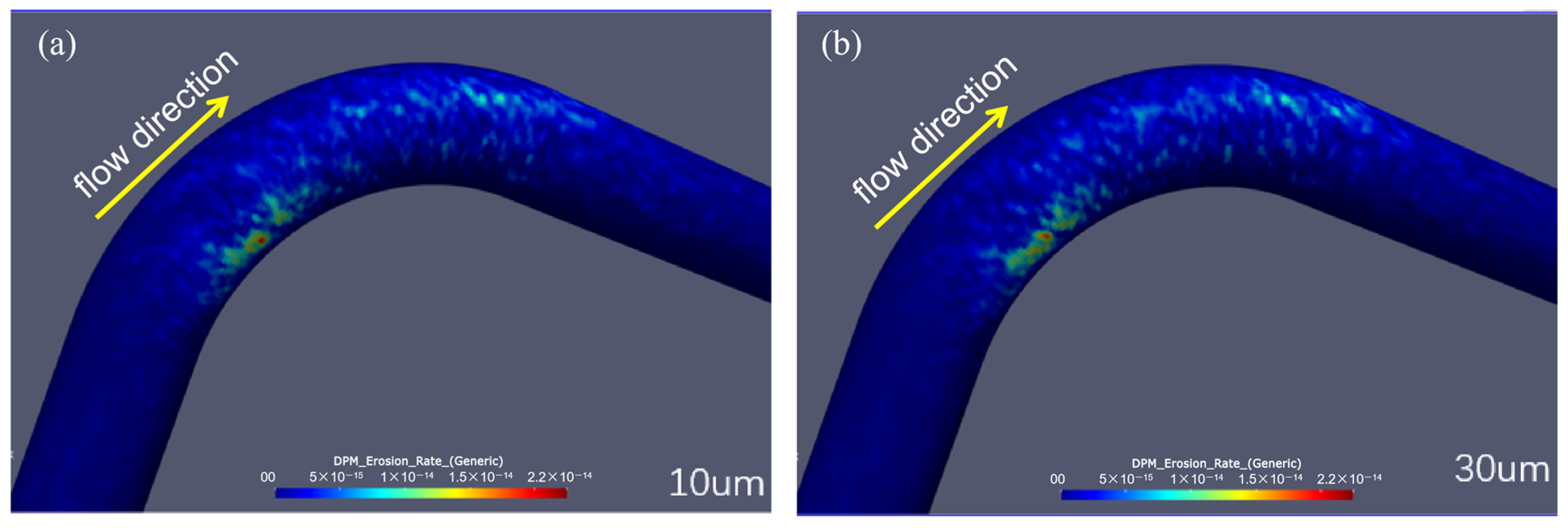
- The elbow in the gas injection system is in a gas–solid two-phase flow state. The most severely eroded area is on the outer arc side of the elbow, presenting a “rocket launching” shape. The erosion rate of 5 μm particles is much higher than that of 10 μm particles, and the most severely eroded position is in the 45–50° range on the outer arc side. Smaller particles are more easily entrained by the fluid, are more affected by secondary flow, and collide more fully with the wall, resulting in more severe erosion.
- (2)
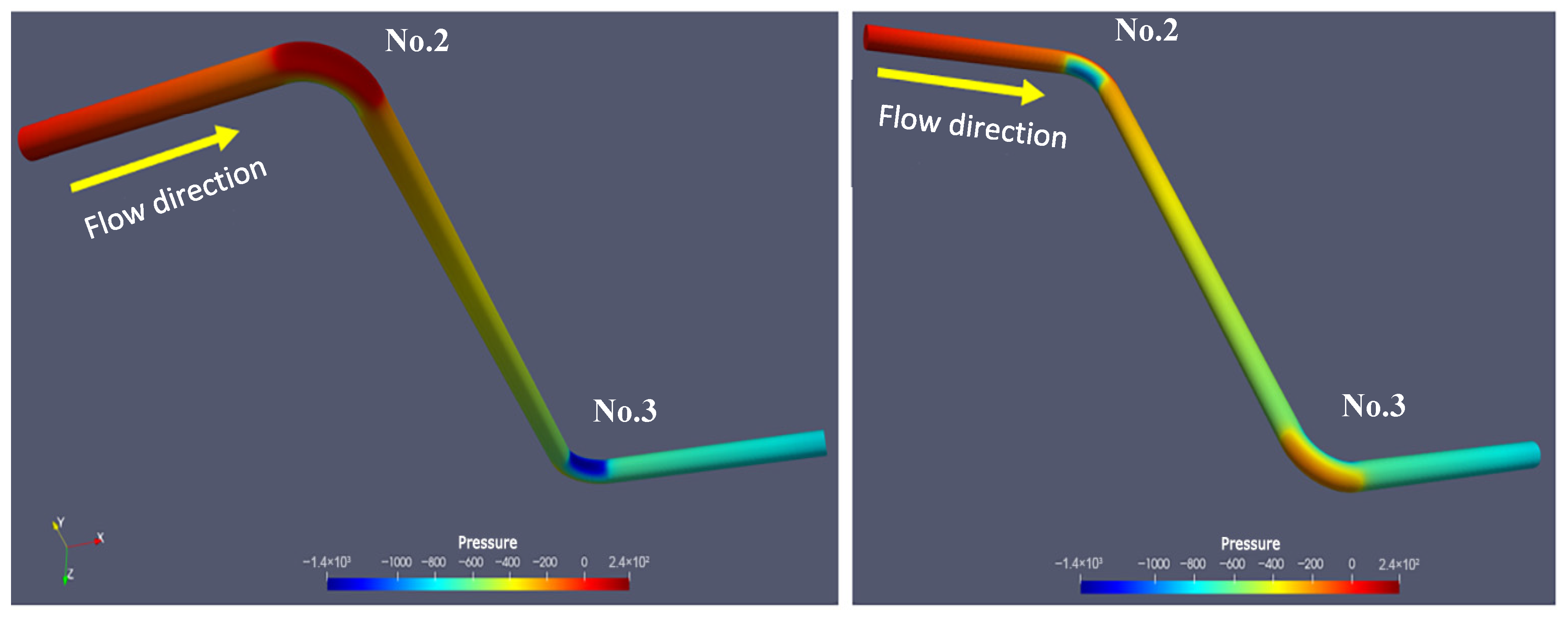
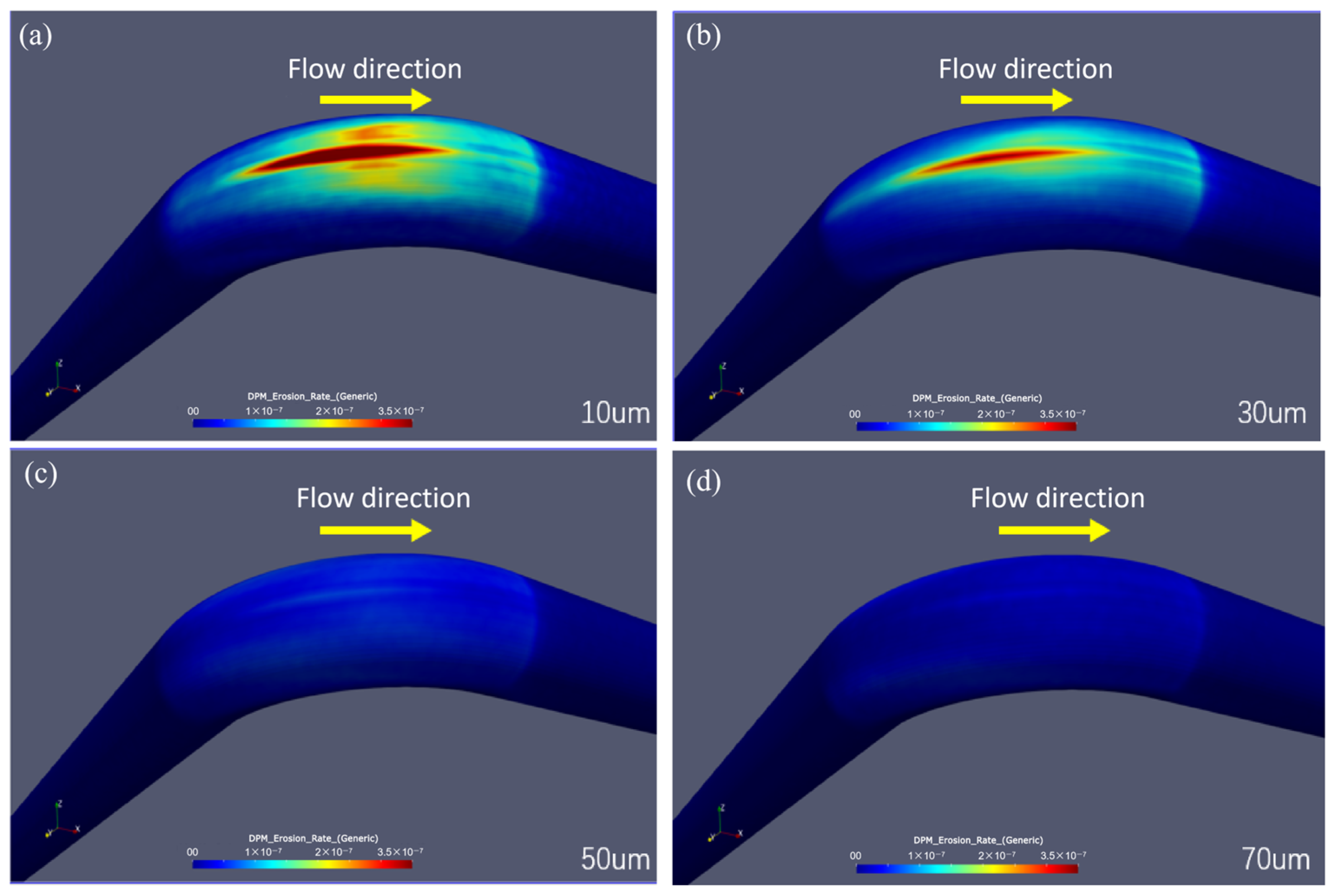
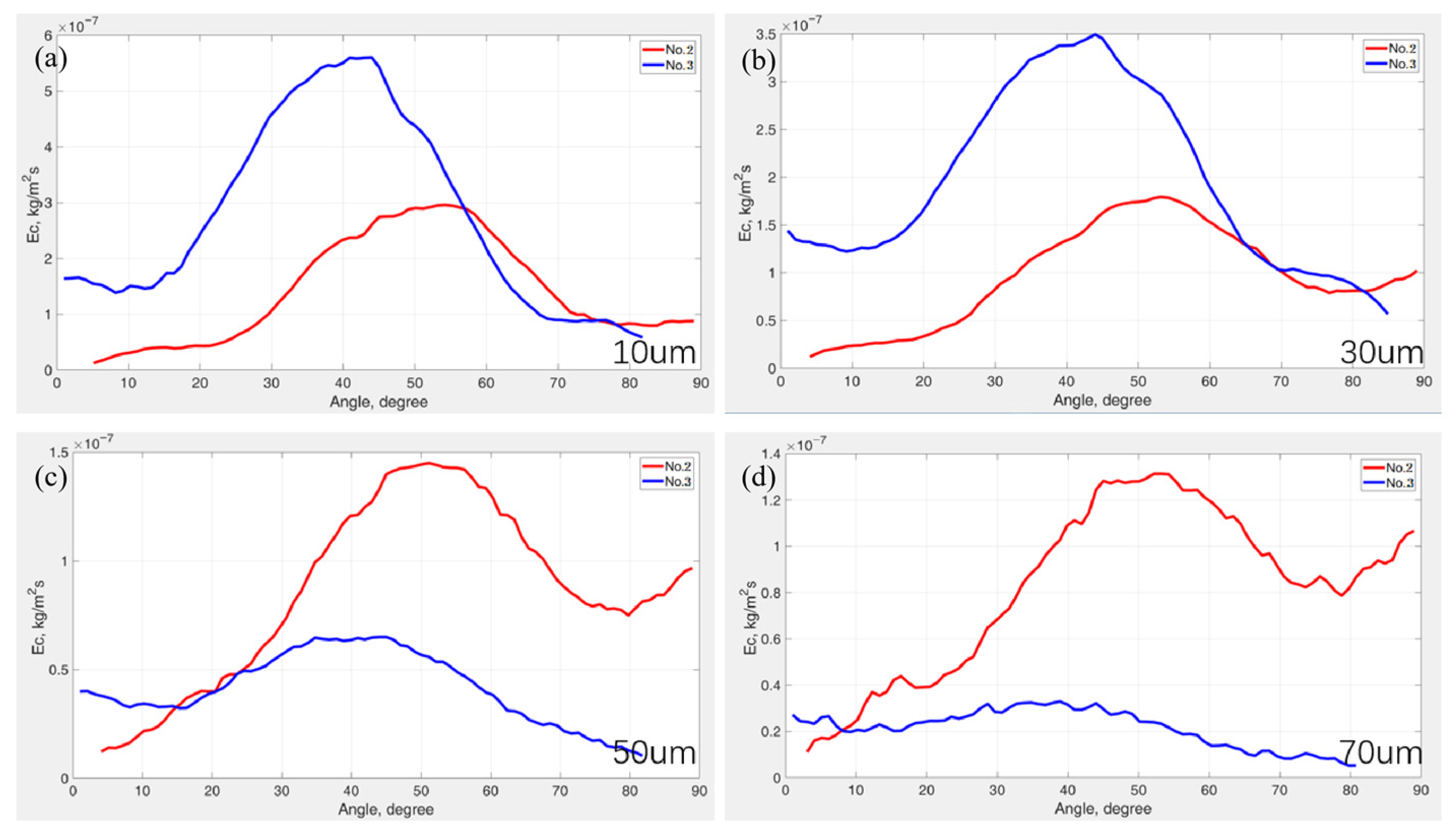
- The tandem elbows in the gas production system have a high-pressure zone on the outer side and a low-pressure zone on the inner side, which is caused by centrifugal force and secondary flow. As the particle size increases, the erosion rate of both elbows decreases, and the decrease amplitude of the second elbow is larger. The flow fields of the tandem elbows interact with each other and, the most severely eroded position of the first elbow is in the 50–55° range on the outer arc side, while that of the second one is in the 40–45° range.
- (3)
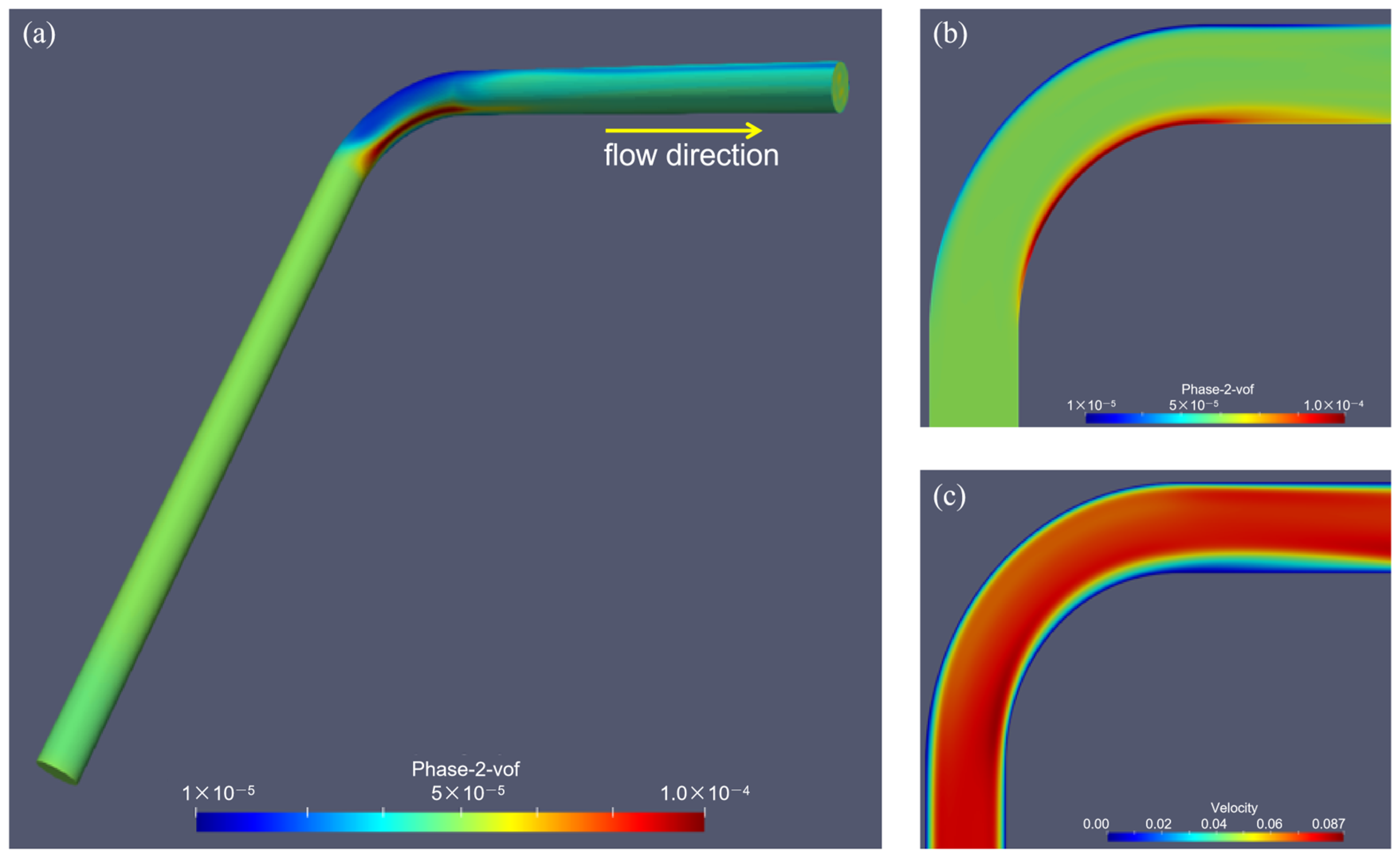
- The erosion hazard of the elbow in wastewater treatment system is relatively small, and the erosion distribution is symmetrical. A small amount of natural gas will accumulate on the inner side of the elbow, which easily causes cavitation corrosion.
- (4)
- It is recommended to thicken the outer arc side of the elbows in the gas injection and production systems, and the inner arc side of the elbows in the wastewater treatment system. Meanwhile, the fluid flow rate should be appropriately optimized and the purification effect of solid particles in the fluid enhanced to reduce the impact force on the elbows. In addition, regular wall thickness detection or real-time monitoring should be conducted on the outer arc side of the elbows in the gas injection and production systems, as well as on the inner arc side of the elbows in the wastewater treatment system.
Author Contributions
Funding
Institutional Review Board Statement
Informed Consent Statement
Data Availability Statement
Acknowledgments
Conflicts of Interest
References
- Jiang, T.; Wang, Z.; Wang, J. Integrated construction technology for natural gas gravity drive and underground gas storage. Pet. Explor. Dev. 2021, 48, 1227–1236. [Google Scholar] [CrossRef]
- Zhang, J.; Tan, Y.; Zhang, T.; Yu, K.; Wang, X.; Zhao, Q. Natural gas market and underground gas storage development in China. J. Energy Storage 2020, 29, 101338. [Google Scholar] [CrossRef]
- Tooseh, E.K.; Jafari, A.; Teymouri, A. Gas-water-rock interactions and factors affecting gas storage capacity during natural gas storage in a low permeability aquifer. Pet. Explor. Dev. 2018, 45, 1123–1128. [Google Scholar] [CrossRef]
- Tang, L.; Zhu, W.; Zhu, H.; Wang, Y.; Jiang, H.; Peng, P.; Li, D.; Wang, J.; Li, C.; Yang, Y.; et al. Monitoring well pattern deployment in China gas storage and its initial success rate. J. Energy Storage 2020, 32, 101950. [Google Scholar] [CrossRef]
- Chen, Z.; Xu, M.; Hu, T.; Xue, G.; Chen, F.; Zhao, H.; Zhou, H.; Lei, Y.; Zhu, K. Effects of H2S content on the corrosion behavior of gas storage reservoir injection and production pipeline steel in CO2-H2S environment. Mater. Today Commun. 2024, 41, 110364. [Google Scholar] [CrossRef]
- Yang, Y.; He, M.; Yu, P.; Kan, C.; Wang, X.; Yu, X.; Chen, X.; Tao, S.; Zhao, C.; Duan, J.; et al. Investigation on critical erosion of gas production channel for sand carrying during injection and production process in gas storage. Geoenergy Sci. Eng. 2024, 239, 212945. [Google Scholar] [CrossRef]
- Wang, Y.; Zhang, J. An optimized calculation method of critical erosion flow rates of UGS injection/production wells. Nat. Gas Ind. B 2020, 7, 262–268. [Google Scholar] [CrossRef]
- Deng, F.; Liu, Z.; Li, G.; Wen, L. Study on the mechanism of gravel layer blockage in sand control for natural gas hydrate reservoirs. Powder Technol. 2025, 452, 120523. [Google Scholar] [CrossRef]
- Liu, S. A new evaluation method for sand control performance of slotted screen. Geoenergy Sci. Eng. 2024, 243, 213368. [Google Scholar] [CrossRef]
- Zhang, Q.; Chen, D.; Ding, L.; Zhou, L.; Wang, Y.; Wang, K. Study on failure analysis and erosion wear of four-way cross in high-pressure gas well test process. Eng. Fail. Anal. 2025, 167, 109053. [Google Scholar] [CrossRef]
- Yasser, E.; Zhou, L.; El-Emam, M.A. CFD–DEM analysis of erosion in 90° elbow pipe induced by different particle shapes. Powder Technol. 2025, 466, 121453. [Google Scholar] [CrossRef]
- Adedeji, O.E.; Duarte, C.A.R. Prediction of thickness loss in a standard 90° elbow using erosion-coupled dynamic mesh. Wear 2020, 460–461, 203400. [Google Scholar] [CrossRef]
- Khan, R.; Mourad, A.-H.I.; Seikh, A.H.; Petru, J.; Hamdan, H.Y. Erosion impact on mild steel elbow pipeline for different orientations under liquid-gas-sand annular flow. Eng. Fail. Anal. 2023, 153, 107565. [Google Scholar] [CrossRef]
- Drescher, E.; Mohseni-Mofidi, S.; Bierwisch, C.; Kruggel-Emden, H. A numerical assessment of different geometries for reducing elbow erosion during pneumatic conveying. Powder Technol. 2025, 449, 120357. [Google Scholar] [CrossRef]
- Sedrez, T.A.; Shirazi, S.A.; Rajkumar, Y.R.; Sambath, K.; Subramani, H.J. Experiments and CFD simulations of erosion of a 90° elbow in liquid-dominated liquid-solid and dispersed-bubble-solid flows. Wear 2019, 426–427, 570–580. [Google Scholar] [CrossRef]
- Zhang, Y.; Reuterfors, E.P.; McLaury, B.S.; Shirazi, S.; Rybicki, E. Comparison of computed and measured particle velocities and erosion in water and air flows. Wear 2007, 263, 330–338. [Google Scholar] [CrossRef]
- Grant, G.; Tabakoff, W. Erosion prediction in turbomachinery resulting from environmental solid particles. J. Aircr. 1975, 12, 471–478. [Google Scholar] [CrossRef]
- Lin, N.; Lan, H.; Xu, Y.; Dong, S.; Barber, G. Effect of the gas–solid two-phase flow velocity on elbow erosion. J. Nat. Gas Sci. Eng. 2015, 26, 581–586. [Google Scholar] [CrossRef]
- Chen, H.; Wang, S.; Chen, Y.; Jiang, X.; Ding, N.; Shao, B.; Wang, X. Simulation study on gas-liquid-solid multiphase flow characteristics and erosion mechanism in a natural gas bend. Particuology 2026, 108, 143–155. [Google Scholar] [CrossRef]
- Hu, J.; Zhang, L.; Ma, A.; Mao, P.; Zheng, Y. Effect of cavitation intensity on the cavitation erosion behavior of 316L stainless steel in 3.5 wt.% NaCl solution. Metals 2022, 12, 198. [Google Scholar] [CrossRef]



| Elbow Types | Material | Specifications (External Diameter/Wall Thickness, mm) | Temperature (°C) | Pressure (MPa) | Gas Phase Flow Rate (×104 Nm3/d) | Liquid Phase Flow Rate (Nm3/d) |
|---|---|---|---|---|---|---|
| Gas injection | L245N | ϕ168/18.3 90° elbow | 25 | 22 | 120 | 0 |
| Gas production | 16Mn | ϕ273/30 90° elbow | 40 | 12 | 80 | 7.2 |
| Wastewater treatment | 20# | ϕ60/5 90° elbow | 20 | 1 | 0 | 10 |
Disclaimer/Publisher’s Note: The statements, opinions and data contained in all publications are solely those of the individual author(s) and contributor(s) and not of MDPI and/or the editor(s). MDPI and/or the editor(s) disclaim responsibility for any injury to people or property resulting from any ideas, methods, instructions or products referred to in the content. |
© 2026 by the authors. Licensee MDPI, Basel, Switzerland. This article is an open access article distributed under the terms and conditions of the Creative Commons Attribution (CC BY) license.
Share and Cite
Song, C.; Li, W.; Wang, J.; Li, L.; Liu, X. Numerical Simulation Analysis of Elbow Erosion in Underground Gas Storage Process System. Appl. Sci. 2026, 16, 3593. https://doi.org/10.3390/app16073593
Song C, Li W, Wang J, Li L, Liu X. Numerical Simulation Analysis of Elbow Erosion in Underground Gas Storage Process System. Applied Sciences. 2026; 16(7):3593. https://doi.org/10.3390/app16073593
Chicago/Turabian StyleSong, Chengli, Wei Li, Jin Wang, Lifeng Li, and Xinbao Liu. 2026. "Numerical Simulation Analysis of Elbow Erosion in Underground Gas Storage Process System" Applied Sciences 16, no. 7: 3593. https://doi.org/10.3390/app16073593
APA StyleSong, C., Li, W., Wang, J., Li, L., & Liu, X. (2026). Numerical Simulation Analysis of Elbow Erosion in Underground Gas Storage Process System. Applied Sciences, 16(7), 3593. https://doi.org/10.3390/app16073593