


Abstract
3D Gaussian splatting (3DGS) has recently emerged as an efficient and scalable method for high-fidelity 3D scene reconstruction, representation, and real-time rendering. In addition to geometric reconstruction, increasing research attention focuses on enriching 3D Gaussian primitives with semantic information, which can be related to an arbitrary application or domain, as well as common knowledge. However, the existing approaches to semantic 3DGS significantly differ in how semantics are represented, learned, and accessed, which makes systematic analysis difficult. This paper provides a review on semantic extensions to 3DGS. We introduce a unified multi-axis taxonomy that enables us to classify the available methods in terms of five complementary categories: semantic vocabulary space, representation form, functional role, knowledge source, and query mechanism. The analysis reveals key design trade-offs related to the flexibility, efficiency, and semantic expressiveness of the methods. Furthermore, we review datasets, benchmarks, and evaluation metrics used in the field, indicating the diversity of approaches and the lack of common evaluation frameworks. Based on this analysis, we also identify open challenges and possible future research directions. The presented survey is relevant to advances in games and immersive technologies, where semantically enriched real-time 3D representations are essential for interactive environments, AR/VR, and intelligent scene understanding. The systematic analysis presented in this survey aims to facilitate a deeper understanding of semantic 3DGS and support the development of more general, efficient, and task-aware 3D scene understanding systems.
1. Introduction
Recent advances in 3D scene representation have significantly improved the reconstruction and rendering of complex scenes from multi-view observations. Neural radiance fields (NeRFs) [1] have introduced implicit neural representations that model scenes as continuous functions. Subsequent extensions, such as Mip-NeRF [2] and deformable radiance fields, e.g., Nerfies [3], have further improved rendering quality and enabled modeling of dynamic scenes. In parallel, alternative methods, such as Plenoxels [4] and Instant Neural Graphics Primitives (Instant-NGP) [5], have addressed explicit and hybrid representations reducing computational costs and maintaining visual fidelity.
Among these developments, 3D Gaussian splatting (3DGS) [6] has emerged as a particularly effective approach to 3D content representation. Unlike implicit neural representations, 3DGS represents scenes explicitly as collections of anisotropic Gaussian primitives. It enables efficient rasterization-based rendering with real-time performance. 3DGS enables high visual quality with direct access to scene elements, which is especially important to interactive applications. Practical pipelines for creating 3DGS often rely on multi-view reconstruction methods, such as structure-from-motion [7], which estimate camera poses and initialize geometry.
Beyond geometry and appearance, recent works have focused on extending 3DGS representations with semantics, which is the meaning of 3D scenes, objects, and their elements described with common, application- or domain-specific concepts (classes and properties). To a large extent, it has been enabled by the advances in 2D semantic perception, such as convolutional networks [8] and instance segmentation methods, e.g., Mask R-CNN [9], which permit extraction of semantic cues from images. More recently, foundation models, e.g., Segment Anything [10], and self-supervised visual representations, e.g., DINO [11], have provided scalable sources of dense and transferable semantic features.
These works have motivated research on semantic 3D Gaussian splatting. The methods in this category apply semantic features, annotations, or language-aligned embeddings to Gaussian primitives. It enables semantic segmentation, open-vocabulary retrieval, and instance-level reasoning. Open-vocabulary approaches, inspired by multimodal 3D representations, e.g., ConceptFusion [12], and language-aware radiance fields, e.g., LERF [13], further allow flexible text-based interaction with 3D scenes.
Despite rapid progress, the domain of semantic 3D Gaussian representations remains diverse and fragmented. The methods differ in the type of used semantic vocabulary, how semantics is encoded, how it influences learning and inference, and how it is available through queries. This diversity makes systematic comparison and analysis challenging.
In this paper, we provide a survey of semantic extensions to 3DGS and introduce a unified multi-axis taxonomy to classify the available methods. The proposed taxonomy captures five key dimensions: semantic vocabulary space, representation form, functional role, knowledge source, and query mechanism. The taxonomy enables systematic comparison and highlights fundamental trade-offs across different approaches.
In addition, we have reviewed datasets, benchmarks, and evaluation protocols used in the methods. We have also identified key challenges related to scalability, robustness, and semantic consistency.
The integration of semantics into 3DGS has applications in various domains. In medicine, semantic representations can facilitate identification and localization of anatomical structures, surgical instruments, and clinically relevant regions in 3D imaging environments [14,15]. In robotics and autonomous systems, semantic 3D scene representations support object recognition, navigation, manipulation, and task planning [16,17,18]. In land surveying, urban modeling, and geographic information systems, semantics enables classification of buildings, roads, vegetation, and infrastructure within reconstructed environments [19,20]. In architecture, engineering, and construction, semantic 3DGS can support digital twins, facility management, and design review by associating scene elements with meaningful object categories and metadata [20,21]. Furthermore, in games, virtual reality, and augmented reality, semantic scene understanding enables intelligent interaction, object-based editing, natural-language querying, and adaptive user experiences [22,23,24,25]. These examples illustrate how semantic 3DGS extends 3D reconstruction from visual representation toward knowledge-driven understanding and interaction.
The remainder of this paper is structured as follows. Section 2 introduces the foundations of 3DGS—its representation, rendering, and optimization principles. Section 3 presents the proposed multi-axis taxonomy for semantic 3DGS. Section 4 reviews the available methods in terms of the taxonomy. Section 5 discusses the main trade-offs apparent in the literature. Section 6 summarizes datasets, benchmarks, and evaluation protocols used in the field. Section 7 outlines key open challenges and research directions. Finally, Section 8 concludes the paper.
2. Foundations of 3D Gaussian Splatting
3DGS has recently emerged as an efficient and scalable approach to representing and rendering 3D content [6] for various domains, applications, and use cases, including outdoor as well as indoor scenes, scanned models as well as synthetic content, e.g., Figure 1. Unlike traditional mesh-based 3D content representations or implicit neural fields such as NeRF [1], 3DGS models a scene or an object as a collection of anisotropic Gaussian primitives that jointly encode geometry, appearance, and view-dependent effects. Such representation enables high-quality real-time rendering while maintaining flexibility for optimization and integration with semantics of the scene objects.
Figure 1.
Examples of 3D Gaussian splatting for outdoor (a,b) and indoor (c) representation. 3D models licensed under CC BY 4.0 (https://creativecommons.org/licenses/by/4.0/). (a) “Hotel Old mill” by bemute (https://superspl.at/user?id=yabemute), source: https://superspl.at/scene/d27352df (accessed on 17 August 2026). (b) “Preikestolen, Norway (Ver 2)” by Mykhailo Moroz (https://superspl.at/user?id=misha_m), source: https://superspl.at/scene/49ded1cd (accessed on 17 August 2026). (c) “Reading Room (No Lidar, Only Photos)” by Ethan (https://superspl.at/user?id=ethan3111), source: https://superspl.at/scene/9d370db9 (accessed on 17 August 2026).
2.1. Gaussian-Based Scene Representation
In 3DGS, a scene is represented as a set of 3D Gaussian primitives, each described by a mean position, covariance matrix, color attributes, and opacity [6]. In addition to position, covariance, and opacity, each Gaussian primitive stores appearance information using spherical harmonic coefficients. Spherical harmonics are mathematical basis functions defined on a sphere that enable a compact representation of view-dependent color. During rendering, the color of a Gaussian can vary as a function of the viewing direction through its associated SH coefficients. This allows 3DGS to model view-dependent appearance without relying on an additional neural network for color prediction. Semantic extensions of 3DGS can preserve this appearance representation while augmenting Gaussian primitives with additional semantic attributes, such as class labels, semantic feature vectors, or other learned representations for semantic understanding and querying.
The Gaussian formulation allows each primitive to occupy a spatial region, providing a continuous approximation of scene geometry and appearance. The covariance matrix determines the space and orientation of each Gaussian, enabling anisotropic shapes that adapt to individual scene structures.
The flexibility of 3DGS has motivated a number of extensions to the original formulation beyond static scene reconstruction. Recent works have demonstrated Gaussian-based representations for dynamic scenes, such as 4D Gaussian splatting, which incorporates temporal deformation of Gaussian primitives, as well as large-scale and hierarchical representations, e.g., [26,27]. Furthermore, Gaussian-based representations have been successfully applied to human and avatar reconstruction, e.g., [28,29]. These works demonstrate that the Gaussian-based paradigm has evolved into a broader class of 3D scene representations extending well beyond the original approach to static rendering.
2.2. Differentiable Rendering
Rendering in 3DGS is performed using a rasterization-based process, referred to as splatting [6]. Gaussian primitives are projected onto an image plane and accumulated using alpha compositing based on their depth ordering and opacity. The rendering process remains differentiable, which enables gradient-based optimization of Gaussian parameters.
Compared to volumetric rendering methods used in NeRF [1], splatting avoids dense ray marching and leverages GPU rasterization pipelines. This results in significantly improved performance and enables real-time or near real-time rendering, e.g., [26,27]. This performance gain is in line with broader trends in neural scene representations, including such methods as Instant Neural Graphics Primitives (Instant-NGP) [5] and KiloNeRF [30], which aim to reduce computational effort while maintaining rendering quality.
2.3. Optimization and Reconstruction Pipeline
The construction of a 3DGS model typically begins from a set of calibrated multi-view images. Camera poses and initial geometry are commonly estimated using structure-from-motion (SfM) methods, such as COLMAP [7]. These outputs provide sparse point clouds that can be converted into Gaussian primitives. In semantic 3DGS methods, the estimated camera poses and reconstructed geometry also provide the geometric basis for associating semantic information extracted from the input images with the 3D representation. In particular, pixel-level semantic information, such as segmentation masks or feature maps, can be projected onto 3D Gaussian primitives based on their correspondence to the input images [16,18,31]. Accurate camera poses and geometric reconstruction are therefore important for establishing consistent associations between 2D semantic information and the corresponding Gaussian primitives across multiple views.
Parameters of a Gaussian primitive are optimized while training by minimizing the discrepancy between the rendered images and ground-truth observations [6]. This process involves updating the Gaussian positions, covariance matrices, colors, and opacities, as well as adaptive operations such as Gaussian splitting and pruning, to refine the 3D representation. These mechanisms allow the model to dynamically allocate more primitives to regions with high detail. In semantic 3DGS methods, semantic features or labels may be optimized jointly with the geometric and appearance parameters, depending on the specific representation and supervision strategy [23,24,32,33].
As opposed to implicit neural representations such as NeRF [1], which rely on neural networks for scene representation and rendering, 3DGS directly optimizes explicit Gaussian primitives. This explicit representation enables efficient rendering while also providing a flexible basis for integrating semantic information into the scene representation.
2.4. Advantages and Limitations
3DGS offers several advantages. First, its explicit representation enables efficient rendering and simplifies integration with semantics. Second, Gaussian primitives permit modeling of fine geometric details. Furthermore, the efficient rendering pipeline makes 3DGS appropriate for interactive and real-time applications [5,6].
However, 3DGS also has limitations. The number of Gaussian primitives typically grows significantly in complex scenes, which increases memory requirements. Next, representing large-scale scenes requires additional strategies, such as pruning, compression, and hierarchical representations, e.g., [4]. Additionally, as an image-based reconstruction approach, the performance of 3DGS depends on input view coverage and may degrade in regions affected by occlusions or insufficient observations.
2.5. Relationship to Other 3D Representations
3DGS is located in the middle between explicit and implicit scene representations. Compared to traditional meshes, it avoids explicit topology construction. In turn, compared to NeRF [1], it replaces inference with explicit primitives and rasterization-based rendering. The related work on efficient neural representations, e.g., Instant-NGP [5], emphasizes the importance of representation compactness and rendering performance. The features of 3DGS mentioned above make it a good foundation for semantic 3D representation, motivating this survey.
3. Taxonomy of Semantic Techniques for 3D Gaussian Splatting
3.1. Motivation
3D Gaussian splatting (3DGS) has recently emerged as a powerful 3D representation for scenes and objects, enabling high-fidelity reconstruction through explicit Gaussian primitives. While originally designed for photorealistic rendering, recent work has extended 3DGS toward semantic understanding, enabling such applications as open-vocabulary scene interpretation, language-guided interaction, and task-oriented 3D reasoning. In this paper, semantics is the meaning of 3D scenes, objects, and their elements related to common sense, a particular application or domain.
Despite rapid progress, semantic extensions of 3DGS remain fragmented. Existing approaches differ in how semantics is defined, represented, and utilized within Gaussian primitives. Some methods rely on closed-set supervision with predefined labels, while others incorporate open-vocabulary vision–language embeddings or instance-level representations. These differences make it difficult to systematically compare methods or identify shared design patterns.
This motivates the need for a unified taxonomy that organizes semantic 3DGS methods into a consistent framework, enabling structured comparison and clear understanding of current trends. Although a few survey papers on neural 3D representations have been published [34,35,36], they do not address semantic 3D representations. This is a gap compared to mesh-based 3D representations, for which a number of semantic approaches as well as surveys have been proposed, e.g., [37,38,39]. Examples cover semantic modeling of various 3D objects and scenes as well as modeling of 3D content behavior and 3D content customization. Figure 2 and Figure 3 illustrate examples of ontology-based semantic representations developed for mesh-based 3D content. In contrast to current semantic 3DGS approaches, which predominantly use embeddings, feature vectors, and learned semantic representations, these approaches use explicit semantic knowledge structures, object hierarchies, properties, and relationships. The examples motivate the discussion on potential use of semantic-web technologies for semantic 3DGS, where Gaussian-based scene representations could be enriched with ontology-based knowledge to support reasoning, interoperability, and advanced semantic querying (cf. Section 7).
Figure 2.
Activities of ontology-based modeling of 3D content. Source: [37].
Figure 3.
An example 3D scene including characters with animations of fitness exercises composed semantically, on demand. Source: [40].
Compared to the surveys on 3DGS, Paper [34] focuses broadly on Neural Radiance Fields (NeRFs) and related neural scene representations, without examining semantic extensions of 3DGS. Ref. [35] reviews 3D Gaussian splatting algorithms, architectures, optimization strategies, and applications, but does not introduce a framework for analyzing how semantics is represented, learned, and queried within Gaussian primitives. More recently, Ref. [36] covers applications of 3DGS, including segmentation, editing, and generation, emphasizing application domains rather than the semantics of 3DGS. In contrast, this paper specifically focuses on semantic 3DGS and introduces a unified multi-axis taxonomy that characterizes methods according to semantic vocabulary space, representation form, functional role, knowledge source, and query mechanism. Furthermore, unlike previous surveys, we provide a systematic comparison of semantic representations used for semantic 3DGS, and identify research challenges related to semantic expressiveness, scalability, and interaction.
3.2. Problem Statement
The lack of a unified representation framework for semantic 3D Gaussian splatting leads to inconsistent terminology and fragmented evaluation practices. Given a set of methods extending 3DGS with semantic capabilities, each introduces different design choices across vocabulary design, representation form, supervision source, and inference-time usage.
However, these dimensions are often defined implicitly and inconsistently across publications, preventing direct comparison. As a result, the field lacks a standardized structure for analyzing how semantic information is integrated into Gaussian representations and how different design decisions affect performance and functionality.
This paper addresses this gap by proposing a structured multi-axis taxonomy that decomposes semantic 3DGS methods into orthogonal components, enabling systematic categorization and comparative analysis.
3.3. Scope
The taxonomy focuses on semantic extensions of 3D Gaussian splatting that enhance scene understanding beyond geometry and appearance. Specifically, it includes methods supporting:
- Open-vocabulary or language-driven perception;
- Instance-level or structured semantic reasoning;
- Semantic interaction and editing;
- Task-oriented or embodied AI applications.
The scope includes approaches leveraging vision–language models, pixel-level foundation models, supervised annotations, self-supervised learning, and multimodal sensing. Both training-time and inference-time semantic integrations are considered.
Methods that do not explicitly embed semantic information into Gaussian representations are excluded.
3.4. Design Principles
The taxonomy is constructed based on five key principles:
- Orthogonality: Each axis captures a distinct category of semantic modeling, such as vocabulary, representation, or query mechanism.
- Completeness: The taxonomy covers the full semantic pipeline, from semantic definition and encoding to querying.
- Extensibility: The framework supports incorporation of emerging methods, including multimodal foundation models and language-driven scene manipulation, without requiring structural changes.
- Empirical interpretability: Categories correspond to observable design choices in existing methods, enabling consistent and reproducible classification.
- Analytical utility: The taxonomy facilitates comparative reasoning and supports identification of design trends across the literature.
During the preparation of this manuscript, the authors used Microsoft 365 Copilot (based on GPT-5 chat model) to assist with drafting, language editing, manuscript organization, and verification of bibliography. All AI-assisted content was critically reviewed and revised by the authors. The authors verified all references, factual statements, and data against the original sources and take full responsibility for the accuracy, integrity, and final content of this manuscript.
3.5. Multi-Axis Semantic Descriptor
The taxonomy is constructed based on five key principles and formalized as a multi-axis descriptor (Figure 4):
Figure 4.
Taxonomy for semantic 3D Gaussian splatting.
Each component represents a distinct semantic dimension in the semantic 3D Gaussian splatting pipeline:
3.5.1. Semantic Vocabulary Space ()
The semantic vocabulary space () specifies what type of semantic concepts (terms) are represented in 3D Gaussian scenes processed by the method, and how rich the used vocabulary is. A particular method may belong to multiple categories within this axis when satisfying different criteria (e.g., open-vocabulary and instance-aware representations).
We distinguish the following categories:
- Closed-set semantics. Semantic concepts are defined over a fixed and predefined label set known during training. Each scene element is assigned to some of a finite number of classes (e.g., “chair”, “wall”). This makes the method suitable for supervised segmentation but limited in generalization to a broader range of classes.
- Open-vocabulary semantics. Semantic concepts are represented in a continuous space aligned with vision–language models. This enables arbitrary natural language queries about the scene and its elements without retraining the models.
- Instance-aware semantics. Semantic representations explicitly distinguish individual object instances within the scene, rather than only class-level categories. This enables reasoning, tracking, and manipulation on particular objects (e.g., differentiating between multiple chairs).
- Structural semantics. Semantic concepts are organized across multiple levels of abstraction, capturing part–whole relationships and structured dependencies between objects in the scene (e.g., scene → object → part). Such an approach supports compositional reasoning.
- Multimodal semantics. Semantic concepts extend beyond visual information by incorporating additional modalities or domain-specific elements (e.g., depth, LiDAR, spectral data, or medical imaging). This enables richer and domain-oriented semantic representations of 3D scenes and objects.
3.5.2. Semantic Representation Form ()
The semantic representation form () specifies how semantic information is encoded, stored, and accessed within 3D Gaussian primitives, and how this information can be processed during training and inference. A particular method may belong to multiple categories within this axis when combining different approaches (e.g., explicit embeddings with latent compression).
We distinguish the following categories:
- Explicit feature vectors. Semantics is represented by continuous, high-dimensional feature vectors directly associated with Gaussian primitives. These vectors are typically optimized jointly with geometry and appearance parameters of 3D scenes and objects. This representation provides high expressiveness and supports similarity-based reasoning but may incur memory overhead.
- Latent compressed codes. Semantics is stored in a low-dimensional latent space obtained through learned projection or compression functions. This representation reduces memory usage and computational cost compared to explicit feature vectors. It enables scalable modeling of large scenes but may sacrifice fine-grained semantic detail.
- Discrete assignments. Semantic information is represented using discrete labels or categorical labels assigned to Gaussian primitives. This representation is well suited for closed-set vocabularies. However, it limits flexibility and does not support representation of open vocabularies.
- Structured representations. Semantic information is encoded using such structured forms as graphs, grids, or hierarchical spatial organizations that capture relationships between Gaussian primitives. This representation enables modeling dependencies and interactions between scene elements, supporting relational and compositional reasoning.
3.5.3. Functional Role of Semantics ()
The functional role of semantics () specifies how semantic information is used within the 3D Gaussian splatting pipeline. This axis characterizes the influence of semantics on learning, rendering, and downstream applications. A particular method may belong to multiple categories when semantics serve several purposes at the same time.
We distinguish the following categories:
- Passive output. Semantics is specified as an additional output, e.g., segmentation maps or semantic visualizations, without directly influencing the geometry, appearance, or structure of the 3D scene or object. In this case, semantics is auxiliary in relation to the 3D content.
- Optimization. Semantics is used while training and directly influences optimization dynamics—how the model’s parameters change while training, and how the learning process evolves over time. It may be used as supervision, regularization, or constraint, affecting the learning of geometry, appearance, or multi-view consistency. In this role, semantics actively guide the 3D reconstruction.
- Interaction and editing. Semantics enables such user interactions with the scene as selecting, modifying, and manipulating objects. Such interactions are typically performed through semantic queries or language-based instructions.
- Task execution. Semantics supports downstream tasks that require scene understanding, such as object-level reasoning, planning, and executing actions. In this category, semantics are used as input to higher-level decision-making processes beyond the 3D reconstruction.
3.5.4. Semantic Knowledge Sources ()
The semantic knowledge source () specifies where semantic information originates from and how this is introduced into the learning process. A method may rely on multiple knowledge sources, belonging to multiple categories.
We distinguish the following categories:
- Vision–language model distillation. Semantics is derived from pretrained vision–language models, e.g., CLIP, by transferring their joint image–text embedding space to the 3D representation. In this process, semantics is not explicitly labeled but inherited from large-scale pretrained models through feature alignment or distillation, which is transferring knowledge from a pretrained model (teacher) to another model (student).
- Pixel-level foundation models. Semantics is obtained from pretrained 2D vision models, such as segmentation masks or feature maps. Such models provide spatially aligned semantics that can be projected onto 3D Gaussian primitives.
- Supervised human annotations. Semantics is provided through datasets annotated by users. Annotations can be class labels, segmentation masks, or instance annotations. This knowledge source offers explicit supervision but is limited to predefined categories determined by the annotations.
- Prompt-driven supervision. Learning semantics is guided by textual prompts or queries provided while training or inferring. Such prompts stimulate the model to extract or align semantics often in conjunction with pretrained models.
- Multimodal sensing modalities. Semantics is enriched through additional sensing modalities beyond RGB images, such as depth, LiDAR, multispectral data, or medical imaging. These modalities provide complementary cues that support domain-specific or common sense semantics.
3.5.5. Semantic Query Mechanisms ()
The semantic query mechanism () specifies how semantic information encoded in the 3D Gaussian representation is accessed and retrieved. It addresses the type of queries that can be issued and how the model resolves them.
We distinguish the following categories:
- Closed-set classification. Semantic queries operate over a fixed and predefined set of categories. The model retrieves semantics by assigning Gaussian primitives to the known classes.
- Open-vocabulary retrieval. Queries are natural language descriptions and mapped onto a shared embedding space. Semantics is retrieved by matching the queries to features associated with Gaussian primitives based on similarity.
- Instance-level querying. Queries focus on identifying and retrieving individual objects in the scene. Instead of category-level outputs, the model provides groups of Gaussian primitives.
- Language-based querying. Natural language serves as an interface for specifying queries that may involve retrieval, interaction, or tasks. In contrast to open-vocabulary retrieval, the language functions as a directive that can guide actions or iterative interaction with the scene.
4. Comparative Analysis of State-of-the-Art Methods
- Literature Selection Methodology
The reviewed literature comprises recent advances in semantic 3D Gaussian splatting (3DGS) and related Gaussian-based neural representations. The selection process prioritizes works that explicitly extend 3DGS with semantic capabilities, including open-vocabulary scene understanding, instance-level segmentation, language-guided interaction, and task-oriented reasoning.
In total, 40 representative methods published between 2024 and 2026 were selected from conference and journal publications as well as preprints. Inclusion criteria require (i) explicit integration of semantics into Gaussian representations, (ii) use of vision–language models or semantic supervision, or (iii) such semantic functionality as querying, editing, or robotic task execution. Works focusing purely on geometric reconstruction without semantic augmentation were excluded.
The resulting dataset spans diverse application domains, including autonomous driving, robotics, embodied AI, medical imaging, and immersive environments, ensuring broad coverage of both foundational and applied perspectives.
The literature was searched using Google Scholar, Scopus, Web of Science, arXiv, and major computer vision conference proceedings (CVPR, ICCV, ECCV, ICLR, and MICCAI). The search combined such terms as “3D Gaussian Splatting”,“semantic Gaussian splatting”,“language Gaussian splatting”,“open-vocabulary 3DGS”,“semantic scene understanding”,“Gaussian segmentation”, and “semantic SLAM Gaussian splatting”. The initial search returned over 100 papers. After removing duplicates and non-English publications, titles and abstracts were reviewed for relevance to semantic extensions of 3D Gaussian splatting. Next, full-text assessment was performed on over 70 candidate papers. Papers focused exclusively on geometric reconstruction, rendering acceleration, compression, or generation without incorporating semantic representations or functionality, were excluded. The final selection covers 40 papers published between 2024 and 2026. The final literature search was completed in mid-June, and only works publicly available at that date were considered for the survey.
- Publication Trends
The analysis reveals a strong publication surge beginning in 2024, coinciding with the emergence of differentiable 3D Gaussian splatting as a real-time alternative to NeRF-based representations. Early works primarily focus on integrating semantic embeddings into Gaussian primitives for open-vocabulary segmentation and scene understanding.
Figure 5 illustrates the temporal distribution of the reviewed semantic 3DGS methods. Of the 40 surveyed approaches, 8 were published in 2024, 24 in 2025, and 8 in 2026. The results demonstrate a rapid increase in research activity following the introduction of 3D Gaussian splatting. Early works published in 2024 primarily focused on open-vocabulary semantic segmentation and language-grounded scene understanding. In 2025, research diversified toward efficient semantic representations, instance-aware modeling, semantic SLAM, and generalized scene understanding. More recent studies in 2026 increasingly target application-oriented scenarios, including robotics, medical imaging, embodied AI, and large-scale scene reasoning. Overall, the quantitative distribution supports the observed transition from semantic augmentation and visualization toward task-driven and interaction-centric semantic 3DGS systems.
Figure 5.
Distribution of papers on semantic 3DGS by publication year.
- Taxonomy Descriptor Matrix
To systematically analyze the surveyed methods, each approach is mapped into a unified five-dimensional descriptor proposed in Section 3.5.
The descriptor matrix enables structured comparison across heterogeneous approaches. For example, early open-vocabulary methods typically combine vision–language distillation with explicit feature vectors and passive semantic outputs, whereas more recent approaches incorporate compressed representations, hyperplane-based decision models, and semantic-guided optimization strategies. Similarly, SLAM-oriented and robotics-focused systems emphasize temporal consistency and task-driven querying, while large-scale scene understanding methods prioritize open-vocabulary retrieval and multi-view semantic alignment. This structured mapping highlights the increasing convergence of representation learning, language grounding, and real-time rendering constraints within the semantic 3DGS ecosystem.
4.1. Taxonomy Legend and Method Classification
To enable compact comparison across all reviewed methods, each dimension of the multi-axis descriptor is encoded using standardized symbols.
- Semantic Vocabulary Space (): C = Closed-set, O = Open-vocabulary, I = Instance-aware, S = Structural, M = Multimodal
- Semantic Representation Form (): E = Explicit features, L = Latent compressed, D = Discrete, S = Structured
- Functional Role (): P = Passive, O = Optimization, I = Interaction and editing, T = Task execution
- Knowledge Source (): V = Vision–language models, P = 2D Vision Models, S = Supervised annotations, R = Prompt-driven, M = Multimodal sensing
- Query Mechanism (): C = Closed-set, O = Open-vocabulary, I = Instance-level, L = Language-based
Table 1.
Classification of approaches to semantic 3D Gaussian splatting based on the taxonomy. ‘–’ denotes methods difficult to unambiguously evaluate in the particular category based on the available literature. Description of the particular aspect is missing in the literature, or it is too general to enable reliable classification.
Figure 6.
Distribution of methods across the taxonomy categories.
4.2. Semantic Vocabulary Space
The semantic vocabulary space () characterizes the type, scope, and structural richness of semantic concepts used to represent 3D Gaussian scenes and objects. Based on the taxonomy, existing methods can be grouped into five categories: closed-set categories, open vocabularies, instance-aware semantics, structured semantics, and multimodal and domain-specific semantics.
4.2.1. Closed-Set Categorical Semantics
Closed-set methods use a fixed and predefined space of labels known while training. Gaussian primitives are assigned to finite sets of semantic concepts.
Representative methods include SemGauss-SLAM [16], SGS-SLAM [18], LabelGS [53], and Easy-Gaussian [31]. These methods rely on supervised segmentation models or annotated datasets with fixed class vocabularies. LabelGS [53] explicitly binds Gaussians to discrete semantic labels derived from human annotations, making the label space fixed and predefined. SemGauss-SLAM [16] uses semantic predictions from pretrained segmentation networks into a SLAM pipeline, where a set of semantic classes is determined in advance. Similarly, SGS-SLAM [18] relies on semantic segmentation predictions constrained to a predefined set of concepts, which are used to guide the mapping and reconstruction process. Easy-Gaussian [31] also operates on supervised annotations with a predefined label space.
The methods mentioned above use fixed semantic vocabularies defined while training. Consequently, they are not designed to recognize arbitrary unseen categories without modifying the underlying semantic model or retraining with additional annotations.
4.2.2. Open-Vocabulary and Language-Driven Semantics
Open-vocabulary approaches extend semantic representation beyond fixed labels by leveraging concepts from a language. Such an approach enables flexible language-based queries.
Methods such as LangSplat [23], Semantic Gaussians [24], SemanticSplat [45], GSemSplat [48], and OVGaussian [58] fall into this category as they process Gaussians with CLIP. Hence, the methods can apply unseen concepts through similarity matching between text and visual features. Similarly, econSG [32] and FMGS [33] represent semantics using embeddings derived from vision–language or foundation models. In econSG, cross-view consistency is enforced within this embedding space to improve semantic stability. In turn, FMGS leverages pretrained foundation model representations to enhance generalization to unseen concepts.
4.2.3. Instance-Aware Semantics
Instance-aware semantic representations explicitly distinguish individual objects within the scene. It enables reasoning and manipulation on particular objects in the scene.
Gaussian Grouping [22] clusters Gaussian primitives using segmentation masks as supervisory hints. It enables primitives belonging to the same object to be associated and manipulated jointly. Identity-aware Language Gaussian splatting [52] and OpenSplat3D [25] explicitly model and semantically represent individual objects within a scene. In these methods, Gaussian primitives are associated with distinct object instances and enriched with language-aligned features, enabling retrieval and interaction with particular objects.
4.2.4. Structured Semantics
Structured semantics enables representations of scenes’ and objects’ structures in which concepts are organized across multiple levels of abstraction, supporting reasoning on part–whole as well as understanding of compositional aspects in the scene.
ScaffoldOcc [21] uses multi-level occupancy representation that encodes scene structure across different spatial resolutions, capturing relationships between coarse scene layout and fine-grained semantic details. Similarly, SharpAvatar [65] models human bodies through layered and interdependent Gaussian components representing structures and substructures.
4.2.5. Multimodal and Domain-Specific Semantics
Multimodal methods extend the semantic space beyond standard visual inputs by incorporating additional sensing modalities or domain-specific concepts.
SpectralGaussians [19] uses multispectral data for semantic reasoning beyond visible light, incorporating wavelength-dependent information to capture material properties and scene characteristics that are not observable in standard images. In domain-specific applications, SurgTPGS [15] combines language prompts with medical imaging to enable semantic representations grounded in clinical concepts such as anatomical structures and surgical instruments, which are not directly observable in standard visual data. The tooth reconstruction methods [14] integrate anatomical priors and specialized semantic annotations for complex tooth anatomy.
4.3. Semantic Representation Form
The semantic representation form specifies how semantics is encoded and stored within Gaussian primitives in a 3D scene. While the semantic vocabulary space specifies what concepts are represented, this category focuses on the structural and mathematical form in which the concepts are embedded in 3D scenes and manipulated during training and inference. The representation forms are characterized by different expressiveness, scalability, interpretability, and computational efficiency. We have identified the following categories: explicit feature vectors, compressed latent codes, discrete assignments, and structured representations.
4.3.1. Explicit Feature Vectors
Explicit feature vectors encode semantics as continuous, high-dimensional vectors associated with Gaussian primitives. This is the most widely used approach in semantic 3D Gaussian splatting due to flexibility and compatibility with differentiable rendering pipelines.
Semantic Gaussians [24], GSemSplat [48], and OVGaussian [58] assign dense semantic embeddings to Gaussians, which are aligned with vision–language feature spaces (e.g., CLIP). These embeddings are optimized with parameters related to geometry and appearance. It permits semantic and photometric factors to co-evolve during training. Similarly, SceneSplat++ [59] uses explicit per-Gaussian feature vectors to enable large-scale benchmarking of semantic reconstruction and retrieval.
Explicit representations support similarity-based reasoning, as semantic queries can be resolved through distance or similarity measures in the embedding space. However, storage of high-dimensional features for each Gaussian introduces significant memory overhead, in particular, in large scenes or dense reconstructions.
4.3.2. Compressed Latent Codes
Compressed latent representations reduce the dimensionality of semantic features by projecting them into a compact latent space. This representation addresses the scalability of explicit feature vectors while maintaining the ability to perform semantic inference.
LangSplat [23] uses a compact latent embedding for Gaussians, which enables efficient storage of open-vocabulary semantics. Similarly, econSG [32] introduces a low-dimensional semantic embedding space augmented with cross-view consistency constraints. It improves robustness while maintaining compact semantic representations.
These approaches demonstrate that semantic information can be effectively compressed while preserving its discriminative properties. However, dimensionality reduction may lead to loss of fine-grained semantic detail and can limit the expressiveness of the representation in complex scenes.
4.3.3. Discrete Assignments
Discrete representations encode semantics using categorical labels assigned to Gaussian primitives. This approach is common in systems that rely on supervised annotations or results of predefined segmentation.
LabelGS [53] assigns semantic class labels to Gaussians based on annotated training data. Related approaches, such as SemGauss-SLAM [16] and SGS-SLAM [18], incorporate semantic segmentation results from external models as supervisory signals. However, in these methods, semantic information is typically maintained in continuous feature representations during optimization, while discrete class labels are produced at the output stage.
Discrete representations provide interpretable and memory-efficient semantics and are well suited for closed-set tasks. However, they do not support similarity-based reasoning and cannot generalize to unseen categories without retraining or extending the label space.
4.3.4. Structured Representations
Structured representations encode semantics using spatial or relational structures that explicitly model dependencies between Gaussian primitives. These structures may be grids, graphs, or hierarchical spatial organizations.
ScaffoldOcc [21] uses a multi-level occupancy scaffold that represents scenes at different resolutions, capturing hierarchical relationships between coarse and fine-grained structures. PG-SAG [20] organizes Gaussian primitives using spatial partitioning and grouping mechanisms, which introduce structured organization of the scene representation. Similarly, SharpAvatar [65] models human representations using layered Gaussian structures that reflect the hierarchical organization of body parts.
Structured representations enable modeling of relationships and interactions between scene elements, which supports compositional and relational reasoning. However, they introduce additional architectural complexity and may require specialized optimization strategies compared to unstructured semantic representations assigned to individual Gaussian primitives.
4.4. Functional Role of Semantics
The functional role of semantics determines how semantic information is used within the 3D Gaussian splatting pipeline, i.e., how it influences learning, rendering, and downstream usage.
The functional role of semantics spans a range from passive output to active control and task execution. Passive methods focus on visualization and interpretation, whereas semantic-driven optimization approaches improve reconstruction quality. Interaction-based methods enable user control, and task-driven methods apply semantics into real-world applications. Together, these roles illustrate the increasing integration of semantics into both the core modeling pipeline and downstream use cases of 3D Gaussians.
In practice, semantics may serve multiple roles within a single method. Hence, the categories are not mutually exclusive. We identify four main roles of semantics: passive output, semantics-driven optimization, semantics-driven interaction and editing, and semantics-driven task execution.
4.4.1. Passive Semantic Output
In this category, semantics is produced as an additional output of the model, typically in the form of segmentation maps or semantic visualizations. This role is suitable for applications that require semantic interpretation of reconstructed scenes without modifying the scene geometry and optimization process.
Such methods as Semantic Gaussians [24], GSemSplat [48], and OVGaussian [58] incorporate semantics that supports open-vocabulary segmentation. In these approaches, the semantics of 3D scenes and objects are learned with the scene and appear as an additional output element. In RT-GS2 [43], semantics is generated for efficient inference and visualization without influencing the underlying scene optimization.
4.4.2. Semantics-Driven Optimization
In semantics-driven optimization, semantics directly influence the training process, affecting the learning of geometry, appearance, or structure. As a result, semantic guidance often leads to more coherent reconstructions.
SemGauss-SLAM [16] and SGS-SLAM [18] integrate semantics into SLAM pipelines, using semantic cues to improve mapping consistency and robustness. Similarly, SGAGS [61] explicitly leverages semantics to guide adaptive Gaussian updates while training, which enhances the quality of reconstruction under challenging conditions. Enhancing 3DGS [50] demonstrates that semantics can guide training in low-quality image scenarios by improving geometric accuracy.
4.4.3. Semantics-Driven Interaction and Editing
Semantics-driven interaction enables explicit manipulation of reconstructed scenes based on semantic concepts associated with the 3D content. In this role, semantics act as an interface for selecting and modifying elements of 3D scenes.
Gaussian Grouping [22] provides an example of this functionality, as it enables segmentation and editing of 3D scenes by grouping Gaussian primitives into semantic regions. Users can interact with the scene by selecting objects and applying modifications based on semantic groups. OpenSplat3D [25] further extends this paradigm by enabling open-vocabulary instance-level interaction, allowing users to identify and manipulate 3D objects using language-based queries.
These methods transform semantics into a practical tool for user interaction, enabling intuitive editing and control over complex 3D scenes.
4.4.4. Semantics-Driven Task Execution
In semantics-driven task execution, semantics is used to support downstream tasks that extend beyond 3D reconstruction and visualization. Such tasks typically involve decision-making, planning, or interaction in the virtual environments.
SeGS [17] demonstrates this role by integrating semantic Gaussians into a robotic grasping pipeline, where semantic cues guide selection and manipulation of objects. Similarly, SurgTPGS [15] applies semantic Gaussians to understanding of 3D surgical scenes, which enables interpretation of domain-specific elements, such as instruments and anatomical structures.
These approaches highlight how semantic 3D representations can be used to execute actions or reasoning based on scene understanding. In contrast to other categories, semantics in this category are not only interpreted or visualized but actively drive specific behavior.
4.5. Semantic Knowledge Sources
A method may use multiple knowledge sources, belonging to multiple categories in this criterion. We identify five main types of knowledge sources for semantics of 3D Gaussian primitives: vision–language models, 2D vision models, supervised human annotations, prompt-driven supervision, and multimodal sensing modalities.
4.5.1. Vision–Language Models
In this category, semantics is derived from pretrained vision–language models, such as CLIP, by transferring their joint image–text embedding space to the 3D representation.
Such methods as LangSplat [23], Semantic Gaussians [24], GSemSplat [48], and OVGaussian [58] rely on vision–language embeddings to provide semantics of 3D Gaussian primitives. In these approaches, semantics are not explicitly labeled in the training data but are inherited from large-scale pretrained models via feature alignment. This enables the use of open-vocabularies without users’ annotations.
4.5.2. 2D Vision Models
Semantics can also be obtained from pretrained 2D vision models that produce pixel-level outputs, such as segmentation masks or feature maps. Such outputs are spatially aligned with image pixels and can be projected onto 3D Gaussian primitives based on their correspondence to the 2D images.
This approach is commonly used in methods that incorporate segmentation or feature extraction as preprocessing or supervisory factors. For instance, SemGauss-SLAM [16] and SGS-SLAM [18] integrate semantics derived from 2D segmentation models into their mapping pipelines. These pixel-level models provide semantic cues that can be associated with 3D Gaussian primitives across multiple views.
4.5.3. Supervised Human Annotations
In this category, semantics is provided by annotations created by users, such as class labels, segmentation masks, or objects annotations. The annotations are used for supervision while training, which enables specifying the semantic categories the model is expected to learn.
While training, the model predicts semantic properties for 3D Gaussian primitives, which are compared to the annotations using a loss function. The resulting error is backpropagated to update the model parameters, enabling it to learn semantics that match the provided annotations.
LabelGS [53] exemplifies this approach by assigning semantic class labels to Gaussian primitives and using them for supervision. Similarly, Easy-Gaussian [31] and Label4D [54] are based on supervised annotations to guide learning semantics. While this knowledge source enables accurate supervision, it is limited to predefined semantic categories.
4.5.4. Prompt-Driven Supervision
In this category, semantics is determined by textual prompts or queries provided while training or inferring. These prompts condition the model to align its representations with specific semantic concepts, typically using pretrained models.
Such methods as SeGS [17] and SurgTPGS [15] use language prompts to determine semantics of objects and scenes in task-specific contexts. In these approaches, prompts are used to specify relevant objects or concepts (e.g., graspable items or surgical instruments), influencing how semantics is extracted and utilized.
4.5.5. Multimodal Sensing Modalities
In this category, semantics can be determined using additional sensing modalities beyond RGB images, such as depth, multispectral data, or domain-specific imaging.
SpectralGaussians [19] uses multispectral inputs to capture material-related properties that are less reliably observable in standard RGB images. Specifically, it integrates a physically based rendering into the rasterization process to model surface reflectance and light interactions across different spectral bands. These modalities provide complementary information that enables richer and more specialized semantics of 3D scenes and objects.
4.6. Semantic Query Mechanisms
The semantic query mechanism specifies how semantics encoded in a 3D Gaussian scene is accessed and retrieved. It characterizes how users or algorithms obtain semantic information from Gaussian primitives. Based on the taxonomy in Table 1, we identify four main categories (): closed-set classification, open-vocabulary retrieval, instance-level querying, and language-based querying.
4.6.1. Closed-Set Classification
Closed-set semantic classification () retrieves semantic information from a predefined set of categories established during training. In this category, Gaussian primitives are assigned to fixed semantic classes.
Such methods as Easy-Gaussian [31] and SGAGS [61] typically predict per-Gaussian semantic feature vectors or logits over a fixed number of channels corresponding to specific classes. These representations are typically supervised using classification losses against semantic labels, often obtained by projecting annotations or segmentation results from 2D images. Consequently, semantic retrieval is constrained by the predefined labels used while training.
4.6.2. Open-Vocabulary Retrieval
Open-vocabulary semantic retrieval () enables querying with natural language descriptions instead of predefined labels. Such queries are mapped into a shared embedding space and compared with semantic features associated with Gaussian primitives.
Such methods as LangSplat [23], Semantic Gaussians [24], GSemSplat [48], econSG [32], FMGS [33], and OVGaussian [58] follow this paradigm. They are based on vision–language representations to support similarity-based retrieval, which allows for queries with arbitrary text descriptions. It enables flexible access to scene content without requiring predefined semantic categories.
4.6.3. Instance-Level Querying
The category of instance-level querying () is focused on retrieving individual objects or clusters of Gaussian primitives.
Gaussian Grouping [22] learns instance-aware features that enable grouping Gaussian primitives into clusters, which supports object selection and editing. In turn, PanoGS [49] extends Gaussian representations to panoptic segmentation with joint semantic–instance modeling, while OpenSplat3D [25] enable instance-level grouping under open-vocabulary settings.
4.6.4. Language-Based Querying
Language-based querying () uses textual input as an interface to access semantics. In this category, language prompts specify relevant objects or concepts that guide retrieval or interaction. Unlike open-vocabulary retrieval, which primarily performs similarity matching in a shared vision–language embedding space, language-based querying is typically integrated with downstream task objectives, such as interaction, grounding, or manipulation.
SeGS [17] uses language-based descriptions to identify objects relevant for robotic grasping. SurgTPGS [15] uses language-based prompts in medical scenarios to identify domain-specific elements, such as instruments. In these methods, language is a query interface that connects semantics to tasks.
5. Design Trade-Offs
The integration of semantic representations into 3DGS introduces several design trade-offs across semantic representation, efficiency, supervision, and querying capabilities. These trade-offs reflect different priorities in balancing semantic expressiveness, computational cost as well as applicability of the approach. Direct quantitative comparison of the reviewed methods is difficult because they are evaluated on different datasets, tasks, and performance metrics. Therefore, the following discussion focuses on qualitative design trade-offs reported in the literature rather than numerical performance comparisons.
A primary trade-off arises between closed-set and open-vocabulary semantic representations. Closed-set methods are based on on a predefined space of annotations and benefit from stable supervision and consistent predictions, but are limited to the categories seen while training [31,53]. In turn, open-vocabulary methods use vision–language embeddings to enable flexible text-based querying over broader space of semantic concepts [23,24]. However, their performance may be affected by the ambiguity of embedding similarity and sensitivity to the formulation of prompt.
Another trade-off is related to the form of semantic representation. Explicit feature-based representations store semantic vectors associated with Gaussian primitives, which supports direct access for segmentation and querying [41,46]. However, their cost of storage may increase with the dimensionality of represented features. In contrast, more compact or latent representations reduce the usage of memory, but often require similarity computation or additional processing to extract semantics [23,49].
The functional role of semantics also varies across the analyzed methods. In some approaches, semantics are treated as passive outputs that do not influence learning of geometry [48,58]. It simplifies optimization but limits relationships between geometry and semantics. In other approaches, semantics are incorporated into the optimization process, which can improve semantics–geometry alignment but introduces additional training complexity and dependence on supervision [18,61]. More advanced methods extend semantics to interaction or task-driven objectives, coupling representations with specific applications [15,17,22].
Further trade-offs are introduced by the source of semantics. Supervised annotations provide accurate and structured labels but require costly data collection and limit scalability [31,54]. Vision–language models enable scalable semantic supervision without manual labels, but their effectiveness depends on pretrained alignment quality and domain generalization [33,42]. Dense 2D perception models provide spatially detailed guidance, but errors in 2D predictions can propagate into 3D [43]. Multimodal sensing can improve robustness by incorporating additional signals, but it typically increases the system complexity [15,19].
Finally, query mechanisms differ in terms of flexibility and structure. Closed-set classification provides efficient and deterministic retrieval within a fixed space of annotations [31,61]. Open-vocabulary and language-based querying enable more flexible semantic analysis through text inputs, at the cost of increased ambiguity and computational effort [25].
Overall, these trade-offs show that there is no universally optimal design. The choice of semantic representation in 3DGS depends on the target balance between accuracy, scalability, interpretability, and specific task requirements.
6. Datasets, Benchmarks, and Evaluation
The evaluation of 3DGS methods requires assessing both reconstruction quality and semantic performance. Unlike purely geometric methods, semantic 3DGS must capture appearance, structure, and meaningful scene interpretation. As a result, the evaluation includes datasets, benchmarks, and metrics drawn from neural rendering, semantic segmentation, and vision–language learning. The datasets and metrics used by the methods are summarized in Table 2.
Table 2.
Summary of datasets and metrics used in the analyzed methods.
6.1. Datasets
The analysed semantic 3DGS methods commonly use multi-view image datasets originally developed for neural rendering and 3D reconstruction, such as Replica and ScanNet. These datasets provide calibrated RGB-D or RGB image sequences, which enable accurate reconstruction of geometry and appearance.
Semantics is typically introduced through annotations and feature distillation from foundation models. Such methods as SemGauss-SLAM [16], SGS-SLAM [18], and LabelGS [53] use annotated images to provide semantic supervision. Labels or masks are projected from 2D image planes to reconstructed 3D Gaussian primitives while training.
Open-vocabulary-based approaches avoid explicit task-specific annotation by using pretrained vision–language models to align scene features with text embeddings. Such methods as LangSplat [23], Semantic Gaussians [24], and OVGaussian [58] inherit semantics from large-scale image–text pretraining, which enables semantic queries without manually labeled datasets.
6.2. Benchmarks
Benchmarks for semantic 3DGS vary depending on the primary task addressed by the method, as well as the type of semantic supervision used.
In SLAM-oriented approaches, evaluation focuses on the accuracy of the trajectory, quality of mapping, and semantic consistency over time. Such methods as SemGauss-SLAM [16] and OpenMonoGS-SLAM [56] assess both the quality of geometric reconstruction (e.g., depth or mesh accuracy) and the temporal stability of semantic predictions across consecutive frames.
In semantic segmentation, benchmarks evaluate how accurately semantic labels are assigned to reconstructed scenes. Such methods as SGS-SLAM [18] and LabelGS [53] report standard segmentation metrics: pixel-wise accuracy and mean Intersection over Union (mIoU). These metrics are computed either on rendered 2D views of the reconstructed scene or directly on the associated 3D representations, such as Gaussian primitives or point clouds.
Instance-level approaches are primarily evaluated based on the performance of grouping objects, measuring how well Gaussian primitives are clustered into coherent objects. Gaussian Grouping [22] and OpenSplat3D [25] evaluate the quality of instance segmentation using metrics adapted from standard instance segmentation, such as intersection-based measures and average precision. These metrics are computed on rendered 2D views or projected scene elements, and are often complemented by evaluations of cross-view consistency.
Open-vocabulary methods are evaluated using retrieval or localization-based benchmarks. In this category, text queries are used to retrieve or localize relevant objects in the scene. LangSplat [23] and GSemSplat [48] evaluate how well semantic regions can be identified by language-based queries, typically with ranking-based retrieval or localization accuracy metrics.
Finally, task-oriented methods are evaluated using application-specific benchmarks. For example, SeGS [17] evaluates performance in robotic grasping tasks. In turn, SurgTPGS [15] focuses on identifying and localizing relevant structures in medical scenes.
In addition, recent work has proposed datasets and benchmarks tailored specifically to semantic Gaussian representations. For example, SceneSplat++ [59] introduces a benchmark for language-based scene understanding, supporting evaluation of open-vocabulary methods under unified and diverse scene conditions.
6.3. Evaluation Metrics
Evaluation metrics for semantic 3D Gaussian splatting (3DGS) encompass multiple categories, reflecting the diversity of the addressed tasks.
For reconstruction quality, standard image-based metrics are widely used, including Peak Signal-to-Noise Ratio (PSNR), Structural Similarity Index (SSIM) [66], and Learned Perceptual Image Patch Similarity (LPIPS) [67]. These metrics measure similarity between rendered views and ground-truth images and are standard in the neural rendering literature [23,33].
Semantic performance is evaluated using segmentation metrics when ground-truth or pseudo-labels (automatically generated) are available. Common measures include pixel-wise accuracy and mean Intersection over Union (mIoU) [8,68], computed on rendered 2D views and, in some cases, on reconstructed 3D representations. Methods such as SGS-SLAM [18] and LabelGS [53] report such metrics, while SemGauss-SLAM [16] evaluates mIoU on rendered keyframes.
Instance-level methods use metrics that measure grouping and segmentation quality. These include mean Average Precision (mAP variants, e.g., mAP@50 and mAP@25) and instance consistency or IoU-based measures [9,69], as commonly used in Gaussian Grouping [22] and OpenSplat3D [25]. These metrics are typically computed either in 2D rendered space or in 3D, depending on the evaluation protocol.
The evaluation of open-vocabulary methods is typically based on retrieval or localization-based metrics. These assess whether text queries correctly correspond to spatial regions or objects in the scene, typically using ranking-based matching or similarity measures between text embeddings and scene features [12,13]. Such methods as LangSplat [23], GSemSplat [48], and OVGaussian [58] adopt such evaluation protocols.
Task-driven systems are evaluated using application-specific metrics. For example, SeGS [17] measures success rates in robotic grasping tasks, while SurgTPGS [15] evaluates detection and localization performance of clinically relevant structures in medical scenes.
Based on the survey, we recommend that future semantic 3DGS benchmarks evaluate methods along four complementary dimensions: geometric fidelity, semantic accuracy, semantic consistency across views and time, and task performance. Since existing methods address different application domains, a modular evaluation protocol combining these dimensions may provide a practical compromise between standardization and task-specific evaluation.
7. Open Challenges and Future Research Directions
Despite rapid progress, several challenges remain in integrating semantic representations into 3DGS, determining some directions for future research.
A key challenge concerns the alignment between geometry and semantics. While semantic features can be associated with Gaussian primitives, ensuring consistent aggregation of semantics across viewpoints and scales remains difficult. In practice, errors in 2D supervision, imperfect projection, and occlusions can introduce noise during 3D fusion, leading to inconsistent semantics across views. Similar issues have been observed in neural rendering and feature fields [1,13], indicating the need for methods that explicitly enforce cross-view semantic consistency.
Another open problem is the scalability of semantic representations. Explicit per-Gaussian semantic features provide simplified querying and segmentation but increase memory and computation costs in large scenes. Compact or hierarchical representations can reduce storage requirements, but they often increase the complexity of feature aggregation or similarity computation. Efficient parameterizations inspired by scalable neural representations [5] suggest possible directions for improving efficiency in large scenes.
The quality and robustness of semantic supervision is also an important issue. Many methods rely on 2D segmentation models or pseudo-labels, which may introduce noise when applied to 3D. Improving robustness to imperfect supervision is therefore essential, particularly in real-world scenes with complex geometry and lighting conditions. Foundation models, such as Segment Anything [10], and self-supervised visual representations, such as DINO [11], provide useful generic visual priors, but their integration into 3DGS pipelines requires refinement to ensure consistent 3D semantic fusion.
Open-vocabulary methods introduce additional challenges related to ambiguity and generalization. While vision–language models enable flexible text-based querying, similarity-based retrieval in embedding spaces can lead to overlapping or uncertain matches for semantically related concepts. Improving robustness to prompt variation and enabling compositional or relational reasoning in queries remains an open research direction. Prior work on multimodal reasoning and compositional scene understanding suggests that integrating structured reasoning with 3D semantics may improve interpretability and precision.
Another important direction is dynamic and real-time environments. While many methods focus on static scenes, extending semantic 3DGS to dynamic scenes remains challenging. Maintaining temporal consistency of semantics while updating geometry and appearance over time requires efficient update mechanisms and robust tracking strategies. Insights from dynamic neural representations [3] highlight the importance of jointly modeling geometry, motion, and semantics.
Moreover, semantics of 3DGS could be represented using the semantic web approach [70], including the Resource Description Framework (RDF) [71], Web Ontology Language (OWL) [72], and related standards, as well as ontologies. The semantic web enables semantic description of any type of resources, including 3D content, based on description logics. So far, it has been widely adopted to mesh-based 3D representations, e.g., [37,38,39], but it is still not addressed for 3DGS. The semantic-web approach could provide several advantages for semantic 3DGS. While a number of current methods rely on latent feature embeddings and similarity-based retrieval, semantic-web technologies enable explicit representation of knowledge through ontologies and formal relationships between scene entities. This could support richer scene understanding, including part–whole hierarchies, spatial relations, object properties, and domain-specific knowledge. Furthermore, semantic-web standards provide interoperability mechanisms that facilitate the integration of semantic 3DGS representations with external knowledge bases and intelligent systems.
One possible implementation pathway involves associating Gaussian primitives or groups of primitives with RDF resources and ontology concepts represented in OWL. Low-level Gaussian representations could provide geometry and appearance, while semantic-web layers could store explicit descriptions of objects, attributes, relations, and behaviors. Such hybrid representations may enable logical reasoning, semantic consistency checking, explainable querying, and advanced language-based interaction beyond embedding similarity alone. Investigating efficient mappings between Gaussian representations and semantic-web knowledge structures therefore constitutes a promising direction for future research.
Finally, evaluation remains an open challenge. Existing benchmarks are fragmented across reconstruction, segmentation, retrieval, and task-oriented settings, making consistent comparison difficult. Developing unified evaluation frameworks and metrics that jointly assess geometric fidelity, semantic accuracy, and task performance would enable more rigorous benchmarking and better comparability across methods.
Overall, future research in semantic 3DGS is expected to focus on improving scalability, robustness, and generalization, while enabling richer interaction and more structured scene understanding. These challenges highlight the need for integrated approaches that combine advances in 3D reconstruction, representation learning, and multimodal reasoning. Among the identified challenges, geometry–semantic alignment and scalability appear to be the most fundamental, as they affect a large number of existing semantic 3DGS methods. In particular, they affect the methods relying on 2D semantic projection and per-Gaussian semantic embeddings. Robust semantic supervision is another important challenge because errors originating from segmentation models or pseudo-labels can propagate into the 3D representation. In open-vocabulary approaches, future research should address semantic ambiguity, compositional reasoning, and robustness to prompt variations. Dynamic scene understanding requires mechanisms for maintaining temporal semantic consistency while updating Gaussian representations in real time. Finally, the development of unified benchmarks and evaluation protocols remains essential for enabling systematic comparison of methods across reconstruction, semantic understanding, interaction, and task-oriented applications. These challenges suggest several key research questions, including how to jointly optimize geometry and semantics, how to design scalable semantic representations for large scenes, how to improve robustness to noisy supervision, and how to support reliable language-grounded reasoning in dynamic environments.
8. Conclusions
Extending 3DGS with semantics constitutes a flexible framework for combining high-quality rendering with scene understanding. By associating semantics with Gaussian primitives, existing methods enable a range of capabilities, including segmentation, open-vocabulary retrieval, instance grouping, and task-driven interaction. This state-of-the-art report has introduced a multi-axis taxonomy to organize these approaches across semantic vocabulary, representation form, functional role, knowledge source, and query mechanism.
The analysis shows that current methods explore a diverse design space with some trade-offs. Closed-set approaches provide stable and efficient inference within a fixed label space, while open-vocabulary methods enable flexible text-based querying but introduce ambiguity due to embedding-based similarity. Instance-level and language-based querying extend interaction capabilities, but typically require more complex representations and inference pipelines.
In terms of representation, explicit encodings allow direct access to Gaussian’s semantics. It supports efficient querying and segmentation, but often incurs higher memory costs. In contrast, latent, discrete, or structured representations improve compactness and scalability, but require additional processing during inference. Moreover, choosing between supervision, from human annotations to pretrained vision–language models, dense perception models, or multimodal signals—affects both scalability and robustness of the semantics learned.
Several open research challenges remain. First, ensuring consistent semantic fusion across viewpoints and scales remains difficult due to noisy supervision, projection artifacts, and incomplete geometric coverage. Second, scaling semantic 3DGS to large or dynamic scenes requires efficient methods of robust temporal consistency. In addition, evaluation methods remain fragmented across reconstruction, segmentation, retrieval, and task-oriented benchmarks, limiting direct comparability. Finally, although the proposed taxonomy provides a structured framework for analyzing existing semantic 3DGS approaches, its applicability to future non-standard methods, including hybrid semantic representations, multimodal architectures, and yet unexplored forms of semantic reasoning, remains an important subject for further study. Evaluating how such methods fit within the proposed dimensions may help identify limitations of the taxonomy and motivate its future extension.
Semantic extensions of 3DGS offer a powerful solution to combining high-quality rendering with scene understanding. By incorporating semantics, such representations enable more intelligent, interactive, and application-driven 3D systems, with high potential in the context of games and immersive technologies.
Funding
The presented research was funded by the Polish National Centre for Research and Development under grant number LIDER/55/0287/L-12/20/NCBR/2021.
Institutional Review Board Statement
Not applicable.
Informed Consent Statement
Not applicable.
Data Availability Statement
No new data were created or analyzed in this study. Data sharing is not applicable to this article.
Acknowledgments
The authors acknowledge the use of Microsoft 365 Copilot (based on GPT-5 chat model) for English language editing, style corrections, as well as bibliography verification and review while preparing the paper. All content and references were reviewed, verified, and revised by the authors.
Conflicts of Interest
The author declares no conflicts of interest.
References
- Mildenhall, B.; Srinivasan, P.P.; Tancik, M.; Barron, J.T.; Ramamoorthi, R.; Ng, R. NeRF: Representing Scenes as Neural Radiance Fields for View Synthesis. In Proceedings of the European Conference on Computer Vision (ECCV); Springer: Cham, Switzerland, 2020; pp. 405–421. [Google Scholar] [CrossRef] [Scilit]
- Barron, J.T.; Mildenhall, B.; Tancik, M.; Hedman, P.; Martin-Brualla, R.; Srinivasan, P.P. Mip-NeRF: A Multiscale Representation for Anti-Aliasing Neural Radiance Fields. In Proceedings of the IEEE/CVF International Conference on Computer Vision (ICCV); IEEE: New York, NY, USA, 2021; pp. 5855–5864. [Google Scholar]
- Park, K.; Sinha, U.; Barron, J.T.; Bouaziz, S.; Goldman, D.B.; Seitz, S.M.; Martin-Brualla, R. Nerfies: Deformable Neural Radiance Fields. In Proceedings of the IEEE/CVF International Conference on Computer Vision (ICCV); IEEE: New York, NY, USA, 2021. [Google Scholar]
- Fridovich-Keil, S.; Yu, A.; Tancik, M.; Chen, Q.; Recht, B.; Kanazawa, A. Plenoxels: Radiance Fields without Neural Networks. In Proceedings of the IEEE/CVF Conference on Computer Vision and Pattern Recognition (CVPR); IEEE: New York, NY, USA, 2022; pp. 5501–5510. [Google Scholar]
- Müller, T.; Evans, A.; Schied, C.; Keller, A. Instant Neural Graphics Primitives with a Multiresolution Hash Encoding. In ACM Transactions on Graphics (SIGGRAPH); Association for Computing Machinery (ACM): New York, NY, USA, 2022; Volume 41, p. 102. [Google Scholar] [CrossRef] [Scilit]
- Kerbl, B.; Kopanas, G.; Leimkühler, T.; Drettakis, G. 3D Gaussian Splatting for Real-Time Radiance Field Rendering. In ACM Transactions on Graphics (SIGGRAPH); Association for Computing Machinery (ACM): New York, NY, USA, 2023; Volume 42, p. 139. [Google Scholar]
- Schönberger, J.L.; Frahm, J.-M. Structure-from-Motion Revisited. In Proceedings of the IEEE Conference on Computer Vision and Pattern Recognition (CVPR); IEEE: New York, NY, USA, 2016; pp. 4104–4113. [Google Scholar]
- Long, J.; Shelhamer, E.; Darrell, T. Fully convolutional networks for semantic segmentation. In Proceedings of the IEEE Conference on Computer Vision and Pattern Recognition (CVPR); IEEE: New York, NY, USA, 2015; pp. 3431–3440. [Google Scholar]
- He, K.; Gkioxari, G.; Dollár, P.; Girshick, R. Mask R-CNN. In Proceedings of the IEEE International Conference on Computer Vision (ICCV); IEEE: New York, NY, USA, 2017; pp. 2961–2969. [Google Scholar]
- Kirillov, A.; Mintun, E.; Ravi, N.; Mao, H.; Roll, C.; Gustafson, L.; Xiao, T.; Whitehead, S.; Berg, A.C.; Lo, W.-Y.; et al. Segment Anything. In Proceedings of the IEEE/CVF International Conference on Computer Vision (ICCV); IEEE: New York, NY, USA, 2023; pp. 4015–4026. [Google Scholar] [CrossRef] [Scilit]
- Caron, M.; Touvron, H.; Misra, I.; Jégou, H.; Mairal, J.; Bojanowski, P.; Joulin, A. Emerging Properties in Self-Supervised Vision Transformers. In Proceedings of the IEEE/CVF International Conference on Computer Vision (ICCV); IEEE: New York, NY, USA, 2021; pp. 9650–9660. [Google Scholar] [CrossRef] [Scilit]
- Jatavallabhula, K.M.; Kuwajerwala, A.; Gu, Q.; Omama, M.; Chen, T.; Ma, A.; Li, S.; Iyer, G.; Sikka, S.; Mahajan, D.; et al. ConceptFusion: Open-set multimodal 3D mapping. arXiv 2023. [Google Scholar] [CrossRef] [Scilit]
- Kerr, J.; Kim, C.M.; Goldberg, K.; Kanazawa, A. LERF: Language Embedded Radiance Fields. In Proceedings of the IEEE/CVF International Conference on Computer Vision (ICCV); IEEE: New York, NY, USA, 2023; pp. 19729–19739. [Google Scholar] [CrossRef] [Scilit]
- Li, H.; Zhu, C. Semantic mask-guided adaptive density pruning and local multi-scale regularization for intraoral 3D tooth reconstruction. J. Supercomput. 2025, 81, 1432–1453. [Google Scholar] [CrossRef] [Scilit]
- Huang, Y.; Bai, L.; Ren, H.; Wang, X.; Liu, Y.; Yang, G. SurgTPGS: Semantic 3D Surgical Scene Understanding with Text Promptable Gaussian Splatting. In Medical Image Computing and Computer Assisted Intervention—MICCAI 2026; Springer: Cham, Switzerland, 2026; pp. 145–155. [Google Scholar] [CrossRef] [Scilit]
- Zhu, S.; Qin, R.; Wang, G.; Liu, J.; Wang, H. SemGauss-SLAM: Dense Semantic Gaussian Splatting SLAM. arXiv 2025. [Google Scholar] [CrossRef] [Scilit]
- SeGS: Semantic-aware 3D Gaussian Splatting for Multi-turn Language-guided Robotic Grasping in Changeable Environment. Transactions on Machine Learning Research (TMLR). 2024. Available online: https://openreview.net/forum?id=dPfZTggB0e (accessed on 16 August 2026).
- Li, M.; Liu, S.; Zhou, H.; Zhu, G.; Cheng, N.; Deng, T.; Wang, H. SGS-SLAM: Semantic Gaussian Splatting for Neural Dense SLAM. In Computer Vision—ECCV 2024; Springer: Cham, Switzerland, 2024; pp. 241–258. Available online: https://link.springer.com/chapter/10.1007/978-3-031-72751-1_10 (accessed on 17 August 2026).
- Sinha, S.N.; Graf, H.; Weinmann, M. SpectralGaussians: Semantic, spectral 3D Gaussian splatting for multi-spectral scene representation, visualization and analysis. Isprs J. Photogramm. Remote Sens. 2025, 227, 789–803. [Google Scholar] [CrossRef] [Scilit]
- Wang, T.; Wang, X.; Zhan, Z.; Qiu, J.; Chen, R.; Li, Y. PG-SAG: Parallel Gaussian Splatting for Large-Scale Urban Reconstruction via Semantic-Aware Grouping. Photogramm.-Fernerkund.-Geoinf. (Pfg) 2025, 93, 145–160. [Google Scholar] [CrossRef] [Scilit]
- Zhang, Z.; Wang, W.; Mei, X.; Zhao, D.; Yang, M.; Xu, C. ScaffoldOcc: Sparse Points Anchored Scaffold 3D Gaussian for Hierarchical Semantic Occupancy Prediction. In International Conference on Intelligent Robotics and Applications; Springer: Cham, Switzerland, 2026; pp. 452–466. Available online: https://scholar.xjtu.edu.cn/en/publications/scaffoldocc-sparse-points-anchored-scaffold-3d-gaussian-forhierar/ (accessed on 16 August 2026).
- Ye, M.; Danelljan, M.; Yu, F.; Ke, L. Gaussian Grouping: Segment and Edit Anything in 3D Scenes. arXiv 2024. [Google Scholar] [CrossRef] [Scilit]
- Qin, M.; Li, W.; Zhou, J.; Wang, H.; Pfister, H. LangSplat: 3D Language Gaussian Splatting. arXiv 2024. [Google Scholar] [CrossRef] [Scilit]
- Guo, J.; Ma, X.; Fan, Y.; Liu, H.; Li, Q. Semantic Gaussians: Open-Vocabulary Scene Understanding with 3D Gaussian Splatting. arXiv 2024. [Google Scholar] [CrossRef] [Scilit]
- Piekenbrinck, J.; Schmidt, C.; Hermans, A.; Leibe, B. OpenSplat3D: Open-Vocabulary 3D Instance Segmentation using Gaussian Splatting. arXiv 2025. [Google Scholar] [CrossRef] [Scilit]
- Lu, T.; Yu, M.; Xu, L.; Xiangli, Y.; Wang, L.; Lin, D.; Dai, B. Scaffold-GS: Structured 3D Gaussians for View-Adaptive Rendering. In Proceedings of the IEEE/CVF Conference on Computer Vision and Pattern Recognition (CVPR); IEEE: New York, NY, USA, 2024; pp. 20654–20664. [Google Scholar] [CrossRef] [Scilit]
- Ren, K.; Jiang, L.; Lu, T.; Yu, M.; Xu, L.; Ni, Z.; Dai, B. Octree-GS: Towards Consistent Real-time Rendering with LOD-Structured 3D Gaussians. In IEEE Transactions on Pattern Analysis and Machine Intelligence; IEEE: New York, NY, USA, 2025. [Google Scholar] [CrossRef] [Scilit]
- Kocabas, M.; Chang, J.-H.R.; Gabriel, J.; Tuzel, O.; Ranjan, A. HUGS: Human Gaussian Splats. In Proceedings of the IEEE/CVF Conference on Computer Vision and Pattern Recognition (CVPR); IEEE: New York, NY, USA, 2024; pp. 505–515. [Google Scholar] [CrossRef] [Scilit]
- Qian, S.; Kirschstein, T.; Schoneveld, L.; Davoli, D.; Giebenhain, S.; Nießner, M. GaussianAvatars: Photorealistic Head Avatars with Rigged 3D Gaussians. In Proceedings of the IEEE/CVF Conference on Computer Vision and Pattern Recognition (CVPR); IEEE: New York, NY, USA, 2024; pp. 20299–20309. [Google Scholar] [CrossRef] [Scilit]
- Reiser, C.; Peng, S.; Liao, Y.; Geiger, A. KiloNeRF: Speeding up Neural Radiance Fields with Thousands of Tiny MLPs. In Proceedings of the IEEE/CVF International Conference on Computer Vision (ICCV); IEEE: New York, NY, USA, 2021; pp. 14335–14345. [Google Scholar]
- Yang, F.; Zhao, Y.; Cheung, K.; Liao, X.; Jiang, J.; Wang, X. Easy-Gaussian: An Easy Way to Reconstruct Semantic Scene Using 3D Gaussian Splatting. In Proceedings of the 2025 5th International Conference on Neural Networks, Information and Communication Engineering (NNICE), Guangzhou, China, 10–12 January 2025. [Google Scholar]
- Zhang, C.; Lee, G.H. econSG: Efficient and Multi-view Consistent Open-Vocabulary 3D Semantic Gaussians. arXiv 2025. [Google Scholar] [CrossRef] [Scilit]
- Zuo, X.; Samangouei, P.; Zhou, Y.; Di, Y.; Li, M. FMGS: Foundation Model Embedded 3D Gaussian Splatting for Holistic 3D Scene Understanding. Int. J. Comput. Vis. 2025, 133, 611–627. [Google Scholar] [CrossRef] [Scilit]
- Liao, Y.; Di, Y.; Zhou, H.; Zhu, K.; Lu, M.; Duan, Q.; Liu, J. A Survey on Neural Radiance Fields. Acm Comput. Surv. 2025, 58, 41. [Google Scholar] [CrossRef] [Scilit]
- Chen, G.; Wang, W. A Survey on 3D Gaussian Splatting. Acm Comput. Surv. 2025, 58, 313. [Google Scholar] [CrossRef] [Scilit]
- He, S.; Ji, P.; Yang, Y.; Wang, C.; Ji, J.; Wang, Y.; Ding, H. A Survey on 3D Gaussian Splatting Applications: Segmentation, Editing, and Generation. arXiv 2026. [Google Scholar] [CrossRef] [Scilit]
- Flotyński, J.; Walczak, K. Ontology-Based Representation and Modelling of Synthetic 3D Content: A State-of-the-Art Review. Comput. Graph. Forum 2017, 35, 329–353. [Google Scholar] [CrossRef] [Scilit]
- Maik, M.; Flotyński, J.; Walczak, K. Knowledge-Based Approach to Adaptive XR Interface Design for Non-Programmers. Vis. Comput. 2024, 41, 2091–2105. [Google Scholar] [CrossRef] [Scilit]
- Flotyński, J. Knowledge-Based Explorable Extended Reality Environments; Springer: Berlin/Heidelberg, Germany, 2020. [Google Scholar] [CrossRef] [Scilit]
- Flotyński, J.; Walczak, K.; Krzyszkowski, M. Composing Customized Web 3D Animations with Semantic Queries. Graph. Model. 2020, 107, 101052. [Google Scholar] [CrossRef] [Scilit]
- Shi, J.-C.; Wang, M.; Duan, H.-B.; Guan, S.-H. Language Embedded 3D Gaussians for Open-Vocabulary Scene Understanding. arXiv 2023. [Google Scholar] [CrossRef] [Scilit]
- Zhou, X.; Wang, J.; Wang, Y.; Wei, Y.; Dong, N.; Yang, M.C. OccGS: Zero-shot 3D Occupancy Reconstruction with Semantic and Geometric-Aware Gaussian Splatting. arXiv 2025. [Google Scholar] [CrossRef] [Scilit]
- Jurca, M.-B.; Royen, R.; Giosan, I.; Munteanu, A. RT-GS2: Real-Time Generalizable Semantic Segmentation for 3D Gaussian Representations of Radiance Fields. arXiv 2024. [Google Scholar] [CrossRef] [Scilit]
- Zhang, R.; Tan, Y.; Gong, J.; Wang, Z.; Zhang, Z.; Ma, L.; Xie, Y.; Tan, X. S2GS: Streaming Semantic Gaussian Splatting for Online Scene Understanding and Reconstruction. arXiv 2026. [Google Scholar] [CrossRef] [Scilit]
- Li, Q.; Sun, J.; An, L.; Su, Z.; Zhang, H.; Liu, Y. SemanticSplat: Feed-Forward 3D Scene Understanding with Language-Aware Gaussian Fields. arXiv 2025. [Google Scholar] [CrossRef] [Scilit]
- Qiu, J.; Liu, L.; Wang, X.; Lin, T.; Sui, W.; Su, Z. GLS: Geometry-aware 3D Language Gaussian Splatting. arXiv 2025. [Google Scholar] [CrossRef] [Scilit]
- Qu, Y.; Dai, S.; Li, X.; Lin, J.; Cao, L.; Zhang, S.; Ji, R. GOI: Find 3D Gaussians of Interest with an Optimizable Open-vocabulary Semantic-space Hyperplane. In Proceedings of the 32nd ACM International Conference on Multimedia; ACM: New York, NY, USA, 2024. [Google Scholar] [CrossRef] [Scilit]
- Wang, X.; Lan, C.; Zhu, H.; Chen, Z.; Lu, Y. GSemSplat: Generalizable Semantic 3D Gaussian Splatting from Uncalibrated Image Pairs. arXiv 2024. [Google Scholar] [CrossRef] [Scilit]
- Zhai, H.; Li, H.; Li, Z.; Zhang, X.; Zhang, Y.; Wang, M. PanoGS: Gaussian-based Panoptic Segmentation for 3D Open Vocabulary Scene Understanding. arXiv 2025. [Google Scholar] [CrossRef] [Scilit]
- Cao, Z.; Wang, Z.; Liu, J.; Zhang, S.; He, X. Enhancing 3D Gaussian Splatting for Low-Quality Images: Semantically Guided Training and Unsupervised Quality Assessment. Vis. Comput. 2025, 41, 1125–1138. [Google Scholar] [CrossRef] [Scilit]
- Alegret, E.; Li, K.; Wang, S.; Liang, S.; Niemeyer, M.; Gasperini, S.; Navab, N.; Tombari, F. GALA: Guided Attention with Language Alignment for Open Vocabulary Gaussian Splatting. arXiv 2025. [Google Scholar] [CrossRef] [Scilit]
- Jang, S.; Kim, W. Identity-aware Language Gaussian Splatting for Open-vocabulary 3D Semantic Segmentation. In Proceedings of the IEEE/CVF International Conference on Computer Vision (ICCV); IEEE: New York, NY, USA, 2025; pp. 8342–8352. Available online: https://openaccess.thecvf.com/content/ICCV2025/papers/Jang_Identity-aware_Language_Gaussian_Splatting_for_Open-vocabulary_3D_Semantic_Segmentation_ICCV_2025_paper.pdf (accessed on 16 August 2026).
- Zhang, Y.; Zheng, D.; Wang, J.; Zhao, X.; Yao, L.; Lin, S. LabelGS: Label-Aware 3D Gaussian Splatting for 3D Scene Segmentation. In Pattern Recognition and Computer Vision—PRCV 2025; Springer: Cham, Switzerland, 2025; pp. 118–130. Available online: https://www.researchgate.net/publication/399378976_LabelGS_Label-Aware_3D_Gaussian_Splatting_for_3D_Scene_Segmentation (accessed on 16 August 2026).
- Wang, B.; Fu, W.; Zheng, T. Label-guided 4D Gaussian Splatting for High-Fidelity Dynamic Scene Reconstruction. Vis. Comput. 2025, 2, 100. [Google Scholar] [CrossRef] [Scilit]
- Jin, I.-H.; Mun, H.; Kim, J.; Yun, K.; Kong, K. MoE-GS: Mixture of Experts for Dynamic Gaussian Splatting. arXiv 2025. [Google Scholar] [CrossRef] [Scilit]
- Yoo, J.; Kang, G.; Ko, H.Y.; Yu, H.; Park, E. OpenMonoGS-SLAM: Monocular Gaussian Splatting SLAM with Open-set Semantics. arXiv 2026. [Google Scholar] [CrossRef] [Scilit]
- Xu, R.; Ji, Y.; Tan, X.; Ma, L. OSH-Splat: Optimizable Semantic Hyperplanes for Enhanced 3D Language Feature Gaussian Splatting. Vis. Comput. 2025, 41, 11127–11137. [Google Scholar] [CrossRef] [Scilit]
- Chen, R.; Sun, X.; Wang, Z.; Liu, Y.; Wang, J.; Kong, L.; Deng, J.; Gong, M.; Pan, L.; Wang, W.; et al. OVGaussian: Generalizable 3D Gaussian Segmentation with Open Vocabularies. arXiv 2024. [Google Scholar] [CrossRef] [Scilit]
- Ma, M.; Ma, Q.; Li, Y.; Cheng, J.; Yang, R.; Ren, B.; Popovic, N.; Wei, M.; Sebe, N.; Van Gool, L.; et al. SceneSplat++: A Large Dataset and Comprehensive Benchmark for Language Gaussian Splatting. arXiv 2025. [Google Scholar] [CrossRef] [Scilit]
- Ye, S.; Dong, Z.-H.; Fan, R.; Lv, T.; Liu, Y. SemGS: Feed-Forward Semantic 3D Gaussian Splatting from Sparse Views for Generalizable Scene Understanding. arXiv 2026. [Google Scholar] [CrossRef] [Scilit]
- Wu, H.; Xue, L.; Zhang, K. SGAGS: Semantic-Guided Adaptive 3D Gaussian Splatting. In International Conference on Image, Video and Computer Vision (ICIVIS 2025); SPIE: Bellingham, WA, USA, 2025; Volume 13245, pp. 201–209. Available online: https://www.researchgate.net/publication/400719796_SGAGS_Semantic-Guided_Adaptive_3D_Gaussian_Splatting (accessed on 16 August 2026).
- Sun, W.; Zhou, Y.; Jiao, J.; Li, Y. CAGS: Open-vocabulary 3D Scene Understanding with Context-aware Gaussian Splatting. arXiv 2025. [Google Scholar] [CrossRef] [Scilit]
- Kim, G.; Youwang, K.; Oh, T.-H.; Kim, S.; Park, J. FPGS: Feed-Forward Semantic-aware Photorealistic Style Transfer of Large-Scale Gaussian Splatting. Int. J. Comput. Vis. 2026, 134, 312–330. [Google Scholar] [CrossRef] [Scilit]
- Chen, Y.; Zheng, C.; Xu, H.; Zhuang, B.; Vedaldi, A.; Cham, T.; Cai, J. MVSplat3D: Feed-Forward Semantic Scene Synthesis from Sparse Views. arXiv 2024. [Google Scholar] [CrossRef] [Scilit]
- Lu, H.; Shao, M.; Wang, G. SharpAvatar: Semantic and Layered Gaussian Reconstruction of Clothed Humans. In Pattern Recognition and Computer Vision–PRCV 2026; Springer: Cham, Switzerland, 2026; pp. 34–46. [Google Scholar] [CrossRef] [Scilit]
- Wang, Z.; Bovik, A.C.; Sheikh, H.R.; Simoncelli, E.P. Image quality assessment: From error visibility to structural similarity. IEEE Trans. Image Process. 2004, 13, 600–612. [Google Scholar] [CrossRef] [Scilit] [PubMed]
- Zhang, R.; Isola, P.; Efros, A.A.; Shechtman, E.; Wang, O. The Unreasonable Effectiveness of Deep Features as a Perceptual Metric. In Proceedings of the IEEE/CVF Conference on Computer Vision and Pattern Recognition (CVPR); IEEE: New York, NY, USA, 2018; pp. 586–595. [Google Scholar]
- Everingham, M.; Eslami, S.A.; Van Gool, L.; Williams, C.K.; Winn, J.; Zisserman, A. The pascal visual object classes challenge: A retrospective. Int. J. Comput. Vis. 2014, 111, 98–136. [Google Scholar] [CrossRef] [Scilit]
- Lin, T.-Y.; Maire, M.; Belongie, S.; Hays, J.; Perona, P.; Ramanan, D.; Dollár, P.; Zitnick, C.L. Microsoft COCO: Common objects in context. In Computer Vision—ECCV 2014; Springer: Cham, Switzerland, 2014; pp. 740–755. [Google Scholar] [CrossRef] [Scilit]
- Berners-Lee, T.; Hendler, J.; Lassila, O. The Semantic Web. Sci. Am. 2001, 284, 34–43. [Google Scholar] [CrossRef] [Scilit]
- Klyne, G.; Carroll, J.J. Resource Description Framework (RDF): Concepts and Abstract Syntax. W3C Recomm. 2004. Available online: https://www.w3.org/TR/rdf-concepts/ (accessed on 16 August 2026).
- McGuinness, D.L.; van Harmelen, F. OWL Web Ontology Language Overview. W3C Recomm. 2004. Available online: https://www.w3.org/TR/owl-features/ (accessed on 16 August 2026).
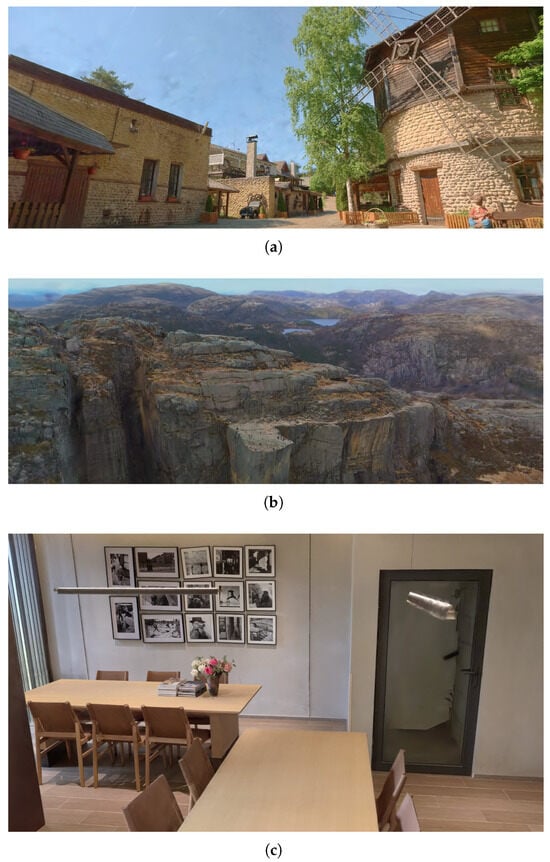
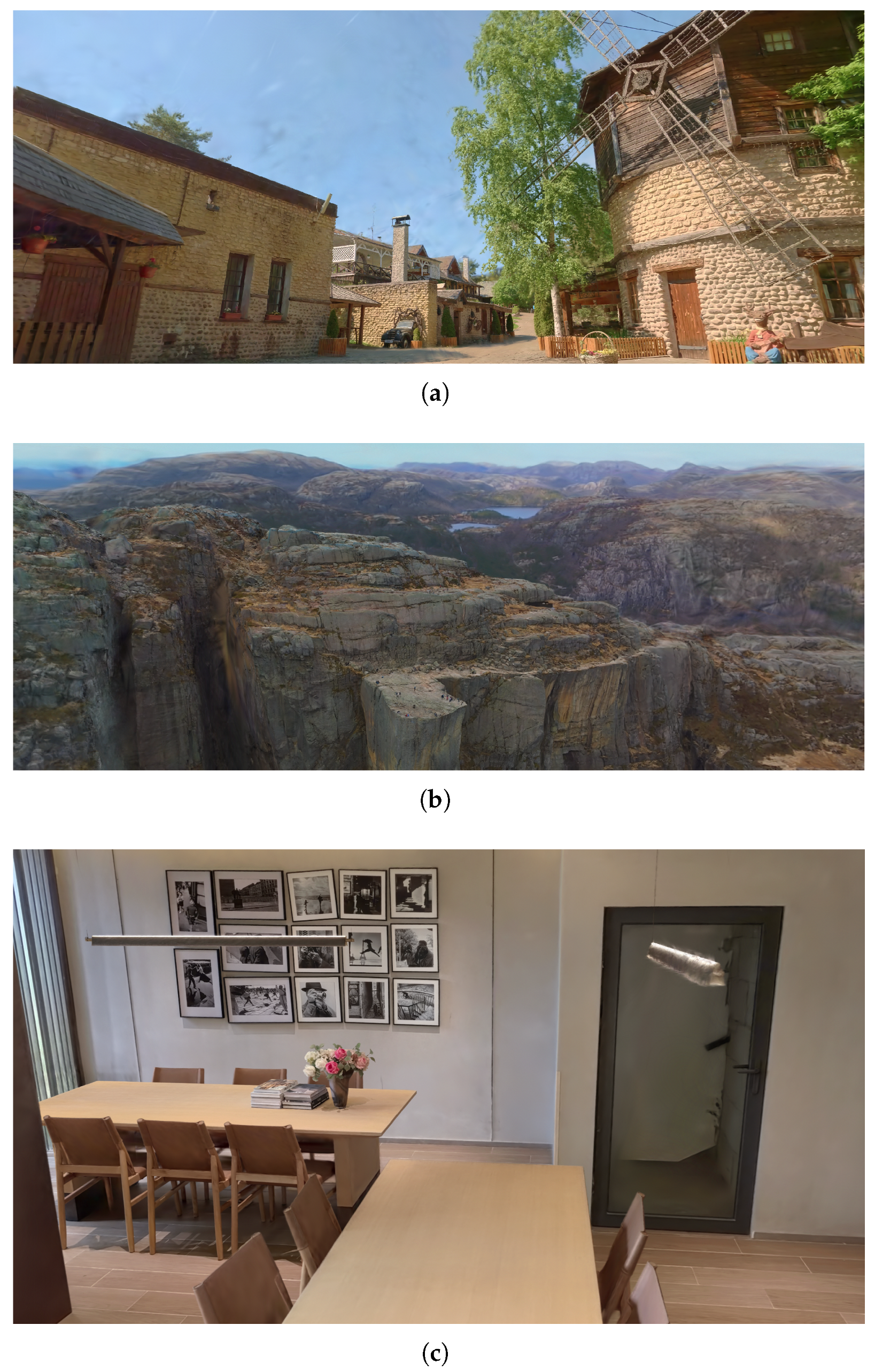
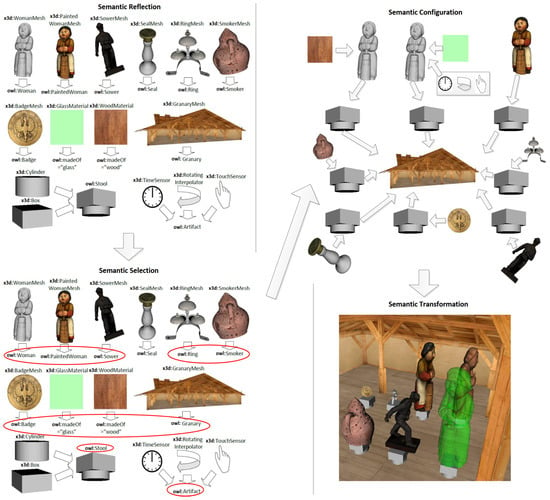
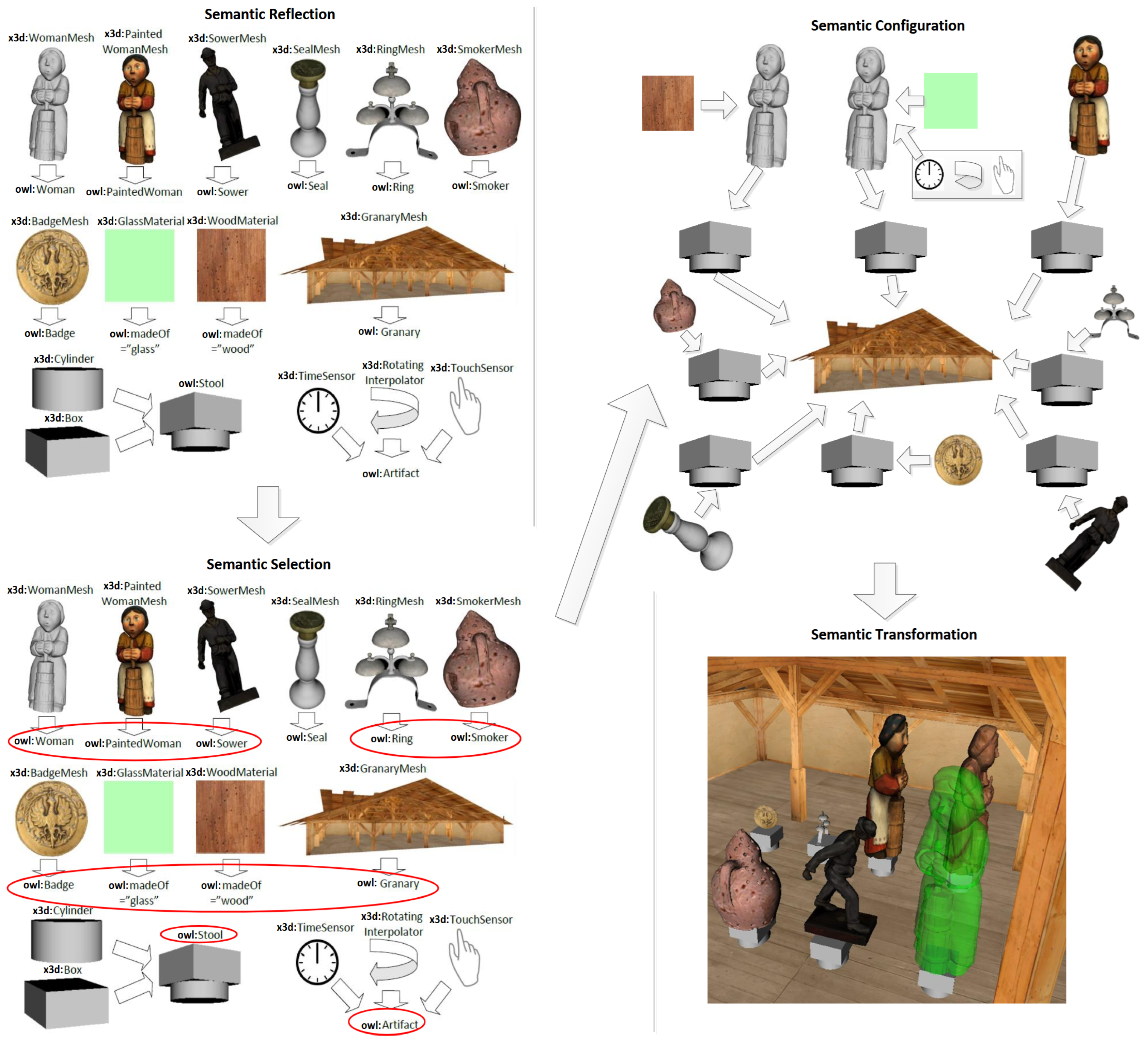
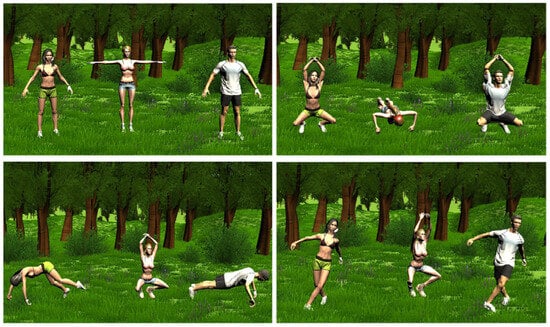
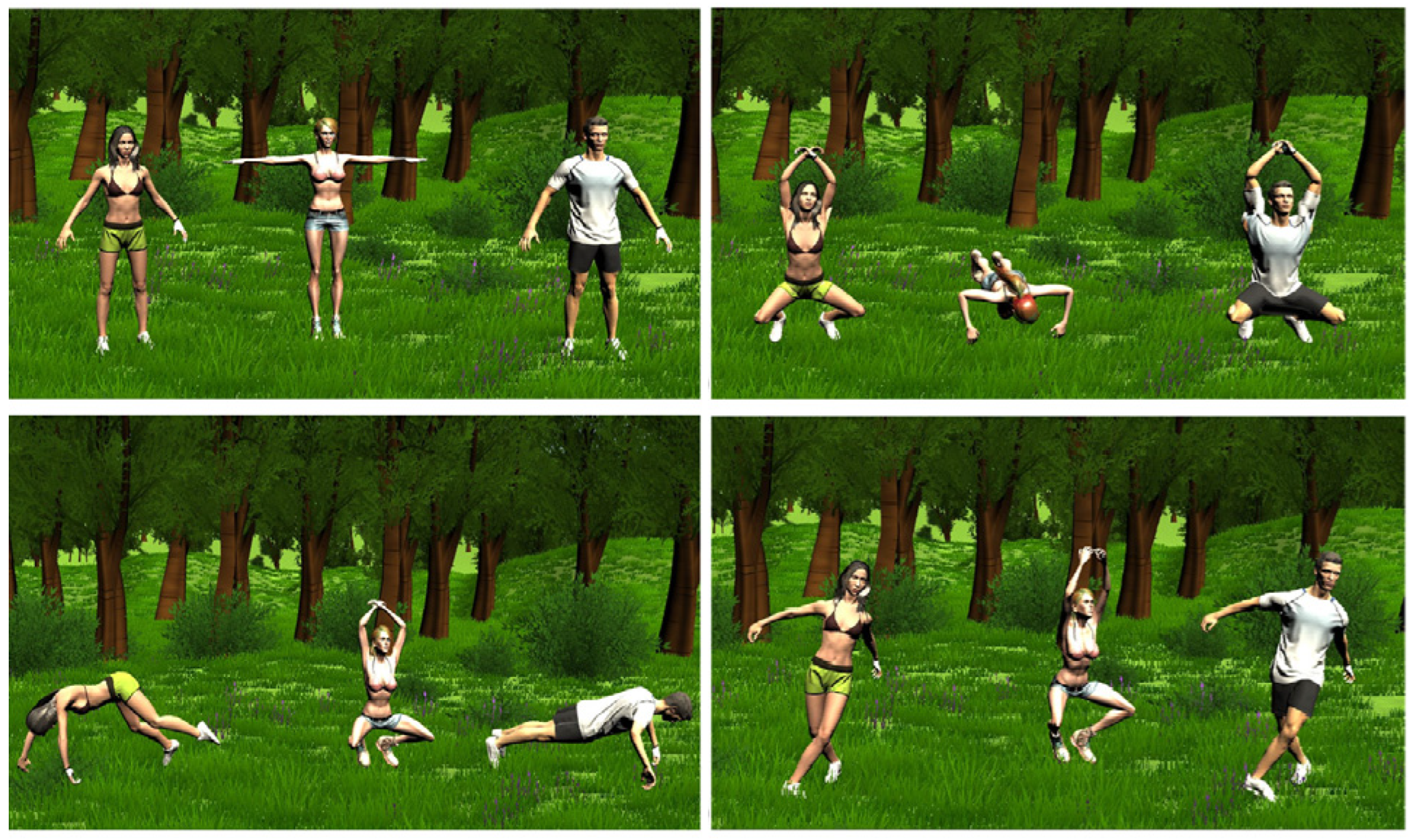
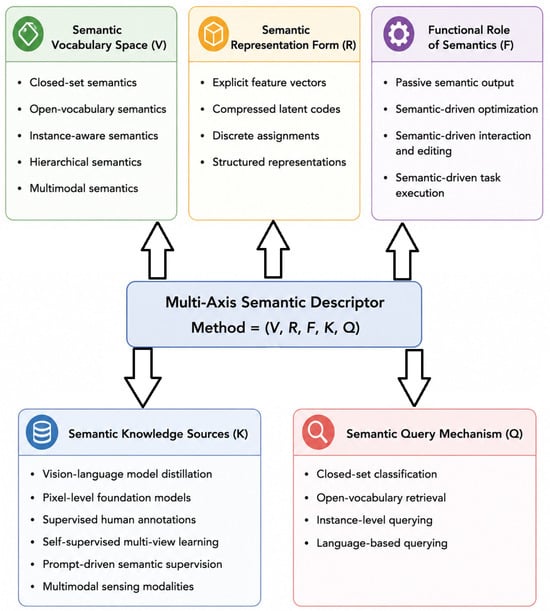
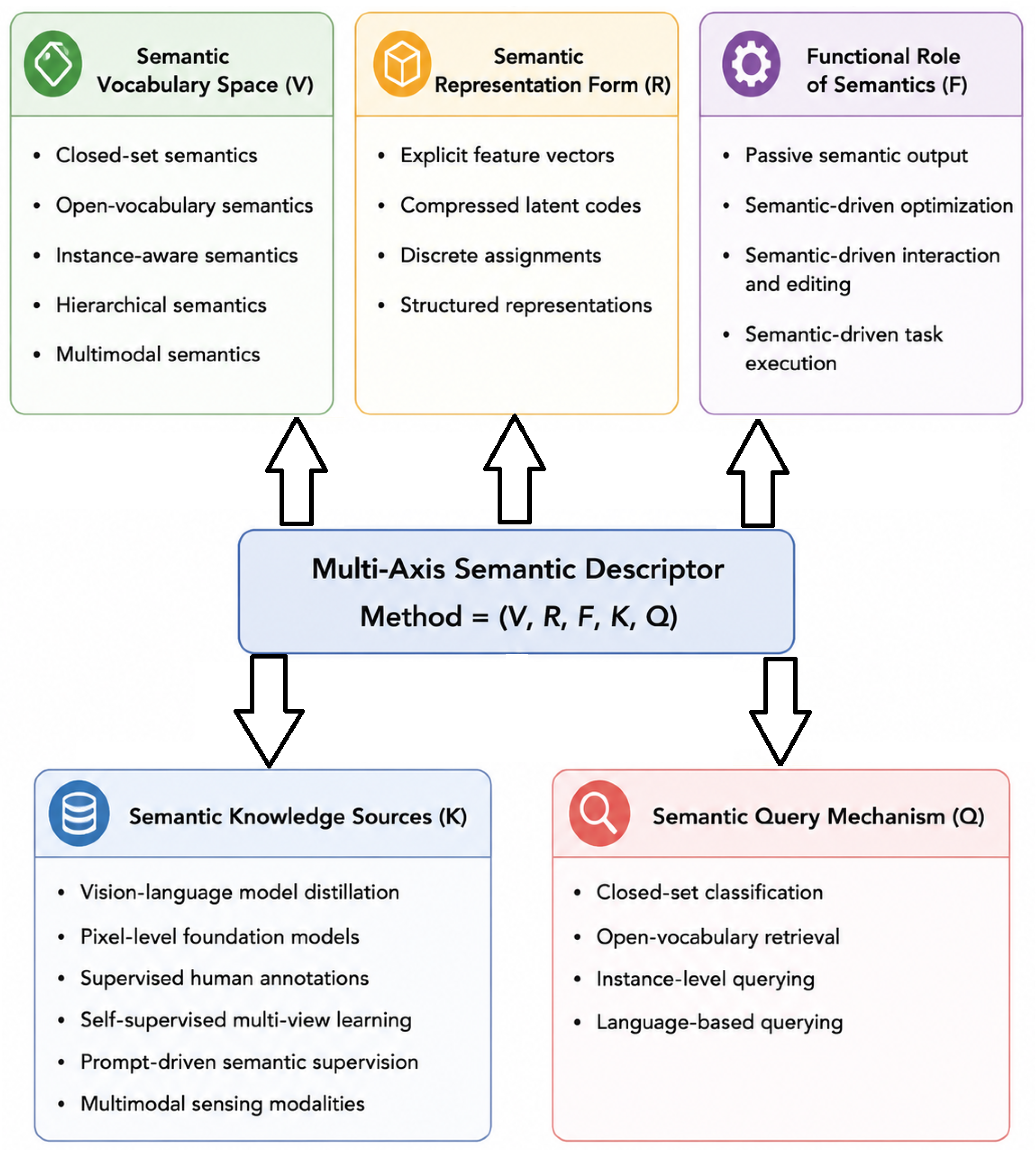
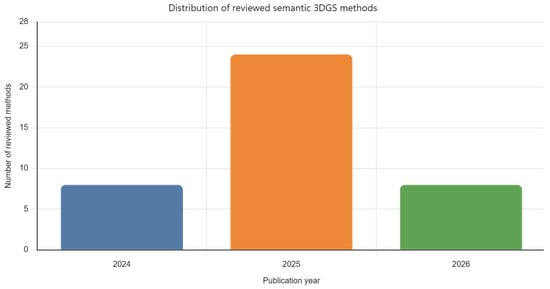
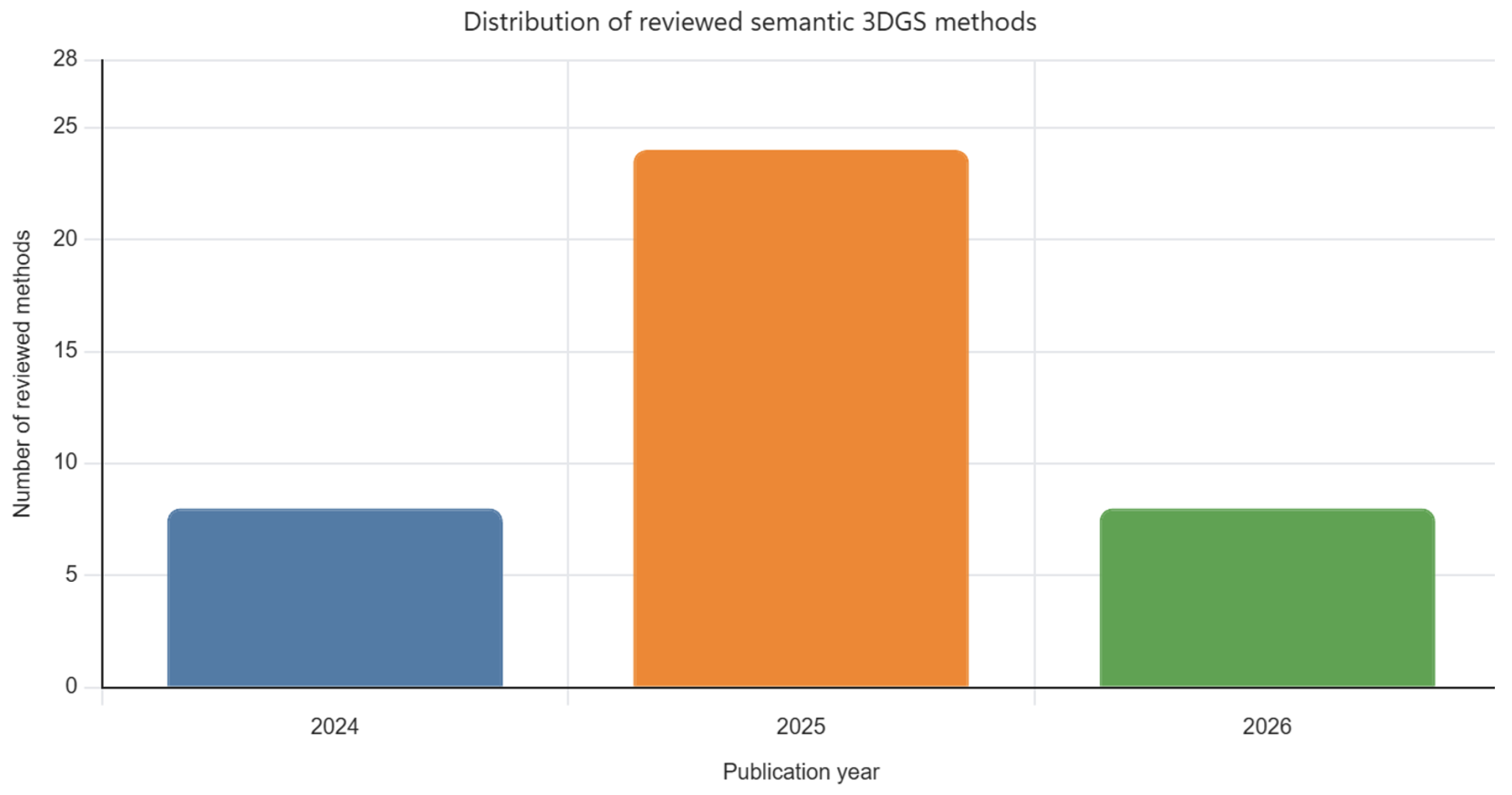
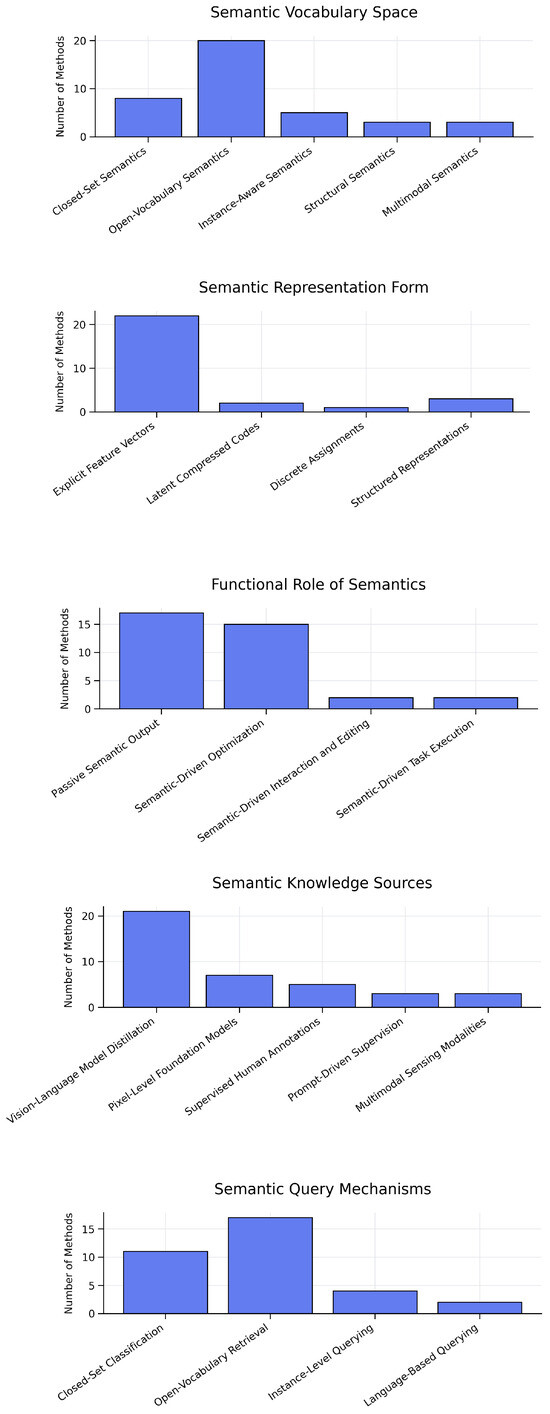
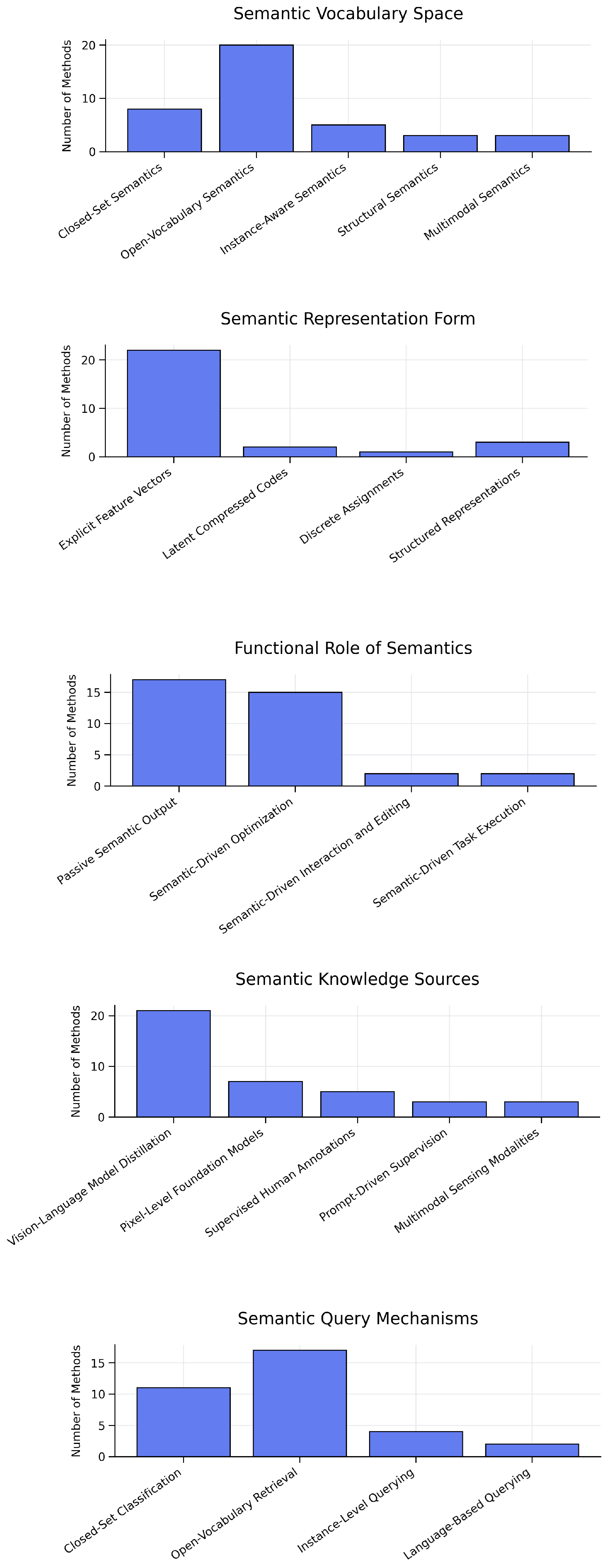

Disclaimer/Publisher’s Note: The statements, opinions and data contained in all publications are solely those of the individual author(s) and contributor(s) and not of MDPI and/or the editor(s). MDPI and/or the editor(s) disclaim responsibility for any injury to people or property resulting from any ideas, methods, instructions or products referred to in the content. |
© 2026 by the author. Licensee MDPI, Basel, Switzerland. This article is an open access article distributed under the terms and conditions of the Creative Commons Attribution (CC BY) license.