


Abstract
Small- and medium-sized enterprises, especially in the agricultural food sector, struggle to implement end-to-end product traceability systems, such as enterprise resource planning (ERP), due to the high costs and complexity involved for businesses of this scale. As customer expectations and regulatory requirements place an increasing emphasis on traceability and transparency, the combined use of industrial Internet of things (IIoT) technologies and blockchain-based smart contracts offers a promising pathway to cost-effective automation of supply chain processes. This paper develops a conceptual, multi-layer architecture that integrates sensing, communication, integration and smart-contract layers to support affordable, automated and extensible traceability for agri-food supply chains. Building on information processing theory and transaction cost economics, the framework explains how such architecture can reduce information uncertainty, lower monitoring costs and strengthen the organisational trust in agri-food supply chains. The framework is empirically illustrated and tested through an implementation that links distributed sensing infrastructure with a blockchain-based smart contract in a real agricultural supply chain setting. The evaluation assesses operational performance, data integrity and cost-efficiency, demonstrating that the proposed architecture can serve as a viable alternative or most importantly complement to traditional ERP solutions for small- and medium-sized enterprises that seek end-to-end traceability, transparency and automation.
1. Introduction
Modern industries are under pressure to increase safety and reliability, become more transparent and sustainable, and automate their operations to a greater extent. Growing societal demands and global regulations regarding sustainability and transparency concerning the origin and quality of products are compelling industries to adopt strategies for digital monitoring, reporting, and traceability. Many industries rely on costly, complex ERP systems that are ill suited for small- and medium-sized enterprises and also require substantial human resources to ensure safety and transparency [1,2,3].
Emerging technologies, such as IIoT systems and blockchain, offer tailored solutions to ensure traceability, safety, and transparency. Specifically, long-range (LoRa) communication enables the use of low-cost, low-power sensors capable of transmitting data, such as location, temperature, and vibrations, over long distances, making it ideal for monitoring products throughout the entire supply chain [4]. At the same time, smart contracts, which are deployed on blockchain networks, offer an automated and innovative solution for product traceability, providing a decentralised and secure system for recording and validating supply chain events [5,6]. When these two technologies are combined, they create a digital layer that ensures transparency and automation.
Research on blockchain-based supply chains highlights the benefits of traceability, immutability and automation, but there are also challenges, especially on public blockchains, such as scalability and time delays [7,8]. Similarly, studies on the adoption of the IIoT in the logistics sector have shown encouraging results, with networks such as LoRa demonstrating their benefits for supply chain monitoring; however, their use is limited to specific sectors and poses challenges, such as security against cyberattacks. These challenges create a gap in the industrial sector regarding architectures that combine IIoT and blockchain technologies [4,9].
This paper addresses this gap by presenting a conceptual architecture in which IIoT sensing capabilities are integrated with blockchain-based smart contracts to support end-to-end supply chain traceability. This solution is designed to be cost-effective, transparent, safe and user-friendly, while also integrating with ERP systems to ensure a seamless transition for the industry. The contribution of this study is, first and foremost, to provide a theoretically grounded framework that links the IIoT with blockchain for information processing requirements and governance mechanisms in agri-food supply chains.
Building on this architecture, the paper proposes and implements a Solidity-based smart-contract prototype and evaluates its integration with distributed sensing infrastructure in a poultry supply chain. The poultry supply chain is a complex, multi-stage system involving breeder farms, hatcheries, broiler farms, processors, distributors and retailers. In current practice, this chain is often characterised by fragmented records and limited monitoring, resulting in inefficiencies, poor traceability and inability to meet the demands of modern, quality-conscious markets [10,11]. Existing IIoT technologies typically address only part of this problem. The objective of this research is to design and evaluate an architecture that integrates low-power IIoT devices, open platforms, and smart contracts with the aim of providing affordable, automated, and end-to-end traceability for poultry supply chains.
This paper is structured as follows: Section 2 provides the literature review; Section 3 describes the basic methodology; Section 4 explains the architecture; Section 5 presents the implementation of the IIoT and the network; Section 6 explains the implementation of smart contracts; Section 7 describes the case study on poultry; Section 8 presents and discusses the results; and Section 9 offers a brief conclusion, analyses the system’s limitations and suggests directions for future research.
2. Literature Review
2.1. IIoT Technology in Supply Chains
The Industrial Internet of Things (IIoT) refers to the integration of networked sensors, intelligent devices and data-driven systems into industrial environments to enable real-time monitoring, automation and decision making. The IIoT extends the conventional Internet of Things (IoT) by focusing specifically on industrial operations, emphasises in reliability and scalability by linking machines, physical assets and cyber-physical systems into connected ecosystems that support automation and real-time control of the industrial environment [12]. Typical IIoT applications span a wide range of sectors. In manufacturing they can be used for smart monitoring, predictive maintenance, helping with the creation of digital twins and automating process optimisation [13,14]. In agriculture and food supply chains, they are most of the time used for environmental monitoring, precision farming, cold-chain tracking and logistics analytics to ensure quality and reduce waste [15]. In the context of supply chains, the IIoT has enabled large-scale supply chain monitoring, overcoming the limitations of connectivity, range and energy consumption associated with conventional short-range protocols such as Bluetooth. In this context, modern IIoT sensor technologies can be of assistance, particularly those based on Low-Power Wide-Area Network (LPWAN) protocols that transmit data over long distances with minimal energy consumption [16].
IIoT sensor networks use various frequencies and communication protocols, which vary depending on the region and application requirements. For example, the LoRa network uses the 868 MHz frequency in Europe and 915 MHz in North America. The data transmission range can exceed 50 km in rural areas and reach up to 10 km in urban environments [16,17]. Due to these characteristics, modern IIoT sensing technologies are ideal for industrial supply chains, where assets are often distributed across large or diverse geographic areas. Furthermore, many IIoT devices have low energy consumption as they utilise communication protocols that minimise data transmission to only when data are available to send (e.g., the ALOHA method). This allows them to run for years on small batteries and with minimal maintenance, which helps small- and medium-sized enterprises adopt them [18].
Several studies have demonstrated the potential of IIoT sensing technology in supply chain monitoring. For example, in [4], the authors demonstrate the integration of a LoRa-based Internet of Things (IoT) system for monitoring the dairy industry, showing that it is possible to continuously monitor and at the same time minimising supply chain costs by using low-power sensors. In [19] the authors presented a low-cost platform based on the LoRa Wide Area Network (LoRaWAN) which was tested on a real farm, for the collection of environmental data. Specifically, solar-powered temperature and humidity sensors were used for three months, with a communication success rate exceeding 80%, confirming the ability of LoRa systems to support agriculture. Agricultural and poultry supply chains are more complex than those in other sectors, requiring reliable real-time monitoring to account for geographical constraints, facility limitations, and the perishable nature of their products [20]. LoRa-based systems have proven effective in agriculture and poultry applications, particularly for monitoring environmental conditions and collecting data on meat processing [21,22].
IIoT sensing technology has been used in the logistics sector for cold-supply-chain monitoring and shipment tracking, as shown in [23], where LoRa technology was employed to report the condition of products in refrigerators. Early detection of quality issues is made possible by adding sensors to pallets or product packages to transmit condition data, as described in [24]. Despite the advantages of IIoT systems, there are certain challenges, for example, with LoRa systems that have low data rates, making them unsuitable for transmitting large datasets. However, they can appropriately support data collection and event-based decisions that require only anomaly detection or periodic data updates [25].
Supply chain management in the food and agricultural sector are highly complex networks involving farmers, distributors, processors, retailers and consumers. They are facing additional challenges compared with other industries, including product perishability, temperature sensitivity and exposure to heterogeneous environmental conditions along the chain. Agricultural and poultry supply chains, in particular, must account for the geographical dispersion of farms, variability in storage facilities, and strict regulatory and market requirements regarding food safety, quality, and transparency [26]. Global crises such as COVID-19 revealed critical weaknesses such as mobility restrictions, labour shortages, processing facility closures and shifts in demand patterns that severely disrupted production and market stability [27]. Altogether, the agri-food sector faces persistent issues in transparency, demand forecasting, logistics efficiency, and product authenticity, making it an important domain for digital transformation.
2.2. Blockchain and Smart Contracts
Blockchain provides immutable, tamperproofed and decentralised ledgers that record transactions and product movements across supply chains. These characteristics offer strong advantages for traceability, product authenticity and fraud reduction in food and agriculture systems [28]. The integration of blockchain and IIoT devices has attracted significant interest in the research community, as it offers an effective combination of real-time monitoring and immutable validation. Specifically, smart contracts create a system that all participants can trust. In the industrial sector, trust and transparency are crucial, as system members can be located worldwide [6,29]. On the other hand, it is essential to acknowledge the challenges that can arise from the use of smart contracts. First, the immutable nature of the contract is a critical factor in establishing trust, but it lacks the dynamic that may be necessary in real-world, long-term agreements. Second, even if the identities of the counterparties are anonymous, the contract itself can be accessed by anyone, exposing its details. Finally, a contract is defined by various legal elements, many of which do not yet apply to smart contracts. It is essential to ensure that smart contracts comply with legal requirements [30]. In the field of IIoT devices, one challenge is communication between sensors and the blockchain, as these devices use a variety of protocols and standards, which can pose technical difficulties when establishing communication with the blockchain. Security is also a major concern since although the blockchain provides a secure environment, IoT devices are more vulnerable [31].
Beyond academic prototypes, several companies have already deployed blockchain at scale, underlining the practical relevance of this technology. Major retailers and technology providers, like Walmart, have piloted blockchain solutions to track fresh products like fruits and meat from farm to shelf using Hyperledger Fabric, reducing traceability times from days to seconds [32]. IBM Food Trust, adopted by multinational brands including Nestle, enables real-time tracking of products across the farm-to-store continuum and improves transparency and recall efficiency [33]. Conde de Benalúa, a cooperative of over 2000 farmers leveraging blockchain to authenticate the provenance of olive oil, provides end-to-end traceability [34]. Lastly, in the fisheries sector, blockchain-based pilots in Indonesia have tracked tuna from catch to consumer, reducing illegal fishing and improving transparency [35]. These practical deployments showcase blockchain’s operational relevance, market demand and growing institutional commitment.
3. Methodology
This study is based on a conceptual framework for the development and evaluation of an architecture that combines IIoT sensors with blockchain-based smart contracts to enhance traceability in poultry agricultural supply chains. Due to adoption barriers, such as high costs and organisational complexity, many small- and medium-sized enterprises cannot deploy ERP systems [36,37]. At the same time, simple IIoT solutions that focus exclusively on data collection do not provide the end-to-end traceability that customers need [38]. Therefore, an affordable, transparent and automated system is needed. Research in dairy, rice, fruit and frozen supply chains has provided some blockchain-IoT architectures that separate the data acquisition, data storage and application with smart contracts [39,40].
To address those challenges, this research design was structured into two tracks reflecting and extending existing research on blockchain-IIoT systems but on the poultry supply chain. The first track focused on developing and testing the smart contract, implemented in Solidity and deployed on the Ethereum testnet. This track was guided by prior studies that designed smart-contract-driven, immutable systems for agri-food supply chains. Research has consistently demonstrated that blockchain enables secure systems for recording the journey of the product while supporting end-to-end verification across suppliers, distributors and retailers [41,42]. Blockchain-based models such as ProductChain and AgriBlockIoT highlight how smart contracts automate data validation, event logging and process control [43]. The features were tested through simulations and by registering products, batches, and all necessary information. These tests confirmed that the smart contract could operate as intended.
The second track focused on the integration of IIoT sensing, data acquisition, mapping of sensors, gateways, and middleware components to demonstrate how they would interact with the blockchain. Prior research shows that IIoT devices integrated with blockchain can ensure data authenticity, timely monitoring and continuous environmental tracking, significantly improving transparency in cold-supply-chain and perishable-goods logistics [44]. Furthermore, IIoT-to-blockchain integration is recognised as a robust method to prevent single points of failure and ensure reliable upstream–downstream communication [45].
The evaluation criteria of both tracks were aligned with the needs of small- and medium-sized enterprises. Operationally, the architecture was assessed using a set of quantifiable key performance indicators (KPIs) that captured the information processing and transaction cost dimensions of the system, namely, end-to-end latency from sensor event generation to blockchain transaction confirmation and data throughput at the integration layer [46]. The blockchain’s ability to provide an immutable history of products was used to assess traceability and transparency, in line with existing evaluations of blockchain in food supply chains that emphasise traceability speed and improved auditability [47,48]. End-to-end latency and throughput were calculated by aligning timestamped log data exported from TheThingsNetwork (TTN) with Ethereum testnet transaction timestamps, following the measurement practices used in LoRaWAN-based agricultural monitoring studies [49]. Automation was evaluated by examining the extent to which smart-contract rules could replace manual documentation and validation tasks, while affordability was assessed by considering the use of low-cost sensors, open platforms and blockchain tools, as well as by analysing gas costs, hardware expenses and the operational effort required to manage the system.
4. Proposed Architecture
The proposed architecture consists of four distinct layers.
Sensing layer. At the lowest level of the system, various types of IIoT sensors can be installed to measure critical parameters in different scenarios and under different requirements [50,51,52]. Some important parameters that need to be measured include temperature, which is vital, especially in cold supply chains such as poultry [53], humidity for more comprehensive environmental monitoring [54] and GPS positioning for outdoor tracking [55].
These devices are low-cost, low-power, and capable of transmitting data over long ranges, which can be beneficial for environmental monitoring and location tracking [56,57,58]. For example, in the poultry industry’s cold chain, one sensor can periodically provide temperature and humidity data from the poultry farm [53]. In contrast, a second sensor, installed in the truck, provides the temperature of the refrigerated compartment and the vehicle’s location [55].
Communication layer. Technology selection at this level depends on the installation’s requirements. For long-range, low-power applications, especially in rural areas where most poultry farms are located, the LoRaWAN network is a well-suited solution. When the application’s requirements demand higher bandwidth, alternative technologies such as long-term evolution machines (LTE-Ms) can be employed, especially to achieve higher data rates [59], or Wi-Fi for infrastructure-based installations [60]. To maximise reliability and coverage, hybrid methods that combine multiple communication technologies can be implemented, such as sensor nodes that simultaneously support different communication protocols [61]. Additionally, failover mechanisms can be deployed to ensure operation even when primary communication channels become unavailable, which is crucial for critical applications where data loss is not an option.
Integration layer. The integration layer acts as an intermediary between sensor networks and blockchain systems. This layer provides data processing services for real-time validation, enabling the detection of anomalies or outliers before the information enters the blockchain. It implements summarisation techniques that merge multiple sensor measurements into a useful dataset and also performs format conversions and standardisation processes, if necessary, to ensure compatibility between different types of sensors and communication protocols. Finally, it integrates sensor measurements with metadata, such as batch ID, location and producer.
In the implemented system, LoRaWan sensor nodes encapsulate measurements such as temperature, humidity, vibration and GPS coordinates into application payloads that are transmitted to nearby gateways as a sequence of raw hexadecimal or byte arrays [62,63]. The gateways forward these packets to TTN, as a compact array of raw bytes over IP, where a network server handles device authentication, frame-counter management and MAC-layer processing, and on the TTN console a JavaScript payload decoder takes the raw bytes and translates them into a human-readable format like JSON.
After decoding on the TTN console, the resulting uplink messages are exposed as JSON documents that can be forwarded to external applications through the HTTP integration, which is configured to send an HTTP POST request to a RESTful endpoint provided by the integration layer. Once data are validated, the middleware aggregates individual sensor readings into batch-level records that correspond to the Solidity structures defined in the Food Traceability smart contract and uses a Web3 client library to invoke the appropriate contract functions on the Ethereum testnet by submitting a transaction containing the batch data as function arguments.
Through this mechanism, every HTTP uplink from TTN is transformed into a structured blockchain transaction, closing the loop from LoRaWAN sensor measurements to immutable on-chain traceability records. In particular, environmental readings are grouped into arrays of device ID, timestamp, temperature and humidity for each batch, while logistics entries are grouped into arrays of shipment ID, route, vehicle ID and storage temperature fields, which are passed to the corresponding addEnvironmentalData and addShippingInfo functions in the contract.
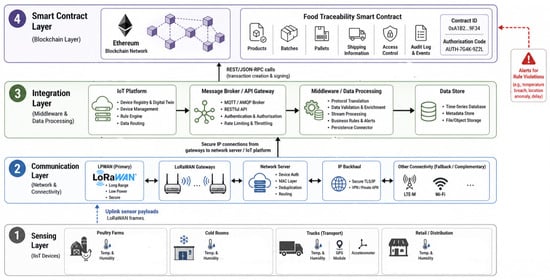
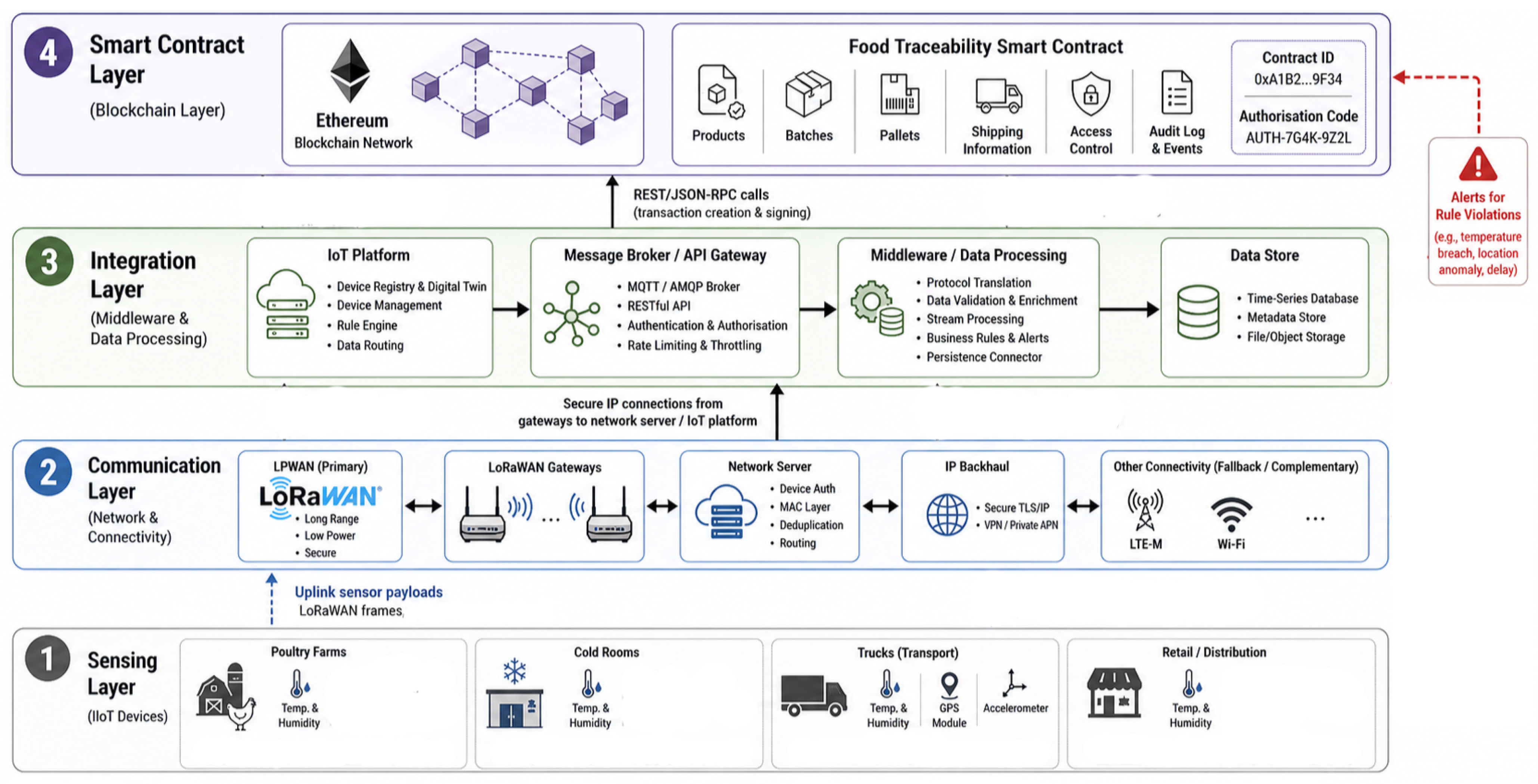
Smart-contract layer. The smart-contract layer implements the logic for supply chain monitoring and defines the rules for recording, validating, and ensuring traceability. The contract tracks and maintains information about products, including records of batch ID, producer, processing dates, and vehicle. Within the overall architecture, it operates together with the other three layers so that all four layers interact to support the system’s overall workflow, as introduced in Figure 1.
Figure 1.
Network architecture.
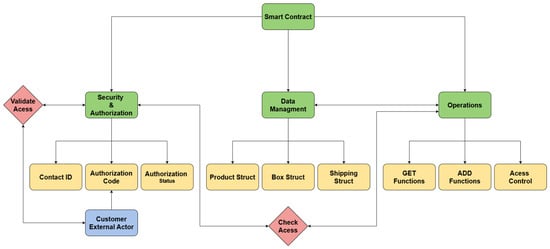
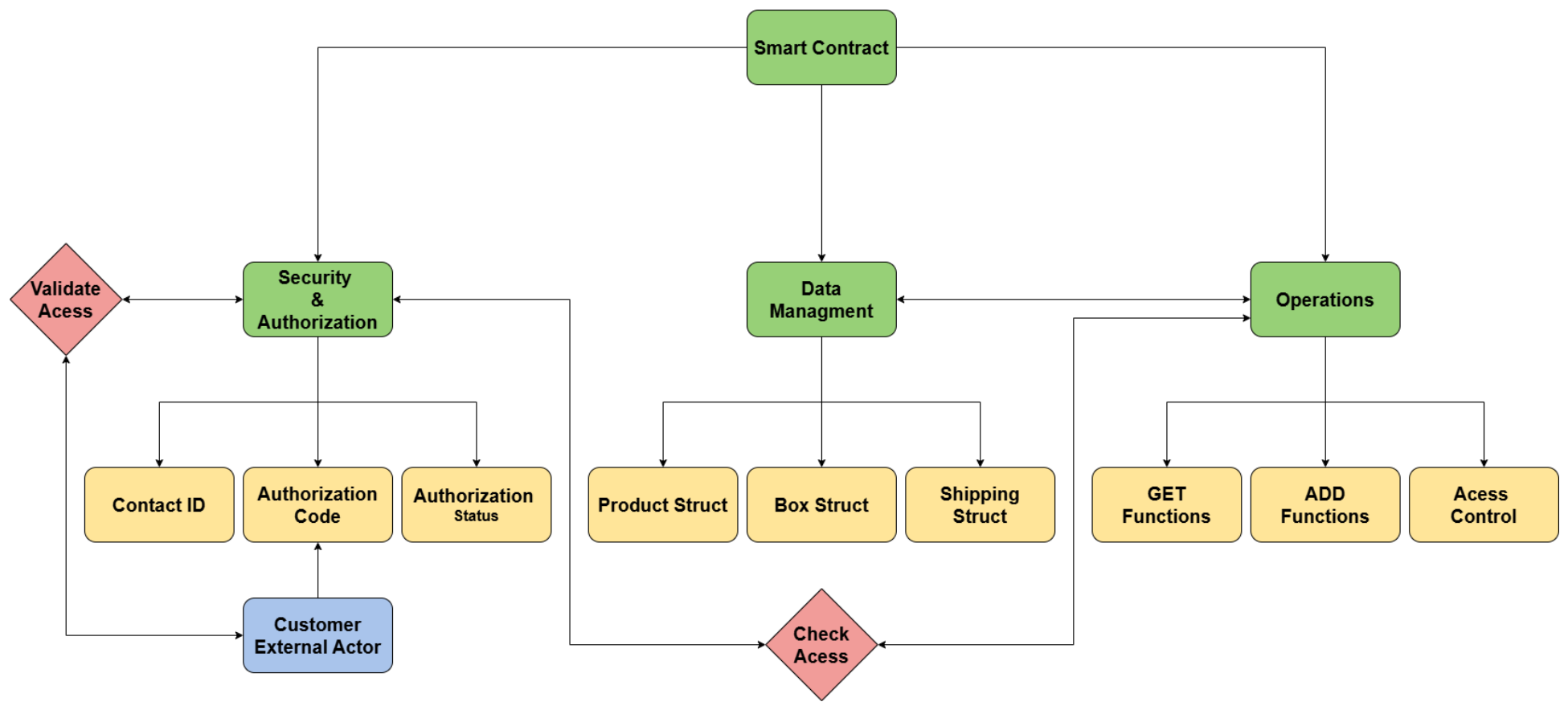
These contracts can provide automated monitoring and respond to rule violations or other critical events [64]. For example, if the product temperature exceeds the limits, the contract automatically notifies the responsible party and halts the agreement process. The “Security and Authorisation” module mediates all interactions between external actors and the smart-contract layer, as illustrated in Figure 2.
Figure 2.
Smart-contract basic architecture.
Currently, the prototype uses this module to implement a lightweight authorisation code mechanism that gives access to selected functions for the external actor customer. The customer submits an authorisation code to the middleware, which forwards the corresponding hashed value to the smart contract for verification.
5. IIoT Network Implementation
Implementing an effective IIoT sensing architecture is fundamental to achieving traceability and automation. This section presents an architecture for capturing, transmitting, and integrating supply chain data into a blockchain-based smart contract. The proposed architecture uses both IIoT technology and TTN platform to establish a robust, scalable and cost-effective solution that links field sensing with secure data management.
Architecture Overview
The IIoT architecture comprises three primary layers that collaborate to ensure seamless data flow from physical sensors to the blockchain network. The sensing layer collects environmental and operational data using low-power IIoT sensors deployed throughout the supply chain. The communication layer facilitates long-range, energy-efficient data transmission via wireless communication protocols. Finally, the integration layer bridges the entire sensor network with the blockchain, enabling automated data transmission to smart contracts and completing the end-to-end data path. At the base of this stack, the sensing layer consists of wireless sensors and gateways that monitor critical supply chain parameters. Each gateway integrates with multiple sensing devices, reducing complexity and maintenance requirements [65]. Specifically, in the poultry supply chain presented in this study, the main sensing components are temperature and humidity sensors, GPS modules, and accelerometers. Temperature and humidity sensors provide continuous monitoring of environmental conditions throughout the supply chain, where maintaining proper environmental conditions is critical for perishable products, from production at the poultry farm to display in retail stores, as temperature sensitivity accounts for more than half of food waste in the food supply chain [24]. GPS modules provide geolocation data, enabling tracking of product movement throughout the supply chain and supporting the identification of locations where environmental requirements were not maintained. Accelerometers detect physical impacts or improper handling of the product during transportation, as sudden changes in acceleration may indicate mishandling that could compromise product quality [66,67].
The data generated by these sensing devices are periodically transmitted to the wireless communication layer for long-range transmission. Building on the sensing layer, the wireless communication layer enables data transmission from distributed sensor nodes to a centralised infrastructure. Low-power Wide-Area Network (LPWAN) technologies are particularly well suited for monitoring scenarios in the agricultural and logistics sectors, due to their long-range communication capabilities and minimal power consumption [68]. The network architecture follows a star topology, in which sensors communicate directly with the gateways without multi-hop routing. This simplifies network management and reduces protocol overloading. The gateways act as bridges, forwarding packets from end devices to a central network server via standard IP connections. Through this mechanism, sensor measurements from the poultry supply chain become available to the IoT platform components that manage the devices and data.
To assess the robustness of the communication layer, a controlled gateway failover test was conducted, motivated by prior studies that evaluated LoRaWAN reliability under gateway failures and multigateway deployments [69,70]. Two LoRaWAN gateways were installed, one covering the farm site and one the industrial facility, with partially overlapping coverage in the intermediate area. During the test, the gateway of the farm was intentionally disconnected from the network for a predefined time while end devices continued transmitting at their configured duty cycle. The TTN console and integration middleware logs were then analysed to quantify packet delivery behaviour under that fault condition. In areas where gateway coverage overlapped, some uplink packets were successfully rerouted to the remaining gateway. In contrast, devices located only within the farm gateway’s coverage area temporarily lost connectivity, resulting in missing uplink records during the outage. No invalid or corrupted messages were detected at the integration layer, indicating that the failover did not introduce inconsistencies. Instead, the issue appeared as gaps in the environmental reading time series for the nodes affected by the outage.
Above the communication layer, IoT platforms provide the server infrastructure required to manage device communication and data routing. These platforms handle registration, authentication, data processing and application integration without requiring private servers [71]. In the basic architecture, gateways receive data from end devices and forward them to the server, which handles tasks such as device authentication and protocol processing. The application server then routes the sensor data to the integration platform, which interfaces with the blockchain to link IIoT data streams with smart contracts. Before sensor nodes can communicate via the IoT platform, they must be registered in the network. The registration process involves creating an application on the platform and registering each sensor as an end device within that application, with configuration parameters such as device identifier, protocol version, application identifier, and authentication keys. Security is ensured through authentication methods like Over-the-Air Activation (OTAA), which uses unique keys and encryption for every connection to the network [72,73]. This means that even if session keys are compromised, they cannot decrypt past or future communications. Once registration and authentication are completed, sensor data flows through the IoT platform to a middleware layer that interfaces with the blockchain network. This layer receives the incoming data streams from the platform, decodes the sensor payloads containing timestamp, identifier, and measured parameter information, and translates them into blockchain transactions that can trigger the smart-contract logic, thus closing the loop from physical sensing to immutable on-chain events.
6. Smart-Contract Implementation
This section presents an implementation of a smart contract developed in Solidity using the REMIX IDE. The contract is designed to record and retrieve information about poultry products, covering the entire supply chain, from the initial stages of production to the distribution of the final product.
The smart contract integrates three key elements to ensure secure, consistent and traceable data management throughout the supply chain. Table 1 summarises the core security and authentication components, where a unique Contract ID and an authorisation code control access to sensitive information, allowing only users who provide the correct code to retrieve detailed information; in this situation, the only user who can know the authorisation code is the customer.
Table 1.
Security and authentication functions.
The current prototype employs a deliberately lightweight authorisation mechanism that is suitable for controlled test environments and small-scale pilot deployments but not yet for adversarial production settings. Access to sensitive read operations, such as product records, pallets, boxes and shipping information, is restricted through an authorisation code that is verified via hashed comparison, which avoids storing the code in plaintext. When the customer provides the correct code, the contract activates an internal authorisation flag for the session, enabling access to protected getter functions, while nonsensitive traceability metadata remain readable as in typical transparency-oriented smart contracts. This simplification reduces the complexity of the system and accelerates experimentation across architectural layers, but it also limits the access control and weakens user accountability. Consequently, the present design should be interpreted as functional proof-of-concept that prioritises interoperability, data modelling and end-to-end traceability over strict access control guarantees.
For production-level deployments, the access control can be strengthened with established smart-contract security practices such as role-based access control (RBAC) that would introduce explicit roles, such as producer, transporter and retailer, each mapped to specific Ethereum addresses and enforced through role-checking modifiers [74]. For critical state-changing operations, smart contracts can incorporate multisignature approval mechanisms that require several authorised parties to validate and sign off on sensitive updates before they are executed. By enforcing these authorisation rules at the contract level, systems ensure that no single actor can unilaterally modify critical data. This pattern is reflected in multisignature governance frameworks where state updates are approved by multiple signatories bound to unique blockchain addresses [75] and in contract architectures that encode multisignature conditions for executing protected operations [76]. Moreover, the smart contract was tested using the Remix IDE, combining compiler diagnostics with manual execution of all core functions under typical and adverse inputs, such as invalid authorisation codes and inconsistent identifiers. However, dedicated static analysis tools have not yet been applied, and a more systematic security evaluation is planned.
The contract defines various structures for organising data traceability, and these are outlined in Table 2. It groups pallets, boxes, and products with their corresponding weights, enabling clear tracking at both the batch and product levels. Each product record includes detailed information such as the producer, origin, dates, and associated boxes. Additionally, the contract stores shipping information, including the shipping method, vehicle, location, and shipping time, to ensure visibility from production to delivery. To ensure data consistency and integrity, the contract provides functions for data entry and retrieval, which are described in Table 3. The adding function links each product with its boxes and pallet by recording their IDs and weights in a single record for easy traceability. It also associates each product ID with its corresponding weight and with the correct producer, box and pallet. The retrieval function allows authorised users to retrieve product details and shipping information while enforcing access control for sensitive data.
Table 2.
Data structure functions.
Table 3.
ADD and GET functions.
7. Poultry Case Study
This section presents the practical application of the proposed smart-contract system, integrated with IIoT sensors, through a case study of a poultry supply chain. The case follows the entire path from the poultry farm to processing and distribution, illustrating how environmental and logistical data are captured, transmitted and recorded on the blockchain.
The system deployed LoRaWAN sensors connected to the TTN platform at critical points along the supply chain, including poultry farms, industrial processing facilities, storage areas and refrigerated transportation vehicles. In the deployed system, two LoRaWAN gateways were used, one covering the poultry farm site and one covering the industrial facility. A total of 12 temperature and humidity sensors were installed, with two nodes in each of the three poultry houses and six nodes in the industrial facility. Truck monitoring was realised through two multisensor units combining GPS, vibration, and temperature/humidity sensing, one mounted in each refrigerated vehicle. These sensors continuously monitored environmental parameters such as temperature and humidity on the farm, temperature and humidity conditions within industrial processes and cold storage facilities, vibration levels during transportation and the GPS location of the delivery vehicle. To document the operational characteristics of the deployed IIoT infrastructure, Table 4 outlines the key technical parameters of the sensor deployments used.
Table 4.
Technical parameters of sensor deployments.
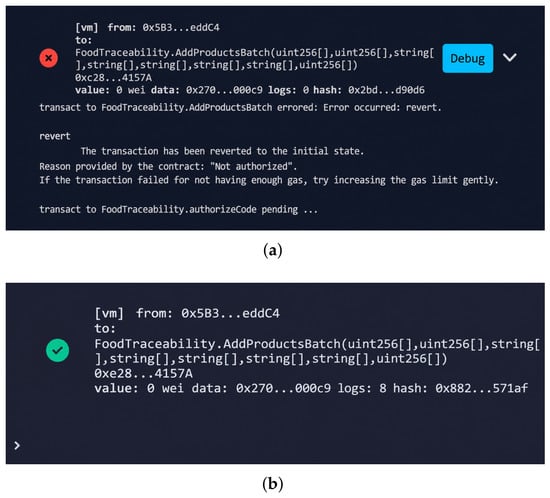
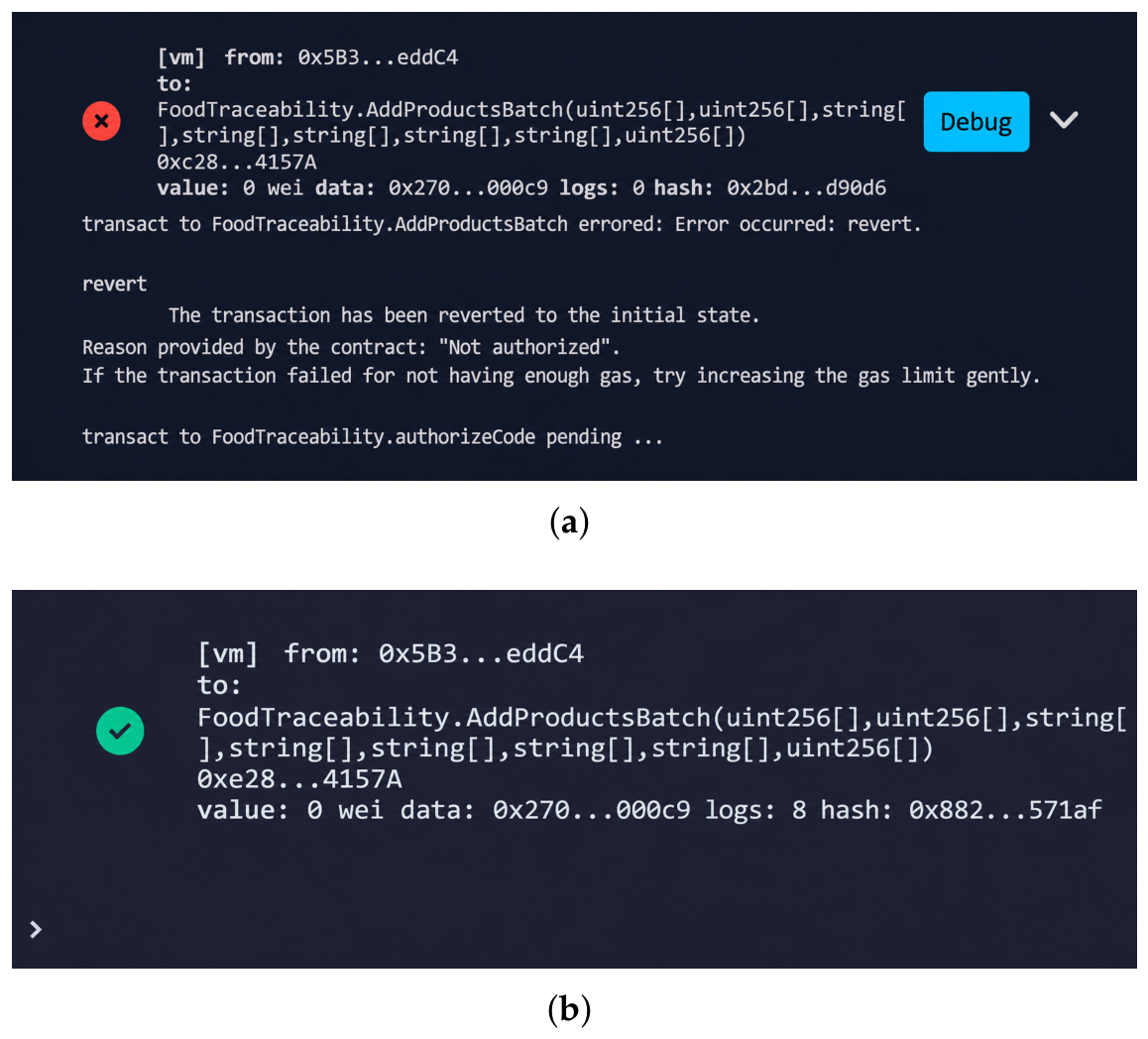
Data from these devices were transmitted through the TTN infrastructure, forming the input data stream for processing by a blockchain-based smart contract. This configuration established a direct link between physical sensing and immutable data registration, supporting reliable monitoring of compliance with cold-supply-chain requirements. To manage, secure and record these data, a Food Traceability smart contract was developed and deployed on the Ethereum testnet. The contract was designed as a comprehensive system for tracking poultry products, their processing steps, shipping details and the related environmental conditions. Batch operations were implemented within the contract to efficiently manage multiple records simultaneously, reducing computational costs and latency during data entry. The deployment process began with defining the contract ID and the authorisation password, both of which were required for verification before any data could be written to the chain. Successful authorisation unlocked multiple input functions, each responsible for managing a specific category of supply chain information. This mechanism ensured that only verified users could upload data to the blockchain, while maintaining open, read-only access for end-customers. Failed authorisation attempts were automatically rejected by the contract, ensuring data integrity and preventing unauthorised modification, as shown in Figure 3.
Figure 3.
(a) Smart contract denied: absence of authorisation code. (b) Smart contract start: authorisation code provided.
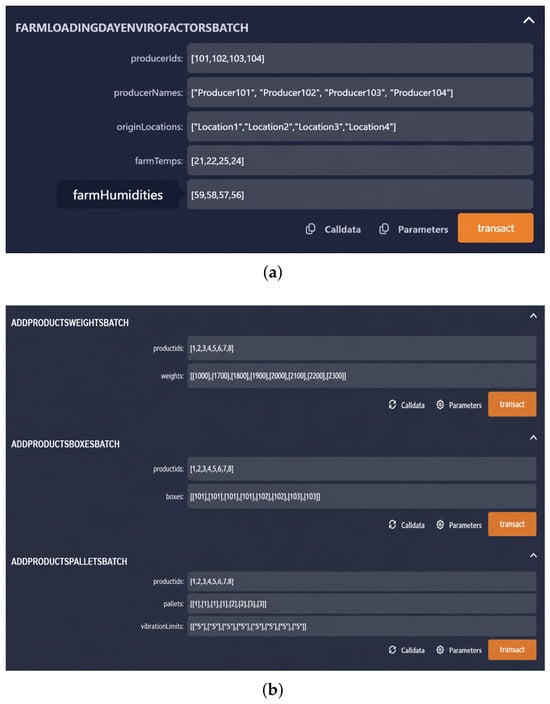
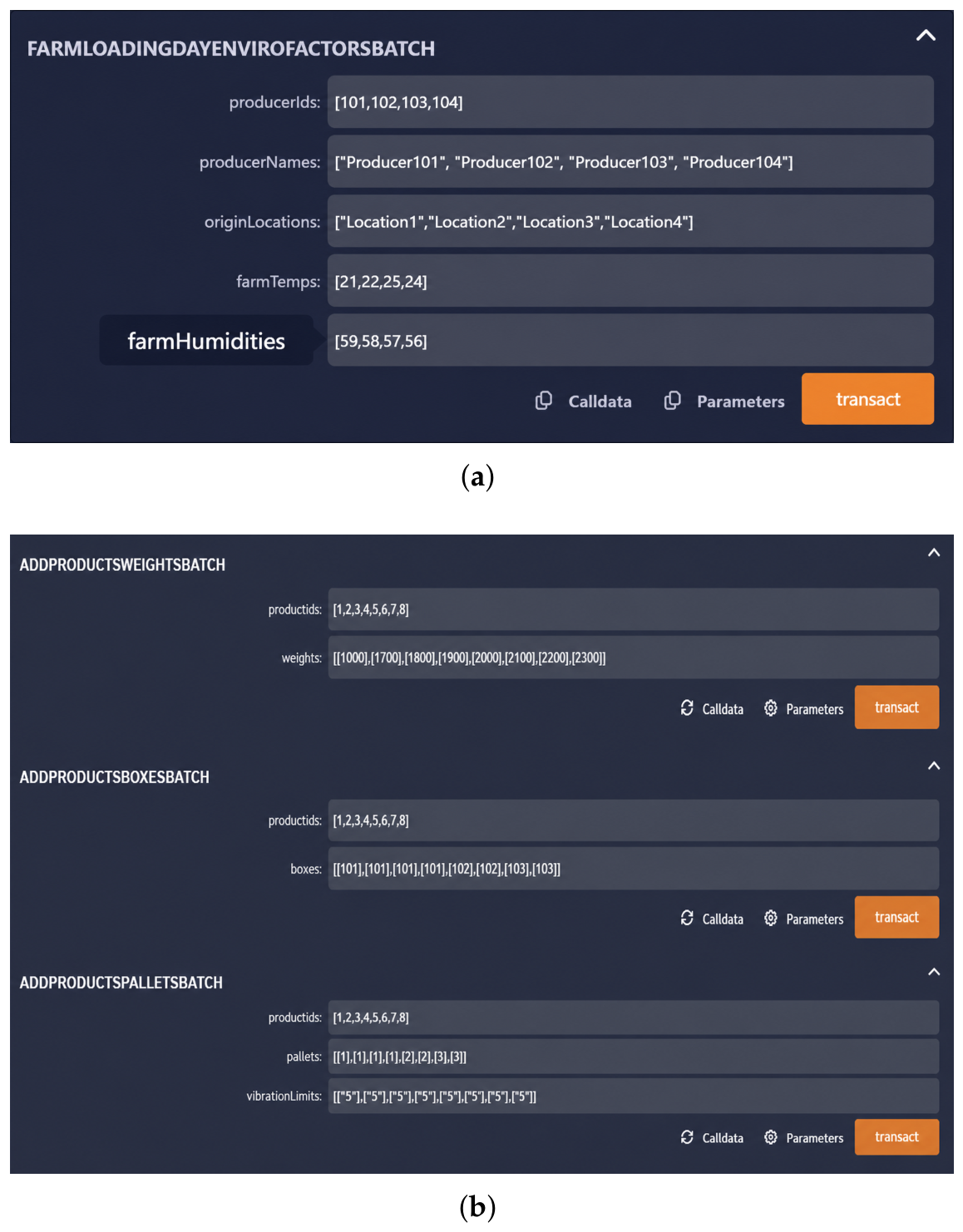
The recorded data were divided into three categories: environmental conditions, product characteristics and packaging, and shipping information. The environmental data function linked each producer’s identifier to the temperature and humidity values measured on the poultry farm at the time of product loading. These values provided a reference snapshot of the initial condition in which products were dispatched from the farm, establishing the first immutable record of the cold chain. The product attributes and packaging function stored each product’s weight and associated it with a unique product ID. Each product was then associated with a corresponding box and pallet, forming a hierarchical packaging structure, as shown in Figure 4. Additionally, a vibration threshold was assigned to every pallet, defining the maximum acceptable vibration during transportation to prevent physical damage or deformation of the packaged products. The shipment data function supplemented that information by recording logistics details, including shipment ID, product ID, shipping method, transportation route, storage temperature, location, and departure time, thus providing a comprehensive dataset for logistics traceability.
Figure 4.
(a) Farm environmental factors for multiple producers. (b) Adding weight, boxes and pallets.
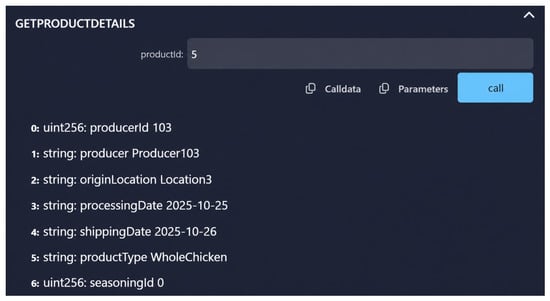
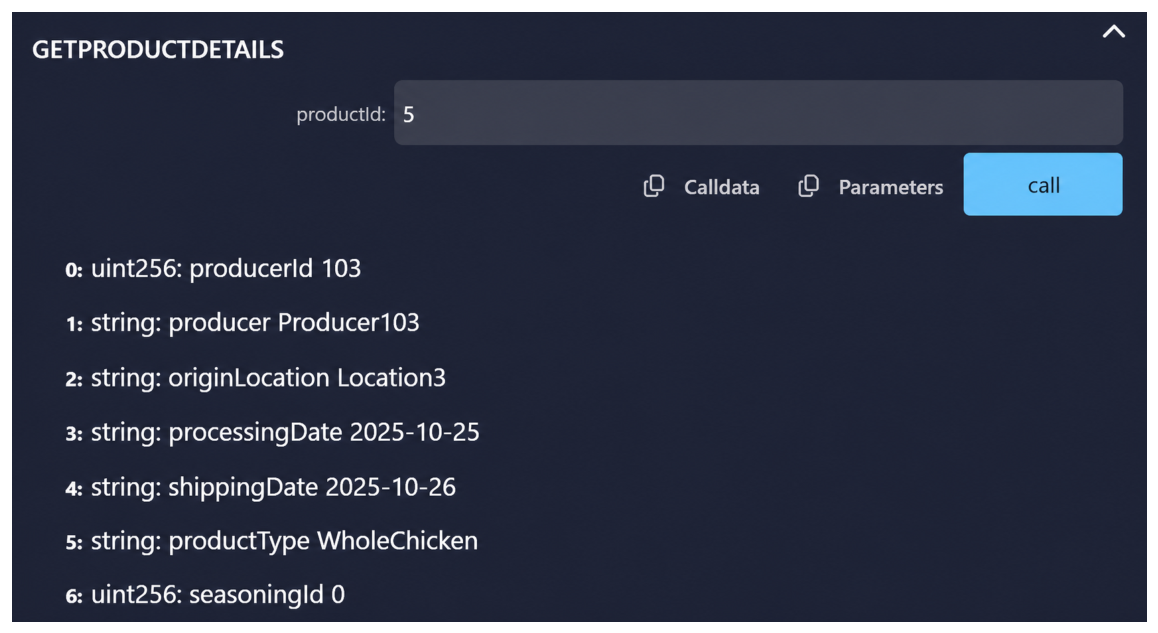
Customers and supply chain partners accessed product information through the same authorisation process that governed data entry, ensuring a consistent security model across all interactions. After successful authentication, users retrieved the contract ID and shipment ID, which served as primary keys for accessing product records, including environmental histories, handling conditions and logistics data, as, as demonstrated in Figure 5. By analysing those parameters, customers could verify cold-chain continuity and confirm that products had not exceeded permitted environmental limits.
Figure 5.
Retrieved product details.
7.1. Traceability of a Poultry Batch
To illustrate the operation of the proposed architecture, this subsection follows a representative poultry batch from farm loading to retail, documenting the corresponding records created at each supply chain node.
The traceability process began at the poultry farm, where LoRaWAN temperature and humidity sensors installed in the poultry houses monitored environmental conditions during loading of live birds. When a loading event began, the integration layer retrieved the measurements from the relevant sensor (identified by its device ID) along with the producer ID and timestamp. This information was then written on chain, creating a record that linked the producer ID, sensor ID and recorded temperature and humidity values to the batch’s initial identifier. Together, these elements formed the first immutable snapshot of the environmental conditions at the moment the batch left the farm.
At the processing facility, the batch was weighed, packaged and assigned to boxes and pallets through the operator’s local system. The system then retrieved key information, including the weight, the unique product ID and the associated box and pallet IDs. These data were recorded on chain using the addProductBoxPallet function in the smart contract. At that point, a vibration threshold was also set for each pallet, defining the maximum allowable vibration during transportation.
Before dispatch from the processing facility, shipping information was recorded by invoking the addShippingInfo function, which stored the shipment ID, the associated product IDs, the designated transport route, the planned storage temperature and the departure timestamp. During transportation, the sensor units installed in the refrigerated trucks continuously monitored temperature, humidity, GPS position and vibration, with each transmission containing the device ID, timestamp and measured parameters.
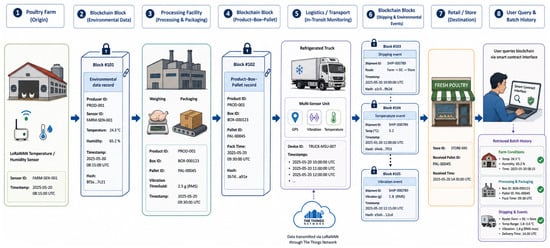
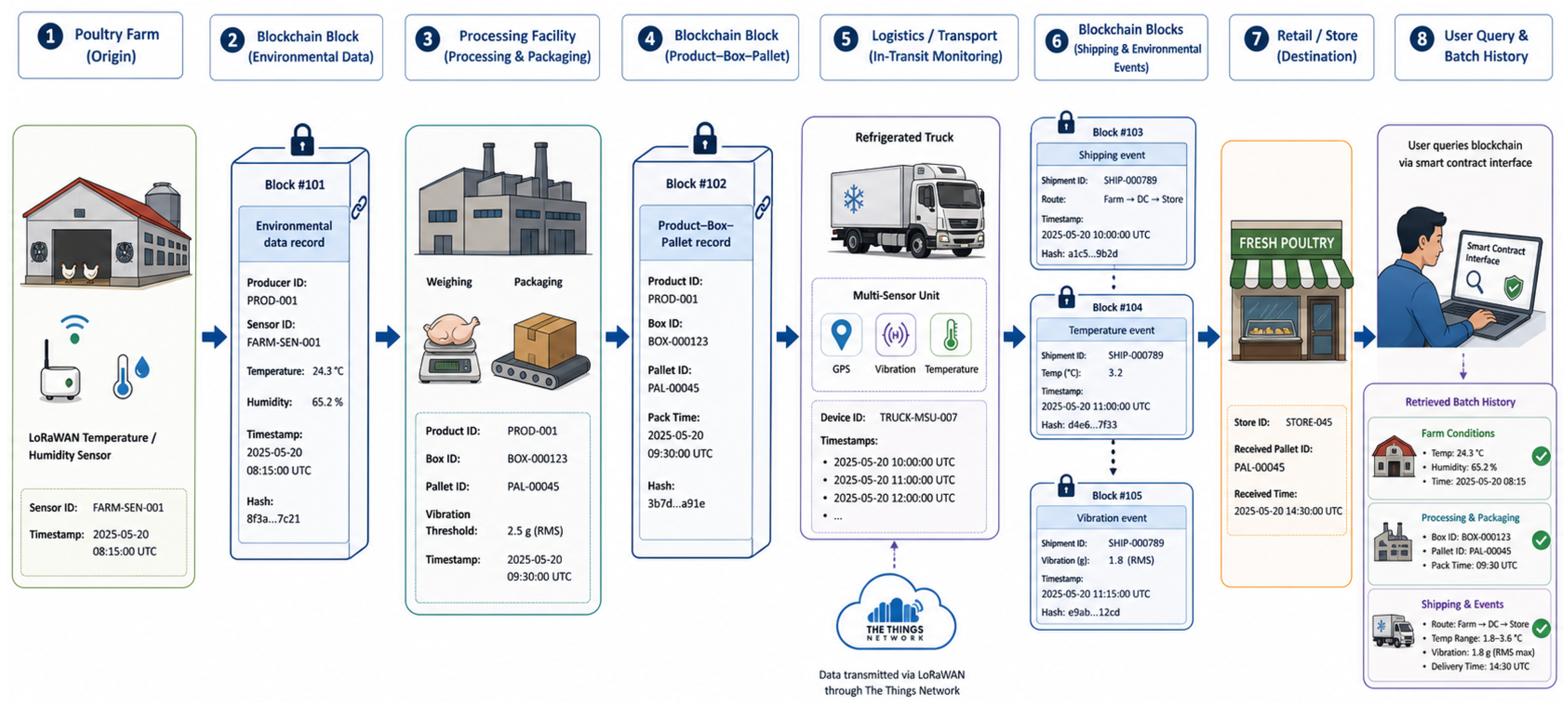
At the retail endpoint, authorised users could query the Food Traceability smart contract by providing the contract ID and either the product ID or shipment ID. The query returned a view of the batch, including the initial farm environmental snapshot, the product, box, pallet associations, and the shipping information with selected environmental and logistics parameters. That view was directly constructed from the blockchain records, ensuring that the information presented to the consumer reflected the immutable history of the batch. The chronological on chain record for an individual product is illustrated in Figure 6.
Figure 6.
Chronological record for an individual product.
7.2. Abnormal Event Testing
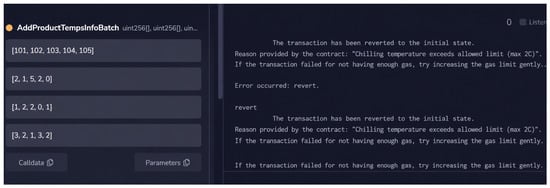
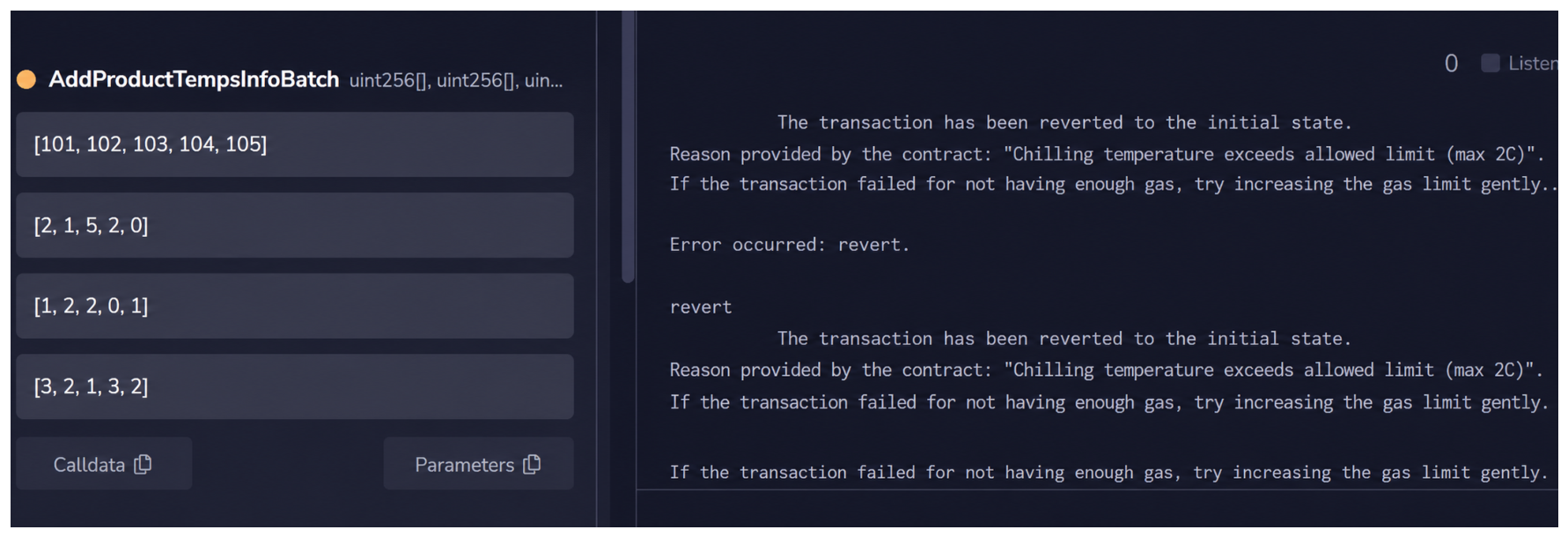
To evaluate how reliably the smart contract performed under conditions that fell outside normal operating parameters, an abnormal scenario test was conducted in which the chilling temperature for a product batch was intentionally set above the contractual threshold of 2 degrees Celsius. In the implemented AddProductTempsInfoBatch function, the chilling, processing, and storage limits were defined as fixed thresholds, 2 °C, 2 °C, and 3 °C, respectively. When the chilling temperature input exceeded 2 °C, the Ethereum testnet reverted the transaction, returned a message to the client and prevented any new batch records from being written to the blockchain. This behaviour confirmed that any violation of the defined limits during registration prevented noncompliant data from being written on chain, ensuring that the traceability ledger recorded only batches that satisfied the encoded operational constraints. Figure 7 presents the Remix IDE output for that abnormal scenario, showing the failed call to AddProductTempsInfoBatch together with the returned revert message and the lack of newly added records in subsequent read operations.
Figure 7.
Reverted transaction.
8. Results and System Evaluation
Building on the evaluation framework defined in Section 3, this section reports the observed values of the KPIs for the implemented blockchain-IIoT system and compares them with representative LoRa-based agricultural monitoring systems from the literature.
The implemented blockchain-IIoT architecture demonstrated robust performance in terms of operational efficiency, data integrity and cost-effectiveness. The smart contract deployed on the Ethereum testnet exhibited stable performance, with average transaction confirmation times of 15–20 s. Under typical network conditions, the associated gas cost was recorded to be between 0.0018 and 0.0035 ETH per batch operation, corresponding to approximately 3.60–7.00$ per transaction at an exchange rate of approximately 2000$ per ETH. These measurements were obtained from a series of prototype deployments executed on an Ethereum test network, using repeated batch submissions under typical gas price settings. Regarding data integrity, cross-verification between TTN sensor logs and blockchain transaction records on the sampled data used confirmed full consistency, with no missing or mismatched entries observed in the examined dataset, proving that all transmitted data were accurately received without information loss. This full alignment validates the effectiveness of the proposed integration layers in maintaining end-to-end data integrity, from physical sensing to blockchain registration.
The economic evaluation of the case study further supported the system’s practical applicability for small- and medium-sized enterprises. The total implementation cost was approximately 5000 EUR, including LoRaWAN gateways, environmental and logistics sensors, and software development. Two LoRaWAN gateways were installed, one at the poultry farms and one at the industrial facility, with unit prices around 450 EUR, resulting in a cumulative gateway cost of approximately 900 EUR. The sensing infrastructure consisted of 12 temperature and humidity nodes deployed as two sensors per poultry house across three poultry houses and six additional sensors in the industrial processing facilities and storage areas. Commercial prices for such nodes are typically around 60 EUR per unit, leading to a total environmental sensing cost of roughly 700 EUR. For transport monitoring, two trucks mounted multisensor units combining GPS, vibration and environmental sensing capabilities were configured, with representative devices priced around 200 EUR, yielding an estimated budget of 400 EUR for the logistics segment. The remaining budget, up to the 5000 EUR total, covered supporting costs such as network connectivity and approximately 3000 EUR for software development. Given these investment levels, the system offers a viable, cost-efficient entry point for SMEs that lack the financial capacity to deploy an ERP system but require traceability and automation capabilities.
From an operational perspective, the integrated solution provided full supply chain transparency and operational accountability. Through immutable blockchain records, customers and stakeholders gained a complete view of the product from farm to retail distribution, effectively eliminating the risk of data manipulation. Automated data collection by IIoT sensors further minimised manual documentation errors. Finally, the system provided comprehensive documentation for regulatory compliance, including environmental logs, event timestamps, and immutable audit trails for safety or quality assurance investigations.
These observations correspond directly to the evaluation dimensions defined previously. The average transaction confirmation time on the Ethereum testnet reflects the end-to-end latency, while the observed gas cost per batch operation and the total implementation cost operationalise the affordability for small- and medium-sized enterprises, and the consistency between sensor logs and blockchain transaction records provides empirical evidence on data integrity and traceability. Table 5 summarises the key performance indicators obtained from the prototype deployment.
Table 5.
KPIs of the system.
The gateway failover test further clarified that the system was resilient. During normal operation, TTN reported high packet delivery rates for the farm, processing, and transport nodes, allowing continuous monitoring of environmental conditions. When the gateway of the farm was disconnected, the system responded in a controlled and predictable way. Devices located in zones with overlapping coverage continued to operate by routing their data through the remaining gateway, which allowed a portion of normal connectivity to persist. Nodes that relied solely on the disconnected gateway experienced a brief pause in data transmission. However, that pause did not affect data integrity or interfere with any smart-contract logic. These observations indicate that achieving reliable operation at sites that depend on a single, isolated gateway will require either deploying additional overlapping gateways or introducing alternative communication paths.
As part of the functional evaluation, an abnormal temperature excursion scenario was simulated by submitting a chilling temperature above 2 °C for a test batch. The transaction was reverted, and the associated revert reason was stored in the Ethereum testnet transaction metadata alongside the transaction hash, forming an immutable exception record that could be consulted during audits or post-incident analyses. This demonstrates that the proposed smart contract not only logged valid operations but also generated verifiable evidence of rule violations at the moment they occurred.
To put these results into context, they were qualitatively compared with two representative LoRa-based IIoT systems in the agri-food sector, namely a LoRa-based dairy supply chain monitoring system focused on process conditions [4] and a LoRa-based poultry house monitoring and environmental management system [22], as summarized in Table 6 below. Both systems demonstrated that LoRa networks could provide long-range connectivity and low-power operation in agricultural environments. However, these systems did not incorporate blockchain-based traceability mechanisms, nor did they provide analysis of on-chain transaction latency and gas costs.
Table 6.
Comparison of proposed architecture with existing solutions.
Overall, the results indicate that the proposed architecture achieves communication performance comparable to existing LoRa-based agricultural IoT deployments, while additionally incorporating a blockchain layer that provides on-chain latency and traceability guarantees aligned with the defined evaluation criteria.
It should be emphasised that the results were obtained with a prototype system that enforced only basic read-access authorisation via an application-level authorisation code and did not yet implement more sophisticated techniques like RBAC. Accordingly, the evaluation focused on traceability, data integrity, cost efficiency in a controlled setting.
9. Limitations and Future Research
Despite successful deployment, several limitations emerge. First, in rural areas with many farms, connectivity issues are common, especially during harsh weather. Expanding the operation would require additional gateways to ensure network coverage. The failover experiment indicates that overlapping gateways can reduce connectivity gaps in geographically isolated places of the supply chain. Secondly, public blockchain transactions involve operational and transaction costs that depend on changes in cryptocurrency prices. Alternative blockchain or private blockchain networks can be used to reduce fees, but they have limited security, centralisation, and transparency. Finally, user adoption can be challenging, especially for end users with limited technological skills.
Beyond infrastructure and adoption challenges, the current system also exhibits security limitations that may constrain its suitability for production use. The simplified authorisation model, based on an authorisation code, does not yet incorporate techniques like RBAC or multisignature authorisation and for that reason can be susceptible to misconfiguration and credential reuse. Moreover, the contract has not undergone a formal security audit, and it must be assumed to be potentially vulnerable to typical categories of Solidity weaknesses documented in the Smart Contract Weakness Classification (SWC) registry [77,78].
Future research should follow various directions to promote the integration of blockchain and IIoT in the supply chain. Firstly, expanding gateway infrastructure to provide rural coverage, possibly through collaboration with telecommunications providers, to address connectivity issues. Secondly, the use of advanced sensors, such as gas detection, advanced imaging, and energy monitoring, should be explored to enable more comprehensive monitoring. Third, at the architectural level, future research should extend the prototype with a hardened access control layer that implements RBAC and multisignature authorisation, building on existing frameworks. Mapping supply chain roles and requiring party approval for critical administrative actions would directly mitigate several access control risks. In addition, the present evaluation relies on compiler diagnostics and manual tests of the smart contract. Before any production deployment is consider, the contract should be subjected to a systematic static analysis or formal verification using specialised tools, in line with current recommendations for secure smart-contract development.
Building on these directions, future work could also enhance the smart-contract architecture to include automated compliance verification and dynamic data-based pricing, while further expanding the IIoT network to achieve better coverage across agricultural regions. As the agricultural sector continues to move towards food safety, environmental sustainability, and supply chain transparency, the advancement of intelligent-contract logic and a broad network coverage will be essential for achieving efficiency, scalability, and traceability.
10. Conclusions
Building on prior work demonstrating that the combination of blockchain-based smart contracts and IIoT sensing can enhance traceability, transparency and automation for a range of solutions accessible across industries [79,80], this research demonstrated that a similar architecture could be implemented in an affordable manner with practical advantages validated through an agricultural supply chain case study.
The proposed system successfully captured environmental data using sensors and the TTN platform, recorded events on the Ethereum blockchain and provided transparent traceability for end-consumers through accessible functions. This research demonstrates that blockchain IIoT solutions are a cost-effective complement to ERP systems for automating environmental monitoring, maintaining immutable records and providing customers with reliable supply chain traceability, in line with earlier studies that highlight the complementary role of blockchain and ERP systems [81,82]. However, several challenges remain. Network coverage in rural areas requires extensive infrastructures, and the transaction costs, while manageable, increase with production volume and remain sensitive to cryptocurrency volatility. Furthermore, adoption barriers arising from technical literacy require ongoing training. Finally, scalability at blockchain layers requires alternative architectures for large-scale deployment. Despite these limitations, the presented approach proves to be both practical and applicable to agricultural supply chain management, where successful adoption depends not so much on technical performance but on overcoming organisational barriers. As supply chain digitalisation and competitive pressure accelerate, blockchain-IIoT frameworks can play a critical role in promoting transparency and trust within the food industry. This research provides a blueprint for agri-food enterprises to adopt blockchain-IIoT traceability, advancing the broader goal of a transparent and trustworthy food supply chain.
Author Contributions
Conceptualization, A.K., A.A. and D.B.; methodology, A.K. and A.A.; software, A.A.; validation, A.K., A.A. and D.B.; formal analysis, A.K.; investigation, A.K. and A.A.; resources, A.K. and A.A.; data curation, A.K.; writing—original draft preparation, A.K.; writing—review and editing, A.K., A.A. and D.B.; visualization, A.K. and D.B.; supervision, D.B.; project administration, D.B.; funding acquisition, A.K. and A.A. All authors have read and agreed to the published version of the manuscript.
Funding
This research received no external funding.
Data Availability Statement
The data presented in this study are not publicly available and are available on request from the corresponding author due to privacy restrictions.
Conflicts of Interest
The authors declare no conflicts of interest.
References
- Sadat Safavi, N.; Amini, M.; Abdollahzadegan, A.; Zakaria, N.H. An Effective Model for Evaluating Organizational Risk and Cost in ERP Implementation by SME. IOSR J. Bus. Manag. 2013, 10, 70–75. [Google Scholar] [CrossRef] [Scilit]
- Haddara, M. Exploring ERP Adoption Cost Factors. Comput. Technol. Appl. 2012, 3, 250–261. [Google Scholar]
- Markus, M.L.; Axline, S.; Petrie, D.; Tanis, S.C. Learning from adopters’ experiences with ERP: Problems encountered and success achieved. J. Inf. Technol. 2000, 15, 245–265. [Google Scholar] [CrossRef] [Scilit]
- Karras, A.; Karras, C.; Drakopoulos, G.; Tsolis, D.; Mylonas, P.; Sioutas, S. SAF: A Peer to Peer IoT LoRa System for Smart Supply Chain in Agriculture. In Artificial Intelligence Applications and Innovations; Maglogiannis, I., Iliadis, L., Macintyre, J., Cortez, P., Eds.; Series Title: IFIP Advances in Information and Communication Technology; Springer International Publishing: Cham, Switzerland, 2022; Volume 647, pp. 41–50. [Google Scholar] [CrossRef] [Scilit]
- Basnayake, B.M.A.L.; Rajapakse, C. A Blockchain-based decentralized system to ensure the transparency of organic food supply chain. In Proceedings of the 2019 International Research Conference on Smart Computing and Systems Engineering (SCSE), Colombo, Sri Lanka, 28 March 2019; pp. 103–107. [Google Scholar] [CrossRef] [Scilit]
- Alam, K.M.; Ashfiqur Rahman, J.M.; Tasnim, A.; Akther, A. A Blockchain-based Land Title Management System for Bangladesh. J. King Saud Univ. Comput. Inf. Sci. 2022, 34, 3096–3110. [Google Scholar] [CrossRef] [Scilit]
- Chaikaew, A.; Osiriphun, S.; Boonchieng, E. Blockchain for supply chain traceability: A survey. In Proceedings of the 2022 12th International Congress on Advanced Applied Informatics (IIAI-AAI), Kanazawa, Japan, 2–8 July 2022; pp. 495–500. [Google Scholar] [CrossRef] [Scilit]
- Azevedo, P.; Gomes, J.; Romão, M. Supply chain traceability using blockchain. Oper. Manag. Res. 2023, 16, 1359–1381. [Google Scholar] [CrossRef] [Scilit]
- Sukumaran, R.P.; Benedict, S. Survey on Blockchain Enabled Authentication for Industrial Internet of Things. In Proceedings of the 2021 Fifth International Conference on I-SMAC (IoT in Social, Mobile, Analytics and Cloud) (I-SMAC), Palladam, India, 11–13 November 2021; pp. 1510–1516. [Google Scholar] [CrossRef] [Scilit]
- Bhattarai, R.K. Supply Chain Development Under Conflict Conditions: Case of Nepal. In Supply Chain Design and Management for Emerging Markets: Learning from Countries and Regions; Springer International Publishing: Cham, Switzerland, 2015; pp. 283–309. [Google Scholar] [CrossRef] [Scilit] [PubMed]
- Shamsuddoha, M. Sustainable Outcomes Through the Structured Forward Supply Chain: A System Dynamic Approach. In Understanding the Dynamics of New Normal for Supply Chains: Post COVID Opportunities and Challenges; Springer International Publishing: Cham, Switzerland, 2022; pp. 55–80. [Google Scholar] [CrossRef] [Scilit]
- Malik, P.K.; Sharma, R.; Singh, R.; Gehlot, A.; Satapathy, S.C.; Alnumay, W.S.; Pelusi, D.; Ghosh, U.; Nayak, J. Industrial Internet of Things and its Applications in Industry 4.0: State of The Art. Comput. Commun. 2021, 166, 125–139. [Google Scholar] [CrossRef] [Scilit]
- Noonia, A.; Singh, N.; Abhishek, K.; Kapila, N.; Dubey, N.; Singh, S.P. An analysis framework for resource management in smart manufacturing the Industrial Internet of Things (IIoT) applications and taxonomy. In Proceedings of the 2024 International Conference on Augmented Reality, Intelligent Systems, and Industrial Automation (ARIIA), Manipal, India, 20–21 December 2024; pp. 1–5. [Google Scholar] [CrossRef] [Scilit]
- Attaran, S.; Attaran, M.; Celik, B.G. Digital Twins and Industrial Internet of Things: Uncovering operational intelligence in industry 4.0. Decis. Anal. J. 2024, 10, 100398. [Google Scholar] [CrossRef] [Scilit]
- Mishra, A. Recent trends in applications of cognitive sensors for smart manufacturing and control. In Cognitive Sensing Technologies and Applications; Institution of Engineering and Technology: London, UK, 2023; Chapter 12; pp. 303–334. [Google Scholar] [CrossRef] [Scilit]
- Augustin, A.; Yi, J.; Clausen, T.; Townsley, W.M. A Study of LoRa: Long Range & Low Power Networks for the Internet of Things. Sensors 2016, 16, 1466. [Google Scholar] [CrossRef] [Scilit] [PubMed]
- Lavric, A.; Petrariu, A.I. LoRaWAN communication protocol: The new era of IoT. In Proceedings of the 2018 International Conference on Development and Application Systems (DAS), Suceava, Romania, 24–26 May 2018; pp. 74–77. [Google Scholar] [CrossRef] [Scilit]
- Devalal, S.; Karthikeyan, A. LoRa Technology—An Overview. In Proceedings of the 2018 Second International Conference on Electronics, Communication and Aerospace Technology (ICECA), Coimbatore, India, 29–31 March 2018; pp. 284–290. [Google Scholar] [CrossRef] [Scilit]
- Codeluppi, G.; Cilfone, A.; Davoli, L.; Ferrari, G. LoRaFarM: A LoRaWAN-Based Smart Farming Modular IoT Architecture. Sensors 2020, 20, 2028. [Google Scholar] [CrossRef] [Scilit] [PubMed]
- Bolívar, J.; Cantillo, V.; Miranda, P. Agri–food supply chain design for perishable products: Application to small-scale farmers. Oper. Res. 2025, 25, 26. [Google Scholar] [CrossRef] [Scilit]
- Pagano, A.; Croce, D.; Tinnirello, I.; Vitale, G. A Survey on LoRa for Smart Agriculture: Current Trends and Future Perspectives. IEEE Internet Things J. 2023, 10, 3664–3679. [Google Scholar] [CrossRef] [Scilit]
- Tooprakai, S.; Krueaprasit, R.; Penchalee, R.; Tulathon, W. A Management System for Poultry Farm Using LoRa Communication Technology. In Proceedings of the 2022 8th International Conference on Engineering, Applied Sciences, and Technology (ICEAST), Chiang Mai, Thailand, 8–10 June 2022; pp. 14–17. [Google Scholar] [CrossRef] [Scilit]
- Redondo, G.; Coutinho, C. Monitoring solution for cold chain logistic transport based on LoRa technology. In Proceedings of the 2024 International Symposium on Sensing and Instrumentation in 5G and IoT Era (ISSI), Lagoa, Portugal, 29–30 August 2024; Volume 1, pp. 1–5. [Google Scholar] [CrossRef] [Scilit]
- Saffari, A.; Iyer, V.; Kapetanovic, Z.; Ranganathan, V. Smart Pallets: Toward Self-Powered Pallet-Level Environmental Sensors for Food Supply Chains. In Proceedings of the 20th ACM Conference on Embedded Networked Sensor Systems SenSys’22, Boston, MA, USA, 6–9 November 2023; pp. 1130–1135. [Google Scholar] [CrossRef] [Scilit]
- Jebril, A.H.; Sali, A.; Ismail, A.; Rasid, M.F.A. Overcoming Limitations of LoRa Physical Layer in Image Transmission. Sensors 2018, 18, 3257. [Google Scholar] [CrossRef] [Scilit] [PubMed]
- Gu, F.; Yu, X. Profit distribution mechanism of agricultural supply chain based on fair entropy. PLoS ONE 2022, 17, 1–16. [Google Scholar] [CrossRef] [Scilit] [PubMed]
- Aday, S.; Aday, M.S. Impact of COVID-19 on the food supply chain. Food Qual. Saf. 2020, 4, 167–180. [Google Scholar] [CrossRef] [Scilit] [PubMed]
- Chorianopoulos, N.; Lytou, A.; Fengou, L.C.; Kinoshita, S.; Dong, P.; Zhang, Y.; Tassou, C.; Mohareb, F.; Nychas, G.J. From lab to market: Real-time food safety monitoring via spectroscopy, blockchain and artificial intelligence. Trends Food Sci. Technol. 2025, 166, 105386. [Google Scholar] [CrossRef] [Scilit]
- Dwivedi, S.K.; Roy, P.; Karda, C.; Agrawal, S.; Amin, R. Blockchain-Based Internet of Things and Industrial IoT: A Comprehensive Survey. Secur. Commun. Netw. 2021, 2021, 7142048. [Google Scholar] [CrossRef] [Scilit]
- Nzuva, S.M. Smart Contracts Implementation, Applications, Benefits, and Limitations. J. Inf. Eng. Appl. 2019, 9, 63–75. [Google Scholar] [CrossRef] [Scilit]
- Tahmasebi, S.; Habibi, J.; Shamsaie, A. A Scalable Architecture for Monitoring IoT Devices Using Ethereum and Fog Computing. arXiv 2020, arXiv:2006.03994. [Google Scholar] [CrossRef] [Scilit]
- Benefo, E.O.; Pradhan, A.K.; Patra, D. Chapter 8 - The ethics of online AI-driven agriculture and food systems. In Ethics in Online AI-Based Systems; Caballé, S., Casas-Roma, J., Conesa, J., Eds.; Intelligent Data-Centric Systems; Academic Press: Amsterdam, The Netherlands, 2024; pp. 153–174. [Google Scholar] [CrossRef] [Scilit]
- Apeh, O.O.; Nwulu, N.I. Improving traceability and sustainability in the agri-food industry through blockchain technology: A bibliometric approach, benefits and challenges. Energy Nexus 2025, 17, 100388. [Google Scholar] [CrossRef] [Scilit]
- Cao, Y.; Yi, C.; Wan, G.; Hu, H.; Li, Q.; Wang, S. An analysis on the role of blockchain-based platforms in agricultural supply chains. Transp. Res. Part E Logist. Transp. Rev. 2022, 163, 102731. [Google Scholar] [CrossRef] [Scilit]
- Bruzzese, S.; Blanc, S.; Costa, C.; Violino, S.; Proto, A.R.; Brun, F. Consumer awareness and willingness to pay for blockchain-based traceability systems in the forest nursery sector: Lessons learnt in the Italian context. Trees For. People 2025, 22, 101018. [Google Scholar] [CrossRef] [Scilit]
- Koh, S.; Gunasekaran, A.; Cooper, J. The demand for training and consultancy investment in SME-specific ERP systems implementation and operation. Int. J. Prod. Econ. 2009, 122, 241–254. [Google Scholar] [CrossRef] [Scilit]
- Verdouw, C.; Robbemond, R.; Wolfert, J. ERP in agriculture: Lessons learned from the Dutch horticulture. Comput. Electron. Agric. 2015, 114, 125–133. [Google Scholar] [CrossRef] [Scilit]
- Cao, Y.; Jia, F.; Manogaran, G. Efficient Traceability Systems of Steel Products Using Blockchain-Based Industrial Internet of Things. IEEE Trans. Ind. Inform. 2020, 16, 6004–6012. [Google Scholar] [CrossRef] [Scilit]
- Uyar, H.; Papanikolaou, A.; Kapassa, E.; Touloupos, M.; Rizou, S. Blockchain-enabled traceability and certification for frozen food supply chains: A conceptual design. Smart Agric. Technol. 2025, 12, 101085. [Google Scholar] [CrossRef] [Scilit]
- Tan, A.; Ngan, P.T. A proposed framework model for dairy supply chain traceability. Sustain. Futur. 2020, 2, 100034. [Google Scholar] [CrossRef] [Scilit]
- Rashed, M.S.; Fakhry, S.; Satour, R.; Pathania, S. Blockchain Technology in Food Supply Chain Management: Enhancing Traceability, Safety, and Quality. In Food and Industry 5.0: Transforming the Food System for a Sustainable Future; Springer Nature: Cham, Switzerland, 2025; pp. 427–455. [Google Scholar] [CrossRef] [Scilit]
- Ellahi, R.M.; Wood, L.C.; Bekhit, A.E.D.A. Blockchain-Based Frameworks for Food Traceability: A Systematic Review. Foods 2023, 12, 3026. [Google Scholar] [CrossRef] [Scilit] [PubMed]
- Niknejad, N.; Ismail, W.; Bahari, M.; Hendradi, R.; Salleh, A.Z. Mapping the research trends on blockchain technology in food and agriculture industry: A bibliometric analysis. Environ. Technol. Innov. 2021, 21, 101272. [Google Scholar] [CrossRef] [Scilit]
- Sheng, Z.; Yilin, W.; Jintao, W.; Keli, X. AI-driven big data acquisition and optimization in cold chain logistics using energy-aware IoT systems. Sustain. Comput. Inform. Syst. 2026, 50, 101362. [Google Scholar] [CrossRef] [Scilit]
- Chatterjee, K.; Singh, A.; Neha. A blockchain-enabled security framework for smart agriculture. Comput. Electr. Eng. 2023, 106, 108594. [Google Scholar] [CrossRef] [Scilit]
- Chen, F.; Xiao, Z.; Cui, L.; Lin, Q.; Li, J.; Yu, S. Blockchain for Internet of things applications: A review and open issues. J. Netw. Comput. Appl. 2020, 172, 102839. [Google Scholar] [CrossRef] [Scilit]
- Rabbani, S.H.; Rahman, M.M.; Ahmad, M.; Zunayed, M.K.M.K.; Khan, M.R.K. Blockchain-Based Food Traceability System to Ensure Food Security in Bangladesh. In Proceedings of the 2025 International Conference on Circuit, Systems and Communication (ICCSC), Fes, Morocco, 19–20 June 2025; pp. 1–6. [Google Scholar]
- Costa, G.; Pita, C.; Alexandre, S.; Roumbedakis, K.; Pontes, J.; Hübel, M.; Rangel, M. Transforming aquatic food systems through digital traceability: A review of global challenges and opportunities. Mar. Policy 2026, 191, 107154. [Google Scholar] [CrossRef] [Scilit]
- Kumar, N.; Banerjee, C.; Bala, M. Performance evaluation of blockchain food supply chain management system: JkBFMs. Innov. Syst. Softw. Eng. 2024, 20, 1–6. [Google Scholar] [CrossRef] [Scilit]
- Aamer, A.M.; Al-Awlaqi, M.A.; Fikri, M.R. Smart food logistics: Design and test of an IoT-based food traceability system. Int. J. Logist. Res. Appl. 2025, 1–20. [Google Scholar] [CrossRef] [Scilit]
- Halder, S.; Rafiqul Islam, M.; Mamun, Q.; Mahboubi, A.; Walsh, P.; Zahidul Islam, M. A comprehensive survey on AI-enabled secure social industrial Internet of Things in the agri-food supply chain. Smart Agric. Technol. 2025, 11, 100902. [Google Scholar] [CrossRef] [Scilit]
- Tsang, Y.P.; Choy, K.L.; Wu, C.H.; Ho, G.T.S.; Lam, H.Y.; Koo, P.S. An IoT-based cargo monitoring system for enhancing operational effectiveness under a cold chain environment. Int. J. Eng. Bus. Manag. 2017, 9, 184797901774906. [Google Scholar] [CrossRef] [Scilit]
- Son, T.N.; Hoan, L.T.; Cuong, N.C.; Van Minh, P.; Van Hoa, R. Remote monitoring and control of poultry farm based on IoT technology. Int. J. Electr. Electron. Eng. 2020, 7, 12–15. [Google Scholar] [CrossRef] [Scilit]
- Lashari, M.H.; Karim, S.; Alhussein, M.; Hoshu, A.A.; Aurangzeb, K.; Anwar, M.S. Internet of things-based Sustainable Environment Management for large indoor facilities. PeerJ Comput. Sci. 2023, 9, e1623. [Google Scholar] [CrossRef] [Scilit] [PubMed]
- Viman, L.; Daraban, M.; Fizesan, R.; Iuonas, M. XpertTrack: Precision Autonomous Measuring Device Developed for Real Time Shipments Tracker. Sensors 2016, 16, 355. [Google Scholar] [CrossRef] [Scilit] [PubMed]
- Cerchecci, M.; Luti, F.; Mecocci, A.; Parrino, S.; Peruzzi, G.; Pozzebon, A. A Low Power IoT Sensor Node Architecture for Waste Management Within Smart Cities Context. Sensors 2018, 18, 1282. [Google Scholar] [CrossRef] [Scilit] [PubMed]
- Patel, D.; Won, M. Experimental Study on Low Power Wide Area Networks (LPWAN) for Mobile Internet of Things. In Proceedings of the 2017 IEEE 85th Vehicular Technology Conference (VTC Spring), Sydney, Australia, 4–7 June 2017; pp. 1–5. [Google Scholar] [CrossRef] [Scilit]
- Yusoff, A.; Shafiril, S.; Wills, G.; Gilbert, L.; Crowder, R. Utilizing the application of sensors to develop low-cost remote sensing system for monitoring forest environmental activity. In Proceedings of the 2016 IEEE Conference on Wireless Sensors (ICWiSE), Langkawi, Malaysia, 10–12 October 2016; pp. 83–88. [Google Scholar] [CrossRef] [Scilit]
- Lauridsen, M.; Kovacs, I.Z.; Mogensen, P.; Sorensen, M.; Holst, S. Coverage and Capacity Analysis of LTE-M and NB-IoT in a Rural Area. In Proceedings of the 2016 IEEE 84th Vehicular Technology Conference (VTC-Fall), Montreal, QC, Canada, 8–21 September 2016; pp. 1–5. [Google Scholar] [CrossRef] [Scilit]
- Maldonado, R.; Karstensen, A.; Pocovi, G.; Esswie, A.A.; Rosa, C.; Alanen, O.; Kasslin, M.; Kolding, T. Comparing Wi-Fi 6 and 5G Downlink Performance for Industrial IoT. IEEE Access 2021, 9, 86928–86937. [Google Scholar] [CrossRef] [Scilit]
- Kumar, V.; Yadav, P.; Soares Indrusiak, L. Resilient Edge: Building an Adaptive and Resilient Multi-Communication Network for IoT Edge Using LPWAN and WiFi. IEEE Trans. Netw. Serv. Manag. 2023, 20, 3055–3071. [Google Scholar] [CrossRef] [Scilit]
- Triantafyllou, A.; Sarigiannidis, P.; Lagkas, T.; Moscholios, I.D.; Sarigiannidis, A. Leveraging fairness in LoRaWAN: A novel scheduling scheme for collision avoidance. Comput. Netw. 2021, 186, 107735. [Google Scholar] [CrossRef] [Scilit]
- LoRa Alliance. LoRaWAN® L2 1.0.4 Specification; Technical Specification TS001-1.0.4; LoRa Alliance: Fremont, CA, USA, 2020. [Google Scholar]
- Alfuhaid, S.; Amyot, D.; Anda, A.A.; Mylopoulos, J. A Mapping Review on Cyber-Physical Smart Contracts: Architectures, Platforms, and Challenges. IEEE Access 2023, 11, 65872–65890. [Google Scholar] [CrossRef] [Scilit]
- Dauda, A.; Flauzac, O.; Nolot, F. A Survey on IoT Application Architectures. Sensors 2024, 24, 5320. [Google Scholar] [CrossRef] [Scilit] [PubMed]
- Esnaola-Gonzalez, I.; Gómez-Omella, M.; Ferreiro, S.; Fernandez, I.; Lázaro, I.; García, E. An IoT Platform towards the Enhancement of Poultry Production Chains. Sensors 2020, 20, 1549. [Google Scholar] [CrossRef] [Scilit] [PubMed]
- Garrido-López, J.; Jiménez-Buendía, M.; Toledo-Moreo, A.; Giménez-Gallego, J.; Torres-Sánchez, R. Monitoring Perishable Commodities Using Cellular IoT: An Intelligent Real-Time Conditions Tracker Design. Appl. Sci. 2024, 14, 11050. [Google Scholar] [CrossRef] [Scilit]
- Soy, H. Coverage Analysis of LoRa and NB-IoT Technologies on LPWAN-Based Agricultural Vehicle Tracking Application. Sensors 2023, 23, 8859. [Google Scholar] [CrossRef] [Scilit] [PubMed]
- Wu, W.; Wang, H.; Cheng, Z. ReLoRaWAN: Reliable data delivery in LoRaWAN networks with multiple gateways. Ad Hoc Netw. 2023, 147, 103203. [Google Scholar] [CrossRef] [Scilit]
- Bhatia, L.; Chen, P.Y.; Breza, M.; Zhao, C.; McCann, J.A. IRONWAN: Increasing Reliability of Overlapping Networks in LoRaWAN. IEEE Internet Things J. 2022, 9, 10763–10776. [Google Scholar] [CrossRef] [Scilit]
- Huo, C.; Chien, T.C.; Chou, P.H. Middleware for IoT-Cloud Integration Across Application Domains. IEEE Des. Test 2014, 31, 21–31. [Google Scholar] [CrossRef] [Scilit]
- Noura, H.; Hatoum, T.; Salman, O.; Yaacoub, J.P.; Chehab, A. LoRaWAN security survey: Issues, threats and possible mitigation techniques. Internet Things 2020, 12, 100303. [Google Scholar] [CrossRef] [Scilit]
- Stanco, G.; Navarro, A.; Frattini, F.; Ventre, G.; Botta, A. A comprehensive survey on the security of low power wide area networks for the Internet of Things. ICT Express 2024, 10, 519–552. [Google Scholar] [CrossRef] [Scilit]
- Cruz, J.P.; Kaji, Y.; Yanai, N. RBAC-SC: Role-Based Access Control Using Smart Contract. IEEE Access 2018, 6, 12240–12251. [Google Scholar] [CrossRef] [Scilit]
- Cao, S.; Foth, M.; Powell, W.; Miller, T.; Li, M. A blockchain-based multisignature approach for supply chain governance: A use case from the Australian beef industry. Blockchain Res. Appl. 2022, 3, 100091. [Google Scholar] [CrossRef] [Scilit]
- Chatterjee, A.; Hansdah, R.C. Deploying Transactional Smart Contracts using Multisignature Boolean Formulas. In Proceedings of the 23rd International Conference on Distributed Computing and Networking ICDCN ’22, Delhi, India, 4–7 January 2022; pp. 170–174. [Google Scholar] [CrossRef] [Scilit]
- Yang, Z.; Man, G.; Yue, S. Understanding Security Audits on Blockchain. In Proceedings of the 2022 5th International Conference on Blockchain Technology and Applications ICBTA ’22, Xi’an, China, 16–18 December 2022; pp. 10–15. [Google Scholar] [CrossRef] [Scilit]
- He, D.; Deng, Z.; Zhang, Y.; Chan, S.; Cheng, Y.; Guizani, N. Smart Contract Vulnerability Analysis and Security Audit. IEEE Netw. 2020, 34, 276–282. [Google Scholar] [CrossRef] [Scilit]
- Raza, Z.; Haq, I.U.; Muneeb, M. Agri-4-All: A Framework for Blockchain Based Agricultural Food Supply Chains in the Era of Fourth Industrial Revolution. IEEE Access 2023, 11, 29851–29867. [Google Scholar] [CrossRef] [Scilit]
- Mallick, S.R.; Diwan, P.; Rakesh, N.; Goswami, V.; Wankhade, S.; Lenka, R.K.; Barik, R.K.; Saikia, M.J. QABSC: Enhancing Millet Supply Chain Transparency and Integrity with Queueing-Assisted Fog Computation and IPFS-Based Blockchain Smart Contracts in an IoVT Environment. SN Comput. Sci. 2026, 7, 510. [Google Scholar] [CrossRef] [Scilit]
- Faccia, A.; Petratos, P. Blockchain, Enterprise Resource Planning (ERP) and Accounting Information Systems (AIS): Research on e-Procurement and System Integration. Appl. Sci. 2021, 11, 6792. [Google Scholar] [CrossRef] [Scilit]
- Sunmola, F.; Lawrence, G.L. Key Success Factors for Integration of Blockchain and ERP Systems: A Systematic Literature Review. Procedia Comput. Sci. 2024, 232, 775–782. [Google Scholar] [CrossRef] [Scilit]

Disclaimer/Publisher’s Note: The statements, opinions and data contained in all publications are solely those of the individual author(s) and contributor(s) and not of MDPI and/or the editor(s). MDPI and/or the editor(s) disclaim responsibility for any injury to people or property resulting from any ideas, methods, instructions or products referred to in the content. |
© 2026 by the authors. Licensee MDPI, Basel, Switzerland. This article is an open access article distributed under the terms and conditions of the Creative Commons Attribution (CC BY) license.