Development and Deployment of IoT-Based Early Warning System for Rainfall-Induced Landslides Using Surface and Subsurface Sensors and Its Application


Abstract
1. Introduction
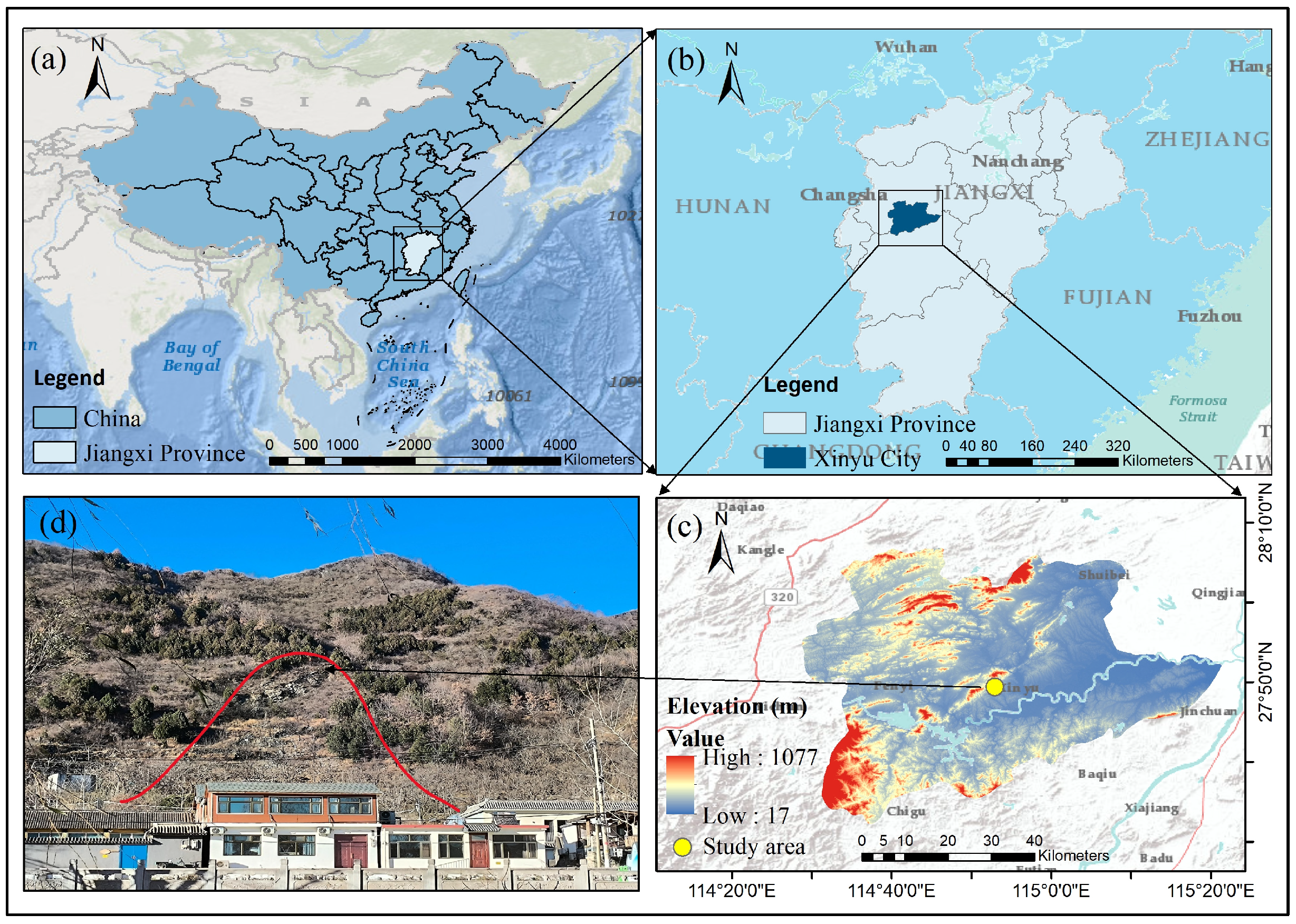
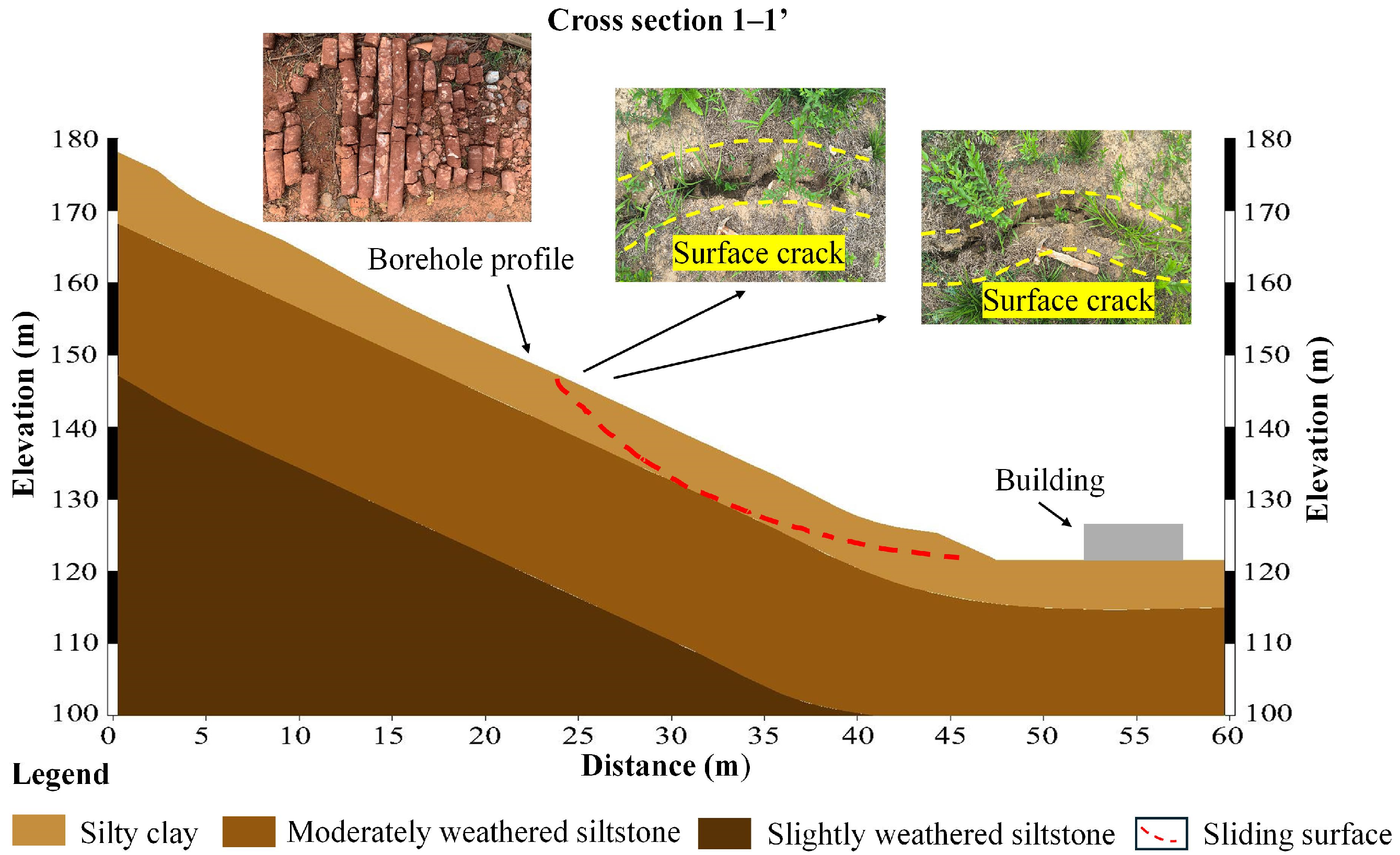
2. Study Area
3. Development of Real-Time Monitoring and Early Warning System
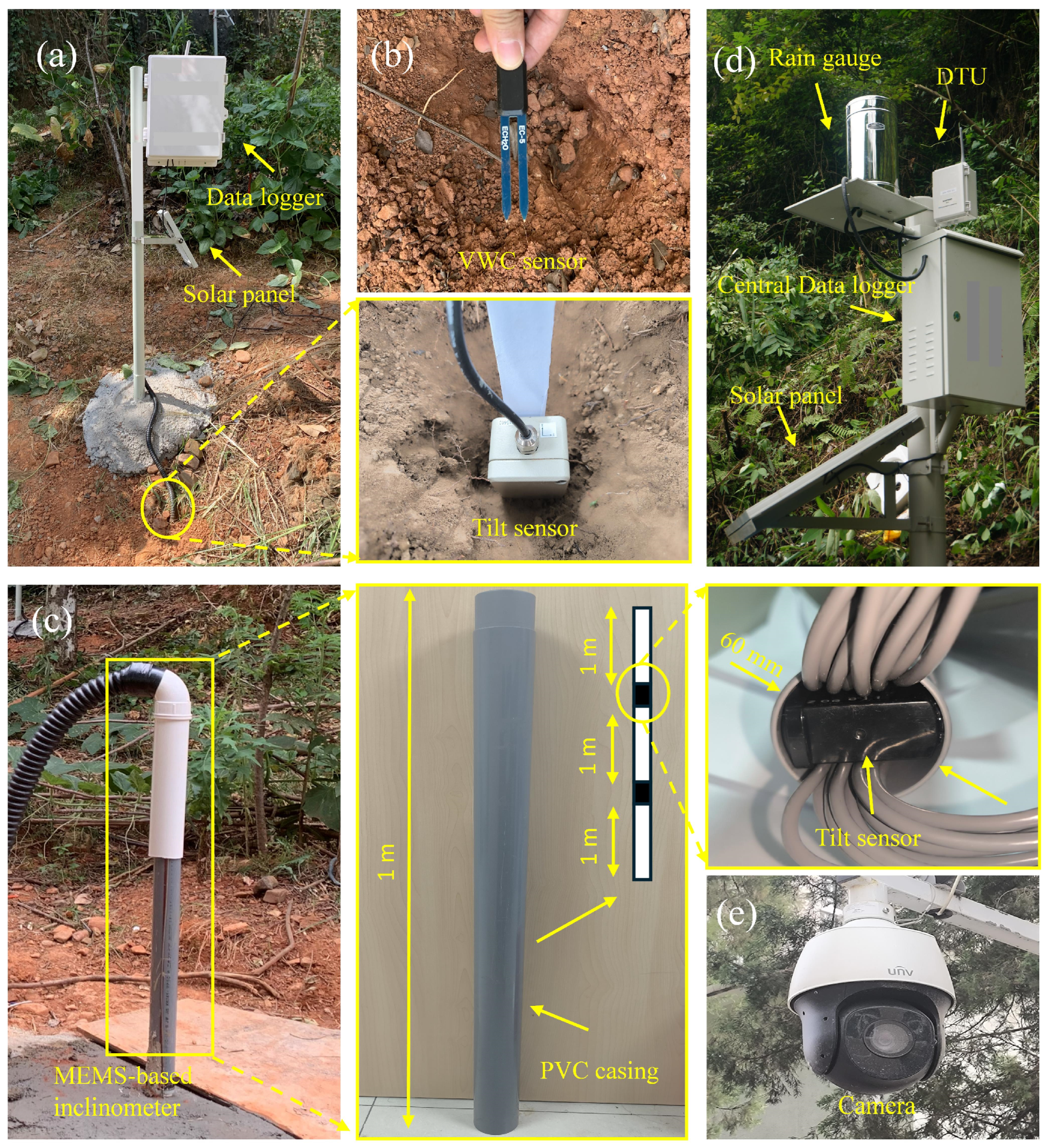
3.1. Selection of the Sensors
3.1.1. Tilt Sensor
3.1.2. Volumetric Water Content (VWC) Sensor
3.1.3. MEMS-Based Inclinometer
3.1.4. Rain Gauge
3.1.5. Video Camera
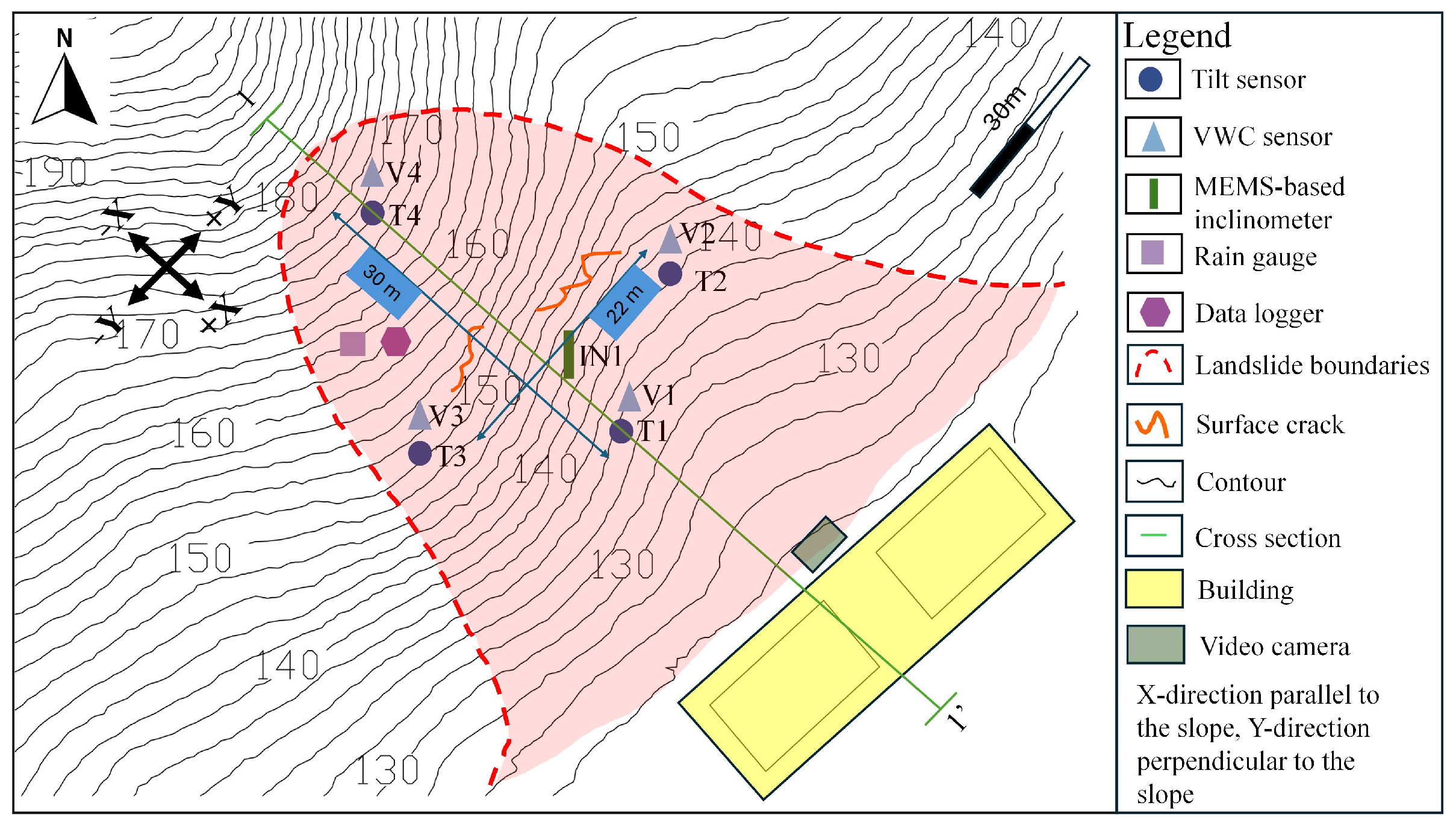
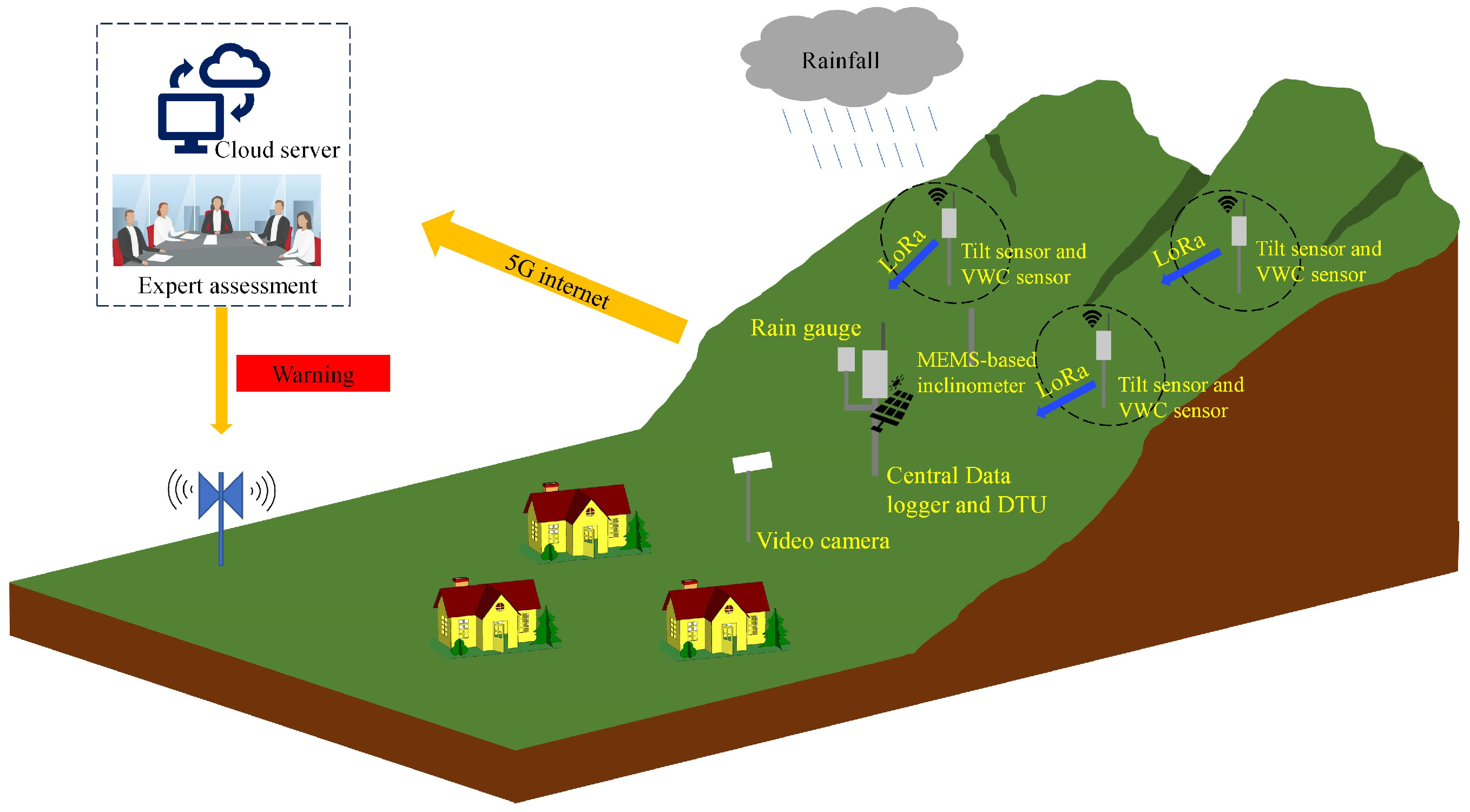
3.1.6. Layout of Monitoring Sensors
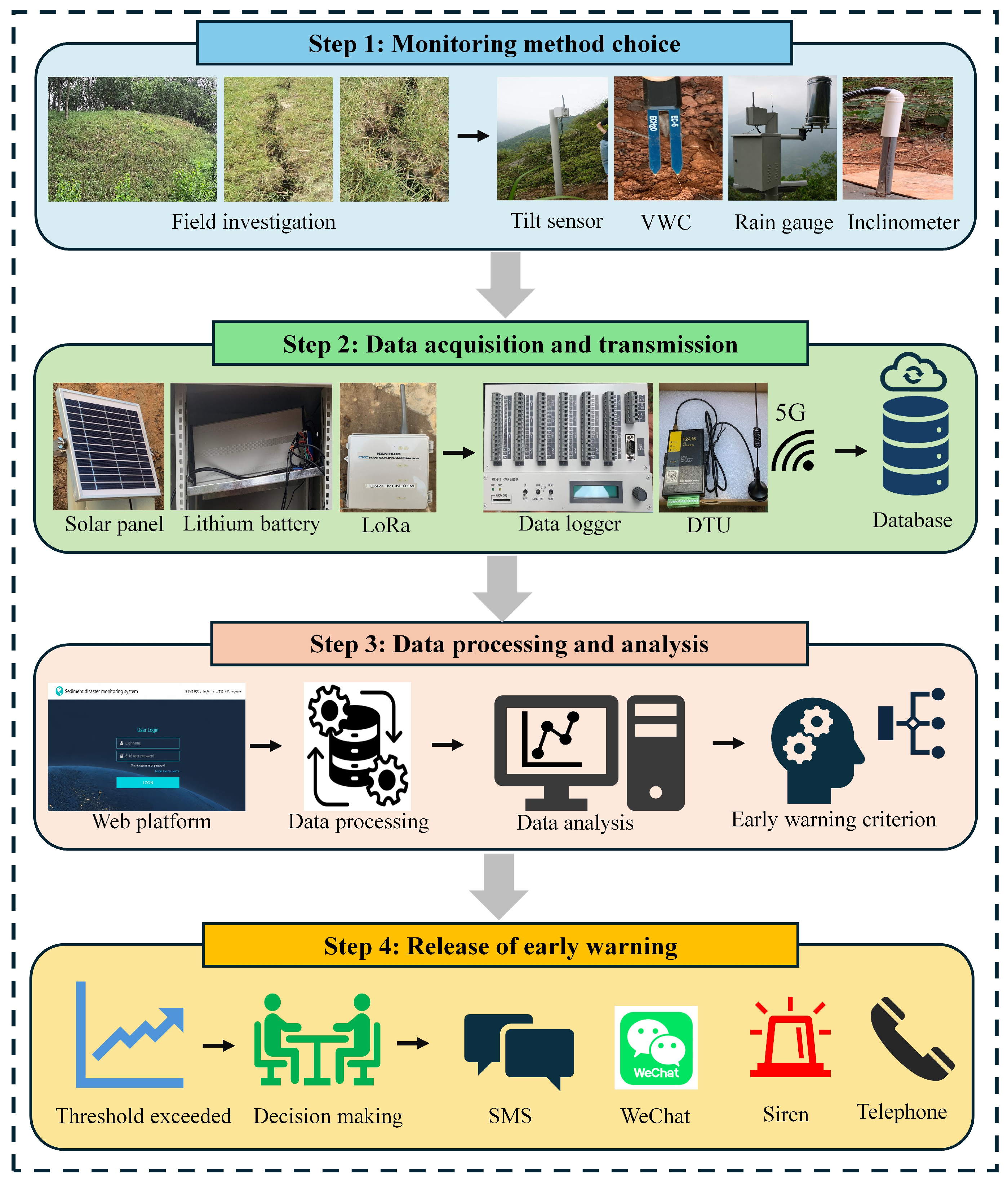
3.2. System Design
3.2.1. Monitoring Method Choice
3.2.2. Data Acquisition and Transmission
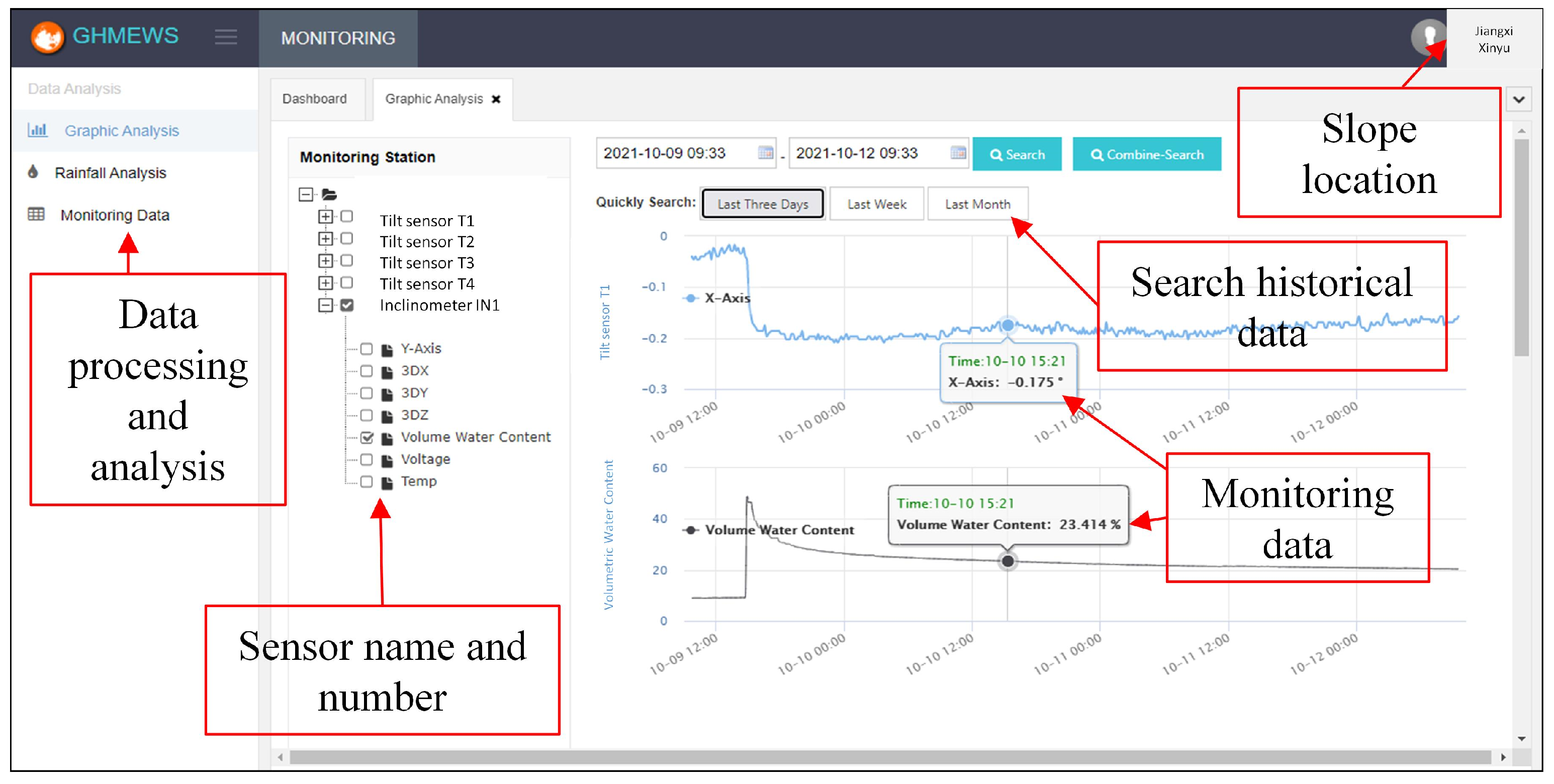
3.2.3. Web Application
3.2.4. Data Processing and Analysis
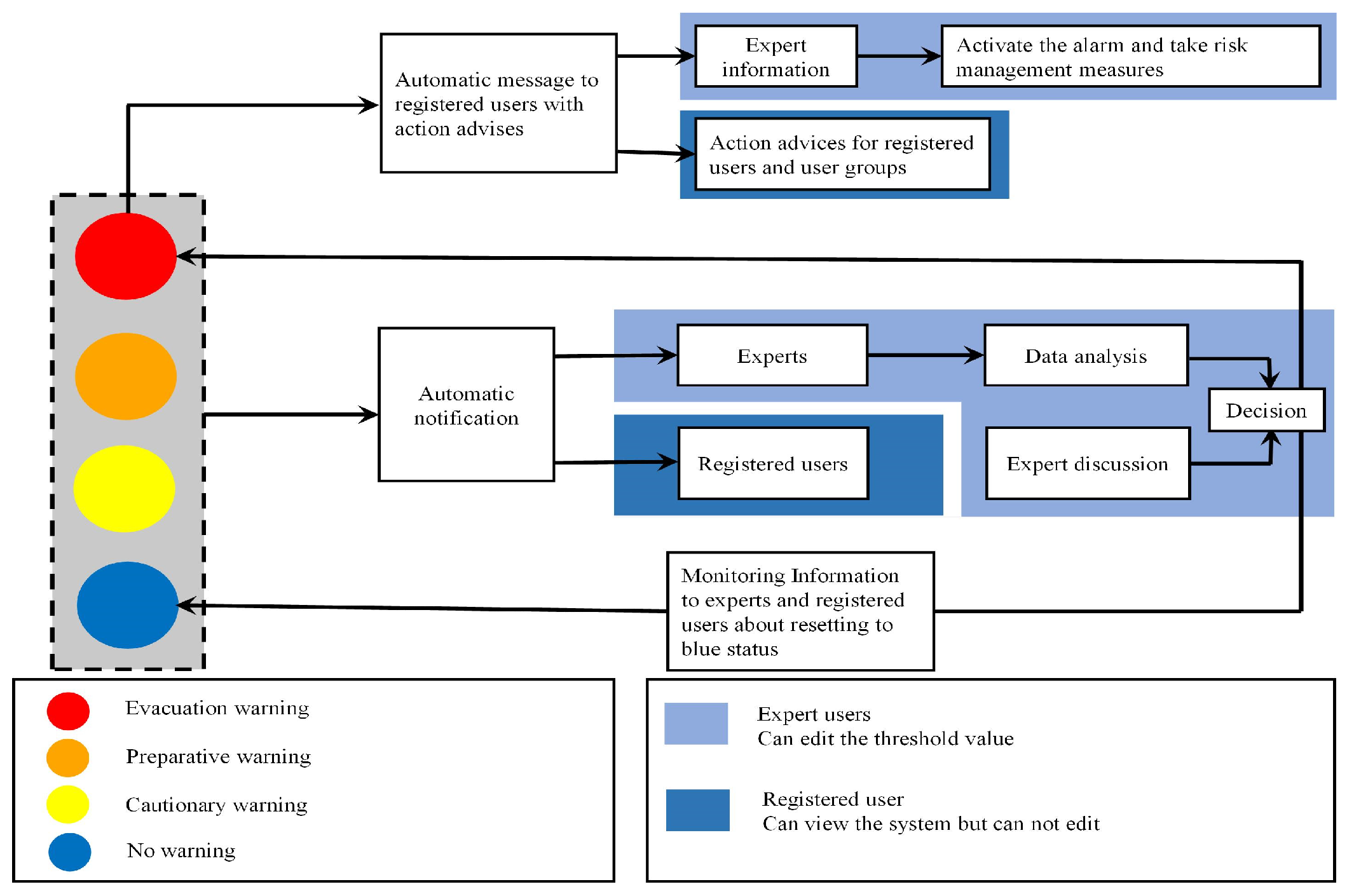
3.2.5. Data Release and Early Waning Alarm
4. Monitoring Result
4.1. Analysis of the Monitoring Result
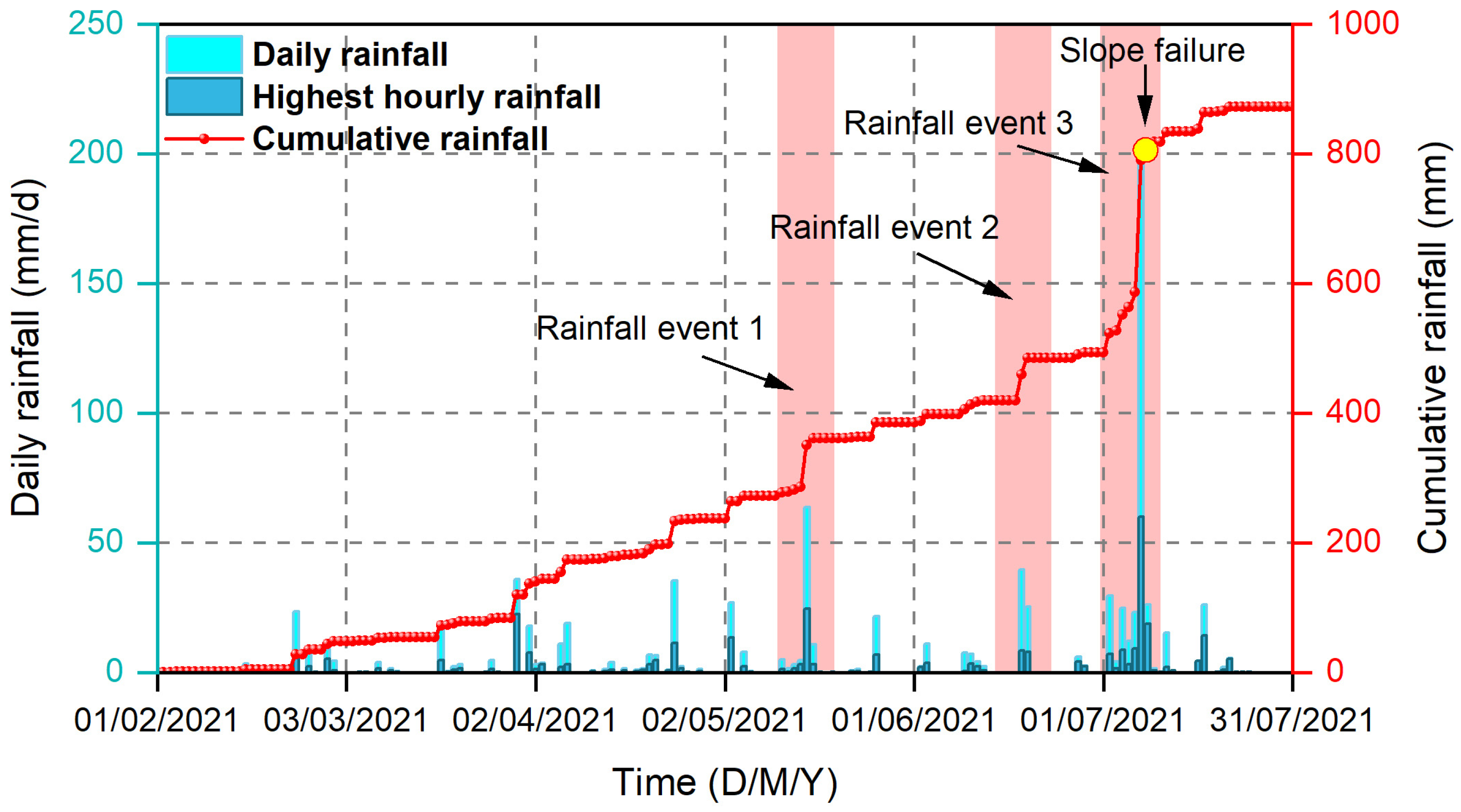
4.1.1. Rainfall Data
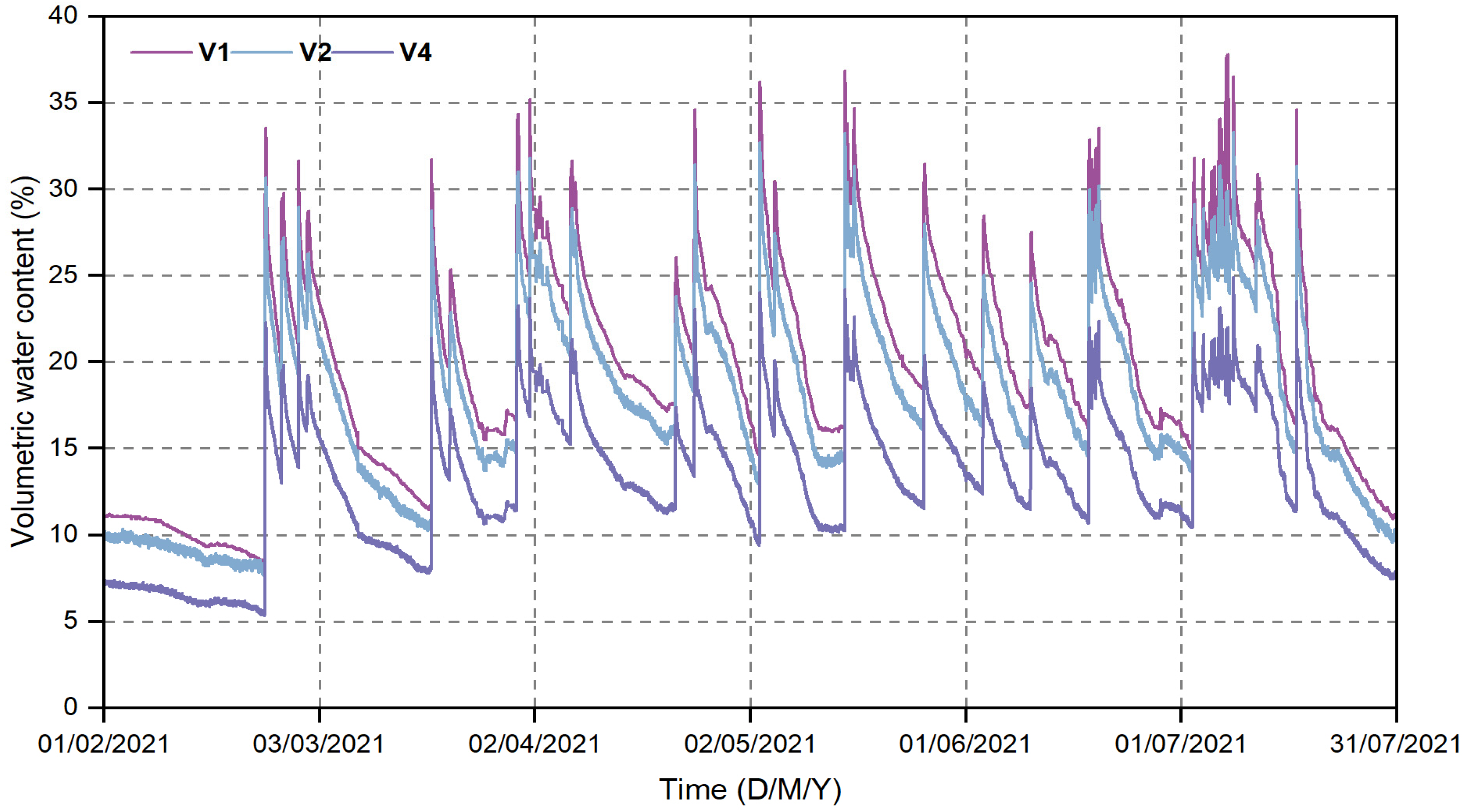
4.1.2. Volumetric Water Content (VWC) Data
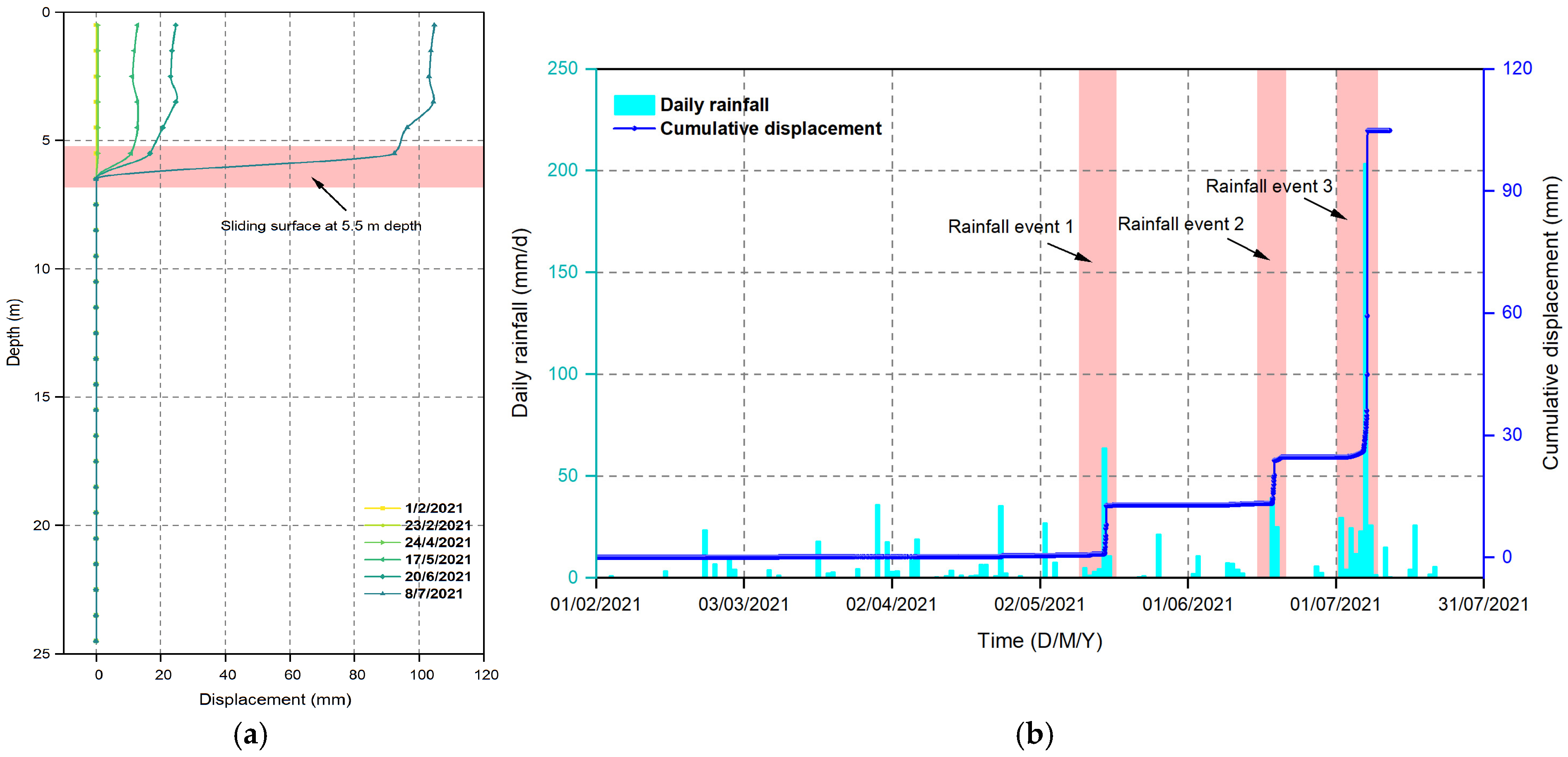
4.1.3. Subsurface Displacement Data
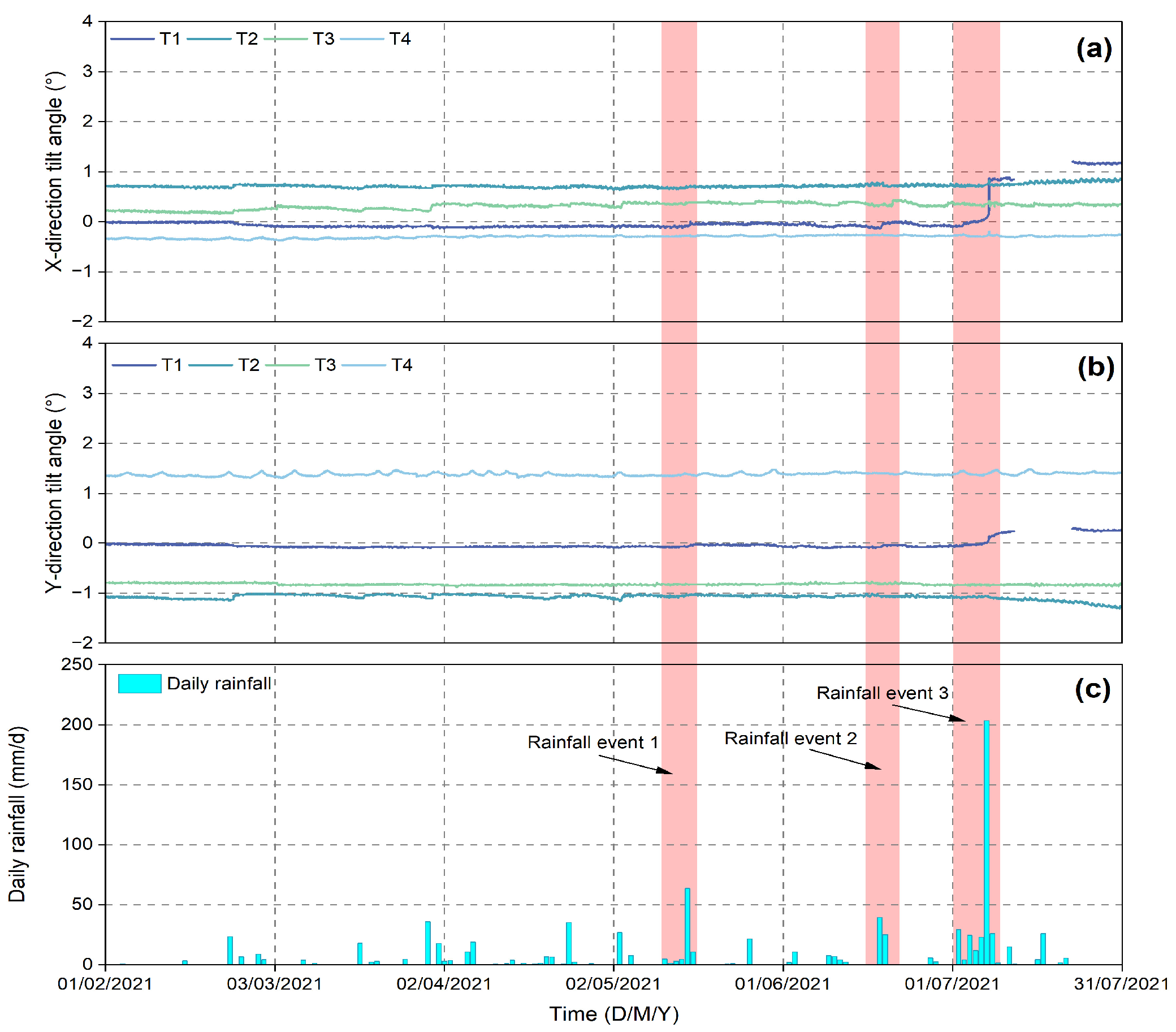
4.1.4. Tilt Sensor Data
4.2. Detailed Analysis of the Tilting Behavior of Sensor T1
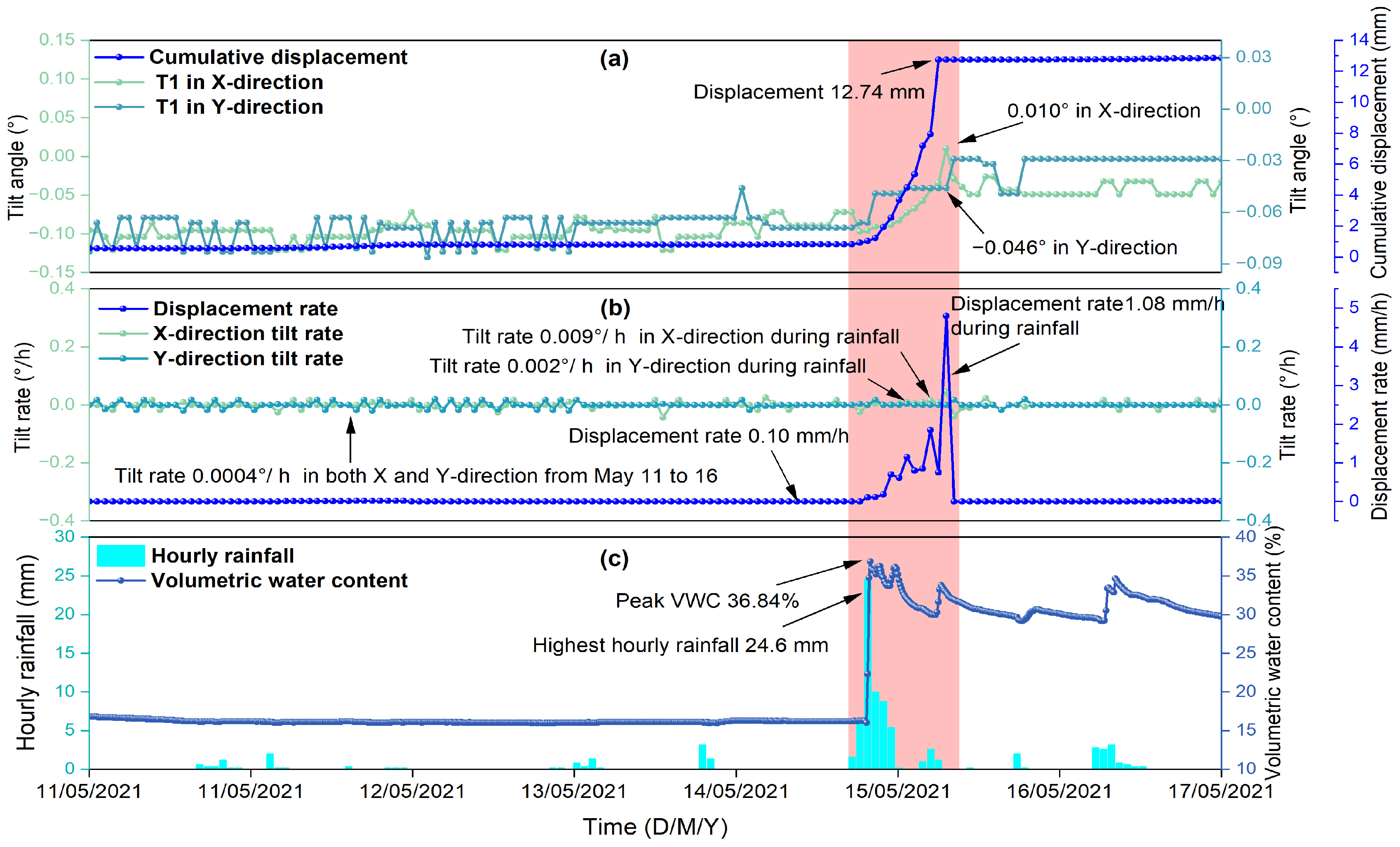
4.2.1. Rainfall Event 1
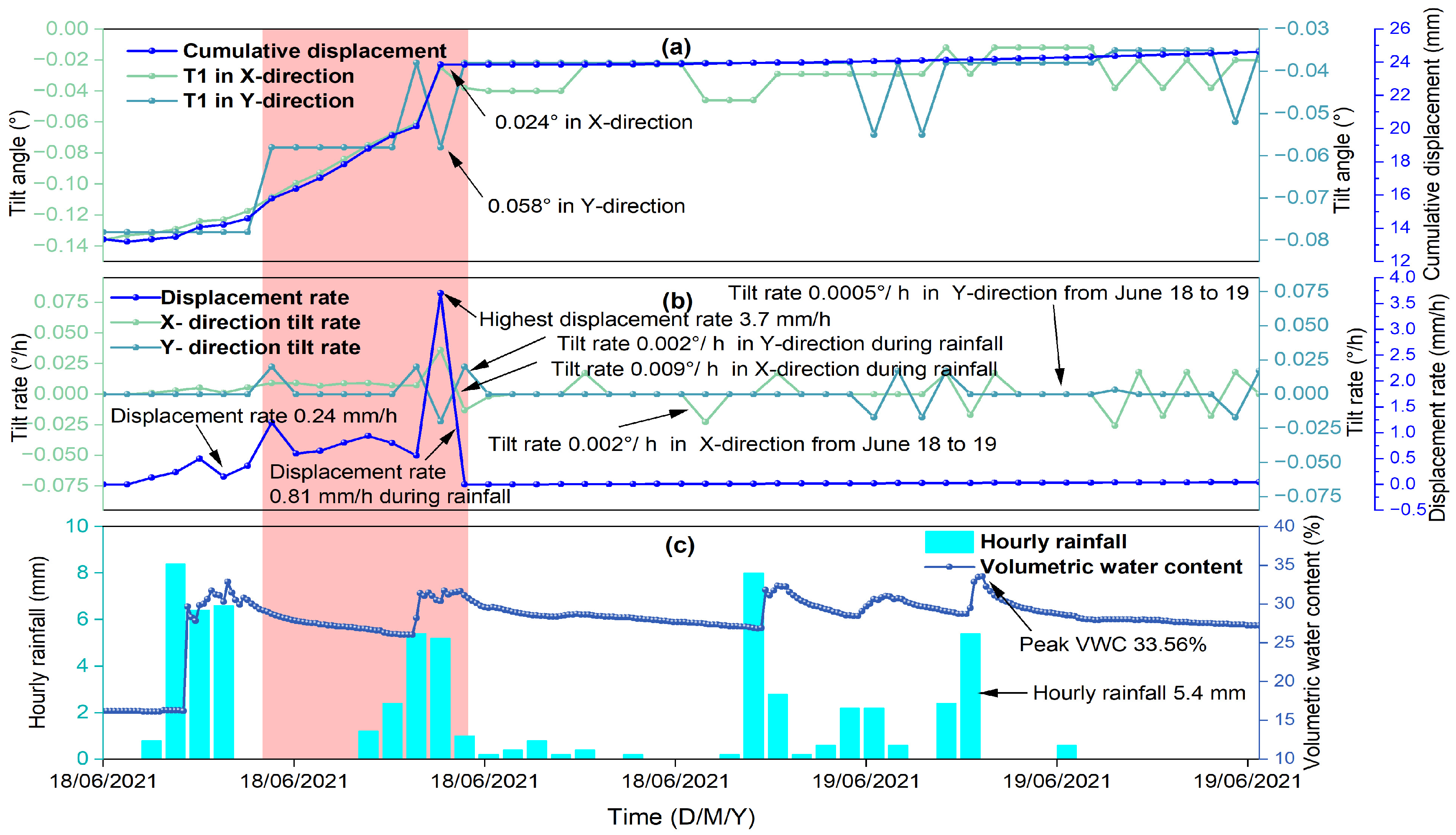
4.2.2. Rainfall Event 2
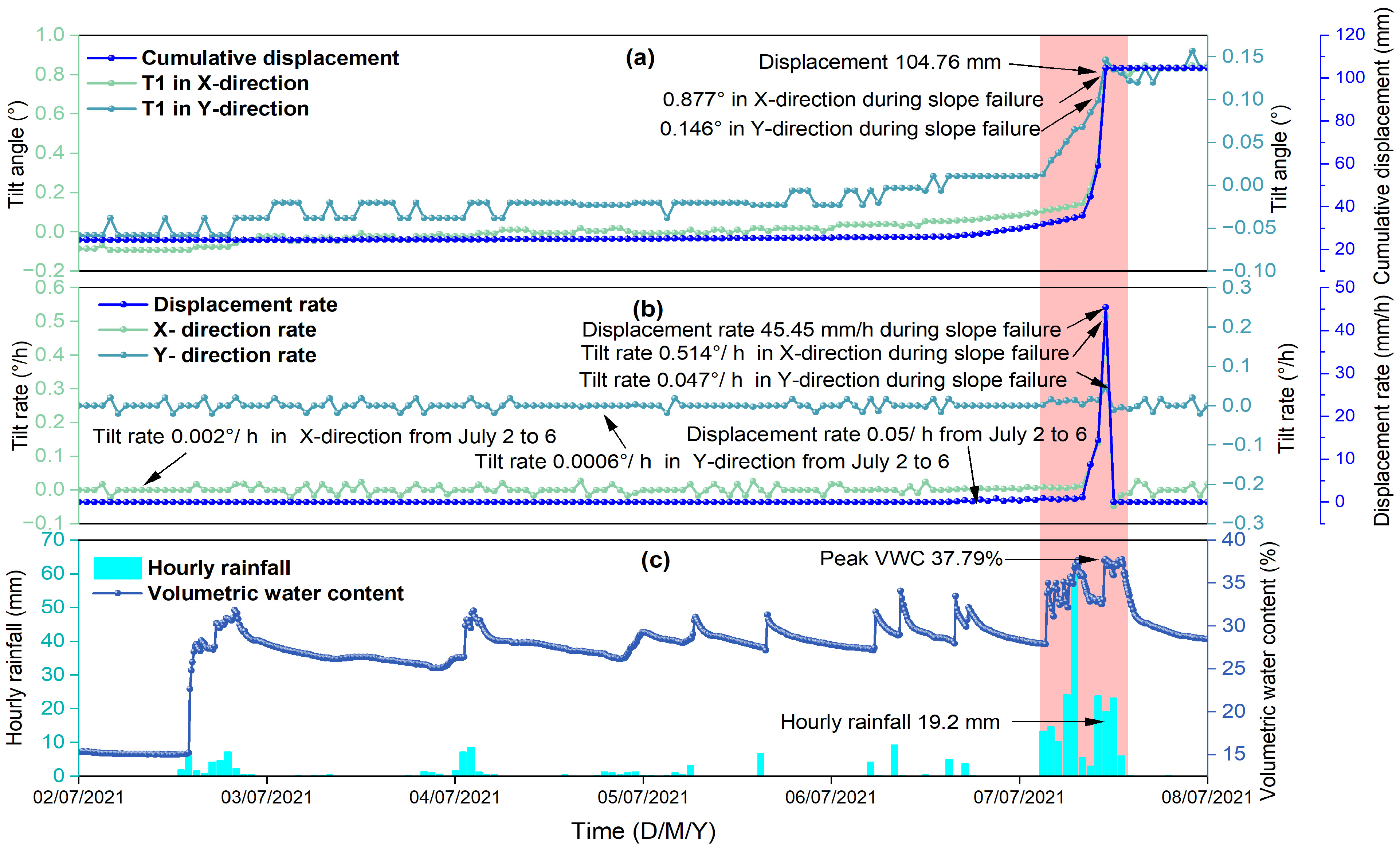
4.2.3. Rainfall Event 3
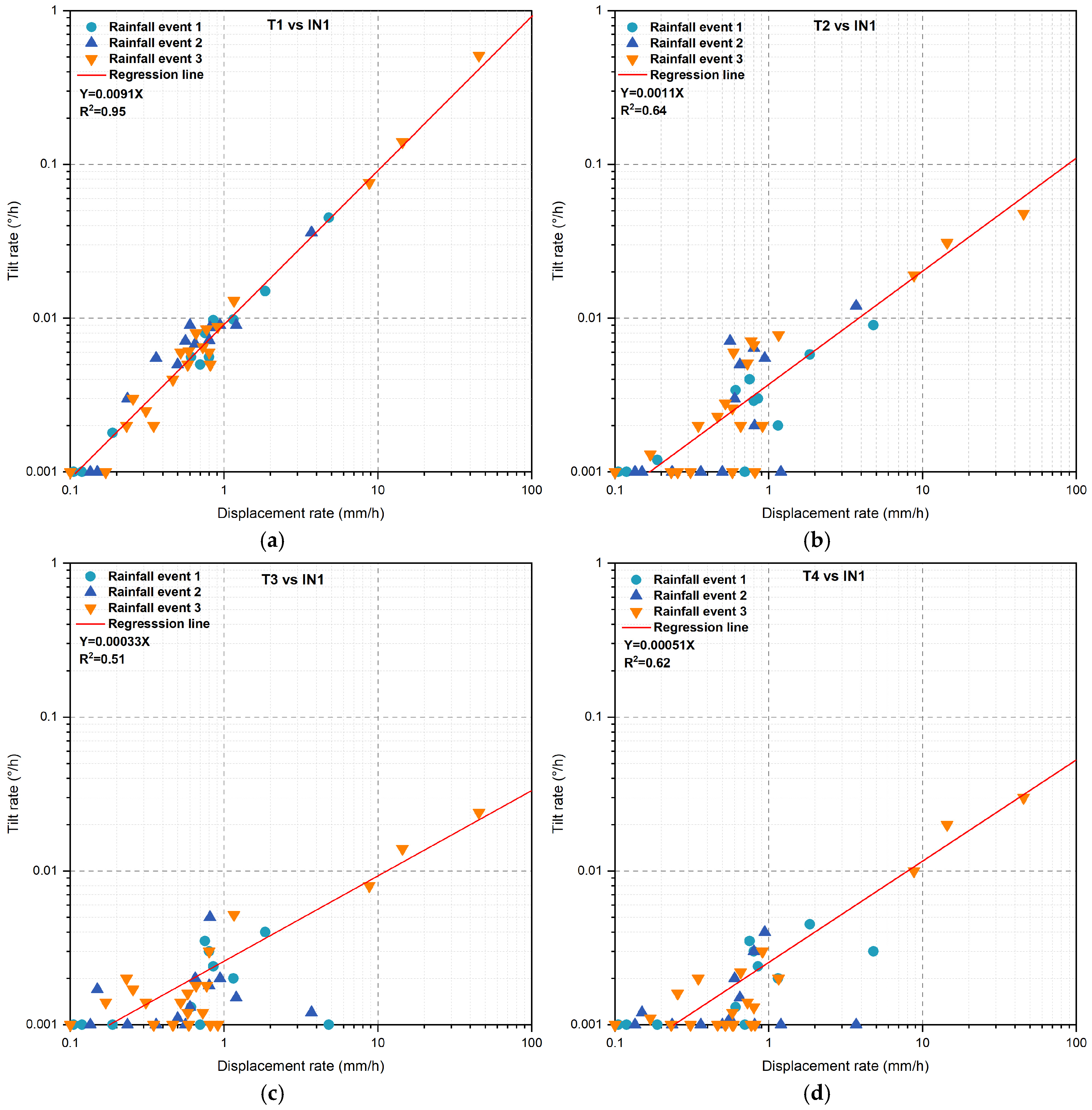
4.3. Relationship Between Surface Tilt and Horizontal Displacement
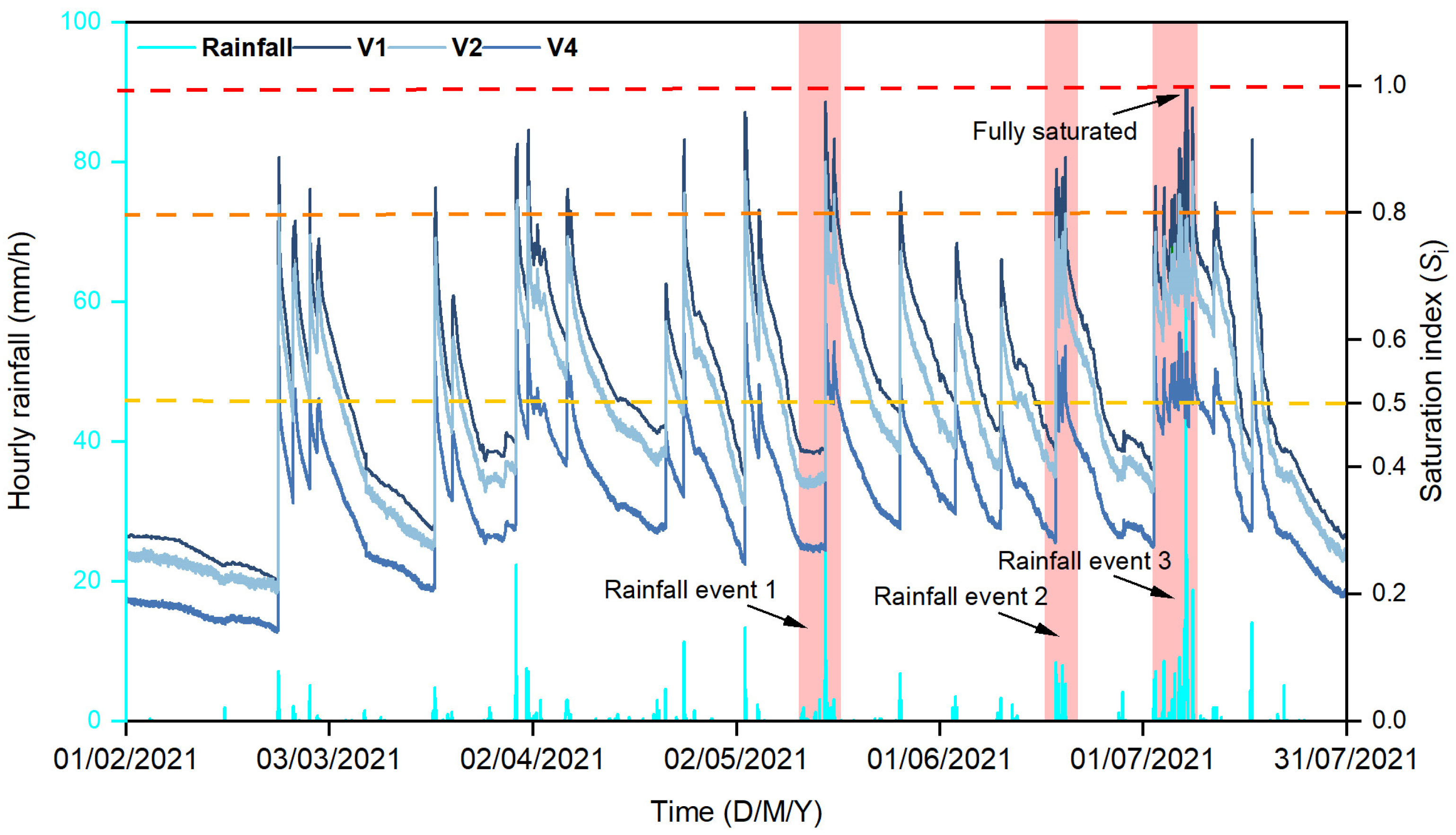
4.4. Saturation Index-Based Threshold Determination for Volumetric Water Content
5. Discussion
6. Conclusions
- (1)
- The proposed real-time monitoring system integrates surface tilt sensors, volumetric water content sensors (VWC), a MEMS-based inclinometer, a rain gauge, and a video camera. The system provides reliable real-time monitoring with low power consumption. The system automatically acquires and transmits data via LoRa-based, solar-powered sensors, and the collected data are subsequently visualized through a real-time web interface, facilitating effective and efficient remote monitoring.
- (2)
- Based on field observations from the monitoring system, tilt sensors successfully recorded surface displacement, while increases in volumetric water content reflected rainfall infiltration. The MEMS-based inclinometer effectively identified horizontal displacement and potential slip surfaces, providing valuable insights into the stability of rainfall-induced shallow landslides. The system demonstrated reliable and consistent performance during the monitoring period. Compared with traditional warning approaches, the system enables the simultaneous evaluation of slope stability across multiple slope locations.
- (3)
- A strong relationship (R2 = 0.95) was observed between tilt rate (Tr) and displacement rate (Dr). Based on this relationship, four types of slope movement were identified, enabling the development of a four-level early warning system, comprising blue, yellow, orange, and red. Saturation index (Si) was further incorporated to characterize slope saturation conditions and define a hydrological threshold for landslide early warning.
- (4)
- In the proposed system, tilt rate (Tr), displacement rate (Dr), and saturation index (Si) are used as the primary warning parameters. An early warning will be issued only when at least two of these three parameters reach their corresponding warning thresholds. Similarly, the warning level is upgraded only when at least two parameters exceed the threshold of a higher warning level. This multiparameter warning level reduces the possibility of false alarms, enhances the reliability of warning issuance, and supports timely public notification and emergency response.
- (5)
- Further analysis is suggested, as the developed system offers considerable potential for validating rainfall threshold models and to develop site-specific empirical equations. In future research, we aim to develop rainfall-based thresholds.
Author Contributions
Funding
Institutional Review Board Statement
Informed Consent Statement
Data Availability Statement
Conflicts of Interest
References
- Mondini, A.C.; Guzzetti, F.; Melillo, M. Deep learning forecast of rainfall-induced shallow landslides. Nat. Commun. 2023, 14, 2466. [Google Scholar] [CrossRef]
- Qiu, H.; Su, L.; Tang, B.; Yang, D.; Ullah, M.; Zhu, Y.; Kamp, U. The effect of location and geometric properties of landslides caused by rainstorms and earthquakes. Earth Surf. Process. Landf. 2024, 49, 2067–2079. [Google Scholar] [CrossRef]
- Wei, Y.; Qiu, H.; Liu, Z.; Huangfu, W.; Zhu, Y.; Liu, Y.; Yang, D.; Kamp, U. Refined and dynamic susceptibility assessment of landslides using InSAR and machine learning models. Geosci. Front. 2024, 15, 101890. [Google Scholar] [CrossRef]
- Zhang, Y.; Zhang, F.; Zhang, J.; Guo, E.; Liu, X.; Tong, Z. Research on the Geological Disaster Forecast and Early Warning Model Based on the Optimal Combination Weighing Law and Extension Method: A Case Study in China. Pol. J. Environ. Stud. 2017, 26, 2385–2395. [Google Scholar] [CrossRef]
- Gong, W.; Zhang, S.; Juang, C.H.; Tang, H.; Pudasaini, S.P. Displacement prediction of landslides at slope-scale: Review of physics-based and data-driven approaches. Earth-Sci. Rev. 2024, 258, 104948. [Google Scholar] [CrossRef]
- Zhao, B.; Zhang, L.; Gu, X.; Luo, W.; Yu, Z.; Yuan, L. How is the occurrence of rainfall-triggered landslides related to extreme rainfall? Geomorphology 2025, 475, 109666. [Google Scholar] [CrossRef]
- Guo, Z.; Ferrer, J.V.; Hürlimann, M.; Medina, V.; Puig-Polo, C.; Yin, K.; Huang, D. Shallow landslide susceptibility assessment under future climate and land cover changes: A case study from southwest China. Geosci. Front. 2023, 14, 101542. [Google Scholar] [CrossRef]
- Dijkstra, T.A.; Dixon, N. Climate change and slope stability in the UK: Challenges and approaches. Q. J. Eng. Geol. Hydrogeol. 2010, 43, 371–385. [Google Scholar] [CrossRef]
- García, A.; Hördt, A.; Fabian, M. Landslide monitoring with high resolution tilt measurements at the Dollendorfer Hardt landslide, Germany. Geomorphology 2010, 120, 16–25. [Google Scholar] [CrossRef]
- Kumar, V.; Cauchie, L.; Mreyen, A.S.; Micu, M.; Havenith, H.B. Evaluating landslide response in a seismic and rainfall regime: A case study from the SE Carpathians, Romania. Nat. Hazards Earth Syst. Sci. 2021, 21, 3767–3788. [Google Scholar] [CrossRef]
- Auflič, M.J.; Herrera, G.; Mateos, R.M.; Poyiadji, E.; Quental, L.; Severine, B.; Peternel, T.; Podolszki, L.; Calcaterra, S.; Kociu, A.; et al. Landslide monitoring techniques in the Geological Surveys of Europe. Landslides 2023, 20, 951–965. [Google Scholar] [CrossRef]
- Hara, T.; Tatta, N.; Yashima, A. Assessment of ground-anchored slope stability based on variation in residual tensile forces. Soils Found. 2023, 63, 101353. [Google Scholar] [CrossRef]
- Dai, B.; Wang, J.; Gu, X.; Xu, C.; Yu, X.; Zhang, H.; Yuan, C.; Nie, W. Development of Modified LSTM Model for Reservoir Capacity Prediction in Huanggang Reservoir, Fujian, China. Geofluids 2022, 2022, 2891029. [Google Scholar] [CrossRef]
- Fan, X.; Yang, F.; Siva Subramanian, S.; Xu, Q.; Feng, Z.; Mavrouli, O.; Peng, M.; Ouyang, C.; Jansen, J.D.; Huang, R. Prediction of a multi-hazard chain by an integrated numerical simulation approach: The Baige landslide, Jinsha River, China. Landslides 2020, 17, 147–164. [Google Scholar] [CrossRef]
- Wang, D.; Huang, G.; Zhang, Q.; Gao, Y.; Du, Y.; Liu, X. A multi-source landslide early warning model based on dynamic monitoring data and the SAAHP-FCE method. Geomat. Nat. Hazards Risk 2025, 16, 2513536. [Google Scholar] [CrossRef]
- Yalçınkaya, M.; Bayrak, T. Dynamic model for monitoring landslides with emphasis on underground water in Trabzon Province, Northeastern Turkey. J. Surv. Eng. 2003, 129, 115–124. [Google Scholar] [CrossRef]
- Rosi, A.; Segoni, S.; Canavesi, V.; Monni, A.; Gallucci, A.; Casagli, N. Definition of 3D rainfall thresholds to increase operative landslide early warning system performances. Landslides 2021, 18, 1045–1057. [Google Scholar] [CrossRef]
- Liu, J.; Tang, H.; Li, Q.; Su, A.; Liu, Q.; Zhong, C. Multi-sensor fusion of data for monitoring of Huangtupo landslide in the three Gorges Reservoir (China). Geomat. Nat. Hazards Risk 2018, 9, 881–891. [Google Scholar] [CrossRef]
- Xu, Q.; Zhao, B.; Dai, K.; Dong, X.; Li, W.; Zhu, X.; Yang, Y.; Xiao, X.; Wang, X.; Huang, J.; et al. Remote sensing for landslide investigations: A progress report from China. Eng. Geol. 2023, 321, 107156. [Google Scholar] [CrossRef]
- He, Y.; Wang, W.; Zhang, L.; Chen, Y.; Chen, Y.; Chen, B.; He, X.; Zhao, Z. An identification method of potential landslide zones using InSAR data and landslide susceptibility. Geomat. Nat. Hazards Risk 2023, 14, 2185120. [Google Scholar] [CrossRef]
- Sestras, P.; Badea, G.; Badea, A.C.; Salagean, T.; Oniga, V.-E.; Roșca, S.; Bilașco, Ș.; Bruma, S.; Spalević, V.; Kader, S.; et al. A novel method for landslide deformation monitoring by fusing UAV photogrammetry and LiDAR data based on each sensor’s mapping advantage in regards to terrain feature. Eng. Geol. 2025, 346, 107890. [Google Scholar] [CrossRef]
- Huang, G.; Du, S.; Wang, D. GNSS techniques for real-time monitoring of landslides: A review. Satell. Navig. 2023, 4, 5. [Google Scholar] [CrossRef]
- Gian, Q.A.; Tran, D.-T.; Nguyen, D.C.; Nhu, V.H.; Tien Bui, D. Design and implementation of site-specific rainfall-induced landslide early warning and monitoring system: A case study at Nam Dan landslide (Vietnam). Geomat. Nat. Hazards Risk 2017, 8, 1978–1996. [Google Scholar] [CrossRef]
- Yu, X.; Zhao, T.; Gong, B.; Tang, C.a. The water weakening effect on the progressive slope failure under excavation and rainfall conditions. Bull. Eng. Geol. Environ. 2024, 83, 316. [Google Scholar] [CrossRef]
- Qian, C.; Li, Y.; Vardon, P.J.; Shao, W.; Song, J.; Zhang, B.; Xu, N. Temporal stability and risk analysis of soil slopes subject to rainfall: The influence of heterogeneity. Eng. Geol. 2025, 347, 107895. [Google Scholar] [CrossRef]
- Pajalić, S.; Peranić, J.; Maksimović, S.; Čeh, N.; Jagodnik, V.; Arbanas, Ž. Monitoring and Data Analysis in Small-Scale Landslide Physical Model. Appl. Sci. 2021, 11, 5040. [Google Scholar] [CrossRef]
- Palis, E.; Lebourg, T.; Tric, E.; Malet, J.-P.; Vidal, M. Long-term monitoring of a large deep-seated landslide (La Clapiere, South-East French Alps): Initial study. Landslides 2017, 14, 155–170. [Google Scholar] [CrossRef]
- Alam, M.J.; Manzano, L.S.; Debnath, R.; Ahmed, A.A. Monitoring Slope Movement and Soil Hydrologic Behavior Using IoT and AI Technologies: A Systematic Review. Hydrology 2024, 11, 111. [Google Scholar] [CrossRef]
- Uhlemann, S.; Smith, A.; Chambers, J.; Dixon, N.; Dijkstra, T.; Haslam, E.; Meldrum, P.; Merritt, A.; Gunn, D.; Mackay, J. Assessment of ground-based monitoring techniques applied to landslide investigations. Geomorphology 2016, 253, 438–451. [Google Scholar] [CrossRef]
- Towhata, I.; Uchimura, T.; Seko, I.; Wang, L. Monitoring of unstable slopes by MEMS tilting sensors and its application to early warning. IOP Conf. Ser. Earth Environ. Sci. 2015, 26, 012049. [Google Scholar] [CrossRef]
- Tang, J.; Taro, U.; Huang, D.; Xie, J.; Tao, S. Physical Model Experiments on Water Infiltration and Failure Modes in Multi-Layered Slopes under Heavy Rainfall. Appl. Sci. 2020, 10, 3458. [Google Scholar] [CrossRef]
- Segalini, A.; Chiapponi, L.; Pastarini, B.; Carini, C. Automated Inclinometer Monitoring Based on Micro Electro-Mechanical System Technology: Applications and Verification. In Proceedings of the Landslide Science for a Safer Geoenvironment; Springer: Cham, Switzerland, 2014; pp. 595–600. [Google Scholar]
- Pecoraro, G.; Calvello, M.; Piciullo, L. Monitoring strategies for local landslide early warning systems. Landslides 2019, 16, 213–231. [Google Scholar] [CrossRef]
- Mekki, K.; Bajic, E.; Chaxel, F.; Meyer, F. A comparative study of LPWAN technologies for large-scale IoT deployment. ICT Express 2019, 5, 1–7. [Google Scholar] [CrossRef]
- Pastukh, A.; Tikhvinskiy, V.; Devyatkin, E. Exploring interference issues in the case of n25 band implementation for 5G/LTEdirect-to-device NTN services. Sensors 2024, 24, 1297. [Google Scholar] [CrossRef]
- Tao, Z.; Zhang, H.; Zhu, C.; Hao, Z.; Zhang, X.; Hu, X. Design and operation of App-based intelligent landslide monitoring system: The case of Three Gorges Reservoir Region. Geomat. Nat. Hazards Risk 2019, 10, 1209–1226. [Google Scholar] [CrossRef]
- Xu, Q.; Peng, D.; Zhang, S.; Zhu, X.; He, C.; Qi, X.; Zhao, K.; Xiu, D.; Ju, N. Successful implementations of a real-time and intelligent early warning system for loess landslides on the Heifangtai terrace, China. Eng. Geol. 2020, 278, 105817. [Google Scholar] [CrossRef]
- Huang, L.; Mo, Z.; Xie, S.; Liu, L.; Chen, J.; Kang, C.; Wang, S. Spatiotemporal characteristics of GNSS-derived precipitable water vapor during heavy rainfall events in Guilin, China. Satell. Navig. 2021, 2, 13. [Google Scholar] [CrossRef]
- Uchimura, T.; Towhata, I.; Lan Anh, T.T.; Fukuda, J.; Bautista, C.J.B.; Wang, L.; Seko, I.; Uchida, T.; Matsuoka, A.; Ito, Y.; et al. Simple monitoring method for precaution of landslides watching tilting and water contents on slopes surface. Landslides 2010, 7, 351–357. [Google Scholar] [CrossRef]
- Waleed, M.; Alshawmar, F. Enhancing mechanical properties of low plasticity soil through coal and silica fume stabilization. Sci. Rep. 2025, 15, 9990. [Google Scholar] [CrossRef]
- Yang, Z.; Wang, L.; Qiao, J.; Uchimura, T.; Wang, L. Application and verification of a multivariate real-time early warning method for rainfall-induced landslides: Implication for evolution of landslide-generated debris flows. Landslides 2020, 17, 2409–2419. [Google Scholar] [CrossRef]
- Varnes, D.J. Landslides-Analysis and Control; National Academy of Sciences, Transportation Board Special Report; National Academy of Science Transportation Research Board: Washington, DC, USA, 1978; Volume 176, pp. 11–33. [Google Scholar]
- Damiano, E.; Battipaglia, M.; De Cristofaro, M.; Ferlisi, S.; Guida, D.; Molitierno, E.; Netti, N.; Valiante, M.; Olivares, L. Innovative extenso-inclinometer for slow-moving deep-seated landslide monitoring in an early warning perspective. J. Rock Mech. Geotech. Eng. 2024, 17, 5359–5371. [Google Scholar] [CrossRef]
- Hu, Y.; Hong, C.; Zhang, Y.; Li, G. A monitoring and warning system for expressway slopes using FBG sensing technology. Int. J. Distrib. Sens. Netw. 2018, 14, 1550147718776228. [Google Scholar] [CrossRef]
- Liu, Y.; Hazarika, H.; Kanaya, H.; Takiguchi, O.; Rohit, D. Landslide prediction based on low-cost and sustainable early warning systems with IoT. Bull. Eng. Geol. Environ. 2023, 82, 177. [Google Scholar] [CrossRef]
- Sheikh, M.R.; Nakata, Y.; Shitano, M.; Kaneko, M. Rainfall-induced unstable slope monitoring and early warning through tilt sensors. Soils Found. 2021, 61, 1033–1053. [Google Scholar] [CrossRef]
- Uchimura, T.; Towhata, I.; Wang, L.; Nishie, S.; Yamaguchi, H.; Seko, I.; Qiao, J. Precaution and early warning of surface failure of slopes using tilt sensors. Soils Found. 2015, 55, 1086–1099. [Google Scholar] [CrossRef]





| Instrument | Application | Parameters Monitored | Key Specifications | Quantity |
|---|---|---|---|---|
| Tilt sensor | Surface movement | Displacement and deformation | Axes of measurement: 2-Axis | 4 |
| Accuracy: 0.003° | ||||
| Resolution: 0.001° | ||||
| Tilt range: ±30° | ||||
| Non-linearity: ±0.5% FS | ||||
| Service temperature: −20 °C~+60 °C | ||||
| Average power consumption: 22 mA | ||||
| VWC sensor | Water content | Hydrological | Accuracy: ±0.03 m3/m3 | 4 |
| Resolution: /1 °C | ||||
| Measurement range: 0~100% VWC | ||||
| Service temperature: −40 °C~+60 °C | ||||
| Output: 10–50% of excitation (250~2500 mV) | ||||
| Connector: 3.5-mm stereo or tinned wires | ||||
| MEMS-based Inclinometer | Subsurface Movement | Displacement and deformation | Axes of measurement: 2-Axis | 1 |
| Measurement method: Capacitive inclinometer Module | ||||
| Accuracy: 0.1° | ||||
| Resolution: 0.01° | ||||
| Measurement range: −15°~+30° | ||||
| Non-linearity: ±0.5% FS | ||||
| Service temperature: −20 °C~+50 °C | ||||
| Average power consumption: 7 mA | ||||
| Casing material: PVC | ||||
| Rain gauge | Rainfall monitoring | Meteorological | Accuracy: ≤±3% | 1 |
| Resolution: 0.2 mm | ||||
| Measurement range: 0.5 mm | ||||
| Rain-holder size: Φ 200 + 0.6 mm | ||||
| Instrument Size: Φ 216 × 460 mm | ||||
| Supported sensor: Tipping bucket rain gauge | ||||
| Service temperature: 0 °C~80 °C | ||||
| Video camera | Observational tool | Environmental monitoring | Focal length: 7.9–316 mm, 40× optical | 1 |
| Zoom speed: Approx. 4.8 s | ||||
| Aperture: F1.8~F6.1 | ||||
| Max. resolution: 2560 × 1944 |
| Warning Level | Landslide State | Tilt Rate (°/h) | Displacement Rate (mm/h) | Saturation Index (Si) | Engineering Measures |
|---|---|---|---|---|---|
| Blue (No warning) | Very slow | Tr < 0.005 | Dr < 0.5 | Si < 0.5 | Data are checked daily, and monitoring bulletins are issued weekly. |
| Yellow (Cautionary warning) | Slow | 0.005 ≤ Tr < 0.05 | 0.5 ≤ Dr < 5 | 0.5 ≤ Si < 0.8 | Data are checked frequently, and monitoring bulletins issued daily and weekly to experts and the registered users. No public communication is released at this stage. |
| Orange (Preparative warning) | Moderate | 0.05 ≤ Tr < 0.2 | 5 ≤ Dr < 20 | 0.8 ≤ Si < 1 | Data are checked more frequently, and monitoring bulletins are issued daily. Consultation of experts and relevant authorities should be conducted. Preparing for evacuation. |
| Red (Evacuation warning) | Rapid | Tr ≥ 0.2 | Dr ≥ 20 | Si ≥ 1 | Data are checked even more frequently, and two monitoring bulletins are issued per day. In case of alarm, local government announces and conducts risk mitigation and evacuation. |
Disclaimer/Publisher’s Note: The statements, opinions and data contained in all publications are solely those of the individual author(s) and contributor(s) and not of MDPI and/or the editor(s). MDPI and/or the editor(s) disclaim responsibility for any injury to people or property resulting from any ideas, methods, instructions or products referred to in the content. |
© 2026 by the authors. Licensee MDPI, Basel, Switzerland. This article is an open access article distributed under the terms and conditions of the Creative Commons Attribution (CC BY) license.
Share and Cite
Mondal, A.U.; Liu, X.; Li, B. Development and Deployment of IoT-Based Early Warning System for Rainfall-Induced Landslides Using Surface and Subsurface Sensors and Its Application. Appl. Sci. 2026, 16, 5738. https://doi.org/10.3390/app16125738
Mondal AU, Liu X, Li B. Development and Deployment of IoT-Based Early Warning System for Rainfall-Induced Landslides Using Surface and Subsurface Sensors and Its Application. Applied Sciences. 2026; 16(12):5738. https://doi.org/10.3390/app16125738
Chicago/Turabian StyleMondal, Arghya Uthpal, Xiaonan Liu, and Bingqi Li. 2026. "Development and Deployment of IoT-Based Early Warning System for Rainfall-Induced Landslides Using Surface and Subsurface Sensors and Its Application" Applied Sciences 16, no. 12: 5738. https://doi.org/10.3390/app16125738
APA StyleMondal, A. U., Liu, X., & Li, B. (2026). Development and Deployment of IoT-Based Early Warning System for Rainfall-Induced Landslides Using Surface and Subsurface Sensors and Its Application. Applied Sciences, 16(12), 5738. https://doi.org/10.3390/app16125738