Article

Design and Protective Performance Effectiveness Analysis of Child Restrained System with an Airbag


1
School of Automotive and Traffic Engineering, Jiangsu University, Zhenjiang 212013, China
2
YA Engineering Services, LLC., 2350 W 205th St., Torrance, CA 90501, USA
*
Author to whom correspondence should be addressed.
Appl. Sci. 2026, 16(11), 5257; https://doi.org/10.3390/app16115257 (registering DOI)
Submission received: 31 March 2026 / Revised: 15 May 2026 / Accepted: 18 May 2026 / Published: 24 May 2026
(This article belongs to the Section Applied Biosciences and Bioengineering)

Abstract

Child occupants are highly vulnerable to head and neck injuries in vehicle crashes; conventional child restraint systems primarily restrain the torso, with limited ability to directly reduce excessive head excursion and neck loads during frontal collisions. Therefore, effective cushioning and energy absorption are needed to improve head and neck protection in child restraint systems. This study proposed and evaluated a novel child restraint system integrated with an airbag to enhance head and neck protection. A finite element model of a five-point harness child safety seat with an airbag module mounted on the seatbelt buckle was developed. The predictive accuracy of the airbag model and child restraint system was validated through pendulum impact tests and frontal sled tests. Next, the PIPER 3 human model was applied to evaluate the effectiveness of the airbag. Compared with the five-point harness child restraint system without an airbag, the incorporation of the airbag significantly improved head and neck protection. Specifically, the maximum vertical head-T1 displacement decreased from 286 mm to 90 mm; additionally, HIC15, 3 ms resultant head acceleration, peak upper neck tension force, peak upper neck flexion moment, and 3 ms chest acceleration were reduced by 51.8%, 27.8%, 66.9%, 29.6%, and 16.0%, respectively. This study provided a technical basis for the development of passive safety technologies in child restraint systems with airbag applications.

1. Introduction

Passive safety technology and restraint systems are widely applied to protect the safety of vehicular child occupants, such as five-point safety belts systems and impact-shield child restraint systems (CRS). Compared to adults, the head mass of children accounts for a larger proportion of their body mass [1]. As a result, child occupants are more vulnerable to the impact or inertial injury during vehicle crashes. Further, due to their under-developed neck muscles, flexible cervical vertebra, and ligamentous laxity, the inertial motion of their head results in sustained stretching or bending of the neck of the child occupants. Consequently, neck hyperextension may lead to significant soft-tissue and spinal cord injuries [2]. Road traffic injuries are the leading cause of death for children, and traffic accidents involving children show that head and neck injuries account for as much as 54% of all injuries sustained during vehicle crashes [3]. Therefore, the design of child restraint systems should focus on the protection performance of the head and neck.
Child restraint systems effectively reduce injury risks in traffic accidents [4], with child occupant fatalities decreasing by at least 60% [5]. Traditional child safety seats can be classified into a five-point harness CRS and an impact-shield CRS. In the five-point harness CRS, the impact load is distributed across multiple regions of the child’s body, such as the shoulders, chest, and pelvis. For the impact-shield CRS, the collision load directly acts on the chest and abdomen of the child occupant. Due to the different constraints, the five-point harness CRS causes greater neck injury to child occupants, while the impact-shield CRS causes greater chest injury to child occupants [6,7]. Therefore, the traditional safety technologies of CRS still cannot provide sufficient protection of child occupants in frontal collisions.
The traffic accident reports conducted by [8] show that the mortality rate of vehicle crashes can be reduced by 32% with the implementation of an airbag system, and moreover, the mortality rate can be further reduced by 67% with the combined restraint systems of an airbag system and a seatbelt system. Compared with adult-oriented restraint systems, child-oriented airbag systems cannot be directly transferred from adult design methods. Due to the larger head-to-body mass ratio, immature neck structures, lower injury tolerance, CRS restraint conditions, and different child–airbag relative positions, the deployment position, inflation pressure, contact timing, and injury evaluation should be specifically designed for child occupants. Therefore, in recent years, many studies have investigated the protective effects of airbag systems on child occupants. These studies have found that the proper implementation of an airbag system can effectively decrease the injury severity of child occupants in vehicle crashes. The airbag system functions as an energy-absorbing and damping device to protect the head and neck of child occupants. During deployment, the folded cushion is rapidly inflated by gas generated from the inflator. The inflation gas is typically dominated by nitrogen, but the gas mixture may contain other inert gases depending on the inflator specifications. Rola and Rzymkowski [9] studied the protective performance of the seatbelt pretensioners and a special airbag for a forward-facing CRS in frontal collisions. In their study, the airbag was deployed from the front seat toward the child occupant and acted as an additional cushion between the front seat and the child. Their results showed that the special airbag reduced the neck injury responses of child occupants, providing a technical reference for the application of airbag systems in CRSs. Ge et al. [10] proposed a novel active airbag model for the school bus occupant restraint system and the results showed that the combined injury index of complete injury of the child occupants under the biased sitting posture decreased by 35.1%. Hong et al. [11] selected four design parameters, namely the mass-flow rate of the inflation, installation height, opening pressure of the deflation, and opening degree of the deflation to achieve the optimal design of a continuously inflated airbag, and the results showed that the optimal configuration of a continuously inflated airbag could significantly reduce the injuries of the 12-year-old child occupants. Moreover, the protective performance of the continuously inflated airbag was better than the three-point harness. However, these studies were mainly focused on airbags deployed from specific locations other than the child safety seat itself.
Several studies have further investigated the interaction between vehicle-mounted airbags and child occupants under out-of-position or restrained conditions. Choi et al. [12] selected four airbag system parameters, including the airbag folding pattern, vent-hole size, position of the cover tear seam and the type of door tear seam, to conduct a sensitivity analysis of injury outcomes. The simulation results showed that the optimal configuration of an airbag system can effectively reduce the injury risk of 3- and 6-year-old children in out-of-position (OOP) sitting postures. Tay et al. [13] developed a set of the response surface regression model to accurately predict the various injury levels of vehicular passengers with OOP sitting postures and investigated the combined effects of various parameters on OOP injury levels by the deployment of airbag systems. Cui et al. [14] studied the effects of different distances between the head and airbag on brain responses of the OOP child occupants. The simulation results showed that the decreasing distance between the head and airbag not only led to severe traumatic brain injuries but might also have resulted in the fracture of the facial bone of the child. The safe distance between the head and airbag should be greater than 30 cm. With the aim of minimizing the combined injury index of OOP child occupants, Fei et al. [15] applied the hybrid simulated annealing algorithm to optimize the parameters of airbag systems in low- and high-speed frontal collisions, and the results showed that the protection effectiveness of the dual-stage inflator on the head and neck of the dummies outperformed the single stage inflator for the 54 km/h frontal crash. Heurlin and Jakobsson [16] conducted sled tests with Q3, Q6, and Q10 child dummies to investigate the protective effects of a front passenger airbag on forward-facing child occupants, and the results showed that the airbag could improve head and neck protection under certain seat-position and belt-misuse conditions. Ruan et al. [17] investigated the influence of head–airbag distance and neck restraint on pediatric craniocerebral responses during airbag deployment for a 3-year-old child occupant, and the results showed that neck restraint had an important influence on head kinematics and intracranial biomechanical responses. Zhang et al. [18] studied the effects of vent-hole size, inflator output, fabric permeability, and deployment angle on the injury responses of 3-year-old out-of-position child occupants, and found that increasing the vent-hole size and fabric permeability could reduce airbag aggressiveness and lower the head and neck injuries of out-of-position children.
Other studies have further explored modified airbag configurations to reduce deployment aggressiveness and improve child occupant protection. Kim et al. [19] evaluated a slim low-risk-deployment dual-type passenger airbag system using FMVSS 208 OOP tests with 3- and 6-year-old child dummies, showing that pressure dispersion and reduced deployment aggressiveness could lower airbag-induced injury risks for child occupants. Gellner et al. [20] investigated an under-thigh airbag for child occupants in upright and reclined seating postures, showing its potential to reduce injury risk in non-standard postures of child occupants. Arbogast et al. [21] compared real-world frontal crashes involving restrained children exposed to deployed first- and second-generation passenger airbags and found that second-generation airbags were associated with a lower serious injury risk.
Overall, many studies have investigated the protective effects of airbag systems for child occupants. However, previous studies mainly focused on vehicle-mounted passenger airbags, school bus restraint systems, continuously inflated airbags, modified vehicle airbag configurations, or out-of-position child–airbag interactions. Few studies have investigated an airbag module directly integrated into a child restraint system. Therefore, the main aim of this study is to design and evaluate a buckle-mounted airbag integrated into a five-point harness child safety seat to improve head and neck protection for 3-year-old child occupants in frontal crashes. The airbag was positioned at the buckle of the seatbelt. The finite element (FE) model of the Q6 dummy seated on the child safety seat was established for the computational biomechanics analysis of the frontal impact sled simulations. The predictive capability of the FE simulation model was validated by the experimental airbag pendulum impact test and vehicle sled test. The PIPER 3 human model was applied to investigate the protection performance of the child restraint system equipped with an airbag, and the corresponding kinematic and biomechanical responses were presented. The findings in this work provided a reliable design of airbags in child restraint systems for the reduction in injury risk for child occupants.

2. Materials and Methods

This section presents the design, modeling, and validation of the proposed airbag-integrated child restraint system. The structural design of the buckle-mounted airbag module was firstly designed according to the anthropometric characteristics of child occupants and the configuration of the five-point harness CRS. Subsequently, the folding pattern and finite element model of the airbag were established to simulate the deployment process. Finally, tank tests and pendulum impact tests were conducted to validate the predictive accuracy of the FE model of the airbag.

2.1. Structural Design of the Airbag

According to the child anthropometric database of the Netherlands Organization for Applied Scientific Research [22], the heights of 50th percentile 1.5-, 3-, and 6-year-old (YO) children are 809.8 mm, 950.2 mm, and 1173.1 mm respectively, and the sitting heights of the child occupants are 502.5 mm, 548.3 mm, and 636.4 mm, respectively. Consequently, the dimensions of the child safety seat should accommodate the height and sitting height requirements of 1.5 YO to 6 YO children, which is the target design age range for child occupants.
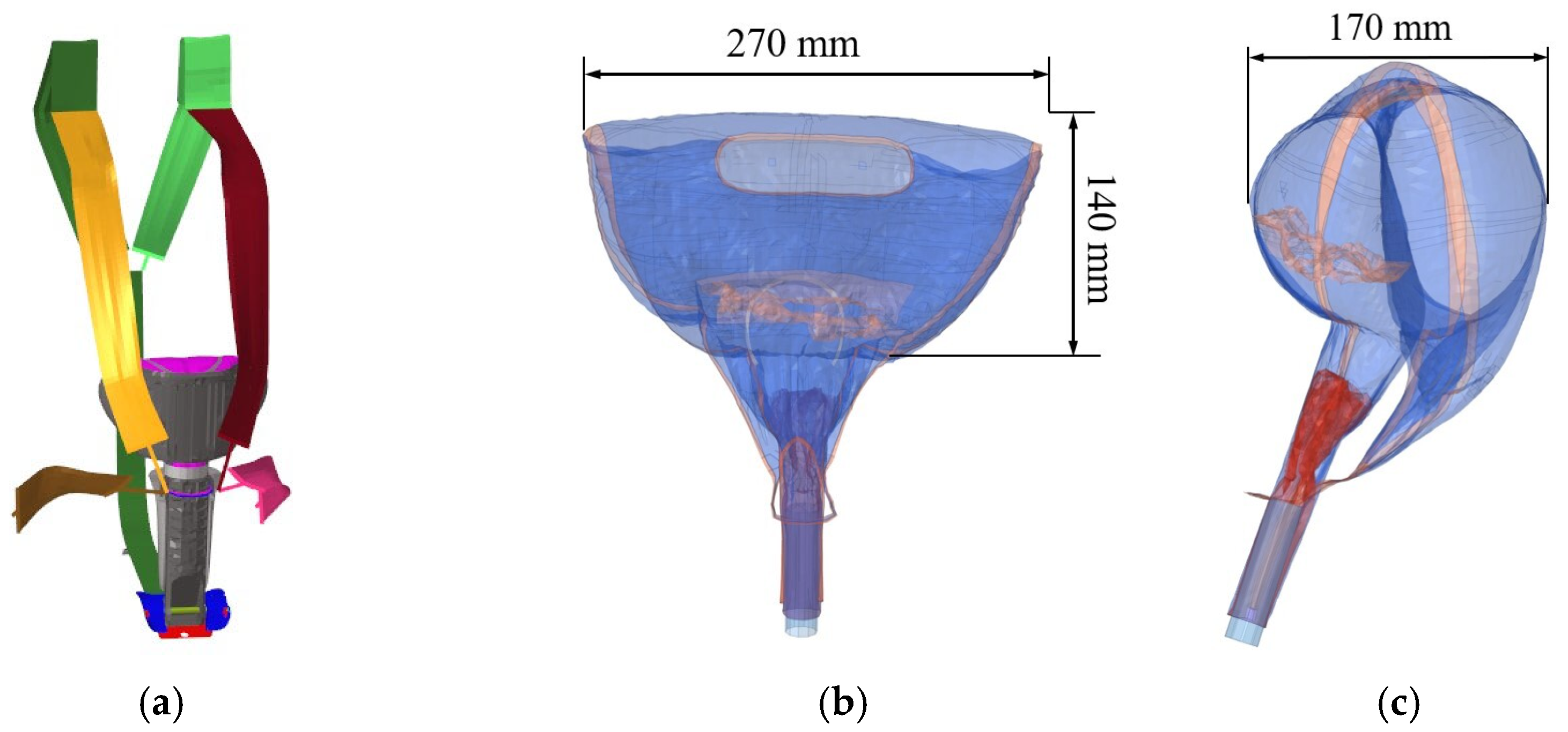
The airbag module consists of the airbag, inflator and airbag housing. The airbag inflator rapidly generates gas to deploy the folded airbag when a collision occurs above the specific speed. The deployed airbag can effectively absorb the forward impact energy of the child occupant, thereby avoiding or reducing the risk of head and neck injuries. To meet the suitability requirements of 1.5 YO to 6 YO child occupants, the airbag should primarily support the entire face for the 1.5 YO child occupant, the lower facial region for the 3 YO child occupant, and the lower jaw of the 6 YO child occupant. In comparison to the impact-shield child restraint system, the seatbelt buckle of the five-point harness CRS is located farther away from the child occupant’s head, providing sufficient space for the effective deployment volume of the airbag. Accordingly, the airbag is designed to be integrated into the five-point harness CRS to dramatically reduce the injury risk of out-of-position child occupants. As shown in Figure 1a, the airbag module is integrated with the seatbelt buckle and connected to the seat via the recliner pivot.
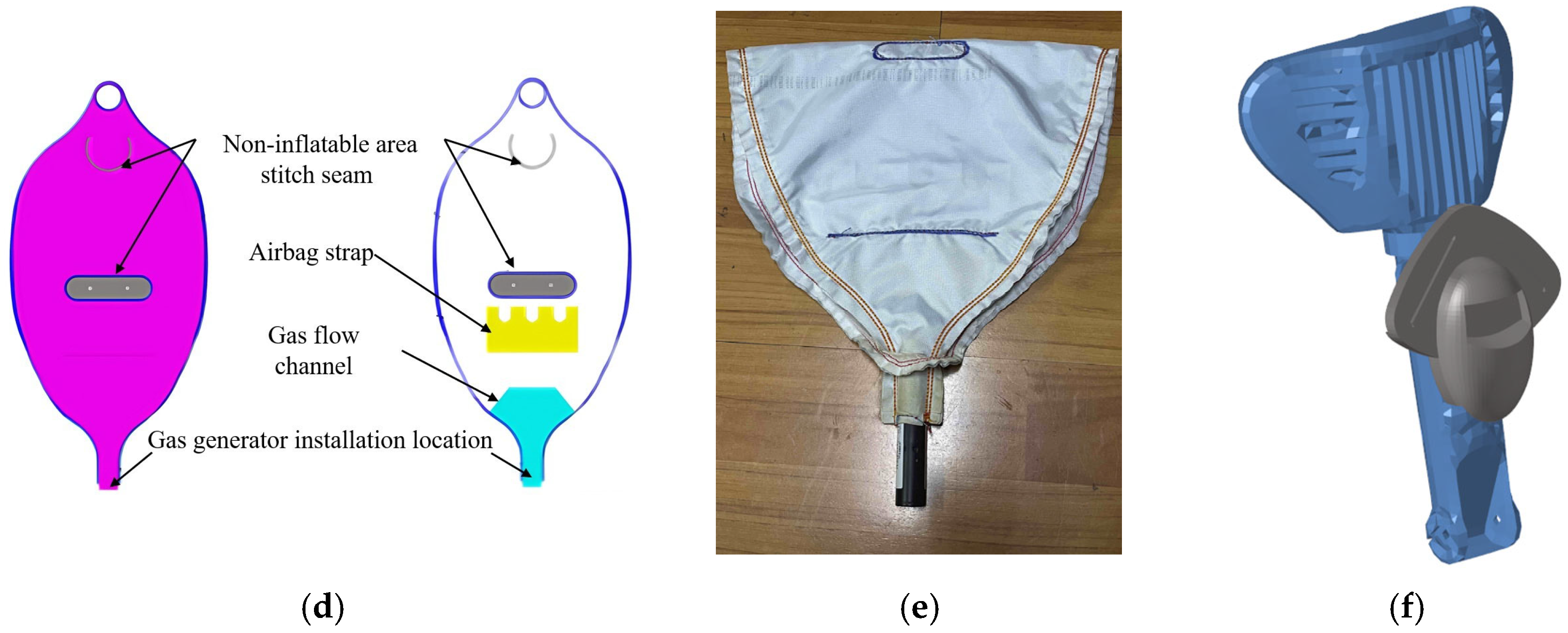
Figure 1a presents the configuration of the airbag module within the five-point seatbelt restraint system. To meet the usage requirements of child occupants of different ages, the designed volume of the fully inflated airbag is 5 L, with a corresponding height, width and thickness of 140 mm, 270 mm and 170 mm respectively, as show in Figure 1b,c. Figure 1d illustrates the schematic diagram of the airbag structure. The seams in the non-inflatable region and airbag tether straps were designed to control the deployment kinematics and geometry of the airbag during and after deployment. In addition, the non-inflatable seam region in the middle of the airbag helps control the height of the inflated airbag and suppresses inflation in the contact area to avoid direct collision with the child’s head during deployment. This design prevents the occupant’s risk of head injuries caused by strong impact forces during airbag expansion. The gas flow channel inside the airbag disperses the gas to both sides, thereby decreasing the explosion energy and reducing the child occupants’ risk of injury.
The physical model of the airbag is presented in Figure 1e. The gas generator is located at the bottom inflation port. The geometry of the inflated airbag is wide at the top and tapered at the base, and this shape results in a reduced inflation volume while providing a larger effective protection area during deployment. Additionally, the inflation energy and the resulting impact force are reduced during expansion. The airbag is compactly folded to fit into a receptacle, referred to as the airbag housing, and the height of the airbag housing is set to 230 mm to accommodate the fully inflated airbag. As shown in Figure 1f, the gas generator is installed at the bottom of the cylindrical chamber of the airbag housing, while the folded airbag is placed in the top box-shaped position. The airbag module can be rotated via the bottom recliner pivot to accommodate child occupants of different ages. In addition, the non-rotational movement of the airbag module is constrained to ensure the relatively fixed position of the airbag module during use.

2.2. Folding Pattern Design of the Airbag

The folding pattern of the airbag is determined by its dimensions and shape and also significantly affects the speed and path of deployment. Therefore, the folding method should be designed to reduce the impact force on the child occupant and to ensure a safe deployment path. Considering the airbag’s dimensions and geometry, the folding-rolling pattern is appropriate for a two-dimensional airbag. At the initial stage of the expansion, the high internal pressure of the airbag generates a strong impact force, which poses a significant risk of injury for the child occupants. To mitigate this risk, a direct flat folding pattern is adopted to reduce the deployment-related injury potential.
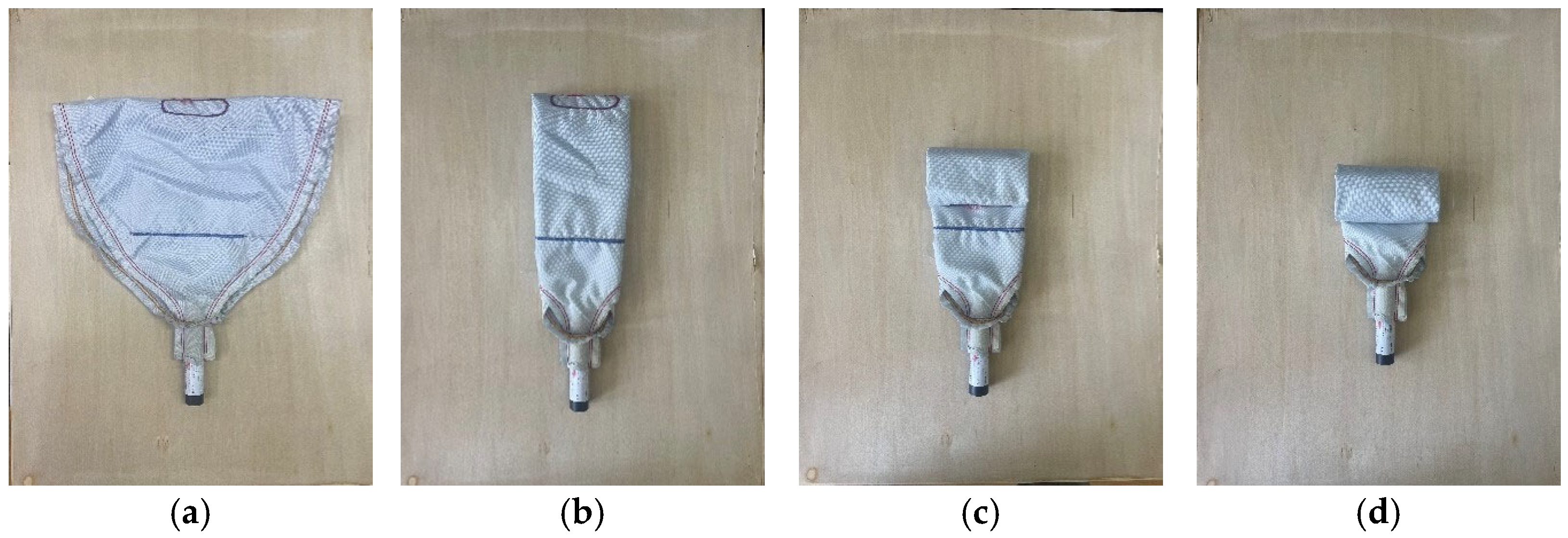
On the other hand, mutual interference between the stacked folding layers of the airbag may compromise inflation consistency and timing. The resulting delayed and asymmetric deployment can lead to a buildup of high-pressure gas in the early stage of inflation, which may potentially cause the damage or rupture of the gas generator [23]. Consequently, the number of folds should be minimized as long as the designed volume is satisfied. In this work, as shown in Figure 2, the folding process was carried out in three steps. First, the airbag was folded flat from both sides and then rolled up to complete the process. This folding pattern helps prevent the child occupant from coming into contact with the airbag during the deployment.

2.3. The Establishment of the Finite Element Model of the Airbag

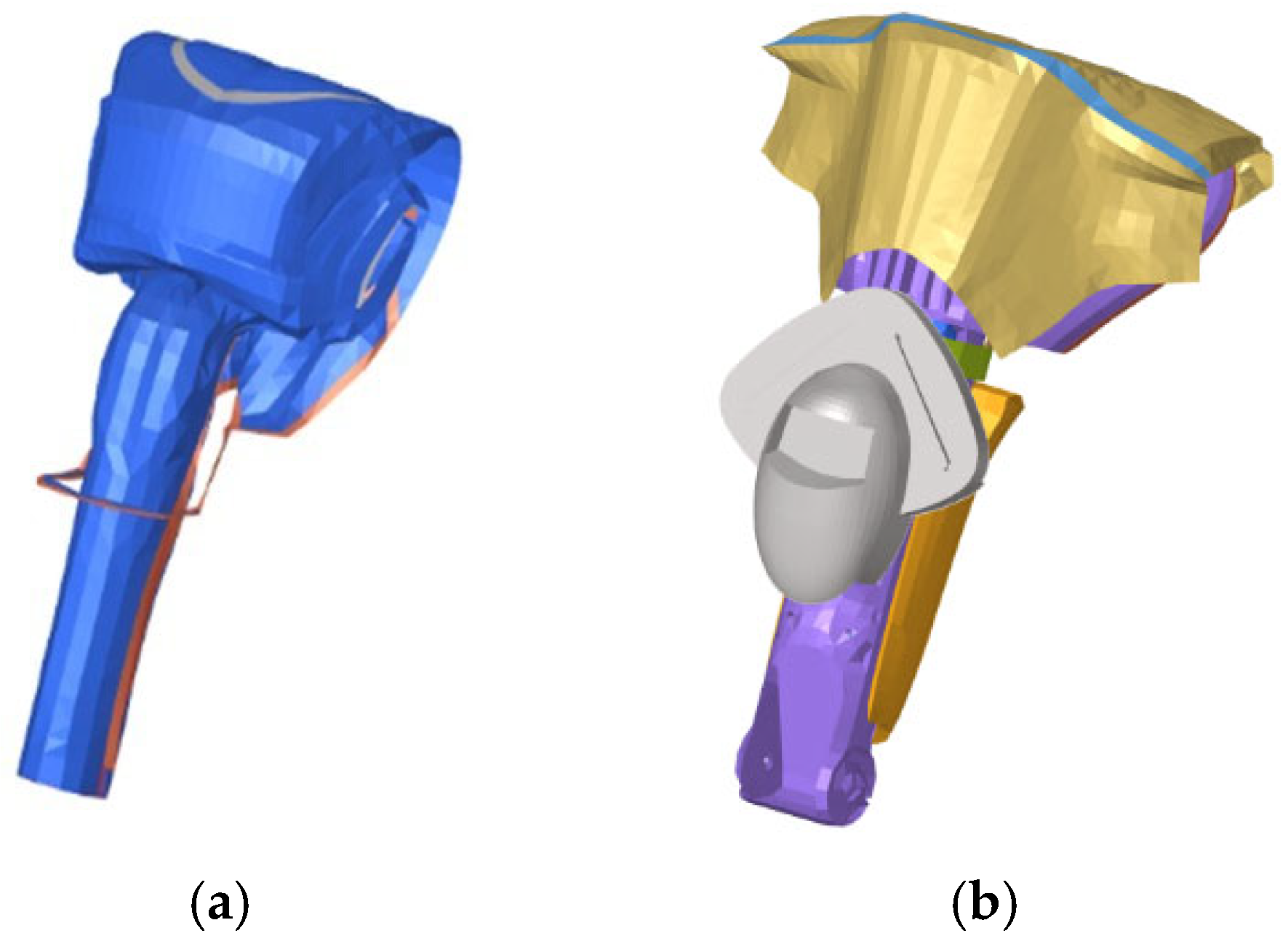
The physical airbag model consists of five stitched woven fabric panels. Two panels form the outer closed geometry of the airbag, another two are seamed together to create an internal gas flow channel, and the remaining panel serves as a strap. In the FE simulation model, the airbag was meshed using triangular membrane elements to prevent hourglass effects and reduce computational instability. The airbag housing and cushions were meshed with shell elements. The material of the airbag housing is polypropylene, and the material of the woven fabric cushions is polyamide nylon 66. The FE model of the airbag consists of 24,600 shell elements with a mesh size of 5 mm. The airbag folding process was carried out using the Airbag Solution in Altair HyperMesh 2022 software. Subsequently, the housing tool was used to fit the airbag into the housing. The FE models of the folded airbag and the complete airbag module are shown in Figure 3.

2.4. Validation of the Finite Element Model of the Airbag

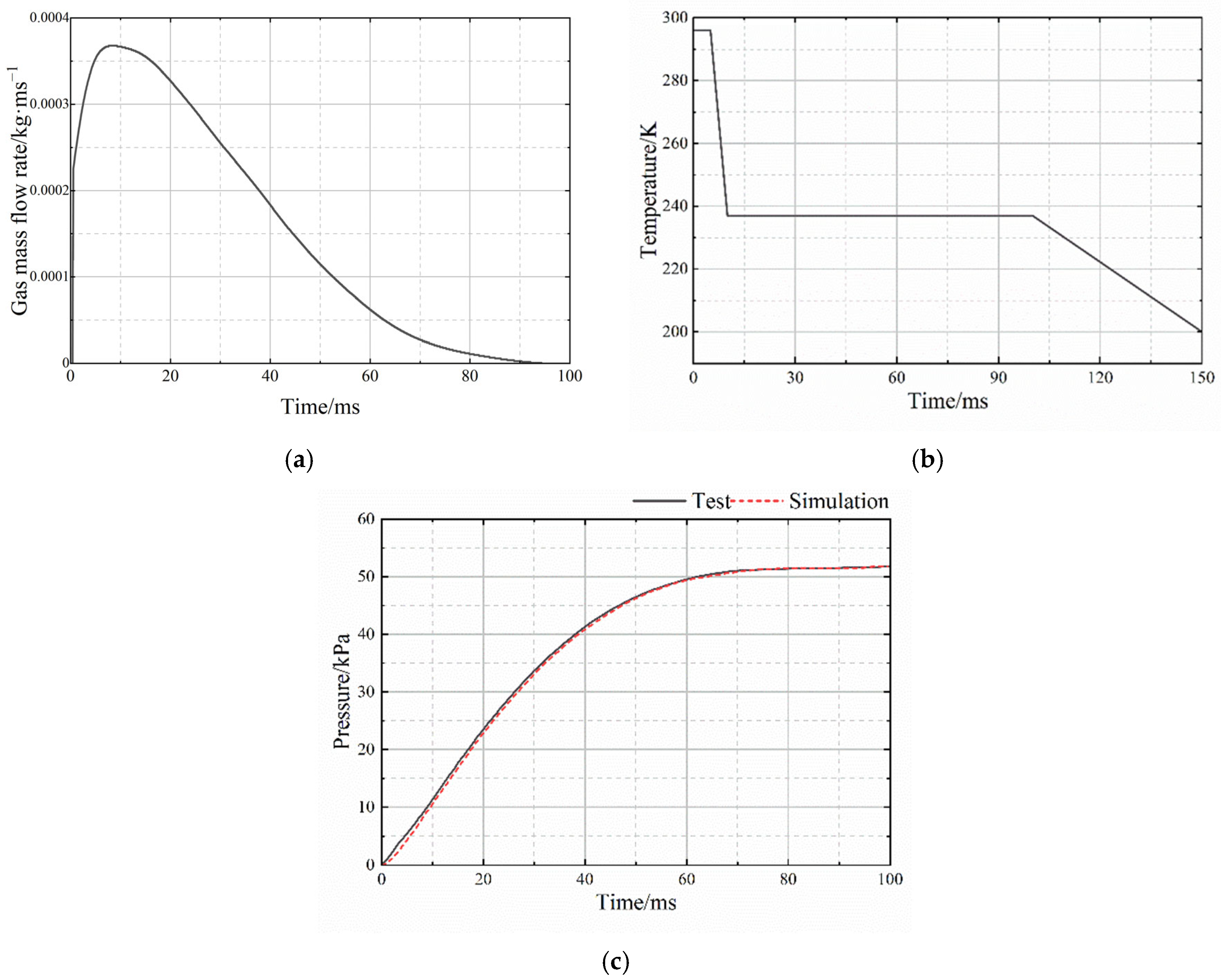
To validate the predicative accuracy of finite element model of the airbag, a prototype was fabricated and a corresponding experimental impact test was conducted. The finite volume method (FVM) was employed to simulate the inflator pump of the airbag simulation model due to its high computational accuracy [24]. As essential input parameters of the airbag FE model, the mass-flow rate and gas temperature were obtained through a tank test of the gas generator. The time–history curves of mass-flow rate and temperature are presented in Figure 4a and Figure 4b, respectively, and serve as input parameters for the tank test simulation to verify airbag FE model. A comparison of the time–history curves of tank pressure between the simulation and the experiment is shown in Figure 4c. The simulation results exhibit a high level of agreement with the tank test, demonstrating that the finite element model of the gas generator possesses high accuracy and is suitable for subsequent analyses.
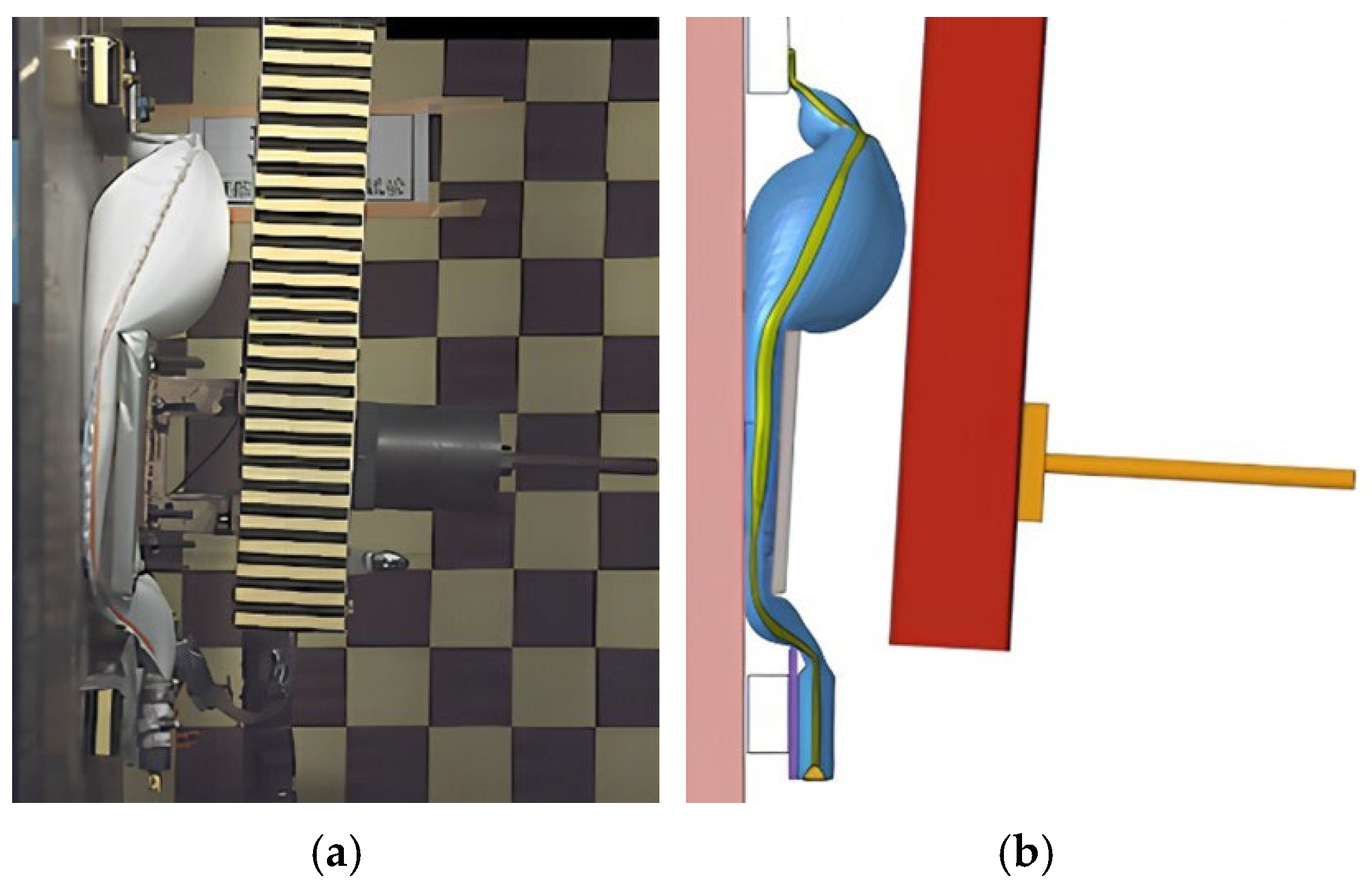
Furthermore, as presented in Figure 5, a high reliability pendulum impact device was designed to validate the predicative capability of the airbag FE model. All instruments and equipment used in this study, were provided by EQO Testing and Certification Co., Ltd. (Kunshan, China). The pendulum with a specific initial velocity generated a uniform impulsive load by striking the surface of a fully inflated airbag positioned in front of the test specimen. Accelerometers mounted on the pendulum and a pressure transducer inside the airbag were used to record the pendulum acceleration and the internal airbag pressure, respectively.
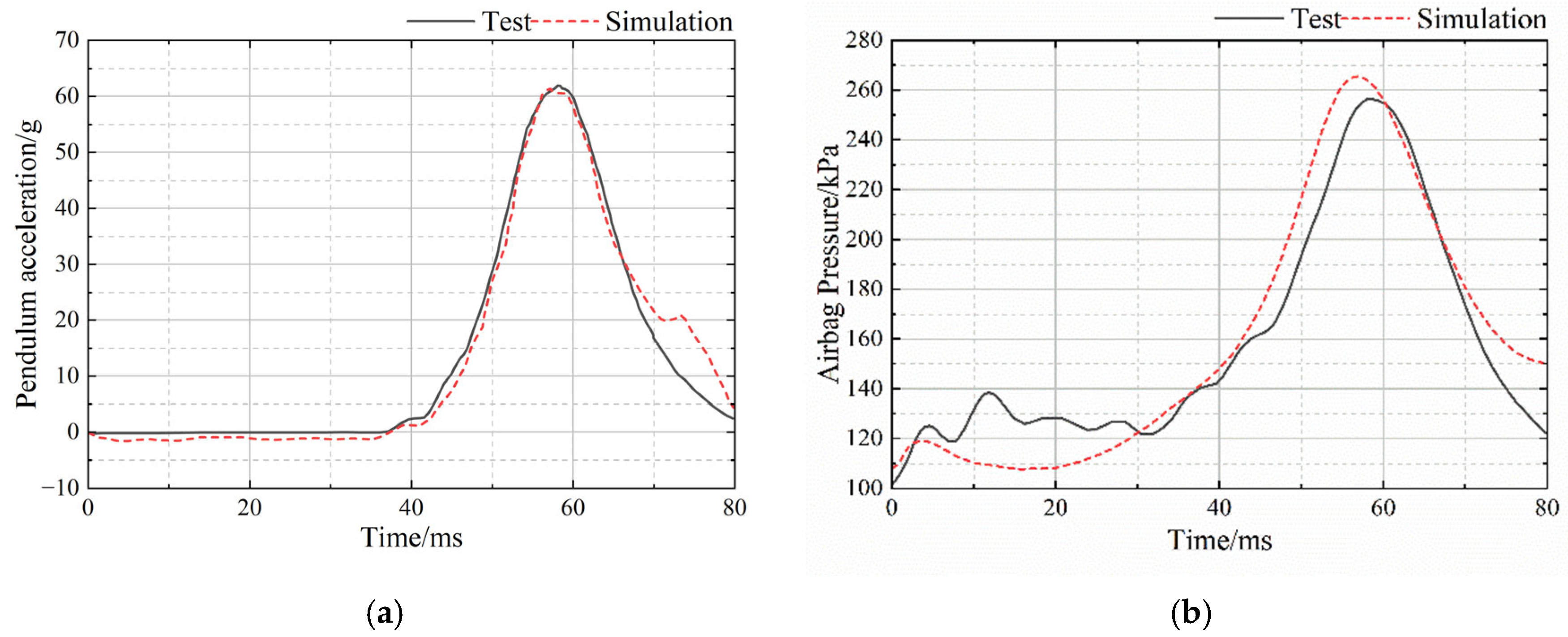
During the pendulum impact test, the pendulum was released from a predefined height under gravity and impacted the fully inflated airbag, generating an impulsive load. After contact, the airbag was compressed and deformed, leading to a temporary decrease in internal volume and a corresponding increase in internal pressure. Therefore, the pendulum acceleration and internal pressure of the airbag reflected the effective stiffness, and cushioning response of the airbag. The comparisons of the time–history curves of the pendulum acceleration and internal pressure of the airbag are shown in Figure 6. The experimental and simulation results showed that the maximum pendulum acceleration reached 62 g and 63 g, respectively, and the maximum internal pressure of the airbag reached 258 kPa and 266 kPa, respectively. The discrepancies between the simulation and experimental data were 1.6% for the maximum pendulum acceleration and 3.1% for the max-mum internal pressure of the airbag. The time–history curves obtained from the simulation showed good agreement with the experimental data in terms of both general trends and peak values, indicating that the finite element model of the airbag could reasonably simulate the pressure response and energy-absorbing behavior of the airbag under external impact loading.

3. Results

In this section, the frontal impact FE simulation model is developed to evaluate the protective performance of the proposed airbag-equipped CRS. Firstly, the vehicle sled test was conducted to validate the frontal impact simulation model by comparing the kinematic responses and dynamic response curves of the Q6 child dummy. After that, the validated simulation model was used to evaluate the protective performance of the airbag system with the PIPER 3-year-old human model. The effectiveness of the buckle-mounted airbag in reducing head and neck injury risks was quantitatively evaluated by comparing the kinematic responses and key injury criteria of the child occupant with and without airbag protection.

3.1. Assembly and Validation of the Frontal Impact Simulation Model

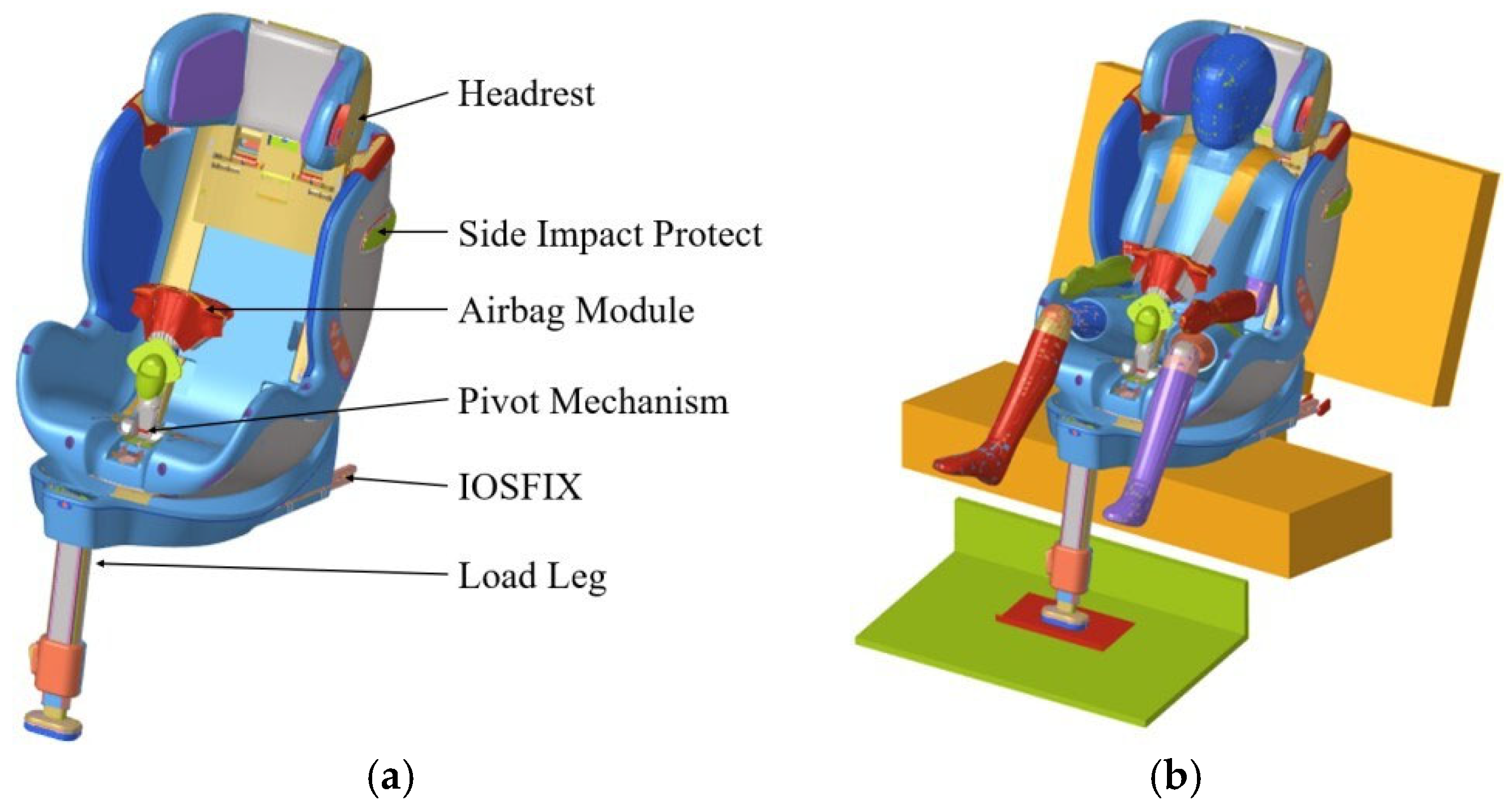
After the finite element model of airbag was established, the child restraint system (CRS) model was subsequently developed to enable sled test-based computational biomechanics analysis. The CRS geometry was constructed in CATIA based on the actual dimensions and configuration of the physical prototype, and the resulting 3D model was then imported into HyperMesh for high-fidelity meshing. The type of mesh elements used was determined according to the shape and size of each component of the CRS. The thin-walled components, such as the seat shell and base shell of the CRS, were meshed by shell elements, while the headrest foam, side wing foam, and ISOFIX connectors were meshed by solid elements. Additionally, the material properties for each component were assigned after meshing. Specifically, the seat headrest and side wings were made of expanded polypropylene foam, while the seat shell and base shell were made of plastic. Bolts and springs were represented using fastener connectors and spring elements, respectively. After the safety seat structure was modeled, the airbag module was imported and connected to the seat through its pivot mechanism. Figure 7a shows the completed FE model of the child safety seat equipped with an airbag system, consisting of 516,029 elements. The material of the seat back and seat cushion of the sled was polyurethane foam and was meshed by the hexahedral elements. The five-point harness consists of a shoulder belt and a lap belt. The shoulder belt was meshed with quadrilateral shell elements, while the lap belt was represented using spring elements. Altair HyperMesh was used for geometry cleaning, mesh generation, model assembly, and contact definition, and the subsequent numerical calculation was performed using the Radioss solver. The frontal impact sled simulation was treated as a nonlinear transient dynamic problem in Radioss. As described in Section 2.4, the airbag deployment was simulated using the finite volume method (FVM). The gas mass-flow rate and gas temperature obtained from the tank test were used as the main input parameters of the airbag FE model. Nonlinear material models were assigned to relevant components to account for large deformation, airbag deployment, and contact interactions among the Q6 child dummy, five-point harness, airbag, child safety seat, and sled seat were defined in Radioss using TYPE7, TYPE11, and TYPE19 according to the contact characteristics of different components. Initial intersections and penetrations were checked and corrected before calculation.
To facilitate the establishment of the sled test-based frontal impact simulation model, the CRS with an airbag system, child dummy and the sled need to be assembled. The CRS was firstly positioned on the sled platform according to the practical sled test configuration, and the CRS and the sled were connected by ISOFIX. The Q6 child dummy model was then positioned on the five-point harness child safety seat. Subsequently, contact between each component was defined accordingly. Eventually, global gravity was applied to the complete finite element model and the posture of the Q6 child dummy was adjusted in accordance with United Nations Regulation No. 129 (ECE R129) [25]. Figure 7b shows the completed FE model of the airbag-equipped child safety seat with a Q6 child dummy model.
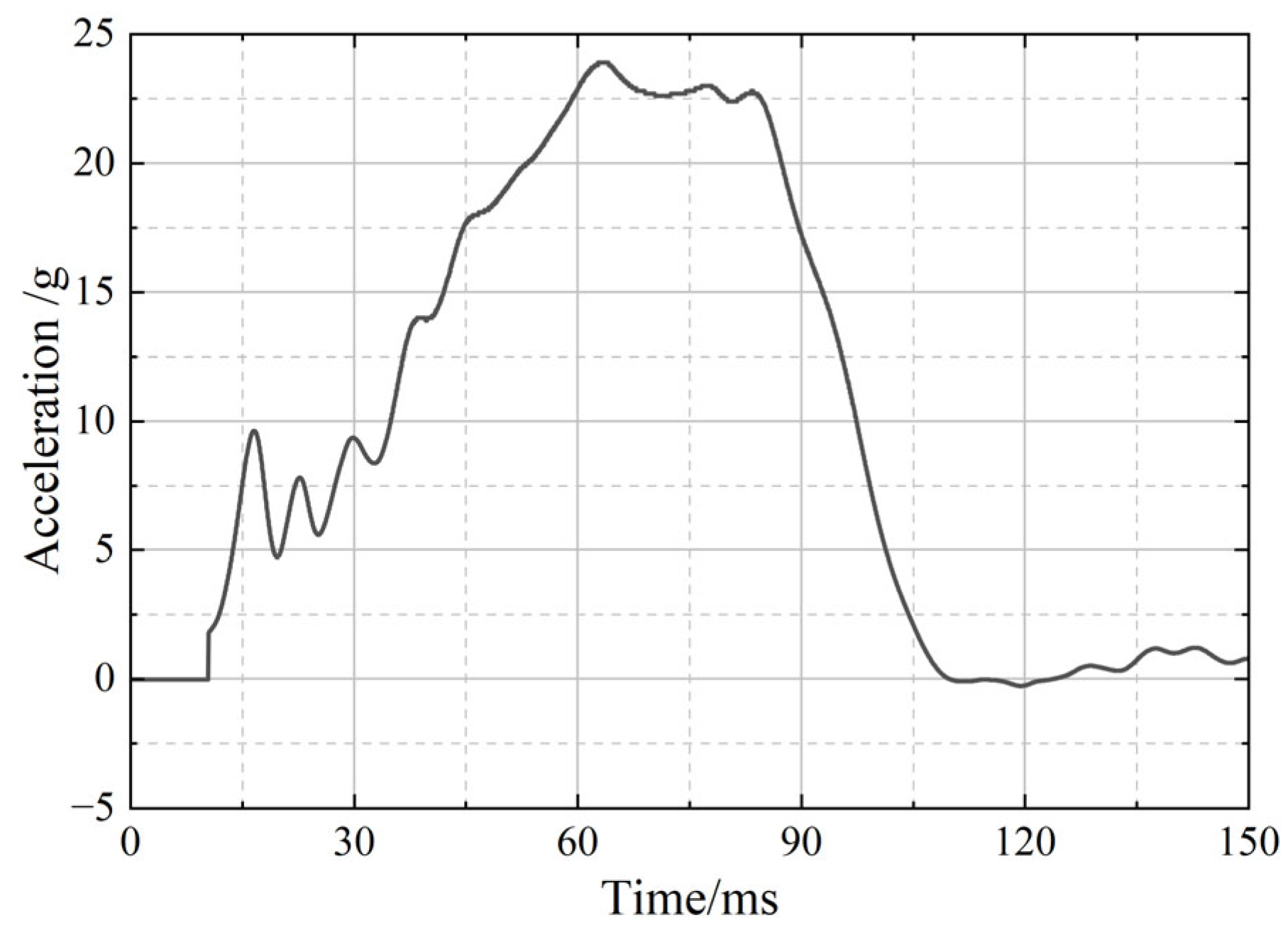
To investigate the protective effect of the proposed child restraint system on the child occupant, firstly, the effectiveness of the finite element model of the child safety seat was validated using frontal sled tests compliant with ECE R129 regulations. As shown in Figure 8, the experimental acceleration shock pulse of the vehicle sled test was recorded and then imported into the FE model for the comparative analysis of child occupant kinematics and the child injury risk. The sled acceleration pulse was applied to the master node of the sled model’s rigid body, and all degrees of freedom except the longitudinal direction (x-axis) were constrained for the sled model.
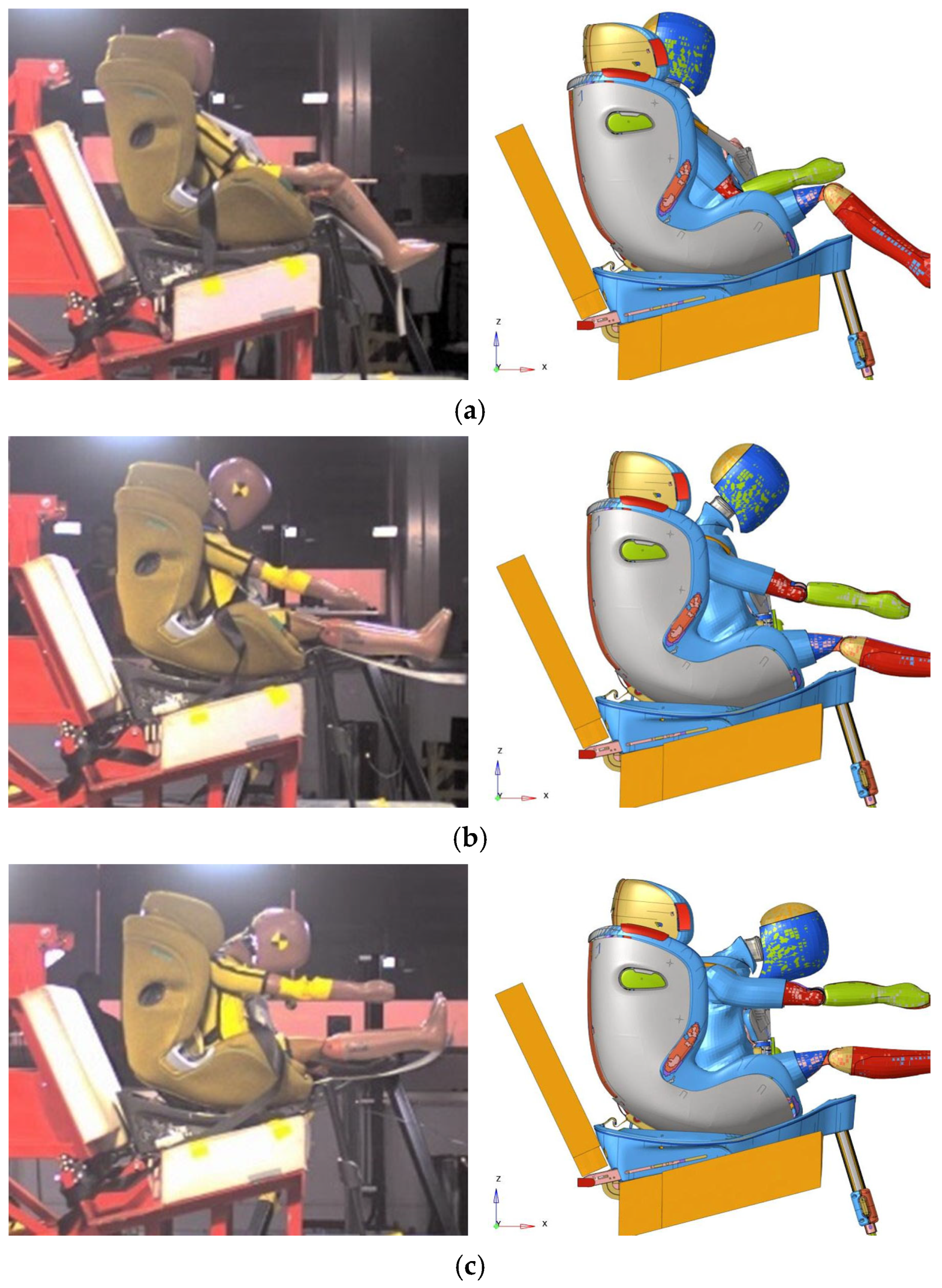
To verify the predictive accuracy of the finite element (FE) model of the child safety seat, the simulated kinematic postures of the Q6 child dummy constrained by the child restraint system were compared with high-speed camera footage captured during the frontal sled test, as shown in Figure 9. The comparison was conducted at 60 ms, 80 ms, and 100 ms. During the initial 60 ms, rearward sled acceleration drove the dummy torso backward while inertial forces propelled the head forward. After that, the inertial-driven forward head motion of the child dummy induced axial neck stretching and flexion-dominated bending deformation in the cervical spine. The simulated results showed good agreement with the experimental data at all time points.
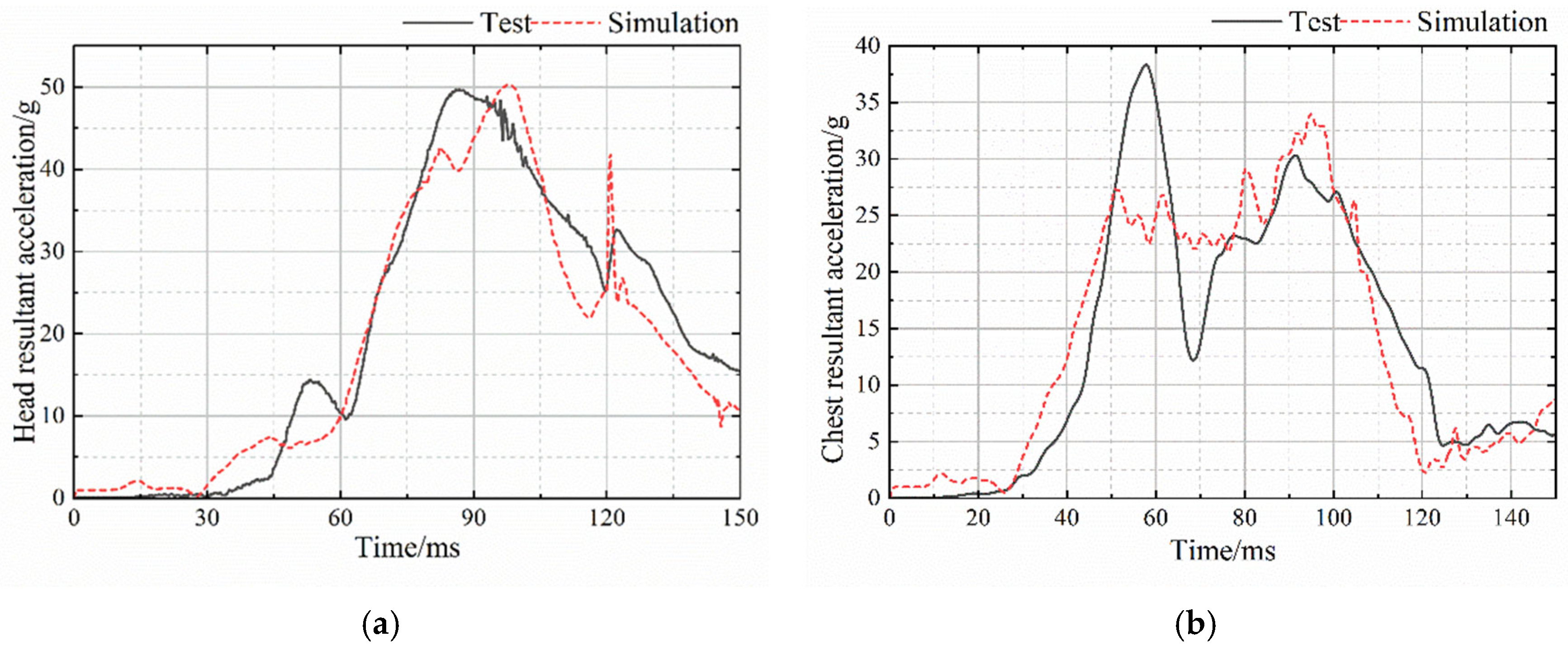
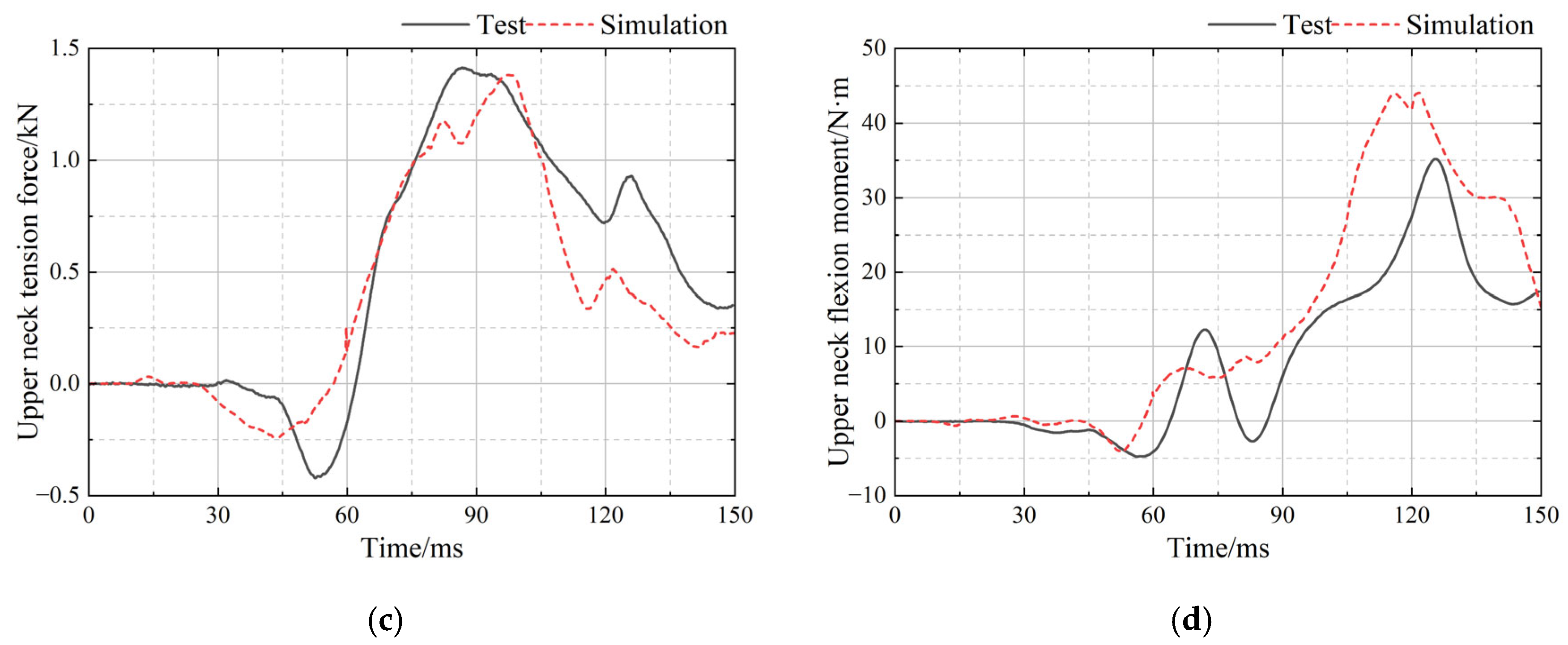
Additionally, the time–history curves of four injury criteria, including the head resultant acceleration, chest resultant acceleration, upper neck tension force, and upper neck flexion moment, are shown in Figure 10. The simulation results from the FE model showed good correlation with the sled test data in terms of both peak values and overall trends.
Subsequently, a quantitative comparison between the sled test and simulation results was conducted using correlation analysis (CORA) [26,27]. Specifically, the phase, magnitude, and shape of the time–history curves were evaluated and a cross-correlation score was calculated using HyperGraph to quantify the similarity between the simulation and experimental data. The correlation score ranges from 0 to 1, with a score of 1 indicating a perfect match and a score of 0 indicating no correlation. Table 1 presents the correlation analysis results between the simulation and experimental time–history curves. The correlation scores of the head resultant acceleration, chest resultant acceleration, upper neck tension force, and upper neck flexion moment are 0.88, 0.83, 0.84 and 0.81, respectively. Overall, the simulation results demonstrated good quantitative agreement to the sled test data.
In summary, the effectiveness and predictive accuracy of the FE simulation model of the CRS were thoroughly validated by the comparisons of the kinematic postures and the key injury criteria of the Q6 child dummy. These results indicate that the FE model pro-vides high accuracy for subsequent computational biomechanics analysis.

3.2. Protective Performance Analysis of the Airbag System

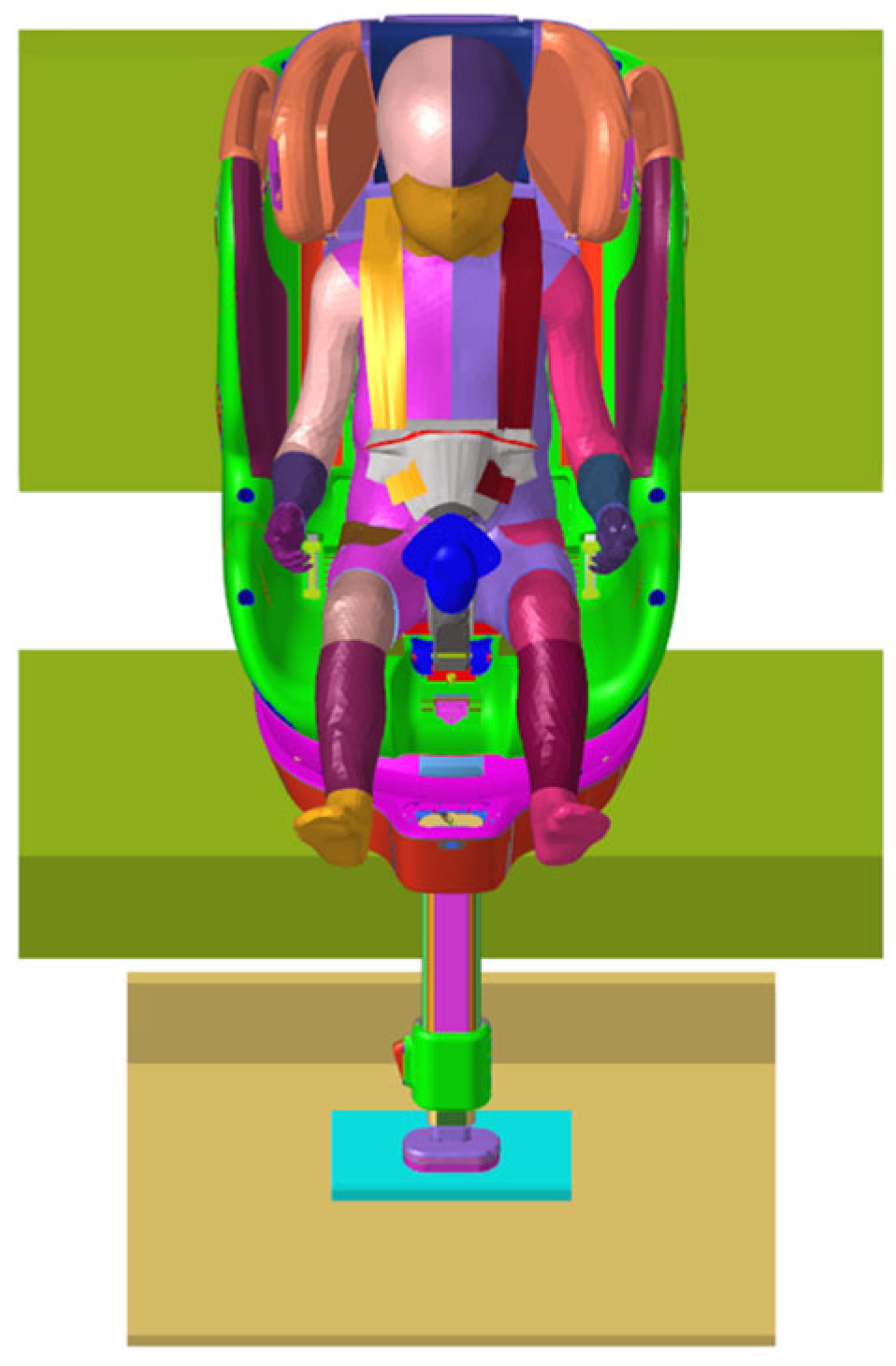
In comparison to the Q-series child dummy, the PIPER child human body model exhibited greater head excursion and neck flexion during a frontal crash, which were closer to the kinematic postures of a real human body. Therefore, the PIPER 3 child human body model was applied to investigate the protective performance of the CRS with an airbag for the frontal impact sled simulations [28,29,30]. To perform the computational biomechanics analysis of the frontal impact sled simulations, the PIPER 3-year-old human model was first positioned appropriately on the CRS. Considering the anthropometric dimensions of the PIPER 3-year-old model, the height of the headrest and the configuration of the five-point harness of the CRS were adjusted accordingly. Figure 11 illustrates the finalized frontal sled simulation model, in which the PIPER 3-year-old human model was restrained in the CRS equipped with an airbag.
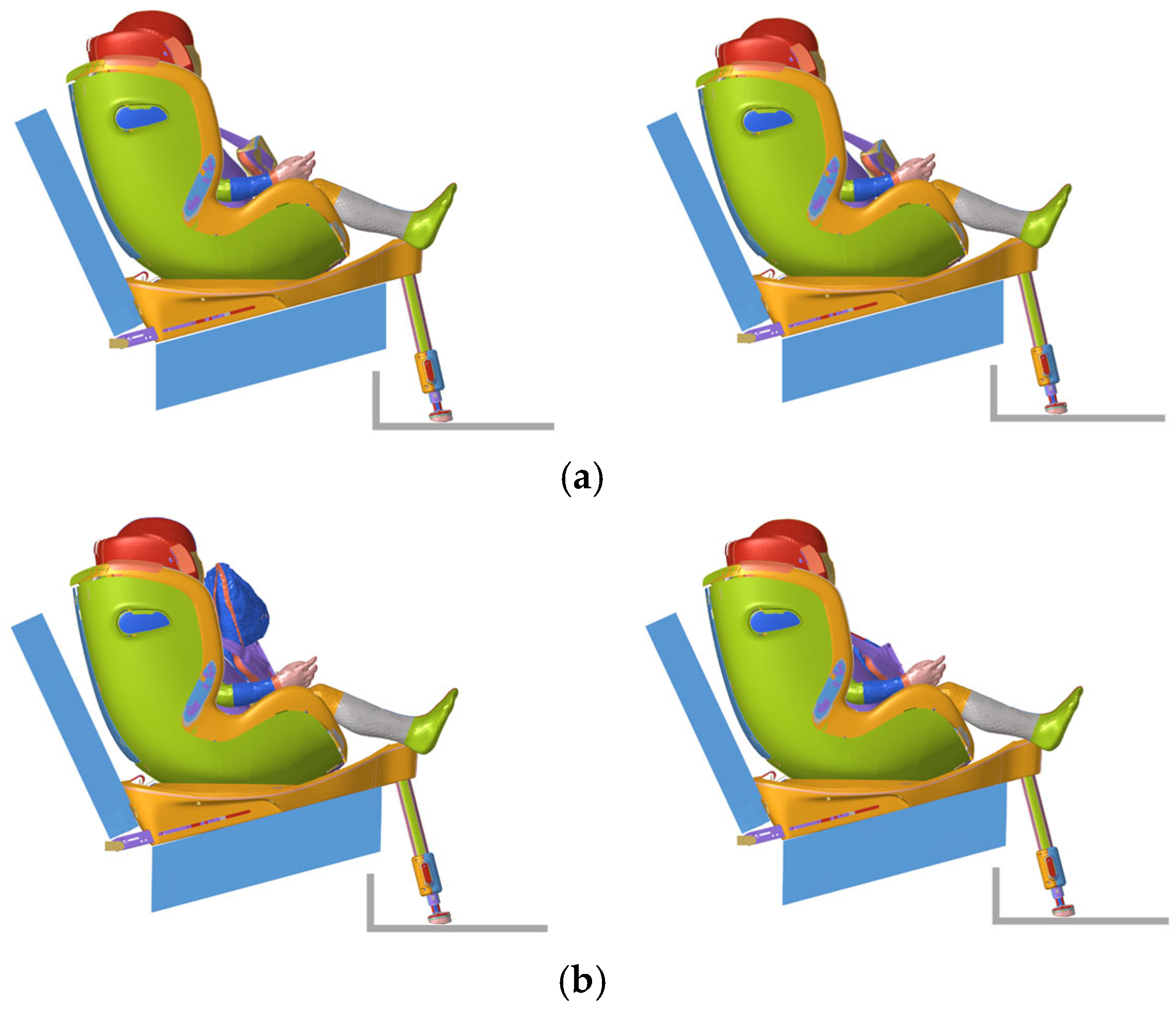
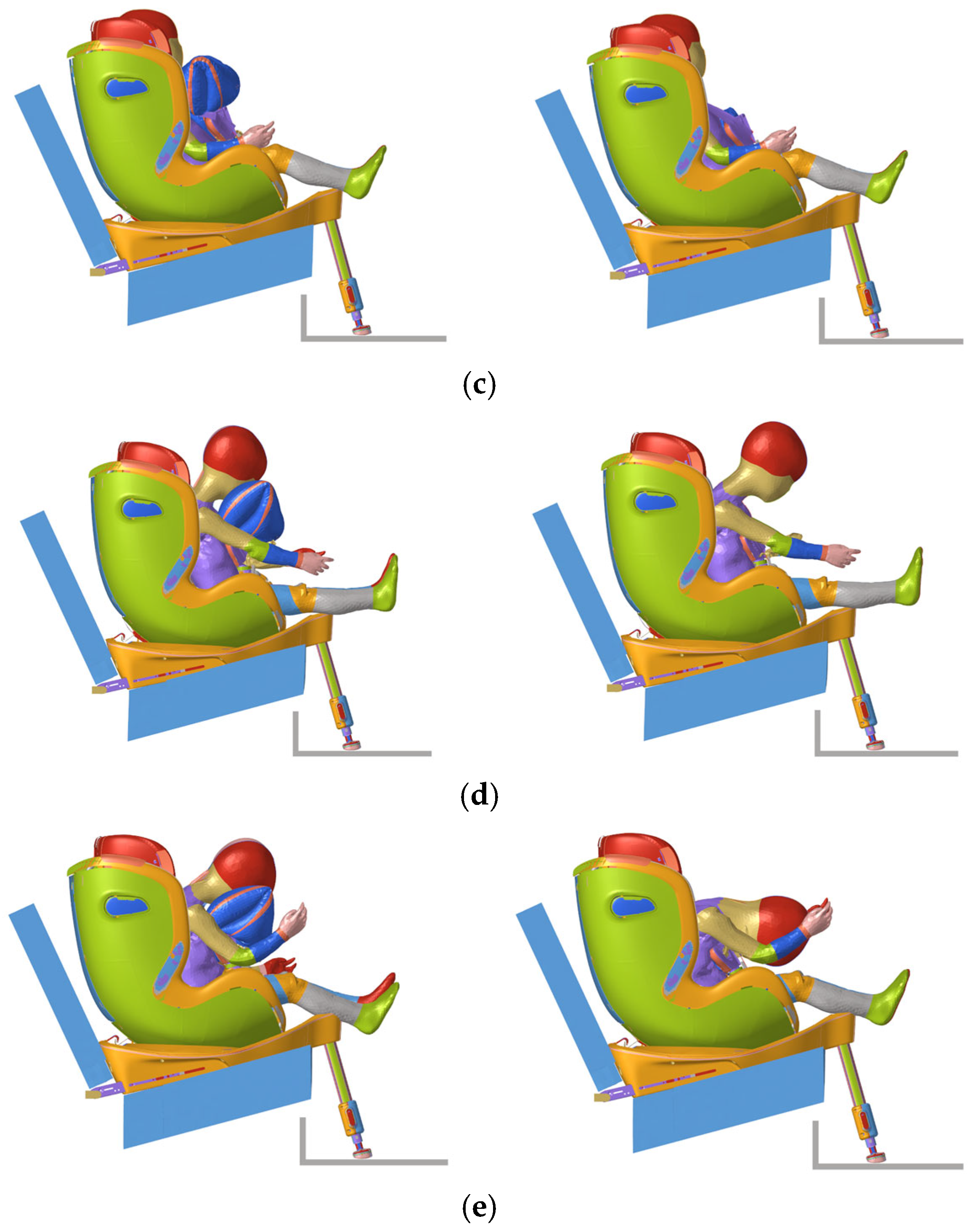
Figure 12 demonstrates the comparative kinematic responses of PIPER 3 human model restrained in CRS with and without an airbag. The airbag fired at 20 ms after collision. During the initial stage of the frontal collision, the lower facial region of the PIPER 3-year-old human model was the first to contact the airbag. The maximum contact area covered approximately 60% of the facial region of the child occupant. Due to the inertial motion of the PIPER 3-year-old human model in the CRS without an airbag, the maximum excursion of the head reached 302.6 mm in the longitudinal direction and 144.9 mm in the vertical direction (z-axis), resulting in significant neck flexion. In contrast, with the implementation of the airbag system, the maximum head excursion was reduced from 302.6 mm to 257.7 mm in the longitudinal direction and from 144.9 mm to 35.8 mm in the vertical direction, corresponding to reductions of 14.8% and 75.3%, respectively. These results demonstrated that the incorporation of an airbag into the CRS effectively enhanced occupant protection and reduced the risk of injury.
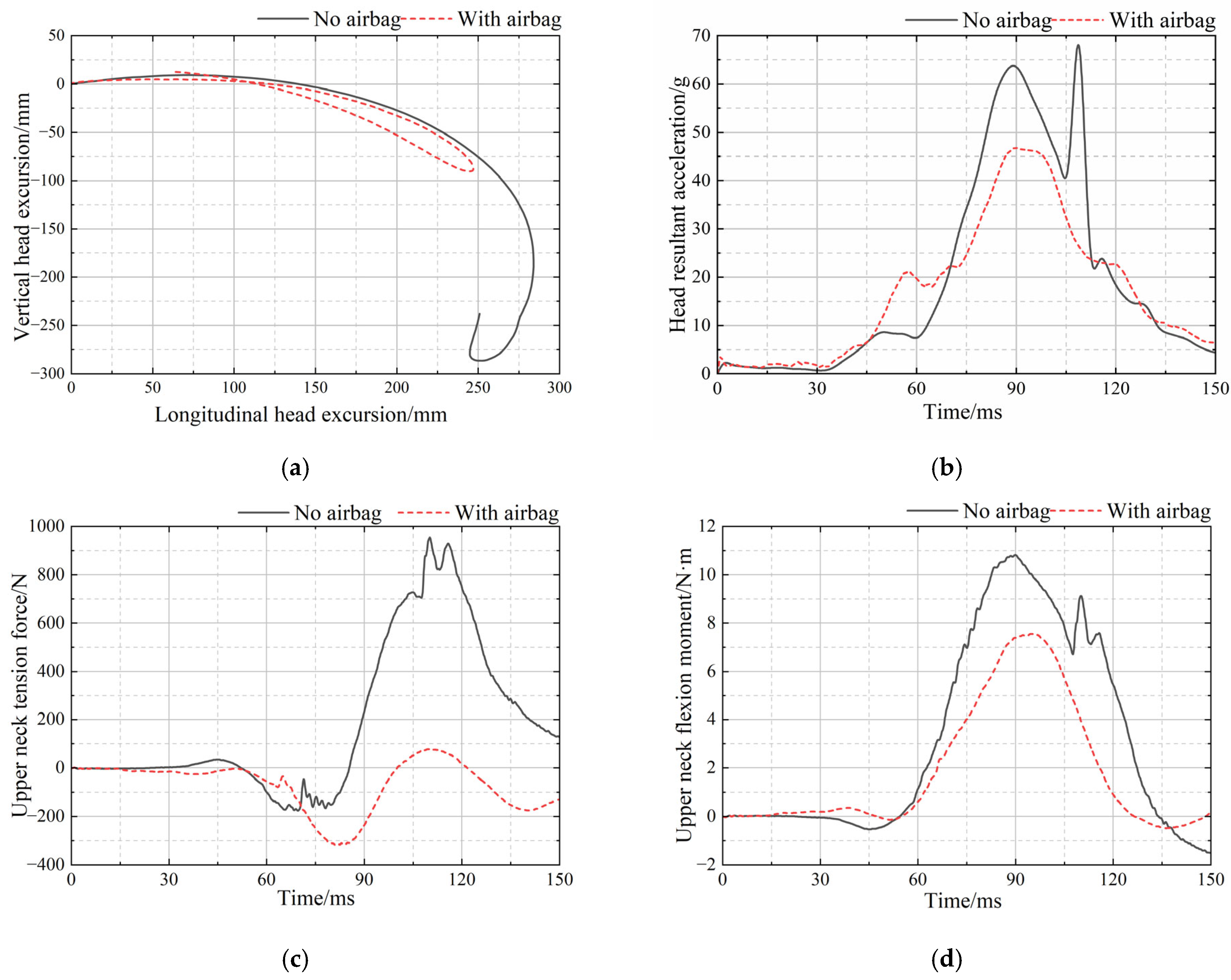
To further evaluate the quantitative protective effects of the CRS with an airbag, head displacement relative to T1 (the first thoracic vertebra), head resultant acceleration, upper neck tension force, and upper neck flexion moment were used as evaluation criteria. Head injuries are the most critical injury type for child occupants, and the quantitative analysis of head–T1 displacement is shown in Figure 13a. For the CRS without an airbag, the maximum head–T1 displacement reached 284 mm in the longitudinal direction and 286 mm in the vertical direction. With the inclusion of an airbag, the corresponding maximum head–T1 displacements were significantly reduced to 247 mm and 90 mm, respectively, highlighting the airbag’s protective effect. The forward head posture was associated with hyperextension of the upper cervical spine (C1–C3) and flexion of the lower cervical spine (C4–C7). Therefore, the incorporation of an airbag into the CRS can significantly reduce the vertical head–T1 displacement of the child occupant and the corresponding resulting neck flexion. Additionally, as the contact area between the human model and the airbag was primary located in the upper deployment region of the airbag, the longitudinal head–T1 displacement could also be reduced.
The head resultant acceleration is an important injury criterion to evaluate the injury risk of child occupants [31], and the comparison of the head resultant acceleration is illustrated in Figure 13b. The results showed that, during the initial stage of the impact, the head resultant accelerations of the child occupant in the CRS, with or without an airbag, remained nearly identical until head–airbag contact occurred at 52 ms. After the head came in contact with the inflated airbag, from 52 ms to 70 ms, due to the supportive effects provided by the airbag to the thoracic region of the child occupant, the head resultant acceleration was greater in comparison to the case without an airbag. After 70 ms, the airbag provided soft cushioning and restraint for the child occupant, resulting in a slower increase in head resultant acceleration, which peaked at 46.8 g at 90 ms. In contrast, for the CRS without an airbag, the head resultant acceleration rose more rapidly and reached a peak of 63.5 g at 88 ms. As the child occupant continued to move forward, the head impacted the airbag housing at approximately 108 ms, resulting in a secondary peak in head resultant acceleration of 65.6 g. Overall, the airbag significantly reduced head acceleration and provided effective protection for the child occupant.
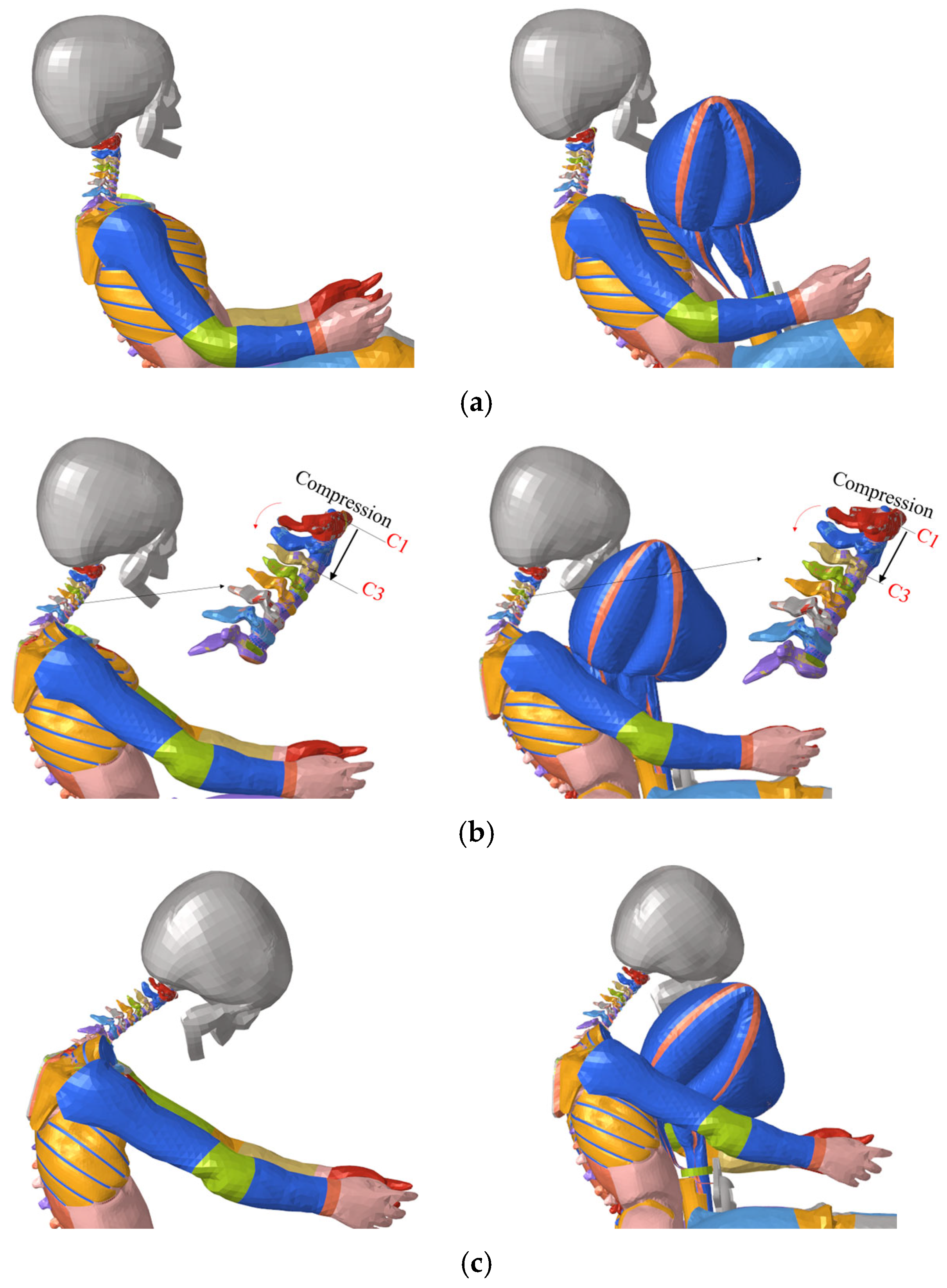
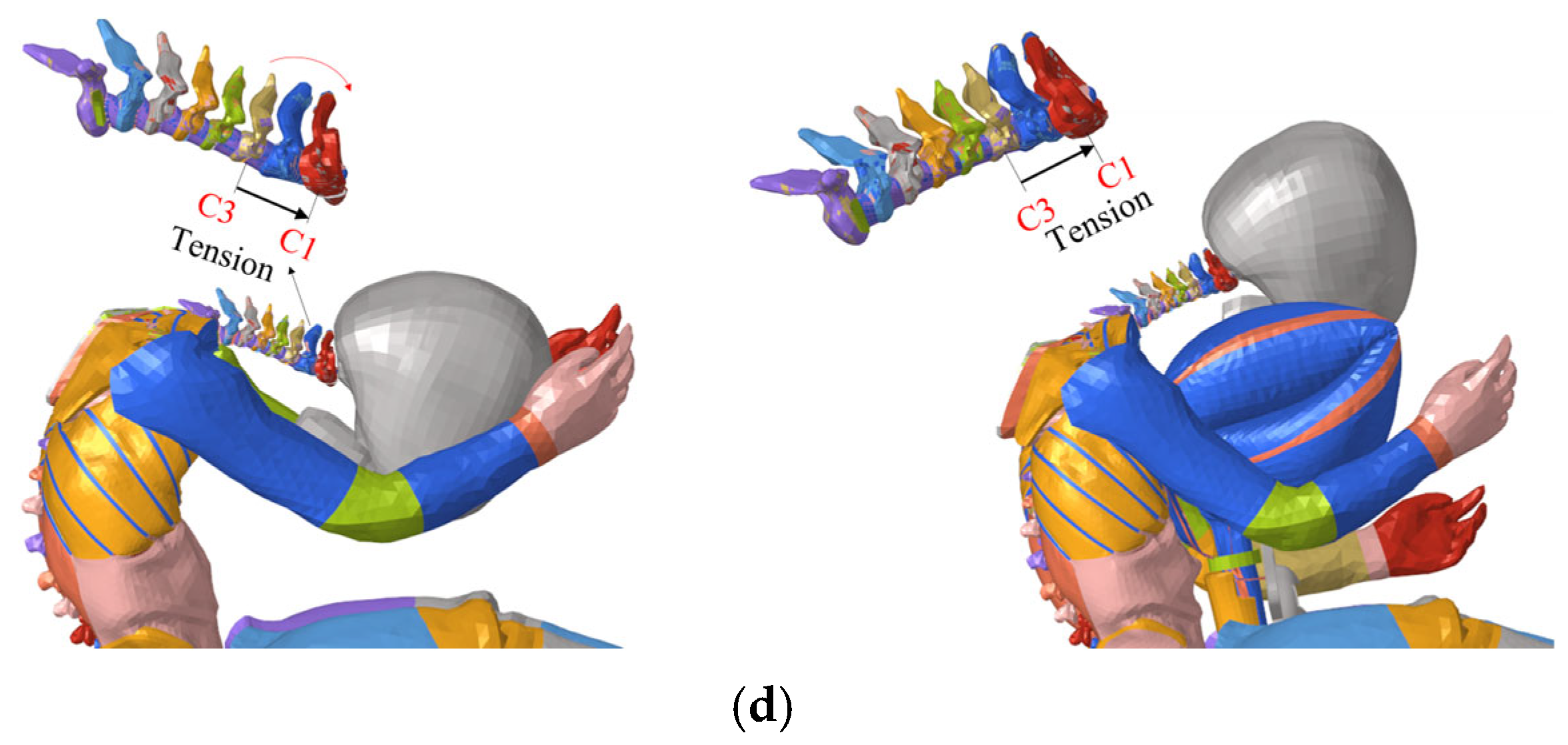
The comparative time–history curves of the upper neck tension force and upper neck flexion moment for the child human model are presented in Figure 13c and Figure 13d, respectively. The upper neck tensile forces preserved similar rise/decay trends across deployment conditions regardless of airbag deployment, though significant divergence occurred in peak force magnitudes. During the initial stage of the frontal crash, the small vertical component of inertial force acting on the cervical spine resulted in a limited upper neck tension force from the moment of impact up to 46 ms. As shown in Figure 14. After 46 ms, due to inertial anterior displacement of the head, the human model developed a head forward flexion posture. Also, the head–T1 displacement was predominant in the longitudinal direction but less in the vertical excursion, which yielded the counterclockwise rotation of the C1–C3 cervical vertebrae about the intervertebral disk. Consequently, the interpedicular distances and interspinous distances at C1–C3 decreased, so the upper neck tension force presented compressive force. After 80 ms, the inertial force component along the cervical spine demonstrated a significant increase because of the kinematic posture. In addition, the vertical head-T1 displacement increased. These factors led to a clockwise rotation of the C1–C3 cervical vertebrae about the intervertebral disk, which increased the interpedicular distances and interspinous distances at C1–C3. Consequently, the upper neck tension force gradually changed from compressive force to tensile force. For the head rebound stage after 110 ms, the tensile force of the cervical spine gradually decreased and turned into compressive force due to the backward rotation of the head and a more rapid decrease in longitudinal head–T1 displacement, compared to that in the vertical direction. Accordingly, the introduction of an airbag in the CRS reduced the vertical head–T1 displacement of the human model; the duration time of the compressive axial force in the cervical spine was longer in comparison to the tensile load. The presence of the airbag effectively reduced the maximum upper neck tension force from 954 N to 316 N.
During the initial 55 ms post-impact, neck sagittal bending kinematics remained stable with minimal variations in the upper neck flexion moment. For CRS with an airbag, the upper neck flexion moment of the human model reached the maximum of 7.6 Nm at 95 ms, which was lower than the maximum value of 10.8 Nm at 90 ms observed in the case without an airbag. Therefore, the airbag reduced the peak upper neck flexion moment by 29.6%. In summary, due to the supportive effects of the airbag, head–T1 displacement, upper neck flexion moment and upper neck tension force were significantly reduced. The integration of the airbag into the CRS effectively absorbed collision energy and demonstrated strong potential for reducing injury risk and enhancing occupant protection.
Table 2 compared the key injury criteria of the PIPER 3-year-old human model restrained by the CRS without and with an airbag. Referring to Equation (1), HIC15 is the head injury metric calculated from the resultant head acceleration over the most critical time interval up to 15 ms, reflecting the combined effect of acceleration magnitude and duration on head injury risk.
H I C = m a x T 0 t 1 t 2 T e t 2 t 1 1 t 2 t 1 t 1 t 2 a ( t ) d t 2.5
where a ( t ) denotes the head resultant acceleration, T 0 the start time of the collision, and T e the end time of the collision. The time interval from t 1 to t 2 is limited to 15 ms for HIC15.
Head acceleration 3 ms is the maximum value of the head resultant acceleration with a cumulative time of 3 ms. Regarding head injury, the results indicated that the introduction of an airbag could effectively reduce both head injury criterion (HIC15) and head acceleration 3 ms.
Specifically, the HIC15 values were 436 without an airbag and 210.3 with an airbag, representing a 51.8% reduction. Additionally, the head acceleration 3 ms was reduced from 64.4 g to 46.5 g, corresponding to a 27.8% reduction. Regarding neck injury, the upper neck tension force decreased from 954 N without an airbag to 316 N with an airbag, representing a 66.9% reduction. Furthermore, the upper neck flexion moment was reduced from 10.8 Nm to 7.6 Nm, corresponding to a 29.6% decrease. As for chest injury, chest acceleration 3 ms decreased from 39.5 g to 33.2 g, yielding a reduction of 16.0%. Correspondingly, the injury criteria for a child’s head, neck and chest were significantly reduced due to the supportive effects of the airbag. The CRS equipped with an airbag effectively absorbed the collision energy and lowered the injury risk of child occupants. Therefore, the integration of an airbag into the CRS demonstrated strong potential for enhancing child occupant protection, with all pediatric injury criteria remaining within the thresholds specified by the ECE R129 regulations.

4. Discussion

With the growing attention to child passenger safety, child restraint systems have been widely implemented to protect child occupants across different age groups. In traffic accidents, the head and neck are the most vulnerable and severely injured regions for the child occupants. However, traditional CRS configurations were characterized by an inherent trade-off; for example, five-point harnesses reduced abdominal trauma but exacerbated neck flexion due to shoulder belt loading, while impact shields lowered neck loads but increased chest compression [6,7]. On the other hand, these traditional CRSs were not equipped with forward restraint and cushioning devices specifically designed for children’s heads and necks. Consequently, for the child occupants, head displacement and acceleration remained relatively high during a collision, leading to severe neck flexion and substantial neck injuries caused by head motion.
As an efficient passive safety system, airbags can absorb impact energy during a crash and prevent occupants from colliding with rigid structures inside the vehicle. Airbags were widely utilized to improve the protective performances for occupants during frontal crashes [32,33]. Traffic accident statistics have shown that the mortality rate can be reduced by 67% with the combined passive safety technology of an airbag and a seatbelt [8]. Despite most automotive safety studies focusing on adult occupants, very few have addressed the application of airbags in crash protection for child occupants, particularly addressing their unique biomechanical vulnerabilities. Nevertheless, airbag deployment may also pose a risk of impact injury, and current research and applications of airbags specifically designed for child occupants remain limited. Consequently, with the consideration of dominant head injuries of child occupants, this study proposed the design of an integrated airbag system in a five-point harness CRS.
The present study aimed to design an airbag-integrated CRS equipped with a low-risk airbag module. In the event of a collision, the airbag deploys to provide support and cushioning for the head and neck of the child occupant, thereby mitigating injuries. From the perspectives of crash biomechanics and child injury mechanisms, the protective performance of the airbag-integrated CRS on a child’s head and neck was analyzed.
The safety of the airbag-equipped CRS is enhanced due to its ability of dissipating impact energy and modulating occupant kinematics during a crash. On the one hand, the inflatable cushion absorbs and redistributes impact energy across a broader contact surface, thereby reducing localized stress concentrations on vulnerable craniofacial and cervical structures. On the other hand, by modulating head excursion and neck flexion through limited deformation, the airbag mitigates excessive cervical loading that commonly arises in traditional harness or shield-based CRS designs, therefore reducing the peak accelerations transmitted to the child’s head and neck. Together, these mechanisms explained the superior reduction in injury metrics observed in this study. In particular, the airbag appeared to attenuate excessive loading on the upper cervical vertebrae (C1–C3) and the basilar skull, both of which were recognized as critical anatomical regions closely associated with severe pediatric head and neck injuries. By redistributing contact forces and moderating head kinematics, the airbag mitigated the risk of localized stress concentrations within these vulnerable anatomical structures, thereby yielding the overall improvement in injury outcomes observed in this study.
The integrated airbag CRS addressed the fundamental improved protective performance by effectively decoupling head–neck restraint from torso loading. Biomechanically, this decoupling allowed the airbag to absorb and redistribute impact forces applied to the head and cervical spine, thereby reducing excessive neck flexion without transferring harmful loads to the chest. In this study, the airbag reduced peak upper neck flexion moments to 7.6 Nm, while simultaneously avoiding increases in chest deflection. In contrast, impact-shield CRSs often transmit loads directly to the thorax, and contact with the impact shield often results in high thoracic pressures, thereby increasing the injury risk of thoracic organs [34]. These findings highlighted the advantage of integrating a controlled-deformation airbag module, which not only mitigated cervical loading but also preserved thoracic safety, demonstrating a superior overall protective performance for pediatric occupants.
Computational biomechanics analysis (cf. Figure 14) highlighted this biomechanical advantage, showing that the airbag substantially limited anterior head excursion while the vertical displacement was limited simultaneously. These two kinematic modifications were critical, as excessive forward translation combined with vertical displacement of the head had been identified as a principal contributor to flexion–extension mechanisms underlying cervical injury. In this study, the deployment pattern of airbags was demonstrated to be a key determinant in attenuating these injury mechanisms. Specifically, initial contact between the head and airbag occurred at approximately 52 ms, corresponding to the rising phase of inertial head motion, which enabled the airbag to counteract forward momentum effectively. This early engagement effectively counteracted forward momentum before the onset of peak crash deceleration at 90 ms, thereby improving the efficacy of the CRS in reducing pediatric head and neck injury. Consequently, the HIC15 value decreased to 210.3, significantly lower than the ECE R129 regulatory limit of 800, indicating a substantial reduction in head injury risk. This not only underscored the substantial safety margin afforded by the airbag-integrated CRS but also highlighted the importance of synchronizing deployment timing with occupant kinematics to achieve maximal injury mitigation.
There were still a few aspects that need to be improved and perfected in this work. Firstly, in this work, the computational biomechanics analysis was carried out by frontal impact simulations to evaluate the protective performance of the airbag on a child occupant; practical experimental tests should be further conducted to validate the protective effects of the airbag in the CRS. Secondly, this study investigated the kinematic responses and injury criteria of child occupants during frontal crash tests prescribed by ECE R129. Future work will extend the protective performance analysis of the CRS with an airbag in other crash scenarios, including side impacts, oblique collisions and rear impacts. Additionally, the biomechanics analysis of the child occupants across all regulated age groups (e.g., 1.5, 6 or 10 years old) should be further studied as the dynamic responses may be different due to the geometric differences across different age groups. Finally, this paper examined the protective performance of a 3-year-old child in a normal seated posture. However, owing to their lively nature, the children may adopt an out-of-position posture (e.g., leaning forward, slouched postures). If the child occupant contacts the airbag before it is fully deployed, the large internal pressure and excessive energy of ignition may result in unexpected or even fatal injuries [35]. Therefore, to address this limitation, the trigger timing and folding pattern of the airbag should be further investigated to consider out-of-position occupant injury risks while maintaining protective efficacy. In addition, this study used a fixed gas generator output and did not consider an adaptive or multistage gas-filling strategy. In future work, the gas output and trigger timing of the airbag should be further investigated according to child weight, body size, sitting posture, and crash severity. Moreover, an occupant-detection function based on the buckle status, load sensors, pressure sensors, or seat occupancy sensors should also be considered to determine whether the child seat is occupied and to avoid unnecessary airbag activation when the seat is unoccupied.

5. Conclusions

Most previous studies on airbag-based passive safety technologies have focused on vehicle-mounted passenger airbags, whereas airbag modules directly integrated into child restraint systems remain insufficiently investigated. To address this problem, this study designed and evaluated a novel buckle-mounted airbag integrated into a five-point harness child restraint system, demonstrating significant efficacy in mitigating head and neck injuries for 3-year-old occupants during frontal collisions. The findings revealed that the strategically positioned airbag, deployed from the seatbelt buckle, substantially altered impact dynamics through distributed cushioning, energy absorption, and kinematic control. To mitigate the injury risks for child occupants, based on the low-risk design criterion, the FE model of the airbag was established and the effectiveness of the FE model was validated by the pendulum tests. Subsequently, the completed FE model of CRS integrating a five-point harness and the airbag were verified by the frontal sled tests and pendulum impact experiments. A correlation analysis of the simulation and experimental time–history curves was conducted, and the simulation results were quantitatively in good agreement with the experimental sled tests. After that, a computational biomechanics analysis of the frontal impact sled simulations was conducted to investigate the combined protective effects of the five-point harness and airbag by the PIPER 3 human model, and the biomechanical injury responses of human models with or without the protective effects of an airbag were compared.
The results showed that the airbag reduced head and neck injuries through pressure dispersion, distributed cushioning, and energy absorption. Specifically, due to the protective effect of the airbag system, the maximum vertical head–T1 displacement of the PIPER 3 human model decreased from 286 mm to 90 mm, and the maximum head resultant acceleration decreased from 65.6 g to 46.8 g. In addition, the peak upper neck tension force decreased from 954 N to 316 N, and the peak upper neck flexion moment decreased from 10.8 Nm to 7.6 Nm. Accordingly, HIC15, 3 ms head acceleration, peak upper neck tension force, peak upper neck flexion moment, and 3 ms chest acceleration were reduced by 51.8%, 27.8%, 66.9%, 29.6%, and 16.0%, respectively.
Overall, the proposed buckle-mounted airbag system showed good potential for improving child occupant protection during frontal crashes. The findings provide a technical basis for the development of passive safety technologies in child restraint systems with airbag applications, especially for airbag modules directly integrated into the five-point harness child restraint system.

Author Contributions

Conceptualization, X.Z. and Y.L.; methodology, X.Z. and H.X.; software, X.Z. and B.F.; validation, X.Z. and H.X.; formal analysis, X.Z., X.Y. and H.X.; investigation, X.Z., W.T. and Y.L.; data curation, Y.L. and B.F.; writing—original draft preparation, Y.L. and X.Z.; writing—review and editing, X.Z., W.T. and X.Y.; visualization, B.F. and H.X.; supervision, Y.L., X.Y. and W.T. All authors have read and agreed to the published version of the manuscript.

Funding

This research received no external funding.

Data Availability Statement

The raw data supporting the conclusions of this article will be made available by the authors on request.

Conflicts of Interest

The author Xin Ye was employed by the company YA Engineering Services, LLC. The remaining authors declare that the research was conducted in the absence of any commercial or financial relationships that could be constructed as potential conflicts of interest.

References

  1. Huelke, D.F. An overview of anatomical considerations of infants and children in the adult world of automobile safety design. Annu. Proc. Assoc. Adv. Automot. Med. 1998, 42, 93–113. [Google Scholar]
  2. Figaji, A.A. Anatomical and physiological differences between children and adults relevant to traumatic brain injury and the implications for clinical assessment and care. Front. Neurol. 2017, 8, 685. [Google Scholar] [CrossRef]
  3. Fildes, A.; Charlton, J.; Fitzharris, M.; Langwieder, K.; Hummel, T. Injuries to children in child restraints. Int. J. Crashworthiness 2003, 8, 277–284. [Google Scholar] [CrossRef]
  4. Arbogast, K.B.; Durbin, D.R.; Cornejo, R.A.; Kallan, M.J.; Winston, F.K. An evaluation of the effectiveness of forward facing child restraint systems. Accid. Anal. Prev. 2004, 36, 585–589. [Google Scholar] [CrossRef] [PubMed]
  5. World Health Organization. Global Status Report on Road Safety 2023; World Health Organization: Geneva, Switzerland, 2023. [Google Scholar]
  6. Han, Y.; Pan, D.; Ouyang, J.; Qian, L.; Mizuno, K.; Cang, A. Study of chest injuries to 3-year-old child occupants seated in impact shield and 5-point harness CRSs. Traffic Inj. Prev. 2018, 19, 274–279. [Google Scholar] [CrossRef]
  7. Zhang, X.; He, J.; Wu, M.; Xu, C. Simulation research on dynamic performance of two kinds of child restraint systems. Chin. J. Automot. Eng. 2017, 7, 10–15. (In Chinese) [Google Scholar]
  8. Cummins, J.S.; Koval, K.J.; Cantu, R.V.; Spratt, K.F. Do seat belts and air bags reduce mortality and injury severity after car accidents. Am. J. Orthop. 2011, 40, E26–E29. [Google Scholar]
  9. Rola, E.; Rzymkowski, C. Effectiveness of the child restraint system with a special airbag and smart seatbelt pretensioner in frontal collisions. In Proceedings of the IRCOBI 2015 Conference, Lyon, France, 9–11 September 2015; pp. 101–113. [Google Scholar]
  10. Ge, R.; Huang, K.; Cai, C.; Gu, Y.; Chen, Y. Research and optimization on the protective effect of integrated active airbags for school buses. Automot. Eng. 2021, 43, 1800–1805. [Google Scholar] [CrossRef]
  11. Hong, L.; Liu, P.; Ge, R. Optimal design of continuously inflated airbag for 12-year-old child occupants with various sitting postures. Proc. Inst. Mech. Eng. Part J. Automob. Eng. 2024, 238, 1807–1829. [Google Scholar] [CrossRef]
  12. Choi, W.-J.; Kim, K.-H.; Ko, H.-K.; Kim, D.-S.; Son, C.-K. A study on the passenger airbag design parameters influencing child injury. Trans. Korean Soc. Automot. Eng. 2009, 17, 176–181. [Google Scholar]
  13. Tay, Y.Y.; Moradi, R.; Lankarani, H.M. A response surface methodology in predicting injuries to out-of-position occupants from frontal airbags. In Proceedings of the ASME International Mechanical Engineering Congress and Exposition, Quebec, Canada, 14–20 November 2014; American Society of Mechanical Engineers: New York, NY, USA, 2014; Volume 46613, p. V012T15A027. [Google Scholar]
  14. Cui, S.; Wang, C.; Li, H.; He, L.; Ruan, S. Effect of head-airbag distance on traumatic brain injury of out-of-position child occupant caused by airbag. China Saf. Sci. J. 2016, 26, 40–44. [Google Scholar] [CrossRef]
  15. Fei, J.; Bai, Z.; Chen, K. Airbag optimization for out-of-position children occupant protection. J. Automot. Saf. Energy 2015, 6, 51–57. (In Chinese) [Google Scholar]
  16. Heurlin, F.; Jakobsson, L. Front passenger airbag interaction with restrained forward-facing children. In Proceedings of the Protection of Children in Cars, Munich, Germany, 7–8 December 2017; pp. 1–11. [Google Scholar]
  17. Ruan, S.; Wang, H.; Li, H.; Lv, W.; Cui, S.; He, L. Effects of child neck restraint on craniocerebral injury during airbag deployment. J. Med. Biomech. 2019, 34, 1–6. (In Chinese) [Google Scholar]
  18. Zhang, X.; Xu, C.; Liu, Q. Research on the effect of airbag parameters on injuries of out-of-position children. Automob. Technol. 2016, 6, 53–58. (In Chinese) [Google Scholar]
  19. Kim, D.E.; Joo, Y.H.; Kang, M.C. Performance evaluation of slim low-risk-deployment dual-type passenger airbag system with dispersed inflation pressure. Int. J. Automot. Technol. 2016, 17, 689–696. [Google Scholar] [CrossRef]
  20. Gellner, R.; Dong, K.; Johansson, S.; Furton, L. Child Occupant Interactions With an Under-Thigh Airbag in Reclined and Upright Seating Postures Using Computational Models. In Proceedings of the International Research Council on Biomechanics of Injury, Porto, Portugal, 14–16 September 2022; pp. 545–547. [Google Scholar]
  21. Arbogast, K.B.; Durbin, D.R.; Kallan, M.J.; Elliott, M.R.; Winston, F.K. Injury risk to restrained children exposed to deployed first-and second-generation air bags in frontal crashes. Arch. Pediatr. Adolesc. Med. 2005, 159, 342–346. [Google Scholar] [CrossRef] [PubMed]
  22. van Haaster, R.M.H.P. A Combined Generator for Child Multibody Models; DCT Rapporten; Technische Universiteit Eindhoven: Eindhoven, The Netherlands, 1995; Volume 1995.157, 84p. [Google Scholar]
  23. Wan, X.; Yang, J.; Shen, B. Influence of airbag folding pattern on deployment loads using virtual testing technique. J. Mech. Eng. 2005, 41, 162–166. [Google Scholar] [CrossRef]
  24. Ou, H.; Fang, X.; Hong, Q. Theoretical Foundations and Engineering Applications of RADIOSS; China Machine Press: Beijing, China, 2013. [Google Scholar]
  25. United Nations Economic Commission for Europe (UNECE). UN Regulation No. 129: Uniform Provisions Concerning the Approval of Enhanced Child Restraint Systems Used on Board of Motor Vehicles, Revision 4; United Nations: Geneva, Switzerland, 2020; Available online: https://unece.org/fileadmin/DAM/trans/main/wp29/wp29regs/2020/R129r4e.pdf (accessed on 15 May 2026).
  26. Gehre, C.; Gades, H.; Wernicke, P. Objective rating of signals using test and simulation responses. In Proceedings of the 21st International Technical Conference on the Enhanced Safety of Vehicles Conference (ESV), Stuttgart, Germany, 15–18 June 2009. Paper No. 09-0407. [Google Scholar]
  27. Gehre, C.; Stahlschmidt, S. Assessment of dummy models by using objective rating methods. In Proceedings of the 22nd International Technical Conference on the Enhanced Safety of Vehicles, Washington, DC, USA, 16 June 2011. [Google Scholar]
  28. Beillas, P.; Giordano, C.; Alvarez, V.; Li, X.; Ying, X.; Chevalier, M.-C.; Kirscht, S.; Kleiven, S. Development and performance of the PIPER scalable child human body models. In Proceedings of the 14th International Conference on the Protection of Children in Cars, Munich, Germany, 8–9 December 2016; p. 19. [Google Scholar]
  29. Giordano, C.; Li, X.; Kleiven, S. Performances of the PIPER scalable child human body model in accident reconstruction. PLoS ONE 2017, 12, e0187916. [Google Scholar] [CrossRef]
  30. Soni, A.; Schilling, S.; Eickhoff, B. Comparing frontal impact responses of a Q10 CAE Dummy model and scaled PIPER 10-year-old pediatric human body model. In Proceedings of the Protection of Children in Cars, Munich, Germany, 28–30 November 2023. [Google Scholar]
  31. Viano, D.C.; Arepally, S. Assessing the safety performance of occupant restraint systems. In Proceedings of the Stapp Car Crash Conference, Orlando, FL, USA, 5 November 1990; SAE Technical Paper 902328, pp. 301–327. [Google Scholar] [CrossRef]
  32. Thanigaivel Raja, T.; Swain, A.K. Investigation of the vehicle restraint system in a frontal impact. Int. J. Crashworthiness 2017, 22, 662–675. [Google Scholar] [CrossRef]
  33. Yun, Y.-W.; Choi, J.-S.; Park, G.-J. Optimization of an automobile curtain airbag using the design of experiments. Proc. Inst. Mech. Eng. Part J. Automob. Eng. 2014, 228, 370–380. [Google Scholar] [CrossRef]
  34. Zhang, X.; Zhang, W.; Gao, J.; Tu, Z.; Ye, X.; Liu, Y.; Tu, W. Biofidelity Investigation and Chest Structure Enhancement of Q3 Dummy Restrained in Impact Shield Child Restraint System. Ann. Biomed. Eng. 2025, 53, 1486–1495. [Google Scholar] [CrossRef]
  35. Liu, Z.; Huang, T.; Zhang, J.; Yang, J. Survey of research on airbag for occupant injury prevention from vehicle impacts. J. Mech. Eng. 2001, 37, 12–17. [Google Scholar] [CrossRef]
Figure 1. (a): Configuration of the airbag module within the five-point seatbelt restraint system; (b,c): the height, width and thickness of deployed airbag; (d): the geometry and structure design of the airbag; (e): physical airbag model; (f): the finite element model of the airbag module.
Applsci 16 05257 g001aApplsci 16 05257 g001b
Figure 2. Airbag folding pattern: (a) initial folding stage, (b) direct flat folding, (c) roll-up folding, (d) roll-up folding.
Applsci 16 05257 g002
Figure 3. The finite element models of (a) folded airbag and (b) airbag module.
Applsci 16 05257 g003
Figure 4. Time–history curves of (a) gas mass-flow rate, (b) gas temperature and (c) gas internal pressure of the gas tanks.
Applsci 16 05257 g004
Figure 5. The airbag pendulum impact experiment: (a) experimental test, (b) simulation model.
Applsci 16 05257 g005
Figure 6. Comparisons of the time–history curves of (a) pendulum acceleration and (b) internal pressure of airbag between the experimental test and simulation results.
Applsci 16 05257 g006
Figure 7. The simulation model of (a) the child restraint system with an airbag system and (b) the Q6 child dummy.
Applsci 16 05257 g007
Figure 8. Sled acceleration pulse.
Applsci 16 05257 g008
Figure 9. Comparison of the kinematic responses of the Q6 child dummy between experiment and simulation of a frontal crash sled test: (a) t = 60 ms; (b) t = 80 ms; (c) t = 100 ms.
Applsci 16 05257 g009
Figure 10. Comparison of dynamic responses of Q6 dummy between experiments and simulations: (a) head resultant acceleration, (b) chest resultant acceleration, (c) upper neck tension force, (d) upper neck flexion moment.
Applsci 16 05257 g010aApplsci 16 05257 g010b
Figure 11. Frontal impact simulation model of the PIPER 3-year-old human model.
Applsci 16 05257 g011
Figure 12. Comparison of children’s movement postures with (left) and without (right) the airbag at different time frames: (a) t = 0 ms; (b) t = 25 ms; (c) t = 40 ms; (d) t = 80 ms; (e) t = 120 ms.
Applsci 16 05257 g012aApplsci 16 05257 g012b
Figure 13. Comparison of dynamical responses of the PIPER 3-year-old human model with and without the airbag: (a) head displacement relative to T1, (b) head resultant acceleration, (c) upper neck tension force, (d) upper neck flexion moment.
Applsci 16 05257 g013
Figure 14. Kinematic response comparison of cervical spine without and with airbag protection at different time frames: (a) t = 46 ms; (b) t = 66 ms; (c) t = 80 ms; (d) t = 110 ms.
Applsci 16 05257 g014aApplsci 16 05257 g014b
Table 1. Correlation analysis for the model validation.
ResponseCorridor ScoreCross-Correlation ScoreCorrelation Score
Head resultant acceleration 0.820.930.88
Chest resultant acceleration 0.770.890.83
Upper neck tension force0.800.870.84
Upper neck flexion moment0.790.820.81
Table 2. Comparison of injury biomechanics of the PIPER 3-year-old model with and without the airbag.
CriterionWithout AirbagWith AirbagInjury Criterion Decrease Percentage
HIC15436.0210.351.8%
Head acceleration 3 ms (g)64.446.527.8%
Upper neck tension force (N)95431666.9%
Upper neck flexion moment (Nm)10.87.629.6%
Chest acceleration 3 ms (g)39.533.216.0%
Disclaimer/Publisher’s Note: The statements, opinions and data contained in all publications are solely those of the individual author(s) and contributor(s) and not of MDPI and/or the editor(s). MDPI and/or the editor(s) disclaim responsibility for any injury to people or property resulting from any ideas, methods, instructions or products referred to in the content.