Article

Comparative Biomechanical Evaluation of Short Implants, Angled Implants, and Vertically Augmented Standard-Length Implants in Posterior Atrophic Mandible: A Three-Dimensional Finite Element Analysis


by
Afra Nur Nazlı Babacan
1,
Nur Efşan Aydın
2,* and
Sedat Çetiner
2
1
Independent Researcher, 06000 Ankara, Turkey
2
Department of Oral and Maxillofacial Surgery, Faculty of Dentistry, Gazi University, 06000 Ankara, Turkey; scetiner@gazi.edu.tr
*
Author to whom correspondence should be addressed.
Appl. Sci. 2026, 16(10), 5149; https://doi.org/10.3390/app16105149
Submission received: 21 April 2026 / Revised: 18 May 2026 / Accepted: 19 May 2026 / Published: 21 May 2026
(This article belongs to the Section Applied Dentistry and Oral Sciences)

Featured Application

This study provides a biomechanical comparison of different implant treatment strategies in cases with limited vertical bone height, which may assist clinicians in treatment planning and decision-making in posterior atrophic mandible cases.

Abstract

The aim of this study was to compare the biomechanical behavior of short implants, angled implants, and standard-length implants placed after vertical augmentation in posterior atrophic mandibles with limited vertical bone height due to inferior alveolar nerve restriction. Three-dimensional models were generated from computed tomography data of partially edentulous posterior mandibles. Different treatment scenarios were designed, including short implants, angled implants, and vertically augmented models with standard-length implants. Vertical and oblique loading conditions were applied, and finite element analysis was performed to evaluate maximum (Pmax), minimum (Pmin), and von Mises stress values in the implant, cortical bone, and cancellous bone. Oblique loading resulted in higher stress values compared with vertical loading. Cortical bone exhibited higher stress than cancellous bone. Increasing the number of implants led to more homogeneous stress distribution and reduced peak stress values. Higher stress values were observed in models with angled implants. No marked difference in stress distribution was found between short implant models and vertically augmented standard implant models. Short implants may be considered a potential and less invasive treatment option under specific biomechanical conditions. Increasing the number of implants improved stress distribution, whereas angled implants were associated with higher stress concentrations.

1. Introduction

Alveolar bone resorption following tooth loss in posterior regions may result in limited vertical bone height and compromised bone quality, creating significant challenges for implant-supported rehabilitation. Posterior maxillary and mandibular regions are considered biomechanically unfavorable because of anatomical limitations and reduced bone density, which may negatively affect primary stability and stress distribution at the implant–bone interface [1,2].
Rehabilitation of posterior atrophic regions traditionally involves advanced augmentation procedures such as sinus floor elevation, guided bone regeneration, distraction osteogenesis, and vertical augmentation techniques. Although these procedures may provide favorable clinical outcomes, they are associated with increased morbidity, prolonged treatment duration, technical complexity, and risk of complications.
For these reasons, minimally invasive approaches have gained increasing attention in recent years. Short implants have been proposed as an alternative to advanced surgical procedures due to reduced morbidity, lower cost, and shorter treatment duration. Although the definition of short implants varies across the literature, implants with reduced intraosseous lengths are generally categorized within the short implant concept. Earlier studies suggested that implant length may be associated with increased early failure rates, particularly in implants shorter than 10 mm [3]. More recent literature further distinguishes extra-short implants as those with lengths of ≤6 mm, while implants in the 6–8 mm range are commonly evaluated within the short implant category [4].
Recent clinical studies and systematic reviews have demonstrated that short implants may achieve survival rates comparable to standard-length implants when appropriate case selection, implant design, and prosthetic planning are applied. Advances in implant surface technology and macrodesign have further improved the clinical predictability of short implants, particularly in posterior regions with limited vertical bone height [4,5]. Nevertheless, concerns remain regarding potential biomechanical disadvantages of short implants in low-density posterior maxillary bone, particularly with respect to stress concentration [6].
Another alternative strategy in posterior resorbed regions is the placement of angled implants. In the presence of anatomical limitations, angulated implant placement may reduce the need for augmentation procedures. Clinical studies have demonstrated that angled implants may provide favorable clinical outcomes and reduce the need for invasive augmentation procedures in anatomically limited posterior regions. However, alterations in implant angulation may influence load transfer mechanisms and stress distribution patterns at the implant–bone interface [7,8].
One of the key determinants of implant success is the ability of the implant and surrounding bone to tolerate functional mechanical loads. Occlusal forces in posterior regions can reach higher magnitudes, and lateral forces, in particular, have been implicated in implant failure [9]. The biological response of bone to mechanical loading is explained through mechanotransduction, where specific microstrain ranges promote physiological adaptation, whereas excessive loading may result in pathological bone resorption [10].
Finite element analysis (FEA) is a widely used, non-invasive, and reproducible method in implant dentistry for evaluating biomechanical behavior. Three-dimensional FEA models enable the calculation of maximum and minimum principal stresses in implants, abutments, and surrounding cortical and trabecular bone, allowing comparison of different treatment scenarios under standardized boundary conditions [11].
Previous finite element studies have generally evaluated short implants, angled implants, or vertically augmented implants separately. However, there is limited evidence directly comparing these treatment modalities under standardized biomechanical conditions in posterior atrophic mandibles with limited vertical bone height due to the proximity of the inferior alveolar nerve. Therefore, the present study aimed to provide a comprehensive biomechanical comparison of these clinically relevant treatment approaches using three-dimensional finite element analysis.

2. Materials and Methods

In the present study, three-dimensional virtual models were generated from previously obtained computed tomography images of partially edentulous posterior mandibles with limited vertical bone height due to inferior alveolar nerve (IAN) limitation. The CBCT data used for model generation were obtained from an anonymized imaging database provided within the software environment. Since no identifiable patient information or clinical intervention was involved, ethical approval was not required for this finite element analysis study. With implant diameters kept constant, implants of different lengths and angulations were modeled. In addition, vertical augmentation scenarios and variations in implant number were incorporated, resulting in five distinct analysis models. The models were designed to represent realistic clinical treatment alternatives rather than isolating individual variables, allowing a comprehensive biomechanical comparison of different therapeutic approaches under similar anatomical constraints. Vertical and oblique forces were applied to predetermined occlusal contact points to simulate masticatory loading. Stress values, distribution patterns, localization, and displacement under loading were evaluated and compared among models.
The organization of the three-dimensional mesh structure, creation of the mathematical solid model, and finite element stress analyses were performed on HP workstations equipped with an Intel Xeon E-2286 processor operating at 2.40 GHz and 64 GB ECC memory, in accordance with previously described methods [11,12].
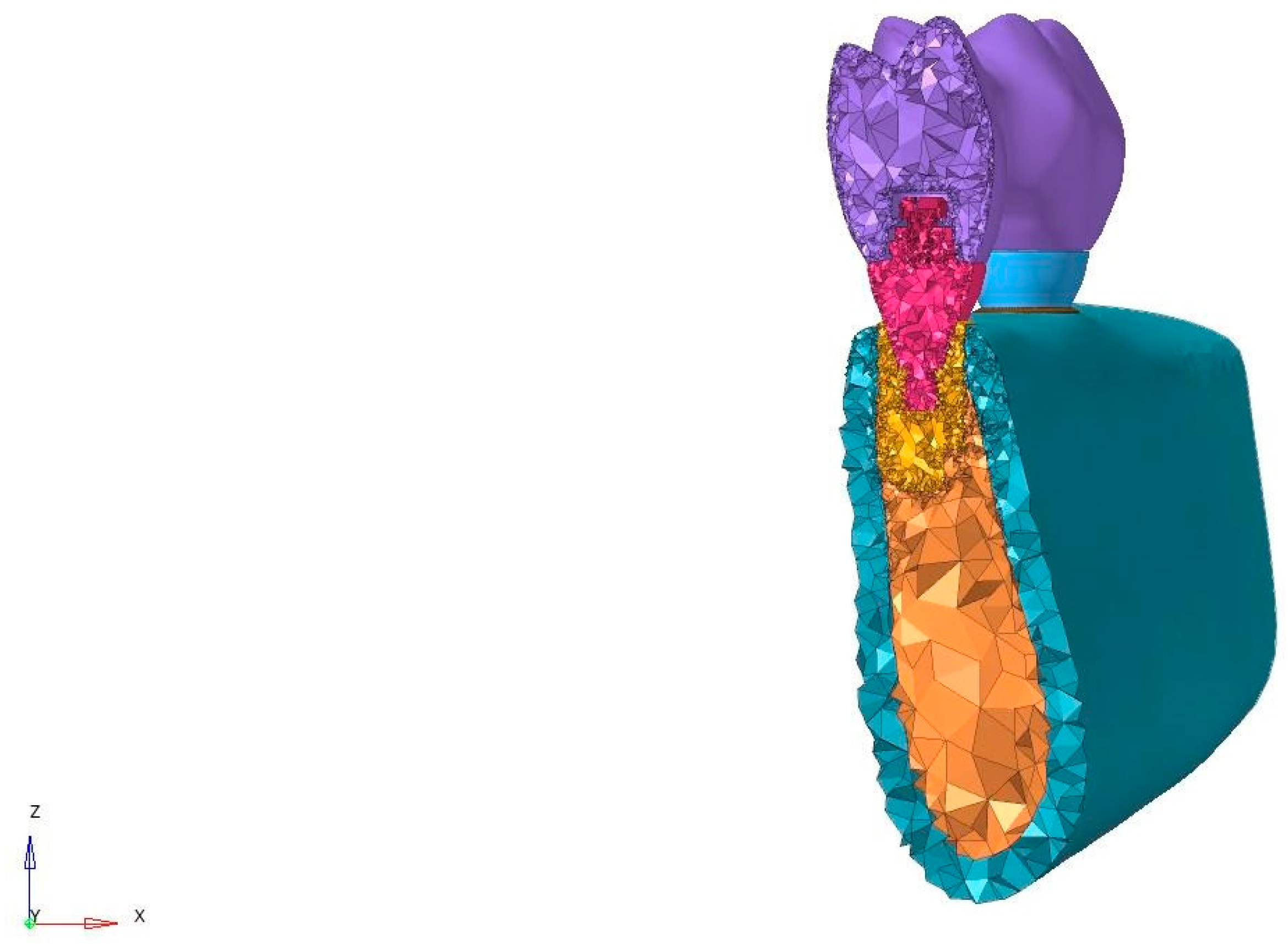
The acquisition of the .stl bone model from tomography data was carried out using three-dimensional Slicer software. (Version 4.11, Boston, MA, USA) Mathematical models were generated by dividing the geometric models into small and simple parts called mesh (Figure 1). Reverse engineering and three-dimensional CAD modeling procedures were performed using ALTAIR Evolve software 2021 (Altair Engineering Inc., Troy, MI, USA); preparation of the solid models for the analysis environment and generation of the optimized mesh structure were performed using ALTAIR Hypermesh software 2021 (Altair Engineering Inc., Troy, MI, USA). The mesh density was refined to achieve an optimal balance between computational efficiency and result accuracy. The implicit solver of Nastran-based ALTAIR OptiStruct (ALTAIR, Troy, MI, USA) was used for the solution of the generated finite element models. The finite element mesh consisted of three-dimensional tetrahedral elements. The mesh density was refined with particular attention to the implant–bone interface and peri-implant regions, where stress concentration is expected. This approach was adopted to achieve a balance between computational efficiency and accuracy of stress distribution.

2.1. Modeling of the Implant and Prosthetic Superstructure and Creation of Study Models

In this study, different treatment options were evaluated for models planned to be treated with implant-supported fixed prosthetic restoration in the posterior region where standard-length implant use is not indicated due to resorption and limitation of the inferior alveolar nerve (IAN). A short implant treatment model, an angled implant treatment model, and vertical augmentation treatment models were created. Microcone (cylindrical) implant designs of the Medentika IPS Implant System were used in the models. A 45° angulation was selected to represent a commonly used clinical configuration in cases with anatomical limitations and to allow comparison with previously reported studies.
The implant, abutment, abutment screw, prosthetic screw, and prosthetic superstructure used in the study were modeled in ALTAIR Evolve software. In order to ensure force transmission between the models, mesh matching between mesh structures was performed in ALTAIR Hypermesh software.
The implant specifications used in the study included diameters of 4 mm with lengths of 13 mm, 8 mm, and 6.5 mm. All implants were modeled using the Medentika IPS Implant System, which was selected due to its widespread clinical use and standardized geometry.
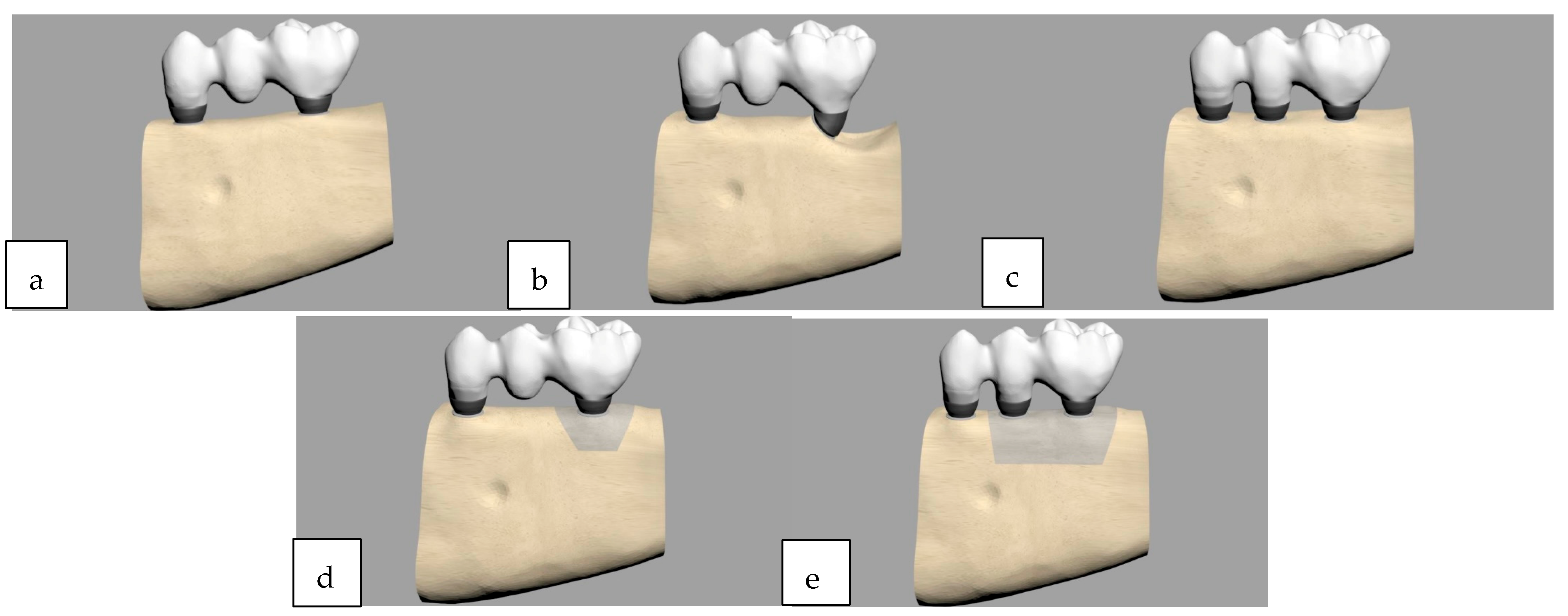
The models created for the region distal to the mental foramen in the edentulous and resorbed posterior mandible where standard-length implants could not be applied due to IAN limitation are as follows (Figure 2).
Model 1
A 13 mm implant was placed in the premolar region and a 6.5 mm implant in the first molar region; a 3-unit bridge was planned on the two implants.
Model 2
A 13 mm implant was placed in the premolar region and an 8 mm implant was placed at a 45° angle in the first molar region; a 3-unit bridge was planned on the two implants.
Model 3
A 13 mm implant was placed in the premolar region and 6.5 mm implants were placed in the second premolar and first molar regions; a 3-unit bridge was planned on the three implants.
Model 4
A 13 mm implant was placed in the premolar region and an 8 mm implant was placed in the first molar region; 1.5 mm vertical augmentation was performed in the molar region. A 3-unit bridge was planned on the two implants.
Model 5
A 13 mm implant was placed in the premolar region and 8 mm implants were placed in the second premolar and first molar regions; 1.5 mm vertical augmentation was performed in these regions. A 3-unit bridge was planned on the three implants.

2.2. Modeling of Cortical and Trabecular Bone

Tomographic data of a completely edentulous adult patient were reconstructed with a slice thickness of 0.1 mm. The data in DICOM format were transferred to three-dimensional Slicer software, segmentation was performed using appropriate Hounsfield values, and a three-dimensional model was obtained. The model was exported in .stl format.
The three-dimensional model was transferred to ALTAIR Evolve software, appropriate cortical bone geometry was modeled, and cortical bone of the determined thickness was created. Trabecular bone was obtained by referencing the inner surface of the cortical bone.

2.3. Material Definitions

PMMA (polymethyl methacrylate) was used to represent the prosthetic superstructure material because of its homogeneous, isotropic, and linearly elastic behavior, which enables standardized biomechanical evaluation and reduces variability among finite element models. Linear material properties were used in the analyses.
The elastic modulus and Poisson’s ratio values assigned to each material were used to define the mechanical behavior and deformation characteristics of implant components and surrounding bone tissues during finite element analysis. The material properties of the analyzed model were defined numerically (Table 1).
In the vertically augmented models, the grafted region was represented as a healed graft volume and was modeled as a homogeneous, isotropic, and linearly elastic material. The graft was assumed to be fully integrated with the surrounding bone, reflecting a consolidated healing condition rather than the early healing phase. The elastic modulus assigned to the graft material was selected to represent a mechanically mature augmented region and to allow comparison of treatment scenarios under standardized conditions, including identical loading magnitudes, boundary conditions, material properties, and anatomical bone geometry. The augmented region was modeled geometrically according to the planned vertical gain in the posterior mandibular site and integrated into the finite element model as part of the bone structure in the augmented area.

2.4. Loading Scenarios and Boundary Conditions

A total of ten analyses were performed by applying vertical and oblique loading conditions for each model.
Vertical loading was applied as 100 N from the central fossae of the first premolar, second premolar, and first molar teeth.
Oblique loading was applied as 100 N at a 30° buccal angle from the buccal cusps of the first and second premolars and from the mesiobuccal cusp of the first molar [13].
To prevent stress singularity, the loads were distributed to the nodes in the loading regions. The models were fixed by constraining all degrees of freedom in three axes at the mesial and distal nodes of the cortical and trabecular bone.

2.5. Quantitative Analysis Information

The node and element numbers of the generated analysis models are shown in Table 2.

2.6. Assembly of Systems and Bone–Implant Interface Condition

It was assumed that 100% osseointegration existed between the bone and the implant, as commonly accepted in previous studies [11].
FREEZE-type contact definition was applied at all contact interfaces (cortical–trabecular bone interface, implant–bone contact, implant–abutment and screw connections, and prosthetic contact surfaces).
The generated analysis models were solved using the linear static analysis method.
The evaluated parameters included von Mises stress values, maximum and minimum principal stresses, and stress distribution patterns within implant components and surrounding cortical and trabecular bone tissues.

3. Results

3.1. Maximum Stress (Pmax) in Cortical Bone

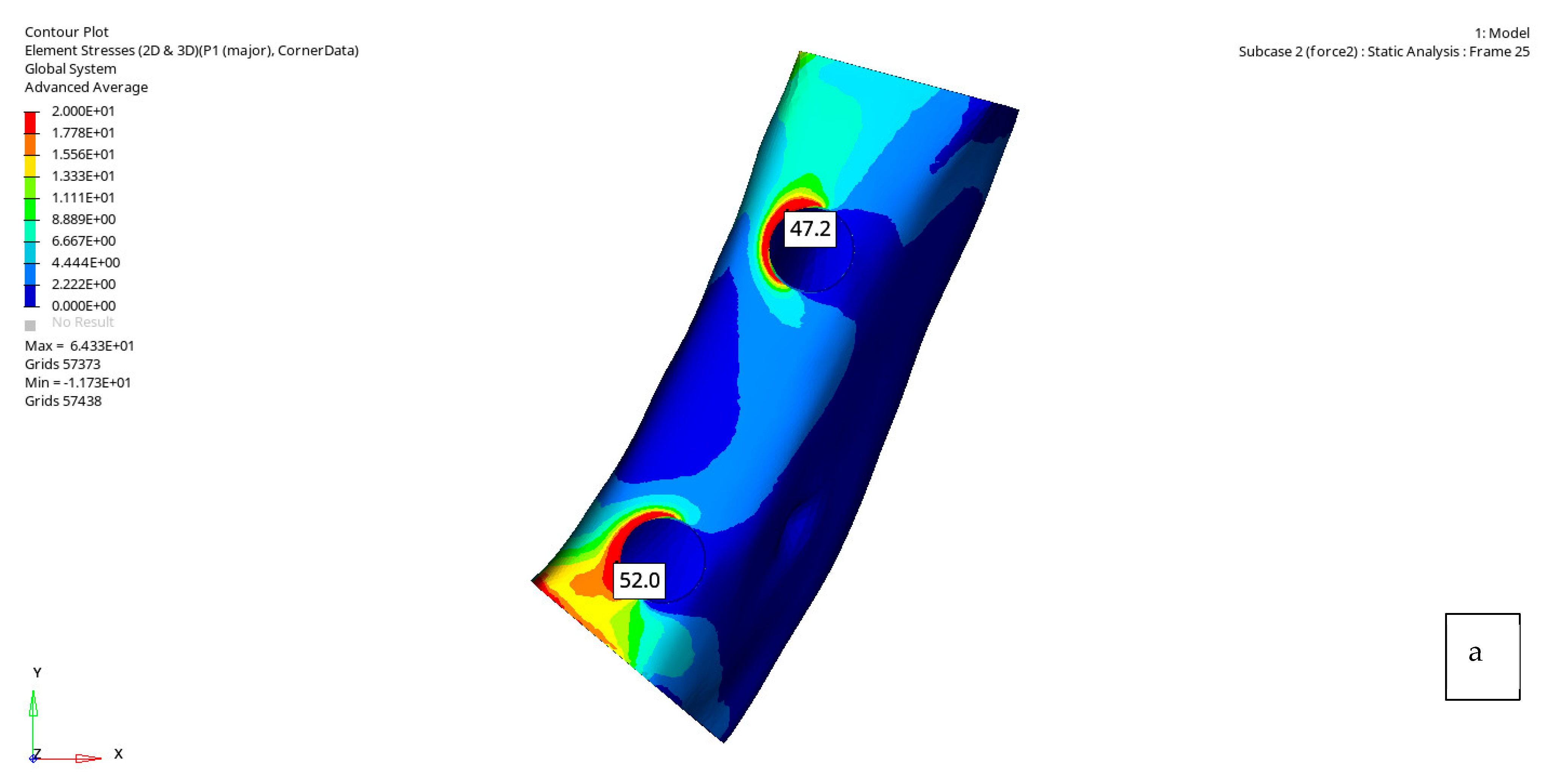
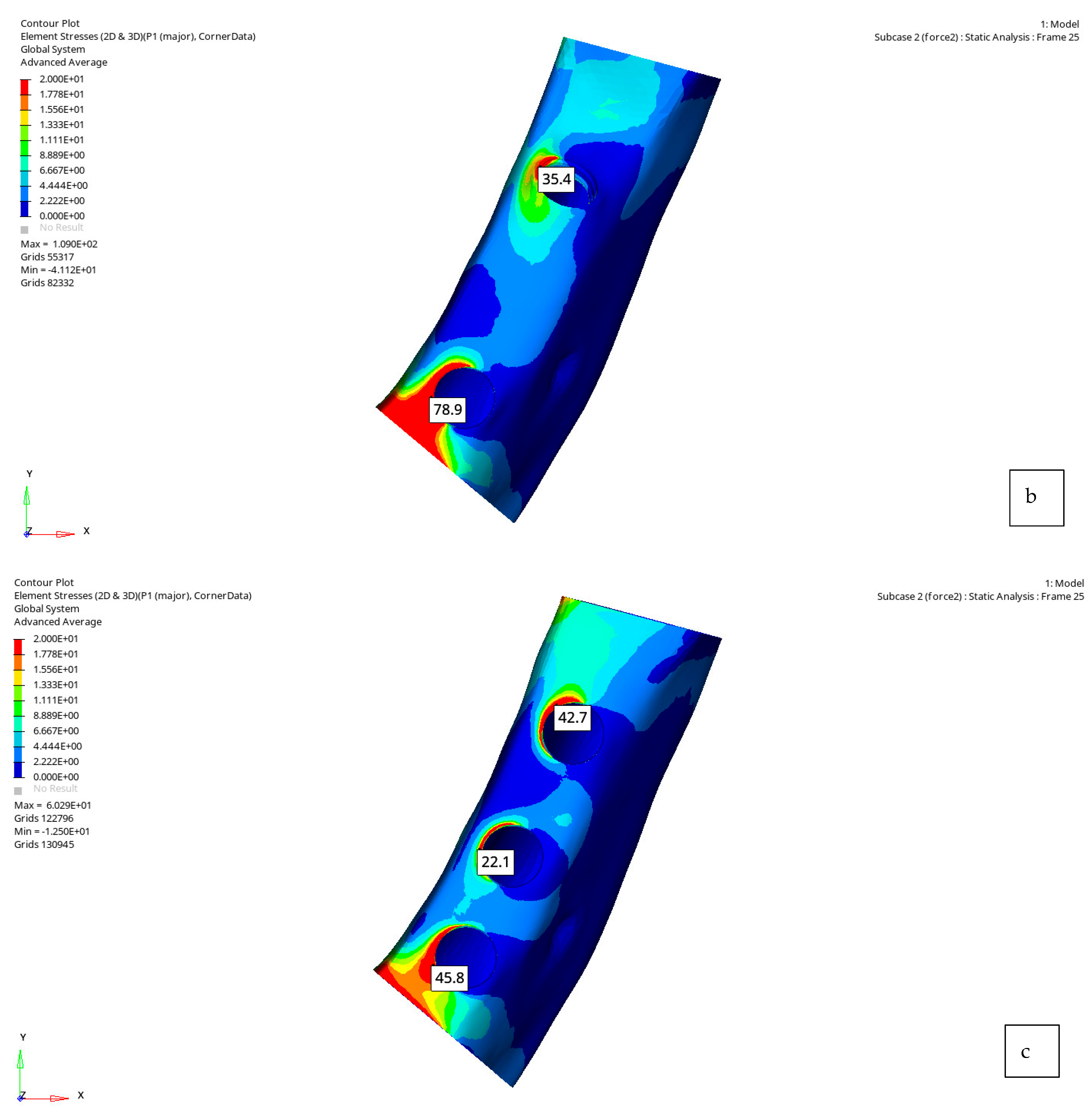
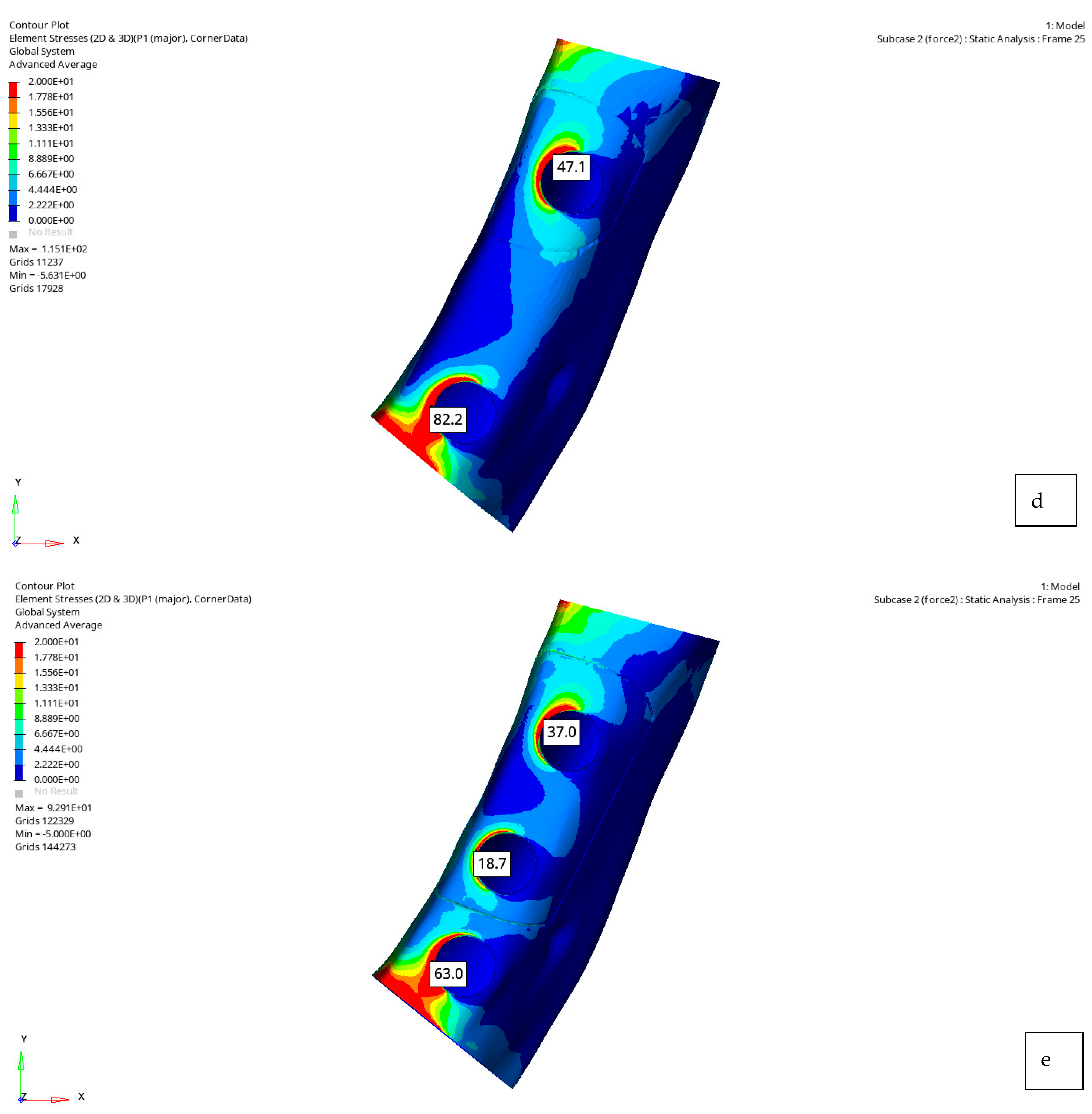
The maximum principal stress (Pmax) values formed under oblique loading in the cortical bone are shown in Figure 3. The highest Pmax value was measured in Model 4 (82.2 MPa), followed by Model 2 (78.9 MPa). The lowest value was detected in Model 3 (45.8 MPa), which had a three-implant configuration.
Compared with two-implant configurations, peak stress values decreased and stress distribution became more homogeneous in three-implant models.
Cortical Pmax values measured under vertical loading were found to be lower compared with oblique loading (Supplementary Figure S1).

3.2. Minimum Stress (Pmin) in Cortical Bone

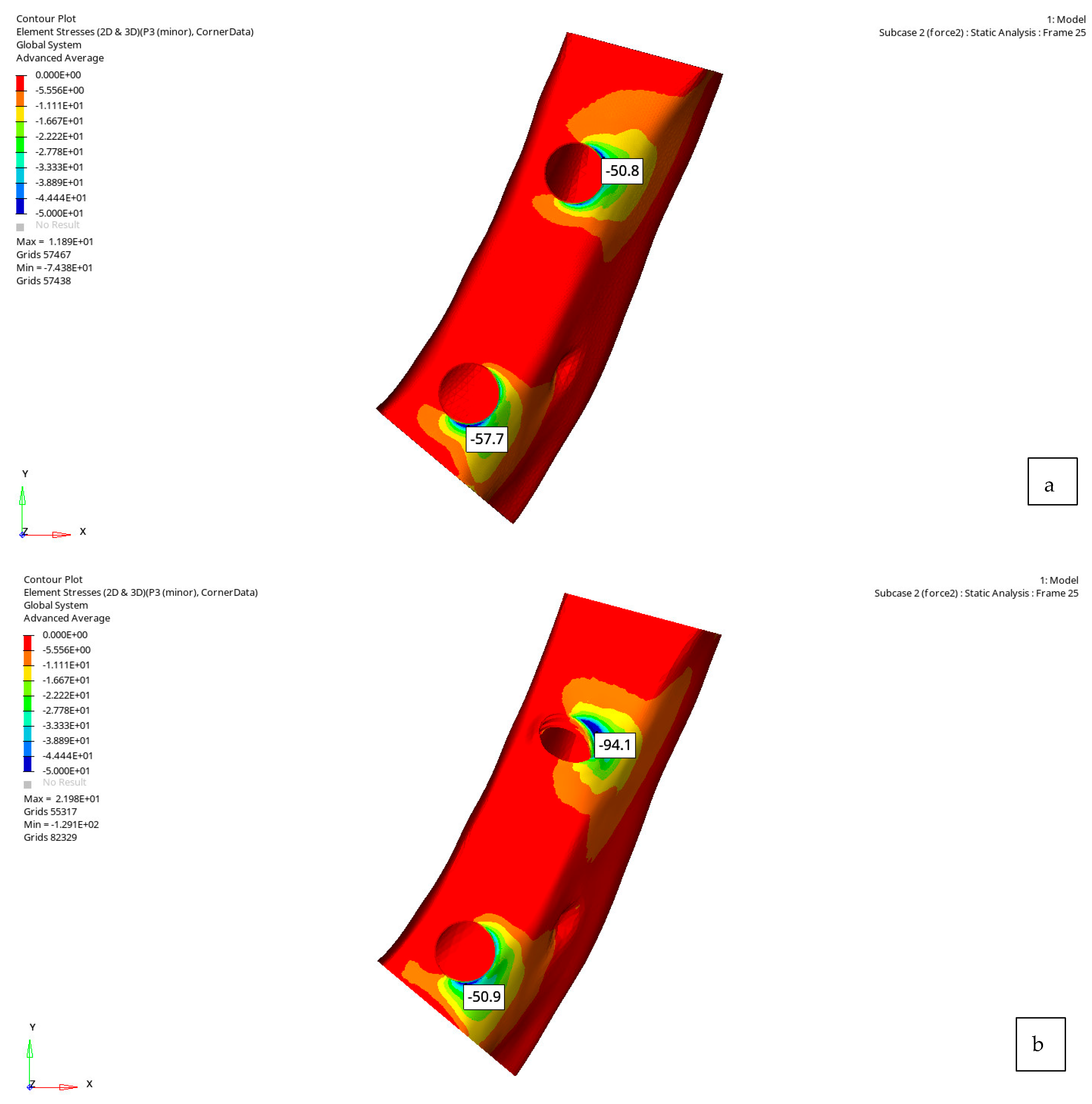
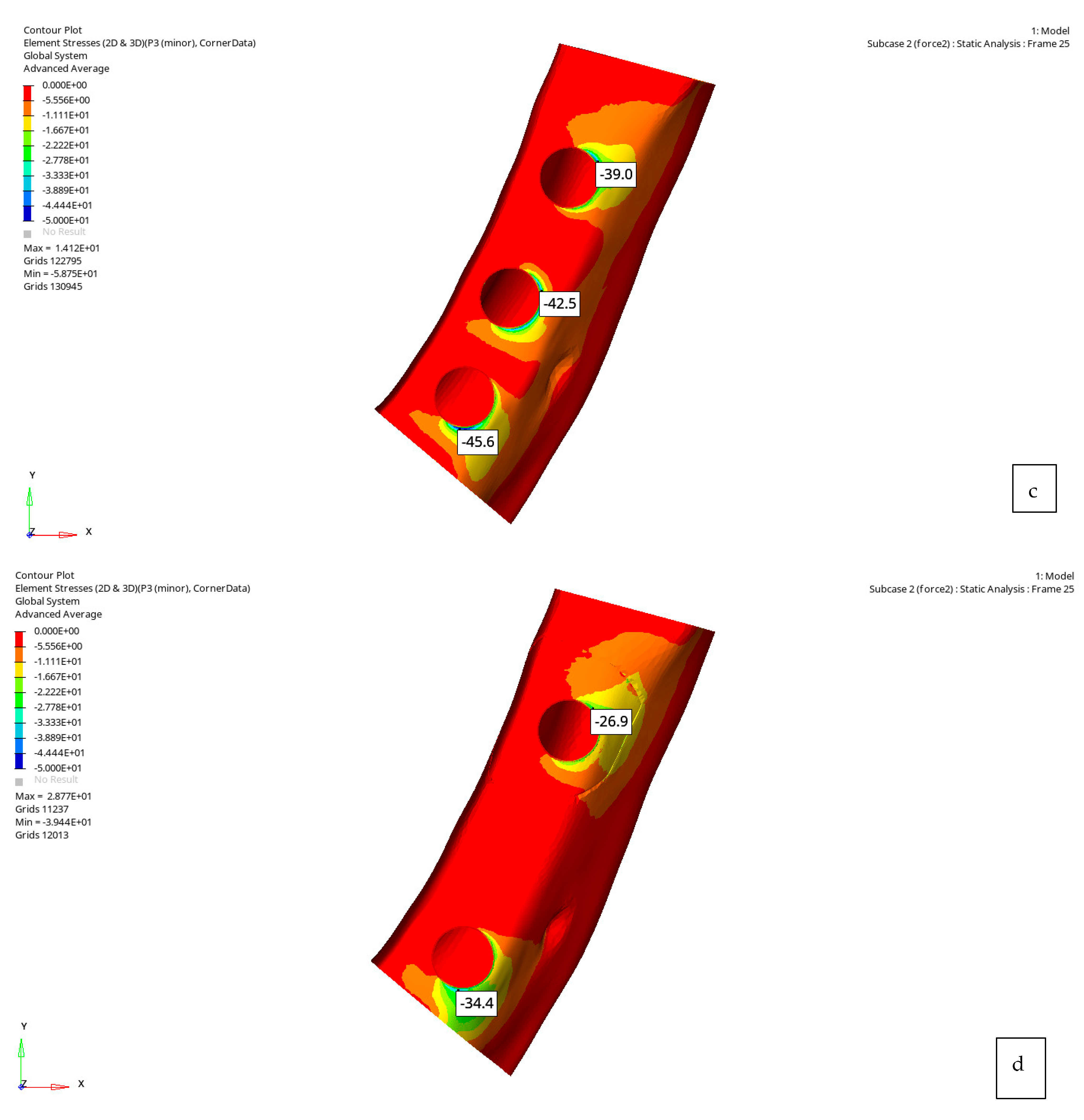
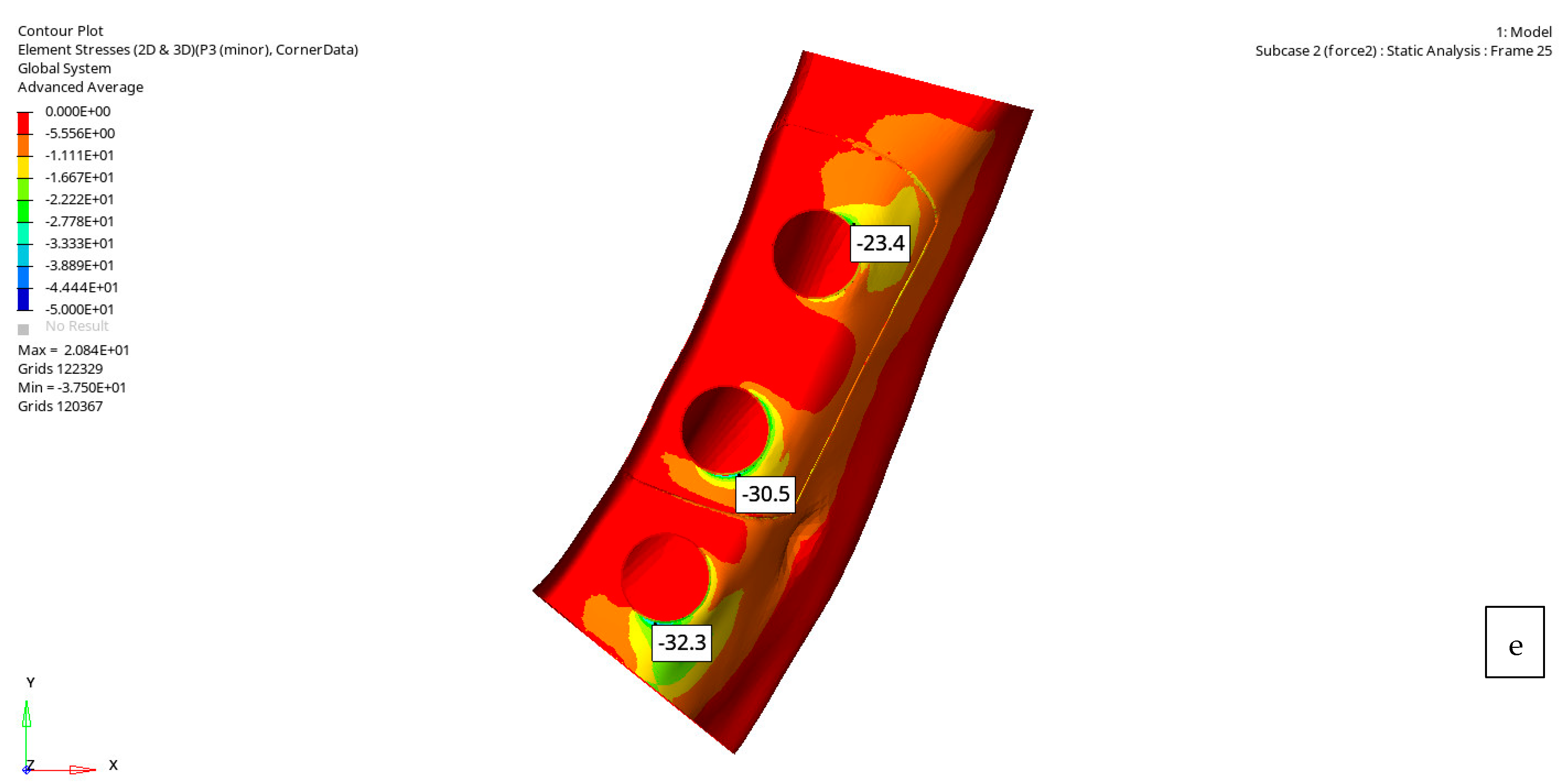
Among the minimum principal stress (Pmin) values measured in the cortical bone under oblique loading, Model 2 exhibited markedly higher compressive stress values compared with the other models, while the lowest value was measured in Model 5 (Figure 4).
Pmin values obtained under vertical loading remained at lower levels compared with oblique loading (Supplementary Figure S2).

3.3. Stress Distribution in Trabecular Bone

The maximum and minimum stress values measured in the trabecular bone were lower than those in the cortical bone. Although an increase in stress was observed under oblique loading in the trabecular bone, the general trend was similar to that of the cortical bone (Supplementary Figures S3–S6).

3.4. von Mises Stress Values in the Implant

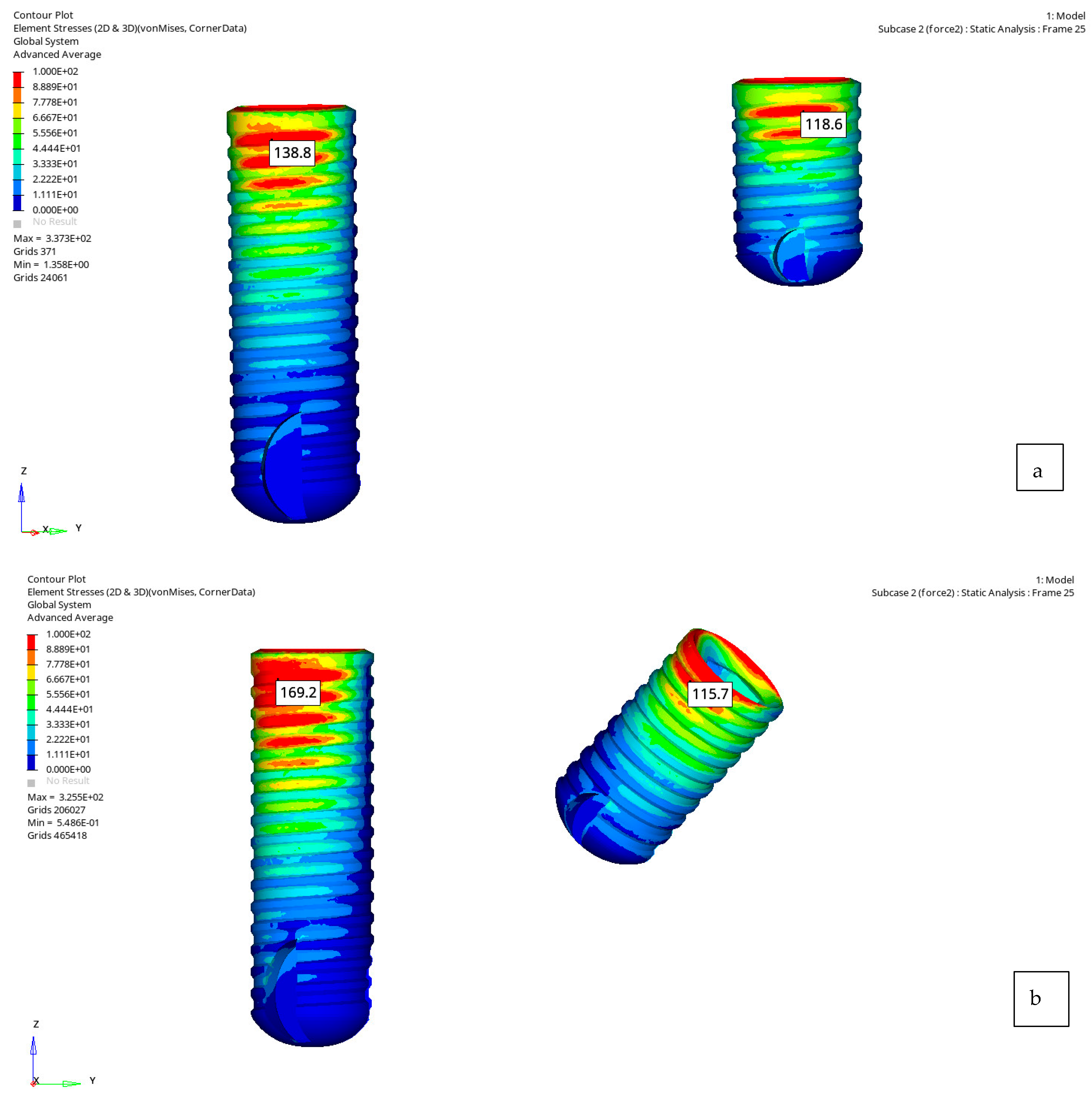
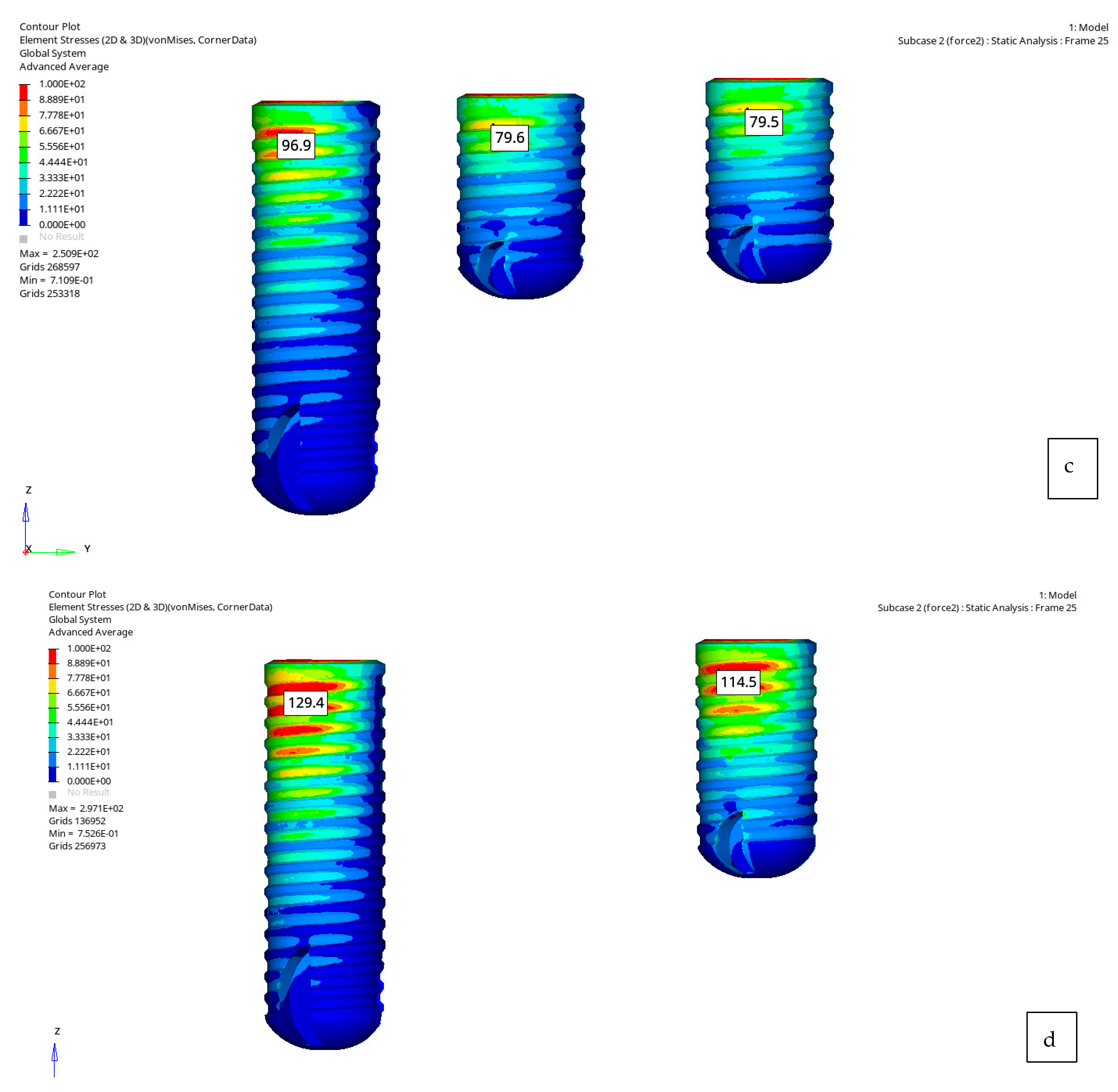
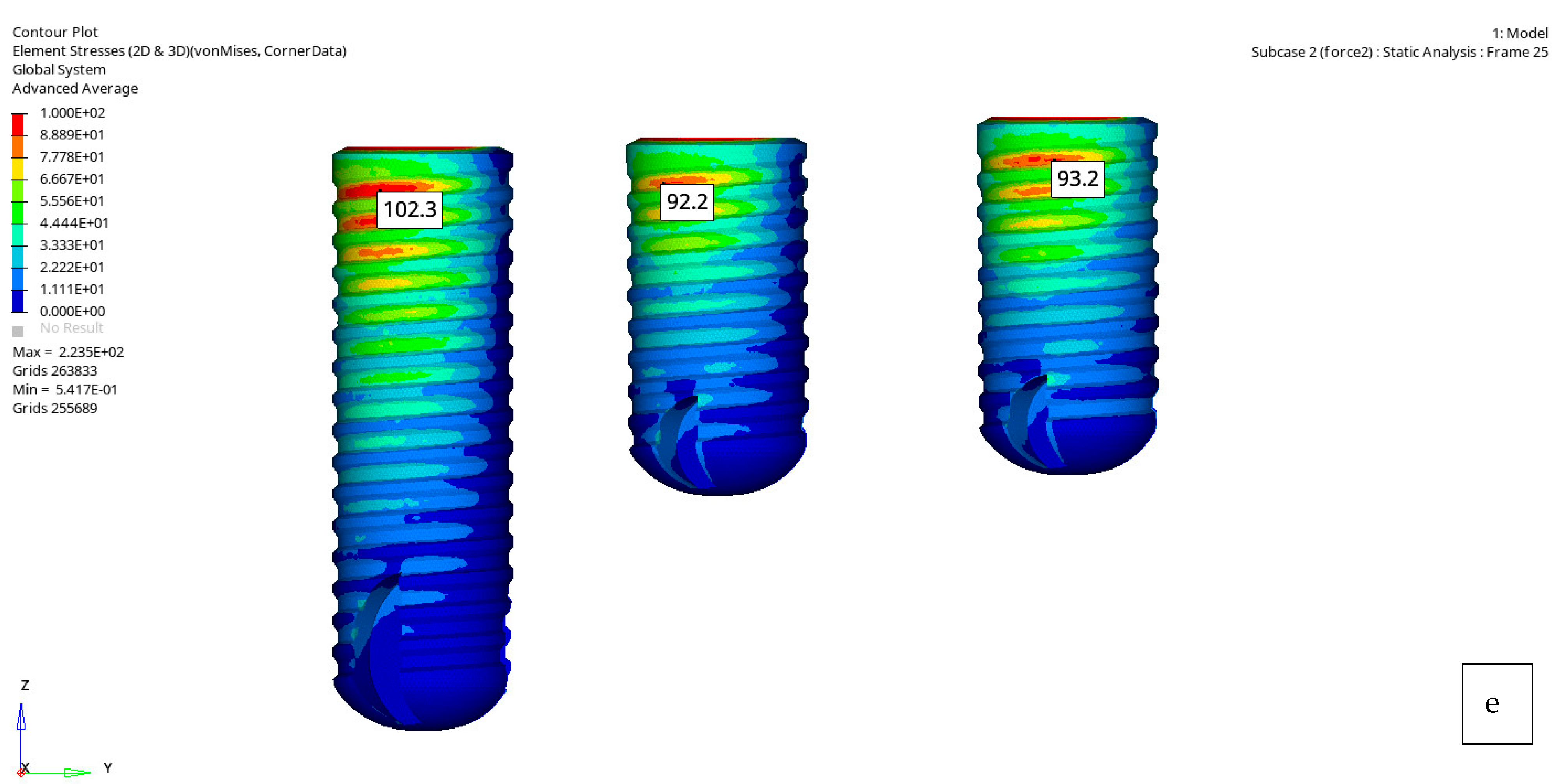
The maximum von Mises stress values formed in the implants under oblique loading are shown in Figure 5. The highest stress value was measured in Model 2 (169.2 MPa), which included an angled implant, while the lowest value was detected in Model 3 (96.9 MPa), which had a three-implant configuration.
When Model 1 and Model 4 were compared, no reduction in peak stress values on the implant was observed in the model where vertical augmentation was applied. In contrast, in Model 3 and Model 5, where the number of implants was increased, peak stress values decreased and stress distribution became more balanced.
The von Mises stress values formed in the implants under vertical loading were lower compared with oblique loading. Detailed stress distributions under vertical loading conditions are presented in Supplementary Figure S7.

4. Discussion

Implant rehabilitation in the resorbed posterior mandible remains clinically challenging due to anatomical limitations and biomechanical risks. In cases where the inferior alveolar nerve imposes vertical constraints, clinicians must choose between short implants, vertical augmentation procedures, or the placement of angled implants. The biomechanical findings of the present study demonstrate that these treatment approaches exhibit different load transfer characteristics and stress distribution patterns. Oblique loading generated higher stress values than vertical loading, while increasing implant number contributed to a more homogeneous stress distribution. In contrast, angled implant configurations were associated with higher peak stress concentrations, thereby providing data that may contribute to clinical decision-making.
Bone resorption following tooth extraction is a physiological process; however, prolonged edentulism, trauma, periodontal disease, and unstable prostheses may accelerate this process [14]. In posterior mandibles with limited vertical bone height and radiographic heights below 10 mm, increased complication and implant failure rates have been reported [15]. For this reason, augmentation procedures such as onlay grafting and vertical distraction osteogenesis have long been employed in cases with insufficient vertical bone height. Studies on onlay grafting have reported implant survival rates ranging between 91.7% and 100%; however, graft resorption rates between 13% and 36%, as well as complications such as infection and sensory disturbances, have also been described [16,17]. Although vertical distraction osteogenesis offers the advantage of avoiding graft use, patient discomfort and technical limitations have been reported [16]. These drawbacks have encouraged the search for less invasive alternatives.
Short implants have emerged as an important alternative for the rehabilitation of posterior atrophic mandibles with limited vertical bone height. Earlier studies reported higher failure rates in short implants compared with standard-length implants; however, recent systematic reviews and meta-analyses have demonstrated survival rates comparable to those of longer implants, particularly with improvements in implant surface technology and surgical protocols [18,19,20]. In addition, short implants have been associated with reduced surgical morbidity, shorter treatment duration, and lower complication rates when compared with vertical augmentation procedures in appropriately selected cases [21,22,23]. Improvements in implant surface technology are believed to play a role in this improvement [3]. Renouard and Nisand reported similar survival rates between short and long implants when rough-surfaced fixtures were used [24]. In the systematic review by Telleman et al., survival rates of short implants (5–9.5 mm) were shown to increase with implant length [25]. Nevertheless, biomechanical behavior under different loading conditions remains an important consideration in treatment planning for atrophic posterior mandibles. In the present study, oblique loading conditions resulted in higher stress concentrations compared with vertical loading, particularly in models including angled implants.
In the present study, no marked difference in stress distribution was observed between the 6.5 mm short implant model and the 8 mm implant placed after vertical augmentation. This finding supports the concept that short implants may represent a biomechanically acceptable alternative in properly selected cases. However, it should be emphasized that finite element analysis does not replicate biological adaptation and remodeling processes. The selected augmentation height of 1.5 mm represents clinically relevant scenarios with limited vertical bone height, where minimally invasive approaches may be preferred to reduce surgical morbidity. Rather than modeling extreme atrophic conditions, this study focuses on commonly encountered clinical situations in which alternative implant strategies are considered.
In addition to implant length, implant diameter has been reported to markedly influence stress distribution. Himmlova et al. demonstrated that maximum stress is concentrated within the coronal 5–6 mm of the implant and that increasing implant diameter reduces stress values [11]. Hsu et al. similarly reported that implant diameter has a greater impact on biomechanical resistance than implant length [26]. In the present study, implant diameter was standardized in order to isolate the effects of implant length and angulation.
Angled implant placement has been widely investigated in the clinical literature, particularly within the all-on-four concept. Malo reported that angled implants placed in the posterior mandible did not increase failure rates over a 10-year follow-up period [27]. Likewise, the meta-analysis by Chrcanovic et al. demonstrated that angled implant placement did not appear to influence failure rates compared with axially placed implants [28]. However, several finite element studies have reported higher stress values associated with angled implants [12,29,30]. Almeida et al. observed increased stress values in models incorporating distally tilted 45° implants [29], and Kılıç and Doğanay reported that angled implants generated higher stress values compared with straight implants [30]. Similarly, in the present study, higher stress concentrations in both the implant and cortical bone were observed in the model including an angled implant. Although clinical studies have reported comparable survival rates, increased biomechanical stress under oblique loading conditions may represent a potential risk factor for marginal bone loss.
Oblique loading generated higher stress values than vertical loading in the present study. It has been reported that occlusal forces with lateral components may result in less favorable load transfer around implants in posterior regions. The concentration of stress in the crestal cortical bone and implant neck region observed in this study is consistent with the clinical observation that marginal bone loss frequently initiates in these areas.
The present findings are consistent with previous biomechanical studies reporting increased stress concentration in the crestal cortical bone under non-axial loading conditions. Confirming such patterns under standardized conditions contributes to the existing body of knowledge.
Increasing the number of implants favorably influenced stress distribution in the present models. It has been reported that splinted restorations allow occlusal loads to be more evenly distributed among implants, thereby reducing stress concentration at the implant–abutment interface and in the surrounding bone [13]. These findings suggest that increasing implant number in posterior regions, particularly under oblique loading conditions, may provide biomechanical advantages. The particularly low von Mises stress values observed in Model 3 may be related to the favorable distribution of occlusal loads among three implants without the additional material interface introduced by the augmented region. Although Model 5 also included three implants, the presence of the augmented volume may have altered local stiffness distribution and load transfer characteristics, which could explain why similarly low stress values were not observed.
This study has several limitations. The analyses were performed under linear and static conditions, and dynamic masticatory cycles and repetitive loading were not simulated. Bone tissue was assumed to be homogeneous, isotropic, and linearly elastic, whereas in clinical conditions bone exhibits anisotropic and heterogeneous properties. A 100% osseointegration condition between bone and implant was assumed, and partial integration states during early healing were not evaluated. Soft tissues, periodontal ligament-like structures, and biological remodeling processes were not included in the model. Furthermore, applied loads were considered static and constant in magnitude, and variable occlusal force patterns observed in clinical conditions were not simulated. Therefore, the present findings reflect biomechanical tendencies and should not be interpreted as direct clinical outcomes. In addition, sensitivity analyses were not performed, which may influence the robustness of the model outcomes. Future studies incorporating parametric variations and experimental validation are recommended.

5. Conclusions

Oblique loading generated higher Pmax, Pmin, and von Mises stress values compared with vertical loading, with stress concentrations predominantly localized in the crestal cortical bone and implant neck region. Increasing the number of implants improved stress distribution and reduced peak stress values under both loading conditions. Angled implant models demonstrated higher stress concentrations compared with axially placed implant configurations. No marked difference in stress distribution was observed between short implant models and vertically augmented standard-length implant models. These findings suggest that short implants may represent a biomechanically acceptable alternative in posterior mandibular regions with limited vertical bone height.

Supplementary Materials

The following supporting information can be downloaded at: https://www.mdpi.com/article/10.3390/app16105149/s1, Figure S1: Maximum principal stress (Pmax) distribution in cortical bone under vertical loading; Figure S2: Minimum principal stress (Pmin) distribution in cortical bone under vertical loading; Figure S3: Maximum principal stress (Pmax) distribution in trabecular bone under oblique loading; Figure S4: Minimum principal stress (Pmin) distribution in trabecular bone under oblique loading; Figure S5: Maximum principal stress (Pmax) distribution in trabecular bone under vertical loading; Figure S6: Minimum principal stress (Pmin) distribution in trabecular bone under vertical loading; Figure S7: von Mises stress distribution in implants under vertical loading.

Author Contributions

Conceptualization, A.N.N.B., N.E.A. and S.Ç.; methodology, A.N.N.B.; investigation, A.N.N.B.; data curation, A.N.N.B.; writing—original draft, N.E.A.; writing—review & editing, N.E.A. and A.N.N.B.; supervision, S.Ç. All authors have read and agreed to the published version of the manuscript.

Funding

This research received no external funding.

Institutional Review Board Statement

The CBCT data used for model generation were obtained from an anonymized imaging database provided within the software environment. Since no identifiable patient information or clinical intervention was involved, ethical approval was not required for this finite element analysis study.

Informed Consent Statement

Not applicable.

Data Availability Statement

The data supporting the findings of this study are available within the article and its Supplementary Materials.

Conflicts of Interest

The authors declare no conflicts of interest.

Abbreviations

The following abbreviations are used in this manuscript:
FEAFinite Element Analysis
CTComputed Tomography
IANInferior Alveolar Nerve
PmaxMaximum Principal Stress
PminMinimum Principal Stress
PMMAPolymethyl Methacrylate
GBRGuided Bone Regeneration
CADComputer-Aided Design

References

  1. Bodic, F.; Hamel, L.; Lerouxel, E.; Baslé, M.F.; Chappard, D. Bone loss and teeth. Jt. Bone Spine 2005, 72, 215–221. [Google Scholar] [CrossRef]
  2. Resnik, R. Misch’s Contemporary Implant Dentistry; Elsevier: St. Louis, MO, USA, 2020. [Google Scholar]
  3. Pommer, B.; Frantal, S.; Willer, J.; Posch, M.; Watzek, G.; Tepper, G. Impact of dental implant length on early failure rates: A meta-analysis of observational studies. J. Clin. Periodontol. 2011, 38, 856–863. [Google Scholar] [CrossRef]
  4. Yu, X.; Xu, R.; Zhang, Z.; Yang, Y.; Deng, F. A meta-analysis indicating extra-short implants (≤ 6 mm) as an alternative to longer implants (≥ 8 mm) with bone augmentation. Sci. Rep. 2021, 11, 8152, Erratum in Sci. Rep. 2021, 11, 18730. https://doi.org/10.1038/s41598-021-98441-7. [Google Scholar] [CrossRef] [PubMed]
  5. Uehara, P.N.; Matsubara, V.H.; Igai, F.; Sesma, N.; Mukai, M.K.; Araujo, M.G. Short dental implants (≤7mm) versus longer implants in augmented bone area: A meta-analysis of randomized controlled trials. Open Dent. J. 2018, 12, 354–365. [Google Scholar] [CrossRef] [PubMed]
  6. Thoma, D.S.; Haas, R.; Sporniak-Tutak, K.; Garcia, A.; Taylor, T.D.; Hämmerle, C.H.F. Randomized controlled multicentre study comparing short dental implants (6 mm) versus longer dental implants (11–15 mm) in combination with sinus floor elevation procedures: 5-Year data. J. Clin. Periodontol. 2018, 45, 1465–1474. [Google Scholar] [CrossRef]
  7. Hamed, H.A.; Marzook, H.A.; Ghoneem, N.E.; El-Anwar, M.I. Angulated dental implants in posterior maxilla: Finite element analysis and experimental verification. Open Access Maced. J. Med. Sci. 2018, 6, 397–401. [Google Scholar] [CrossRef] [PubMed]
  8. Del Fabbro, M.; Bellini, C.M.; Romeo, D.; Francetti, L. Tilted Implants for the Rehabilitation of Edentulous Jaws: A Systematic Review. Clin. Implant Dent. Relat. Res. 2012, 14, 612–621. [Google Scholar] [CrossRef]
  9. Manea, A.; Bran, S.; Dinu, C.; Rotaru, H.; Barbur, I.; Crisan, B.; Armencea, G.; Onisor, F.; Lazar, M.; Ostas, D.; et al. Principles of biomechanics in oral implantology. Med. Pharm. Rep. 2019, 92, S14–S19. [Google Scholar] [CrossRef]
  10. Delgado-Ruiz, R.A.; Calvo-Guirado, J.L.; Romanos, G.E. Effects of occlusal forces on the peri-implant bone interface stability. Periodontology 2000 2019, 81, 179–193. [Google Scholar] [CrossRef]
  11. Himmlova, L.; Dostálová, T.J.; Kácovský, A.; Konvičková, S. Influence of implant length and diameter on stress distribution: A finite element analysis. J. Prosthet. Dent. 2004, 91, 20–25. [Google Scholar] [CrossRef]
  12. Arslan, Y.Z.; Karabulut, D.; Kahya, S.; Cansiz, E. Biomechanical comparison of implantation approaches for the treatment of mandibular total edentulism. Proc. Inst. Mech. Eng. Part H J. Eng. Med. 2020, 234, 1139–1150. [Google Scholar] [CrossRef]
  13. Toniollo, M.B.; Macedo, A.P.; Pupim, D.; Zaparolli, D.; de Mattos, M.G. Three-dimensional finite element analysis surface stress distribution on regular and short morse taper implants generated by splinted and nonsplinted prostheses in the rehabilitation of various bony ridges. J. Craniofacial Surg. 2016, 27, e276–e280. [Google Scholar] [CrossRef]
  14. Corrente, G.; Abundo, R.; Ambrois, A.B.D.; Savio, L.; Perelli, M. Short porous implants in the posterior maxilla: A 3-year report of a prospective study. Int. J. Periodontics Restor. Dent. 2009, 29, 23–29. [Google Scholar]
  15. Soehardi, A.; Meijer, G.J.; Manders, R.; Stoelinga, P.J.W. An inventory of Mandibular fractures associated with implants in atrophic edentulous mandibles: A survey of dutch oral and maxillofacial surgeons. Int. J. Oral Maxillofac. Implants 2011, 26, 1087–1093. [Google Scholar]
  16. De Groot, R.; Oomens, M.A.E.M.; Forouzanfar, T.; Schulten, E.A.J.M. Bone augmentation followed by implant surgery in the edentulous mandible: A systematic review. J. Oral Rehabil. 2018, 45, 334–343. [Google Scholar] [CrossRef] [PubMed]
  17. Verhoeven, J.W.; Ruijter, J.M.; Cune, M.S.; Terlou, M.; Zoon, M.A. Onlay grafts in combination with endosseous implants in severe mandibular atrophy: One year results of a prospective, quantitative radiological study. Clin. Oral Implant. Res. 2000, 11, 583–594. [Google Scholar] [CrossRef] [PubMed]
  18. Torres-Alemany, A.; Fernández-Estevan, L.; Agustín-Panadero, R.; Montiel-Company, J.M.; Labaig-Rueda, C.; Mañes-Ferrer, J.F. Clinical Behavior of Short Dental Implants: Systematic Review and Meta-Analysis. J. Clin. Med. 2020, 9, 3271. [Google Scholar] [CrossRef]
  19. Emfietzoglou, R.; Dereka, X. Survival Rates of Short Dental Implants (≤6 mm) Used as an Alternative to Longer (>6 mm) Implants for the Rehabilitation of Posterior Partial Edentulism: A Systematic Review of RCTs. Dent. J. 2024, 12, 185. [Google Scholar] [CrossRef]
  20. Ravidà, A.; Serroni, M.; Borgnakke, W.S.; Romandini, M.; Wang, I.I.; Arena, C.; Annunziata, M.; Cecoro, G.; Saleh, M.H.A. Short (≤6 mm) Compared with ≥10-mm Dental Implants in Different Clinical Scenarios: A Systematic Review of Randomized Clinical Trials with Meta-Analysis, Trial Sequential Analysis and Quality of Evidence Grading. J. Clin. Periodontol. 2024, 51, 936–965. [Google Scholar] [CrossRef]
  21. Sáenz-Ravello, G.; Ossandón-Zúñiga, B.; Muñoz-Meza, V.; Mora-Ferraro, D.; Baeza, M.; Fan, S.; Sagheb, K.; Schiegnitz, E.; Díaz, L. Short Implants Compared to Regular Dental Implants after Bone Augmentation in the Atrophic Posterior Mandible: Umbrella Review and Meta-Analysis of Success Outcomes. Int. J. Implant Dent. 2023, 9, 18. [Google Scholar] [CrossRef]
  22. Esposito, M.; Cannizzaro, G.; Soardi, E.; Pellegrino, G.; Pistilli, R.; Felice, P. A 3-year post-loading report of a randomised controlled trial on the rehabilitation of posterior atrophic mandibles: Short implants versus long implants in vertically augmented bone? Eur. J. Oral Implantol. 2011, 4, 301–311. [Google Scholar]
  23. Felice, P.; Cannizzaro, G.; Checchi, V.; Marchetti, C.; Pellegrino, G.; Censi, P.; Esposito, M. Vertical bone augmentation versus 7-mm-long implants in posterior atrophic mandibles. Results of a randomised controlled clinical trial of up to 4 months after loading. Eur. J. Oral Implantol. 2009, 2, 7–20. [Google Scholar]
  24. Nisand, D.; Renouard, F. Short implant in limited bone volume. Periodontology 2000 2014, 66, 72–96. [Google Scholar] [CrossRef]
  25. Telleman, G.; Raghoebar, G.M.; Vissink, A.; den Hartog, L.; Huddleston Slater, J.J.R.; Meijer, H.J.A. A systematic review of the prognosis of short (<10mm) dental implants placed in the partially edentulous patient. J. Clin. Periodontol. 2011, 38, 667–676. [Google Scholar] [CrossRef]
  26. Hsu, J.T.; Shen, Y.W.; Kuo, C.W.; Wang, R.T.; Fuh, L.J.; Huang, H.L. Impacts of 3D bone-to- implant contact and implant diameter on primary stability of dental implant. J. Formos. Med. Assoc. 2017, 116, 582–590. [Google Scholar] [CrossRef]
  27. Malo, P.; de Araújo Nobre, M.; Lopes, A.; Moss, S.M.; Molina, G.J. A longitudinal study of the survival of All-on-4 implants in the mandible with up to 10 years of follow-up. J. Am. Dent. Assoc. 2011, 142, 310–320. [Google Scholar] [CrossRef] [PubMed]
  28. Chrcanovic, B.R.; Albrektsson, T.; Wennerberg, A. Tilted versus axially placed dental implants: A meta-analysis. J. Dent. 2015, 43, 149–170. [Google Scholar] [CrossRef] [PubMed]
  29. Almeida, E.O.; Rocha, E.P.; Júnior, A.C.F.; Anchieta, R.B.; Poveda, R.; Gupta, N.; Coelho, P.G. Tilted and short implants supporting fixed prosthesis in an atrophic maxilla: A 3D-FEA Biomechanical Evaluation. Clin. Implant. Dent. Relat. Res. 2015, 17, e332–e342. [Google Scholar] [CrossRef] [PubMed]
  30. Kilic, E.; Doganay, O. Evaluation of stress in tilted implant concept with variable diameters in the atrophic mandible: Three-dimensional finite element analysis. J. Oral Implant. 2020, 46, 19–26. [Google Scholar] [CrossRef]
Figure 1. Three-dimensional mathematical model and mesh structure used for finite element analysis. The model includes cortical bone, cancellous bone, implant fixture, abutment, prosthetic screw, and prosthetic crown components. Tetrahedral mesh structures were generated to simulate the biomechanical behavior of the implant-supported restoration under loading conditions (Blue indicates cortical bone, orange indicates trabecular bone, yellow indicates the implant, pink indicates the abutment, and purple indicates the prosthetic superstructure).
Applsci 16 05149 g001
Figure 2. Schematic representation of the study models created for the posterior edentulous mandible with inferior alveolar nerve (IAN) limitation. (a) Model 1, (b) Model 2, (c) Model 3, (d) Model 4, (e) Model 5.
Applsci 16 05149 g002
Figure 3. Maximum principal stress (Pmax) distribution in cortical bone under oblique loading. (a) Model 1, (b) Model 2, (c) Model 3, (d) Model 4, (e) Model 5.
Applsci 16 05149 g003aApplsci 16 05149 g003bApplsci 16 05149 g003c
Figure 4. Minimum principal stress (Pmin) distribution in cortical bone under oblique loading. (a) Model 1, (b) Model 2, (c) Model 3, (d) Model 4, (e) Model 5.
Applsci 16 05149 g004aApplsci 16 05149 g004bApplsci 16 05149 g004c
Figure 5. von Mises stress distribution in implants under oblique loading. (a) Model 1, (b) Model 2, (c) Model 3, (d) Model 4, (e) Model 5.
Applsci 16 05149 g005aApplsci 16 05149 g005bApplsci 16 05149 g005c
Table 1. Material properties.
MaterialElastic Modulus (MPa)Poisson’s Ratio
Titanium110,0000.35
Cortical bone13,7000.3
Trabecular bone13700.3
PMMA30000.35
Graft11,0000.3
Table 2. Quantitative model information.
Model 1Model 2Model 3Model 4Model 5
Total # of Nodes444,337440,840450,795408,579571,397
Total # of Elements1,920,2181,908,0771,956,6541,668,5172,338,812
Disclaimer/Publisher’s Note: The statements, opinions and data contained in all publications are solely those of the individual author(s) and contributor(s) and not of MDPI and/or the editor(s). MDPI and/or the editor(s) disclaim responsibility for any injury to people or property resulting from any ideas, methods, instructions or products referred to in the content.