CFD Investigation of Free-Surface-Pressurized Flow and Air-Vent Optimization in Combined Tailrace–Diversion Systems

Abstract
1. Introduction
2. Methodology
2.1. Virtual Slot Method
2.2. VOF Multiphase Flow Model
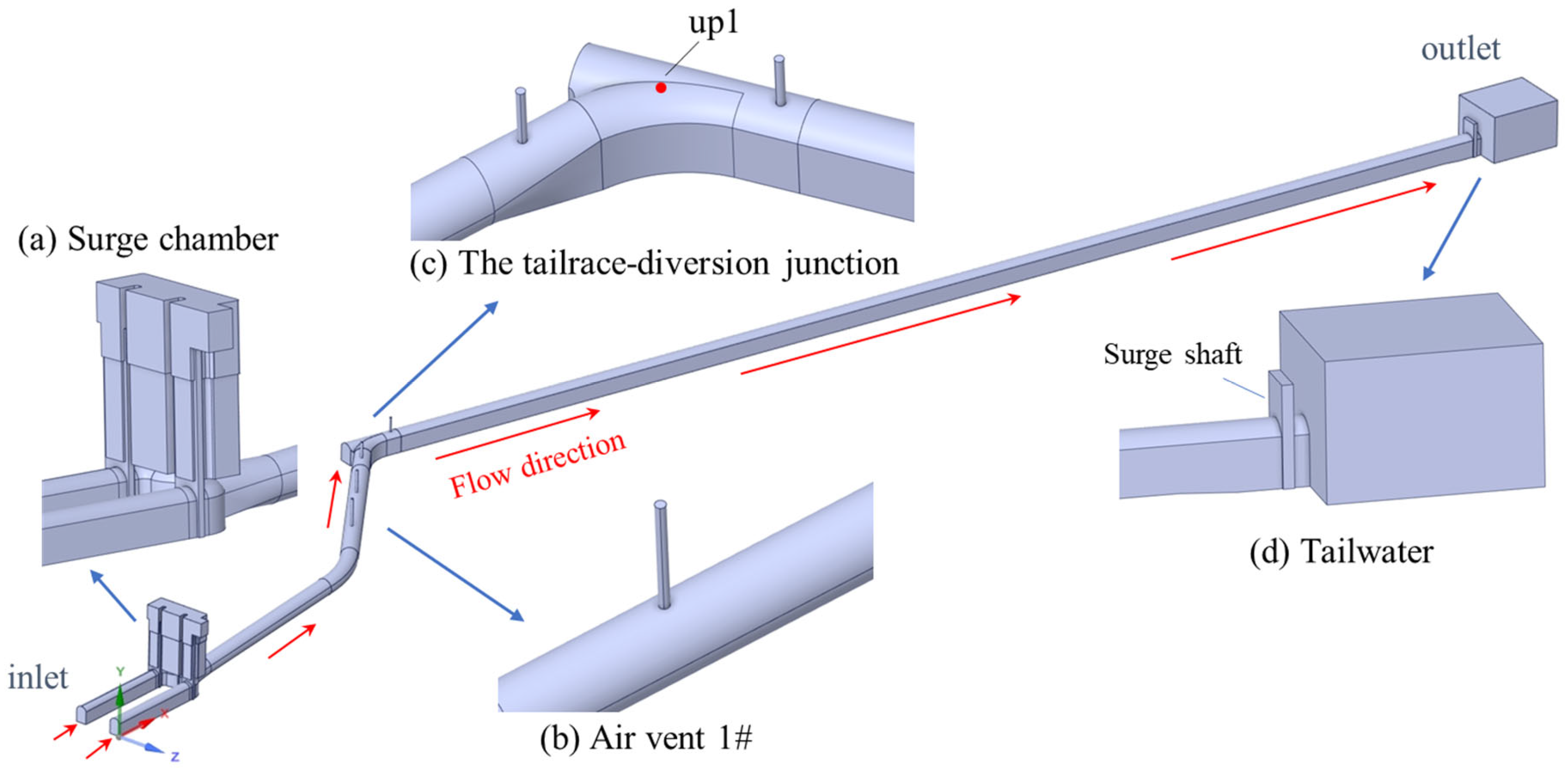
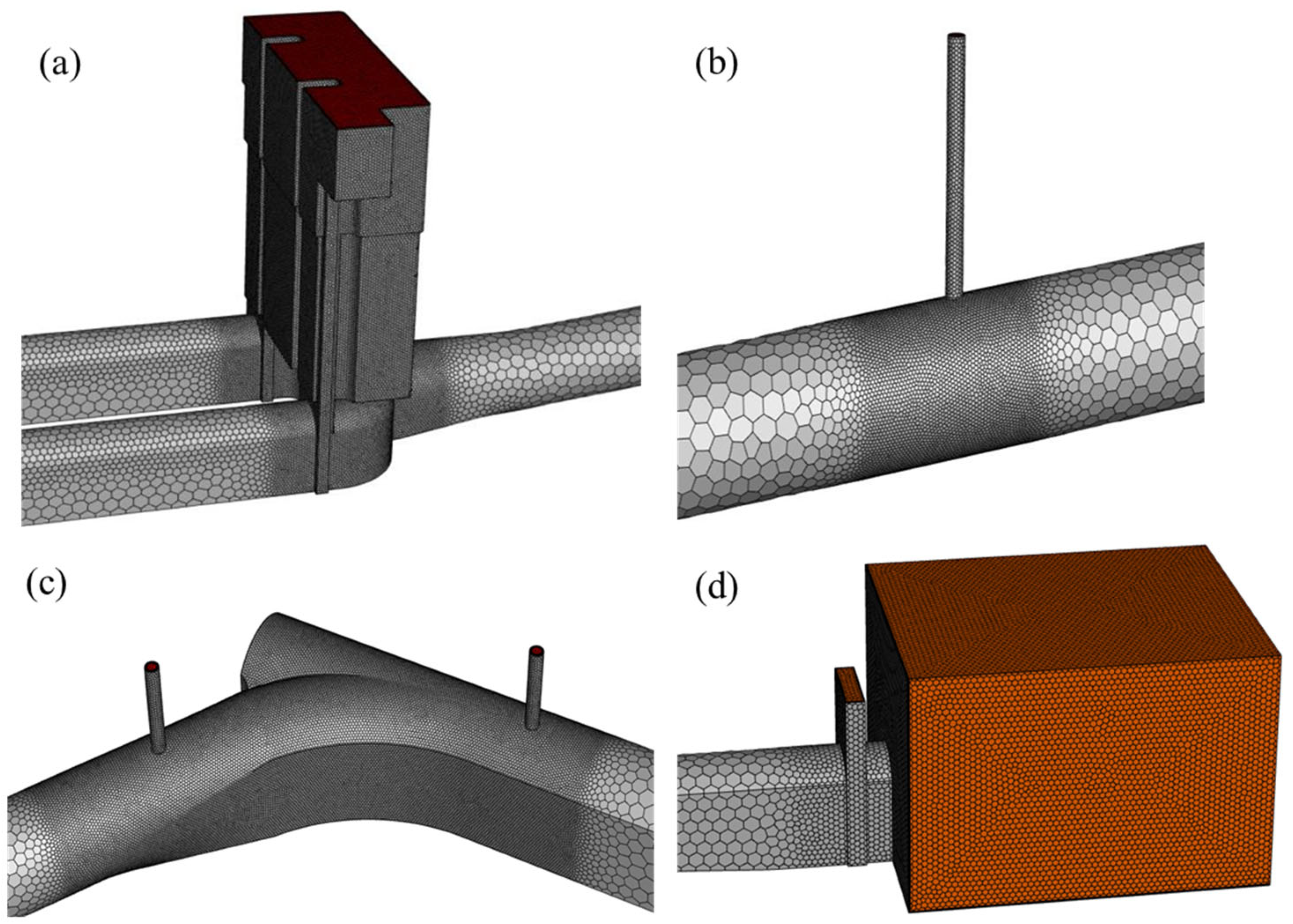
2.3. 3D Model and Mesh Generation
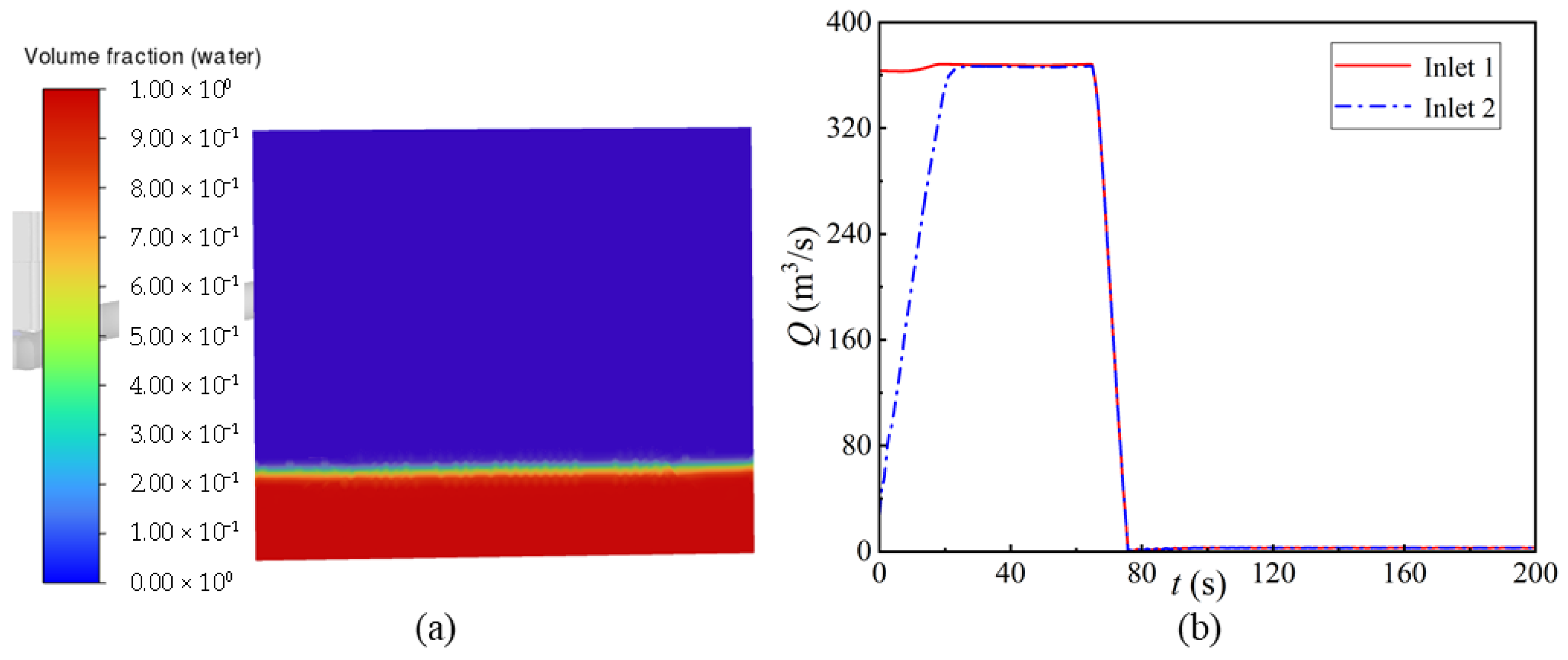
2.4. Computational Scenarios and Boundary Conditions
3. Results and Discussion
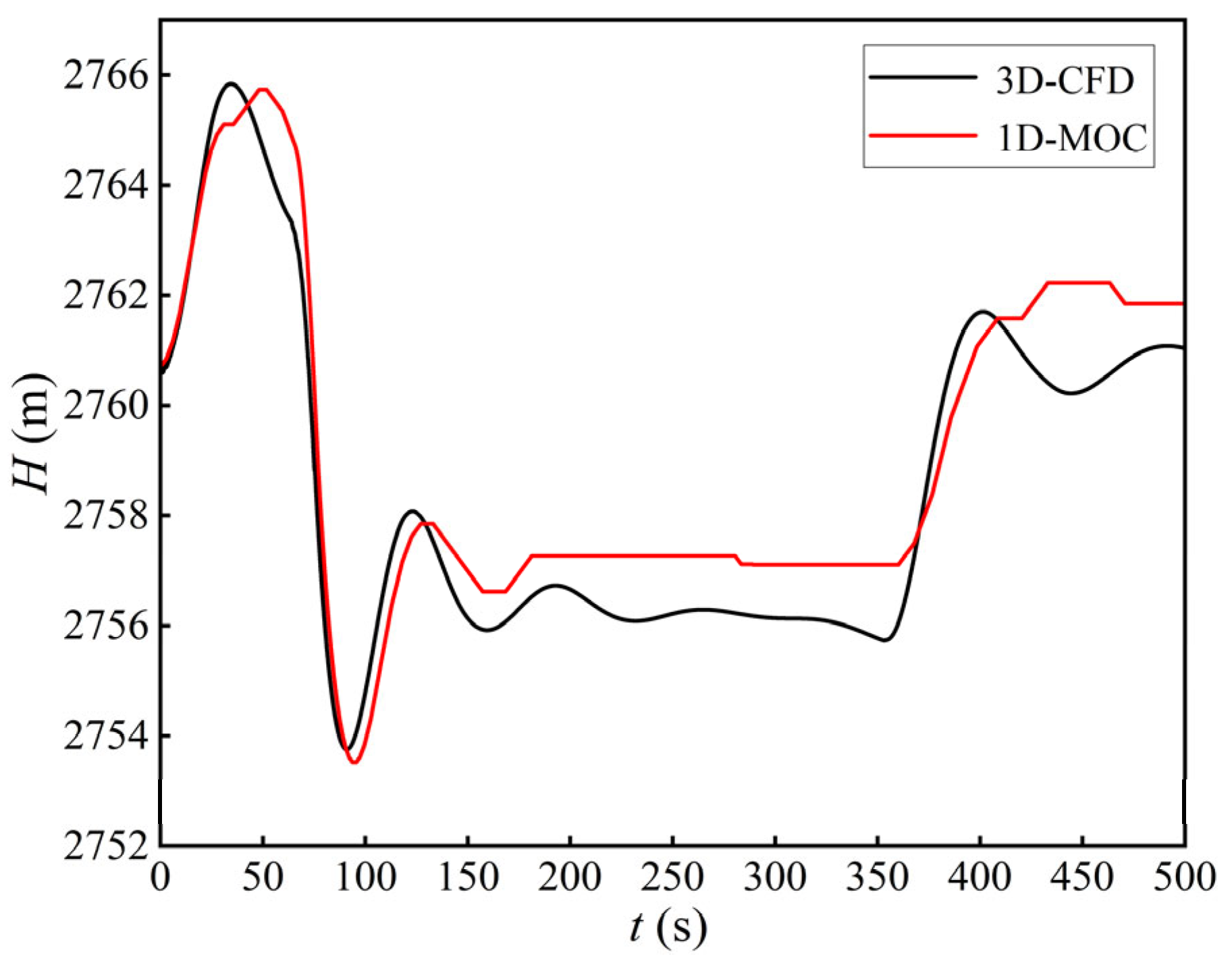
3.1. Numerical Validation and Surge Oscillation Analysis
3.2. Sensitivity Analysis of Vent Number and Diameter
3.2.1. Air-Vent Layout Scheme Description
3.2.2. Load Acceptance Condition
3.2.3. Load Rejection Condition
3.3. Sensitivity Analysis of Vent Height
3.3.1. Monitoring Setup and Research Necessity
3.3.2. Hydraulic Transient Response
4. Discussion
5. Conclusions
- The comparison between the 1D and 3D simulations shows excellent agreement in predicting surge chamber oscillations, with deviations in maximum and minimum water levels of less than 0.3%. The 3D model successfully replicates transitions between free-surface and pressurized flow, as well as the air–water interface deformation during transient events, confirming its ability to accurately assess mixed-flow behavior and hydraulic risks in long tailrace systems.
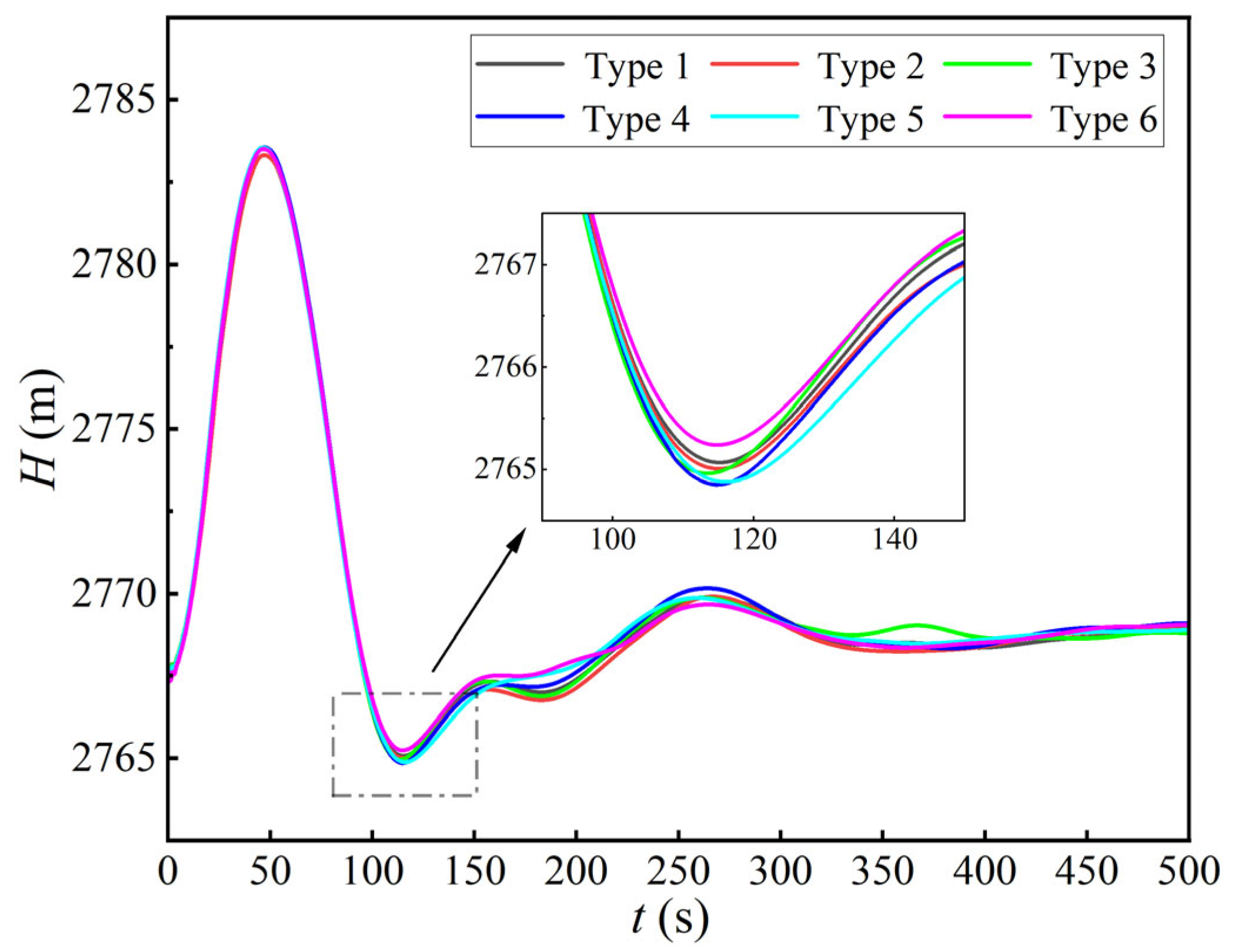
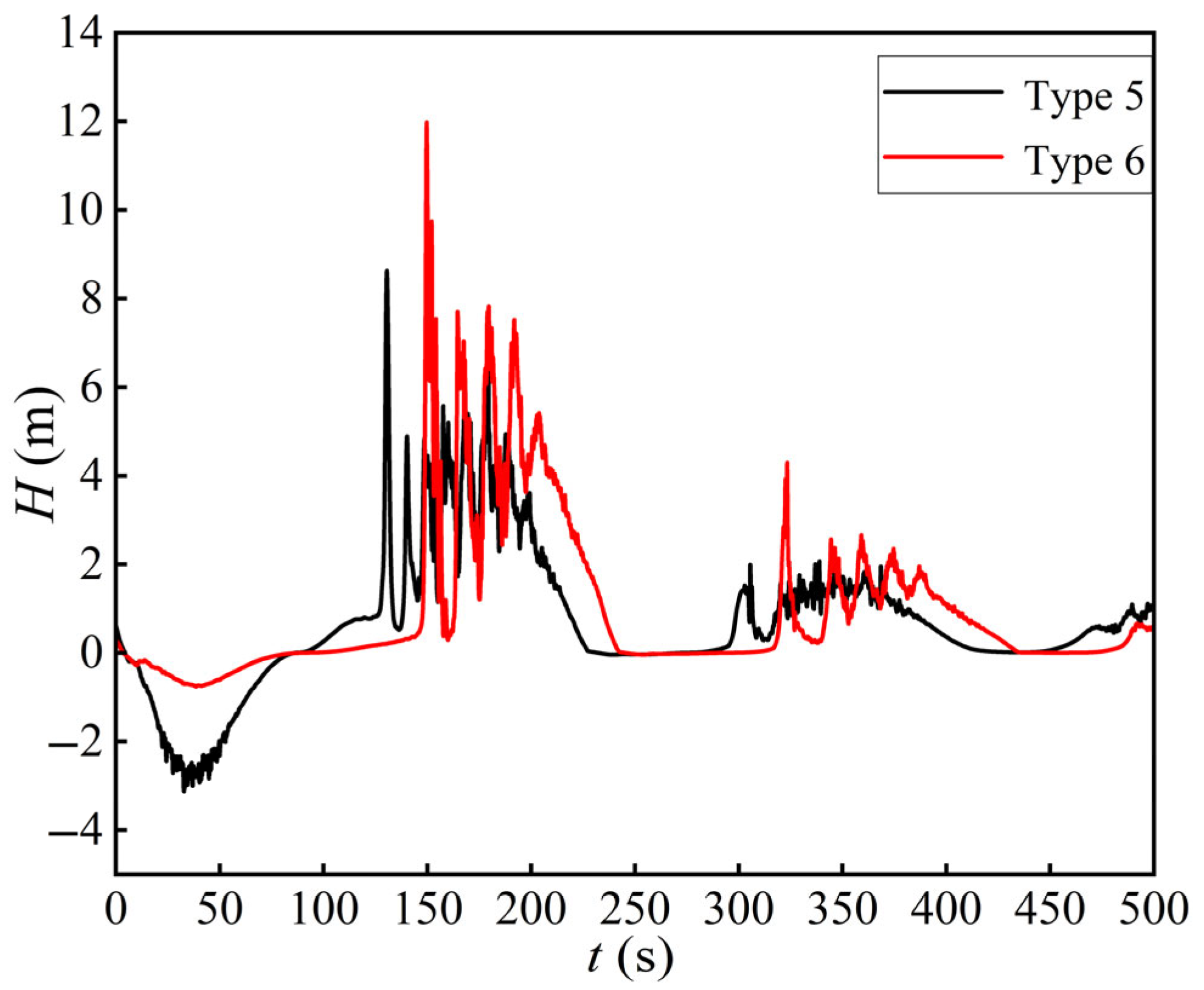
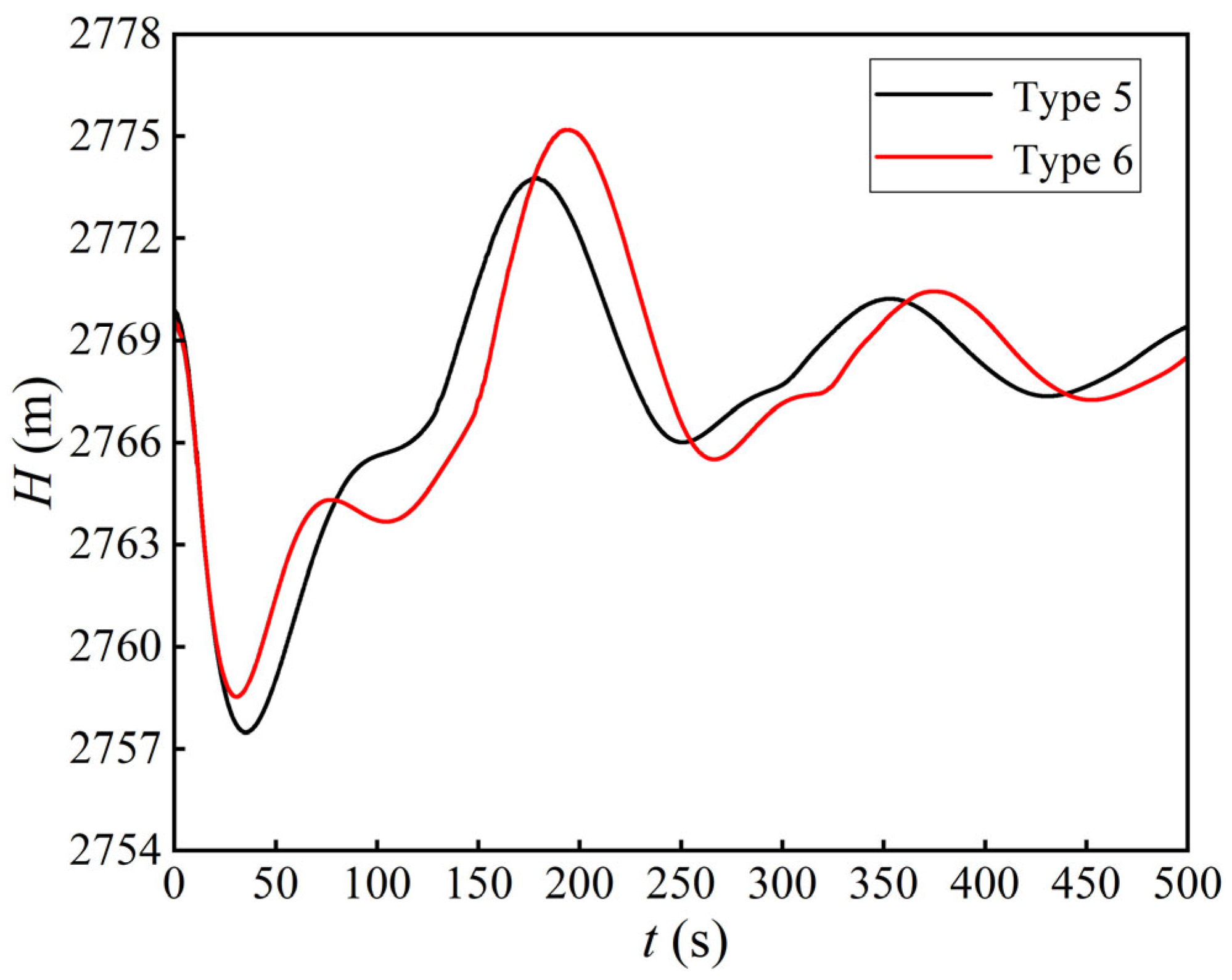
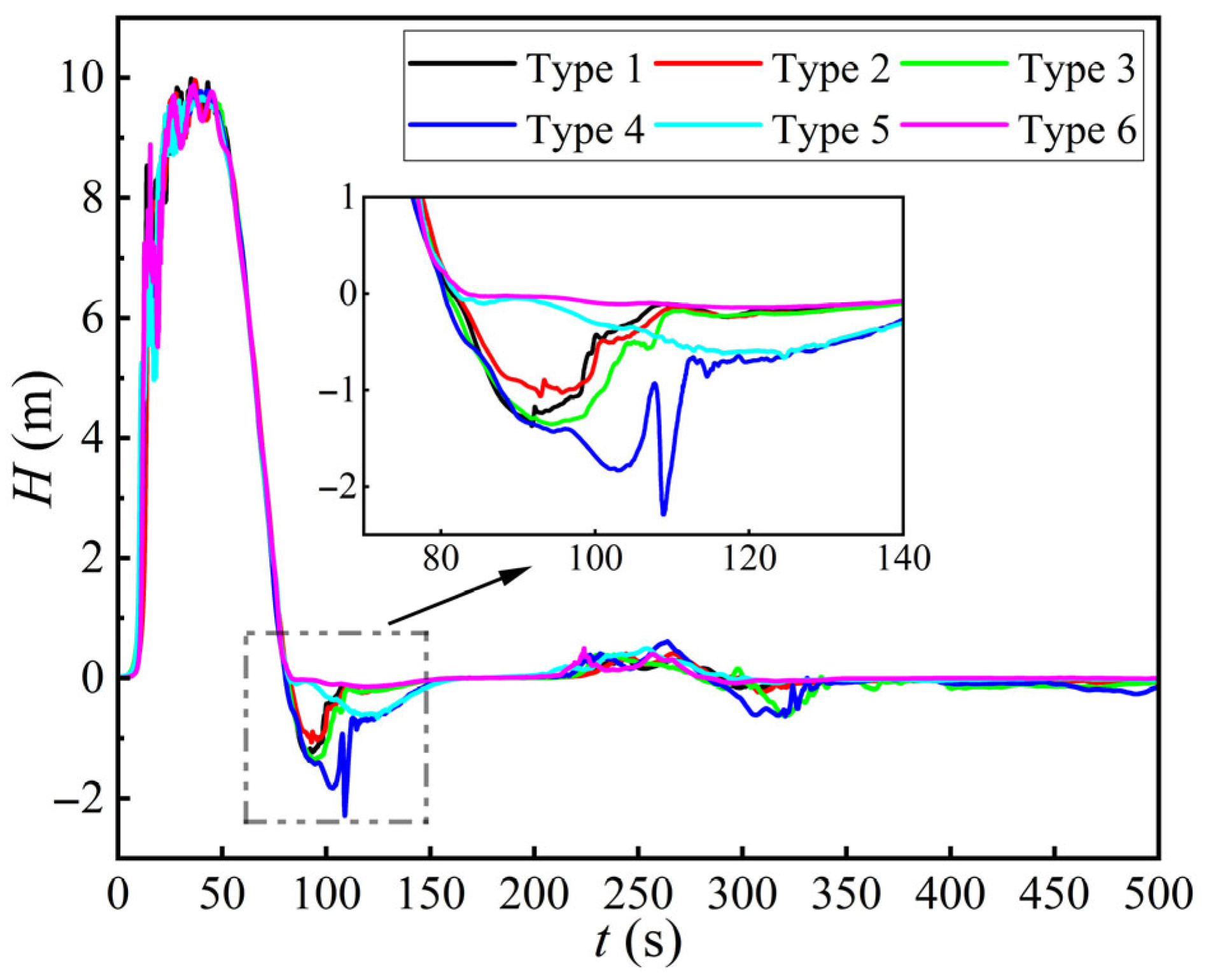
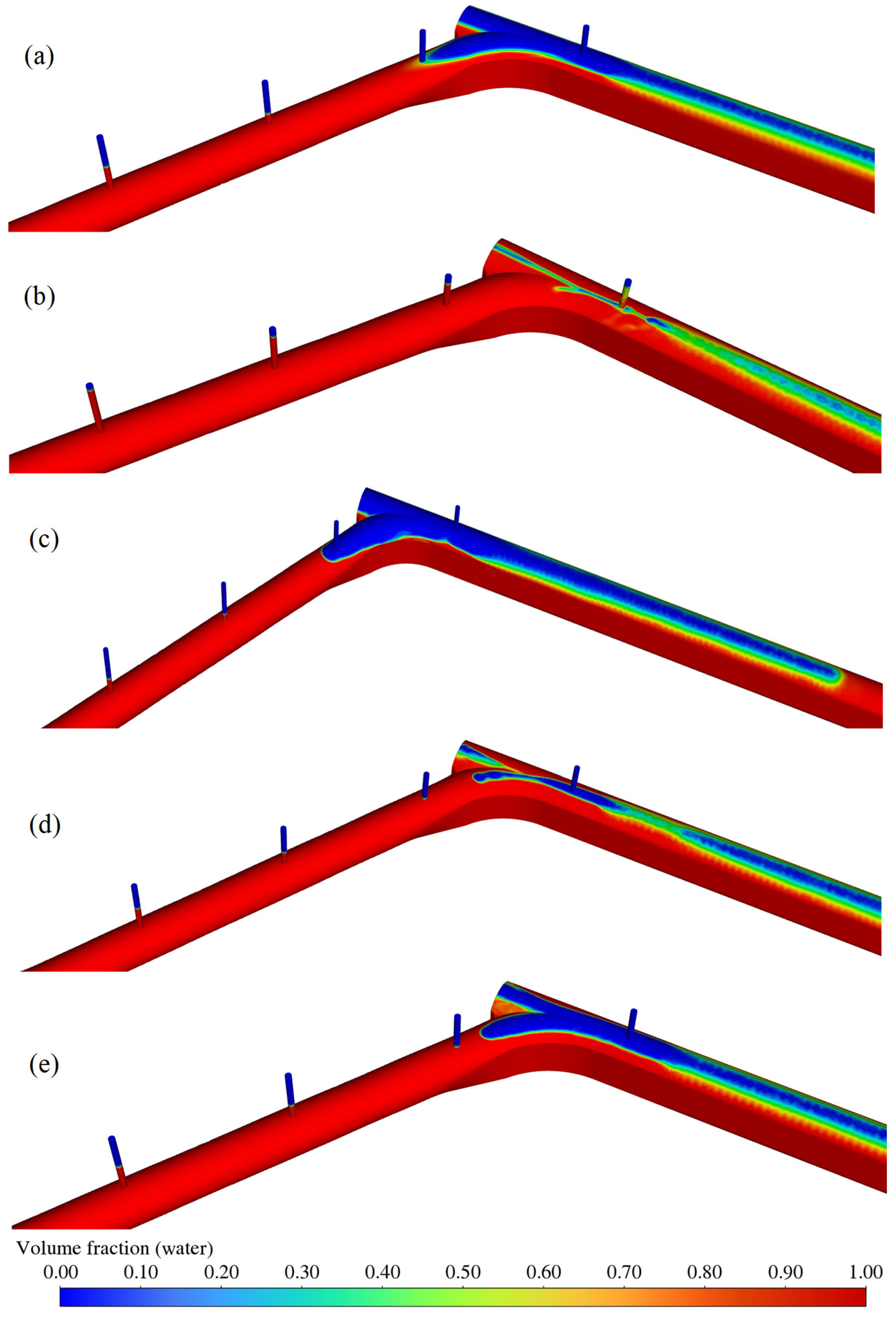
- Analysis under both load acceptance and load rejection conditions indicates that increasing the number of vents does not necessarily improve hydraulic stability. Instead, enlarging the vent diameter significantly enhances air exchange efficiency and pressure regulation. The optimal configuration, featuring a single 3 m diameter vent located near the downstream end of the junction, provides the best overall performance, reducing negative pressure, suppressing peak velocities, and maintaining stable surge levels with minimal construction complexity.
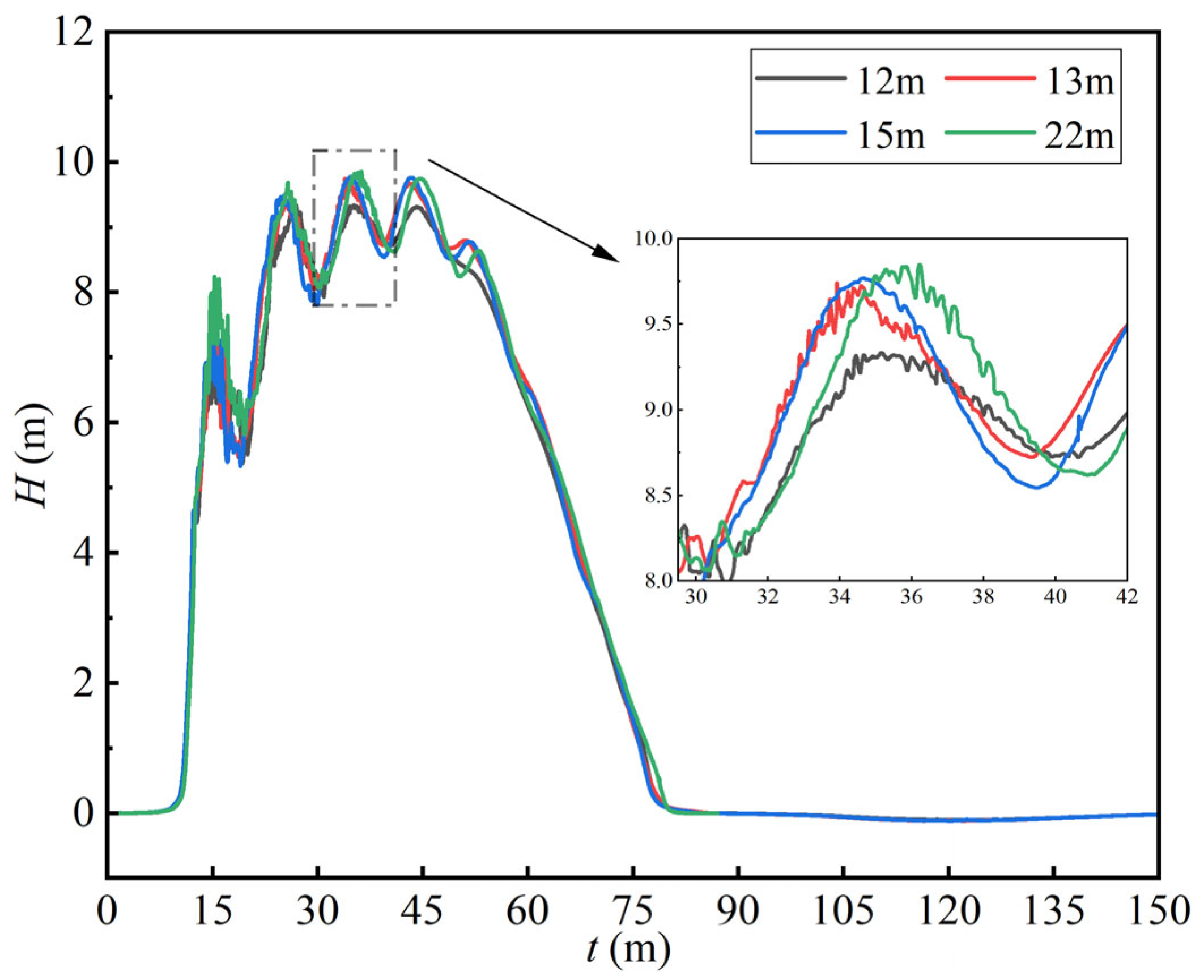
- Sensitivity analysis reveals that while vent height has minimal impact on overall pressure head, it significantly affects the risk of transient overflow. Increasing vent height from 12 m to 15 m ensures approximately 1.7 m of freeboard during high-water-level load acceptance, preventing overflow while avoiding excessive structural elevation. A design criterion is proposed: the vent height should exceed the maximum observed air–water interface elevation by 1–2 m to ensure operational safety.
Author Contributions
Funding
Institutional Review Board Statement
Informed Consent Statement
Data Availability Statement
Acknowledgments
Conflicts of Interest
References
- Hassan, Q.; Algburi, S.; Sameen, A.Z.; Al-Musawi, T.J.; Al-Jiboory, A.K.; Salman, H.M.; Ali, B.M.; Jaszczur, M. A Comprehensive Review of International Renewable Energy Growth. Energy Built Environ. 2024, in press. [Google Scholar] [CrossRef]
- Man, X.; Song, H.; Li, H. Estimating Hydropower Generation Flexibilities of a Hybrid Hydro–Wind Power System: From the Perspective of Multi-Time Scales. Energies 2023, 16, 5218. [Google Scholar] [CrossRef]
- Xu, J.; Ni, T.; Zheng, B. Hydropower Development Trends from a Technological Paradigm Perspective. Energy Convers. Manag. 2015, 90, 195–206. [Google Scholar] [CrossRef]
- Guo, W.; Zhu, D. Critical Stable Sectional Area of Downstream Surge Tank of Hydropower Plant with Sloping Ceiling Tailrace Tunnel. Energy Sci. Eng. 2021, 9, 1090–1102. [Google Scholar] [CrossRef]
- Kemarau, R.A.; Harun, S.N.; Sa’adi, Z.; Mohd Hanafiah, M.; Sakawi, Z.; Norzin, M.A.F.; Wan Mohd Jaafar, W.S.; Anak Suab, S.; Eboy, O.V.; Abdul Maulud, K.N. Transforming Hydropower: An in-Depth Systematic Review of Climate Change Impacts. Renew. Sustain. Energy Rev. 2025, 219, 115890. [Google Scholar] [CrossRef]
- Liu, Y.; Yu, X.; Guo, X.; Zhao, W.; Chen, S. Operational Stability of Hydropower Plant with Upstream and Downstream Surge Chambers during Small Load Disturbance. Energies 2023, 16, 4517. [Google Scholar] [CrossRef]
- Zhong, Z.; Zhu, L.; Zhao, M.; Qin, J.; Zhang, S.; Chen, X. Stability and Sensitivity Characteristic Analysis for the Hydropower Unit Considering the Sloping Roof Tailrace Tunnel and Coupling Effect of the Power Grid. Front. Energy Res. 2023, 11, 1242352. [Google Scholar] [CrossRef]
- Xu, P.; Fu, W.; Lu, Q.; Zhang, S.; Wang, R.; Meng, J. Stability Analysis of Hydro-Turbine Governing System with Sloping Ceiling Tailrace Tunnel and Upstream Surge Tank Considering Nonlinear Hydro-Turbine Characteristics. Renew. Energy 2023, 210, 556–574. [Google Scholar] [CrossRef]
- Zhou, D.; Chen, H.; Chen, S. Research on Hydraulic Characteristics in Diversion Pipelines under a Load Rejection Process of a PSH Station. Water 2019, 11, 44. [Google Scholar] [CrossRef]
- Ling, L.; Jiandong, Y.; Meiqing, L. Study on the Disruption of Water Flow in the System of Tailrace Tunnel Combined with Diversion Tunnel. IOP Conf. Ser. Earth Environ. Sci. 2014, 22, 042005. [Google Scholar] [CrossRef]
- Li, G.; Zhou, T.; Zhang, W.; Yang, F. Influence of mixed free-surface and pressurized flow on transient process in a tailrace tunnel of a tailrace surge chamber. IOP Conf. Ser. Earth Environ. Sci. 2021, 826, 012008. [Google Scholar] [CrossRef]
- Guo, W. A Review of the Hydraulic Transient and Dynamic Behavior of Hydropower Plants with Sloping Ceiling Tailrace Tunnels. Energies 2019, 12, 3220. [Google Scholar] [CrossRef]
- Bergant, A.; Simpson, A.R.; Tijsseling, A.S. Water Hammer with Column Separation: A Historical Review. J. Fluids Struct. 2006, 22, 135–171. [Google Scholar] [CrossRef]
- Adamkowski, A.; Lewandowski, M. Investigation of Hydraulic Transients in a Pipeline with Column Separation. J. Hydraul. Eng. 2012, 138, 935–944. [Google Scholar] [CrossRef]
- Zhou, J.; Mao, Y.; Shen, A.; Zhang, J. Modeling and stability investigation on the governor-turbine-hydraulic system with a ceiling-sloping tail tunnel. Renew. Energy 2023, 204, 812–822. [Google Scholar] [CrossRef]
- Guo, J.; Zhou, D.; Wang, H. Study of Intermittent Jets and Free-Surface-Pressurized Flow in Large Hydropower Tailrace Tunnel. Phys. Fluids 2024, 36, 053342. [Google Scholar] [CrossRef]
- Nomeritae, N.; HaHong, B.; Edoardo, D. Modeling Transitions between Free Surface and Pressurized Flow with Smoothed Particle Hydrodynamics. J. Hydraul. Eng.-ASCE 2018, 144, 04018012. [Google Scholar] [CrossRef]
- Zhang, J.; Chen, J.; Xu, W.; Wang, Y.; Li, G. Three-Dimensional Numerical Simulation of Aerated Flows Downstream Sudden Fall Aerator Expansion-In a Tunnel. J. Hydrodyn. 2011, 23, 71–80. [Google Scholar] [CrossRef]
- Cheng, Y.; Li, J.; Yang, J. Free Surface-Pressurized Flow in Ceiling-Sloping Tailrace Tunnel of Hydropower Plant: Simulation by VOF Model. J. Hydraul. Res. 2007, 45, 88–99. [Google Scholar] [CrossRef]
- Zhang, X.; Cheng, Y. Simulation of Hydraulic Transients in Hydropower Systems Using the 1-D-3-D Coupling Approach. J. Hydrodyn. 2012, 24, 595–604. [Google Scholar] [CrossRef]
- Xia, L.; Cheng, Y.; Zhou, D. 3-D simulation of transient flow patterns in a corridor-shaped air-cushion surge chamber based on computational fluid dynamics. J. Hydrodyn. Ser. B 2013, 25, 249–257. [Google Scholar] [CrossRef]
- Zhou, J.; Li, Y. Modeling of the Free-Surface-Pressurized Flow of a Hydropower System with a Flat Ceiling Tail Tunnel. Water 2020, 12, 699. [Google Scholar] [CrossRef]
- Wang, X.; Fan, H.; Liu, B. Optimization Control on the Mixed Free-Surface-Pressurized Flow in a Hydropower Station. Processes 2021, 9, 320. [Google Scholar] [CrossRef]
- Wang, C.; Yang, J.; Nilsson, H. Simulation of Water Level Fluctuations in a Hydraulic System Using a Coupled Liquid-Gas Model. Water 2015, 7, 4446–4476. [Google Scholar] [CrossRef]
- Zhang, W.; Cai, F.; Zhou, J.; Hua, Y. Experimental Investigation on Air-Water Interaction in a Hydropower Station Combining a Diversion Tunnel with a Tailrace Tunnel. Water 2017, 9, 274. [Google Scholar] [CrossRef]
- Wang, X.; Zhang, J.; Yu, X.; Chen, S. Transient Air-Water Flow Patterns in the Vent Tube in Hydropower Tailrace System Simulated by 1-D-3-D Coupling Method. J. Hydrodyn. 2018, 30, 715–721. [Google Scholar] [CrossRef]
- Chaudhry, M.H. Applied Hydraulic Transients; Springer: New York, NY, USA, 2014; ISBN 978-1-4614-8537-7. [Google Scholar]
- Mulbah, C.; Kang, C.; Mao, N.; Zhang, W.; Shaikh, A.R.; Teng, S. A Review of VOF Methods for Simulating Bubble Dynamics. Prog. Nucl. Energy 2022, 154, 104478. [Google Scholar] [CrossRef]






| Scenarios | Upstream Water Level (m) | Tailwater Level (m) | Load Transition Pattern | Description |
|---|---|---|---|---|
| S1 | 2980.13 | 2759.13 | 1 → 2 → 0 | One unit operates at rated load while the other increases from no-load; both units undergo simultaneous load rejection. |
| S2 | 2990.00 | 2767.45 | 0 → 2 | Both units increase load simultaneously from no-load to rated conditions. |
| S3 | 2991.00 | 2768.69 | 2 → 0 | Two units undergo simultaneous load rejection from rated operation. |
| Simulation Method | Initial Water Level (m) | Maximum Water Level (m) | Minimum Water Level (m) |
|---|---|---|---|
| 1D-MOC | 2760.75 | 2765.70 | 2753.51 |
| 3D-CFD | 2760.53 | 2765.83 | 2753.74 |
| Type | Number of Air Vents | Diameter of Air Vents (m) | Description |
|---|---|---|---|
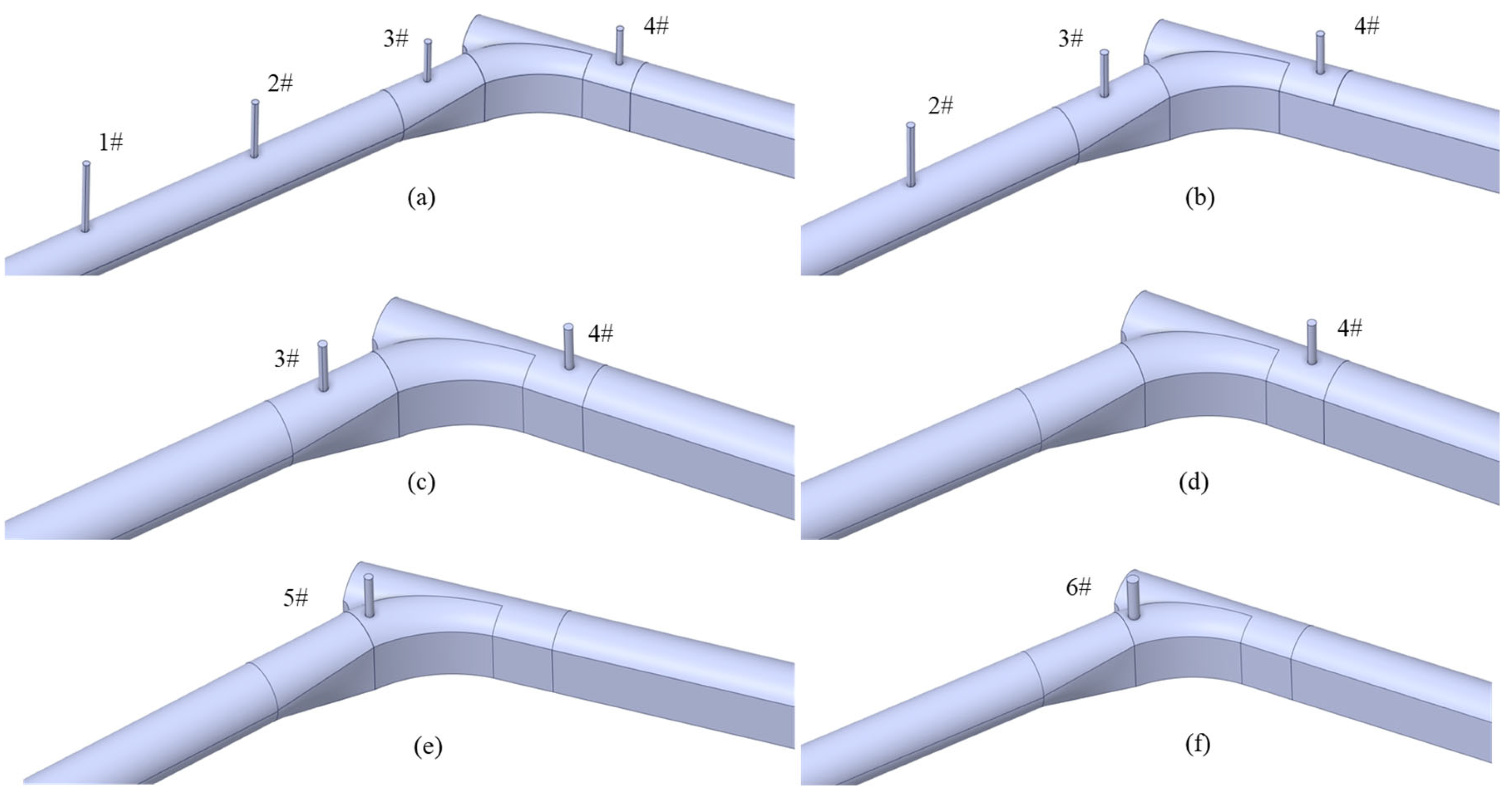
| Type 1 | 4 | 2 | Air vents 1#, 2#, 3#, 4# |
| Type 2 | 3 | 2 | Air vents 2#, 3#, 4# |
| Type 3 | 2 | 2 | Air vents 3#, 4# |
| Type 4 | 1 | 2 | Air vent 4# |
| Type 5 | 1 | 2 | Air vent 5# |
| Type 6 | 1 | 3 | Air vent 6# |
| Type | Minimum Pressure at Junction (m) | Maximum Intake/Exhaust Air Velocity (m/s) | Surge Water Level (m) | |||||
|---|---|---|---|---|---|---|---|---|
| 1# | 2# | 3# | 4# | 5#/6# | Maximum | Minimum | ||
| 1 | −1.37 | 1.90/−3.29 | 2.34/−3.78 | 50.84/−4.99 | 60.98/−79.69 | / | 2783.48 | 2765.04 |
| 2 | −1.06 | / | 1.99/−3.18 | 50.76/−3.50 | 64.86/−84.64 | / | 2783.32 | 2765.01 |
| 3 | −1.35 | / | / | 54.19/−2.06 | 76.83/−49.60 | / | 2783.55 | 2764.96 |
| 4 | −2.289 | / | / | / | 97.38/−78.05 | / | 2783.54 | 2764.85 |
| 5 | −0.66 | / | / | / | / | 90.02/−67.17 | 2783.54 | 2764.88 |
| 6 | −0.14 | / | / | / | / | 43.49/−13.29 | 2783.50 | 2765.24 |
| Type | Minimum Pressure at Junction (m) | Maximum Intake/Exhaust Air Velocity (m/s) | Surge Water Level (m) | |||||
|---|---|---|---|---|---|---|---|---|
| 1# | 2# | 3# | 4# | 5#/6# | Maximum | Minimum | ||
| 5 | −3.12 | / | / | / | 118.0/−82.78 | / | 2773.78 | 2757.48 |
| 6 | −0.76 | / | / | / | / | 98.30/−52.62 | 2775.18 | 2758.52 |
| Case | Vent Height (m) | Peak Water Level (m) | VOF Interface Elevation (m) | Description |
|---|---|---|---|---|
| 1 | 12 | 9.30 | Slight overflow | Initial vent height 12 m |
| 2 | 13 | 9.60 | Minor overflow | Vent height 13 m |
| 3 | 15 | 9.30 | 13.29 | Vent height 15 m |
| 4 | 22 | 9.49 | 13.67 | Vent height 22 m |
Disclaimer/Publisher’s Note: The statements, opinions and data contained in all publications are solely those of the individual author(s) and contributor(s) and not of MDPI and/or the editor(s). MDPI and/or the editor(s) disclaim responsibility for any injury to people or property resulting from any ideas, methods, instructions or products referred to in the content. |
© 2025 by the authors. Licensee MDPI, Basel, Switzerland. This article is an open access article distributed under the terms and conditions of the Creative Commons Attribution (CC BY) license (https://creativecommons.org/licenses/by/4.0/).
Share and Cite
Ma, D.; Zhou, J.; Zhang, Q.; Huang, C. CFD Investigation of Free-Surface-Pressurized Flow and Air-Vent Optimization in Combined Tailrace–Diversion Systems. Appl. Sci. 2025, 15, 12933. https://doi.org/10.3390/app152412933
Ma D, Zhou J, Zhang Q, Huang C. CFD Investigation of Free-Surface-Pressurized Flow and Air-Vent Optimization in Combined Tailrace–Diversion Systems. Applied Sciences. 2025; 15(24):12933. https://doi.org/10.3390/app152412933
Chicago/Turabian StyleMa, Duo, Jianxu Zhou, Qing Zhang, and Chenxing Huang. 2025. "CFD Investigation of Free-Surface-Pressurized Flow and Air-Vent Optimization in Combined Tailrace–Diversion Systems" Applied Sciences 15, no. 24: 12933. https://doi.org/10.3390/app152412933
APA StyleMa, D., Zhou, J., Zhang, Q., & Huang, C. (2025). CFD Investigation of Free-Surface-Pressurized Flow and Air-Vent Optimization in Combined Tailrace–Diversion Systems. Applied Sciences, 15(24), 12933. https://doi.org/10.3390/app152412933