Article

Comparisons Between Frail and Non-Frail Hospitalized Patients in Muscle Strength and Range of Motion After Hip Fracture Surgery: A Single-Blind Experimental Study


by
Ilektra Sidiropoulou
1,
Anastasios Vavvas
1,
Konstantinos Karzis
2,
Christos Garnavos
3,
Dimitrios Chytas
4 and
Anna Christakou
5,*
1
Department of Physiotherapy, School of Health Sciences, University of Peloponnese, 23100 Sparta, Greece
2
Physiotherapy Clinic, Asklepeion Voulas, 16673 Athens, Greece
3
Orthopaedic and Trauma Department, “Evaggelismos” General Hospital, 10676 Athens, Greece
4
Laboratory of Basic Sciences, Department of Physiotherapy, School of Health Sciences, University of Peloponnese, 23100 Sparta, Greece
5
Laboratory of Biomechanics, Department of Physiotherapy, School of Health Sciences, University of Peloponnese, 23100 Sparta, Greece
*
Author to whom correspondence should be addressed.
Appl. Sci. 2025, 15(23), 12602; https://doi.org/10.3390/app152312602
Submission received: 6 November 2025 / Revised: 24 November 2025 / Accepted: 26 November 2025 / Published: 28 November 2025
(This article belongs to the Special Issue Recent Advances in Musculoskeletal Rehabilitation and Treatment)

Abstract

Frailty has emerged as a critical determinant of clinical outcomes in elderly patients, shaping postoperative recovery in crucial orthopedic events, such as hip fractures. The purpose of the present study is to examine the impact of frailty syndrome on muscle strength and joint range of motion in the non-fractured lower extremity and upper extremities of hospitalized older adults following hip fracture surgery. The sample consisted of 60 elderly patients recovering from either intracapsular or extracapsular hip fractures. Participants were categorized into either a frail or non-frail group, determined by the Clinical Frailty Scale. The outcome measures of muscle strength and range of motion of the upper and lower extremities were assessed by valid instruments, including a hand-held dynamometer, the Medical Research Council scale, and a digital goniometer. Statistical comparisons between groups were conducted using the independent samples t-test and the Mann–Whitney U test. The results showed that the non-frail group demonstrated greater active range of motion in the shoulder bilaterally (right: t = −2.85, left: U = 628.00, p < 0.05), elbow flexion bilaterally (right: U = 589.50, left: U = 592.50, p < 0.05), hip flexion (U = 679.50, p < 0.01), knee extension (t = −3.07, p < 0.05), and ankle dorsiflexion (t = −2.36, p < 0.05). Regarding the muscle strength, the non-frail group showed significantly higher grip strength bilaterally (right: U = 754.50, left: U = 713.50, p < 0.001), as well as greater strength in hip flexion (U = 641.00, p < 0.01) and ankle dorsiflexion (U = 619.50, p < 0.01). Frailty may negatively influence the muscle strength and joint mobility in non-fractured extremities, thereby hindering postoperative physical recovery in older adults with hip fractures. Further research involving a larger and more homogeneous sample may predict falls in elderly patients after hip or knee surgery using the Clinical Frailty Scale.

1. Introduction

Frailty has been described as a dynamic condition resulting from an imbalance between an individual’s available internal resources and their physiological deficits [1]. Closely associated with the aging process, frailty typically manifests through functional deterioration across several physiological domains in older adults [2]. Among frail individuals, such deficits may be reflected in the inability to act upon one’s intentions, to perform self-care independently, to remain socially engaged, and to walk safely without risk of falling [3]. Frailty is indicative of declining physiological resilience, most notably expressed through generalized muscle weakness. This observed physical decline is attributed to a loss of muscle mass and strength, fundamental indicators of the progressive biological changes associated with aging [4].
The frailty syndrome contributes to a higher risk of severe functional deficits that are not typically anticipated with the physiological aging process. Specifically, frailty has been directly associated with an increased risk of hip fractures [5], with the average age of affected individuals being around 80 years old [6]. Frailty may further impact the clinical progression of vulnerable patients [7] by prolonging the hospitalization duration in severely frail patients following a hip fracture [8,9]. Consequently, an extended hospital stay may exacerbate the frailty status of the patients, further resulting in a progressively declining clinical state [10]. Ultimately, not only does frailty serve as a strong predictor of hip fracture occurrence, but it also influences the postoperative recovery [11].
Although frailty has been recognized as a major risk factor for fractures among older adults [12], there is limited research regarding its role in the postoperative recovery of all four limbs in hip fracture patients. Muscle strength is identified as a key musculoskeletal parameter affected by frailty [13], with studies reporting a direct association between frailty severity and limb strength [14]. Joint range of motion may also be influenced by frailty [15], with few studies, however, specifically examining this variable in frail populations [16]. The strength and mobility of the non-injured limbs are reported to be contributing heavily to the successful rehabilitation of hip fracture patients [17]. Nevertheless, most studies focus on the evaluation and management of the fractured limb. Since frailty has been shown to hinder the functional recovery of the fractured limb [8], understanding its potential impact on the non-fractured limbs is equally important, as they may contribute to compensatory mechanisms during postoperative rehabilitation. Previous studies managed to examine either the muscle strength or range of motion in frail patients, with few, however, simultaneously assessing both parameters in relation to frailty status [15,16]. Moreover, these studies were conducted, in general, on older populations and did not specifically target post-hip fracture patients. There is a notable lack of literature that simultaneously examines the variables of frailty, muscle strength, and joint range of motion in this specific clinical population.
Therefore, the present study aimed to examine the impact of frailty on muscle strength and active joint range of motion in both upper extremities and the non-fractured lower limb of hospitalized patients with hip fractures. The findings of this study may contribute to the advancement of knowledge among physiotherapists and other healthcare professionals involved in the rehabilitation of frail older patients with hip fractures. The research hypothesis was that frailty would negatively affect the muscle strength and joint range of motion in the upper limbs and the non-fractured lower limb among hospitalized patients with hip fractures.

2. Materials and Methods

This study was conducted in accordance with the Declaration of Helsinki. The study was approved by (a) the Ethics and Deontology Committee of the University of the Peloponnese (protocol number 12021/05-15-2025), (b) the Scientific Council of the General Hospital of Athens “Evangelismos’’ (protocol number 151/04-03-2025), and (c) the Scientific Council of the General Hospital “Asklepeion Voulas” (protocol number 6390/17-4-2025).
In the beginning, participants were given a consent form, which was the only document in which their personal data was recorded. This form was completed after participants were informed about the procedure that would follow and was necessary for their participation and publication of the present study. The participants’ right to refuse to participate or withdraw from the study at any time was guaranteed. There were no risks of accident or other serious harm to the subjects participating in this study.

2.1. Participants

An a priori power analysis was conducted using G*Power version 3.1.9.7, which showed that at least 21 participants in each group would be needed in an independent samples t-test with an 80% power for detecting a large effect and a significance criterion of α = 0.05. Thus, 60 elderly people (31 women and 29 men) with an average age of 82 ± 6 years old were recruited from the inpatient orthopedic clinics of Athens General Hospital Evangelismos and General Hospital Asklepeion Voulas from April until June 2025. All patients received the same standardized postoperative physiotherapy program from the same physiotherapist, commencing on the first postoperative day and continuing until discharge. The protocol included early mobilization, progressive lower-limb strengthening exercises, and guided initiation of ambulation. As rehabilitation exposure was consistent across the study sample, any potential influence on the functional outcomes was minimized.
The inclusion criteria of the sample were as follows: (a) aged 65 to 95; (b) men and women; (c) diagnosed with a hip fracture (intertrochanteric, subtrochanteric, subcapital, or femoral neck fracture); (d) surgically treated; (e) good verbal and written communication and ability to follow instructions; (f) participation in post-surgical physiotherapy treatment during hospital stay; and (g) willingness to participate in the study.
The exclusion criteria were as follows: (a) periprosthetic hip fracture, (b) osteoporotic hip fracture, (c) stress fracture of the hip, (d) pathological hip fracture (e.g., malignancy), (e) scheduled hip surgery for any other reason, (f) sarcopenia diagnosis, (g) any prosthesis on the non-fractured leg, (h) any upper limb injury along with the hip fracture, (i) post-surgical delirium, or any other serious disorder that could prevent the measurements.

2.2. Instruments

2.2.1. Clinical Frailty Scale [3,18]

The Clinical Frailty Scale evaluates the overall physical status of an individual up to two weeks prior to hospital admission through an interview and clinical review. It is applied only to individuals aged 65 years or older [3]. Using the scale, the clinician assesses comorbidities, functional status, and cognitive ability to calculate an overall score summarizing the individual’s level of frailty. The Clinical Frailty Scale is a judgment-based tool administered by a physiotherapist or another trained healthcare professional. The clinician assigns a score based on information collected from the patient and their caregivers, the patient’s medical history, and the clinician’s experience in managing geriatric patients [3]. The current version of the Clinical Frailty Scale has 9 grades, which evaluate the presence of frailty after interviewing the individual. A score of 1–3 indicates that the individual is not frail, and a score of 4–9 indicates the individual is frail. The levels are:
Level 1—Very Fit: People who are robust, active, energetic, and motivated. They exercise regularly and are among the most fit for their age.
Level 2—Well: People without active disease symptoms but less fit than Level 1. Often engage in occasional or seasonal physical activity.
Level 3—Managing Well: Individuals with well-controlled medical problems. May have occasional symptoms but generally manage daily activities independently.
Level 4—Living with Very Mild Frailty: Although independent, symptoms of fatigue may limit activity. Individuals may notice slowing down or mild difficulties but do not require regular help.
Level 5—Living with Mild Frailty: Individuals are noticeably slower, require help with more complex daily tasks (e.g., shopping, meal preparation, medication management), but remain mostly independent for basic activities.
Level 6—Living with Moderate Frailty: Individuals need assistance for both complex and some basic activities of daily living, including household tasks and mobility within the home.
Level 7—Living with Severe Frailty: Individuals are completely dependent on others for personal care. Some mobility may remain, but they are at risk for progressive decline.
Level 8—Very Severely Frail: Individuals are fully dependent and approaching the end of life. Recovery from minor illness is unlikely.
Level 9—Terminally Ill: Individuals have a life expectancy of less than six months due to a terminal condition. Some may retain mobility but are otherwise classified as terminally ill.
The Clinical Frailty Scale does not include a fixed set of questions. Instead, clinicians use collected information and their clinical judgment to assign a score. Information is typically gathered by asking questions such as ‘How active are you?’, ‘Do you need help with daily activities?’ However, these are not standardized questions of the scale itself. The final score is determined by matching the patient’s overall profile to the description of each Clinical Frailty Scale level. The Clinical Frailty Scale has good inter-rater (0.87, 95% CI: 0.82–0.90) and test–retest reliability (0.89, 95% CI: 0.85–0.92) [18]. It has been cross-culturally validated in the Greek population by Vrettos et al. [18].

2.2.2. Upper Extremity Muscle Strength

The analog hand dynamometer is a tool for measuring upper extremity muscle strength that has a very good reliability index (ICC = 0.92) for hand grip strength assessments in clinical practice [19]. In the present study, the analog hand dynamometer was used to assess the hand grip strength of both upper extremities. The dimensions of the dynamometer (Gima S.p.A., 20060 Gessate (MI), Italy, Model 28790 HAND GRIP METER) are 200 mm × 150 mm; it weighs 123 g and is manually operated (Figure 1).

2.2.3. Lower Extremity Muscle Strength

The Medical Research Council (MRC) is a manual muscle testing scale that assesses muscle strength in specific muscle groups. The six muscle groups assessed are the abductors of the humerus (shoulder abduction), flexors of the forearm (elbow flexion), extensors of the wrist (wrist extension), hip flexors (hip flexion), knee extensors (knee extension), and dorsiflexors of the ankle (ankle dorsiflexion) [20,21]. In this study, the MRC was used to assess the strength of hip flexors, knee extensors, and ankle dorsiflexors of the non-fractured lower extremity. The score ranges from 0 to 5, depending on the individual’s ability: 0 = no muscle function (complete absence of visible or palpable contraction), 1 = trace function (a slight contraction of the muscle or tendon can be seen or felt), 2 = poor function (the muscle can perform movement within its normal range only when gravity is eliminated), 3 = fair function (the muscle can perform the full range of movement against gravity but cannot overcome any added resistance), 4 = good function, and 5 = normal muscle strength. Grade 4 represents true muscle weakness: the muscle can move through the full range against gravity and resist some additional force without “collapsing” under resistance. It is assigned when the muscle fails to maintain its position under maximal resistance at the end of the range of motion. Grade 5 is assigned when the muscle can perform the full range of motion against gravity and withstand maximal resistance throughout the movement. Alternatively, a grade of 5 is given when the examiner cannot overcome the subject’s hold during the “break test” [20,21,22]. In the “break test,” resistance is applied by the examiner’s hands to a distal region or the extremity of the tested limb after the full range of motion of the proximal joint has been completed, either actively by the subject or passively. The tested limb is held in a fixed position, which the subject attempts to maintain throughout the test. The examiner’s hands apply force in line with the muscle fibers of the targeted muscle group. During the test, the examiner instructs the subject to “hold the limb steady” or “do not allow the examiner to overcome your resistance.” The examiner then applies increasing resistance with the goal of causing the tested limb to “move” from its fixed position [20].
Each patient was assessed in Fowler’s position while in bed. To evaluate the ankle dorsiflexors, the patient was asked to bring the lower limb into full extension and then instructed to “pull your toes toward you.” If the patient could actively perform this movement, they were assigned grade 3 for the ankle dorsiflexors. Next, the examiner applied moderate resistance in the direction of plantar flexion. If the patient could maintain dorsiflexion against this resistance, grade 4 was assigned; if not, grade 3 was retained. If the patient maintained the position against moderate resistance, the examiner then applied maximal resistance. If the patient could still maintain the dorsiflexion, grade 5 was recorded; otherwise, grade 4 was assigned. The same grading procedure was applied to the other two muscle groups. For knee extensors, the examiner supported the tested leg on a pillow beneath the posterior distal thigh (just above the popliteal region) so that the lower limb was suspended at the knee joint. The patient was then asked to actively extend the knee, after which resistance was applied by the examiner in the direction of knee flexion. For the hip flexors, the patient was asked to actively flex the hip, and the examiner then applied resistance in the direction of hip extension. The MRC demonstrates a very good reliability (ICC = 0.96) [23] and validity index (r = 0.76) [24] for measuring the muscle strength of the lower extremities in clinical practice.

2.2.4. Upper and Lower Extremities Range of Motion

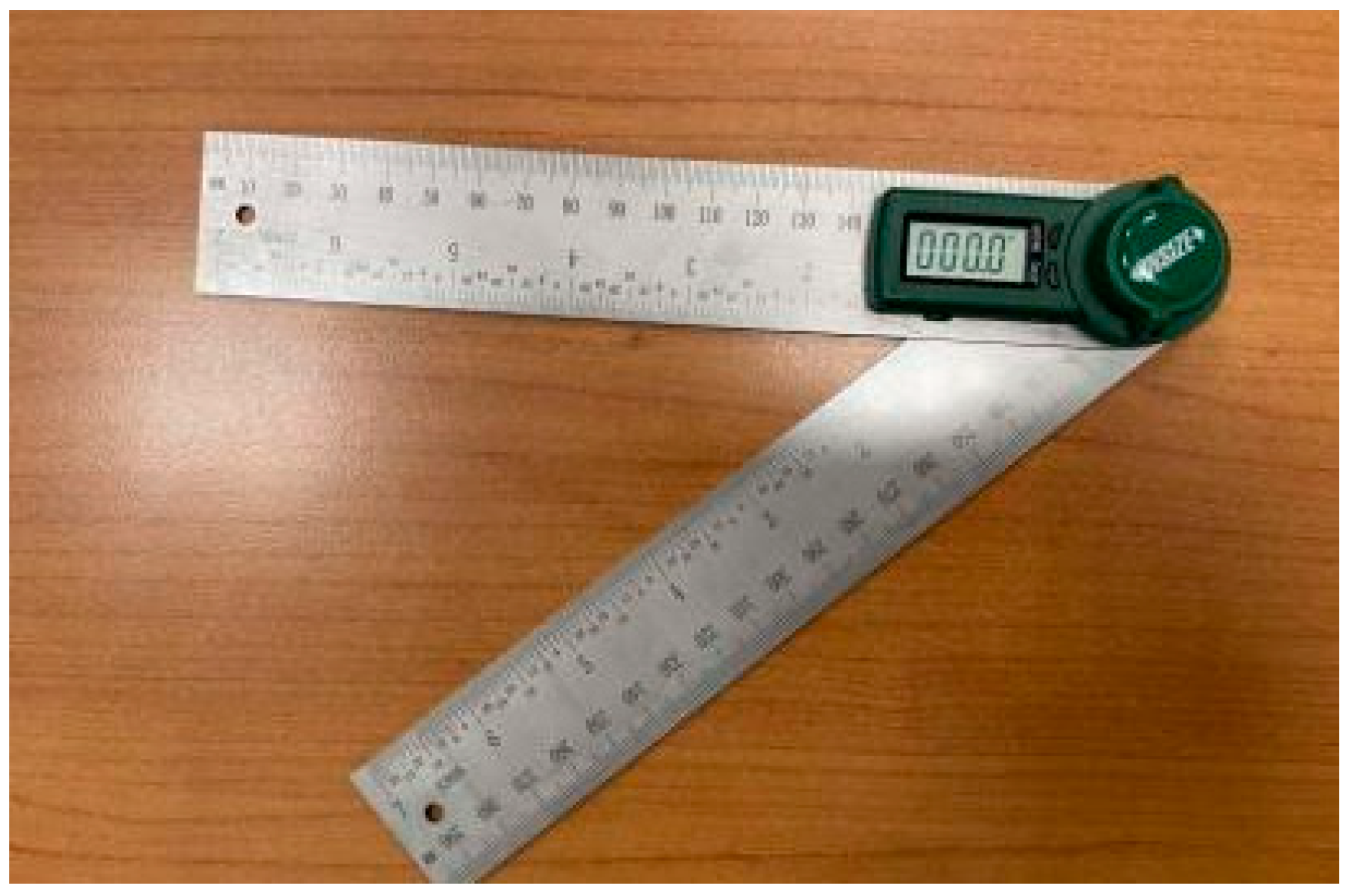
The digital goniometer is a tool for measuring the active and passive range of motion of joints in the human body. To our knowledge, the digital goniometer has not been used so far to assess hospitalized frail patients but has been widely used for upper and lower extremity measurements in healthy individuals and has a very good reliability index ranging from ICC = 0.69–0.97 and a good validity index ranging from r = 0.60–0.87 for active range of motion assessments of the upper and lower extremities [25,26,27]. In the present study, the digital goniometer was used to assess the active range of motion of shoulder abduction, elbow flexion, and wrist extension of both upper extremities and hip flexion, knee extension, and ankle dorsiflexion of the non-fractured lower extremity. The dimensions of the digital goniometer (INSIZE Co., Ltd., 215009, Suzhou New District, China, Model 2176200 DIGITAL PROTRACTORS) are 300 mm × 35 mm; it weighs 220 g and is manually operated. It has a digital display of the angle inclination with a 0.1° resolution and a power on/off and zero button (Figure 2).

2.3. Procedure

The experimental study was carried out in a hospital setting by a team of physiotherapists. Initially, information was given on the purpose, significance, and process of the study, and all patients completed a signed consent to participate in the study. The 1st author (I.S.) conducted an interview with the patients on the 1st or 2nd postoperative day, in which (a) clinical characteristics such as injury cause, comorbidities, and walking ability prior to hip fracture; (b) demographic characteristics such as age and sex; (c) living conditions; and (d) medical history were collected. Afterwards, the same author proceeded with frailty assessment using the Clinical Frailty Scale. Depending on their score, each participant was allocated to either the frail group or the non-frail group. The 2nd author (A.V.) conducted the outcome measures on the day that the patients were expected to be discharged from the hospital and was blinded to their group allocation. The measurement procedure was carried out once and lasted approximately 20 min for each participant.
Active range of motion (AROM) was evaluated by the digital goniometer at suitable positions [28]. For each measurement, a single trial was performed. For the AROM of ankle dorsiflexion, the outer hamulus served as the reference point, where the central axis of rotation of the protractor was positioned. The fixed arm was aligned with the head of the fibula, while the movable arm (with the digital display) was oriented along the longitudinal axis of the 5th metatarsal [29]. Measurements began with the foot in a neutral anatomical position—forming a 90° angle between the foot and the distal tibia [30]—which represented both the starting position and the zero point on the goniometer. The patient was then instructed to actively perform dorsal flexion, with verbal cues such as “Point your toes upward” or “Pull your toes toward you,” accompanied by a visual demonstration of the movement by the examiner.
For the AROM of knee extension, the patient’s lower extremity was initially positioned in full extension (without hyperextension). The goniometer was aligned so that its central axis of rotation was placed approximately at the level of the lateral femoral condyle, with the fixed arm directed toward the greater trochanter of the femur and the movable arm (with the digital display) aligned with the lateral condyle of the fibula, while the lower extremity remained extended [31,32]. The patient was then instructed to bend the knee as much as they could. At the end of active knee flexion, the goniometer was reset to zero (measurement point 0), after which the patient was instructed to extend the leg back to the starting position. The active range of extension was calculated as the range between the final position of active flexion and full active extension (without hyperextension).
For the AROM of hip flexion, the patient’s lower extremity was positioned in full extension (measurement point 0), but without hyperextension. The greater trochanter served as the reference point, where the central axis of rotation of the goniometer was positioned. The fixed arm was aligned with the lateral midline of the trunk, while the movable arm (with the digital display) was aligned with the lateral midline of the thigh [33]. In this position—where the torso and thigh formed an obtuse angle of approximately 120–150° due to Fowler’s position on the bed—the goniometer display was reset to zero. The patient was then instructed to “bend their leg toward their chest,” actively flexing both knee and hip. The active range of hip flexion was recorded up to the final point the patient could actively flex their hip.
For the AROM of wrist extension, the patient rested their upper limb on the bed with the shoulder relaxed, the elbow slightly flexed, the forearm pronated, and the hand placed palm-down on the bed. The goniometer was positioned with its central axis of rotation aligned over the triquetrum, the fixed arm directed along the lateral midline of the ulna, and the movable arm (with the digital display) aligned with the lateral midline of the 5th metacarpal [34]. With the limb and goniometer in this position, the device was reset to zero (measurement point 0). The patient was then instructed to “raise your palm upward as if they were making a “stop” sign, and the angle was measured for each arm at the final point of active extension.
For the AROM of elbow flexion, the patient was positioned with the shoulder in slight abduction, the elbow in full extension, the forearm supinated, and the fingers extended—i.e., in the anatomical position [35]. The goniometer was aligned with its central axis of rotation placed over the lateral epicondyle, the fixed arm directed along the lateral midline of the humerus toward the acromion, and the movable arm (with the digital display) aligned with the lateral midline of the forearm and parallel to the examination table [36]. With the arm and goniometer in this position, the device was reset to zero (measurement point 0). The patient was then instructed to “bend their elbow and bring their palm toward their shoulder,” and the angle was recorded at the final point of active elbow flexion for each arm.
For the AROM of shoulder abduction, the patient was instructed to keep the arm in adduction, resting alongside the body. The goniometer was positioned with its central axis of rotation aligned over the acromioclavicular joint, the fixed arm parallel to the midline of the sternum, and the movable arm (with the digital display) aligned along the inner side of the upper arm [37]. With the arm and goniometer in this position, the device was reset to zero (measurement point 0). The patient was then instructed to “raise arm out to the side as high as possible while keeping the elbow straight,” and the angle was recorded at the final point of active shoulder abduction.
Muscle strength of the non-fractured lower extremity was evaluated by the MRC procedure [21,22] in suitable positions previously described in AROM measurements and with the “break test” method. In the “break test” method, manual resistance is applied by the examiner to the distal part of the limb after the joint’s full range of motion has been completed, either actively or passively. The limb is held in a fixed position, which the participant attempts to maintain as the examiner applies resistance along the line of the muscle fibers. The participant is instructed to keep the limb steady while the examiner attempts to ‘break’ this position using manual force [20]. Muscle strength of hip flexion, knee extension, and ankle dorsiflexion were recorded for the non-fractured lower extremity.
Hand grip strength was evaluated for each upper extremity by the manual hand grip meter in accordance with the guidelines of Fess, Moran, and the American Society of Hand Therapists [38]. Each participant performed three consecutive grasps with their greatest muscle power, holding the grip for approximately 3 s. Afterwards, the average of these measures was recorded for each upper limb [38,39,40].

2.4. Statistical Analysis

Descriptive statistics, including mean and standard deviation, were calculated for the assessments of the study. A normality test of the distribution of all variables was performed using the Kolmogorov–Smirnov (sample size > 50). For the variables that followed a normal distribution, an independent samples t-test was performed, and for those that did not follow a normal distribution, a Mann–Whitney U test was performed to examine the differences between the two groups on patients’ discharge day. We calculated the effect size r in Mann–Whitney U tests via r = z/√N (z: z value; N: observation number). In particular, we divided the z value by the square root of the observation number to achieve the effect size. The effect size r, which is less than 0.3, means a small effect. The effect size r between 0.3 and 0.5 means a medium effect, and greater than 0.5 means a large effect. We also calculated the effect size d in the independent samples t-test via d = (mA − mB)/σ (mA, mB: means of the frail group and the non-frail group, σ: within-population standard deviation) [41]. Data analysis was performed using the Statistical Package for the Social Sciences (SPSS 29.00) with a statistical significance level of α = 0.05.

3. Results

3.1. Demographic and Clinical Characteristics

Table 1 shows the descriptives and differences between the frail and non-frail groups on participants’ demographic and clinical characteristics. There were no adverse events during the measurement session. Among participants in both groups, none withdrew from the study. All the demographic and clinical characteristics followed non-normal distribution except the age; thus, we performed a t-test only for age and a Mann–Whitney U for all the other characteristics.

3.2. Clinical Frailty Scale Results

The Clinical Frailty Scale (CFS) results per group appear in Table 2. In particular, Table 2 presents the results of the assessment using CFS between the two groups. The results of the CFS followed a non-normal distribution; thus, the Mann–Whitney U test was performed between the frail and non-frail groups. Among the frail participants, most of them lived with moderate frailty (40% of the frail group), while the majority of the non-frail participants were classified as “managing well” (73.3% of the non-frail group). Also, more than half of the frail participants (53.4%) are found to live with mild and severe frailty.

3.3. Active Range of Motion and Muscle Strength

The measurements of the (a) right shoulder abduction active range of motion (AROM), (b) right wrist extension AROM, (c) knee extension AROM, and (d) ankle dorsiflexion AROM were normally distributed. Therefore, an independent samples t-test was used to investigate the differences between the measurements of the two groups (Table 3).
Apart from the right wrist extension AROM, all variables differed significantly between the two groups. In particular, the results revealed statistically significant differences in (a) shoulder abduction AROM in the right upper extremity (p = 0.01, r = 0.75), (b) knee extension AROM in the non-fractured lower extremity (p = 0.01, r = 0.80), and (c) ankle dorsiflexion AROM in the non-fractured lower extremity (p = 0.02, r = 0.62).
The measurements of (a) left shoulder abduction AROM, (b) right and left elbow flexion AROM, (c) left wrist extension AROM, (d) hip flexion AROM, (e) right and left handgrip test, (f) hip flexion, knee extension, and ankle dorsiflexion strength, and (g) length of hospital stay were not normally distributed. Therefore, the Mann–Whitney U test was used to investigate the differences between the measurements of the two groups (Table 4).
Apart from the left wrist extension AROM and knee extension muscle strength, all variables differed significantly between the two groups. In particular, the results revealed: statistically significant differences in (a) shoulder abduction AROM in the left upper extremity (p < 0.05, r = 0.33), (b) elbow flexion AROM in both right (p < 0.05, r = 0.26) and left upper extremity (p < 0.05, r = 0.27), (c) hip flexion AROM in the non-fractured lower extremity (p < 0.01, r = 0.43), (d) hand grip strength in both right (p < 0.001, r < 0.58) and left upper extremity (p < 0.001, r < 0.50), (e) hip flexion muscle strength (p < 0.01, r = 0.36), (f) ankle dorsiflexion muscle strength (p < 0.01, r = 0.32) and in (g) total length of hospital stay (p < 0.001, r = 0.70).

4. Discussion

4.1. Comparison of Muscle Strength Between Frail and Non-Frail Patients

The present study was designed to investigate the effectiveness of frailty on muscle strength and range of motion in the non-injured limbs of hospitalized patients with hip fractures. The results showed that frailty can negatively affect muscle strength in elderly patients. This may be partly attributed to age-related reductions in neuromuscular performance, which can limit the body’s ability to generate sufficient muscle force [42]. Beyond age-related influences, frailty-specific mechanisms may play a more decisive role. Frailty-related factors such as mitochondrial dysfunction and rapid depletion of cellular energy reserves have been reported to contribute to the progressive decline in lower limb strength [43]. Such physiological dysfunctions reduce muscle quality and accelerate physical decline [43]. Reid et al. [44] suggest that early declines in the muscle performance of knee extensors may stem from initial neuromuscular impairments that precede any musculoskeletal changes. The effect of frailty in lower extremities is further supported by a previous study, which reported a reduction in muscle strength in both knee extensors and knee flexors among frail elderly [13]. Therefore, progressive deterioration of muscle function observed with advancing age may be closely linked to frailty itself. Despite a tendency towards higher values in the non-frail group, statistical analysis did not reveal a significant difference in knee extensor strength between the two groups. This may be due to the limited sample size and the individual variability in neuromuscular function commonly seen with aging.
Beyond its impact on lower limb function, frailty also appears to impair upper limb performance, particularly in handgrip strength. The present study found that frail patients exhibited abnormally low levels of muscle force during grip assessments. Handgrip strength is widely recognized as a clinical marker of general muscle health and frailty in older adults [45]. Ko et al. [46] explored the relationship between frailty and grip strength, identifying a clear association between frailty indicators and reduced muscle strength among older individuals. This finding aligns with results reported by Doherty et al. [47], who observed that older patients with higher scores on the Clinical Frailty Scale demonstrated significantly lower handgrip strength. These results suggest that frailty may act as a limiting factor in rehabilitation following hip surgery. However, the interpretation of these findings should consider potential confounding factors commonly present in the geriatric population, such as reduced cognitive function or prior injuries in the upper extremities [47,48].

4.2. Comparison of Active Joint Range of Motion Between Frail and Non-Frail Patients

In the present study, joint movements including hip flexion, knee extension, ankle dorsiflexion, shoulder abduction, elbow flexion, and wrist extension were assessed in both frail and non-frail hip fracture patients. The frail group demonstrated a reduced range of motion across all evaluated joints in comparison to their non-frail counterparts. However, no statistically significant difference was found in wrist extension bilaterally, possibly due to the limited sample size. The observed stiffness in the assessed joints may arise from age-related structural and neuromuscular changes that are closely linked to frailty, ultimately limiting limb mobility [49,50]. In frail individuals, these physiological modifications, such as decreased flexibility of muscles and tendons or altered coordination between antagonistic muscle groups, may be further exacerbated, contributing to greater limitations in musculoskeletal performance [51,52,53]. The accumulation of such physiological changes illustrates how aging-associated conditions, including frailty, progressively degrade the body’s motor function. In a similar previous study, it was reported that frailty may be associated with reduced limb flexibility, notably identifying specific joint limitations in passive hip flexion, hip internal rotation, knee flexion, ankle dorsiflexion, shoulder flexion, and shoulder external rotation [15]. Similarly, Kinnucan et al. [54] evaluated shoulder external rotation in older patients, as a secondary outcome measure, to further assess frailty’s influence on shoulder functional capacity in healthy upper limbs. In line with these findings, the present study expands upon previous evidence by providing a comprehensive assessment of multiple joint movements in frail or non-frail hip fracture patients, further supporting the hypothesis that frailty is associated with a widespread musculoskeletal decline.

4.3. Regarding the Demographic Characteristics

Length of hospital stay was found to be significantly longer in the frail group compared to the non-frail group. The presence of the syndrome may have led to the deterioration of the patient’s mobility, thus necessitating extended care [55]. Generally, hospital stay is viewed as a flexible indicator of general health status, given the multitude of factors that tend to influence it. Advanced age, discharge destination, and coexisting clinical conditions represent additional parameters that may affect the duration of the hospitalization period [56,57]. Both frailty and comorbidities shape postoperative outcomes in older adults undergoing surgical treatment for hip fracture [58]. Therefore, accurately determining the extent of each factor’s effect on hospital stay remains a challenging and complex task. Nevertheless, consistent with the present study, Kistler et al. [8] noted that prolonged hospitalization is common among frail individuals with hip fractures. Similarly, Chan et al. [59] demonstrated that the degree of frailty, assessed by the Clinical Frailty Scale, may significantly influence the length of hospital stay in elderly patients with hip fractures. These findings are also in line with previous studies mentioning frailty as a primary determinant of prolonged hospital stay length [56].
Additionally, age was found to be higher in the frail group compared to the non-frail group. Advanced age has been identified as one of the most common risk factors for the development of frailty [60]. This strong association between advanced age and frailty can be justified by decreased physical activity, lower body mass index, and malnutrition, among many other characteristics [60]. Generally, older adults are more susceptible to functional decline and reduced physiological reserve factors that increase vulnerability to frailty and, subsequently, contribute to the higher incidence of hip fractures observed in this population [61,62,63]. In agreement with the present study, Li et al. [64] reported that frail hip fracture patients were older than their non-frail counterparts, confirming a clear association between age and frailty status. Age appears to function as an important background factor in the development of frailty. However, it is the frailty status itself, rather than age alone, that more accurately accounts for variations in functional performance and recovery following hip fracture. These findings highlight the key role of biological aging in frailty development and fracture risk, emphasizing the importance of early and comprehensive assessment in older adults.

4.4. Limitations and Recommendations for Future Research

Several limitations must be acknowledged in the present study, as they may influence both the interpretation of the results and the design of subsequent research efforts. One of the main limitations is the heterogeneity of the sample. The variability in clinical characteristics, such as comorbidities and pharmacological treatment, limits the generalizability of the findings to the broader clinical population. Additionally, the evaluation of frailty, muscle strength, and range of motion relied on one measuring means for each variable, potentially restricting the accuracy and depth of the assessment. Physical measurements may have been further influenced by external factors, such as the patients’ subjective fear of pain or the use of the Fowler’s position during assessment.
Conducting further research with larger sample sizes, including individuals across all levels of frailty, would greatly enhance the assessment of this multidimensional syndrome. To better clarify the influence of frailty on limb strength, further investigation is needed to identify the age-related factors that contribute to the reduction in muscle strength in lower limbs, focusing on cognitively intact participants while excluding those with acute limb injuries. More research is required to evaluate joint flexibility in frail populations, while further investigating why certain joints may remain relatively unaffected would also be important. Such insights could enhance both the clinical decision-making and the development of targeted management strategies for this vulnerable population. Implementing multicomponent physiotherapy programs, including aerobic, balance, resistance, and flexibility exercises, is one effective approach [65]. Among these, aerobic exercise is considered the most suitable one for the frail population, while balance and resistance exercises are ideally applied to pre-frail individuals. However, regardless of the patient’s frailty status, it is recommended that all aforementioned types of exercise be included in the therapeutic program, aiming to improve overall functionality and quality of life [66]. The therapeutic value of these exercise types may be further enhanced when combined with other alternative forms of exercise, such as Wu Qin Xi and Tai Chi [67,68]. Similarly, the Otago Exercise Program, a multicomponent exercise program combining balance, strength, and walking exercises, has been shown to effectively manage frailty in older adults. When delivered in a group-based, physiotherapist-supervised setting, this program greatly improves physical performance while also promoting confidence, reducing fear of falling, and enhancing neuromuscular coordination, making it a practical and safe intervention for the frail geriatric population [69,70]. Future studies should also aim to include a more homogeneous sample regarding comorbidities to better distinguish the role of frailty in recovery outcomes among patients undergoing surgical intervention. Long-term follow-up beyond the acute hospitalization phase is also essential to explore the sustained effects of frailty on physical function, autonomy, and quality of life in older adults recovering from hip fractures. Moreover, extended follow-up would allow for the implementation of a combination of validated tools, both in the assessment and physiotherapeutic management of this clinical population.

5. Conclusions

The findings suggest that frailty can negatively affect both muscle strength and joint range of motion across most joints of the non-injured extremities in hip fracture patients. Furthermore, frailty can increase the duration of hospital stay in the geriatric population. Future studies should employ larger and more homogeneous samples while also incorporating additional reliable measurement tools to further explore and validate the present results.

Author Contributions

Conceptualization, A.C., I.S., and A.V.; Methodology, A.C., I.S., and A.V.; Investigation, I.S. and A.V.; Data curation, I.S. and A.V.; Writing—original draft preparation, I.S. and A.V.; Writing—review and editing, A.C., I.S., A.V., K.K., C.G., and D.C.; Supervision, A.C. All authors have read and agreed to the published version of the manuscript.

Funding

This research received no external funding.

Institutional Review Board Statement

This study was conducted in accordance with the Declaration of Helsinki. The study was approved by the Ethics and Deontology Committee of the University of the Peloponnese with protocol number 12021 and approval date 15 May 2025, by the Scientific Council of the Athens General Hospital “Evangelismos with protocol number 151 and approval date 3 April 2025 and by the Scientific Council of the General Hospital “Asklepeion Voulas” with protocol number ΕΣ 113/2-4-25 (6390/1-4-2025) and approval date 17 April 2025.

Informed Consent Statement

Informed consent was obtained from all subjects involved in the study. Written informed consent has been obtained from the patients to publish this paper.

Data Availability Statement

Data available on request from the corresponding author.

Acknowledgments

We would like to thank our participants for taking part in the present study.

Conflicts of Interest

The authors declare no conflicts of interest.

Abbreviations

AROMActive range of motion
MRCMedical Research Council

References

  1. Taylor, J.A.; Greenhaff, P.L.; Bartlett, D.B.; Jackson, T.A.; Duggal, N.A.; Lord, J.M. Multisystem physiological perspective of human frailty and its modulation by physical activity. Physiol. Rev. 2022, 103, 1137–1191. [Google Scholar] [CrossRef]
  2. Dionyssiotis, Y.; Masiero, S.; Maccarone, M.C.; Prokopidis, K.; Dzhafer, N.; Matzaroglou, C.; Tsekoura, M.; Panayotov, K.; Papathanasiou, J. Frailty: Future prospectives in rehabilitation medicine. Eur. J. Transl. Myol. 2023, 33, 11206. [Google Scholar] [CrossRef]
  3. Rockwood, K.; Theou, O. Using the clinical frailty scale in allocating scarce health care resources. Can. Geriatr. J. 2020, 23, 254–259. [Google Scholar] [CrossRef] [PubMed]
  4. Espinoza, S.; Walston, J.D. Frailty in older adults: Insights and interventions. Cleveland Clin. J. Med. 2005, 72, 1105–1112. [Google Scholar]
  5. Liu, L.K.; Lee, W.J.; Chen, L.Y.; Hwang, A.C.; Lin, M.H.; Peng, L.N.; Chen, L.K. Association between frailty, osteoporosis, falls and hip fractures among community-dwelling people aged 50 years and older in Taiwan: Results from I-Lan Longitudinal Aging Study. PLoS ONE 2015, 10, e0136968. [Google Scholar] [CrossRef]
  6. Gerosa, A.; Ottaviani, S.; Tagliafico, L.; Page, E.; Pizzonia, M.; Giannotti, C.; Casabella, A.; Signori, A.; Nencioni, A.; Monacelli, F. Long-term survival in frail older adults sustaining a hip fracture: Does the perioperative period really matter? J. Gerontol. Geriatr. 2024, 72, 193–203. [Google Scholar] [CrossRef]
  7. Ma, Y.; Wang, A.; Lou, Y.; Peng, D.; Jiang, Z.; Xia, T. Effects of frailty on outcomes following surgery among patients with hip fractures: A systematic review and meta-analysis. Front. Med. 2022, 9, 840585. [Google Scholar] [CrossRef] [PubMed]
  8. Kistler, E.A.; Nicholas, J.A.; Kates, S.L.; Friedman, S.M. Frailty and short-term outcomes in patients with hip fracture. Geriatr. Orthop. Surg. Rehabil. 2015, 6, 209–214. [Google Scholar] [CrossRef]
  9. Krishnan, M.; Beck, S.; Havelock, W.; Eeles, E.; Hubbard, R.E.; Johansen, A. Predicting outcome after hip fracture: Using a frailty index to integrate comprehensive geriatric assessment results. Age Ageing 2014, 43, 122–126. [Google Scholar] [CrossRef] [PubMed]
  10. Berg, O.K.; Stutzer, J.M.; Hoff, J.; Wang, E. Early maximal strength training improves leg strength and postural stability in elderly following hip fracture surgery. Geriatr. Orthop. Surg. Rehabil. 2021, 12, 2151459321999144. [Google Scholar] [CrossRef]
  11. Song, Y.; Wu, Z.; Huo, H.; Zhao, P. The impact of frailty on adverse outcomes in geriatric hip fracture patients: A systematic review and meta-analysis. Front. Public Health 2022, 10, 882665. [Google Scholar] [CrossRef] [PubMed]
  12. Xia, J.; Li, Z.; Zhao, D.; Hu, Y.; Lu, X. Prevalence of frailty among elderly patients with hip fracture in China: Protocol for a systematic review and meta-analysis. BMJ Open 2023, 13, e072623. [Google Scholar] [CrossRef]
  13. Farrow, M.; Biglands, J.; Tanner, S.F.; Clegg, A.; Brown, L.; Hensor, E.M.A.; O’connor, P.; Emery, P.; Tan, A.L. The effect of ageing on skeletal muscle as assessed by quantitative MR imaging: An association with frailty and muscle strength. Aging Clin. Exp. Res. 2020, 33, 291–301. [Google Scholar] [CrossRef]
  14. Haider, S.; Grabovac, I.; Dorner, T.E. Effects of physical activity interventions in frail and prefrail community-dwelling people on frailty status, muscle strength, physical performance and muscle mass—A narrative review. Wien. Klin. Wochenschr. 2019, 131, 244–254. [Google Scholar] [CrossRef]
  15. Brown, M.; Sinacore, D.R.; Ehsani, A.A.; Binder, E.F.; Holloszy, J.O.; Kohrt, W.M. Low-intensity exercise as a modifier of physical frailty in older adults. Arch. Phys. Med. Rehabil. 2000, 81, 960–965. [Google Scholar] [CrossRef] [PubMed]
  16. Toosizadeh, N.; Wendel, C.; Hsu, C.H.; Zamrini, E.; Mohler, J. Frailty assessment in older adults using upper-extremity function: Index development. BMC Geriatr. 2017, 17, 1. [Google Scholar] [CrossRef]
  17. Scano, A.; Re, R.; Tomba, A.; Amata, O.; Pirovano, I.; Brambilla, C.; Contini, D.; Spinelli, L.; Amendola, C.; Caserta, A.V.; et al. Non-surgical lower-limb rehabilitation enhances quadriceps strength in inpatients with hip fracture: A study on force capacity and fatigue. Appl. Sci. 2023, 13, 6855. [Google Scholar] [CrossRef]
  18. Vrettos, I.; Voukelatou, P.; Panayiotou, S.; Kyvetos, A.; Kalliakmanis, A.; Makrilakis, K.; Sfikakis, P.P.; Niakas, D. Validation of the revised 9-scale clinical frailty scale (CFS) in Greek language. BMC Geriatr. 2021, 21, 393. [Google Scholar] [CrossRef]
  19. Benton, M.J.; Spicher, J.M.; Silva-Smith, A.L. Validity and reliability of handgrip dynamometry in older adults: A comparison of two widely used dynamometers. PLoS ONE 2022, 17, e0270132. [Google Scholar] [CrossRef] [PubMed]
  20. Hislop, H.J.; Montgomery, J. Muscle Testing: Techniques of Manual Examination; Elsevier: Amsterdam, The Netherlands, 2007. [Google Scholar]
  21. James, M.A. Use of the Medical Research Council muscle strength grading system in the upper extremity. J. Hand Surg. 2007, 32, 154–156. [Google Scholar] [CrossRef]
  22. O’Neill, S.; Jaszczak, S.L.T.; Steffensen, A.K.S.; Debrabant, B. Using 4+ to grade near-normal muscle strength does not improve agreement. Chiropr. Man. Ther. 2017, 25, 28. [Google Scholar] [CrossRef]
  23. Hermans, G.; Clerckx, B.; Vanhullebusch, T.; Segers, J.; Vanpee, G.; Robbeets, C.; Casaer, M.P.; Wouters, P.; Gosselink, R.; Van den Berghe, G. Interobserver agreement of Medical Research Council sum-score and handgrip strength in the intensive care unit. Muscle Nerve 2011, 45, 18–25. [Google Scholar] [CrossRef]
  24. Pradon, D.; Roche, N.; Enette, L.; Zory, R. Relationship between lower limb muscle strength and 6-minute walk test performance in stroke patients. J. Rehabil. Med. 2013, 45, 105–108. [Google Scholar] [CrossRef]
  25. Lind, V.; Svensson, M.; Harringe, M.L. Reliability and validity of a digital goniometer for measuring knee joint range of motion. Meas. Phys. Educ. Exerc. Sci. 2021, 26, 191–198. [Google Scholar] [CrossRef]
  26. Tajali, S.B.; MacDermid, J.C.; Grewal, R.; Young, C. Reliability and validity of electro-goniometric range of motion measurements in patients with hand and wrist limitations. Open Orthop. J. 2016, 10, 190–205. [Google Scholar] [CrossRef] [PubMed]
  27. Carey, M.A.; Laird, D.E.; Murray, K.A.; Stevenson, J.R. Reliability, validity, and clinical usability of a digital goniometer. Work 2010, 36, 55–66. [Google Scholar] [CrossRef]
  28. Houglum, P.A. Therapeutic Exercise for Musculoskeletal Injuries, 4th ed.; Human Kinetics: Champaign, IL, USA, 2016. [Google Scholar]
  29. Wang, K.Y.; Hussaini, S.H.; Teasdall, R.D.; Gwam, C.U.; Scott, A.T. Smartphone applications for assessing ankle range of motion in clinical practice. Foot Ankle Orthop. 2019, 4, 2473011419874779. [Google Scholar] [CrossRef] [PubMed]
  30. Fong, C.M.; Blackburn, J.T.; Norcross, M.F.; McGrath, M.; Padua, D.A. Ankle-dorsiflexion range of motion and landing biomechanics. J. Athl. Train. 2011, 46, 5–10. [Google Scholar] [CrossRef]
  31. Jones, A.; Sealey, R.; Crowe, M.; Gordon, S. Concurrent validity and reliability of the Simple Goniometer iPhone app compared with the Universal Goniometer. Physiother. Theory Pract. 2014, 30, 512–516. [Google Scholar] [CrossRef]
  32. Hancock, G.E.; Hepworth, T.; Wembridge, K. Accuracy and reliability of knee goniometry methods. J. Exp. Orthop. 2018, 5, 46. [Google Scholar] [CrossRef]
  33. Eimiller, K.; Stoddard, E.; Janes, B.; Smith, M.; Vincek, A. Reliability of goniometric techniques for measuring hip flexor length using the modified Thomas test. Int. J. Sports Phys. Ther. 2024, 19, 997–1002. [Google Scholar] [CrossRef] [PubMed]
  34. Khamwong, P.; Nosaka, K.; Pirunsan, U.; Paungmali, A. Reliability of muscle function and sensory perception measurements of the wrist extensors. Physiother. Theory Pract. 2010, 26, 408–415. [Google Scholar] [CrossRef]
  35. Neumann, D.A. Kinesiology of the Musculoskeletal System: Foundations for Rehabilitation; Elsevier Health Sciences: Philadelphia, PA, USA, 2016. [Google Scholar]
  36. West, A.M.; Scarborough, D.M.; McInnis, K.C.; Oh, L.S. Strength and motion in the shoulder, elbow, and hip in softball windmill pitchers. PMR 2019, 11, 1302–1311. [Google Scholar] [CrossRef]
  37. Dangar, M.; Sorani, D.; Rathod, S. Analysis of reference range of glenohumeral rhythm during flexion and abduction—An analytical study. Int. J. Health Sci. Res. 2024, 14, 217–224. [Google Scholar] [CrossRef]
  38. Fess, E.; Moran, C. Clinical Assessment Recommendations, 1st ed.; American Society of Hand Therapists: Indianapolis, IN, USA, 1981. [Google Scholar]
  39. Roberts, H.C.; Denison, H.J.; Martin, H.J.; Patel, H.P.; Syddall, H.; Cooper, C.; Sayer, A.A. A review of the measurement of grip strength in clinical and epidemiological studies: Towards a standardised approach. Age Ageing 2011, 40, 423–429. [Google Scholar] [CrossRef]
  40. Schwartz, D.A. What can handgrip strength tell the therapist about hand function? J. Hand Ther. 2005, 18, 457. [Google Scholar] [CrossRef]
  41. Cohen, J. A power primer. Psychol. Bull. 1992, 112, 155–159. [Google Scholar] [CrossRef]
  42. Pabla, P.; Jones, E.J.; Piasecki, M.; Phillips, B.E. Skeletal muscle dysfunction with advancing age. Clin. Sci. 2024, 138, 863–882. [Google Scholar] [CrossRef]
  43. Lewsey, S.C.; Weiss, K.; Schär, M.; Zhang, Y.; Bottomley, P.A.; Samuel, T.J.; Xue, Q.-L.; Steinberg, A.; Walston, J.D.; Gerstenblith, G.; et al. Exercise intolerance and rapid skeletal muscle energetic decline in human age-associated frailty. JCI Insight 2020, 5, e139160. [Google Scholar] [CrossRef]
  44. Reid, K.F.; Pasha, E.; Doros, G.; Clark, D.J.; Patten, C.; Phillips, E.M.; Frontera, W.R.; Fielding, R.A. Longitudinal decline of lower extremity muscle power in healthy and mobility-limited older adults: Influence of muscle mass, strength, composition, neuromuscular activation and single fiber contractile properties. Eur. J. Appl. Physiol. 2013, 114, 29–39. [Google Scholar] [CrossRef] [PubMed]
  45. Dudzińska-Griszek, J.; Szuster, K.; Szewieczek, J. Grip strength as a frailty diagnostic component in geriatric inpatients. Clin. Interv. Aging 2017, 12, 1151–1157. [Google Scholar] [CrossRef]
  46. Ko, Y.; Park, J.; Baek, S.H. Independent association between frailty and fear of falling in older adults after hip fracture surgery: A cross-sectional study using a secondary analysis. Nurs. Res. Pract. 2025, 2025, 2175740. [Google Scholar] [CrossRef]
  47. Doherty, W.J.; Stubbs, T.A.; Chaplin, A.; Langford, S.; Sinclair, N.; Ibrahim, K.; Reed, M.R.; Sayer, A.A.; Witham, M.D.; Sorial, A.K. Implementing grip strength assessment in hip fracture patients: A feasibility project. J. Frailty Sarcopenia Falls 2021, 6, 66–78. [Google Scholar] [CrossRef]
  48. Toosizadeh, N.; Mohler, J.; Najafi, B. Assessing upper extremity motion: An innovative method to identify frailty. J. Am. Geriatr. Soc. 2015, 63, 1181–1186. [Google Scholar] [CrossRef] [PubMed]
  49. Pike, J.M.; Singh, S.K.; Barfield, W.R.; Schoch, B.; Friedman, R.J.; Eichinger, J.K. Impact of age on shoulder range of motion and strength. JSES Int. 2022, 6, 1029–1033. [Google Scholar] [CrossRef] [PubMed]
  50. Alzaabi, H.S.; Walton, L.M.; Arumugam, A. Association between demographic characteristics, lower limb range of motion, functional performance, ability to dual task, quality of life and risk of falls in older adults of the United Arab Emirates: A cross-sectional study. Heliyon 2022, 8, e08869. [Google Scholar] [CrossRef] [PubMed]
  51. Burbank, P.M.; Reibe, D.; Padula, C.A.; Nigg, C. Exercise and older adults. Orthop. Nurs. 2002, 21, 51–63. [Google Scholar] [CrossRef]
  52. Freemont, A.; Hoyland, J. Morphology, mechanisms and pathology of musculoskeletal ageing. J. Pathol. 2007, 211, 252–259. [Google Scholar] [CrossRef]
  53. Marcucci, L.; Reggiani, C. Increase of resting muscle stiffness, a less considered component of age-related skeletal muscle impairment. Biomedicines 2020, 8, 8982. [Google Scholar] [CrossRef]
  54. Kinnucan, E.; Molcjan, M.T.; Wright, D.M.; Switzer, J.A. A prospective look at the link between frailty and shoulder function in asymptomatic elderly individuals. Geriatr. Orthop. Surg. Rehabil. 2018, 9, 2151459318777583. [Google Scholar] [CrossRef]
  55. Juma, S.; Taabazuing, M.M.; Montero-Odasso, M. Clinical Frailty Scale in an acute medicine unit: A simple tool that predicts length of stay. Can. Geriatr. J. 2016, 19, 34–39. [Google Scholar] [CrossRef]
  56. Rose, M.; Pan, H.; Levinson, M.R.; Staples, M. Can frailty predict complicated care needs and length of stay? Intern. Med. J. 2014, 44, 800–805. [Google Scholar] [CrossRef]
  57. Schweller, E.; Mueller, J.; Rivera, O.J.S.; Villegas, S.J.; Walkiewicz, J. Factors associated with hip fracture length of stay among older adults in a community hospital setting. JAAOS Glob. Res. Rev. 2023, 7, e23.00050. [Google Scholar] [CrossRef] [PubMed]
  58. Lari, A.; Haidar, A.; AlRumaidhi, Y.; Awad, M.; AlMutairi, O. Predictors of mortality and length of stay after hip fractures: A multicenter retrospective analysis. J. Clin. Orthop. Trauma 2022, 28, 101853. [Google Scholar] [CrossRef]
  59. Chan, S.; Wong, E.K.C.; Ward, S.E.; Kuan, D.; Wong, C.L. The predictive value of the Clinical Frailty Scale on discharge destination and complications in older hip fracture patients. J. Orthop. Trauma 2019, 33, 497–502. [Google Scholar] [CrossRef] [PubMed]
  60. Wang, X.; Hu, J.; Wu, D. Risk factors for frailty in older adults. Medicine 2022, 101, e30169. [Google Scholar] [CrossRef]
  61. Fhon, J.R.S.; Cabral, L.M.S.; Giacomini, S.B.L.; Reis, N.A.D.; Resende, M.C.; Rodrigues, R.A.P. Frailty and sociodemographic and health factors, and social support network in the Brazilian elderly: A longitudinal study. Rev. Esc. Enferm. USP 2021, 56, e20210073. [Google Scholar] [CrossRef]
  62. Boirie, Y. Physiopathological mechanism of sarcopenia. J. Nutr. Health Aging 2009, 13, 717–723. [Google Scholar] [CrossRef]
  63. Xi, S.; Wu, Z.; Cui, J.; Yin, S.; Xi, S.; Liu, C. Association between frailty, as measured by the FRAIL scale, and 1-year mortality in older patients undergoing hip fracture surgery. BMC Geriatr. 2025, 25, 1. [Google Scholar] [CrossRef]
  64. Li, Y.; Liu, F.; Xie, H.; Zhu, Y. Investigation and analysis of frailty and nutrition status in older adult patients with hip fracture. Nutr. Clin. Pract. 2023, 38, 1063–1072. [Google Scholar] [CrossRef]
  65. Aguirre, L.E.; Villareal, D.T. Physical Exercise as Therapy for Frailty; Nestlé Nutrition Institute Workshop Series; Karger: Basel, Switzerland, 2015; Volume 83, pp. 83–92. [Google Scholar] [CrossRef]
  66. Bray, N.W.; Smart, R.R.; Jakobi, J.M.; Jones, G.R. Exercise prescription to reverse frailty. Appl. Physiol. Nutr. Metab. 2016, 41, 1112–1116. [Google Scholar] [CrossRef] [PubMed]
  67. Wei, M.; He, S.; Meng, D.; Yang, G.; Wang, Z. Hybrid exercise program enhances physical fitness and reverses frailty in older adults: Insights and predictions from machine learning. J. Nutr. Health Aging 2023, 27, 894–902. [Google Scholar] [CrossRef] [PubMed]
  68. Meng, D.; Guo, H.; Liang, S.; Tian, Z.; Wang, R.; Yang, G.; Wang, Z. Effectiveness of a hybrid exercise program on the physical abilities of frail elderly and explainable artificial-intelligence-based clinical assistance. Int. J. Environ. Res. Public Health 2022, 19, 6988. [Google Scholar] [CrossRef] [PubMed]
  69. Peng, Y.; Yi, J.; Zhang, Y.; Sha, L.; Jin, S.; Liu, Y. The effectiveness of a group-based Otago exercise program on physical function, frailty and health status in older nursing home residents: A systematic review and meta-analysis. Geriatr. Nurs. 2022, 49, 30–43. [Google Scholar] [CrossRef]
  70. García-Gollarte, F.; Mora-Concepción, A.; Pinazo-Hernandis, S.; Segura-Ortí, E.; Amer-Cuenca, J.J.; Arguisuelas-Martínez, M.D.; Lisón, J.F.; Benavent-Caballer, V. Effectiveness of a supervised group-based Otago exercise program on functional performance in frail institutionalized older adults: A multicenter randomized controlled trial. J. Geriatr. Phys. Ther. 2021, 46, 15–25. [Google Scholar] [CrossRef]
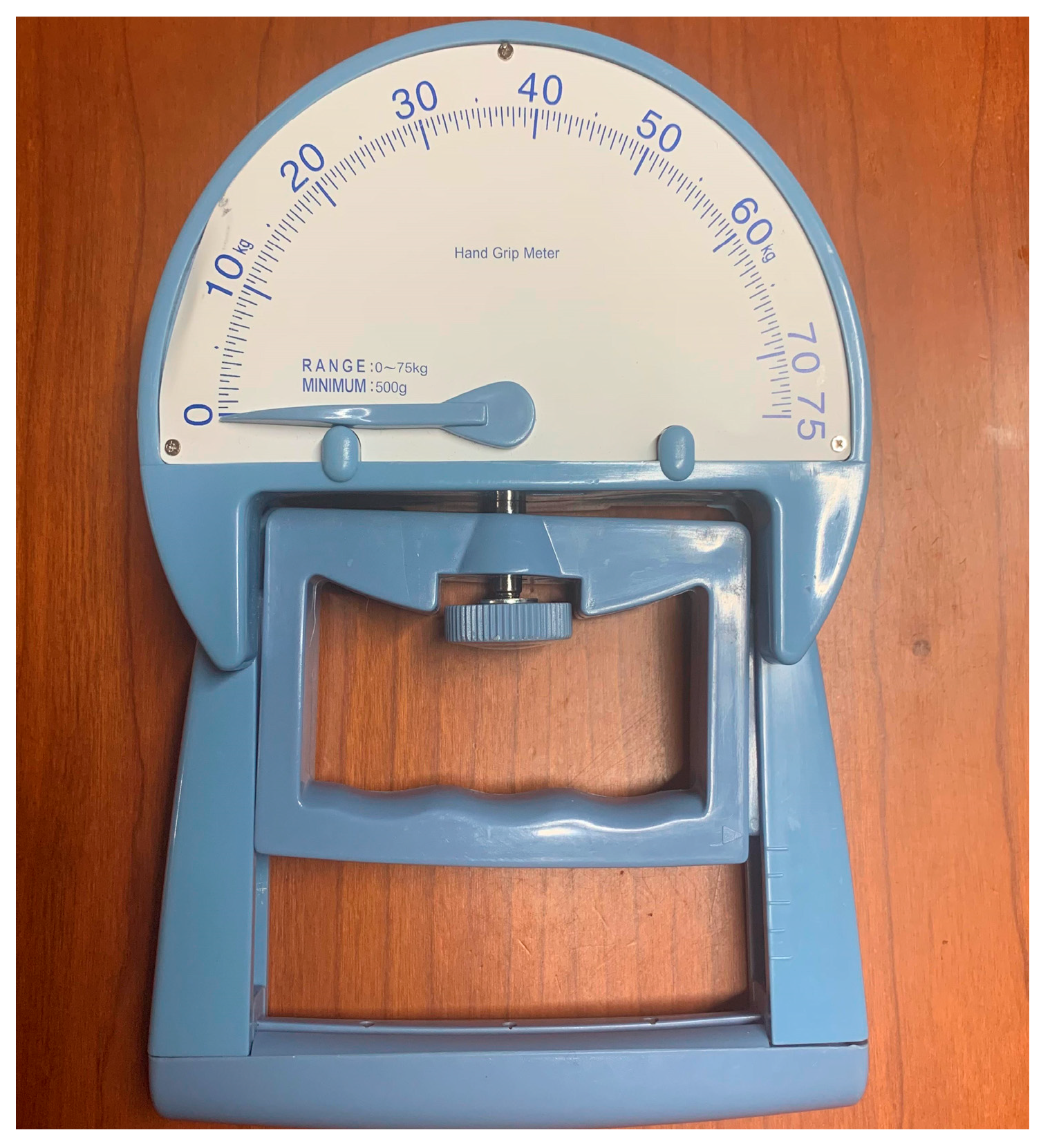
Figure 1. Hand dynamometer. Gima S.p.A., 20060 Gessate (MI), Italy, Model 28790 HAND GRIP METER.
Applsci 15 12602 g001
Figure 2. Digital goniometer. INSIZE Co., Ltd., 215009, Suzhou New District, China, Model 2176200 DIGITAL PROTRACTORS.
Applsci 15 12602 g002
Table 1. Descriptives and differences in demographic and clinical characteristics per group.
VariablesFrail Group
(n = 30)
Non-Frail Group
(n = 30)
Mann–Whitney Ut-TestpEffect Size r
Age, years, Mean (Standard Deviation)84.43 (5.09)80.03 (7.14)-2.740.000.72
Women, number (%)15 (50)16 (53.3)465.00 0.790.02
Living Conditions
 Alone, number (%)9 (30)5 (16.5)390.00 0.220.11
 At least 1 companion, number (%)21 (70)25 (83.3)510.00 0.220.11
Comorbidities
 None, number (%)02 (6.7)480.00 0.150.05
 Cardiovascular disease, number (%)25 (83.3)24 (80)435.00 0.740.02
 Hypertension, number (%)27 (90)16 (53.3)300.00 0.000.28
 Respiratory disease, number (%)5 (16.5)4 (13.3)435.00 0.720.02
Neurodegenerative disease, number (%)01 (3.3)465.00 0.310.02
 Dementia, number (%)6 (20)0360.00 0.010.17
 Diabetes, number (%)12 (40)6 (20)360.00 0.090.17
 Incontinence, number (%)2 (6.7)0420.00 0.150.05
 Thyroid disease, number (%)3 (10)5 (16.5)480.00 0.450.05
 Autoimmune disease, number (%)1 (3.3)2 (6.7)465.00 0.550.02
 Osteoarthritis, number (%)11 (36.7)6 (20)375.00 0.150.14
 Osteopenia, number (%)2 (6.7)4 (13.3)480.00 0.390.05
 Depression, number (%)4 (13.3)3 (10)435.00 0.690.02
Walking ability
 Indoors only, number (%)10 (33.3)0300.00 <0.0010.28
 Indoors and outdoors, number (%) 20 (66.7)30 (100)600.00 <0.0010.28
Indoor walking aid
 Without aid, number (%)15 (50)30 (100) 675.00 <0.0010.43
 Cane, number (%)13 (43.3)0255.00 <0.0010.37
 Walker, number (%)2 (6.7)0420.00 0.1540.05
Injury cause
 Fall on the same level (fainting, acute muscle weakness), number (%)
3 (10)0405.00 0.0780.08
 Fall from the bed, number (%)2 (6.7) 3 (10)465.00 0.640.02
 Fall from the stairs, number (%)1 (3.3)2 (6.7)465.00 0.550.02
 Slip/trip on the floor, number (%)22 (73.3)14 (46.7)330.00 0.030.22
 Cannot recall, number (%)2 (6.7)0420.00 0.150.05
 Outdoor fall, number (%)011 (36.7) 615.00 <0.0010.31
Table 2. Clinical Frailty Scale results per group.
VariableFrail Group
(n = 30)
Non-Frail Group
(n = 30)
Mann–Whitney UpEffect Size r
Clinical Frailty Scale, number (%)
 Fit, number (%) 08 (26.7)570.000.000.22
 Managing well, number (%)022 (73.3)780.00<0.0010.62
 Living with very mild frailty, number (%)2 (6.7)0420.000.150.05
 Living with mild frailty, number (%)8 (26.7)0330.000.000.22
 Living with moderate frailty, number (%)12 (40)0270.00<0.0010.34
 Living with severe frailty, number (%)8 (26.7)0330.000.000.22
Table 3. Independent samples t-test between the two groups in the active range of motion (means and standard deviations).
VariableFrail Group
(n = 30)
(Mean ± Standard Deviation)
Non-Frail Group (n = 30)
(Mean ± Standard Deviation)
t-TestdfpEffect Size d
Right shoulder abduction AROM110.68 ± 32.53132.6 ± 26.73−2.85580.010.75
Right wrist extension AROM58.46 ± 11.5462.79 ± 12.11−1.42580.160.37
Knee extension AROM98.17 ± 17.47110.80 ± 14.27−3.07580.010.80
Ankle dorsiflexion AROM17.13 ± 4.7520 ± 4.65−2.36580.020.62
Table 4. Mann–Whitney U between the two groups in range of motion and muscle strength (mean rank).
VariableFrail Group
(n = 30)
Non-Frail Group
(n = 30)
Mann–Whitney UpEffect Size r
Mean RankMean RankU
Left shoulder abduction AROM24.5736.43628.000.0080.33
Right elbow flexion AROM25.8535.15589.500.0390.26
Left elbow flexion AROM25.7535.25 592.500.0350.27
Left wrist extension AROM26.1834.82579.500.0550.24
Hip flexion AROM22.8538.15679.50<0.0010.43
Right-hand grip strength20.35 40.65754.50<0.0010.58
Left-hand grip strength 21.7239.28713.50<0.0010.50
Hip flexion MRC24.13 36.87641.000.0020.36
Knee extension MRC28.4732.53511.000.2430.11
Ankle dorsiflexion MRC24.8536.15619.500.0020.32
Length of hospital stay (days)42.7718.2382.00<0.0010.70
Disclaimer/Publisher’s Note: The statements, opinions and data contained in all publications are solely those of the individual author(s) and contributor(s) and not of MDPI and/or the editor(s). MDPI and/or the editor(s) disclaim responsibility for any injury to people or property resulting from any ideas, methods, instructions or products referred to in the content.