

Sensor Placement Optimization for Power Grid Condition Monitoring Based on a Backup Coverage Model: A Case Study of Guangzhou

 , , ,
, , , 
Abstract
1. Introduction
2. Related Work
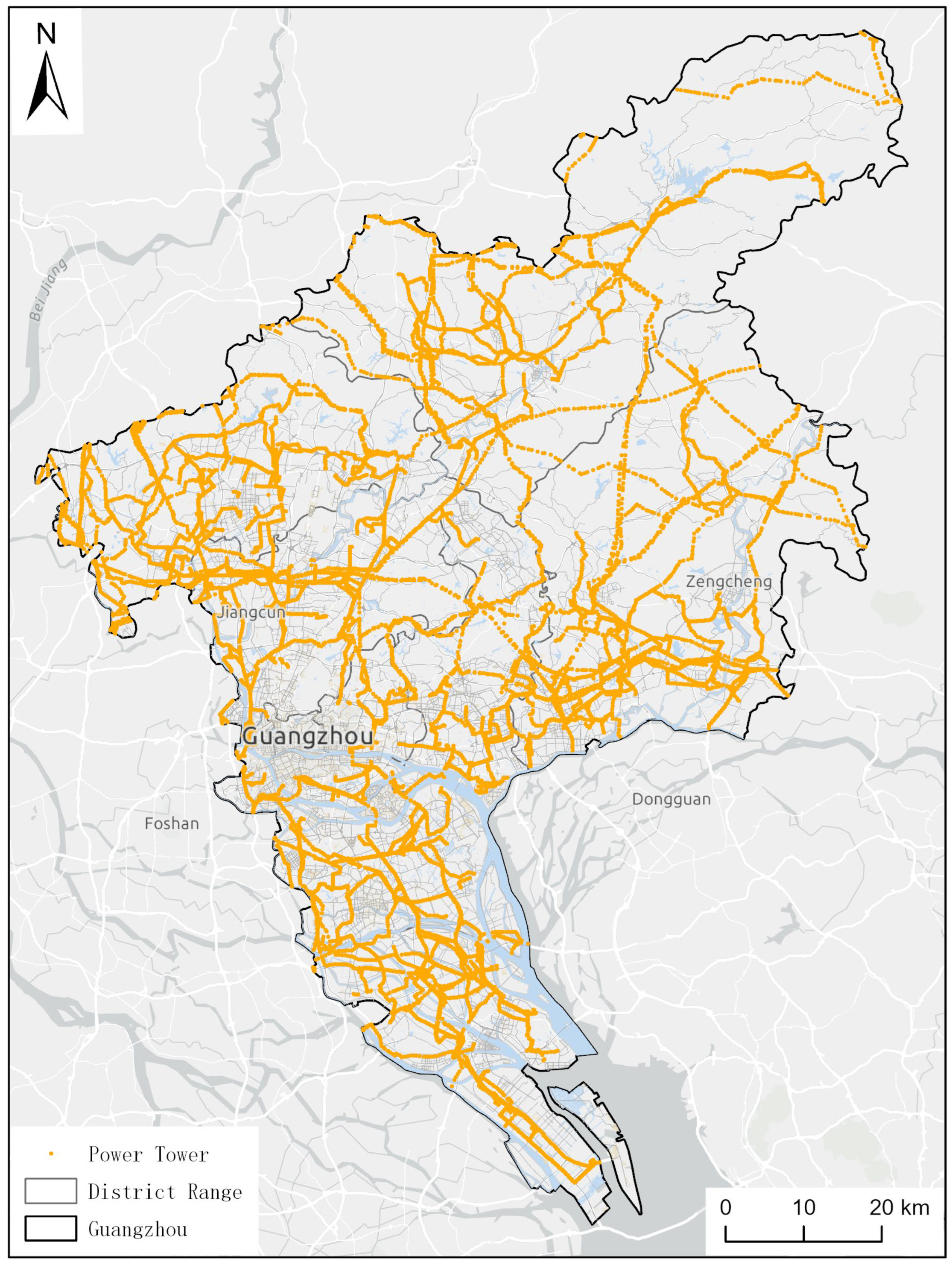
3. Study Area and Data
4. Methods
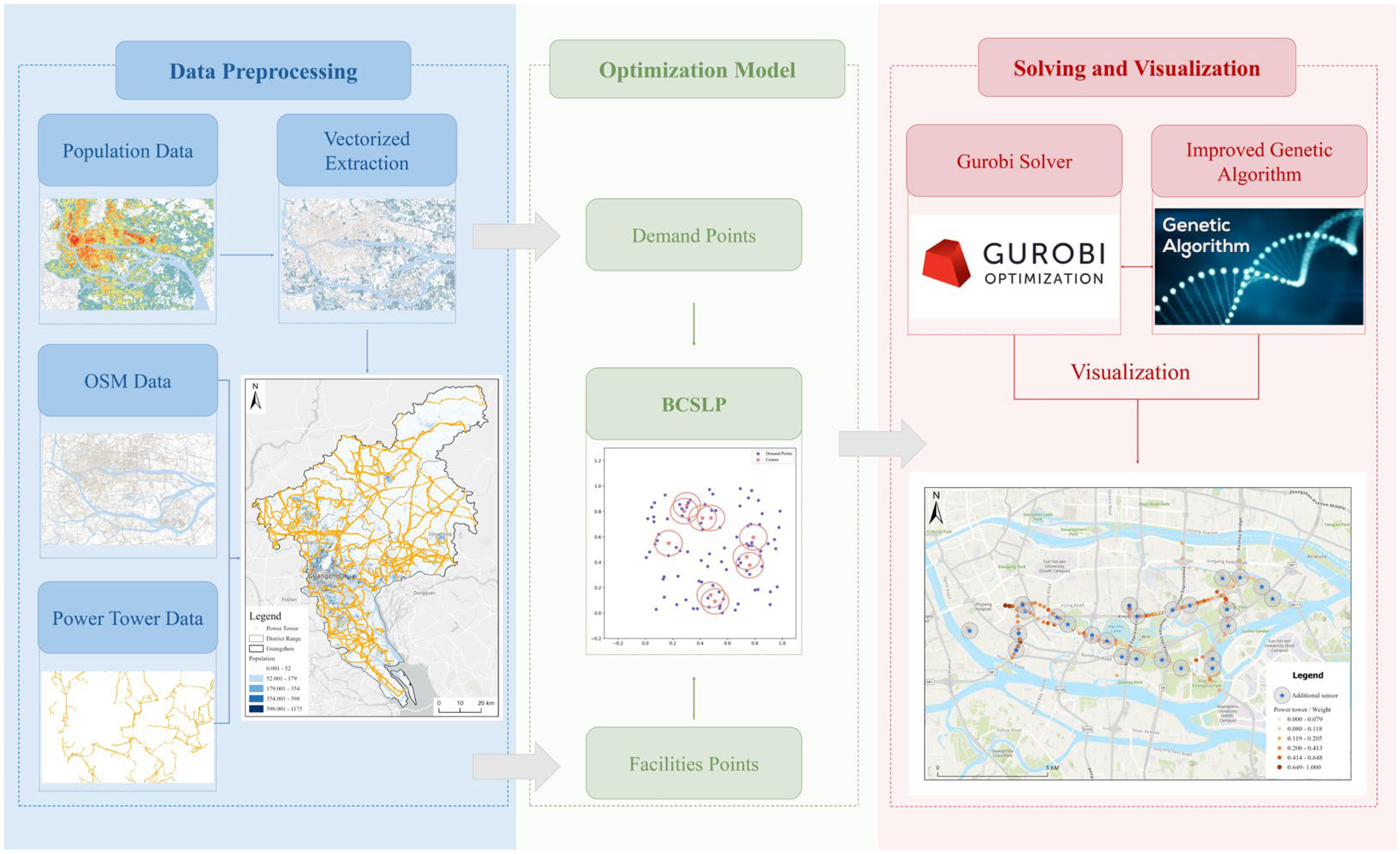
4.1. Workflow
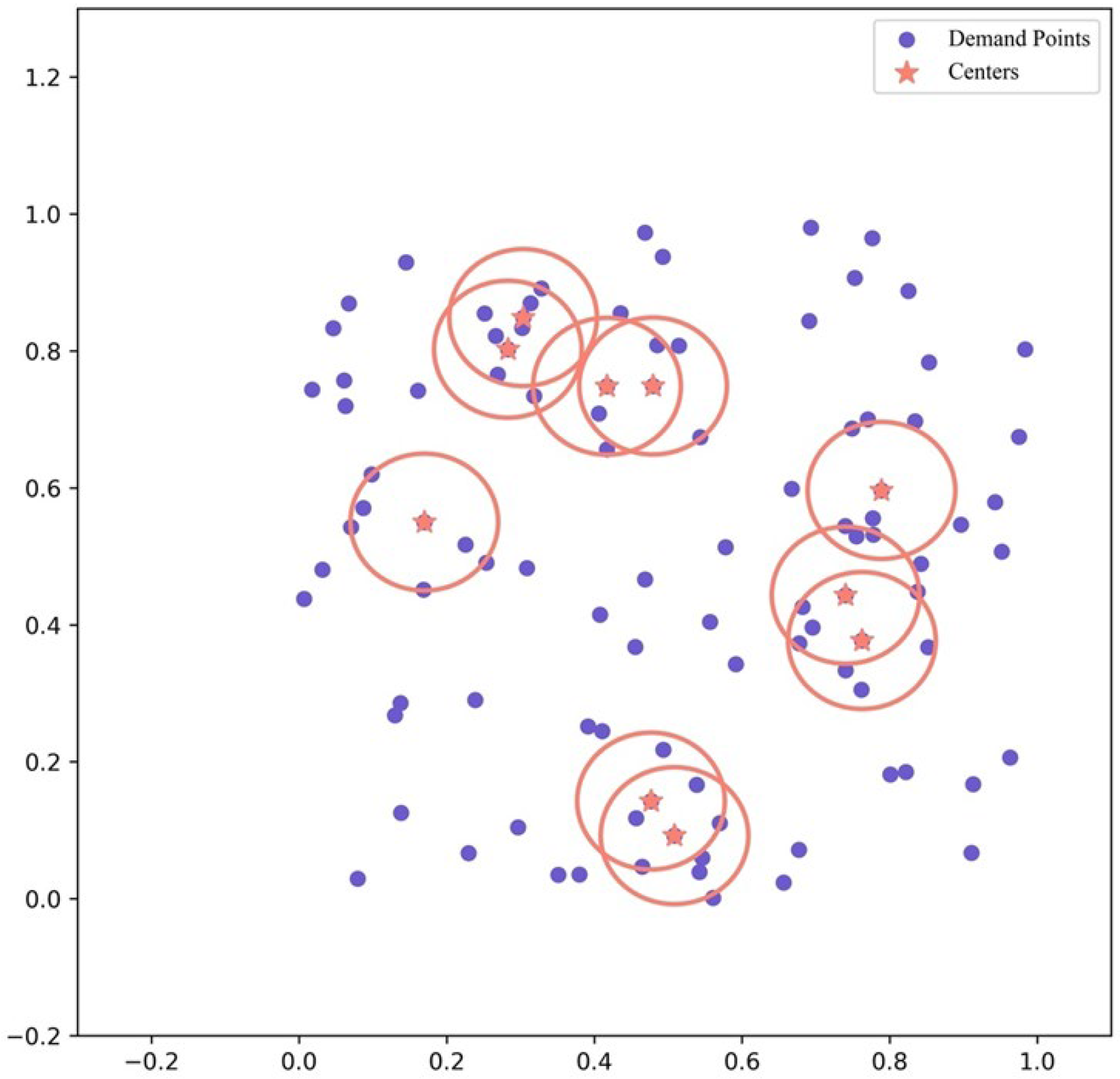
4.2. BCSLP Model for Optimal Sensor Placement in Power Grid Monitoring
- : A critical power grid asset, such as a transmission tower, transformer, or switch station.
- : A candidate site for sensor deployment.
- : Binary decision variable; if a sensor is deployed at site , otherwise .
- : Binary state variable; if asset is covered by at least one sensor (primary coverage).
- : Binary state variable; if asset is redundantly covered by at least two sensors (backup coverage).
- : Total budget limit for sensor deployment.
- : Set of candidate locations capable of effectively monitoring asset .
- : Importance weight of asset , which can be determined by factors such as voltage level, topological criticality, failure history, population served, or economic value.
4.3. Risk Heterogeneity and the Construction of a Multi-Dimensional Monitoring Priority Evaluation System
5. Experiment
5.1. Risk Assessment of Power Towers
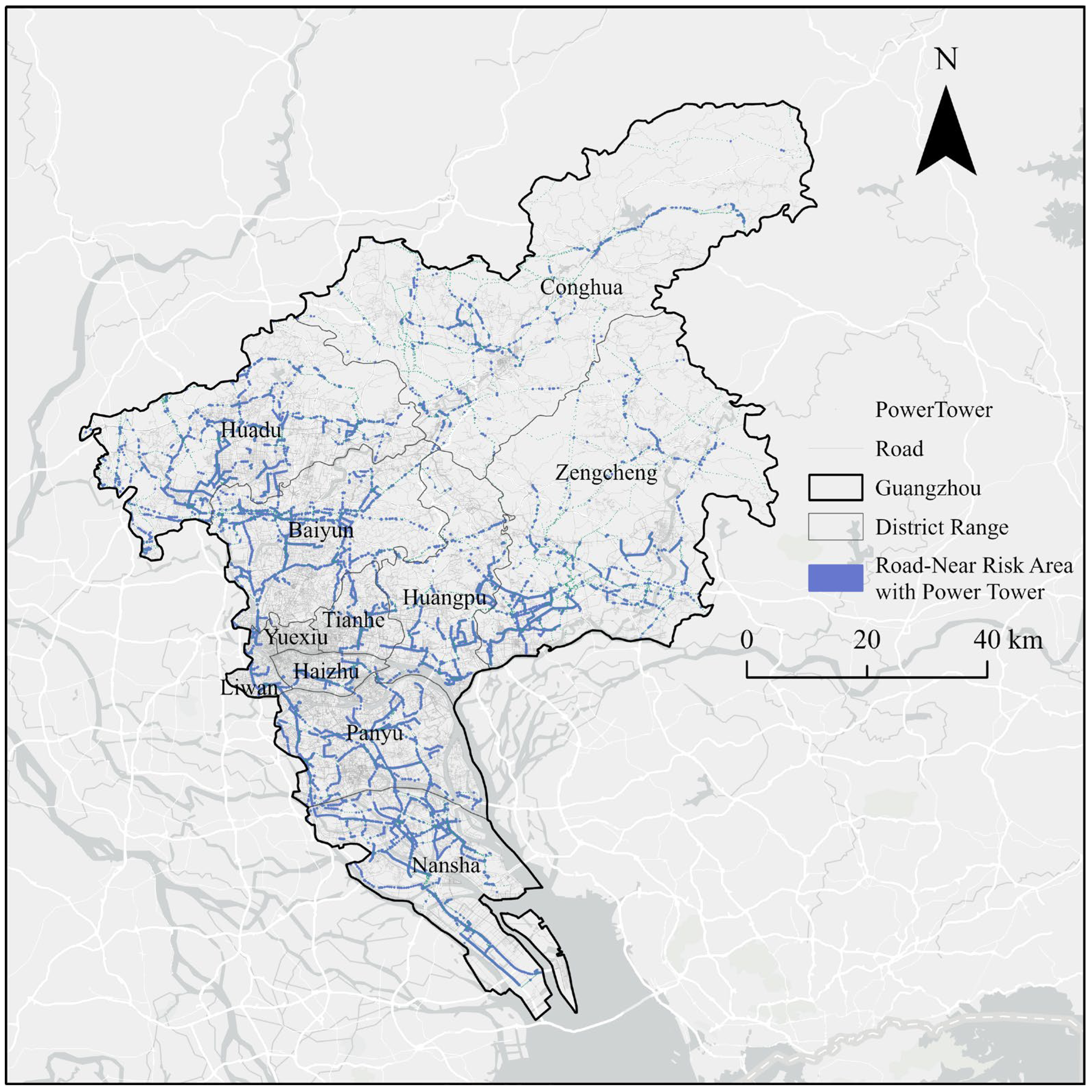
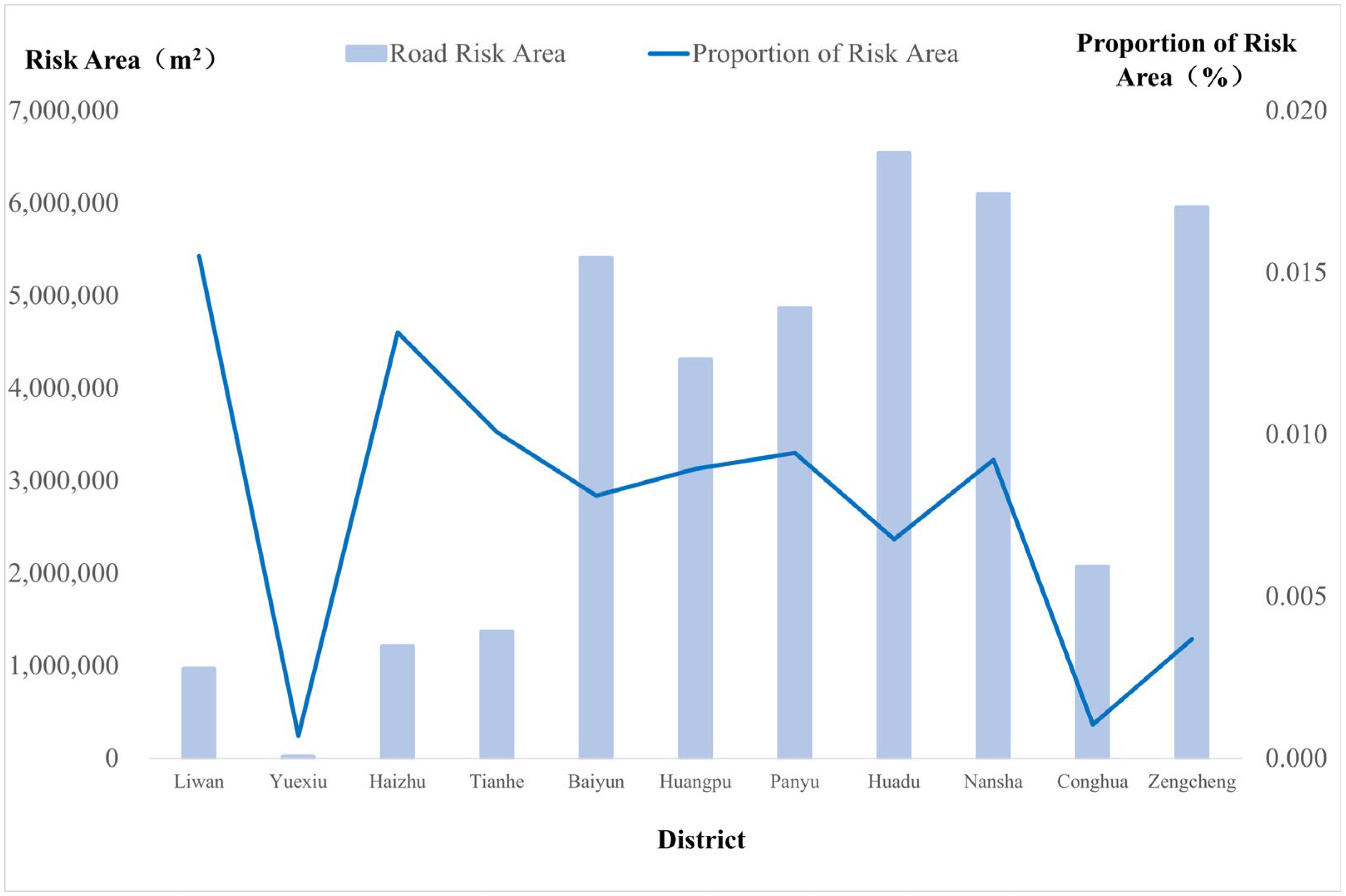
5.1.1. Risk Zones near Roads for Power Towers in Guangzhou
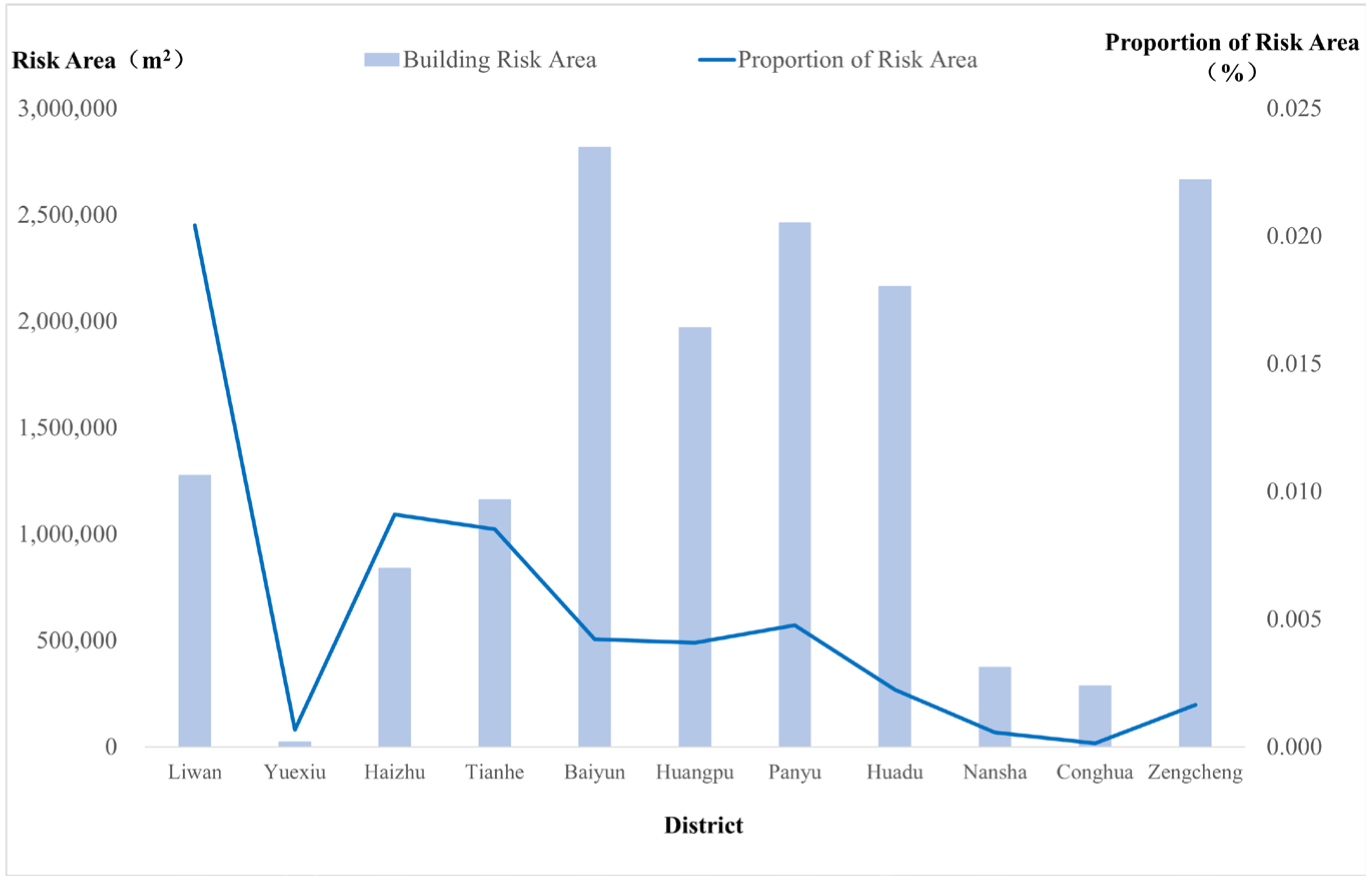
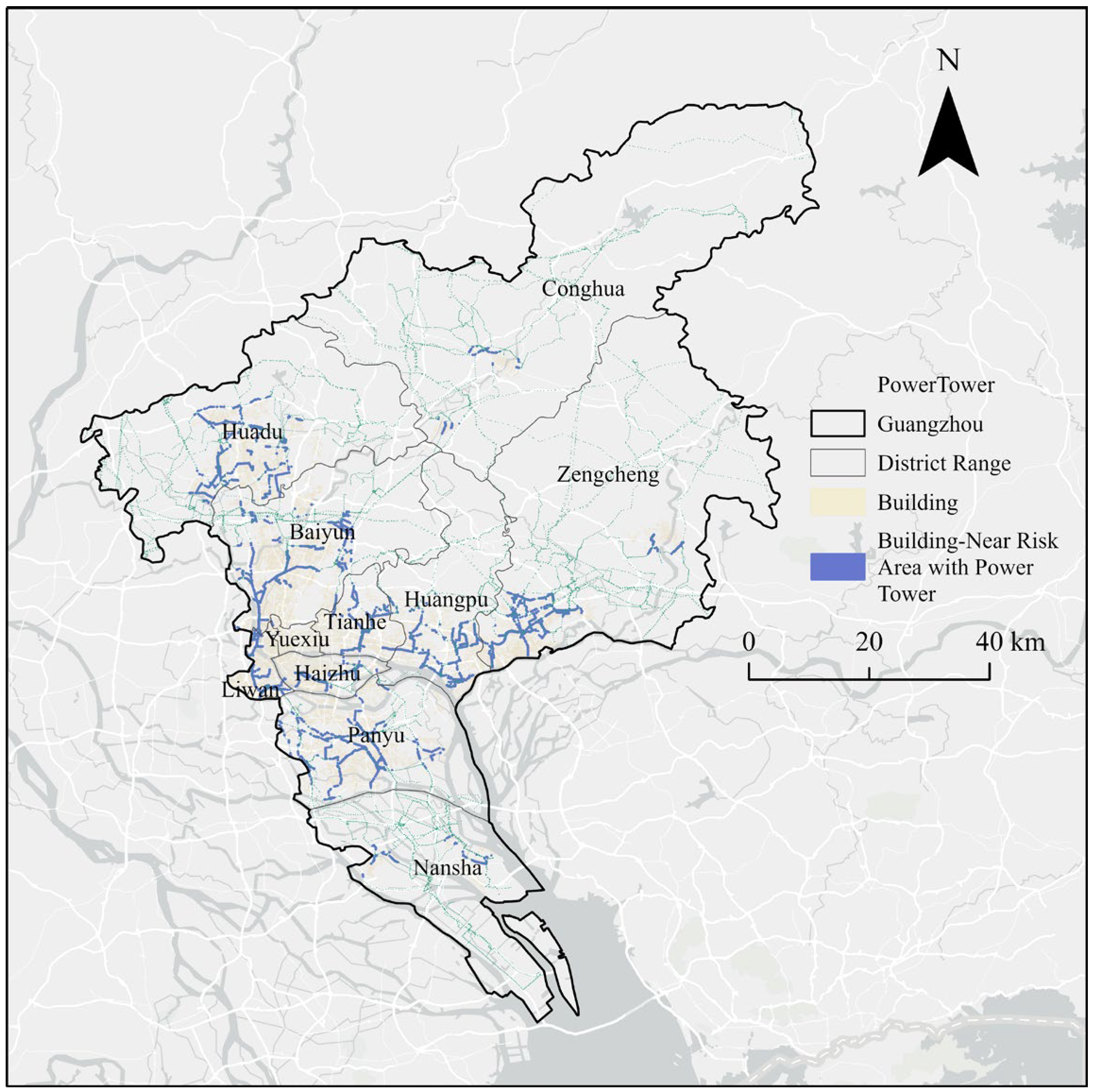
5.1.2. Risk Zones near Buildings for Power Towers in Guangzhou
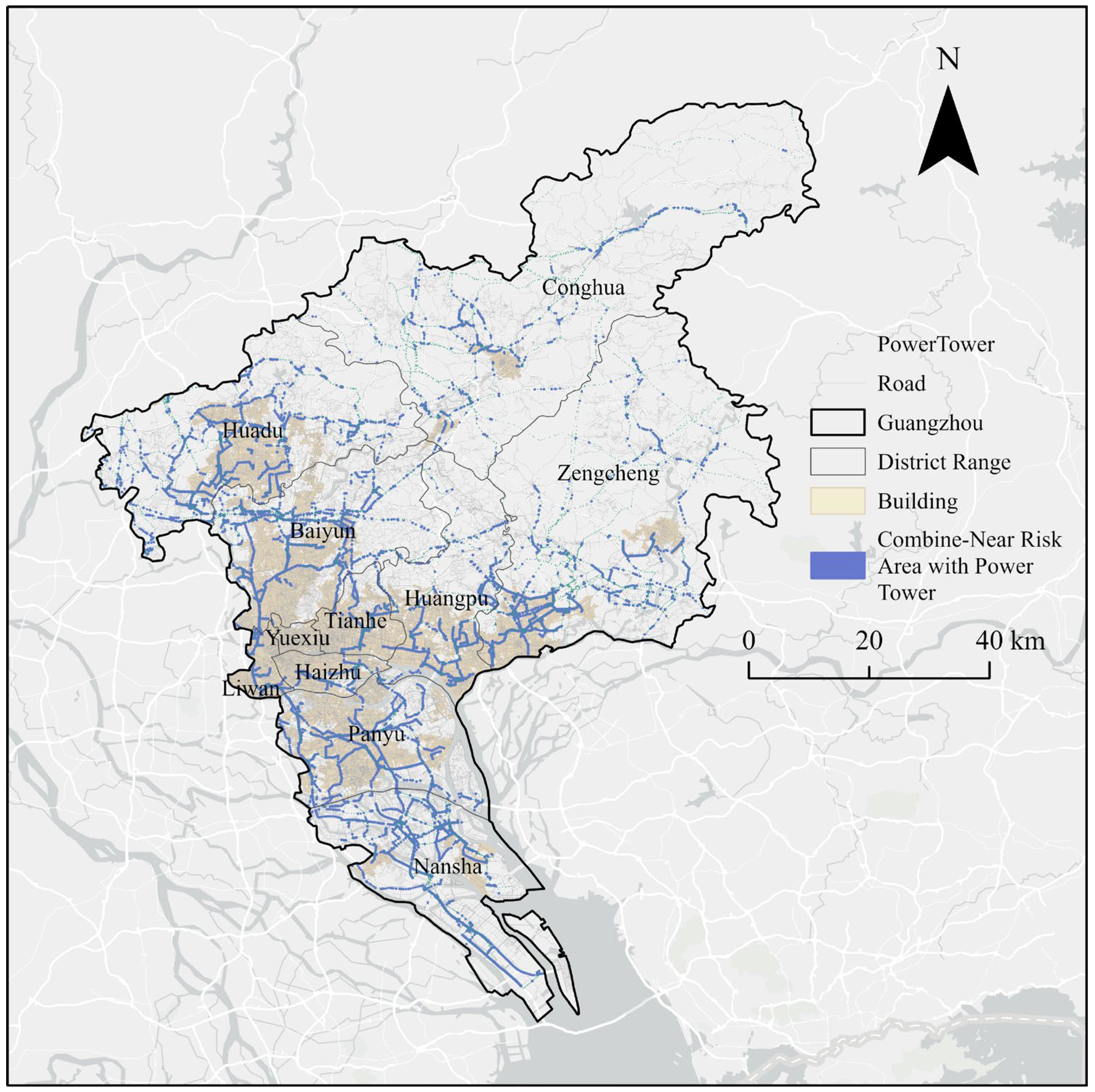
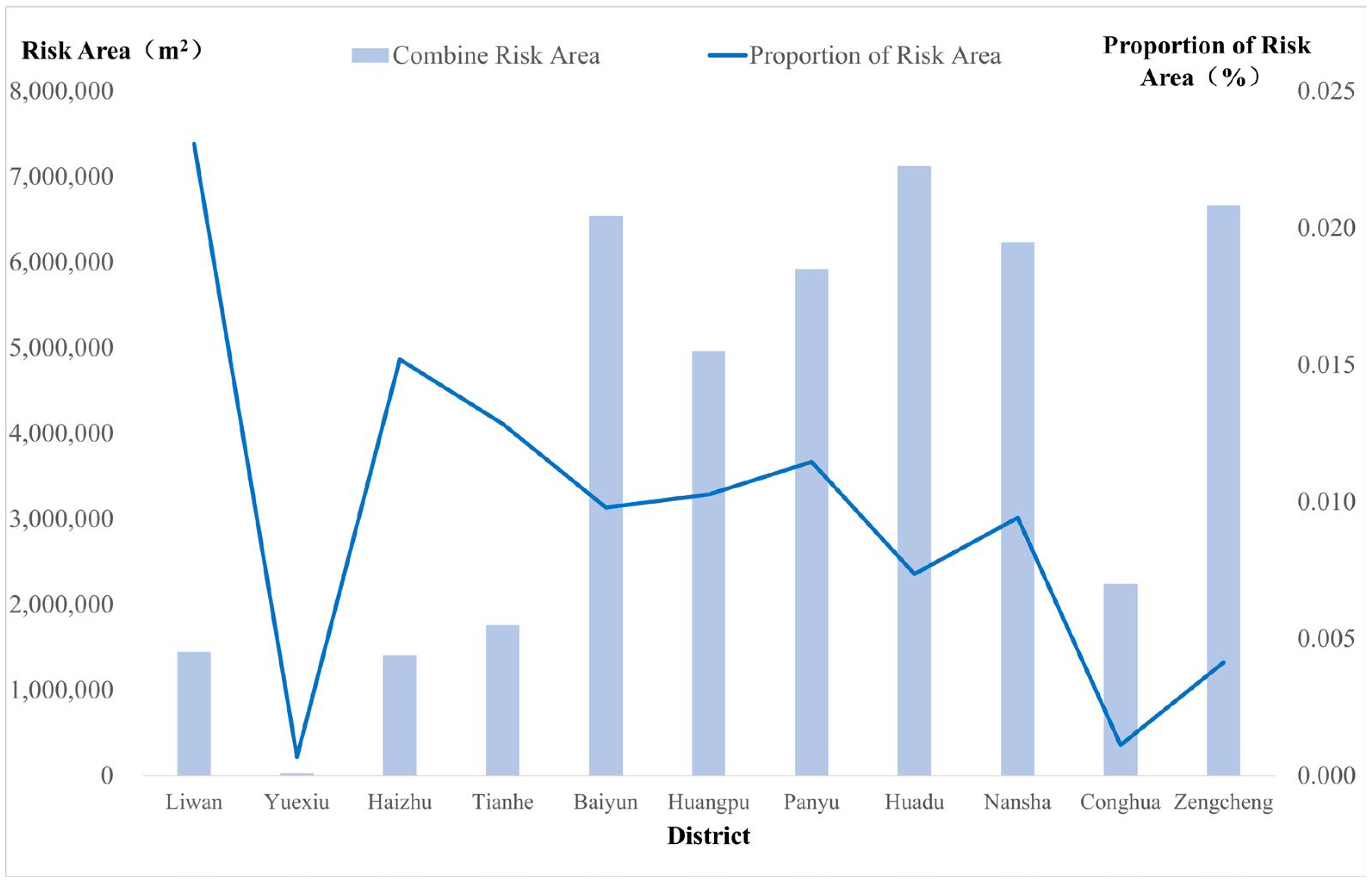
5.1.3. Comprehensive Risk Zones Around Power Towers in Guangzhou
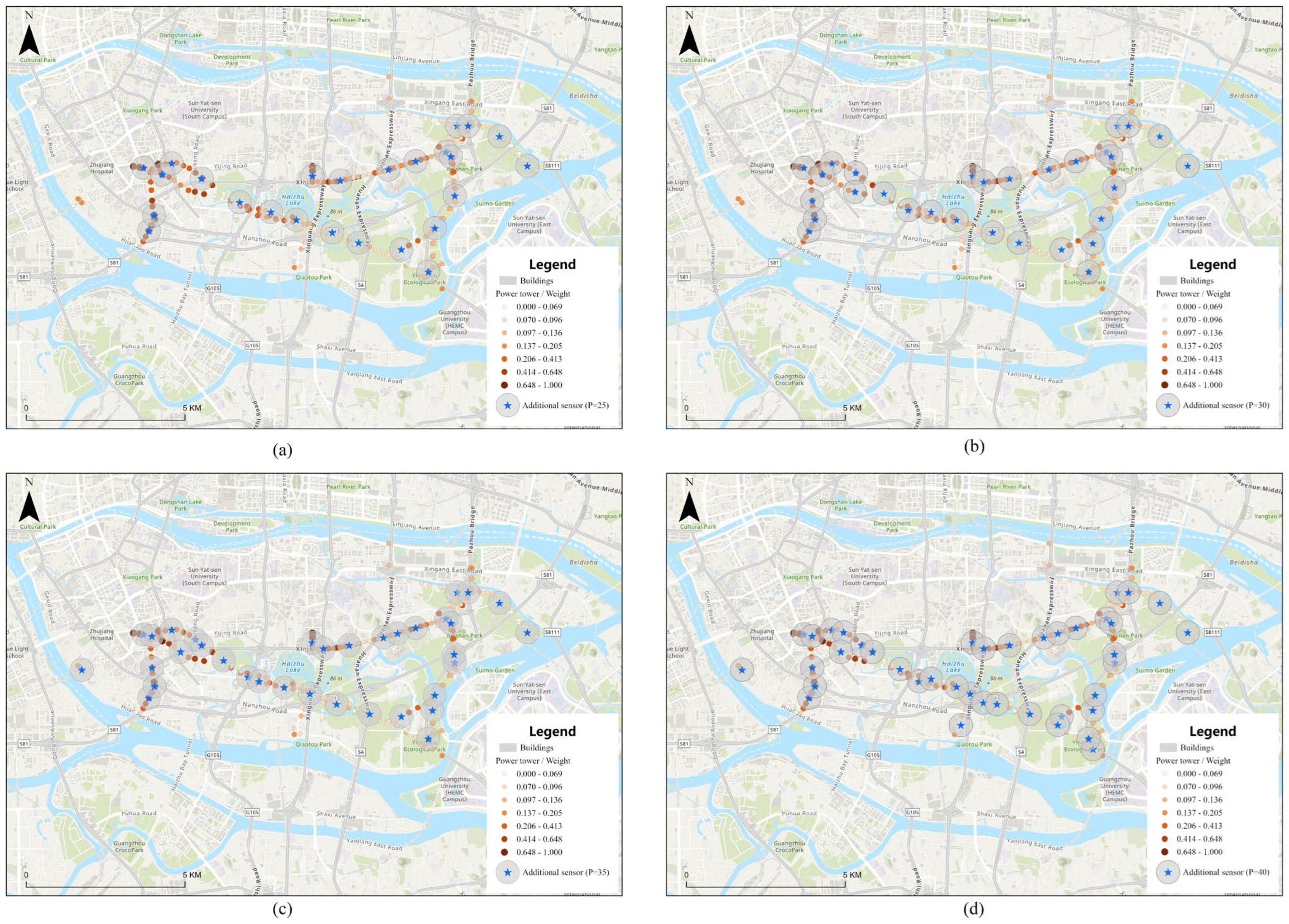
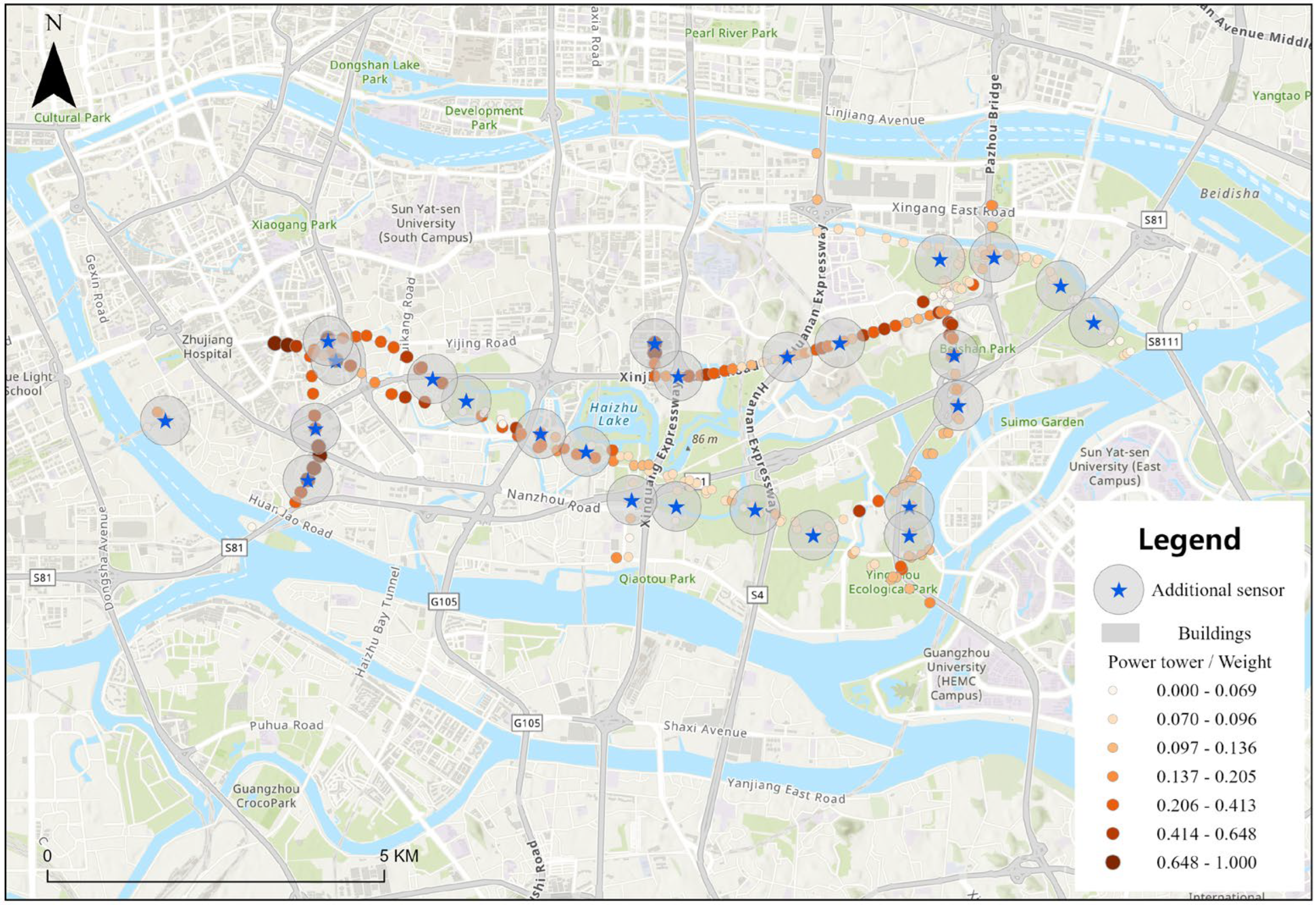
5.2. Solution of the BCSLP Model
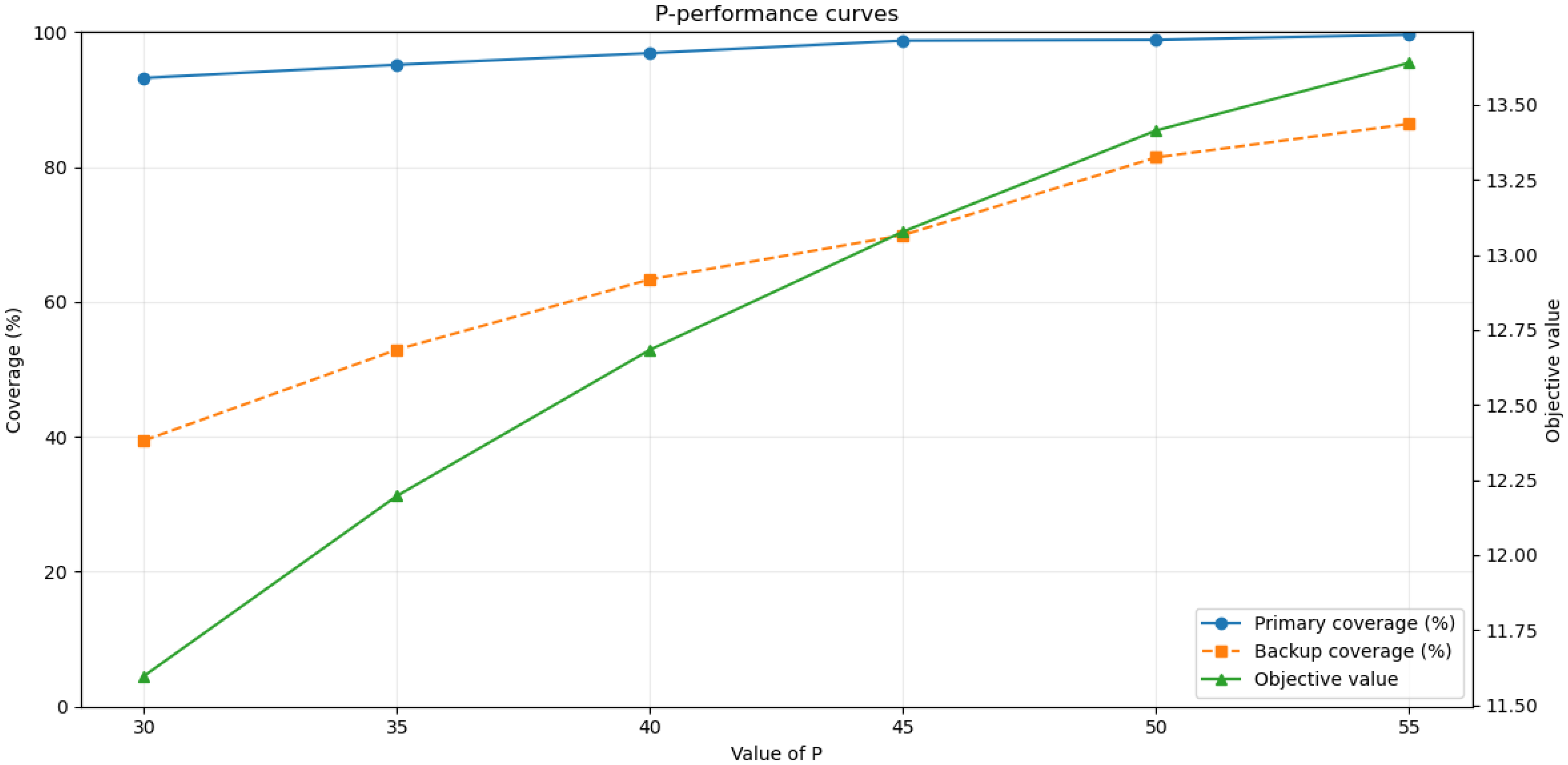
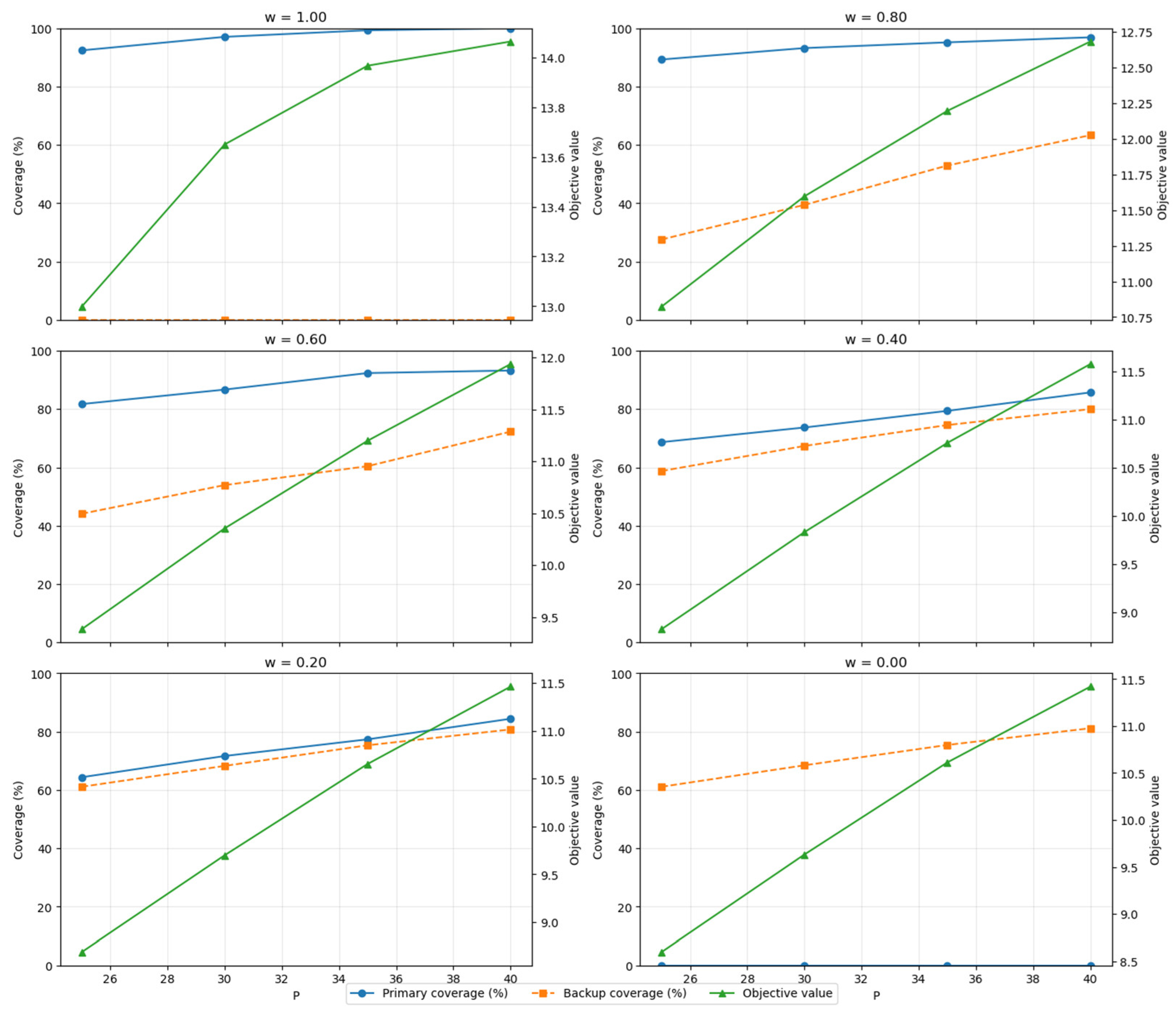
5.2.1. Gurobi-Based Sensitivity Analysis of Weight ω and Knee-Point Identification for Primary–Backup Coverage Trade-Offs
5.2.2. Heuristic Solution via an Improved Genetic Algorithm
| Algorithm 1: Improved GA for BSCLP (set-preserving crossover, elitism, adaptive mutation) | |
| Inputs: | |
| Precompute: | |
| Coverage and objective: | |
| Operators: | |
| return C | |
| Mutation(S): | |
| Adaptive rate: | |
| Main loop: | |
| pick from M | |
| C ← | |
| with prob ← Mutation(C) | |
| Output: | |
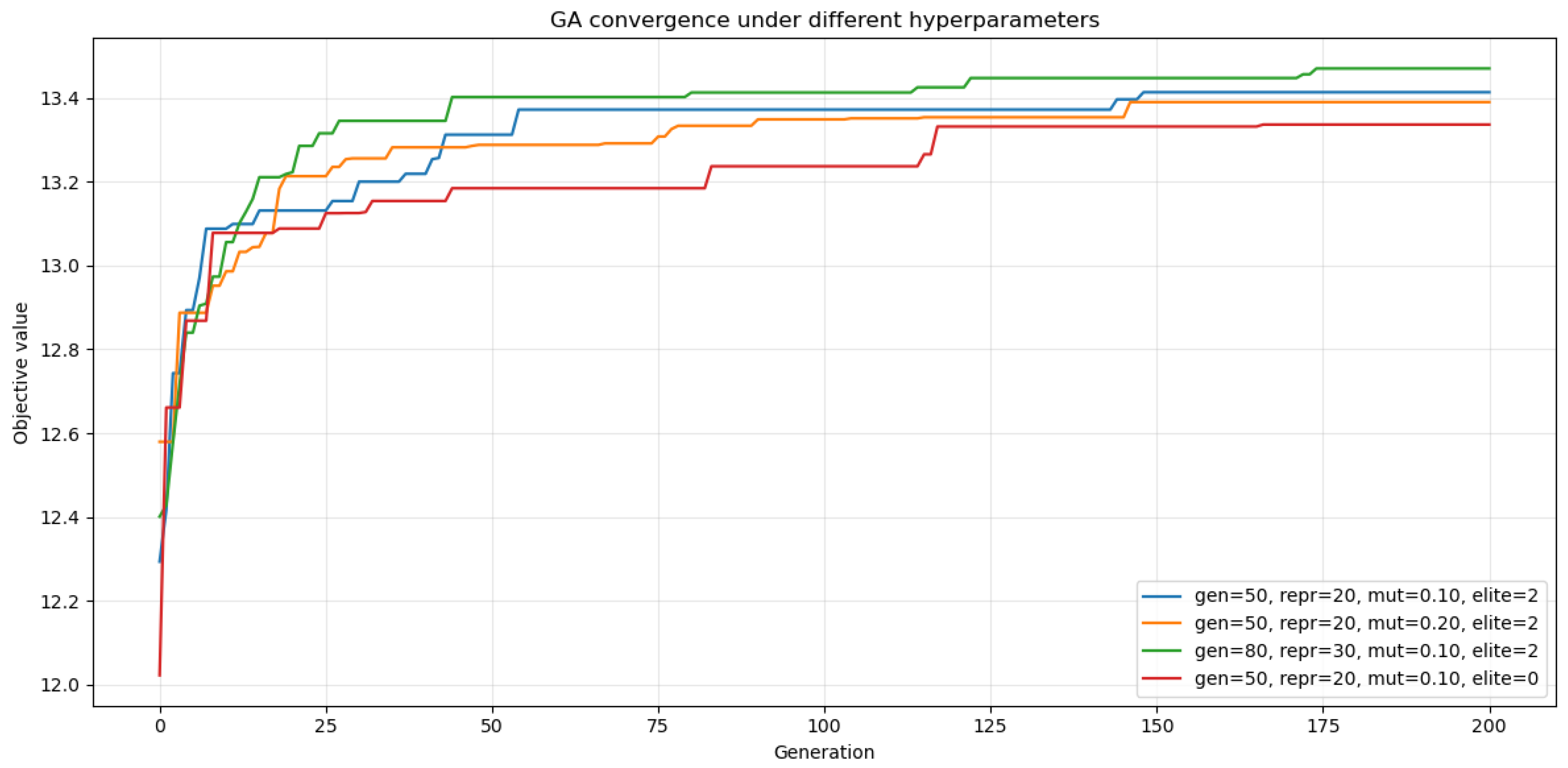
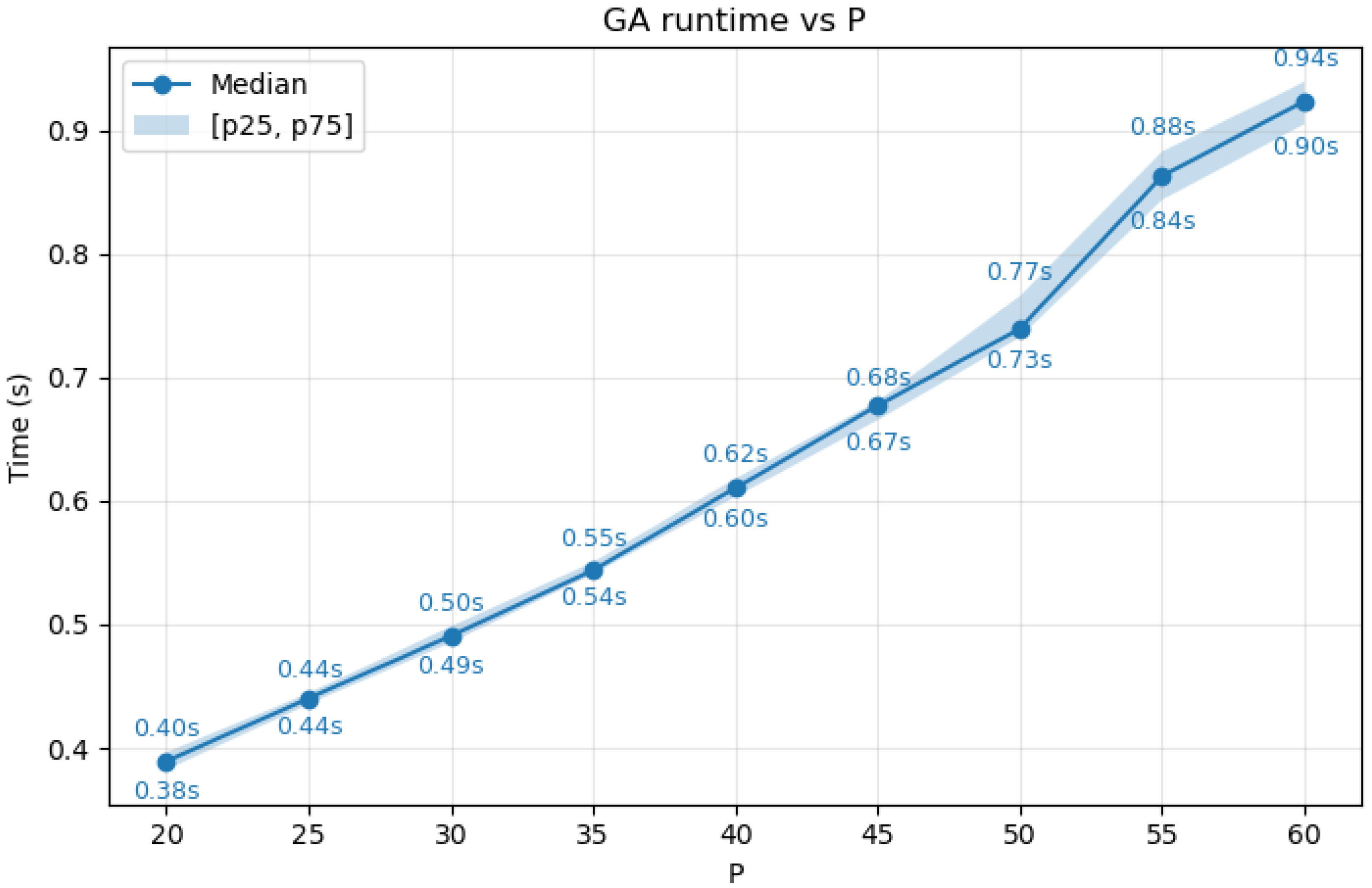
Performance and Analysis of Improved GA
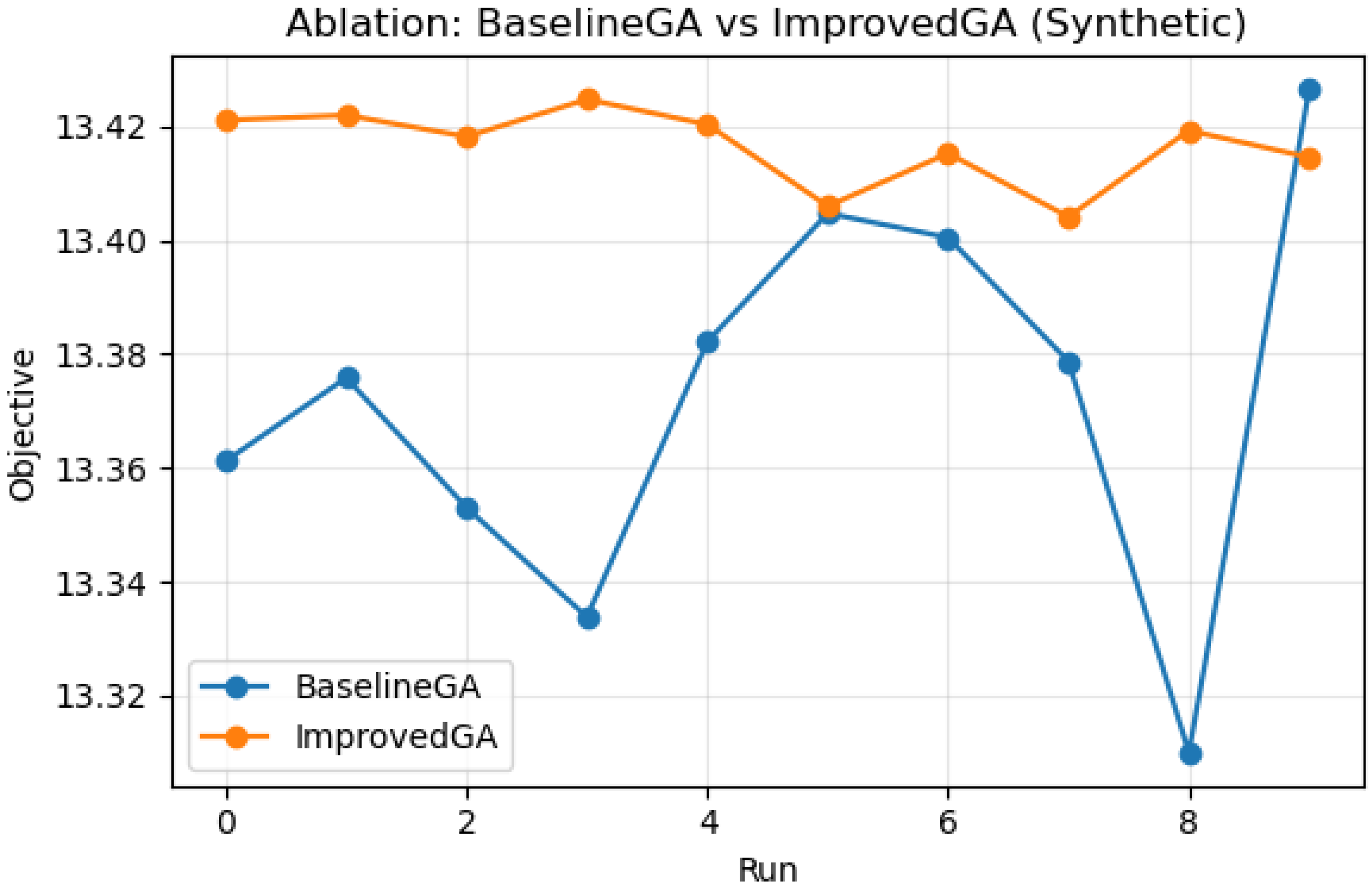
Ablation Study: Evaluating Adaptive Mutation and Elitism in the Genetic Algorithm
6. Discussion and Conclusions
6.1. Discussion
6.2. Conclusions
Author Contributions
Funding
Data Availability Statement
Conflicts of Interest
References
- Bibri, S.E.; Krogstie, J. Smart Sustainable Cities of the Future: An Extensive Interdisciplinary Literature Review. Sustain. Cities Soc. 2017, 31, 183–212. [Google Scholar] [CrossRef]
- Yigitcanlar, T.; Kamruzzaman, M.; Buys, L.; Ioppolo, G.; Sabatini-Marques, J.; Da Costa, E.M.; Yun, J.J. Understanding ‘Smart Cities’: Intertwining Development Drivers with Desired Outcomes in a Multidimensional Framework. Cities 2018, 81, 145–160. [Google Scholar] [CrossRef]
- Zhou, L.; Hu, F.; Wang, B.; Wei, C.; Sun, D.; Wang, S. Relationship between Urban Landscape Structure and Land Surface Temperature: Spatial Hierarchy and Interaction Effects. Sustain. Cities Soc. 2022, 80, 103795. [Google Scholar] [CrossRef]
- Sun, Y.; Wang, S.; Wang, Y. Estimating Local-Scale Urban Heat Island Intensity Using Nighttime Light Satellite Imageries. Sustain. Cities Soc. 2020, 57, 102125. [Google Scholar] [CrossRef]
- Ejaz, W.; Naeem, M.; Shahid, A.; Anpalagan, A.; Jo, M. Efficient Energy Management for the Internet of Things in Smart Cities. IEEE Commun. Mag. 2017, 55, 84–91. [Google Scholar] [CrossRef]
- Hashem, I.A.T.; Chang, V.; Anuar, N.B.; Adewole, K.; Yaqoob, I.; Gani, A.; Ahmed, E.; Chiroma, H. The Role of Big Data in Smart City. Int. J. Inf. Manag. 2016, 36, 748–758. [Google Scholar] [CrossRef]
- Zhong, E. Deep mapping—A critical engagement of cartography with neuroscience. Geomat. Inf. Sci. Wuhan Univ. 2022, 47, 1988–2002. [Google Scholar] [CrossRef]
- Gao, B.; Yang, J.; Chen, Z.; Sugihara, G.; Li, M.; Stein, A.; Kwan, M.-P.; Wang, J. Causal Inference from Cross-Sectional Earth System Data with Geographical Convergent Cross Mapping. Nat. Commun. 2023, 14, 5875. [Google Scholar] [CrossRef]
- Ghanem, D.A.; Mander, S.; Gough, C. “I Think We Need to Get a Better Generator”: Household Resilience to Disruption to Power Supply during Storm Events. Energy Policy 2016, 92, 171–180. [Google Scholar] [CrossRef]
- Zhao, Q.; Kelley, S.B.; Xiao, F.; Kuby, M.J. A Multi-Scale Framework for Fuel Station Location: From Highways to Street Intersections. Transp. Res. Part D Transp. Environ. 2019, 74, 48–64. [Google Scholar] [CrossRef]
- Wu, Y.; Zhang, P. Common-Mode (CM) Current Sensor Node Design for Distribution Grid Insulation Monitoring Framework Based on Multi-Objective Optimization. IEEE Trans. Ind. Inform. 2021, 17, 3836–3846. [Google Scholar] [CrossRef]
- Miorandi, D.; Sicari, S.; De Pellegrini, F.; Chlamtac, I. Internet of Things: Vision, Applications and Research Challenges. Ad Hoc Netw. 2012, 10, 1497–1516. [Google Scholar] [CrossRef]
- Al-Fuqaha, A.; Guizani, M.; Mohammadi, M.; Aledhari, M.; Ayyash, M. Internet of Things: A Survey on Enabling Technologies, Protocols, and Applications. IEEE Commun. Surv. Tutor. 2015, 17, 2347–2376. [Google Scholar] [CrossRef]
- Zhang, Q.S. Environment Pollution Analysis on Smart Cities Using Wireless Sensor Networks. Strateg. Plan. Energy Environ. 2022, 42, 239–262. [Google Scholar] [CrossRef]
- Zheng, K.; Zhao, S.; Yang, Z.; Xiong, X.; Xiang, W. Design and Implementation of LPWA-Based Air Quality Monitoring System. IEEE Access 2016, 4, 3238–3245. [Google Scholar] [CrossRef]
- Liu, Y.; Liu, J.; Wang, Y.; Shi, Y. Discussion on theory and technology of building robust intelligent power grid in coal mine of China. J. China Coal Soc. 2020, 45, 2296–2307. [Google Scholar] [CrossRef]
- Morello, R.; Mukhopadhyay, S.C.; Liu, Z.; Slomovitz, D.; Samantaray, S.R. Advances on Sensing Technologies for Smart Cities and Power Grids: A Review. IEEE Sens. J. 2017, 17, 7596–7610. [Google Scholar] [CrossRef]
- Ovsthus, K.; Kristensen, L.M. An Industrial Perspective on Wireless Sensor Networks—A Survey of Requirements, Protocols, and Challenges. IEEE Commun. Surv. Tutor. 2014, 16, 1391–1412. [Google Scholar] [CrossRef]
- ReVelle, C.S.; Eiselt, H.A. Location Analysis: A Synthesis and Survey. Eur. J. Oper. Res. 2005, 165, 1–19. [Google Scholar] [CrossRef]
- Melo, M.T.; Nickel, S.; Saldanha-da-Gama, F. Facility Location and Supply Chain Management—A Review. Eur. J. Oper. Res. 2009, 196, 401–412. [Google Scholar] [CrossRef]
- Chakrabarty, K.; Iyengar, S.S.; Qi, H.; Cho, E. Grid Coverage for Surveillance and Target Location in Distributed Sensor Networks. IEEE Trans. Comput. 2002, 51, 1448–1453. [Google Scholar] [CrossRef]
- Zhong, Y.; Wang, S.; Liang, H.; Wang, Z.; Zhang, X.; Chen, X.; Su, C. ReCovNet: Reinforcement Learning with Covering Information for Solving Maximal Coverage Billboards Location Problem. Int. J. Appl. Earth Obs. Geoinf. 2024, 128, 103710. [Google Scholar] [CrossRef]
- Drezner, Z.; Hamacher, H.W. Facility Location: Applications and Theory; Springer Science & Business Media: Berlin/Heidelberg, German, 2004; ISBN 978-3-540-21345-1. [Google Scholar]
- Nguyen, V.N.; Jenssen, R.; Roverso, D. Automatic Autonomous Vision-Based Power Line Inspection: A Review of Current Status and the Potential Role of Deep Learning. Int. J. Electr. Power Energy Syst. 2018, 99, 107–120. [Google Scholar] [CrossRef]
- Passerini, F.; Tonello, A.M. Smart Grid Monitoring Using Power Line Modems: Anomaly Detection and Localization. IEEE Trans. Smart Grid 2019, 10, 6178–6186. [Google Scholar] [CrossRef]
- Chen, K.; Guo, Y.; Ma, X. Contactless Voltage Sensor for Overhead Transmission Lines. IET Gener. Transm. Distrib. 2018, 12, 957–966. [Google Scholar] [CrossRef]
- Liang, H.; Wang, S.; Li, H.; Pan, J.; Li, X.; Su, C.; Liu, B. AIAM: Adaptive Interactive Attention Model for Solving p-Median Problem via Deep Reinforcement Learning. Int. J. Appl. Earth Obs. Geoinf. 2025, 138, 104454. [Google Scholar] [CrossRef]
- Klise, K.; Nicholson, B.; Laird, C. Sensor Placement Optimization Using Chama; Sandia National Laboratories (SNL): Albuquerque, NM, USA; Livermore, CA, USA, 2017.
- Alsheikh, M.A.; Lin, S.; Niyato, D.; Tan, H.-P. Machine Learning in Wireless Sensor Networks: Algorithms, Strategies, and Applications. IEEE Commun. Surv. Tutor. 2014, 16, 1996–2018. [Google Scholar] [CrossRef]
- Nuqui, R.F.; Phadke, A.G. Phasor Measurement Unit Placement Techniques for Complete and Incomplete Observability. IEEE Trans. Power Deliv. 2005, 20, 2381–2388. [Google Scholar] [CrossRef]
- Du, R.; Santi, P.; Xiao, M.; Vasilakos, A.V.; Fischione, C. The Sensable City: A Survey on the Deployment and Management for Smart City Monitoring. IEEE Commun. Surv. Tutor. 2019, 21, 1533–1560. [Google Scholar] [CrossRef]
- Berman, O.; Huang, R. The Minimum Weighted Covering Location Problem with Distance Constraints. Comput. Oper. Res. 2008, 35, 356–372. [Google Scholar] [CrossRef]
- Song, D.; Shen, J.; Ma, T.; Xu, F. Multi-Objective Acoustic Sensor Placement Optimization for Crack Detection of Compressor Blade Based on Reinforcement Learning. Mech. Syst. Signal Process. 2023, 197, 110350. [Google Scholar] [CrossRef]
- Bayrakdar, M.E. Enhancing Sensor Network Sustainability with Fuzzy Logic Based Node Placement Approach for Agricultural Monitoring. Comput. Electron. Agric. 2020, 174, 105461. [Google Scholar] [CrossRef]
- Tang, J.; Hao, B.; Sen, A. Relay Node Placement in Large Scale Wireless Sensor Networks. Comput. Commun. 2006, 29, 490–501. [Google Scholar] [CrossRef]
- Paruta, P.; Pidancier, T.; Bozorg, M.; Carpita, M. Greedy Placement of Measurement Devices on Distribution Grids Based on Enhanced Distflow State Estimation. Sustain. Energy Grids Netw. 2021, 26, 100433. [Google Scholar] [CrossRef]
- Buason, P.; Misra, S.; Talkington, S.; Molzahn, D.K. A Data-Driven Sensor Placement Approach for Detecting Voltage Violations in Distribution Systems. Electr. Power Syst. Res. 2024, 232, 110387. [Google Scholar] [CrossRef]
- Maleki, S.; Sawhney, R.; Farvaresh, H.; Sepehri, M.M. Energy Efficient Hybrid Wired-Cum-Wireless Sensor Network Design. J. Clean. Prod. 2014, 85, 408–418. [Google Scholar] [CrossRef]
- Samudrala, A.N.; Amini, M.H.; Kar, S.; Blum, R.S. Optimal Sensor Placement for Topology Identification in Smart Power Grids. In Proceedings of the 2019 53rd Annual Conference on Information Sciences and Systems (CISS), Baltimore, MD, USA, 20–22 March 2019; pp. 1–6. [Google Scholar]
- Jamei, M.; Scaglione, A.; Roberts, C.; Stewart, E.; Peisert, S.; McParland, C.; McEachern, A. Anomaly Detection Using Optimally Placed μPMU Sensors in Distribution Grids. IEEE Trans. Power Syst. 2018, 33, 3611–3623. [Google Scholar] [CrossRef]
- Fadel, E.; Gungor, V.C.; Nassef, L.; Akkari, N.; Malik, M.G.A.; Almasri, S.; Akyildiz, I.F. A Survey on Wireless Sensor Networks for Smart Grid. Comput. Commun. 2015, 71, 22–33. [Google Scholar] [CrossRef]
- Zhang, Y.; Zhao, H.; Long, Y. CMAB: A Multi-Attribute Building Dataset of China. Sci. Data 2025, 12, 430. [Google Scholar] [CrossRef]
- Chen, Y.; Xu, C.; Ge, Y.; Zhang, X.; Zhou, Y. A 100 m Gridded Population Dataset of China’s Seventh Census Using Ensemble Learning and Big Geospatial Data. Earth Syst. Sci. Data 2024, 16, 3705–3718. [Google Scholar] [CrossRef]
- Kang, J.-Y.; Michels, A.; Lyu, F.; Wang, S.; Agbodo, N.; Freeman, V.L.; Wang, S. Rapidly Measuring Spatial Accessibility of COVID-19 Healthcare Resources: A Case Study of Illinois, USA. Int. J. Health Geogr. 2020, 19, 36. [Google Scholar] [CrossRef] [PubMed]
- Zhu, Y.; Tian, D.; Yan, F. Effectiveness of Entropy Weight Method in Decision-Making. Math. Probl. Eng. 2020, 2020, 3564835. [Google Scholar] [CrossRef]
- Li, W.; Cao, K.; Church, R.L. Cyberinfrastructure, GIS, and Spatial Optimization: Opportunities and Challenges. Int. J. Geogr. Inf. Sci. 2016, 30, 427–431. [Google Scholar] [CrossRef]
- Liu, H.; Soleimaniamiri, S.; Li, X.; Xie, S. Joint Location and Assignment Optimization of Multi-type Fire Vehicles. Comput. Aided Civ. Infrastruct. Eng. 2022, 37, 976–990. [Google Scholar] [CrossRef]
- Zhou, G.; Zhu, Z.; Luo, S. Location Optimization of Electric Vehicle Charging Stations: Based on Cost Model and Genetic Algorithm. Energy 2022, 247, 123437. [Google Scholar] [CrossRef]
- Gastwirth, J.L. The Estimation of the Lorenz Curve and Gini Index. Rev. Econ. Stat. 1972, 54, 306. [Google Scholar] [CrossRef]









| Dataset | Version/Date | Original CRS | License/Terms | URL | Access Date |
|---|---|---|---|---|---|
| Power tower locations (Guangzhou) | 2025 | WGS 1984 (EPSG: 4326) | OpenStreetMap License (ODbL) | https://www.openstreetmap.org | 5 July 2025 |
| Guangzhou administrative boundaries | 2025 | CGCS 2000 (EPSG: 4490) | National Geographic Information Resource Directory Service System of China | https://www.webmap.cn/main.do?method=index | 3 July 2025 |
| Road network data | 2025 | WGS 1984 (EPSG:4326) | OpenStreetMap License (ODbL) | https://www.openstreetmap.org | 5 July 2025 |
| Building footprint data | 2022–2024 | WGS 1984 (EPSG:4326) | Zhang et al. [42] | https://doi.org/10.6084/m9.figshare.27992417.v2 | 3 July 2025 |
| Population grid data | 2020 | Albers Equal Area (Krassovsky 1942) | Chen et al. [43] | https://doi.org/10.6084/m9.figshare.24916140.v1 | 3 July 2025 |
| Primary Covered Demand (%) | Backup Covered Demand (%) | Obj Value | ||
|---|---|---|---|---|
| 1.0 | 20 | 84.2 | 3.00 | 11.8 |
| 1.0 | 25 | 92.4 | 2.50 | 13.0 |
| 1.0 | 30 | 97.1 | 4.80 | 13.7 |
| 1.0 | 35 | 99.3 | 7.70 | 14.0 |
| 0.8 | 20 | 80.3 | 2.20 | 9.65 |
| 0.8 | 25 | 89.3 | 27.6 | 10.8 |
| 0.8 | 30 | 93.2 | 39.5 | 11.6 |
| 0.8 | 35 | 95.2 | 52.9 | 12.2 |
| 0.6 | 20 | 70.8 | 40.0 | 8.22 |
| 0.6 | 25 | 81.7 | 44.1 | 9.38 |
| 0.6 | 30 | 86.7 | 54.0 | 10.4 |
| 0.6 | 35 | 92.3 | 60.5 | 11.2 |
| 0.4 | 20 | 58.2 | 52.9 | 7.74 |
| 0.4 | 25 | 68.7 | 58.8 | 8.83 |
| 0.4 | 30 | 73.7 | 67.4 | 9.83 |
| 0.4 | 35 | 79.4 | 74.5 | 10.8 |
| 0.2 | 20 | 56.9 | 53.5 | 7.62 |
| 0.2 | 25 | 64.4 | 61.1 | 8.69 |
| 0.2 | 30 | 71.7 | 68.3 | 9.70 |
| 0.2 | 35 | 77.4 | 75.3 | 10.7 |
| 0.0 | 20 | 56.4 | 53.5 | 7.52 |
| 0.0 | 25 | 64.2 | 61.1 | 8.60 |
| 0.0 | 30 | 68.9 | 68.4 | 9.63 |
| 0.0 | 35 | 76.6 | 75.4 | 10.6 |
Disclaimer/Publisher’s Note: The statements, opinions and data contained in all publications are solely those of the individual author(s) and contributor(s) and not of MDPI and/or the editor(s). MDPI and/or the editor(s) disclaim responsibility for any injury to people or property resulting from any ideas, methods, instructions or products referred to in the content. |
© 2025 by the authors. Licensee MDPI, Basel, Switzerland. This article is an open access article distributed under the terms and conditions of the Creative Commons Attribution (CC BY) license (https://creativecommons.org/licenses/by/4.0/).
Share and Cite
E, Y.; Xu, D.; Li, S.; Zhao, Y.; Liu, Z.; Su, C.; Liang, H.; Jiang, X.; Cui, L.; Wang, S. Sensor Placement Optimization for Power Grid Condition Monitoring Based on a Backup Coverage Model: A Case Study of Guangzhou. Appl. Sci. 2025, 15, 12570. https://doi.org/10.3390/app152312570
E Y, Xu D, Li S, Zhao Y, Liu Z, Su C, Liang H, Jiang X, Cui L, Wang S. Sensor Placement Optimization for Power Grid Condition Monitoring Based on a Backup Coverage Model: A Case Study of Guangzhou. Applied Sciences. 2025; 15(23):12570. https://doi.org/10.3390/app152312570
Chicago/Turabian StyleE, Yuhang, Dachuan Xu, Shijie Li, Yanjie Zhao, Zhaoping Liu, Cheng Su, Haojian Liang, Xiaohan Jiang, Linshuang Cui, and Shaohua Wang. 2025. "Sensor Placement Optimization for Power Grid Condition Monitoring Based on a Backup Coverage Model: A Case Study of Guangzhou" Applied Sciences 15, no. 23: 12570. https://doi.org/10.3390/app152312570
APA StyleE, Y., Xu, D., Li, S., Zhao, Y., Liu, Z., Su, C., Liang, H., Jiang, X., Cui, L., & Wang, S. (2025). Sensor Placement Optimization for Power Grid Condition Monitoring Based on a Backup Coverage Model: A Case Study of Guangzhou. Applied Sciences, 15(23), 12570. https://doi.org/10.3390/app152312570