Article

Application of a Hierarchical Approach for Architectural Classification and Stratigraphic Evolution in Braided River Systems, Quaternary Strata, Songliao Basin, NE China

1
Offshore Oil Production Plant Sinopec Shengli Oilfield Branch, Dongying 257000, China
2
School of Earth Sciences, Northeast Petroleum University, Daqing 163318, China
3
National Key Laboratory of Continental Shale Oil, Daqing 163712, China
*
Author to whom correspondence should be addressed.
Appl. Sci. 2025, 15(15), 8597; https://doi.org/10.3390/app15158597
Submission received: 12 June 2025 / Revised: 20 July 2025 / Accepted: 30 July 2025 / Published: 2 August 2025
(This article belongs to the Section Earth Sciences)

Abstract

The description and assessment of braided river architecture are usually limited by the paucity of real geological datasets from field observations; due to the complexity and diversity of rivers, traditional evaluation models are difficult to apply to braided river systems in different climatic and tectonic settings. This study aims to establish an architectural model suitable for the study area setting by introducing a hierarchical analysis approach through well-exposed three-dimensional outcrops along the Second Songhua River. A micro–macro four-level hierarchical framework is adopted to obtain a detailed anatomy of sedimentary outcrops: lithofacies, elements, element associations, and archetypes. Fourteen lithofacies are identified: three conglomerates, seven sandstones, and four mudstones. Five elements provide the basic components of the river system framework: fluvial channel, laterally accreting bar, downstream accreting bar, abandoned channel, and floodplain. Four combinations of adjacent elements are determined: fluvial channel and downstream accreting bar, fluvial channel and laterally accreting bar, erosionally based fluvial channel and laterally accreting bar, and abandoned channel and floodplain. Considering the sedimentary evolution process, the braided river prototype, which is an element-based channel filling unit, is established by documenting three contact combinations between different elements and six types of fine-grained deposits’ preservation positions in the elements. Empirical relationships are developed among the bankfull channel depth, mean bankfull channel depth, and bankfull channel width. For the braided river systems, the establishment of the model promotes understanding of the architecture and evolution, and the application of the hierarchical analysis approach provides a basis for outcrop, underground reservoir, and tank experiments.

1. Introduction

Braided rivers are one of the important types of river systems [1], and their deposits serve as high-quality reservoirs for oil, gas, and groundwater, with significant exploration potential. The evolution of such a river system in time and space is primarily controlled by base-level variations, tectonism, and the climate [2,3,4]. At the same time, it is also affected by strong erosion during seasonal floods, local sediment supply, and bar form migration [5,6]. These factors determine the complexity and variability of the sedimentary system and further limit the extensive application of its depositional models, so predicting and reconstructing the braided river alluvial architectural structure is a challenge [7,8]. One of the major limiting factors for the construction of its alluvial architecture is the paucity of real geological datasets from field observations [9,10], such as good field outcrop and hydrological and topographic data. In recent years, with the widespread application of technology such as aerial surveys using drone flights [11,12,13], three-dimensional (3D) photogrammetric modeling [14], and ground-penetrating radar (GPR) [15] and the deepening of geological research, a large amount of real field data has been obtained, which greatly promotes the quantitative characterization of braided river reservoir scales and tends to provide semi-quantified to quantified reservoir descriptions [16,17].
Previous studies on the alluvial architectural structure of braided rivers focused on the planimetric characteristics and morphodynamic processes of modern ones [18,19,20,21,22] and concentrated on detailed sedimentological analysis based on either two-dimensional (2D) or pseudo-three-dimensional (3D) outcrops [23,24,25,26]. However, regarding the description and characterization of modern ones, with the exception of work on the level of bars in the Calamus River [19,20] and the Jamuna River [21], few studies have examined the formation mechanism, evolution process, nature of accretion, and bedforms to conduct a systematic analysis of the whole braided river alluvial structure. For the present analysis of braided river architectural structure in the field outcrop area, either the 6-order (0th–5th) surfaces that bound architectural elements [27,28] or the “lithofacies-lithofacies combination” analysis method [3,26] is applied to understanding the sandstone geometry and the connection between architectural elements and key surfaces without involving the sedimentary process, scale, and time background [29]. These methods easily oversimplify important details that are difficult to characterize clearly enough in complex braided river architectural structures. For example, downstream accretion and lateral accretion correspond to the early and late stages of flood weakening, respectively. These stages cannot be effectively distinguished, which greatly increases the difficulty of understanding the reservoir characteristics. Another example involves cross-bedding and reactivation surfaces with similar sedimentary characteristics but different time backgrounds. The former indicates deposition within minutes, while the regular spacing between reactivation surfaces represents the periodic oscillations in river discharge during the depositional period [3,24]. At present, the analytical methods applied in this field have not been applied in diverse environments [10] and structurally complex [27] braided river sedimentation systems to achieve the purpose of alluvial architecture prediction.
The proposed and widely used hierarchical analysis approach is precisely in line with the needs of analyzing the architectural structure of complex sedimentary systems. This method was first proposed by Campbell [30] for the evaluation of fluvial sedimentation systems and further elaborated in work completed by Jackson [31], Ainsworth et al. [32], Vakarelov and Ainsworth [33], Ford and Pyles [7], and Owen et al. [8,34]. The method seeks to classify the strata with a complete architectural classification system (such as the four classes (lamina, lamina set, bed, and bedset) of Jackson (1975) [31] or the three-level hierarchical framework (story, element, and archetype) of Ford and Pyles (2014)) [7] to describe each layer and its interrelation while considering the sedimentary processes, scale, and temporal context of reservoir and nonreservoir layers and, finally, to arrange the sedimentary system into an ordered whole with genetic relations among multiple levels and multiple structures. At present, this theory has been widely used in the study of slope turbidite systems in deep water [35], marginal–marine systems [33], submarine fans [36], fluvial systems [7,8,34], and carbonate reservoirs. In particular, the application to fluvial systems (mainly meandering rivers) solves the problems of filling types, scale, temporal context, architectural elements, and the hierarchical order of boundary surfaces in the previous process of describing river sedimentary systems [7] and promotes the understanding and prediction of the distribution and heterogeneity of alluvial architecture [34].
However, limited by the lack of outcrops, except for the description of the meso- and macroscale of braided rivers in the process of dividing the amalgamated, multistory sedimentary strata composed of channel-fill (braided to meandering) and splay deposits with floodplain fines, a hierarchical analysis approach has not been applied to the detailed anatomy of braided river architectural structure and the analysis of its sequential evolution.
The 3D outcrops of the braided river system in the Songyuan area of the Songliao Basin are the Quaternary sedimentary strata of the Second Songhua River, which provides an ideal measured profile for the introduction of a hierarchical analysis approach to complete the description of a micro–macro braided river system. Therefore, based on the outcrop data from the Songliao Basin, this study contributes to resolving this gap by (1) validating and refining existing hierarchical schemes through well-exposed 3D outcrops of Quaternary braided rivers in the Songliao Basin; (2) establishing a quantitative architectural model specific to coarse sandy-gravelly braided systems under seasonal hydrological regimes; and (3) providing empirical relationships between channel dimensions that bridge modern and ancient fluvial systems in similar climatic settings.

2. Geological Setting

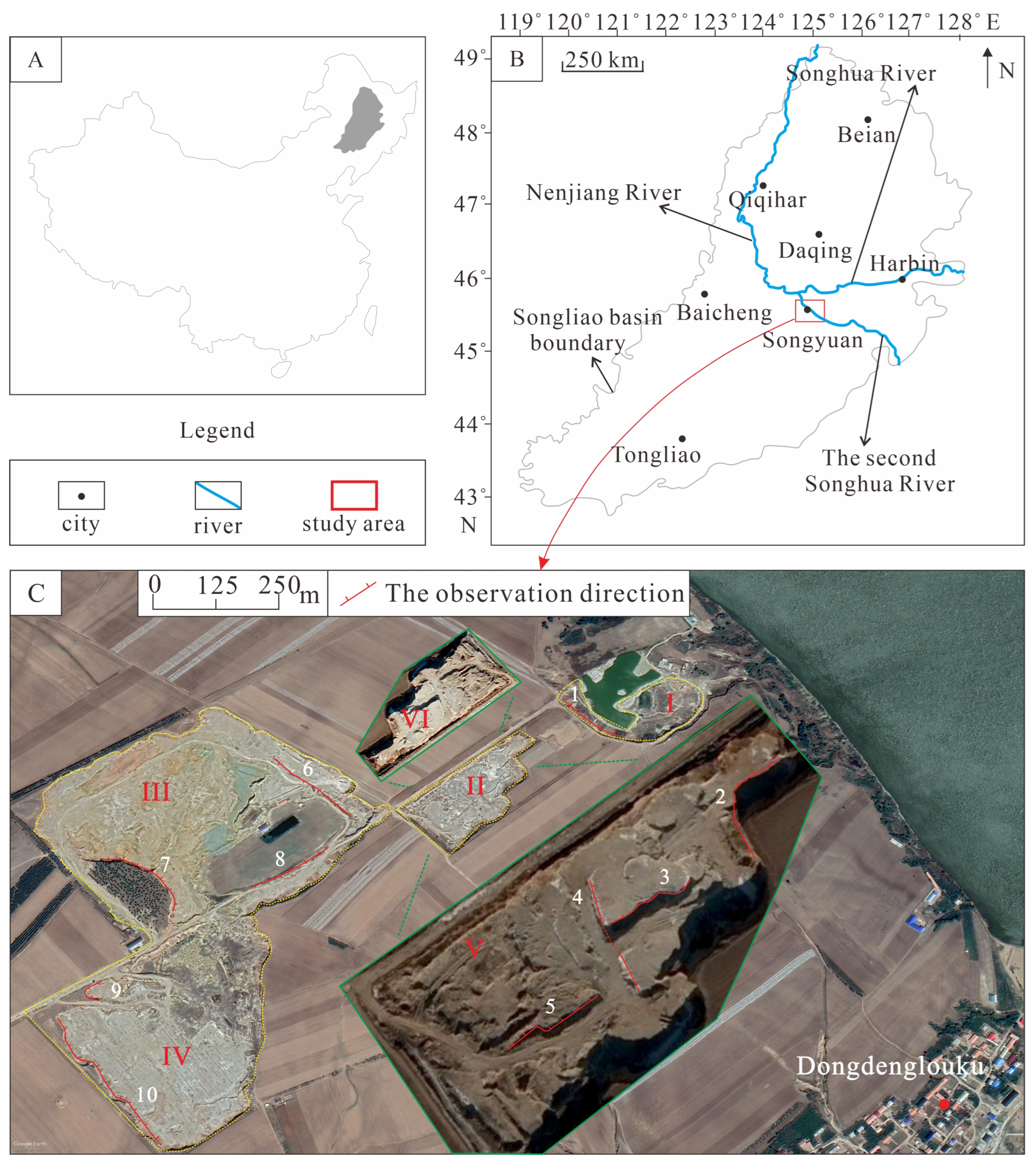
The Songliao Basin is one of the largest typical continental sedimentary basins in the world, located in Northeast China, covering an area of approximately 260,000 square kilometers and spanning Heilongjiang, Jilin, Liaoning, and Inner Mongolia autonomous regions. In the middle and upper sedimentary strata with a thickness of up to 10,000 m, braided river facies developed from the Lower Cretaceous Denglouku Formation to the Quaternary sediments, but the proportions are small, and the outcrops are very limited. The object of this study is the Quaternary sedimentary strata of the Second Songhua River located in the middle of the basin. It is a coarse sand/gravel braided river deposit formed by the development of multistage floods, and most of the strata are not diagenetic. The study area was unaffected by human activities such as dam-building during the sedimentary period. The outcrops are exposed west of Denglouku village, Songyuan city, Jilin Province, adjacent to the Second Songhua River (Figure 1). Excellent exposures of the formations provide conditions for the direct observation of the internal structure and spatial characteristics of the sand body. A total of eight well-exposed sections (up to 12 m in thickness and between 150 and 400 m in length) were selected from four areas for detailed observation, measurement, and dissection.
The Second Songhua River, as the southern source of the Songhua River, originates from the main peak of Changbai Mountain in the Baitou Mountains and flows to the northwest through Songyuan city in Jilin Province. Before entering the Songhua River, it joins the Nen River. The total length of the river is 790 km, and the drainage area is approximately 7.3 × 10⁴ km2, which accounts for 38.2% of the total area of Jilin Province. The river valley is dominated by a series of Holocene accumulative formations. Upper Holocene formations in the Songhua River valley are composed of light-yellow sand and clay, and the thickness of the formations gradually decreases in the downstream direction. The lower Holocene formations of the Songhua River valley are siltstone, and the grain size gradually decreases in a downstream direction from pebbly to medium- to coarse-grained sandstone or pebbly coarse sandstone. This area is located in the north temperate monsoon climate zone with obvious continental climate characteristics. The average annual precipitation is approximately 500 mm, and 6–9 precipitation events in the flood season account for 60~80% of the total yearly amount. The Second Songhua River Fuyu hydrological monitoring station provides flow and sediment transport data from 1955 to 2005. The annual runoff has been 14.65 billion cubic meters, the annual sediment transport has been 5.23 million tons, and the annual sediment content has been 0.141 kg/cubic meter. The law of water and sand conforms to the characteristics of “much water-much sand, stable water-stable sand, and little water-little sand”, which also indicates that the Second Songhua River basin has good vegetation protection and slight soil erosion.

3. Materials and Methods

This study focuses on documenting and dividing the Quaternary braided river sedimentary architectural structure in the Songyuan region and establishing a three-dimensional sedimentary model based on elements to predict the structural characteristics of braided river systems. The study area is located in Dongdenglouku Village, Ningjiang District, Songyuan City, Jilin Province, in northeastern China. The Quaternary strata in the study area are selected because the sedimentary and paleoflow characteristics of the strata indicate that the braided rivers in the Matsubara region are typical coarse sand/gravel bedded deposits (planform) [8,28]. Within a small range of 4 km2, a good number of sections show excellent exposure in different directions, ensuring that detailed fluvial architectures of the braided river can be captured in 3 dimensions.
To achieve this goal, this study mainly adopted the hierarchical analysis approach, considering the sedimentary processes, scale, and temporal context [7,8,33,34], to conduct a detailed analysis of 10 sedimentary outcrop profiles exposed at four sites in the study area. All of the outcrops were photographed from the ground, and the architectural panels in this paper were constructed from merged photographs. A handheld global positioning system (GPS) device was used to determine the locations, strikes, and dips of sand bodies. The exposed stratigraphic profile of the study area was described and interpreted with a thickness of 8–15 m and a total length of 1800 m. Based on the characteristics of grain size and sedimentary structures, the lithofacies were divided following the classification standard of Miall [37] (1978). Then, according to the observations of genetic facies associations and the recognition of key stratigraphic surfaces, different architectural elements were defined to complete the interpretation of the corresponding sedimentary environment [38,39], and the external geometric features and the contact combinations between the architectural elements were observed and measured in detail. Paleocurrent orientations were measured from unidirectional sedimentary structures, mainly trough and planar cross-bedding [3]. The hydrological data collected from the Second Songhua River Fuyu hydrological observation station (1955–2007) were applied to verify the climatic environment of the research area.
Parameters such as the bankfull channel depth (d), mean bankfull channel depth (dm), and bankfull channel width (Wb) are often used to quantitatively characterize the scale of ancient fluvial systems [5,25,40]. In this study, we measured the above parameters as well as the average bar thickness (dbm), maximum bar thickness (dbmax), bar width (Wbar), and single-channel width (Wc) (Table 1). All measured thickness values considered the 10/9 correction for diagenetic compaction to compare with the empirical formula for modern rivers [5]. Meanwhile, for the measurement of the thickness of a single river channel and bar, considering the erosion after deposition, the highest point could be identified as the top interface of the sediment. Certainly, the case of relatively severe erosion was excluded from the measurement. The height from the deepest point at the channel bottom to the top of the deposit is d, and the distance between identifiable single-channel edges is measured as Wc. Generally, the shape of the channel is considered lenticular with a flat top, so the vertical height between the bottom boundary and top interface of the channel is measured every 0.5 m within the width of a single river, and the average value is then calculated to obtain dm. The distance between identifiable bar edges is measured as Wbar. The height between the bottom boundary and top boundary of the bar is measured every 0.5 m within the width of the bar, where the maximum value is dbmax, and the average value is then calculated to obtain dm. Wb is the bankfull channel width measured by the bar and its causally related channel.
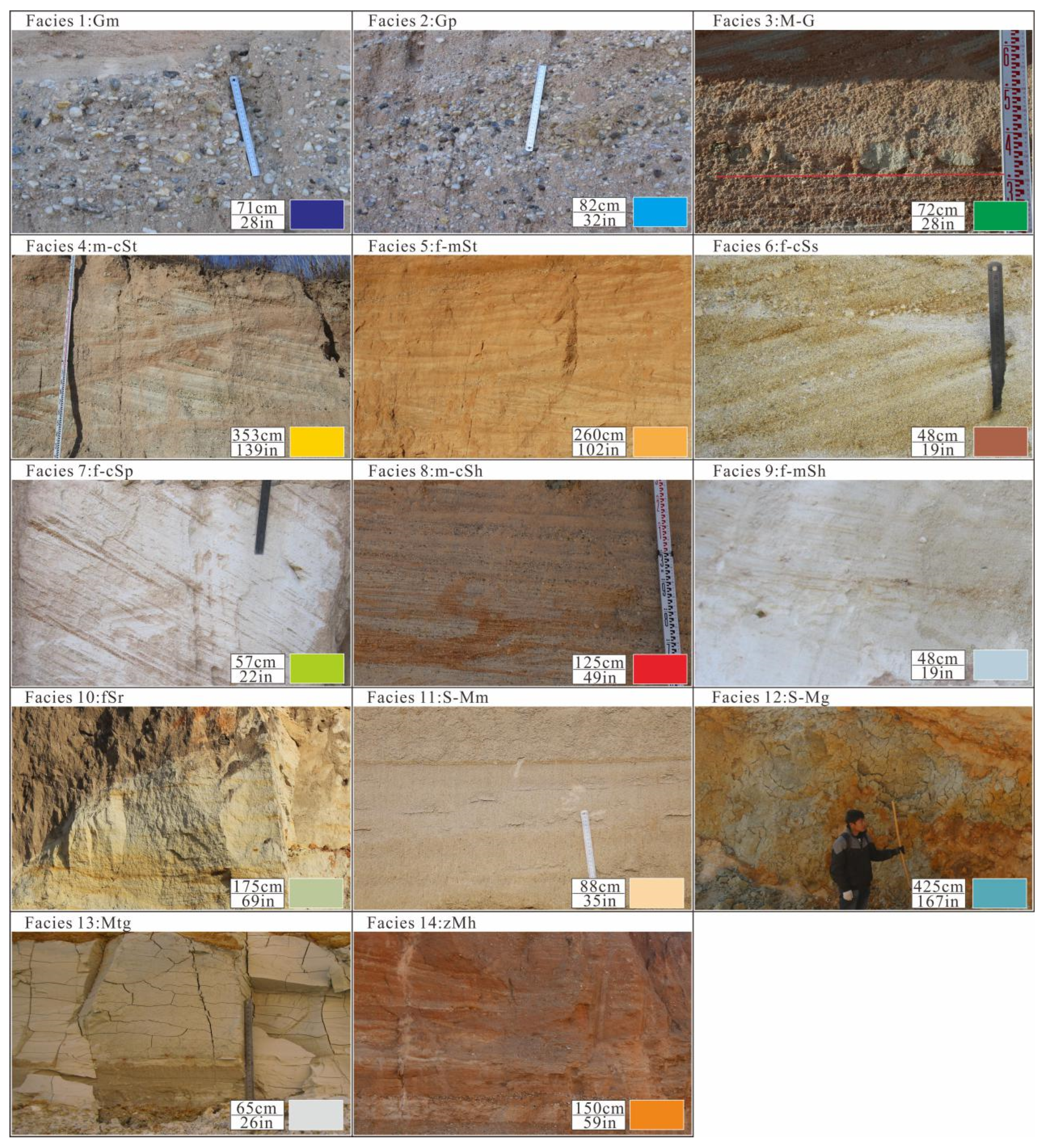
Table 1. Descriptive characteristics of the 14 lithofacies identified in the Quaternary formations. Photographic examples of each lithofacies are present in Figure 2.
Facies#Facies CodeFacies NamePhysical Sedimentary StructuresBounding Surfaces and Bed ThicknessInterpreted
1GmMassive or horizontal
clast-supported
gravel (conglomerates).
Massive or faint horizontal stratification. Gravel diameter <5 cm.Erosional to sharp basal
contact. Gradational to sharp upper contact. Set thickness 5–60 cm.
Bedload deposition [40] or lag deposits [37,41,42].
2GpPlanar cross-bedded clast-supported gravel
(conglomerates).
Typically <12°, planar cross-bedding. Gravel diameter <3 cm, mean 2 cm.Erosional to sharp basal
contact. Gradational to sharp upper contact. Set thickness 0.5–1 m.
Bedload deposition [40]; linguoid bar; transverse bar [41].
3M-GMuddy gravel.Oblate to circular, 5–60 cm diameter.Usually dispersed in sand or overlying an erosion surface.Rolling grains, lag.
4m-cStMedium- to coarse-
grained sandstones with trough cross-stratification.
Irregular to lenticular external geometry. Common interbedded pebble. Rare scattered muddy concretions.Gradational to sharp basal contact. Gradational to sharp upper contact. Set thickness 0.3–2 m. Coset thickness up 5 m.Lower part of lower flow-
regime. High energy. Three-dimensional
subaqueous sandy dunes
migrating in channels.
5f-mStFine- to medium-grained sandstones with trough cross-stratifications.Irregular to lenticular external geometry. Common interbedded mudstone.Gradational to sharp basal contact. Gradational to sharp upper contact. Set thickness 10–60 cm. Coset thickness up 2 m.Upper part of lower flow regime. High energy. Three-dimensional subaqueous sandy dunes migrating in channels.
6f-cSsFine- to coarse-grained
sandstones with sigmoidal
and concave-up cross-
bedding.
Angle between 12 and 30°, mean 18°. Common dense pebble along laminae surfaces. Tabular, lenticular, or irregularly wedge-shaped external geometry.Transitional up and down current to planar strata. Common scattered muddy gravel along basal surface. Set thickness 0.2–2 m. Coset thickness up to 6 m.Transitional upper to lower flow regime. Dunes and bars migrating in shallow channels.
7f-cSpFine- to coarse-grained
sandstones with planar
cross-bedding.
Angle between 8 and 30°, mean 22°. Lenticular or tabular external geometry. Laminae <4 cm in thickness.Erosional to sharp upper
contact. Common scattered conglomerate or pebble along upper surface. Set thickness 0.2–1.2 m. Coset thickness up to 4 m.
Lower flow regime. Floodplain or waning flow deposits in channel.
8m-cShMedium- to coarse-grained
sandstone with horizontal
stratification.
Typically <6°. Poor to very poor sorting. Common interbedded pebble horizons (cm scale). Rare small cross-lamination. Laminae <3 cm in the thickness.Erosional to sharp basal contact. Gradational upper contact. Set thickness 0.2–2 m.Upper flow regime. Very high energy. Waning flow deposits in a repeatedly high-energy environment.
9f-mShFine- to medium-grained
sandstones with horizontal
stratification.
Typically <10°. Rare small-
scale cross-lamination.
Common interbedded
mudstone horizons (mm to cm scale). Laminae < 2 cm in
thickness.
Erosional to sharp basal
contact. Contact with
massive sandstone laterally. Set thickness 0.2–0.8 m.
Upper flow regime. Very high energy. Large flat bars in active channels locally; sheetflood deposits in floodplain areas.
10fSrSilty to fine-grained
sandstones with current ripples.
Asymmetric to slightly
asymmetric unidirectional
ripples. Often traces laterally into floodplain mud. Laminae <1 cm in thickness.
Gradational to sharp basal contact. Erosional to
gradational upper contact. Set thickness up to 1.3 m.
Lower low regime, tractive deposition. Lower energy.
11S-MmVery fine sandy siltstones to silty mudstones with
massive bedding.
Massive but rare horizontal bedding, unclear cross-stratification. Good sorting. Minor horizontal and vertical burrowing.Gradational to sharp basal contact. Gradational to sharp upper contact. Set thickness 40–80 cm.Lower flow regime. Low energy for siltstones. Suspension fall-out in a waning flow for mudstones.
12S-MgGray siltstones to silty mudstones.Massive mud cracks.
Irregularly wedge-shaped
external geometry. Traces
laterally into abandoned
channel deposits.
Erosional to sharp basal
contact. Erosional to sharp upper contact. Set thickness 0.5–2.5 m.
Lower flow regime. Suspension fall-out in a waning flow.
13MtgTattletale gray mudstones
with massive bedding.
Massive mud cracks. Good sorting. Nondistinct bedding. Tabular bounding surfaces tracing for tens of meters.Erosional to sharp basal
contact. Erosional to sharp upper contact. Set thickness 0.3–0.8 m.
Lower flow regime. Suspension fall-out in a waning flow. Floodplain and abandoned channel deposits.
14zMhHorizontal laminated silty mudstones.Typically <3°.Good sorting. Dispersed in f-mSh. Thin mudstone drapes.Gradational basal contact.
Sharp upper contact. Laminae 2–30 cm in thickness.
Upper flow regime. Large flat bars in active channels locally; sheetflood deposits in waning flow conditions.
Figure 2. Photographic examples of the 15 lithofacies of the Quaternary formations in the study area. Descriptions and interpretations of the lithofacies are given in Table 1.
Applsci 15 08597 g002

4. Results and Discussion

In this paper, a four-level hierarchical framework is adopted to describe the micro- to macroscale architectural structure of braided river fluvial systems in this region. From the smallest to the largest, these are lithofacies, elements, element associations, and archetypes.

4.1. Lithofacies

The lithofacies is the smallest, independent, and recognizable geomorphologic feature of an architectural unit. Based on the grain size and main sedimentary structural features [37,38], 14 lithofacies are identified in this paper: 3 conglomerate facies, 7 sandstone facies, and 4 mudstone facies. Photographic examples and detailed explanations of each lithofacies are shown in Figure 2 and Table 1, respectively.
The quantitative study of lithofacies in the profile of the whole study area identifies trough cross-bedded (St), planar cross-bedded (Sp), and sigmoidal bedded (Ss) sandstone, developed mainly in the lower stratum, which occupies 63–76% of the entire measured profile. These lithofacies indicate that the sedimentary period experienced a continuous high-energy environment, but the presence of pebbles and fine-grain deposits implies large fluctuations in flow intensity.

4.2. Architectural Elements

Five typical architectural elements are identified based on the observations of genetic facies associations and the recognition of key stratigraphic surfaces as the basic components of the river system framework, which represent specific depositional processes and similar time scales. The architectural elements are described as follows:

4.2.1. Fluvial Channel

Description
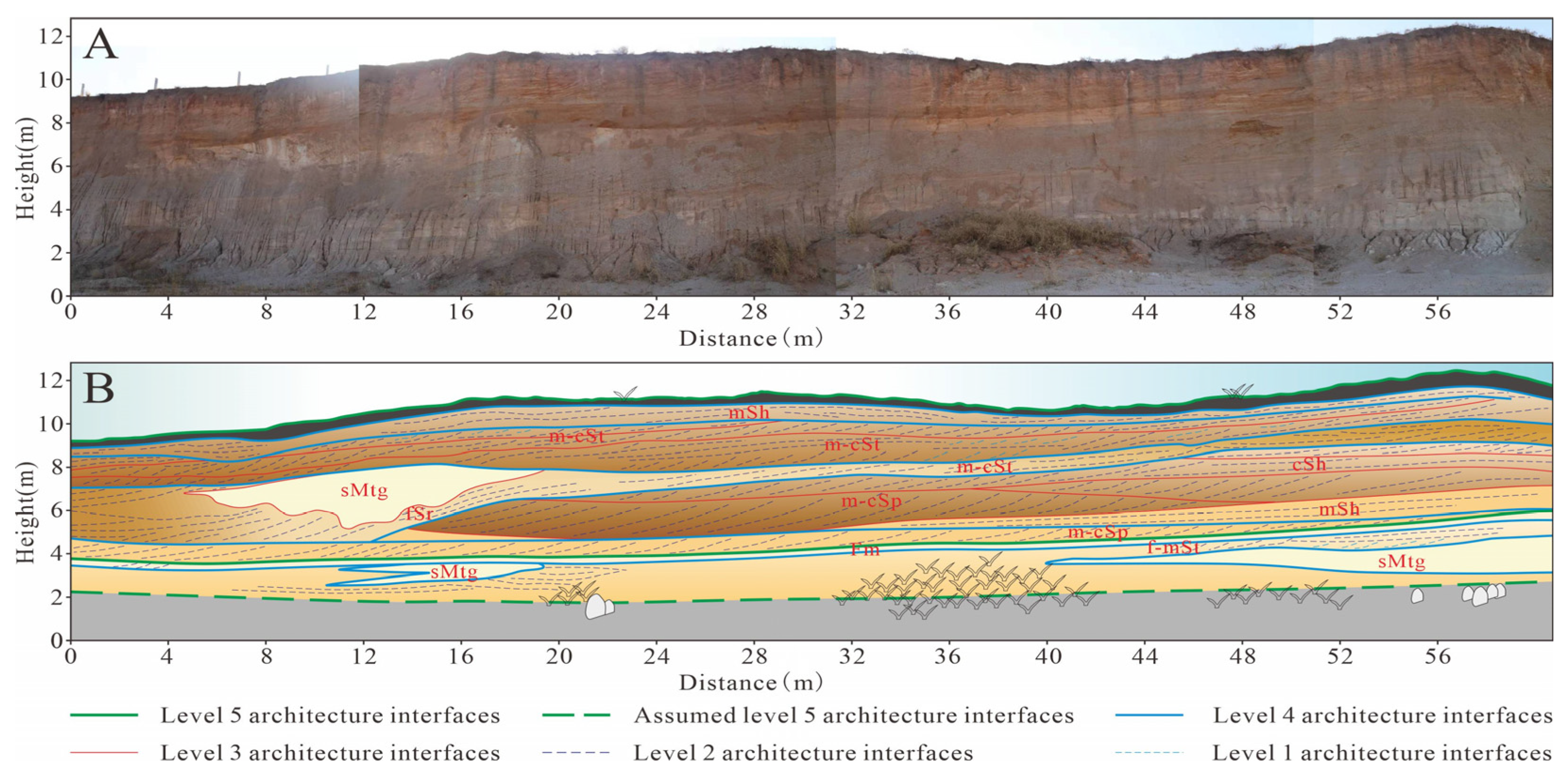
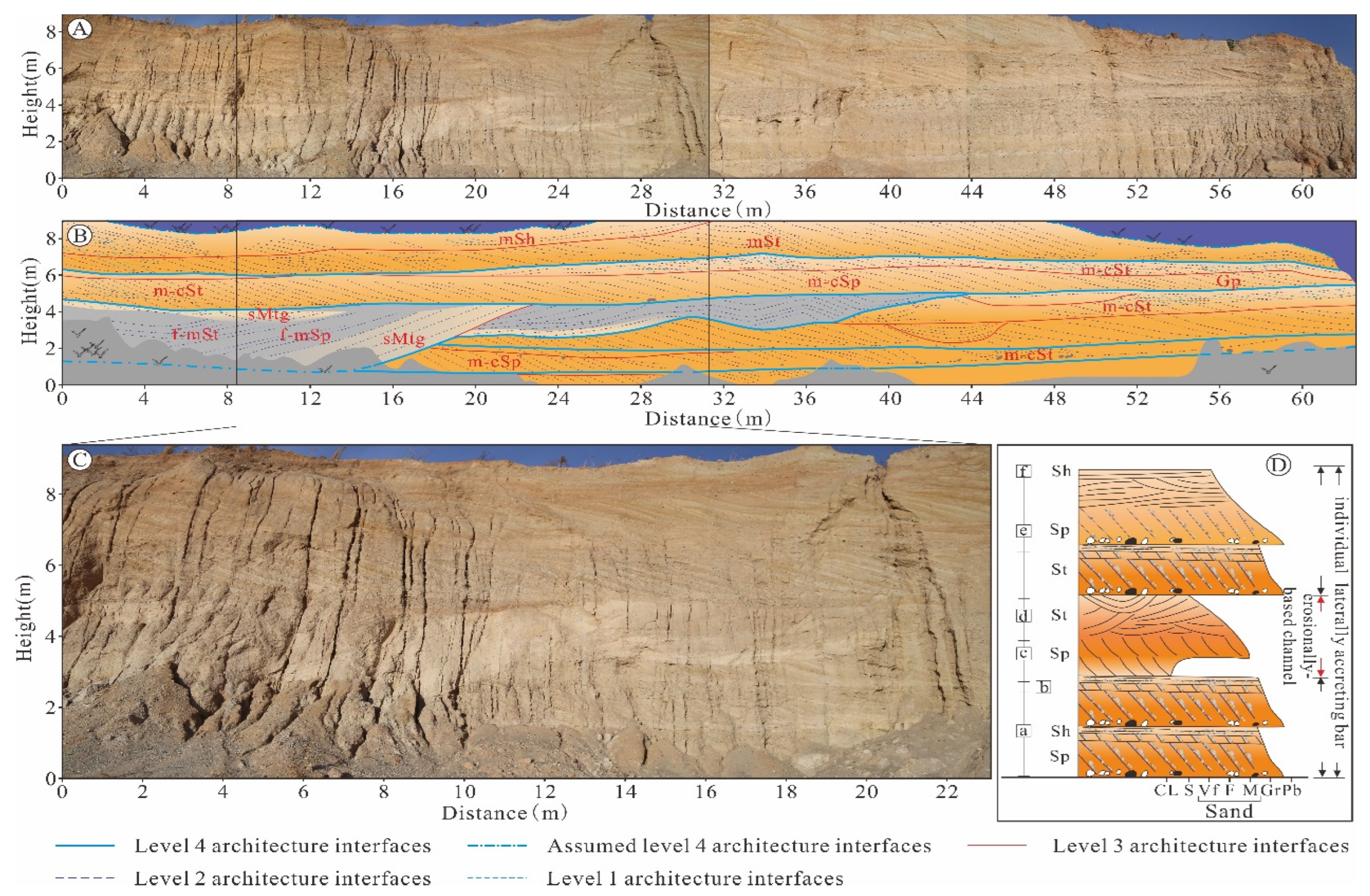
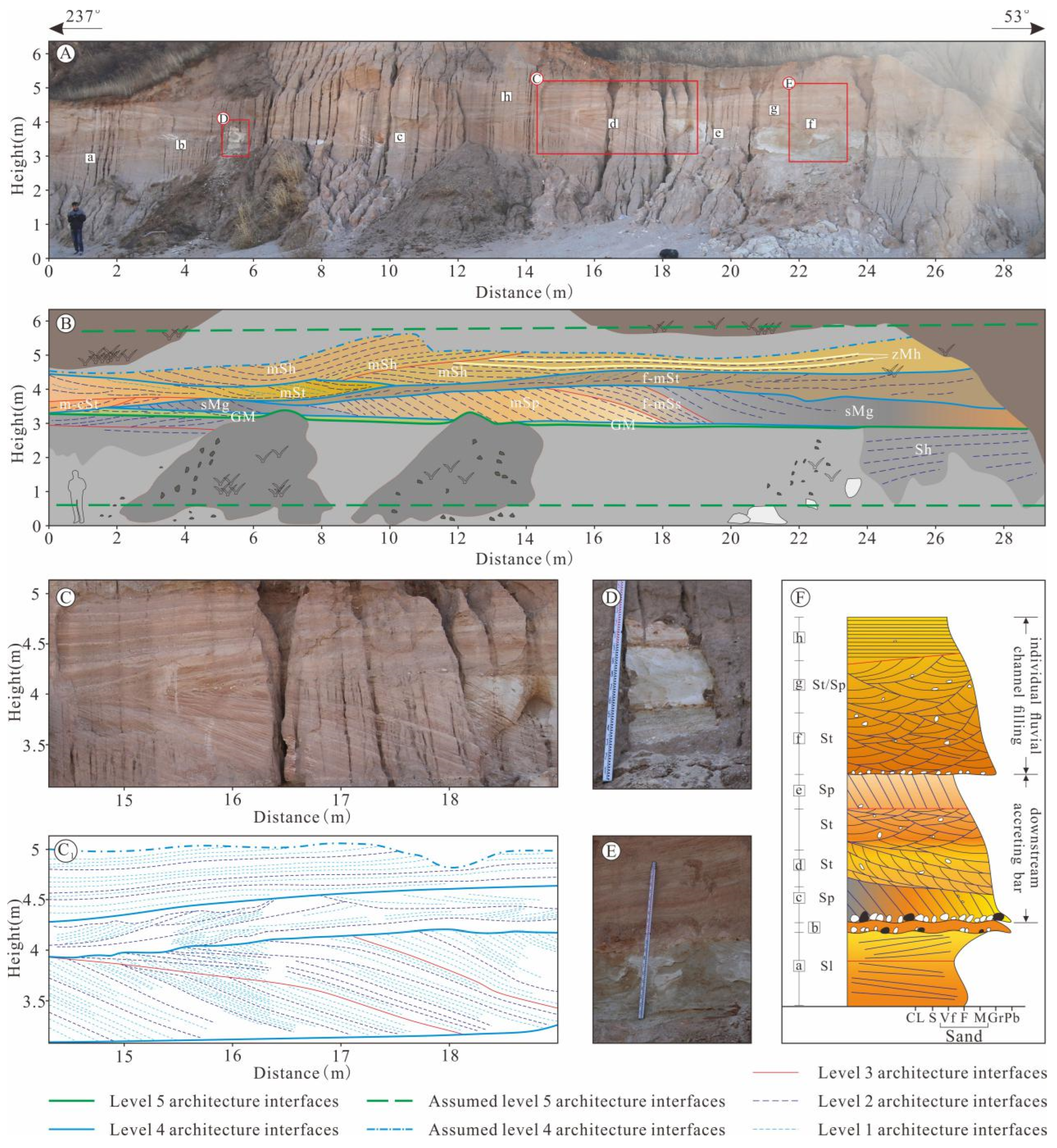
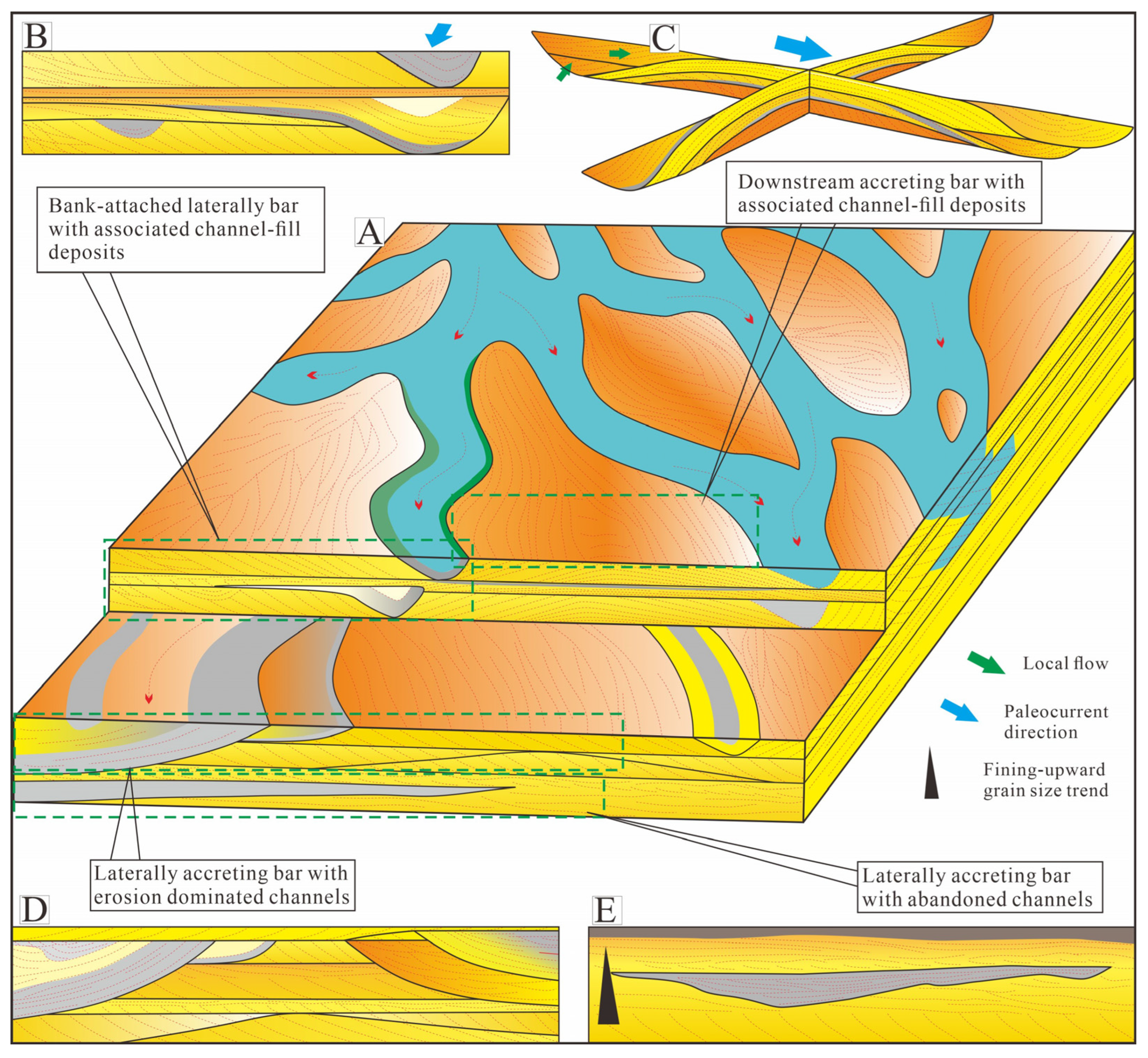
Two types of channel configuration units are recorded in this study area: fluvial channel deposition genetically associated with bars (Figure 3) and erosion-bounded channel deposition generated during an independent event period (Figure 4). The first type has an inconspicuous shape with an asymmetrical flat top and a convex bottom and is usually formed by the combination of decimeter-thick planar cross-bedding or trough cross-bedding in sandstone and massive mudstone. Among these rocks, massive mudstone is usually present as mud plugs at the top of channel deposits, which are mainly composed of ripple cross-stratified or massive silt and mudstone. The geometric shape is the original channel shape, usually 0.5–1.8 m in thickness and up to 15 m in width. However, the thickness of the independent erosionally based channel mainly varies from 0.65 m to 4.2 m. There are obvious erosional features, scour marks, and channel linear mudstone deposits at the bottom of the upper concave channel. The second type is usually thin, approximately tens of centimeters thick, and the maximum thickness preserved can be up to 1.5 m (Figure 4). However, the horizontal laminated silty mudstones (zMh) at the bottom of the compound migration channel are eroded, leaving an irregular deposit with a thickness of 10 cm and a width of several meters. Trough cross-bedded (St) and planar cross-bedded (Sp) sandstones were deposited on the horizontal laminated silty mudstones of the channel. The top of the channel is composed of parallel beds of sandstone (Sh) and mudstone (Mh), which were also filled as mud plugs when the channel was abandoned.
Interpretation
These two structural units are mainly composed of planar cross-bedding or trough cross-bedding medium- to coarse-grained sandstones, and there is a clear concave boundary surface, which obviously marks a fluvial channel deposit [43]. Independent verification from modern analogs supports this interpretation: hydrological monitoring of the Second Songhua River (Fuyu Station, 1955–2007) shows that channels with similar concave basal surfaces and mud plugs form during seasonal floods, where reduced shear stress leads to fine-grained deposition at channel abandonment [44]. Additionally, flume experiments by Ashmore and Parker [45] demonstrate that erosionally based channels with linear mudstone lags (M-G) are directly linked to high-energy scour events, consistent with the 60–80% of annual precipitation concentrated in flood seasons in the study area. At the boundary of the contact with the bar, the first type deposited fine-grained mudstones with inherited laterally accreting bedding structure, while the erosionally based channel deposition is distinguished from other structural units by the obvious scour surfaces and the linear mudstone at the bottom. Channel linear mudstone represents a process of hydrodynamic fluctuation. The lower boundary surface of the erosionally based channel is formed by sudden strong hydrodynamic scour, and when the hydrodynamic force decreases sharply, mud accumulates temporarily, resulting in the filling of fine grains consistent with the lower bounding shape of the erosionally based channel. Their thickness is less than the maximum scour depth of the erosionally based channel, which is controlled by the flow depth. Later, it is eroded during the active phase. The ultimate thickness preserved in the formation is a function of the abandonment time and proportion of the reoccupation [46]. Mud plugs are identified in both channel types and are common in the study area. A mud plug is formed at the end of a channel thread by the deposition of fine-grained materials due to the decrease in the local shear stress. The plug has high preservation potential because it occupies a topographically lower fill position.

4.2.2. Mid-Channel Downstream Accreting Bar

Description
The mid-channel downstream accreting bar is usually multistory and amalgamated, showing an overall fining-upward trend. It is mainly composed of fine- to coarse-grained trough cross-bedded (St), planar cross-bedded (Sp), and sigmoidal bedded (Ss) sandstone and contains a small amount of horizontal medium- to coarse-grained sandstones (m-cSh), laminated silty mudstone (zMh), gray siltstone-silty mudstone (s-mg), massive intraformational conglomerates (Gm), and planar cross-bedded conglomerate (Gp). Different periods are generally bounded by flat or concave micro-erosive surfaces, which are usually covered by thin (<15 cm) intraformational conglomerates, scattered pebbles, or silty mudstone. The grain size of each phase shows a less obvious trend of thinning upward and toward its flanks.
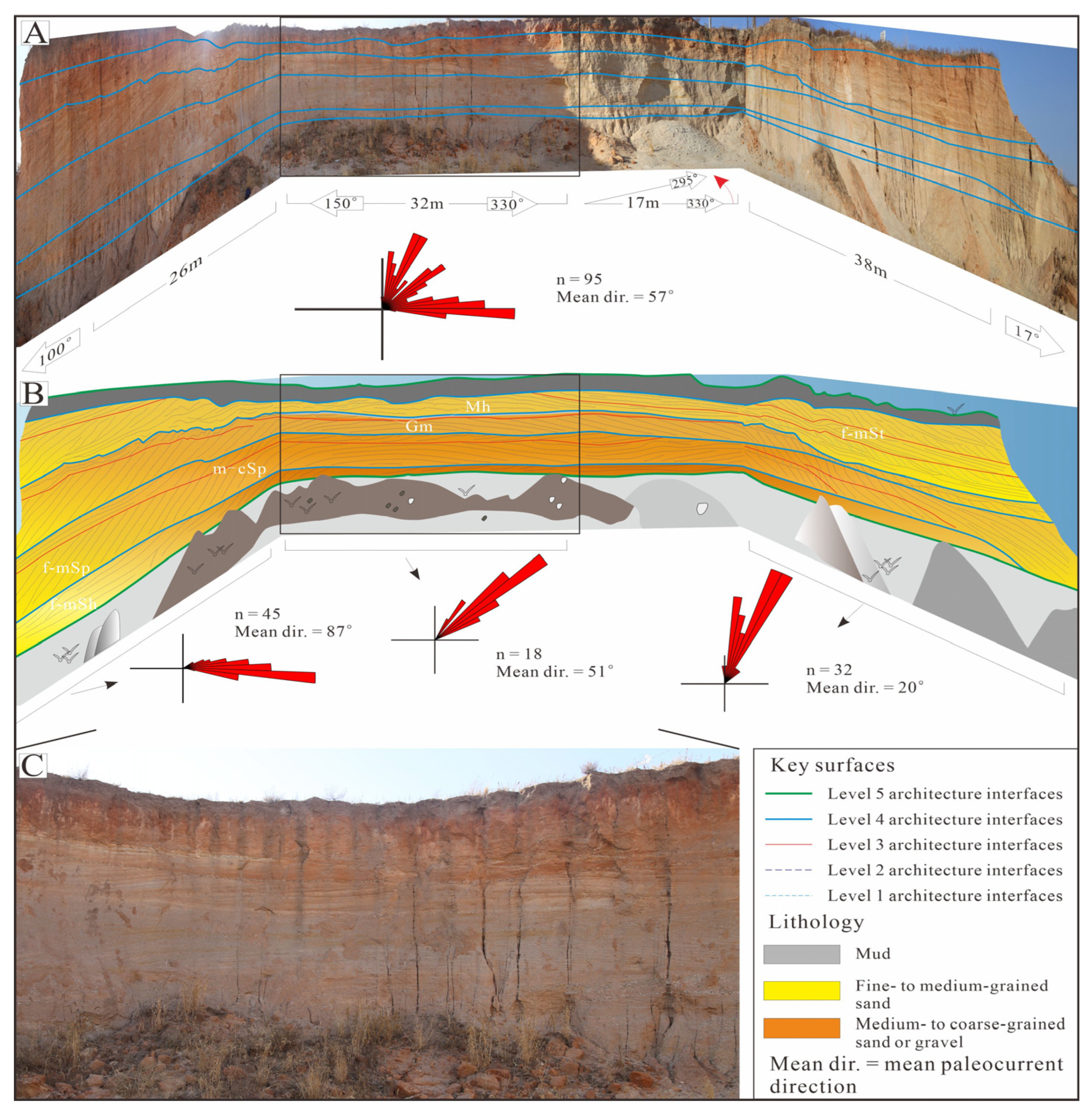
At site IV, a three-dimensional annular profile extends more than 50 m laterally and 30 and 40 m longitudinally, exposing a relatively complete downstream accreting bar deposit (Figure 5). The four periods of amalgamated bar deposits identified here are bounded by three eroded surfaces, with thicknesses of 1.5 m to 2.8 m for each period. The uppermost erosional boundary surface is concave, and the thickness of the axial erosion is up to 0.5 m and is covered by a layer of fine mudstone with a thickness of centimeters and a lateral extent of tens of meters (Figure 3 and Figure 6). The core of the first period deposit is mainly composed of low-angle cross-bedded coarse sand-conglomerate (pebbles), which turns downstream into subhorizontally bedded coarse sandstone. On the transverse section of the second stage deposit, the bedding structure gradually changes from relatively flat to a small angle (3–6°) from the core to its flanks. In the longitudinal section, the foresets are estimated to extend forward from the core to more than 70 m (40 m for outcrop identification). This unit is mainly composed of planar-sigmoidal cross-bedded sets (1.8–2.6 m) with uniform dip angles (15–30°) and dip directions. In the upper parts of foresets, a near-horizontal erosion surface can be observed, becoming consistent toward the bottom along the cross-strata, and the base of the sets is not eroded and slightly concave. In the downstream direction, gray siltstone to silty mudstone deposits (S-Mg) with the same dip angles are found (Figure 3), and the height is 1/2–2/3 of the maximum height of the foresets, corresponding to the ratio between the thickness of interbar mud thicknesses and the local water flow depth observed by Lynds and Hajek (2006), [43] which was 1/2 to 2/3. The upper two-period phases are mainly composed of trough cross-bedding (St) and planar cross-bedding (Sp) that is 50 cm thick, bounded by an inclined surface of 10–17° and covered upward by floodplain mud. At profile 5 (Figure 6), upstream accreting strata are identified in the upper strata, with a thickness of approximately 1.4 m, which is not common in this study area. The slope of the formation is low, and the tendency is almost opposite to the direction of the local paleoflow. At the top of the bar, there is a 2–3 m thick horizontally bedded medium-grained sandstone set (mSh) extending up to 40 m in the direction of water flow, with a centimeter-thick horizontal laminated silty mudstone layer (zMh).
Interpretation
The deposits at location 3 are dominated by large-scale high-angle trough cross-bedded and planar cross-bedded coarse sand-conglomerate and are marked by the presence of a mudstone silted layer, which is a typical sediment feature of bars. Modern braided reaches of the Second Songhua River provide direct analogs: downstream accreting bars here exhibit identical planar-sigmoidal cross-bedding (15–30° dip) and fining-upward trends, formed by dune migration during peak discharges [13]. This is further validated by sediment transport data (5.23 million tons/year) from Fuyu Station, confirming a sufficient sediment supply for downstream accretion [44]. Furthermore, a variety of characteristics synthetically confirm the status of the mid-channel downstream accretion bar, including the dip direction of large-scale foresets in line with the direction of paleotransport, the transverse section of the internal bedding with good symmetry, and the relatively flat erosion interface between different periods [45]. During the formation of the downstream accretion bar, dunes at the optimal location for the growth of the bar gradually evolve or merge, providing opportunities for the development of the bar, especially downstream accretion [5]. Usually, bar forms are constantly controlled by the surrounding channel flow. In this study area, the conglomerate layer at the base of the bar is well preserved, and the sedimentary range is relatively concentrated, which represents lag deposition due to a decrease in local hydrodynamic conditions after the erosion of the channel belt during the peak flood period [1]. Therefore, its formation provides the initial power for the growth of bars. The bar continues to grow through several sedimentary process combinations of downstream, lateral, and upstream accretion, corresponding to different flood stages [9,14]. The upstream accretion is now in the early stage of the weakening flood period [47], which requires a relatively high hydrological water level and adequate sediment supply along the head of the bar, and its preservation requires a long-term dynamic balance between sediment supply and discharge. This stringent condition also explains the rare upstream accretion in the study area and the severe erosion of the existing upstream accretion. Upstream accretion is usually accompanied by downstream accretion [14], and simple large-scale cross-bedded foresets are supposed to be the result of downstream migration of bars with well-developed slip faces. Foresets with changes in planar-sigmoidal cross-bedding reflect changes in local flow intensity or sediment supply, resulting in accumulation at the top of the bar and cross-stratification sets at different speeds [3,24]. However, the frequent occurrence of cross-bedded fine-grained foresets downstream indicates that the downstream position across the top of the bar may be the key location for fine-grain deposition [9], which also marks the beginning of a period of low flow [43]. When the hydrodynamic conditions are gradually weakened and the water level falls, the flows expand from the bar head to the two sides continuously, and the bar is widened by lateral accretion, which increases the sinuosity of the channel [48]. However, the sinuosity does not reach that of meandering rivers, which is consistent with the limited development of lateral accretion in this study area. The extensive thin-layered mudstone deposition at the upper erosional interface is formed by the sedimentation of suspended fine-grained mud during the water rest period, while the laminated sandstones in the upper strata containing thin interbedded mudstone layers are concentrated and tend to become thinner upward, indicating that the bar gradually loses its activity due to channel diversion or flood retreat [14].

4.2.3. Bank-Attached Laterally Accreting Bar

Description
In this study area, bank-attached laterally accreting bars are exposed frequently. Usually, the thickness of each period is between 0.6 and 3.2 m, and the thickness of multiple periods can be up to 12 m. The transverse extent is 30–120 m, often exceeding the exposed length. Each period is bounded by either a slightly raised wedge-shaped surface (Figure 3) or a flat surface (Figure 4). This configuration unit is mainly composed of trough cross-bedded sandstone (St), planar cross-bedded sandstone (Sp), and planar cross-bedded conglomerate (Gp), with a small amount of parallel bedded sandstone/mudstone, and the grain size becomes smaller along the front stratification direction as a whole. In the whole section, the bottom of the bar is dominated by small cross-parallel bedded sandstone, and two large-scale planar and trough cross-bedded coarse sand-conglomerate sets (Sp, St, and Gp) are developed upward, with uniform dip angles of 16–28°, accounting for 60%. The strata at the top of the bar are mainly composed of small-scale (20–40 cm thick) planar and trough cross-bedded sets with slightly larger internal bedding angles (12–20°), bounded by a low-angle inclined surface (less than 8°) and covered by a laminated fine- to medium-grained sandstone 30 cm thick.
Interpretation
Based on the transverse relationship between the dip direction of foresets indicated by multistage large-scale planar and trough cross-bedding and the local paleoflow, the lateral accretion bar can be easily identified. Flume experiments by Miall show that lateral accreting bars in gravelly braided rivers develop sigmoidal cross-bedding (12–20° dip) perpendicular to flow direction, matching the outcrop observations [28]. Modern bank-attached bars in the study area also display similar grain size trends (coarser near banks, finer distally), verifying the lateral accretion process [49]. Small cross-parallel bedded sandstones at the bottom were gradually deposited, resulting in a relatively higher position near the river bank, providing a steep sliding surface for the development of the bar and causing flow dispersion at the head of the bar. Flows converged at the tail along the outer edge of the bar, and the sediments migrated vertically to the riverbank and the local paleoflow [49], which corresponds to the period of low water level when the flow rate decreases [9,14]. However, the existence of conglomerates in foresets indicates relatively high flow conditions, which represents the water flow fluctuations during the sedimentary period. It is believed that this configuration imitates a sinuous channel but actually has no link with channel migration itself [14]. There is little evidence of secondary helical circulation, which also confirms the difference from the formation of a sinuous channel. The two main types of erosion interfaces in the bar, “wedge or flat”, may be related to the extent of the lateral aggradation strata in the study area. The erosion boundary with obvious undulations is attached to a channel bank, while the relatively flat erosion boundary is far away from the channel bank [14,45]. The difference in the extent reflects the fluctuations in the stable hydrodynamic environment and the sediment supply duration. On the top of the bar, the decrease in the scale of the cross-bedding set and the occurrence of ripple and laminated bedding represent a lower hydrodynamic state.

4.2.4. Abandoned Channel

Description
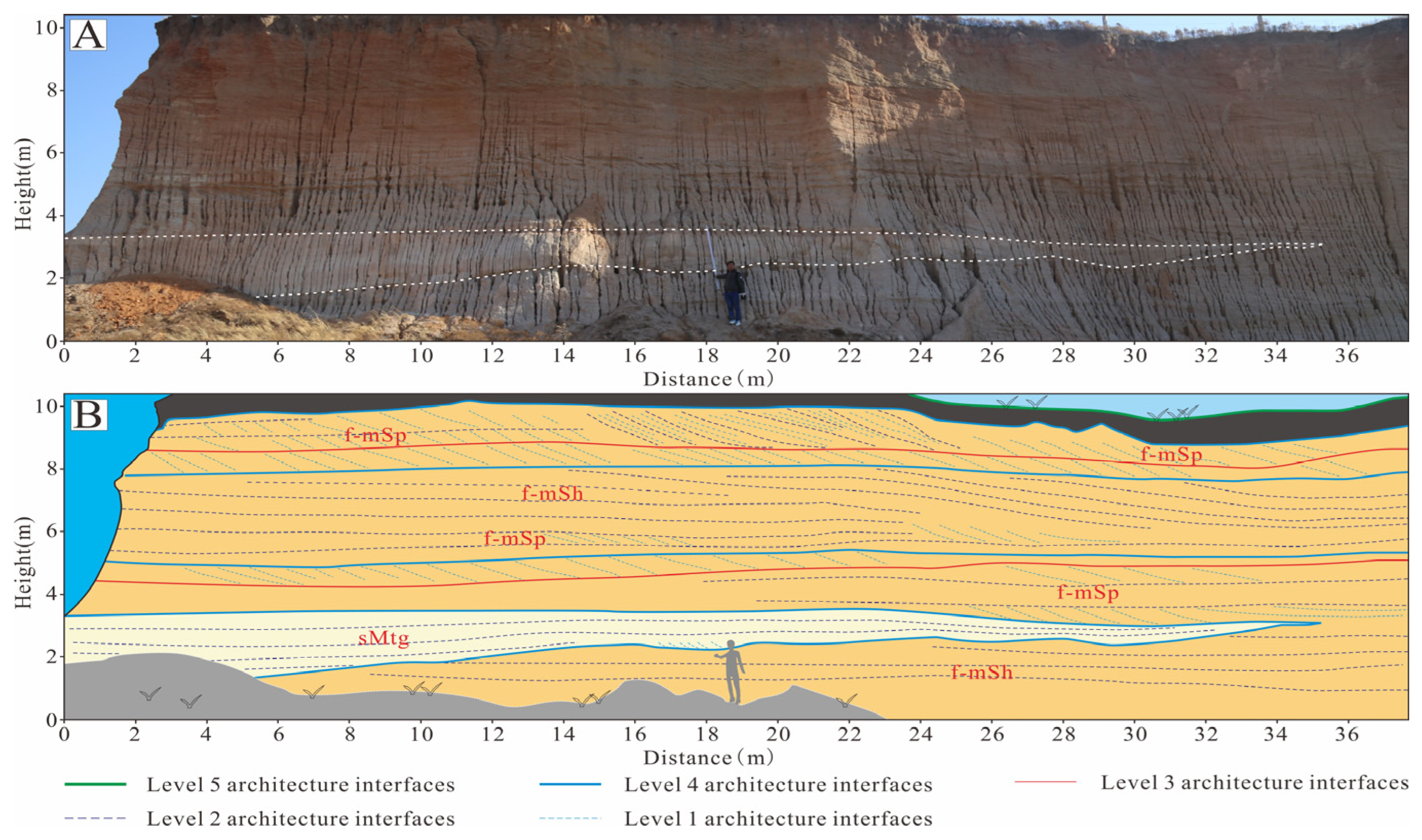
In this study area, the exposed lower part of the formation, which is also the top of the lower period of the channel belt deposit, has many abandoned channel deposits (Figure 3 and Figure 7). It is mainly composed of weakly stratified mudstone (Mh), trough cross-bedded (St), and laminated fine siltstone/sandstone (Sh). The sedimentary structure is relatively simple, and there is basically no interior erosion interface.
Interpretation
As a product of low energy, an abandoned channel filling usually tends to be the finest-grained part of the whole sediment load, which represents the complete abandonment of channel deposition. Fine-grain deposition in abandoned channels is common and often found in laminated and ripple strata, which may be caused by migration to the other side of the valley as the fluvial system silts up and the slope decreases.

4.2.5. Floodplain

Description
The internal stratification structure of this configuration unit is simple, mainly dark red and thickly stratified mudstone (massive) or grayish white and thinly stratified mudstone (S-M) (Figure 4). The floodplain sediment in the upper part of the section is mainly composed of thick-layered dark red mudstone mixed with a thin layer of grayish white mudstone. Scattered massive and dendritic white mud cracks and root traces are found in the thickly stratified dark red mudstone. The top of the section indicates soil development. At the bottom of the section, a thin layer of gray-white mudstone without an internal bedding structure inside is developed (Figure 4), and root traces and biological disturbances are lacking. The element is distributed in the same horizontal layer, although it is eroded and scrubbed locally.
Interpretation
Dark red, massive, and grayish white thin layers of mudstone have been interpreted as floodplain deposits, usually formed by the migration of fluvial channels, resulting in the deposition of suspended material during flooding as the riverbed gradually shifts [50]. Modern floodplains in the study area have the same lithological features: red mudstones form during dry seasons (oxidation and soil formation), while gray layers correspond to prolonged submergence [51]. The presence of red soil and plant root traces indicates that well-drained floodplain sediments underwent a relatively long period without deposition, followed by oxidation and soil-forming processes, and paleosols developed accordingly [52]; grayish white thin-layered mudstones represent floodplain deposits in floodplain areas that were submerged for a long time under reduced conditions [53]. Scattered, massive, and dendritic white mudstones are formed by filling the mud crack fractures in dark red mudstone, which is believed to reflect the contraction and expansion of clays related to the periodic infiltration and evaporation of water [51].

4.3. Element Associations

Based on the detailed observation and analysis of the erosional contact relationships between the elements deposited in the braided channel belt and the floodplain in the study area, four types of combinations among the adjacent elements are distinguished, and the geometric features of the elements are recorded.

4.3.1. Fluvial Channel and Mid-Channel Downstream Accreting Bar

At site III, the combination of the fluvial channel and mid-channel downstream accreting bar with a genetic relationship is identified in a 40 m long longitudinal profile with an east–west orientation (Figure 6). The bottom erosion interface of the combination unit deposited 20–30 cm thick sparse gravel lag flooring, which is also a fifth-level boundary surface for the channel belt [54], but due to the exposure problem, the corresponding fifth-level boundary surface is not recognized on the upper boundary. The head of the downstream accreting bar has been eroded by the upstream channel to varying degrees. When viewed in the direction of the source, the shape of the channel is an elongated wedge that erodes into the head of the bar for approximately 15 m. When observed in the direction perpendicular to the source, the downstream accreting bar has a lenticular shape with a flat bottom and a convex top. The axial part is the thickest, and it gradually becomes thinner toward the side. The directions of inclination are opposite, with dip angles of 6° to the northwest side and 8° to the southeast side, which is consistent with the internal bedding, but the top of the bar is eroded in most cases (Figure 5). The channel on either side of the bar is usually relatively flat and has an inconspicuous asymmetrical lenticular (flat top, convex bottom) shape. Thin channel deposits overlying the bar are sometimes possible to see. However, the channel deposits at the side edge of the bar usually maintain a similar sedimentary stratification to the side edge of the bar, but the grain size is significantly fine-silt and silty mudstone. In this study, six combination units of fluvial channel and mid-channel downstream accreting bar with a genetic relationship are identified, among which the thickness range of the single-channel thread is 1.4~ 6.5 m and the width range is 30~120 m. The thickness of the downstream accreting bar in each period is between 1.5 and 6 m, with an average thickness of approximately 2.4 m. The thickness of multiple periods can reach 10 m, with a horizontal extent ranging from 40 to 160 m.

4.3.2. Fluvial Channel and Bank-Attached Laterally Accreting Bar

At position IV, section 10 is an 80 m long transverse section extending from northwest to southeast. A new channel belt deposit developed on the thin floodplain layer with a wide distribution (more than a hundred meters) in the lower section. The combination of a fluvial channel and laterally accreting bar with a genetic relationship is identified (Figure 3), which is usually bounded by fine-grained deposits, consistent with the sedimentary structure on the outer edge of the laterally accreting bar. Such fine-grained deposits are silty to fine-grained sandstones with current ripples (fSr), and beneath them are fine- to coarse-grained sandstones with planar cross-bedding deposited (m-cSp) by sandbars. When viewed from the direction perpendicular to the source, a laterally accreting bar is adjacent to the channel bank and has an external form that thins away from the river bank. In each period, there are wedge-shaped or flat third-level boundary surfaces in the sediment of the bar (Figure 3 and Figure 4). The channel configuration is relatively flat without an obvious channel thalweg. Channel sediment usually does not completely pass over the bar, but in the study area, there are also channel sediments that do completely pass over the bar (Figure 3). The upper part of the bar is covered with channel sediments mainly composed of cross-bedded fine-grained sandstones of approximately 30 cm, although the thickness can reach 3.2 m in the deeper part of the channel. When viewed from the downstream direction, sediments are thickest along the axis and thin toward the upstream and downstream directions. In this study, eight combination units of fluvial channel and bank-attached laterally accreting bar with a genetic relationship are identified, among which the thickness range of a single-channel thread is 1.6~3.7 m and the width range is 20~75 m. The thickness of the laterally accreting bar in each period is from 1.4 to 3.2 m, with an average thickness of approximately 2.5 m and a horizontal extent ranging from 39 to 97 m.

4.3.3. Abandoned Channels and Floodplain

The lower section includes the combination of abandoned channels and floodplain (Figure 3). Abandoned channels are very common in this research area. They have various sizes, with thicknesses of 0.8–2.5 m and a width range of 7–50 m, and have an external form that is lenticular or wedge-shaped; the original channel sometimes has an irregular base. Abandoned channels, as the thinnest part of channel belt deposition, are often found in laminated and ripple fine sandstone deposits within the channel belt and are relatively well preserved. The top is covered by floodplain deposits, which consist of thin layers of approximately 40 cm and thick layers of up to 1 m but extend horizontally for several hundred meters (Figure 3). The configuration element combination of the floodplain covering the abandoned channel has no genetic relationship but represents the end of a sedimentary event [46].

4.3.4. Erosionally Based Fluvial Channel and Bank-Attached Laterally Accreting Bar

At site III, section 6 is a 90 m long transverse section extending from northwest to southeast. The combination of an erosionally based fluvial channel and a bank-attached laterally accreting bar with no genetic relationship is identified in the section (Figure 4). The laterally accreting bar consists of four subunits, and the accreting direction of the bar is 121° according to consistent inclined bedding measurement. In the lower subunit of the lateral accretion bar, several erosion channels represent a sudden high hydrodynamic environment. The erosionally based fluvial channel is distinguished from the sediment of the bar by an obvious erosion interface and a linear mudstone at the bottom of the channel. The scale of the erosionally based fluvial channel is not uniform. There are both small erosionally based channels with widths of approximately 10 m and large erosionally based channels with lateral migration tens of meters wide. The erosional scale of the latter is small in the initial deposition stage, and the thickness (1.5 m) is less than the sediment thickness of the laterally accretion bar in the independent period. With lateral migration, the channel thickness can reach 4 m, and the erosion basement occupies the bottom period of the laterally accreting bar deposition. At site IV, lateral migration channel uplift is also observed. They all have symmetrical and regular external geometries with flat tops and convex bottoms. The combination intersects with the overlying third-period bar at a relatively flat interface, which also indicates that the sedimentary combination was completed before the next-stage filling event.

4.4. Braided Archetype

Considering the sedimentary evolution process of the river system, the braided river archetype (Figure 8) is established, which takes the element as the basic unit and represents the end channel-fill stacking arrangements preserved in the strata during the continuous evolution. Three contact combination relationships between different elements are recorded: (1) one combination has a genetic relationship at the same period; (2) one combination has no genetic relationship at the same period; and (3) one combination has no genetic relationship at different periods; the dimensions of channel belt scales in this study are quantitatively characterized. The establishment of the archetype is helpful to understand the architecture and evolution of a coarse sandy-gravelly braided river system under a temperate continental monsoon climate.
As an upward-stacking evolutionary pattern of overall fineness, the braided river archetype mainly includes the fluvial channel (fluvial channel associated with bar and erosionally based fluvial channel); bank-attached laterally accreting bar; mid-channel downstream accreting bar; abandoned channel; and floodplain. The upward-stacking element associations constitute the archetype: (1) The combination of the fluvial channel and downstream accreting bar with a genetic relationship at the same period usually occurs in the middle part of the channel in the lower part of the archetype, and the two elements are bounded laterally by the fine-grained fill associated with lateral accretion at the bottom of the channel. Downstream accretion bars involve mainly downstream accretion but include lateral and upstream accretion. The sediment thickness of the channel is similar to that of the bar in the independent period, and mud plug fillings are common. (2) The combination of a fluvial channel and a bank-attached laterally accreting bar with a genetic relationship at the same period usually occurs at the edge of the channel in the lower part of the archetype. The laterally accreting bar is adjacent to the river bank, and the dip directions of the internal bedding point to the opposite side of the river bank. The channel has an indistinctly symmetrical shape, with the development of fine-grained fills associated with lateral accretion and mud plug filling and sometimes fine-grained fills. (3) The combination of an erosionally based fluvial channel and a bank-attached laterally accreting bar usually occurs in the lower part of the archetype. As the erosionally based fluvial channel occurs at the same time or after the bar deposition but before the next large filling event, it belongs to the combination with no genetic relationship in the same period. There are two forms of erosion channels: independent small channels or large channels with migration superposition. A small channel is mainly filled with mud, and the thickness is smaller than that of the bar deposit in this period. Large channels sometimes erode the sediment of bars in the early period, and channel linear muds at the bottom and mud plugs at the top are common. (4) The combination of floodplains covering abandoned channels usually occurs at the end of the archetype and represents the combination with no genetic relationship in different periods and the end of the sedimentary event.
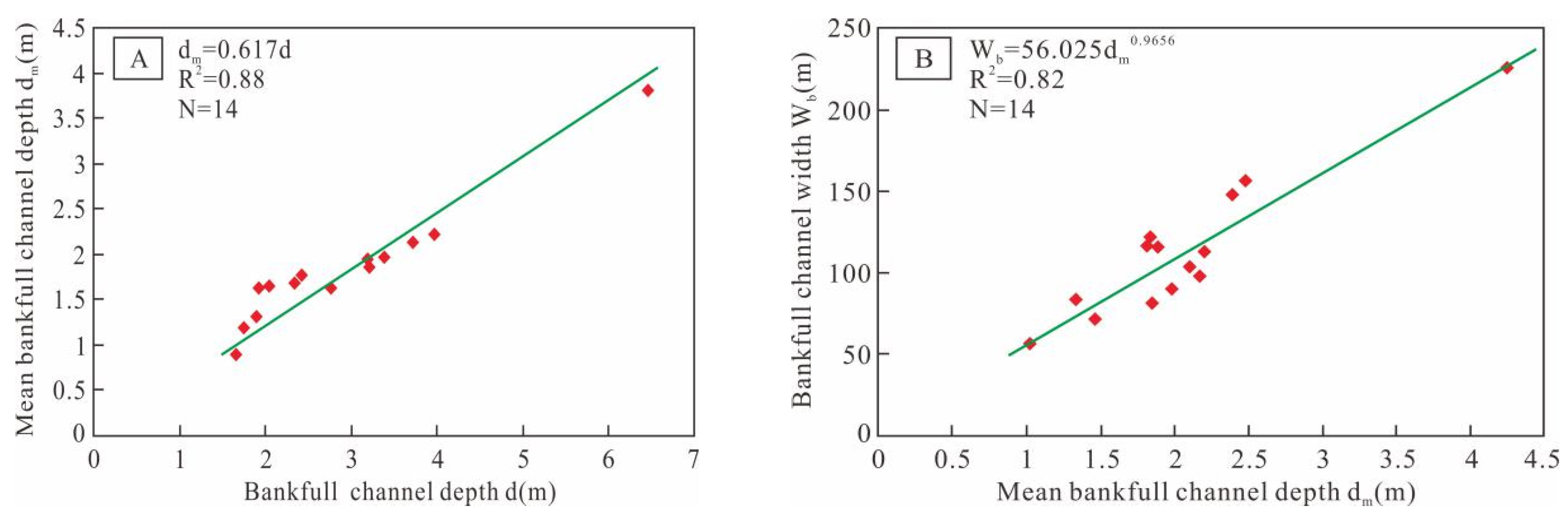
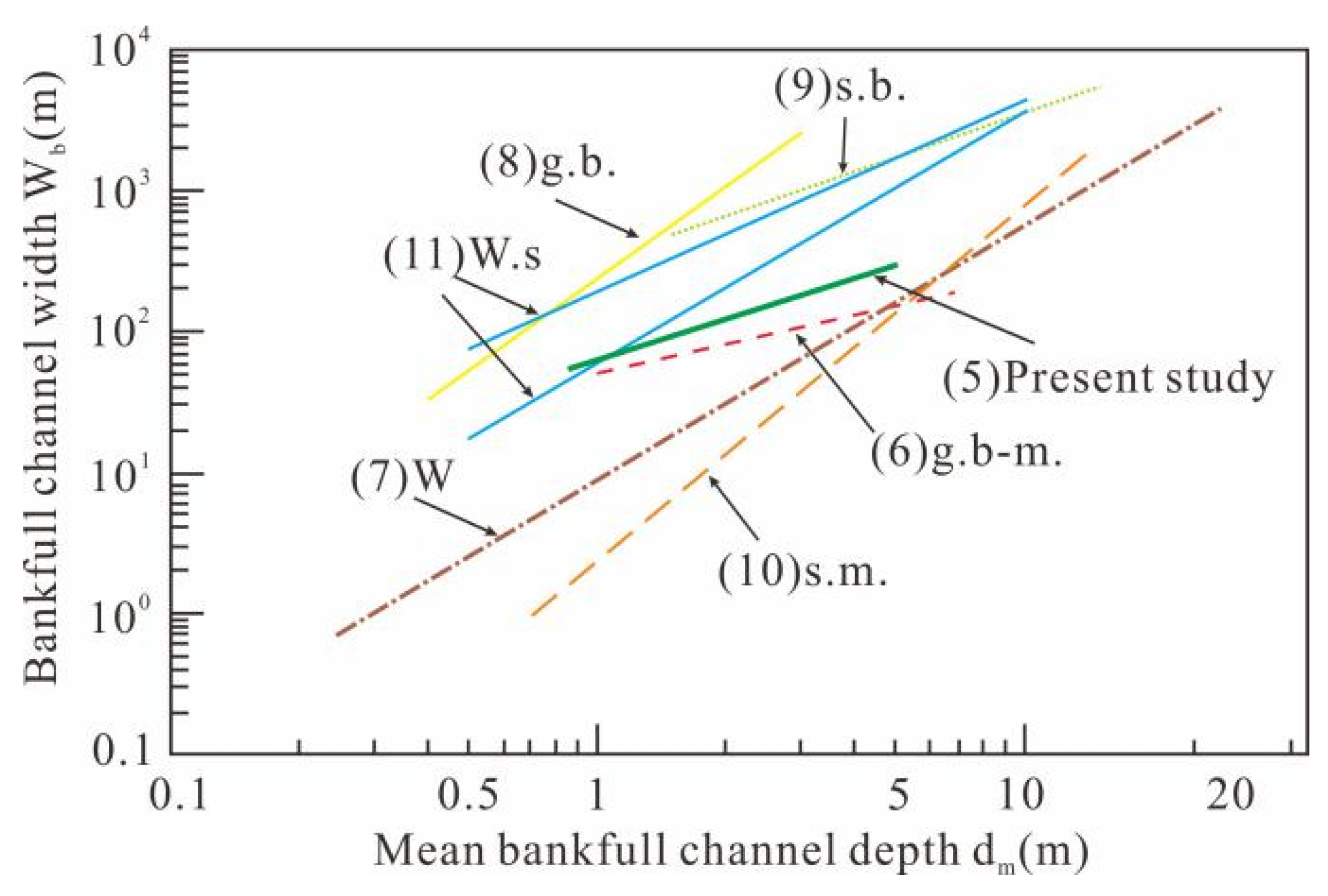
To better apply the braided channel prototype to quantitatively characterize the width of the channel belt, we establish an empirical relationship among the mean bankfull channel depth (dm), bankfull channel depth (d), and bankfull channel width (Wb) by using 14 groups of channel measurement data with genetic relationships (Figure 9, Table 2):
dm = 0.617 d, Wb = 56.025 dm0.9656

4.5. Discussion

4.5.1. Empirical Equations for Ancient Braided Rivers Based on Sedimentary Outcrops

Defining the edge of a single-channel belt from braided river outcrops is extremely difficult [43], so an empirical relationship with the bankfull channel width (Wb) is usually derived from data collected in modern river systems [5,16]. Bridge and Mackey, based on the data for modern river systems in various climatic environments and tectonic settings, proposed an empirical formula for the reconstruction of paleochannel geometric parameters [5]. Bridge and Typ further studied and completed the characterization of geometric parameters of a single braid thread [40]. Shibata et al. quantitatively characterized the relationship among A, d, dm, Wb, and Q of braided to meandering gravelly rivers by using data from 24 observation sites of modern gravelly rivers in the Kanto region and summarized and compared the previous research results [5,16]. Xu compared the hydrodynamic geometric characteristics of different types of sandy and gravelly rivers based on data from alluvial rivers around the world. However, this paper attempts to use a large number of detailed outcrop data derived from the actual measurement of the trench profiles for research [17]. The data measurement process is different, but the genetic analysis of each element ensures that the same meanings of Wb, dm, and d are represented. Therefore, the summary of Shibata et al. [16] is compared with the results obtained in the present study (Table 3).
The dm estimated by the dm-d equation (Equation (1) in Table 3) in the present study is similar to that estimated by the equation of Shibata et al. [16] (Equation (2) in Table 3) and is slightly larger than that estimated from the equation of Bridge and Mackey and Moody et al. [5,55] (Equations (3) and (4) in Table 3) for a given value of d. Compared with other studies (Equations (3) and (4) in Table 3) [5,55], the dm value predicted by the dm-d equation in the present study is relatively large, which is related to the relatively flat bottom shape of the channels in this study area and the lack of deeper thalwegs. This situation may reflect the higher average annual discharge in the region, consistent with that in the Kanto region [56]. Under the influence of regional climate (seasonal precipitation), more than 70% of the annual discharge is concentrated in the rainy season from June to September (the peak is in July and August) [44], while the icebound period lasts from November to April, which means that high discharge is maintained from May to October. At the same time, due to the influence of a cohesive riverbank in a vegetation-covered area, the lateral migration rate of a mid-channel downstream accreting coarse sand-conglomerate bar is lower, and a bank-attached laterally accreting bar in this study area is usually not the result of secondary helical circulation, resulting in the relatively stable and flat fluvial channel.
Regarding Wb-dm relationships, we compare them by observing the changes in the slope and intercept of the regression curve in the logarithmic graph (Figure 10). The regression index value (slope) of the equation obtained in this study area is small, which is equivalent to that of the equation obtained in sandy braided channel (Equation (9) in Table 3), slightly larger than that of the equation obtained in the braided-meandering gravelly river (Equation (6) in Table 3), and significantly smaller than that of a conglomerate channel (Equation (8) in Table 3). The Wb estimated by the Wb-dm equation in the present study is far less than that estimated by the equation for other sandy and gravelly braided rivers (Equations (8) and (9) in Table 3), which is related to the small scale of the river in the study area and is slightly larger than that estimated by the equation for braided-meandering gravelly rivers (Equation (6) in Table 3) but is obviously much larger than that estimated from the equation of other meandering rivers (Equation (10) in Table 3) (dm < 5 m). By comparison, in terms of the Wb-dm relationship, the river characteristics in the Songyuan area conform to the coarse sandy braided river category. However, this conclusion is somewhat different from the coarse sandy-gravelly sedimentary characteristics in this study area.
This result could be attributed to the fact that, during the sedimentation period, no catastrophic flood event was strong enough to erode the river bank controlled by bank stability. However, under the influence of climate (precipitation), seasonal high discharge generated a strong hydrodynamic force under the influence of high slopes, leading to the relatively deep downcutting of the channel while extending laterally. Stable flow (60–80% of precipitation concentrated in June–September) reduces episodic bank scour during extreme floods, promoting a “deep-narrow” channel morphology over a “shallow-wide” one. Multiple regression analysis shows that a 1-unit decrease in discharge variability correlates with a 0.21 decrease in the Wb-dm exponent (p < 0.05). The reasons for this significant discrepancy can also be explained by the following quantitative evidence. The median grain size in our study area (2–5 cm) is substantially finer than that in Xu’s gravel-dominated rivers (5–10 cm) [17]. Field measurements show that finer sediments (40% sandy fraction) reduce bed roughness, favoring vertical incision over lateral expansion (Figure 10). Statistical analysis indicates that, for every 1 cm decrease in grain size, the Wb-dm exponent decreases by an average of 0.32 (n = 15, R2 = 0.76), directly contributing to the low exponent observed here. Riparian vegetation cover (30–40%, derived from remote sensing of the modern Second Songhua River) enhances bank cohesion, limiting lateral migration rates (0.5–1.2 m/year) to 25% of those in Xu’s study area. Hydrological data from Fuyu Station (1985–2000) show that the flood-season bank erosion in our study area is 33% of that in non-vegetated systems, restricting width expansion and resulting in a smaller Wb for a given dm. Comparison with Shibata et al.’s braided-meandering transition rivers [17] further validates these mechanisms: their intermediate vegetation cover (15–25%) and discharge variability (5.7) result in a Wb-dm exponent (0.67) that falls between our study (0.9656) and Xu’s results, consistent with the linear relationship between vegetation cover, discharge variability, and exponent values (R2 = 0.82).
The Wb-dm relationship for coarse sandy-gravelly braided rivers established in this study relies on only the existing 15 sets of data. To enhance broader applicability, more ancient and modern braided river sediment data in this environment still need to be verified. Additionally, the empirical relationships derived from this study can be scaled up to larger scales (e.g., basin or regional scales) by accounting for spatial heterogeneity. For instance, when extending to a basin scale, sub-basins are first classified based on lithological and tectonic characteristics; coefficients of the empirical equations are then adjusted according to the average slope and sediment supply rate of each sub-basin, ensuring the relationships adapt to variations in macro-geomorphic settings. Meanwhile, integration with numerical models follows a structured, iterative process: (1) The empirical relationships constrain key input parameters of numerical models (e.g., initial channel width-depth ratios in the Delft3D model); (2) model simulations are conducted to generate dynamic evolution results (e.g., channel migration distance over a 100-year period); (3) simulated outputs are compared with field-measured data (e.g., historical aerial images or sediment core records) to verify consistency; (4) discrepancies prompt revisions to the empirical relationships—such as reweighting the influence of variables (e.g., increasing the weight of sediment supply in width equations)—until model outputs align with observations. This iterative loop enables these relationships to robustly support numerical simulations of river behavior across diverse temporal and spatial scales, thereby enhancing the predictive capacity for long-term river system evolution.

4.5.2. Temporal Evolution of the Quaternary Coarse Sandy-Gravelly Braided River System

The braided river in this study is a coarse sandy-gravelly channel in a typical continental monsoon climate. Due to seasonal precipitation, the energy of the river varies significantly in different seasons. Under the control of bank stability and flow strength, the active riverbed is restricted to a certain spatial range in which braided channels can expand and contract freely for a long time, which actually determines the complexity of the evolution of the braided riverbed [57,58]. Meanwhile, the braided river architecture presents a certain regularity, including the form and scale characteristics of elements, mutual contact, time sequence, and span (length), and the deposition and preservation of internal sediments of different particle sizes are not random. However, it also controls the deposition and preservation of sediment in the braided river system, which makes the architectural structure of the braided river present a certain regularity.
In the whole evolution process, the lower two ancient river channel belts maintained similar braiding degrees, with mid-channel downstream accreting bars, bank-attached laterally accreting bars, and fluvial channels as the main filling units, and the number of bars did not decrease significantly, which could easily imply a relatively stable flow fluctuation process. In addition, the lower sedimentary strata are dominated by large planar cross-bedded or trough cross-bedded coarse sandy-gravelly (pebble) sediments lacking parallel bedding and ripple bedding, which represent a sustained high-energy environment [56] and a steady supply of sediment and are consistent with the characteristics of perennial river systems with long flood waning periods [14,56]. For high-energy braided rivers, mudstone deposition is common in the strata of this research area, which is obviously different from the viewpoint of a lack of fine-grain deposition emphasized in previous studies [24] and may be attributed to the abrupt seasonal discharge in the study area. With the significant decrease in precipitation after September, the relatively high concentration of suspended sediment carried by the water flow can settle when the hydrodynamic force decreases sharply [10]. Furthermore, the relatively low filling positions, such as the backwater side of the bar and the previously flowing river channel, promote the preservation of mudstone deposition [59]. However, the common mudstone deposits and mudstone clasts indicate the existence of a cohesive riverbank [14]. Different from the relatively high lateral migration of a sandy braided bar [14,24], the mid-channel downstream accreting bar in the study area does not show obvious lateral deviation in the vertical evolution process, which may be attributed to the stability of the coarse sandy-gravelly bar. The dip directions of large-scale inclined strata in bank-attached laterally accreting bars are perpendicular to the paleocurrent, and secondary helical circulation is lacking, which indicates the existence of low-sinuosity channels [60]. Well-preserved cross-bedding reflects the constant hydrodynamic force and perennial flow environment over a period of time [61], and the difference in the extents of laterally accreting bars at different periods reflects the strong hydrodynamic environment and the fluctuation of sediment supply duration. Erosionally based fluvial channel filling occurring in the lower sedimentary system is explained by the strong hydrodynamic forces caused by continuous heavy rain in a short period of time, which is consistent with the fact that 70–80% of the region’s annual rainfall is concentrated in three days of the year [61], and its features of relatively deep downcutting of the channel while extending laterally also confirm the existence of a relatively stable riverbank [62]. The lower two river channel belts are clearly controlled by the stability of the river bank and influenced by the climate (mainly precipitation) and the sedimentary products formed under the environment with great energy differences in different seasons.
Along with the gradual filling of the accommodation space, a braided river system rapidly migrates and erodes to the other side of the river valley, and the river channel slope of this section continues to decrease [63,64], entering a relatively low-energy hydrodynamic environment. Then, the riverbed rapidly degrades, and the suspended sediments that are periodically input continuously settle [63,64], leading to an increase in the number of abandoned channels. The abandoned channel filling can account for 10–15% of the upper sedimentary strata with the development of ripple-parallel bedded fine-grained sandstone, siltstone, and mudstone. The interbedded deposition and local erosion of the sandstone/mudstone strata indicate the constant fluctuation of the hydrodynamic force within a small range. With increasing distance from the active riverbed, the riverbed is further abandoned, forming a large erosion-free zone [50,65]. The extensive floodplain covering the abandoned channels constitutes the main feature of the upper strata, which also marks the end of the riverbed filling event.

4.5.3. Comparison with Existing Classification Systems

This study’s four-level hierarchical framework differs from and advances existing fluvial classification systems in key aspects. The hierarchical framework proposed in this study differs from and improves upon existing fluvial classification systems in several key aspects. Miall’s Architectural Element Analysis [27,28] focuses on identifying architectural elements (e.g., channel, bar, floodplain) and their bounding surfaces but lacks a clear hierarchical breakdown of microscale features (e.g., lithofacies) and macroscale genetic associations (e.g., element combinations across temporal stages). In contrast, this micro–macro four-level hierarchical framework directly connects 14 lithofacies (Table 1) to macroscale elements (e.g., downstream accreting bars) via sedimentary processes. For example, the planar cross-bedded conglomerate (Gp) is linked to downstream accretion through paleocurrent data (Figure 3), a causal relationship not emphasized in Miall’s system. Ford and Pyles [7] proposed a “story-element-archetype” system primarily for meandering rivers, emphasizing boundary surface hierarchies but neglecting quantitative relationships between morphological parameters (e.g., bankfull depth vs. width). The hierarchical analysis approach, tailored to braided rivers, adds lithofacies as the foundational level and establishes empirical equations (e.g., Wb = 56.025 dm0.9656) that enable quantitative reconstruction of paleochannel scales—an advantage for reservoir modeling. Traditional “Lithofacies Association” Methods focusing on lithofacies combinations [5] often overlook genetic links between elements and temporal evolution. Element associations in this study explicitly document genetic relationships (contemporaneous vs. non-contemporaneous) and sedimentary sequences, providing a dynamic model of braided river evolution rather than static facies descriptions.

5. Conclusions

In this paper, a hierarchical analysis approach is introduced to describe the micro–macro architecture of braided river systems. The excellently exposed three-dimensional Quaternary outcrops of the braided river system in the Songyuan area of the Songliao Basin provide a good, measured profile for detailed observation and description of the sedimentary structure, scale characteristics, superposition, and cross-cutting relationships of the strata. By classifying the architecture and analyzing the evolution process of these strata, the main conclusions are as follows:
  • Methodological innovation in hierarchical classification: We establish a micro-to-macro four-level framework (lithofacies, elements, element associations, and archetypes) tailored to coarse sandy-gravelly braided rivers. This approach, rarely applied to such systems, enables the systematic linkage of depositional processes (e.g., downstream vs. lateral accretion) to sedimentary products (e.g., bar–channel interactions). By decoupling descriptive features (e.g., lithofacies) from process-based inferences (e.g., flood-stage dynamics), the framework overcomes the limitations of traditional 2D facies analysis and provides a standardized method for characterizing complex braided river architectures.
  • Novel insights into depositional dynamics: Our identification of five architectural elements and four genetically distinct associations reveals previously unrecognized patterns in braided river evolution. Specifically, quantitative relationships between bankfull channel depth (d), mean depth (dm), and width (Wb) (dm = 0.617 d; Wb = 56.025 dm0.9656) challenge existing models for gravelly braided rivers, highlighting the role of temperate monsoon climates (seasonal discharge) and cohesive banks (vegetation-stabilized) in constraining channel dimensions.
  • Practical implications for reservoir characterization: The braided river archetype, built from element associations, offers a predictive tool for subsurface reservoir modeling. By quantifying element scales (e.g., bar thickness and channel width) and their contact relationships, this study bridges outcrop observations with underground reservoir properties, aiding in the assessment of heterogeneity in analogous petroleum or groundwater reservoirs. The hierarchical approach also provides a blueprint for designing flume experiments, ensuring better replication of natural braided river processes (e.g., bar migration and channel abandonment).
These contributions not only enhance the theoretical understanding of braided river systems under specific climatic and tectonic settings but also provide actionable methodologies for resource exploration and geological modeling.

Author Contributions

Conceptualization, Z.L. (Zongbao Liu), Z.D. and Y.W. methodology, Z.D., Z.L. (Zongbao Liu) and Y.Z.; software, Z.D. and Z.L. (Zekun Li); validation: Z.D., J.H. and Y.Z.; formal analysis, Z.D. and Z.L. (Zongbao Liu); investigation, Z.D.; resources, Z.D., Z.L. (Zongbao Liu); data curation, Z.D.; writing—original draft preparation, Z.D.; writing—review and editing, Z.D., Z.L. (Zongbao Liu), Y.W.,Y.Z., J.H. and Z.L. (Zekun Li); visualization, Z.D.; supervision, Z.L. (Zongbao Liu); project administration, Z.L. (Zongbao Liu). All authors have read and agreed to the published version of the manuscript.

Funding

The authors acknowledge the financial support by Heilongjiang Provincial Natural Science Foundation of China: ZL2024D003).

Institutional Review Board Statement

Not applicable.

Informed Consent Statement

Not applicable.

Data Availability Statement

All data and materials are available on request from the corresponding author. The data are not publicly available due to ongoing research using some of the data.

Acknowledgments

We thank Leng Huang from Wuzhou Medical College for her valuable assistance in the editing of this manuscript.

Conflicts of Interest

Z.D., Y.W., Y.Z. and Z.L. were employed by the Offshore Oil Production Plant Sinopec Shengli Oilfield Branch, Dongying 257000, China. The remaining authors declare that the research was conducted in the absence of any commercial or financial relationships that could be construed as a potential conflict of interest.

References

  1. Leopold, L.B.; Wolman, M.G. River channel patterns-braided, meandering and straight. Prof. Geogr. 1957, 9, 39–85. [Google Scholar]
  2. Miall, A. Fluvial Depositional Systems; Springer Geology: Heidelberg, Germany, 2014; Volume 148, pp. 2–3. [Google Scholar]
  3. Scherer, C.M.S.; Goldberg, K.; Bardola, T. Facies architecture and sequence stratigraphy of an early post-rift fluvial succession, Aptian Barbalha Formation, Araripe Basin, northeastern Brazil. Sediment. Geol. 2015, 322, 43–62. [Google Scholar] [CrossRef]
  4. Moreira, V.B.; Lämmle, L.; Torres, B.A.; Donadio, C.; Filho, A.P. Geomorphological evolution in transitional environments on the eastern coast of Brazil. Earth Surf. Process. Landf. 2024, 49, 4679–4693. [Google Scholar] [CrossRef]
  5. Bridge, J.S.; Mackey, S. A theoretical study of fluvial sandstone body dimensions. Geol. Model. Hydrocarb. Reserv. Outcrop Analog. 1993, 213–236. [Google Scholar] [CrossRef]
  6. Schuurman, F.; Ta, W.; Post, S.; Sokolewicz, M.; Kleinhans, M. Response of braiding channel morphodynamics to peak discharge changes in the upper yellow river. Earth Surf. Process. Landf. 2018, 43, 1648–1662. [Google Scholar] [CrossRef]
  7. Ford, G.L.; Pyles, D.R. A hierarchical approach for evaluating fluvial systems: Architectural analysis and sequential evolution of the high net-sand content, middle Wasatch Formation, Uinta Basin, Utah. AAPG Bull. 2014, 98, 1273–1303. [Google Scholar] [CrossRef]
  8. Owen, A.; Ebinghaus, A.; Hartley, A.J.; Santos, M.G.M.; Weissmann, G.S.; Mountney, N. Multi-scale classification of fluvial architecture: An example from the Palaeocene-Eocene Bighorn Basin, Wyoming. Sedimentology 2017, 64, 1572–1596. [Google Scholar] [CrossRef]
  9. Ashworth, P.J.; Best, J.L.; Roden, J.E.; Bristow, C.S.; Klaassen, G.J. Morphological evolution and dynamics of a large, sand braid-bar, jamuna river, bangladesh. Sedimentology 2000, 47, 533–555. [Google Scholar] [CrossRef]
  10. Li, Z.; Lu, H.; Gao, P.; You, Y.; Hu, X. Characterizing braided rivers in two nested watersheds in the Source Region of the Yangtze River on the Qinghai-Tibet Plateau. Geomorphology 2020, 351, 106945. [Google Scholar] [CrossRef]
  11. Cook Kristen, L. An evaluation of the effectiveness of low-cost uavs and structure from motion for geomorphic change detection. Geomorphology 2017, 278, 195–208. [Google Scholar] [CrossRef]
  12. Pearson, E.; Smith, M.W.; Klaar, M.J.; Brown, L.E. Can high resolution 3d topographic surveys provide reliable grain size estimates in gravel bed rivers? Geomorphology 2017, 293, 143–155. [Google Scholar] [CrossRef]
  13. Rusnák, M.; Sládek, J.; Kidová, A.; Lehotský, M. Template for high-resolution river landscape mapping using uav technology. Measurement 2018, 115, 139–151. [Google Scholar] [CrossRef]
  14. Ghinassi, M.; Ielpi, A. Precambrian snapshots: Morphodynamics of Torridonian fluvial braid bars revealed by three-dimensional photogrammetry and outcrop sedimentology. Sedimentology 2018, 65, 492–516. [Google Scholar] [CrossRef]
  15. Okazaki, H.; Kwak, Y.; Tamura, T. Depositional and erosional architectures of gravelly braid bar formed by a flood in the Abe River, central Japan, inferred from a three-dimensional ground-penetrating radar analysis. Sediment. Geol. 2015, 324, 32–46. [Google Scholar] [CrossRef]
  16. Shibata, K.; Adhiperdana, B.G.; Ito, M. Quantitative reconstruction of cross-sectional dimensions and hydrological parameters of gravelly fluvial channels developed in a forearc basin setting under a temperate climatic condition, central Japan. Sediment. Geol. 2018, 363, 69–82. [Google Scholar] [CrossRef]
  17. Xu, J. Comparison of hydraulic geometry between sand- and gravel-bed rivers in relation to channel pattern discrimination. Earth Surf. Process. Landf. 2004, 29, 645–657. [Google Scholar] [CrossRef]
  18. Bertoldi, W.; Zanoni, L.; Tubino, M.J.G. Assessment of morphological changes induced by flow and flood pulses in a gravel bed braided river: The Tagliamento River (Italy). Geomorphology 2010, 114, 348–360. [Google Scholar] [CrossRef]
  19. Bridge, J.S.; Collier, R.; Alexander, J. Large-scale structure of calamus river deposits (nebraska, usa) revealed using ground-penetrating radar. Sedimentology 1998, 45, 977–986. [Google Scholar] [CrossRef]
  20. Bridge, J.S.; Smith, N.D.; Trent, F.; Gabel, S.L.; Bernstein, P. Sedimentology and morphology of a low-sinuosity river: Calamus river, nebraska sand hills. Sedimentology 1986, 33, 851–870. [Google Scholar] [CrossRef]
  21. Huber, E.; Huggenberger, P. Morphological perspective on the sedimentary characteristics of a coarse, braided reach: Tagliamento river (ne italy). Geomorphology 2015, 248, 111–124. [Google Scholar] [CrossRef]
  22. Misset, C.; Recking, A.; Legout, C.; Bakker, M.; Bodereau, N.; Borgniet, L.; Zanker, S. Combining multi-physical measurements to quantify bedload transport and morphodynamics interactions in an Alpine braiding river reach. Geomorphology 2020, 351, 106877. [Google Scholar] [CrossRef]
  23. Chagas, D.B.D.; Assine, M.L.; Freitas, F.I.D. Facies sedimentares e ambientes deposicionais da formação barbalha no vale do cariri, bacia do araripe, nordeste do brasil. Geocincias 2007, 26, 313–322. [Google Scholar]
  24. Hjellbakk, A. Facies and fluvial architecture of a high-energy braided river: The upper proterozoic seglodden member, varanger peninsula, northern norway. Sediment. Geol. 1997, 114, 131–161. [Google Scholar] [CrossRef]
  25. Mukhopadhyay, S.; Samanta, P.; Bhattacharya, S.; Sarkar, S. Stratigraphic Evolution and Architecture of the Terrestrial Succession at the Base of the Neoproterozoic Badami Group, Karnataka, India. In Geological Evolution of the Precambrian Indian Shield; Springer: Berlin/Heidelberg, Germany, 2019; pp. 121–157. [Google Scholar] [CrossRef]
  26. Went, D.J.; McMahon, W.J. Fluvial products and processes before the evolution of land plants: Evidence from the lower Cambrian Series Rouge, English Channel region. Sedimentology 2018, 65, 2559–2594. [Google Scholar] [CrossRef]
  27. Miall, A.D. Architectural-element analysis: A new method of facies analysis applied to fluvial deposits. Earth Sci. Rev. 1985, 22, 261–308. [Google Scholar] [CrossRef]
  28. Miall, A.D. Reconstructing fluvial macroform architecture from two-dimensional outcrops: Examples from the castlegate sandstone, book cliffs, utah. J. Sediment. Res. 1994, 64B, 146–158. [Google Scholar] [CrossRef]
  29. Gibling, M.R. Width and Thickness of Fluvial Channel Bodies and Valley Fills in the Geological Record: A Literature Compilation and Classification. J. Sediment. Res. 2006, 76, 731–770. [Google Scholar] [CrossRef]
  30. Campbell, C.V. Lamina, laminaset, bed and bedset. Sedimentology 1967, 8, 7–26. [Google Scholar] [CrossRef]
  31. Jackson, R.G. Hierarchial attributes and a unifying model of bedforms composed of cohesionless material produced by shearing flow. Geol. Soc. Am. Bull. 1975, 86, 1523–1533. [Google Scholar] [CrossRef]
  32. Ainsworth, R.B.; Vakarelov, B.K.; Nanson, R.A. Dynamic spatial and temporal prediction of changes in depositional processes on clastic shorelines: Toward improved subsurface uncertainty reduction and management. AAPG Bull. 2011, 95, 267–297. [Google Scholar] [CrossRef]
  33. Vakarelov, B.K.; Ainsworth, R.B. A hierarchical approach to architectural classification in marginal-marine systems: Bridging the gap between sedimentology and sequence stratigraphy. AAPG Bull. 2013, 97, 1121–1161. [Google Scholar] [CrossRef]
  34. Owen, A.; Hartley, A.J.; Ebinghaus, A.; Weissmann, G.S.; Santos, M.G.M.; Fielding, C. Basin-scale predictive models of alluvial architecture: Constraints from the Palaeocene-Eocene, Bighorn Basin, Wyoming, USA. Sedimentology 2019, 66, 736–763. [Google Scholar] [CrossRef]
  35. Falivene, O.; Arbués, P.; Howell, J.; Muñoz, J.A.; Fernández, O.; Marzo, M. Hierarchical geocellular facies modelling of a turbidite reservoir analogue from the eocene of the ainsa basin, ne spain. Mar. Pet. Geol. 2006, 23, 1–701. [Google Scholar] [CrossRef]
  36. Straub, K.M.; Pyles, D.R. Quantifying the Hierarchical Organization of Compensation In Submarine Fans Using Surface Statistics. J. Sediment. Res. 2012, 82, 889–898. [Google Scholar] [CrossRef]
  37. Miall, A.D. Lithofacies types and vertical profile models in braided river deposits. Fluv. Sedimentol. Can. Soc. Pet. Mem. 1978, 5, 597–604. [Google Scholar]
  38. Miall, A.D. A review of the braided-river depositional environment. Earth Sci. Rev. 1977, 13, 1–62. [Google Scholar] [CrossRef]
  39. Dalrymple, R.W.; James N, P. Interpreting Sedimentary Successions: Facies, Facies Analysis and Facies Models. Facies Models 2010, 4, 3–8. [Google Scholar]
  40. Bridge, J.S.; Tye, R.S. Interpreting the dimensions of ancient fluvial channel bars, channels, and channel belts from wireline-logs and cores. AAPG Bull. 2000, 84, 1205–1228. [Google Scholar] [CrossRef]
  41. Hein, F.J.; Walker, R.G. Bar evolution and development of stratifification in the gravelly, braided Kicking Horse River, British Columbia. Can. J. Earth Sci. 1977, 14, 562–570. [Google Scholar] [CrossRef]
  42. Baruah, M.; Pandey, N. Lithofacies, architectural elements and tectonic provenance of mio-pliocene dupitila formation in the cachar thrust fold belt, northeast india. Sn Appl. Sci. 2019, 1. [Google Scholar] [CrossRef]
  43. Lynds, R.; Hajek, E. Conceptual model for predicting mudstone dimensions in sandy braided-river reservoirs. AAPG Bull. 2006, 90, 1273–1288. [Google Scholar] [CrossRef]
  44. Wang, M.; Lei, X.; Liao, W.; Shang, Y. Analysis of changes in flood regime using a distributed hydrological model: A case study in the Second Songhua River basin, China. Int. J. Water Resour. Dev. 2018, 34, 386–404. [Google Scholar] [CrossRef]
  45. Ashmore, P.; Parker, G. Confluence scour in coarse braided streams. Water Resour. Res. 1983, 19, 392–402. [Google Scholar] [CrossRef]
  46. Bluck, B.J. Structure of coarse grained braided alluvium. Trans. R. Soc. Edinb. 1979, 70, 29–46. [Google Scholar] [CrossRef]
  47. Long, D.G.F. Architecture of pre-vegetation sandy-braided perennial and ephemeral river deposits in the Paleoproterozoic Athabasca Group, northern Saskatchewan, Canada as indicators of Precambrian fluvial style. Sediment. Geol. 2006, 190, 71–95. [Google Scholar] [CrossRef]
  48. Bristow, C.S. Brahmaputra River. In Recent Developments in Fluvial Sedimentology; SEPM: Broken Arrow, OK, USA, 1987. [Google Scholar] [CrossRef]
  49. Bianchi, V.; Ghinassi, M.; Aldinucci, M.; Boaga, J.; Brogi, A.; Deiana, R. Tectonically driven deposition and landscape evolution within upland incised valleys: Ambra valley fill, pliocene-pleistocene, tuscany, italy. Sedimentology 2015, 62, 897–927. [Google Scholar] [CrossRef]
  50. Reinfelds, I.; Nanson, G. Formation of braided river floodplains, waimakariri river, new zealand. Sedimentology 1993, 40, 1113–1127. [Google Scholar] [CrossRef]
  51. Retallack, G.J. The environmental factor approach to the interpretation of paleosols. Factors Soil Form. A Fiftieth Anniv. Retrosp. 1994, 33, 31–64. [Google Scholar]
  52. Cleveland, D.M.; Atchley, S.C.; Nordt, L.C. Continental sequence stratigraphy of the upper triassic (norian rhaetian) chinle strata, northern new Mexico, U.S.A.: Allocyclic and autocyclic origins of paleosol-bearing alluvial successions. J. Sediment. Res. 2007, 77, 909–924. [Google Scholar] [CrossRef]
  53. Jo, H.R.; Chough, S.K. Architectural analysis of fluvial sequences in the northwestern part of kyongsang basin (early cretaceous), se korea. Sediment. Geol. 2001, 144, 307–334. [Google Scholar] [CrossRef]
  54. Miall, A.D. Reservoir Heterogeneities in Fluvial Sandstones: Lessons from Outcrop Studies. AAPG Bull. 1988, 72, 682–697. [Google Scholar] [CrossRef]
  55. Moody, T.; Wirtanen, M.; Yard, S.N. Regional Relationships for Bankfull Stage in Natural Channels of the Arid Southwest; Natural Channel Design Inc.: Flagstaff, AZ, USA, 2003; p. 38. [Google Scholar]
  56. Jones, C.M. Effects of varying discharge regimes on bed-form sedimentary structures in modern rivers. Geology 1977, 5, 567. [Google Scholar] [CrossRef]
  57. Bose, P.K.; Eriksson, P.G.; Sarkar, S.; Wright, D.T.; Samanta, P.; Mukhopadhyay, S. Sedimentation patterns during the precambrian: A unique record? Mar. Pet. Geol. 2012, 33, 34–68. [Google Scholar] [CrossRef]
  58. Corenblit, D.; Tabacchi, E.; Steiger, J.; Gurnell, A.M. Reciprocal interactions and adjustments between fluvial landforms and vegetation dynamics in river corridors: A review of complementary approaches. Earth Sci. Rev. 2007, 84, 56–86. [Google Scholar] [CrossRef]
  59. Santos, M.G.M.; Owen, G. Heterolithic meandering-channel deposits from the Neoproterozoic of NW Scotland: Implications for palaeogeographic reconstructions of Precambrian sedimentary environments. Precambrian Res. 2016, 272, 226–243. [Google Scholar] [CrossRef]
  60. Rice, S.P.; Church, M.; Wooldridge, C.L.; Hickin, E.J. Morphology and evolution of bars in a wandering gravel-bed river; lower fraser river, british columbia, canada. Sedimentology 2009, 56, 709–736. [Google Scholar] [CrossRef]
  61. Allen, J.P.; Fielding, C.R.; Rygel, M.C.; Gibling, M.R. Deconvolving signals of tectonic and climatic controls from continental basins: An example from the late Paleozoic Cumberland Basin, Atlantic Canada. J. Sediment. Res. 2013, 83, 847–872. [Google Scholar] [CrossRef]
  62. Santos, M.G.M.; Almeida, R.P.D.; Godinho, L.P.; Marconato, A.; Mountney, N.P. Distinct styles of fluvial deposition in a Cambrian rift basin. Sedimentology 2014, 61, 881–914. [Google Scholar] [CrossRef]
  63. Eriksson, P.G.; Bumby, A.J.; Bruemer, J.J.; Neut, M.V.D. Precambrian fluvial deposits: Enigmatic palaeohydrological data from the c. 2-1.9 ga waterberg group, south africa. Sediment. Geol. 2006, 190, 25–46. [Google Scholar] [CrossRef]
  64. Eriksson, K.A.; Simpson, E.L.; Mueller, W. An unusual fluvial to tidal transition in the mesoarchean moodies group, south africa: A response to high tidal range and active tectonics. Sediment. Geol. 2006, 190, 13–24. [Google Scholar] [CrossRef]
  65. Shen, F.; Zhao, K.; Zhang, Y.; Yu, Y.; Li, J. Hierarchical Approach to Modeling Karst and Fractures in Carbonate Karst Reservoirs in the Tarim Basin. Soc. Pet. Eng. 2019. [Google Scholar] [CrossRef]
Figure 1. (A) Enlarged map showing the location of the Songliao Basin in Northeast China; (B) geological characteristics map of the Songliao Basin; (C) location numbers of outcrops in the study area: I, II, III, and IV—four observation areas; V—enlarged image of site II; VI—site II rotated 180° to explain the illusion of four regions raised by visual differences, which are essentially sunken pits.
Applsci 15 08597 g001
Figure 3. The lower part of the outcrop profile photograph (A) and the interpretation map (B) show the sedimentary features of the abandoned channel and floodplain; the part above level 5 architecture interfaces shows the sedimentary features of the laterally accreting bar and channel (site IV, section 10).
Applsci 15 08597 g003
Figure 4. Outcrop profile photograph (A) and interpretation map (B) showing the transverse profile characteristics of the erosionally based fluvial channel and bank-attached laterally accreting bar (site III, profile 6). The enlarged image (C) from profile A shows the lateral migration of the erosionally based channel. (D) is a typical vertical log of the lithofacies association in a laterally accreting bar and erosionally based channel.
Applsci 15 08597 g004
Figure 5. Outcrop profile photograph (A) and interpretation map (B) showing the three-dimensional characteristics of mid-channel downstream accretion bars (site IV, profile 9). (C) Close-up of (A) showing the conglomerate, mudstone deposition, and symmetrical bedding characteristics of the core of the bar.
Applsci 15 08597 g005
Figure 6. Outcrop profile photographs (A) and interpretation map (B) showing the longitudinal profile depositional characteristics of the fluvial channel and mid-channel downstream accreting bar (site III, profile 5). Enlarged image (C) and interpretation chart (C1) from profile A show the changes in the internal structure of simple large plate-shaped cross-bedding to S-shaped cross-bedding downstream and small trough cross-bedding and parallel bedding upward. The enlarged images (D,E) from profile A show the silt-mudstone deposition in the downstream accretion process of the bar. (F) is a typical vertical log of the lithofacies association in the combination of a downstream accretion bar and channel.
Applsci 15 08597 g006
Figure 7. Outcrop profile photograph (A) and interpretation map (B) showing the sedimentary characteristics of a typical abandoned channel cross-section (site II, profile 2).
Applsci 15 08597 g007
Figure 8. (A) A comprehensive evolution model for the Quaternary braided river system in the study area; (BE) four combination types and internal structure characteristics of adjacent elements.
Applsci 15 08597 g008
Figure 9. (A) Relationships between bankfull channel depth (d) and mean bankfull channel depth (dm). (B) Relationships between mean bankfull channel depth (dm) and bankfull channel width (Wb). Modified after Ghinassi and Ielpi [16] (2018).
Applsci 15 08597 g009
Figure 10. Comparison of the relationship between bankfull channel width (Wb) and mean bankfull channel depth (dm) between the study area and previous studies. Modified after Shibata et al. [15]. See Table 3 for the numbers in brackets and the abbreviations.
Applsci 15 08597 g010
Table 2. Summary data of river course parameters at different scales measured in this study area.
Outcrop
Position
Nodbm (m)dbmax (m)Wbar (m)d (m)dm (m)Wc (m)Wb (m)
profile 1(1)2.342.62582.421.7846.590
(2)2.782.85623.191.9551.698
(3)1.431.78521.751.23584
---1.43---
profile 2(4)1.642.94843.381.9847.5113
(5)1.351.95-----
profile 4(6)1.311.86481.91.324072
(7)0.891.42391.650.922357
(8)4.35.61566.453.82115226
-----89-
profile 6(9)2.513.2973.722.1570148
(10)2.042.74753.221.8953104
(11)1.652.257.52.041.6642.581
profile 7(12)1.673.321103.972.2360157
---3.25---
(13)1.542.47902.761.6551121
---2.6-47-
profile 10(14)1.492.5822.341.743116
---2.18-35-
(15)1.682.25.71.921.6442118
---1.85-57-
Table 3. Empirical equations derived from this study area and previous studies on the relationship between the river bankfull channel depth d, mean bankfull channel depth dm, and bankfull channel width Wb. Modified after Shibata et al. (2018) [16].
EquationReferenceApplicable RangeRemarks
dm-d relationships
(1) dm = 0.617 dPresent study1.5 ≦ d ≦ 6.5 mCoarse sandy-gravelly braided rivers in the Songyuan region (present study)
(2) dm = 0.62 dShibata et al. (2018) [16]2.3 ≦ d ≦ 9.4 mGravelly rivers between braided and meandering rivers
(3) dm = 0.57 dBridge and Mackey (1993) [5]-Combined equation [4]
(4) dm = 0.5819 dMoody et al. (2003) [55]0.2 ≦ d ≦ 2.6 mGravelly and sandy ephemeral and perennial streams
Wb-dm relationships
(5) Wb = 56.025 dm0.9656Present study0.8 ≦ dm ≦ 4.5 mCoarse sandy-gravelly braided rivers in the Songyuan region (present study)
(6) Wb = 49.16 dm0.67Shibata et al. (2018) [16]1.0 ≦ dm ≦ 6.7 mGravelly rivers between braided and meandering rivers (g.b-m.)
(7) Wb = 8.8 dm1.82Bridge and Mackey (1993) [5]-Widely used equation for paleochannel
Reconstructions (W)
(8) Wb = 242.4 dm2.19Xu (2004) [17]0.4 < dm < 3 mGravelly braided rivers in various tectonic and climatic settings (g.b.)
(9) Wb = 340.4 dm1.94Xu (2004) [17]1.5 < dm < 15 mSandy braided rivers in various tectonic and climatic settings (s.b.)
(10) Wb = 2.36 dm2.53Xu (2004) [17]0.7 < dm < 15 mSandy meandering rivers in various tectonic and climatic settings (s.m.)
(11) Wbmin = 59.9 dm1.8
Wbmax = 192 dm1.37
Bridge and Tye (2000) [40]-Widely used equation for the extent of the single braided belts (W.s)
Annotations: (A) the meaning of each parameter is detailed in Section 3; (B) error margins: thickness measurements (±5 cm), width (±2 m), and paleocurrent direction (±3°), based on triplicate measurements of 20% of outcrops; (C) quality control: the 10/9 corrections for diagenetic compaction were applied uniformly; (D) uncertainty sources: clarification that missing data (e.g., Wbar in profile 2) resulted from poor outcrop exposure.
Disclaimer/Publisher’s Note: The statements, opinions and data contained in all publications are solely those of the individual author(s) and contributor(s) and not of MDPI and/or the editor(s). MDPI and/or the editor(s) disclaim responsibility for any injury to people or property resulting from any ideas, methods, instructions or products referred to in the content.