



Environments, Volume 12, Issue 11 (November 2025) – 52 articles
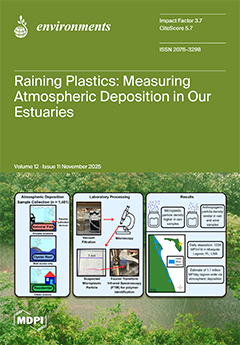
Cover Story (view full-size image):
Correlating atmospheric deposition (AD) with the large number of microplastics (MP) in estuaries is a challenging but important first step toward mitigating this global pollutant. A previously published model of surface waters in the Indian River Lagoon (east–central coast of Florida, USA) estimated a total of 1.4 trillion MP. To assess whether AD can account for this quantity, we deployed passive AD collectors, with assistance from citizen scientists, over a 14-month period. The average deposition rate was 1224 MP/m2/d; extrapolated lagoon-wide, this corresponds to approximately 1.1 trillion MP deposited. This value suggests that AD may represent an important pathway for MP input to this estuary. View this paper
- Issues are regarded as officially published after their release is announced to the table of contents alert mailing list.
- You may sign up for e-mail alerts to receive table of contents of newly released issues.
- PDF is the official format for papers published in both, html and pdf forms. To view the papers in pdf format, click on the "PDF Full-text" link, and use the free Adobe Reader to open them.
Previous Issue
Next Issue
