
Article

Monazite and Cassiterite Dating and Pyrite S Isotopes of the Helukou Tungsten-Tin Polymetallic Deposit of the Guposhan Ore District, Nanling Range: Implications for Ore Genesis
1
Mineral Geology Center, Hunan Institute of Geophysical and Geochemical Survey, Changsha 410114, China
2
Southern Marine Science and Engineering Guangdong Laboratory (Guangzhou), Guangzhou 511458, China
*
Author to whom correspondence should be addressed.
Geosciences 2026, 16(5), 191; https://doi.org/10.3390/geosciences16050191
Submission received: 25 February 2026 / Revised: 29 April 2026 / Accepted: 30 April 2026 / Published: 10 May 2026

Abstract

The Guposh an orefield within the western segment of the Nanling Range hosts a globally significant tungsten and tin metallogenic province whose formation is tied to the intense Middle Jurassic granitic magmatism. Nonetheless, critical ambiguities remain regarding the metallogenetic ages and origin of ore-related hydrothermal fluids for W-Sn polymetallic deposits in this orefield. Here, we integrate in situ U-Pb geochronology of monazite and cassiterite and sulfur isotope analyses of pyrite from the Helukou W-Sn polymetallic deposit to resolve this outstanding question. In situ monazite U-Pb geochronology yielded lower intercept ages of 164.4 ± 1.1 Ma and 162.0 ± 2.0 Ma for the fine-grained and medium- to coarse-grained biotite monzogranite phases of the Guposhan pluton, respectively, bracketing its formation during the Middle Jurassic era. The initial 207Pb/206Pb ratio of 0.85 for the monazite grains is within the range of crustal and mantle materials, likely indicating a mantle–crust mixing source for the magma. Cassiterite from skarn-type ores yields a lower intercept U-Pb age of 165.9 ± 3.2 Ma, confirming a genetic relationship between the Guposhan magmatism and Helukou W-Sn mineralization. In situ pyrite δ34SV-CDT values show a uniform range from −0.66‰ to +0.79‰, indicating a uniform magmatic-derived sulfur source for the ore-forming fluids. We further demonstrate that fluid-rock interaction, rather than fluid mixing, acts as a crucial factor in the ore precipitation of W-Sn metals of the Helukou deposit.

1. Introduction

Situated in the core of Southeast China (Figure 1), the Nanling Range hosts one of the world’s preeminent tungsten and tin metallogenic systems, accounting for more than eighty percent and sixty percent of China’s proven W and Sn reserves [1]. The widespread tungsten and tin deposits in this region are widely regarded as being closely associated with multi-stage felsic magmatic activity ranging from the Cambrian to the Cretaceous [2,3,4,5,6,7]. Mesozoic granites and their associated tungsten and tin mineralization (165–150 Ma) are particularly dominant in terms of both scale and metal endowment [1,2,7]. Isotopic investigations have shown that these Mesozoic granites are primarily the product of partial melting of tungsten and tin-enriched basement rocks, coupled with varying degrees of mantle-derived melt input. Such crust–mantle mixing is thought to have produced the tungsten and tin-enriched magmas [8,9]. However, there is still considerable controversy over whether the mantle provided the metals and/or fluids [10,11,12]. It is hard to conclude that tin and other metals were sourced from the mantle-derived materials, due to the low tin content in mantle rocks (0.12–0.17 ppm) [13]. However, some geologists have proposed that the Sn deposits could occur within mantle-related hot spot settings [14]. Mantle-derived fluids/melts might probably provide additional heat, which could (1) induce the high-temperature anatexis of tin-enriched crustal protoliths; (2) promote extraction from these tin-rich materials in the crustal rocks, e.g., biotite, ilmenite, and titanite; and (3) subsequently result in the preliminary concentration of tin in the granitic melts [15]. In addition, the mantle-derived fluids could elevate the water content of the magma system and consequently promote Sn migration from magma to the hydrothermal system [16]. In addition, these Mesozoic granites of the Nanling range are mostly highly fractionated, having undergone a protracted multistage magmatic evolution [8,17,18,19,20]. It is well accepted that multistage magmatic evolution favors W-Sn enrichment within the evolving magmatic system, since W and Sn are both incompatible elements. Magmatic evolution, which is dominated by mineral fractional crystallization, would result in the enrichment of W and Sn in the late-stage magma melt [21]. The exsolution of metal-rich ore-forming fluids from these evolving magmas is also crucial for W-Sn mineralization, and is widely acknowledged as the key driver of the Nanling Range’s giant tungsten and tin deposits [2,22]. Therefore, deciphering the source of ore-related hydrothermal fluids is an important aspect of the reductive ore-forming process.
An important constituent part of the Nanling metallogenic belt, the Guposhan ore field lies in the western Nanling Range and hosts extensive Mesozoic granitic magmatism and associated Sn-W polymetallic deposits. The Guposhan pluton, the largest and most economically significant intrusion in the district, is widely interpreted to have formed via extensive crust–mantle interaction [23,24,25], as evidenced by abundant mafic microgranular enclaves (MMEs), with depleted zircon hafnium isotopes (εHf(t) = +2.6 to +7.4), which is a geochemical signature consistent with a predominantly depleted mantle origin for the MMEs [26]. In addition, three stages (from Early to Late Jurassic) of magmatism were identified within this pluton; however, magmatism during the Early and Middle Jurassic periods is genetically tied to the tungsten and tin mineralization [4,25]. Middle Jurassic granitic magmatism and the associated W-Sn mineralization event have become a focus of geologists, primarily due to the relatively small-scale nature of Early Jurassic mineralization. While previous investigations have solidly documented a genetic association between the Guposhan granites and the district’s Sn-W metallogenesis, two critical outstanding questions impede a comprehensive understanding of the metallogenic system: (1) The sources of ore-related hydrothermal fluids for these deposits remain poorly constrained, hindering the further understanding on the spatiotemporal coupling between granitic magmatism and tungsten and tin mineralization; and (2) most existing geochronological data are derived from gangue and accessory minerals (muscovite, garnet, molybdenite) [25,27], whereas reliable, direct geochronological evidence from Sn-bearing ore minerals, essential for precisely ascertaining the timing of tungsten and tin mineralization, is currently absent. To address these unresolved issues, we conduct LA-ICP-MS U-Pb geochronology on monazite grains from the Guposhan granites and cassiterite grains from the skarn-type ores of the Helukou Sn-W deposit (Guposhan ore district), alongside in situ sulfur isotope analyses of coeval pyrite. The results firmly constrain the timing of pluton emplacement and related mineralization, resolve uncertainties regarding the source of ore-related hydrothermal fluids, and offer novel perspectives on the origin and formation of the Helukou deposit.

2. Geological Setting

2.1. Regional Geology

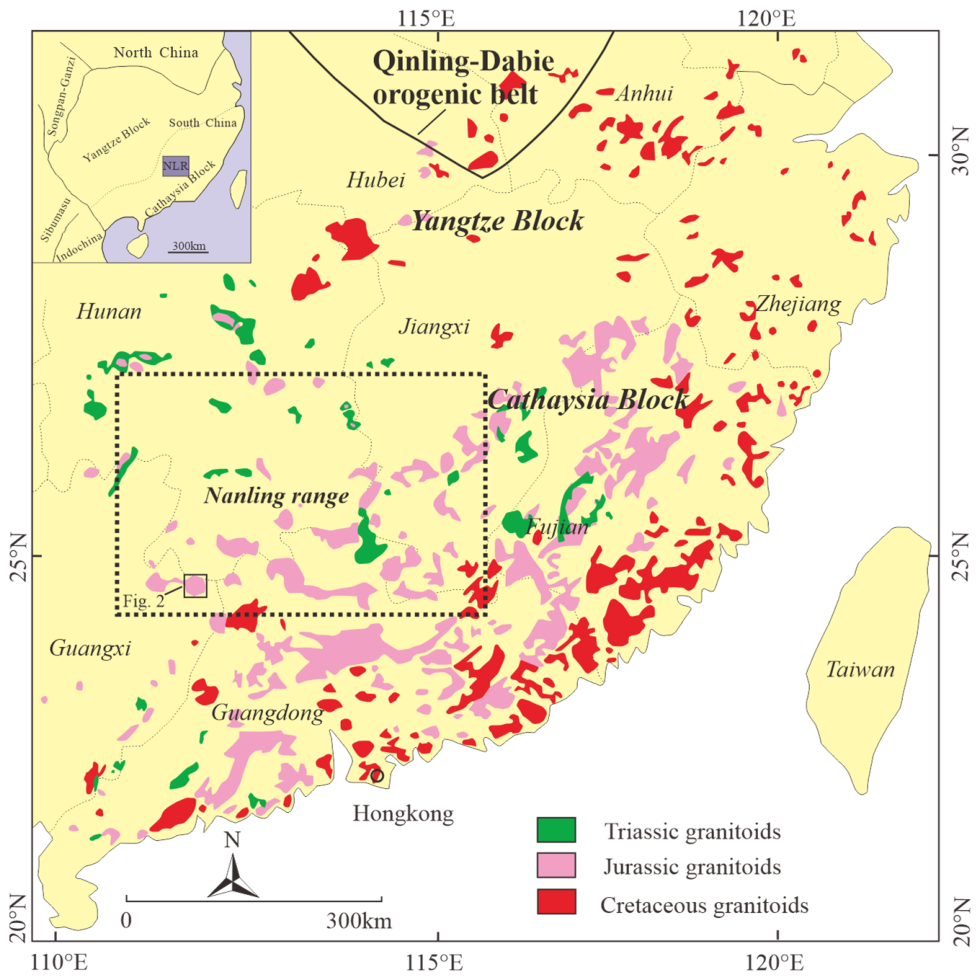
The Guposhan region, situated in eastern Guangxi and southern Hunan Province, forms a key tungsten and tin polymetallic mineralized district in the western Nanling Range (Figure 1), with mineralization genetically tied to Jurassic granitic intrusions of the Guposhan pluton. The study area has experienced a protracted tectonic history marked by multiple stages of tectonic events, e.g., the Caledonian, Indosinian, and Yanshanian orogenies. These tectonic episodes exerted a fundamental control on the regional structural architecture, driving the formation of the region’s pervasive NE-trending fault systems that acted as key conduits for magma emplacement and hydrothermal fluid flow [28]. The regional stratigraphic succession is dominated by: (1) pre-Devonian basement sequences, including Sinian greywacke, and Cambrian quartz sandstone, dolomite, bioclastic limestone, and low-grade metasandstone-slate; (2) Devonian shallow-marine clastic and carbonate sedimentary sequences, which form the primary host strata for skarn-type tungsten and tin mineralization; (3) Carboniferous carbonate successions, Jurassic carbonate and quartz sandstone; and (4) Neogene argillaceous sandstone and Quaternary conglomerate cover.
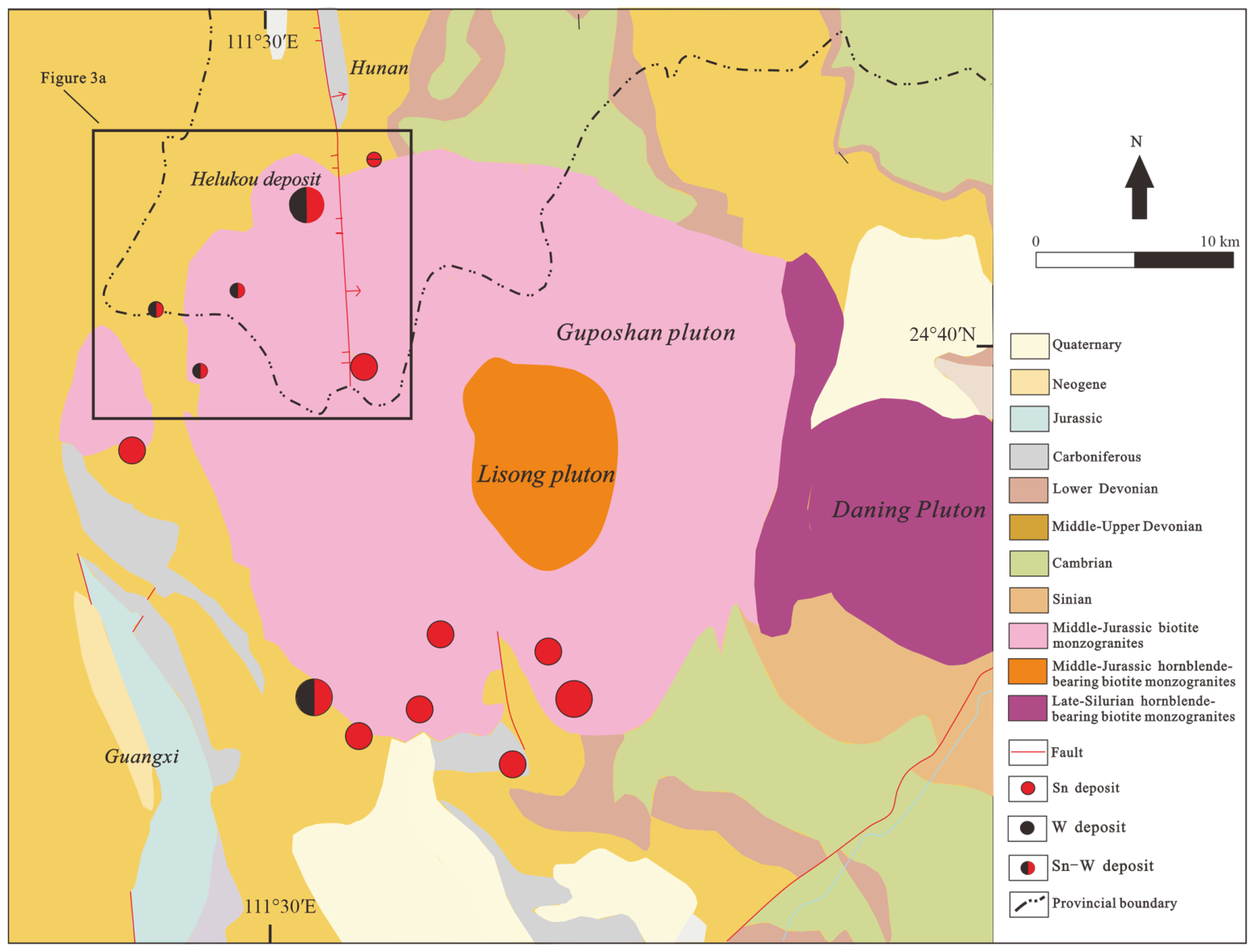
The Guposhan and Lisong plutons constitute the voluminous, cogenetic intrusive complex that dominates the study area, with outcrop areas of ~678 km2 and ~70 km2, respectively (Figure 2). Although minor Early Jurassic volcanic rocks (mostly rhyolites) with ages of 170–178 Ma are distributed in the eastern Nanling Range, no volcanic rocks outcropped in this region [29]. The main phase of the Middle Jurassic Guposhan pluton has a published emplacement age of 162.8 ± 1 Ma, and is dominated by two types of biotite monzogranites: fine-grained and medium- to coarse-grained. It was intruded into Devonian shallow-marine clastic and carbonate successions, generating extensive contact metamorphic aureoles and hydrothermal alteration, including widespread silicification, marmorization, and skarnization in the host wallrocks [4]. The Middle Jurassic Lisong pluton, an inner-phase intrusion entirely enclosed within the Guposhan pluton, mainly comprises coarse-grained hornblende-bearing biotite monzogranites with a minor portion of coarse-grained hornblende-free biotite monzogranites (163.3 ± 1 Ma) [23]. The coarse-grained hornblende-bearing biotite monzogranites are featured by the widespread distribution of MMEs, with major mineral assemblages of K-feldspar, plagioclase, quartz, biotite, and hornblende. Although the Lisong and Guposhan granitoids display pronounced lithological heterogeneity, their synchronous emplacement and indistinguishable Nd-Hf isotopic signatures are widely interpreted to record derivation from a single magma chamber [23].

2.2. Ore Deposit Geology

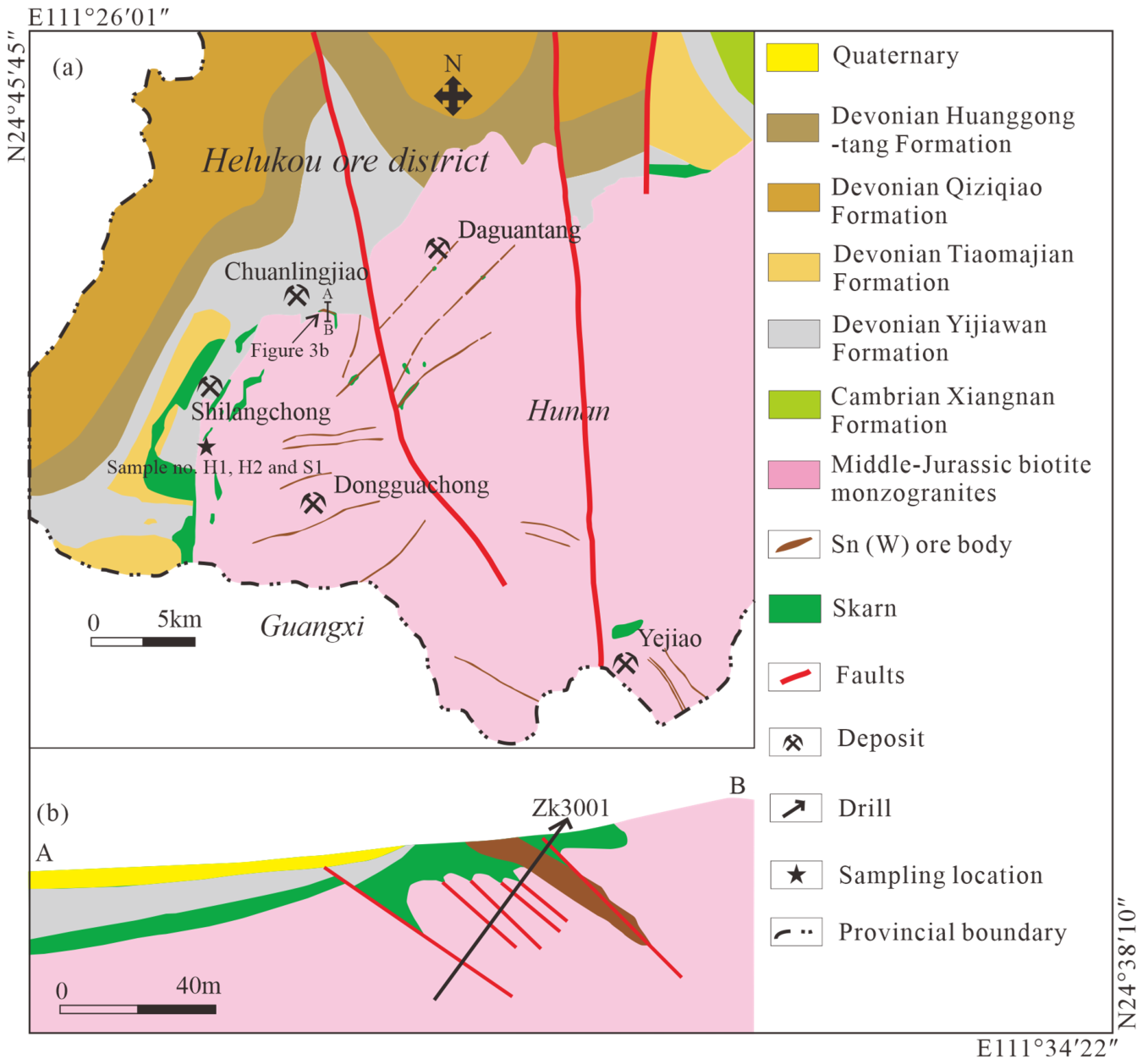
The Helukou deposit, situated at the northwestern Guposhan orefield, is an economic deposit with proven WO3 reserves exceeding 33,752 t [4]. The deposit comprises five discrete ore zones: Chuanlingjiao, Daguantang, Shilangchong, Dongguachong, and Yejiao (Figure 3a). The deposit area is dominated by Devonian sedimentary successions, with a localized Quaternary cover. The Devonian stratigraphic sequence, in ascending order, includes the Tiaomajian, Yijiawan, Huanggongtang, and Qiziqiao formations, which consist of a continuous suite of shallow marine siliciclastic and/or carbonate assemblages. Notably, the intrusive contact between the carbonate-dominated Huanggongtang Formation and the Guposhan granites constitutes the primary structural-lithological trap for tungsten and tin polymetallic mineralization.
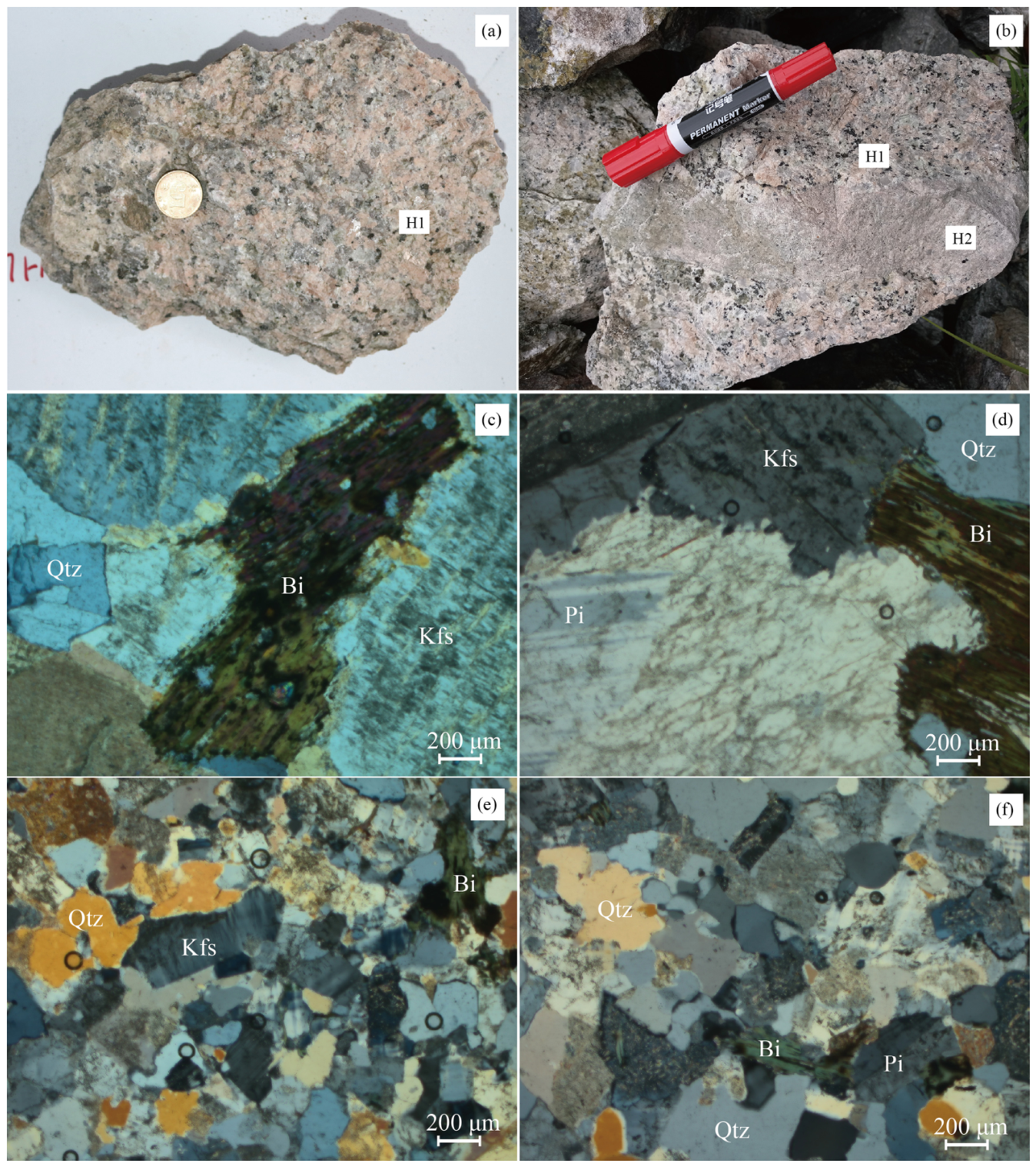
Lateral compression linked to syn-emplacement magma inflation drove widespread rheological folding along the intrusive contact. A systematic vertical zonation is developed from the pluton margin outwards into the host wallrocks, with fold axes consistently oriented subparallel to the intrusive contact, forming favorable permeable pathways for hydrothermal fluid migration (Figure 3b). Faults in the deposit area predominantly strike NNE to near-NS, with subordinate NW-, near-EW-, and NE-striking structures, which acted as secondary fluid conduits. The granitic lithologies can be subdivided into two units: medium- to coarse-grained biotite monzogranites and fine-grained biotite monzogranites (Figure 4a,b). The medium- to coarse-grained monzogranite, which is the volumetrically predominant unit, occurs as a concealed intrusion emplaced beneath the Devonian Huanggongtang Formation to the northwest, with local Quaternary cover. Its contact with the Huanggongtang Formation is typically conformable with a gentle dip, forming an ideal structural setting for skarn development. The mineralogy is dominated by K-feldspar (~35 vol.%), plagioclase (~25 vol.%), quartz (~30 vol.%), and biotite (~10 vol.%), with accessory minerals accounting for less than 1 vol.% (including zircon, apatite, and rutile) (Figure 4c,d). As a late-stage differentiator of the Guposhan pluton, the fine-grained biotite monzogranite is predominantly distributed as dikes that intrude the medium- to coarse-grained monzogranite (Figure 3b). For its modal mineral composition, K-feldspar constitutes ~30 vol.%, plagioclase ~25 vol.%, quartz ~35 vol.%, biotite ~10 vol.%, and accessory minerals make up less than 1 vol.% (including zircon, apatite, and rutile) (Figure 4e,f).
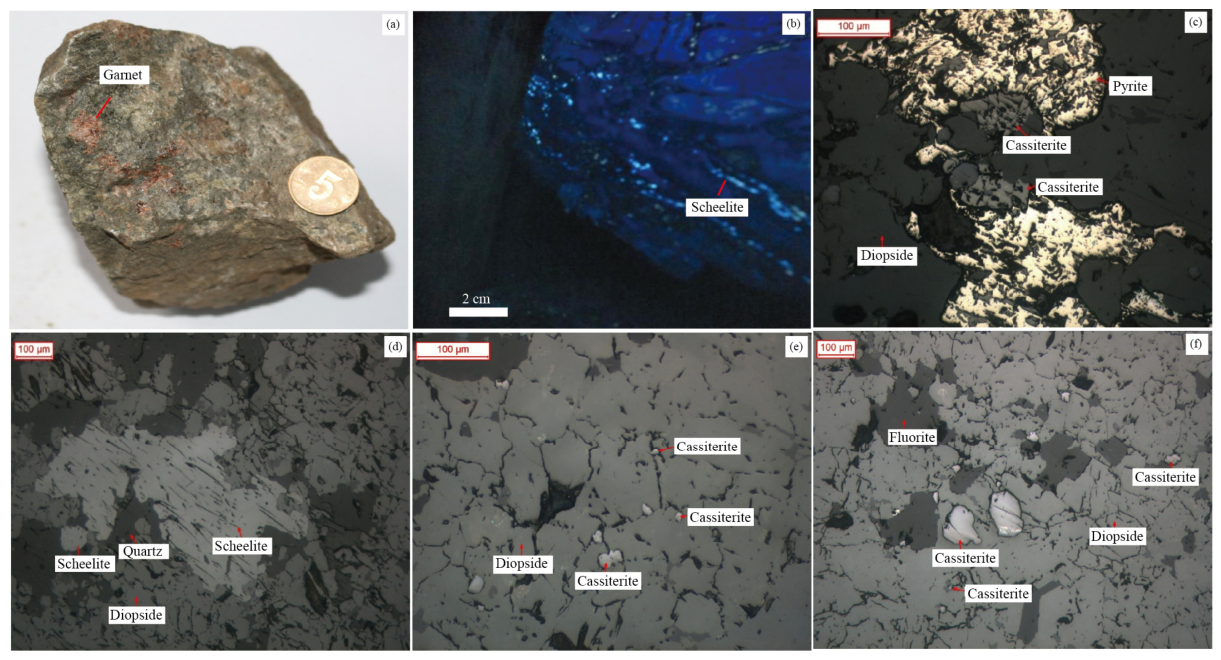
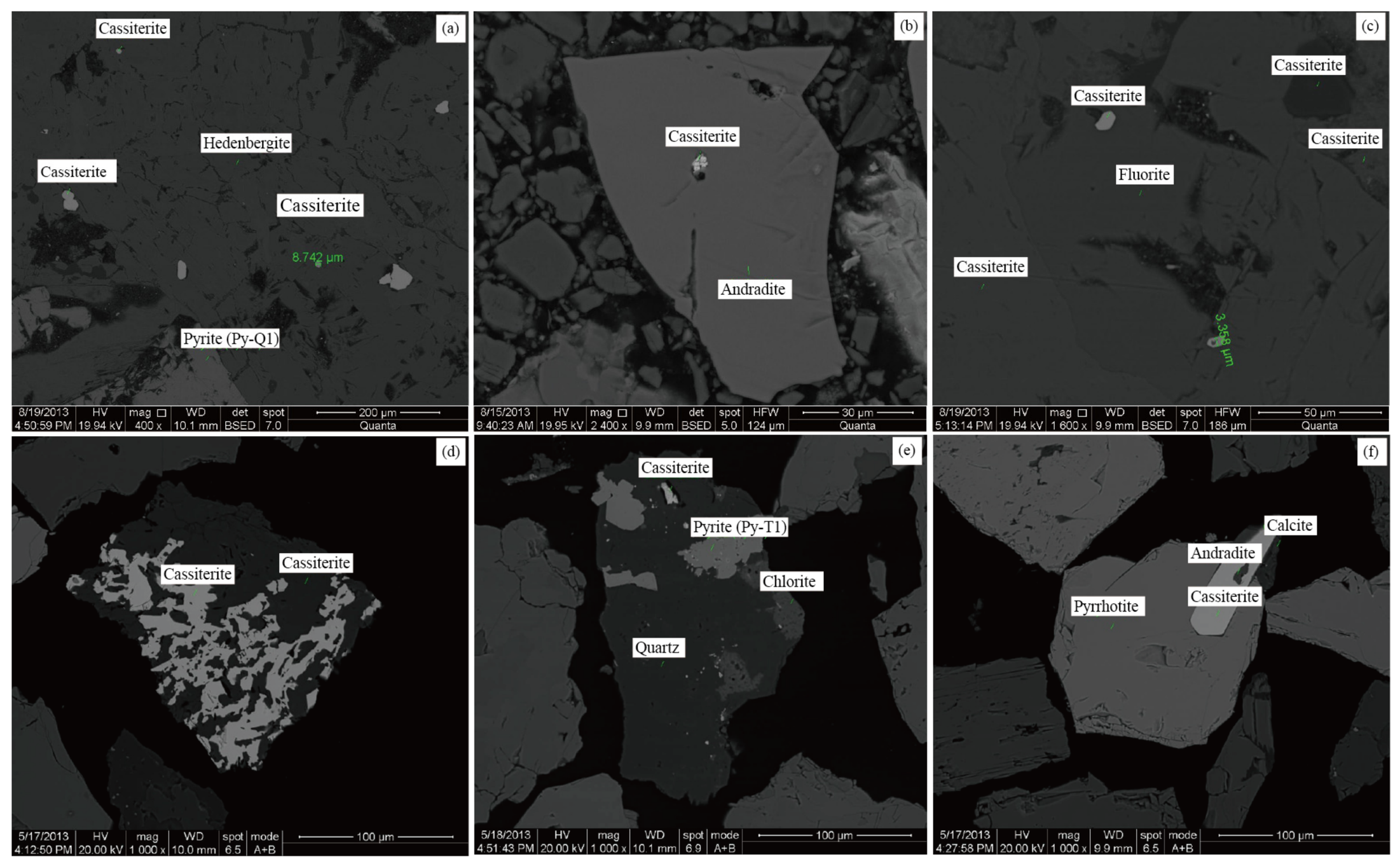
As the dominant ore type in the Helukou deposit, skarn-type Sn-W mineralization is primarily hosted within the intrusive contact zones that exist between the Guposhan granites and the Tiaomajian–Yijiawan formations (Figure 3b). The orebodies are predominantly stratiform or stratoid, with highly variable strike orientations (NE, NW, and SE) and dip attitudes. Individual orebodies extend for ~390 m along strike, with thicknesses ranging from 1.6 to 9.0 m and mean grades of 0.27–0.53 wt.% Sn and 0.01–0.12 wt.% WO3 [25]. Cassiterite and scheelite constitute the dominant ore minerals (Figure 5), accompanied by pyrite and pyrrhotite. The gangue assemblage is dominated by skarn silicates (garnet, diopside, vesuvianite, tremolite), followed by later hydrothermal quartz, fluorite, and calcite (Figure 5 and Figure 6).

3. Sampling and Analytical Methods

3.1. Sampling and Cathodoluminescence Images

Sample collection was conducted on the following lithologies: medium- to coarse-grained biotite monzogranite (H1), fine-grained biotite monzogranite (H2), and skarn-type ore (S1), from the Shilangchong ore block of the Helukou deposit, with sample locations shown in Figure 3a. Based on textural occurrence and petrographic observations, pyrite grains were subdivided into two types: Py-Q1 and Py-T1. Py-Q1 occurs as euhedral to subhedral crystals within hedenbergite (Figure 6a), whereas Py-T1 occurs predominantly as anhedral grains within quartz (Figure 6e).
Prior to backscattered electron (BSE) imaging, monazite separates from granitic samples, and cassiterite separates from skarn-type ores were prepared using standard magnetic and heavy-liquid separation techniques. Then, these crystals were embedded in epoxy resin blocks and polished to expose flat, defect-free surfaces. BSE imaging was performed using a TESCAN MIRA 3 LMH field-emission scanning electron microscope (FE-SEM; TESCAN, Brno, Czech Republic) at Sample Solution Analytical Technology Co., Ltd., Wuhan, China.

3.2. Monazite U–Pb Dating Analyses

The LA-ICP-MS method was utilized to conduct in situ U–Pb isotopic analyses of monazite, which was carried out at the State Key Laboratory of Critical Mineral Resources and Metallogeny, Institute of Geochemistry, Chinese Academy of Sciences. The analytical process employed a GeoLas Pro 193 nm ArF excimer laser system (Coherent, Inc., Santa Clara, CA, USA) linked to an Agilent 7900 ICP-MS instrument (Agilent Technologies, Santa Clara, CA, USA); helium was used as the carrier gas, argon as the makeup gas, and the two gas streams were combined via a T-connector prior to their introduction into the ICP. Ablation was carried out in a low-volume ablation cell fitted with a resin insert to minimize memory effects and enhance washout efficiency. Typical operating conditions employed a pulse repetition rate of 5 Hz, laser fluence of 4 J/cm2, and spot diameter of 24 μm. External reference materials were used for mass bias correction, specifically monazite reference 44069 (426 ± 3 Ma) [30], Trebilcock 117531 (272 Ma) [31], and Bananeira (507.7 Ma) [32]. For the time-dependent drift in U-Th-Pb ratios, linear interpolation was adopted for correction, with the correction process relying on repeated measurements of 117531 or Bananeira [33]. The monazite reference materials Coqueiro, Paraíso, and Itambé were analyzed as quality-control samples for age and trace-element data [32]. Data processing was conducted using ICPMSDataCal software 12.2 [33,34], and U-Pb Tera-Wasserburg visualization and age calculations were conducted using IsoplotR software [35]. The analytical results show that age uncertainties are better than 2%.

3.3. Cassiterite U-Pb Dating

In situ U–Pb dating of cassiterite was finished by LA-ICP-MS at the State Key Laboratory of Critical Mineral Resources and Metallogeny, Institute of Geochemistry, Chinese Academy of Sciences. The analytical system consisted of a 193 nm ArF excimer laser (RESOlution LR; Australian Scientific Instruments, Fyshwick, Australia) coupled to an Agilent 7700x quadrupole ICP-MS (Agilent Technologies, Santa Clara, CA, USA). A homogenized deep-ultraviolet laser beam was focused onto the cassiterite surface, with a fluence set at 4.5 J/cm2. Each analytical run included a 20 s background measurement prior to 40 s of ablation, using a spot diameter of 23 μm and a repetition rate of 4 Hz. Aerosols formed during ablation were conveyed by helium carrier gas, blended with argon makeup gas, and then fed into the ICP-MS. Data reduction was conducted using ICPMSDataCal software [33,34]. To ensure the accuracy of test results, instrumental fractionation and mass bias were closely monitored throughout the analysis process; the cassiterite reference material AY 4 (154.3 ± 0.7 Ma) was employed as the primary external standard to realize the correction of these deviations [36]. An in-house cassiterite standard was analyzed periodically to monitor data reproducibility. Age calculations and Tera-Wasserburg visualization were produced by IsoplotR [35]. The analytical results show that age uncertainties are better than 2%.

3.4. LA-MC-ICP-MS Pyrite S Isotopic Analyses

In situ sulfur isotope analyses were performed on pyrite grains from skarn-type ores at the State Key Laboratory of Continental Dynamics, Northwest University (Xi’an, China). The analytical process employed a Resolution M 50 193 nm ArF excimer laser ablation system paired with a Nu Plasma 1700 multicollector (MC) ICP-MS (Nu Instruments, Wrexham, UK), following the analytical protocols outlined in references [37,38]. For pyrite ablation, the laser parameters were set as: a laser spot diameter of 37 μm, repetition rate of 4 Hz, and laser fluence of 3.7 J cm−2. Throughout the analysis, the ion intensity of target pyrite samples was stably maintained at approximately 8–12 V. Additionally, the δ34S values of the external reference material (PPP–1; δ34SV-CDT = 5.30 ± 0.20‰) were calibrated against the Canyon Diablo Troilite (CDT) standard using either gas-source mass spectrometry (GS-MS) or solution MC-ICP-MS methods [38,39]. The pyrite reference material NWU-Py (δ34SV-CDT = 3.48 ± 0.26‰) was used for external calibration of unknown pyrite samples [40].

4. Results

4.1. Monazite U-Pb Ages

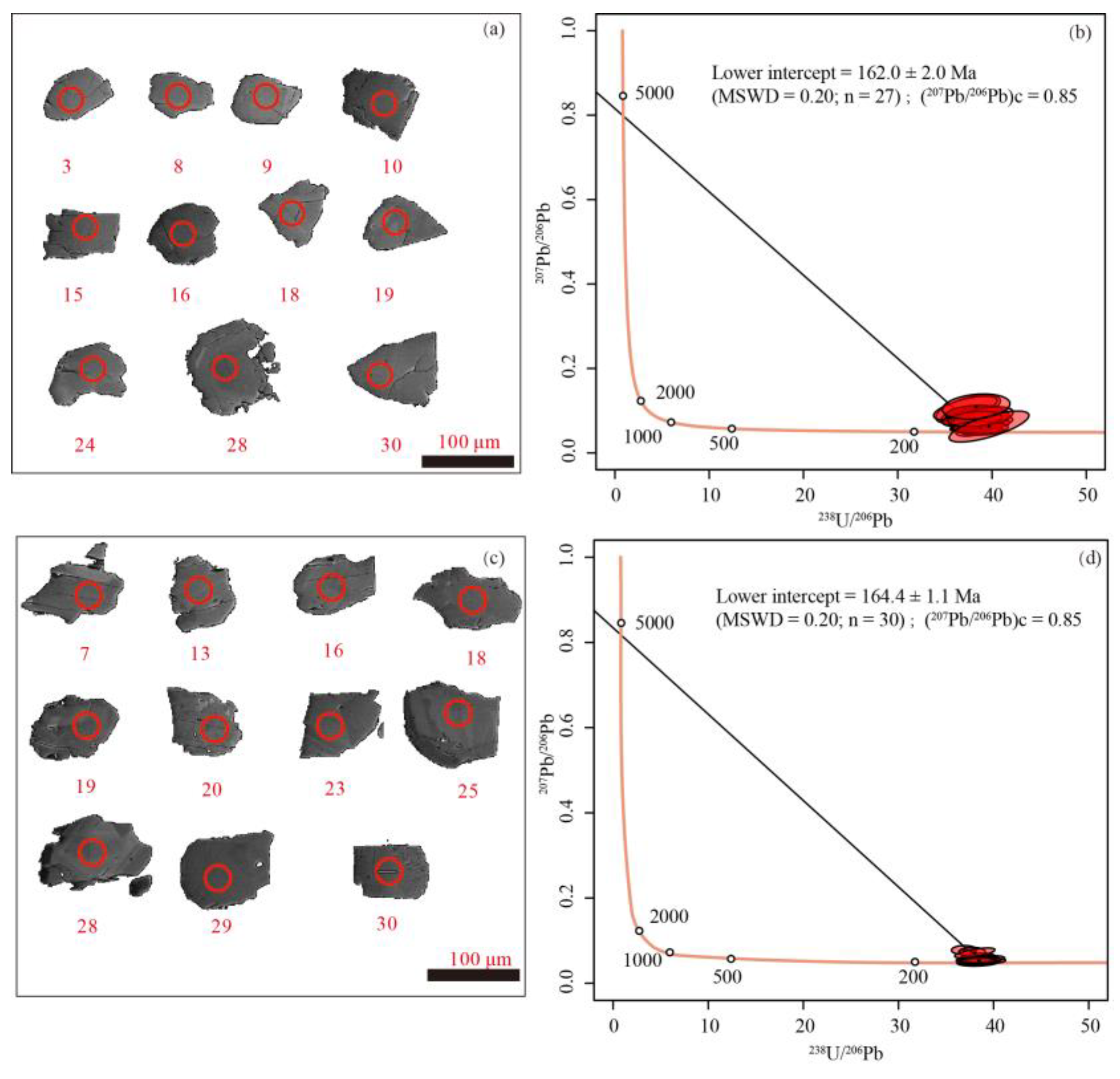
LA-ICP-MS monazite U-Pb isotope compositions are provided in Table S1. Monazite grains from the medium- to coarse-grained biotite monzogranite (H1) and fine-grained biotite monzogranite (H2) are mostly gray and show no zoning features (Figure 7a,c). Monazite grains of H1 have high Pb, Th, and U concentrations of 133–891 ppm, 18370–117766 ppm, and 141–1684 ppm, respectively, which are similar to the H2 monazite grains with Pb, Th, and U contents of 323–1611 ppm, 36026–176676 ppm, and 1124–8304 ppm, respectively. Twenty-eight monazite grains of H1 defined a lower intercept age of 162.0 ± 2.0 Ma (MSWD = 0.15) and an initial 207Pb/206Pb ratio of 0.85, respectively (Figure 7b). Thirty monazite grains of H2 yielded a lower intercept age of 164.4 ± 1.1 Ma (MSWD = 0.20) and an initial 207Pb/206Pb ratio of 0.85, respectively (Figure 7d).

4.2. Cassiterite U-Pb Ages

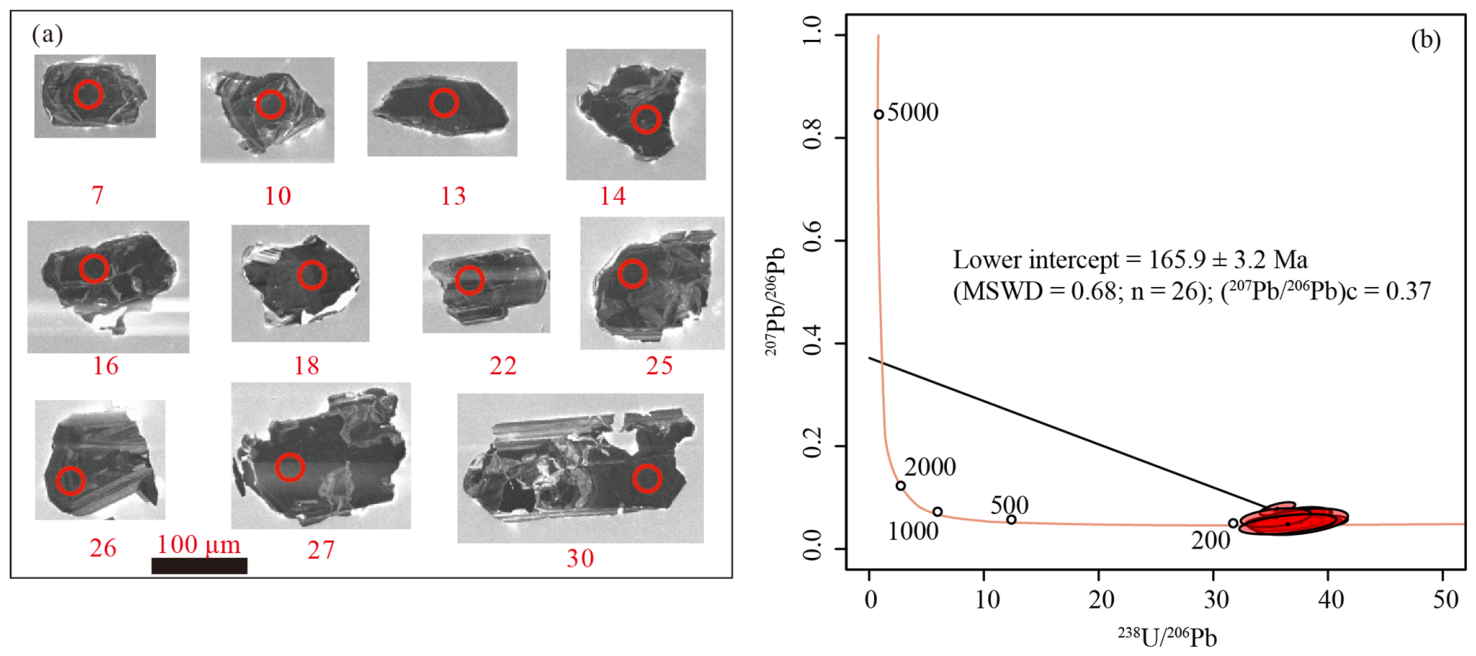
Cassiterite U-Pb isotopic data are presented in Table S2. These cassiterite grains are mostly gray and black under CL images and display alternating light and dark zoning characteristics (Figure 8a). They contain variable U contents of 5–963 ppm and extremely low Th concentrations (mostly below the limit of detection). Twenty-six grains have 207Pb/206Pb, 207Pb/235U, and 206Pb/238U ratios of 0.0462–0.2788, 0.1657–1.6034, and 0.0255–0.0364, respectively, yielding a lower intercept age of 165.9 ± 3.2 Ma (MSWD = 0.68) and an initial 207Pb/206Pb ratio of 0.37, respectively (Figure 8b).

4.3. Pyrite S Isotopes

The LA-MC-ICPMS S isotopes of pyrite from the Shilangchong ore block, Hulukou W-Sn deposit, are presented in Table S3. The pyrite co-exists with hedenbergite (Py-Q1) and quartz (Py-T1) has coincident δ34SV-CDT values of −0.38 to 0.46‰ and −0.66 to 0.79‰, respectively.

5. Discussion

5.1. Geochronological Frame of the Guposhan Ore District

The Nanling range, representing a giant tungsten and tin mineralization domain, has experienced multi-stage magmatism and related tungsten and tin polymetallic mineralization, i.e., Neo-Proterozoic, Caledonian, Indosinian, and Yanshanian, where the Yanshanian highly fractionated granites are spatially and genetically associated with a large number of giant and large tungsten and tin mineral deposits [41,42,43,44]. Within this framework, three primary episodes of magmatism and W-Sn polymetallic mineralization have been identified: Early Jurassic, Middle Late Jurassic, and Cretaceous [6,41,45]. Notably, the Early Jurassic (185–180 Ma) magmatism and the corresponding tungsten and tin polymetallic mineralization are rarely documented, e.g., Dading (185.9 Ma) [41] and Helukou (185.3 Ma) [4]. Regarded as the main metallogenic period of the Nanling range, the Middle–Late Jurassic (165–150 Ma) is distinguished by extensively distributed highly fractionated granites and related super-large-scale tungsten and tin polymetallic deposits (e.g., Shizhuyuan, Xihuashan, Furong, Xianghualing, Yaogangxian) [1,2]. Similarly, the Cretaceous (125–90 Ma) is another important metallogenic epoch, which is dominated by Sn mineralization and accommodates a suite of large-scale tungsten and tin polymetallic deposits, such as Jiepailing, Shanhu, Yanbei [6,46,47].
Located in South China, the Guposhan region, an integral part of the Nanling metallogenic belt, bears a complex record of Jurassic magmatism occurring in multiple stages, along with associated tungsten and tin polymetallic mineralization. This unique geological setting makes it a critical natural laboratory for clarifying the temporal correlations and genetic links between magmatic evolution and tungsten and tin ore formation [23,24,26,27]. Notably, the earliest magmatic event in the Guposhan region, dated at 184 ± 4 Ma, ranks among the oldest Jurassic granitic magmatism in this region [4]. The timing of the region was confirmed by molybdenite Re-Os isotope dating, with a measured age of 183.5 ± 2.8 Ma, which corresponds to one of the Early Jurassic tungsten and tin mineralization events [4]. Following this event, prominent magmatic activity occurred around 165 Ma, not only driving magmatic evolution but also inducing large-scale W-Sn polymetallic mineralization, with a number of tungsten and tin polymetallic deposits concentrated in the 165–160 Ma interval, e.g., Xinlu, Chuanlingjiao, Maohedong, Lantoushgan, Sanchachong, and Liuhe’ao [27,48]. The Middle Jurassic period (165–160 Ma) marks the principal phase of magmatism and Sn polymetallic mineralization in the study area, followed by a third-stage magmatic and mineralization event at approximately 154 Ma [24,48]. In this study, monazite grains from the Guposhan granites contain high Th and U concentrations, confirming their magmatic derivation, ruling out metamorphic and/or hydrothermal origin [49,50]. In addition, they show no residual core structure, metamorphic overgrowth, and/or inherited xenocrystic characteristics, ruling out the possibility that they are inherited monazites [49]. The calculated initial 207Pb/206Pb ratio of 0.85 for the monazite grains of the Guposhan pluton matches the theoretical value of the Stacey–Kramers two-stage crustal evolution model at ~160 Ma, confirming the reliability of the lower intercept ages in this study [51]. Our investigation of the Guposhan granites through monazite U-Pb geochronology provided two precise ages of 162.0 ± 2.0 Ma and 164.4 ± 1.1 Ma, which show remarkable consistency with the ages of the Guposhan granites reported in previous studies [23,24]. Therefore, the monazite U-Pb ages most probably record the intrusion age of the Guposhan pluton.
The skarn-type orebodies of the Helukou deposit mostly occur within the contact zones of the Guposhan pluton and the Devonian carbonate strata, indicating that the formation of the Helukou deposit is genetically linked to the Guposhan granites. In the present study, U-Pb geochronology of cassiterite obtained an age of 165.9 ± 3.2 Ma, which is consistent with the previously reported molybdenite Re-Os isotopic age (163.4 ± 3 Ma) [4], confirming that the cassiterite U-Pb age could record the timing of the hydrothermal activity of the Helukou deposit. Furthermore, the temporal consistency between the U-Pb ages of monazite and cassiterite provides strong evidence for the genetic relationship between the Helukou mineralization and the Guposhan granites. Integrating these new chronological data with existing age constraints, we identify three distinct episodes of magmatic activity and associated tungsten and tin mineralization in the study area, spanning from Early to Late Jurassic. This extended magmatic–mineralization history persisted for approximately 30 million years (184–154 Ma), establishing a prolonged thermal regime that facilitated intense magmatic–hydrothermal interactions. The cumulative effects of this multistage magmatic evolution ultimately culminated in the development of significant Sn mineralization throughout the Guposhan region.

5.2. Sulfur Source of the Helukou Sn Deposit

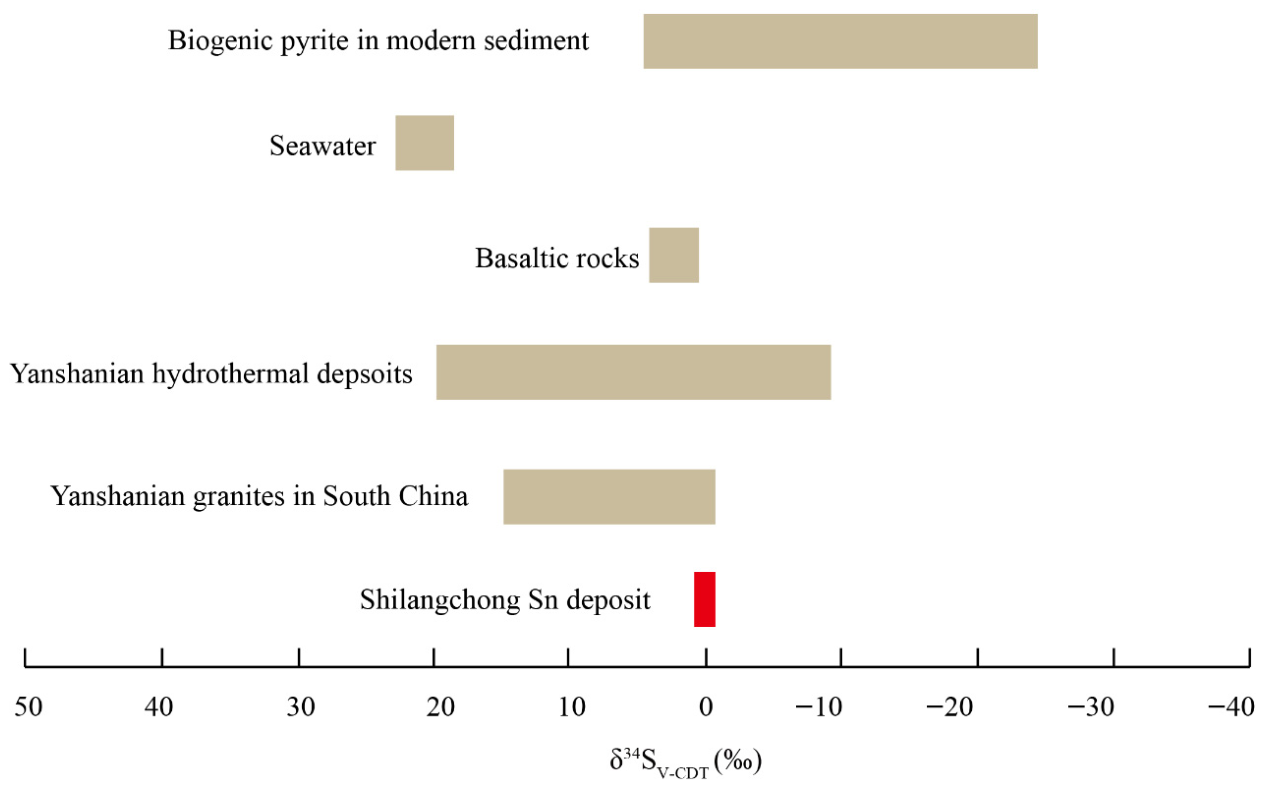
Pyrite (FeS2), one of the crucial minerals in magmatic–hydrothermal deposits, can record significant information during the ore-forming process, such as ages, sources, precipitation conditions, and the genesis of the deposits [52,53,54]. Sulfur isotopes of pyrite have been employed as a powerful tool to provide a novel understanding of the source and ore-forming mechanisms [10,55,56]. In general, there are three potential S reservoirs: (1) mantle-derived sulfur with δ34S values of approximately 0.3 ± 0.5‰ [57]; (2) seawater-derived sulfur with positive δ34S values of approximately +21 ± 0.2‰ [58]; and (3) biogenic-origin sulfur with negative δ34S values as low as −24.5‰ [59]. The sulfide assemblage in the Helukou W-Sn polymetallic deposit exhibits a mineralogical dominance of pyrite, chalcopyrite, and molybdenite, complemented by subordinate bornite, sphalerite, and arsenopyrite. The absence of hematite and sulfate minerals provides critical evidence for reduced hydrothermal conditions, with prevailing sulfur speciation likely existing as hydrogen sulfide (H2S) within the ore-forming system. Consequently, the sulfur isotopic ratios of pyrites offer direct geochemical proxies for reconstructing the original isotopic composition of the ore-related hydrothermal fluids [60]. Pyrites in the skarn-type ores consistently have δ34SV-CDT values within a narrow range of −0.66‰ to 0.79‰, suggesting a uniform sulfur source for these pyrites and excluding the involvement of stratum-derived sulfur. These values are distinct from the seawater-derived sulfur and biogenic-origin sulfur, further excluding the involvement of seawater and biological effects (Figure 9). In addition, these values are within range of the Yanshannian granites and related hydrothermal deposits and are consistent with the mantle-derived sulfur and/or magmatic sulfur (0 ± 3‰) [52,61], likely indicating a magmatic source for these pyrites. Furthermore, Guposhan granites have variable zircon εHf(t) values (−2.8 to +0.3), which support the theory of their origin by mixing of mantle and crustal constituents [26]. Such geochemical characteristics are consistent with those of other Sn-bearing granitic plutons in the Nanling range, e.g., Qitianling, Xitian, and Jiuyishan, which are generated by the intense mantle–crust interaction [62,63]. Therefore, it is inferred that mantle-sourced fluids participated in the formation of these pyrites, which is corroborated by mantle-derived He-Ar isotopes of pyrites from the nearby Xinlu deposit in this region [64]. Pyrite shows restricted sulfur isotope variations, implying a dominant magmatic sulfur reservoir. This magmatic sulfur formed via crust–mantle hybridization accompanying the emplacement of the Guposhan intrusive pluton.

5.3. Implication to the Sn Polymetallic Mineralization

Large-scale tungsten and tin mineralization across the Nanling Range of South China mainly occurred during the Yanshanian period, with a major metallogenic peak at 165–150 Ma, and is a product of the coupling of multiple geological processes, including tectonic dynamic transition, crust–mantle interaction, remelting of tungsten and tin-rich crust, and high-degree magmatic differentiation [10,65,66]. The intense magmatic and hydrothermal mineralization events are probably driven by the subduction and rollback of the Paleo-Pacific Plate, which remelts the pre-existing tungsten and tin-enriched basement metamorphic rocks and subsequently generates large-scale crust-derived granitic magmas [1,9,67,68,69]. These granites are typically peraluminous, enriched in volatiles (F, B, H2O), and characterized by highly differentiated signatures and low oxygen fugacity, which collectively control the enrichment, transport, and precipitation of tungsten and tin [69]. The monazite and cassiterite U-Pb geochronology are within the interval of 165–150 Ma, indicating that the Guposhan pluton and related Hekulou deposit are one of the products of the regional magmatic and hydrothermal event (165–150 Ma) in South China. It was reported that the Guposhan granites contain relatively low zircon log(fO2) (−29.2 to −12.0) and Ce4+/Ce3+ values (mostly lower than 100), indicating a product of magmatic systems [25]. Furthermore, these granites exhibit high differentiation index (DI) values of 92–95 (mean = 94), consistent with a highly fractionated origin [25]. Collectively, these properties highlight the high favorability of the Guposhan granites for tungsten and tin mineralization.
As a lithophile element, Sn is naturally concentrated in crustal lithologies; consequently, partial melting of Sn-enriched crustal rocks can generate Sn-rich magmas, a fundamental prerequisite for granite-related Sn mineralization [21]. Isotopic investigations have demonstrated that the Guposhan granites formed via crust-mantle mixing [23,24,26]. In addition, the MMEs are widely distributed within the granitoids of the nearby Lisong plutons, which are co-generic with the Guposhan pluton [26]. The depleted zircon Hf isotopes of the MMEs range from +2.6 to +7.4, further showing that mantle-originated magma was involved in the formation of granitoids in the Guposhan region [26]. Meanwhile, the initial 207Pb/206Pb ratios of 0.85 for the monazite grains are within the range of continental crust (0.70–0.88) [70] and mantle sources (0.83–0.86) [71], inferring that the Guposhan granites were formed through the mixing of magmas derived from the mantle and the crust. Crustal material input likely elevated Sn concentrations in the granitic melts, consistent with the high Sn contents (up to 42 ppm) reported for the Guposhan granites [25]. The constant δ34SV-CDT values of pyrites (−0.66‰ to 0.79‰) in this study indicate a uniform magma-origin sulfur for the Helukou deposit, further indicating that the ore-related hydrothermal fluids were mostly derived from the granitic magma, which is different from some tin deposits in the Nanling range, e.g., Jiepailing (δ34S values of −5.1‰ to +14.1‰) [72] and Furong (−26.1‰ to +10.4‰) [56]. The quartz oxygen isotopes of the nearby Lantoushan and Baimianshan tungsten and tin deposits are 7.3–8.1‰ and 7.3–8.6‰, respectively, also indicating a magma-origin fluid for the deposits in the Guposhan ore district [64]. Therefore, it is further indicated that the ore-forming fluid did not undergo large-scale mixing with fluids from different sulfur reservoirs. Therefore, precipitation of cassiterite, scheelite, and sulfides in the fluids was most likely induced by fluid cooling and pressure release, as well as fluid–rock interaction [73,74,75]. Given that the Helukou Tungsten and tin deposit was dominated by the skarn-type mineralization, it indicates that fluid–rock interaction probably plays a critical role during Tungsten and tin mineralization. Accordingly, the unique sulfur isotopes of the pyrites from the Helukou deposit attribute to a single magmatic–hydrothermal event, precluding the significant influence from polymetallic episodes or the superposition of fluids from different sources. The Guposhan pluton thus serves as a representative example for the broader Nanling Range, where numerous mantle-involved plutons (e.g., Qitianling, Jiuyishan, Xianghualing, and Xitian) display comparable petrological and geochemical signatures, collectively contributing to the fact that the Nanling Range ranks among the key global tungsten and tin metallogenic provinces [1].

6. Conclusions

(1) Monazite U-Pb geochronology for the Guposhan pluton obtained two precise ages (162.0 ± 2.0 Ma and 164.4 ± 1.1 Ma), confirming that granites of the Guposhan pluton formed in response to the regional Middle Jurassic magmatic event in South China.
(2) Cassiterite U-Pb geochronology yields 165.9 ± 3.2 Ma for the Helukou tungsten and tin polymetallic deposit, confirming its genetic affinity to the Guposhan pluton.
(3) Pyrite S isotopes (−0.66‰ to 0.79‰) indicate a magmatic sulfur source for the Helukou deposit, highlighting the involvement of mantle fluids in ore formation.
(4) The uniform pyrite S isotopes indicate that ore precipitation was primarily controlled by fluid–rock interaction, as opposed to fluid mixing.

Supplementary Materials

The following supporting information can be downloaded at: https://www.mdpi.com/article/10.3390/geosciences16050191/s1, Table S1: LA-ICP-MS monazite U-Pb isotope compositions of granites from the Guposhan pluton; Table S2: LA-ICP-MS cassiterite U-Pb isotope compositions of skarn-type ores, Helukou deposit; Table S3: Sulfur isotope compositions of pyrite from the skarn-type ores, Helukou deposit.

Author Contributions

Conceptualization, Y.Z. and Y.C.; Methodology, Y.Z. and Y.C.; Software, L.P. and D.Z.; Validation, J.C. (Jingya Cao), Y.Z. and Y.C.; Formal Analysis, Y.Z. and Y.C.; Investigation, Y.Z., D.Z. and J.C. (Jinlun Cai); Resources, Y.Z. and Y.C.; Data Curation, L.P. and H.L.; Writing—Original Draft Preparation, Y.Z.; Writing—Review and Editing, Y.C. and J.C. (Jingya Cao); Visualization, J.C. (Jinlun Cai) and H.L.; Supervision, Y.C.; Project Administration, Y.C.; Funding Acquisition, Y.C. All authors have read and agreed to the published version of the manuscript.

Funding

This research was funded by the China Geological Survey, grant numbers DD202402021 and DD20230342.

Data Availability Statement

The original contributions presented in this study are included in the Supplementary Material. Further inquiries can be directed to the corresponding author.

Acknowledgments

The authors would like to thank editors and anonymous reviewers for their time and effort in reviewing and improving this manuscript.

Conflicts of Interest

The authors declare no conflicts of interest.

References

  1. Cao, J.Y.; Yang, X.Y.; Du, J.G.; Wu, Q.H.; Kong, H.; Li, H.; Wan, Q.; Xi, X.S.; Gong, Y.S.; Zhao, H.R. Formation and geodynamic implication of the Early Yanshanian granites associated with W-Sn mineralization in the Nanling range, South China: An overview. Int. Geol. Rev. 2018, 60, 1744–1771. [Google Scholar] [CrossRef]
  2. Chen, J.; Wang, R.C.; Zhu, J.C.; Lu, J.J.; Ma, D.S. Multiple-aged granitoids and related tungsten-tin mineralization in the Nanling Range, South China. Sci. China Earth Sci. 2013, 56, 2045–2055. [Google Scholar] [CrossRef]
  3. Zhang, S.T.; Zhang, R.Q.; Lu, J.J.; Ma, D.S.; Ding, T.; Gao, S.Y.; Zhang, Q. Neoproterozoic tin mineralization in South China: Geology and cassiterite U-Pb age of the Baotan tin deposit in northern Guangxi. Min. Depos. 2019, 54, 1125–1142. [Google Scholar] [CrossRef]
  4. Cao, J.Y.; Li, H.; Algeo, T.J.; Yang, L.Z.; Tamehe, L.S. Two-stage magmatism and tungsten mineralization in the Nanling Range, South China: Evidence from the Jurassic Helukou deposit. Am. Miner. 2021, 106, 1488–1502. [Google Scholar] [CrossRef]
  5. Lu, Y.Y.; Cao, J.Y.; Cheng, S.B.; An, B.; Fu, J.M.; Yang, X.Y.; Li, Z.C.; Ma, L.Y.; Cui, S. Implications for Unveiling Caledonian Tin Mineralization in the Jiumao Sn Polymetallic Deposit, Northern Guangxi Province. J. Earth Sci. 2025, 36, 801–805. [Google Scholar] [CrossRef]
  6. Yuan, S.D.; Mao, J.W.; Cook, N.J.; Wang, X.D.; Liu, X.F.; Yuan, Y.B. A Late Cretaceous tin metallogenic event in Nanling W-Sn metallogenic province: Constraints from U-Pb, Ar-Ar geochronology at the Jiepailing Sn-Be-F deposit, Hunan, China. Ore Geol. Rev. 2015, 65, 283–293. [Google Scholar] [CrossRef]
  7. Hua, R.M.; Chen, P.R.; Zhang, W.L.; Lu, J.J. Three large-scale metallogenic events related to the Yanshanian Period in southern China. In Mineral Deposit Research: Meeting the Global Challenge; Springer: Berlin/Heidelberg, Germany, 2005; Volumes 1 and 2, pp. 401–404. [Google Scholar] [CrossRef]
  8. Zhou, X.M.; Sun, T.; Shen, W.Z.; Shu, L.S.; Niu, Y.L. Petrogenesis of Mesozoic granitoids and volcanic rocks in South China: A response to tectonic evolution. Episodes 2006, 29, 26–33. [Google Scholar] [CrossRef]
  9. Zhang, Z.Y.; Hou, Z.Q.; Lü, Q.T.; Zhang, X.W.; Pan, X.F.; Fan, X.K.; Zhang, Y.Q.; Wang, C.G.; Lü, Y.J. Crustal architectural controls on critical metal ore systems in South China based on Hf isotopic mapping. Geology 2023, 51, 738–742. [Google Scholar] [CrossRef]
  10. Zhao, H.J.; Romer, R.L.; Zhao, P.L.; Liu, M.; Wang, X.D.; Yuan, S.D. Role of mantle material in the formation of Sn mineralization—Noble gas constraints from the giant Jiepailing Sn-Be-F deposit, Nanling region, South China. Ore Geol. Rev. 2025, 179. [Google Scholar] [CrossRef]
  11. Gao, Y.; Chen, B.L.; Wu, L.Y.; Gao, J.F.; Zeng, G.Q.; Shen, J.H. Mantle-Derived Noble Gas Isotopes in the Ore-Forming Fluid of Xingluokeng W-Mo Deposit, Fujian Province. Minerals 2022, 12, 595. [Google Scholar] [CrossRef]
  12. Hu, R.Z.; Bi, X.W.; Jiang, G.H.; Chen, H.W.; Peng, J.T.; Qi, Y.Q.; Wu, L.Y.; Wei, W.F. Mantle-derived noble gases in ore-forming fluids of the granite-related Yaogangxian tungsten deposit, Southeastern China. Min. Depos. 2012, 47, 623–632. [Google Scholar] [CrossRef]
  13. Sun, S.S.; McDonough, W.F. Chemical and Isotopic Systematics of Oceanic Basalts: Implications for Mantle Compositions and Processes; Geological Society of London Special Paper: London, UK, 1989; pp. 315–345. [Google Scholar]
  14. Sillitoe, R.H. Tin Mineralization above Mantle Hot Spots. Nature 1974, 248, 497–499. [Google Scholar] [CrossRef]
  15. Guo, J.; Wu, K.; Seltmann, R.; Zhang, R.Q.; Ling, M.X.; Li, C.Y.; Sun, W.D. Unraveling the link between mantle upwelling and formation of Sn-bearing granitic rocks in the world-class Dachang tin district, South China. Geol. Soc. Am. Bull. 2022, 134, 1043–1064. [Google Scholar] [CrossRef]
  16. Wang, T.Y.; Shu, Q.H.; Xia, X.P.; Li, C.; Wang, Y.N.; Chen, J.H.; Sun, X.; Santosh, M.; Wang, Q.F. Mantle contributions to granitoids associated with Sn mineralization: Geochemical and isotopic evidence from the giant Dachang deposit, South China. Geosci. Front. 2024, 15, 101718. [Google Scholar] [CrossRef]
  17. Li, W.S.; Ni, P.; Wang, G.G.; Yang, Y.L.; Pan, J.Y.; Wang, X.L.; Chen, L.L.; Fan, M.S. A possible linkage between highly fractionated granitoids and associated W-mineralization in the Mesozoic Yaogangxian granitic intrusion, Nanling region, South China. J. Asian Earth Sci. 2020, 193, 104314. [Google Scholar] [CrossRef]
  18. Jiang, H.; Jiang, S.Y.; Li, W.Q.; Zhao, K.D.; Peng, N.J. Highly fractionated Jurassic I-type granites and related tungsten mineralization in the Shirenzhang deposit, northern Guangdong, South China: Evidence from cassiterite and zircon U-Pb ages, geochemistry and Sr-Nd-Pb-Hf isotopes. Lithos 2018, 312, 186–203. [Google Scholar] [CrossRef]
  19. Xiang, Y.X.; Yang, J.H.; Chen, J.Y.; Zhang, Y. Petrogenesis of Lingshan highly fractionated granites in the Southeast China: Implication for Nb-Ta mineralization. Ore Geol. Rev. 2017, 89, 495–525. [Google Scholar] [CrossRef]
  20. Zhou, Z.M.; Ma, C.Q.; Xie, C.F.; Wang, L.X.; Liu, Y.Y.; Liu, W. Genesis of Highly Fractionated I-Type Granites from Fengshun Complex: Implications to Tectonic Evolutions of South China. J. Earth Sci. 2016, 27, 444–460. [Google Scholar] [CrossRef]
  21. Romer, R.L.; Kroner, U. Phanerozoic tin and tungsten mineralization-Tectonic controls on the distribution of enriched protoliths and heat sources for crustal melting. Gondwana Res. 2016, 31, 60–95. [Google Scholar] [CrossRef]
  22. Hua, R.M.; Chen, P.R.; Zhang, W.L.; Yao, J.M.; Lin, J.F.; Zhang, Z.S.; Gu, S.Y.; Liu, X.D.; Qi, H.W. Metallogenesis related to mesozoic granitoids in the Nanling Range, South China and their geodynamic settings. Acta Geol. Sin.-Engl. 2005, 79, 810–820. [Google Scholar]
  23. Gu, S.Y.; Hua, R.M.; Qi, H.W. Zircon LA-ICP-MS U-Pb dating and Sr-Nd isotope study of the Guposhan granite complex, Guangxi, China. Chin. J. Geochem. 2007, 26, 290–300. [Google Scholar] [CrossRef]
  24. Wang, Z.Q.; Chen, B.; Ma, X.H. Petrogenesis of the Late Mesozoic Guposhan Composite Plutons from the Nanling Range, South China: Implications for W-Sn Mineralization. Am. J. Sci. 2014, 314, 235–277. [Google Scholar] [CrossRef]
  25. Cao, J.Y.; Yang, X.Y.; Lu, Y.Y.; Fu, J.M.; Yang, L.Z. Zircon U-Pb and Sm-Nd geochronology and geochemistry of the Sn-W deposits in the northern Guposhan ore field, Nanling Range, southern China. Ore Geol. Rev. 2020, 118, 103323. [Google Scholar] [CrossRef]
  26. Zhao, K.D.; Jiang, S.Y.; Zhu, J.C.; Li, L.; Dai, B.Z.; Jiang, Y.H.; Ling, H.F. Hf isotopic composition of zircons from the Huashan-Guposhan intrusive complex and their mafic enclaves in northeastern Guangxi: Implication for petrogenesis. Chin. Sci. Bull. 2010, 55, 509–519. [Google Scholar] [CrossRef]
  27. Li, X.F.; Xiao, R.; Feng, Z.H.; Chunxia, W.; Tang, Y.W.; Bai, Y.P.; Zhang, M.J. Ar-Ar Ages of Hydrothermal Muscovite and Igneous Biotite at the Guposhan-Huashan District, Northeast Guangxi, South China: Implications for Mesozoic W-Sn Mineralization. Resour. Geol. 2015, 65, 160–176. [Google Scholar] [CrossRef]
  28. Mao, J.W.; Xie, G.Q.; Guo, C.L.; Chen, Y.C. Large-scale tungsten-tin mineralization in the Nanling region, South China: Metallogenic ages and corresponding geodynamic processes. Acta Petrol. Sin. 2007, 23, 2329–2338, (In Chinese with English abstract). [Google Scholar]
  29. Ye, H.M.; Mao, J.R.; Zhao, X.L.; Liu, K.; Chen, D.D. Revisiting Early-Middle Jurassic igneous activity in the Nanling Mountains, South China: Geochemistry and implications for regional geodynamics. J. Asian Earth Sci. 2013, 72, 108–117. [Google Scholar] [CrossRef]
  30. Aleinikoff, J.N.; Schenck, W.S.; Plank, M.O.; Srogi, L.A.; Fanning, C.M.; Kamo, S.L.; Bosbyshell, H. Deciphering igneous and metamorphic events in high-grade rocks of the Wilmington Complex, Delaware: Morphology, cathodoluminescence and backscattered electron zoning, and SHRIMP U-Pb geochronology of zircon and monazite. Geol. Soc. Am. Bull. 2006, 118, 39–64. [Google Scholar] [CrossRef]
  31. Tomascak, P.B.; Krogstad, E.J.; Walker, R.J. U-Pb monazite geochronology of granitic rocks from Maine: Implications for late paleozoic tectonics in the northern Appalachians. J. Geol. 1996, 104, 185–195. [Google Scholar] [CrossRef]
  32. Gonçalves, G.O.; Lana, C.; Scholz, R.; Buick, I.S.; Gerdes, A.; Kamo, S.L.; Corfu, F.; Marinho, M.M.; Chaves, A.O.; Valeriano, C.; et al. An assessment of monazite from the Itambe pegmatite district for use as U-Pb isotope reference material for microanalysis and implications for the origin of the “Moacyr” monazite. Chem. Geol. 2016, 424, 30–50. [Google Scholar] [CrossRef]
  33. Liu, Y.S.; Gao, S.; Hu, Z.C.; Gao, C.G.; Zong, K.Q.; Wang, D.B. Continental and oceanic crust recycling-induced melt-peridotite interactions in the Trans-North China Orogen: U-Pb dating, Hf isotopes and trace elements in zircons from mantle xenoliths. J. Pet. 2010, 51, 537–571. [Google Scholar] [CrossRef]
  34. Liu, Y.S.; Hu, Z.C.; Gao, S.; Günther, D.; Xu, J.; Gao, C.G.; Chen, H.H. In situ analysis of major and trace elements of anhydrous minerals by LA-ICP-MS without applying an internal standard. Chem. Geol. 2008, 257, 34–43. [Google Scholar] [CrossRef]
  35. Vermeesch, P. IsoplotR: A free and open toolbox for geochronology. Geosci. Front. 2018, 9, 1479–1493. [Google Scholar] [CrossRef]
  36. Yang, M.; Romer, R.L.; Yang, Y.H.; Wu, S.T.; Wang, H.; Tu, J.R.; Zhou, H.Y.; Xie, L.W.; Huang, C.; Xu, L.; et al. U-Pb isotopic dating of cassiterite: Development of reference materials and in situ applications by LA-SF-ICP-MS. Chem. Geol. 2022, 593, 120754. [Google Scholar] [CrossRef]
  37. Bao, Z.A.; Chen, L.; Zong, C.L.; Yuan, H.L.; Chen, K.Y.; Dai, M.N. Development of pressed sulfide powder tablets for sulfur and lead isotope measurement using LA-MC-ICP-MS. Int. J. Mass. Spectrom. 2017, 421, 255–262. [Google Scholar] [CrossRef]
  38. Chen, L.; Yuan, H.L.; Chen, K.Y.; Bao, Z.A.; Zhu, L.M.; Liang, P. In-situ sulfur isotope analysis by laser ablation MC-ICPMS and a case study of the Erlihe Zn-Pb ore deposit, Qinling orogenic belt, Central China. J. Asian Earth Sci. 2019, 176, 325–336. [Google Scholar] [CrossRef]
  39. Gilbert, S.E.; Danyushevsky, L.V.; Rodemann, T.; Shimizu, N.; Gurenko, A.; Meffre, S.; Thomas, H.; Large, R.R.; Death, D. Optimisation of laser parameters for the analysis of sulphur isotopes in sulphide minerals by laser ablation ICP-MS. J. Anal. At. Spectrom. 2014, 29, 1042–1051. [Google Scholar] [CrossRef]
  40. Peng, D.Y.; Bao, Z.; Chen, K.Y.; Lv, N.; Nie, X.J.; Tian, J.; Yuan, H.L. Three new potential sulfur reference materials (pyrite, gypsum, and arsenopyrite) for sulfur isotope analysis by laser ablation MC-ICP-MS. J. Anal. At. Spectrom. 2024, 39, 2235–2244. [Google Scholar] [CrossRef]
  41. Zhao, P.L.; Zhao, H.J.; Yuan, S.D.; Mao, J.W. The Early Jurassic Fe-Sn metallogenic event and its geodynamic setting in South China: Evidence from Re-Os, U-Pb geochronology and geochemistry of the Dading magnesian skarn Fe-Sn deposit. Ore Geol. Rev. 2019, 111, 102970. [Google Scholar] [CrossRef]
  42. Zhang, Q.; Lu, J.J.; Zhang, R.Q.; Gao, J.F.; Zhao, X. Early Paleozoic tin mineralization in South China: Geology, geochronology and geochemistry of the Lijia tin deposit in the Miaoershan-Yuechengling composite batholith. Ore Geol. Rev. 2023, 152, 105249. [Google Scholar] [CrossRef]
  43. Feng, M.; Feng, Z.H.; Kang, Z.Q.; Fu, W.; Qing, Y.; Hu, R.G.; Cai, Y.F.; Feng, Y.Y.; Wang, C.Z. Establishing an Indosinian geochronological framework for episodic granitic emplacement and W-Sn-Nb-Ta mineralization in Limu mining district, South China. Ore Geol. Rev. 2019, 107, 1–13. [Google Scholar] [CrossRef]
  44. Chen, Y.K.; Ni, P.; Pan, J.Y.; Xu, Y.M.; Yang, Q.Z.; Cui, J.M.; Li, W.S.; Fang, G.J. Genetic link between concealed granite and tin mineralization in the Yuling tin deposit, Nanling Range, South China: Constraints from zircon and cassiterite U-Pb dating, geochemistry, and Lu-Hf isotopes. J. Geochem. Explor. 2025, 269, 107627. [Google Scholar] [CrossRef]
  45. Zhang, R.Q.; Lu, J.J.; Zhu, J.C.; Wang, R.C.; Chen, J.; Gao, J.F. Re-Os and U-Pb geochronology of large Xintianling skarn-type scheelite deposit, Nanling Range, China. In Let’s Talk Ore Deposits; Society for Geology Applied to Mineral Deposits: Geneve, Switzerland, 2011; Volumes I and II, pp. 142–144. [Google Scholar]
  46. Zhang, D.; Zhao, K.D.; Wang, B.D.; Cheng, K.D.; Luo, X.L.; Zhang, W.; Li, Q.; Jiang, S.Y. Cretaceous granitic magmatism and mineralization in the Shanhu W-Sn ore deposit in the Nanling Range in South China. Ore Geol. Rev. 2020, 126, 103758. [Google Scholar] [CrossRef]
  47. Liu, P.; Mao, J.W.; Lehmann, B.; Peng, L.L.; Zhang, R.Q.; Wang, F.Y.; Lu, G.A.; Jiang, C.Y. Cassiterite U-Pb dating of the lower Cretaceous Yanbei tin porphyry district in the Mikengshan volcanic basin, SE China. Ore Geol. Rev. 2021, 134, 104151. [Google Scholar] [CrossRef]
  48. Feng, Y.Y.; Feng, Z.H.; Fu, W.; Kang, Z.Q.; Jiang, J.; Guo, A.L.; Wang, X.; Feng, M.; Wang, C.Z. Magmatic-Hydrothermal Mineralization Sequence in Xinlu Ore Field, Guangxi, South China: Constraints from Zircon U-Pb, Molybdenite Re-Os, and Muscovite Ar-Ar Dating. Resour. Geol. 2019, 69, 430–447. [Google Scholar] [CrossRef]
  49. Williams, M.L.; Jercinovic, M.J.; Hetherington, C.J. Microprobe monazite geochronology: Understanding geologic processes by integrating composition and chronology. Annu. Rev. Earth Planet. Sci. 2007, 35, 137–175. [Google Scholar] [CrossRef]
  50. Huang, W.X.; Zhu, X.K. A microanalysis study on monazite compositiondistribution. Geol. J. China Univ. 2000, 4, 167–172, (In Chinese with English abstract). [Google Scholar]
  51. Stacey, J.S.; Kramers, J.D. Approximation of Terrestrial Lead Isotope Evolution by a 2-Stage Model. Earth Planet Sci. Lett. 1975, 26, 207–221. [Google Scholar] [CrossRef]
  52. Seal, R.R. Sulfur isotope geochemistry of sulfide minerals. Rev. Miner. Geochem. 2006, 61, 633–677. [Google Scholar] [CrossRef]
  53. Liu, Z.K.; Mao, X.C.; Ackerman, L.; Li, B.; Dick, J.M.; Yu, M.; Peng, J.T.; Shahzad, S.M. Two-stage gold mineralization of the Axi epithermal Au deposit, Western Tianshan, NW China: Evidence from Re-Os dating, S isotope, and trace elements of pyrite. Min. Depos. 2020, 55, 863–880. [Google Scholar] [CrossRef]
  54. Wang, K.X.; Zhai, D.G.; Zhang, L.L.; Li, C.; Liu, J.J.; Wu, H. Calcite U-Pb, pyrite re-Os geochronological and fluid inclusion and H-O isotope studies of the Dafang gold deposit, South China. Ore Geol. Rev. 2022, 150, 105183. [Google Scholar] [CrossRef]
  55. Gao, Y.; Hao, Y.J.; Lu, S.Y. Genesis of the Weizigou Au Deposit, Heilongjiang Province, NE China: Constraints from LA-ICP-MS Trace Element Analysis of Magnetite, Pyrite and Pyrrhotite, Pyrite Re-Os Dating and S-Pb Isotopes. Minerals 2021, 11, 1380. [Google Scholar] [CrossRef]
  56. Li, Z.L.; Hu, R.Z.; Yang, J.S.; Peng, J.T.; Li, X.M.; Bi, X.W. He, Pb and S isotopic constraints on the relationship between the A-type Qitianling granite and the Furong tin deposit, Hunan Province, China. Lithos 2007, 97, 161–173. [Google Scholar] [CrossRef]
  57. Sakai, H.; Desmarais, D.J.; Ueda, A.; Moore, J.G. Concentrations and Isotope Ratios of Carbon, Nitrogen and Sulfur in Ocean-Floor Basalts. Geochim. Cosmochim. Acta 1984, 48, 2433–2441. [Google Scholar] [CrossRef]
  58. Rees, C.E.; Jenkins, W.J.; Monster, J. Sulfur Isotopic Composition of Ocean Water Sulfate. Geochim. Cosmochim. Acta 1978, 42, 377–381. [Google Scholar] [CrossRef]
  59. Cao, J.Y.; Liu, X.; Feng, J.X.; Deng, Y.T.; Zhou, J.M.; Tian, D.M.; Li, Y.H.; Hu, G.; Yang, S.X.; Lu, H.F.; et al. Formation of the authigenic pyrite in the gas hydrate-bearing layer of the Shenhu region, northern South China Sea: Constraints from geochemical and sulfur isotope compositions. Geochem. J. 2025, 59, 84–95. [Google Scholar] [CrossRef]
  60. Ohmoto, H. Stable Isotope Geochemistry of Ore-Deposits. Rev. Miner. 1986, 16, 491–559. [Google Scholar]
  61. Wang, P.; Ishihara, S. Sulfur isotopic variation of Yanshanian magmatic-hydrothermal deposits in southern China. Resour. Geol. 2000, 50, 257–268. [Google Scholar] [CrossRef]
  62. Zhao, K.D.; Jiang, S.Y.; Jiang, Y.H.; Wang, R.C. Mineral chemistry of the Qitianling granitoid and the Furong tin ore deposit in Hunan Province, South China: Implication for the genesis of granite and related tin mineralization. Eur. J. Mineral. 2005, 17, 635–648. [Google Scholar] [CrossRef]
  63. Xiao, W.Z.; Liu, C.Y.; Tan, K.X.; Duan, X.Z.; Shi, K.T.; Sui, Q.L.; Feng, P.; Sami, M.; Ahmed, M.S.; Zi, F. Two Distinct Fractional Crystallization Mechanisms of A-Type Granites in the Nanling Range, South China: A Case Study of the Jiuyishan Complex Massif and Xianghualing Intrusive Stocks. Minerals 2023, 13, 605. [Google Scholar] [CrossRef]
  64. Zhang, S.Q.; Cai, M.H.; Peng, Z.A.; Xu, M.; Chen, Y.; Han, F.B. Geological characteristics of tungsten-tin deposits and the Indication of mantle material participating the tungsten-tin mineralization in Guposhan Region, Guangxi. Northwest. Geol. 2010, 43, 86–97, (In Chinese with English abstract). [Google Scholar]
  65. Wu, F.Y.; Guo, C.L.; Hu, F.Y.; Liu, X.C.; Zhao, J.X.; Li, X.F.; Qin, K.Z. Petrogenesis of the highly fractionated granites and their mineralizations in Nanling Range, South China. Acta Petrol. Sin. 2023, 39, 1–36. [Google Scholar] [CrossRef]
  66. Li, J.F.; Ma, K.M.; Lu, Y.Y.; Fu, J.M.; Cheng, S.B.; Li, Y.; Li, C.B. Timing and Tectonic Setting of the Gaoaobei Tungsten-Molybdenum Deposit in Nanling Range, South China. J. Earth Sci. 2024, 35, 890–904. [Google Scholar] [CrossRef]
  67. Li, W.; Guo, N.; Lu, J.; Lang, X.H.; Lian, D.M.; Yuan, Q.W.; Chen, S.W. Geochemical Characteristics, U-Pb Age, and Hf Isotope of Zircons from Muscovite Granite in Aotou Sn Deposit, Eastern Nanling Range, South China. Minerals 2025, 15, 1331. [Google Scholar] [CrossRef]
  68. Zhou, S.D.; Wang, X.L.; Du, D.H.; Wu, B.J.; Xu, X.S.; Hou, Z.Q. Spatiotemporal distribution of Mesozoic A-type granites and numerical modeling reveal episodic and progressive lithospheric extension in SE China. Lithos 2025, 514, 108214. [Google Scholar] [CrossRef]
  69. Di, H.F.; Shao, Y.J.; Chew, D.; Tan, R.C.; Zheng, H.; Liang, Y.; Fang, W.J.; Xiong, Y.Q. Contrasting geochemistry of apatite from the Jurassic W- and Sn-mineralized granites in the Qitianling field, Nanling Range, South China. Lithos 2025, 516, 108264. [Google Scholar] [CrossRef]
  70. Liebmann, J.; Ware, B.; Mole, D.R.; Kirkland, C.L.; Fraser, G.; Waltenberg, K.; Bodorkos, S.; Huston, D.L.; Evans, N.J.; Mcdonald, B.J.; et al. A crustal Pb isotope map of southeastern Australia. Sci. Data 2024, 11, 1222. [Google Scholar] [CrossRef]
  71. Tatsumoto, M. Isotopic Composition of Lead in Oceanic Basalt and Its Implication to Mantle Evolution. Earth Planet Sci. Lett. 1978, 38, 63–87. [Google Scholar] [CrossRef]
  72. Du, G.F.; Ling, X.Y.; Wang, D.; Zhou, W.J.; Yang, L.; Lu, Y.Y.; Zhang, Z.Z. In Situ Geochemical and Sulfur Isotopic Composition of Pyrites from the Jiepailing Tin-Beryllium Polymetallic Deposit, Southern Hunan Province, China: Implications for Ore-Forming Processes. Minerals 2025, 15, 312. [Google Scholar] [CrossRef]
  73. Liu, H.; Liu, X.C.; Zhang, D.H.; Zhou, Z.J.; Han, F.B. The precipitation mechanisms of scheelite from CO2-rich hydrothermal fluids: Insight from thermodynamic modeling. Appl. Geochem. 2024, 175, 106187. [Google Scholar] [CrossRef]
  74. Liu, X.C.; Xiao, C.H.; Wang, Y. The relative solubilities of wolframite and scheelite in hydrothermal fluids: Insights from thermodynamic modeling. Chem. Geol. 2021, 584, 120488. [Google Scholar] [CrossRef]
  75. Zhao, H.D.; Zhao, K.D.; Palmer, M.R.; Jiang, S.Y.; Chen, W. Magmatic-Hydrothermal Mineralization Processes at the Yidong Tin Deposit, South China: Insights from In Situ Chemical and Boron Isotope Changes of Tourmaline. Econ. Geol. 2021, 116, 1625–1647. [Google Scholar] [CrossRef]
Figure 1. Geological sketch map of the South China Block, modified from [8].
Geosciences 16 00191 g001
Figure 2. Simplified geological map of the Guposhan ore field (modified after reference [25]).
Geosciences 16 00191 g002
Figure 3. Simplified geological map of the Helukou deposit (a) and a geological cross-section (b), modified from [25] and [4], respectively.
Geosciences 16 00191 g003
Figure 4. Photographs and/or micrographs of the Guposhan medium- to coarse-grained biotite monzogranite (H1; a,c,d) and fine-grained biotite monzogranite (H2; b,e,f). Bi—biotite; Kfs—K-feldspar; Pi—plagioclase; Qtz—Quartz.
Geosciences 16 00191 g004
Figure 5. Photographs (ac) and/or micrographs (df) of the skarn-type ores, Helukou deposit.
Geosciences 16 00191 g005
Figure 6. BSE images of the skarn-type ores, Helukou deposit, showing the relationship between cassiterite and other minerals (af).
Geosciences 16 00191 g006
Figure 7. BSE images (a,c) and monazite U–Pb Tera-Wasserburg diagrams (b,d) of the representative monazite grains of the Guposhan granites. The numbers in (a) represent the spot num.
Geosciences 16 00191 g007
Figure 8. CL images (a) and U–Pb concordia diagram (b) of the representative cassiterite grains from the skarn-type ores, Helukou deposit. The numbers in (a) represent the spot num.
Geosciences 16 00191 g008
Figure 9. δ34SV-CDT values of the pyrites from the Helulou deposit and other reservoirs. The sulfur isotopic data of the basaltic rocks, biogenic pyrite in modern sediment, and seawater are from [58], [59], and Ohmoto [60], respectively. The Yanshanian hydrothermal deposits and granites in South China are from [61]. The brown and red bars represent the range of δ34SV-CDT values of the pyrites from different geological reservoirs and this study.
Geosciences 16 00191 g009
Disclaimer/Publisher’s Note: The statements, opinions and data contained in all publications are solely those of the individual author(s) and contributor(s) and not of MDPI and/or the editor(s). MDPI and/or the editor(s) disclaim responsibility for any injury to people or property resulting from any ideas, methods, instructions or products referred to in the content.