1. Introduction
In southeastern China, especially in Fujian and Guangdong, prolonged granite weathering commonly produces a characteristic soil-like geomaterial that is described in local engineering practice as completely weathered granite or granite residual soil. These terms reflect slightly different disciplinary traditions, but in engineering use they often refer to the same highly weathered, structure-sensitive material derived from granitic parent rock [
1,
2,
3,
4]. Such materials commonly form the near-surface foundation for slopes, road cuts, embankments, shallow foundations, and retaining structures. Their engineering behavior is controlled not only by particle-size distribution, density, and water content, but also by the progressive transformation of the parent rock, inherited fabric, bonding, and weathering-induced heterogeneity [
1,
2]. In practical terms, this means that a weathered granite residual profile cannot be treated simply as either a coarse-grained sand or a fine-grained clay. Instead, it occupies an intermediate mechanical position in which frictional resistance, particle interlocking, weak bonding, and natural structure can all contribute to the measured shear response [
1,
5].
The reliability of shear strength parameters is therefore central to the geotechnical use of completely weathered granite residual soil. The Mohr–Coulomb parameters derived from laboratory tests are often used directly in slope stability calculations, bearing-capacity estimates, and deformation analyses. However, the reliability of these parameters depends strongly on the representativeness of the specimen and the boundary conditions imposed by the test system. Recent reviews and methodological studies of direct shear testing have emphasized that measured strength can be sensitive to specimen geometry, boundary conditions, shear-path control, grading representation, and interpretation method [
6,
7,
8]. These issues become more critical for structured weathering-derived geomaterials because sampling, trimming, transport, and reconstitution may partially or completely destroy their natural fabric, thereby altering both apparent cohesion and frictional behavior [
4,
6].
A second major concern is the role of specimen size. Small laboratory shear boxes are convenient, economical, and widely standardized, but they inevitably limit the maximum particle size that can be included and impose a constrained failure plane. In coarse-containing weathered soils, removal or underrepresentation of larger particles can suppress particle interlocking and alter the roughness and heterogeneity of the shear surface. At the same time, smaller specimens are less likely to contain weak zones, local voids, and structural irregularities that exist in the field. For these reasons, laboratory tests may overestimate the coherence of the material while underrepresenting frictional contributions associated with coarse particles and natural heterogeneity. Previous large-scale and coarse-material shear studies have shown that increasing test volume or coarse-particle representation can change the mobilized frictional response and the interpreted strength envelope, especially when the shear plane intersects a wider range of particle sizes and structural features [
4,
7,
8].
Recent studies have improved the understanding of weathered granite and related residual geomaterials from several perspectives. Weathering indices have been quantitatively correlated with mechanical parameters, showing that increasing weathering generally weakens the material and increases water sensitivity [
3]. Microstructural and mineralogical studies have also shown that progressive weathering of granite is accompanied by the loss of rock-forming minerals, generation of secondary clay minerals, and degradation of the original skeleton, which together reduce the effective friction angle and cohesion available at larger strains [
1,
3]. For soils derived from in situ weathering of volcanic and granitic parent rocks, mineralogical composition, porosity, and fabric are now recognized as first-order controls on engineering behavior [
2,
9].
At the same time, the geotechnical literature increasingly shows that laboratory and field strength estimates may diverge substantially when residual or weathering-derived soils are tested. Field testing of granite residual soils has demonstrated that in situ methods often return higher or more representative shear strength than laboratory tests because disturbance during sampling and preparation weakens the natural structure [
4]. Other recent studies have quantified the effects of moisture content, dry–wet cycling, matric suction, saturation history, and microstructural damage on the shear response of granite residual soils [
10,
11,
12,
13,
14]. Large direct shear studies on coarse materials and coarse-grained granite residual soils have further shown that friction angle tends to increase when coarse-particle participation becomes more representative, whereas cohesion may decrease or evolve non-monotonically depending on grading, density, and structural state [
7,
8]. These findings are directly relevant to engineering settings in southeastern China, where rainfall, drying, and excavation frequently interact with weathered-granite slopes and foundations [
10,
14].
Despite these advances, comparatively few studies have placed in situ direct shear tests, conventional direct shear tests on undisturbed specimens, and large-scale direct shear tests on remolded specimens of different sizes within a single interpretive framework for completely weathered granite residual soil. As a result, the distinct effects of specimen size and soil structure on the interpreted cohesion and friction angle remain insufficiently documented for practical parameter selection. The present study addresses this gap by comparing field and laboratory direct shear results obtained from the same completely weathered granite material. The working hypothesis is that, as specimen size increases, the interpreted cohesion decreases because the probability of including weak zones and reducing boundary confinement increases, whereas the interpreted friction angle rises because coarse-particle participation along the shear plane becomes more representative. A second hypothesis is that undisturbed specimens exhibit higher strength than remolded specimens because of the contribution of natural structure. By testing these hypotheses, the study aims to provide a more defensible basis for the engineering use of shear strength parameters in granite residual soils from Fujian and comparable granite-weathering terrains.
2. Materials and Methods
2.1. Material Source and Engineering Setting
The tested material is referred to in this paper as completely weathered granite residual soil (CWG). In Fujian geotechnical practice, the term “completely weathered granite” commonly denotes a soil-like weathering product within the granite residual profile rather than intact rock. It was obtained from a representative completely weathered granite horizon exposed at the project site in Fujian Province, southeastern China. The geological setting is representative of many humid subtropical granite-weathering regions in which prolonged chemical weathering generates a residual mantle and a completely weathered zone underlain by less weathered bedrock. In such terrains, the near-surface geomaterial commonly exhibits a mixed soil–rock character: the fine fraction is produced by feldspar and biotite alteration, whereas the coarser fraction preserves relic quartz grains and weathered rock fragments. This combination yields substantial heterogeneity in grading, density, and fabric, which is one reason why shear strength parameters derived from small and large specimens may differ measurably [
1,
3,
4].
In the present study, the engineering motivation was to evaluate the shear-strength behavior of the completely weathered granite under both field and laboratory conditions. The material is relevant to slope engineering, excavation support, embankment construction, and other geotechnical applications in Fujian and comparable granite areas. Eight test pits were excavated for the in situ direct shear program. Soil excavated from the same test area was collected to prepare laboratory remolded specimens and to conduct basic physical-property and particle-size analyses. The tested horizon was considered representative of the completely weathered granite encountered at the site and therefore provided a consistent basis for comparing field-scale and laboratory-scale shear behavior.
2.2. Test Apparatus
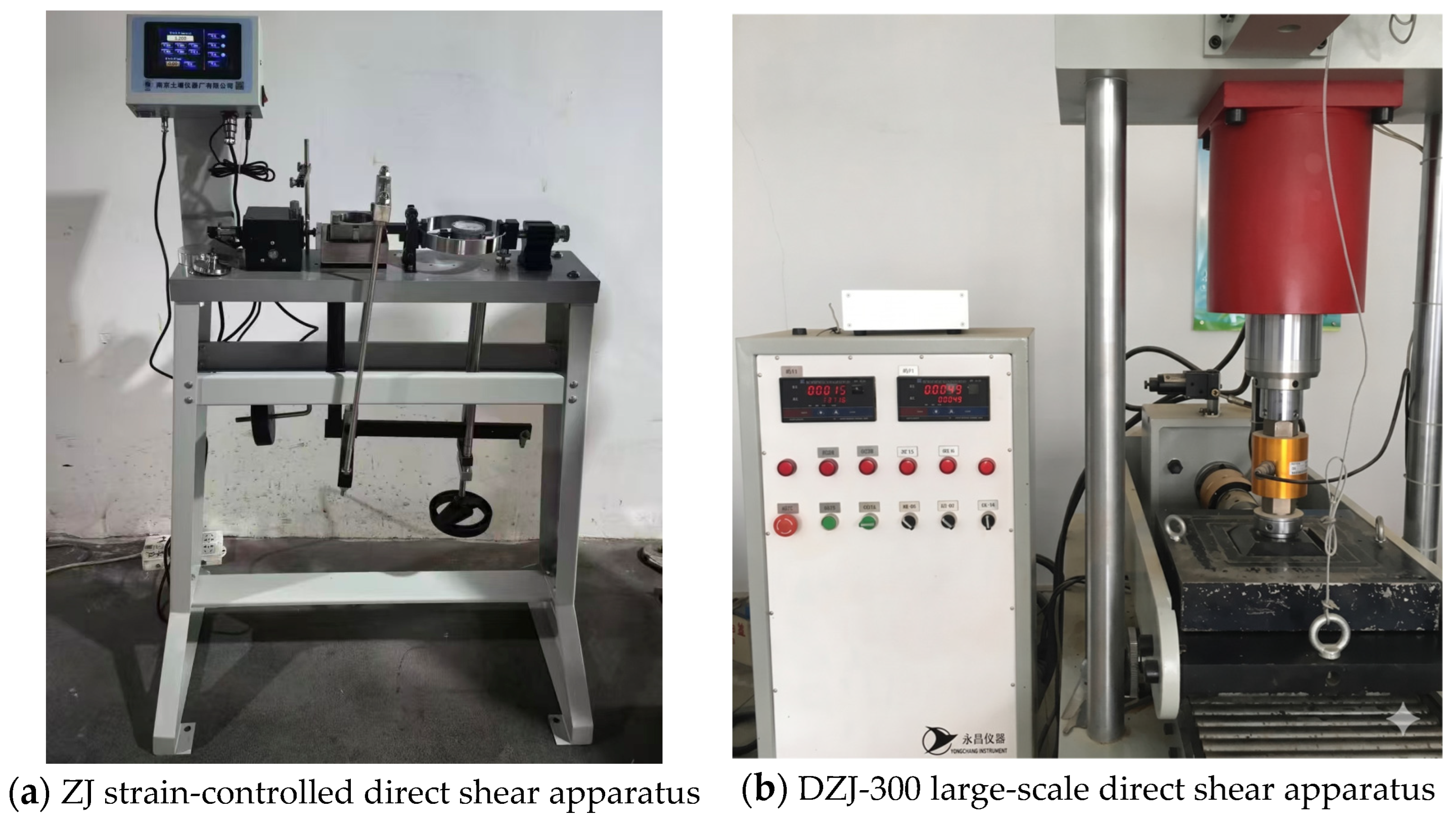
Indoor direct shear testing instruments are shown in
Figure 1, including the conventional direct shear apparatus (
Figure 1a) and the large-scale direct shear apparatus (
Figure 1b). Conventional laboratory direct shear tests were carried out using a ZJ strain-controlled direct shear apparatus manufactured by Nanjing Soil Instrument Co., Ltd. (Xuanwu District, Nanjing, China), and the data acquisition software used was the manufacturer-supplied TWJ-1 version. Large-scale laboratory direct shear tests were conducted using a DZJ-300 servo-controlled large-scale direct shear apparatus manufactured by Jiangsu Yongchang Scientific Educational Instrument Manufacturing Co., Ltd. (Liyang, Changzhou, Jiangsu, China). The loading system of the large-scale apparatus is servo-controlled, and both the normal-loading and horizontal-shearing systems can provide a maximum load of 500 kN. The available shear-box sizes are 300 mm × 300 mm × 125 mm, 250 mm × 250 mm × 125 mm, 200 mm × 200 mm × 125 mm, and 150 mm × 150 mm × 125 mm. The data acquisition software used for the large-scale direct shear tests was the manufacturer-supplied Version 2.0.
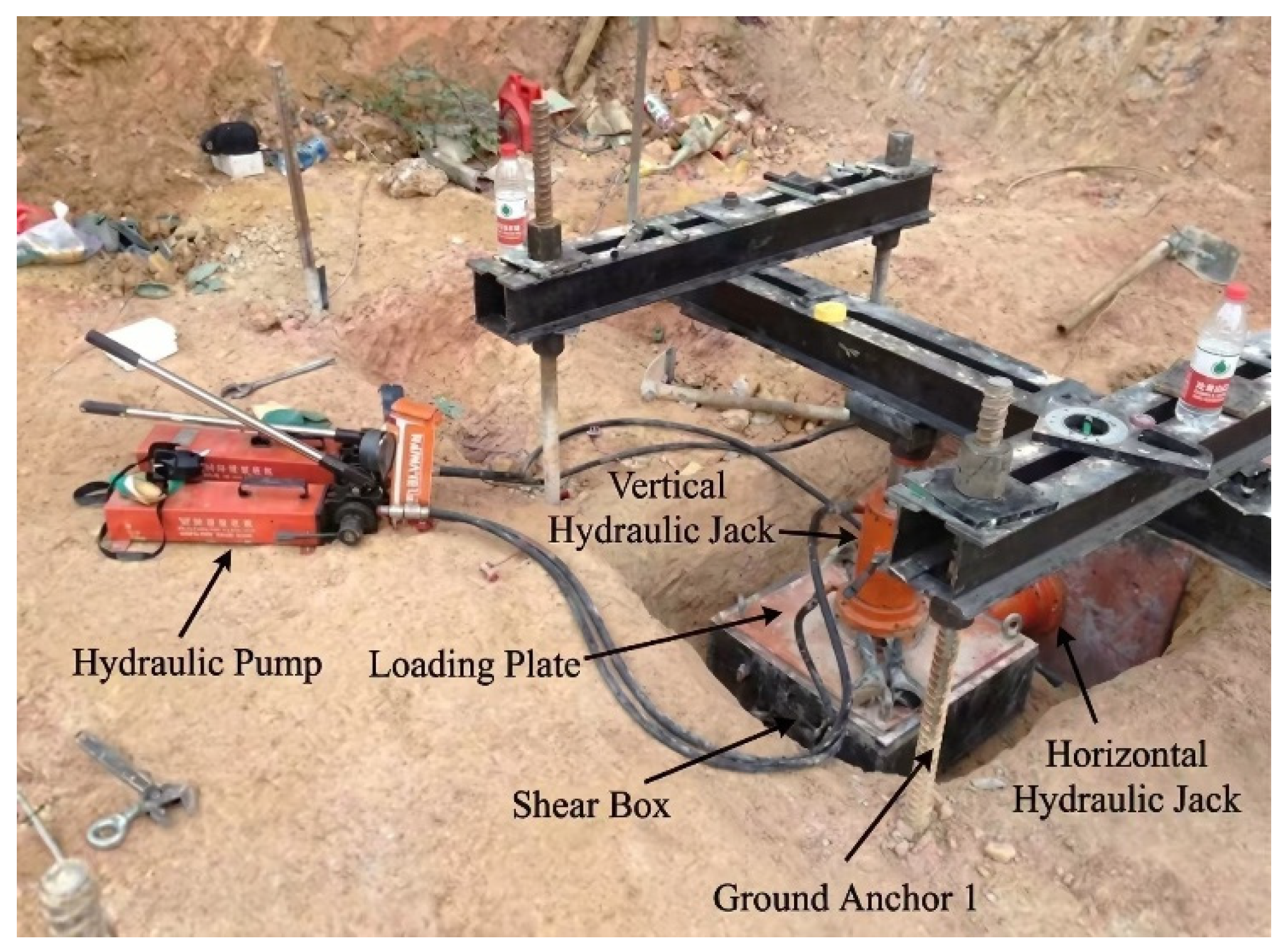
The in situ direct shear testing apparatus is shown in
Figure 2. From the perspective of test interpretation, the use of multiple devices is important because each apparatus captures a different balance among particle-scale interaction, specimen disturbance, and boundary confinement. The conventional apparatus is suited to the rapid determination of laboratory parameters but inevitably restricts specimen size and coarse-particle representation. The large-scale direct shear apparatus provides a more field-like shear plane and a larger test volume, thereby reducing the dominance of localized boundary effects. The in situ setup offers the additional advantage of preserving the natural arrangement of the weathered material in place, including its discontinuous fabric, local weak zones, and inherent water-content state. This hierarchy of testing scales forms the basis for the comparative interpretation developed in the present study.
2.3. Basic Physical Properties and Particle-Size Distribution
The basic physical properties of the tested material are summarized in
Table 1. Overall, the material shows moderate fines content and measurable plasticity, consistent with a weathering-derived residual soil formed by decomposition of feldspathic parent rock and the development of secondary clay minerals [
1,
2,
3].
The particle-size distribution is presented in
Table 2. The tested material contains a substantial proportion of coarse particles distributed across the gravel and sand fractions, together with a notable fine fraction below 0.075 mm. This broad grading is important because the interaction between coarse particles and fine matrix material changes with specimen size. In a small shear box, coarse particles are either excluded or only partially represented, whereas a larger specimen allows a more realistic distribution of coarse grains along the shear plane.
2.4. Experimental Program and Specimen Preparation
The experimental program is summarized in
Table 3. The test program comprised three complementary components. First, two batches of in situ direct shear tests were carried out in the field, with four tests per batch under normal stresses of 200, 300, 400, and 500 kPa. Second, conventional laboratory direct shear tests were performed on undisturbed and remolded specimens. Third, large-scale laboratory direct shear tests were conducted on remolded specimens with shear-box sizes of 150, 200, and 250 mm. Soil excavated from the in situ test pits was collected to prepare remolded specimens and to determine the basic physical properties and particle-size distribution of the tested material. The physical-property tests and particle-size analysis followed the Standard for Geotechnical Testing Methods (GB/T 50123-2019 [
15]).
For the in situ direct shear tests, block specimens were prepared directly in the field by excavation and trimming. Based on the field device configuration and common practice for in situ direct shear testing of coarse-containing geomaterials, the specimens were prepared as approximately 500 mm × 500 mm × 450 mm blocks, with a 500 mm × 500 mm × 400 mm shear-box frame acting on the prepared soil mass. The top surface of each specimen was leveled before the loading system was installed. Normal loading was applied through steel plates and rollers to minimize eccentricity, and the target normal stress was maintained approximately constant during shearing. After the normal load had stabilized, the horizontal shear load was applied stepwise until failure. Shear displacement and vertical displacement were recorded continuously throughout the test.
For the conventional laboratory direct shear tests, both undisturbed and remolded specimens were tested. The specimens had a diameter of 61.8 mm and a height of 20 mm, and the gap between the upper and lower shear boxes was maintained at approximately 0.1 mm. For the remolded specimens, the excavated soil was first air-dried to a workable state, gently crushed, mixed thoroughly, and adjusted to a target water content close to the natural field value. The prepared soil was then sealed for 24 h to promote uniform moisture redistribution and compacted in three equal layers to achieve a density close to that of the natural material. Particles larger than 2 mm were removed for the conventional apparatus to satisfy specimen-size requirements. Four normal stress levels of 100, 200, 300, and 400 kPa were applied. After the normal load was applied, the specimen was allowed to consolidate under drained conditions until the vertical deformation tended to stabilize, and shear was then applied at a constant displacement rate of 0.8 mm/min. The test was terminated when the shear displacement reached 6 mm or when a distinct post-peak reduction in shear stress had occurred. Large-scale laboratory direct shear tests were performed on remolded specimens using the 150 mm × 150 mm × 125 mm, 200 mm × 200 mm × 125 mm, and 250 mm × 250 mm × 125 mm shear boxes. For each large-scale specimen size, the same four normal stress levels (100, 200, 300, and 400 kPa) were applied. The remolded material was prepared at the target water content, sealed for 24 h, and compacted into the shear box in three equal layers. To maintain consistency with the conventional laboratory direct shear tests and with common direct shear practice for similar geomaterials, a shear rate of 0.8 mm/min was used in the large-scale tests as well.
2.5. Interpretation of Shear Strength Parameters
For each test group, the peak shear stress obtained under each normal stress level was used to construct a linear Mohr–Coulomb strength envelope.
The corresponding shear strength parameters were interpreted as the intercept (cohesion, c) and the slope-related friction angle (φ) of the fitted envelope. For specimens exhibiting a distinct peak, the peak shear stress was taken as the shear strength. For strain-hardening curves without a pronounced peak, the shear stress corresponding to a shear displacement of 4 mm was taken as the representative shear strength. In the laboratory tests, the nominal shear area of the specimen was adopted for stress calculation. In the in situ tests, the reduction in shear area caused by displacement was neglected because the total shear displacement was small relative to the specimen size.
When the results are interpreted in this way, two comparison axes become possible. The first is the structure axis, obtained by comparing undisturbed and remolded specimens at small scale. The second is the specimen-size axis, obtained by comparing remolded specimens of different sizes and by comparing the laboratory measurements with the in situ results. The interaction between these two axes is central to the present paper because CWG is both a structured material and a size-sensitive material. One practical outcome of the study is therefore not merely the reporting of c and φ values, but the demonstration that the engineering meaning of those parameters depends on how the test volume captures coarse particles, weak zones, and inherited fabric.
3. Results
3.1. In Situ Direct Shear Behavior
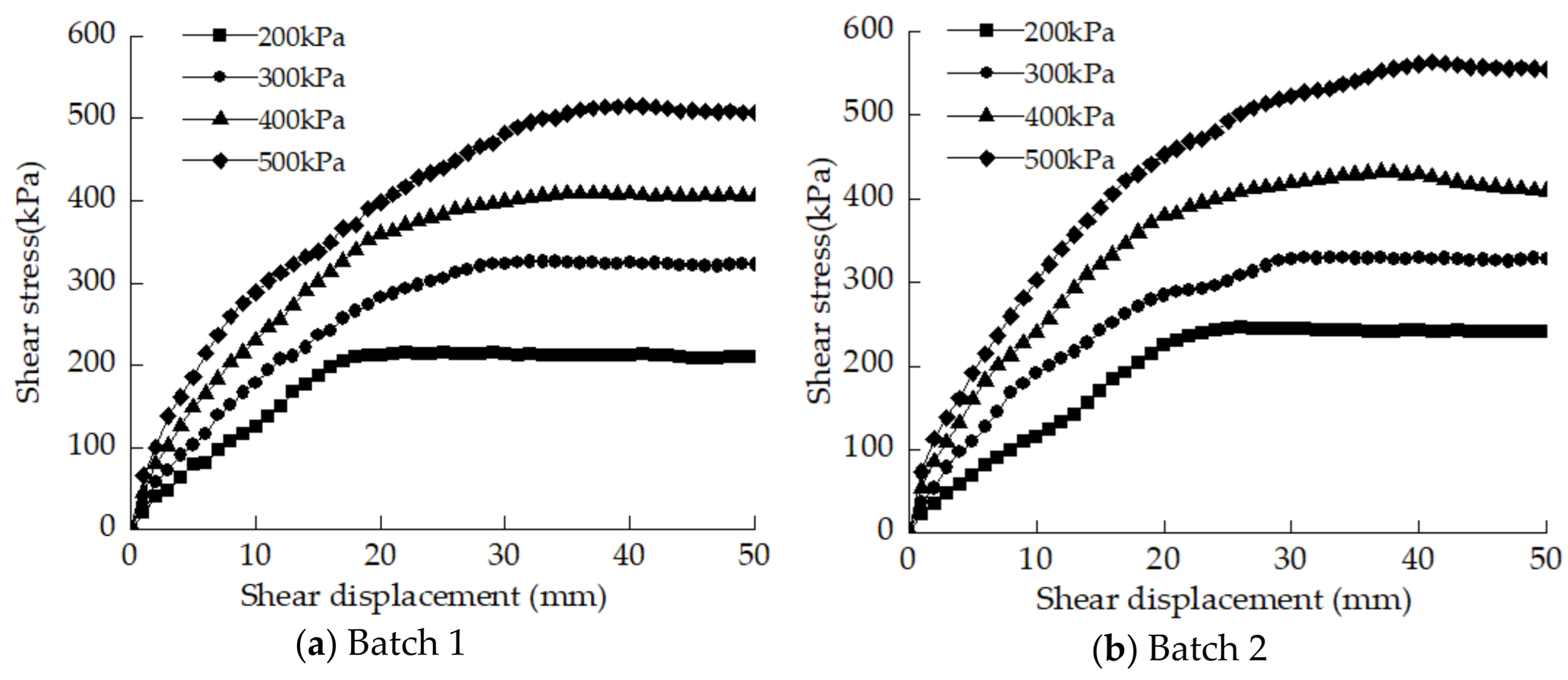
Two batches of in situ direct shear tests were completed, with four normal stress levels in each batch. Representative stress–displacement curves are shown in
Figure 3. The shear stress-displacement curves reported in the source manuscript indicate progressive mobilization of resistance followed by failure under each loading condition. Both batches show an overall strain-hardening tendency, and the peak shear stress increases with increasing normal stress, which is consistent with frictional strengthening under the Mohr–Coulomb framework. These field-scale response characteristics are typical of coarse-containing weathered geomaterials in which particle rearrangement, local crushing, and gradual mobilization of interparticle resistance can occur during shearing [
4,
6].
The interpreted shear strength parameters from the two in situ batches are listed in
Table 4. Batch 1 yielded c = 40.7 kPa and a friction angle of 43.5°, whereas Batch 2 yielded c = 42.4 kPa and a friction angle of 46.5°. The average values are therefore 41.55 kPa for cohesion and 45.0° for the friction angle. The difference between the two batches is modest and may reasonably reflect unavoidable field variability, including local heterogeneity, trimming disturbance, and changing moisture conditions. A plausible explanation is that early-stage operational disturbance and pre-test weather changes contributed to the slightly lower values in the first batch. This explanation is plausible because field weathered granite is highly heterogeneous and sensitive to water-content change, especially near the ground surface [
4,
10,
14].
Although batch-to-batch variability exists, the field results are still internally coherent and provide an important reference for the subsequent discussion of specimen-size and structure effects.
3.2. Comparison Between In Situ and Conventional Undisturbed Tests
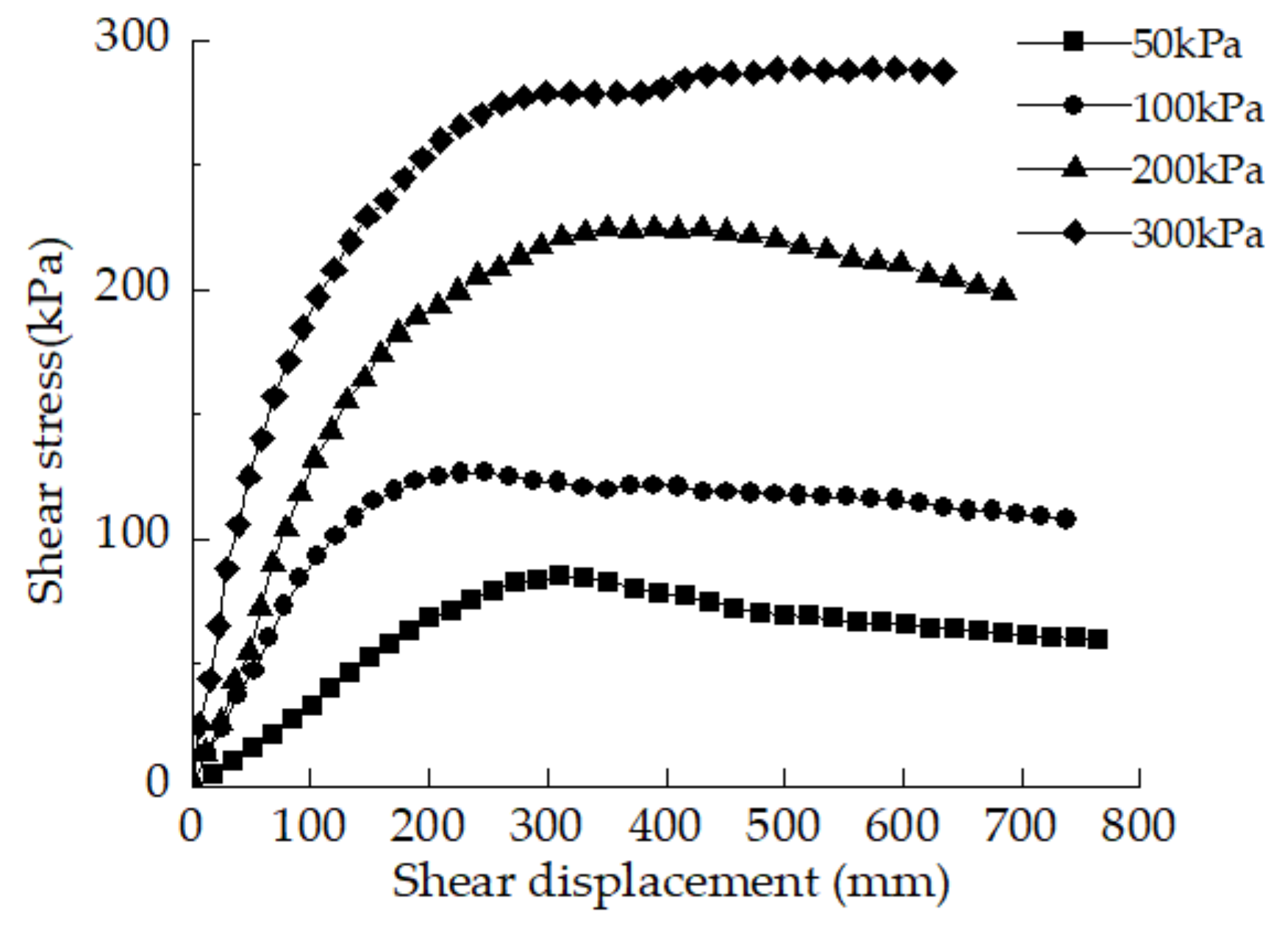
The conventional direct shear results for the undisturbed specimen are shown in
Figure 4. The conventional laboratory direct shear test on the undisturbed specimen yielded c = 48.5 kPa and a friction angle of 38.9°. When these values are compared with the mean in situ values, the conventional test produces a cohesion that is about 14.3% higher, whereas the friction angle is about 15.7% lower. This contrast is one of the most important findings of the study because it demonstrates that the same material can generate substantially different strength envelopes depending on the specimen size and testing context.
Because the specimen remained undisturbed, the resulting strength envelope reflects the combined influence of the natural structure, fine-matrix bonding, and the constrained failure plane imposed by the conventional direct shear box.
3.3. Scale Effect of Remolded Specimens
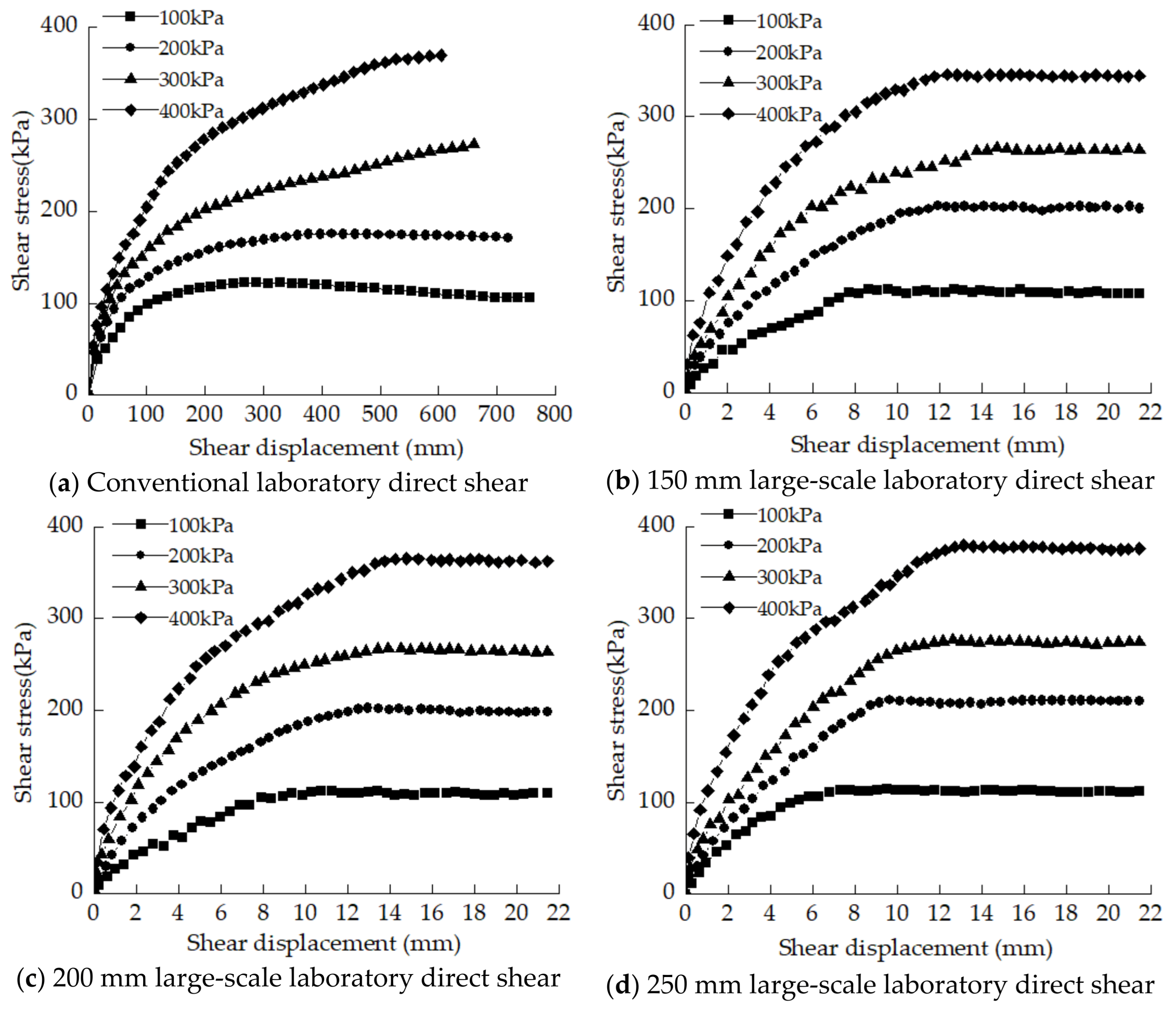
The remolded specimens tested at different sizes provide the clearest evidence for specimen-size dependence under controlled laboratory conditions. Representative direct shear results are shown in
Figure 5, and the corresponding shear strength parameters are summarized in
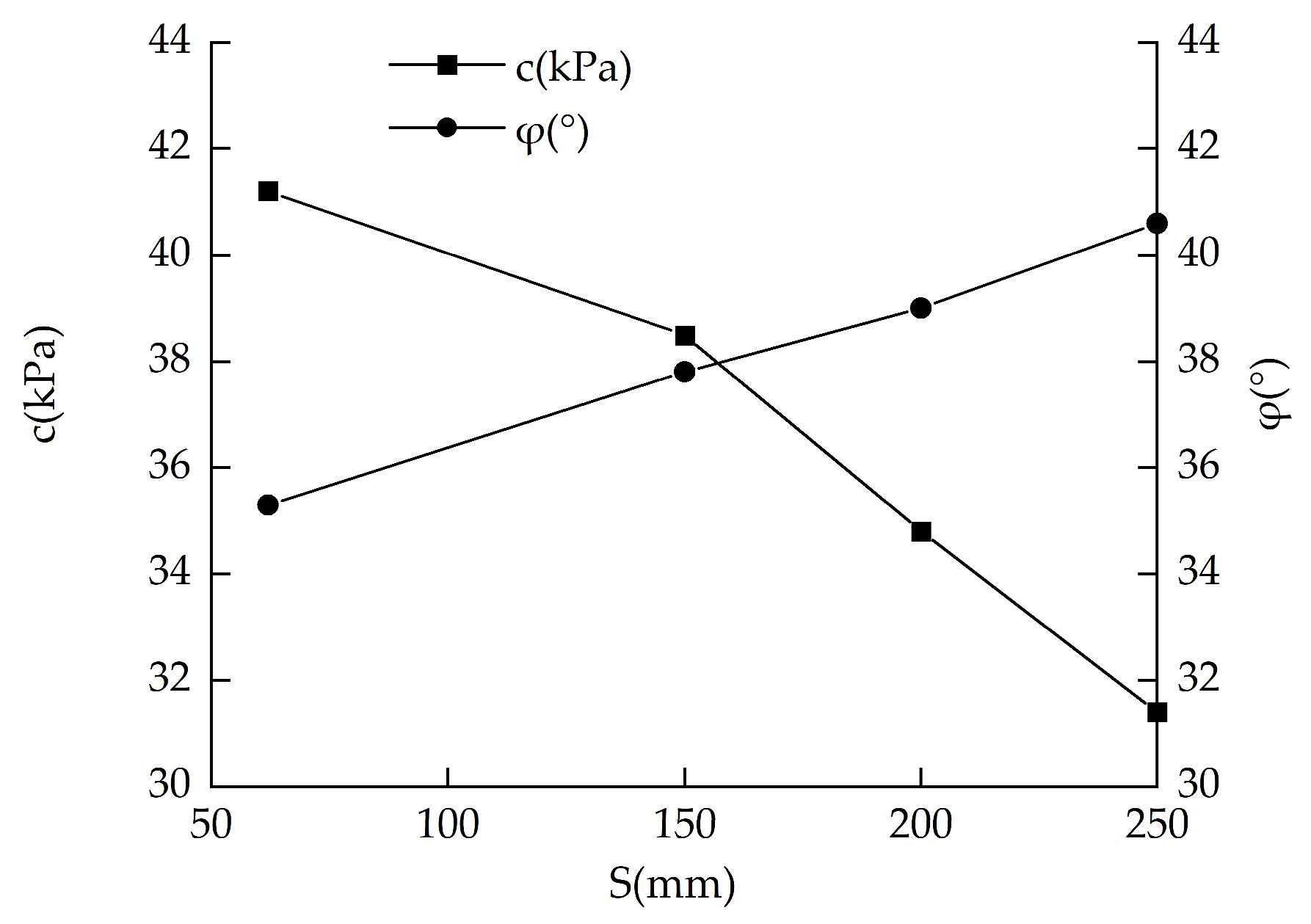
Table 5. For the smallest remolded specimen (61.8 mm), c = 41.2 kPa and friction angle = 35.3 degrees. As the specimen size increases to 150 mm, 200 mm, and 250 mm, cohesion decreases successively to 38.5, 34.8, and 31.4 kPa, whereas the friction angle increases to 37.8, 39.0, and 40.6 degrees. Relative to the smallest remolded specimen, the 250 mm specimen shows a 23.8% reduction in cohesion and a 15.0% increase in the friction angle.
These results show a systematic and monotonic trend: larger specimens weaken the fitted intercept of the strength envelope while enhancing its frictional slope. The same tendency is evident in the intermediate size classes. Relative to the 61.8 mm specimen, the 150 mm specimen shows a 6.6% decrease in cohesion and a 7.1% increase in friction angle, whereas the 200 mm specimen shows a 15.5% decrease in cohesion and a 10.5% increase in friction angle. The trend is therefore not restricted to the largest specimen but emerges progressively across the tested size range. The continuity of this trend supports the interpretation that the observed size effect is mechanically meaningful rather than an isolated artifact of one test box size. The normalized changes relative to the 61.8 mm remolded specimen are summarized in
Table 6, and the overall relationship between shear strength parameters and specimen size is shown in
Figure 6.
The size effect visible in the remolded specimens is especially informative because the natural structure has already been disturbed. This means that the progressive reduction in c and increase in friction angle cannot be attributed solely to preserved undisturbed bonding. Instead, it indicates that specimen size itself changes the mobilized shear mechanism even after remolding. In other words, the size effect is not merely a proxy for structure. It is an independent effect associated with the representativeness of particle arrangement, coarse-grain participation, shear-zone roughness, and the probability of including weaker local regions within the specimen volume. This observation strengthens the argument that direct adoption of small-box parameters for engineering analysis may be inappropriate when the field material contains a significant coarse fraction or marked heterogeneity.
3.4. Structural Effect: Undisturbed Versus Remolded Material
The comparison between the undisturbed and remolded small specimens reveals the effect of structural disturbance more directly. The undisturbed specimen produced c = 48.5 kPa and a friction angle of 38.9°, whereas the remolded small specimen produced c = 41.2 kPa and a friction angle of 35.3°. Relative to the remolded specimen, the undisturbed specimen therefore exhibits a 17.7% higher cohesion and a 10.2% higher friction angle. This indicates that natural structure contributes to both components of the strength envelope, even though its effect is more pronounced for cohesion.
The stronger undisturbed response is expected for completely weathered granite because the natural material retains inherited particle arrangement, partial bonding, and a more stable skeleton than a reconstituted specimen. During remolding, the original aggregate arrangement is destroyed and rebuilt artificially, usually in layers. Even if the target density and water content are recovered, the pre-existing interparticle contacts and orientation patterns are not fully restored. As a result, the remolded specimen behaves as a more rearrangeable and less structured material. The lower strength of the remolded sample observed in the present study is therefore consistent with the broader literature on structured residual soils and weathered geomaterials [
12,
16,
17].
At the same time, the structural effect and the size effect should not be treated as competing explanations. They act on different aspects of the measured response. Structure primarily controls how much inherited bonding and organized skeleton resistance is preserved after sampling and preparation, whereas specimen size controls how representative the specimen is with respect to particle-size composition, weak-zone inclusion, and shear-surface morphology. The results of this paper show that both mechanisms are significant and that they can act simultaneously. A robust engineering interpretation of shear strength in completely weathered granite must therefore consider both the state of structure preservation and the test scale at which the parameters were obtained.
4. Discussion
4.1. Mechanisms Responsible for the Decrease in Cohesion with Increasing Specimen Size
The decrease in fitted cohesion with increasing specimen size is one of the central observations of this study. In weathered granite, the c parameter derived from direct shear testing is not necessarily a pure bond strength. Rather, it is an apparent intercept that reflects the combined influence of fines-dominated matrix behavior, local cementation, partial suction effects, and the degree to which the forced shear plane samples or avoids weaker domains. A small specimen tends to sample a more limited material domain and may therefore exclude some weak pockets, microvoid zones, and local discontinuities. The resulting strength envelope can acquire an artificially high intercept. As the specimen becomes larger, the probability of intersecting less competent local regions increases and the apparent cohesion decreases.
This interpretation agrees with the conceptual behavior of structured residual soils reported in previous studies. Yin et al. [
12] showed that the structural contribution of granite residual soil decreases as confinement increases and as the internal fabric is progressively adjusted during loading. More broadly, weathering and microstructural degradation reduce the degree to which the soil behaves as a bonded skeleton, which in turn lowers the effective cohesion available under shear [
1,
3]. The present results extend this idea by showing that even when remolded specimens are used, the apparent cohesion still decreases as the shear box becomes larger. This means that scale influences the fitted intercept through representativeness and heterogeneity, in addition to any effects of inherited structure.
A related practical implication is that cohesion derived from conventional small-box tests may be non-conservative if it is transferred directly to field-scale stability analyses of slopes or excavation faces. This does not mean that small-box testing is invalid; rather, it means that the resulting c value should be interpreted as a test-specific parameter whose engineering applicability depends on whether the test volume adequately represents the field material. For completely weathered granite with a broad particle-size range, the answer may often be no.
4.2. Mechanisms Responsible for the Increase in Friction Angle
In contrast to cohesion, the friction angle increases with specimen size. This trend can be explained by the increasing contribution of coarse particles and rougher particle-to-particle interactions on the shear plane. As the specimen volume expands, the test is more likely to include coarse quartz grains, relic fragments, and stronger local interlocking chains. During shearing, these components can rotate, roll, climb over one another, and create a rougher shear band, all of which promote frictional resistance. The resulting shear surface is less artificially smoothed than that imposed in a small box. In this sense, the increase in friction angle may be viewed as a recovery of field-representative frictional behavior.
This explanation is also supported by recent studies on granite residual soil and weathered geomaterials. The interaction between particle composition and matric suction has been shown to influence the mobilized friction angle of unsaturated granite residual soil [
11]. Likewise, saturation history and microstructural degradation modify the balance between bonding and friction during shearing [
14]. In the present test program, particles larger than 2 mm were removed only for the conventional small direct shear apparatus because of specimen-size restrictions, whereas the large-scale tests retained a broader portion of the original grading. The grading differences summarized in
Table 2 therefore provide one plausible explanation for the increase in friction angle with increasing specimen size: as larger specimens retain a more representative coarse fraction along the shear plane, the mobilized shear mechanism shifts toward rougher and more friction-dominated behavior. Although the present paper does not include direct measurements of particle rearrangement on the shear plane, the observed increase in friction angle with specimen size is consistent with a mechanism in which coarse-particle participation becomes more dominant at larger scales. Similar scale-sensitive frictional behavior has also been observed in larger-scale direct shear testing of discontinuities and granular geomaterials [
6,
7].
It is important to note that the friction angle increase is not extremely large in absolute terms, but it is mechanically significant. The rise from 35.3 to 40.6 degrees across the remolded size series can meaningfully change slope stability calculations and design values of lateral resistance. Moreover, the field average friction angle of 45.0 degrees is even higher than that of the largest remolded specimen, suggesting that specimen size and preserved in situ heterogeneity together may further enhance the frictional contribution beyond what can be reproduced in laboratory remolded specimens.
4.3. Implications of Coarse-Particle Participation in Laboratory Tests
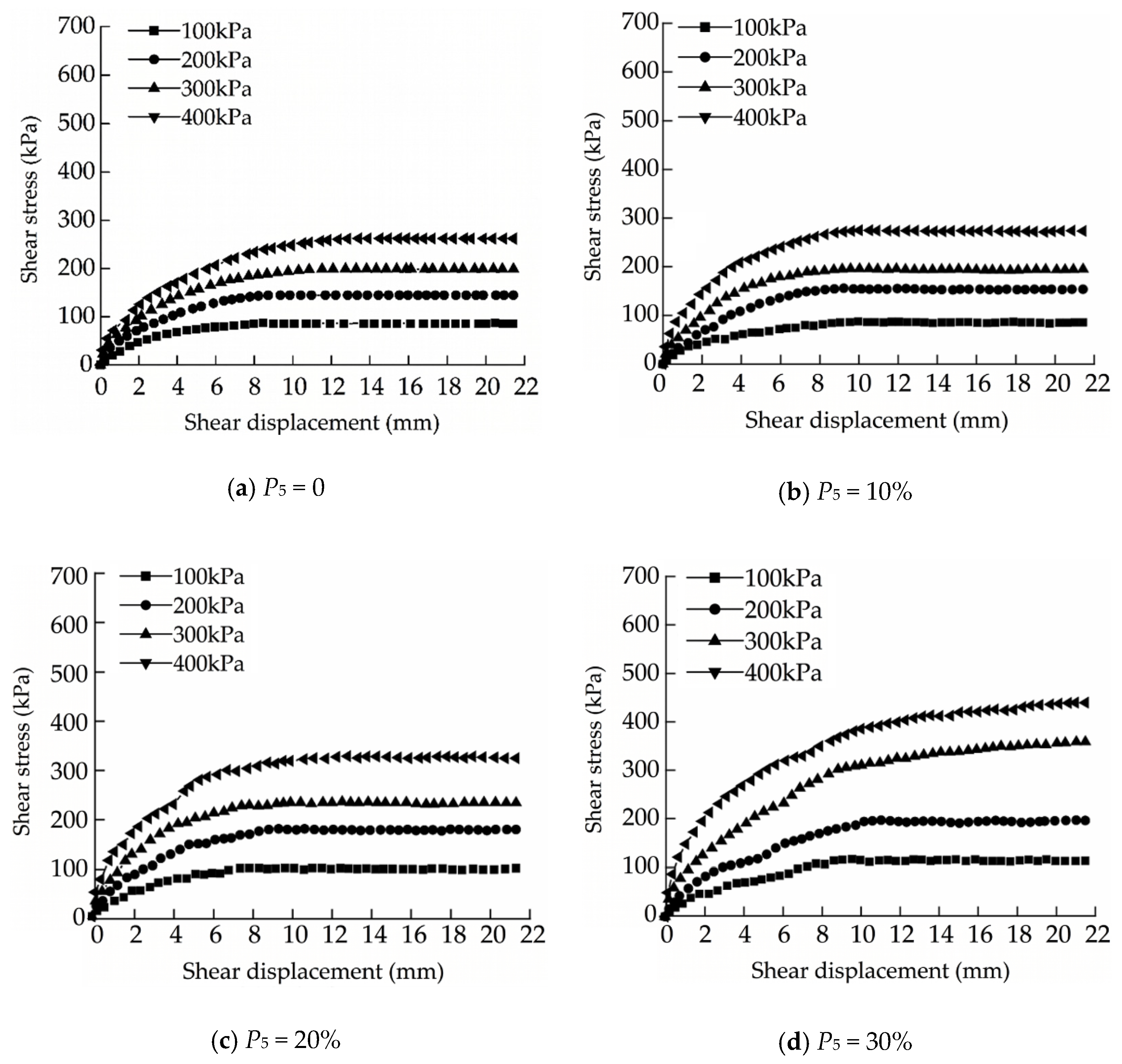
The role of coarse-particle participation in laboratory direct shear tests deserves more explicit consideration. In the conventional small direct shear apparatus used in this study, particles larger than 2 mm were removed because of specimen-size limitations, and the forced shear plane was developed within a small and highly constrained shear domain. Supplementary comparative results illustrating the effect of coarse-particle participation on laboratory shear response are shown in
Figure 7. Under such conditions, coarse grains are either absent or only weakly represented, which limits interlocking, rolling, and rearrangement along the shear plane. By contrast, the large-scale laboratory direct shear tests retained a broader portion of the original grading and mobilized a larger shear area. As specimen size increases, the probability that coarse grains intersect the shear zone also increases, and the shear surface becomes more representative of the mixed fine-coarse fabric of the field material. This difference helps explain why frictional resistance becomes more pronounced in the larger laboratory specimens.
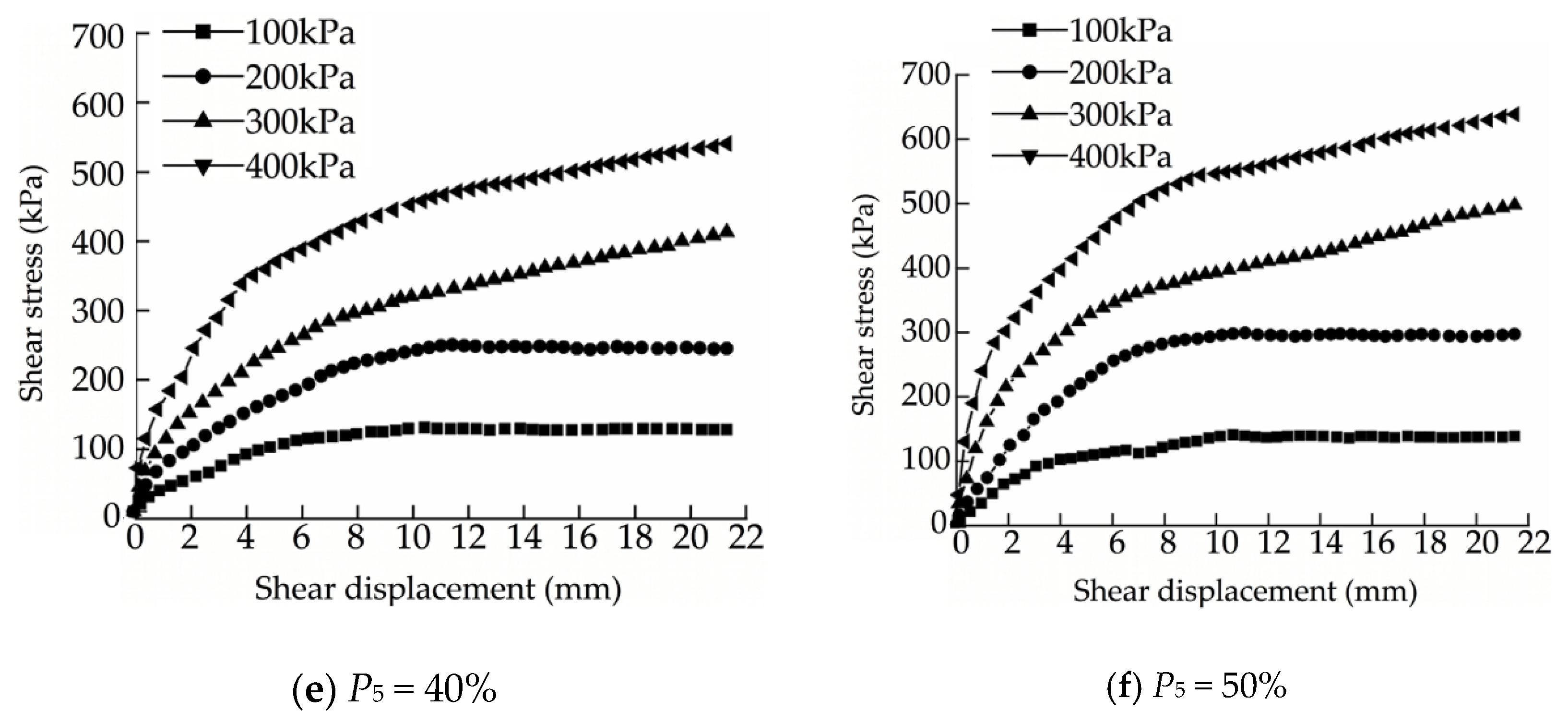
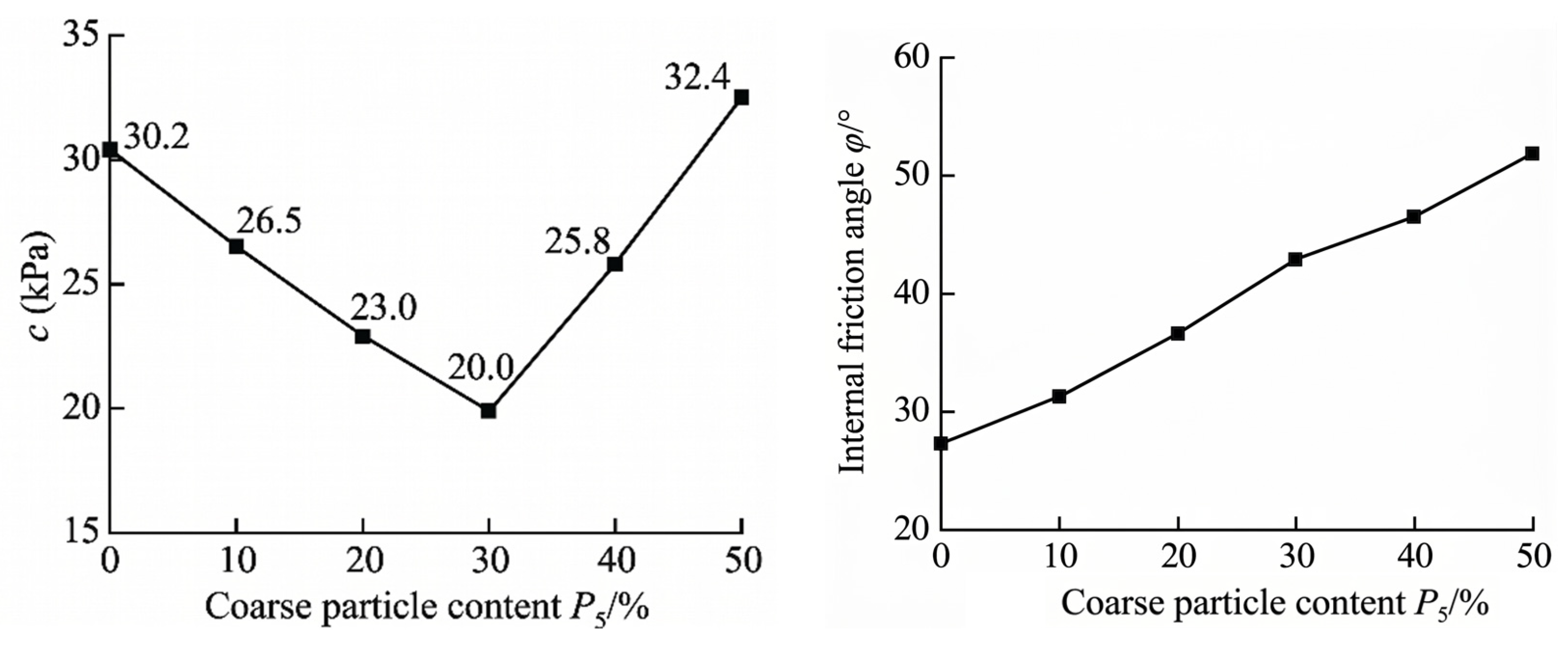
Additional comparative evidence from previously published large-scale direct shear tests on coarse-grained granite residual soil from the Fuzhou area further clarifies this mechanism. Those tests showed that the stress–strain curves exhibited progressive hardening under different normal stresses, and that the friction angle increased continuously with increasing coarse-particle content, whereas cohesion first decreased and then increased with a transition near P5 = 30%. The corresponding relationship between the shear strength index and P5 is shown in
Figure 8. The reported mechanism was that, as more coarse particles entered the shear band, the particles were more likely to rearrange, interlock, and generate stronger mutual friction during shearing. The same study also found that particle breakage became more evident when both coarse-particle content and vertical stress were high, while breakage remained limited at relatively low coarse-particle contents and low normal stresses because the contact force between coarse particles had not yet reached the particle bearing limit [
8]. Taken together, these large-scale observations support the present interpretation that, when coarse particles are more fully represented in laboratory tests, the shear mechanism progressively shifts from a matrix-dominated response toward a more friction-dominated response controlled by coarse-particle interaction. Although the present paper does not directly observe shear-plane particle rearrangement, the added comparative evidence supports our interpretation that the increase in friction angle with specimen size is associated, at least in part, with more realistic coarse-particle participation in the larger laboratory tests.
4.4. Engineering Significance and Positioning Within Recent Literature
The present study contributes to a practical problem frequently faced in engineering design: which shear strength parameters should be selected for a weathering-derived geomaterial when different test methods produce different results? Recent work on residual soils has focused on moisture effects, dry–wet degradation, microstructural damage, suction-controlled behavior, and field testing [
4,
10,
11,
12,
13,
14,
18,
19,
20]. However, many engineering reports still rely primarily on small-scale laboratory tests because they are inexpensive and easier to standardize. The present results show that for completely weathered granite this practice can be misleading if no correction or interpretive qualification is applied.
From a geotechnical-design perspective, the results suggest a hierarchy of parameter reliability. The comparison between the in situ and conventional undisturbed results is especially instructive: relative to the small undisturbed laboratory test, the in situ tests yielded lower cohesion but higher friction angle. This indicates that, once the test volume becomes larger and the shear surface becomes rougher and more heterogeneous, the apparent cohesive intercept weakens whereas the frictional contribution becomes more fully mobilized. Conventional tests on undisturbed small specimens preserve more natural structure than remolded specimens, but they still underrepresent large-scale frictional mechanisms and may overstate apparent cohesion. Remolded large-scale direct shear tests better capture the scale dependence of frictional resistance but sacrifice natural structure. In situ direct shear tests preserve both scale and natural arrangement most effectively, but they are more labor-intensive and subject to field variability. The most defensible parameter selection strategy is therefore not to treat one method as universally correct, but to interpret the results comparatively. For design situations controlled by intact natural fabric and larger shear domains, the in situ or larger-specimen parameters may be more representative. For compacted fill behavior, remolded large-specimen tests may be more relevant. For preliminary screening or comparative indexing, small-box tests remain useful, but their limitations should be stated explicitly.
More broadly, the present results support a scale-aware and structure-aware interpretation of shear strength in weathering-derived soils. For granite residual soils in southeastern China, parameter selection should consider not only the preservation of natural structure but also the degree to which the test volume captures coarse particles, weak zones, and field heterogeneity.
4.5. Limitations of the Study
Although the trends reported in this paper are clear, several limitations should be acknowledged. First, the present program was designed primarily as a comparative experimental study rather than a full statistical campaign; repeated-test statistics are therefore limited, and some procedural details, especially drainage control and the exact in situ block geometry, should be documented more fully in future work. Second, the study is interpreted mainly through fitted Mohr–Coulomb parameters rather than complete raw peak-stress datasets for every individual test.
Third, the mechanisms discussed here are inferential because direct post-test observations of the shear planes were not available. The interpretations regarding coarse-particle rearrangement, local breakage, and shear-band roughness are therefore based on the observed strength trends and the supporting comparative literature, rather than on direct microstructural measurements. Fourth, environmental factors, including possible water-content variation between field test batches, were not monitored in sufficient detail and may also have contributed to the observed batch differences. Future work may use stage-evolution characterization and coupled progressive modelling approaches similar to those recently proposed for limestone failure and deep-floor water-inrush problems, so that specimen-size effects, failure-surface evolution, and hydro-mechanical processes can be interpreted within a more unified framework [
21,
22].
Despite these limitations, the overall consistency of the observed trends still supports the main conclusion that both specimen size and structure preservation influence the measured shear strength of completely weathered granite residual soil. The present results should therefore be interpreted as a comparative basis for parameter selection rather than as a complete statistical or micromechanical characterization.



 ,
,