Article

Protective Effect of Synbiotic Supplementation Against Salmonella Typhimurium Infection in Young Broiler Chickens


by
Walter Rivera Pérez
1,*,
Elías Barquero Calvo
2,
Aida Chaves Hernández
3 and
Catalina Salas Duran
1
1
Programa de Posgrado en Ciencias Agrícolas y Recursos Naturales, Universidad de Costa Rica, San Jose 11501, Costa Rica
2
Programa de Investigación en Enfermedades Tropicales, Escuela de Medicina Veterinaria, Universidad Nacional, Heredia 40104, Costa Rica
3
Laboratorio de Patología Aviar, Escuela de Medicina Veterinaria, Universidad Nacional, Heredia 40104, Costa Rica
*
Author to whom correspondence should be addressed.
Animals 2026, 16(9), 1411; https://doi.org/10.3390/ani16091411
Submission received: 1 February 2026 / Revised: 20 February 2026 / Accepted: 25 February 2026 / Published: 5 May 2026
(This article belongs to the Special Issue Probiotics and Synbiotics in Poultry: Impacts on Gut Microbiota)

Simple Summary

Salmonella infection in chickens is a serious problem because it harms animal health, farm profits, and human food safety. This study evaluated whether adding a synbiotic (a mixture of beneficial bacteria and nutrients) to chicken feed could help protect young chickens from early infection. Chickens that received the synbiotic showed fewer bacteria in their intestines, less tissue damage, less inflammation, and better weight gain. These results suggest that synbiotics may serve as a natural approach to supporting poultry health and potentially reducing foodborne transmission risks.

Abstract

Salmonella infection in poultry remains a major concern due to its economic impact and public health risks. Synbiotics have emerged as a natural strategy to improve gut health and resistance to enteric pathogens. This study evaluated the immune response and early protective effects of a synbiotic in broiler chickens using a reduced in vivo model of Salmonella Typhimurium infection. A total of 44 broiler chickens were randomly assigned to four dietary treatments: control (CT), control plus synbiotic (CT + Syn), challenged (ST), and challenged plus synbiotic (ST + Syn). Birds were challenged at 7 days of age and euthanized at day 12 for sample collection. Synbiotic supplementation reduced bacterial colonization and adhesion in the ileum, as assessed by intestinal content isolation and immunofluorescence analysis. Additionally, the synbiotics mitigated lesion severity in the intestine, liver, and heart, increased anti-inflammatory IL-10 expression, and reduced pro-inflammatory cytokines IL-1β and TNF-α. Ileal histomorphometry showed increased epithelial height in the ST + Syn birds, while intestinal permeability was not affected. Improved body weight was also observed compared to the challenged birds without supplementation. In conclusion, synbiotic supplementation provided early protection against S. Typhimurium infection by modulating immune responses, preserving intestinal morphology, and supporting weight gain in broiler chickens.

1. Introduction

Recently, poultry research has emphasized the importance of the birds’ gastrointestinal tract when considering its complexity and additional gastrointestinal functions, thereby coining the concept of “intestinal health” [1,2]. A healthy gastrointestinal tract relies on numerous interrelated factors, including diet, digestion and absorption processes, immune function, gastrointestinal barrier integrity, and microbiota stability [2,3].
Avian health is a highly relevant area of research due to the need to understand and promote their well-being and resistance to pathogens [4]. Concerns about the use of antibiotics in feed, particularly because of their potential to generate residues and bacterial resistance, have driven the search for alternative strategies to maintain optimal gut health and growth in birds [5,6]. In this context, functional supplements such as probiotics [7,8], prebiotics [9,10], and synbiotics [11,12] are being investigated as promising tools to strengthen the microbiota, modulate immune responses, and prevent diseases caused by pathogens such as Salmonella.
Synbiotics are a synergistic combination of prebiotics and probiotics that optimize host performance [13]. These additives enhance the survival and activity of beneficial microorganisms in the gut, promote the diversity and stability of the microbial community, and foster positive interactions with the gastrointestinal epithelium and the host’s immune system [14]. The use of synbiotics is more effective than individual preparations, and their application during the first hours of life promotes the colonization of the gastrointestinal tract by probiotic strains [1,3].
Salmonella, one of the most common zoonotic pathogens, poses a significant threat to both animal and human health globally [6]. The invasion of this bacteria causes various clinical symptoms and intestinal disturbances, resulting in decreased animal performance and substantial economic losses [15]. Greater emphasis should be placed on implementing a multi-intervention approach, as reliance on a single strategy does not reliably achieve effective control [16]. One potential strategy to enhance avian health is the modulation of gut microbiota at an early stage [17]. In this context, synbiotics have been shown to exert a synergistic effect, promoting intestinal microbial balance by selectively stimulating beneficial bacteria while inhibiting pathogenic species [18].
The influence of synbiotics on the intestinal microbiota is considered fundamental to their biological effects, and their benefits have been widely documented in studies on avian health [11,12]. Most studies have evaluated probiotics and prebiotics separately, while only a few investigations have utilized synbiotics [19]. Therefore, the present study aims to evaluate the immune response of broiler chickens and the early protective effect of a synbiotic, including its role in modulating host immunity and preserving intestinal morphology, using an experimental infection model for Salmonella Typhimurium that had been previously standardized and validated in our laboratory under comparable experimental conditions (unpublished data).

2. Materials and Methods

2.1. Location, Birds, Treatment, and Growth Performance

The Institutional Animal Care and Use Committee of the University of Costa Rica approved all the animal experimentation methods utilized in this work (CICUA-9-2024). The trial was conducted at the climate-controlled housing experimental farm of the Avian Pathology Laboratory facilities of the School of Veterinary Medicine of the National University of Costa Rica, located in Heredia, Costa Rica (animal biosafety level 2/ABSL-2). The samples were analyzed at the Bacteriology and Avian Pathology Laboratory of the National University of Costa Rica and the Imunova Análises Biológicas LTDA, Brazil.
A total of 44 one-day-old Cobb 500 chicks were randomly allocated into four treatments, with 11 birds per cage (with shavings-covered bedding), during a 12-day experimental period. Treatments consisted of CT, control diet without a synbiotic, without any challenge; CT + Syn, control diet with a synbiotic, without any challenge; ST, control diet without a synbiotic, challenged with S. Typhimurium; ST + Syn, control diet with a synbiotic, challenged with S. Typhimurium. The study’s design aimed to validate the biological model, confirm the inducibility of the infectious process, and evaluate the efficacy of the synbiotic under challenge conditions. The CT group established physiological reference values; CT + Syn enabled the assessment of the baseline effects of supplementation; ST confirmed the reproducibility and effectiveness of the infection model; and ST + Syn allowed the determination of the protective and/or attenuating effects of the synbiotic against the infectious challenge.
The synbiotic product, PoultryStar®sol (dsm-firmenich, Vienna, Austria), was used in the drinking water during the first three days of life at a dose of 1 g/L of water, and PoultryStar®me (dsm-firmenich, Vienna, Austria) was used in the feed throughout the trial at a dose of 1 kg/ton of feed. Both products were composed of a prebiotic (fructooligosaccharide) and a probiotic mixture of five microbial strains selected from four different sections of the gastrointestinal tract in birds: Lactobacillus reuteri from the crop, Enterococcus faecium from the jejunum, Bifidobacterium animalis from the ileum, and both Lactobacillus salivarius and Pediococcus acidilactici were isolated from the cecum.
An outline of the experimental design indicating the treatments and times of challenge is shown in Figure 1. The temperature and light were managed according to the broiler management guide [20]. Diets were formulated to meet the recommended level, as indicated by the genetic line [21]. This diet was non-medicated (without growth promoter, coccidia or mycotoxin treatment), vegetable-based (corn/soy), and in a mash form. All experimental diets were produced from this formulation in a single batch (i.e., the master control diet) to minimize ingredients and manufacturing variability among experimental treatments. After production of the master control diet, the feed was divided for each group, and the synbiotic was added to the corresponding treatments. On days 0, 7 and 12, the body weight (BW) was recorded.

2.2. Preparation of S. Typhimurium Inoculum and Oral Challenge

The strain S. Typhimurium ATCC 14028 of poultry origin was used to challenge the chickens. The strain was stored at −80 °C in the bacterial collection of the Bacteriology Laboratory of the School of Veterinary Medicine. The strain was thawed and inoculated onto Trypticase Soy Agar (TSA; Liofilchem™, Waltham, MA, USA) plates for 24 h at 36 ± 1 °C. After this incubation, two to three isolated colonies were selected and inoculated into a tube containing 10 mL of Trypticase Soy Broth (TSB; BD Difco™, Franklin Lakes, NJ, USA). The tube was then incubated for 24 h at 36 ± 1 °C. After incubation on the day of inoculation, the inoculum was diluted in Buffered Peptone Water (BPW; Neogen™, Lansing, MI, USA). The concentration of viable S. Typhimurium cells was estimated spectrophotometrically at 600 nm. After performing a 1:10 dilution of the original culture, an optical density (OD) of 0.290 was obtained, which corresponded to approximately 108 CFU/mL according to Bergeron et al. [22]. Birds were challenged with 1 × 10⁹ CFU (verified by culture) per bird of the diluted inoculated broth orally by introducing the inoculum into the oral cavity using a sterile tuberculin syringe (BD Difco™, Franklin Lakes, NJ, USA) at 7 days of age [23,24,25].

2.3. Tissue and Sample Collection

On day 12 (5 days post infection, dpi), before each chick was euthanized, a blood sample was taken for intestinal permeability analysis. The birds were euthanized using a cervical dislocation technique. Necropsy was performed to collect samples for various analyses: histological evaluation of the duodenum, jejunum, ileum, cecum, liver, and heart; histomorphometric analysis of the ileum; immunofluorescence studies of the ileum and cecum; gene expression analysis of inflammatory mediators in the cecal tonsil; and additional samples of intestinal content and liver were collected for Salmonella culture and isolation. The intestinal sections were collected according to the protocol of Souza et al. [26].

2.4. Salmonella spp. Isolation and Identification from Intestinal and Hepatic Samples

Intestinal content and liver samples were collected in sterile sample bags and stored on ice before being delivered to the laboratory. A qualitative determination (presence/absence) of Salmonella spp., using the methods MLG 4.10 described by the USDA/FSIS, was performed [27]. Briefly, BPW was used as a pre-enrichment medium, with a 1:10 dilution of the sample (intestinal content and liver) added to the medium. The mixture was then incubated for 24 h at 36 ± 1 °C. Rappaport–Vassiliadis (Liofilchem™, Waltham, MA, USA) and Tetrathionate (Acumedia™, Lansing, MI, USA) were used as enrichment media; 1:100 (100 µL:10 mL) and 1:20 (500 µL:10 mL) dilutions were made of the sample in each medium, respectively, and incubated in a water bath at 42 ± 0.5 °C for 24 h. Xylose-Lysine-Tergitol 4 Agar (XLT4; Neogen™, Lansing, MI, USA) was used as the selective culture media. XLT4 samples were streaked and incubated at 35 ± 1 °C for 24 h. Typical Salmonella colonies (red colonies with a black center) were selected for analysis. Biochemical identification was performed using Triple Sugar-Iron Agar (TSI; BD Difco™, Franklin Lakes, NJ, USA), Lysine-Iron-Arginine Agar (LIA; Liofilchem™, Waltham, MA, USA), and Urea Agar (Acumedia™, Lansing, MI, USA). Strains exhibiting a TSI reaction of K/A with hydrogen sulfide production (H2S+), LIA reaction of K/NC, and a negative result on Urea Agar were presumptively identified as Salmonella spp. Confirmation of the suspected strains was carried out using the rapid plate agglutination test with omnivalent Salmonella antiserum (Mast™ Assure, Salmonella O, Mono Factor O4, Mast Group™, Merseyside, UK). The presence of visible agglutination on the plate was considered definitive confirmation. The outcomes of Salmonella isolation from the intestinal and hepatic samples were recorded as binary variables (positive or negative).

2.5. Immunofluorescence Detection of Salmonella spp. In Ileum and Cecum Tissue Sections

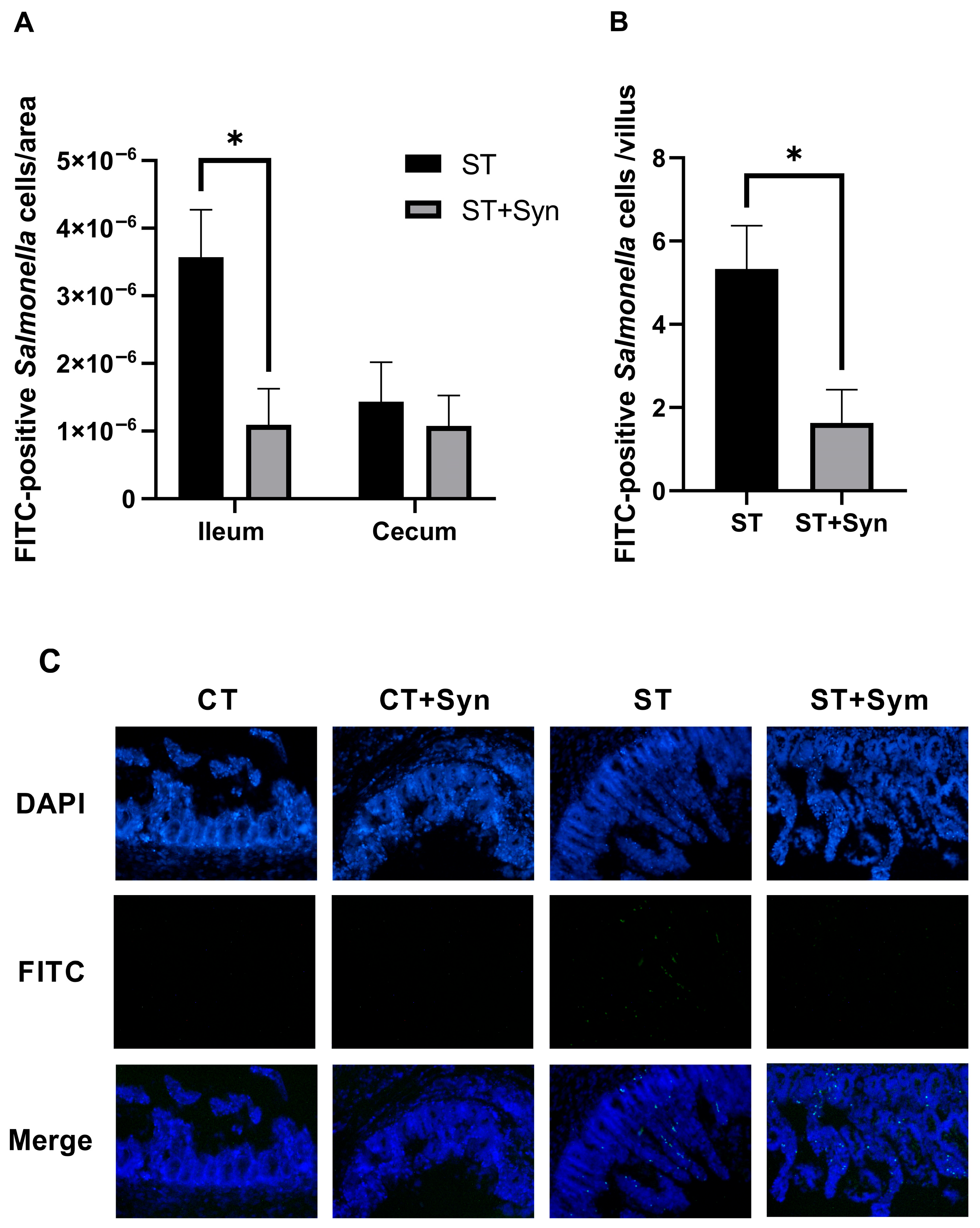
The immunofluorescence assay for Salmonella was performed according to the methods described by Insalata et al. [28] and Fantasia [29] with modifications. The ileum and cecum samples were collected (of 2 cm in size per bird) and immediately fixed in a zinc fixative. After 24 h in contact with the fixative, the sections were transferred to a new container containing alcohol (at 70%). The tissues were embedded in paraffin and sectioned into approximately 15 μm sections. Briefly, after deparaffinization and rehydration, the sections were incubated with primary polyvalent Salmonella antiserum A-E+Vi (Vircell™, Granada, Spain), followed by incubation with a goat anti-Rabbit IgG (H+L) Cross-Adsorbed Secondary Antibody (Alexa Fluor™ 488; Invitrogen™, Waltham, MA, USA). Sections were analyzed using an Olympus BX51 fluorescence microscope and analyzed using Cell^F software V2.8 (Olympus™, Tokyo, Japan). Images of the preparations were captured at 10× magnification in two different fields of view, and marker-positive cells were subsequently counted. Results were expressed as the average number of positive cells per sample (villus or area). Micrographs showing blue fluorescence represented DAPI staining of cell nuclei; green fluorescence, FITC, represented the Salmonella immunopositive reaction; and a blue and green fluorescence fusion.

2.6. Gene Expression by qPCR

The gene expression assay was performed according to Zhang et al. [30] with modifications. The primers used in this study were designed by Imunova Análises Biológicas LTDA, Brazil, from the Gallus gallus reference genome (accession GCA_016699485.1). Cecal tonsil segments were fixed in a molecular stabilizing solution (RNAlater™, Thermo Fischer Scientific™, San Jose, CA, USA). This analysis represented the final number of targets analyzed by the qPCR method as a relative gene expression value for the CT group. The selected targets were interleukin-1 beta (IL-1β); interleukin-2 (IL-2); interleukin-4 (IL-4); interleukin-6 (IL-6); interleukin-10 (IL-10); tumor necrosis factor alpha (TNF-α); interferon gamma (IFN-γ); transforming growth factor beta 1 (TGF-β1); and mucin 2 (MUC2). Approximately 100 mg of the cecal tonsil sample was mechanically homogenized, and the total RNA was extracted and purified using a commercial kit (MVXA-SU01 FAST™, Loccus™, Sao Paulo, Brazil). The extracts were treated with DNase, and the RNA was quantified and its purity assessed by spectrophotometry. After RNA extraction, cDNAs were synthesized using a cDNA synthesis kit, with 1 μg of RNA per reaction. Two normalizing genes were used as internal controls. The results were normalized by applying the protocol described by Livak and Schmittgen [31], using the method ΔΔCt (ΔCt/average of the control ΔCt), the CT group as a control.

2.7. Histopathology and Lesion Score

Samples of the heart, liver, duodenum, jejunum, ileum, cecum, and cecal tonsil were removed and then fixed with a 10% formaldehyde solution. The organ segments were dehydrated in an ascending ethanol gradient. These samples were then cleaned in xylene, embedded in paraffin wax, and sectioned into 5 to 8 µm thick sections. They were stained with hematoxylin and eosin (HE) and observed under an optical microscope [32]. A semi-quantitative analysis of the observed lesions was performed, detailing the characterization of the lesions according to the classification proposed by Prentza et al. [33] and Chen et al. [34]. Depending on the extent and severity, the lesions were classified as no injury (0), mild (1), moderate (2), severe (3), and very severe (4).

2.8. Ileum Histomorphometry

The ileum segments were subjected to histological processing and stained using the hematoxylin and eosin technique, as described above. The intestinal morphology of each sample was observed under a microscope (Discovery v12™, Zeiss™, Oberkochen, Germany), photographed with an Axiocam, and analyzed with Zen Blue Software V3.4 (Zeiss™, Oberkochen, Germany). Initially, a panoramic image of the entire section was captured, followed by three images of the tissue with a higher magnification. In each image, three different points were quantified. Using the methods described by Alshamy et al. [35], the villus height (VH), epithelial height (EH), crypt depth (CD), intestinal mucosal surface (IMS), muscular tunic thickness (MLT), and goblet cells (GC) were determined.

2.9. Intestinal Permeability

To evaluate intestinal permeability, fluorescein isothiocyanate dextran (FITC-d; 1.1 mg, 3–5 kDa, Sigma™, Sao Paulo, Brazil) was administered orally to a total of 44 chicks on day 12 (5 dpi). Two and a half hours after the gavage, approximately 2.0 mL of blood was collected by the femoral vein [36,37], and the birds were immediately euthanized by cervical dislocation. Following the procedure previously described by Vicuña et al. [38] and Liu et al. [36], the blood was centrifuged at 1000× g for 15 min, and 100 µL of the serum was used to calculate the FITC-d concentration. Serum fluorescence intensity was determined in a plate fluorometer (Varioska™, Thermo Fischer Scientific™, San Jose, CA, USA). A standard dilution curve of the reagent was used to determine the FITC-d concentration in the sample.

2.10. Statistical Analysis

The experiment was conducted using a completely random design applied at the level of bird assignment to each treatment group. The data were analyzed using Minitab statistical software version 22. Initially, the outlier identification test (ROUT, Q = 1) was performed. Subsequently, the data were subjected to the Shapiro–Wilk normality test, and based on this result, when the data followed a Gaussian distribution, they were analyzed using one-way ANOVA followed by Tukey’s multiple comparisons post-test. If the data did not follow a Gaussian distribution, they were analyzed using the Kruskal–Wallis test and Dunn’s multiple comparisons post hoc test. Data were expressed as the mean and pooled standard error of the mean (SEM), and p < 0.05 was considered statistically significant.

3. Results

3.1. Salmonella Recovery in the Intestine

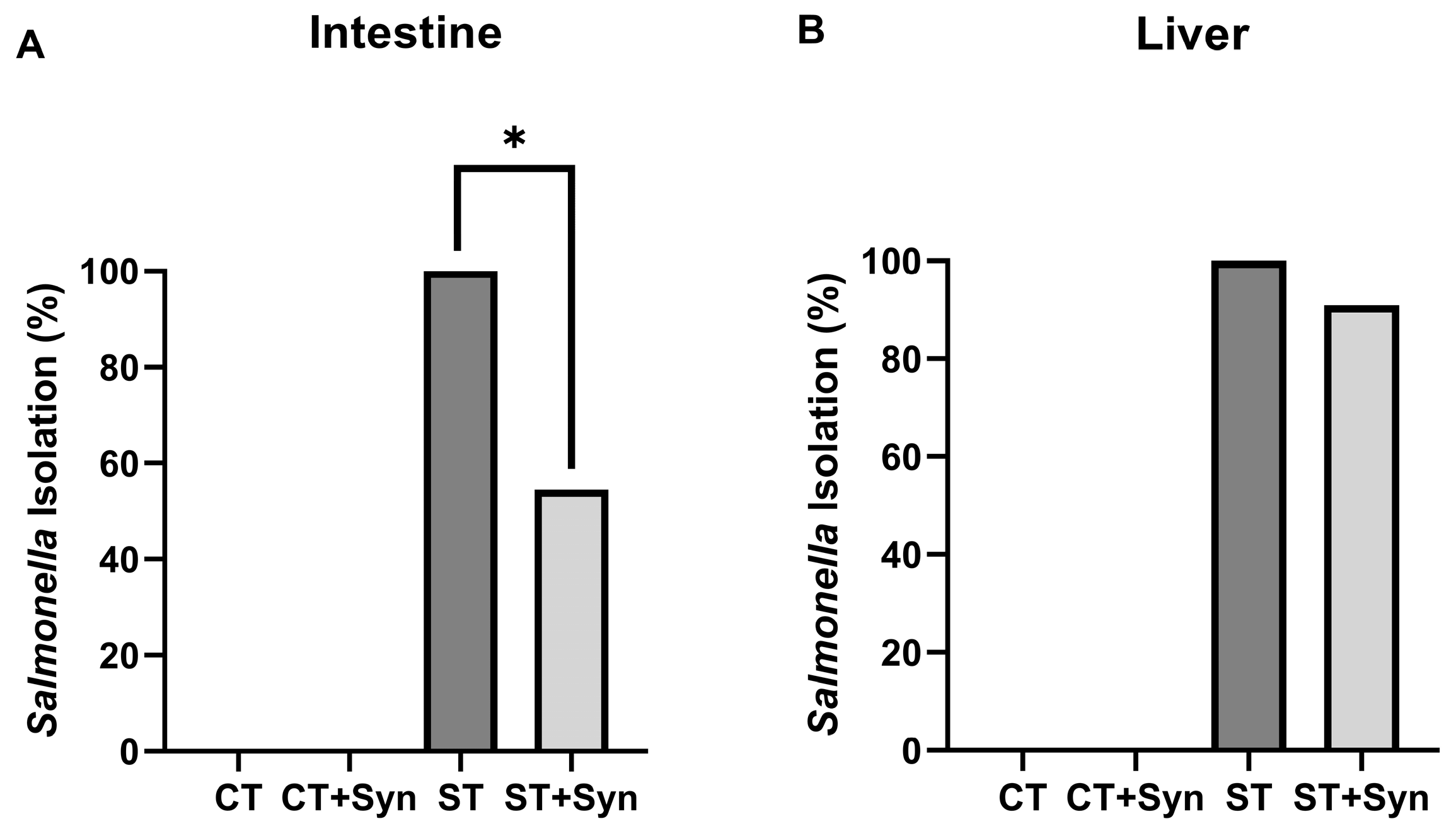
The effect of the synbiotic on the isolation of Salmonella from intestinal content and liver in groups challenged with S. Typhimurium is shown in Figure 2. In the ST group, a positive Salmonella culture was achieved in 100% of the intestine (Figure 2A) and liver (Figure 2B) samples. In contrast, in the ST + Syn group, only 54.4 and 90.9% were achieved in the intestine and liver, respectively (p < 0.01). All birds that received the S. Typhimurium inoculum were positive in at least one of the two sample types. Conversely, Salmonella was not isolated from any samples in the non-challenged groups.

3.2. Salmonella Colonization in the Ileum

The presence of Salmonella measured by immunofluorescence in the ileum and cecum of challenged broiler chickens is illustrated in Figure 3. Dietary supplementation with the synbiotic significantly decreased (p < 0.01) the density of bacteria per area (Figure 3A) and the number of infected cells per villus in the ileum (Figure 3B), while the density of bacteria per area in the cecum did not differ between treatments. All inoculated chickens showed a positive signal for Salmonella in the ileum and cecum. Fluorescence microscopy photographs showed bacterial adhesion to ileal and cecal tissue (Figure 3C, DAPI staining for cell nuclei in blue, FITC staining for Salmonella in green).

3.3. Inflammatory Response and Mucosal Protection

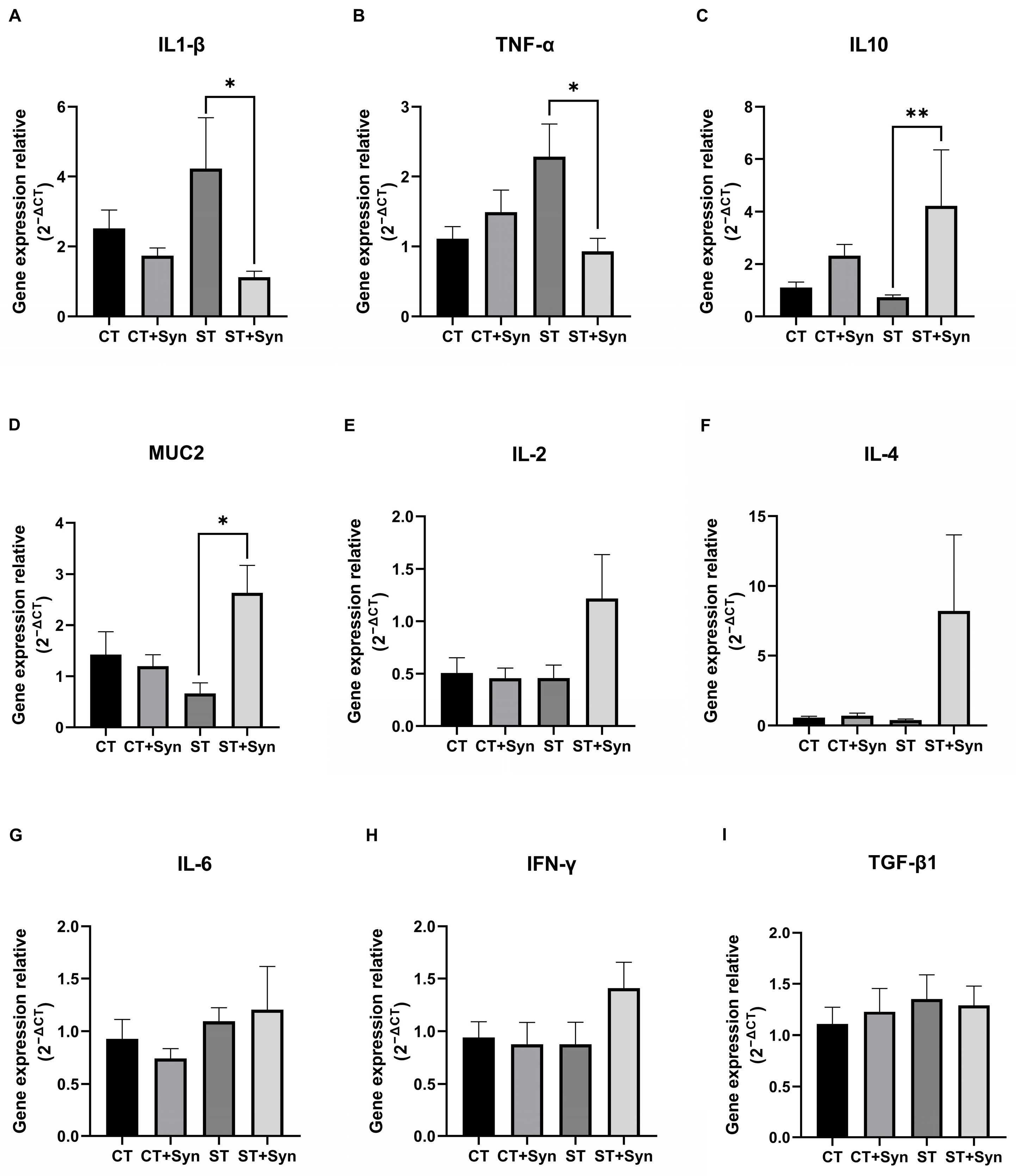
At 5 dpi, synbiotic supplementation significantly affected the mRNA abundance of IL-1β (Figure 4A), TNF-α (Figure 4B), IL-10 (Figure 4C), and MUC2 (Figure 4D) in the cecal tonsils of Salmonella-challenged birds (p < 0.05). The challenged group receiving the synbiotic (ST + Syn) showed a higher relative expression of the anti-inflammatory cytokine IL-10 and a lower expression of the pro-inflammatory cytokines IL-1β and TNF-α compared with the non-supplemented challenged group, with values comparable to those observed in the non-challenged groups. In addition, MUC2 mRNA abundance was significantly higher in the ST + Syn group than in the ST group (p < 0.05), whereas no differences were detected among the non-challenged groups. Regarding IL-2, IL-4, IL-6, IFN-γ, and TGF-β1, these did not show statistically significant differences.

3.4. Tissue Damage and Inflammation

A pathological analysis of lesions based on the sections stained with hematoxylin and eosin showed that the group challenged with S. Typhimurium without supplementation (ST) exhibited the highest lesion scores. In contrast, the synbiotic-treated challenged group (ST + Syn) showed a significant reduction in lesion severity (Table 1; p < 0.05).
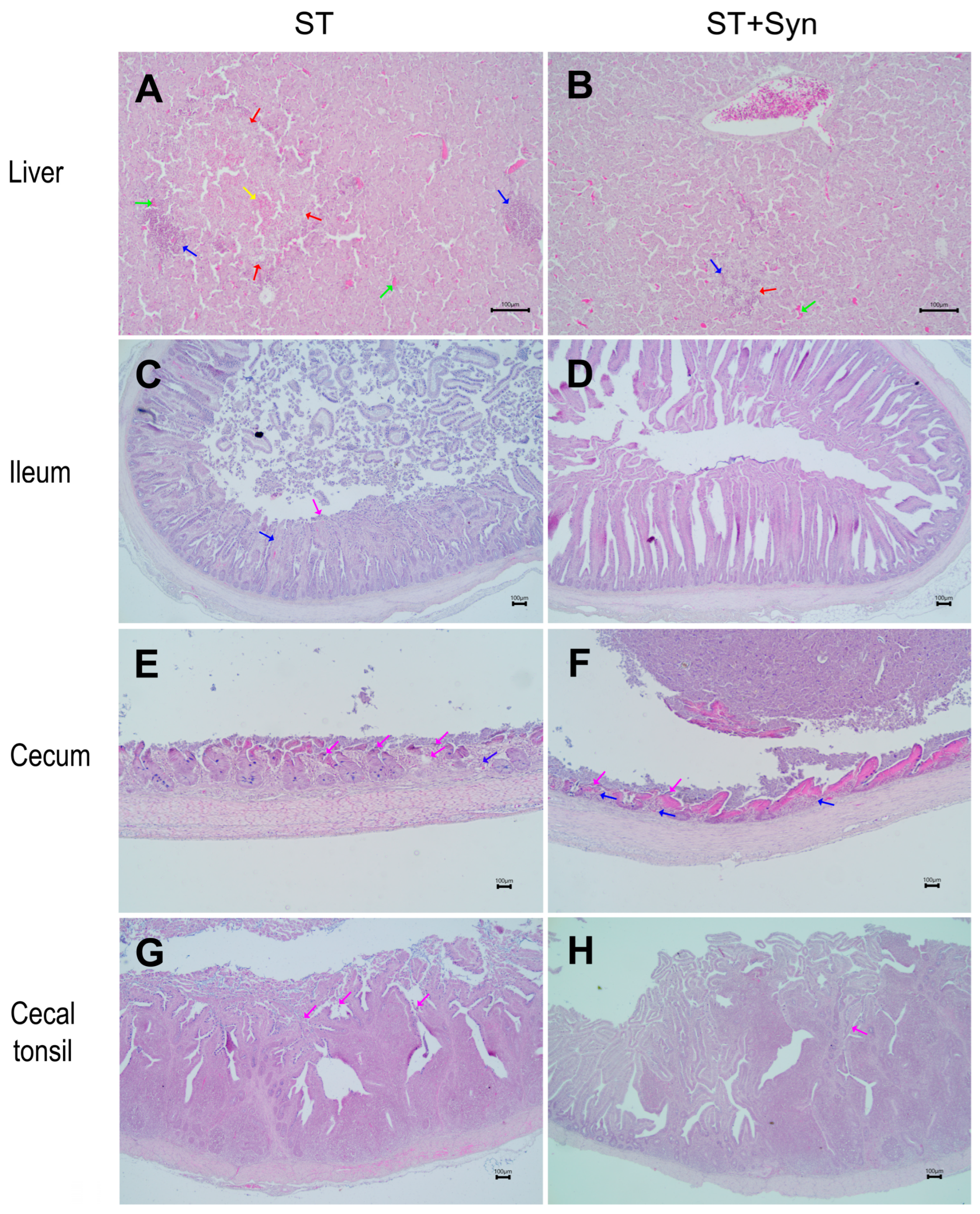
Liver lesions indicated that the ST + Syn group showed a significant improvement in hepatic necrosis, edema, and congestion compared with the ST group (p < 0.05). No differences were observed between the non-challenged groups and the ST + Syn group. The challenged unsupplemented group presented more severe pathological changes, including disorganization of the hepatic cords, sinusoidal dilation with congestion, edema, Kupffer cell hyperplasia, and focal necrotic areas surrounded by marked inflammatory cell infiltration composed of heterophils and macrophages (Figure 5A). In contrast, the challenged supplemented group exhibited pronounced protective effects, with a nearly normal hepatic architecture comparable to that of the non-challenged groups (Figure 5B).
Histopathological evaluation revealed lesions in the duodenum, jejunum, and ileum. No significant differences were observed among the CT, CT + Syn, and ST + Syn groups. However, when compared with these groups, the ST group exhibited more severe heterophilic and mononuclear inflammatory infiltration, as well as vascular alterations including congestion, hemorrhage, and cellular necrosis (p < 0.05; Figure 5C). In the ileum, the ST + Syn group showed a higher degree of enterocyte vacuolar degeneration compared to the other treatments (p < 0.05; Figure 5D).
Assessment of histopathological lesions in the cecum demonstrated a significant difference in injury severity between the ST and ST + Syn groups. The ST + Syn group exhibited reduced inflammatory infiltrate and mucosal ulceration compared with the ST group (p < 0.05; Figure 5E,F). Lesions in the cecal tonsil indicated that synbiotic supplementation decreased the severity of necrosis at the villus tip and within the lamina propria, as well as inflammatory infiltration and vascular alterations (p < 0.05; Figure 5G,H). Conversely, increased lymphoid tissue proliferation and enterocyte vacuolar degeneration were observed in the ST + Syn group (p < 0.05). No significant differences were detected between the non-challenged groups and the ST + Syn group.

3.5. Ileal Epithelial Morphometry

The effect of the synbiotic on histomorphometry characteristics of the ileum is represented in Table 2. Supplementation with the synbiotic significantly affected epithelial height; the ST + Syn group had a greater height than the ST group, with no difference observed between the ST + Syn group and those not challenged with the bacteria (p < 0.05).

3.6. Intestinal Permeability

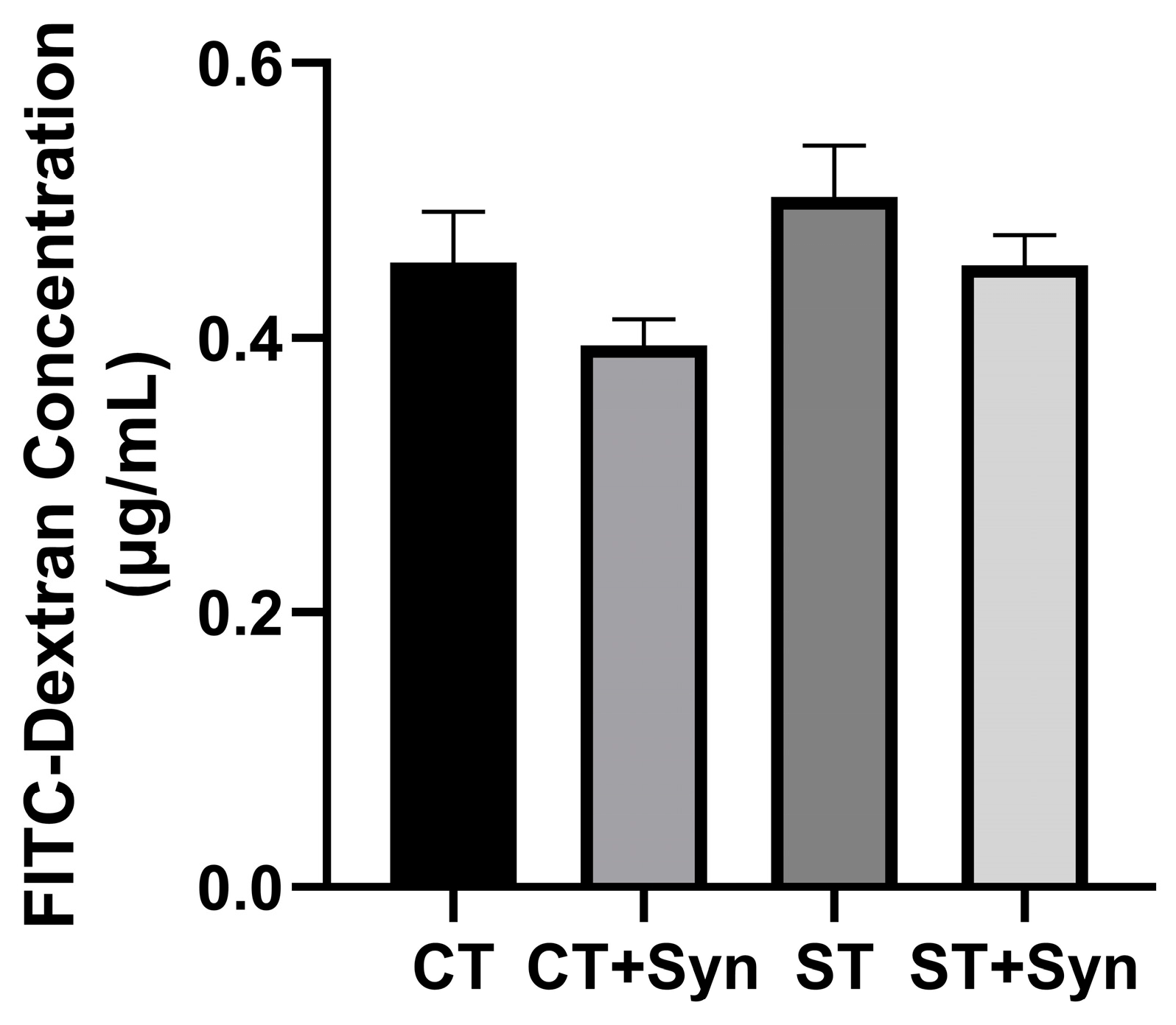
There were no significant differences between the groups as shown in Figure 6, as exposure to S. Typhimurium did not result in an increase in intestinal permeability (measured with FITC-dextran) 5 days after exposure when compared to unexposed birds.

3.7. Body Weight

The effects of the synbiotic with and without S. Typhimurium challenge on the body weight (BW) of broiler chickens are shown in Table 3. On day 7, prior to the Salmonella challenge, the BW was higher in the CT + Syn and ST + Syn groups that received the synbiotic treatment compared to the groups that were not treated (p < 0.05). On day 12 (5 dpi), the groups challenged with Salmonella presented a lower BW compared to the non-challenged groups. The ST + Syn group presented a higher BW compared to the other group challenged without the synbiotic (ST, p < 0.05).

4. Discussion

Our results showed a positive immune response in broiler chickens and the early protective effect of a synbiotic using a reduced in vivo experimental model of S. Typhimurium infection. The protective effect appeared to be sufficient to attenuate an infection and its consequences with a high inoculum concentration (1 × 10⁹ CFU), as used in our trial, although some research [39,40] has indicated that environmental exposure of chicks to Salmonella sp. during the first days of life can probably be limited to low to medium concentrations.
In our study, the isolation of S. Typhimurium in the gut decreased significantly at 5 dpi when supplemented with the synbiotic. This finding was consistent with other studies which have shown that supplementation can reduce Salmonella colonization patterns [12,41,42,43]. However, the results were variable, and the differences could be attributed to variations with in vivo models [12], differences in the breed of birds used for the challenge [44], and the virulence of the specific Salmonella strains used [45], the latter of which could be crucial due to the differences in adhesion and invasion capacity between serovars. Salmonella recovery in internal organs can describe the translocation of bacteria; in this case, from the gut to the liver. This bacterial translocation can be used as an indicator of intestinal health to describe the alteration of the epithelial lining of the gastrointestinal tract [24,43].
For bacterial pathogenesis during Salmonella infection, successful colonization is crucial [46]. This is a key aspect of its invasion mechanism and virulence factors that ensure its survival and reproduction [47]; colonization levels can directly affect infection severity [34]. It appeared that supplementation with the synbiotic became relevant at this point. Our results showed that supplementation was able to reduce the density of bacteria and the number of infected cells per villus in the ileum, which was consistent with other reports [46,48], where the use of prebiotics/probiotics caused a decrease in the Salmonella load in the intestine. The probiotic bacteria contained in the synbiotic have been shown to successfully colonize the chicken intestine, in addition to producing enterocins, pediocins, and lactic acid that can inhibit the growth [48] and prevent the adhesion of enteric pathogens in the intestine [49]. The results showed no differences between treatments in the cecum, which may be due to the organ’s critical role in Salmonella colonization, as its slow intestinal content flow and fermentation processes can create favorable conditions for bacterial persistence [25]. Some studies established that the cecum above the ileum was the preferred location in the gastrointestinal tract for colonization by S. Typhimurium [50] and S. Enteritidis [51], which could explain why the protective scope of the synbiotic was not reflected in this organ; in contrast, significant reductions in the amount of Salmonella in the cecum of chicks treated with probiotics were reported [52].
In our study, synbiotic supplementation decreased the adhesion and invasion capacity of S. Typhimurium to the ileum epithelium, explaining the difference in positive results between culture and immunofluorescence in the intestine. It is possible that the reduction in the Salmonella load achieved was sufficient to prevent recovery during laboratory isolation. Furthermore, the lower abundance of S. Typhimurium in the supplemented groups may contribute to a lower amount of LPS in the gastrointestinal tract, resulting in a reduced subsequent inflammatory response [9].
In the present infection study, analysis of the immune response, as measured by gene expression of inflammatory mediators, revealed an altered cytokine response in infected birds compared to uninfected controls, confirming the success of the infection. The exposure of the birds to a high dose of the pathogen likely triggered a more acute immune response and overexpression of immune-related genes, compared to the absence of or lower challenge doses [40]; in contrast, it should also be considered that supplementation with the synbiotic in Salmonella-infected birds decreased the pathogen load, and this was also likely to decrease the mRNA expression of cytokines [48,53].
The synbiotic treatment affected the gene expression of four of the eight genes investigated. The change in gene expression, whether positive or negative, affected or harmed epithelial integrity [43], which may explain why the immune system played a role in controlling Salmonella sp. translocation [25] and promoting immune tolerance [54]. Other researchers have reported that birds treated with probiotics/prebiotics and challenged with S. Typhimurium [9], S. Enteritidis [48], and S. Pullorum [34] showed suppression in the gene expression of inflammation-related cytokines. Similarly, gene expressions of anti-inflammatory cytokines were simultaneously promoted in this experiment. Although inflammatory cytokine production is necessary to elicit an active and protective response to a challenge, an excessive inflammatory response can unfortunately cause tissue damage [55]. In fact, the overexpression of pro-inflammatory cytokines can be the primary biomarker of an exacerbated intestinal inflammatory response [47].
The mechanism of supplementation in alleviating the inflammatory effects of Salmonella infection may be attributed to the promotion of increased expression of anti-inflammatory cytokines [9,55]. The expression of the pro-inflammatory cytokines IL-1 and TNF was related to an acute immune response against Salmonella sp. in young chicks [16,47] and induced the redistribution of tight junction proteins [56]. An elevated IL-10 expression can downregulate the production of pro-inflammatory cytokines by antigen-presenting cells and T lymphocytes. Concurrently, interferons (IFNs) supported epithelial regeneration and stimulated dendritic cells to induce IL-10-producing cell populations [53,57]. These cytokine profiles were associated with a tolerance response [58] and immune resistance to Salmonella in chickens [16].
In our study, the challenged and synbiotic-supplemented groups of birds showed increased expression of mucin 2 mRNA abundance compared to the other challenged birds that were not treated. Mucin 2 (MUC2) is a crucial component of the mucus layer and the primary line of defense for protecting epithelial cells in the intestinal tract from pathogens [55]. An increased MUC2 gene expression can lead to an enhanced barrier function of the epithelial lining, thereby protecting against the translocation of bacteria from the intestinal lumen into the bloodstream [43]. These results were consistent with other reports on synbiotic supplementation [43,55], which concluded that mucin 2 was essential for maintaining intestinal mucosa integrity. In contrast, other studies have found no differences in the MUC2 gene expression during exposure to Salmonella [25,59]. One of the main reasons for these differences was the time elapsed from infection to sampling, as it has been indicated that chickens tended to recover after 20 dpi [25]. Infection with S. Typhimurium and other enteropathogens significantly reduced intestinal mucin as a pathophysiological strategy [46], suggesting that measuring MUC2 gene expression may be a potential biomarker of intestinal health [43].
Descriptive histopathological examinations of sections from different parts of the intestine, liver, and heart from all the groups revealed a certain degree of infiltration by inflammatory cells, with a predominance of mononuclear cells and heterophils, indicating a basal level of inflammation. Commonly referred to as sterile inflammation, it is a chronic, low-grade process caused by non-infectious stimuli related to chemical, physical, and metabolic agents [60], which was further compounded by the fact that the feed offered to the birds did not contain any prophylactic treatment. More severe damage was observed in infected animals that were not supplemented with the synbiotic. This type of infiltration in the intestinal epithelium of chickens infected with Salmonella was considered a classic sign of an inflammatory immune response to the pathogen. With it, an increase in the expression of pro-inflammatory cytokines would be expected, accompanied by a reduction in the expression of the anti-inflammatory cytokine [61], which was also observed in our trial for untreated infected birds. Other reports concurred with our findings [9,34,53], suggesting that supplementation reduced inflammatory cell infiltration and maintained the integrity of intestinal epithelial cells. This result was attributed to the fact that the probiotic component enhanced the colonization of beneficial bacteria in the intestine, thereby reducing inflammation and increasing mucus production, which in turn strengthened the intestinal barrier [54].
Furthermore, HE staining revealed vacuolar degeneration of the enteric epithelium in the ileum and cecal tonsil of the challenged and supplemented group, indicating an active response to the specific S. Typhimurium infection [46]. Additionally, this same group reported a greater proliferation of lymphoid tissue in the cecal tonsil, which was attributed to the direct interaction of the synbiotic bacteria with the gut-associated lymphoid tissue (GALT). Binding probiotic bacteria to lymphocyte receptors activated immune cells, leading to their proliferation and an enhanced immune response [62]. This knowledge can provide insight into the function and intensity of immune cell responses following Salmonella infection and will contribute to the development of immunomodulatory strategies [51].
As inflammatory damage and vascular alterations were observed, several morphological changes can occur when a pathogen crosses the mucosal layer and adheres to the epithelium. The morphology of these components can be a key indicator of overall intestinal health [61]. Salmonella infection generally causes an increase in the cell turnover rate in the host intestine in response to infection [25], which can reduce the absorptive surface area due to epithelial exfoliation [49], goblet cell exfoliation [61], villous shedding [46], and excessive proliferation of intestinal crypt cells [50]. Our trial only showed a change in epithelial height. Evidence on the use of synbiotics in the literature related to the protective factor may vary due to the variety of probiotic strain formulations that they consist of, the pattern and age of infection, the number of days after infection at the time of sample collection, and the bacterial strain used for the challenge [33,59]. However, a protective effect has been reported by reducing crypt depth [49], lengthening villi [4,33,63], and stimulating goblet cell proliferation [49,55].
According to our results, neither exposure to S. Typhimurium nor synbiotic supplementation showed a change in the levels of FITC-d quantification in the serum of individuals exposed at 5 dpi. Salmonella infection can significantly inhibit the expression of claudins, occludins, cadherins, and MUC2 genes [34,59], indicating that the bacteria may disrupt the formation of tight junctions between intestinal epithelial cells [47,64]. Some studies have indicated that intestinal permeability was affected 72 h after exposure to Salmonella infection [65]; however, no differences were reported in assays that performed infections and measured at 6 dpi [25] and 7 dpi [59], while others have reported evidence of intestinal leakiness up to 10 dpi [64] and 14 dpi [24]. Differences in intestinal permeability could be influenced by the dose, age of exposure, feeding strategy, and virulence of the strain used [25], and this could also be related to intestinal immune regulation that was conditioned at the time of infection, as well as the maturation of the immune system [40].
The results of the trial indicated that the growth performance of the group exposed to S. Typhimurium infection and supplemented with the synbiotic was similar to that of the unexposed groups and significantly better than the other infected group, indicating that the treatment was successful in preventing aspects of growth depression associated with a direct challenge from the pathogen. Early inoculation with probiotic bacteria and prebiotics may allow for improved nutrient absorption and the expression of intestinal protective factors. The improved weight gain in supplemented birds has been attributed to the development of a gastrointestinal environment that favors enzymatic digestion and preserves the integrity of the intestinal epithelium [11]. Supplementation improved the absorption of proteins, minerals, vitamins, and amino acids, while modulating the composition and activity of the gut microbiota, thereby promoting muscle development and increasing protein content [53,66]. Similar results have been reported with the same synbiotic in trials with infectious challenges involving Salmonella [12,42,48], Eimeria spp. [54,67,68], E. coli [69,70], C. perfringens [53,54], and C. jejuni [71]. In contrast, studies performed by Cason et al. [72] and Shah et al. [73] described that the supplement did not influence body weight gain during the evaluation period.

5. Conclusions

Synbiotic supplementation demonstrated a protective effect against early experimental infection with Salmonella Typhimurium in broiler chickens. This protective action was evidenced by a reduction in bacterial colonization and epithelial adhesion, along with a favorable modulation of the host immune response and preservation of intestinal morphology integrity. Furthermore, these effects were associated with sustained body growth during the early stages of infection, as evidenced by a higher body weight compared with the challenged birds that did not receive the supplementation. This finding suggests that the intervention mitigated the negative impact of the infectious challenge, even under the controlled conditions of a reduced in vivo experimental model. Overall, these findings support the protective role of synbiotics previously reported in the literature and can substantiate their mechanism of action as an effective nutritional strategy to enhance intestinal health and disease resistance in broiler chickens

Author Contributions

Conceptualization, W.R.P., E.B.C., A.C.H. and C.S.D.; Methodology, W.R.P., E.B.C. and A.C.H.; Formal analysis, W.R.P. and A.C.H.; Investigation, W.R.P., E.B.C. and A.C.H.; Data curation, W.R.P. and A.C.H.; Validation, E.B.C. and A.C.H.; Resources, E.B.C. and A.C.H.; Writing—original draft, W.R.P., E.B.C., A.C.H. and C.S.D.; Writing—review and editing, W.R.P., E.B.C. and A.C.H.; Visualization, W.R.P., E.B.C. and A.C.H.; Supervision, E.B.C., A.C.H. and C.S.D.; Project administration, W.R.P. and C.S.D.; Funding acquisition, W.R.P. and C.S.D. All authors have read and agreed to the published version of the manuscript.

Funding

This work was supported by dsm-firmenich (project BR240711) and by the postgraduate studies system (SEP, 4297-2024) of the University of Costa Rica.

Institutional Review Board Statement

The Institutional Animal Care and Use Committee of the University of Costa Rica approved all the animal experimentation methods utilized in this work (CICUA-9-2024).

Informed Consent Statement

Not applicable.

Data Availability Statement

The original contributions presented in this study are included in the article. Further inquiries can be directed to the corresponding author.

Acknowledgments

We are grateful for the technical support of the Bacteriology Laboratory and Avian Pathology Laboratory at the Faculty of Veterinary Medicine of the National University (UNA), as well as Imunova Analises Biologicas in Brazil. We are grateful for the financial support provided by Sistema de Estudios de Posgrado (SEP) of the University of Costa Rica and dsm-firmenich Animal Nutrition & Health.

Conflicts of Interest

Walter Rivera reports a financial relationship with dsm-firmenich Animal Nutrition & Health, including employment. The other authors declare no known competing financial or personal relationships that could have influenced the work reported in this paper. The funding sources had no role in the study design; data collection, analysis, or interpretation; the writing of the manuscript; or the decision to submit the article for publication.

References

  1. Metwally, M.; El-Hammady, H.; Farghly, M.; Helmy, N.; El-Sagheer Mohamed, M. Validation of the Effect of Some Nutritional Manipulations on the Productive Performance of Broiler Chickens. Assiut J. Agric. Sci. 2022, 53, 86–100. [Google Scholar] [CrossRef]
  2. Liu, X.; Ji, Y.; Lv, H.; Lv, Z.; Guo, Y.; Nie, W. Microbiome and metabolome reveal beneficial effects of baicalin on broiler growth performance and intestinal health. Poult. Sci. 2025, 104, 104678. [Google Scholar] [CrossRef] [PubMed]
  3. Brugaletta, G.; De Cesare, A.; Zampiga, M.; Laghi, L.; Oliveri, C.; Zhu, C.; Manfreda, G.; Syed, B.; Valenzuela, L.; Sirri, F. Effects of Alternative Administration Programs of a Synbiotic Supplement on Broiler Performance, Foot Pad Dermatitis, Caecal Microbiota, and Blood Metabolites. Animals 2020, 10, 522. [Google Scholar] [CrossRef] [PubMed]
  4. Prentza, Z.; Castellone, F.; Legnardi, M.; Antlinger, B.; Segura, M.; Kefalas, G.; Fortomaris, P.; Papaioannou, A.; Stylianaki, I.; Franzo, G.; et al. Effects of a Multi-Genus Synbiotic (PoultryStar® sol) on Gut Health and Performance of Broiler Breeders. J. World Poult. Res. 2022, 12, 212–229. [Google Scholar] [CrossRef]
  5. Agbai, K.; Afolayan, M.; Obianwuna, U. Effect of commercially blended synbiotic product as a replacement for antibiotic growth promoters on growth performance and villi morphology of broiler chicks in dry hot season. Niger. J. Anim. Prod. 2022, 49, 13–19. [Google Scholar] [CrossRef]
  6. Wang, W.; Chen, Y.; Ye, H.; Dong, Z.; Zhang, C.; Feng, D.; Cao, Q.; Liang, S.; Zuo, J. N-acyl homoserine lactonase attenuates the virulence of Salmonella typhimurium and its induction of intestinal damages in broilers. Anim. Nutr. 2023, 14, 334–342. [Google Scholar] [CrossRef] [PubMed]
  7. Hussain, M.; Aizpurua, O.; Perez de Rozas, A.; París, N.; Guivernau, M.; Jofre, A.; Tous, N.; Ng’ang’a, Z.; Alberdi, A.; Rodríguez, E.; et al. Positive impact of early-probiotic administration on performance parameters, intestinal health and microbiota populations in broiler chickens. Poult. Sci. 2024, 103, 104401. [Google Scholar] [CrossRef]
  8. Younas, S.; Bukhari, D.; Bibi, Z.; Ullah, A.; Rehman, A. Impact of multistrain probiotics on growth performance, immune response, and gut morphometry in broiler chicken Gallus gallus domesticus. Poult. Sci. 2025, 104, 105026. [Google Scholar] [CrossRef] [PubMed]
  9. Wu, Y.; Yang, W.; Wu, Y.; Chen, J.; Chen, Y. Modulations of growth performance, gut microbiota, and inflammatory cytokines by trehalose on Salmonella Typhimurium-challenged broilers. Poult. Sci. 2020, 99, 4034–4043. [Google Scholar] [CrossRef] [PubMed]
  10. Dunislawska, A.; Beldowska, A.; Yatsenko, O.; Siwek, M. Effect of prebiotics administered during embryo development on mitochondria in intestinal and immune tissues of adult broiler chickens. Poult. Sci. 2023, 102, 102663. [Google Scholar] [CrossRef]
  11. Youssef, I.; Elsherbeni, A.; Almuraee, A.; Nass, N.; Beyari, E.; Alshammarii, N.; Abdel-Ghany, A.; Ahmed, E.; Nasr, S.; Youssef, K.; et al. Influence of using synbiotics by various routes on Mandarah male chicks: Intestinal bacterial counts, gut morphology and histological status. Poult. Sci. 2024, 103, 103601. [Google Scholar] [CrossRef]
  12. Drauch, V.; Ghanbari, M.; Reisinger, N.; Mohnl, M.; Hess, C.; Hess, M. Differential effects of synbiotic delivery route (feed, water, combined) in broilers challenged with Salmonella Infantis. Poult. Sci. 2025, 104, 104890. [Google Scholar] [CrossRef] [PubMed]
  13. Abdel-Wareth, A.; Hammad, S.; Khalaphallah, R.; Salem, W.; Lohakare, J. Synbiotic as eco-friendly feed additive in diets of chickens under hot climatic conditions. Poult. Sci. 2019, 98, 4575–4583. [Google Scholar] [CrossRef] [PubMed]
  14. Hu, J.; Mohammed, A.; Murugesan, G.; Cheng, H. Effect of a synbiotic supplement as an antibiotic alternative on broiler skeletal, physiological, and oxidative parameters under heat stress. Poult. Sci. 2022, 101, 101769. [Google Scholar] [CrossRef]
  15. Rafieian-Naeini, H.; Ko, H.; Goo, D.; Reddy, V.; Reddy, S.; Reddy, H.; Kim, W. Synergistic impact of Salmonella Typhimurium and Eimeria spp. coinfection on turkey poults: Growth performance, Salmonella colonization, and ceca microbiota insights. Poult. Sci. 2025, 104, 104568. [Google Scholar] [CrossRef] [PubMed]
  16. Shaji, S.; Selvaraj, R.; Shanmugasundaram, R. Salmonella Infection in Poultry: A Review on the Pathogen and Control Strategies. Microorganisms 2023, 11, 2814. [Google Scholar] [CrossRef]
  17. Tabashsum, Z.; Scriba, A.; Biswas, D. Alternative approaches to therapeutics and subtherapeutics for sustainable poultry production. Poult. Sci. 2023, 102, 102750. [Google Scholar] [CrossRef]
  18. Javannmiri, E.; Rahimi, S.; Torshizi, M.; Nabiyan, S.; Behnamifar, A.; Grimes, J. Comparison of the effect of anticoccidial drug, probiotic, synbiotic, phytochemicals and vaccine in prevention and control of coccidiosis in broiler chickens challenged with Eimeria spp. Poult. Sci. 2024, 103, 104357. [Google Scholar] [CrossRef]
  19. Mekonnen, Y.; Savini, F.; Indio, V.; Seguino, A.; Giacometti, F.; Serraino, A.; Candela, M.; De Cesare, A. Systematic review on microbiome-related nutritional interventions interfering with the colonization of foodborne pathogens in broiler gut to prevent contamination of poultry meat. Poult. Sci. 2024, 103, 103607. [Google Scholar] [CrossRef] [PubMed]
  20. Cobb-Vantress, Inc. Cobb Broiler Management Guide 2021. Available online: www.cobbgenetics.com/assets/Cobb-Files/Broiler-Guide_English-2021-min.pdf (accessed on 23 November 2024).
  21. Cobb-Vantress, Inc. Broiler Performance and Nutrition. Supplement 2022. Available online: https://www.cobbgenetics.com/assets/Cobb-Files/2022-Cobb500-Broiler-Performance-Nutrition-Supplement.pdf (accessed on 23 November 2024).
  22. Bergeron, N.; Corriveau, J.; Letellier, A.; Daigle, F.; Lessard, L.; Quessy, S. Interaction between host cells and septicemic Salmonella enterica serovar Typhimurium isolates from pigs. J. Clin. Microbiol. 2009, 11, 3413–3419. [Google Scholar] [CrossRef]
  23. Shanmugasundaram, M.; Applegate, T.; Selvaraj, R. Effect of Bacillus subtilis and Bacillus licheniformis probiotic supplementation on cecal Salmonella load in broilers challenged with Salmonella. J. Appl. Poult. Res. 2020, 29, 808–816. [Google Scholar] [CrossRef]
  24. Choi, J.; Marshall, B.; Ko, H.; Shi, H.; Singh, A.; Thippareddi, H.; Holladay, S.; Gogal, R.; Kim, W. Antimicrobial and immunomodulatory effects of tannic acid supplementation in broilers infected with Salmonella Typhimurium. Poult. Sci. 2022, 101, 102111. [Google Scholar] [CrossRef]
  25. Yadav, S.; Teng, P.; Choi, J.; Singh, A.; Vaddu, S.; Thippareddi, H.; Kim, W. Influence of rapeseed, canola meal and glucosinolate metabolite (AITC) as potential antimicrobials: Effects on growth performance, and gut health in Salmonella Typhimurium challenged broiler chickens. Poult. Sci. 2022, 101, 101551. [Google Scholar] [CrossRef]
  26. Souza, M.; Cicero, C.; Menck, M.; Justino, L.; Gerez, J.; Sampaio, A.; Rodrigues, A. Histological evaluation of the intestine of broiler chickens: Comparison of three sampling methods. Semin. Ciênc. Agrár. Londrina 2021, 42, 3247–3258. [Google Scholar] [CrossRef]
  27. USDA/FSIS. Isolation and identification of Salmonella from Meat, Poultry, Pasteurized Egg and Siluriformes (Fish) Products and Carcass and environmental Sponges. In Microbiology Laboratory Guidebook 4.10; United States Department of Agriculture: Washington, DC, USA, 2019. [Google Scholar]
  28. Insalata, N.; Schulte, S.; Berman, J. Immunofluorescence technique for the detection of Salmonella in various foods. Appl. Microbiol. 1967, 15, 1145–1149. [Google Scholar] [CrossRef] [PubMed]
  29. Fantasia, L. Accelerated Inmunofluorescense Procedure for the Detection of Salmonella in Foods and Animal By-Products. Appl. Microbiol. 1969, 18, 708–713. [Google Scholar] [CrossRef]
  30. Zhang, R.; Li, Z.; Gu, X.; Zhao, J.; Guo, T.; Kong, J. Probiotic Bacillus subtilis LF11 Protects Intestinal Epithelium Against Salmonella Infection. Front. Cell. Infect. Microbiol. 2022, 12, 837886. [Google Scholar] [CrossRef] [PubMed]
  31. Livak, K.; Schmittgen, T. Analysis of relative gene expression data using real-time quantitative PCR and the 2−ΔΔCT method. Methods 2001, 25, 402–408. [Google Scholar] [CrossRef] [PubMed]
  32. Rivera, W.; Barquero, E.; Chaves, A. Effect of the use of probiotic Bacillus subtilis (QST 713) as a growth promoter in broilers: An alternative to bacitracin methylene disalicylate. Poult. Sci. 2021, 100, 101372. [Google Scholar] [CrossRef] [PubMed]
  33. Prentza, Z.; Castellone, F.; Legnardi, M.; Antlinger, B.; Segura, M.; Kefalas, G.; Papaioannou, N.; Stylianaki, I.; Papatsiros, V.; Franzo, G.; et al. Administration of a Multi-Genus Synbiotic to Broilers: Effects on Gut Health, Microbial Composition and Performance. Animals 2023, 13, 113. [Google Scholar] [CrossRef] [PubMed]
  34. Chen, Y.; Zhu, F.; Yu, G.; Peng, N.; Li, X.; Ge, M.; Yang, L.; Dong, W. Bifidobacterium bifidum postbiotics prevent Salmonella Pullorum infection in chickens by modulating pyroptosis and enhancing gut health. Poult. Sci. 2025, 104, 104968. [Google Scholar] [CrossRef] [PubMed]
  35. Alshamy, Z.; Richardson, K.; Hünigen, H.; Hafez, H.; Plendl, J.; Al Masri, S. Comparison of the gastrointestinal tract of a dual-purpose to a broiler chicken line: A qualitative and quantitative macroscopic and microscopic study. PLoS ONE 2018, 13, e0204921. [Google Scholar] [CrossRef]
  36. Liu, J.; Teng, P.; Kim, W.; Applegate, T. Assay considerations for fluorescein isothiocyanate-dextran (FITC-d): An indicator of intestinal permeability in broiler chickens. Poult. Sci. 2021, 100, 101202. [Google Scholar] [CrossRef]
  37. Shi, H.; Lopes, T.; Tompkins, Y.; Liu, G.; Choi, J.; Sharma, M.; Kim, W. Effects of phytase supplementation on broilers fed with calcium and phosphorus-reduced diets, challenged with Eimeria maxima and Eimeria acervulina: Influence on growth performance, body composition, bone health, and intestinal integrity. Poult. Sci. 2024, 103, 103511. [Google Scholar] [CrossRef]
  38. Vicuña, E.; Kuttappan, V.; Tellez, G.; Hernandez-Velasco, X.; Seeber-Galarza, R.; Latorre, J.; Faulkner, O.; Wolfenden, A.; Hargis, B.; Bielke, L. Dose titration of FITC-D for optimal measurement of enteric inflammation in broiler chicks. Poult. Sci. 2015, 94, 1353–1359. [Google Scholar] [CrossRef]
  39. Gutierrez, A.; De, J.; Schneider, K. Prevalence, Concentration, and Antimicrobial Resistance Profiles of Salmonella Isolated from Florida Poultry Litter. J. Food Prot. 2020, 83, 2179–2186. [Google Scholar] [CrossRef] [PubMed]
  40. Wang, J.; Fenster, D.; Vaddu, S.; Bhumanapalli, S.; Kataria, J.; Sidhu, G.; Leone, C.; Singh, M.; Dalloul, R.; Thippareddi, H. Colonization, spread and persistence of Salmonella (Typhimurium, Infantis and Reading) in internal organs of broilers. Poult. Sci. 2024, 103, 103806. [Google Scholar] [CrossRef] [PubMed]
  41. Park, J.; Kim, I. Supplemental effect of probiotic Bacillus subtilis B2A on productivity, organ weight, intestinal Salmonella microflora, and breast meat quality of growing broiler chicks. Poult. Sci. 2014, 93, 2054–2059. [Google Scholar] [CrossRef] [PubMed]
  42. Luoma, A.; Markazi, A.; Shanmugasundaram, R.; Murugesan, G.; Mohnl, M.; Selvaraj, R. Effect of synbiotic supplementation on layer production and cecal Salmonella load during a Salmonella challenge. Poult. Sci. 2017, 96, 4208–4216. [Google Scholar] [CrossRef]
  43. Olsen, M.; Thøfner, I.; Sandvang, D.; Ladefoged Poulsen, L. Research Note: The effect of a probiotic E. faecium 669 mitigating Salmonella Enteritidis colonization of broiler chickens by improved gut integrity. Poult. Sci. 2022, 101, 102029. [Google Scholar] [CrossRef]
  44. Drauch, V.; Mitra, T.; Liebhart, D.; Hess, M.; Hess, C. Infection dynamics of Salmonella Infantis vary considerably between chicken lines. Avian Pathol. 2022, 51, 561–573. [Google Scholar] [CrossRef] [PubMed]
  45. Drauch, V.; Kornschober, C.; Palmieria, N.; Hess, M.; Hess, C. Infection dynamics of Salmonella Infantis strains displaying different genetic backgrounds—with or without pESI-like plasmid—vary considerably. Emerg. Microbes. Infect. 2021, 10, 1471–1480. [Google Scholar] [CrossRef]
  46. Chen, H.; Shang, K.; Jia, Y.; Guo, R.; Li, J.; Liao, C.; Ding, K.; Chen, S. Salmonella enterica serovar Typhimurium uses T6SS to promote bacterial adaptability and enhance its survival of niches in broiler chickens. Poult. Sci. 2025, 104, 105277. [Google Scholar] [CrossRef] [PubMed]
  47. Zhao, X.; Zheng, S.; Wei, S.; Tian, Q.; Tao, Y.; Bo, R.; Liu, M.; Li, J. The protective effect and potential mechanisms of eugenol against Salmonella in vivo and in vitro. Poult. Sci. 2022, 101, 101801. [Google Scholar] [CrossRef]
  48. Shanmugasundaram, R.; Mortada, M.; Cosby, D.; Singh, M.; Applegate, T.; Syed, B.; Pender, C.; Curry, S.; Murugesan, G.; Selvaraj, R. Synbiotic supplementation to decrease Salmonella colonization in the intestine and carcass contamination in broiler birds. PLoS ONE 2019, 14, e0223577. [Google Scholar] [CrossRef]
  49. Xie, S.; Zhang, H.; Matjeke, R.; Zhao, J.; Yu, Q. Bacillus coagulans protect against Salmonella Enteritidis-induced intestinal mucosal damage in young chickens by inducing the differentiation of goblet cells. Poult. Sci. 2022, 101, 101639. [Google Scholar] [CrossRef] [PubMed]
  50. Yan, J.; Racaud, C.; Pezier, T.; Edir, A.; Rolland, C.; Claverie, C.; Burlaud, J.; Olivier, M.; Velge, P.; Lacroix, S.; et al. Intestinal organoids to model Salmonella infection and its impact on progenitors. Sci. Rep. 2024, 14, 15160. [Google Scholar] [CrossRef]
  51. Meijerink, N.; van den Biggelaar, R.; van Haarlem, D.; Stegeman, A.; Rutten, V.; Jansen, C. A detailed analysis of innate and adaptive immune responsiveness upon infection with Salmonella enterica serotype Enteritidis in young broiler chickens. Vet. Res. 2021, 52, 109. [Google Scholar] [CrossRef]
  52. Wang, L.; Li, L.; Lv, Y.; Chen, Q.; Feng, J.; Zhao, X. Lactobacillus plantarum Restores Intestinal Permeability Disrupted by Salmonella Infection in Newlyhatched Chick. Sci. Rep. 2018, 8, 2229. [Google Scholar] [CrossRef] [PubMed]
  53. Mohamed, H.; Gaafar, R.; Ibrahim, W.; Hassan, H. Modulatory Effect of Synbiotic and/or Antibiotic on Biochemical Indices, Gene Expression and Meat Quality of Broiler Chicken Challenged with Clostridium perfringens. J. Adv. Vet. Res. 2023, 13, 2068–2077. [Google Scholar]
  54. Shah, B.; Hakeem, W.; Shanmugasundaram, R.; Selvaraj, R. Effect of synbiotic supplementation on production performance and severity of necrotic enteritis in broilers during an experimental necrotic enteritis challenge. Poult. Sci. 2023, 102, 102959. [Google Scholar] [CrossRef] [PubMed]
  55. Wu, Y.; Wang, B.; Zeng, Z.; Liu, R.; Tang, L.; Gong, L.; Li, W. Effects of probiotics Lactobacillus plantarum 16 and Paenibacillus polymyxa 10 on intestinal barrier function, antioxidative capacity, apoptosis, immune response, and biochemical parameters in broilers. Poult. Sci. 2019, 98, 5028–5039. [Google Scholar] [CrossRef]
  56. Zhang, Y.; Liu, J.; Pan, Y.; Shi, K.; Mai, P.; Li, X.; Shen, S. Progress on the prevention of poultry Salmonella with natural medicines. Poult. Sci. 2025, 104, 104603. [Google Scholar] [CrossRef]
  57. Neurath, M.F. Cytokines in inflammatory bowel disease. Nat. Rev. Immunol. 2014, 14, 329–342. [Google Scholar] [CrossRef]
  58. Tarradas, J.; Tous, N.; Esteve-Garcia, E.; Brufau, J. The Control of Intestinal Inflammation: A Major Objective in the Research of Probiotic Strains as Alternatives to Antibiotic Growth Promoters in Poultry. Microorganisms 2020, 8, 148. [Google Scholar] [CrossRef] [PubMed]
  59. He, Y.; Yang, Y.; Dong, Y.; Ito, K.; Zhang, B. Highly nutritious diet resists Salmonella Typhimurium infections by improving intestinal microbiota and morphology in broiler chickens. Poult. Sci. 2020, 99, 7055–7065. [Google Scholar] [CrossRef] [PubMed]
  60. Kogut, M.; Genovese, K.; Swaggerty, C.; He, H.; Broom, L. Inflammatory phenotypes in the intestine of poultry: Not all inflammation is created equal. Poult. Sci. 2018, 97, 2339–2346. [Google Scholar] [CrossRef]
  61. Fasina, Y.; Hoerr, F.; McKee, S.; Conner, D. Influence of Salmonella enterica serovar Typhimurium infection on intestinal goblet cells and villous morphology in broiler chicks. Avian Dis. 2010, 54, 841–847. [Google Scholar] [CrossRef] [PubMed]
  62. Hossain, H.; Nuradji, H.; Yousuf, M.; Nazrul, M.; Islam, S. Impact of synbiotic on growth performance, histo architectural modulation of lymphoid organ, hematology, blood biochemistry and humoral immune response in naked neck chicken. Trop. Anim. Health Prod. 2025, 57, 4. [Google Scholar] [CrossRef]
  63. Hamprakorn, K.; Maneewan, B.; Jantasin, W.; Lani, M.; Moonmanee, T.; Panatuk, P. Effect of extracted phycocyanin by-products as a synbiotic supplement on the production performance and intestinal morphology of broilers. Vet. World 2025, 18, 52–59. [Google Scholar] [CrossRef] [PubMed]
  64. Leyva, A.; Hernandez, D.; Solis, B.; Adhikari, B.; Kwon, Y.; D Latorre, J.; Hernandez, X.; Fuente, B.; Hargis, B.; Lopez, R.; et al. Evaluation of curcumin and copper acetate against Salmonella Typhimurium infection, intestinal permeability, and cecal microbiota composition in broiler chickens. J. Anim. Sci. Biotechnol. 2021, 12, 12–23. [Google Scholar] [CrossRef]
  65. Prado, O.; Delgado, J.; Macedo, R.; Garcia, L.; Morales, J.; Latorre, J.; Hernandez, X.; Tellez, G. Evaluation of a selected lactic acid bacteria-based probiotic on Salmonella enterica serovar Enteritidis colonization and intestinal permeability in broiler chickens. Avian Pathol. 2017, 46, 90–94. [Google Scholar] [CrossRef] [PubMed]
  66. Acharya, A.; Devkota, B.; Basnet, B.; Raj Barsila, S. Effect of different synbiotic administration methods on growth, carcass characteristics, ileum histomorphometry, and blood biochemistry of Cobb-500 broilers. Vet. World 2024, 17, 1238–1250. [Google Scholar] [CrossRef] [PubMed]
  67. Duff, A.; Briggs, W.; Chaser, K.; Lilburn, M.; Syed, B.; Ramirez, S.; Murugesan, R.; Pender, C.; Bielke, L. Effect of dietary synbiotic supplementation on performance parameters in turkey poults administered a mixed Eimeria species inoculation I. Poult. Sci. 2020, 99, 4235–4241. [Google Scholar] [CrossRef]
  68. Acharya, A.; Devkota, B.; Basnet, B.; Raj Barsila, S. Effects of diferent levels of synbiotic administration on growth performance and response to post hatch necrotic enteritis in Cobb 500 broilers. Discov. Life 2024, 54, 24. [Google Scholar] [CrossRef]
  69. Huff, G.; Huff, W.; Rath, N.; El-Gohary, F.; Zhou, Z.; Shini, S. Efficacy of a novel prebiotic and a commercial probiotic in reducing mortality and production losses due to cold stress and Escherichia coli challenge of broiler chicks. Poult. Sci. 2015, 94, 918–926. [Google Scholar] [CrossRef] [PubMed]
  70. Dame-Korevaar, A.; Fischer, E.; van der Goot, J.; Velkers, F.; Ceccarelli, D.; Mevius, D.; Stegeman, A. Early life supply of competitive exclusion products reduces colonization of extended spectrum beta-lactamase-producing Escherichia coli in broilers. Poult. Sci. 2020, 99, 4052–4064. [Google Scholar]
  71. Guyard-Nicodeme, M.; Keita, A.; Quesne, S.; Amelot, M.; Poezevara, T.; Le Berre, B.; Sanchez, J.; Vesseur, P.; Martın, A.; Medel, P.; et al. Efficacy of feed additives against Campylobacter in live broilers during the entire rearing period. Poult. Sci. 2016, 95, 298–305. [Google Scholar] [CrossRef]
  72. Cason, E.; Al Hakeem, W.; Adams, D.; Shanmugasundaram, R.; Selvaraj, R. Effects of synbiotic supplementation as an antibiotic growth promoter replacement on cecal Campylobacter jejuni load in broilers challenged with C. jejuni. J. Appl. Poult. Res. 2023, 32, 100315. [Google Scholar] [CrossRef]
  73. Shah, B.; Al Hakeem, W.; Shanmugasundaram, R.; Selvaraj, R. A comparative evaluation of antibiotic and synbiotic supplementation on production performance and necrotic enteritis severity in broilers during an experimental necrotic enteritis challenge. Front. Physiol. 2025, 15, 1511380. [Google Scholar] [CrossRef] [PubMed]
Figure 1. Outline of the experimental design indicating treatments, data collection, challenge, and sampling in broiler chicks.
Animals 16 01411 g001
Figure 2. The effect of a synbiotic on the isolation of S. Typhimurium in the intestinal content (A) and liver (B). * Mean significant differences (p-value < 0.001). CT, control diet without a synbiotic, without any challenge; CT + Syn, control diet with a synbiotic, without any challenge; ST, control diet without a synbiotic, challenged with Salmonella; ST + Syn, control diet with a synbiotic, challenged with Salmonella. Data are expressed as the % Salmonella isolation (n = 11).
Animals 16 01411 g002
Figure 3. The effect of a synbiotic with and without S. Typhimurium challenge on bacteria adhesion to the ileum and cecum. * Mean significant differences (p-value < 0.05). (A) Bacterial densities in the ileum and cecum. (B) Number of infected cells per villus in the ileum. (C) Fluorescence microscopy showing bacterial adhesion to ileal and cecal tissue (DAPI staining for cell nuclei in blue, FITC staining for Salmonella in green). CT, control diet without a synbiotic, without any challenge; CT + Syn, control diet with a synbiotic, without any challenge; ST, control diet without a synbiotic, challenged with Salmonella; ST + Syn, control diet with a synbiotic, challenged with Salmonella. Data are expressed as means and pooled SEMs (n = 11).
Animals 16 01411 g003
Figure 4. The effect of a synbiotic with and without S. Typhimurium challenge on the mRNA relative quantity of cytokines in the cecal tonsil in broiler chickens. (A) IL-1β. (B) TNF-α. (C) IL-10. (D) MUC2. (E) IL-2. (F) IL-4. (G) IL-6. (H) IFN-γ. (I) TGF-β1. * Mean significant differences (p-value < 0.05). ** Mean significant differences (p-value < 0.01). CT, control diet without a synbiotic, without any challenge; CT + Syn, control diet with a synbiotic, without any challenge; ST, control diet without a synbiotic, challenged with Salmonella; ST + Syn, control diet with a synbiotic, challenged with Salmonella. Data are expressed as means and pooled SEMs (n = 11).
Animals 16 01411 g004
Figure 5. Morphologic alterations in the liver (A,B), ileum (C,D), cecum (E,F), and cecal tonsils (G,H) of broiler chickens infected with S. Typhimurium and treated with or without a synbiotic. Representative images of tissues stained with HE. ST, control diet without a synbiotic, challenged with S. Typhimurium (A,C,E,G); ST + Syn, control diet with a synbiotic, challenged with S. Typhimurium (B,D,F,H). Focal extensive area of necrosis (red arrow), hemorrhage (yellow arrow), and hyperemia (green arrow) with perivascular lymphoheterophilic infiltration in the liver of ST chickens (A) compared with a more restricted necrotic area in ST + Syn chickens (B). Villi tip enterocytes erosion and detachment in the ileum (magenta arrow) with edema and moderate inflammatory infiltration (blue arrow) in the lamina propria (C). Less severe lesions in ST + Syn chickens (D). Severe villi ulceration and detachment in the cecum of ST chickens (E). Atrophy and less inflammatory infiltration in the lamina propria of ST + Syn chickens, with extensive accumulation of detritus seen in the lumen (F). Slight enterocytes detachment in the tip of the villi in ST chickens (G). Less severe changes were observed in ST + Syn chickens (H).
Animals 16 01411 g005
Figure 6. The effect of a synbiotic with and without S. Typhimurium challenge on gut permeability, as tested at 5 dpi. CT, control diet without a synbiotic, without any challenge; CT + Syn, control diet with a synbiotic, without any challenge; ST, control diet without a synbiotic, challenged with Salmonella; ST + Syn, control diet with a synbiotic, challenged with Salmonella. Data are expressed as means and pooled SEMs (n = 11).
Animals 16 01411 g006
Table 1. Histopathological lesion scoring of the heart, liver, and different sections of the intestine in chickens with and without exposure to S. Typhimurium.
OrganLesionLesion Extent and SeveritySEMp-Value
CTCT + SynSTST + Syn
HeartCardiomyocyte necrosis 0.00 b0.09 b0.81 a0.27 b0.460.001
Lymphocytic infiltrate0.09 b0.00 b0.45 a0.00 b0.370.020
LiverHepatocyte necrosis0.00 b0.00 b1.54 a0.36 b0.760.004
Edema0.00 b0.00 b0.45 a0.00 b0.340.006
Congestion0.09 b0.09 b0.54 a0.09 b0.330.015
DuodenumHeterophilic infiltrate0.00 b0.00 b0.45 a0.00 b0.340.006
Congestion0.00 b0.09 b0.36 a0.00 b0.290.018
JejunumCrypt cell necrosis0.00 b0.00 b0.63 a0.09 b0.430.031
Congestion0.09 b0.09 b0.81 a0.18 b0.520.005
IleumDegeneration of mucosal epithelial cells0.00 b0.00 b0.00 b0.36 a0.250.002
Enterocyte necrosis0.27 b0.09 b1.00 a0.36 b0.490.001
Hemorrhage0.00 b0.09 b0.45 a0.00 b0.300.028
Mononuclear infiltrate0.90 b0.72 b1.63 a0.81 b0.480.025
Heterophilic infiltrate0.81 b0.63 b1.63 a0.81 b0.510.003
Congestion0.00 b0.09 b0.54 a0.00 b0.300.022
CecumHeterophilic infiltrate1.18 b1.27 b2.36 a1.27 b0.810.004
Mononuclear infiltrate1.27 b1.18 b2.27 a1.27 b0.840.012
Mucosal ulceration0.00 b0.00 b0.72 a0.09 b0.480.002
Cecal tonsilDegeneration of mucosal epithelial cells0.00 b0.00 b0.00 b0.52 a0.260.001
Proliferation of lymphoid tissue0.00 b0.00 b0.00 b0.36 a0.250.002
Mononuclear infiltrate1.00 b0.72 b1.63 a0.90 b0.490.001
Heterophilic infiltrate1.00 b0.81 b1.63 a0.81 b0.540.003
Villus tip necrosis0.36 b0.36 b1.18 a0.36 b0.660.011
Hemorrhage0.09 b0.09 b0.72 a0.09 b0.410.001
Lamina propria necrosis0.00 b0.00 b0.72 a0.00 b0.590.013
Congestion0.00 b0.18 b0.63 a0.00 b0.390.001
a,b Means in the same line with different superscripts are statistically different (p-value < 0.05). Depending on the extent and severity, the lesions were classified as no injury (0), mild (1), moderate (2), severe (3), and very severe (4). CT, control diet without a synbiotic, without any challenge; CT + Syn, control diet with a synbiotic, without any challenge; ST, control diet without a synbiotic, challenged with Salmonella; ST + Syn, control diet with a synbiotic, challenged with Salmonella. Data are expressed as means and pooled SEMs (n = 11).
Table 2. Effect of synbiotic with and without S. Typhimurium challenge on histomorphometry characteristics of the ileum in chickens.
TreatmentVH
(µm)
EH
(µm)
CD
(µm)
IMS
(µm)
MLT
(µm)
GC
(Cell/Villus)
VH:CD
CT397.7020.44 a57.7147,382.49244.5073.916.61
CT + Syn418.1020.53 a54.6663,960.95291.5077.297.24
ST359.1019.48 b60.6338,100.96236.6070.386.50
ST + Syn415.6021.56 a57.3447,959.39290.9073.057.21
SEM74.501.295.9822,087.1066.4511.791.17
p-value0.3080.0130.1920.0590.1380.6290.377
a,b Means in the same column with different superscripts are statistically different (p-value < 0.05). CT, control diet without a synbiotic, without any challenge; CT + Syn, control diet with a synbiotic, without any challenge; ST, control diet without a synbiotic, challenged with Salmonella; ST + Syn, control diet with a synbiotic, challenged with Salmonella. VH, villus height; EH, epithelial height; CD, crypt depth; IMS, intestinal mucosal surface; MLT, muscular layer thickness; GC, goblet cells. Data are expressed as means and pooled SEMs (n = 11).
Table 3. The effect of a synbiotic with and without S. Typhimurium challenge on the body weight.
TreatmentDay 1Day 7Day 12
CT40.820 111.545 b259.100 bc
CT + Syn39.364128.455 a290.545 a
ST40.273112.182 b251.455 c
ST + Syn40.090127.364 a279.091 ab
SEM 3.45413.16622.774
p-value0.8020.0310.018
a,b,c Means in the same column with different superscripts are statistically different (p-value < 0.05). CT, control diet without a synbiotic, without any challenge; CT + Syn, control diet with a synbiotic, without any challenge; ST, control diet without a synbiotic, challenged with Salmonella; ST + Syn, control diet with a synbiotic, challenged with Salmonella. Data are expressed as means and pooled SEMs (n = 11).
Disclaimer/Publisher’s Note: The statements, opinions and data contained in all publications are solely those of the individual author(s) and contributor(s) and not of MDPI and/or the editor(s). MDPI and/or the editor(s) disclaim responsibility for any injury to people or property resulting from any ideas, methods, instructions or products referred to in the content.