Pheromone cCF10 Enhances Persister Formation in Enterococcus faecalis via Transcriptomic Changes


Abstract
1. Introduction
2. Materials and Methods
2.1. Strains and Culture Conditions
2.2. Establishment of the E. faecalis Persistence Screening Model
2.3. Experiment on the Effect of cCF10 on the Persistence Formation of E. faecalis OG1RF (pCF10)
2.4. Experiment on the Effect of cCF10 on the Growth of E. faecalis
2.5. Preparation of Scanning Electron Microscopy (SEM) Samples
2.6. Transcriptome Sequencing
2.7. Total RNA Extraction and Real-Time Fluorescent Quantitative Reverse Transcription Polymerase Chain Reaction Analysis
2.8. Statistical Analysis
3. Results
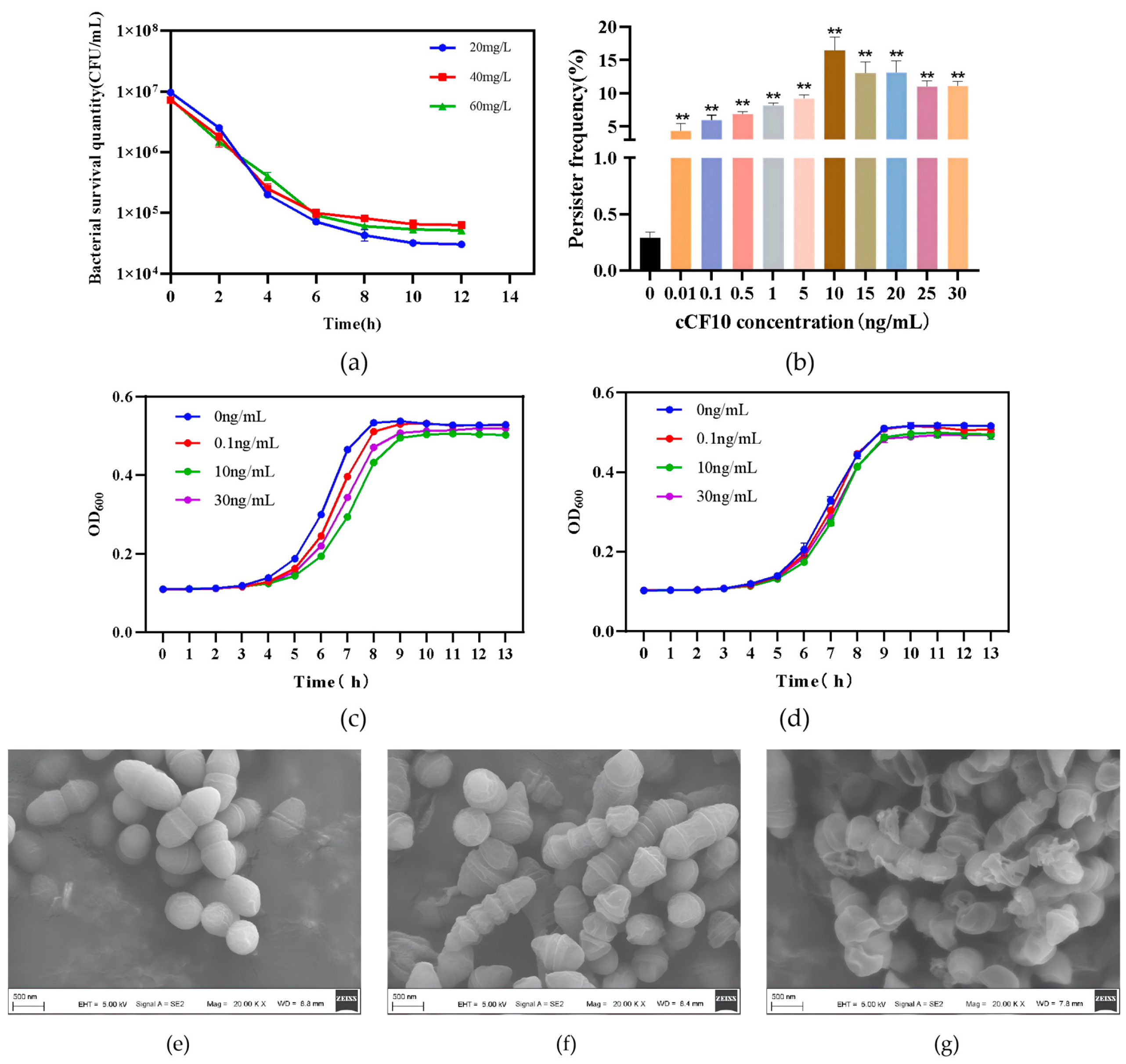
3.1. The Pheromone cCF10 Promoted the Formation of Persister Cells in E. faecalis OG1RF (pCF10)
3.2. cCF10 Regulated the Staged Molecular Mechanism of Persistence Formation in OG1RF (pCF10)
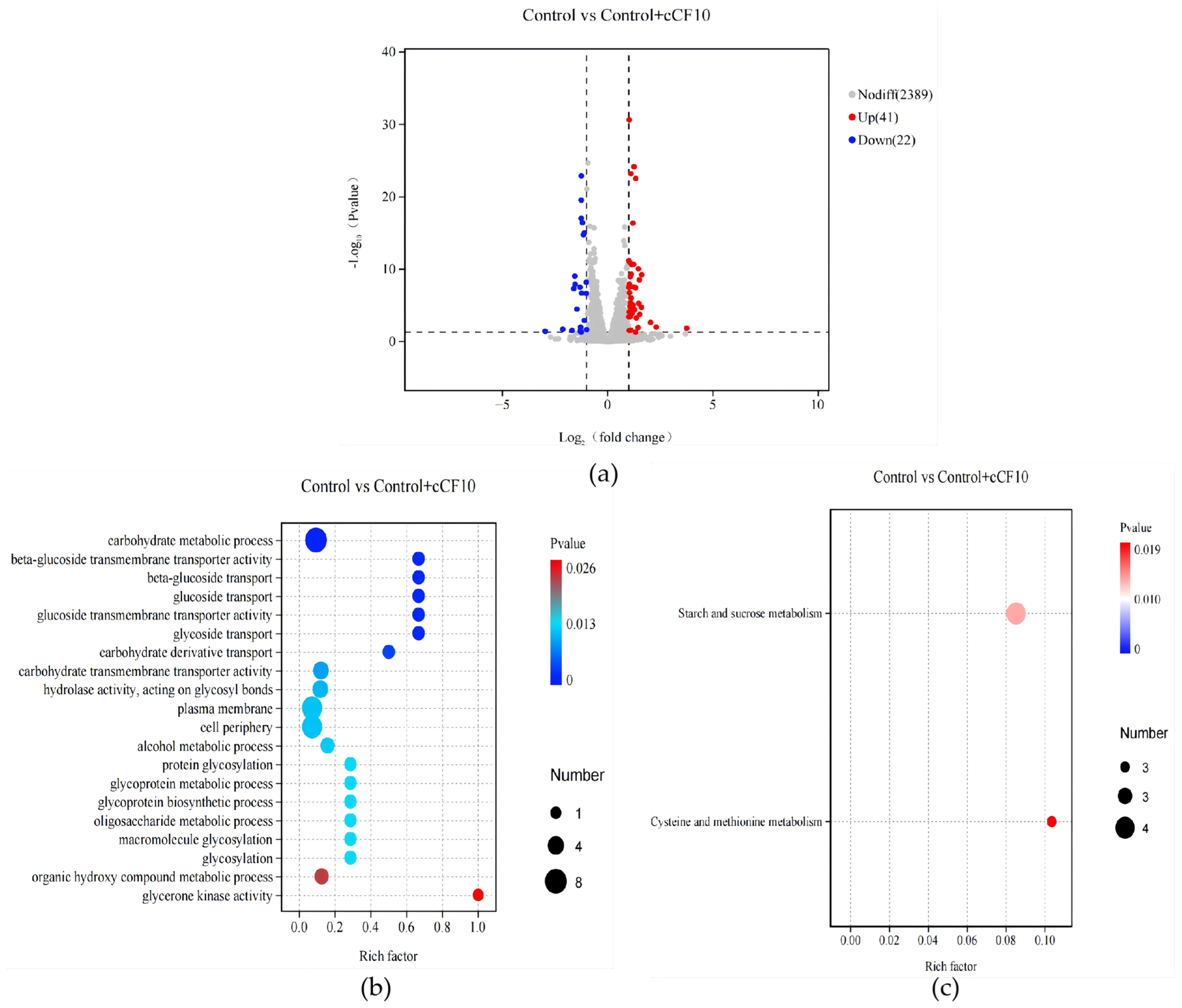
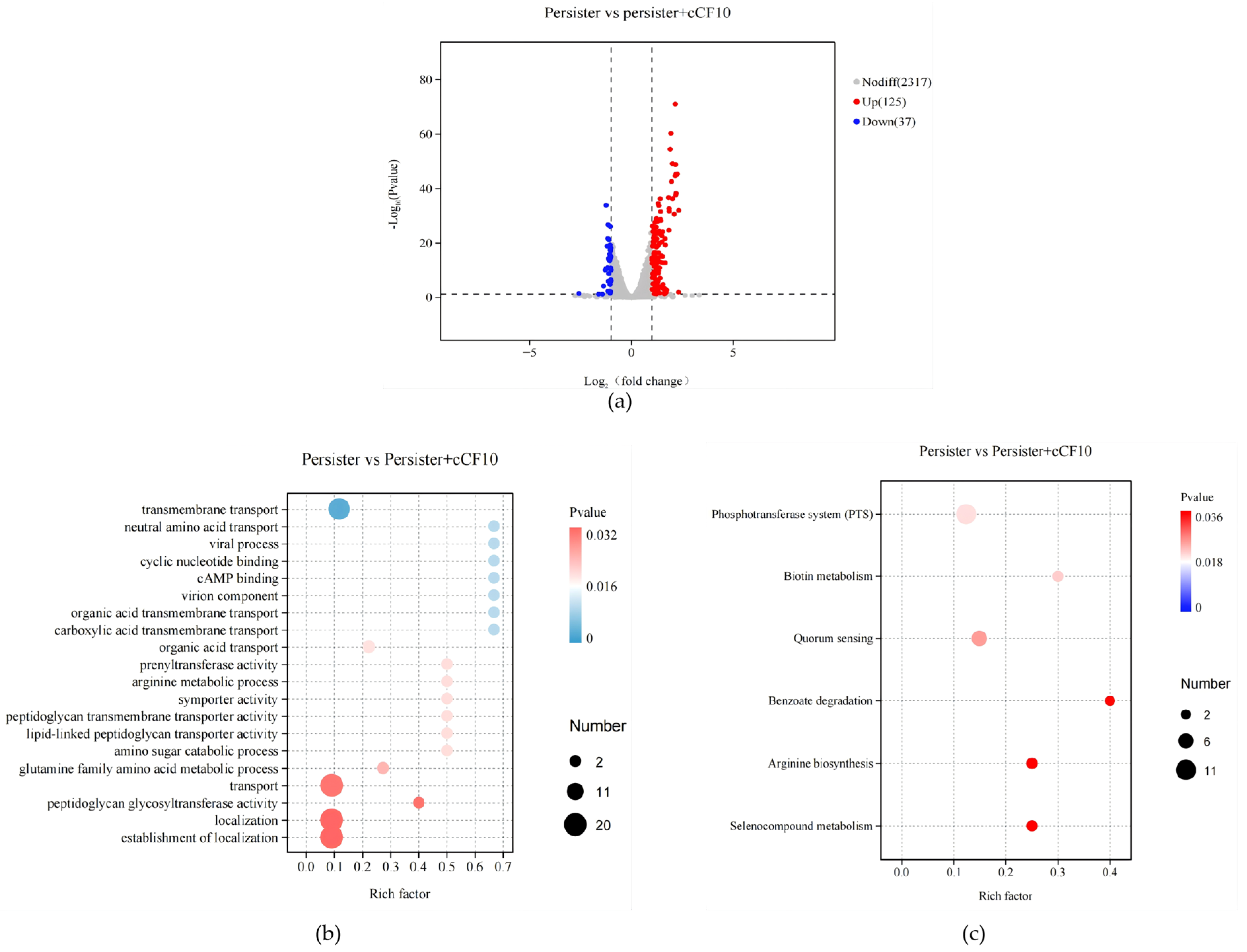
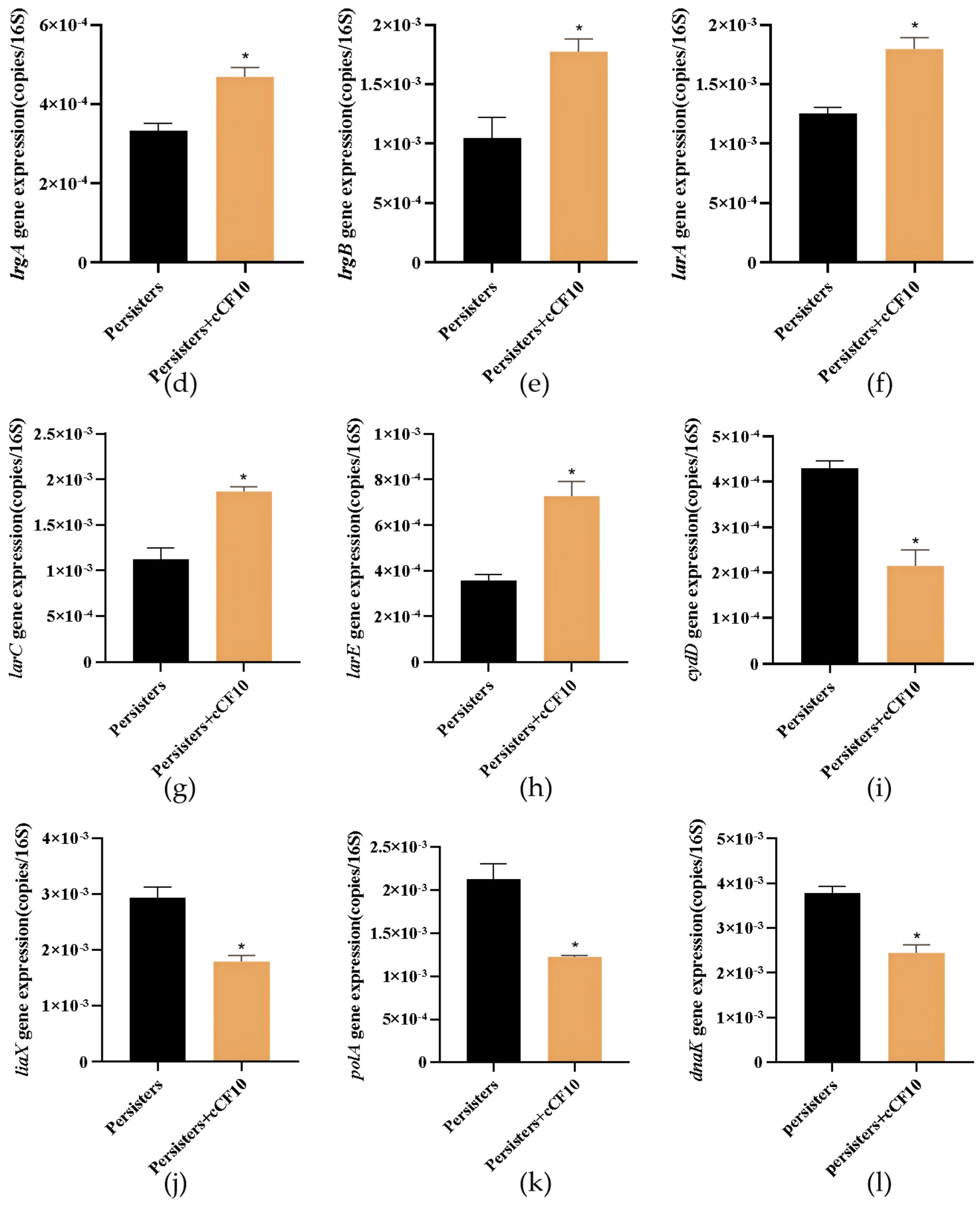
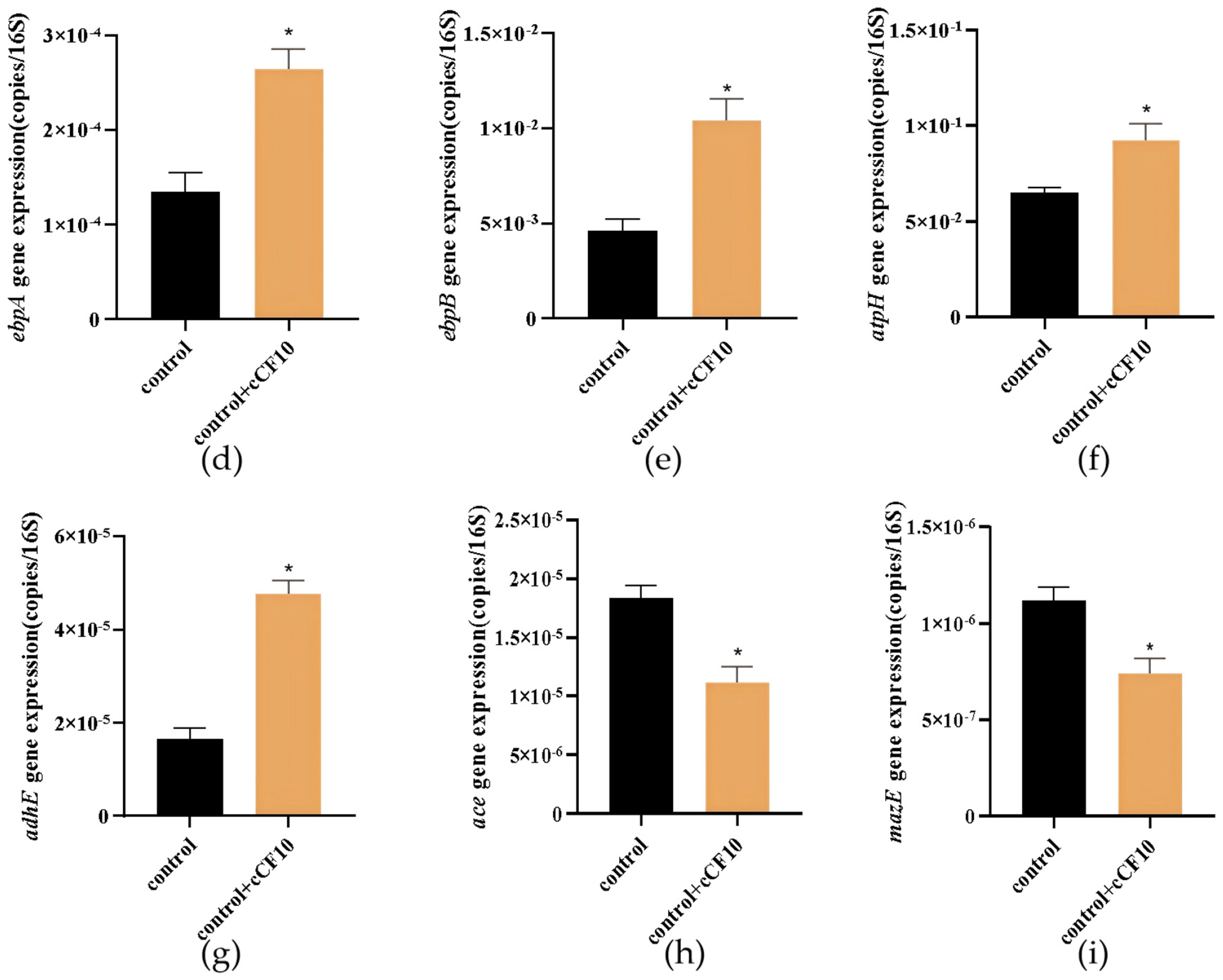
3.2.1. cCF10 Mediated Pre-Adaptive Programming of OG1RF (pCF10) Persistence Formation via Multi-Pathway Transcriptional Regulation
3.2.2. Stability and Antibiotic Tolerance of cCF10-Enhanced Persister Cells
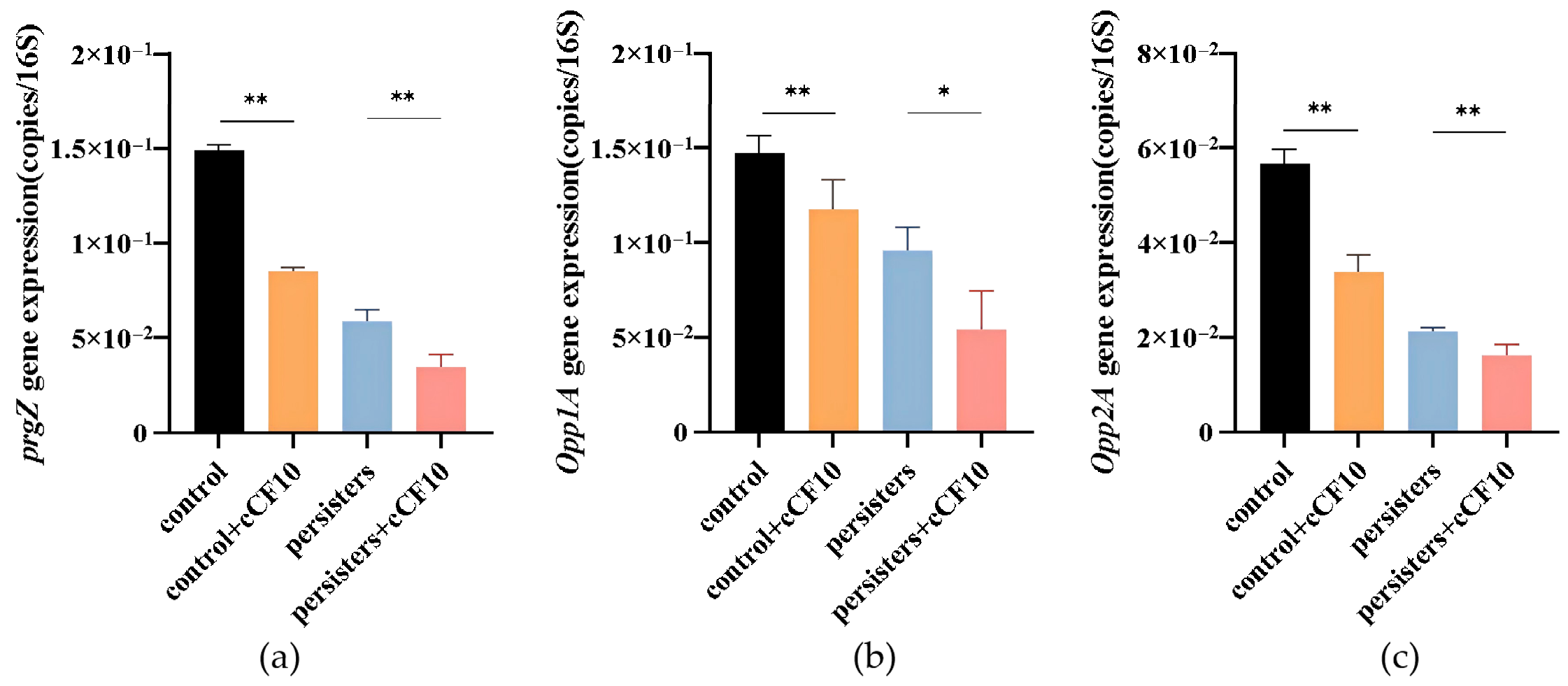
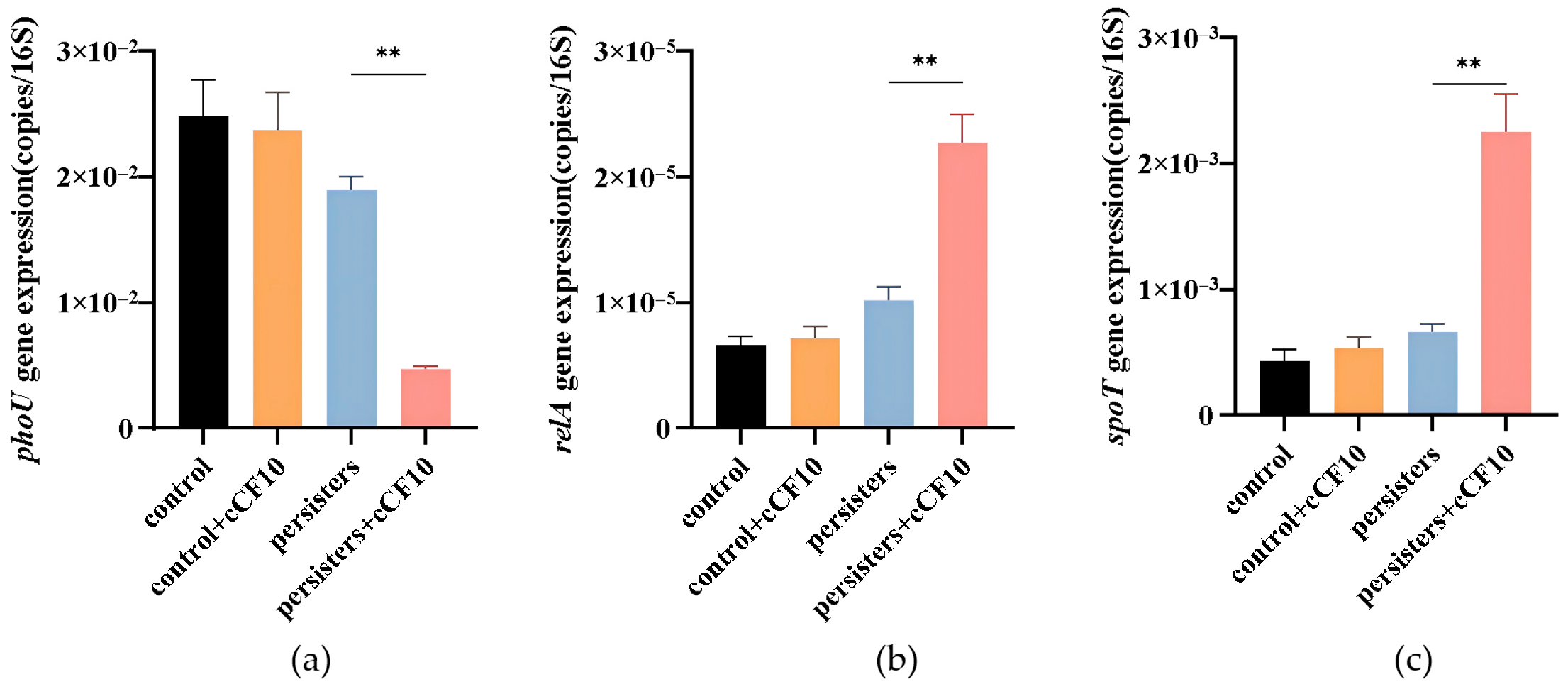
3.3. cCF10-Mediated Downregulation of Its Own Pheromone Sensing and Uptake System
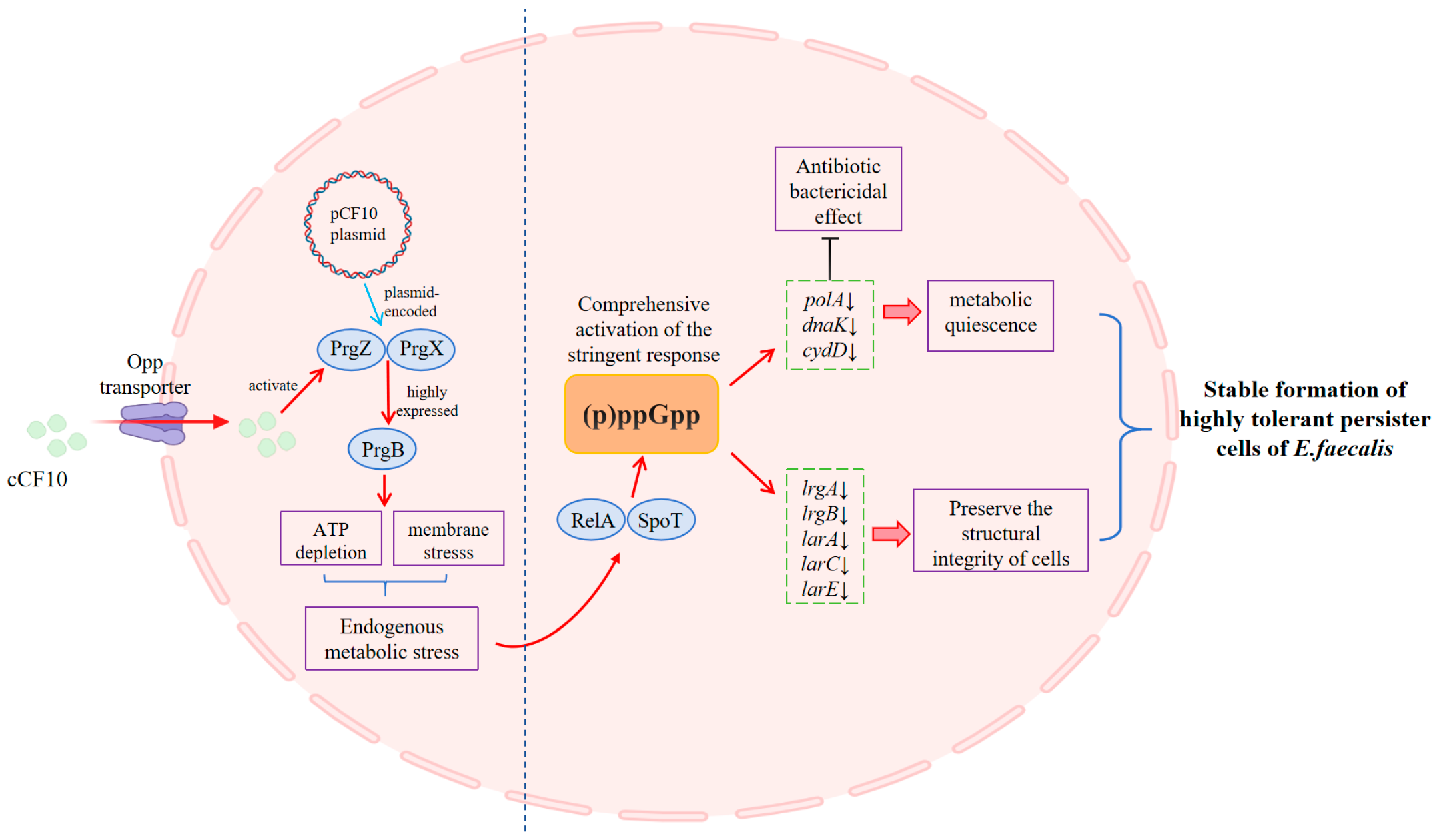
3.4. Activation of the Stringent Response Pathway by cCF10 in E. faecalis Persister Cells
4. Discussion
5. Conclusions
Supplementary Materials
Author Contributions
Funding
Institutional Review Board Statement
Informed Consent Statement
Data Availability Statement
Conflicts of Interest
References
- Pennino, F.; Maccauro, M.L.; Sorrentino, M.; Gioia, M.; Riello, S.; Messineo, G.; Di Rosa, C.; Montuori, P.; Triassi, M.; Nardone, A. Insights from a Cross-Sectional Study on Knowledge, Attitudes and Behaviors Concerning Antibiotic Use in a Large Metropolitan Area: Implications for Public Health and Policy Interventions. Antibiotics 2023, 12, 1476. [Google Scholar] [CrossRef]
- Li, Z.; Shi, L.; Wang, B.; Wei, X.; Zhang, J.; Guo, T.; Kong, J.; Wang, M.; Xu, H. In Vitro Assessment of Antimicrobial Resistance Dissemination Dynamics during Multidrug-Resistant-Bacterium Invasion Events by Using a Continuous-Culture Device. Appl. Environ. Microbiol. 2021, 87, e02659-20. [Google Scholar] [CrossRef]
- Balaban, N.Q.; Helaine, S.; Lewis, K.; Ackermann, M.; Aldridge, B.; Andersson, D.I.; Brynildsen, M.P.; Bumann, D.; Camilli, A.; Collins, J.J.; et al. Definitions and guidelines for research on antibiotic persistence. Nat. Rev. Microbiol. 2019, 17, 441–448, Erratum in Nat. Rev. Microbiol. 2019, 17, 460. [Google Scholar] [CrossRef]
- Lewis, K. Persister cells. Annu. Rev. Microbiol. 2010, 64, 357–372. [Google Scholar] [CrossRef]
- Maisonneuve, E.; Gerdes, K. Molecular mechanisms underlying bacterial persisters. Cell 2014, 157, 539–548. [Google Scholar] [CrossRef] [PubMed]
- Levin-Reisman, I.; Ronin, I.; Gefen, O.; Braniss, I.; Shoresh, N.; Balaban, N.Q. Antibiotic tolerance facilitates the evolution of resistance. Science 2017, 355, 826–830. [Google Scholar] [CrossRef] [PubMed]
- Brauner, A.; Fridman, O.; Gefen, O.; Balaban, N.Q. Distinguishing between resistance, tolerance and persistence to antibiotic treatment. Nat. Rev. Microbiol. 2016, 14, 320–330. [Google Scholar] [CrossRef]
- Harms, A.; Maisonneuve, E.; Gerdes, K. Mechanisms of bacterial persistence during stress and antibiotic exposure. Science 2016, 354, aaf4268. [Google Scholar] [CrossRef] [PubMed]
- Germain, E.; Castro-Roa, D.; Zenkin, N.; Gerdes, K. Molecular mechanism of bacterial persistence by HipA. Mol. Cell 2013, 52, 248–254. [Google Scholar] [CrossRef]
- Dörr, T.; Lewis, K.; Vulić, M. SOS response induces persistence to fluoroquinolones in Escherichia coli. PLoS Genet. 2009, 5, e1000760. [Google Scholar] [CrossRef]
- Conlon, B.P.; Rowe, S.E.; Gandt, A.B.; Nuxoll, A.S.; Donegan, N.P.; Zalis, E.A.; Clair, G.; Adkins, J.N.; Cheung, A.L.; Lewis, K. Persister formation in Staphylococcus aureus is associated with ATP depletion. Nat. Microbiol. 2016, 1, 16051. [Google Scholar] [CrossRef]
- Shan, Y.; Brown Gandt, A.; Rowe, S.E.; Deisinger, J.P.; Conlon, B.P.; Lewis, K. ATP-Dependent Persister Formation in Escherichia coli. mBio 2017, 8, e02267-16. [Google Scholar] [CrossRef]
- García-Solache, M.; Rice, L.B. The Enterococcus: A Model of Adaptability to Its Environment. Clin. Microbiol. Rev. 2019, 32, e00058-18. [Google Scholar] [CrossRef]
- Try Lenz, I.; Pries-Heje, M.; Hjulmand, J.; Hasselbalch, R.B.; Jarloev, J.O.; Faurholt-Jepsen, D.; Moser, C.; Iversen, K.; Bundgaard, H. Characteristics and outcomes in patients with infective endocarditis caused by Enterococcus faecium and Enterococcus faecalis. Eur. Heart J. 2022, 43, ehac544.1669. [Google Scholar] [CrossRef]
- Ghafourian, S.; Soheili, S.; Sekawi, Z.; Neela, V.K.; Sadeghifard, N.; Taherikalani, M.; Khosravi, A.; Ramli, R.; Awang Hamat, R. The mazEF toxin-antitoxin system as an attractive target in clinical isolates of Enterococcus faecium and Enterococcus faecalis. Drug Des. Dev. Ther. 2015, 2015, 2553–2561. [Google Scholar] [CrossRef]
- Moritz, E.M.; Hergenrother, P.J. Toxin-antitoxin systems are ubiquitous and plasmid-encoded in vancomycin-resistant enterococci. Proc. Natl. Acad. Sci. USA 2007, 104, 311–316. [Google Scholar] [CrossRef]
- Yan, X.; Zhao, C.; Budin-Verneuil, A.; Hartke, A.; Rincé, A.; Gilmore, M.S.; Auffray, Y.; Pichereau, V. The (p)ppGpp synthetase RelA contributes to stress adaptation and virulence in Enterococcus faecalis V583. Microbiology 2009, 155, 3226–3237. [Google Scholar] [CrossRef]
- Dunny, G.M. Enterococcal sex pheromones: Signaling, social behavior, and evolution. Annu. Rev. Genet. 2013, 47, 457–482. [Google Scholar] [CrossRef]
- Zhu, L.; Yang, X.; Fu, X.; Yang, P.; Lin, X.; Wang, F.; Shen, Z.; Wang, J.; Sun, F.; Qiu, Z. Pheromone cCF10 inhibits the antibiotic persistence of Enterococcus faecalis by modulating energy metabolism. Front. Microbiol. 2024, 15, 1408701. [Google Scholar] [CrossRef]
- Breuer, R.J.; Hirt, H.; Dunny, G.M. Mechanistic Features of the Enterococcal pCF10 Sex Pheromone Response and the Biology of Enterococcus faecalis in Its Natural Habitat. J. Bacteriol. 2018, 200, e00733-17. [Google Scholar] [CrossRef]
- Bhatty, M.; Cruz, M.R.; Frank, K.L.; Gomez, J.A.; Andrade, F.; Garsin, D.A.; Dunny, G.M.; Kaplan, H.B.; Christie, P.J. Enterococcus faecalis pCF10-encoded surface proteins PrgA, PrgB (aggregation substance) and PrgC contribute to plasmid transfer, biofilm formation and virulence. Mol. Microbiol. 2015, 95, 660–677. [Google Scholar] [CrossRef] [PubMed]
- Bhatty, M.; Camacho, M.I.; Gonzalez-Rivera, C.; Frank, K.L.; Dale, J.L.; Manias, D.A.; Dunny, G.M.; Christie, P.J. PrgU: A suppressor of sex pheromone toxicity in Enterococcus faecalis. Mol. Microbiol. 2017, 103, 398–412. [Google Scholar] [CrossRef]
- Shi, K.; Brown, C.K.; Gu, Z.Y.; Kozlowicz, B.K.; Dunny, G.M.; Ohlendorf, D.H.; Earhart, C.A. Structure of peptide sex pheromone receptor PrgX and PrgX/pheromone complexes and regulation of conjugation in Enterococcus faecalis. Proc. Natl. Acad. Sci. USA 2005, 102, 18596–18601. [Google Scholar] [CrossRef]
- Christie, P.J.; Dunny, G.M. Identification of regions of the Streptococcus faecalis plasmid pCF-10 that encode antibiotic resistance and pheromone response functions. Plasmid 1986, 15, 230–241. [Google Scholar] [CrossRef]
- Mori, M.; Sakagami, Y.; Ishii, Y.; Isogai, A.; Kitada, C.; Fujino, M.; Adsit, J.C.; Dunny, G.M.; Suzuki, A. Structure of cCF10, a peptide sex pheromone which induces conjugative transfer of the Streptococcus faecalis tetracycline resistance plasmid, pCF10. J. Biol. Chem. 1988, 263, 14574–14578. [Google Scholar] [CrossRef]
- Dufour, D.; Zhao, H.; Gong, S.-G.; Lévesque, C.M. A DNA-Damage Inducible Gene Promotes the Formation of Antibiotic Persisters in Response to the Quorum Sensing Signaling Peptide in Streptococcus mutans. Genes 2022, 13, 1434. [Google Scholar] [CrossRef]
- Balaban, N.Q.; Merrin, J.; Chait, R.; Kowalik, L.; Leibler, S. Bacterial persistence as a phenotypic switch. Science 2004, 305, 1622–1625. [Google Scholar] [CrossRef]
- Lewis, K. Persister cells, dormancy and infectious disease. Nat. Rev. Microbiol. 2007, 5, 48–56. [Google Scholar] [CrossRef]
- Kint, C.I.; Verstraeten, N.; Fauvart, M.; Michiels, J. New-found fundamentals of bacterial persistence. Trends Microbiol. 2012, 20, 577–585. [Google Scholar] [CrossRef] [PubMed]
- Leonard, B.A.; Podbielski, A.; Hedberg, P.J.; Dunny, G.M. Enterococcus faecalis pheromone binding protein, PrgZ, recruits a chromosomal oligopeptide permease system to import sex pheromone cCF10 for induction of conjugation. Proc. Natl. Acad. Sci. USA 1996, 93, 260–264. [Google Scholar] [CrossRef] [PubMed]
- Berntsson, R.P.; Schuurman-Wolters, G.K.; Dunny, G.; Slotboom, D.J.; Poolman, B. Structure and mode of peptide binding of pheromone receptor PrgZ. J. Biol. Chem. 2012, 287, 37165–37170. [Google Scholar] [CrossRef] [PubMed]
- Segawa, T.; Johnson, C.M.; Berntsson, R.P.A.; Dunny, G.M. Two ABC transport systems carry out peptide uptake in Enterococcus faecalis: Their roles in growth and in uptake of sex pheromones. Mol. Microbiol. 2021, 116, 459–469. [Google Scholar] [CrossRef]
- Abranches, J.; Martinez, A.R.; Kajfasz, J.K.; Chávez, V.; Garsin, D.A.; Lemos, J.A. The molecular alarmone (p)ppGpp mediates stress responses, vancomycin tolerance, and virulence in Enterococcus faecalis. J. Bacteriol. 2009, 191, 2248–2256. [Google Scholar] [CrossRef]
- Dianov, G.L.; Hübscher, U. Mammalian Base Excision Repair: The Forgotten Archangel. Nucleic Acids Res. 2013, 41, 3483–3490. [Google Scholar] [CrossRef]
- Stewart, G.R.; Snewin, V.A.; Walzl, G.; Hussell, T.; Tormay, P.; O’Gaora, P.; Goyal, M.; Betts, J.; Brown, I.N.; Young, D.B. Overexpression of heat-shock proteins reduces survival of Mycobacterium tuberculosis in the chronic phase of infection. Nat. Med. 2001, 7, 732–737. [Google Scholar] [CrossRef]
- Poole, R.K.; Gibson, F.; Wu, G. The cydD gene product, component of a heterodimeric ABC transporter, is required for assembly of periplasmic cytochrome c and of cytochrome bd in Escherichia coli. FEMS Microbiol. Lett. 1994, 117, 217–223. [Google Scholar] [CrossRef]
- Borisov, V.B.; Gennis, R.B.; Hemp, J.; Verkhovsky, M.I. The cytochrome bd respiratory oxygen reductases. Biochim. Biophys. Acta 2011, 1807, 1398–1413. [Google Scholar] [CrossRef] [PubMed]
- Groicher, K.H.; Firek, B.A.; Fujimoto, D.F.; Bayles, K.W. The Staphylococcus aureus lrgAB operon modulates murein hydrolase activity and penicillin tolerance. J. Bacteriol. 2000, 182, 1794–1801. [Google Scholar] [CrossRef]
- Teixeira, N.; Varahan, S.; Gorman, M.J.; Palmer, K.L.; Zaidman-Remy, A.; Yokohata, R.; Nakayama, J.; Hancock, L.E.; Jacinto, A.; Gilmore, M.S.; et al. Drosophila host model reveals new Enterococcus faecalis quorum-sensing associated virulence factors. PLoS ONE 2013, 8, e64740. [Google Scholar] [CrossRef]
- Desguin, B.; Goffin, P.; Viaene, E.; Kleerebezem, M.; Martin-Diaconescu, V.; Maroney, M.J.; Declercq, J.P.; Soumillion, P.; Hols, P. Lactate racemase is a nickel-dependent enzyme activated by a widespread maturation system. Nat. Commun. 2014, 5, 3615. [Google Scholar] [CrossRef] [PubMed]
- Orman, M.A.; Brynildsen, M.P. Dormancy is not necessary or sufficient for bacterial persistence. Antimicrob. Agents Chemother. 2013, 57, 3230–3239. [Google Scholar] [CrossRef]
- Ho, F.K.; Lam, L.N.; Matysik, A.; Watts, T.D.; Wong, J.J.; Chong, K.K.L.; Choo, P.Y.; Tolar, J.; Low, P.M.; Chua, Z.S.; et al. Role of sortase-assembled Ebp pili in Enterococcus faecalis adhesion to iron oxides and its impact on extracellular electron transfer. Microbiol. Spectr. 2025, 13, e0233724. [Google Scholar] [CrossRef]
- Kristich, C.J.; Li, Y.H.; Cvitkovitch, D.G.; Dunny, G.M. Esp-independent biofilm formation by Enterococcus faecalis. J. Bacteriol. 2004, 186, 154–163. [Google Scholar] [CrossRef]



Disclaimer/Publisher’s Note: The statements, opinions and data contained in all publications are solely those of the individual author(s) and contributor(s) and not of MDPI and/or the editor(s). MDPI and/or the editor(s) disclaim responsibility for any injury to people or property resulting from any ideas, methods, instructions or products referred to in the content. |
© 2026 by the authors. Licensee MDPI, Basel, Switzerland. This article is an open access article distributed under the terms and conditions of the Creative Commons Attribution (CC BY) license.
Share and Cite
Qian, J.; Yang, X.; Li, R.; Zhang, M.; Hao, R.; He, Q.; Xu, L.; Shen, Z.; Wang, J.; Sun, F.; et al. Pheromone cCF10 Enhances Persister Formation in Enterococcus faecalis via Transcriptomic Changes. Microorganisms 2026, 14, 960. https://doi.org/10.3390/microorganisms14050960
Qian J, Yang X, Li R, Zhang M, Hao R, He Q, Xu L, Shen Z, Wang J, Sun F, et al. Pheromone cCF10 Enhances Persister Formation in Enterococcus faecalis via Transcriptomic Changes. Microorganisms. 2026; 14(5):960. https://doi.org/10.3390/microorganisms14050960
Chicago/Turabian StyleQian, Jingxue, Xiaobo Yang, Rumeng Li, Man Zhang, Ruolin Hao, Qing He, Lin Xu, Zhiqiang Shen, Jingfeng Wang, Feilong Sun, and et al. 2026. "Pheromone cCF10 Enhances Persister Formation in Enterococcus faecalis via Transcriptomic Changes" Microorganisms 14, no. 5: 960. https://doi.org/10.3390/microorganisms14050960
APA StyleQian, J., Yang, X., Li, R., Zhang, M., Hao, R., He, Q., Xu, L., Shen, Z., Wang, J., Sun, F., & Qiu, Z. (2026). Pheromone cCF10 Enhances Persister Formation in Enterococcus faecalis via Transcriptomic Changes. Microorganisms, 14(5), 960. https://doi.org/10.3390/microorganisms14050960