Article

Epidemiological Study of the Relationship Between Antimicrobial Resistance Genes and Biofilm-Forming Capacity in Pathogens Causing Chronic Wound Infections

by
Silvia Ioana Musuroi
1,2,3,
Adela Voinescu
1,2,4,
Corina Musuroi
2,4,5,*,
Delia Muntean
2,4,5,*,
Florin George Horhat
2,4,6,
Luminita Mirela Baditoiu
2,7,
Oana Izmendi
1,2,4,
Andrei Cosnita
8,
Valentin Ordodi
9,10,
Zorin Crainiceanu
2,11,
Edward Seclaman
12 and
Monica Licker
2,4,5
1
Doctoral School, “Victor Babes” University of Medicine and Pharmacy, 300041 Timisoara, Romania
2
Multidisciplinary Research Center on Antimicrobial Resistance (MULTI-REZ), “Victor Babes” University of Medicine and Pharmacy, 300041 Timisoara, Romania
3
Discipline of Clinical Skills, Department I Nursing, “Victor Babes” University of Medicine and Pharmacy, 300041 Timisoara, Romania
4
Microbiology Department, “Victor Babes” University of Medicine and Pharmacy, 300041 Timisoara, Romania
5
Microbiology Laboratory, “Pius Branzeu” County Clinical Emergency Hospital, 300723 Timisoara, Romania
6
Clinical Laboratory, “Louis Turcanu” Emergency Hospital for Children, 300011 Timisoara, Romania
7
Epidemiology Department, “Victor Babes” University of Medicine and Pharmacy, 300041 Timisoara, Romania
8
Surgery & Ophthalmology Department, “Victor Babes” University of Medicine and Pharmacy, 300041 Timisoara, Romania
9
Center of Immuno-Physiology and Biotechnologies, Department of Functional Sciences, “Victor Babes” University of Medicine and Pharmacy, 300041 Timisoara, Romania
10
Research Center for Gene and Cellular Therapies in the Treatment of Cancer—OncoGen, “Pius Brinzeu” County Clinical Emergency Hospital, 300011 Timisoara, Romania
11
Plastic Surgery Department, “Victor Babes” University of Medicine and Pharmacy, 300041 Timisoara, Romania
12
Biochemistry Department, “Victor Babes” University of Medicine and Pharmacy, 300041 Timisoara, Romania
*
Authors to whom correspondence should be addressed.
Microorganisms 2026, 14(5), 1117; https://doi.org/10.3390/microorganisms14051117
Submission received: 3 April 2026 / Revised: 9 May 2026 / Accepted: 12 May 2026 / Published: 14 May 2026
(This article belongs to the Special Issue Bacterial Pathogens: Biofilm Formation and Eradication)

Abstract

Chronic wounds represent a major complication of underlying conditions such as diabetes mellitus, arterial ischemia, surgical wound and burns. This study aimed at the phenotypic and molecular characterization of antimicrobial resistance for a selection of bacterial isolates, originating from wounds harvested from patients hospitalized in the Vascular Surgery and Plastic Surgery wards. The microbiological diagnosis of wound infections was established according to the laboratory’s working protocol. PCR screening of antibiotic resistance genes was performed using a real-time PCR, while the microtiter plate assay was used to determine the biofilm-forming capacity. Testing of biofilm susceptibility to meropenem and amikacin was performed on Calgary biofilm device. Of the 88 bacterial isolates studied, 78.40% were Gram-negative bacilli (GNB)—Klebsiella pneumoniae (K.P), Pseudomonas aeruginosa (P.A), Proteus mirabilis (P.M), Acinetobacter baumannii (A.B), while the remaining 21.60% were Gram-positive cocci (GPC)—Staphylococcus aureus (S.A). All A.B isolates and 92.59% of K.P were carriers of β-lactamase- and carbapenemase-encoding genes, while 57.89% of S. aureus isolates were carriers of mecA (methicillin-resistant). Strong biofilm-forming isolates (B+++) were more frequent in P.A than in K.P (p = 0.002) and P.M (p = 0.02), with a frequency comparable to that of A.B strains (p = 0.212). When analyzing the biofilm reaction to meropenem, a significantly lower susceptibility was detected in the biofilm for K.P isolates, compared to the planktonic ones. Most GNB have been extensively multidrug-resistant, particularly K.P and A.B. Isolates from chronic wounds are major biofilm-formers. A strong and statistically significant association has been identified in the case of K.P and P.M between the presence of resistance genes and the biofilm-forming capacity. These findings highlight the need for a customized therapeutic approach for each chronic wound, considering the mechanisms underlying treatment resistance. These include bacterial virulence factors and the wound microenvironment colonized by the biofilm and the relative contribution of each to the overall resistance profile.

1. Introduction

Chronic wounds are a group of lesions, for which the healing process deviates from the normal, progressive, and time-limited stages of repair. As a result, they persist in the inflammatory stage of evolution with delayed healing for a long time. A wound is considered chronic when the healing process exceeds 4–6 weeks [1].
The importance of chronic wounds is given by their high prevalence—up to 86.70/10.000 inhabitants according to certain studies (2018), by the long-term impact on the life quality of patients, and by the high cost that burdens health systems [2].
Most chronic wounds are divided into three categories: diabetic foot ulcers, venous ulcers, and pressure ulcers. In their case, certain processes that could underlie the phenomena slowing down healing, such as local tissue hypoxia, repetitive ischemia-reperfusion injuries, altered cellular and systemic stress response, and bacterial colonization have been identified [3]. Another category is that of injuries from surgical and burn wounds, in which case the healing process is determined by additional causal factors that are defined by the surgical disease, as well as by the dimensions of the burned surfaces.
Several clinical studies related to the physiopathological and microbiological phenomena of wound healing indicate that the main pathogens involved in the healing delay of chronic wounds are the Gram-positive cocci (GPC) Staphylococcus aureus, beta-hemolytic streptococci, and the Gram-negative bacilli (GNB) Pseudomonas aeruginosa, Acinetobacter baumannii, and Enterobacterales species (Proteus mirabilis, Klebsiella pneumoniae, Escherichia coli), as well as anaerobic pathogens insufficiently identified and investigated in these pathologies [4,5,6]. It has also been demonstrated that the microbiota of chronic non-healing wounds of patients treated with antibiotics are significantly different from that of untreated patients, which could point to the conclusion that antimicrobial therapy leads to the alteration of the community structure through the numerical reduction in some species with the selection of others [3].
Repeated hospitalization for chronic wound disease is marked by the risk of infection with hospital-acquired strains, mainly multidrug-resistant GNB (Acinetobacter baumannii, Klebsiella pneumoniae) [7,8]. The repair and healing stages of chronic wounds can also be compromised by the pathogenic mechanisms of these diseases.
Regardless of their etiology, the population of chronic non-healing wounds with biofilm-forming strains is an important aggravating factor. The bacterial biofilm in the wound induces tissue hypoxia through microbial metabolic activities and promotes a hyperinflammatory response detrimental to the host [9,10]. Recent studies have indicated that once the biofilm has been established, it fosters wound chronicity through resistance to antimicrobial treatment and the action of disinfectants, as well as through resistance to the host immune defense [11]. It is becoming more widely accepted that biofilms are detected in most chronic non-healing wounds, with some studies indicating high frequencies of over 78% [11]. At the same time, it is increasingly stressed that microbiological investigations of chronic wounds have limited diagnostic performance because they provide partial identification of infectious agents over a period exceeding 24 h. There are studies which have highlighted population diversity patterns in chronic wounds and have introduced the concept of functionally equivalent pathogroups (FEPs). At the same time, it has been shown that traditional culture methods can be highly biased as a diagnostic tool, in which case high-resolution molecular diagnostic methods such as bacterial tag-encoded FLX amplicon pyrosequencing (bTEFAP) are suggested [6,12].
This study aimed to investigate the antimicrobial resistance genes and the biofilm-forming capacity of the bacterial isolates from chronic wounds of patients in our hospital wards. The species were selected based on the results of previous studies [7,13]. It also aimed to highlight the need for a customized therapeutic approach to chronic wounds, considering the mechanisms underlying treatment resistance. These include bacterial factors (such as resistance gene carriage and biofilm-forming capacity), as well as factors related to the wound microenvironment (colonized by the biofilm), and the relative contribution of each to the overall resistance profile.

2. Materials and Methods

This research is a cross-sectional analytical study that was carried out in the Vascular Surgery and Plastic Surgery wards of the “Pius Brinzeu” County Clinical Emergency Hospital Timișoara (SCJUPBT) and the Research Center of the “Victor Babeș” University of Medicine and Pharmacy Timișoara (UMFT). The medical unit is a tertiary teaching hospital, affiliated to the university, equipped with 1174 beds, which provides medical care for the western region of Romania. Sample collection was carried out between 1 November 2023 and 30 May 2024 and laboratory tests were completed by the end of 2024.
The study aimed to molecularly identify selected antibiotic resistance genes, describe antimicrobial resistance phenotypes based on the antibiogram results, and phenotypically assess the biofilm-forming capacity of the strains. It also aimed to investigate the associations between resistance gene carriage and the biofilm-forming ability, followed by the evaluation of biofilm susceptibility to selected antibiotics.
The selected strains were Klebsiella pneumoniae, Acinetobacter baumannii, Pseudomonas aeruginosa, Proteus mirabilis (GNB), and Staphylococcus aureus (GPC), pathogenic species with high frequencies in the wards mentioned.
The selected samples were part of the working samples of patients admitted to the hospital wards, and the antibiotic sensitivity study was conducted as part of the customary microbiological diagnosis. The selection of strains for this study was carried out in real time, during routine diagnostic procedures, according to the inclusion criteria.
Samples from chronic wounds were collected after cleaning the wound with sterile saline solution and removing necrotic tissue and superficial secretions. Samples were collected from the deep, viable area of the wound, taking care to avoid contamination with skin flora. Sterile ESwab collection kits (Copan, Brescia, Italy) containing 1 mL of Amies liquid transport medium were used. The sterile swab was applied to the granulation tissue and rotated. Each sample collected that way was transported to the laboratory and subsequently processed according to standard microbiological diagnostic procedures.
The minimum inhibitory concentration (MIC) for planktonic bacteria was determined using standardized antimicrobial susceptibility tests such as microdilution tests on the automated VITEK® 2 Compact (BioMerieux, Marcy l’Étoile, France) system. We used a standardized inoculum of bacteria (105 CFU/mL) and we followed the EUCAST 2024 guidelines [14] and manufacturer’s instructions in terms of incubation temperature, time, medium. Also, E-test strips (Thermo Fisher Scientific, Waltham, MA, USA) were used when Vitek results were inconclusive (gradient diffusion method).
The results obtained from routine microbiological testing were reported for the purpose of initiating antibiotic therapy, and among the isolated strains, those that met the study inclusion criteria were selected for the research activities described.
The selected strains were cryopreserved at −78 °C in a brain heart infusion broth (BHI-Thermo Fisher Scientific, Oxoid Deutschland GmbH, Wesel, Germany), in a UNYCRO DEEP FREEZER (−85 °C, UniEquipP, Munich, Germany). The research was carried out once the complete sample set was collected.
The specific criteria for inclusion in the study were of a clinical and microbiological nature: (i) the wound considered for collection must be older than 4 weeks, (ii) only pathogens isolated from the first sample collected during the current hospitalization would be considered, and (iii) only pathogens of interest would be considered (Klebsiella pneumoniae, Acinetobacter baumannii, Pseudomonas aeruginosa, Proteus mirabilis, Staphylococcus aureus).
Written informed consent was obtained from all patients (or their legal representatives, when applicable) for wound sampling and the use of their clinical and paraclinical data for research purposes. All data were anonymized prior to analysis to ensure patient confidentiality.

2.1. Analysis of Resistance Phenotypes

Isolate identification, antibiogram, and determination of the minimum inhibitory concentration (MIC) were carried out according to the working protocol of the Microbiology Department of the Clinical Laboratory of Medical Analysis, using E-tests, the VITEK® 2 Compact (BioMerieux) and Matrix-assisted Laser Desorption/Ionization Time-of-Flight Mass Spectrometry (MALDI Biotyper, Bruker Daltonics, Bremen, Germany) systems. The interpretation of the antibiograms was carried out according to the EUCAST 2024 guidelines [14].
The study strains were described according to their antibiotic resistance phenotypes, as follows: (1) Methicillin-resistant S. aureus (MRSA): S. aureus resistant to oxacillin/cefoxitin according to EUCAST guidelines [14]. (2) Extended-spectrum β-lactamase (ESBL)-producing Gram-negative bacilli (GNB): resistant to third/fourth-generation cephalosporins and monobactams, confirmed by synergy test. (3) Carbapenem-resistant (CR) GNB: defined by phenotypic resistance to at least one carbapenem (imipenem, meropenem, or ertapenem), according to the EUCAST guidelines [14].
The epidemiological phenotypes, MDR and XDR, were defined according to the criteria of Magiorakos et al. [15].

2.2. PCR Screening of Antibiotic Resistance Genes

Gram-negative isolates were tested for the presence of beta-lactam, carbapenem, aminoglycoside resistance genes, while Gram-positive isolates were tested for beta-lactam resistance, methicillin resistance (MR), macrolide, fluoroquinolone, and aminoglycoside resistance. The primers used in this study are illustrated in Table 1.
Microbial genomic DNA was extracted from overnight bacterial cultures using PureLinkTMMicrobiome Purification Kit (Thermo Fisher Scientific), according to the manufacturer’s instructions (User Guide, Publication No. MAN0014266).
Detection of antimicrobial resistance genes was performed using a real-time PCR assay with TaqMan hydrolysis probes on an Azure Cielo Real-Time PCR system (Azure Biosystems, Inc., 6747 Sierra Court, Suite A–B, Dublin, CA, USA). The assay targeted a selected panel of clinically relevant resistance genes and was designed exclusively for qualitative detection (presence/absence).
Lyophilized primers were resuspended in ultrapure water to obtain stock solutions of 100 μM, and working solutions were prepared at 20 μM and stored at −20 °C until use. Each reaction was performed in a final volume of 20 μL, containing 10 μL of 2 × PCR master mix, 0.5 μM of each primer, 0.25 μM TaqMan probe, 3 μL of purified DNA template and nuclease-free water to complete the reaction volume. For each run, the reaction mix was prepared for all samples plus two additional reactions to compensate for pipetting loss. A volume of 17 μL of reaction mix was dispensed into each well, followed by 3 μL of DNA template.
Amplification was performed under the following conditions: initial denaturation at 95 °C for 2 min, followed by 40 cycles of denaturation at 95 °C for 15 s and annealing/extension at 65 °C for 20 s, with fluorescence acquisition. Fluorescence signals were recorded in real time using the appropriate detection channel (e.g., FAM).
Each real-time PCR run included positive controls, consisting of DNA from reference strains known to harbor the target resistance genes and negative controls (no-template controls) to monitor contamination. All samples were analyzed in duplicate to ensure reproducibility.
Results were interpreted qualitatively based on amplification curves and cycle threshold (Ct) values. Samples were considered positive when a characteristic amplification curve was observed with a Ct value below the predefined threshold. Samples with no amplification or Ct values above the threshold were considered negative.
No standard curve was generated, and no quantitative analysis of gene expression or copy number was performed. Ct values were used only for qualitative interpretation and not for comparative or quantitative analysis.

2.3. Determination of the Biofilm-Forming Capacity

Determination of the biofilm-forming capacity was performed using the microtiter plate technique [24]. Sterile, flat-bottom, polystyrene plates with 96 wells were used.
The strains isolated from the agar plates were inoculated into 2 mL BHI broth supplemented with 1% glucose and incubated at 37 °C for 24 h. In the next stage, a 1:100 dilution was made with a fresh culture medium, after which 200 µL of the diluted culture was inoculated into each well of the plates. The plates were incubated for 24 h at 37 °C.
The content of the wells was subsequently removed, the plates were washed three times with 0.2 mL phosphate-buffered saline (PBS, pH 7.2). The plates were incubated for 1 h at 60 °C and then stained with 1% crystal violet. The excess dye was removed by rinsing three times with deionized water, after which decolorization with 30% acetic acid was performed. The absorbance (optical density, OD) of the stained adherent biofilm was measured with an automated micro-ELISA plate reader, at a wavelength of 570 nm. For QC, we used Pseudomonas aeruginosa ATCC 27853, and Staphylococcus aureus ATCC 29213 [25]. Each strain was tested in 3 wells. The uninoculated wells, which contained only broth served as the negative control. The mean OD values were calculated for all tested strains and negative controls. Biofilm production was interpreted in accordance with the criteria suggested by Stepanović et al. [24] and other studies using the same classification [26].
Isolates from wells with OD values higher than those of the negative control were considered biofilm producers. Biofilm production was defined according to the ODc classification, where ODc represents the mean optical density of the negative control plus three standard deviations. Isolates were classified as non-biofilm producer (OD ≤ ODc), weak biofilm producer (ODc < OD ≤ 2 × ODc), moderate biofilm producer (2 × ODc < OD ≤ 4 × ODc) and strong biofilm producer (OD > 4 × ODc). To indicate the results, we used (+++) for strong biofilm-forming strains, (++) for moderate biofilm-forming strains, (+) for weak biofilm-forming strains, and (0) for strains that did not form biofilm [24].

2.4. Biofilm Susceptibility Testing to Antibiotics

2.4.1. Preparation of Antibiotic Stock Solutions

We used meropenem (Meropenem, USP M002-50 mg, Toku-E, Centennial, CO, USA) and amikacin (Amikacin A002-1G, Toku-E, Centennial, CO, USA) for biofilm strain testing. A stock solution was prepared with a concentration of 10 mg/mL and stored at −20 °C until it was ready for use. Serial dilutions of 0.125–128 µg/mL were prepared.

2.4.2. Biofilm Susceptibility Testing to Meropenem and Amikacin

This was performed using the Calgary biofilm device (MBEC Assay® Biofilm Inoculator with 96 Well Base, 19113, Innovotech, Edmonton, AB, Canada) for biofilm testing in accordance with a revised protocol described by Pandelis et al. [27]. Therefore, 100 μL of a 1:100 dilution of an overnight culture was added to 100 μL of BHI broth supplemented with 1% glucose in each well of a 96-well Calgary biofilm device. The lid was placed so that the pegs could be immersed in the wells. The plates were incubated at 37 °C for 48 h with gentle shaking to allow biofilm formation on the surface of the pegs.
The peg lids were then subjected to 2 consecutive washes to remove planktonic organisms by consecutively submersing the pegs in two 96-well plates containing phosphate-buffered saline (PBS). After the second wash, the lids were placed in another 96-well plate containing serial dilutions of both meropenem and amikacin, in 3 wells each, and antibiotic-free wells for positive control. The plates were incubated at 37 °C for 48 h with shaking.
The post-exposure wash was performed 2 times with PBS. The peg lids were then placed in a recovery medium plate, and the biofilm was detached by vortexing to release the biofilm into the well medium. The peg lids were discarded and replaced with sterile standard lids and the reading was performed (crystal violet staining and OD measurement). Biofilm formation was confirmed by bacterial growth observed in the antibiotic-free positive control wells.
In this study, we have determined the BMIC50 value defined as the lowest antimicrobial concentration that inhibits 50% of the biofilm growth compared to the growth observed in positive control wells, also used in other studies [27]. This endpoint was selected because biofilm responses to antimicrobial exposure are heterogeneous and often gradual rather than binary, making complete inhibition thresholds less robust and more difficult to define reproducibly [28]. The use of BMIC50 reduces the influence of outliers and biological variability of the strains, thereby providing a more robust and comparable estimation of the antibiotic activity against biofilms. Consequently, BMIC50 was considered more suitable for comparative assessment of antibiofilm activity in the present study.

2.5. Statistical Method

The database was analyzed via the IBM SPSS Statistics 20 program (SPSS Inc., Chicago, IL, USA). Nominal variables were expressed as values and percentages and comparisons were performed using the Chi-squared test (Fisher’s exact test). To assess the strength of the association between the presence of resistance genes and the biofilm-forming capacity, the Cramer’s V test was applied. The threshold for statistical significance was set at ≤0.05 and all tests were two-tailed.
The normality of the distribution of differences in MIC values between planktonic and biofilm strains was assessed using a Shapiro–Wilk test. Since the distribution deviated significantly from normality (p < 0.05), the differences between BMIC50 (for biofilm form of strains) and MIC values (for planktonic form), obtained when testing the susceptibility to the two antibiotics (MEM, AK), were analyzed using the Wilcoxon Signed-Rank test for paired samples. Effect size for Wilcoxon tests was calculated with the formula r = z/√N, where “z” is the statistical value of the test and “N” is the number of pairs.
The threshold for statistical significance was set at ≤0.05 and all tests were two-tailed.

3. Results

3.1. Chronic Wound Characteristics and Bacterial Profile

Based on the sample and species selection criteria, the study sample consisted of 88 bacterial strains, of which 69 (78.40%) were Gram-negative strains such as K. pneumoniae, P. aeruginosa, P. mirabilis, and A. baumannii, while 19 (21.60%) were Gram-positive strains represented by S. aureus. The distribution is presented in Table 2.
Among Gram-negative isolates, K. pneumoniae and P. aeruginosa were identified at comparable frequencies and were significantly more prevalent than P. mirabilis and A. baumannii.
S. aureus isolates were also significantly more frequent than A. baumannii isolates, while exhibiting frequencies comparable to those of K. pneumoniae and P. aeruginosa.
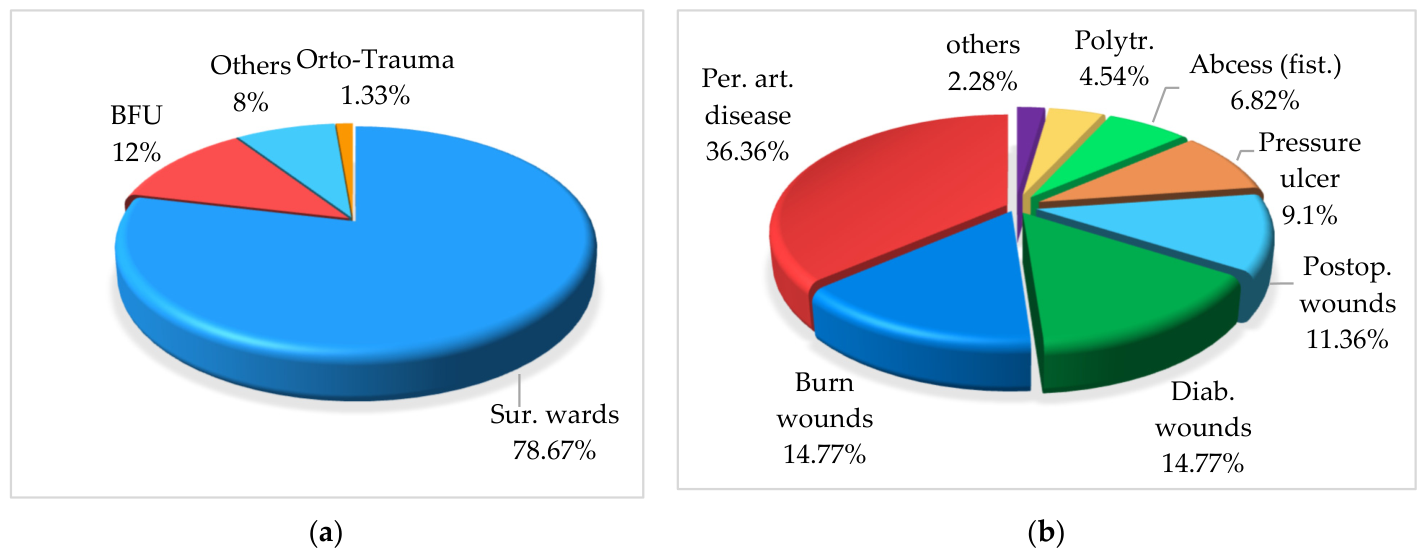
The majority of wound samples originated from the Surgery ward (78.66%), followed by the Burn Unit (12%) while a small proportion was collected from the Orthopedics–Traumatology unit (1.33%) (Figure 1a). Other departments (8%) are represented by medical wards where these patients were surgically cared for (Neurology, Diabetes and Nutrition).
Wounds were most commonly associated with peripheral arterial disease (36.36%), followed by diabetic and burn wounds (14.77% each) and postoperative wounds (11.36%), while other etiologies were less frequent (Figure 1b).
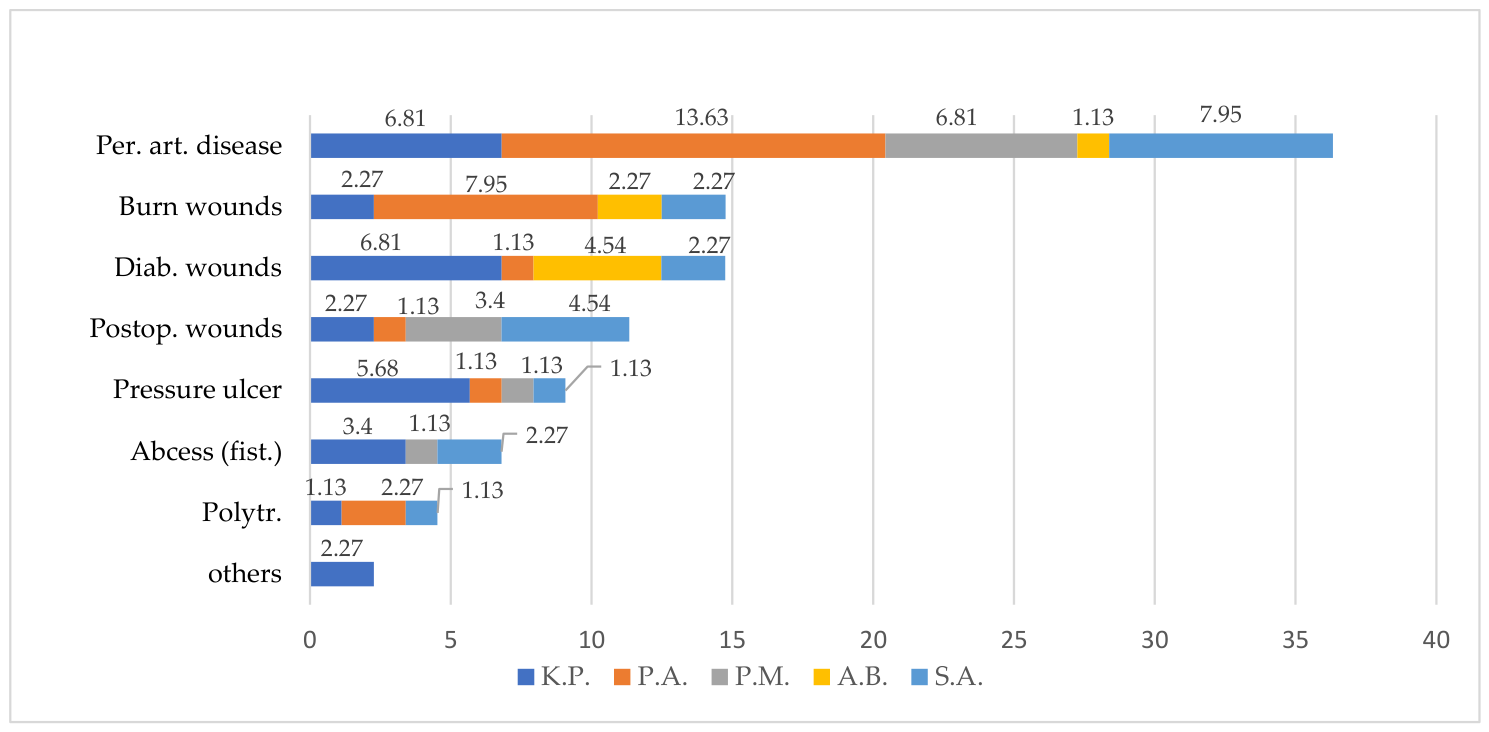
The distribution of bacterial isolates varied according to wound etiology (Figure 2). Gram-negative pathogens, particularly P. aeruginosa and K. pneumoniae, were predominantly associated with wounds related to peripheral arterial disease, where the highest isolation frequencies were observed. P. aeruginosa was also frequently identified in burn wounds, while K. pneumoniae showed a more uniform distribution across several wound types, including diabetic and pressure ulcers.
A. baumannii was mainly associated with diabetic and burn wounds, whereas S. aureus was more frequently isolated from postoperative wounds and wounds associated with peripheral arterial disease. Overall, peripheral arterial disease-related wounds exhibited the greatest microbial diversity and burden.

3.2. Resistance Genes

The antimicrobial resistance genes identified in Gram-negative species are presented in Table 3.
K. pneumoniae strains were significant carriers of blagenes (92.59%), encoding both ESBLs and carbapenemases. The frequency of β-lactamase-encoding genes (TEM, SHV, CTX-M) was statistically comparable between strains; moreover, 66.66% (n = 18) of the K. pneumoniae strains carried the entire group of ESBLs: TEM, SHV, CTX-M, (class-A beta-lactamases, Ambler classification) [29]. The most frequent carbapenemases-encoding genes (bla genes–carba) were NDM (Ambler class-B) and OXA48 (Ambler class-D), with statistically comparable incidence (p = 0.09, OR = 2.96, 95% CI: 0.85–10.65). Their simultaneous presence in the same strain was identified in 40.74% (n = 11) of the isolates.
The association of blaNDM with at least one blaOXA gene was recorded in 48.14% (n = 13) of the K. pneumoniae strains. These blaNDM–blaOXA-carrying strains also associated at least one of the three class-A genes: TEM, SHV or CTX-M. K. pneumoniae strains did not carry blaVIM nor AG-resistance gene aac(6′)-Ib.
Regarding P. aeruginosa strains, 50% were carriers of resistance genes. All types of β-lactamase-encoding genes were identified, with blaTEM being the most frequently detected; however, the difference was not statistically significant.
The identified carbapenemase bla genes belonged exclusively to the OXA group, with two isolates harboring the OXA-23/OXA-24 association in the absence of other genes. All isolates carrying an OXA-type gene also harbored at least one additional β-lactamase gene (20.83%, n = 5). Two strains carrying the AG-resistance gene aac(6′)-Ib were identified.
P. mirabilis strains were frequently found to carry the blaTEM gene (72.72%, n = 8), with two of these isolates also harboring the CTX-M gene. Three isolates were carriers of blagenes—carba, all in association with blaTEM; the AG resistance gene was identified in two strains. No isolates carrying blaOXA-24 or blaVIM were detected. The strains with multiple carriage (n = 2) presented the associations bla(TEM/NDM/OXA48)/aac(6′)–Ib and bla(TEM/CTX-M/OXA23)/aac(6′)–Ib.
A. baumannii strains were all carriers of resistance genes, primarily blaTEM and blaOXA-23. Two strains were carriers of multiple genes. The first associated SHV/CTX-M/NDM, while the second carried TEM/OXA23/OXA24/OXA48.
These findings indicated that K. pneumoniae, A. baumannii, and P. mirabilis were the species with the highest carriage rates of β-lactamase genes, with no statistically significant differences observed between them. The species with the lowest carriage was P. aeruginosa. Concerning the carbapenem-resistance genes, they were identified for K. pneumoniae and A. baumannii strains, significantly more numerous compared to P. aeruginosa and P. mirabilis (K.P./P.A.: p = 0.002, OR = 7.00, 95% CI: 1.74–29.45), A.B/P.A., p = 0.028, OR = 12.00, 95% CI: 1.07–585.42; K.P./P.M: p = 0.008, OR = 9.33, 95% CI: 1.51–67.56, A.B./P.M, p = 0.05, OR = 16.00, 95% CI: 1.00–824.97).
Of all isolates included in the study, 17 did not carry any of the investigated antibiotic resistance genes: 2 K. pneumoniae, 12 P. aeruginosa, or 3 P. mirabilis. All A. baumannii isolates carried at least one resistance gene.
Concerning S. aureus strains, 57.89% (n = 11) indicated at least one resistance gene. The MecA strains were detected in most carrier strains, whereas associations with other genes was observed only sporadically (mecAaac(6′)aph(2″), 10.52%, n = 2). The resistance genes identified in S. aureus isolates are shown in Table 4.
It was noticed that the number of S. aureus isolates carrying resistance genes was significantly lower than that observed for K. pneumoniae isolates (p = 0.009, OR = 0.11, 95% CI: 0.01–0.70). However, no statistically significant differences were observed compared to P. aeruginosa, P.mirabilis and A. baumannii isolates. Nevertheless, the carriage rate among S. aureus isolates remained notable, with 72.72% carrying a single resistance gene.

3.3. Resistance Phenotypes

The antimicrobial resistance phenotypes of the Gram-negative strains are shown in Table 5.
All ESBL-K. pneumoniae strains (77.77%, n = 21) were non-carbapenemase blagenes carriers. All were equipped with blaSHV, with 85.71% (n = 18) of them showing the association TEM/SHV/CTX-M. Among the strains exhibiting a carbapenem-resistant phenotype (74.07%, n = 20), 95% (n = 19) carried at least one carbapenem resistance gene, with blaNDM detected in 90% (n = 18), and blaOXA48 in 60% (n = 12) of the isolates. Only one carbapenem-resistant strain was devoid of bla genes-carba; however, it carried the SHV and CTX-M genes. The aminoglycoside-resistance (AG-R) phenotype was detected in approximately 50% of the strains, although no strains carrying the aac(6′)-Ib resistance gene were identified.
Pseudomonas aeruginosa strains (n = 24) exhibited a more restricted antimicrobial resistance phenotype compared to K. pneumoniae isolates (Table 5). The two XDR isolates carried TEM in association with OXA23/OXA24, one of them also harboring SHV and CTX-M genes. Regarding the MDR phenotype (41.99%, n = 10), no resistance genes among those investigated were identified in half of the strains (n = 5). Among the carbapenem-resistant isolates, carbapenemase genes were detected in all but one strain, which exhibit carbapenem resistance only phenotypically. Furthermore, aminoglycoside resistance in three P. aeruginosa strains was detected only phenotypically, in the absence of the investigated resistance gene. Notably, the two isolates carrying the aac(6′)-Ib gene remained phenotypically susceptible to aminoglycosides (GN, AK or TOB).
The majority of P. mirabilis strains exhibited an MDR phenotype. The aminoglycoside resistance phenotype was detected in three isolates, although only one carried the aac(6′)-Ib gene. Conversely, one gene-carrying isolate did not exhibit the AG-R phenotype.
The majority of A. baumannii strains belonged to the carbapenem-resistant XDR type, associating the AG-R phenotype. Only one isolate carried the aac(6′)-Ib gene.
Among the S. aureus isolates, 52.63% (n = 10) were methicillin-resistant, while 68.42% (n = 13) exhibited a multidrug-resistant (MDR) phenotype.

3.4. Biofilm Formation

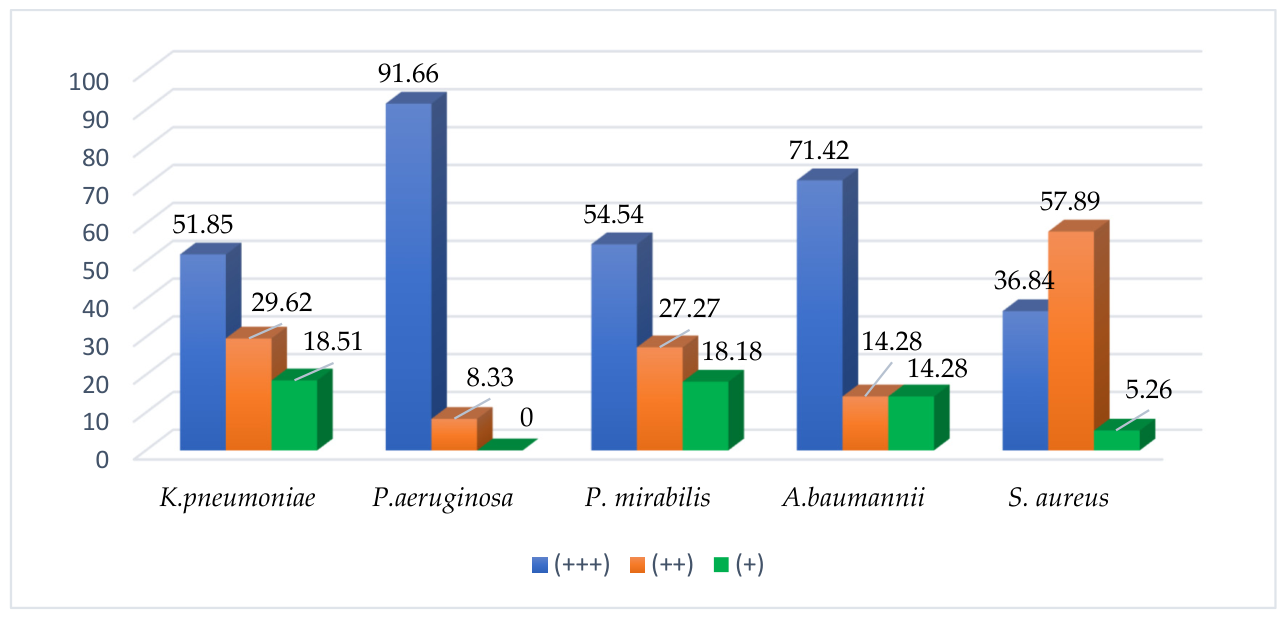
The biofilm-forming behavior of Gram-negative strains is shown in Figure 3. All bacteria examined were biofilm-formers, with different intensity and proportions depending on the species. It was observed that most strains are strong/medium biofilm-forming (at least 80% isolates of each species).
Strong biofilm-forming strains (B+++) were more frequent in the case of P. aeruginosa isolates compared to K. pneumoniae (p = 0.002, OR = 0.09, 95% CI: 0.01–0.55) and P. mirabilis (p = 0.02, OR = 9.16, 95% CI: 1.06–110.03). Nevertheless, the frequency of strong biofilm-producers was comparable between P. aeruginosa and A. baumannii strains.
Moderate biofilm-forming isolates (B++) showed similar frequencies among K. pneumoniae, P. mirabilis and A. baumannii isolates, whereas P. aeruginosa strains predominantly exhibited a strong biofilm-forming phenotype (B+++).
The study of the association between the resistance gene carriage and biofilm-forming ability was investigated separately for each species (Table 6). For the analysis, gene-carrying strains and biofilm-forming strains, were considered, respectively. A stratified analysis of biofilm formation intensity was not performed because over 80% of the strains presented a strong/moderate phenotype, so the analysis of levels would have low statistical power. However, it cannot be excluded that the relationship between gene portage and biofilm formation is dependent on its intensity.
Analysis of the association between resistance gene carriage and biofilm-forming capacity, as well as the strength of this relationship, demonstrated a strong, positive, and statistically significant association in K. pneumoniae strains. A similar result was obtained for P. mirabilis isolates.
With regard to P. aeruginosa, the Chi-square test indicated no significant association between the two variables, as all strains exhibited a biofilm-forming nature regardless of the presence or absence of antibiotic resistance genes.
A particular situation was also observed for A. baumannii, in which all isolates carried resistance genes. As a result, the biofilm-forming phenotype, which was variable among the strains, could not be interpreted in relation to this carriage.
Concerning S. aureus, the results show that these isolates were moderate biofilm-formers in over 57% of cases (Figure 3). Analysis of the association between resistance gene carriage and the biofilm-forming capacity did not reveal a significant relationship between these variables.

3.5. Biofilm Susceptibility to Antibiotics

Biofilm susceptibility to antibiotics was evaluated using the Calgary Biofilm Device. BMIC50 values were determined for all studied strains. The MIC for all planktonic forms of strains was also evaluated. The antibiotics tested were meropenem and amikacin.
The values obtained when testing biofilm and planktonic cells susceptibility for K. pneumoniae, P. aeruginosa and A. baumannii are presented in Table 7.
The differences between BMIC50 (for the biofilm form of strains) and MIC values (for planktonic form), obtained when testing the susceptibility to the two antibiotics, were analyzed using the Wilcoxon Signed-Rank test (Table 8). The test detects a general trend of BMIC50–MIC pairs (biofilm–planktonic cells) for each species studied, even if there are particular pairs with a different behavior compared to the general one observed through this test.
The BMIC50/MIC comparison cannot have clinical significance. In the case of biofilms, the BMIC value does not have standardized values for R/S. The test only indicates whether the biofilm is less susceptible to the antibiotics tested, without the statement being able to be clinically interpreted in relation to conventional S/R criteria used in antibiotic susceptibility testing.
Except for the A. baumannii testing to amikacin, the analyses showed that antibiotic susceptibility of biofilm forms of bacteria measured by BMIC50 were significantly lower than that of the planktonic bacteria measured by MIC. The Wilcoxon test indicated that the differences were statistically significant with a large effect size.
With regard to A. baumannii, testing to amikacin did not indicate a statistically significant difference between the MIC of planktonic strains and BMIC50. Nevertheless, the effect size was large (Table 8), suggesting a difference with potential biological relevance, but which did not reach the threshold of statistical significance due to the small sample size. The result is borderline, as the effect was large, but not statistically supported.

4. Discussion

Chronic non-healing foot ulcers are a major complication of causative diseases (diabetes mellitus, arterial ischemia, surgical wound, burn disease), contributing to the increase in morbidity and mortality in these pathologies [30]. The microbial population in chronic wounds exhibits great variability, determined by a combination of structural, physiological and environmental factors, which include genes carried, metabolic activity, intercellular interaction, host defense mechanisms and antibiotic exposure [31].
This study aimed to identify the carriage of a group of resistance genes and the presence of a phenotypic trait—biofilm formation—for the strains isolated from chronic non-healing wounds in hospital wards, to provide criteria for a more efficient therapeutic approach in the management of these chronic wounds. The selection of cases was made according to the specificity of the hospital infections.
In the study sample, the species with the highest frequency were the Gram-negative K. pneumoniae and P. aeruginosa, followed by S. aureus. These microorganisms have also been highlighted in other studies that reported the predominance of Gram-negative bacteria in chronic non-healing diabetic and non-diabetic wounds—P. aeruginosa as the main etiological factor, followed by A. baumannii, Proteus spp., K. pneumoniae and Gram-positive methicillin-resistant S. aureus [32,33,34].
Nevertheless, the dynamics of resistance phenotypes in these microorganisms are of particular importance and have been the subject of comparative analysis (2020vs2023) conducted by our group, focusing on the evolution of bacterial species isolated from clinical samples of burn patients [13]. The previous study demonstrated a marked increase in the multidrug-resistant (MDR) strains of P. aeruginosa from 18.52% in 2020 to 44.90% in 2023, with a similarly high prevalence observed in the present study (41.66%). An alarming rise in the pandrug-resistant (PDR) strains of K. pneumoniae was also noted, increasing from 5.55% to 40.91% (2020–2023); in our current study, XDR K. pneumoniae reached 70.37%, although no PDR strains were identified. With regard to S. aureus, the prevalence of methicillin-resistant strains (MRSA) increased from 41.18% in 2020 to 44.90% in 2023, reaching 52.63% in the current study. Similarly, MDR S. aureus strains showed an upward trend, from 58.82% in 2020 to 51.02% in 2023, and further to 68.42% in our research. Concerning the carbapenem-resistant phenotype (CR), an increasing trend was observed between 2020 and 2023, with further changes noted in the present study, as follows: K. pneumoniae (33.33–54.55% vs. 74.07%), P. aeruginosa (25.93–37.93% vs. 37.5%), and A. baumannii (91.30–88.24% vs. 85.71%) [13].
Detection of carbapenemases and β-lactamase genes by qualitative PCR can provide a molecular basis for the resistance phenotypes revealed by the antibiogram. However, this method only confirms the presence of resistance determinants, without providing information on their expression level. For some of the strains studied, the antibiogram was supplemented with rapid tests for the detection of cephalosporinases and carbapenemases production, which confirmed enzymatic activity. In these cases, it can be stated, at least to a certain extent, that there is a genotype–phenotype concordance at the functional level. Since these determinations were not performed for the entire batch of strains, the involvement of other resistance mechanisms cannot be excluded. Thus, the observed resistance phenotype can be determined both by the expression of the detected genes and by additional mechanisms, such as ESBL/AmpC production associated with the loss of porins and/or overexpression of efflux pumps [35,36].
The aac(6′)-Ib gene was identified in some strains in our study. Part of them presented the Ag resistance phenotype and others were sensitive to those antibiotics. The presence of the aac(6′)-Ib gene in susceptible strains can be explained by the mechanisms that condition the phenotypic expression of AG resistance, such as low expression levels, functional variability of the encoded enzyme, or lack of efficient enzymatic activity [37,38,39]. On the other hand, the absence of aac(6′)-Ib in aminoglycoside-resistant strains highlights the fact that the genetic determinism of AG resistance is complex and varied (AMEs genes, 16S rRNA methylase gene, MexXY efflux pump genes, etc.), requiring exhaustive research in this regard [38].
In our study, K. pneumoniae strains demonstrated a high carriage rate of resistance genes, oftentimes in multiple combinations, an aspect also reported in other studies. Thus, Smriti et al. reported the identification of blaNDM in 40% of K. pneumoniae isolates and the blaOXA 48 gene in 10% of strains, and the association of blaNDM + blaOXA48 together with an aminoglycoside-modifying enzyme (AME) was identified in 13.3% of cases [40]. Similarly, Latifi et al. showed that 83.9% of ESBL isolates expressed CTX-M type beta lactamase and 68.08% of those also harbored AME genes [41].
We identified a large group of XDR strains (approximately 70% isolates), for which the existence of multiple associations of carba- and non-carba bla genes was demonstrated. The carbapenemase-encoding genes carried by the strains were predominantly NDM and OXA, mostly of the OXA48 type. Isolates carrying the NDM-OXA and β-lactamase-encoding gene association accounted for approximately 50% of the K. pneumoniae strains. The presence of NDM-OXA48 is by far the most widespread type of carbapenemase association found in K. pneumoniae worldwide [42,43].
With regard to P. aeruginosa isolates, approximately 30% of the strains were carbapenem-resistant with resistance genes belonging to the OXA group (predominantly OXA23 and OXA24) without identification of NDM/VIM. Conversely, studies show that carbapenem resistance in P. aeruginosa is less often due to the presence of type D β-lactamases (OXA-type) and that it emerges more frequently as an expression of the carriage of metallo–β-lactamase genes—VIM/IMP/NDM [44,45]. In the OXA group, the most common are OXA-2-like and OXA-10-like, which we did not seek to identify [46,47]. Only one strain has exhibited the CR phenotype in the absence of a genetic determinant, which is explained by other mechanisms frequently found in this species, such as OprD loss, derepressed AmpC, and increased efflux [48,49]. The aminoglycoside resistance phenotype was isolated and detected in the absence of the sought-after aac(6′)-Ib gene. This behavior can be explained by the presence of another gene from the AME (Aminoglycoside-modifying enzyme) group, by low outer membrane permeability, active efflux, and rarely target modification [50]. On the other hand, we have identified a small number of strains carrying aac(6′)-Ib, all of which were sensitive to aminoglycosides. There are studies which show that the presence of the aac(6′)-Ib gene does not ensure phenotypic resistance to aminoglycosides. This is reliant on factors such as allelic variation and the level of gene expression, thus explaining the discrepancies between the genotypic presence and the MICs obtained phenotypically [39,51].
A. baumannii strains were highlighted by carrying an important set of genes, expressed by extensive antibiotic resistance, including resistance to carbapenems, found in most strains. The number of strains was small, but the predominance of group D β-lactamase genes (OXA-type) was observed, with the majority frequency of blaOXA23, as observed in other reports [44]. Studies show that A. baumannii preferentially carries NDM gene [52], which was also identified in our research, but with an isolated presence. Aminoglycoside resistance had high frequency, given the lack of identification of the aac(6′)-Ib resistance gene, indicating the existence of another genetic determinism.
Concerning the biofilm-forming capacity, this study has demonstrated that the isolates from chronic wounds are significant biofilm-formers. We have not identified strains that did not form biofilm, and 88.40% of the strains were strong/moderate biofilm-formers.
P. aeruginosa revealed a strong biofilm-forming capacity, which has also been noticed in other studies. Thi MT [53] has indicated that P. aeruginosa has a particular biofilm-forming potential compared to other bacteria, while Tuon FF [54] has suggested that biofilm formation is one of the most important determinants of pathogenicity in the case of P. aeruginosa. Biofilm protects the bacterium and contributes to the persistence of infections.
In our study, K. pneumoniae, P. mirabilis and A. baumannii proved to have at least a moderate biofilm-forming capacity in high proportions, similar in statistical significance.
In this regard, Seifi et al. [55] have noticed that K. pneumoniae shows different levels of biofilm production, highlighting its frequent ability to form biofilms. With regard to P. mirabilis, studies are related to urinary pathology and show the ability of the bacterium to form robust biofilms on artificial surfaces such as urinary catheters, due to its adhesion factors and motility [56,57]. Nonetheless, P. mirabilis is also detected in chronic wounds, in polymicrobial biofilm, along with P. aeruginosa, S. aureus and Enterobacterales species [6,58].
The results of this study demonstrated the existence of a strong and statistically significant association between resistance gene carriage and biofilm-forming capacity, applicable to K. pneumoniae and P. mirabilis.
This association can be explained, at least in part, by the linkage between antimicrobial resistance genes and biofilm-associated genetic determinants. Several studies have reported the co-existence of genes involved in biofilm formation and antimicrobial resistance. Silva-de-Jesus et al. demonstrated that, in MRSA strains, expression of the icaADBC operon, which promotes the synthesis of a polysaccharide essential for biofilm development, is frequently associated with enhanced biofilm-forming capacity, thereby contributing to bacterial persistence and reduced susceptibility to antibiotic therapy [59]. Similarly, Salehi et al. identified quorum-sensing genes such as lasI and lasR, predominantly in clinical isolates of P. aeruginosa simultaneously resistant to multiple antibiotics. The authors also emphasized that the relationship between these genes and antimicrobial resistance requires further investigation [60]. There are also studies showing that antibiotic resistance genes are frequently located on the same mobile genetic elements (e.g., plasmids and integrons) as genetic determinants involved in biofilm formation, including those involved in adhesion (fimbriae, pili) and extracellular matrix production. In this regard, Norman et al. reported that the conjugative plasmid pOLA52 identified in Escherichia coli strains simultaneously carried genes encoding multidrug-resistance mediated by a resistance-nodulation-division (RND)-type efflux-pump (oqxAB) and genes involved in type 3 fimbriae formation (mrkABCDF), phenotypes typically associated with the chromosomes of opportunistic pathogens [61].
This type of co-location facilitates co-selection and, as a result, antimicrobial pressure not only selects resistance genes but may also indirectly maintain biofilm-associated genetic determinants. In addition, the biofilm matrix provides a highly favorable environment for horizontal gene transfer, thereby enhancing the dissemination of resistance determinants within bacterial communities [62]. The presence of extracellular DNA within the biofilm matrix together with high rates of plasmid-mediated gene transfer, further promotes this process [63]. As a result, the biofilm acts not only as a protective niche for microorganisms but also as a dynamic reservoir of resistance genes. These mechanisms may explain the persistence of infection and therapeutic failure observed in chronic wounds, even in cases where antibiogram-guided therapy is applied.
In the case of P. aeruginosa and A. baumannii, the test was not applicable for different and significant reasons. In the P. aeruginosa isolates, most strains (over 90%) showed a strong biofilm-forming capacity and under 10% of the strains displayed an average expression of this potential, indicating very low variability of this behavior. As a result, the presence of resistance genes proves not to be a condition for this potential. P. aeruginosa is a strong biofilm-forming bacterium and manifests this characteristic for both sensitive and antibiotic-resistant strains.
Concerning A. baumannii strains, they are mainly characterized by a high genetic carriage applicable to all strains and expressed by high antibiotic resistance behavior. As a result, this behavior is detected even if the strain is not biofilm-forming. Nevertheless, there are studies that show a significant correlation between multidrug resistance and biofilm formation for A. baumannii isolates [64].
S. aureus proved to be less equipped with the resistance genes, resistance behavior and phenotypes defined by the mecA gene. The biofilm-forming capacity of S. aureus was predominantly moderate without showing a relationship to the presence of genes at the strain level.
In our study, antimicrobial susceptibility to amikacin and meropenem was assessed for each isolate in both planktonic and biofilm states by determining MIC and BMIC50 values. Statistical analysis of the paired differences (BMIC50-MIC) demonstrated significantly reduced antibiotic susceptibility in the biofilm state. The only exception was A. baumannii tested to amikacin, where the differences were not statistically significant. This behavior has also been reported in previous studies [27,65] and can be explained by multiple factors influencing biofilm susceptibility including microbial species, biofilm age, density and thickness. Additional mechanisms are represented by physiological states of bacterial cells (inactive, persister, dormant), depletion of the antimicrobial agent in the surrounding fluid and limited penetration of the antimicrobial agents into the biofilm matrix, as described by Stewart [66].
The present study aimed to evaluate the carriage of resistance genes and the biofilm-forming capacity of strains identified in chronic wounds, as potential factors involved in treatment resistance, in order to suggest possible therapeutic strategies.
The study was not intended to provide a comprehensive characterization of antimicrobial resistance mechanisms. The molecular analysis was limited to a selected panel of resistance genes and therefore did not describe the full spectrum of resistance determinants. Consequently, the absence of the investigated genes should not be interpreted as the absence of resistance mechanisms.
The study indicated a high prevalence of resistance gene carriage among the isolated strains, as well as that many isolates exhibited strong/moderate biofilm-forming capacity. These two components contribute, to varying degrees, to treatment resistance in each non-healing wound, emphasizing the necessity for a customized therapeutic approach. The presence of wounds extensively colonized by biofilm proven by the strong biofilm-forming capacity of the isolated strains indicates the need for bolder local treatment strategies related to biofilm removal and disruption of its formation and protective mechanisms for the embedded bacterial population. Furthermore, knowledge of antibiotic resistance gene carriage provides additional information regarding the delayed healing of chronic wounds by highlighting certain mechanisms that are not revealed by conventional antimicrobial susceptibility testing results. These include the potential activation of resistance genes not expressed under standard laboratory testing conditions, horizontal gene transfer (predominantly plasmid-mediated) between bacteria, biofilm-facilitated resistance in the case of strains with a reduced load of resistance genes. Therefore, characterization of resistance genes may guide antibiotic therapy according to the potential for resistance adaptation and dissemination, as well as enable better correlation with the biofilm-colonized microenvironment of chronic wounds. This diagnostic approach can be achieved through a multiplex PCR-based investigation performed using rapid syndromic molecular diagnostic platforms which enable the rapid and simultaneous identification of pathogens and resistance genes directly from the clinical sample. Our laboratory has relevant experience in this field, including the use of the Unyvero platform (Curetis GmbH, Holzgerlingen, Germany); however, this type of testing has not yet been incorporated into the routine diagnostic workflow for these samples.
There are studies indicating that biofilms have a low susceptibility to antimicrobials through multiple mechanisms, both genetic and non-genetic. Genetic mechanisms include the facilitated horizontal gene transfer [67], quorum sensing systems [68], and regulatory pathway involving messengers such as cyclic di-AMP and cyclic di-GMP [69,70]. Non-genetic mechanisms include the presence of persistent cells and restricted penetration of antimicrobials in the biofilm [67]. These mechanisms contribute to antimicrobial tolerance and therapeutic failure.
Recent research on new therapeutic concepts shows the exceptional efficiency of aptamers in suppressing bacterial proliferation and stopping the evolution of biofilms in therapeutic environments [71]. Furthermore, Doherty et al. show that the association of the studied aptamer (αSA31 aptamer) with Vancomycin, reduced the distribution and persistence of MRSA in systemic infection, with an increase in the chances of survival [72]. Likewise, research is directed towards the study of bacterial resistance to protist grazing [73] and the mechanism of intervention of bacteriophages in biofilm [74] with the aim of using these biological agents in the treatment of chronic wound infections.
The present study presents several limitations as follows: it is a single-center study, conducted over a period of only 7 months, not all antibiotics of a class have been phenotypically tested nor have all genes that would induce antibiotics resistance, and the molecular analysis performed was limited to the qualitative detection of a selected panel of resistance genes. Also, no data linked to clinical outcomes were collected or analyzed. Despite these limitations, we believe that we have provided valuable information regarding the genotypic characterization of antimicrobial resistance, as well as the biofilm-forming capacity of isolates in chronic wounds, this being, to the best of our knowledge, the first study of this kind to be conducted in the western part of our country. Overall, the data obtained provide support for the integration of antibiofilm strategies into clinical protocols and for the development of targeted therapies, with the potential to improve clinical outcomes and limit the subsequent selection of resistant strains.

5. Conclusions

Gram-negative bacteria predominated among the chronic wounds isolated and analyzed, with most isolates exhibiting multidrug-resistant (MDR) or extensively drug-resistant (XDR) phenotypes. This pattern was particularly evident for Klebsiella pneumoniae and Acinetobacter baumanii, corroborating our previous results. The isolates were strong biofilm-formers, primarily Pseudomonas aeruginosa and Acinetobacter baumanii. A strong and statistically significant association was identified between resistance gene carriage and biofilm-forming capacity, particularly in Klebsiella pneumoniae and Proteus mirabilis isolates. In addition, significantly reduced antibiotic susceptibility was observed in the biofilm state. The association and potential co-transfer of antimicrobial resistance genes with biofilm-forming genetic determinants may contribute to enhanced treatment resistance and persistence of chromic wound infection. These findings highlight the need for personalized therapeutic strategies in chronic wound management, considering the mechanisms underlying treatment resistance. These include bacterial factors and the wound microenvironment colonized by the biofilm and the relative contribution of each to the overall resistance profile.

Author Contributions

Conceptualization, S.I.M. and M.L.; methodology, S.I.M., A.V., F.G.H. and D.M.; software, L.M.B. and C.M.; validation, M.L., D.M. and C.M.; formal analysis, L.M.B., F.G.H., V.O. and E.S.; investigation A.V., S.I.M., A.C. and O.I.; resources, Z.C., V.O., F.G.H. and M.L.; data curation S.I.M., A.V., C.M. and O.I.; writing—original draft preparation, S.I.M., C.M., L.M.B. and A.C.; writing—review and editing, D.M., S.I.M., M.L. and L.M.B.; supervision, M.L., Z.C., E.S. and D.M.; project administration, C.M., V.O. and M.L. All authors have read and agreed to the published version of the manuscript.

Funding

This research received no external funding. We would like to acknowledge Victor Babeș University of Medicine and Pharmacy Timișoara for their support in covering the costs of publication for this research paper.

Institutional Review Board Statement

The study was conducted in accordance with the Declaration of Helsinki and approved by the Ethics Committee of Pius Brînzeu County Emergency Clinical Hospital, Timisoara, Ro (ethical approval no. 414, issued on 27 October 2023). The research was also approved by the Research Ethics Committee of the Victor Babeș University of Medicine and Pharmacy, Timisoara (ethical approval no. 79, issued on 3 October 2022).

Informed Consent Statement

Informed consent was obtained from all subjects involved in the study.

Data Availability Statement

The data supporting the findings of this study are available from the corresponding author upon reasonable request.

Acknowledgments

The authors would like to thank the Victor Babeș University of Medicine and Pharmacy Timisoara Doctoral School for its academic support and the technical support of the Multidisciplinary Center for Antibiotic Resistance Research (MULTIREZ).

Conflicts of Interest

The authors declare no conflicts of interest.

Abbreviations

MICMinimum inhibitory concentration
Real-time PCRReal-time Polymerase Chain Reaction
MEMMeropenem
AKAmikacin
GPCGram-positive Cocci
GNBGram-negative bacilli
GPGram-positive
GNGram-negative
MRSAMethicillin-resistant Staphylococcus aureus
MRMethicillin-resistant
XDRExtensively drug-resistant
MDRMultidrug-resistant
ESBLExtended-spectrum β-Lactamase
ODOptical density
QCQuality control
ODcCut-off optical density

References

  1. Aslam, M.S.; Arain, M.I. Chronic Wound Care: A Comprehensive Meta-Analysis on the Therapeutic Potential of Cold Atmospheric Plasma Technology. J. Clin. Pharm. Ther. 2025, 2025, 5357147. [Google Scholar] [CrossRef]
  2. Díaz-Herrera, M.Á.; González-Durán, M.; Rodríguez-Martínez, F.J.; Tujillo-Flores, G.; Tuset-Mateu, N.; Verdú-Soriano, J.; Gea-Caballero, V.; Sanllorente-Melenchón, A.; Almeda-Ortega, J.; Cunillera-Puértolas, O.; et al. The financial burden of chronic wounds in primary care: A real-world data analysis on cost and prevalence. Int. J. Nurs. Stud. Adv. 2025, 8, 100313. [Google Scholar] [CrossRef]
  3. Price, L.B.; Liu, C.M.; Melendez, J.H.; Frankel, Y.M.; Engelthaler, D.; Aziz, M.; Bowers, J.; Rattray, R.; Ravel, J.; Kingsley, C.; et al. Community analysis of chronic wound bacteria using 16S rRNA gene-based pyrosequencing: Impact of diabetes and antibiotics on chronic wound microbiota. PLoS ONE 2009, 4, e6462. [Google Scholar] [CrossRef]
  4. Bowler, P.G.; Duerden, B.I.; Armstrong, D.G. Wound microbiology and associated approaches to wound management. Clin. Microbiol. Rev. 2001, 14, 244–269. [Google Scholar] [CrossRef] [PubMed]
  5. Cwajda-Białasik, J.; Mościcka, P.; Jawień, A.; Szewczyk, M.T. Microbiological Status of Venous Leg Ulcers and Its Predictors: A Single-Center Cross-Sectional Study. Int. J. Environ. Res. Public Health 2021, 18, 12965. [Google Scholar] [CrossRef] [PubMed]
  6. Dowd, S.E.; Wolcott, R.D.; Sun, Y.; McKeehan, T.; Smith, E.; Rhoads, D. Polymicrobial nature of chronic diabetic foot ulcer biofilm infections determined using bacterial tag encoded FLX amplicon pyrosequencing (bTEFAP). PLoS ONE 2008, 3, e3326. [Google Scholar] [CrossRef]
  7. Horhat, F.G.; Bagiu, I.C. Management of multidrug-resistant bacterial infections in burn patients: Challenges and strategies for optimal care. J. Glob. Antimicrob. Resist. 2024, 39, 13. [Google Scholar] [CrossRef]
  8. Licker, M.; Musuroi, C.; Muntean, D.; Crainiceanu, Z. Updates in the Management of Multidrug-Resistant Bacterial Infections in Burn Patients. Proceedings. 2023. Available online: https://www.srm.ro/media/2023/11/volum-rezumate-cnme-1.pdf (accessed on 21 March 2026).
  9. James, G.A.; Ge Zhao, A.; Usui, M.; Underwood, R.A.; Nguyen, H.; Beyenal, H.; deLancey Pulcini, E.; Agostinho Hunt, A.; Bernstein, H.C.; Fleckman, P.; et al. Microsensor and transcriptomic signatures of oxygen depletion in biofilms associated with chronic wounds. Wound Repair Regen. 2016, 24, 373–383. [Google Scholar] [CrossRef]
  10. Wolcott, R.D.; Hanson, J.D.; Rees, E.J.; Koenig, L.D.; Phillips, C.D.; Wolcott, R.A.; Cox, S.B.; White, J.S. Analysis of the chronic wound microbiota of 2963 patients by 16S rDNA pyrosequencing. Wound Repair Regen. 2016, 24, 163–174. [Google Scholar] [CrossRef]
  11. Malone, M.; Bjarnsholt, T.; McBain, A.J.; James, G.A.; Stoodley, P.; Leaper, D.; Tachi, M.; Schultz, G.; Swanson, T.; Wolcott, R.D. The prevalence of biofilms in chronic wounds: A systematic review and meta-analysis of published data. J. Wound Care 2017, 26, 20–25. [Google Scholar] [CrossRef]
  12. Diban, F.; Di Lodovico, S.; Di Fermo, P.; D’Ercole, S.; D’Arcangelo, S.; Di Giulio, M.; Cellini, L. Biofilms in Chronic Wound Infections: Innovative Antimicrobial Approaches Using the In Vitro Lubbock Chronic Wound Biofilm Model. Int. J. Mol. Sci. 2023, 24, 1004. [Google Scholar] [CrossRef] [PubMed]
  13. Musuroi, C.; Musuroi, S.-I.; Baditoiu, L.; Crainiceanu, Z.; Muntean, D.; Voinescu, A.; Izmendi, O.; Sirmon, A.; Licker, M. The Profile of Bacterial Infections in a Burn Unit during and after the COVID-19 Pandemic Period. Antibiotics 2024, 13, 823. [Google Scholar] [CrossRef]
  14. EUCAST The European Committee on Antimicrobial Susceptibility. Breakpoint Tables for Interpretation of MICs and Zone Diameters. Version 14.0. 2024. Available online: https://www.eucast.org/bacteria/document-archive/ (accessed on 2 February 2026).
  15. Magiorakos, A.-P.; Srinivasan, A.; Carey, R.B.; Carmeli, Y.; Falagas, M.E.; Giske, C.G.; Harbarth, S.; Hindler, J.F.; Kahlmeter, G.; Olsson-Liljequist, B.; et al. Multidrug-resistant, extensively drug-resistant and pandrug-resistant bacteria: An international expert proposal for interim standard definitions for acquired resistance. Clin. Microbiol. Infect. 2012, 18, 268–281. [Google Scholar] [CrossRef]
  16. Rochegüe, T.; Haenni, M.; Cazeau, G.; Metayer, V.; Madec, J.-Y.; Ferry, T.; Lupo, A. An inventory of 44 qPCR assays using hydrolysis probes operating with a unique amplification condition for the detection and quantification of antibiotic resistance genes. Diagn. Microbiol. Infect. Dis. 2021, 100, 115328. [Google Scholar] [CrossRef]
  17. Elena Roxana, B.; Dorneanu, O.; Catalina, L.; Jelihovschi, I.; Iancu, L.S. Phenotypic Carbapenemase Production and blaOXA detecting by PCR in Acinetobacter baumannii isolates from a Hospital of Infectious Diseases from North-East Romania. Rev. Rom. Med. Lab. 2022, 30, 453–455. [Google Scholar]
  18. Thakali, O.; Malla, B.; Raya, S.; Sthapit, N.; Sherchan, S.P.; Furukawa, T.; Sei, K.; Sherchand, J.B.; Haramoto, E. Prevalence of antibiotic resistance genes in drinking water of the Kathmandu Valley, Nepal. Environ. Chall. 2022, 7, 100527. [Google Scholar] [CrossRef]
  19. Pereira, L.A.; Harnett, G.B.; Hodge, M.M.; Cattell, J.A.; Speers, D.J. Real-time PCR assay for detection of blaZ genes in Staphylococcus aureus clinical isolates. J. Clin. Microbiol. 2014, 52, 1259–1261. [Google Scholar] [CrossRef]
  20. Onseedaeng, S.; Ratthawongjirakul, P. Rapid Detection of Genomic Mutations in gyrA and parC Genes of Escherichia coli by Multiplex Allele Specific Polymerase Chain Reaction. J. Clin. Lab. Anal. 2016, 30, 947–955. [Google Scholar] [CrossRef]
  21. MMezban, J.; Abbas, B.; Khudor, M. Erythromycin Resistance Genes among Coagulase-negative Staphylococci Isolated from Humansin Basrah, Iraq. Iran. J. War. Public Health 2023, 15, 43–48. [Google Scholar]
  22. Jensen, L.B.; Frimodt-Møller, N.; Aarestrup, F.M. Presence of erm gene classes in gram-positive bacteria of animal and human origin in Denmark. FEMS Microbiol. Lett. 1999, 170, 151–158. [Google Scholar] [CrossRef]
  23. Ishino, K.; Ishikawa, J.; Ikeda, Y.; Hotta, K. Characterization of a bifunctional aminoglycoside-modifying enzyme with novel substrate specificity and its gene from a clinical isolate of methicillin-resistant Staphylococcus aureus with high arbekacin resistance. J. Antibiot. 2004, 57, 679–686. [Google Scholar] [CrossRef]
  24. Stepanović, S.; Vuković, D.; Hola, V.; Bonaventura, G.D.; Djukić, S.; Ćirković, I.; Ruzicka, F. Quantification of biofilm in microtiter plates: Overview of testing conditions and practical recommendations for assessment of biofilm production by staphylococci. APMIS 2007, 115, 891–899. [Google Scholar] [CrossRef]
  25. Ceri, H.; Olson, M.E.; Stremick, C.; Read, R.R.; Morck, D.; Buret, A. The Calgary Biofilm Device: New technology for rapid determination of antibiotic susceptibilities of bacterial biofilms. J. Clin. Microbiol. 1999, 37, 1771–1776. [Google Scholar] [CrossRef] [PubMed]
  26. Tsai, S.H.-Y.; Froelich, B.A.; van Hoek, M.L. The synthetic peptide GATR-3 shows significant antibacterial and biofilm-inhibition activity against shellfish- and oyster-associated bacteria Vibrio vulnificus and Vibrio parahaemolyticus. Comp. Immunol. Rep. 2026, 10, 200266. [Google Scholar] [CrossRef]
  27. Pandelidis, K.; McCarthy, A.; Chesko, K.L.; Viscardi, R.M. Role of biofilm formation in Ureaplasma antibiotic susceptibility and development of bronchopulmonary dysplasia in preterm neonates. Pediatr. Infect. Dis. J. 2013, 32, 394–398. [Google Scholar] [CrossRef]
  28. Thieme, L.; Hartung, A.; Tramm, K.; Klinger-Strobel, M.; Jandt, K.D.; Makarewicz, O.; Pletz, M.W. MBEC Versus MBIC: The Lack of Differentiation between Biofilm Reducing and Inhibitory Effects as a Current Problem in Biofilm Methodology. Biol. Proced. Online 2019, 21, 18. [Google Scholar] [CrossRef]
  29. Bush, K.; Jacoby, G.A. Updated functional classification of beta-lactamases. Antimicrob. Agents Chemother. 2010, 54, 969–976. [Google Scholar] [CrossRef] [PubMed]
  30. Brennan, M.B.; Hess, T.M.; Bartle, B.; Cooper, J.M.; Kang, J.; Huang, E.S.; Smith, M.; Sohn, M.-W.; Crnich, C. Diabetic foot ulcer severity predicts mortality among veterans with type 2 diabetes. J. Diabetes Complicat. 2017, 31, 556–561. [Google Scholar] [CrossRef]
  31. Pereira, S.G.; Moura, J.; Carvalho, E.; Empadinhas, N. Microbiota of Chronic Diabetic Wounds: Ecology, Impact, and Potential for Innovative Treatment Strategies. Front. Microbiol. 2017, 8, 1791. [Google Scholar] [CrossRef] [PubMed]
  32. Jnana, A.; Muthuraman, V.; Varghese, V.K.; Chakrabarty, S.; Murali, T.S.; Ramachandra, L.; Shenoy, K.R.; Rodrigues, G.S.; Prasad, S.S.; Dendukuri, D.; et al. Microbial Community Distribution and Core Microbiome in Successive Wound Grades of Individuals with Diabetic Foot Ulcers. Appl. Environ. Microbiol. 2020, 86, e02608-19. [Google Scholar] [CrossRef]
  33. Matei, S.-C.; Dumitru, C.S.; Fakhry, A.M.; Ilijevski, N.; Pešić, S.; Petrović, J.; Crăiniceanu, Z.P.; Murariu, M.-S.; Olariu, S. Bacterial Species Involved in Venous Leg Ulcer Infections and Their Sensitivity to Antibiotherapy—An Alarm Signal Regarding the Seriousness of Chronic Venous Insufficiency C6 Stage and Its Need for Prompt Treatment. Microorganisms 2024, 12, 472. [Google Scholar] [CrossRef]
  34. Sandmann, S.; Nunes, J.V.; Grobusch, M.P.; Sesay, M.; Kriegel, M.A.; Varghese, J.; Schaumburg, F. Correction: Network analysis of polymicrobial chronic wound infections in Masanga, Sierra Leone. BMC Infect. Dis. 2023, 23, 357. [Google Scholar] [CrossRef]
  35. Logan, L.; Renschler, J.; Gandra, S.; Weinstein, R.; Laxminarayan, R. Carbapenem-Resistant Enterobacteriaceae in Children, United States, 1999–2012. Emerg. Infect. Dis. J. 2015, 21, 2014. [Google Scholar] [CrossRef] [PubMed]
  36. Dulanto Chiang, A.; Dekker, J.P. Efflux pump-mediated resistance to new beta lactam antibiotics in multidrug-resistant gram-negative bacteria. Commun. Med. 2024, 4, 170. [Google Scholar] [CrossRef] [PubMed]
  37. Ramirez, M.S.; Nikolaidis, N.; Tolmasky, M. Rise and dissemination of aminoglycoside resistance: The aac(6′)-Ib paradigm. Front. Microbiol. 2013, 4, 121. [Google Scholar] [CrossRef]
  38. Atassi, G.; Medernach, R.; Scheetz, M.; Nozick, S.; Rhodes, N.J.; Murphy-Belcaster, M.; Murphy, K.R.; Alisoltani, A.; Ozer, E.A.; Hauser, A.R. Genomics of Aminoglycoside Resistance in Pseudomonas aeruginosa Bloodstream Infections at a United States Academic Hospital. Microbiol. Spectr. 2023, 11, e0508722. [Google Scholar] [CrossRef]
  39. Plattner, M.; Catelani, M.; Gmür, S.-L.; Hartmann, M.; Kiliç, F.; Haldimann, K.; Crich, D.; Hobbie, S.N. Phenotypic Differentiation Within the aac(6′) Aminoglycoside Resistance Gene Family Suggests a Novel Subtype IV of Contemporary Clinical Relevance. Antibiotics 2024, 13, 1196. [Google Scholar] [CrossRef] [PubMed]
  40. Smriti, S.; Verma, G.; Pradhan, S.; Sigh, N.; Panda, S.S.; Mohapatra, I.; Pattnaik, D.; Dash, R.K.; Das, L. Co-occurrence of genes encoding carbapenem resistance and aminoglycoside resistance in clinical isolates of Enterobacterales. Drug Target Insights 2025, 19, 91–98. [Google Scholar] [CrossRef]
  41. Latifi, B.; Tajbakhsh, S.; Ahadi, L.; Yousefi, F. Coexistence of aminoglycoside resistance genes in CTX-M-producing isolates of Klebsiella pneumoniae in Bushehr province, Iran. Iran. J. Microbiol. 2021, 13, 161–170. [Google Scholar] [CrossRef]
  42. Isler, B.; Aslan, A.T.; Akova, M.; Harris, P.; Paterson, D.L. Treatment strategies for OXA-48-like and NDM producing Klebsiella pneumoniae infections. Expert Rev. Anti-Infect. Ther. 2022, 20, 1389–1400. [Google Scholar] [CrossRef]
  43. Al-Zahrani, I.A.; Alsiri, B.A. The emergence of carbapenem-resistant Klebsiella pneumoniae isolates producing OXA-48 and NDM in the Southern (Asir) province, Saudi Arabia. Saudi Med. J. 2018, 39, 23–30. [Google Scholar] [CrossRef]
  44. Ramadan, R.A.; Gebriel, M.G.; Kadry, H.M.; Mosallem, A. Carbapenem-resistant Acinetobacter baumannii and Pseudomonas aeruginosa: Characterization of carbapenemase genes and E-test evaluation of colistin-based combinations. Infect. Drug Resist. 2018, 11, 1261–1269. [Google Scholar] [CrossRef]
  45. Abdelraheem, W.M.; Ismail, D.E.; Hammad, S.S. Prevalence of blaOXA-48 and other carbapenemase encoding genes among carbapenem-resistant Pseudomonas aeruginosa clinical isolates in Egypt. BMC Infect. Dis. 2024, 24, 1278. [Google Scholar] [CrossRef] [PubMed]
  46. Asgin, N.; Otlu, B.; Cakmakliogullari, E.K.; Celik, B. High prevalence of TEM, VIM, and OXA-2 beta-lactamases and clonal diversity among Acinetobacter baumannii isolates in Turkey. J. Infect. Dev. Ctries. 2019, 13, 794–801. [Google Scholar] [CrossRef]
  47. Nasser, M.; Gayen, S.; Kharat, A.S. Prevalence of β-lactamase and antibiotic-resistant Pseudomonas aeruginosa in the Arab region. J. Glob. Antimicrob. Resist. 2020, 22, 152–160. [Google Scholar] [CrossRef]
  48. Breidenstein, E.B.M.; de la Fuente-Núñez, C.; Hancock, R.E.W. Pseudomonas aeruginosa: All roads lead to resistance. Trends Microbiol. 2011, 19, 419–426. [Google Scholar] [CrossRef]
  49. Beig, M.; Taheri, M.; Arabestani, M.R. Expression of MexAB-OprM efflux pump and OprD porin in carbapenemase producing Pseudomonas aeruginosa clinical isolates. Gene Rep. 2020, 20, 100744. [Google Scholar] [CrossRef]
  50. Pachori, P.; Gothalwal, R.; Gandhi, P. Emergence of antibiotic resistance Pseudomonas aeruginosa in intensive care unit; a critical review. Genes. Dis. 2019, 6, 109–119. [Google Scholar] [CrossRef] [PubMed]
  51. Butler, D.A.; Rana, A.P.; Krapp, F.; Patel, S.R.; Huang, Y.; Ozer, E.A.; Hauser, A.R.; Bulman, Z.P. Optimizing aminoglycoside selection for KPC-producing Klebsiella pneumoniae with the aminoglycoside-modifying enzyme (AME) gene aac(6′)-Ib. J. Antimicrob. Chemother. 2021, 76, 671–679. [Google Scholar] [CrossRef]
  52. Chatterjee, S.; Datta, S.; Roy, S.; Ramanan, L.; Saha, A.; Viswanathan, R.; Som, T.; Basu, S. Carbapenem Resistance in Acinetobacter baumannii and Other Acinetobacter spp. Causing Neonatal Sepsis: Focus on NDM-1 and Its Linkage to ISAba125. Front. Microbiol. 2016, 7, 1126. [Google Scholar] [CrossRef]
  53. Thi, M.T.T.; Wibowo, D.; Rehm, B.H.A. Pseudomonas aeruginosa Biofilms. Int. J. Mol. Sci. 2020, 21, 8671. [Google Scholar] [CrossRef] [PubMed]
  54. Tuon, F.F.; Dantas, L.R.; Suss, P.H.; Tasca Ribeiro, V.S. Pathogenesis of the Pseudomonas aeruginosa Biofilm: A Review. Pathogens 2022, 11, 300. [Google Scholar] [CrossRef] [PubMed]
  55. Seifi, K.; Kazemian, H.; Heidari, H.; Rezagholizadeh, F.; Saee, Y.; Shirvani, F.; Houri, H. Evaluation of Biofilm Formation Among Klebsiella pneumoniae Isolates and Molecular Characterization by ERIC-PCR. Jundishapur J. Microbiol. 2016, 9, e30682. [Google Scholar] [CrossRef]
  56. Scavone, P.; Iribarnegaray, V.; González, M.J.; Navarro, N.; Caneles-Huerta, N.; Jara-Wilde, J.; Härtel, S.; Zunino, P. Role of Proteus mirabilis flagella in biofilm formation. Rev. Argent. Microbiol. 2023, 55, 226–234. [Google Scholar] [CrossRef]
  57. Kynshi, M.A.L.; Kharkamni, E.; Borah, V.V. Proteus mirabilis: Insights into biofilm formation, virulence mechanisms, and novel therapeutic strategies. Microbe 2025, 8, 100450. [Google Scholar] [CrossRef]
  58. Bjarnsholt, T. The role of bacterial biofilms in chronic infections. APMIS 2013, 121, 1–58. [Google Scholar] [CrossRef]
  59. Silva-de-Jesus, A.C.; Ferrari, R.G.; Panzenhagen, P.; dos Santos, A.M.P.; Portes, A.B.; Conte-Junior, C.A. Distribution of Antimicrobial Resistance and Biofilm Production Genes in the Genomic Sequences of S. aureus: A Global In Silico Analysis. Antibiotics 2025, 14, 364. [Google Scholar] [CrossRef]
  60. Salehi, Z.; Amini, K.; Kheirkhah, B. Molecular Identification of Quorum Sensing Genes in Clinical Strains of Pseudomonas aeruginosa and Antibiotic Resistance Profile. J. Babol Univ. Med. Sci. 2017, 19, 46–53. [Google Scholar]
  61. Norman, A.; Hansen, L.H.; She, Q.; Sørensen, S.J. Nucleotide sequence of pOLA52: A conjugative IncX1 plasmid from Escherichia coli which enables biofilm formation and multidrug efflux. Plasmid 2008, 60, 59–74. [Google Scholar] [CrossRef]
  62. Pan, Y.; Zeng, J.; Li, L.; Yang, J.; Tang, Z.; Xiong, W.; Li, Y.; Chen, S.; Zeng, Z. Coexistence of Antibiotic Resistance Genes and Virulence Factors Deciphered by Large-Scale Complete Genome Analysis. mSystems 2020, 5, e00821-19. [Google Scholar] [CrossRef]
  63. Madsen, J.S.; Burmølle, M.; Hansen, L.H.; Sørensen, S.J. The interconnection between biofilm formation and horizontal gene transfer. FEMS Immunol. Med. Microbiol. 2012, 65, 183–195. [Google Scholar] [CrossRef]
  64. Bardbari, A.M.; Arabestani, M.R.; Karami, M.; Keramat, F.; Alikhani, M.Y.; Bagheri, K.P. Correlation between ability of biofilm formation with their responsible genes and MDR patterns in clinical and environmental Acinetobacter baumannii isolates. Microb. Pathog. 2017, 108, 122–128. [Google Scholar] [CrossRef]
  65. Dey, A.; Yadav, M.; Kumar, D.; Dey, A.K.; Samal, S.; Tanwar, S.; Sarkar, D.; Pramanik, S.K.; Chaudhuri, S.; Das, A. A combination therapy strategy for treating antibiotic resistant biofilm infection using a guanidinium derivative and nanoparticulate Ag(0) derived hybrid gel conjugate. Electron. Suppl. Inf. (ESI) 2022, 13, 10103–10118. [Google Scholar] [CrossRef]
  66. Stewart, P.S. Antimicrobial Tolerance in Biofilms. Microbiol. Spectr. 2015, 3, 3. [Google Scholar] [CrossRef]
  67. Dingemans, J.; Poudyal, B.; Sondermann, H.; Sauer, K. The Yin and Yang of SagS: Distinct Residues in the HmsP Domain of SagS Independently Regulate Biofilm Formation and Biofilm Drug Tolerance. mSphere 2018, 3, e00192-18. [Google Scholar] [CrossRef]
  68. Jennings, L.K.; Dreifus, J.E.; Reichhardt, C.; Storek, K.M.; Secor, P.R.; Wozniak, D.J.; Hisert, K.B.; Parsek, M.R. Pseudomonas aeruginosa aggregates in cystic fibrosis sputum produce exopolysaccharides that likely impede current therapies. Cell Rep. 2021, 34, 108782. [Google Scholar] [CrossRef]
  69. Reich, S.J.; Goldbeck, O.; Lkhaasuren, T.; Weixler, D.; Weiß, T.; Eikmanns, B.J. C-di-AMP Is a Second Messenger in Corynebacterium glutamicum That Regulates Expression of a Cell Wall-Related Peptidase via a Riboswitch. Microorganisms 2023, 11, 296. [Google Scholar] [CrossRef]
  70. Römling, U.; Galperin, M.Y.; Gomelsky, M. Cyclic di-GMP: The first 25 years of a universal bacterial second messenger. Microbiol. Mol. Biol. Rev. 2013, 77, 1–52. [Google Scholar] [CrossRef] [PubMed]
  71. Ye, Z.; Chen, H.; Weinans, H.; van der Wal, B.; Rios, J.L. Novel Aptamer Strategies in Combating Bacterial Infections: From Diagnostics to Therapeutics. Pharmaceutics 2024, 16, 1140. [Google Scholar] [CrossRef] [PubMed]
  72. Doherty, M.K.; Shaw, C.; Woods, L.; Weimer, B.C. Alpha-Gal Bound Aptamer and Vancomycin Synergistically Reduce Staphylococcus aureus Infection In Vivo. Microorganisms 2023, 11, 1776. [Google Scholar] [CrossRef] [PubMed]
  73. Liu, Y.; Koudelka, G. O-Polysaccharides of LPS Modulate E. coli Uptake by Acanthamoeba castellanii. Microorganisms 2023, 11, 1377. [Google Scholar] [CrossRef] [PubMed]
  74. Meneses, L.; Brandão, A.C.; Coenye, T.; Braga, A.C.; Pires, D.P.; Azeredo, J. A systematic review of the use of bacteriophages for in vitro biofilm control. Eur. J. Clin. Microbiol. Infect. Dis. 2023, 42, 919–928. [Google Scholar] [CrossRef] [PubMed]
Figure 1. Distribution of wound samples (%): (a) by hospital ward, (b) by etiology. Legend: (a) Sur. wards: surgical wards, BFU: Burn Functional Unit, Orto-Trauma: Orthopedics–Traumatology; (b) Per. art. disease: peripheral arterial disease, Diab. wounds: diabetic wounds, Postop. wounds: postoperative wounds, Abscess (fist.): chronic abscess with fistula, Polytr.: polytrauma wounds.
Microorganisms 14 01117 g001
Figure 2. Distribution of microorganisms across wound samples (%). Legend: Per. art. disease: peripheral arterial disease, Diab. wounds: diabetic wounds, Postop. wounds: postoperative wounds, Abcess (fist.): Chronic abscess with fistula, Polytr.: politrauma wounds, K.P: K. pneumoniae, P.A: P. aeruginosa, P.M: P. mirabilis, A.B: A. baumannii, S.A: S. aureus.
Microorganisms 14 01117 g002
Figure 3. Biofilm-forming capacity of strains (%).
Microorganisms 14 01117 g003
Table 1. PCR primer sets used for Gram-negative and Gram-positive strains.
Gram-Negative Primer SetsSize (bp) Ref.
blaTEMF: TTGCACAACATGGGGGATC, R: AGCTAGAGTAAGTAGTTCGCCAGTTAATAGTT
Probe FAM-AACCGGAGCTGAATGAAGCCATACCAA BHQ_1
108[16]
blaSHVF: CGATAACAGCGCCGCC, R: TTCCCAGCGGTCAAGGC
Probe: FAM-TGACTGCCTTTTTGCGCCAGATCG BHQ_1
109[16]
blaCTX-M-1grF-CTGGGTGTGGCATTGATTAACA, R-CTCGCTGATTTAACAGATTCGGTT
Probe MGB-ATGGCCGTGGCCG-FAM
151[16]
blaOXA-48F: TGTTTATCAAGAATTTGCCCGC, R: TTCGGTCAGCATGGCTTGT
Probe MGB-CGACGGTGGTATTCGA-FAM
232[16]
blaOXA-23F GACACTAGGAGAAGCCATGAAG; R CAGCATTACCGAAACCAATAC
probe FAM-CCAGTCTATCAGGAACTTGCGCGA-BHQ_1
116[17]
blaOXA-24F GATGACCTTGCACATAACCG; R CAGTCAACCAACCTACCTGTG
Probe FAM-AGTAACACCCATTCCCCATCCACTTTT- IABkFQ
151[17]
blaNDMF: ATTAGCCGCTGCATTGAT, R: CATGTCGAGATAGGAAGTG
Probe 5-FAM-CTG [+C]CA [+G]AC [+A]TT [+C]GG TGC-BHQ_1 LNA
154[18]
blaVIMF: GAGTTGCTTTTGATTGATACAG, R: TCGATGAGAGTCCTTCTAGA247[17]
aac(6′)-IbF: AACTTGCGAGCGATCCGA, R: TGGCGTGTTTGAACCATGTAC
Probe QSY-TACCTTGCTTCTCAAACCCCGCTTTCTC-JUN
101[16]
Gram-positive primer sets
mecAF CAATGCCAAAATCTCAGGTAAAGTG, R AACCATCGTTACGGATTGCTTC
Probe FAM-ATGAGCTATATGAGAACGG-MGBNFQ
147[ST]
blaZF: GCTTTAAAAGAACTTATTGAGGCTTCA; R: CCACCGATYTCKTTTATAATTT
probe, FAM AGTGATAATACAGCAAACAA MGBNFQ
233[19]
gyrA83F TACCATCCCCATGGTGACTC, R: GCCATGCGGACAATCGTGTC440[20]
ermAF: AAGCGGTAAACCCCTCTGA, R: TTCGCCATTTGGGGAGACT421[21]
ermBF CATTTAACGACGAAACTGGC, R: GGAACATCTGTGGTATGGCG425[22]
aac(6′)/aph(2″)F TACAGAGCCTTGGGAAGATG, R: CATTTGTGGCATTATCATCATATC406[23]
Legend: F = Forward primer; R = Reverse primer. Forward and reverse primer sequences are shown in the 5′–3′ direction; ST: This study—Primers targeting the mecA gene were obtained from integrated DNA Technologies (IDT, Leuven, Belgium).
Table 2. Distribution of bacterial species within the study sample (n = 88).
SpeciesK. pneumoniaeP. aeruginosaP. mirabilisA. baumanniiS. aureus
% (n)39.13 (27)34.78 (24)15.94 (11)10.14 (7)21.60 (19)
Table 3. Antimicrobial resistance genes identified in Gram-negative isolates.
Speciesbla
TEM
bla
SHV
bla
CTX-M
β-Lactamasebla
OXA-23
bla
OXA-24
bla
OXA-48
bla
NDM
bla
VIM
Carbapenemaseaac(6′)-IbWith Genes
K.P 27
% (no.)
77.77
(21)
85.18 (23)74.07 (20)88.88
(24)
14.81
(4)
18.51
(5)
44.44 (12)70.37 (19)0.00
(0)
77.77
(21)
0.00
(0)
92.59
(25)
P.A 24
% (no.)
25
(6)
12.5
(3)
4.16
(1)
33.33
(8)
16.66
(4)
20.83
(5)
4.16
(1)
0.00
(0)
0.00
(0)
33.33
(8)
8.33
(2)
50
(12)
P.M 11
% (no.)
72.72
(8)
0.00
(0)
18.18
(2)
72.72
(8)
9.09
(1)
0.00
(0)
18.18
(2)
9.09
(1)
0.00
(0)
27.27
(3)
18.18
(2)
72.72
(8)
A.B 7
% (no.)
85.71
(6)
14.28
(1)
14.28
(1)
100
(7)
71.42
(5)
14.28
(1)
14.28
(1)
28.57
(2)
0.00
(0)
85.71
(6)
14.28
(1)
100
(7)
Legend: K.P: K. pneumoniae, P.A: P. aeruginosa, P.M: P. mirabilis, A.B: A. Baumannii.
Table 4. Antimicrobial resistance genes identified in S. aureus isolates (n = 19).
S. aureusblaZmecAGyr A83aac(6′)aph(2″)ermAermBWith Genes
% (n)5.26 (1)52.63 (10)5.26 (1)15.78 (3)0.00 (0)5.26 (1)57.89 (11)
Table 5. Antimicrobial resistance phenotypes identified among Gram-negative strains.
SpeciesAG-RESBLCRMDRXDR
K.P 27, % (nr.)51.85 (14)77.77 (21)74.07 (20)85.18 (23)70.37 (19)
P.A 24, % (nr.)12.5 (3)/37.5 (9)41.66 (10)8.33 (2)
P.M 11, % (nr.)27.27 (3)0.00 (0)0.00 (0)63.63 (7)0.00 (0)
A.B 7, % (nr.)71.42 (5)/85.71 (6)100 (7)85.71 (6)
Legend: K.P: K. pneumoniae, P.A: P. aeruginosa, P.M: P. mirabilis, A.B: A. baumannii, AG-R: aminoglycoside resistance, ESBL: extended-spectrum β-lactamase, CR—carbapenem resistance, MDR: multidrug resistance, XDR: extensively drug-resistant, (/): not applicable.
Table 6. Analysis of the association between the resistance gene carriage and the biofilm-forming capacity in Gram-negative and Gram-positive strains.
Study AssociationFisher’s Exact Test (p)Cramer’s V Interpretation
K. pneumoniae with resistance genes/biofilm-forming capacityp = 0.009 V = 0.593Strong and positive, statistically significant
P. aeruginosa with resistance genes/biofilm-forming capacityp = 1V = 0.00There is no relationship
between the variables
P. mirabilis with resistance genes/biofilm-forming capacityp = 0.022V = 0.833Strong and positive, statistically significant
A. baumannii with resistance genes/biofilm-forming capacityNo statistics are computed because one variable is constant./
S. aureus with resistance genes/biofilm-forming capacityp = 0.377V = 0.320Statistically insignificant
association
Table 7. BMIC50 and MIC values (≥) obtained for antibiotics tested against planktonic and biofilm forms of the isolates. The meaning of the values is greater than or equal (≥).
K. pneumoniaeP. aeruginosaA. baumanii
MEM
BMIC50
MEM
MIC
AK
BMIC50
AK
MIC
MEM
BMIC50
MEM
MIC
AK
BMIC50
AK
MIC
MEM
BMIC50
MEM
MIC
AK
BMIC50
AK
MIC
12816128324426432163232
10.2564232166464641612864
12816644160.25644168648
161664320.518216166464
161683240.2522321612864
168880.250.25441283212864
168128160.50.5843283232
816128320.120.250.254////
3281281632166464////
6416643221322////
0.58116883216////
12816128320.50.522////
16161283220.2522////
0.250.25222122////
1616643220.5162////
321613221322////
128161283221328////
3216643232182////
320.2544843216////
161664321142////
816643280.582////
1281632324484////
0.50.25642160.251284////
0.120.251221324////
0.250.2521////////
321612832////////
1616132////////
Legend: MEM: meropenem; AK: amikacin, BMIC50: minimum antibiotic concentration that inhibits 50% of the biofilm growth, MIC: minimum inhibitory concentration. (/): indicates the absence of a tested strain.
Table 8. Difference in meropenem and amikacin susceptibility between planktonic and biofilm states of Gram-negative strains.
Study AssociationzprInterpretation
K. pneumoniae MEM BMIC50/MIC3.1090.0020.598Significant, large effect size
K. pneumoniae AK BMIC50/MIC3.620<0.0010.696Significant, large effect size
P. aeruginosa MEM BMIC50/MIC3.490<0.0010.712Significant, large effect size
P. aeruginosa AK BMIC50/MIC2.7720.0060.565Significant, large effect size
P. mirabilis MEM BMIC50/MIC2.9110.0040.877Significant, large effect size
P. mirabilis AK BMIC50/MIC2.0320.0420.612Significant, large effect size
A. baumannii MEM BMIC50/MIC2.0600.0390.778Significant, large effect size
A. baumannii AK BMIC50/MIC1.8900.0590.714Statistically insignificant
Legend: MEM: meropenem; AK: amikacin, BMIC50: minimum antibiotic concentration that inhibits 50% of the biofilm-growth, MIC: minimum inhibitory concentration, r = effect size: ≥0.5 large effect.
Disclaimer/Publisher’s Note: The statements, opinions and data contained in all publications are solely those of the individual author(s) and contributor(s) and not of MDPI and/or the editor(s). MDPI and/or the editor(s) disclaim responsibility for any injury to people or property resulting from any ideas, methods, instructions or products referred to in the content.