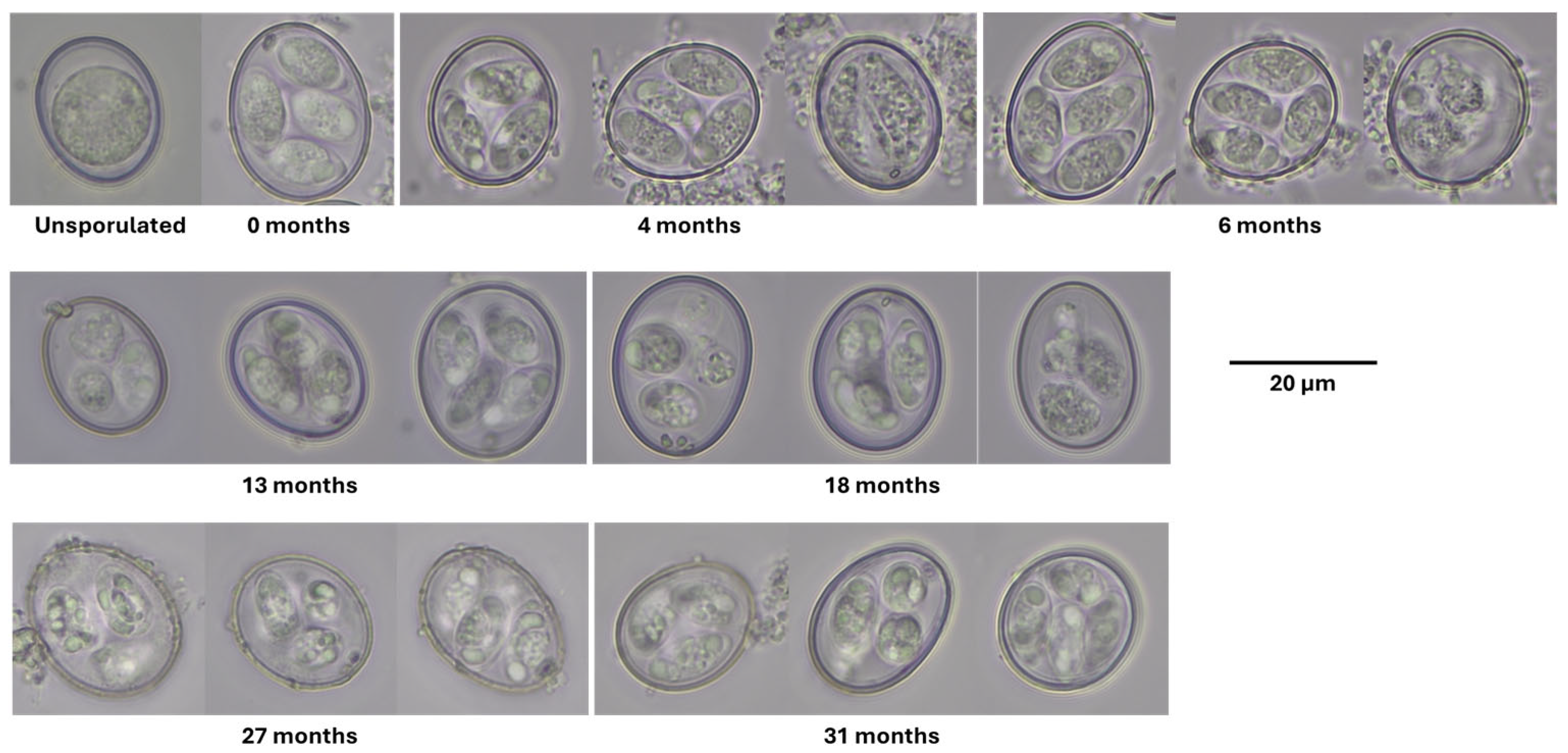
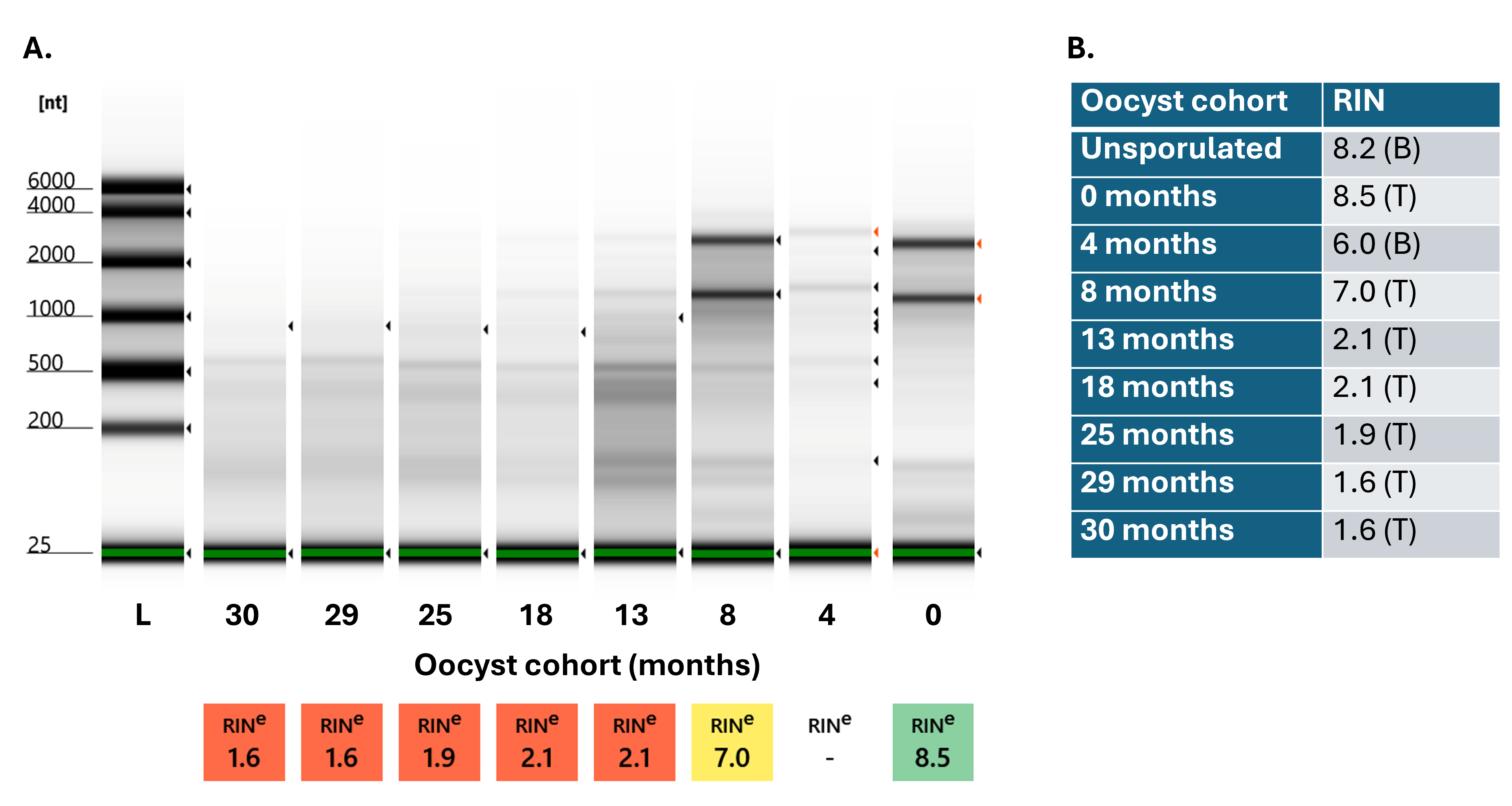
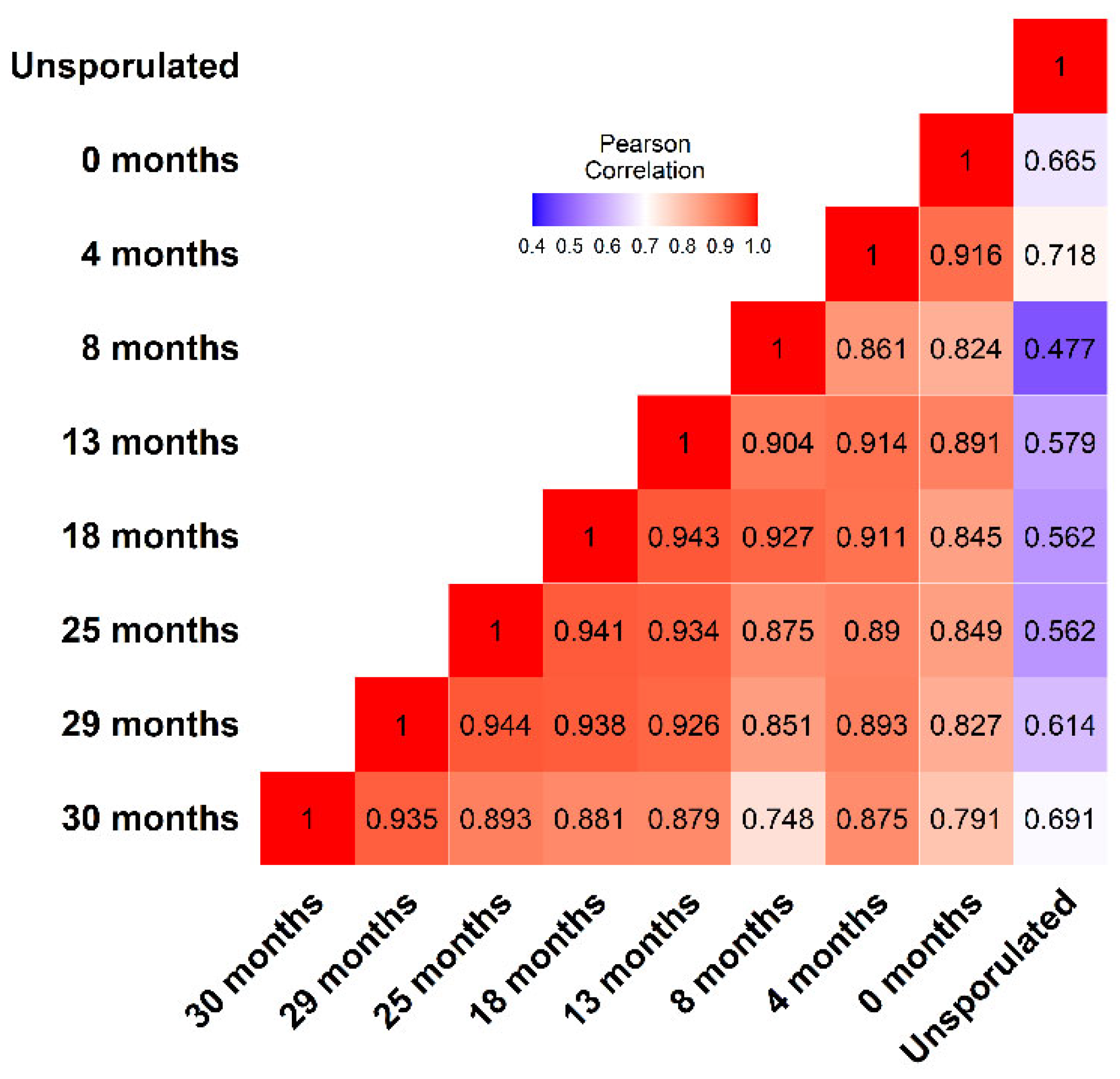
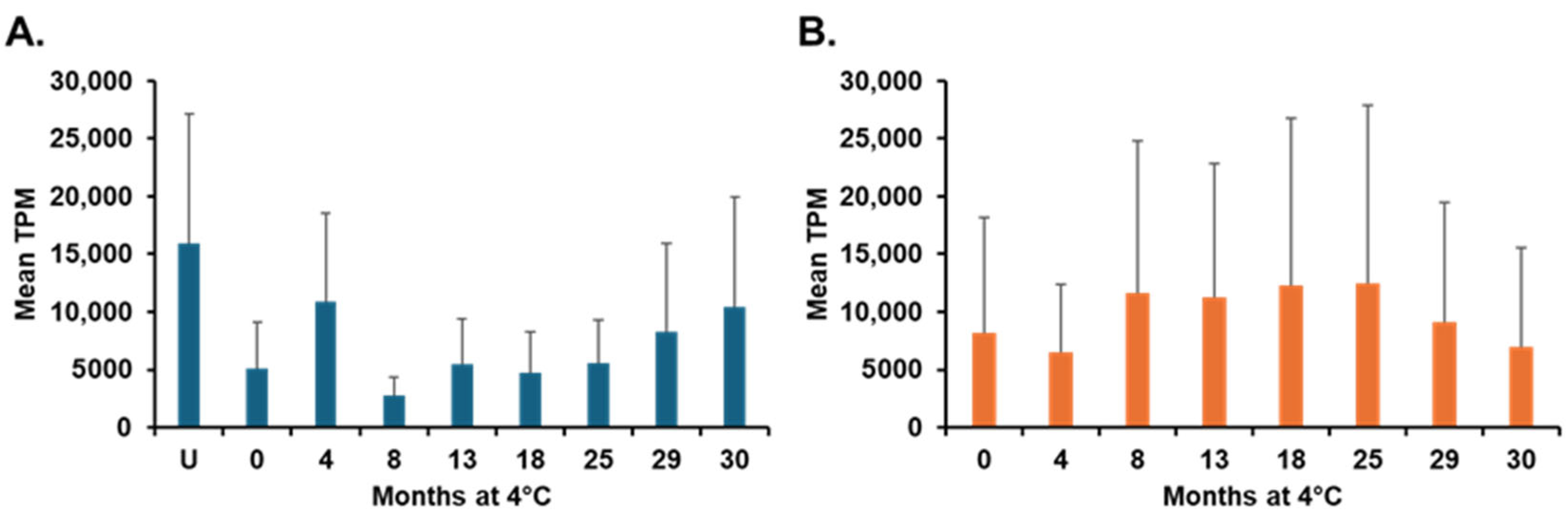
Senescent Eimeria acervulina Oocysts Maintain Transcriptional Activity During Extended Refrigerated Storage and Differentially Express Characteristic Genes

 , ,
, ,  ,
,
Abstract
1. Introduction
2. Materials and Methods
2.1. Ethics Statement
2.2. Parasites
2.3. Microscopy
2.4. Sample Preparation for RNA-Seq
2.5. cDNA Library Construction and RNA-Seq
2.6. Comparing Gene Expression Among Oocyst Cohorts
2.7. Differential Gene Expression Through Time
2.8. Homology Searching and Functional Genomics Analysis
2.9. Quantitative PCR and Digital Quantitative PCR to Validate RNA-Seq
3. Results
3.1. Microscopic Examination of Aging Oocysts
3.2. RNA Quality Assessment Prior to RNA Sequencing
3.3. RNA-Seq of Aging E. acervulina Cohorts Identified Transcripts Abundant in All Cohorts, as Well as Genes Contributing Especially to Young or Old Cohorts
3.4. Expression Analysis
3.5. Constitutively Expressed Genes in Aged Oocyst Cohorts
3.6. Functional Characterization of Constitutively Expressed Genes
3.7. Searching for Variable Genes Among Sporulated Oocysts
3.8. Differentially Expressed Genes in Live vs. Dead Cohorts
3.9. Major Transcripts Undergoing the Greatest Differential Expression Between 0 and 30 Months
3.10. Major Transcripts Undergoing the Greatest Increase in Relative Abundance Through Time
3.11. qPCR and dPCR to Validate RNA-Seq Using Selected Genes in 0- and 30-Month Oocyst Cohorts
4. Discussion
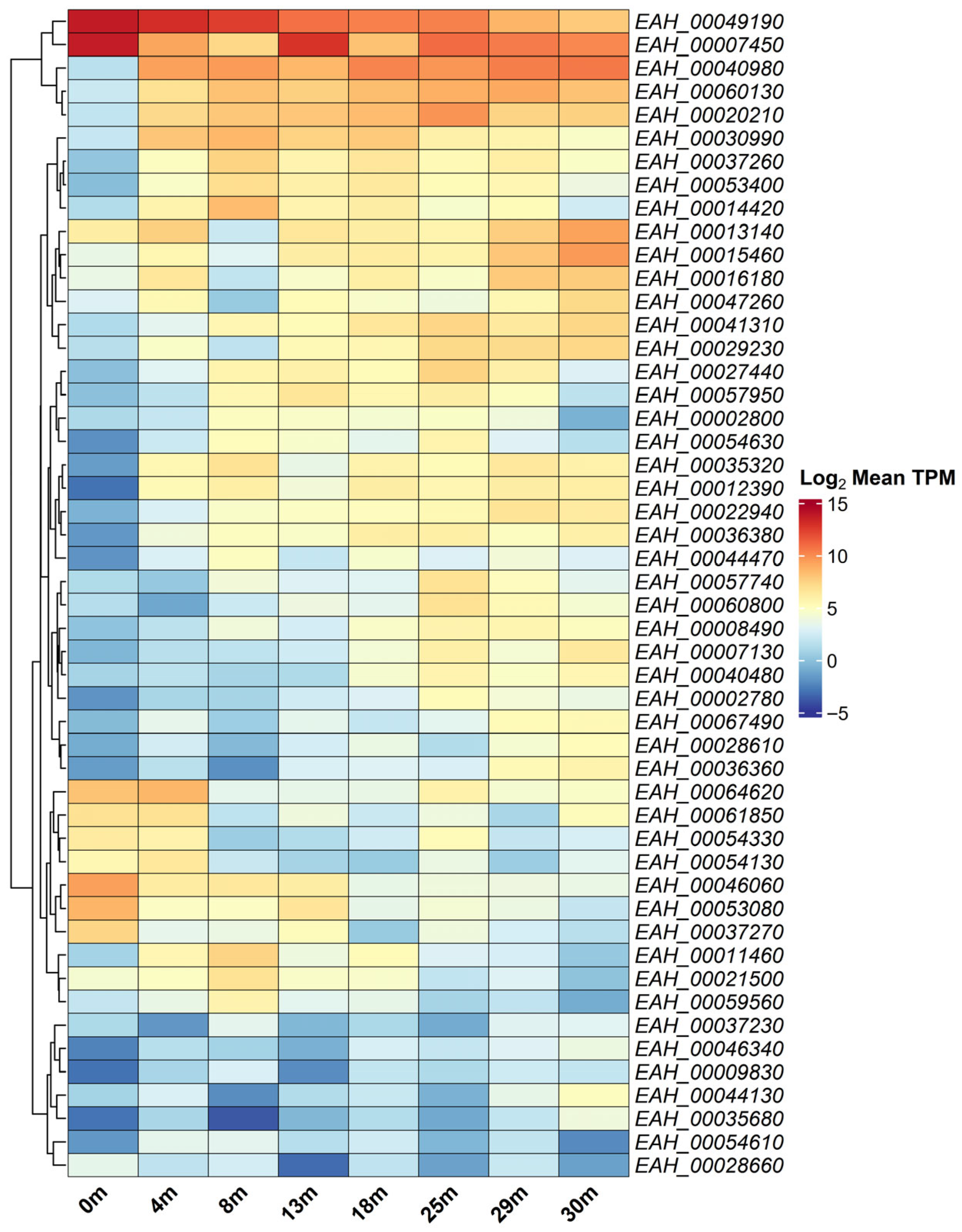
- Constitutively expressed genes exhibited high transcript abundance even in cohorts that should be non-infectious in chickens (29, 30 months), on par with cohorts that had been stored at 4 °C for a shorter period. These genes and others are in common with highly expressed constitutively expressed genes in our previous E. acervulina RNA-Seq [10]. Many of the highest-expressed genes encode proteins that function in cellular metabolism, perform house-keeping functions, and prepare sporocysts for future invasion (e.g., SAGs). These data reinforce the idea that these genes are likely important markers of sporulation and perhaps viability.
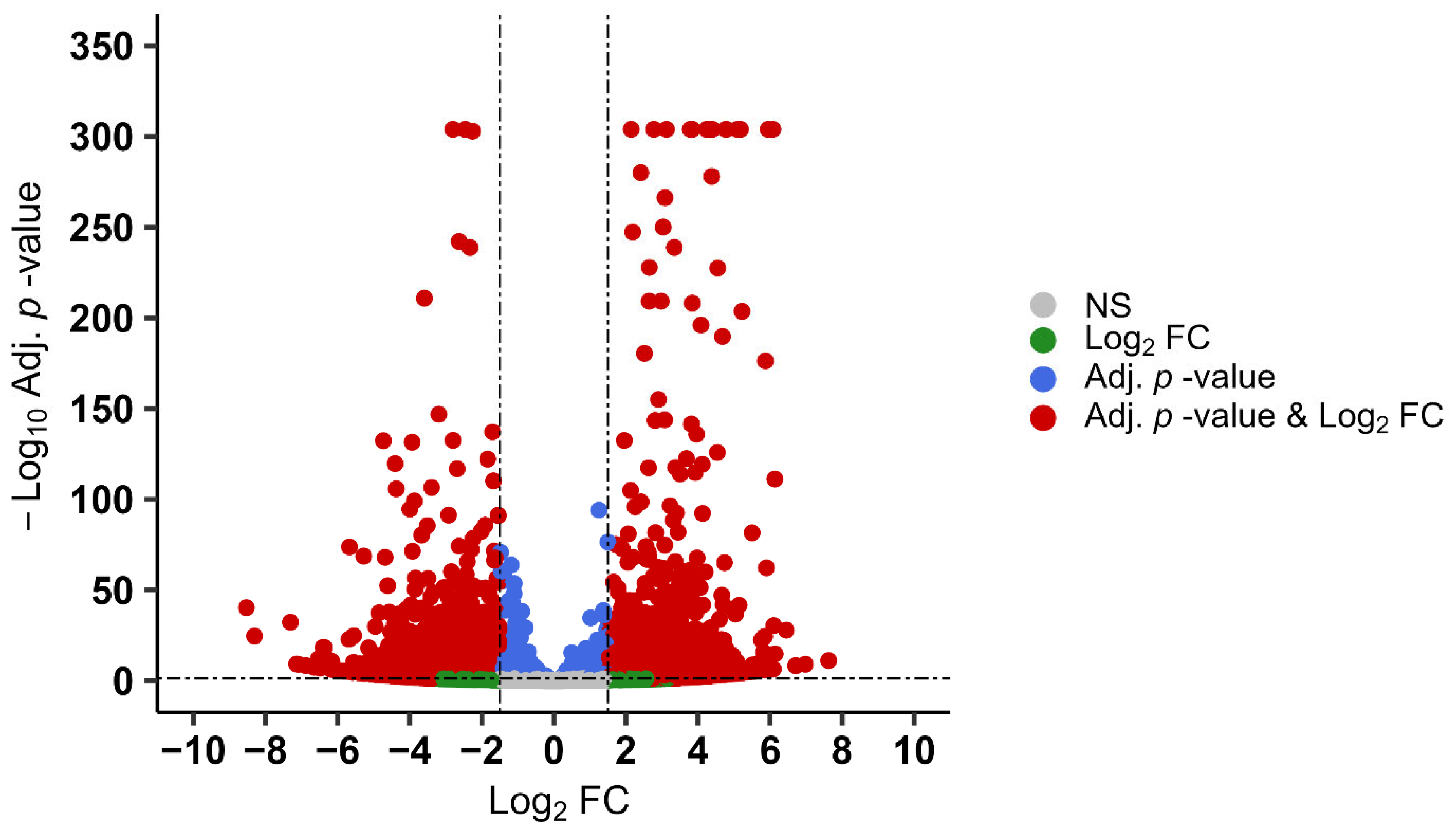
- Fifty-five significantly differentially expressed genes with high abundance were identified in 30-month-old oocysts, and a majority (83%) were upregulated in 30-month vs. 0-month oocysts.
- Genes with increased relative abundance and log2 FC in 30-month oocysts encode genes functioning in assorted cellular processes, indicating that dead/dying oocysts activate cellular functions and repair machinery or initiate survival strategies while in storage.
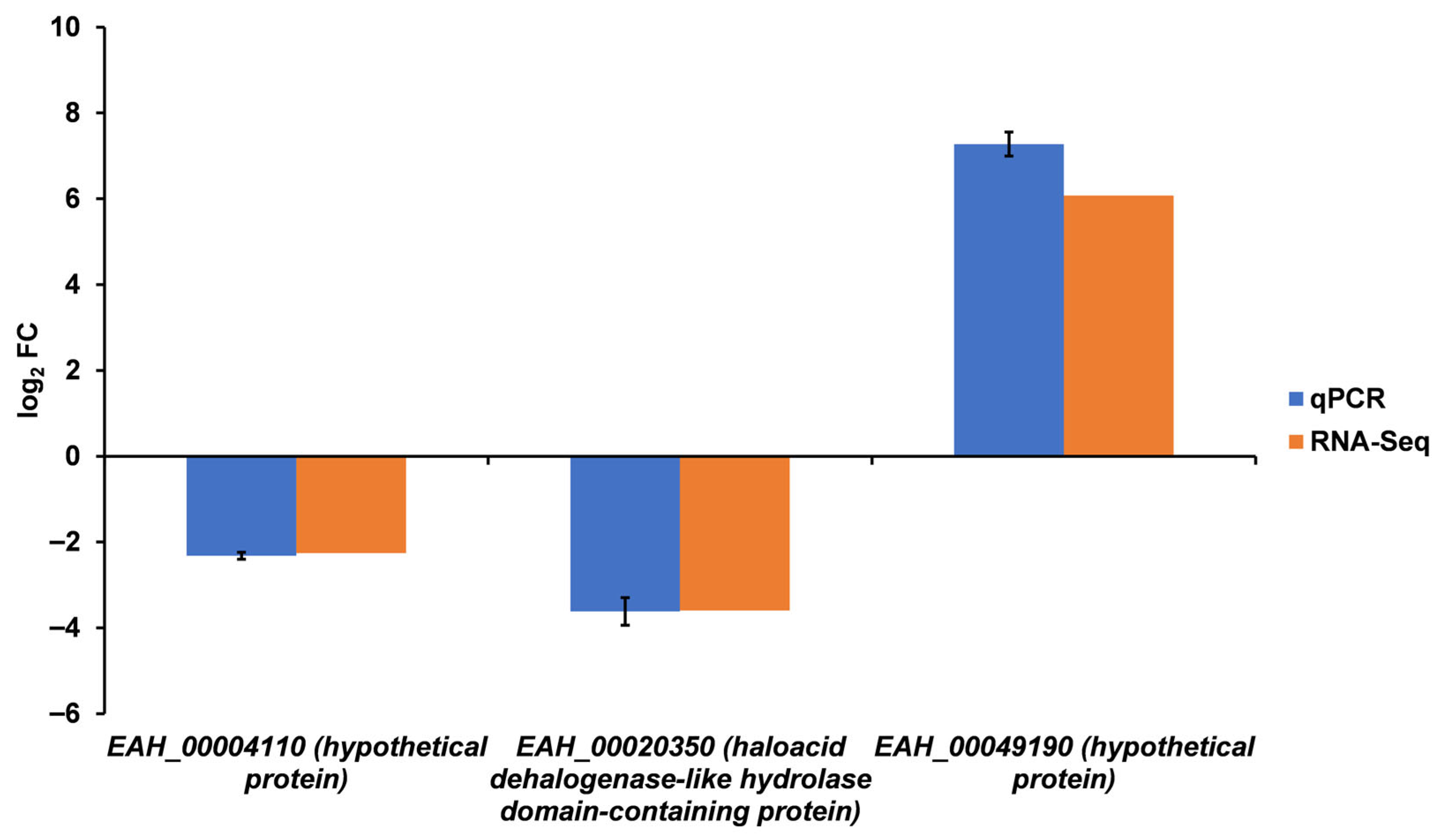
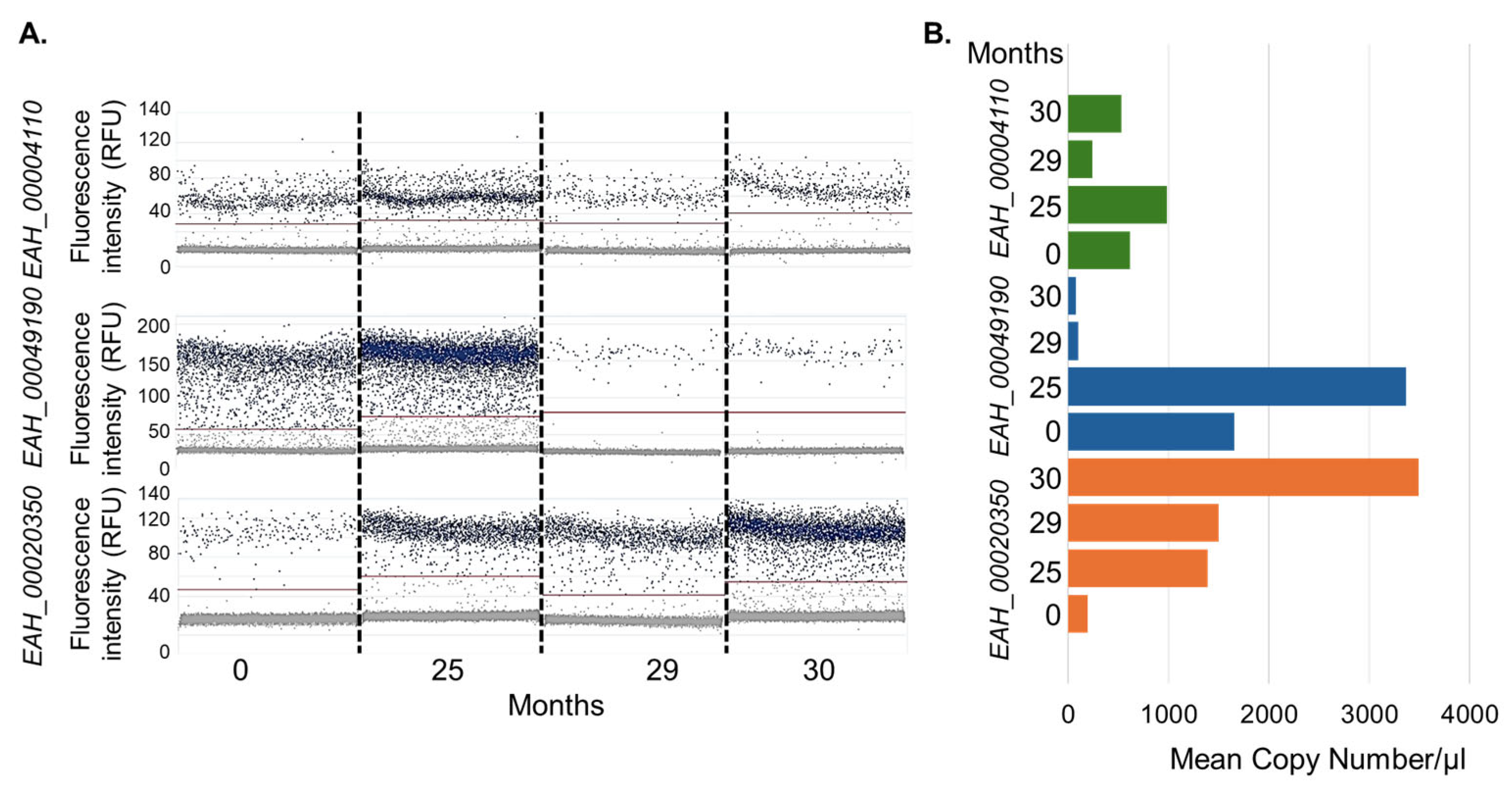
- qPCR validated RNA-Seq for genes that were constitutively expressed in all cohorts (EAH_00004110) or more abundant in 30-month-old oocysts (EAH_0004110, EAH_00020350).
5. Conclusions
Supplementary Materials
Author Contributions
Funding
Institutional Review Board Statement
Informed Consent Statement
Data Availability Statement
Acknowledgments
Conflicts of Interest
Abbreviations
| Adj. p-value | Adjusted p-value |
| AI | Artificial Intelligence |
| ATPase | Adenosine triphosphatase |
| BLAST | Basic Local Alignment Search Tool |
| CAMK | Ca2+/calmodulin-dependent protein kinase |
| cDNA | Complementary DNA |
| CDS | Coding DNA Sequence |
| CRIS | Current Research Information System |
| DEG(s) | Differentially Expressed Gene(s) |
| DNA | Deoxyribonucleic acid |
| Dnase | Deoxyribonuclease |
| EC | Enzyme Commission |
| eggNOG | Evolutionary genealogy of genes: Non-supervised Orthologous Groups |
| ENCODE | Encyclopedia of DNA Elements |
| ER | Endoplasmic Reticulum |
| FC | Fold change |
| FDA | Food and Drug Administration |
| GEO | Gene Expression Omnibus |
| GO | Gene Ontology |
| KEGG | Kyoto Encyclopedia of Genes and Genomes |
| mRNA | Messenger RNA |
| NCBI | National Center for Biotechnology Information |
| PCR | Polymerase Chain Reaction |
| qPCR | Quantitative PCR |
| RIN | RNA Integrity Number |
| RNA | Ribonucleic acid |
| rRNA | Ribosomal RNA |
| Rnase | Ribonuclease |
| RNA-Seq | RNA Sequencing |
| SAG(s) | Surface Antigen(s) |
| SD | Standard Deviation |
| TPM | Transcripts Per Million |
| U.S. | United States |
| USA | United States of America |
| USDA | United States Department of Agriculture |
References
- Blake, D.P.; Knox, J.; Dehaeck, B.; Huntington, B.; Rathinam, T.; Ravipati, V.; Ayoade, S.; Gilbert, W.; Adebambo, A.O.; Jatau, I.D.; et al. Re-Calculating the Cost of Coccidiosis in Chickens. Vet. Res. 2020, 51, 115. [Google Scholar] [CrossRef]
- Liu, Q.; Liu, X.; Zhao, X.; Zhu, X.Q.; Suo, X. Live Attenuated Anticoccidial Vaccines for Chickens. Trends Parasitol. 2023, 39, 1087–1099. [Google Scholar] [CrossRef]
- Shivaramaiah, C.; Barta, J.R.; Hernandez-Velasco, X.; Tellez, G.; Hargis, B.M. Coccidiosis: Recent Advancements in the Immunobiology of Eimeria Species, Preventive Measures, and the Importance of Vaccination as a Control Tool against These Apicomplexan Parasites. Vet. Med. 2014, 5, 23–34. [Google Scholar] [CrossRef]
- Jordan, B.; Albanese, G.; Tensa, L. Coccidiosis in Chickens (Gallus gallus). In Coccidiosis in Livestock, Poultry, Companion Animals, and Humans; Dubey, J.P., Ed.; CRC Press: Boca Raton, FL, USA, 2019; pp. 169–174. [Google Scholar]
- Dubey, J.P.; Khan, A.; Rosenthal, B.M. Life Cycle and Transmission of Cyclospora cayetanensis: Knowns and Unknowns. Microorganisms 2022, 10, 118. [Google Scholar] [CrossRef]
- Edgar, S.A. Sporulation of Oocysts at Specific Temperatures and Notes on the Prepatent Period of Several Species of Avian Coccidia. J. Parasitol. 1955, 41, 214–216. [Google Scholar] [CrossRef]
- Norton, C.C.; Chard, M.J. The Oocyst Sporulation Time of Eimeria Species from the Fowl. Parasitology 1983, 86, 193–198. [Google Scholar] [CrossRef]
- Norton, C.C.; Joyner, L.P. Eimeria acervulina and E. mivati: Oocysts, Life-Cycle and Ability to Develop in the Chicken Embryo. Parasitology 1981, 83, 269–279. [Google Scholar] [CrossRef]
- Ortega, Y.R.; Sterling, C.R.; Gilman, R.H.; Cama, V.A.; Díaz, F. Cyclospora Species—A New Protozoan Pathogen of Humans. N. Engl. J. Med. 1993, 328, 1308–1312. [Google Scholar] [CrossRef]
- Tucker, M.S.; O’Brien, C.N.; Jenkins, M.C.; Rosenthal, B.M. Dynamically Expressed Genes Provide Candidate Viability Biomarkers in a Model Coccidian. PLoS ONE 2021, 16, e0258157. [Google Scholar] [CrossRef] [PubMed]
- Tucker, M.S.; O’Brien, C.N.; Johnson, A.N.; Dubey, J.P.; Rosenthal, B.M.; Jenkins, M.C. RNA-Seq of Phenotypically Distinct Eimeria maxima Strains Reveals Coordinated and Contrasting Maturation and Shared Sporogonic Biomarkers with Eimeria acervulina. Pathogens 2023, 13, 2. [Google Scholar] [CrossRef] [PubMed]
- Valente, M.J.; Streett, H.; Turner, R.; O’Brien, C.; Fournet, V.; Jansen, A.; Dubey, J.P.; Rosenthal, B.M.; Jenkins, M.; Khan, A. Morphological and Autofluorescence Assessment of Oocysts Differentiate Live from Dead Coccidian Parasites. Int. J. Parasitol. 2025, 55, 475–484. [Google Scholar] [CrossRef] [PubMed]
- Jenkins, M.C.; O’Brien, C.N.; Parker, C.; Tucker, M.; Khan, A. Relationship between Eimeria Oocyst Infectivity for Chickens and in Vitro Excystation of E. acervulina, E. maxima, and E. tenella Oocyst during Long-Term Storage. Poult. Sci. 2023, 102, 103133. [Google Scholar] [CrossRef]
- Reid, A.J.; Blake, D.P.; Ansari, H.R.; Billington, K.; Browne, H.P.; Bryant, J.; Dunn, M.; Hung, S.S.; Kawahara, F.; Miranda-Saavedra, D.; et al. Genomic Analysis of the Causative Agents of Coccidiosis in Domestic Chickens. Genome Res. 2014, 24, 1676–1685. [Google Scholar] [CrossRef]
- Wickham, H. Ggplot2: Elegant Graphics for Data Analysis, 2nd ed.; Springer: New York, NY, USA, 2016. [Google Scholar]
- Wickham, H. Reshaping Data with the Reshape Package. J. Stat. Softw. 2007, 21, 1–20. [Google Scholar] [CrossRef]
- Warnes, G.B. Gplots: Various R Programming Tools for Plotting Data. R Package, Version 3.1.3.1; R Foundation: Vienna, Austria, 2015. [Google Scholar]
- Kolde, R. Pheatmap: Pretty Heatmaps. R Package, Version 1.0.12; R Foundation: Vienna, Austria, 2019. [Google Scholar]
- Gu, Z. Complex Heatmap Visualization. iMeta 2022, 1, e43. [Google Scholar] [CrossRef]
- Love, M.I.; Huber, W.; Anders, S. Moderated Estimation of Fold Change and Dispersion for RNA-Seq Data with DESeq2. Genome Biol. 2014, 15, 550. [Google Scholar] [CrossRef]
- Blighe, K.R. EnhancedVolcano: Publication-Ready Volcano Plots with Enhanced Colouring and Labeling. R Package; R Foundation: Vienna, Austria, 2019. [Google Scholar]
- Amos, B.; Aurrecoechea, C.; Barba, M.; Barreto, A.; Basenko, E.Y.; Bazant, W.; Belnap, R.; Blevins, A.S.; Bohme, U.; Brestelli, J.; et al. VEuPathDB: The Eukaryotic Pathogen, Vector and Host Bioinformatics Resource Center. Nucleic Acids Res. 2022, 50, D898–D911. [Google Scholar] [CrossRef] [PubMed]
- Gotz, S.; Garcia-Gomez, J.M.; Terol, J.; Williams, T.D.; Nagaraj, S.H.; Nueda, M.J.; Robles, M.; Talon, M.; Dopazo, J.; Conesa, A. High-Throughput Functional Annotation and Data Mining with the Blast2GO Suite. Nucleic Acids Res. 2008, 36, 3420–3435. [Google Scholar] [CrossRef]
- Huerta-Cepas, J.; Szklarczyk, D.; Heller, D.; Hernandez-Plaza, A.; Forslund, S.K.; Cook, H.; Mende, D.R.; Letunic, I.; Rattei, T.; Jensen, L.J.; et al. eggNOG 5.0: A Hierarchical, Functionally and Phylogenetically Annotated Orthology Resource Based on 5090 Organisms and 2502 Viruses. Nucleic Acids Res. 2019, 47, D309–D314. [Google Scholar] [CrossRef]
- Kanehisa, M.; Sato, Y. KEGG Mapper for Inferring Cellular Functions from Protein Sequences. Protein Sci. 2020, 29, 28–35. [Google Scholar] [CrossRef] [PubMed]
- Ye, J.; Coulouris, G.; Zaretskaya, I.; Cutcutache, I.; Rozen, S.; Madden, T.L. Primer-BLAST: A Tool to Design Target-Specific Primers for Polymerase Chain Reaction. BMC Bioinform. 2012, 13, 134. [Google Scholar] [CrossRef]
- Pfaffl, M.W. A New Mathematical Model for Relative Quantification in Real-Time RT-PCR. Nucleic Acids Res. 2001, 29, e45. [Google Scholar] [CrossRef]
- Boezen, D.; Johnson, M.L.; Grum-Grzhimaylo, A.A.; Van Der Vlugt, R.A.; Zwart, M.P. Evaluation of Sequencing and PCR-Based Methods for the Quantification of the Viral Genome Formula. Virus Res. 2023, 326, 199064. [Google Scholar] [CrossRef]
- Murphy, H.R.; Almeria, S.; da Silva, A.J. BAM Chapter 19b: Molecular Detection of Cyclospora cayetanensis in Fresh Produce Using Real-Time PCR. Available online: https://www.fda.gov/food/laboratory-methods-food/bam-chapter-19b-molecular-detection-cyclospora-cayetanensis-fresh-produce-using-real-time-pcr (accessed on 20 August 2025).
- Murphy, H.R.; Lee, S.; da Silva, A.J. Evaluation of an Improved U.S. Food and Drug Administration Method for the Detection of Cyclospora cayetanensis in Produce Using Real-Time PCR. J. Food Prot. 2017, 80, 1133–1144. [Google Scholar] [CrossRef] [PubMed]
- Almeria, S.; da Silva, A.J.; Blessington, T.; Cloyd, T.C.; Cinar, H.N.; Durigan, M.; Murphy, H.R. Evaluation of the U.S. Food and Drug Administration Validated Method for Detection of Cyclospora cayetanensis in High-Risk Fresh Produce Matrices and a Method Modification for a Prepared Dish. Food Microbiol. 2018, 76, 497–503. [Google Scholar] [CrossRef] [PubMed]
- Assurian, A.; Murphy, H.; Ewing, L.; Cinar, H.N.; da Silva, A.; Almeria, S. Evaluation of the U.S. Food and Drug Administration Validated Molecular Method for Detection of Cyclospora cayetanensis Oocysts on Fresh and Frozen Berries. Food Microbiol. 2020, 87, 103397. [Google Scholar] [CrossRef]
- Murphy, H.R.; Cinar, H.N.; Gopinath, G.; Noe, K.E.; Chatman, L.D.; Miranda, N.E.; Wetherington, J.H.; Neal-McKinney, J.; Pires, G.S.; Sachs, E.; et al. Interlaboratory Validation of an Improved Method for Detection of Cyclospora cayetanensis in Produce Using a Real-Time PCR Assay. Food Microbiol. 2018, 69, 170–178. [Google Scholar] [CrossRef]
- Lalonde, L.; Oakley, J.; Fries, P. Verification and Use of the US-FDA BAM 19b Method for Detection of Cyclospora cayetanensis in a Survey of Fresh Produce by CFIA Laboratory. Microorganisms 2022, 10, 559. [Google Scholar] [CrossRef]
- Qvarnstrom, Y.; Benedict, T.; Marcet, P.L.; Wiegand, R.E.; Herwaldt, B.L.; da Silva, A.J. Molecular Detection of Cyclospora cayetanensis in Human Stool Specimens Using UNEX-Based DNA Extraction and Real-Time PCR. Parasitology 2018, 145, 865–870. [Google Scholar] [CrossRef]
- Durigan, M.; Murphy, H.R.; da Silva, A.J. Dead-End Ultrafiltration and DNA-Based Methods for Detection of Cyclospora cayetanensis in Agricultural Water. Appl. Environ. Microbiol. 2020, 86, e01595-20. [Google Scholar] [CrossRef] [PubMed]
- Kahler, A.M.; Mattioli, M.C.; da Silva, A.J.; Hill, V. Detection of Cyclospora cayetanensis in Produce Irrigation and Wash Water Using Large-Volume Sampling Techniques. Food Waterborne Parasitol. 2021, 22, e00110. [Google Scholar] [CrossRef]
- Weinreich, F.; Hahn, A.; Eberhardt, K.A.; Feldt, T.; Sarfo, F.S.; Di Cristanziano, V.; Frickmann, H.; Loderstadt, U. Comparison of Three Real-Time PCR Assays for the Detection of Cyclospora cayetanensis in Stool Samples Targeting the 18S rRNA Gene and the Hsp70 Gene. Pathogens 2022, 11, 165. [Google Scholar] [CrossRef]
- Arida, J.; Shipley, A.; Almeria, S. Molecular Detection of Cyclospora cayetanensis in Two Main Types of Farm Soil Using Real-Time PCR Assays and Method Modification for Commercial Potting Mix. Microorganisms 2023, 11, 1506. [Google Scholar] [CrossRef]
- Kahler, A.M.; Hofstetter, J.; Arrowood, M.; Peterson, A.; Jacobson, D.; Barratt, J.; da Silva, A.; Rodrigues, C.; Mattioli, M.C. Sources and Prevalence of Cyclospora cayetanensis in Southeastern U.S. Growing Environments. J. Food Prot. 2024, 87, 100309. [Google Scholar] [CrossRef] [PubMed]
- Durigan, M.; Patregnani, E.; Gopinath, G.R.; Ewing-Peeples, L.; Lee, C.; Murphy, H.R.; Almeria, S.; Cinar, H.N.; Negrete, F.; da Silva, A.J. Development of a Molecular Marker Based on the Mitochondrial Genome for Detection of Cyclospora cayetanensis in Food and Water Samples. Microorganisms 2022, 10, 1762. [Google Scholar] [CrossRef]
- Richins, T.; Houghton, K.; Barratt, J.; Sapp, S.G.H.; Peterson, A.; Qvarnstrom, Y. Comparison of Two Novel One-Tube Nested Real-Time qPCR Assays to Detect Human-Infecting Cyclospora spp. Microbiol. Spectr. 2023, 11, e01388-23. [Google Scholar] [CrossRef]
- Durigan, M.; Ewing-Peeples, L.; Almeria, S.; Balan, K.V.; Grocholl, J.; Irizawa, S.; Mammel, M. Detection of Cyclospora cayetanensis in Food and Water Samples: Optimized Protocols for Specific and Sensitive Molecular Methods from a Regulatory Agency Perspective. J. Food Prot. 2024, 87, 100291. [Google Scholar] [CrossRef]
- Hofstetter, J.; Arfken, A.; Kahler, A.; Qvarnstrom, Y.; Rodrigues, C.; Mattioli, M. Evaluation of Coccidia DNA in Irrigation Pond Water and Wastewater Sludge Associated with Cyclospora cayetanensis 18S rRNA Gene qPCR Detections. Microbiol. Spectr. 2024, 12, e00906-24. [Google Scholar] [CrossRef] [PubMed]
- Hong, E.L.; Sloan, C.A.; Chan, E.T.; Davidson, J.M.; Malladi, V.S.; Strattan, J.S.; Hitz, B.C.; Gabdank, I.; Narayanan, A.K.; Ho, M.; et al. Principles of Metadata Organization at the ENCODE Data Coordination Center. Database 2016, 2016, baw001. [Google Scholar] [CrossRef] [PubMed]
- Illumina. Considerations for RNA-Seq Read Length and Coverage. Available online: https://knowledge.illumina.com/library-preparation/rna-library-prep/library-preparation-rna-library-prep-reference_material-list/000001243 (accessed on 7 October 2025).
- Landstorfer, R.; Simon, S.; Schober, S.; Keim, D.; Scherer, S.; Neuhaus, K. Comparison of Strand-Specific Transcriptomes of Enterohemorrhagic Escherichia coli O157:H7 EDL933 (EHEC) under Eleven Different Environmental Conditions Including Radish Sprouts and Cattle Feces. BMC Genom. 2014, 15, 353. [Google Scholar] [CrossRef]
- Jovanovic, B.; Sheng, Q.; Seitz, R.S.; Lawrence, K.D.; Morris, S.W.; Thomas, L.R.; Hout, D.R.; Schweitzer, B.L.; Guo, Y.; Pietenpol, J.A.; et al. Comparison of Triple-Negative Breast Cancer Molecular Subtyping Using RNA from Matched Fresh-Frozen versus Formalin-Fixed Paraffin-Embedded Tissue. BMC Cancer 2017, 17, 241. [Google Scholar] [CrossRef]
- Matsunaga, H.; Arikawa, K.; Yamazaki, M.; Wagatsuma, R.; Ide, K.; Samuel, A.Z.; Takamochi, K.; Suzuki, K.; Hayashi, T.; Hosokawa, M.; et al. Reproducible and Sensitive Micro-Tissue RNA Sequencing from Formalin-Fixed Paraffin-Embedded Tissues for Spatial Gene Expression Analysis. Sci. Rep. 2022, 12, 19511. [Google Scholar] [CrossRef]
- Wahl, A.; Huptas, C.; Neuhaus, K. Comparison of rRNA Depletion Methods for Efficient Bacterial mRNA Sequencing. Sci. Rep. 2022, 12, 5765. [Google Scholar] [CrossRef]
- Widmer, G.; Orbacz, E.A.; Tzipori, S. β-Tubulin mRNA as a Marker of Cryptosporidium parvum Oocyst Viability. Appl. Environ. Microbiol. 1999, 65, 1584–1588. [Google Scholar] [CrossRef]
- Bajszár, G.; Dekonenko, A. Stress-Induced Hsp70 Gene Expression and Inactivation of Cryptosporidium parvum Oocysts by Chlorine-Based Oxidants. Appl. Environ. Microbiol. 2010, 76, 1732–1739. [Google Scholar] [CrossRef]
- Holmes, M.J.; Augusto, L.D.S.; Zhang, M.; Wek, R.C.; Sullivan, W.J. Translational Control in the Latency of Apicomplexan Parasites. Trends Parasitol. 2017, 33, 947–960. [Google Scholar] [CrossRef] [PubMed]
- Yi, S.-J.; Kim, K. New Insights into the Role of Histone Changes in Aging. Int. J. Mol. Sci. 2020, 21, 8241. [Google Scholar] [CrossRef] [PubMed]
- Keroack, C.D.; Duraisingh, M.T. Molecular Mechanisms of Cellular Quiescence in Apicomplexan Parasites. Curr. Opin. Microbiol. 2022, 70, 102223. [Google Scholar] [CrossRef] [PubMed]
- Nierhaus, K. Reconstitution of Ribosomes. In Ribosome and Protein Synthesis: A practical Approach; Oxford University Press: Oxford, UK, 1990; pp. 161–188. [Google Scholar]
- Grünebast, J.; Singhal, R.; Bromley, R.; Kanatani, S.; Watson, K.; Olson, S.; Dumetz, F.; Pascini, T.V.; Tripathi, A.; Dunning Hotopp, J.C.; et al. Degradation of Ribosomal RNA during Plasmodium falciparum Gametocytogenesis. mBio 2025, 16, e02565-25. [Google Scholar] [CrossRef]
- Barrett, T.; Wilhite, S.E.; Ledoux, P.; Evangelista, C.; Kim, I.F.; Tomashevsky, M.; Marshall, K.A.; Phillippy, K.H.; Sherman, P.M.; Holko, M.; et al. NCBI GEO: Archive for Functional Genomics Data Sets—Update. Nucleic Acids Res. 2013, 41, D991–D995. [Google Scholar] [CrossRef]



| Time (Months Held at 4 °C) | Replicate * | Reads | Mapped Reads | Mapped Reads (%) | Mean Mapped Reads per Triplicate | Mapped Reads SD per Triplicate |
|---|---|---|---|---|---|---|
| Unsporulated | r1 | 1,697,936 | 1,541,043 | 90.8% | ||
| r2 | 2,369,306 | 2,158,594 | 91.1% | |||
| r3 | 1,621,188 | 1,475,095 | 91.0% | 1,724,911 | 377,025 | |
| 0 | r1 | 1,056,156 | 989,227 | 93.7% | ||
| r2 | 1,428,778 | 1,338,083 | 93.7% | |||
| r3 | 1,922,402 | 1,800,033 | 93.6% | 1,375,781 | 406,715 | |
| 4 | r1 | 1,932,934 | 1,769,283 | 91.5% | ||
| r2 | 1,577,872 | 1,447,357 | 91.7% | |||
| r3 | 1,154,220 | 1,059,317 | 91.8% | 1,425,319 | 355,496 | |
| 8 | r1 | 1,768,566 | 1,646,156 | 93.1% | ||
| r2 | 1,063,808 | 986,234 | 92.7% | |||
| r3 | 1,441,558 | 1,336,908 | 92.7% | 1,323,099 | 330,178 | |
| 13 | r1 | 2,693,428 | 2,455,852 | 91.2% | ||
| r2 | 2,000,036 | 1,776,589 | 88.8% | |||
| r3 | 2,016,682 | 1,826,678 | 90.6% | 2,019,706 | 378,543 | |
| 18 | r1 | 1,686,672 | 1,496,423 | 88.7% | ||
| r2 | 1,423,034 | 1,298,344 | 91.2% | |||
| r3 | 2,069,778 | 1,602,892 | 77.4% | 1,465,886 | 154,553 | |
| 25 | r1 | 1,331,836 | 1,162,816 | 87.3% | ||
| r2 | 1,622,294 | 1,407,671 | 86.8% | |||
| r3 | 1,858,120 | 1,583,341 | 85.2% | 1,384,609 | 211,209 | |
| 29 | r1 | 1,848,712 | 1,532,820 | 82.9% | ||
| r2 | 2,321,444 | 1,935,628 | 83.4% | |||
| r3 | 1,741,658 | 1,547,683 | 88.9% | 1,672,044 | 228,392 | |
| 30 | r1 | 1,803,484 | 1,451,531 | 80.5% | ||
| r2 | 2,296,274 | 1,817,005 | 79.1% | |||
| r3 | 1,400,300 | 1,083,828 | 77.4% | 1,450,788 | 366,589 |
| Time (Months) | Abundance of Most Transcribed Gene (TPM *) | Most Transcribed Gene | Number of Genes | ||||
|---|---|---|---|---|---|---|---|
| TPM >1000 | TPM >100 | TPM <100 | Upregulated ** | Downregulated ** | |||
| Unsporulated | 42,895 | EAH_00004110 | 105 | 926 | 5941 | 1757 | 1011 |
| 0 | 42,112 | EAH_00059200 | 143 | 1011 | 5856 | N/A | N/A |
| 4 | 32,552 | EAH_00004110 | 126 | 1036 | 5831 | 602 | 537 |
| 8 | 51,548 | EAH_00022290 | 160 | 1089 | 5778 | 1146 | 934 |
| 13 | 42,713 | EAH_00015590 | 140 | 957 | 5910 | 647 | 584 |
| 18 | 54,352 | EAH_00022290 | 139 | 1024 | 5843 | 828 | 745 |
| 25 | 60,279 | EAH_00015590 | 129 | 976 | 5891 | 618 | 879 |
| 29 | 44,470 | EAH_00015590 | 134 | 998 | 5869 | 890 | 913 |
| 30 | 45,204 | EAH_00004110 | 128 | 1001 | 5866 | 1086 | 1000 |
Disclaimer/Publisher’s Note: The statements, opinions and data contained in all publications are solely those of the individual author(s) and contributor(s) and not of MDPI and/or the editor(s). MDPI and/or the editor(s) disclaim responsibility for any injury to people or property resulting from any ideas, methods, instructions or products referred to in the content. |
© 2026 by the authors. Licensee MDPI, Basel, Switzerland. This article is an open access article distributed under the terms and conditions of the Creative Commons Attribution (CC BY) license.
Share and Cite
Tucker, M.S.; Naguib, D.; O’Brien, C.N.; Yeager, C.; Rosenthal, B.M.; Jenkins, M.C.; Khan, A. Senescent Eimeria acervulina Oocysts Maintain Transcriptional Activity During Extended Refrigerated Storage and Differentially Express Characteristic Genes. Microorganisms 2026, 14, 1116. https://doi.org/10.3390/microorganisms14051116
Tucker MS, Naguib D, O’Brien CN, Yeager C, Rosenthal BM, Jenkins MC, Khan A. Senescent Eimeria acervulina Oocysts Maintain Transcriptional Activity During Extended Refrigerated Storage and Differentially Express Characteristic Genes. Microorganisms. 2026; 14(5):1116. https://doi.org/10.3390/microorganisms14051116
Chicago/Turabian StyleTucker, Matthew S., Doaa Naguib, Celia N. O’Brien, Christina Yeager, Benjamin M. Rosenthal, Mark C. Jenkins, and Asis Khan. 2026. "Senescent Eimeria acervulina Oocysts Maintain Transcriptional Activity During Extended Refrigerated Storage and Differentially Express Characteristic Genes" Microorganisms 14, no. 5: 1116. https://doi.org/10.3390/microorganisms14051116
APA StyleTucker, M. S., Naguib, D., O’Brien, C. N., Yeager, C., Rosenthal, B. M., Jenkins, M. C., & Khan, A. (2026). Senescent Eimeria acervulina Oocysts Maintain Transcriptional Activity During Extended Refrigerated Storage and Differentially Express Characteristic Genes. Microorganisms, 14(5), 1116. https://doi.org/10.3390/microorganisms14051116