1. Introduction
With the development of advanced driver assistance systems (ADASs), studies have shown their benefits in relation to decreasing the number of driver-caused accidents and the workload of drivers [
1]. Since fully autonomous driving is limited by scope and legal issues [
2], systems with a low level of automation (LoA)—0, 1, or 2, defined by the Society of Automotive Engineers (SAE)—still need a lot of attention [
3]. As a result, human–machine shared control is a research hotspot, and allocating the driving authority is a typical challenging problem.
Many studies propose various human–machine shared control frameworks with the plan of allocating the authority index between the human and the machine. However, the considerations of scenario complexity and driver workload are always overlooked. These two factors would change over time during long-term driving tasks, especially when the driver faces a sudden complex scenario or becomes involved in a necessary surveillance task related to an occurrence at a roadside [
4]. Such variations have a significant impact on the ability of both human and machines, since the agent may or may not be ready to handle them. The driver’s workload and scenario complexity should obviously take part in considerations of authority allocation.
Modern shared vehicle control systems are composed of two different research structures: supervisory and cooperative control [
5]. In supervisory control, while both human and machine agents continuously monitor the driving environment, exclusive control authority is maintained by a single agent at any given time [
6]. Supervisory-based methods have proven effectiveness in specific scenarios, including lateral control (e.g., sudden pedestrian avoidance [
7]) and longitudinal control (e.g., corrective interventions during human operational errors [
8]). However, authority transfer in supervisory control struggled to handle complex real-world situations and created potentially safety concerns. In contrast, cooperative control enabled both agents to affect the control command of collaborative human–machine decision-making in two control modes: (1) haptic shared control, which needs human and autonomous negotiation through force/torque feedback mechanisms (steering resistance or pedal force) [
9,
10,
11]; and (2) direct control, which merges inputs from both agents via continuous authority allocation and arbitration systems (e.g., steer-by-wire) [
1,
12], with demonstrated implementations including safety-constrained MPC frameworks [
13] and fuzzy logic arbitrators [
14]. There is also research that combines a multi-constraint MPC strategy and fuzzy control, with driver behaviors analysis and design being a shared control mode adapting to different levels of drivers [
15]. These control modes enhanced scenario compatibility and operational synergy [
16]. Meanwhile, direct shared control could decrease human–machine conflicts and build up the trust between the two agents [
17]. Authority allocation is important for direct modes for human–machine shared control. These strategies have evolved significantly from early fixed paradigms [
13,
16] to dynamic approaches based on three key categories of parameters: (1) performance metrics (lane deviation [
18], path-tracking errors [
19]), (2) driver states (behavioral characteristics [
20], visual attention patterns [
14]), and (3) environmental risk assessments (utilizing Artificial Potential Field models [
21], Time to Collision (TTC) [
15]). However, how to consider driving performance, status, and safety with a reasonable authority allocation in various scenarios and which types of features are better to analyze are critical research gaps which have not yet been explored.
Driver workload quantification is critical for human–machine shared control, with approaches mainly categorized in two ways: offline and online. Offline retrospective measures, such as post-task NASA Task Load Index (TLX) questionnaires [
22], fail to provide real-time workload monitoring, which is a critical limitation for dynamic human–machine shared control systems. There are also limitations about the bias from individuals. Recent research focuses more on online estimation using either (a) vehicular kinematic indicators (steering entropy, speed variation, steering wheel deviation) [
23] or (b) physiological measurements, including electroencephalogram (EEG), near-infrared spectroscopy (NIRS), heart rate variability, and eye-related indicators [
24]. As for all the indicators from human physiological data, some of them have issues of invasiveness, such as electroencephalograms [
25], while some of them are easily infected by the movement of the body or sudden movement of the arm, such as forearm surface electromyography [
26], or heart rate [
27]. Among all of the physiological measures, eye-tracking technology has emerged as a preferred solution due to its non-invasive nature and robust performance. Particularly during critical scenarios like a pedestrian suddenly appearing at the roadside trying to cross the road, the driver’s workload would suddenly increase in a short period [
28]. Other studies include the Luo’s Bayesian inference framework for quantitative workload classification using gaze trajectory, fixation feature, and pupil size [
29], with multiple studies validating eye-tracking’s efficacy in shared control systems [
30,
31]. Nevertheless, the field still lacks unified, real-time workload quantification combined with manual or vehicle dynamic features in a comprehensive structure. Recent advances in real-time cognitive workload assessments have seen the emergence of sophisticated learning-based approaches, including LSTM networks [
32] and CNN-based architectures [
33]. Notably, multimodal fusion techniques have been applied for better classification and numerical evaluation. Yang developed an attention-based framework integrating EEG signals, eye movements, and vehicle dynamics [
34], while Yu designed a dual-attention mechanism that achieved superior classification accuracy through optimized multimodal feature fusion [
35]. However, such advanced methods commonly required plenty of computational resources and complex data from auxiliary sensors, with limitations around their scope and reliability in reality.
The complexity of driving environments significantly impacts driving performance, as evidenced by indicators such as steering reversal rate and eye-blinking frequency [
36]. Robust safety and risk estimation methodologies are required for accurately assessing real-time environmental scenario complexity [
4]. Two typical theories are considered by researchers: (1) Artificial Potential Field (APF) models, exemplified by Huang’s Frenet-based dynamic potential field method for safety-constrained human-in-the-loop control [
21], and (2) information entropy techniques that integrate multiple dynamic parameters including relative velocity, distance from other vehicles, and environmental conditions (e.g., lighting and weather) [
37,
38,
39,
40]. While some parameters were challenging for real-time computation, some studies demonstrate the feasibility of using data from auxiliary sensors to replace direct real-time calculations of vehicle-to-vehicle spatial relationships [
41]. Compared to APF methods, information entropy-based approaches showed better results in handling complex scenarios through their capacity to simultaneously process diverse dynamic features (e.g., angular relationships, relative motion vectors) [
39].
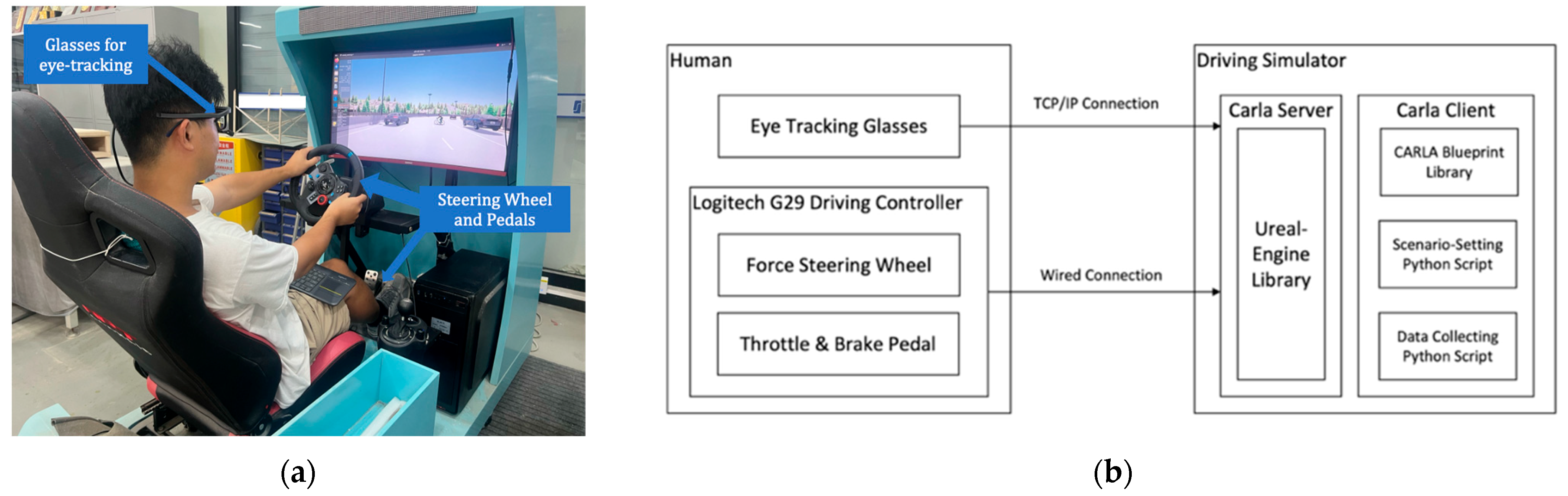
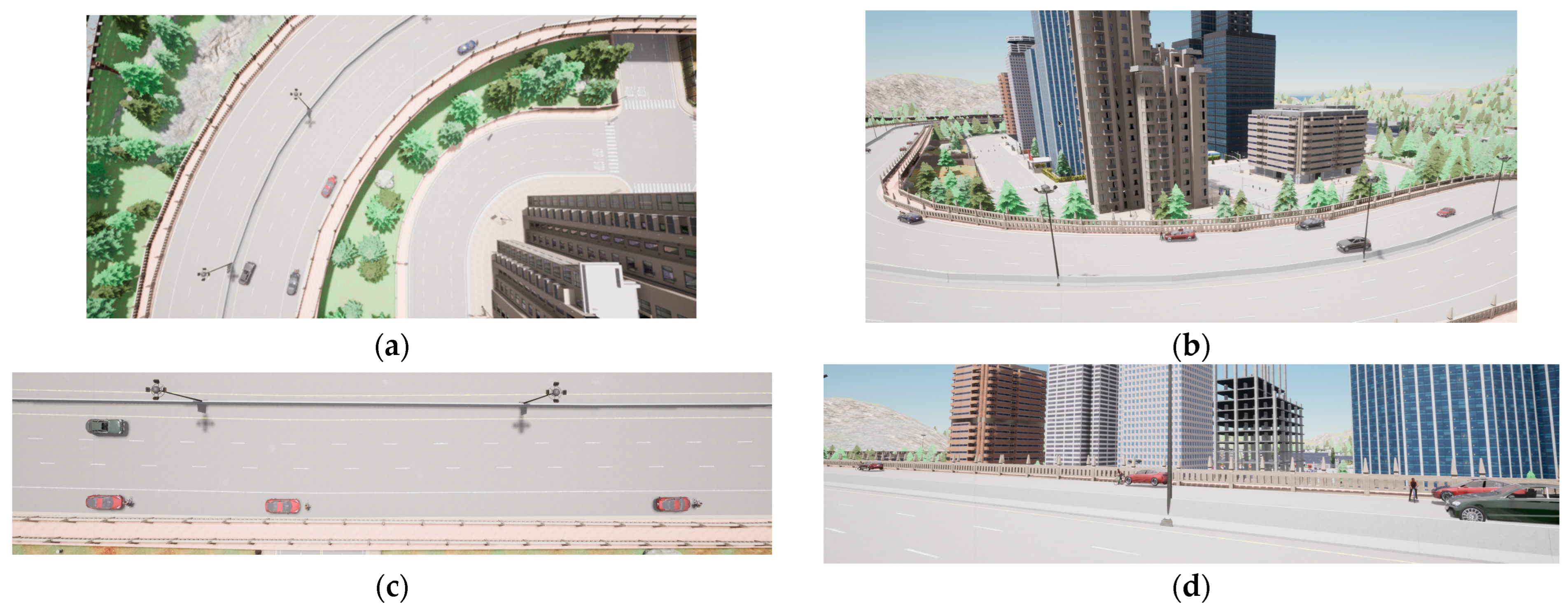
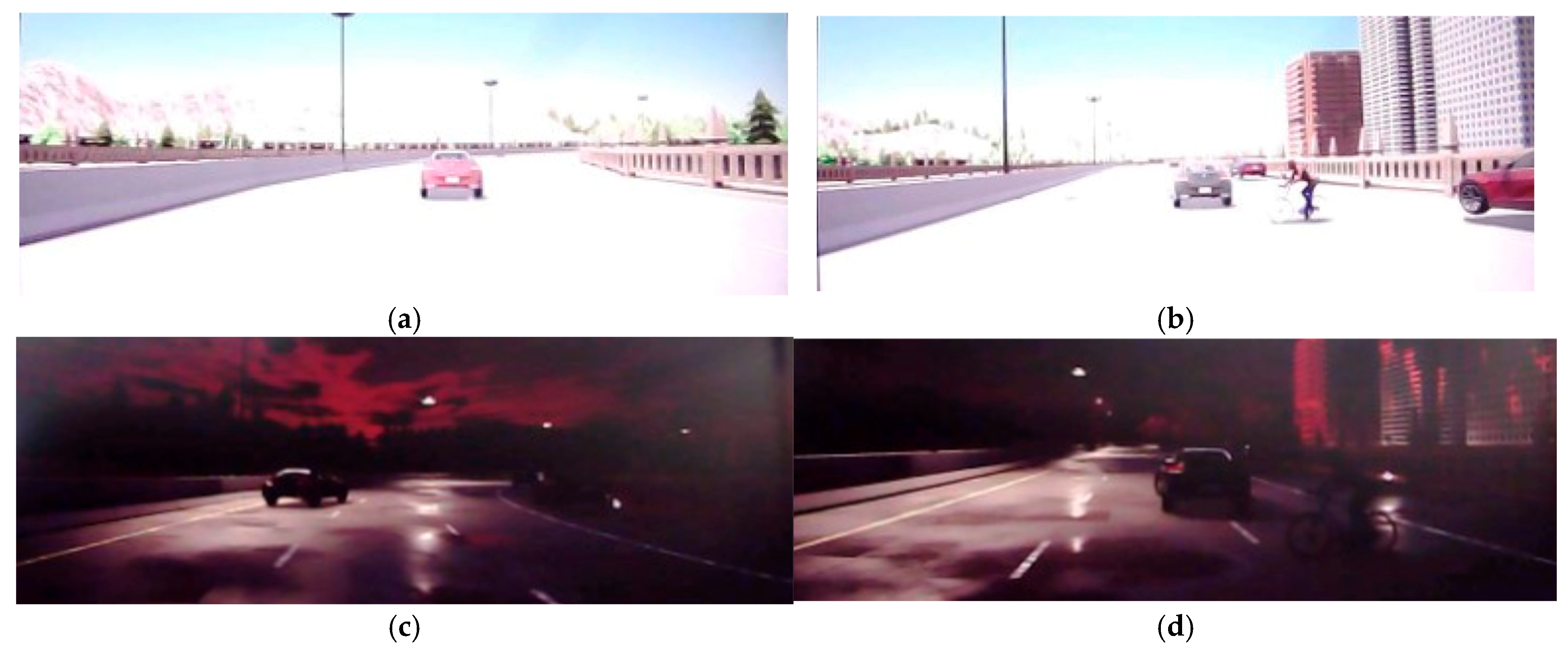
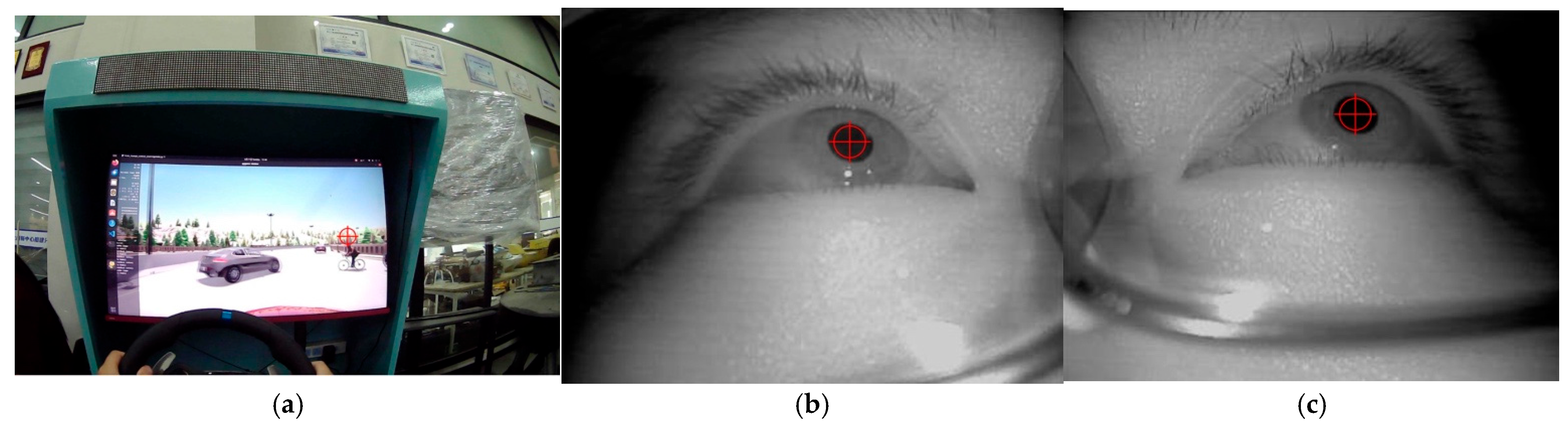
The main contributions of this paper are threefold. First, we designed and implemented a human-in-the-loop driving simulator experiment equipped with non-invasive eye-tracking devices to collect multimodal feature data and evaluate the efficacy of the proposed shared control strategy. Within the CARLA-based simulator, we systematically constructed driving scenarios that vary in both driver workload and scenario complexity by manipulating environmental factors such as lighting conditions, the number of roadside cyclists, and interaction dynamics with a leading vehicle. Second, from the collected data across these diverse scenarios, we identified the seven most informative features using SHAP (SHapley Additive exPlanations) values derived from Random Forest classifiers. Subsequently, two interpretable indices—quantifying driver workload and scenario complexity—were estimated in real-time via Hidden Markov Models (HMMs), each normalized to a 0–100 scale to serve as a unified reference for authority allocation. Third, we developed an adaptive authority allocation strategy for shared control of the steering wheel and throttle pedal by leveraging sigmoid and exponential functions to map the HMM-derived indices into dynamic merging weights. These adaptive parameters were seamlessly integrated into a hybrid control architecture combining Model Predictive Control (MPC) and PID controllers, thereby enhancing both driving performance and safety through more responsive and context-aware human–machine collaboration.
The remainder of this paper is organized as follows.
Section 2 presents the proposed human–machine shared control framework, which features an adaptive authority allocation mechanism. Within this section, we first describe the use of SHAP values for feature ranking and selection, followed by the real-time computation of adaptive authority using several Hidden Markov Models (HMM).
Section 3 details two human-in-the-loop experiments: the first is designed to build a driver model for developing the adaptive authority strategy, and the second serves as a validation study of the proposed shared control system.
Section 4 reports the experimental results from both the driver modeling and validation phases.
Section 4 also discusses the implications of these findings, and
Section 5 concludes the paper with key contributions and directions for future research.
2. Human–Machine Shared Control Strategy Design
2.1. Vehicle Dynamic Modeling
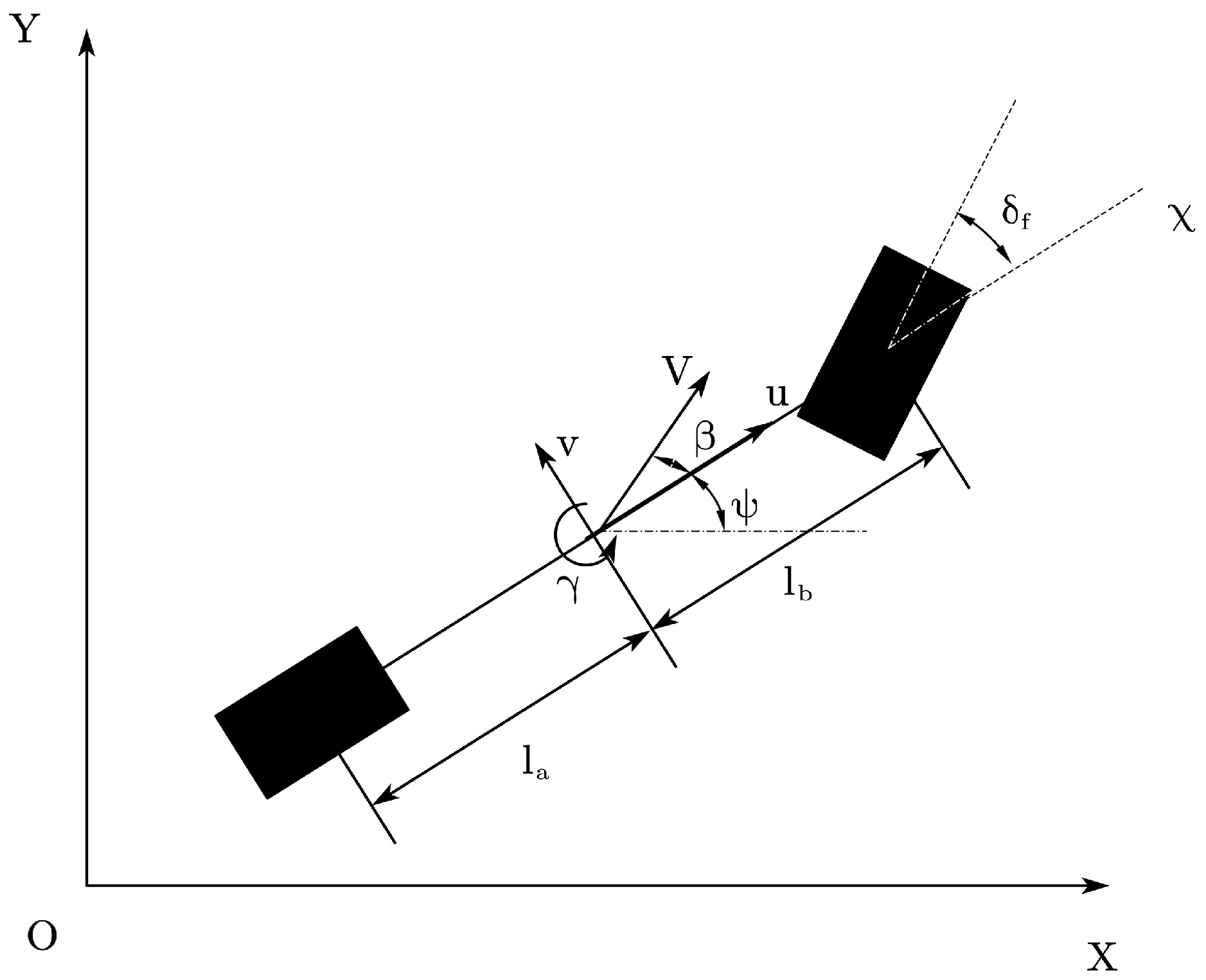
Based on the widely used 2-DoF bicycle model, a predictive control model for coordinated control of vehicle steering is constructed. The dynamic description of the vehicle’s lateral and yaw motion is shown in
Figure 1. Considering the classical path-tracking algorithm for the controller design, the state of the vehicle is defined as
. In the definition,
means sideslip angle;
means yaw angle;
means yaw rate; and
means lateral displacement. The vehicle lateral displacement
was defined as the shortest distance between the vehicle’s center point and the reference path. The generation of the reference path is by the lane centerline waypoints and a Bézier curve during lane changing. The state equation can be shown as Equation (1).
where
In the equation,
and
represent front and rear tire cornering stiffness;
and
mean the distances between vehicle mass center (CG) to the front axle and rear axle; and
is yaw inertia of the vehicle.
and
are vehicle longitudinal and lateral velocity. Because the tire slip angle is small, the vehicle’s velocity
is approximately equal to the longitudinal velocity
.
in
Figure 1 means the front wheel steering angle, which is the final merging command from the input from human agent (
) and machine agent (
).
2.2. Controller Design
For throttle pedal’s assistance system, a proportional-integral-derivative (PID) controller is used as the machine agent, whose output is the command to maintain the cruising speed of vehicle’s longitudinal control. For the steering assistance system, a multi-constraints-based model predictive controller (MPC) is developed from a typical vehicle’s dynamic state equation. The input replaces Equation (2).
where
Using the Euler method, the equation can be discrete as Equation (3).
refers to the sampling time of the system.
denotes the discrete time index corresponding to the current sample interval. Under zero hold assumption without any mistake in sampling,
is approximately equal to k.
is the adaptive authority allocation.
where
The objective function for the machine agent of steering assistance is represented as Equation (4):
In the equation,
is the nearest lateral waypoint of the reference path at time step
k, while
and
refer to the position of the ego vehicle and the steering input of the autonomy machine controller on the prediction step
k.
means the predictive horizon of the MPC.
and
are the weight coefficients. Notably, the values of
and
on the prediction step
k are not constant. These time-varying sequences, generated by the vehicle dynamics model, are utilized in the optimization of the objective function. To this end, the MPC-based optimization algorithm is shown as follows:
The optimal controller input can be expressed as
. The first element
of the optimized control sequence at time step
k is used as the input of steering assistance of machine agent, denoted
. With the throttle opening command
from PID controller of longitudinal control, the merging function of the final command for vehicle can be expressed as Equations (6) and (7).
means the adaptive parameter based on the result of Hidden Markov Model and the curve of authority allocation.
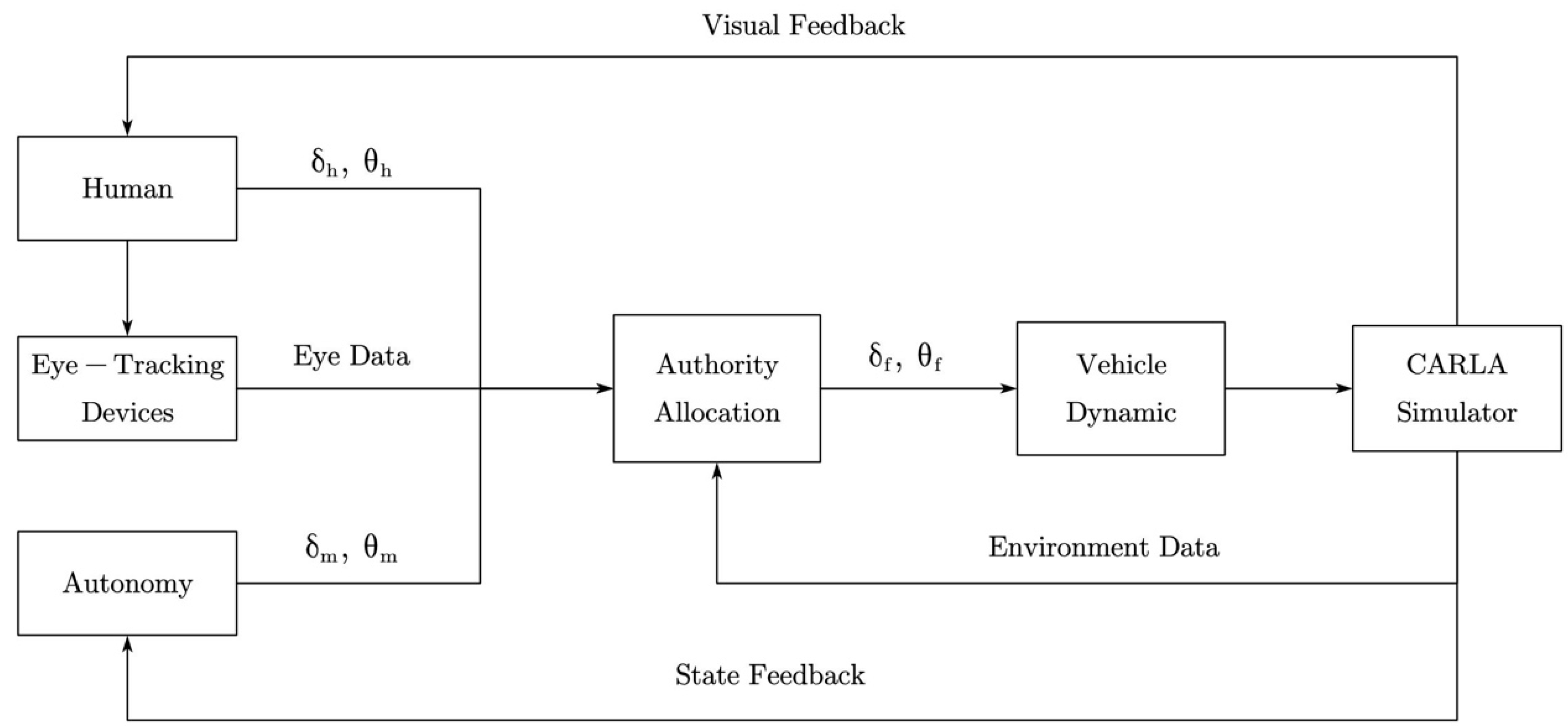
The basic framework for the indirect shared control driving mode is shown in
Figure 2.
2.3. Feature Contribution
When the amount of features is large, it will lead to the overfitting of the model. Therefore, it is necessary to filter the input features. Random Forest, as an ensemble learning method, constructs multiple decision trees to conduct voting and then combines all the results for calculation. Based on the results from Random Forest classifiers, SHAP (SHapley Additive exPlanations) values can be calculated using Equation (8) for each feature’s marginal contribution.
In the equation, represents the total number of input features, means the specific feature, and denote the ensemble-averaged class probability prediction of the Random Forest when conditioning only on the feature subset . is the full feature set (), and quantifies the importance of feature i via its average marginal contribution to over all possible feature subsets. After feature selection, the selected feature will be used as the input for multiple Hidden Markov Models.
2.4. Hidden Markov Model
The Hidden Markov Model (HMM) is a generative probabilistic model with a doubly stochastic process consisting of a hidden state sequence and an observation sequence . Each represents the workload level at time t, and is the total number of hidden states. Each observation is a continuous feature vector selected by the SHAP values in the former subsection. The model has two assumptions: the Markov property and the conditional independence of the observations . The model is fully parameterized by the set . refers to the initial state probabilities with . refers to the stochastic transition matrix, with . B denotes the emission model where each hidden state j is associated with a multivariate Gaussian as . Since the input features are continuous, the value of an observation is assumed to follow a Gaussian distribution, with the mean value and the covariance matrix . For the observation vector , the Gaussian distribution parameter for it is . The full emission model B is thus parameterized by the set . In addition, the likelihood of the observation sequence can not only determine the model by testing whether it converges, but also can estimate the new observation sequence belong to this HMM or not, which can be calculated as via the forward algorithm.
To obtain the best parameter for the model, the Baum–Welch algorithm is applied with the expectation maximization. Forward probability
refers to the probability of certain state according to the observation before the time step t, which could be represented as
. Backward Probability
refers to the probability of certain state from the time steps t + 1 to T, which could be represented as
. The expectation step includes the recursive equation for
,
from the value at time step t − 1 or t + 1 and the calculation for occupation probability
and transition probability
. These Four essential equation for E-step are shown as Equations (9)–(12):
The maximization step needs to update the parameters in
based on the value of
and
. It should be noted that B is the set of Gaussian distribution model which can be represented as
. The iterated functions are shown as follows (13)–(16):
In this paper, there are three binary-classification tasks. For each task, an HMM was trained for the more difficult situation. Every HMM had three input observation sequences from feature selection in 1 s time window. To estimate high scenario complexity or workload, the probability was taken as the evaluation index, which is also the maximum likelihood . The index’s value at time t for the classification task i is represented as . To map the estimate from the HMM to a range from 0 to 100, the transforming processes were applied as , where and are the scaling and offset factors for the three indexes. Considering the output value in all testing scenarios, the index for evaluating light conditions is set to 100, when lighting is poor and visual perception is degraded, and to 0, under sunny and clear conditions. For the other two classification tasks, the index for the urgent surveillance task and scenario complexity level were labeled as and . For these two indexes, the index follows a U-shaped scale, where values near 0 or 100 denote high difficulty (requiring more human attention), while the indexes approximately equal to 50 indicate moderate or low demand. The three indexes scaled from 0 to 100 are important for adaptive authority allocation.
2.5. Adaptive Authority Allocation
The authority allocation was designed based on four different features: differences in input control, and three evaluate indexes for scenario complexity, urgent surveillance tasks, and light conditions using the HMM. The difference in input control was calculated as the instantaneous steering angle ratio and instantaneous throttle opening ratio; the formulations are as follows (17)–(18):
In these formulations, and denote the constant for reducing value fluctuation. In this work, the values were defined as and . Notably, would not be equal to , because, in common driving scenarios, the steering wheel angle would be small and restricted by the machine agent. However, if , the result of would be a small positive constant not dependent on to ensure numerical stability.
There was a heuristic design for the merging factor
, which was divided into two sections: the basic assistance factor
and the assistance increment factor
. The basic assistance factor was determined by the difference in input (
or
) and instantaneous scenario complexity estimate (
). This factor tended to depict the human–machine trust and the environmental difficulty during the whole driving process. The assistance increment factor was applied to show the driver’s workload. Since the driver’s workload would increase when there was an urgent surveillance task or bad light conditions, the estimate from the corresponding HMM
and
. In general, the merging factor
was defined as (19).
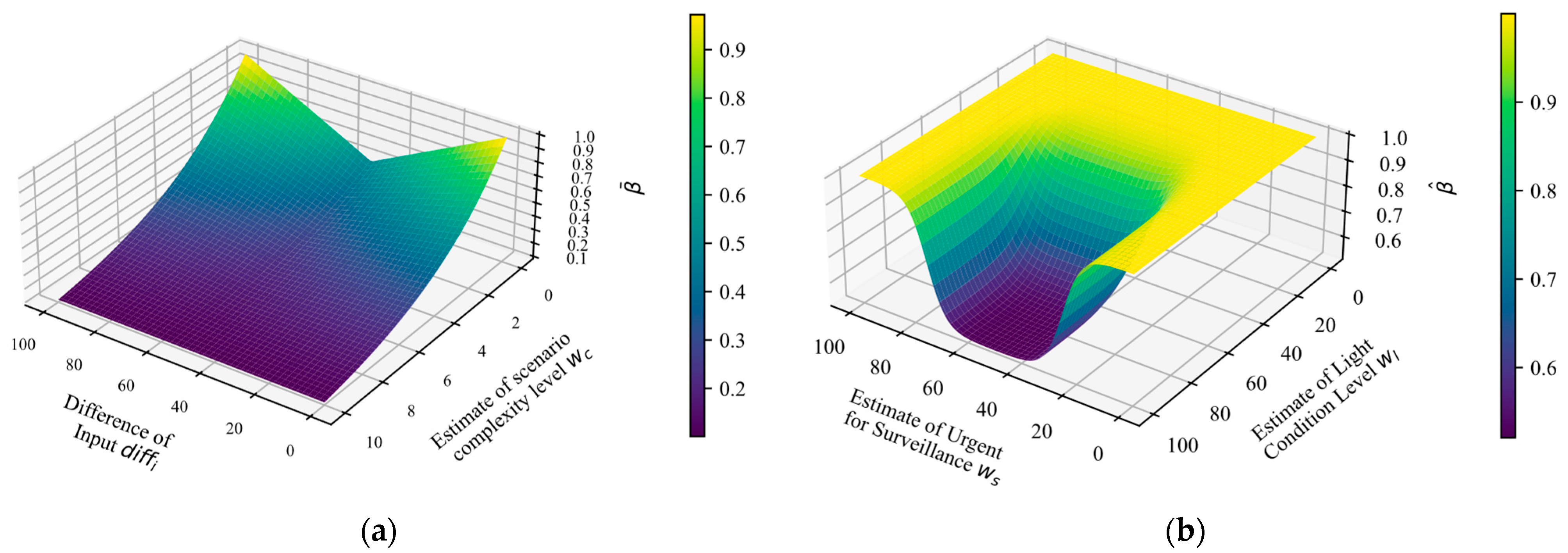
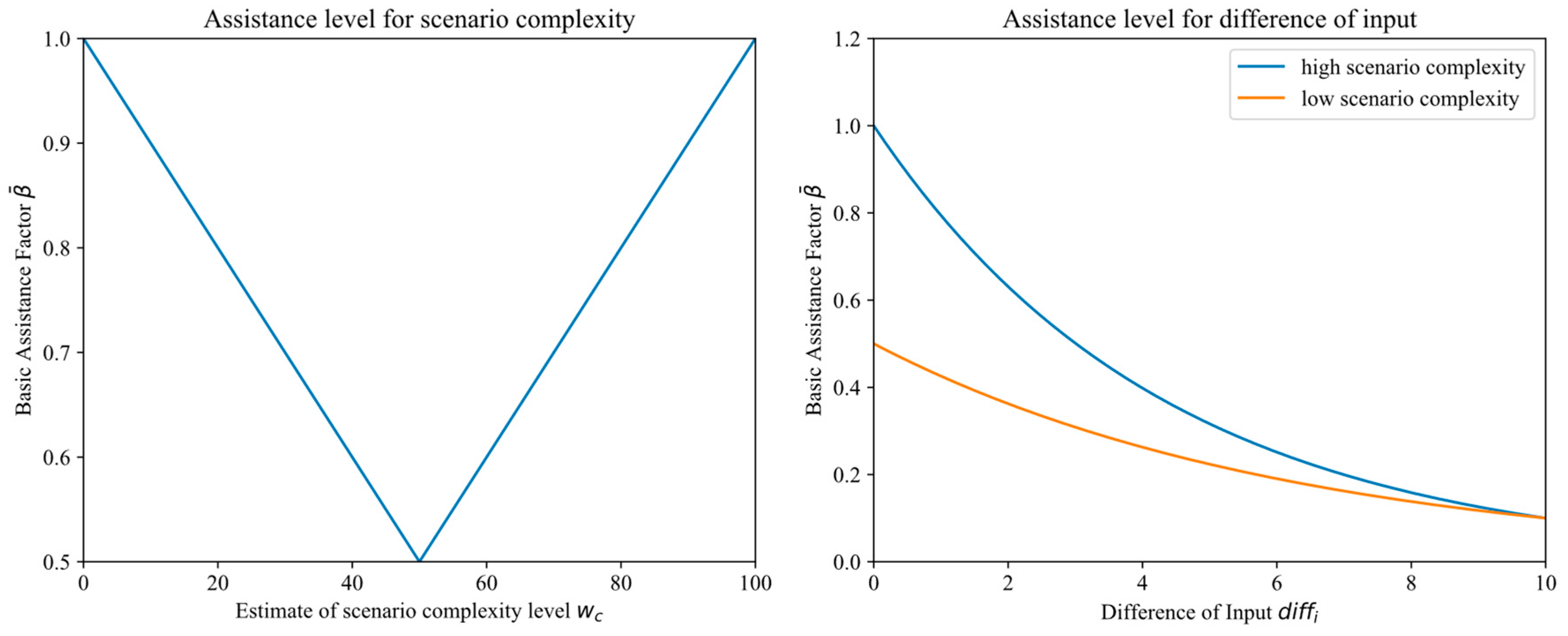
The principles for the definition of the basic assistance factor
are shown in
Figure 3. On the one hand, while holding the human–machine control command difference constant, the index for the scenario complexity was calculated as a linear interpolation. When the complexity level is low, the authority for the autonomous machine agent is high to assist the driver to overcome a difficult scenario, while the authority would decrease when the level of complexity decreased, and the lower limit was 0.5. On the other hand, when the difference in the input control between the human and machine agents’ command became larger, the authority of the machine agent would decrease exponentially. Since there were two differences in inputs (
and
), the basic assistance factor would different for the shared control of the steering wheel and throttle. Combining all the former considerations, the formulation for the basic assistance factor could be shown as Equation (20).
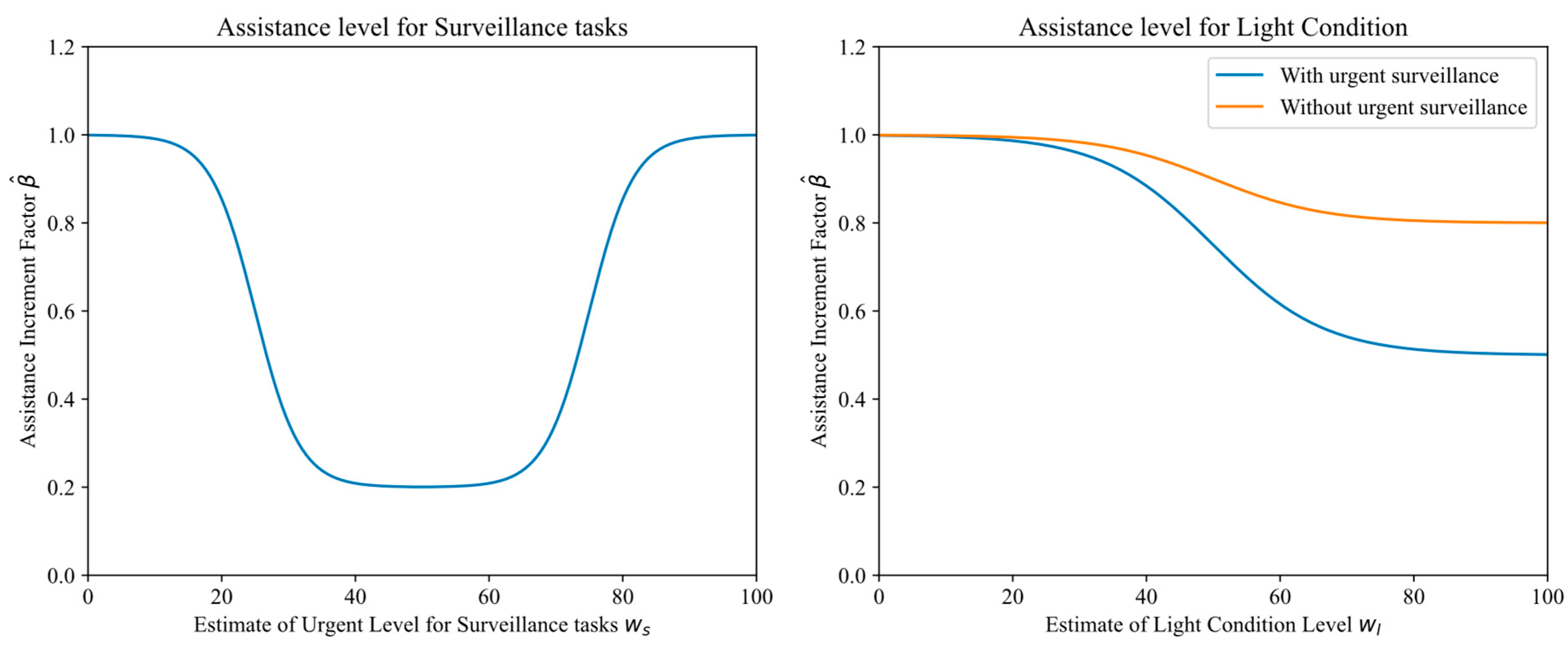
In the aspect of the assistance increment factor
, the design principles are shown in
Figure 4. As for the estimate for the urgent surveillance task in the corresponding HMM, a moderate workload meant
, which is optimal for driving. The authority of the machine agent would be at the lower limit, 0.2. When the surveillance for the driver was overloaded or underloaded (
or
), the authority of the machine would gradually increase to 1. As for the estimate for the light condition level in the corresponding HMM, the driver would have good driving ability on a sunny day with sufficient light (
) so that the authority of the machine agent would be at the lower limit, 0.4. If the light condition was a nighttime rainy day, the driver would be fatigued and the ability for detecting and acting would decrease; the authority would need to be set as 1 for such a scenario. The sigmoid function was set to design a strategy with a smooth transition. It was noted that the value of the assistance increment factor
would be same for the shared control for the steering wheel and throttle, since the affection only included the real-time eye-tracking data and the general performance of the driver. Combining the principles for the driver’s workload in different driving environments, the formulation for the assistance increment factor
can be shown as Equation (21).
Generally speaking, the basic assistance factor is defined as the estimate of the scenario’s complexity level and the corresponding difference between the human and machine inputs, including the steering wheel angle and throttle opening, while the assistance increment factor is defined as the estimate of the urgent surveillance task and light condition level using two HMMs. The 3D plot for the general relationship is shown in
Figure 5.
The functional hyperparameters values in Equations (20) and (21) were selected based on a heuristic design strategy based on plenty of real-time shared control systems, where online parameter optimization was often impractical due to computational and safety constraints [
11,
42]. Specifically, the exponential decay term
in Equation (20) follows the authority modulation scheme proposed by [
14], who used a similar decay rate (0.08–0.12) to smoothly reduce automation authority as human–automation disagreement increased. The offset values (e.g., 50 for workload and scenario complexity) correspond to the neutral or optimal operating points identified in our preliminary experiments, where human performance was most stable. For the assistance increment factor
in Equation (21), the sigmoid scaling factors (0.3 for distraction from urgent surveillance task
and 0.15 for lighting condition
) were chosen to ensure gradual transitions within the operational range observed in eye-tracking studies of a driver’s state [
43]. The baseline values (e.g., 0.2 and 0.4) represent the minimum machine’s authority under optimal driver states, as validated in preliminary driving simulator trials. Although the exact numerical values were fine-tuned using pilot testing, the overall structure and parameter ranges are well-grounded in established practices in adaptive driver assistance [
44].
4. Results and Discussion
4.1. Feature Selection
Three different Random Forest classifiers were used to handle three binary-classification tasks, respectively. The accuracy rates of the classification results were all above 95%, as shown in
Table 3. In order to rank the importance of all the input indicators involved in the classification process, the Shapley Additive Explanation (SHAP) method was used in three binary Random Forest classifiers and the SHAP values were calculated to indicate the importance of each input feature in every single classifier.
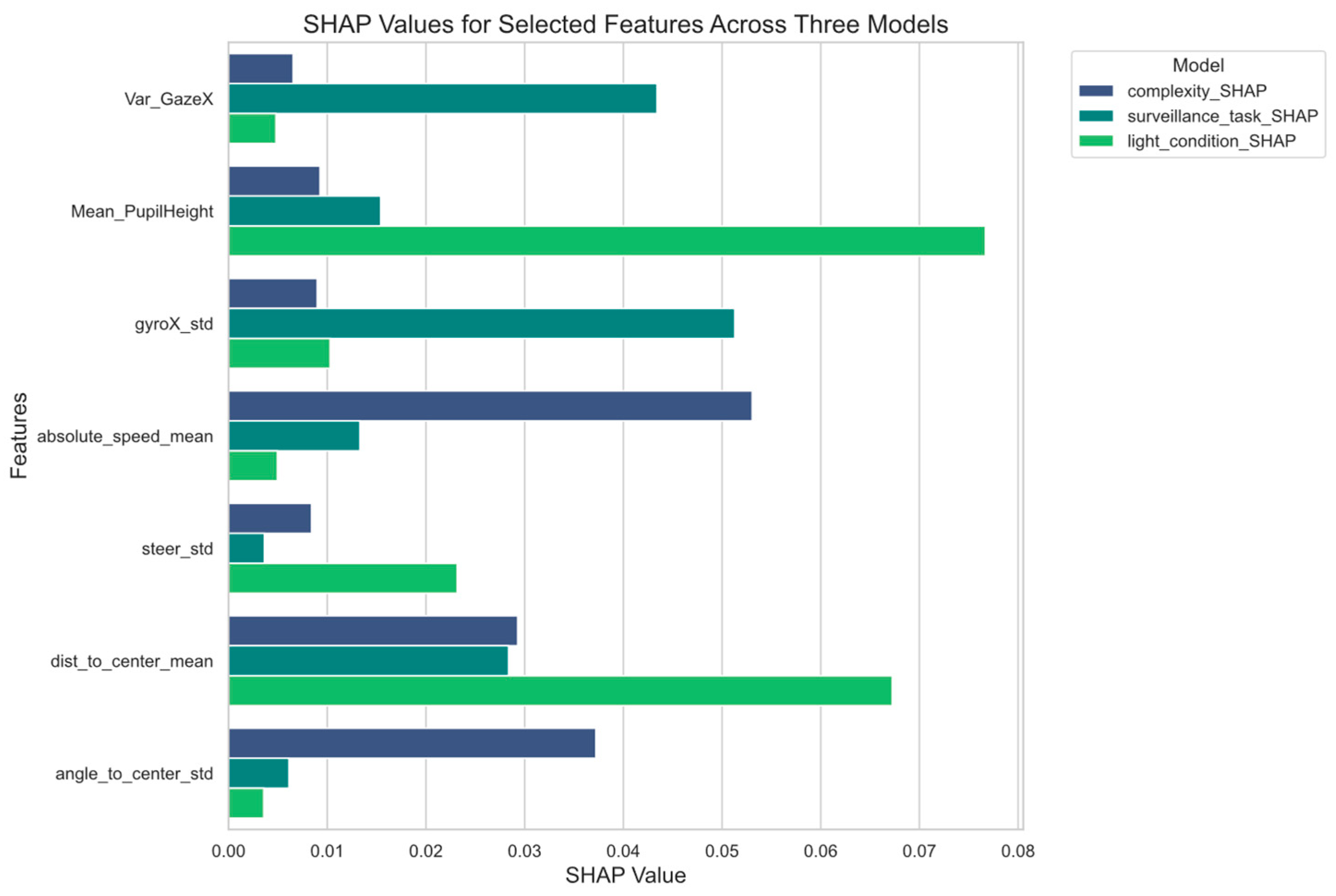
From the results of SHAP, seven features with significant influence in three classification tasks were selected. After the analysis, the top three important features for each classification task were selected, as shown in
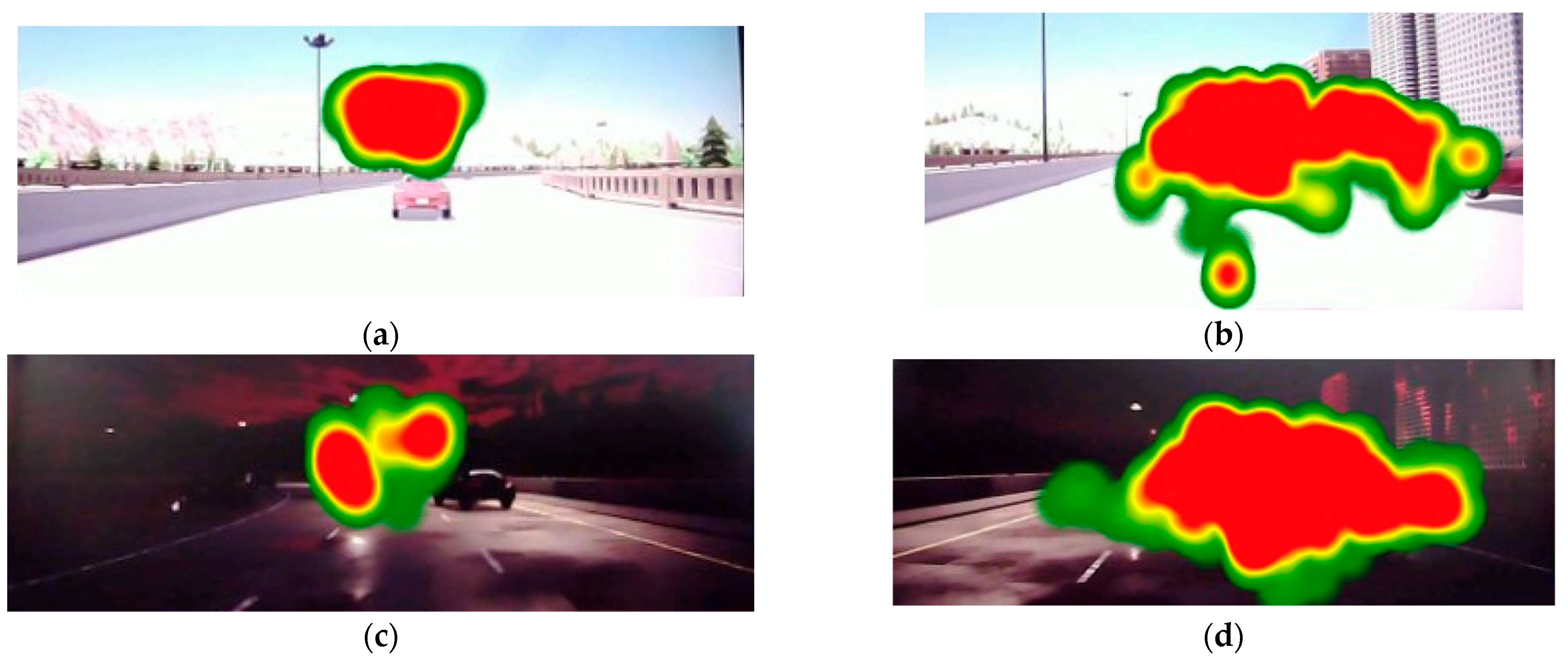
Figure 13. Distance to the lane center was important for all classifiers, although it was not the most important feature in distinguishing the urgent surveillance task and scenario complexity level. Apart from the distance to the center, the absolute speed and the angle to the road’s center also had an important effect on evaluating scenario complexity. Bad light conditions would increase the driver’s fatigue and reduce the driver’s perception of the driving environment and road markings. Therefore, the distance to the lane center and the driver’s steer input was the most important factor for different light conditions, followed by the factor of the measurement of the pupil area. As for the setting of the surveillance task (Is there a cyclist appearing at the roadside, or not?), since the driver needs to pay attention to the roadside, the X coordinate of their gaze point was taken as the most important feature for classification, and there may be more minor vibrations during driving, causing an increase in the IMU’s measurement yaw rate.
As a result, the estimate model for scenario complexity level should have the input of absolute speed, distance to center, and angle to center. The estimate model for the workload surveillance task would have the input of the X coordinate of the gaze point, the yaw rate in the IMU measurement, and the distance to center. And the estimate model for the scenario’s light condition would have the input of pupil height, distance to center, and steer input.
4.2. Driver Modeling and Adaptive Authority Allocation
With the help of the Python 3.8.20 open-source package hmm-learner, the setting and evaluation for every HMM are shown in
Table 4. The scaling probabilistic output of the three HMMs are
,
, and
, which are the input for adaptive authority allocation in the
Section 2.5.
Three Hidden Markov Models (HMMs) are applied to three distinct binary classification tasks, each using different sets of driving-related features as input. Feature selection was performed using a Random Forest classifier and SHAP (Shapley Additive exPlanations), yielding three representative input features for each task. The detection for scenario task had the highest accuracy. The reason may be that the driver would take action to lower the driving speed, and the driving performance when cruising along the reference path at the lane’s center would decrease when facing the scenes of high scenario complexity. In contrast, the HMM results for the classifier of urgent-surveillance task reported a relatively lower F1 score (0.724) compared to the other two classification tasks (both >0.8). The reason is that only three cyclists appeared briefly during the entire experiment, resulting in the “urgent surveillance” state occupying less than 40% of the whole time, about 20 s, for the scenario with the urgent surveillance task. Given that the HMM processes input the feature in the time sequence of a 1 s sliding window, which involved the scene without cyclist appearance at roadside, it is challenging to capture brief distraction scenes without excessive smoothing. In addition, the authority allocation strategy is designed to be robust against uncertainties in any single estimator. The parameters for assistance level are computed from multiple factors, including human–machine control difference, scenario complexity, lighting condition, and distraction level in the urgent surveillance task. This ensures that temporary inaccuracies from the single estimation of an HMM do not critically affect the general results of authority allocation. Furthermore, the minimum machine authority is designed below (e.g., 0.2 for throttle/steering), which would guarantee baseline support even under low estimated workload. Thus, while the F1 score of this classifier is modest (0.724), its output remains informative for continuous authority allocation and follows the safety-conservative design principles adopted widely in real-time driver assistance systems. Nevertheless, all three HMMs achieved strong performance in terms of precision, recall, and F1 score, each producing a well-calibrated likelihood value as output. These three likelihood values enabled a continuous estimation of both scenario complexity and driver workload, which is critical for designing adaptive merging strategies.
4.3. Validation
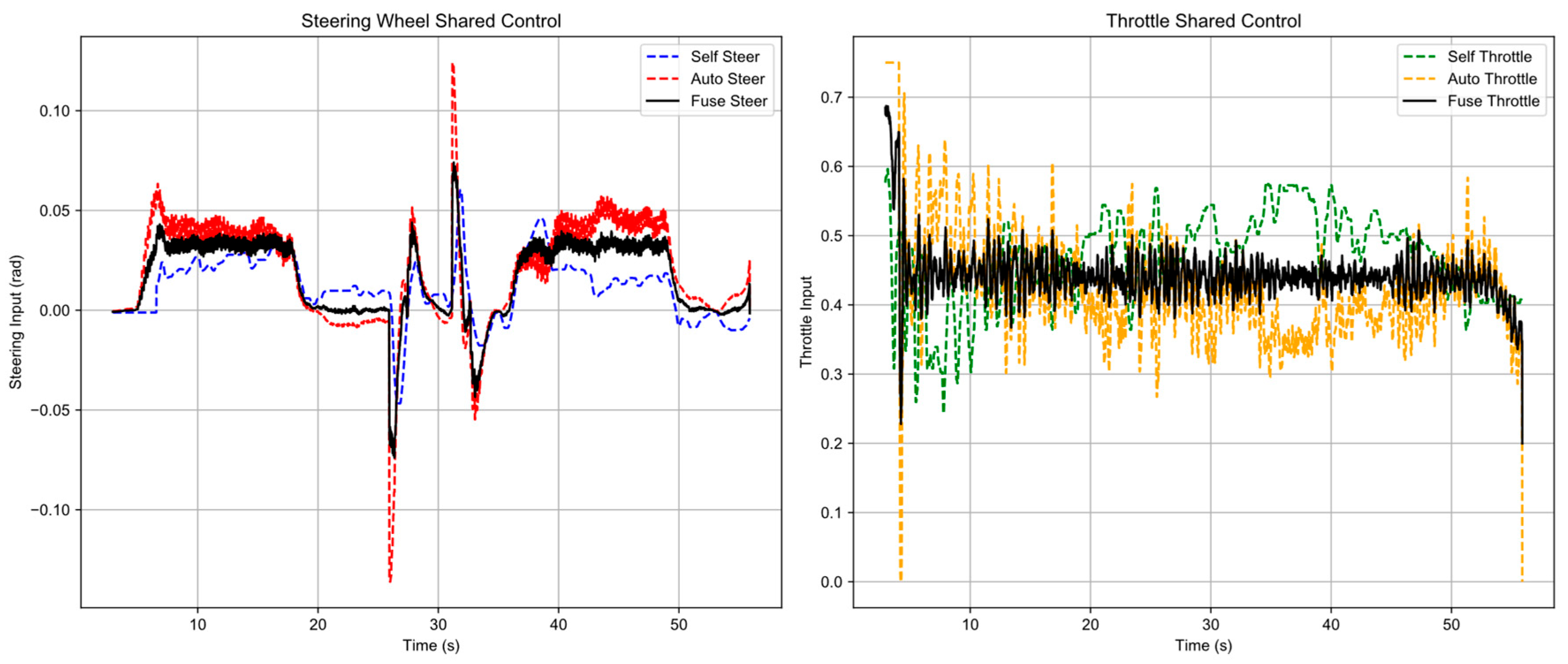
After calculating the probabilistic value from three Hidden Markov Models, two adaptive parameters for the steering wheel and throttle padel’s shared control could be determined. Two representative validation experimental time-series profiles are shown firstly to illustrate the general tendency of the adaptive parameters and input commands from the human and machine agents, as well as the final command.
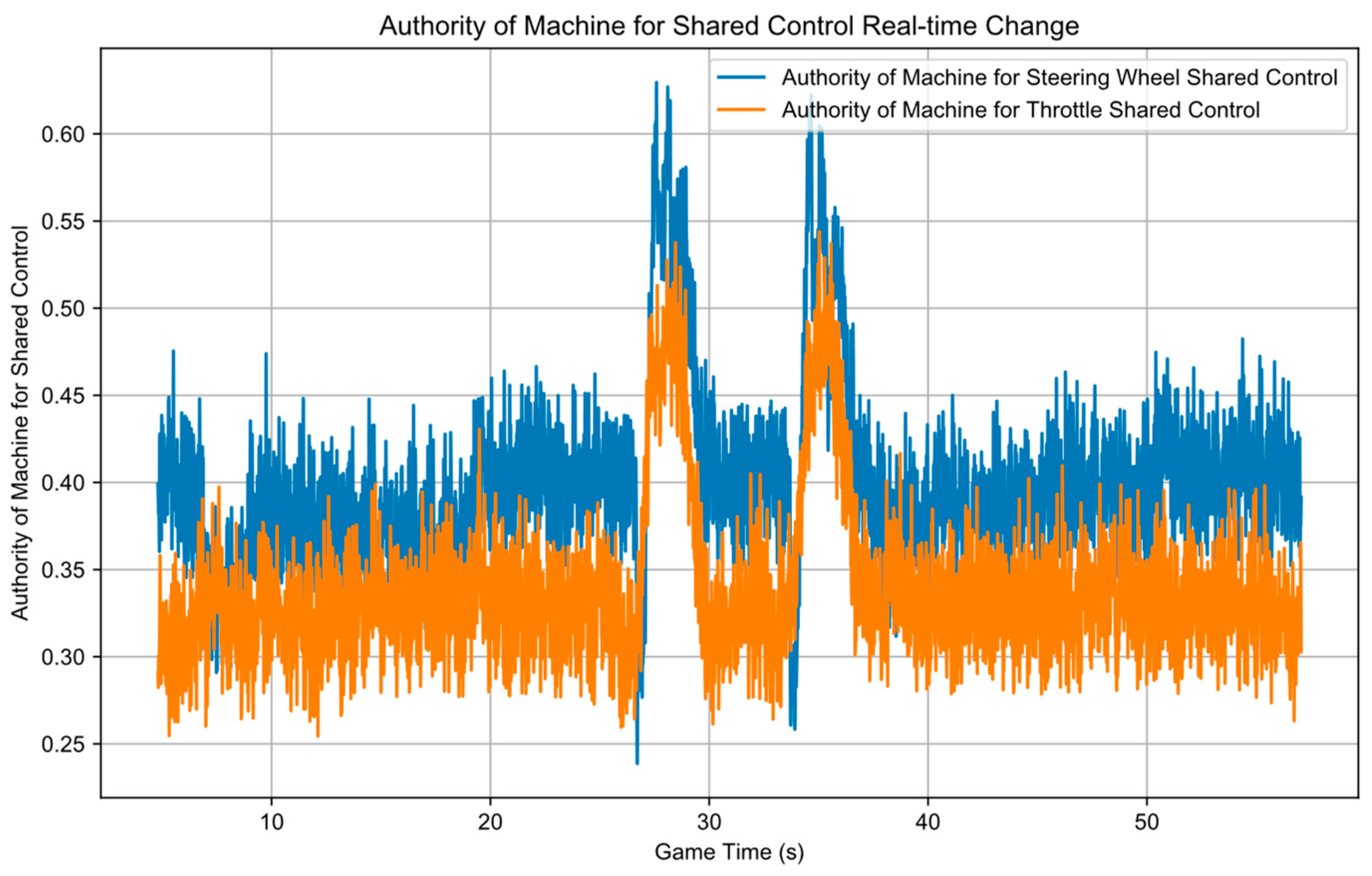
The results reveal that the different levels of light conditions and urgent surveillance tasks have significant impacts on the shared control scheme and ego vehicle’s dynamic features. When the driving scenario is in the low-workload condition, the changing of the adaptive parameter is shown in
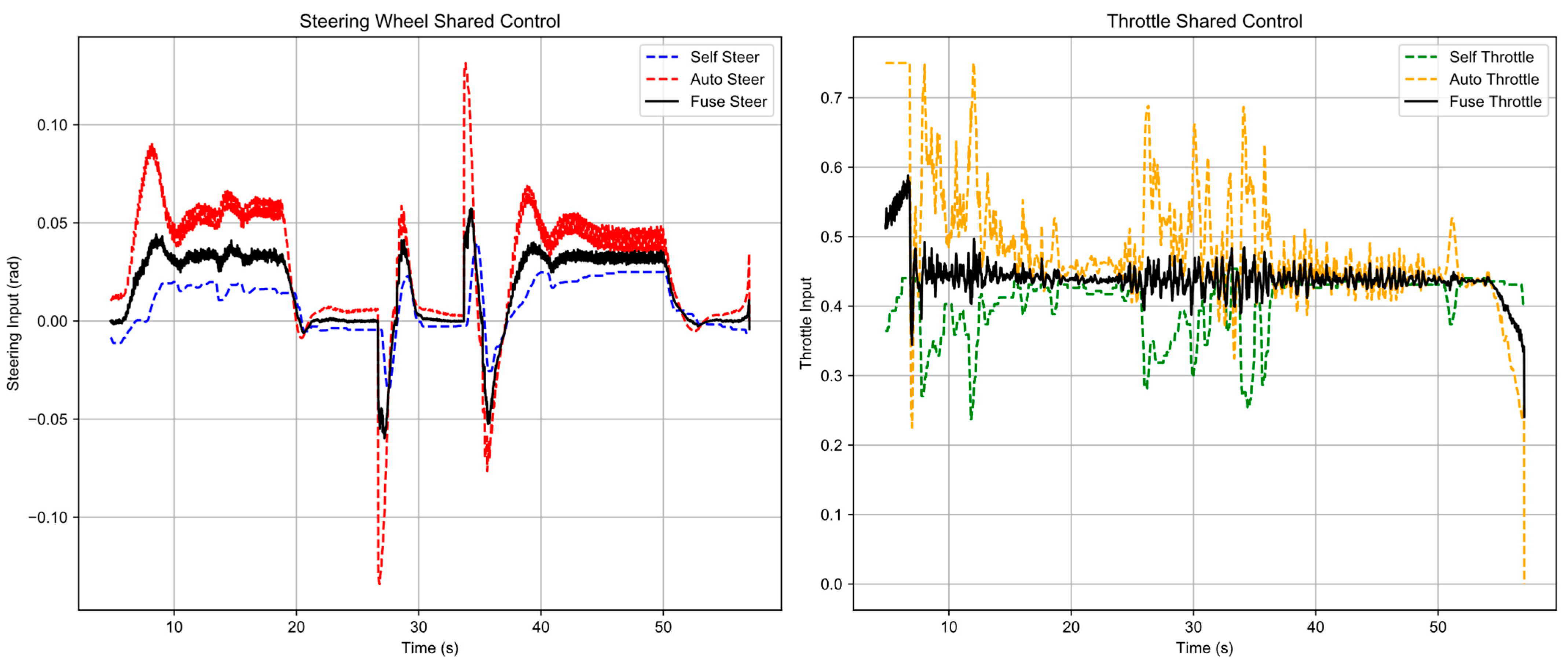
Figure 14 and the command merging process is shown in
Figure 15.
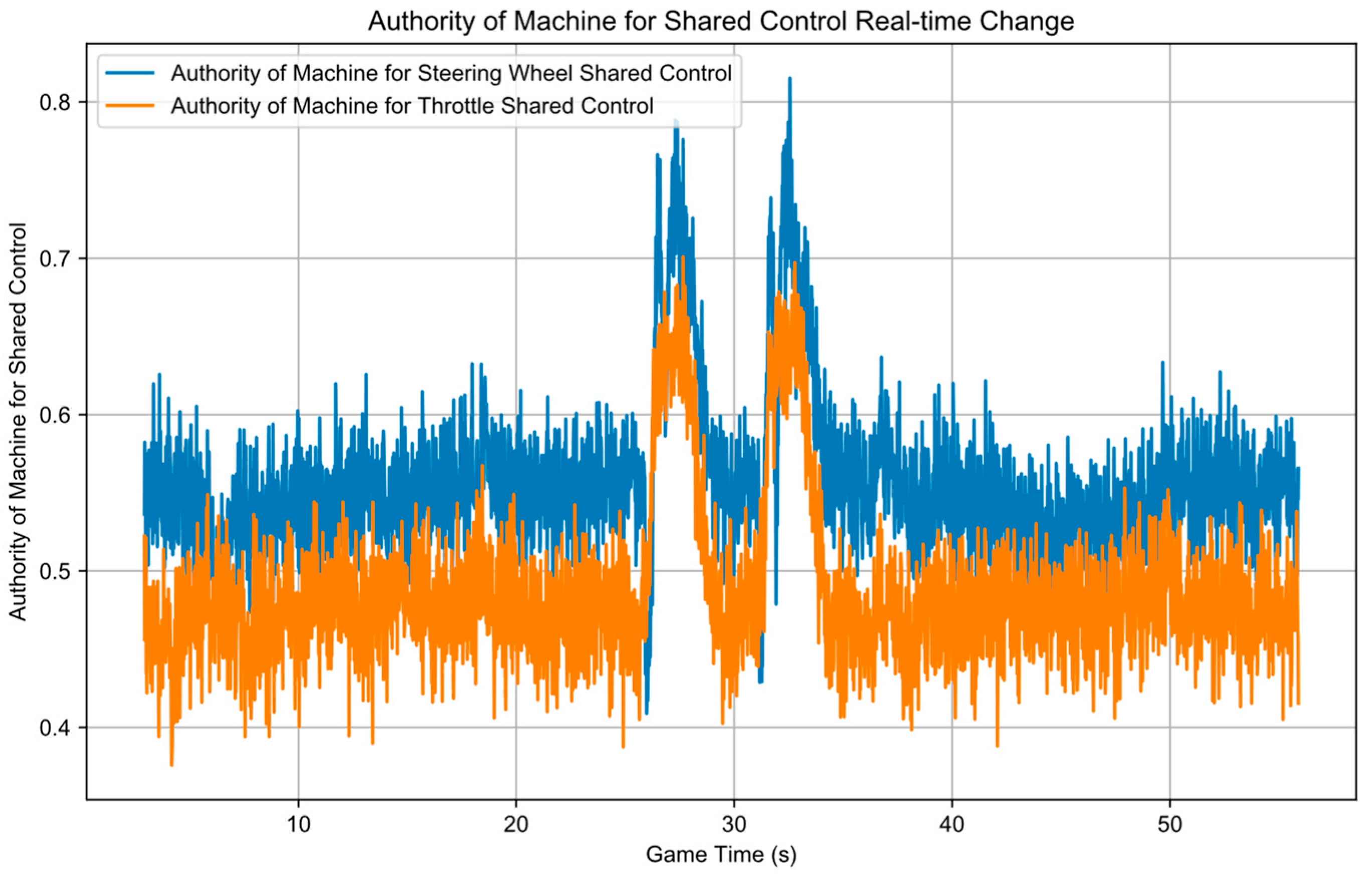
For the scenario with high driver workload, which means driving in night rainy weather conditions and with urgent surveillance tasks, the results of the authority allocation parameter and the merging control command are shown in
Figure 16 and
Figure 17. These can support the conclusion that the adaptive shared control improves driving comfort and safety in the scenarios with different workload levels. Compared with the results in the low-driver-workload condition, the affection from the machine agent and the variation in control command is more significant.
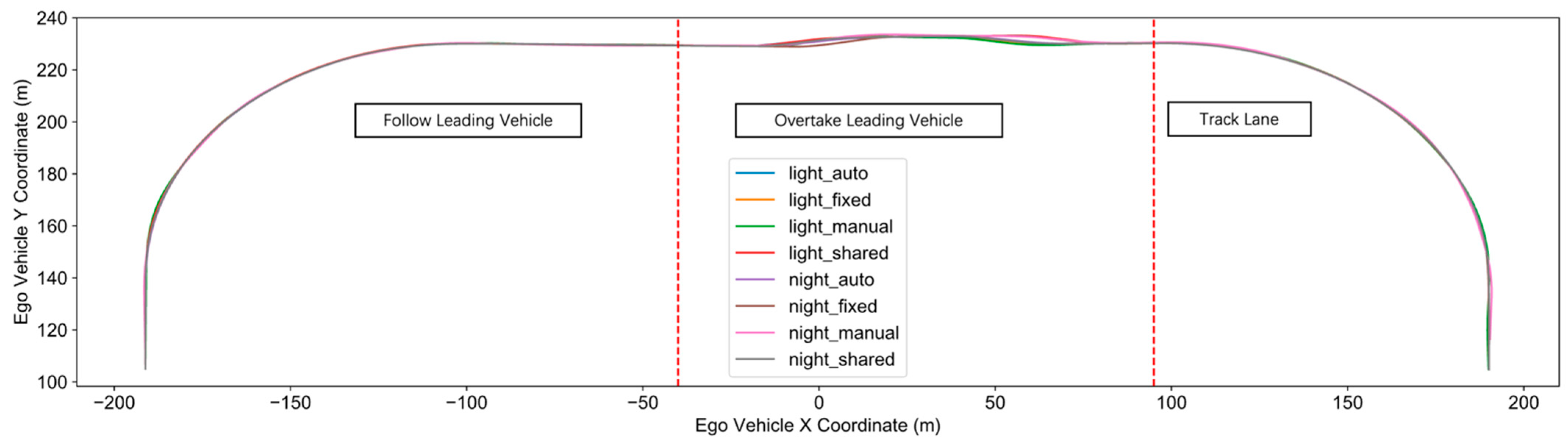
We recorded the steering wheel and throttle pedal inputs from both the human and machine agents, as well as the final combined control commands sent to the driving simulator. Throughout the driving task, human–machine conflict in the shared control of both the steering wheel and throttle pedal was pronounced during lane changes. Human–machine conflict also increased when navigating curves, with a greater magnitude observed under high-driver-workload conditions. Thanks to the shared control framework, the final control command was smoother than the individual inputs from either the human or machine agent alone. The throttle pedal input was consistently maintained within a reasonable range to sustain the ego vehicle’s desired speed.
Two adaptive merging factors were implemented to govern shared control of the steering wheel and throttle pedal. During the validation experiment, which included only a single lane-changing maneuver, two distinct peaks in the adaptive merging factors were observed. Firstly, it meant the basic assistance level being evaluated could successfully detect the high-scenario-complexity scene when the driver changed lane to overtake immediately. Next, there were two curves in the scenario; the adaptive merging factor exhibited only a modest increase. This is because curve-related scenario complexity was explicitly accounted for during HMM training, minimizing the impact of road curvature on the scenario complexity assessment. Furthermore, the magnitude of assistance provided by the adaptive merging factor varied according to the driver’s workload level during the validation experiment. However, because the likelihood values from the two HMMs used for workload estimation exhibited considerable temporal fluctuations, the adaptive merging factors also showed minor variations.
In the validation experiment of scenarios in high- or low-workload conditions, there are four driving modes (“manual”, “auto”, “fixed”, “shared”), which have been explained in
Section 3.3. Based on the comprehensive results of all the experiments conducted by the three researchers, the average results of the indicators are shown in
Table 5.
In terms of driving performance, shared control with adaptive merging factors outperformed control strategies based solely on either the human or the machine agent. The only exception was the angular deviation from the lane heading under high-workload conditions, where shared control with fixed merging factors showed a slight advantage. This may be because the adaptive merging factors exhibited larger fluctuations when the Hidden Markov Model (HMM) detected driver distraction, prioritizing safety over stability.
Regarding driving stability, the fully autonomous strategy performed poorly across four evaluation metrics. Given that driving stability strongly influences driver and passenger comfort, shared control is essential to enhance ride quality. Notably, the standard deviation of the control input was lower under manual driving than under shared control. This likely reflects the driver’s tendency to minimize control effort by maintaining relatively steady inputs throughout the drive. However, this behavior can degrade other performance metrics and introduce potential safety risks. Considering all four driving stability metrics, shared control with adaptive merging factors emerged as the optimal strategy.
In terms of driving safety, manual control exhibited a significant disadvantage compared to other strategies. In contrast, the performance differences among the other three control strategies (fully autonomous, fixed parameter shared, and adaptive shared control) were negligible. The machine agent contributed to hazard avoidance by actively intervening during critical driving scenarios.
To depict the potential conflict between the human and machine agents, controller load was considered calculated by the merging weight and input from the autonomous system. Higher controller load increases the perceived intrusiveness of the shared control system, which may compromise driving safety. Compared with the shared control with fixed merging parameter, the adaptive strategy resulted in lower controller load, indicating reduced human–machine conflict.
4.4. Model Comparison
In this subsection, two benchmark control models are tested and compared with the model in this work. Since the control model for the steering wheel developed was based on MPC, the mode for comparing is also a variant of the MPC model. The selected control models are the control model considering the normalized driver torque and the driver distraction level [
14] and the control model considering Time to Collision (TTC) and the normalized steering angle [
15]. These control models are validated in both high- and low-workload scenarios in validation experiment setting. The average results for the whole driving process at different levels of workload are shown in
Table 6 and
Table 7. For convenience, these control models are labeled as Model 1, Model 2, and Proposed model.
In the comparative experiment, the proposed control mode outperformed the selected baselines in terms of lateral deviation from the road center, acceleration, Time to Lane Crossing (TLC), and steer load. These results demonstrate the superiority and effectiveness of the adaptive human–machine shared control framework, which significantly enhances both driving performance and safety. Model 1 fails to distinguish between different levels of driver workload, which leads to degraded driving performance—particularly in high-workload scenarios. Model 2, while capable of identifying high-workload conditions based on distraction metrics, is unable to recognize scenarios with high environmental or task complexity. Consequently, its overall performance is inferior to that of the proposed model.
This also indirectly supports the validity of the feature selection process and the state estimation provided by the Hidden Markov Model (HMM). In contrast, traditional human–machine shared control typically relies on a limited set of features—such as control inputs and basic driving states—whereas the proposed adaptive authority strategy leverages a richer feature set, including ego-vehicle dynamics, vehicle–road interaction data, and eye-tracking metrics. Moreover, the Hidden Markov Model (HMM) explicitly models these features as temporal sequences. However, computing the adaptive parameters entails high computational complexity, demanding greater processing resources. Future work should focus on optimizing the computational pipeline while preserving the effectiveness of the shared control system.
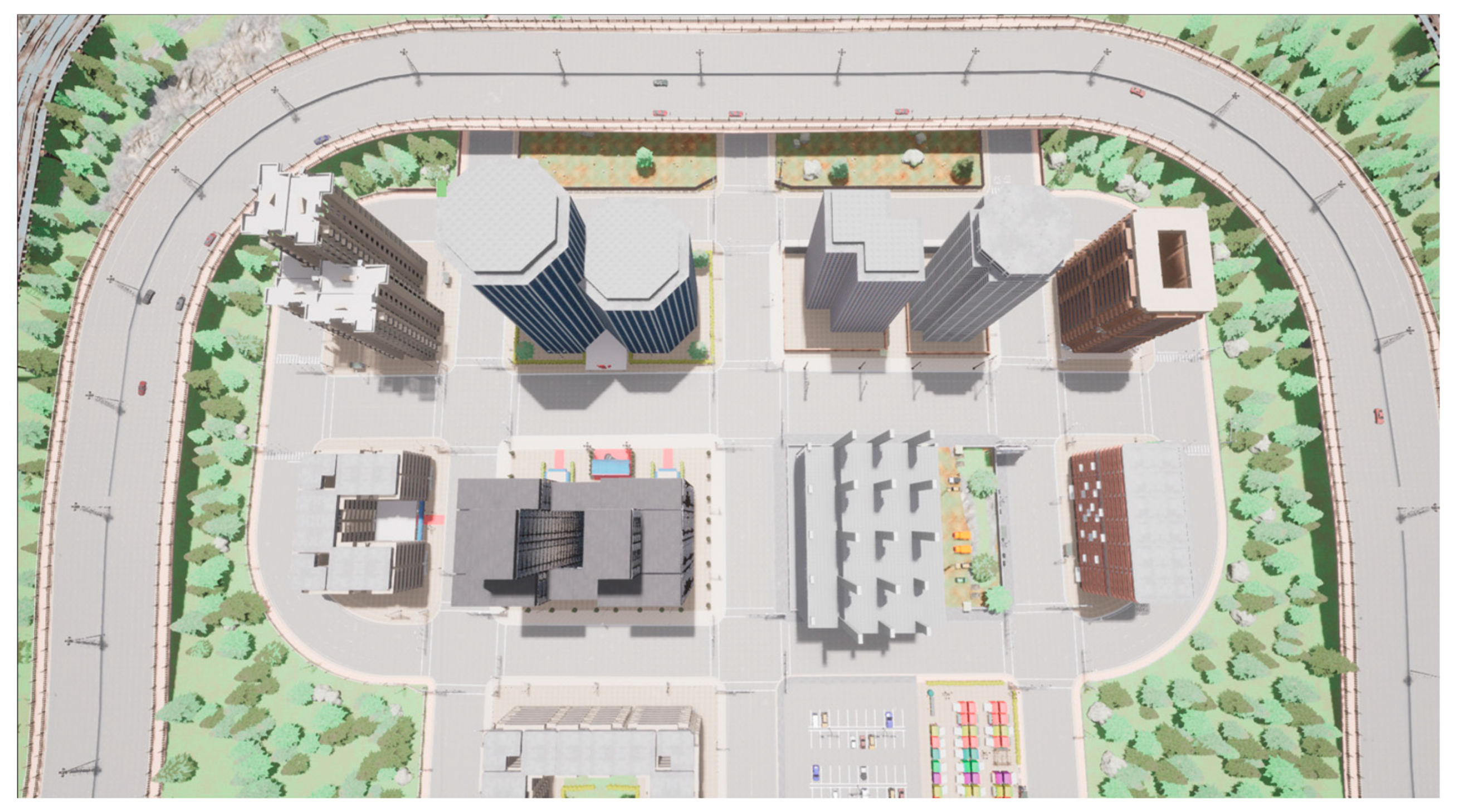
This study was conducted in the CARLA simulation environment using predefined urban driving scenarios. While this allowed for the controlled evaluation of the shared control logic, real-world driving involves greater environmental diversity and unpredictable agent behaviors. Nevertheless, the core components of our approach—namely, eye-tracking-based workload estimation, human–machine control discrepancy monitoring, and rule-based authority modulation—are grounded in the sensor modalities already deployed in production vehicles (e.g., DMS and steer-by-wire systems). The proposed functions are computationally efficient and do not require retraining for new scenarios, as they operate on abstracted context indicators (e.g., lighting level, task urgency) rather than raw scene pixels. Future work will focus on validating the framework in high-fidelity simulators with motion platforms and, ultimately, in on-road experimental vehicles to assess its robustness under real traffic conditions.
5. Conclusions
In this work, we developed a novel adaptive shared control strategy that accounts for both scenario complexity and driver workload applied to the steering wheel and throttle pedal. Using non-invasive eye-tracking devices and a driving simulator, we selected seven representative driving features from three modalities, ego-vehicle dynamics, vehicle–road interaction, and eye-tracking data, to assess driving difficulty. Three Hidden Markov Models (HMMs) were trained to detect high scenario complexity and elevated driver workload with high precision, each outputting a calibrated likelihood value. Adaptive merging factors were derived from the normalized likelihood values and the discrepancy between human and machine control inputs. The validation experiment demonstrated that the adaptive shared control strategy outperformed baselines across four key dimensions: driving performance, stability, safety, and human–machine conflict. Under low-driver-workload conditions, the shared control strategy improved most evaluation metrics, with the exception of control stability. Driving performance precision improved by more than 30%. Under high-workload conditions, improvements in driving safety were substantial. Experimental results show that the shared control strategy significantly reduced Time to Collision (TTC) and Time to Lane Crossing (TLC), especially under high driver workload. Notably, compared to fixed authority allocation methods, the proposed adaptive mechanism not only reduced controller load, but also minimized human–machine conflict.
Future work will focus on three directions. First, the evaluation model could be further enhanced by training on a broader spectrum of driving scenarios that systematically vary in complexity and driver workload, thereby improving its robustness and generalizability. Second, beyond eye-tracking, multimodal physiological indicators—such as heart rate variability and electrodermal activity—could be incorporated into the driver state estimator to enrich workload and attention inference. Finally, real-world on-road experiments should be conducted to validate the system’s feasibility, safety, and user acceptance under authentic driving conditions.